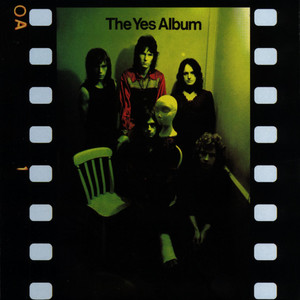
While the first two Yes albums only hinted at the band's potential, they achieved their first of three perfect albums with "The Yes Album". The quantum leap in quality had two reasons: Firstly, the virtuoso Steve Howe replaced the first guitarist Peter Banks, whose angular style did not quite fit the band's concept. Secondly, they found a producer in Eddie Offord who helped create the Yes-typical sound. The band's transformation would be completed on the follow-up, "Fragile", on which the Hammond organ-focused keyboardist Tony Kaye was replaced by the more experimental and much more virtuoso Rick Wakeman. However, even without Wakeman, "The Yes Album" was a milestone in progressive rock. Howe brought not only his musical talent to the band, but also contributed good ideas to the complex compositions. Finally, they abandoned cover versions and dared to create long, expansive compositions. The baroque pop-ish Sixties patina of the first two albums had disappeared. Yes were modern and progressive. The interplay of multi-part vocals and virtuoso passages was celebrated. The album contains two of the band's best-known songs, "Starship Trooper" and "I've Seen All Good People", as well as the fan favourites "Yours Is No Disgrace" and "Perpetual Change", in which, alongside Howe, the rhythm section Squire/Bruford plays at its best. It may be that the two subsequent albums were even better, but that does nothing to diminish the flawless quality of "The Yes Album", an album that defined progressive rock with its exuberance and virtuosity and set the direction for all future masterpieces of the band and the genre as a whole. No matter how much mediocrity and bad music the band will release in their later years (and they will release it), this is an album for the ages.