Jethro Tull were the last of the big prog bands I discovered for myself. I’d already been familiar with the other big bands – Yes, Genesis, King Crimson and ELP, even Van der Graaf Generator and Gentle Giant – since I was a pre-teen, thanks to my older siblings; I only really got to know Tull in the late 1980s; before that, I’d only heard their hits on the radio. “Aqualung” was the first proper studio album of theirs that I heard, and to this day I find this very distinctive blend of folk rock, blues rock, hard rock and progressive rock utterly captivating. The album also defines the band’s musical framework: acoustic folk numbers, riff-driven hard rock passages, bluesy solos and complexly arranged, unusually structured prog numbers featuring classical and jazz quotes, often with witty, biting lyrics. And although the album sounds hopelessly old-fashioned, it is at the same time timeless, because it has, in any case, fallen out of time since its release.
1001 Albums Summary
Rating Distribution
Rating Timeline
Taste Profile
Breakdown
By Genre
Tap a bar to see the albums behind it
Top Styles
Tap a bar to see the albums behind it
By Decade
By Origin
Albums
You Love More Than Most
| Album | You | Global | Diff |
|---|---|---|---|
|
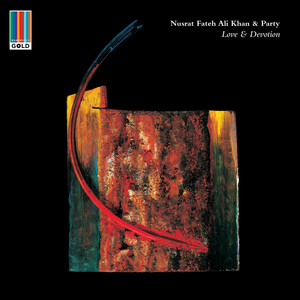
Devotional Songs
Nusrat Fateh Ali Khan
|
5 | 2.6 | +2.4 |
|
Apple Venus Volume 1
XTC
|
5 | 2.83 | +2.17 |
|
The Nightfly
Donald Fagen
|
5 | 3.02 | +1.98 |
|
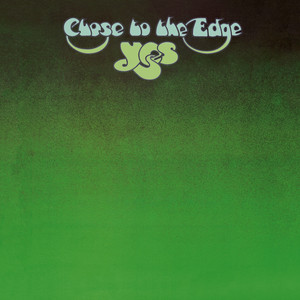
Close To The Edge
Yes
|
5 | 3.2 | +1.8 |
|
Beautiful Freak
Eels
|
5 | 3.26 | +1.74 |
|
Made In Japan
Deep Purple
|
5 | 3.27 | +1.73 |
|
Countdown To Ecstasy
Steely Dan
|
5 | 3.29 | +1.71 |
|
The Man Machine
Kraftwerk
|
5 | 3.31 | +1.69 |
|
Deep Purple In Rock
Deep Purple
|
5 | 3.31 | +1.69 |
|
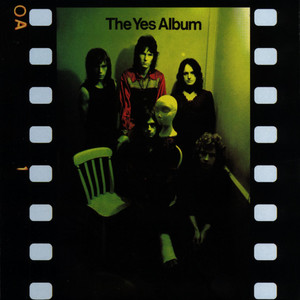
The Yes Album
Yes
|
5 | 3.31 | +1.69 |
You Love Less Than Most
| Album | You | Global | Diff |
|---|---|---|---|
|
Dookie
Green Day
|
1 | 3.79 | -2.79 |
|
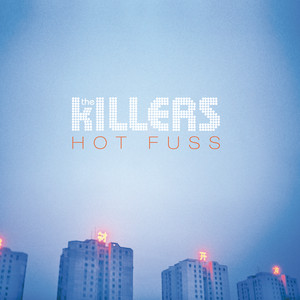
Hot Fuss
The Killers
|
1 | 3.72 | -2.72 |
|
Lust For Life
Iggy Pop
|
1 | 3.59 | -2.59 |
|
Straight Outta Compton
N.W.A.
|
1 | 3.5 | -2.5 |
|
Strangeways, Here We Come
The Smiths
|
1 | 3.44 | -2.44 |
|
Fear Of A Black Planet
Public Enemy
|
1 | 3.34 | -2.34 |
|
Pornography
The Cure
|
1 | 3.32 | -2.32 |
|
The Rise and Fall of Ziggy Stardust and the Spiders from Mars
David Bowie
|
2 | 4.26 | -2.26 |
|
At Budokan
Cheap Trick
|
1 | 3.09 | -2.09 |
|
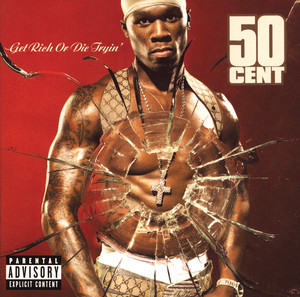
Get Rich Or Die Tryin'
50 Cent
|
1 | 3.08 | -2.08 |
Artists
Favorites
Tap an artist to see their albums
| Artist | Albums | Average |
|---|---|---|
| Deep Purple | 2 | 5 |
| Nick Drake | 2 | 5 |
| Yes | 2 | 5 |
Controversial
Tap an artist to see their albums
| Artist | Ratings |
|---|---|
| U2 | 2, 5 |
| David Bowie | 5, 4, 2, 3 |
5-Star Albums (30)
View Album Wall










Popular Reviews
The album offers pure electric blues performed by a superb band. And yet, at the same time, it contains everything I detest about blues: clichéd lyrics, predictable solos, rigid structures. The “Oohs” and “Yeahs” from the audience complete the stereotype. Yes, the album is certainly a role model for many blues (rock) musicians of later years. But I simply can’t relate to this 12-bar blues structure and the “my baby, she left me” lyrics at all. Because I’ve heard it all a thousand times before and it always comes across the same. If you're a Blues fan, this album is a full ⭐⭐⭐⭐⭐, but for me, as a Blues skeptic it's barely a ⭐⭐ because I have to give some credit for musical excellence.
What sounds in the description like two of the four horsemen of the musical apocalypse – rap and blues (the other two being country and techno... or was it country and reggae?) – is in reality an incredibly dull, remarkably sluggish and lacklustre album. I’ve no idea why this ended up in the ‘1001 Albums’. Is it because of ‘Cold Beverage’, which, according to Wikipedia, became a ‘college radio staple’? What’s next? ‘Popular in Polish sausage adverts’? Dull, just plain dull.
Cheap Trick sound exactly as their name suggests. A cheap rock ’n’ roll trick or, to put it a bit more sexistly: hard rock for little screaming Japanese girls. Because if you strip away the screeching during the concert recording, the flowing manes, the unbuttoned shirts and the bare chests on display, all that’s left is very ordinary boogie rock, somewhere between Status Quo and the Bay City Rollers. Cheesy pop music for teenagers, with electric guitars and simple lyrics about love and heartbreak.
Better than I feared, but not good enough to become a lasting favourite. A few individual tracks work well in a playlist, but over the course of a full album I find it all a little too monotonous. Leftfield are yet another one of those '90s bands that you either discovered and fell in love with at the time, or simply can't connect with today, because this kind of mind-altering music no longer feels in tune with the times. Or perhaps it's just no longer in tune with my age.
1-Star Albums (26)











All Ratings (152)
Right at the start of my musical journey, a true masterpiece. Nina Simone was always an artist I should have known more about. This is powerful music with a political messagecand sadly, not much has changed: It's black, feminist, poetic, sublime. Particularly fascinating: ‘Lilac Wine’, 'Four Women', ‘Wild is the Wind’ and ‘Black Is the Colour of My True Love’s Hair’.
Zeitgeist. It was the era when science fiction was booming. The era when astronauts were working in multinational space stations. The future was just around the corner. I’ve known this album ever since it came out. In German. The English-language version still sounds strange, a bit off. Perhaps also because the strong accent makes it clear that the lyrics were never intended to be in English. But that doesn’t matter. Because with Kraftwerk, it’s the atmosphere, the concept, the idea – and the music, of course – that counts. The album is a masterpiece. Their most commercially successful one. And perhaps not even their very best. But great. Still visionary, almost 50 years after its release. And the future is still around the corner. For better of for worse.
‘Songhoy Blues’ – the band name made me fear the worst. Because anyone who knows me knows how little I can be bothered with 95% of the blues and blues-rock noodling out there. But fortunately, the album has very little to do with classic blues or blues-rock; instead, it is an excellent example of African ‘Desert Blues’ (according to Wikipedia), which is musically much more complex. Although, of course, you can’t understand a single word – the lyrics are apparently in Songhay, the language of northern Mali – the music is rhythmically structured and universally accessible. A good example of an album I probably would never have heard if it weren’t for the “1001 albums you must hear before you die” website.
The album offers pure electric blues performed by a superb band. And yet, at the same time, it contains everything I detest about blues: clichéd lyrics, predictable solos, rigid structures. The “Oohs” and “Yeahs” from the audience complete the stereotype. Yes, the album is certainly a role model for many blues (rock) musicians of later years. But I simply can’t relate to this 12-bar blues structure and the “my baby, she left me” lyrics at all. Because I’ve heard it all a thousand times before and it always comes across the same. If you're a Blues fan, this album is a full ⭐⭐⭐⭐⭐, but for me, as a Blues skeptic it's barely a ⭐⭐ because I have to give some credit for musical excellence.
Whenever I listen to Beck – which is rare, I confess – I find myself thinking that I ought to listen to more of his music. Or that it just doesn’t move me. This album is certainly one of his best. Beautifully sad, a love child of the Velvet Underground’s debut and early Radiohead, slightly drunk, introvert and definitely depressive. And yes, I understand why he was (or is?) such an important figure during the decline of rock music, and I do like what I hear. But even this album doesn’t quite resonate with me. Maybe I'm getting too old for this kind of music. Or I just have enough of this music in my collection. Still, I’ll put it on my to-listen-again list.
Oh, I remember it well when this album came out. It made a huge impact. Tracy Chapman became world-famous overnight thanks to the Nelson Mandela 70th Birthday Tribute concert. The debut struck a chord with the spirit of the times: racism, social injustice, misogyny, the lack of prospects for the working class – all these were issues that played a major role in the politically charged 1980s. Add to that Tracy Chapman’s clever songwriting, her expressive voice and the – from today’s perspective – timeless production, which make the album a true singer-songwriter classic. Chapman was never able to replicate the commercial success of her debut, nor perhaps the extremely high artistic standard of this album. But she doesn’t need to, as this album already establishes her as one of the most significant female songwriters of the 1980s. It is shocking how relevant the lyrics still are. It’s as if 40 years haven’t passed…
This is certainly a Britpop classic, released at the height of the Britpop wave and the hype surrounding the ‘feud’ between Blur and Oasis. And yes, the album has a few catchy hits (‘Girls & Boys’, ‘Parklife’), but in the long run it’s too cocky, too superficial for my taste. I prefer Blur’s later albums, as they sound a bit more mature; I can’t really get into this one over the course of a whole album (and even less so with Oasis). Perhaps because I’ve never really warmed to the Britpop wave. Good, probably very good, but just average for me.
In the late 1970s and early 1980s, the English underground music scene was highly politicised within the burgeoning indie scene. Suddenly, there was music from working-class neighbourhoods for working-class people, with a trendy sound. Ska was danceable and lyrically driven (far more so than disco) and reflected the reality of life for young people in the urban jungle. The Police borrowed this ‘white reggae’ (Regatta de Blanc) from bands like The Specials, whilst Madness were set to make this new ska sound even more popular. When the album came out, I was too young to understand its significance. Back then, I saw The Specials as a slightly less fun version of Madness, though it was actually the other way round: The Specials were Madness’s bigger, more sensible older brother, musically more versatile and lyrically far more astute.
That was truly the most dreadful album I’ve had to listen to so far in this challenge. Marilyn Manson embodies everything I detest about 90s rock music: posing, senseless extreme volume, deliberate provocation and calculated shock tactics, all for the sake of causing a scandal. Musically, there’s nothing special behind all the screaming and those late-adolescent porn lyrics: Black Sabbath, Ozzy Osbourne and Alice Cooper did the shocking stuff better back in the 1970s, and Gary Numan’s ‘alien image’ was far more convincing and less ridiculous. Music for 90s kids who wanted to shock their parents. Nowadays, nobody talks about Manson anymore. And for good reason.
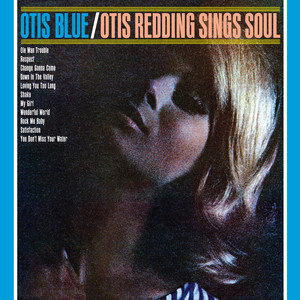
I keep this short. Otis is Soul music. Perfect phrasing, an expressive voice, pure feeling, not a single note out of place, plus a tight band, and every song is sung as if it came straight from the bottom of his soul. Otis even manages to breathe real soul into the Stones' rubbish ‘Satisfaction’. Soulful perfection.
Unlike what most music fans probably think, I find *Led Zeppelin II* to be the band’s most boring and weakest album. Too much blues, too much posing, too many swaggering guitar solos and “every inch of my love”. Yes, I know, that’s what many people love about rock ’n’ roll, but it’s also exactly what bores me out of my mind. Fortunately, the band has made far better albums. Highlights: Ramble on, Thank you.
They say it’s one of the best hip-hop albums of all time. OK, now it’s official. I just can’t get into hip-hop. A barrage of words over the same old beats, over a words, over beats, over words, over beats. I suppose it’s all very meaningful. But musically, it bores me to death. Not my cup of tea. Definitely not my cup of tea.
I’ve known this album for as long as I can remember. My older brother bought it shortly after it was released. Later, it became one of my first CDs, and I’ve followed its release history with interest, including various expansions, remasters and remixes. What concerts! The ‘core album’ remains the classic, especially in this familiar mix (though the Steven Wilson remix is at least its equal, just not nearly as familiar). The album is regarded as one of the best live albums in rock history. When you listen to it, it immediately becomes clear why: the band is at the peak of its musical prowess, Blackmore and Lord use their rivalry to create incredibly virtuosic solo duels, Ian Gillan achieves things and produces sounds with his voice that hardly any other rock singer could imitate, whilst Glover and Paice provide a confident and powerful rhythmic foundation. The recording quality from Japanese venues in the 1970s was vastly superior to that of European or American stages, and the audience fires up the band with a mixture of Japanese reserve and frenetic ecstasy. The result is pure energy. Hard rock with progressive influences at the very highest level. An eternal classic and perhaps truly the objectively best live album of all time.
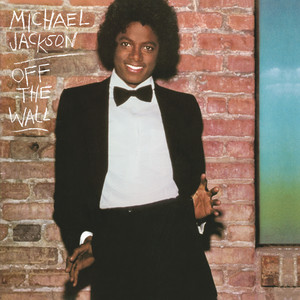
Michael Jackson at the height of his career. This album laid the foundations for the sound that would reach its commercial peak on *Thriller*. Yet unlike *Thriller*, *Off The Wall* is still deeply rooted in the sound of the 1970s. It marked the first time MJ had collaborated with Quincy Jones. The duo would go on to shape the sound of the 1980s and spin the hit machine ever faster. With a disastrous end. But the lightness of this quasi-debut by the new, grown-up Jacko would remain unrivalled.
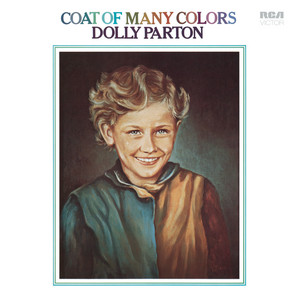
If I ever needed a reminder of why I can’t stand country music, here’s the perfect example of everything I find annoying about it. Cheesy music, saccharine lyrics (I love my baby, I miss my baby, my baby has left me), sluggish tempos, sentimentality instead of poetry – or at least virtuosity.
"Psychocandy is the debut album by the Scottish rock band The Jesus and Mary Chain. It combines catchy (SIC!!) pop melodies with overdriven electric guitars and feedback-filled cacophony. The album is regarded as pioneering for the shoegaze genre." So says Wikipedia. I see. I do indeed hear a lot of feedback, along with bored (and boring) vocals and, overall, a band that would love to sound like the Velvet Underground. Except they were around 20 years earlier and had two brilliant songwriters. Music like on this album is the reason why I’m sceptical about ‘indie rock’. Boring noise for a boring generation (mine). Terrible. And I well aware that this is considered a true post rock classic.
Like most people, I only discovered Nick Drake long after his death. Through a TV advert. (Now that's a bit embarrassing.) After hearing him for the first time, I quickly got hold of Drake’s slim catalogue (back then there were only three albums; today there are a few more rarities compilations). Even more so than my idol Tim Buckley, Nick Drake was completely unknown during his lifetime. Perhaps his quiet, introverted music didn’t fit in with the turbulent times of the late 1960s and early 1970s? I don’t know. From today’s perspective, his music is breathtakingly beautiful, his lyrics are magical poetry: Timeless perfection. Add to that his clean guitar playing and his melancholic voice. “Five Leaves Left” was his debut and remains perhaps his purest album; the second (“Bryter Layter”) was perhaps a little overloaded in terms of production; the third (“Pink Moon”) remained somehow a bit fragmentary. All three rank among the best singer-songwriter albums of all time. Nick Drake was the John Dowland of the 20th century.
This is probably the ultimate folk-rock album. Crosby, Stills, Nash (& Young)’s debut was already a massive success, but “Déjà Vu” surpasses it once again, at least in terms of sales and impact. With the addition of Neil Young and his rock-oriented guitar, the album became significantly more folkROCK than its predecessor, though the quartet managed to strike a balance between ballads, folk songs, protest songs and rock songs. The characteristic harmonies of the core trio (supplemented here and there by Neil Young’s falsetto) dominate the sound. A true classic of the genre and of rock history in general.
The first two Deep Purple albums featuring the Mark I line-up were far from bad. With their blend of psychedelic, progressive, and hard rock, they showcased the virtuosity of Blackmore and Lord, offering a highly distinctive sound right from the start. The classic Mark II line-up — Ritchie Blackmore, Ian Gillan, Roger Glover, Jon Lord and Ian Paice — made its debut with "Concerto for Group and Orchestra" and once again expanded the band's sound, partly thanks to the charismatic Ian Gillan on vocals and partly because the band were now confident enough to leave the boundaries of the genre behind. It is perhaps therefore not so surprising that the Mark II line-up's debut studio album, "Deep Purple in Rock", virtually defined and revolutionised the hard rock genre. From then on, this album (and the subsequent Mark II albums) became synonymous with hard rock. At the same time, with their solo escapades, Blackmore and Lord took their musical rivalry to absurd heights, adding influences from classical music and progressive rock to ‘pure’ hard rock with their virtuosity. The result remains stunning: "Deep Purple in Rock" is a (pun intended) rock music classic set in rocks err stone.
Is this XTC’s secret best album? Their (almost) swan song, their ending on a high note? Yes, I know, there’s the masterpiece *Skylarking*, there are the fan favourites *English Settlement* and *Nonsuch*, but perhaps XTC were never closer to the Beatles – the brilliant, visionary, revolutionary Beatles – than on this album. *Apple Venus Volume 1* is an incredibly good album, fantastically produced and arranged.
I hadn’t heard the album before, and perhaps I was expecting something different. Something a bit louder. Noisier. No, the album isn’t loud. It’s more like quiet, minimalist indie pop. The call it dream pop. But the album is a bit monotonous. No, very monotonous. Individual tracks hardly stand out, and not much sticks in the mind. It’s not a bad album, but it just doesn’t work for me. If I want to listen to that sort of music, I’ll listen to the quiet songs by Velvet Underground. Perhaps I’m simply too old for dream pop.
What a load of rubbish: I had to stop the album mid-play, for the first time in the challenge. Wrong notes, out-of-tune chords, inconsistent timing on top of the already poor drumming: someone’s deliberately trying to sound wrong and ugly here, perhaps in some sort of belated punk attitude. A sound straight out of the rehearsal room, completely amateurish, but lacking in charm and originality. I’m too old for this kind of rubbish.
I’ve never really got into Abdullah Ibrahim’s jazz. I’m afraid “Water from an Ancient Well” isn’t going to change that. It’s all very well played, but overall Ibrahim’s playing (or that of his band) strikes me as too polished, too well-behaved, too clean. The solos, confined to strict blues patterns, are predictable. I’m missing that final spark. The last four tracks from “Tuang Guru” to "Sameeda" stand out a little. But, as I said, overall it’s too well-behaved for my taste. Not bad, but not my kind of jazz.
It is difficult to separate Leonard Cohen’s album "You Want It Darker" from his death, for the artist passed away almost as soon as it was released – an analogy to David Bowie’s "Blackstar". As with “Blackstar”, the album is a final, significant statement by a great artist at the end of his career (I shall ignore the posthumously released Cohen album “Thanks for the Dance” for now, as it was only completed after Cohen’s death). The album powerfully explores the themes of death, closure, turning to God, (final) love, and looking back. It contains some of Cohen’s finest songs from the last 40 years: the title track (featuring the wonderful Jewish chants of a cantor and choir), “Treaty” and “Travelling Light”. Cohen’s voice sounds like a soft hum, the music is often sparse, and the compositions frequently follow a plain blues pattern. Musically, as is so often the case with Cohen, it remains relatively simple. The album impresses with its lyrics and Cohen’s haunting delivery. A worthy last statement.
Strictly speaking, I shouldn’t really like CCR’s music. Too much blues, too much country, too much America, too much Dixieland romanticism for my taste. And yet I love Fogerty’s music. The sound seems to be deeply rooted in the South (even though Fogerty is from California); the music is heavy, mystical, sweaty, yet at the same time drawn straight from life. With their second album, ‘Bayou Country’, the band found their signature sound: ‘Born on the Bayou’ and ‘Proud Mary’ are the blueprint for future greatness. This is the good stuff.
Coolness factor: 100 With all the coolness associated with Isaac Hayes — the voice behind the Blaxploitation classic Shaft — it’s easy to forget that he was also a musical innovator. At a time when progressive rock bands in Britain were primarily embracing the long song format, he released Hot Buttered Soul, an album featuring only four tracks, two of which are well over 10 minutes long (the opener 'Walk on by' and the closer 'By the Time I Get to Phoenix'), one just under that length ('Hyperbolicsyllabicsesquedalymistic', 9:10 minutes) and one at 'just' 5:10 minutes ('One Woman'). It should have been commercial suicide, even in the world of soul music. Instead of flopping, however, Hayes's first masterpiece expanded the genre and opened up new avenues for it in the coming decade. Ironically, it was this unusual album that made him a star of black music, and skilfully edited singles then ensured commercial success in the charts. A milestone from a giant of soul music.
To be perfectly honest, I find the album — and the band's entire sound — awful. 'Four chords that made a million' (if there are even four). There's not much more boring than American indie rock with a punk attitude — maybe British indie rock is a little worse, but only maybe. I thought Hüsker Dü were awful back then, even when all my friends were raving about them. And if it didn’t appeal to the ‘rebel’ in me back then, it certainly won’t now. Of course, I know that behind the band’s raucous sound there are two clever minds, and that the band had a lot to say through their lyrics, but for me, unfortunately, it's not much more than 70 minutes wasted. I just can't get the message.
I’ve never listened to a Hole album before. I probably heard the occasional song on MTV back when “Live Through This” was released, but it wasn’t music that interested me. I have no recollection of the music. Back then, in 1994, the album was the talk of the town and the subject of wild speculation. Kurt Cobain had taken his life a week before the release date, and suddenly an album by his widow appeared. I don’t wish to engage in speculation about Cobain’s alleged ghostwriting – a certain stylistic similarity is certainly unmistakable. But didn’t half the bands back then sound a bit like Nirvana? From today’s perspective, over 30 years after its release, the album certainly isn’t worth the hype, but it’s better than I feared. Admittedly, if we’re honest, Patti Smith had already been doing this sort of music much better 20 years earlier. A certain ‘polished edginess’ means the album doesn’t really strike me as authentic. But perhaps these are just Yoko Ono-style prejudices that I can’t shake off.
I really ought to like Joan Armatrading: she’s a talented songwriter and her blend of folk-rock, blues, a touch of jazz and pop is something I certainly appreciate. But for some reason, her albums just don’t do it for me. Her third, self-titled album from 1976 doesn’t change that either. That might be down to the overly tame production, which seems terribly dated today. It might be down to Armatrading’s vocals, which, whilst not unemotional, are always a bit restrained. I find her music plain and simple – boring. There are other singer-songwriters who really grab me more.
At first, I thought, "Ugh, just another one of those alternative rock albums that everyone loves, but all I hear is annoying noise." But Sonic Youth is different. Yes, this isn't highbrow poetry, but noise rock and art punk. And that’s precisely why it works, contrary to expectations: it's organized noise. It's not just distorted guitars and bleating; it's played artfully with constant compositional twists. It's progressive rock in noise guise. Furthermore, the sound quality of the album is excellent. When is this from? 1986? Was it released on an indie label? Wow. It sounds absolutely audiophile-grade and timeless. Organized noise. What a discovery! I need to explore Sonic Youth more.
It is impossible to talk about Nirvana’s Unplugged album without mentioning Kurt Cobain’s death. The album was recorded at Sony Music Studios in Hell's Kitchen, Manhattan, on 18 November 1993. Less than six months later, on 8 April 1994, Cobain’s body was found. He had presumably shot himself in the head three days earlier. Six months after that, in November 1994, the album was finally released, although excerpts from the concert had already been broadcast on MTV's heavy rotation, including 'All Apologies' and the David Bowie cover 'The Man Who Sold the World'. Six of the 14 tracks are cover versions, whereas only one of their own hits, 'Come as You Are', was included in the setlist. Cobain and his band clearly did not want to follow the series' usual format, eschewing a 'best of' live set of acoustic versions in favour of obscure tracks from their catalogue and songs that had influenced them. The album also symbolises the turning point that came with Cobain’s death: grunge was dead, and its unwitting messiah had taken his own life. The movement that had sought to change so much in music and art imploded. The remnants were commercialised, and the focus soon shifted to entirely different genres. Of course, you can hear the band’s musical limitations. The guitars are far from cleanly played (and are perhaps even a little out of tune), and Cobain’s vocals aren’t always in tune. But that was virtually part and parcel of Nirvana’s musical identity. It wasn't about perfection, but about immediacy, spontaneity and authenticity. Never before or since has anyone sounded so raw, unpolished and unrefined on an MTV Unplugged performance. I would have loved to hear more from Cobain, one of the most talented songwriters of his generation. It would have been great to see him break away from grunge and develop musically. As it stands, 'MTV Unplugged in New York' is the only album on which he was able to present himself in a different context.
Phew! This album is boring. It might not be even truly bad, but it's really really dull. It's exactly the kind of monotonous rap with R&B samples from Ableton's default presets that you've heard in countless other productions. I really have no idea what’s so special about it, or why it made the 1001 Albums list. Surely there must be plenty of other rap and R&B recordings out there that sound less streamlined and generic?
This album marked the beginning of my love for R.E.M. I can’t remember whether it was on the radio or on MTV when I first heard “The One I Love”. But I liked it. Finally, a new band with a (back then) fresh sound that really grabbed me. I remained loyal to the band right up until they split up, even though my enthusiasm gradually cooled. At some point, they perhaps became too big for me, and all the albums after the excellent ‘Up’ left me cold (even before that, I’d struggled with ‘Monster’, which I considered a failure). Today I listen to it with more distance; even on this album, not all that glitters is gold. But the raw urgency of R.E.M.’s music and Stipe’s cryptic yet somehow hypnotic lyrics were good companions to me for a long time as I was growing up.
In the summer of 1980, Iron Maiden were the hottest thing around. Their debut album had just come out and they were touring Germany with Kiss. I was 13 and too young to go to the concert at the Cologne Sporthalle. But we played the debut record over and over again. It really was a new form of hard rock... ‘Heavy metal’ was a new term back then, and indeed this music was faster, more aggressive, “harder” than what had previously been considered ‘hard rock’. Added to that was the eerie aesthetic of the artwork. Although I’m not really much of a fan of heavy metal, I do like the early Iron Maiden. I’m probably one of the few fans who lost interest in the band when singer Paul Di Anno left. Bruce Dickinson was certainly a stroke of luck for the band and fits better overall into the band’s musical concept, but I preferred Di Anno’s punk attitude – less cliché, more decadence. The contrast between his “un-metal” vocals and the band’s fast riffs and bass lines remains unique. Musically, the album isn’t quite on a par with their second album “Killers”, but that’s not down to the band’s performance, but rather the mediocre production. Nevertheless, you can’t help but be drawn in by the band’s raw energy. An album that set the tone in many respects for 1980s rock music.
OK, that was a surprise. I’d only heard the band’s name and was bracing myself for the usual alternative rock stuff. Screeching guitars, whiny singers, self-centred lyrics and no hook lines. But no, the album is catchy, easy on the ear – a sort of modernised cross between Blondie and Goldfrapp. Rock with pop appeal. I don’t think I’ll go and listen to the band’s entire discography just because I’m a fan now, but I’ll definitely be playing this album again. Despite the daft band name and the rubbish artwork.
Of the seven albums Steely Dan released between 1972 and 1980, six are perfect. Their debut was still somewhat uneven, but by the time of "Countdown to Ecstasy", Steely Dan had already arrived at their classic sound: a highly distinctive blend of rock, blues, jazz and adult pop. If I myself have paid slightly less attention to “Countdown to Ecstasy” than to the subsequent albums, it is because they were even more perfect [SIC!!], even more refined, even more finely honed, but that does not detract from the genius of songs like “Bodhisattvaha”, “The Boston Rag”, “My Old School” or “Show Biz Kids”. Perfectly composed and flawlessly executed musical dramas in five minutes. Timeless mastery that we may never see the likes of again.
I’m actually a fan of electronic music, but for some reason the progressive electro and techno of the 1990s never really grabbed me. For one thing, I prefer the warm analogue synth sounds of the 1970s and early 1980s; for another, I generally find techno too rhythm-driven and, at the same time, too monotonous. I feel much the same about this album: it’s all very artfully crafted, visionary and certainly groundbreaking for the genre, but the music just doesn’t do it for me. It doesn’t stick. It doesn’t trigger anything. Not my cup of tea.
Of all the Talking Heads albums, I’m least familiar with *More Songs About Buildings And Food*. I’ve never really warmed to it, nor have I ever actually owned a physical copy (I have all the others, apart from the odd one out, “True Stories”). It lacks the raw, wild energy of the debut, but it also falls short of the creative diversity of its follow-up, “Fear of Music”, let alone the genius of “Remain in Light” or “Speaking in Tongues”. Sure, Brian Eno did give the band a better sound here, but in terms of composition, Byrne only hints here and there at the great things to come. It’s still a good album, but not an outstanding one.
An hour of refined boredom, somewhere between jazz for elevators and Tango Nuevo clichés, with a touch of 1980s jazz-pop à la Matt Bianco – but the whole thing deadly dull. Even the cover versions of Frank Zappa’s “Chunga’s Revenge”, Gato Barbieri’s “Last Tango in Paris” and the inevitable Astor Piazzolla’s “Vuelvo al Sur” are of no use here. Muzak.
In the summer of 1983, ZZ Top's distinctive Texas boogie rock could be heard everywhere. A series of cool music videos for “Gimme All Your Lovin’” and “Sharp Dressed Man”, followed later by “Legs”, propelled the blues-rock group to become one of the world's most successful bands. In reality, however, it was three old dogs presenting their eighth album, which they had adapted to the contemporary new wave sound of the 1980s. Notably, Frank Beard’s drumming was largely replaced by a drum machine and the tempo was adjusted to the Hi-NRG standard of the time, around 125 bpm. The result was danceable blues-rock pop that, while accessible to the masses, had lost much of the original charm of their early albums. From today's perspective, the 'more modern' Hi-NRG sound seems significantly more dated than the timeless Texas blues sound of classic albums like "Tres Hombres" (1973) and "Fandango!" (1974). Undoubtedly, the album contains numerous catchy tunes and is a classic of the '80s. However, objectively speaking, it is not ZZ Top’s best album.
"Strangeways, Here We Come" is the fourth and final studio album by English rock band The Smiths. Thank God! Back in the '80s, everyone seemed to love them. Except me. I still can’t understand what people see in their whingeing, whining music with egomaniacal lyrics and uninspired guitar playing. Johnny Marr is an excellent guitarist, but with The Smiths, you rarely get to hear that. The album would almost be bearable if it weren't for Mr Steven Patrick Morrissey droning on over everything. No, really — even almost forty years after its release, this band and this music mean nothing to me. There's plenty of excellent, sensitive music with poetic lyrics out there — you really don't need The Smiths.
When "Superunknown" came out, it was one of the few albums from that era that really caught my interest. I was particularly taken with the video (and the song) for 'Black Hole Sun'. Overall, I have fond memories of the album. Now, many years later, I've put the album on again and I'm a little disappointed. My initial fascination has waned somewhat. Musically speaking, Soundgarden were undoubtedly the best that the grunge scene had to offer and Chris Cornell was a fantastic singer. However, looking back after more than 30 years, I would say that it's just a good, solid alternative metal album with a slight grunge influence. But it's not my cup of tea (anymore). The single 'Black Hole Sun' really stands out, and the other singles 'Spoonman', 'My Wave' and 'Fell on Black Days' are further highlights.
I’ve never been a fan of Van Morrison. That’s partly because I’m not really into blues music, and partly because I saw Van Morrison live once – it was the most bored and arrogant performance I’ve ever seen. A real grump. I can’t really get to grips with his landmark album ‘Astral Weeks’, but ‘Moondance’, with its late-sixties charm and that peculiar blend of folk-rock, R&B, soul and a touch of country – largely free of classic blues schemes – has a lovely patina that’s easy to appreciate, even if you can’t stand Van the Man.
I only own one hip-hop album: Hypocrisy Is the Greatest Luxury by The Disposable Heroes of Hiphoprisy. When it was released in 1992, the single 'Television, the Drug of the Nation' was played frequently on MTV. Michael Franti’s razor-sharp lyrics were a breath of fresh air in nineties pop music. Added to this were Rono Tse’s remarkably powerful beats and groovy bass lines. Finally, danceable pop music with political lyrics had returned. Above all, the whole album thrives on Franti’s intelligent, unsparing and alarmingly topical lyrics, which break away from the hip-hop mould. Sadly, the band only released two albums, the second of which, Spare Ass Annie and Other Tales, set texts by William S. Burroughs to music. However, it was clear from the outset that the narrow musical framework of hip-hop was too restrictive for Michael Franti. Tracks like 'Music and Politics' break completely away from the hip-hop sound, drawing closer to the jazz and soul of Isaac Hayes — not least thanks to the fantastic guitar work of jazz musician Charlie Hunter, who was making his debut at the time. In a sense, this album anticipates the music of spoken-word performers like Kate Tempest.
In my last review of Nick Drake’s "Five Leaves Left", I concluded with the following lines: "All three [albums] rank among the best singer-songwriter albums of all time. Nick Drake was the John Dowland of the 20th century." I stand by that. Whether the sparse orchestration of “Pink Moon” was a result of Drake’s severe depression, which prevented him from working with more instruments, is purely speculative. Apart from his voice and guitar, only a single piano melody can be heard in the title track. In its sparse simplicity, "Pink Moon" is, in a sense, the essence of Drake’s music. At less than half an hour long, it is pure magic and poetry: a swan song that was never intended as such. Drake’s fame only grew much later, in the late 1990s, thanks to a promotional film featuring the title track. In the raucous rock year of 1972, with its symphonic progressive rock, "Pink Moon" was simply too quiet to be heard above the noise of mellotrons, Rickenbacker basses, and Moog synthesizers. Nick Drake is a tragic hero. I would have liked him to live to see his success and relevance.
Who or what on earth is that? When I opened my '1001 Albums' app this morning, I came across an album called "Chore of Enchantment" by a band called Giant Sand that I’d never heard of. These things happen; I'm not all-knowing. OK, Wikipedia tells me that they’re an ‘alternative rock’ band. The mastermind behind the band is the American singer-songwriter, musician and producer Howe Gelb, who I’m at least familiar with by name. The album itself, however, isn’t worth mentioning. It's fairly laid-back alternative rock, similar to the Eels, but significantly more boring. It's not awful, but it's incredibly monotonous. The lyrics probably aren't bad, but I wish there was more going on musically. Not my cup of tea.
Until now, I knew little more about Thundercat than his name. That has now changed. His third studio album, "Drunk", is an excellent showcase of a highly engaging, eclectic style that blends elements of funk, jazz, soul, hip hop and R&B with psychedelic and progressive pop and rock. At times, it sounds as though Steely Dan and Todd Rundgren, Prince and Earth, Wind & Fire had been jamming together. The artistry of the album lies in the fact that no new elements have been invented here – how could they? – but rather existing elements have been artfully and harmoniously woven together, even though they seem to contradict one another. So it’s no surprise that the album’s guest list features such a diverse range of musicians as Kenny Loggins, Michael McDonald, Kendrick Lamar, Wiz Khalifa, Mac Miller, Pharrell Williams, Kamasi Washington and Louis Cole. I’m not sure if every track on this highly fragmented album is of the same quality or to my taste, but overall I really like this postmodern ‘jigsaw puzzle approach’.
There are quite a few people who consider The Cure’s “Pornography” to be the dark masterpiece of the 1980s, a high point in the discography of a great band. And then there are those like me, who have always considered The Cure to be grossly overrated and who couldn’t relate at all to the band’s dark, depressive and sometimes morbid style, even going so far as to regard it as a caricature. Let’s put it this way: “Pornography” is not a Cure album (unlike, for example, its successor “Japanese Whispers” or the later “Disintegration”) that can convert a Cure sceptic like me. All the preconceptions I have about The Cure are confirmed here: a contrived gloomy atmosphere, whiny vocals, depressive lyrics, mindless post-punk with the same old chord progressions and unimaginative arrangements. The album really isn’t for me.
Many of my friends are big Rush fans. Since we have similar musical tastes, I’ve always wondered why the band more or less passed me by without making much of an impression. This may be because I had hardly any exposure to Rush during my musical formative years, with one exception: the live album "Exit... Stage Left", which followed the album "Moving Pictures". At the time, I liked the record that a school friend played over and over again, but obviously not enough to make me want to explore the band further. And that’s pretty much how it’s stayed. Whenever a friend warmly recommends a particular track or album to me today, claiming it will “convert” me, I give it a listen. I find it quite all right, but it doesn’t really stick with me. Above all, it never triggers the urge to hear more of their music. It’s all very skilfully played and composed, of course, and the lyrics aren’t any sillier than those of, say, Yes (although, as an Italian, pseudo-Italo-Spanish titles like “La Villa Strangiato” (SIC!!!) look absolutely dreadful to me). I don’t even have any issues with Geddy Lee’s unusual voice either. I don’t know what it is I’m missing about the band. Perhaps it’s a bit too much of everything for me? Many Rush fans consider Moving Pictures to be the high point of their discography. As a self-confessed Prog aficionado, I find the album OK, but nothing more. Sorry, folks.
Sorry, but that’s not music; it’s the musical equivalent of Tourette's diarrhea, performed by a misogynistic, violence-glorifying thug with no musical talent. It feels like half the lyrics are just 'I, I, I, I, I', ''n-word, n-word, n-word, n-word', 'motherf*cker, motherf*cker, motherf*cker, motherf*cker', 'gangsta, gangsta, gangsta, gangsta' and 'bitch, bitch, bitch, bitch'. Compared to the other rap albums I’ve heard in this challenge so far (such as Gang Starr and The Disposable Heroes of Hiphoprisy), this is the most simplistic and rambling verbal diarrhoea I’ve heard from an egomaniacal idiot.
Yesterday, I listened to 50 Cent’s debut album "Get Rich or Die Tryin'", arguably the low point of the 1001 Albums Challenge. Today, I moved on to a true rap classic: "The Message" by Grandmaster Flash & the Furious Five. When the title track was released as a single, it was revolutionary because, yes, there had already been “Rapper’s Delight” by the Sugarhill Gang, but this was the real catalyst for rap music’s commercial breakthrough. The music was groovy and absolutely danceable, and the lyrics were critical, political and socially conscious. For a moment, it seemed as though rap was the ideal medium for criticising the dire state of political injustice in the world. But, as we all know, the music has since developed in a completely different direction. When I listen to the album "The Message" today, I’m struck by how inconsistent it is. On the one hand, there are critical, highly political tracks such as "The Message" and, in the Expanded Edition released much later, the non album single "New York, New York". On the other hand, the album contains a lot of filler tracks and the catchy electro track "Scorpio". There are a plenty of scratch and mixing and sampling sounds from Grandmaster Flash, as well as a somewhat bizarrely banal R&B tribute to Stevie Wonder. In short, the singles are the absolute highlights of the album; unfortunately, the rest is rather dated pop that bands like Kool & the Gang were doing better back then. Grandmaster Flash and rapper Melle Mel are undoubtedly historically significant, but this album is neither consistent nor consistently convincing. A rating averaging between ★★☆☆☆ and ★★★★★ amounts to no more than ★★⯪☆☆.
By the time “Achtung Baby” came out in 1991, I had already turned my back on U2. While I loved “The Unforgettable Fire” and “The Joshua Tree,” “Rattle & Hum” had deeply disappointed me. And “Achtung Baby!” would turn my fondness for the band into antipathy. The hype surrounding the album was unbelievable. At the time, it was truly considered the most “avant-garde” thing you could sell in the mainstream. Listening to the album again 35 years later, you find neither anything particularly avant-garde in it (aside from a few studio gimmicks by Lanois and Eno), nor anything hateful. Since “The Unforgettable Fire,” U2 had been shifting more and more toward a very ‘American’ expansive sound, which was fully realized here for the first time. In short: this is mainstream at its broadest, featuring a few good tracks (“Mysterious Ways,” “The Fly,” ‘Acrobat’), many mediocre ones, and a few bad ones (“Who's Gonna Ride Your Wild Horses”—hey hey sha la la, hey hey, sha la la). Back then, U2 were the biggest rock band on the planet, and that fame certainly went to the band’s heads; above all, though, it makes it so difficult to properly categorize their music. Without all the media hype surrounding the band and the album, “Achtung Baby” (what a stupid album title that no English speaker can pronounce correctly) is just a rock album with the sound of its time, with some highs and lows but mostly “more of the same,” which has acquired a lot of patina over the years. The album wasn’t even “groundbreaking” for the band itself, whose hubris would spiral out of control after this album and culminate in gigantic tours.
Oh, what's this? I had no idea that Gary Burton and Astor Piazzolla had made an album together. It's a live recording from July 1986 at the Montreux Jazz Festival, which was released a year later. The album is made up of pieces by Astor Piazzolla, but "Vibraphonissimo" was written especially for Gary Burton. As the album title suggests, this is Piazzolla's typical Tango Nuevo. But with Gary Burton on vibraphone – with Pablo Ziegler on piano, Fernando Suárez Paz on violin, Hector Console on double bass and Horacio Malvicino on electric guitar – it sounds a lot less irritating than the 'original sound' of Tango Nuevo, which I just can't get into and which normally bores me to tears. But for those of us who weren't convinced by Tango Nuevo before, this album is probably going to feel a bit samey and even a bit tiring at times. Fans of the genre will definitely find something they like in Piazzolla's discography. So, my rating is based on what I personally like; fans should definitely check this out. It's a real milestone. I'm just not interested in it at all.
John Lennon thought it was rubbish, George Harrison was disappointed by it, and the critics hated it back then. Today’s critics, however, love it because its fragmented style anticipates the lo-fi bedroom productions of indie music. And what about me? I’ve actually only just listened to the album properly for the first time. Not much has stuck with me. Some parts sound like demos from The White Album or Abbey Road; other parts sound unpolished. But ‘Maybe I’m Amazed’ is brilliant. McCartney moved away from the perfectly produced Beatles albums, and so did the other three. They were to produce their albums far less elaborately and innovatively than the Beatles did with George Martin, and that’s fine. I often find this album lacks compositional brilliance. However, Paul McCartney went on to compose hits as a solo artist for decades to come. Overall, this is more of a 'pass' certificate.
"Back in Black" showcases AC/DC at the height of their popularity. It was the first album featuring singer Brian Johnson, who had replaced Bon Scott, who had passed away five months earlier. In 1979, the band had achieved their definitive international breakthrough with "Highway to Hell", a success that they now effortlessly replicated despite the significant change in line-up. "Back in Black" became, in effect, the blueprint for all subsequent AC/DC albums and for 1980s hard rock. Musically, there was nothing new; instead, the band perfected their sound: riff-driven compositions in a blues scheme, with lyrics revolving around ‘real men’s themes’: women, alcohol, heaven and hell, rise and fall, and rock ’n’ roll. If you set aside the well-known tracks ‘Hells Bells’, ‘Back in Black’, "You Shook Me All Night Long" and "Rock and Roll Ain’t Noise Pollution", what remains is run-of-the-mill AC/DC. From today’s perspective, it’s almost unintentionally comical in its clichéd nature, but clichés are an integral part of hard rock culture. Even if the music is a bit dull over the course of the album. But if it’s AC/DC, then this album or its predecessor. You really don’t need to know any more than that.
This is the first in a series of perfect or almost perfect albums by the Beatles. It all, really started here. These were the new Beatles, leaving the teenage craze and beat music behind, mixing pop and folk and psychedelic rock and Indian influences into iconic songs like "Norwegian Wood", "Nowhere Man", "Michelle", "Girl" and "In My Life". "Rubber Soul" foreshadows album masterpieces like "Revolver", "Sgt. Pepper", "The White Album" and "Abbey Road".
Phew. Three things I can’t stand: glam rock, hair metal and cheesy punk rock all in one band: to me, Hanoi Rocks are the epitome of what ruined 1980s rock music. Rock music for the redneck dance-off at the village disco. Silly, built on cheap hooks and with a particularly strong visual element. Rock music for teenage posters. Absolutely unimportant, absolutely trivial, absolutely boring.
Cheap Trick sound exactly as their name suggests. A cheap rock ’n’ roll trick or, to put it a bit more sexistly: hard rock for little screaming Japanese girls. Because if you strip away the screeching during the concert recording, the flowing manes, the unbuttoned shirts and the bare chests on display, all that’s left is very ordinary boogie rock, somewhere between Status Quo and the Bay City Rollers. Cheesy pop music for teenagers, with electric guitars and simple lyrics about love and heartbreak.
When you consider that the album was released in 1967, it’s almost on a par with the era's other masterpieces, such as Jimi Hendrix’s Are You Experienced? or the Beatles’ Sgt. Pepper's Lonely Hearts Club Band. Cream evolved the simple blues rock of their debut album into a much groovier form of psychedelic rock. At least, for the most part. This makes the boring or silly tracks all the more painful: 'Blue Condition', written and 'sung' by Ginger Baker, is particularly bad; 'Take it back' is a dull blues rock number; and 'Mother's Lament' is simply silly English humour that belongs on a comedy stage, not on an album. Conversely, tracks such as “Strange Brew”, “Sunshine of Your Love”, “World of Pain”, “Dance the Night Away”, “Tales of Brave Ulysses” and “SWLABR” are genuine psychedelic rock classics. Let' put it like this: This is a strong album, so just ignore the weaker tracks.
In the nineties, I found the rock music of the time a bit alienating. None of the new bands really appealed to me, and none of the new sounds really won me over. But there were, of course, some bright spots, including *Mellon Collie and the Infinite Sadness* by The Smashing Pumpkins. (t. b. c.)
"Catch a Fire" is widely considered to be the Big Bang of modern reggae. Although reggae music existed before this album, sonically it was much closer to ska than this 'modern' interpretation, for which Bob Marley, Peter Tosh and the Wailers are considered pioneers. The influence of the British record label Island Records should also not be underestimated. It ensured that the music was recorded and produced more professionally, and made more recognisable and danceable for a white audience. Marley, Tosh and the Wailers popularised themes such as racism, poverty and oppression, which are as promiment as love songs and the (glorified) use of marijuana. Listening to this debut album, it’s striking just how low-budget the production was. This is even more apparent when you listen to the album’s ‘Original Jamaican’ recordings in the Deluxe version, which you can then compare with the overdubbed Island recordings. I’m not a reggae fan, and I don't think I ever will be. However, I have always found Bob Marley to be the most interesting of all reggae musicians, especially given that the band and their sound were so iconic that they are still being copied to this day. You can hear the band's raw and somewhat rough-around-the-edges beginnings here. At the time, it was certainly a sensation: politically charged music from the Third World which, in retrospect, is more historically significant than musically compelling. Marley & Co. achieved this better and with greater confidence on their subsequent albums.
I make no secret of my disdain for the Rolling Stones. They were the ‘bad boys’ of 1960s rock music and the Beatles' wicked rivals. They were certainly important role models for anyone who found the Beatles too well-behaved. But above all, the Stones were a blues band, and I find blues rock deadly boring. For 50 years, the Stones have been the dinosaurs of rock music: a case of self-plagiarism that comes across as a bizarre caricature. However, there are certainly songs — and perhaps even albums — that even I, a sceptic when it comes to the Stones, cannot completely dismiss: "Beggars Banquet", their last album with Brian Jones (although he no longer plays a musically significant role), is certainly one of their better albums. They skilfully blend white blues with psychedelic country and folk. Furthermore, the songwriting duo Jagger and Richards produced two excellent tracks in the form of “Sympathy for the Devil” and “Street Fighting Man” – three if you include the single “Jumpin’ Jack Flash”, released around the same time but not actually part of the album. Their fusion of folk and country in particular came across as astonishingly authentic. So, if you're looking for a musically accomplished Stones album, you can't go wrong with "Beggars Banquet". Not even Mick Jagger’s dreadful vocals can completely ruin it.
For a crooner, Prima was too down-to-earth and too roguish; as a jazz trumpeter, he was overshadowed by Louis Armstrong and Harry James; and yet, with his Italian-American accent, Prima was a star, and *The Wildest!* brings together his best songs on one album: ‘You Rascal You’, ‘Buona sera’, ‘Jump, Jive, An’ Wail’ and, of course, ‘Just A Gigolo / I Ain’t Got Nobody’, which was covered note-for-note by David Lee Roth in the 1980s (including the scat sequences) and was to become his greatest hit as a solo artist. Of course, the album has acquired quite a bit of patina over the years, but you simply cannot resist the rousing wildness of Louis Prima and his excellent band.
By the time "Black Holes and Revelations" was released, Muse had reached the commercial peak of their career. By that point, however, I had largely lost interest in the band. A musician friend recommended their debut album, "Showbiz", to me in 1999, and it remains my favourite of their albums to this day. This is contrary to my usual listening habits, as subsequent albums were significantly more progressive, complex and experimental than the debut, but also smoother, more bombastic and more calculated. When I listened to "Black Holes and Revelations" again today, some 20 years on, I was surprised at how much I liked it — at least a few tracks. Perhaps that’s what bothers me: Muse produce either little strokes of genius ("Take a Bow", "Supermassive Black Hole", "Assassin") or complete lead ballons ("Invincible", "Glorious"). They are a good band, but their albums are overrated and lack a clear musical direction, at least on this album. At least not if you consider exuberant vocals, fast tempi and massive intensity with extreme dynamics to be stylistic elements rather than a coherent concept.
Jethro Tull were the last of the big prog bands I discovered for myself. I’d already been familiar with the other big bands – Yes, Genesis, King Crimson and ELP, even Van der Graaf Generator and Gentle Giant – since I was a pre-teen, thanks to my older siblings; I only really got to know Tull in the late 1980s; before that, I’d only heard their hits on the radio. “Aqualung” was the first proper studio album of theirs that I heard, and to this day I find this very distinctive blend of folk rock, blues rock, hard rock and progressive rock utterly captivating. The album also defines the band’s musical framework: acoustic folk numbers, riff-driven hard rock passages, bluesy solos and complexly arranged, unusually structured prog numbers featuring classical and jazz quotes, often with witty, biting lyrics. And although the album sounds hopelessly old-fashioned, it is at the same time timeless, because it has, in any case, fallen out of time since its release.
When Björk released her fifth studio album, "Medúlla", I just felt I was no longer connecting with her music. I was a massive fan of her first two albums, "Debut" and "Post". I really liked the way she mixed avant-garde and pop music. I didn't find her third album, "Homogenic", as impressive. With the soundtrack "Selmasongs", she returned once more to her blend of avant-garde and pop music. The fourth album, "Vespertine", with its cold, electronic sound, just didn't do it for me. The compositions became more and more inaccessible. This idea is made even stronger on "Medúlla". The album's a departure from the cold electronic sound of the last one, and it's all about the vocals. With some tracks, it feels like the experiments with layered vocals have messed up the composition. I've got nothing against contemporary classical music, which is often more about sound than melody, but in the end, Björk's vocal talent just sounds like monotonous white noise to me. Around half the songs feel like they're just intros or outros, and you're left waiting for the actual song to begin. Even the big-name guests, like Robert Wyatt, Mike Patton and Tanya Tagaq, an Inuit throat singer, can't help. It's all very artful, but it's a bit too l'art pour l'art for my taste, an impression that would only get stronger on later albums. Some tracks really convinced my today revisiting the album after 20 years, but some just didn't. Still, it's the last Björk album I bought and kept. I think Björk is a really courageous artist with her own ideas and innovative concepts, but I just can't follow her anymore. Even I sometimes find music a bit too cerebral.
This review is a quick one, because I’m too old for this sort of rubbish. Squealing guitars, indistinct noise, tinny drums, vocals straight out of The Muppet Show. I suppose it’s meant to be very avant-garde, but others have produced radical noise much earlier and much more consistently. Boring, annoying and pointless.
Alternative rock, dance-punk revival, new wave, art rock, synth-pop, dance-rock. The genre labels for The Killers’ debut album "Hot Fuss" explain my problem with the band’s sound and my lack of interest. Because, honestly, I don’t hear any new wave here (how could I? It’s a genre label from the eighties), above all, I certainly don’t hear any art rock, and terms (and concepts) like dance-rock (sic!) and dance-punk (SIC!!) are enough to put me off for good. What I hear is that typical highly agitated vocals that eventually became established in alternative rock, along with a wall of sound made up of guitars and a few keyboard sounds that clash with the singer’s bleating. Of course, Brendan Flowers can sing well, but I wish he wouldn’t yell every note at full throttle. This music lacks variety and dynamic changes; almost everything seems to be cranked up to the max. I’ve heard worse, but “Glamorous Indie Rock’n’Roll” (that’s a track on the album) is absolutely not my cup of tea.
I refuse to listen to music by a strongly suspected sexual predator, a peddler of absurd conspiracy theories, an anti-Semite, a racist and an admirer of Hitler, who would actually make money from it.
Nick Cave and I just don’t see eye to eye anymore. With one exception — the mournful album Ghosteen — I have great respect for Nick Cave the artist, and for his unwavering artistic and personal integrity. Musically, however, on "Henry’s Dream" Cave remains exactly the ‘backyard Elvis’ that I’ve always perceived him to be (and I don’t mean that as a criticism). He is a storyteller who looks at the dark and dirty sides of the world, but musically, it's too much rock 'n' roll for me. There's too little pause for thought and too much prose. He's a good man. But not for me. With all due respect.
From heartbreak and break-ups to loneliness, young female singer-songwriters are shaping the themes of pop music. For some, anger, revenge, disappointment and bitterness are also part of the mix. However, I think for Lorde it stays at heartbreak and sorrow. Her music is very much of the moment. But none of that interests me in the slightest. I hate to sound like an old white boomer, but this music is as ordinary as it is trivial. Goodness, I was so bored. But I suppose I’m not the target audience either.
After Steely Dan effectively split up, Donald Fagen released his solo debut album, The Nightfly, in 1982. He collaborated with Gary Katz, who had produced several classic Steely Dan albums. Fagen was also supported by many of the same studio musicians he had worked with during his time with Steely Dan. Musically, Fagen maintained the same high standards of perfection that characterised Steely Dan, yet compositionally he adopted a different approach, rebalancing the elements. The Nightfly is more jazzy than any Steely Dan album, while simultaneously featuring numerous references to the early rock 'n' roll of Fagen's youth. The result is every bit as timeless as the Steely Dan catalogue and his subsequent solo albums. Unlike Steely Dan's bitterly ironic, sombre lyrics, this autobiographical album reflects the optimism and sense of new beginnings of Fagen's childhood and youth. As one would expect from Donald Fagen, the 1982 album contains no references to contemporary music, drum machines, samples or obtrusive keyboard sounds. Even in the 1970s, Fagen and Becker weren't interested in the 'sound of the moment' and always did their own thing. This is what makes the album so timeless and so good, despite its unmistakable references to the past. It is another perfect gem in Donald Fagen’s impressive discography.
By the time this album was released, Dion’s greatest hits from his rock ’n’ roll/doo-wop era (“The Wanderer”, “Runaround Sue”, “Ruby Baby”) were already 15 years in the past, and even Phil Spector’s Wall of Sound no longer had the same overwhelming impact in the mid-1970s as it had just a few years earlier. The album ‘Born to be With You’ didn’t capture the spirit of the times and, looking back, doesn’t really convince me either. The ageing rock ’n’ roller and the megalomaniacal producer didn’t create a bad album, but neither did they create a good one – or at least a solid one. Once you’ve listened to it, nothing sticks in your mind and, to be honest, you don’t really feel like listening to it a second time.
"Pretzel Logic" is probably the Steely Dan album that I play the least. In fact, I play it even less often than their somewhat uneven debut. It is the final album by Steely Dan, a band that gradually fell apart during the recording sessions. From then on, Becker and Fagen worked on perfecting their sound with a variety of studio musicians. At the same time, it’s an album that looks to the past with tracks such as the Duke Ellington cover ‘East St. Louis Toodle-Oo’ and the re-recorded early Donald Fagen track ‘Barrytown’, and jumps back and forth between genres: Blues, jazz, rock and pop. The best tracks are somewhat hidden on the album. These are certainly not the well-known single 'Rikki Don't Lose That Number' and the very popular B-side 'Any Major Dude Will Tell You', but rather the deep cuts 'Night by Night' (a blueprint for Toto, featuring a very young Jeff Porcaro on drums), the proggy (!) 'Charlie Freak' and the short and sweet 'Through with Buzz', which, with its string arrangement, almost sounds like an US version of the Electric Light Orchestra. Perhaps the most quintessential Steely Dan track on the album is the walking blues track 'Pretzel Logic', which already hints at the band’s future sound. Interestingly, the predecessor “Countdown to Ecstasy” sounds closer to the future SD sound than this album does. Overall, "Pretzel Logic" was a commercial breakthrough, at least compared to its less successful predecessor, but I just can’t bring myself to love this album unconditionally to the very end. What it has in common with all Dan albums is the perfect sound, the musical mastery, and – which should by no means be overlooked – the fantastic solos by Walter Becker, Jeff Baxter and Denny Dias.
Many consider "Synchronicity" to be the high point of The Police’s discography. However, I have a slightly different view and have always felt somewhat at odds with the album as a whole. Even compared to its predecessor, "Ghost in the Machine", the band had moved away from the post-punk, white reggae (Regatta de Blanc) new wave sound of their early albums, experimenting instead with synthesisers, sequencers and new forms. Driven by the egos and rivalry of three very self-assured alpha males, this experimentation escalated into hubris that culminated in "Synchronicity" and subsequently imploded. If you listen closely to the album, you realise just how much Sting, Summers and Copeland play against each other rather than with each other. They had nothing left to say to each other. Added to this is the crystal-clear yet cold production, which makes it difficult for me to connect with the album. While the album features some of the band’s best tracks (Synchronicity I & II, King of Pain and Wrapped Around Your Finger), it also contains some dreadful ones (Every Breath You Take, Miss Gradenko and Mother). Listening to the album from start to finish, it seems so cold, passionless and self-indulgent that you almost freeze to ice. In fact, 'Synchronicity' was probably the last good album this trio could have produced before things turned sour. It contains some of their best songs, as well as a lot of self-indulgence.
Soft Machine's "Third" is widely regarded as a progressive rock classic and a blueprint for the jazz-influenced Canterbury sound. Although I have an extensive Soft Machine collection, I have always felt somewhat at odds with this supposed masterpiece. With four long compositions originally spread across four LP sides, I tend to lose the thread. In particular, I find the first two tracks, “Facelift” and “Slightly All the Time”, aimless and haphazard. 'Moon in June' is certainly the highlight of the album. Robert Wyatt sings improvised lyrics about summer and his longing for rain and retreat. Even though all the tracks on the album were very roughly edited, the vocal passages lend the song more structure and create a summery, melancholic mood. 'Out-Bloody-Rageous' is reminiscent of the music of Terry Riley, the highly influential founder of minimal music at the time, and feels more self-contained and thoroughly composed than the first two instrumental tracks. "Third" marked a radical departure for Soft Machine, moving away from the psychedelic proto-prog of the first two albums towards jazz. It would be in the years and reincarnations that followed that the band would more fully return to its rock heritage. I prefer almost all of the band's other albums, even though I find this radical shift in sound revolutionary.
"De-Loused in the Comatorium" is the debut album by the American band The Mars Volta. And what a spectacular debut Cedric Bixler-Zavala and Omar Rodríguez-López delivered. Just as the new wave of progressive rock bands were settling comfortably into a quiet niche, The Mars Volta shook up the prog establishment. No one had charged forward in prog so loudly, so drastically, so fast and so garishly for a long time. "De-Loused in the Comatorium" is a single, full-throttle ride through tempo and key changes, unexpected twists and unheard-of sounds, all delivered with a self-assurance and energy that progressive rock had lost since the days of the legendary King Crimson in the 1970s. The band thus shot straight to the top and made it rather difficult for themselves to top their debut. For ten years, the band constantly reinvented itself, until they split up in the early 2010s and took a decade to reunite. As a debut album, "De-Loused in the Comatorium" is certainly one of the best, most radical and most successful prog albums of the 21st century so far.
‘The Black Saint and the Sinner Lady’ is widely regarded as the masterpiece of Charles Mingus. It was released in 1963, which was perhaps Mingus's most creative year. During this period, he also recorded and released ‘Mingus Mingus Mingus Mingus Mingus’ and ‘Mingus Plays Piano’. Musically, it is classified as 'Third Stream', a fusion of jazz and classical music. Even more than 60 years after its release, the album still feels avant-garde. There are hardly any successors to the album, not even from Mingus himself. Whilst he continued to work on a fusion of jazz and classical music, he never returned to this particular musical language. Free improvisations (or is it composed improvisations?) alternate with chamber music-style moments and big band sequences. With this album, Mingus set himself apart from his mentors, Dizzy Gillespie and Duke Ellington, whilst also creating a sound that was entirely different to that of John Coltrane or Miles Davis, for example. As unique as Mingus is, and as unique as this album is, I find it difficult to fully appreciate it. I like individual sequences, but the free-jazz passages leave me somewhat at a loss. There's simply too much happening at once for me to take it all in. Ultimately, it's perhaps another one of those great classics that everyone raves about but very few can truly understand or appreciate. It's a milestone, but like The Brothers Karamazov, it's a classic that I don't get much out of.
"The Slim Shady LP" established Eminem's reputation as an exceptional rapper. In the role of his alter ego Slim Shady, he tackles controversial topics such as violence, drugs and sex, usually in a highly exaggerated manner. In doing so, he employs direct, at times vulgar language and misogynistic, violent clichés, yet a certain ironic distance from Shady’s posturing is clearly evident. If one wishes to peer into the hopeless, embittered, brutalised soul of the marginalised ‘white trash’ in the American heartland, this album offers an excellent insight into a social class that has been left to its own devices for years. Drugs, violence, sex, and hatred of everything and everyone are portrayed here in very graphic terms. In doing so, Eminem proves himself to be a highly skilful wordsmith who has far more to offer than just a string of swear words. Musically, however, it naturally remains rather limited. A few beats, a bassline, a couple of funky chords – none of it is worth mentioning. But I understand why this album was so important and why it remains highly relevant even today. But musically speaking, though – and for me, despite all the street poetry, this is what matters most – there simply isn’t much to be found here.
I’d actually been hoping a bit that the album would disprove my preconceptions about ‘indie rock’, but unfortunately that’s not the case. Admittedly, “Yankee Hotel Foxtrot” has even been labelled “art rock”, which I can sort of understand given the experimental sounds here and there, but essentially Jeff Tweedy and his band remain true to the cliché of music without catchy hooks, featuring lots of self-centred lyrics and poor vocals. To be fair, I’ve heard worse, but over the course of a whole album, it does end up boring me. Critics regard the album as “one of the most experimental”, but if that’s the case, I’d rather not be listening to “the least experimental” tracks. The standards for indie rock are clearly not very high. For me, despite a few quite decent tracks, it’s just not enough.
"Sheet Music" is the second album by the British band 10cc. They are rightly regarded as one of the most creative and innovative bands of the 1970s, capable of effortlessly transforming the most complex structures into hit songs. If there was such a thing as the Beatles of the 1970s, then it was indeed Lol Creme, Kevin Godley, Eric Stewart and Graham Gouldman. Whilst the band had merely hinted at their potential on their self-titled debut, it was here that the full breadth of their style unfolded for the first time: progressive pop in all its guises, spiced with intelligent, often highly ironic and pointed lyrics. The only other band that springs to mind is Gentle Giant, where all the musicians were accomplished multi-instrumentalists who could step into each other’s shoes at any time. The album features “The Wall Street Shuffle”, one of the band’s biggest hits, but the best tracks tend to be deep cuts such as “Clockwork Creep”, "Somewhere in Hollywood" and “Silly Love”. Maybe it isn’t even the best work from this four-piece line-up – which was soon to split into 10cc and Godley & Creme – but it surely is an impressive testament to the band’s boundless creativity.
As far as I can remember, Coldplay's first three albums were the 'good' ones, before they veered further and further towards commercialism, ultimately sinking into pop trash. Back then, Coldplay were regarded as 'cheerful Radiohead' or 'Radiohead without the depression'. After all these years, I’m listening to their second album, "A Rush of Blood to the Head", again, and I’m not quite sure what to make of it. The comparison with Radiohead is certainly flattering, as Radiohead didn't make music this simple on their debut. On the one hand, Coldplay's signature "wall of post-rock sounds" certainly has its charms; on the other hand, it's all rather monotonous and bland. Perhaps it isn’t even the best of their first three albums? Overall, it's just average. Or maybe I’ve simply moved on from this sort of music.
"Songs In The Key Of Life" was Stevie Wonder’s 18th album and was released 50 years ago, in 1976. When you consider that Wonder is still active as a musician, you can appreciate just how important he is. In the mid-1970s, he was at the height of his creativity, and “Songs In The Key Of Life” was the crowning achievement in a whole series of fantastic albums. The perfection of the recordings – both in terms of performance and sound – remains impressive, especially when you consider that, although 130 musicians were involved, the majority of the music was recorded by Wonder himself. In terms of production, only Steely Dan could, at best, keep up with Wonder’s perfectionism. Compositionally, Wonder showcases everything he has to offer: R&B, (progressive) soul, pop, rock, jazz and funk. Wonder explored the boundaries of black music and confidently pushed them further. The result is quite simply perfect. It grooves, it swings, it rocks; it features enchanting melodies and, with ‘Sir Duke’, one of the most complex arrangements in the history of pop music. A milestone.
Iggy Pop is an excellent example of the fact that you don’t necessarily have to be a good composer, a good singer or a good musician to be a rock icon. For there is no doubt that Pop is an icon, embodying (proto-)punk and a brash yet uncompromising rock ’n’ roll attitude. “Lust for Life” was recorded in the same place and at the same time as Bowie’s famous Berlin Trilogy, with significant input from his drugs-and-rehab buddy Bowie, yet musically it bears no resemblance to it. Whilst Bowie explores krautrock, ambient and experimental art rock, Pop presents stomping punk and sing-along rock on “Lust for Life”, somewhere between the clichés of The Clash and The Rolling Stones. With its rumbling energy, the album is exhausting and irritating, but above all, it’s deadly boring.
"1999" is widely regarded as the first masterpiece of the great Prince. The album, which was released in 1982, marked his commercial breakthrough — it was actually the first Prince album I ever heard. In 2019, a Super Deluxe Edition comprising a total of five CDs with 65 tracks (instead of the original eleven) was released. While the synth-and-drum-machine sound certainly shaped Prince’s work in the years that followed and defined the sound of the era, it is also the main issue I have with the album from today’s perspective. Prince recorded the album almost single-handedly, as he usually did, only occasionally enlisting the help of other musicians, mostly backing singers. The list of instruments used reads like a synth fan's wet dream from the early '80s: ARP Omni, Oberheim OB-SX, OB-X, OB-Xa and OB-8, Linn LM-1, Pearl SY-1 Syncussion, and so on. – in short, everything that sounds like the '80s today, including handclaps, plus guitar, bass, piano and vocals. The album hasn’t aged well. Many of the musically brilliant moments suffer from this 'plastic sound', compounded by a few of Prince's cringe-worthy, sexist lyrics. For me, revisiting this supposed classic was disappointing. There are other Prince albums that work much better today.
"All Things Must Pass" is George Harrison’s debut solo studio album, released after the Beatles' break-up. Two other albums had already been recorded before the band split up. This triple album, released as a three-LP set, is arguably the most successful solo album by a former Beatle and perhaps comes closest to the sound of the Fab Four. Many of the compositions were written before the break-up and share the same flavour, and the album features Ringo Starr and Klaus Voorman — a former Beatle and a close friend of the band — along with countless other musicians. Even John Lennon and Yoko Ono contributed to one track. The album was produced, at least in part, by Phil Spector, who had already played a decisive role in the post-production of "Let It Be"; indeed, there is a certain similarity to the Beatles' final album. "All Things Must" Pass features numerous classics from Harrison’s solo repertoire, including 'My Sweet Lord', 'Beware of Darkness', 'Isn't It a Pity?' and the title track 'All Things Must Pass'. The third LP, entitled 'Apple Jam', comprises instrumental compositions that were improvised more or less live in the studio. The session featured renowned friends with whom Harrison would go on to perform time and again: Ginger Baker, Billy Preston, Jim Gordon, Carl Radle, Bobby Whitlock, Gary Wright and, of course, Eric Clapton. The album is a conclusion, a wistful look back and a new beginning — not only for Harrison, but also for the entire 1960s era, which was decisively shaped by the Beatles' music. It is also a wonderful piece of rock history.
Wow, I wasn’t expecting that! Of course I know who Ute Lemper is: the German singer who went to the US to make it big – and make it big she did. As the saying goes, 'a prophet is not without honour save in his own country'. She performs musicals, jazz and Brecht-Weill songs. But an album like this? With Nick Cave, Tom Waits, Elvis Costello and Scott Walker as the songwriters and The Divine Comedy as the backing band (and songwriter). The result is a sombre, emotional avant-pop masterpiece of singer-songwriter music. The crowning glory is the lengthy 'Scope J.', written by Scott Walker. At over 10 minutes long, it is austere and profound — the antithesis of commercially accessible, light jazz songs. Some editions of the album also feature an additional Scott Walker track, 'Lullaby (By-by-by)', as a bonus. Another 11 minutes of uncompromising artistry. This is an album that really is a must-listen.
I love the 1001 Albums Generator website for albums like this: I’d honestly never heard of Shuggie Otis before, let alone knew of the existence of his third (and, for a long time, final) album, "Inspiration Information". Wikipedia describes the style as “progressive soul”, and indeed, it’s fantastic music that combines the groove and accessibility of soul with the complexity of progressive rock. I can well imagine why the album went largely unnoticed in 1974: it simply didn’t fit the stereotype of black music and was far too sophisticated for the pop-oriented R&B crowd. But it’s also immediately obvious why the multi-instrumentalist Otis had such an immense influence on the young Prince, who was to make a name for himself a few years later with a similar concept (and much more commercial tracks). The comparison with Stevie Wonder (who was working on the masterpiece "Songs in the Key of Life" at the time) isn’t too far-fetched either, but of course, he didn't have neither the resources nor the experience of Stevie Wonder. It would have been very interesting to see what else Otis might have produced after this album, but instead he largely withdrew from the stage (and the studio) as a solo artist and produced music only for his own collection. Some of this material was eventually released many decades later following its rediscovery. It was too late for a global career, but the album impressively demonstrates a singular talent that was lost in the grind of the record industry.
Anyone who’s into rock music is bound to come across this David Bowie album at some point. 'Heroes' has become such a rock legend that there isn't much left to say about it. Here are a few of my personal thoughts: it’s not my favourite Bowie album (not even my second favourite), and in my opinion it’s not his best. In fact, I don't even think it's the best of the Berlin Trilogy. Without Fripp’s brilliant guitar work, it would be only half as good. Nevertheless, it remains a milestone and a masterpiece.
Actually, I should be a huge Randy Newman fan. I like talented singer-songwriters who write powerful lyrics exploring the darker sides of life. I appreciate self-deprecation and sarcasm as forms of criticism. Yet there's something about Randy Newman's music that just doesn't resonate with me. It could be his brittle singing style, even though I have no problem with so-called 'ugly' voices. It could be his deeply American perspective on the world — bitter and critical, certainly, but thoroughly American — or it could be something else entirely. Even though I find most of the songs brilliant, the album just washes over me. Sorry, Randy.
Oh dear, how dull! While I can appreciate drum and bass as an influence or sound effect every now and again, the 'pure form' of the genre makes absolutely no sense to me. It's just over two hours of frantic beats accompanied by a bassline and some vocals. That's it. Utterly boring. This album may have been groundbreaking for the drum and bass genre, but from today's perspective, the seemingly hedonistic reduction to pure dance rhythms just doesn't hold my attention.
I’m not a huge Bowie fan (actually I wouldn't consider me a fan at all). I have my reservations, particularly about his early work, which so many people hold in such high regard (“Ziggy Stardust”, “Hunky Dory”, “Diamond Dogs”, etc.). I also find much of his eighties and nineties output rather boring. Apart from his last two albums, especially "Blackstar", I only really like his Berlin Trilogy, the often-underrated "Scary Monsters", the funky "Let's Dance" (which is actually more of a Nile Rodgers album), and this album. Why? Because on "Station to Station", Bowie hints at the elements he would later perfect, namely Krautrock and avant-pop in the vein of the Berlin Trilogy and "Scary Monsters", and the laid-back, cool, groovy funk attitude of "Let's Dance". This brings us back to my personal Bowie favourites. With 'Wild Is the Wind', it also features the best cover version Bowie ever delivered. It's a strange, disjointed and incoherent album, largely created whilst high on cocaine, yet it is nonetheless astonishingly self-contained and thoroughly successful.
Elvis Costello and I aren’t going to be friends anymore. Having listened to "Blood And Chocolate", one of his earlier albums, I remember why: he basically plays simple 1960s rock ’n’ roll with a (post) punk attitude. There are simple guitar riffs, a croaky voice and an arrogant, rough-and-ready attitude. In other words, it's exactly the sort of rock music that's never interested me. However, anyone who likes early 1960s rock might find this to their liking. For me, it lacks sophistication and elegance, as well as surprising songwriting. Everything has this 'Oops, here I come' attitude typical of young Costello. Definitely not my cup of tea.
Phew! There are lots of eighties albums that just haven’t stood the test of time. Orange Juice’s "Rip It Up" has it all: thin production, questionable sounds and strange lyrics. Not to mention Edwyn Collins, a singer with a distinctive voice that people either love or hate. And, as you've probably guessed: I find this drivel unbearable. Coupled with the lacklustre production, the album is a very good example of something that was popular in its day but is now close to be unlistenable.
By 1978, punk rock had actually already run its course in the UK, but the shockwaves of the movement and its music (though ‘punk’ doesn’t necessarily mean ‘punk rock’, but that’s another matter) were sweeping across the world and had evidently reached Australia by 1978 as well. And so ‘Eternally Yours’ by The Saints sounds just like the tracks that were already being successfully marketed by the major record labels at the time. I’m certainly no expert, but the brash attitude and simple music naturally bring to mind the Sex Pistols or the Ramones, without quite matching their raw energy. Terrible music. No matter how noble and important the punk scene’s cause was, the music is unbearable. Even more unbearable is the digital version, which, alongside the regular album, contains the same noise – only in poorer sound quality – as “International Robot Sessions” as bonus tracks.
When I was young, Johnny Cash was just about the worst thing you could imagine in music. His music was the epitome of bland American country. Anyone who listened to Johnny Cash was seen as an anti-rocker with dubious taste. His strange album with Bob Dylan did nothing to improve his reputation either. For a boy from Europe, Johnny Cash was far too American. It wasn’t until towards the end of his career that his image changed, and I plucked up the courage to listen to one of his albums. "American IV: The Man Comes Around" is the last album he released during his lifetime. It consists almost entirely of cover versions. Cash was ill and frail at the time of recording. You can hear that in the intimate interpretations. The songs about pain and grief are particularly successful, thanks in part to the subtle arrangements: "Hurt", "I Hung My Head", “Personal Jesus” and “The Man Comes Around” are the highlights; objectively speaking, the duet with Don Henley, “Desperado”, is a complete failure – poorly sung (by both of them!) – but it is impossible to escape the aura of the dying Cash on this album.
What more can be said about this album that hasn't already been said? Probably nothing. It has sold 50 million copies, been reissued countless times and remastered and re-released multiple times. The artwork is one of the most iconic of all time. The music is known to virtually everyone. This album marked the start of the British band’s most successful period. In terms of production, it was a quantum leap for the band. By the time this album was released, they were global stars. Admittedly, it's slightly overrated and not even the band's best album (not even their second best), yet "The Dark Side of the Moon" remains a constant companion in my musical life and a milestone in rock music.
Phew! The nineties were pretty exhausting. The Chemical Brothers' debut album, "Exit Planet Dust", is quite monotonous. While it's certainly hypnotic and exhilarating in a club, at home on the couch 30 years after its release, it's just tiring synthetic minimalist rhythms. It's not bad — I understand why this sound became so important — but looking back, it simply reflects the hustle and bustle, excitement and hedonism of the time.
Blimey! I tried really hard to listen to the album in one go, but I just couldn’t bring myself to do it. Yes, it's much better than the egomaniacal, misogynistic, Tourette-like gangster rap albums I've listened to for the 1001 Albums project, but ultimately, the constant agitation, anger and brutality are unbearable. It's not music, but rather a series of battle cries.
What sounds in the description like two of the four horsemen of the musical apocalypse – rap and blues (the other two being country and techno... or was it country and reggae?) – is in reality an incredibly dull, remarkably sluggish and lacklustre album. I’ve no idea why this ended up in the ‘1001 Albums’. Is it because of ‘Cold Beverage’, which, according to Wikipedia, became a ‘college radio staple’? What’s next? ‘Popular in Polish sausage adverts’? Dull, just plain dull.
My goodness, how time flies! Sufjan Stevens’ "Illinois" was released over 20 years ago, and his warm, dreamy blend of indie folk and baroque pop still sounds delightfully fresh. Stevens is an artist whose albums either don't really do it for me, or hit me with full force. This one really won my heart. The interweaving of classical, baroque, and minimalist music elements in his definition of Pop music is particularly effective here, making the album musically complex despite its apparent simplicity. I really ought to listen to more Sufjan Stevens and finally give his discography a proper listen from start to finish.
As I see it, there are two Springsteens: the loud, angry, highly political rocker who fills stadiums, and the melancholic, melomanic who composes sad loser ballads in the solitude of a hotel room. Either way, Springsteen is probably the greatest storyteller in the singer-songwriter guild. My problem is this: the loud, angry, screaming Springsteen doesn’t interest me; I prefer the melancholic Springsteen of “Nebraska”, the poetic “The Ghost of Tom Joad”, or the romantic of “I’m on Fire”. "Darkness on the Edge of Town" is regarded by many fans and connoisseurs as one of the Boss’s finest albums, one that paved the way for the global success of "Born in the USA". But for me, there’s little here that appeals to me. Sure, for the first time Springsteen sounds like Springsteen (I always found the ‘Wall of Sound’ on the predecessor “Born to Run” a bit too much), but for my selective taste in Springsteen, this album isn’t quite right. Sorry, boss.
I deeply fucking regret including the hip-hop genre in my *1001 Albums* list. To be honest, I didn't realise it could be this motherfucking bad. I figured there had to be *something* I was missing, but nope—the so-called greatest fucking albums in the genre have done nothing but confirm, reinforce, and somehow even exceed every goddamn preconception I ever had about rap music. "Straight Outta Compton" by N.W.A. is constantly hailed as one of the most influential motherfucking albums ever made, especially in gangsta rap. Fair enough—it was hugely fucking influential. But influence alone doesn't make something enjoyable. To my ears, it's a relentless barrage of motherfucking profanity, shouted threats, and endless fucking aggression, as though a room full of extremely angry guys decided that every third word had to be "motherfucker" and every second sentence had to end in someone getting told to fuck off. The energy is undeniable, but so is the monotony. Listening to it feels less like hearing music and more like being trapped inside an endless, adrenaline-fuelled screaming match where the volume keeps rising and every other word is "fucking" something or someone. If that's the appeal, then this motherfucker simply isn't for me. Completely, utterly, absolutely fucking unlistenable.
When Sade's debut album, "Diamond Life", was released, it fit perfectly with the British pop music zeitgeist. At the time, bands such as Working Week and Matt Bianco were blending jazz and pop. Sade was the most commercially successful figurehead of this 'new wave of pop jazz'. Everything about their image was perfect: the sensuous yet cool contralto voice of former model Sade Adu and the dominant saxophone of Stuart Matthewman reflected the fashion and approach to pop music of the time. 'Sophisti-pop' was elegant and sensual, yet also somewhat old-fashioned and melancholic. Admittedly, Sade never had anything to do with real jazz. This album features two of their most successful singles: 'Smooth Operator' and 'Your Love Is King'. It was the most commercially successful album of Sade’s career, although all their albums remained successful right into the nineties. "Diamond Life" may not be their best album, but it has a classic 1980s vibe and has aged remarkably well, offering polished, perfectly produced pop. Sade's last studio album, "Soldier of Love", was released in 2010, and the band continued to perform to enthusiastic audiences worldwide until 2011. Despite long intervals between performances, the line-up remained virtually unchanged. Repeated rumours that a new album is in the works have emerged, but so far, only some singles for soundtracks and charity have been released. Sade Adu now lives a secluded life in England.
Even though the Sex Pistols (and punk rock in general) had nothing to offer musically, the band inspired numerous other musicians to form their own bands. Attending the Sex Pistols’ concert in San Francisco in 1978 was what prompted Belinda Carlisle and Jane Wiedlin to pick up an instrument themselves and form a band. Three years later, Belinda Carlisle (vocals) and Jane Wiedlin (rhythm guitar), together with three fellow bandmates (Gina Schock – drums, Kathy Valentine – bass and Charlotte Caffey – lead guitar), released their debut album "Beauty and the Beat" as The Go-Go's, featuring a blend of pop, punk and new wave that was extremely contemporary for its time. Unlike Belinda Carlisle later on as a solo artist, The Go-Go's were less successful in Europe, so I’ve actually only listened to this album for the first time today. And that’s perhaps my problem: the momentum for this kind of music has passed. If you didn’t get to know and love them back then, it remains superficial and sounds just like countless other pop-oriented American new wave bands – perhaps even a touch more commercial than would have been good for it. The historical significance of the Go-Go's is, at least in the US, undisputed, but musically they simply offer well-crafted – and at times merely well-intentioned – new wave pop music.
I should be a huge Rufus Wainwright fan. He's an excellent singer with poetic lyrics and he often embellishes his artful pop music with classical elements and instrumentation. But something bothers me; something's missing. Or rather, listening to what is probably his best album, "Want One", I realise that something is just too much for me. It's too beautiful, too ornate and too playful. The result often comes across as overly sweetened, to the point where I switch it off. It's a brilliant idea to quote Ravel's 'Boléro' in 'Oh What a World' in a heavily slowed-down sequence, and of course a song like 'Natasha' is so beautiful it makes you want to cry. But over the course of a whole album, Rufus Wainwright is too much for me – too pretentious, too good to be true. The glycaemic index of his music is simply too high for my taste. It's lovely, but I have to consume it in very small doses.
What made Can’s music special was that it seemed both carefully structured and thoroughly composed, yet improvised at the same time. "Future Days" is Can’s fourth studio album (and fifth overall because of the compilation "Soundtracks"), the third and final one to feature their legendary frontman Damo Suzuki, and the last of the band’s 'classic albums'. The title “Future Days” is almost prophetic, as the music on the album foreshadows the ambient sound of the future, breaking away from the rock style of previous albums. I’m surprised to see it featured in the '1001 Albums You Must Hear Before You Die', as it isn’t Can’s strongest or most accessible record. The album is dominated by a dialogue between Irmin Schmidt’s experimental keyboards and Jaki Liebezeit’s shimmering, pulsating drumming. Even Michael Karoli’s guitar is woven into a dense rhythmic tapestry. The result is self-contained and self-sufficient, even within the Can universe.
My first reaction whenever I think of Jimi Hendrix is always the same: phenomenal guitar playing, but mostly rather uninspiring songwriting. "Electric Ladyland" undoubtedly features some outstanding tracks—the funky "Crosstown Traffic," the two extended pieces "Voodoo Chile" (with Steve Winwood on Hammond organ) and the epic "1983... (A Merman I Should Turn to Be)," as well as the legendary cover of "All Along the Watchtower." But it also contains a great deal of fairly ordinary blues numbers. "Electric Ladyland" is, of course, a landmark album in rock history. It offers a glimpse of where Hendrix might have taken his songwriting had he not tragically died at such a young age. But if we're being honest, the album also contains plenty of filler that is simply quite average. In my view, Hendrix never made a consistently great studio album. His guitar playing revolutionized rock music, but his formulaic blues jams quickly became something of a dead end as rock evolved at a rapid pace. So my final rating is best understood as an average between the album's two-star moments and its five-star highlights.
Better than I feared, but not good enough to become a lasting favourite. A few individual tracks work well in a playlist, but over the course of a full album I find it all a little too monotonous. Leftfield are yet another one of those '90s bands that you either discovered and fell in love with at the time, or simply can't connect with today, because this kind of mind-altering music no longer feels in tune with the times. Or perhaps it's just no longer in tune with my age.
Everything I hate about indie rock in one album. I didn't like the Pixies when all my friends started to listen to this boring post punk crap, I really disliked revisiting them yesterday. Definitely not for me.
The bossa nova craze in the US during the 1960s was a curious phenomenon. While John Coltrane, Charles Mingus and Miles Davis were redefining, expanding and revolutionising jazz, Americans in the midst of an economic boom were dancing to the swinging sounds of Copacabana. It was the white US-American guitarist Charlie Byrd and his friend, the white US-American saxophonist Stan Getz, who sparked a wave of enthusiasm with their album "Jazz Samba", featuring music from Latin America, from Brazil, a multi-ethnic nation whose people and culture blend African, European and indigenous influences. It was music that defied the poverty of a Third World country, exuding a zest for life with a touch of melancholy. Even before the true protagonists of bossa nova — João Gilberto, Astrud Gilberto, Antonio Carlos Jobim, Baden Powell and Sergio Mendes — became known abroad, two white US-Americans had paved the way. Was this cultural appropriation or a passion for a new sound? That’s for everyone to decide for themselves. In any case, it all began with this album. I prefer later albums in the genre, though. Perhaps it's because they're more sensual, more melancholic and less polished than this first version. Nevertheless, it is certainly a milestone.
It's hard not to like Neil Young if you love rock music, but it's almost impossible to keep track of his vast catalogue. As of July 2026, he has released 45 studio albums, along with 22 live albums, soundtracks, EPs, box sets and much more. I know perhaps a dozen of his records, mostly from the 1970s and 1990s, but even when it comes to the classic Neil Young albums, there are still plenty of gaps in my listening. Today I learned that his fifth album "On the Beach" forms part of the so-called Ditch Trilogy, recorded after the huge mainstream success of "Harvest", at a time when Young was going through a profound personal and artistic crisis. It's rougher, simpler and more downbeat than "Harvest", and it takes a few listens to reveal itself. Once it does, though, it says a great deal about the essence of Young's music, which has always been political in the broadest sense and deeply sympathetic towards outsiders and those left behind. It's as authentic, principled, uncompromising and unconventional as Neil Young himself. It's not his best album—because with Neil Young, such a thing probably doesn't exist—but it is certainly one of his finest. And the album is worth hearing for the tender, haunting intensity of "Ambulance Blues" alone.
I’m no expert on R&B and soul, and I’d never presume to offer a detailed analysis of this music. However, Amy Winehouse’s extraordinary talent as a songwriter and singer is clear for all to see. Her skill was immediately apparent. Her debut album "Frank" presented a hopelessly old-fashioned sound that was delivered with such conviction that it effortlessly cut through the perfect, artificial world of the boy and girl bands of the early 2000s. Finally, class and personality were back. The big hit singles were still two or three years away, but her true talent was already fully formed. What a tragedy to have lost her so soon.
At the WOMAD Festival in 1985, Nusrat Fateh Ali Khan and his ensemble, Party, gave one of their finest performances outside Pakistan. It marked the beginning of one of the most remarkable international careers not only in world music, but in the world of music as a whole. Qawwali is the devotional music of the Sufis, the mystical tradition within Islam. Its purpose is to elevate the spirit by bringing both performers and listeners closer to God. Nusrat Fateh Ali Khan was the undisputed master of this art form and, in my opinion, possessed one of the three greatest male voices I have ever heard (the other two being Tim Buckley and Demetrio Stratos). "Devotional Songs" was one of Nusrat Fateh Ali Khan's earliest releases on Peter Gabriel's Realworld label. Originally issued alongside "Love Songs", the two albums neatly separate the central themes of Sufism: faith and love. Both are approached through ecstasy, and this music is genuinely ecstatic. It needs no translation to convey its profound spirituality, but also its joy of life, of music, and of love. It speaks a universal language. Almost thirty years after Khan's death, this music has lost none of its beauty or its power to captivate.
"My Aim Is True" is Elvis Costello’s debut album, released in 1977. A mix of rock ’n’ roll, punk, pub rock, power pop, ska and, on the bonus tracks, country rock, it showcases Costello’s talent for perfect three-minute rock ’n’ roll songs with a punk attitude and clever lyrics. The album showcases Costello’s talent for writing perfect three-minute rock ’n’ roll songs with a punk attitude and clever lyrics. It marked the start of his meteoric rise as a critic's favourite and indie pop star. However: I’m not at all interested in old-fashioned rock ’n’ roll songs with a punk attitude. Musically, nothing on the album appeals to me except perhaps "Watching the Detectives" with its gritty white reggae sound similar to that played by the early Police. There’s no doubt that this debut made rock history. But I don’t have to like every historically significant rock album. Elvis Costello won't care, just as I don't care about his petty-bourgeois rock rebellion.
I know I'm a man full of contradictions. For weeks, I’ve been disparaging anything that even remotely resembles alternative, indie or punk rock at every opportunity during the 1001 Albums Challenge. Today, however, I’m celebrating the self-titled debut of the American trio Violent Femmes. However, I wouldn't be myself if I didn't have a reason for this paean of praise. Firstly, I discovered the Violent Femmes when their snotty folk-punk, led by the band's songwriter and singer Gordon Gano, matched my outlook on life perfectly – one of depression, hopelessness, self-doubt and post-adolescent crises. Secondly, it's the originality with which the Violent Femmes perform their songs. All they need is an acoustic guitar, drums, bass and Gano’s nasal, whiny voice. Back in 1983, this was the antithesis of perfect eighties pop and a huge departure from noisy political punk rock (or even light-hearted pub-punk). Gano’s songs, written when he was 18 and 19, precisely and sarcastically summarise the major and minor dramas of a young man coming of age. They are anthems for losers with which I could strongly identify back then. Presumably, from a purely musical perspective, the album wouldn’t resonate with me in the same way today as it did back then. Some music is timeless, and some you have to discover at the right stage in your life. Everything’s different now, but there was a time when I would have loved to write songs like Gordon Gano’s.
‘Double Nickels on the Dime’ is the third studio album by the American punk band Minutemen. Until now, I had never heard of the album or the band. Surprisingly, although it is a punk album, it is fortunately not punk rock. From the very first track, it's clear that the trio are exceptional musicians. Bassist Mike Watt stands out in particular with his original and technically demanding bass lines, but singer and guitarist D. Boon and drummer George Hurley are also masters of their craft. The double album consists of over 40 short tracks in a variety of styles, ranging from etude-like acoustic guitar solos to post-punk, hardcore and a kind of anti-funk. It even includes bizarre cover versions of songs by Van Halen, CCR and Steely Dan. The result is a furious blend of the raw energy of Talking Heads' 1977 debut and the style of hardcore punk icon Henry Rollins, who incidentally contributed lyrics to one of the album's tracks. While I haven't understood or liked everything on the album, the originality of the music and their fearless exploration of different genres commands my utmost respect. This exceptional album is made even better by its three highly talented musicians and songwriters. The average rating is therefore an accurate reflection of the brilliant five-star tracks and the filler that you can safely skip. It's one of the best albums with a 'punk label' that I've discovered recently (i.e. not at the time of its release or shortly afterwards).
Until today, I don’t think it had ever really dawned on me that ‘Funkadelic’ is a portmanteau of ‘funk’ and ‘psychedelic rock’. However, the third album by George Clinton’s band, "Maggot Brain", clearly establishes the link between psychedelic rock, as it was popular in the late 1960s and early 1970s, and funk. That said, the two genres coexist almost entirely separately. The opener, the title track 'Maggot Brain', is pure psychedelic rock, much like that celebrated by bands such as Vanilla Fudge, early Pink Floyd and Iron Butterfly. The rest of the album focuses more on funk tracks: a rock-infused variant of soul music that emphasises the bass and drums. The final track, “Wars of Armageddon”, blends funk, psychedelic rock and other elements into a jam session. It’s almost as if Jimi Hendrix were improvising with the band from Miles Davis' "Bitches Brew" band. Despite its inconsistency, the album is remarkably cohesive. Considering it was released as early as 1971, it's easy to see why it has influenced generations of musicians across a wide range of genres. I’m not sure if I like everything about the album, but it sure is fascinating from the very first to the very last second. A milestone for sure.
Imagine a cover band that loves playing covers of Queen, T. Rex and AC/DC, hires a boy soprano, and starts composing tracks that sound suspiciously similar to the bands they’ve been covering with such ease for years. Voilà – you’re listening to the debut album "Permission to Land" by The Darkness. When it was released in the early 2000s, it was a huge hit with younger music fans, who thought it was the most brilliant idea since sliced bread. However, if you know anything about music history, the references to mainstream rock in the 1970s are so obvious that they're almost cringe-worthy. It's all very well done and catchy, and Justin Hawkins’ yodelling – sorry, singing – is impressive, but to me it's just old hat. And over the course of a whole album, it's rather tiring and annoying. When I do want to listen to music like this, I prefer the originals.
‘Here Are the Sonics’ is the debut album by American garage rock band The Sonics, released in 1965. It features original tracks such as “The Witch” (a minor regional hit), “Psycho”, “Boss Hoss” and “Strychnine”, as well as covers of rock ’n’ roll and R&B classics, including a very raw version of the Beatles’ “Money”. It's fascinating how many bands remained virtually unknown in the underground scene at the time, only to be discovered by later generations. In a sense, The Sonics anticipated musical styles that would not emerge for another 10–20 years: punk and grunge. It's no surprise that Kurt Cobain was a fan of their music. As someone with little time for grunge and punk, I find this album intriguing in that it shows that the 1960s were much wilder and more diverse than one might assume. However, snotty rock ’n’ roll with a punk attitude ultimately proves too simplistic to entertain me in the long run.
At the start of the Nineties, amidst the burgeoning wave of alternative rock and grunge, the Black Crowes established themselves as mavericks. Their sound was deliberately old-fashioned, making unmistakable references to the 1970s and bands like Led Zeppelin. In 1999, it was no coincidence that they played concerts with Jimmy Page, during which they mainly covered Led Zeppelin tracks. Nine years earlier, they had laid the foundations of their career with "Shake Your Money Maker". When they first took off, I found them dreadful — downright blasphemous. Today, drawing on 'old heroes' has long since become the norm, and I have grown accustomed to bands sounding as if they're from the Seventies. My problem with the Black Crowes is something else entirely: They celebrate a musical style that I find incredibly tiresome after just two or three tracks: Blues rock. When this style is copied without any innovation, I find it even more boring than the originals. I’m certainly in the minority on this. Fans of blues rock, hard rock and Southern rock love the Black Crowes and hold their albums in high regard. I prefer to listen to other things.
I don’t think I’d ever properly engaged with Fela Kuti’s music until today. Of course, I had often seen his name in the music press, and musicians such as David Byrne, Brian Eno and Paul McCartney have spoken highly of him and I very likely may have listened to one compilation. But obviously I didn't pay much attention to it. A mistake. The blend of rock, funk and jazz that he created, driven by Tony Allen’s precise drumming, is downright mesmerising. "Zombie", released in 1976, is often cited as one of the highlights in his discography, which comprises at least 45 albums. The original album features just two tracks: the title track, "Zombie", and "Mister Follow Follow". As is not uncommon with Kuti, the lyrics are highly political. Kuti repeatedly criticised those in power and specifically the military junta in Nigeria. But even without understanding the lyrics, you can sense the anger, energy and sincerity in this music. Fela Kuti was a man with a clear musical — and evidently political — vision. I must listen to much more of his work.
There is no doubt that "The Joshua Tree" was U2's finest hour, before their success turned to hubris and they sacrificed their musical evolution for mass appeal — and with it, a certain degree of mediocrity. At some point, U2 became the U2 machine, staging colossal tours. With "The Joshua Tree", they reached their musical and compositional peak. Thanks to Brian Eno and Daniel Lanois, the album is perfectly produced, transporting the Irish band to the heart of the USA, from the major cities to the endless expanses and surreal swamps of the southern states. The album opens with three of the band’s best-known and most popular songs: ‘With or Without You’, ‘I Still Haven’t Found What I’m Looking For’ and ‘Where the Streets Have No Name’. The standard remains consistently high throughout. U2’s fascination with 'mythical America' – a romanticised vision of the USA – is portrayed through musically consistent yet astonishingly diverse tracks. From the sombre swamp sound of the southern states to straightforward rock numbers, it has it all. Although the album begins with the three singles, it is anything but top-heavy, maintaining the high standard of the first section. In fact, the tracklisting is also very well thought out, which is why "The Joshua Tree" is regarded as one of the best albums of the 1980s. Remarkably, even 40 years after its initial release, it has lost none of its lustre and still sounds utterly compelling.
Al Green’s soul music truly has soul. There may be singers who were more innovative, there may be singers who were even better, there may be better songwriters, but Al Green’s soul is authentic. His emotions come straight from the heart, without exaggeration, without artificial enhancements – soul with feeling. “Let’s Stay Together” is a fine example of how authenticity and a good song can have their full effect. The band is tight, the arrangements are funky, and Al Green’s phrasing is masterful. Sonically, the album does have a few weaknesses, but they’re hardly worth mentioning. A classic of the genre whose groove you simply can’t resist.
I’ve never been a big fan of Elton John. Admittedly, he’s an extremely talented songwriter, an outstanding pianist, a good singer and a veritable hit machine who churned out catchy tunes one after the other. He’s the Mozart of pop music. But here’s the problem: I love Beethoven. I only like Mozart in small doses and without any extra frills, no extra icing please. In classical music, I can choose which interpretation I prefer; in pop music, I can’t. To cut a long story short: most of Elton John’s work gets on my nerves. Too happy, too melodic, too Hollywood. There’s hardly an album of his that I enjoy listening to. There’s only one I think is brilliant. Ironically, it’s this, the lavish "Madman Across the Water", of all things. It features rich orchestral arrangements and opulent compositions. Elton John was never more ‘prog’ than on this album. And here, the extra icing on the cake fits perfectly. A wonderful album from start to finish. And with "Tiny Dancer", it also features John’s best song. Absolutely brilliant.
This is the perfect album for all Led Zeppelin fans, with riffs, anthems, storming drumming and 'Stairway to Heaven'. However, what is ideal for fans is problematic for me. As I wrote in my review of "Led Zeppelin II", the personified rock ’n’ roll attitude bores me to death over the course of a whole album. While it has its highlights, especially on the second side of the LP or the second half of the album, it's not great overall. If you take away the fact that it's an iconic album, I'd only give it a good, solid rating. When I want to listen to Led Zeppelin, I prefer other albums (namely "III", "Physical Graffiti").
I don’t think I’ve ever played a Dolly Parton album before today. Of course, I’m familiar with her hits and well aware of her significance as a songwriter and as a catalyst for many musicians, as well as the role model she has been for many female musicians of subsequent generations. And I’m aware of her tireless social commitment to the poor, to women and to marginalised groups, and of her resistance to exclusion and discrimination. Yesterday it was announced that Dolly Parton had passed away at the age of 80. Reason enough to give her music a listen and to pay tribute to a woman who will leave a gap in US society that cannot be filled. I have little connection to country music. With very few exceptions (tending more towards country rock), the genre reflects a reality that is quite alien to my European, urban culture. Most country music does end up sounding clichéd and saccharine, white and idealised. This largely applies to Dolly Parton’s 1971 album "Coat of Many Colors" as well. But I cannot help but acknowledge her musical and vocal mastery. It’s all brilliantly done. Dolly Parton wasn’t just an icon because she was a good person, but because she was a bloody good musician. I like a few of the songs; a few are a bit too ‘country’ for my taste. But today isn’t the day to play the know-it-all critic. We’ll always love you, Dolly.
I don’t mean to sound disrespectful, but I’ve always felt that Bowie's mythical status overshadows his actual musical achievements. "The Rise and Fall of Ziggy Stardust and the Spiders from Mars" is a good example of this. While the album is widely regarded as a milestone in rock music, to me it's just average glam rock, sometimes with orchestral accompaniment, featuring songs that try too hard to be edgy. The story of "Ziggy Stardust" seems more important than the music itself. Above all, Bowie’s vocals are simply too theatrical and over the top here. I realise that Ziggy Stardust's stage persona, image and provocatively presented, ambivalent sexuality were a welcome break with convention for young people of that era, offering an alternative to post-war prudery. However, when "Ziggy Stardust" was released, I was only five years old. This album has never held any significance in my personal history; other Bowie albums played a much greater role in my youth. Musically, the album simply leaves me baffled. What’s so great about it? Would it be as well known today if it had been released by other glam rockers, such as Slade or Mott the Hoople? Hardly. Once again, Bowie’s image (or more precisely, Ziggy's stage persona) outshines the music itself. Of all Bowie's overrated albums, this is perhaps the most overrated of all. Sorry folks.
While the first two Yes albums only hinted at the band's potential, they achieved their first of three perfect albums with "The Yes Album". The quantum leap in quality had two reasons: Firstly, the virtuoso Steve Howe replaced the first guitarist Peter Banks, whose angular style did not quite fit the band's concept. Secondly, they found a producer in Eddie Offord who helped create the Yes-typical sound. The band's transformation would be completed on the follow-up, "Fragile", on which the Hammond organ-focused keyboardist Tony Kaye was replaced by the more experimental and much more virtuoso Rick Wakeman. However, even without Wakeman, "The Yes Album" was a milestone in progressive rock. Howe brought not only his musical talent to the band, but also contributed good ideas to the complex compositions. Finally, they abandoned cover versions and dared to create long, expansive compositions. The baroque pop-ish Sixties patina of the first two albums had disappeared. Yes were modern and progressive. The interplay of multi-part vocals and virtuoso passages was celebrated. The album contains two of the band's best-known songs, "Starship Trooper" and "I've Seen All Good People", as well as the fan favourites "Yours Is No Disgrace" and "Perpetual Change", in which, alongside Howe, the rhythm section Squire/Bruford plays at its best. It may be that the two subsequent albums were even better, but that does nothing to diminish the flawless quality of "The Yes Album", an album that defined progressive rock with its exuberance and virtuosity and set the direction for all future masterpieces of the band and the genre as a whole. No matter how much mediocrity and bad music the band will release in their later years (and they will release it), this is an album for the ages.
I should actually like The Cure. I have a soft spot for their dark post-punk/new wave sound. Their guitar sound is instantly recognisable, and the basslines really define their sound. Unfortunately, I just can’t get on with Robert Smith’s vocals. His affected mannerisms and whiny tone in particular really get on my nerves. I simply can’t take that sort of thing seriously. Then there’s the whole gothic aesthetic. It's rather silly and tends to appeal more to young girls with a soft spot for pale vampires. I could overlook it — goodness me, I listen to more than my fair share of bands with questionable outfits — if I enjoyed the vocals more. "Disintegration" is probably The Cure’s best album and certainly deserves full marks if you can stomach the vocals. As it is, however, I have to mark it down a bit because Smith's whining smothers the whole album. Nevertheless, it’s a milestone in the genre, especially given that it emerged at the end of the 1980s when there was a real vacuum in pop and rock music, which had become utterly saccharine. It has to be acknowledged that The Cure have consistently resisted the temptation to pander in their music, even though they certainly have a great talent for pop songs. Their best songs are always the ones that weren’t released as singles.
In the mid-1970s, anything was possible in music. Progressive rock was at its peak, pop music was flourishing thanks to ABBA and similar artists, the disco wave was slowly gaining momentum and Bob Marley's reggae was becoming increasingly popular. In the UK, punk emerged as a distinct counter-movement to the established music scene. AOR was flourishing. The debut albums by Boston, Toto and Foreigner were released within a very short space of time, while bands formerly associated with prog, such as Styx and Kansas, jumped on the AOR bandwagon and saw their record sales multiply. Boston's eponymous debut album, released in 1976, effectively sparked the AOR craze. I well remember how often the single 'More Than a Feeling' was played on the radio, and how captivating I found the album's sound. However, time has somewhat diminished the album's appeal: on the one hand, it embodies virtually every AOR cliché that has been heard ad nauseam; on the other hand, it is important not to listen too closely to the cheesy lyrics. While poor lyrics were the norm back then, to me, Boston’s debut feels like a hackneyed cliché from a bygone era, both lyrically and musically. Nevertheless, it’s hard to resist the powerful compositions and Tom Scholz’s guitar work. While it is certainly the epitome of AOR, setting aside fan bias, one must admit that Scholz simply fused elements of hard rock and blues rock. That’s good, but it’s no world-changing revolution.
Goodness me, I’m getting on a bit! I’ve just realised that the Eels’ debut album is 30 years old! I can still clearly remember buying the CD all those years ago. It feels like it was only yesterday. The nineties were a difficult time for me musically. Pop had been saccharine since the mid-1980s, while traditional rock genres were either overproduced or trying too hard to sound modern. Grunge didn’t really do it for me, and neither did rap. The Eels hit me like a bomb in this void. Their artfully crafted pop music combined singer-songwriter lyrics with influences from rock and electronic music. Mark Oliver Everett's lyrics, clearly drawn from personal experience, covered themes such as death, loneliness, unrequited love, depression, mental health issues, freaks, losers and loners. That was new and unprecedented. It was music for people who had somehow lost their way while growing up. Music for real people with real problems. Naturally, it spoke to me because it combined the honesty of my favourite singer-songwriters with a modern sound. 'Beautiful Freak' was an excellent debut: visionary, and setting a new standard for intellectual pop and rock music. It still feels excitingly fresh and different. The album was unbeatable. In my view, Mark Oliver Everett never produced another album quite as compelling, both lyrically and musically. But he doesn't need to. This one is for the ages.
If you're a fan of the folky, psychedelic sound of The Byrds on their earlier albums with David Crosby, you might find "Sweetheart of the Rodeo" a bit challenging. Not only is Crosby’s distinctive voice missing from the harmonies, but it’s also a bona fide country and western album, musically speaking. If you can’t get to grips with that, this fifth album by the band will be almost unlistenable to you. It teems with pedal steel guitars, banjos and fiddles, and the songs are in a slow 3/4 waltz time. With this album, the Byrds were attempting a change of direction. Their success proved them right. "Sweetheart of the Rodeo" is the band’s last truly successful album, and they went on to release six more albums with various line-ups. But I simply find it dreadful. While it is certainly well-made — Gram Parsons, who was essentially a guest on the album, played a significant role — as someone with a phobia of country music, I find the album almost unlistenable.
I understand the historical significance of punk, and I can see why people were fed up with the overproduced, saccharine music churned out by established bands in the mid-to-late 1970s. However, musically speaking, punk rock and I are no longer on speaking terms. To me, when punk is combined with rockabilly, it's like choosing between the devil and the deep blue sea. Clearly, this music was written for reasons other than my own: "Songs The Lord Taught Us" is about rebellion, danceability, irony and simplicity — music to experience at a gig and bond with others over (while pogoing). Musical originality, brilliance, virtuosity and artful composition are not the focus here. To me, it all sounds like a bunch of drunken Elvis impersonators. But that would be doing the iconic Cramps a disservice. They certainly knew what they were doing. I just don't have to like it or choose to listen to it again.
Well, hmm, what can I say? Nick and I won't be friends anymore. He’s undoubtedly a brilliant songwriter, and this album is certainly one of his best. Its understated, ballad-like quality certainly suits his nature. "The Boatman's Call" is a melancholic album. The post-punk attitude of his earlier albums has vanished, and Cave makes unmistakable references to past music. Elvis, Sinatra and perhaps also Scott Walker and Tom Waits have served as his muses, both lyrically and musically. Here, Cave is not the rebel of his early years, but the poet. However, there’s always a point in his albums where the cosy poetry becomes overbearing, and the posturing and self-absorption seems to become apparent. Towards the end, I found it hard to listen to the album. If it were half as long, I’d be completely satisfied. And yes, I’m probably doing Nick Cave an injustice. But I simply can’t get to grips with him over the length of a whole album.
What actually happened to Sigur Rós? I can still clearly remember a friend enthusiastically recommending "Ágætis Byrjun" to me at a record fair. He hailed them as the ‘Pink Floyd of the 21st century’ and described their sound as falling somewhere between Porcupine Tree and Godspeed! You Black Emperor. That sounded irresistible at the time. So I bought the CD. And what I heard was a strange, out-of-time brand of post-rock – modern, yet with unmistakable references to the sonic experiments of the progressive and psychedelic bands of the 1970s. It didn’t sound bad, but it didn’t quite strike a chord with me. It took a few listens before the album that defined Sigur Rós’s sound really clicked with me. Today, “Ágætis byrjun” is a post-rock classic and, all things considered, the only Sigur Rós album I’d recommend off the top of my head. The peculiar mix of unhurried music, Jónsi’s strange voice, the electric guitar played with a cello bow, and the mysterious language of the lyrics (here: mainly Icelandic, later the invented language Vonlenska) isn’t something you can or would want to listen to all the time, but today, on an early, cool autumn evening, the music and the mood go together perfectly. To answer the initial question: Sigur Rós are still active and are probably the most successful post-rock band of all time. I’ve lost track of them a bit. Perhaps it’s time to listen to their albums again and reassess them.
Nope, nope, nope: Señorita? Nope. Like I Love You? Nope. (Oh No) What You Got? Hell, no! Take It From Here? Absolutely no. Cry Me a River? Mamma mia! No! Rock Your Body? Nice try, but no. Nothin' Else? Nope. Last Night? Didn't we just listen to this? Nope. Still on My Brain? Nope, nope, nope, nope. (And She Said) Take Me Now? Nice try, but still: Nope. Right for Me? Wrong for me! Let's Take a Ride? Nope. Never Again? Exactly, never again. If you want to know why pop music has lost its relevance in the 21st century, you only have to listen to the offshoots of boy bands, girl bands and Disney stars. Perfectly produced, schmaltzy pop, devoid of provocation or innovation, so clinically clean, so antiseptic that it all sounds interchangeable. Justin Timberlake certainly has a certain amount of talent, but this pandering to the audience (who listens to this sort of thing? 12-year-olds? Mothers-in-law? Accountants?) is unbearable. What on earth is this album doing in the 1001 Albums list? And P. S. : Who on earth is responsible for this unbelievably ugly, cheap-looking artwork? Wasn't Justin Timberlake a superstar, and isn't he still? Couldn't he have afforded anything better? It's awful.
At first, I was tempted to write: Just listen. But now I’ve decided to write a few lines after all. This concept album from 1971 (!), in which most of the songs flow seamlessly into one another, was revolutionary in the world of soul music. The narrative woven through the songs is told from the perspective of a Vietnam veteran who returns to his homeland, only to encounter hatred, suffering, environmental destruction and injustice. Gaye’s introspective lyrics, the perfectly arranged and produced music, Gaye’s voice – all of this makes "What’s Going On" a timeless (and alarmingly topical) classic of 20th-century music as a whole. If one focuses solely on the sound and the vocal lines, it becomes clear just how profoundly Gaye influenced not only soul music but also pop and rock music of the 1970s and 1980s with this album. Even in the trip-hop of the 1990s, one can recognise unmistakable elements from this music. This is one of the absolutely greatest albums in music history. Just listen.
I’m certainly not a fan of metal. Most of the time, I find it all too loud, dark and simplistic, not to mention clichéd. Then again, perhaps it’s because I discovered Black Sabbath at a very early age. For me, they practically defined the genre, which has left me rather jaded when it comes to most other metal and hard rock acts. Everything about this album is spot on: the guitar riffs, the driving rhythm section and the surprisingly thoughtful lyrics. Even Ozzy’s whiny voice fits perfectly. It's a milestone that remains as captivating as ever, even after 56 years.
This is the absolute pinnacle of classic symphonic progressive rock. A band that is perfectly in tune and plays together seamlessly celebrates their artistry across three epic compositions. Needless to say, this is the band’s finest album.
This is the second Sonic Youth album I have listened to as part of the 1001 Albums Challenge. I have to admit that I have ignored the band for far too long, probably because I have always steered clear of anything associated with labels such as 'indie' and 'alternative rock'. What's being celebrated here is some very artful noise. On "Daydream Nation", Sonic Youth are closer to the music and vision of the Velvet Underground than to punk rock bands like the Sex Pistols. While I wouldn't want to listen to something like this every day, the raw energy and irrepressible creativity are truly fascinating.
The title said it all: everything about Cyndi Lauper’s debut was unusual. From her punk-style outfit and garish make-up to her natural, non-conformist demeanour, energy and singing style, she exuded power. "She's So Unusual" is the perfect synthesis of the elements that suddenly worked together the 1980s: pop, rockabilly, punk and doo-wop. With its skilful blend of cover versions and original compositions, the album is essentially a collection of singles. Six of the songs were released as singles and charted. 'Girls Just Want to Have Fun' and 'Time After Time' became pop classics. The dedicated backing band The Hooters and producer Rick Chertoff played a major part in the album’s phenomenal success, shaping its sound. The Hooters’ frontman, Rob Hyman, co-wrote Cyndi Lauper’s ‘Time After Time’ and provided backing vocals. 'Money Changes Everything' and 'She Bop' in particular sound very similar to the style that the Hooters would present on their major-label debut, 'Nervous Night', two years later. However, the backing band isn’t the main focus. Cyndi Lauper launched her global career as a flamboyant punk princess of pop. "She's So Unusual" is simply a joy to listen to, establishing a new, self-assured type of woman in the 1980s. Cyndi Lauper would never again achieve such consistency in diversity across an entire album.
That’s exactly the kind of American punk rock that I can’t stand. All the songs follow the same formula: guitar riff, drums kick in, short intro, verse, chorus, verse, and so on. The lyrics are just self-centred, post-adolescent drivel about themselves or girls that only white college lads find important. I can’t even put into words how unimportant and interchangeable I find it.
I’m not really a fan of reggae and I don't know much about the genre. I find it too monotonous and clichéd. Furthermore, I get the impression that apart from Bob Marley (and perhaps Peter Tosh), nobody has brought anything substantially new to the genre. If it's reggae, then it's Bob Marley above all else; if it's Bob Marley, then it's this album in particular — the quintessence of his work. Conceived following the attempt on his life and recorded after he moved to London, "Exodus" can certainly be taken literally. It"s not only a biblical story but it also represents Bob Marley leaving his homeland. In terms of content, Marley combines religious, political, and romantic themes. The laid-back sound, polished brass arrangements and beautiful backing vocals of the I-Threes (featuring Rita Marley) stand out. However, by the time the album has finished playing, I’ve had my fill of reggae again. As I said before: I’m not a reggae fan.
Have all the good band names already been taken, forcing new bands to come up with silly names like Psychedelic Porn Crumpets, Viagra Boys or Django Django? Had Django Django’s self-titled debut not been suggested to me as part of the 1001 Albums Challenge, I wouldn’t have touched this album with a barge pole because the band name is so silly. I would indeed have missed out on something. Instead of the expected Mexican spaghetti western hip-hop mariachi band, Django Django play a compelling mix of art rock, neo-psychedelia, and experimental electronic pop. It's as if Pink Floyd had recorded an album of Talking Heads covers with the Beach Boys, produced by Godley & Creme. Amazing! I was already starting to feel like a grumbling boomer who rejects all new music and repeats 'Everything was better in the old days' like a mantra and would rather celebrate the umpteenth re-release by old heroes, who are just out to rake in the cash, than give new bands a chance. Et voilà: Django Django play a wonderfully relaxed, modern take on art rock, subtly nodding to their genre's roots without blandly copying the past. I’ve already dived into the rest of the band’s discography, and they seem to have perfected and developed their sound further. This debut, however, is a very strong start. Highly recommended!
Phew! Another Bowie album for the 1001 Albums Challenge! And yet another from his glam rock era, with that boring boogie rock and lyrics reflecting Bowie’s stardom. At this time, Bowie’s sound was probably never more similar to that of the Stones. As I've said in my reviews before, I only like parts of Bowie's work, and I have real problems with his cult albums. "Aladdin Sane definitely falls into the category of Bowie" albums that I just can’t get to grips with. In particular, I struggle with the up-tempo tracks and their ostentatious rock ’n’ roll attitude. I prefer the more introspective tracks, such as the title track. I much prefer its quirky, almost jazzy harmonies. But that song is more of an exception. Most of the album just washes over me, though it doesn't bother me as much as the opening track, "Watch That Man", or the hit single "Jean Genie", which I find unbearable even in its original version. The album ends with the best track, “Lady Grinning Soul”. Verdict: some highlights, some low points and a few filler tracks. Not a cult classic (for me), but not a complete flop either. At least that’s something.
Much of what I wrote a few weeks ago about "Back in Black" also applies to "Highway to Hell". This album propelled AC/DC to the height of their popularity. It was the last album to feature the band's original singer, Bon Scott, who died tragically shortly after its release. "Highway to Hell" is the quintessential album of the Bon Scott era. The sound had been perfected and the songwriting was spot on. Musically, there was nothing new: riff-driven, blues-style compositions with lyrics about 'real men's issues'. rock ’n’ roll, alcohol, heaven and hell, women, sex and ambiguous sexual connotations. The album features the iconic tracks “Highway to Hell", “Girls Got Rhythm” and “Touch Too Much”. Setting aside the well-known tracks, the remaining material is musically more than solid AC/DC stuff. From today's perspective, the lyrics are cringe-inducingly sexist — pure cliché — yet clichés are an integral part of hard rock culture. When it comes to AC/DC, it's a choice between this album and its follow-up, "Back in Black". But to be honest, after four, five songs, you already know the complete AC/DC catalogue.
This is yet another one of those albums that you apparently have to have discovered at the time of its release for it to make any sort of impact. As part of the 1001 Albums Challenge, "Venus Luxure No. 1" Baby by Girls Against Boys (a strange band name, given that there isn't a single woman in the band) leaves me with no lasting impression. All I hear are typical indie rock harmonies on the aggressive side and simple song structures with sombre vocals. It's a bit like The Fall or early Cure, but in a particularly bad mood, with a sound that's generally more US-American. That don't impress me much, and by the second track, I'm already bored. With all due respect, this isn't a musical milestone, and I don't need to waste my time on this kind of strumming. It's not as bad as other stuff from that era, but it's not really exciting either.
While most fans would probably describe Tears for Fears' third album "The Seeds of Love" as their masterpiece, I have a slightly different view. They may have taken production up a notch with "The Seeds of Love", but I believe their songwriting had already reached the very highest standard with "Songs from the Big Chair". As is often the case, my personal history certainly plays a part in my assessment. The songs, sound and lyrics of this album struck a chord deep in the heart of my 17-year-old self. It was music from my time, made by two guys only a few years older than me. The sound of "Songs from the Big Chair", produced by Chris Hughes in a perfectly tasteful 1980s style (so well, in fact, that it still sounds fantastic today), was exactly what I loved back then. Something between Pop and Rock and New Wave. The five singles – “Mothers Talk”, “Shout”, “Everybody Wants to Rule the World”, “Head over Heels” and “I Believe” – were released, in some cases, long before the album. I played “Mothers Talk” and “Shout” on repeat before the album was released. The tracks that weren’t released as singles were by no means inferior; rather, they showcased the band's ever-changing facets – real deep cuts. The clever use of the two vocal parts, both Curt Smith’s tenor and Roland Orzabal’s velvety baritone, is particularly noteworthy, as is the fantastic drumming by Chris Hughes and Manny Elias. I can’t help but reminisce when I listen to the album. But even without the nostalgia, "Songs from the Big Chair" is a piece of music history from a remarkable band.
To be honest, I was surprised that "Morrison Hotel" was suggested to me as part of the 1001 Albums challenge. I keep forgetting about it somehow. Following the overproduced disaster that was "The Soft Parade", however, it signalled a return to the band’s blues roots. Overall, I’d rank it amongst the weaker Doors albums featuring Morrison. Perhaps this is because the debut and the second album outshine everything else, and "L.A. Woman" – as an unintended swan song – is more convincing. However, with 'Roadhouse Blues' and 'Waiting for the Sun', it contains two of my favourite songs by the band. "Morrison Hotel" is good, but perhaps it also shows that the band had reached a musical impasse from which one should never have tried to find a way out with an alcoholic's mind as a band leader. This is why one searches in vain for psychedelic masterpieces such as 'The End', 'When the Music's Over' or 'Riders on the Storm'. At a different time, perhaps they could have made more of a song like 'The Spy'. As I said, it's good, but not outstanding.
I’m far too late for the Boards of Canada party. I only discovered the band in 2026 through their latest album "Inferno".On first listening, their debut album "Music Has the Right to Children" is even more abstract and austere, yet fascinating at the same time. It's an impressive debut and definitely a reason to delve into the band’s entire discography.
I don’t think we should be talking about the music on this album. It’s obviously very simple; that’s just the nature of the beast. The album is a statement. It defined punk for the general public. Although it was actually a creation of Malcolm McLaren and already represented a sort of commercial version of punk rock. The Sex Pistols, and Johnny Rotton in particular, epitomised the punk attitude. That said, the lyrics do reflect the authentic zeitgeist of the ‘No Future’ generation. An attitude that was to take root in youth culture in the years that followed, until the colourful bubblegum pop of the 1980s offered a hedonistic escape from the sense of hopelessness. But here, everything is in ruins. No future, no home, no prospects.