Very interesting jazz/hip-hop album from Beastie Boys. Haven't heard much of their album work before (only the hits), so I can't say I expected such cool production and neat instrumentation from them. Really surprising work from a group that I thought was more one-dimensional than this. Loved the long instrumental segments, the crazy unique beats, and some of the features. The vocal mixing left a little to be desired at times, with the vocal lines almost disappearing behind the beat in some songs. In addition, I've always found the flow of Beastie Boys tracks to be a little lacking, even if the lyricism is generally pretty good. But overall, a much better listen than I expected going in. Would be happy to listen to more from them in the future.
I’m not always a fan of pure instrumental hip-hop. I feel like so much of the joy in hip-hop is in seeing the combo of killer production with a great rapper, the pairing of poetic production and lyricism. For all its strengths, I often feel you end up missing something if the vocals aren’t there. With that said, I was really pleasantly surprised by how well DJ Shadow kept my attention the whole time. Really well-structured album with a lot to enjoy, great sampling and beat creation, and a surprisingly easy-to-follow narrative given the lack of pure words. There were several songs that achieved a kind of flow state, where the meaning of the record sort of flowed through the beats. Really great stuff.
With that said, a few songs didn’t quite work for me, with either samples and beats that didn’t quite meet in the middle in terms of a consistent time signature, or else production that was just to busy to get all the way into. Still, a great record with a ton to love.
I don’t have much experience with Iggy Pop, so I went into this record fairly blind. It was a good record, with solid rock instrumentation and a good vocal performance from Iggy (whose voice is a weird blend of Bowie and Joe Cocker in a way?), but is it a hot take to say I don’t quite get what’s so essential about this record as to include it in the 1001 albums list?
Like, don’t get me wrong, there weren’t really any songs I disliked or anything. But the first four songs were extremely forgettable, kind of doing a Rolling Stones/late era-Beatles/Thin Lizzy thing years after those original records. They weren’t bad, but I was surprised at just how…generic they felt.
Things picked up with “Tonight” and “Success,” which were my two favorite tracks on the album, and then got more experimental and interesting with the final few songs. These tracks really saved the album for me, even though they won’t stick too long in the mind. “Tonight” was a great song, but I prefer the Bowie version from a little later.
The last thing I’ll say is that the mixing left a little to be desired. This was not going for a super clean sound clearly, and I thought the best songs here really captured that feeling (“Success” was especially good in that regard). But some songs had the vocal track way too low, and others brought Iggy in a little heavy. It felt like a record that could have used a little more time fiddling with the details to get a slightly nicer sound at the back end, which would totally have been possible without sacrificing the dirty sound.
I want to be clear: I liked this album just fine. But there’s no tracks on it that I see myself returning to anytime soon. As a member of this list, it feels a little lesser-than.
This was just about a perfect album. Excellent instrumentation, a pitch-perfect vocal performance from Marley and his backing vocalists, incredible lyrics that sadly seem to age better every year, and crystal-clear production are just some of the highlights of an album that moves from strength to strength without ever faltering. All of the 9 tracks are at least very good, with at least 6 verging into the territory of great, classic, and legendary. Marley was a generational talent, and you feel every inch of that here.
This is everything you could ever expect any from a reggae album and more.
I have such weird feelings on this album. On the one hand, I really enjoyed listening to it - I had a good time, and I thought every song was at least worth the time to listen to it. On the other hand, I couldn't help but wish it had been more than it was.
This record is a foundational hip-hop album, featuring some of the earliest forays into experimental and alternative sounds that would shape the genre to this day. A Tribe Called Quest are genuine legends, and their lyricism pushed the boundaries of early hip-hop in so many ways. It's very interesting to hear this album, however, because I personally can't help but notice all the ways this formula has been iterated and improved upon since then.
This is probably a super younghead take (and I'm okay with that), but there is just a very dated sound to the rapping on this record. It comes and goes in places (with some songs sounding more modern), but there is a real feeling that the cadence and flow of rap is being discovered in real time here. It must have been mind-blowing at the time, but in retrospect it just feels like Quest is trying to justify and explain their sound more than just telling a story from within it. Several tracks spend entire verses discussing how to rap and how to listen to rap, which is honestly just weird in 2025. I don't know that it's necessarily fair to judge this record by the standard of 2025 rapping, but it did impact my enjoyment.
One arena which has not aged a day, however, is the production. This album is full of varied beats, incredible samples, and awesome production throughout. Even now, 35 years later, the sound of the album is still so fresh and clean - you could rap over these beats today, and no one would find it out of place or odd. A lot of the time, I found myself just enjoying the sample work and beats, and tuning out of the vocal work.
None of my criticisms of the vocals or lyrics are intended as criticisms of Quest as writers or rappers - this group practically invented a big part of modern hip hop sound, and I'm not blind to that. But you can tell that even they are still figuring rap out, which hurts your enjoyment when listening to the record in the modern day. This is such a historically significant record, but at the same time I just can't see myself returning to it often.
I really enjoyed “Natty Dread,” so I was excited to see what Marley had in store for me with “Catch a Fire.” This is a slightly earlier album, which is most evident in the songwriting and subject matter Marley utilizes. Some songs feel more like pop or even rock here, and the lyrics tend to stay more surface level. There are even, like, four songs that seem to be about nothing other than generic love balladry, which is hard to stomach given the lyrical highs that would come just one album later.
Let me be clear, this is still a good record. Great production, super nice instrumentation and a few great guitar solos, and a couple great songs make this a more than worthy listen. But it left me a little disappointed because of how hard it felt like Marley was attempting to water down reggae sound with a more conventional pop angle. I think that some artists get so into their niche that they become parodies of themselves (see late stage Billy Joel for an example), but Marley only got better the deeper in his bag he went. This record stands out more as a sign of things to come than as a classic on its own.
"Sister" by Sonic Youth is a pretty impressive record considering the time it was released. For a 1987 record, there's quite a bit of sound here that feels a good decade ahead of its time, especially as it relates to the record's more experimental sounds and punk/heavy metal fusion. The instrumentals here are very cool, featuring a great distorted guitar, an inconsistent (but often excellent) drummer, and lots of very neat distortion and ambient noises peppered throughout. It really feels like Sonic Youth are inventing a soundscape - not everything works, but it's all interesting, and super cutting-edge for its time.
Where the album loses me a bit are the vocals. The singer doesn't have much of a presence to them, singing their lines without much passion or charisma, and offering little of the grit and edge you can find in the instrumentals. On top of this, the mixing is all off, leading to a vocal performance that is barely legible above the noise of the instruments at times. The final nail in the coffin for this aspect of the record is that the lyrics are generic rock humdrum at best, and nearly-incomprehensible at worst. There's definitely a lot of artistry going on here, but it almost feels like the songs have lyrics and a lead vocalist for no other reason than "that's how rock albums work." I found myself really dialed in for the sections of tracks that were wordless, allowing the cool drum beats and excellent guitar grooves to take center stage.
If there's one other issue here, it's the moments of total cacophony, which happens at least once in nearly every song. It feels a bit like Sonic Youth were attempting to have their "Day In The Life" moment, but none of the songs on this record quite earn that cacophonic ecstasy the way the Beatles did in their song. There's a lot of angst behind the music, but you never get the sence that SY have done much of interest with it.
Overall, I recognize this record as a foundational part of the punk/metal sound, and I respect its experimental format. But I didn't love any of the songs on it, and I can't see myself returning to anything from it again. Like the Quest album I listened to recently, this formula has simply been improved upon elsewhere by future practitioners, which makes returning to this sound's roots a bit more of a chore than I would like.
I really enjoyed this record. Iggy is doing his Iggy thing (that is, talk-singing in a satisfying blend of Bowie and Cocker), only this time it’s over some supremely cool 70s psych rock and even some early hard rock. There’s nothing too experimental here, just some great rock and a fun soundscape. I’d give this a 4.5, if only because a few songs overstay their welcome by just a hair.
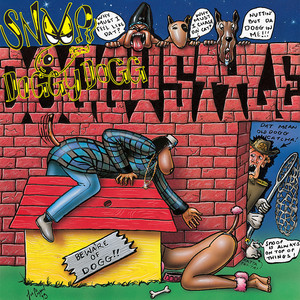
There is a bit of a tragedy at the heart of this album, which can be summed up with the modern version of Snoop Dogg. Gone is the braggadocious kid from his early work, and here now is an exaggerated self-parody who will do any demeaning work for a buck. Cartoon cameos, Martha Stewart shows, silly tie-in products, selling out to perform for President Trump at the White House - Snoop will do anything but make good music these days.
Seeing the artist today makes it all the more difficult to listen to this first record of his, especially since it is such a classic of the G-Funk era. This album is among the finest rap records of all time, stemming from the historic pairing of Dre and Snoop. A lot of these early 90s rap records feel dated (at least in flow, if nothing else), but very little about this one feels that way. While Dre's production is very niche and very of the time, it still feels very fresh and sounds really good. There's nothing about the sound, mixing, or even the beats themselves that couldn't be released today as-is, and that's incredibly impressive. On top of that, Snoop's central vocal performance is note-perfect. Swaggered, drawled, and oozing with charisma, Snoop raps through the beats with precision and energy, allowing himself to drag and speed up exactly where needed. This is a rapper dripping with intensity and drive, leading to an excellent flow in almost every song. Tack on some great features from Warren G, Coolio, and a handful of others I didn't quite catch, and you have a really nice-sounding record.
I have this rated (in my head) as basically a 4.75, if only because a few songs are so hedonistic and "gangsta" that they wrap around to sounding a little silly. There is a kind of immaturity to some of the lyrical content here that feels a bit weird today; future versions of this genre figured out how to cover the same topics without feeling quite as...13 years old lyrically. Still, there's a lot to love in the lyrics, including an impressive level of storytelling skills to be found in the best songs on this album. Snoop feels every bit at the forefront of the genre here, and it's so nice to see.
All in all, this is an amazing rap record. Anybody who likes the genre owes it to themselves to revisit this one, especially in light of everything rap has become since the record's initial release.
Not much to say about this. 4 (5 if you count the remaster) slick, gorgeous jazz songs with perfect keys, amazing sax, and a fun rhythm that carries through the whole project. Nothing but hitters on this, which is in some ways all that can be asked for on an instrumental jazz record. Put it on in the background for a fun afternoon, or listen closely for an educational, endlessly entertaining time.
Bit of a strange listen, as sitting in on chapters 2 & 3 of Monae’s RnB opera about robots and distant futures was…disorienting without context, to say the least. I enjoyed the soundscape she achieved on many songs, but then others were so derivative as to sound almost like a middle school play. Somewhat paradoxically, then, the album shone best when it leaned more heavily into its musical theater roots (“Maker” and “BaBopByeYa” were the two standout tracks, and both would have an easy home in a real Broadway play.) I’m interested in listening to the whole work and then revisiting my thoughts here, but this was overall a hit-and-miss record with some nice highs and a lot of filler otherwise.
I really wanted to love this record, just because of the great elements that were at play throughout. There was a fun guitar sound, which blended Beatlemania and early grunge masterfully. There was a commanding vocal performance from Siouxsie Sioux, which blended Robert Plant with Ann Wilson - and even elements of contemporary artists like 070 Shake. There was some classic punk-style instrumentation and songwriting, with really cool licks and riffs throughout.
And yet, something was missing to me. The drumming was kind of plain, the music verged on just noise at times (perhaps an intentional stylistic choice, but one which I struggle to call enjoyable), and there was a general unfinished quality to a lot of the songs that just felt as though they were unready for release in their present state.
I have a hard time with wanting to judge these records by the standards of modern production, and especially to judge them by the standards of their descendants. This is unfair, to some degree - "The Scream" is clearly a foundational record with so much importance to the modern sound of punk, post-punk, noise metal, and other alternative genres. And yet, I can't help but yearn for the slicker stuff, the better songwriting, and the more complete thoughts formed by bands that walk in Siouxsie and the Banshees' footsteps. Regardless, however, I can recognize and respect the album's historical import. I just find myself unwilling to return to many of the songs here. I enjoyed my time with "The Scream," but I couldn't help but want something more all the same.