Common knowledge has it that Parliament was the more accessible of George Clinton's grand projects of funk -- the other being the more experimental Funkadelic. But this seems a rather relative comparison in retrospect. This is still some far out shit.
Right from the outset, we're given a track with long interludes allowing bass, trombone, piano to do their thing. Sometimes by themselves, often swirling into each other. (Introducing an album by way of a fictional radio station has become a recognizable [if not terribly common] trope. Is this where it started? It surely deserves to be.)
"Unfunky UFO" is probably the song that pauses just enough for us to hear exactly what this album fully is and does. It's got more of a recognizable pattern that we can return to and integrate ourselves into. And it's infectious. It's frustratingly short, fading out just as we really find ourselves in the groove. "Supergroovalisticprosifunkstication" is another one that, at around the same length, slows down to let you hear yourself into it. Slinky and groovy. A kind of definition of what groove is.
But it's "Give Up the Funk (Tear the Roof off the Sucker)" that really personifies the album. Little wonder that this most recognizable single became the first song many people think when they think of funk.
On the humor. It's interesting that this album was contrasted with, say, the Ohio Players or the Commodores in Rolling Stone as not having the "seriousness" of its counterparts (though to be clear, it's a good thing in the original review). Because it seems to me that funk is thought of as first and foremost a fun genre. And it certainly is here.
Yes, the vision of black astronauts meeting with aliens is both absurd and a serious challenge to the imagination. Absurd not because black people can't be astronauts, but because of the aliens. Yet at the time of recording, both were seen by the public as large as just that: absurd. Hence the Afrofuturist challenge. The silliness and the seriousness start to slide into each other's place. Throwing off your notions of possibility with humor.
Okay, "Rolling in the Deep." A banger. No two ways about it. To the point where I delayed finishing the album because I kept listening to this opening track on repeat. I had to force myself to go to the second track.
How does the rest of the album stack up? Incredibly well honestly. Talking about blue-eyed soul seems an anachronism by the standards of a very integrated international music scene, but just as it's not possible to talk about Parliament without talking about the historic fortunes of funk (see previous review) it seems to me that we have to contend with what soul music has meant in a specific context of a historically black American genre faring in a white British context.
It seems to me significant that 21 came out just seven months after the death of Amy Winehouse. Not because Adele and Amy were ever really "in competition" (though the misogynistic music industry will always seek to pit women artists against each other). But it's not just the sudden departure of Winehouse that allowed Adele to snatch the crown of Queen of British soul. This is a soul album, but it's definitely a pop album too. 2008s's 19 had been much more of an exercise in the vein of Winehouse and co. In Adele's mind, 21 had to be like it but different, so much more itself that it reached new heights. So yes, soul, but mixed with a pop sensibility that sought to modernize it, drawing in singer-songwriter folkiness and more current R&B. To bring the "blue-eyed soul" paradigm out of the nostalgic longing for long-shuttered clubs like the Twisted Wheel in Manchester and Blackpool Mecca and Wigan Casino and into a contemporary timeline. And yes, bring in something a little bit more, for lack of a better term, feminist.
The personal valence is well-known by now: she had been dating an older man, and after a breakup Adele channeled her heartbreak into the album's composition. Whatever else can be said about her as a songwriter, nobody could ever accuse her of being anything other than fearlessly vulnerable. "Rumour Has It," another banger and strikes a pose regarding younger women and older men that wouldn't have been thinkable in the 70s. "Turning Tables," "Set Fire to the Rain," the stunning closer "Someone Like You." These are all instantly recognizable.
So why is this album simply four and a half stars instead of a full five? It comes down to the context, yet again, and what 21 represented for the trajectory of British soul. Yes, it was a modernization, but a modernization that allowed the sound to be metabolized into a general pop landscape that was, by the mid 2010's accelerating its homogenization. Adele herself became one of the world's best-selling artists. As for the blue-eyed soul torch she had been past, it had been taken out of the fading memories of Wigan Casino and Blackpool Mecca and into Las Vegas residencies. The specificity of a music, of a sound, was lost. Not entirely Adele's fault, not even primarily. But nonetheless, it's what the album came to represent.
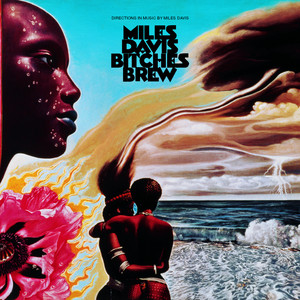
It's one thing to write about an album that created or redefined a genre. How do you do it about an album that redefined several genres at once? How do you write about Bitches Brew? Why is it such a legendary album with such a wide reach of influence?
There are few albums that force the challenge the listener's ear, that literally teach you to hear and consider sound a different way, than Bitches Brew. Part of it is the sheer scale of the ensemble that Davis assembled for recording. Three electric keyboardists; two, sometimes three drumkits; two bassists; along with a guitarist, a saxophonist (the great Wayne Shorter), a clarinetist (Bernie Maupin), a guitarist (John McLaughlin). Phil Spector built walls of sound through studio magic. Miles Davis built it primarily with actual musicians. He brought them in with only broad strokes for each composition, letting them build around him and each other.
The results are the kind of song you can listen to over and over without hearing absolutely everything. Listening to its compositions, several moments -- for example the back half of "Pharaoh's Dance" -- where it's tempting to describe the content as musicians playing more than one solo at a time, different textures, Davis' trumpet weaving through the keyboard noodling from Zawinul, Corea, and Young. This doesn't fully do justice, however. A "solo" in jazz tends to highlight the virtuosity of a specific player, but it also diverges from a pattern that's already been established.
"Pharaoh's Dance" doesn't follow a pattern in this way. Or at the very least the pattern is so loose, so organically evolving into new rhythms and arrangements, that saying it has a mode of any kind is very close to pointless. Adding to the radical rupture is the recording techniques. Davis and producer Ted Macero used tape loops and delay effects -- common rock, funk, and pop musics by this point, but still rare in jazz. Every instrument seems to swirl and echo and curl into each other than much more. The logic of structure is abolished, allowing what might otherwise be a "solo" to expand into a kind of wide open ambience.
In fact it seems Davis is the only one returning to familiar phrases in the midst of the sonic explosions. The latter halves of both "Pharaoh's Dance," "Bitches Brew" and the rest of the album see him following a consistent pattern. Toward the song's end, he will reprise relatively simple progressions heard earlier in the same composition; rising, falling, reemerging into our lines of sight. Musicians aren't "taking turns" here, each stepping aside for others as they showcase their virtuosic knowledge of melody, harmony, and improvisation. Rather, Davis' trumpet stands in the center, each accompanying instrument becoming an extension, radiating out like a sunbeam, finding new places to illuminate of its own accord.
There really was no precedent for the sheer scale of what Davis was trying here. Not in jazz. Not in jazz fusion (whatever that is). Not in funk or funk-jazz. Understanding the significance of this is best done by way of a few words on "Sanctuary," the closing track of Bitches Brew. There are shades of jazz forms more recognizable here. Somehow. Phrases that would be at home in a club from a decade earlier, running alongside the likes of Brubeck or Getz or Max Roach a la We Insist! The closing moments hear these drawn out and sustained, lengthened and cast into whatever comes next. Almost as if the mesmerizing anarchic cacophony cleared the way for these sounds to wind and evolve.
Yes, the face of jazz was never the same again. Neither was music as a whole. Brian Eno cites Bitches Brew as an influence. So does Thom Yorke of Radiohead. So does Aphex Twin. So does virtually every beatmaker in hip-hop. We can go on about the album's placement in time -- 1970, the bridge between the 60s and 70s, when Civil Rights was becoming Black Power -- but really what we are talking about here is a collection of recordings that, in the reimagination of these strictures and struggles, completely undid and remade musical imagination, and did so in a radical way.
The album with "Bohemian Rhapsody" is certainly going to be an important one, both in terms of Queen's discography and pop music in general. On the one hand, nobody had heard a band do this before; a rock song with several different movements, each one building toward a melodramatic crescendo. It was indeed "a night at the opera," but also a night with a barbed, spiteful sense of humor and thick riffs ("Death on Two Legs," "I'm In Love With My Car"), a night with playful novelty songs ("Lazing on a Sunday Afternoon," "Good Company"), and a night with feelgood power odes to friendship ("You're My Best Friend").
Queen had recently been screwed by their record label, so the impetus to take digs at contemporary British life in the same vein as Pink Floyd or Sgt. Pepper-era Beatles was certainly there. As a whole, you can say that this is a profoundly original album, but not necessarily because of the "experimentation." The integration of different pre-rock genres into rock had been done in rock before, albeit rarely this skillfully. The element that raised all of this above board, that made the work as a whole original, is "Bohemian Rhapsody." The song that made rock an opera. The song that, according to Nick Kent, made everyone want to kill themselves after it spent ten weeks at number one. Removed from the context of its album, this was a moment when rock became less a meaningful social practice and more a part of the spectacle. No wonder punk became necessary. "God Save the Queen" indeed.
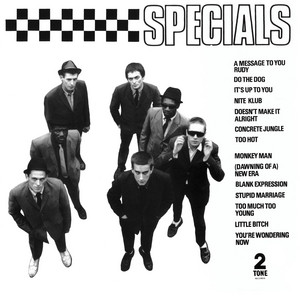
2 Tone. The first (and honestly only) meaningful encounter between punk and ska. Bringing up images of working class whites and first generation Caribbean immigrants intermingling in a way that is, unfortunately, pretty rare in late capitalism. And definitely rare in postwar Britain. The Specials are a big part of that musical moment. A key part in fact. The band was volatile, going through several different iterations over the decades, but this lineup, and the album they produced was more or less the rubric of 2 Tone.
It's fast, manic, confrontational, sometimes sarcastic in its targets (racism of course, but also the contradictions of youth culture). It includes three covers from earlier reggae/ska/rocksteady acts: "Monkey Man" (Toots & the Maytals), "Too Hot" (Prince Buster), and a rendition of Dandy Livingstone's "A Message To You Rudy" that is so recognizable that you'd be forgiven for thinking the songs was originated by the Specials themselves. But the way the integrate the more "punk" energy -- quicker beats, more intense arrangements and rhythms -- especially on songs like "Concrete Jungle," "Do the Dog," and "Too Much Too Young," really does sound like the prototype of a new step in the component genres and the beginning of a new style generally.