Blur by Blur: 8/10, A very strong opening, an okay middle, and a great ending. As the first album I got in the 1001 albums generator, this is a great way to start it, with an album from a band that I already enjoy, but this is the first time I've heard it in full. Admittedly, I am a massive Gorillaz fan and don't expect Blur to live up to the strength of Damon's work after their original breakup. As a shift away from britpop and more into heavier rock sounds, Blur's self-titled shows immense capability in how effectively they could completely change their sound. Song 2 is the big hit here, and the only song I'd heard from it before, and it perfectly encapsulates the post-britpop alt-rock style they landed on. Essex Dogs is probably my new favorite here, as it shows a crazy level of technicality and ability to experiment in unexpected ways, reminding me at times of some softer Nine Inch Nails songs. I look forward to exploring more of Blur as they really seem to have a versatile sound and a deep dive is well overdue for me.
Live and Dangerous [Live] by Thin Lizzy: 5/10, With every major movement in popular music, there will be bands at the forefront that see massive success without any of the quality of their contemporaries. Black Sabbath, Led Zeppelin, and Metallica are all regarded as some of the most important bands in the development of hard rock and early metal, and I can really appreciate the innovation and quality they all brought to music as a whole, even if I don't love their entire catalogues. What Thin Lizzy did is quite unanimously agreed to be best portrayed on this live album, and they very neatly fit into the early hard rock / blues rock blend that defined the beginning of hard rock. There's not really anything that they did particularly new, and the largest issue for me is how unremarkable the music is when compared against the modern hard rock landscape. I've heard people in their bedroom in the past few years create more interesting and innovative songs than my favourite songs on this album. All of this being said, this isn't a bad live album, or bad music, but I really feel that it's best described as mediocre.
Kind of Blue [1001 albums] by Miles Davis: 8/10, A great introduction to a totally new genre to me. I'm absolutely certain that I will re-review this at some point once I've explored more of jazz, but this has served as a suitable first full jazz album. As with discovering any new genre, I find that it's moreso about discovering the "vocabulary" in a sense than anything else. I'm aware of the general workings of jazz and the history that lead to the albums like Kind of Blue that are frequently considered among the best of all time. If there's one fundamental concept in my understanding of music that this album, and as I expect, jazz as a whole, has challenged, it's the idea of directionality. In songwriting and music listening, I tend to find enjoyment in melodies, solos, and harmonies that develop in a way that feels like it's "going somewhere". While this is a pretty generala and ambiguous concept, the improvised sections of this album didn't fit with what I expect to hear in that sort of musical direction and it was the most challenging aspect of the listen.
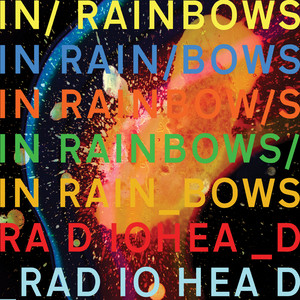
In Rainbows by Radiohead [1001 albums]: 10/10, Honestly, this is the peak of music. I've listened to this album countless times and I've considered it my absolute favourite for years now, so getting it 4th on the 1001 albums generator was pretty funny. The creation of an album is a complicated, lengthy, and multi-faceted process. What happened with In Rainbows would only be possible with Radiohead. The limitation artists are subject to end up creating the outlines for their creativity, with OK Computer and Kid A having distinct identities created from core concepts that limit their range. With several classic albums in their discography already, creating something to top these albums should have been impossible. But, with Nigel Godrich pushing the band to create faster and not get bogged down in details at the beginning, they were able to create something seemingly smaller in scope that represents the core identity of what Radiohead is. With no creative limitations other than pressure to create something incredible, Radiohead could've easily folded and created something mediocre, but as they created each song and got more personal with their music than ever before, an immense depth to the album emerged. Each moment of this album, despite only being 42 minutes long, has one-of-a-kind depth and meaning. With every chord change and new phrase, they build upon the basis of each song in a way that transforms the context into something greater than the sum of its parts. Reckoner is currently the song I'd call my favourite on this album, but it frequently shifts between Nude and Jigsaw Falling Into Place, but the way Reckoner adds so few elements together to create such a distinct crescendo to the climax with the album title-drop is unlike anything else I've heard. The emergent complexity from the members of the greatest band to ever do it each creating simple but technical phrases and layering them together is what makes this album Radiohead's thesis statement and magnum opus.
Madman Across The Water by Elton John [1001 albums]: 8/10, In his prime, Elton John really had his specific style of piano rock perfected. With an interesting fusion of this piano rock and a Beatles-esque progressive pop, Elton managed to create some of the longest songs in popular music at the time. Tiny Dancer being just over 6 minutes long and triple platinum, one of his most popular songs, is quite impressive for 1971. Of all the songs here, one stands out as the best, but also the most questionably aged, Indian Sunset. A supposed retelling of a story from a painting, the language is poorly aged (Indian? Yellow people??), and the story isn't very accurate. With all that said, it's a very notably anti-colonialist story which is pretty ahead of its time. Musically, it was my favourite track on the album, but had no shortage of moments that made me question what Elton John was thinking when he wrote it. With all the strange and vaguely racist parts of the story of that song and the rest of the album being less noteworthy while still being pretty great, the whole album stands up relatively well and could pass as a modern album with some remastering.
War by U2 [1001 albums]: 6/10, Starting off with the great Sunday Bloody Sunday, this is a gradual descent in quality across the tracklist. Without much of a background with U2 other than a vague idea of their presence, XXX by Kendrick Lamar, and having heard Sunday Bloody Sunday once before, I didn't really have any specific expectations for this album. By far my biggest complaint here is Bono, he did choose a pseudonym that literally means great voice, and it's clear why: he has a big ego. While Bono does undeniably have a good voice, there's a lot more beauty in restraint than a constant need to show off as much as possible. What makes Sunday Bloody Sunday so good is the cohesion between the instruments and the vocals, there's no over-the-top vocal performance and the instrumentation is very present. The rest of the album struggles with the exact opposite, Bono is constantly putting himself at the center with unnecessarily flashy vocals that still manage to be vaguely uninteresting because there isn't much quality melody writing behind them. Other than my very clear issues with the vocals and the gradual decrease in quality as the album goes on, there's an undeniable level of initial quality that really could be better captured by a band more focused on cohesion and restraint.
This Nation's Saving Grace by The Fall [1001 albums]: 7/10, Kind of blending the styles of punk and post-punk, this is a very 80's pop approach to post-punk that delivers well in sound but lacks a bit in songwriting. This is the most out there album I've heard yet on the 1001 albums list, but it doesn't exactly leverage that chaos to create interesting songs, but rather to create a fun, off-kilter punk vibe. The vocalist sounds like he's drunk and unsure as to what song he's singing and I really like that, it really adds to the funny elements of the chaos. If the songs were a bit more technically focused or emotionally impactful, I could really connect with this, but as it is it stands as just a pretty great mid 80's punk vibe.
American IV: The Man Comes Around by Johnny Cash: 5/10, The most American album you'll ever hear, to the point that admiration for his music is deeply embedded in modern American culture. I have no previous connection to Cash's music, or any disposition really. What caught me so off guard about this album, even from when I heard Johnny Cash's version of Hurt a while back, is that he just doesn't sound good as a singer. I know he had a rough life but this is entirely seperate from that, the state of his voice at the time of recording these songs was not good, and it doesn't make it feel raw in a good way. The delivery of his vocals also takes away from the flow of the lyrics in the original songs that he covers, it makes it feel like he wants to make it his own but doesn't know how to. Without spending all my time talking about why I dislike Johnny Cash's vocals, I don't really have much to say about this album because it overall felt quite unremarkable
No Sleep 'Til Hammersmith (Live) by Motörhead [1001 albums, live]: 7/10, Fun, high energy hard rock that's about as good as it gets without much substance. I don't have all that much to say about this album, aside from that it's pretty good and it's technically impressive. The songs sound similar enough to be cohesive but stand out just enough to have identities, mostly being just pretty good and above all else, fun and enjoyable. My personal favourite was Capricorn, especially considering how they said they were going to "slow it down" and then proceeded to play something very fast paced. This song does seem to have a level of substance and intrigue to it that's not present on the others and I appreciate that. The lead singer is charismatic and the performances are great, but the relatively simple songs hold them back from being really great.
Welcome to the Pleasuredome by Frankie Goes To Hollywood [1001 albums]: 2/10, One of the most perplexing albums I've ever heard. Starting with a weird sound collage and then a 14 minute song that can't decide what it is, I had no idea what the point of any of it was. At times very very funny, mostly boring, and frequently uncomfortably sexual, I have no clue what they were thinking when they made this and the fact that anyone enjoys this confuses me the most of all.
My Life in the Bush of Ghosts by David Byrne and Brian Eno [1001 albums]: 8/10, Off-kilter experimental plunderphonics mixed with new wave, absolutely ahead of its time and strange. This is a funny album for me because I have a lot of respect for both artists despite never really getting into either of their music. David Byrne, with this being his first album outside of the Talking Heads, is a very interesting artist and creator of some amazing songs but I've yet to listen to any of his albums really. I also know of Brian Eno as the inventor of ambient, a massively important genre to me and a lot of artists that I love. What stands out the most to me about this album is the plunderphonics of it all, the sample work is crazy and amazing, especially for the early 80s. You could tell me this album came out last year and I'd believe it honestly.
I Never Loved a Man the Way I Love You by Aretha Franklin [1001 albums]: 8/10, One of my first exposures to soul as a big fan of neo-soul, Aretha Franklin is a very important figure in the genre without a doubt. Without delving too deep into the history of a genre with so much cultural importance that I know nothing about, this album really shows the qualities of deep soul in the 60s. With so much soul being sampled and reimagined, a lot due to Kanye's influence, being familiar with the greats in the genre is important not only to understand soul, but to understand modern hip-hop, R&B, pop, and more. What I appreciate most about this album is the wealth of moments with perfect cohesion between all the individually simplistic elements.