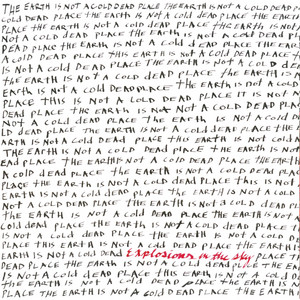
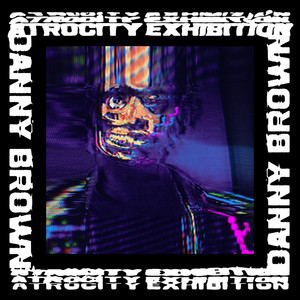
*Canciones 1989-2013* serves as a definitive, if somewhat problematic, farewell from one of Spanish rock's most influential bands. Released by Warner Music in 2021, this triple-disc set compiles 44 tracks spanning Extremoduro's entire studio career, from their raw 1989 debut to their final 2013 album. The compilation functions both as an accessible entry point for newcomers and as a comprehensive retrospective for longtime followers, though its reliance on re-recorded versions and chronological sequencing creates a listening experience that is as much an archival document as it is a curated artistic statement.
### Lyrics: Poetic Brutality and the Voice of the Margins
The lyrical universe of Extremoduro, almost entirely penned by frontman Roberto "Robe" Iniesta, is the compilation's most potent element. Robe's writing operates in a register that critics and scholars consistently describe as **"poetry"** —but a poetry that is descarnada (raw), barriobajera (low-class), and unapologetically transgressive. It is a language that finds beauty in the gutter, mixing existential longing with explicit imagery of sex, drugs, and social alienation.
A sociolinguistic analysis of the band's lyrics characterizes their thematic universe as "reduced"—focused on **sex, drugs, and social critique**—and rooted in the perspective of a marginalized or self-marginalized youth. This is evident from the earliest tracks. "Jesucristo García" reimagines Christ as a drug user who "converts water into wine" and "resurrects himself if he rolls a joint," while "Tu corazón" locates the heart "in a bar where it gets wet with red lights". The early work revels in this provocación, but even then, there are flashes of unexpected tenderness, as in "Ama, ama, ama y ensancha el alma," a song with lyrics by Manolo Chinato that closes concerts with a call to "share loves, tears, and smiles".
The compilation's chronological structure reveals a clear **lyrical evolution**. The 1990s tracks remain fixated on nocturnal excess and romantic desperation, but by the 2000s, particularly on material from *La ley innata* (2008) and *Material defectuoso* (2011), Robe's writing becomes more introspective and structurally ambitious. "Si te vas..." is a stark example: a song about emotional dependency and the fear of abandonment, delivered with a vulnerability that strips away the bravado. Robe himself stated in interviews that he sought to write "from the wound without apologizing," and this compilation traces that wound from its initial, alcohol-soaked infliction to its later, more reflective stages.
One unavoidable tension in the lyrics is the **gendered language**. Terms like "golfa," "puta," and "culo es miel" appear throughout, and some listeners and critics have questioned whether such expressions are straightforwardly misogynistic or whether, within the symbolic universe of rock and the specific voice Robe adopts, they can carry different, more ambiguous meanings. The compilation does not resolve this tension; it merely presents the songs as they were.
### Music and Production: From Transgressive Rock to Progressive Ambition
Musically, *Canciones 1989-2013* documents a band that began as a ragged, punk-inflected hard rock outfit and gradually transformed into something closer to a progressive rock group with orchestral ambitions. The compilation's sequencing makes this evolution legible: the first disc is dominated by the band's early, rougher material, while the later discs showcase increasingly complex compositions.
A significant production decision shapes the listening experience: **the vast majority of the early tracks appear in their 2004 re-recorded versions**. These "Versión 2004" mixes were created for the *Grandes éxitos y fracasos* compilation and feature cleaner, fuller production than the originals. For some listeners, this is an improvement; for others, it represents a loss of the raw energy that defined Extremoduro's early sound. One reviewer, for instance, noted that the original "Bri Bli Bli Bli" from 1993 "sounds better" and features a saxophone absent from the re-recording. The compilation thus presents a somewhat sanitized version of the band's formative years, prioritizing consistency over archival fidelity.
The later material, by contrast, showcases the band's growing musical sophistication. "So payaso" features a trombone solo; "Golfa" includes "tasteful orchestration"; and the excerpts from *La ley innata*—"Segundo Movimiento: Lo de fuera," "Tercer Movimiento: Lo de dentro," and "Cuarto Movimiento: La realidad"—reveal a band comfortable with extended, multi-part compositions that blur the line between rock song and symphonic movement. Robe's voice, a raspy and limited instrument by conventional standards, becomes less a liability and more a signature texture, particularly when set against the richer arrangements of the later work.
### Themes: The Night, the Wound, and the Search for Meaning
The thematic architecture of the compilation can be understood through three recurring obsessions: **the night and its rituals** (drinking, drugging, searching for connection), **the wound** (romantic loss, existential despair, social alienation), and **the search** (for transcendence, for a "luna" that walks alone, for a way out).
The early songs are saturated with the first theme. "Salir," "Buscando una luna," and "Deltoya" all document the nocturnal quest for escape, whether through substances or through a desperate, all-consuming love. "Deltoya" in particular builds from a subdued opening to a "torrent of uncontrollable force," capturing the feeling of being "trapped between four walls" and searching for reasons to live.
As the band matures, the wound becomes more central. "Si te vas..." is the compilation's most nakedly emotional moment, a song that refuses grand gestures in favor of "a direct exposition of the fear of loss and affective dependency". Even the more aggressive later tracks carry this undercurrent of fragility. The band's great achievement, as critics have noted, was to make vulnerability feel not like weakness but like a form of ferocity.
The third theme—the search—reaches its apex in the *La ley innata* material. The "movements" included here are explicitly philosophical in ambition, exploring the tension between "lo de fuera" (the external world) and "lo de dentro" (the internal one), and culminating in "La realidad" (reality). This is Extremoduro at its most ambitious, attempting nothing less than a musical and lyrical meditation on the nature of existence.
### Influence: A Crack in the Wall of Spanish Rock
Extremoduro's influence on Spanish music is difficult to overstate. Music historians and critics consistently place them in a lineage of bands that "passed the baton" of Spanish rock leadership: Leño, Barricada, Extremoduro, Marea. But their influence extends beyond mere chronology.
The band's most significant contribution was **legitimizing a certain kind of voice**. As one retrospective put it, Extremoduro "taught that one could write from the wound without asking for forgiveness. That poetry didn't need permission or academia. That a song could be beautiful even if it was broken". This ethos shaped an entire generation of artists. **Marea** is the most direct heir; Kutxi Romero has never hidden the debt, and Marea's combination of "tavern and metaphysics" is unimaginable without Robe's example. **Estopa** carried the "truth of the neighborhood" into rumba-rock, while **Melendi's** early work drew directly from Extremoduro's confessional, canalla tradition. The influence extends even to cantautores like **Ismael Serrano** and **Nacho Vegas**, who found in Robe a model for a poetry that was "direct, carnal, imperfect".
The band also influenced **how artists related to the industry**. Robe's consistent refusal to play the media game, his avoidance of conventional promotion, and his willingness to disappear for years between albums established a template for artistic integrity that many later musicians would emulate. The compilation's very existence—a Warner Music release sold through Robe's own El Dromedario Records—speaks to this negotiated independence.
### Pros and Cons
**Pros:**
- **Comprehensive chronological survey.** The 44 tracks span the entirety of Extremoduro's studio career, from *Rock transgresivo* (1989) to *Para todos los públicos* (2013), making it the most complete single-package overview of the band's evolution.
- **Accessible entry point.** For listeners unfamiliar with the band, the compilation offers a curated path through a daunting discography, with the chronological ordering providing a clear narrative of artistic development.
- **Showcases the band's range.** From the raw aggression of early tracks to the progressive ambitions of *La ley innata*, the compilation demonstrates Extremoduro's willingness to evolve and their refusal to repeat themselves.
- **The 2004 re-recordings, for those who prefer them, offer cleaner sound.** Listeners who find the original albums too rough will appreciate the fuller production of the "Versión 2004" mixes.
- **The inclusion of *La ley innata* movements.** Despite the album being conceived as a continuous piece, the compilation includes significant excerpts, allowing listeners to experience the band's most ambitious work in a condensed form.
**Cons:**
- **The 2004 re-recordings replace the originals.** For purists and longtime fans, the compilation's use of re-recorded versions for most early tracks is a significant drawback. The original recordings had a rawness and idiosyncrasy—like the saxophone in "Bri Bli Bli Bli"—that the re-recordings sand away.
- **No unreleased or live material.** The compilation is strictly a studio-retrospective, offering nothing new for completists who already own the albums.
- **Omissions are inevitable.** With 44 tracks across 11 studio albums, some fan favorites are missing. Critics have noted the absence of "Romperás," "Villancico del rey de Extremadura," and "Cerca del suelo," among others.
- **The *La ley innata* excerpts are frustrating.** Including only portions of a work conceived as a single continuous piece means listeners get a fragmented experience of the band's magnum opus. The compilation's compiler apparently recognized this—one reviewer ended up listening to the full album instead.
- **For non-Spanish speakers, a crucial dimension is lost.** Robe's lyrics are widely regarded as poetry, and their nuance, wordplay, and emotional precision are central to the band's appeal. Without Spanish fluency, listeners access only a partial experience of the music, as one reviewer candidly admitted.
### Conclusion
*Canciones 1989-2013* is an **elegant, well-sequenced retrospective** that captures the arc of Extremoduro's career with care. It is an excellent introduction for the uninitiated and a convenient summary for casual fans. But it is not a definitive document. The decision to prioritize the 2004 re-recordings over the originals means the compilation presents a somewhat smoothed-over version of the band's early years, and the absence of any unreleased material limits its value for devoted followers. The *La ley innata* excerpts, while understandable from a compilation standpoint, do a disservice to a work that was never meant to be heard in fragments. As a farewell gesture from a band that defined a certain strain of Spanish rock, it works. As an archival representation of that band's full, ragged glory, it falls just short.
# In-Depth Review: *What Did You Expect from The Vaccines?*
**Released:** 21 March 2011 | **Label:** Columbia | **Producer:** Dan Grech-Marguerat | **Length:** ~35 minutes
---
## The Context: Hype, Backlash, and a Snarky Title
The Vaccines' debut arrived in March 2011 under a cloud of almost comical expectation. The London four-piece had formed barely nine months earlier, yet by January they had placed third in the BBC's Sound of 2011 poll, graced magazine covers, and were being talked about as potential saviours of British guitar music . The album's title—a pre-emptive shrug of defiance—was the band's own acknowledgement of the impossible weight placed upon it. As The Guardian noted, *What Did You Expect from The Vaccines?* "defensively pre-empts anticlimax" while also "shrugs off criticism with brattish insouciance" .
The result is a record that, viewed on its own terms, is a taut, energetic, and occasionally brilliant collection of indie rock songs—but one whose limitations become glaring when measured against its own mythology.
---
## Music: Retro-Fitted, Immediate, and Unashamedly Derivative
The Vaccines' sound on this record is a deliberate collage of rock history, filtered through a distinctly British, post-Strokes lens. The band themselves admitted their ambition was to take "that Americana surf sound" and give it "a British spin" . What emerges is a sonic palette that draws heavily from:
- **The Strokes** (particularly *Room on Fire*-era riffs and the chugging rhythm section)
- **The Ramones** (the 84-second burst of "Wreckin' Bar (Ra Ra Ra)")
- **Jesus and Mary Chain** (reverb-soaked guitars and pop-punk tension)
- **Joy Division/Editors** (the melancholic undertow of "A Lack of Understanding")
Critics were divided on whether this was homage or mere imitation. Slant Magazine argued the band "develop a charming niche without ever offering anything new or innovative," while NME countered that the songs were "too damn good to be sniffy about" and even floated the album as a potential "British equivalent" to *Is This It* . The truth likely sits between: the Vaccines rarely break new ground, but they execute their chosen formula with unusual precision and energy.
The pacing is relentless. Tracks rarely exceed three minutes, and the album's 35-minute runtime feels like a deliberate statement of intent: get in, make an impression, get out. This brevity works best on the frenetic opener and the punchy "Nørgaard," but it also means some songs feel underdeveloped—ideas that could have been explored are abandoned in favour of another chorus.
---
## Lyrics: Thrown-Together Urgency vs. Genuine Vulnerability
Lyrically, the album is a mixed bag, oscillating between genuinely affecting moments and passages that strain credibility.
**The Weaknesses:** The most common criticism levelled at the Vaccines' debut was the quality of Justin Young's lyrics. The Guardian described them as not pausing "to worry about how much sense they're making," citing the opening of "All in White"—"Break me on the 37th hour / Tout me, doubt me, show me all of your power"—as an example of solemn-sounding nonsense . "Wetsuit" drew particular scorn from BBC reviewers, who called its lyrics "so painfully bad, it's hard to take its soaring melodies seriously" . The repeated "Put a wetsuit on, come on, come on / Grow your hair out long" refrain does have a certain adolescent charm, but it's hard to defend as poetry. "Nørgaard" also raised eyebrows with its depiction of a seventeen-year-old romantic interest, described by NME as "mildly creepy" .
**The Strengths:** Where Young succeeds is in capturing a specific mood of youthful malaise and romantic confusion. "Post Break-Up Sex" is the album's most complete lyrical achievement—a "sublime sketch of that insensitively cute idiom, all guilt-ridden and relatable" . The song captures the peculiar hollow of intimacy without connection. "If You Wanna" manages to be both breezy and regretful, its cheerful melody masking a narrator who can't quite let go. And the closing tracks reveal a depth the rest of the album only hints at: "Family Friend" and the hidden "Somebody Else's Child" find Young singing about father-son disconnect and vulnerability with a directness that suggests his folky past as Jay Jay Pistolet .
Young's delivery is crucial here. He has a "knack for making thrown-together lyrics sound urgent," and his "oddly emotive quaver" lends weight to lines that might otherwise fall flat . When he asks "Are you ready, are you ready, are you ready for this?" on "A Lack of Understanding," the earnestness cuts through the posturing .
---
## Production: Polished to a Fault?
Producer Dan Grech-Marguerat (who recorded the album at Miloco's Square studio in Hoxton) gave the Vaccines a sound that was immediate and radio-friendly but perhaps too clean for some tastes . The album's reverb-heavy aesthetic became a point of contention. Years later, Young admitted the band "hid behind a lot of reverb and walls on the first record," suggesting even they felt the production masked something .
The BBC review noted that the album's "rawer, less-than-perfect moments" were what made it interesting—implying that the polished tracks were less so . Slant's criticism was more pointed: "any trace of feedback or distortion has been eradicated to leave just a Fratelli-esque singalong punk-pop sheen" . The production prioritises clarity and punch over grit, which serves the pop-oriented tracks ("If You Wanna," "Post Break-Up Sex") but somewhat undermines the more emotionally raw material. When the band strips back—as on the final tracks—the effect is disproportionately powerful.
---
## Themes: Youth, Nostalgia, and the Fear of Growing Up
The album's thematic core is an anxious relationship with time and adulthood. Songs repeatedly invoke youth as something slipping away:
- **"Wetsuit"** : "If at some point we all succumb / For goodness sake, let us be young"
- **"Family Friend"** : "You wanna get young but you're just getting older / And you had a fun summer but it's suddenly colder"
- **"A Lack of Understanding"** : The desperate plea "Are you ready for this?" feels like someone trying to hold onto a moment before it passes
This preoccupation with youth extends to the music itself—the Ramones-indebted brevity, the surf-rock guitars, the refusal to overstay a welcome. The Vaccines are less interested in exploring complexity than in capturing a feeling: the heady, fleeting rush of being young and not entirely sure what you're doing.
Relationships, particularly casual ones, are the other dominant theme. "Post Break-Up Sex," "If You Wanna," and "Under Your Thumb" all circle around the messy aftermath of intimacy. The album's perspective is consistently that of someone slightly bewildered by their own actions—aware of the emptiness but unable to resist.
---
## Influence: A Catalyst, Not a Revolution
The Vaccines' debut arrived at a pivotal moment for British guitar music. As Clash noted, the charts in early 2011 were dominated by "the drab R&B/dance crossovers of JLS and The Wanted," and the album helped reignite mainstream appetite for indie . The subsequent rise of Peace, alt-J, and Wolf Alice can, in part, be traced to the market conditions the Vaccines helped create .
However, the album's influence was more as a catalyst than a blueprint. Unlike *Is This It* or *Whatever People Say I Am, That's What I'm Not*—records that spawned countless imitators—*What Did You Expect* didn't inspire a wave of bands trying to sound exactly like it. Its legacy is more about proving that guitar bands could still achieve commercial and cultural relevance in a post-Arctic Monkeys landscape. The band themselves have continued to evolve, moving through studio experimentation (*English Graffiti*) and ragged rock (*Combat Sports*) with a restlessness that this debut only hinted at .
---
## Pros and Cons
| **Pros** | **Cons** |
|-----------|----------|
| Relentless energy and immediacy—the album never drags | Lyrics often feel tossed-off or nonsensical ("Wetsuit," "All in White") |
| Genuinely memorable hooks, particularly on "If You Wanna" and "Post Break-Up Sex" | Sonic debt to The Strokes and others is so pronounced it borders on pastiche |
| The closing tracks ("Family Friend," "Somebody Else's Child") reveal unexpected emotional depth | Production can feel over-polished, sanding down the rawer edges that might have served the songs better |
| Young's voice has a distinctive quaver that elevates weaker material | Some tracks feel underdeveloped—brevity sometimes reads as unfinished rather than punchy |
| Captures a specific mood of youthful anxiety with authenticity | The album's title and attitude invite scrutiny it doesn't always withstand |
| Served as a commercial gateway for guitar music in a hostile chart environment | "Nørgaard" and its depiction of a 17-year-old are uncomfortable in a way the band likely didn't intend |
---
## Final Verdict
*What Did You Expect from The Vaccines?* is a debut that succeeds most when it stops trying to live up to its title. The loud, fast, Ramones-indebted tracks are fun but forgettable; the slower, more vulnerable moments—"A Lack of Understanding," the closing trio—are where the band reveals what they might become. The album's ultimate irony is that the hype that surrounded its release has aged worse than the music itself. Stripped of the context of early 2011, it stands as a solid, occasionally thrilling indie rock record: not the revolution it was sold as, but not the disappointment its critics claimed either. As Q Magazine put it, there's "more than enough here to justify their talk-of-the-town status"—but perhaps not quite enough to justify the talk of saving guitar music .
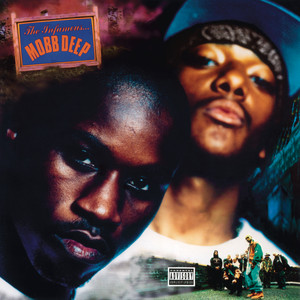
# In-Depth Review: Mobb Deep's *The Infamous*
Released on April 25, 1995, *The Infamous* is the sophomore album from Queensbridge duo Mobb Deep—Prodigy and Havoc—and widely regarded as one of the cornerstones of East Coast hardcore hip-hop. Following the commercial disappointment of their debut *Juvenile Hell* (1993), the duo was dropped by their label and forced to regroup. What emerged was a grim, cinematic masterpiece that redefined the sound of New York street rap.
## Music and Production
The sonic architecture of *The Infamous* is largely the work of Havoc, who produced the majority of the album at just 20 years old, with Q-Tip contributing production on several tracks. The sound is characterized by its sparse, claustrophobic atmosphere—built from haunting piano loops, distorted melodies, lo-fi synthesizers, and gritty drums that evoke the physical and psychological landscape of the Queensbridge Housing Projects.
The album's most iconic production moment is **"Shook Ones, Pt. II."** Its instrumental—crafted from a heavily manipulated Herbie Hancock piano sample and a drum break sourced from a record convention—became one of the most recognizable beats in hip-hop history. The track's eerie, descending piano figure and thunderous snares create a sense of impending dread that perfectly matches the lyrics. The beat has since been referenced everywhere from Eminem's *8 Mile* to Mariah Carey's "The Roof."
Elsewhere, the production maintains a consistent mood without becoming monotonous. "Survival of the Fittest" rides a bass-heavy groove that feels like a slow walk through dark projects corridors. "Temperature's Rising" uses a phone-call narrative structure over a somber, reflective beat. "Right Back at You" employs a raw violin sample and soft double bass, showing Havoc's range within the album's established palette.
Q-Tip's contributions—notably on "Give Up the Goods (Just Step)" and "Drink Away the Pain"—add subtle textural variety while remaining faithful to the album's aesthetic. His presence as a mentor also helped Havoc refine his production technique, though the core sonic identity remains distinctly Havoc's.
## Lyrics and Themes
The lyrical content of *The Infamous* is unrelentingly bleak and observational. Prodigy and Havoc do not glorify street life so much as document it with a reporter's eye and a survivor's weariness. The album is less a celebration of criminality than a catalog of its costs: paranoia, violence, incarceration, and premature death.
**Prodigy's** writing on this album is widely considered his peak. His delivery is deadpan, almost monotone, which makes the violence in his lyrics feel matter-of-fact and therefore more chilling. On "Survival of the Fittest," his declaration "There's a war going on outside, no man is safe from" functions as both a thesis statement and a timeless observation about life in impoverished neighborhoods. His vivid imagery—"I used to drive an Ac' and kept a Mac in the engine / Little painted it black with crack sales intentions"—conveys the entanglement of aspiration and criminality without moralizing.
**Havoc**, often overshadowed by Prodigy's more celebrated pen, holds his own with a clipped, no-frills style that complements the production. His verse on "Shook Ones, Pt. II"—"You talk a good one but you don't want it"—is one of the most quoted lines on the album. He also demonstrates narrative skill on "Trife Life," where his verse provides the grim counterpoint to Prodigy's story of a date gone wrong, showing why paranoia is not a flaw but a survival mechanism.
The album's thematic scope extends beyond gunplay and drug dealing. "**Temperature's Rising**" is an epistolary track addressed to a friend on the run, capturing the emotional weight of separation and the constant threat of capture. "**Up North Trip**" details the reality of incarceration with lines about rusty razors and the psychological toll of prison. "**Drink Away the Pain (Situations)**" personifies alcohol as a coping mechanism for trauma, with Q-Tip's guest verse adding a layer of materialist critique through fashion-brand name-drops.
Interludes like "The Infamous Prelude" and "The Grave Prelude" reinforce the album's cinematic quality, creating the impression of eavesdropping on conversations rather than listening to a polished studio product.
## Influence
*The Infamous* arrived at a pivotal moment in hip-hop. In 1995, the East Coast was reasserting its dominance after years of West Coast commercial supremacy, with Nas's *Illmatic* (1994), Wu-Tang's *Enter the Wu-Tang* (1993), and The Notorious B.I.G.'s *Ready to Die* (1994) leading the charge. Mobb Deep carved out a distinct space within this renaissance by being more uncompromisingly dark than any of their peers. Where Nas offered poetic nostalgia and Biggie balanced menace with charisma, Mobb Deep offered pure, unvarnished dread.
The album's influence manifests in several ways:
**Sonically**, its blend of sparse, haunting loops and hard drums became a template for "grimy" East Coast production. The "Shook Ones, Pt. II" beat is among the most freestyled-over instrumentals in hip-hop history, and the album's overall aesthetic influenced subsequent generations of rappers from 50 Cent to Griselda.
**Thematically**, *The Infamous* helped establish the "street reportage" mode that would dominate hardcore rap for years—a mode that prioritizes observational detail and emotional honesty over fantasy and braggadocio. Its willingness to depict the psychological toll of street life, rather than just its material rewards, set it apart from much of the gangsta rap that preceded it.
**Culturally**, the album cemented Queensbridge's status as a mythic location in hip-hop, alongside Nas's work. The "dunn language" and Queensbridge slang that Prodigy and Havoc used became part of the broader hip-hop lexicon.
The album was certified Gold within two months of release, peaked at #15 on the Billboard 200, and has since been recognized by outlets like *Rolling Stone*, *The Source* (4.5 mics), and *Spin* as a classic of the genre.
## Pros
- **Exceptional cohesion**: Every element—beats, lyrics, interludes, sequencing—contributes to a unified aesthetic. The album feels like a single, sustained mood rather than a collection of songs.
- **Production innovation**: Havoc's use of obscure samples, creative chopping, and atmospheric layering created a sonic signature that was both of its time and timeless.
- **Lyrical density and realism**: Prodigy's writing on this album is among the strongest in 1990s hip-hop, combining vivid imagery with emotional restraint.
- **Strong guest appearances**: Nas, Raekwon, Ghostface Killah, Q-Tip, and Big Noyd all deliver memorable verses without overshadowing the hosts.
- **Timeless singles**: "Shook Ones, Pt. II" and "Survival of the Fittest" remain staples of hip-hop canon and continue to resonate decades later.
## Cons
- **Limited sonic palette**: While the consistency is a strength, some listeners may find the album's unrelenting darkness and similar tempos monotonous over 16 tracks. There is little melodic relief or variation in mood.
- **Narrow thematic focus**: The album rarely deviates from its core themes of violence, paranoia, and survival. While this focus is part of its power, it leaves little room for the moments of levity or introspection found on some peer albums.
- **Havoc's rapping**: While competent and effective within the album's context, Havoc's lyrical presence is generally considered less distinctive than Prodigy's, and some tracks feel like Prodigy showcases with Havoc providing support rather than a true partnership.
- **Dated references**: Some slang and specific cultural references (like the "Tunnel" nightclub) may require context for younger listeners, though this is a minor issue given the album's otherwise timeless feel.
*The Infamous* stands as a landmark achievement—a rare album where production, lyricism, and thematic vision converge so completely that it transcends its era. It is essential listening for anyone seeking to understand the darker, more introspective strain of 1990s East Coast hip-hop.
# In-Depth Review: Orchestra Baobab — *Pirates Choice*
**A landmark of Afro-Cuban fusion, *Pirates Choice* is both a document of a vanished era and a living, breathing record that helped reshape global perceptions of African music.**
Recorded in Dakar in 1982 and originally released only as a cassette in Senegal, *Pirates Choice* became the stuff of legend after British label World Circuit issued it internationally in 1989. Its 2001 double-disc reissue—adding six previously unreleased tracks from the same sessions—sparked a full-scale reunion of the band and introduced this music to a new generation .
---
## 1. Background and Context
Orchestra Baobab formed in Dakar in 1970 as the house band at the Baobab Club. The group was deliberately multi-ethnic and multi-national, drawing members from across Senegal's diverse regions—Wolof griots, Mandinka singers, Casamance percussionists—as well as from Togo and beyond . By the late 1970s, the core lineup included vocalists Balla Sidibé, Thione Seck, and Ndiouga Dieng, saxophonist Issa Cissoko, and Togolese guitarist Barthélémy Attisso.
The music they played was a distinctive fusion: Cuban son, rumba, and charanga—genres that had been enormously popular in West Africa since the 1940s—reinterpreted through a West African sensibility. As the Chicago Tribune put it, Baobab's innovation was to merge Cuban sounds with "Senegal's indigenous folk musics—the percussive Wolof grooves of the North and the string-band harmonics of the South—as well as jazz and rock" . The result was something entirely new: Latin music that sounded, unmistakably, African.
By 1982, when *Pirates Choice* was recorded, Orchestra Baobab was at its creative peak, but the commercial landscape was shifting. Youssou N'Dour's mbalax—more percussive, more funk-influenced, more youth-oriented—was beginning to eclipse the older band's mellow sophistication. *Pirates Choice* was recorded just as this transition was underway, making it both a summation of a decade of musical exploration and a document of a moment about to pass .
---
## 2. Lyrics and Vocals
One of the defining features of *Pirates Choice* is its multilingualism. The songs are sung in Wolof, French, Mandinka, and Spanish . This isn't mere eclecticism for its own sake—it reflects the band's cosmopolitan makeup and the cultural reality of Dakar as a port city where diverse traditions met and mingled.
**Language and meaning.** The album's opening track, "Utrus Horas," comes from Guinea-Bissau, while "Soldadi" has Senegalese origins . Three of the tracks are reworkings of Cuban songs . The lyrics often deal with themes of homesickness, love, and social observation, though precise meanings are sometimes elusive to non-Wolof or non-Mandinka speakers. "Toumaranke," for instance, has a carnival-like atmosphere but its Mandinka lyrics address homesickness . This tension between joyful sound and wistful content is characteristic of the album as a whole.
**Vocal style.** The singing on *Pirates Choice* is a study in contrasts. Balla Sidibé brings a gruff, barrel-chested tenacity to his leads; Rudy Gomis offers a clucking, popping ebullience that evokes traditional Cuban soneros; and the various griot singers bring a declamatory, speak-singing quality rooted in West African oral tradition . Robert Christgau noted that there is "no Iberian schmaltz in their singers rough or smooth"—a crucial point . The vocals are African in phrasing and timbre even when the melodic contours echo Cuban models.
**The pros:** The multilingualism and vocal variety give the album a richness and depth that rewards repeated listening. The harmonies—particularly on tracks like "Werente Serigne"—are described as "magical" . **The cons:** For listeners without knowledge of the languages, the lyrics can remain opaque, and the album's liner notes (at least in some editions) offer limited translation or context. The vocal style is also relatively restrained compared to some African traditions—there are no virtuosic displays of extended technique here, but rather a collective, ensemble-oriented approach.
---
## 3. Music and Arrangements
The musical foundation of *Pirates Choice* is the interplay between Cuban rhythms and West African melodic sensibilities. This is not pastiche or imitation—Orchestra Baobab had internalized Cuban music so deeply that they could use it as a starting point for something new .
**Rhythm section.** The percussion—congas, timbales, drums—lays down a groove that is unmistakably Cuban in its syncopation, but the feel is different. One critic described it as "positively sedate" compared to Baobab's earlier album *Bamba* . The tempo is relaxed; the groove is deep and patient. This is music that trusts the listener to lean in rather than shouting for attention.
**Guitars.** Barthélémy Attisso's guitar work is one of the album's greatest pleasures. His solos on tracks like "Ray M'bele" are melodic and restrained—he seems to have "left his wah-wah and fuzz box at home" —tracing "silvery, spiraling patterns with a touch so delicate that aficionados of psychedelia, Curtis Mayfield and Wes Montgomery all might have appreciated it" . The rhythm guitar, often played by Latfi Ben Geloune, provides a "clip-clop galloping" foundation that is central to the band's distinctive sound .
**Saxophone.** Issa Cissoko's tenor sax is the album's other primary voice. Christgau called him a "drolly doleful individualist" . His playing on "Utrus Horas" and "Coumba" is lyrical and unhurried, painting what one writer described as "a picture of a tropical night sky" . The saxophone provides a foil for Attisso's guitar, creating a dialogue between the two lead instruments that is central to the album's emotional arc.
**The pros:** The musicianship is impeccable. The interplay between guitar and saxophone, the subtle rhythmic shifts, and the overall ensemble cohesion are the work of a band that had been playing together for over a decade. The music is sophisticated without being showy, accessible without being simplistic. **The cons:** Some listeners may find the pace too slow and the arrangements too uniform. As one reviewer put it, the album is "basically... just too restrained to fully justify all the fuss surrounding it" . The tracks are long—most run between seven and nine minutes—and while this allows for development, it also demands patience. Those expecting the "hell-for-leather energy" of some African pop may be disappointed .
---
## 4. Production and Sound
*Pirates Choice* was recorded in Dakar in 1982 on what were likely modest studio facilities. The 1989 World Circuit CD and the 2001 double-disc reissue were remastered from the original session tapes, with "improved sound" . The production is functional rather than lush—this is a document of a working band playing together, not a multi-tracked studio creation.
**The mix.** The instruments are balanced in a way that emphasizes the ensemble rather than any single element. The vocals sit comfortably within the mix, neither buried nor over-prominent. The percussion has warmth and depth without being overly reverberant. The overall sound is clean, slightly dry, and very present.
**The pros:** The production serves the music. It doesn't impose a contemporary aesthetic onto recordings that are decades old. The remastering has presumably improved clarity and dynamic range without sacrificing the original character. **The cons:** The sound is somewhat thin by modern standards, particularly in the low end. Some listeners might find the drums lacking in punch and the overall sonic picture less immersive than contemporary productions. The 2001 reissue's inclusion of six additional tracks from the same sessions is welcome, though critics noted that these "extra tracks are solid but none of them stand out enough to make you wonder why they weren't on the original LP" . There is also a noted quirk: the original 1989 CD issue included alternate takes of "Utrus Horas" and "Coumba" that are not included on the 2001 deluxe edition, leaving some completists frustrated .
---
## 5. Themes
Several themes run through *Pirates Choice*, both in its lyrical content and its broader cultural significance.
**Hybridity and return.** The album is a testament to the circularity of musical influence. Cuban music was itself shaped by African rhythms brought to the Caribbean through the slave trade. Orchestra Baobab's music represents a "return" of those rhythms to Africa, filtered through decades of Cuban development and reinterpreted through Senegalese ears . As one French critic put it, Baobab "invests canonical bolero and rumba as if these genres could only have been born in Africa" .
**Urban cosmopolitanism.** This is dance music made in a port city, for an audience that was itself diverse and outward-looking. The multilingualism, the mix of Cuban and West African elements, the sophisticated arrangements—all speak to a vision of African modernity that was cosmopolitan rather than insular.
**Nostalgia and loss.** There is a pervasive melancholy beneath the surface of even the most upbeat tracks. This is partly a function of the music's slow tempos and minor keys, but it also reflects the album's historical moment: recorded just as the band's era was ending, it captures a sound and a scene that would soon be displaced by mbalax. The title itself—referring to the album's widespread piracy across West Africa—speaks to both the music's popularity and the informal, precarious nature of the West African music industry at the time .
---
## 6. Influence and Legacy
The influence of *Pirates Choice* operates on multiple levels.
**On African music.** Orchestra Baobab were, as Baaba Maal has said, "the first modern band, singing African songs with electric guitars, drums and bass... the first true Senegalese music" . Their success paved the way for the generation of Senegalese musicians—Youssou N'Dour, Baaba Maal, and others—who would go on to international fame. Even N'Dour himself acknowledged Baobab's importance, supporting their 2001 reunion and describing them as an inspiration .
**On world music.** The 1989 release of *Pirates Choice* was a key moment in the development of the "world music" market. Championed by BBC DJs Charlie Gillett and John Peel, it reached audiences far beyond the African music cognoscenti . World Circuit's Nick Gold has said that Baobab's "mellow arrangements of Cuba's dance rhythms" first inspired him to research Cuban music—a path that eventually led to the Buena Vista Social Club, the most commercially successful world music album ever released . In this sense, *Pirates Choice* was a direct ancestor of the entire Buena Vista phenomenon.
**On the band's own trajectory.** The album's international success led directly to Orchestra Baobab's reunion in 2001 and their subsequent creative renaissance. Their comeback album, *Specialist in All Styles* (2002), won two BBC Radio 3 Awards for World Music—the only band to have done so . Without *Pirates Choice*, there would likely have been no reunion, no new music, and no global touring career for this remarkable group.
---
## 7. Pros and Cons Summary
### Pros
- **Timeless musicianship:** The interplay between Attisso's guitar and Cissoko's saxophone is consistently inventive and emotionally resonant.
- **Cultural synthesis:** The album represents a genuine fusion—not a gimmick, but a deep and organic blending of Cuban and West African traditions.
- **Vocal richness:** Four vocalists singing in multiple languages create a textured, layered sound that rewards close listening.
- **Historical significance:** This is a document of a pivotal moment in African music history, capturing a band at its peak just before the mbalax revolution changed everything.
- **Influence:** Its impact on world music, on Cuban music's global revival, and on the band's own second act is difficult to overstate.
### Cons
- **Restrained energy:** Compared to some African dance music, the tempos are slow and the arrangements are patient. Listeners seeking high-energy grooves may find it sedate.
- **Length and uniformity:** Twelve tracks (on the 2001 reissue) of seven to nine minutes each can feel monotonous without careful attention to the subtle variations between them.
- **Production limitations:** The 1982 recordings sound thin by contemporary standards, and the remastering can only do so much.
- **Language barrier:** For non-speakers of Wolof, Mandinka, French, or Spanish, the lyrics remain largely inaccessible without supplementary materials.
- **Reissue quirks:** The 2001 edition omits the alternate takes included in the 1989 CD, frustrating completists .
---
## 8. Conclusion
*Pirates Choice* is not an album that grabs you by the throat. It is an album that invites you in, slowly, with patience and grace. Its pleasures are subtle: the way Attisso's guitar lines curl around Cissoko's saxophone, the gentle swing of the percussion, the warm blend of voices singing in languages that carry histories of migration and exchange.
Its weaknesses are real—the pace is unhurried, the sound is dated, and the lyrics are opaque to outsiders. But these are the weaknesses of a record that refuses to pander, that trusts its listeners to meet it on its own terms. For those willing to make that effort, *Pirates Choice* offers something increasingly rare in any genre: music that sounds like a place, a time, and a community, captured in amber but still alive with the breath of the people who made it.
*Frosting on the Beater* occupies a peculiar place in the early '90s Seattle narrative: a power-pop record released at the height of grunge, made by a band that shared the city but not the sound. The result is an album that succeeds precisely because it refuses to choose between sweetness and noise.
### Lyrics
The lyrics on *Frosting* are deliberately elusive—mixing concrete imagery with abstract, almost mystical language. Jon Auer and Ken Stringfellow wrote songs that resist easy parsing, favoring mood over message. Tracks like "Definite Door" flirt with sci-fi premises ("another dimension") while ultimately reading as meditations on lost control . "Dream All Day" opens with apparent ambition—"I've got a lot of thoughts / Got a lot of plans"—only to retreat into avoidance: "Hiding under a thousand blankets / I could dream all day" .
Some critics found this opacity a weakness. The *Chicago Tribune* noted that the duo's "music still connects better than their imagery," singling out the title itself as an example of forced quirk . Others found the ambiguity productive, describing the lyrics as "enigmatically charged" with double meanings and ambiguous pronunciations . The wordplay in "Flavor of the Month" is more direct—a sneering jab at fickle pop culture: "The flavor of the month is busy melting in my mouth / Getting easier to swallow / Harder to spit out" .
### Music
Musically, *Frosting* is a collision of two aesthetics: the meticulous harmonies of Big Star, the Byrds, and the Hollies, married to a guitar attack informed by Sonic Youth and Hüsker Dü . Auer and Stringfellow's vocal blend remains the album's signature—two voices locking into close intervals with a precision that feels effortless . Around those harmonies, the band constructed songs full of rhythmic shifts and sudden dynamic turns .
The opening trio—"Dream All Day," "Solar Sister," and "Flavor of the Month"—is the album's strongest sequence. "Solar Sister" in particular has been singled out as the album's highlight, "an inspired slice of everything that's right about the Posies" . Elsewhere, the band stretches into darker territory with "Burn & Shine" and "Coming Right Along," longer tracks that trade immediacy for atmosphere .
Not every experiment lands. The *Phoenix New Times* dismissed "Burn and Shine" as "an exercise in tedium belabored by an exhaustive guitar solo," and "Lights Out" as a "singsong throwaway" . The *Chicago Tribune* similarly felt the album grew "dreary and serious toward the end" .
### Production
Producer Don Fleming was the crucial variable. Known for his work with Sonic Youth, Teenage Fanclub, and Screaming Trees, Fleming brought a raw, live-in-the-room sensibility that contrasted sharply with the polish of the Posies' previous album, *Dear 23* . The band recorded the core tracks in roughly eight or nine days, aiming to capture the harder edge of their live shows . Fleming also shaped the track selection, favoring songs that paired pop melodies with "weirder and darker moments" .
The production succeeds in giving the harmonies a physical heft they'd previously lacked. As one review put it, the harmonies sit "atop the piles of fuzzy guitar chords like a dollop of hot fudge poured over a big scoop of ice cream" . Mike Musburger's drumming—compared favorably to Keith Moon—adds a restless energy that prevents the pop structures from feeling too tidy .
### Themes
The album's emotional territory is a kind of knowing melancholy—the awareness that sweetness is fleeting and that the world doesn't reward sincerity. "Flavor of the Month" is the most explicit statement of this theme, but it runs through the record: the retreat in "Dream All Day," the disorientation of "Definite Door," the exhaustion of "Coming Right Along." This is power pop with a sour aftertaste, catching the moment when youthful idealism starts to curdle into something more guarded.
### Influence
*Frosting* was a commercial disappointment in its moment—the Posies remained overshadowed by their louder Seattle peers, and some local press derided them as "wimps" . But the album's reputation grew steadily. Radiohead reportedly played it constantly in the van during their first American tour . Snow Patrol's Gary Lightbody has cited it as a personal favorite, and Pat Sansone of Wilco contributed liner notes to the 2018 reissue . In an era when melodic, sensitive indie rock became commercially viable, the Posies' refusal to abandon pop craft in the face of grunge looks less like weakness and more like prescience. As Auer observed, "It's kind of amazing to see that now it's OK to be melodic and sensitive" .
### Pros
- **Vocal harmonies**: Auer and Stringfellow's blend remains the album's most distinctive asset—precise without feeling sterile, sweet without cloying .
- **Guitar attack**: Fleming's production gives the band a visceral punch that their earlier work lacked, transforming them from "smart but overly precious" into a genuinely hard-charging power pop outfit .
- **Songwriting range**: The album moves convincingly between concise pop bursts ("Flavor of the Month") and darker, longer-form explorations ("Coming Right Along").
- **Enduring influence**: The record's stock has only risen, with admirers ranging from Radiohead to Snow Patrol .
### Cons
- **Late-album sag**: Multiple critics found the second half weaker, with longer tracks losing focus and momentum .
- **Lyrical opacity**: The abstract imagery can feel like evasion rather than depth; the *Chicago Tribune* found the words less compelling than the music .
- **Identity tension**: Some listeners heard the harder sound as a calculated bid for grunge credibility rather than an organic evolution, though Auer maintained it was simply closer to their live sound .
- **Inconsistent quality**: At twelve tracks, the album has moments that feel like filler, particularly "Lights Out" and the extended "Burn & Shine" .
*Frosting on the Beater* is ultimately a document of a band refusing to be what Seattle expected. It's not a perfect record—it sags in places, and its lyrics don't always reward close attention—but its best moments capture a specific kind of bittersweet tension: pop songs that know they're too pretty for the room they're standing in, and decide to turn up the guitars anyway.
**A Black Mile to the Surface** is Manchester Orchestra's fifth studio album, released in 2017, and it stands as a significant turning point in their career. It was a deliberate reset for the Atlanta band, moving away from the heavy, grunge-influenced sound of its predecessor, *Cope*, toward a more expansive, cinematic, and lyrically ambitious style .
### 🎵 Music and Production: A Cinematic Reinvention
Musically, the album is defined by a philosophy of "intensity without the volume" . After the "concussive loudness" of *Cope*, the band stripped back their signature pummeling guitars and drums in favor of layered, choral harmonies and textured soundscapes . This shift was heavily informed by Andy Hull and Robert McDowell's experience scoring the 2016 film *Swiss Army Man*, which taught them new ways to layer melodies and create space in their arrangements . The result is a collection of songs that build methodically rather than explosively, relying on atmosphere and tension .
To achieve this new sound, the band enlisted producer Catherine Marks (Foals, PJ Harvey) to mix, with additional production from John Congleton and Jonathan Wilson . The production is widely praised as lush and intricate, with layers of sounds, textures, and echoes that are piled on and stripped away with ease . Critics noted that the album has the "appearance of a big-budget blockbuster," with "12-sided harmonies" and arrangements that create a truly immersive listening experience . However, this dense production is also a point of contention; one critic argued that the "beautiful songwriting" is sometimes "buried beneath the smudges of its producers" .
### 📝 Lyrics and Themes: A Story of Fatherhood and Anxiety
Lyrically, *A Black Mile to the Surface* is a deeply personal record, largely inspired by frontman Andy Hull becoming a father for the first time . This theme of parenthood, and the accompanying anxieties, runs throughout the album. The opening track, "The Maze," explores the tentative relationship between a father and his newborn as they attempt to understand one another . The closing track, "The Silence," is even more vulnerable, with Hull singing, "Little girl you are cursed by my ancestry / There is nothing but darkness and agony," a stark confession of fear and self-doubt .
The album's centerpiece, "The Gold," was inspired by The Homestake, a shuttered gold mine in Lead, South Dakota, and tells the story of a woman whose husband works deep underground—the "black mile to the surface" of the title . This narrative of separation and longing anchors the album's emotional core. While the personal themes are potent, Pitchfork noted that the album's original concept—a drama about feuding brothers in a mining empire—sits "awkwardly" among the more overtly personal material, with some lyrics feeling like abstract, "metonymy"-laden fragments rather than a coherent screenplay .
### 🌍 Influence and Legacy: A Rebirth for the Band
The influence of *A Black Mile to the Surface* is most clearly seen in the band's own subsequent work. It is regarded as a "rebirth" for Manchester Orchestra, a creative reset that established a new sonic template they would continue to explore . Their 2021 follow-up, *The Million Masks of God*, was explicitly described as a "spiritual sibling" and a "sophomore" record after this rebirth, extending the themes of life and death while retaining the cinematic production style .
The album also cemented the band's collaboration with producer Catherine Marks, who would return to work with them on *The Million Masks of God* . Critically, it was a commercial and artistic high point, featuring the band's first #1 Triple A radio hit with "The Gold" and earning widespread acclaim for its ambition and emotional resonance .
### ⚖️ Pros and Cons
**Pros:**
* **Ambitious Reinvention:** Successfully pivots from their heavy rock roots to a more nuanced, cinematic, and emotionally balanced sound .
* **Cinematic Production:** Lush, layered arrangements that reward repeated listens and create a genuinely immersive atmosphere .
* **Lyrically Powerful:** Hull's exploration of new fatherhood and anxiety is raw, poetic, and deeply relatable .
* **Strong Cohesion:** The album functions as a complete, intentional work meant to be experienced from start to finish, with a clear emotional arc .
**Cons:**
* **Overproduction Risk:** The dense layering and heavy vocal processing can sometimes obscure the core songwriting, feeling "smudged" rather than clarified .
* **Inconsistent Narrative:** The attempt to weave a fictional mining drama with personal fatherhood themes can feel disjointed and lyrically abstract at times .
* **Lack of Immediate Payoff:** For listeners seeking the cathartic, explosive crescendos the band built their name on, this album's patient, slow-burn approach may feel anticlimactic .
*Diamond Jubilee* by Cindy Lee (the drag persona of Canadian musician Patrick Flegel) is a sprawling, 32-track, two-hour double album that emerged in March 2024 as one of the most unlikely success stories in recent indie music. Released initially only as a download on a GeoCities website and a single unbroken YouTube video, it circumvented streaming platforms entirely, yet became a critical sensation and a word-of-mouth phenomenon . The album is a meticulously crafted, deliberately lo-fi excavation of mid-20th-century pop—doo-wop, girl groups, glam, classic soul—filtered through a haunting, ghostly production aesthetic. It stands as both a bold artistic statement and a pointed critique of modern music consumption.
### 🎵 Music: A Ghostly Radio Transmission from the Past
Musically, *Diamond Jubilee* is a masterclass in channeling vintage pop forms through a cracked, otherworldly lens. Flegel draws from a vast palette: the sock-hop swing of "If You Hear Me Crying," the glam-rock stomp of "Glitz," the doo-wop shimmer of "What's It Going to Take," and the disco-funk of "Olive Drab" . What unites these disparate styles is Flegel's songcraft. Underneath the fog, these are immaculately constructed pop songs with melodies that critics have compared to Burt Bacharach and Lou Reed .
The performances are largely Flegel's own, with multi-tracked vocals spanning a soulful mid-range and a delicate falsetto, creating lush harmonies that feel both intimate and spectral . A key collaborator is Steven Lind, who mixed the record and contributed instrumentation to roughly a third of the tracks, helping to realize the album's dense, layered sound .
### 🎤 Lyrics: Miniature Love Stories and Unfinished Feelings
Lyrically, the album is steeped in the romantic vernacular of mid-century pop—moonlight, mirrors, stolen hearts, and tearful goodbyes . Yet Flegel's writing transcends pastiche. The lyrics often read like fragments of a travelogue or a diary, blurring the line between the theatrical Cindy Lee persona and Patrick Flegel's own experiences.
Songs like "Dallas" ("I tried to see you one more time, under the Texas moon") and "Government Cheque" ("At 25 I moved out west, living on the government's cheque") ground the album in specific, autobiographical detail . The "you" Flegel addresses is often unidentified, adding to the sense of longing directed at a person, a place, or a lost version of oneself . Perhaps most pointedly, "Stone Faces" reflects on the alienation of sudden recognition: "I looked around and what did I see? Stone faces staring back at me / They saw me on the cover of a magazine / And now these people want a piece of me" .
### 🎛️ Production: The Sound of Memory Decay
The production is the album's most distinctive and debated feature. *Diamond Jubilee* was recorded on digital eight-track across several years in Toronto, Durham, Calgary, and Montreal . The resulting sound is deliberately degraded—hazy, warped, and lo-fi—as if broadcast from a distant, decaying AM radio station or found on a water-damaged cassette .
This aesthetic is not merely a stylistic choice; it is central to the album's emotional resonance. The murky fidelity creates a sense of temporal distance, making these pristine pop melodies feel like ghosts haunting the present. Instruments frequently sit uncomfortably in the mix—a guitar solo on "If You Hear Me Crying" is jarringly loud and high, while drums are often unsynchronized . This "damaged" quality evokes the hypnagogic pop of the early 2010s (Ariel Pink, Gary War) but with a crucial difference: Flegel's melodies are never garbled, only the *sound* is, creating a powerful tension between clarity of feeling and obscurity of form .
### 🎭 Themes: Escape, Memory, and the Weight of the Past
The overarching theme of *Diamond Jubilee* is escape—from the present, from the pressures of fame, and into a dreamlike past that may never have existed . The cover art, featuring the Cindy Lee persona seated before a grain elevator (a "storehouse of memory"), sets the tone: this is an album about the resonance of loss and the haunting persistence of memory .
Flegel himself described the album as a purge, a way to "get that out of my system" . The songs traverse a nocturnal landscape of insomnia, reflection, and longing. "Always Dreaming" captures this escapist impulse directly: "I'm off the rails, I'm just dreaming, things aren't as bad as they seem" . The album does not offer easy resolution; instead, it dwells in the beautiful, melancholic space between what was and what might have been.
### 🌊 Influence and Impact: A Rejection of the Modern Music Industry
The influence of *Diamond Jubilee* extends far beyond its music. Its release strategy was a deliberate rebuke of streaming economics. Flegel made the album available only via a retro GeoCities site and a Mega download link, later stating, "I think everyone should take their music off streaming platforms... They're begging for a penny a play, and it's pitiful" .
This stance, combined with the sheer scale of the album and Flegel's refusal to do interviews or complete a tour, created a sense of mystery and event that felt anachronistic in the best way . Critics and fans responded to the *effort* required to access and digest the record, comparing it to the discovery culture of 00s music blogs . It earned Pitchfork's highest score for a new album in four years (9.1), was named the second-best album of 2024 by *The Guardian*, and was shortlisted for the Polaris Music Prize . Its success proved that a sufficiently compelling work of art, even one deliberately made difficult to obtain, could still cut through the noise of the modern attention economy.
### ⚖️ Pros and Cons
**Pros:**
* **Exceptional Songcraft:** Beneath the lo-fi haze lies a collection of genuinely great pop songs with timeless melodies and hooks .
* **Cohesive Vision:** Despite its two-hour length and genre-hopping, the album feels remarkably unified in mood, production, and theme .
* **Artistic Integrity:** The production aesthetic and release strategy are inseparable from the album's meaning, creating a fully realized, uncompromising artistic statement .
* **Emotional Depth:** The lyrics and vocal performances convey a profound sense of longing and melancholy that resonates long after the album ends .
**Cons:**
* **Daunting Length:** At 32 tracks and over two hours, the album demands significant time and attention, which may deter casual listeners .
* **Challenging Production:** The deliberately murky, lo-fi sound can make it difficult to decipher lyrics or appreciate individual instrumental parts on first listen .
* **Limited Accessibility:** The unconventional release strategy, while conceptually admirable, made the album initially difficult to access for many potential fans .
* **Potential for Monotony:** For some listeners, the unvarying sonic texture and consistent melancholy mood may cause the middle section to blur together.
In summary, *Diamond Jubilee* is a singular achievement: a haunted, beautiful, and defiantly out-of-time album that uses the sounds of the past to say something profound about memory, loss, and the price of artistic freedom in the present.
# In-Depth Review: *A Brief Inquiry Into Online Relationships* by The 1975
*A Brief Inquiry Into Online Relationships* arrived in November 2018 as the third album from Manchester's The 1975 and the first half of their ambitious "Music for Cars" era, a two-album project completed by 2020's *Notes on a Conditional Form*. It was written and produced almost entirely by frontman Matty Healy and drummer George Daniel, with recording sessions split between Angelic Studios in the English countryside, Abbey Road (where they tracked orchestra and the London Community Gospel Choir), and various studios in London and the US. The album debuted at No. 1 in the UK and No. 4 in the US, cementing the band's transition from divisive indie-pop act to one of the most ambitious and culturally significant British bands of their generation.
---
## Lyrics
The lyrical approach on *A Brief Inquiry* is defined by extreme candour, cultural overload, and a willingness to swing between profundity and embarrassment without flinching.
**Healy's confessional mode reaches new depths.** The album's most emotionally direct moment is "Be My Mistake," a spare acoustic ballad that finds Healy admitting infidelity and self-disgust in language so plain it hurts: "I get lonesome sometimes" opens the song, and it never gets more ornate than that. Similarly, "It's Not Living (If It's Not With You)" disguises one of the album's darkest confessions—a love song to heroin, written during Healy's recovery—beneath a buoyant, almost maddeningly catchy melody. The lyric "Collapse my veins, wearing beautiful shoes / It's not living if it's not with you" captures addiction as seduction and self-destruction simultaneously, the "you" shifting between drug, lover, and death depending on how you hear it.
**The cultural commentary is dense to the point of intentional overload.** "Love It If We Made It" is the album's centrepiece, a four-minute torrent of headlines, slogans, and half-remembered cultural detritus. Healy namechecks Trump, Kanye West, Lil Peep, Grenfell Tower, and the refugee crisis in the same breath: "We're fucking in a car, shooting heroin / Saying controversial things just for the hell of it". The genius of the song is that it doesn't sort or judge—it simply presents the noise, and the chorus ("Yes, I'd love it if we made it") emerges not as a resolution but as a desperate, almost absurd act of faith. It's a lyric that has aged remarkably well in the years since release.
**The album's weaknesses lie in the same maximalism.** When Healy misses, the results can be embarrassing. "Give Yourself a Try" opens with him dispensing life advice at 29 years old, namechecking grey hairs in his "zoots" and the spiritual emptiness of vinyl collections—observations that straddle the line between self-aware and grating. *The Man Who Married a Robot / Love Theme*, narrated entirely by Siri, is the album's most divisive track; some critics found it genuinely moving, while others dismissed it as a shallow, "phones-bad" gimmick that flatters the listener's sense of their own digital alienation. The title itself, with its uppercase "A" and lowercase "into," embodies the album's tendency toward over-cleverness.
---
## Music
Musically, *A Brief Inquiry* is the sound of a band refusing to be pinned down. The 1975 have always been magpies, but here the range is genuinely absurd: post-punk, sophisti-pop, trap, gospel, jazz, acoustic balladry, and something approaching IDM all coexist within fifteen tracks.
**The singles are the album's sharpest weapons.** "Give Yourself a Try" builds on a guitar riff explicitly lifted from Joy Division's "Disorder," recontextualising post-punk's nervous energy into a strangely optimistic self-help anthem. "It's Not Living (If It's Not With You)" is perhaps the band's finest pure pop moment—a track whose melodic directness and gospel-tinged backing vocals disguise the grim subject matter almost too effectively. "Love It If We Made It" deploys towering guitars, a sweeping chorus, and a bridge that builds to genuine catharsis, while "TOOTIMETOOTIMETOOTIME" leans into tropical house and pitched-up vocal samples, capturing the weightlessness of digitally-mediated flirtation.
**The album's texture comes from its quieter, stranger moments.** "Sincerity Is Scary" floats on a gentle saxophone line and a hip-hop-influenced beat, Healy's voice unadorned and vulnerable against the smooth backdrop. "Inside Your Mind" is a slow-burning, almost post-rock meditation, and "Mine" is a genuinely lovely jazz standard pastiche that demonstrates Healy's underrated skill with traditional songcraft. The London Community Gospel Choir appears on several tracks, adding depth to "Love It If We Made It" and "I Couldn't Be More In Love," a Bryan Ferry-esque ballad that showcases Healy's voice at its most unguarded.
**The low points are real.** "Surrounded by Heads and Bodies" and "How to Draw / Petrichor" are atmospheric interludes that can feel like padding on an album that's already generous with its runtime. The heavy vocoder and autotune effects on "I Like America & America Likes Me" and the title track work as texture but can grate on repeated listens, a criticism several reviewers noted at the time. The album's eclecticism, while admirable, sometimes reads as restlessness—a song ends before it's fully developed, and the listener is pulled somewhere else entirely.
---
## Production
The production, handled primarily by Healy and Daniel, is immaculate and frequently inventive. The two are clearly students of pop history—there are echoes of *OK Computer*-era Radiohead, *My Beautiful Dark Twisted Fantasy*-era Kanye, and the polished sophisti-pop of the 1980s—but they synthesise these influences into something that feels distinctly contemporary.
**The orchestral and choral arrangements are a significant step up.** The decision to record at Abbey Road with real strings and the London Community Gospel Choir gives tracks like "Love It If We Made It" and "I Couldn't Be More In Love" a physical weight that synthesisers alone couldn't achieve. The orchestral swell on the closing track, "I Always Wanna Die (Sometimes)," is genuinely cinematic, and the gospel backing adds a redemptive quality to some of the album's darkest material.
**The vocal processing is the album's most debated production choice.** Healy's voice is frequently treated—vocodered, pitched, layered into choirs of itself—and while this serves the album's themes of digital mediation and alienation, it can feel like overkill. The contrast between the heavily processed "I Like America & America Likes Me" and the almost completely dry "Be My Mistake" is stark, perhaps intentionally so, but the pendulum swings far in both directions.
**The mixing is generally strong.** Manny Marroquin handles "TOOTIMETOOTIMETOOTIME" with the kind of polish that track demands, while Mike Crossey handles the rest with a balance that lets the quieter moments breathe and the maximalist ones hit hard. The album sounds expensive without sounding sterile, which is a harder trick than it appears.
---
## Themes
The album's central concern is the gap between digital connection and human loneliness—a subject that could easily become a cliché, but which the band approaches with enough specificity and self-implication to avoid preaching.
**The Siri interlude, for all its gimmickry, articulates the thesis most directly:** a lonely man retreats into the internet, finds a kind of companionship there, and dies alone, his robot friend his only witness. It's heavy-handed, yes, but the album earns the moment through the loneliness that permeates the other tracks. "Be My Mistake" is about physical intimacy that fails to bridge emotional distance. "TOOTIMETOOTIMETOOTIME" is about the casual cruelty made possible by screens. "I Always Wanna Die (Sometimes)" is about the desire to disappear entirely, and the closing cello that trails off after the song's final chorus suggests that the question of whether survival is worth it remains open.
**Addiction runs through the album as a secondary but crucial theme.** Healy has been open about his heroin addiction and recovery, and the album was written in the aftermath of getting clean. "It's Not Living (If It's Not With You)" is the explicit statement, but the theme of self-medication extends to "Love It If We Made It" (hedonism as anaesthetic against political horror) and "Give Yourself a Try" (the search for meaning in consumption and self-improvement).
**The album's stance is ultimately hopeful, but in a specifically hard-won way.** "Love It If We Made It" doesn't claim things are fine; it claims that the desire for survival is itself a form of meaning. "I Always Wanna Die (Sometimes)" doesn't resolve its suicidal ideation, but it ends on a note of something like acceptance. The album is not naive about the internet, or about modernity, or about love—it's just unwilling to give up on any of them entirely.
---
## Influence
*A Brief Inquiry Into Online Relationships* was immediately positioned by critics as a generational statement. NME called it "the millennial answer to OK Computer," a comparison that the band seemed to invite and that the album largely justifies. Where Radiohead's album captured the anxiety of early digital life, The 1975's album captures the saturation of it—the way the internet is no longer a separate space you enter but the medium through which all experience is filtered.
**The album's critical reception was strong across the board.** It holds a Metacritic score in the low 80s, with many critics calling it the band's best work to date. *The Guardian* and *Q* praised its ambition and emotional range; *Slant* called it "a content-saturated album for a content-saturated world"; *Vice* argued that it offered "something to believe in" at a time when that felt scarce. Even mixed reviews acknowledged the scale of the achievement, with *Clash* calling it a success despite its "shortcomings" and *Ultimate Guitar* praising its sonic variance while criticising the vocal processing.
**Its influence on the band's trajectory was transformative.** The album won the 2019 Brit Award for British Album of the Year and cemented The 1975's status as the defining British band of their era. It also set the stage for *Notes on a Conditional Form*, which expanded on the album's most experimental tendencies—for better and worse—and confirmed that The 1975 were operating on a scale that few of their peers could match.
**The album's cultural footprint is harder to measure.** It didn't produce a "Hey Ya" or a "Mr. Brightside"—no single track dominated the cultural conversation in the way the album as a whole did. But its influence is visible in the wave of post-genre pop that followed: artists who feel no obligation to pick a lane, who treat sincerity and irony as tools rather than identities, and who write about the internet not as a novelty but as the water they swim in. *A Brief Inquiry* didn't invent that sensibility, but it gave it its most fully realised mainstream expression.
---
## Pros and Cons
### Pros
- **Lyrical ambition and candour:** Healy's willingness to be specific, personal, and occasionally embarrassing makes the album feel genuinely human in a way that most mainstream pop doesn't. "Love It If We Made It" and "Be My Mistake" are career-best lyrics.
- **Musical range:** The album moves from post-punk to trap to jazz to gospel without ever feeling like a genre exercise. The 1975's magpie instincts are a feature, not a bug.
- **Production quality:** The orchestral and choral arrangements, the Abbey Road sessions, and the meticulous mixing give the album a sonic richness that rewards repeated listening.
- **Cohesive thematic vision:** For all its sprawl, the album knows what it's about. The internet, loneliness, addiction, and the search for meaning in a saturated world are woven through every track.
- **Emotional range:** The album can make you cry ("Be My Mistake"), make you dance ("TOOTIMETOOTIMETOOTIME"), make you think ("Love It If We Made It"), and make you cringe ("The Man Who Married a Robot")—sometimes in the span of a few tracks. That range is rare.
### Cons
- **Blatant unevenness:** Not every experiment works. "The Man Who Married a Robot" and "Surrounded by Heads and Bodies" are skippable for many listeners, and the album's 15-track runtime includes some padding.
- **Vocal processing overkill:** The heavy autotune and vocoder effects can be genuinely grating, especially on "I Like America & America Likes Me" and "How to Draw / Petrichor." It's a stylistic choice that doesn't always serve the songs.
- **Lyrical misfires:** When Healy's maximalism misses, it really misses. Lines about grey hairs in "zoots" and fighting crime in "Mine" can pull the listener out of otherwise strong tracks.
- **Genre-hopping can feel restless:** The album's refusal to settle down is sometimes exhilarating and sometimes exhausting. Some songs feel abandoned just as they're getting interesting.
- **Self-consciousness:** The album is deeply aware of its own importance, and that awareness occasionally curdles into pretension. The Siri track is the clearest example.
---
## Verdict
*A Brief Inquiry Into Online Relationships* is a messy, ambitious, frequently brilliant album that captures something real about what it felt like to be alive and online in 2018. It's not perfect—its experiments don't all land, its vocal processing is often excessive, and its sprawl sometimes works against it. But its willingness to swing big, to be sincere and ironic at the same time, to write about addiction and politics and loneliness in the same breath, makes it one of the most significant mainstream albums of its decade. The 1975 set out to make a generational statement, and for once, the hype was justified.
Field Music’s self-titled debut is a singular, intricate artifact of mid-2000s British indie—an album that deliberately sidestepped the post-punk revival’s prevailing trends to construct something far more ornate and quietly ambitious. Emerging from Sunderland in 2005, the Brewis brothers (David and Peter) and keyboardist Andrew Moore delivered a record that feels less like a collection of songs and more like a continuous, restless suite of baroque-pop ideas.
### 🎵 Music and Composition: Pop as Collage
Musically, *Field Music* is a dizzying, hyperactive listen. The band’s approach was to treat pop songs as “collages,” stitching together fragments of their wide-ranging influences—which famously included everyone from The Left Banke and Van Dyke Parks to Wire, XTC, and even The Neptunes . The result is a sound that is sonically terse yet brimming with detail, where melodies constantly shift and mutate.
Critics noted that the album’s songs “maintain an eye for layering oblique, eccentric detail of almost prog proportions” , but without ever descending into self-indulgent wankery. The structure is key: tracks like “If Only The Moon Were Up” feature multiple distinct melodic changes within a single chorus, and verses that barely resemble each other . This is pop deconstructed and rebuilt, favoring asymmetrical shapes over standard verse-chorus-verse formulas. It’s the kind of record where you might hear “sprightly Beatles-esque guitar stings, washed-out harmonies, and fragments of orchestral splendor” all within the span of a few minutes .
### 🎤 Lyrics and Themes: Home and Dislocation
Lyrically, the album is less about storytelling and more about capturing a mood of suburban unease and existential drift. The Brewis brothers write about their home city of Sunderland with a mix of affection and claustrophobia. As David Brewis explained, the theme running through their early work was “the usual love-hate small-town thing”—the tension between staying and leaving, and the feeling of being a traitor to your roots if you go .
Tracks like “A House Is Not a Home” (from the subsequent *Tones of Town* era, but thematically linked to the debut’s preoccupations) articulate this directly: “What’s the use of going home again / When it’s always the same” . The lyrics are dry, witty, and purposefully non-literary, reflecting a very British sense of resignation and quiet observation. The vocal delivery—often in washed-out alto harmonies—adds to the sense of introspection, making even the most musically busy moments feel oddly intimate.
### 🎛️ Production: The Sound of Space
The production, handled by the Brewis brothers themselves at their studio in Sunderland, is a defining feature of the album’s character . Rather than chasing a loud, compressed modern rock sound, Field Music favored a more spacious, natural aesthetic.
According to interviews with *Sound On Sound*, the duo developed idiosyncratic techniques, such as using unmatched overhead microphones for drums and hard-panning them for a wide, stereo image . Crucially, they “hardly close-mic anything,” preferring to capture the sound of instruments in a room . This approach gives the album a breathing, organic quality that complements the complexity of the arrangements. The crispness of the drums and the clarity of the piano and string parts are not the result of studio trickery, but of careful mic placement and a respect for the physical space of the recording.
### 🌍 Influence and Legacy
*Field Music* was not a massive commercial breakthrough. It arrived during a post-punk renaissance (alongside fellow Sunderland bands like The Futureheads and Maximo Park) but stood apart by virtue of its sophisticated, almost academic approach to pop . It was warmly received by critics—with *NME* calling it “preposterously ace swoon-pop”—but was distinctly under-hyped, which allowed the band to develop without the crushing weight of immediate expectation .
Its influence is more subtle. The album helped establish a template for a certain strand of intellectual, orchestral-leaning indie pop that would be explored by later acts. More importantly, it set the stage for Field Music’s own prolific and consistently excellent career, proving that a self-produced debut with lofty ambitions could stand as “something quite unique” even if it didn’t rely on clichés or chase trends . The album’s 20th-anniversary reissue in 2025, complete with rare B-sides and archival material, is a testament to its enduring appeal among those who appreciate its intricate craftsmanship .
### ⚖️ Pros and Cons
**Pros:**
* **Musical Sophistication:** The arrangements are endlessly inventive, rewarding close listening with a trove of unexpected melodic turns and textural details .
* **Distinctive Sound:** The self-produced, spacious recording style gives the album a timeless, organic quality that avoids dated production trends .
* **Cohesive Vision:** Despite its complexity, the record hangs together as a unified artistic statement, a “continuous suite” of interlocking ideas .
* **Genuine Originality:** By refusing to rely on the clichés of the post-punk revival, the Brewis brothers carved out a unique space for themselves .
**Cons:**
* **Density Over Accessibility:** The relentless, hyperactive shifts in melody and time signature can be exhausting for casual listeners. Some critics felt the “sunshine formula” began to lose its flare by the third track .
* **Front-Loaded Energy:** The album’s most immediate and energetic material is concentrated at the beginning, and the pace slows noticeably in the middle, leading some to perceive filler .
* **Grower, Not a Shower:** Multiple user reviews and critical notes emphasize that the album “takes a while” to click. Its brilliance is not always apparent on first listen; it demands patience .
* **Subtlety as a Barrier:** The delivery can be “too suggestive and subtle,” meaning the album’s emotional and thematic payload might not land for everyone .
In short, *Field Music* is a rewarding, intricate record that prioritizes craft and curiosity over easy hooks. Its cons are largely the flipside of its virtues—its density can alienate, and its subtlety requires investment. But for those willing to meet it on its own terms, it remains a fascinating and beautifully constructed debut that laid the groundwork for one of Britain’s most consistently interesting bands.
*Life Goes On* is an album of profound depth disguised as a quiet conversation among old friends. Released on ECM in February 2020, it captures Carla Bley at 81, following surgery for a brain tumor, alongside her longtime trio partners Andy Sheppard and Steve Swallow—a group with over 25 years of shared history. The result is a work that is both emotionally resonant and aesthetically refined, turning personal confrontation with mortality into music of wit, grace, and surprising humor.
### Lyrics and Themes: The Absence of Words, The Presence of Meaning
*Life Goes On* is entirely instrumental—there are no lyrics in the conventional sense. Yet the album is saturated with thematic content, communicated through titles, structural choices, and the trio's intuitive interplay. The absence of a vocalist allows the music itself to carry the narrative weight, with each suite functioning as a kind of wordless short story.
The title suite, "Life Goes On," is a four-part meditation on mortality. It begins with a slow, stoic 12-bar blues—what Bley's bass line introduces before her partners join. This opening feels like bedrock, a statement of everyday life as it should be. The movement "On" follows as a tender, Monk-evoking ballad, while "And On" offers a playful waltz—life as a dance. The final movement, "And Then One Day," turns tense and dissonant before ending abruptly, the music left hanging, as if to say that life continues but also, eventually, does not.
The three-part "Beautiful Telephones" takes its inspiration from Donald Trump's remark upon entering the Oval Office about the "most beautiful telephones" he had ever seen. Bley's response is characteristically sardonic: the music is restless and ever-changing, "because with the attention span of the president the music has to be constantly in motion". It weaves in fragments of American patriotic songs—"Yankee Doodle," "The Star-Spangled Banner," "Hail to the Chief"—and concludes with the final four measures of "My Way". This is political commentary in Bley's signature mode: oblique, witty, and all the more cutting for its understatement.
The closing suite, "Copycat," is a structural game built on call-and-response, with each musician echoing or completing the other's phrases. It's a meditation on communication and mutual understanding, fitting for a trio whose members have been listening to each other for decades.
### Music: Chamber Jazz at Its Most Refined
The music of *Life Goes On* is deceptively simple on the surface and endlessly layered underneath. Bley, Sheppard, and Swallow operate without a drummer, which gives the music an unusual spaciousness—"a lot of air between notes," as DownBeat noted. This trio configuration is, in Bley's own words, "essentially a chamber music ensemble" that allows her to write "without bombast and exaggeration".
Bley's piano playing is central but never domineering. Her left hand often establishes simple, repeating patterns—the bass line of the opening blues, for instance—while her right hand offers spare, thoughtful commentary. There are echoes of Erik Satie in her wry phrasing and Thelonious Monk in her angular, dissonant intervals. Sheppard's saxophone—both tenor and soprano—is supple and melodic, his lines curling around Bley's harmonies with a warmth that belies the music's sometimes dark undertones. Swallow's electric bass is a revelation: his tone is rich and rounded, his melodic instincts so strong that his solos feel like natural extensions of the compositions rather than interruptions.
The album's emotional range is wide but never showy. The opening blues is "slow, stoic and sexy". "And On" is a joyful three-beat dance that suggests a variation on Coltrane's "Giant Steps". "And Then One Day" moves between tango-like languor and more driving rhythms before its abrupt conclusion. "Beautiful Telephones" is described as "noirish" and "ominous," with Swallow quoting Chopin's funeral march and the music evoking Bernard Herrmann's film scores. "Copycat" is the most playful and structurally inventive, a "fluid symmetry" of ideas passed back and forth.
### Production: The ECM Aesthetic
The album was recorded in May 2019 at Auditorio Stelio Molo in Lugano, Switzerland, and produced by Manfred Eicher, the founder of ECM Records. Eicher's production is characteristically unobtrusive: the sound is warm, detailed, and natural, capturing the physical presence of the instruments without artificial reverb or compression. The piano has body and resonance; Sheppard's saxophone is close and breathy; Swallow's bass is round and woody. The mix allows each musician equal presence, reinforcing the trio's democratic character.
The ECM aesthetic—that particular blend of clarity, space, and atmosphere—is fully present here. The album sounds like it was recorded in a room, not assembled in a computer. This is music that benefits from attentive listening, and the production rewards that attention.
### Influence and Context
*Life Goes On* is the fourth album from Bley, Sheppard, and Swallow as a trio, following *Songs with Legs* (1994), *Trios* (2013), and *Andando el Tiempo* (2016). The relationships go back even further: Swallow first recorded Bley's music in 1961, and the three have been playing together since the mid-1990s. This longevity is itself a kind of statement—the title *Life Goes On* alludes not only to Bley's recovery from illness but to a musical partnership that has endured for decades.
The album was well-received critically, appearing on DownBeat's list of top-rated albums of 2020. Reviewers noted that while Bley's work has sometimes "merely seemed smart, but not emotionally resonant," *Life Goes On* achieves both intelligence and emotional depth. It stands as a late-career triumph for Bley, demonstrating that her compositional voice remains vital and distinctive.
### Pros
- **Exceptional interplay**: The trio's 25-plus years of collaboration yield a level of intuitive communication that is rare in any musical context. The call-and-response of "Copycat" and the conversational flow throughout the album feel genuinely organic, not rehearsed.
- **Emotional depth without sentimentality**: The album confronts mortality and political disillusionment without melodrama. Bley's wit and stoicism keep the music from becoming maudlin.
- **Compositional strength**: Bley's writing is at its best here—economical, structurally inventive, and full of sly references that reward repeated listening.
- **Beautiful production**: The ECM sound is immaculate, capturing the trio in a warm, natural acoustic space.
- **Bley's piano playing**: Often overshadowed by her reputation as a composer, her soloing here is a highlight—spare, thoughtful, and full of character.
### Cons
- **Requires patience**: This is not music that grabs you immediately. Its pleasures are subtle and unfold over time. Listeners seeking overt drama or virtuosic fireworks may find it underwhelming.
- **The "Beautiful Telephones" suite may feel dated**: Its inspiration is a specific Trump-era remark, and while the music stands on its own, the political reference may anchor the piece more than Bley intended.
- **Limited stylistic range**: Within its chamber-jazz idiom, the album is consistent—some might say too consistent. The mood remains largely contemplative, and listeners seeking variety in tempo or intensity may find it monochromatic.
- **The absence of a drummer**: While the drumless format creates space and intimacy, some listeners may miss the rhythmic drive that a percussionist could provide.
### Final Assessment
*Life Goes On* is a quiet masterpiece of late-career jazz. It does not shout or demand attention; it invites you into a conversation that has been going on for decades and will continue as long as these three musicians are able to play. Bley's confrontation with her own mortality is transformed into music of wit, tenderness, and resilience—a reminder that life goes on, but also that the end comes for everyone. The album's greatest achievement is its balance: intelligent without being cold, emotional without being sentimental, political without being didactic, and adventurous without being difficult.
*Transmissions* (2014) is the debut album from Starset, a band that functions as much as a multimedia sci-fi project as it does a rock act. The album introduces a dense, cinematic sound built around the fictional Starset Society and a warning message from the future.
### 🧬 Concept and Themes
*Transmissions* is a **concept album** centered on a narrative about a transmission from the constellation Ophiuchus that foretells humanity's demise, delivered by a fictional entity called the Starset Society . The lyrics revolve around **science, technology, and political paranoia**, directly inspired by frontman Dustin Bates's background in electrical engineering and research for the U.S. Air Force . Tracks like "First Light" pose direct questions about power and fear ("Would you let fear consume, or would you overcome?"), setting the tone for an album that is equal parts warning and call to action .
### 🎸 Music and Production
Musically, the album operates in the vein of **cinematic alternative metal and electronic rock** . The production, handled by Rob Graves and mixed by Ben Grosse, is polished and **dense with layers of programming, strings, and heavy guitars** . Key tracks like "My Demons," "Carnivore," and "Halo" feature **anthemic choruses and driving riffs** that anchor the atmospheric electronic elements . The band incorporates non-standard elements for the genre, including ambient intros, spoken word segments, and spacey outros that reinforce the cosmic aesthetic .
### 📈 Influence and Legacy
The album was a **commercial success for a debut**, with "My Demons" spending an unprecedented **43 weeks on the rock charts** . It helped establish Starset as a band that could bridge **accessible pop melodies with heavier, progressive-leaning rock** . The elaborate world-building and online presence that accompanied the release set a template for how modern rock bands could blend music with transmedia storytelling .
### ⚖️ Pros and Cons
**Pros:**
* **Cohesive atmosphere**: The space theme and cinematic production create an immersive, distinct sonic identity .
* **Strong singles**: Tracks like "My Demons" and "Carnivore" are immediate and memorable, providing a clear entry point .
* **Ambitious concept**: The integration of science and fiction gives the lyrics depth beyond standard rock tropes .
**Cons:**
* **Pacing issues**: Some listeners find the album front-loaded, with the second half being stronger while early tracks can drag .
* **Derivative comparisons**: The sound has drawn frequent comparisons to bands like Breaking Benjamin and Thirty Seconds to Mars, with some critics noting a lack of originality in the formula .
* **Length**: At around an hour, the dense production can feel exhausting without prior investment in the concept .
Ultimately, *Transmissions* is a **strong, if imperfect, debut** that successfully establishes a unique identity. Its blend of **earnest scientific ambition and accessible hard rock** makes it a notable entry in the alternative metal landscape of the mid-2010s.
*Note: While the search results provide a rich overview of the album's themes, context, and critical reception, they lack detailed breakdowns of individual track production credits and specific instrumentation. This review synthesizes the available critical analysis, lyrical excerpts, and contextual information to provide an in-depth assessment.*
Emicida's *AmarElo* (2019) is not merely an album; it is a cultural intervention. Released after a four-year hiatus following *Sobre Crianças, Quadris, Pesadelos e Lições de Casa*, it marks a significant evolution in the rapper's artistry. The title itself is a triple entendre: a pun on *amarelo* (yellow), *amar* (to love), and *elo* (link or bond), inspired by a Paulo Leminski poem. This linguistic playfulness sets the stage for an album that seeks to connect love, art, and the collective memory of Black Brazil.
### **Lyrics and Themes: The Poetics of Resilience**
The lyrical core of *AmarElo* is defined by what critics call a "pacification of discourse" without a dilution of social consciousness. Emicida moves away from the raw, unbridled anger of his early mixtapes toward a strategic, almost therapeutic use of language. In an interview, he noted, "Of all the attitudes I took based on hate, I regret them... My music is not based on hate".
This is most evident in the title track, "AmarElo." The song is built around a sample of Belchior's classic "Sujeito de Sorte," specifically the iconic line *"Ano passado eu morri, mas esse ano eu não morro"* (Last year I died, but this year I won't die). Emicida adopts this as a mantra of survival. The central thesis of the song—and arguably the album—is encapsulated in the plea: *"Permita que eu fale, não as minhas cicatrizes / Elas são coadjuvantes, não, melhor, figurantes / Que nem devia tá aqui"* (Allow me to speak, not my scars / They are supporting actors, no, better, extras / That shouldn't even be here). This is a profound decolonial cry: a refusal to let trauma define Black identity, a demand to be seen beyond the wounds inflicted by racism and inequality.
The album also reclaims joy as a political act. "Pequenas Alegrias da Vida Adulta" (Small Joys of Adult Life) finds grandeur in the mundane: the relief of finding a Tupperware lid that still fits, or a good sale on diapers. It is a deliberate counter-narrative to the chronicles of sadness often associated with Brazilian rap. Meanwhile, "Quem Tem Um Amigo (Tem Tudo)" (He Who Has a Friend Has Everything) is a tender ode to platonic love and support, a tribute to the late sambista Wilson das Neves.
### **Music and Production: The "Neo-Samba" Palette**
Produced primarily by Nave, *AmarElo* sonically defies the conventions of contemporary hip-hop. Critics describe it as "only hip-hop on a limb," keeping traditional beats and bass minimal in favor of a rich, organic instrumentation. The result is a warm, sun-drenched sound that merges rap with MPB, samba, and R&B.
The production is characterized by a "cornucopia of instrumentation". Tracks like "A Ordem Natural das Coisas" feature soft Rhodes piano and muted horns, evoking a Rio/LA sunshine vibe. The album's spiritual centerpiece, "Principia," opens with the agogô (a sacred Candomblé instrument) and features a choir of women from the Igreja do Rosário dos Homens Pretos, an eighteenth-century church built by enslaved Africans. Emicida explicitly sought to create a Brazilian gospel, grounding spirituality in the terreiro rather than the American church.
The guest list is a deliberate intergenerational bridge. The album features legends like Fernanda Montenegro, who recites the poem "Ismália" on the track of the same name, and samba titan Zeca Pagodinho. It also includes contemporary voices like Pabllo Vittar and Majur on the title track, and MC Tha on "A Ordem Natural das Coisas". The title track itself is a genre-fluid piece, blending the Belchior sample with a modern, almost pop-rap cadence, culminating in the soaring vocals of Majur and Pabllo Vittar.
### **Influence and Legacy: Beyond the Album**
The impact of *AmarElo* extends far beyond its eleven tracks. It birthed the concept of "neo-samba" and was accompanied by an essential documentary, *AmarElo – É Tudo Pra Ontem* (It's All for Yesterday). The film documents a historic concert at Theatro Municipal de São Paulo, a venue historically reserved for the white elite. The documentary uses this event as a springboard to re-tell Brazilian history from a Black perspective, celebrating figures like Abdias do Nascimento and Lélia González, and asserting that the *quebrada* (periphery) is the true source of Brazilian cultural vitality.
The album has become a pedagogical tool, studied in universities for its critical repertories and its discourse on race, memory, and identity. It solidified Emicida's status not just as a rapper, but as a public intellectual and a custodian of Black Brazilian heritage.
### **Pros and Cons**
**Pros:**
- **Thematic Depth and Cohesion:** The album successfully balances sharp social critique with radical tenderness and self-care, creating a unified "experience" rather than just a collection of songs.
- **Lyrical Craftsmanship:** Emicida's writing is dense, poetic, and strategically layered, rewarding repeated listens with new references and meanings.
- **Musical Innovation:** The "neo-samba" approach—minimalist hip-hop beats over lush, organic instrumentation—creates a distinctive and timeless sonic identity.
- **Intergenerational Dialogue:** The curation of features, from Fernanda Montenegro to Pabllo Vittar, honors tradition while embracing the future, building a bridge across Brazilian culture.
**Cons:**
- **Vinyl Mastering Issues:** Some audiophile listeners have noted that the vinyl pressing lacks sonic depth and spatialization, feeling somewhat compressed and digital compared to the warmth the production deserves.
- **Pacing for Non-Portuguese Speakers:** The album's reliance on dense, rapid-fire lyrical wordplay and specific Brazilian cultural references may present a barrier for international listeners who do not speak Portuguese, potentially obscuring the full impact of its poetry.
- **Genre Expectation:** Listeners seeking a traditional boom-bap or aggressive rap album might find the album's soft, melodic, and pop-adjacent production to be a departure from the genre's norms.
*Control* is widely considered Pedro the Lion's definitive statement—a concept album about a businessman's infidelity, the hollowing of modern marriage, and his eventual murder at the hands of his wife. It's a record that trades the hushed, acoustic introspection of David Bazan's earlier work for distorted guitars and pounding drums, while sharpening his lyrical focus into something both politically and personally damning.
### The Story and Themes
The album follows a loose narrative arc described by Bazan as a "hyper-modern marriage" gone wrong . It opens with "Options," where a husband coldly considers the possibility of divorce: *"I could never divorce you / Without a good reason / And though I may never have to / It's good to have options"* . From there, the album explores infidelity ("Rapture," "Second Best"), the commodification of human relationships ("Penetration"), and the corrupting influence of corporate culture on children ("Indian Summer"). The story reaches its violent climax in "Rehearsal," where the protagonist's jealousy curdles into a threat: *"Now I see I did not know the half of what hatred and revenge were all about / And I guess I could be bigger but I'd rather make you pay"* .
The closing track, "Rejoice," has become the album's most discussed song. Over a hushed arrangement that swells into a hymnal chorale, Bazan sings: *"Wouldn't it be so wonderful if everything were meaningless / But everything is so meaningful / And most everything turns to shit / Rejoice"* . Bazan has said the song draws directly from the Book of Ecclesiastes and its refrain of "Meaningless! Everything is meaningless" . The "rejoice" can be read as sarcastic, genuine, or both—a tension that encapsulates the album's moral complexity.
### Music and Production
*Control* marked a deliberate shift toward a louder, more aggressive sound. Bazan has cited Weezer's *Pinkerton* as a touchstone for the album's "bombast" . Where earlier Pedro the Lion records were defined by sparse arrangements and Bazan's voice at the front of the mix, *Control* employs distorted guitars, driving drums, and atmospheric keyboards, courtesy of multi-instrumentalist Casey Foubert .
The production is intentionally raw at points—Bazan mixed the record himself, which some critics noted led to occasionally overbearing drum sounds . But the balance between quiet tension and explosive release serves the lyrics well. "Options" builds slowly, its menace conveyed through restraint. "Rapture" kicks into a rollicking, almost anthemic chorus. "Priests and Paramedics," the album's emotional centerpiece, rises from the wreckage of "Second Best" with a melody that one critic called "Thom Yorke-ish" .
### Pros and Cons
**Pros:**
- **Lyrical precision:** Bazan's writing is sharp and unflinching, capable of devastating economy. "Options" is one of the saddest album openers in indie rock .
- **Conceptual coherence:** The album's narrative holds together without becoming rigid; each song works individually while contributing to the larger arc.
- **Musical growth:** The shift to heavier arrangements expanded Pedro the Lion's range and proved Bazan could rock without losing his emotional core .
**Cons:**
- **Uneven focus:** Some critics felt the album's political and social critiques ("Indian Summer," "Progress") diluted the central marital narrative, making it feel padded .
- **Occasional lyrical overreach:** Lines like *"That way they'll naturally love the taste of corporate cum"* struck some reviewers as blunt to the point of clumsiness .
- **Production quirks:** Bazan's self-mixing led to some sonic imbalances, particularly in the drum sound on tracks like "Rehearsal" .
### Influence
*Control* arrived in 2002, during the Bush era, and its critique of corporate greed and evangelical hypocrisy resonated beyond the indie rock audience . It solidified Bazan's reputation as one of the most thoughtful lyricists in independent music, a songwriter unafraid to wrestle with faith, doubt, and moral failure in public. The album has been remastered and reissued, and Bazan toured it in full for its tenth anniversary—a testament to its enduring place in his catalog . As Bazan himself put it, *Control* was the record where he "pretty much nailed what I was trying to achieve" .
It is not a comfortable listen. It is, however, a rewarding one—an album that treats darkness with the seriousness it demands.
*The Earth Is Not a Cold Dead Place* is widely considered Explosions in the Sky's masterpiece—a 45-minute instrumental journey that captures both profound grief and defiant optimism.
### Lyrics: The Eloquence of Silence
This album has **no lyrics at all** . This is not a limitation but its defining characteristic. The band communicates entirely through instrumental dynamics, allowing the listener to project their own narratives and emotions onto the music. As one review notes, "It is their music which conveys their message and passion," and adding lyrics would likely "ruin the atmosphere" . The song titles act as poetic anchors—evocative phrases like "First Breath After Coma" and "Your Hand in Mine"—that guide the emotional interpretation without dictating it .
### Music: Crescendos and Catharsis
Musically, the album features the classic post-rock dynamic: quiet, shimmering guitar lines that gradually build into thunderous, cathartic crescendos . The lineup consists of three guitarists (Munaf Rayani, Michael James, and Mark T. Smith) and a drummer (Christopher Hrasky), and they use this configuration to create dense, interwoven melodies .
The album consists of five lengthy tracks, each around 8-10 minutes:
* **"First Breath After Coma"**: Opens with a guitar figure mimicking a hospital heart monitor, building into a moment of awakening .
* **"The Only Moment We Were Alone"**: Features "dancing and gleaming" guitars and a ferocious closing guitar freakout .
* **"Six Days at the Bottom of the Ocean"**: The album's darkest moment, inspired by the Kursk submarine disaster, with a heavy, submerged atmosphere .
* **"Memorial"**: A quiet, meditative centerpiece, described as starting with "brittle landscapes of tone" .
* **"Your Hand in Mine"**: The most popular track, featuring a "determined" and heartbreakingly pretty melody .
### Production: Raw and Immediate
Recorded and mixed by John Congleton in **just three days** in an office building basement in Midland, Texas, the album has a raw, live feel . The band was working day jobs at the time, and this blue-collar approach to recording resulted in a sound that is expansive and cinematic without feeling overly polished or sterile . The production captures the dynamic range of the band—from the most delicate fingerpicked notes to the overwhelming wall of sound.
### Themes: Optimism in the Face of Darkness
Released in November 2003, just over two years after 9/11, the album is often interpreted as a response to that era's anxiety, though the band denies direct inspiration . The title itself is a manifesto: the earth is not a cold dead place. Guitarist Munaf Rayani called the album their "attempt at love songs" . The band explained the title came from "the idea of life being very confusing... the record is sort of about trying to hang on to the beauty in the world" .
The album art reinforces this: the title scrawled repeatedly on a white background, with an inner sleeve showing a dead leaf transforming into a dove . The vinyl etching reads: "The Earth is not a cold dead place because you are breathing, because you are listening" .
### Influence: A Cinematic Touchstone
This album cemented Explosions in the Sky's role as the go-to band for emotional, sweeping cinematic moments. It led directly to them scoring the film *Friday Night Lights* (2004) . "Your Hand in Mine" was adapted for the soundtrack, and "The Only Moment We Were Alone" appeared in trailers for *Australia* and Michael Moore's *Capitalism: A Love Story* . The album "inspired a generational sea change towards introspective art rock in lieu of traditional orchestral scores" . It remains a landmark of underground and experimental music.
### Pros and Cons
**Pros:**
* **Emotionally Devastating and Uplifting**: The album achieves a rare emotional range, moving from sorrow to triumph without a single word .
* **Cohesive and Flowing**: It functions as a single 45-minute piece, with tracks seamlessly transitioning into one another .
* **Masterful Dynamics**: The quiet-loud-quiet structure is executed with precision, making every climax feel earned .
* **Timeless and Influential**: It defined a sound and continues to resonate decades later .
**Cons:**
* **Formulaic Structure**: Critics have noted that the band applies the same quiet-to-loud crescendo formula across all five tracks, which can make the songs blend together .
* **Lack of Surprise**: For some listeners, the album is "pretty and polished but a little distant" because it rarely pushes into messier or more uncomfortable emotional territory .
* **Genre Familiarity**: While influential, it operates firmly within the established post-rock template, offering few surprises for veterans of the genre .
### Verdict
*The Earth Is Not a Cold Dead Place* is an essential listen for anyone interested in post-rock or instrumental music. Its power lies not in complexity but in its direct emotional honesty. While its formulaic nature is a fair criticism, the execution is so masterful that it transcends the limitations of its structure. It remains a landmark album that proves silence can speak as loudly as any lyric.
# The Lioness by Songs: Ohia: An In-Depth Review
## Overview
Released on January 17, 2000, *The Lioness* is the fourth studio album by Songs: Ohia, the primary musical project of the late Jason Molina . Recorded in Glasgow, Scotland, with members of Arab Strap and Appendix Out, the album marked a significant evolution in Molina's sound and approach . Clocking in at just under 40 minutes across nine tracks, it has since been recognized as a pivotal work in the slowcore and indie folk genres .
## Lyrics
Jason Molina's lyrical voice on *The Lioness* is characterized by a stark, poetic intimacy that explores love not as comfort, but as a form of voluntary surrender. The album's central preoccupation is what one critic described as "submission and the rapture of submission" .
The title track, "Lioness," exemplifies this thematic core with startling physicality. Molina sings:
> "It is for me the eventual truth / Of that look of the lioness to her man across the Nile / Want to feel my heart break if it must break in your jaws / Want you to lick my blood off your paws"
This is not conventional romantic imagery. It is love as predation willingly accepted, a desire for obliteration through intimacy. The repeated refrain "I will swim to you" reinforces the voluntary nature of this surrender .
"Being in Love" offers perhaps Molina's most direct statement on the album's theme:
> "Being in love / Means you are completely broken / Then put back together / The one piece that was yours / Is beating in your lover's breast"
This conception of love as both destruction and reconstruction runs throughout the record. In "Coxcomb Red," Molina delivers the devastating observation: "Every love is your best love and every love is your last love and every kiss is a goodbye" .
The lyrics avoid the confessional clichés of singer-songwriter traditions. Instead, Molina works in a spare, almost aphoristic mode, allowing single lines to carry the weight of entire songs.
## Music
Musically, *The Lioness* represents a deliberate departure from the "battlefield folk and deconstructed Americana" of Molina's earlier recordings . The album is characterized by what has been called a "molasses movement" — slow, deliberate pacing that prioritizes atmosphere over dynamics .
The arrangements are sparse but not minimal. Guitar work alternates between gently plucked figures and sustained, reverb-heavy chords. The album features flashes of keyboards and dual guitars that add texture without disrupting the contemplative mood . The production, helmed by Andy Miller, captures a sound that is both intimate and expansive — close-miked vocals set against arrangements that feel like they're breathing .
The Arab Strap influence is palpable. The Glaswegian band's aesthetic — confessional lyrics delivered over sparse, atmospheric backing — is absorbed into Molina's songwriting, creating what many consider the archetypal Songs: Ohia sound . Tracks like "Tigress" and "Coxcomb Red" feature arrangements that feel simultaneously modern and timeless.
Molina's voice remains the album's most distinctive instrument: a high, quavering tenor that communicates vulnerability without becoming precious. On "The Black Crow," which opens the album with nearly seven minutes of slow-building tension, his voice carries the weight of someone discovering that "the whole world" is "fading" .
## Production
The decision to record at Chem19 Studios in Hamilton, near Glasgow, was instrumental in shaping the album's character . The Scottish setting and collaborators — Aidan Moffat, David Gow, and Alasdair Roberts — brought a distinctly European sensibility to Molina's American folk foundations .
The production values prioritize space and texture. The album avoids the polished, radio-friendly sound that might have been expected from a major indie release in 2000. Instead, Miller's engineering allows the songs to exist in a kind of twilight — neither fully produced nor raw, but suspended in an atmosphere that suits the lyrical content .
The 2018 reissue, *Love & Work: The Lioness Sessions*, revealed that nearly another album's worth of material was recorded during the same sessions . These outtakes — working man's blues like "It Gets Harder Over Time" and "I Promise Not to Quit" — provide context for understanding *The Lioness* as the more romantic counterpart to a larger body of work dealing with the "grit and dirt of being" .
## Themes
The dominant theme is love as sacred suffering — an experience that requires the dissolution of the self. Molina, newly in love with the woman who would become his wife, crafted an album that celebrates this dissolution rather than fearing it .
The predatory imagery that runs through the album — lionesses, tigresses, "jaws," "paws" — has drawn criticism for its potentially stereotypical portrayal of women as dangerous creatures . However, reading these lyrics as Molina's self-positioning as willing prey complicates that reading. The speaker desires to be consumed; the "predatory woman" is less a stereotype than a necessary figure in a drama of chosen surrender.
There is also a spiritual dimension to the album. The 2018 reissue includes a cover of the Sacred Harp hymn "Wondrous Love," recorded during the London sessions . Molina's performance of "Into eternity I will sing" suggests that the album's explorations of love and surrender carry religious undertones — the lover as a kind of deity, the act of loving as a form of worship.
## Influence
*The Lioness* occupies a significant position in the trajectory of what would become known as "sadcore" or slowcore. Its fusion of folk structures with atmospheric, post-rock-influenced production anticipated the work of artists like Bon Iver and The Antlers .
More specifically, the album aligned Molina with a transatlantic community of musicians — Low, Gastr del Sol, Red House Painters, Arab Strap — who were exploring similar territory at the turn of the millennium . This network helped establish the aesthetic parameters for a certain strain of indie music that prioritized emotional directness over technical virtuosity.
The 2018 reissue brought renewed attention to the album, with Pitchfork raising its rating from 7.6 to 8.7, suggesting a critical reassessment that positions *The Lioness* as more than a transitional work but as a masterpiece in its own right .
## Pros and Cons
### Pros
- **Lyrical ambition**: Molina's writing achieves a rare balance between poetry and directness. Lines like "Every love is your best love and every love is your last love" are quotable without feeling like they're trying to be .
- **Atmospheric production**: The Glasgow sessions with Arab Strap collaborators produced a sound that feels both intimate and expansive, avoiding the pitfalls of both over-production and lo-fi affectation .
- **Cohesive vision**: As one critic noted, "The Lioness isn't a collection of songs, it's a state of mind, or a state of the soul" . The album works as a unified artistic statement rather than a collection of tracks.
- **Historical significance**: The album represents a crucial moment in Molina's evolution as an artist and in the development of the slowcore genre .
### Cons
- **Pacing**: For listeners accustomed to more varied dynamics, the album's consistently slow tempo can feel monotonous. One reviewer noted that it "can sound slow and, in a few places, empty of content" .
- **Accessibility**: The album's emotional intensity and lyrical focus on surrender and self-dissolution can feel overwhelming or off-putting to some listeners. Its pleasures are not immediate.
- **Absence of collaborators**: Pitchfork's original review noted that the album's move to Scotland meant the loss of Edith Frost's vocals, which had provided "a compelling counterpoint to Molina's somber delivery" on previous records, making *The Lioness* "decidedly more resigned and less passionate" .
- **Predatory imagery**: The recurring lioness/tigress motif has been criticized as relying on stereotypical portrayals of women as dangerous or predatory . Whether this is a legitimate criticism or a misreading of Molina's self-positioning as prey remains open to interpretation.
## Conclusion
*The Lioness* is an album that rewards patience and repeated listening. Its surface — slow tempos, spare arrangements, Molina's quavering voice — gives way to depths that reveal themselves gradually. It is a record about the terrifying beauty of losing oneself in another person, rendered with a poet's economy and a musician's instinct for atmosphere. Twenty-five years after its release, it remains a singular achievement: a love album that refuses to comfort, a surrender that feels like triumph.
*Fancy Blue* by Tywanna Jo Baskette is an album that refuses easy categorization. Released in August 2003 on Sweet Tea Recordings/Terminus Records, this debut full-length arrived with considerable critical buzz, drawing comparisons ranging from Nick Drake and Captain Beefheart to the Shaggs. Yet, as multiple reviewers noted, these comparisons ultimately fall short of capturing what makes Baskette's music so singular.
At its core, *Fancy Blue* is a work of radical intimacy—nineteen brief, unvarnished songs that feel less like composed tracks and more like overheard moments of a private world.
### 🎤 Lyrics and Themes: Innocence and Trauma
Baskette's lyrical approach is the album's most distinctive feature. She calls her songs "pass-alongs," a term that aptly describes their ephemeral, improvisational quality. Her writing is childlike in the best sense: direct, unadorned, and seemingly incapable of artifice. As one critic observed, Baskette "seems either unable or unwilling to shroud her intimacy in crafted metaphor".
This directness produces lyrics that are simultaneously charming and devastating. The album's emotional center is **"1985/1998,"** an a cappella meditation on loss. Baskette memorializes her adoptive parents, both of whom died of lung cancer, singing: "Winston taste good, like a cigarette should," a commercial jingle repurposed as an elegy. The song builds to the heartbreaking line, "I wish you were still here, dear Daddy," delivered with such raw vulnerability that the *Metro Silicon Valley* reviewer called it "uncomfortably real".
**"Gentle,"** another standout, memorializes a neglected pony: "He had curled hooves and matted, matted hair / He ate bad grass and died there." Sad strings underscore the grief, treating the animal's death with the same gravity one might afford a human loss.
The album's thematic scope extends beyond grief. **"Parakeet"** expresses childhood regret over a lost pet. **"Pinky"** transforms the embarrassment of a boyfriend seeing her pink underwear into a fairy-tale fantasy: "Someday my prince will come, and he will call me Pinky". **"I Love Goat Cheese"** manages to make the word "udders" sound almost beautiful in its empathy for a milk goat. And **"The Beautiful Cow"** observes bovine mothers climbing hills to birth calves, only to forget them when hunger calls—a quiet meditation on maternal instinct and neglect.
There are moments of levity, too: **"Pop Pop"** closes the album with a giggle, and **"Howdy Howdy Howdy Do"** contains the disarmingly intimate warning, "Don't lie to me—I can smell it between your teeth". The effect, as *Esquire* noted, leaves the listener unsure "whether you should giggle or start crying".
### 🎶 Music and Production: Softness as Strategy
Baskette has no formal musical training and doesn't play an instrument. Her songs emerged as improvisational vocalizations, captured only because a friend (filmmaker Roger Pistole) began following her around with a microcassette recorder. This origin story matters because it explains the music's organic, unforced quality—these are not compositions designed for an audience, but expressions that happened to be recorded.
Producer Clay Jones, who also plays guitar, keyboards, bass, and dulcimer, wisely builds arrangements that serve Baskette's voice rather than compete with it. The production approach is minimalist and breathing, using acoustic textures and sparse instrumentation that "never overemphasizes for effect". The pedal steel on the title track lends a desolate Southern twang; the dobro on "Howdy Howdy Howdy Do" nods to bluegrass; Neilson Hubbard's Mellotron on "Pinky" adds a touch of eerie beauty.
Paradoxically, this intimate sound was achieved at Dennis Herring's state-of-the-art Sweet Tea studio in Oxford, Mississippi. The result is a recording that "sounds as if Tywanna Jo is whispering these tunes in your ear". The technical polish never intrudes; instead, it allows the fragility of Baskette's voice to come through with startling presence.
Baskette's voice itself is the album's most polarizing element. Described variously as a "whispered, child-like croak," a "ghostly little girl voice," and something that "alternat[es] between an unholy witch's howl and a child's sing-songy croon", it is not conventionally beautiful. Baskette herself has admitted, "I hate my voice". Yet that very quality—its imperfection, its lack of projection, its refusal to perform—is what gives *Fancy Blue* its peculiar power. As one reviewer put it, "her voice is beautiful, but eerily so—for your own safety, I recommend playing this one with the lights on".
### 🦋 Influence and Cultural Context
*Fancy Blue* arrived at a moment when "freak folk" and outsider music were gaining mainstream attention. Devendra Banhart's *Oh Me Oh My...* had been released the previous year; Joanna Newsom's *The Milk-Eyed Mender* would follow in 2004. Baskette's work shares certain affinities with this milieu—the childlike voice, the eccentric lyrics, the sense of an artist operating outside commercial expectations—but it also stands apart. Where much freak folk cultivates a studied naivety, Baskette's innocence feels genuine, even involuntary.
The album drew praise from *Billboard*, which situated her among "idiosyncratic singer/songwriters like Jane Siberry, Sam Phillips and Nick Drake," while also noting that her "quirky intonations and quirkier lyrics are so lacking in drama, form or imagery that she more closely recalls the Shaggs". *Esquire* featured her in a piece on "The Eccentrics," praising her as "Jack Handey in a vintage dress". The *Orlando Weekly* called her a "truly interesting debut from an artist more concerned with self-exorcism than hit-making".
Despite the critical attention, *Fancy Blue* remains a cult artifact. As of recent data, the album has only accumulated a few hundred listeners on streaming platforms, a fate that seems almost inevitable for music this unclassifiable. Baskette has not released a follow-up album of comparable visibility, though she had begun work on a second record shortly after *Fancy Blue*'s release.
### ⚖️ Pros and Cons
| **Pros** | **Cons** |
|----------|----------|
| Fearless emotional vulnerability; lyrics that confront death, loss, and memory without protective irony | Inconsistent tone; the juxtaposition of "I Love Goat Cheese" with songs about parental death can feel jarring |
| Baskette's singular voice creates an intimate, almost voyeuristic listening experience | The childlike vocal delivery and unconventional phrasing will alienate listeners seeking conventional songcraft |
| Clay Jones's production honors the songs' intimacy without over-polishing | Some tracks feel like fragments rather than complete statements; brevity (many under two minutes) can feel slight |
| A genuinely unique artistic vision, untouched by commercial calculation | Limited accessibility; the album demands patience and a willingness to meet it on its own terms |
| Moments of startling beauty ("Gentle," "1985/1998") that linger long after the album ends | The "outsider artist" framing can feel reductive, obscuring Baskette's intentionality as a writer |
### 💎 Final Assessment
*Fancy Blue* is not an album to be casually consumed. It is a document of one person's interior world, rendered with a candor that most artists spend careers learning to disguise. Its flaws are inseparable from its virtues: the songs that feel unfinished are the same ones that feel true; the voice that wavers is the voice that moves. As the *Esquire* review concluded, "Baskette will leave you confused, hypnotized, and hopelessly wrapped around [her] fingers. With brutally honest and seductive albums like these, you never stood a chance". Twenty years on, that assessment holds. *Fancy Blue* remains a strange, delicate, and quietly devastating record—one that rewards those willing to listen closely in the dark.
# In-Depth Review: *Perfecto Presents: Another World* by Paul Oakenfold
*Perfecto Presents: Another World* is the second installment in Paul Oakenfold’s *Perfecto Presents* series, released on September 19, 2000, through Sire Records and Perfecto. Spanning two discs and roughly two and a half hours, the mix album is a return to the Goa trance and progressive trance sounds Oakenfold helped popularize in the mid-1990s with *Goa Mix* and *Perfecto Fluoro*. It arrived at a pivotal moment in electronic music history—just as trance was transitioning from underground club culture to mainstream American consciousness—and became a commercial landmark, though critical reception was notably divided.
## Lyrics and Vocal Content
As a DJ mix album, *Another World* does not feature original lyrics written by Oakenfold. Instead, its "lyrical" dimension comes from two sources: the vocal tracks selected and the spoken-word samples woven into the mix.
The most prominent vocal element is the recurring presence of Dead Can Dance and Lisa Gerrard. Four tracks across the two discs feature Dead Can Dance or Gerrard’s ethereal, often wordless vocals, including "The Host of the Seraphim" and "Sanvean". These selections provide a spiritual, almost liturgical quality that contrasts sharply with the driving trance rhythms. *Spin* magazine famously criticized this as a "diva parade that skates by like Lilith Fair on (dry) ice," citing "opera-lite from Jan Johnston" and "squishy spiritualism from Dead Can Dance".
Oakenfold also incorporates dialogue samples from film soundtracks. Most notably, Roy Batty’s final "tears in rain" monologue from *Blade Runner* is used between the last two tracks on the first disc, alongside Vangelis’s "Tears in Rain". A sample from *Contact* (1997) appears in Tatoine’s "Music" on the second disc. These samples function as emotional anchors, lending cinematic weight to the mix’s more abstract passages.
The actual sung lyrics—from tracks like Delerium’s "The Silence" featuring Sarah McLachlan (in Tiësto’s remix) and Jan Johnston’s "Flesh"—are treated as textural elements rather than narrative vehicles. They provide melodic hooks and emotional color, but the words themselves are subsumed into the larger sonic architecture.
## Music and Production
Musically, *Another World* operates firmly within the progressive trance idiom, with excursions into Goa trance, ambient, and even a surprising classic rock remix. The production approach reflects Oakenfold’s signature style: long, seamless transitions, carefully managed tension-and-release dynamics, and an emphasis on atmosphere over immediate gratification.
The tracklist draws from a who’s-who of late-’90s trance and progressive house: Timo Maas, Salt Tank, Max Graham, LSG, Tone Depth, and Blackwatch all appear. The album also includes Perfecto label signings like Planet Perfecto and Quivver, reinforcing the compilation’s role as a label showcase.
The most talked-about musical moment is Quivver’s remix of Led Zeppelin’s "Babe I’m Gonna Leave You." Oakenfold "tapped Perfecto stalwart Quivver to apply the trance treatment to Led Zeppelin’s 'Babe I’m Gonna Leave You'"—a remix that "applies a sleek backing to a few of Robert Plant’s bluesier vocal lines". *Cleveland Scene* called it the album’s "most dramatic moment," describing how Oakenfold "shreds, tosses, bends, and forms Zep’s heavy, moldy blues into a spacey trance jam". It remains one of the more audacious cross-genre experiments in a trance mix from this era.
Production-wise, the album is a continuous DJ mix, meaning the individual tracks are not presented in full or isolated form. Oakenfold’s mixing is technically proficient, with seamless beatmatching and carefully calibrated energy arcs. The first disc tends toward the more atmospheric and contemplative side, while the second disc builds toward more climactic, anthemic territory—culminating in Tiësto’s remix of Delerium’s "The Silence," a track that became an era-defining trance anthem.
## Themes
The album’s thematic center is suggested by its title: *Another World*. This is music designed to evoke transcendence, escape, and spiritual release—themes long associated with trance culture. The recurring use of Dead Can Dance, Lisa Gerrard, and *Blade Runner* samples reinforces this preoccupation with the ethereal and the otherworldly.
*Rolling Stone*’s review captured this well, noting that "with unexpected juxtapositions learned from hip-hop and a sense of spiritual release gleaned from underground disco, Oakenfold steers the ultra-European, classical-minded pulse of trance toward syncopated rhythms, drum-free interludes and actual songs". The album attempts to balance the functional demands of the dancefloor with a more introspective, almost cinematic listening experience.
There is also a theme of curation as statement. By placing Led Zeppelin alongside Dead Can Dance and Timo Maas, Oakenfold asserts a broad musical palate that transcends genre boundaries. Whether this reads as visionary or merely eclectic depends on the listener’s perspective.
## Influence and Legacy
*Another World*’s commercial impact is undeniable. At the time of its release, it became the biggest-selling DJ mix album in United States history, reaching the Top 50 of the Billboard Top Electronic Albums chart. It debuted at number 114 on the Billboard 200—the highest debut for a mix CD at that time—and received RIAA Gold certification for sales exceeding 500,000 units. In its first week, it sold 13,000 copies in counter sales, with over 80,000 shipped to stores across the US.
Culturally, the album played a significant role in mainstreaming trance music in America during the early 2000s. It helped bridge underground club sounds with broader audiences, and its success paved the way for trance’s commercial peak in the years that followed. Oakenfold’s *Perfecto* label and the *Perfecto Presents* series became synonymous with a certain polished, accessible strain of progressive trance that dominated the early 2000s.
The album also cemented Oakenfold’s status as a superstar DJ in the American market. His experiences touring the US directly influenced the *Perfecto Presents* series, and *Another World* was designed in part to introduce American audiences to the sounds he had been championing in the UK and Ibiza. For better or worse, it became a template for the commercially oriented trance mix album.
## Pros and Cons
**Pros:**
- **Eclectic curation with genuine surprises**: The inclusion of Dead Can Dance, Vangelis, and a Led Zeppelin remix gives the album a personality that many trance mixes of the era lacked. *Wall of Sound* praised Oakenfold’s "deliberate showcase" of selections that "err on the melancholy or contemplative side," calling it a "stellar reminder of why he’s remained a superstar".
- **Technical excellence and flow**: Oakenfold’s mixing is seamless, and the two-disc structure allows for a genuine journey rather than a collection of disconnected tracks. The build from ambient textures to peak-time anthems is executed with skill.
- **Historical significance**: As the biggest-selling DJ mix album in the US at the time of its release, it is a document of a specific cultural moment—the moment trance went mainstream in America.
- **The Led Zeppelin remix**: Quivver’s rework of "Babe I’m Gonna Leave You" is genuinely inventive and remains a standout track in Oakenfold’s catalog.
**Cons:**
- **Formulaic stretches**: *AllMusic*’s John Bush acknowledged "a touch more variety" but ultimately described the album as "the same old trance album," with anthems that "wear out their welcome over the course of seven minutes and up" and an overall sound that "floats by without making much of a positive impact". The repeated formula of "prefacing more beat-heavy, climactic tracks with otherworldly vocals-only tracks" becomes "a bit repetitive after the first few occurrences".
- **Divisive vocal and atmospheric elements**: *Spin* dismissed the vocal contributions as superficial, and the heavy reliance on Dead Can Dance’s ethereal aesthetic struck some critics as pretentious rather than profound. *Chicago Reader* called Dead Can Dance "medievalist poseurs" and criticized the album’s "wispy divas and chintzy celestial synths".
- **Length and pacing**: At nearly 150 minutes, the album demands significant patience. *Cleveland Scene* noted that "after two and a half hours of thumping bass and repetitive, pounding beats, it manages only to lose itself in the mix," and that compared to Oakenfold’s *Tranceport*, the tracks "remain grounded".
- **Critical score reflects mediocrity**: A Metacritic aggregate of 62/100 from six reviews tells the story: this is an album that pleased Oakenfold’s existing fanbase and sold enormously, but failed to convince critics that it was anything more than professionally executed genre product.
## Final Verdict
*Perfecto Presents: Another World* is a time capsule of trance’s commercial ascendancy in America. It is technically proficient, occasionally inspired (the Zeppelin remix, the *Blade Runner* samples), and historically important as a commercial breakthrough. But it is also an album that struggles to transcend its genre’s limitations. Its eclecticism feels less like a unified artistic statement and more like a well-curated playlist. For listeners nostalgic for early-2000s progressive trance, it offers genuine pleasures. For those seeking the more adventurous, psychedelic spirit of Oakenfold’s *Goa Mix* era, it may feel like a retreat into safer, more commercial territory. It is a significant album—but significance and greatness are not the same thing.
SNFU's *Better Than a Stick in the Eye* (1988) occupies a bittersweet place in the Canadian punk pantheon. It was the band's third album, a return to a rawer sound after their more experimental predecessor, and their first for the larger Cargo Records. It was also the last studio album before they disbanded for five years, making it a snapshot of a band at a creative peak that was simultaneously fraying at the edges.
### 🎵 Music and Performance
Musically, the album is a tight, relentless blend of hardcore punk and skate-punk, marked by double-guitar crunch and high-speed drumming. The band, featuring a new rhythm section with bassist Curtis Creager and drummer Ted Simm, tracked the album largely live with minimal overdubs, giving it a raw, urgent energy.
Vocalist Mr. Chi Pig (Ken Chinn) delivers a distinctive, ranting, half-sung performance that fits the tighter arrangements well. Tracks like "G.I. Joe Gets Angry With Human Kind" and "Time to Buy a Futon" are blistering and immediate, while "Postman's Pet Peeve" and "The Happy Switch" show the band's knack for melodic inflection within the hardcore framework.
### ✍️ Lyrics and Themes
Lyrically, the album is a mix of absurdist humor, self-reflection, and social observation—the "contrarian, ironic punk lifestyle" in a nutshell.
**Absurdist Humor:**
"G.I. Joe Gets Angry With Human Kind" is a perfect example: a song about a G.I. Joe action figure coming to life, attacking its owner out of envy for human reproductive power, and being sent to "hasbro hell" with gasoline and matches. It's the kind of surreal, juvenile premise that SNFU could sell with complete conviction.
**Self-Reflection and Vulnerability:**
"In the First Place" examines the cost of speaking your mind and the nature of real friendship, admitting, *"I went and opened my big mouth again / And I've lost myself another friend"* before concluding that true friends can argue and remain friends.
"Straightening Out the Shelves (Of My Mind)" is a stark look at emotional numbness, describing walking past a car crash victim without feeling anything and questioning what that says about the narrator.
### 🎚️ Production and Sound
The album was recorded at Profile Studio in Vancouver in June–July 1988, produced by Cecil English and SNFU, and engineered by English. The band chose English specifically because of his work with NoMeansNo.
The production is deliberately unadorned. This was a conscious step back from the more experimental *If You Swear, You'll Catch No Fish* toward a direct, live-in-the-studio sound. The result captures the band's ferocity, but it comes with a trade-off: some listeners have noted that the original CD pressing sounds "quiet and a little muddy," requiring a volume boost to really hit.
### 💥 Influence and Legacy
SNFU were foundational to the Canadian hardcore scene alongside D.O.A. and the Subhumans. While *Better Than a Stick in the Eye* is not always cited as their definitive album—that honor often goes to their 1985 debut, *...And No One Else Wanted to Play*—it remains a cult favorite and a document of their most accessible and focused era.
AllMusic's Vincent Jeffries gave it 4/5 stars, praising its "diverse musical exchanges". The album's influence persists in the melodic hardcore and skate-punk spheres, and it has seen multiple reissues, including a 2020 remaster by Stephen Egerton of Descendents fame, which addressed some of the original's sonic limitations.
### ⚖️ Pros and Cons
**Pros:**
* **Tight, energetic performances:** The live tracking and new rhythm section give the album a visceral punch.
* **Strong lyrics:** A winning balance of absurdist humor and genuine introspection that avoids punk clichés.
* **Mr. Chi Pig's vocals:** His unique delivery is well-served by the cleaner, more focused arrangements.
* **Influential and beloved:** A key document of late-'80s Canadian hardcore with a devoted following.
**Cons:**
* **Inconsistent tone:** The shift to softer, more "gooey" moments on tracks like "Tears" can feel at odds with the album's aggressive core.
* **Production limitations:** The original mix can sound quiet and muddy, lacking the clarity of later remasters.
* **The cover of "Wild World":** The Cat Stevens cover is widely considered a weak point, with one review calling it "not that great of a cover".
* **End of an era:** Its release coincided with the band's breakup, making it a document of a moment that couldn't last.
*Better Than a Stick in the Eye* is a snapshot of SNFU at their most direct and, arguably, most accessible. It's not without its flaws, but its blend of blistering speed, absurdist humor, and raw honesty makes it a compelling listen for anyone interested in the harder edges of '80s punk.
# Atrocity Exhibition by Danny Brown: An In-Depth Review
Danny Brown's fourth studio album, *Atrocity Exhibition*, was released on September 30, 2016, through Warp Records. Named after both the Joy Division song and J.G. Ballard's novel, the album marked a significant artistic departure from the more festival-friendly sound of his previous record *Old* (2013) and solidified his reputation as one of hip-hop's most singular and uncompromising voices .
---
## Lyrics and Themes
The lyrical content of *Atrocity Exhibition* is dominated by addiction, paranoia, depression, and the psychological toll of fame. The album functions as a dark companion piece to his 2011 breakthrough *XXX*, picking up where that project's most harrowing moments left off .
The opening track, "Downward Spiral," immediately establishes the album's thesis: Brown is caught in a cycle of drug abuse from which he cannot escape. He raps about being "high this whole time" without realizing what he's accomplished, isolating himself, and smoking "blunt after blunt 'til my eyes start burning" . The song's title is literal—it describes an actual psychological descent, not a metaphor .
"Ain't It Funny" contains perhaps the album's most devastating line: "Broke serving fiends, got rich, became a addict / Ain't it funny how it happens" . This encapsulates one of the album's central ironies—success has not alleviated his struggles but exacerbated them. The title track function of the song's hook essentially asks the listener whether they find his suffering entertaining, a direct nod to the Joy Division song's theme of being observed as a "freak show" .
"Tell Me What I Don't Know" explores urban decay and the normalization of violence in Detroit. Brown details a friend being killed at a liquor store with chilling understatement—"breaking down the weed when the call got received"—a "show, don't tell" approach that demonstrates his growth as a lyrical stylist . The song also critiques rappers who glorify street life, with Brown reflecting on how he once idolized that existence before experiencing its true costs .
"Really Doe" features a murderer's row of Kendrick Lamar, Ab-Soul, and Earl Sweatshirt. While Brown holds his own, Earl Sweatshirt's verse has been singled out by multiple critics as a highlight, with his dense, internal-rhyme-heavy delivery matching the album's dark tone perfectly . The track functions as a rare moment of competitive rap bravado within an otherwise deeply introspective record .
"Hell for It" closes the album with Brown addressing his legacy directly: "Respect for lyricism in this game ain't none left / Have a bitch like Iggy think she sicker than me / And that's so fucked up, that's just how this shit be / I just wanna make music, fuck being a celebrity / 'Cause these songs that I write, leave behind my legacy" . This is Brown at his most self-aware—he understands that his art matters more than the trappings of fame, even as he acknowledges the commercial pressures of the industry.
---
## Music and Production
The production on *Atrocity Exhibition* is the album's most distinctive feature and the primary reason it sounds like little else in hip-hop. Paul White handles the majority of the production, with additional contributions from Evian Christ, Black Milk, The Alchemist, and Petite Noir .
Brown has cited an eclectic range of influences for the album's sonic palette: Joy Division (the title and thematic tone), Talking Heads, Björk, Raekwon, and System of a Down's *Toxicity* . These influences manifest in production that draws from post-punk, industrial music, psychedelic rock, and avant-garde electronic music rather than traditional hip-hop beatmaking .
"Downward Spiral" features wonky Western-style guitars and off-kilter drums that mirror the song's theme of disorientation . "Ain't It Funny" is built around manic horns that sound like "a swarm of angry bees," creating a sonic representation of a panic attack . "Golddust" incorporates Stooges-style guitar riffs, bringing a punk energy to the proceedings . The album reportedly cost over $70,000 to clear its samples, a significant investment that reflects Brown's commitment to realizing his artistic vision .
Brown's vocal delivery remains his signature weapon. He alternates between his manic, high-pitched squawk—often described as "shrill and unhinged"—and a more subdued, almost numb register that conveys exhaustion and emotional depletion . On "Tell Me What I Don't Know," the "normal" voice he uses doesn't carry emotional warmth so much as a sense of numbness, which fits the song's depressive tone . The juxtaposition of his frantic delivery with the often-dark production creates a tension that defines the album's listening experience .
---
## Influence and Legacy
*Atrocity Exhibition* is widely regarded as a landmark of experimental hip-hop and a defining statement of Danny Brown's career. At the time of its release, critics recognized it as a bold departure from the EDM-influenced *Old*, signaling Brown's commitment to his own artistic vision over commercial accessibility .
The album's influence can be seen in several dimensions. First, it demonstrated that a major-label-adjacent rapper could release a deeply experimental record without commercial compromise. Brown had departed Fool's Gold Records for Warp, an electronic music label more associated with acts like Aphex Twin than hip-hop, and used that platform to pursue his most difficult work yet .
Second, the album solidified Paul White as a major production talent and demonstrated the potential of a sustained rapper-producer partnership built on shared eclectic tastes . Their collaboration proved that hip-hop production could draw meaningfully from post-punk and industrial music without sounding like pastiche.
Third, the album expanded the boundaries of what emotional territory hip-hop could occupy. While rap had long dealt with addiction and depression, *Atrocity Exhibition* presented these themes with a level of psychological specificity and sonic integration that few records had attempted .
In 2026, the album received a tenth-anniversary reissue and was performed in full for the first time at a series of shows, confirming its status as a touchstone work . "Ain't It Funny" has found new audiences through Brown's recent tours, connecting the record to his ongoing artistic evolution .
---
## Pros and Cons
### Pros
**Uncompromising artistic vision.** The album never hedges or softens its message. Brown committed fully to the "bad trip" aesthetic, and the result is a cohesive, immersive listening experience unlike anything else in mainstream rap .
**Exceptional production.** Paul White and the other producers create a sonic world that is genuinely original. The use of post-punk guitars, industrial textures, and off-kilter rhythms gives the album a distinctive character that rewards repeated listening .
**Lyrical depth and craft.** Brown has grown significantly as a writer, moving beyond shock-value lines into detailed, emotionally resonant storytelling. The "show, don't tell" approach on tracks like "Tell Me What I Don't Know" demonstrates real literary maturity .
**Strong features.** Kendrick Lamar, Ab-Soul, Earl Sweatshirt, Kelela, and B-Real all contribute meaningfully. The *Really Doe* posse cut is a genuine event, and Earl Sweatshirt's verse in particular is a standout moment in his career .
**Cohesive vision.** At around 45 minutes, the album maintains its intensity without overstaying its welcome. It feels like a complete statement rather than a collection of songs .
### Cons
**Accessibility.** Brown's voice—shrill, unhinged, and aggressive—remains a significant barrier for many listeners. The album is "pretty tough to stomach at first," even by his standards . Some listeners find his delivery genuinely unlistenable .
**Uneven vocal performance.** At times, Brown's "normal" voice lacks the emotional warmth needed for the album's quieter moments. On tracks like "Tell Me What I Don't Know," the subdued delivery can feel numb rather than vulnerable .
**Production inconsistency.** While the album's experimental production is a strength overall, some tracks suffer from beats that feel unfinished or underdeveloped. A few reviewers have criticized specific tracks like "Hell for It" and "Golddust" for production that doesn't match the quality of the album's high points .
**Limited replay value for some.** The album's relentlessly dark and intense atmosphere can make it difficult to return to frequently. Some listeners report that the album's emotional weight makes it an occasional rather than regular listen .
**Feature imbalance.** While *Really Doe* is a highlight, the quality of the features is not entirely even. Some listeners feel that the non-Brown performances occasionally overshadow the main artist on his own record .
---
*Atrocity Exhibition* stands as one of the most audacious and artistically successful hip-hop albums of the 2010s. It is not an easy listen, and it is not meant to be. Brown created a record that functions as a horror film in musical form—a harrowing, vivid, and ultimately unforgettable portrait of addiction, fame, and survival .