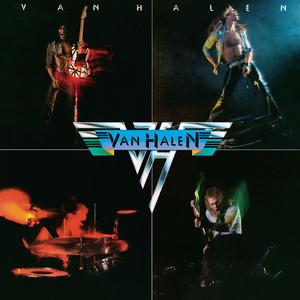
This album was seismic. Almost 50 years later it would be easy to underestimate just how much Van Halen’s debut changed rock music. Nobody played like this. Montrose’s first album had arguably paved the way but VH took the ball and didn’t just run with it - they strapped it to a rocket engine and blasted it into space. Eddie gets the attention, and his guitar is game changing, the tapping, the fast runs, yes, but listen to his rhythm work, it’s like an orchestra. Alex is an incredible drummer and DLR is a one off, a showman, with a limited but distinctive voice, he fits perfectly, a huge part of the initial impact. But the unsung hero is Michael Anthony, whose fat basslines round out the sound xxxx and whose melodic background singing fills any vocal deficiency from the front man. The production is excellent. The songs are uniformly good - "Runnin' With the Devil", "Ain't Talkin' 'Bout Love". "I'm the One", covers of John Brin's "Ice Cream Man" showing they could put a spin on the blues, and of course the stunning guitar barrage that is "Eruption" leading into a great version of the Kinks' "You Really got Me". Van Halen were cocksure and bombastic; it is unsurprising that, an admittedly shaky, Black Sabbath struggled to compete when they took them on tour. I love this album, and I think the following VHII is even better. Incredibly influential and still holds up. That VH inadvertently led to 1980s hair metal is not their fault.
Very well done, very poor generic ‘80s rock-pop. “Let It Rock” kicks it off with loads of organ and sounds like Yes or Kansas playing a third rate AC/DC song. Side one contains the big numbers, “You Give Love a Bad Name”, Living On A Prayer”, with that irritating voice box, and “Wanted Dead or Alive” - the three Bon Jovi songs I thought I never had to hear again although the Atmos mix seems to add a lot of keyboards to the soundscape, so that was a thing - now I never have to listen again. The rest of the album is full of forgettable, very earnest tracks with no substance and very little depth. I just don’t get Bon Jovi; there aren’t even any ‘guilty pleasures’ here. There are worse records but maybe not many as bland.
I have had a passing relationship with Iron Maiden over the years. My uncle gave me Deep Purple in Rock, from which I built a record collection that included the classical, blues, jazz and soul influences in Purple’s music, but was very much geared to the heavier side of ‘70s rock. So, when a friend turned up with Metal for Muthas, the NWOBHM sampler which included two Iron Maiden tracks, as well as a pre-Maiden Bruce Bruce (Dickinson) with Samson, I was interested enough to look out for IM’s first album when it was released later that year. And that, I think is the only Maiden album I own. I liked the punky metal with Paul Di’Anno’s vocals. I listened to Number of the Beast when it came out, and I saw, and enjoyed, Maiden at Reading ‘82. I just didn’t love them. I have dipped in and out over the years, and occasionally, I do a deep dive. I have listened to almost everything they have released, have seen them live again recently (it was excellent) and, even if I cannot say they are one of my favourite bands, I do respect them. I joke that Steve Harris is like the old blues singer on In Living Color - I wrote a song about it, like to hear it? Here it goes…- in that he really wears his influences on his sleeve, or in his titles. This album has a song inspired by Children of the Damned called “Children of the Damned”, and one by the ‘60s TV series The Prisoner (“The Prisoner”). Later we get lots of similarly, literal inspirations. But listening today, I hear a tighter, more varied album than I remembered. I can hear Ritchie Blackmore and, especially, UFO/Michael Schenker influences in the guitar playing and, even this early, indications of the proggier sounds that would come in later. Dickinson does have a good voice, obviously influenced by Ian Gillan; he would become more nuanced as he got older - he tends to use Gillan's high register Highway Star voice 90% of the time on this album. But no matter, I really enjoyed this and it is incredibly influential.
Now we're talking. Way back in the dark pre-internet days of 1980 one of the only ways to hear new rock music was via Tommy Vance's Friday Rock Show on BBC Radio One, TV on the Radio. The gang I ran with were huge AC/DC fans, me not so much (that came later). Dirty Deeds, Powerage, Highway to Hell, If You Want Blood were all on rotation on the ghettoblaster, and we were all shocked by Bon Scott's death. So, we gathered around the speakers, 10 PM after youth club, with a bottle of cider, and listened as Tommy played a new song by AC/DC. The slow bell tolled, the mournful riff built and, after a minute and a half, we heard Brian Johnson for the first time. "Oh my god, It's Donald Duck," I said, which brought me a mild kicking... I did get used to, even love, Johnson's shrill voice and, although for me Back In Black will always be slightly below Highway to Hell and Powerage, it is an astounding album. Mutt Lange, as he had done on HTH, makes AC/DC sound huge. The guitars are separate and distinct; you can hear just how much of the band's power is Malcolm Young; open chords never sounded so good. This is probably AC/DC's best sounding record. There isn't a bad song. "Hells Bells", "You Shook Me All Night Long", the title track, and "Rock and Roll Ain't Noise Pollution" are classics; the rest are not far behind, full of Carry-On style sexual innuendo, drinking and partying; all deceptively simple and meticulously crafted. I will always miss Bon Scott's slyer, seedier persona, and I do question the speed at which the Young Brothers completed and released this record following his passing. But Back In Black is one of the great rock albums of all time and broke AC/DC in the USA, even if they never reached the same heights again.
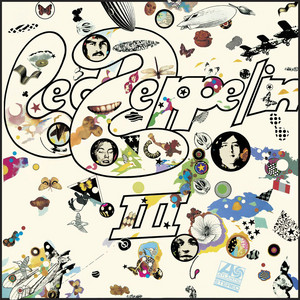
I like Led Zeppelin. They were a fine heavy rock band. I don’t understand why they are held up as huge innovators, The Beatles of the ‘70s, and I hate that they stole songs wholesale from the likes of Willie Dixon and that some biographers continue to justify the theft because “they made them better songs.” Then again, those biographers also reveal that the band, particularly Bonham and Page, along with manager Peter Grant were basically horrible cunts. That said, rant over and getting back to the music, they did make good records, and Page knew how to produce them. This may have been the first LZ studio album I heard in full (I had put The Song Remains the Same on my Christmas list, thinking that as Deep Purple’s Made in Japan was them at their best, Zeppelin live would be similar - they’re not) as a school friend had it. And it is excellent, one of my favourites. It was poorly reviewed due to the number of acoustic songs on the second side but, Page being a better acoustic player than on electric, it is these numbers that really shine - listen to the space in the lovely “That’s the Way” or “Tangerine”. Never the blues master that Clapton, Taylor, Green and Beck were, Page does shine on “Since I’ve Been Loving You” and “Immigrant Song” is the original Viking metal around which a whole sub-genre has grown. LZ III is a proper album, not just a collection of songs - the way the bubbling synth at the end of “Friends” carries into “Celebration Day” and then disappears forever is excellent. So, when you strip away all the mythology and cultish worship, what you have is a damn fine album by a damn fine rock band. No more, no less, but that should be enough.
I was somewhat divorced from heavy music in the 1980s so I missed all the thrash bands and this was probably the first Metallica album I ever heard. Even then, with the exception of "Enter Sandman" and "Nothing Else Matters", I didn't properly listen to this until the turn of the century. It is good. The production is excellent and it is commercial without sacrificing power. There are a lot of excellent songs on here with only a slight dip in quality around the middle. I'm never going to be a Metallica fan, and when I listen to them it will probably be Master of Puppets, but this stands up.
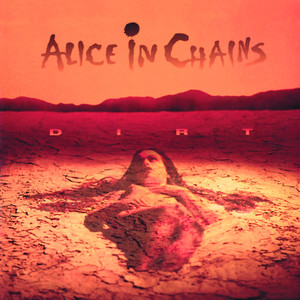
Grunge was largely a geographical movement rather than a musical one. Yes, the Seattle bands were part of a scene, one that drove a stake through the heart of the increasingly ridiculous hair metal bands, but there were as many differences in sound as there were similarities - Nirvana were a punk band, Pearl Jam a rock band, Soundgarden and, especially, Alice In Chains, pretty much metal bands, and Dirt is a metal album, a great one. It's a dark, scary record full of Sabbath-y riffs, Doomy, Sludgey grooves. Layne Staley and Jerry Cantrell harmonise so closely that their voices meld, delivering a unique vocal sound. 'Them Bones', 'Sickman', 'Rooster', 'Down In a Hole', 'Angry Chair' and 'Would' stand out but there isn't a below-par (shouldn't that be over-par, golfers?) track here. Stunning album. Unfortunately, Staley lived the life these songs described and the life took him 10 years later...
Van Halen, particularly with Diamond Dave Lee Roth as frontman, are ridiculously over the top, brash, flashy, trashy, and really good fun. You don't come to a VH album expecting profound life lessons; you come for the party, and you get that by the truckload. You also get a finely tuned rock band with one of the most influential guitarists in history, a great drummer, an underrated bass player whose backing vocals always made a huge difference to the sound, and a goofish, clown of a lead singer who has more cocky self-confidence than any of them. This album adds synths to a few tracks but they are still mostly built on Eddie's incredible rhythm guitar playing - the man was an outstanding lead player with chops that many still try in vain to match but his rhythm playing is perhaps even better. Van Halen are probably responsible for the Hair Metal phenomena that spread from California in the early '80s but they can't be blamed for the many inferior copycats who followed in their wake. 1984 was the band's last album with DLR for years and, for me, sits just below Van Halen and Van Halen II. It makes me smile.
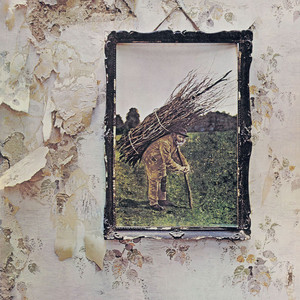
When you put aside all the 'greatest ever' nonsense that surrounds both the band and this album, this is a really good record. Yes, I occasionally get a little tired of some of the songs, and Stairway is over-praised and over-played, but when the guitar solo in that song starts, or the first drum hit thunders on When The Levee Breaks, or the Jew's harp opening to the album leads into "Hey Hey Mama" on Black Dog, it can still raise the pulse. The album is never less than good, sometimes overblown, sometimes exactly what is required. Today I noticed just how idiotic the lyrics in 'Misty Mountain Hop' are, but how wonderful the guitars under the OOO-OOH fade out are.
I bought this album on release. I had already listened to Unleashed in the East and Killing Machine (I can’t remember which was first) and then Stained Class, possibly Sin After Sin as well, so I was primed for British Steel. And I didn’t like it… Listening more recently, I am not sure why. I sold the album and didn’t really listen to Judas Priest, apart from the odd song, until about 10 years ago. This is a really consistent album. Priest were one of the first bands to fully embrace the Heavy Metal label and British Steel built on its predecessors from the off - “Rapid Fire”, “Metal Gods”, “Steeler”, anthems in “United”, “Breaking the Law”, “Living After Midnight”, the hiding in plain sight of “Grinder” (Rob Halford is a legend). I do recall disliking the Police-like choppy guitar in “The Rage”, now one of the standouts for me. I do think there are better individual songs on earlier albums, and more subtlety, but British Steel is a classic, an incredibly influential album.
I do not need an excuse to listen to Deep Purple in Rock. This is my favourite album and is, without exaggeration, the most important record in my collection, in fact In Rock is the seed from which most of my record collection grew. My uncle gave me the album in the late '70s and, from the classical, jazz, blues, soul and progressive influences on this, and on later Purple albums, I built and extensive music library which spans many genres. And of course, despite the incredible influence that contemporaries, Black Sabbath and Led Zeppelin, had on the hard/heavy rock and metal worlds, it is impossible to imagine that the likes of Iron Maiden and Metallica and the rest did not listen to Deep Purple, and this album in particular. “Flight of the Rat” is proto-thrash metal, at least a decade before that scene emerged. As hard as DPIR hit me, I can only imagine what it was like to hear this for the first time in 1970, especially for anyone who knew the band. From the cacophonous first minute of opener “Speed King”, and explosion of wailing guitar and screeching, howling hammond organ, thundering drums and crashing cymbals it is clear this is something different - this is not the same band that recorded Hush, let alone the Concerto for Group and Orchestra. The discordant noise resolves into contemplative church organ and then. bang, the riff starts and the band launch into one of the most powerful opening tracks in rock music. The lyrics are largely drawn from the 1950s rock and roll songs which inspired the young Ian Gillan, here energised with the power of the new “heavy’ rock “Bloodsucker” is built around a tight unison bass and guitar line, which snakes through the verses (there really isn’t any chorus) punctuated by organ stabs and sustained chords, then a series of short solo exchanges from Blackmore and Lord. “Child in Time” is one of the great Deep Purple songs with the whole band on stunningly good form. It builds from Jon Lord’s subdued organ introductory riff, adding elements gradually through the verse, until Ian Gillan’s voice screams in increasing anguish, his range and control are amazing, one of the best voices ever in rock music. Then into the bolero section which drives into a jaw-dropping guitar solo. And then we go again, this time with even more power, even more control. Roger Glover’s bass holds everything down, Paice’s drumming is incredible throughout - listen to his cymbal work in the quiet passages. The lyrics can be interpreted as anti-drug, anti-war but Gillan has said they are anti-stupidity - how relevant that still is… “Flight of the Rat” has one of the all time great Hammond organ solos, ending with a series of long, harsh discordant notes (still my ringtone) and seamlessly leading into a very funky guitar break, more busy, jazzy drumming from Paice. The track foreshadows metal but swings like Count Basie. Perhaps the heaviest track on the album, “Into the Fire” is a slower number, slightly reminiscent of Hendrix’s “Purple Haze”. It is followed by “Living Wreck” which taken is at a similar tempo but funkier, again some amazing drumming. Also an unusual, sensuous, slithering guitar solo, Blackmore experimenting with an octaver effect. “Hard Lovin’ Man” lays the blueprint for everything Iron Maiden and other metal bands did later in the decade - the galloping rhythm, the driving riffs - but the metal bands didn’t have Jon Lord. The distorted Hammond sound plays the main riff before the verses and his solo is unbelievable. He plays intentionally in the wrong key and wrestles the notes into key, the organ emitting discordant, atonal screams. The song, and the album, ends with a swirling cacophony of protest from Blackmore’s Stratocaster which echoes the opening of “Speed King”. Awe inspiring.
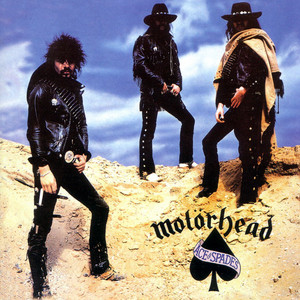
Not my favourite Motörhead album, which may be because of over-familiarity, especially with the title track, but also because the best songs on the first three albums are, to me, better than those on this, the band's 4th. It's all fairly subjective though because Motörhead didn't really evolve from album to album - despite later lineup changes, they sounded pretty much the same (with the exception of the experiment with Brian Robertson ex-Thin Lizzy on Another Perfect Day, which I like a lot even if no-one else seemed to...). Ace of Spades may be the band's best sounding album though, the production is excellent. The sound could have been muddy, and was on some other recordings, with Lemmy playing rhythm bass, Phil Taylor clattering along with his double-bass drumming and Fast Eddie Clarke's limited but very effective guitar, but there is a lot of space in the mix - you can hear Lemmy's Rickenbacker clearly, as you can the other instruments; they all sit distinctly in the mix. Lemmy may have always claimed that Motörhead were a rock and roll band and not a metal band but this album, and Overkill & Bomber the year before, came along at just the right time with the emergence of NWOBHM and had a huge influence on the 1980s metal scene in general
Not a f@cking chance...
This was probably the album where it all came together for KISS, where the image and the music gelled, where they sounded like you might expect from the pictures. I was probably pre-disposed to liking KISS. I was a Marvel kid, mainly UK reprints as US comics weren't easy to find in Northern Ireland, but I had Howard the Duck #12, where the band appears as supernatural beings in the final panel, drawn by Gene Colan, and I had seen an ad for the Marvel KISS special in an Iron Man comic. Alive II was the first album I was drawn to, gazing at the cover, Gene Simmons' spitting garish bright red blood was haunting, and jumped at the chance to buy my cousin's copy. Then I worked my way back...
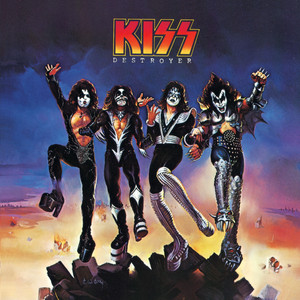
Alive was famously the album that 'saved' KISS, the first three albums having sold poorly, even as they built a live following. Destroyer was the next studio album and it sounds bigger, dramatic and cinematic, compared to the fairly basic, though still enjoyable, rock/pop of the previous studio releases. The sound is down to Bob Ezrin, then Alice Cooper's producer, who bullied KISS into delivering a record that matched the cover image. He added sound effects and atmospherics, the car radio introduction to "Detroit Rock City" setting the scene and the tone. "God of Thunder", ironically written by Paul Stanley, sums up Simmons' Demon character perfectly. There are strings on a couple of songs, the orchestrations making them sound huge. And the band's biggest hit, "Beth", a ballad sung by Peter Criss.
The cover painting, by Ken Kelly, depicts the band as conquering superheroes or vengeful gods and is still the best visual representation of KISS. And Destroyer is still the best album in KISS 's discography.
From 1969 to 1973, Deep Purple was undoubtedly the best live band in the world, and this album, one of the pioneering double live albums, captures them near their peak. This is the album to present to those who claim Led Zeppelin was the greatest rock band of the ‘70s; much as I like them, they never came close to the energy and inventiveness of the Purple live experience. In reality, Deep Purple was more akin to Miles Davis’s electric bands than to Zeppelin or Sabbath; they weren’t a jazz band, but they possessed supremely talented improvisers. In Ritchie Blackmore, Ian Paice, and Jon Lord, they had three of the finest musicians in rock music.
There are only seven songs on the album, spanning just over an hour and a quarter, four of which are from their recent Machine Head release. However, as in jazz, the songs, while excellent, are essentially structured ‘head’arrangements upon which the improvisations are built. A common criticism of Purple’s live shows was their lack of significant setlist variation. However, as Ian Gillan rightly pointed out to an interviewer, tonight’s set could be two hours long, while yesterday’s was two-twenty, so something different was happening. Live, the band would take off, solos extending as long as they required, accompanied by a system of hand signals and motives to signal to the rest of the band when solos were concluding. Listening to the three complete concerts from which the album was compiled is both educational and entertaining. The songs remain the same but different; you can discern the development of ideas that had emerged on previous nights.
There are so many unforgettable moments on this album. The introduction to “Lazy” starts with Lord’s squealing bleeps and blips, gradually transitioning into churchy chords, jazzy riffing, and eventually Blackmore’s bluesy and funky Stratocaster licks. Paice’s cymbal work and Gillan’s ferocious screams are showcased in “Child in Time,” while the vocal/guitar duet in “Strange Kind of Woman” features a battle of wits. The interplay between Blackmore and Lord throughout the album is truly remarkable. There’s a sense that at any moment, everything could go awry and end in disaster, but it never does. And that could be due to bassist Roger Glover, the solid rock around which the soloists weave. I must admit that I occasionally skip “The Mule”’s lengthy drum solo. While it’s hugely impressive, showcasing light and shade, loud and soft, almost musical, it’s still a drum solo, and I don’t need it every time.
I recognise that I may have a slight bias. I possess at least 50 live recordings of Deep Purple from this period, both official and bootleg, and I could happily listen to them for hours on end, and I often do. However, “Made In Japan” stands out as the pinnacle. The recording is exceptional, allowing for clear separation and definition of each instrument, particularly Ian Gillan’s voice, which is unmatched by any other singer in any other band of the era.
Despite still recording and touring impressively, Deep Purple is often unfairly derided and even forgotten these days. This wasn’t a heavy metal band or a progressive rock band; it was a group of five incredibly talented musicians who fed off each other’s energy in live performances, challenging one another, rocking hard while seamlessly blending classical, rock and roll, and blues motives, playing with both power and subtlety, incomparable to any of their peers.
I LOVE THIS BAND AND I LOVE THIS ALBUM.
I've never been a fan of Def Leppard. They always seemed to stand apart from their contemporaries in the NWOBHM and not just because of their focus on aiming for success in USA - I actually quite liked "Hello America" from their debut. They all seem like really nice guys and I really respect how they stood by drummer Rick Allen when he lost his arm. With the benefit of time, and hearing interviews and seeing projects in which the likes of Joe Elliott have beed involved, I can hear the influence of Mott the Hoople and Thin Lizzy but I just can't warm to their music.
I love what Mutt Lange did on AC/DC's Highway to Hell and Back In Black albums but here his production is one of the major turn-offs. The guitars sound big but the drums, possibly mixed with drum machines, are drenched in reverb, the vocals, especially the backing vocals, in chorus, the whole sound layered and over-polished. "Photograph" is fairly catchy and "Rock of Ages" is memorable as possibly the best/worst of the vapid 'rock 'n' roll' lyrics. None of the other songs hang in the memory for long.
Yes, it was hugely successful in their target market but the list of hugely successful rock/metal bands in the US wouldn't suggest a particularly discerning audience. Glossy pop-metal, good for a gym listen once in a while, but no more than that.
It took me a long time to get Black Sabbath. In the late '70s, a friend put together a heavy rock mix tape with "Iron Man" and "Paranoid" on it, and I liked them, but the first Black Sabbath record I bought was Heaven and Hell, on which Ronnie James Dio sang. I heard the Live At Last record which was put out to compete with H&H and it wasn't good, and I therefore considered early Sabbath as monolithic and relatively monotonous. What did I know?
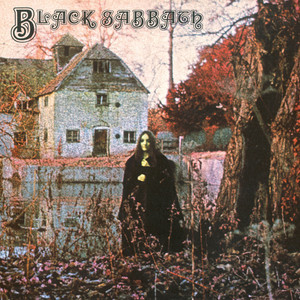
"Black Sabbath" by Black Sabbath from Black Sabbath started a new genre. It would be difficult today to find a metal band who didn't owe at least something, even indirectly, to Sabbath. They were responsible for the creation of Heavy Metal, even if they were not trying to. They took the heavy blues of Cream, jazz influences (especially in Bill Ward's drumming and Tony Iommi's guitar. They were heavier than anything else, primarily due to the great riffs, particularly in Geezer Butler's bass doubling Iommi's guitar. They were progressive and inventive, much more than they were given credit for.
Sabbath would make better albums. My favourite varies depending on where I am; Masters of Reality if I am in a Doom Metal mode, Sabbath Bloody Sabbath or Sabotage if I'm feeling spacey and proggy. But this is where it started and, if you don't know the band, this is where you should start.