Very funny lyrics. Unsuccessful courting attempts are a recurring theme. The sax is on point and Prima plays some great trumpet. The balance in the band is great, and shifts from song to song. It really highlights Prima’s skill as a bandleader. According to Wikipedia, Prima wrote 3 and arranged 1 of the songs (2 of those he wrote are only on the remastered edition). That also shows a real knack for song selection; another sign of a great bandleader. He seems like a fun guy to play with, though I’d need to do some research to validate that. His Italian-ish scatting is a nice change from what I’m used to hearing in jazz tunes. It’s just another way he throws in his own flavor and flair to some standards. This is a great party album for the ages.
I’m not sure if this is when Radiohead first really started experimenting with electronics sounds or not, but you can definitely feel it on this album. I hear some tasty Theremin getting tossed in amongst the rest of the sounds. I can hear some drum and bass influence in the drums, but it’s deconstructed; a precursor to what James Blake would do with dubstep over a decade later. Thom Yorke hits with his fluttery falsetto in a way that gives a consistent organic ethereality to counter the machine-like electronics. Each song can stand on its own, but the transitions and sequencing of the album make it a different experience to listen to beginning to end. While most of the album has a generally, though not overly, dark and foreboding atmosphere, Motion Picture Soundtrack provides a musical brightness and light to the album, before abruptly ending. A fading period at the end of the sentence of life.
It just sounds like a guy jamming on his guitar with a couple of friends. The drums are very subtle and back in the mix; sometimes it’s just a shaker. It’s more of a percussionist than a drummer as far as the space that the musician is filling. Even on Beginning to See the Light, the pulse is really driven by the guitar. It’s a lot more about the rhythm guitar strumming, with some nice highlights from the lead. Im Set Free fills up the most space with drums, but still very little is carried by a ride or hi-hat. Lou Reed’s voice has an earnestness to it - unornamented and not distracting, it makes me think of the beat poets. All of that until you get to The Murder Mystery which moves in and out of structure, cacophony, monophony, and limited melody. After that detour, you get closed out with the bubbly sweet pop of After Hours - the only track to feature female vox front and center, highlighted more so without the presence of drums, bass, or backing vocals.
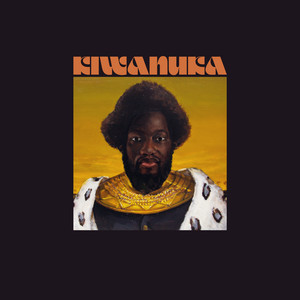
The comparison to Bill Withers many make is very apt; while Kiwanuka doesn’t have the same power as Withers, the timbre resemblance is spot on. That being said, Michael Kiwanuka brings a lot to the guitar work that you don’t hear in Withers’ tunes. There’s a casual confidence to Kiwanuka that carries throughout the album, and the production compliments his vocals beautifully. Strings come in the beautifully supplement at just the right moments. Hard to Say Goodbye has one of my favorite combinations as background vocals, almost angelic, double a rough distorted guitar the creates a yin-yang juxtaposition exemplifying an artist painting with a full palette. Coming back to the production - every aspect is allowed to breathe and has a nice roundness to it. No component feels sharp or out of place. They all blend and dance in and out of each others’ embraces effortlessly. It makes me think of a dance you see in a movie placed in the Middle Ages where partners change frequently, all moving in concert like a beautiful geometric pattern, and then they land all at once with the partner they began with. Only in Kiwanuka’s music, it seems some partners appear out of thin air, but without surprise. His interludes and intros act as a glue to carry the listener from track to track, guiding you as if you were just learning the courtly dance, but never making you feel unwelcome or out of place.
This album is more than a pure heavy metal album. It’s mostly a metal album, but it shows some rock chops extending beyond the pigeonhole of “heavy metal”. Don’t get me wrong - there’s plenty of metal coming through with the dual guitars and driving rhythm section, but a song like “United” gives more of the anthemic Queen vibes than metal. The songwriting was surprisingly tight for me; some great pop sensibilities hidden amongst distorted guitars. The production is very clean, allowing the listener to appreciate the vocals, the guitars, bass, and drums, together and separately. A lot of metal production can get muddy with all of the distortion, but here everything is balanced so you can easily pick out the individual components.
I remember when the documentary about Buena Vista Social Club came out. It gave so much more life and background to the musicians - how they’re each masters of their own instruments, and how they were assembled together to make this incredibly talented ensemble. The rhythms of the album almost require that you start dancing, at a minimum nodding along and tapping your fingers or feet. This album brings the beauty of traditional Cuban music to the masses.
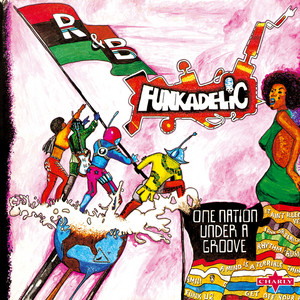
If you’ve heard any Funkadelic or were a fan of g-funk rap from the early 90’s, you’ll definitely hear some musical motifs that are instantly recognizable. One Nation Under a Groove exemplifies how Funkadelic never let themselves get boxed in with pure funk. Groovallegiance brings in some great latin jazz feeling, and while Bootsy Collins might be the best known Funkadelic bassist, Rodney “Skeet” Curtis’ bass grooves have a chance to really shine here. Who Says a Funk Band Can’t Play Rock Music?! would be the 2nd entry in the book on how to understand Funkadelic, right behind any of their myriad tracks about grooving. They want to incorporate the sounds that make sense to them, and even the ones that don’t make sense at times. Predefined genres be damned - Funkadelic will stretch those expectations and pull it together in a nice melting pot that's funky as all hell. I would argue that this album leans in more to their rock sound than other albums. The funk is absolutely still there, but this record is definitely a rocker. Highly recommended; the same that I would say for almost all of their catalog.
Joni Mitchell was never an artist that I got particularly excited about, but if singer/songwriters are your jam, she's one of the best. Blue highlights her poetic lyricism. She's a wonderful storyteller and paints a combination of visual and emotional imagery with her words. Her voice was in its prime when she recorded this album, and it floats beautifully on the clouds of guitar and piano music. Overall, a very pleasant listen, just not my genre of choice.
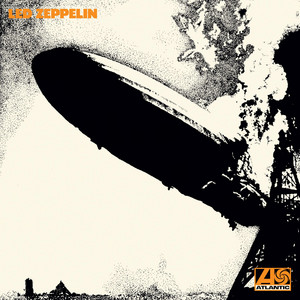
Bluesy as hell. Rockin’ as hell. Led Zeppelin were not the first to merge blues and rock, but they were the first to do it this good. The heavier blues tracks are the ones that really grab my attention - Babe I’m Gonna Leave and Dazed and Confused. Some may argue that they ripped off blues players without giving appropriate credit, but I think of it more as Zep paying homage to them, and embracing the heaviness that a John Paul Jones + John Bonham rhythm section can bring. You can definitely hear the roots of hard rock in this album.
Not my favorite Bowie album. For me, the context around the release of this album speaks louder than the quality of the music itself - first release in 10 years, coming off of a health scare, and the secret recording of the album all create some bonus interest in the album. It's still a decent album worth your time, but if you had 3 Bowie albums to listen to, I wouldn't include this on that list.
90's alternative rock at its best. Billy Corgan captures the sentiment of the era with his heavily distorted guitars that also sound like what somebody from the 90's thought the future might sound like. Siamese Dream doesn't growl so much as it snarls. It's got attitude, but the attitude of an art school loner rather than a tattered-jean-jacket-wearing rocker.
This is a tough one for me to review. The beats and music are solid head-bobbing tracks, but so much of rap is about the lyrics and wordplay. I don't speak French, so I can't really comment on that part at all. That being said, the rhythm of his Solaar's flow sounds great, and based on what I've read about him, he's a master wordsmith :).
This album was a real pleasure to discover. I grew up listening to hammered dulcimer, but had never heard it used in Indian music. The journey the album takes the listener on is quite beautiful as well. It makes me think a bit of Vivaldi's Four Seasons, but Sharma's journey is throughout a day rather than the changing of the seasons.
It's hard to believe this album was released in 1966. It represents a big. turning point for the Beatles as they moved from bubble gum pop-rockers to musicians with some artistic leeway that they expertly use to their advantage. You've go the hits - Taxman, Eleanor Rigby, Yellow Submarine, Good Day Sunshine, and Got to Get You Into My Life - but the track that really stuck with me is Doctor Robert. It strikes that perfect balance of oddball imagery with catchy music that make so many Beatles tracks earworms.
This album goes way harder than I remember it, but then it's also got its soft side with The Way You Make Me Feel, Liberian Girl, and Man in the Mirror. It's stacked with hits, all the 80's synth and hand claps you could want, and it's no surprise that this is one of the best selling albums of all time.
This album is both experimental and traditional R&B at the same time. It established Frank Ocean as receiving the baton, giving R&B a fresh take for the millenial generation. Pyramids is this album all wrapped up in a single song: a 9 minute epic, broken up into distinct movements, that, on paper, should feel odd or out of place, but effortlessly flows, never taking the listener out of Ocean's dulcet tones.
One word to describe this album - raw. I've always felt that Neil Young has an incredibly emotional voice. It has that slight warble - almost like a vibrato that he's fighting to contain - that makes sure you know that his voice was not adulterated by some machine. He juxtaposes that with a fuzzed out guitar that is screaming to be let free. And it's not just some gimmick of contrasts that he employs. His sense of song comes through on tracks like Cinnamon Girl, and his musicality really shines with extended jams on tracks like Down by the River and Cowgirl in the Sand.
Everybody knows The Message. The first massively popular rap song to blast out of speakers across the United States. I didn't remember that It's Nasty is on this album, with the very recognizable sample that you'll also hear on hits like Mariah Carey's Fantasy.
That being said, the slow jams - Dreamin' and You Are - feel a little out of place on this record and feel like a misstep in the pacing and sequencing of the album. It's a good thing they wrap up strongly with The Message and The Adventures of Grandmaster Flast on the Wheel of Steel. The last track is particularly emblematic of hip-hop, and while it doesn't perfectly capture the energy of a block party, it's a decent representation of how DJs, sampling, and turntablism changed the musical experience forever.
Definitely an album for its time (the early 80's). There are a couple of tracks here that have been sampled heavily and for good reason - they've got some incredibly catchy motifs! Genius of Love has been sampled and interpolated extensively, so you'll probably recognize that one pretty quickly. You can also hear how new wave and hip hop were on a collision course at this time. The "rapping" is subpar as far as lyrical prowess is concerned, but it stands as a moment in time, alongside Blondie and Run DMC + Aerosmith, when the artistry of hip hop began to bleed over and influence other genres more heavily.
There's a reason they call her the Queen of Soul, and this album certainly showcases that. The album starts off very strong with Chain of Fools. It's a perfect statement to establish what this woman is all about - a powerful voice coming from a strong woman. She's definitely not here to suffer any fools.
Some songs really exemplify Franklin's power, while others highlight the tenderness and subtlety she has with voice. I think this comes through best on (You Make Me Feel Like) A Natural Woman and Ain't No Way. This album is a tour de force that should be enjoyed top to bottom.