Certainly interesting and culturally undeniable, but it doesn’t do it for me. The language barrier is probably an obstacle, but I’ve fallen in love with albums full of lyrics I understand less. As a 60s psych album, I don’t know that there’s much that really stands out. There’s distinctly Brazilian instrumentation, but it comes off more as a curiosity than a meaningful sonic innovation that really adds something to the music. It does a lot of things really well—some of the distorted guitar tones, more ambient feel of drums and keys with lots of reverb on the vocals—that make it a good psych album. I just think there are maybe a dozen other albums with a similar sonic aim that scratch that itch better for me.
Baby is a standout track. Maybe not one I’d frequently come back to, but I really think it stands up favorably with most other similar tracks of the era—the distorted guitar really adds a lot of character.
An interesting album and one I don’t regret listening to, but, apart from the interest of the uniquely Brazilian instrumentation, just not one I think I’d come back to. There are many psych albums I prefer and I don’t have enough experience with Brazilian music post-Mutantes to appreciate their influence.
This album came out in 1985 and it couldn’t feel any more 80s than it is. It has all the requisite cheesiness and instrumentation that should be expected from the peak of the 80s. It’s not really my cup of tea, but it’s undeniable. It’s one note all the way through, but it’s so catchy. How can you pass up a song like shout? It’s so cheesy and you can’t help but give it its flowers.
A solid 3/5, closer to a 4 than a 2. An album I’m equally likely to praise and poke fun at. Its formula is easily picked apart and prodded at, but it’s done exceptionally. Not an album I’d really ever seek out, but also an album I think I’d reasonably defend. It really nails a specific sound I don’t love, but man it really nails that sound.
The eighties are strangely missing from my musical touchstone. I can wax poetic about the sixties and seventies, but 1978-93 is sort of missing. Obviously like anybody who has heard of music I can talk to you for too long about joy division, and that’s sort of where my ear goes here. The love of reverb and chorus effects, the similar strat tones, big echoes everywhere, there are noted similarities with joy division. But, for lack of better explanation, Joy Division and Tears for Fears sat on different sides of the high school cafeteria.
I’ve always known Isaac Hayes as Shaft and I have the Shaft record (or did before my parents moved and half my records disappeared). I never knew him pre-Shaft, so this is exciting just to begin with.
It reminds me a bit of Baby Huey, though Hayes’ vocals are certainly more subdued. But it’s a very aptly titled record, just dripping with soul and charisma. A great Sunday morning record, and one I’m sure I will come back to many times.
I think maybe there’s something in my (very white, very folk-inspired) upbringing that makes soul feel more distant to me. I didn’t hear really anything by black artists except maybe Stevie wonder until I was old enough to seek out my own music among my predominantly white, middle class friends. And while hip hop was around enough to form a familiar touchstone and was a genre I delved into when I had the opportunity, soul has largely escaped me, unfortunately. I mean, I love baby Huey, because anybody who has heard him sing does, and as a bassist I’ve listened to not nearly enough James Jamerson to fully appreciate how singular he was.
I think perhaps there is a chasm in my musical knowledge that makes me think of this album as a 3/5. Lyrically and sonically, I can recognize that it’s above and beyond, but it doesn’t quite scratch the itch I want it to, and I am struggling to articulate exactly why.
I love the drawn out instrumentations, the improvisational, emotionally charged feel of the whole record. But the jams feel slightly boring—the bass lines are killer, but I think I prefer more discord and attached feel than the somewhat masturbatory jams.
The lyrics are nice, in fact they’re deeply cool. Hyperbolicsyllabicesquedalymystic is fundamentally cooler than me. And maybe that’s part of the issue—I’m just not cool enough to fully appreciate this album. But lyrically it’s lacking a French you know what that’s preventing me from really latching on to this.
I give it a three, closer to a four than a two. It’s an excellent album, I believe, and one that I’m not primed to give its proper flowers.
It’s been quite a while since I listened to hip hop I wasn’t already familiar with, it’s been quite a while since I’ve listened to Pac. And it’s been since never that I’ve actually sat down and listened to a Tupac album all the way through (maybe I did in college, but I have no recollection). While I’m thoroughly of the west coast persuasion personally, I suppose unintentionally I’ve always favored the New York scene in the 90s and really haven’t given much thought to Los Angeles in the 90s, or Los Angeles ever, for obvious reasons. So I think all of that is to say that I don’t have a background in Tupac or west coast rap more generally, and that intimidates me.
This has been a difficult album to listen to, largely because I think to give it an honest assessment requires attentive listening, reading along, and a better understanding of context than my cursory education entails, thus requiring some extracurricular reading.
This is one of the most acclaimed albums of all time, one that stakes a political position, and is muddled in layers of context. I naturally fear underrating it out of ignorance or overrating it out of ignorant deference.
Ultimately, this is an exercise for myself and myself alone, so here it goes.
This isn’t an album built on the strength of its standout tracks, in my opinion. That’s not to say that it lacks good songs. I mean that the flow of the album seems to be much more built around the whole rather than fleshing out core tracks. And that leads to an album that feels intentional, one that is exceptionally written, but also one that lacks the sort of song-to-song changes or even transitions that make certain tracks stand out. Dear Mama is the exception as the production and lyrical delivery completely change, creating the album’s most memorable song.
I think the obvious comparison here is GangStarr’s Moment of Truth and, while it’s entirely likely a case of familiarity, I much prefer moment of truth. I prefer Premier’s production and guru’s lyrics, and I think Guru has a more lyrical and, honestly, more catchy style than Tupac does on this album.
If I’m being totally honest—it’s a great album, one I probably won’t listen to again unless a specific situation compels it. Perhaps if I steeped myself in it more and willed myself to like it more, the strength of the writing would ultimately shine through. But I just don’t feel compelled to do that, and a large part of that is just an entirely subjective categorization of what I come back to and what I appreciate, but leave in the closet.
As noted earlier, my musical upbringing was very sheltered. My mother effectively only listens to Bruce Springsteen and my dad’s exploration into new music stopped around 1978 and was deeply influenced by his older brothers. So the long 80s when the talking heads, at least in the circles I’ve found myself in, largely reigned supreme are an absence in my musical upbringing. It wouldn’t be until high school that I became aware of them outside of a few songs and not until college that I’d understand their importance. A few years later, I would be kicking David Byrne out of a museum (gotta pay for your ticket, Dave) and fall in with a group of much more musically sophisticated folk. People whose musical knowledge, unlike mine, expanded beyond laurel canyon and San Francisco and who’s recent touchstones were decidedly cooler than my early teen pop-punk/hardcore obsessions.
So while it would make sense for somebody my age to think of the talking heads as the most familiar of comforts, they are in many ways new to me. I’ve heard most of this album in one way or another, everything sounds familiar, but I’ve never sat down and listened to it.
There’s part of me that dislikes the talking heads for sounding new compared to my folky loves. There’s part of me that dislikes the talking heads because I didn’t listen to them growing up and cooler people I met later seem to have them ingrained in their musical consciousness, and justifiably so. There’s part of me that is suspicious of the 80s—the drugs of choice changed with the cultural and political zeitgeist, all seemingly a marked step back from the acid and love fueled sixties. A cynical and necessary step forward that I partially resent. All to say that, for some deeply rooted psychological reason, the talking heads make me feel insecure.
What a great album! The talking heads and David Byrne are synonymous, so I’ll talk about his contributions first while noting initially how tight the band is. I don’t really care for Byrne’s style, it feels like he did stupendous amounts of cocaine and then walked into the studio in a panic. But it is at the very least interesting writing, and he is a creative director par excellence, almost in the Bowie mold. He uses his vocal talents and quirks to maximize the impact.
But let’s talk about the band. Tina Weymouth is a legend, and it’s so evident on this album. These songs have to be incredibly tight and controlled to work, and it’s her playing that holds the entire project together. Without her playing, Byrne would sound like a complete idiot. The entire band revolves around a phenomenal bass player and a drum that lives in the pocket. They create the solid foundation where David Byrne can do tons of coke and yell melodically about corporate culture or whatever and have that actually work.
Byrne’s solo work proves that he doesn’t need the talking heads to be incredibly brilliant, but this album shows the brilliance of the talking heads was far more than David Byrne.
I seem to harp on how I can’t appreciate an album fully because it’s not in my folky wheelhouse. This seems like a cop out as most of what I listen to can’t be called folky. So now, I am confronted with undeniable folkiness. What to do?
Despite my folky roots and to echo something I’ve said everyday, I’ve never listened to this album. I know Paul Simon as really one of the best acoustic guitarists of his era—his work on sound of silence solidifies that—and a more than worthy songwriter (his work on sound of silence solidifies that). But my criticism of Simon (and Garfunkel!) is that he (they!) are a little soft. They are very pleasant to listen to, but they are a little too pleasant to listen to. A little too much polish, seemingly lacking a certain authenticity that is absolutely essential in his genre.
There are Paul Simon songs that have become standards, and deservedly so, but he isn’t on my Rushmore of folk singers, he and Dylan are at the kids table for opposing reasons.
The beginning of this album was entirely unexpected and so welcomed. Hell yeah. Paul Simon is relentlessly gifted at playing the guitar and the rest of the band is fervent here. I am just shocked by the statement that save the life of my child is—I might have to listen to this five more times before moving on to the rest of the album. The bass is unrelenting and the tone of the crashing cymbals adds so much to this song. It just feels so unexpected from Simon and it’s executed so well. I did not expect this album to start so aggressively and it works so well.
And it just keeps going. America is so different from its predecessor, but it’s a banger as well. We get to dive into Simon’s ability as a storyteller, where few can compete. The rest of the band, the production on this album take this from some good songs to a stellar album. Simon can play truly beautiful acoustic lines that occupy so much space as he is wont to do, but the bass forces the issue in a way Simon’s guitar can’t and the (Hammond? Whatever keys) play a beautiful accent. It also makes it that much more poignant when you do get situated in songs like Overs or old friends that absolutely showcase Simon’s voice and playing, both of which are impeccable as ever here.
And we must talk about voices of old people. This album is stuffed with the unexpected, and I did not expect field recordings of elderly Americans used as a framing device for the song’s accompanying it, but wow does it work. This is an album that seems shockingly considerate in its arrangement, between having (and reprising) a theme and including a recording like voices of old people.
This album is so strong and cohesively resonant that, while Mrs. Robinson is probably the most listenable standalone track, the album would be just as good without it. It’s a classic that I don’t much care for, and it doesn’t really belong here (I wonder what the conversation was to put the song on the album as obviously it wasn’t recorded for this release).
I walked into this listen fully expecting to go against type and criticize a folk album. I walked out not even positive this is a folk album. It’s certainly not perfect or remotely close to contending for my favorite album, but what a stellar album front to back. I think I would’ve liked to see another reprise of the theme to tie the whole piece together, having the reprise appear fairly early in the album and disappear was something of a disappointment. I also think Mrs. Robinson, while a standout track, should’ve been left off. In such a conceptually driven album, I think a nonsequitur track like that detracts more than it should. But, while far from perfect, it deserves its flowers and then some.
Who among us doesn’t at least appreciate bittersweet symphony? It’s genuinely a pretty song and nothing more needs to be said. The same could be said about the rest of the album. It’s generally pretty and inoffensive. I won’t listen to it again because I found it boring.
Much like everything I encounter, I am in entirely uncharted territory here. Do I know bittersweet symphony and the weird lawsuit drama with the Rolling Stones? I was born in 1996. Could I tell you that the verve was the band behind that song? Maybe, I do love trivia. Have I ever intentionally listened to this album or anything by the verve? Absolutely not.
But getting past the one song I am too familiar with, there are a dozen other songs here for better or worse. As I’m listening to it, I am mildly aware that I am listening to it. It sounds like 2000s mall music and I just can’t force my brain to be interested in whatever this is.
I cannot force myself to care about this album. Ultimately, it is just very boring. I’ve had to remind myself that I’m listening to it just because it hardly registers above white noise on the ears.
An hour into the first eleven minutes of the opening track, I’m reminded of how much I love the moody blues’ days of future passed and how much I would rather listen to that. I don’t necessarily hate prog rock, but if I do, this is why.
It’s a seemingly distilled version (though, unfortunately, not nearly distilled enough) of everything I don’t like about prog. The musicianship is excellent and there’s at least interest there and some of the more experimental synth/key elements. But it’s excellent and interesting to what end? So that I know they’re talented musicians and well-studied in their classical influences? It’s just an absolute chore to listen to, and it’s not endearingly cheesy in the way it could be.
Which brings this to the lyrics. They are not cheesy or campy, though it seems those are the heights they strive towards, but rather just bad. The scale of bad ranges from eye-rolling to genuinely offensive.
‘You must believe in the human race / can you believe God makes you breathe/ why did he lose six million Jews?’ Followed by several minutes of tedious piano masturbation, because that’s appropriate.
It’s like the Beatles met joy division, listened to an album by the replacements, and made an album. It’s not as good as either, but it’s still good. It feels like music in progress. You can hear the early British pop rock influences of the early sixties, you can also listen for where things are headed with punk and new wave. In and of itself, I don’t love it. But it’s fascinating to hear a half dozen disparate bands shine through in just 36 minutes.
Overall an album I enjoy and I see where it influenced other albums I love. It’s an important part of the development of guitar music between folky cowboy chords, jazz standards, and a bit of discord all mixed with a tinge of urgency.
Tonight is a stand out track.
A 3 because I think it far outstrips the qualifications for a 2, but I don’t think I’d come back to it.
I’ve written this review like three times now and I’m not interested in doing so again. Something about being most familiar with Elvis Costello from that one time he was on 30 Rock. Something about Alison being a stellar
But this album is really good. I will edit this review later, but something about a UK Bruce Springsteen, but less bad.
First off, the Gipsy Kings made the definitive version of the title track and it’s not remotely close.
The songs are largely catchy, sing-along easy listening. I can bob my head along with new kid in town, and it makes me think of driving home from school in the pickup with my dad—he does love the eagles. But he loves Jackson Browne more, and (while he obviously had some crossover with the eagles and wrote a few of their hits) there’s an honesty to his songs that I just don’t feel here.
The production on this album, for better or worse, is frighteningly crisp and clean. Every instrument sounds pure, the snare is wonderfully snappy and the kick is deep. But the production is almost too clean, sanitized. And I think that’s my gripe with the album—it’s stripped of the human element. The lyrics feel contrived, like they read an encyclopedia of cool song topics and wrote based off that. The music is sort of exactly what you’d expect, executed to perfection. There are some neat riffs—I can’t stand life in the fast lane, but it absolutely reads as somebody striving, and largely succeeding, to create an iconic guitar riff—but on the whole it just feels uncreative.
Something brilliant was happening in the 80s with the crossover among hip hop, new wave, and punk. Rapture is perhaps its commercial peak, and Charlie Ahearn’s Wild Style is an iconic film that captures the crossover. The escapades of Futura 2000 by the clash, ft. Futura 2000 is a personal favorite. I’ve written graduate essays about the New York scene in the 80s with Colab, read extensively about basquiat and Warhol. I find few moments as fascinating as that particular moment in time when hip hop, punk, and new wave all coalesced in midtown and lower Manhattan.
This album wants to be Debbie Harry shouting out Fab Five Freddy in front of Basquiat during Rapture. It isn’t.
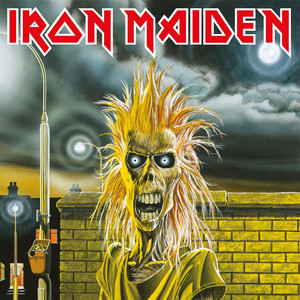
I feel like I have to wipe Mountain Dew and Cheeto crumbs off my keyboard to review this album. If you like tight, driving guitar riffs and flourishes that scream ‘Hell yeah, brother’ and you think a flaming skeleton riding a motorcycle is sick as fuck, boy do I have an album for you. It’s not as bad as what it inspired, but it’s not good and, well, it inspired quite a bit that we’d be better off without.
An album I generally enjoyed and don’t have much to say about.
Ah, to be in high school again—Odelay brings back memories, every single one involving being stoned, which I think is the appropriate way to enjoy this album. Odelay came out the year I was born, but it was still an essential piece of listening in my youth.
Depending on the social path you carve, certain albums seem like they are destined to be a phase you end up in. We all know the kid who wouldn’t shut up about dark side of the moon or Ok Computer, Madvillainy or Highway 61. Odelay may not have quite the cultural cachet of the other mentioned albums, but I think it fits that same niche as an album that, for a certain kind of person (ie, me) you go through a (hopefully brief) stage where that album chisels a new mark in the burgeoning relief of your personality. Though it’s been likely since college that I’ve listened to Odelay, those little indents are now part of a larger frieze and, unlike other, more fervently pursued marks, I don’t regret the impression Odelay left on me.
It’s far from ‘all killer no filler,’ as the kids say, but the filler make this album what it is. It’s an atmosphere that, more than anything, feels like the soundtrack to Beck’s idiosyncratic, scattered, stoney, slacker universe. If that world doesn’t appeal to you, you’re justifiably going to hate this album, even if you can’t deny that some of it is throughly catchy.
The lyrics sound like what Anthony Kiedis is always trying and seldom succeeding in—nonsensically vivid, saying absolutely nothing yet creating a coherent aesthetic. Musically, Beck and the Dust Brothers put the nineties into a blender and pull out something that is unique even as it generously borrows from its contemporaries—Beastie Boys style hip hop mixed with a dash of lo-fi electronic, a throwback love for psychedelia-tinged easy melodies, all mixed with a Grunge-esque attitude of signifying an antipathy towards conventional success while ultimately making fairly radio-friendly music. While sounding unmistakably a product of its time, Odelay is still re-listenable and nostalgic. It has every reason to feel trapped in a bubble of dated references and a misremembered zeitgeist, but somehow—perhaps only because of my own fondness—it avoids that.
It’s not a classic for everybody, and I don’t think I’d really argue against somebody who hates Odelay. But it’s my first five, which says as much about my advancing age and the proclivities of my slipping youth as anything. I’ll probably be old and senile before ‘two turntables and a microphone’ stops randomly popping into my head and ramshackle will always hold a place in my heart as a remarkably sweet little tune.
There are some albums that aim high and crash. Guitar Town seems to acceptably hit the mark it aimed for. A much more listenable album than most 2s, but just one I can’t quite justify a 3.
———
Steve Earle occupies a weird place in my musical cosmos. I love many of his peers’ and inspirations’ music dearly and I would pick up his memoir in a heartbeat. His portrayal of Waylon in The Wire sincerely evokes people I have met in the rooms, and I know that’s because it’s pulled from his own experience. Importantly, this marks the second (after Elvis Costello) artist I’ve now encountered featured in arguably the musical zenith of the millennium, 30 Rock’s Kidney Now! I feel like Hansel in Zoolander—I’ve never clicked with Earle’s music, but the fact that he’s out there, making it? I really respect that.
I find many albums of Earle’s late outlaw country ilk suffer from overproduction. On many (but not all!) tracks, Guitar Town isn’t an exception. I could do without the organ and synth plugging cheerily in the background, even the lap steel seems a bit superfluous. I think I’d like this more with a different, stripped down arrangement. Even the kind of somewhat expansive, but less polished arrangement of Neil Young’s Tonight’s the Night would suit these songs much better than the twangy, middle of the road production predominant here. Way too much reverb on the vocals, too.
The songs are good, not great, some classic country tearjerkers in goodbyes all we got and my old friend the blues. But the production really drags this down and a lot of the album seems like filler even if there is a cohesiveness that brings it together. Ultimately I don’t dislike it. But were I in the mood to listen to an album like this, I’d pick plenty before Guitar Town.
The album hovers between a 2 and a 3, and I don’t know precisely where to come down. There are a few songs I genuinely like—goodbye, the blues, someday—but they aren’t great songs, and the rest of the album feels a bit…there.
I still love Steve Earle, but I’m still waiting to love his music.
Kerry Lynn McCarty was born in Denver, Colorado on August 16, 1961, and soon thereafter absconded with her parents to Jackson County, Oregon. Naturally, she obsesses over Bruce Springsteen to the point that when I nearly married a second generation New Jerseyan, she marveled at my mother’s uncharacteristic and largely inexplicable obsession. I’ve listened to countless hours of the Boss’s music, almost none of it willingly. Kerry and I don’t much see eye to eye and, while I do love my mother, her taste in all things sonic or aesthetic is disreputable at best.
My mother and I don’t much agree. Bruce, you feel like home. Unfortunately, home is not a place of comfort.
Loaded associations aside, let’s dig in. Yeah, this sounds like Bruce Springsteen. The album starts with Badlands, a song I didn’t think I knew, but I absolutely do. It’s big and urgent, Bruce is down and out, probably wearing a leather jacket, and only The Girl can help him, but The Girl can’t understand how dark and mysterious The Boss is. It’s catchy and moody, as Bruce is wont to be.
Adam raised a Cain wants to be loose and wild, steeped in biblical references that reflect a personal trauma. It’s boring and sterile, a poor imitation of good writing and a loose band.
Something in the night is a very Bruce ballad, and I like it. Lyrically, he’s at his best when he’s pensive and direct, sketching a scene, but not trying to philosophize, and that’s what he does here. The music is to the point—slow and serving the purpose.
I do really like candy’s room—I think the ratatat of the snare and the uplifting, almost clavichord-esque keys suit the song really well.
The end of the album really brings it home—prove it all night and the title track really close this well.