Most of the songs on this fairly short album are loose and wiry, and many tumble on longer than necessary, but the upbeat numbers have a pleasant bounce and lilt to them, and the harmonies give it charm. The title track is a sunny island in the rolling sea of this album. ‘Down by the River’ rambles for an awfully long time, but it holds water as a punchy murder ballad. It’s not an album I would go back to time and time again, but it’s really nice to hear some of the formative music of the folk rock genre that may have inspired some of the modern artists I listen to now.
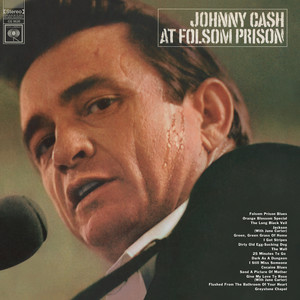
I don't typically listen to live albums as I often lament that the production doesn't quite capture the full essence and intent of an artist's studio output, nor reflect the true quality of seeing the performer in a live setting oneself. This album manages to deliver on those two counts, and offers up something else altogether new entirely: a thrilling and frenetic performance in a rather unlikely setting that captures a singularly special live music experience. Many of the upbeat numbers like 'Cocaine Blues' and '25 Minutes to Go' threaten to come off the rails entirely, however Cash's baritone has such a sobering quality which helps to root this album in earnest, even in spite of the rambunctious rock'n'roll rhythms or his jocular patter with the inmates between and in the middle of the tracks. Many of his songs for this record humanise the prisoners in the audience by centering troubles like theirs at the heart of the track, and Cash's compassionate delivery and humble relatability makes songs such as 'The Wall' and 'Green, Green Grass of Home' shine. The album as a whole lulls a little in the middle but the latter half of the album sees the listener confidently home, with the rousing duet of 'Jackson' as a highlight of the piece.
Here I feel The Fab Four managed to navigate the 'difficult second album' with mixed success. In trying to break the mould and move further from the industry-mandated cover artistry that was commonplace at the time, several of Lennon and McCartney's original songs for this album lack the charm and intrigue of those on their first LP. Songs such as 'It Won't Be Long', 'I Wanna Be Your Man', 'Little Child' and 'Hold Me Tight' all feel positively rushed in their pop immediacy, and feel lyrically flat compared to some of their earliest original hits. That being said, the McCartney-led 'All My Loving' has charm in spades, and Harrison's outings on the covers of 'Roll Over Beethoven' and 'Devil In Her Heart' are a welcome breath of fresh air. Moreover, their blistering rendition of 'Please Mister Postman' benefits nicely from their Liverpudlian pluck and savvy. An album of brevity in more ways than one, but a clear sign of potential and more good things to come.
This album might be the epitome of doom-laden malevolence that bands in the heavy metal genre were celebrated and caricatured for in equal measure, but it possesses a polish and panache that allows it to truly stand the test of time. Most of the tracks have the sharpness and shine that the title proffers. 'Rapid Fire' sets the precedent as a scorching opener reminiscent of their contemporaries, Black Sabbath and Motörhead. With 'Metal Gods' steeped in science fiction grandeur, and 'The Rage' dripping with dark fantasy ambiance, both tracks offer up satisyfingly dramatic, almost glamorous and operatic ballads that sometimes seem at odds with the more radio-friendly numbers. 'Breaking the Law' holds firm as a decadent and menacing slice of punk polemicism - heavy metal with intent. 'Living After Midnight' shows out as a radio-ready hard rock chant-along, but ultimately lacks a little venom, while in a similar vein, 'United' is a run-the-numbers clarion call to action but sits a little stolidly in the middle of the record.
Lyrically and sonically, the three singles together ('Living After Midnight', 'Breaking the Law', 'United') present a clear and simple metal manifesto for freedom, rebellion, autonomy, and solidarity, yet the band almost sells themselves short fronting these tracks when the rest of the album possesses such a depth of character and more fearsome licks and solos than you can shake a stick at. This album houses an evocative trio of arena-ready, politically-minded crowdpleasers that seems almost focus-groupped in their production to simultaneously rouse and satiate baying mobs, nestled amongst a glut of fantastical rock operettas and sludgy declarations of identity, provding an altogether fascinating snapshot of Thatcherite Britain from the viewpoint of jaded stalwarts in the counterculture.
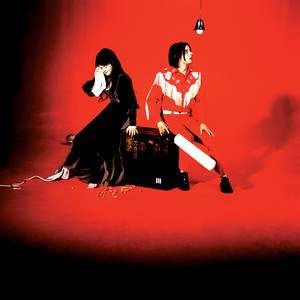
This is a truly raucous and freewheeling album nestled capriciously at the intersection of garage, punk, and blues; one that wears its roots proudly and raises hell with impunity. This is evident from the get-go with the buzzy seven-note riff and monolithic guitar solo of the album opener 'Seven Nation Army' finding the track an unforeseen yet welcome seat in pop culture as an anthem for the anguished in perpetuity.
There are pithy and acerbic hooks abound on tracks such as 'There's No Home for You Here' and 'The Hardest Button to Button'. The irreverent and bone-rattling 'Girl, You Have No Faith In Medicine' is a personal highlight. Jack White also squeezes out some otherworldly despair and conniptions upon their cover of 'I Just Don't Know What to Do With Myself' like a wrestler wringing a wet hand-towel.
The latter half of the A-side eschews all the previously built momentum, however, and replaces it with a slow and prickly detour into relationship angst. This earnest but coarse side of the Whites' style has found better homes elsewhere in their discography, before and after the making of 'Elephant', but here those tracks only manifest as a minor loss of footing for a frisky high-wire act on the precipice of distinction.
In an age defined by our excessive consumerism and inability to unplug from the world around us, it's hard to believe that an album of this tempo and minimalism would have set the world on fire more than sixty years ago, let alone remain relevant in contemporary music discourse. And yet, there is a distinct allure to be found in the cross-continental marriage of South American rhythms and North American blues that is front-and-centre on this showcase of the bossa nova sound, even in 2026.
While João Gilberto's forlorn whispers and coos often fail to excite the senses across the album, his then-wife Astrud's modest and nonchalant vocals are positively magnetic. The odd couple, plus a tranquil samba beat and Getz' gilded sax, somehow altogether imbue the lead track in particular, 'The Girl from Ipanema', with an understated, timeless quality.
Although this record stands as a vehicle for their partnership, Stan Getz often steals the show, filling the air with his schmoozy and nostalgic tenor sax on tracks such as 'Para Machucar Meu Coração' and 'Corcovado', recalling to mind dark, smoky cafes or sandy tree-lined promenades at sunset. The latter track slinks along in such romantic fashion that is hard to resist an armchair sway-along at least. Yet without Gilberto's melodic anchoring and Antonio Carlos Jobim's unassuming piano to provide the distinctly melancholic framework for Getz to rest upon, would the album still possess the same soul?
From previously hearing several of their singles and knowing a little of the band's complex history, it hardly surprises me to hear RHCP delivering a gaudy, meandering, innuendo-streaked album for this stage in their career, but there were depths to this album that I wasn't expecting to mine here. For all of John Frusciante's freewheeling talent, and Anthony Kiedis' inimitable zeal, the rhythm section is absolutely what gives this album its polish, and the chemistry is palpable across the whole record. Snappy, open snares from Chad Smith on tracks like 'Get on Top' and 'Purple Stain' really put the pep in the Peppers, and Flea's bass is brilliant as either a driving force or a foil for the rest of the band all over the record, but particularly in the first half. The RHCP secret formula is in full effect on the heady, sun-bleached title track as well as the swaggering, almost effortless 'Scar Tissue'. 'Savior' is an interesting back-to-back outing of grunge and New Age folk that just works somehow, and 'Purple Stain' is a real funky cut with an intense breakdown, though the sexually-charged lyrics are far from subtle.
This album has more than one or two uncomfortable listens, however. The cold fusion of funk-punk and disco on 'Right On Time' in under two minutes creates a nauseating sound clash that belongs on a completely different album. The Beavis and Butthead wet dream of 'I Like Dirt', with its sexless, ska-punk-adjacent rambling, should have been left on the cutting room floor entirely. Not to mention the declension in the lyrics on 'Around the World' from verbose beat poetry into lazy geographical rhymes and borderline offensive vocalisations makes for a highly bizarre choice for an album opener. Considering how exhilarating Kiedis' poeticism and delivery can be, it is often disconcerting to think about what Kiedis thinks is romantic and/or sexy when given his output to publicly examine here. They say a stopped clock is right twice a day, though all in all, this album brings to mind a patchouli-soaked potpourri bowl - intoxicating for a time, but could easily leave a listener queasy and unsettled if exposed to it for too long.
Eyerolling, pithy takedowns at Western excess and materialism juxtaposed with tongue-in-cheek pleas for what passes for enlightenment in the modern age, this album screams 'Satire' with a capital 'S'. 'Countdown to Ecstasy' is certainly an album of contrast in terms of both genres and themes, but one that makes for a mellow and inviting mélange of scenes for the listener to sink into. On one hand, 'Your Gold Teeth' seats the band at their most cool and callous, ready to tango with a femme fatale over an icy and spiky jazz groove. On the other, 'Pearl of the Quarter' serves up a slightly schmaltzy, moonstruck ballad with a country twang, but one where Donald Fagen's lamenting voice radiates both warmth and woe.
There are plenty of bluesy musings on the human condition across the record, from the world-weary wah-wah treatise on post-war America that is 'King of the World', to the almost tropical yet taciturn cut on the maudlin 'Razor Boy'. Not all of the songs on the album are as sharp in their aim, however. 'Bodhisattva' possesses a curious mix of peppy, Lindy Hop energy with a blues rock rattle, although the curt, dry lyrics feel like Steely Dan are pulling their punches here. But overall, the album is alluring and evocative, rich in storytelling, and backed up by meticulous and sophisticated musicianship, wherein most cases, the push of pull of every disparate element creates an eccentric harmony.
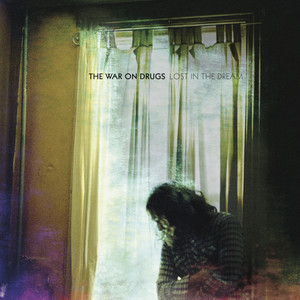
This record is a fascinating and not-so-subtly devastating snapshot in time of frontman Adam Granduciel's emotional state. The album takes little pleasure in the pain, but holds a magnifying glass to it in spite of itself, picking away at the disquiet and depression like a frayed thread on a jumper sleeve, as if preparing to unravel the whole garment at any moment.
The album's first three singles, 'Red Eyes', 'Under the Pressure', and 'Burning' conjure an image of a broken star, wrestling with the weight of heartache and disillusion with reality, like Bruce Springsteen on SSRIs. Sitting at almost nine minutes long and serving as the album opener, the aforementioned 'Under the Pressure' sets the tone for what is to come as an Americana-fuelled rock opus fraught with angst. The other two songs carve out similarly shimmering and churning cries for help.
'An Ocean in Between the Waves' tears along with a blisteringly lovesick Motorik pace, while 'Eyes to the Wind' rolls out as a jangly, midtempo pastoral ballad that, thanks to Granduciel's reedy yet wistful voice soaked in mist, a whispery tenor tinged with a Dylanesque drawl, really tugs at the heartstrings. A slight sonic excursion appears halfway through the album in the form of 'Disappearing', a glistening psychedelic detour with its guitar and synth tones gently cascading over echoing drums, evoking the simultaneously vulnerable and romantically powerful Eighties' sounds of artists such as Kate Bush or the Eurythmics.
The only instrumental track, 'The Haunting Idle' occupies the latter half of the album as a sullen, undulating post-rock pitstop that reverberates with tension. The final track, 'In Reverse' starts as a minimalist brood over faraway guitars and translucent synths that erupts into a countrified ballad leaving only a little to be desired in its lack of true resolution. Yet this is not an album of grand epiphany; on the contrary, Granduciel isn't afraid to simply wallow in the darkness, touch raw nerves, let the songs fill the space and leave some hard open questions unanswered.
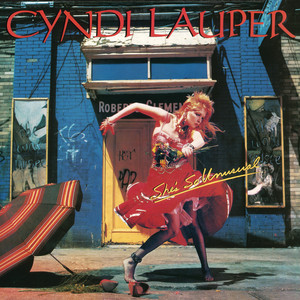
Almost shockingly well-rounded and distinctive for an artist's debut record, regardless of age or gender, 'She's So Unusual' made Cyndi Lauper an overnight star, and it's not hard to see why. On an unabashedly boisterous album laced with unforgettable hits fortified with sincerity, Lauper's creativity, nerve, and distinctive voice were impossible to tie down.
It almost seems stranger than fiction that her cover of Robert Hazard's 'Girls Just Want to Have Fun', was not only the world's introduction to Lauper, but by subverting the original rendition's male gaze through taking pride in her rebellious irreverence, it also cemented her as a feminist pop icon for years to come. 'Girls...' stands the test of time as a brazen, defiant pop-rock revolution delivered in under four minutes. A musical mission statement if ever there was one, this track is an undeniably camp and raucous plea, a truly electric romp ignited by effusive synth stabs and a plethora of eccentric pops and whistles.
Lauper's irrepressible hedonistic urges were front and centre elsewhere on the record too. From the top of 'She Bop', a sparkling, synth-heavy New Wave ode to masturbation coiled inside undeniably catchy, nonsensical lyrics, accented with coos and barks, to the bottom of the final track, 'Yeah Yeah', a kooky synthpop frolic within lust and desire, punctured with funky sax and Lauper's Boop-like quips and trills', her ebullience is contagious and captivating.
Lauper also has ample room to showcase her candid and vulnerable side. The aptly-name 'Time After Time' draws the listener in with its timeless romanticism and Lauper's wistful rasp is truly magnetic, making this one of the quintessential Eighties' pop ballads. On another cover, the similarly dreamy 'All Through the Night', Lauper's voice is bathed in laser light inside this glittery synthpop ballad.
Within a matter of months, 'She's So Unusual' almost accidentally found itself on a pedestal, but deservedly so. Intentionally or not, Lauper delivered a tenacious and effervescent ten-track proclamation of joy and conviction: one that would not only reshape the musical landscape for future artists, from Lady Gaga through to Chappell Roan, for years to come, but also inspire legions of young girls the world over to be self-assured, make a statement, and do something as bold and as simple as just have fun.
Sepultura's fourth studio album 'Arise' is an arrestingly chaotic journey through a doom-laden landscape, articulated via a suitably apocalyptic lyrical lexicon to match. Riotous and bleak laments at the state of the world are par for the course here: human nature and all its ills, oppressive totalitarian systems, and religious impropriety are dissected and lambasted in equal measure here by both songwriters, lead singer Max Calavera and lead guitarist Andreas Kisser alike, bulleting their sepulchral takes across the canvas like the last days of Sodom sent for the MoMA.
The title track establishes a portentous mode, erupting from the bowels of some otherworldly dimension into a meaty, muscled thrash number for the ages. 'Altered State' rides a parallel track with the production on the haunting intro evoking a looming jungle storm that suddenly caves into alternating brash punk phrases and tumbling hardcore breakdowns.
The record doesn't lose much steam across the body of its nine core tracks. The groove shifts are a little less stark and thrilling on the final two tracks, 'Meaningless Movements' and 'Infected Voice', but Kisser's guitar solo at around the two-and-a-half minute mark on the latter track is as bloodthirsty as any other he delivers on this album.
Overall, 'Arise' is an austere yet sizeable demonstration of dynamism and cohesion, each track walking a barbed-wire tightrope to the meter of Igor Calavera's rumbling freight-train drums. A morbid, nihilistic polemic brimming with anti-religious and anti-political messaging would be a hard pill to swallow for anyone, but the depth and breadth of vision in the uncompromising and passionate production offers up a lot to appreciate if one can look past the album's gory and sinister exterior.
Front-loaded with singles alluding to the price of fame, hedonistic impulses, lasciviousness and lavishness, then stuffed to the brim with some of the most earnest, elegiac soft rock and country ballads of the 20th Century, Eagles’ ’Hotel California’ is one of the tidiest, timeless and terrific albums on this list. The storied title track alone is one of rock music's most recognisable and infamously dissected compositions in history. With equally scenic and cryptic lyrics, mesmerising melody, and singularly nostalgic coda, the band truly delivered a stone-cold classic that is almost mythically unknowable yet feels so crystal-clear and tangible in the right light.
The voices of drummer Don Henley, guitarist Glenn Frey, bassist Randy Meisner, and their recent recruit, guitarist Joe Walsh complement each other so well, and they each get a turn in the spotlight on this outing. On the surface, the lead single fronted by Frey, ‘New Kid in Town’, is a warm and wistful country lament fit to slow dance to, but also one that belies a deeper reading on the fleeting nature of fame, with organ and acoustic guitars lending it an extra genial twang. ‘Try and Love Again’, sung by Meisner, also evokes the band’s country roots in a significantly more straight-laced yet hopeful and yearning ballad.
‘Pretty Maids All in a Row’, Walsh’s time to shine, is a relatively short but sweet piano-led tale of lost love and closure, and albeit just as sincere, it is perhaps overshadowed by the similarly mournful and misty-eyed ‘Wasted Time’, a truly soulful croon delivered by Henley that is sure to have inspired many a rockstar to show his softer side. The titling is ironic, for not a second of the almost five-minute runtime was taken for granted in this bluesy soft rock torch song, with every word, chord, and crash perfectly poised and surrendered for the most tender and devastating effect.
Through not completely eschewing their country heritage, but instead adopting the most resplendent aspects of blues and rock and roll into their sound, the Eagles turned out one of the most composed yet evocative albums of all time. Often singing in the second person, the band shatters the fourth wall and draws the listener into the most rich and heart-rending tales of wantonness and woe, and rock music as a genre is all the better for having taken this album to heart.
For all the storied clashes and infamous romantic sagas that loomed over the writing and production, and the formal introduction of a fourth collaborator in the form of Canadian odd duck Neil Young, this record narrowly avoided the ‘difficult second album’ moniker by being something greater than the sum of its parts.
Through bullish determination, one way or another, the far-fetched foursome, formally accompanied by session musicians Dallas Taylor and Greg Reeves, delivered something greater than CSN’s first outing as a supergroup. In simultaneously embracing the rock and roll mode and mining the deep Southern sound for a soul-shaking sense of purpose in the face of personal strife, the band delivered a well-rounded and full-bodied record that set a high bar for their individual careers and for many a rock band to attempt to emulate.
On ‘Almost Cut My Hair’, a rock polemic on the trials and tribulations of wearing your differences visibly, sounding by way of the Animals’ little house in New Orleans, David Crosby feels like he is riding the rails vocally as the guitars bite and the organs howl, but his self-assured, passionate delivery gives his message both pathos and credibility, at a time when even the most devout denizens in the counterculture were wavering.
The Summer of Love was, by the release of ‘Déjà Vu’ in 1970, a distant memory for most. Even the cultural pinnacle of the time, Woodstock, now lay in the rearview. Perhaps, it seemed only fitting then that one of the bands who played the festival itself should give new life to the track of the same name written by Joni Mitchell, who could only watch on from afar. CSNY rightly turned Mitchell’s modest elegy into a barnstormer, celebrating and commiserating the festival and all its promise in equal measure.
Given the times were a-changing, the four unlikely lads were not afraid to stare their anxieties down and search for new meaning. Graham Nash came to the table this time round with a rather subdued viewpoint, with ‘Teach Your Children’, a quaint and humble country ode to family, complete with pedal steel guitar, and ‘Our House’, an unpretentious, peppy ballad reminiscent of McCartney’s sugar-glazed timbre, rejoicing in the homely and unfussy dream of a romantic relationship in a modest abode.
In stark contrast to his other lead outings on the aforementioned ‘Woodstock’ and the funky Cali-rock album opener ‘Carry On’, ‘4 + 20’ presents an exceptionally bleak turn for Stills. Written and sung completely solo, he delivers a haunting elephant of an acoustic track, from the viewpoint of an aging, lonely man, that waits to be either awkwardly acknowledged or avoided evermore.
Though his guitar work can be felt in the bones of the record, Neil Young’s own offbeat, left-of-centre songwriting barely makes itself heard in between the songs served by the other restless three. ‘Helpless’ drags itself in from the rain in the guise of a saccharine homesick country croon, while the longest track on the record, ‘Country Girl’ is actually several sections of other songs stitched together in a stuffy yet slightly stirring waltz.
When you may have thought all was said and done, it comes down to the truly glossy rock-and-roll album closer, ‘Everybody I Love You’, that finally showcases every member of the band together striving to exceed themselves, crystalising in time for the briefest moment as one of classic rock’s most infamous supergroups, the men and the myth, altogether all at once, perhaps never to be repeated.