Band on the Run (1973) is the 3rd studio album by Paul McCartney and Wings; Wings only being Lynda McCartney and Denny Laine at this stage.
Recorded in Nigeria but with no noticeable African influence. I don't own a copy of this album and was only familiar with the two UK singles: Band on the Run and Jet. I gave it three listens to give it a fair go. Best bit - Paul's voice; worst bit - all very nice with no real bite. Somehow even though most of the album is new to me it makes me feel nostalgic.
Side A:
Band on the Run - Beatles-esque medley 4/5;
Jet - perfect pop 5/5;
Bluebird - boring background music 2/5;
Mrs. Vandebilt - 'Ho, Hey-Ho' catchy nonsense 3/5;
Let Me Roll It - pretty good Lennon impersonation 4/5
Side B:
Mamunia - lightweight & forgettable 2/5;
No Words - Denny Laine's first writing credit with Wings but not a stand out song 2/5;
Picasso’s Last Words (Drink To Me) - supposedly a song written to prove a point; catchy but not great 3/5;
Nineteen Hundred and Eighty-Five - this is peak Paul but I still can't bring myself to give it more than 3/5
★ (Blackstar) (2016) is the 26th studio album by David Bowie; released on 8 January, only two days before his death on 10 January 2016. The album only contains seven tracks, three of which were released as singles - Blackstar, Lazarus and I Can’t Give Everything Away.
The album was recorded while Bowie was undergoing treatment for the liver cancer that would ultimately be the cause of his death. The music is an experimental mix of jazz, rock, electronica, funk and hip-hop overlayed with Bowie’s dark and somewhat brooding lyrics.
I don’t own a copy of the album so listened to it three times on Spotify before rating it (I’d previously only listened to it once). It’s quite a difficult album to rate being so closely connected to Bowie’s death. It’s quite an emotional listen and has layers of complexity. Even the tracks chosen to be singles are not easy listens. The last album I rated was Band on the Run by Paul McCartney and Wings. If that album was ‘nice’, this is something else entirely. Raw, complex, intelligent and confronting. A gift from a dying man.
Track listing:
Blackstar - a haunting mix of genres - the first half reminded me of Radiohead- 4/5;
’Tis a Pity She Was a Whore - lots of tension sitting between Bowie’s vocal and the chaos of the jazz backing track - 3/5;
Lazarus - this gave me The Cure vibes so strong that I Googled it and found DAVID BOWIE - THE CURE A forest for Lazarus (acoustic) on YouTube - 4/5;
Sue (Or in a Season of Crime) - drum’n’bass rhythms aren’t my natural habitat but they provide an interesting foil to Bowie’s subdued vocals - 3/5;
Girl Loves Me - “Where the fuck did Monday go?” - 3/5
Dollar Days - the most fragile track on the album - 4/5;
I Can’t Give Everything Away - melodic and upbeat rhythm but heartfelt lyrics 4/5
The Stranger (1977) is the 5th studio album by Billy Joel and is recognised as his critical and commercial breakthrough. This isn’t an album I am familiar with except for the UK singles Movin’ Out (Anthony’s Song), Just the Way You Are and She’s Always a Woman (not released as a UK single until 1986)
Listening to the album it was reminding me (and probably not in a good way) of Leo Sayer crossed with a softer version of Bruce Springsteen. Joel’s singing is very competent but the songs for the most part lack any real emotion. I do like some Billy Joel and the singles do stand out against the blandness of most of the tracks on this album. To be fair soft-rock isn’t really a genre that I listen to that much of so maybe three listens isn’t enough to give this a fair review, but I don’t think I’d be missing out on much if I never listened to this again.
Side A:
Movin' Out (Anthony's Song) - fun upbeat pop-rock - 4/5;
The Stranger - boring soft rock - 2/5;
Just the Way You Are - smooth love song - 4/5;
Scenes from an Italian Restaurant - overly long and dull soft rock - 2/5;
Side B:
Vienna - apparently one of Billy Joel’s favourite compositions - it doesn’t move me - 3/5;
Only the Good Die Young - catchy pop-rock - 3/5;
She’s Always a Woman - romantic ballad written for his then wife - 4/5;
Get It Right the First Time - funky but bland rock-pop - 2/5
Everybody Has a Dream - overwrought gospel style track - 2/5
Dire Straits (1978) is blues-rockers Dire Straits’ debut studio album. It’s not an album I’ve ever listened to before. Of course I knew ‘Sultans of Swing’, which sets a pretty high bar as a debut single, but nonetheless I didn’t have high hopes for the rest of the album. When I was a teenager Dire Straits represented everything I hated about music. Certainly at the height of their Brothers in Arms fame, if you told me you liked Dire Straits I would have known for sure that we were never going to be friends. And in typical teenage fashion my dislike wasn’t based on evidence, just vibes. Why would I waste time listening to such a boring band?!
Having now given it the customary three listens, I realise I was being a bit harsh. Either that or I’ve got old, mellow and am embracing middle-of-the-road music. Although the songs can be a bit meandering, there’s a lot to like. Mark Knopfler’s vocals have the feel of Dylan in his Rolling Thunder Review / Desire era on several tracks, and the the album includes elements of folk and country rock along with the blues. The guitar playing is excellent, and although only Sultans of Swing really stands out I can see why people like this album. In the end though, it’s just a bit too clean and consistent for my liking.
Side A:
Down to the Waterline - 4/5;
Water of Love - 3/5;
Setting Me Up - 3/5;
Six Blade Knife - 3/5
Southbound Again - 3/5
Side B:
Sultans of Swing - 5/5;
In the Gallery - 3/5;
Wild West End - 3/5;
Lions - 3/5
Live at the Regal (1965) is a live album by blues legend B.B. King recorded on 21 November 1964 at the Regal Theatre in Chicago, Illinois.
This is another album that I wasn’t familiar with. I thought I had quite broad musical taste but I’m already discovering that I tend to stick to what I know and like. In fact when I checked last.fm I didn’t have any listening stats for B.B. King at all. So this album turned out to be a complete revelation. Having given it my customary three listens, I’ve promptly given it another three as it’s just so good!
This is definitely going on my vinyl wish list!
I listened to Dire Straits earlier in the week, and although it was better than I assumed it would be, Live at the Regal brings everything I didn’t like about that album into focus. Where Dire Straits is clean, Live at the Regal is dirty and 100% better for it. King (and his band) give a performance full of life and emotion. It’s hard to critique the songs on an individual level as they are all good and fairly similar in style. The stand out track is ‘Help the Poor’ . From the rating of the individual songs this should be a four star album, but the energy of the live performance bumps it up to a five.
Side A:
Every Day I Have the Blues - 4/5;
Sweet Little Angel - 4/5;
It’s My Own Fault - 4/5;
How Blue Can You Get - 4/5
Please Love Me - 4/5
Side B:
You Upset Me Baby - 4/5;
Worry, Worry - 4/5;
Woke Up This Mornin' - 4/5;
You Done Lost Your Good Thing Now - 4/5
Help the Poor - 5/5
Surrealistic Pillow (1967) is Jefferson Airplane’s second studio album, and the first featuring Grace Slick as lead vocalist. It was apparently recorded a mere two weeks after she joined the band.
The album combines elements of folk-rock and psychedelic rock both of which are genres I really enjoy.
I’m very familiar with the singles (‘Somebody to Love’ and ‘White Rabbit’) but hadn’t listened to the rest of the album all the way through. Those two tracks definitely stand out due to Slicks powerful vocals, but the album as a whole is excellent. It’s softer and leans into folk more than I expected, but that’s not a bad thing at all. I love the Southern Californian folk-rock sound (Crosby, Stills & Nash is one of my all-time favourite albums), and the psychedelic elements of Surrealistic Pillow are obviously evolving from the same folk-rock sensibilities, albeit Jefferson Airplane was a San Francisco band developing their own scene.
In contrast to the rock tracks ‘Embryonic Journey’ is a beautifully delicate folk guitar instrumental. The stillness before the storm of ‘White Rabbit’. This track made me think of Nick Drake (who I also love), but again as Five Leaves Left wasn’t released until 1969, it’s echoes of Jefferson Airplane in Nick’s work, rather than the other way around.
Another album to add to my ever growing vinyl wish-list.
Note - the version I rated was the original 1967 US release. The 1967 UK release had a different track listing, and the 2003 reissue contains six additional bonus tracks.
Side A:
She Has Funny Cars - 3/5;
Somebody To Love - 5/5;
My Best Friend - 3/5;
Today - 4/5
Comin' Back to Me - 4/5
Side B:
3/5 of a Mile in 10 Seconds - 4/5;
D.C.B.A.–25 - 3/5;
How Do You Feel - 3/5;
Embryonic Journey - 4/5
White Rabbit - 5/5
Plastic Fantastic Lover - 3/5
Lam Toro (1992) is Baaba Maal’s third studio album. Baaba Maal is a Senegalese musician and singer that I wasn’t aware of before listening to this album. That’s no reflection on Baaba Maal - my musical knowledge really doesn’t extend much further than Europe (predominantly the United Kingdom) and North America.
I really enjoyed this album, but not knowing anything about the Senegalese music scene (the only other Senegalese artist that I’m aware of is Youssou N’Dour), or the context of the artist or the album makes it difficult to give a very informed review.
Although I really enjoy it, as I didn’t understand the lyrics, it was a bit like listening to an instrumental album, with Baaba Maal’s voice being just another sound in the mix. I haven’t rated the tracks individually this time as to be honest after my customary three listens I hadn’t really differentiated between all the tracks yet.
The version I rated was the eleven track CD which is the version on Spotify. The run time is just under an hour. It turns out that the vinyl LP only had eight tracks. As I’ve mentioned before I seldom think that longer is better when it comes to an album so I would have probably enjoyed the vinyl album even more.
Disk 1:
Yela - 4/5;
Toro - 4/5;
Daande Lenol - 4/5;
Hamady Boiro - 4/5
Daniibe - 4/5;
Gidelam - 4/5;
Olel - 4/5;
Sy Sawande - 4/5
Ndelorel - 4/5;
Lem Gi- 4/5
Minuit - 4/5
Ellington at Newport (1956) is a live album by Duke Ellington & His Orchestra recorded on the evening of 7th and early morning of 8th June 1956 at Newport Jazz Festival.
My Dad was a jazz fan and I’ve still got a few of his records, but nothing by Duke Ellington. I don’t know if that’s because he didn’t own any (from memory he was more into trad jazz than swing) or just because they didn’t make it into my record collection before I left home. I’ve got a soft spot for jazz and although it’s not my most listened to genre every time I do I think I should listen to more!
This is an interesting one. Ellington’s big band swing style of jazz was a bit passé by the time he played Newport in 1956. It was difficult to maintain a big band with poor record sales and declining fortunes. Ellington’s glory days seemed to be behind him. But then he plays Newport and apparently the crowd go wild. Or at least, wild in a sedate middle-class suburban way. Someone started dancing!
The bands performance was pivotal in re-energising Ellington’s stalling career. The highlight being the nearly 15 minute rendition of Diminuendo And Crescendo In Blue featuring an incredible solo from tenor saxophonist Paul Gonsalves.
According to 'The story of Ellington at the 1956 Newport Jazz Festival'
“Elaine Anderson had started dancing in the aisle near the stage while Gonsalves kept preaching the blues. Her dance was captured by the photographers in the photo pit and were included in coverage of the event as well as on the album cover when the album Ellington at Newport ‘56 was issued. At the time her identity was not known, but Morton was able to uncover her story of a one-time Hollywood hopeful starlet who had settled into the somewhat frustrating live of a wife and mother.”
There were many microphones set up on stage to capture the performance, and following their success, the live album Ellington at Newport was rushed out to much critical acclaim.
However, it later transpired that the original album wasn’t the exactly the performance as captured on the day. Ellington had been dissatisfied with the rendition of his Newport Jazz Festival Suite (Festival Junction; Blues To Be There; and Newport Up) which had been written especially to mark the occasion so decided to improve them in the studio; to add to that it turned out that Gonsalves hadn’t been playing into the correct mic, so the highlight of the set was barely audible. Again his solo was recreated in the studio and then the audiences reaction was overlaid over the top to disguise any changes in audio quality.
An actual recording of Gonsalves solo was found years later as the Newport set had also been part of a radio broadcast from the festival and the radio mics did pick up the audio. It was restored and a longer version of the album was released as Ellington at Newport (Complete) in 1999.
The version that I listened to for my review was a digital release from 2014 which is on Spotify as Ellington at Newport: The Original Album but has more tracks than the original. I’m not clear where it takes it’s audio from - the original ‘tidied-up’ 1956 release, or the true remastered audio from the 1999 release.
In any either case it’s a great listen and another to add to my increasingly long wish list.
Note the original 1956 release has the Newport Jazz Festival Suite (Festival Junction; Blues To Be There; and, Newport Up) on side A and Jeep’s Blues and Diminuendo And Crescendo In Blue on Side B. The 1999 complete version is expanded to 40 tracks, not all of which were performed at the festival.
Track listing (2014 version on Spotify):
Father Norman O’Connor Introduces Duke Ellington
Festival Junction - 5/5;
Blues To Be There - 4/5;
Newport Up - 4/5;
Jeep's Blues - 4/5;
Diminuendo And Crescendo In Blue - 5/5;
Take The "A" Train - 5/5
Sophisticated Lady - 4/5
I Got It Bad (And That Ain't Good) - 4/5;
Skin Deep- 5/5
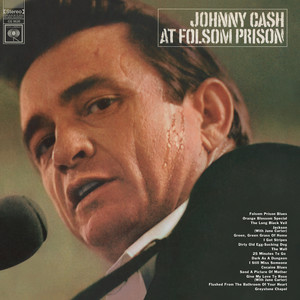
At Folsom Prison (1968) is a live album of country music by Johnny Cash recorded on 13 January 1968 at Folsom Prison, California.
The 1001 albums generator has already churned out two live albums (Live at the Regal - B.B. King, and Live at Newport- Duke Ellington & His Orchestra) both of which I loved and rated five stars. I’m beginning to think that it’s the energy of the live performance that appeals to me, and At Folsom Prison is no exception.
It was recorded during two live performances at Folsom Prison in California, and although it was his first live album, it was not his first prison concert, having first performed at Huntsville State Prison in 1957. Cash’s connection to Folsom Prison was his song ‘Folsom Prison Blues’ which he wrote in 1953 having watched a film called ‘Inside the Walls of Folsom Prison’.
I’d heard this album before but don’t own a copy. In fact although I really like Johnny Cash I don’t own any of his albums in physical format. I have copies of several that I digitised from someone else’s CDs but that doesn’t feel like it counts. Listening to At Folsom Prison was a good reminder to add some Johnny Cash to my wish list.
By 1968 Johnny Cash’s career had faltered due to his addiction issues. In 1967 he received treatment which allowed him to enter 1968 with a new energy. He managed to convince Columbia Records to back his idea of recording at Folsom, a gamble that paid off in terms of revitalising Cash’s career. He released ‘Folsom Prison Blues’ as a single, and although there was some controversy over the line “"I shot a man in Reno / Just to watch him die", it was a great success.
At Folsom Prison captures the energy of Johnny Cash’s performances (although most of the recordings were apparently taken from the first of the two concerts, and everyone was tired out by the second!). Cash gives a very confident performance, joking with the inmates, singing songs that would resonate with them, and taking an anti-authority stance (e.g. swearing during the warning that the concert was being recorded so they should mind their language). If it was an act, it was a good one.
I’m less of a fan of the comedy and slower numbers, which technically would bring my rating down to 4 out of 5, but again it earns an extra star just for the energy and atmosphere of the whole production. Not to mention that when it’s good, it’s really good!
Side A:
Folsom Prison Blues - 5/5
Dark as the Dungeon - 4/5
I Still Miss Someone - 3/5;
Cocaine Blues - 5/5;
25 Minutes To Go - 5/5;
Orange Blossom Special - 4/5;
The Long Black Veil - 4/5
Side B:
Send a Picture of Mother - 3/5
The Wall - 4/5
Dirty Old Egg-Suckin’ Dog - 2/5;
Flushed From the Bathroom of Your Heart - 3/5;
Jackson (with June Carter) - 5/5;
Give My Love to Rose (with June Carter) - 3/5;
I Got Stripes - 5/5;
Green, Green Grass of Home - 4/5;
Greystone Chapel- 3/5
Truth (1968) is Jeff Beck’s debut solo album following his departure from The Yardbirds and although released under his own name it features the Jeff Beck Group with Rod Stewart on vocals.
I’m not going to base this review on Jeff Beck’s proficiency as a guitarist. I’m quite prepared to believe that he’s one of the top ten, or even top five, or you may tell me that you think he is THE best guitarist of all time. His playing certainly sounds amazing on Truth and from someone who never got beyond badly strumming one chord I can only imagine how technically accomplished it is. Apparently he has been described as “the guitarists guitarist”. Presumably because you have to be pretty good to even really appreciate the gulf between being able to play the guitar, and being able to play the guitar like Jeff Beck.
That being said, I just found it all a bit boring. It’s mainly blues rock with endless guitar posturing and unfortunately Rod Stewart on vocals. As a rule I’m not fond of Stewart’s voice (although there are a few notable exceptions - “Maggie May” for one) and I don’t think he adds anything here that I want to hear.
‘Morning Dew’ was my favourite but most of the album merges into one, and is a bit too masculine for my liking.
When I calculated my rating it should have got 3 out of 5 but I culled a star due to probably never wanting to listen to it again. Probably harsh, but it’s how I feel!
Side A:
Shapes of Things - 3/5
Let Me Love You - 3/5
Morning Dew - 4/5;
You Shook Me - 3/5;
Ol’ Man River - 2/5;
Side B:
Greensleeves - 3/5
Rock My Plimsoul - 2/5
Beck’s Bolero - 3/5;
Blues De Luxe - 3/5;
I Ain’t Superstitious - 3/5
Justified (2002) is Justin Timberlake debut solo album recorded during a hiatus from NSYNC which became indefinite as his solo career took off. When Justified was released he was only 21 but had already released four albums with NSYNC.
Justified is a contemporary R&B album, which isn’t a genre that I’m particularly into. Timberlake, who had started out as a child star on the Disney channel was keen pivot his career away from Disney / Boy Band sensibilities into a more mature R&B style.
I understand why a 21 year old heartthrob would want to release an album focussed on themes of lust, love and heartbreak and I’m sure his audience lapped it up, but a lot of it is quite cringe. There are two standout singles ‘Cry Me a River’ and ‘Rock Your Body’ both of which reached number two in the UK singles chart. ‘Cry Me a River’ is a whiny, but very catchy song, reputed to be about his break-up with Britney Spears. ‘Rock Your Body’ is the highlight of the album - it’s a very funky R&B track that just makes you want to dance.
The rest of the album doesn’t do much for me. In places he sounds like a Michael Jackson wannabe, in others like a watered down Stevie Wonder. Not an album I’d go out of my way to listen to again, but I will pop ‘Rock Your Body’ onto my five star songs playlist.
I do feel a bit mean to Jeff Beck in retrospect for also rating his album Truth 2 out of 5. I guess I should explain that I am rating these albums as I experience them in the moment, not ranking them against each other.
Disk 1:
Señorita - 2/5
Like I Love You (featuring Clipse) - 3/5
(Oh No) What You Got - 2/5;
Take It from Here - 1/5;
Cry Me a River - 4/5
Rock Your Body - 5/5
Nothin’ Else - 1/5;
Last Night - 1/5;
Still on My Brain - 2/5
(And She Said) Take Me Now (featuring Janet Jackson) - 2/5
Right for Me (featuring Bubba Sparxxx) - 2/5;
Let’s Take a Ride - 1/5;
Never Again - 1/5
Electric Ladyland (1968) is the third and final album by the Jimi Hendrix Experience. As a double album it covers a lot of ground breaking meandering between the blues, psychedelic rock and classic rock with sprinklings of R&B, soul and funk. Obviously Jimi’s legendary guitar playing is the thread that ties everything together.
Best tracks ‘Cross Town Traffic’, ‘Voodoo Chile’, ‘All Along the Watchtower’ and ‘Voodoo Chile (Slight Return)’. ‘All Along the Watchtower’ stands out as one of the few Dylan covers that is better than the original.
I do find the length of the album, and some of the individual songs quite self-indulgent. Yes, the guitar playing is great, and so expressive that it’s miles apart from Jeff Beck’s Truth which was also released in t1968 but only got a two star rating from me. I’ve mentioned before that I’m not a fan of overly long albums so, for me, if they had trimmed Electric Ladyland down to a standard album, it would probably be a five, rather than four star album.
I don’t own a copy of Electric Ladyland, or either of the Jimi Hendrix Experience’s other two studio albums. Maybe my rating of some of the tracks is harsher than it would have been if I’d spent more time listening to them. Any song is going to struggle to hold its own alongside ‘All Along the Watchtower’ so maybe my expectations are too high. But then, that’s just another argument for getting rid of the filler. Perhaps if someone other than Jimi had been the producer they might have been able to persuade him that brilliance can also be succinct.
Side A:
1. …And the Gods Made Love - 1/5
2. Have You Ever Been (To Electric Ladyland) - 3/5
3. Crosstown Traffic - 5/5;
4. Voodoo Chile - 5/5
Side B:
1. Little Miss Strange - 4/5
2. Long Hot Summer Night - 3/5
3. Come On (Let the Good Times Roll) - 4/5;
4. Gipsy Eyes - 4/5;
5. The Burning of the Midnight Lamp - 3/5
Side C:
1. Rainy Day, Dream Away - 3/5
2. 1983... (A Merman I Should Turn to Be) - 3/5
3. Moon, Turn the Tides... Gently Gently Away - 3/5
Side D:
1. Still Raining, Still Dreaming- 3/5
2. House Burning Down - 3/5
3. All Along the Watchtower - 5/5;
4. Voodoo Chile (Slight Return) - 5/5
The Boatman’s Call (1997) is the tenth studio album by Nick Cave & The Bad Seeds. It’s a beautiful, intimate, introspective album of stripped back ballads, showcasing Nick Cave’s song writing and voice. It could be described as dark and beautiful, or boring and morose, depending on your point of view. It’s got a Leonard Cohen kind of vibe. There’s not a lot of variation in the tone of the songs, although ‘Into My Arms’ stands out as the best track on the album. It was written after the end of Cave’s brief but apparently intense romance with PJ Harvey and one of the reviews I read was “I can see why she left him”.
It’s not an album I was familiar with and it’s certainly not one that you would pop on at a party, but if you’ve just been dumped and need a good cry these are the songs you need. I do like a bit of melancholy in my music so that’s not necessarily a bad thing but it does mean that I’d have to pick my moment to listen to this album. My mood has a tendency to be lower than I’d like these days and it doesn’t need encouraging!
Side A:
1. Into My Arms - 5/5
2. Lime Tree Arbour - 3/5
3. People Ain’t No Good - 4/5;
4. Brompton Oratory - 3/5
5. There Is a Kingdom - 3/5
6. (Are You) The One That I’ve Been Waiting For? - 4/5;
7. Where Do We Go Now But Nowhere? - 3/5
8. West Country Girl - 3/5
9. Black Hair - 3/5;
10. Idiot Prayer- 4/5
11. Far from Me - 4/5
12. Green Eyes - 3/5
Another Music in a Different Kitchen (1978) is the debut studio album by the Buzzcocks.
I don’t know if the album generator is entirely random or whether this was purposely selected as the antidote to yesterday’s sombre offering of Nick Cave & The Bad Seed’s The Boatman’s Call.
Another Music in a Different Kitchen follows my rule of keeping albums short and to the point at eleven songs in just over 36 minutes. Seven of the songs are under three minutes (including all of side A except ‘Sixteen’).
Although the Buzzcocks are certainly a punk band in terms of energy and attitude Pete Shelley’s song writing produced what Alexis Petridis described as “compact, perfectly constructed pop songs” and rather embodying the aggressiveness of punk Pete’s delivery was softer and a lot more vulnerable.
The best song on this album is the single ‘I don’t mind’, which in keeping with a lot of Shelley’s writing is a melodic jaunt through the confusion and frustrations of (quite often unrequited) love. There’s an ambiguity in Shelley’s writing that allows people of any gender, any sexuality to relate to the universal feelings he’s expressing.
“Reality's a dream (O-o-o-ooh)
A game in which I seem to never find out just what I am
I don't know if I'm an actor or ham, a shaman or sham
But if you don't mi-i-i-i-i-i-ind, I don't mi-i-i-i-i-i-ind”
I should say that despite how much I like the Buzzcocks, the only record by them that I own is their 1979 single ‘Everybody’s Happy Nowadays’ which for some reason resonated with me as an eight year old! I think it was the pounding guitar and the Nihilistic refrain “Life’s an illusion, love is a dream.”
I did own a copy of their Singles Going Steady compilation but I seem to have lost it somewhere along the way. Another band to add to my wish list!
Side A:
1. Fast Cars - 3/5
2. No Reply - 3/5
3. You Tear Me Up - 3/5;
4. Get On Our Own - 3/5
5. Love Battery - 3/5
6. Sixteen - 4/5
Side B:
1. I Don’t Mind - 5/5
2. Fiction Romance - 4/5
3. Autonomy - 4/5;
4. I Need - 3/5
5. Moving Away From the Pulsebeat - 4/5
Axis: Bold As Love (1967) is the second studio album by the Jimi Hendrix Experience. Last week I reviewed their third album, Electric Ladyland. I’m rating both four out of five stars, but I enjoyed Axis: Bold As Love more as I thought it was more consistent with less extended noodling, but also without the standout five star tracks like ‘All Along the Watchtower’. Apparently they began recording Axis in May 1967, the same month as they released their debut album. They followed up with Electric Ladyland the next year.
Jimi was still only 25 at that point and had he not sadly passed away a couple of short years later, these albums would have been considered his early career offerings instead of his legacy. When I think of myself at that age, struggling to cope with the basics of life, it seems meaningless for me to put a star rating on these albums at all, but there you go, that’s what I’ve signed up to. I’d happily listen to this album again and again, and maybe over time the four star will become the five it probably deserves.
Side A:
1. EXP - -/5
2. Up From the Skies - 3/5
3. Spanish Castle Magic - 4/5;
4. Wait Until Tomorrow - 3/5
5. Ain’t No Telling - 4/5;
6. Little Wing - 4/5
7. If Six Was Nine - 3/5
Side B:
1. You’ve Got Me Floating - 4/5
2. Castles Made of Sand - 5/5
3. She’s So Fine- 3/5;
4. One Rainy Wish - 4/5;
5. Little Miss Lover - 3/5
6. Bold As Love - 4/5
Buenas Noches from a Lonely Room (1988) is the third studio album by Country music artist Dwight Yoakam.
I have to admit I’d never even heard of Dwight Yoakam before listening to this album and I it turns out that I wasn’t missing much. Apparently he was (perhaps still is) an edgy outsider in the Country scene but before writing this review I Googled is Dwight Yoakam a Trump supporter as that was definitely the vibes I was getting. According to the AI summary he’s a libertarian who keeps his political views to himself. All I know is when Johnny Cash sings about shooting a man in reno I enjoy the vivid storytelling, but when Dwight sings about getting his revenge on his cheating ex it just sounds threatening. Couple that with songs about Dixie and God and I’m out.
I listened to this a couple of times yesterday but can’t even remember which songs were which. I know ‘Home of the Blues’ is a Johnny Cash number so I assume it was better than the rest but I haven’t bothered individually rating them.
I’ll never listen to this again (I hope).
Track Listing:
1. I Got You
2. One More Name
3. What I Don’t Know
4. Home of the Blues
5. Buenas Noches from a Lonely Room (She Wore Red Dresses)
6. I Hear You Knockin’
7. I Sang Dixie
8. Streets of Bakersfield
9. Floyd County
10. Send Me the Pillow
11. Hold on to God
Layla And Other Assorted Love Songs (1970) is the only studio album by Derek & The Dominos; Eric Clapton’s short-lived post Cream and Blind Faith venture.
The album generator seems to be giving me a lot of guitar based blues rock but this is the first album of the seventeen I’ve reviewed so far that I own, albeit in digital format which I don’t think really counts. All the same I paid £4.99 in November 2009 to download a copy, which seems rather quaint, and pointless when I’m listening to it on Spotify while I write this because it was too much hassle to open iPlayer and find it there.
I can’t remember what made me think of buying a copy in 2009. Maybe I heard Layla somewhere and thought the album had to be worth a fiver. I was right, although as is a double album with fourteen songs which tend to be on the longer side, it goes against my preference for shorter albums. The tracks are a mix of original compositions and covers including ‘Nobody Knows You When You’re Down and Out’ which I know from a Chris Barber and Ottilie Patterson version I have on vinyl (and prefer to Clapton’s version), and Jimi Hendrix’s ‘Little Wing’ from Axis: Bold As Love which I reviewed earlier this week.
Famously Layla was inspired by Pattie Boyd, who at the time was married to George Harrison (Clapton’s friend). Eventually after Pattie and George’s marriage ended, Pattie and Eric ended up together. None of this is about the music (other than Boyd being the inspiration for some fantastic songs) but having just gone down a rabbit hole on Pattie’s personal life it seems that neither men were great husbands to her, and Clapton in particular was abusive and unfaithful and the final straw was him having children outside of the marriage while she had struggled with infertility.
I was glad to hear that ownership of the painting that had been used on the cover of Layla And Other Assorted Love Songs because it reminded Eric of Pattie had made its way to her after the artist had gifted it to Eric, who gifted it to George, who in turn passed it on to Pattie. In 2024 she sold it at auction, along with other assorted personal letters from George and Eric making almost £3 million. She’s been reported as saying that the great love-triangle between them was just an ego battle between the two men.
Layla is the only real standout track on the album but on the whole the album is pretty good and definitely worth a listen. It’s not up there with my all time favourites (which is why I’ve never owned a physical copy).
Another side note on Layla, I absolutely love the piano section at the end of the song as it has just the right note of melancholy for me. It was played by the drummer Jim Gordon, who received shared writing credit with Clapton but it turns out that it was actually written by his then girlfriend Rita Coolidge who of course received no credit!
I think technically my individual ratings work out at a three, but my instinct here is to round up instead of down.
Side A:
1. I Looked Away - 3/5
2. Bell Bottom Blues - 4/5
3. Keep on Growing- 3/5;
4. Nobody Knows You When You’re Down and Out - 3/5
Side B:
1. I Am Yours - 3/5
2. Anyday - 4/5
3. Key to the Highway - 4/5
Side C:
1. Tell the Truth - 3/5
2. Why Does Love Got To Be So Sad? - 4/5
3. Have You Ever Loved a Woman - 3/5
Side D:
1. Little Wing- 3/5
2. It’s Too Late - 3/5
3. Layla - 5/5;
4. Thorn Tree In the Garden - 2/5
Metallica (1991), known as ‘The Black Album’ is the fifth studio album by Metallica.
Although I’m aware of Metallica, I’ve never knowingly listened to any of their albums. For whatever reason I’ve never really felt any affinity with Heavy Metal music. I’d obviously heard ‘Enter Sandman’ before but the rest of the singles, and the album itself completely passed me by in 1991.
It’s got a run-time of over an hour so I have to admit that I didn’t give it the customary three listens, I think I made it to about one and a half before giving up. Obviously as I’m not familiar with their previous albums I can’t compare this with what came before, but I read that this was a turning point where they moved away from their previous thrash metal sound into something more refined. My ears are obviously not attuned to what a more refined metal sound is as this, as far as I’m concerned, was still an hour of an angry man shouting at me. Life is too short for that. I read someone describe it as music to bench-press to, and maybe that’s why its not for me. I think I’m in the minority though as apparently the album is a worldwide best seller.
Side A:
1. Enter Sandman - 2/5
2. Sad But True - 1/5
3. Holier Than Thou - 1/5
Side B:
1. The Unforgiven - 1/5
2. Wherever I May Roam - 1/5
3. Don’t Tread On Me - 1/5
Side C:
1. Through the Never - 1/5
2. Nothing Else Matters - 2/5
3. Of Wolf and Man - 1/5
Side D:
1. The God That Failed - 1/5
2. My Friend Of Misery - 1/5
3. The Struggle Within - 1/5
Bringing It All Back Home (1965) is the fifth studio album by Bob Dylan, and famously the one where he went ‘electric’. In fact only side A introduces us to his new fusion of rock and folk music, with Dylan returning to his more familiar acoustic folk on side B.
This album, and Dylan’s subsequent performance at the Newport Folk Festival in July 1965 were pivotal in the development of the ‘folk rock’ genre. Although the term itself was first used in June 1965 to describe The Byrds’ musical style. Folk influence can be heard in a lot of rock music of the time (e.g. Rubber Soul [late 1965]), and rock was influencing others in the folk-revival community (e.g. Sounds of Silence [early 1966]).
I am a big fan of the resulting ‘folk rock’ sound that was embraced by the likes of Buffalo Springfield and Crosby, Stills and Nash.
It’s hard to imagine how jarring Bringing It All Back Home must have sounded to Dylan’s fans in 1965. Many felt that Dylan had become a sell-out and was betraying his folk roots. An audience member famously shouted ‘Judas’ at him while he was on stage during his 1996 tour.
Personally I love acoustic Bob and electric Bob, and this album, which bridges the gap between both, is a long-time favourite of mine. It’s got so many great songs I can’t really pick out favourites. I love Bob Dylan’s writing and the way he can switch between tongue in cheek humour, sneering anger, wistfulness and surrealism.
Side A:
1. Subterranean Homesick Blues - 5/5
2. She Belongs To Me - 5/5
3. Maggie’s Farm - 4/5
4. Love Minus Zero - 5/5
5. Outlaw Blues - 5/5
6. On The Road Again - 5/5
7. Bob Dylan's 115th Dream - 4/5
Side B:
1. Mr. Tambourine Man - 5/5
2. Gates Of Eden - 4/5
3. It's Alright, Ma (I'm Only Bleeding) - 5/5
4. It's All Over Now, Baby Blue - 5/5
Django Django (2012) is the debut studio album by Django Django.
I hadn’t heard of Django Django before listening to this, their debut album, but it turns out they are a four piece who met at Edinburgh College of Art, but the band itself was formed in London in 2009. Django Django is their self-titled debut album released three years later. They play art rock or electronic psychedelic indie rock. On a first listen it didn’t really grab me; it’s a bit all over the place and lacks any anything I can really connect to emotionally. On listen two and three it began to grow on me; there are plenty of catchy songs and I enjoy the vocal harmonies. But really, it just goes on too long and most of the songs have the same rhythm and tone, and the vocal mix in many of the tracks takes second place to the electronic beats.
‘Firewater’ and ‘Hand of Man’ were my two favourite tracks as they have a more retro folky harmonic sound.
Apparently several of the tracks were used in computer games, adverts and TV but none of them were familiar to me.
Side A:
1. Introduction - 1/5
2. Hail Bop - 3/5
3. Default - 3/5
4. Firewater - 4/5
Side B:
1. Waveforms - 3/5
2. Zumm Zumm - 2/5
3. Hand Of Man - 4/5
Side C:
1. Love’s Dart - 2/5
2. Wor - 3/5
3. Storm - 3/5
Side D:
1. Life’s A Beach - 3/5
2. Skies Over Cairo - 1/5
3. Silver Rays - 2/5
Permission To Land (2003) is the debut studio album by The Darkness.
I was only familiar with the tracks on the album that were released as singles. I really like ‘I Believe In A Thing Called Love’ but to be honest I always think of The Darkness as a kind of novelty band based on their overblown glam rock style and Justin Hawkins high vocal range (which Justin has explained is not falsetto because it’s shouty rather than soft). The album is pretty good but the songs work best when Justin varies his vocal technique. He uses a kind of call and response on ‘I Believe In A Thing Called Love’ where he sings one part in a lower register and responds in a higher register which is really effective, but on some tracks when it’s all high pitched and shouty it can feel like a bit of an assault. I’d definitely happily listen to this again, but its not going on my wish list.
Side A:
1. Black Shuck - 3/5
2. Get Your Hands Off My Woman - 2/5
3. Growing On Me - 3/5
4. I Believe In A Thing Called Love - 5/5
5. Love Is Only A Feeling - 3/5
Side B:
1. Givin’ Up - 3/5
2. Stuck In A Rut - 4/5
3. Friday Night - 4/5
4. Love On The Rocks With No Ice - 2/5
5. Holding My Own - 2/5
6. Makin’ Out - 3/5
[Note - the final track doesn’t seem to have been on the original release but is on the Spotify version]
Getz/Gilberto (1964) is a studio album and collaboration between saxophonist Stan Getz and guitarist João Gilberto, featuring pianist and composer Antônio Carlos Jobim and the vocals of Gilberto’s then wife, Astrud Gilberto. It’s Brazilian bossa nova jazz which I know nothing about so this really is a first impressions review.
As is becoming the usual pattern, I’d never heard this album before, although I am very familiar with the opening track ‘The Girl From Ipanema’. The album as a whole is a bit too easy listening for my taste. Stan Getz saxophone playing is beautiful and really elevates some of the tracks but I found the bossa nova rhythms just too repetitive. I realise the version on Spotify that I listened to includes a couple of the tracks twice which probably didn’t help.
It’s an album that sounds nice and I wouldn’t object to it being on in the background but I can’t imagine putting it on to sit down and really listen to.
Side A:
1. The Girl From Ipanema - 3/5
2. Doralice - 2/5
3. Para Machuchar Meu Coração = To Hurt My Heart - 3/5
4. Desafinado - 3/5
Side B:
1. Corcovado - 2/5
2. Só Danço Samba- 2/5
3. O Grande Amor - 3/5
4. Vivo Sonhando - 3/5
5. The Girl From Ipanema - 3/5
6. Corcovado - 2/5
O.G. Original Gangster (1991) is the fourth studio album by Ice-T.
Okay, so this is the first album that I couldn’t bring myself to listen to all the way through so I’m not going to even attempt a review. Gangsta Rap is not for me, and I feel alright about that. I slogged through nine songs, but that wasn’t even half way through as the album has a whopping twenty-four!!
Here, My Dear (1978) is the fourteenth studio album by Marvin Gaye.
The background to this album is as part of the financial settlement in Marvin’s divorce from Anna Gordy he agreed to give her 50% of the royalties from his next album. His initial plan was to churn out something quickly and move on, but then he had a change of heart and decided to write an album about the divorce. There is something very incongruous about listening to the smooth velvet tones of Gaye’s voice singing songs like ‘You Can Leave, But It’s Going To Cost You’. This is not the music of love, perhaps with the exception of ‘Falling in Love Again’. It turns out that Gaye, despite painting himself as the victim in the divorce had already moved on and was living with his soon to be second wife.
This was apparently Gaye’s first foray into lyric writing. It’s hard to judge as it’s so personal but I don’t find them very engaging. His voice is lovely, but there’s not much range of tone across the songs, and although the funky soul is good, again there’s not much variation. To me, this isn’t Marvin Gaye at his best. I read that it didn’t do well on release, but after his death in 1984 it was reassessed more favourably. I’m not sure that’s deserved.
Side A:
1. Here, My Dear - 2/5
2. I Met A Little Girl - 2/5
3. When Did You Stop Loving Me, When Did I Stop Loving You - 2/5
4. Anger - 2/5
Side B:
1. Is That Enough - 2/5
2. Everybody Needs Love - 3/5
3. Time To Get It Together - 2/5
Side C:
1. Sparrow - 2/5
2. Anna’s Song - 2/5
3. When Did You Stop Loving Me, When Did I Stop Loving You” (Instrumental) - 2/5
Side D:
1. A Funky Space Reincarnation - 2/5
2. You Can Leave, But It’s Going to Cost You - 2/5
3. Falling in Love Again - 3/5
4. When Did You Stop Loving Me, When Did I Stop Loving You (Reprise) - 2/5
Live At The Harlem Square Club, 1963 (1985) is a live album by Sam Cooke. It was recorded on January 12, 1963, but deemed to raw to fit in with the singers smooth image, it was eventually released posthumously in 1985.
This may be ‘raw’ but there is nothing rough about Sam Cooke’s vocals, which are flawless. It’s no wonder he earned the title ‘King of Soul’. Cooke’s roots were in gospel but this live performance sees him also leaning into R&B, which is perhaps what his label were nervous about.
My favourite tracks were ‘Chain Gang’ and ‘Bring It On Home To Me’. There are no bad tracks but the Medley does go on a bit.
Of course, whilst listening to the album I went down a bit of a rabbit hole reading about his tragic death. He was shot and killed by a motel manager only one year after this performance. The circumstances are sketchy and don’t paint Cooke in a good light but the investigation into the shooting was conducted so quickly and left enough unanswered questions that conspiracy theories abound.
Whatever happened, the result was that the world lost a great talent much too soon.
[Note - there are three versions of this album - the original 1985 release, a version released in 2000, and a 2005 version which is the one I listened to on Spotify. Apparently the crowd is louder in the 1985 mix, quieter in the 2000 mix, and somewhere in the middle in the 2005 one.]
Side A:
1. Soul Twist/Introduction
2. Feel It (Don’t Fight It) - 4/5
3. Chain Gang - 5/5
4. Cupid - 5/5
5. Medley: It’s All Right/For Sentimental Reasons - 3/5
6. Twistin’ The Night Away - 4/5
Side B:
1. Somebody Have Mercy - 4/5
2. Bring It On Home To Me - 5/5
3. Nothing Can Change This Love - 4/5
4. Having A Party - 4/5