Imagine Status Quo crashed an Oktoberfest, put on platform boots and glitter, and recorded everything by shouting into a bucket. That's Slade. The music underneath is actually fine — simple, stompy, unpretentious party rock. But Noddy Holder's vocals, compressed and doubled into some kind of glam rock choir from another dimension, are either the best or worst thing you've ever heard depending on your mood. Without the bucket singing I could see myself enjoying this at a Volksfest. With it — 3/5, and that's partly because at least something is happening, unlike tomorrow's album.
I came in expecting "freak folk" to be some kind of unhinged banjo punk. Instead: a man whispering over a ukulele for 45 minutes. I have learned what freak folk actually means, and I have feelings about this. Devendra Banhart is undeniably doing something intentional here — it's just that the intention seems to be making me question my life choices one mumbled verse at a time. 2/5 — atmospheric, inoffensive, and somehow exhausting.
Kid A arrived at exactly the right moment. Months of limbo, displacement, chaos — and then this album opens with "everything in its right place." The pattern recognition started immediately and didn't stop. How To Disappear Completely (seen/not seen). In Limbo (was. not anymore). Optimistic. The album moves between electronic and organic — synth and glitch giving way to (acoustic) guitar and back — never settling in one place, but always purposeful. That's the thing: it sounds like controlled uncertainty. Which is exactly where I've been. Thom Yorke apparently wrote some of these lyrics almost automatically, not knowing what they meant. I think I understand them anyway. 5/5.
The songs are good. The vibe is good. The album is… all over the place. El Condor Pasa to Cecilia to the orchestral title track — they were clearly pulling in different directions, and this was apparently their last album together, which explains a lot. It holds together emotionally but not stylistically. A great collection of songs more than a great album.
More importantly: this album lives in my vinyl collection, currently held hostage in the dragon's den along with my vinyl player. When my daughter was two years old, the vinyl case happened to cover Paul Simon's face. She looked at the cover, looked at Garfunkel's hair, and yelled "Der Bart!" She was not wrong. It turns out this is a known phenomenon — people have been putting their thumbs over Paul's face for 56 years and discovering the same invisible moustache. vincetheprince sent me a review that rated the album: "5: The moustache. 5: The songs." My two-year-old daughter had apparently already written that review.
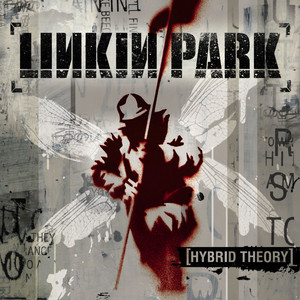
I saw this on the list and immediately looked forward to it. Childhood memories. And then it started playing and — yes. Still there.
There's a type of nostalgia that makes you wince a little. The Pokemon kind. Where you look back and think: okay, I was a child, that explains it. And then there's nostalgia that holds up when you actually test it. Hybrid Theory is the second kind. The songwriting is genuinely good. The dynamics genuinely work. And Chester Bennington — raw screaming into clean melodic singing, sometimes in the same breath — had a voice that objectively should not work as well as it does.
Rating this was hard. On a personal rotation scale — albums I actually reach for — this is a 3, maybe 4. I don't put on Linkin Park on a quiet Tuesday evening. But I don't think that's the right question for an album like this. There's a "human music" scale, a "does this define something" scale, and on that one it's a 5 without question. Hybrid Theory crossed over to people who've never heard of nu-metal. It defined a generation so completely that arguing about personal taste feels beside the point. 5/5.
Never heard of Gang Starr before this. Not really a hip-hop person either — so take this with that caveat clearly on the table. I listened twice, which feels like a meaningful data point: something kept me coming back.
I can't place it in context. I don't know where Guru's delivery sits relative to his peers, or what DJ Premier's production meant for the genre in 1991. What I can say is that it sounds purposeful and confident — like people who know exactly what they're doing. Whether I'm hearing greatness or competence, I genuinely can't tell.
3/5 — which in this case means: I think this is probably better than I'm equipped to judge, and I respected it more than I enjoyed it. Not a bad place to land.
The vocals are the whole point here — three voices stacking into harmonies that are, genuinely, impressive. For a song or two it works. For a whole album it becomes a lot. There's not much contrast, not much relief from the format. By the end it all blurs together into one long, pleasant, beige wall of California folk-rock.
2/5 — technically accomplished, occasionally lovely, and about 35 minutes too long as a full listen.
Moon Safari doesn't belong to a specific time. Some albums are chapters — you listen to them intensely in a period and then whenever you return, you're back in that room, that year, that version of yourself. Moon Safari isn't like that. It's been there consistently, without rhythm, without a particular season. More like furniture than a photograph.
A dear friend introduced me to this one, and I've been grateful ever since. Every song works. The whole thing is calm without being boring, warm without being sugary, electronic without being cold. Air found a temperature and stayed in it for 44 minutes.
"You Make It Easy" is the one that hits hardest right now. There's a person this song makes me think of. Someone who actually does make things easy — who showed me that things can be joyful and light. The song doesn't explain that. It just feels it.
5/5 — and it's not even close.
Flashbacks to SingStar. That's where this album lives in my memory, and revisiting it doesn't change the address much.
The reputation is bigger than the content. A lot of it sounds the same, doesn't stay, and within songs it's repetitive and predictable. There's also something about the delivery — the singing especially — that reads as arrogant. Not necessarily intentionally, but it sounds like a band that thinks it's very cool while making music that is, fundamentally, quite simple. If the attitude matched the reality — "hey, we make fun dance music, enjoy" — I'd probably like them more. The gap between the pose and the product is the problem.
"Take Me Out" is the obvious standout, and it earns it, repetitive as it is. But the real highlight is "Darts of Pleasure," specifically the moment it switches to: "Ich heiße Superfantastisch, ich trinke Schampus mit Lachsfisch." For about thirty seconds the whole cool-guy act collapses into pure absurdity, and the album is much better for it. More of that, please.
2/5.
A choir. Zulu harmonies, no instruments, a tradition being documented rather than an album being made. I finished it, which feels like the right data point — it held enough to keep going, even when it drifted into background noise.
Parts of it were genuinely pleasant. Parts of it were grating, the way any unfamiliar ritual can be when you're not initiated into it. I don't think that's a flaw in the music so much as an honest account of the distance between me and it.
Is this a defining album? A genre-shaping statement? I can't really say — I don't have the framework to judge it on its own terms. On the list's terms, I understand why it's here. As a listening experience for someone coming in cold: 2/5 — respectfully.
Came in expecting rock. Got something quieter, more American, more country-adjacent than the genre label suggested. Wilco sit in a space I don't have much reference for — alt-country, roots rock, whatever the label is — and Being There is a long album to spend in unfamiliar territory.
It was fine. Nothing grated, nothing grabbed. Some moments had a nice melancholy to them. As a double album it probably asks for more investment than I could give it cold. The kind of record that might reveal itself over time to someone with the right entry point — I just don't think I'm that person.
3/5 — inoffensive, occasionally warm, ultimately forgettable for me.
Every review of this album is wrong, including this one. It's not a collection of songs. It's a single 43-minute arc — tension, release, dread, beauty, back to tension — and trying to pick it apart undoes the thing that makes it work. "Money" is a great track. "Time" is devastating. But listening to tracks is not listening to Dark Side of the Moon.
I came back to it after years. It arrived differently this time — slower, heavier, more inevitable. The way it builds and breathes and collapses into itself. The heartbeat at the start and end. The cash registers. The clocks. The voices at the edges. All of it part of the same thought.
Masterpiece. 5/5. That's the honest review. Everything else is just pointing at it.
Know REM from the hits — Losing My Religion, Everybody Hurts, the later polished era. Murmur is earlier and stranger: jangly guitars, Michael Stipe deliberately mumbling so the voice becomes texture rather than meaning. It's an interesting idea. It just didn't land for me.
Nothing stayed. Nothing grabbed. Atmospheric in a way that passed through without leaving a mark. I can hear why it mattered — there's something genuinely different about the approach — but different doesn't automatically become compelling on first contact.
2/5 — respectfully unaffected.
Not my genre. I came in with low expectations and left having listened to it several times — which is the only review that matters, really.
To Pimp A Butterfly is not what I expected hip-hop to sound like. It's a jazz and funk record at its core — live instrumentation, complex arrangements, something that breathes like a band rather than a beatmaker. The Miles Davis comparison isn't a stretch. If you told me some of these tracks were outtakes from a 70s session I might have believed you.
The language still reads as image-building — the deliberate badassery of the form. But underneath that there's something genuinely vulnerable and searching. It earns its ambition.
4/5 — surprised me. That counts for a lot.
The first song sounded like a 45rpm record playing at 33 — Ray Davies has that kind of voice, slightly flattened, very English, almost accidental. Once I confirmed it was playing at the right speed, I settled in.
Arthur is a concept album about the decline of British working class life. It has ambitions. It also sounds, for long stretches, like Status Quo at a slightly slower tempo. The theatrical moments are there — occasional bursts of something more interesting — but they keep getting interrupted by perfectly competent rock songs that don't quite earn the concept they're supposed to be serving.
Easy listen. Nothing stayed. 0815 — which is a German expression meaning "completely unremarkable," and I think Ray Davies would understand it even if he hasn't heard it.
3/5 — fine, Arthur. You're fine.
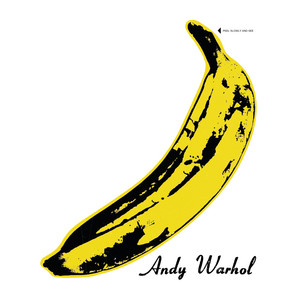
Their first show under Andy Warhol's management was at a psychiatrist's convention in New York. Warhol had been asked to give a lecture. He showed a film instead, and The Velvet Underground played. By most accounts, nobody really noticed.
That image stays with me. Not a dramatic confrontation — just radical music, largely ignored, in a room full of people trained to notice things. And yet everyone who bought this album, Brian Eno famously said, started a band. The influence arrived decades late, but it arrived.
The album itself is stranger and more varied than I remembered. Lou Reed and Nico trading lead vocals — her deadpan German weight against his Long Island drawl. "Sunday Morning" as a lullaby opener, then "Heroin", then "Venus in Furs". Dark subject matter made strangely accessible. Raw by design, not by accident.
4.5/5 — and the half point is just honesty. The rest is unmistakable.
Björk is undeniably Björk. The voice is one of those things that exists in a category of its own — not quite like anything else, not quite what you'd call conventionally beautiful, but completely unmistakable. I don't know if I like it exactly. I know I'd recognise it anywhere.
Debut is her most accessible album, apparently. Electronic pop, some jazz, some dance music, all filtered through that voice. A few songs landed — the rest passed through pleasantly without leaving a mark.
3/5 — distinctive, occasionally wonderful, not quite mine.
Neil Young's voice is one of music's great polarisers. High, nasal, fragile — some people find it deeply moving. I find it deeply Mickey Mouse. I tried. I listened to the whole thing. The voice didn't grow on me.
After the Gold Rush is apparently the softer, more acoustic side of Neil Young. Which means if the voice is the problem — and it is — there's nowhere to hide. The songs underneath are probably fine. I couldn't get past the delivery to find out.
Honest rating: 1.5/5. Filed under 2 for rounding purposes.
Know the hits — "Personal Jesus", "Enjoy the Silence" — they're unavoidable. Violator holds together better than a hits album would suggest, darker and more cohesive than expected. The synths have real weight, the production is meticulous, Dave Gahan's voice suits the material perfectly.
But nothing surprised me. The hits are the peaks and the rest is good without being revelatory. A very well-made album in a genre that isn't quite mine.
3/5 — solid, dark, accomplished. Just not mine to keep.
The title promises to destroy rock & roll. As someone who has nothing against rock & roll, I approached with appropriate suspicion. The album does not destroy anything. It samples everything — pop, disco, house, dance — chops it up, and reassembles it into something genuinely fun.
Never heard of Mylo before this. "In My Arms" turned out to be something I recognised without knowing where from — that kind of track, the one that gets everywhere. The rest of the album holds up around it. Upbeat, playful, unpretentious. Does exactly what it sets out to do.
3.5/5 — filed under 4. No genres were harmed in the making of this review.
Loud, melodic, guitar-forward alternative rock from 1992. Bob Mould knows what he's doing — the songs are well-constructed, the energy is there. Nothing offensive, nothing remarkable.
I enjoyed it while it was on. The moment it stopped, it was gone. Sometimes that's just how it goes.
2/5 — pleasant enough, remembered by no one, including me.
Never knowingly listened to bossa nova before. I recognised the style — that gentle, warm, rhythmic thing — but didn't have a name for it. Two songs in I already loved it.
Tanto Tempo is the perfect warm evening album. Garden, beach, someone you'd like to spend time with. Romantic without being sentimental, calm without being boring. Bebel Gilberto's voice sits exactly where it needs to — unhurried, close, like it's not trying to impress anyone.
It turns out bossa nova is Portuguese. Brazilian Portuguese. I didn't know that either. Everything about this album felt like a small discovery.
4.5/5 — filed under 5. New favourite genre.
John Lennon and Paul McCartney apparently called Harry Nilsson their favourite American artist. I mention this not to disagree, but to establish that reasonable people can land in very different places on this one.
Nilsson Schmilsson jumps between styles — piano ballads, rock, pop, something that sounds like a German cabaret — without much holding it together. Individual songs are fine. As an album it feels like a playlist someone compiled by accident. "Without You" is genuinely great. The rest is a lot of genre-hopping with varying results.
2/5 — more of a collection than an album.
Rumours was made by a band falling apart. Lindsey Buckingham and Stevie Nicks splitting. John and Christine McVie divorcing. All of them still showing up, still recording, turning the wreckage into something. The result is one of the most hit-dense albums ever made — "Dreams", "Go Your Own Way", "The Chain", "Gold Dust Woman" — almost every track landed.
I listened to it in the car, driving my daughter to daycare and back from a Familienfest. When "Go Your Own Way" came on, she said: mama always listens to this song. Then she wanted it on repeat. A song about a painful split, my kid in the back seat, a family event at the end of the road. I didn't say anything. What would you say?
The patterns keep finding me. 5/5.
I have now listened to two Neil Young albums. The voice remains high, nasal, and fragile. It remains, for me, deeply Mickey Mouse. "Heart of Gold" is genuinely lovely — probably his most accessible song, and it earns it. The rest of Harvest follows the same pattern as After the Gold Rush: well-crafted songs I couldn't quite get past the delivery to fully appreciate.
Apparently I own a Neil Young vinyl. It's in the dragon's den. It can stay there.
2/5 — consistent.
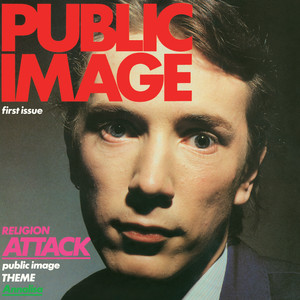
Johnny Rotten, post-Sex Pistols, has decided that music is the problem and sets about fixing it. The solution: remove the music, add beats, and talk complainingly over the top in a voice like a kettle that's given up on boiling. Bonus points for being anti-religion in 1978, which was very brave.
I respect the artistic intent. I do not respect my ears enough to sit through this again.
1/5 — avant-garde, which is French for "I don't get it, but I'm also not sure I'm wrong."
Sepultura are a Brazilian metal band who decided to incorporate their indigenous roots into this album. The idea is good. The execution is mango ice cream with tomato sauce — each element fine on its own, but served together in a cone, which as my daughter would say, is so ein Quatsch.
The metal sections are heavy and competent. The indigenous sections are interesting. They don't talk to each other. They just take turns. Where you might expect something genuinely hybrid — the two things bleeding into each other, like Kendrick folding jazz into hip-hop until you can't tell where one ends — here you get a metal song, then an indigenous interlude, then a metal song. The seams show.
2/5 — good ingredients, wrong recipe.
Five listens in and still going. That's the review, really — but I'll elaborate.
Brothers came out in 2010, which matters: it's upstream. The same raw, blues-rooted fuzz that runs through All Them Witches, King Buffalo, The Murlocs — The Black Keys were already there, doing it with just two people making far more noise than two people should. Dan Auerbach's voice, the minimal approach, the honest dirt of it. You can hear where a lot of what came later learned to walk.
It's also the album I'd put on for someone I want to introduce to my taste without hitting them in the face with a heavy bong in a mosh pit. The entry point. The thing that gets you to the door before you find out what's behind it.
5/5 — belongs in my world.
My father has a Talking Heads vinyl. It's in the dragon's den. Having now listened to Remain in Light, I understand why it never made it out.
The African polyrhythm influence is genuinely interesting — and unlike some albums that try this, it's actually integrated rather than bolted on. "Once in a Lifetime" is strange and compelling. But the overall vibe is anxious, detached, deliberately weird in a way that kept me at arm's length. I can hear what they were doing. I just couldn't quite get inside it.
2.5/5 — filed under 3. Interesting enough to respect, not quite enough to return to.
Gets Rocky Horror Picture Show vibes immediately — theatrical, glam, deliberately decadent. I understand why people liked it. In 1973 this kind of sexually ambiguous art rock was genuinely provocative and new. The shock has worn off, what's left is a very stylised performance that doesn't quite work for me outside of its historical context.
Brian Ferry croons over it all like a man who has decided he is very interesting. Maybe he was. I couldn't quite get there.
2/5 — makes more sense as a document of its time than as a listen.
Everything I love about heavy music has roots here. Elder, All Them Witches, King Buffalo, Bongripper, the whole lineage — trace it back far enough and you arrive at four working class kids from Birmingham in 1970 playing riffs so heavy they invented a genre by accident.
Paranoid doesn't need me to explain it. "War Pigs", "Iron Man", "Paranoid" — landmarks. But then there's "Planet Caravan": calm, psychedelic, floating. They could do that too. The range is part of what makes it matter.
Maybe I need convincing. But they deliver easily.
5/5 — where it all began.
CCR are one of those bands where you can put on their entire discography and just let it run. No friction, no skipping, no wondering when it gets good. Cosmo's Factory is that feeling in album form — "Proud Mary", "Have You Ever Seen the Rain", "Up Around the Bend" all sitting there like they've always existed.
The Battlefield Vietnam connection is real: this music was everywhere in that game, playing through speakers while things burned, and somehow it fit. Summer vacation with friends. Windows down. No one asking what we were listening to because no one needed to.
4/5 — not trying to be more than it is, which is exactly what makes it great.
Black Hole Sun on MTV, by chance, as a kid. That was the introduction. The melting faces, the overwhelming wrongness of the video, and then that voice.
Cornell's voice is like an electric guitar with a full pedalboard — clean and melodic one moment, then overdrive, then full fuzz, sometimes mid-phrase. Nobody else did that quite the same way. It's technically staggering and emotionally direct in a way that technical things rarely are.
Superunknown isn't quite my daily listening — the grunge/alt-metal territory sits a little outside where I naturally land. But this is the kind of album where the craft is undeniable. You hear it and you just respect it.
3.5/5 — filed under 4. The voice alone earns it.
Dance-punk meets electronic, 2007. The production is slick, the beats are there, but the vocals didn't work for me — a bit flat, a bit too-cool-for-school. Nothing stayed. Gets a similar feeling to Franz Ferdinand: technically fine, stylistically self-conscious in a way that keeps me at arm's length.
"All My Friends" is apparently the centrepiece and great song of the decade. I can see why people think that. It still didn't quite land.
2/5 — not for me.
This is my territory. Prog meets psychedelia meets jazz meets sheer weight — King Crimson doing all of it at once and making it hold together. The way "Easy Money" uses the vocals as pure texture, scatting as another instrument rather than words carrying meaning. The way the heavy parts land harder because of the space around them.
Larks' Tongues in Aspic is genuinely impressive. Not "I need to own this on vinyl immediately" impressive — more "I need to sit with this properly" impressive. There's more here than one listen reveals.
4/5 — strong, and worth returning to.
Never heard of Super Furry Animals before this. Welsh psychedelic indie rock, 1996. The sound didn't grab me — eclectic to the point of unfocused, nothing stayed. Pleasant enough while it played, gone the moment it stopped.
2/5 — fuzzy logic, no clear conclusion.
Youth. Green Day were everywhere — American Idiot was inescapable in a way that only happens to albums that define a moment. Revisiting it now: still holds up, and then some.
Punk rock is not my daily world anymore, but this isn't quite just punk rock. "Jesus of Suburbia" is nine minutes long and moves through five distinct sections — a mini rock opera from a band supposedly built on three-chord speed. That ambition is real and it works.
The album is also political in a way that hasn't aged out. 2004, peak Bush, post-9/11 paranoia, media manipulation, suburban numbness — the "redneck agenda" Billie Joe was shouting about then maps onto now almost uncomfortably well. Some albums date. This one keeps finding new relevance.
4.5/5 — filed under 5. Defined a generation. Still talking to it.
Bowie is a mystery to me. The theatrical art-rock world — Rocky Horror, Roxy Music, now this — I understand why it mattered, I can see the craft, I cannot connect to it. The voice doesn't work for me. The persona doesn't work for me.
Station to Station is supposedly his least theatrical album, more groove-based and krautrock-influenced. I listened hoping that would change something. It didn't.
2/5 — respectfully baffled.
Same world as Bowie — theatrical, art-rock, voice-as-character rather than voice-as-instrument. Lou Reed also produced by Bowie, also from that early 70s New York scene. Also not someone I'd call a great singer.
But something works better here. The vibe is warmer, less posed. "Walk on the Wild Side", "Perfect Day" — genuine hits that earn their place. The album doesn't try as hard to be interesting as it actually is.
I apparently own this on vinyl, via my father. Still in the dragon's den. Might be worth retrieving one day.
3/5 — don't quite get it, but this one I can live with.
Haircut 100 are very cheerful. Aggressively, relentlessly cheerful. The kind of cheerful that makes you check if someone put something in your drink.
Several listens in and it all sounds like one long song — funky, brass-forward, handclap-heavy early 80s pop that sits in the same feel-good pocket as Kool & the Gang's "Celebration" and Stevie Wonder's "Happy Birthday." Not unpleasant. Not distinguishable. The saxophone is nice. It's always nice. It doesn't help.
2/5 — one cheerful 80s blob, warmly delivered.
The album is called Very. If this is the Pet Shop Boys at their most, then they are very not for me.
Deadpan vocals over what sounds like the demo presets on a cheap 80s Casio keyboard. Everything the same tempo, the same texture, the same emotional flatness. I understand this is intentional. I understand Tennant's monotone delivery is the style, not a limitation. I still spent most of this album checking how much was left.
"Go West" is fine. I already knew "Go West."
1/5 — very.
Better than Pet Shop Boys. That's the bar, and Architecture & Morality clears it. Where PSB felt like a teenager in a garage with a Casio, OMD are doing something more considered — darker, more atmospheric, more melancholic. "Enola Gay" is a pop song about the plane that dropped the atomic bomb on Hiroshima. That's a different kind of ambition.
Still not my world. The synth-pop texture doesn't change enough to hold me. But there's a seriousness here that earns some respect.
2/5 — more sophisticated, still not mine.
Achtung Baby is the one where U2 went to Berlin and tried to become a different band. They got the leather. They got the irony. They got the industrial textures. Bono is still Bono. You cannot Berlin your way out of being Bono.
The Edge plays guitar the same way on every song and has done for forty years: delay, shimmer, echo, arpeggio. Strip the effects and apparently there's just nervous plinking underneath — there is footage. A forty-year stadium career built on one pedal.
His name comes from Bonavox, a hearing aid shop in Dublin. Bono Vox. Latin for "good voice." He has been Bono ever since.
I think about this.
1/5.
Jack White is very serious about music. No smartphones at his shows. Lots of rules about authenticity. The blues, properly understood. You can feel all of this on Blunderbuss — the weight of a man who needs you to know he means it.
The problem is the album itself is scattered. Blues rock, country, piano ballads — it moves around without landing anywhere. "Sixteen Saltines" is genuinely good: mean riff, real momentum. The rest didn't stay.
2/5 — takes itself seriously. I didn't.
Bob Dylan in 1997 sounds older than most albums from the 1930s. That's the point. Time Out of Mind is a record about being worn out, and Lanois produced it to match — dusty, slow, like something dug up rather than recorded.
It works as a room. Put it on, let it sit. Nothing demands your attention and nothing outstays its welcome.
3/5 — good background, better than expected.
Enter the Wu-Tang is beats and rhymes, nine MCs competing over RZA's grimy kung-fu samples. Pure East Coast 93. It's a lot, all at once, and none of it is remotely my style.
And yet. Put it on in the right mood and it works — background, energy, the occasional GTA San Andreas flashback. There's a reason this one stuck.
3/5 — not mine, but I get it.
Kid A was a complete world. Amnesiac is what didn't fit in it — the offcuts from the same sessions, reassembled into an album. Some of it is interesting. None of it hits the same way.
2/5 — Kid A's shadow is a hard place to stand.
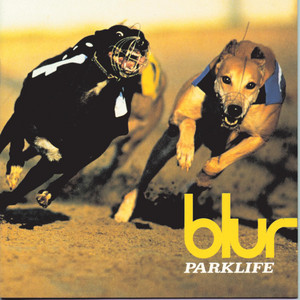
I know Blur from "Song 2." That song is not on this album. Parklife is Britpop — very English, very 1994, jumping between styles without warning. "Girls & Boys" is fine. The rest is all over the place.
1/5 — wrong album, wrong mood, wrong me.
Michael Jackson at his most polished. "Smooth Criminal," "Man in the Mirror," "The Way You Make Me Feel" — the hits are real hits. The album around them is a bit long and loses steam toward the end.
3/5 — good, not overwhelming.
Siembra sounds like a party I wasn't invited to but enjoyed through the wall. New York salsa, 1978 — brass, percussion, Rubén Blades singing about politics in Spanish over a rhythm that doesn't stop.
Not my world. But it's clearly good at what it does, and it's hard not to move a little.
3/5 — through the wall, and still enjoyable.
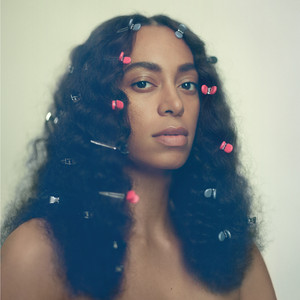
A Seat at the Table is slow, minimal, introspective R&B — Solange processing identity and race over sparse beats. Important themes. The music itself is a woman vocalizing over production that never quite arrives.
1/5 — the message is there. The songs aren't.
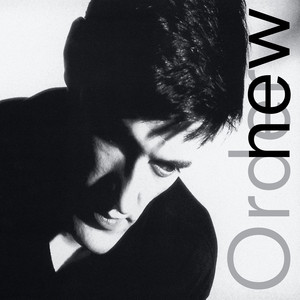
New Order make electronic post-punk with a vocalist who delivers every line like he'd rather be somewhere else. That can work. Here it just sounds thin — shallow beats, flat delivery, nothing that sticks.
1/5 — Pet Shop Boys bad, Bowie bad, now this. The 80s are not my decade.
I knew the name. Friends were hyped. I never understood why, and this didn't help.
The Arctic Monkeys debut is fast, guitar-driven Sheffield indie — lads in a room playing 20% faster than necessary. Everything sounds like the same song at slightly different tempos. "Riot Van" slows it down deliberately, which at least proves they can. The rest doesn't.
The attitude is the other problem. "Too cool" as a personality only works if you're already a fan.
2/5 — not my kind of cool. Though the title earns its place: whatever people say you are, that's the thing you have to keep refusing.
Stan Getz's saxophone over bossa nova rhythms — warm, unhurried, the kind of thing you put on in the evening and run again without thinking about it. I did exactly that.
I later found out he recorded an album with João Gilberto, Bebel's father. Of course he did. This is the same warm world.
4/5 — good enough to run multiple times.
Fast UK punk, 1979 — three chords, shouted vocals, everything at the same tempo and the same volume. The energy is real. The music isn't.
1/5 — dudes making noise and calling it a statement.
Gene Clark — filed under rock, sounds more like country. Warm, unhurried, not unpleasant. The kind of album that sits in a room without demanding anything.
3/5 — okayish background, nothing more.
Le Tigre sounds like the B-52s went to a feminist punk show and stayed. Lo-fi drum machines, chanted vocals, angular energy — the same nervous electricity as Scott Pilgrim's soundtrack, which is not a coincidence. Kathleen Hanna invented most of this lineage.
Fun, sharp, and over before it outstays its welcome.
4/5 — better than expected, exactly what it is.
Aqualung has the hits. "Aqualung," "Locomotive Breath," "Cross-Eyed Mary" — real songs, real weight. Ian Anderson with a flute in a prog rock band should not work as well as it does.
As an album it doesn't fully cohere. It jumps between hard rock and acoustic folk without much connective tissue, and within each section it sounds like nothing but itself. Scattered and samey at the same time.
3/5 — classic status earned, full click never arrived.
Song 2 is here. Two minutes of noise rock that became Blur's biggest hit almost by accident. It sounds nothing like the rest of the album, which is mid-90s Britpop indie that mostly serves as filler around it.
2/5 — came for Song 2, found mostly padding.
Bad Company do one thing and do it well — straight blues-rock with Paul Rodgers singing like it costs him nothing. The voice is the whole story. Clean, powerful, no affectation.
Not my usual territory — I lean toward the heavier, fuzzier end of rock — but easy to spin multiple times. CCR energy without the swamp.
3.5/5 — solid, unpretentious, the voice earns it.
Everything Must Go was recorded after their guitarist and lyricist Richey Edwards disappeared in 1995, never found. He was 27. The band used his remaining lyrics and kept going. That context is heavier than anything on the album itself.
The music is solid Welsh rock — James Dean Bradfield's voice is front and center, sometimes too much so. The mix is uneven: some tracks drown in vocals, others find the right balance. "No Surface All Feeling" closes the album and gets it right.
3/5 — worth knowing the story.
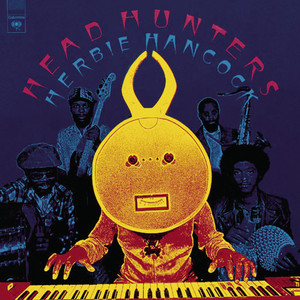
I saw Herbie Hancock live with my father a few years ago in Stuttgart. Head Hunters already meant something before this listen.
The album is jazz-funk from 1973 — Herbie taking his acoustic jazz roots and running them through synthesizers, electric bass, and a groove that never quits. "Chameleon" is seventeen minutes of it. The reworked "Watermelon Man" is almost unrecognisable from the 1962 original, and better for it.
5/5 — the real thing.
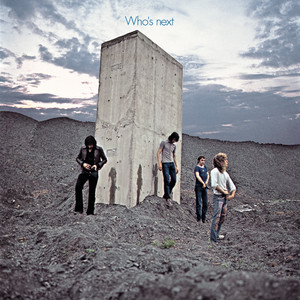
Who's Next is the album where The Who figured out synthesizers before anyone else knew what to do with them. "Baba O'Riley" opens with that keyboard loop and never looks back. "Won't Get Fooled Again" closes with Keith Moon destroying everything.
My dad has this on vinyl. The cover says everything: four men who just pissed on a concrete monolith, staring at you. Who's next.
5/5 — a classic that earns it.
Cheap Thrills was recorded live in the studio with an audience — which explains the clapping, and also the energy. Janis Joplin performs like the room is on fire.
The voice is the thing. Raw, cracked, whiskey-and-cigarettes, every note costs something. People call it one of the great rock voices. I kept thinking of Marge Simpson.
This is not a knock. Marge has real emotional range. The music around Joplin is genuinely good. But once the image is in your head, it stays.
3/5 — distinctive, emotional, unmistakable. Also: Marge.
I knew "Waterfalls" from childhood without knowing I knew it. Hearing it in context made sense of that memory.
CrazySexyCool is polished 90s R&B — smooth production, harmonies, confidence. "Red Light Special" is very direct. The genre isn't mine, but the album is good at what it does, and some of it landed.
3/5 — better than expected, Waterfalls earned it.
The Rolling Stones I thought I knew are all the same. One riff, one swagger, one groove, on repeat. I do not like it.
Beggars Banquet is not that. It is mostly acoustic — slide guitar, congas, fiddle, banjo. Sympathy for the Devil opens with a samba rhythm and builds into something genuinely strange. No Expectations is a blues ballad with slide guitar that sounds nothing like "the Stones". Prodigal Son is a Robert Johnson cover played straight. Street Fighting Man is the only track that sounds electric, and even that is an acoustic guitar run through distortion.
It feels like a b-side album — loose, rootsy, unhurried. But it is diverse in a way that surprised me. More interesting than I expected.
3/5 — not the Stones I knew, which is the nicest thing I can say about it.
Pretty bad, and it mostly stayed that way.
Except for one moment: The Animist. Something shifted — melodic, almost psychedelic, different enough that I got up to check whether it was still Ladd playing or whether Apple Music had moved on to something else. It was still Ladd. The B part of the song then goes somewhere completely strange and does not fit at all. But that part gave me a riff idea, so I'll take it.
2/5 — one good moment, one riff idea, not enough.
I was looking forward to the stalker song.
Before it: experimental tracks that don't fit together, each one pulling in a different direction. Meh. Then Every Breath You Take arrives and the album suddenly sounds like a band with a purpose.
I noticed it before I knew the context — I thought "ah yeah, the romantic song, it's really good. But if you listen to the lyrics... this is really psycho, controlling behaviour. Like stalking." Turns out Sting confirmed exactly this: he wrote it about surveillance and obsessive jealousy during his divorce, and finds it uncomfortable that the world adopted it as a wedding song. The melody is warm. The sentiment is a threat. One of the great accidental misreadings in pop history.
Everything after the stalker song is better — King of Pain fits, Wrapped Around Your Finger has something. But still.
2/5 — one genuinely great track, carrying an uneven album, that turns out to be about something completely different from what everyone thinks.
A surprise. I did not expect to like this.
The vibe, the beats — they got me before the lyrics did. Channel Orange is R&B that doesn't ask you to be an R&B person. It just creates an atmosphere and pulls you into it. I've listened several times now, which doesn't happen often with albums from outside my usual territory.
Sweet Life was the one that landed first — and personally. I posted Aska asleep in the sun with that track running, because the line "my TV ain't HD, that's too real" said something true about where I am right now. Simple things. Real things. That's the sweet life.
I haven't fully followed the lyrics on everything yet. I'll be back.
4/5 — already downloaded to my phone, already thinking about the vinyl.
Seven Nation Army is everywhere. You know that riff whether you want to or not.
Elephant has the hits — the riff, The Hardest Button to Button, the gnarly fuzz of two people making more noise than two people should. Jack White treats a guitar like it owes him something. Meg White holds the whole thing together by not overcomplicating it.
But the one that actually landed was Little Acorns. It opens with a motivational radio speech about a squirrel — if a squirrel stores its food one nut at a time, you can tackle your problems one at a time too. Then it explodes into fuzz. It's absurd and sincere at the same time. And right now, in my current situation, the squirrel logic hit.
3.5/5 — the hits earn their place, the squirrel earned more.
That's really good. And apparently the root of a lot of music I already listen to.
Tago Mago is a 1971 double album from Cologne, and it sounds like it came from somewhere else entirely — not a place, a state. Damo Suzuki's voice is an instrument like everything else, not a singer fronting a band but another texture in the mix. Jaki Liebefeld's drums hold the groove without ever feeling mechanical. Halleluwah runs eighteen minutes and you don't notice.
Very psychedelic. A real trip. The kind of album where you look up and the room is slightly different from when you started.
I can hear where Causa Sui, Rotor, Minami Deutsch — a lot of what's already on my shelves — learned to walk. The lineage is right there.
4/5 — foundational, and it earns that word.
The Human League made the synth-pop album in 1981 — Sheffield, all keyboards, guitars banned on principle. I've now done Pet Shop Boys, New Order, OMD and Depeche Mode from this same corner of the decade. The pattern holds. I can hear the craft. None of it moves me.
Nothing really stayed. Except the last song.
"Don't You Want Me" closes the album and it's the only thing still in my head. The joke is that Phil Oakey thought it was the worst thing on the record — he buried it at the end as filler and argued with the label about putting it out as a single. It went to number one in the UK and the US and became the only Human League song most people can name. The two women trading lines with him, Susan Ann Sulley and Joanne Catherall, he'd found dancing in a Sheffield nightclub. Both still teenagers, neither of them singers. That back-and-forth is the entire song. He didn't rate it.
2/5 — nine tracks I've already lost, and one the singer didn't want.
The Smiths made this one to provoke. "The Headmaster Ritual" opens it and is about being beaten by teachers in Manchester. The title track closes it, six minutes of vegetarian polemic over actual slaughterhouse noise — cattle, saws. It's the angriest record they made and it went to number one.
None of it reached me. Boring. Nothing stayed.
That's the strange part. An album working this hard for a reaction should have managed something — irritation would have counted. Pet Shop Boys managed irritation. This just went past for forty minutes while a band shouted about things that genuinely matter, and I was gone by the third song.
Worth knowing: "How Soon Is Now?" — the one Smiths song I'd actually recognise, the one with the tremolo — isn't on the original UK album at all. It was a B-side, added later to the US pressing. So depending on the version, the only track that might have stayed was never here to begin with.
1/5 — the loudest album that ever failed to reach me.
Amy Winehouse was 23 when she made this and dead at 27.
"Rehab" is the one everybody knows and it's the one that stayed. The hook is so cheerful you can almost miss what she's saying — she's refusing help and narrating exactly how that goes. She wrote it after her management suggested rehab and she said no. It reads differently now than it did in 2006, and it should.
The rest I liked without ever being caught out by it. This doesn't sound like 2006, it sounds like a lost Motown record, and that's not an accident — much of the backing is the Dap-Kings, Sharon Jones's band, playing live in a room. Real horns, real drums, nothing programmed. Ronson and Salaam Remi built a 60s girl-group record and put a voice on top of it that had no business being that old.
But that's also the ceiling. It does the thing it set out to do, does it cleanly, and never once goes somewhere I didn't see coming. Eleven tracks, thirty-five minutes, no wrong turns and no surprises either.
2.5/5 — I liked it. It just never caught me off guard.
The bucket is back.
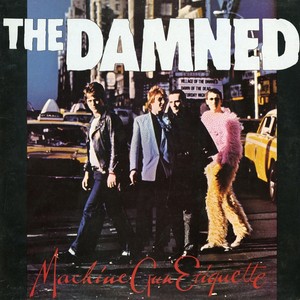
Same effect as Slade — vocals compressed and shouted until they sound like they were recorded inside a metal container. Except Slade had platform boots and glitter and knew it was a party. The Adverts are 1978 UK punk, which by now I have established is not a genre I have any use for. The Damned did this to me in July. Same three chords, same tempo, same shouting, same conviction that volume counts as an argument.
Their first single was called "One Chord Wonders." They named the criticism themselves before anyone else could get to it. I would respect that more if the album didn't then go on to prove it.
There is one real idea here. "Gary Gilmore's Eyes" is sung from the point of view of a man who receives a corneal transplant and works out that the donor was an executed murderer. Gilmore was shot by firing squad in Utah in 1977 and did donate his eyes. That is a genuinely good idea, and it is attached to a song I do not want to hear again.
1/5 — awful. Bad punk, shouted into a bucket.
Weird. I spent the whole album working out whether that was the point.
It is. She produced this one alone for the first time and deliberately made something uncommercial after having had hits. She later called it "my 'she's gone mad' album" — her words — and it sold worse than anything else she had done.
She isn't singing as herself on most of it. Every song is a different character with a different voice: a thief, a soldier, Bess Houdini passing her husband a key in a kiss. That's why it feels like the album keeps changing who's talking. Knowing that made it make more sense. It didn't make it easier.
The moment that got me was the end of "Get Out of My House." The song is built on The Shining — someone barring a door against whatever wants in — and it closes with her turning into a mule and braying, answered by a second mule that is audibly a man. That's Paul Hardiman, the engineer. The reference is Pinocchio. It is completely absurd and it is not a joke: the transformation is how she escapes.
So — committed, singular, nothing else sounds like it. But I finished it respecting the album more than I enjoyed it, and I can't feel it pulling me back.
3/5 — the strangeness is the point, and I got the point without wanting it again.
It sounded nice at first. Jazzy, warm, that Brazilian evening thing. Then somewhere in the middle it stopped being songs and turned into a mix of beats — a DJ's portfolio rather than an album. Textures, guests, ideas, nothing to hold onto.
That instinct turns out to be exactly right, and the story behind it is worse than I expected.
Suba was Mitar Subotić, a Serbian producer who came to São Paulo in 1990 to study Brazilian music and stayed. This is his own record, and it is precisely what I heard: a gifted producer showing what he can do, with no single voice running through it to hold it together.
He found that voice immediately afterwards. Days after this album came out he was in his studio finishing Bebel Gilberto's Tanto Tempo. A fire started. He went back in for the tapes and died of smoke inhalation, 38 years old. Tanto Tempo came out after his death and became the biggest-selling Brazilian album outside Brazil.
I gave Tanto Tempo a 5 in May. New favourite genre, I wrote. Same man, same production, same warm evening — except that one has a singer at the centre of it. The thing I found missing here is the thing he went back into a burning room for.
3/5 — the sketch for an album I already love.
I went in sceptical. Two perfectionists hiring the best session players in America and making them do it again until it was right — I don't like the sound of that. It is the opposite of a band in a room.
It's also true. On "Peg" they ran through about seven guitarists, wiping each solo, before Jay Graydon got it, and then kept him playing for hours. Three different drummers across the record. The exception is Steve Gadd's break on the title track: first take, kept.
It grew on me anyway.
The surface is easy — chill, warm, the kind of thing you put on for a nice evening. Underneath are jazz chords that have no business being in pop songs, and once you notice them you can't stop hearing them. That's what keeps pulling you back.
Then the subjects don't match the surface at all. "Black Cow" is the smoothest thing here and it's a man walking out on someone who is falling apart — a black cow is a root beer float, so his last move is telling her to finish her ice cream soda and go. "Deacon Blues" sounds wistful and is a suburban nobody romanticising drinking himself to death.
"Aja" itself is the one that isn't doing that. Pronounced Asia, named after a Korean woman who married a friend's brother, and genuinely about calm — a man getting away from the pressure of his life. Eight minutes, no irony in it. So the evening-music read isn't wrong. It's just only true for one song.
4/5 — I objected to how it was made and it won anyway.