It's time for a hard flashback to 1983 with the Finnish rock band Hanoi Rocks and *Back to Mystery City*. I've been looking forward to something like that for the last several reviews. A little glam rock, a little hair metal. This promises to have some uplifting moments. Let's get stuck in. One of the things I love about hair bands is that they often show ridiculously weird musical knowledge, particularly in the first track, *Strange Boys Play Weird Openings*, which you might think of as throwaway or introductory or an instrumental lead-in. But really, they're often just musical jokes, typically commenting on historical music or the news of the day in one form or another. Here we get a medieval madrigal / Greensleeves-esque noodling around on a guitar along with a badly played flute, which leads into a heartbeat. I think it's funny. It's the kind of thing you only laugh at if you get the joke, which is the best kind of joke. Then we launch into a weirdly hybrid banger, *Malibu Beach Nightmare*, which combines one of the many hair metal tropes: going down to the beach and meeting girls with getting a sexually transmitted disease and then hooking up with a skinhead. Now we're not actually informed how the skinhead treats him, but she is described as a Brixton Pearl. You be the judge of irony there. If, however, the sweet, sweet girl, the sea pearl that made him burn, that naughty girl, is in fact the same girl who is a skinhead, well, he ignored the red flags and it's his fault. The middle of this song is a 50s guitar throwback thing, which works interestingly, but not poorly with the rest of the experience. The song is fun and it's a good way to kick off an album. I don't want to suggest that rock bands in general can pretty much all be counted on to make a song that is about how they take drugs and play music and they enjoy the lifestyle. But *Mental Beat* is pretty much a song about Hanoi Rocks taking a bunch of amphetamines, getting really high. Then having those meth jitters where you can't seem to not do something. "Hanoi Rocks has got the beat. Boy, they never seem to sleep." Yeah, guys, I'll believe that. If this song has a problem, it's that it goes on a bit too long. At five minutes and three seconds, it could have lost a couple of the bridges and a couple of minutes and still have been very on point. Get in, get out, do the business. Still not bad. *Tooting Bec Weck* would be a cautionary tale if the band had more critical insight and less pride. But, you know, it's a rock band. You don't expect to use them as iconic guides to how to live life well. No, you expect them to tell you how to live life like a dissolute, destitute, down-on-your-luck scumbag, taking drugs in the worst part of town. Which brings us to what Tooting Bec was, or more accurately, is: a particular borough of London. It does have the largest open-air pool in the UK, so it's got that going for it, but it was also the bad part of town in the 80s when Hanoi Rocks was living there. What did they write a song about? Their scummy, run-down, piece of shit neighborhood and how they were scummy, run-down pieces of shit taking drugs on a regular basis. Like I said, don't take your life cues from a rock band. Like the previous track, the biggest problem with this one is that it goes on too long: six minutes and 12 seconds. It could have been cut down to five and lost nothing of substance. Look, I know some of you think that *Until I Get You* is a song about the romantic buildup of a man pursuing a woman whom he desires and that he is consumed with adoration for her. But seriously, listen to the song. It's about catcalling a woman who is leaving the grocery store parking lot. This guy hangs out in the same place every day, so she obviously lives somewhere nearby and is getting groceries, and every day he's harassing her. What an asshole! On the positive side, it's a pretty good song. As long as you don't listen too close, everything's golden. But isn't that the truth about most music? If you're really looking to extend the story, the next track should probably be about how this guy stalks and rapes her in her apartment, because that's the setup. What I was not ready for in the next track was basically just a straight-up love song. *Sailing Down the Tears* is about a guy who has had a pretty miserable romantic history, finally found the girl of his dreams. She seems to be into him too, and he's just singing about how he loves her and how his release from the cavalcade of tears represents and is a reflection of how much she means to him. That's it. That's the song. It's upbeat, charming. It does exactly what it says on the tin in terms of acting like a love song. It's a perfectly serviceable song that does what it wants to. Hard to comment on because it is just that, but easy to enjoy. Hey, remember when I was talking about the inevitable song that involves stalking and raping a girl in her apartment? Yeah, it didn't disappear. It just was a track late. *Lick Summer Love* very well could be that track. After all, it does start by a man ogling a virgin who only sort of looks like she would want to try it with him. We get into the description of how he would like to deflower her, which I get, but we have fragments of song which lead to some strange cogitation. "I've got to get you for any price. I can't get you off my mind." "I may be a total stranger, but I'll get you in the long run." "You may not like it yet, but I bet you'll get wet." I don't know, man, I don't think she asked for this. "It'll be worth every tear you shed." Perhaps we are talking about the momentary pain of the breaking of the hymen, but there are some overtones I think we need to talk about with your therapist, sir, or the local authorities. Despite our misgivings and the implications of *Beating Gets Faster*, this is not a song about domestic violence. Instead, we've returned to the root of so much rock music. It's just a love song about how much the singer protagonist loves his girl and how much she loves him back. No matter what he's up to, no matter where he is, their love will always be true. That's it. That's the song. That's the whole thing. Frankly, it's been kind of a wild trip to get this far, so I'm just going to roll with it. We're going to let it be. Oh, *Summer Love*, so many rock songs have been written as paeans to you, but few of them end with so much of a "bro, you wrote this song" as this one does. *Ice Cream Summer* has the singer-protagonist lamenting the stealing of his love away by a young lady by the name of Rosalita. She perhaps accurately called him a born loser because losing is all he's ever done. Then she left at the end of the summer, thus proving the nature of her prophecy. Yet, hark, as the last verse comes around, our young man declares that he has survived the long winter and now summer comes again. *Ice Cream Summer* is forgotten. He has gotten over Rosalita. He means nothing to her, a photo among others of old friends and lovers—but he just can't seem to shut the fuck up about her. Seriously, brother, you're the one dragging out the mental photos of the girl that got away. Maybe you should just get on with it. I'm not sure who you're trying to convince. If you were waiting for Hanoi Rocks to sing about the London underground scene that they were part of kicking off, well, this is your song, *Back to Mystery City*. It itself was one of those underground clubs that they played a lot of. I have to admit, they don't make it sound all that appealing. A place with no heart, a place without pity. Some place that people will judge you by the clothes you wear and where it's a wham bam gangbang every night there. I don't know, doesn't sound like my kind of scene, but they did seem very excited about living in the shithole part of London earlier, so who am I to judge their taste in lifestyle choices? Except for a sane, sensible person who can say, "that sounds like a kind of shitty place." Overall, the album *Back to Mystery City* is a good time if you turn off your brain and don't actually analyze the lyrics too much. It's got a good beat. You can thrash around to it. You're not going to hear something that's excitingly mentally stimulating, but if you're looking for a little bit of punk and a surprising amount of retro 50s style guitar and beat making, 1983 is not a bad place to stop and look around with Hanoi Rocks.
1001 Albums Summary
Rating Distribution
Rating Timeline
Taste Profile
Breakdown
By Genre
Tap a bar to see the albums behind it
Top Styles
Tap a bar to see the albums behind it
By Decade
By Origin
Popular Reviews
1-Star Albums (3)

All Ratings (13)
The self-titled third album from The Velvet Underground is the kind of thing that just stares at you wide-eyed as you listen to it, laying there without moving, limp in your ears. It's not putting out the effort to meet you. It's not trying to accomplish a whole lot. It's just laying there. At least up until the last two tracks, *The Murder Mystery* tries to go for a polyphonic cacophony and achieves it without much real meaning or success. It's the final track on the album, *After Hours*, where things actually get a little bit interesting. Clearly one of the inspirations for bands like The Moldy Peaches. It's a little bit lazy, but at least it's trying to do something. My main thought while listening to this album was, "I'm clearly just not high enough."
You know, I understand why Norah Jones has such a grip on adult contemporary radio. It's not edgy enough to really be biting. It's very jazzy. It's laid back. Hell, everyone recognizes *Don't Know Why*. The problem is that it makes me want to fall asleep in whatever context it's played. *Cold, Cold Heart* can't really decide if it wants to be a torch song or a jazz ballad. In its shifting back and forth, it's a little frustrating. I can cheerfully report that Track 7, *Turn Me On*, lends itself to the grand guignol of sexual similes at a level that even Steel Panther would be proud of. For that alone, I have to appreciate it. If this comes on at the local wine mom's gathering and you turn to your companion and say, "Hey, I think this song is about sex," everyone will simply look at you and nod. Some things are inarguable and obvious. Look, I'm not entirely dead inside. I get the appeal of a hot brunette murmuring sexy, taut songs of longing and appeal. Truly, I get it, but I don't want it necessarily. This album is so monotonal that you wouldn't even have to clean your brush once while painting it. There is a strange side effect of Norah Jones' slow, sultry singing on every track, and it's that anything shorter than five minutes long essentially has two verses and a bridge, and it's gone. These are songs that could literally be written on a napkin because there's just not that many words in them. It's not for me, is what I'm saying.
Look, it's Bob Dylan. You already know if you like or don't like Bob Dylan by this point. This album was released in 1975, and it's his 15th studio album. Odds are good you know Bob Dylan songs even if you don't know any Bob Dylan songs. Track one, *Tangled Up in Blue*, is a song you'll be humming along to even if you don't consciously know the words. It's been encoded into your DNA. Your cultural underpinnings came from here. Is it good? Sure. Is it coherent? Not really. It's Bob Dylan. *You're Gonna Make Me Lonesome When You Go* is when the harmonica kicks in with a brutal vengeance. If you start listening to the lyrics, you're going to recognize very quickly that there are certain themes that Mr. Dylan likes to treat over and over again. In particular, romantic interludes with women who are unstable in some way and have red hair. They just keep leaving him. It's probably the harmonica's fault. Surprisingly, *Lily Rosemary and the Jack of Hearts* is not just a good song, it's a narrative. You get an eight-minute story about love, betrayal, self-destruction, greed, and a heist. That's a pretty good gig if you can get it. *Shelter from the Storm* starts out strong. You get an implicit narrative between the singer-protagonist and an unnamed woman whose relationship evolves over the course of several poetic manifestations. Then we rapidly take a left-hand turn with some pseudo-Christian/pseudo-Norse imagery, where the singer-protagonist somehow becomes simultaneously Jesus, Judas, and Lucifer. While it's still catchy, it's pretty weird, and then the harmonicas attack. Taken as a whole, I can see how Bob Dylan is an influential player in our cultural musical milieu. But he clearly has some issues with human relationships, also being very nasal.
_Pet Sounds_ from The Beach Boys in 1966 has so many tracks on it that you already know and know that you know that it almost goes without saying. It absolutely drips with American wholesomeness. The opening track, _Wouldn't It Be Nice_, essentially being the anthem of young love, longing for eternal embrace, and horror of horrors, marriage. I say horror of horrors because try getting a track out today that is so directly family supportive. You'll never get plays. 1966 was a different age. Interestingly, the little played second track, *You Still Believe in Me*, subverts this air of wholesomeness altogether. Perhaps this is why it doesn't see a lot of spins. It's a short song about a guy that just can't help cheating on his girl. If we take it as part of a continuing narrative from the first track, which I don't suggest, the story takes a dark turn. Is that the original intent? I can't say, but it is sometimes a surprise when artists take things sideways. That's Not Me splits the difference between tracks one and two and almost picks up the story of *Wouldn't It Be Nice?* with the guy deciding to chase his dream of something undefined and running off to the city, leaving his girl behind. He discovers that city life isn't that great. He misses what he had and he comes home, reassured that a life with her is what he wants. It's wholesome, but it's also cast in a minor note. Track four, *Don't Talk (Put Your Head On My Shoulder)*, is frankly not very good. It's not just slow or methodical, it's plodding. The lyrics are just about exactly what it says on the tin, and it doesn't have even a shred of sense of romance. I'm not sure what it's trying to do. I'm not sure what the band was trying to do. Whatever it was, I don't think they made it. Then we get to *I'm Waiting for the Day*, which is not particularly wholesome. Quite frankly, it's either about a guy who has been friendzoned so hard he has bounced out the other side and doesn't know it, or about a guy who's simping for a chick who is never going to see him in the way that he wants to be seen. By the end, I'm really just imagining that he's decided to murder her and her ex-boyfriend when he finds them together, possibly talking about her unwanted pregnancy. It's a strange song, is what I'm saying. The first half ends with *Let's Go Away for a While*, which is purely instrumental. It's the best the Beach Boys just doing a bit of a slow waltz across the stage. It takes a certain kind of boldness to end the first half of a pop album with a gentle instrumental, but it was 1966. It was a different era. Is it good? Is it bad? It exists. Side B kicks off with what is, relatively speaking, a complete banger, *Sloop John B*, in which a sailor sets out with his grandfather on a relatively small crewed ship and everything goes sideways. As the refrain goes, "I want to go home. Well, I feel so broke up, I want to go home." This is actually one of the best tracks on the album so far. Close up behind Side A's opener, *Wouldn't It Be Nice*, it's probably the second most well-known song on the album. *God Only Knows* is a weird track for me. I am perfectly aware that it has been cited as one of the romantic songs of the era by people who enjoy life a lot more than I do. I get it. It has the outward appearance of wholesomeness, but then you actually look at the lyrics of the song, such as they are. There's not a lot of song here, but one of the core elements is a straight up suggestion that, "Girl, if you should ever leave me, well, life would go on, but the world would have nothing more for me. So why should I continue living?" All right, so that last line is actually, "So what good would living do me?" But there are certain unwholesome implications here. I'm just saying that if this is your idea of romance, maybe your relationship is not the healthiest and you should probably look after yourself for a bit. Which brings us to *I Know There's an Answer*. This is a complete gear shift for the whole album, because while all of the other tracks until now have been about relationships and how they fall apart, or how the emotional impact is intense, and how the singer-protagonist doesn't want them ever to end, this song is philosophical and musing and a solid reminder that a certain kind of people have always been with us. Let me just grab the lyric: "They come on like they're peaceful, but inside they're so uptight. They trip through their day and waste all their thoughts at night." Then the singer-protagonist asks himself, how can he come on and tell them the way that they could live could be better? He knows there's an answer, but he has to find it by himself. Does the last bit completely make sense? No. But at least he's trying, and I'm giving him points for that. Oh yes, there's an absolutely bizarre melodica breakdown in the middle of the second half of the track, which I can only assume meant that one of the Beach Boys had to go out to the restroom and the others just noodled around on whatever instruments were lying in the studio until he got back. I can't help but thinking that *Here Today* is the flip side of the situation described in *I'm Waiting for the Day*. This is the guy that the girl needs to or has broken up with. This is the aftermath, and here is the song being returned to the simp. A harsh, though surprisingly gentle reminder that love can screw you over, and that bitch ruined his life. For that reason, among others, I really like it. Don't try to understand what this says about me as a person. *I Just Wasn't Made For These Times* is not a wholesome song. In fact, it's a pretty damn depressing song, which combines a slightly perky melody with a dragging bassline, which probably encapsulates exactly the emotional content that was intended. It's about a smart guy who just can't catch a break, who wants to do things a new way to try and shake out of the funk, and nobody else wants to go along with it. He wonders how he got stuck with these loser friends. As a result, he feels very sad and he can't find something to get excited about, knowing what I do about Brian Wilson, this song fits right in the field of expectation. Also, I feel a little empathy, which is unpleasant, but there you go. That brings us around to the penultimate track on *Pet Sounds*, which also happens to be the title track. It is what I can describe in no other way than a tiki jam. If I go to a tiki bar and this is on the overhead, I know I'm in the right place. It's a little bit discordant, a little bit out of tune, a little bit strange, and absolutely appropriate to any space I'm likely to be in where I'm sipping on a scorpion. It's also a really strange way to end out an album, but here we go. Now for the pièce de résistance, the last track on the album, *Caroline No*, which I can only imagine as the completion of the trilogy of songs that began with *I'm Waiting For the Day*, proceeded through *Here Today*, and now has ended up with the simp getting the girl and discovering that she is an absolute emotional wreckage that makes the *Sloop John B* look positively functional, and he's discovered that maybe he shouldn't have been so quick in pursuit because the worst thing that could happen to him was success. Really kind of brutal, actually. Overall, this was a decent album. I see how it became such an important part of Americana, but mainly that rides on the back of the top of the A and the B side. Overall, I came away not with a feeling of uplifted wholesomeness and appreciation of the oncoming future, but rather the opposite, looking into the maw of the sucking whirlpool and realizing that entropy always wins. Thanks, Beach Boys!
Crosby, Stills and Nash dropped their self-titled album in 1969 with a remaster in 2005. One of the most influential bands of our era. Let's see how they kicked things off. The opening track, *Judy Blue Eyes*, has been used in more movies than I've had hot meals, and you've heard it on your parents (or possibly grandparents) radios since the beginning of time. What's it about? I couldn't tell you, except for the singer-protagonist seems to be obsessed with a young lady who is free by nature, beautiful, and makes him muse about the state of the world. That's probably literally what it's about. It also goes on for over seven minutes, which is a bold kick. Did you know there was a time where traveling to and through India was considered a time of emotional and spiritual enlightenment rather than a slog through filth and dealing with scam call centers? It's true. Stoners were really into that in the late 60s. Crosby, Stills, and Nash among them. *Marrakesh Express* is about exactly what it says on the tin. Taking the train from Casablanca South to Marrakesh and all of the interesting things that the singer-protagonist saw along the way, including cobras being charmed in the square and buying djellabas that they definitely aren't going to wear when they get home. It's a fun song, no doubt, but it's definitely of its era. _Guinevere_ is more of a mood board than a coherent song. Who is the singer? What is their point of view? Someone who has seen Guinevere notionally. They describe things that she has done and the environment in which she lived, including peacocks wandering aimlessly underneath an orange tree. But the speaker remains surprisingly unnoticed. Who is the person to whom the singer-protagonist is singing? Unclear. It's a blond woman who draws pentagrams like Guinevere. Are we talking about some sort of diabolic soulbinder or is she just a proto-goth in 1969? Unclear. What is binding these people that they need to be free from? Because it sounds like they're having a great time, riding down by the bay with her beautiful blond hair streaming out. I suspect this song and the entire album would make a lot more sense if I were high as balls right now. I'm almost certain that's how it was written. There's a certain broad class of songs which I refer to as "the singer is an asshole." That is, our lyrical protagonist is generally an unpleasant person and advocating for ideas which are self-destructive at best. *You Don't Have To Cry* fits firmly into that space. His girl left him (cryin') and went off to get a real job where she got to think about telephones and managers and where she has to be at noon. He left that reality years ago because "it nearly killed me." He predicts that in the long run it'll make her cry, make her crazy and old before her time. He's not going to argue right or wrong, but he merely says that he has time to cry. What an asshole! Passive aggressive bullshit. Cut your hair, hippie, and get a real job. Stop being such a downer. With *Pre-Road Downs*, we have something that is a classic narrative construction for touring bands, and that's a song about going on tour. In this case, going on tour and leaving your wife/lover/girlfriend behind and looking forward to being back home with her. There's actually a full narrative arc in this song. Despite its length, things start with a hopeful vibe, descend to feelings of forsakenness and being rejected in the middle. With the news that he's on his way home, she's elated, and he claims to have waited a whole year for her, and they're going to have sex. However, we end with the admonition to not run and a reminder to "hide the roaches," which I'm sure is not in reference to any sort of insect, but to hide the evidence of their marijuana use. Why that's the most critical thing to reiterate hangs in the air like the smell of skunk weed. The B-side spins up with *Wooden Ships*, and I guarantee you've heard at least one of these verses at some point during a movie or TV show. I also guarantee almost no one who has heard this song has actually read the lyrics, because beyond being a little incoherent, it does have a little bit of a through line. Two guys theoretically abandoned on an island or on a ship itself from opposite sides in a conflict who are looking at starving, but they can reach an accord and eat the purple berries that may keep them alive. Then they talk about wooden ships and how they are free and easy, and how the silver people on the shoreline leave them alone. Then we hit the next verse, which runs, "Horror grips us as we watch you die. All we can do is echo your anguished cries to stare as all human feelings die. We are leaving. You don't need us." Then the inhabitants of this ship, possibly ghosts at this point, tell you to take your sister by the hand and leave because that's what they're going to do. I believe the proper response is, what the hell just happened here? What is there to say about *My Lady of the Island*? You could say that it has only a nodding acquaintance to meter and rhyme, much less scansion. You could say that it is barely a song, really just being the sort of thing that you pull out the guitar and play to a chick that you manage to talk into bed afterwards to try and make her feel better about the experience where the most important things you can find to say are how hot she is and how much you enjoyed the sex. Is it a good song? No, I think that's what there is to say about it. I'm not sure if I have started moving beyond simple review, and I am now actively projecting my writerly instincts onto lyrics which are deliberately vague. I'm putting together a narrative that simply doesn't exist, or whether I am having a moment of electric insight and divining the implicit truth. *Helplessly Hoping* is that kind of song. The narrative in my head is that this is a couple who were together. She gets pregnant, doesn't know how to tell him, and decides to break up instead. They really should get back together, but neither one of them can make the outreach to seal the rift. But maybe that's just me writing that story while looking at these lyrics and listening to this song. I don't know, and it's the impossibility of knowing that's really frustrating. Maybe I've written something better than what the song is saying. There's no way to know. *Long Time Gone* trades out some of the hippie vibe for R&B and is a better song for it. Nice solid backbeat, simple but effective melody. We've got a bit of a jam going on here. Lyrically, it's a social activism song. Not a very good one in terms of effective activism, but it's trying very, very hard. Sure, it calls out that there's something wrong going on that surely won't stand the light of day. You really need to be willing to speak your mind—but don't actually do anything to try and change the situation other than talk, like get elected, because you might have to cut your hair, man. You might have to actually look at the world and react to it as it is, rather than just talk at it. It's hippie activism and a bit of doomerism, and some things never change. Still, it's got a good beat. We round out the album with *49 Bye-Byes*, which is a twisted little tune, not because of any particular musical element. It's quite accomplished musically, catchy even. Now the problem is, again, the lyrics in which the singer protagonist tells us that he's been with his old lady a long time, potentially 49 years. He thought things were all right. They're good friends. The relationship has some issues and that's okay. Then she leaves him for a drifter who came through town, and things go quite sideways. First, he can't quite grasp that she left in the first place, and we have a little bit of an acceptance, but then we get to the bit where he prophesies that she's going to end up feeling trapped and not like it, and reiterate that, "that's not my old lady," which I can only assume really means, "that's not like you, sweetheart," and ends with the question, "Who do you love?" which frankly ought to be obvious, since she left with a drifter in the spring. But maybe he was just too high to come to that conclusion on his own. Crosby, Stills, and Nash's self-titled album has a deeply influential sound, and there are a couple of really good songs on here. But then there's the rest, which drift around like the smell of patchouli and unwashed hair. Aimless. Not necessarily unpleasant, but you could see where it can get there.
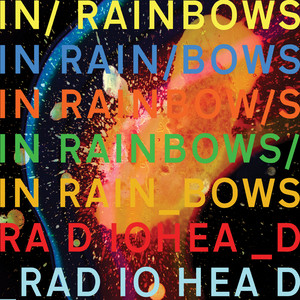
As I've said about other albums that I've reviewed before, I may not be high enough to listen to this. But we might as well tackle *In Rainbows* from Radiohead. Let's open up with some bit-crunched breakbeat with some poorly enunciated, highly nasal lyrics, which actually, looking at the text, won't help you at all. This is not an auspicious start.*15 Step* should probably have taken that sheer drop at the end of a short walk. I hope there's a pier involved. Where do I start with *Bodysnatchers*? On the positive side, the vocals are mixed a little more intensely in, so you can somewhat make them out. Right up until Radiohead shows you how much they love Bit Crunch Distortion and starts cranking that up over everything. The lyrics do paint some sort of coherent image, but all they do is sketch it. I see what they are talking about, but it's meaning without purpose. It is, ironically enough, the shape of rebellion without the substance. If that's what they meant to parody accidentally in their song, then I'm going to give it a huge thumbs up, but I suspect that's not the case. A third of the way into the album, and we're saddled with *Nude*, a track which combines all of the sloppy enunciation of the previous two songs with a lugubrious and lazy rhythm. High, whiny vocals and nothing really to say. So far, it's been a Batan Death March in this album, and I really hope it picks up soon. Finally, something I can kind of enjoy. *Weird Fishes/Arpeggi* is slightly better enunciated. It appears to be a narrative about getting out of a bad relationship and thinking rotting at the bottom of the ocean is better than being in it, which I think we can all empathize with. Sure, it's still full of mush mouth and a little bit of crunch distortion, but instrumentally, it's quite nice. Maybe there's hope. You know, I don't think I've ever said the following words together before, but: if *All I Need* had a little more ambition, it could at least aspire to being goth. It simultaneously wants to represent all the people who have been friendzoned, stalkers, or incels. This is a little bit beyond their ability. Ultimately it just ends up sounding like edgy 14-year-old journal poetry. This is another song where instrumentally it's fine and without the lyrics it might even be great. It took until track six, but Radiohead's singer finally discovered that enunciation is a thing. Unfortunately, the trade-off was he lost the ability to have anything but a monotonal delivery. *Faust Arp* is an interesting song despite itself. The cynic in me wants to interpret it as a criticism of their general fanbase: vapid feathers stuffed in their brain, melted by drugs to soft butter, obsessed with no reason. In fact, the lack of reason. Yeah, so far this is the song I empathize the most with. It couldn't last. I knew it couldn't last. *Reckoner* returns multi-tonality to the singer's voice, though it's really only three tones and they're all screechy and annoying. Lyrics? They're there for noise. Don't try to make any sense of them. They're not even meaningful poetry. They're just words thrown together in a semblance of form. I think I'm starting to see a pattern here. For a moment I thought *House of Cards* was doing something unexpected in making a reference to key parties. For those of you who have never experienced the 70s or consumed any media set in the 70s, that was where you had a party and everybody threw their hotel room key into a bowl. At the end of the night you pulled one at random and went home with them to have unattached sex. Then I realized that *In Rainbows* was released in 2007 and none of the people involved had any clue about key parties, and this is just a relatively straightforward song about cheating on your spouse, which is fine, I guess. There are 300,000 country music songs which follow the same pattern. I'll give it this. It has a coherent theme and a coherent throughline, even if it is painfully repetitive. Instead of the bit crunch distortion, *House of Cards* is completely awash in this soft reverb which takes the edge off of everything—to its detriment. It is coherent and it has a sensible lyrical strand, and that's about all I can say about that. I suppose it had to happen eventually. There's actually a song on this album I actively like: *Jigsaw Falling Into Place* is a nice piece of music. It has a clean acoustic melody guitar backed by some nice solid synth bass. The lyrics are clear and well enunciated. The song is actually about something. It is surprisingly good after we've spent this much time getting here. So it was a long way hiking uphill to get to the penultimate song. We finally fetch up on *Videotape*, which, while the last track may have been the one I liked the most, this is actually the most interesting track on the album. Is the singer-protagonist about to blow his own head off, or are they dying of a terminal disease? It's impossible to say, though the latter would fit that stupidly extended playout, which in a music video or movie would be accompanied with increasingly sad images played off of VHS. Sure, it's way over-reliant on repetition in the middle, but it's an actual, coherent, sensible song, which has been in short supply on this album. Do I like *In Rainbows*? No, it's clearly not for me. In fact, Radiohead is clearly not for me. There are a couple of bright spots, but they take a lot of work to get to. I don't recommend it.
I don't claim to be an expert on late 60s music, which is probably good because it means I'm going to write a sensible review. So let's put *Triangle* on. *Are You Happy?* is a very strange way to kick off an off an album. On the positive side, I immediately know what kind of music I'm listening to. It's late 60s hippie music of the more upbeat sort. Great. I'm positioned in the space. Super. Then we have a song which is really just asking the girl the singer protagonist is interested in if she's happy and how she feels. This is okay. It's not deep, but it's fine. Then we get to that last verse. "Hey, run into shelter when shelter won't conceal. How do you feel?" Wait, what? Is there a nuclear war breaking out? That's a little bit of a dark edge. Then the song ends. The second track takes a trip into the fantastic and the strange, which doesn't actually upset me. *Only Dreaming Now* has a little bit of that gypsy rhythm going on under, and a gypsy in the actual lyrics. Interestingly, this song would make a lot more sense if you replaced the word gypsy with fairy, which then would fit together with her dancing around his head long ago and yet being unable to be with him. Perhaps that's what they meant. I'm starting to get a real Blackmore's Night vibe off these guys. I wasn't expecting a song about a blind guy that feels women's faces and then paints them on canvas, but that's what we have. *Painter of Women* is exactly what it says on the tin. That provides me a little bit of a problem because I would really like to read some sort of unwholesome subtext into this where it's really a metaphor for Bukkake, but honestly, I think it's innocent and relatively wholesome. That's discomforting. It's just a blind guy that paints pictures of women, and everyone loves it. Another upbeat, cheerful, hippie-pop song. *The Keeper of Time* isn't really trying to be particularly sensible, I think. Who is the Keeper of Time? He doesn't seem to be malicious. He does seem to frequently doze off and hide away from everyone. Maybe not necessarily in that order. He's always late, which is a certain dose of irony. Perhaps this is a song about age and how as it creeps up on you, you begin to fall behind the hour, and the singer-protagonist is recognizing that in himself. Honestly, I don't hate it. I can't even make a terrible, tortured metaphor out of it. Well, that was certainly unexpected. *It Won't Get Better* on track five, which would put it at the bottom of the A-side. Doesn't need me to make a terrible tortured metaphor out of it or to really throw down a horrific interpretation because just the lyrics are grim themselves enough. It's literally about what it says on the tin that you should take advantage of the moment you have because, "it won't get better." Enjoy looking at beautiful women because they won't stay beautiful. Your first love will never happen again. Summer will pass. Time itself won't change anything that you want it to. Ladies, stop obsessing over the future. You'll look better if you do. This is some dark shit and I'm here for it, coupled with the relentlessly cheerful upbeat music, the tension never gets resolved. It's fantastic. Coal mining was not on my list of expectations for this album. Yet with *Nine Pound Hammer*, that's exactly what we've got. It's not entirely unthinkable. After all, pop songs about West Virginia aren't entirely unheard of, but I didn't expect it here. The sound of The Beau Brummels do appear to be permanently locked to "cheerful, upbeat hippie music" across the entirety of the A-side. This should be the transition onto the B-side. If nothing else, they know their sound and they are relentless about sticking with it. Remember when I spoke of fairies earlier in the album? *Magic Hollow* just decides to lean into that concept without hesitation, and I think it might be better for it. Not only that, it is the first song on this album which really isn't driven and upbeat in a painfully cheerful way. It's more charming and swirling. Could I see modern pagan girls making sure that this track was in their personal mix album? Oh yeah, absolutely. There's nothing bad or offensive about it. It's just about luring people into the dark with the promise of your magic hollow. How could that possibly go wrong? I'm not saying that the Beau Brummels have a time machine, but they clearly have had inspiration from the future and heard that I was having trouble projecting some sort of nightmare situation on any of their lyrics. So they wrote, *And I've Seen Her*. A woman/girl who lives by herself but is "waiting to be known" and believes that she's too old but is childish inside and "is hoping to be taken from inside her room"? I don't keep anyone locked up in my basement because I'm an overprotective father, but if I were, the daughter I kept locked up in my basement might have a song like this written about her. She will never hear it. It's the mic drop moment as the title track, *Triangle*, lands toward the end of the album, shockingly. After the brooding dark implications of the last song, we've moved on to just a simple celebration that the world is built on a triangle made of loving, sun, and rain. This is the kind of moment the Oxford comma was born for. There are absolutely no deep issues being discussed here. If anything, it's a positive and optimistic view of the fact that with this album, the Beau Brummels went from a quartet to a trio. It's fine. The song is fine. An unexpected pleasure, *The Wolf of Velvet Fortune* plays out like a fairy tale itself, and probably deeply metaphorical on multiple levels. Not necessarily intentionally. This is also very likely the most aggressively constructed song on the album, with the saccharine cheerfulness discarded for a sort of driving drama in the main part of the bridge. Whereas earlier I said that the song vaguely reminded me of Blackmore's Night, this song very well could be a Blackmore's Night song. If you don't listen to it and immediately want a 70s panel van with a wizard and a dragon painted on the side under a big silvery moon, there's something wrong with your soul. I think you need to check to see if you have one. Then we get to the last track on the album, *Old Kentucky Home*. No, not that *Old Kentucky Home*. Whereas a couple of the earlier tracks had a tinge of the bluegrass country about them, in part because of the instrumentality, this leans into it and actually catches a mood that I was entirely unprepared for from this band: it's mean-spirited. It's not ethereal and fairytale. It's not cheerful, chirpy, upbeat hippie-ism. It's just mean-spirited as regards rednecks. After a song earlier that essentially touched on coal mining, I wasn't prepared. I don't think I like it. In fact, I think I actively dislike it. Overall, I didn't hate *Triangle*. Most of it is perfectly serviceable, late 60s Pop rock. Some of it verges over into more fantastic elements, and those I felt a lot of enjoyment with. Musically, it's more than competent. I can definitely see where some people would draw parallels with Bob Dylan, but I would add only if Bob Dylan took some elocution classes and was the kind of guy that would, in the next several years, join a D&D group. That last track, though, that almost put me off the whole thing. Very much a swerve.
Finally, I get to review the work of a musical group which was the subject of a complex, multi-reference joke on Animaniacs. Frankly, I don't see how life can get better. The Band opens up their self-titled album with *Across the Great Divide*, which, while not a certified banger, is definitely cheerful and upbeat, at least in terms of its tone. Of course, if you look at the lyrics, you realize that we're telling a story out of traditional temporal order, beginning with a man standing next to Molly's window in pain. She has a gun in her hand. He's begging her to understand her man. Then we get a sequence of subtly indirect verses which suggests he has been unfaithful, to say the least. It's not a bad way to start things off with deception and murder. Let's see if they can keep up the pace. I'm no great analyst of the subtler portions of the human condition, but *Rag Mama Rag* appears to be a plaintive request by the singer-protagonist to his old lady to get her to shut up long enough to have satisfying sex. Either that or the term "rag" itself is somehow a sideways reference to having sex, and his old lady is out getting it all over town when he would prefer she came home and gave it to him. In fact, it could be the case that both of these analyses are true. There is simply not enough information within the text to determine the proper answer. Nice and upbeat though. Track three, *The Night They Drove Old Dixie Down*, is one of those songs that they inject straight into your brain when you're born south of the Mason-Dixon. I knew the text of this song before I was ten. A lament in the wake of the American Civil War from the perspective of a southern farmer whose brother went off to fight the war and came back in a pine box. You know what? This track actually gets a big thumbs up from me. It's coherent, well enunciated, musically interesting, and classically educated. If I wanted to assemble a song with Appalachian folk overtones made entirely of oblique references which don't really make sense together, but when taken as a whole create a general sense of being glad for the simple fact of life, it would probably sound a lot like *When You Awake*. Though, given my inclinations, it probably would cohere into a more cohesive narrative. Not to say this is bad, but it's not going out of its way to be more than a tone poem. Does that suffice? I suppose it does. Track five gives us another song that has seen massive amounts of play since 1969. That's *Up on Cripple Creek*. Delightfully upbeat, cheerful, energetic, positively laudatory when it comes to talking about the subject of the singer-protagonist's affection, Bessie, who apparently lives in Lake Charles, Louisiana, and who is an absolutely peach of a woman. She will patch his wounds when he gets shot. She speaks up if someone talks badly about him, has no sense of financial responsibility, and strong feelings about Spike Jonze. But, pray tell, why is the protagonist not with her and in fact up the Mississippi? Why does he have to "call up his big mama and tell her he'll be rolling in?" What's this living off the road thing? Is he a migrant worker who has gone upriver for employment and is living in a boarding house but wishes he could go home to his woman? Or is he a philandering bastard? There is no way to know. *Whispering Pines* drops the affected Appalachian folk of the preceding songs and instead goes with a much more urban, organ-focused lament. But what is it lamenting? Answer unclear. Ask again later. There is a lot of mood set, but not a lot of situation conveyed. I could certainly imagine that it's a song being sung to the departed memory of the singer's significant other, as he stares out the window at night in his lonely room down by the sea, feeling bereft of companionship. But it could be the other way around, and he is in fact the ghost watching the place he used to live and unable to see the woman with whom he shared it. There's definitely a mood here, but it's bereft of a mover. That brings us to *Jemima Surrender*, and I have a prepared, long-standing response to songs of this nature: "I think this song is about sex!" In fact, it's entirely about trying to convince Jemima to get filthy on the floor with him and the cocky expectation that she's absolutely going to give in because he's just that awesome. Now, seen through the lens of perversity, twisted decadence, and obscenity, this could certainly be a song from a stalker/rapist to a potential victim, but only at a stretch. Besides, there are a couple of lines in the middle which really jump out: "There's a bird on my head and his mouth won't talk. You know he laughs just like a goose, but he looks like a hawk." What the hell does that mean? How does that fit in with the rest of the song? This is going to trouble me for years. We go up to the mountains of Virginia, at least in a notional sense, with *Rockin' Chair*. Though I suspect the actual song takes place somewhere near Norfolk. On its surface, this is a gentle pastoral song about a man who is done with the sea and ready to return home to the mountains of his youth with his best friend Willie. Unfortunately, it's subtly implied that this will in fact not his fate be, but instead he'll die shipwrecked on a reef. The boat rocking gently, reminding him of the rocking chair at home, which he will never see again, just as he will never see his best friend Willie. You know what, I kind of like this one. We're in the middle of the B-side now with *Look Out Cleveland*. And if ever there was a song that made me want to find the songwriter and grab him by the lapels and shake him until he explained what he meant, this is one of those songs. Ostensibly, it's a song about Cleveland being under threat by a storm and that the danger is real. There's nothing that will save you, not your money or your position or your efforts. Also, the warning is going out to Houston for some reason. Word on the street is that this is a song about looming social disorder and enthusiasm for change. I don't see that. It's certainly possible, but if you're going to use the storm as a metaphor for the gathering forces of public will, I feel like it's probably going to be more useful to talk about things other than, "knocking a woman right out of her shoe." Just the one shoe. I don't know, man. This is just as likely to be about getting trapped in a hotel while touring somewhere between Houston and Cleveland, Texas. It's got a good beat and you can dance to it, but sense is not something it's doing. *Jawbone* strikes me as a whole lot of fun to perform live before an audience. But it just doesn't quite work recorded on an album. Subject matter-wise, it's okay. It's about a three-time loser who is an unrepentant thief, but apparently not very good at it because he just can't catch a break. Not only can he not pick a good partner for an inside man to pull off a heist, because that guy is going to be a rat, but the most irritating thing that he's seen is that the wanted poster in the post office for him isn't big enough. Can I see the fun in this song? Absolutely. It would probably be better if they could maintain one style of music all the way through it. Like I said, fun to perform live. Not so great for the album. We wash up on the shores of the *Unfaithful Servant*, and I'm not really sure what to say about this. It's an interesting piece of work. Musically, it's much more jazz than the Appalachian folk or even honky tonk vibe we've been getting before. Lyrically, it's a bit of a murk, suggesting rather than saying outright what's actually going on or even when it occurs. Different interviews with Robbie Robertson suggest different things about what might be happening, but nothing certain or even consistent with one another. What we do know is the tone, which is regretful rather than angry. It doesn't even hold the same point of view for the character of the singer during the entire run. Some people consider this their favorite song, not just on the album but from The Band. Not so much for me. Great musicianship, but I want a little more meat. I don't think I've ever been so conflicted by a song in the last six months. *King Harvest* is all over the place. On the one hand, it provides a singular, coherent narrative with a consistent narrator who is telling you about his personal experience, and I appreciate that. We also have an extremely R&B-influenced melody and bassline. It knows what it is, it knows how to achieve it, and it is out there doing its thing. Again, solid. I like it. But then we actually look at the lyrics, listening to them, and now I'm deeply confused. Okay, farming, that's a rough life. I get it. Harvest is huge. It's a big deal. Then we get to being proud of being part of a union and glad to pay the dues. That's not a take we hear very often, especially when it comes to agricultural ownership. Fine. The story appears that it wants to carry on from that, then goes into how things got really bad last year. But then a guy from the union showed up and said, "If you sign on, your hard times are over, and if they don't offer you what you want, you just go on strike." At which point, my eyebrow just about crawled over the top of my head, because when it comes to farming, if you don't work, you literally don't eat. Not just immediately, but for the year. Perhaps not the best strategy for long-term success. But the singer-protagonist appears to be pretty enthusiastic about it. Perhaps he's not all that bright. The 1969 album from The Band, *The Band*, is overall a pretty good experience. Parts of it are groovy. A couple of bits are extremely well known and for good reason. But then there's the rest of it. There are some high points, but from a consistency point of view, it's just not hitting. Clearly talented musicians, but not necessarily great storytellers. As a whole, the album just can't stay in the groove.
This one is supposed to be a very challenging listen, so we'll see how it goes. I might not actually do a track-by-track commentary. I have to say that the suggested classification of "noise rock" is not promising, especially since *Wonderful Rainbow* is referred to as Lightning Bolt's most accessible album. We'll see. Right up front. First track. *Hello Morning*. I can see how this is going to go. It's going to go with pain and suffering and regret. A pile of electric guitars thrown into a random stack with some kick drum, large amounts of distortion and feedback. Oh yeah, 56 seconds of that is exactly what I needed to get into the right headspace. Thanks guys. I appreciate it. Track Two, *Assassins*. I have never wanted to pull an Oedipus Rex on myself, except using the ears rather than the eyes, more than I do right now. At least I don't have to complain about the lyrics, because while there is some incomprehensible stuff shouted through a really bad loudspeaker in the back, there's absolutely no chance of making out what it actually is saying. Normally, this is where I would point to some excellent instrumentalist work, but the only person putting in any effort at this point is the drummer, who is just going off and doing his own thing, which in fairness is kind of what I wish I could do right now. The rest is repetitive upwards arpeggio, and not a very good one. We've made it all the way out to *Dracula Mountain*, and I have to ask, what the fuck is this shit? I think I've figured out their play, and I'm not excited about going through another seven tracks of it. Basically, they grab a relatively simplistic melody, play it over and over and over and over and over with a gross amount of distortion on it. Maybe at some point, they drop out the background and have the guitar riff on that for about five seconds, and then go back to just layering completely messy garbage while playing the same riff over and over and over and over and over again. That's it. That's their compositional style. Oh yes, and have somebody incoherently yelling into a loudspeaker, which itself is ridiculously distorted at some point. If that's the entirety of this album, the music industry and I are going to have some words. We've fetched up at the bottom of *Two Towers*, and I'm not sure how much more of this I can take. It's seriously seven minutes and nine seconds of the band playing two different riffs over and over again, only speeding up a bit in the last couple of minutes of the song. There was a good four-second section about 40 seconds in that I thought they were going to do something interesting and establish a baseline. I was curious as to where they were going, and then they went the exact same place over and over and over again. I'm not pretentious enough to say that this shouldn't be called music, but I am pretentious enough to say that if you paid money for this experience, perhaps hiring a dominatrix would be more satisfying for your masochistic urges. *On Fire* almost is a song. It does have some dynamism, which none of the preceding four tracks had even a hint of, so it has that going for it. There's a little bit of progression. There's a little bit of something adjacent to a melody. It's not a real melody, but it can see one from where it's standing. Lightning Bolt can't maintain it, and they revert to their old ways three quarters of the way through a 4-minute, 43-second song. That's disappointing performance no matter what you're doing. The thing that pisses me off here is I can see flashes of near competency for a couple of chord changes or 15 seconds of drumming, but it's like they catch themselves and have to fuck it up aggressively to keep their street cred. It's agonizing. At this point, I wish I could make incomprehensible noises through a loudspeaker into this review, just like the lead singer of Lightning Bolt, because *Crown of Storms* engenders that kind of response. Great, awesome title. You had my attention. It almost has some dynamism, like *On Fire*. Somewhere in the middle it shifts a bit and we get incomprehensible drunken loudspeaker noises being used as more of a tone wash and melodic component, which I didn't expect, but that doesn't make it good. I'm pretty sure that we are just listening to the guitarist run through his "Learn to Play Guitar in 30 Days" exercises during the recording. That someone got paid during any part of the production of this album so far should be a violation of the United Nations directive against inhumane treatment. I have a sad admission to make. The rest of this album has been so absolutely terrible that *Longstockings* was my favorite track. It starts out pretty decent. It's a short riff, but it'll work. We've got a lot of distortion. It's not cycling quite as hard, and the drums come in at an appropriate time to help shake things up. Make things lively. Even the incoherent mumbling/ranting on the loudhailer is almost charming, given the relative cleanness of the rest of the song. I was even starting to get into it, but then they hit the two-thirds of the way mark, and it literally descends into ridiculous cacophony with all the instruments just being beaten and the vocalist screaming incoherently. Then finally it all collapses into nothing but screeching feedback at the end. It's like they showed that they could perform music, and then just when you took a step closer to the stage to listen to it, they whipped out their dicks and pissed right in your face, which may have been their intention in putting this song together. I'm starting to think it might have been. I hate this. I hate it here. Finally, we get to the title drop of the album *Wonderful Rainbow*. You know what? This doesn't entirely suck. Is it repetitive and uncreative? Oh yeah, absolutely. Is it still sounding like the guitarist is going through his pick exercises and not actually trying to play music? Absolutely, no question. Is the lyricist making nonsensical baby noises into the loudspeaker in the background? Perversely, yes. But the guitar isn't heavily distorted. It's actually a reasonably clean acoustic, and there's this sort of dreamy wash reverb happening on the guitar part. Honestly, get rid of the vocalist, probably by setting them on fire and laughing as they burn to death, and this might be a good fragment of a song. A seed, a starting place. We'll get back to this idea later. Is it good? Oh, fuck no. Is it good for this album? It's the best we've got so far. I get it. *30,000 Monkies*. I get it. You are literally trying to embody the idea that 30,000 monkeys banging on 3,000 typewriters for an infinite amount of time would turn out the entire works of Shakespeare and every other piece of creative art ever created in the history of mankind, seen from the perspective of the end of the universe and heat death. That's exactly what you manifested by just banging on your instruments with no rhyme or reason for three minutes and 50 seconds. An endless cacophony that's only punctuated in the middle by an accidental return to the guitarist not being able to be that fully incoherent for that long and returning to his pick exercises. Everyone involved with this should not just be painfully executed, but we should find out their producers and torture them until we find out where they hid the money. Their screams would still be better than this track. You know what? I was wrong. *Duel in the Deep* is my favorite track off of this album, mainly because I don't entirely hate it. Does it do exactly the same thing as every other track? Sure. The guitarist is playing the same riff over and over again. They've got a wash of distortion and reverb. It's mercifully mostly free from shouting through the loudhailer, so it's got that going for it. The thing that sets it apart from the other tracks is that it feels like it's going somewhere. It doesn't actually; it's an illusion. But because of the way that the background elements are washing through, it feels like there's a certain amount of kinesis, that there is some dynamism, that things are changing and evolving. It's not real. The song goes on for way longer than it has to, and that's only partly because the last minute and a half is just distortion and screaming feedback. Look, I love punk music. I've seen punk bands live. I've listened to a ton of punk bands, and the one thing they have in common is that even though they are totally about the DIY and instrumentality is not the first thing on their minds, and that they love screaming into a microphone, they would look down on Lightning Bolt as not good enough musicians to be a punk band. Not even that annoying high school punk band that was trying so hard to be edgy in mom's garage. Those guys would turn their nose in the air at these sad, pathetic excuses for musicians. The most frustrating thing about this album is that it feels as though each of the tracks could have been a real song. They are unfinished, incomplete, incoherent because someone didn't spend the time to make them whole. They needed editing, an actual melody, some crafting of the mix. You know, everything that shows that you care about your work and you want people to enjoy it. I won't go so far as to say this is anti-music, but I can say that the band members all need to be beaten severely until they can get themselves properly composed. Also, give that drummer a real job with a prog rock band, because I think he could handle it. He just needs to have somebody demand more of him. Jesus Christ, this was a trial.
Come with me now to the ancient days of 1966, where Simon and Garfunkel presents their third studio album, *Parsley, Sage, Rosemary, and Thyme*. Despite sounding more like a decent basis for a French recipe, it remains an album. Let's check it out. Right up front, track one, loud and clear. We have the classic track from Simon and Garfunkel, *Scarborough Fair / Canticle*, which gets into the title drop of the album right up front. The second line, ambitious indeed. Then it proceeds to be a tinkling, acoustic, near-round of a song with intricate lyrics which are a hybrid of English and Scots folk music (Scarborough Fair is an entire series of songs) and an entirely different song in the answer part of the call and answer. A song about war and its pointlessness. You know what? I like this one. Am I generally all about the twee folk music? No, but sometimes a man just has to accept the green hills of England and washing graves with silvery tears. Now, if you excuse me, I'm going to go buy a panel van and paint a wizard and a dragon on the side. We're sticking with the acoustic strings, but throwing in a little bongo for track two, *Patterns*, which in the modern vernacular might be expressed as, "the Black Pilled Song." The singer-protagonist is lying in the darkness, staring at the wall, looking at the shadow of the trees beyond his window, falling on the wallpaper. In that tangled web of shades and shifting leaves, he sees a reflection of his life, something he can't control, something beyond him. "Like a rat in a maze, the path before me lies and the pattern never alters until the rat dies." There is no way for him to escape it, nothing that he can do to change it. It is the very model of a modern existential crisis, which is why I'm not that crazy about it. Beautifully technically executed, wonderfully sung. But damn it, that's way too much weakness in one place for me to get behind. *Cloudy* may be the song that I'm just not flower child enough to vibe with, even though I understand it and appreciate elements. Again, masterfully, technically executed, beautiful musicianship, excellent singing. Absolutely no complaints about that. It's light, it's airy, it reflects what it sings about. From Tolstoy to Tinkerbell, down from Berkeley to Carmel. How often do you hear songs actually make a reference to Tolstoy? Berkeley slightly more often. Carmel almost never. This was back in the days when hitchhiking 100 miles was maybe not perfectly safe, but certainly a lot better experience than it is today. I don't think either Simon or Garfunkel worried about waking up with a missing kidney. An STD, sure, but not a missing kidney. A song about drifting without aim or care, which to some people I'm sure sounds kind of amazing, but to me it sounds pointless, which is the point. Track four is a third of the way through the album, and we have another certified banger, which is again one of the most popular songs of the late 60s and one that you would recognize even if you are one of those filthy Gen Zs. *Homeward Bound* is one of those kinds of songs that every popular band has to make at least one of in their entire legacy. It's a song about touring, about being on the road and how you wish that you weren't. How you wish you were at home with your girlfriend, your wife, your lover, perhaps even your dog, listening to somebody else's music and not staring out at strangers' faces. "But all my words come back to me in shades of mediocrity like emptiness and harmony. I need someone to comfort me." I think every creative endeavor leaves you feeling like that sooner or later when it or if it becomes your livelihood. Everything you do seems like it's not as good as the best you've ever done, and maybe you'll never see those days again. You just want to go home and stop, put it all down. No, don't worry. That was just a speck of dust in my eye. We're fine. Holy crap, I have never heard the *Big Bright Green Pleasure Machine* before. Seriously, where has this song been hiding all of my life? It is a direct criticism of consumerism! It would be just as relevant aired on the radio today, if anyone actually listened to the radio, as it was in 1966. It probably will be relevant until the end of time. Because if there's one thing that we know, it's that human beings are always looking for a way to get out from under, to eliminate their pain, to turn off their brain, to get respect, to drop their worries, to avoid the cruel blows of outrageous fate. That's what this song is about, selling somebody on the way out. Just buy it. Hurry up and order one. The limited supply is very nearly gone. I love this thing. What is the big bright green pleasure machine? No idea. It doesn't matter what it is. You want one because it'll save you from yourself. Personally, I think it's a big green suicide booth. Just imagine the ad for it in the Sears and Roebuck catalog. If you've ever seen a Sears and Roebuck catalog, which you may not. The *59th Street Bridge Song* is a song that I didn't know I knew. The moment I heard the beginnings of the melody, it locked in. If it had been called "Feeling Groovy," I would have instantly recognized what it was. You know what? I don't hate it. This is a song about nothing, a very particular kind of nothing. The kind of nothing which is just having a good morning, being out in the sun, having a good time, being happy with life. No concerns, no worries, nothing to do, nothing to be responsible for. Maybe plopping your ass down in the hammock, staring up at the sky, smiling with your hands behind your head, looking forward to a chill day. That's it. That's the whole song. That's all it's about. You would think I would find it reprehensible, but it's so guileless in its joy that I can do nothing but sing along and feel a little bit of it as well. No, this is okay. Welcome to mood whiplash. Your host is *The Dangling Conversation*. A song about a relationship gone cold in a house that's not a home with a partner that you no longer connect with, but make polite, meaningless conversation which sounds like it should have meaning, but really is just going through the motions of pretension to meaningfulness. "Can analysis be worthwhile? Is the theater really dead?" High-minded discussions of cultural relevancy, none of which matter. One partner reads Emily Dickinson and the other Robert Frost, but the books don't matter to them either. Their bookmarks only mark the time they've lost. It's a cold, sterile life with a partner that is only shadow. If you were looking for upbeat, happy, cheerful music, this is not it. It is, however, the first track that has a fairly serious amount of orchestration with violins and cymbals and other swelling instrumentality. After some of the very pared down songs earlier on the album, it's interesting that the dangling conversation is entirely superficial, decorated by high-minded works, but ultimately hollow. Good job, Simon and Garfunkel. You're knocking it out of the park. In a weird way, *Flowers That Never Bend with the Rainfall* is not quite a mirror of *Patterns*. It's interesting to me that as far as I can tell, *Patterns* is the second track on the album and *Flowers That Never Bend with the Rainfall* is track eight. If we assume both sides have the same number of tracks, this would make *Flowers* the second track on the B-side. Where *Patterns* is absolutely the black-pilled song, *Flowers* is also quite black-pilled but has a different response. Instead of entirely being resigned to the darkness, *Flowers* decides to simply pretend the pattern doesn't exist, to "continue to pretend my life will never end and flowers never bend with the rainfall." However, the singer-protagonist is not sure that the dark and small reflection in the mirror is his own because he's blinded by the light of God in truth and righteousness, unable to see what is literally right in front of him. He can't see the pattern, though he knows the outcome. It's another resignation to fate rather than struggling against it. But it's a resignation with the knowledge that the end has already been chosen by his deliberate pretense. Again, another beautifully technically rendered song with a message that rubs me the wrong way. I know what I am. And then there's *A Single Desultory Philippic*, which may be the most in-joke song I have heard in the last six months, and I listen to Steel Panther regularly. If you don't know anything about the 60s, the historical context, or the political players, then most of this song won't make any sense to you at all. You won't know who Maxwell Taylor is or Norman Mailer. You'll probably have heard of the Rolling Stones and the Beatles, and if you're educated, likely Ayn Rand. You might even realize that the middle of the song is a straight up multi-genre parody of Bob Dylan and The Beatles, but you might not know why. There's two references to Mick Jagger in here, and it's hilarious because Simon and Garfunkel suggest they're tired of Mick Jagger in 1966. I'm pretty sure that man was just on tour last year (2025). This is beautiful. It's well constructed. It's beautifully performed. It makes all the coolest references. I dig it. Play it on repeat. *For Emily, Whenever I May Find Her* is perhaps the simplest song on the album. It can be summed up by saying, "Man, I really love my girl and I am grateful that I get to wake up next to her after dreaming about her." That's it. That's the whole song. That is the entirety of the message. That is the entire architecture of the song itself. It is the entire encapsulation of the meaning. There is no hidden secret. There is no subtlety to be revealed. There's no analysis that will turn up anything within the text of the song itself. It's plain, it's simple, it's straightforward—but then there's the title. "Whenever I may find her" is an interesting way to put that. That implies that the songwriter hasn't found Emily, that the girl he's so grateful for is not in his life, at least not yet. The swerve is not in the song itself, but in the title. It's kind of brilliant. Once you see it, you can't unsee it. Once you think it, you can't unthink it. What of *A Poem on the Underground Wall*? It's not necessarily immediately obvious what it's about. It's deliberately obfuscated in complicated language, in indirect expression. It provides a high-minded presentation of a low-minded event. Basically, it's about a guy writing a rude word on an ad in the subway and thinking that he's done something. He didn't even spray paint it. He wrote it with a crayon. He ducks back into a niche when the subway hits the stop and opens its doors because he doesn't want to be seen. It pulls out. He scrawls something on an ad and runs out of the station. "His heart is laughing, screaming, pounding." There is a certain art to expressing the utterly mundane in the highest of poetic fancy. It may be one of my favorite expressions of irony as a methodology. My problem is I can imagine a lot of rude words which are comprised of four letters, and I want to know which one he had in mind. The album closes with *7 O'Clock News / Silent Night*, which is exactly what it says on the tin. It is simultaneously a lovely, gentle performance of Silent Night, the centerpiece of Christmas music. You know it, you love it, you can probably sing it by heart with no musical accompaniment. In this case, it's set against someone using their broadcaster voice to essentially read off the top stories of the day, which center around Congress being unable to pass an anti-discrimination bill, Lenny Bruce dying of an overdose, Martin Luther King saying that he's going to attend an open housing march in the Chicago suburb of Cicero. Richard Speck going on trial for the murder of nine nurses in Chicago and Richard Nixon talking about how Vietnam will last another five years unless it actually sees some support. This is point and counterpoint. Contrast by presentation. Frankly, I think it's a little heavy-handed compared to the rest of the album, which has either been simple messages or indirectly delivered things. This is raw and extra ironic in retrospect, in ways that I'm sure that no one at the time could imagine. It's an attempt at direct messaging, which I think is misplaced, though I am sure there are people who absolutely adore it. How do I feel about *Parsley, Sage, Rosemary and Thyme*? Well, aside from the fact that it is delicious, as an album, I like it quite a lot. By and large, it doesn't try to ram things down your throat. It's well performed musically, professionally mixed, beautifully orchestrated, and well written. Even when I'm not crazy about the songs, I recognize what they're trying to do and how they're trying to perform it. Is this a hippie album? Absolutely. No question. But it's not the dirty, annoying, politically vapid hippie sort of thing. It's people having a good time in the park and walking up to you and offering you a daisy, not because they're trying to convince you of anything or convey a message other than, "Hey man, it's a beautiful day, and this is a beautiful thing. I want you to be part of it." I'm cool with that, just like I'm cool with this album. We can be friends.
I have to admit, I don't have a whole lot of hope for an album that was released on Valentine's Day. Any album released on Valentine's Day 2011 at least gives us a chance for it to be interesting, however. Unfortunately, it's still PJ Harvey. We'll go ahead and get the mic drop/title drop out of the way with *Let England Shake*, which is a song that leaves me with mixed feelings. Keep in mind this is 2011, written in 2010. Sixteen years in the rearview mirror at this point. Maybe it's a little prophetic to say, "I fear our blood won't rise again," given the current unpleasantness in the UK. I'm going to give it a half point for that. But in terms of being a rallying cry for political activism, no matter what that activism is, well, it's no Sex Pistols. This isn't helped by the sing-song monotone of PJ Harvey, which sometimes abandons the idea of scansion and meter for something that would be more at home in a prog rock bassline. As a way to start an album, not really doing it. Normally, opening a song with the line "Goddamn Europeans" would be a sure path to at least getting half a point. But then the rest of the song happens and I have to look askance, especially in the wake of the first track which earned half a point, which I am now going to claw back. See, here's the thing: I don't think PJ Harvey actually likes England in *The Last Living Rose*, which is a bit of a problem, honestly. I'd kind of like to get PJ's feelings on the current state of old Blighty, except I know that it would leave me irritated. Honestly, if you offered me the opportunity to have good old damp, filthy London with its battered books and fog rolling down behind the mountains and on the graveyards, then I'm going to tell you that sounds preferable to whatever PJ is trying to sell me. Unfortunately for her, she completely fails to follow up on saying what she actually wants. Instead, in the last verse, instead going for just some nature imagery. Sweetheart, you lined up on a kick and then you walked off the other direction. Failure. If you just imagine me rubbing at my face with an exhausted look, you'll probably just sum up my response to *The Glorious Land*. Now I see why it was such a well-rewarded album. It is full of shallow, politically leftist, mindless mouth noises. Gotcha. Everything's clear. Thumbs up. Oh no, war is bad, even though it preserved our life and allowed us to extend our power in ways that made life better for other people. God knows tanks and infantry are terrible things, and I'm sure that the world would be better if we had none. What is the glorious fruit of our land? Its fruit is deformed children. Well, PJ, you are one of them, so I suppose that brain damage does probably count. But let's set aside the vapid lyrics for a moment and talk about how this song is just structured for shit. You set up the opening with two quatrains, which are basically call and response. Then you have "Oh England, Oh America," followed by one quatrain, but not a second one, which would mimic and mirror the structure of the first block. It's like two lines got cut out of the second verse and were never replaced. But then you get two copies of the chorus, and then we go back to two quatrains. The second one is in fact deformed without actually putting together the last few lines. Basically, this is stupid and it reads like a first draft. What the hell? It really doesn't get any better from here, does it? The words that maketh murder is shallow, and we've returned to the wide-eyed, mindless sing-song monotone from PJ. We get essentially four verses of things that are bad about war and sort of like saying, "I like puppies," saying, "War is kind of bad," is the safest sort of mindless thing you can say. But you've also got this repeated bridge that just gets ground into the floor like beating a dead horse. "These are the words that maketh murder." Sure, all right, fine. What words? This goes on for some time, as it were, and leaves us with, again, another highly repetitious chanting of, "What if I take my problem to the United Nations?" Are those the words that maketh murder? I'm willing to believe and accept that they are, given the UN's actual success rate on intervening in damn near everything. It's a wholly incompetent international organization, heavily backed by England, perhaps unsurprisingly. If that's what it's trying to say, I'm willing to agree, but I feel like I want to argue just because the argument is so stupid. PJ, don't make me hate the people that I agree with. This would normally be another situation in which I offered at least a half point to someone who did a modicum of research about World War I and penned a song about the Gallipoli Campaign from 1915. That's when the fighting for Bolton's Ridge took place during the landing at Anzac Cove. See, these things have history and meaning. Not that you would actually learn that from listening to *All and Everyone*. Bolton's Ridge had the Australian Third Brigade push inland to secure Bolton's Ridge, went up against the Ottoman Seventh Company, and got mired down right there on top of it. It became a serious part of the frontline trenches and held by various Anzac units until they were finally evacuated in December of 1915. What was the point, you might ask? The Allies wanted to break the stalemate on the Western Front, knock the Ottoman Empire out of World War I and open a sea route to support Russia. Just for the record, I want to make sure you know the Ottomans were the bad guys here, and if you need to know why, do a little basic research. Seriously, I can't do your high school teacher's job all the time. Essentially though, while the Anzacs weren't able to push all the way through and achieve their aims, it did buy time and cost the Ottomans resources, which led to them signing an armistice with the Allies in late 1918. However, at no point, I feel comfortable saying, did anyone sing, "Death to all and everyone." This is just PJ going back to the vapid, "War is bad and ugly and I hate it" concept, except with a thin veneer of having looked in a book at least once. Okay, maybe PJ Harvey has looked into a book at least twice because we get the second song in a row about Gallipoli with *On Battleship Hill*, or at least a specific location during the 1915 Battle of Chunuk Bair in Turkey. It's the most surface-level empty reference that you can possibly make, of course, because that's what we expect of this at this point. The refrain, "cruel nature has won again," is obviously supposed to talk about both the erosive nature of actual physical processes in the world, as well as the cruel nature of man and his hunger for death and warfare—but I have to ask, if you believe that it is part of the cruel nature of man to kill and be killed, then what's the point of complaining about it? You make peace with it and figure out how to use it in your favor. You don't sit and whine while looking at the places where other better men have died for you and to try and protect you, even if their efforts were in vain. This is some hollow bullshit. When it comes to the song *England*, I'm going to have to quote another very popular English writer and say, "Methinks the lady doth protest too much," especially in the context of a pile of discordant wailing that triggers all of the responses to a crying baby, thanks to the grating nasal delivery and vocal fry. We get it, PJ. You think the land of your birth is a horrific, nasty place which leaves you sadness and there's nothing you can do about it, and it's bitter in your mouth, and the people are stagnated. Frankly, if it wasn't for the rest of the songs of this album I've experienced so far, I would think that this might have a hope of leading to an epiphany of realization. But no, it's just screeching at the sky. Great. *In the Dark Places*. Oh, lovely. How about what this album needs is yet another, "war is bad" quote, vapid, repetitive, monotonic slag off of a song. That's exactly what this album needs. Yes, young men march off to war, and some of them die and don't come back, and some of them do come back. Yes, that's how it works. That's how it's always worked and how it will always work. But you don't get to be a part of England's green and rolling hills, then say, "But not one man and not one woman has revealed the secrets of this world as a result of war." England's going to war ended slavery in a very literal sense. You didn't think Africans and Arabs stopped trading slaves because they were asked nicely, did you? It was because of going to war that India could become a world power, even if part of going to that war ended up with them throwing off the yoke of English rule. This anti-war sentiment always irks me because as a modern human being who lives in the West and takes advantage of all of the goodness it allows, including selling millions of albums using the internet and having the ability to engage in self-determination, all of those things were a direct result or a direct byproduct of war. Everything good in your existence is the result of war, including your very existence. But PJ is starting to make me wonder if it was worth it if millions of years of evolution and hundreds of thousands of years of warfare led to PJ Harvey. This is an all anti-war album, isn't it? This is the manifestation of the weakest kind of thinking in the modern age. *Bitter Branches* is not helping matters, not just because it's another wailing song for screaming at the sky about the injustice of existence and the necessity to remain within it. Oh, no, no, no. The real crime here is that it's two minutes and 30 seconds of words that would take about 15 seconds to say. The musical accompaniment isn't worth the additional cognitive overhead. "Oh no, young men go off to war and some of them die. Women hardest hit." That's the song in a nutshell. It pains me that I have three songs left on this album to make it through. I'd love to wave goodbye, thanks. Yeah, we're still here in WWI. Thanks, *Hanging in the Wire*. What we needed on this album was a simplistic melody tied to lyrics about the perspective of a corpse hanging in barbed wire as the battle continues going on elsewhere. I don't know what you want from me here. As a mood piece, it's not even really moody. The melody is too upbeat for that. It's not cheerful, but it's not even a lament. It's like a tone poem, but the tone is gray. Not even an interesting gray, not slate or ruddy, it's just 50% gray, with a melody that sounds like somebody is having a good time somewhere else. I can't say this is where the album goes off the rails, because frankly, it was never on the rails to begin with. But at least it had something it wanted to say and was saying it, however poorly and ill-conceived. But "Written on the Forehead" just decides to step off and go haring off into the weeds. What it wants to do is paint a picture of what the civilian population and refugees from war experience, and it deliberately chooses to frame and couch that imagery in that of the Middle East. Sure, not a problem. We've got plenty of war over there for the last 6,000 years or so. The core idea here seems to be the one that Harvey can't get beyond: "War is bad and there are terrible things." But then there's the choice of sample she chooses to leverage for the background, which is from The Observers' 1970s reggae classic *Blood and Fire*. Now, I love reggae, which may come as a surprise, but I had never heard of this song. However, now I have to go look it up because the bit that she sampled was, quote, "let it burn, let it burn, let it burn, burn, burn, blood, blood, blood, blood and fire!" Look, one of the things that you should never do in the course of making media you want people to listen to is remind them of something better than what you've created that they could be doing instead. I want to go listen to that album and I'm going to do it after I'm done here. What I'm saying is that perhaps ending your anti-war song with the literal chant of "let it burn, let it burn, let it burn, burn, burn" may not be accomplishing what you wanted in the grander scheme. The final song on this wretched album, *The Color of the Earth*, actually helped me figure out what it is that bothers me about a lot of these songs on a very elemental and structural level. They sound like children's songs. They have children's song melodies, simple, structured for a tiny mind. Unambitious. When they do strive for something broader than that, it turns into a discordant jangle. This song is no different. In fact, it epitomizes all the childishness found elsewhere. We're back to Gallipoli, talking about how a guy's buddy died out in the darkness and that he still thinks about him 20 years later. The color of the earth was dull and browny red, the color of blood. That's it. That's all it has to say. Again, "war is bad." That's the full depth that we have on display here. I have heard a lot of anti-war albums and songs over the decades. A lot of them are tedious and wretched and short-sighted. At least most of them involved a call to action, an encouragement of the listener to higher aspirations, a suggestion that they do something to help change the world in which we live, to make it a better place free of war, even if that is an impossibility. The suggestion that even the effort improves the world for everyone. Not this album. No, this album is just sitting in a corner, rocking back and forth, crying, looking at a World War I picture book written for eight-year-olds. That's it. That's the whole thing. Perhaps that's why it's so frustrating and irritating. It could have been something, it could have said something, it could have wanted something, but it didn't. It just didn't. No, I didn't like it, sir. Not one bit.
It's time for a hard flashback to 1983 with the Finnish rock band Hanoi Rocks and *Back to Mystery City*. I've been looking forward to something like that for the last several reviews. A little glam rock, a little hair metal. This promises to have some uplifting moments. Let's get stuck in. One of the things I love about hair bands is that they often show ridiculously weird musical knowledge, particularly in the first track, *Strange Boys Play Weird Openings*, which you might think of as throwaway or introductory or an instrumental lead-in. But really, they're often just musical jokes, typically commenting on historical music or the news of the day in one form or another. Here we get a medieval madrigal / Greensleeves-esque noodling around on a guitar along with a badly played flute, which leads into a heartbeat. I think it's funny. It's the kind of thing you only laugh at if you get the joke, which is the best kind of joke. Then we launch into a weirdly hybrid banger, *Malibu Beach Nightmare*, which combines one of the many hair metal tropes: going down to the beach and meeting girls with getting a sexually transmitted disease and then hooking up with a skinhead. Now we're not actually informed how the skinhead treats him, but she is described as a Brixton Pearl. You be the judge of irony there. If, however, the sweet, sweet girl, the sea pearl that made him burn, that naughty girl, is in fact the same girl who is a skinhead, well, he ignored the red flags and it's his fault. The middle of this song is a 50s guitar throwback thing, which works interestingly, but not poorly with the rest of the experience. The song is fun and it's a good way to kick off an album. I don't want to suggest that rock bands in general can pretty much all be counted on to make a song that is about how they take drugs and play music and they enjoy the lifestyle. But *Mental Beat* is pretty much a song about Hanoi Rocks taking a bunch of amphetamines, getting really high. Then having those meth jitters where you can't seem to not do something. "Hanoi Rocks has got the beat. Boy, they never seem to sleep." Yeah, guys, I'll believe that. If this song has a problem, it's that it goes on a bit too long. At five minutes and three seconds, it could have lost a couple of the bridges and a couple of minutes and still have been very on point. Get in, get out, do the business. Still not bad. *Tooting Bec Weck* would be a cautionary tale if the band had more critical insight and less pride. But, you know, it's a rock band. You don't expect to use them as iconic guides to how to live life well. No, you expect them to tell you how to live life like a dissolute, destitute, down-on-your-luck scumbag, taking drugs in the worst part of town. Which brings us to what Tooting Bec was, or more accurately, is: a particular borough of London. It does have the largest open-air pool in the UK, so it's got that going for it, but it was also the bad part of town in the 80s when Hanoi Rocks was living there. What did they write a song about? Their scummy, run-down, piece of shit neighborhood and how they were scummy, run-down pieces of shit taking drugs on a regular basis. Like I said, don't take your life cues from a rock band. Like the previous track, the biggest problem with this one is that it goes on too long: six minutes and 12 seconds. It could have been cut down to five and lost nothing of substance. Look, I know some of you think that *Until I Get You* is a song about the romantic buildup of a man pursuing a woman whom he desires and that he is consumed with adoration for her. But seriously, listen to the song. It's about catcalling a woman who is leaving the grocery store parking lot. This guy hangs out in the same place every day, so she obviously lives somewhere nearby and is getting groceries, and every day he's harassing her. What an asshole! On the positive side, it's a pretty good song. As long as you don't listen too close, everything's golden. But isn't that the truth about most music? If you're really looking to extend the story, the next track should probably be about how this guy stalks and rapes her in her apartment, because that's the setup. What I was not ready for in the next track was basically just a straight-up love song. *Sailing Down the Tears* is about a guy who has had a pretty miserable romantic history, finally found the girl of his dreams. She seems to be into him too, and he's just singing about how he loves her and how his release from the cavalcade of tears represents and is a reflection of how much she means to him. That's it. That's the song. It's upbeat, charming. It does exactly what it says on the tin in terms of acting like a love song. It's a perfectly serviceable song that does what it wants to. Hard to comment on because it is just that, but easy to enjoy. Hey, remember when I was talking about the inevitable song that involves stalking and raping a girl in her apartment? Yeah, it didn't disappear. It just was a track late. *Lick Summer Love* very well could be that track. After all, it does start by a man ogling a virgin who only sort of looks like she would want to try it with him. We get into the description of how he would like to deflower her, which I get, but we have fragments of song which lead to some strange cogitation. "I've got to get you for any price. I can't get you off my mind." "I may be a total stranger, but I'll get you in the long run." "You may not like it yet, but I bet you'll get wet." I don't know, man, I don't think she asked for this. "It'll be worth every tear you shed." Perhaps we are talking about the momentary pain of the breaking of the hymen, but there are some overtones I think we need to talk about with your therapist, sir, or the local authorities. Despite our misgivings and the implications of *Beating Gets Faster*, this is not a song about domestic violence. Instead, we've returned to the root of so much rock music. It's just a love song about how much the singer protagonist loves his girl and how much she loves him back. No matter what he's up to, no matter where he is, their love will always be true. That's it. That's the song. That's the whole thing. Frankly, it's been kind of a wild trip to get this far, so I'm just going to roll with it. We're going to let it be. Oh, *Summer Love*, so many rock songs have been written as paeans to you, but few of them end with so much of a "bro, you wrote this song" as this one does. *Ice Cream Summer* has the singer-protagonist lamenting the stealing of his love away by a young lady by the name of Rosalita. She perhaps accurately called him a born loser because losing is all he's ever done. Then she left at the end of the summer, thus proving the nature of her prophecy. Yet, hark, as the last verse comes around, our young man declares that he has survived the long winter and now summer comes again. *Ice Cream Summer* is forgotten. He has gotten over Rosalita. He means nothing to her, a photo among others of old friends and lovers—but he just can't seem to shut the fuck up about her. Seriously, brother, you're the one dragging out the mental photos of the girl that got away. Maybe you should just get on with it. I'm not sure who you're trying to convince. If you were waiting for Hanoi Rocks to sing about the London underground scene that they were part of kicking off, well, this is your song, *Back to Mystery City*. It itself was one of those underground clubs that they played a lot of. I have to admit, they don't make it sound all that appealing. A place with no heart, a place without pity. Some place that people will judge you by the clothes you wear and where it's a wham bam gangbang every night there. I don't know, doesn't sound like my kind of scene, but they did seem very excited about living in the shithole part of London earlier, so who am I to judge their taste in lifestyle choices? Except for a sane, sensible person who can say, "that sounds like a kind of shitty place." Overall, the album *Back to Mystery City* is a good time if you turn off your brain and don't actually analyze the lyrics too much. It's got a good beat. You can thrash around to it. You're not going to hear something that's excitingly mentally stimulating, but if you're looking for a little bit of punk and a surprising amount of retro 50s style guitar and beat making, 1983 is not a bad place to stop and look around with Hanoi Rocks.
We'll just slip back to the mid-70s to hang out with Joni Mitchell for a little bit with *Court and Spark*. This thing reached number two in the U.S. charts and number one in Canada and ended up with a double platinum. I'm not going to lie, that kind of accolade generally fills me with a bit of dread at this point. But let's get in and find out what's going on. Joni Mitchell goes ahead and gets the title drop out of the way with the first track *Court and Spark*, in which a busker is overcome with a wave of the Holy Spirit or perhaps just a radical epiphany and realizes that what he wants to do is get rid of the money and go find a random woman to hit on. He rolls up on Joni Mitchell. She obviously doesn't trust him, but isn't just kicking him in the face like a reasonable person would because she's an anxiety-ridden white woman. Decades before that became the in thing. He confesses that he has made himself better. He got rid of his blues. He promises that he can complete her and somehow with eyes with whites the color of sand and irises the color of the sea, she's kind of into it until she realizes that LA has sunk its cruel, twisted, demonic hooks into her. This may be the one time that Los Angeles has caused someone to make a good decision. The album is off to quite the start. What the hell, Joni? This is your every 35-second reminder not to take life advice, particularly romantic advice, from musicians. Nothing good comes of hanging out with ramblers and gamblers in *Help Me*, and falling in love with them is the worst kind of choice that you can make, especially when you are perfectly aware that this is a bad decision, it's not going to end well. You are going to suffer. The other party is not really feeling it in the same way that you are, and yet you just keep trundling forward with stupid decisions. "We love our lovin', but not like we love our freedom." Of course you do. That would require you to be a person capable of making trade-offs and decisions which are based on reasonable expectation and not just letting your hormones run away with you. Dammit, musicians, learn for once. Learn! Ah, the hard life of the music industry agent. I never thought I'd hear a song that portrayed them in a marginally positive light (*Chainsaw Charlie* is far more in line with my expectations), but "Free Man in Paris" does its level best to pull it off. Do I believe it? Not for a second. It's the kind of thing that someone who's lived a favored life their entire existence dreams about doing when they are successful just to show off how successful they are. "Man, if I wasn't too busy greasing the rails of making people into superstars, I'd cut out for a minute and just go back to Paris, where I didn't have the responsibility of making and breaking people every day." Yeah, dude. Sure. It's the kind of pained humblebrag that just makes me want to stab people in the throat. Actually, come to think of it, maybe this song has more in common with *Chainsaw Charlie* than I thought. Dear hell below, maybe I found patient zero! The source of neurotic upper middle class/lower upper class women. It was Joni Mitchell in 1974. It was her the whole time! Listening to *People's Parties* struck me like a bolt from the blue. Ostensibly, it's a song about going to LA parties and how pretty much everyone there is performative, with a focus on the hot chick who is clearly working it for attention and even pulling the crying Jenny. Then we get this hot little number: "I'm just living on nerves and feelings with a weak and lazy mind." Well, there it is. "I wish I had more sense of humor keeping the sadness at bay." Yes, we all wish you had a better sense of humor and could see the irony and humor in the absurdity of life. I'm starting to think that if Joni had dyed her hair purple and got a side shave cut, she would have fit right in. I'm starting to think that if Joanie had dyed her hair purple and got a side shave cut, she would have fit right in. I think I need to go get some brain bleach. I'm not sure who needs to hear it, but you need to carefully phrase your prayers to any heavenly choir. You should use the same cautious, overly litigious attention that you would use when contracting with the devil below. Quote, "Send me somebody who's strong and somewhat sincere" may actually end up with you getting someone who is both, which is not really what you want. Now you've got one: a man who has had other beautiful women and who is capable of telling you the truth and making judgments for himself, like a church, like a cop, like a mother. But no, don't actually give me your sincere truth because that's considered turning it on you like a weapon when you need approval. Gentlemen, if you find a woman like this one in the song, *The Same Situation*, consider it a vast pile of red flags and go the other way. This has been a public service message. Tip your waiter. Hold up a minute. Is this a Taylor Swift album? I swear three quarters of the tracks have been about how the singer-protagonist has absolutely no taste in good men, but instead finds herself drawn to absolute assholes and then continues to make bad decisions. *Car on a Hill* is no exception here. She's been sitting on the hill for three hours waiting for the guy who she thinks is a friend and she's been banging. He said he'd show up. She's been waiting, has no idea where he is. Look, sweetheart, if he's half an hour late, you don't hang around. If he's an hour late, you better have some important news to tell him. If he's three hours late and you're still waiting up on the hill, that view better be amazing in and of itself. This album is like a shrine to poor judgment. In *Down to You* the projected subject of the song is an emotionally distant man who has prioritized position and easy acquaintance over actual connection. But we are told upfront he's a kind person and a cold person too. He picks up someone in a bar. They bang. She's gone by the morning. He really doesn't have any close acquaintances or even friends, but frankly, he doesn't seem to care that much. He's doing all right. In fact, he thinks he's got it made, but trouble comes knocking at the garden gate. I can't help but think that this troubling news is that he has fathered a child out of wedlock and now has the opportunity to step up or step away, thus bringing it full circle back to the title of the album and solidifies the idea that the singer is in fact the woman in question. Hey, we have a coherent narrative. It actually presents a man in a light that's not wholly unpleasant. I'm going to consider this a win. This is also quite possibly the most jazz-influenced track on the album so far, making some pretty significant use of uneven beats. It's okay. Perhaps not surprisingly, *Just Like This Train* is about a woman who has terrible self-control issues and makes unwise sexual choices. Any jokes about pulling a train at this point are purely in your head and certainly not by implication, even though it does open up by saying that she used to count lovers like railroad cars. She counted them on her side. Look, I'm not responsible for that imagery. It's in the song. So she goes and decides to get on a train to get away from some implicit cause and sees a number of people waiting for the train. She boards it, she settles in, and then thinks about the guy that she lost her heart to, and thus her goodness. But who clearly doesn't want to be with her because she's on this train going somewhere else and she is with her sour grapes talking about how happy she will be to see his hairline receding because he's so vain. He probably even thinks this song is about him. What is it with women celebrating their terrible decisions? It's a media motif. Next up, the most upbeat song on this list, *Raised on Robbery*. It also has one of the most straightforward setups: a guy drinking in a hotel bar, watching the hockey game he has a few bucks on. A prostitute comes up to him and attempts to solicit his company. There's a really nice metaphor there in the middle regarding cooking as a symbolic replacement for sex. Then the whore in question has the bad decision-making of talking about how she and what is theoretically her husband had some money, and he's even worse with handling it than she is with picking men, having wasted it on a car which he wrecked, and then drank the rest of it. Wisely, our heroic gentleman decides that his time is more valuable than the possible ambush situation he would be walking into and goes his own way. Frankly, it's about time we had another good ending, and I'm here for that as well. I'm of two minds about *Trouble Child*, and that is always an awkward place to be. On the one hand, it is a song that acknowledges that the singer-protagonist is actually the problem, that they need to get their fucking head together and their ducks in a row, and that there's nobody coming to save them, whether it be going to rehab or expecting your friends and family to do it. This is generally a message I encourage people to come to, that they are on their own and that nobody is more intimate with their problems than they are. It's their responsibility because it's their suffering. But on the other hand, the song never actually comes to the conclusion that they need to actually do something. That it is their responsibility. That they are the active agent in their own life. It's just whining. It may be accurately observing the world, but it's lamenting the world, not being driven by an understanding. No, I think I've settled on the fact I don't care for it that much, but I don't hate it. It's halfway there. Okay, I was wrong. *Twisted* is the most jazzy track on this album, by far, bar none. It's better for it. It comes across as a bit of a bebop jazz hop about a woman who is actually certifiably insane. At least she's just rambling about crazy things and not crying in a corner, so better company than some of the protagonists of earlier songs on this album. I don't really have much of any feeling about this track at all, honestly, aside from the fact that it was a little bit fun, but taken as a whole with the rest of the album, it's yet another singer-protagonist declaring that their bad decisions are absolutely correct. In isolation, it's great. It's fun. A little bit of a novelty. In context, not so much. Overall, I guess *Court and Spark* is a decent album. Musically, it's incredibly accomplished, shifting between folk rock and jazz with a fluidity and grace that you don't see very often. Joni Mitchell's voice is extremely accomplished, which should come as a surprise to no one. It's the content of the songs, man, that I just can't get on board with. Is it a bad album? No. Is it a good album? That's always the question.