Listens: very familiar
It's Nine Inch Nails. What's not to like?
...oh, the fact that three of the tracks contain agonized screams looped over and over? I mean, that—oh, the disturbing lyrics? Haha, yeah, I mean—oh, the fact that each track is loaded with sounds that sound like they have no business being in anything considered "music"? Yeah, okay... fair.
But so much of that is exactly what I love about this album. Although I didn't listen to it in earnest until probably sixth grade or so, there's no doubt in my mind how it (along with Pretty Hate Machine, which I've loved since literal infancy) informed and solidified crucial components of my music taste: appreciating unconventional timbres and finding the beauty in the ugly.
I've spent hours exploring the sound palettes of this album and the samples that make up its rich sonic universe. Nothing truly sounds like it.
I've written about this elsewhere, but in my mind, so much "industrial" music is crushingly unimaginative: to get their "noise", they simply take normal sounds and batter them with distortion until they're borderline unrecognizable. This has always felt insincere to me. A real industrial snare should not start off normal at any stage; it should originate as a terrible, already imperfect sound, like a heavy iron door falling to the ground in the movie Alien ("Reptile"), or, at the very least, use much more imaginative forms of bastardization than running it through a bunch of amps. The true noise of this album is what sets Nine Inch Nails apart from almost any other well-known band of this genre. It's not a simple, lazy trick but the result of an immense amount of work, thought, and experimentation.
As for the songwriting itself, while I mercifully have never been in a place where I can identify with this concept album's protagonist, it's still an incredibly moving album. It opens a window into these emotions that I can't otherwise access, like a voyeuristic look at a tortured soul that allows me just enough access to appreciate the tormented beauty behind the ugly. How can you not feel the weight of the world when listening to the chorus of "Ruiner"? Almost weep at the reprieve of "A Warm Place"? The resignation of "Hurt"?
As someone who wasn't alive at the time, it's wild to me that this album was as commercially successful as it was—it's probably the craziest album to ever go 4x Platinum. It feels like this feat would be irreplicable now, in an age where the algorithm gives us only what we want to hear and people are increasingly incentivized to avoid engaging with challenging art. But I suppose as long as the album exists, "Closer" will keep doing its job of luring unsuspecting listeners into this dark, bizarre ride.
(have not listened yet but can't un-rate)
Listens: 4 (including 2 a while back)
I freaking love Björk. I love her voice, her singing, her accent—and her taste. Debut is impeccably tasteful, forward-thinking and unafraid to combine myriad influences in brand-new ways throughout the course of an incredibly varied and eclectic album. No two songs sound alike, and yet it's an impressively cohesive work. (And a fun one—like, how cool is the production on "There's More to Life Than This"??)
That all said, as much as I enjoy listening to this album, I've never been able to connect that much to it on a personal level. I think I like it more and more with each listen, so we'll see if it keeps growing on me. Thus only three stars for now, but I can't wait for more of her work to pop up on this list!
Listens: Very familiar
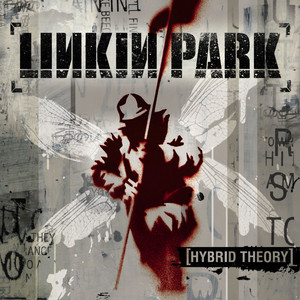
I don't specifically remember the first time I heard Linkin Park, but I remember obtaining this CD, burnt by my aunt, and feeling like I'd finally obtained a long-sought treasure—a magical feeling rendered almost extinct in the age of instant streaming. Songs like "Numb" and "In the End" were unavoidable on the rock radio of my youth, but it was only upon going to my friend Aaron's house in third grade and hearing him play through Meteora that I became a fan. Shortly thereafter my parents got me a copy of that album, their latest, but their first album remained a mystery to me for what felt like years, though it was probably only a few months.
In an age where mainstream rock music was shaped by the hypermasculine, overcommodified trappings of post-grunge (think Creed, Nickelback, etc.), Linkin Park stood out in their appeal to me. Sure, I could enjoy a Papa Roach song when it came on The Edge, but I never really actively wanted to listen to any of these bands. I'd like to say it's that Linkin Park somehow felt more authentic, but of course, I was of an age and stage of social development in which I thought their lyrics were all fantastical science fiction, not dramatic metaphors thinly veiling the turbulent emotions of depression and uncertain identity. The paranoia and self-doubt of "Papercut" was, in my mind, told from the perspective of an inmate at the lab of an evil scientist installing second faces beneath people's skin; "One Step Closer" was about an epic fight between a hero and a villain on the roof of a skyscraper. (This is how I ended up worrying my parents with the "songs" I wrote in middle school, in any adult's eyes the products of a troubled mind but to mine simply fun fiction.)
Regardless, something about Linkin Park appealed to me in a way that even their nu-metal contemporaries couldn't manage, and I do think that there is something to be said about the authenticity of their music at the time: yes, very slickly produced, but without the macho posturing of almost everything else at the time. Post-grunge has long been disparaged, and for good reason; hearing it now, it's hard not to feel like it wasn't just a horde of white dudes trying to cash in on the success of the grunge movement without any of the talent or soul, chasing the dream of being a rock star (as Nickelback laid out so tellingly, if tongue-in-cheekily) so they could have lots of money and hot babes or whatever. They role-played their ideas of what being a rock star was, tried to play the part with their pseudo-gravelly voices, wrote songs that seemed performatively vulnerable on the surface but revealed minimal depth. Perhaps I'm being overly cynical here, but Linkin Park just felt different. Yes, they wanted to make it big, but that wasn't their reason for making music: they were doing it for fun and self-expression.
And the "were" is important here, because they became shells of themselves far before Chester's death, and now are little more than a merch brand with a musical side project. But I'm digressing.
I guess I have less to say about the sound of the album itself, but it's easy to see why it blew up the way it did: it's dark but relentlessly catchy, and immaculately produced. The hip-hop influence that nu-metal is known for is more than just the rapping, but comes out in the percussion samples, the scratching. There are interesting timbres here, wrapped up in three-minute songs that, yes, are formulaic (gotta start off with an instrumental chorus!), but feel distinct enough to where that doesn't get tiresome. And then there's "Cure for the Itch" (i.e. scratching), which I've always found an immensely fun (and beautiful) detour that shows off what else the band can do. I'm sure it can seem garish by today's standards, and I get why people might hate it, but even two decades later for me this is still in frequent rotation.
Listens: very familiar
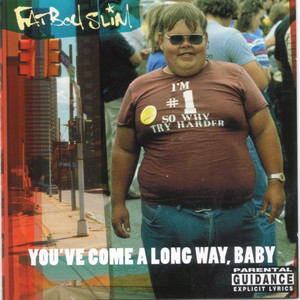
I know the word "epic" was so outrageously overused by my generation 15 years ago that it has almost ceased to have a meaning, but there's no other way to describe the opening to this album. The way the brilliantly layered strings (sampled from the hauntingly beautiful coda to James Gang's 1970 "Ashes the Rain and I") loop and slowly swell to a climax gives the unshakeable feeling that something incredible is about to happen. And of course, what that incredible thing turns out to be is the triumph of the album that follows.
I was raised on this album, so it'll always be a classic for me. I've been told I had some weird dances to some of the songs as a preschooler. It's catchy and fun, sure, but so much of what's long fascinated me about this album is the genius of its sampling. The album is, almost entirely, built from samples, and Fatboy Slim is one of the best crate-diggers there ever was. There are so many little things that go into sampling. You have to have an ear for what to sample in the first place; you have to know what to do with it (splice? pitch-shift? reverse? loop?); and you have to know where to put it. Fatboy Slim is so good at this that he can take a brief moment from a rap battle and turn it into the foundation of a classic song ("Gangster Trippin"), find the perfect clip of movie speech to top off a song's epic feeling ("Right Here, Right Now"), or figure out that what a song really needs is a bit of Mickey Mouse Disco guitar ("Praise You"). To be fair, I'm sure a significant amount of these choices happened by accident, but it still takes an ear to know what you've got, and a serious wealth of musical knowledge to know where to turn once you know what you're missing.
Anyone familiar with this album who hasn't dug through the WhoSampled pages for Fatboy Slim, I implore you to do so, because it is a ton of fun.
Anyway, I'm not going to pretend I love every song on this album. "Fucking In Heaven" has always put a damper on the one-two punch of the first two songs for me, and some of the songs in the middle, while certainly decent, drag the album down a bit. But for the quality of the hits and the role it's played in my life, this will always be a five-star album for me.
Listens: Fairly familiar
Anytime someone asks for a band I think is overrated, my answer is always LCD Soundsystem. It's not that they're bad—that's not what overrated means—they're just nowhere near as good, in my opinion, as the critical fervor around them has always claimed. And I guess I feel somewhat qualified to have this take because, unlike many other indie darlings like Arcade Fire, I actually like a lot of LCD Soundsystem's music!
This album, admittedly the only one of theirs I've actually listened to in full, is a perfect encapsulation of that for me. There are some incredible songs here—"North American Scum" goes hard as hell, and "Someone Great" almost always makes me tear up. But it all kind of sounds the same. By the time you're halfway through the album, at "Us V. Them", the music sounds like a parody of itself, like they want to keep dancing but are just out of ideas. It starts to feel rote, uninspired. The only reprieve comes at the end with "New York I Love You," a sardonic lament against gentrification that's a sonic left turn into balladry on an otherwise straightforward dance-punk album.
But to be clear, their sound has its strengths. Hearing their almost-live drum timbres against their dance landscape was a revelation for me, and they deserve kudos for the restrained, slowly building style they're known for. But the way they lay into repetition can be a blessing and a curse. When it works, it works. When it doesn't, you're stuck listening to an eight-minute song that never really seems to go anywhere rewarding.
Even lyrically, the repetition falls flat: "Makes you want to feel like a teenager, until you remember the feelings of a real-life emotional teenager, and then you think again," is funny the first time, but by the third you're kind of over it, and don't even talk to me about the eighth.
That said, their cultural influence in the 2000s is undeniable, and I feel shifted back in time listening to this in ways that their contemporaries can't manage. Not that it feels dated; it just feels like a cultural relic of a time when things felt more... hopeful?
Listens: very familiar
I didn't really know what rebellion was in fourth grade (or honestly really at any point in my childhood), so it's kind of funny to look back and see what this meant to so many other kids my age or slightly older. Granted, I had liberal parents, so the liberal attitudes expressed by this album (Bush bad, war bad) didn't feel rebellious so much as simply righteous, even if I had no idea why Bush was bad or what we were supposed to be doing in Iraq or Afghanistan anyway. (I was nine!) The album offered plenty of edginess besides, from denouncing the tv-watching masses (thus allowing me to feel superior to my classmates) to calling Americans idiots (weren't my parents always saying that?). Of course, the majority of the edginess—and much of it is that, just edginess—was lost on my tiny brain. Kids being fed too much "ritalin"? Must be some sort of junk food. "Kill all the 'fags' that don't agree"? Just a mean word to call someone. Saint Jimmy "blew his brains out into the bay"? I was terrified to blow my nose after that, lest my own brains be blown out.
That all aside, I was obsessed with this album. It maintained rotation on my little discman for years, and though much of its charm has worn off for me at this point in my life, several of its songs are still huge favorites of mine, "Holiday" and "Boulevard of Broken Dreams" especially. To me, the joy of this album was less in its (honestly fairly shallow) political commentary than its many twists and turns, its perfect production, and its *coherence* as an album. All the track segues excited me so much as a kid, especially the two nine-minute song suites, which expertly weaved tiny punk song ideas into tight, polished entrees. In a time before I'd discovered Nine Inch Nails' The Fragile, it showed me what an album could do, what it could be.
In general I detest pop-punk, but though there are definitely cheesy moments, this album never felt like the whining, cynically teenager-aimed music of Blink-182 and their ilk. Sure, it's a concept album built around the teenage "Jesus of Suburbia", but even today it feels more like an expression of concern for the youth rather than an attempt to court them.
Green Day (already legendary by that point, of course) went on to continue to flirt with vapid radical symbolism, talking about "revolution" like it's nothing more than a metaphor, or a fun plot point in an RPG game. Anything they had to say, they said on this album. Sure, 2004 was a very different time politically, but even so it was not exactly a hot take that the Iraq War was unjustified. Nonetheless, the album's role as a rallying cry for liberals was culturally significant, even if it didn't help defeat Bush (alas), even if the messages stunningly went above many conservatives' heads as well.
Listens: 3
I had heard of Wire, but this is not what I thought Wire was. My only point of reference was their later song "The 15th", a song I knew from its Fischerspooner and Kill Hannah covers (thanks Alan!), and whose original version on Wire's third album 154 (1979) is a sweeping, restrained, almost proto-shoegaze track. So I was not expecting them to be the progenitors of post-punk (and noise rock?) that they are.
It's crazy that this came out in 1977—almost fifty years ago, and yet sounding nearly modern to my ears. Their punk roots are clearest in the vocals, the short outbursts, the chords; but the sound, the timbre, the angular guitar and abrasive bass tones themselves, form the main components of so much music that I love today. Not all the songs hit for me personally, and I wouldn't say I love any of them, but it's still a good (and fascinating) listen.
(I will say, I'm enjoying their later album 154 a lot more so far!)
Listens: 2 (with original CD bonus tracks)
I don't know much about shoegaze, mostly because I've largely written it off on account of the rather unimpressive contemporary releases I've heard in the genre. It's not that I don't like the *sound* of shoegaze; I love me some tasteful washed-out reverb. But it's often felt to me like the wall of sound is only there to cover up the lack of songwriting ability at its foundation. That said, I was excited when this album came up to educate myself with a foundational record in the genre (by a band I'd never heard of!).
Alas, it turns out this album doesn't do that much for me. The far majority of it sounds, to me, like bland twinkly 90s soft rock—nothing wrong with it, but lacking in anything that elicits any emotion in me besides an impersonal feeling of "nostalgia". The only exceptions to this are the first song, "Seagull", whose heaviness and bassline immediately gripped me with high hopes for the album, and the songs "Here and Now" (with its haunting harmonica) and "Nowhere", which close out the 11-track CD version of the album (which appends the three additional songs from their Fall EP, released the month before this LP, to the vinyl's 8-track run). There are other pleasantudes throughout the record, like some fantastic drum sounds (particularly in "Dreams Burn Down") and the Martin Gore-like croon of Andy Bell (a different Andy Bell from the one who formed Erasure with Gore's former bandmate, of course). But otherwise... it's alright.
Listens: 1
I feel so goofy listening to this album. Is this the kind of man I am? Am I suddenly going to start jumping on my bed doing air guitar?
Being removed from an album's context—or the context of any piece of art—has some strange effects. For people around at the time, AC/DC symbolized some amount of rebellion, something your parents (or at least grandparents) might not approve of. (Perhaps rightfully, given some of these lyrics.) But as someone who grew up when I did, I've heard many of these songs in feel-good children's movies, and what used to be "heavy metal" about this now just feels cheesy, something not worth taking seriously. Not that AC/DC was ever meant to be taken too seriously, of course; that was a huge part of their appeal. But rock n' roll just doesn't mean what it used to: it's been too mainstreamed, too commodified, and the kids have moved on.
Listens: 3 (including one a year or so ago)
You'd think I'd be more into my favorite musician's favorite musician, but few iterations of Bowie sound anything like Nine Inch Nails. His "Outside" album (which came out the exact day I was born) is the only thing of his I've heard that I've remotely vibed with, and it's probably not a coincidence that that was the same year NIN and Bowie ran a co-headlining tour. But of course there's still so much Bowie I haven't heard (I really need to listen to Blackstar), so I'm always curious to give more of his music a shot.
And after listening... look, I know there's obviously no denying the genius and influence of Bowie, but it's just so hard for me to feel. It's not a shortcoming on the part of the instrumentation or the production (both of which are great) so much as the songwriting itself, the chords, the melodies—they don't do anything for me. None of it moves me emotionally in the slightest; it all feels completely boring and forgettable. This is of course a very personal thing, and I'm as curious as ever how we end up liking/being moved by the music that we are.
But a case in point: A few years ago, my friend and I took turns selecting songs for us to practice playing at a rehearsal space together, just for fun. "Wild Is the Wind" was one of the songs he chose. It seems that listening to the song—and playing it!—over and over again apparently left so little an impression on me that the song didn't even sound familiar to me until, three minutes in, I wondered why I could hear my friend Patrick singing it.
I still cannot call it to mind for the life of me.
Listens: 3
I, like seemingly everyone else, had also never heard of this band, and while I'm still skeptical of this album's inclusion on any iteration of this list, it is a fun and interesting album I'm glad to have had come my way.
While decidedly clunky and not entirely cohesive, it sounds on the whole like a strange mix of Britpop and amateurish indietronica. If this had come out a decade earlier I'd have said it was ahead of its time, but this was 2004, several years after the Notwist album Neon Golden that Heroes to Zeroes feels like it's trying to forge a path to.
I love an album that's all over the place sonically, but something about this album feels like they're not sure where they stand. Perhaps it's that the pure-Britpop "Assessment" starts off the album on the wrong foot, a good song but a poor indication of what's to come. Perhaps it's the fact that the disparate elements don't always cohere, though sometimes (on "Lion Thief", for instance, or "Liquid Bird") I find this charming, intimate. Or perhaps it's the nagging feeling that, whatever they're doing, The Notwist (or Pulp et al.) already did it better.
Ultimately it's hit-or-miss for me, but the hits are pretty great, if not spectacular. The misses drag the album down (the insipid vocals of "Wonderful", the oops-don't-forget-we-still-like-Britpop "Out-Side") but there's enough to like besides that'll keep this album in rotation for me a bit longer.
Listens: 4
Siouxsie is a name I was raised to respect, but until recently the only song I'd been exposed to was "Christine"—a song I liked but have never really come around to loving. More recently I got around to listening to the album Kaleidoscope (1980), but for some reason I haven't felt compelled to listen to it again. I was still curious to check out more Siouxsie regardless, so I was glad to see this come up on the list.
Juju was their next album (1981), and I immediately connected to this one more, probably because it's more guitar-based, and I'm a sucker for some good angular guitar. It's also got that classic shimmering guitar, which I'm more ambivalent toward, and lots of toms in its percussion, bringing The Cure's Pornography to mind. (Pornography came out the following year, and Robert Smith has said Siouxsie was a direct influence on that album, though it's unclear if the drums were a part of that.)
The songs themselves are fairly up my alley as well. While the album seems to lose steam in the latter half, the first half is full of catchy, emotive songs in a classic goth sound. The biggest standout to me is "Into the Light"—I love a good two-chord song, and this is just such a beautiful and feelsy example. I just wish I liked the final four songs more, alas.
It's wild to me how early this was—1981, and yet that distorted guitar that opens up "Monitor" sounds incredibly contemporary. Of course, it definitely sounds very 80s otherwise, most notably in the reverb that's unfortunately slathered all over Siouxsie's vocals (though of course if it's Siouxsie's vocals it's gonna sound great regardless). The drum recording lacks much of a punch, at least with respect to my preferences, but at least the snares aren't overly gated like much of what followed that decade. And, of course, there's that shimmering guitar, which to my (very much incomplete) knowledge has yet to make a comeback. Still, I didn't think this sound hit until later in the 80s, and it's so cool to trace the origins of some of my favorite music.
Listens: 1
I guess it's about time I get a rap education!
I think the type of music listener I am—i.e. one who pays very little attention to lyrics—means I'm inherently predisposed to not be too into rap or hip-hop. The artistry of the lyrics is kind of the whole point of rap, but that's not really something I get excited about. I can appreciate a good flow or witticism, but that's not generally going to make me enjoy listening to a song. For me, it's the music itself that counts. And the music here is... fine.
I'll be honest and say I thought Fugees was an R&B group, so I was a bit surprised when I put it on. The album starts off with very minimal beats, making the trio's vocals indisputably the centerpiece. It does get a bit more interesting in the second half, and I'll bob my head a little bit, but overall I just don't really feel it. (And was that racist "Chinese Restaurant" skit really necessary?)
There's a couple of songs I was able to muster up some enjoyment of ("Fu-Gee-La", "Family Business", "Manifest"), and I appreciate some of the socially aware themes, but overall I just can't really see myself listening to this again. I know there's rap out there I'll like, but this isn't it!
Listens: 2
I wish I liked the best album of all time more than I do. It's clearly good music, and I love how the songs all segue into one another, but for whatever reason I'm just not moved by this music. I can appreciate the lyrics, certainly, though as Leah pointed out, it's rather sad that all these themes are still so relevant today, 55 years later. As palatable as it all is to modern sensibilities, though, it definitely took bravery at the time, and I admire that a lot.
Listening to this once again makes me wonder about how we learn to glean emotions from music. I feel like I've been trained to think about this genre simply as background music at fancy restaurants—that's the primary context in which I've heard it, whether in real life or in movies. So when I try to emotionally connect with it, the only sense I get from it is "sophistication", which not only is not an emotion, but it's not a thing that appeals to me in the first place. Fancy things feel stuffy and boring to me, and thus, unfortunately, so does this music.
Listens: 1
I was intrigued reading about this album on Wikipedia, but that intrigue melted away pretty quickly upon actually putting this on. I know there was a lot of thought and care put into these tracks, but it's hard for me not to feel like this music is incredibly bland and generic. The drum timbres feel like they lack any personality; the melodies feel like they're grasping around for emotion; even the vocals sound amateurish and phoned in to my ears (with the exception of the Neil Young cover, which has a different singer). Usually I try to go for a second listen, but I really don't want to hear this again.
What I enjoyed most about this record: when towards the end of it I sat down to read the book I'd recently started and realized one of the primary characters' names is Ste. Etienne—literally the first words of the next chapter. I cackled.