This album is so sleek—so vibey—that it almost makes me tolerate French people as a concept. While listening to it, I googled if it inspired Radiohead’s Kid A, which should tell you how much I enjoyed it. (Ironically, Air was actually inspired by OK Computer.) It turns out that this is just from a genre Kid A draws from, called “downtempo.” And it turns out that I love downtempo. Moon Safari is a ridiculously perfect album title: shiny and futuristic—exploratory and a little wild. While its influences are definitely worn on its sleeve, it doesn’t matter because the songs are fantastically composed, and generous heapings of fresh ideas are mixed in. Listening to it feels like being in a movie, which makes sense as Air went on to score a ton of movies. I would also recommend checking out the two music videos that went along with this album. The one for “Sexy Boy” is hilarious and surprisingly good social commentary, and the one for “All I Need” (haha, more Radiohead) is just really sweet. If you’re ever preparing for a job interview and want to feel more confidently professional, listen to this album. If you’re ever in a doctor’s office on acid, listen to this album. If you’re studying and need good background music, listen to this album. If you’re Ben Stiller and want good music for the Severance soundtrack, listen to this album, and tell everyone I recommended it to you because I’m awesome.
1001 Albums Summary
Rating Distribution
Rating Timeline
Taste Profile
Breakdown
By Genre
Tap a bar to see the albums behind it
Top Styles
Tap a bar to see the albums behind it
By Decade
By Origin
Albums
You Love More Than Most
| Album | You | Global | Diff |
|---|---|---|---|
|
Merriweather Post Pavilion
Animal Collective
|
5 | 2.92 | +2.08 |
|
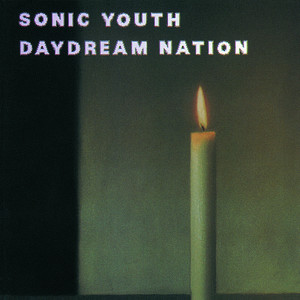
Daydream Nation
Sonic Youth
|
5 | 3.29 | +1.71 |
|
Natty Dread
Bob Marley & The Wailers
|
5 | 3.55 | +1.45 |
|
A Love Supreme
John Coltrane
|
5 | 3.63 | +1.37 |
You Love Less Than Most
| Album | You | Global | Diff |
|---|---|---|---|
|
Songs For Swingin' Lovers!
Frank Sinatra
|
1 | 3.51 | -2.51 |
|
1984
Van Halen
|
2 | 3.48 | -1.48 |
|
Imagine
John Lennon
|
2 | 3.44 | -1.44 |
|
Sulk
The Associates
|
1 | 2.35 | -1.35 |
|
The Visitors
ABBA
|
2 | 3.22 | -1.22 |
5-Star Albums (7)
View Album Wall


4-Star Albums (5)




1-Star Albums (3)


All Ratings (21)
Do you have any idea what it’s like, having nobody who knows? You’re walking down the street, plastering a smile on your face, waving to your boring neighbors, watching identical whitewashed houses pass by you in a blur. And you think to yourself, with great sorrow, "not one of these people knows I’m listening to 'The Continuing Story of Bungalow Bill.'" Hell, I doubt they even know that the walrus was Paul… This is probably the Beatles album from their peak years that I listen to the least; it’s ridiculously long, and there’s a lot of clunkers. Most of it is just sonic noodling. That said, it’s sonic noodling from John, Paul, George, and Ringo. It’s like watching Van Gogh finger paint. The length of it also adds to the general spirit of experimentation and eclecticness—the plain white album cover a blank slate from which their evolving sound could flourish without being pigeonholed. I mean, what is one to do after more or less inventing the concept album, except to take a hard left and release what is essentially the exact opposite? It reminds me of how Ian MacKaye pioneered both hardcore and post-hardcore; you have to break your own rules as an artist to evolve. That said, outside of the collage-like, eclectic album format, there are just some truly amazing songs. “Back in The USSR” is a personal favorite of mine, with its hilarious political satire. “Ob-La-Di, Ob-La-Da” is, despite being the “Shiny Happy People” of the 60s, a super fun pop tune with a great melody. “While My Guitar Gently Weeps” is one of the most beautiful songs the Beatles ever wrote. “Happiness Is A Warm Gun” is amazingly multi-faceted and has some fantastic vocals. “Blackbird” is the perfect tender tearjerker. “Birthday” is perhaps the most fun Beatles song out there. “Helter Skelter” is not only a banger, but it also pioneered a whole genre. “Revolution 9” is an excellent sound collage. There is, by a conservative estimate, a dozen different genres represented on this album—some of which were still in their infancy during 1968. It truly represents a spirit of artistic exploration. The oscillation between these fleshed-out, beautiful ballads, snippets of half-formed ideas, and light-hearted self-indulgence almost makes you feel like you’re in the studio with them. If their previous albums pioneered the concept of the album, this pioneered the concept of the band: a vehicle whose purpose is the journey rather than the destination. Much of popular music today wouldn’t be the way it is if it weren’t for the Beatles deciding to make all these weird, experimental songs and throw them to the wind. Once more, they prove themselves to be the greatest band of all time.
My “I never cared for The Godfather” moment is that I hate “Dancing Queen.” I don’t think it’s all that catchy or fun. It’s weird that she’s “only seventeen.” It sounds like a dance song made by somebody who’s never had any fun dancing. I’ve never even had it stuck in my head before. That said, I don’t think “Dancing Queen” is a bad song, because it’s a pop song known by 99% of the population. If the whole world sings along, and it brings people together to have fun, then it has achieved The Ultimate Goal. Nothing else matters. The Visitors answers the question of: what would ABBA be without that fun? I can excuse war crimes if they come with a good synth hook, which is why I initially thought I’d like this. The opening two tracks have amazing synth hooks. “The Visitors” has one of the best drops I’ve ever heard. And “Head Over Heels” is even better, with the anxious choir vocals and dark cabaret feel. And then everything starts to…blur. It slows down a lot. “Soldier” was an attempt at a serious political song, I think. At least it’s catchy. Then the vocal harmonies start to grate. Sure, they’re complex and objectively interesting, but like I said before: nothing else matters. A song can throw in crazy time signatures or godlike guitar shredding or a singer hitting notes in the super-whistle range and still be boring. It also doesn’t help that I’ve always found both Agnetha Faltskog and Anni-Frid Lyngstad’s voices rather stale (for some reason my computer isn't letting me type the accent mark onto the former's name.) So when ABBA aren’t catchy and fun and iconic, the cracks start to show. The lyrics are weak—much too weak for these dramatic ballads they’re attempting. While the production does have its excellent moments, such as in the bass lines of “Soldier” and “One of Us,” or the ticking clock and light arpeggios of “Like An Angel Passing Through My Room,” it can also be dated and generic. What’s with the random guitar noodling, with that awful tin-can tone that’s trying so hard to be dramatic rock n’ roll? (Somewhat unrelated, but the first three notes of “Two For the Price of One” sound almost exactly like the “Sweet Child O’ Mine” riff, and I jumped when I heard it.) The arrangements feel empty. I wish they had leaned farther into the aggressive synth and Broadway-esque aspects. If ABBA wants to be serious, they need to be serious in the way a musical is serious. The first two songs and the rest of the album feel like completely different entities. It’s like going to a restaurant and eating the best appetizer you’ve ever had, only to have your main course be a bland nothingburger. I’d say the three really good songs on this album are “The Visitors,” “Head Over Heels,” and “Like An Angel Passing Through My Room.” Then “Soldier” is memorable and pretty okay. The rest is…I don’t even remember. I listened to this record three times—including twice in the past hour and a half—and I don’t remember a thing except those god-awful vocal harmonies.
I’m allegedly distantly related to this guy who punched Sinatra in the face, and I can say I’m not too upset about that. If I ever doubt the Beatles' impact on music, I will listen to this album to remind me of what a dark time it was before them (for pop, that is.) This is just the same song repeated fifteen times. Every songwriting choice is blander than the last, and the only salvaging factor is that Sinatra has a good voice. I’ve never been so utterly disinterested in an album before.
Bakithi Kumalo deserves a Nobel Prize for that fretless bass. And he and accordion player Forere Motloheloa (RIP) should both be appointed as Supreme Rulers of the Universe for their performance on “Boy In The Bubble.” God, the grooves. This whole album bounces and skips in refreshingly relentless major key (with the exception of “That Was Your Mother,” which is coincidentally the weakest song on the album.) Paul Simon’s typically sardonic lyricism really shines beneath all the syncopated rhythms and rich, celebratory instrumentation: just melancholy enough to be meaningful, but not enough so to diminish the danceability and excellent hooks. My biggest critique is that Simon’s vocals are quite thin and feel as if they ‘re attempting to build up to something they just can’t quite get to, particularly on “Call Me Al.” All the other amazing elements make up for this, however, and I'll definitely be checking out more of Paul Simon's other solo albums, as well as the work of the South African musicians he collaborated with here.
There’s nothing smart I can say about this. I know how to play my triads on guitar, and I can show you a handful of scales—hell, I can even string together some shoegaze chords—but there’s nothing interesting I can say about A Love Supreme. I do love jazz, but jazz doesn’t love me. I can understand things about it that other people tell me, such as it bridging the gap between modal and free jazz, as well as it mirroring the structure of a Black church service and having a bassline that “says” “a love supreme”—but I can’t figure them out on my own. That said, I can look at the cultural impact, as well as the emotions it evokes. This thing feels like it’s trying to expel a demon. It feels like letting go. And a lot of people felt the same, as it was a huge inspiration for those in the Civil Rights movement, and it went on to inspire anyone and everyone looking to push boundaries with their music. It's music that makes you get up and take action. There is not a note wasted in the 33 minutes, yet despite its high-concept polish, it’s pure catharsis. This may not be art at its rawest, but it’s art at its purest.
I don't know a whole lot about reggae, unless it's reggae-punk (The Slits, The Clash, etc...) I've listened to Exodus before, though, and I'd rank it among the best albums of all time. Still, it's easy enough for me to see the influences—the soul and funk throughout—as well as to tell that this album is amazing. While not incredibly diverse sonically, Marley's voice carries a huge weight, and it's relentlessly danceable and surprisingly catchy. The bass, especially, is great. Songs like "Lively Up Yourself" and "No Woman, No Cry" contrast wonderfully with the likes of "Them Belly Full (But We Hungry)" and "Revolution," which both have a strong bite to them underneath the staccato rhythms and trumpets. The lyrics, though, are what make this album what it is. They have hope, love, warning, and a call to action. They're an earnest call for political change that has inspired countless throughout the years.
This one’s heartbreaking. Because, to be completely clear: there is amazing potential here for Dennis Wilson. Fantastic melodies—soaring harmonies—absolutely stunning production; if he had lived long enough to release Bambu, and whatever projects could’ve followed that, he might be remembered as having one of the best solo careers in classic rock. Instead, he fell into substance abuse, died young, and is only really remembered because of Charles Manson of all people. Dennis Wilson was the only Beach Boy who knew how to surf, and his connection to the ocean is pretty clear in this. It’s a motif that appears in practically every song—especially the opening track, “River Song,” which is a near-out-of-body experience. Even when the ocean doesn’t appear in the lyrics, it’s present sonically, with drifting strings and mellow percussion. The sonic landscape is the strongest thing about this album. It was actually pretty ahead of its time in terms of production, and manages not to feel dated (with the exception of the title track.) While one of the biggest issues I have with this album is its haphazard flow, the production salvages it from feelings of incohesiveness. The biggest weakness of the album, however, is its lyrics. While not exceptionally awful, they are very cliched. For example: “Like the sunshine, love comes and goes again.” I could get that kind of lyricism from anybody. That said, every other aspect of the songs are often good enough to make up for it. The song that lyric comes from—”Thoughts of You”—is actually one of my favorites because of its perfect build and vocal performance. Also, half of this album doesn’t really stand out in any way, which is a big point against it. While the highs are exceedingly high, there’s a whole lot of “meh.” But dear lord, the highs are so high. I’d recommend checking out “River Song,” “Thoughts of You,” “Time,” “Pacific Ocean Blues” (if you can tolerate its datedness), and “Rainbows” as some exceedingly fantastic and underrated classic rock/pop, and the rest if you’re into the Beach Boys or 70s soft rock. (Also, “Rainbows” was used in Project Hail Mary, which is super cool.)
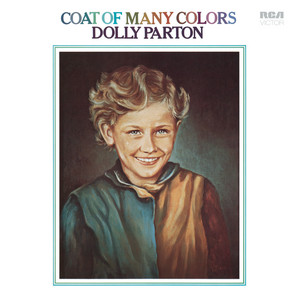
I wish that I had gotten this album to review before Dolly Parton’s death, because I don’t want it to seem like I’m praising this so highly just because she’s passed. That’s definitely not the case. This is easily one of the best country albums of all time: a succinct 28 minutes, with amazing storytelling and lively instrumentation. The title track, of course, is a contender for best country song of all time—full stop. It’s a truly fantastic and interesting take on love and poverty, with a unique and layered Biblical reference. While none of the other songs are quite as good as the title track, they’re all still excellent. “Traveling Man” and “Early Morning Breeze” have great basslines. “My Blue Tears” has a good brisk, driving back beat. “Here I Am” features gospel-like vocal harmonies. “A Better Place to Live” practically glows with positivity. My biggest critique is that the songs all sound very similar, and use very similar poetic meters, but that’s to be expected from a traditional country album—especially one from a singles-oriented artist. All around, it’s an excellent listen, and a landmark release in its genre. I can't recommend it enough. RIP Dolly Parton.
I find this album to be an interesting one for the list, because this is perhaps the most debut album of debut albums. Emmylou Harris has three albums on this list, and I feel as if this record isn’t really as essential as some of her later work, where she’s more developed as an artist. One of those would have been a better addition. Primarily, that’s because she only wrote one of the songs on this album. While her distinct voice and the warm country instrumentation do make some excellent covers, they are still covers. The best song on the album is the one she wrote herself: “Boulder to Birmingham.” It’s a heartbreaking ballad about the loss of a loved one. Her vocals are raw and desperate, and the lyrics are beautifully vulnerable. It also has some great vocal harmonies and strings that add really interesting dynamic shifts, as well as delicate guitar that make the whole track float above the mortal realm. As this is her most popular song, I’m fairly sure it’s the reason why this album was put into the list. Which would be dumb, because it’s a list of albums, not songs. But I digress. In terms of the covers, what stood out to me the most was her version of The Beatle’s “For No One.” While she does over-sing it a bit, her voice is too beautiful for me to care all that much, and the warm strings and ballad-y feel she gives it makes it wonderfully distinct from the original. I can tell that she’s spent a lot of time with the song and has a personal meaning she’s given to the lyrics. I don’t dislike this album whatsoever, it’s just that it’s very early in her artistic journey. She’s making her debut onto the scene, and hasn’t fully honed her distinct alt-country genius yet. It’s a pleasant listen with plenty of bright spots, but ultimately doesn’t stand out in the broad scope of music, or even within Harris’s own discography.
I’d like to start this by saying that I am the last person this album was made for. I am a Gen Z female. I listen to Slint, Slowdive, and Radiohead. The closest I get to arena rock is My Chemical Romance. That said, I actually really love Van Halen’s debut. Just an explosion of energy and fun. I also do play guitar, and while I think this brand of guitar solos are All The Egotistical Bad Things blah blah blah, I actually like Eddie Van Halen’s solos. He has enough skill to back them up—unlike all the EVH clones that swarmed the 80s with too much gain and the sloppiest, most cliched shredding you’ve ever heard. I also respect the Frankenstrat, of course. And I continue to appreciate a lot of things here that I appreciated about their debut. For one, it’s short—thirty-three minutes long, which is exactly the length a Van Halen album should be (a fact that they forgot about while making Van Halen III…) It also has some fantastic vocals from David Lee Roth, who continues to be one of the most energetic and exciting vocalists in all of hard rock. And, of course, EVH adds some awesome guitar work—but that’s a given. “Top Jimmy” has some of my favorite EVH guitar work, because I am a sucker for harmonics and weird tunings. I don’t even mind the synths that much. My weakness is 80s synth hooks, so I’m not mad at all. The album’s opener and title track has some excellent synth work, and so does “Jump.” That said, it’s always bothered me how the synth hook on “Jump” switches up almost a full octave after a couple repeats. It’s just ear-bleedingly high-pitched and throws the song off. Sadly, there are a lot of downsides. For one, “Panama” sounds like it was tailor-made for a car commercial. It would probably be my least favorite of their superhits, if it weren’t for the third superhit from this album, “Hot For Teacher,” which is more of a skit than anything. No big sing-along chorus or earworm at all. Honestly, it sailed its way to icon status off of shock value and teenage fanboys more than anything. And “Drop Dead Legs” is just…ugh. When Van Halen does innuendos, it’s fun at a party. But when they go completely on-the-nose? Then it’s just gross. Then there’s “I’ll Wait,” which has a boring melody and some awful lyrics—even by Van Halen standards. That said, it’s salvaged from being awful with some interesting synth and guitar work. “Girl Gone Bad” also has some awful lyrics, but I care a lot less because I could listen to EVH playing harmonics all day. It also has that fun part where everything gets really quiet, and the drums click away over a guitar solo that sounds like a broken car engine slowly roaring back to life. Also, what’s with the mixing? The vocals are buried under the guitar and sound like they’re coming from a completely different room. I get that Roth’s lyrics probably aren’t something you want attention called to, but his powerful voice most certainly is. What’s great about Van Halen is that they go all out in all the fun ways. This just goes all out in all the wrong ways while staying reserved when it shouldn’t. 80s hard rock cheese is fine and all, but dear lord, it was a genre Van Halen invented. 1984 just feels like it’s them falling into line with every other mediocre chart-topping band of the time. “Jump” is a classic, of course. I’d even go to bat for “Hot For Teacher,” now that it’s reached iconic status and there’s nothing we can do about it but sing along. But besides that, it’s just some interesting guitar work over commercial jingles. I’d only recommend this to people into arena rock or people really into guitar.
My general philosophy is to meet an album where it’s at. You can’t blame a dance album for being repetitive. You can’t judge the mixing on a punk album. You can’t expect a pop album about partying to discuss geopolitics. Sadly, it’s difficult to meet this album where it’s at, because where it’s at is shrooms and LSD. Even though the band members were sober in its making, all their previous albums were rooted in their use of psychedelics, and primarily meant to listen to while on psychedelics, and that’s still the case here. And as much as I want to review things well, I will most definitely not be taking acid. Luckily, there are some moments where you can sort of simulate the experience. If not through mind-altering drugs, then through some pleasant moments where the bright synths and playful lyrics feel crushingly joyful and cinematic. I found those moments in these places: -Listening to the album while putting make-up on before a party. -Listening while half-asleep on the subway. -Listening through my low-quality iPhone speaker while taking a hot shower. -Listening while petting my dog. -Listening at 3 am. -Listening while drinking a cup of fancy cherry vanilla green tea and eating an ultra-buttery Sam’s Club croissant. And yes, I listened to this thing probably 10+ times, because I kept getting interrupted while listening, or didn’t feel like I paid enough attention. It was kind of cursed in that way. Thankfully, I loved this album. I have to note that I’m actually very frustrated about the overall reviews this album has on this website. Given the nature of the 1001 albums generator, I thought people here would be more open-minded, or at least willing to dislike stuff in a way that isn’t just “this is weird and complex! Ew!” Ultimately, I don’t care what your opinion on this album is, but most of these reviews just show an unwillingness to engage or listen critically. But I digress. This album feels like childhood—running through heatwaves to reach the ice cream truck and jumping into lakes from a rope swing. The name of the album actually came from a music venue of the same name, which—not to dox myself—is pretty close to where I live, and I’ve been there for concerts. It’s honestly a great venue for the kind of feeling described in this album: it’s outdoors, with an open grassy area behind the rows of seats. It’s one of the few places nearby where you can get cheap tickets, as the grass tickets are genuinely cheaper than going to shows at bars now. There were $30 tickets to see the Beach Boys there, for example (though that might’ve been because nobody wants to get near Mike Love.) Families go and lay out picnic blankets, and it’s very festival-like. Lots of little kids, young couples, boxes of pizza, and beach balls. People bring the same fold-out chairs they do to little league baseball games. It has that suburban summer feel, which is very much the same thing this album encompasses. The album can sometimes feel like something set out in the sun too long. An oozing strawberry. The sweet scent of moldy bread. Sucralose and Red 40. Not necessarily because there’s any sort of negative emotion introduced, but because of the nature of nostalgia and human memory. It’s either expired, artificially preserved, or made hazy in some way. This effect makes the songs all the more potent. There’s a barely-contained joyousness as well. Lyrics like “I’m getting lost in your curls.” “Everything around seemed to giggle in glee.” “I want to walk around with you!” “There isn’t much that I feel I need.” The lyricism is sensual and diary-like. Its exact phrasing doesn’t always make sense, but it doesn’t really need to. It’s smudged out by the heatwaves. The few moments of inner turmoil don’t feel all that sad, either. “Also Frightened,” for example, has a comforting quality that resolves its underlying anxiety when placed between “My Girls” (the best song on the album!) and “Summertime Clothes.” And the existential nature of “Taste” is made more curious than soul-crushing through the anecdote of laughing with a friend, as well as the friend saying he doesn’t want fancy clothes because “you can’t eat those.” That’s another element of the album: rejection of the material world. The narrator doesn’t care about “material things,” and has only simple needs in the physical realm. Despite most of the talk about this regarding adult things, like wanting a house, it is rather childlike: content with happiness and the natural world. It adds to the psychedelic, detached feel of the album. Sonically, it’s highly processed. There are countless layers of synth, and no guitar. The band ran everything separately through a PA system to replicate their live sound, which they then sampled, layered, and manipulated. The only acoustic instrumentation is drums, which were heavily processed after their initial recording. The synths have a shimmer over them, and tend to float in the high-ends, soaked in reverb. The vocal melodies are simple, and border on monotone, and instead focus on rhythm and simply being catchy. It works, too. Normally, I don’t like when albums lean heavily on production above all else, but this is a case where it’s a clear artistic choice rather than a crutch. If there was ever an album perfect for listening during the summer, it’s this one. It’ll make you feel like a dog sleeping under a beam of light: content, comforted, and perhaps a little bit lazy.
Wow, I just listened to Graceland, and was saying that I wanted to check out some of the featured artists on there! It’s cool that I got this one so soon after! I bet it’ll totally be available on the streaming platform I use, and I won’t have to find it on YouTube, where it’ll be interrupted by ads! This one’s difficult for me to review, as it’s not a genre I’m very familiar with, and I don’t speak the language. That said, I can trust my own ears, and this thing sounds beautiful. Watching musicians work together to form a greater whole is just a beautiful thing—especially when they’re in a choir. The harmonies are fantastically composed, and it’s great a cappella in the sense where you don’t even notice there aren’t instruments unless you really think about it. In the few English passages, the lyrics are rich and vivid, and I assume that the songs written in Zulu have just as lovely lyrics—if not better by virtue of being in the singers’ primary language. My favorite song is “Wausho Kubani,” because it sticks out for not being entirely a cappella, which makes it a fantastic choice for a closing track. I also love the call and response throughout, which adds a lively, almost interactive feeling to it. Ultimately, this is a very beautiful project, and very relaxing to listen to. I’ll definitely be checking out more of their stuff in the future.
You bite through the big wall, the big wall bites back You just sit there and sulk, sit there and bawl You are so pretty when you're on your knees Disinfected, eager to please Sometimes you sulk, sometimes you burn God rest your soul When the loving comes and we've already gone Just like your dad, you'll never change Each time it comes it eats me alive I try to behave but it eats me alive So I declare a holiday Fall asleep, drift away Sometimes you sulk, sometimes you burn God rest your soul When the loving comes and we've already gone Just like your dad, you'll never change Sometimes you sulk, sometimes you burn God rest your soul When the loving comes and we've already gone Just like your dad, you'll never change
Man, Like A Prayer blew me away when I first heard it…but now I’m not so sure. Don’t get me wrong: the singles are all pretty good. “Like a Prayer” was a genius move in terms of public image, and—despite my personal distaste for it—is probably one of the best (and most iconic) pop songs there is. “Dear Jessie” has this unique, fragmented quality to it, and “Cherish” is catchy as hell. “Keep It Together” is…fine, nothing special but nothing bad; I do like the slap bass. “Oh Father” is emotionally raw and a great pop ballad that feels almost fantastical. Then “Express Yourself” is easily the best song on the album. The lyrics are peak Madonna, and it’s an effortless anthem whose influence you can still hear today. The deep cuts range from annoyingly-okay to great. “Love Song” is easily my least favorite, with the duet between Madonna and Prince being close to grating, and the sparse beat completely ruining the mood. The one positive is that the guitar is catchy. On the other end, “Act of Contrition” is my favorite on the album, save for “Express Yourself.” It’s an amazing closer, and Prince’s guitar playing as well as Madonna’s vocal performance are fantastic. Given the loose theme of the album, it’s also extremely clever, with Madonna screeching “What do you mean it’s not in the computer?” implying that she’s being denied entry to Heaven. It all works in perfect tandem with the opening title track. The others are…okay. My main problem is that many of them sound like Disney songs. I have that problem with some of the singles as well, but I can ignore it because they’re so catchy. Madonna’s lyricism also relies very heavily on cliches, which cancels out some of the emotional weight. The three stars are really for quality more so than anything. It’s undeniably a very influential record, with some great songs, but as a holistic experience that paved the way for new sounds and ideas…it’s just alright.
Oh dear lord, not again. Imagine is the bane of my existence. To be clear, I am a huge Beatles fan, but I genuinely can’t stand this thing. You know how people make fun of Morrissey for singing “it takes strength to be gentle and kind” while being a famously petty/hateful person? Well that’s how I feel about the title track of this album. It’s not even that I really dislike John Lennon. I didn’t know the guy, and I don't care to dig into his lore. As an artistic symbol who’s inspired literally everyone, I have a lot of respect for him, and that’s where most of my thoughts about him as a person end. If the song had just been about peace and love, it would’ve been fine. But he has to add “no possessions.” The guy with a special room for his fur coats has to add “no possessions.” (He was also the only one of The Beatles who wasn’t vegetarian, so…) I know I just said I didn’t care about his personal life, but in this case it’s hard to ignore as it has a pretty direct tie-in to the music itself. I guess the difference is that “You Know It’s Over” is an excellent song with beautiful lyrics, whereas “Imagine” is just…kind of boring? It’s iconic, yes, but that’s the only stand-out thing about it. If any other person had written it, we’d all be slamming it for being too on-the-nose and overly-sentimental. I can respect it for its influence, but personally, I am not inspired in any way by hearing it. Not to mention that I absolutely hate the melody. It’s obnoxious. It makes me feel like I have a bug bite on my brain. The problem with me not liking this is that I’m pretty much alone on that. I try to consider how influential something is when giving a review, and this is as influential as it gets. “Imagine”...do I even need to explain how influential that song has been? It and “Wonderwall” are probably the two most covered songs of all time (don’t tell the Gallaghers I said that or they’ll get ideas again.) “Gimme Some Truth” was a defining political statement, and has become a favorite of alt-rock musicians, being covered by Billie Joe Armstrong, Generation X, Pearl Jam, and Militarie Gun—among many others. The influence of those two songs alone make me begrudgingly bump this up a star. And then there’s “How Do You Sleep?,” which is just obnoxious, and honestly kind of cruel—like bringing a gun to a knife fight, with the fight being the feud between Lennon and McCartney. It’s not even well-written. The lyrics are, for lack of better words, cringe. The only thing I can give it is that it’s raw, and it references the “Paul is dead” theory, which is perhaps the funniest thing ever. “Jealous Guy” is another instance of John Lennon making me think about his personal life when I don’t want to, given the, uh, controversies around the way he treated his first wife. Again, it’s raw, I suppose. But I don’t really want to listen to it. Especially given the god-awful whistling he includes. “I Don’t Wanna Be A Soldier Mama” attempts to be some sort of political anthem, but it’s just Lennon repeating the same thing over and over again with awful production (thanks, Phil!) in a “we have ‘Fortunate Son’ at home! *The ‘Fortunate Son’ at home:*” moment. I wish he had gone full-on experimental. As talented of a pop/rock songwriter he is, the mental collapse he was experiencing around the time would have made a much more interesting album if he’d blown past pop/rock conventions. Instead, it’s just some ill-conceived, underwritten soft-rock that shows off his thin voice and obnoxious personality. Most of this just sounds like long-lost B-sides from the White Album, which is the highest insult I can think to give a Beatles solo project. You know what? Plenty of influential things suck. I’m giving myself permission to give this two stars.
Oh man. Bikini Kill used to be one of my favorite bands, but I’ve never been a huge fan of Le Tigre, or Kathleen Hanna’s other project, The Julie Ruin. I’ve also had some problems with Hanna’s tendencies to write cookie-cutter political songs. I don’t think she started off that way, and Bikini Kill was extremely revolutionary, but over time much of the messaging became very…well, just go listen to that Hilary Clinton song Le Tigre made. (Though, to be clear, it was a problem even before that single.) The album begins with the explosive “Deceptacon,” which has a fantastic vocal performance and a great synth hook. It’s a diss track, aimed at the band NOFX for their song accusing Hanna and the riot grrrl movement of simply being man-haters. That’s really the cherry on top for me, as I despise NOFX. There’s then an excellent transition into “Hot Topic,” which lists several dozen influential feminist and LGBTQ figures over danceable drums and some crunchy guitar. The first half features overlapping, energetic vocals that then fade away into the sounds of people shouting names at random, panned all over the place. It’s one of the most celebratory songs you’ll ever hear. “What’s Yr Take On Cassavates?” opens with a sleepy spoken word and guitar riff, before delving into a catchy but repetitive track—once more with those “off stage” vocals. I can’t say that it’s amazing, but it certainly has a vibe to it. “The the Empty” absolutely rocks, with shrieky vocals and aggressive guitar and percussion. It’s the closest this album gets to sounding like Bikini Kill. Le Tigre is excellent at making disjointed elements come together to form a hypnotic, cohesive whole, and this song does that quite well. Then there’s “Phanta,” which sounds like it was made on another planet. It’s fun and apocalyptic, with the closest this thing gets to a pop melody. The synth is addicting and the chaotic build-up that leads to the sudden ending is well-done and hilarious. “Eu D’ Bedroom Dancing” has some surprisingly atmospheric production, with murky guitar, and sharp-but-spacey synth. The vocals are mellow and really make the vulnerable lyrics shine. My one complaint is that the synth sound gets grating, and can distract from the vocals, which in turn distracts from the lyrics. Things immediately take a turn with “Let’s Run,” which has an urgently catchy riff and goes back to Hanna’s usual vocal style. This may be one of her best vocal performances (though not better than Deceptacon.) Once more, the synth does get grating, but it’s not enough to make it a bad song. “My My Metrocard” has a great hook and is danceable as hell. Once again, it does show some weaknesses in the mix, but—once again—it doesn’t overshadow the song. I understand that it is lo-fi. Punk is my favorite genre; I’m used to way more lo-fi than this, even. That said, many of the issues seem to come from misguided creative decisions rather than lack of money or equipment. “Friendship Station” is probably the weakest song on the album. It’s not angry enough to rock but it’s not quite danceable, either. That said, it’s not awful or anything. It’s just a bit of a low point. “Slideshow At Free University” opens with some of the best production yet. The percussion is excellent. It sounds like elevator music on LSD. The dystopian vocals fit perfectly into the flow of the album as a whole, and adds to the feeling that this album is from an alternate timeline. Seriously. I’ve never heard anything like it. There’s then a great transition into “Dude Yr So Crazy,” which features imagery-heavy spoken word over a minimalist beat, with the building sounds of rumbling instrumentals adding to the apocalyptic feel. It’s very much a companion to “Slideshow At Free University,” which is nice. “Les and Ray” is nice but doesn’t particularly stick out. It has a retro feel that just barely works, and some underwater guitar acting as a pretty good backbone to the whole thing. I do love the contrast between it and the bright xylophone-esque sounds. It’s also a bit odd as a closer. It just kinda…ended. That said, it did make for a nice change in pace, so I don’t hate it. I do think that the album could’ve ended with “Dude Yr So Crazy,” though. While I clearly have my gripes with this album, it’s too unique and experimental to be bad in any way. I actually considered a five, but I couldn’t quite give it that. However, it’s a very high four. And I do think this was an excellent pivot for Hanna, as well as the last of the good music she’s made. I’d probably put this as one of the best dance-punk albums of all time.
In 1968, Syd Barret left Pink Floyd due to his erratic behavior and declining mental state. In 1975, while Pink Floyd was in the studio, he showed up to visit them. He was unrecognizable. At the time of his visit, Pink Floyd had been in the middle of mixing “Shine On You Crazy Diamond”: a tribute to Barett, painting him as a youthful artist ruined by fame and the ruthless music industry, which accelerated his struggles with substance abuse and possible schizophrenia. It’s a multi-suite, grand track that acts as opener and closer, perfectly bookending the album. There are only five songs, and none of them waste a single note. Each centers around themes related to Barret’s departure and the band’s own struggles with fame. They range from personal to apocalyptic—from the tenderness of “Wish You Were Here” to the impending doom of “Welcome to the Machine” to the sardonic “Have a Cigar.” It’s a thoughtful, emotional dystopian about an artist having their passions thrust into the factory of consumerism and constant scrutiny. The tasteful guitar and warm synths, when combined with the sounds of cars and static, make the album feel like stepping up to the edge of a beautiful seaside cliff, only to look down and see the stuff of nightmares just over the edge of the drop. There’s never been a more beautiful obituary written about somebody who’s still alive.
He keeps telling us his name is Kid Rock because the hooks are so forgettable he’s scared you won’t remember who you’re listening to. A lot of it sounds like a middle schooler who just learned to curse. He has the exact same flow on every song. Each riff is just a hodge-podge of the downtuned, wall-of-sound style that was so popular at the time. The sad thing is that there are some good ideas. “Bawitdaba” makes for an explosive opener. The closing track has the right tone for a big dramatic closing song, even if the song itself is awful. It’s almost too high-concept. The hour-plus runtime—the lyrical motifs—the genre-blending—the unique aesthetics—it certainly had aspirations. I can’t even deny that it didn’t live up to those aspirations. The problem is that those aspirations don’t make for good music. This is like if Corey Feldman’s Angelic 2 The Core had mainstream appeal. Most of the bars are cringey. Many of the songs try to commit to hyper-specific aesthetics and end up forsaking the actual music for the posturing. The seventy-minute runtime is tragic. Any number of these songs outside of the singles could easily have been cut, and nobody would care. And god, the closing track is ridiculous. He breaks the fourth wall too many times, and the lyrics are too surface-level to make up for the slow pace and dramatic tone. And then, just for fun, he has to add some hard rock guitars at the end and weave all the lyrical motifs together like he’s the cleverest guy on earth. That was eleven minutes of my life I could’ve spent doing anything else. If you want some fun nu-metal or rap, there’s far better than this. The only thing impressive about this album is the audacity. (I am happy to report that I have now gotten through 2 of the 20 lowest-rated albums on the site, at least.)
"As youth culture and when youth culture becomes monopolized by big business what are the youth to do? Do you have any idea? I think we should destroy the bourgeois capitalist process that is destroying youth culture. By mass marketing and commercials—commercial—paranoia behaviour control and the first step to do is to destroy the record companies. Do you not agree? This is called—Hey, did you know that Punk Rock finally broke in '91? It's called Teen Age Riot." And so the anthem begins—the seven minute epic, with lyrics about “platform shoes” and “Marshall stacks”—needing nothing but “a cord and a pedal.” It features vocals from Sonic Youth’s two frontpeople, Kim Gordon and Thurston Moore, their influence beckoning in the 90s alt-rock boom of everything from grunge to riot grrrl to shoegaze. In true indie fashion, it’s the most laidback call-to-action you’ll ever hear—just a hint of punk anger souring the edges. (The cherry on top is that it was written about a world where Dinosaur Jr.’s J. Mascis became president of the United States.) While Pixies may have been responsible for the whole quiet-verse/loud-chorus thing, Sonic Youth shaped the noise. Guitar work like that from “The Sprawl” defined the future of riffs, with all the ways they snaked through catchy and dissonant phrasings. The sing-song melodies such as those found in “Total Trash” laid the groundwork for the pristinely-instinctual melodicism of grunge. The noise passages, such as the one in “Silver Rocket,” brought the blown-out guitar tones and experimental edge. Lyrically, it borrows from beat poetry. Allen Ginsberg’s handprints are all over it (“Rain King.”) It was this abstraction, combined with punk’s blunt calls to action, that shaped the words millions would be singing along to over the next decade and beyond. Despite its influence and age, Daydream Nation still holds up. On October 18th, it turns forty, but even though Sonic Youth is disbanded and both Kurt Cobain and rock are dead, we’re still living in a daydream nation—or a free speed nation, or a hyperstation, or a Speed King Nation, or whatever you want to call it. A social hellscape of urban deserts and sanitized consumerism, where your only constant is a Boss DS-1 and a prayer that you are, in fact, as much of an outsider as you claim to be. It’s perhaps said best in the semi-epistolary “Hey Joni”: “I remember our youth, our high ideals/I remember you were so uptight.” If the politicians and the boss at your minimum wage job won’t listen, then perhaps your only way to be heard is through a Marshall stack; Sonic Youth is an apt name. For fun, I made this playlist of songs that you can hear Sonic Youth’s influence in—particularly influence from this album: Radiohead—Permanent Daylight Nirvana—Radio Friendly Unit Shelter Hole—Star Belly my bloody valentine—sugar Bikini Kill—Thurston Hearts The Who Dinosaur Jr.—Whatever’s Cool With Me Pavement—Texas Never Whispers Beck—E-Pro Yeah Yeah Yeahs—Fever To Tell Babes In Toyland—Bluebell Sigur Rós—Svefn-G-Englar Sleater-Kinney—I Wanna Be Your Joey Ramone The Jesus Lizard—Monkey Trick Slint—Good Morning, Captain
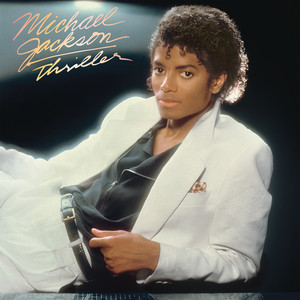
Michael Jackson’s 1979 album, Off The Wall, was his first not released by Motown—who had been famously controlling of his artistic output. Despite the fact that he had been famous for years, it was, in many ways, his debut. And it was a successful one, too, yielding four top-ten hits Yet, at the 22nd Grammy Awards, it was shut out of all major categories. It was completely passed over for Album of the Year, and only won a single, measly award: Best R&B Vocal Performance, Male. Michael Jackson did not want to be an R&B star. He wanted to be a pop star—the biggest one in the world, at that. But he felt as if the white audiences and critics and award ceremony jurors would always box him into that category, pushing him away from a complete mainstream takeover, relegating him to those small awards nobody cared about. And the only way to stop this? Create an album so infectious—so perfect in its pop appeal—that nobody could deny him anything. And how’d he start that? A single with Paul McCartney, of course. A teaser for white audiences, seeing MJ sing with this well-respected, well-established white Brit. It’s an awkward cut, as 40 year-old McCartney and 25 year-old MJ are fighting over the same girl and don’t seem to have a lot of chemistry, but it worked well enough; Jackson’s foot was in the door. What followed was perfection. The hooks had hooks. The deep cuts would have been the most popular song of any other artist. There is not a single wasted note—not a single flaw in the utter commercial sheen of it all. Michael Jackson had not only won, but he had shaped the rest of the culture in his image. The music video—the male pop star—the Black pop star—all thanks to him. Thriller won seven Grammys and went on to become the best-selling record of all time. It is very likely nothing will ever beat its sales. When will we, a fragmented culture under social media, ever collectively have such a singular event ever again? Looking back, you see MJ as an old emperor, presiding over his throne with such power that all you can do is hope to emulate it.