1001 Albums Summary

Listening statistics & highlights

96
Albums Rated
3.18
Average Rating
9%
Complete
993 albums remaining

Rating Distribution

Rating Timeline

Taste Profile

1960
Favorite Decade
Soul
Favorite Genre
US
Top Origin
Balanced
Rater Style ?
12
5-Star Albums
3
1-Star Albums

Breakdown

By Genre

Tap a bar to see the albums behind it

Top Styles

Tap a bar to see the albums behind it

By Decade

By Origin

Albums

You Love More Than Most

AlbumYouGlobalDiff
The Piper At The Gates Of Dawn
Pink Floyd
5 3.1 +1.9
Juju
Siouxsie And The Banshees
5 3.33 +1.67
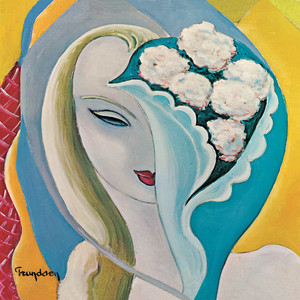
Layla And Other Assorted Love Songs
Derek & The Dominos
5 3.38 +1.62
Sound of Silver
LCD Soundsystem
5 3.43 +1.57
Songs For Swingin' Lovers!
Frank Sinatra
5 3.51 +1.49
The Miseducation of Lauryn Hill
Lauryn Hill
5 3.66 +1.34
Apple Venus Volume 1
XTC
4 2.83 +1.17
E.V.O.L.
Sonic Youth
4 2.9 +1.1
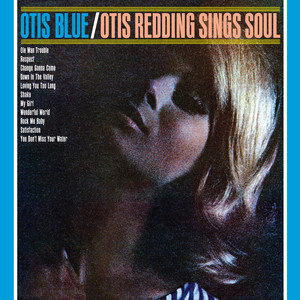
Otis Blue/Otis Redding Sings Soul
Otis Redding
5 3.91 +1.09
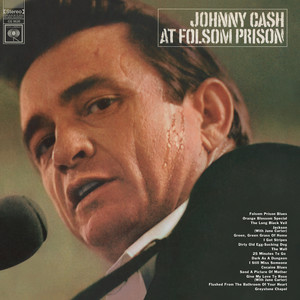
At Folsom Prison
Johnny Cash
5 3.96 +1.04

You Love Less Than Most

AlbumYouGlobalDiff
Better Living Through Chemistry
Fatboy Slim
1 2.98 -1.98
A Northern Soul
The Verve
1 2.92 -1.92
Warehouse: Songs And Stories
Hüsker Dü
1 2.86 -1.86
The Suburbs
Arcade Fire
2 3.49 -1.49
Iron Maiden
Iron Maiden
2 3.4 -1.4
Get Behind Me Satan
The White Stripes
2 3.38 -1.38
Doggystyle
Snoop Dogg
2 3.35 -1.35
Sea Change
Beck
2 3.33 -1.33
The Specials
The Specials
2 3.29 -1.29
Beautiful Freak
Eels
2 3.27 -1.27

Artists

Favorites

Tap an artist to see their albums

ArtistAlbumsAverage
Beatles 2 5

5-Star Albums (12)

View Album Wall
1-Star Albums (3)

All Ratings (96)

Moving Pictures by Rush
Oct 10 2025

A huge concert draw since the mid-1970s, Rush were one of the few progressive-rock acts to successfully respond to new wave. In 1980, the Ontario trio streamlined their sound with seventh studio LP Permanent Waves, which reflected influences such as The Police, Talking Heads, and Peter Gabriel's solo work. It featured “Spirit Of Radio,” an exuberant blend of pop, metal, and ska which showed that lyricist and drummer Neil Peart could write songs with universal themes. The band were also experimenting with nonstandard instrumentation. High-pitched singer and bassist Geddy Lee was now credited with Mini Moog, Oberheim polyphonic, and Taurus pedal synthesizers. He would multitask onstage, using all his limbs to recreate the record’s technological advances. The followup was even more accomplished—notwithstanding the lame visual pun uniting its title and cover photo. Moving Pictures opens with the FM radio staple “Tom Sawyer.” This anthemic ode to individualism stacks virtuoso guitarist Alex Lifeson’s heavy riffs against a gleaming electronic backdrop, while Peart fires off rapid percussion rolls in support. Lee’s melodic vocal illuminates the plea for privacy “Limelight,” while “Vital Signs” marries a dramatic refrain to futurist reggae.” The Camera Eye” sees a return to winding epic mode, but with an urban rather than fantasy setting. Moving Pictures has now been certified quadruple platinum, the biggest selling album of their 30-plus years (and counting) career.

Blonde On Blonde by Bob Dylan
Oct 11 2025

Bizarrely, in the aftermath of the infamous Manchester Free Trade Hall “electric” concert on May 17, 1966 (erroneously bootlegged as “The Royal Albert Hall Concert”), at least two people claimed the voice that infamously branded Dylan “Judas” was theirs. It seems strange anyone is proud of the attack because, on hindsight, it was horrifically misguided. If 1965's Highway 61 was the impressive rock ‘n’ roll debut, then this album, which followed six months later, was no simple consolidation; it was Dylan providing the new genre with its first masterpiece. Blonde On Blonde’s wild blues establishes a sense of late-night rants, reflections, and desperation. The direct rock 'n’ roll songs such as “| Want You” switch in a heartbeat into heartbreaking ballads such as “Visions Of Johanna” or the touching melancholy of “Just Like A Woman,” while closer “Sad Eyed Lady Of The Lowlands” is a manifesto for the lovelorn. Surreal yet perceptive, Dylan’s poetic observations suggest that the “voice of a generation” tag is more deserved for charting an age’s inner feelings rather than protesting its political beliefs. This was rock's first double album and its success helped ensure that progression, experimentation, and excitement became key to rock ‘n’ roll’s outlook. Little wonder, then, that the cover photo is blurred. In 1966, Bob Dylan was, in creative terms, moving so fast that the rest of the world was struggling to catch up. In many ways, it never did.

Rain Dogs by Tom Waits
Oct 12 2025

If the crash and honk of 1983's Swordfishtrombones upset Tom Waits fans weaned on beat poetry and piano ballads, then Rain Dogs had them crying into their bourbons. Musically, Swordfishtrombones was Waits arriving in a new town and trying to find his place; by Rain Dogs, he had made himself at home, albeit in a battered tin shack a long way out by the freeway. Whether the romantic boozehound Waits played in the 1970s was born from autobiography or imagination has long been a matter for conjecture, but he is certainly in character here. Rain Dogs tells of a demimonde populated by Chinese barflies, blind firemen, one- armed dwarves, a slaughterhouse boss named Uncle Vernon, a Puerto Rican mistress with a wooden leg— and that is just the first three songs. It is a song cycle about life on the fringes of society, were a society this unbalanced ever likely to exist. The dementia of the lyrics finds echo in the music, a rag-and-bones, Weillian clatter of thumped percussion and parping horns, beer-hall pianos, and twitchy guitars (played chiefly by Marc Ribot, though Keith Richards guests), accordions, pump organs, and banjos. The fragile “Time” evokes Seventies Waits,”Blind Love” is as close to country as he has ever come, and “Downtown Train” was tamed by Rod Stewart, but Rain Dogs is defiantly liberated from compromise and convention. Naturally, it turned into his biggest selling record, since when it has become a staple in press surveys listing the best albums of the 1980s.

Songs For Swingin' Lovers! by Frank Sinatra
Oct 13 2025

By the mid-1950s, Frank Sinatra was back on top of both his game and the charts, bringing the lie to F, Scott Fitzgerald’s credo that “There are no second acts in American lives.” Regrouping with Nelson Riddle late in 1955, Sinatra mapped out a record with avery different flavor. What emerged from these sessions, held a month after Sinatra’s 40th birthday, was day following night. Next to In The Wee Small Hours’ scotch-soaked, 2 a.m. atmospherics, the euphoric Songs For Swingin’ Lovers! is a sunny summer afternoon walk in the park, positively skipping with joie de vivre. Sinatra never sounded more at ease, breezing giddily around “You Make Me Feel So Young,” delivering “How About You?” as though it is one long marriage proposal, and practically winking his way through “Makin’ Whoopee.” But it would all be wasted without Riddle’s glorious scoring. Legend has it that his unsurpassable arrangement for “I’ve Got You Under My Skin,” hurriedly completed the night before the session, was greeted with spontaneous applause by the musicians who played it on January 12, 1956. The resulting album is the closest any artist has come to defining the Great American Songbook. However, keen-eyed students of pop music may also notice the symmetry in the 15-cut, 45-minute track listing. Truly, the art of the three-minute pop song begins and ends here.

Juju by Siouxsie And The Banshees
Oct 15 2025
Dummy by Portishead
Nov 04 2025
Rocks by Aerosmith
Nov 07 2025
Roots by Sepultura
Nov 14 2025
Odessa by Bee Gees
Dec 04 2025
Armed Forces by Elvis Costello & The Attractions
Dec 05 2025
D by White Denim
Jan 12 2026
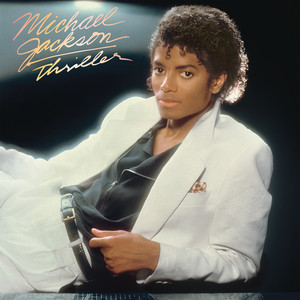
Thriller by Michael Jackson
Feb 14 2026
Bad by Michael Jackson
Mar 07 2026

Balanced

Average rating is within 0.15 points of global average.

Other

Album origins are grouped into three buckets: US, UK, and everything else. “Other” means the artists you rate highest are from outside the US and UK.