1001 Albums Generator
Day 1
"We were in a dressing room next to the Arctic Monkeys. This time most of us had ventured out to see some bands, leaving just Mikey's sister and Ian curled up in separate corners of the dressing room trying to sleep. Mikey's sister had just managed to doze off when a champagne bottle flew over the partition wall and smashed on the ground dangerously close to her head.
Ian, not yet asleep, witnessed this, grabbed the bottle from the floor and stormed over to give the excitable children from the Arctic Monkeys a piece of his mind. I returned to the dressing room a few minutes later to find Ian kicking their dressing room door in while wielding the shattered bottle as a weapon and shouting, 'which one of you little cunts threw this?!!! Own up!!! Oi! Trophy Head, was it you? You are not fucking with the Kaiser Chiefs now. I'm going to kill you.'" - Eddie Argos, 'I Formed A Band'
This album came out when I was 16, and I loved it. It was miles ahead of all the other bands doing similar things back then. They had an amazing rhythm section, lyrics with actual wit and flow and details chosen for effect rather than mindlessly accumulated. I'd gone off them a bit by the time Humbug came out, and they've turned into trophy-headed little cunts, but their music has mostly kept to a fairly high standard while trying different things. They've done a pretty good job of making rock music that draws on music from the last 20-ish years without being reliant on backing tracks, and I think that's the bare minimum any band should be doing, but as that isn't the case I applaud them for it.
The moments that hold up best on this one are the funkiest, lightest on their feet and the most vulnerable, where the jokes are self-protective. The lumbering heaviness that briefly dominated their sound was already present in places, and those have always been the bits I like the least. The weakest song for me has always been Perhaps Vampires, which certainly isn't a plodder, but it's played with a ferocity that steamrollers the groove. I guess they were quite into The Jam at the time. A Certain Romance turns into one of the best songs, but starts out as Ocean Colour Scene. From the Ritz to the Rubble, on the other hand, is all about rhythm and space.
Elsewhere we were talking about recent talky bands, and while Yard Act seem to be getting compared with The Fall, I think they have more in common with this album. They come across like decent and funny people from what I've read, too, so it's a shame they're just not in the same league. I don't know if I'd call this a classic, but it's still my favourite of theirs and one I'd rank above a lot of albums which do get put in that category. It was a real pleasure to listen to it for the first time in a few years.
For me, this album highlighted the limitations of a one-day challenge and of a lot of online music writing, in which context is reduced to the decade of release, the instrumentation and the country of origin.
I don't think that even the very best music can fully transcend the context in which it was made. I could say I liked it, but I don't think that's any more worthwhile than listicles that rank the Holy Bible as a Britpop album, or the 1001 Album Club podcast, which I gave up on after half an episode because they described Ian Dury as "British whimsy bullshit" that reminded them of a "more up-tempo Syd Barrett."
This has sent me down a bit of a rabbit-hole, thinking about which aspects of culture we pass on, which we forget and why. I might like it even more if I understood it better, but I won't understand it without wider reading and listening into the social context, Ray's career to date and contemporary country, and I'm not sure I like it enough to make that commitment. But that's no criticism of Ray Charles; it's a ridiculously high bar for anyone to vault, and I appreciate there must be very good reasons that this music has lasted and will continue to last better than the vast majority of stuff I love.
This was the first Pavement album I heard, when a friend lent me the expanded version and The Velvet Underground & Nico on the same day. I immediately loved this one and they've been one of my favourite bands since. 1969 Live ended up being the album that made me fall for VU, so I clearly have a thing for sloppily played country rock.
The early versions of these songs in Gary Young's garage studio with him on drums aren't bad, but they show the band was right to hire a proper mixer (who could also play piano) and to bring in a drummer with a slow swinging style who didn't greet audiences on the door with free cabbages and abandon songs partway through to attempt cartwheels. The early versions of several Wowee Zowee songs show they were right to hold them back and they were thinking carefully about how to make the album flow well as a whole. The weak link is Hit the Plane Down, though it works as a short, sharp shock to take you from the delicate, yearning prettiness of the preceding songs to the mock-epic closer. I like having at least one of Scott's songs per album, but Coolin' By Sound is a better song and maybe it would have worked as well in that position. I love this record, but if I was going to recommend just one Pavement album that people should listen to, it would be Wowee Zowee.
1001 Albums Generator
Day 4
My knowledge of REM is pretty limited: I like Murmur, prefer Reckoning, I have Green and find parts of it quite irritating, but otherwise I mostly think of them as a good singles band.
Knowing that they love Wire, and cover them on this album, I wonder if the title is a reference to Document & Eyewitness; an acknowledgement that these songs are based on secondhand reportage rather than personal experience.
Predictably, I wasn't keen on their version of Strange as it sounds bombastic and loses the creeping dread of the original. However, I suppose it was more appropriate to the "morning in America" period that its appearance masks the fear and violence within.
Exhuming McCarthy is one I'd been looking forward to hearing. It's a stiff Motown pastiche with a really funny refrain that made me think of management self-help books and team bonding away-days ("you're sharpening stones, walking on coal, to improve your business acumen"). I also like the sampled speech and typewriter. I don't think I've previously given REM enough credit for how funny they can be. For example, The End of the World is We Didn't Start the Fire, in a style that pre-empted (and maybe influenced) They Might Be Giants. I always thought of Michael as really serious and a bit pompous, when he's obviously just shy. I get that myself, so I should have known better.
There are a lot of references to fire in the lyrics, which is apparently alluded to on the sleeve. At the risk of sounding like the bit on AllMusic where it lists 'themes' and always includes "guys' night out," that made me think of illumination, anger, destruction, knowledge and the Prometheus myth. However, the late 80s production and Michael's often oblique lyrics leave me cold. On my first listen, I was enthusiastic, but by the second I'd had enough of his brittle, keening voice and tendency to write half of a good melodic phrase and then run it into the ground rather than develop it.
As a rule, I prefer their more open, jangly songs, where my favourite elements (Peter's melodies and Mike and Bill's vocal harmonies) have room to shine and there's less of a sense of going nowhere fast. Having said that, I get the feeling this one is a slow burner and I need to give it a bit more air.
1001 Albums Generator
Day 5
I haven't thought about this one much as I've had a bit of a hectic day, but I've been meaning to listen to it for ages and I loved it. The Cure are another huge 1980s band I haven't listened to in any depth. I really like all the obvious singles, but hadn't listened to any albums before today. The style and sound of this one is exactly my cup of thrills.
1001 Albums Generator
Day 6
I used to talk about music late into the night with the friend who’d lent me Crooked Rain, while sharing a bottle of Hennessy he’d drunkenly splashed out on while walking back from a night out.
One time, we watched Alice in Chains’ MTV Unplugged session, while he told me what had happened to Layne Staley. It’s a powerful show, but it felt like rubbernecking. Even by 1996, he looked broken, hunched over his lyric sheet, with Jerry’s sweet harmonies seemingly covering for his frailty as much as enriching his melodies.
That performance aside, I think of Alice in Chains as one of several hard rock bands erroneously lumped in with grunge, despite having no connection with punk and because they were contemporaries who shared the yarling vocal style and lack of glamour.
I’m not a big fan of the art=pain idea. The fact he was really hurting isn’t enough to make it good. If you divorce the music from the tragic biography, there’s not much in it to convey the depth of feeling, so I’m left with little more than the thought that these guys have spent a lot of time practising licks. I don’t mean to criticise them for proficiency or for being show-offs (what else is a rockstar supposed to do if not seek attention?); their weakness is in the gap between the emotion they want to convey and how they go about it.
It reminds me of kids who had mundane lives in term-time but were full of stories of the amazing adventures they had during the summer when no-one else was around. Alice in Chains aren’t fantasists, but they’re similar in one sense: because they’re annoying it’s easy to miss that they really need to be liked and this is how they’ve learned to seek affection. It comes across like someone showing you a fresh wound on their wrist and then doing a kickflip. They aren’t ready to be honest about what they want and aren’t ready to receive it if offered.
I also dislike the production. Given that I quite like the Unplugged show and the way Layne and Jerry’s voices sound together, I can’t help wondering how I’d feel about this album if it had been recorded by Albini. I want someone to sharpen and dry out the sound, making the drums kick like a pissed off mule against a wooden gate, rather than someone trying to do as much damage as they can to a tin shed with a sack of fish. I want it to swing rather than plod. Basically, I want it to be either In Utero or Sleep’s Holy Mountain and it just can’t.
1001 Albums Generator
Day 7
Homer Simpson: "I never knew you were such a Beatles fan."
Ned Flanders: "Of course I am! They were bigger than Jesus!"
The Hitchhiker's Guide to the Galaxy tends to be remembered mostly for concepts and isolated jokes (towels, the Infinite Improbability Drive, Paranoid Android etc), but some of Douglas Adams' observations of behaviour have stayed with me. One of these is a moment shortly after the Earth is demolished. Arthur Dent, having narrowly escaped, is trying to get his head around it. He thinks of his parents and his sister, that he'll never see them again. He doesn't react; it's just too big. He thinks about the person he stood behind in the supermarket queue a few days before. The whole supermarket has gone, and everyone in it. He panics. He tries to start small again and build up, but when it hits him that there's no longer such a thing as a McDonald's burger, he passes out.
Talking about The Beatles can be too much to take in; I think that's one of the reasons us fans can be such anoraks. Peter Jackson's Get Back was fantastic because it indulges that impulse to collect minute details, but also because it makes The Beatles smaller, by dropping us right in there at a moment when they were still four friends writing songs, making each other laugh, with a future together still available.
This is my way of making them small: talking around the subject to remind myself that this was an album made quickly by a group of bright young men, "a good little rock 'n' roll band," as McCartney puts it. They were still excited just to be doing it. George gets his first songwriting credit here, and maybe it's telling that it's the first song of unmasked, unguarded personal discontent. A sign of things to come. Or maybe it was just a miserable day on a long tour and he felt a bit under the weather in a hotel in Bournemouth. I'm getting ahead of things. They hadn't even been to America yet. So we focus on the details: the verses of All I've Got To Do, and the precise, unique timbre of Ringo's cymbal smacks.
Better writers than me can and have talked about their place in the lineage of vocal girl groups, the pros and cons of their covers versus the originals etc etc. The vastness, richness and importance of their story don't persuade me they're a great band; the music does that. But they do help to remind me how miraculous the act of making songs is, and make me want to read, write and discuss other artists with the same close attention. This is the album of theirs I heard last, and not the one I have the greatest personal connection with, but it's absolutely thrilling stuff.
1001 Albums Generator
Day 8
Firstly, Keith Haring painted the pink background of the sleeve, and yesterday marked 32 years since he died. He was just 31. If you only have a few minutes to spare, don't read my waffle, go and look at some of his work instead.
Duck Rock makes me think of Malcolm McLaren as a rock ‘n’ roll fan who was slightly too young for the first wave. It was the era before pirate stations, when radio meant The Light Programme, so it would have been big brother music. It wasn't until he was 18 that Radio Caroline and Radio London started up, and I can only imagine how exciting that was. Perhaps as a teenager he shared singles with friends, and went to pubs that turned a blind eye to hear local bands who’d got hold of an import no-one else had to cover in their set. By the time of the British Invasion, maybe there was a new confidence among British pop fans that they too could innovate and take the lead but, even for The Beatles, there was nowhere more fascinating than America. When Malcolm visited New York and saw first-hand that pop was being reborn he wouldn’t have wanted to miss out again.
With the samples of the World’s Famous Supreme Team woven through the music, Duck Rock captures some of the excitement at the beginning of the rap era with the feel of a lovingly compiled mixtape. The blend of diverse traditions – funk, mbaqanga, toasting etc – unpicks some of the threads of the culture McLaren was exploring. The addition of merengue, square dance and his own fake American accent emphasises the sense of an outsider looking in, trying to take in the whole city at once, and understanding hip-hop as a folk-dance culture while trying out something that could easily have sounded as corny as H-E-double-hockey-sticks. The mix of a white country tradition with Black South African music reminds me of the blend of televangelists’ frenzy and west African funk on My Life in the Bush of Ghosts, but with a less anthropological and more playful feel.
Of course, McLaren was always a provocateur, and for him the appeal of piracy was in the romance of rebellion and the celebration of theft. Never being in an underdog role, that pretty much always led him to some degree of exploitation. His advocacy of home taping through Bow Wow Wow is defensible; his ideas about “noble savages,” treatment of Anabella Lwin and the abandoned Chicken magazine much less so. Duck Rock brings up some huge issues with ownership and authorship in the emerging “world music” market which were already present in folk and blues and continue to be discussed with regards to hip-hop today. There’s also the question of how much McLaren had to do with this record musically. Vocals aside, I imagine him as the forerunner to Paul Morley in the Art of Noise, suggesting the concept, sitting in the studio chatting excitedly with Trevor Horn about their favourite records and then letting him get on with it. For a record made by a super-producer team, it has the feel of something a friend made for you by hovering over the pause button, and perhaps that’s where McLaren earned the credit he is due.
"Deep breath, stay calm, try and hide those sweaty palms."
At first, I liked Talking Heads. I got into them at around 18, after reading Rip It Up and Start Again. I bought lots of albums because of Simon Reynolds’ writing about them, and the chapter on Talking Heads and Wire was among my favourites. At that age, I still liked the idea of a band as a self-contained unit of guitars, bass, and drums, ideally with one non-musician. This album was my favourite; it seemed a good balance of that tradition and musical experimentation, before they expanded into a funk orchestra with Remain in Light.
I had a rough time over the next couple of years. I’d moved from a quiet, rural place to go to university in London, running away from teenage drama with the vague feeling that everything would be better when I got there, and I was completely out of my depth. I’d always sailed through exams and essays with ease, which made things look alright from the outside and taught me to see what intelligence I had as a kind of protection. Suddenly, I felt like I couldn’t even read any more. Things I didn’t immediately understand felt like attacks. At some point during all of that, Talking Heads stopped making sense to me. Their music felt purely intellectual in a way that was beyond me. With the exception of I Zimbra, which I always liked, it felt like something that needed to be decoded. I thought of it as emotionless. I didn’t like feeling that I was missing something obvious.
A lot has changed since then, thank god. I’ve come to understand social phobia better. I’m less scared of being thick and better at asking questions. Recently, I listened to Speaking in Tongues and quite enjoyed it. Even so, I had some trepidation about going back to this one. It has the reputation as the one that fans like the most, rather than the one we’re supposed to admire. The Revolver to Remain in Light’s Sgt. Pepper, perhaps.
Then it hit me: melophobia, the fear of music. Some of the symptoms are common to other forms of anxiety, including elevated heart rate, panic attack, breathlessness, an urge to flee, anger or loss of control, and the inability to speak or think clearly. Maybe that last one is why it took me 15 years to pay attention to the title. It’s not cold and emotionless at all, it’s music of fear.
The scene is set with Hugo Ball's sound poetry, a form that erupted during the cataclysm of "world war without end...revolution without beginning." It appears as form without content, but the disrupted content exposes the futility and arbitrariness of form alone. The Dada manifesto, in translation, calls Dada "the word soul," the definitive essence of communication without borders in a time of unstoppable turmoil. It can't give you answers. There is no sense, only sensation.
This sets up an album that's not funk as dance music, but as a mind itching for a definite answer where there isn’t one; David Byrne freaking out in a freezing bedsit with the radio on and the news on the tv. The relentless rhythms and warped, psychedelic guitar tones put me in the cortisol-zapped mind of the vocalist as he races through every trigger and hopelessly cycles through every available coping mechanism.
At first glance, Electric Guitar seemed like an outlier to me, as it essentially retells the concept of Rush's 2112, in which an authoritarian regime has banned rock. It seems far-fetched from a comfortable western perspective. It might seem more immediate to a paranoid, panic-stricken mind, or indeed to anyone who had to etch pop songs onto old x-rays to share them. To put it in an historical context, the album was composed during the Iranian revolution; the band went into the studio to record it about 2 months after the Ayatollah took control in Tehran.
I appreciate Fear of Music a lot more now I'm not too close to take it in. It's a tense record, but that's kind of the point, and I find it less claustrophobic than I used to. I’m really not going to make it through The Young Gods, though, am I?
P.S. because I just noticed this and can't resist putting it in: the Dada Manifesto says that "In German it means 'good-bye,' 'Get off my back,' 'Be seeing you sometime." I wonder if Patrick McGoohan was a fan.
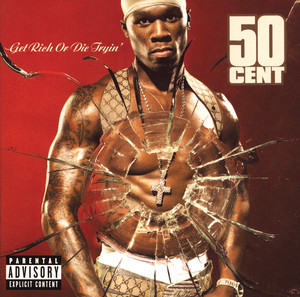
The real OG was Schoolly D. His 1985 single PSK What Does It Mean? is widely credited as the first gangsta rap song, including by Ice-T, who said it inspired him to write 6 'n the Mornin'. I don't know if Schoolly was still living at home or didn't have a phone in those days but Ice called him at his mum's, asking him to listen to his new track before he put it out. He wanted Schoolly to know he was a fan, not a biter.
Ice had already used crime, and specifically murder, as a theme on 1984's Killers, but the murderers were abusive husbands and spineless young cops, and he was warning against getting caught up in it. Schoolly D never gives the Park Side Killas their full name in PSK, but he spells out that they're the in-crowd and if you don't already know what it means, you're not. When he hears another MC trying to copy his style, he pulls a gun on him.
I prefer his earlier single Gangster Boogie, which has a fluid vocal cadence and groove that anticipates Paid In Full. PSK is closer to the cutting edge of 1984: the hard, sparse beat of Run DMC's Sucker MCs. However, its icy, cavernous sound is like nothing else I've heard in rap. The beat was made by Schoolly on a 909, while DJ Code Money dropped in vocals from The Official Adventures of Flash Gordon and Beside's Change The Beat. It's absolutely drenched in reverb, but steely. Around the same time, The Jesus and Mary Chain were making a similar sound on In A Hole. They would later explore their love of rap on Automatic, but at this point it was almost certainly a coincidence.
As Schoolly put it, "It was anti-radio! It was anti-establishment. It was anti-everything. That’s the fucking difference." His "art first, money second" ethos may have been left behind a long time ago, but if there's any doubt that PSK's influence is still being felt today, the friend who phones Schoolly D in the second verse is called Chief Keith.
6 'n the Mornin' is superior storytelling though, and Wreckin' Cru member The Unknown DJ eases off on the reverb to let Ice-T's narrative take the starring role. Like Killers two years earlier, it depicts a South Central where violence is constant and seemingly at random. His delivery is laid back; there's no cause for excitement, this is everyday. This time it's a first person tale, but aside from a reference to "hos catchin' whiplash tryna glimpse the T," the narrator could be anyone. When he and Sean get pulled over by the LAPD they were probably driving safely. The cops find concealed weapons and Ice spends 7 years in jail. When he comes out, crack has taken over the streets.
By 1991, a lot had changed in rap. Musically, it's a period with fewer drum machines and more sampled breaks. 5 years on from the genre's first platinum album, Raising Hell, it was a big business. You can bet Schoolly D's mum didn't answer his phone any more. The PMRC had made artists put advisory stickers on their records, which must have felt like a dare to take things further, but also contributed to a growing defensiveness, with lyricists constantly calling out their critics like Axl Rose and reminding listeners of their past glories. It's depressing, but understandable for artists who have worked their way up from nothing and are surrounded by people who either want to take their place, ban their music or otherwise hurt them. We're also in the CD era, where every album has to be padded out to over an hour with skits and interludes. You have to wait until track 3 for an actual song.
As a result, I haven't got through the whole thing in one sitting yet and my thoughts are very much first impressions. It's lean, fast and toppy, with few hooks. So far, my favourite songs are the James Brown sampling title track and Bitches 2, where the bass and trumpet give more dynamic and melodic variation. I prefer the slower, smokier records of the period: double bass, horns and piano, the smoothness and melodicism of A Tribe Called Quest, or Cypress Hill.
However, the furious intensity does reflect the way things had ramped up in the previous few years, with the crack epidemic and the rate of homicides of black males aged 14-24 roughly doubling between 1984-89. Midnight is presented as a prequel to 6 'n the Mornin', but it feels more like a sequel, with the chaos of gun battles, police chases and explosions playing out over the vast cacophony of Iommi guitars, Bonham drums and a woman's screams.
To be honest, I found the whole thing exhausting. If I tried to explain how it makes me feel, I'd get into the same "old man yells at cloud" territory as Hans Keller, when he interviewed Pink Floyd on The Look of the Week in 1967, so I'll give him the last word: "Why has it all got to be so terribly loud? For me, frankly, it's too loud, I just can't bear it."
1001 Albums Generator
Day 11
At the turn of the millennium, the singer of an up and coming "alt-country" band went solo to make a top-heavy, overlong, yet pleasant album with the kind of guestlist that gives the monthly reviewers butterflies.
He was deeply reverent of artists from the past and the wasted genius image they exemplified in a way that invited comparison with them, but he did not possess the lyrical, melodic or vocal gifts of, say, Evan Dando.
Later, his musical reputation would be based on his first two solo records and his perceived eccentricity, which meant an apparently voracious taste for speedballs and recording lots of albums no-one wanted to release. The two albums still turn up in lists like this one, but from roughly 2002-07 he was effectively replaced by a younger, prettier, more talented "new new Dylan," Conor Oberst.
So, what about this album, Gold? I bought a copy in a charity shop a few years ago, but I had to listen via streaming today as it soon ended up back in the donations pile. The title describes its smooth, expensive sound and anticipated its UK certification for sales. It has the kind of guestlist that gives the monthly reviewers butterflies. It's also characterless and, as for overlong, this fucker is the length of a football match.
Both Heartbreaker and Gold are in the book on which this series is based, but if you can't find 1001 albums better than both you aren't trying hard enough.
1001 Albums Generator
Day 12
In 2002, Doves didn’t exist yet. It was the year I turned 13 and I got music from daytime Radio 1, compilations and mixtapes my brother and I made for the frequent drives back to Cornwall to visit my grandma. We’d moved to Dorset a couple of years before, but none of us had wanted to go and my mum would drive us back at every opportunity. The compilations were increasingly dance ones rather than chart ones; Ministry of Sound and the like. The tapes were getting heavy on rap. To hear the songs we liked we'd started listening to Westwood; another man who called himself Big Dog and ought to have been taken to live on a nice farm in the country. My favourite new albums of the year were probably Lord Willin’ by Clipse and God’s Son by Nas. Eminem had released his first disappointing album, but we weren’t ready to admit it to ourselves yet. Jay-Z’s Blueprint 2 was also patchy, but as a double CD we’d had to split the cost to afford it and we were going to make the most of it.
There was a lot of good pop on the radio, including Sugababes and Liberty X, and lots of great R&B, but I was getting a sense that there was some music I wasn’t supposed to like. When I started a new school in September, a girl asked me my favourite album and to fit in I said the first Linkin Park, which I’d been really into about a year before. It was a good call; hers was Sum 41’s All Killer No Filler. Occasionally I’d hear Last Nite by The Strokes and thought it was pretty good. I liked the bit about aliens and not being understood. Other than that, there was no rock revival. Seven Nation Army wouldn’t be out for another year, so the White Stripes didn’t exist either. Rock on the radio meant Oasis’ Little by Little or The Scientist by Coldplay, and I wasn’t interested. If I’d heard Doves at the time, I’d have thought they were another Coldplay without tunes.
In fact, when I heard them on the BBC coverage of Reading in 2005, that’s exactly what I thought. Post X&Y, and the horror of Fix You, that was much more offensive to me than it had been circa Clocks. And at least one of them had a beard. That was enough to stop me getting into The Magic Numbers, and they actually had some songs I liked. There are a lot of rules when you’re a teenager. Other than that, they passed me by, except for the Kingdom of Rust press campaign, which annoyed me because it seemed specifically aimed at helping them “do an Elbow.” With hindsight, not everything has to speak to me about my life, and obviously that’s just good marketing sense.
If I had heard Doves in 2002, I would have connected the Pounding beat with Coldplay’s Politik; but I wouldn’t have considered the ecstasy reference of their name or that both bands grew up in a post-rave culture dominated by four-on-the-floor Eurodance. Now, listening to Words, I hear the post-baggy chiming guitars and harmonies of Ride, delivered with a clarity and confidence that comes from experience. The descending right hand organ figure at the start of The Sulphur Man sounds like a disco violin part. I’m moved by the sorrowful, electronic gospel of Satellites. Hearing that and the almost William Orbit shimmer of the title track I’m pleased to hear a rock band keeping their ears open to recent pop, though a couple of years after Never Ever and Pure Shores I wonder if it already sounded a little dated. With their epic vagueness and Jimi Goodwin’s doleful voice, they do fit into that post-Radiohead, post U2 lighters-aloft movement, but perhaps not as neatly as I had presumed.
Even so, I haven’t changed that much. My initial idea for this series was going to be a simple taste test: I would listen to each album and mark it according to whether it was better, worse or as good as Glorious: The Singles 97-07 by Natalie Imbruglia. Bad news, Doves.
In progress - took a day off to go to a gig but will write about this at a later date
To be completed
To be completed
To be completed
1001 Albums Generator
Day 17
I had so many associations with this record even before I put it on. I think of the rave scene from which The Prodigy emerged, and the radical free festival culture with which it cross-pollinated. Those who thought they could see a way to a more communal, compassionate way of life, and working class kids who spotted an opportunity to make something of themselves. The Criminal Justice Act versus the emission of a succession of repetitive beats. Lots of muddled thinking that would later curdle into paranoia. That self-proclaimed "Thatcher on drugs," Paul Staines, whose corrupt, ego-libertarian ethos has ultimately done more to shape the country we've become than either the kids he sold tickets to or Major.
Mostly, though, I think of Keith. After years of going to DIY gigs and workshops, reading and making zines, and putting on exhibitions in disused Edwardian toilets, I have never experienced a single moment more punk rock than the first time I saw the Firestarter video on Top of the Pops. It's in the amazement that an adult could look like that, sound like that, be so wild, and not just be allowed to do it or get away with it, but to take people with him. To be so lovable.
It's something I also found in the nonsense poetry of Spike Milligan and would later find in Syd Barrett and Pixies and Anton Henning: the sheer glee of people throwing things together that aren't supposed to be. It's also there in the culture-jamming collage of Oasis' Shakermaker, though I suspect I'll have an opportunity to persuade you of that one at a later date. I love the rough edges that capture the moment and energy of throwing paint around in the sweet spot between purpose and spontaneity. In Liam's choice of samples for Charly I can hear the playful resistance of people dancing in spite of the warning signs. I didn't realise in 1996 that the rage in Firestarter erupted from a movement arrested.
Liam has since denied any political intent to Music for the Jilted Generation. I can see why he wouldn't want to limit the resonance of his work to one particular moment. However, the artwork, titles and vocal samples say otherwise. Also, with the caveat that this isn't my area at all and I'm probably missing something, I feel the politics of the moment have far more contemporary relevance - from modern protest movements to digital piracy and crypto scammers - than techno.
These days, the first thing that comes to mind when I think of the Prodigy is the friend who showed me a documentary about the band and pointed out that Keith Flint had the same speaking voice as her grandma. Similarly, this album belongs to a different generation and I can't always understand where it's coming from, but I'm sure it has a lot of good stories beneath the surface.
To be completed
Groove is in da hart
FUCK YOU I WONT DO WHAT YOU TELL ME
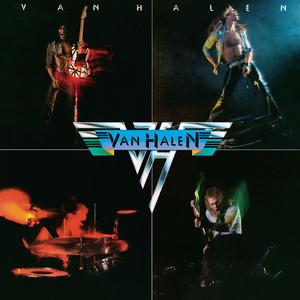
Eddie van van hail an
Listened once, to return to later
Technically proficient session men jamming in search of an idea. For a brief run of three tracks over an hour into this bloated fucker, they actually hit upon the idea of writing songs, which made this easier to get through than expected. They aren't particularly good songs, but it's something they ought to have built on.
It's the bloody Beatles' white album, shut up.
I only ever see people who aren't fans of the Fall calling this their best album. It's quite good, but every studio album they released before it is better and so are a few later albums. As Ian McCann later wrote of Middle Class Revolt, This Nation's Saving Grace is "7/10 by their own standards, 8/10 by everyone else's."
Notes TBC
Review tbc
Review tbc
Review tbc
Review tbc
Review tbc
Tbc
Review tbc, but obviously one of the best albums there is.
Review tbc - maybe my least favourite Drake, but that's still excellent
Tbc
Zombies are scary so I didn’t listen to it
Many man, I wish many men many many many men. Shot nine times. Many men
Review tbc
I just got through the whole Sweet Dreams album. God, it's boring. That one song really is the only good one I've heard by them. I thought Jennifer and This is the House were alright. Mostly, though, it's all so stiff and sterile and empty. It's a prog band trying to do pop, and I imagine this is how I'd have felt if my extremely stern, punitive IT teacher had ever tried to do a 'fun' assembly: really bored, a bit amused by the sheer naffness of it all but desperately trying not to show any emotion in case I get shouted at.
The title track lacks a second verse, but the rest of the songs are even more underwritten. It's certainly no La Roux. I don't think I'll ever get over my hatred for that kind of lifeless 80s production, either.
I have a knee-jerk cynicism about U2; I don't want to like them. I know a lot of their biggest hits, and like several of them, but I think this was only the 4th album I've listened to in full (the others being The Joshua Tree, All That You Can't Leave Behind and How to Dismantle an Atomic Bomb). Listening to One, possibly the only song here I'd heard before, I thought of John Lennon asking Paul McCartney whether he was supposed to laugh during the solo of Let It Be. The thing is, I like Let It Be. I like One, too. Zoo Station was a case of cool textures not adding up to a great song, and perhaps there are a couple too many slow songs, but I enjoyed this much more than I expected and I'm sure I'll listen to it again.
One of my favourite albums by one of my favourite bands. I prefer their 90s albums to the late 80s. This one is a bit front-loaded, but it's their best of that decade.