I really liked Michigan (2003) at the time and Illinoise is a great follow up. No way was he going to do all 50 states like he said though, and I'm glad he didn't. I grew tired of his style shortly after and haven't listened to Stevens on purpose for two decades.
Released in the last days of the 70s, this sprawling double album shows The Clash expanding far beyond their punk label and embracing the entire history of rock ‘n’ roll, from the cover art paying tribute to Elvis, to the cover of Vince Taylor’s 1959 b-side “Brand New Cadillac.” It’s one of the few double albums that I wouldn’t skip a single track, with no real filler, and so many highlights, including “Rudie Can’t Fail,” “The Guns of Brixton,” “Clampdown,” the title track. I’d even have added to it, with “Bankrobber,” “Pressure Drop” and “Justice Tonight/Kick it Over.” Over the years their poppy “Lost in the Supermarket” and “Train in Vain” got plenty of radio play. The rest of their catalog is imperfect, yet it all sounds meant to be, anchored by this masterpiece.
Who doesn't love the Boss? A few weirdos to be sure, but this is essential. Certain days I prefer Darkness on the Edge of Town or Nebraska, but it was his glorious breakthrough.
Robert Smith aimed to create the ultimate fuck-off statement of despair and horrible guitar tones, and succeeded.
Their fourth album and final installment of the band’s oppressively downer gloom trilogy which included Seventeen Seconds (1980) and Faith (1981), Pornography’s subsequent popularity is still remarkable. Part of it is thanks to the fact that despite being on a verge of mental breakdown and band breakup amidst massive LSD and alcohol consumption, the band were at their top of their game in creative innovation. Originally interested in hiring famed German kosmische architect Conny Plank, who was unavailable, they ended up with producer/engineer Phil Thornalley (The Jam, Psychedelic Furs). Smith chose him particularly for the drum sound he achieved on the Furs’ Talk Talk Talk (1981). Thornalley was to play the Martin Hannett (Joy Division) role of experimenting with coaxing new sounds from their guitar/bass/drum setup, incorporating electronics as well as sampling techniques on the avant garde title track like Brian Eno was doing with the Talking Heads and David Byrne. It took some adjustment, as he fought with Smith over a horrible guitar sound, before realizing that’s exactly what they needed. The result, as dirgeful as it is, added a splash of psychedelic colour, from the nastiest palate possible mind you, to their previously stark, monochrome post-punk.
f you count The Wailing Wailers’s first album way back in 1965, this Island debut is their fourth album. While some say the Lee Perry produced Soul Revolution (1971) is the best version of the early Wailers, I have to admit I return to later albums much more often. Even with the double disc edition that includes the original more stripped-down Jamaican version, I mainly listen to it for “High Tide or Low Tide” and “All Day All Night,” which weren’t included on the official release that Chris Blackwell “rocked up” with overdubs and a remix to pave the way for American and global success. Whichever you prefer, you get both in that deluxe version, and it’s definitely one of the top ten reggae albums ever.
Simply the very best rock & roll album of the 50s, followed by Buddy Holly and Chuck Berry. The building blocks that inspired everyone from The Beatles through Lemmy of Motorhead. Little Richard demonstrated that rock 'n' rollers did not need, nor should they have good manners. They should be flipping tables and dancing on your face.
When people talk about the San Francisco music scene in 1966 when Blue Cheer formed, Blue Cheer are never mentioned. I imagine the hippies might have been freaked out by the extreme volume and distortion and neanderthal simplicity of Blue Cheer’s music. Rather being associated with a particular place, Blue Cheer loom in the shadows as a key proto-metal influence. 55 years later, they’re clearly even more than that, as key influencers on proto-punk (MC5 and Stooges), grunge (Mudhoney) and all variations of stoner and doom psych. Pentagram were heavily influenced by them in the early days. I was fortunate to get to see them at Intonation in 2006, a few years before Dickie Peterson died. Outsideinside, released seven months later in August, arguably has better songs. Despite their debut being half covers, it’s just so visceral and heavy in a way that no other album in the 60s managed.
Just after my first week of college, my lung collapsed while cooling down from my first collegiate cross country race. I had a major surgery and was in the hospital for ten days. Through sheer coincidence, three people from my high school came to the same college. They all visited me and brought me supplies, which was extremely nice. What was more amazing was that after only being there a week, another dozen people I had just met also came. One of the DJs brought me some tapes, which included Dinosaur Jr. It seemed apt that my favorite song was “The Lung,” with one verse sounding something like, “nowhere to collapse from…” Dinosaur Jr. were the more traditional side of Sonic Youth’s multitoned distortion, harking back to both 80s hardcore punk and 70s cock rock. Dinosaur inspired me to go back and appreciate some seriously heavy music I had missed.
The friendship between David Bowie and Iggy Pop is fascinating, and should be the subject of a movie. When Bowie encountered The Stooges, he’d had several failed solo albums and was still finding his way, while the Stooges were worshipped in their hometown, and also by the rock cognoscenti on the coasts. Bowie was the student, Iggy was the master, imparting wisdom on how an essentially nerdy, intellectual guy can tap into primal rock energy, resulting in Ziggy Stardust. A couple years after Bowie produced Raw Power (1973), an artistic but not commercial success, he scooped a strung out Iggy out of the gutter in L.A. and eventually brought him to Berlin for a fruitful collaboration that started with The Idiot, a sort of dirgy dry run for Bowie’s artsy/ambient Low, then back to Iggy who had sharpened up, taking 8 mile walks outside of the Berlin wall, and became the master again on Lust for Life. With ‘Heroes,’ they released four albums in one year between them. How awesome would it be if there was Let It Be style footage of all those sessions. Low gets deserved acclaim, but LFL is packed with the most bangers, including arguably Iggy’s greatest song, “The Passenger.”
Back in the late eighties, it’s doubtful that anyone predicted that the shambling Flaming Lips would outlast most of their contemporaries to become venerable art rockers. What sets them apart from fellow indie-statesmen Yo La Tengo and Sonic Youth, is how remarkably bad the band was initially when it first started in 1983. As much-beloved live performers, the Lips’ shows consisted of nearly incoherently psychedelic originals and sloppy, intensely noisy covers of bands like Led Zeppelin. Their evolution was so gradual and smooth, no one blinked an eye when 1999’s The Soft Bulletin not only incorporated homages to late sixties Beach Boys, but also Yes’ Close to The Edge. More sonic architects than rock band now, The Lips have nevertheless rounded out their revolutionary arc by eschewing an impenetrable, convoluted version of Tales Of Topographic Oceans and have instead produced a more modest, emotional album.
https://fastnbulbous.com/flaming-lips-yoshimi-battles-the-pink-robots/
I really dug the Czars once upon a time, but haven't listened to them or Grant's solo stuff in years. It's good, but not what I've craved lately.
I've only ever liked the first couple singles the Mekons put out. I've tried repeatedly with many of their albums over the decades, but nothing else sticks for me.
My go-to album is Getz/Gilberto featuring Antonio Carlos Jobim (Verve, 1963), which makes this album someone redundant for this kind of list. But yeah, it's nearly as great.
There must be something in the water in Wales. Two of the most ambitious, quirky, 21st-century psychedelic bands are Welshmen Gorky's Zygotic Mynci and Super Furry Animals. Like Gorky's, SFA have been around for a while -- creating bold psych-pop gems with little notice, at least from North America. 1999's Guerrilla was their OK Computer, experimenting with electronica without the hyperbolic hype. Last year, when third-rate Radiohead copycats Coldplay were celebrated, SFA quietly confounded and charmed the lucky few who heard the lovely Mwng, sung entirely in Welsh. With their fifth album, Rings Around The World, SFA have reached an extravagant peak. The songs are tied together by some vague theme of global communication and information pollution. More: https://fastnbulbous.com/super-furry-animals-rings-around-the-world/
Pretty face and voice made her debut of schmoove jazz pop a hit, but there's way more CDs in landfills than in memories. Her family was way more interesting than this bland shell.
A poet who can't sing, but sure can write some incredible songs. He would later come into his own as a performer -- I saw him in 2012 and he sang and danced for four hours with only one 5 minute break between two sets, then took three encores with no breaks, at 78 years old. Amazing!
Interesting title, as soul music wasn't used as a genre term until 1961. But along with Ray Charles, Sam Cooke and James Brown, Fats played a role in expanding the horizons of R&B, planting the seeds for soul, especially the funky New Orleans variety. Everything he did was all killer no filler.
Not a bad option, Britpop for those who dislike the Britpop scene, this is more fun garagey power pop. I don't mind it, have a copy, never listen to it.
Since Spacemen 3 splintered into a million directions, it would take a family tree historian to keep track of the remnants. If your tolerance for droning psychedelia is that of a normal person, you need not worry about most of it. But you shouldn’t miss out on this one. The third proper album by Spiritualized is a decadent, luxurious bubble bath in zero gravity. Imagine Ren Hoek suffering from space madness — a little cabin fever, a little too much Spectrum and Experimental Audio Research on the headphones — thinking he has an ice cream bar with a delicious creamy center, he blissfully enjoys a lathery bar of soap. It doesn’t matter that it’s just a bar of soap, that it’s just another Brit band who can’t put on a good live show to save their lives. Sometimes you just have to lay back and take respite from the mundane absurdity that is life and take a bubble bath in zero gravity.
What? Why? No!
Bleeeah.
Massively important and influential early industrial music. Played some of it on my radio show, haven't listened to them in decades.
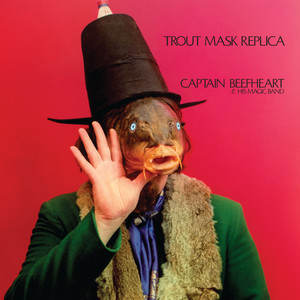
In 1974, Trout Mask Replica was my favorite record album. I would sit cross-legged on the deep shag carpeting of the basement floor, slide open the door of the gigantic fifties model stereo-TV console, and flip through the albums. Are You Experienced? was too intense, Superfly too creepy, the banana album (Velvet Underground & Nico) too terrifying, and Blonde On Blonde too boring. I didn’t get the Virgin Fugs album, but it still intrigued me. I was immediately drawn to the bright red cover of Trout Mask Replica, with a man in a goofy fish mask of alluring neon colors. Captain Beefheart was one word different from Captain Kangaroo, and other comical names were listed, like Drumbo, Zoot Horn Rollo and Rockette Morton. The sounds were strange and somewhat jarring, but it was the words, the funny nonsensical words that would come out of seemingly a dozen different voices, all cartoonish in their own way.
For the same reason that my uncle found the album difficult, frustrating and annoying, I found it funny and entertaining. I believed it was a children’s record. And who’s to say it wasn’t? I was five years old, and Trout Mask Replica was my favorite record. It was made just for me. The White Album had some songs I liked, but it didn’t hold my attention. And it certainly blew away my Winnie the Pooh and Jungle Book records. I loved to confound my grandparents and playmates with snippets like “A squid eating dough in a polyethylene bag is fast ‘n’ bulbous, got me?” They never got me. Did I even get me? It didn’t matter. To an adult it might sound vaguely sexual. But really it was just the sound of the words. After that quote, one can hear the good Captain giggling to himself and saying, “I love those words.” So did I.
Perhaps for the same reason that James Joyce admitted, if read aloud to a child,Ulysses would be better understood by the child than the adult. Did Joyce and Beefheart have children in mind when they created their works? Probably not. But perhaps in their efforts to create something startlingly new, they tapped into some of the imagination they all but lost since childhood. Like Guy Debord did with dada in the ’20’s, they ended up with a simulation of what it might have felt like when you just learned to talk.
I go on and on, but an acquired taste not for everybody. Try Clear Spot (1972)!
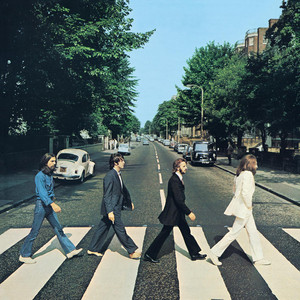
What can ya say? The final album where the Beatles were a somewhat cohesive unit. They patched together unfinished song scraps and called it a suite, and it was brilliant.