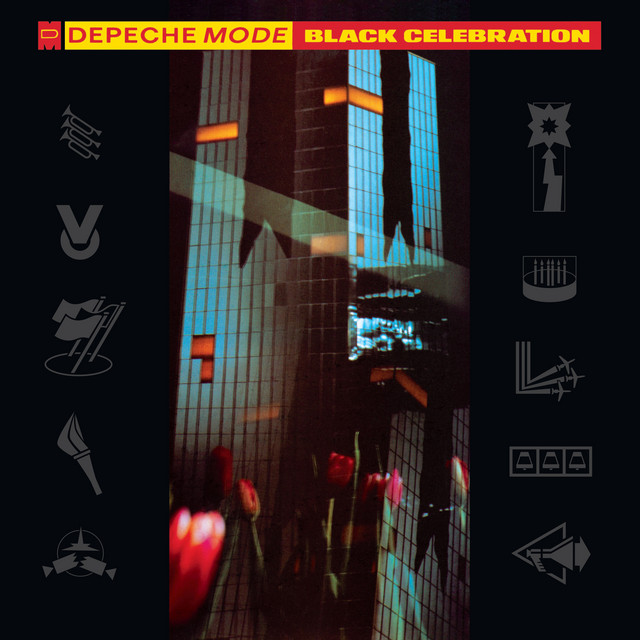
User Submitted Album
View Submitter's ProfileAlbum Summary
Black Celebration is the fifth studio album by the English electronic music band Depeche Mode, released on 17 March 1986 by Mute Records in the UK and Sire Records in the US. Recorded in London and West Berlin, it was produced by Depeche Mode, Daniel Miller and Gareth Jones. At the prompting of Miller, the band recorded the album using the "live the album" ethos inspired by the film director Werner Herzog, which led to considerable tension between the band and both Miller and Jones, resulting in neither being involved in the production of subsequent Depeche Mode albums. The album was promoted by the singles "Stripped", "A Question of Lust", and "A Question of Time". In the US, "But Not Tonight" was released as a single instead of "Stripped". In support of the album, Depeche Mode embarked on the five-month-long Black Celebration Tour across Europe, North America, and Japan, which ran from early to mid-1986. Black Celebration is considered by critics as the start of a four album series of well-regarded Depeche Mode albums, continuing with Music for the Masses (1987), Violator (1990) and Songs of Faith and Devotion (1993). Three years after its release, Spin ranked it as the 15th-greatest album of all time, and the UK's Radio X in 2011 cited it as one of the most influential albums of the 1980s. Nine Inch Nails' Trent Reznor later cited Black Celebration as a source of inspiration for his album debut, Pretty Hate Machine (1989).
 Read more on Wikipedia
Reviews
Black Celebration is the fith album of Depeche Mode and it's the first one that shows the potential of the band. Of course Music for the Masses, Violator and Songs of Faith and Devotion are better, but these are submitted already (though Faith and Devotion just now). The album has great songs in "Black Celebration", "A Question of Lust", "A Question of Time" and "Stripped". Also the Martin Gore sung ballads "Sometimes", "It Doesn't Matter Two", "World Full of Nothing" are there, worth to be skipped asap. All in all it's a bit inballanced, but gives a good impression of great things to come.
Black Celebration är en av de första skivor jag köpt. Var dessutom i Stockholm och såg dem under Black Celebration Tour. Det var min första DM konsert. (Har blivit 14 totalt) Det var den 26:e april 1986. Ni kalenderbitare vet nog mer vad som hände den dagen. Ja, det var samma dag som Tjernobylolyckan. Black Celebration - Titelspåret är mäktig. Fly on the windscreen - Släpptes som B-sida året innan på It's called a heart. DM ville väl ha den som A-sida egentligen med blev nedröstade. Tycker de borde fått sin vilja igenom. A question of lust - En av de bästa låtar där Martin Gore är på sång. Sometimes - När plattan släpptes tyckte jag den här låten var svag. Ändrade mig med åren. It doesn't matter two - När jag började lyssna på DM så trodde jag Dave Gahan sjöng alla låtar. Blev varse att så inte alls var fallet när Martin Gore steg ner från synthen och greppade micken och sjöng denna låt. Därefter sjöng han ? Of lust. A question of time - Blev en av de tidiga favoriterna. I samband med musikvideon så startades väl även samarbetet med Anton Corbijn. Stripped - Min första köpta 12" single någonsin. En av min frus absoluta favoritlåt. Here is the house - Alltid älskat den låten. Vore en dröm att få uppleva den live. World full of nothing - Gore på sång igen. Haft turen att fått sett den live en gång. Dressed in Black - Tyckte det var det svagaste spåret på plattan när den kom. Tycker annorlunda nu. Även haft tur att fått sett den live fast då var det Gore som sjöng den. New dress - När de skrev den och spelade den live så levde Princess Di vilket nog gör att de aldrig mer kommer spela den här på någon konsert. Breathing in fumes - En mix på Stripped. Lyssna hellre på den. But not tonight - B-sida i Europa men A-sida i USA. Europa drog således vinstlotten även om But not tonight tillhör topp 5 när det gäller DMs alla B-sidor. Filmmusik till Modern girls dessutom. Black day - Här var det moll. B-sida på Strippedmaxin. Kanske inte så jättebra egentligen. Detta var en alldeles lysande nominering. Här blir betygen givetvis det högsta.
The ordeal of artists going through a rough patch ironically often yields great results. After half a decade releasing stellar hit singles in the field of synth pop (albeit ones also extracted from middling or half-baked LPs), Depeche Mode felt exhausted when they reached the mid-eighties, and they also found themselves facing a pivotal crossroads: should they keep on being the whizz kids / wonder boys making British dissipated youths forget everything on the dancefloor, one hit single after the next? Or should they aim at *more* than this, and thus instill some extra substance and layering within their artistry, so as to finally create something truly valuable in the album format? And also, as they did so, should they embrace their 'darker angels' so to speak -- even at the risk of rocking a boat that was already quite unstable on a mental balance and relationship level? *Black Celebration* is the answer to those queries, and listening to it, it does not take a seer to understand which road on the fork the four British lads decided to go through. The long recording sessions for this fifth studio album were said to be quite an unpleasant affair, but the result were worth it, and the band probably learned a ton of things at the time. To be fair, the dark streak found in this record had always been a part of Depeche Mode's output, even for their infamous, extravagant and bouncy early hit singles. But here said darkness is targeted with an unforgiving focus that *did* open a brand new world of songwriting and production possibilities, as the two next Depeche Mode albums would prove. Never again would the band be accused of merely indulging in pastiche. And it all started with this one record. That transition was anything but abrupt, by the way. Take the title track and opener, for instance: there's a wide-eyed quality to the 'Let's have a black celebration" vocal hook at its center that still yields some very naive charms in retrospect. "Fly On The Windscreen" pushes the gloom further, though, just as Eros and Thanatos french kiss on an abandoned dancefloor ("Death Is everywheeeeeere!!!"). Poignant Martin Gore trademark chord progressions aptly hammer the initial idea home here: we are going to celebrate all things black in this record, as later highlights such as the Philip Glass-inspired "It Doesn't Matter Two" or the sleazy and morbid "Stripped" would prove. "Here Is The House" might pause for a more welcomed tender moment during the course of the tracklist -- but the ominous patches in the ambient "World Full Of Nothing", the weird cabaret waltzing of "Dressed In Black", or the cold reading of depressing news headlines over spiky basslines and driven drum machines in "New Dress" (prematurely dissecting the mechanics of fake news broadcasting) speak volumes about Depeche Mode's newfound attachment to near-"gothic" shenanigans for *Black Celebration*. Bobbing through the despondent surface, you finally have two absolutely iconic cuts, both raising existential "questions" mirroring one another, which is fitting for the whole album's overall thematic goal. One of those iconic cuts is the touching ballad "A Question Of Lust", and the other is the synth-pop banger "A Question Of Time" , with a main instrumental hook that is as infectious as a STD. Depeche Mode would always be progenitors of catchy hits, no matter what dark path they found themselves on. The promise of *Black Celebration* was thus twofold: keep on making people dance, but also making them brood at the same time. And this is how the four lads broadened their long-lasting influence even more. Few tracks admittedly reach the sheer effectiveness of the two "Question" songs in *Black Celebration*. Yet there is still not a dud to be found in this LP. In all honesty, I might have given a 4/5 grade to this album, just to differentiate it from the 'more perfect' marks I have given to *Music For The Masses* and *Violator*. But given my quite harsh grading of *Speak & Spell* in this users list -- for reasons I indirectly stated at the start of this review, and need not repeat here -- I'm gonna push for a 4.5 - 5/5 mark, if only because *Black Celebration* was one of the ten best albums of 1986 anyway. You can't have all the Depeche Mode LPs in a list such as this one, but you need to have the ones that matter, at least. Besides raising questions such the 'question of lust' or the 'question of time', life's also a question of choices, ultimately. 4.5/5 for the purposes of this list dedicated to essential albums, rounded up to 5. 9.5/10 for more general purposes (5/5 for the musicianship and production values + 4.5/5 for the artistry) ---- Number of albums from the original list I find relevant enough to be mandatory listens: 465 Albums from the original list I *might* include in mine later on: 288 Albums from the original list I won't include in mine: 336 ---- Number of albums from the users list I find relevant enough to be mandatory listens: 98 (including this one) Albums from the users list I *might* select for mine later on: 112 Albums from the users list I won't select for mine: 233 --- Hey Émile, j'ai répondu sous Demon Days ET ta sélection pour la users list ! 🙂
I didn’t really get on board with Depeche Mode until Violator several years after this one was released. While I never added this to my music library I did hear it fairly regularly through college when my friends were playing music. Great album that I think I like even more today. While if limited to 1001 albums I’d have chosen Violator, having an ever-expanding user list means there is plenty of room for this too!
I like it - not sure I'd heard this one, being released while I was in my prog metal youth so I absolutely would have kicked it at the time. There's a pervasive mysterious gloom throughout the album that really hits me now. Feels like a full piece of music rather than individual songs. A little long but again it feels right to sit this one through in one go. Preferably in a darkened room. Definitely coming back to this one. 8/10 4 stars IMO: Belonged in the book? Not sure we needed another D Mode album in the book so no.
I mean sure, I'll listen to some more Depeche Mode, threaten me with a good time
I’d give this one a 3.5, there are already a couple of their albums on the list and I’m not sure if I would replace any of them with this one. This was a nice album either way.
It's still amazing
Exceptional - much closer in sound to NIN and Tool than i would ever have guessed
Rating: 10/10
Listened to this album numerous times in the 80s. The fact that they just use one of their greatest songs from that period (But Not Tonight) as a b-side says it all.
When sings in this hit, it's awesome. But when it misses, it sounds like hollow, lazy writing. That's the nature of early synth. This record, for me, is about 50/50.
I got another Depeche Mode album a week or two ago, so I'm starting to realize that hearing Violator first probably got my hopes up a bit for the rest of their albums. I liked this one second most next to Violator, and it has lots of great songs on it, but it feels dull at times, and it starts off a bit slow. Still, a really solid album that doesn't sound a lot like the other music being made at this time 4/5
Black Celebration marks the start of the darker era of Depeche Mode, though the end of Some Great Reward already hinted at where they were heading. And this album is likely the reason they've never been able to shift that 'depressed leather goth'-image. Sitting in the run from Black Celebration through Music for the Masses, Violator, Songs of Faith and Devotion, and Ultra, this isn't as even as what came after. Violator for instance doesn't have a weak moment. This one does. But the highlights here are among my favourites in the whole catalogue. A Question of Time, Stripped, Dressed in Black, New Dress (a genuine goth dancefloor anthem). This might be the darkest, most brooding album Depeche Mode ever made, and possibly the most influential. Even a genuinely sexy song like Stripped comes out sounding depressing and heavy here. That's the whole personality of this record in one example. You can draw a direct line from this album to Nine Inch Nails, to Rammstein, to a huge swathe of industrial and darkwave that followed. This is where a lot of that darkness started. Not their most consistent album. But one of their most important, and one I keep coming back to.
Despite having numerous albums before this one, Black Celebration is the album that really defined Depeche Mode. It's weird now to think that earlier in their career they were seen as a teeny bop boy band. Rallying against that image, they went very dark and paranoid. In doing so, they set the course for their future success, not just as a serious band, but as proof that it was possible with electronic music. There are some real stand out tracks here, including 'Fly on the Windscreen', 'Stripped' and 'Question of Time' (although, as much as I love that song, I seriously cannot stand the very cringeworthy line about lusting over a 15 year old...). Black Celebration may not be the best album that Depeche Mode ever made. I'd argue that the next 4 albums at least are much stronger. But it's the album that they needed to make to break through and define their own course. Without this, they might have been a blip on music history only. The kind of band that people struggle to remember in pub quizzes. Thankfully they avoided that fate and this album became very influential.
8/10 pretty fun! tho not their best work
what a mood. Best song is "Fly on the Windscreen", it felt like I was in Miami Vice (I then found out the song was featured in the show).
Melkein pelottaa että tykkäsin tästä; onko minusta tulossa Depeche Mode-ystävä? 4/5
They have 2 albums on the original list. Both were 4 star albums for me. This album is quite similar. Maybe the vocals are slightly less convincing, but it's still a 4 star album.
This was a new album for me and all new songs for me from a group that had a profound influence on my music listening two albums later on Violator. Not great, but good, with some very good songs.
Typical Depeche Mode sound
Not a patch on the later albums. Inconsistent in quality. Some lame lyrics But 👍for DM
Solid new wave, but not Depeche Mode's best. Still, solid music Favourite songs: New Dress, Breathing in Fumes, Fly on the Windscreen, Stripped, A Question of Time, Black Celebration Least favourite songs: It Doesn't Matter Two, World Full of Nothing, Black Day 4/5
🖤 Depeche Mode
Bon, on a pas mal fait le tour de ce band là messemble? C’est pas comme si tout leurs albums étaient drastiquement différents les uns des autres, mais ça reste quand même une pas pire écoute
Seems suspiciously non-Satanic, given the title.
Okej
I know a couple of tracks from this album, but I don't think I've heard any of the others. I like a bit of DM, they're a quality band, I don't think this is their best work though.
I long for more dynamic range and impact. Your own Personal Jesus hits so much harder than anything on this album.
Enjoyed this.
This is doing nothing new that the other Depeche Mode albums haven't already covered. My personal rating: 3/5 My rating relative to the list: 3/5 Should this have been included on the original list? No.
Bleak, cold and emotionless. But that's kind of the point isn't it? It's fine, but that's how I've always felt about the Mode. They've never blown me away, but they never disappoint either and this was no different for me. Best Tracks: A Question of Time; Stripped; Breathing In Fumes
Depeche Mode is one of those bands that exist in a liminal state of love and hate. I find a lot of their stuff compelling, even essential. The rest is just self-serving flagellation as far as I'm concerned.
It’s a lovely bit of light goth from Depeche that I never knew. I enjoy the dreariness and the synth-pop drench. Gahan’s vocals sound lovely and plaintive. The only problem is the lack of a banger - future Mode albums rectify that, I guess.
I didn’t hate it, but wasn’t enamoured by it either.
I feel like Violator is so essentially perfect that every other Depeche Mode album I listen to feels like just worse versions of Violator. This is still good, but halfway through I was like "Man this is really making me want to go listen to Violator instead", lol. Strong 3/5.
Very fresh sound for the time. Holds up well
classic DM
Nothing to write home about.
It was fine
I actively disliked Depeche Mode back in the 80s, but my views have mellowed over time. I don't hate this, I can sort of appreciate that they were trying to do something different. Still don't love it, but it's an interesting listen nonetheless. 3 stars.
Depeche Mode more like Sleep mode am I right
yes, this is depeche mode. if you've never listened to depeche mode and you askd yourself "what does depeche mode sound like?", this is an album you could put on to learn the answer to that question
Depeche mode are cold
Another good Depeche Mode album, think there are now 3 on the user list, I would rank this above Soeak and Spell, but still not the same League as violator.
I want to like Depeche Mode more than I do. There is high talent and execution at play no doubt. Their palette is a little too monochrome to my ears though, and it's lyrically smart but never really sticks with me, beyond a general sense of emo angst.
2.1 I just think Depeche Mode has aged very poorly. Sounds so dated and not in a cool retro way. The relentless echo/ever effect probably the most egregious. Scratch below that surface and there's still not much more. The mood seems to be more derived from that effect than the actual tunes. Not for me.
I have mixed opinions on this band as a whole. I think I have inconsistent feelings about them, and struggle to realize. if they are worth their hype or not. This in particular is a little depressing, but in a good ish way? I feel like a lot of their songs blended together and I’m not really sure. I feel like I would need to digest their entire discography to actually form an opinion, but intrigued.
I have nothing against Depeche Mode but their output all seems interchangeable to me
Usually a Depeche Mode fan, but this LP felt much more plodding and uninspired than their usual output. Though the tempo picks up in the back half, the album is still saturated with lethargic ballads that kill any momentum it might have had. Just feels a bit long and bloated for what it is, the band clearly learned some lessons on this one before making Violator a few years later.
Synth-pop, industrial, post-punk. Demasiado lento para mi gusto. Un 2.
Overly earnest bad singer bloke sings over his Casio keyboard demo tunes.
Just two days after the recommendation of Songs of Faith and Devotion, where I suggested that Depeche mode were over-serviced in the list, I receive a recommendation for Black Celebration. It is much more sober, and sombre album. It is also a really bloody boring album in places. "Sometimes" is a skip track, and "It doesn't matter two" is a meandering disappointment. Unfortunately, there's nothing else on the album that stands out enough to even bother mentioning. Depeche Mode have their place in the history of music, but it is not with this album. Simply put - it is dull. And that really isn't a quality that needs to be represented in the list.
I genuinely liked Depeche mode when they were a bright-eyed Synth pop band with Vince at the helm. As time went on they moved over to the States and moulded their sound to suit the market. The lyrics are embarassing and pop-tempos so 80s. This is the same. It staggers me how popular they.
1 na