There is a reason Jack White appears alongside Jimmy Page and The Edge in 'It Might Get Loud'. He is the pre-eminent guitar player and musician of his era. Folks may argue about the pedigree of The Edge, but nevermind. Few people have created such a successful fusion of southern blues guitar and flat-out rock n' roll with original lyrics that transcend the usual relationship tropes. His improvisation and experimentation beget a new category of music that is his very own. White's energy and guitar virtuosity often obscure the fact that he's also a great songwriter.
Meg, of course, is often overlooked as some kind of basic drummer. Although the drum signature for most of the songs may not be the kind of spangled complexity of say, Neil Peart or the also wildly underrated drumming of Karen Carpenter, Meg is nevertheless a fabulous drummer with a great sense of subtlety, energy and style that carries these songs to another level.
This one is borderline for me on an all-time list. From a historical standpoint, I suppose it warrants entry. The bands' straddling of punk and a more melodic rock sensibility was a herald of alternative rock's emergence. Songs can be loud and defiant without disembling into a jangled cacophony of noise.
The better songs on this album are the ones that showcase Westerberg's more honest and heartfelt songwriting, along with the more melodic sensibility from the rock side of their formative influences. This might be said to be the comments of someone who simply doesn't like punk music, but that's not the case. Bands like NOFX or Social Distortion that are often mentioned alongside The Replacements are better, as far as I'm concerned. Naturally, these things are a matter of preference. I just don't think the punk side of their persona is anything but flippant and brash. In short, those aren't their great songs. I can't rate this album highly as a whole, even if I am happy to listen to it.
I must admit I knew nothing of this legendary Kinks album, fond as I am of their rollicking hits. While I understand the brilliant nature of the sprawling thematic review of humanity on this album, the whimsical pastoral journey through that landscape doesn't pique my interest much musically.
Not my thang, dogg.
Coldplay presents its challenges in terms of offering a review. On the one hand, I find it is quite a listenable album. The tonal range and complementarity of various instruments alternating between accenting the melody or the beat displays definite music prowess. Possibly, Chris learned a fair bit about this from his mother.
On the other hand, one can't help but feel there is a certain formulaic pop love song structure that comes off as just a bit trite. Were it not for how eminently charming Chris is, the lyrics and his falsetto singing style could definitely be seen as cloyingly saccharine. I rate it higher than I might because somehow it does manage to hold me in its thrall.
It's beautiful. I'm getting all verklempt over here—quintessential twangy country. Perhaps no one does it better than Willie.
A cheestastic wank fest. This brings to mind Sean Connery as Zardoz, only this is the soundtrack to an even worse 70s B-movie. This album has been heralded by some musicians I know. I'll try not to hold it against them.
To listen to it all these years later, Frankie Goes to Hollywood's debut magnum opus has lost none of its potency. A single album can't be everything, but this comes rather close to that distinction. An album that spawned multiple hit songs that stayed atop the charts for months, and a driving dancehall declaration of rebellion against the powers that be.
A declaration for the rights of gay men (and queer folks generally) to have just as much agency to put their love and sexuality out there into popular culture as the scores of guy/girl romance and torch songs already existing. It would hold its own as a political and social statement: parodies of Ronald Reagan, criticism of the Cold War, and a celebration of the history of social activism. This album has it all. It also happens to be great music you can dance to.
The hit songs are good. Tuesday's Gone, Simple Man, and the ever-imitated and parodied Free Bird are songs I enjoy. Greatness? No. The rest of the album is flat-out bad, as is every other Skynryd song I have ever heard. Nope, for me this doesn't belong on any list of essential albums.
Unintelligible caterwauling noise. Some people like the idea of the punk ethos where anyone can pick up instruments and play their little hearts out. A completely open right to expression and rebellion. I am all for the ethos, but I don't want to listen to it.
Wow, I never did hear anything other than the hit single Scooby Snacks. Admittedly, I had just dismissed it as a fun, quirky one-off song.
This album is great. Slick grooves, a few heavier riffs here and there. Passive/Aggressive is a great track in that heavier vein. Illuminating lyrical content. I love the ethos in I Can't Get with That and Come Find Yourself.
Where has this been since my 90s life?
Oh, poor Nick. I mean this sincerely. He was either way ahead of his time, or he influenced so many later musicians that he created the future. It depends on how you wish to look at it.
The beautifully intricate arrangements and minor key shifts are exquisite. One can appreciate how it didn't necessarily catch on amid the bluster of the times. There were successful contemporaries in style, I suppose, but the braggadocio and psychedelic spirit of the time was certainly vastly different from what Nick had to offer. Perhaps Van Morrison could be considered comparable, but he still had his catchy upbeat ditties to draw people in. What Nick had to offer was tremendous, however. A young man with the talent to put his naked soul into his music. Maybe people just weren't prepared for how deeply honest it is.
I'd rate it higher, but I have to leave room for Pink Moon above it.
Oh, the fond memories of listening to this album at so many parties around the turn of the century. That said, it doesn't really hold up as an essential listen album for me. Beyond the hit songs, it is more or less a DJ set recorded as an album. To a degree, it does represent something of a vanguard in taking that approach. One could sidle up to Moby next to him in that regard. That latter's Everything is Wrong would rank as far as I'm concerned, but then, it's not nearly as much fun as this.
Great grooves. It vibes like crazy. And yet, I listened to it three times through, and it just fades into the background. Perfectly pleasant to listen to, but the songs don't stand out. I feel like they have better songs than the ones on this album. Ok, not necessarily better, but with catchy enough hooks to stand out more. It seems worth listening to it again sometime.
A contemporary listen to this old Doors album doesn't age them terribly well. Morrison is a capable interpreter of Blues music, but reflecting on the canon of the (largely Black) musicians that he emulated, he doesn't seem particularly special. The infusion of psychedelic rock takes things in a new direction from the 60s psychedelia that preceded it, so in this sense, the album is something of a watershed. Listening to it doesn't stir anything significant in me, though. Outside of hits like the titular L.A. Woman and Riders on the Storm, most of these songs are fairly bland.
Lucinda's gravelly voice has an unmistakable appeal, and the sweet rhythm-and-blues of these songs is great. This wouldn't be my pick for her best album, though. I'd probably go with World Without Tears. Lucinda's stream-of-consciousness lyrics can have a rugged sense of presence most of the time, but many of the songs on here are, to my mind, just plain bad from a writing standpoint.
The more post-rock elements on this album are excellent. Generally speaking, I'm not a fan of screaming, though. When they're not screaming, the hard-driving guitars and catchy hooks are great.
Tricky and the rest of the Bristol trip-hop scene of that era is definitely my jam. Martina Topley-Bird's sensuous vocals and Tricky's hypnotic delivery accentuate and punctuate each other as they alternate the lead in the foreground or the background of the vocals. Tricky differs from other favourites like Massive Attack or Portishead with the slyly threatening gangster element he brings. The beats, hooks, and samples are an eclectic blend of somewhat unusual sounds that nonetheless still produce that signature chill vibe of the genre that I love. The flow of this album in the sequencing of the tracks is also superb.
A classic, no doubt. I grew up with a great deal of music from this era and even before. Being a child of parents who had children uncharacteristically late for their generation has its perks and detractions. While I was not really a fan of the Lawrence Welk Show, I do not begrudge my exposure to Bing Crosby, Benny Goodman, Rosemary Clooney, Gershwin, Doris Day, Nat King Cole and, yes, Frank Sinatra. Now, my parents were rather conservative, so even Sinatra was a bit on the racier side of things. I heard him more passively on my Father's radio stations in the car.
Having given this a closer listen (three times through in fact), there is indeed a lot to like here. The latent misogyny (not at all uncommon in that era) and occasionally o'er sentimentality, not so much. But few could quibble with the virtuosity of ol' Frankie's voice and the, ahem, sincere frankness and feeling in the lyrics.
This album slays! Slaps hard, but hard and fun too. It is difficult to define the prodigy sound because they blend so many different beats and textures that aren't used by most bands I can conceive of. In fact, I can't think one. They are their own animal. There is a fierceness and that deep bass groove that hammers and drives on tracks like Firestarter, Breathe, and Diesel Power. Other songs like Climbatize and Narayan have more expansive sonic pans and atmospherics. But in with the slamming bump and growl, there are also seemingly incongruent sounds that they somehow make work. They're almost jazz accents. If jazz were bombing the dancefloor.
There is no overwhelming wow factor here, but as a measure of merit, wow factor is overrated in any case. The vocals could count on that score. One can't do much better than the quality of singing and the harmonies here. I'm a sucker for good harmonies. The songs are well-crafted, tightly performed, and well-written. It is an abundantly pleasant album to listen to. The Mamas & The Papas brand of folk Americana with a touch of the psychedelic vibe strikes a perfect balance.
This is a classic, no doubt. The Temptations are a treasure. That said, overall, there is just a bit too much cheese factor for me. A solid choice for so many reasons. It's just not entirely my bag.
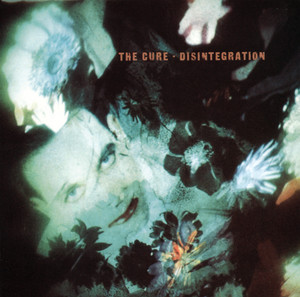
The Cure's magnum opus. This album is a masterpiece. It announces its grandeur from the opening notes. Plainsong is a sweeping, elegiac symphony of sound. Robert Smith's vocals and lyrics are at the achingly and most profound height of his prowess. There isn't a song on this album that isn't great. Any bow to indulging in creating a pop song was dismissed. There were popular hits in Lullaby and Lovesong to be certain, but they weren't crafted as pop songs, and they aren't compositionally. Which is what one can say about this album. It was composed. It is symphonic and orchestral in the resplendent hues of its gothic magnificence. An absolute triumph. Definitely among my picks for greatest albums of all time.
An interesting choice among Neil's vast repertoire. I had no knowledge of this album. Not that I'm a Neil o' phile despite him living quite near here in his youth. Quite the twangy melancholy piece of sublimated rage against the machine this one is. It doesn't ring my bell, but I can appreciate its merits.
A significant album historically, and with a few interesting signatures that would influence many bands and evolve into The Beatles' mastery of so many layered musical techniques. For me, listening to it on its own merits now, most of the album is an unremarkable string of jangle pop songs that sound largely the same. As an album, on the whole, I do not feel it's that remarkable. The sensation it caused was a zeitgeist of The Beatles' popular ascension at the time. History has its quirks. Were circumstances different, The Beatles' fame may have come later or not at all.
This album is still among my small collection of cassettes from when I was younger. At the time, I felt this was a pretty magnificent album. Now, apart from the title track, it all sounds quite insipid and immature. It is perhaps quite accomplished musically, but I can't get past the lyrics. I picture Madonna with the back of her hand raised to her forehead over and over again. Ray of Light is the better album in my estimation.
Some slamming beats and mad rhymes, but I personally hate gangsta rap. Glorifying misogyny, greed, and killing each other isn't really my thang, dog.
I love Pulp, but the album doesn't hold up as a whole. Fun, yes. Great, not really.
This album brings forth its majesty precisely because it is just that, an album. More specifically, it is a carefully crafted album in the form of a manga. While we tend to think of manga superficially here in the West, in the East it is a legitimate art form. The Flaming Lips richly illustrate this artful reality with their deft sonic brushstrokes and evocative lyrics. Some tracks have their own story to tell amid the vibrant, tumbling narrative arc for us to follow and become ensconced in. Odd and quirky, certainly. But The Flaming Lips have evolved to be able to take on their eccentricities with no loss of substance. Five stars all the way.
This album rocks. There isn't much on it that particularly stands out, but the full-spectrum growl and grunge of the sound is great. Kinda dudely, but it's good.
This listen was quite a revelation. I was quite aware of Fiona's talent and have listened to her music a fair bit, but I was not aware of how magnificent this first release is. It set me on a path to listen to her discography, wondering what else I missed. This first album, though, wow. Unique arrangements and a style of music all her own. A powerful, nearly terrifying voice that pierces you with her mercurial emotions. Far exceeded my initial impressions of her early music.
This album is full of timeless classics; there's no denying. Dusty is among the finest singers of several generations. While the music itself takes on something of a "cheese" factor to these contemporary ears, I can also recognize that it is exceptionally well composed and arranged. Longing, heartache, tender entreaties, and the wisdom of living well. It's all there.
The wankiest of overwanking. Oh god, no.
Groovy.
Never loved Elvis. Most of this ain't bad, though.
It is an epic album without a doubt. Bono's soaring vocals. The Edge's brilliance with atmospheric guitar effects. The conviction of their beliefs and the felt sense of conflict, aggression, and resistance. It's a statement album, and a loud and clear statement it is. It might be said that U2 didn't truly "arrive" until The Joshua Tree, but this was the cannonade announcing their intention to take on the world.
It is perhaps an unfair, backward-looking assessment, but now that these kinds of techno beats have been so established and used over and over and over again, this album feels fairly cliché. A bit like how DaRude's Sandstorm gets rolled out at every hockey game. So credit where credit is due. Leftfield is one of the progenitors of this type of progressive house production. From my current vantage point, however, there is a definite cheese factor that is hard to get over. Contemporaries like The Chemical Brothers and Fatboy Slim have aged better.
More gansta. Hate it. Next...
The one, the original. You can't beat these vibes. No argument here.
It is quite incredible what a trio of squabbling, misanthropic young men can do. Quite an intriguing album. The experimentation and evident struggle has its fascination. It falls somewhat short of greatness, however.
Who knew there were many other things to be named and run through the synthesized and transmogrified reality of Gary Numan's mind other than Cars? Not this listener. But I am pleasantly surprised to be enlightened by this erstwhile view of the future from 1979. Fascinating, he says in his best Spock voice. A scintillating gamut of sonic textures and analyses. Full marks.
I hold some bias on this one. I was cutting it on the dancefloor to many songs from this album, and the ones to follow, in the halcyon prime of my youth. This is the beauty of Björk, however. Somehow, avant-garde jazz, rock, dancehall, and poetic songwriting all come together to create something that is both danceable and enjoyable in its artistic merits as well. Her unique speech-singing delivery somehow only adds to the melodiousness of her voice. An original, if there ever was one. This album and a couple of the following ones were/are magnificent.
Often, when I listen to punk albums, they get dismissed because I just can't find any pleasure in listening to a bunch of dudes wailing away on their instruments and screaming. Sorry, I know punk fans will say this is an unfair criticism from someone who doesn't understand punk.
Entirely fair to say.
This is the counterpoint that defies that explanation, however. Arguably, this has all those same elements. It is undeniably rough and raw. There is no denying that Iggy is often screaming. Except...it's good. So goddamned good. I can not really offer an explanation for the difference, but it's there. This is several orders of magnitude better than any punk album I have heard on here so far, probably ever.
Oh wait...I figured it out. They don't suck. They can actually play their instruments.
I didn't get through it. There's a fair bit of acclaim for Wilco and Jeff Tweedy's twangy charm out there, but I'm just not among those who feel that way.
Oh god, why?
Wild recounting of new age musicians' lives of sex, drugs, and partying, or two guys developing a concept album so they can get laid more. It's hard to tell. Either way, it's quite the novel listen and an intriguing album.
Often overlooked in the mainstream listening world, but definitely one that music aficionados in my world appreciate. And for good reason. It is an innovative, emotive, and socially aware album with a great deal of unique character and musicianship.
Intriguing, this is certainly better than I might have expected. The constant obsession with how people be frontin' and maxxin' is a bit annoying, though. If the song content were a bit more illuminating, the music could shine a bit more.
The original dance party band! They've pioneered an entire movement of groups that live off their live vibes of bringing joy and revolution to the people. Groove on!
Never heard of this Cat. Not bad. Not bad at all.
L.A. Woman came up earlier in my reviews to date. Of the two, I prefer this album. The Doors occupy that space for me where I must admit, somewhat sheepishly, that I am more a fan of the hits than their works as a whole. I bought the double CD Greatest Hits collection many years ago. It was one of my first CD purchases. I haven't particularly felt the urge to go beyond that. Morrison Hotel has managed to pique my interest in that regard, though. Outside of the leadoff hits, Roadhouse Blues (one of my favourites) and Waiting for the Sun, there are plenty of intriguing tracks, including Peace Frog, Ship of Fools, and The Spy.
The quintessential zeitgeist moment of my generation. Incredible in respect to the fact that Nirvana essentially came to their largest popular audience to date to play several cover tunes and nary a song from their smash hit album Nevermind. The strange irony of their lives seemed to be that no matter what they did to eschew what people expected of them, they continued to gain in popularity. This is the irony that chewed away at Kurt, it seems. He hated fame and riches, and both kept coming to him seemingly no matter what he did to shun that pursuit. In this performance, Nirvana revealed a depth of artistry and influences from musicians people probably would not have expected them to revere.
George Michael's brilliance is highly underrated. Freedom is among the greatest songs ever made. This is a great album.
One of many great Depeche Mode albums. Personal Jesus being perhaps their most iconic song. There are few bands in the electronic category that have the depth of songwriting that they do. All the common themes of pop music, of course: loneliness, heartbreak, passion, but also a level of introspection and earnestness that doesn't come off as trite or superficial despite the use of common and relatable phrases.
I knew nothing of this. I have, of course, heard of Isaac Hayes, but this album was a complete surprise. When I heard Walk On By I immediately thought of Portishead. The dozens of times I watched Heat and didn't know Vincent's line while he is browbeating his informant, "When I get to Phoenix, she'll be risin'..." was from a song. It just sounded like something Al Pacino improvised, which he probably did; I just didn't know he was improvising a song lyric. Clearly, this album has had tremendous influence. There's an awful lot packed into these few songs.
The metal from which all metal has metaled. You have to throw the goat up and salute its magnificence.
The simplicity of the formula belies its greatness. Straight up chest thumping, head banging rock n' roll at its best.
An interesting album. I knew not of its existence. Almost a time capsule, really. The interludes and recordings of people speaking, like in Voices of Old People, give a real feel for the time and place. This is a strength of Simon & Garfunkel's music. You can almost feel a place and a culture in listening to it.
America and Mrs. Robinson are, of course, classics.
Pre-dates my listening years. Completely unknown to me, and entirely brilliant. Like going to a real Irish pub to enjoy a full band playing an utterly captivating night of music.
This is much better than I remember it. Several friends are fond of Mercury Rev and have recommended them to me in the past, but I wasn't particularly chuffed by what I listened to, and I believe most of it was off this album. Let it be said that we are capable of change. This is brilliant. A remarkable synthesis of art and post-rock, the detractor that probably derailed my experience before is that I don't love the singer's voice. Otherwise, this is a great, somewhat offbeat album.
Soaring layered melodies, a driving sense of force and grandeur, yeah. Yeah yeah yeah yeah yeaaaaaah. These are marvellous musical constructions, but there is this ongoing sense that is exactly what they are, a kind of repeated construct instead of actual songs. This is perhaps unfair to say, but it is the underwhelming sense I get as I go along. I hear it in their other songs, too. So, yeah yeah yeah yeah yeahs. It's another one of their songs. They're great, but they feel like some manufactured alternate version of the millennial whoop.
The grungiest of grunge. I like it.
Meh, the usual for the hip hop/rap category, adult male teenagers with all their acid disdain for the world and giant egos. No thanks.
Meh, I'm not sure this Neil Young album needs to be here.
Yeah, this is good. A complete unknown to me. Some of the trip hop and electronic elements from the 90s that I am ever so fond of. The call-and-answer singing duo works well in most of these songs. The lyrical content is perhaps not venturing beyond the usual pop themes, but hey, it doesn't have to.
Notwithstanding the more recent cover of Changes by Charles Bradley, or perhaps, in part, because of it, one finds it hard to believe this is actually an original Black Sabbath song. It's too pretty, too tender, too heartbreakingly relatable. One suspects they covered something created by a black artist dating from at least a decade prior.
This is not the only surprise of this album. It is remarkably sequenced in its composition. Even the odd FX track, which is little more than some echoing reverbed notes (presumably produced by a synthesizer), has its place as a kind of sonic palate cleanser between Changes and the powerful driving hard rock anthem that is Supernaut.
Similarly, we have the Zeppelin-esque interlude Laguna Sunrise as a break before two more powerful tracks, St. Vitus' Dance and Under the Sun, that close out the album. This opus has its place alongside their much more famous album, Paranoid. In some respects, it represents an evolution of the band that exceeds it.
Some of the best Bob, ja man.
Wonderful atmospheric songcraft that is about more than just love and relationships as subject matter. Not the worst of the uninspiring and sometimes preposterous smash-two-names-together band names, but it also feels like it undersells how good they are.
Pure sweet grooves. A classic for sure.
Melancholic and magnificent. One of Beck's best.
Wonderful music. I am acquainted with some of this 'Bamako music' via Ali Farka Touré, Amadou et Mariam, Tinariwen, and others. The documentary featuring this band escaped my notice, and I may have to look for a time to watch it.
Their dancehall hits were a feature in the nightlife of my youth, and somehow it never occurred to me to listen to an album. Pearl's Girl was, of course, one of those club tracks I heard regularly. The opening two tracks are remarkable, sprawling compositions that have me thinking of artists like Ulrich Schnauss or Jon Hopkins. These are more in the category of ambient mood than song. I love Confusion The Waitress, a ballad of sorts, and the syncopated reverb of Stagger.
I dropped out early on this one...
As a child of the 80s, I have developed a taste for plenty of cheese, but I guess because I didn't hear this in my tender years, this variety of Limburger never imprinted on me.
It's an impressive achievement, but it is also terrible to listen to.
A classic rock classic.
One of my all-time favourite albums. A unique blend of electronic soul, jazz, and breaks. Smooth, sultry, and delicious. I never tire of this album.
If you don't mind peevish, immature little cockney wankers being total cock wobbles, the music is good.
It's a bit before my time, but, at the risk of getting lynched by long-time AC/DC fans, I don't actually register the difference between Bon Scott and Brian Johnson. This is a good album, but not as good as later albums where AC/DC fully developed as a band. It's just a shame Bon didn't live long enough to be part of that.
Meh. It's not rubbish, but it doesn't particularly distinguish itself either.
A masterpiece of songcraft and orchestration. To say the band was committed to the production of this opus is something of an understatement. They bought at church to record in. This reaches the height albums can reach when the composition and content take music into the territory of cultural transmission.
Tom Waits is one of my all-time favourites, and I understand that for some, he might be an acquired taste. This album is a rare gem of a live album where it seems like they bottled up the atmosphere of that LA lounge that night and somehow got it all onto the record. If you settle in with this one, you'll be privy to a night of Tom's peculiar charm and oddly sensical nonsense. I find that it is full of comfort and delight.
The vibes are great. There is only so much smack about frontin' and makin' I can abide, though. A whole album full of it is a bit much.