I had never heard of Supergrass before. The record isn't bad—a colorful mix of punk, Britpop, and the Beatles.
I was familiar with Buck Owens, but not this album at all. Now that I’ve heard it, I have to say: it’s excellent—it doesn’t lag far behind Johnny Cash, even if the style is a bit different. Released in 1965, it was the first country album to hit number one on the Billboard charts. For me, it gets full marks and is totally deserving of its place on this list.
What is there to say about one of the best albums of all time? Released in 1972, it was already The Rolling Stones' tenth release. Gritty, raw—blues, rock, gospel. Simply fantastic.
I listened to Adele's *21* this morning. Some of the tracks sounded familiar; they are great pop songs. Her voice sounds damn good, and the strings give the music wonderful depth. I really like the track "Don't You Remember" because of the sighing guitar. I wouldn't say the album is going to become one of my favorites, but it makes for very enjoyable listening.
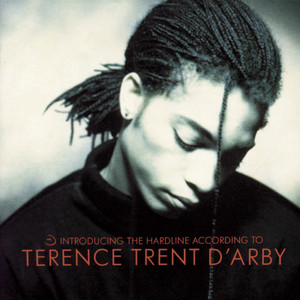
I don’t own the record, and I’ve never listened to it like this before—at least, I don’t recall doing so. The singer has a nice, deep voice. Sometimes there’s a bit too much synthesizer for my taste, but otherwise, it’s a good album to listen to. Personally, I prefer bands like Madrugada, Nick Cave, or Wilco; they offer more than just a somber, melancholic mood—you also get the occasional full-blown guitar storm.
The album offers a wide range of genres, including punk, ska, reggae, soul, funk, and blues. There’s even some heavy metal thrown in. Why all of that on a single record? I have no idea. It’s not my thing at all.
Debut album, New Wave—not my kind of music.
We saw them at the Rudolstadt Festival four years ago. We found the music too bombastic and left after barely an hour. The album being reviewed here was recorded 25 years earlier and sounds different from what we heard at the concert. It is still bombastic, though—featuring plenty of orchestration, strings, trumpets, trombones, French horns, oboes, cello, and so on. It’s worth a listen; the vocals and the record's mood immediately remind me of Bryan Ferry from Roxy Music—an artist I would prefer. I’ve since read that this style of music is called "chamber pop." Well, I’m giving it a 3, but as for listening to it again? Probably not.
I know this record. Taylor Swift is actually just a normal girl. The hype surrounding her isn't good for her as a person—only for her bank account and the people making money off her! After Folklore, Evermore is the album of hers that resonates with me the most. It features sparse instrumentation; it’s contemplative and, at times, magical. You can hear the potential that was simply squandered on her overproduced albums—both before and after this one. I listened to the deluxe edition. 4 stars
He is the best!
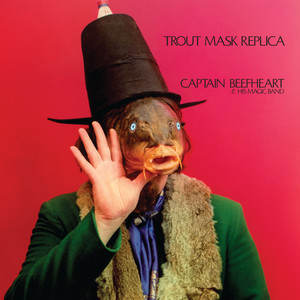
To me, *Trout Mask Replica* by Captain Beefheart & His Magic Band is a bit crazy. It’s not an album you can just listen to casually; perhaps you need to hear it several times to grasp the music. But that requires time—something I didn't have yesterday. Sorry, just one star.
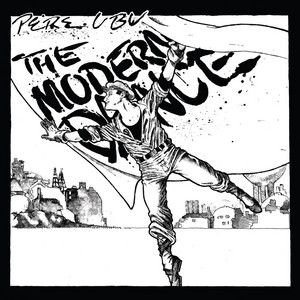
It starts with an interesting cover. I knew the band by name, but nothing more. They play experimental indie music. It’s not an easy listen, but—like when I listened to the record for the second time—something eventually sticks. In places, it’s perhaps comparable to Wilco; at times, the album also brings Sonic Youth to mind. I’m giving it 3 stars.
Avantgarde with a screaming, squeaky voice. I can hardly bear it.
*American Idiot* is a rock opera. It’s a band from the later era of punk—or at least the songs have a wonderfully punk sound. It makes for a great listen, provided you’re in the right mood or willing to get into it. It might not be the ideal choice for waking up first thing in the morning, though. Still, after the first listen, I’m giving it 4 points.
That is so awesome! Like a musical time capsule. I love the album. Janis sings so well; it sounds like sex and unbridled youth.
I don’t know why I never really got into Morrissey. Sometimes you overlook music because life has other plans. The album sounds like a mix of rockabilly and glam rock. Interesting, but nothing more than that for me right now.
Good record.
Not my music!!!
The Björk album is good. Very interesting, experimental.
Jazz and Soul, not my music.
A fantastic album.
I have never heard the album. I know the band's name. I don't particularly like what I'm listening to right now.
Bäh... Popmusic 0 stars from me
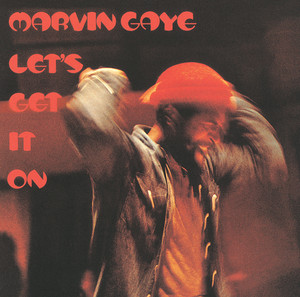
Soundtrack album with soul music.
Never heard of it.
Do I have to listen to all this? What is music like this doing in the top 1,000 albums?
After listening to it, I have to revise my description of it from "pop" to "art-pop." The record isn't bad at all; it sounds catchy yet varied. 3 stars
This is completely new to me; back in the 80s, I rejected anything pop-related. I see now that the album was released in 1984. At that time, the only pop-leaning acts I listened to were, at most, The Cure or U2—and even that was only because of close friends. My music back then consisted mainly of Neil Young, Tom Petty, Bob Dylan, and Bruce. Plus some hard rock like Deep Purple or Rainbow, the early Scorpions albums, and anything that counted as "old music." Now, over 40 years later, listening to this album today, it doesn't sound bad at all. You can hear traces of The Beatles and Bob Dylan. 3 stars.
After the death of Kurt Cobain, Dave Grohl recorded this album just for fun. It turned into a long-running band history and a form of therapy. The record can be described as grunge; it’s raw and gritty, yet has a few beautiful moments. A good debut album. 4 stars.
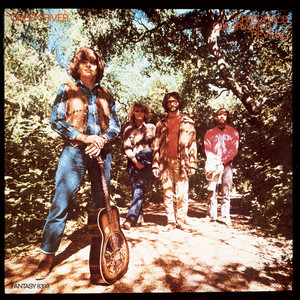
Today I'm happy Green River from Creedence Clearwater Revival (1969). Without even listening to it today, I can say right away that this is one of the most significant albums of that era—and of CCR's entire body of work. I love these songs. 5 stars.
I think I'm on a roll now... Today, *Led Zeppelin II* was recommended to me. What can I say? "Whole Lotta Love" is right at the top of my list of favorites. And "Moby Dick" is arguably John Bonham's definitive drum track. It’s a fantastic blues album. I’d definitely recommend giving it a listen—any time, though it’s even better with a drink in the evening!
Yesterday, I got *Slanted and Enchanted* by Pavement (1992). It’s another one of those albums that completely passed me by. I know the band, but not really all that well. Now I’ve listened to the record. It seems like I need to listen to it a few more times. It’s good indie rock. 4 stars.
One of the best ever vinyl I bought. I loved the album, and in 2026—after listening to it repeatedly—I still love it, more than ever. There is no filler on the tracklist; it is a complete album. For those of us involved in the peace movement, it is a monument! Unfortunately, those warmongers are still around, because money rules the world! Sadly, the limit is only 5 stars!
Magicial memories.
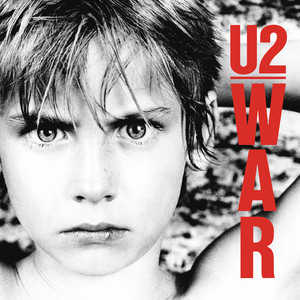
I remember it as if it were yesterday; the feeling is almost visceral. My little brother’s friend owned U2’s albums War, Boy, and October. That was a huge sensation for us in the GDR. His grandmother brought them back from a trip to West Germany (she smuggled the records in and didn't get caught)! Normally, travel from the GDR to West Germany wasn't permitted, but his grandmother had applied for permission, and it was granted. She traveled to Hamburg for a sister’s birthday party. The New Wave scene was all the rage in the mid-80s. My brother’s friend was a true "Popper"—sporting long bangs, a wave in his hair, and, of course, that obligatory little rat-tail at the back of the neck—the kind of thing we blues and rock fans loved to cut off during scuffles and take home as a trophy. But that’s another story. Anyway, in 1983, there was an incredible fear of war in the GDR, yet also hope sparked by events in Poland. That was where Solidarność (Solidarity) was founded in Gdańsk. Usually, worker protests in socialist countries were brutally crushed, but this time, it seemed like something might actually be possible. We were all huge fans of Lech Wałęsa; he was the one who gave us all hope. As I said, I’m talking about a time long before anyone even dreamed the Wall would fall. It was 1983, and the world was on the brink of nuclear catastrophe. I joined the peace movement. Our services were always held under the protection of the church. Stasi agents were always there, watching us and knowing exactly who we were, but we had courage (we were young and inexperienced). We also had an old, highly experienced pastor whom we respected immensely—he was almost like a god to us. In this context, I—the big brother who listened only to blues and rock—was allowed to join the younger ones in the "kids' room." We sat on the floor listening to his "treasures." He had records by The Cure, U2, Sisters of Mercy, Bowie, and a few others. To us, they were like gold dust. You couldn't normally buy records like that where we lived. Nowhere! I had started buying "West German records." I spent all my savings on them. On the black market—if you could even get hold of them—these records cost 120 to 130 East German marks. Back then, an average worker earned less than 800 marks a month. I can still remember my father’s pay envelopes—he was a master electrician; the figures written on them rarely came close to that amount. But back to that "kid's room": listening to those records—it still gives me goosebumps—felt like a holy mass that we would go on to celebrate again and again. We learned the lyrics—often understanding only a fraction of them—and sang along at the top of our lungs. His mother kept coming into the room, telling us not to sing so loudly so that the people (the Stasi) in the building and outside the door wouldn't hear. Those records and that time shaped me deeply; I had always been brave, but even more so after that. Having listened to the music and written this text today—a text most people in this group won't be able to fully grasp, since you had the good fortune to grow up in a different part of this wonderful planet Earth, unlike me, who grew up behind a wall of silence, concrete, and machine guns—I award this 5 stars with tears in my eyes.
The music on the album—which I’m listening to for the first time—sounds interesting. But it’s definitely not my cup of tea! I do listen to world music, but this particular style relies far too heavily on sampling and electronics for my taste. It might sound interesting at first, but the longer the record plays, the more annoying it becomes.
This is a band I wasn't familiar with before. I recognized the name, but I hadn't actually listened to their music until now. Elbow plays a blend of art rock, post-Britpop, and dream pop. The lead singer has a soulful baritone voice, and their cinematic arrangements incorporate the trumpet. If you really engage with the music, it’s sure to captivate you. It’s the kind of music I might want to listen to again on a rainy autumn evening.
This is the soundtrack from a Bollywood movie. It’s not for me—neither the movies nor the music. It’s not my style; what a waste of the time I spent on it!
This is the debut release by American indie singer Liz Phair. She sings in an almost monotonous, expressionless voice about sexual themes in a typical indie sound of this time. It may well be that the lyrics were the deciding factor in her inclusion on this list. I don't care for this kind of music; it doesn't appeal to me, nor does it draw me in the way other music—even music previously unknown to me—might. You can listen to it—it’s not painful—but that’s about it.
The album opens with lush strings in the style of Frank Sinatra. That mood persists; the music breathes the tradition of the last seven decades, the singer possesses a magnificent voice, and the backing music is pure retro. It covers the whole spectrum: early rock 'n' roll and rockabilly, country, a dash of pop, jazz, and blues all take turns—all carried by a voice that is truly something special in this day and age. I think Richard Hawley really took a bold step back in 2005. He creates an atmosphere of intimacy that is completely free of kitsch. Even though the music sounds old-fashioned, for those of us who are a bit older, it feels incredibly familiar—and simply beautiful. How did I manage to overlook this record? Perhaps this series isn't so bad after all.
This is the record featuring the iconic song "Tainted Love." I believe it was played everywhere back in the 80s. The album is packed with synth-pop—quintessential dance music of that era. It’s amazing that, even 40 years later, these songs are still being sampled. I actually hadn't heard the album in its entirety before; today was the first time I listened to the whole thing. It really feels like a concept album. Much like in a traditional cabaret, they sing about the old social order, mainstream pop music, sexuality—and the extremes it reached—as well as human misery. I don't particularly enjoy the music itself, but I have to take my hat off to the achievement and the wild sounds—completely new for the time—that these young men created using a Synclavier and a drum machine. Still, listening to it once is enough; time for something else now. As I said, most 80s music wasn't for me back then, and that hasn't changed.
Right from the very first song, a brash punk-rock sound hits you. That doesn't change, even though I can detect a few New Wave influences. The songs are mostly extremely short—some of them really dashed off in a raw, slapdash style. The record isn't bad, but here, too, I find myself asking: does it belong among the top 1,000? I was aware of the album when it came out, but that was about it. As for modern pop music, The Cranberries' "Zombie" is what stuck in my memory. My wife played Alanis Morissette's albums constantly. Otherwise, we were fully occupied with our first daughter. My wife was pregnant, and the following year we became parents for the second time. I learned a different profession and of course went to see Neil Young & Pearl Jam. Queen's *Made in Heaven* moved us to tears at the end of the year. And at Christmas, we were looking forward to seeing Bruce in Dresden and Berlin the following year...
This is an album that definitely belongs on this list! No ifs, ands, or buts—even if you’re young. I believe this album has influenced every young musician in some way. The world wouldn't function without it. As if by chance, today we’re visiting the famous Zeiss Planetarium in Jena. It’s the perfect setting for the music—and specifically the song "Shine On You, Crazy Diamond." When the starry sky opens up above you on the dome, you can practically imagine yourself flying through space—even though the song is actually dedicated to Syd Barrett. I imagine any music fan recognizes the song the moment those first quiet bars of "Wish You Were Here" begin. It’s an atmospheric record with a continuous theme—a sort of concept album. I first heard it in the late 70s. For guys living in a land from a bygone era called the GDR, Pink Floyd were like the unattainable kings of music. I still love their music. I think I own all their original records—which cost me a fortune.
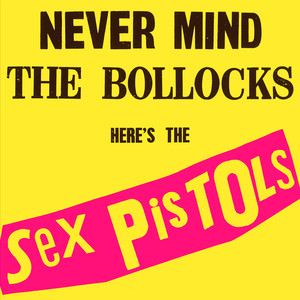
I’m not a punk fan at all, but this iconic record is brilliant. I had a few buddies who were punks—in the broadest sense of the word. Things were completely different in the GDR anyway; there wasn't a clear division between fan groups. As long as it was generally about opposing the state (the GDR), we were united. Musical tastes were a different story, of course. But there were never any fights among the youth over music or appearance—only over girls. But that’s normal. Anyway, I actually discovered this record through other young people, and we’d dance to the music with our long hair just like the punks with their mohawks and chain-adorned outfits. This record is such an important one—perhaps *the* most important—of that era and for the genre as a whole. I can still really enjoy listening to it today, and I was just doing so. It brings back memories of those liberating years of youth. Despite being hemmed in behind the Wall, it was an incredibly awesome time. And when Neil Young sang that line in his iconic 1979 song "Hey Hey, My My"—"The king is gone but he's not forgotten / Is this the story of Johnny Rotten"—the music felt even more familiar to me. This record is pure punk, without compromise, it takes no prisoners. There is only one direction, and that is forward, never stop!
This record is pure gold! There isn't a single weak track; every song is consistently excellent. Yet there is one exception: "Highway Patrolman" shines even brighter for me. I was instantly hooked when the album came out. I had already loved *The River*. There was a shop in our area where you could buy West German products using Deutsche Marks. Some people had access to Deutsche Marks through relatives visiting from the West; we, unfortunately, didn't have very many. But you could still go into that store and breathe in the scent of the "free world"—it smelled of soap and perfume, the kind of thing you don't find anymore. There was chewing gum with little collectible cards, chocolate, and Matchbox cars. But I digress; the record was sitting on the shelf, yet it was out of reach—both physically and in terms of my financial (Deutsche Mark) means. Then, to my utter surprise, it was played in two parts on the East German youth radio station DT64. It must have been sometime in 1982 or early 1983. Side A was played in its entirety one day so listeners could record it (which the vast majority of young people did). Side B followed the next week. The broadcast featured great commentary from the host, and you could even have the script mailed to your home for the cost of postage. Guess what—of course, I did exactly that... This record reminded me so strongly of Bob Dylan's early years—two decades prior—that I became an even bigger Bruce fan from then on. After all, Bob was going through his Christian phase at the time, and Neil was in his electronic phase. The record was truly extraordinary for that year, which made it all the more compelling to me. Most of my friends listened to rock or hard rock. I did too; I had my favorite bands back then—Uriah Heep, Deep Purple, Scorpions, and Pink Floyd. But Bruce's new record stood alone like a solitaire, a jewel amidst the dreadful "Neue Deutsche Welle" (New German Wave) that was dominating everything in Germany at the time. I still love "Nebraska"; curiously enough, it sits alongside "The River" on my list of Bruce's best work.
I can barely stand this kind of music. I don't like rap at all—especially not the kind with dirty lyrics. There might be a bit of Black soul music in there too; I don't care much for that either—I’d much rather listen to Black blues. I only played snippets of most of the tracks; I don't want to ruin my Friday!
I liked Sting’s basslines back then; they were pretty cool. The music itself wasn't exactly the style I primarily listened to, of course, but "Message in a Bottle" and "Walking on the Moon" were played constantly at the time—you simply couldn't avoid them. In fact, I listened to the album in its entirety today. The sound has a bit of a reggae-meets-New Wave vibe. I hadn't really noticed that before, as I only knew the hit singles—the ones that got played in every club. There are a few instrumental passages that sound very experimental. That is precisely why I came to love Sting's albums later on, as well as his commitment to humanitarian and political causes. He began advocating for human rights early on, supported Amnesty International, and was eventually part of the "Human Rights Now!" tour. All in all, it’s a good album with hints of jazz; when you view it within the timeline of his career—it is the second Police album—it becomes clear how and why Sting evolved into such a deeply humane musician.
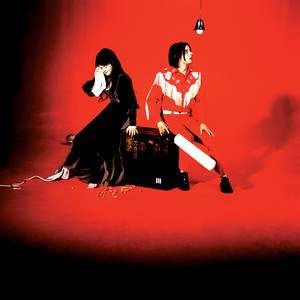
This album surely captivated all of us. Emerging seemingly out of nowhere, the band played pure rock and blues—always driving forward, never looking back, yet drawing heavily on influences from the history of popular music. The opening track, "Seven Nation Army," features a bassline so incredible that it is hard to believe no actual bass guitar is played on the song; Jack White experimented with a DigiTech Whammy pedal to create a bass-like sound, while Meg White provided a thunderous, stoic drum beat. As a garage rock fan, I was naturally thrilled and bought the record in various versions and colors. The cover art for *Elephant* is iconic. Unfortunately, I never saw the band live—something I truly regret. But as is the case in life, not everything is possible and everything has its time. Back then, raising children and building a house took precedence over attending concerts. A full 5 stars, without reservation!
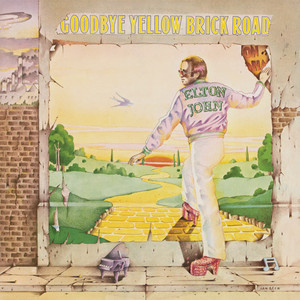
I’m currently immersing myself deeply in the Elton John era. The album opens magnificently with the track "Funeral for a Friend/Love Lies Bleeding." Such a beautiful medley! And the synthesizers were used to serve the music, rather than smothering the entire sound—unlike how they were often used by other artists during the later New Wave era. Right after that comes "Candle in the Wind," that iconic song originally written for Marilyn Monroe and later rewritten for Diana, Princess of Wales. How we wept—whether in Great Britain, Germany, or anywhere else in the world. When the single was re-released in 1997, we played it constantly at home; Lady Di’s death affected us deeply on an emotional level. Next up is "Bennie and the Jets"; Elton’s piano playing is fantastic, as are the high-pitched vocals at times. After flipping the record over, we get the title track. What a delicate, beautiful song, accompanied by strings. It is one of the highlights of Elton John’s entire body of work. I could go on like this, but time is a bit limited. One thing is certain: this album cements Elton John’s reputation as a fantastic singer, performer, and pianist. He is a truly unique, eccentric talent. From the softest, most delicate moments to full-blown rock 'n' roll, he can do it all. His stage shows remain unsurpassed. I love this album.
I actually only know this band because they opened for Neil Young in 1993. Some songs from the album made the charts, but that didn't interest me at all—neither then nor now. I don't recall Soundgarden's songs getting much airplay on the radio (in Germany). The ballad "Black Hole Sun" is well-known, of course. They play a heavy, sometimes dark style of rock. A true grunge band.
Back then, we considered it hard rock; now, Wikipedia classifies it as one of the greatest and most influential heavy metal albums of all time. I don’t know what people read into it. In my opinion, that term didn't even exist in 1970. I’m reading now that bands like Led Zeppelin and Deep Purple are also supposed to fall under the heavy metal banner. That makes no sense to me, but never mind. To me, this record—like those from the aforementioned bands—is pure hard rock. Hard-hitting, sometimes melodic, with every instrument clearly audible. Simply a magnificent style of music. I can still see myself with long hair, headbanging amidst the hard rock fans. Thank God, I’ve always had a broad taste in music. What I listen to—and what I’m actually in the mood to hear—always depends on the situation! This record is really hitting the spot for me this morning! I don’t own it, and I’d never actually listened to the whole thing before. But this is simply great rock music; Ozzy Osbourne, Tony Iommi, Geezer Butler, and Bill Ward are at the top of their game. It’s not just "Paranoid" that’s great; "Iron Man" is fantastic—heavy and dark. But really, I don’t want to single out any one song; it’s a number-one album, without a doubt. After just one listen, I really like the whole record—even though it’s early in the morning, and I’m still filled with painful emotions following the memorial service for Glen Hansard yesterday.
I’m not familiar with the album. The opening sounds like the Beach Boys, only more electronic and modern. The singer uses a high-pitched falsetto. At times, the music feels psychedelic and ethereal, creating a soundscape of strings, keyboards, and choral vocals. I almost think my stereo is broken, as the music sometimes sounds distorted—not clean at all; I have no idea why it was produced that way. I suppose 1999 was a huge year for pop music. I remember the hype surrounding Britney Spears; my eldest daughter’s room was plastered with posters of her. I was immersed in "my old music" and didn't pay much attention to the outside world—though it was impossible to turn on the radio without hearing all those pop anthems. Only our old heroes brought us joy; as you know, Bruce went on tour with the reunited E-Street Band. Back to the album: it’s not bad—no question about that—but it doesn't immediately resonate with me today. Three stars is fair.
I have to say, that voice has a certain charisma—naturally bolstered by the backing vocalists. I like the soulful, mellow moments best; as soon as the rapping starts, I can't stand it. Generally speaking, it’s not my kind of music, but I managed to get through it by skipping tracks. 3 stars.
Oh yes, it's off to a great start, with rumbling rock and guitars à la Neil Young. Pounding drums; it fits the mood of the day perfectly. J Mascis’s vocals often sound very melodic against the grunge backdrop—a lovely contrast. All in all, an outstanding album. From what I can gather, the lyrics are excellent, too! "Just no clue, we just know what we do"—damn right. An uncompromising guitar album. 5 stars.
Typical nightclub music, a fantastic female voice, a beautiful dress, a cocktail or two, a sensual atmosphere—all this comes to mind when I listen to the music. It has a jazzy feel—definitely not the kind of pop that dominated the 80s. You can hear real instruments and interesting shifts in rhythm. A great saxophone features throughout—something I love anyway. In my youth, this record certainly had no chance at all, but now, after all my musical experiences and listening escapades, it is an exceptionally good album that I will certainly enjoy listening to again and again.
Here’s another debut album that made a massive impact. They were hailed as Britain’s great hope—the next Beatles—and certainly, a few of the harmonies sound suspiciously like the Fab Four. At the very least, the record stands as a cornerstone of 1990s Britpop. I never really connected with that genre, so I’m completely unfamiliar with this album. That’s all the more surprising given that the record is extremely guitar-driven, and guitar music has always been my absolute favorite. Yet, it sounds nothing like grunge; despite the heavy use of guitars, it feels too polished for my taste. The band unashamedly draws from glam rock, pop, punk, psychedelia, and, of course, the Beatles' legacy. At times, the record sounds truly exciting, and I really like it after just one listen. I wonder why I didn't give it a proper listen back then—though, I suppose family and two small children took precedence over buying records at the time.
This is actually an album I bought right away. I was immediately drawn to its plaintive, pastoral atmosphere. The record blends gospel, folk, and psychedelia into a completely new sound. As the debut album from a brand-new band, it achieved worldwide success. Listening to it this morning was a real treat once again—a great way to start the day.
Who isn't mentioned in connection with this debut album? Bob Dylan, Jackson Browne, Lou Reed, John Cale, Andy Warhol. It's a chamber music legacy, lots of strings, quiet songs, and Nico's brittle and deep voice. Shortly before this, she had recorded a debut album with The Velvet Underground. The album took its title from Andy Warhol’s provocative film *Chelsea Girls*, in which Nico played a leading role. I find the music difficult, not something to listen to every day.
What a beautiful album! I wasn't familiar with it at all! If I hadn't taken part in this fun activity, it would have remained unknown to me for the rest of my life. It’s an airy, light singer-songwriter album featuring some truly great orchestral arrangements. The lovely organ work really brings Procol Harum to mind. The lyrics are outstanding, though I still need to listen to the album a few more times—then I’ll understand even more! The music is timeless; it could easily have been recorded today. I never would have imagined that John Cale—a founding member of The Velvet Underground—could record such a multi-layered, understated, and incredibly beautiful album. I had always thought of him as the man behind creative chaos and the avant-garde. Full marks. I have to get my hands on this record!
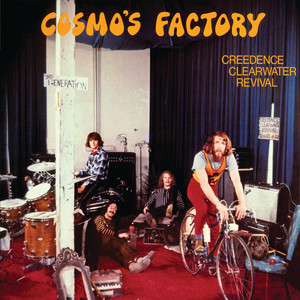
This band really had what it took! They commanded a wide range of musical styles—something clearly evident on this album. R&B, soul, rock, country, psychedelia, and rockabilly blend into a unique mix. Despite the variety of styles, the whole thing sounds cohesive and harmonious. Listening to the record again, I couldn't find a single superfluous track. On the contrary, some of the songs are absolute classics and all-time favorites of mine. Bo Diddley’s "Before You Accuse Me" later became widely known through Eric Clapton’s interpretation. I really like "Travelin’ Band" and "Ooby Dooby"—we used to have a great time dancing to them when we were young! They are fantastic rock 'n' roll songs, reminiscent of the 50s. "Lookin' Out My Back Door" is another classic; you recognize it instantly, and it’s also a tribute to Buck Owens (whom I really like). The short track "Run Through the Jungle"—a statement against gun ownership in the USA—is remarkable for the fact that everyone assumed the lyrics were about the Vietnam War. "Who’ll Stop the Rain" is the ultimate festival anthem that everyone can sing along to (especially when it’s raining). John Fogerty wrote the song shortly after returning from Woodstock; he likely still had images of that muddy mess fresh in his mind. I find it outstanding that these young musicians dared to tackle the soul song "I Heard It Through the Grapevine" and transform it into an eleven-minute psychedelic fever dream. Marvin Gaye and Gladys Knight had caused a sensation with their respective versions just a few years earlier. Marvin Gaye’s version was on heavy rotation across all the major US radio stations, yet CCR’s later version managed to top even that success. "Long As I Can See the Light" makes for the perfect album closer—a slow, contemplative ballad with the blues at its heart and in the vocals. When you've been traveling for a long time, you long to return home and hope that a light is on there. In Germany, there is a Christmas tradition known as the "Schwibbogen"—an arched wooden frame adorned with lights. Placed in the window, it is traditionally meant to light the way for those returning home. This custom is still upheld today, particularly in the Ore Mountains (Erzgebirge) mining region; there is hardly a window that is not illuminated by one of these beautifully decorated arches.
You know the track "Sign Your Name." It’s a soul album. I don’t like it at all. I just skipped through it. I can’t listen to it.
Nick Cave & The Bad Seeds - Abattoir Blues / The Lyre of Orpheus (2004) Nick Cave is a man of pain; he can channel emotional pain into magnificent music. When his long-time companion Blixa Bargeld unexpectedly left the Bad Seeds, the band had to completely reorganize. They holed up in an old jazz studio in Paris. The result is a masterpiece in two parts. A double album with two different approaches. The first half sounds unusually powerful, raw, and wildly noisy, drawing on a dynamic, almost gospel-tinged garage-rock sound driven by propulsive drums. Side two, by contrast, strikes a more traditional, darker, melodic, and ballad-like tone, often centering on the piano and mythological references—though the song "Supernaturally" does build rapidly and energetically into a soaring, anthemic climax. While other tracks on the album are more mythic or steeped in the blues, "Supernaturally" erupts with frenetic energy, mirroring the psychological state of being completely overwhelmed by an emotion. Overall, the lyrics cover a wide spectrum—ranging from humor, myth, and religion to existential questions about love, violence, and art. I find it incredibly difficult to single out any one song; this is an album that invites you to pause, look inward, and reflect on your own life. Listening to it in the evening with a glass of red wine—rather than in the morning, as I did—is perhaps more fitting, as the music truly seems to seep right into your soul. I’ve done exactly that on a few occasions. That said, I do want to highlight "O Children," the epic, nearly seven-minute closing track of the double album. This melancholic, deeply moving song later achieved worldwide fame through a Harry Potter film. The line "Forgive us now for what we've done" feels like an apology from the adult world to the youth, who are left to bear the burden of a broken world. I bought the record the moment it came out. It is a masterpiece!
Oh, look what we have here. I was familiar with the band, but it’s been ages since I last listened to this groundbreaking album! It is the band's only release. It kicks off with a blend of electronic sounds reminiscent of marching music, underpinned by a distorted vocal. Many subsequent bands borrowed ideas from the overflowing stylistic mix found on this record. For later generations, the era surrounding the Woodstock Festival remains the absolute creative peak in music history. The risks the musicians took and the way they experimented can truly be described as sensational. Dorothy Moskowitz’s voice shines through this hypnotic music, despite the electronic distortion and layering. She later sang in Country Joe's All-Star Band. This blend of styles makes for a varied and fascinating early avant-garde album. Take, for instance, the intro to "Where Is Yesterday," which evokes a Gregorian chant before evolving into a polyphonic rock song—all underscored by feverish electronic sounds. Highly recommended for anyone with an open ear. The melodies are infectious, even if they sometimes feel unconventional. The lyrics are outstanding—at times highly political, at others imbued with deep humanity and an awareness of the bigger picture. I’m not sure if the nuance of my words translates fully into English, but one thing is certain: this record is one of the most exciting and experimental psychedelic albums of the 1960s and is absolutely worth a listen!
Okay, I'll write something.
Heavy, dark, anthemic. A guitar feast. A seamless album. After Neil Young had broken free with the outstanding 1989 album Freedom and left the very difficult 80s behind, he rediscovered his true strength in 1990 with Crazy Horse. In a few square meters, heads together, just playing. Pure garage rock, recorded in a barn at the Broken Arrow Ranch. Loud, with lots of feedback and no later overdubs, mostly in one take. The old Fender amplifiers produced a warm, but very rough sound. The live effect was captured by the many microphones placed around the room. After Neil had written the song for the political change in the formerly socialist countries with "Rockin' in the Free World" on the 1989 album Freedom, he brought everyone on the planet down to earth with Ragged Glory. What is this all about on God's beautiful Earth? It's about friendship, trust, family, peace, and the nature that encompasses us all. He wrote most of the songs in just one week. I could discuss each song individually, but I'll use "Love and Only Love" as an example. This 10-minute song is an absolute smash hit and is often played even longer at concerts. In my memory of those concerts, the audience is always completely wild, and many sing along from the bottom of their hearts. If it were always like that, these damned wars wouldn't exist anymore! The song's core message is that hate is a dead end of suffering, while only love has the power to break down barriers and be strong. "Love and only love will endure/Hate is everything you think it is/Love and only love will break it down"
Okay, one more very important song:
"Mother Earth (Natural Anthem)" is a powerful environmental and protest song, played on the old pump organ. The song is a minimalist, anthemic plea for the protection of nature and warns of the destructive consequences of human greed. One of the central lines is: “Respect Mother Earth and her giving ways / Or trade away our children’s days.” The album is epic.
The record became the epitome of the grunge movement. Many young musicians later hailed Neil as their hero, and the press coined the term "Godfather of Grunge."
Since the album came out in 1966, I’m not familiar with it, of course. But joking aside, it has nothing to do with my age; I really don’t know the record. Before today, I hadn’t heard a single note of it. Right from the start, it reminded me of The Monkees. The style of the intro is classic 60s beat/pop music. It continues with echoes of the Beach Boys and the Beatles—bright, chiming 12-string guitar riffs, and upbeat, catchy, multi-layered vocals. The cover looks a bit dark, but the music isn't like that at all. Almost all the songs are under three minutes long—the classic rule for a pop song back then. Paul Revere’s organ is omnipresent throughout. Although the band is American, some songs have a very European sound. I can also hear traces of The Kinks, even though that band formed much later. Perhaps the musical tastes of the time led to a blend of all kinds of global influences. That’s what makes music so interesting. Tommy James & the Shondells also shared that same spirited, catchy pop-rock and power-pop sound. After watching a few videos, the style reminds me of typical 60s teen pop; at times, the musicians wore uniforms and dressed identically. Without the visuals, it feels like I’m listening to my father’s reel-to-reel tapes. That’s exactly what I used to do in the late 70s, and that’s how I discovered the music I love so much today. It’s like a journey into the past.
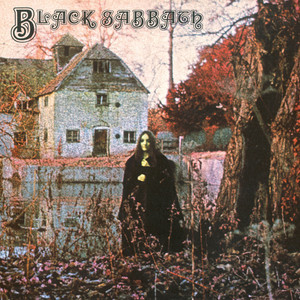
It’s raining, church bells are tolling, and thunder rumbles in the background. A storm is about to break. The album’s opening fits the cover art perfectly—a stroke of genius. People often claim this was the first true heavy metal album. I completely disagree; after all, what so-called heavy metal band features a blues harmonica? The band—centered around Ozzy Osbourne and Tony Iommi—clearly draws inspiration from Deep Purple. Psychedelic influences are undeniable, too. But regardless, it was an incredibly exciting time for these musicians' development. In places, "Behind the Wall of Sleep" sounds unmistakably like Led Zeppelin. They recorded the entire album in a single day, essentially playing live in the studio. And that’s exactly how it sounds: like a concert—intensely focused, yet with the occasional vocal slip-up. The guitar solos are top-notch. The song themes are very dark, dealing with occultism, paganism, Lucifer, and the nature of evil itself. Perhaps all of this stemmed from their gritty, ugly industrial hometown of Birmingham. This innovative debut laid the groundwork for many 70s bands that cite Black Sabbath as an influence. Even with my aging ears, I can still crank up the volume on this record today; it features some of the greatest guitar riffs of all time. The penultimate track, "Warning," with its psychedelic atmosphere, completely draws you into the music's vortex. The album is so intense! For me—a blues fan—this record was and remains an absolute milestone; it definitely belongs on the list of "1001 Albums You Must Hear Before You Die."
It is a reggae album. But if you don't know that, you’ve missed something important. For the music world, Bob Marley is a crucial figure in the evolution of popular music. Without the influence of artists like Bob Marley, Peter Tosh, or Jimmy Cliff, the music of The Police and Sting, for instance, wouldn't exist. Eric Clapton later recorded a cover version of "I Shot the Sheriff," which further boosted media attention. I took this style of music in without actively following or particularly liking it. However, I didn't develop an outright aversion to it—unlike with breakdancing or rap. This laid-back Caribbean music is genuinely pleasant to listen to—especially when you're in a holiday mood. The song "Stir It Up" must have been a hit, as it sounds very familiar to me. As far as I understand the lyrics, the songs deal with political injustice against Black people and the poverty they face worldwide. This album—or Burnin’—shouldn't be missing from any true music fan's well-curated collection!
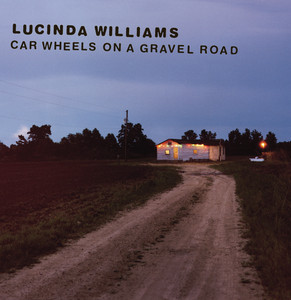
This was the album I had been waiting for. It had been announced in *Rolling Stone* two years earlier but was repeatedly delayed. Lucinda Williams had released *Sweet Old World* in 1992. A new musical genre was emerging—one that would later be called Americana, or alternative country. There were already a few great albums in this genre, even though it didn't yet have a name. But I thought it was incredibly cool. The Walkabouts had released a milestone album, *Satisfied Mind*, in 1993. Giant Sand, led by Howe Gelb, had been releasing striking records since the mid-80s. Uncle Tupelo—the band that preceded Wilco—was a hot act on the scene, and Whiskeytown also captivated me with a young Ryan Adams and the wonderful Caitlin Cary on violin and co-lead vocals. The Cowboy Junkies had already released *The Trinity Session* back in 1989. Something truly significant was taking shape. Steve Earle was emerging as an alternative country star who refused to play by Nashville’s rules. Finally, *Car Wheels on a Gravel Road* was released in 1998—but only after Lucinda had scrapped a fully produced version of the album. She hadn't been satisfied with it; it didn't sound the way she had envisioned. Then came the new approach: recording everything live in the studio. And voilà—it worked. The record became a huge success. It brings together so many of her greatest hits, and I love it. It was a real treat to listen to it again today.
The album is a concept album; it tells a story, and every single song is a part of it. It centers on Rael, a rebellious youth. On his journey of self-discovery, he encounters bizarre and challenging figures in the underworld before ultimately achieving a spiritual awakening. Peter Gabriel left the band after this album; the individual band members' musical approaches and tensions were increasingly drifting apart. Before that, however, the album was performed on a very long tour featuring an elaborate stage setup and costumes. Concept albums and grandiose stage productions were very much in vogue at the time. All in all, it is a completely cohesive, self-contained album. It has a bit of an indie feel and is totally different from the Genesis records that followed later. I owned a cassette of the album when I was 15. I bought it—along with many others (Pink Floyd, Led Zeppelin)—during a trip to Poland. At that time, Poland was already opening up somewhat to the West, and there was a black market offering copies of *every* record imaginable—all at affordable prices. So, whenever I traveled to Poland, I would stock up on bootleg copies. That is how I kept expanding my musical horizons. Now, 43 years later, I still enjoy listening to the record. I even understand more of the story behind the songs these days. "The Carpet Crawlers" remains one of my favorite tracks on the album.
I’ve never heard music like this before, and I never will again. Experimental crap.
I hadn't heard this album before either, and I probably never will again. Maybe I can just forget about it quickly. It’s the kind of music I don’t like—so overblown, with all those "oohs" and "aahs." I really don’t care for those sexually suggestive lyrics! It’s the same kind of funk music I later came to hate in Prince’s work.
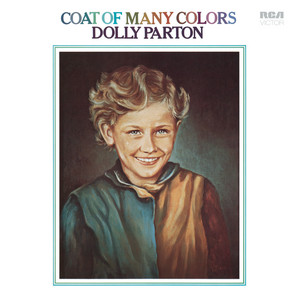
When this album was released in 1971, Dolly Parton was 25 years old—and it was already her eighth album! Many of the songs are deeply personal, describing the impoverished yet beautiful life of her childhood in the Appalachians. The ten tracks are simply brilliant; the album feels cohesive, with not a single weak moment. Honestly, any of these songs could have been released as a single. Dolly shot to fame in the US thanks to her collaboration with Porter Wagoner, who brought the young singer onto his TV show and performed wonderful duets with her for several years. She had an incredibly engaging personality and a sweet nature, yet her humble upbringing had made her tough and capable of standing her ground. On the show, Porter Wagoner would often tease his female singers, and they would always give as good as they got! But back to the album: the record is a blend of country styles mixed with a touch of folk, carried by Dolly’s lovely voice and the backing vocals of The Nashville Edition. The music is simply enchanting. What a coincidence that I happened to listen to this album today—the day after her passing. Or perhaps it wasn't a coincidence after all? R.I.P. Dolly Parton. Thank you for your wonderful music!
Okay, I know this album. I own it in seven or eight different editions and versions—remasters, an old crackly Portuguese pressing, and so on. That might suggest I love this album, and indeed I do. It is the most complete album by this American supergroup—the counterpart to the Beatles. The record has it all: innovative music, great anthems, and timeless folk songs. It kicks off right away with "Mr. Soul," the first barnstormer from Neil Young; the guitar duels are legendary. Next, songwriters Richie Furay ("A Child's Claim to Fame") and Stephen Stills ("Everydays") take turns before it’s Neil Young’s turn again. He composed a floating piece with all sorts of instruments called "Expecting to Fly". Next up is "Bluebird" by Stephen Stills, which would have suited the Beatles well too. Just listen to the guitar work and, later, the banjo; you can even detect hints of Indian music. Side B opens with another Stills track, "Hung Upside Down," sung by Richie Furay and Stephen Stills. The next song is "Sad Memory," written and sung by Richie Furay. It is a very sparse arrangement, featuring only Furay’s acoustic/12-string guitar and vocals, accompanied by Young’s subtle, atmospheric electric guitar work. Beautiful. This is followed by another Richie Furay song, "Good Time Boy," though it is sung by drummer Dewey Martin. It stands in stark contrast to the rest of the record; it’s very upbeat, leaning towards swing, soul, and R&B—there’s even a baritone saxophone. Two minutes later, Stephen Stills contributes his classic "Rock & Roll Woman." It remains one of my favorite songs by this brilliant guitarist—who, admittedly, doesn't have a great singing voice, so the other band members help out on vocals. The guitar work by Stills, Young, and Furay is simply magnificent. As the crowning finale of the album comes Neil Young’s sound collage "Broken Arrow," featuring the theme from "Mr. Soul." The track is groundbreaking, much like the album as a whole. It is an avant-garde, surrealistic piece of folk-rock that blends sound collages, crowd chants, and fairground organ sounds—and, with a runtime of over six minutes, was naturally unsuited for release as a single in the pop landscape of the time. In its cohesion, the album is a masterpiece.
People primarily associate this album with its title track—a misconception, of course. There are nine other interesting and excellent songs on the record. In the late 1970s, David Bowie lived in Berlin; he found ideal conditions for composing there, and the divided city provided inspiration that he channeled into magnificent songs. "Heroes" is the second album in the Berlin Trilogy. David experimented with various electronic instruments, collaborated with Brian Eno, and brought the great Robert Fripp into the studio! While Side A consists almost entirely of experimental rock tracks, Side B sounds like a journey to the stars—atmospheric, instrumental, and ethereal. I also detect a Japanese influence, a sound David Bowie would explore further later on. The album was recorded at Hansa Studio, not far from the Berlin Wall. You can sense his inner turmoil when confronted with that monstrous, man-made structure of injustice—on one side, border guards with machine guns; on the other, a couple sharing a kiss. All in the hope of a better future—a future we forced into reality twenty-two years later! Thank you, David.
A landmark folk album from 1967. Tim Buckley experiments with a wide array of instruments, showcasing them much like the Beatles did on their album *Sgt. Pepper’s Lonely Hearts Club Band*, released that May. I wouldn't say he copied them, but the recording sessions were certainly heavily influenced by fairground music (evident in "Carnival Song"). "No Man Can Find the War," with its background war sounds, depicts the disconnect between the brutal reality of combat and the way the civilian population consumes it via the media. While soldiers fight and die in the jungle, the home front sees only images, films, and news reports. It is a stirring anti-war song that opens Side A, blending Tim’s superb folk vocals with late-60s psychedelic rock elements to create an indictment of the Vietnam War. "Pleasant Street" is a song that builds beautifully, featuring prominent congas and some lovely guitar solos by Lee Underwood. It deals with addiction, despair, and disillusionment—themes that come through powerfully in Tim’s plaintive voice. "Hallucinations," in turn, begins quietly with a kalimba, jingles, and tambourine, accompanied by Tim’s smooth, hypnotic bottleneck guitar playing. This melancholic track explores painful loss, longing, and illusions. A beautiful song. The final track on Side A is "I Never Asked to Be Your Mountain." The lyrics serve, in a sense, as a farewell letter to his ex-wife, Mary Guibert, and their son, whom he had left shortly after the boy's birth. That boy, incidentally, was Jeff Buckley—who would go on to become a tragic figure much like his father. But perhaps more on that later. Now, time to flip the record. "Once I Was" opens with harmonica playing by Henry Diltz—who took some of the greatest photos in rock history! It is one of Tim Buckley’s most moving songs. The underlying mood is melancholic. Perhaps Tim was already contemplating a breakup back then, even though the lyrics actually describe a soldier longing for his old life and his beloved. The song took on special significance years later: when Jeff Buckley performed at a memorial concert for his late father in 1991, he sang this very song. Midway through, one of his guitar strings snapped, forcing him to sing the final lines entirely a cappella. The question "Will you ever remember me?" thus became one of the most intense moments—an unforgettable, almost ghostly dialogue between the deceased father and the son who had barely known him. If you listen to that recording, you’ll know what I mean; anyone who doesn't feel moved by it must be as cold as a block of ice! But moving on to track two, "Phantasmagoria in Two": this piece is one of his most masterful and emotionally vulnerable works. It blends Elizabethan and classical folk motifs with subtle 12-string guitar arrangements and outstanding lead guitar work by Lee Underwood. "Knight-Errant" sounds like pure Baroque music, seemingly out of time, yet the two-minute piece is enchanting. It is immediately followed by the title track, "Goodbye and Hello"—an epic spanning over eight minutes that is both psychedelic and socially critical. The song perfectly captures the turmoil of American society at the time, torn between the Vietnam War, materialism, and the burgeoning hippie counterculture. It features brilliant lyrics woven across two narrative layers—"Goodbye" and "Hello." The final song, "Morning Glory," sounds conciliatory, featuring rich vocal harmonies. But this one, too, deals with the unbridgeable gap between two different worlds: on the one hand, the hobo, and on the other, the snooty student. I own this record and like it very much. Thanks to this little game, I’ve been able to listen to it again after a long time.
The album was also recorded at Berlin’s Hansa Studio. David Bowie is involved once again, though Iggy Pop clearly took the lead on this record. It sounds more like the Stooges than the experimental art-rock associated with David Bowie. The cover features a nice guy smiling at us—which is exactly what he is. The album opens with the title track; it actually sounds somewhat dark, despite being far more life-affirming in spirit. For the most part, the music has a rock feel—bordering on hard rock—but it’s also playful, with a touch of reggae in "Tonight." In "Sixteen," a thirty-year-old man sings about age-old male fantasies: "Sweet sixteen in leather boots / Body and soul I go crazy." The third track, "Some Weird Sin," features a lovely guitar solo set against a post-punk drum foundation; it’s a bit dark, largely due to the lyrics. At the time, Iggy was having trouble with the authorities in West Berlin and couldn't secure a proper residence permit. The next song, "The Passenger," is my absolute favorite. It has a driving rhythm and sounds like a blend of The Doors and Lou Reed; in fact, the lyrics are based on a poem by Jim Morrison. "Tonight" became a massive hit in 1984 as a duet between David Bowie and Tina Turner, but it sounds even more wonderful here. With Iggy’s resonant baritone, the spoken-word intro about a young woman’s fatal overdose, and Ricky Gardiner’s magnificent guitar solo, the original version simply feels more cohesive to me than the later cover. Side B kicks off with "Success," which sounds like a well-timed chaotic jumble—capturing a genuine live atmosphere with the entire studio crew gathered around a single microphone. "Turn Blue" begins as a slow, dragging blues number and serves as a desperate attempt to process Iggy’s heroin addiction. The almost feverish vocal delivery simulates an internal monologue and the emotional nadir of addiction. Mick Jagger could easily have sung this track; it sounds very much like the Rolling Stones. "Neighborhood Threat"—a magnificent song! It offers a socially critical portrait of urban decay, capturing the perspectives of societal outcasts, broken families, and big-city poverty. "Fall in Love with Me," featuring Iggy’s processed vocals, is the final track on this superb and groundbreaking record. It has a hypnotic sound. With its repetitive rhythm, driving riffs, and Iggy’s passionate, almost pleading spoken-word delivery, it creates an atmospheric, dark contrast to the album’s more optimistic hits, such as "Lust for Life" and "The Passenger." All in all, it is an album without a single weak point, yet it manages to sound remarkably varied. And on top of that, it is the album that saved Iggy Pop’s life. It was so important that David Bowie brought his friend to Berlin!
What a coincidence that I happen to be reviewing this record today. I have the 2023 edition (50th Anniversary Legacy Edition). It includes Bowie’s mix and the 1997 mix by Iggy Pop, plus a magnificent live recording and a disc of outtakes. One thing is certain: Bowie’s 1973 mix is clearer and more incisive than Iggy’s later version. The latter is darker and rawer—a proto-punk manifesto. *Raw Power*—the third studio album by the groundbreaking American band The Stooges (billed as Iggy and the Stooges)—is a cornerstone of the hard rock and punk pantheon and an enduring presence in rock music and culture, embodied in eight songs written by Iggy Pop and the then-new Stooges guitarist James Williamson. The album features classics such as "Search and Destroy," "Gimme Danger," and the title track. It also marked the band's final album of their classic era before they reunited in the 21st century to release two more records. Without this album, the genre of punk might never have existed; nor would hard rock or later heavy metal exist in the forms we know today. An incredible number of bands and musicians have been influenced by The Stooges—and Iggy in particular. Even grunge drew inspiration from Stooges songs. Long live Iggy Pop; incidentally, he turns 80 next year.
The third album from the Australian pop band. Beautiful, innovative pop music for its time. At times, the music is reminiscent of Paul McCartney and John Lennon, as the band makes extensive use of flawless vocal harmonies. Much of the sound is soft—tailor-made for the charts. Brothers Neil and Tim Finn do a great job. "Weather with You" is arguably their best-known and most successful track; it was played constantly on the radio back then. The iconic line "Everywhere you go, always take the weather with you" serves as a metaphor for one's outlook on life. It suggests that each person holds the power over their own emotional state—whether sunny or stormy—and carries it with them. Naturally, this applies to any positive mindset. The Australians themselves were true "sunny boys." "She Goes On" is a wonderful tribute to a close friend. All in all, it’s a solid pop album—provided you like pop music. For me, it’s a bit too lightweight, even though the lyrics go beyond the superficial. But then again, I generally prefer guitar-driven music.
It is completely beyond me why this album was voted the best live album of all time. I listened to the 1996 24kt gold remastered version. The sound isn't even particularly clear. Perhaps I’m just spoiled. Afterward, I listened to the 25th Anniversary Deluxe Edition. While the song order is a bit jumbled there and there are a few extra tracks, the sound feels better to me—and to my stereo system. Okay, regarding the music: the album sounds like power pop, if you want to call it that. In the 80s, there were bands like Europe or Bon Jovi doing exactly what Peter Frampton did in the 70s. It’s music for girls who swoon over the singers. Some of those soft-rock bands—the ones with long-haired, pretty-faced musicians—learned a thing or two from a guy like Peter Frampton. The music ranges from acoustic ballads to melodic rock numbers, yet none of the guitar solos really stand out. That’s a shame, really, because he isn't a bad guitarist. Peter Frampton experiments with the talk box to alter the sound of certain notes. Interesting, sure, but nothing more than that. Even the Rolling Stones cover, "Jumpin' Jack Flash," doesn't save the record. I have to say, this album just doesn't grab me. Even after listening to it repeatedly or skipping through the tracks, I feel nothing. It’s no better than any album by Boston, REO Speedwagon, Foreigner, Journey, Kiss, or Supertramp. Steve Miller’s *Fly Like an Eagle*—also released in 1976—is better. Thin Lizzy’s *Live and Dangerous*—and their live performances, for that matter—are in a completely different league! Far more inspiring, sonically light-years ahead, and featuring "real" guitars. I won’t even get started on Neil Young’s *Live Rust*—released in 1979 and recorded in 1978. That is a quintessential live rock album! *Frampton Comes Alive* is arena rock—a style that still works today. Fifty years later, people still fall for those catchy melodies.
The music is rather unusual to modern ears. Back then, it was fashionable to perform with full orchestras. Tito Puente played dance-oriented mambo and Latin jazz. The tracks are highly varied and feature performances by various male and female vocalists. There are plenty of trumpets, but also some exquisitely played marimba—which sounds truly fantastic—on "Hong Kong Mambo." A beautiful saxophone also makes recurring appearances. Anyone familiar with the music of Carlos Santana will recognize where he drew his inspiration. It is no coincidence that he covered Tito Puente’s "Oye Cómo Va" on his 1970 album Abraxas. Tito Puente was a star of his era; he was a force to be reckoned with—especially in America—where he and his music were omnipresent. He was hailed as the "King of the Timbales" and the "King of Mambo." He usually played the timbales at the front of his orchestra, often from an elevated position. He put on an incredible show, much like later rock 'n' roll stars did with their instruments—think of Jerry Lee Lewis or Little Richard. I wouldn't listen to this album all the time, as it does sound unusual to modern ears, but it was an enjoyable experience and the recording quality is superb. Listening to it at home on a good stereo system, it sounds stunning. And we are talking about a recording from 1958! You can hear every single instrument—prominent when necessary, and in the background when another instrument takes the lead.
What a cult album! I love the way Ian Anderson introduces the transverse flute to rock music while standing on one leg. It was simply an innovative and creative boost for popular music. The cover art is unique; back then, there was still a real art to designing album covers. It depicts an old, shaggy-looking beggar—which is precisely the main subject of the socially critical lyrics. Some songs also critique the treatment of religion. The lyrics are incredibly intelligent, weaving together like a concept across both Side A and Side B. Concept albums were in vogue during the late 60s and early 70s, and many bands created at least one; this is one of the finest! Musically, the sound ranges from folk and hard rock to psychedelic elements. Yet, influences from classical music—and, of course, Baroque and early music—are clearly audible as well. I own the 40th Anniversary Adapted Edition, and it sounds leagues better than my old vinyl copy. Steven Wilson has polished this gem and given it the recognition it deserves.
Synth-pop music. Lots of electronics and samples. I used to hate that kind of music. Now I can listen to it, but I still don't like it.
Unfortunately, I can tolerate this music even less today than I could back in my youth. This thrash metal stuff is just mindless, rapid-fire guitar playing accompanied by screaming vocals and highly questionable lyrics.
I was familiar with the band, but I didn't really follow their music. Today was the first time I listened to this album. It sounds extremely experimental—at times psychedelic and raw. Most of the tracks are very long and dominated by rock improvisations. You can't just listen to this album casually; it’s too complex for that. It requires time and quiet to fully immerse yourself in its musical soundscape. You have to commit to it, or it just won't work. I got a sense of this during my first listen this morning; you practically dive into a sonic cosmos. The record sounds like a Pink Floyd album, but with the courage to break away from the mainstream. The music takes you on a journey into the subconscious. I imagine—though I wouldn't know from personal experience—that with a few drugs, you’d simply float away. To me, so much music from that era feels like drifting off into another reality. I can't relate to the experience firsthand, as I never took drugs, but I can certainly picture it. One thing is certain: the German band Can are pioneers in more ways than one. Holger Czukay’s tape-loop and sampling techniques influenced generations of later musicians across all genres. Countless artists cite the innovative sonic landscapes of early Can music as a major influence.
I had the chance to see Bebel Gilberto perform live in 2006. She possesses a unique charisma and truly embodies Brazilian music. On this album—her most successful one—she plays a style of electronic bossa nova. Sung in Portuguese, almost all the tracks have a completely relaxed feel, capturing the often simple yet beautiful life in Brazil. While the music has occasional jazzy undertones, this doesn't detract from the experience in the slightest. Overall, it is a very enjoyable album to listen to. However, it falls outside mainstream listening habits—unless, of course, you are open to world music in general.
The album by the band Spirit—led by Randy California, who was not yet seventeen at the time of its release—stands as one of the earliest art-rock albums. Randy’s jazz influences are evident in the musical diversity and the simultaneous use of horn arrangements and synthesizers. He had already played with Jimi Hendrix, and the then-unknown Led Zeppelin served as Spirit’s opening act. Jimmy Page lifted the riff for the smash hit "Stairway to Heaven" from the Spirit track "Taurus." Although Led Zeppelin has repeatedly disputed this, the resemblance is unmistakable when the two tracks are heard back-to-back. So the original song by the band Spirit gave us all one of the greatest hits in music history. In the years that followed, Led Zeppelin far eclipsed Spirit in terms of success. The music on this record is a truly ambitious and creative blend of various styles and forms of musical expression. It features beautiful ballads, some unconventional guitar solos, psychedelic elements, and touches of jazz. For me, the final track, "Soldier," is the highlight. The song concludes the album by revisiting the musical theme of the opening track ("Prelude – Nothin' to Hide"), thereby bringing the record to a harmonious close. Its defining final line is: "You have the world at your fingertips / No one can make it better than you." This message is more important than ever.
A mesmerizing album featuring the at-times manic vocals of Nick Cave and his guests. The album consists primarily of murder ballads—tragic yet somehow beautiful. I bought the album immediately back then, and the singles were on constant rotation. The duet with Kylie Minogue, in particular, made us lose track of time. The accompanying music video on MTV was, of course, intended to boost the record's popularity. Thirty years later, I can say it is an absolute masterpiece and a highlight of Nick Cave's career.
The band was considered the next big thing after Nirvana. However, they evolved differently. Naturally, there are traces of grunge, but the music can certainly be described as progressive rock. Moreover, they outlasted Nirvana by decades and are playing better than ever today. For me, the best song on the album is "Spaceboy," written for Billy Corgan's younger brother. 🌼🌼🌼🌼
A lovely folk album with great vocals. Much of it is reminiscent of The Byrds and The Searchers; there are even hints of Beach Boys influences. It also features beautiful slide guitar and a touch of country à la Gram Parsons. Surprisingly, the album was only popular and successful in the Netherlands at the time. I wasn't actually familiar with it, but I like it immensely. It was just the right thing for us this morning.
The band's second album. An incredibly beautiful folk album featuring musicians Sandy Denny, Richard Thompson, Iain Matthews, Ashley Hutchings, Simon Nicol, and Martin Lamble, with Dave Swarbrick providing violin accompaniment. Every music fan knows these names. The result is an album packed with classics—including a few unreleased Bob Dylan songs and tracks that went on to become timeless classics, such as Richard Thompson's "Genesis Hall" and Sandy Denny's hit "Who Knows Where the Time Goes?". If you haven't heard it yet: highly recommended! ☀️☀️☀️☀️☀️
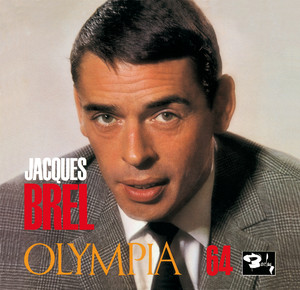
This live album by the great French chansonnier Jacques Brel is unique in several respects. It was the second—and final—live recording released during his lifetime, and it paved the way for his success in America and across the globe. He performed in the former Soviet Union and was incredibly popular here in the former East Germany as well. My parents owned several of his records, so I was introduced to his artistry at a very early age. His songs will endure forever—whether in the original versions or through the voices of other singers across various genres. The incredibly emotional opening song of this live recording immediately drew an enthusiastic response and a standing ovation from the audience in Paris. A live masterpiece.
The album is a true concept album. It offers a satirical take on English culture and the music industry. Some songs sound like The Beatles, while others are reminiscent of The Rolling Stones. The record also features some highly psychedelic moments. I like it a lot, though I was already familiar with it beforehand, so I am a bit biased. In the early 1980s, the East German record label AMIGA released a wonderful compilation of The Kinks' music. I loved that record and later bought more of the band's albums using Deutsche Marks. The Kinks are considered one of the most influential British bands in music history; they enjoyed incredible success during the 1960s and 70s. "Dandy" and "Sunny Afternoon"—featured on this record—are certainly among the Davies brothers' best-known compositions.
I’m familiar with the Pixies, but I’ve never consciously listened to this record before. The second track, "Rock Music," with all its screaming, really puts me off. The rest is just noise—deconstructive rock, a bit of grunge, and a few rather unappealing melodic lines. Of course, there are some nice guitar riffs scattered throughout, but I couldn't single out any particular song. You could even pigeonhole the music as post-punk; it’s really hard to pin down. I’ve read that this album is highly regarded, but I don’t share that view. As far as I’m concerned, this will be the one and only time I listen to it!
This album has a runtime of 48 minutes, comprising 28 songs or snippets of sound. Some tracks are reminiscent of the Beatles in their airiness, while others are highly experimental and sound like U2.
Overall, the music has a raw, unfinished quality—which may explain why the tracks are kept intentionally short. It is a diverse mix. Some parts sound strongly like Oasis. There are a few lovely guitar pieces. "Game of Pricks" sounds beautiful despite its imperfections. I wasn't familiar with this record at all, but that changes today.
I love this album; I love this band. We’ve attended their concerts time and again over the last 20 years, and it’s always been fantastic. No matter the lineup, it’s always been a delight. The album masterfully blends the atmospheric elements of alternative country, Americana, and Mariachi horns that define the signature "Tucson sound" of the band led by Joey Burns and John Convertino. You could even call it desert rock with Mexican influences. The record opens with "Sunken Waltz." With its characteristic 3/4 time signature, the song immediately draws the listener into the band's dusty, cinematic "desert rock" universe. "Quattro (World Drifts In)" emerges seamlessly from the melancholic fade-out of the opener, "Sunken Waltz." The track quickly became one of the band's unmistakable signature songs. A steady, rhythmic guitar strum forms the foundation, paired with John Convertino’s precise, jazz-inflected drumming. "Black Heart" is the undisputed, majestic centerpiece and the absolute highlight of the album! The strings are the song's defining element. The melancholic, descending chord progression and the wailing, almost screaming violins in the finale evoke the sweeping scope of a dark John Ford Western. Joey Burns sings with an unsettling restraint—like a condemned man dictating his final farewell. I would compare the dark, melancholic Gothic-country mood to bands like Nick Cave and the Bad Seeds or Tindersticks. Next up is "Pepita"; this instrumental track breaks up the intense, almost oppressive heaviness of "Black Heart." "Not Even Stevie Nicks..."—another masterpiece! It’s incredible live!!! In contrast to the expansive desert sounds of the previous tracks, this song possesses a much stronger indie-rock and West Coast pop dynamic, driven by a propulsive bassline and a straightforward drum beat. "Close Behind" once again delivers a widescreen Western sound in the best sense of the term. Despite the omnipresent Mexican and dusty desert influences, this orchestral—almost bombastic—track never feels kitschy; instead, it evokes the familiar theme song of a forgotten classic film. "Woven Birds" stands out thanks to a fragile, almost ethereal melody. The lyrics describe a ruined village where the mission bells have fallen silent and the village square lies in rubble. Side 3 of the double album opens with "The Book and the Canal." Clocking in at just 1:45, the piece is a brief, classically tinged "piano and cello sonata"—or perhaps a double-bass meditation. It conjures the atmosphere of an abandoned, dusty hotel lobby, serving as an atmospheric breather before the album continues with the quirky "Attack! El Robot! Attack!" "Across the Wire" forms the political and thematic heart of the entire album. The song transports listeners directly to the geographical and cultural dividing line between the US and Mexico—a boundary already embedded in the band's name. It denounces the brutal disparity between the privileged and the desperate at the border, contrasting the bitter reality of those who have "so much and so little fear" with people risking everything in the sand in search of a new life. On "Dub Latina," the band noticeably slows the tempo, presenting an unexpectedly sensual and alluring soundscape. "Güero Canelo," the opening track on Side 4, is another absolute showstopper. Danceable, infectious, spectacular. Driven by a cumbia beat, the song brings raw energy and an urban street atmosphere to the album; unfortunately, the studio version falls significantly short of the hypnotic live version. Next up is "Whipping the Horse's Eyes," an instrumental carried almost entirely by a distinctive, deep double bass, wistful pedal steel guitar accents, and the subtle rustle of maracas. While the band had previously experimented with cumbia and cool dub elements, with "Crumble" they dive deep into the sound of 1960s spy movie scores. On the final track of the original release, "No Doze," Calexico sends us off into the endless silence of the desert landscape with a deeply atmospheric, contemplative coda. I also own other limited editions and the reissue released twenty years later—which includes a live concert from Stockholm—but I’ll spare you any commentary on those. That said, I would still recommend listening to a live recording.
I listened to this album for the first time today. It opens with a seven-minute, hypnotic song titled "Be-In." It is built upon a repetitive, droning wall of guitar sound and a sluggish, almost ritualistic rhythm, giving the track a dense, psychedelic atmosphere. The title "Be-In" is also a direct reference to the "Human Be-Ins" of the 1960s hippie movement; by the time you make it through the song, that’s exactly how you feel. An amazing opener! "Boys Better" is equally hypnotic, though in a different way. It features a driving post-punk and alternative rock rhythm, distinguished by a punchy, fuzzy bassline, dynamic tempo shifts in the chorus, and a heavily distorted guitar sound. What follows is a style that is hard to pin down, though the fuzzy guitar and general psychedelic mood remain constant. On "Orange," the notes emanating from my floor-standing speakers sound like a mantra—calm and endlessly repeating. It is hard not to get drawn in by the sound. The breakout hit "Not If You Were the Last Junkie on Earth," on the other hand, has an almost playful, bouncy rhythm and sounds completely different from the rest of the album so far. Yet, the lyrics tell the grim story of the singer's girlfriend, who has become a drug addict. Ultimately, however, the vast majority of the songs possess a dark, atmospheric quality that I would compare to the psychedelic experiments of the early Velvet Underground. In summary, I have to admit that I had completely overlooked this band. I really enjoy this indie record with its diverse range of styles; they draw from psychedelic and space rock as well as shoegaze and dream pop, all topped off with a generous dash of garage rock and a "wall of sound" created by synthesizers, bass, and guitars. Simply amazing—sometimes truly epic! It features some great walls of feedback, but also rhythmic loops. A consistently good and interesting album. I’m going to check this band out further.
A sunny ambient album featuring four tracks and a total runtime of 40 minutes. The music of the opening track, with its simmering Latin rhythms, is certainly danceable. "Spray" is the most experimental and abstract piece on the record; its rhythm is intricate and syncopated, driven by Holger Czukay’s minimalist yet propulsive bassline. "Moonshake" is the most accessible and shortest track, translating experimental avant-garde elements into a catchy pop format. The 20-minute track "Bel Air" concludes the album, encapsulating its summery, meditative atmosphere; towards the finale, the dynamics intensify into a hypnotic storm of percussion. I have to admit it all sounds interesting, and Can is a pioneering band for several genres, but the music isn't really my cup of tea in the long run. Forty minutes of listening on a Sunday morning is enough for me.
He’s one of those guys I can’t stand at all. I’m listening to this record for the first time today. Until now, I only knew the music from the videos back then and maybe a few tracks from the radio. I haven’t listened to radio music in over 30 years. The music is characterized by funk and soul. To me, it all sounds too overblown. Plus, I always think of those terrible videos.
The band led by the Gibb brothers—originally a pure pop act—ventured into making a concept album, though it didn't quite turn out to be one in the strict sense. Everything revolves around the opening track, "Odessa (City on the Black Sea)," which runs for over seven minutes. The result is a highly symphonic record. As a young person living in the GDR, I bought the band's AMIGA release, though it contained only one song from this particular album. Despite its catchy pop sensibilities, I found the music truly beautiful; it was a soundtrack to a period of my life. Listening to this magnificent album now, for the first time in its entirety, fills me with admiration. "Marley Purt Drive" is an earthy, spirited country-rock and bluegrass track—the kind that would have suited CCR perfectly. I find this absolutely astonishing; it illustrates just how open the musical landscape was back then, with bands constantly learning from—or simply copying—one another. The very next track, "Edison," reveals clear influences of the psychedelic and baroque pop styles of the late 1960s. The intimate "Suddenly"—sung almost entirely by Maurice Gibb—sounds like a lost track by a band such as Fairport Convention. "Sound of Love" stands out as a superb piano-and-orchestra piece—arguably the best of its kind not performed by Elton John. Viewed 57 years later, this album is truly a worthy entry in the list of the "1001 Best Albums." I thoroughly enjoyed listening to it.
Oh, how wonderful—I love this record. I own multiple copies of it! As a young lad growing up in the GDR, I used to frequent the so-called "Phonothek." This record and cassette lending service was attached to the library and was primarily aimed at young people, though they also stocked classical music and audio dramas. Any registered user could borrow records and cassettes—and later, in the 80s, CDs. They had almost everything that had been released under license on the GDR label Amiga. I was first allowed to take these records home when I was about 11 or 12 and play them on my father’s turntable. Since I already owned a Tesla reel-to-reel tape recorder, I was able to copy the records at home. Those tapes held quite a lot of music—I don't recall the exact running time anymore. But that’s how I got to enjoy this stunning music right after the *Rumours* album was released in the GDR around 1979 or 1980. For me, everything about it—and everything associated with it—was iconic: the cover art, the vocals, those divine melodies. It was funky and fast-paced, yet also featured beautiful ballads. I was simply captivated by every aspect of the record. After the fall of the Berlin Wall, I obtained several copies; I even bought a hand-numbered copy that came in a special box. Later, of course, I bought every special edition available on CD. Anyone who has never heard this album really ought to do so as soon as possible. If I could award more than five points, I certainly would!
The album opens with "You Are the Sunshine of My Life," a true soul classic. The first track on Side 2 is the well-known "Superstition," a number-one hit from 1972. In between and afterwards, there is a lot of shrieking, dreadful keyboard interludes, and some soulful R&B. All in all, this album is not my kind of music.
What is this supposed to be? This isn't music; at best, it's just a string of notes. Noise rock. I live near the Brocken—the mountain of the Germans. That’s where the legends and myths of witches come from. But we don't have nonsense like this here. Usually, Walpurgis Night features medieval sounds—sometimes wild, with drums and bagpipes. But never such slapstick! Only Americans could come up with something like that. Stuff like this doesn't belong on this list. Scum.
Unfortunately, today brings another album that just doesn't do it for me. For me, a lot of 80s pop music is a no-go. "Our House" was all over the charts back then; I think I even danced to it with a girl—though we were apart, not wrapped around each other. Aside from that, I can't really connect with the album. It hasn't improved with the passage of 44 years, either.
A timeless masterpiece by innovative musicians. Remarkably, this music could just as easily have been released today. The songs feature a great deal of spoken word, which sounds unusual—yet it serves as a powerful form of expression amidst the sea of generic pop music. At twelve minutes long, "This Is What She's Like" is a mini-opera. In contrast, "Listen to This" stands out as the only truly catchy, pop-oriented track—a real earworm. Its structure and passionate, urgent vocals strongly remind me of Bob Dylan's classic "I Want You." "The Waltz"—a stately, highly emotional eight-minute piece set to a waltz rhythm—serves as the album's finale. It begins with a measured pace and evolves into a masterpiece—one that Bob Dylan didn't write—driven by a sweeping orchestral waltz rhythm, a dominant violin, light piano work, and occasional brass. It represents a "protest"—an act of defiance against the music industry and society, both of which sought to co-opt the band while failing to understand them. Following the incredible success of their previous album, *Too-Rye-Ay*, this record marked a creative breakthrough.
I am not familiar with this album. It features an orchestra and spoken-word vocals. It is New Wave with lively songs and sensitive orchestration. Not bad at all—quite listenable on a first listen. The song "The Killing Moon" is the highlight of the album.
The album sounds like highly experimental and varied Britpop—or rather, not really Britpop at all. This record, which was completely unknown to me, contains some truly beautiful, melodic songs! The David Bowie influence is unmistakable. The track "The 2 of Us" is gorgeous! After listening to it for the first time—and it certainly won't be the last—I have to say: this record is an orchestral, baroque, and exuberant masterpiece.
Garage rock, a touch of punk, noisy guitars. Very unusual for an album from 2001. Listening to it, you immediately think of Iggy and The Stooges. Not the best thing for me this morning. I don't think I'll be listening to this record again!
A classic album—thank God, finally some decent music again! It is the first album without John Cale, featuring Doug Yule instead. The album is heavy on ballads; Lou Reed sings in a warm, soft style, and both Yule and drummer Maureen Tucker take the lead on a song each. Only the track "The Murder Mystery" is somewhat experimental, harking back to earlier Velvet recordings. The album marked a turning point for the band in several respects. For me, it is an album that deserved greater recognition. Beautiful folk-rock in the classic sense.
The singer is channeling David Bowie, while the rest is run-of-the-mill pop music—exactly the kind of thing I found unbearable back then. And still do. I recognize the track "The Look Of Love," but I’ve either never heard the rest or have blocked it out. Worth one point at most, as far as I’m concerned.
African—specifically Congolese—music. It’s a mix of sound samples, like a car starting up, and shifting vocal styles. It is music that sounds unusual to our ears; at times, it resembles rumba or samba. The songs have a pop feel and offer great variety. Fortunately, through attending the Rudolstadt Festival (the largest world music festival) for nearly 30 years, we’ve been exposed to all kinds of music. Otherwise, I wouldn't have listened to this today, as it really isn't suited to Central European ears. The production quality is top-notch, which is why I’m giving it three stars.
Finally! At last, a record that is truly fun to listen to. I own several versions of it and was lucky enough to get the 2019 RSD edition. I also own the fantastic "More Blood, More Tracks" box set. This record is one of the most important and best in Bob Dylan's long career. It can also be viewed as his most mature production. 1975 was a great time for music—and, of course, for Bob Dylan. He had broken free, was doing his own thing, and no longer needed to live up to expectations. The 1974 tour with The Band had been extremely successful. The days spent in the studio must have been incredibly productive, resulting in a beautiful and diverse collection of love songs. Every single song is flawless. I can't even say whether the original test pressing is better than the version released on January 20, 1975. The songs sound very familiar in their folk-rock guise—spare and intimate—though the original version seems a bit darker than the officially released one recorded slightly later. "Tangled Up in Blue" is the song in Dylan's vast catalog that he never truly finished with; to this day, he has performed it live over 1,600 times, changing the lyrics, grammar, locations, or melody almost every time. For me, "Idiot Wind" and "Shelter from the Storm" are the highlights of an album packed with highlights. There isn't a single weak track; every song is magnificent. One of the best albums of all time!
Another New Wave album produced by Brian Eno and David Bowie. Post-punk and fun-rock. The question is: should we take it all seriously? After listening, I’d say yes. While their music doesn't quite resonate with me personally, DEVO was undoubtedly crucial for all the alternative bands that followed. They don't take themselves or their surroundings too seriously; much of what they do is satire, and the music itself becomes an experiment. "Jocko Homo" is Devo’s undisputed manifesto and their key programmatic track. The song provides the theoretical basis for the band's name, Devo, which is derived from "de-evolution" (evolution in reverse). The central thesis is that humanity is not progressing but rather degenerating—driven by herd mentality, blind consumerism, and social conformity—back to a primitive, ape-like state. The song parodied the arrogance of the modern businessman by exposing him as nothing more than an ape blindly following orders. To this day, the track is considered one of the smartest and most biting satires of the entire post-punk and New Wave era. The music often sounds staccato and features unusual time signatures. At times, it creates a stumbling, robotic feel. It isn't the kind of music I listen to—or could listen to—every day, but this record certainly deserves its place on this list.
With this album, the pop band attempted to shed their lightweight image. Did they succeed? Kicking off with a dark pop song featuring heavy synthesizer sounds and vocal harmonies in the chorus, the track dances through the speakers. It wasn't exactly a triumph—at least not for me. None of the subsequent tracks—with the exception of the beautiful yet deeply melancholic "One Of Us"—capture that wonderful, breezy feeling found in their earlier songs. By the time of its release, both couples had already separated. The record marked their final joint studio release until *Voyage* appeared completely unexpectedly 40 years later. In terms of sound and lyrics, the album feels very mature. After listening to it, I can say it isn't really a pop album. Instead, it is a blend of anxieties regarding the planet during the Cold War and the breakdown of both couples' marriages. Despite Agnetha’s bright vocals, "Soldiers" sounds menacing—and the lyrics certainly are. We were all afraid back then; the Cold War arms race had reached its peak. At any moment, someone could have pressed the red button, plunging us all into catastrophe. The album was banned in the Soviet Union and, later, in East Germany, where it was forbidden to be played. "I Let the Music Speak" opens the second side of the LP. It is one of the most ambitious and complex pieces Benny Andersson and Björn Ulvaeus ever wrote for ABBA. It deviates radically from the standard pop formula, offering a stylistic mix of epic baroque pop, classical music, and dramatic musical theater. The final track, "Like an Angel Passing Through My Room"—featuring the ticking of a clock and Anni-Frid’s wonderful voice—brings the album to a close. I think I can answer my initial question myself: Yes, it was a success! Hypothetically speaking, had the band not split up, they would have given us plenty more hits—and almost certainly a few outstanding songs along the way. But things turned out differently. A good record for a Tuesday morning.
I would say that if you want to understand PJ Harvey, you have to listen to this album. It is her best! While she did release a few wonderful, dark albums later on, this one is more than just dark; it reveals her in all her splendor, ranging from black-and-white to full color. It is an alternative statement and a musical processing of her time in the urban sprawl of New York. "Good Fortune" sounds like an unreleased Patti Smith song—a defiant outcry. The beautiful "A Place Called Home" explores the search for inner peace and a home where only love matters. "Beautiful Feeling" marks an emotional core of the album, captivating the listener with its vulnerable, almost weightless atmosphere. Yet, what follows is the album's centerpiece: "The Whores Hustle and the Hustlers Whore." The song is built on a driving, staccato blues-rock riff, thunderous drums, and a noticeably more aggressive vocal performance that recalls PJ Harvey’s earlier, uncompromising work. It is simply magnificent—dark and menacing, reflecting her view of New York. "This Mess We're In"—featuring Thom Yorke’s unmistakable voice, muted melancholic guitar chords, and a minimalist rhythm—inevitably works its way into your consciousness. "This Is Love" is pure punk. The track is dominated by a heavy, gritty, and intensely driving blues-rock guitar riff—a sound often compared to garage punk elements. Yet, the very next track—the longest on the album—shifts the pace to a tender, unhurried tempo. "Horses in My Dreams" is built on a slow, hypnotic rhythm, with PJ Harvey singing over minimally plucked guitar and a gentle backdrop of organ and piano. "We Float" is a masterpiece of intimate pop poetry; decades later, artists like Lana Del Rey would draw upon this style. The lyrics take an unflinching look at the failings of modern society. It is a radical reckoning with greed and the fallacy that material wealth equates to freedom! After a few minutes of silence, the hidden track "This Wicked Tongue" follows on my CD. It is an uncompromising rocker that, with its distorted, gritty guitar riffs and reverberating vocals, recalls the raw, aggressive era of her masterpiece Rid of Me (1993). I consider this album a milestone of alternative rock at the turn of the millennium. It showcases a versatile artist who simply gets so much right.
This is a soul album with an orchestral sound unlike anything I’ve ever heard before. The singer plays an amazing Hammond organ on it. On the opening track, "Walk On By"—which stretches out over 12 minutes—someone also plays a great electric guitar solo. The second song starts like a psychedelic, fuzz-laden Jimi Hendrix track, though delivered in a soulful, spoken-word style. "Hyperbolicsyllabicsesquedalymistic" is a mouthful to pronounce. Midway through, the song breaks into a legendary instrumental jam—reminiscent of a live concert—featuring a hammering, almost percussive piano dueling with gritty wah-wah guitars and driving percussion. It’s incredible; I never would have guessed what this record held in store. "One Woman" is a classic soul song, complete with swelling walls of strings and lyrics about a painful relationship. That’s typical soul—something I can tolerate in small doses, but certainly not for a whole album. In that sense, this four-track record offers much more than just soul; the singer experiments with various genres. The 18-minute "By the Time I Get to Phoenix" opens with what is arguably the first rap in music history. In its own way, it is certainly far more bearable than the testosterone-fueled gangsta rappers of the modern era. As I said, I’m amazed by this album, but I wouldn’t want to listen to it again!