It's the 6th form common room, March 1994, and the indie kids are huddled round a Walkman, straining to hear the previous evening's taped Evening Session from some bent back headphones, when the penny drops.
"They've Gone F****g Disco!"
Us indie kids weren't ready. We loved "Modern Life Is Rubbish", we wanted the Sugary Tea tour on loop, and, in the words of "Blue Jeans", we wanted them to "stay this way for ever". But sadly our heroes were restless - the indie disco was no longer enough for Blur. They wanted real nightclubs, real dancing, and real money. The shoegazers and the baggy chancers were always giving it "there had always been a dance element to our music" but this was different. This wasn't just dance music, it was POP music - and it wasn't just ours anymore. It was too good. Too commercial. Too confident.
It turned out that confidence was a preference after all: Blur (pushed on by Food records) had decided they were going to be massive, had written the songs to back it up, and sure enough, Girls and Boys went to number 5, and the bigtime arrived: the Radio One breakfast show, advert billboards, Mile End, Brit Awards, TFI Friday, Tabloids, CD clubs advertising "Parklife" on the back of the Radio Times for the next five years. They definitely weren't ours anymore.
Musically, the signs had been there all along, and Blur had already shown more range than most - they'd already navigated from shoegaze to noise-rock to baggy to music hall to pub singalong, but no-one expected Blur to make Sgt Pepper for the 90s. But Parklife was that good, and more than 30 years later, it still just about works. Like Sgt Pepper, the expanded musical pallette allowed them to use the medium as the message - a song about 18-30 holidays could be delivered as eurodisco; a song about the great British park could actually sound like a ranting tramp at a bandstand singalong; a song about a doomed love affair could be soundtracked with film noir strings.
Somehow, Stephen Street managed to keep it coherent and focused - the band's influences were all over the place at that point, and they're often very overt: Pink Floyd on "Far Out", Talking Heads on "London Loves", music hall skits and lift music and god knows what. The b-sides were even more nuts - they had a reasonable crack at a modern jazz parody on "Beard" (sadly relegated to the b-side of Parklife), and the very best b-side of them all: Magpie: a jangle-guitar setting of William Blake's "A Poison Tree" ("I was angry with my friend I told my wrath, my wrath did end"), taken from 1794's Songs of Experience, which had previously been set to music by Ralph Vaughan Williams in 1958, and by Benjamin Britten in 1965. Something tells me Streety wasn't getting this sort of thing with Jesus Jones.
Alongside Damon's musical poncery, unlike "The Great Escape", it does sound like Graham is still having fun at this point - his crunchy new wave interjections ensuring that "Girls and Boys" wasn't pure disco cheese, and the gorgeous Marr-esque countermelody in "Clover Over Dover" which help make it one of the melancholic highlights. Lyrically, "Clover Over Dover" is like a less lyrical "Shakespeare's Sister", and, given Blur's Who obsession, I've always wondered if this was the tongue-tied song of Jimmy, at the end of Quadrophenia, in which the mod dream plummets over the white cliffs (which would make it Phil Daniels' second appearance on the album!). It also resonates with the maritime malaise of the other standout ballad - the peerless "This Is A Low".
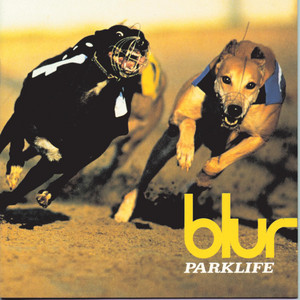
Having introduced us to Jim and Susan a couple of years previously in "For Tomorrow", Damon brings in characters, everywhere: Jubilee, Tracy Jacks, Bill Barrett - they're all fun, but when compared to their 60s forebears - Lola, "Arnold Layne", Tommy, and even the dedicated follower of fashion - they do feel a bit contrived. Damon's newfound reliance on third person perspectives could be partly due to Parklife's spiritual origins in Martin Amis' 1989 novel "London Fields", which Damon read while on tour in the US in 1992, and which is woven throughout the album. Sometimes it's explicit (the voice of Keith Talent pondering "the mystery of a speeding car" in "London Loves"), sometimes thematic (the park as cultural melting pot in "Parklife", the pub as a shop window for those 'on the game' in "Bank Holiday", the exotic femme fatale in "To The End", not to mention the dog track on the album cover), and possibly structural, too: a single work from multiple related perspectives, an unreliable narrator popping in and out of the action. It's a weakness in "London Fields", but in "Parklife" it adds to the album's kaleidoscopic appeal.
But Parklife is definitely flawed. There are a lot of "LAH LAH LAAHH"s on this record, and the mockney stuff (particularly in "Bank Holiday") sounds naff, 30 years on. Amis gets away with it in "London Fields" because it's well observed - in Parklife it just feels like panto. I liked both "Jubilee" and "Trouble In The Message Centre" at the time, but in retrospect they sound weak - fine as shambolic indie tunes by Seymour - but under the studio polish they don't shine. Magic America hasn't dated well - a cartoonish characterization of America bourne of their disastrous 1992 tour, which is not as poetic as either of their other songs responding to US cultural hegemony: 1993's reflective "Miss America" and 1997's "Look Inside America", by which time they've decided that "she's alright" after all.
Sonically, it's mastered to be very compressed and radio-friend, but there is some light and shade to break up the texture. If I'm being picky, some of the string and brass arrangements do sound a bit cheap: at the time Blur were 60 grand in debt to EMI, following disappointing sales for "Modern Life Is Rubbish", so the fake strings on "To The End" are more of a pale cultural signifier, rather than the Hollywood string arrangements the song deserves (and which would follow as the money started to roll in).
Finally, Parklife exemplfies a lot of people's objection to Blur, which is that Albarn's dilettantism - which would lead to Mali Music, Gorillaz, Dr Dee, supergroups with Tony Allen with the blokes from Verve and the Clash, Africa Express, Operas about Chinese Monkeys, austere solo albums wanging on about Iceland - indicates his fundamental insincerity. Whilst there may be some truth in that, it seems to me that he is a driven and curious egomaniac who cannot stop exploring, and making, music, even if it's not perfect. He can be a total dickhead, but without him, this era-defining record would not have been conceived, let alone made. Even if it did kill "indie".
The Jubilee-era sixth formers (slouching back on the settee), lost something that day. But the world gained something special.
Rap-rock should've been INCREDIBLE. It started pretty well (Aerosmith and Run DMC, Rage Against The Machine, Ice-T and Bodycount)...But then came Nu Metal, by which time rap-rock was just a marriage of convenience, conceived in the boardroom rather than the streets, perfect for humourlessly advertising energy drinks to angry teens, or soundtracking wrestling highlights.
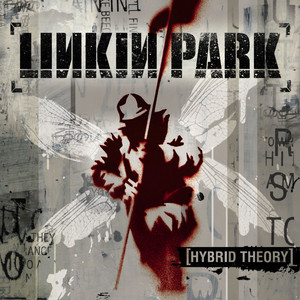
I can think of some nice things to say about Linkin Park. Firstly, they're not Limp Bizkit. And from the evidence of this album, they were more emo than I'd realised, some of the melodic choruses end up sounding like Evanescence. Their intros are often pretty good. And "Cure For The Itch" is a passable DJ Shadow-esque instrumental beatdown - a blessed relief from all that shouting.
My favourite moment in this album is the breakdown in "A Place For My Head", when the lead vocalist whispers, then shouts (inevitably) GO AWAY!! - I shall, with the greatest of pleasure.
(One more good thing - it reminded me of this perfect Kyle Gordon parody: https://share.google/4s2HiqZOMtGgBE8vE)
This is great stuff. Three albums in and they are absolutely cooking. The flows are tight, lyrics are dope, and the beats are clean - this was the last J5 album that Cut Chemist worked on, and alongside nu-mark's productions, it's a classic distillation of the sample-heavy boom-bap sound.
There's some great hooks too - there's nothing at the level of "Concrete Schoolyard", but there's definitely some standouts: "What's Golden" and "The Thin Line" are both proper earworms, especially the latter where Nelly "like a bird" Furtado adds some class to the chorus.
"Day At The Races" is extraordinary - dizzying lyrical dexterity, including a verse from veteran Big Daddy Kane ("the T-Rex"). Chali 2na steals the show throughout - "The Verbal Hermann Munster"'s buttery bass/baritone voice and playful lyricism is one of the wonders of hiphop. If there's a Mount Rushmore of MCs, he'd be up there.
The production is sparse but detailed - it sounds great on headphones - and there are nods to previous J5 albums, like the "here's what we do" sample from the first album; and the opening double bass lick following on from the last track of "Quality Control".
If there's a criticism, by this point in j5's discography it is a little predictable: maybe that's inevitable when your manifesto is all about "taking it back to the days of yes y'all-ing", but at this point we've heard enough humble bragging and dissing, no matter how dope the beats or wholesome the sentiment. "Hey" is a bit flat, and there's also a bit of a jolt in Juju's opening line in "One Of Them" - seems homophobia was alive and well in 2002, even amongst "conscious" rappers...
Overall, though, it's a really good listen. It's my 3rd favourite J5 album, but it's still class - and a testament to how good they were.
I find this collection of opaque mysticism, sensual melancholy, biblical allusions, shaggy dog stories, and just straight-up perving, totally intriguing.
Musically, it's restrained. There are some striking moments, such as the plunge to B minor on the word "laugh" in the verse of "Stories of the Street" - but on the whole, there's just enough to sustain the poet's spell.
Apparently, during recording, Cohen and producer John Simon had some fundamental disagreements about the arrangements - Cohen, perhaps unsurprisingly given that he was a poet first, wanted it very stripped back, originally stipulating vocals and guitar, some bass, and no drums at all. As a compromise, the accompaniments, such as the folk fiddle in "So Long, Marianne", or the accordion and flamenco guitar in "Stories of the Street", are often too delicate and too in thrall to Cohen's voice to be fully appreciated. Even the duet between a whistling owl and a screaming man in "One of Us Cannot Be Wrong" - a genuinely weird and unsettling moment - is kept offstage.
Primarily, the music is a vehicle for Cohen's poetry, of which I understand basically nothing. It's possible that's what keeps me coming back: maybe *this time* I'll figure out what it means. Well, either that or I acknowledge this meaningless stream of consciousness just happens to sound great.
Til then, lines like "you held on to my like some kind of crucifix" will continue to be lodged in the mind. And everytime I think about where my tea bags have come from, I'll think of Suzanne.
I can't get into metal. I'll curl my lip at a decent decent riff, and I've been known to lightly headbang, but something about me is just not able to connect to this music. There's a great moment in "Some Kind of Monster" where Lars Ulrich's dad is asked what he's thinks of their new material. He takes a breath and says "if you were to ask me, I would say...delete that." Listening to this, I agree with him.
And yet, "...And Justice For All" is clearly not rubbish: the recording is a bit tinny, but it's musically ambitious, and virtuosically played - double-pedal bass drum semiquavers, athletic guitar solos and all that - but it feels like listening to a band playing studies - impressive, but cold, and humourless. (The only chuckle I had was imagining that "Harvester of Sorrow" was a review of a suburban pub chain. Given that words are "Anger / Misery / You'll suffer unto me", I don't think Metallica liked the carvery.)
A lot of the songs are episodic, shifting time signatures and tempi between sections - many of the tracks are nearly ten minutes, and the whole album clocks in at over an hour, which requires prog-levels of concentration from the listener. But who is it for? Who wants earnest 10 minute epics about the rape of justice, or ecological destruction? People who really want to shock their mum? And there are so many words! Combined with Hetfield's abrasive monotone, it's like being pumelled repeatedly with an angry thesaurus.
As befits a total metal wuss like me, my favourite bits were the quieter sections, such as the all-too-brief acoustic breaks in "To Live Is To Die", or the gentle opening to "One", both blessed relief from an hour-plus assault of crunchy overdrive. But overall, an exhausting experience. Time for a cup of tea and some Leonard Cohen.
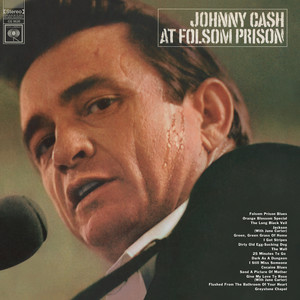
This is a remarkable album which perfectly documents an artist's ability to communicate with an audience - the crowd are as much a part of this performance as the band. The cheer in response to "just to watch him die" is so joyful and cathartic (apparently that line was cut from the single version of the song), that it's clear, from the wardens and prisoners - which side the man in black was on. Amazing stuff.
"Manassas" is a breakup record in two ways, both from his partner (Stills had recently split with Rita Coolidge, who left him for his former bandmate Graham Nash) and from his band, so it's no wonder he wanted to show his range. There's plenty of ideas packed into this, and the musicianship is as excellent as you'd expect, but it's a rather sprawling, incoherent double album. Like George Harrison's "All Things Must Pass", which came out of a similar situation, liberation needed an editor.
Stylistically, it's all over the place, but rather than shuffling these styles, they've been filed into quarters (each side of the album on vinyl). The first quarter is the most conventional - straight ahead blues-rock, with some Latin tinges, but the shift from the 1st to the 2nd quarter - as the hoedown fiddle stomps in with "Fallen Eagle" - is so abrupt its comical. The second quarter, for which he brought in some of the Flying Burrito Brothers, is fun, and sticks with the folksier material, including some gospel numbers, and "Colorado", a beautiful slice of country-rock-pop.
The third quarter's identity is smoother rock, and includes a couple of my favourite tunes: the psychedelic "Move Around" which has an almost dream-pop vibe (and includes some token Moog); and the heavy groove of "The Love Gangster" which could be on a blaxpoitation soundtrack. The last quarter finishes off with psych-inflected, wah-wah soaked rootsy rock: "The Treasure" is great country-funk, including a brilliant guitar solo, although the shuffle outro that takes the track to 8 minutes could've been omitted - that seems like the kind of creative decision made with the help of a hefty cocaine habit.
I'm not crazy about Sills' voice by itself, but when it's part of the CNS&Y signature stacked harmonies it's incredible, and thankfully that happens plenty on this album - those harmonies can be iced on top of pretty much anything, it turns out. In fact, if there is a common thread running through the stylistic jumble of this album, it's that sound. But there are better, more coherent examples, with better songs, so this probably isn't an album I'll be returning to often.
This is an objectively great album. The impact at the time, its effect on fellow artists and its commercial success, mean it's often mentioned as one of the very best albums ever made. But the difference between objective truth and subjective reality is one of the interesting things about this exercise, and while I love some of the wonderful songs, I can't honestly say that it's an album I love, yet.
My journey is still underway - I didn't grow up with Dylan, and I've not had a phase, so I'm still at level 1: basic, where Freewheelin' is still my favourite album. I dig Highway 61 and Bringing It All Back Home - I'm not shouting "Judas" at the electric guitar - but Blonde on Blonde just hasn't really kicked in for me.
I don't want to be too contrary, but I have some bugbears with Blonde on Blonde - it starts really badly ("Rainy Day Women #12 & 35" is surely a deeply unfunny joke?) and continues with the lumpen blues of "Pledging My Time". There's also lot of shrill harmonica which is not really up my musical alley. Of course, the band are great throughout, and some of the grooves are unbelievably sweet, but despite the famous "baffle ban" I'm not convinced of the musical chemistry between Dylan and his Nashville rent-a-band - they were working through a conduit (Al Kooper) rather than with old Bobbles himself, and I think it shows.
The run of five songs from #3 to #7 is outstanding. But it's also where "the Dylan voice" starts to grate. He's decided to change his voice in this album: and while obviously that phrasing has been there before, when he says "Jeez, I can't find my knees" in "Visions of Johanna".... for me, he's gone full Dylan. It's as if he's doing a caricature of himself, and while it feels blasphemous to say it, but for me, it breaks the spell a bit.
At 72 minutes, it also feels a bit long - but then again, I'm also aware that one day's listening is not enough for a record like this. I'm sure I'll come back to it, and maybe this will be a five-star review, one day.
Garage is ace. It's rooted in the same sounds as drum and bass, but it's classier, and more tasteful - jungle for the laydees. I wasn't exactly a regular at Twice As Nice, but I did spend some of my weekends in the classier bars and clubs of Winchester in 2000AD, and it sounded a lot like this. It also provided the palette for some incredible progressive electronic music of the time, like Burial and Squarepusher. So there's a rush of nostalgic goosebumps when those whipcrack snares kick in.
Trouble is, like a lot of dance music, Garage was all about singles, not albums. I remember "Sincere" and "Crazy Love" from back in the day, and enjoyed hearing them again, but neither are top tier (e.g. Roy Davis Jnr's "Gabriel" or Sweet Female Attitude's "Flowers"). Maybe MJ Cole was hoping to make the garage equivalent of "New Forms", sprinkling in jazz licks; sample fragments; pizzicato synths; smooth r&b vocals and Nokia bleeps with the brutal bass lines - it's a good listen, but it's a bit too safe to be a great album.
When this came out, I was intimidated by Public Enemy's radicalism, their importance, and the sheer density of the music - the bomb squad's maximalist everything-but-the-kitchen-sink production had put me off - I preferred the cleaner, sparser sound of Tribe or De La Soul. Plus, when you can afford an album every couple of months, something like this was too risky, despite the 10/10 NME rating. So I'd never listened to it end-to-end.
But I was missing out - I found this really thrilling. I hadn't appreciated how well made it is: building a collage of such abrasive counterpoint without compromising the clarity of the message takes incredible chops - it's a masterclass in sonic collage. They sample everything: music, noise, radio phone-ins, news, other rappers, their own records - it's like music concréte: Pierre Schaefer, except you don't want to chew your ears off. There's also plenty of plenty of sample-watching fun for the funk trainspotter.
To 2026 ears the beats are a bit tinny, and maybe compared to other early 90s hip hop the depth of sound is lacking, but that's unsurprising given that they were working to the limit of the technology at the time - it was all assembled on a single SP-1200.
The rhymes are hard and relentless, and there are hooks are catchy but not cheesy. It just keeps on coming, all the way to the blistering "Fight The Power".
I often have hip hop as background music, but this rewards, and requires, concentration - thanks to this project I made myself consciously listen, and I'm grateful I did.
Yeaahhh! It's the biggest selling record from the year of my birth! Let's get theatrical!
Obviously this bloke knows his way around a massive melodic rock tune, and I do admire the ambition, but his tremulant voice is like nails on a blackboard to me. Add that to wailing guitar, rock piano, and songs which seem to last for twice as long as they need to, and the experience is as irritating as hanging out in the drama block after school.
Maybe another day I'd have the patience for it. But right now...not for me, thanks.
This paean to Alabama closely mimics - and outright quotes - Lynyrd Skynyrd in order to tell a story about the music itself, in an attempt to reclaim southern rock from the people who saw it as a vehicle for the less laudable parts of southern history.
I appreciated the discussion of southern life, and was glad of the trigger to read about George Wallace, but I'm afraid I didn't particularly enjoy the record. Musically it's functional but uninspired: it seems pretty faithfully made lumpen blues rock, maybe too in thrall to the bands mentioned in the lyrics (Skynyrd, AC/DC, Ozzy Osbourne etc). It's not a style that I am particularly fond of, which didn't help.
A weird inclusion on the 1001, and not one I'll be returning to quicky.
Holger Czukay, the former Can bassist, takes fragments of live funk, musical and non musical samples, and early electronic instruments, and compiles a meandering, improvisatory collage which is celebratory and delicate. Sure, it's self-indulgent but there's a sense of joy and groove throughout. It's music about dance music - this is not for the dancefloor.
I'd heard enjoyed "Cool In The Pool" before, a daft avant-funk classic in which Czukay's clipped German accent offering to get cool in the pool sounds ridiculous and analytical rather than sleazy. The deconstructed funk jam of "Oh Lord, Give Us More Money" also has some lovely Duran Duran-esque guitar on it - but it's like looking at it under the microscope, shorn of context.
Drummer Jaki Liebezeit is in a restrained mood, playing gentle understated grooves rather than the familiar motoric drive of the earlier Can records. Musically he's more inventive than ever (what is going on with the hihats in "Hollywood Symphony" - are those quintuplet quavers?!) and it pulls the disparate elements together as fragments of songs come and go.
Perhaps the highlight of the album is "Persian Love", which weaves a song around the eastern vocal sample, first as an ambient soundscape, then later easing into a gentle groove with Congolese guitar. You can see the joins, and compared to later world music fusion it's a bit clunky, but the joy shines through.
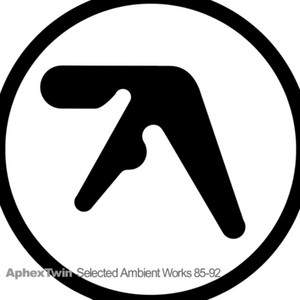
This incredible record could only have been made in the late 80s, when for the first time, digital audio manipulation was accessible to any eccentrics or enthusiast who didn't mind reading a manual or two. Amongst them was a 14-year-old in Cornwall with a synth, sampler, and sequencer, who became a pioneer in...well, whatever sort of music this is.
It isn't really "ambient" - nor is it dance music. At the point at it was made, this genre didn't exist. Ambient techno? Intelligent Dance Music? Who knows. But this is music *about* dance music: made with the same machines as rave and techno, but not for the hedonists in the main room: it's for the curious, the lost, or just plain stoned, for the more relaxed and cerebral chillout space.
The sounds are familiar but out of context, and - in contrast to the super-slick sheen of techno and electronic pop music - often pretty shonky: booming kick drums as if heard from a next door tent; stuttering acid lead lines deliberately conking out; out of tune synth patches; dirty digital distortion - the stuff which "proper" producers would've cleaned up and discarded - are preserved, magnified, and given pride of place. These are literally new sounds: noise being redefined as music. And to add to this DIY aesthetic, the entire album was recorded onto cassette, so there's a warm blanket of hiss and muddiness wrapped around the cold digital synths.
The deeply emotional effect of this music - at times blissful and euphoric ("Pulsewave", "Ptolemy"), and deeply unnerving ("Schottkey 7th Path", "Hedphelym") - is rooted in its unique sound pallette, and its dialogue with the sounds of rave: like the sound of a night out going sideways, or the memory of a dancefloor. This might be a reach, but I would put the work of Aphex Twin (as well as other electronic artists such as Squarepusher, Autechre et al) within the same lineage as Ravel's "La Valse", Shostakovich 10's brutal scherzo, Mahler's symphonic Ländler parodies, and even Bach's suites: music based on dance forms, twisted and subverted, and rendered pretty undanceable.
While it feels odd to describe a record which practically invented a genre as "naive", it does mean that the density and complexity which is a feature of Aphex Twin's later work such as Syro, or Druqs, is absent, and instead the grooves flow and evolve slowly. He would go on to make more innovative records, but he would rarely sound this accessible again.
It may look to the untrained eye like he's been sitting on his arse all day - but the Serge Gainsborough of Britpop has been busy rifling through the charity shops, listening to Scott Walker, sleeping with everyone, and packing exquisite observations of British culture, sexual mores, and class politics into one of the best albums of the 90s.
There's so many highlights: "Common People" never lose its charm, "Something Changed" is evergreen, and "Sorted for E's and Whizz" is still the best piece of advice about drugs in pop music (despite the front-page tabloid headline "BAN THIS SICK STUNT" for the origami speed wrap...which duly sending it to #2 on the first week of release) - Pulp could do no wrong.
I've never been particularly keen on the ropey glam of "Disco 2000", but in the context of the album it serves as a welcome decompression from its devastating masterpiece, "I Spy", demonstrating a band who've absolutely cracked the formula, and have the confidence and talent to pull off the most epic gestures that pop music can sustain.
As a typical indie kid, I am still fonder of the album before this one. But this is undoubtedly the more accomplished, multi-layered, and mature record, which catches Pulp between the indie-pop suburban fantasies of "His and Hers" and the nightmarish, cinematic wish-fulfilment of "This Is Hardcore". Arguably the best album of the Britpop hype years - and the one which best made the case that "all this has just got to mean something". If only there'd been more as good as this.
As the first rock'n'roll album to sell 1 million chips, this cornerstone album was the gateway into this music, which had previously been the preserve of black America. Putting aside any issues of cultural appropriation, and aiming to assess it on its merits, it is a fun 28 minutes - Elvis' joyful energy is totally infectious, but it is not a great *album* - it's been thrown together (by some Nashville dunderheads, presumably) as a quick selection of tunes to get the product out, stylistically it's patchy, and the recording quality is pretty poor throughout.
But the main snag is that many of these tunes are no way as good as the originals, or other cover versions. "Trying to get to You" doesn't have the swagger of the Eagles version from two years earlier, "Tutti Frutti", although faster than Little Richard's version, has been tamed, and "Blue Moon" isn't even in the top 5 of "Blue Moons" (Ella, Billie, Frank, Bob Dylan and The Marcels all did it better).
But that wasn't really the point. It was more that Elvis had packaged up rock'n' roll into one sexy-yet-palatable hipshaking hero - just look at the cover and see why it hit number #1.
"Aisha" and "Dirge" both still sound as chunky as ever. But the rest of the album, feeding off the 90s obsession with genre bending, is an electro-goth-kosmiche-trip-hop-industrial-drone-rock-shaped mixed bag.
You can tell it's made by DJs: the beats are hard, the sound design is impressive and cinematic, and the builds and drops are perfectly structured - but there is a tension here: it's rock music made within the forms of dance music. Sometimes it works well - the six-minute cresendo of "Dirge" is stunning, and "Neptune City" is a cool update of the "Tomorrow Never Knows" 2-chord template - but at other times, some pure musical argument would be welcome. Call me an old man, but I wanted a song or two.
There are a few attempts, and most of them fall a bit flat. Bobby Gillespie's Mark E Smith impression on "Soul Auctioneer" (which also features the sound of a squeaky gate repeatedly swinging - and yet somehow that isn't the most irritating sound on the track) consists of a single phrase of tuneless whingeing; while on "Aladdin's Story", poor old Dot Allison (from the brilliant One Dove) is made to interpolate "Nobody Knows The Trouble I've Seen", a melody with an entirely different chord progression, which doesn't make sense. I know that the craze for mashups meant that for a few years nobody gave a shit about harmony, but guys, you have instruments: you can fix something like that. "Broken Little Sister", with Jim Reid, works better, updating the Jesus and Mary Chain formula into the digital era, like the Velvet Underground with a sampler.
So yeah, some great moments. But overall too patchy to be a great album.
Just in time for Halloween! That hypnotic opening, the 15/4 time signature, the instrumentation, and the way that it starts to evolve, is always exciting, and brilliantly atmospheric. It's a shame that it doesn't really sustain that excitement, either in terms of the quality of material or through its development. It's not really two 25-minute movements after all - it's a set of loosely connected, quirky-but-tuneful noodly prog rock fragments, stitched together to make two sides of on LP. (connecting two different segments by whacking a Dolby swoosh over the join is not the same as writing a 25-minute long song, sorry)
I still think there's a lot to enjoy - the last section of part 1 is great, the master of ceremonies introducing each instrument with increasing delight ("Two slightly distorted guitars!"). Part 2 is a bit more noodly, but I enjoyed getting some drums - after 35 minutes! - even with the grunting caveman. (Presumably he's the drummer?)
Despite the gleaming picture-perfect cover, it often sounds pleasingly handmade - instruments are out of tune, or slightly out of time - as if you can hear him learning how to record and produce, in realtime, and reminding you what an impressive achievement it was, especially for a 19 year old. I once saw two guys recreate the whole album live at a festival, which was really impressive - the idea of one guy layering nearly all of this is definitely part of its appeal.
The most remarkable thing about the record is how many copies it sold - evidentially it tapped into something in the wider public, beyond just prog fans and stoners, possibly people seeking the monumental. At the time, 25 minutes was the longest reproducible continuous sound, so it must've felt like a challenge just to get through it.
But personally, If I want an hour of instrumental music from the 70s, I'd put on some American minimalism, Terry Riley's "A Rainbow In Curved Air", "In C", or Steve Reich's "Music For 18 Musicians", which make coherent musical arguments from beginning to end.
Also, do we have this album to blame for Richard Branson?
Ah yeah. My favourite Stones album. Such incredible atmosphere - from the tiptoe in the opening to Gimme Shelter (that guiro!) to the frantic piano and ecstatic choral ending of "You Can't Always Get What You Want", it's a wild ride, full of brilliant textures, feelings and grooves. The sound of the band is so *present* it's staggering.
When an album is bookended with two of the greatest songs ever made, it's inevitably going to sag a bit in the middle. But there are highlights throughout - "You Got the Silver" is heartbreaking, the intro to Monkey Man is pure goosebumps, every time, and the constant accelerando of "Midnight Rambler" is a masterpiece in rhythmic tension. Maybe "Country Honk" is a bit weak, possibly since the addition of fiddle takes the Cosplay Tennessean act too far, but it's worth it for the jolt of energy when Wyman and Watts absolutely monster us with the opening to "Live With Me". Man, the Stones did intros so well.
I used to worry about the authenticity thing, but I realise there's a double standard here: Keef is totally fine to rip off whatever he likes, slide guitar, harmonica and all, since he's a guitarist. Whereas Jagger drawling a line like "With a suitcase in my haaaaiiiiieeeeend" does feel daft coming from a lad from Dagenham. But if you're the front man of a band as fucking good as this, you can do whatever accent you want.