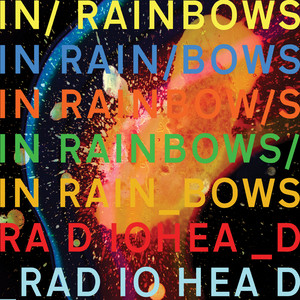
This is an album I had not listened to since high school, and since I don’t usually sit down and listen to full albums very often, revisiting it felt pretty special. And wow, it holds up. In Rainbows is such a fast, beautiful, and completely absorbing listen. Almost every song has this ethereal quality to it, but it also feels packed, powerful, and huge in a way that never becomes exhausting. It’s the kind of album that feels like it’s floating, but also somehow has both feet firmly planted on the ground.
So yeah, first album down, and this was an excellent start.
The first half of this album is incredibly strong. It is packed with that early 2000s alternative rock sound, mixed with the new wave revival style that helped make The Killers stand out so much at the time. These are big, catchy, dramatic songs that feel made to be blasted in the car and sung way louder than your vocal range can responsibly handle. The hooks are sharp, the energy is high, and there’s a reason so many tracks from this album still feel instantly recognizable.
The second half isn’t bad by any means. There are still some good rhythms, melodies, and ideas in there, but it does feel like the album loses a little steam after such a stacked opening run. It’s not that the later songs are weak exactly, but they don’t quite reach the same level as the first half. There are also a few lyrical choices from Brandon Flowers that get a little strange near the end (let's learn to take "no" for an answer please).
So overall, Hot Fuss is definitely a front-loaded album, but when the front half is this good, that still counts for a lot. It’s nostalgic, stylish, catchy, and packed with songs that still have a ton of life in them.
This an album that basically kicks the door open, throws a smoke bomb into the room, and starts blasting electronic chaos at full volume. This thing has energy from the jump, and it is absolutely one of those albums that feels wrong if you listen to it quietly.
What makes it so fun is how many different sounds The Prodigy throws into the blender. It’s electronic, but it’s also got rock, hip-hop, punk attitude, and probably six other genres hiding in the walls somewhere.
That being said, the formula does start to wear a little thin by the middle of the second half. The rhythms and structure can get repetitive, and after a while, some tracks start to feel like they’re running on the same engine with slightly different flashing lights. Even “Firestarter,” as iconic as it is, doesn’t feel quite as exciting on its own when surrounded by so much similarly explosive material.
Thankfully, the album keeps introducing enough new sounds and textures to stop it from completely wearing out its welcome.
Overall, The Fat of the Land is a banging, chaotic, highly caffeinated album that knows exactly what kind of monster it wants to be.
C’est Chic really captures the essence of a more laid-back disco groove. It’s smooth, stylish, and built around rhythms that feel effortless, even when there is clearly a lot of craft behind them. The bass and guitar work here are absolutely not to be slept on, because Nile Rodgers and Bernard Edwards are basically operating at wizard level. They know how to build a groove, keep it tight, and make even the simplest rhythm feel sharp and alive. Track-wise, “Le Freak” is easily the standout. It’s fun, catchy, and still feels like the kind of song that can instantly wake up a room. The rest of the album, though, is more of a mixed bag. Some songs had me bobbing my head and enjoying the vibe, while others started to stretch the groove a little too thin. “At Last I Am Free,” especially, just goes on too long for me and gets too repetitive, to the point where I was kind of waiting for the album to move along. So overall, C’est Chic has some fantastic musicianship, a killer disco classic at the center, and plenty of smooth moments, but it also has a few spots where the party slows down a little too much.
Smash is a great overall punk and skate punk album that pretty much does exactly what the title promises. The whole thing hits hard, with that raw 80s and 90s punk energy running through every track. The big songs still stand out, mostly because they switch things up a little more structurally and have that extra punch that makes them so memorable. But the deeper cuts are not just filler either. They still bring plenty of speed, attitude, catchy hooks, and the usual punk themes of frustration, rebellion, and general “everything is kind of broken, so let’s yell about it” energy. Overall, this is a fast, loud, super fun listen and, yes, a definite Smash.
My first jazz album for this challenge, and honestly, a pretty great place to start. I know a lot of the enjoyment with jazz depends on whether you’re already into the genre, but luckily, I do like jazz, and I really enjoyed this. The back half was where it clicked the most for me. Part Three especially feels like every instrument is fighting for its life in a good way. Nothing fades into the background; you can practically hear the sweat and effort coming through the headphones. Then Part Four slows everything down into this darker, more mysterious sound, with those thundering timpani hits giving the album a really powerful ending. Sure, some of the tracks are long, a little repetitive, and can blur together at times, but this still feels like something worth appreciating. If this is my first stop in jazz, I’m definitely curious to see where the rest of the genre takes me.
Unlike some reviewers, I actually don’t mind live albums. The cheering, clapping, whistling, and general crowd noise can make the whole thing feel more alive, and in this case, that really works in its favor. Frampton Comes Alive! has such a strong live-album identity that it’s honestly hard to imagine some of these hits as regular studio recordings, especially when the live versions are the ones that feel burned into classic rock history. That said, a lot of the album still sits comfortably in typical ’70s rock territory, with some solid tempo changes and enough energy to keep things moving. I was hoping for a little more talk box action, though. Only two songs? Come on, Peter, don’t tease the robot guitar and then not use it again until the end. Overall, it’s a decent live rock album with a fun crowd, some strong moments, and just enough charm to understand why it became such a big deal.
Welcome to the Pleasuredome is a pretty interesting snapshot of what was happening in the UK in 1984, and when Frankie Goes to Hollywood locks into their big, funky, synthy dance-pop sound, this thing really works. Tracks like “Relax” and “Two Tribes” still sound huge and weird and exciting. Even their version of “War” fits better than I expected, mostly because it has enough punch and drama to sit comfortably next to their own material. That’s definitely where the album is strongest.
The middle stretch gets a little shaky, especially with some of the cover songs. They don’t really feel like "Frankie’s" style, and I found myself missing that bold new wave energy from the beginning. The second half also has moments where the original material gets a little awkward and overstuffed, like the album is trying very hard to be provocative and theatrical at the same time. But honestly, that might also be part of its whole identity. It’s big, messy, strange, and not exactly interested in being normal. They’re at their best when they fully lean into their own funky, synthy sound instead of borrowing someone else’s jacket. That said, “The Power of Love” is the big exception to the style issue. Slowing things down there actually works, because it’s a genuinely great ballad. So yeah, this is technically more of a 3.5 for me, but I’ll round it up to a 4 ;)
The perfect album for dropping everything, getting in the car, and driving toward a better life with no real plan besides “anywhere but here.” Born to Run really surpassed my expectations. Everything here feels huge and dramatic in the best way, with those early ’60s R&B and soul influences giving the whole album this nostalgic, almost magical glow. The instruments are used so well too, especially Clarence Clemons’ sax, which comes blasting in like the emotional support horn of the American dream. Springsteen does have a few mumbly moments where some lyrics get a little buried, but he makes up for it with writing that feels thoughtful, vivid, and full of images of middle-class America trying to escape itself. Definitely one I’d revisit.
What? Another mid-70s rock album for me? Sure, twist my arm. But this album is an easy 5 out of 5. Basically banger after banger, and I honestly didn’t realize just how much of Boston’s most iconic music came from this one album. It’s packed. Compared to some of their classic rock peers, Boston feels way peppier and more energized, like the whole thing is running on premium guitar fuel. The vocals soar, the guitars glow, and every track feels built for blasting out of a car stereo with absolutely no concern for your speakers. No wonder this band became a classic rock radio staple.
Rock Bottom is not exactly a great listen for me, but I’d be lying if I said it wasn’t fascinating. This album feels like it keeps forgetting what music is supposed to do, then suddenly remembers for about a minute before wandering back into the fog. Noises clash, instruments drift around like they’re improvising in separate rooms, and then out of nowhere everything comes together into something surprisingly coherent and interesting. Then, just as quickly, it loosens up again and floats away. I will say, a lot of the sounds here feel way ahead of 1974, and what kept me intrigued was that every track had its own strange identity. I genuinely didn’t know where it was going next, and that gave the album some real listenability. Maybe this was Robert Wyatt’s headspace after his accident, or maybe that’s just the obvious interpretation to reach for, but either way, Rock Bottom is a deeply weird, unsettling, and oddly impressive project. I’m glad I heard it, but I don’t see myself revisiting it much. For me, it’s a 2.5 out of 5, generously rounded up to a 3.
Nina Simone is a versatile powerhouse here, breezing through jazz, pop, blues, R&B, and whatever else she feels like conquering at the moment. Her voice is both powerful and soothing, packing so much emotion into every song that you can feel the heartbreak, sorrow, joy, and every complicated feeling in between. And of course, her piano playing is fantastic too. The title track is the clear standout for me: a hypnotic ballad where the piano feels like it is slowly building into its own little windstorm. Love it. Yes, since these tracks come from different recording sessions, the album can feel a little disjointed at times, but that is a small thing to look past when the performances are this strong. If anything, it just proves how easily Nina could move between styles and still sound like a legend. Total score is a 4.5 rounded up to a 5!
This was a nice one. I was only familiar with the first track before listening, and I thought it was okay, so I was pleasantly surprised to find that the rest of the album actually connected with me more. Tigermilk has catchy melodies, great instrumentation, and that soft, slightly bookish indie charm that makes it easy to understand why Belle and Sebastian became such a big influence on the 2000s indie scene. Nothing here completely blew me away, but there also wasn’t a track I strongly disliked, which is honestly a pretty solid batting average. Overall, a pleasant, breezy listen.
“Seven Nation Army” is arguably one of the best rock songs of the 2000s, if not the best, and Elephant really cements The White Stripes as a force to be reckoned with. Jack White is a complete talent, from his singing to his guitar work, making that thing screech, growl, and basically sound like it was pulled out of a haunted garage. But let’s not forget Meg White, whose drumming gives the album this booming, steady pulse that reminded me exactly why I loved this band back in the day.
The album jumps through alternative rock, blues rock, and garage rock, all while sticking to that stripped-down White Stripes style. Some of the deeper tracks range from just okay to pretty great, but even when a song isn’t blowing me away, the sound is still so distinct and alive. Hopefully these two play together again someday, because the world could use another reminder of just how much noise two people can make.
These are all nice-sounding tracks that really showcase the talent and musicianship of jazz. The main issue for me is the length. I do like jazz, but 76 minutes is a bit much, and there were definitely moments where I felt the album stretching on. Still, I really enjoyed the tracks that lean more into Afrobeat, because they give the music more identity and make it more interesting to listen to. Overall, it’s a solid album with plenty to appreciate, even if for me it works best as good background listening.
I’m honestly surprised I had never even heard of Prefab Sprout before this. I guess they were another one of those bands that made more noise in the U.K. than they ever did in the U.S. Sound-wise, Steve McQueen reminds me a bit of Crowded House and Simple Minds, with that classy, polished 80s pop sound that was getting ready to take over the rest of the decade. The album starts off pretty strong, but it does lose some steam as it goes, with each song becoming a little less interesting than the last. Still, if this kind of smooth, sophisticated pop is your style, this seems like a pretty solid one to have in the collection.
This kind of big band music always makes me feel like I’ve been dropped into some old Hollywood movie, and honestly, that’s a pretty good feeling. Frank Sinatra sounds smooth and confident throughout, gliding over playful, adoring lyrics while the brassy band swings in behind him like it owns the room. That being said, the album doesn’t deviate much from that formula, so it can wear a little thin after a while. Variety isn’t exactly its strength, but as a snapshot of that classy sound of yesteryear, it still has a certain magic to it.
For the second time this week, I’ve been introduced to an ’80s UK pop band I had somehow never heard of. I’m starting to wonder how often this is going to happen with this challenge.
Overall, Rattlesnakes is a pretty solid ’80s album, and I really liked the instrumentation. The music switches things up nicely and delivers some genuinely great melodies. However, I wasn’t as into the vocals. Lloyd Cole often sounds more interested in being poetic than making the songs truly stick, and his delivery stays in the same lane a little too much for me. A few stronger choruses or more vocal variety could have pushed some of these tracks from decent to really good, maybe even great.
Still, it’s not a bad listen. I just find myself wondering a bit about its inclusion, especially when there were stronger peers from that same era.
The kings of Celtic punk rule here on an album that feels built for a packed pub, a spilled pint, and at least one person starting a fight they absolutely cannot win. Shane MacGowan has the perfect voice and inflection for this kind of music, rough around the edges but completely locked into the attitude. The album dabbles in other cultures and styles, but The Pogues never really lose their signature sound. And when they lean fully into that Celtic spirit, you can really hear the heart and roots behind it. There are also some pretty good slower moments here, especially in the medleys, which give the album a little more depth beyond the rowdier pub-ready tracks. It is a bit stuffed, and some melodies start to feel reused, but honestly, Celtic punk is just a blast to listen to, and this album delivers plenty of that rowdy, legendary sound.
More personal and emotional than Pure Heroine, Melodrama feels like a strong second step forward in Lorde’s career. She sings from the heart across these tracks, and I’m glad the instrumentation doesn’t get overlooked either, giving the album this dreamy, moody atmosphere that really works. Even with the changes from her debut, this still feels like the Lorde we know and love. The second half does falter slightly, but there really aren’t any weak songs here. Overall, it’s a pretty good listen from start to finish.
The Renaissance is definitely a classier-sounding hip-hop album than a lot of what was coming out around this time. Q-Tip throws out the stereotypes and lays down some pretty great rhymes and smooth flows, all while keeping the album rooted in a warm, throwback sound. These tracks are easy to put on in the background, and the whole thing has a nice, laid-back groove to it. But that’s also what holds it back a bit. It feels like things are played just a little too safe, and nothing here becomes super memorable. Still, even when it doesn’t fully stand out, The Renaissance is a smooth reminder of Q-Tip’s effortless cool and old-school craftsmanship.
This is clearly the moment the Rolling Stones were ready to become the bad boys compared to the Beatles. They were releasing an album with no covers, pushing their sound forward, and hinting at the counterculture shift that was about to take over the 60s. Too bad the album itself just isn’t that great.
First off, there’s the obvious issue: the misogyny. Jagger spends way too much of this album talking down to women, and it gets gross fast. “Under My Thumb” is the obvious offender, but “Think” is pretty rough too, and it definitely doesn’t stop there. Musically, I hear a lot of genres being tossed around, and there are some interesting sounds here and there, but not much really stands out. Of course, “Paint It Black” is the major exception and easily the highlight of the album. Too bad the rest couldn’t match that level.
I get what the Stones were trying to do here. They wanted to sound edgier, rougher, and more dangerous than their peers. But for me, Aftermath mostly feels like an important stepping stone rather than a great album on its own.
Pretty conveniently, I listened to Tigermilk exactly two weeks before getting If You’re Feeling Sinister, so I had a good comparison point. It’s interesting that Belle and Sebastian released this just five months later, because it mostly feels like more of the same. That isn’t necessarily a bad thing. It’s still a pleasant, breezy listen with some nice instrumentation and a handful of good tracks. However, this album feels a little slower and less upbeat, and by the final stretch, I was starting to lose interest. There just isn’t much here that builds upon what Tigermilk already did. Still, it’s a nice album overall, even if I found the first album a bit more engaging and memorable.
Southern rock usually isn’t the first genre I reach for, but *Pronounced ’Lĕh-’nérd ’Skin-’nérd* feels like a pretty great gateway into it. The obvious standouts are “Simple Man” and, of course, “Free Bird,” two haunting and powerful tracks with guitar work that completely blows me away. The rest of the album leans further into the band’s Southern roots, with plenty of slide guitar, lively piano, and honky-tonk flavor. Those songs may not reach the same heights as the classics, but they’re still enjoyable and give the album plenty of personality. Overall, this was a solid listen, and I can definitely see myself coming back for the big tracks.
I have to admit there is some bias here, because several songs from Play were a big part of my childhood. I remember hearing them on the radio, loving their sound, and carrying them with me as I grew up. Listening to the full album brought back a lot of that nostalgia, but as an adult, I could also better appreciate what Moby was doing musically. Instead of sticking to pure techno, he blends electronic music with old blues and gospel recordings, giving the album a sound that feels both modern and rooted in the past. Most of the songs I knew were packed into the first half, so I was a little worried the album would fall off afterward. The second half is not quite as strong and leans heavily on instrumental tracks, but it still has plenty of worthwhile moments. Even some of the unfamiliar songs managed to transport me back to the late ’90s and capture that distinct electronic atmosphere of 1999. The final track is especially haunting and beautiful, though I wish it had lasted longer. I would probably cut about five tracks to make the album tighter, but listening to Play still felt like reopening a part of my childhood that had been sitting quietly in the background all these years. I would gladly return to it again.
The Lemonheads feel like one of those bands that comes up whenever people talk about ’90s alternative rock. They may not have been one of the era’s biggest movers and shakers, but they still captured that quintessential early-’90s sound. It’s a Shame About Ray has that jangly, slightly rough-around-the-edges energy that immediately places it in that time. The songs can get a little samey, but honestly, it’s the good kind of samey. I like this sound, so I was perfectly happy to stay in it. And of course, I listened to the version with their cover of “Mrs. Robinson,” which is an absolute banger. As far as I’m concerned, the album just doesn’t feel complete without it.
I don’t think I’ve ever heard the word “rectum” repeated this many times in any form of media, so that’s certainly an accomplishment. Dr. Octagonecologyst is easily one of the more original albums I’ve heard in this challenge, and there are a few production touches I enjoyed, like the psychedelic blips, the scratching, and some beats that sound like they came straight from a Sega Genesis game. There’s also some clever wordplay here and there. The problem is that a lot of the humor just didn’t land for me. Sometimes it felt overly sexual, sometimes awkward, and sometimes it was just trying so hard to be strange that the joke wore thin. The album starts out interesting, but by the end I was mostly thinking, “Okay, I get it.” It has some creative ideas, but they were not enough to keep me engaged all the way through.
This album is basically built for shredding and headbanging, and if that’s what you came for, Megadeth delivers. There are plenty of impressive guitar solos and heavy moments that make it easy to rock out, even for someone like me who isn’t a huge metal fan. The title track is easily the standout, though. “Peace Sells” has more melody than most of the album, the lyrics are entertaining, and it is genuinely catchy. Beyond that, there wasn’t much here that really grabbed me. The vocals often feel buried beneath the guitars, the lyrics lean into the usual edgy Satanic Panic-era material, and a lot of the songs start to blend together. Still, the album keeps moving and never really bored me, so while it didn’t convert me into a metalhead, it was an all-right listen.
Oh yes, here we are: the album that supposedly started it all. The genre that would eventually inspire decades of headbanging, parental concern, and teenagers decorating their bedrooms with increasingly questionable imagery.
Black Sabbath’s debut obviously sounds like a band still trying to find its voice, but that is also what makes it such a fascinating listen. You can hear them opening up entirely new pathways with this heavier, darker sound. I especially love the creepier tracks—the ones that make you feel like you are standing outside a dark church at midnight while something deeply unholy is happening just out of sight.
Not everything feels completely formed yet. A few tracks still lean pretty heavily on the blues, and you can tell there was much more for the band to discover. Still, the music keeps pushing forward, with some excellent guitar work, memorable riffs, and Ozzy beginning to settle into the voice that would soon become legendary.
I was honestly surprised by how much I enjoyed this. It may sound like the beginning of something bigger, but even on its own, it is eerie, exciting, and unlike much of anything that came before it.
One of the best things about this challenge is getting introduced to artists and genres I probably never would have found on my own. I had never heard of Songhoy Blues, and I had never even heard the term “desert blues,” but the story behind the group’s formation is fascinating—and thankfully, the music itself is also a delight to listen to.
The instrumentation sounds incredibly solid, the rhythms are infectious, and the whole album has a natural toe-tapping energy. I have no idea what they’re saying most of the time, but it really doesn’t matter. The music communicates plenty on its own. I especially enjoyed the grooveier tracks, where the band really locks into a rhythm and lets it carry the song.
Some of the tracks do begin to blend together after a while, but it’s such an enjoyable sound that I never minded too much. I’m genuinely glad someone decided this album belonged in the book, because without this challenge, I probably never would have known it existed.
I was already very familiar with the title track going into Let’s Stay Together, and yeah, I still love that song. I was a little worried the rest of the album might be nothing but slow, overly cheesy romance music, but thankfully, that is not the case.
There are actually a surprising number of upbeat songs here, and they give the album a lot more energy than I expected. The instrumentation works beautifully with Al Green’s voice, especially the horns, which always seem to arrive at exactly the right moment. The drums also come through really nicely and give these songs a strong, steady pulse without overpowering anything.
It also helps that the album is pretty short. None of the songs stick around long enough to wear out their welcome, and the whole thing moves along smoothly. This was a warm, enjoyable soul album that offered more variety than I expected. Very nice.
Well, it finally happened: I got my first David Bowie album in this challenge. And naturally, I landed on the one where he decided to go R&B.
Overall, Young Americans was a pretty mixed bag for me. Bowie’s voice sometimes worked with this style, and sometimes it really didn’t. I love the title track, and there were a few other songs that caught my attention, mostly because of the spacey, funky, and soulful instrumentation happening behind him. Even when the vocals weren’t completely clicking for me, there was usually something interesting going on musically.
The first half was definitely stronger. It felt more varied and had more personality, while the second half started to lose me and became a little boring. The major exception is “Fame,” which wakes the album back up right near the end.
There are some great sounds on here, but as a whole, Young Americans never fully came together for me.
I’m a huge grunge fan, so Ten was obviously very familiar territory for me. Pearl Jam did take a little while to grow on me over the years, but this album is the one that really made everything click. Listening to it front to back again was just incredible.
I love the sound of this era. It has that early grunge heaviness, but there’s also so much melody, atmosphere, and emotion packed into it. The songs cover everything from deeply personal struggles to tragedy and politics, and they never feel like they’re reaching for seriousness just to seem important. There’s real weight behind them.
Now, Eddie Vedder can occasionally sound like he’s singing through a mouthful of gravel, so knowing what the songs are actually about definitely helps. Once you get past that hurdle, though, there is so much to pull from this album. The guitar work, the tension, the emotion, and that unmistakable early-’90s sound all still hit just as hard.
For me, this is Pearl Jam at their best. Ten helped announce what the ’90s were about to become, and after all these years, it still sounds fantastic.
I went into this album expecting another fairly traditional jazz album. Then I saw it described as avant-garde jazz and experimental big band, and suddenly I was a lot more curious.
A lot of the music follows a pattern where it settles into a familiar jazz groove and then—boom—something strange happens. The tempo suddenly shifts, the whole band crashes in at once, or some unexpected instrument wanders through the door and changes everything. Then it settles back down, only to repeat the cycle again a few minutes later. It’s unpredictable, a little chaotic, and pretty fun to follow.
By the final track, though, the constant twists started wearing a little thin. There are only so many times the music can pull the rug out before I start expecting the rug to move. Still, there are plenty of cool moments throughout, especially the introduction of the classical guitar, which added a completely different texture.
A fascinating and very ambitious jazz album, even if its controlled chaos eventually became a bit exhausting.
xx takes me straight back to my college days. I adored The xx back then, and at the time, it genuinely felt like there was nothing else quite like them. Their sound seemed to signal a new chapter for indie music, and looking back, I guess that feeling was pretty accurate.
Listening to the album now, though, what really hits me is just how beautiful it is. The echoey guitars, the quiet vocals, and that gentle, ethereal atmosphere make the whole thing feel like I’m floating. It’s sparse, but it never feels empty.
More than anything, this album now carries this sad, dreamy sense of nostalgia for me. It takes me back to being 19, starting college, and feeling like my entire life was still waiting to happen. That personal connection probably means I’ll rate it higher than the average listener, but I can’t help it. This is a gorgeous album, and hearing it again felt like briefly stepping back into another version of my life.
Tres Hombres was actually a pretty nice surprise. There are plenty of fun, no-frills rock songs on here that are easy to boogie along with, which is pretty much what I was hoping for from ZZ Top.
What really caught me off guard, though, was the singing. I’m already pretty familiar with the band, I knew “La Grange,” along with plenty of their later hits, but I never realized how much vocal range they actually had. There are moments where the vocals are genuinely impressive, and it made me appreciate them a little more beyond the beards, sunglasses, and fuzzy guitars.
Nothing on the album completely blew me away, but it stays enjoyable for most of its runtime. I also think this was the first time I’d ever heard a slow ZZ Top song. After hearing it, I understand why that side of the band never became their calling card. It was pretty dull.
Still, this was a decent, fun rock album with more personality, and better singing, than I expected.
The ’80s had barely begun, and The Human League were already laying out that quintessential synth-pop sound that would dominate much of the decade. Of course, “Don’t You Want Me” is the massive standout here. Absolute fire. Unfortunately, none of the other songs come close to reaching that same level.
Still, I’m a sucker for retro synths, and those sounds carried a lot of the album for me. The vocals were more hit-or-miss. Sometimes they worked perfectly and delivered a catchy chorus, but other times they seemed to clash with the melodies underneath them. A few tracks also became repetitive after a while.
It’s not a bad album, though. Even when it didn’t completely work for me, I could hear it establishing a sound that would lead to stronger synth-pop acts, as well as better Human League songs later on. I mean, “Human”? Amazing. Overall, *Dare* is an important and occasionally catchy album, but mostly just a decent one for me.
It’s honestly pretty wild listening to The College Dropout knowing the direction Kanye West would eventually take. This album sounds so conscious, progressive, and rooted in the politics of 2004. He’s criticizing the Bush era, questioning the systems around him, and speaking from the perspective of someone who feels like an outsider. Considering everything Kanye would later say and do, much of which I obviously do not support, it makes this album a particularly strange time capsule.
Putting all of that aside for a moment, though, this is a very listenable album. And coming from someone who isn’t a huge hip-hop fan, that is definitely a compliment. The production has such a distinctive style, especially with the pitched-up vocal samples, unexpected percussion, soulful melodies, and beats that often sound completely different from one track to the next. It feels creative without constantly screaming about how creative it is.
Kanye is also a much better rapper here than I was expecting. There’s some genuinely clever wordplay, plenty of humor, and a surprising amount of thought behind the lyrics. The first half is especially strong, with several tracks touching on class, religion, education, racism, and the pressure to follow the path society has chosen for you.
My biggest issue is that the album is 76 minutes long, which is a lot of Kanye to take in at once. I only really started getting bored during the final quarter, when the tracks became less memorable and I began feeling like I had already heard most of the album’s best ideas. It never completely loses its way, but it definitely could have used some trimming.
And that final track absolutely did not need to be over 12 minutes long. I understand that he wanted to tell the story of how the album came together, but there had to be a more creative way to do it than several minutes of rambling.
Still, The College Dropout is a fascinating album. It’s inventive, surprisingly thoughtful, and filled with glimpses of an artist who once seemed like he was going to challenge the world rather than become one of its strangest controversies.
If I had a nickel for every time James Hetfield ended a line with “Ah!” on this album, I’d have enough money to buy myself a pretty nice lunch.
Anyway, ...And Justice for All was just okay for me. There are definitely a few powerful tracks here, with “One” being the obvious standout. It’s emotional, intense, and easily the song that grabbed me the most.
For the first two-thirds of the album, I was mostly enjoying myself. But once I reached that final stretch, I started thinking, “Okay, I’m pretty sure I’ve heard all of this already. Are they going to surprise me with anything else?” There are some strong riffs and nice melodies scattered throughout, but not much that made me want to come back and hear the whole thing again.
I guess metal just isn’t really my thing, and apparently neither is headbanging for over an hour. There’s plenty to admire about the musicianship and ambition here, but by the end, it all blended together a little too much for me. A few great moments, one excellent song, but overall, it was just okay.
Paul Simon, freshly separated from Garfunkel, steps out on his own here—and surprisingly, this album is a lot of fun. You can still hear faint echoes of the Simon & Garfunkel sound, and the whole thing remains pretty laid-back, but Simon doesn’t just settle into one comfortable groove.
There’s a nice mix of Latin, jazz, blues, and folk scattered throughout, which helps every song feel a little different from the last. Some tracks are simply good, while others really stand out, but there wasn’t much here that dragged or blended together.
Overall, this was a really pleasant listen and definitely an album I could see myself coming back to.
Country takes cabaret by the hand, and the two waltz through this album. It took me a little while to settle into the album’s soft, unhurried sound, but once I did, I really enjoyed it.
k.d. lang deliberately draws on Marlene Dietrich’s image and old-Hollywood mystique here, bringing that smoky, sophisticated style into the 1990s. The accordions, clarinets, and gentle arrangements conjure up a dimly lit cabaret room where everyone is dressed far better than I am.
Personally, I preferred the songs that leaned further into cabaret than country. That’s where the album felt the most distinctive and atmospheric to me. It’s also interesting that, despite drawing from sounds associated with the ’30s, ’40s, and ’50s, parts of it still feel connected to the adult-alternative music that became popular later in the ’90s. Sixpence None the Richer occasionally came to mind—not necessarily as a direct influence, but as part of that same soft, polished musical world.
Overall, this was a really nice album. Quiet, elegant, and easy to sink into once I found its rhythm.
The Zombies might be one of the most underrated bands of the British Invasion. They had some truly iconic songs in the ’60s, and their music captures that quintessential sound of the era. As for Odessey and Oracle, though, I thought it was just fine.
Obviously, “Time of the Season” is the big hit, and it stands pretty tall above everything else here. There are still some other good tracks, though. “Butcher’s Tale” has this wonderfully eerie atmosphere, and I enjoyed the bright, unmistakably ’60s sound of “Care of Cell 44.” The album gives you a nice mixture of sunshine pop and the gloomier, slightly psychedelic side of the decade.
At the same time, a few songs sound pretty similar to what other British Invasion bands were already doing. I also noticed some surprisingly rough technical moments. The instruments occasionally overpower the vocals, parts of the mix clash, and at one point you can practically hear a lead vocal being turned down right before the chorus. I’m also fairly certain I heard a wrong piano note, unless the piano was simply trying to express itself. A few songs even feel slightly rushed.
So yeah, it’s a mixed bag, but it’s a perfectly decent listen. Anyone who loves ’60s pop will probably find plenty to enjoy, even though “Time of the Season” remains the obvious reason to show up.
You know how *This Is Spinal Tap* says to crank it up to 11? Well, Bonnie “Prince” Billy had the audacity to turn it up to two.
I love music, and I’m still really enjoying this challenge, but after 43 albums, this is the first one that just completely lost me. Maybe it simply wasn’t made for me. I don’t dislike folk music, but I’ve never been a big fan of albums that stay slow and subdued from beginning to end. Man, I need at least a little energy.
I See a Darkness has to be one of the quietest albums I’ve ever heard. There are maybe one and a half songs where the musicians briefly sound awake, but for most of it, the whole band seems terrified they might disturb the neighbors.
And it isn’t just how quiet everything is. I didn’t find much of anything memorable in the melodies, the arrangements, or the performances. It all just drifted past me without leaving much of an impression besides boredom.
I don’t know. Clearly, plenty of people connect with this album, but I just couldn’t.
Maybe I should give live albums more of a chance, because some of them really can be fascinating little time capsules. With *Live at the Apollo*, you can imagine buying a ticket in 1962, during a turbulent moment in American history, walking into the theater, and completely losing yourself in the energy of James Brown and that wildly enthusiastic crowd. Meanwhile, nobody there could have fully known just how influential he was about to become in the years and decades ahead.
Before listening, I had read that the album was especially known for its incredibly loud and excited audience, and yeah, they definitely make their presence known. The crowd feels like almost as much a part of the performance as James Brown himself.
The album itself is pretty good. I wouldn’t say every song blew me away, but the performance is energetic, charismatic, and just plain fun. James Brown clearly knew how to command a room, and the crowd sounds ready to explode at practically any moment.
The most interesting part for me was the ten-minute version of “Lost Someone.” On paper, a slower song stretched out that long might sound like a chore, but it actually becomes one of the most immersive moments on the album. It feels like you’re sitting inside the Apollo, with James Brown onstage and the audience becoming just as important to the recording. You can hear people completely losing themselves in the moment, escaping whatever was waiting for them outside, and I think there’s something beautiful about that.
Sure, there aren’t a ton of songs here that I’d personally rank among James Brown’s most memorable, and the recording quality can be a little rough. But honestly, that almost adds to the experience. More than sixty years later, we still get to hear what it felt like to be in that room.
Overall, it’s a decent album, but an even better time capsule.
Yeah, you can really hear where rock music was heading with this album. Things were getting heavier, louder, and more aggressive, and Led Zeppelin were clearly helping kick that door wide open.
There’s still a ton of blues influence all over Led Zeppelin II, but by this point, the band had definitely established their own voice. This doesn’t just feel like a blues-rock band borrowing from the past anymore. You’ve got some genuinely iconic tracks here, along with plenty of great, hard-rocking songs that point toward where rock would go in the decades ahead.
I wasn’t quite as into the last couple of tracks, and the album loses a little steam for me near the end. But overall, this is a really fun listen and a pretty great snapshot of rock music getting heavier right before things really exploded in the ’70s.
It’s nice, after hearing so many rock albums where the blues influence is incredibly obvious, to finally get an actual blues legend on this list. Muddy Waters is the real deal, and *Hard Again* gives you a pretty clear picture of where so much of that later rock sound came from.
And musically, there’s really nothing I can complain about. Muddy Waters sounds great, the guitar playing is fantastic, the harmonica is all over the place, and the whole thing has that raw, authentic blues energy. These guys clearly know exactly what they’re doing.
The problem is simply that I’m not much of a pure blues person. After about four songs, I kinda felt like, “Yep, I’ve gotten my blues fix.” Then I looked and realized there were still five tracks left. At 45 minutes, a lot of the songs started blending together for me, and there just wasn’t enough variety to keep me completely engaged.
That’s not really a knock against Muddy Waters or the musicians here. It’s more that blues works better for me in smaller doses. Give me a couple great blues tracks and I’m happy. Give me nine in a row, and eventually my ears start asking what else is on.
Still, I’m very glad *Hard Again* is represented on this list. After hearing the blues filtered through so many other artists, it was cool to finally spend some time with one of the legends who helped create the sound in the first place.
I really like this era of electronic music where artists could grab a mountain of samples, smoosh them all together, and somehow turn the whole thing into something beautiful. So knowing Since I Left You was basically built around that idea, I was pretty excited going in. Plus, the one song I already knew, “Frontier Psychiatrist,” is great.
And yeah, there’s definitely a lot to appreciate here. I love hearing all these little pieces of 20th-century music chopped up, rearranged, and blended into something completely different. There were moments that reminded me of Daft Punk, Moby, and some of the other sample-heavy electronic music from around this era. When everything clicked, it sounded fantastic.
But compared to those artists, and even something like The Prodigy, this didn’t grab me quite as much. Some tracks started getting repetitive, and that can be a tricky thing with electronic music. If I really love the sound being repeated, keep it going forever. I’m happy. But if I’m only lukewarm on it, eventually I’m just sitting there waiting for the next track to show up.
So it’s a bit uneven for me. Some songs are great, some are just okay, but overall I still thought *Since I Left You* was a pretty good album. Even when I wasn’t completely into a track, I could still appreciate the ridiculous amount of creativity that went into piecing this whole thing together.
My, this is a noisy one. Yank Crime is rough, loud, abrasive, and very clearly supposed to be that way. This feels like the kind of album you’re meant to turn up way too loud and just let the screaming and guitars wash over you. And for 1994, it’s interesting hearing something this aggressive that isn’t quite grunge, but still feels completely at home in that era.
And honestly, I enjoyed it quite a bit. There are some really cool guitar sounds and melodies buried underneath all that noise, and when everything comes together, the chaos can be pretty exciting.
That being said, this is definitely a “once you know, you know” kind of album. After the first couple tracks, I pretty much understood what the rest was going to sound like. There’s screaming. There’s noise. The singer is clearly not having a particularly relaxing afternoon. And while there are interesting moments throughout, the overall mood and approach don’t change a whole lot.
Still, I liked hearing where this kind of sound was going. You can hear pieces of hardcore and post-hardcore here, but I could also connect some of it to the much more emotional, aggressive side of emo that would become bigger over the next decade or so. Not an album with a ton of variety, but definitely an interesting and enjoyable blast of noise.
Look, Mark Knopfler may not be the greatest vocalist in the world. But my goodness, is he an incredible musician. This album was a fantastic listen from beginning to end, and the guitar work throughout is just so good.
Going into it, I already knew and loved the first three tracks, and I was wondering whether anything later on could really hold a candle to “Money for Nothing.” And somehow, the album absolutely delivered. What really impressed me was the variety. There are so many different sounds and styles working their way through this thing, and even when the tempo slows down, the music still feels full of soul and personality. It never feels like Dire Straits found one successful sound and just repeated it for the rest of the album.
And I love albums like that. There are so many different facets to the music here that I was constantly interested in hearing where it would go next. Of course, Knopfler’s guitar is the star of the show. There are moments where you just have to sit there and appreciate how damn good he is.
My only real criticism comes back to the vocals. Knopfler’s voice works for Dire Straits, but it’s definitely not the strongest part of the band, and I especially wish the final track had a more powerful vocal performance. If it did, I think this might have been basically perfect.
But come on. I’m still giving it 5/5. This was great.
I have a feeling I’m going to rate A Rush of Blood to the Head a lot higher than some people would, and I’ll fully admit that nostalgia is doing some heavy lifting here. But the second those guitars and pianos come together and Chris Martin’s voice floats in, I’m immediately transported back to being 13 years old without a care in the world.
There’s just something about this era of Coldplay that hits me in a very specific way. A lot of these songs are slow, dreamy, and maybe even a little overly sentimental, but I don’t care. They somehow make me miss a time when life felt simpler, even if that feeling is probably more romanticized in my head than anything else. This album just puts me into that state where I want to go back to a world where I had no responsibilities and could just exist for a while.
I know Coldplay gets made fun of a lot, and I definitely think they lost me somewhere along the way, but this early-2000s version of the band is Coldplay at their best. The music feels big without being obnoxious, emotional without completely drowning in it, and those guitars and pianos give the whole album this warm, almost glowing atmosphere.
Maybe I’m biased. Actually, I know I am. But sometimes an album connects with you because of where it takes you, and A Rush of Blood to the Head takes me straight back to that world that no longer exists. That counts for a lot.
This feels like the height of the ’90s alternative scene to me. It’s got a little bit of everything that I love about that era: heavily distorted guitars, darker moods, electronic sounds, and just enough weirdness to keep it from sounding like every other alternative rock band from the decade.
And of course, I’m a sucker for those loud, fuzzy guitars. But what really makes Garbage stand out is how willing they are to mix that rock sound with electronic and dance-oriented production. There are moments where it gets grimy and aggressive, others where it feels almost sleek and mechanical, and then Shirley Manson comes in with that cool, slightly sinister energy that fits the whole thing perfectly.
The album also isn’t afraid to get a little dark with its lyrics and atmosphere, which gives it more personality than just being another collection of catchy ’90s rock songs. And honestly, there really isn’t a weak track here. It stays interesting throughout and feels like a band that knew exactly what kind of sound they wanted.
Maybe it runs a little long, but that’s such a minor complaint that I barely care. This is exactly the kind of ’90s alternative album I love.
Yeah, this was definitely an interesting one, and I’m actually a little surprised it’s one of the lowest-rated albums I’ve come across on this journey. Because honestly? I didn’t think it was all that bad.
Dagmar Krause is clearly talented. Her voice is strong, the instrumentals are pretty good, and for the most part, I found the album fairly listenable. What threw me off more than anything was just the way the whole thing is structured. A surprisingly large chunk of the tracks are under two minutes long, and some of them feel almost incomplete. A song will start, do its thing for a minute or so, and then… it’s over. No big finish, no real sense of resolution. Just, “All right, next track!”
I know these are interpretations of songs by Bertolt Brecht, Kurt Weill, and Hanns Eisler, so maybe some of that comes from how the original pieces were written. But as an album, it gives Tank Battles this really strange stop-and-start feeling.
That being said, I still found plenty here to appreciate. There was really only one track that I outright could not stand, and thankfully, it was one of the short ones. So at least it didn’t overstay its welcome.
Is this a great album? Nah. Am I going to revisit it very often? Probably not. But it’s weird, theatrical, different, and definitely not boring. I’m glad I heard it once, and honestly, considering its reputation, I was expecting something much worse.
What happens when you take the classic disco sound, make it more ’80s, and make it very British? Well, you get The Lexicon of Love by ABC. And honestly, I thought this album was a ton of fun. It’s high-energy, ridiculously catchy, and the instrumentation throughout the whole thing is fantastic.
There’s obviously a strong disco influence here, but ABC mixes it with this really sophisticated, polished pop sound that makes the album feel like something more than just a disco throwback. There are strings, synths, funky rhythms, and all kinds of little touches happening in the background. Sure, it sounds very 1982, but you know what? The ’80s usually sound pretty damn good to me.
Some of the songs do start to blend together a little bit, but the album never really loses its energy. Even when things slow down, the arrangements are interesting enough to keep everything moving. And especially that bass. Whoever was laying down those basslines deserves some serious credit, because they are all over this album and sound fantastic.
Overall, this was just a really enjoyable, stylish pop album. Maybe a little dated and maybe a little samey at points, but the energy, musicianship, and sheer amount of personality packed into it kept me hooked pretty much the whole way through.
Ah yes, the classic progressive rock band with the flute. And yeah, this is a pretty solid album. There are a lot of cool sounds going on here, mixing that classic prog-rock style with folk, piano, acoustic guitar, heavier rock, and, of course, plenty of Ian Anderson’s flute. The lyrics also give the album a little more weight, touching on things like religion, homelessness, and society in general.
There really aren’t many tracks here that I would call bad. Most of them are well-written and interesting enough, and the stronger songs definitely stand out. Aqualung is great, Locomotive Breath is probably my favorite, and several of the other tracks kept me interested just because of what they were actually saying.
My main problem is that, outside of those highlights, there just wasn’t much that really grabbed onto me. I kept waiting for another memorable melody, riff, or moment that would stick in my head after the album was over, and it never really came. There’s clearly a lot of talent and thought behind Aqualung, and I can understand why it’s considered a classic. I just admired it a little more than I actually loved listening to it. Not bad at all, just missing that extra hook for me.
25 feels like Adele taking her sound and making it much grander and more dramatic. I wouldn’t say it’s a step up from 21, because for me it definitely isn’t, but everything here feels bigger: the production, the emotion, and especially the vocals. Adele spends much of the album absolutely belting her heart out, and there’s no denying how powerful she sounds.
“Hello” is obviously the big standout and for good reason. It’s a fantastic track and one of those songs that immediately felt like an instant classic. Adele knows exactly how to sell this kind of heartbreak, and when everything clicks, it really works.
The problem is that 25 leans so heavily into the grand ballad sound that it starts wearing on me. Ballad after ballad after ballad eventually makes the album feel longer than it needs to be, and by the end I’m definitely ready for something with a little more variety. The songs aren’t necessarily bad; there are just too many of them going for a similar emotional effect.
Still, this is a decent album carried by an incredible singer. There’s plenty of emotion here, and Adele certainly doesn’t hold anything back. It just doesn’t have enough variety to keep me fully engaged all the way through.
This was really fun, really interesting, and honestly, this feels like the pinnacle of glam rock to me. It’s a genre that I don’t think gets enough love, and the further we get from that era, the more I worry it’s going to be forgotten. Thankfully, David Bowie certainly isn’t going anywhere.
What makes this album so fascinating is just how strange the whole thing is. Bowie builds this bizarre story involving space, romance, fame, politics, and the rise and fall of this larger-than-life character, and somehow wraps it all up in music that sounds unmistakably like 1972 while also feeling strangely futuristic. Sometimes the production is rough and almost lo-fi, other times it sounds huge and theatrical, and that contrast really works.
Bowie’s voice can definitely get a little strange at times, and not every song feels like some massive piece of this grand rock opera. Still, there’s enough personality and great music here that I was pretty much along for the ride the whole way. It’s weird, theatrical, catchy, and completely confident in what it’s doing. There really wasn’t anyone else quite like Bowie, and this album makes it pretty obvious why he became such a legend.
There’s obviously a little more weight to listening to Trio right now. Seems like the album generator gave every user a Dolly Parton album on the day of her passing, and Trio happened to be the one I got. Her death is a huge loss. She was an incredible talent, but beyond the music, she also seemed like one of those rare celebrities who was genuinely beloved for the kind of person she was. There really may never be another Dolly.
As for the album itself, Dolly Parton, Linda Ronstadt, and Emmylou Harris are three ridiculously talented singers, and unsurprisingly, they sound wonderful together. The harmonies are probably the biggest strength of Trio, and there’s no questioning the amount of talent involved here.
Unfortunately, this particular style of country just isn’t really my cup of tea. A lot of the songs started blending together for me: simple arrangements, slower tempos, plenty of sadness, and not a whole lot that really grabbed me melodically. It’s pleasant, and I can absolutely respect what they’re doing, but “pleasant” was about as excited as I got.
And with three artists this talented, I wanted to like this considerably more than I did. If I’m in the mood for Dolly Parton, there are plenty of songs from her career I’d reach for before anything here, and hopefully this challenge gives me the chance to hear more of those. Trio isn’t bad by any means; it’s just probably not an album I’ll return to.
This is basically 15 minutes of pure punk chaos, and sometimes that’s exactly what you need. Punk is one of those genres that just hits right when you’re angry, frustrated, or simply feel like thrashing around for a bit. I love the raw sound, the speed, and that feeling that the whole thing could fall apart at any second. It’s also kind of wild remembering that this album is almost 50 years old, because that kind of energy still feels pretty immediate.
The lyrics can definitely get a little odd, but honestly, half the fun of punk is just having something to scream about. The bigger issue for me is that the album doesn’t give you much of a change-up from track to track. The same speed, attitude, and general approach carry through almost the entire thing, although when the whole album is only about 15 minutes long, that problem doesn’t exactly have much time to become unbearable.
I do kind of wish there were one or two more substantial songs to really grab onto, but then again, writing a five-minute epic probably wouldn’t be very Circle Jerks of them. This is fast, loud, messy, and over before you really have time to process it. I’m not sure how often I’ll come back to the whole album, but when the right mood hits, I could definitely see myself throwing it on again.
Patti Smith was doing a lot of things on Horses that not many other artists were doing in 1975, and even now, it doesn’t really sound tied to that era. There’s this great combination of attitude, poetry, and raw rock music that makes the whole thing feel pretty unique.
There’s also a surprising amount of variety here. You get harder rock songs, slower moments, and then these huge nine-minute tracks that feel more like performance pieces than traditional songs. They shift between different sections, pull in bits and pieces of other songs, and occasionally feel like Patti Smith is just following wherever the performance takes her. It’s strange, but also pretty fascinating.
Not everything she tries completely stuck with me, and there are definitely moments where I was more intrigued than actually hooked. Still, Horses feels like one of those albums where there’s enough going on that one listen probably isn’t enough. I’d absolutely give this another shot.
This is the second Metallica album I’ve gotten on this journey, and considering this came out two years before ...And Justice for All, I was surprised by how much better it sounded to me. I liked the melodies more, the instruments had more punch, and everything just felt a little easier to latch onto. It still has plenty of those typical headbanging, thrashing stretches, and there isn’t exactly a huge amount of variety from song to song, but I liked the moments when the album changed things up and slowed down a bit. Even the lyrics came through a little more clearly for me this time around.
A few tracks also genuinely surprised me. Sanitarium brought in a moodier, slower side that I really liked, while Orion stood out as this long instrumental that gave the album a completely different feel for a while. Those moments helped break up some of the nonstop heaviness, which did start to wear on me a little by the second half. Still, the album never completely lost my interest.
The politically charged lyrics also give the whole thing this great “headbang while sticking it to the man” energy. And it’s pretty easy to understand why Master of Puppets became such a landmark album, especially coming out right as thrash metal was really exploding.
I definitely appreciated this more than the last Metallica album I heard. Will I listen to it again? Eh, maybe not anytime soon. But I can absolutely respect what’s here.
3.5/5
As someone from the States, I was only a teensy bit familiar with Goldfrapp before this. I remember hearing Number One on alternative radio back in the day and really liking it, but that was pretty much the extent of my knowledge. So when Felt Mountain popped up, I was expecting something at least somewhat similar. Yeah... not even close. But that ended up being a very welcome surprise.
This album has such a cool atmosphere to it, mixing old-school cabaret sounds with electronic music and this dreamy, almost cinematic quality. A lot of the instrumentals feel like they could have come straight out of a film score, and Alison Goldfrapp's vocals fit that style perfectly. It's elegant, strange, a little mysterious, and very much its own thing.
Utopia was easily the standout for me. That song is magnificent. It has this old cabaret charm to it, but somehow also sounds incredibly Y2K at the same time, which is a combination I didn't know I needed.
My only real issue is that Felt Mountain can get pretty slow at times. There were definitely moments where I wished it would pick up the pace and give me a little more energy. Still, the atmosphere and production kept pulling me back in, and this absolutely feels like one of those albums that could grow on me with repeat listens. A very pleasant surprise.
Prince really shows exactly why he became such an icon on Purple Rain. This album is such a great mix of rock, pop, R&B, and funk, all mashed together into something that somehow feels completely natural. You get fun songs, emotional songs, funky songs, huge arena-ready moments, and that unmistakable ’80s sound. But even with how much it represents its era, Prince still feels like he was a few steps ahead of everybody else.
Obviously, the big singles are classics, but I was pleasantly surprised by some of the deeper cuts too. Computer Blue was probably the biggest surprise for me. That song is just incredibly fun, and Baby I’m a Star has that same kind of energy. There’s so much personality throughout this album, and you can really hear how much creativity and care went into it.
I wasn’t completely sold on every track, and there were a couple that felt a little more like filler compared to the highlights. But when Purple Rain is at its best, it is really hard to argue with. Prince sounds confident, ambitious, weird, emotional, and ridiculously talented all at once.
It was also nice hearing the full album versions of songs I’m used to hearing on the radio. Radio edits can chop things down quite a bit, so hearing some of these tracks actually stretch out gives them a different feel. Purple Rain especially benefits from that. Letting that song fully play out makes it feel enormous, and it works perfectly as the album’s closing statement.
Yeah, this one deserves the reputation. Great album.
Justified feels like Justin Timberlake’s big “take me seriously” album after leaving *NSYNC, ditching a lot of that late-’90s boy-band sound and diving headfirst into the Y2K era. And you can definitely hear why this album was such a big deal at the time. It helped push that slick mix of pop, R&B, and hip-hop even further into the mainstream, complete with those Arabic and Middle Eastern-influenced sounds that seemed to be everywhere in the early 2000s.
And, of course, the singles are still ridiculously catchy. Maybe there’s a little nostalgia doing some of the heavy lifting for me, but hey, a guilty pleasure is a guilty pleasure. The problem is that once those familiar songs are out of the way, Justified really starts to drag. The second half in particular was a freaking slog. So many tracks settle into the same lower-energy groove with beatbox-heavy production, relaxed vocals, and not a whole lot happening to separate one song from the next.
Some of the songs also just keep going. You’ll think a track is wrapping up, and then suddenly there’s this long outro that sounds like everybody decided to fake an improv session for another minute or two. By that point, I was ready to move on.
Thankfully, the final track switches things up and ends the album on a much stronger note. It has more of an old-school R&B sound that almost feels like a throwback to Timberlake’s *NSYNC days, and after everything before it started sounding so similar, that change was very welcome.
There’s definitely some nostalgia here, and you can hear the beginnings of a sound that would dominate pop radio for years. But as a complete album, Justified just didn’t give me enough to hold onto. The hits are fun. The rest? I was pretty justified in wanting it to end.
The Isley Brothers are an absolute powerhouse. They’d already been around since the 1950s by the time 3 + 3 came out, and it’s kind of amazing just how many different phases and sounds they went through over the years. For the only Isley Brothers album included in this book, we get them in a much funkier, more psychedelic mode, and this was an album that definitely grew on me the longer I listened to it.
3 + 3 has a really laid-back sound. It’s funky, smooth, relaxing, and never feels like it’s trying too hard to grab your attention. But that also doesn’t mean it gets boring. These songs just feel good. There’s a warmth to the whole album that practically emits sunshine, and it makes for an incredibly easy listen.
That Lady is obviously fantastic and easily one of the highlights, but I was especially curious about all the covers on here. A handful of these songs were still pretty recent at the time, but the Isley Brothers manage to completely make them their own by giving them this funkier, smoother treatment. Summer Breeze was the biggest surprise for me. I wasn’t expecting much from it going in, but wow, what a great cover.
Overall, 3 + 3 is just a really delightful album. It isn’t loud or flashy, but it doesn’t need to be. It’s smooth, funky, sunny, and another great example of just how ridiculously versatile the Isley Brothers were.
This is pretty much my introduction to Common. I’ve heard the name before, and I’m sure I’ve probably heard him featured on something at some point, but as far as actually sitting down and listening to a Common album, this is the first time.
And honestly, it’s fine. There’s a lot of smooth production here, some really enjoyable samples, and the whole album has a pretty laid-back, polished sound. Nothing on it annoyed me, and there wasn’t really a track I outright disliked. But at the same time, there also wasn’t much that grabbed me.
Part of the problem might be that I listened to Kanye West’s The College Dropout only about a month or so ago, and Be reminded me of that album quite a bit. Obviously Kanye’s involvement in the production has something to do with that, but because The College Dropout is still pretty fresh in my mind, some of this ended up feeling a little derivative rather than completely new to me.
I do appreciate the political and social topics Common gets into, and there’s definitely substance behind what he’s rapping about. But after listening to the whole thing, I still don’t really feel like I discovered what makes Common distinctly Common. When I think about some of the other major rappers I’ve heard, there’s usually something about their delivery, personality, storytelling, or overall style that immediately separates them from everybody else. I didn’t quite get that here.
So yeah, Be is a perfectly pleasant album. It sounds good, it’s easy to listen to, and there’s nothing here I particularly disliked. Unfortunately, there’s also nothing that really blew me away. Sometimes an album can do absolutely nothing wrong and still leave you with basically nothing to say about it, and I think that’s where Be landed for me.
Back with another jazz album, and you know what? I ended up liking this one quite a bit more than a lot of the jazz I’ve heard so far. I think a big reason is just the atmosphere. This album has such a chill, laid-back vibe that it feels perfect for putting on at night and just relaxing.
I also think the fusion works really well here because it never completely stops feeling like jazz. There are definitely some soul and R&B influences mixed in, and apparently some jazz-rock too, although I honestly didn’t hear a whole lot of rock in it myself. Either way, those extra influences give the album a little more flavor and make it feel more accessible without taking away from what Miles Davis is doing.
Of course, this being jazz, the tracks are very long, and I’m still not someone who gets wildly excited about sitting through an almost 20-minute piece. But this album gets away with it better than most because it creates such a strong mood. It’s less about waiting for a big hook or dramatic moment and more about just settling into the sound. And for once, I was completely fine with that. Definitely one of the jazz albums from this challenge that I could actually see myself putting on again.
3.5/5
This is a pretty interesting one. I’ve been meaning to check out this band for a while, so here was finally my opportunity, and I definitely have a few things to say.
Let’s start with the biggest strength: the lyrics. Wow. These are heavy. They’re dark, nasty, gritty, and sometimes genuinely uncomfortable, digging into some extremely bleak subjects that were clearly weighing on the band, especially songwriter Richey Edwards. This is absolutely an album where I recommend reading the lyrics while you listen, because they’re a huge part of the experience. It takes you to some pretty disturbing places.
Unfortunately, I also kind of had to read them, because I could barely understand what James Dean Bradfield was singing half the time. Something about his enunciation just didn’t click with my ears. I’d put the lyrics away and try to listen normally, realize I had no idea what he was saying, and then immediately pull them back up again.
My other issue is the music itself. And this is coming from somebody who loves ’90s alternative rock, but a lot of this just sounded surprisingly basic to me. It’s not bad by any means. It’s loud, aggressive, and appropriately grim, but I kept waiting for something musically that made me go, “Ah, okay, THAT’S Manic Street Preachers.” I never really found it. There wasn’t a particular guitar sound, melody, or musical personality that I could grab onto and immediately associate with the band. Compared to how striking the lyrics are, the actual music felt much more ordinary.
Still, knowing the harrowing story surrounding the creation of The Holy Bible, along with the tragedy that followed, definitely adds another layer to the whole thing. It’s an album carrying an enormous amount of pain. I really wanted to like this one more than I did, but the lyrics made a much stronger impression on me than the music.
I’ll stick with a 3 out of 5. Definitely interesting, definitely intense, but not quite something I connected with musically.
R.E.M. is definitely a comfort band for me. They’re one of those bands where I can put on almost any song and immediately start thinking about childhood, and Automatic for the People especially has that effect on me.
This is definitely one of their more laid-back albums. There are more strings, some accordion, and a little more chamber pop mixed into that familiar R.E.M. sound. It gives the whole album this warm, reflective atmosphere that I really enjoy. And maybe it’s just nostalgia talking, but for some reason this album always makes me picture an autumn day in the ’90s. I have absolutely no explanation for that. It just does.
Of course, the big songs are incredible. Man on the Moon and Everybody Hurts are both magnificent, and they’re the kind of songs that have become so iconic that it’s easy to forget just how good they actually are when you sit down and listen to them again.
The deeper cuts were a little more hit-and-miss for me. There were definitely some tracks that didn’t stick with me nearly as much as the highlights, and that’s really the only thing keeping this from being a five-star album.
Still, Automatic for the People is just a really comforting listen for me. It’s mellow, nostalgic, beautifully arranged, and packed with a few genuinely fantastic songs. I’m giving it a 4 out of 5.
Out of all the new wave, dance-rock, disco-pop stuff coming out of the UK in the early ’80s, I can completely understand why Duran Duran became one of the bands that rose to the top. Their big singles already sounded slick and cutting-edge for the time, but what impressed me about Rio is that the album isn’t just a few great hits surrounded by forgettable material. There are a lot of genuinely good songs here.
This album is just full of energy. There are so many interesting sounds, great bass lines, keyboards, guitars, and little instrumental details constantly moving around that it stays really engaging. Even when the songs are clearly built to be catchy and danceable, there’s still enough going on musically to keep them interesting.
And there are some great moods here too. Save a Prayer is easily my favorite song on the album. It has this dreamy, almost nighttime quality that stands out from the bigger, flashier tracks. New Religion was another surprise for me, and The Chauffeur is such a cool, atmospheric way to end the album.
There are maybe a couple tracks that feel a little more like variations on the bigger singles, so I wouldn’t say every song is equally memorable. But overall, Rio absolutely delivers. If I’m ranking this whole corner of early-’80s British new wave and dance-pop, Duran Duran definitely gets to come out near the top.
This is a pretty nice album. It feels ideal for putting on late at night, with that laid-back blend of soft rock, jazz, and soul running through the whole thing. There’s plenty of saxophone, warm instrumentation, and an easygoing atmosphere that makes it really pleasant to just settle into.
None of the tracks completely blew me away, but what impressed me was how consistently the album kept me engaged. Every time I started thinking I might check out, some new melody, hook, or little stylistic change would pull me right back in. It never really overstays its welcome either. At around 38 minutes, it’s a great length for this kind of mellow album.
And yeah, Van Morrison is definitely much more than just Brown Eyed Girl. Moondance really feels like the album where that signature Van Morrison sound comes fully into focus. It may not have completely knocked me out, but it’s smooth, inviting, and very easy to spend some time with.
3.6/5
I’d never heard of The Teardrop Explodes before this, so I really had no expectations going into Kilimanjaro. And honestly, I came away pretty pleased. It definitely has that early-’80s sound, but what stood out to me was the heavy use of organ and those echoey guitars. That combination gives the album a really distinctive atmosphere that I dug quite a bit.
Apparently the band gets labeled as neo-psychedelic, and… sure, we’ll call it that. Whatever the genre technically is, the sound worked for me, especially early on. There’s a lot of personality in the production, and at first I thought this might end up being one of those surprise discoveries from a band I’d somehow never heard of.
Unfortunately, as the album went on, it started to repeat itself a little too much for me, especially when it came to the rhythms. A lot of the songs began settling into similar grooves, and I gradually started losing interest, which was disappointing because the album had grabbed me pretty quickly at the beginning.
Still, this wasn’t bad at all. I liked the overall sound and there are definitely some interesting ideas here. I just wish those ideas had been stretched in a few more directions as the album went along.
3.4/5
Live albums are mostly a miss for me, and Made in Japan unfortunately didn’t do much to change that. I appreciate Deep Purple and some of their most iconic songs, but I’d still much rather listen to the studio versions on the albums they came from, where there’s a more consistent sound and flow.
I’m sure hearing the band banter, stretch songs out, and go into these massive solos was a blast if you were actually there. But as an audio-only experience, it just doesn’t translate the same way for me. There’s obviously a ton of talent on display, and the band brings plenty of energy, but after a while I started feeling the sameness from song to song.
That also brings me to my biggest problem with live albums like this: they’re so freaking long. Made in Japan goes well over 70 minutes, and when some of these solos feel like they go on for ages, I’m sitting there thinking, “Okay… we can move on now.” By the second half, I was more than ready for it to be over.
I can absolutely give the album credit for its energy, the musicianship, and a really solid live recording. I just don’t get much out of listening to this kind of concert experience as an album. Give me the studio records instead.
2 out of 5.
This is a pretty interesting one. I’ve been meaning to check out Jean-Michel Jarre ever since hearing one of his tracks on a Pure Moods compilation CD way back in the day, and I’m glad I finally did because Oxygène is a really cool album.
For 1976, this feels incredibly ahead of its time. Everything is electronic, but it never feels cold or mechanical. It’s dreamy, soothing, relaxing, and incredibly spacey. Honestly, it makes me think of floating through space in some late-’70s or early-’80s B-movie, with this playing over the trailer. And I mean that as a compliment. There are so many strange little electronic sounds and textures throughout that I can only imagine how cutting-edge this must have sounded when it first came out.
There are a few stretches where the melodies get pretty sparse and things start to feel repetitive. Some of the sound effects and synth textures also start becoming familiar after a while, to the point where it occasionally feels like the album is running a little low on new ideas. There obviously aren’t many huge, high-energy moments either. This is a very low-key, laid-back album, so I can absolutely understand somebody finding it boring. Thankfully, though, it isn’t especially long, so it never really wears out its welcome.
There’s still a lot here that I found interesting, especially when you keep in mind just how early this was for this kind of fully electronic music. Really cool stuff.
4/5
Violator is synth-pop at its finest. This is Depeche Mode at the top of their game, with so many strong tracks that are ridiculously catchy while still having that distinct, polished Depeche Mode sound. It also feels like a fitting farewell to the ’80s while opening the door to a new decade. There’s something about the production that still feels sleek and modern even though the album came out in 1990.
There are just so many iconic tracks here, and when the album hits, it really hits. I’m giving it four stars because there are a few songs that feel more like filler and don’t quite reach the same heights as the bigger tracks. Even then, though, there are still plenty of good melodies, synth textures, and little bursts of noise that keep things interesting, even when the songs themselves aren’t as memorable as the singles.
Overall, I really enjoyed this one, and I’m honestly surprised I didn’t listen to Violator sooner. It’s one of those albums where I already knew some of the songs, but hearing everything together makes it pretty obvious why this era of Depeche Mode is so highly regarded.
4/5
OK Computer is just wonderful. This is actually my second time coming back to the album, and it’s just as good as I remembered. A lot of these tracks still give me the same goosebumps they did the first time around.
This really feels like Radiohead getting into their groove and starting to expand their sound in a big way. I love the atmosphere throughout the album and how much variety there is. You’ve got rock songs, softer tracks, and then these strange, atmospheric moments that almost make you feel like you’re floating somewhere else entirely. Exit Music (For a Film) is probably the best example of that for me. That song just feels like stepping into another dimension.
My only real issue is that I think the first half is noticeably stronger than the second. No Surprises is obviously fantastic, but outside of that, the later stretch doesn’t hit quite as consistently for me. If the album were maybe three tracks shorter, I honestly think it could be pretty much perfect.
Still, this is an incredible album and an easy 4.5 out of 5 for me—which, for this website, rounds up to a 5.
I’ve always considered the Velvet Underground to be the true counterculture band of the counterculture era. While everyone else was doing their version of psychedelic rock, these guys were out there pushing the sound of the late ’60s in much stranger directions. They weren’t always interested in regular song structures, everything had this rough and noisy quality to it, and you can already hear some of the early moldings of punk starting to come through.
For that reason, I actually found the first half of White Light/White Heat pretty interesting. There’s spoken word, distorted guitars, weird experimentation, and just this feeling that the band was completely doing its own thing. Even when I wasn’t necessarily loving what I was hearing, I could at least appreciate how unusual it must have sounded in 1968.
Unfortunately, that started wearing pretty thin as the album went along, especially when it came to all the noise. And my God, did that final track not need to be 18 minutes long. If you’re not completely on board with what the album is doing by that point, “Sister Ray” is a freaking chore to sit through. Holy crap.
There’s a lot I appreciate about the Velvet Underground, and I respect albums like this for how willing they were to experiment and completely ignore what a rock album was supposed to sound like. But there’s definitely a difference between appreciating something and actually enjoying listening to it. Sometimes this worked for me, and sometimes it really didn’t. Hopefully the other Velvet Underground albums I know are on this list will land a little better.
3 out of 5.
I think I’ve learned something now that I’m on my second Sinatra album: Frank Sinatra can obviously sing, and his backing band can make some great music, but I’m not sure Sinatra really works for me as an album-oriented artist.
This album has a very specific mood. It’s melancholy, atmospheric, and almost entirely focused on heartbreak and loneliness. And I can appreciate that. There’s nothing here that I really hated, and a lot of it is genuinely nice to listen to. The problem is that after a while, it starts to feel like the same subject, the same kind of arrangement, and the same basic song structure over and over again.
And for nearly 50 minutes, that was just a little too much for me. It never became annoying, exactly. I just slowly started getting bored. I like an album with a strong atmosphere, but I still need some variety within that atmosphere to keep me interested.
So yeah, I can absolutely appreciate the singing, the orchestration, and what this album is going for. I just think I either needed more variety or a shorter runtime. Nice album, but not really one I see myself coming back to very often.
2.8/5
You know, it sucks that Eric Clapton is not a great person, because there is music he’s made that I genuinely like, and sometimes separating the artist from the music is easier said than done.
As for 461 Ocean Boulevard, though, I’d say it’s decent. There aren’t really any tracks here that I outright dislike, and it’s generally a pretty pleasant album to listen to. There’s a nice mix of blues, reggae, funk, and rock throughout, and there are definitely moments I really enjoyed.
My main problem is that a lot of it just feels pretty derivative. Much of the album consists of covers, and in most cases, I’d rather listen to the originals. Clapton and the band perform everything well, and maybe the intention was to pay tribute to the music that influenced him, but I never felt like the album brought enough of its own personality to those songs.
So yeah, it sounds good, and there’s really nothing offensively bad here. But when I think about the original versions of these songs, along with some of the other music coming out around this time, 461 Ocean Boulevard just doesn’t stand out all that much to me. Perfectly decent, but definitely not a favorite.
3/5
Blur definitely sounds like a band trying to get away from the Britpop sound here, and honestly, that was probably the most interesting part of the album for me. There’s a much more American ’90s alternative-rock influence throughout this thing. Obviously you’ve got Song 2, which has that loud, distorted grunge sound, but elsewhere I thought I heard shades of bands like Stone Temple Pilots and maybe even Nine Inch Nails. Either way, there’s a lot more variety than I was expecting, and I liked hearing Blur experiment with different sounds.
The problem is that the album itself never completely grabbed me. There were a few songs that caught my attention, but some of the deeper cuts just weren’t that interesting to listen to. I appreciated what Blur was trying to do more than I actually enjoyed a lot of the individual songs. Song 2 is still easily the standout for me. It’s just a great, quintessentially ’90s song, and there’s a reason it became as huge as it did.
Overall, this was a good album to listen through once, and I respect Blur for trying something different instead of sticking with the same sound. I just don’t see myself coming back to the whole thing very often. There are definitely a few tracks I’d revisit, but as an album, it lands at about a 3.3 out of 5 for me.
This is one of those rare albums where the huge hit singles are actually my least favorite parts. Don’t Stop ’Til You Get Enough and Rock with You are obviously classics, but I’ve heard them so many times that I was way more interested in digging into the deeper cuts and some of the lesser-known songs. It also doesn’t help that the album versions of those hits feel a little too long, especially Don’t Stop ’Til You Get Enough pushing past six minutes.
But overall, this is still a really enjoyable album. You’ve obviously got plenty of disco here, but you can also hear Michael Jackson pushing toward the pop and R&B sound that would become such a huge part of his music going forward. I especially liked the second half, where the album starts moving away from the more straightforward disco sound and gives you some different styles to work with.
There really aren’t any weak songs here. At the same time, nothing completely blew me away either. It’s basically an album full of four-out-of-five songs, which makes this a very, very solid 4 out of 5. Fun album, and surprisingly, it was the songs I didn’t already know that I enjoyed the most.
Violent Femmes has such a ’90s alternative sound that it’s kind of incredible this came out in 1983. I’ve always loved the sound of this band, and hearing the full album just gave me more to appreciate. I love the loose acoustic jamming, I love Gordon Gano’s vocals, but especially that acoustic bass. It’s such a distinctive part of the album. You can hear it creaking and groaning throughout, like Brian Ritchie is pushing the thing as hard as it can possibly go, and I absolutely love it.
There’s also just this weird, scrappy quirkiness to the whole thing that makes it stand out. Of course, I loved hearing the songs I already knew from alternative radio, but there were plenty of other interesting moments throughout the album too. Some of the deeper cuts don’t hit quite as hard, but even then, the sound itself keeps things interesting.
This is just such a cool and unique album. Listening to it now, it’s easy to hear how bands like Pixies and so many later indie and alternative acts would run with this kind of sound. Violent Femmes somehow feels completely tied to its own weird little world while also sounding years ahead of its time.
This album was actually kind of a wild journey for me because I started out really not liking it. I knew who Ian Dury was going in, and I’d heard “Sex & Drugs & Rock & Roll” before and liked it. But during those first few tracks, I was sitting there thinking, “Oh my God, is this how he’s going to sing the entire album?” He’s basically talking his way through these quirky, extremely British songs, and at first it really wasn’t working for me.
But somewhere around the middle, I started warming up to it. I realized how much I liked the instrumentals, especially the bass and that funky, almost disco sound running through parts of the album. Then the last stretch suddenly gets much more rock and roll and punk, and I’m sitting there thinking, “Dang, this guy can actually sing!” That was easily my favorite part of the album, and by then I was genuinely having a good time with it.
Obviously, that turnaround wasn’t enough to suddenly make this a five-star album, but it did save New Boots and Panties!! from what was looking like a two. I’m giving it a 3 out of 5. So, well done, Ian. You got there.
Some people say this isn’t really a Foo Fighters album—it’s basically just Dave Grohl. But you know what? Whatever. It says Foo Fighters on the cover, so we’re going with it.
This is another biased one for me because there’s something incredibly nostalgic about this sound. It just reminds me of a beautiful summer day in the ’90s. I love the fuzzy, grungy guitars, the smashing drums, and that rawness that still feels connected to Nirvana while also sounding like Grohl trying to figure out what comes next. There’s obviously a lot of emotion behind it, and even when I’m not paying much attention to the lyrics, the sound alone puts me in a certain mood.
I’m only giving it four stars because it doesn’t do a whole lot beyond that sound. The rhythms and overall approach can start to feel pretty similar from song to song, and I wish there were a little more variety. But honestly, when I like the sound this much, I can forgive a lot. Give me those fuzzy guitars and pounding drums, and I’m pretty much sold.
I really hope people realize this album is not supposed to be taken seriously. This is the Beastie Boys. It’s corny, the lyrics are ridiculous and over-the-top, and everything is deliberately excessive. But that’s also kind of the point. Licensed to Ill feels like one big joke about the obsession with excess that was all over the ’80s, and the Beastie Boys just crank it up as far as they possibly can.
What surprised me is how entertaining the album stayed from start to finish. I thought I’d eventually get tired of the same style of rapping and those exaggerated vocal inflections, but somehow I never really did. The lyrics are funny, the samples are great, and I love all the record scratching throughout. There’s just something so classic about that sound.
Yeah, the album is hokey as hell, and parts of it definitely sound dated now, but that almost adds to the charm. It knows exactly how ridiculous it is, and I had a lot more fun with it than I expected. Definitely a four out of five.
As someone who isn’t a huge metal fan—and who hasn’t exactly fallen in love with some of the other metal albums I’ve gotten through this project—I was surprised by how much I loved Paranoid. This album is just incredibly well done. It’s engaging from the beginning, the melodies and riffs are ridiculously memorable, and it actually left an impact on me after it was over.
What really hooked me, though, were the lyrics. There’s so much interesting imagery throughout this album, jumping from the dark and macabre to science fiction, war, and history. And when you actually dig into what some of these songs are about, there’s a lot going on. “Iron Man,” for example, tells this bizarre little sci-fi story that I found genuinely fascinating. It gave me something to latch onto beyond just the heaviness of the music.
The first half of this album is spectacular. The second half doesn’t quite reach those same heights for me, but that’s mostly because the bar was set ridiculously high. It’s still really, really good all the way through. For an album from a genre that usually isn’t my thing, Paranoid completely won me over. Five stars.
And, of course, RIP Ozzy.
Tom Petty and the Heartbreakers’ self-titled debut is pretty enjoyable, but for the most part, it feels like fairly typical ’70s rock with a Southern flair. You can definitely hear Tom Petty starting to find his voice, but especially on some of the deeper tracks, it’s pretty obvious he hasn’t quite found it yet. A lot of these songs remind me heavily of Bruce Springsteen or Van Morrison, and while that’s certainly not a bad thing, there isn’t much here that really blows me away.
That being said, there aren’t really any weak tracks either. It’s a consistently enjoyable album, and you can hear the beginnings of what Tom Petty would eventually become. I just wish the 1001 Albums list gave me a little more of him, because seriously, this is the only Tom Petty album on the entire list? Not even Full Moon Fever? Come on. We couldn’t have taken out one obscure ’80s new wave album I’ve never heard of? Maybe I’m just bitter.
Oh well. It’s a decent debut, an enjoyable listen, and a solid three out of five.
I was actually surprised to see Robert Wyatt show up on this list again. I guess he was significant enough to earn two spots. A few months ago, I got his 1974 album Rock Bottom, which I gave three stars. I didn’t love the music, but there were some genuinely interesting moments, especially considering how strange and experimental it sounded for 1974.
So jumping ahead 23 years to Sleep, I was expecting Wyatt to take that sound somewhere new. Instead, I was surprised by how familiar a lot of this felt. There are sounds and ideas here that reminded me quite a bit of Rock Bottom, just with better recording equipment. And by this point, the novelty had worn off for me.
If anything, Sleep actually feels less experimental than the album he made 23 years earlier. That was probably my biggest disappointment. This came out in 1997, when there were so many more possibilities for where Wyatt could take this kind of music, but I never felt like he really pushed it anywhere particularly interesting. The vocals still don’t do much for me either, and overall, it just didn’t click.
Maybe Robert Wyatt needs to hit Rock Bottom to really get the weird stuff flowing. I don’t know. Either way, Sleep is a two-star album for me.
Neil Young's voice has never really been my thing, and knowing there are several more of his albums on this list, I have a feeling that's going to be a recurring issue. So for me, a lot of the enjoyment comes down to the lyrics and instrumentals.
The first half of On the Beach is actually pretty good. I especially enjoyed "Walk On" for its catchy melody and "Revolution Blues" for its sharp political commentary. Both tracks kept me engaged, and I was starting to warm up to the album. Unfortunately, the second half is where it started losing me. Everything gets a little too mellow for my taste, and the lengthy closing track really drags things out.
So it's a mixed bag. There are some genuinely good moments here, especially early on, but the slower second half just didn't hold my attention. Overall, a decent album, but nothing I'm particularly eager to revisit. 3 out of 5.
You know, the album cover really doesn't match the music. Looking at it, you'd think you're about to hear some heavy metal, but instead, you get this big, theatrical, slightly ridiculous rock opera. Sure, there might be some metal influences here and there, especially in the lyrics, but overall, it's a pretty silly album. And I think that's exactly what it's going for.
I've never been a huge fan of Meat Loaf's music. I was already familiar with some of his songs going in, and that over-the-top, theatrical style has always been a little too corny for my taste. But surprisingly, this album isn't half bad. There's enough variety to keep things interesting, and despite some lengthy tracks, it never really overstays its welcome.
There are also some genuinely great songs here. "Two Out of Three Ain't Bad" is a fantastic ballad, and "For Crying Out Loud" is an excellent closing track. Everything else was just fine to me. Nothing I particularly disliked, but nothing that really blew me away either.
So yeah, I can appreciate what Meat Loaf is doing here, even if this style of music isn't really my thing. It's dramatic, ridiculous, and occasionally pretty damn good. I can't hate it, but I can't say I love it either. A solid 3 out of 5.
The Miseducation of Lauryn Hill by Lauryn Hill (1998)
This album was actually a little better than I anticipated. It's definitely not my usual cup of tea, but there was enough going on to keep me interested for most of it. What I really appreciate is how Lauryn Hill speaks from the heart. Her lyrics are thoughtful, deeply personal, and emotional without feeling forced. Everything flows together really nicely, and I especially enjoyed how effortlessly she switches between rapping and singing, experimenting with different styles along the way. I also liked the little classroom segments scattered throughout the album, which really help tie together the overarching theme of understanding love. It's a clever concept, and the album stays remarkably consistent with it.
My biggest issue is really just a personal preference: I'm not a huge fan of long albums, and this one stretches itself a little too thin. By the final third, I could feel my interest starting to fade, even though the quality of the music hadn't necessarily dropped. Still, I'm glad I gave this one a listen. I can certainly appreciate the artistry and the emotion behind it, even if it's probably not something I'll revisit. A pleasant surprise overall, and I'd give it somewhere around a 3.3 or 3.4 out of 5.
I guess the best way to describe this album is sad indie cowboy music, because that's pretty much what it is. And honestly, I think it's done pretty well. I can definitely see people being turned off by the vocals, especially with how so many of the songs start with this strong, almost out-of-tune singing. But strangely enough, it works here. There's something about that rough, imperfect delivery that really fits the depressed, melancholy atmosphere this album is going for, just with a little country twang thrown in.
Now, am I a huge fan of this style? Not particularly. But I do appreciate what it's trying to accomplish. The instrumentals are enjoyable and do a great job of reinforcing the mood, even if the songs themselves don't always grab me. I also appreciate that the album is relatively short, because I could easily see this kind of music wearing out its welcome if it went on much longer.
So yeah, I'm fine with Bright Flight. I didn't hate it, but I certainly didn't fall in love with it either. It's a decent little album that knows exactly what kind of mood it wants to create, even if that mood isn't necessarily one I want to spend much time in. A solid 3 out of 5.
Ah, '90s R&B, doing what it does best: delivering sensual love songs with some great beats. Now, I'm personally not a huge R&B fan, but I am a sucker for some good, thumping bass, and the first half of this album has plenty of it. I found myself bobbing my head along while D'Angelo did his thing, and honestly, I was having a pretty good time.
Unfortunately, by the second half, I was starting to get my fill. A lot of these tracks stretch out to five or six minutes, and after a while, they start feeling a little repetitive. Again, I'm not saying they're bad songs. The melodies are pleasant, the grooves are smooth, and there's definitely some enjoyable stuff here. It's the kind of music I could happily have playing in the background without any complaints.
But as someone who isn't particularly drawn to this style of music, there's only so much of it I can take before I'm ready to move on. Still, I can appreciate the talent and the atmosphere D'Angelo creates here. A perfectly enjoyable album, even if it didn't completely win me over. A solid 3 out of 5.