Commonly seen as Coltrane's masterpiece, and one of the seminal works of modal jazz. It is much lauded for its nod to the future trend of free jazz and its sort-of-spiritual mystique. The artistry is clear, but it just doesn't seem to resonate with me like it does with its adherents. Maybe I'm just a hard-bop purist, but I've always liked Giant Steps more as a complete work. Pts. II - "Resolution" and III - "Pursuance" stand as the peak of the album to me, largely due to their tighter structure and closer adherence to hard bop norms and traditional song structure. Pt. IV - "Psalm" does well in bridging some of the freer expression seen later and the modal framework Coltrane was versed in working within. It's possible that this is why this album deserves so much respect, it makes an emotional statement that's resonated with so many while managing to tie all of the trends in this era of jazz together. There is something to be said for his signature playing style, hard, loud and fast- quoted as "sheets of sound" IIRC. It always keeps listening to his work fresh and interesting. From the accompaniments in the quartet, the playing is utilitarian and immaculate, and I think Garrison's moody bass solo at the end of Pt. III stands out as a highlight as well.
A soul classic, and a great listen. A lot of the songs themselves don't differ from one another too greatly, a lot of overlap in subject matter and general vibe, all love and heartbreak with classic sexy and lush mo-town production from a characteristically tight backing band. What I spent most of my two listens marveling at is Green's voice. They really don't make male vocalists like him any more- beautiful range of dynamics and timbre on top of his vocal range itself. That's what sets this album apart. In terms of individual tracks, the highlight of the album for me was the cover of the Bee Gee's track "How Can You Mend a Broken Heart", which is one of the few instances in which a cover actually elevates a song compared to the original.
Fiona Apple, I was unfamiliar with your game.
In a lot of ways, this album is sort of antithetical to my group's listen from yesterday - Al Green's "Let's Stay Together". Green's album is one that reads within the lines of soul and R&B convention, dares not push any boundary, and makes itself interesting in it's pure dedication to the craft of its genre and vocal talent of its frontman.
Apple's album, while still immaculately produced, does all it can to buck convention for young female singer-songwriters, and feels as though it recast the mold in doing so. Truly, Apple walked so her modern juniors could run. This album dares to explore a variety of sounds that keep it from feeling stale, from sultry and mysterious on "Slow Like Honey" to more rebellious tracks like "Criminal" and "Carrion". In doing this, it doesn't sacrifice songcraft or emotional depth, which is truly amazing, having been created by an 18 year old. Through the first half of the album, I wanted to knock Apple's vocal talent, and given the second half, I cannot. While she may not be a soprano siren capable of hitting high notes requisite in a lot of female pop, she *refuses* to make that her wheelhouse, and delivers tender and vulnerable moments of her tracks with the touch they require, as well as puts her foot on the gas and gives her vocals some growling power when necessary. I can see the hype on this, it feels like a foundational album of vulnerable, lush alt-singer songwriter work that is responsible for inspiring much of what followed it.
There is something to be said for the ambition of this album. The sheer volume of sounds, genres and interesting things it tries in it's hour plus length are staggering. It's all here, to more traditional R&B tunes, psychedelia, orchestral arrangements, more hip hop adjacent tracks, some rock tinged tracks, and what feels like showtunes-lite for good measure. For a good portion of these tracks, Monae feels at home and takes advantage of strong vocal ability to bring them home.
Some, however, are huge misses- particularly tracks like "Come Alive (War of the Roses", where Monae's vocals are melodramatic and shrill and the production borders on cartoonish. The track that follows it, "Mushrooms & Roses", an attempt at Beatles-esque psychedelics is a dreary and uninspired low point on the album.
Monae clearly has talent on display on her first studio album, in terms of both her vocal and production ability, but I feel as though a lot of the grander ambitions of this album could've been checked and reigned in by a seasoned producer looking to hone this into a more focused experience. Another small thought on that front, this album front to back has variety lush, maximalist production, which is great, but this borders on it seeming sterile, in the same way a lot of work from the early 2010's does, which I don't think has aged well and helps to draw away from and render imperfect some of the attempts at Monae's expansion of her genre horizons.
Favorite Tracks: Faster, Sir Greendown, Neon Valley Street
Least Favorite Tracks: Come Alive (War of the Roses), Mushrooms & Roses, Make the Bus
This album is a masterclass in early 2000's indie rock.
It handles some light concept, a variety of textures and sounds without ever feeling like it strayed from The Flaming Lips' signature quirk-pop bent, all while being chock full of touching and meditative songwriting about love, mortality, and survival in an increasingly confusing world- all of which feels more and more apt as each day passes. Marking a turn to a more sci-fi subject matter and an associated change to more electronic instrumentation and influence by things as astray for the group as hip hop (for example, the beat on "One More Robot / Sympathy 3000-21"), it manages to still feel true to the band. This album still stands the test of time as an exemplary listen for its genre.
Some of the ultimate quirked up white boy alt.
Favorite Tracks: "Yoshimi..." Pts. 1 & 2, "Ego Tripping at the Gates of Hell", "It's Summertime", "Approaching Pavonis Mons by Balloon (Utopia Planitia)" (Grammy btw)
Least Favorite Track: N/A (No skips)
Frontmen Who Look Like Alcoholic Wizards: Yes
Another soul and R&B classic with many memorable tracks, several of which have been interpolated and covered many times since. Franklin's performances are as nuanced, powerful and memorable as her frankly astonishingly consistent remaining body of work. The backing band (including purported additions by Cissy Houston/The Sweet Inspirations and Eric Clapton) are up to task for the standard R&B canon of the time. An incredibly easy and enjoyable listen, although a lot of these classic baby making music albums fail to excite me the way works pushing the boundary of the artform a little more do. A solid 4 carried by Franklin's iconic pipes.
Favorite Tracks: "Chain of Fools", "... A Natural Woman", "Since You've Been Gone", "Groovin'"
Least Favorite Tracks: All of them have their place in the album
I will start by admitting that I've never really been much of a fan of The Boss. The first few tracks ("Nebraska", "Atlantic City", which I knew from a cover of the track by The Band, and "Mansion on the Hill") surprised me, and at least momentarily, I felt the pared down, solo, 4 track recordings suited Springsteen more than his grander compositions. They quickly overstayed their welcome, and I spent the latter two-thirds of the album either bored or annoyed by his almost signature combination of self-indulgent attempts at songwriting broaching on high-art and generally lackluster, shouty and mumbly vocal performance. I admire his inspiration by and attempt to incorporate more rootsy singer-songwriter stylings into his repertoire, but a lot of it feels as though it's a pale facsimile of the greater artists Bruce imitates (Dylan, Cash, Guthrie, and in some cases here Townes Van Zandt). I feel as though it grasps at the achievements of the great American songwriting of decades past, but simply misses a lot of the cultural context and grit it sprung from, making it dull in comparison. It gets 2 stars, I appreciate the attempt at branching out on his part, and think there are some respectable tracks on this album, but it very much fails to impress for most of it's length.
Favorite Tracks: "Atlantic City", "Nebraska"
Least Favorite Track: "My Father's House"
A brief review today because I'm sleep deprived. This album kicks ass, has all of the raucous blues energy and more to spare. The production and engineering work by Johnny Winter, as well as the session musicians assembled to work with him, are all top notch, and you can tell Winter was determined to make Waters' first on his record label a gem. His street cat growl remains iconic even almost 50 years later. This doesn't get a 5 because it doesn't feel like it's pushing the boundary of the genre, but this album is a true classic.
Favorite Track: "Mannish Boy"
Least Favorite Track: N/A
YEAAAAAH's from the backing band: All of 'em
This sticks album sticks out to me due to its lush instrumentation and arrangement. An early psych-folk showing, Donovan was one of the first to bring together British folk music, Eastern music, and rock n' roll. The tracks that stand out to me in this album do this and make good use of his odd and sort of otherworldly vocal stylings (sort of elfish, even, no?). Some tracks don't do this as well, and his vocal limitations cause these to fall flat. Respect where it's due, this is a very interesting early meld of music and a progenitor of the psychedelic records that follow it.
Favorite Tracks: "Guinevere", "Season of the Witch"
Least Favorite Track: "The Legend of Girl Child Linda"
Bong Rips and Acid Tab Hits: At least one, but I'll probably fall asleep.
A very interesting listen from a group and genre I've heard very little of before. You can tell that the entire band are consummate musicians, and many of the tracks are truly beautiful pieces of work spanning clearly several genres endemic to Cuba. I'm glad this was recommended, it's a quality album, and expanded my horizons in the deep and rich world of Latin American and Caribbean music.
Favorite Tracks: "Chan Chan", "Dos Gardenias", "Murmullo"
Least Favorite Track: N/A
Cuba Libres consumed: Two
I actually was more impressed by this album than I was expecting. It has a raw, kinetic energy that greatly pairs with Janis Joplin's thunderous voice. It was also far more of a blues rock album than I was expecting, Big Brother being an early example of a psychedelic band and all- it's interesting to compare this with the Donovan album we'd listened to, which is a very different approach to the genre. The tracks composed by the band are great, but Joplin truly shines on the old standards. Also influencing my score is the R. Crumb album cover, which Joplin apparently insisted on. A solid entry to the list from one of the greats of the 60's.
Favorite Tracks: "Summertime", "Piece of My Heart", "Ball and Chain"
Least Favorite Track: N/A
One thing is undeniable about The Go's-Go's- they're hook machines, and that's readily apparent on their debut album. My issue is their very accessible approach to New Wave and the simplicity of a lot of the music itself means this album lacks a lot of the novelty and staying power I think some of their quirkier New Wave contemporaries had. Still, they snagged me with the earworm more than not, and as bored as I wanted to be, I was singing along.
Favorite Tracks: "Our Lips Are Sealed", "Skidmarks on My Heart"
Least Favorite Track: "Automatic"
Wow! I was not expecting this when I saw the album cover. What a breath of fresh air. This project is simultaneously tight and incredibly experimental- it evokes sounds and feelings that Gorillaz albums like Plastic Beach, all while being 40 years older. I cannot get over how modern this sounds. And the production is so so crisp- the difference between this and the other 60's and 70's albums we've listened to is stark. A true work of experimental art and a wonderful find. My one gripe- the vocals are sort of more spoken word and are set back behind the mix, but I appreciate this as a general fan of alternative vocal deliveries and stylings in music.
Favorite Tracks: The whole thing, no skips
Experimental Krautrock Ball-Knowledge: Greatly Increased
Immaculate, maximalist funk-laced acid jazz production, this is a fun album right out the gate for Jamiroquai as their first offering. The Stevie Wonder influence is very clear, especially in Jay Kay's vocals, and quite a bit of the album was a fun and vibey listen. Also huge respect for making good use of a lot of alternative instrumentation, like the didgeridoo sections on several tracks. My biggest gripe is that many of the tracks become repetitive and could be cut significantly shorter, I think this is especially true for "Too Young to Die", "Blow Your Mind" and "Revolution 1993", the longest tracks on the project- I liked them, but I feel like they could've done with a little honing.
Favorite Tracks: "When You Gonna Learn?", "Blow Your Mind", portions of "Revolution 1993"
Least Favorite Track: "Too Young to Die"
In a lot of ways I feel like this album is the antithesis of The ArchAndroid by Janelle Monae (lack of genre parallels aside, hear me out). This album is ALL execution, and lacks any major ambition to branch out and bring new trappings to the genre it exists in. While it's musically very well done, I personally feel that CSNY's signature vocal harmonies are even done better by other acts of the era and feel deeply indebted to a handful of late 60's acts doing pretty much the same thing. I actually feel that a lot of the highlights of the album are things that stray from this signature style, like the emotive blues rock of "Almost Cut My Hair" and more rooted acoustic songwriting of " 4 + 20". The sole exception to this is "Our House" which is almost all vocal harmony and harpsichord laced Beach Boys-esque pop, but I found to be a heartwarming and sweet track that reached me in a way a lot of the others didn't.
Favorite Tracks: "Almost Cut My Hair", "Our House", "4 + 20"
Least Favorite Track: "Teach Your Children"
I enjoy the distinctive swagger the horn and wind sections in Mingus led bands. This is also a much more "theatrical" project than the other jazz album we've reviewed, A Love Supreme. The continuous composition of this album as one long "ballet" is interesting, and it kept my attention the entirety of it's lean run time with a bevy of textures, emotions, timbres, swings, twists and turns. I really see the influence of some West African rhythms and some Spanish classical music in here, especially in "Medley: Mode D-Trio...". Overall a very enthralling listen, it's easy to appreciate Mingus' penchant for band organization, similar to his musical hero, the Duke.
Favorite Track: "Medley: Mode D-Trio..."
Least Favorite Track: N/A, I think the whole of the composition serves the work well.
All the positives of the album are dragged down by Morrissey, and I say this in the most "Separate the art from the artist" way possible. On most tracks I cannot stand his melodramatic wail, and he often tries so little to make sure he's singing along with the beat that it borders on being on-pitch spoken word, and not in a good way, Jim Morrison of The Doors does a similar style much better. Johnny Marr and the rest of the band do an admirable job providing the trappings for the general sullen yet upbeat post-punk that the Brits best invoked in the era.
Favorite Track: "Cemetry Gates"
Least Favorite Track: "Some Girls Are Bigger Than Others"
This was my first listen to any of The Charlatan's work, and it's been sort of centering in my understanding of the 90's Britpop scene hearing an act that seems far more influenced by the Stones and rock's blues roots than their far more overtly Beatles-indebted contemporaries like Oasis and Blur.
I overall wasn't impressed with much of the first half of the album, but felt it came more into its own in the latter half, where tracks like "How Can You Leave Us" and "Get On It" grabbed far more of my attention. Overall, a solid showing, but I feel it's another example of an album that does more to highlight the value of its influences than it does make any strong statements of its own, while the contemplative songwriting and lyrics are a credit to the experience.
Favorite Tracks: "How Can You Leave Us", "Get On It"
Least Favorite Track: "North Country Boy"
It's hard to understate the influence of this album on metal as a genre. The compositional complexity of the work is something to marvel at, especially when comparing to Iron Maiden's progenitors. They truly feel like the ones that propelled metal into something that could be blasted full volume at arenas everywhere, out of floor to ceiling walls of 4x12 Marshall cabinets. Bruce Dickinson's maiden (pun intended) project with the group elevates them to another level entirety, as the gods of distorted harmonic twin guitar lick runs, galloping riffs and banshee screams that they be remembered as through time immemorial.
Derek Riggs is possibly the most iconic metal album sleeve artist ever.
Favorite Tracks: "Children of the Damned", the entire span from "22 Acacia Avenue" to "Run to the Hills"
Least Favorite Track: NO SKIPS
Satanic Panic: 666 HAIL TO THE BEAST out of 10
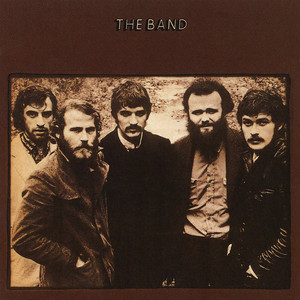
I'll keep this short- I love this album. The Band's unique, genre bending Americana still rings true today through the immaculate songwriting and craft it displays. This is an example of what artists and groups on the softer, rootsy-er side of rock were attempting to make in the late 60's and early 70's, and so often fell short of (looking at you, CSNY). No skips, phenomenal album, clearly super influential in Americana and American roots music to come.
Favorite Tracks: "The Night They Drove Old Dixie Down", "Up On Cripple Creek", "Rockin' Chair", "Look Out Cleveland" "Jawbone"
Least Favorite Track: "Rag Mama Rag"
Full disclosure, I am, and always will be a sucker for Cash, driving lonesome Southwestern highways in a car packed full of my family and pets listening to CDs of classic country punctuated my childhood at regular and memorable intervals.
I have a particular penchant for his live albums, especially the great "At Folsom Prison". There is something about their exemplary status in showing the effect of music as a form of connection and communication, and in a prison with the purported dregs of society, an attempt by an artist very conscious of class to use it to reach and share a moment with those outcast, forgotten, and locked away from greater society.
On "At San Quentin", recorded solely a year later, and missing a recently deceased member of Cash's band- guitarist Luther Perkins, Cash sounds older, more tired, and more disillusioned than on "Folsom". This isn't to knock the performance, as it's all still top notch, outside of a few small snafus vocally from Cash. It's really more of note to see how the outlaw country legend of Cash himself was formed- the infamous "middle finger" photo was taken at this set- and it's all the more iconic for it. A lean 35 minute album, with several tracks from the live performance omitted, and somewhat erroneously including both the first performance of and audience requested encore of "San Quentin", a two covers in "Wanted Man" and "Darlin' Companion", and some of his classics, the album stands out in its firsts of previewing newly written material - "San Quentin", "Starkville County Jail" and the first ever recording of the great "A Boy Named Sue"- with all the grit, beer suds, blood and brooding Cash is known for.
An all-time great live country album, even if it pales in comparison to the kinetic social statement of "Folsom".
Favorite Track: "A Boy Named Sue"
Least Favorite Track: "San Quentin (Reprise)" - An unnecessary inclusion.
"You put the screws on me, I'll screw right out from under ya... I'm tired of all that shit."
Oh man... I think this is one where I can easily see the influence it's had on the world and on music since it's release, being one of the early truly electronic albums, but it did not resonate with me at ALL. It truly was a painful listen for the majority of it's runtime. "Autobahn" the title track, no less, has absolutely no business being 22 minutes long with the lackadaisical pacing it has. Maybe this was more enticing in another time, when these sounds were new, but I was tired and bored of the listen by the time the track ended. The album, at the very least, gets slightly better following it. The two part "Kometenmelodie" and "Mitternacht" both have a sort of primal early ambient soundtrack feel that makes me see the appeal a lot more- it isn't hard to trace the line from this album to later ambient works- and made me think every so slightly of C418's "Minecraft - Volume Alpha" or soundtracks from some of the Zachtronics programming games in it's general tone and theme. Still, it's hard to recover from the start of the album.
Favorite Track: "Mitternacht"
Least Favorite Track: "Autobahn"
Fahren, fahren fahren, auf der Autobahn: Nein, ich kann nicht heute.
This is a confusing one for me. Simon is undoubtedly a master of his craft, the musicianship on this album is top notch, across both the more rooted singer-songwriter guitar and voice tracks, and the more contemporary pop cuts. My issue is Simon's style, which is one that takes often upbeat if somewhat bittersweet compositions and places some of the goofiest, quirkiest lyrics ever on top of them. Examples like "Allergies" and "Cars Are Cars" come to mind, which aren't bad tracks, but are silly as hell. These are sat directly next to serious lyrical content like "The Late Great Johnny Ace", the title track "Hearts and Bones", and "Renee and Georgette Magritte...", and to give you even more whiplash, some songs will alternate between the silly and the thought-provoking in the same track, like "Train in the Distance". This isn't necessarily a bad thing, and Simon weaves it well, but it leaves me confused and mystified more than not.
Favorite Tracks: "Allergies" (the solos absolutely rip on this randomly?), "Renee and Georgette Magritte...", "The Late Great Johnny Ace"
Least Favorite Track: "Song About the Moon"
I initially came in thinking this was an easy 5. Politics aside, this is probably *the* most important Southern Rock album ever. And it is a 5, at least in it's most lauded tracks - "Free Bird", "Tuesday's Gone", "Simple Man", and " Gimme Three Steps" still all pack the same punch as the first time I'd heard them.
What is keeping me from giving it a 5 is the remaining tracks on the album - "I Ain't The One", "Things Goin' On", "Mississippi Kid", and "Poison Whiskey"- which, while quality compositions with a lot to like, are far more indebted to the blues rock influences of the group, and far less genre defining and iconic.
Nonetheless, I'll forever play a disgustingly stank-faced air guitar along with the entirety of the 3+ minutes of solos on "Free Bird". This is a high-end 4.
Favorite Tracks: "Free Bird", "Tuesday's Gone"
Least Favorite Track: "Mississippi Kid"
While I'm not normally the biggest fan of 60's pop, which often feels rote and uninspired in both lyrical content and compositionally, I have to give so, so many flowers here. Wilson truly is a genius. This album is so creative and eclectic in terms of the timbres, chord progressions and song structures, success in bringing in outside musical genres and melding them with 60's vocal harmony pop (especially classical music, and not in placing classical on top of rock norms, but adapting the two to one another.) A true giant of pop music that still holds up to this day due to its ambition and intricacy.
Favorite Tracks: "Caroline, No", "Don't Talk...", "God Only Knows"
Least Favorite Track: N/A, they all have a place here.
Raised in a household that put a lot of these 70's and 80's rock greats on a pedestal, this album has me feeling very conflicted.
To start with the positives, I think this album is Eddie Van Halen at his best compositionally, including a tinge of that classically-trained complexity in their generally very straightforward and accessible song structures. As always, his solos are standout, and highlight almost every track. Another positive is that the band surrounding him feels significantly tighter here than they often do on the band's albums- specifically Alex Van Halen, this feels like his best work in my memory.
Now for the negatives. This is supposed to be Van Halen's entrée into synth-laden music, and it at most feels like a compromise that includes it *sometimes* instead of earnestly incorporating it into the band's sound wholesale, and the half-measure here drags it down as a complete work. I can't help but compare it to an album I feel still holds up today, ZZ Top's "Eliminator", which successfully did the above- pulling driving, futuristic sawtooth basslines into the band's gritty, no-nonsense blues rock sound, and placing sexy multi-part harmony vocals over the top in a way that made the band more accessible to contemporary listeners without sacrificing their signature swagger. In Van Halen's case, this was most likely because Roth was unconvinced that synths had a place in the bands sound and would often refuse to write lyrics for the tracks that EVH had placed them in front and center. On top of this, I really feel that a lot of the standout tracks here are the ones that do not feature synth work, I'm generally unimpressed by "Jump". Sort of contradictorily, "I'll Wait" is the best track on the album, and the only one where the synth leads truly feel to set the track above. Place this on top of the fact that a lot of Van Halen's cock rock sensibilities seem very sophomoric and cringe in 2026, especially on tracks like "Hot For Teacher", where the band is at it's most electric instrumentally, and the track is brought down at regular intervals by Roth's sexual yelps and very hamfisted innuendos and jokes. A soft 4 that was almost a 3 due to my gripes, but got brought back by the meat-and-potatoes greatness that the band evokes instrumentally on the project.
Favorite Tracks: "I'll Wait", "Drop Dead Legs"
Least Favorite Track: "Jump"
This album is a testament to both the beautiful playing and magnetic vocal talent of Ray Charles. On an album of mostly old standards backed by a full big band, Charles is what stands out most. The first half consisting mostly of horn-arranged R&B, and the second string-backed ballads, a lot of the tracks that make this great are those that allow Charles to stand on his own- "It Had To Be You", "Don't Let The Sun Catch You Cryin'", and "Come Rain or Shine". The biggest detriment to this album is the engineering and sound quality, the backing band especially sounds over-modulated and fried in big moments where they're all featured, which is a shame.
Favorite Tracks: "It Had to Be You", "Come Rain or Shine"
Least Favorite Track: "Alexander's Ragtime Band" - Falls prey to the engineering issues the hardest, to my ear at least.
This was another surprising one for me. I had never heard of The Pogues, and man, was I missing out. I really enjoy this rambunctious blend of punk and traditional Irish music. It also has a good range of moods on it, going from the raucous tracks like "Bottle of Smoke", to some with interesting global influences like "Turkish Song of the Damned" and "Fiesta", to Springsteen-esque ballads like "Fairytale of NY". Overall a great showing, I still feel as though the back half loses a slight bit of luster due to a lot of the medleys and more traditional tunes starting to feel a bit same-y. Still, the latter half has some standouts like "Mountain Dew" and "South Australia". Giving it a solid 4.
Favorite Tracks: "If I Should Fall...", "Bottle of Smoke", "Fiesta", "Lullaby of London", "Mountain Dew"
Least Favorite Track: "Worms"
I suddenly have a strong desire to get blackout off of like 15-20 pints of Guinness.
My first listen to anything by Mike Scott and the Waterboys, and I can see the vision- more approachable Rock with a healthy dose of Celtic folk music and some trappings of Country and Americana, done grandiose, with a large band of mixed instrumentation, similar to Springsteen. I'm sorry to say, that similar to my takes on Springsteen, it often falls short of the ambition.
While the arrangements are often full and complex, there are several detriments to the project overall that make it unenticing to my ears.
First off, Mike Scott isn't really all that compelling as a vocalist, with his stylings ranging from somewhat catatonic and subdued to shaky and shrill (my god, did the "wooooooo"'s on "We Will Not Be Lovers" start to grate over the song's length).
Second, while the arrangements are often very full and lush, the engineering is also equally as subdued, making the full band sound not-so-wall of sound and more washed out. The track that stands out as this not being the case is "Stolen Child", capping off the original tracks on the album, where the Celtic instrumentation is really finally allowed to stand on its own and influence the music. This is immediately followed by a washed out, poorly sung, live-sounding rendition of Guthrie's "This Land Is Your Land" that goes back to the lackluster half-Celtic stylings and promptly pulls the teeth of the previous track- an incredibly strange way to end off the album.
Several of the tracks that attempt to let the traditional instruments stand on their own are too compositionally simplistic or repetitive- again "When Will We Be Lovers" and it's incredibly repetitive fiddle line and 7 minute runtime come to mind.
Strangely, the highlights across the album generally tend to be the gaelicized country tracks - "A Bang On The Ear" and "Sweet Thing" - or the tracks that lean more into the traditional Celtic stylings, like "When Will We Be Married" or instrumentals like "Dunford's Fancy" and "Jimmy Hickey's Waltz".
Overall, a listen let down by consistent failings in attempt to reach a tangible vision it meets on only a handful of tracks.
Favorite Track: "Stolen Child"
Least Favorite Track: "We Will Not Be Lovers"
A very well crafted album, even from a blues perspective. I have to admit that I'm frequently very impressed by the chops of West African musicians and their ability to take genres readily known by me and meld them into the sounds of their native countries, it makes for a listening experience simultaneously fresh and yet still comfortable. On the end of the unfamiliar, I also find myself frequently enjoying the licks and riffs on this album- they're often angular and acrobatic in the manner that Midwest Emo guitarists are while still retaining the gritty and garage-y feel of blues musicians- tracks like "Irganda", "Ai Tchere Bele", and "Jolie" stand out as examples here, not to mention the complex time signatures utilized in the project. It feels like the album also covers a wide range of moods, some tracks far more upbeat and dance-able, others a bit more downtempo and contemplative. I simply wish I could understand the lyrics, I feel like that would elevate my experience a bit further, especially given the context of the band forming do to coming together in political exile.
This may betray my lack of ball knowledge regarding solo piano compositions and albums, but this didn't resonate with me a whole lot. Jarrett is obviously a master of his craft as a pianist, and it is impressive this was essentially just a freeform vamped performance, but it gives elevator music. Hey, at least it was a nice soothing listen while I worked.
It's so interesting to give this a listen and place the band's origins and influences.
This is squarely a British psychedelic pop album à la the Beatles or others acts of the time (sidebar- the more I listen to these 60's psych albums the more I appreciate Donovan's "Sunshine Superman", which we hit early on in our listens and I may have been too uncharitable with my score on), but has the distinctly darker bent and jammy, artsy proto-prog leanings that would later go on to define Pink Floyd's sound on albums like "Dark Side of the Moon". I'd like to think the more poppy sensibilities come from Syd Barrett's end, considering he wrote most of the album, and the fact that this was his sole album with the group due to drug and mental health issues. Almost alternating between tracks that are solid if a little too quirky 60's psych pop, but displaying the shadowy whimsy the group is known for, and longer, more jam band oriented tracks, I think the latter hits for me far more, and are more indicative of the band's future leanings.
Overall a great first showing from Floyd, and a very interesting look at the bands roots prior to their status as prog giants on future albums. Solid 4.
Favorite Tracks: "Interstellar Overdrive", "Chapter 24", "Lucifer Sam"
Least Favorite Track: "Take Up Thy Stethoscope and Walk"
A quick one because I'm hellbent on catching back up (5 more albums to go) without this derailing my whole workday.
I wasn't familiar with Eno at all, and my initial thought was that this album felt like Great Value David Bowie, but it's truly much more ambitious and interesting than that, while definitely being in the same art-rock/glam vein Bowie inhabited in the 70's. I love the big, fuzzed out, arena filling guitar riffs, strangely earworm-y hooks, and variety of sounds, timbres and production choices on this album. This gets a solid 4, and sounds well ahead of it's time in terms of what Eno's vision seemed to be. The one thing that holds it back from a 5 is I do still feel it pales in comparison to Bowie's offerings of the era, but is a far more than admirable solo debut.
Favorite Tracks: "Baby's on Fire", "Cindy Tells Me", "Blank Frank" (Who Do You Love? mention)
Least Favorite Track: "The Paw Paw Negro Blowtorch" - I don't like the weird suddenly loud synth zips in the middle of the track, they feel like they detract from what it's doing more than they help as what was presumably intended to be a solo of sorts.