I know there are many who revere this band, and I support you loving what you love. Sure. But I love me the nihilistic high-speed reptile brain of Motorhead; the swampy, stinky majesty of Black Sabbath; the operatic high theater of Iron Maiden. And Metallica just isn't fun.
I was a wee sprat when Bruce Springsteen was driving the empty highways in the 70s. I was forced to endure Born in the USA at our big junior high dance, where it was the anthem for all the serious pre-fascist assholes at our high school. So I don't come to Bruce with a whole lot of love.
But listening to Darkness on the Edge of Town and Nebraska, I was moved. His characters are doing the best they can in a period when when "blue collar" spoke of a class divide as big as the Nebraska plains, and carried real struggle, real pride, and real despair as the landscape of regular jobs was deflating like a whoopee cushion, slow and loud and flabby.
The masculinity I inherited from my time and place was toxic as fuck, no doubt about it. But the masculinity of Bruce's characters isn't just that of drunken louts--it was also a manhood of people who love their irredeemable brothers, who try to make intimate relationships work, despite endless problems; who do in fact know love, and uncertainty, and endurance. And in a man, those qualities run alongside the toxicity of the time, strong.
I taught yoga for a good while, and early on in that career, I got into listening to yoga music--ragas and kirtan. That was in the late 90s, when this album debuted. Prior to that I'd been gaga for the trends of my young adulthood, and had felt propelled by the changes in the world of "alternative music." Thanks to A, I got to see Stereolab at their college; I think of Air as part of that world.
When my teaching and asana practice leveled out and matured, I found my way back to the trends and bands of the era--Beck, especially, but also Air. Art rock.
Now I think of this long history and realize all the other moments when I left contemporary rock and electronica slide out of my viewscreen for a couple years.
The Pogue's Christmas song is a part of my circle of friends forever. We grew up drinking a lot, and although I never spent a night in the drunk tank, I did embarrass my friends and piss off my parents. College fixed that, of course!
What I didn't know: the Pogues were a great Irish folk band! Shane must've been so chuffed for his duets with the Dubliners. He had the spirit of his culture in his trampled, shouting heart, and we all recognize it. Salud!
Public Enemy electrified my consciousness in 1989. I was in college. Daniel & I played them at all the Arts House parties.
Note to self: from now on, my numeric rating is just about the importance of the album in my life, not about whether the album is an important cultural artifact or not.
On that level, Astor Piazzolla is very important to me. Well, WAS very important.
Growing up in Lexington, I loved the public libraries there. I remember finding "Juju Root" at 15 in their vinyl collection, which featured lots of "ethnic music" from around the world. I developed a taste for all kinds of things, but especially for stuff on Rhino or Folkways.
First year of college, Daniel and shared a late night radio show. WMFO had a huge collection of music from around the world--including Astor Piazzolla records. I played them regularly on my show, and I played recordings at home. I was entranced by the feeling images I drew from it, of late night sharks in suits and slinky dresses, cigarettes, tenderness, cruelty, caprice.
Some of his songs are etched into my memory forever.
She was a great rock singer, no doubt about it.
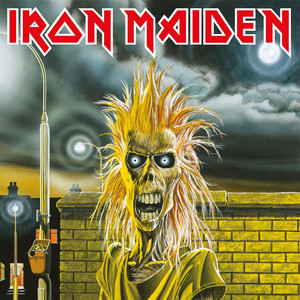
I had to grow into Maiden... but I did! I love the maximalism. I love the operatic highs and the growling lows. I love the grit and the glamour. Listening to it is like smelling salts for my mind.
Lauryn Hill was an especially gifted musician. She was one of the greatest voices of that moment, with few to rival her flights of melody, her fierce commitment to her message, and her deep wisdom. Her music was important to me personally; but much more, it was part of a big turning in hiphop, a diversification of the genre that had been gathering steam over the decade. I don't know the stats on the album, but anecdotally I know it was huge for my cohort--we played it at barbeques, at parties, on our walkpeople, everywhere.
For me this music came along when I was realizing that I needed to end my first long-term adult relationship. I listened to this album solo during that period; and in my next primary relationship, we listened to it together.
My son and his mom went to see Lauryn Hill's comeback tour. It was a disaster of a show. She was almost four hours late to the stage; she and her band seemed disconnected; and she spent more time delivering diatribes about faith than she did singing. At the time, I thought, "what a loss!"
But as I've grown, faith in one form or another has become more and more important to me. If I went to that concert today, I bet I'd have left as uplifted as I was when I first heard this album.
Many of my friends loved her music. And she was a cultural moment, especially early on. I saw Desperately Seeking Susan--with who, I wonder?--and enjoyed the story and her cool.
But I hated it then, and I still dislike it.
Nope!
I was all in for Joshua Tree. I spun that disc on my dad's stereo at home scores of times. I thrilled to its not-so-secret Christian messages, anathema at my Unitarian Universalist church where God and Jesus were taboo. If I could've gone to the concert, I would've. Joshua Tree was an evolution from U2's earlier work--I felt connected to the U2 that David Ammer shared with me in his bedroom lightyears before. U2 had been an arena rock band for a good while by then, and this seemed like a redemption for all the pyrotechnics.
By 2000, though, I'd moved on. I was out even for Rattle & Hum. Why would I pursue a bloated band perpetually "searching for a new sound," when there was such a profusion of excellent indie rock in the 90s and Oughties?
Listening to it now, I hear songs whose themes and production choices feel alive--and a bunch whose "searching" just doesn't land. Which is fine, right? Even an institutional band like U2 is going to have more than a few clunkers.
What keeps U2 rolling on? What is it like being a massive rock star for more than 40 years? Do Bono and Keith Richards hang out? Does the Edge go to the same gym as Robert Smith?
Peter Adams was cool AF. He's still an unusually skilled musician, and also cool AF.
Peter Adams' brother, though, was... 4 years older? 5? He played an aged Fender Stratocaster was a soupcon of weed and tobacco, and owned a Twin Reverb that was an altar to ROCK. Long stringy hair... sparse blonde beard... HE was cool AF.
ANother one: I'm 15, and I love guitar. I'd heard Musette and Drums (huuuuuge Thanks to Annie) and I was obsessed. So I took Jazz Band at LHS... an opportunity I'm still amazed even existed in 1985. Holdover from the NEA bounty of the 60s-70s for public education.
I was a sophomore. In the class was a long tall dude, a senior, with shaggy black hair. He would rip a solo before class started, every time... and 9 times out of 10, it was "Whole Lotta Love" by Zeppelin.
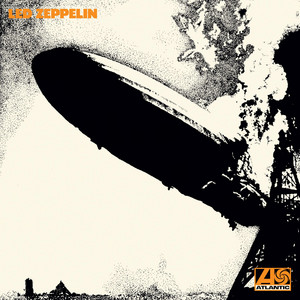
Suffice it to say, Zeppelin was a titan in the cultural universe of my suburban white liberal town. Zeppelin tied me back a couple high school graduating classes to the era at LHS when smoking was allowed on campus, students all had hall passes and Open Campus, and weed was regarded as a tolerable nuisance by the school administration. When Rock rode the halls unbridled and unashamed. Our elder brothers and older cousins, the guys a part of me wanted to BE, took Zeppelin as gospel, Jimmy Page as a satanic prophet, and the pro-sex pro-drugs pro "mind-expansion era of the early 70s--Zeppelin's heyday, as the best and mightiest way of life ever invented.
So yeah, I listened to a LOT of Zeppelin. Zeppelin III was Aaron and I getting high and wandering around Bard, and Tufts, and the woods of Lexington. Zeppelin II was a cassette that filled me with abyssal desires, mostly alone with my stereo. Physical Graffiti was a numinous missive from the mighty halls of The Furthest Rock Could Go.
Also Jack White stole sooooo much from Zeppelin. And made good things with it.
I grew up in a period when a Correct Reading to the way Rock unfoled from 1966-1976. The Reading posited that the wide-open heart of Sergeant Pepper's Lonely Hearts Club Band gave way to the second British Invasion--Zeppelin, Eric Clapton, Sabbath, etc-- that paralleled the political tumult of the era, as it wrestled with Viet Nam and American adventurism. All you need is love passed through the gritty working class and on to the birth of arena rock and heavy metal. Cocaine and heroin, and guns... Sly holed up in his bunker, re-recording his album and getting increasingly paranoid, high all the time.
And alongside that Reading, there was a lively right-wing reaction to the hippies--Johnny Cash, the Allman Brothers. Others I don't know about. This made for lots of conflict, and was certainly part of the fuel for the deaths at Altamont.
And then there was ZZ Top. From Texas, and definitely bar rockers. But somehow they refused to take sides--"shut up and sing".
That whole Reading meant a great deal to me, growing up in the 70s/80s, as I followed the boys of my generation in saluting Rock, and the aforementioned Reading, as the true music, and spitting on Disco and all it represented.
So, on to the album!
Direct steals from Muddy Waters--but Muddy Waters was big enough to handle that.
Bar band par excellence!
And then there's La Grange.
Just
Plain
Holy
FUCK
that is a song that forces me to dance.
OK. Norwegian punk metal for angry tween skaters! This was important to many, I'm sure. Not me then, not me now.
I'd never listened to this album--the hits, of course, but not the whole thing. There's a heavy dose of Sergeant Pepper's in this cauldron, which makes sense, as that was an inflection point album.
Great songwriting, beautiful harmony as always, and an interesting space created by the production.
"Last Chance on the Stairway", where I can hear the production choices without the overlay of my teenage relationship with their hits. Mick Karn-inspired bass--lovely; very high, almost crystalline shimmer; almost-metal guitar, smoothed into an oily Defender spaceship; more. I'm reminded of the dance music in Dario Argento's "Demons," and the fantasy of Italian dance club fashion in 1985, just 3 years later than "Rio."
What a time it must have been in Birmingham clubs 1981-82, when Duran Duran was developing "Rio." There's a lot more Gary Numan in here than I picked up on in th 80s.
I'll never publicly flog the Smiths. I listened to "Fear of Music" on one side of my TDK tape, and "How Soon Is Now" on the other, over and over in 1985. The Smiths were healing music for my tender heart.
That said--this isn't their best effort.
Novelty songs! The Who found traction early with similar stuff. Enjoyable. I much prefer "You Really Got Me," which was on WBCN before band class this one time at Clarke Junior High... and on my secret pre-Walkman radio after lights out that year.
Early concert: Siouxsie show at the Orpheum. "Tinderbox" on repeat. At the time I liked their covers better than their original music.
This time "Juju" strikes me as innovative, for 1981. I love the guitar sound Budgie came up with, her vocal style, and the broad hints at an ooga-booga witchiness as a benefit of being weird like them. At the time I was reading Maya Deren's "Divine Horsemen;" I was harboring secret hopes of running into an actual griot--which was highly unlikely in suburban Lexington at the time.
This project has given me a chance to walk with the wild, original and mentally ill Amy. This is her debut, I think--and it's got lots of promise. She needed a lifetime with her art. I needed a lifetime of her work.
Not even. Nope!
Linkin Park put worn-out grooves together with ripoff raps, added a large helping of mediocre metal, spritzed some truly forgettable singing on top, and raked in the money. I'd venture a guess and say they were innovators in regarding the suburban tween set as a valuable demographic.
Truly, WTF is this doing on 1001 Albums?
Nope.
Also a nope.
I forgot how important this album was to me at 12-13! I listened to it again, remembering the titanic ecstasy of the imaginary arena these songs played in. They were too big for anywhere!
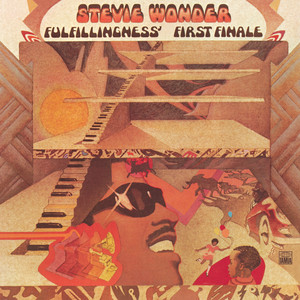
I'd never heard this album until today. Of course the hits here are memorable--but hot damn! Stevie Wonder is one of pop's greatest singers, arrangers, songwriters and composers! I'm just stunned. Thank you Stevie for sharing your insights, your faith, your rage and your love with the global audience you deserve.
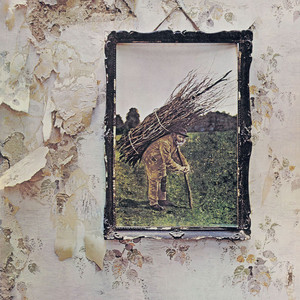
Led Zeppelin IV... Stairway to Heaven. The song that must have been meaningful to slow-dancing kids at middle school prom at some point--maybe just a few years before I was wishing I was slow dancing at my middle school prom. An embarrassing song, just a few years later; and a few years after that, a rock and roll banger, once you got past the whole acoustic intro. Which lasted stupid long.
Jack White did shots of Zeppelin before writing most of his early White Stripes stuff. And more power to him. Greta Van Fleet put Zeppelin in their AI Magic 8-Ball, shook it up, and plopped out some near copies of the masters' work. Zeppelin had enough energy and innovation to power three big bands, and countless smaller ones.
"When The Levee Breaks" is still a giant, serpentine OM for my suburban heart. I crank it up and let the electricity burn off my anxiety.
I still feel that Zeppelin channeled an archetypal masculinity that forms a priceless whole-body Elusinian Mystery for the young soul... if you can love this fierce, bellowing energy, can you ride this energy, and let it burn away all your quibbles and cynicism? Can you let it ride you? It's not just the braying of some pre-feminist, mildly white supremist assholes. Its much bigger than that, and way more fun.
Zeppelin soars above all the rivals of their day, and all of the pretenders of our era.
Zeppelin IV is truly one of the greatest rock/pop albums of all time.
I grew up Unitarian Universalist--a commonplace idea in the Boston area, but a little exotic in the landscape of other American regional Christianity. And as a youth a First Parish, one joined the Youth Group--YRUU, as it was known then. And as a member of YRUU, one got to go on field trips. And if you grew up when I did, you'll probably recall field trips as just a few rungs down from an actual vacation. I went to a few Cons, where the rumor was that youth got together and did some serious smooching, or unserious other stuff; although I got no action, I got some serious yearning in.
It was 1985, and I was 15. By then I was convinced that the nerdy weirdness that had drawn the contempt and bullying in previous years was going to be my ticket to... life, basically. I was reading William Burroughs, Maya Deren, and all the weird comix Aaron could buy. I had tried weed, in Greg's graduated cylinder bong, at 1am at the Ski Club. I could feel the tantalizing tendrils of coolness tickling my heart.
The youth group went to New York that year. I have no memories of any of it... other than seeing the Velvet Underground's white+Warholian banana album cover, and seizing it with bloodshot Rat Fink eyes.
That album, and later White Light/White Heat, became a carte de visite for many expeditions into the Cool in years to come. It was part of what secured my friendship with Daniel, who was FROM New York, at Tufts U. It was part of doing loads of drugs with the folks who became a temporary clan, the next year.
Personally, White Light/White Heat is not VU's best. Or better put--it has some rich noise, but also some wildly pretentious shite poetry.
But I'm giving a 5 because VU meant so much to my young adult life.
I wish I knew more about the history of Miriam Makeba's career. I imagine that it was beyond unusual for an African artist, let alone someone from apartheid South Africa who speaks Xhosa. Not too many years before this, Yma Sumac's truly weird and cinematic music was wowing the white lads' lounge kink fantasies... was Miriam Makeba's music sold in that category?
I love her music and the strength, pride and good cheer it projects.
I still feel a bit cynical about this album...
I remember enjoying the grooves. And I remember being moved, as many pundits were, by his choice to be funky but "conscious," rather than making more songs about money, misanthropy and misogyny. Queen Latifah, BPMD paved that road for him, and for others. And that's a rich history.
But then I remember the Wu Tang Clan of that era, and just how compelled I was by their cruelty, sorrow, chaos, rage, suspicion... and Common's version of "conscious" feels a little light.
He's had a long-lived and high-profile career in Hollywood. To my mind, he gave up on hiphop pretty quickly to begin it. And more power to him; "you gotta get that bag," as the youth say.
Leonard Cohen vocal moves
Grateful Dead, in service to a different vision, rooted in a different reality
Psychedelia like dust floating in the stuffy attic in summer--quite lovely
The prog rock connections escape me
A touch of David Bowie's dreamy saxophone solos
A promising debut
A touch of the Black Keys in the vocals
Devendra Banhart, Iron & Wine, and the San Francisco scene of the Oughties
Thank you for this recommendation! I'm listening to their subsequent album, and enjoying myself thoroughly! I know I've come to you with some stormy feels about some of your other selections--but this one reinvigorates my commitment to this rich and engaging project!
There was zero country in the household of my youth. I developed a taste for the elder Hank Williams because The Residents did an album of covers of both his work and that of John Phillips Souza--which I was obsessed with at 15-16. His lonesome story, and his heroin addiction (mirroring the heroin use of my other heroes, William Burroughs and Lou Reed) got me imagining Western highways late at night. I came across Western Swing thanks to Yumi Roth, IIRC, and loved it as a fascinating toy of sorts.
George Strait, though... that got me actually interested in country.
Sadly for me, I didn't cross paths with Emmylou's incredible album until just now. It has the kind of harmonies that melt my knees and make me weep for the big stuff.
Top 5 alternative and indie rock records from 1993 which are excluded from this list that you should listen to instead of this album:
1. Yo La Tengo - Painful
2. Stereolab - Transient Random-Noise Bursts with Announcements
3. Archers of Loaf - Icky Mettle
4. Guided By Voices - Vampire on Titus
5. Dinosaur Jr - Where You Been?
I was... 8? 9? and my parents were friends with the Snells. They had a big house in East Lexington, filled with wonders. Laura Snell was my age, and we played together awkwardly. Laura had an older sister who had Marcia Brady hair circa 1972--long, straight and golden; I remember her with a non-plussed look on her face when Laura and I came to her door in search of refuge from ourselves. She was playing The Doors on her stereo, and it was Jim Morrison's scream in Light My Fire that seared this whole scene into my memory.
I hadn't heard much rock and roll by then; in fact I was innocently listening to disco in my bedroom, on my spinster aunt's old radio. This new music was a revelation. It seemed like a world filled with sulphurous ghosts, dark hallways, and medieval tortures... y'know, like Scooby Doo.
Very important record in my life. And listening to it again, I do hear just how odd they were in the palette of pop rock available in the late 60s. The Doors movie made much of Morrison's story of dissolution, despair and death. IMO it's an odd tale to sell records with, but that's me. I do love his muttered hints as esoteric topics, his brooding, pouting, screeching weirdness. And I will always, always love "Riders on the Storm."
This is one of those albums that I don't need to listen to. The ascendancy of their music left me sad, as I couldn't get on their bandwagon... they were party music, but not for parties I went to.
I fell for the Columbia Record House thing in... 1983? Agonizing over those wee stamps, and them gluing them into place... SOOO VIRGO!!! I ordered The Moody Blues' mediocre album; the Eagles something; a few Greatest Hits albums, because who knew if Neil Young's Harvest really was all gold. And oddly, I ordered Kraftwerk's "Computer World." Probably because that was the year my dad built his own Radio Shack TRS-80, with a case he lifted from HP that looked almost EXACTLY like Kraftwerk's cover. And of all the albums I got, only "Computer World" stuck.
Definitely, my love of Euro electronica circa 1983 world got a boost from my friend Russell, who was a big Gary Numan booster, and who supported Kraftwerk as a side thing.
I listened to "Pocket Calculator" while messing with my sister's Speak and Spell on family vacations. I listened to it on my first Walkman.
But I kept on listening, and as the eras of my youth evolved into a post-college life that was based in computer use, I kept finding new veins of meaning in what appeared on the surface to be beyond simple.
Turns out "Computer World" was beloved by early 80s hiphop pioneers, too.
Man Machine is not my heart's album. But it gets a 5 because the band is a lifetime joy for me. I listened to "Computer World" again last week, even.
I was in no way ready for Prince's music when it was popular. I was too young for this album, and for the four that preceded it. I was wrapped up in my white suburb's homophobia, misogyny and self-hatred, like a can of Slime squeezed by zombie's fist. It took my beloved high school friends who loved Purple Rain to even reveal his music to me; and it took "Kiss" to convince me that he was a pop genius.
Listening to it now, I hear the skill, the joy, the complexity of his music. I'm rating it based on its importance in my life.
In 2004, I was separated from my first wife. I was teaching yoga full-time, and taking care of my son half the week. I was pretty much alone in Albuquerque; I knew folks from yoga, but felt like I needed to keep my yoga life separated from my social life. I'm forever grateful for Kristine M, my elder by a decade but a fellow movement person with whom I shared a lot of creative touchpoints back on the east coast.
I was listening to the Black Keys, delta blues, Wu Tang Clan,my lifetime hits, etc etc... but not Kanye.
I learned about him much, much later, when he was making Yeezy's famous, and before he was cancelled etc.
This does have some agile wordplay, some challenges to the boundaries of hiphop at the time, and some good grooves. Relative to Wu Tang, Kanye is an also-ran.
My parents had Sergeant Pepper's Lonely Hearts Club Band among their twenty LPs. Also in there was the Tijuana Brass Band, Joan Baez and Ravi Shankar's intro to Indian ragas. Needless to say, I was starved for music. And ignorant of the scope of the form. My allowance was a pittance, and until I started to work at 15, I never had enough money to purchase music. However! One gets by with a little help from one's friends, and in this case, the friend was Elise! Her parents had more records--including Revolver, which she recorded for me on my first gift tape/mix tape evar.
This is heart music for me.
However I hadn't listened to it in ages. So I played it on my car stereo and sang along; and played it through my AirPods and sang along. I forgot how crisp and clever their songwriting could be! Yes they experimented, and I'm all for that; but the songwriter songs they created together literally gave rise to the next wave of pop, and soared past of it. I watched A LOT of Doctor Who growing up, so I enjoy myself creating little scenes from 1966, 1967 as I visualize the songs. Neck scarves. Sexy looks and martini glasses. Burgundy everything!
I also hear just how remote this music is from the music of our time... not just from our music, but from our culture. I hear the Beatles finally losing their home in my heart.
I first learned about "world music" with Peter Gabriel's late 80s label, "Real World." I still listen to his recordings of Nusrat Fateh Ali Khan. Of course I'd been exploring music from around the world via my public library for years by then, I'm proud to say. So I first heard Buena Vista Social Club within the context of the little map of world music traditions growing in my head. I loved them! This album was on repeat while I was at Tufts. Still love it today.
Nope. Mind not changed. Slipknot still very weird pretend-metal for teenage bullies on their way to MAGA-land.
I listened to her only peripherally. At the time, I thought she had an excellent and very enjoyable hook--but just the one. Today her music isn't part of my listening world; my rating reflects that.
ZZ Top will always have my wry heart for "Tres Hombres," the other album on this list.
But even with my gratitude goggles on, this album remains mediocre. Yes, it was popular; I wouldn't doubt that it was their highest grossing recording at the time. But lots of shit was popular in 1983, and most of it we can release into the ether.
Buh bye, Eliminator.
I'm feeling big gratitude for this project, y'all! I've chosen my path through the big, beautiful wilderness of modern music step by step, just as we all do. I made choices that healed me, confronted me, got me dancing, got me relaxing, got me thinking. But it was just one path! Even if we look at this big wilderness of modern music through a pop lens, it's still massive. And so we miss stuff!
Of course I loved "Fisherman's Blues," the Waterboys' hit song from this album. But even though I saw The Alarm in concert some years before this, I just didn't connect with the Waterboys at the time... and I walked on by.
Today their music feels just plain epic! A big band with a big sound, earnestly and jokingly making a big, hopeful din, and getting me up out of my seat and dancing again.
So thank you 1001 Albums folks!
I heard the Stooges in college. "The Stooges" was given to me as a story about the beginning of punk music, an album without which the Sex Pistols, but also the Ramones, wouldn't have had a context. I listened to it then, and now, with that intellectual frame--and yes, we can hear energies of those futures in these thrashing gyrations. But of course, we can also hear the psychedelic Hare Krishna chants played in the Temple of Doom, the wah wah wanking, of the kind of rock Iggy claimed to hate. I wish I'd listened to psychedelic garage music of the period beyond that one compilation album I got at Disc Diggers... but then, I'm ok without a whole lot more of that genre--or of the Stooges. IMO Iggy has been a parody of himself for decades now. Also IMO, Iggy manifested a kind of nihilistic, abyssal whirlpool of inchoate unconscious material that my whole body still responds to in "I Wanna Be Your Dog," and for that I'll always be grateful. He was right to put the final nails in the coffin of 1960s rock.
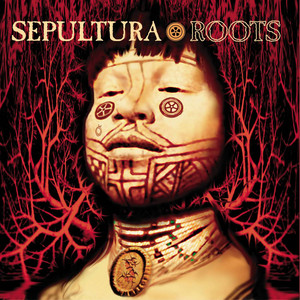
Growing up in the 80s, metal was the sound of my oppressors. I fucking hated metal, with a passion born out of fear and hate. So yeah, I missed Sepultura entirely. In 1994, a friend in Chicago played a tape of Cannibal Corpse for me... and I thought, this is literally the sound of demons screaming in hell. I was playing Quake at the time; its raw metal music was the perfect soundtrack to twitch-hack limbs off of zombies, or get disemboweled by a leaping demon that was just about unkillable at first. Music to flood my entire consciousness with adrenalized fear and hate--fun!
It sounds like Sepultura must have heard Cannibal Corpse, as well.
Fast forward to 2026, and at 55, I can honestly say, I love this band! I banged my head to the whole thing, with just a whiff of the trauma Cannibal Corpse and Quake crystallized for me back in the day.
Thanks guys!
Very, very big music in my life. Driving up to counseling school I listened to Bob most days. As part of my capstone project at counseling school I wrote about Bob's music as spiritual teachings. He is a legend now, much bigger than he was in life, and his music continues to influence reggae specifically and pop music generally.
Heart of Glass will always be a hit in my heart, and Debbie Harry will always be a star. But I have only a clinical interest in this music now.
TYVM and thanks for all the fish.
Well damn! Another 1001 Albums success story! I only vaguely remember Finley Quaye's moment back in the Y2K era. I dreamt about The Face and iD magazine while listening, style mags that had hit their epic strides in the years prior to this album. He's a stylish lad, Mr. Quaye! And his reggae heart and the love therein moves me. Added!
Sure, this is fine. The beats are good, and occasionally the kind that grab my bones and make me dance--thank you. The production is fun and novel. Her voice is good; the lyrics are weak. May you be well, Niomi Daley; what are you up to now?
Sometimes I look back, and realize how many of my memories take place alone, rich in feels, traveling paths with trees and grass and sunset warmth, in the company of the ghosts of those I love.
Aaron introduced me to the Stones. Well, of course I'd heard of them in elementary school; but Aaron played Exile on Main Street for me over whiskey and weed, when I could still lean on him, and he on me. He passed their ragged silk scarf to me.
And I took it and wandered the woods behind my house in Upstate, and the blinding light of my first years in Albuquerque, divorced and full of the despair of failure, and untreated depression. Of course I love the Stones.
Of course I love the Stones. I was too young for the fierce battle between Beatles and Stones in the 60s; I was just 1 when this album was recorded; and I was bewildered by their 80s schlock. But in my 20s and 30s, the Stones were a refuge for this this young buck and my glorious dreams.
This is a heart album for me. The lyrics are simple enough for a stoned teen to understand--but the meaning carried by the simplicity is elusive. I laugh out loud, I wonder if he's a Zen guy, I feel for his bold idiot's grab for the brass ring, I think he was a genius...
And I'd only heard the lead song before. Well, and Siouxsie's version of "The Passenger."
Damn, Iggy...
Lovely! A British Ray LaMontagne or John Cougar. His vocal style took a bit to get used to, but I was moved to. The Romance is strong with this one.
I missed this debut album at the time; but the across-the-pond music machine was working fine, and I eventually did, along with everyone else I knew, in 1986, when the band a happy second-tier band, behind the Smiths, the Cure, the Stranglers (TY Aaron) and Echo & the Bunnymen (in that order). I still feel at home dancing in their "jangly guitars;" what's new now is that Lloyd Cole's lyrics are richly nuanced. Didn't notice that at the time.
Never heard of these folks--thank you 1001 Albums!
Exquisitely produced; seamlessly expert musicianship. Singer's balance between mild vocal fry and clear pitches--gorgeous. A bit too much snuggling up to the pop dude singers of the moment, whom I was disgusted by at the time, and still have a distaste for.
I'd love to hear how folks encountered this music back in the day. Was this band on repeat in high school for you? What did you connect with?
Acknowledged, Green Day flipped the script on themselves and did things they'd never even contemplated while their global fame/money machine was being built.
And, being a poser had real weight when I was 15, at least in a world that included Pete Verdone. Green Day challenged my understanding of the trajectory of punk, and upset my understanding of the social order in force at the time. So I rejected them.
I still don't care for their music.
nope.
It's nice to hear a bit more from the musical world dominated by the Dead... but not necessary in my life now.
Rock celebrities noodling aimlessly... three disk albums for the musician's pet passions... there seems to have been a certain amount of celebratory looseness in some of the Beatles' work at this time, leading us now 56 years from the context of 1970 to roll our eyes at least a bit.
The way the celebrity British rockers interpreted the blues kept changing. Here we get a taste of Clapton from that era.
I've been married 15 years now, and I anticipate remaining in that happy condition through the rest of our lives. Here Mr. McCartney has created small, homey songs about the relaxed, drawing-room and farmland happiness of a committed relationship.
But generally--this is a nope for me.
I wish I'd had both the intel and the courage to go to raves in Boston at the time. Or that I'd had the courage to go to England for junior year abroad, as did my courageous cosmopolitan friend Daniel. But nope. So I did all my exstasy, mushrooms and LSD with two little cabals of close friends. Definitely safer than the raves were. Still permanently mind-altering.
Since that period I've had a long-term relationship with techno, house and in general club music rooted back then. I still love them. I use techno to blast my unfocused ADHD worrying to splinters, and then get a whole lot of admin tasks done.
Some day I'll make it to a rave.
Count Basie is playful--in fact he's hilarious. Whatever he does, he turns it up to eleven--even when it's a slowpoke, sad-sack walking blues, as in "After Supper." He wielded his Orchestra like a incandescent giant, and was gracious enough to take his audiences along for the ride.
As a youth I was only momentarily attracted to big-band music. Maybe it was the hangover of playing trumpet in mid-school band class; more likely it was my magpie-gnat's attention span for life in general.
I'm thoroughly enjoying his big bold brass much more today.
Morrissey was clever and caustic and self-involved, but he was sometimes also insightful. Johnny Marr, on the other hand, composed music that was more than the sum of its parts, every single time. I hear this more now than I did then. Then, I loved them dearly for Morrissey's heartfelt bits about yearning, pining, and feeling full of violent rage or suicidal despair at that state of affairs.
At the time I thought "Meat is Murder" was hilarious... now it brought me to tears. Maybe I do need to go vegan.
Like a naughtier Boston, or a more playful MC5, Thin Lizzy gave a good show. They were showmen, not visionaries, and they borrowed the musical tropes of the day shamelessly. Their project was obvious--sex and drugs and rock n roll--and apparently they were met by hordes of young adults who were fully on board with that cultural project as well.
Enjoyable, certainly.
At the time, I wasn't a big fan of Nirvana. I thought others did it better (Mudhoney), or had more fun with noise and nihilistic rebellion (Jesus & Mary Chain). Maybe I just wasn't ready for my slice of the Gen X lineup to fade into irrelevance, but I voted No on Nirvana. And consequently, on Hole, which seemed to me to be very clearly a money+fame grab on the part of Ms. Love. Throwing Muses and PJ Harvey were infinitely more interesting as proto-Riot-Grrls, I thought.
Listening to it now, the idea that Love's sloppy drawl is the equivalent of a radical feminist critique of anything is still laughable. Sorry... there are far better bands from the era doing the Rock of their time.
Listening to it for the first time in many years, I still enjoy this moment in Miles' career. I find his melodies hard to pick up, though they make their own sense as the flow by--and that's an enjoyable relationship, as a listener. I enjoy being juked by the master, just as I enjoy surprising turns in a conversation. As I listen, I wonder--how much music theory did his early listeners have? How much familiarity with the blues, or with ragtime, or with Rachmaninov? I imagine that those folks were generally more aware of those histories than adults in today's America, where music education was defunded over a generation ago.
As a young person, I fancied myself an intellectual, so of course I listened to jazz. I had Bitches Brew on my turntable throughout the last two years of college--but also the Birth of the Cool.
Miles was apparently a passionate man whose passions leaned into the dark alleys of the male psyche of his day. Interesting that it's dressed up nice here.
Bitches Brew was on my turntable regularly
No wonder Sabbath found success in the early 70s; their fellow Boomers' gleeful destruction of everything holding them back from the hedonism they seemed to believe was not just their due, but the right and true way to live. And who's to say they weren't, really?
There was a crew of generally stoned "Heads" back in mid- and high school for whom the wafer-thin Satanic suggestions of Black Sabbath seemed to have been a balm to wounded hearts. Those kids were dicks to me, so I went right ahead and hated Sabbath for quite a long time.
I came to love Black Sabbath as a fully grown adult, because their quaint and shabby community-theater version of magic just gave me the giggles. I've sung along to many of their songs hundreds of times because every time, I remember how much I love the "Doctor Who" school of theatrical sets and props, a school Black Sabbath seems to have embraced themselves.
I've often been surprised by how many musical clips they stole from the era of music around them--a bit o' the Jimmy Page here, a bit o' the funk there, all to spice up their otherwise 100% straight-ahead version of a showman's Rock music they pursued.
Long live Black Sabbath!
Yep... very famous, he wins all the medals, his lyrics were on the tongues of multiple generations of youth--cool. Moving on.
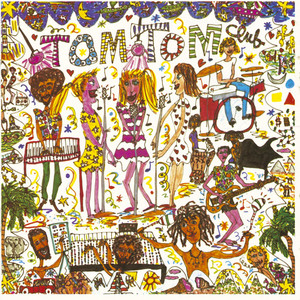
Electronic innovations created so much musical upheaval in 1980-81! Kraftwerk's "Computer World," Gary Numan's "Telekon," Roxy Music's "Avalon," Japan's "Gentlemen Take Polaroids" and "Tin Drum..." and on.
And Tom Tom Club was there as well! And calling out Hermes Trismegistus, no less!
I'm enjoying this lightweight bit of postmodern play much more now than I did at the time.
Astrud Gilberto... oh boy. Her music relaxed me. Helped me regain a connection to my body, to wherever I was. Which was often in my dorm room in the Arts House, at Tufts. I came across her recordings in the stacks at WMFO, where I had the privilege of being a DJ for a semester, alongside lifetime friend Daniel, who has been a DJ since those early days, in NYC.
Astrud's music was a little kawaii, a little funky, a little smoky. I listened to her contemporary, composer Antonio Carlos Jobim, much more regularly... the bossa nova they shared felt like a vision of adulthood that was strong, supple, and pleasurable. A vision I liked much better than the cheese of the Tijuana Brass Band (one of my parents' 25 record albums at home).
Bebel has a beautiful voice, and I'm grateful to her for keeping the musical tradition of her parents alive on this record. I'm giving it a 5 for my relation to that tradition.
This is a tough one. Firstly, I couldn't find this recording easily, so I gave up, and listened to Zorn's recent project--early music featuring my son's favorite guitarist, Julian Lage, and somebody else.
(update: listening to it now)
Personally, I love this incredible din. I loved Ornette Coleman's recordings back when, and I owned and repeatedly played a recording by John Zorn + Yamantaka Eye ca. 2000, which was another insane din, this time with more screaming. I find it enjoyable to get into Mr. Zorn's race car with no idea where we're going, and then try to follow where's he's leading. A musical rollercoaster with no brakes and no seatbelts--fun!
I would gladly go to any and all John Zorn performances I could access, here in the desert Southwest... but I can't recall when he last came through. Mostly because I've not been looking for this kind of sonic deluge for a long while. But hell, I just went to a sludge-metal show played by super-high white dudes in silly shaman costumes wailing on hand-built oboes, so... heck, I'm game!
My God Dolly... you're an angel singing! I often end up crying over her music.
I have no idea if this was a breakout album for her, or if she was already deep into her stainless steel hit-factory career. Reading her Wikipedia entry, I learned that this album came in during her lengthy climb from debut to country music success, which poked its head up in her hit with "Jolene," 1973, and then landed with "I Will Always Love You," 1975.
I learned about her via "9 to 5," with the inimitable Dabney Coleman. And at the time, Dolly's bosom was a topic of conversation all through the land, my corner of Massachusetts notwithstanding. An odd moment from our perspective now.
My journey with Dolly is about healing from the cyncism of my youth. I need as many optimistic songs as I can get, these days. And Dolly's optimism, founded on faith and family, is welcome medicine now.
This was an incredibly funky album. One that forced me to dance then, and still does today. The lyrics are still surprising, occasionally funny, occasionally searingly personal. Their bravado was absolutely deserved by this point in their career.
And then they had to write "Bodhisattva Vow..." I was pretty much in love with Iyengar yoga, Zen, & Tibetan Buddhism by 1994. I was already turned in the direction of teaching yoga by then. In retrospect, I was part of a big movement amongst young educated Gen X folks, one that would take the 70s blend of influences on yoga--the gurus who would eventually be revealed as sexual and financial predators--and find new gurus, new forms of movement, new connections in our generation's growing self-help woo-woo zone. I was so proud to be among them when the BBoys did this song. The voices of the monks still resonate with meaning for me today.
I think I've said this elsewhere in my 1001 reviews, but Lauryn Hill was a once-in-a-generation genius rapper/singer; her straight up skill is in evidence here on "Killing Me Softly." Nothing will change that--not even her later descent into strains of Christianity that most of us could hang with.
That said, the Fugees took second place after Ms. Hill's 1994 hit. In my heart anyhow. Wyclef Jean and Haitian politics fascinated me then and now--his story is powerful.
The album has a couple hard-hitting hits, eg "Killing Me...", but otherwise doesn't have the era-changing magic of Ms. Hill's solo debut.
Because "3 Years..." was an early success for an Atlanta hiphop crew, they deserve the "must listen" designation. They were not the first to chart non-violent lyrical content--De La Soul and Tribe Called Quest did that so well, and some years prior.
Personally, I wasn't a fan at the time. They sounded too much like a supergroup to the ears I'd trained on the aforementioned Soul and Quest, as well as BDP and Queen Latifah. But I was by no means deep into the extraordinary development of hiphop.
Live long and prosper, Arrested Development.
I'm going to pretend that I'm rating "Life's Rich Pageant" in place of "Green," because it's a much better album.
Then and now, I love Stipe's poetry--it's cryptic but engaging, and has just enough landing points to sing along; and over hundreds of listens, form an understanding of the world he was conjuring, together with his band.
Then and now, I love REM's musicianship, for it is energizing and ensorceling without any undue showmanship. It's no wonder they came up through "college radio," rather than through the all-candy, all-glitter pop of our day.
Then and now they sound like a band I dearly wish I'd gone to see. They get raucous with it.
I'm a little amazed that pop listeners gravitated to Mark Knopfler's sound, which is absolutely beautiful, during this period. I enjoyed the hit from this album, and as a guitar student at the time, dutifully acknowledged Mr. Knopfler as a master.
It was interesting to hear it again, from this era of my life. The guitar sound, and the whole band, are more shimmeringly alive than I remembered.
Another big thanks to this project! I'd never heard of Richard Hawley before, and he's got a big catalogue. He draws his sound and style from music I learned to love via Hank Williams Sr. and Western Swing, which I was introduced to early in high school, and drank deeply of in my ironic art-student mid twenties.
This is one of my favorite albums of all time. Eternal gratitude to Elise Richer, and her family's taste in music, for sharing this evergreen chalice of renewal.
I don't care too much for the marketing hype of its genesis, reception, and reverberating influence on what rock became not too many years later... IMO Timothee Chalamet does a great job telling that story. I suppose we have to be grateful to Pete Seeger and the leftists of the late 50s for being so annoyingly moral and... staid, as they apparently provoked Bob into creating a really great FUCK YOU for them.
I do love his punk attitude.
Some elephants in the room on this album, for me personally:
-- Bob's misogyny.
-- his penchant for cruelty.
-- his glee in deliberate, sarcastic obfuscation.
Bob is clearly a very intelligent dude who spends a LOT of time alone. I think he's also a dude with mental health problems. As a fellow traveler with that stuff, I feel those complexities add to his life, his art, and his legacy's importance, value, majesty even. He would hate that.
I get it that this is one of the most important, because highest purchased, LPs of the 80s. But I skipped Michael Jackson throughout his heyday because I'd been regularly bullied, to the sounds of his music, at the swim practices I was required to go to. That, and because honestly, the "alternatives" to 80s pop, eg Talking Heads, were in fact far more interesting, and often just as danceable, that Michael.
Taking away the songs where we're slogging through Ry Cooder's not-so-subtle point, ie that Ali Farka Toure's tradition has a direct connection to American blues, this is an enjoyable album. I'm not a fan of jam bands.
This was not an album of my youth, though of course I knew about Yes... 1971, and prog rock generally, were still viable musical paths for Lexington teens. I think of Aaron Tapp, a committed guitarist and fan of Zappa when I was a sophomore, and he a senior. Doubtless he had Yes on his turntable regularly, because Yes was the juggernaut amidst its smattering of peers--the one who was the fastest, the most modulating, the most studio, the most obviously Awesome At Music of the crew. Like Aaron Tapp, I turned to King Crimson later in high school, and Zappa much later, in my 30s.
I sought Yes out a few years ago, and found myself free of the context in which I'd first encountered Yes. I hear Fragile now as a group of very trained musicians giving exuberant freedom to their not-very-pop musical obsessions. Lyrically, I have no idea what the songs are about, but who cares? They soar! They crash! They wax medieval! I love this band.
I did a lot of drugs at Tufts. Less than some, but much more than most. So too did my close friends, sophomore and junior years especially. And when stoned and 20, amongst friends, this album sounds super deep, dude!
Listening to it again, for the first time in 35 years, I enjoy my memories of the music, the friends, and the drugs much more than I enjoy the music.
Thinking analytically, Iron Butterfly were an also-ran. The Doors did trippy organs better, and were generally weirder in-a good way. Lots of folks did long, drawn out songs with a "tribal" beat; personally, I enjoy, then and now, the Dead's version of jam band much more.
Coldplay WERE the sound of successfully romantic young white kids in 2002. They won. The girls loved them, and we loved the melodrama of their style.
And then they kept going. Personally, I'd gotten burned out on their music, and had switched my smart-ironic-white-guy points to Beck, who was at least much more varied in his musical tastes.
And then the singer guy married Gwyneth Paltrow. And then he got famouser. And famouser. And at this point, I think the whole planet was asking, what the fuck is happening? Why is his celebrity now like a perpetual motion machine, bobbing up and down yes-man to whatever the fuck capitalism is up to post-Matrix? Why am I even looking at Us magazine for even a microsecond?
I still think those were good questions. And I still love the straightforward melodrama they conjure with the simplest, truly the most rudimentary, of musical toys. So cheerio to these boys back in 2002! Thanks for surfacing for a moment.