It might seem like all country music sounds the same, but the more you know: today I discovered that there are at least two schools of country music. Buck Owens is one of the most successful artists of the Bakersfield school, characterized by a more rock-and-roll, rhythmic sound — a stark contrast to the lush, sometimes even orchestral, classic Nashville style. To put it simply: the Nashville sound evokes fancy receptions in Southern mansions, while the Bakersfield sound conjures up images of Western prairies and saloons. Another point in the Bakersfield camp's favor is that they aren't shy about using slide guitar solos. All in all, listening to this album leaves you with the distinct impression of cheap whiskey and a card game played against — albeit highly respected — cardsharps and scoundrels; the artist’s lavish suit on the cover hints at this vibe right away. It is a delightful, concise record featuring a style of music not often heard in our neck of the woods.
1001 Albums Summary
Rating Distribution
Rating Timeline
Taste Profile
Breakdown
By Genre
Tap a bar to see the albums behind it
Top Styles
Tap a bar to see the albums behind it
By Decade
By Origin
Albums
You Love More Than Most
| Album | You | Global | Diff |
|---|---|---|---|
|
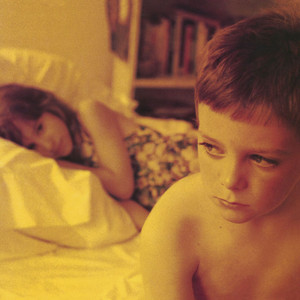
Gentlemen
The Afghan Whigs
|
5 | 2.88 | +2.12 |
|
Kala
M.I.A.
|
5 | 2.9 | +2.1 |
|
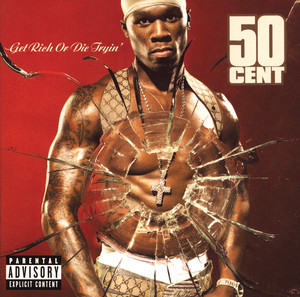
Get Rich Or Die Tryin'
50 Cent
|
5 | 3.07 | +1.93 |
|
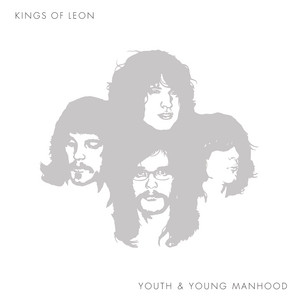
Youth And Young Manhood
Kings of Leon
|
5 | 3.09 | +1.91 |
|
Modern Life Is Rubbish
Blur
|
5 | 3.13 | +1.87 |
|
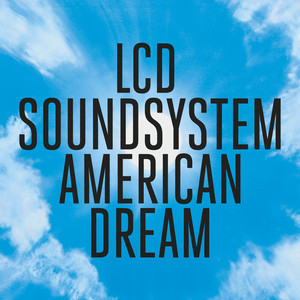
american dream
LCD Soundsystem
|
5 | 3.17 | +1.83 |
|
If You're Feeling Sinister
Belle & Sebastian
|
5 | 3.19 | +1.81 |
|
Elastica
Elastica
|
5 | 3.22 | +1.78 |
|
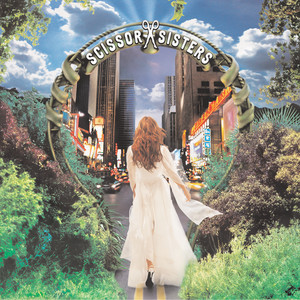
Scissor Sisters
Scissor Sisters
|
5 | 3.23 | +1.77 |
|
Ocean Rain
Echo And The Bunnymen
|
5 | 3.23 | +1.77 |
You Love Less Than Most
| Album | You | Global | Diff |
|---|---|---|---|
|
Paul's Boutique
Beastie Boys
|
1 | 3.46 | -2.46 |
|
Nilsson Schmilsson
Harry Nilsson
|
1 | 3.43 | -2.43 |
|
Fear Of A Black Planet
Public Enemy
|
1 | 3.34 | -2.34 |
|
Another Green World
Brian Eno
|
1 | 3.11 | -2.11 |
|
Supa Dupa Fly
Missy Elliott
|
1 | 2.92 | -1.92 |
|
Fromohio
fIREHOSE
|
1 | 2.88 | -1.88 |
|
BEYONCÉ
Beyoncé
|
1 | 2.86 | -1.86 |
|
Want Two
Rufus Wainwright
|
1 | 2.82 | -1.82 |
|
My Life In The Bush Of Ghosts
Brian Eno
|
1 | 2.8 | -1.8 |
|
Ys
Joanna Newsom
|
1 | 2.79 | -1.79 |
Artists
Favorites
Tap an artist to see their albums
| Artist | Albums | Average |
|---|---|---|
| The Smashing Pumpkins | 2 | 5 |
| U2 | 2 | 5 |
| David Bowie | 7 | 4 |
| Blur | 3 | 4.33 |
| Beatles | 3 | 4.33 |
Least Favorites
Tap an artist to see their albums
| Artist | Albums | Average |
|---|---|---|
| Brian Eno | 3 | 1.67 |
| Public Enemy | 2 | 1.5 |
5-Star Albums (46)
View Album Wall




















Popular Reviews
When I worked at a concert venue, we often hosted Latin American parties where girls looking pretty much like the one on this album cover would sway their hips, arms, and breasts for hours to songs like the ones I heard here. This record is perfect for that kind of entertainment. It's hard to enjoy listening to it in any other setting. Firstly, every song sounds like the same thing — it's exactly what you imagine when you hear the phrase "Caribbean music". Secondly, you really can't imagine what to do with this music outside of dancing: maybe sipping Cuba Libre, but then again, I'd prefer to do that while lying under a palm tree, which isn't always within reach. That said, it's all well-recorded, and Tito Puente is a recognized master of the genre, and his musicians are no slouch, but I quickly grew tired of the album. Perhaps I'll have to listen to it again during a beach vacation.
Beyoncé is the most overrated artist in history. I don't understand how, other than a successful marriage to a billionaire rapper, her popularity is due. Take this album, for example. What's the most important thing in pop music? For a song to stick in your head after listening, for you to hum it automatically. There's not a single song like that here. Not a single memorable line, not a single melody, no interesting arrangements, no strong vocals — nothing! The only noteworthy aspect of this album is its promotional campaign, or rather, the lack thereof; the album was released without prior announcement, plus a music video was shot for each song. They say this was a first, which is debatable. After the album's release, it was raved about by journalists everywhere, and Rolling Stone recently ranked it the sixteenth best album of the 21st century. Well, if Beyoncé was bringing me as much money as them, I'd put it there too — but as it is...
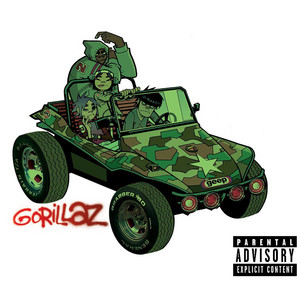
Unpopular opinion: this album may have been innovative when it was released, but it hasn't held up very well. Yes, perhaps thirty-five years ago the mix of reggae, hip-hop, and soul sounded novel; overall, it still sounds good, but, firstly, many bands have emerged who are making this kind of music just as good, and in some places even better, and secondly, sometimes the songs drag on unnecessarily. The album's cohesion also suffers, and Del Naja has never hidden the fact that they simply recorded demos in the studio and then simply brought in guest vocalists. Ultimately, the music becomes mere background music. It's a cult classic, but I don't find it appealing. Additional star for the rich bass lines, but overall it was a bit boring to listen to.
Typical pop music of its era. Jack Antonoff has cranked up the most generic production from ten years ago. If the song is slow, it's built on a kick drum that sounds like a pillow being hit, and a snare drum that sounds like a slap on the thigh. If the song is fast, you remember how fast pop songs sounded in 2015-2017, like you're attending an aerobics class. And Lorde herself, for me, has always been a one-hit wonder, and she'll probably remain so — this album has a couple of earworms, then she'll go off into some other realm.
1-Star Albums (13)




All Ratings (265)
All the components of success are in place — a pleasant voice, reverences to old Motown releases in sound, the lyrics are mostly about love... At the same time, the album owes a considerable share of its popularity to the people who made the sound here, Mark Ronson and Salaam Remy; the songs from the former, in my opinion, came out more interesting. The audience and critics rated the record extremely highly, and overall it's not bad, but I don't understand this degree of enthusiasm, maybe it's just not for me.
You can have different opinions about Back to Black, but at least it never gets boring; Frank is an hour long, and halfway through I was already tired of these repetitive homages to Sinatra. Another reason to consider that it was Ronson who made the second album a cult classic.
Definitely not The Doors' worst album, but for me, not their best either. Jim Morrison's blues obsession in his later years likely led to the band's shift in sound on this album; in my opinion, they shouldn't have done that; that's not what made The Doors great. Some songs are downright boring, and The Black Keys' take on "Crawling King Snake" is a better choice (old ones, don't hold it against me). However, the entire album is worth listening to, especially the last song, "Riders on the Storm." Simply magical. Ray Manzarek's keyboard solo, the sound of the waves... And Jim's strained vocals are very fitting here; he may have lived a sinful life, but he said goodbye beautifully.
I'll say right away that this is a mood-based record, and now, with the black-and-white palette outside, is the perfect time to listen to it. It's hardly depressing, but melancholic, yes. Let's just say any of the songs would be suitable for the title theme of a James Bond film. The entire album has a consistent tempo, the structure of each song is very similar, and surprisingly, it manages not to get boring. Occasionally, the jazz samples are diluted with sudden, but not at all unnecessary, hip-hop (or nu-metal, depending on your preference) DJ scratches. On the last song, these scratches are replaced by a lingering guitar riff. Beth Gibbons's voice, although not the strongest, is the icing on this melancholy cake.
Typical pop music of its era. Jack Antonoff has cranked up the most generic production from ten years ago. If the song is slow, it's built on a kick drum that sounds like a pillow being hit, and a snare drum that sounds like a slap on the thigh. If the song is fast, you remember how fast pop songs sounded in 2015-2017, like you're attending an aerobics class. And Lorde herself, for me, has always been a one-hit wonder, and she'll probably remain so — this album has a couple of earworms, then she'll go off into some other realm.
Their second album was a springboard for them, and unlike the raw, punk-rock first, it emphasizes reggae (as reflected in the title). Sting, who hasn't yet fully developed his style, still vocally mimics Bob Marley, and the backbone of the music is, of course, Stewart Copland, whose energetic yet relaxed drums run like a skeleton throughout the record. It's a shame he's not quite as accomplished a songwriter, and the three fillers he contributed prevent me from giving the album the highest score.
It's impossible to pinpoint the approximate year of the album's release based on the cover alone — it could have been 80s new wavers, 2000s indie rockers, or today's Pitchfork regulars. The same could be said about the music — it's a playful, synth-heavy blend of funk and post-punk in its more positive form. Something similar could have been played by Talking Heads, The Smiths, Blossoms, or Parcels — the boundaries are quite thin. Perhaps this desire to please everyone at once backfired on the band, as they didn't last long. Nothing special, just a pleasant album that's good to listen to while doing something unobtrusive; sometimes that's more than enough.
The best thing about this album is its bright and unusual cover. The same can't be said for the music; it's simply uninteresting. No, for its time, everything sounds incredibly organic; I'm sure the recording process was like this: they went into the studio, got some joints, started jamming, eventually chose the best options, and off they went. That worked perfectly in California in the 1960s, but not anymore. The main thing is I don't like Janis Joplin's vocals (who went on to a solo career after this album, but for obvious reasons, not for long). It feels like she's in two states: either she's screaming her head off, or she's talking like Marge Simpson. It's a matter of taste. I understand why this album made the list, but I don't plan on listening to it again.
All I knew about Rod Stewart was that he had signature haircut, a plethora of flamboyant, bordering on tasteless, suits, and a couple of disco hits. It turned out Stewart wasn't so simple. Firstly, he launched his solo career while still being in the Faces, under two contracts. Secondly, on this album, almost entire band plays with him, yet it was released as a solo album. And thirdly, in keeping with the fine tradition of the 60s and 70s, two-thirds of the album consists of covers of songs by other, already established artists. There's the secret to his success! As for the sound, there's no hint of the disco that would follow a decade later — it's upbeat rock 'n' roll with an acoustic guitar and a bluesy edge. "Dylan-esque," I would have said, if the lyrics weren't mostly about past and current women. I don't really like Dylan, but this would offend him.
When I was young, I thought a midlife crisis came when you started listening with pleasure to the solo projects of Genesis members. Well, here it is, apparently. This is the first time I've listened to this album and Peter Gabriel's music in general properly; coincidentally, it's his most successful record. He'd been out of Genesis for ten years when it came out, so it's no surprise that almost nothing of the old, abstruse prog remains here. Instead, there's a wealth of varied percussion (primarily from southern countries), some funk motifs, a few ballads, and even a touch of ambient. In the end, it sounds as if the less pretentious U2 were combined with the more upbeat Tears for Fears, topped off with the soundtrack to The Lion King. A very good album, and it was a pleasure to begin my acquaintance with this artist's work.
This album is the quintessence of old country. Nothing superfluous, everything is as it should be: acoustic guitar, the occasional violin, stories about the homeland and a man (loved or no longer loved), told in a singsong voice by beautiful female voices. Genre-wise, this album wasn't even recorded by a supergroup, but a hypergroup. All the vocalists came from classic country backgrounds, but over time, they took different paths and became very famous along the way. They respected each other's music, which is why they decided to make a whole album together, paying tribute to their roots. It took them a long time, ten years with breaks, but they finally finished it. This album is not for everyone; it might seem boring towards the end, but for me, those vocal harmonies gave me a sense of calm.
I have a good feeling about the band, but I've never listened to this album. It was the right decision, and I won't listen to it again. Beastie Boys music generally has one purpose: to pump you up. This album fails. It's monotonous, repetitive, and feels like the guys are just yelling at you on the street for an hour. It sounds bad: the entire album, except for the vocals, is made up of samples, which is impressive, but it feels like the final recording was done on a tape recorder. I read the reviews, and they praise the lyrics. Probably deservedly so, if you're American, but from my perspective, it seems like some kind of pedantic rant with a bunch of obscure references. Who added this album to the list, and why? It doesn't even work as background music, and I don't understand who listens to it consciously. Very disappointed.
Before listening, I decided to read a short biography of Miles Davis; it's certainly impressive. He lived a relatively short life, but managed to play with a large number of renowned musicians and, most importantly, became the founder of several jazz styles. This record is a collection of his works from 1949-1950, which later became the foundation of the subgenre known as cool jazz (hence the album's title). The problem is that jazz gives you two options: either you're in the know, or it's completely out of your league. I'm going with the latter. The album is just over half an hour long, and it's all seemingly different, yet for me, it's all the same. It's not easy to listen to, and the slight feeling of being a bohemian in a 1950s American restaurant quickly becomes tiresome. Star for the fact that the author became a colossus of the genre during his lifetime and remains one to this day, and a star for the fact that, overall, this album can be pleasant background music for work, cooking dinner, or even dinner itself.
In the 1980s, disco music was considered (undeservedly) about as trashy as most songs of Billboard's top ten are today. The members of Daft Punk didn't think so, and based their first album largely on samples from the genre, as well as breakbeat, techno, indie rock—everything that was popular in the 1990s. The problem is, it doesn't sound like a coherent album. Initially, the duo just wanted to release a few songs, but they found they had enough material for a double LP, so they decided to strike while the iron was hot. That's probably why for every catchy song they slapped on two long, repetitive ones. It's not such a big deal, though — after all, for the band, it was a trial run, literally "homework." They would release their best album four years later, but the authors of this book, for some unknown reason, decided to ignore it. You shouldn't do that.
In my opinion, David Bowie is the most overrated artist in the history of rock music. He's a talented and interesting musician, but critics (including the authors of this book, who included a third of his entire discography) are of the opinion that you should idolize him, otherwise you're a trash and don't understand anything about music. But this album truly deserves to be added to the Bowie pantheon; it's his finest work. Everything works against the grain: there's nothing special here, the melodies are quite simple, and yet the overall mood is incredible — bright and energetic. The album seems conceptual, telling a unified story, but at the time the songs were written, it wasn't meant to be; they were simply arranged in the right order. It's still a great listen fifty years later, but when it came out, people must have been absolutely floored by it. A classic, in short, worth listening to and re-listening to.
They say you shouldn't judge a book by its cover, but sometimes you should judge an album by its cover. This is the case. Completely unrelated, hastily stitched photographs on a sleeve, and the same goes for the music. Half an hour of sound, like a budding band rehearsing in a garage, with a bleating vocalist, an electric guitar strummed as if they'd never picked it up before, and two drum solos as separate tracks. This is probably how the Pixies would have played if everyone in the band had been on desomorphine. This album wasn't included in the first edition of the book. Who later decided that I should listen to this album before I die? What is this person's life like now, how are they doing?
Ministry is essentially a one-man band, led by Al Jourgensen. A fascinating man, he released his debut album, riding the wave of new wave and synth-pop popularity, but quickly realized he wasn't interested in this sugar-coated thing, changed labels amidst a scandal, and started doing something of his own. This album is the quintessence of "his own," more energetic and angry. Ministry may not have invented industrial, but I'm sure Trent Reznor, Rob Zombie, and Rammstein, who clearly ripped off the riff for "Du Hast" from the second track, have all heard this album many times. A good, rollercoaster-like release for fans of heavier music. If not for the somewhat monotonous and mediocre ending (two songs), it would easily have earned another star.
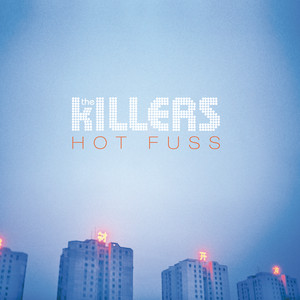
Imagine a new band releasing a debut album where the entire first half is filled with such blistering hits that you can't even catch a breath? You don't even have to imagine it; the album is right there. The second side isn't bad, but it certainly pales in comparison to the first. Nevertheless, its blend of post-punk, Britpop, neon synths, incredibly dense bass, and pleasant, if not particularly profound, lyrics made this album one of the pillars of 2000s indie rock. Its main and only flaw is how good it is; twenty years later, The Killers still haven't quite managed to overcome this, and later they completely retreated into American Springsteen-esque territory. However, some other bands haven't achieved even half the awesomeness of this single album in their entire careers, so there's no point in complaining.
As they said in the film "Crossroads," "Blues is when a good man feels bad because he's thinking about the woman he once loved." This album follows that thesis roughly halfway; the other half is full of upbeat, I'd even say downright danceable songs. B.B. King is a giant of the genre, no matter how you look at it, and here he shines. It doesn't matter that half the songs here aren't even his, they're so-called "blues standards." What matters is how he performs them for half an hour, practically without a break (remember, this is a recorded concert), how he improvises, and how the band understands these improvisations from the first note. The audience is wild in the background, which adds a bit more energy to the record. A classic of the genre, I can't say the album has stuck in my head, but it was a pleasure to listen to.
Surely everyone has heard the so-called "new wave of post-punk"? Yes, yes, be it the now-hyped Geese, a slightly toned-down Black Country, New Road, or, at worst, Sorry. Many people like it, but for me, it almost always comes off as pompous and pretentious. The most interesting thing is that a band I hadn't heard before, Pere Ubu, made similar music almost forty years ago. The same rather jagged guitars, the same abundance of unusual instruments and noises, the same declarations instead of singing. What's even more interesting is that I rather liked this album! They're certainly overdoing it with the experimentalism in places, but for the most part, it's decent post-punk, very unusual for its time. True, sometimes you still can't tell if it's the music playing in your headphones or a snowplow humming outside your window; however, that's par for the course for the genre.
Trent Reznor seems to have spent his entire life experimenting with sound, and while Pretty Hate Machine was dominated by synthesizers and Broken by aggressive guitar sounds, this album incorporates the best of both. It's almost an hour of industrial history from a furious lyrical protagonist who hates everything around him, and especially himself, ultimately ending his own life. The lyrics delve into those corners of the brain and soul that you'd rather not think about, and the music sometimes forces you to vent your anger with its thunderous sound, and sometimes simply frightens you; this is aided by periodic rustling, screams, creaks, and other seemingly otherworldly sounds. But there's nothing otherworldly here; this album was written by a living person, based on his feelings, and that fact sends a chill down your spine. I would strongly advise against listening to it in an unstable emotional state.
New wave, art rock, funk rock, post-punk, dance rock, afrofunk, worldbeat, psychedelic funk... "Is such a plethora of genres really necessary to desribe this album?" you might ask. Yes, and yes again! That's the magic of this work; its music is all of these things at once. African drums mix with funky bass, typical post-punk guitar lines are superimposed over danceable disco rhythms... Remove even one of these elements, and the entire album would crumble, but precisely because Talking Heads decided to combine the incompatible, it not only sounds coherent, but is considered by many to be their best work. I'll still deduct one point — despite the maximum energy of the first half, some songs could have been shortened a bit; it feels like you're stuck in an endless loop. And Brian Eno wouldn't be himself if he didn't shove some semi-ambient stuff at the end. Otherwise, I recommend it!
I listened to this album for the first time. I'd previously avoided it because, for some unknown reason, I thought it was elevator music. I know, I know — incredible ignorance. This is more suitable for a stroll through a dimly lit park at night, enjoying a sunset by the sea, a slow dance with your girlfriend, the backdrop to an old French film, or, ultimately, a theoretical moon safari. And I wouldn't mind a leisurely ride to the seventieth floor in a panoramic elevator to this album. French electronic music: minimalist and rich, psychedelic and soothing, vintage and futuristic all at once. If I could describe this album in one word, I'd say "elegant." An elegant album, not for everyday listening or for every mood.
You'd think a ship would sail as it's named, and an album with that name from a band with that name would be familiar to many. Had you heard anything about it before? Personally, I hadn't. But it turned out to be a positive rock record, clearly inspired by The Beatles and the entire British wave of the sixties. Indeed, had it been released five years earlier, it would have been received with a bang. It would have been equally well received had it been released ten years later, when R.E.M. and U2 were gaining momentum — it would have fit right in with them, too. In the early seventies, however, no one really wanted that kind of music, and the album's release went virtually unnoticed. It's a pleasant release, well-preserved to this day, well-recorded (I especially liked the acoustic parts). All the songs on it are good, but that's about it — none of them offer anything particularly groundbreaking.
For some reason, I've always confused this band with The War On Drugs, even though musically they have virtually no connection. Probably because I just find both bands boring. Here's their self-titled debut album, which journalists raved about — and there you have it, an 87 on Metacritic is no joke. It's less than forty minutes long, but those forty minutes felt like over an hour to me. Perhaps it's because all the songs follow the same pattern — acoustic guitar, bass drum, and drawn-out, church-like chants. The cover art also conveys this mood; listening to it makes you feel like a lumberjack living in the 16th century. Mumford & Sons, if they were dull, basically. It's probably a decent release, just not my thing.
Personally, I feel a sense of calm when listening to this record, primarily due to the combination of Ray Manzarek's psychedelic organ and Jim Morrison's hypnotic vocals. However, it was only after learning a few details about it that I discovered its true greatness. For example, the band never had a studio bassist; Manzarek played the bass part as a second line — a masterful feat. Furthermore, the album was recorded in just a few days, with most of the songs recorded in one take. And most importantly, the engineer's wisdom — he barely touched the final recording — made it sound as if the band were performing live. This is the main strength of this music, and I hadn't yet fully grasped the apparently metaphor-filled lyrics. The Doors' best album and, arguably, one of the best debut albums ever.
"All the instruments played on this album are acoustic" — that's the proudly stated phrase on the album cover. There's certainly something to brag about: in addition to the standard folk acoustic guitar and tambourine, there's also double bass, banjo, orchestral bells, bongos, and even an Indian sitar. Unusual instruments create unusual music, and in addition to the genre's classic motifs, collectively known as "medieval tavern," there's also something reminiscent of a mass, and a sense of improvisation, where each instrument seems to be playing its own part, yet the result is beautiful. An interesting album, somewhat ahead of its time.
While listening to this album, the question "Where do I know that voice from?" kept running through my head. I Googled the artist's name — and lo and behold, it's Chef from South Park! However, Chef would be thirty years away, but for now, let's consider the fact that this forty-five-minute record consists of only four songs. At that length, it might seem like prog rock, but no, it's soul, albeit a rather unusual one. Moreover, two songs on this album (that's half of it) are covers, which Hayes managed to stretch out two or three times longer, yet they never get boring or lose their appeal: this is beautiful, somewhat pompous music, perfect for a candlelit dinner. The record is almost sixty years old, but it doesn't feel that old at all; it's hard to believe it was recorded that long ago. I think that's one of the hallmarks of quality.
David Bowie died on January 10th, two days after the release of Blackstar. And I believe the fact that it's his swan song is the only reason it's even on this list. I can just imagine the editors thinking, "We've added eight Bowie albums to the book, so how can we not include the last one?" There's nothing wrong with that, but it's important to keep this in mind — personally, I found almost nothing I liked about Bowie here. The album is too experimental, even for him; the saxophone wafts through almost every song, and if you add some distortion to some of the tracks, you'd almost sound like Lightning Bolt. But what really gets you through the album is that you can hear Bowie's weight in his vocals, how he knows he doesn't have much time left in this world. I didn't really experience anything special while listening, but I can't give it a lower rating.
Unpopular opinion: this album may have been innovative when it was released, but it hasn't held up very well. Yes, perhaps thirty-five years ago the mix of reggae, hip-hop, and soul sounded novel; overall, it still sounds good, but, firstly, many bands have emerged who are making this kind of music just as good, and in some places even better, and secondly, sometimes the songs drag on unnecessarily. The album's cohesion also suffers, and Del Naja has never hidden the fact that they simply recorded demos in the studio and then simply brought in guest vocalists. Ultimately, the music becomes mere background music. It's a cult classic, but I don't find it appealing. Additional star for the rich bass lines, but overall it was a bit boring to listen to.
In the movie High Fidelity the main character puts on a (different) The Beta Band album in a record store and says, "I'm going to sell five copies." It's immediately obvious that the film is fictional — I doubt anyone in real life would buy the album after seeing something like that. Similar artists include Beck and The Flaming Lips; they're right on target: it's lo-fi electronica with occasional guitars, a bit monotonous in some ways. I don't know how else to describe this music, but I can say that after this album's release, the band was booked as opener for Radiohead tour, which might give some insight. A very uneven record. Sometimes it sounds pleasant, sometimes it's so dull that you want to turn it off. At first, I wanted to give it three stars, but then I remembered the book's title and thought, "Did I really need to listen to this album before I die? Naah..."
I have a positive attitude toward the Wu-Tang Clan and all its members and understand their contribution to the genre, but I'll admit without hesitation that I don't like most of hip-hop for a very simple reason. What's the most important thing in hip-hop? Lyrics, of course. For me, lyrics have always been secondary, and here, as not a native speaker, even knowing the language, it's really hard for me to evaluate the author's intent — I still don't understand a bunch of references, even though the lyrics were right there on my phone screen while I was listening. On the other hand, music as such is minimal in hip-hop: it's just background music, a sample taken and then looped throughout the song. If you don't focus on the lyrics, it gets boring very quickly. So, for hip-hop, I have one criterion: rocking / not rocking (there are exceptions, of course). Does this album rock? Well, it rocks, but it definitely won't rock for fifty minutes.
When I saw I was supposed to listen to this album today, I automatically thought, "Well, here's another Bowie album, added to the list simply because of the author's name; we've been there, we know." When an artist releases an album forty years after their peak, you don't expect much from them: they're supposed to be doing something to keep from becoming completely ossified. Well, that one is a completely different story! It features the glam that made Bowie famous, funk rock, and even slightly heavier alternative, all elegantly crafted, perfectly in keeping with the artist's style, his signature feel. Add to that the fact that this was Bowie's first album in ten years; I can imagine the shock of those who also thought it was just another record from the veteran, and the impression it had on the younger generation, who had barely heard of him before. A great comeback and a simply great album that still sounds very fresh. Pleasantly surprised!
Alternative country... The question immediately arises: "Alternative to what?" Well, probably to traditional country. "And what is the alternative?" It's a bit more complicated. It's well known that the main themes of classic country are homeland, love, family, work. Alternative country is about the same thing, but with a touch of negativity, depression... Emo-country, basically. This album could be called just that: emo-country. Songs in which Gillian Welch expresses her feelings in a slightly dark manner — love, longing for the past, admiration for Elvis. Nothing superfluous, just her pleasant voice and acoustic guitar — these are more like poems than songs. Boring? Perhaps, the fifteen-minute last song alone is worth it. Will I listen to this album again? Probably not. Did I like it? Yes, I did. If your soul is yearning for something calm and acoustic, give it a chance.
The album cover already hints at the kind of music we're in for — pretentiously but rather stylishly dressed, the moustachioed, hairy guys immediately suggest classic rock from the late 1960s. When you learn that the hairy guys are English, their sound is completely shaped in your head. In fact, the album isn't quite that simple. It begins with a decidedly un-British "southern" rock sound, then gradually transitions into psychedelia, all the while maintaining its acoustic core. This is where they stumbled, overcomplicating things. In some songs, you get the feeling that each member is trying to steal the show, trying to make their part the focal point; as a result, the ear doesn't know what to listen to. When you learn that half the songs were written by the guitarist and the other half by the keyboardist, the reasons for this discrepancy become clear. It's a decent record, a pleasure to listen to, but the musicians didn't realize their full potential.
When I saw the cover, I initially thought it was Khalid. He does look alike, especially from a distance, though his cheeks are a bit bigger. But the music turned out to be completely different — classic Southern soul with a sweeping tempo that makes you want to stroll down a sunny street, chest out, and an abundance of brass instruments. The lyrics are mostly about the opposite sex, in keeping with the genre's traditions. Returning to contemporary artists: while Khalid took Al Green's hair and left it at that, Justin Timberlake and Seal have clearly drawn heavily from his music. It's a pleasant album, but I can't give it more than three stars because the soul music is a bit monotonous and background for me. If you feel differently, you can give it an extra star or two.
From the very first song, you can tell that Flamin' Groovies loves old blues and The Rolling Stones, who adapted it for their time. Mick Jagger himself is said to have praised this album after hearing it, even saying it was more interesting than Sticky Fingers, released the same year. It really turned out well, blending blues-rock with a dirty garage sound, similar to that of The Stooges. Unfortunately, in the band's native California this kind of music proved unpopular, the singer left, and the band refocused on British power pop, but that's another story. Jagger's praise impressed the band so much that in the reissue of the album, which is now available on all streaming services, they added a whole second part of covers of rock 'n' roll classics. You can listen to that part, but it's not necessary.
I have no idea who Bill Callahan is, even though he's been in the industry for almost forty years, but on this album, at least, he reminded me of both Leonard Cohen and The National. The former has a "reading a poem to music" style, while the latter features rich arrangements featuring strings and keyboards. The mood of the songs is sometimes light, sometimes dark, and sometimes the lyrics are dissonant with the music; everything is in keeping with the genre's canons. It's a decent, laid-back album, but I won't be adding it to my library. Perhaps to truly resonate with this kind of music, you have to live in the American Midwest, although it was pleasant to listen to even with a snow globe outside.
"Santa-Barbara" by The Mamas & The Papas is certainly impressive. A quartet, two members of which are husband and wife, and the wife sleeps with the third member, who is in love with the fourth singer. Fleetwood Mac, if not envious, will certainly sigh with understanding. But all will be revealed only after the recording of this debut album, which is very good. Sunny, positive folk rock, sung by four different but perfectly complementary voices. The quintessential sound of the sixties, it's no surprise that Tarantino used one of the songs for his "Once Upon a Time in Hollywood." And, of course, the cover, the toilet on which horrified major US retailers who refused to stock the album. Band had to urgently cover it with an advertising sticker, and later they removed even the bathtub. And you say: "Arabs paint over women in albums"...
Looking back, it seems like every Blur album has always been a cult classic, but in the early '90s, few thought so. I'll go further, "thanks" to their first two albums, the band managed to make a tidy fortune and live practically hand-to-mouth for a while. Perhaps when you're angry and hungry and have nothing left to lose, things like "Parklife" are born. It's a genre-defining record, without exaggeration, that, while it didn't feature any fundamentally new moves, executed them in such an order and proportion that it gave birth to Britpop. There's a little bit of everything here — ballads, punk rock thrillers, electronic dance hits, and even some orchestral pieces, sometimes serious, sometimes silly. I once saw someone say that Blur was a band that planned to sound like The Kinks, but ended up sounding like The Jam. There is something to this.
Many respect Syd Barrett as the founder of Pink Floyd and one of the pioneers of psychedelic music in general. Even more are grateful that he left Pink Floyd soon afterward; this is understandable. Barrett spent almost two years making his first solo album, and not because it was technically complex — far from it. On the contrary, almost the entire album is built on the most sloppy acoustic guitar strumming and singing (if you can call it that) over it. Sometimes session musicians, completely clueless about how and what was supposed to be played, would overdub these parts. In the end, Syd's wildness scared off two producers, and Gilmour and Waters, who had worked with him in his previous band, had to be called in to finish the recording. All in all, it's certainly listenable, but it sounds like the ravings of a madman, which, by all appearances, is precisely what it is.
You can often tell an album by its cover. For example, what do we see here? A view from below of a roadside pole entangled in a multitude of wires. When a wire fails, they simply throw in a new one. Anyone who's been to Asia has witnessed this scene firsthand many times. But the thing is, in Asia itself, I quickly stop noticing these wires, even though these "nests" are practically everywhere — my eye gets numb and takes them for granted. That's the same with this album — its sound evokes the synthetic future of a sci-fi dystopia. The hip-hop here, like that pole, is woven with bits of post-rock and jazz, yet everything sounds uncluttered and even minimalist. It would be perfect as a soundtrack for, say, Mirror's Edge. It's surprising that this little-known record appeared in the first edition of the book and is still there. It's probably worth a listen.
In 1994 Blur invented Britpop, and a year later Oasis turned it into music for a completely different audience — let's say, the English working class. Blur struggled a bit more with their next album, but ultimately realized there was nothing to be gained from it and moved on. They arrived at the American indie sound. More precisely, they were introduced there by guitarist Graham Coxon, who had been listening to the music of Beck and Pavement. The label, journalists, and fans were shocked, but the album still took off. Blur proved that sometimes you need to change things up. At the same time, the band openly mocked Americans at times, and "Song 2," which became a major hit in the US, was intended as a parody of grunge. In this regard, Blur still hold their own: they recently openly stated that their Coachella show was completely off-the-charts, as it's the only festival where audience members film themselves on their phones, not the stage. Well, they aren't wrong.
Now, it would seem, a true legend! Who hasn't heard of Frank Sinatra? Everyone's mind immediately conjures up images of him in his signature trilby hat at the mention of his name. However, even here, things aren't so simple. Yes, this is a pleasant collection of upbeat love songs written by other songwriters and by then almost classics, performed by Sinatra's velvety voice, unmistakable. Arranger Nelson Riddle also did a superb job with the instrumental section. But just remember, if you've heard one song on this album, you've heard them all; even AC/DC would be outdone in terms of monotony. However, there's nothing wrong with that, and the record is perfect as a leisurely backdrop for dinner. Then you can smoothly go from dinner to dancing, if you have someone to join you.
Sampling is a delicate matter; make a single mistake and you'll have to hand over all the profits from your song to other guys. Richard Ashcroft, Vanilla Ice, and the late Juice Wrld will tell you that. If there's just one sample on an album, negotiating its use isn't a problem. But what if there are, say, nine hundred? Or even more than three thousand? That's exactly the number used on this record, according to its creators. Moreover, there are no new sounds here; it's all samples. A horse's neighing, some Indian melody, something Rasta-esque, dialogue from a movie... The description sounds like cacophony, but in reality, The Avalanches managed to make a truly amazing dance album. Cutting it all up in the right order and getting permission to use the sounds is an incredible amount of work. If you're too lazy to prepare a playlist for a party, feel free to just put this album on — everyone will appreciate it.
Thurston Moore and Michael Gira gave Devendra Banhart his start in big-time music. With such "godfathers," you'd expect everything here to sound, shall we say, noisy. In reality, this is a beautiful acoustic album. Short guitar sketches are close to both psychedelic America and the folksy England of the 1960s, and surprisingly, just as far removed. There's also a certain southern sound — Banhart lived in Venezuela until he was fourteen. And overall, he's something of a citizen of the world: not only did his parents name him on the advice of an Indian guru, but he also has the middle name Obi. Yes, after Obi-Wan Kenobi. With a biography like that, you can't write "flat" music. Critics have compared Devendra to early Marc Bolan. I agree with them on some aspects of the guitar sound, but his vocal style is very much an acquired taste — it sounds a bit like alt-J. Keep that in mind; you'll either love it or your ears will wilt.
Neil Young is one of those artists whose cult status on the west I don't understand at all. These days, he mostly grumbles about everything: Spotify (where he once managed to delete his entire discography), social media, Americans who voted incorrectly... Okay, old man yells at cloud, but what did he do in his youth, at his peak? He played pretty standard country-folk, which, while not bad musically, relies heavily on the lyrics, which dramatically raises the barrier to entry for me. The lyrics, by the way, are so full of negativity and melancholy that Neil Young himself later decided he'd overreacted and didn't allow the album to be released on CD until 2003. He wouldn't let it be released, and he pulled the music from streaming services... Grandpa, do you even want people to listen to your songs or not? As they used to say at university: "You're great, of course, but I wouldn't give you anything higher than a C."
Despite several Siouxsie and the Banshees songs in my favorites, I listened to this album for the first time — and it was a success. The entire record jumps between energetic punk rock and calmer post-punk, yet you're never free of tension throughout the songs. This dark atmosphere is primarily supported by the vocals and guitar. We'd later hear sharp, slightly jagged riffs in the works of Johnny Marr, Dave Navarro, and John Frusciante, but it was John McGeouch who first dabbled in them. Siouxsie Sioux's voice will be familiar to fans of Florence + the Machine. Siouxsie's image, however, is the complete opposite — it's exactly what every '80s alt-girl wanted to be, and Tim Burton clearly modeled Lydia from Beetlejuice on her. It's rare that a studio album can rival a greatest hits collection in terms of density. A very pleasant surprise and a record that is truly worth to hear before you die!
Johnny Cash loved performing in prisons, despite never having served time. Cash's most iconic performance is considered to be his concert at Folsom Prison, released a year earlier. He hadn't originally planned to record this show, but an English crew filming a documentary about prison life came to film it. The label accepted the bonus, and they were right – thanks to the San Quentin concert, Cash was nominated for three Grammys, one of which he won. The cover photo of the artist became one of his signature images, but this album gave us (and the owners of bootleg merch stands) an even more iconic shot, where Johnny clearly expresses his feelings about the cameramen (https://www.nme.com/wp-content/uploads/2016/09/SnapGalleries180311.jpg) blocking the prisoners' view of the stage. A fine record, one of the pillars of country music. But whether a list of essential albums really needs two Johnny Cash prison concerts is an open question.
An opinion that will incur the wrath of Pitchfork magazine readers and others alike: Radiohead as a band ended with OK Computer. Then Radiohead as an art object began, because, in my opinion, almost all of their subsequent work can be described with the phrase "experiments for the sake of experiments," and that began with this album. Guitars are minimal here (quite unexpectedly after the previous album), but there's an abundance of ambient, IDM, techno, and other "smart" electronica, sometimes bordering on white noise. Overall, the album can be roughly divided into two parts: music for a German club and music for floating. The faces of everyone who expected the band to cement their status as the new kings of intellectual rock here are beyond imagination. Many critics may consider Kid A practically the most important album of the 2000s, but I'd rather listen to The Bends several times over.
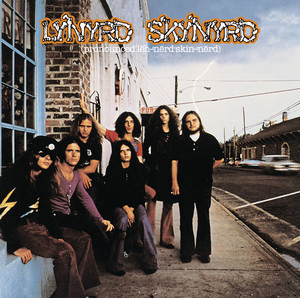
By now this site gave me the pleasure of listening to excellent debut albums by The Killers and The Doors, but the opening from Lynyrd Skynyrd is something else entirely. The record is steeped in the spirit of the American South, instantly making you want to listen to it while driving a muscle car with a Confederate flag flying out the window. It's hard to pick a single song; every single one is worth its weight in gold. The brisk opening with I Ain't the One, the keyboard solo in Tuesday's Gone, the lyrics in Simple Man... But the epochal Free Bird, with its four-minute guitar solo, is still unrivaled. The band's star would set as quickly as it had risen: four years later, a plane crash would take the lives of frontman Ronnie Van Zant, two other musicians and their manager, and leave the remaining members physically and emotionally scarred. Lynyrd Skynyrd is now the Ship of Theseus; none of the original lineup remains. However, the artists' decision is clear: these great songs must live on.
Is Peter Frampton's name familiar to many? If not, don't be embarrassed. There's a reason for that — his first four albums weren't exactly stellar, enjoying neither critical nor popular success. But then something magical happened: his live album, featuring the same songs performed, was released and hit the jackpot. Critics praised it, radio stations played it, and most importantly, it sold incredibly well and remains one of the most popular live albums in history. The artist has never been able to replicate this triumph. It remains a magic until you compare the studio and live versions of the songs head-to-head. The songs remain fairly average, but as flat and trivial as they sound on the recordings, they are just as energetic and expansive in concert (the sound of his signature talk-box helps in some places). This is where the stage truly became a place of power for the artist.
Fela Kuti is known as the father of Afrobeat, a genre that blends jazz, funk, and African folk rhythms. The genre is generally quite enjoyable, both for dancing and as a background track; this album is no exception, but the story behind its creation reads like an episode of "Parts Unknown". Kuti declared his own microstate in Nigeria, consisting of a commune and a recording studio. The government became agitated and told him to stop acting up. Kuti got angry and recorded this album, which consists of just two songs (a reissue is available online, adding two more). In my opinion, the lyrics are simple and rather toothless, but the government was overly receptive to this ragebait and sent the army to burn down the rebel's house. During the process, the soldiers beat the artist and threw his mother out of a window, killing her. Kuti responded by sending the coffin containing his mother's body to the then-president's residence. Basically, this scene (https://youtu.be/UajTvU3sjrY) from "The Boondocks" perfectly describes the whole situation.
If any of you were planning to get into progressive rock, Yes's Fragile is practically the perfect choice. This album is easy to listen to and not overly complicated. It sounds beautiful, if a bit heavy in places. However, if you start to analyze it in more detail, you realize that none of the parts are easy to play, and yet the musicians have managed to juxtapose them without degenerating into cacophony. Are there any downsides? Of course there are. Of the nine songs on the album, only four are full-length; the rest are short vignettes from each musician, a sort of "talent showcase". Here's a keyboardist arranging a piece from Brahms. Here's a short drum fill. Here's an acoustic guitar number with a medieval sound, and so on... They're all skilled guys, they've proven themselves, there's no denying it, but these performances could have been reserved for live performances only. What else can I say? ⬅️To Be Continued
This Neil Young is much closer to me than On the Beach, which I got here last time! The album is very unusual. Firstly, it's unclear whether it's a live album or a studio one — almost all the songs were recorded live (crowd noise was muted, but it still comes through in places), but the songs are new, previously unreleased. Secondly, it's clearly divided into two sides. Side one is just classic Neil Young, with his acoustic guitar and harmonica. This section is fine, but the album really kicks into high gear on side two, where Neil is joined by his band. There's such a noise here, and the guitars are loaded with so much distortion, that it immediately becomes clear why Nirvana and Pearl Jam admired Young. The decision to loop the album was also a brilliant move — the first and last songs are essentially the same, but the sound and verse order are changed. In general, Neil hasn’t gotten rusty by his twelfth album!
In the mid-1950s, French avant-garde artists developed a new movement called "musique concrète." "Concrete" here involves recording absolutely any sounds (from a creaking door to the sound of rain) and then sampling them (if such a term existed back then). Holger Czukay was inspired by this school when writing his first solo album. The cover likely shows him at work — in addition to natural sounds, he also used excerpts of dialogue from television and radio broadcasts. All of this was layered over some decent bass lines (Czukay played bass in the band Can) and spiced up with his quiet vocals. And overall, it's not all bad; the album could serve as a background. I was about to give it three stars until I listened to the last song, where all this variety of sounds began to merge into a cacophony. Even this could have been forgiven if the song hadn't been fifteen minutes long.
By the end of 1974, David Bowie had grown tired of the Ziggy Stardust image he'd created (knowing the artist's love of change, he held on for a long time), and then, during a US tour, a fortunate stop in Philadelphia, where soul music reigned supreme, came up. "This is what I'll make my next album like," the maestro decided. He did. My feelings after listening to it are mixed. I'm not really into soul music in general, and this one feels strange somehow; even Bowie himself called it "plastic." The Beatles cover here is perhaps one of the most disgusting I've heard. Half the album is practically filler (though that's often the case with Bowie). On the other hand, it's not bad as a backdrop to a party, and there are a couple of strong hits. And it turns out that a three is not enough, and a four is too much... But for the smart move to put the two best songs first and last, so that the album starts off strong and leaves a good aftertaste, I give it a higher mark!
By industry standards, Steve Earle took a long time to get going — despite his extensive songwriting career, he released his debut album at age thirty-one. Perhaps it's for the better — he had more life experience to write these songs: he'd played bass in a local band, did some blue collar jobs, and married three times. The result is a record at the intersection of country and heartland rock, a classic example of both genres. The music is fairly simple, the lyrics describe the everyday life of an average American worker from the South, life on the road, the prospects (or rather, the lack thereof) of small towns, and personal relationships. Bruce Springsteen, to whom Steve has often been compared, did something similar on a larger scale; to me, he reminded of a less produced Bryan Adams. A pleasant album for a short drive.
While King Gizzard & The Lizard Wizard were just warming up, White Denim were already in full swing! Honestly, it's surprising they didn't experience the same wave of popularity — their music is very similar in places. Perhaps the reason is it's the purely American school of jam rock, a genre known for its lengthy improvisations that aren't everyone's cup of tea. The album, however, doesn't feature any overly long songs, but the spirit of, say, the Grateful Dead is fully present. It feels like at times they've mashed up all sorts of genres in a single song: a jazz guitar part transitions into a progressive riff, the drums suddenly leap into a high-speed psychedelic rock fill every now and then, and the bass seems to float through the entire album, sometimes diving deep, sometimes overshadowing everything else. An interesting sense of madness, but madness with mathematical order.
For anyone who logically assumed this was Scott Walker's fourth solo album, I hasten to disappoint you — it's his fifth. The oddities don't end there. Listeners and critics of the late 1960s misunderstood the juxtaposition of a pop baritone with lush, cinematic orchestral arrangements and ignored the album to such an extent that the label decided not to reprint it (the first reissue wouldn't be released until 1992). Yet the record still managed to reach the right audience, as echoes of its mysterious atmosphere can be felt in Pulp, Suede and Nick Cave, as well as in some works by Alex Turner and Brendon Urie. Walker, however, continued to pursue increasingly avant-garde experiments right up until the very end, beating raw meat with a hammer and clanking machete blades during studio recordings, and even released a collaborative album with Sunn O))). However, that's another topic.
There are albums that are best listened to in their entirety, there are those that should be listened to in their entirety, and then there are those that must be listened to in their entirety. Tommy falls into the latter category. One of the first (or second, depending on your perspective) rock operas, it was written almost entirely by the band's guitarist, Pete Townshend. It's a seventy-five-minute classic rock epic, where the songs, like chapters in a book, flow into each other almost seamlessly — from half-minute interludes to long overtures. The plot isn't exactly easy to follow. It's clear that it's about a deaf, dumb and blind man who eventually becomes a religious guru, but the record benefited greatly from Townshend himself describing the entire ten-page script in an interview with Rolling Stone before its release. The album's main drawback is that it could have been about fifteen minutes shorter. However, that's not a huge deal.
In 2014, I went to a festival where Paul Weller performed. Out of habit, I decided to listen to some of his discography before the concert, and I didn't understand his music at all. I barely remember the concert either, so when I saw this album today, I automatically expected an hour of something lackluster. But the album turned out to be very good! There's nothing here from Weller's native The Jam, of course, but it does have what I'd call "proto-Britpop" — melodic, often semi-acoustic songs imbued with the atmosphere of 1960s England, yet still freshly listenable today. Everything sounds calm, but not depressing; melancholic in places, but not oppressive. The record is superbly recorded and mixed; the hour flew by, even with a few instrumentals and occasional two-minute outros. If you enjoy the Noel Gallagher side of Oasis, then Wild Wood is definitely worth checking out.
James Murphy, the driving force behind LCD Soundsystem, once told journalists, "Writing about us isn't hard... Just use words like 'unlikely frontman,' 'bear-like,' 'unshaven,' 'Talking Heads,' blah blah blah" Indeed, looking at this disheveled man, the last thing you'd think is that he's a key figure in the indie sleaze movement, the 2000s' punk-electronic sound. Yet, it was his debut album that took New York dance floors by storm in 2005. On Sound of Silver, he further refined his style, while also making nods to Kraftwerk and, of course, Talking Heads. This energetic music, which makes you want to run somewhere, is surprisingly combined with lyrics about relationships, thoughts on aging, and the melancholy of the big city — in fact, these are precisely the topics that conversation turns to when the sun breaks on the dance floor.
PJ Harvey's music has never been particularly close to me (so much so that I walked out of her last show in my city), so I listened to this album, considered by many to be her most important, in its entirety for the first time. There was no fireworks display of emotion: it's simply solid alternative rock, sometimes measured, sometimes energetic. There are a couple of hits, and it was a pleasure to listen to. The main drawback is that when Polly switches to a high-pitched voice (let's be honest, it's almost a screech), you really want to turn the record off; fortunately, such moments are few and far between. One journalist disagrees with me, however, and considers the album's only drawback the presence of Thom Yorke — on three songs! It's laughable until you try to imagine his vocals on the other tracks and catch yourself thinking the album sounds like early Radiohead. Let everyone decide for themselves whether that's a good thing or a bad thing.
When I worked at a concert venue, we often hosted Latin American parties where girls looking pretty much like the one on this album cover would sway their hips, arms, and breasts for hours to songs like the ones I heard here. This record is perfect for that kind of entertainment. It's hard to enjoy listening to it in any other setting. Firstly, every song sounds like the same thing — it's exactly what you imagine when you hear the phrase "Caribbean music". Secondly, you really can't imagine what to do with this music outside of dancing: maybe sipping Cuba Libre, but then again, I'd prefer to do that while lying under a palm tree, which isn't always within reach. That said, it's all well-recorded, and Tito Puente is a recognized master of the genre, and his musicians are no slouch, but I quickly grew tired of the album. Perhaps I'll have to listen to it again during a beach vacation.
R.E.M. is often compared to U2 in various music articles and on streaming services under the "Similar Artists" tab. I'm fine with U2, but this comparison is too flattering for the Irish. R.E.M. is much more elegant; their lyrics occasionally include political messages, but they don't hit you so hard. Their early albums were somewhat chaotic, but on Green, their major-label debut, the band found their energetic yet melancholy sound. Around this time, R.E.M.'s concerts began selling out arenas, leading longtime fans to accuse the band of selling out; in my opinion, this is unfounded. It's just that their multi-layered lyrics and slightly enigmatic music have somehow resonated with many. It was also here that guitarist Peter Buck first picked up the mandolin, which three years later would become the backbone of the band's biggest hit, but that album isn't on the list.
As they say, you're judged by your clothes, and in this case, by your cover... Oh dear, what are those nostrils against the sunset? It looks like a cross between a postcard from a resort and a still from the end of some Korean drama series. But what's inside the album? Nearly forty minutes of beautiful acoustic music, in its own way, from David Crosby, best known for his supergroup Crosby, Stills, Nash & Young. Although everything here starts off relaxed, by the middle of the listen a melancholy feeling begins to overwhelm, and at the end, some kind of church hymn suddenly appears. Old acquaintances Graham Nash and Neil Young also contributed to Crosby's work on this album; just as members of the Grateful Dead, Jefferson Airplane, and Santana. All in all, the amount of smoke in the studio is understandable, and since this album took second place on the Vatican newspaper's list of the best releases, perhaps the Pope himself was getting high to it.
In the late 1980s, synth-pop and hairy metal ruled the radio, so it's logical that many producers turned down Tracy Chapman's requests to record her quiet, semi-acoustic debut. Whoever took on this venture struck it big – the singer's simple, soft folk ballads about love, dreams of a better life, and social issues resonated so deeply with people that the album remains one of the best-sellers of all time. It all sounds truly pleasant, though Tracy's vocals are a bit peculiar, and if you don't like them, you'll likely tire of them by the middle. Yes, in places the lyrics contain completely naive, leftist messages, based on the juxtaposition of rich and poor and black and white. On the other hand, the artist was 24 years old when the album was released. At that age, you can still fight for all that's good against all that's bad.
One could, of course, begin a discussion of this album by listing the musicians Thundercat has worked with, but for me, such approaches immediately make me think, "The session member has decided to go solo, nothing interesting." Let's just say that Thundercat is, first and foremost, a very skilled bassist, and in this regard, he truly shines here. Unfortunately, he's not as good a singer, and his falsetto becomes tiresome after the album's midpoint. Most of the album is based on standard modern R&B, but occasionally a whole host of genres breaks through: prog, soft rock, jazz, hip-hop, not to mention the related funk and soul. It sounds like something abstruse, but it's actually easy to listen to. The variety of guests here matches the genres: from Kendrick Lamar and Wiz Khalifa to Pharrell and, surprisingly, Kenny Loggins. But twenty-three songs, even though they are short, are still a bit too many.
Pantera is a perfect example of the phrase "rags to riches." With just one release, four Texas rednecks transformed themselves from mediocre glam losers into cowboys from hell, energizing a crowd of hundreds of thousands at Moscow's Tushino Airfield like an atomic bomb. After that, there was no slowing down, so the band decided to record the heaviest album possible. And they did! "The guitar should sound like a circular saw, the drums should pound your ears," said drummer Vinnie Paul. And that's exactly what happened, along with pulsating bass and Phil Anselmo's barking vocals. Every musician gave it their all; every song, be it the hurricane-force "Fucking Hostile," the measured "Walk," or the ballad "This Love," simultaneously feels like a punch in the face from the album cover and makes you want to give it to someone yourself. Taking one star off because the record becomes rather monotonous toward the end. Such energy needs to be carefully measured.
If I had to choose a synonym for the word "style" in music, it would definitely be Duran Duran. Forty years later, their second album has only just begun to mature, and everything about it is still stylish: the cover art, the jagged riffs, the superb rhythm section (surprisingly, all three members with the last name Taylor are not related), the recognizable (though not the strongest) vocals, the videos filmed for the nascent MTV era... And what a saxophone solo in the song of the same name! Listening to this record makes you want to put on your best suit, take a beautiful woman by the arm, stroll along the embankment at sunset with her, and end the evening in a nightclub... Which these songs would also be perfect for! It's rock, pop, disco, and new wave all at once — the album excels in every genre it explores. And that's why Duran Duran is loved by so many different people - from Princess Diana to Jonathan Davis, and of course, me.
In 1975, the low-budget film "That's the Way of the World" was released. It predictably flopped at the box office and unexpectedly propelled Earth, Wind & Fire, the creators of the eponymous soundtrack, to the top of the charts. The film, however, is completely unnecessary to understand this album: it's classic funk-soul, performed by nine members on a variety of instruments, including some quite exotic ones. It's also a story of hard work — Earth, Wind & Fire had previously released five unsuccessful albums, but they didn't give up and, with their characteristic joy, continued to move forward, and they were rewarded for it. The album dips slightly midway through the album, when the obligatory "Ballads" section begins, but everything else is sound so technically well and sung so positively that a three-star rating would definitely be too low.
The 1950s and 1960s were truly amazing: if you had a pleasant voice, you didn't have to write songs; just cover other people's hits, make money, and have fun. That's how Scott Walker's second album works, too, with only a third of its songs composed by him. The remaining two-thirds are versions of hits by Belgian Jacques Brel and covers of other popular artists of the time, as well as soundtracks. However, almost every one of these songs, with their sometimes pompous, sometimes airy arrangements centered around a pop baritone, would fit right in with a romantic film. Walker translated and covered Brel superbly, and his own work is also quite good here, but the rest is rather mournful. In any case, if you're interested in fantasizing about what would have happened if Nick Cave sang in The Last Shadow Puppets (and the lyrics are downright Cave-esque in places), this record is probably the closest in spirit.
Oh, the trend of the times when an artist was simply a singing head, performing what others had written before them. On this album, The Rolling Stones for the first time abandoned this vicious practice — all the songs here are written by the Jagger / Richards duo, with only the influence of old blues standards remaining, heavily diluted by sitar, marimba, and harmonica, unusual for the genre. Did the band succeed? At first, it certainly did; the entire first half of the album, ending with the epochal jam "Going Home," is excellent. The second half stumbled and then completely lost its way; these aren't exactly bad songs, they're just boring, especially considering the band's current stature. After listening to the album, the initial confusion over the fact that four tracks were cut from the American version dissipates; but they added Paint It Black - that's what I call an equal exchange.
The Smashing Pumpkins took a huge risk when they decided to release a double album, and I'm sure they didn't expect how much it would pay off. This is the band's magnum opus, and the crown jewel of '90s alternative rock, a multi-genre masterpiece that ranges from tender piano and orchestral ballads to screeching grunge riffs, from Floyd-esque art rock to new wave drum machines. It's a tome filled with stories of love, life, death, self-discovery, growing up, and infinite sadness. On first listen, you'll never guess what awaits you on the album, and that's its strength, making these epochal two hours fly by. I could go on and on about how magnificent this album is, but I recommend you don't waste your time reading it and just listen to it — it's the perfect introduction to the band.
My favorite column, "Good Albums with Weird Covers." What is this? Who approved this photo? Why does the artist look like he's stoned? Okay, let's move on to the album's sound. It sounds like... the Rolling Stones, Sticky Fingers era. Seriously, half the songs are "Brown Sugar," the other half are "Can't You Hear Me Knocking." The playing and singing are all good, but there's a persistent feeling of something derivative. That's probably why the album was such a hit in England, while in Tom's native USA, it remained largely unheard for another year. But then again, no prophet is accepted in his own country. I really like Tom Petty. He's a great musician, and this is just the beginning of a long journey, during which he would go on to write his greatest hits with The Heartbreakers, solo, and as part of the supergroup The Traveling Wilburys. It's all the more surprising that this is his only album on this list.
I'd heard, of course, that Gary Numan was practically the father of synth-pop and electronica, but I knew nothing of his work beyond his biggest hit, "Cars." So, when this record came up today, I was really curious to see what else the artist would have to offer. Bottom line: you don't need to listen to the whole album; every song on it sounds like "Cars," only worse. The cold, robotic sound turns this music into pure background music for me. There's background pop for shopping at H&M, and this background electronica for a tour of some car factory (pun intended) or production facility. I don't understand how anyone can listen to it consciously now; obviously, in 1979, after all the blues and other psychedelia, this was a novelty, but now the album sounds like AI-slope. Nevertheless, "Cars" is still a good song with a pleasant melody — it's the only thing that saves the album from a one-star rating. You need to be more humane!
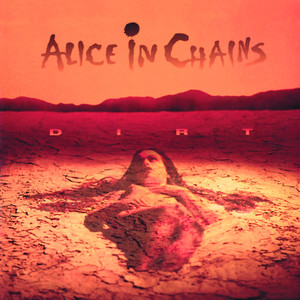
Did everyone at school ever show a short film about the consequences of drug use? I propose a more innovative solution: students should simply listen the segment of this album from "Junkhead" to "Angry Chair," with lyrics and a biography of Layne Staley printed. If they're smart, they won't even think about drugs again. Even though Alice in Chains is probably my least favorite of the grunge big four, this album is the quintessence of the genre. Slow, heavy, as if mired in the dirt, Jerry Cantrell's doom metal riffs overlaid with bluesy lyrics. The cover is also perfectly chosen: while listening, your consciousness seems to melt, hallucinating on your subcortex, as if you're in the middle of an endless desert. An extremely dark and, at times, depressingly oppressive album — and, surprisingly, equally beautiful.
The list of "1001 Albums..." was compiled by blessed people; otherwise, I can't explain the logic behind the fact that it doesn't include EPs or greatest hits collections, but does include live albums and, wait for it, soundtracks. And while the Earth, Wind & Fire album I came across earlier, while technically a soundtrack, is perfectly listenable without the film, this double album by Isaac Hayes is just a complement to the events unfolding onscreen. Not only is the album long, it's also almost entirely instrumental. Vocals are found on only three songs, one of which is Hayes's signature twenty-minute psycho-soul jam. It's all a bit of a challenge, and I generally don't understand how people listen to instrumental film music without the film itself (or why Hans Zimmer sells out his concerts). It's not bad as a background, but as a position for such a list, it's a complete failure.
If you believe the saying "you judge an album by its cover" is true, then Pet Shop Boys have gone above and beyond on their fifth full-length. It's not evident on streaming services, but the original CD (https://farm5.staticflickr.com/4241/34963398184_9564852deb_o.jpg) was released in an all-orange case with a rubberized top adorned with embossed letters and "Lego-like" bumps. And the first song here sets the tone for the next fifty minutes of good synth-fueled new wave. Alas, what we hear is monotonous gay-club electronica with a straight kick drum. While the duo's previous work sounded unusual and even luxurious, here the sound is extremely commercial and mainstream. It's unsurprising, albeit sad, that this album became Pet Shop Boys' best-selling and the only one to reach number one in the UK charts. No, maybe I'm missing something, and the album sounded mega-innovative for its time. In that case, let it stay there.
The worst thing for an artist is reaching a status where "your record starts working for you": you can do anything, journalists will approve, and the public will go wild. David Bowie also succumbed to this sin. While the first half of this album is short, somewhat understated, but still pleasant songs, typical of the glam-funk Bowie, the second half begins the "Experiments" section: oppressive ambient interspersed with throat singing in an invented language, sounding like the soundtrack not just to a film, but to a David Lynch film. As expected, Brian Eno "did a favor"; he'll still confuse many good artists with his gimmicks... And yet, years later, the album is considered practically the peak of Bowie's creativity! Basically, Low is Kid A for boomers. Both decent albums, but would anyone have praised them so much if the artists' names weren't on the covers? Of course not.
Over the first ten years of his career, Beck tried his hand at everything. He made albums in the styles of country, lo-fi folk, funk, and even chamber pop, but on Guero, he returned to what made him famous: a mixture of all of the above. And the album itself is decent, but somehow awkwardly disjointed. The upbeat opener, based on a sample from the Beastie Boys' "So What'cha Want," and the rhythmic toms of "Black Tambourine," are mixed with strange hip-hop about vegetable men in a vegetable van and country riffs played so poorly they could only have been done on purpose. It might seem like the artist simply doesn't know what he wants — the record is as resourceful as it is tedious and hokey. Another thing is that, most likely, this is exactly what Beck wanted when he decided to release one more album as if it were assembled piece by piece, among which there are both gems and trash.
Let's start with the fact that Joanna Newsom's discography isn't available on Spotify, as she considers the platform "cynical and musician-hating." And for once, I can envy those who use Spotify, since God has spared them from this pretentious bleating over a cacophonous medley of classical instruments. You think you can't ruin a harp and a harpsichord? You can! The artist talks, squeals, creaks, and chirps here, but it's hard to call it singing, and that's the first reason I want to turn the album off. The second is the length of the songs — there are only five, but each one averages ten minutes (it gets tough by the third). Joanna Newsom is that artsy classmate who tries to write poetry, yet is convinced that it should be interesting to everyone, and whose voice you can't shut up about out of politeness.
While punk rock had only just emerged in the mid-1970s, by the end of the decade it wasn't exactly dead, but artists had grown tired of its classic format and began trying to diversify the genre. Sometimes this was completely unnecessary, as was the case with The Only Ones. Their debut album follows a clear rule: if a song is built on a few quickly played chords, it's not bad; if it's layered with prog, jazz, oriental music, or psychedelia, it becomes overloaded, like an Art Deco column stuck in the middle of an IKEA-decorated apartment. But the weakest point here is the voice. It feels like the singer slept for an hour and a half before recording and was then dragged into the studio with a noose around his neck. Objectively, the album doesn't reach a three stars mark, but I'll push it up, because for some reason I'm sure (although I can't prove it) that without this album there wouldn't have been the wonderful band called The Libertines.
Once again, the album cover says a lot about itself. The sleeve features a barefoot Cyndi Lauper in a bright dress with an equally bright mullet, performing a strange dance against the backdrop of a closed, yet still bright, building. The music is an equally vibrant mix of genres: new-wave synthesizers, a synth-pop drum machine, and harsh, even punk-rock vocals. It's no surprise that these songs resonated with American teenagers of the time. Instead of the standard two or three singles, the album was supported by six, the last of which was probably just for kicks, like, "Let's see if this one will really take off." Once five singles from one album entered the top five of the Hot 100, there was no time for jokes — only Michael Jackson had previously managed that. I always knew this record had two big hits, but to my surprise, the rest of the songs weren't bad either. Eighties at their best!
"I'm sick to death of talking about how we've released 11 identical albums. In fact, we have released 12 completely identical albums." — said Angus Young. You can't argue with the maestro; all AC/DC music is about killer guitar solos and screeching vocals on one side, and schoolboy lyrics over a very standard rhythm section on the other. So why did this formula only started to work for the band on their sixth album? I don't understand. They say the change of producer helped here — I wouldn't say so; the next album, Back In Black, is much more different from the older albums. Perhaps people were simply in a time in the late '70s when they wanted relaxed yet energizing music. Nevertheless, the monotony hasn't gone away, and AC/DC's studio recordings quickly become boring. Their concerts and live albums are a different story! So if your soul is craving for some energy and fun, it’s better to turn on AC/DC Live – an album that, in its title itself, conveys the band’s clarity and straightforwardness.
Honestly, I wasn't feeling particularly energized the first time I listened to this album today, so I fell asleep during the first song... But there's nothing surprising or bad about that! The opener here really does sound like some kind of lullaby, only a strange one — something gothic, some psychedelic, some trip-hop, but definitely dark. This electronic-guitar medley continues, though not bad, like a GIF of a truck driving toward a pole: the anxiety builds, but catharsis never quite arrives... Until "Aisha," where a screaming Iggy Pop tries on the role of a serial killer. After that, the tension eases, though I'd slightly rearrange the song order and put "Aladdin's Story" last. If The Chemical Brothers had evil twins, they'd definitely be called Death in Vegas. Anyone who enjoys unconventional electronic music should pick this up.
What Kate Bush and this album in particular deserves respect for is the arrangements. The sound of some of the songs is truly remarkable, and to produce an album yourself, record it in the studio you built yourself, is truly impressive. But everything else... I think Hounds of Love appears on various "best of" lists more often than any other album. Can anyone explain why? It's certainly not because of the first side, which is almost entirely danceable new wave. So all the credit goes to the incredibly drawn-out, pseudo-philosophical second side, where ballads mingle with Irish motifs, and piano passages morph into industrial drum machine sounds? No, let the Pitchfork journalists listen to that. I was thinking of adding a third star for "Running Up That Hill," but even that one was better with Placebo.
The Flaming Lips are a very strange band, because the music they make was never meant to be mass-market. But by their tenth album, it had. Listening to it, you get the feeling you've been floating inside some starship for almost fifty minutes, looking down at Earth from outer space. That's probably how ambient music is supposed to work, but ambient lulls me to sleep, and here it's just the right amount for enjoyment. And the most incredible thing is that the foundation of this cosmic music is a completely ordinary, almost bardic acoustic guitar. It's responsible for the album's ringing sound, and the rest are just decorative add-ons: hip-hop beats and a touch of electronica. It's a good, meditative, and beautiful record, but to avoid it feeling boring, you need to listen to it in a certain, slightly dreamy mood.
80s rockers had a strange but common symptom of a midlife crisis: they began drawing inspiration for new songs from Africa. Paul Simon even went so far as to dig so deep that he actually went to South Africa to record with local artists, prompting a howl from the leftist morality police, because of apartheid. This howl continues to this day, this time on the topic of "cultural appropriation" (which, by the way, doesn't exist), which doesn't prevent the album from being quite positive and danceable. But what does Africa have to do with it? No, there are some of their folk music here, but it starts around the middle of the album and are expressed through bongos and folk chants. There's a much stronger influence of country, rockabilly, and classic rock 'n' roll here, and the African theme was explored long before this album's release by Talking Heads, and not long ago by Peter Gabriel. And they did a much better job.
Record label executives have now realized that confessional songs "by girls for girls" are highly monetizable, and Gracie Abrams and Olivia Rodrigo have become a cloying tide. Surprisingly, this wasn't always the case. Alanis Morissette made a deeply personal album, combining lyrics about friendship, betrayal, parental expectations, and the ability to find joy on an empty wallet with a mix of grunge, shoegaze, country, and drum machines, and no one wanted to release it. Madonna's recently founded label, Maverick, took a risk, and it paid off — many found a personal connection in these songs, and the album sold incredibly well. Yes, some might find Alanis's voice offensive, and perhaps the album is heavily overproduced (as was the fashion in the 90s, trying to cram too much into the sound), but it was with this album that the artists began to talk about life with their listeners. And, of course, with the female listeners.
The first time I was stunned, when instead of the languid riffs I've heard the acoustic strumming, mistaking the band for the Australian grungers Violent Soho. The second time was when I heard lyrics sung in a nasal voice, the author of which would now be called an incel. The third, and most powerfully, was when I saw the year the album was released. This is an incredibly visionary record. I don't think anyone before had thought of taking punk rock, a genre that's generally not the most overloaded, and stripping it bare of all its excess. What's left here is literally the skeleton — acoustic bass, acoustic guitar, and snare drum — and yet it all sounds much dirtier and more energetic than a distortion pedal. Five years later, Pixies were using the band's work, ten years later, Weezer, fifteen years later, Bloodhound Gang. And forty years later, I discovered the album, and such discoveries were worth following this list.
Elvis Costello isn't really Elvis (or Costello), which makes it all the more surprising that he had the audacity to adopt the King of Rock 'n' Roll's name while he was still alive. And after listening to this record, I can't say he did it undeservedly. Firstly, Costello is an excellent melodist; you start humming some of the songs after just one listen. Secondly, he has a superb backing band. Thirdly, the album simply sounds good; they mixed it expertly. Fourthly, even though Elvis has moved away from his earlier punk sound, some songs could still be mistaken for, say, The Clash. Fifthly, surprisingly, his voice is somewhat similar to Lenny Kravitz, who I personally enjoy listening to. All in all, I can recommend it! But the elephants on the cover are completely out of place and don't convey the mood of the album.
An album with a history that couldn't be further from the truth: before its demise, two co-founders left the band, and the third, vocalist Philip Oakey, decided to replace them with two schoolgirls. It all smelled like a fiasco, but the result was an album featuring the band's greatest hits and, arguably, electronic standards for the just beginning 1980s. While The Human League had previously produced music in the vein of Gary Numan, here they simplified it a bit, thereby "revitalizing" it. The synthesizers are still neon, the drum machines are still as combative, and everything still sounds like music from the future, but something makes it more human and dreamy, sometimes dark, sometimes romantic. The Vogue-style cover seems odd at first, but the more I look at it, the more I like it. And with the epic Don't You Want Me, surprisingly the last track on the album, the band has secured a permanent place in the electronic music pantheon.
Most albums try to be unified by a common theme or at least a similar sound, but not 10cc's second album. It's hard for me to even generalize here; everything is so different, both musically and lyrically. A seven-minute piano ballad sits alongside a bongo-driven song about voodoo, and a seemingly serious guitar attack on Wall Street traders is followed by self-indulgent jabs at the level of "we're the worst band in the world, we've never done a days work in our life". And yet, the melodies are complex, the rhythms are jagged, but it's hard to call it prog. However, it seems the band themselves wanted to craft their music in a more sophisticated way: the homophone of the album's title speaks for itself. It's a very overloaded album, but I didn't get any negative emotions from listening to it, so it gets a light three.
I caught myself listening to MGMT's debut album in its entirety for the first time. The impressions are mixed. A triptych of "Time to Pretend," "Electric Feel," and "Kids" — an absolutely bulletproof, neon-dance-infused collection of singles that any young band would envy. The problem is, these are the main strongest points of album. It's immediately obvious that the band is more drawn to 60s psychedelic rock, and MGMT aren't quite there: the result is either a strange, rhythmically tom-pounding primalism or downright boring acoustic hippie fare. The label also knew these songs weren't worth promoting the album with, and they didn't reach the masses. Instead, the band dug in their heels and made their next two albums in a similar style. The result is predictable. But the singles are fantastic! How could I give anything less than a four stars?
Much to my surprise, I've listened to Belle and Sebastian's entire discography, but I don't remember it at all. Moreover, judging by last.fm, I listened to them before their festival performance I attended back in 2018, which I also don't remember! Given these memory gaps, it's logical to assume the band wasn't particularly interesting to me. So, today I listened to their second album with a clean slate, and it was incredible. It's a virtually entirely acoustic record, the upbeat instrumentals of which almost always contrast with melancholic, sometimes even cynical, lyrics about ordinary people and their shortcomings. I suppose something similar would have happened if you mixed The Kinks and The Smiths — two seemingly different eras, but that's precisely why the album still sounds fresh. It's a bit introverted and won't appeal to everyone, but for me, it reinvented the band.
It feels like journalists lumped Girls Against Boys into indie rock simply because they didn't know where else to place them. There are no upbeat or even slightly cheerful melodies typical of the genre here; the music is completely dark and icy, a feeling heightened by the sudden addition of two bassists. The vocals are muted to the point where you can hear something being sung, but you can't quite make out what it is. The riffs blend into each other during the transitions between songs and quickly become tiresome; I understand that during the grunge era, artists decided to make their music even messier, but this is too much. It's not exactly a bad album; there have been worse ones, and a couple of songs even sparkle a little; but I'm sure it only made it into the book because one of the writers was an edgy "not an ordinary" schoolboy in the mid-nineties. If you want some high-quality, old-school post-hardcore, try Refused.
In the early 1990s, Johnny Cash, who was experiencing the decline of his career, was approached by Rick Rubin, the producer of many rap and rock artists of the era, to collaborate. Cash accepted, and the American series brought him back into the charts and into the public eye. The fourth album in this series was the artist's last, and, as with Bowie's Blackstar, it's palpable: Johnny understands that the breath of death is drawing nearer, and all the songs here feel like flipping through an old photo album from the vantage point of his years. Most of them are covers, some of Cash's old songs, others of other artists' works, but none of them are blindly re-played acoustically, but rather stripped of unnecessary bells and whistles for an elderly man and seasoned with his wisdom (this version of "Hurt" many still consider original). The artist left behind enough songs to fill five more albums, but no one will ever say his signature "Hello, I'm Johnny Cash" again.
Bob Dylan is an astonishing artist: all the covers of his songs I've heard seem better than the originals to me. Dylan's lyrics are paramount, with the music coming second. But firstly, even native speakers don't always understand the lyrics, and secondly, are we listening to music here? It's incredibly monotonous: a semi-acoustic verse, a chorus, a harmonica solo, and we repeat. Blonde on Blonde is considered Dylan's best album (the more devout consider it one of the best albums of all time). Why? How does it differ from his other works? Nothing, really, except that it's a double album. And I'd give it a three if it weren't for the last song, which features the artist reading his poem for eleven minutes and then fading out. Now let's wait for the ∞-minute AI version, where Dylan's nasal voice simply combines all the existing words.
Looking at the genres of Tim Buckley's second album, it seems to be in keeping with the canons of the late '60s: psychedelia, folk, and medieval-inspired minstrelsy; we've heard it all before, nothing new. However, there is a nuance. The main thing that sets Tim apart from the crowd of hippies of his era is his soaring voice. Here, it truly is a musical instrument, which the artist skillfully applies to jazz rhythms, pompous baroque, ballads, and acid melodies. Above all, this album is a pleasure to listen to thanks to the vocals. At times melancholy, but overall a positive record, Tim's look at us from the cover is equally positive. However, this positive outlook is slightly clouded when you learn that the artist separated from his wife a month before the birth of his son, who would also record a good album a couple of decades later... But we'll get to that next time.
I'm a simple person: when I listen to a song sometimes I read lyrics, but I don't get too caught up in them. Music is my priority, and since hip-hop is not about it, the most important thing in a genre for me is a pumping beat. On Missy Elliott's fourth and most popular album, it pumps. The rhythm is varied, with a strong old-school influence sometimes, all the guests are in their right places and don't make the tracks worse (even Beyoncé). Timbaland's (who was the main producer of the album) signature pulsating sound is also present here. Returning to the lyrical theme, the 2010s are still a long way off, and most female rap hasn't yet devolved into pornographic fan fiction, so there are only two more or less obscene songs here, the lyrics mostly about women's plight. Well, considering the realities of Virginia's black neighborhoods. It's a decent album, not boring, kinda listenable. Compared to modern efforts in the genre, it's actually excellent.
I understand that the authors of the "1001 Albums..." list included pieces that, to varying degrees, influenced music as a whole, but some of the entries baffle me. For example, this record. Why does the band have such a strange name? Because they don't need a proper name; they're a house band for Stax, they've backed many of their artists, Booker T. is their lead pianist, and M.G. is short for "Memphis Group." Can you imagine a record by The Late Show Band making it onto a list of the best albums? Neither can I. Although the album overall is decent, reasonably short, the organ and blues guitar duet works, and the title track has been used in so many different films and TV series that it automatically feels like a soundtrack. Did it need to be on the original list? Probably it did; it clearly inspired southern rock. Should it still be on there? The big question...
When Karin Dreijer, the driving force behind Fever Ray, released her debut album, I missed it. And when she released her second album eight years later and toured with it, her shocking image so repulsed me that I didn't really want to listen to the music anymore. Time to make amends. The very first song here will be familiar to many from the opening theme of the TV series "Vikings." Overall, the choice is logical — despite the album being primarily electronic, with elements of trip-hop, everything here sounds very ethnic, cold, and minimalistic; a northern feel, in fact. The deep, trance-inducing vocals, so heavily processed with various effects that it's sometimes hard to tell whether the singer is a woman, a man, a child, or some mythical creature, also add a touch of fairytale. Björk used to do something like this, and Aurora would later occasionally do something similar. Not a bad album, need to listen to it again on a foggy, chill morning.
Ali Farka Touré heard blues as a child, figured it sounded very similar to the music of his people, and decided to make that kind of music. He did it for fun, because in Mali, music is made by the lower castes, and he was from the upper castes, the farmers. So, during the first four songs of the album, I thought Ali simply couldn't play, because the guitar sounded like a Chinese toy — the kind some of you might have had as a child. It got a little better later on; these African motifs really do resemble blues, and it even works as background music, but it's all so repetitive. There are music lovers and music journalists who sometimes say things like, "Yeah, Led Zeppelin are great, of course, but they borrowed all their ideas from Jimmy Ankubo, a black musician who in 1875 attached a string to a stick and thus invented the blues." It's people like these who boosted this album's average rating to 94 out of 100. God be their judge.
Have the authors shoved a soundtrack into the best albums list again!? Okay, we'll forgive them this time, since the story is unusual. Prince was so elated by the albeit modest success of his previous album that he brought a script to Warner Music, confronting their bosses with the following fait accompli: "Either you get me a movie for which I'll write the music, or another label will help me do it." The film starring Prince was more or less made, but it turned out to be a passing one, which can't be said about the album! This is Prince's most pop-oriented record, but he sparkles here — from the hedonistic opening track, the music flows through rich, lustful funk (the "Parental Advisory" sign owes its existence to the lyrics of "Darling Nikki") and screeching synthesizers to the monumental ballad of the same name. Do you think an album can simultaneously contain classic of synth-pop and hair-metal? It can!
If you asked a random person, say, from the crowd at a concert, to name a funk song, what do you think they'd remember? Maybe Michael Jackson's "Smooth Criminal," maybe Daft Punk's "Get Lucky," or at the very least, something by Jamiroquai. But none of this would have happened without Sly Stone, who arguably invented the genre. Everything on this album sounds much harsher than that of the aforementioned artists — it's more a blend of black soul and white psychedelic rock, taking the best of both worlds: piercing vocals, rich bass, acidic keyboards, a wah pedal, and, most importantly, a wild, danceable energy. Sly himself worked in the same way, and despite the socially charged lyrics, there was no segregation within the band; both blacks and whites played there. I'd never listened to this album before, but on this warm day it hit the spot.
Beyoncé is the most overrated artist in history. I don't understand how, other than a successful marriage to a billionaire rapper, her popularity is due. Take this album, for example. What's the most important thing in pop music? For a song to stick in your head after listening, for you to hum it automatically. There's not a single song like that here. Not a single memorable line, not a single melody, no interesting arrangements, no strong vocals — nothing! The only noteworthy aspect of this album is its promotional campaign, or rather, the lack thereof; the album was released without prior announcement, plus a music video was shot for each song. They say this was a first, which is debatable. After the album's release, it was raved about by journalists everywhere, and Rolling Stone recently ranked it the sixteenth best album of the 21st century. Well, if Beyoncé was bringing me as much money as them, I'd put it there too — but as it is...
Frank Sinatra can be criticized for many things, but one thing he certainly did well was sense the industry's currents. It was the late 1960s, and in the US, blues, rock, and psychedelic music were taking popularity from jazz and swing, and then the "British Invasion" arrived. The artist knew he was at risk of being sidelined and decided it was time to look elsewhere — not to England, but to Brazil, the birthplace of bossa nova. The new album was bound to be a success: it featured a sound no less fashionable at the time, accompaniment by one of the genre's creators, Antônio Carlos Jobim, his songs translated into English, and several jazz standards. Everything was in keeping with Sinatra's style, although one senses that bossa nova is too calm for him: the artist sometimes has to rein in his voice. The perfect background for dinner, just like the last album I came across here by old Frank.
I certainly don't think Bono became less concerned about the fate of poor African children in the early 90s, but believe it or not, this is a U2 album without the political slogans. Yes, that happens! And that's not the only innovation; compared to the sound of their previous works, it's like we're hearing a completely different band here. I think fans who listened to this album for the first time felt the same way the average English fangirl of The 1975 heard the song "People." No blasphemy, it's just that U2 became danceable on this album for the first time, so much so that George Michael would envy it, without forgetting their post-punk roots: The Edge's riffs are still jagged and crumbling, the rhythms are still pumping, though Bono's voice gets a bit tiresome by the end. I generally like the country sound of previous Rattle and Hum, but it’s a good thing it failed in the charts, thereby forcing the band to reinvent themselves and release this album.
Overall, there's nothing to write about here. If anyone hasn't heard this album, they've definitely seen the iconic cover. Many consider The Dark Side of the Moon the best rock album ever made. Is there any reason for that? While Pink Floyd is considered legendary in prog, this album is far removed from the genre. The lyrics are incredibly straightforward, the performance is quite simple, even primitive in places, with the riff in "Money" standing out. All the components are simply placed in the right places, and this could have been a simply good album. If it weren't for the way it's mixed! It's no wonder audiophiles still use it to test their equipment — the sound is what makes this record so great. All the instruments sound vibrant, as do the fragments of phrases, the beating of a heart, the clink of coins, the wild laughter, the roar of an airplane... And the best rock album in history is too subjective a concept; it doesn't exist, just as there is no dark side of the Moon really (as a matter of fact it’s all dark).
The saddest thing about innovative ideas is that they remain innovative only for their time. And so it is with this album. Another collection of cover versions, typical of the '60s, yet unusual: Ray Charles took American country standards (white music) and rewrote them as rhythm and blues (black music), thereby greatly expanding his audience and showing other artists that this was actually possible. What does this mean to us now? Basically, nothing. What matters is that this is clearly not the album with which to get acquainted with Ray Charles's work. Not only did he seem to have deliberately chosen the most mournful love ballads, but his signature piano passages are also absent. Furthermore, the keyboards are completely lost against the waltz-like strings and choir; only the artist's voice remains. In short, Maestro Ray has gone down the wrong path, but it will do as a background music.
A legend of a generation: almost no one my age hasn't heard this album, and those who have are unlikely to ever forget it. This record made rappers embrace riffs and metalheads embrace hip-hop. A colossus of nu-metal, which is surprising, as it lacks the genre's usual swearing, downtuned guitars, and any showing off — it's a completely honest album. Three people create the magic here; the rest are craftsmen. The band's brains, Mike Shinoda, with his raps and Chester Bennington's unique voice, are understandable, but it wasn't until one of my recent listens that I realized Linkin Park would have remained a bland alternative act if not for DJ Joe Hahn's turntables and effects, which create half the atmosphere. If you remove one pillar from this trinity, the whole thing wouldn't crumble, of course, but it would lose its edge. Which, unfortunately, is what the current state of the group proves.
Liam Gallagher, Damon Albarn's sworn friend, called this record "music for twelve-year-olds." There's some truth to that — I'll never give this album a low rating, not least because it was the one my parents gave me for my ninth birthday, along with my first CD player. And how wonderful that it still sounds great to me now! Albarn, no matter how you look at it, is a genius and a visionary; what else could you call the man who, in the early 2000s, decided to create a hodgepodge of rock, hip-hop, reggae, trip-hop, and Latin music? And then he added to it an entire story about a virtual band, drawn by Jamie Hewlett, that those same nine- and twelve-year-olds absolutely latched onto. They still latched onto it perfectly today, and this Gorillaz-invented "storyline" band trope works just as well for modern bands (hello, Twenty One Pilots). Thanks to them for this!
If you need to explain Britpop to someone in simple terms, you don't need to. Just play this album, because Supergrass has captured everything the genre has to offer: both the good and the bad. At the beginning of the record, you think you've been sold some Blur substitute, but things get more complicated later. The band not only utilizes the hallmarks of the genre at the time, but also draws on their homeland's past achievements: there's punchy mod rock à la The Who, punk (more like pop punk), a touch of psychedelia, a touch of funk, and melodic Beatlesque. By the end, everything completely goes wild, turning into some kind of drunk, rollicking cabaret — much like the one on the cover. There's even a Wonderwall equivalent here. A hilarious, diverse album, but it still falls short of a four star mark.
I was surprised to discover that Bobby Womack's voice was familiar to me — that fashionable man in a lavender suit staring at us from the cover sings on one of Gorillaz's most popular songs, "Stylo." And he's on there because "The Poet" is Damon Albarn's favorite album. Bobby had a very uneven career: everything was fine in the early '70s, then there was a strange phase of experimenting with country music, three albums in a row that flopped, problems with drugs, and it's sheer luck that this record, released on an indie label about which you can barely find any information these days, became a hit. Why this is so is a mystery. The songs are good, well-played, some danceable funk, some romantic soul, enjoyable to listen to, but nothing special. He was never able to replicate this success again; perhaps it was just providence.
The Ramones' music is best described by guitarist Johnny: "We stripped away all the unnecessary parts and left only the essentials." That's right. After the release of this album, all the guitar solos, complex chord progressions, eight-minute songs, and abstruse lyrics that were so overused in the '70s were consigned to the closet. All that remained was a hurricane of energy and vocal melodies straight out of the '50s. Rock 'n' roll had returned to its true essence. At the time of its release, the album sold almost nothing; critics panned it, saying it was "noise, not music." Basically, it's like giving glasses to the monkeys, but when they realized they had to put them on and saw the light, they saw a wave washing away everything in its path. Thousands of guys (and girls!) with no musical education realized they could just pick up a guitar and rock for fun! Without the Ramones, there would be no punk rock, no thrash metal, no hardcore, no emo, no any modern guitar music. And life would be decidedly more boring!
As the wise man once said, "If you want to impress an alt-girl, tell her your favorite band is The Cure; if you want to impress a lofty alt-girl, tell her your favorite band is Echo & The Bunnymen." Their dark lyrics get even darker, their cold sound gets even colder. The band's manager also promoted the band strictly according to the rules of his occult ritual; the band was unaware of this, but spiritually, it couldn't help but weigh heavily on them. As for the album, it's classic '80s English post-punk, but with a frosty blizzard feel. It's not very impressive at first, but the album opens up on the second side: they haven't come up with anything new, but practically repeat the first, only done better. The bonus version includes the final track, "Never Stop," released as a single but not included on the main tracklist. Ironically, it's the most enjoyable song on the album.
Does the album cover remind you of anything? We've seen something similar somewhere... That's right, The Stooges' debut was also recorded at Elektra, the same label behind The Doors (pun intended), which was in dire need of fresh blood because Jim Morrison was starting to act up. The label hoped the newcomers would continue the band's psychedelic blues lineage; in a sense, that's what happened, but the management didn't take into account the band's wild concerts, where the noise reached an unbearable level, and vocalist Iggy (then) Stooge would dive off the stage, smear himself with peanut butter, and cut himself with glass. They managed to calm things down a bit in the studio, but no one else had ever produced a sound like that back then. While the blues motifs remained, they were augmented by fuzz guitars and primal drums. The band would later be dubbed proto-punks, which is debatable: there are no political manifestos, and the lyrics are at times banal and silly. I'd give it five stars if not for the drone-like ten-minute "We Will Fall." If you're making a song which takes a third of an album you're better be sure it's a good one.
Everyone knows that Lennon and McCartney were the Beatles' primary songwriting duo. George Harrison also wrote songs, but either the duo simply aggravated him, or they didn't want to share the credit — in short, only one, or at most two, of his songs made it onto each album. Eventually, George grew tired of this and stopped pitching his songs to the band, instead writing them for the drawer. And when, after the Beatles' breakup, it was time to open this drawer up, everyone gasped. As his first full-fledged solo effort, Harrison released a triple (yes!) album whose hit-making potential is astounding. All the melodies here are calm, sometimes a little sad, yet bright, sunny, and warming. The lyrics are pleasant monologues about friendship, God, and love, accompanied by the signature sound of slide guitar. Two hours fly by. One could, of course, deduct a point for the third, essentially bonus, disc, consisting of half an hour of instrumental jams... But why?
There are albums that many consider great, but you just don't understand them. This Love record is one of those for me. As often happens, it was a sales flop at the time and even led to the band's disbandment, but decades later, music lovers have remembered it and elevated it to cult status. I heard a late-'60s hippie sound here — yes, interesting orchestral arrangements, sometimes an unusual mix of Western folk rock and Eastern influences, a hint of flamenco, but seems like many people were making similar music better at the time. Although, off the top of my head, I can't think of anyone whose acoustics sounded so psychedelic. Good, but not brilliant.
Whatever one may say, at the very end of the 20th century, Britney Spears revolutionized teen pop music, which at the time relied on male and female dance groups, and returned it to the state of the '80s, when fans cared about a specific idol and listened to them through their eyes. The driving force here, naturally, is the track of the same name, which now a pop-industry staple, then failed glam-rocker and aspiring producer Max Martin accidentally came up with after a sleepless night. Surprisingly, there are also several upbeat hits with elements of funk and dancehall. And, of course, love ballads that resonate so deeply with young female fans. Yes, it's late-90s pop, where the song had more songwriters than you have coworkers in your coworking space, but if someone around sings "my loneliness is killing me," won't you yell back "AAAND I"? No? Swear to me! That's it. It's Britney, bitch!
In short, this is the best-selling album of classical Indian music, recorded by three local masters. Traditional Indian santoor and bansoori are mixed here with flute and slide guitar. In the mid-1960s, many Western rock musicians began experimenting with Eastern music, which eventually led to psychedelia. For the thus-warmed American and European public, this sound, on the one hand, was nothing new; on the other, only Indians could play their music so authentically. Word of mouth about the album was also helped by reviews from "advanced users": David Crosby, Bob Dylan, and, of course, George Harrison. Pleasant, contemplative melodies, equally suitable for work, for starting the day, or simply for gazing at the sunset. After listening to it once, I automatically turned it on again.
Queen are hit-making machines; there's no arguing about that; two official best-of compilations are proof of that. The paradox is that, compared to these compilations, listening to their albums in their entirety is quite difficult, especially with this second record. This is the band's most progressive-sounding, most art-rocking album; they've never reached such a level of pomposity, bordering on buffoonery, since. Not only are the songs long and multi-layered, with constantly shifting rhythms and fantasy lyrics about princes, queens, and ogres, but there are practically no pauses between them to catch your breath and take in what you've just heard. The foundations and sound of the much-loved Queen are already here, but it's a good thing they later turned down the epic faucet a little.
Fela Kuti, the creator of Afrobeat and a man of difficult circumstances, is just beginning his experiments on this record; the music here sounds more jazzy and funky and less authentic. This is unsurprising, as the album was recorded, firstly, in London, secondly, at Abbey Road Studios (its title is misleading; although it was recorded live, it was still a studio work), and thirdly, with the participation of one of the most masterful English drummers of the era, Ginger Baker of Cream. Baker had been obsessed with African music for several years by then (which makes sense, considering that it's 90% percussion), so he felt right at home here. Four lengthy jams, mixing everything at hand: Afro drums, organ, trumpet solo. It's thrown together on the fly, but weaves together very organically. A nice album for a Saturday morning!
"- I myself came to Paris with four crowns in my purse, and would have fought with anyone who dared to tell me I was not in a condition to purchase the Louvre. - I have eight crowns!" That's how it was in 2000s hip-hop: a good show-off is worth more than money. 50 Cent embodies the charismatic, daring vagabond, who flexed himself to such a level that Dr. Dre and Eminem signed on to produce his first album. And the producers perfectly conveyed the atmosphere of criminal America with a dark, oppressive sound. There are almost no samples, but there are interesting touches, like a beat made from the sounds of a shutter and gunshot, or Eminem rapping against a heart monitor. And most importantly, the record has stood the test of time; "In Da Club" still plays on radios, in cars, in those clubs, and as a phone ringtone. A rousing, hard-hitting, dynamic album that brought gangsta rap to the masses. Surprisingly, it also was the genre-killing one — may it rest in peace.
And here, in fact, is the album that first made gangsta rap wither! Got it back to back with Get Rich Or Die Tryin'. It was Kanye West who pushed stories about the plight of black villains out of fashion, giving way to calm and even instructive stories about family, religion, choosing one's path, and conscious consumption. This was superimposed on sped-up samples of old soul. The problem is that the album is overloaded with fillers. Instead of three skits mocking achiever syndrome, they could have used just one. The last song is a twelve-minute mash-up of the artist's career history and thank-you notes to friends; it feels like a cartoon added onto the rest of a VHS tape. Yes, the dude has been going downhill lately, but that's no reason to dismiss his older works. We're not — pun intended — westoids, are we? "- Kanye West?! You're my hero! - Do you like my music? - You're a musician?.."
I heard about this album for the first time today and initially thought it was a solo effort. That's not actually the case. Although the vocalist later adopted the pseudonym Grant-Lee, Grant Lee Buffalo is the band's name, and the name is interesting in that it captures the essence of their music. Ulysses S. Grant and Robert E. Lee were American generals on opposing sides during the Civil War, and buffalo is, of course, a local breed of bull. So, right from the start, everything hints at the music being imbued with the spirit of America. It's hard to explain, but it's true: the crisp acoustic twelve-string evokes classic country, yet everything sounds harsh, very close to the grunge that was fashionable at the time. The result is a very eclectic mix of Americana, blues, folk, and alternative rock, sometimes with a slightly eerie edge. A highly underrated record that simply came out at the wrong time.
In the late '70s, when punk rock was being actively made and listened to on both sides of the Atlantic, The Cars... Well, technically they were making punk rock, too, but an intellectual kind (intellectual punk rock, as we know, would later be called new wave). I'd describe their sound as "Roy Orbison playing The Clash." There's a huge mix of layers and genres: classic rock from the early '70s, '60s vocal harmonies, blues motifs, avant-garde electronics, and, of course, synthesizers that sound very cheerful yet unobtrusive. Plus, two lead vocalists — a classic move of the past, but forgotten by the time the album was released. The Cars would later realize that the possibilities of electronic keyboards were limitless, and guitars could be relegated to a more secluded place. So their remaining albums, while occasionally more hit-making, were rather banal and drowned in a sea of synth-pop. But the first one was magnificent.
I remember the first time I listened to this album, I didn't get it at all. It seemed long, somehow convoluted compared to Blur's other albums; for a long time, it was my least favorite album in the band's discography. Now I've listened to it again, and I'm thinking, "What a fool you are. This is Blur's best album!" It's not as experimental as their self-titled, although there are some flirtations with trendy American grunge. It's not as primly English as Parklife, although both the lyrics and the melodies still convey the band's adoration of their homeland, with all its flaws, in the style of the caustic mood of The Kinks. Blur seem to be already exploring the sound that would later make them famous, but very thoughtfully, without abandoning their old foundations. The word "Britpop" doesn't fully capture the mood of the record; it's more like a majestic, melodic, and silly punk-grunge. Albarn is a genius, guys!
De La Soul are known to the general public primarily for their verses on Gorillaz's "Feel Good Inc." Not so many can name another song by them. And that's a shame, because their first album is literally a textbook example of sampling. Three twenty-somethings took their parents' old records and chopped up everything they could: melodies by Otis Redding, Steely Dan, and The Turtles are mixed with TV-show jingles and French advertising slogans. They didn't bother clearing copyright, so the album wasn't available on streaming services until 2023. The result is positive and pumping hip-hop, quite provocative for the time — back then, it was common to rap about social injustice and gunfights, but here we have some funny stuff, friendly banter... In short, De La Soul is like the Weezer of rap. A great album!
I saw a video where the author rated 2000s bands on the Strokes scale. For example, The Hives are the Swedish The Strokes, The Rapture are the dance The Strokes, and so on. So, Kings of Leon are The Strokes from KFC. And that's literally the best description of the band: on their first album, they play just as raw, simple, and incredibly energetic, but with a hint of the Southern American sun. This is how Lynyrd Skynyrd or The Allman Brothers Band would have sounded if they had emerged in the 2000s. Also, it's important to remember that the band consists of four brothers who grew up in a strict preacher's family, and so as soon as they got their hands on alcohol, cigarettes, rock 'n' roll, and women, it immediately resulted in incredibly blatant lyrics. Any prudes, please pass. The band will then tour with U2, adopt their stadium sound, and make a ton of money, but that's still a long way off.
It turns out that besides the chubby Khalid, who performs contemporary American R&B, and the plump DJ Khaled, to whom, for some unknown reason, the entire US rap elite flocks to bow, there's another Khaled. Also new to him? And yet, the guy has sold nearly eighty million records in his forty-year career! He sings in a style called "rai." The internet describes it as a blend of Arabic, Spanish, and African traditional music, but I still haven't figured out how this differs fundamentally from other songs you typically hear in European taxis. The album occasionally features some interesting forays into reggae and funk, but overall, it's typical 90s pop, just from the Eastern world. A light 2, overall. No, the authors of this list are certainly great for not focusing solely on Anglo-Saxon music, but it's immediately obvious they didn't go on holiday to Antalya in the early to mid-2000s.
The album cover should set the tone and give a hint of what we're about to hear. Everything here clearly hints at epic, disturbing melodies with pointed social commentary. Right? Not so. The result is an hour-long cacophony of samples, where every track sounds identical, like background music at an amusement park. As for the rap, Public Enemy has two people in charge: Chuck D and Flavor Flav. The former raps like a sportscaster with a pillow over his face, while the latter's purpose is unclear — he only occasionally repeats a few words and shouts his signature "Yeah, boyeee!". It feels like you're listening to a Pinky and the Brain album. As for the lyrics, the messages about the might of the black race that seemed so powerful in the '80s and '90s now read like typical nagging comments on Twitter. Weak!
The Smiths' final album, considered by many to be their best, saw guitarist Johnny Marr leave the band just a couple of months before its release. The remaining members decided not to kick a dead cat, and the band peacefully disbanded. And that's a good thing, because in my opinion, there's very little left of The Smiths here. The musicians fell for the journalists' accusations of monotony, and instead threw in a bunch of new stuff. There's not much of Marr's signature guitar here, but there's a saxophone, strings, and even a drum machine (even though the band's drums had always sounded rather artificial). The songs are good, but they sound like a different band, except for Morrissey's melancholy lyrics and his voice, which are reminiscent of what's happening now. However, the album doesn't drag on; it's genuinely varied, and most importantly, the band knew when to call it a day.
History knows of several cases where an artist's death, above all else, makes their final work a cult classic. This second and final Joy Division album is one of them. Objectively, it's truly more cohesive than the debut, with more interesting sonic and production innovations. Subjectively, it's incredibly difficult to listen to; it's not just mournful, but Ian Curtis's oppressive, cold voice, from beginning to end, speaks of the impenetrable darkness of the universe, moral decay, and death. Not only do the vocals sound eerie, but they're made even more mystical, buried deep in the mix, and the mechanical, albeit powerful, bass lines and guitar, which in the first song could easily be mistaken for a chainsaw, are brought to the forefront. Some see decadent beauty in Closer, but after listening to it I had the feeling of "Death is vile from post-punk, coffin, coffin, cemetery..." and so on down the list.
Aretha Franklin is now rightfully considered, and will forever remain, the queen of soul music, but to achieve this status, she had to release eight mediocre albums and go into massive debt to break into radio play with her ninth album. With ninth! I probably would have given up and gone to work in a factory by the third. "Yes, there were people in our time..." The album truly deserves every praise; everything comes together in just the right proportions: several well-known hits by other artists, a few new ones, an excellent backing band, and, of course, Aretha's powerful voice. Yes, it's a bit monotonous, but the album is short and doesn't get boring. If soul music isn't your thing, like me, give this album a listen — it's truly impressive. Well, if you like soul music, then it’s unclear why you’re still reading this, because this is your go-to record!
Fast guitar riffs and razor-sharp solos? Check! A multi-octave vocalist? Check! Drum solos? Check too! There are even epic organ parts. "Classic hairy rock clichés," some might say, but the fact is that this album was one of the reasons for those clichés. Before this, Deep Purple had been making all sorts of art-psychedelia and even veered toward orchestral sounds, but then Ritchie Blackmore heard Led Zeppelin and said, "That's how we should play!" In the end, Deep Purple picked up a few interesting tricks from their colleagues, hired a new vocalist and bassist, and delivered classic 70s rock — seven epic songs that are perfectly enjoyable to headbang to. True, the album isn't mixed very well, and none of the numerous reissues have improved its sound much, but that's not so important, since for me personally, this music already works on a reflex level.
Everything but the Girl has quite an interesting history: formed in the early '80s, they spent fifteen years making soft pop music with jazz elements (like Sting or Seal). One of these themes was remixed by Todd Terry for a house remix, which became more popular than any of their songs before. It's no surprise that the duo decided to rethink their approach to writing music. It's not as if they've forced it: the vocalist's voice still sounds soft and slightly melancholy, like something out of a James Bond film soundtrack, but now it's set to a blend of bossa nova, trip-hop, and techno. While the music of trip-hop masters Portishead might make you want to look out the window at a rainy street, here you get the feeling of a taxi ride through a night-time metropolis. A decent record that's suitable for listening to both in a crowded nightclub and in the privacy of a small apartment.
What should you do if your band has recorded two albums, both of which sold poorly? Should you change something about the sound? Maybe the production? Or give up music altogether? Of course not, you need to record a live album immediately, then things will really take off. This approach worked in the 70s! I've encountered a similar case with Peter Frampton, but this is a bit different, since the Allman brothers always viewed their studio recordings as polished versions of their songs, which truly blossomed in concert. And here it must be said that blues is generally an acquired taste, but even not all blues lovers can appreciate the technically powerful, yet extremely lengthy instrumental jams that the band (obviously heavily stoned) stretched out for dozens of minutes live. But if you enjoy that kind of thing, this album is for you!
Some argue that this album is the weakest of the Jimi Hendrix band's works, at least during his lifetime. They say it was recorded only because of the onerous terms of the contract, which required the artists to release two records a year. Guys, weak works by musicians like these are simply impossible. Jimi Hendrix is one of (if not the) greatest guitarists of the 20th century. What he performed with the instrument throughout his short but illustrious career, both in general and specifically here, defies description. The backward solo, the wah-wah sound when playing muted strings, the sound shifting between channels... None of this, of course, would have worked without the rhythm support of bassist Noel Redding and drummer Mitch Mitchell, who was probably so overcome during the recording of If 6 Was 9 that he delivered one of the most brutal drum solos in history. Classic psychedelia with a funk twist!
I honestly don't quite know how to rate this album, because they're essentially two different albums mashed into one. Outkast is basically a rap duo of Big Boi (who's responsible for the first disc, Southern hip-hop with a very strong blend of funk and soul) and André 3000 (who made the second disc, the genre of which is very difficult to describe – it's some kind of psychedelic soul-jazz-rap). It would have been logical if they'd each released a single album and been like that, but the label said, "Nah, either the public will buy a double Outkast album or they won't buy anything." The result is a black-and-white mash-up lasting almost two and a half hours. Are these good albums? They're okay; the first half sounds lively and rich. André overdid it in places on the second, but there are far more interesting discoveries, plus the band's main hit. But two hours was too much, it had to be cut.
Polly Jean Harvey is a very controversial artist. First of all, I don't know a single person who has a negative attitude toward her music — either people call her "Legend" or they simply don't understand her work. As I've already said at SFTSx2 review, I'm one of the latter. I liked PJ's debut album much more than the 2000 album — it's much rawer, a little wild in some ways, but not aggressive. It all sounds rather grungey (and of course, it was hard to do otherwise in the 90s), but it's also melodic. True, the second half sags in places — the cello appears prominently there, making the songs seem sharply played on out-of-tune instruments. And yet, the record constantly feels like something's missing! It's exactly the same situation as with the artist herself — I can't say anything bad about her, but I feel like she's just a little bit missing for the album to be truly outstanding. But I don't understand what's missing.
Despite the cover, which looks incredibly hilarious for our time, featuring singer and actor Marty Robbins, resembling a young Nicolas Cage, in a Pedobear pose, this turned out to be a very good album! Classic ballads of old American cowboydom, sung in a pleasant voice over an acoustic guitar. Among the plots are "I was looking for a better fate, but a bandit shot me," "They started a showdown over a woman," and "I forgive everything, but need to finish you" Rappers were telling similar stories for modern Americans fifteen years ago. And while listening to this record, since the music here isn't the most diverse, it turned out to be really important to listen to the lyrics and read them. More than once during those half-hours, I caught myself thinking that I have some other things to do, but I was so curious about how each story would end.
Before this, I'd only listened to Fiona Apple's latest album, which I didn't particularly like — it was rather overwrought art-pop, plus her voice is an acquired taste. So, I wasn't expecting much from her debut. But it turned out to be a decent jazz-pop album, perfect for starting the morning. The piano arrangements are slightly complex, yet pleasantly listenable, and the vocals are emotional, sometimes reminiscent of those of her 90s female alternative counterparts, like Courtney Love or PJ Harvey. And considering Fiona was only eighteen when the album was released, the record scores even more points. I'm unlikely to re-listen to Tidal, but if you need a beautiful audio background for breakfast or work, this is a wonderful option.
The wildest thing for me about Alex Harvey's sensational band is that it took off when he was almost forty, and the other members were fifteen years younger. The main thing, guys, is to stay young at heart! As for the album — well, it's glam rock, glam rock. With a few cabaret elements and the bright costumes and clown makeup used in concert, but overall, nothing fancy. Alex's voice isn't very pleasant, but this is compensated for by the overall upbeat nature of the songs. I especially liked the way the keyboards sound, as if a young Elton John had been placed at the piano. I suggest you ignore the lyrics; almost all of them are typical of the genre — "Going to a woman's for a gangbang" and all that. The groundwork for the hairy glam metal of the '80s was already being laid here. I also suspect that this band heavily inspired AC/DC and, specifically, Bon Scott.
If you read the short biography of Dennis Wilson, drummer and one of the founding brothers of The Beach Boys, who eventually abandoned him for a drum machine, a jokester who drank and snorted absolutely everything, and a friend of Charles Manson, it's hard to believe he recorded such an album. It's a calm, melancholy record that seems to drift along (Dennis, surprisingly, was the only one in the band who actually surfed). There are some Pink Floyd-esque experiments, Phil Collins-like drums, and vocal harmonies, all of which culminate in emotionally relieving music from a tired man. An extended version of 33 tracks is available for streaming, most of which are demos from the unreleased second album. Listening to them isn't essential, but it's worth checking out the last song, featuring vocals by Taylor Hawkins, a man with a very similar fate.
I'm generally a big fan of all sorts of American country folk, but I just didn't get this album. It probably worked well given the context of the time — three vocalists from three big 60s bands teaming up to form a new band? Well, I'd give it a shot! However, the album ultimately felt very boring. That said, it's not bad, with pleasant acoustic strumming, an almost Beatlesque three-part harmonica. It's a normal, laid-back acoustic folk album from the hippie era. Alright, but boring. For me, David Crosby's solo album was much more interesting. Although, those who miss Woodstock 69 vibes should enjoy this album; however, such people have probably known it by heart for decades.
Lets call a spade a spade — this is the most Black album. Dr. Dre is a very good producer, having launched the careers of Eminem, 50 Cent, Snoop Dogg, and many other artists. He's a good rapper, too, but the thing is, while 50 Cent's debut album was a hit with every white kid on the planet, Dre's debut album would only be relatable to a white kid living in the US. The album starts off pretty well, feeling like you're leisurely driving through Vice City in a lowrider, listening to G-funk, but the genre's traditional insults to enemies in the scene (in this case, former N.W.A. bandmates and the label) quickly become tiresome. And then there are the lyrics: "A digga rode through a digga, a digga sees a digga in a digga." (you know which exact word I'm talking about) Overall, I didn't like it, but I'll give an extra star for the young Snoop, who really helps on this record.
When I saw this album drop, I thought, "Finally! Four minutes and thirty-three seconds of silence!" But no, this composition was written by John Cage, and John Cale is the keyboardist for The Velvet Underground, whose abstract ideas even Lou Reed was stunned by, and, in fact, he parted ways with him due to "creative incompatibility." So, a solo album by such an artist should have something mind-boggling? And again, no, it's orchestral baroque pop. All the genre's hallmarks are there — references to Scottish poets, abundant use of strings, and a general airiness and pomposity. A record for wandering around a European palace, basically. How should I rate it? Well, overall, it's a decent album; I didn't feel like turning it off; but if it had been fifteen minutes longer, maybe I would have.
If Blonde on Blonde is considered Bob Dylan's most important album, then this is his most significant comeback album. In the '80s, the artist vacillated between genres, and from the early '90s onward, he didn't record a single original song, contenting himself with covers. And the album is actually quite good, if you enjoy classic American blues. The genre's familiar melancholic lyrics about fate and women are spot on, along with the overall foggy, overcast atmosphere. Dylan's aged voice, surprisingly, isn't all that bad, and its raspy sound is even suitable for the genre. The album also features the artist's traditional ending: sixteen minutes of the lyricist trying to fend off the advances of a waitress who asks him to draw her portrait. There was probably more to the lyrics, but I didn't remember it because the song quickly faded into background music. Just like the entire record, by the way.
For a long time, I couldn't figure out what was on the album cover. Some kind of barrier, with either a cloud or hay flying above it... Considering I was listening to the music on an iPod, where the covers were quite small, it didn't make it any clearer. Only later did I realize it was a Hungarian Komondor dog, and once you see that, you can't unsee it. It's the same with music: you can go a long time without getting Beck, not understanding this chaos of country, hip-hop, electronica, folk, psychedelia, and everything else, how he made this music, why he made it... But then something clicks in your head, and you realize — wow! A unique kaleidoscope album, where everything is simultaneously pieced together from a variety of pieces and yet organized. Embracing the immensity and cramming in the uncrowded, so to speak. A good album, just shy of a four star mark.
I've already come across a David Bowie's Low, produced by Brian Eno, and the album's structure was as follows: the first half is the artist's usual glam rock, the second half is experimental ambient. On his album, released a little later that year, Eno didn't fix what wasn't broken. Side one is soft rock with elements of funk and glam (logical, considering Brian was one of the founders of Roxy Music), while Side two is melodies for watching the Windows boot screen. Judging by the title, before science there were guitars, and after science came ambient. What science itself is, then, is unclear. An average album. The second half, surprisingly, didn't put me to sleep, so I can't give it anything lower than a three; I wouldn't give it a higher grade either, since the first half is completely lackluster. These songs should have been given to Bowie too, he probably would have perfected them.
This is pure Irish spirit. While listening to it, I had a strong urge to go to a pub on a Saturday night, get drunk on Guinness, and punch someone in the face. I think everyone knows what Irish folk punk sounds like — that's exactly what this album sounds like. Occasionally, there are small hints of Eastern or Spanish influences, but they quickly fade away. I'll give special mention to vocalist Shane MacGowan — he was a real gem, the guy looked like a pure proletarian (his teeth were absolutely dazzling) and wrote incredibly proletarian lyrics, which won him over despite his almost complete inability to sing. This vocal style would later be borrowed by Rancid and Social Distortion. And getting kicked out of an Irish (!) band for drunkenness (!!) — that's something special. A hilarious folk album, which later spawned Dropkick Murphys, Flogging Molly, and all their friends.
Frankly, Motown alumni and their work are starting to get tiresome. Soul, soul, and more soul. Northern, Southern, Detroit, New Orleans... Basically, that's the studio's bread and butter, the problem is that it all sounds the same to me. Even the songs on different albums can be the same — the band takes a standard and reworks it in its own way, and does this several times. This album by The Temptations attempted to stand out from the crowd a bit — for example, the first side is clearly inspired by Sly & The Family Stone, and the band ventures into psychedelic funk territory (just look at the long "Run Away Child, Running Wild"). However, while they wanted to attract new fans, they were afraid to alienate the old ones, so the second side... Yeah, it's the same old three-minute soul songs, a sure bet. In short, it's a three stars for the effort, but a light one.
Once upon a time, Recording Industry Association of America stopped at gold status — no one could have imagined an album could sell more than 500,000 copies. Then this record comes out, goes platinum for the first time (for one million copies sold), and for a while even sets a sales record at eight million. How so? The first side is decent, but rather derivative (The Doors' debut album has been out for a year now) psychedelic rock with saccharine hippie lyrics. But the second side is where the magic begins: one seventeen-minute song, the reason people bought the album, and it was worth it. An eerie organ intro, a guitar riff often considered one of the first in metal, a mesmerizing drum solo... And they recorded the track in one take — and it was an instant success! Yes, a one-song band, but what if the song takes up half the album?
When I started this challenge I found out that list of 1001 albums is often criticized, among other things, for its lack of hip-hop. Apparently, I'll have to retract that, since I've been seeing it almost exclusively lately. Here's another legendary album, the debut and only lifetime one by the Notorious B.I.G., a major figure in the genre in every sense of the word. Why this album has become legendary is something I personally don't quite understand. Obviously, as often happens, the artist's sudden death played a role, but otherwise, it's a typical rap album of the era, depicting the traditional path of a black gangster: from the cradle to the streets, picking pockets of goofs, dealing opiates, and conquering the big stage. Yes, it's done with respect for the roots, with lots of interesting samples, but the album starts to falter towards the end; it could have been shortened by a third. However, I had no desire to turn it off. Give it a three stars and move on.
If Portishead's first album could be described as a James Bond soundtrack, then the third (and, frankly, likely the last) is more in the vein of a John Carpenter film. Only Beth Gibbons' vocals evoke the melancholic, soothing past; the rest of the album doesn't let you relax — it frequently breaks the rhythm, sounds like mechanical krautrock, and is simply frightening. Considering that Third was released eleven years after the previous album, fans were expecting something more familiar and were disappointed. But here's the paradox: listening to it, you feel as if the creators of trip-hop are killing their creation, only to have it reborn right here, before your eyes. A struggle of opposites, simultaneously rough and soft, simple and profound. A very, very strong four stars.
In a review of this album, NME, which was truly the leading British music magazine at the time, not a collection of gossip columns, wrote that the first five songs there pound all other guitar albums of 1997 — bar Radiohead's 'OK Computer' — into the ground. I would have laughed at that once. The Verve? What do you mean? They're a one-song band, and they didn't really write that one. Surprisingly, the journalist was right. Urban Hymns turned out to be an album that took the best of Britpop and thereby put a bold end to the genre. The epicness of Oasis, the looseness of Blur, the sensuality of Travis, the airiness of Lush, and even the psychedelia of Kula Shaker — all are here at their finest. The top five are truly bulletproof, and there are also the incredible, albeit very different, Weeping Willow and Lucky Man. An excellent album, and while not as successful as its peers, it's arguably the best in the genre.
Imagine this: 2005 or so. You come home from school and, while your parents are at work and haven't yet had time to force you to do your homework, decide to play some futuristic racing game, like Wipeout or F-Zero, depending on your console. You turn on the console, launch the game, but before you can even press "Start" to access the menu, your body, eager to remind you that you ate a ton of hot and spicy Buldak noodles the day before, abruptly forces you to the bathroom for about forty minutes. And the whole time you're sitting there, like the thinker's sculpture, the background music from main game screen plays from the TV. That's roughly what this album sounds like. I'm sure it was a hit with the English clubbers of the early 90s, who had already consumed a tab, but why anyone would listen to it now is completely unclear, since in our time and in the clear mind, it's perceived as a collection of funny sounds and noises accompanied by a straight bass drum.
You can argue all you want about jazz being incredibly wise, but for me, it's mostly just a few musicians inventing their own completely different parts and then playing them simultaneously. This double album has only four tracks, each nearly twenty minutes long, taking up one side of the record. Within the first five minutes of the first track, the album could easily have been a one star — I haven't heard such cacophony in a long time, but fortunately for the band, it gets a little better. The second one is simply unremarkable jazz-rock, the third is a bit simpler and slightly reminiscent of the band's psychedelic roots, and the flowing saxophone on the fourth is actually enjoyable, despite the long ambient intro. This album, like the entire genre, is for a very dedicated audience, but putting this nightmare as the first track was a crime.
Another case where the cover can tell a lot about the album right off the bat. The story takes place in a vinyl store. DJ Shadow (not Sonic's friend) really did need a lot of vinyl to create the album — considering the lack of vocals, it was the first record ever composed entirely of samples plucked from jazz, funk, hip-hop, and a few films. And the blurry state of the photograph is clearly meant to symbolize the listener's vision, because I almost fell asleep while playing this album. It's an incredibly monotonous, repetitive mid-tempo affair, though it does occasionally reveal interesting melodies. However, that's very rare, given the album's hour-long length. Perhaps the lack of vocals is actually a plus here, in that the record could serve as a good background for work. But nothing more.
After releasing three albums, James Murphy disbanded his band, only to reform it four years later and release this comeback album two years later. Now, say, a Korean band can announce a comeback every six months, but back then, the band was heavily criticized for the short time it took to reunite, the lazy cover art for the new album, and, ultimately, the album itself. Unpopular opinion: this is LCD Soundsystem's most interesting work and the one worth starting with when getting to know their music. They haven't invented anything new here; on the contrary, Murphy has completely abandoned his shyness toward his influences, and the album is replete with echoes of Bowie, U2, and, most importantly, Talking Heads. The record is imbued with the spirit of the '80s, new wave, and the nascent alternative rock scene, and I don't see anything wrong with that. A dance soundtrack for a little reflection.
I'd never really listened to My Bloody Valentine's music before, but I'd heard a lot about them — like, they were the fathers of shoegaze, their guitars were incredibly loud, and at concerts they played so loud that some listeners felt physically sick. Given this, I was expecting something closer to experimental industrial, like HEALTH, but what I got was quite calm, even relaxing at times. Yes, it sounds like the guys decided to turn on every effect pedal at once, but it doesn't turn into a cacophony. I couldn't tell if it was a man or a woman singing, but the voice was quite soothing, even though it was drowned out by the guitars, making the words inaudible. But I don't understand the band's cult status; a lot of people played such music in the 90s, and the album itself feels like it belongs to that era. And the band members don't hide it — even though it was released twenty years after the last album, all the work was already in place back then.
Honestly, I don't understand why, when the latest reissue of "1001 albums..." needed to add some hipster favorites from the early 2010s, the creators decided to go with Hot Chip. Not Two Door Cinema Club, not Metronomy, or Vampire Weekend, but Hot Chip. And not their most obvious album, either! I mean, the album isn't bad, but the band had been together for ten years by then, and the youthful exuberance and energy that were fully present at the beginning... Well, it didn't evaporate, but it gave way to calmer and more mature, albeit still danceable, songs about love and long-term relationships. Which, again, is not a bad thing. Rüfüs Du Sol will soon be doing something similar — romantic electronic music that's just as good for one-on-one time as it is for a club dance floor. It's an okay record, but nothing special.
While Speakerboxxx/The Love Below found the Outkast members separating into their own sound, Stankonia exemplifies how the duo could work brilliantly together. Andre 3000's meowing, clearly soul-inspired vocals blend beautifully with Big Boi's blistering, sometimes slightly angry, rapping. According to the artists, they didn't listen to rap at all while recording the album, and it shows — if you stripped away the lyrics, the instrumentals sounded like rave electronics, funk, or old rock, but certainly not like the slow, languid beats of late-90s hip-hop. I'd even say that in some places, the songs could be mistaken for Cypress Hill or Rage Against the Machine (not surprising, considering B-Real raps on one track, and another was remixed by Zack de la Rocha). A very juicy and cheerful album, despite the serious topics it often raises, which, however, are sometimes relieved by humorous skits.
What Miles Davis certainly knew how to do was never rust. He invented cool jazz, and twenty years later, he's once again at the forefront of a new subgenre, this time jazz fusion. Many would later adopt this style of twenty-minute improvisations, but the music here is completely uncluttered and leaves a surprisingly ambivalent impression — it feels like background music, yet it's also engaging to listen to. Perhaps this interest for me stemmed from the fact that this record is quite far removed from classic jazz: yes, the constant brass solos are there, but some rhythmic patterns are still discernible; on the second song, something reminiscent of a riff from the psychedelic rock of the time even appears. And these long compositions were stitched together from several separately recorded pieces, which by jazz standards at the time was considered the ultimate taboo. A relaxed, but still complex, album, a distant ancestor of ambient.
As the saying goes, "You can't teach an old dog new tricks". And so, on Public Enemy's latest album, Chuck D and Flavor Flav spend a solid hour complaining about the heavy fate of blacks. Unlike their next album, things become less monotonous toward the middle of the second side; the samples are more interestingly chosen, and at one point, even fragments of Slayer's "Angel of Death" are heard. Overall, this album can be used if you want to get drunk, and on different levels: - Easy: drink while you hear "BASS"; - Medium: drink while you hear "TERMINATOR X"; - Hard: drink while you hear "YEAH, BOYEEE!"; - Unreal: drink while that nasty sample plays, sounding like either a mouse or a whistling kettle. "Our main goal was to make an album that would stand the test of time," Chuck D said. Dude, you failed.
If In Rock was a good Deep Purple album, then Machine Head is their greatest album and one of the best in hard rock. And after the breakthrough album two years ago, they didn't even need to invent anything new! Just five professionals who knew their stuff and continued to play an incredible blend of old blues and new (at the time) hard 'n' heavy. Every song here is amazing in that it's a pleasure to listen to both as a whole and just to listen to individual parts. I don't know what the original releases sounded like, but the remaster you can find on streaming services is very good. Yes, the riff in "Smoke on the Water" might make guitar stores workers' ears bleed, but pay attention to Jon Lord's organ part; it really carries the whole song! Ladies, take note: if a guy says he doesn't like this album, he might have issues with his father. No offense, guys, just the facts.
If this album had come out today, most of music lovers would have unanimously declared it AI-music and treated it accordingly (i.e., as trash). But since it came out fifty years ago, it instantly became a cultural phenomenon for so-called "advanced users," the kind of thing you'd give it a 10/10, and if you disagree, light a cigarette like the Joker at the end of the film and say, "You wouldn't get it." There's nothing to get here; it's just forty minutes of Brian Eno messing around with synthesizer settings. Robert Fripp and Phil Collins occasionally join in on their instruments, and then Eno starts singing in a mournful voice. Basically, it's a friendly get-together. Only a seasoned, mature, and incredibly relaxed old man could enjoy this record. Young people have nothing to gain here.
Can are the finest creations of the German krautrock school, contrasting it with English prog and American jazz, and this record shows it. The music here was made according to the principle of "writing absolutely everything in the studio, then chopping it up and looping it endlessly," and these long songs with a repetitive rhythm, more powerful than any psychedelic, allow you to soar without any substances. German electronic musicians would later repeat this approach in the form of techno, and here you can also hear grunge, noise, and industrial... In short, genres whose emergence was still a couple of decades away. But there's also an "Experiments" section. The experience of side three is comparable to sitting in a dark, damp basement haunted by ghosts for seventeen minutes, and the next song has no structure at all. So either you like this album, or by the end you'll turn into its cover — your brain will boil and you'll puke.
"Lazy genius" — that's Shuggie Otis. At twelve, he first hit the R&B charts; at fifteen, he was tipped to be the next Jimi Hendrix; at nineteen (!), he turned down (!!) The Rolling Stones' offer of a guitarist; at twenty, he released this album. And the album is good! It's a calm, pleasant funk, a precursor to acid funk, very similar to the music now being made by Jamiroquai and (at a slightly faster tempo) Parcels. Towards the end, this funk actually takes on a trip-hop feel. However, the album flopped, the label terminated its contract with the artist, and Shuggie looked on it and thought, "I'm fine as it is!" And for many years, he worked as a session musician. He only released his next album in 2018. In 2001, David Byrne's label reissued Inspiration Information, adding four tracks from the previous album. This version is now available for streaming.
When David Crosby, Stephen Stills, and Graham Nash decided to form a supergroup, they named it after their last names so that if one member left the band, the band would no longer exist. It all seemed logical. Only the musicians didn't consider that another member might join the group, which would require a new name. As you can see on the cover, two more session members are listed there — a drummer and a bassist — but adding them to the band name would have been too much. While I found the debut album by Crosby, Stills & Nash quite boring, this album is a bit better: traditional acoustic folk is diluted with an electric blues sound. You'd think Neil Young had something to do with it, but no, he's the one whining, true to his work of the same era. The album is considered an immortal classic in the US, but I again found nothing special in it.
The Rolling Stones have one, but a very big problem: they're not an album-oriented band at all. It's no secret that the Stones have always been The Beatles' main rivals, but if you compare any two studio albums by these bands, there's no arguing: The Beatles win 100% of the time. But if you compare their greatest hits collections, the Stones will definitely beat the Beatles (now THAT'S the pun). The same goes for this album — it's a good blues collection; Mick Jagger's signature voice, the intertwining slide guitars. It would have remained a decent three stars worthy album if not for the excellent closing track and the great, incredible, band's best song, and one of the best songs ever, which gives me goosebumps every time and which I would listen to if I were to witness the end of the world — the opening track, "Gimme Shelter." I really wanted to give it a fifth star, but I won't fool myself.
In humorous glam punk, it's crucial to maintain a delicate balance — not making songs that are too bleak, like Royal Republic, but also not descending into obscene clowning, like Steel Panther. And Turbonegro nailed it. Their dense punk sound is reminiscent of a mix of Ramones riffs, Mötley Crüe hooks, and the overall rowdy atmosphere of The Stooges, complete with lyrics that border on the offensive. The band's image is completed by its members, who look like they've stepped out of Tom of Finland's drawings, in defiance of the imagery of their famous black metal fellow countrymen. Listening to this album might make you want to put on a denim jacket and jump on a skateboard. The streaming version of the album includes an extra track — a cover of David Bowie's "Suffragette City." To further cement the band's sound in your mind, I'll add that it sounds right at home on the album.
What do you picture when you hear the word "funk"? I imagine sunny dance music based on interesting basslines with loose guitars in the background. Well, on Maggot Brain, one of the genre's defining albums, there's almost none of that. Or rather, there is, but not to the extent you'd expect. It begins with what you'd least expect from funk — a ten-minute bluesy guitar solo. After that, the music becomes more like funk in the traditional sense, but that funk is dark, brooding, and lingering. Mystical and psychedelic lyrics about death and inequality are underscored by hurricane-like guitars in the style of Jimi Hendrix. The record ends with a nine-minute groove, the kind the Red Hot Chili Peppers clearly relied on on their first albums. So, imagine that everything is bad, but you somehow even enjoy it — that's the kind of album this is.
If you ever feel like your favorite band hasn't released new songs in ages, remember that The Sisters of Mercy have only three albums, the last of which came out in 1990. And Floodland, released three years earlier, is a perfect distillation of all the decade's trends: post-punk, drum-machine-driven electronic music, and gothic sounds. Andrew Eldritch sings (or rather, speaks) with the voice of a man in a long black coat, like someone who might ask an alt-girl out on a date in a cemetery (and any self-respecting alt-girl would obviously fall for that). The long, atmospheric songs also convey this brooding, dark mood; that's also the album's downfall — they're rather monotonous. Ten years later, The 69 Eyes would start making similar, but slightly more guitar-driven music, and if you added some distortion, you'd get something like Deathstars or Paradise Lost.
There's a story that Kurt Cobain wrote almost all the songs on this album to help his wife (a bit of mystique is added by the fact that Kurt shot himself four days before the album's release). Both Courtney Love and the rest of the band responded evasively to these claims — saying he stopped by the studio a couple of times, maybe gave advice, maybe sang a little, but nothing more. Of course, we'll never know who actually wrote the album, but after listening to it, the reason for such speculation becomes clear — it literally sounds like Nevermind for women. The melodies, simultaneously grunge and punk rock, their structure, the calm vocals in the verses that turn into screams in the choruses, the lengthy lyrics — everything here is reminiscent of Nirvana. If an album is inspired by another great album, it can't be bad, at the very least, but the question of why I should listen to Live Through This when I can listen to Nevermind remains open.
Like Dr. Dre, Ice Cube is an N.W.A. alumnus, but while Dre's first solo album relied on gangster bravado and insults against former bandmates, The Predator is quite different. This is a socially charged album, made against the backdrop of mass unrest in Los Angeles following the acquittal of police officers who beat a black man. But what does it offer if you're non-American, and especially non-black? A nicely angry, heavy rap that sounds just as good at a party as it does in a mosh pit (it's no surprise that Ice Cube is a frequent guest at rock festivals). This sound is occasionally diluted with reggae and funk motifs. Against the dark beats, the instructive lyrics don't come off as comical, as they sometimes do with bands like Public Enemy. The artist's flow is pleasant, and his voice is stern but not aggressive, like a school gym teacher's. If you like Cypress Hill or House of Pain, you need to listen to this!
There are genres of music that are, let's say, an acquired taste. And if blues is an acquired taste, and metal is an acquired taste, then reggae is a distinctly acquired taste. Even a figure like Bob Marley, whose portraits still stare at us from t-shirt stalls at resort beaches and the signs of European coffeeshops, couldn't make reggae a mainstream phenomenon. I think everyone imagines what reggae sounds like — calm, measured melodies at a mid-tempo, relaxed and sunny, yet often lyrically poignant. This album, considered one of the artist's and the genre's most important, sounds exactly like that. Personally, I prefer it when reggae is mixed with alternative, like Sublime or 311, but I'm not averse to it in its purest form either. So, for me, this album is quite good. However, it's likely that for you, it will sound like one long, forty-minute song.
It was 2008, and Arctic Monkeys were the UK's biggest band, headlining the Glastonbury Festival with just two (roughly identical) albums. Young Englishmen adored them; it couldn't get any better, it seemed — strike while the iron was hot. And then Alex Turner takes the best of his sound and, with the help of Miles Kane and the London Metropolitan Orchestra, delivers this short but incredibly emotional album. The hooligan indie rock of the 2000s blends with the pop romances of Scott Walker, the vocals are recorded as if the artists were singing in front of you in an empty ballroom, and it all sounds like the soundtrack to a movie about a bygone era — whether the Russian Empire, America during the Wild West, or France in the 1950s. Yes, many people dislike this album because of the way Arctic Monkeys later sounded. But then again, that's exactly why many people love it!
Sometimes you see another live album on the list and think, "Why did they add this? The artist has plenty of studio work." Then you listen to it and understand why. Jerry Lee Lewis delivers wild, almost primal rockabilly here. The artist leads a backing band, which can't always keep up, and no wonder — at that speed of the piano parts and the voice breaking into a scream. The tracklist is nothing but action-packed songs, punctuated by one ballad. No, this isn't rock 'n' roll anymore, this is the great-grandfather of punk rock! The main drawback is the same as with punk rock: the record gets a bit monotonous toward the end. And the album is recorded in a dull manner, with microphones placed next to the instruments, but that actually gives it a bit more rawness and energy. There's a version on streaming services with the correct title and cover art, but for some reason it's half the length, so search for "The Killer Live - 1964 To 1970" instead. The first thirteen songs there are what you need.
You may love The Beatles or not, but it's impossible not to acknowledge their contribution to rock music (and especially to the British genre) — those "ears" still stick out twenty years after their breakthrough, forty years later, and I think they'll continue to do so for another fifty years. What can I say? Their second album, recorded four months after their first, is pure Britpop. The melodies, the vocal harmonies — somehow, the Beatles almost immediately made these moves timeless. As was tradition at the time, half the album is cover versions of rock 'n' roll standards of the time; frankly, the readings aren't the most engaging. But the original songs are mostly quite good, and each member shines — even Ringo Starr manages to sing on the almost punk-rock "I Wanna Be Your Man." K-pop bands will later take note of this pattern. A good start to a short, but legendary journey!
Once again, I'm convinced that jazz isn't my thing. Even vocal jazz without any complex mathematical rhythms tired me out, although everything sounds completely effortless: a trio of piano, double bass, and drums, and Sarah Vaughan's velvety voice, which is the main instrument here. And considering that the album was recorded live, twenty years before in-ear monitors were used, and forty before the invention of auto-tune, her powerful vocal control is even more impressive. The atmosphere of a 1950s Chicago bar lingers throughout the entire half hour; the problem is, for me, that half hour felt like an hour and a half. These turn-of-the-century jazz standards are incredibly repetitive; at some point, they fade into the background, the Chicago bar begins to resemble a bad musical, and listening to it all becomes boring. But if jazz is your thing, the full version of this concert, almost an hour and a half long, is available on streaming services.
New wave emerged in the mid-'70s, and by the end of the decade, it had become so commercial that hipsters of the time coined no-wave in response. It sounded atonal and broken, and the underground scene was delighted. Sonic Youth had just emerged from no-wave, and although this album marked their almost complete transition to alternative rock, its roots are still evident. The music became slightly more melodic, but still not radio-friendly (no singles were released to support the album). A song here might initially sound like typical post-punk, but the thing is, you never know what's coming ten seconds later — a slower tempo, the muting of certain instruments, or even total noise. Surprisingly, the album manages to simultaneously keep you on edge and soothe you. Later, the band's music became easier to understand, and it's good — underground is underground, but in some places it seemed like the musicians simply didn't know how to play.
This debut album by Nas is considered by many not just to be a great album, but the greatest rap album of all time. In theory, it should be great in every way: it sold well, it consistently ranks high on various best-of lists, other venerable rappers sing its praises; Wikipedia has an article on "Impact and legacy of Illmatic" — how many similar records do you know? Basically, by all accounts, it's a gem. I listened to this gem, and... is it just a typical '90s rap album? No, maybe it seemed incredibly innovative for the time, with nice beats and decent lyrics (sleep is the cousin of death!), but I still haven't figured out how it's fundamentally different from the records of his peers in the genre at the time. Although, no, there's one thing: unlike hour-long rap opuses, this album is just under forty minutes long, never gets boring, and that's definitely a plus.
The whole essence of this album is literally in its title — rock and soul! So to speak, it plays both sides. Solomon Burke, a former preacher and mortician, a burly man (which proved his undoing in his old age), and the father of twenty-one pil... I mean, twenty-one children, sings here with a velvety, melodic voice, accompanied by a big band, and occasionally breaks into a rock 'n' roll roar. The instrumental is at times reminiscent of the blues of The Rolling Stones, and this is not surprising; the Stones are big fans of Burke and have covered his songs many times. They did it as best they could, though, with all of their roughness, sometimes out of tune; but Solomon himself plays and sings everything precisely — these songs could easily be on the soundtrack of a Hollywood film. Which is often the case. Surprisingly, this album isn't boring for the genre, though it is a bit monotonous. So, as is now the custom for soul albums for me, I give it three stars — but strong ones!
John Lennon and Paul McCartney are known to have named Harry Nilsson as their favorite American musician. It's unclear whether this reflects their vanity or whether the Beatles were simply poking fun at the artist, as this most famous album of his sounds identical to the late Beatles, from the melodies and arrangements to the overall mood. Previously, audio pirates would take obscure songs that sounded like the work of some famous band, burn them onto a disc, and sell them as lost album or rarities — that would have worked here. Frankly, the copy turned out poorly. The artist doesn't understand what he wants; half the album sounds like songs from children's shows, then whiny ballads begin, then some bad hard rock, and most importantly, none of it is memorable. I don't argue that Harry was apparently a humorous guy, judging by the album title and its cover, but he didn't quite succeed with music.
When I was younger, I thought Buddy Holly was just a character in a Weezer song of the same name, but only later realized he was a real musician (he's third from the left on the album cover). He was the driving force behind The Crickets, released their debut album with them, and died in a plane crash a year and a half later. Evaluating records like these is difficult. On the one hand, it's classic rock 'n' roll, not much different from its counterparts of the genre at the time; it probably made a splash in its day, but now it feels like parody. On the other hand, it all sounds pretty good — sweet and slightly naive love songs that don't get boring after twenty-five minutes. Buddy Holly himself already showed by his appearance that it was possible to play rock and roll without being a handsome, gigantic man, and this inspired many guys (including that other "insect" band). Not bad, but I won't listen to it again.
I saw jazz as the primary genre of this record, and at first, as usual, I was shocked — again, those complex musical passages weighing on my mind... But it turned out not to be so bad, in fact, it was actually quite good, since if there is jazz here, it's primarily vocal, performed by Nina Simone's deep, sometimes not always perfect, but always piercing voice. Some of the songs here are upbeat, even danceable gospel, others are sad love ballads, and some seem to transport you to an old bar, where the night rain is washed by the streetlights outside the window. In short, regardless of genre, this is simply beautiful music!
A conceptual techno album! How about that? Did you even think those three words could be combined in one phrase? Actually, I'm not entirely sure what the concept is. While the first few songs do indeed evoke a haunted dancehall, the rest evolves into the soundtrack to an action movie, the backdrop for a nighttime stroll through a factory with conveyor belts, and even some truly strange sounds, like the slapping of foil, orchestral bells, or a whining dog. At the same time, these intricate seven- and eight-minute electronic themes somehow manage not only not to get boring, but sometimes even make you want to play them again! The head of BBC Radio 1 once said that music similar to the track of the same name on this album should be played on pop radio to prepare audiences before cutting to an announcement of major news such as the death of the Queen. There's something to that.
If Fleetwood Mac frontman Stevie Nicks is to be believed, saying that the worse their state, the better their music, it's no wonder Rumours turned out great. The band's relationships could be the subject of a whole article, and the love stories could be woven into a vast tangle: at the time of the album's creation, nearly everyone had fallen in love, broken up, slept with, and gotten back together (all of this, in keeping with the spirit of the times, under the influence of drugs). And the musicians magically conveyed this atmosphere in every song. This is arguably the best album about love and all its destroyers: jealousy, betrayal, breakups... The live performances simply resembled a young couple arguing. And considering the band embraced the best of both the then-dominant soft rock and the sweeping arena rock genres, total sales of forty million copies isn't surprising. An incredible work that, at a certain age, is sure to resonate with everyone.
In short, this album is a cross between the soundtrack to the cartoon "Hey Arnold!" and the opening screen music from the game "Neighbours from Hell." More seriously, it's still classic jazz with a lot of brass sections, but more energetic and expansive, as if created for dance clubs and restaurants. It's elevated to a respectable level by the final, dance-inducing fifteen-minute improvisation, which was already in vogue at the time — you can clearly hear the audience's frenzy on the recording. Despite the album's title and the fact that Duke Ellington and his orchestra actually performed at the Newport Jazz Festival, much of the live recording was poor quality, so the album primarily features a studio re-recording. However, the full concert, nearly two hours long, was later restored for fans, but that's definitely not my cup of tea.
In my opinion, The Black Keys' greatest achievement, and this album in particular, is that they made blues accessible to a wider audience. Orthodox fans of the genre criticize the band for this — they say real blues should only be played by illiterate black men from the Mississippi Delta on homemade guitars. That's probably why "real blues" is often technically poor. But here, two guys have recorded an album whose blues foundation blends indie rock, soul, funk, and even hip-hop. This is one of those works worth listening to on vinyl — you wouldn't guess that the album is from the 21st century; everything sounds very analog, rough, viscous, and dirty. You get the feeling you're sitting by a Louisiana swamp; tune the guitar down, and it's not far from sludge metal. I wanted to write that the band's next album is even better, but then I thought that this one perfectly conveys their bluesy mood and roots.
If there's a band whose visual style least closely matches their sound, it's the Grateful Dead. Their album covers and merchandise are full of skulls, acid colors, and smoky fonts, which the brain automatically perceives as hallmarks of psychedelic sound. This remained the case until 1970, when, after frequent hangouts with Crosby, Stills, and Nash, the band abruptly pivoted to acoustic country rock, releasing two such albums in the space of a year. This is the second of them. And overall, the album sounds good, if somewhat repetitive — twangy acoustic instruments, interspersed with occasional guitar solos and harmonious vocals. This music clearly inspired King Gizzard & the Lizard Wizard, who sometimes sound exactly the same, only with the guitars plugged into amplifiers. But why crowds of fans followed a band with such a sound on tour across the whole country is completely beyond me.
I haven't seen such polarized reviews of an album in a long time. For half of the listeners, it's a mega-influential rock masterpiece, and Patti Smith herself is as much the mother of punk rock as Iggy Pop is its father. For the other half, it's pretentious poetry over the awkward strumming of an artist who can't sing. The truth, as usual, is somewhere in the middle, and despite Patti's truly not a very good singer, her vocals fit the atmosphere of the album itself: in some places, they're upbeat guitar thumpers with obscure lyrics that, however, don't evoke the scribblings of an unattractive college student, while in others, they're more poetry recitation than music (and those moments are a bit boring). It's not Joan Jett, but fortunately, it's not Yoko Ono either. You can only classify this album as punk rock if you consider bands like Blondie or The Police punk rock. Regardless, it's really, really good!
I honestly thought, off the top of my head, that Elvis Presley had already died (or just went home) by 1969 — if not physically, then musically. It was the end of the decade, the first rock opera had already been written, punk was just beginning to emerge, The Beatles were almost breaking up, and soul and funk were becoming increasingly psychedelic. What Elvis? And indeed, despite this album being considered one of the artist's best, being well-recorded, having some good songs, and being an incredible comeback after the deluge of bad movies with bad soundtracks that Elvis foolishly waded into in the early '60s, he looks like an old crooner compared to the youth. It's not bad, and this short work is generally quite enjoyable, but you won't find the classic rock 'n' roll Elvis here. But it's close to the Elvis in his signature white suit who would soon play hundreds of concerts in Las Vegas hotels.
It's always a nice thing when I come across a record from an artist or band I know absolutely nothing about on this list. No preconceptions, no thoughts of "Have I underestimated the work of geniuses?" — just pure appreciation of the music. That's what happened with Joan Armatrading. From the cover, I didn't even immediately realize whether the singer was a guy or a girl, but I figured I was probably in for something acoustic and folk. My hunch was right, but the folk here isn't like that of the venerable elders Crosby, Stills and Nash, but rather the kind of folk that (clearly influenced by this album) Tracy Chapman would make ten years later — with a touch of funk, disco, and jazz, mostly about relationships in a pleasant female voice. The "girl with a guitar" bio-platform, now popular among schoolgirls, was already beginning to take shape back then. Tracy's approach, however, was somehow more soulful, which is why I'll rate Joan's album lower. But that doesn't mean it's bad!
A remarkable cycle: in 1991, The Smashing Pumpkins' debut album was released, unexpectedly becoming incredibly popular. Against this backdrop, Nirvana released Nevermind, a similar-sounding album, at the end of that same year, which became incredibly popular. And after Nevermind came this album, which, of course, didn't match Nirvana in sales, but sound-wise, it blew the entire alternative scene of the time away. A superbly produced, multi-layered blend of grunge, shoegaze, metal, and progressive rock, it's hard to recall an album with such a dense guitar sound. Melancholic melodies alternate with hurricane-like ones, and all of this is just a springboard for the next album, where Billy Corgan really goes all out. You could have called it "monumental work," but that was the case with all the band's works in the '90s. This is what healthy megalomania means!
Often, when listening to "unconventional" music, you think, "What did the author mean?" In this case, the English-Indian Nitin Sawhney (whom I'm hearing for the first time) outlined the album's concept right in the booklet. It consists of a countdown from the Indian nuclear tests that took place during the album's recording to Robert Oppenheimer's quote, "Now I am become Death, the destroyer of worlds." The description is interesting, but the same can't be said for the sound, as the entire album is a disjointed mess of electronics like Morcheeba, Indian chants and folk instruments, and some rap... The result is a unique piece: a concept album without a concept. And if you browse Nitin's discography on streaming services, everything becomes clear: most of his works are soundtracks, meaning he's adept at capturing the feeling of background music accompanying the events onscreen. But it is unrealistic to perceive this album as a complete work.
I'm sure everyone has a favorite band that once wrote interesting, unconventional music, but over time succumbed to trends and became almost indistinguishable from their peers; in other words, they went downhill. In Utero is a rare case of a band returning to their roots. In the case of this album, context is important: two years ago, Nevermind was released, literally lifting Nirvana from rags to riches. The dilemma was whether to make the next album equally radio-polished, to please the label and millions of new fans, or to make it the way the musicians wanted it to be? They chose the latter: depressing, repulsive lyrics set to grimy, sometimes seemingly out-of-tune guitars and harsh drums. And this album was even softened a bit during production! In the end, in an attempt to scare off new fans, Kurt Cobain still managed to write successful, hit-making songs. The irony!
I always thought The Afghan Whigs were an indie-folk band. I'd listened to their last album, but I didn't remember it at all. But this record turned out to be magnificent: sort of grunge, but also something closer to emo and post-hardcore, with a touch of soul and — surprisingly — keyboards. It's a stepping stone between Pearl Jam and Bush, and while the album starts off light and even dreamy, like Lush, it soon takes on the feel of Thrice or early Placebo, with all the lyrics being the self-examination of a man going through a relationship crisis. This is exactly the kind of man depicted in the Nan Goldin's photograph, which became the inspiration for the album cover. And on the cover itself is the innocent boy who lives somewhere deep within every such man. If this work makes such an impression now, I can't even imagine how I would have perceived it at seventeen.
After listening to the album, I wanted to write a story. The plot goes like this: a time-traveler to late '60s England convinces The Beatles not to release their album "Magical Mystery Tour," which is too clownish for a band like them, and pits Deep Purple against their cover version of "Hush." Upon returning to his own time, he discovers that Britpop doesn't exist in his world. This entire album is Britpop squared; it's built on these two works; it's the quintessence of the genre, sometimes taken to the extreme, like Oasis on energy drinks. And it works! Overall, all the songs here are imbued with the English spirit; Britpop is multifaceted, you know? There's acoustic psychedelia, '70s rock, and semi-hip-hop beats of the fading Madchester wave — all the right elements are there. So, even though we've heard it all before, the album deserves its meager three-star rating. That is, of course, if you're even remotely close to the British guitar wave of the 90s.
I usually try not to spoil the albums that appear on this list - it’s more interesting that way. But when you find out that the editor-in-chief of the book is from England, it immediately becomes clear that this album will definitely be there. In this battle of two Britpop giants, I am always on the side of Blur, but I cannot help but admit: if the first great British band is The Beatles, then the second is definitely Oasis. From the very first record, the lads crushed the entire British proletariat, and if a person lived in Manchester at that time, then it was absolutely impossible to avoid their songs. What can I say, thirty years later it is still a rock and roll stadium block. Liam Gallagher's boorish voice is balanced by Noel's groovy yet calm guitar parts. One word: anthems! And yes, Supersonic is the best song here but the live version (from Familiar to Millions) is inferior to it.
Punk rock is a truly amazing genre. It was born in the mid-70s, but by the end of the decade, it had both died and been reborn. It seems like just four years ago, the Ramones were making silly chants like "Hey! Ho! Let's go!", but at the beginning of the new decade, artists are slowly starting to recite incredibly caustic, satirical verses to similar melodies. Dead Kennedys are one such band. The entire album consists of very fast, energetic, and at times even funny music and very angry lyrics, of which "When Ya Get Drafted" at least feels like it was written yesterday. Everything was recorded and mixed very poorly, but no matter how you look at it, it's punk rock the way it should be! Well, if the sound quality still prevents you from fully appreciating these songs, then the main hits from here were re-recorded for the compilation "Give Me Convenience or Give Me Death".
The first thing that associates with ZZ Top is, of course, their gorgeous beards. The second is their desert-blues sound, as if made on the Mexican border. That's always been the case, but blues is a delicate thing: it's fashionable today and gone tomorrow. So Billy Gibbons twisted and twisted his blues until it was in keeping with his times. The resulting album, the genre of which I would describe as "disco blues": old guitar riffs and a raspy voice sit alongside synthesizers and even a drum machine. Older fans naturally cried "Sellout!" but the result is an extremely stylish record that even today would be a joy to listen to, whether for young people at a disco or their fathers sitting in the nearest dive bar. And it won't be out of place on the road, especially if you're driving an old coupe that looks like it came straight from this cover, with a cigar in your mouth.
When I got this album today, I was surprised to realize I'd never listened to it in its entirety. Yet, I was confident in its quality — it was truly a breakthrough for the band; all their major hits are from here. And what about beyond the hits? Things aren't so clear-cut here. Parallel Lines thrives on a blend of opposites: assertive punk rock and the soft sound of '50s female vocal groups. It's very interesting at first, but then you discover that not a single song, other than the singles, is memorable. If you think you're listening to a Buddy Holly cover, you're not imagining it — I suddenly discovered that there really is one here. But the record is still very good. Energetic power pop, the hottest woman in 80s rock, Debbie Harry, without whom there would be no No Doubt, no Paramore, and a bunch of other bands... However, all this does not reach the expected five stars.
Bruce Springsteen is another artist whose status and greatness can only be understood if you're American. To everyone else, he's simply a good musician, and this, his most popular album, is packed with radio hits. I was a bit skeptical at first, but the record really does sound good — echoing drums, crisp keyboards, and all this over rock 'n' roll passages with lyrics about the hard life of the average American worker (you don't even need to imagine the faces of people in all the other countries listening to this). And to make the song of the same name a symbol of American patriotism for forty years now, even though anyone who reads the lyrics would understand that it's saying the exact opposite — that was quite an achievement!
To be honest, I only knew one Scissor Sisters song before today, "I Don't Feel Like Dancing," so I expected a pop sound like ABBA from this album. Or maybe Duran Duran, since another song by the band we recently failed to guess in a quiz (millennials will understand) sounded similar. But it turns out their debut is an incredibly danceable, funky affair, a bastard child of Prince, Bee Gees, and Franz Ferdinand. Also there's a fair amount of guitar glam here, feels like Ziggy Stardust-era Bowie. But there are no oversmart ten-minute progressive passages here, as the cover might suggest, unless you count the unusual but interesting disco cover (imagine that!) of Pink Floyd's "Comfortably Numb." A good, energetic album, like straight out of the early '80s, a great discovery; I'll be listening to it again!
I've always associated Frank Zappa, the owner of a massive mustache, with extremely experimental, challenging music, though I can't recall a single song by him offhand. Overall, I can say that expectations were met. While this solo album doesn't feature much psychedelic trash circus, it does offer some very interesting experiments with jazz, blues, and classical music. The album is almost entirely instrumental, with only the second song featuring Captain Beefheart's slight wail; however, the wails are more than offset by Zappa's seven-minute guitar solo that follows. The album also features saxophone solos, a diverse rhythm section, and an overall festive atmosphere. A diverse, upbeat record; despite their length and complexity, the songs don't feel drawn out. Perhaps the best entry point into Frank's discography!
Musicians fall into two types: poets and composers, and very few manage to combine these two qualities. Leonard Cohen is first and foremost a poet, and a very good one at that (no joke: sixty years on stage), and that's the problem with this album. The songs here are primarily poems, in which the seasoned lyricist reflects on his life and prepares to pass away. The music here is merely a backdrop for these lyrics, very simple, a bit monotonous in places, but never overwhelming. After the announcement of this album, Cohen announced that he would soon die, but at the album's release event, he declared that he intended to live forever. And a couple of weeks later, he actually died; either the universe heard him, or he truly knew something. Thus, 2016 began and ended with the deaths of two masters. I'll listen to this album again in forty years, but for now - three stars.
Has everyone seen "Odyssey" yet? Then it's time to listen to "Odessey." Yes, the artist who designed the cover simply made a typo, and the band and label either didn't notice or didn't care, so the album was released with that title. That's some 60s indifference! I also can't help but see the drawing at the bottom of the album of Super Saiyan Goku from Dragonball Z preparing to battle; apparently, the artist saw the future under the blotter. Now about the album itself. It's baroque pop through and through; almost every song (with the exception of one) relies on a calm piano and is connected by the theme of love in all its forms — shared, unshared, breakups, reunions, etc. Quite sweet, but a bit boring. The last song that really gets this whole thing to a three stars is the one you've clearly heard, but didn't know the name or the composer. Believe it or not, check it out.
This is actually The Beatles' sixth album, but in some ways, it can also be considered their first true album. Let me explain: before this, the band's songs were simpler (boyish polyphony with two stomps and three claps, pure K-pop), and they wrote two albums a year based on contractual obligations, and they weren't above having half a record of cover versions... Basically, a typical producer strategy of the early '60s. Rubber Soul, on the other hand, is both the last album of those carefree Beatles and the first work by adults, despite the fact that it was recorded in a month. Blues, soul, psychedelia, and sitar are already evident here. The songs are still about love, but the lyrics are more complex than "I'm your boy, you're my girl." Even the title and cover photo were chosen consciously for the first time. Basically, if it weren't for this album, there wouldn't be a bias towards Abbey Road, Let It Be, and "White." And it's good on its own!
There are albums that, after listening to them, you simply don't know how to rate, because the only way to describe them is with the phrase "sometimes thick, sometimes thin." For example, here's an album by Silver Jews, a band I'd never heard of before. Half the album is boring, semi-acoustic indie rock, like Wilco, the other half is pleasant, sensual music, like The National. The lyrics are sometimes good, Dylan-level, and sometimes, on the contrary, a bit hackneyed. The vocalist sometimes sings well, but sometimes it feels like he's incapable of it. What's definitely undeniable about this album is its superb mixing. It's a unique case: sometimes the technical part is more enjoyable to listen to than the musical one. At the same time, it's been on the list of "1001 Albums" since the very beginning, and it seems it's here to stay. Should I give it two stars? Well, it's not that bad. Three stars? That's a bit much... Maybe just a light one.
U2's first and last grand album. I mean, the band has released some pretty good records before and after, but here it all comes together: exuberance, sublimity, grace, heaviness, romance — every humanly possible feeling. Irish intensity meets the boundless expanses of the American prairie. From the very beginning, the album bombards with hits, but in the middle, it drops off a bit, so you start to wonder if the band won't be able to maintain the pace. However, the dip doesn't last long, and after just a couple of songs, the upbeat guitar rock is back in full swing. Yes, Bono is once again preaching for all that's good against all that's bad, but that's what he is. An incredibly epic work; you listen and realize that here, the band has moved from decent but rather ordinary post-punk to a completely different league.
Sophisti-pop is a genre for a very limited audience, music that wouldn't hurt a fly. It's described as a mix of jazz, soul, and bossa nova, but in reality, it's like music for sitting in a restaurant. Simply Red and Sade did something similar, and a band with the silly name Prefab Sprout is in the same league. At first, the album sounds like The Smiths without Morrissey, so your brain is primed for that sound. However, it quickly devolves into that same sophisti-pop — music that's as sophisticated as it is boring. This pop-soul, based on quiet keyboards, is very well crafted, but here I am, writing about this record an hour after listening to it, and I can't remember a thing about it. Apparently, you have to re-listen to the album and take it head-on, as the band themselves did — they re-released the lead single three times before it finally made it into the charts. But, to be honest, I have absolutely no desire to do this.
The main thing Kanye is both loved and hated for is his outsized ego. It's not that egocentrism is unusual in rap, but here the guy outdid all his peers. And this ego is evident from the very title; you can reference the psalm "Ye are gods, all of you children of the Most High," but I think it's clear to everyone that Kanye literally named the album after himself. The music here also tramples on all the pillars of rap, with everything from acid house to children's gospel choir, Nina Simone's voice, soul, industrial... And it all sounds quite upbeat and dynamic, but after listening to it, you realize that this album's disparate mix of ingredients is nothing but these ingredients. Kanye dresses his woman according to the canons of Masonic initiation: neither naked nor closed, barefoot nor shod. It's the same with this album: it's not passé, but it's not the Bible either.
This Bowie album is considered by many to be a transitional period between his fascination with funk-soul and his move toward krautrock experiments. In my opinion, there's barely any krautrock here, if you can justify the first song's mechanical intro and the occasional clockwork-like sounds. But funk Bowie and glam Bowie mesh perfectly here! Dance riffs intersect with upbeat, at times downright barroom piano. There are only six songs, some of them quite lengthy, but never tiresome, even though the first one is a full ten minutes long. In fact, it's clear from this track where, for example, Arctic Monkeys' latest works originated. Bowie was using a lot of drugs at the time and claimed he didn't remember how the album was recorded. But considering how kabbalistic the texts are sometimes and the fact that he was not shy at that time about waving his hand from his heart to the sun, he could have been lying!
Listening to this album, I was reminded of Joanna Newsom's Ys. Like her, Rufus Wainwright seems to make music for people who may not particularly like music, but who love to show off their knowledge to their friends. "I recently listened to Rufus Wainwright, a wonderful artist, well, you probably haven't heard of him, a unique musician, not for the average person..." You begin to sense the pretentiousness from the very first song, some kind of Gypsy-Latin mass, but the saddest thing is that the second song is good, pleasant alternative folk-rock. There's a glimmer of hope that the album will be good, but within forty minutes, it dashes that hope: you'll spend the rest of the record listening to piano ballads of varying degrees of melancholy. Imagine someone putting a piano in front of Thom Yorke and saying, "Here, play and sing, but sing in the most mournful voice you can." That's what this album sounds like.
Dolly Parton passed away yesterday. In the US, she's more than just a singer; she's a giant. I don't even know who to compare her to. It seems Dolly was loved by everyone in the country, regardless of musical or political leanings. And how many artists do you remember whose death prompted the president to order national flags to be flown at half-staff for a week? This album is considered Dolly's best and one of the best country albums ever. But how does it play if you're not American? Yes, it plays well! Beautiful, sometimes sad, stories about women's lives, sometimes accompanied by simple acoustic guitar, sometimes with complex, even slightly psychedelic arrangements reminiscent of the late Beatles. Her productivity is also striking: this was her third album in a year, and she wrote at least half the songs herself. Yes, each one is less than half an hour long, but that's a plus — they definitely won't get boring. God rest her soul!
John Lennon is a perfect example of how mastery manifests itself in collaboration. While he was balanced by the other members of The Beatles, he wrote quite pleasant lyrics. As soon as he went solo, the lyrics became strange to write when you're already in your thirties. At the same time, the album is generally good, relaxed, and melodic. Phil Spector, with his "Wall of Sound," for once didn't interfere too much with the production, and George Harrison contributed guitar parts to half the songs. But the lyrics literally fall into three categories: "I want world peace, five-minute lessons, and half-hour breaks," "Yoko, you're great, thanks for breaking up my band," and "Paul McCartney is a talentless creature." There are especially many of the former, so at seventeen, you could truly believe this is a brilliant album. With age, you realize that this is not true, and it’s okay - some works don't need to be brilliant, just good is enough.
I believe that if you love music in general, you'll definitely enjoy something by Stevie Wonder. This blind soul maestro, known among the masses mostly for the disco hit "I Just Called to Say I Love You," is a truly brilliant melodist, perhaps one of the greatest. It probably helped that his other senses were heightened by his loss of sight. "Innervisions" is considered one of his best works, a powerful blend of ballads and funk rhythms. There are serious songs here that address social issues, and there are lighter ones, but they all share one thing in common: they're simply pleasant to listen to. You realize this music was written by a professional — it's complex, with interesting, rich arrangements, yet it's presented so elegantly that your brain immediately absorbs it and your head automatically starts bobbing to the rhythm. A very good album and a great entry point into the artist's discography.
The Beatles' best album, according to music critics. Even the snobs at Pitchfork gave it a ten — an event as frequent as a double solar eclipse. Everyone agrees that the album is incredibly innovative. They've thrown in all sorts of tricks: double and triple vocal overdubs, the first use of looped sections (which essentially gave rise to all the electronica), and reverse playback. Genre-wise, there's a wide range of genres — rock, pop, hard rock, baroque pop, psychedelia, Indian music, children's songs, and probably a lot more I didn't notice. The problem is that behind all this, the album itself is obscured; there's no sense of cohesion. It feels like the band simply decided to experiment with new technical possibilities and released what they came up with, and it was a hit. The end result is a collection of good songs that can hardly be called a coherent work. And yes, the cover is terrible.
While the first Missy Elliott album I came across on the list, Under Construction, was at least passable, at most decent, I barely made it to the end of her debut. There are several reasons for this. First, the album is very slow and monotonous, all the songs are mid-tempo. Timbaland, Missy's traditional sidekick, is just getting his groove on here, and despite the sound still being spacious and pulsating, the record feels like reggae wrapped in some kind of rubbery shell. Second, the vocals are so buried in the mix that for half the album you can't even hear what they're saying, and for the other half, you can't understand them, so you're mostly stuck listening to the beats. Third, you have to listen to them for an hour! I almost fell asleep. The intro and outro by Busta Rhymes are also somewhat unintelligible. In general, it’s a strange way for the authors of the list to close the topic of Missy Elliott, considering that they did not add her third album with the main hit to the list.
It's no secret that, in addition to the "1001 Albums," there are other lists of top albums from various resources. Two years ago, Apple Music released its own version (https://100best.music.apple.com/us) of the top 100 albums — according to them, without reference to streaming. And in this list, above Fleetwood Mac, Nirvana, Amy Winehouse, Stevie Wonder, Prince, The Beatles, and Michael Jackson, Lauryn Hill's only solo album takes the top spot. I listened to this album for the first time today, and yes, it's quite good. On the one hand, there's female rap, but old-school, with lyrics about life, relationships, pregnancy, and her former band — all elegant, no smut. On the other, there's pleasant R&B, the kind that's still five years away from a mass renaissance. Almost every song is at least five minutes long, which is quite long for the genre, and yet they never get boring. But number one among the best albums of all time? Of course not.
Avant-garde musicians are distinguished by the fact that they can play instruments quite well, but pretend they can't. The debut album of a band I've already seen on the list, Pere Ubu, is a case in point, and once again it's incredibly interesting to listen to and appreciate how ahead of its time it was. Compared to their second album, this one is more traditionally rock, but it's still post-punk, refined in its crookedness, mixed with electronics and strange vocals, and completely unsellable. Just like the cover — a worker performing ballet in front of his factory. A strange sight? Of course. Would anyone stop him from doing that? Of course not. I was ready to give it four stars because I like the broken guitar riffs mixed with synthesizers. I didn't do it because I don't like songs that start with a transition to ultrasound or consist of six minutes of the sound of bottles breaking.
First, let's take a look at the album cover. It's a slightly altered real photo (https://static.time.com/v3/assets/bltea6093859af6183b/bltc83b1151c768df66/698846423c163978fa456cd4/01_1239_bw_917.jpg) from 1937, showing a line of poor black people suffering from a devastating flood standing for food contrasted with a billboard featuring a happy white family. No further comment is needed; you'd expect to hear angry protest music here. However, it's not angry or protest; on the contrary, it's a rather good-natured soul, where Curtis Mayfield, with his soft falsetto, raises pressing social issues in the US in the 1970s (and more), but does so in a good-natured and even somewhat weary manner, not demanding bloodshed or revolution, but merely presenting reality. And all would be well, the music is pleasantly played and mixed, but it sounds so monotonous that listening to it feels like floating in some kind of viscous gel: the songs have similar slow tempos, the mood is melancholic, even gloomy at times. So, not my thing.
This album was written simultaneously with Talking Heads' Remain in Light, which Eno and Byrne also worked on together but released a little later. Well, more accurately, it was less "written" more "glued together," as it's entirely composed of looped musical fragments, and the vocals feature religious and Eastern cuts: Lebanese singers, evangelical sermons, and even exorcisms. And here it's clear how important humanity is in music. The sound style here is just as East African as Remain in Light; they're literally brother albums, only this brother feels somehow frail and premature. I find it hard to even call this a full-fledged album; the artists simply wanted to experiment with sound and then release the results. Does anyone actually listen to this for pleasure, not just historical reference? Oh well...
The Stones' only double album, considered by many to be their finest work. And for a long time, I couldn't understand why! There are no interesting experiments here, the psychedelia is gone, Keith Richards has rolled back the sound almost to the classic blues of twenty years ago. Besides, there are no hit songs on the record at all, the mix is strange, and the length is quite long. It would seem mystical. But today I played it and realized it simply needs to hit the right mood. And it's extremely relaxed here, I'd even say sloppy. And you need to listen to this album while relaxed; if you listen to it thoughtfully or while working, it won't click. Imagine being one of the many guests who came to the band's parties and listened to these songs in the stuffy basement of a French mansion. Especially since the songs are actually pretty good!
A Tribe Called Quest's second album is considered a benchmark blend of rap and jazz, two genres with which I have a very complex relationship. So, I was initially wary of this record. However, it turned out well — the album is interesting because it's not just jazz rap, it's, let's say, acoustic jazz rap. It stands on three pillars: vocals, drums, and double bass; practically every song uses only these instruments. Sometimes it's just the beats, sometimes the band invited real musicians, but the fact is, they've created a well-rounded release that's enjoyable to listen to in the background and to delve into. And the lyrics aren't bad either. It's not about money, chicks, and guns; here, the bros tackle social issues, both humorously and seriously (which was actually quite fashionable in hip-hop at one point). De La Soul, but less fun, overall.
John Mayall is like the director of a blues fair. Just look at the album cover: he's on the left, bassist John McVie, who would soon leave to form Fleetwood Mac, is on the right, and the comic book is being read by Eric Clapton, who needs no introduction. And plenty of musicians like him, who would go on to have incredible careers, played with Mayall. Musically, the album is dull and can be described as "white Englishmen playing black blues." "So it's literally The Rolling Stones," you might say, but the Stones added their own twist to the classic blues sound, and here guys went the "copy and paste" route. Half the songs are covers of blues standards, but if you don't know which ones, you'll never guess. And a very strange feeling remains: undoubtedly talented, famous musicians play well, but in the end it seems like you're listening to some cover band who was booked for a corporate event in honor of the company's anniversary.
Cocteau Twins is a band with one of the most misleading names, as it's a trio with no connection to France, and it doesn't even feature twins. This album is considered their best and also their easiest to understand: previously, the band played gothic post-punk, like The Sisters of Mercy, but here they switched to proto-shoegaze — dense yet vibrant music, perfect for lying on the grass and gazing at the sunset. The lyrics are incredibly difficult to decipher, and even then, it's almost impossible to understand their meaning, while Elizabeth Fraser's vocals sound like a cross between ABBA and The Cranberries, if their members were into psychedelia. If you like My Bloody Valentine or Slowdive, this is the foundation. Otherwise, it's nothing special, just a warm, dreamy, and somewhat optimistic album that's pleasant to listen to. It deserves a solid three stars.
Judging by the cover art and logo, one might assume The Cramps were simply a second version of the Misfits (never mind that the Misfits actually released their debut album later). However, it’s not quite that simple. The band’s lyrics consist almost entirely of dark humor and tales about werewolves, zombies, and other B-movie horror staples — themes that immediately led the public to label them a punk band. In reality, though, there is very little punk rock here; the album sounds like a blend of rock 'n' roll and country — essentially pure rockabilly, albeit with a somewhat funereal vibe. In fact, The Cramps actually pioneered the psychobilly genre. So, the sound is far closer to Elvis than to the Ramones. You might feel the urge to turn the record off after the first few tracks, as they sound rather flat. But if you stick with it, you’ll soon be treated to a dose of wild — albeit somewhat dark — dance music that feels straight out of the 1950s.
I hadn't known anything about the band XTC before this, but a quick search revealed that their debut album came out back in 1978. That means the band was at least twenty years old by the time this record was released — these were seasoned, veteran musicians. So, what earned it a spot on this list? I still don't get it. XTC is usually associated with genres like art rock, post-punk, and power pop, but there isn't even a hint of that here. Instead, what you get is layered orchestral pop — soft and majestic, yet, for me, far too pompous. I prefer it when an orchestra accompanies a band without dominating the mix; here, it’s the other way around — the vocals feel like they’ve simply been laid over the orchestration. At times, it starts to sound like songs from Sesame Street. In short, imagine the band Yes, but without their signature progressive rhythm section. It’s an acquired taste.
Do you know what a sequencer is? In short, it’s a tool that lets you input sounds of various pitches and arrange them into a repeating pattern. Well, this album by the avant-garde electronic group Tangerine Dream was the first to be recorded using sequencers; in essence, it pioneered the so-called "Berlin School" of electronic music. That’s an impressive distinction, yet the record ultimately sounds like the soundtrack to an old Soviet space movie. In fact, the whole thing feels just like one of those films: it was probably incredible back in the day, but now the sets look dated and the special effects seem laughable. You might assume that appreciating this music requires a brilliant mind, but when the artists themselves admit that certain melodies sound the way they do because the sequencer’s settings kept drifting, you have to wonder — can this even be called music?
Frank Sinatra once called Ray Charles the only genius in show business. Ray didn't shy away from the label — in fact, the word "genius" appears in the titles of no fewer than six of his albums. The tradition began with this record; though, to be honest, I struggle to see what exactly is so "genius" about it. Ray Charles is undoubtedly a master of the genre — he’s practically responsible for the birth of several new ones, after all — but here we hear fairly standard (albeit decent) big-band jazz alongside lyrical piano ballads (there’s a clear divide: the first side of the record is livelier, the second more laid-back). As was the norm back then, every track is a standard; there are no original compositions whatsoever. Still, the album isn't bad — especially if you listen while imagining yourself sitting in an old cabaret or casino.
Britpop feels like one of the most multifaceted musical genres out there. It encompasses both the quintessential acts — Blur, Oasis, and The Verve— who built their sound on the foundation of the 1960s "British Invasion," and bands like Elastica, for whom the "Britpop" label seems to be just a name. Their influences weren't The Beatles or The Kinks, but rather Wire and Blondie (people say they copied Wire wholesale, though I’ve never listened to Wire myself, so I can’t confirm that). On their incredibly energetic debut (and penultimate) record, sixteen songs fly by in forty minutes; the structure is classic punk-rock — verse-chorus, no guitar solos. Add in some traditional 90s production, and you get a fantastic-sounding album — one that even today some Olivia Rodrigo wouldn't hesitate to borrow a melody or two. It’s a shame the band is now only occasionally remembered by enthusiasts; they could have gone far had they not burned out so quickly.
It might seem like all country music sounds the same, but the more you know: today I discovered that there are at least two schools of country music. Buck Owens is one of the most successful artists of the Bakersfield school, characterized by a more rock-and-roll, rhythmic sound — a stark contrast to the lush, sometimes even orchestral, classic Nashville style. To put it simply: the Nashville sound evokes fancy receptions in Southern mansions, while the Bakersfield sound conjures up images of Western prairies and saloons. Another point in the Bakersfield camp's favor is that they aren't shy about using slide guitar solos. All in all, listening to this album leaves you with the distinct impression of cheap whiskey and a card game played against — albeit highly respected — cardsharps and scoundrels; the artist’s lavish suit on the cover hints at this vibe right away. It is a delightful, concise record featuring a style of music not often heard in our neck of the woods.
One of the few albums whose cover bears neither the band's name nor the album's title, but instead features the signature of the well-known artist, who was also... Well, probably not the producer, but rather the band's artistic director. The record itself is considered influential on a huge number of guitar genres, but I didn't get it at all. Clearly, almost no one was making music like this at the time (or even any longer), but only about a third of the songs are truly impressive. Another third is unremarkable, monotonous rock with monotonous vocals (and equally monotonous in both Lou Reed and Nico), and the rest is downright cacophonous in places (I really wanted to turn off the final seven-minute track). Thanks for the musicians this album inspired to form their own bands, but a light three is enough for it.
Daily Discovery column: it turns out the sound many call "sex music" actually has a name: quiet storm. Luxurious, unhurried songs, without the slightest sharp edges, perfect for driving in a business-class car. This album by Anita Baker, whom I'd never heard of before (despite selling eight million copies), is practically the epitome of quiet storm. Classic jazz vocals meet soul sounds and funky bass guitar, resulting in nearly forty minutes of romantic ballads. The album was surprisingly both late (Motown's heyday was long gone) and ahead of its time (Boyz II Men and Toni Braxton wouldn't reach their peak until ten years later). Nothing special, just a pleasant record to clean the house to, cook dinner, have a date at home, and, of course, finish it off in the bedroom.
If, like me, you primarily associate Kraftwerk with Krautrock (a logical connection given their name), this album might catch you off guard, as the sound here is best described as "proto-synth-pop." The Germans were already churning out the very elements that Depeche Mode would adopt a few years later: cold synth lines, minimal lyrics (the second half of the album is essentially one long instrumental), and deep — albeit processed — vocals. The album’s title, however, fits it perfectly: it delivers a minimalist electronic sound that evokes the experience of a train journey. Yes, the songs are musically quite simple and drawn-out, but then again, rail travel is a slow and rather repetitive affair. It all sounds very dated now, of course, but it is definitely worth a listen if you want to understand the roots of both 80s synth-pop and 90s techno.
When people hear the term "rock opera," Tommy or Jesus Christ Superstar usually come to mind. However, the only thing this album shares with a classic rock opera is its length — it runs for just over an hour and a half. There is no single, linear plot either: while the story of Lynyrd Skynyrd — from their early rehearsals to the plane crash — runs like a common thread through the record, it never turns into a standard biography. Instead, it is more of a story about the character of the American South and its inherent duality, torn between a love for freedom and deep-seated prejudices. As you’ve probably gathered, it’s worth reading the lyrics while listening to these songs. Musically, it’s excellent too: three guitars and multiple vocalists whose style occasionally brings to mind Tom Petty or the Eagles. If I were American, I’d probably give it five stars — but that’s because Southern rock resonates with me personally. It’s an album that appeals to a specific taste.
It’s been a while since I’ve come across music from the South! A mambo album has already been featured; now it’s salsa’s turn. And not just any salsa — this is the first "platinum" album in the genre and, in fact, the best-selling one of all time. In a way, salsa is the Latin American equivalent of country music: stories about life set to a fairly repetitive musical backdrop. The difference lies in the temperament: while country tends to sound calm and measured, salsa — as you might guess — is incredibly high-energy. Brass instruments kick in periodically, causing the rhythm to shift and flirt with jazz, yet it never loses its danceability. And when you learn that Rubén Blades is the most successful Panamanian musician and Willie Colón is one of South America’s premier trombonists, the record's massive sales figures come as no surprise. It’s an enjoyable album; the only thing I didn't quite get was why it opens with a funk rhythm that has absolutely nothing to do with the rest of the music.
This is a case where the album cover perfectly captures the sound: strange, shamanistic, and psychedelic motifs that are nonetheless compelling. Even a decade before the album’s release, its creator, Malcolm Rebennack, was already a highly regarded session pianist; however, he later became fascinated by Voodoo and mind-altering substances. Adopting the persona of "Dr. John" — named after an African witch doctor — he essentially crafted his own musical universe rooted in a languid, slightly eerie brand of psychedelic blues. Listening to the record evokes the feeling of attending a ritual around a sacrificial fire near the muddy swamps of Louisiana; indeed, the album is named after a protective amulet. As was often the case back then, this unconventional blend won critical acclaim but failed to sell — hardly a surprise, given that the music is, at times, rather rough around the edges. Still, it absolutely nails the atmosphere.
If you’ve heard the album’s lead single in Far Cry 3 or Slumdog Millionaire, you already have a rough idea of what to expect from the record. M.I.A. originally planned to record it under Timbaland’s direction. In the end, only the final track remained from that collaboration — and a good thing, too: the song isn't bad, but it sounds just like any other track of his. The album’s core sound is perfectly captured by its cover art — explosive, pixelated, slightly psychedelic, and resembling a patchwork quilt. The artist blends Indian, Sri Lankan, and Western sounds here: the former two are represented by wildlife sounds, traditional drums, and Bollywood music, while the latter comes through in grime, samples from The Clash and New Order, and nods to the Pixies. With Diplo and Switch on production duties, it comes as no surprise that they would go on to create Major Lazer, a project equally rooted in eclecticism. An excellent piece of work — noisy, vibrant, and arguably unique.
This is the second album of Bowie’s "Berlin Trilogy." Interestingly, despite the name, it is the only one that was actually recorded entirely in Berlin. In essence, it is a continuation of Low, sharing the same structure: the first side features art-glam tracks that are somewhat avant-garde yet melodic (including the artist's most popular song), while the second side sees Brian Eno once again inserting a fifteen-minute ambient suite (I know it’s a Bowie album, but we all know perfectly well who was whispering in his ear). "Rumor had it that on this cover, Bowie is looking into a small mirror held in his palm. In reality, however, only one hand belongs to David; the other is Brian Eno’s hand, and Bowie is worshipping it." As the saying goes, there’s a grain of truth in every joke. However, the songs themselves are more pleasant than those on Low, and the instrumental pieces aren't quite as convoluted — meaning I can give it a higher rating with a clear conscience.
This is The Who’s most divisive, transitional album: it was no longer the simple Mod-rock of their early work, yet not quite the monumental rock operas that would follow. It wasn't actually supposed to happen; the band's management simply advertised that a new record would be ready by Christmas without consulting the band itself. Since few songs had been written by that point, they decided to take a conceptual approach: they padded the runtime with parody commercial jingles (also penned by the band) and humorous songs extolling the virtues of deodorants and acne creams — all presented as a radio broadcast. It was a piece of psychedelic rock irony aimed at bands that sold their art to major corporations in exchange for lucrative advertising deals. The ultimate irony, however, is that no one got the joke — the album sold poorly. Oh well, they’d make up for it with the next one.
I’m sure longtime fans claimed that this was the album where Dire Straits lost their touch and sold out, given that there is barely a trace left of the signature fingerstyle blues found in their early work. But for me, as an unbiased listener, this is their best album. The first half is packed with hits: the unhurried, slightly melancholic opening track; "Money for Nothing," featuring one of the greatest guitar riffs of all time; and "Walk of Life" with its upbeat synths. As for the sax part in "Your Latest Trick," I imagine saxophone dealers hate it just as much as guitar shops hate "Smoke on the Water". The songs lose a bit of momentum after that, though that’s largely due to the high quality of the opening tracks — even so, "Why Worry" remains a pleasant, meditative tune. Some listeners might be put off by the album’s sound, which can seem a bit flat — it was recorded digitally. However, if you listen to it on high-quality equipment and tweak the audio settings a little, that issue should disappear.
To be honest, I was left feeling a bit puzzled after listening to this record. A bit of background: Mylo is a Scottish DJ who created this — his first and last — album using samples from 80s soft rock (a move that, judging by his career’s abrupt end, likely landed him in legal trouble). It all sounds quite pleasant; at times it resembles a video game soundtrack, at others it feels like driving a roadster down the highway on a warm but breezy day, and sometimes it evokes the vibe of an Ibiza club. I enjoyed it! At the same time, the music serves mostly as background listening, and I didn't really get the sense that I was listening to a cohesive album. You could drop any track or shuffle the order without changing a thing. It’s also worth keeping the list’s title in mind: this record certainly doesn't fall into the "must-hear-before-you-die" category. All in all, it’s neither good nor bad. It’s certainly not going to destroy rock & roll.
Without exaggeration, the kings of the New York hip-hop scene. It’s not that Run-D.M.C. invented the genre, but rather that this album turned it into a mainstream phenomenon, propelling it onto major stages and MTV. They were welcomed with open arms everywhere — and for good reason: driving samples from rock and soul classics, skillful rapping, crisp scratching, and high-energy lyrics. But the real highlight is that rap-rock was born here through a cover of a hit by Aerosmith — a band that, at the time, had been somewhat forgotten. And who better to bridge these two genres than Rick Rubin, whose portfolio already included work with both the Beastie Boys and Slayer? No one believed it was possible; the artists themselves initially planned only to sample Aerosmith, but the result blew everyone away. I imagine the look on people's faces when they first heard "Walk This Way" was one of sheer astonishment: "Wait, you could actually do that?" So, the entire rap-core and nu-metal scene traces its roots back to this moment. Whether that’s a good thing or a bad thing is for you to decide.
As is well known, David Bowie moved to Berlin in the mid-1970s to battle his addictions — not alone, but in the company of Iggy Pop. During his time there, David managed to release an album "trilogy," while Iggy, effectively, produced a "duology." And while his first solo effort was essentially another Bowie album (with David handling everything from production to co-writing every track), Iggy took the initiative on this record; the sound is punchier and less cerebral, though the influence of his old friend is still discernible in certain songs. The rhythm section provided by the Sales brothers deserves special mention: the first things to greet you when you start the album are powerful drums and a danceable bassline. Admittedly, the second half of the album is weaker; there is a sense that the recording process was rushed (it came out just six months after the previous record). Be that as it may, it features two massive hits, and the other tracks are enjoyable — it makes for a thoroughly pleasant listen!
Artists often try to balance out monumental songs with something else. Take, for instance, the pairing of "Smoke on the Water" with "Highway Star," or "We Will Rock You" alongside "We Are the Champions." Here, however, right from the very start, you hear absolute greatness — the definitive guitar riff of the 21st century — and you realize that nothing else on the record can possibly measure up to it. Yet the rest of the album holds up brilliantly, too! Jack White carves out fierce blues tracks — some so authentic you wouldn't immediately guess they were recorded in this century (especially the hypnotic "Ball and Biscuit") — as well as gentle acoustic numbers. The rhythm section is incredibly minimalist: if, in your youth, you didn't think Meg White couldn't play, you have no heart; if, now, you don't think she was the only one who could have played these songs, you have no head. A magnificent work — the creative peak of a band that, alas, had only a few years of existence left.
"What’s with that crummy-looking cover?" you might ask. Yet, it perfectly captures the album's sound: sometimes light, sometimes overdriven, but always raw and natural. Neil Young’s output seems to swing wildly — one moment he’s making rather dreary country-folk, the next, gritty, semi-live proto-grunge. This record leans toward the latter style and is split roughly down the middle between acoustic ballads and garage-rock bangers. There are only seven tracks in total; two of them run ten minutes long and are the most compelling, featuring jams and something akin to a guitar duel between Young and second guitarist Danny Whitten. Rumor has it that Young wrote half the songs while laid up with a fever of 39.5°C. That’s almost certainly nonsense — any man will tell you that at 37.5°C, playing the guitar is out of the question.
This is Nick Cave’s most critically acclaimed album, yet it is certainly not the one to start with if you are new to his music. I specifically say "Nick Cave" because the band's name could easily have been left off the cover — this is unequivocally a Cave record. It is not just that the lyrics deal primarily with his relationships and breakups; it is that every song follows a "vocals plus instrument" formula (usually piano). The music is sparse, quiet, and at times even fades into the background, as if the musicians were afraid of overshadowing the soul-baring narratives. Personally, I prefer Nick Cave in his wilder — and occasionally even frightening — incarnation, but I still found this album quite good: calm and slightly melancholic. That said, the song lengths do drag a bit; given the music's somewhat monotonous nature, one could easily trim a verse or two from some of the tracks.
One of the most successful supergroups in history, it brought together former members of major bands of the era: Free, Mott the Hoople, and King Crimson. Drawing on their experience and class, these four guys recorded one of the decade's best albums in just ten days. Each of their mothers could rightly exclaim, "Son, you’ve fallen in with a bad company!" — to which the son could proudly reply, "Mom, I founded it." The music here can be described using the term "dad rock" — a label that is simultaneously complimentary and disparaging. It consists of country-tinged blues and ballads — mostly mid-tempo, though some tracks even have a danceable groove. Listening to it evokes the feeling of riding a Wild West steed — only that steed is galloping down a highway. If your dad listens to old-school rock 'n' roll, he’ll like Bad Company. If you like Bad Company, you might want to consider becoming a dad yourself — if you haven't already.
When discussing classic prog-rock, Jethro Tull is one of the first bands that automatically springs to mind. It is all the more interesting, then, that their most popular album bears only a tenuous connection to prog; instead, it is essentially blues-tinged, heavier folk-rock featuring vocalist Ian Anderson’s signature flute solos. At the same time, the music leans slightly toward the classical: while the traditional verse-chorus structure remains, the rhythm and composition can shift multiple times within a single track. Yet, the album avoids the primary pitfall of art rock — the songs are genuinely memorable. Foremost among them, of course, are the opener about the vagrant nicknamed Aqualung and the reflections of a down-and-out soul in "Locomotive Breath." This was the band's last album with a truly accessible entry point. What followed was avant-garde material and folk music worthy of a hobbit tavern.
I have a colleague who designs concert posters featuring consistently bright, neon-acid backgrounds. When asked "Why?", he gives a logical answer: "Because the human eye is automatically drawn to that kind of outdoor advertising." The B-52's debut album grabs your attention for the same reason, but it’s not just about the cover art; inside, you’ll find an equally vibrant blend of rock 'n' roll, surf rock, punk, and new wave. When it leans into surf rock, the riffs are among the genre's best; when it hits the punk notes, the women are screaming just as fiercely as the likes of Bikini Kill. All of this plays out against a backdrop of absurd lyrics, creating a wild, high-energy atmosphere that would later be echoed by bands like Eagles of Death Metal and The Hives. There is one annoying catch, though: for some reason, the album has been hit with regional blocks across all streaming platforms, so you likely won't be able to actually listen to the music there. In that case, YouTube or good old RuTracker will save the day.
Do you know what a honky-tonk is? If not, that’s fine — after all, you probably aren’t American. It’s an inexpensive bar featuring live music that mostly attracts working-class folks — a dive bar, basically. Later on, the term was also applied to the genre of music played in these establishments. And do you know who Joe Ely is? If not, that’s understandable; even not all Americans know him. It turns out he’s a country artist who played exactly that kind of honky-tonk music. To put it simply: imagine rockabilly without the upright bass and keyboards. That’s roughly what this album sounds like. The occasional, unexpected appearance of an accordion adds a bit of variety to the mix. I haven’t the faintest idea why this record made the list of essential albums. The songs are decent, soulful Texas tunes, but there’s nothing particularly special about them. Presumably, the people who compiled the list were simply surprised that, by the late 70s, someone was still capable of bringing something new to country music.
When this work comes up online, the audience generally splits into two camps: "It’s genius" and "It’s a cacophony." Matters are complicated by the fact that it’s a double album; many say it’s impossible to get through the whole thing. It might well have been impossible to get through in 1969 (even though free jazz already existed), but not today — not with bands like King Gizzard & The Lizard Wizard, Viagra Boys, and so many others around. Listening to this jagged, unhinged "schizo-blues," you might initially think the musicians don't know how to play. But once you learn the backstory — the fact that they rehearsed for twelve hours a day, eight months straight, just to achieve that specific sound — you start to view it as an art project: a slap in the face of public taste and a giant middle finger to the rock, folk, and psychedelia that dominated the era. I certainly won’t be listening to it again, though.
Judging by the cover, the main artists listed are saxophonist Stan Getz and guitarist-vocalist João Gilberto; Antônio Carlos Jobim is relegated to the fine print with an "featuring" credit. This is wild, considering he actually wrote six of the eight songs on the album. Moreover, these tracks became bossa nova standards; Jobim would later reimagine the album's biggest hits with Frank Sinatra, and the opening track is widely considered the most covered song of all time — second only to the Beatles' "Yesterday." As for the album itself, the main drawback is Gilberto’s vocals, which sound like a computer assistant’s voice. However, this is overshadowed by the fluid, singing tone of Getz’s saxophone — an instrument granted the final, lingering word on almost every track. It is a bossa nova classic — the kind of music you might often hear in a coffee shop on a Sunday morning: somewhat repetitive, yet completely relaxing.
I’m not a fan of the idea that you should only judge something after several attempts; if someone tells me, "You’ll like it by the third or fourth listen," that’s just a matter of getting used to it — not actually liking it. Yet today, after listening to this Kate Bush record for the first time — music that initially struck me as something for women going through a midlife crisis (the male equivalent being Peter Gabriel or Sting) — I felt an urge to give it a second chance. And suddenly, the album just clicked. It opens with sensual, sex-friendly music featuring Arab-Irish folk motifs — immediately suggesting a complex, cerebral experience akin to Hounds of Love — but the album quickly sheds that persona, transforming into lavishly arranged, slightly eccentric pop music. It features strings, a Bulgarian choir, and even David Gilmour on guitar. The mix is superb, with a sound that’s somewhat reminiscent of the band Heart. So, don’t hesitate to give a second listen to something you’re unsure about!
Following the modest success of their previous record, Echo & The Bunnymen’s manager, Bill Drummond, proposed a shift from post-punk toward pop music. Drummond was a noted occultist; in short, his plan was for the band to exist for five years, release the greatest pop album in history (as the promotional materials actually claimed), and then disband — a plan the band itself was apparently unaware of. The album before you is the result, and it is magnificent. Here, psychedelic gothic post-punk meets baroque romanticism rich in strings — imagine The Cure adopting the arrangements of Scott Walker. The cover art perfectly captures the atmosphere; listening to it feels like drifting in a boat along a river at night. On one hand, the ritual didn't work: the band continued on after parting ways with Drummond. On the other, they never managed to come anywhere close to this album again.
If you love musicals, you simply have to listen to this album. It features grand, lavish, and sprawling songs that shift seamlessly from theatrical hard rock to piano ballads and back again. The backstory is worthy of a musical, too: songwriter Jim Steinman and the hulking, operatic vocalist Meat Loaf spent two years knocking on studio doors before finally releasing the record on an independent label. In modern terms, it’s an indie album — an indie album that became one of the top 10 best-selling records of all time, moving 43 million copies. It’s easy to understand the skepticism of the bigwigs: it was the late 70s, minimalism was in vogue, and this music was just so over-the-top. Even the album’s producer, Todd Rundgren, initially thought he was being presented with a Bruce Springsteen parody, but he decided to take a chance — and that gamble paid off a hundredfold. Musicals aren't really my thing, so I can't give it a top-tier rating. That said, it is a very solid record.
As we recall, the concept of the "live album" was hugely popular in the 1970s. Thin Lizzy — one of Ireland’s premier rock bands, known for their distinctive and visionary style — also jumped on this bandwagon. Their sound blends local folk melodies and harmonica with galloping guitar riffs — the kind that Iron Maiden and Mötley Crüe would adopt only years later. In short: folk-style vocals meet heavy metal music. Audiences still debate whether this album qualifies as truly "live." There is no doubt that some tracks were re-recorded in the studio; the question is how much was redone. According to the album's producer, only the drums and crowd noise remained from the actual concerts, though other sources — including the band members themselves — dispute this. Ultimately, the album can be viewed as a collection of hits performed with great energy. Whether those performances took place in the studio or on stage matters less.
The Pretenders' debut album marked something of a watershed moment between the decades. It’s not just about the release timing — late December 1979 in the US versus early January 1980 in the UK. The genre mix is eclectic, too: classic punk rock and new wave — defining the end of the 70s — sit alongside the nascent sounds of college rock and jangle pop. And this is a case where the attempt to cover too much ground didn't quite work. The band veers wildly from style to style: one moment there are energetic punk guitar riffs, the next, cozy new-wave melodies; then, suddenly, an almost seven-minute reggae track, followed by a mechanical instrumental... Chrissie Hynde’s vocal delivery — bordering on spoken word — won't be to everyone's taste, either. All in all, while the playing is solid, it remains unclear exactly what the band wanted to focus on. It’s a decent album, but it left me with the feeling that I’d just listened to a "lite" version of Blondie.