That iconic album cover. A figure in darkness, cigarette glowing, something half-hidden. It sets the tone visually - quiet, mysterious, detached - and gives you a sense of what you're about to experience. Almost. Deserter's Songs didn't really sound like anything else around at the time. It felt unearthed rather than recorded. There's a crackle and pop to the production that makes everything feel like it's come from another time, like a time capsule left somewhere damp and forgotten. The otherworldly atmosphere of BioShock comes to mind, like a relic from a different world. "I Collect Coins" and "The Drunk Room" especially sound like recordings that have survived some kind of apocalyptic event, echoing in a huge, empty space. The heartbreak at the core of the album hits hardest on tracks like "Holes" and "Tonite It Shows". Fragile, wounded songs that feel permanently on the verge of breaking down at any point. The emotional backbone of the album comes from the strange, aching instrumental textures everywhere. At times it sounds like a saw weeping. At others it's barely even music, just atmosphere breathing around the songs. The unusual collection of instruments creates some seriously gorgeous, sweeping and cinematic moments, especially in songs like "Endlessly" and "Opus 40". I'm fascinated by how different this sounds to The Flaming Lips' The Soft Bulletin. The two bands were sharing studio space at the time, often using the same instruments and equipment. Mercury Rev recorded during the day, The Flaming Lips came in at night, saw what was lying around, and began experimenting themselves. Same room, same tools, but completely different results. Both bands reinvented themselves, just in completely different creative directions. "Goddess on a Hiway" is perfectly placed, turning up just when the album needs it. It was the track that first caught my attention, along with "Holes", but coming back to it now, the album clearly works best as a complete piece rather than something to dip in and out of. Deserter's Songs isn't exactly something you'd throw on at a party. It works best late at night, lights low, left to run its course. Not unlike the image on the album cover itself.
1001 Albums Summary

Doolittle
I still remember when I first discovered the Pixies. As a teenage Radiohead and Nirvana fan in the 90s, they had been on my radar for quite some time, but I'd never gotten around to listening to them. Then late one night, I stayed up to watch a Motorhead documentary. Right afterwards they showed "Gouge Away", the Pixies documentary. I was blown away. Especially in comparison to the Motorhead doc, I couldn't believe the calibre of musicians who were talking heads in the doc, gushing about what the band meant to them: Graham Coxon, David Bowie, PJ Harvey, Thom Yorke and even a rare appearance from Jonny Greenwood. I went straight out the next day and bought Surfer Rosa. Pixies quickly became one of my all-time favourite bands. In the pre-Spotify days, as a broke teenager, you had to pick and choose your next album carefully. I got through the Pixies discography, but somehow managed to leave Doolittle until last. On a train to Belfast to see Radiohead, a college friend couldn't believe I was a Pixies fan who hadn't listened to Doolittle, so he handed over his Discman with Doolittle inside, and told me to rectify the situation immediately. I listened to the entire album from start to finish. I just couldn't stop listening to it. Pixies became a big part of my life. Playing Debaser on the streets of Galway at 2am with guitars borrowed from buskers. Obsessively trying to deconstruct Joey's guitar sounds. I once had an in-depth conversation with a stripper about the fueds between Francis and Kim. Having arguments with friends at parties about our favourite Frank Black screams in Hey ("If you go" vs "That the mother makes"). Watching "Un Chien Andalou" just because it's referenced in Debaser. Wrecking my neighbours' heads with my attempts to play along with "Dead" (Joey's parts of course). Knowing all the lyrics to "Hey", being the next best thing since knowing all the lyrics to "I've Been Tired". The album is more than a classic, it's monumental. Tame, I Bleed and Dead are the holy trinity of the "loud quiet loud" dynamics that fed Nirvana and Radiohead (and countless others). Debaser taking off towards the end. Joey's guitar at the end of Hey making you feel like your head is bending out of shape, much like the visual effect in the "Here Comes Your Man" music video. Lyrics about mutilation, prostitutes and old bible stories. Kim and Francis' voices going in completely different directions, but somehow working perfectly together. Frank's screams. I still can't listen to "Tame" without thinking of him talking about one of his proudest moments when a 75 year old member of the Sun Ra Arkestra said to him "Boy, you sure can holler!" I've been lucky enough to have seen them live now so many times that I've lost count, and I'll always go to see them whenever they play here. In fact, I'm going to see them again next year on my birthday. Back in my 20s, I used to listen to Pixies on my headphones on my way to a night out, to get my head out of a mental funk. Listening to them today still gives me goosebumps and puts me in a giddy mood. Raw, surreal, energetic, innovative, oddball, dark, witty, fun, and intensely weird in all the right ways.
Rating Distribution
Rating Timeline
Taste Profile
Breakdown
By Genre
Tap a bar to see the albums behind it
Top Styles
Tap a bar to see the albums behind it
By Decade
By Origin
Albums
You Love More Than Most
| Album | You | Global | Diff |
|---|---|---|---|
|
Scott 4
Scott Walker
|
5 | 2.8 | +2.2 |
|
Deserter's Songs
Mercury Rev
|
5 | 3.03 | +1.97 |
|
Here Come The Warm Jets
Brian Eno
|
5 | 3.07 | +1.93 |
|
The Piper At The Gates Of Dawn
Pink Floyd
|
5 | 3.1 | +1.9 |
|
Another Green World
Brian Eno
|
5 | 3.11 | +1.89 |
|
Trans Europe Express
Kraftwerk
|
5 | 3.15 | +1.85 |
|
Rain Dogs
Tom Waits
|
5 | 3.18 | +1.82 |
|
Hot Rats
Frank Zappa
|
5 | 3.35 | +1.65 |
|
Ágætis Byrjun
Sigur Rós
|
5 | 3.37 | +1.63 |
|
Urban Hymns
The Verve
|
5 | 3.37 | +1.63 |
You Love Less Than Most
| Album | You | Global | Diff |
|---|---|---|---|
|
The Number Of The Beast
Iron Maiden
|
1 | 3.57 | -2.57 |
|
Frank
Amy Winehouse
|
1 | 3.45 | -2.45 |
|
British Steel
Judas Priest
|
1 | 3.28 | -2.28 |
|
Mama's Gun
Erykah Badu
|
1 | 3.25 | -2.25 |
|
Thriller
Michael Jackson
|
2 | 4.22 | -2.22 |
|
Actually
Pet Shop Boys
|
1 | 3.18 | -2.18 |
|
Maxwell's Urban Hang Suite
Maxwell
|
1 | 2.91 | -1.91 |
|
Colour By Numbers
Culture Club
|
1 | 2.84 | -1.84 |
|
Songs From The Big Chair
Tears For Fears
|
2 | 3.75 | -1.75 |
|
Hot Fuss
The Killers
|
2 | 3.72 | -1.72 |
Artists
Favorites
Tap an artist to see their albums
| Artist | Albums | Average |
|---|---|---|
| Radiohead | 4 | 5 |
| Led Zeppelin | 3 | 5 |
| The Rolling Stones | 3 | 5 |
| Bob Dylan | 3 | 5 |
| Jimi Hendrix | 3 | 5 |
| Black Sabbath | 3 | 4.67 |
| Brian Eno | 2 | 5 |
| Neil Young | 2 | 5 |
| David Bowie | 2 | 5 |
| Beatles | 3 | 4.33 |
| Prince | 3 | 4.33 |
| Beck | 3 | 4.33 |
Least Favorites
Tap an artist to see their albums
| Artist | Albums | Average |
|---|---|---|
| Iron Maiden | 2 | 1.5 |
| Pet Shop Boys | 2 | 1.5 |
| Morrissey | 3 | 2 |
Controversial
Tap an artist to see their albums
| Artist | Ratings |
|---|---|
| Amy Winehouse | 1, 4 |
5-Star Albums (52)
View Album Wall








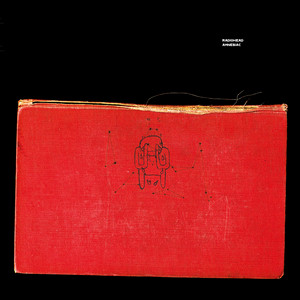

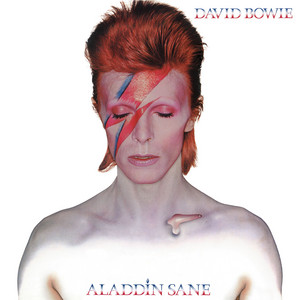


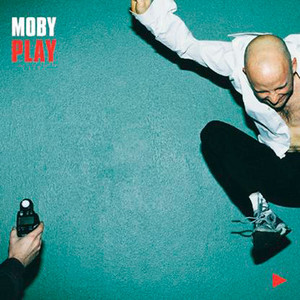


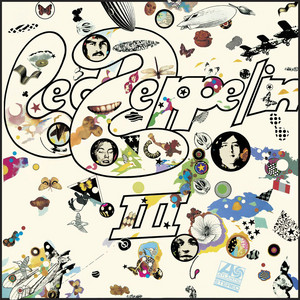



Popular Reviews
When I was 12, a close friend of mine, Conor, died from leukemia. His older brother Evan was one of the nicest guys in the world. While dealing with the grief, and looking after his family, he also became a sort of mentor to Conor's friend group, encouraging us to continue to call around to their house and hang out, as we would have done in the past. He was a few years older than us, probably like 14 or even 15, and I doubt he wanted to be hanging around with a bunch of 12 year old kids. But he did become a sort of mentor to us in a tough time. We weren't emotionally equipped to deal with the situation at all, so the fact that we kinda carried on hanging out like we used to, probably helped us a lot. Before Conor passed away, we were already very, very into music. Oasis had made their impact on our generation, and we were all in on Britpop and any similar type of music. So, a while after Conor's passing, Evan told us that he was starting to learn guitar, and encouraged us to do the same. I bought the cheapest acoustic guitar I could get my hands on. The bridge was set way too far out from the body, which meant that you had to press really, really hard to play any chords. As awful as it was, it really helped me become a better guitarist, forcing me to be more dexterous and strong in my playing because of the limitations of that terrible piece of kit. I wanted to see if I could figure out the basics myself before getting lessons. Evan gave me his notebook of chords, lessons, practice exercises, etc., to see how I got on. He was left-handed though, so I had to flip it upside down and try to translate it for my right-handed approach. I didn't make it easy on myself. “Urban Hymns” had just come out, and was a big talking point in our group. Looking through Evan’s notebook, I saw that “Lucky Man” was mostly just three chords, with a fourth in the bridge, and I knew how to play each of them. I loved that song. So, the first song I fully learned on guitar was “Lucky Man” by The Verve. “Urban Hymns” felt a bit different to the Britpop that I was already aware of. It felt more “adjacent” to Britpop. What you’d forget is that these Britpop bands liked to rock out a lot in psychedelic jam sessions. Oasis did it a lot too. Layers and layers of psychedelic guitars build up atmosphere. Songs like “The Rolling People” evoke The Stone Roses and Madchester, but an iteration of that sound, bringing it closer to the world of Britpop. Ashcroft’s vocals work so well in these types of songs. I remember when “The Drugs Don't Work” became a huge hit. It made a lot of parents very happy to hear their kids listening to a song that sounded like a public service announcement for sobriety. As I sit in my hospital chair listening to the song, with the Augmentin antibiotic coursing through my veins, I hope Ashcroft's not right. “Sonnet” is another great song, on an album full of them. The Verve had a great way of making a song feel like it was just Richard and an acoustic guitar, when there's actually a full band working wonders around him. The music worked to complement and elevate the simple melody and lyrics, rather than take over. The exact same can be said for “Lucky Man”. Sure, I could stroll around a brightly-lit room with my acoustic guitar hanging from my shoulders, strumming the chords along with the song, trying to emulate Ashcroft in the music video. But there's a whole cacophony of musical textures swirling all around the central melody. It creates a sort of hypnotic vibe, without ever taking away from the simplicity of the song itself. It's what works so well in these songs. Then there's “Bittersweet Symphony”. That gorgeous orchestral piece (that caused so many legal issues) and swirling textures build up and up. And there really is nothing better than when those drums kick in. It's one of those songs that gives you goosebumps immediately. The lyrics are phenomenal too. There's something so positive about it, like someone going through self-actualisation (“I'm a million different people from one day to the next”) and coming out with a plan of action on how to live their life, while reaffirming themselves (“I can change, I can change”). The chorus is so fantastic. The whole song seems to just continuously rise, which is why that continuous walk in the music video worked so well with it. Man, that video was everywhere. It's so iconic (and so parodied). Bittersweet is a song that deserves 100 stars by itself. Everything builds up in layers at the end, with multiple vocals and dizzying textured noises. It's glorious. I got to see Richard Ashcroft support Oasis in Croke Park this year. Seeing “Lucky Man” and so many of these songs live after all these years was great. He got a standing ovation when the strings of “Bittersweet Symphony” came on. That Oasis gig was one of the best concerts that I've ever been to, but Ashcroft’s performance of Bittersweet is up there as a serious highlight of the night. It was interesting that Oasis played “Cast No Shadow” at that gig too, seeing as it was written about him. Evan once told me that “Urban Hymns” would be the album he'd pick if he could only select one Desert Island Disc. At the time, I would have picked “The Three E.P.s” by The Beta Band for the variety it brings, or “Ok Computer” for just how much I loved it. But Evan’s answer always stayed with me. While it wasn't the answer I expected, “Urban Hymns” is a complex, layered, brilliant album that could definitely make your time as a castaway easier to deal with. I know it's made my time today as a castaway in hospital much more pleasant. Sadly, Evan passed away a few years back, at far too young an age. We had naturally drifted into our own friend groups as we got older and made our respective ways through school, college and work, and hadn't really hung out since I was about 14 or 15. So we weren't exactly close. Besides a chance meeting through a friend of a friend, I don't think I'd even seen him in many, many years. But he made a huge impact on me at a time when I was a bit… lost. As you may guess from all of these long, wordy reviews, music has been, and continues to be, a huge part of my life. Evan pushed me towards playing guitar, something that's become a core part of my identity ever since. And something that definitely gave me some direction when I needed it. Music can be a way to connect with your past, soundtracking the important moments in your life. And any time I listen to this album, it reminds me of Evan and all his influence. As for right now, I put on my headphones and press play on “Bittersweet Symphony” and time it so that the beat hits just as I'm exiting the hospital doors. Discharged after a week of pain, tests, fasting, IVs, injections, sleepless nights, and terrible food, I step out into the fresh air and sunshine.
Not to sound like the old curmudgeon that I am, but I don't like the musicality of modern hip-hop and R&B. The rhythmic meter and booming bass is repetitive and boring. Insert "old man yells at cloud" Simpsons gif. There's some interesting moments in here, especially in the structure of the album as a concept, but the content still feels vapid to me. Sure, there's feminist themes, but there's no powerful insights, it's all reduced to old rap tropes such as sex and money. Grandpa Simpson disapproves.
It was my first time listening to Joanna Newsom, and it won't be my last. Really fantastic and unique sounds, both in instrumentation and vocals. Ignoring the timeline of releases, I'll instead cite comparisons to music I was already familiar with. I immediately felt a connection with Newsom's musical style, feeling similarities in structure, not style, to the likes of Lisa O'Neill or Junior Brother. Yes, I'm aware that I'm picking artists known for their unique and distinct voice, but it's more about how they form fragmented, sometimes staccato and polyrhythmic melodies around their mad-sounding vocals. I also see similarities to Kate Bush and Fiona Apple. Strong lyricism and free-flowing melodies that again seem to form around the vocals, rather than driving them. The entire album structure is a huge gamble too. With only 5 songs, ranging in duration from 7 to 17 minutes, it sounds like it'll require effort to get through. But it doesn't. It's immensely easy to sit through, very enjoyable, and keeps me on my toes the entire way through. Newsom's voice juxtaposed with the beautiful harp and orchestration is a perfect blend. Deserves a 4.5 star rating.
"There might be accidents, accidents which will be more interesting than what I had intended." Eno's first solo album shows the early signs of his creative genius in artistic process. Madcap techniques like lyrics formed by free-association, throwing a group of musicians together who he believed were "musically incompatible", and using what sounded like interpretive dance to direct the musicianship of it all. Every song here is fascinating. Every instrument is layered with effects until it sounds like something completely alien, every vocal performance is nuttier than the last, and every composition is more unexpected than the last, often breaking in structure to something completely different at random. The ending of "Dead Finks Don't Talk", with its hardcore electronic breakdown, sounds ahead of its time in 2025, nevermind 1972. Eno had confidently announced his artistic brilliance to the world with this collection of musical accidents.
1-Star Albums (9)





All Ratings (323)
First of all, "La femme d'argent" is an absolute classic. Sounded very different to anything else in the mainstream at that time. I'd forgotten how many great songs are on this album. Everything sounds quite 70s, even if there's a lot of electronica and vocal effects. The first half of the album has a pretty amazing 6 song run. Unfortunately, the second half is a bit low energy after that. No surprise that I'm less familiar with the songs in the second half - back in the 90s, I probably zoned out or bailed after "Remember". Still a really great album overall that holds up very well.
Meh. Every song is very samey. I really really liked the older Black Keys stuff like Attack & Release, but I feel like this album was the turning point when they pulled a "Kings of Leon" and watered down the rawness of their sound and became too bland.
This album always reminds me of Fat Freddy's pizzeria back in the early 90s. Someone who worked there played this album on repeat. So, in my head, that's what this is: inoffensive background music. I know I'm in the minority, but I could never appreciate Van Morrison, no matter how much I tried. I can understand that these are decent songs, the musicianship is good, and his voice is what it is, but it all feels very "beige" to me. On the plus side, relistening to this now in my old age, I did very much enjoy "And it stoned me" and the higher energy parts (like the end of the song "Moondance"). But the rest of the album remains as inoffensive background music in a pizzeria to my ears.
There's no easing into this album. The sound of Neil's double drop D distorted "Old Black" Les Paul guitar slaps you in the face from the very first second of Cinnamon Girl - it's one hell of a way to get your attention. The unpolished rawness of the guitar mixed with the very polished harmonies and melodies feels like Neil was laying down the groundwork for Nirvana. I can imagine Nick Cave listening to "Down by the River" for the first time, taking notes. Speaking of, that guitar solo is one of my all-time favorite things. Sticky, rough and clumsy in all the right ways, dipping in and out, and for such a long solo, not self-indulgent in any way, simply lifting the energy of the song and augmenting it in the best possible way. What more can I say about this, except that it's an absolute classic, that paved the way for so many bands, especially in grunge and alt rock.
I don't know if hearing this back in the 80s would have made it a different experience, but I never understood the appeal of Michael Jackson. Of course there are some great songs, but to call this a great album is a serious stretch in my opinion. Bland overproduced disco pop for the most of it. Thriller (the song), Beat It and Billie Jean are standout songs, and the only part of this album I could properly stomach. Not my taste, sure, but objectively I can't see how this is considered one of the great albums beyond the 80s hype.
I have to say, I didn't know much about Solomon Burke before today. Obviously, I immediately recognised "Cry to me", but interestingly I also recognised The Rolling Stones. I know they've covered him before, and even played live with him on stage, but it's moreso that I recognized the building blocks of that early Rolling Stones sound: the bright clean guitar soloing away as the singer continues, not waiting for a break, but working together; and the seamless switching between speech and singing; I couldn't listen to "If you need me" without hearing "Time is on my side". All that is a good thing. I'm a big fan of the Stones, and I can see why they're big fans of Solomon Burke. An amazing voice, great energy and fantastic songwriting. Happy to have discovered this.
Bank in the day, I was never a Pulp fan. I thought that Jarvis Cocker was a very funny and interesting guy, but I could never gel with their music. It felt too posh and full of itself. Having given this album another chance, I feel I get it a bit more now. Some very witty lyrics and a great run of songs from the start. I did find my attention waning towards the end of the album, and some of the "breathier" Jarvis vocals were starting to get a bit on my nerves. But, I have to say overall that I was pleasantly surprised by this album.
Peter Gabriel, the mad flower cosplaying loon. I'd never sat down to listen to this album in full. It starts off in proper prog rock territory with the madcap "Moribund the Burgermeister", and I'm instantly hooked. I haven't heard anything like this before, and I love it. "Solsbury Hill" might be hard to listen to without imagining a terrible romcom movie trailer, but the guitar work is stellar, and reminiscent of peak Simon and Garfunkel. This album keeps me on my toes. I really don't know what to expect with each song. It's so surprising and unique. "Excuse me", in particular gets my attention. It sounds like Randy Newman crossed with The Beach Boys, but with a theatrical madman at the helm. There are dips in the album, and they tend to be the more sane tracks. But all in all, I'm completely sold on this album. It got my attention from the start and makes me want to dive deeper into the rest of his solo discography.
Pretty impressive that Shuggie played almost every instrument on this album. I'm not really into this type of soul, but I can appreciate the musicianship and songwriting here. Some of these songs take unexpected, sometimes psychedelic turns, which makes for an interesting and enjoyable listen throughout. Overall, very enjoyable soulful album that feels like it's verging on experimental at times.
Quiet, calm but with bursts of urgency, it's Cat Stevens' voice that makes this album work so well. Some absolute classics here, musically augmenting both Cat's voice and lyrics perfectly. The last song on the album, the title track, remains one of my all-time favourite songs. It starts so small, with the fragmented piano piece. It feels like you're in a tiny room with Cat Stevens sitting at his piano right across from you, noodling, improvising, trying to figure out a new song. And then out of nowhere it swells into this huge, emotional burst. All in the space of a single minute. It grabs you straight away and then just keeps building until it suddenly cuts off, leaving you kind of stunned. Very close to 5 stars. Let's call this 4.5 stars.
Nick Drake is sort of timeless. While his sound is quite similar to Stormbringer! era John Martyn, it feels like it could have been released this year and fit in perfectly too. There's something about these songs that feel so genuine and real. It's like the songs are just pouring out of him. The tuned down guitar gives everything a darkness and a moody feel, but nothing on this album feels depressing. Some really great melodies and exceptional acoustic guitar playing. And that's all we get. Besides a tiny bit of piano in the title track, it's stripped back to just a voice and a guitar, but often feels like so much more. A timeless classic.
I've never been much of a fan of Justin's music. In fact, I've always said that he should have concentrated on comedy, where I think he is really truly talented. But, keeping an open mind while listening to this, I have to concede that he (along with the Neptunes) does indeed have some good songwriting chops. "Senora" is a very catchy tune, "Like I Love You" sounds a bit like something early N*E*R*D might have come out with, and "Rock Your Body" has some questionable beatboxing in it. On the better side of pop music, and at least it's not completely manufactured nonsense. The standout is "Cry Me A River". Catchy and intelligent songwriting, it's genuinely a great song. Unfortunately the rest of the album is filler. Justin is trying his best to emulate early Michael Jackson in a more-RnB-than-disco setting, and it all feels quite bland. It's the songs where he's not trying to sound like something from "Off the Wall" or "Thriller" that show some of the talent he has. But, ultimately besides a few decent songs, and one great one, I'm still hoping he concentrates on his comedy career.
"It's a lot of isolated people, who know how to control and operate electricity. They sneak a listen to American radio, and they get what's going on in Europe as well, and they kind of misunderstand it in a very beautiful way." Björk's description of the Icelandic music scene to Conan O'Brien, is a perfect description of the sound that The Sugarcubes introduced to the world. This album was very much an introduction to the Icelandic music scene. But, more than anything else, it was an introduction to Björk. The album, while not originally intended to be taken seriously, blends Krautrock, post-punk, electro and pop into something that sounded very fresh at the time. But it's mostly the fevered energy levels that hold all of this together. You can't listen to these songs without imagining Björk skipping (literally) around the stage, while the other band members switch between guitars, synths, brass and megaphones. Some of the more pretentious spoken-word heavy, Krautrock-inspired, post punk pieces haven't aged as well as other songs on the album ("Delicious Demon" and "Sick for Toys" I'm glaring in your direction). But, the songs that focus more on Björk, and her incredible, alien vocals, more than make up for it. It might seem obvious to jump on "Birthday" and "Deus", but it's hard to listen to this album and not concentrate solely on the massive talents of Björk. "Birthday" still holds up as an amazing piece of music. The instrumentation works so well to augment the absolutely mind-blowing vocal gymnastics that Björk unleashes on our ears. I still don't think there's a single voice in music that could come close to Björk's, both in ability and uniqueness. A fantastic album, with some flaws, but an important moment in music history, when the world was introduced to the beautiful misunderstandings of the Icelandic music scene, and more importantly, to the artistic brilliance of the crazy little pixie with the gigantic voice that we all know and love as Björk.
I fully appreciate the musicianship of this. The piano playing is exceptional. I also really appreciated how relaxed and confident a performer she was, dealing with moments waiting on the rest of the band with a cool charisma. But, this style of soft jazz isn't really my thing. I can imagine it would work better in the context of the 50s, but to me, it sounds a lot like something you'd hear in a hotel bar on holidays (think "Lost in Translation").
Sugar sound very nineties. Early nineties grunge rock to be more precise. So specifically early nineties grunge rock, that I can imagine Beavis and Butthead interrupting "Hoover Dam" to make "is this a god dam(n)?" quips. But I did really like this album overall. You can see the influence that "Nevermind" had here, in focusing on simple, punchy melodies, with bright distorted guitars. But, it lacks the originality and rawness of Nirvana. In fact, for the sake of this album, let's stop the comparisons there. "A Good Idea" could be a Pixies song. In fact, I think it is. It's called "Debaser" though. Still, the chorus distinguishes itself enough to not feel like a complete rip-off. Anyways, something that sounds like Debaser is always going to be enjoyable. "The Slim" takes off. Definitely the best song on the album. The building guitars tap into some frequency tuning in your brain, and it's fantastic. I really can't get enough of that song. The rest, well, verge into cheesy territory a bit too much for my liking. All in all though, a very enjoyable album, that feels very much of its time. I'd call this one 3.5 stars.
I had the wrong idea about Teenage Fanclub. They were always on the peripherals of my music taste, but I somehow never actually listened to them. I always thought they were a noise-rock, post-punk, shoegaze type band, a la Sonic Youth or the likes. Instead, they're bright and poppy rock, melody-focused with polished vocal harmonies. There are moments when you feel that the band I thought they were, start to show up, with the dissonant tones of distorted guitar noise creeping in. But it's always in the background of the very straight-forward poppy song melodies. "The Concept" is a really great song, and a great opener. I can hear the influence this band have had on Carseat Headrest, and in particular Ash. In fact, I hear Ash all through this album. "Satan" gives me the noise rock that I was expecting and I think for a moment that this album is going in a different direction. But it doesn't. Instead, it settles in for simple, polished, guitar-driven pop-punk. Some great, catchy tunes here, but knowing of the acclaim this album gets, I do feel like I'm missing something at times. Most of the album sounds like the positive cousin of the Jesus and Mary Chain. It all feels very young and optimistic. I guess that's the point. I don't mean to sound too negative about this album, because I'm not. I quite enjoyed it, even if it wasn't what I was expecting. Some great songs here, extremely catchy. A solid 3.5 star album.
So, totally not my taste in music. Big disclaimer. I did listen with an open mind though. Unfortunately, it didn't convert me to speed metal, or whatever this is called. I just don't fully understand the appeal. The positives? I feel like there might have been a good deal of irreverent humour in here. My favourite songs were "Jesus Built My Hotrod" and "Scare Crow". But, I suppose the main reasons being that both of these songs were the furthest from speed metal on the album. "Scare Crow" sounded a bit like a Smashing Pumpkins song (without the atmosphere), and "... Hotrod" sounded like a piss-take of a hillbilly/rockabilly ditty. Anyways, not for me, but I gave it a go.
Adele has a great voice. But she's a victim of being overplayed. I tried to listen to this album objectively, but it's hard when these songs have been played to death on every radio station, advert, TV show and as background music while you shop for groceries. Trying to get past all of that and treat these songs as if it's the first time I've heard them, the album starts off very well with "Rolling in the deep" and "Rumour has it". They both have a great Memphis blues feel to them. But, outside of that bluesy/souly sound, good chunks of the rest of the album feel very overproduced and unmemorable, opting to showcase Adele's voice over songwriting. "Someone Like You" finishes the album off on a very, very strong note. A simple song, with a simple melody and straight-forward lyrics, but it feels very genuine and real. And her voice is absolutely incredible in this song, working with the lyrics to lift the emotion of the song.
Scott Walker perplexes and fascinates me. Of course, I discovered him through Radiohead, but at first I couldn't quite understand how a 70s crooner could be such an inspiration on so much of the modern, contemporary music that I love. And then I heard "It's Raining Today", and I was frozen to the spot. We'll save that for when Scott 3 comes up on this list. This album doesn't seem like that Scott Walker. It feels more like "part of the Scott Walker origin story". Having listened to Scott 3 and Scott 4, this album feels like a stepping stone en route towards the more experimental work he'd do there. Sounding like a score to a 70s Hollywood movie set in Italy, the thing that makes the songs on this album stick out are the lyrics. They're quite risque and out there, talking very openly about encounters with prostitutes, STDs and sometimes brash tales of sexual experiences. The strings are pretty epic at times. "The Amorous Humphrey Plugg" and "Come Next Spring" in particular. The one song that sticks out the most to me on this album is "Plastic Palace People". This is a real sneak peak of the direction of what was to come. It feels like three songs stitched together with some pretty interesting transitions, and at times using either a delay effect or possibly overdubbing two separate (and different) vocal performances at the same time to create an unnerving and unique feeling. Overall, an enjoyable piece, that acts more as a milestone on the path towards those next two albums where the really interesting side of Scott Walker came out. In his own words, talking about this album: "Now the nonsense must stop, and the serious business must begin."
Brian Eno is obviously a musical genius. But he's also a lot more - he's a proper artist, equally as interested in the process of creativity, as the output. And that's very obvious on this album. Going into the studio with nothing, and using the restrictions of his "Oblique Strategies" cards to funnel creative exploration is a proper artist focused on the act of creativity. But that's not saying that the output captured in the studio, what I'm listening to right now, isn't something great. It really is. But it equally feels like it captured a moment of artistic creativity, rather than a predefined song represented in a recording. This entire act, using the restrictions of the Oblique Strategies, brings about some pretty unique sounds. I often can't tell what instrumentation is used, and I believe that's because so much of this is created using crazy techniques like guitar digital delay feeding back into itself, or playing string instruments with hammers or other madcap ideas in experimentation. What comes through in the album is a collection of brilliant moments in artistic experimentation. Every single song is completely unique, approached from a different perspective, very experimental, but always melodic and enjoyable.
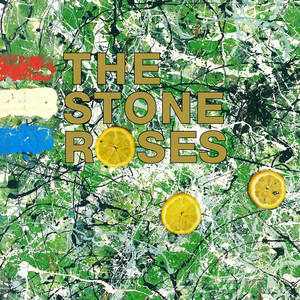
The first Stone Roses album is the first time I heard dance music finally blending with guitar music in a decent way. You can hear the Madchester scene being born in real time on this album, and at the same time the early blueprints of what would become Britpop. There’s a real arrogance to it too. I mean, they literally tell us that "Waterfall" is such a good song that it works in reverse. The arrogance is deserved too. "She Bangs the Drums", "Made of Stone" and "Shoot You Down" are absolute classics, to name but a few in the album. "I Am the Resurrection" shifts gear at the end of the album into that brilliant, endless jam. And, that's followed by "Fool's Gold". It feels like everything has been building up to this - John Squire layers on guitar riffs on top of a groove and beat that works as well in a nightclub as it does on stage in an indie venue. They might not have made a lot more after this (shout out for the criminally underrated "Second Coming"), but the impact of this album is enough for the legacy of the Stone Roses to still be felt today.
I’m not really into this kind of music. Soul, R&B has never really been my go-to. But Al Green’s Let’s Stay Together is what I call an "exception" album. It’s like Beck’s "Odelay" - even if it’s not the sort of thing you'd normally listen to, it’s one of those albums that everyone seems to have in their collection regardless. Why? There's some great songwriting here for a start. Or maybe it's because of his incredible voice, shifting from smooth to raw to almost breaking apart, and it keeps you hooked. It’s no surprise Tarantino dropped the title track into Pulp Fiction. It has a real vibe of "cool" to it. I might not be a soul guy, but this one is in my collection.
It's fitting that this was released in 1980 because it sounds like a band transitioning from punk to new wave. "Pretty Green" has an Adam Ant feel to the verse, but a more punk rock feel to the chorus. "Monday" is a great song, and feels ahead of its time. "Set the House Ablaze" feels like blueprints laid down for Bloc Party. "Music for the Last Couple" feels like it's verging into ska. Then there are what I call "the Beatles tracks". Weller openly said that he was "inspired by" Revolver when making this album. Ahem. "But I'm Different Now" sounds like a Revolver track on amphetamines. That bass line is Macca on speed. It's incredible. And then there's "Start!", or as I like to call it, "Taxman". Come on Paul, there's inspiration and there's just taking a full Beatles song and renaming it. Regardless, these songs are all very catchy and enjoyable to listen to. "That's Entertainment" is by far the best song on the album. Clever, witty lyrics painting a picture of urban living, and an excellent, original song that's in a class of its own. Getting over the shameless pickpocketing of the Beatles, I was very torn between 3 and 4 stars for this, but on a few repeat listens, it deserves the latter.
Nope. I just don't understand this genre of music at all. I don't understand the appeal. The only song I could stomach was "Orion", and that's mainly because it didn't sound like the Metallica of the rest of the album. Not for me.
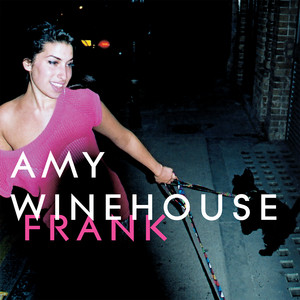
Weird choice to have this album on here. If this is here and "Back to Black" isn't, there's something very strange going on. I like Amy Winehouse. I think she had some really clever songwriting and brilliantly produced (thanks to Mark Ronson) songs on her next album. But this is a totally different Amy Winehouse. Scatting her way through some mundane, schmoozey tunes, this album seemed to go on forever. And not in a good way. I still remember the first time I heard "Rehab". Day drinking in London, it came on in a bar, and a few hours later we were singing it full volume in the street. The closest to that Amy Winehouse on this album is the song "Fuck Me Pumps", but that's still a loonnng way off. If I heard any of these songs in a bar, I'd probably be drinking up, to head somewhere else. Looking forward to seeing "Back to Black" come up on this list, but there's 1001 albums I'd prefer to be listening to over this one.
If the colour beige made an album, they'd call it "The Man Who". I feel bad shitting on Travis, because they seem like nice guys, but the music on this album is all very beige in colour. There's nothing particularly awful here, but there's nothing particularly exciting either. The best part of the album, is the "hidden" track at the end. Mainly because there's at least a bit of energy to it. Bland. Boring. Beige.
Absolutely loved this album. I'd never heard of The Pharcyde before, but as soon as "Oh Shit" came on, I knew I was gonna love it. This is the exactly the style of hip hop that I love. Brilliant, upbeat, melodic samples, which are at times quite jazz-influenced, big beats and rap that doesn't take itself too seriously. I love that this is from a time when rap albums had "skits" in between songs. These little interludes of nonsense somehow make this seem more like a concept album in a way, and less like a collection of songs stitched together. Turns out that I recognised a couple of songs on this album (thanks Beardyman), the best by far being "Passin' Me By". I can't get enough of this song - what a classic. Loved everything about this from start to finish. Already looking into the rest of their discography.
You know that scene in "School of Rock", where Jack Black as Dewey Finn (as Ned Schneebly) is running through the song he wrote for the battle of the bands, to a group of bemused children? We're not supposed to think it's good. It's over-the-top, corny, stadium rock nonsense. The character arc is that Dewey learns about creative compromise, and chooses the better song, written by Zach, one of the students (and sounding like peak AC/DC), instead of choosing his ego. Well, this isn't a review of "School of Rock", but this entire album sounds to me like Dewey Finn's songwriting in that movie. In fact, I'm pretty sure Jack Black was parodying Iron Maiden in that scene. Over-the-top, warbling, screeching, with repetitive riffs and lyrics about Vikings and demons, it's all very predictable nonsense. Feels like the type of music that Dewey Finn would have kept writing if he hadn't committed identity fraud.
Really unexpected blend of Latin music, salsa, funk, jazz and hip hop. Sounds like it wouldn't work, but it's actually pretty enjoyable stuff.
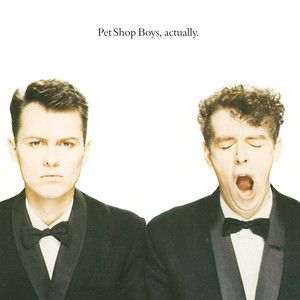
"What have I, what have I, what have I done to deserve this?" That's a quote from me halfway through listening to this rubbish. I never understood the acclaim that the Pet Shop Boys get. Neil Tennant's nasally voice is bad enough, but add in some terrible synth, jangly piano and flat drums along with the lifeless melodies. It's no wonder Tennant is yawning on the cover. But it's not just that it's bad. It's also incredibly cringe. Everything about it makes me embarrassed. Sure there's some social and political commentary here, and "It's a sin" has at least some intelligence to the lyrics. But everything else is just embarrassing.
Syd Barrett is a fascinating, but tragic story. Artistically brilliant and innovative, but lost to mental health issues exacerbated by heavy LSD usage. The stories are straight out of a Hollywood film: finding him sitting in a chair, staring into space with a cigarette fully burnt out from end-to-end in his hand. Going onstage, and standing motionless with a guitar hanging from his neck. Being replaced by his old time buddy David Gilmour, and when everyone thought he was lost to madness, coming out with the saddest, most poignant farewell song in "Jugband Blues". Disappearing for years, and turning up in the studio as Pink Floyd were recording "Shine On You Crazy Diamond", a song written about him. It's a compelling, but tragic tale. Syd was clearly an artistic genius, but unfortunately we're limited to just the contents of this one album (and a couple of songs outside of it) to appreciate the creative output of this madcap legend. Luckily for us, Piper at the Gates of Dawn is a masterpiece. There are two types of songs on the album. Long, sprawling, improvised jams, very experimental in nature. Songs like Astronomy Domine and Interstellar Overdrive are the peak of these. Then, the shorter, more quirky pieces like The Gnome or The Scarecrow. The rest, generally speaking, go from quirky to experimental. The whole album feels like sneaking a glimpse into Syd's mind, where quirky, clever humour meets untamed, swirling madness. The songwriting and innovation is just one part. The musicianship is another. Richard Wright's keyboard creates an eerie atmosphere throughout these songs. Roger Waters' bass grooves and flies to unexpected places. And then there's Syd's guitar. It's so much at once. It's layered, creates texture, it's percussive, it's bluesy, and it's often so experimental that it doesn't sound like a guitar at all any more. Truly pushing the boundaries of what a guitar can do, and opening the door for future guitarists such as Joey Santiago, Graham Coxon and Jonny Greenwood, to name but a few. The production of this album deserves a mention too. Capturing the guitar tones so crisply, while balancing the layers of overdub, keyboards, bass and drums with Syd's quiet vocals for this type of expressionist music is quite a challenge, but done so well (especially for something recorded in 1967). And then there's the pioneering use of reverb and delay. Bands like Radiohead and Osees are still using versions of the same technique based on the blueprints set out here. But back to Syd's songs themselves. Astronomy Domine is an absolute classic, so far ahead of its time, yet fitting in so well as a representation of what was going on in the UK underground scene at the time. Interstellar Overdrive is still as much of a mind-melter as it was the first time I heard it. You come out of it after 9 minutes and 40 seconds, head spinning, feeling as if you'd just dropped acid. The "quirky" songs somehow don't come across as twee, but instead charming, and always tilting towards some manic dystopia of noise. The madness of "Bike" makes you smile (the little piano tinkle when he sings about knowing "a mouse but he doesn't have a house, I don't know why I call him Gerald"), verses and chorus punctuated with a drum sound that smacks you in the face, before descending into noises and laughter that still unnerves me today, even after hearing it half a million times. "Pow R. Toc H." starts off with the craziest version of beatboxing I'll ever encounter. I still don't know how Waters makes that sound with his mouth, but it's a sound that's not of this earth. The rest of the song goes into a jazzy jaunt, until it inevitably descends into madness. "The Scarecrow" is a particularly gorgeous song. Extremely minimalist, with lyrics that seem very fitting for Barrett's mental condition. "His head did no thinking, his arms didn't move..." / "The black and green scarecrow is sadder than me, but now he's resigned to his fate because life's not unkind, he doesn't mind..." The song ends with a gorgeous blend of strings and rising folk guitar. This album is a classic. A masterpiece. Innovative, experimental, inspiring. Syd didn't have the chance to continue making music, but his legacy is still felt today thanks to this album. Shine on.
Dark. That's how I'd describe this album. Even on the most upbeat songs, there's a dark undertone to everything. A brilliant blend of guitars and electronica, a brilliant blend of dark bass and synth with upbeat melodies, it feels like a representation of a musical movement. There's lots of great stuff here, but it's fitting that the standout track is a tribute to Ian Curtis. "Elegia" is a brooding instrumental that feels like the soundtrack to a Western set on the surface of Mars. It's glorious, unique and perfectly the centerpiece of the album, both in placement and musically.
Most of the album feels like something you'd hear on Jools Holland's Hootenanny. It's quite honky tonk at times, and 50s doo-woop the rest of the time. Not that that's a negative thing necessarily. "Watching the Detectives" is the outlier, feeling something more like ska at times. Definitely the most interesting song on the album. Overall quite enjoyable, with some very catchy tunes.
I found the first half of this album very hard to get through. Quite cheesy/corny melodies, and not really my thing. It gets better in the second half of the album. Songs like "Streets of Kenny", "Cornish Town" and "Since I Met You" are decent enough. But there's not much interesting happening here overall.
"Some get stoned, some get strange, but sooner or later it all gets real, walk on." Takes of disillusionment, depression, breakups, death and vampires, fueled by drugs, alcohol and honey slides, written and recorded at times in bursts of instant creativity, it's an absolute classic. Raw and sometimes polished, minimalist and sometimes full-on, bleak with snippets of hope, bluesy and sometimes folky, it's a difficult album to describe. But Neil heading for the ditch is a compelling and brilliant listening experience.
I'm not really into this type of hip hop. I prefer the 80s/early 90s hip hop that was more energetic and used really clever samples. This isn't that. I liked the Fela Kuti tribute, and I feel there are some pretty hefty subjects being tackled here, but I just just couldn't get into it at all.
I'd somehow never heard of Ramblin' Jack Elliott before. I listened to the first four songs of this album, and immediately loved it. It's exactly the style of folk music that I love. Raw, bluesy and loose. I thought to myself, "this sounds just like early Bob Dylan". Then on song number five, Elliott introduced Woody Guthrie, and it all made sense. After reading up on Elliott, it's actually crazy that I've never heard of him. Of all the books, films and documentaries I've seen and read about Dylan, I can't recall mention of him at all. And he's such a big part of that early Dylan. And apparently he's a big inspiration for characters and references made in "A Mighty Wind", one of my favourite music parodies (and the second best Christopher Guest rockumentary). It seems Ramblin' Jack Elliott has been a big part of the music and movies that I've been listening to for the last quarter of a century, but I wasn't aware of it until now.
Kathleen Hanna is a legend. I've rewatched her amazing monologue about how she got blackout drunk in Kurt Cobain's apartment, and woke up to find that she had graffitied "Kurt smells like Teen Spirit" on his wall. And how that song, and its success, seemed to follow her around during some of her less successful moments, working as a stripper, while trying to get her band "Bikini Kill" off the ground. She's a brilliantly funny and compelling storyteller. But she's more than that. She's also a proper punk legend, essentially starting the "riot grrrl" movement with Bikini Kill. Le Tigre sound a lot different to Bikini Kill. They're bright, quirky, and very melodic electropop. But that same punk attitude, ethos and sardonic humour persists throughout the more approachable Le Tigre. This is where punk meets electropop. Everything is very politically charged, with expected themes of feminism throughout, but it's all masked in high energy, positive melodies. I'm actually surprised that this album came out in 1999. It sounds like it came straight from that 2005-2010 period, where this genre of indie electronica was so prevalent. Did Le Tigre lay the groundwork for the indie electropop movement of the early 2000s? I'm reminded of bands like CSS, MGMT, Hot Chip. Even LCD Soundsystem and The Rapture (although thematically they're a bit different). All that aside, this is a fantastic album. Brilliantly melodic, infinitely listenable, with high party energy. Some really clever loop sampling and lo-fi use of electronic beats, but with a rough punk edge to everything. At times, they sound a lot like the B52s, with "shouty" choruses and percussive guitars mixing with the electronica. And then there's Hanna's fantastic voice pushing the energy to another level. There's lots of fantastic songs on here, but I have to mention the obvious: Deceptacon. This song wasn't just my introduction to Le Tigre, it was my introduction to The Punk Singer herself, Kathleen Hanna. The simple, raw, distorted guitar riff drives, while the beats and synth groove, with some handclaps thrown in for good measure. But Hanna's voice takes off. It's like she doesn't take a breath for the whole song, voice switching between singing and screaming with ease - she brings a fevered energy to this song that I think is hard to match or be bettered by anything else. Big words. But it's a big song, one of the all-time greats.
I've said it before, but I'm not really into soul. With that disclaimer out of the way, I did enjoy this album. Curtis's voice is quite unique, almost falsetto, yet breaking into quiet screaming at times. That, on top of music that verges on funk and blues at times, makes for some enjoyable listening. Especially liked the song "When Seasons Change".
As soon as I saw Paul Weller and Peter Wilson on the cover of this album in dusty trenchcoats, I thought to expect a lot of "dusty trenchcoat music". Think angry new wave 80s social-political rants set to ska basslines. What I didn't expect to find was soft jazz. After hearing the first song, "Mick's Blessings", I was thinking that this was going to be a great album. Unfortunately, it was a false flag - everything after the first song is incredibly dull. Songs like "The Whole Point of No Return", "Blue Cafe", "The Paris Match" and the likes, have nice jazzy chords, but are soft, mundane and, essentially background music in an overpriced restaurant that has squeezed in extra tables for Valentine's Day. The livelier songs like "Me Ship Came In!" or "Dropping Bombs on the Whitehouse" add a bit of life, but only a bit. I still feel like I'm stuck in that restaurant, uncomfortably touching elbows with the couple at the next table. The most recognisable songs on the album, "My Ever Changing Moods" and "You're the Best Thing" are recognisable as songs that have always gotten on my nerves. Today, they continue to get on my nerves. Then there's the weird rap songs in the middle of the album that feel as if Spotify has glitched and accidentally served up some random 80s commercial pop/rap crossover album. I mean, I'm fully expecting a cartoon cat to make an appearance in the middle of "A Gospel" or "Strength of your Nature", to tell us about how opposites attract. The whole album feels like Vincent Adultman, from Bojack Horseman: a hodgepodge of different genres of music, perched on each other's shoulders, pretending to be something else, disguised by a dusty trenchcoat.
"Strange Cargo" is a good name for this. An odd collection of electronic soundscapes, with spoken word interludes, blippity blips and synth, that sometimes verges into hippy "tribal" music territory. At times I feel like I'm listening to music that you'd expect to find playing in a nightclub in The Matrix. People unashamedly wearing leather pants, dancing in show motion, probably in cages or something. Other times, it sounds like something you'd hear played in a backpacker river bar in Laos (full transparency: I stole that comparison from my girlfriend). And the rest feels like I'm listening to the score of a movie. Probably an early 90s Avant Garde movie that didn't do well commercially, but somehow launched the career of some now-big Hollywood name. With all of these comparisons, it sounds like I'm dissing this album, but the weird thing is that, despite all of this, I actually liked it. I mean, this guy produced 13 by Blur, one of my all-time favourite albums, so he's obviously got talent. I'm probably not going to hunt this out again, but I definitely enjoyed this strange cargo of electronica.
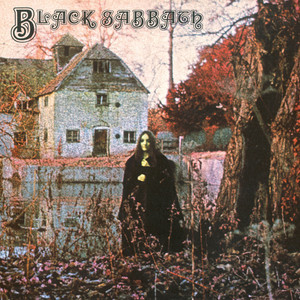
Nobody has made an entrance as epic as Black Sabbath. The self-titled song on their self-titled album announced the arrival of Sabbath with a slow, ominous, dark riff that eventually descends into a glorious bluesy jam. That's what I always forget about Sabbath: how bluesy they were. Sure, they laid the groundwork for heavier rock (and even metal), but always with a blues and rock 'n' roll core underneath it all. It works so well. The perfect example is, in my opinion, on the absolute best song on the album, "The Wizard". The use of the harmonica in The main riff is iconic, especially when used with those drum fills. It's one of the all-time great songs, and impossible to not make you smile. For all their satanic iconography and dark personas, the music is actually very upbeat and instantly lifts your mood. As I listen to this album for the first time in many years, I hear more similarities to Zeppelin than I ever did in the past. This is proper rock 'n' roll territory, and done perfectly. For example, during "Warning", Iommi seems to forget what he was doing, and goes into an 8 minute long solo, before returning to Ozzy's verse again at the end of the song. But every second of it is enjoyable. There are so many crazy, hilarious stories about the band, that it's easy to focus on that and forget that they had serious skill in both musicianship and songwriting underneath it all. I'm guilty of that - I always loved Sabbath, but I clearly didn't give them enough credit as a serious band, because listening back to this album, it's an absolute classic that deserves the same credit that we give to Zeppelin and other rock legends.
Cinematic, literary and melancholic, Scott 4 feels like the score from an existential Western. Full of philosophical musings, it's fitting that the back cover of the LP only has nothing on it but a single quote from Albert Camus: "A man's work is nothing but this slow trek to rediscover, through the detours of art, those two or three great and simple images in whose presence his heart first opened." It seems that this is what Scott has been working towards: trekking through Scott 1, 2 and 3, to find something artistically real, bringing him back to why he wanted to create music in the first place. And this album is all Scott. No more covers, everything written by himself, and even put out in his original birth name Scott Engel. I've mentioned in my previous review of Scott 2, how I came to learn about Scott Walker, and how "It's Raining Today" was the song that stopped me in my tracks. But I think the first Scott song I ever heard was in the Radiohead documentary film "Meeting People Is Easy", where "On Your Own Again" played in full to reversed footage of Thom Yorke packing/unpacking his suitcase in a hotel, showing the mundanity of the realities of touring. I don't know if it's because of this first association with the song, but it's one of my all-time favourite pieces of music. Just over a minute and a half, it's minimalist, slow and heartbreaking. Simple and perfect songwriting. "The Old Man's Back Again" is another obvious choice, but deservedly so. That bassline groove makes it, with the drum, guitar, choir and string layers building something triumphant on top of it, while Scott's strong voice drives the narrative along. Political and philosophical lyrics aside, Scott has created a really unique means of storytelling through his music. I mean, "The Seventh Seal" is largely built around telling us the story of the Bergman movie, framed around Scott's own philosophical musings on death. This form of musical storytelling definitely made an impression on Nick Cave, who carries the mantle today. This album has been an inspiration for so many of the greats, like David Bowie, Nick Cave, Radiohead, Brian Eno. This "crooner" style of music is not my usual taste, but there's something so pure and great in Scott's songwriting and musical performance, that I love every second of it.
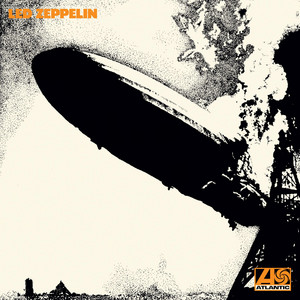
What can I say about one of my all-time favourite albums? I listened to the shit out this album since my late teens. My neighbours have had to put up with my clumsy attempts to play along with every single song on this album on my Gibson Les Paul, a guitar I bought because of Jimmy Page, who is in my opinion one of the top 2 guitarists of all time (I flip-flop between himself and Hendrix a lot for pole position). Zeppelin exploded (pun intended) into the world of rock music with this album, mixing blues tunes (played to perfection) with folky numbers and heavier, darker sounds that became blueprints for heavier rock and even metal down the line. I can only imagine what it was like to hear Zeppelin for the first time back in '69. They took things to a new level. This is a collective of some of the best musicians of all time. Jimmy Page is, as I've mentioned, one of the best guitarists of all time (if not THE best). John Bonham IS the undisputed best drummer of all time. Robert Plant has one of the most powerful voices in rock history. And lets not forget the genius of John Paul Jones. With these four making music together, it could only be one thing: epic. The blues standards on the album are taken to a new level. Page's guitar is ready to burst to life at any given moment. It feels like he's trying to tame his guitar from taking off at any point during "I Can't Quit You Baby", and he eventually fails, and his guitar soars all over the song. Think of the build-up to his solo in "You Shook Me": we're treated to John Paul Jones' stellar hammond organ work, then Plant's fantastic harmonica (with added grunts), before Page takes over, and even his solo is a slow build-up to the explosion of energy it becomes. Then at the end of the song, we have the intense moment when Page and Plant start their vocal/guitar duel, with reverse echo, making it feel like we're hearing them battle instruments from another dimension. The rockier "riff-driven" songs like "Good Times Bad Times" and "Communication Breakdown" are instant classics. But Zeppelin show they can do acoustic too with the absolute masterpiece of "Babe I'm Gonna Leave You" and the witchy reworking of Bert Jansch in "Black Mountain Side". And there's a sneak peak at some of the folkier songwriting that will be more visible in later albums in the criminally underrated "Your Time Is Gonna Come". I really enjoyed reminding myself just how good that song is. "Dazed and Confused" is the centerpiece here. That main riff is so dark, it feels like it came straight from the darkest depths of Mordor. And then after an avant garde break for Page to bow his guitar, the song takes off at an insane pace. Again, I can't imagine what it must have been like to hear this in 1969, it still feels ahead of its time today. "How Many More Times" is a great way to finish the album. The main riff is catchy as hell, then we're given a glimpse of the "song-ception" that Zeppelin became so good at during their live gigs: throwing more songs into the middle of performing one of their own, making long, winding medleys. The middle section of this song goes into another extended bow part, before we're transitioned into another couple of songs, "Rosie"/"The Hunter", in the middle. When Bonham's drum comes in here, this is one of my favourite musical moments - what a beat, mixed with that riff, just amazing stuff1 And then it transitions further until we're back at the main riff again to finish the album off in style. A perfect album from start to finish. What a way to arrive.
Not for me. Positives: I did enjoy the first song "Penitentiary Philosophy" and the first 2 minutes of "Green Eyes". Negatives: The remaining 67 minutes of the album.
Imagine you're away on holidays. It's evening time and you fancy a drink, but there aren't too many options in the area you're in. You hedge your bets, and pop into a grimy pub full of locals. The walls have dusty posters of Ozzy Osbourne, Alice Cooper and Iron Maiden. The beer is watery, but cheap. It'll do, I guess. Then you see a handwritten sign on a blackboard behind the bar. "Live music at 9pm". You look at your watch. It reads 9:04pm. This could go either way. A group hop up on the stage area to a handful of claps. Big hair, clad in leather and denim, they start to play. But you can't figure out what they're playing. It's like they're a Van Halen or an AC/DC tribute band, but the songs they're playing aren't Van Halen and certainly aren't AC/DC. It's like they didn't have the rights to perform the real songs, so they just made their own versions to avoid copyright infringement. You drink up as quickly as you can. That's how this album feels. Like Judas Priest were trying to perform Van Halen and AC/DC songs, but it all lacks substance, originality and ends up sounding like a bad tribute band, playing their own versions of other people's music.
Nope. Terrible music from a terrible person.
It was my first time listening to Joanna Newsom, and it won't be my last. Really fantastic and unique sounds, both in instrumentation and vocals. Ignoring the timeline of releases, I'll instead cite comparisons to music I was already familiar with. I immediately felt a connection with Newsom's musical style, feeling similarities in structure, not style, to the likes of Lisa O'Neill or Junior Brother. Yes, I'm aware that I'm picking artists known for their unique and distinct voice, but it's more about how they form fragmented, sometimes staccato and polyrhythmic melodies around their mad-sounding vocals. I also see similarities to Kate Bush and Fiona Apple. Strong lyricism and free-flowing melodies that again seem to form around the vocals, rather than driving them. The entire album structure is a huge gamble too. With only 5 songs, ranging in duration from 7 to 17 minutes, it sounds like it'll require effort to get through. But it doesn't. It's immensely easy to sit through, very enjoyable, and keeps me on my toes the entire way through. Newsom's voice juxtaposed with the beautiful harp and orchestration is a perfect blend. Deserves a 4.5 star rating.
A "movie for your ears". Nobody can describe this frenzied madness better than the man himself. Madcap jazz fusion with a frenetic level of energy, layers of spacey soundscapes, with soaring guitar solos and dirty saxophones, the instrumentation only broken up once by the gritty snarls and shrieking of Captain Beefheart in the fantastic "Willie the Pimp" - if this is a movie, it's one that you can't eat popcorn during, in case you miss something while you chew.
A work of heartbreaking genius. The juxtaposition of those absolutely beautiful orchestral strings with fragmented and booming electronic beats is such a well considered and fantastic artistic choice. The randomness of the harsh beats breaking apart the softness of the strings is startling, and paints a musical picture of the emotional turmoil that is the subject of this album. "Black Lake" does it best. Those gorgeous strings are somehow some of the saddest things your ears might experience, mixed with long drawn out moments of almost silence, before the booming electronic beats come in, fragmented and disjointed. It's an absolute masterpiece of a song, and emotionally draining. That's the only problem with the album at times. It's operating on another level, and requires a lot of mental effort to listen through properly. Sometimes a bit inaccessible and often emotionally draining. I guess the album cover does the best job of describing the feeling of this album. Björk standing with open arms, surrounded by softness in a layer of feathers, with an open wound in her chest exposing her heart to the world. 4.5 stars.
Short, poppy, folky, jazzy tunes adjacent musically to Pavement and Neutral Milk Hotel, but only in their low-fi folky nature, not in artistic merit. There's a laid-back approach to polish in their songs that reminds me of the feel of Pavement's recordings especially. Switching genres every song or two, there are some catchy songs here, with some unexpectedly indulgent guitar solos, crazy drum fills, and the most rushed pronunciation of the word "Liberty" you'll ever hear. Decent enough, but nothing overly interesting.
Feed your head. Haight-Ashbury, 1967, the Summer of Love, paisley, and LSD. "Surrealistic Pillow" is a landmark album that captures that whole scene perfectly. But it isn't trapped there - it still plays fresh in 2025, almost 60 years later. From the opening track "She Has Funny Cars", with its spiraling vocal lines, and switching melodies, you're kept on your toes. Then "Somebody to Love" kicks in with that fuzz guitar tone that's become the familiar Jefferson Airplane trademark sound, with Grace's warbling vocals adding a dimension of folky texture to the bluesy instrumentation. Then time slows down. The softer, acoustic tunes are understated masterpieces. The dual guitar riffs of "Today" blend with the tambourine-driven beat, creating something that sounds like a looping sample, before Slick's voice takes over. It's hypnotic. As is the very simple "Comin' Back to Me": the repetition of the chorus, "I saw you, I saw you", with a long gap before the next lyric "comin' back to me", is almost trance-like. The (apparently controversial) use of layered reverb in the production adds a spacey vibe to the recordings. It makes it sound as if the music is being beamed in from another dimension. Then there's the big finale. "Embryonic Journey" is one of the most gorgeous pieces of music ever created. Simple, pure brilliance. And that leads into "White Rabbit". Hands-down the best build-up in any song in the history of music. Amazingly clever lyrics too, aligning the psychedelic drug-taking experience with C.S. Lewis literature. The bass line and Grace's vocals building in intensity, march us towards an absolute crescendo of a finish. Consider my head fully fed.
Green Onions (the song) is an absolute classic. Green Onions (the rest of the album) is very enjoyable too - mostly covers, some sounding even better with the organ than in their original form. But, Green Onions, what a song. That Hammond organ riff, that bass line and that fragmented guitar solo, drifting off into a sea of reverb. It's impossible to listen and not imagine yourself as the embodiment of a red setter, sprinting alongside a Bus Eireann bus.
"There might be accidents, accidents which will be more interesting than what I had intended." Eno's first solo album shows the early signs of his creative genius in artistic process. Madcap techniques like lyrics formed by free-association, throwing a group of musicians together who he believed were "musically incompatible", and using what sounded like interpretive dance to direct the musicianship of it all. Every song here is fascinating. Every instrument is layered with effects until it sounds like something completely alien, every vocal performance is nuttier than the last, and every composition is more unexpected than the last, often breaking in structure to something completely different at random. The ending of "Dead Finks Don't Talk", with its hardcore electronic breakdown, sounds ahead of its time in 2025, nevermind 1972. Eno had confidently announced his artistic brilliance to the world with this collection of musical accidents.
Knowing what was to come, L.A. Woman felt a lot like a swansong for The Doors. They were blacklisted from radio play, Jim had been convicted after losing his very public trial, and had cleaned up his act somewhat. His tone seemed more seemed subdued, almost as if he was preparing for his departure. Not that Jim's energy isn't present here. In the title track, during the breakdown and the gradual building back up of the song piece by piece, Jim's gravelly voice, sounding like an old delta bluesman, drives things forward with his shamanic chanting of Mr Mojo Risin' becoming one of the most iconic moments of The Doors legacy. There's a lot of wry humour here too. During the brilliant "Cars Hiss by my Window", where you'd expect a guitar solo to break, Jim instead gives us a masterful "mouth solo". In "Been Down so Long", you can feel the smirks as Morrison rasps through the lines "C'mon and set me free, Warden, Warden, Warden... C'mon and let the poor boy be". The whole album is a bluesy masterpiece, and nobody can do the blues like The Doors can. What a fitting end to their legacy to end with "Riders on the Storm". Some of the last lyrics sang by the mad poet and Lizard King: "Into this house we're born, Into this world we're thrown, Like a dog without a bone, An actor out on loan, Riders on the storm."
Felt like sitting through a big production rock opera. I liked the concept of the dual themed sides, and the orchestration of everything is very impressive. But, much like sitting through a full rock opera, it gets a bit much after a while. Especially when it's lacking the payoff of the melodies of some of the songs on the later albums.
Funk, stank, drum machines mixed with live drums, politically charged (and sometimes incypherable) lyrics, roaming bass-lines and screaming vocals, laying down the blueprint for funk, hip-hop and soul for years to come. A funky mess, and I mean that in the best possible way. 4.5 stars.
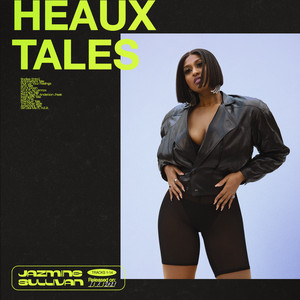
Not to sound like the old curmudgeon that I am, but I don't like the musicality of modern hip-hop and R&B. The rhythmic meter and booming bass is repetitive and boring. Insert "old man yells at cloud" Simpsons gif. There's some interesting moments in here, especially in the structure of the album as a concept, but the content still feels vapid to me. Sure, there's feminist themes, but there's no powerful insights, it's all reduced to old rap tropes such as sex and money. Grandpa Simpson disapproves.
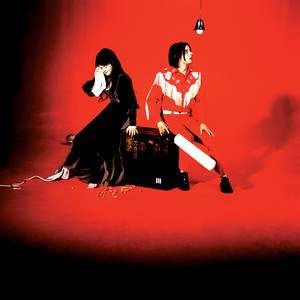
Back in my 20s, a group of us were out on a "12 pubs of Christmas" pub crawl. Things had (expectedly) gotten a little drunken, and the whole group ended up having a serious shouty argument over whether Meg White was a good drummer or not. It got so heated that we split up over our differences, moved to different tables, glaring and scowling across the bar at each other, no longer on talking terms. Of course, we forgot about it all by the next pub, but for the record, I was firmly sitting at the "Meg is a great drummer" table. "Get Behind Me Satan" might not be as iconic as the previous two albums, but it still has all the energy and brilliance of a White Stripes album, this time with more piano and xylophone. And that energy has a lot to do with Meg's punk style drumming. The whole point of The White Stripes was to pair back music to three core elements (vocals, guitar/piano and drums), and this raw approach is what made their music so interesting, and, especially at a time of heavily polished and over-produced music, very refreshing. I could talk a lot about Jack White, his brilliant songwriting, musicality and, frankly, his genius, but this album in particular is energised and leveled up by Meg's symbol-happy drumming.
Big beats and weird little skits, with a wide range of samples from the likes of Cymande, kids TV shows, Steely Dan, Funkadelic and Kraftwerk (to name but a few)... this is absolutely my type of hip-hop. De La Soul never seemed to take themselves too seriously, and, like The Beastie Boys, that irreverence and comedy comes across as a fun energy throughout the album. But the quality of this music is serious. 3 is a magic number, but this gets 4.5 stars.
I really like Happy Mondays, and I'm a big fan of the Madchester scene. It was a perfect meld of guitar music and dance beats. And most of the scene's music holds up today, sounding just as good - Stone Roses, Primal Scream and a lot of Happy Mondays stuff still works just as well on a listen in 2025, over 30 years outside of the scene. This album is enjoyable, but it feels quite trapped in The Madchester era. You can really feel that the Mondays were enjoying themselves too much here (mostly due to Bez famously smuggling a load of pills into the studio). The result is music that would be absolutely brilliant craic to experience live in The Hacienda at 2am, but listening to as a standalone album outside of that context, it lacks a little bit. A harsh 3.5 stars from me.
Ambitious effort tackling some big social issues in a concept album peppered with confrontational "interludes", but ultimately it comes across as pretentious. It's hard to take anything here seriously when it's presented with synthesised drums.
Concept album aside, this is a fantastic collection of songs. The Kinks had really matured into a very interesting band here, with clever and very melodic songwriting. The concept album itself works very well too. It's just worth noting that almost every song here works just as well as a standalone song outside of the overall theme of the album. The Kinks had developed quite a distinctive sound at this stage, sounding somewhere between 60s rock 'n' roll and lighter folk (setting a template for future indie rock bands like The Shins). But there are lots of surprises in the music too (for example, "She's Bought a Hat Like Princess Marina" catches you off-guard halfway through), and more than enough to keep your interest right to the end. A very different sounding band to the those who sang "You Really Got Me" or "All Day and All of the Night" (two of my favourite songs btw), but that's why we're still talking about The Kinks in 2025, because they evolved over the 60s and 70s to create some very interesting music, and this album is a perfect example of that.
It's never a good sign when you have to check to see how long an album is. How much of my life do I need to spend enduring this nonsense? 38 minutes for the core album, or 57 minutes if I want to listen to the reissue bonus tracks. 38 minutes is long enough thank you very much. This very much signaled the beginning of a dark age for popular music in the early to mid 80s. Top of the Pops, dry ice, synthesised drums, bad miming, New Romantic fashion, nasal crooning and warbling, and frenetic dancing to the beat. Culture Club were front and center during all of this cringe, and this album brings you viscerally back to all of that with a shudder. Nope. Not for me.
I'm not a big George Michael fan, but there's no denying that Faith (the song) is an absolute classic. Sure, it's overplayed to bajaysus, but at its core, it's a fantastic song. Faith (the album), on the other hand is a bit meh. There's nothing particularly terrible, but nothing particularly memorable either. It's an easy listen, but after Faith, everything else is a bit bland.
Sweeping instrumentals, Avant Garde, mutating melodies, bass-heavy, post-rock, tracks ranging from 20 minutes to 2 minutes in duration. Yes, I am here for this music. Never heard of Tortoise before, but after my first listen-through, I instantly categorised them on my internal music shelf as sitting somewhere between Godspeed You! Black Emperor and Mogwai. That's hallowed ground.
Garbage seemed cursed. Shirley Manson went to first meet the band founder Butch Vig, famous for producing Nirvana's Nevermind, on the day that Kurt Cobain committed suicide. Their first promotional tour, supporting Smashing Pumpkins, was cancelled halfway through when the Pumpkins' keyboardist died. Later, their tour of the US to promote their third album, was cancelled, the day they were due to set out being 11th September 2001. Talk about bad luck. Pour your misery down on them. I went down that rabbithole of "what ever happened to Garbage" recently when the question randomly popped into my head by chance, so I was excited to see this appear. Garbage very much remind me of that mid-90s period of pop-rock, and it's probably because they were so instrumental in creating that sound. Imagine the privilege of Vig, getting fed up producing for bands like Nirvana, Smashing Pumpkins and Sonic Youth, and wanting to do something in a completely different style. The result is something that feels intentionally over-produced. But I don't mean that in a bad way. It's a distinct sound that somehow elevates Garbage from being an average indie rock group to something quite unique that leans more towards pop and electronica than traditional rock. "As Heaven is Wide" is the perfect example. In the wrong hands, this could be a seriously cringe-inducing song, but in the hands of Butch's production, it ends up becoming a template for a lot of late 90s, early 2000s poppy/metal bands (Skindive, I'm looking at you). Not to completely focus on Butch Vig though - the band wouldn't have worked as well without Shirley Manson, a proper lead for the band, snarling lyrics, and bringing a sort of punk energy to the sound. Some great songs on here, and while they definitely feel "of their era", they still hold up as great songs today.
How do you out-Black Sabbath Black Sabbath (the song) from Black Sabbath (the album)? With War Pigs, that's how. If the guitar riff, accompanied by its unsettling bassline isn't enough, an air raid siren wails, warning you to get ready for something ominous incoming. War Pigs is followed by Paranoid, Planet Caravan and Iron Man. That's a hell of a four song run. Ozzy's vocal melodies, Geezer's basslines and dark lyrics, and Iommi's iconic riffs are held together by some criminally underrated drum fills from Bill Ward. The first album was a lot more bluesy, but Sabbath had settled into a much darker sound here. Besides the riffs themselves, coming from the darkest dankest depths, there are some really interesting pauses and moments of almost silence in between that creates an atmosphere of anticipation. There's some interesting choices in experimentation too, with the vocal oscillation of Planet Caravan, the tape speed change at the end of War Pigs, and the intro to Iron Man, where Ozzy apparently sang into a mic through a metal (unfortunately not iron) fan. It still hits hard almost fifty years later.
Ambitious effort, creating a concept album about nuclear weapons, but it comes across a little pretentious, and the musicality is lacking any real depth or interest. The exception being the nutty "The Conference", which is the first song on the album that really grabbed my attention. Pity it took until the second last song for that to happen. Overall, an interesting idea, but not executed very well.
I'm not the biggest fan of jazz, but I respect the genre a lot. I feel a lot of the experimentation and musical theory goes way over my head, and honestly, I would very rarely sit down to listen to even some of the more accessible greats, but I still have a high level of respect for these proper musicians. The majority of this album feels quite accessible. But it does border on experimental at times, culminating in a proper nutty piece of afro-jazz experimentation, the strangest children's song you'll ever hear. But overall, it's great. Will I sit down and put it on again? Probably not too often, and that's the only reason it's losing a star from 4 - because of my own personal preferences around jazz. But, I can respect that there's some great music on this album.
Public Enemy said it best in Fight the Power: "Elvis was a hero to most / But he never meant shit to me". As an angsty teen, this was my go-to stance on Elvis, and I was always eager to go on about it at length. In a time of segregation, Elvis was a commercially viable entity to bring rock 'n' roll and and blues music to a white audience. The core sound and spirit of which originally came from Black artists, many of whom never saw the same recognition or financial success. Elvis stole the limelight from the black artists who had actually created the music. To clarify though, I don't think Elvis the person was necessarily a racist or a thief himself - from what I've heard he was a big fan of the artists and music, and rather than theft, it was more from a place of respect that he wanted to play their music. But that doesn't change how Elvis (the commodity) benefited enormously from systemic racism in the music industry. He got opportunities that many Black musicians, often far more innovative, were denied. OK, we've gotten that out of the way. But it's necessary to understand my position on Elvis, and his legacy. Of course I like Elvis' (early) music, but for all of the reasons above, I could never bring myself to become a fan. Let's talk about the music specifically. This album is far from his best. It feels flat and dull. I know it sits as a key moment in "The Elvis Story", where he was transitioning more towards pop after his military hiatus, but judging this as a standalone album of music, there's nothing spectacular here at all. A lot of bland doo-wop tunes, and besides one higher tempo number ("Dirty, Dirty Feeling"), one bluesy number ("Reconsider Baby") and a strange cover of "Fever", it sits as background music, never interesting enough to fully capture my attention.
This is what I love about this project. I wasn't familiar with the Minutemen before this. Now I'm a huge fan. Double Nickels on the Dime is vast: a double album, made up of 43 songs, but served in bite-size nuggets, ranging in duration from just 38 seconds long to just under 3 minutes (although the majority of the songs are 2 mins or less). It means that you get a serious range of music, with instrumentation that is far more technically advanced than is usual for the punk scene. Are they punk? In attitude, rawness and vibes, definitely. But in music, I hear funk, jazz, folk, country, alt rock, as well as punk. I love absolutely everything about this. I was already raving about this long before I reached song number 19, and I can't describe the joy I felt when the opening jangly guitar riff of Corona came on. I think I just shouted "JACKASS!" to nobody in pure glee. I guess there's a reason the Jackass guys picked it as their main theme song: the Minutemen's music is just as chaotic, energetic and punk DIY as the show itself. This deserves a 4.5 star rating.
Picture the scene: it's summer time, you're cruising along the streets on your pink moped, sun shining, wind in your hair, Hawaiian shirt billowing in the breeze, Vice City cops on your tail. Mark Hollis is on the radio singing "Baby, life's what you make it, celebrate it". Good times. If you were making a movie (or a GTA game) and had a scene that was set in the 80s, the best way to let your audience know the era they're watching is simply by playing "Life's What You Make It" by Talk Talk. It's pure 80s nostalgia. The rest of the album, had some interesting moments that bordered on jazz at times, but a lot of less interesting moments too. The move from synth to instruments was a good one for Talk Talk, to modernise their sound, yet this still feels so of its time, that in my mind, it'll always be part of the soundtrack to Vice City.
I still remember when I first discovered the Pixies. As a teenage Radiohead and Nirvana fan in the 90s, they had been on my radar for quite some time, but I'd never gotten around to listening to them. Then late one night, I stayed up to watch a Motorhead documentary. Right afterwards they showed "Gouge Away", the Pixies documentary. I was blown away. Especially in comparison to the Motorhead doc, I couldn't believe the calibre of musicians who were talking heads in the doc, gushing about what the band meant to them: Graham Coxon, David Bowie, PJ Harvey, Thom Yorke and even a rare appearance from Jonny Greenwood. I went straight out the next day and bought Surfer Rosa. Pixies quickly became one of my all-time favourite bands. In the pre-Spotify days, as a broke teenager, you had to pick and choose your next album carefully. I got through the Pixies discography, but somehow managed to leave Doolittle until last. On a train to Belfast to see Radiohead, a college friend couldn't believe I was a Pixies fan who hadn't listened to Doolittle, so he handed over his Discman with Doolittle inside, and told me to rectify the situation immediately. I listened to the entire album from start to finish. I just couldn't stop listening to it. Pixies became a big part of my life. Playing Debaser on the streets of Galway at 2am with guitars borrowed from buskers. Obsessively trying to deconstruct Joey's guitar sounds. I once had an in-depth conversation with a stripper about the fueds between Francis and Kim. Having arguments with friends at parties about our favourite Frank Black screams in Hey ("If you go" vs "That the mother makes"). Watching "Un Chien Andalou" just because it's referenced in Debaser. Wrecking my neighbours' heads with my attempts to play along with "Dead" (Joey's parts of course). Knowing all the lyrics to "Hey", being the next best thing since knowing all the lyrics to "I've Been Tired". The album is more than a classic, it's monumental. Tame, I Bleed and Dead are the holy trinity of the "loud quiet loud" dynamics that fed Nirvana and Radiohead (and countless others). Debaser taking off towards the end. Joey's guitar at the end of Hey making you feel like your head is bending out of shape, much like the visual effect in the "Here Comes Your Man" music video. Lyrics about mutilation, prostitutes and old bible stories. Kim and Francis' voices going in completely different directions, but somehow working perfectly together. Frank's screams. I still can't listen to "Tame" without thinking of him talking about one of his proudest moments when a 75 year old member of the Sun Ra Arkestra said to him "Boy, you sure can holler!" I've been lucky enough to have seen them live now so many times that I've lost count, and I'll always go to see them whenever they play here. In fact, I'm going to see them again next year on my birthday. Back in my 20s, I used to listen to Pixies on my headphones on my way to a night out, to get my head out of a mental funk. Listening to them today still gives me goosebumps and puts me in a giddy mood. Raw, surreal, energetic, innovative, oddball, dark, witty, fun, and intensely weird in all the right ways.
There's something about the pedal steel guitar, as it's used in country music, that immediately turns me off a song. And unfortunately, it's all over this album like a rash. I'm not a hater of country music, but I'm not a big fan either. I prefer the more raw and energetic tunes from the likes of Johnny Cash or Danny Gatton, than what's here. Everything is very predictable. It's pleasant and all that, but I don't understand the appeal, and definitely don't understand this being in a list of 1001 must-hear albums.
Back when I was about 13 or 14 years of age, I was going to guitar lessons with a teacher named Mike Arrigan. I wanted to learn some Graham Coxon distortion noises from the album Blur, and Mike was not impressed by the dissonant sounds of Graham's guitar when isolated from the rest of the music. Instead, he started telling my about the song "Hotel California" by the Eagles. He'd do that. Sometimes, he'd go off on a long tangent about classic rock, rather than what you came to learn how to play that day. You might have left just as clueless about how to play that Radiohead or Blur guitar riff, but you'd have learned about some of the classic guitar moments from someone who felt it was their duty to pass it on. I'll never forget Mike going off on one about the solo, how the two guitars take turns playing against each other, before coming together at the end to play in harmony. And how most radio stations fade it out before the best part at the end. The Eagles always conjur up images in my head of a bank manager speeding along in his Audi A6, flashing his lights agressively at a Vauxhall Corsa that is doing 5 under the speed limit, listening to "Life in the Fast Lane", and probably queuing up "Money for Nothing" by Dire Straits next in his car stereo system. Not my type of music. But, as bland as some of the music they come out with is, there are moments of absolute brilliance, and that brings me back to the song "Hotel California" itself. My guitar teacher called it the greatest guitar solo in all of music. I don't know if I'd go that far, but thanks to Mike Arrigan, whenever it comes on, I always stop to listen to that solo properly, and make sure it doesn't fade out before the best part at the end.
I hated Morrissey before it was cool. Putting aside some of his awful views on immigration and the likes, I just could never understand the fascination with The Smiths or Morrissey. A lot of people who liked the same music as I did, were big into The Smiths, and I could never understand it. Well, in the spirit of broadening horizons with this project, I tried to give The Smiths another chance. Johnny Marr is an exceptionally inventive guitarist. Aside from his work on The Smiths, when he joined Modest Mouse for "We Were Dead Before the Ship Even Sank", he added a new dimension to their (already great) music and eleveted their sound to something epic. And he brings some interesting sounds to this album too. But, as much as I like Johnny Marr, I don't like him enough to endure Morrissey. His crooning and warbling, in his posh nasally tone, ruins everything that could otherwise be enjoyable about the music of The Smiths. He's insufferable, and as a result, so are The Smiths.
My dog Louie is a big fan of Leonard Cohen's later work, but that's mainly because older Leonard Cohen's voice sounds like a growly old dawg. Regardless, myself and Louie very much enjoyed listening to this quiet, simple, intimate, dark, striped-back and poetic collection. "The Partisan" is a particular highlight on the album. What a genius move bringing the French choir in at the end. 4.5 stars.
That opening chord. What an iconic moment in music history. I mean, what can I say? It's the Beatles. The first Beatles album that's come up on this list for me. Is it on par with the Beatles who made Sgt Pepper, Abbey Road or The White Album? No. But it's an early incarnation of the lads, one of the first where they were working entirely with their own songwriting, and a huge part of the Beatles story. It's hard to listen to this without conjuring up black and white imagery of the Beatles hiding from hysterical fans in slapstick setups: pretending to be on the phone, lowering a newspaper to reveal a poor disguise. The film is critically acclaimed, but rewatching it recently, it's nuts. Some really strange decisions made in comedy that in the context of today make the Beatles look insane. But back then it did something different - it made the world aware of the quirky, down-to-earth humour of the four. Huge moment for the Beatles. There's a good bit of filler on this album. But it also has "A Hard Day's Night", "I Should Have Known Better", "And I Love Her" and "Can't Buy Me Love", the latter being home to one of the most iconic guitar solos of all time. George was playing a 12 string Rickenbacker guitar for a good chunk of this album, which became a staple sound of the folky rock'n'roll 60s, but he was also a key figure in popularising that type of melodic guitar solo to the mainstream. Hard to believe that they're only 2 years away from Revolver and 4 years from the White Album here, but regardless, this is the poppy version of the fab four finding their feet, during peak Beatlemania, and writing some legendary songs in the process.
I dunno. I really like Yeah Yeah Yeahs. I loved Fever to Tell, and played the absolute shit out of Show Your Bones. Maps, Gold Lion, Mysteries, Date With The Night, Cheated Hearts... stellar stuff. Raw, punky, melodic with Karen O taking on an early PJ Harvey persona as the frontperson. But this is a very different Yeah Yeah Yeahs. They got a lot of acclaim for moving in this more synthy direction, but to me it felt like they'd watered down the sound that made them so good in the first place. The rawness was replaced with polish, and it felt a lot more poppy than punk. Case and point: the acoustic version of Soft Shock on the extended version of the album is INFINITELY better than the synthy version on the main album. I can't listen to Heads Will Roll at all without cringing. I'm being a bit harsh here, because there's some great songwriting present across the album. I mean, it's still Yeah Yeah Yeahs. Shout out to Skeletons in particular being a great song. But I feel this would have been a much better album if they'd dropped the synth.
Thankfully this isn't as cringey as The Number of the Beast, but it still feels very juvenille. The raw production values is what saves it. It has an almost gritty punk feel to it - something that you feel wasn't achieved on purpose. But the core Iron Maiden tackiness is still lurking under the grounded production sound: songs that feel like a first draft, guitars racing to the end of the fretboard because no one told them they didn’t have to, a lack of substance. It's not terrible, but it's not good either.
Chaotic. In the best way. Grandmaster Flash and Run DMC cuts beside jazz riffs and flute loops. Reggae moments from the likes of Lee Scratch Perry, mix with comedy stand-up routines, sheep sounds, and a dog barking "I love you" from a Little Caesars ad. The use of live instruments makes for a proper band energy. This was the ideal coming together of musical interests for me as a teen. Adam Yauch even learned the double bass, lugging it with him on a snowboarding trip to keep his practice up. We switch between hip hop, hardcore punk, funk, jazz and even Buddhist chanting. There's so much going on here, that Liam Howlett was able to create a whole Prodigy song out of a single line: "Oh my God it's the funky shit". Adam Yauch calling out misogynistic rap tropes, and a misunderstanding of their previous frat boy satire directly in the lyrics of Sure Shot, shows the Beastie Boys growing up. Then there's Sabotage. It still rocks with an insane punk energy that makes you want to slide across the bonnet of your car while wearing Ray Bans and short sleeves. It's also home to one of my favourite guitar solos of all time. Pure chaotic energy, perfect for the song. Seriously varied, chaotic, messy, unique, unpredictable and unexpected. Shit, if this is gonna be that kind of party...
Dark and minimalist. Feels like Burial years before Burial. Setting the blueprint for trip hop. You can feel the shadow of Massive Attack looming here too. The juxtaposition between Martina Topley-Bird's bright vocals and the dark, brooding and chaotic sounds and spoken word monologues that Tricky mixes in the background creates a unique sound. The hodgepodge of noises, percussion and melodies that Tricky is seemingly throwing together at random somehow come together to something that's completely out there, but also not a challenge to listen to at all. It's the sort of thing that you don't fully take in until a second or third listen. I still don't know why it works, but it really, really does work.
Led Zeppelin II is one of my favourite albums, so when a friend told me that his dad was getting rid of some old vinyl from his attic, back when I was in college about 20 years ago, I jumped at the chance to save a 1972 pressing of the Brown Bomber. As the old record crackles and pops on my turntable, I think to myself that this is truly the perfect way to revisit this absolute classic. Led Zeppelin II wastes zero time reminding you why it’s legendary. "Whole Lotta Love" builds itself brick-by-brick, guitar, then bass, then drums, into one of the all-time great riffs, when played correctly with the ringing out of the D string. And that crazy middle section? I'd never even heard of a theremin back in the day, so discovering Page playing something that sounded so alien without even touching it, blew my mind. They might be known for rock, but Zeppelin always pushed boundaries with experimentation. "What Is and What Should Never Be" is the sound of a more grown-up Zeppelin. Everything about it is great: JPJ’s bass grooving all over the board, Plant drifting from delicate to full roar, Page's smooth slide guitar, and that glorious ending signalled in by Bonham's gong. Then there's the madness of "The Lemon Song". Open strings ringing give the riff that unmistakable character. It’s provocative, mischievous, dripping with energy. Howlin’ Wolf and Robert Johnson reimagined by deviants. JPJ is unhinged during the "chorus", Page’s guitar is all bite, and the whole slow–fast–slow structure keeps you guessing. With an iconic "let's take it down a bit" moment: when Page bends the strings at the head of the guitar as he plays the hammer-ons at the end is an eye-widening moment for any aspiring teen guitarist. Such a clever moment of tonal invention. "Thank You" circles back to that more mature Zeppelin sound. Page's 12-string adds gorgeous texture, JPJ’s Hammond organ shines, and the false ending catches you out. Mischievous divils. Then there's "Heartbreaker". Every guitar player's Rachmaninoff - the impossibly hard piece everyone attempts, iconic and intimidating (like Piano Concerto No. 3 in the film "Shine"). A great riff, a great song, building up and up... and then suddenly everything strips away. Ladies and Gentlemen, Mr. Jimmy Page. Iconic. Awe inspiring. Messy and raw. And the follow-up solo after the band crashes back in? Criminally overlooked, building to a huge crescendo before snapping back to the main riff. It’s almost too much to take. "Living Loving Maid" might be the weakest track here, but only because everything else is so epic. It's still a great song with a fantastic chorus section in particular, Plant’s stuttering vocal delivery, JPJ's bass shining through again. Then "Ramble On" comes on. Maybe one of my favorite songs of all time. Literal goosebumps every single time that acoustic intro hits. I play that verse riff more than anything else when I have my acoustic in my hands. Even before you hear the Lord of the Rings references in the lyrics, it's hard to not imagine rolling green hills and little huts. JPJ's bass line hopping towards you like a Hobbit. That sustained harmonious solo. It's just beautiful. What's next? "Moby Dick". Ara stop. This album is TOO good. So much emphasis is put on Bonham's long drum solo in this song, that you might forget that it's home to one of the all time best riffs, and those guitar fills in between are EPIC. And then they hand the whole thing over to John, who does what only Bonham could do. At the end of the song, the guitar fills are replaced by drum fills. Nice. Finally, "Bring It On Home". The intro and outro are my favourite blues moments on record - that harmonica tone, that production. Then the verse riff kicks the door down: pure energy. The album finishes quietly after 40 minutes of mayhem - like a gang of Hell’s Angels kicking down your door, wrecking your kitchen, drinking all your whiskey, starting a brawl, lighting a small fire… and then slipping quietly out the back door.
The first time I encountered Mark E. Smith was when he tried to suffocate Joe Cornish with a plastic bag over his head on TV. He was joking of course, but was still kinda following through on it. "Vinyl Justice" was a segment on the Adam and Joe TV show, where Adam Buxton and Joe Cornish would arrive at a musician's house dressed as police, and call them out for crimes against music (embarrassing records in their personal collection). They arrived at Mark E. Smith's house dressed in protective riot gear. Because he's an unpredictable, dangerous lunatic. In "This Nation..." that sense of unpredictability is front and center. Chaotic, aggressive and wry spoken word from Smith is layered on top (or sometimes below) stuttering guitar and bass loops, sound effects and cymbal crashes. At one point during "Paintwork", it randomly cuts to an Open University lecture on red giants, apparently because Smith accidentally taped over part of the master tape at home and just decided to leave it in. There are tributes or references to Can, A Clockwork Orange, The Doors and The Twilight Zone thrown in the mix. At times it feels like rock, but other times it feels more psychedelic and experimental. But at its core is a real art punk energy, mostly down to Smith being behind the wheel. I guess that Adam and Joe segment is a good metaphor for this album. You start off prepared, dressed in riot gear, but by the end of the album Mark E. Smith has put a plastic bag over your head, is sitting on top of you and punching you in the ribs, all the while laughing his head off.
Radiohead are my all-time favourite band, and with a Copenhagen show on the horizon this feels like perfect timing to revisit Kid A. I've threatened my wife-to-be and our two dogs for years that I'd give a TED Talk on this album. Now's my chance. Kid A sits in my top three records of all time, just behind OK Computer and The Dark Side of the Moon, but in many ways it's the one that means the most to me. It wasn't the first Radiohead album I ever owned (that was Pablo Honey, bought as a kid because it was cheaper than the “Creep” single). It wasn't even the first Radiohead release to arrive while I was actively collecting music (that honour goes out to OK Computer). But Kid A was the first Radiohead album that landed at a time when I was a complete fanatic. I can't overemphasise the hype for this album. There were bootlegs flying around the Radiohead chat forums, there were the amazing animated "blips" that Stanley Donwood created, marketed through a website (one of the first websites that felt more like an art installation), and I was even at a launch party for the album in a local club named Cuba, which was bizarrely co-owned by Huey Morgan of the Fun Lovin' Criminals. The hype was there because this was the follow-up to the greatest album of our time, of all time, OK Computer. And it became the biggest left turn in modern music. For a lot of listeners, it was a shock: abandoning their guitars and diving into electronica. But, it never felt like a challenge to me. I already liked electronic music, but more than that, it felt like a natural progression. OK Computer had pushed guitars to their absolute limits, so the only place left was to go beyond. And even then, guitars never vanished entirely. "Optimistic", "Morning Bell" and "In Limbo" are still pushing the boundaries of guitars, and even the ambient weightlessness of "Treefingers" is built entirely from guitar samples run through the Ondes Martenot. Kid A pulls influence from everywhere. Charles Mingus, Aphex Twin, CAN, Talking Heads' "Remain in Light". But Radiohead filter those influences into something that doesn't feel like rock, electronica, jazz or ambient. It's its own beast. I'm convinced Kid A is a concept album. A protagonist, let's say Yorke for shorthand, feels disconnected from the world, experiencing it at a distance, like Kid A, the first human clone: conscious, confused, overwhelmed, and unprepared. The title song is an alien lullaby with half-human vocals filtered through the Ondes, with Phil taking over the programmed drums halfway through. It's as jarring as it is beautiful, and one of Radiohead's most underrated masterpieces. "The National Anthem" feels like that Yorke's first contact with reality: the pounding bassline as a heartbeat, the brass section spiralling into overwhelming sensory overload, the world happening far too fast. The emotional climax of the entire album arrives in “How to Disappear Completely,” one of my all-time favourite songs. Yorke has spoken about the out-of-body experience that inspired it, imagining his head floating down the Liffey during a Dublin gig, and I feel a strange national pride that one of Radiohead's most transcendent moments is tied to this country. That rising Ondes Martenot part, two notes of absolute clarity, is one of the most emotionally affecting passages in any Radiohead song. The strings are gorgeous, offering a moment of acceptance before the world (and string section) collapses again around him. No song has ever captured overwhelm and anxiety better than this. "I'm not here. This isn't happening". "Treefingers" feels like a complete emotional shutdown. After the painful dissociation of "How to Disappear", this is total withdrawal. Floaty, ambient, numb and peaceful. Then "Optimistic" brings Yorke back to earth with a momentary sense of clarity and perspective, though sarcasm and exhaustion soon creep in. "In Limbo" has him literally lost at sea: dark, brooding chords, that uneasy stop-start riff, the repeated plea of "don't bother me". It's yet another one of Radiohead's most criminally underrated tracks and its descent into madness at the end is pure perfection. "Idioteque" is the album's lurch into panic: climate disaster ("ice age coming"), political cynicism ("let me hear both sides"), technology overload ("mobiles chirping"), and the bleak hopelessness of protest ("we're not scaremongering, this is really happening"). For an entire generation of guitar kids, this was the gateway to electronica. It was impossible to ignore. "Morning Bell" plays like someone going through a divorce, but completely emotionally detached, suggesting they "cut the kids in half” as part of their settlement. But it's actually more about being divorced from reality itself. "Motion Picture Soundtrack" brings the album to a crescendo of an ending. That organ is gorgeous. Yorke seems to decide to leave the overwhelm of the world behind altogether with the line "I will see you in the next life". But, perhaps it's also Yorke deciding to go back to a moment of peace, accepting the world, as we get an ending of ambiguity with the ambient, weightless synth-string coda bringing us back for a moment, post-credits, to the calmness of "Treefingers". Every member of the band reinvents themselves here. Jonny Greenwood goes from one of the most innovative guitarists of all time, to one of the most innovative musical minds, full stop, bringing KAOSS pads, modular synths, the Ondes Martenot, sampling, and more to the mix. Kid A isn't a left turn. It's the sound of a band battling with the expectations of the entire world, the ensuing writer's block, and a disconnection from reality due to the surreal nature of public attention and relentless touring. And somehow creating one of the best albums of all time in the process. A true masterpiece of anxiety, overwhelm and disconnection. 100 stars.
Henry Hill's car screeches around the corner. He's paranoid, wired on coke, chauffeuring his family around, picking up guns and drugs, cooking pasta sauce, all while convinced a helicopter is following him. Playing over this scene, Mick Jagger screams "AMMA MONKEEEEEEY MAAAAN!" I became obsessed with that sequence of Goodfellas. And the main reason is the amazing medley of music that runs through it, one of the biggest highlights being "Monkey Man" from this album. I'm a big fan of all incarnations of the Stones. Early raucous 60s rock'n'roll Stones. Even psychedelic Stones. All of it great. But I particularly like this era of the Stones, when they concentrated on their blues roots, their biggest strength. I think this is my favourite of all the Stones albums. There's so much I love about this album. Merry Clayton's vocal crack in "Gimme Shelter". The slow burn of "Love in Vain". "Country Honk" being the better of the two honks. "Let it Bleed" with Jagger's inexplicable Southern twang. Keith Richards' guitar sounding somewhere halfway between rhythm and lead. The guitar tone and distorted harmonica of "Midnight Rambler", slowing down and building back up to the most epic part of the song - it's the ultimate blues jam. "You Got the Silver" showing Keef's singing chops and some great slide guitar too. Wyman's bass intro with those twinkly piano bits, before the drums and THAT guitar riff kicks in for the absolute tune of "Monkey Man". A proper groove. There's pure energy throughout this album. "You Can't Always Get What You Want" is the standout track in an album of standout tracks. The choir intro should feel ridiculous, but it actually works. The gentle acoustic build, the tambourine, the organ swell - the whole song gradually expands until it takes off. It's an absolute hero of a song. This is peak Stones. Blending blues, country, rock'n'roll and folk with lots of swagger and groove.
Back when I was in my early 20s, and a smoker, I used to carry around a Rolling Stones "Hot Lips" zippo lighter that I named Charlie, after Charlie Watts. Charlie would often slip out of my pocket during a night out, but would always somehow make his way back to me. Those lips are so instantly recognisable as representing the Stones. As a designer, I tip my hat to one of the greats of logo design. That this iconic visual was first introduced with this album, yet was overshadowed so massively by the album artwork itself says a lot. Another of the records that I rescued/nabbed from a friend's father, who was inexplicably dumping his vinyl collection when I was younger, is an original 1971 pressing of Sticky Fingers, complete with working zipper and inner sleeve of underpants stamped with Andy Warhol's name. It just goes to show what the Stones are capable of when they have full creative control: one of the most innovative and iconic album covers of all time, and one of the most recognisable logos in the world, all in one release. And we're still just talking about the artwork - we haven't even gotten to the music yet. I stand by my previous claim that Let It Bleed is my favourite Stones album, but Begger's Banquet and Sticky Fingers are very close behind. What an album run! It's acutally pretty weird that the 1001 gen algorithm served me Let It Bleed yesterday and Sticky Fingers today. I'm looking forward to Exile on Main St. tomorrow. Sticky Fingers carries on the "return to blues roots" Stones era that Banquet introduced and Bleed perfected. There are some iconic Stones classics on here, like "Brown Sugar", "Wild Horses" and "Bitch", but some of the real gems are the more stripped down blues tunes, like the absolutely brilliant "You Gotta Move". The Stones always bring a very unique and raw sound and energy to the blues. Long, extended jams often break out, like on "Sway" and "Can't You Hear Me Knocking", showcasing just how tight a band the Stones had become with Mick Taylor settling in nicely. Iconic cover art, iconic logo, and a record that matches the attitude of both.
The reverb-soaked, echoey sound of a Memory Man pedal feeding back on itself is the sound that opens The Bends, and ushers in the first proper era of Radiohead. To me, Pablo Honey was more like of a collection of songs to supplement "Creep" than a proper Radiohead album. I always think of The Bends as their first real album. I remember when Radiohead played my hometown of Galway while touring The Bends. I was too young to go, but I could hear most of it drifting over from the venue into my back garden. Since then, I’ve seen them (properly) six more times across Ireland, along with the various side-projects (Jonny’s orchestral work, Junun and The Smile). And now, in less than a week, I’m off to see them for a seventh time in Copenhagen. This is the second Radiohead album 1001 has served me in the last week, so here’s hoping the next six days line up neatly with the remaining six. I've listened to this album so many times that I know it inside out. The underdog of Planet Telex with its echoey riff and Colin's distinct bass holding it together. Jonny's inventive guitar work adding texture to Bullet Proof. High and Dry's bright acoustic riff and solo. Seeing The Bends performed on Jools Holland gave me a whole new appreciation for the song. Jonny pulling the string off his guitar entirely to make the craziest noises, before the whole band comes together in a moment of pure energy towards the end of the song, as Thom sings: "I wanna be part of the human race". Street Spirit was the song that you learned on guitar as a teen to show off to your friends. A gorgeous piece of music. It also had nuns prancing about in slo-mo in the black and white video. Then there's the centerpiece of the album. (Nice Dream) > Just > My Iron Lung. A serious contender for the best consecutive three song run in any album. (Nice Dream) eases you in with some gorgeous verses and chorus before Thom's singing turns to a snarl, signalling in the nightmarish solo. Textured soundscapes build up in the background towards the end, making it feel very ethereal (hello Space Echo!) Then Just's acoustic guitar kicks in, and Johnny's guitar takes off. What can you say about Just except that it's a perfect song from start to finish. What an amazing chorus. Then Jonny's guitar seems to just keep climbing and climbing until all we're left with is that single high pitched note, sounding a bit alien thanks to the Whammy pitch-shifter. Before it all crashes down. A moment of peace before it that epic solo takes over, Thom screaming "You do it to yourself!". Literal goosebumps every single time. Plus, I can't hear that song without getting a visceral mental picture of a load of people lying perfectly still on the footpath. My Iron Lung became another reason to buy a Whammy pedal. Ed's textures in the background create atmosphere while Jonny's alien-sounding riff is distinctive enough to not need any lyrics for the chorus. Jazzy chords that have no business in rock music, make the verse sections complex and interesting. Thom snarls his way through sarcastic and sardonic lyrics. And of course that shift left, when the song takes off. This album reinvented guitar music, something Radiohead would do several times in their career. There really was nothing like it at the time. But it wasn't all music academia - they did it in a way that was a lot of fun to listen to. Radiohead announced themselves as the most interesting and innovative band on the go with this album, and suddenly became a hugely important part of many people's lives, myself included. In My Iron Lung, Thom sings "this is our new song / just like the last one / a total waste of time". You couldn't be more wrong, Thommy boy.
What are the odds? 1001 gen randomly serves me Let It Bleed, then the next day it gives me Sticky Fingers, so I write "I'm looking forward to Exile On Main St. tomorrow". And what comes up the following day? The Bends. But then the day after THAT? Here we are with Exile On Main St. What a great album. It's a pretty epic four album run from Beggars Banquet to Let It Bleed to Sticky Fingers to Exile On Main St. The Stones had fully found their groove across these previous three albums, and they're still at their peak here. The cover of Exile is fitting. A photo collage of outsiders, misfits, and Americana. This whole album feels like a collage of blues, gospel, country, and ragged American rock & roll. We have the "classic Stones rock" tunes. Songs like "Rocks Off", "Tumbling Dice", "Happy", "All Down the Line", all bring me back to standing in a mud pit in a very rainy Slane Castle, watching Mick strut about the stage like a possessed rooster. Keef's bright treble-heavy guitar tone ringing out on every chord, starts to become an iconic Stones staple across these songs. Blues tunes like "Rip This Joint", "Shake Your Hips" (where Jagger seems to channel John Lee Hooker), "Ventilator Blues", and too many more to mention, are the Stones at their best. There's only a few bands who can put a unique stamp on the blues, and the Stones are one of them. There's plenty of folk, country-bluegrass, and gospel woven through it all too. Then there are the more "laid back" tunes like "Torn and Frayed", "Sweet Black Angel" and "Let It Loose", showing a more mature side to the Stones. "Let It Loose" is now forever entangled in my mind with visuals of Frank Costello introducing himself to Billy Costigan at the bar in "The Departed". Scorsese and Robbie Robertson always used the Stones' music so perfectly in his films. "Sweet Virginia" is the masterpiece of the album. Sounding somewhere between Dylan, Young and old-school delta blues, it's a masterful blend of folk, country and blues. Rough, authentic and just perfect. The fact that these songs were mostly recorded in a basement on a mobile recording studio while the Stones were in exile themselves, after avoiding their tax bill, is nuts, but also maybe part of what gives the album its unique sound.
"Yaa yaa, feelin' good on a Wednesday..." Hard to believe this all started with Randy Marsh singing in a bathroom. Autotune. Outside of the world of South Park, I always liked and respected Lorde from the little I’d heard, mostly "Royals". So I was happy to dive into Melodrama when it popped up. But honestly, I think I liked Lorde better when I knew less of her music. I do appreciate the concept. A whole album structured around a house party is clever, and I can definitely see why people love this. But I just couldn’t get into it. The musicality never grabbed me. I was waiting for something as innovative and catchy as "Royals", but it never came. Sure, this isn't my type of music, but Billie Eilish isn’t my type of music either, and I love her stuff. So I don’t think it’s a taste-barrier issue. It just didn’t click with me. I admire the idea more than the album. It was grand, but I wouldn’t rush back for a re-listen. Sorry Randy.
This feels more like an art installation than an album of music. Something you'd stumble across in a white room in a museum of modern art. You sit down on a cold, uncomfortable bench, and listen to the absolute utter madness of this patchwork blanket of dialogue, sound effects, skits and satire. People stroke their chins in contemplation, while sped up chipmunk vocals, coughing and telephone conversations play in the background. You really have to remind yourself that Zappa didn't do drugs. Which makes this collection of sounds even crazier. Scathing satirical takedown of hippy culture - well, more of the hypocrasy of "mainstream" hippy culture, and the phoniness of those wanting to portray the image of being a hippie. In "Who Needs the Peace Corps", he captures it perfectly in the lines: "First I'll buy some beads, and then perhaps a leather band to go around my head, some feathers and bells, and a book of Indian lore. I will ask the Chamber of Commerce how to get to Haight Street and smoke an awful lot of dope". All of this is set to genre-jumping music that sounds very familiar to anyone who listens to music from that cultural era (The Beatles, Jefferson Airplane, The Byrds, etc.) It's a very interesting album. That's one thing you can say about it. It's absolutely batshit crazy. That's another. I love the concept, and the balls to release a whole album that doesn't care about music, but instead is 100% concerned on hitting you over the head repeatedly with its message. A tough one to listen to, but crazy enough to keep your attention at all times.
I'm a fan of Guy Garvey. But mostly because of his fantastic weekly show on BBC Radio 6 Music, where every Sunday afternoon I tune in to listen to the great music that he curates. His taste is nearly identical to mine. But, oddly I was never a big Elbow fan. The one song of theirs that got my attention when I first heard it was "Grounds for Divorce". That bluesy slide guitar riff, the vocal melody and the guitar and bass doubling for that epic chorus drop are all recipes for an absolutely top notch song. The rest of the album is a lot more subdued than I expected. Very atmospheric and light, reminding me (predictably enough) of the band Doves. Northern indie bands must share a sound I guess. The opening four songs are great, but it's let down a bit by the rest of the album. 3 stars feels a bit harsh, so let's call this 3.5.
The album opens with "Shout", and it's great stuff. Very dark synth, reminding me of Gary Numan or Depeche Mode. "Head over Heels" is another great song. Although I wonder my judgement is clouded with nostalgia. I first heard this song in the movie Donnie Darko, so I have good associations with it. But the rest of the album, including the most famous song, "Everybody Wants to Rule the World", feels quite dated and a bit "too 80s" for my taste.
I remember when Hey Ya! dropped. It wasn't just a big single, it was a cultural phenomenon. It was completely unique and seemed to come out of nowhere. Everyone was shaking Polaroids, asking people to lend them some sugar, declaring themselves as neighbours. I was fully swept up in it. I absolutely loved it. I'd play it at parties, quote it constantly, and I even created a medley on guitar that started with Hotel Yorba and would segue into an acoustic version of Hey Ya! It was the ultimate crowd pleaser ("crowd" being the 2-5 people actually listening to me play). But underneath all the pure joy of the song, is something really dark. Hey Ya! is one of the most upbeat songs ever written about how love isn't permanent. André literally tells us what he's doing, and we somehow don't notice, maybe because we don't want to - I guess that was his point: "Y'all don't want to hear me, you just want to dance". It's a brutally honest confession about love falling apart, people staying together for the wrong reasons, and how we avoid confronting hard truths. Hiding the message in the lyrics of a song that was so catchy and energetic, and playing on the trope of romance and love in pop music, is genius, and living through that hype while slowly realising what the song was really saying felt like André pulled off the ultimate magic trick. That track set the tone for The Love Below, André 3000's half of the double album: a psychedelic, jazzy, funky, 70s-soaked, musical-theatre fever dream where he leans fully into eccentricity. It barely resembles hip hop at all. It's lush with Prince-like falsetto, spoken-word interludes, theatrical storytelling, jazz melodies, and basslines full of stank. And it's FILTHY! It was bold, strange, theatrical, and completely unexpected for an Outkast album. Back when the album came out, I used to skip Speakerboxxx and go straight to André's side. Big Boi's half felt like the "other one", and I was there for André. But, Speakerboxxx is a really strong album too. It's dense, funky, and full of intricate, complex and layered melodies. Big Boi pulls in Funkadelic-style textures, and interesting samples and blends them perfectly with hip-hop. It's more in line with the classic Outkast sound, sure, but it's still complex and great. It never stood a chance, when sitting next to André's horny cosmic jazz opera. It was always going to be overshadowed. It was a really strange move to release separate albums in a double, and it was another angle of something unique and interesting that they were doing creatively. For me, Speakerboxxx/The Love Below will always be tied to that moment when Hey Ya! was everywhere, blaring from radios, at parties, on TV, while quietly saying something heartbreaking that most of us didn’t notice. We just wanted to shake polaroid pictures and borrow sugar.
I don't know WHAT I just listened to. Suba has thrown bossa nova, heavy experimental sounds, acid house, new-age hippie music, and down-tempo electronica into a blender, and weirdly, it's kinda great. Definitely one of the more out-there albums I've listened to recently, but it feels like a layered and complex love-letter to São Paulo and its mashup of cultural influences. Very interesting and unique collection of sounds.
The Undertones have always had this Ramones-like contradiction about them. On the surface they look and play like scrappy, leather-jacketed punks with loud guitars, shooting out two-minute bursts of punk rock. But then you listen to the lyrics, you realise they're singing about girls, chocolate, cousins, awkward crushes, and the very innocent chaos of teenage life. They sound less like snarling anti-establishment outsiders and more like five lads your parents would happily let you hang around with. I came in through "Teenage Kicks", of course, the gateway drug for most Undertones fans. And once I had a chance to see them in my hometown, with Paul McLoone fronting, I dove into the back catalogue. "Hypnotised" has some great hooks: short, bright, unpretentious. The guitars are still doing that ragged, three-chord punk thing, but there's a lot of colour here, feeling surfy, bubblegum and a bit garage at the same time. Feargal Sharkey sings like he's somewhere between crooning and yelping. It sounds strange to describe it, but when you listen to The Undertones, it all just clicks perfectly. They just wrote short, perfect songs and played them like they meant it. As a side note during that hometown gig, a friend of mine, in a moment of pure impulsiveness, stole guitarist John O’Neill’s performer lanyard straight off the stage and used it to get backstage to hang out with The Dirty Three, The Frames and Buddy Guy. And that's a lot more punk rock than any of the Undertones' lyrics.
A group of lads in Wrangler straight-cut jeans, brown leather shoes and white checked shirts, tucked in, with too many of the top buttons opened, jumping around the dancefloor of a soulless nightclub, sloshing their pints of cider and Heineken around the place. That's the image you get when you hear Mr. Brightside or Somebody Told Me. Absolute rubbish. It's mundane, over-produced swill that is presenting itself as some sort of artistic masterpiece. "Somebody told me you had a boyfriend / Who looked like a girlfriend / That I had in February of last year / It's not confidential, I've got potential / A rushing, rushing around." Move over Bob Dylan, give Brandon Flowers that Nobel Prize for literature. The songs on paper shouldn't elicit such intense feelings of hatred in me. If anything, they should mean very little to me, because the whole album, and the whole discography of The Killers is mundane, beige and uninteresting. But, there's just something about the sound that they create that causes me to grind my teeth to the point of causing dental damage. And posing as some sort of "high art" is the part that really makes my blood boil. And I haven't even gotten to the "profound" outro of All These Things that I've Done: "I've got soul, but I'm not a soldier". As Bill Bailey pointed out, on the surface it sounds alright. But then you analyse it and realise it's meaningless rubbish. It's as profound as saying "I've got ham, but I'm not a hamster".
I only really knew "Cranes in the Sky" going into this, and I did like the album, but it’s just not really my thing. It's refined and subtle, and there's a real calm, crafted feel to the whole thing. But for me it stayed more in the "I respect this" zone than something I'd come back to a lot. "Cranes in the Sky" is still the standout, and hearing it in context does make it hit a bit harder, but the rest didn't fully click with my tastes. Really well made, just not quite my scene.
Warm harmonies, a laid-back sunny hippy vibe, at times a bit rockier (like in "You Better Run"), and occasionally drifting into psychedelia. Mostly it's just easy, feel-good, hippy vibes spread across a bunch of catchy tunes. A perfect soundtrack for groovin' on a Sunday afternoon dog walk.
This album sounds like Bowie is lurking just off to the side, smoking a cigarette in a silver jumpsuit, giving the band a small, satisfied nod. I mean, "Whizz Kid" is the most Bowie-sounding song since "All the Young Dudes" - so much so, I had to look it up to see if he also wrote that one. The Bowie comparison isn't a bad one. Mott sounds like peak Ziggy Bowie, which can only be a good thing. It lacks the substance of Bowie, but it's top notch glam rock. 3.5 starman stars.
I still vividly remember the first time I listened to "Seven Nation Army". I can't remember exactly how I first got into the White Stripes, but it was either through hearing the songs "Dead Leaves and the Dirty Ground", "Fell in Love with a Girl", or maybe after seeing the video for the latter. Regardless, I was hooked on White Blood Cells, so when I heard Elephant was coming out, I bought it on the day of release. I couldn't wait to get into it. Literally. I was 19 years old and working in a supermarket hot food counter. I bought the album on my lunch break and couldn't wait until the end of my work shift to listen, so I nipped into the bathroom with my discman. Not the most glamourous setting for the first time I heard "Seven Nation Army", but my mind was absolutely blown. I went back to work, and somehow made it to the end of the day. Anytime anyone spoke to me, it was like the adults in Charlie Brown. Trumpets. Muffled wah-wahs. My brain was busy replaying that riff. The album became a soundtrack to my late teens and early twenties, the music perfectly matching the chaos of that time. Some albums bring you back to a particular time in your life, and Elephant is one of them: every listen pulls me straight to the smoky dancefloor upstairs in Cuba nightclub, to clumsily hammering out "Ball And Biscuit" on guitar in my childhood bedroom (much to my neighbour's despair, I'm sure), to laughing with friends about the cheeky humour of "It's True That We Love One Another". When I lived in Greece for four months, the album came with me. We used to blast "There’s No Home for You Here" at full volume to not-so-subtly evict an overstaying house guest. For a band that famously brought everything back to basics, The White Stripes still found ways to innovate within those restrictions. Jack White made all of us bedroom guitarists go wide-eyed when he introduced a fake "bass guitar" switch through his Whammy pedal, "Seven Nation Army" and "The Hardest Button to Button" being the prime examples. Then you've got the lurching slow-down/speed-up madness of "Black Math", the glorious, unhinged Whammy-drenched solos in "Ball And Biscuit", and their creatively raw reworking of a Dusty Springfield classic, complete with that jarring, buzzing guitar stab at “I need your sweet [blarrrng] love [blarrrng].” Then there were the music videos for the singles. "Seven Nation Army" caused dizzy spells with its infinite zoom around triangles and optical illusions. "The Hardest Button to Button" out stop-motioned Michel Gondry's previous White Stripe stop-motion masterpiece of "Fell in Love with a Girl", and then there was the jaw-dropping black and white Kate Moss pole-dancing video for "I Just Don't Know What to Do with Myself" (insert eyes emoji 👀). Their dedication to that red-white-and-black palette, the stripped-back musical style, and all those inventive videos just added to the whole White Stripes mythology. Elephant is where everything - sound, visuals, attitude - came together perfectly. Their masterpiece.
Feels like one of the seminal records of punk, right alongside the work of Iggy and The Stooges, but there's still a lot of bluesy grit and some slightly unhinged, experimental moments in there too. It's raw, loud, with a real political fire behind it. Also, I was halfway through when I realised that Fred “Sonic” Smith is in MC5, someone I know of through another punk legend, his partner and namesake, Patti Smith. 3.5 stars
I was never really into Wu-Tang Clan, or this style of hip-hop in general. I did enjoy this though - Method Man's rap style, some interesting choices around structure (the "sparring match" of Meth vs. Chef, for example), and RZA's great beats and samples really elevated it. Ultimately, I liked this and respect the work, but it's just not really my scene.
The Who went in a strange direction from where they started off. In the early days, there are moments where they basically stumbled into punk without knowing it: the power chords, the frantic tempos, the sense that Keith Moon was trying to physically outrun the song. It was raw enough that you could imagine shaving a few minutes off each track and ending up with an early prototype of The Ramones. But instead of leaning into that, The Who veered off into a half-avant-garde, half-doo-wop detour. It's like they couldn't decide whether to smash their instruments or write a rock opera, so they did both. I've never been a fan of live albums, with a few big exceptions, and Live at Leeds… isn't one of those exceptions. The production choice to strip away almost all the audience noise to make the band sound crisp and isolated, makes sense on paper. But in practice, you get these bizarre pockets of dead air after songs, or during Pete Townshend's between-song rambles. It's eerie and disjointed, like someone muted the crowd, and it absolutely sucks the atmosphere out of what was clearly a roaring venue. I'd imagine being in that room in 1970 would've been epic. Listening to the album, though, doesn't quite give you that level of excitement. But the musical performance itself mostly overcomes the production quirks. The "My Generation" medley is a monster. "Magic Bus" is ridiculous in the best possible way. When they hit their stride, the whole thing works well enough that you CAN start to imagine what it might have felt like to be in that crowd. Is this one of the greatest live albums ever? No. Does it sit up there with The Last Waltz, Nirvana’s MTV Unplugged, or Dylan Live ’66? No. But as a musical performance, with some amazing medleys, it's a great showcase of The Who at their peak.
They should prescribe this album as medication to remedy stress. As far as shoegaze goes, these songs feel much warmer and more optimistic than a lot of the genre - definitely less raw and aggressive than the "punch you in the face" distorted guitars of My Bloody Valentine. There's something very calming about listening to this album. But it's never uninteresting. Every track is layered with unexpected sounds and effects, creating textured melodies that take subtle, unexpected turns as they flow into each other. That seems to be the point of the synesthetic colour-coding of the songs into groupings. Rather than standing alone, the tracks blend together to create broader soundscapes, each with its own feel, represented by colour. Repetition swells and builds slowly, becoming almost trance-like. By the time it ends, everything just feels a bit calmer. 4.5 stars
That iconic album cover. A figure in darkness, cigarette glowing, something half-hidden. It sets the tone visually - quiet, mysterious, detached - and gives you a sense of what you're about to experience. Almost. Deserter's Songs didn't really sound like anything else around at the time. It felt unearthed rather than recorded. There's a crackle and pop to the production that makes everything feel like it's come from another time, like a time capsule left somewhere damp and forgotten. The otherworldly atmosphere of BioShock comes to mind, like a relic from a different world. "I Collect Coins" and "The Drunk Room" especially sound like recordings that have survived some kind of apocalyptic event, echoing in a huge, empty space. The heartbreak at the core of the album hits hardest on tracks like "Holes" and "Tonite It Shows". Fragile, wounded songs that feel permanently on the verge of breaking down at any point. The emotional backbone of the album comes from the strange, aching instrumental textures everywhere. At times it sounds like a saw weeping. At others it's barely even music, just atmosphere breathing around the songs. The unusual collection of instruments creates some seriously gorgeous, sweeping and cinematic moments, especially in songs like "Endlessly" and "Opus 40". I'm fascinated by how different this sounds to The Flaming Lips' The Soft Bulletin. The two bands were sharing studio space at the time, often using the same instruments and equipment. Mercury Rev recorded during the day, The Flaming Lips came in at night, saw what was lying around, and began experimenting themselves. Same room, same tools, but completely different results. Both bands reinvented themselves, just in completely different creative directions. "Goddess on a Hiway" is perfectly placed, turning up just when the album needs it. It was the track that first caught my attention, along with "Holes", but coming back to it now, the album clearly works best as a complete piece rather than something to dip in and out of. Deserter's Songs isn't exactly something you'd throw on at a party. It works best late at night, lights low, left to run its course. Not unlike the image on the album cover itself.
I've never been a fan of Tom Petty. I know I'm likely in the minority here. I play guitar with a group at my partner's family reunion every October, and I remember the look of absolute shock and horror on her cousin's face, when I dropped the bombshell that I didn't know how to play any Tom Petty because I wasn't a fan. He couldn't compute it - "But you play guitar, how do you not like Tom Petty?" To be clear, it's not that I don't like his music, although I'm definitely not a fan of Free Fallin' or Learning to Fly (don't @ me!), but to me, his music is just very middle of the road. And that goes for everything I heard on this album too. "Rockin' Around (With You)" is the song that I liked the most, and the rest of the album was enjoyable too. But, to answer my partner's cousin, it's not that I don't like Tom Petty, it's all fine - it's just nothing particularly special to me.
It'd be so easy to just give this a one-word review: "Bad". But I'll rise above the temptation. I've already said before that I was never a fan of Jacko, even before the abuse stories came out. 80s pop just grinds my gears, and he was the undisputed king of it. The 80s in general were a weird time, where being "bad" simply meant wearing studded leather jackets and repeatedly telling everyone how bad you were. By this stage, Jacko was so famous and so insulated from normal life that he was completely unaware of how cringey some of his songwriting actually was. Let's try to be objective about it all though. The title track "Bad" IS a good song. Cheesy, nonsense, and deeply cringey, sure, but it's grand. "The Way You Make Me Feel" has all the hallmarks of an awful 80s song: processed beats, processed bass, layers of synth. But the melody does a lot of heavy lifting and ultimately saves it. On the other hand, tracks like "Just Good Friends", "Another Part of Me" and "Speed Demon" lean fully into the 80s excess, with "Speed Demon" throwing in some absolutely unhinged keytar for good measure. "Liberian Girl" is peak late-80s Jacko cringe. It's hard to listen to without shuddering in pure cringe. But the second half of the album is hard for even the biggest Jacko haters to argue with. "Man in the Mirror" is cheesy, yes, but it's undeniably catchy and shows off the strengths of his voice, with plenty of "shamons" and "hee-hees" thrown in for good measure. "Dirty Diana" and "I Just Can’t Stop Loving You" keep things going, before "Smooth Criminal", which is genuinely a unique and interesting song. "Leave Me Alone" is a very solid way to end the album too. So is it Bad? In the way Michael Jackson meant it - badass, tough, cool? No. In the true sense of the word, in terms of quality? Begrudgingly, I also have to say no. It doesn't deserve the untouchable pedestal it's often put on, but there are enough strong songs here to test even the most committed Jacko hater.
I can understand how Bob Dylan fell asleep when he was played this album. I'm a fan of Joni Mitchell, and the reality is that it was just Bob Dylan being very Bob Dylan - but to be fair this is a very, very mellow album. There's a lot of soft jazz bringing the energy levels down here, which results in tamer stuff than I expected from Joni. There are some great songs on here all the same. "Help Me" is a classic, and title track "Court and Spark" has some really gorgeous piano. It's far from "Blue", but still enjoyable. "Raised on Robbery" finally wakes myself and Bob up with some high tempo rock'n' roll, but we're already at the last 3 songs of the album at this stage. "Twisted" is a jazzy number to end on, and the double bass groove will have you snapping your fingers before you realise you're doing it. Joni's vocal performance is fantastic and varied throughout the song. As the album comes to a close, I find myself wishing there had been more of this earlier.
As someone who was learning to play guitar in the mid-90s, it was a requirement, not an option, to learn "A Design for Life". Even if you weren't a fan of the Manics. Like it was part of a curriculum. And I wasn't a fan of the Manics. Listening back to this album now, nothing has changed. Bradfield's singing voice still really gets on my nerves. The rest of the makeup of their music is the embodiment of a shoulder shrug, or the word "meh". They put themselves forward as edgy and profound, but they're neither. The disappearance of Richey Edwards hangs heavily over this album. They may have gained a lot more success post-Edwards, but their sound had become a lot more watered down and less interesting than in the days he was around. The arpeggios of "A Design for Life" are the most interesting thing about the music on this album, and after learning to play them, they weren't even worth the effort.
Amnesiac suffers from one big problem: it lives in the shadow of a masterpiece. After Kid A, the anticipation was massive. I remember living on Radiohead forums, downloading bootlegs from gigs, dissecting rumours about "Big Boots", "Nude", "Follow Me Around". Then a leaked version of "I Might Be Wrong" surfaced and suddenly there it was: guitar. Not that the move into electronica was ever a bad one for Radiohead, but the thought of Jonny Greenwood, quite possibly the most innovative guitarist of all time, plugging back in again was a moment of serious excitement. The physical release of this was particularly special. That "lost book" edition, with the CD acting as the library book card, was such a perfect artefact for the music inside. Paired with Stanley Donwood's artwork, the crying minotaur, the labyrinth, the constellations - it alone dispelled any thoughts that this was going to be a collection of Kid A b-sides or leftovers. This was a proper album. What still blows my mind is this: imagine your biggest creative block producing so much extraordinary material that you not only make Kid A, but still have enough left over to build Amnesiac. Having songs like "Pyramid Song" or "You And Whose Army?" in your back pocket, and thinking "nah, these aren't good enough for the album" is absolutely nuts. And yet, somehow, it's still criminally underrated. Let's go down into the labrynth. "Pyramid Song" is one of Radiohead's absolute best. That impossible-feeling time signature, the drifting gorgeous piano with all the textured sounds around it. It's a top-tier Radiohead classic. Ditto for "You And Whose Army?": that sharp intake of breath at the start, the muted, muffled descending jazz chord progression. The fragile, calm tone in Thom's voice juxtaposed with the defiant taunting of the lyrics. It's absolutely cinematic. You can visualise a hero who appears to be knocked down, knowing something his enemy doesn't, quietly confident. And then that epic refrain of "We ride tonight / Ghost horses." Seriously. Synth pulses signal something incoming, Jonny's drop-D riff locks in with Colin's roaming bass, and "I Might Be Wrong" kicks off. And remains kicking, the rawness of the distorted guitar mixing with the metallic electronic beat - a real trademark of this "new" Radiohead. Until everything fractures in that stunning middle section, one of the most gorgeous moments they've ever recorded, the familiar descending hiss of a Memory Man feeding back to infinity, building atmospheric dread. I'm going to say it: the better of the "Morning Bells" is on here too. The single for "Pyramid Song" had two versions, with different b-sides on each, so of course I got both. "The Amazing Sounds of Orgy" is one of the most unique songs that Radiohead have come out with. It didn't sound like anything else they'd ever made, and it remains criminally hidden and largely unknown in their backlog of b-sides. Similar could be said for the fantastic "Trans-Atlantic Drawl", "Fast Track" or "Kinetic". "Dollars and Cents" is born of those same recordings, when Radiohead started to come out with some really atmospheric songs centered around bass. These songs are a side of Radiohead that verges almost on shoegaze - live instrumentation making music that behaved like electronica. "Hunting Bears" is another unique moment. The "Fitter, Happier" of this album: nothing but guitar string squeaks, a simple repeated riff, a keyboard drone, and yet somehow emotionally devastating. "Like Spinning Plates" might be Radiohead at their most experimental. Reversed, re-reversed, alien, unsettling. Thom's voice sounds like it's being transmitted from another dimension. Hearing the piano version live in Copenhagen recently only reinforced how beautiful the song is beneath all that abstraction. And then there's "Life in a Glasshouse". A genuine masterpiece. The jazz-inflected verses swelling until the chorus slaps you on the face with a trumpet. The brass is everything here, and Thom's final screams, “only, only, only” are the sound of the album peaking. I've seen so many forum lists ranking Radiohead albums into S-tier piles, and it genuinely baffles me that Amnesiac so often sits near the bottom, barely ahead of Pablo Honey. I honestly don't understand how this record isn't universally recognised as top-tier Radiohead. Listening to it waiting around in a hospital today, covered in wires and sensors, felt oddly appropriate for an album like Amnesiac. Despite the setting, the album creates a sense of familiarity that completely displaces where you are. It makes me feel at home. Underrated doesn't even begin to cover it.
The John Martyn I know is the Stormbringer! folky-bluesy John Martyn. One World is something else entirely. This is jazz-dub Martyn: echo, delay, and space doing most of the talking. Where folk, jazz and dub meet is in atmosphere rather than structure. Songs hover instead of progressing. "Big Muff" is a nutty oddball. I don't think anyone expected that putting Lee Scratch Perry and John Martyn in a room together would result in lyrics inspired by teacups shaped like animals, but here we are. The real centrepiece, though, is the absolutely gorgeous "Small Hours". The guitar barely sounds like a guitar at all, instead turning almost synth-like, endlessly delayed. Minimalist, refined, and perfect. One World is ambitious and fascinating, but for every moment that works, there are also moments that drift without really justifying themselves. Interesting, brave, and uneven. 3.5 stars.
I was 11 years old, when Brian, the slightly unhinged kid who sat next to me in class in primary school, asked me if I listened to the Prodigy. When I said I'd heard of them but not given them a listen yet, he started going on about the song "Poison", giving me a not-far-off impression of the weird vocals that made the song so distinctive. It was enough to convince me. The Prodigy never felt safe. They were always edgy to the point of scary. There was a serious darkness to everything they came out with, almost like the music equivalent of a horror movie. Liam Howlett is a genius. I've spent entirely too much time watching videos dissecting entire Prodigy albums, breaking down the samples that make up each song. And it's nuts. To have that vision, to piecemeal this alien-sounding music together, out of bits and bobs of funk, soul, hip hop, rock, jazz, clips from TV and movies... I can never get my head around it. Their music had an energy and belief in itself that that brought all of those madcap samples together to make something pretty unique and special. I think what worked so well for the Prodigy was that, even though we're firmly in the ground of electronica here, the songs often feel like they're coming from an underground punk rock band. It has that same energy and rawness from punk that wasn't common in dance music back then. Besides that, it's Liam's massive constructed beats that elevate things. They kick in at just the right moment, they drive things forward, and they're always HUGE. The middle section of the album is epic. "Voodoo People" to "Poison" to "No Good". "Voodoo People" brings jazz flute, Nirvana, Led Zeppelin and rave beats together. "No Good" is, right now, the perfect Xmas Eve soundtrack. It might not be Christmassy, but it's a great one to clean the house to, in preparation of visitors. Then there's "Poison", the song that got me here in the first place. That unnerving, jangly melody (if you can even call it that), the disturbing pitch-shifting vocal effects making Maxim's voice sound terrifying, and then that booming bass as the beat drops. It's as scary sounding as it is amazing. One of those songs that defies proper description. "Skylined" is a sign of what was to come later with the likes of "Mindfields" and "Climbatize". Hard to believe that "No Good" and this song are on the same album, or even that they're by the same band! It's a mature, cinematic soundscape, something you could imagine scoring a European arthouse movie set in Germany. My classmate in primary school was a bit of a wilding. His dad was in the army, away from home, his brother was in and out of prison, and he was acting up as a result. He'd shave his head bald one day for no reason, and start fights after school, just because he loved fighting. I had very little in common with him, but we ended up being mates for a while, because of the Prodigy. Music is the ultimate social leveller, and the Prodigy were making music that really connected groups of people from different circles, the jilted generation I guess you could say - which is a weird thing to get out of a song like "Poison".
Every Christmas I used to make a background playlist for the chaos: preparing vegetables, debating whether the ham was actually cooked, stress levels steadily rising as the planned serving time approached and parents and in-laws arrived hungry, helpful, and offering far too many cooks in our small kitchen. The easy part of the playlist was around the classics I already loved, or knew had to be on there: John & Yoko's political classic (also produced by Spector), Mike Oldfield's unhinged guitar workout, Mariah wanting everything, and more recently, Paul McCartney's strange synthy money-maker, which I've gotten a recent appreciation for, after seeing it performed live last year by Macca himself and a choir of schoolchildren. But the playlist would always run out. I'd be nowhere near the stereo by then, too busy rescuing the brussel sprouts or checking the cooking schedule (and checking it twice). Spotify would take over, the Christmas songs would keep coming, and before long things would get repetitive. Well, I realise now that all I had to do was put on this album to save myself a lot of effort. With only a couple of exceptions, one of them a spoken thank-you message, every track here is a Christmas classic. I'd already heard them everywhere: soundtracking the Late Late Toy Show, turning up in TV Christmas specials, blaring from tinny supermarket speakers. These songs have been part of the Christmas atmosphere since childhood. I just never realised they all came from the same album. Giving traditional Christmas songs an early-60s doo-wop Wall of Sound treatment was an inspired move. It works so well that almost every track went on to become a seasonal standard. As we listened, each song after another an undeniable classic, we kept joking about how obscenely rich this album must have made Phil Spector. Of course, it's impossible to listen without thinking about the darker side of him: the gun fired into the studio ceiling during the John Lennon recording sessions, Ronnie Bennett effectively imprisoned in her own home, putting a gun to Leonard Cohen's neck, telling him "Leonard, I love you", to which Cohen replied "I hope you do, Phil", keeping Dee Dee Ramone from leaving a studio session early by, you guessed it, pulling a gun on him, and ultimately the murder conviction. So when Spector speaks over "Silent Night" at the end, it leaves the album on an unsettling, uneasy note. But let's forget about the madness of Spector, and concentrate on the album itself. I mean, it's Christmas after all. The music here speaks for itself. "Christmas (Baby Please Come Home)" stands as the lone original, yet became another eternal Christmas song. More than that, the doo-wop sound itself is now inseparable from Christmas, largely because of this album. Next year, I won't be stressing over playlists. I'll just put this on and let it do the work. Happy Christmas everyone! 🎄
There are two BIG reasons to like Dolly Parton: her selfless funding of the COVID vaccine research and the earnest lyricism of her music. Sometimes, on this album, Dolly ends up sounding like Alison Krauss, the type of country folk that I'm fond of, "My Blue Tears" being the perfect example. But other times, it drifts into the type of country western that I can't stand. You know the type: overly polite melodies, syrupy sentiment, and that mournful pedal steel guitar sound. The kind of thing that always seems to be on TG4 when you're skimming TV channels, skipping quickly past. But for some reason, I find myself overlooking my contempt for country western in favour of Dolly. There's something undeniably genuine about her - warm, sincere, and bright - and it comes through in her music. "Here I Am" captures that best on this album. I still don't like country western. I probably never will. But Dolly's songwriting is sincere enough that, if she happened to be on TG4, I might actually stop and watch for a bit.
I came into this as a Marilyn Manson hater. Back in the late 90s, Manson was weirdly everywhere. Not exactly who you would have expected to be the TV-friendly darling of MTV, but somehow he was plastered all over our screens for a while. The hysteria definitely helped to fuel the media prominence. The schoolyard rumours of having a rib removed for self-pleasure had been passed from Prince to Marilyn Manson. People were incorrectly telling others that he was "the geeky kid with glasses" from The Wonder Years, in a sort of "look what could happen" kind of shock statement. Some parents were hysterical about rumours of Satan worship, self-mutilation and suicide promotion. There was an aspect of homophobia about the androgynous nature of Manson too, for sure. The media jumped on it all. I wasn't a fan. I heard all of this frenzy, didn't buy into any of it, and wrote Manson off as someone feeding off this circus, with little substance below the surface. Also, to be completely honest, in my music circle of Britpop, 60s and 70s rock and roll, and alt rock, it was very much NOT cool to like Marilyn Manson. Industrial metal, or whatever it was called as a genre, was enough to dismiss an artist, even before stacking on the whole "acting up for attention" feel to their music. I have to admit though, I did absolutely LOVE one of their songs. I had heard "The Dope Show" (from their next album) on a "Best of 1998" CD that came free with Q Magazine. It wasn't what I had expected at all. More 70s glam rock than industrial metal, and with a chorus that was absolutely brilliant. I mean, it was one of my favourite songs of the year, if I'm completely honest. I'd tell people about it, but only with a series of disclaimers about how I didn't like Manson, and how the rest of their stuff was nonsense. I did an eye roll when this came up as my album of the day. After the first song, I was already wondering how I'd get through the hour plus of this. But, in the middle of the metal, faux gothic horror stuff that I still roll my eyes at, I started to notice some pretty great guitar riffs, some glam rock and even moments that were, dare I say it, Bowie-esque. I'm still not a fan of Manson himself, the 90s gore-horror aesthetic, the antagonistic lyrics, and the industrial metal parts, but when all of that is juxtaposed with the bright, melodic distorted glam rock riffs that come in so unexpectedly, it actually works really, really well. I mean that second half of "Cryptorchid" caught me so off-guard, with the fragile mellotron and affected vocal harmonies. If I'd heard it in isolation, I would have never guessed it was a Marilyn Manson song. "Tourniquet" is genuinely a great song from start to finish. "Wormboy" has a pretty great main riff. Even "The Beautiful People" has that 70s sounding descending guitar riff, more than making up for the rest of the song. It turns out that it wasn't a chore to get through an hour of this at all. It was actually enjoyable, waiting to hear what unexpected direction the next song would take. Just like when I would recommend "The Dope Show" to friends, I've added a tonne of disclaimers to this review. But shit, it's actually not a bad album at all. 3.5 stars.
I've always liked Sheryl Crow. Fun fact: she created one of my favourite Bond themes in the often forgotten Tomorrow Never Dies. The movie deserves to be forgotten, not the song. It's no secret that I'm not a fan of country music, but this falls more into something you might call "Americana". There's a folky, bluesy feel to everything. I'm particularly fond of those sharp 7th notes that she throws into her music. Overall, I enjoyed everything I heard on this album. "Run, Baby, Run" hurts my head with vocals that seem to be running asynchronously to the melody (has anyone else noticed this, or is it just me??), but it's catchy as hell. There's a great run from the opening track through "Leaving Las Vegas", one of the most 90s sounding songs of the 90s, "Strong Enough", with its laid-back folky atmosphere, "Can't Cry Anymore", defying you to not get it stuck in your head, "Solidify" sneaking in a bit of funk, before the nutty "The Na-Na Song" channelling Subterranean Homesick Blues Dylan vocal stylings. The front-runner is obvious though. "All I Wanna Do" was everywhere when it first came out, and deservedly so. Perfect melody, instrumentation, and lyrics. Songs like this only come along every so often, and when they do they usually become victims of being overplayed to bajaysus. But for some reason, this is one of the few songs that doesn't end up getting on your nerves after the millionth listen. It also wins the prestigious award for being a song with prominent pedal steel guitar that somehow doesn't get on my nerves. For how enjoyable the music is here, I do still find myself questioning why it won so many Grammys, or why it's held in such high regard. These are really solid songs, very easy to listen to, consistently good, but nothing here feels particularly bold or innovative. I enjoyed listening to this, and I'd happily return to it. Not ground-breaking, but very easy to like.
Beards, blues, and black suits. Every song on Eliminator immediately makes me think of 1980s MTV. Glossy neon graphics, bad effects, dramatic lighting, wind machines, sunglasses at night, smoke machines. The songs are cheesy as hell and mostly nonsense. But somehow, they're still likeable. I don't think anyone really takes ZZ Top too seriously. They're great musicians, but there’s a self-awareness to all of this. In my head, they sit in the same space as The Darkness: over-the-top nonsense, but enjoyable nonsense all the same.
I come for the funk, but I stay for the guitar solos. Michael Hampton, or "Throbbasonic Funkgeetarist Kid Funkadelic" as he's credited, plays insane guitar solos throughout the madcap funk on this album, some that could even rival Hendrix. Seriously some of the best guitar work I've heard in a long time. I once saw George Clinton and the P-Funk All-Stars live at Electric Picnic, and I still talk about how nuts it was. There was so much happening on stage at all times. A big dude dancing around in a diaper. At one point, a tall guy dressed like a swanky pimp was introduced to the crowd - he walked on stage left, waved, swung his cane, and promptly exited stage right. At any given moment there were maybe 15–20 people on stage, some playing instruments, some singing, the rest just contributing to the vibe. So, it's not surprising that a lot of this album is completely nuts. For example, "Promentalshitbackwashpsychosis Enema Squad (The Doo Doo Chasers)" is about as normal as its name. Multiple spoken word conversations take place over the music and singing, before the guitar solo silences everyone. And somehow, despite the madness, it's a seriously good song. You get the impression that Clinton throws ideas together without much planning and just trusts that it'll work out. The truth is that he's just operating on a completely different level to the rest of us. His instincts, no matter how crazy they are, are always right. Much like the onstage madness at the Electric Picnic, there's just so much going on all at once throughout this entire album, but it never feels overwhelming. It just always works.
Superfuzz Bigmuff sounds like the Seattle grunge scene being born. I'd never actually listened to Mudhoney, but I knew them by reputation, mostly through being a big Nirvana fan. These songs don't have Nirvana's melodies, but the shared DNA is obvious: the irony, the humour, the rejection of 80s polish, and that anarchic punk attitude toward rawness over perfection. This is scrappy, distorted, and deliberately rough. At times it veers into The Stooges territory, but on tracks like "Need" you can hear that familiar grunge guitar tone taking shape: blown-out fuzz, half-committed vocals, sounding like they might trash the stage at any moment. The standout is "If I Think": quiet–loud–quiet dynamics, fragile, non-committal vocals giving way to guttural screams, and a guitar solo that sounds like it was played blindfolded. It's messy, uncomfortable, and brilliant. It's fitting that the record closes with the "we wanna be free..." sample from "The Wild Angels", the same one Andrew Weatherall famously used for Primal Scream's "Loaded". But where "Loaded" turns it into an optimistic call to action, Mudhoney use it more ironically, less a manifesto than a shrug - cynical, sarcastic and very Seattle. 3.5 stars
"California Dreamin" is still just as great nearly 60 years later. It's become an iconic representation of a musical era, and it's built on perfect harmonies and an instantly memorable melody. The verse sections are often overlooked, with John Phillips' gruffer vocals giving things another dimension. One of the greats. "Monday, Monday" is the other clear standout. Despite how well known it is, I definitely had forgotten just how layered and good a song it is. "The In Crowd" is worth calling out too, bringing a bit of 60s groove into the mix. The harmonies are consistently excellent across the album and are easily its defining feature. Outside of its best-known songs though, the album never really reaches the same heights, but it still remains a very enjoyable and culturally significant listen.
At the Electric Picnic music festival in 2006, the excitement had gotten too much for me. I was a bit "worse for wear", but as soon as PJ Harvey came out on stage I immediately snapped out of it, sobered up by her presence. It wasn't the first time I'd seen PJ Harvey live. We saw her earlier in 2004 at Oxegen, striding across the stage in a bright yellow dress with her full band. But the Electric Picnic gig was particularly special because Polly played solo, with just her electric guitar and piano. It was intimate and huge at the same time, one of the best concerts I've ever been lucky enough to attend. She's truly an exceptional artist. She first came onto my radar because of this album and the buzz surrounding it, but also because, as a Radiohead fan, I kept seeing mentions of the Thom Yorke collaborations on this album being passed around on forums (along with UNKLE's "Rabbit in Your Headlights"). I used to read Q Magazine as a teenager, back when it still felt like a serious source of music journalism, and in 2001 they featured PJ Harvey on the cover. I was *ahem* quite enamoured with the photo. Polly was wearing just a t-shirt, underwear, heels, and a Gretsch Broadkaster, held up against her like a shield. Her arms were raised behind her head, hair pulled back, with the lyric "Lick my legs" emblazoned across her shirt. Below the guitar, her legs were deliberately foregrounded, presented for licking, the image becoming a visualisation of the line itself. It was provocative and mischievous, but with her eyes locked straight into the lens, she had a look that made it clear that she was entirely in control of the narrative. There was no sense of sexual exploitation here. It was a striking image, one that always reminds me of Patti Smith in the suit on the cover of Horses: different imagery, same refusal to be framed passively. This was the first PJ Harvey album I bought, and I was an instant fan. "Big Exit" is a huge song. That guitar riff, what an album opener. It builds with a driving drum rhythm, Polly's spoken-word (or should that be "shouted-word"?) verses pushing it forward before everything crashes into the chorus and that crescendo of an ending. The punk poetry of the song reminds me again of Patti Smith, someone Polly consistently brings to mind, which makes it feel fitting that they share a space together in the "P" section of record shops. "Beautiful Feeling" is haunting and minimalist. Thom Yorke sits somewhere in the atmosphere of the song, but it's essentially just Polly and a single electric guitar, letting the song itself do the heavy lifting. "This Is Love" is built around one of the all-time great riffs. It's so simple and minimal, but so effective. Coupled with Polly's snarling vocals, it's pure punk perfection. Then we get to "Horses In My Dreams". Like "Beautiful Feeling" before it, it's quiet, simple, and gorgeous. Again, I feel similarities to Patti Smith here, so it seems relevant that she's singing about horses. That closing repeated chorus of "I have pulled myself clear" is one of the most beautiful refrains in music, full stop. I don't think I fully appreciated the song until I saw Polly perform it live, alone onstage at the Electric Picnic: just herself, her guitar, a single spotlight, and a red lampshade resting on a piano in the background. The crowd silent, in awe. Years later, I still hear the album through the lens of those live performances - the noise of Oxegen, the quiet of the Electric Picnic. Together, they sum it up perfectly, juxtaposing loud punk energy with moments of quiet intensity. 4.5 stars.
A really nice blend of acoustic melodies and subtle electronica, Seventh Tree was a clear change of direction for Goldfrapp, but one that worked very well. While living in rented accommodation with friends back in 2008, we were getting ready for the Electric Picnic, where we'd see Goldfrapp play the main stage, second billing to Sigur Rós. We had this album on heavy rotation. Listening to it now, it brings me back viscerally to that time again. Songs like "Caravan Girl" and "Cologne Cerrone Houdini" show how Goldfrapp's disco electronica works just as well as a more pared-back sound. "Little Bird" into "Happiness" is the album high point though. The former starts simply before gaining momentum when the beat comes in. "Happiness" is just a perfect song. The instrumental bridge after the chorus would lift even the darkest of spirits, and the video leans fully into that feeling, making you want to hop around the streets. Pure happiness in song form. 3.5 stars.
Buffalo Springfield Again feels more like a compilation album of three individual artists, rather than an album created by a band working together. It pulls together Richie Furay's light folk numbers, Stephen Stills' more complex and sometimes jazzy songs, and the two sides of Neil Young: snarling, messy, distorted rock tunes alongside the quieter, more laid-back folk rock that would become one of his signature sounds. "Mr. Soul" is a serious tune to kick the album off with. This is that snarling Neil Young: a grooving riff, a driving drum beat, messy guitar solos smothered in sticky fuzz tone - and then that shift in the middle to country rock, which is as unexpected as it is brilliantly inspired. You have to remind yourself this is 1967, not the mid-70s. It feels like a sneak peek of the Neil Young to come. Throughout the album, you can hear the birth of future musical ventures outside of Buffalo Springfield: Neil Young's solo career in "Mr. Soul" and "Expecting to Fly", or early hints of Crosby, Stills & Nash in tracks like "Hung Upside Down" and "Rock & Roll Woman". While the album can feel disjointed at times, there are moments where all of their strengths come together perfectly, most notably on "Bluebird". "Bluebird" is a unique song. Young's distorted electric guitar battles with Stills' acoustic, and Stills wins this round with an insane acoustic solo. Then, not content with keeping you on your toes enough already, the song switches to banjo and takes off in a completely different direction altogether. Speaking of different directions, "Good Time Boy" feels like Spotify has skipped ahead to a different album entirely, serving up a slice of upbeat soul-rock that sounds more like Sam & Dave than anything else here. It's a strange fit, and one of the few moments that really feels out of place. And let's not dwell too long on the batshit craziness of "Broken Arrow". All in all, for how "taped together" the album feels, we're still dealing with some fantastic talents, especially in Stills and Young. They'd go on to bigger things that loom larger in their legacies, but it all started here. When it works, it works brilliantly - and it works more often than not.
My fiancée describes Sigur Rós as sounding like a band of whales who have come together to make music. Huge, epic, wailing sounds, like something you'd hear somewhere under the surface of the ocean. Everything is dreamy and hypnotic from the very start of this album. The "Intro" serves up a double-reversed melody to ease you into the ethereal magic of this album. Otherworldly sounds form and float off in the atmosphere. "Svefn-g-englar" starts off with a repeating sonar-like ping. It always paints a visual in my mind of the band performing on an abandoned, rusting shipwreck or oil rig, surrounded by an empty grey Icelandic landscape. Whether that's based on a memory of a live performance that I saw or not (I'm sure they must have played somewhere like that at some point), it's an image evoked by their music, based solely on atmospheric texture and a repeating pulsar note. The organ comes in next. And then the bowed guitar. Wow. Jonsi's guitar bowing is incredible. He bows in two styles: as tonal texture to build the atmosphere of songs (the start of "Flugufrelsarinn" is the perfect example of this), and in more of a "lead" capacity, providing the main melody of pieces. Both are inspired ways of adding emotional weight, that is unmatched by any other instrument. Back in 2002, Sigur Rós played St. Nicholas church in my hometown Galway, a gorgeous and perfect setting for such epic soundscapes. Having only discovered them shortly before that, I unfortunately missed out on tickets, but I often think about how amazing it would have been. If I'm remembering correctly, it may even have been the posters for this concert that first led me to them. Seeing a photo of Jonsi bowing his guitar was enough for me to dive in. () was my first album, but Ágætis byrjun came right afterwards. I'm trying my best to not misspell anything in this review, and that's a real struggle when talking about Sigur Rós. Try telling a friend to check out "Viðrar vel til loftárása", and you'll see what I mean. Weirdly though, I often find myself singing along to their lyrics in gibberish English. In my head, the chorus of "Svefn-g-englar" will always be "It's you..." The epic nature of this album doesn't let up. You're just recovering emotionally from "Svefn-g-englar" when "Starálfur" kicks in with that amazing piano loop, hitting you like a punch to the gut. At one point during the song, everything strips away to just an acoustic guitar, and then silence. When you think it's all over, the song kicks back in again in full. Another gut punch. It's not just epic, it's emotionally massive. There's something so sad and beautiful about every single moment in this album. But what else would you expect from a band of humpback whales?
I didn't pay enough attention in French class in secondary school. Which works to this album's advantage. If I could understand what Serge is saying, I feel it would only go against this album, and its incredibly creepy concept. So, I'll stick with ignoring what he's singing about and concentrate on the music instead. The opening track "Melody" is absolutely brilliant, and by far the best on the album. The orchestration works so well with the fragmented, stabbing guitar playing, sounding like something from a 2000s alt rock record. In fact, to be more specific, sounding absolutely identical to Beck's "Paper Tiger", which is, it turns out, no coincidence. Despite being released in 1971, this feels like an album well ahead of its time. You can hear its influence lingering, and not just with Beck. The blend of beats, guitar and orchestration brings Portishead to mind. Serge's breathy spoken-word vocals were clearly an inspiration for Jarvis Cocker. Then there's the guitar sound. Vic Flick's guitar work doesn't just feel like it's inventing a genre of "alt rock" 30 years in advance, it feels like it could have been released in the late nineties to early 2000s and would fit right in. I'm not fully convinced that he didn't actually travel back in time to play on this album. I hear aspects of Johnny Greenwood, Adrian Utley and Mick Harvey in the use of guitar across these tracks: scattered, raw, and at times just doing it's own thing. It often acts as percussive texture, bringing frenzied energy to the compositions, rather than a more traditional solo melody. For all its brilliance, Histoire de Melody Nelson is not an easy or comfortable listen. Its deeply unsettling concept lingers in the atmosphere. But musically, it's brilliant: influential, innovative, and decades ahead of its time. Just make sure your French is as bad as mine.
That iconic album cover. You can't talk about Aladdin Sane without starting with the photo that represents it. Bowie never looked more like a being from outer space than here: eyes closed, pale silver and white skin, red hair, the lightning bolt going through one eye. I'm convinced that this was Bowie's true form, and he'd cover the lightning bolt with makeup to appear more human. It's the most iconic image in a string of iconic images that represent Bowie over time, and potentially one of the best album covers of all time. This album finds Bowie in a transitional period, with Ziggy's era coming to an end. And that's what makes everything so interesting. There's a schizoid feel to the songs here: glam rock meets avant-garde jazz. Bowie brings in elements of experimentation to deliberately derail rock 'n' roll standards. It kicks off in proper glam rock territory with "Watch That Man" making it obvious that Bowie was listening to a LOT of Rolling Stones at the time. Tracks like "Panic in Detroit" and "The Prettiest Star" keep that glam rock swagger going, before "The Jean Genie" arrives and completely steals the show. Bowie starts to mess with things early. Even by today's standards, the title track is quite out there, and Mike Garson's famous piano solo shows that Bowie was already leaning fully into freeform jazz. "Drive-In Saturday" is a proper Bowie classic. Blending sci-fi noises, doo-wop, jazzy brass, and retro futurism, it sounds nostalgic and alien at the same time. "Cracked Actor" is massively underrated. The chord progressions feel strange and slightly wrong, giving the song an uneasy sharpened edge under all the bluesy swagger. You never see this listed in "best of Bowie" compilations, which is a serious crime. And then there's "Time", which might be the album's weirdest and best moment. Full-on piano cabaret, slowly building until Mick Ronson's guitar comes crashing in. That guitar sound is amazing: a sinister sound that mimics laughing, almost feeling like it's mocking us. Only Bowie could turn a madcap song like this into one of the highlights of the album. It all adds up to something far more interesting than a simple glam rock record. Bowie invites chaos into rock by incorporating elements of the world of avant-garde and jazz directly into the core of these songs. The image on the cover tells you what you're getting into. Glam rock on the surface, something stranger and much more interesting underneath.
In the late 90s, Norman Cook was everywhere. He was all over the charts, with radio stations playing his music on repeat. And not just songs released under the Fatboy Slim moniker either: if there was a song dominating the charts around that time, chances were that he had something to do with it. He transformed Cornershop's "Brimful of Asha" into a hit, he made Wildchild's "Renegade Master" 1000 times better (and what a tune that is!), and even elevated The Shadows' "Apache" to something that's arguably better than the original. Everything he touched turned to gold, thanks to his frenzied, magical remixing and sampling. And those samples are the key to what made everything so fresh and brilliant. Bringing 60s and 70s soul, funk and gospel samples to big beats was an inspired move, and a big reason why it was such a novel sound. He was one of the firsts to do it, but more importantly he did it so damn well. People were going around chanting "Check it out now, the funk soul brother" as a mantra for a while when this first came out. The "Rockafeller Skank" started all of this for Cook. He gave "Sliced Tomatoes", a 70s surf rock tune by the Just Brothers, the big beat treatment, and played it in sweaty underground clubs, quickly realising that it struck a chord with the ravers. It was a genius move. But what really makes Fatboy so great, is that he doesn't ever just leave it there. He can strike gold, but always brings his songs to weird and interesting places along the way. Things never get boring on this album. The "Rockafeller Skank" slows down before changing gears, "Gangster Trippin" swaps between melodies while keeping the vocals consistent. Breaking songs apart before building them back up again. It's a DJ at the top of his game. "Right Here, Right Now" kicks things off calmly with a building synth. But once that beat kicks in, the album doesn't let up. Every song on the album is top class, but the first four song run is the stuff of legend. After "Right Here, Right Now" and "The Rockafeller Skank", "Fucking in Heaven" takes over. It's as juvenile as it is brilliant. What a tune. And then we go straight into "Gangster Trippin", arguably the best song on the album. I can't decide which of the interchanging melodies is my favourite. It's an inspired soup of samples making something completely unique. "Soul Surfing" deserves a mention too. It's one of the most unhinged yet fantastic songs you'll hear, and it somehow slipped under the mainstream radar. "Shakato, Shabbo" indeed (I don't care what the actual lyrics are). It's crazy and amazing at the same time, like someone having great craic during a mental breakdown. Then there's "Praise You". As great as the song itself is, it'll forever be linked to the amazingly creative Spike Jonze music video. The Torrance Community Dance Group "flash mob" dancing around outside an L.A. cinema, with no permission, has become one of the most iconic music videos of all time, and it reportedly cost only $800 to make. There's just something so great about seeing Jonze and crew dance about like loons to the music, and it fits the song so well. "You've Come a Long Way Baby" is a masterclass in sampling and mixing. Cook was at his peak here. This is big beats done to perfection, and still one of the most fun albums of the decade. 4.5 stars.
I'm not really into soul, which is a hurdle I had to get over here, before anything else. That said, The Isley Brothers make a decent case for themselves early on. The phaser-soaked guitar of "That Lady (Pts. 1 & 2)" grabbed my attention straight away. There's some genuinely great lead guitar work throughout, and that phased tone is class. I actually liked this song a lot more than I remembered. From there though, the album settles into a lot of schmoozey, low-tempo R&B. "Listen to the Music" and "Sunshine" are welcome exceptions, injecting a lot more energy and funk into the mix. "Sunshine" in particular is a standout, carried by strong grooves and some real nice guitar solos. I actually can't listen to "Summer Breeze" properly anymore. It's a victim of being overplayed to death and just gets on my nerves now. Overall, 3 + 3 works best when it leans into funk rather than smooth soul. There are flashes of brilliance, but the remainder is filled with too much low-tempo soul for my personal taste. The album title feels appropriate: 3 songs I really liked + 3 stars from this review.
Crosby, Stills, Nash and Young are the kings of vocal harmonies. It's the CSNY signature, and they're flawless across this album. There are so many classics here. Songs like "Carry On", "Teach Your Children" and "Our House" are CSNY at their folky best. "Carry On" is a great opener with those vocal harmonies, an acoustic guitar that gets the bajaysus pounded out of it, and then an unexpected shift to a different keyboard-heavy melody halfway through. It's a strange move, but it works, and it sets the tone for how varied the album can be. That variety shows up in the tracklist too. "Almost Cut My Hair" sounds completely out of place compared to the rest of the songs here, but it's a fantastic song. Crosby's growling voice, Nash's organ work, Stills and Young's guitars pushing and pulling against each other (with Neil very much going off on one), giving the album a raw edge. "4 + 20" goes in the opposite direction. It's quieter and simpler than most of what surrounds it, but it's a really strong song and another reminder of how many different voices are at work here. And all of that is without even getting into "Helpless" or "Country Girl". Rather than feeling especially tidy, Déjà Vu works because of its range, moving between familiar folk rock and something looser and rougher, feeling more like four great songwriters leaving a lot of great songs in the same place.
An image of Elaine Benes from Seinfeld pops into my head. She's jerkily dancing around in front of her bemused coworkers, an undignified routine that George Costanza describes as "a full body dry heave set to music". That music, it turns out, is the opening track of this album, "Shining Star". I recognised it immediately. The song, and the album, kick things off with some seriously funky soul with great guitar solos to measure. This is the type of soul music I love. Songs like "Yearnin' Learnin'" keep that funk going strong, but there's a lull in the songs in between. When the tempo drops it's easy listening, but too easy: there's nothing too interesting happening when the funk stops. The album does, however, end very strongly with two almost experimental songs that blend soul, funk, jazz and afrobeats. "See the Light" leans into jazz harmonies, before dissolving into a frenzied improv session. "Africano" brings jazz flute to afrobeats and funky soul, and it's brilliant. For how enjoyable it is, there's not a lot that's properly exceptional. I'd definitely throw this on again, especially "Africano" and "Shining Star", and if I do, I'll dance to the latter like a full body dry heave.
As a youngster, I was a huge Fugees fan. I was 12 when "The Score" came out, and it was huge. Everyone in my primary school had a copy, and it was a regular topic of conversation. But weirdly, even though I know a lot of the songs on Miseducation very well, I think this is actually the first time I've listened to Lauryn's album the full way through. I love the concept. A classroom discussing love in between the music, and it works really well at creating a narrative thread through the record, bringing discussion points to the table without ever sounding pretentious or peachy. The songs themselves are great too. Blending genres seamlessly, I'm hearing bits of reggae, soul, folk, flamenco, jazz, doo-wop and of course hip-hop throughout. The use of live instrumentation makes a big difference here too, helping the music feel more human at a time when hip-hop was leaning toward the synthetic. The interpolation of "Bam Bam" into "Lost Ones" is inspired, feeling like a clever and unique homage to Sister Nancy's much sampled track. The same technique for turning The Doors' "Light My Fire" into "Superstar" is less effective, but it's a rare misstep in this excellent collection of tunes. Standout tracks are "Ex-factor" with those swirling harmonies, bluesy soul vibes and fantastic lyrics; "To Zion" with Santana's intricate Spanish guitar work; "Doo Wop (That Thing)" for its mix of hip-hop with 60s doo-wop (it's in the name I guess); "Every Ghetto, Every City" for its superb Funkadelic inspired stanky funk. But for all of its genre hopping, homage paying and direct interpolations of other artists' tracks, every song ends up sounding "very Lauryn Hill". I think that's what's so great about this album: as varied as the music is here, it still maintains a consistent voice and identity from start to finish, something only Lauryn Hill could do.
I have a friend who has very similar music taste to me. We became friends because of a shared obsession with Radiohead, we were into 60s and 70s rock, folk and the alt rock scene mostly, and over the years he introduced me to some of my favourite bands like Godspeed You! Black Emperor and Talking Heads. I'd usually pay attention to music that he'd recommend. So, I was quite surprised when he suddenly turned into a hip-hop fan, harping on about Kanye. We were in a late-night casino's smoking area, on a Christmas night out back in 2011, when my friend got into a rap battle with a group of strangers, winning hands-down by rapping the entire song of "Power" perfectly. I was confused. This was Kanye, the guy who jumped onstage at the MTV awards, drunkenly shouting about Beyonce in front of a bemused Taylor Swift. The guy who did that awful "Jesus Walked" song, and destroyed a classic Daft Punk song. He wasn't on my radar at all, he just seemed like another vapid rapper in the vacuous pop music scene. But hey, I could have missed out on Talking Heads if I hadn't listened to my friend back in the day, so I had to see what the big deal was. It didn't take long for it to click. I think what's fascinating about Kanye is this duality of being that he exists in. He is exactly what I mentioned earlier on: vacuous, materialistic, and narcissistic. But also, completely self-aware, honest, and analytical. He raps about his pitfalls and shortcomings in a shockingly honest and open way, without ever vilifying himself fully. It's weirdly vulnerable, but also boastful. His lyrics are like a Freudian hypothesis on narcissism, told by an unapologetic narcissist. It's honesty in its purest and most shocking form, and its amazing. On top of all of that, Kanye is a creative musical genius. As a producer, he is one of the all-time best. He collects, curates and transforms the music and ideas of others into something completely new, in a similar way to sampling legends like Liam Howlett of The Prodigy, or the Beastie Boys. The musical influences that lay the backbone of this album are as varied as they come, but Kanye morphs even the best-known sample into something completely new every single time. My Beautiful Dark Twisted Fantasy plays out like a hip-hop opera, a "hip-hopera" if you will (thank you very much, please hold your applause until the end). Starting off with a snarling recital of Roald Dahl's "Cinderella", surrounded by autotuned gospel choirs, opening track "Dark Fantasy" sets things in motion with refrains of "Can we get much higher?" Yes, we can. This is only the beginning. The album is made up of moments. It's a kaleidoscope of epic moment after epic moment. The gorgeous orchestration and piano of the intro to "All of the Lights" breaking into frenzied horn samples; the fuzz tone of "Hell of a Life" paying homage to Sabbath's "Iron Man"; "Blame Game" bringing Aphex Twin to the masses. And, of course, "POWER". King Crimson reimagined with tribal chanting, as Kanye muses on the pitfalls of fame, with the iconic line "No one man should have all that power". "Runaway" is the highlight of the album. It's the climax of the hip-hopera. It's also the one song everyone can play on piano. From such an intentionally simple riff to what it builds up to, musically, it's a work of art. Add in Kanye's confessional lyricism on top of that, which starts off as an apology and ends up as a warning ("Run away fast as you can"). Then all language collapses into sound with that amazing extended coda at the end of the song where the vocoder takes over. It's mesmerising. This is the song that changed my mind about autotune, when I heard how it could actually be used creatively. Kanye is an enigma. Let's not even get into the spiral that he's gone down in recent years, except to say that the guy clearly needs help, but is too removed from reality by fame to get the intervention that he needs. Fame can do a number on you, especially if you're already in a fragile mental state. This album came out of a time when he removed himself from that world for a period of deep reflection and creativity. It's a capsule of unapologetic, brutal honesty. A rare moment of vulnerability in hip-hop. A masterpiece. So yeah, I guess my friend was onto something.
Hot Chip once caused us to crash our car. Well, "crash" is a an exaggeration, but we did hit a rock with our wheel, burst a tyre, crack an alloy and have to be towed back home. We still blame Hot Chip because we were blasting "Over and Over" in the car when it happened. That tune was so good that it caused an accident. Out of curiosity I looked up Hot Chip's listing in 1001, and was very surprised to see that this is the only album on the list. No sign of "The Warning" or "Made In the Dark". Those albums were the soundtrack to a specific time in our twenties. Songs like "Careful", "Boy from School", "Out at the Pictures", and of course "Over and Over" soundtracked house parties and road trips aplenty. I wasn't too familiar with "In Our Heads". It starts off very strongly with "Motion Sickness". Hot Chip always do great openers. "Flutes" is another really great song, reminding me of Hot Chip's heyday. But the rest of the album is... fine. It's decent enough, and there are moments that are great, but if I'm honest, it's a struggle not to glaze over and lose attention. Outside of the two songs I mentioned, there's just not anything particularly mind-blowing. Definitely not music that would cause a car crash.
I think I first became aware of Donovan through D.A. Pennebaker's documentary "Don't Look Back", filmed during Bob Dylan's 1965 UK tour. In one scene, Dylan notices a newspaper headline about Donovan, who at the time was being framed as "the new Dylan", a folk singer who had modelled his look and sound closely on Dylan himself. Curious, clearly irritated by the idea of a clone, and likely high on amphetamines, Dylan arranges to meet him. The atmosphere is awkward. Dylan seems less interested in Donovan the person than in mocking the very notion of his "successor". Donovan plays "To Sing For You", and Bob's response, "That's a good song, man!", seems very genuine. But then there's a moment when Donovan asks him to play "It's All Over Now, Baby Blue". The line "the vagabond who's rapping at your door / is standing in the clothes that you once wore" makes an awkward situation even more awkward. It's a line which could be referencing the folk purists he'd outgrown, or people following in his wake, wearing the style he'd already shed. Sitting directly across from him, his clone. Regardless, poor Donovan was caught up in a moment, and ends up looking a little embarrassed, while also incredibly starstruck. I don't know if this series of events was the cause of it, but Donovan did shift his image, and his music, away from folk towards psychedelia and a richer, more interesting sound. And some of the first examples of this "new Donovan" in full flight is on this album, Sunshine Superman. Title track and opener "Sunshine Superman" sets the tone. The iconic bassline that starts things off is quickly smothered in a blanket of instrumentation. What struck me the first time I heard this song was the lead guitar punctuating the verse, sounding like it was beaming in from another dimension. The whole song comes together as a cacophony of sound, and somehow the melody stays coherent and present. It's an absolute classic. A jarring sweep of orchestration slaps you in the face before "Legend of a Girl Child Linda" starts up. At first, it sounds as a return to the folky nature of earlier Donovan, but unusual instrumentation and orchestration start to build and swirl around the song, giving it a psychedelic feel. Donovan's vocals sound a lot like a mix of early Leonard Cohen and Lou Reed here. "Three King Fishers" dives headfirst into Eastern influence, with bongos, modal melodies, and extended sitar passages. You have to remind yourself that this was 1966, early days for psychedelia, and it must have sounded so strange and unexpected to fans expecting the folky Donovan. "Ferris Wheel" continues the exploration, using feedback and electric violin textures before circling back eastward. "Bert's Blues" is another standout track. The descending guitar and bass meet some fantastic, bright organ playing. Donovan's voice works so well with this type of music. The orchestration and harpsichord breaks are glorious, which only heightens the guitar and bass when they come back in again, this time with added sax. These songs are so varied in musicality, you really didn't know what to expect next. And just as well, because next up is the highlight of the whole album, "The Season of the Witch". I was lucky enough to see Robert Plant perform with Saving Grace in my hometown, Galway. Before playing a cover of this song, Plant was gushing about how Donovan had been at the gig the night before in Cork (where he now lives apparently). Honestly, it's one of my all-time favorite songs. Dark, bluesy, and weird in all the right ways. "The Trip" continues the bluesy feel to side two of the album, sounding a little, dare I say it, like electric Dylan 😬. A really great song, and catchy as hell. "Guinevere" moves towards medieval folk. And this was before Syd Barrett was doing similar. Donovan may not have been alone in this territory, but he was certainly among the earliest explorers. "The Fat Angel" keeps blues as its core while surrounding it with sitars and psychedelic ornamentation. Side-note: calling someone a "fat angel" may not be the compliment that Donovan thinks it is, and likely not the homage that Mama Cass wanted. But, different times, different times. "Celeste" closes the album in a wash of blended instrumentation, all merging into a single, luminous sound. It's a great finish to a great album. This is a very different Donovan to the one in that hotel suite with Bob Dylan and his cronies. It's a much more diverse and varied Donovan. Not "the new Dylan", instead stepping out of Bob's shadow and becoming something much more interesting. 4.5 stars.
"Fear of Music" is dance music. Themes of fear, paranoia and dystopia transformed into rhythmic motion. And when you tap into the rhythms, it's impossible not to get completely immersed in it. We always said that we were going to get ridiculously fit, just by copying David Byrne's dance moves throughout "Stop Making Sense". The art rock fitness routine. His energy and movement just doesn't let up for the whole gig. Much like this album. "Fear of Music" is an album of rhythm and texture. Every song brings something unique to build this rhythmic force. "I Zimbra" brings Afrobeat, Fela Kuti vibes, and guitars acting as percussion. "Mind" brings layers and layers to a simple melody. "Paper" brings frenzied guitars that get more frenzied as it goes on. "Cities" goes so hard that Byrne's voice breaks down at the end. "Air" brings b-movie sounds to dystopic topics. "Animals" brings a mix of unease and release to dissonant sounds. "Electric Guitar" brings Eno-esque, nuttiness. "Drugs" brings experimental vocals and atmosphere. "Memories Can't Wait" bring Heroes-era Bowie influences. It's dark, brooding and then morphs into that incredible ending. "Life During Wartime" brings the energy, with that relentless unbroken beat, and the incredible shift from verse to chorus. "Heaven" brings a genius concept. The concept of heaven, this place of perfection, being incredibly boring. What's interesting about going to a bar where nothing happens? "Fear of Music" seems more interested in rhythm than melody, but everything is somehow still catchy as hell. It's a masterpiece, the stuff of genius. By the end of it all, you feel like you've gone through a sort of religious experience. Like you've been to one of those megachurches. A preacher screams in your face, you start convulsing, speaking in tongues, and everyone starts screaming and dancing around the place in excitement. You're wrecked, but cathartic. Like the demons have just been expelled from your body through a strange and brilliant shamanic ceremony of rhythm.
Imagine opening an album with what is arguably the greatest song ever written. As tired an opinion as that is, it's very hard to argue that "Imagine" isn't a perfect song in absolutely every way. A simple and beautiful piano melody, with a simple and beautiful message. Lennon described the song as "anti-religious, anti-nationalistic, anti-conventional, anti-capitalistic, but because it's sugarcoated it's accepted ... Now I understand what you have to do. Put your political message across with a little honey". It became an anthem for the idealists of the world, a mantra for atheists, but ultimately, it's a simple message of peace and optimism for the world. Most of the rest of the album shows a more introspective side of Lennon, than a politically charged one. "Crippled Inside" is a jaunty country rock number with a more sinister subject matter dealing with external success not equating to inner peace or happiness. "Jealous Guy" is an apologetic reflection on fear and insecurity. "It's So Hard" mixes sexual innuendo, depression and the blues. "Oh My Love" is a delicate song of quiet gratitude and vulnerability, sandwiched in between songs of anger. "How?" is an existential crisis, questioning how to live well, stay honest and strong when the world seems out to get you. "Oh Yoko!" is Lennon focusing on his devotion to Yoko as the answer to all of this. Outside of introspection, Lennon couldn't resist taking a very public dig at Macca. "How Do You Sleep?" is as blunt as you can get, and is certainly not served with a little honey. I was always more of a fan of John's contributions to the Beatles, but I've really gotten to like Macca's earlier solo work as I've gotten older (predictable or what?). Regardless of your stance on the rifts between John and Paul, this is a great song, even if it's full of spite, anger and hate. The political side of Lennon is here too, and not as "sugarcoated" as the title track. "I Don't Want to Be a Soldier" is a hypnotic declaration of rejecting assigned societal identities as a form of self-preservation, listing the negative outcomes that come as a result of assuming these roles: death, lies, depression. It's a rare album where a song as brilliant as "Gimme Some Truth" isn't even the best track on it. It's one of my all-time favourite songs. Lennon attacks lies, media spin, political doublespeak, and moral cowardice. The song is fast and angry and Lennon's quick, snarling vocal delivery is matched by George Harrison's fantastic slide guitar, forming something truly special. It says something that the song is still so relevant in the post-truth dystopia of today, 55 years later. "I'm sick and tired of hearing things / from uptight, short-sighted, narrow-minded hypocritics / all I want is the truth / just gimme some truth". In a way, Imagine works as its own argument. It opens with an almost impossibly perfect ideal, then spends the rest of its runtime testing that ideal against fear, anger, jealousy, doubt and contradiction. But for all of the existential uncertainties of Lennon's introspection, and the politically charged anger punctuating it, this fractured self-portrait ultimately comes across as optimistic. The world is messy, and self-reflection brings more questions than answers, but cutting through the lies and noise leaves space to imagine something better.
I'm a big fan of Queens of the Stone Age, so I had heard of Screaming Trees, because of the Mark Lanegan connection. But I'd never listened to them before. To be honest, I had expected them to be much heavier. They're often spoken about as early grunge, in the same breath as Mudhoney, so I was expecting a lot more fuzz and rawness, but instead "Dust" is quite polished and refined. It's not a bad thing, just totally not what I was expecting at all. The songs are simple, catchy and melodic. A few tracks stand out in particular: "All I Know" sounds remarkably like "Scorpio Rising" by Death in Vegas. Somebody's got some 'splaining to do. Well, Death in Vegas do, as their song came out 6 years later. I love "Scorpio Rising", so it's no surprise that I love this song too. The layers of guitars building around the simple melody really makes it. "Dying Days" is another standout track. At times I'm reminded me of Cream at their peak, at other times more of Soundgarden. Overall, "Dust" is full of tight songwriting, catchy melodies, layers of bright guitars and memorable songs. That 90s Soundgarden sound is all over the album. Not what I was expecting at all, but very enjoyable and definitely something I'd throw on again. 3.5 stars.
Nobody: Me: *snaps fingers in jazz* Here's a weird one. "Take Five" has to be one of the most famous jazz pieces of all time, right? Well, guess how I discovered this song first? If you said through Rodrigo y Gabriela, the flamenco/metal guitar duo, then you win a new car. I'm a big fan of Rod y Gab, and they had a song on their first album where they'd incorporate "Take Five" into "One" by Metallica. Anyhow, that was my introduction to what is arguably the world's most famous jazz song: through insane percussive Spanish guitarists playing a blend of jazz and metal. I've said before how I'm not really that into jazz. It's not that I don't like it, I have a great deal of respect for jazz, but I often feel like a lot of it is going over my head. I have to say that I didn't have any issues getting into this album right from the start. It's an album that started off as an experiment in exploring unusual time signatures. Doesn't sound the most approachable, does it? But, it weirdly is. "Take Five" is in 5/4, but doesn't feel experimental in any way. Cymbals signal the start of the song, and while the piano is playing through a less-than-conventional time signature, the sax melody carries everything forward. There's a reason why it's such a classic. You could deep-dive into the structure of the song with your music nerd hat on (it'd be a fedora in this case), but really it's been such a long-lasting and far-reaching piece for a much simpler reason: it's a fantastic riff that doesn't ever feel repetitive. The song builds in intensity as different parts of the band build up around the central riff over the 5 and a half minutes of runtime, making it the ultimate jam session. The best thing on this album is the opening track "Blue Rondo à la Turk". The very first time I heard it, I absolutely loved it. At times, I can imagine it soundtracking a long Saul Bass movie title sequence from the 50s. The entire song playing while motion graphics of cast and crew names fly about the screen. The piano riff, layering with the sax, playing in 9/8 time, would be enough to make this a fantastic piece by itself. But what makes it so fascinating is when the second melody comes in, in 4/4 time. The second melody is a much more conventional jazz phrasing, feeling nice and safe. But nothing is safe in this song: we switch back and forward, over and over again, between the 9/8 piece and the 4/4 piece, until you feel dizzy. It's honestly one of the best things I've heard in a long time. I don't really know enough about jazz to explain why all of this works, but it does. There's a tonne of clever stuff happening with time and structure, but it all stays under the surface, leaving behind great, welcoming jazz tunes that somehow travel as far as metal and flamenco without losing their shape.
You know that party game where a group of people take turns listing a band that starts with each letter of the alphabet, in sequence? The first person says "Air", the next says "The Beatles", the next "Carseat Headrest", etc. "The Beatles" works as an answer for "B", because you don't count the word "the". Which is why I always liked to be annoying and say "The The" as my answer for T. *eye roll* I'd never actually listened to The The before, but I did recognise a couple of songs. Somewhere in between 80s electro and new wave, they've managed to make a pretty unique sound. There's a darkness brooding in the background of every song, coupled with some interesting choices in instrumentation, creating lots of texture and atmosphere. "Uncertain Smile" is one of a number of standout tracks. When I heard the piano come in, I felt a weird compulsion to shout "Hootenanny!" Sure enough, it's Jools Holland lending his honky tonk plinky plonk mad skills to the song. The song starts off with a bass and acoustic guitar combo that gives Pixies vibes, and then suddenly halfway through, it seems to crack open, letting Jools' piano loose. I heard that Jools was brought in last minute, and played the entire three and a half minute impromptu piano solo in a single take. Crazy stuff. Predictably enough, I'm picking out "This is the Day" as my favourite track on the record. Sounds as if Joy Division covered The Waterboys. It comes across as optimistic, but from a depressing point of view. It's their best known song for a reason: it's upbeat, with something darker under the surface. I wasn't sure what to think when I listened to this the first time. It's really grown on me, even though it took a while to click. "Soul Mining" has a sound that feels quite individual to The The, even though you can definitely pick out influences. I hear traces of Joy Division/New Order, David Bowie, Lou Reed, Brian Eno and maybe even a bit of Kraftwerk or Can. But all of those influences blend together into something that sounds very unique to The The. There's definitely a lot more to them than just an annoying party game answer.
"Trans-Europe Express" begins already in motion. I mean, it IS a love letter to a train. Repetitive twinkling electronic textures swirl around the repeated vocal of "Europe Endless". Driving, synthesised beats build up, while repeating loops layer on top of each other and surround you until you realise that you've been completely hypnotised. Kraftwerk use repetition intentionally. Loops become momentum. The music feels calm, controlled, and strangely comforting despite presenting itself as something built on machine logic. Side B feels like a response to Side A. On the first half, human voices are wrapped in machines. Vocoders soften human voices rather than replace them outright. On the second, the machines take over completely, obscuring any trace of the human voice underneath. Melodies and lyrical ideas return, but altered, colder, more abstracted. This shift between man and machine gives the album a subtle narrative arc, in a way only Kraftwerk could manage. The record closes where it began. Repetitive twinkling electronic textures, swirl around the repeated vocal of "Europe Endless". If you play the opening track directly after the album ends, it feels continuous, like the album is a closed loop itself. And I do just that. Several times, in fact. Because I'm absolutely, fully hypnotised by everything I've heard over the last 42 minutes. Kraftwerk were pioneering engineers of electronic music, building a template that modern music still runs on. From Radiohead's electronic reinventions to the entire structural DNA of LCD Soundsystem, to the harmonised vocoders of Daft Punk, their far-reaching influence is obvious. Yet these electronic explorations still feel as fresh in 2026 as they did half a century earlier. A record obsessed with futurism, and one that somehow hasn't aged at all.
Last year I went on holidays to Bristol. Home to Banksy and top-tier street art. The birthplace of trip-hop. And of Portishead, IDLES, and Massive Attack. This album reminds me of Bristol. Not just because Massive Attack are from there, but also because there's a grittiness and a sharp edge to everything. It reminds me of the vibes of Turbo Island: broken bottles and smoldering ashes from last night's bonfire lingering, with some dodgy character lurking not too far away. It's hard to define the Massive Attack sound. They drift between electronica, hip-hop, reggae, dub, soul, R&B, and ambient genres throughout this album. But the overall vibe is trip-hop. Downtempo, bass-heavy, slow and moody. Lots of space and heavy atmosphere. I'm a big fan of Massive Attack. But this is far from their best. The opening title track is a classic tune, but there's something about Tracey Thorn's voice that grates against my brain. I always find it hard to listen to just because of her voice. "Karmacoma" is a good song, but feels a bit out of place. The rest of the album has a lot of textured atmosphere, but not a lot of anything overly memorable. It's not a bad record, but it's a victim of comparison. Being sandwiched in between two great albums always highlights what it isn't. It's not Blue Lines and it's certainly not Mezzanine. It feels more like a stepping stone between the two.
"What's Going On" is one of the all-time great songs. The background chatter makes it feel like you've walked into an ongoing conversation at a party. There's sax, bass, soul, jazz, and even scatting building up a pretty vibrant blend of sound. But it's the shifts just after the chorus that really define the song. These jazz-fuelled diversions pull the music slightly off balance, like a musical representation of the turmoil on the streets at the time, the civil unrest that begged the question what's going on? It's a testament to this song, and equally depressing, that the lyrics work so well when applied to the goings on of today still. The whole album is centered around the title track, intentionally so. It's apparently soul music's first concept album, with each song flowing into the next, with a singular lyrical and musical vision throughout. The musical themes of the title song echo through "Mercy Mercy Me" and "Inner City Blues" (coincidentally the other two standout tracks on the record). Rolling Stone have named this as the best album of all time. I wouldn't go that far. A lot of the songs here don't really stand up too well on their own. But as a complete piece, those weaker songs work to supplement and build the impact of the title track and the themes that it introduced. It all comes together to create a politically charged piece, that (unfortunately) is still very relevant today.
In the 90s, I was mostly into alt rock, indie and Britpop. The majority of what I listened to was guitar-heavy. But I did like electronic music too, namely acts like The Prodigy and The Chemical Brothers. Björk was another artist to make it clear to a guitar head like me, that there was more legitimacy to electronic music. Her take on electronica felt artistic and intellectual. "Debut" kicks off with a pretty insane three song run: "Human Behaviour" to "Crying" to "Venus As a Boy". The opener, "Human Behaviour" is a neurodivergent anthem. Framed as a reverse nature doc, where animals try to understand the impossibly confusing behaviour of humans, Björk uses sounds that are almost tribal to immerse you in this perspective. The chorus rises up, and lets her incredible voice loose for the first time on the album. It's impossible to hear "Human Behaviour" without thinking of the brilliantly mad Michel Gondry video. We had a DVD of his work, that played on heavy rotation in our twenties, and this was the first of many collaborations that Gondry would go on to do with Björk. It's a fever dream version of Goldilocks, part live action, part animated cloth animals, and a perfect visual representation of this madcap song. "Crying" deserves more attention than it gets. Themes of alienation in an urban environment are played out with cold industrial, programmed sounds. And then there's that incredible scream of hers that breaks the song apart after every chorus. It's up there as one of my favourite Björk songs. Other standout moments are spread throughout the album. Softer sounds come from the Eastern-influenced "Venus As a Boy" and the harp-glistened, almost musical-theatre feel to "Like Someone In Love". More intense sounds come from the likes of "Big Time Sensuality", which goes full-on dance tune, while "Violently Happy" creates stutters out of samples to convey dancefloor energy. That said, the album isn't flawless. There are moments in between that are interesting, but not really on par with the rest of the album. If you took the best third of this record and paired it with the strongest two-thirds of "Post", you'd have something genuinely up there with the greatest albums of all time. The closing stretch, though, is superb. "The Anchor Song" is a starkly minimalist piece that feels more like experimental jazz than anything else. It's insanely brave for an artist to release on her debut album, and is a precursor to what we'd experience later on albums like "Vulnicura". Then there's "Play Dead". It might technically be a bonus track, not in the original release, but worth mentioning as it's an absolutely epic masterpiece. The orchestration is incredible, the bass line drives things forward, and then Björk's voice just takes off through the roof. It feels like the album was leaving the door open for what was to come next in "Post". In her first solo effort, Björk managed to bring another layer of artistic merit to electronic music for guitar nerds like me. It's not perfect, but "Debut" is one hell of a debut.
"Blunderbuss" starts off feeling like a sendoff for The White Stripes. Later albums like "Get Behind Me Satan" and "Icky Thump" can be heard all over the first three songs "Missing Pieces", "Sixteen Saltines" and "Freedom at 21". Feels like Jack White is tipping his large-rimmed hat one last time. This farewell tribute is interrupted, ahem, by "Love Interruption", easily the best song on the album by a mile and a half. There are still some Stripes influences here, closer to the "White Blood Cells" and "Elephant" era, but they're blended with what White picked up working with The Raconteurs, and it comes out sounding genuinely new. A love song about what love takes from you rather than what it gives back. Pretty genius lyrics. From here, the album starts to move in a new direction for Jack White. "Blunderbuss" signals a shift towards a more country, folky and bluegrass sound. And this is where he really shows his strengths as a solo artist. "I'm Shakin'" is another class song. Filled with a mix of doo-wop and blues, it doesn't take itself too seriously. Bonus points for having the best pronunciation of the word "nervous" ever ("noi-vous"). I'm a big fan of The White Stripes and Jack White, and I've listened to this album a lot in the past. It's a great album, packed with great songs. Would I say it's an album that you MUST hear before you die? Probably not. There's nothing ground-breaking or particularly elevating here. But as a collection of really enjoyable songs, it's well worth your time. 3.5 stars
I first heard this album back in about 2005. But I don't remember much after the first track. Not because I didn't like it, quite the opposite. I just found it almost impossible to move past "Suite: Judy Blue Eyes". I'd play it on repeat. I just couldn't get enough of the harmonies, the upbeat folky melodies, and the way it unfolds into four songs, stitched together into one. It remains one of my favourite songs to this day, and I still struggle to get past it, to give the rest of the album a chance. Crosby, Stills & Nash are all about the harmonies. Their voices blend together so seamlessly that you can't pick out individual voices until they intentionally break apart. When you couple those harmonies with their acoustic folk melodies, it's the stuff of legend. The opening track obviously falls into this category, as do the likes of "You Don't Have to Cry", "Do for the Others" or "Teach Your Children". "Helplessly Hoping" is another, but deserves special mention. It's genuinely one of the most beautiful songs I've ever heard. That acoustic guitar riff is so gorgeous, and it's allowed to drift in for a moment before the vocal harmonies fill the air. The lyrics paint a picture of the juxtaposition of emotions experienced during a breakup in a really honest and accurate way. It's pure poetry. Knowing that Neil Young would soon join the band inevitably colours how this album is heard in hindsight. This feels calmer than "Déjà Vu", which is both a positive and a negative at times. This is a long album, and while there aren't any bad moments here, there are chunks of time when it's just fine, not amazing. Saying that, overall this is still a great album, and I'm glad I managed to get past the opening song. Even if it was just to rediscover what a masterpiece "Helplessly Hoping" is, it was worth it.
Back in 2001, one of the ways that I used to discover new music was by reading Q Magazine. Every year, there'd be a free CD with the "best of" that year's music. This is how I discovered Daft Punk, The Kings of Leon (back when they were good), The Rapture and even The Flaming Lips. And it's how I first encountered The Strokes. The opening track on the "Best of 2001" compilation CD was "The Modern Age". It was a proper rock 'n' roll tune, with driving beats, killer vocals and an insanely brilliant guitar solo soaked in energy. It was raw, gritty, messy and fantastic. Then with no warning, it abruptly just stops. I was hooked. The Strokes became a big part of my early twenties. There was something so effortlessly cool about them. They brought about a revival of rock 'n' roll to the mainstream, but also brought a completely new sound to guitar music at the same time. Their music was like the embodiment of the New York indie scene, but at the same time there was nobody else who sounded like them. There were a lot of different aspects that made up that unique Strokes sound: Julian's vocals mixed crooning warbles with punky screams, while filtered through compressed distortion (apparently recorded through a small Peavey practice amp). The two guitars and bass moved in completely different directions to each other, coming together to create a combined harmonic melody. The intense guitar solos and breaks often slipped into verses, rather than demanding their own space. The Strokes were the next generation of rock 'n' roll, reimagined for the 2000s. The album is packed full of iconic moments from start to finish. Title track "Is This It" is slow-tempo, with a main riff that feels reminiscent of The Pixies. "Soma" and "Someday" are bright, catchy and upbeat tunes, mixing with underground indie vibes. "Alone, Together" is an interesting take on song structure. It breaks apart when the drums take off halfway through, and of course that amazing guitar solo. Then there's "Last Nite". The intro builds up with a simple guitar riff, followed by an equally simple drum beat, and then bass line, signalling in one of the all-time great songs. We used to go to a nightclub called "Cuba", where they'd play great music. Whenever "Last Nite" would come on, I was contractually obligated to get up and dance. And I'm someone who doesn't like to dance. The old powerhouse brick of a phone, the Nokia 3310, had an emoji of a dancing man🕺 that my friends said was like a visual representation of my dance moves. At least camera phones weren't a thing back then. "Last Nite" is such an amazing song that it compelled someone like me to get up and dance to it. Julian said that he wanted The Strokes to sound like "a band from the past that took a time trip into the future to make their record". It's the best description possible, a late 70s, early 80s punk band that arrived in the early 2000s, denim-clad with boomboxes, bringing a new wave of rock music back into the mainstream. They might never have reached the heights of this album again, but the hugeness of the influence and impact of "Is This It" was, and still is... well... hard to explain.
You know that opening scene from David Lynch's "Blue Velvet" where the camera pans down from white picket fences and immaculate lawns to reveal a writhing layer of beetles underneath? Well that scene comes to mind when I think about the Butthole Surfers. I'd never listened to them before, but from what I'd heard, they struck me as the ultimate embodiment of irreverence. Spokespeople of a weird and unpredictable subculture, that had been festering underneath the surface of the manicured gardens of 80s and early 90s mainstream music. The album immediately confirms all of my preconceived notions, starting with light orchestral music fading in slowly underneath a calm conversation between a father and young child about the nature of regret, before declaring "SATAN SATAN SATAN!". I love it. Sonically, it pulls influence from all over the map. You can hear shades of Sabbath, Frank Zappa, Jefferson Airplane, and the early building blocks of Nirvana's vibe. There's a nuttiness to everything, with layers of pitch-shifting, echo, and delay creating textures and psychedelic atmosphere. Sometimes these effects supplement a song, or sometimes they are the song, forming surreal noise collages that feel closer to experimentation than music. A good deal of the record is actually quite melodic at its core though, and somehow quite easy to listen to. "Sweat Loaf" is the standout track by a distance, but songs like "Pittsburgh to Lebanon" and "Human Cannonball" are also catchy tunes, rather than just crazy concepts or subversive satire. But there are still lots of songs on the album that are more interested in an idea than in music, whether that's making fun of speed metal, playing reversed recordings of cows, or just throwing an insane collection of noise together. The vibe here is irreverence, the theme is noise. It's not something you'd play in public without having to explain yourself, and if you did have to explain yourself, be sure to tell them... SATAN SATAN SATAN!!!!
I imagine this album would have made a much bigger impact hearing it for the first time in 1958, but almost 70 years later in 2026, it's still a very enjoyable listen. I can't help but think of the movie "Whiplash" when I hear this type of big band jazz/swing music. The precision in the playing and in the orchestration is amazing. As someone who plays a few instruments, it's impossible to not be impressed by the talent of the musicians. The rhythm section in particular. Not to gloss over the the piano, sax and trumpet sections, which are just as impressive, in a looser sort of way, but the bass and drum musicians really caught my attention. The drum fills are fantastic, and the bass moves all over the fretboard at a frantic pace, both somehow always remaining the solid backbone of the tracks. I enjoyed all the music, and if I were to see something like this live, I'd be very impressed. But as an album in 2026? Enjoyable, but not ground-breaking and it didn't really stick with me. Impressive playing throughout, easy to appreciate in the moment, but not something I feel the urge to rush back to.
How important is Little Richard to the legacy of rock'n'roll? Let's start with The Beatles. They began as a club band playing Little Richard songs note-for-note, and Paul McCartney famously learned to sing by copying Little Richard's whooping. Mick Jagger borrowed the strut and the sneer. James Brown took Little Richard's command of chaos and turned it into funk. David Bowie and Prince absorbed his gender-fluid fashion sense and the flamboyant, theatricality of his performances. Jimi Hendrix actually played in Little Richard's band early on, picking up some tips on how to own an audience, long before he ever set a guitar on fire. What else can I say about Little Richard? His incredible screaming voice is like gospel energy pushed into pop music, and his frenzied piano playing is percussive and frantic at the same time. This first album is packed with absolute rock'n'roll classics. "Tutti Frutti", "Long Tall Sally", and "Rip It Up" to name but a few, all make their first appearances on this album, and they're still energetic, rockin' tunes almost 70 years later. Little Richard created a blueprint for modern rock'n'roll, but you could argue that his influence goes even further. Punk's sneer, glam's glitter, soul's excess, hip-hop's bravado are all indebted to his energy, attitude and presence. Little Richard made it acceptable for music to be loud, messy, energetic and untamed. A wop bop a loo bop a lop bam boom.
Unlike Zeppelin and Sabbath, I never really got into Deep Purple. So I came to "In Rock" hoping it might be the record that finally made things click. It didn't. Obviously Ritchie Blackmore is a phenomenal guitarist, and Ian Paice is a great drummer, but the band lacks the same caliber of songwriting skills that Zeppelin or Sabbath had. Yes, I'm aware that I'm talking about a band who would go on to create one of the all-time great guitar riffs, a riff that would get you kicked out of any guitar shop in an instant. The riffs on this album are decent, but the songs themselves often feel restless and unfocused, with melodies that wander a bit all over the place. Ian Gillan's vocals are probably the biggest barrier for me. That high-pitched, warbling shriek feels like the prototype for Iron Maiden, and that's not a good thing. It's not always as annoying throughout the album thankfully, but it does get on my nerves more often than not. "Child in Time" is clearly the centrepiece: a long, dramatic precursor to prog rock. While it's packed with many of the things I generally dislike about songs like this, it's still not the worst if I'm honest. A bit corny, sure (I found myself rolling up my car windows in embarrassment while listening to this on a commute), but I actually liked it overall. At over ten minutes it could easily lose half its runtime though. The highlights? "Flight of the Rat" is good craic, and "Into the Fire" is the clear highlight. The central riff and the stutter-y use of organ in the verses remind me of King Crimson, and it's easily my favourite track on the album. Overall, "In Rock" isn't what I expected. Are they Zeppelin or Sabbath? Definitely not. Do they deserve their place among the greats of rock history? I'll have reserve judgment until later albums "Fireball" or "Machine Head" might come up on this list. Based on this album alone? I'm not sold.
I could never take Dizzee seriously. Maybe it was because of hearing Beardyman recreating spot-on impressions of him, morphing into chicken noises. "Fix up, look sharp / bok bok, Bok BWOK". But really, Beardyman was just validating my own opinions of Dizzee. To be fair, I'm very much not into grime, or Dizzee's brand of hip hop. I do respect that he made some of this music by himself as a teenager, but everything on this album has that same teenage energy - it feels quite vapid. Lyrically it feels quite juvenile, with themes of boastfulness and bravado, and not much else. And musically, it's not my scene at all. I didn't really connect with any of the songs, and I did find it quite a slog to get through an hour of this. But, to be fair, I did like the most famous song on the album "Fix Up, Look Sharp". Probably because it doesn't really sound like anything else on the record. With a huge Bonham-esque beat, that unmistakable chicken bwak rhythmic intonation, and some interesting structure and melody, it's a good tune. But ultimately, everything feels a bit empty. Scroobius Pip used Dizzee's beat and melody to make a point in the song "Fixed", an interpolation of "Fix Up, Look Sharp". His lyrics echo my feelings towards this album: "Hip hop is art / Don't make another pop hit, be smart... / All a lot of shit with profit in mind, not heart / Prancing about like they're the next big thing / 'Cause their cousins got an eight track and their mate Darryl can sing". After finally getting through "Boy In Da Corner", I still can't take Dizzee seriously. That Beardyman can parody Dizzee simply by repeating his lyrics word-for-word in a deliberately formal English accent says everything: strip away the beats and bravado, and there isn't much substance left.
I finally got to see one of the Beatles perform live, when I went to see Macca play an unbelievable set in Manchester in 2024. The 81 year old played for three hours straight without stopping for a breath. Obviously there were a lot of Beatles numbers in his setlist, but the songs he played from his solo career held up very well against them. Four of those were from this album. "Band On The Run" (both the song and the album) was my entry point to Paul McCartney's solo work. Back as a teenager, discovering The Beatles, I think I might have actually heard the song for the first time and not immediately realised that it was Macca. My eyes widened as Part I seamlessly moved into Part II, one of my favorite moments in music full stop. That guitar riff and the "If I ever get out of here" melody was, and is, one of the coolest things I've ever heard. At about 47 seconds long, it makes up less than one fifth of the song, but its impact on me was massive. When it came to The Beatles, I was always more of a John fan than Paul. I gravitated towards songs like "Dear Prudence", or "I Want You (She's So Heavy)" over the likes of "Ob-la-di, Ob-la-da" or "Hello Goodbye". Not to say that I didn't enjoy the latter songs, I loved pretty much everything I heard from The Beatles, but John's songwriting always aligned with my taste more back then. Paul's songwriting was always the more catchy, but (with exceptions) it was often less gritty than Lennon's. Macca is a musical genius, especially when it comes to melody. I mean he's one half of the best songwriting duo in history. But, I've realised more and more that he was also quite experimental. Let's not forget that he's a big part of the driving force behind "A Day In The Life", and he wrote "Helter Skelter". Just focusing on this album, you have the suite structure of three songs in one for the title track, you have the driving piano riff and unusual structure of "Nineteen Hundred and Eighty Five", and you have whatever the hell "Picasso's Last Words (Drink To Me)" is. And then you have "Jet", one of my favourite Macca songs of all time. When the song moves from the "oooos" of the chorus with that unexpected shift to the rocking middle section, it was yet another moment that caused my teenage eyes to widen. Not just the experimental nature of the sudden shift in tone, but also how hardcore and intense that section was. I'm no longer a teenager, and almost 30 years later, my eyes still widen when Jet rocks out. Overall the album is exceptional. "Bluebird" is an underrated classic, one that would fit in nicely on a later Beatles album; "Mrs Vandebilt" is great craic and catchy as hell; "Let Me Roll It" switches between smooth and gritty with that amazing guitar riff. And the album is home to two of the great moments in modern music: when the band go on the run, and when jet takes off. 4.5 stars.
Bruce never really clicked with me. From the (admittedly small amount) that I'd heard, it all sounded quite bland, in terms of the music at least. Hardcore Bruce fans, don't come after me. I did always feel like there was a lot of substance underneath the music, and rather than dismissing Bruce, I genuinely wanted his music to click with me. A lot of people I know who like the same type of music that I do, seem to love and idolise him. So I was hoping a moment would come, when it would just all make sense to me. When I heard "We Shall Overcome: The Seeger Sessions", I thought that moment had arrived. It's such an amazing album. But, it's also very, very different to the rest of his stuff, which is maybe the reason I liked it. My quest to fully understand the appeal of Bruce continues, so I was glad when this album came up. Here it goes. The storytelling aspect is great. There's a narrative building through the stories told, of the characters introduced in each song. It feels like an insight into Americana, compressed into a single record. He has the same sense of storytelling that Leonard Cohen, Nick Cave or Scott Walker has. But I'm still not connecting massively with the music if I'm completely honest. Maybe it's just a personal taste thing. I mean, everything is pleasant and enjoyable for sure, but it's not stopping me in my tracks like the other three storytellers I mentioned have done in the past. "Candy's Room" and "Something in the Night" are the songs I liked best on the album, and I did enjoy the whole thing. But it never really landed with me properly. I guess my quest to understand Bruce continues...
Not as high-pitched as I was expecting. That's the big takeaway from my first proper listen to a Bee Gees album. The other is that there's absolutely nothing special about it whatsoever. A lot of Trafalgar is mellow to the point of drowsiness. Songs like "The Greatest Man in the World", "Remembering", or many more on the album, don't go anywhere, don't build, and don't give you any reason to stay engaged. The definition of the word "meh". And I certainly didn't think I'd find myself listening to a love song to Israel today. "It's Just The Way" and "Trafalgar" are the only real moments of interest on the album. Unexpectedly they start to sound like a laid-back 60s folk-psych band, with acoustic guitars, meandering melodies, and Hammond organ textures. For a brief moment, the Bee Gees sound alright. It's short-lived though. The album quickly slides back into "meh" territory, and never really escapes it. In a way, I'm actually disappointed that I didn't get the squeaky high-pitched vocals that go with the name Bee Gees, because maybe that would have made things somewhat interesting.
I love the idea that two of punk's main architects were also the ones who took it apart and rebuilt it into something stranger and more interesting. John Lydon is a madman. That's not a revelation. I recently went to see him do a talk in my hometown with a friend, expecting lots of interesting and crazy stories from his time as Johnny Rotten in the Sex Pistols, or on tour with PiL. Instead, we felt like hostages, trapped in our seats as he ranted aggressively at us about life in general. It was an uncomfortable experience to say the least. Back in the day, though, he was a defining figure and the unofficial frontman of punk. So, for him to go on to be an equally defining figure of the post-punk movement is fascinating and totally unexpected. Keith Levene was another important figure in the world of punk, helping The Clash to shape their sound, a sound that would be another crucial part of defining punk as a genre. So, for him to also go on and become part of a group that helped to carve out the post-punk genre is equally fascinating. On "Metal Box", Lydon's stream of consciousness free-form shouty rants float about, almost in the background atmosphere of the songs. They collide with Levene's mind-bending, metallic guitar textures (sounding like he's laying down blueprints for Joey Santiago). Jah Wobble's dub-reggae bass lines add a looming darkness and yet another level of unpredictability to the chaos. They are all held together by Jim Walkers' drumming, seemingly the only one not improvising his way through these songs. Put it all together, and it makes one hell of a weird listening experience. It's not easy listening. It's about as comfortable as having John Lydon aggressively rant at you about life, while you are trapped in your seats. It's certainly not something you'd throw on as background music over dinner. It's fitting that it's called "Metal Box", as everything sounds quite metallic and almost industrial. It's intense, cold, weird, yet oddly hypnotic and enjoyable. An important, confrontational and experimental record. Punk pulled apart by key figures of punk, and reassembled into post-punk.
I definitely enjoyed this version of Metallica a lot more than the version that created "Master of Puppets". Thrash metal is very much not my thing. I don't understand the appeal at all. But the music on this album is more focused on melody, and less on thrash elements, and ultimately it ends up being a much better piece of work. Thrash still sneaks in, but when surrounded by the more heavy rock sound, it actually works really well. "Enter Sandman" is a classic song. Everything about this song works so well from start to finish. It's dark, theatrical and foreboding, and the idea of turning the sandman into a horror story is pure genius. "Nothing Else Matters" is the other classic on this album. The opening acoustic guitar riff became compulsory learning for budding guitarists in the 90s, even if you weren't a Metallica fan, and for a good reason. The decision to soften the heaviness with orchestration is what makes this song, and coupled with that great chorus vocal, it's a different side of Metallica: restrained and refined. But, the songs surrounding these classics are where the album falls. Thrash sneaks in for full songs here and there, and a lot of the other songs don't really go anywhere, making a good chunk of the album feel quite forgettable. But, all in all, this side of Metallica, the side favouring melody over mindless thrashing, is one that I can actually listen to and enjoy.
Nu-metal was the scourge of the early 2000s, and Limp Bizkit were the scourge of the nu-metal scene. These guys were parcelled up and shoved down our throats in the noughties by MTV, and there was no escape. There's so much to hate here. Fred's double-tracked, high-pitched, whingey voice grates on a part of my brain I didn't even know existed. Wes Morland's stupid attempts at being edgy involved everything from horror masks to creepy contact lenses. The definition of style over substance. The temperament, bravado and aggressive juvenile boastfulness of the lyrical content is loud and in your face. The over-polished, over-produced instrumentation only highlights the lack of substance. The bastardization of The Who, Frank Sinatra and the Mission: Impossible theme song is criminal. Repetitive melodies mix the absolute worst parts of white rap, dance music and rock into something that's lingers like a bad smell. It's music for frat boys to frat to. Let me be fair. As fair as I can be when talking about Limp Bizkit. If I squint my ears, some parts sound alright. There, I said it. Songs like "My Way", "Hold On" or "Full Nelson" for example. But when I listen closer, everything starts to get on my nerves again.
Back when I was a kid, Tracy Chapman was everywhere. You'd turn on the radio and "Talkin' Bout a Revolution" would be playing. On TV, music chart shows would show her playing "Fast Car". When dragged along to do the weekly shop, "Baby Can I Hold You" would be playing over the supermarket speakers. So to say that I'm not a big fan is largely due to that overexposure, yet another victim of overplaying. Listening back to this many, many years later, it's clear that Chapman is a great songwriter. Her lyric-heavy ballads are politically and socially charged and remind me of Joni Mitchell. She's quite a good guitarist too. I have to admit though that I find the instrumentation a little dull, but the overall melodies are always catchy. All these years later, I'm still not a huge fan. I can definitely appreciate her songwriting and skills, but I just can't get past the negative reaction I have because of how much these songs bombarded me back in the day. Good songs, but overplayed to bajaysus.
The first thing that pops into my head when I hear this album is Batman. Tim Burton's Gotham. Jack Nicholson dancing around a museum, spray-painting smiles over priceless art while Prince blares in the background. It was ridiculous and creepy in equal measure. The processed drums and synths on "1999" bring me right back to Gotham City every time. "1999" is soaked in pop culture. Otto's shoes quoting the opening line while he's off his head in The Simpsons. The Joker parading through Gotham to Prince's dance beats. Even if you've never listened to the record, you've absorbed it somewhere. It's also gloriously unhinged. It opens with that distorted voice insisting it doesn't want to hurt us, it just wants to have a good time. Then there are the baby sounds, the moans, the sci-fi sound effects. It's madness bordering on Funkadelic territory, but it never collapses into its own nuttiness. It all comes together and works somehow. Prince is an outstanding guitarist, one of the all-time greats, but it's his voice that's the steals the show here. The falsetto screams feel almost inhuman, a sound that doesn’t seem like it should be physically possible. But I was never entirely convinced that Prince was a regular human being anyways. He's like some alien entity that came to earth to teach us the ways of funk. The songs stretch out into long sessions of just drums and synth. It's music that is clearly intended for dancing. The end of the world might be coming, but Prince's philosophy is to go out dancing, and party like it's 1999.
I never fully got Kendrick in the way I got Kanye. Kanye grabbed me immediately, the samples, the hooks, the big musical moments. Kendrick always felt less about music pulling you in and more about words demanding your attention. "good kid, m.A.A.d city" isn't a musical album. It's a story. It's a proper coming-of-age narrative set in Compton: peer pressure, faith, violence, ego, survival. The skits tie it together so it feels almost cinematic. In fact, Lamar even billed it as a "short film". You can tell how carefully it's built. There's serious substance here. Spending proper time with it now, I do get a glimpse of why it's held up as such a big deal. The storytelling is sharp, the perspective shifts are clever, and when it hits, it really hits. "Money Trees" is the song that sticks out for me, the song that feels most instinctive and replayable. But if I'm honest, it still lives slightly outside my natural listening comfort zone. I respect it more than I love it. It's dense, and it asks more of you than most hip-hop I naturally gravitate toward. I'd probably give it three stars based on my own connection to it. But there's a part of me that knows it probably deserves more.
My dog Louie loves Leonard Cohen. "You Want It Darker" is his favourite song. Louie is a highly intelligent 9 year old golden retriever with a huge personality. We're convinced that he thinks he's a human. When we got a second dog Beau (his brother from a younger litter), it was like he thought we'd gotten him a pet dog. When Louie was younger, I was listening to this album one day as I worked in the kitchen of an old house that we were renting at the time. After the choir and bass intro, when Cohen's older, deep, gravelly voice came on, Louie stopped in his tracks. He dropped the stuffed animal he was meticulously dissecting, and slowly got to his feet. Eyes widened, he crept into the kitchen area, and stopped right at the speaker. His head tilted and cocked to one side, ears fully forward, he stood there mesmerised by the sound of Cohen's voice. There's a chance that it was because the vocals resembled a low growl, but really it was because Louie is a dog who has great taste. He also loves ambient electronica, and bands like Caribou or Four Tet. This was the moment he became a Leonard Cohen fan. To bring this album out just 17 days before Cohen's passing is up there with Bowie as a fitting way to say farewell. This album is slow, calm, reflective poetry, set to some of his best melodies. Dark, brooding, atmospheric hymns layered with organs, bluegrass instrumentation and choral textures. Leonard Cohen is one of the great modern poets, and this a perfect end to a well-deserved legacy left behind. These songs continue to have a lasting effect, both on people, and dogs who think they're people. 4.5 stars from myself and Louie.
When we were backpacking around New Zealand back in 2009, I jumped out of an airplane. They say that the stimulus overload brought on by this crazy action means that your brain doesn't fully comprehend or register what's happening for a few moments. That's why it's a good idea to get a video of your skydive to help trigger those memory responses afterwards. What I do remember is shuffling to the edge of the open door, wrapping my feet underneath the underside of the outside of the plane, and the moment just after we jumped, when we flipped upside down giving us a perfect view of the plane we'd just been sitting in as it flew away without us. What I also remember is the song "Sun Hits the Sky" by Supergrass. We picked "Skydive Taupo" to do our jump for a number of reasons. As well as their safety record and positive reviews, they offered the highest jump a beginner could do (the longer you fall, the more you remember), and they offered a video of your skydive set to music of your choosing. They had a lot of music options that fitted my discerning taste buds, broken down into sections such as "pre-jump", "freefall" and "parachute". For the freefall, both of us picked "Sun Hits the Sky" by Supergrass. So I'll forever associate the song with my one and only skydive. It immediately brings me back to that incredible moment when the plane continued on without us. Supergrass were always a band I liked, from when "Alright" was blasted all over our TVs and radios, alongside other hits like "Caught by the Fuzz" from their first album. But it was after seeing them support Oasis at Lansdowne Road in 2000 that I really started to pay attention to them. They were promoting their next album, which has become a particular favourite of mine, but they obviously played a lot from this album as part of their setlist too. They were the big talking point of that gig. No shade on Oasis, who were excellent, but everyone came out from that gig talking about how great Supergrass were. In this album in particular, they remind me of a very particular 60s sound that I can't quite put my finger on. I hear The Kinks, Small Faces, The Monkees, early The Who, and even a bit of Revolver era Beatles. Supergrass manage to somehow sound reminiscent of older mod rock, while sounding completely new and unique at the same time. Every single song on the album is fantastic. Upbeat, rocky, original and catchy as hell. I had remembered "Richard III" being a great rock song (verging on punk), but I'd forgotten just how great songs like "Late in the Day" or "Going Out" were. All in all, throughout the album they just sound like a band that are having a lot of fun making great music. Some albums stick to a memory. For me, this one is 15,000 feet above Lake Taupo, watching my plane fly away without me.
If someone says "glam rock", this is what pops into my head. I picture that black-and-gold silhouette on the cover. T. Rex basically set the template here. Marc Bolan's soft vocals sit over bright but never overblown rock 'n' roll guitar. It's a sound that's very restrained and cool. "Mambo Sun", "Jeepster" and "Get It On" all ooze laid-back coolness. "Get It On" being one of the greats in the world of rock 'n' roll. It's simple, but that riff hits every time. "Rip Off" kicks things up a notch at the end and shows Bolan can actually push his voice a bit when he wants to. But mostly the magic here is in the groove. The confidence. The sense that they know exactly how cool they sound. There’s not much to analyse. It's tight, stylish, and absolutely nails what it's trying to be: Glam rock perfection.
It's not really cool to like Rod Stewart. Somewhere along the line he became the leopard-print-clad, wedding DJ favourite, "Do Ya Think I’m Sexy?" version of himself. But, it's important to remember that back in the day he was part of the Jeff Beck Group and Faces, two well-respected bands of the late 60s. Saying that, I do admit that my eyes rolled when I saw this album pop up. But maybe I was too quick to judge... "Every Picture Tells a Story" kicks off with a jangly acoustic guitar, and rough bass line that immediately steps back into Faces territory. I mean, it should, seeing as most of the band are playing on the album. The songs on the album are rough around the edges, but in a good way. Acoustic strumming sits alongside decent rock riffs, and the guitar work throughout is genuinely great. I think it's mostly Ronnie Wood, so it's not a crazy statement to say that at times it reminds me of 70s-era Rolling Stones. It might lack the bite or grittiness of the Stones, but it does share the same country honky-tonk blues tone throughout. When it's not bluesy, it's folky. You've got mandolin (a lot of mandolin), slide, and some really great acoustic guitar moments. Special mention has to go to the acoustic slide guitar of "That's All Right", the medieval intro of "Maggie Mae" and just everything about "Mandolin Wind", a genuinely great song. There's nothing groundbreaking going on, but the folky, bluesy melodies are properly impressive, and the musicianship is far better than I expected. It's an easy, enjoyable listen throughout, and certainly didn't deserve the eye roll I initially gave it.
Nina Simone wasn't ever afraid of confrontation. She was always pretty full on in her lyrics and delivery. Even in the softer songs, she throws it down and makes you face uncomfortable themes head on. This record isn't obviously loud in a protest-song way, but it is emotionally unflinching. Nina uses silence like a weapon. Whole seconds hang in the air suspended, and you're left wondering if she's about to whisper or snarl. And those dynamics work so well. Take "Lilac Wine". I first heard it through Jeff Buckley, and as a big Buckley fan, I absolutely love his version. But Nina's version of the song? It's devastating. It's on another level and absolutely haunting. She stretches words until they almost disappear, and leaves space between lines. Her voice and piano shift so smoothly from strong to fragile that you barely notice it happening. One second she's confident and clear, the next she sounds like she might crack. For a person who was so ferocious, it's a serious moment of vulnerability. "Wild Is the Wind" almost feels like being in a room with Nina. It's quiet yet loud, intimate yet strong, emotionally devastating yet uplifting and positive all at the same time. Vulnerable and always confrontational.
When I was 11 years old, I had the soundtrack of the movie Forest Gump on CD. I would listen to it on repeat. It was a crash course in 60s classics: Wilson Pickett, CCR, The Mamas & Papas, The Doors and loads more. And of course Bob Dylan was on there too with "Rainy Day Women #12 & 35". This wasn't my first exposure to Dylan. I had heard some of his earlier folk songs like "Blowin' in the Wind", "The Times They Are A-Changin'" and "Mr. Tamborine Man". But, this was my introduction to electric Dylan, a whole new side to him that I wasn't aware of. "Rainy Day Women #12 & 35" didn't sound like anything else I'd ever heard. It was like a New Orleans marching band, but sung by a laid-back hipster. It was raucous, brash and raw. It sounded like a group of people just having the craic in the studio. And of course, my juvenile brain loved the wordplay of being stoned (having stones thrown at you in protest) and being stoned (like they were in the studio). I was like the opposite of the crowd at the Royal Albert Hall or the Newport Folk Festival. I wanted more and more of electric Dylan. I've gone on to become a huge Dylan fan. He's been a big part of growing up for me. I read his books, studied his lyrics, learned his songs, and watched his movies. I've been lucky enough to see him perform live a few times, including one time he inexplicably played in my hometown. A friend I once shared an apartment with, had a framed poster of Dylan sitting at his piano in the studio during the recording of "Blonde on Blonde". Skinny suit, dark sunglasses, dishevelled hair, cigarette burning out in his hand, harmonica holder dangling from his neck. It's the definition of cool. Every time I hear this album, that image pops into my head. What can I say about this album? It's just perfect in every way. What an insane run of songs from the opening track right through to the end. A perfect blend of rockier blues tunes such as "Leopard-Skin-Pill-Box-Hat" to the softer folky songs like the hypnotising "Visions of Johanna", to name but two of the classics that make up this lengthy collection of songs. Dylan is such a good songwriter that he even managed to craft one of his most loved songs "4th Time Around" from making fun of John Lennon borrowing his style in "Norwegian Wood". Someone described it best as "Bob Dylan impersonating John Lennon impersonating Bob Dylan". As I learned more and more of Dylan's back catalogue of music, I found myself gravitating to the different flavours of his music at different times. Sometimes, I'd be more into the starkly quiet acoustic folk songs like "It's Alright Ma (I'm Only Bleeding)". Other times, I'd be more drawn to his full band rockier numbers (with the great guitar work of Robbie Robertson being a big factor) such as "Pledging my Time". There's also his country rock period, and later era sounds too. Like Bowie, Dylan comes in lots of flavours, and each one offers something unique and brilliant. But "Blonde on Blonde" was the first album that really got me interested in electric Dylan. Weirdly, I have the movie Forest Gump to thank for that.
"American Pie" has to be one of the best-known songs ever written. Sure, it'll get an eye roll at a party (probably from me) if someone sticks it on, but in fairness, it's a brilliant song. At eight and a half minutes, you'd think it could lose a verse or two, yet it somehow never drags. "Vincent" is the other standout song on the album. Beautiful, delicate, and full of that intricate, folky acoustic guitar, there's a real Bert Jansch vibe to it. The rest of the album definitely lies in the shadow of those two giants, but McLean is a seriously strong songwriter. There's shades of early Donovan and a touch of Paul Simon in there. Proper folk-rock greatness. And as overplayed as "American Pie" might be, give it one verse and you're singing along, whether you want to or not.
I'm a big fan of Bob Marley, and even more so of Toots and the Maytals, so reggae from this era is always going to land well with me. That said, I definitely don't know enough about this scene, so I'm glad to see something like this come up to give me a nudge to dig a little further. This is top-notch roots reggae. Deeply politically charged, but wrapped in uplifting rhythms. Weird to say it, but a song called "Slavery Days" is an absolute tune. The groove pulls you in and the subject matter hits hard. That strange contrast of hardcore messages set to danceable rhythms somehow works really well. Proper, heavyweight reggae. Burning Spear are well and truly up there with Bob and Toots now.
I had heard of 808 State, but it wasn't until "Pacific 202" came on that I recognised them. As soon as that heady sax riff came on, it was like being transported back to the early 90s. Early acid house isn't really my scene, but I do like this all the same. I can hear where 808 State have influenced later bands that I'm big fans of. In "Donkey Doctor" I can hear early Prodigy, and throughout other songs I can hear elements of Dust Brothers-era Chemical Brothers too. There are sax, flutes and other unexpected instrumentation thrown in with the breakbeat techno sounds, making it all sound quite unique, rather than just thumping beats. Playing "Pacific 202" today still brings vivid images to mind of what it must have been like in the Hacienda at 4am. Not my usual preference in genre, but enjoyable, interesting and definitely influential.
I've been quoting Public Enemy for years. In fact, I've already done it in one of these reviews. The line about Elvis in "Fight the Power" has been my go-to for a long time, to back up my feelings about his popularity over black artists of the time. As much as I've quoted Public Enemy, I never listened to an album of theirs in full. I've heard lots of their stuff and loved everything I heard, but never sat through a full record from start to finish. It's quite an experience. It starts off with an instrumental intro, cutting together snippets of public speeches, media announcements and a million other sounds, with bass and drum loops. One hour later, Flavor Flav is asking about the future of Public Enemy at the end of "Fight the Power". It's an intense, dizzying attack on the senses. It doesn't let up. I absolutely love everything about these songs. Public Enemy make exactly the type of hip-hop that I love: sample-heavy, musically interesting sounds with amazing lyrical content. The Bomb Squad's mind-bending sound collages of funk, soul, conversations, speeches, media clips, commercials, radio shows, and whatever else is thrown in there, are the stuff of legend. You could study these sounds for a full year and still not be able to identify everything in this mish-mash of noises. Terminator X's mixing and scratching adds yet another dimension. And then of course Chuck D's lyrics and baritone rapping mixes so perfectly with Flavor Flav's more high-pitch tone. It's everything that good hip-hop should be. Frantic, musically engaging, interesting, confrontational and a hell of a lot of fun to listen to. Heavy subjects tackled sardonically, set to a head-spinningly good cacophony of sounds.
Towards the end of the first decade of the 2000s, there was some amazing music on the go. Animal Collective, Grizzly Bear, Caribou, Deerhunter, Panda Bear, tUnE yArDs, Atlas Sound and Dirty Projectors were all making unique, interesting music that was also seriously easy and enjoyable to listen to. "Cannibal Resource" kicks things off on this album, and it's one of my all-time favorite songs. It's so weird. But I mean that in the best way possible. A heavily phased guitar sweeps in, while a sporadic bass line interrupts. That first section when the fuzz-toned guitar plays against the fantastic big beat is seriously class. I still get excited when it kicks in. David Longstreth sings the main vocal melody punctuated by ay-oh uh-woah ay-ohs from the rest of the band. It's not like anything I'd heard before. You can say the same for the rest of the album too. Structure is out the window. Guitar work is unique, often syncopated, and almost Africano sounding. Amber Coffman and Angel Deradoorian's swirling vocal harmonies work asynchronously to each other, flying all over the place. But it all somehow combines perfectly into some weird textured melody that works so well. Besides the opening track, other standout tracks are the catchy-as-hell "Stillness Is The Move", the West African vibes of "No Intention", the vocal gymnastics of "Remade Horizon", and the absolutely gorgeous Nico-esque "Two Doves". No song is the same as the last, and you're genuinely left wondering what to expect next from each track on this fantastic album. Ed Droste from Grizzly Bear said it best about trying to describe Dirty Projectors to someone who hadn't heard them. I've been in exactly the same situation. You tell someone that they have to check out this band you're listening to, and they ask you what type of music it is. It seems like such a simple question, but you can't answer. I mean, how do you describe the music on Bitte Orca? It's something that sits outside standard genres. The end of the first decade of the 2000s. What an amazing time for interesting music that can't be described properly. 4.5 stars.
In Father Ted, during a talent show, Ted, Dougal and Jack showcase "The Three Ages of Elvis". First, Dougal bops onstage as early Elvis, shaking his hips to rock 'n' roll music. Next, Ted appears in a full leather suit, as the middle era of Elvis, making his post-military comeback. And finally, Jack appears, holding a cheeseburger, sitting on a throne as the final stage of Elvis: The King. This certainly isn't early Elvis. It doesn't have the rawness or the energy of those early rock 'n' roll songs. We're not yet in the cheesy, jumpsuit-wearing, overproduced "King" era yet either. We're firmly in the middle ages of Elvis. And that's what it all sounds like. Middle of the road. These are a collection of non-offensive country blues songs. They're enjoyable enough, and Elvis' vocals are impressive throughout, but there's nothing amazing to note here. A lot of these songs could be interchangeable with each other, they're that non-descript. I always like to bring up that Public Enemy line about Elvis from "Fight the Power" to back up my feelings about the success of his music. But I've already done that in a previous review, so I'll try my best to refrain from mentioning it in future. Although, it does seem pretty coincidental that that particular Public Enemy album came up only two days ago. If you were to include "Suspicious Minds" in this (it was never on the original release, but was included on the reissues), then it's worth mentioning that it's one of the greats. Regardless of how I feel about Elvis, there's no denying that it's a great song. A great riff, fantastic melody, and that fake fade-out at the end is pretty clever too. But, taking the original track listing, the rest of the album is... grand. Enjoyable but very passive. This is the middle era of Elvis: post military, leather-suit-clad, and pretty middle of the road.
I haven't seen the movie "Superfly", or any other Blaxploitation films that I can think of. But the movie that comes to mind when I'm listening to this album is Tarantino's "Jackie Brown". Not exactly the same thing, I know, but the music really brings me back to different sections of that film very vividly. The title track, and "Pusherman" are the obvious big hitters on this album. "Superfly" is a victim of being overplayed, but it doesn't get old. The brass section brings serious energy, and there's a a ridiculous amount of stanky funk underneath it all. It's impossible not to be in good mood with this on. "Pusherman" is the real standout of the album though. That melody is a proper groove. Is there a more laid back song that oozes cool as much as "Pusherman"? It's hard to think of any worthy contenders, when you're in the middle of it all. A bass line that's strutting, guitars soaked in wah, tapping bongos and Mayfield's falsetto vocals all come together to form something that's a halfway point between funk and soul. The rest of the album fills in the space around these two giants of songs. There's some impressive musicianship happening, but it feels very much what it is: the score to a film. It doesn't work quite as well as standalone music outside the context of the movie. It doesn't always demand attention in the same way as the title track or "Pusherman", but it keeps the mood consistent and cool throughout. That's probably one of the reasons I keep thinking of "Jackie Brown". Tarantino was clearly paying homage to 70s Blaxploitation cinema, and he used funk and soul in a similar way, letting it stretch out and colour entire scenes. On its own, some of that music wouldn't hit quite as hard without the visuals. And "Superfly" feels similar. Outside of its two absolutely killer songs, much of it works best as atmosphere. Stylish, smooth, and cinematic. Oddly, it doesn’t make me want to go and watch "Superfly". It makes me want to rewatch "Jackie Brown" instead.
I feel I should have known more about Robert Fripp before now. He's been quite a big part of the music I've loved over the years. He provided the iconic drone guitar of Bowie's "Heroes", was a key figure on Talking Heads' "Fear of Music", and collaborated with Brian Eno on multiple albums. He's been all over the music I loved without me realising it. I was aware of King Crimson, but had never properly sat down with their music. There's just too much to get through. That's what I love about this project. Today I sat down with my first King Crimson album and I absolutely loved everything about it. Most of the pieces on this record feel more like movements from classical works than songs. The opening and closing tracks, two parts of a suite that apparently spans four albums over thirty years, are by far the best pieces on this album, and possibly the best new music I've heard in a hell of a long time. Everything here is incredibly brave and full of absolute self-belief. The album opens with three full minutes of just windchimes. There are moments of low volume and almost silence that jump to jolting moments of heavy guitar. Expectations around structure or melody should go out the window. It's intense, chaotic and wild. But through all of the madness, it's really easy to listen to. For an album I've never listened to before, I've made up for lost time, and had it on repeat. It's a phenomenal work that reveals more and more of itself, with every listen. It's not background music, it's something you sit down and pay attention to. 176 days into this project, and it's discoveries like this that really make this all worthwhile. 4.5 stars for now, but in time I could revisit and bump it up to 5 even.
I have a theory about the Kings of Leon. That the quality of their music is directly related to the amount of hair that they have on their heads and faces. When they arrived on the scene first, they looked amazing. Like they'd time travelled from the 70s: long hair, beards, handlebar mustaches, flares, cigarettes, scarves. For their second album, the facial hair had mostly disappeared, but the long hair was still there. And by the infamous third album, it was short hair all around, clean-shaven, and that cool 70s aesthetic was gone. Gone from their look and gone from their music. I've mentioned this before, but I used to read Q Magazine a lot back in the early 2000s, and every year they'd give away a free CD with the best tracks from the best artists of that year. "Red Morning Light" was track number two on "The Best of 03", and I couldn't stop listening to it. It was rock 'n' roll at it's simplest and purest, and in my opinion, best. The energy of the chord strumming, the brightness of the tone, and the verse to chorus dynamics had me sold already. But hearing Caleb's vocals had me all in. Southern drawl, mixed with a voice-breaking yelp that I haven't heard the like of before or after, it fit the music so well. Kings of Leon were more 70s Southern rock than Southern rock bands from the 70s. They were authentic too, having spent their youth rolling around the Deep South with their preacher father, absorbing the music of the Mississippi. Every single song on this album absolutely kicks off, but stays grounded in simplicity and that unreal, cool vibe that it oozes. Back in the early 2000s, I used to regularly put this album on, grab my shitty Strat knock-off, and play along with every single song from start to finish. My next-door neighbours may have recurring nightmares about the Kings of Leon as a result. If I absolutely had to pick a favourite outside of "Red Morning Light", it'd come down to "Trani" or "Dusty". But, on another day, I might give a completely different answer. All of these songs are so damn good. That I speak so highly of the band and this debut album feels a little melancholic now. Because, as we all know, the Kings of Leon made the inexplicable decision to become shit. It really felt like that: a decision. This wasn't a band running out of songwriting mojo, they seemed to decide to segue from this amazing Southern rock sound to something bland, beige, and frankly annoying. My sex is not on fire. So I'll let you be the judge. Is it just a coincidence that their music became flat and boring when Caleb shaved his facial hair off and got a sensible haircut that you could set your watch to? I know what I think. Give me the hairy 70s Southern rockers over the emo-trendy NME pop-rockers any day. It's just a pity they gave all their cinnamon away. 4.5 stars
Unhinged. That's how I'd describe this album. I'm a big fan of Can. I discovered them in my teens, as a Radiohead fan, after hearing their cover of "The Thief". After diving into their back catalogue, it became very clear that no two Can songs sound the same. Or even similar. All of that applies to Holger's post-Can solo album too. There are only four songs on this album, but they're all completely unique. I don't even know if you can call these "songs". Ranging in duration from 5 minutes to 15, they are meandering explorations in sonic weirdness. This is early experimentation in tape looping and sampling, and for a record that was made in 1979, for some sections you could imagine it being a recent release from the likes of Four Tet (especially "Persian Love"). It kicks off with "Cool in the Pool", the moment of peak nuttiness on the album. But, by the time we're halfway through "Oh Lord, Give Us More Money", my bemusement has changed to intrigue. Midway through "Persian Love", I'm sold. Unhinged, chaotic, messy, and intensely weird. But also hypnotic, melodic, extremely enjoyable, and never ever boring.
"I Bet You Look Good On The Dancefloor" was a moment of cultural excitement back in 2006. The music video was what really sold it. It looked like it was shot on an old VHS camcorder (a genius move by the filmmaker), with an intense live performance by a group of young lads rocking out. It almost felt like you'd stumbled across some punk rock band that you'd never heard of on a compilation of the best of the 80s from "The Old Grey Whistle Test". And of course, the song was amazing too. It was raw and simple, great rock 'n' roll brought back to its purest form. The excitement was huge. It had leaked all over the internet before its release, but that didn't really mean much back then, as we all torrented our music in those wild pirating days. Arrr. But we were all dying to hear the full album. When I did hear it, I was a bit disappointed though. It was decent enough, but not mind-blowing. And, frankly, it was a little hard to get through at times. A lot of the songs leaned more towards The Libertines "likely lads" sound than the punk rock garage band the Arctics hinted they could be. Definitely not matching the highs of "Dancefloor". The lyrics seemed very juvenile too. I know that's kinda the point: to reflect the experiences of youngsters on nights out, and all that. "From the Ritz to the Rubble" was the other song that I really liked from this album. But paying closer attention to the lyrics, it's essentially just a gripe about a bouncer not letting some dude into a club. I'm pretty sure I wrote similar lyrics when I was 16 or 17, annoyed that I had to go home early because a bouncer on a nightclub realised that I was obviously underage. I'm not comparing anything I ever wrote to "From the Ritz to the Rubble" musically of course, but their lyrics aren't too far off the absolute inane rubbish I used to write when I was an angry teenager, sent home early on a night out. I might be coming down a little harshly on this album, because it is decent enough in spots. "Ritz" is a great song musically. "When The Sun Goes Down" is decent too. But for everything else, I almost find myself hoping it'll wrap up soon. I'm probably being harsh, knowing what was to come for the Arctics. They were about to pull a Kings of Leon. Yep, Alex Turner started to listening to so much Richard Hawley that he thought he WAS Richard Hawley. And, spoiler alert, he wasn't. Arctic Monkeys changed their look and their sound to something that was more Sinatra-esque crooning than garage punk rock. A blander, beiger, watered-down sound. There was a moment of serious cringe, when Alex made a speech after receiving a BRIT award. Hair greased up in a Buddy Holly-esque quiff, he lumbered about the stage like a child doing an impersonation of an adult. "That rock 'n' roll, eh? That rock 'n' roll, it just won't go away. It might hibernate from time to time, and sink back into the swamp." The fact that Wet Leg quoted this verbatim in satire when they received their BRIT award always cracks me up (almost as much as it did Hester Chambers on stage, tittering behind her hand like an anime cartoon character). Rock 'n' roll did go away for the Arctic Monkeys. They came in so strongly with "Dancefloor", but then quickly sank back into the swamp. But something much better came out of hibernation: bands like Wet Leg, not the Arctic Monkeys.
I absolutely love African vocal harmonies. So, I really enjoyed the majority of this album. Miriam Makeba was clearly trying to "ease" Western listeners into African melodies by placing these alongside soft jazz songs. It was 1960, so I fully get it, but I'd happily skip past those to get to the African choral songs. "The Retreat Song" opens things with a nice blend of the two genres. Strong African vocals mix with music that feels framed more for Western ears of the time. The songs that lean fully into the African township choral harmony sounds are the ones that stand out the most: "The Click Song", "Holilili", "Saduva" and "Iya Guduza", to name but a few, are brilliant examples. When "Mbube" came on first, I thought I was hearing things. Nope, turns out it's a song that went on to "influence" the melodies of "Wimoweh" and the "The Lion Sleeps Tonight". It's not just because of recognition, I genuinely really, really love this song. This version of the song over the later interpolations of the melody in particular. Something about the falsetto lead vocals over the deeper background percussive harmonies just works so well. I'd never heard of Miriam before, so I'm happy to have discovered this. The soft jazz standards let things down a bit (I could live the rest of my life happily if I never heard "The Naughty Little Flea" again), but the traditional African vocal harmony-strong songs are hugely enjoyable, and I'm looking forward to discovering more of her music.
I gave myself a headache rolling my eyes when I saw this come up. To say I'm not a fan of Morrissey is an understatement. And this goes way back before his dodgy political views became the reason to not like him. I can't separate the art from the artist, because their "art" is just as questionable to me. That posh, nasally, whiney voice warbling all over the place, set to melodies that are dull and boring. Not for me. And this is Morrissey without the buffer of being able to enjoy the creativity and inventiveness of Johnny Marr's guitar. But, unlike Morrissey himself, I'm going to try to be as open-minded as possible. So, here are some actual positives about the album. While I disliked almost everything I heard on the first play-through, I have to admit that on subsequent listens some of the songs were less annoying than they first seemed. "Alsation Cousin" has some decent enough guitar textures, "Little Man, What Now?" has Spanish-infused acoustic guitar melodies that aren't bad at all, and "Late Night, Maudlin Street" has moments of interesting delay-soaked guitar work. Is it telling that anything good I have to say is about the guitar work, and not the man himself? OK, then let's be honest about the last song on the album, "Margaret on the Guillotine". I liked it. And as odd as it is to say it, it's a very rare moment when myself and Morrissey's politics overlap. While the guitar melody is great, I'll try to focus on saying something positive about Morrissey. I'm going to give myself a headache again. The lyrics are confrontational and intensely direct, and darkly funny. And what the hell, even his voice isn't annoying in this song. There. I did it. But as for the rest of the album? Dull and insufferable. Just like Morrissey himself.
My head is spinning. This is a challenging listen that's like a feverish nightmare at times. But I mean that in the best way possible, because I absolutely loved it. The electric piano, reverb, and dissonant, fragmented melodies leave you feeling dizzy. This isn't a collection of songs, it's artistic sonic experimentation. The improvisation is obvious, but what isn't as obvious is the post-production editing. It's freeform improv mixed with careful post-production assembly, building up to peaks, and giving breathing room through troughs. The percussion section gets into a proper groove. There's definitely improv happening here, but it's also the driving force that allows the other instruments to fly wildly all over the place. The electric guitar and bass lines bring these pieces out of what you'd traditionally associate with jazz, and more into the world of avant-garde. At times it feels like Can, at other times it has a "Kid A" vibe to it. This isn't music you put on in the background as you're doing household chores. This is music you put headphones on for, and let it engulf you until your head is spinning.
I like the parts where they sang about California. I was a big fan of the Blood Sugar-era Chili Peppers. And I really liked this album when it first came out too. I guess that makes it obvious that I'm a big John Frusciante fan. I truly think he's one of the great underrated guitarists of our time, with his energetic and inventive playing bringing Hendrix vibes to the Chilis' funky chaos. This feels like a transitional album. They never really hit the highs of Blood Sugar Sex Magik again, but on this album they came close. They brought a nice blend of that earlier chaos with their newer, more mellow sound. I'm not the biggest fan of the direction they ended up going over the next few albums, but here, throughout Californication, they hit a sweet spot. Songs like "Get on Top", "I Like Dirt", "Purple Stain" and "Right on Time" bring back the funky bass-slapping madness of that Blood Sugar sound. But everything else is leaning far more towards their new sound: quieter, smoother and more mature. Both sides of the Chillis work well, but this album is at its best when they blend both styles in the same song. "Around the World" is the best example of that. It kicks things off with an incredible intro bursting with all the energy and chaos of the old Chillis. The verses are familiar territory with Kiedis' faux rapping swirling around Frusciante's tinny funk chords and Flea's incredible bass lines. But then the chorus shifts to a more accessible, smoother melody, the sound the band would lean into over the next few albums. Frusciante's fantastic guitar work is the key to the brilliance of the best songs on the album. "Scar Tissue" is uplifting, bright and full of laid-back California coolness. It's also one of the all-time classic riffs: simple, catchy and instantly recognisable. "Road Trippin'" is absolutely gorgeous. The fingerpicking, the minor to major key changes, the shift into jazz chords in the bridge, all augment the vocal harmonies, the subtle background orchestration and the overall melody of the song itself. A proper classic. And "Savior" is the most underrated song on the album. Switching between quiet acoustic moments and louder, more aggressive chord strumming that make way for sweeping, epic guitar solos bursting with a gorgeous tone. Three highlights of the album that couldn't exist without Frusciante's amazing guitar textures. Even though there are albums in between, Californication somehow feels like the sequel to Blood Sugar Sex Magik. And while it's not as clever or inventive as its predecessor, it has moments to rival it. Together, those two albums capture the Chilis at their peak, thanks in a large part to the genius of John Frusciante.
Sabbath continue to surprise me. I always liked them, but in my mind I had categorised them in a very specific genre. Sitting down with their albums properly through this project has really made me aware of how diverse they were stylistically. The opening song on Vol. 4, "Wheels of Confusion/The Straightener" starts in Clapton-esque blues-rock territory, settles into a classic Sabbath doom groove, wanders through several increasingly heavy riff sections, and eventually dissolves into a long instrumental jam that moves from heavy metal into something almost folk-like. Sabbath managed to show all the directions their music could go in a single eight-minute track. Throughout the rest of the album, these stylistic *ahem* changes happen from track to track. Songs like "Tomorrow's Dream" or my personal favourite "Supernaut" bring Zeppelin-style rock to the track list, while "Cornucopia" and "Under the Sun" bring the heavy-metal sound. And who knows what the hell "FX" brings? Then there's the lighter side of Sabbath that nobody saw coming. "Laguna Sunrise" is a beautiful, refined acoustic piece of folk rock. Parts of "St. Vitus Dance" sound almost pop-rock. And then there's the song "Changes" of course. A cheery little piano melody with simple, yet effective lyrics about a breakup. I don't think anyone had that on their Sabbath bingo card. This blend of styles and genres works well for Sabbath though, and it's the reason I've found them to be so interesting. Sure, they could have just churned out heavy riff after heavy riff and probably still be great, but the fact that they continued to explore so many different sounds gives them a real depth that you forget about until you're deep into these albums. So yeah, they continue to surprise me.
I'd never listened to Belle and Sebastian properly before now. I was glad to see "Tigermilk" come up, but it turns out that I was expecting to like it more than I did. Don't get me wrong. It's grand. I really liked the first two songs on the album. "The State I Am In" builds up from almost silence to something really nice, blending acoustic melodies with layers of electronic textures. "Expectations" use of flamenco-esque acoustic chords and subtle brass in the background actually reminds me a little bit of Neutral Milk Hotel. It lacks the grittiness or brilliance of NMH, but high comparison all the same. "Electronic Renaissance" is by far the most interesting song on the album. I'm not saying it's the best, but it does wake you up, right at the moment you're about to doze off. The intro is the best bit of the track, with all of its wonky weirdness. Everything else is... grand. There's not a lot else going on that grabs my interest. It's decent indie fare, and at times makes me think of the influence they must have had on the likes of The Shins and others, but I'm just not connecting with it fully. It's all a pleasant listening experience, but not the most memorable thing I've heard in a while.
A friend of ours, Emmett, was DJ-ing at a mutual friend’s wedding a few years ago. The venue organiser was a bit over-the-top when it came to the finishing time, and tried to end the celebrations a little earlier than expected. When told to stop playing music, Emmett teed up one last song in a moment of defiance that got more and more out of control over the four-and-a-half minute runtime of the tune. Fleetwood Mac’s "The Chain" started playing, which definitely didn’t help get the dancefloor crowd on the side of the venue organiser. After several attempts to stop the song, including literally pulling the plug, we kept going. The guests united in rebellion, stomping their feet on the ground in time with the beat, fists held in the air in defiance. It's the kind of song that can unleash something like that in you. I was a late convert to Fleetwood Mac. Growing up listening to bands like Nirvana, Radiohead and Pixies, I initially found it hard to love songs like "Go Your Own Way" or “Don’t Stop”. But I've since grown (up) to appreciate everything about Fleetwood Mac, and “Rumours” in particular was what converted me. “Never Going Back Again” was the first song to help me in my conversion to the church of the Mac. Lindsey Buckingham's incredible otherworldly guitar playing still causes my eyes to widen every time I listen to this fantastic song. It sounds like three guitars playing at once, but nope, it’s just Lindsey and his acoustic guitar, pushing it to its absolute limits, while somehow making it seem easy. It’s not easy though. It’s hands-down one of the most difficult songs of all time to play on guitar. I came close to playing something that resembled it once, but then all of my fingers fell off. It's such a beautiful melody too, genuinely one of my all-time favorite songs. Even if there wasn’t another single Fleetwood Mac song that I liked, “Never Going Back Again” by itself is enough for me to love the band. And not to sound like a late-night TV infomercial, but wait, there’s more! I heard that the band wanted an album with “no filler”. All hits. Well, through all the crazy relationship issues that happened at the same time, they somehow managed to do it. “You Make Loving Fun” is one of many songs on this album that I’d forgotten just how good it is. That switch from the punchy verse to the sweeping vocal harmonies of the chorus is just fantastic. I could gush similarly about pretty much every other song on the album too. But I’ll spare you. Then there’s “The Chain”. Lindsey’s fragmented acoustic guitar sounds almost like something from a Western, punctuating Mick Fleetwood’s driving drum beat. Then those amazing vocal harmonies come in. I haven’t heard harmonies as perfect since the last Crosby, Stills, Nash & Young album I listened to. The chorus absolutely kicks off thanks to both McVies coming in, the organ adding texture while the bass line drives things on fully. The dropping in and out of instruments makes it work so well. It’s the only song on the album that every member is credited with writing together, and that’s what it feels like: a band coming together so perfectly, regardless of all the other stuff that was going on personally between them. And then it fades out. But wait, there’s more! McVie’s iconic bass line comes back in. There’s only a few songs in the history of music that can get you as excited as this moment. Fleetwood builds his drumming up, while Lindsey’s guitar plays a single note before launching into an incredible solo. It’s one of the best moments in modern music full-stop. Enough to have a full dancefloor of adults raising their fists in the air, stomping their feet in unison and rebelling against someone trying to take away their music.
In 2016 at the reunion gig for LCD Soundsystem, over 5 years after they had finished up, we felt very much like James Murphy in the song “Losing My Edge”. We were HUGE fans of LCD Soundsystem since almost the beginning. We'd seen them live so many times, that we'd lost count. We'd seen them at small venues like Tripod and festivals like The Electric Picnic so many times, going all the way back to 2005, that we'd taken it for granted. At the reunion gig in 2016, again at The Electric Picnic, we were surrounded by a much younger crowd. We were feeling our years catching up on us for the first time. People were talking about what they'd heard about the early gigs, or the farewell concert back in 2010. They had heard about it. But we were there. LCD Soundsystem were such a big part of our youth, that it was a genuinely emotional moment seeing them reunite after all those years. Especially when “New York, I Love You But You're Bringing Me Down” ended the main set. So to hear that not only was this a reunion tour, but that they were also releasing a new album, was seriously exciting. “This Is Happening” was a worthy follower of the amazing “Sound of Silver”, so we were dying to see what James Murphy would come out with next. This is a more subdued LCD than in those previous albums. Their debut album had some amazing moments, but it felt like Murphy was trying everything to find his sound. The two absolute masterpieces that followed-up, saw him find and perfect that sound. “Sound of Silver” was much more self-assured, and “This Is Happening” had him fully comfortable behind the wheel of the LCD ice cream truck. For all of the energy that makes up those two albums, this definitely felt like a calmer version of the band. It had been a full 10 years since “Sound of Silver”, and 7 since “This is Happening”. The same sound that defined LCD Soundsystem was here, but with a more mellow and reflective side to it. I’ve always said that LCD Soundsystem are like the lovechild of Talking Heads and The B-52s. The Talking Heads comparisons are still especially relevant here too, in songs like “change yr mind” with its incredible guitar tones acting as both texture and percussion. It might be a calmer affair than previous outings, but it's never dull. Songs like “how do you sleep?” go hard and absolutely kick off. James Murphy might not be known for his voice, but when he needs to, he can really bring impact to a song with his vocals. “American Dream” is not “This Is Happening” and it’s definitely not “Sound of Silver”. If I’m honest, when I go to listen to LCD Soundsystem, this album isn’t what I’d go to put on. I’m going to them for the energy of those previous two albums. But I’ve definitely not given this album enough credit, as it has a lot to offer. And it’s the calmer, ballad-esque songs where it shines most. “oh baby” is the opener, and the best example of this more mature side of their sound. It’s a slow-burner, but an absolutely gorgeous song. We’ve gone on to see LCD Soundsystem a number of times since that reunion gig back in 2016. They’re just as good as back in 2005, and just like the collection of music on “American Dream”, they haven’t lost their edge, they’ve just grown into their sound.
I’d somehow never heard of The Dictators before today. And they seem to be a key set of figures in the early days of punk. I mean, this album pre-dates the first albums released by The Ramones, The Sex Pistols or The Clash. I can hear that CBGBs New York punk rock sound all over this record. The guitars are big and loud, the melodies are simple and punchy, and there’s a raw, unpolished energy to everything. It’s not just about the sound (or the accents). Irreverent humour is front stage too. That sarcastic, anarchic sense of humour runs through everything from the way they presented themselves, to their stage names, to the between-song rants, to their covers of songs by the likes of Sonny & Cher. You can hear echoes of it far beyond the 70s punk scene too. That juvenile, chaotic sense of humour feels like a clear precursor to bands like the Beastie Boys, who share a similarly sarcastic, pop-culture-obsessed style. It’s a lot of fun to listen to, and you can imagine just how much craic it would have been to see these guys perform in a place like CBGBs back in the mid-70s. But while I enjoyed everything, it got a little “samey” after a while and I can’t really see myself coming back to this very often. Still, that’s what I love about this project. I never heard of these guys before today, and now I know more about a group that definitely had an influence on a lot of the punk bands that I grew up listening to. 3.5 stars
The fact that we’re still using “Killing In The Name” as the soundtrack to protests today says a lot. It says a lot about the state of the world, and it says a lot of the long-lasting impact of Rage Against the Machine. The song never actually went away, but recently it resurfaced in an interesting way: blasting full volume at 1am during noise protests outside the hotels where ICE agents were trying to sleep. The song wasn't just picked because it was loud and aggressive. The message is (unfortunately) still so relevant. “Some of those who work forces are the same that burn crosses“. The song itself is incredible. Zack de la Rocha’s vocals are amazing. You can hear the absolutely genuine rage in his voice. Tom Morello’s guitar riffs work so well with the vocal performance to build a serious amount of energy. His use of the Whammy pedal is incredibly inventive, almost sounding like record scratching or sirens at times. The solo in “Killing In The Name” is so simple, but so damn effective. The breakdown of “Fuck you, I won't do what you tell me” is amazing. When everything builds back up to that seriously intense ending, it's just epic. Even the most mild-mannered person couldn’t resist jumping around the mosh pit to that moment. Every song on the album has that same energy and rawness. Different aspects of socio-political and economic injustices at the hands of those in power (be that government, media or even schools) are tackled unapologetically with the same intensity throughout the album. “Wake Up” is the other standout in a tracklist of standouts. The instrumental intro is phenomenal. The switch between heavy rock to percussive hip-hop and then back to heavy rock works so well. It's a dynamic that doesn't rely on loud-quiet-loud, so the energy levels never dip, but the genre switch at the chorus still kicks off. Then there's de la Rocha's incredible vocals towards the end of the song. Rage love to break a song apart and build it back up slowly to insane levels. The intensity goes through the roof when Zack starts screaming “WAKE UP!” over and over. Epic. Rage Against the Machine’s music is still so relevant in the shit storm of a world that we're living in. Recently, Tom Morello appeared as “an outside agitator” at the ICE protests. While it's depressing that their lyrics about oppressive forces of power are still just as relevant today as they were back in 1992, it's also optimistic that their message of protest and resilience still resonates. And so ICE agents are deprived sleep, as a crowd of people come together outside their hotel shouting "Fuck you, I won't do what you tell me". 4.5 stars
Sock it to me sock-it-to-me sockittome sockittome. The album opens with what has gone on to become one of the most recognisable songs of all time. And it’s not even Aretha’s song, it’s a cover of an Otis Redding song. But she did something really clever with it: she switched the protagonist of the song, and in turn the entire meaning of the song. Originally about a man arriving home from work, looking for respect from his partner. In Aretha’s version, with the gender reversal of a woman demanding respect from her man, it became a feminist anthem. She didn’t hold back either. She went as far as to spell it out to us, before demanding we sock it to her. “I Never Loved a Man the Way I Love You” is made up of blues-soaked gospel soul melodies, with Aretha’s incredible voice leading things. Every single song is instantly enjoyable. It takes no effort to appreciate these songs from the very first moment you hear them. But it’s the last three songs of the album that really stand out. “Do Right Woman, Do Right Man” is a slow-burning call-and-response piece that’s absolutely gorgeous in every way. “Save Me” kicks the tempo back up, with a guitar track that feels like it came straight from the band “Them”. A proper 60s groove, but with Aretha’s voice soaring all over it. The album ends with “A Change Is Gonna Come”, which strips everything right back. It’s pretty much just a piano and an organ for the most part, letting the vocals carry the album right to its end. I didn’t know much of Aretha’s stuff outside of the more famous songs, so it was a surprise to me that it took ten albums for her to break through. It sounds like Columbia weren’t letting her do things her way. Which is hard to believe, as the image I always have of Aretha is of someone sitting at their piano, in a pair of slippers, not taking any nonsense from anyone. Well, as this album shows, Aretha definitely deserves our respect.
I’m not saying that you need to be on drugs to enjoy this album… but it would definitely help. I’d forgotten how experimental Hawkwind actually were. This is psychedelic space rock layered over an ever-present oscillator wind tunnel, while Lemmy attacks his bass guitar like it owes him money. And it goes on for almost 2 and a half hours. The only break from the jet engine whooshing is from some dystopian sci-fi poetry read to the crowd in between songs. Probably just to give the band a chance to top up their acid and amphetamine levels. I enjoyed this as a whole. It’s music that’s built up of a lot of different facets that I really enjoy individually: glam rock, psychedelic rock, experimental Can-esque grooves, noise rock and Lemmy. I’m not a fan of live albums in general, and this doesn’t do much to change my mind. Hawkwind were clearly a band meant to be experienced in person, with all the intensity of the light show, dancers and noise. The music is captured well here, but that’s only a fraction of what I’d imagine the chaos of a Hawkwind gig was like.
It's hard to keep up with Throwing Muses. You can imagine how difficult it must be to dance along to their music at a gig, with all of their ever-changing tempos. I love it though. It's what really makes them stand out, and it's what makes their music so interesting. Songs speed-change multiple times mid-chorus, mid-verse and sometimes even mid-word. While their 4AD label colleagues the Pixies became known for their loud-quiet-loud dynamics, Throwing Muses use their unsettled tempos to shift energy levels in their songs. It works really well too. The rhythm changes somehow blend together smoothly, so it never feels jarring. It never feels like a gimmick, more like the core makeup of their music. As a big Pixies fan, I'd heard of Throwing Muses, but had never gotten around to listening to them. The melodies, themes and musical styles are very different, but the guitar tones really, really remind me of the Pixies. The connection doesn't end with 4AD. These bands are so linked that Tanya Donelly even went on to be a member of The Breeders for a while. Basically, this is right up my alley. And it doesn't disappoint. The guitar riffs are great, the dual vocals of Kristin Hersh and Tanya Donelly soften the rough edges, and of course, the crazily inventive drumming of David Narcizo brings those jagged rhythms that keep me on my toes for the entire album.
I never really got into Stevie Wonder’s music. I knew the big hits, of course, because who doesn’t? But, the music never fully clicked with me. Innervisions starts off in jazz territory, with “Too High” hurting my head with its use of dissonant chords and weird vocal harmonies. It'd be a nightmare to listen to this song when you're too high. I’m not yet convinced. It took until song number three for me to get it. As soon as that iconic synth piano sound of “Living for the City” came on, my mind was changed. The central verse keyboard riff, with the driving bass line and Stevie’s AMAZING vocal performance is enough to sell me on this album and his entire back catalogue. But there’s so much more to the song. There's the shift from the minor chords to the majors of the chorus, before the TONTO orchestra takes off with some wild instrumentals. It's the best song on the album by a long shot and I absolutely love it. It's also the start of a pretty amazing three song run. “Golden Lady” is a fantastic song that’s simpler than the previous one, but catchy as hell. Towards the end of the song there's a ridiculous number of key changes. I wonder how high he got after the song faded out. Was he still keying up until he reached chipmunk levels? The third song in this unreal stretch in the middle of the album is “Higher Ground”, a tune so soaked in stank, it's hard to listen to without gurning. This is Stevie Wonder at his best. “Don't You Worry ‘Bout A Thing” is the other standout track, with an unexpected blend of soul with latin tango vibes. While there are a few songs on the album that I didn't gel with, the quality of the songs that I loved here MORE than make up for it. The fact that Stevie played nearly every instrument really shows what a crazily skilled musician that he is. Consider this the album where I finally got into Stevie Wonder’s music.
We went on holiday to Porto last year. It was quite late on our last night there, so we went looking for one last drink to say farewell to Portugal. And we stumbled across something quite unique: a tiny bar with just enough space for 4 or 5 people to squash into, but with a hand-written sign saying “live music upstairs”. We took a chance, and climbed the steep, narrow, winding stairs. The upper floor had a bit more space (not much more), a few tables and seats, and most notably, a live jazz band. There were a few locals sitting around dusty tables, music college students from what I could tell, and then us outsiders, having a last glass of Douro before we had to head back to real life again. The band members kept switching out between songs, with some of the students hopping up and grabbing instruments to play the next number. It was a really great, authentic experience. The type of thing that sticks with you, that you talk about often afterwards (or even write about in a random album review). But what really struck me was the musicianship. I’ve often said that I don’t fully “get” jazz. Experimental, traditional, soft jazz, or any type really. It just goes over my head. But I absolutely respect and appreciate it, especially the musicianship of it all. There’s some serious disciplined talent in jazz. And that’s what I got from this album too. It made for some enjoyable easy listening, but didn’t really make a big impact on me listening to it as a record. But if I were to sit down in a dusty bar and discover a group of students playing Abdullah Ibrahim’s pieces live, I’d imagine I’d be blown away by it all, and talk about it for years to come.
Rush are Jordan Schlansky’s favourite band. That in itself says a lot. The first half of the album is made up of a single twenty minute song that is as ambitious as it is ridiculous. I feel like I'm sitting through a terrible musical, some sort of camp sci-fi rock opera. And there's no interval. The second half of the album is a bit more enjoyable. At times Geddy Lee is doing a pretty decent Robert Plant impersonation. But at other times, he slips dangerously into Bruce Dickinson of Iron Maiden territory. There's nothing really terrible here, but it's just all a bit of nonsense. Ultimately, it’s very hard to take it seriously. Especially when someone like Jordan Schlansky does.
Every time a jazz album comes up in this list, I find myself saying exactly the same thing: I don't fully “get” it. I can tell that there's something interesting and creative going on, but a lot of it goes over my head. I've listened to this album several times on repeat now, and I think I'm starting to get it. The first thing that stood out to me was towards the end of Part III. I absolutely love the bass break. At first it felt like Jimmy Garrison had been trying to end the song for like 5 minutes, but kept forgetting what he was doing. After a while I didn’t want it to end. Elvin Jones's drum breaks in this part are fantastic too. It's McCoy Tyner’s piano that I had the hardest part gelling with. I know that those dissonant piano chords are common in this style of jazz, but I always find it difficult to take. I do have to admit that, after a few listens, I didn't mind it so much. I can understand how it works almost as percussive texture, blending into the chaotic drumming. Coltrane playing each syllable of his poem (or at least a musical interpretation of it) in “Part IV - Psalm” is so damn clever. That whole “music as language” motif that's going on throughout the whole album is really interesting. The double bass playing the phrase “A Love Supreme” throughout Part 1 is brilliant too. It starts with the bass repeating the line, but evolves over time to Coltrane’s sax, before his voice takes over, chanting the line over and over like a mantra. I'm not a religious person, in fact as a staunch atheist I'm quite the opposite. But I understand the sort of transcendent state that can come from immersing yourself in musical experimentation like this. That's what it feels like Coltrane and his band are going through across these four pieces. I still don't fully “get” jazz, but maybe I'm starting to.
Who doesn’t like Willie Nelson? He’s such a likeable person. These songs aren't really my cup of tea: slow, country-ified covers of old-timey standards. But there's something charming about them when Willie Nelson covers them. “Blue Skies” is the standout track for me. His laid-back delivery fits it perfectly. The whole album feels very effortless and relaxed. I mean, what else would you expect from Willie Nelson? Not really my thing, but it’s hard not to enjoy the charm when it’s on.
41 seconds into this album, I knew I was going to love it. Jane Weaver is one of the better discoveries from this project. I’d never even heard of her before, but her music is right up my alley. “Modern Kosmology” is made up of a lot of the building blocks I gravitate towards in music. I hear loads of similarities to other artists I really like. I hear the folky vibes of Ane Brun, the soft spoken intimacy of Mitski, the guitar tones and textures of Cate le Bon, the breathy vocals buried in layers of electronica of Goldfrapp, and the sonic experimentation of Julia Holter. I say similarities, but the music here is definitely unique in itself. It feels more like it shares the same intellectual space as those other artists. There’s some really great production work here, especially around the digital vocal manipulation going on throughout the album. Whether it’s infinitely looping a clip of the end of a vocal line, adding layers of reverb or delay, or blending the vocals into the electronic textures of the synths, it all creates a really interesting listening experience. It’s never overdone either, just when the song needs it. There’s a real blend of guitar-based music with synth and electronica. Jane seems to take the best elements of a number of different genres to create something distinct and great. So yeah, from the moment the vocals started looping and the electronic beats kicked in, less than a minute into opening track H>A>K, I was sold.
“Regard your limitations as secret strengths. Or as constraints that you can make use of.” Brian Eno said that, talking about how embracing restrictions can fuel the creative process. Well Keith Jarrett had plenty of those constraints on the night of this performance. Because of a mix-up, he ended up playing on a sub-par piano. But instead of it having a negative impact on the performance, Jarrett had to get creative to produce the sounds he wanted from an instrument that was inflicting a lot of restrictions on his playing. The rhythmic patterns he develops with his left-hand, that are such a big part of these pieces, are apparently as a result of trying to get this piano to sound halfway decent. This is a very different listening experience to the other jazz albums on the list so far. It’s a lot more subdued and easy to listen to than some of the more experimental records, but far more interesting than some of the big band jazz standards on the list. You need a little background and context to fully appreciate it. Jarrett is improvising for a full hour non-stop, composing complex pieces right in front of an audience. That’s pretty damn impressive. You can hear him, in real-time, stumble across an idea, develop it and build on it, before it dissolves and makes way for another idea. It’s musical exploration at its purest. Hearing his vocal stimming when he leans fully into a musical direction adds to the energy of it all, and makes it feel even more real. The pieces fall away to quiet moments, before building back up to more intense, energetic movements. There’s something properly hypnotic about it all. It’s over an hour of just one guy messing about on a piano with no plan, but it never lost my attention once. A fine example of the musical creative process happening in real-time, and of an artist fully using limitations as their secret weapon.
My 200th album of this project begins with the PlayStation 1 startup sound. I feel like that's a good sign. There's very few sounds in the world that evoke excitement like the PS1 splash screen jingle. It's inbuilt in me like a deep Pavlovian conditioned response. So it's a clever move by Frank Ocean to tap into that nostalgic vibe at the very start of the album. This type of R&B isn't really my thing. That's the big mountain this album has to climb to win me over. There's no real reason behind it, besides growing up with grunge, Britpop, alt rock and a bit of electronica as the main soundtrack of my youth. Soul and R&B weren't really a part of that. But that's the whole point of this project, right? Broaden my musical horizons by listening to albums outside of my usual circle of taste, with an open mind, to hopefully discover a more diverse selection of music as a result. I mean, it gets difficult when I have to listen to some nonsense like Kid Rock, but after 200 albums in a row, I can safely say I'm much more of a fan of jazz, hip-hop and funk than before. I've discovered new artists I had never heard of, and am now a big fan of (Jane Weaver, Minutemen and Joanna Newsom to name but a few). And, I've discovered that I'm much bigger fans of artists that I already knew, like Brain Eno and Black Sabbath. While I've liked a few of the big-hitters of soul that have come up, like Marvin Gaye, Stevie Wonder and Shuggie Otis, soul is still a genre that I don't fully, fully gel with. And it's relevant that I mentioned those three in particular, as I can hear their influence all through “channel Orange”. The use of real instrumentation rather than samples, coupled with the 60s equipment that they used, really brings a retro vibe to everything. The first time I listened to this through, I wasn't blown away. But on a second listen, it began to click. The first half of the album really grew on me. “Thinkin Bout You” is a great tune, with down-tempo dark tones and a great vocal performance. “Super Rich Kids” is catchy as hell, dealing with spoilt elites with a sarcastic tone. “Pilot Jones” is hypnotic with its reversed electronic textures and simple upbeat melody. “Crack Rock” has a Hammond organ and fantastic drum beat building up a really great chorus. Using bright, positive melodies to sing about crack addicts is pretty dark humour. The skits and sound effects that break up the tracks on the album add atmosphere and interesting moments. I loved when old hip-hop albums used to do this, and this feels like a throwback to that. I felt my attention waning on the second half of the album though. I really loved “Lost” and “Bad Religion”, but the rest of the tracks from “Pyramids” on was starting to lose me a bit. For an album that's almost an hour long, it kept me engaged a lot more than it didn't though. Frank Ocean did a lot with this album. For me, it’s definitely an album that sold me on what soul and R&B can do. So, after 200 days of this project, my musical taste is still growing, and I'm discovering more and more artists that I wouldn't have stopped to listen to properly myself. Frank Ocean is one of them.
I remember when “Dreaming of You” came out back in 2002. I absolutely loved everything about it: the energy of the clipped staccato guitar chords, the unbelievably catchy melody, the Madness vibes, and of course that incredible vocal performance. I wanted a whole album of this song, so was disappointed when that's not what we got with this album. Listening back to it now, for the first time in over 20 years, it's not nearly as bad as I remembered. Especially when you don't frame it around the expectations of “Dreaming of You”. Overall, it feels more like a collection of old sea shanties, performed by a group heavily influenced by ska and dub. It can be quite kitsch at times, and quite folky in nature. By “folky”, I mean more in terms of storytelling than musical genre. The best thing about these songs are the vocals. The four part harmonies are great, but James Skelly’s voice is the real star. It's incredible when he lets it take off, especially in “Dreaming of You”, which is up there as one of my favourite vocal performances in general. There's a real 60s vibe to all of the songs. If you told me that “Goodbye” was released in the mid-60s, I'd fully believe you. “Simon Diamond” has a bit of a Doors vibe to it too. Skelly's voice gets similar to Morrison at times, but let's face it, we should stop the Doors comparison there. The first half of the album is definitely more enjoyable than the second. Things start to get a bit “samey” and tired after a while. It’s an album with some interesting, fun tunes, but an album that you MUST hear before you die? Not exactly what I'd be putting forward. “Dreaming of You” is a SONG you should hear before you die for sure, but the rest of the album is just good craic, not essential.
There's so much going on in this album. The androgynous ambiguity, the sparse electronic production, the constant shifting between genres: pop, R&B, rock, gospel, psychedelia, soul and, of course, funk. Even as a double album running over an hour, it's still a lot to pack in. Watching the concert film alongside it adds yet another layer. The suggestive sexuality, the flashes of James Brown in his dance moves, and the overall flamboyant musical theatre nuttiness of the narrative. There's a serious smack of 80s tackiness and excess too of course, but Prince’s music somehow always overcomes that. He’s completely uncompromising, fully committed to his vision. The result is a messy funk odyssey. I particularly loved a few songs over others. “Starfish and Coffee” for its catchy melody and folky harmonies. “Forever in my Life” for the association of the absolutely stellar live performance in the movie, even more so than the album version. What a vocal performance! And “The Cross” for the rock anthem that it delivers. But it’s the title track that stands out the most. It’s absolutely amazing. It’s crazy how much he achieves with such a minimal electronic setup. It’s stripped back and refined, with those amazing guitar skills lurking, buried in the background. The lyrical content is dark and depressing as hell, but the catchiness of the tune means you almost don’t notice the darkness of the themes. It’s definitely one of the best songs of his entire career. A lot of people consider this Prince’s best album, even over “Purple Rain”. I wouldn’t go that far. It’s got some great moments, but it’s messy and a lot to take at times. If anything, pairing it with the concert film helps bring it into focus, showing the unbelievable musical abilities of Prince, hidden beneath all the layers of that funky chaos.
New Zealand reporter (with a strong Kiwi accent): “Has it been all sex, drugs, rock ‘n’ roll, that stuff?” Josh Homme: “Six drugs? There’ve been more than that… I need to hear that question again, I’m sorry.” Dave Grohl: “Why? That is the best answer you could possibly have given.” Josh: “I wake up in the middle of stuff sometimes, because of my condition, you know?” Reporter: “Which is?” Josh: “I’m badass.” Josh Homme created Queens of the Stone age from the dust of Kyuss and the Desert Sessions, and on this debut record, he played pretty much every instrument besides the drums. He invented that iconic QotSA sound, and you can hear it already formed here: heavy, fuzz-toned guitars blended with smooth vocals and harmonies. The guitars are huge, but also bright, clean and melodic. His voice is soft, relaxed and smooth. QotSA are often referred to as “stoner rock”, and that fits the overall vibe and groove that the songs on this album put out. Brilliant guitar riffs keep songs structured, but there’s also space for extended instrumental jam sessions to break off. And, mixed in with the heavy rock is a serious funky groove that’s smooth as… something very smooth. Six drugs? I’m guessing there were more than that involved. Josh is one of the most underrated guitarists of our time. His guitar riffs are iconic, and his lead skills are as inventive as they are impressive. He’s one of the great naturalistic players. Everything feels so effortless, no matter how complex it gets. And it does get complex. He plays in a strange scale. Words like “mixolydian”, “lydian” or “petatonic” float about my head, but I’m not fully sure what he’s playing. All I know is that it’s incredibly unique, while remaining perfectly melodic. One of the greats of our time. A true badass.
I’ve never heard of Bonnie “Road” Raitt before today. A lot of the songs on “Nick of Time” are quite bluesy, with a bit of a country vibe to things. Songs like “Thing Called Love”, “Love Letter”, “Real Man” and “The Road’s My Middle Name” are decent enough blues tunes. But that’s it. It’s grand and bland. Her voice is good, but there’s nothing here to suggest it’s an album you must hear before you die. More like a CD you’d find for sale in a petrol station in rural Ireland.
Ugh. Monotone nasal-y voices. Terrible, tacky electronica. Eurovision songs pretending they’re artistically profound. It’s Very Pet Shop Boys. “Go West” is the only saviour of this album. I absolutely loved it as a kid. And as an adult, I still do. It’s a weird, Soviet-sounding anthem with a very anti-Soviet message. And it’s catchy as hell. It's also the tune used for a football chant that Irish football supporters sing at international matches, subbing in the words “Stand up for the boys in green” for the chorus. It's fitting that this came up now because Ireland are playing Czechia tomorrow evening in a last chance playoff to see if we qualify for the World Cup or not. The melody of “Go West” will be roared by 6,000 Irish fans in the Fortuna Arena in Prague tomorrow night. COYBIG. But, I just learned today that “Go West” isn't originally a Pet Shop Boys song. It's actually a cover of a Village People song. So, it turns out that the only Pet Shop Boys song I’ve ever even remotely liked… isn’t even theirs.
In 2006, I went on a trip to London with a couple of friends. We were heading over to see The Flaming Lips play the Hammersmith Apollo, and stayed a few extra nights for the craic. On our first day, we did a bit of day-drinking in a bar in Soho. Amy Winehouse’s song “Rehab” was playing in the background. I’d never heard anything like it before. It properly stopped us in our tracks. Cut to a couple of hours later, two of us were singing “They tried to make me go to rehab, but I said NO NO NO” at the top of our lungs as we walked through the streets of Soho, much to the embarrassment of the third. Sure, alcohol was a factor, but the song was so unique and catchy that we couldn’t resist. We happened upon a cultural moment in London. There was a real scene developing, mostly around the Camden area, but it had spread across the rest of central London too. People wore messy hairdos that somehow defied gravity, with very skinny jeans, black eye makeup (regardless of gender), and did lots of drugs openly. There was a real cool vibe and energy to the bar, club and music scene that made it feel like being in the middle of an artistic movement right as it was happening. Amy Winehouse was a key figure of this scene. She became a proper cultural icon. Her look was a big part of that: the bouffant hairdo, the big black wings of her eye makeup, the tattoos, the dresses. She looked like a punk rocker who had time-travelled back to the 60s to be a singer in The Ronnettes. Her voice was the other big factor too, obviously: coming from a background as a jazz singer, her voice was insanely strong, and at a time when it wasn’t common, she sounded like a modern incarnation of Billie Holiday. And then when you heard her speak in interviews, she sounded like a London cabbie. Proper London gal, innit? Her attitude and humour was the other big factor. The juxtaposition between her singing voice and her speaking voice was one thing, but it was her personality that got her all of the (mostly unwanted) attention from the media. She had a good deal of punk rock attitude, with some great comedic instincts, and was a breath of fresh air among the phoniness of pop music of the time. Basically, she seemed very genuine and sound. “Back to Black” was very different to anything else that was around at the time. The Motown, neo-soul, 60s vibe to the songs coupled with the edginess of her lyrics (using words like “fuckery”) felt very fresh. A large part of that was down to Mark Ronson. Don’t get me wrong, these songs were Amy’s, but Mark Ronson was instrumental in bringing the absolute best out of her. The two came together at exactly the right time, and struck gold. The musicianship of The Dap-Kings and Ronson’s production instincts matched perfectly with Amy’s vision and songwriting. The album wouldn’t have worked nearly as well without that collaboration. While it’s not a perfect album, there’s a serious amount of fantastic songs on this album. “You Know I’m No Good”, “Love Is A Losing Game” and “Tears Dry On Their Own” have stood the test of time, and are proper classics. “Back to Black”, the title song, really shines: that staccato piano line, Amy’s gritty lyrics about depressive states and the vocal melody in the chorus is just fantastic. And of course there’s “Rehab”, the song that introduced me to her in the first place. There’s a reason it struck us in that pub in London. The idea of dealing with a taboo subject, like rejecting an intervention, with upbeat doo-wop is something that nobody would have expected to be a huge hit. It’s such a unique concept, executed to perfection, and one of those all-time great songs. So good that it can cause two-thirds of your friend group to break out into song in the middle of a crowded London street, while the other third pretends they’re not with you. 4.5 stars.
In the (massively underrated) movie “This Is 40”, Pete, played by Paul Rudd, is desperately trying to teach his family about artistic merit over commercial accessibility in music. In a rebuttal to some Nicki Minaj song that had his wife and daughters dancing about the room in glee, he plays “Rooster” by Alice in Chains. His argument: “THIS is lyrics, this is poetry. This is what is going to survive in a hundred years.” When his wife Debbie argues that “It just doesn’t make people happy”, he replies that “It makes ME happy. I can dance to it” as he starts to sway slightly from side to side, my trademark move at rock concerts. Debbie breaks it to him: “You’re the only one in the room who’s happy.” Pete stops his music. I’ve been giving TED talks like this for as long as I can remember. I feel represented. “Them Bones” kicks off the album with a jump-scare scream to get your attention, and cause you to spill your coffee all over yourself. Look up Jacob Givens’ hilarious YouTube skit about how it always gets him. It's a fantastic song, and sets the scene for the album you're about to hear. Mixing between the “chugging” sounds of metal guitar and smoother melodies layered with harmonies is the recipe that works so well here. And those vocal harmonies, they're just class. The way that Layne's voice harmonises with Jerry Cantrell’s is smooth as hell. When the more dissonant metal sounds switch to those smooth harmonies, it tunes into some frequency in my brain. My brain tells me: it sounds good. “Sickman” is a great example of that. It’s pretty much three songs stitched together. The first melody is thrash metal, and not my thing at all. The second melody is a much more enjoyable grungier sound, bringing those vocal harmonies into the mix. And then a third song of lighter acoustic-ish melody slows things down. On first listen, I didn’t like it at all, but after a couple of listens, the juxtaposition between the sounds start to make the good parts sound even better. Alice in Chains are framed as grunge, but I wouldn’t call anything here grunge at all. It’s closer to metal or heavy rock than grunge. I think Kurt Cobain said something about them being hair metal wearing flannel to try and ride the grunge popularity. I mean, he was probably just being flippant, but it’s a pretty good description. The metal leanings of this isn’t really my thing, but it’s more than often made up for by the smoother Soundgarden-leaning side of the songs on the album. To put it more concisely: I liked it a hell of a lot more than I expected I would. There are surprises here too. “Down in A Hole” might have all the hallmarks of a hair metal band doing their “get your lighters out” soft anthem, but it’s actually a really enjoyable song. “Hate to Feel” channels Sabbath at times with its descending central riff. Pretty much every other song on the album has moments that catch you off-guard too, and I don't mean in a "spill your coffee" jump-scare way. And of course there’s “Rooster”. This is the real gem in the Dirt. Deep lyrical content about parenthood, PTSD and dealing with the realities of the Vietnam war, with that rising chorus. Again, it’s Layne’s voice (and Cantrell’s harmonies) going into the chorus that absolutely kills it in this song. It causes an involuntary wince when it kicks off, which is always a good sign in a song like this. There’s a reason it was Pete’s song of choice in “This Is 40” to try to win his wife and daughters over. Like the rest of the album, it’s dark, dense and asks a lot of you, so it’s no surprise that Pete found himself as the only one in the room happy to be listening to this, swaying from side to side. I’d be right there with him, making the exact same argument.
I’ve always loved listening to Eels, and it’s been a while since I have properly, so I was excited to see this come up today. It’s been so long since I’ve listened to “Beautiful Freak” that I barely remember anything past “Novocaine for the Soul.” Listening back today, I realised that while I love a lot of Eels songs, they tend to be spread across albums. E is clearly a talented songwriter. He writes really catchy indie guitar melodies, and sets them to big beats. That’s the winning recipe of Eels. He does get a bit weird with some spoken word stuff, sound effects and other notions that seemed like a good idea back in the 90s. But that central concept of writing simple, catchy, understated guitar songs and adding those beats on top is what works so well. “Novocaine for the Soul” is the obvious one to call out. It’s one of my all-time favourite songs. E might not be the most nuanced poet with lyrics like “Life is hard, and so am I, you'd better give me something so I don't die”. But he does come out with some really clever concepts, like the idea of “Novocaine for the soul” to describe the use of drugs, entertainment or just general apathy as a coping mechanism for life. Everything about this song is brilliant: the guitar melody, the rhythm section and when it kicks off during the breakdown/solo, a particular favourite moment of mine in music. Unfortunately, the rest of the album doesn’t keep up with the impossible standards set out by the opening track. Don’t get me wrong, everything is very enjoyable, but it starts to get a bit samey and repetitive. I think that’s why I used to listen to Eels tracks, rather than Eels albums. Dipping into any of these tracks by themselves makes them a lot more enjoyable than listening to them side-by-side when they start to blend into each other more and more. I feel a bit conflicted, because I do really like Eels’ music, including a lot of the songs on this record, but there’s not enough variation here. I guess there was a reason that I never really remembered much of the music on this album past “Novocaine for the Soul”. A harsh 3.5 stars.
Ladysmith Black Mambazo is a fun name to say. I like to say their name as much as possible. We can all thank Paul Simon for bringing the amazing music of Ladysmith Black Mambazo to a wider audience, but this kind of music speaks for itself. Their distinct African style of acappella, known as mbube (see? I learn things every day doing this project), is exactly the type of thing that I absolutely love. Their glorious harmonies are just so nice to listen to. The melodies are upbeat in a way that makes it impossible to be in a bad mood listening to their music. It’s sparse: no instruments, just vocals. But it never feels like anything is missing. On a sunny Sunday afternoon, Ladysmith Black Mambazo is a fantastic soundtrack for walking the dogs in the countryside. Ladysmith Black Mambazo. I just wanted to say the name one more time. 3.5 stars.
Kurt Cobain liked Soundgarden so much that he wanted to join as their bassist. Pretty crazy, right? Disclaimers all around that it’s never been fully verified as 100% true or not, but he was definitely a fan. And listening to Superunknown, it makes sense. For a grunge band, Soundgarden are surprisingly accessible. They’re heavy without being messy, melodic without losing the grittiness. Even when the songs seem straightforward, there are interesting things happening to make the bright melodies seem a little unsettling. The chords don’t resolve the way you expect. The rhythms get weird. The guitars tune down to emphasise their darkness. “Black Hole Sun” is the perfect example of that. Firstly, it’s one of the greatest songs ever written. It's just perfect in every way. The bass line undercuts the bright phased guitar of the verse, while the chords move to unexpected places. Cornell’s almost detached vocals are controlled and calm (until the end), while strange time signatures unsettle you. And those perfect lyrics paint an almost dystopian picture: “Black hole sun, won't you come and wash away the rain?” The music video leans into this too. Evoking David Lynch, it visualises the unnerving weirdness of “picket-fence perfection” in suburban domestic living. The rest of the album never quite hits the same heights of “Black Hole Sun”, but how could it? That said, there’s still loads to like here. The riffs are great, Cornell's voice is amazing, and there’s a depth to the songwriting that keeps it from ever feeling like just another grunge record. It just happens to contain one of the best songs ever written, which is a bit unfair on the rest of it.
After 200+ days of doing this project, I’ve more or less settled on how I score things. New albums start at 3 stars. It’s enjoyable to listen to. There’s nothing particularly bad about it, but there's nothing particularly special about it either. Albums I really enjoy, or that do something special or interesting, move up to 4 stars. If it’s a slog, it drops to 2. If it’s an offensive to the senses, it gets 1 star. And 5 stars are reserved for perfect albums, the classics. “Crocodiles” is solid. It’s got that early post-punk thing going on. It’s moody, raw and has some decent riffs and melodies here and there. I liked it, but nothing really stood out or stuck with me after. It’s enjoyable to listen to. There’s nothing particularly bad about it, but there's nothing particularly special about it either. 3 stars.
Everyone in Ireland has a Shane MacGowan story. I remember someone I went to college with telling me about the time they went to see The Pogues: “We were waiting for an hour for Shane MacGowan to make an appearance. When he finally did, he was in such a state that he couldn’t stand up, and they had to bring him out in a wheelchair. But as soon as the music started, he was up, singing as if none of that had happened.” How much of these types of stories were true, and how many had grown legs? It’s hard to say. He had become the stuff of folklore or legend. I’ve never been a huge fan of Irish trad. I know, I’m Irish, what the hell? I enjoy listening to it live, I appreciate the musicianship, but it’s just not something I’d ever really sit down and decide to put on at home. I’ve gotten to love a lot of the contemporary Irish trad stuff that’s emerged in recent years, like Lankum in particular, but trad just wasn’t ever my thing really. Saying that, The Pogues aren’t JUST trad. There’s a raucous punk vibe that they bring to the trad scene. Or are they bringing trad to the punk scene? It’s not just MacGowan, but he’s clearly the figurehead. I really liked this album. The changing tempo dynamics of “The Sick Bed of Cuchulainn”, the folky brilliance of “A Pair of Brown Eyes”, the mad feral energy of “Wild Cats of Kilkenny”, and the absolute best version of “Dirty Old Town” ever made. “And The Band Played Waltzing Matilda” is definitely my favourite song here though. Paired back to just MacGowen’s voice and a banjo to start off with, more instruments start to sneak in: an accordion first, then the rhythm section, and so on, until the glorious moment that the brass section comes in. Shane MacGowen’s antics always took the attention, but listening back to an album like this shows how much talent The Pogues had for songwriting and performing. Even if trad isn’t fully my thing, I absolutely loved “Rum Sodomy & The Lash”.
This is a very different Miles Davis to the one who made “Bitches Brew”. There’s twenty years between “Birth of the Cool” and “Bitches Brew”, but they might as well be an entire universe apart. The latter sounded more like something Can, or even Radiohead, might come out with. The former is more grounded and restrained, and far less outwardly experimental. Although, in true Miles Davis form, he was already innovating. This whole collection of songs is a reaction to the speedy bebop jazz of the late 40s. The music here is calmer, restrained, airy and… cool. Rather than showing off virtuoso skills in individual solos, battling against each other, the instruments are harmonising together in interesting ways, coming together to make something interesting. It feels like a focus more on space and texture than showing off technique. Everything feels restrained. If there’s improvisation happening here, you can’t tell. It all feels very intentional and designed. I’m much more of a fan of that later period Davis, where he was experimenting with hypnotic grooves in improv. Not to say that this wasn’t enjoyable. I particularly liked the calmer songs that focused on those interesting harmonic textures, like “Moon Dreams” in particular. The album could have done without “Darn That Dream” at the end though. I’m not sure why, but the vocal performance really ruined it for me. It really is hard to believe that this is the same Miles Davis that created “Bitches Brew”. Two different universes of the same artist. 3.5 stars
Good Friday? Sgt. Pepper just came up, so it’s a GREAT Friday! Cancel all plans, call in sick to work, here we go… As far as I can recall, Sgt. Pepper was the first Beatles album I owned. Well, proper album at least. I already had the Red and Blue compilation albums. But this was always the album that I’d picture in my head as the image that represents The Beatles. So, naturally it was the one of the first ones I wanted to listen to back when I was about 13 years old. I’ve been obsessed with the Beatles since then. For birthdays and Christmas every year, my family would buy me random books about the band: coffee table books of the lyrics with Yellow Submarine-esque phantasmagoric illustrations, biographies about the band members, stories behind every song recorded… I pretty much have a library of Beatles material now. You know that David Bennett quiz on YouTube where you have to identify the song from a clip that’s 2, 1 or a half a second long? Well, I score ridiculously well on Radiohead and The Beatles. Like, it’s scary how well I know these songs. I’ve spent too much of my teens (and later life) dissecting song meanings, who wrote what, which album was better, how they managed to do this, that or the other… To put it another way: I’m a big fan. So, what can I say about this absolute classic of an album? Well, let’s start with the cover. Possibly the best, and definitely the most recognisable, album art of all time. In the days before we had the answer to every single question we never even asked in our pockets, I’d study the cover to see who I could identify, and eagerly tell the stories you read about who was or wasn’t included (Jesus didn’t make the grade because of Lennon’s “bigger than…” comments, but Hitler is supposedly there, behind them because of Lennon’s mischievous side). What other album cover would cause so much discussion? Why did they include this person? Why is Bob Dylan in black and white? What’s with the props? Why is there a Shirley Temple doll wearing a “Welcome the Rolling Stones” jumper? It was a pop art collage masterpiece. The Beatles’ story is one of those that’s so interesting, you’d imagine it was written for a movie. Their evolution is fascinating: starting off as essentially a pop boy band (a very good one), who expanded their minds after discovering drugs, literature, politics and whatever else, and became the band that brought experimental music to the mainstream. All while writing some of the best songs in history. They'd started to get experimental already with Revolver, but Sgt. Pepper was the album where they brought their innovations in sound, structure and song-writing to a new level. It starts off as a concept album, but it’s like they forgot about the entire idea after the first two songs. The rest of the album is a concept only in the way that the songs are loosely tied together by musical theme (i.e. psychedelia). Let's get into the moments that make this such a special album. Warning: there are a lot! “Sgt. Pepper’s Lonely Hearts Club Band” absolutely rocks with a really great riff, sticky fuzz-toned guitar and some class guitar licks from George. Paul loves to tell the story of how Jimi Hendrix learned to play it, and added it as the opener to his set, only three days after it had been released, just so he could play it in front of Paul and George who were in attendance at his London gig. That’s a massive compliment for both Hendrix and The Beatles. Continuing the Sgt. Pepper concert theme for almost the last time, the crowd roars as Billy Shears is introduced for the brilliantly catchy “With A Little Help From My Friends”. We never hear what the names of the other band members were. 🤔 “Lucy in the Sky with Diamonds” is next. Let's just take a second to catch our breath. One of the all-time greats, and a truly unique song, with its droning tambura textures, the iconic riff of the Lowrey organ, and Paul's hopping bass. Time signatures and musical keys shift as Ringo's drum signals in the break-off to the catchy chorus. The lyrics are visual and trippy. Clearly taking inspiration from Lewis Carroll, you can vividly picture the psychedelic scenes thanks to how descriptive the verses are. In secondary school, we had an Irish teacher who used to go off on tangents about random things. I always remember him gushing on about how amazing it was that The Beatles used the words Lucy, Sky and Diamonds to spell out LSD. They've denied it, but I mean listen to the lyrics: it's clearly about an acid trip. Regardless, it's an amazing song. Paul's bass in “Getting Better” is SCARILY good. What he's doing in the verse is just incredible. George’s guitar tone and staccato style is class too. As are the vocal harmonies. The most interesting bit it though comes during the bridge, when the Indian textures of the tambura creeps into the background. “Fixing a Hole” is another good example of how they used interesting instrumentation in their songs at this point. The harpsichord keeps things fresh, and the guitar tones are again great. It really kicks off for the guitar solo too. “She's Leaving Home” is gorgeous. It's pure Paul. I love John's concurrent vocals in the background, especially at the end as he sings “bye bye”. Paul's vocal performance is worth calling out too. One of the all time great voices in music. Roll up, roll up, “Being for the Benefit of Mr. Kite” is next on the bill. It’s one of my all-time favorite songs. Seeing Paul perform it live in Manchester was a real bucket list item ticked off for me. John takes on the persona of the crazy circus ring master, introducing a surrealist selection of characters. “And of course, Henry the horse dances the waltz”. I’d imagine that's when the acid kicks in. The tape manipulation of the circus music is mind-bending stuff. It's incredible. Imagine hearing this for the first time in the 60s? I bet you’re glad we took a second to catch our breath earlier, because there’s no let-up. “Within You Without You” is next. Those Indian textures were lining each song so far, but here they're front and center. Hearing George do this type of music is amazing. His voice and melodic instincts work so well to bring Indian music to the mainstream. I love it. There's a proper psychedelic vibe to those sweeping sitar textures. It's no wonder it became the standard trope in movies to soundtrack 60s drug taking. I snuck into a lecture that was hosted in my college, where a group of music students were learning about The Beatles. They were talking about “When I’m Sixty Four”. My head nearly exploded when the tutor demonstrated how the band had pitch-shifted their voices up to sound younger. I'd heard that song so many times and never copped. Such a clever manipulation of form to augment the theme of the song. Genius. It's a kitschy song, but charming as hell. It’s hard to not love it. “Lovely Rita” is one of the more catchy and upbeat songs on the album. It’s the one you’d put on at a house party. I love the way it completely breaks apart at the end. “Good Morning Good Morning” is a head-spinner. I can tell you from experience, it makes for a terrible alarm clock. It’s terrifying waking up to the frenzied cacophony of sounds that comes after that rooster crow. It has an incredible guitar solo, though. That “sticky” lead playing that George introduced in “Taxman” works so well to lift the energy of the song. My dogs appreciated the animal sound-effects at the end of the song. Before we get to the last song on the album, we need to talk about “Strawberry Fields Forever”. Sure, it’s (inexplicably) not on this album, but it was recorded as part of these sessions, so I’m counting it as fitting here. It’s like a spiritual cousin to Sgt. Pepper. We’re talking about what is one of the best songs ever written. I’ve said that about “Lucy in the Sky” already, and I’ll say it again in a moment about “A Day in the Life”. That’s how good this album is. The Mellotron riff is iconic, the imagery conjured up by the lyrics are vivid, and the song is just perfect in every way. The fact that it’s two completely different takes, recorded at different tempos and keys, spliced together seamlessly is astonishing. George Martin deserves a massive standing ovation for his production editing skills. The drumming is particularly impressive. If anyone tries to throw out the stupid suggestion that Ringo wasn’t a good drummer, I simply point them towards “Strawberry Fields”. His drumming here is so inventive and clever, and it essentially changes the song as it progresses. Everything else about the song stays consistent, while Ringo’s drumming changes the dynamic over and over again. It’s phenomenal. Right, back to the album. They kind of brought the Sgt. Pepper concert theme back again with a reprise. It’s like they suddenly remembered it was supposed to be a concept album and threw in a closer to tick the box. The reprise sets us up for what is (again) one of the best songs ever written. The opening chords of “A Day in the Life” always bring chills. The lyrics are storytelling at its best, and it’s really just John reading somewhat fictionalised versions of news reports essentially. It works so well though at painting a picture, and building intrigue. Again Ringo’s drumming is such a key part of driving the song forward. The whole division of “John's part” and “Paul's part” is what makes this song so unbelievably good. Without warning an orchestra appears out of nowhere and starts rising and rising and rising. Holy fuck. Imagine hearing it for the first time not expecting it. It would have blown people's minds. And it goes right into Paul's bit. A jaunty piano and an alarm clock signals in one of the best moments in music. “I went upstairs and had a smoke, and somebody spoke and I went into a dream.” That was the line that got them banned from airplay. Then there’s the subtle, hazy segue back to John's part, which is just amazing. And that ending. The orchestra comes back with an even more ferocious rising movement until… That final chord. It's cinematic. Urg. There's only so much goosebumps you can take. Just when you think it’s all over, you have the “infinite” run-out of that ambient noise that sounds like something that came from the depths of hell. Call the priest for an exorcism, my record player is haunted by demons. All I hear is what sounds like someone singing the line “never could be any other way” over and over. I agree wholeheartedly.
I can understand the influence this album had in bringing Afrobeat to a wider audience, after his father's work opened the doors. It reminds me of the groove experiments you hear in Talking Heads work on “Fear of Music”. Not because of this album specifically, but because it’s all coming from the same place Fela laid out years earlier. But I didn't fully connect with it. Not especially gripping, but enjoyable, respectable and interesting work all the same.
Some of the artists that I had previously never even heard of, and now I’m a big fan of, thanks to this project: The Pharcyde, Joanna Newsom, Tortoise, Minutemen, Jane Weaver… and now, Wire. I loved every second of this album. It kept me on my toes from start to finish. At times it sounds like The Ramones or The Clash, at others like an alt rock band from the 90s or even early 2000s. When I listen, I hear less 70s punk band and more of the vibe of the Pixies, the sticky dissonant guitar tones of Graham Coxon in Blur, the atmospheric distorted textures of Sonic Youth and the ironic detachment of Pavement. I mean, I obviously hear Elastica too. To say that “Three Girl Rhumba” inspired “Connection” is an understatement. The last song “12XU” reminds me of something Sex Bob-omb might have come out with. What makes my head hurt is that this is an album from 1977. Not just because of how far ahead of its time that it sounds, but also that it’s framed (rightly) as “post-punk”. I mean, 1977 is when The Sex Pistols released “Never Mind the Bollocks", while The Clash, The Damned and The Ramones also released key records. It was a breakthrough year for punk, when it fully emerged into the mainstream. So, while punk was breaking through, Wire were already creating something that went beyond it. How much can you pack into an album? “Pink Flag” is only 35 minutes long, but has a massive 21 song track listing. How much can you pack into a song? “Field Day for the Sundays” is just 28 seconds long, but is a brilliant, fully fleshed-out tune. For how much they compressed into this album, it never feels rushed. Songs stick around as long as they need to, and not a second longer. The two longest songs happen to be my favourite. “Reuters” is a slow-burner, building layers of heavily distorted guitars on top of each other to create some amazing textures and sounds. “Strange” is not only my favourite song on the album, it’s one of my new favourite songs in general. I fully expect it to appear in my Spotify Wrapped at the end of the year for how much I’ve played it on repeat already. The fuzz-toned, clipped guitar tone is INCREDIBLE. It’s such a simple tune in structure and melody, but oozes coolness. It gets seriously, well… strange towards the end with those eerie ambient noises taking over. Again, how is this song from 1977 and not the mid 2010s?? That’s what I love about this project. Sure, I have to endure a Kid Rock, a few Pet Shop Boys and entirely too much Morrissey every now and then, but when an album like Pink Flag comes along, and introduces me to a band like Wire… it’s totally worth it. 4.5 stars.
In a previous job, I used to share an office space with a girl who was originally from Lagos in Nigeria. I’m always dying to learn about other cultures, so I’d pester her to find out what I could about the place, from someone who lived there. She taught me some basic phrases in the Yoruba language (that I completely butchered), and I learned that Nigerians love to eat dishes based on the yucca plant as much as South Americans do. On Saturday mornings in the office, things would get a bit quiet, so I’d play some music on some tiny speakers I had stashed away in my desk. One day, she asked me if I knew Fela Kuti. I was aware of him, but had never listened to any of his stuff. I put on some of his music, based on her recommendation. For the next few weeks, it was pretty much all I was allowed to play in the office. It was a good introduction to Fela Kuti. But I have to admit, that I haven’t listened to much more since. I wasn’t even aware that he had made an album with Ginger Baker. Most of what I knew about him was second-hand, through the influence he’s had on other artists. Talking Heads wouldn’t be the same without Fela Kuti. Their experiments in complex patterns and repetition are a direct evocation of Kuti’s music. I really enjoyed this album. Kuti’s vocals really inject some serious energy into the jam sessions, and I loved the way that the musicians repeat his vocal melodies, particularly towards the end of “Black Man's Cry”. For how long these tracks are, you don’t feel it. The melodies become hypnotic after a while, and lock you in. It’s a brilliant blend of jazz, funk, West African music and rhythm. Serious rhythm. Ginger Baker’s drumming is great on the tracks he played, as is Tony Allen’s, but it’s on the bonus track that they both really shine. Two drummers playing together, not battling. Over 16 full minutes of nothing but drums, and it’s my favourite track. It was cool being introduced to Fela Kuti by someone who grew up with his music as part of their culture. It definitely deserves to be properly listened to though, not just playing in the background of an office, on some tiny speakers.
I don't know enough about modern hip hop. I never in my life would have decided to put on music by someone called “Ghostface Killah”, and not to judge an album by its cover, but I wouldn't ever have been enticed to pick this up in a record shop. Well, I would have missed out if it wasn't for this project. It's really brilliant stuff. Ghostface’s rapping is great, but those samples are something else. Absolutely fantastic old funk and soul samples are the building blocks for some really catchy tunes. It feels like a loose concept album too, more like a group of themes with a strong sense of place and time. It gives off retro vibes, like hip hop from the 80s blended with more modern styles. “Shakey Dog” is definitely my favourite track here, but there’s stiff competition from the likes of “The Champ”, “Be Easy”, “Jellyfish”, and “Dogs of War” to name but a few. You’ll notice that these songs all have something in common: amazing use of samples from old 70s funk and soul records. The musical patchwork that makes up the production is so good, at times it reminds me of Kanye. Before today, I didn’t even know who Ghostface Killah was (I didn’t realise he was a member of Wu-Tang until I read up on this album). This project has served well so far as a much needed education on jazz and hip hop. And without it, I’d likely never have discovered the excellent music of “Fishscale”.
“I have this theory that artists given absolute freedom die a horrible death. When you tell them what they can’t do, they get creative and say ‘Oh yes I can’.” That’s the reasoning Peter Gabriel gave as to why he banned his drummers from using cymbals on this album. And it worked. The recording sessions for Melt were full of innovation and experimentation. Recording the drums through the reverse talkback feature of the console, building songs around repeating marimba patterns or rhythm first from drum machine loops, pioneering use of gated reverb… There are too many innovative methods to list, but what Gabriel and his producers brought into the studio resulted in some really interesting stuff. This is the second Peter Gabriel album that’s come up in the list for me, and it’s made it clear that I’m a fan. There’s a lot of overlap with other artists that I love. He shares the same creative process as Brian Eno for example. Robert Fripp and Kate Bush have both made contributions to his records too. He's right in that realm of music that I love. But it’s the blend of the weird and the experimental with grounded melodies that makes these songs so enjoyable. They’re as interesting as they are easy to listen to. Opening song “Intruder” is the best example of this, and my favourite song on the album. The way it builds from that pounding drum pattern, jangly chords and scraping noises into something theatrical, cinematic and seriously catchy, with those off-kilter piano and guitar stabs and the fragmented background choir... is frankly amazing. It’s an album that benefits from a creative process built on limitations. Or, as Peter Gabriel himself put it: “It's like being right-handed and having to learn to write with your left. It’s a great challenge, and musicians should do it more often.”
“Fela was using repetition in a way that was hypnotic, but also political. The message and the music were inseparable.” David Byrne put it perfectly. This is what makes “Zombie” work so well. These songs are hypnotic grooves. In fact, so much so that they catch you off-guard. You think you’re listening to an instrumental track, but then after like 10 minutes, when Fela Kuti starts to sing, you realise that was just the intro. There are only four songs on the album, each track bordering on 15 minutes in length. Often, albums with long numbers like this can take a bit of effort to get through, but that’s not the case here. It’s effortless to lock-in to these rhythms and patterns, and really, really easy to enjoy every minute of it. Obviously Tony Allen’s drumming is a key part of creating these repetitive rhythms, but the repeating guitar riffs are just as important. The guitars play more like a percussive instrument, like they are another element of the rhythm section. The rhythms work so well that the polyrhythmic makeup of these tracks is hardly noticeable. Guitars, drums, bass, sax all play to their own rhythm, but everything comes together so tightly that it creates a groove that’s completely hypnotic. Fela Kuti said “I want to move people to dance, but also to think.” With a touch of satire, these songs are a scathing takedown of the Nigerian military. The resulting attack from the army on his commune is like something from a movie. It was horrific, especially the murder of his mother, but you have to admire Kuti’s spirit in the face of this tragedy, to keep going, sending his mother’s coffin to their barracks in an act of defiance. Apparently the military were trying to suggest that Kuti had kidnapped some women and that’s why they invaded his commune. So, in 1978, Fela Kuti married 27 women simultaneously. What a sentence that is. I wonder if it was one big group wedding, or 27 individual weddings? As someone planning a (singular) wedding at the moment, either option sounds like a complete nightmare. Imagine the logistical headache of trying to coordinate a guestlist for 28 people?? Or, imagine having to organise 27 weddings in a row?? No thanks. The political message and the resulting craziness is one thing, and it is important context, but it’s the music I love the most about “Zombie”. Funk blends so well with West African music, and the rhythms really suck you in. As much as I try, I can’t not mention the huge influence Fela Kuti’s music has had on modern artists that I love. I’ve spoken about Talking Heads enough, but another that took huge influence from Kuti is James Murphy of LCD Soundsystem. You can hear those repetitive grooves developing through songs that don’t follow the usual verse>chorus>verse structures. Songs like “All My Friends”, “Losing My Edge”, or “45:33”. In fact, James Murphy once described Fela as the ultimate example of “repetition that never feels repetitive”. That’s exactly what “Zombie” is: politically charged and completely hypnotic.
Jurassic 5 feel like the modern embodiment of De La Soul. Their overall vibe in particular. They both share that idea that hip-hop could be playful, collaborative, musically rich, and a bit of craic, rather than aggressive. The samples are fantastic, the beats are huge, and there are snippets of spoken word, random sound effects and a cacophony of noises to keep things interesting. There’s a huge amount of variety here too: funk, soul, jazz flute, and I even hear “Les Fleurs” in there too. They mess with form and structure too. One song is just sample mixing with no rapping, another is an acapella rap without any of Jurassic 5 performing at all. And they did something really interesting by starting off the album with the same closing double-bass line from their last album, making it feel like a continuation. “What’s Golden” is the best track on the album, where DJ Cut Chemist blended Public Enemy and 70s rock samples into something that is absolutely class. Overall, “Power in Numbers” feels like a throwback to late 80s hip-hop, bringing that old-school fun vibe back to hip hop.
Hey! Ho! Let's go! I was wandering along the streets of New York City when I accidentally joined a New Orleans style marching brass band. I was on a stopover in NYC, en route to California for a work event, ambling along 50th street. Before I knew what had happened, a marching band came out of nowhere and funneled me towards the entrance of Radio City. It was on the eighth floor of that building that The Ramones recorded this album. I have to admit though, the first time I heard this, many years ago, I didn't fully get the Ramones. Based on the album cover, and any images you see of them, The Ramones look like the coolest, most hardcore punk rock band. I know they didn't invent punk, but they're often credited as early pioneers of the punk rock sound. But when you listen to their music, it doesn't match the edgy vibe they put out in their image. I used to joke with a friend of mine about The Ramones and The Undertones being these tough-guy punks, but then singing songs about their perfect cousins or how they want to be your boyfriend, like a 50s doo-wop showband that parents would love. Ok, so it was just a surface level joke, because when you look a bit deeper, their lyrics are actually pretty damn edgy, dark and confrontational. For the most part anyways. “Blitzkrieg Bop” uses WWII imagery to describe the energy of a concert. It's a classic tune, and my favorite Ramones song. “Beat on the Brat” suggests active parenting with a baseball bat, “53rd & 3rd” is about prostitution, and “Now I Wanna Sniff Some Glue” is… well, self explanatory. There's loads to love here. The tunes are catchy, minimalist, melodic and raw. Sure, after a while Joey's vocal style is a bit much to take, and the guitar tone and song makeup gets a bit “samey”. But the impact and influence can't be overstated. These songs essentially became an archetype for the New York punk scene sound for years to come afterwards. As did the image of The Ramones themselves. Even if the two didn't line up perfectly for me initially.
I first discovered Joni Mitchell way back when I was a teenager in the late 90s. I was a big Bob Dylan fan, and would read a lot about him. She came up a lot, always framed as “The Female Dylan”, so I was eager to hear her stuff. The thing is, if you go into Joni Mitchell's music expecting a female Bob Dylan, you'll end up disappointed. I was. Her music is nothing like Dylan's folky political pieces, or his looser rock ‘n’ roll numbers. It’s a lot more complex musically, something that leans more towards jazz in structure and feel. You can never predict where any of her songs will go next. There's no way to predict the next chord or how the melody will resolve itself. She doesn't seem to follow any of the conventional rules, yet it all sounds intentional, and it works. I love the song “Coyote”. I first heard it performed by Joni with The Band as part of The Last Waltz. It's a unique song full of layers: the strange tuning of the subtly phased guitar, the fretless bass, the harmonic textures in the background. I love how the song really takes off in the verse. And the way Joni switches between singing and spoken word: “no regrets, coyote”. But, overall as an album, Hejira was a bit of a struggle to get through. Some of the instrumentation can get a little much. I have an irrational fear of pedal steel guitars. Ok, not a fear, but an intense dislike. And the fretless bass works very well mostly, but at times feels “dated” and a little irritating. After the very strong first four songs, it all starts to blur together. So it’s one I respect more than I actually like. There are moments in here that are genuinely brilliant, but as a whole, it kept me at arm’s length. 3.5 stars.
This is definitely a less experimental and nutty Peter Gabriel than on his previous albums. I love the weird side of Gabriel, but what worked so well about his more out-there stuff is the fact that he always focused on melody to bring it all together. So (pardon the pun), when you strip away the experimental aspects, you get a very clear view of what a good songwriter Gabriel is under it all. Saying that, I do find it funny thinking about the amount of people who must have first discovered him through the success of “Sledgehammer”, and decided to go through his back catalogue. And then putting on “Moribund the Burgermeister”... There’s lots of world music incorporated into this album. It seemed to be a trend in the mid eighties (Graceland came out the same year). Gabriel uses wind instruments, bongos and the likes very well here, so it never comes off as gimmicky, but more as interesting textures. The most obvious use is the bamboo flute in “Sledgehammer”. It’s a great song, obviously. Catchy and upbeat, and just tilting towards the weird, while staying grounded enough to be a massive hit. The video is the most played music video in MTV’s history. There’s so much going on, you’d need to watch it a million times to catch everything. As someone whose early professional career involved creating complex stop-motion animations, it’s up there on a pedestal as one of the greats. I mean, it was created by Aardman Animations, so of course it is. I rewatched it today, and thinking back to how long each of our shots used to take, I need a moment to process it all. This is the second time that Kate Bush has made an appearance on this list, and I still haven’t gotten a single Kate Bush album. Both times were as part of Peter Gabriel albums. “Don’t Give Up” is a fantastic song. When the verse segues to the chorus, and Kate sings “Don’t give up, ‘cause you have friends, you’re not beaten yet”, it’s just glorious. I love the extended coda at the end, where the band just jams out for a while. Parts of the album suffer a little from my bias towards 80s production. I can imagine Patrick Bateman strutting along his Wall Street office building, wearing his Sony Walkman headphones, ignoring everyone around him while “Big Time” blares in his ears. In fact, I could imagine him going off on a spiel about Peter Gabriel and Genesis, while an unwitting victim sips a very expensive chardonnay. Oh god, I feel targeted. I’m not an American Psycho, but I ramble on about music just like Bateman does! The best song on the album is “We Do What We’re Told”. Sounding like a cross between Berlin-era Bowie mixed with Dark Side-era Pink Floyd, it references Milgram’s psychological experiments on obedience using electrical shocks. Gabriel’s inspiration for song-writing is always completely unique. It’s a dark, quiet, brooding song that feels well ahead of its time. The album ends really strongly, leading from that into “This Is The Picture (Excellent Birds)”, which is a minimalist, weirdo tune. I don’t even know how to describe it, but it’s Gabriel leaning a bit more into his old ways of sonic experimentation for sure. And at just the right time, the album ends with “In Your Eyes”. It’s a really, really great love song, even if it was apparently originally about the Sagrada Familia and Gaudi. It’s such a good song that it’s impossible to not find yourself standing outside in your driveway, holding your bluetooth speakers over your head as the chorus comes on.
Oh great. Another Morrissey album. 🙄 Just the other day, I was chatting with the creator of this app, thanking them for all the work in keeping it up-and-running. I mentioned how, over 200 days into this, I still look forward to seeing what my album of the day will be, while crossing my fingers that it won't be another Morrissey day. Now this comes up. Coincidence? If not, then well played Alexander. [insert Leo clapping gif] I just can’t see the appeal. In fact, quite the opposite. Morrissey’s voice and general being is so off-putting that I find I can’t get past it all to even enjoy The Smiths. And The Smiths have Johnny Marr’s brilliantly creative guitar work. So, Morrissey’s solo stuff doesn’t stand a chance with me really. But, trying to understand the appeal and be as objective as I possibly can, I gave this a few listens to make sure I wasn’t missing anything. I wasn’t. OK, the opening song “Now My Heart Is Full” has some pretty nice-sounding orchestration, “Spring-Heeled Jim” has interesting guitar textures and “Billy Budd” is lively. But it seems, to my ears at least, that Morrissey is just singing the same vocal melody over every single song. And there’s something about those vocals that clashes with my soul. I just can’t get past it to anything decent that might be lurking underneath. Another Morrissey day done. I’m sure there’s more to come. But maybe give me a bit of a breather for a while Alexander.
If I heard “(We Don’t Need This) Fascist Groove Thang” come on the radio today, I would have assumed it was Hot Chip’s newest song. Not just the vocals, but the whole vibe and makeup of the song is so like Hot Chip. It’s uncanny. Of course, I wouldn’t hear it on the radio, because I listen to BBC Radio 6 Music, and this song was banned by the BBC. If it wasn’t, maybe I would have heard of Heaven 17 before today. “Fascist Groove” is an absolute tune. It’s utterly insane (like most of this album), fevered in tempo, and with so much going on in each of the electronic layers, it’s hard to keep up. I absolutely love it. This was released in 1981, and falls into the category of music production that sounds very much like it was released in 1981. Usually not the type of stuff that I enjoy. It’s a mixed bag sure, but there’s something about this album that I really liked. It’s camp, weird and dated, but in the middle of all of that, it’s serious fun, and there are actually some really great songs in there. 3.5 stars.
I had high hopes for this album after hearing the opening track “Faron Young”. It sounds decades ahead of its time, like something Spoon or someone similar might come out with. It’s hard to keep up with all the wild directions this song takes. There are rock’n’roll standards, rockabilly banjo, and guitar textures that sound like they came from the 2020s. Consider me on the edge of my seat for the rest of “Steve McQueen”. “Bonny” takes things down a notch, but it’s not bad. I’m starting to think that Prefab Sprout may have laid the blueprints for a lot of the alt/indie bands of the late 2010s-2020s. My attention span is starting to wane at “Appetite”. But it’s at song number 4, “When Love Breaks Down”, that Prefab Sprout decide to become a different band. It’s like they abandoned the somewhat groundbreaking indie rock sound that they started this album off with, and instead made a conscious decision to go head-first into the more cheesy side of 80s pop. The rest of the album is a blur for me. I’ve listened a few times, but the songs all blend together as some sort of down-tempo smooth jazz tunes or exactly the type of 80s pop that I can’t stomach. I did get excited at one point, thinking that Prefab Sprout might have written the theme song of Bojack Horseman’s sitcom “Horsin’ Around”, but alas, it was just another boring number in an album that is at least 75% boring numbers. I’m not going to write-off Prefab Sprout. “Faron Young” is a fantastic song, good enough to make me want to find out if they have more like it on their other albums. But it’s definitely an outlier on “Steve McQueen”.
The songs on “Celebrity Skin” are highly polished pop-rock. But the themes and lyrics are very, very grunge. Dark, aggressive and highly cynical themes lurk underneath bright, glossy melodies. Or, as Courtney Love herself described it: “I want to be as perverse as I'd like to be, while making you hum along with it.” When I first listened to this as a teenager back in the 90s, it was as a huge Nirvana fan. I expected raw, grungey tunes from “Mrs. Cobain”, not for it to be so "poppy". It didn’t really strike a chord with me, mostly because it wasn’t matching my expectations. Listening back to it now, I’ll admit it took a few listens before it clicked. But it did click. Love’s voice is amazing. One minute she sounds like Patti Smith, the next like a pop singer, before taking off into full grunge territory, particularly in “Northern Star”. But it’s the lyrics that helped this click for me. Alongside the cynical take on the superficiality of California, from the perspective of someone deeply entrenched in it all, there are a lot of references to literature and, of course, Kurt. “Reasons To Be Beautiful” is my favourite song on the album. The shifting dynamics and fantastic guitar textures alone are enough for this to be a great song, but Love’s lyrics are intense, raw, poetic and honest. Framed around her toxic relationship with the media frenzy after Kurt’s suicide, there’s a moment when the narrative pivots to the reality of the tragedy. The music drops down at the heartbreaking lyric of “It’s better to rise than fade away”. She switches to address Kurt. “And I weep at your feet. And it rains and rains”. Courtney Love has had a tough time. Sure, she often doesn’t do herself any favours, but the media really went after her. I always liked Courtney, but I didn’t give her enough credit. Her lyrical abilities are particularly underrated, and this album gets away with something clever: it sneaks something genuinely bleak and personal into songs that sound built for MTV. I didn’t get it the first time around, but I do now.
Listening to “Nilsson Schmilsson” (what an amazing name by the way) is like watching a highlight reel of some of the most iconic moments in film and tv. “Gotta Get Up” soundtracks Natasha Lyonne’s character restarting the same day over and over again in “Russian Doll”. “Without You” plays as Sharon Stone’s Ginger completely unravels in Scorsese’s “Casino”. “Coconut” provides a wryly funny breath of relief after the blood-soaked tension of “Reservoir Dogs” cuts to the end credits. And “Jump Into The Fire” kicks off what I call the “gun run” sequence of “Goodfellas”. The quick tempo, frantic bass and reverb-soaked vocals are a perfect aural match for the anxiety, panic and (justified) paranoia that Ray Liotta’s Henry Hill is going through as he carts guns and drugs across the city, while dealing with sticky meatball sauces and helicopters. You could spend a lot of time identifying all of the songs that score this part of the movie (I know I have), but it’s Nilsson’s song that is the core song that keeps coming back, matching Henry’s mental state. It’s no coincidence that these are the songs that stick out the most. “Gotta Get Up” is a particular favourite that I’ve had on repeat since rediscovering it, and I’d be very wary and suspicious of anyone who doesn’t absolutely love the song “Coconut”. But I was most blown away by revisiting “Jump Into The Fire”. When the bass kicks in with that descending riff at the end of the extended drum break, is a phenomenal moment in music. You need to crank the volume up to a level that risks structural damage to appreciate it properly, but it’s worth the risk. It turns out Harry Nilsson has been soundtracking some of my favourite moments in film and tv for quite some time. I never knew all of these songs came from the same artist, let alone were on the same album. This might have been my first time listening to this record, but I’d kind of been listening to it in fragments for years.
“Even a cursory glance at the titles will confirm that this is not the new Gloria Estefan album”. Q Magazine's solid description of the Manics’ third album is spot on. The tracklisting is made up of songs with titles like “Of Walking Abortion”, “Archives of Pain” or the mouthful and a half “Ifwhiteamericatoldthetruthforonedayit'sworldwouldfallapart”. Not exactly drive-time radio-friendly stuff. The dark, twisted side of the lyrical themes of “The Holy Bible” (as well as the visual aesthetic) is down to Richey Edwards. And it'd be his last contribution before disappearing into thin air, becoming yet another tragic myth of the rock world. This is a far rawer Manic Street Preachers than the version that followed. Richey's lyrics dive into anorexia, serial killers, fascism and suicide, pushing the band into a tense, post-punk sound that’s far more interesting than their later work. Bradfield’s voice still grates, and the songs can feel a bit frantic and structurally loose. I’m not a big fan of the Manics, but this is one of their better albums. Far better than their later drive-time radio-friendly stuff.
When you first hear Guns and Roses, it sounds like a series of impersonations. Axl does his best Robert Plant in “Welcome to the Jungle”. Duff channels Ozzy in “It's So Easy”. Slash brings Jimmy Page, AC/DC and others into his guitar styles. But, all of these influences blended together have sort of become the GnR sound. Full disclosure: I'm not a big GnR fan. I used to make fun of the over-the-top cheesiness of their songs (and videos, looking at you “November Rain”). I never took them fully seriously. I mean, they're one of the main offenders of hair rock. But to be completely fair to them, they can write some great songs, and obviously Slash is a class guitarist. “Welcome to the Jungle” is a great song. The intro does such a good job at building anticipation. And then straight into that fantastic riff. Let's just brush past the gall of Axl’s Robert Plant impersonation, and all of his “sha-na-na-na-na-na-na knees knees”. The breakdown in the middle of the song, building back up to the main riff is genuinely really great stuff. While Jungle still sounds quite Zeppelin, “Paradise City” is where that GnR sound starts coming out. The lyrics are cheesy and cringe as hell, but the chorus is seriously catchy. To be utterly predictable, “Sweet Child” is the third standout track on “Appetite for Destruction”. Sure it's become a trope. You can just imagine Fintan the accountant at his office Xmas party, rolling up his sleeves to show off his air guitar skills. But let's get past that. The riff is iconic for a reason and the song, underneath the parody it's become of itself, is genuinely good. The rest of the songs on the album act as filler to these three hits and, on the whole, they're pretty dull. I could happily live the rest of my life knowing I wouldn't have to listen to them again. But those three big-hitters are a different story. They’ve been so overplayed, so parodied, so absorbed into the world of “Fintan at the Christmas party” that it feels embarrassing to admit they’re good. But they are.
I really liked this album. The way that it blends live instrumentation and electronica is right up my alley. At times the songs feel quite controlled, minimalist and almost robotic, reminding me of Kraftwerk. But a lot of these songs open up to extended codas, where the music feels more fluid and human. “Personal Jesus” opens with a harmonic that sounds like a doorbell. What a tune. A proper classic. It's been covered by the likes of Johnny Cash, Marilyn Manson and Placebo, but Depeche Mode’s version is very restrained compared to the covers. You normally never hear the extended coda at the end, which is one of the best parts of the song, when it really transforms into something more free in form. Side 2 is where things get looser and more expansive. Songs don't end, they stretch out and give themselves space. “Enjoy the Silence” morphs into what is technically a “hidden track” at the end “Interlude #2 (Crucified)”. It makes it feel like, true to the track title, you've had the song, now here’s the silence, enjoy. It's trippy, sparse and minimalist, with a fantastic acoustic guitar riff, electronic textures and vocal effects that mimic Pink Floyd's “One of These Days”. To say that Depeche Mode were influenced by Pink Floyd on this album is an understatement. They seemed to really, really love the album “Meddle” from the sounds of it. There's more than a few times it raises its head on side two. The absolutely brilliant “Policy of Truth” dissolves into Meddle-esque guitar feedback towards the end. And “Clean” takes the influence up a notch, building the song around delay-soaked guitar/bass riffs very similar to those in “One of These Days”. It's a really interesting album where tight, controlled electronica expands into something fluid and atmospheric.
From the opening electronic noises, I didn't know what this was going to be. I sure didn't expect it to be a crazy jazz fusion odyssey. Opening track “Birdland” is great. It sounds a bit like a 70s TV theme-tune that gets distracted and ends up somewhere completely different to where it started. Jazz harmony, funk rhythm, electronic textures, and world-music colour, all woven into something that's somehow coherent and seriously great craic. “Teen Town” is apparently famous for Jaco Pastorius’ bass, and I can hear why. His bass playing is melodic, rubbery, and weirdly human-sounding, almost like the bass is the lead vocal of the song. The slow-tempo pieces that make up a lot of the rest of the record lose me quite a bit. “Rumba Mama” comes out of nowhere, with hand percussion and Afro-Cuban style vocals in a live setting. It's like a tune from a random other band accidentally made its way onto the track listing. It is a nice breather in the middle of all the smooth jazz pieces though. Overall it's an interesting album that can’t seem to settle on a genre. At times it's smooth, polished jazz-fusion, at times it's electronic futurism, at times it's funk and soul, and on a few tracks it's all of those mashed together.
I've been trapped in a hospital for the past week. I'm walking around, getting some movement in, as it relieves the pain in my side. I have my headphones in, as “Lady Soul” soundtracks the fluorescent lighting of the infinitely identical hallways. As I shuffle past wards, alien-looking medical equipment and hand-sanitising station after hand-sanitising station, I realise something. I'm listening to Aretha Franklin in slippers. What an album “Lady Soul” is. A jagged blues guitar signals in the opening track, “Chain of Fools”, an absolute classic. The way that Aretha bends those notes on the word “chain” is phenomenal. The ache and emotional pull of those bluesy minor third notes that she hits. Her voice lingers as it slides between the notes, which really adds to it feeling so emotionally powerful. It's a monster of a song. The album is packed full of up-tempo songs that blend the blues and soul masterfully. “Money Won't Change You” and “Niki Hoeky” are the best examples of that. But of course it's Aretha's voice that's the biggest star here, and it really shines on the slower songs. “(You Make Me Feel Like) A Natural Woman” is a weird one, because even though it's so ridiculously well-known, every time I listen to it, it feels fresh, like I haven't been listening to it properly all these years. The way Aretha can change her voice from quiet and soft, to ferocious and full in a single line is amazing. There's a reason she's one of the greats. So I turn the corner, under the green glow of emergency exit signs, passing the beeping nurse pagers that have been keeping me awake every night, and shuffle back to my ward. I wince with slight pain as I ease myself down into the worn-out chair beside my hospital bed as “Ain't No Way” finishes the album. And I look down and give a slight nod of respect to my slippers. I think I've been stuck in here too long.
When I was 12, a close friend of mine, Conor, died from leukemia. His older brother Evan was one of the nicest guys in the world. While dealing with the grief, and looking after his family, he also became a sort of mentor to Conor's friend group, encouraging us to continue to call around to their house and hang out, as we would have done in the past. He was a few years older than us, probably like 14 or even 15, and I doubt he wanted to be hanging around with a bunch of 12 year old kids. But he did become a sort of mentor to us in a tough time. We weren't emotionally equipped to deal with the situation at all, so the fact that we kinda carried on hanging out like we used to, probably helped us a lot. Before Conor passed away, we were already very, very into music. Oasis had made their impact on our generation, and we were all in on Britpop and any similar type of music. So, a while after Conor's passing, Evan told us that he was starting to learn guitar, and encouraged us to do the same. I bought the cheapest acoustic guitar I could get my hands on. The bridge was set way too far out from the body, which meant that you had to press really, really hard to play any chords. As awful as it was, it really helped me become a better guitarist, forcing me to be more dexterous and strong in my playing because of the limitations of that terrible piece of kit. I wanted to see if I could figure out the basics myself before getting lessons. Evan gave me his notebook of chords, lessons, practice exercises, etc., to see how I got on. He was left-handed though, so I had to flip it upside down and try to translate it for my right-handed approach. I didn't make it easy on myself. “Urban Hymns” had just come out, and was a big talking point in our group. Looking through Evan’s notebook, I saw that “Lucky Man” was mostly just three chords, with a fourth in the bridge, and I knew how to play each of them. I loved that song. So, the first song I fully learned on guitar was “Lucky Man” by The Verve. “Urban Hymns” felt a bit different to the Britpop that I was already aware of. It felt more “adjacent” to Britpop. What you’d forget is that these Britpop bands liked to rock out a lot in psychedelic jam sessions. Oasis did it a lot too. Layers and layers of psychedelic guitars build up atmosphere. Songs like “The Rolling People” evoke The Stone Roses and Madchester, but an iteration of that sound, bringing it closer to the world of Britpop. Ashcroft’s vocals work so well in these types of songs. I remember when “The Drugs Don't Work” became a huge hit. It made a lot of parents very happy to hear their kids listening to a song that sounded like a public service announcement for sobriety. As I sit in my hospital chair listening to the song, with the Augmentin antibiotic coursing through my veins, I hope Ashcroft's not right. “Sonnet” is another great song, on an album full of them. The Verve had a great way of making a song feel like it was just Richard and an acoustic guitar, when there's actually a full band working wonders around him. The music worked to complement and elevate the simple melody and lyrics, rather than take over. The exact same can be said for “Lucky Man”. Sure, I could stroll around a brightly-lit room with my acoustic guitar hanging from my shoulders, strumming the chords along with the song, trying to emulate Ashcroft in the music video. But there's a whole cacophony of musical textures swirling all around the central melody. It creates a sort of hypnotic vibe, without ever taking away from the simplicity of the song itself. It's what works so well in these songs. Then there's “Bittersweet Symphony”. That gorgeous orchestral piece (that caused so many legal issues) and swirling textures build up and up. And there really is nothing better than when those drums kick in. It's one of those songs that gives you goosebumps immediately. The lyrics are phenomenal too. There's something so positive about it, like someone going through self-actualisation (“I'm a million different people from one day to the next”) and coming out with a plan of action on how to live their life, while reaffirming themselves (“I can change, I can change”). The chorus is so fantastic. The whole song seems to just continuously rise, which is why that continuous walk in the music video worked so well with it. Man, that video was everywhere. It's so iconic (and so parodied). Bittersweet is a song that deserves 100 stars by itself. Everything builds up in layers at the end, with multiple vocals and dizzying textured noises. It's glorious. I got to see Richard Ashcroft support Oasis in Croke Park this year. Seeing “Lucky Man” and so many of these songs live after all these years was great. He got a standing ovation when the strings of “Bittersweet Symphony” came on. That Oasis gig was one of the best concerts that I've ever been to, but Ashcroft’s performance of Bittersweet is up there as a serious highlight of the night. It was interesting that Oasis played “Cast No Shadow” at that gig too, seeing as it was written about him. Evan once told me that “Urban Hymns” would be the album he'd pick if he could only select one Desert Island Disc. At the time, I would have picked “The Three E.P.s” by The Beta Band for the variety it brings, or “Ok Computer” for just how much I loved it. But Evan’s answer always stayed with me. While it wasn't the answer I expected, “Urban Hymns” is a complex, layered, brilliant album that could definitely make your time as a castaway easier to deal with. I know it's made my time today as a castaway in hospital much more pleasant. Sadly, Evan passed away a few years back, at far too young an age. We had naturally drifted into our own friend groups as we got older and made our respective ways through school, college and work, and hadn't really hung out since I was about 14 or 15. So we weren't exactly close. Besides a chance meeting through a friend of a friend, I don't think I'd even seen him in many, many years. But he made a huge impact on me at a time when I was a bit… lost. As you may guess from all of these long, wordy reviews, music has been, and continues to be, a huge part of my life. Evan pushed me towards playing guitar, something that's become a core part of my identity ever since. And something that definitely gave me some direction when I needed it. Music can be a way to connect with your past, soundtracking the important moments in your life. And any time I listen to this album, it reminds me of Evan and all his influence. As for right now, I put on my headphones and press play on “Bittersweet Symphony” and time it so that the beat hits just as I'm exiting the hospital doors. Discharged after a week of pain, tests, fasting, IVs, injections, sleepless nights, and terrible food, I step out into the fresh air and sunshine.
I never took Super Furry Animals seriously. Not in a “I didn't think they were good enough to be taken seriously” kind of way, more that I always thought there was an element of intentional comedy or parody to their music. And some of the resemblances I hear don’t exactly help me shake that impression. On “Frisbee”, it sounds like Adam Buxton has been drafted in to provide his trademark “hoo hoo ha ha”s. “Hometown Unicorn” sounds like Flight of the Conchords doing Bowie. But, much like Buxton or The Conchords, that doesn’t really matter when the songs themselves are this enjoyable. There’s a proper retro 70s vibe running through the album, along with some really catchy melodies and great guitar tones. I don’t think it’s the kind of album that'll stick in my head or that I'll feel compelled to go on about, but it was good craic. Every song is enjoyable, and there’s something very easy and likable about the whole thing. I’m still not fully sure how seriously I’m meant to take it, but I enjoyed it enough that I don’t really care. 3.5 stars
The test begins. NOW. The Flaming Lips have been a huge part of my life, from when I heard them first in college, to attending the 20th anniversary gig of Yoshimi last year in Dublin, to listening to it again today in my garden on an unexpectedly sunny Sunday afternoon, recovering from a recent hospital stay. I made my way to the fearless freaks through a lesser-known song, oddly enough. “It's Summertime” was one of the tracks on Q Magazine's “Best of 2002” compilation disc. Those best-of CDs set me going with so many of my favorite bands. I was completely perplexed by that weird, echoing, bouncy bass line. Hearing the gorgeous acoustic guitar descending on that unexpected F# note when Wayne sings the line “and I can't understand…” in his Oklahoma twang was enough for me already. But then there's the moment when it all breaks apart to reveal that glorious riff leading into the outro, where the whole song moves from a minor-flavoured key resolving in the most pleasing way possible to a major key. “Look outside, I know that you'll recognise it's summertime”. Yep, I'm in. More please. A guy I went to college with burned me a copy of the album (don't come after me Warner Bros!) and I pretty much listened to it on repeat. Everything about the Flaming Lips is fun. I dived deep into their back catalogue. There was a lot of weirdness to get through. We'd get old CD players, DVD players, laptops and desktop PCs lined up in our apartment and spend evenings trying to play “Zaireeka” on all four discs in sync. We knew all of the strange verses of “She Don't Use Jelly” off by heart. I'd listen to live recordings of when they toured with Beck. We'd watch The Fearless Freaks movie over and over. I'd learn to play as much as I could of their stuff, and if there was a guitar at a house party, you could be sure the night wouldn't end without a group of us butchering Yoshimi. And then there were the concerts. At the very first overnight Electric Picnic festival in Ireland, Wayne ran over my head in a giant inflatable hamster ball. We've seen them in London, Dublin, Cork, and our hometown Galway so many times now, I've lost count. But I'd be fairly certain that they've beaten Radiohead to pole position as the band I've seen live the most in my life. And I'm going to see them here in Galway again in a couple of months. Going to a Lips gig is good for you. It cleanses the soul. You regress to being a kid again. It's just pure glee and euphoria. Giant inflatable props loom over the band, and usually a bunch of dancers dressed as animals or eyeballs, while neon lighting and huge animated lyrics fly over Wayne's head and giant balloons are thrown into the crowd. You come out covered in confetti and glitter, with a huge smile on your face. The first things that struck me about this album, and The Flaming Lips in general, were the beats and the bass lines. The whole rhythm section felt like they came from a different genre, like hip hop or electronica. The drums were HUGE and the bass seems to be eternally soaked in a phaser effect, giving everything a sort of alien feeling. But it was still just guitars and keyboards at the core. The Lips could produce sounds from their instruments that seemed completely inspired and unique. There's so much going on in each song. It feels like going to see a full orchestra while on a lot of acid. This album is a masterpiece from start to finish. “Fight Test” kicks things off like a psychedelic version of Cat Stevens’ “Father and Son”. The layers of different vocal melodies that build up in perfect harmony towards the end is amazing. Part 1 of the title track has that iconic acoustic guitar riff, and its equally iconic strumming pattern, that seems to dissolve into the void every so often. Robot and karate sound effects build up the child-like storytelling aspect of the song. There’s a real psychedelic optimism to Wayne's lyrics (and general being). He’s like a bright-eyed hippie who time-travelled from The Summer of Love to the early 2000s. Part 2 is pure insanity and mayhem. The drum pattern change from the frantic chorus to the verse is one of my favourite things. And that scream that comes in is properly jarring. It's more hardcore than any metal or thrash song. “Ego Tripping at the Gates of Hell” is another favourite of mine. The dark jolt of the distorted guitar note cuts through the shimmering acoustic guitars and hopping bass line. And it all comes together at the end so gloriously. There are just so many iconic movements on the album. But one of the best is the inhaled “one, two, three, four”, which is instantly recognisable as the intro to “Do You Realize??”. Hearing a concert crowd all singing “do you realize that everyone you know someday will die?” in pure glee is a surreal experience to say the least. But the song’s theme of existentialist stoicism is such a positive one, for lyrics that are quite heavy on the whole “everyone you know is going to die” stuff. Make the most of the now. It's original songwriting at its best. This album was Wayne and Drozd at their creative best. They found their sound on The Soft Bulletin, and expanded on it with At War With The Mystics, (which criminally isn't on this list?!). But they perfected it here. The test is over. NOW.
What's for lunch today Chef? Well children, today we’re gonna be serving up some hot buttered soul. This is a real slow burner, slow-roasted to perfection. The best chefs don't rush. As long as these songs are, they never feel it. Intensity builds up slowly over as much as 12 or 18 minutes of runtime, and properly take-off towards the end of the song. They turn into proper jam sessions, at times feeling a bit like the soul version of a Patti Smith song. I loved everything. Especially the incredible guitar solos throughout “Walk On By”. It serves as texture rather than taking the limelight (even though it absolutely deserves to be front-and-center). Isaac's voice is smooth as gravy, even if in my mind it's always Chef. Beautiful orchestration and impressive musicianship are thrown into the mixer to make everything feel cinematic and epic. I'd never listened to Isaac Hayes outside of the world of South Park. Chef set me up to expect a sort of sex-crazed Barry White type. I didn't expect this serving of hot buttered soul. What's for dessert? 4.5 stars
“If I want a sound, I usually feel better if I've chased it and killed it, skinned it and cooked it.” Every sound on “Rain Dogs” feels as hunted, prepared and sauteed as Tom Waits described. This is most definitely a unique listening experience. More like a collection of tales of vagabonds and outcasts, told to you by a stranger in a bar in exchange for a glass of hooch. Storytelling and folklore that's so vivid, you can almost smell the smoke off his breath as he recounts them to you. The type of stories that are rehearsed and maturing with every telling. I have to admit that I didn't get Tom Waits at first. It took a long time for it to click. But now I appreciate the madman as one of the most original, uncompromising artists of our time. With a voice that sounds somewhere between Oogie Boogie from “The Nightmare Before Christmas”, Screamin’ Jay Hawkins and Heath Ledger’s Joker, he's a unique presence. In fact, he doesn't feel like he's from our time at all. More like a drifter from the 1940s, going town-to-town, telling his stories to whoever lends him their ear. And he's one of the best storytellers of all time, in the same class as Leonard Cohen, Bob Dylan and Nick Cave. There's nobody else in the world like Tom Waits. He's a true original, always so uniquely himself through and through. I mean, who else would approach the studio like he did? Hitting a chest of drawers with a two-by-four in a bathroom to get a drum sound. Giving instructions such as “Play it like a midget's bar mitzvah.” He's nutty in the best way possible. Thom Yorke described the experience of travelling through this album better than I ever could: “Every track was a short movie set in a mysterious, circus-like down-at-heel America that I had almost no understanding of, with different characters both in the lyrics and the instruments, an entire universe revealed to me for a few minutes only to drop me at the other end of the block – no idea how I’d got there.” Waits has a seriously dark sense of humour. And a way with language like very few others could manage or master. A real wordsmith. I don't pretend to fully understand what he's singing about all of the time, but there's such visual poetry in his words, that paints a picture and an atmosphere that feels so damn real. “Anywhere I Lay My Head” is such an amazing way to end the album. Finishing on the last lyric would be enough for Waits to sign his John Hancock on this masterpiece, but then the N’Orleans style band kicks in and sends us off in style.
You can practically smell the dry ice being pumped around the Top of the Pops stage. I mean, this is as 1990s as you can get. I hear this and I’m seven years old again. Zig and Zag are teeing up shows like James Bond Jr. and Teenage Mutant Hero Turtles on the other channel, and I’m eating a luminous yellow “Roy of the Rovers” bar (which I'm guessing has since been taken out of circulation for health reasons). It may be incredibly dated, but I have to admit that “Move Any Mountain” is an enjoyable tune. The rest of the album went by me in a haze, and I don’t mean the same type of haze that afflicted the ravers of the 90s. I can hear what The Shamen were trying to do, and at times there were a few interesting moments, like the dark minimalist guitar tones in “Evil is Even”. It just feels completely stuck in 1990, and mostly sounds like the menu music in an old Namco arcade game.
As an Irish person, I can tell you that we all collectively cringe when we hear Conor Deasy’s American twang. I couldn’t get past it back in 2003, and I can’t get past it now. Which is a pity, because The Thrills have some decent songs. I very much enjoy “Santa Cruz (You’re Not That Far)”, “Big Sur”, “Don’t Steal Our Sun” and “One Horse Town”. They’re soaked in Beach Boys inspired harmonies and impressive, bright, folky instrumentation. Shout out to the banjo and bass in particular. But they have a lot of boring songs too. Most of what fills the gaps between the aforementioned tunes could easily be interchangeable without much notice. The whole sunny laid-back low-tempo vibe, mixed with breathy California/Oklahoma lilt, gets a little repetitive after a while. “Santa Cruz” is the song I really like here. The changing tempo between the verse and bridge/chorus got my attention. And what I really loved was how the bass line seems to go off on its own path. It’s a great song. Come on though Conor. You’re from Dublin, lad.
PLAY SOME STEELY DAN!! When I was 16, a co-worker of a friend invited us along to see his band perform. He mentioned that they were heavily influenced by an obscure band we'd probably never heard of… no, not Steely Dan, Godspeed You! Black Emperor. We were big fans of GY!BE, so we were absolutely there. They'd rented out a theatre in town between themselves and some of their other musician friends for the evening. There were four bands playing, and the crowd was made up entirely of friends of the bands. So, there was a lot of heckling and banter. One band, brilliantly named “Agitated Radio Pilot”, were a particular highlight. They played very lo-fi and experimental stuff, somewhere between Sonic Youth and Mogwai. Their friends in the crowd were particularly raucous, and after every single song would ironically shout “Play some Steely Dan!!”. This became a running joke in our friend group ever since. If we were watching a band who were quite out-there, avant-garde, or really experimental, one of us would shout “Play some Steely Dan!!”. The thing is, we didn't actually know Steely Dan’s music at all. They just accidentally became symbolic of “easy listening”, a ridiculous request for bands who were trying to push into strange places of innovation or experimentation. So, it eventually happened that we shouted the phrase at a confused DJ, who leaned forward to tell us that the song he was currently playing WAS Steely Dan. That was many, many years ago, and I'm still not very familiar with The Dan. I know “Reelin’ in the Years”, but that's mainly because it's the theme song of an Irish TV show of the same name, a show that feeds off nostalgia like a parasite. So, when I see “Can't Buy A Thrill” come up as my album today, I shout: “Play some Steely Dan!!” As soon as the opening track “Do It Again” kicks off, I realise that I may know Steely Dan better than I thought. It's definitely not the first time I've heard this song. It's a real 70s groove. Laid-back, organ-heavy, with guitar breaks that sound like they're drifting between jazz and Eastern influences. And it's catchy as hell. By the time the chorus of “Dirty Work” hits, I'm questioning my entire youth. What a brilliant song. The organ is again the star of the music, but those vocal harmonies are so good they rival Crosby, Stills, Nash & Young. It's a really, really great song, my favourite on the album. But they start to lose me from song number 3. “Kings” has some pretty impressive guitar moments, but I'm struggling to pay attention otherwise. For the next three songs, the whole “Steely Dan = soft rock” joke is starting to make sense after all. While I knew it, I'd never properly listened to “Reelin' in the Years”. There are some really, really fantastic guitar solos throughout the song. Elliot Randall deserves to be mentioned specifically, because these solos are pretty exceptional. And I can't not mention those vocal harmonies again. Smooth as. “Fire in the Hole” and “Brooklyn (Owes the Charmer Under Me)” are two more great songs to wind down the album. 16 year old me is rolling his eyes in disgust at 42 year old me, but I have to admit that Steely Dan aren't half bad. I mean, the reference of the joke makes sense. The Dan aren't exactly known for making raw, gritty experimental pieces. But what they do make are some decent tunes with some really great guitar moments, smooth vocal harmonies and overall really catchy melodies. So the next time I yell out “PLAY SOME STEELY DAN!!”, I'll fully understand the joke. But, I'll also be happy enough if they actually do. 3.5 stars
At the start of this project, I didn’t fully understand jazz, but after the umpteenth album, it started to click. I might not be a “jazz guy”, going around wearing a trilby, snapping my fingers and whispering “yeah”, but I don’t audibly groan or roll my eyes when a jazz album comes up on this list anymore. I look forward to learning more about the genre. Unfortunately, I can’t say the same about thrash metal. This is the third Metallica album that’s come up in this list for me, and I’m definitely not a “thrash metal” guy yet, and I’m doubtful I ever will be. To repeat myself from an earlier review, I just don’t understand the appeal. The hardcore fast-picked chugging guitar strum patterns, and the double-time thrash beats of the drums feel repetitive and boring. Each to their own, but it’s not for me. The best moments in this album, the moments that have saved it from a 1 star review if I’m honest, are those moments when Metallica deviated away from the mindlessness of thrash, into something more interesting. “One” is the obvious example. It’s a really good song. I actually know it best from hearing Rodrigo y Gabriella perform their brilliant flamenco version on acoustic guitars. The central riff is great, with some really nice harmonies between the two guitars in the first half of the song. The sudden changes in tempo and style work really well in this song too. Even when it goes full thrash in the second half, it doesn't fully lose me like other songs did. It’s likely due to the juxtaposition between the first and second half, a sort of evolution of the song over time, rather than just being full thrash from start to finish. “To Love is to Die” is the other song that stands out to me. Again, predictably, it’s the other song on the album that leans the least into thrash. Metallica are showing here that they can actually write some pretty great riffs and melodies when they want to. It feels like a sweeping cinematic, almost fully instrumental, break in the middle of all the thrash. Sure, it dissolves into thrash too, but like “One”, the sweet and sour mix of the two work quite well. There are glimpses of other moments that get my attention too, like the riffs that appear at the start and end of the title track. But unfortunately the rest of the 65 minutes of the album are largely thrash metal. Reading up on the background of this album, it’s absolutely mad that they lost out to Jethro Tull for best METAL performance at the Grammys! Yes, Jethro Tull, the prog rock band with a jazz flute front-and-center, beat Metallica for best METAL performance. What a strange time to be alive. I can appreciate that there’s substance here for sure. But when it comes to the actual listening experience, besides the moments I mentioned, it’s a chore to get through. And that’s just my own reaction to thrash metal. I guess I’m just not a thrash guy yet. If I’m honest, I'd prefer to be listening to Jethro Tull.
I had heard "Roulette Dares (The Haunt Of)" on a free CD that came with Q magazine back in 2003, giving samples of what their writers deemed the best albums of that year. I’d never heard of The Mars Volta, and while on the surface, their music didn't align with my usual taste, I have to admit, I found myself listening to that track on repeat quite a bit. There was something quite unique and different about it. From the frantic opening drumming and guitar riffs that slap you in the face, to the quiet respite of the verses, to the moments of dissonant distortion that punctuate the song, to the triumphant choruses and the avant-garde freeform guitar breaks, it’s a head-swirling fever dream of a song that is irreverent to conventional structure. But I never got around to taking the time to sit down and listen to the full album it came from. So finally, here we go. Today was when I found out that Flea was playing on this album. Besides the fact that he’s possibly the best bass player in the world (that’s currently making music at least), he always tends to gravitate towards interesting music that’s worth paying attention to (I’m alluding to his work with Thom Yorke over the years especially). The Mars Volta aren’t afraid of space. Songs take as long as they need to, at times spanning over 12 minutes in duration, often expanding to soundscapes that create atmosphere rather than melody. And for all the deviation from traditional structure, it feels loose, but never too difficult. It’s weirdly easy to listen to, for such an out-there album. While it’s not my usual taste in music, and I did find the vocals a particular challenge to get past, I did enjoy it. There's so much going on throughout the entire album, it makes for an interesting listening experience. “Roulette” is still my favourite, and definitely the standout track. It only took me 23 years to get around to hearing the rest of the album. 3.5 stars
Eric Clapton is a punchdrunk lovesick teenager throughout this album. He pines over his unrequited love for Pattie Boyd for the majority of these tracks. Pattie Boyd is indirectly responsible for some of the best songwriting in rock history: George Harrison wrote “Something” for her, and Clapton wrote “Bell Bottom Blues” and “Layla” on this album to try to win her over. I mean, a good chunk of the rest of the assorted love songs here are about her too. Clapton had it bad. If it wasn’t for Pattie Boyd, and Clapton’s inappropriate infatuation with his friend’s wife, we wouldn’t have this stellar album. It’s a classic and there’s loads to love about it. Duane Allman’s slide guitar shines throughout, as much as Clapton’s own playing. The blues standards that are mixed in among the original compositions are fantastic for a couple of reasons: first of all, it's Clapton and Allman, two of the greats, jamming out. What's not to love about that? Second of all, playing the blues is essentially the native language of guitarists dealing with all the tribulations of unrequited love. Very clever. “Bell Bottom Blues” is my favourite song on the album, and one of my all-time favourite songs in general. It’s heartbreaking, gorgeous and perfect. Moments in music don’t really get much better than the bridge, when Clapton’s voice raises in desperation: “Do you wanna see me crawl across the floor to you? Do you wanna hear me beg to take you back?” The musical progression matches the mental state of Claption’s anguished pleas, from the fragile verse, to the despair of the bridge, resolving in the soulful bargaining of the chorus. It’s really something else. Songs like “I Looked Away”, “Keep on Growing”, and “Tell the Truth” are top tier songs on any album, and show the more mature songwriting chops of Clapton and Whitlock, while “Anyday” brings back a bit of the familiar descending guitar patterns of the days of Cream. Basically, the songs between “Bell Bottom Blues” and “Layla” are anything but filler. The album is nearly over when we finally get to the title track. That guitar riff is possibly one of the most iconic riffs in history. What really elevates this song though is the key shifts between the chorus and verse. The chorus, in D minor, shifts down a semitone to the C# minor of the verse in spectacular fashion. And it catches us all off-guard with that unexpected note to transition us from one to the other. It’s not the only shift in the song either. Just when you think the song is winding towards its conclusion, the chorus/solo blends into a completely new song. I first heard this “second part” of the song in the movie “Goodfellas” as a kid and absolutely loved it. I also didn’t recognise it as “Layla”. At that stage, I didn’t own the album, so I must have had a radio edit version of the song, where it fades out at the end of the “main” song. So, I caused myself a lot of confusion looking through the credits to try and identify what I was hearing, seeing “Layla” listed, and not recalling the song used anywhere in a film that I knew inside out. This coda has since gone on to become my favourite part of the track. It's a really fantastic record with some of Clapton's best songwriting. Mature, interesting love songs with intelligent lyrics, great melodies and phenomenal guitar work, mixed with some epic versions of blues classics. So, I guess we should all say thanks to Pattie Boyd. Because of the effect she had on artists like Harrison and Clapton, we get to enjoy some of the most brilliant assorted love songs ever written, much of which is contained on this album. 4.5 stars
I remember seeing Ali Farka Touré in Martin Scorsese’s “The Blues”, a brilliant documentary about the origins of the blues. In the first episode, titled “Feel Like Going Home”, Corey Harris travels to Mali to meet up with Touré, who gives his very strong opinions on the Americanisation of African blues music. What always stayed with me was the scene when they started to jam together. Sitting under the shade of a tree in a gorgeous setting (that makes me want to ignore the travel advisory warnings and visit the amazing-looking Mali), the two initially take turns playing. Harris' blues tunes are old-school delta blues. The kind of music that brings images to mind of dusty crossroads and broken beer bottles used as guitar slides, played by an old man sitting on his wooden porch. When Touré plays, it starts off sounding very different. His unique tuning helps his guitar sound like a completely different instrument, and the music sounds a lot more West African than American blues. At first. But then they start to jam together. When you hear Harris' American blues standards mix with Touré’s more African influenced sounds, it all blends together perfectly. That's what I hear on this album. It's a perfect blend of old school blues and African music. Of course, that's how my Western ears hear it, but Touré would hate that description, as much as he hates being called “the African John Lee Hooker”. So, instead let's call it a proper return to the origin of the blues by one of the masters.
Noel Gallagher said that Oasis’ mission was "to finish what The La's started”. Until today I only knew The La’s from “There She Goes”, and listening to the rest of this album, it's not the best representation of them at all. They're a lot grittier and more raw than their biggest hit indicates. Not that it's a bad song, but I'm very (happily) surprised by the sound of the rest of the album. Just compare “There She Goes” to the song that follows directly afterwards, “Doledrum” (possibly my favourite song on the album). Proper early-Beatles acoustic guitar mixed with Kinks style riffs? Yes please. Throughout this album, I hear The Kinks in every song. I also hear a lot of the Beatles’ influence (particularly in songs like “Feelin’”). But along with the influence the 60s brought to The La’s, I can also hear their downstream influence. I hear snippets of Liam Gallagher’s voice (especially in “Way Out”) and the building blocks of Noel’s rhythm guitar in most songs. Say what you like about Britpop, but I grew up with it and loved it. It introduced me to a whole spectrum that makes up the majority of the music I love today, from the likes of The Beatles and The Stones to more contemporary bands like The Beta Band and Beck. I somehow never knew how influential The La’s were to the whole Britpop movement, but hearing this album feels like finding that last jigsaw piece that had been lodged in the corner of the box all this time.
You can totally imagine one of these songs playing through the extended opening credits of a later Tarantino film. These are more stories than songs. Proper yarns from the old West. He may not have had direct influence, but I feel like Marty Robbins set the scene for the likes of Scott Walker and Nick Cave to build on in the future. These are more straightforward old Western tales rather than philosophical, art cinema stories or dark, disturbing murder ballads, but the core makeup is the same. A commanding voice telling a compelling narrative through song. While these songs may not be as twisted as some of Nick Cave’s stuff (yes Stagger Lee, I'm talking about you), some of the topics Robbins covers are still pretty dark like “They're Hanging Me Tonight”. It's not really my style of music, but I found the storytelling aspect was enough to win me over.
I remember when I heard this album first. A friend of mine worked in Zhivago, a local music store. Zhivago was an institution of our youth, a place where I had spent countless hours sifting through CDs, not looking for anything in particular, maybe just some inspiration as to what to listen to next. One of the perks of his job was that employees were allowed to borrow one CD or DVD each evening, bring it home to watch or listen to, and then return to the store the next morning. This happened to coincide nicely with the arrival of my desktop computer and first ever portable MP3 player. No, not the iPod. I’m even older than that now-obsolete piece of tech. My first MP3 player pre-dated the popularity of the iPod. I had a Creative Zen. So, thanks to the perks of my friend’s job, and the proximity of my apartment to Zhivago, my Creative Zen’s music library was filling up nicely. One day, he brought over “The Kinks are the Village Green Preservation Society”. I was intrigued. I had an old compilation of the best hits of the band, labelled “The Story of the Kinks”, that I had played the bajaysus out of. But, I’d never actually heard a full album of theirs. And this was a concept album. Needless to say, my Dell computer was quick to swallow the CD and digitally rip its contents into my Creative Zen library. But it wasn’t what I’d expected at all. To me, the Kinks were a raucous proto-punk 60s band, churning out raw, gritty fuzz-soaked tunes like “All Day and All of the Night” or “You Really Got Me”. I loved learning the fact that Jimmy Page played lead guitar on some of these songs, lending both his skills and his fuzz-tone to help shape their music. But this wasn’t that band. This was a refined, quirky, almost folky group playing laid-back acoustic songs about eccentric characters and the olden days of England. It sounded more like a precursor for indie rock than punk. It might have thrown me, and my preconceived perception of the Kinks, but I got over it pretty quickly. Songs like the title track, “Last of the Steam-Powered Trains”, “Big Sky”, “Do You Remember Walter” and many others really won me over. It’s like every song on the album is in a different genre, but they somehow all have a commonality to them. The Kinks sound here might not have been what I was expecting, but that “new” sound was easy to identify as theirs right away. “Picture Book” is my favourite track by a mile here. Like most of the songs, it’s a strange subject matter, which adds to the intrigue. The marching acoustic riff between the verse and chorus is something else. The drumming is a key factor, not just in this song, and gives these songs the right amount of kinetic energy to make them so enjoyable. It seems like The Kinks and Small Faces were two of a very small number of bands in the late 60s who were coming out with these lighter, more laid-back records that focused on less glamorous, “slice of life” themes. It was a real departure from the heavier rock sounds and the more experimental psychedelia that many other bands were producing at that time, so it stands out as something quite unique. I think that’s what makes this album work so well. There’s a real honesty to these songs, and taken in the context of the album’s concept, they work really well. Taken outside of that context, the music is good enough to carry them alone. I miss my Creative Zen. It was replaced by an iPod after I dropped it into the toilet, and now that’s been replaced by Spotify. Zhivago doesn’t really exist anymore, well, not in the way it used to, as a music shop. It couldn’t sustain itself solely selling music in a digital world that had turned its back on traditional music collecting. Now it sells mostly Irish tat, leprechaun hats, “Póg mo thóin” t-shirts and shamrock glasses to passing tourists. But I recently realised that a small section of the store is still set aside to sell vinyl. It might be a small selection compared to back in the day, but it’s still there. In fact, I recently bought David Byrne’s new record there. Maybe I’ll head in there over the weekend and pick up “The Kinks are the Village Green Preservation Society” on vinyl. I guess I owe them.
(GI) feels like an early step towards hardcore punk, but you can also hear traces of the jagged guitar sound that would later turn up in grunge and the alternative scene. Darby Crash’s snarling rants feel rooted in Sex Pistols/Ramones/Clash/Stooges punk, while Pat Smear’s guitar coupled with the rhythm section feels more like an early waypoint towards what Joey Santiago would later explore on Surfer Rosa. While it can feel like standard punk fare on the surface, as you progress through the album, you get more of a feel for the Germs’ LA punk art-damaged weirdness: a mixture of suburban nihilism, performance art, violence, and Hollywood sleaze. Songs that stand out are the uncharacteristically melodic “Richie Dagger’s Crime”, the very Pixies-esque “Strange Notes” and the freeform avant-garde “Shut Down (Annihilation Man)”. As I listen, I realise I’ve heard one of these songs before: cruising along the roads of Los Santos in a stolen car, Channel X blaring “Lexicon Devil” on the radio, most likely after I’ve enacted numerous random acts of nihilism. 3.5 stars
The cover of Rubber Soul shows the Beatles we know and love from the early 60s, but the image is stretched, tilted and distorted, as if the old mop-top image is being pulled out of shape. This was the turning point. I like to organise things into clean categories. In my mind, there are two versions of the Beatles. You can essentially split them down the middle of their discography: there’s the early 60s guitar pop group, and then there’s the later more experimental group. The earlier band suffered Beatlemania, screaming fans and fainting girls. The later band grew facial hair, embraced Eastern culture, took LSD, and created experimental masterpieces that pushed boundaries while sounding great. But his clean-cut categorisation falls apart when you consider Rubber Soul. It doesn’t fit in either category. It’s a record that catches a moment somewhere in between those two versions of the Beatles. Like the cover, it was still the fab four, but they were distorting themselves into something that was a bit more out there. They ease us in with “Drive My Car”. It’s a great tune with Paul’s gravelly vocals and George’s bright guitar breaks being particular highlights. But, it’s still very much part of that “old Beatles” sound. The biggest shift comes as early as track number two. “Norwegian Wood (This Bird Has Flown)” must have absolutely blown people’s minds back in 1965. The acoustic guitar melody is more folk than guitar pop or rock ‘n’ roll for a start. But then George’s sitar comes in and signals a whole new direction for the band. Bob Dylan could be a real asshole. It was clear that John idolised him at the time, and this song was clearly John taking a stab at a Dylan-esque folky composition. Dylan was apparently bemused by what he saw as imitation rather than inspiration, and wrote “Fourth Time Around” as a parody. Both songs came from imitation or parody, but because both Bob and John were such amazing songwriters, we end up with two of the all-time great songs out of it. “Michelle” is pure Macca. It’s got some fantastic acoustic guitar playing and Paul’s bright-eyed optimism is peppered with impressive French pronunciation. I always group it with “Girl” being Lennon’s rebuttal: darker, wearier, and more suspicious of the whole romantic ideal. Then there’s “In My Life”. Lennon’s fantastic lyrics are as simple as they are profound, and that guitar riff is as iconic as it is gorgeous. It’s one of those songs that’s just perfect in every way. I always think of that later version of the Beatles starting with Revolver, but really it started with Rubber Soul. It’s such an important, key moment for the band. It’s the first step in their transition towards the more experimental. The distorted cover wasn’t some grand psychedelic statement, it was basically a happy accident. But the warped photo suited where they were at with Rubber Soul: still obviously the same band, but starting to stretch into something stranger. 4.5 stars
A couple of years ago, I had to travel to California for work. Even though I was flying into San Francisco, I just HAD to stop off in New York. I’d never been before and had to rectify that. It's a city that's a backdrop to so many important cultural landmarks in movies, TV, literature and music. One of the biggest being Greenwich Village for The Freewheelin’ Bob Dylan. It was July during a heatwave, so it was uncomfortably hot and humid. The air was too hot and sticky to use the subway. It was so sweaty that you had to wear towels under your armpits and carry a spare shirt. But it was worth the discomfort and loss of fluids, just to be able to wander around Greenwich Village in Zimmerman’s footsteps. Loitering outside Cafe Wha?, where Dylan played some of these songs back in ‘63. Strolling along the middle of the road on Jones Street, where that iconic album cover was shot with Dylan and Suze Rotolo, linked arm-in-arm in what looked like the definition of the word “Fall”. Everywhere I looked was the shadow of The Freewheelin’ Dylan. Beats, Bob, Battlestar Gallactica. He may not have liked being labeled by the media as the spokesman of a generation, but how could he not be? He's such an amazing songwriter, that his lyrics articulated and captured the thoughts and vibe of a place and time so perfectly, it was impossible for people not to connect with. Dylan brought an intellectualism to folk music on this album. He was essentially writing beats poetry set to reworked traditional folk melodies. His compositions were somehow both accessible and complex at the same time. He was confrontational, but also sardonically funny. “Blowin’ in the Wind” is an example of how structure, in its simplest question-and-answer form, can be so effective at delivering a message. “Masters of War” is still unfortunately just as relevant and powerful today in 2026, as it was sixty-three years ago when it was written. Lines like “you hide in your mansions as young people's blood flows out of their bodies and into the mud” hit hard. The verses in “A Hard Rain’s A-Gonna Fall” take as long as they need to, before they resolve with the refrain. People never talk about how good a guitarist Bob was. I'm yet to hear a single person (besides Dylan) play “Blowin' in the Wind” correctly. He managed to make his single acoustic guitar sound like a full band. The playing in “Girl From the North Country” and “Don’t Think Twice, It’s All Right” is fantastic. Finger-pickin’ good. The latter of those two is my favourite Dylan song, and one of my all-time favourite songs in general. “Down the Highway” is a criminally underrated tune. With a real folky blues feel, and a very weird tempo and structure, it had me fascinated when I first heard it. While his harmonica playing might be rough and ready, it works so well with the rough edges of his voice and guitar. It became an iconic sound that Dylan fully owned. Dylan's half spoken, half sung, politically-charged lyrics didn't come out of nowhere. He's possibly the greatest songwriter of all time, so that has a lot to do with it. But everything about this album feels fully interlinked with Greenwich Village and New York. The beat poetry, the art scene, the music, and the outspoken political views that were wafting through the air of the cafés and bars of this area shaped Dylan and his writing on this album. How many roads must a man walk down? Well, the subway was too hot to handle. So, it took many humid, hot roads for this sweaty man to walk down just to share the same space Bob Dylan did around the time he was writing these songs.
Bert Jansch influenced a lot of musicians. Nick Drake and Donovan were famously inspired by his guitar playing, dedicating and naming songs after him, or recording their own cover versions of his music. Neil Young and Jimmy Page took their influence from Jansch in a much more direct way. Neil has openly said that he realised, after it was recorded, that his song “Ambulance Blues” was essentially just a subconscious reworking of Jansch’s “Needle of Death”: “I picked up the melody from his record, the guitar part exactly, without realising that I had completely copped the whole thing.” Jimmy Page was a bit more blatant. I originally discovered Bert Jansch through Led Zeppelin. I was borderline obsessed with the song “Black Mountain Side” and Page’s insane acoustic guitar playing in that strange tuning. So when I found out that he had essentially lifted the melody from a folk musician, I had to check him out. Bert Jansch is one of the greats of the world of folk. There's a sort of bluesy twang to his folk guitar, which aligns perfectly with my taste. Songs like “Strolling Down the Highway” (my favourite song on this album) and “Rambling’s Gonna Be the Death of Me” (among many others) really lean into this blend of blues and folk. And he's a fantastic acoustic guitarist of course. You can hear his otherworldly acoustic picking skills throughout every song, but particularly in tracks like “Casbah”, “Smokey River” or “Angie”. “Angie” is the perfect example of how Jansch can make his guitar sing. He has a decent soft voice himself that works very well with his music, but many of these tracks don’t need a human vocal. He somehow manages to produce layers that give the full range of backing instruments and vocal melody out of just one acoustic guitar. Jansch didn’t write “Black Water Side”, it was an arrangement of a traditional folk song that had been played by many folk musicians. But he transformed it with his insane guitar abilities to something that sounded so unique that Jimmy Page created an entire Zeppelin song out of it. I’m glad he did, because it helped me discover Bert Jansch and this fantastic album.
I like to rant about Coldplay. There's something about Chris Martin that gets on my nerves. His entire personality, that’s what it is. Although I must say he's quite a good comedic actor. But like Timberlake, I wish he'd stop making music and instead focus on comedy. It's not just how annoying Chris Martin is. It's Coldplay’s whole stadium-filling cringe fest, their collaborations with manufactured pop-singers, their shitty dance-music crossovers, and so much more that makes them so damn unlikeable. But years before they were outing CEO and HR execs’ affairs with cringe-inducing made-up songs, they came out with two half-decent albums. That's the part that I usually keep to myself. “Parachutes” was a good album. There, I said it. And parts of “A Rush of Blood to the Head” are decent too, even enjoyable. The first four songs to be specific. “Politik” is a great song, really great actually. The chorus is excellent. “In My Place” is cheesy, but enjoyable enough. “God Put a Smile upon Your Face” has a decent acoustic guitar riff and melody. “The Scientist” is another song I'll admit that I properly liked when it came out first, and revisiting, it mostly holds up. It's at the fifth song, less than halfway through the album, that things start to fall apart. “Clocks” is the first of that “new Coldplay” sound, and it’s not a good direction. It's a testament of just how annoying that song is to me, that I can't even begin to articulate why it annoys me so much. Doing so would just annoy me too much. The rest of the album is dull and uninteresting. The title track is the only remaining song that I remotely like. Otherwise, I've completely lost all interest. We haven't entered the peak Coldplay cringe era yet, but you can sense that it's not far away. They're not the only shitty band making shitty pop music, but they get my wrath for a reason. They started off so promisingly. Their first album, and the first half of this record showed us that they could actually write some decent songs. But then they seemed to make a conscious decision to sell-out and start making rubbish. So, I like to rant about Coldplay.
“Wait a minute, this sounds like rock and/or roll!” Like most of my generation, I first heard I. Ron Butterfly in an episode of The Simpsons. Bart switched out the opening hymn of his church with the seventeen minute long epic “In-A-Gadda-Da-Vida”, which he had reworded to “In the Garden of Eden”. For years, I assumed that’s what the song was called. I mean, it fits so well. I still can’t hear it without those words forming in my head. I'm not blown away by the first five tracks of the album. They're grand, in that 60s psychedelia kind of way, but nothing that sticks out as particularly special. In fact, there's only one song on the album that I really love. But that one song makes up a full half of the album. “In the Garden of Eden”, I mean “In-A-Gadda-Da-Vida”, is a sprawling seventeen minute epic, and it's as brilliant as it is lengthy. The central riff is catchy as hell with a serious gothic, proto-metal vibe. The song breaks apart several times, descending into meandering guitar solos, drum breaks, organ interjections that slip off into completely new melodies, and some psychedelic guitar noise textures before reforming again. For as long as it is, it never feels like a struggle to get through. There are so many interesting changes of direction, it never feels like seventeen minutes. Saying that, it makes sense when at the end of the song, Gertie, the elderly organ player in Bart's church, collapses face-first onto her keys. 3.5 stars
Odessa is absolutely not what I expected from a Bee Gees album. Where are the chipmunk vocals and the disco pop? It’s actually the second Bee Gees album that I’ve gotten in this project, and Trafalgar had a similar element of surprise to it. It seems that before they were soundtracking John Travolta strutting down the street, they were trying out a very different sound. Odessa doesn’t sound like that later, high-pitched Bee Gees. Instead, it sounds like something that’s trying to emulate a sixties high-art concept piece like Sgt. Pepper or other themed albums like The Kinks’ Arthur or Village Green. “Trying” being the important word there. There are a lot of bad decisions and cringe here. I mean, I feel second-hand embarrassment for songs like the title track, the incredibly banal “Melody Fair”, the faux anthem “With All Nations”, and the theme and lyrical content of just about every song here. I think the biggest issue is how seriously they seem to take all of this, like this is a profound work of art. Which it is not. It’s not all bad though. If you ignore the ridiculous concept and themes, some of these tunes can be quite catchy and decent enough. Even if they're trying too hard, there are moments that are enjoyable enough. “Marley Purt Drive” is catchy, the Beach Boys-esque melody of “Edison” is enjoyable (if you ignore the nonsense lyrics), “I Laugh in Your Face” has a good chorus, and “Never Say Never Again” has that enjoyable sixties hippy vibe to it. If I heard this on the radio without knowing who it was, the Bee Gees would be the last band I'd guess. They’re doing their best Beach Boys, Beatles and Kinks impersonations here. But Pet Sounds it is not. Arthur or Village Green Preservation Society it is not. And Sgt. Pepper it certainly is not.
I was four months old when this album came out. As I struggled to get to grips with being a human (something I still struggle with), I imagine my 11 year old sister would have been blasting “Girls Just Want to Have Fun” from the radio through our battery-powered boombox, or from Top of the Pops on our tinny cathode ray tube TV speakers. I wouldn't really have had any say in the matter. I’m really not a fan of this type of 80s new wave synth-pop production, brimming with processed beats and the likes. So, I’m going into this with some bias. There are some decent pop tunes here for sure. “Money Changes Everything” isn’t the worst, and “Girls Just Want to Have Fun” is as overplayed as it is for a reason I guess - it’s a bit of craic. Cyndi’s voice is great too and quite distinctive. “Time After Time” is the standout track, and as far as cheesy 80s pop songs go, I'm surprised to say that it actually holds up pretty well. The rest of the album is a bit too 80s pop for my liking though. I give it a go, but it's not really my thing. I was too young when this first came out to have any nostalgic attachment to it. I'm a 42 year old adult now, and the 1001 gen algorithm, rather than my sister, is the reason why “Girls Just Want to Have Fun” is being blasted at me today. This time around, it's from my Google Home devices and my Audio Technica Bluetooth speakers. I wouldn't really put this type of music on by choice, but again I find that I don't really have any say in the matter.
Bowie was so ahead of his time. He was so in-touch with the artistic scenes that were happening outside of the mainstream, and like a fearless and excitable child, always jumped in head-first to take them on right away. That's how Krautrock and ambient electronica became a staple of three of his albums, the Berlin trilogy, starting with “Low”. This is Bowie, Brian Eno and Berlin. Yes! Let's go! “Speed of Life” kicks things off with that sticky, strange intro. You often think of this album as two halves, day and night, with the big shift happening in the second half, but Bowie actually gets right into the weirdness with the first song. It's absolutely class too. You're slapped in the face by that huge drum sound, pitch-shifted by a device that Tony Visconti described as “fucking with the fabric of time”. The catchy guitar melody is bent out of shape by electronic textures swooping in from all directions. There's no space for vocals in this panic-attack on all the senses. “Breaking Glass” doesn't give us a chance to catch our breath. It's like a funk tune from another dimension. Guitars solo, and bass lines groove, as electronic noises cut through the middle to blast warning sounds at us. The first half of the album is known as the more accessible, but it's still very out-there. There's a manic and frenetic energy to everything, with the nervous restlessness carried by that ridiculously great drum sound. “A New Career in a New Town” acts as a transition, signalling the end of the daytime chaos of side A and the beginning of the more controlled and mesmerising side B: “Night”. I can't imagine the surprise and confusion Bowie fans must have had back in ‘77 after flipping the record over to encounter “Warszawa”. It's quite far from the Bowie of “Station to Station”. Dark, brooding, minimalist, with tribal chanting, it’s mind-blowing stuff. “Art Decade” seals the deal. There's no going back now. But I wouldn't want to. Hypnotic synth and electronic textures swirl around my head until I'm dizzy. “Weeping Wall” uses synthetic vibrato and sustained, distorted guitar tones to convey emotion. “Subterraneans” closes things out with a sweeping cacophony of keys, chanting, synth, distorted vocals and a devastating sax sound. I can't explain it, but somehow the soundscapes of side B paint a picture in my mind of a place I've never been, in a time I wasn't alive for. Eno and Bowie manage to create more emotion through instrumental minimalism than I could ever have imagined possible. “Low” was a huge moment in music, and massively influential. Joy Division almost named themselves after the song Warszawa. Gary Numan, Wire, NIN, Philip Glass and TV on the Radio have all been shaped by the album in one way or another. Decades later “Kid A” would follow its blueprint of the rock album as fractured, atmospheric self-reinvention. I love how Robert Smith put his experience of listening to “Low” for the first time: “My whole perception of sound was changed.” Bowie can have that effect on you.
Robbie Williams? You mean that fat dancer from Take That? I let out an audible groan when I see this come up as my album for the day. I've been complaining about this faker for years, so to have to sit through 52 minutes of his narcissism is going to be a chore and a half. I remember when this album first came out. There was a lot of publicity of Robbie being very cringe, trying to hang out with Oasis, drinking heavily and trying his damnedest to publicly shed his boy band image. Nothing about the man or this album feels genuine. It was like he looked at what was popular at the time, and thought, “sure, I'll do that, and it'll be a hit”. This isn't rock ’n’ roll, this is a washed-up boy bander cosplaying as Britpop. What's worse is that a lot of people seemed to think there was substance to all of this. Sure, it was probably the best solo Take That outing, but is that how low we're setting the bar? I like how a Melody Maker review put it: “this album feels more like a press release than an album – and that's not what I call music.” As insufferable as I find Robbie to be, let's try to be objective. We'll start with the obvious one, “Angels”. It's hard to argue that it isn't a great song, so I won't try. It's a great song. I especially love the slide guitar solo. It's so good that it saves this from being a 1 star review. I play guitar with a group of my fiancée’s extended family at an annual get-together, the closest I've gotten to being in a band. When we take a break from butchering Dylan and Young classics, we relent to the requests. Playing a song like “Angels” can cause a proper feral reaction, as the entire room gutterally screams “and through it allllll” like a group of football hooligans. So yeah, there's no denying that it's a good song. I have my suspicions that Guy Chambers is largely responsible for the musical side of things here. Well, it turns out that Robbie, or even Chambers, had very little to do with it. Ray Heffernan, a small-time Irish musician wrote the song and signed away all the rights to Robbie for a small fee. Imagine hearing it everywhere, and hearing Robbie going on and on in interviews about how he came up with it and wrote it? The only other positive in the album is the catchy guitar melody of “Old Before I Die”. The Who wrote aggressively punk lyrics like “I hope I die before I get old”, reflecting the energy and arrogance of youth, while highlighting the cultural distance in the generational gap. Whereas Robbie wrote the granny-pleasing prose “I hope I live to relieve the days gone by, I hope I'm old before I die”. Not exactly the same edge. But yeah, the song itself, for all of its banal mundanity, gets stuck in my head a lot. There are plenty of average pop-rock albums out there that can be ignored and forgotten about. What really gets under my skin about Robbie, and this album in particular, is his arrogance in the face of how much of a fake he is. And how people seemed to somehow lap it up like he was one of the greats. Or as Noel Gallagher put it: “Robbie's the biggest fake ever and yet he thinks he's Elvis.” Let me entertain you. No thanks Robbie, I'm grand.
It feels like every song on Imperial Bedroom is a different genre. Throughout this album I hear new wave, jazz, bossa nova, indie, rock, and countless other genres that I can't describe properly. I hear bands old and new too. Bands that pre-date and post-date Elvis Costello. I hear The Beatles’ Penny Lane, and I hear the band OK Go. In fact, I hear them both in the same song, “... And In Every Home”. I didn't cop until today just how similar Damien Kulash's voice is to Costello's. It's not just the vocals though, there's something about the bright choruses of these songs that reminds me so much of OK Go. It took me a couple of listens to get into this properly. Every time I think this to be an average record, it corrects me. Songs take interesting turns. Often I find myself underwhelmed by a song’s verse, only to be completely won over by the chorus. Or they change course completely. “Shabby Doll” is a song I could take or leave, until it starts rocking out at the end, with some of the most amazing bass fills I've ever heard. “Man Out of Time” is enjoyable enough, but it catches me completely off-guard when it takes off at the end, moving into a completely different song. I mean, he gave me a clue at the start of the song, but I still didn't see it coming. Those screams and the whole energy of this section is incredible. “Beyond Belief” is the other standout track, one of many, sounding so far ahead of its time that I'd be sure it was a new release if I heard it playing on 6 Music today. I went to an Elvis Costello gig in my hometown years ago after nabbing some free tickets. I didn't really know his stuff and tried to cram beforehand, which was impossible with the amount of material he has produced over the years. I was struck by two things at the gig: the hardcore fanbase, and the wide range of styles he played. It wasn't what I was expecting at all. And that's what “Imperial Bedroom” is. Some seriously catchy and great tunes in a wide range of styles. And if you make the same mistake that I did and think this to be an average record, it's quick to correct you.
Beautiful noise. That's the name of a documentary about My Bloody Valentine, The Jesus and Mary Chain and The Cocteau Twins. It's also a perfect two-word review of this album. But, being who I am, I'll add some more words. I love everything about this album. “Cherry-coloured Funk is particularly amazing. It’s dreamy and trippy, sounding to me like if My Bloody Valentine had never discovered distortion. Those minor to major shifts are phenomenal and the not-so-secret ingredient that makes these tunes work so well. Elizabeth Fraser’s voice is another key ingredient. Ethereal and indecipherable vocals beaming in from another dimension. And she hits notes I'd never expect (those high notes are incredible). I'm in love with that opening track. Like head over heels. But everything I've said about it is applicable to the rest of the album too. Layered effects on both vocals and guitar add to the psych-pop vibe and make my head spin. The likes of Prince, Björk, Robert Smith, Santigold, Slowdive and loads of other legends have all gushed about The Cocteau Twins, and listening to this album, it's obvious why. They create some beautiful noise. 4.5 stars
Mike Ladd falls into the “I've never heard of this guy before” category. Mix that with a genre that isn't my usual go-to and it could go either way. Thankfully, this was a great discovery. I couldn’t find too much info about him, but it seems he started off in spoken-word poetry before bringing samples, beats and production into the mix. Not musically identical, but I’m reminded of that poet-turned-rapper space occupied by the likes of Scroobius Pip or Kae Tempest. Like most hip-hop, the lyrical content is central here, but man, these samples are incredible. It's built around affected drum machines, old sci-fi textures, Bollywood fragments, electro-funk, jazz, glitches, street noise, and… political dread. This is dystopian hip-hop. It's dense and heavy, and needs a particular headspace to properly appreciate it. Opening track “5000 Miles West of the Future” is the catchiest tune here, in a collection of tracks that aren't the least bit concerned with being catchy. The theme of idealistic futurism framing Ladd’s discontent with the present is so damn clever. As is the way it's portrayed: with sounds and samples that mix the old with the new, and seriously confrontational lyrics. Welcome to the afterfuture. But it's not what we were promised: “Where’s my floating car, my utopia?”
This album got a lot of hype when it first came out and I really wanted to like it, but found myself disappointed by it. I was happy to see it come up again today in the hope that I'd find a new appreciation for it. Unfortunately I didn't. Don't get me wrong, there's nothing that I don't like about this, but equally there's nothing that I particularly love about it either. The ambient instrumental asides that some songs meander into are interesting. But they always lost me when they would segue into mediocre Springsteen impersonations. It's decent, grand, and enjoyable at times. But if I'm honest, I probably wouldn't be rushing to put it on again.
NEU! 75 has a split-personality. NEU! are another band that have been on my “I must give them a listen” list since forever, but for whatever reason, I've never actually heard them until today. Well, that was a big oversight. I didn't expect this duplicitous masterpiece of an album. David Bowie citing NEU! as a big influence on his Berlin trilogy makes a lot of sense now (and not just the direct “Hero” reference either). The division of the record into two halves, ambient vs manic, is exactly what Bowie continued to explore across three of his most interesting albums. Side one of 75 is spacious, soft, repetitive and hypnotic. It's ambient, but with a driving motorik beat that gives everything a sort of feeling of motion. Side two is rougher, dirtier and more energetic. Proto-punk is the term, but unlike a lot of punk, these songs don't rush to the finish-line. They take their time, as long as they need to, sometimes up to ten minutes in length. Not that they stay so rigidly in their lanes though. “Isi”, the opening track on side one, rocks out. While it belongs more to the Dr. Jekyll ambient personality of this album, that drum beat really keeps it alive and kicking. On the flip side, “Hero” belongs firmly to the more aggressive Mr. Hyde side of the record, waking us up with a jolt after the Eno-esque soundscape of “Leb’ Wohl”, with proto-punk vocals and dirty, sticky guitars. But, defying expectations, it dissolves into ambient wind noises for the last full minute of the track. There’s an obvious duality of being to the two sides of NEU! 75. But they share something in common, which helps this album flow so well. Whether it’s on the lighter ambient side one, or the wilder, punkier side two, these songs are hypnotic and trance-like. “Isi” and “E-Musik” are the two best examples - both very different sides of the coin, but both evoke the same response in me. They kinda make me want to dance. 🤔 4.5 stars
Sometimes an album has the perfect artwork. The cover of “Endtroducing” visually represents what you're about to experience so absolutely perfectly, it's no wonder it's become so iconic. We went to a talk in my hometown a few years ago with Brian Cross, or B+ as he's known professionally, the Irish photographer responsible for this brilliant cover image. It was shot in Rare Records in California, but we’ve all been in a record shop just like it. A place where hip hop kids, club DJs, rock and indie guitar dudes all knock elbows with each other sifting through rows of dusty vinyl as the owner’s disgruntled cat looks on. This was where DJ Shadow spent so much of his time crate-digging to find interesting material that he could sample. This is apparently the first album that was built entirely from samples. Old forgotten records are given a second life, mined for moments of obscure funk, jazz, soul, rock, spoken word, and drum breaks. “Endtroducing” shares its DNA with hip-hop: breaks, turntables, dusty drums, looping, sampling. But the mood is more cinematic, melancholic, and abstract. Shadow turns crate-digging into composition. “The Number Song” is a track that stands out to me. Those huge beats get my attention, but as with everything else on this album, the samples are so unexpected. Like, it shouldn't work so well, but it does. “Midnight in a Perfect World” is another track that I keep coming back to. It sounds like it exists in a space somewhere between Portishead and Massive Attack. And, of course, there's the absolute mind-blowing vision to set the organ of Giorgio Moroder’s “Tears” to big beats in the song “Organ Donor”. It's not just a cut-and-paste collection of samples and loops. “Endtroducing” is record shop crate-digging turned into fully formed songs that feel atmospheric and emotionally rich.
When you think of Janis Joplin, you think of someone who was completely wild. In their lifestyle and their musical output. I've listened to this album before, but I'd usually sway more towards the Big Brother and the Holding Company records over Joplin’s solo stuff. I'm a fan of the wild stuff. “Pearl” isn't as untamed and raucous as those records. Instead of competing with the noise of the band, here Joplin is given a lot more space to let her voice shine. It seems a bit more mature and calm than the Joplin of the Big Brother days. Which is nuts because she was only 27. Speaking of, I can't NOT mention the whole “27 Club” mythology. It's so crazy that all of these great artists died at the same age, and many so close to each other. Robert Johnson started the club way back in 1938, and it took until July of 69 for the next most notable member to join, Brian Jones. Just over a year later, Alan Wilson of Canned Heat died on 3 September 1970. 15 days later, Jimi Hendrix passed away. And just 16 days after that, Janis Joplin became the next member of the club, right in the middle of recording this album. That's what hangs over these songs. Knowing that she never made it to the end of this recording is tragic, and impossible to ignore as you listen. But as much as the name Janis Joplin brings to mind images of excess, like bottles of Southern Comfort or heroin addiction, her legacy remains as one of the great voices of all time. The last song she ever recorded was “Mercedes Benz”. The lyrics were (tellingly) scrawled on bar napkins, and act as a sarcastic anti-consumerist prayer, showing off Joplin's wry sense of humour. It's fitting that this was her last recording, because it's just Joplin's voice acapella, and nothing else. It doesn't need anything else. She had such a unique, powerful and incredible voice that it feels like the perfect song to leave us with.
It's my birthday today. 🎉 After reviewing 266 albums, I was hoping the algorithm would have somehow learned what I like and don't like, and would have “decided” to serve me up something nice for the day that's in it. Some amazing album I've never heard before, that would end up being a five star discovery and something I'd talk about for years to come. Or, a classic that I already know and love, a familiar favourite that I'm given a nudge to revisit, sit with, and just enjoy for the day. Turns out that Soul II Soul’s "Club Classics Vol. One" is how I'll be ringing in my 43rd year surviving the challenges of life on this planet. Oh how well you know me, oh mighty algorithm. 🙄 At least it's not another Morrissey day. This collection of repetitive soul house piano melodies seemed to go on forever. It's not just the melodies that are repetitive, the tracklisting is too. It seemed like the songs “Keep On Movin'” and “Back To Life” came up six or seven times, with slight variations each time. I think the version of “Back To Life” that we all know is actually omitted from the original album, included here as a bonus track. That’s the one positive about the album. “Back to Life (However Do You Want Me)” is a proper tune. The harmonies are great, but it's the big beat that really makes it. I quite liked “Jazzie’s Groove” too, keeping that big beat alive and adding in some sounds and mixing that feel a little more from the world of Run DMC than Soul II Soul. The rest of the songs on the album though feel very stuck in their time period. This is late 80s, early 90s Top of the Pops fodder through and through. I think it's funny that they named the album “Club Classics Vol. One”. It sounds like a compilation but instead it's as if Soul II Soul had decided themselves that not only are these a collection of absolute classics, but there would definitely be a need for a second volume to contain even more classics. And I hate to break it to them, but despite the name, this is not the classic album I was hoping for on my birthday. Happy birthday to me. I took a little break from this project due to a flurry of concerts (that's the correct collective for concerts) and some unexpected health issues. But now it's time to get back into this and see what the algorithm has in store for me next. Or in the wise old words of Soul II Soul, I'll get back to life, back to reality and keep on movin’ (don't stop).
Drum 'n' bass seems to pop up at awkward moments. Back when I was in first year in college, there was a big night out during “Rag week”. Rag week began as a sort of charity fundraising initiative I believe, but by the time I had landed in college, it had become an endurance test, where instead of going to lectures and learning, students would go completely nuts, drinking and partying for a full week nonstop. I was having drinks with some friends in their student accommodation. This was an estate of absolutely identical houses and apartments, custom-built to keep noisy students away from other residents. My friends lived with an unknown number of other strangers under the same roof - it was impossible to tell who lived there and who was just dropping by. I’m sure they wondered the same about me. We headed into the college bar to see a Nirvana tribute band. It was too packed to get in, which might have been for the greater good, as the faint sound of a butchered version of “Lithium” drifted out from inside the bar. As we left to go to another bar, I noticed that somebody had climbed up a tree, outside the bar entrance. Their friend was throwing anything he could find at them to try to get them down. That’s the kind of night it was. Much later, as all the bars and clubs closed, we were all trying to make our way back to the student accommodation, where we had some more booze stashed. I somehow ended up separated from everyone else, but managed to hop in a taxi and headed to the house. I was one of the first ones back somehow. I arrived at the house to find one of my friend’s faceless housemates to be the only other person at home. I sat in the kitchen with this stranger, making drunken small-talk as I waited for my friends to arrive. It was awkward. We had nothing in common. He put on some music to fill the awkward silence. It was some drum ‘n’ bass style of music, very similar to the songs on “Logical Progression”. Not my scene at all. But we sat there in silence listening. After an excruciating amount of time, I spotted my friends through the kitchen window getting out of a taxi… and proceeding to enter the house next-door. Yep. I had just spent the last who-knows-how-long sitting listening to drum ‘n’ bass with a complete stranger in a house that I had just wandered into, next-door to my friend’s house. This album was very hard to find. Thankfully it wasn’t the 3 and a half hour playlist that the app links to on Spotify, but I eventually found it on the Internet Archive, and it was still a struggle to get through. I’m not a fan of drum ‘n’ bass. It doesn’t repel me like some genres do, but it’s just not something I actively enjoy or fully “get”. As I listened, I found myself back in that stranger's house, trapped in polite small-talk, with drum ‘n’ bass making an awkward situation even more awkward. Drum ‘n’ bass seems to pop its head up at moments like that. One time on a trip with some friends to London, after a heavy night the night before, we were tired and a little worse for wear. But a brother of one of my friends, who lived there, was keen to show off his local knowledge and bring us to some of the best spots in Shoreditch. We walked all the way from Soho, and by the time we got to the area, the only place still serving was a grimy old pub called The Horse & Groom. After walking all that way, we went in for a weary drink. Everyone else in the pub was having a very different night to us. A DJ was playing a set of drum 'n' bass, sounding quite similar to what I heard on this album. We spotted an old arcade game that was, for some bizarre reason, located right in the middle of the dancefloor. So there we were, knocking elbows with gurning locals who danced aggressively from one leg to another, as we played Sensible Soccer, an old Atari game I used to play as a kid. In the middle of the dancefloor. Drum 'n' bass soundtracking another awkward moment. Did I enjoy this album? No. It took effort to get through. It's not the worst, but definitely not my scene. And it's not music to sit down and listen to. It's music that pops up in weird situations.
Back when I was a teenager, there was a bar called “Cooke’s” right beside our school that we used to spend our lunch breaks in. We were only 15 or 16, but the bar staff seemed to begrudgingly tolerate us sitting there drinking vats of coffee and smoking cigarettes. Cooke’s had a jukebox. We were very into bands like Radiohead, Pink Floyd, Nirvana, The Beatles, The Stones and the likes. So, the local barflies were forced to listen to a medley of our music, or whatever of it was populated on that machine at least, each weekday for a full hour on repeat. One of my friends was a huge Bon Jovi fan. He used to get a lot of shit from the rest of us over his choices, and we’d join in with the groans of the barflies when he’d go up to the jukebox to play “You Give Love A Bad Name” or some other stadium hair rock nonsense. One day, he walked up to the jukebox as we pleaded with him to not put us through another Bon Jovi tune. He asked us to give it a chance and put on “Wanted Dead Or Alive”. Have you ever seen that Limmy sketch where the two long-haired metal heads listen to an Aha song? Limmy’s character is wearing an Iron Maiden t-shirt, surrounded by AC/DC and Motorhead posters, while his friend dons an “Aha” shirt. “What’s gotten into you, mate??” exclaims Limmy. “Just wait until you hear it” his friend replies smugly, as he puts an Aha record on the turntable. It starts off as a typical Aha soft pop song. But when it unexpectedly takes a turn and kicks off, Limmy can’t resist, admitting “It’s good. Really good.” And the two can’t contain themselves, head-banging along to the song. I didn’t have exactly the same reaction to “Wanted Dead Or Alive”, but it did catch me off-guard compared to anything else I’ve heard from the denim-clad one known as Bon Jovi. The acoustic guitar intro is decent enough to catch my attention, but the rest of the song is a very catchy country blues affair. Musically it’s good. Pretty good. The lyrics and content are cheesy as hell of course. But it’s a good song. These days whenever I hear it, I immediately think of Mac and Charlie’s fake funeral in “It’s Always Sunny in Philadelphia”. The song plays as a projector shows a slideshow of photos of the two dressed as cowboys on motorcycles, overlaid with the text “Goodbye cruel world”. What can I say about the rest of the album? Cheesy stadium rock. Elements of the worst parts of hair metal, watered down for mass consumption. The kind of music that’s inoffensive, but also causes you to groan out loud when your Bon Jovi loving friend makes his way up to the jukebox.
I always said that there was a big difference between a guitar player and a guitarist. I know plenty of guitar players who can play really fast, or repeat exactly the tab they’ve learned. But having the musical instincts to be able to improvise and just know what to play and when to play it, that’s what makes a great guitarist. It’s knowing when to rise and when to fall, when to pause on a note and when to run through the fretboard, when to leave space and when to fill it, when to soften and when to go hard. The title track “Maggot Brain” is all of those instincts and a million more. It’s pure emotion portrayed through an instrument. We all know the story, but I can’t resist retelling it. George Clinton and Eddie Hazel took LSD, and Clinton told Hazel to imagine he’d just found out that his mother had died and to play like he was dealing with the news. "I told him to picture that day, what he would feel, how he would make sense of his life, how he would take a measure of everything that was inside him." What comes out of that madness is one of the purest and most genuine pieces of music ever recorded. This song belongs to Hazel of course, but Clinton plays a huge part too. Not just as the ideator, but his contributions to the production of the song are so important too. His control of the Echoplex delay effects that soak the instrument augments the emotions that Hazel's guitar is going through so perfectly. How can a song that is almost entirely an improvised one-take ten minute guitar solo be such a masterpiece? Isaac Hayes’ Hot Buttered Soul band takes the reins on “Can You Get To That”, my go-to Funkadelic song to put when I want some positive vibes. I love everything about it: that incredible acoustic guitar intro riff, the 60s Haight-Ashbury flower-power melody blending with the funky gospel soul of the vocals. And Clinton's amazing baritone punctuating every so often with a reaffirming “I wanna know”. His voice is so deep, it can cause water to ripple in your glass like a T-Rex foot stomp. It's impossible not to put a smile on your face. The rest of the album is a collection of some of Clinton's best work. But there's also a serious diversity to the music. “Hit It And Quit It” is a classic in the world of stanky funk. “And Your Folks, Me And My Folks” continues Clinton's experiments with delay effects, making a piano sound alien, and relegating Hazel’s blazing guitar solo to a faint sound drifting in from afar. “Super Stupid” channels Hendrix, and sounds like it's setting the blueprints for Lenny Kravitz. It wouldn't be a George Clinton affair without a mad, shouty, kitschy funk tune, and that's taken care of by the weird yet catchy “Back In Our Minds” here. The album closes out with the equally weird, politically-charged freak-out “Wars Of Armageddon”, with Hazel's guitar taking center stage yet again. The whole album is dizzying. The emotional shifts are incredible. It opens like a funeral, with Hazel's incredible guitar in mourning, but refuses to wallow. It keeps mutating into funk, gospel, protest, sleaze, psychedelic rock, and cosmic nuttiness, like a screaming head rising from the dirt.
I knew I was going to love this album from the first 6 notes of the opening track. What a ridiculously great bass line. The beat that kicks in next had me sold. I love funk tunes where the instruments introduce themselves additively. Over the almost sixteen minutes of “Chameleon” things build up to moments where you can't distinguish between the layers, and then break down again to that single bass line. Several times. What a great song. “Watermelon Man” keeps the quality up. It's incredible the tribal sounds that Bill Summers conjures up with just his voice and a beer bottle. And then, yet another amazing bass line kicks in, followed by a build-up of fantastically funky sounds. It's a song that keeps surprising you as it progresses, and I can't get enough of it. Side one by itself is perfect. I could listen to it on repeat forever and not get bored. Side two can't keep up with those impossible standards though. Not that it's not good. “Sly” is impressive, but too frenzied to properly enjoy. It ends up feeling like a panic attack in song form. “Vein Melter” takes the frenetic energy levels down to a crawl with a cinematic piece of jazz fusion that sounds like it could score a noir detective movie from the 50s. My knowledge of Herbie Hancock before today was pretty much just the song “Rockit”, which I love, but it's very different territory. So this complex exploration of variations on a theme, where jazz meets funk, was a real surprise. 4.5 stars
I'm brand new to Michael Franti and The Disposable Heroes Of Hiphoprisy, but this is a great discovery. Thanks algorithm. Thalgorithm. Franti’s lyrical content is delivered like a sermon. There are no metaphors here, just a lot of very-direct takes on media manipulation, consumer passivity, racism, homophobia, police violence, environmental decay, political hypocrisy, and corporate power. Like someone giving a highly articulate speech in the park where a crowd has started to gather around. It's angry, literate, moralistic, anti-corporate, anti-racist, and suspicious of mass culture. But somehow also very easy and enjoyable to listen to. Musically it feels somewhere between Public Enemy and Gil Scott-Heron. And that's a pretty damn good place to be stuck between. The samples are great: hard beats, media fragments, industrial textures, jazz, funk, post-punk, alt-rock, and world music act as a bed for these politically-charged rants. “Famous and Dandy” samples Herbie Hancock’s “Watermelon Man”, coincidentally yesterday's brilliant discovery. That's a cool connection, and feels too big to be just a coincidence. Thalgorithm.
I’m scared I’ll turn into a jazz guy. Like Tim Heidecker’s character from that “I Think You Should Leave” sketch. Someone's infuriating ponytail-clad partner, ruining a game of “Guess the celebrity” by referencing obscure jazz musicians like Roy Donk (a regular on “The Colgate Hour”), and putting everyone else down for their lack of knowledge on such a niche subject. Although, I must admit I do absolutely crack up at the thought of telling someone their record collection is very “meat and potatoes”. Oh god, it’s already happening isn’t it? I’m becoming that insufferable jazz guy. Let's not panic. I'm not there yet. I’m still a novice when it comes to jazz. I didn't fully “get” this album, or what was so particularly special about it right away. Don't get me wrong, it was a pleasant experience, but it didn't jump out at me immediately like the Miles Davis, Keith Jarrett or John Coltrane albums I've already gotten on this project. I enjoyed it, but it didn't blow me away. I had to read up on it to fully understand the background and context. But once I did, I was able to appreciate it a bit more. Apparently, earlier piano trios generally followed a clear hierarchy: piano leads, bass walks, drums keep time. Here, it’s more like three equal instrumental voices. Paul Motian’s drums are reactive rather than simply timekeeping. Scott LaFaro’s bass often goes in completely different directions to Bill Evans’ piano, and sometimes almost leads. LaFaro's bass was the one thing that did stick out to me initially. And I guess that's fitting. He passed away in a car accident only a few days after these recordings at the tragically young age of 25. This whole album feels like a tribute or monument to him, and to his innovative playing. Next time there's a game night at one of my partner’s friend's houses, I'm going to go full jazz guy. I'll add in names like Bill Evans, Paul Motian and Scott LaFaro to the celebrity guessing game. And when they don't know who that is, I'll comment on their “meat and potatoes” music collection. 3.5 stars
Jean-Michel Jarre is a fraud. When I was in college, a fast food place called Supermacs was a meeting point before and after nights out. We'd often sit at one of the tables out the back, for what felt like hours, as our friend group would assemble one by one. Right next to the tables was one of those claw machines. You know the type of thing: you direct a metal claw to grab a stuffed animal, only for it to lose its grip and drop it just before it reaches you. Well, every five minutes, it would play the same few seconds of music to remind you of its existence. That music was Jean-Michel Jarre’s “Oxygène, Pt. 4”. It'd play that music over and over, and I'd utter “Jean-Michel Jarre is a fraud”. Why? Because of the comedian Bill Bailey. In his show “Bewilderness”, a show that we watched on repeat back in those days, he plays a version of this song on his famous keyboard, but using a vocal sample for each key press. At the end of the song, you realise the phrase being played is “Jean-Michel Jarre is a fraud”. I'm still to this day not 100% sure why. Maybe it was just a take on the early misconception that electronica musicians were just playing pre-recorded material on stage, and how JMJ was one of the first to be accused of the same. Or maybe, as I believed, it was a reference to how JMJ’s most popular piece, “Oxygène, Pt. 4”, the song that propelled him into the mainstream, was actually a reworking of an older song, “Popcorn” originally composed by Gershon Kingsley. Really though, I was just saying it for the same reason Bill Bailey said it. It was funny. I spent the majority of today absolutely wrecking my head, wondering where I know “Oxygène, Pt. 1” from. About nine hours later, when my fiancée came home from work, she got it right away. Falconhoof!! Limmy’s iconic sketch “Adventure Call” was a late-night fantasy phone-in RPG hosted by Falconhoof, who introduces himself as “your guide on your quest”. And it was exclusively soundtracked by Jean-Michel Jarre pieces from Oxygène. It starts off with a snippet of Part 4, but the majority of the sketch is made up of Part 1, acting as a bed under Falconhoof’s anguish dealing with callers. Phew. If I hadn't figured that out, I would have cracked up. Every moment of this album is hypnotic. Hypnotic and also very relaxing. My dog loves ambient electronica. He immediately goes to sleep when it comes on. After a sleepless night, I was tempted to do the same. But there are too many interesting musical movements and sonic exploration to keep me fully mesmerized (and awake) throughout this absolute masterpiece of early electronica. Evolving from the world of minimalism and Musique Concrète, “Oxygène” feels like it could fit in perfectly with a number of different genres: the twentieth century classical minimalists like Steve Reich or Philip Glass; early synth pioneers like Wendy Carlos; German electronica like Kraftwerk; or even the ambient concept artists like Brian Eno. Oxygène is lush, melodic, atmospheric, and spacey. It's intellectual, experimental, but also oddly accessible. I guess that's why “Oxygène, Pt. 4” became so globally popular in the mainstream. And how it ultimately ended up as the looping soundtrack of a claw machine in Supermacs. Jean-Michel Jarre wasn't a fraud. 4.5 stars
I was lucky enough to see the New York Dolls live back in 2004, supporting The White Stripes at Marlay Park in Dublin. Seeing Jack and Meg touring “Elephant” was incredible, but after the gig, we left talking almost as much about the Dolls, and how great they were. Sitting somewhere between T. Rex, Bowie, and Iggy, they were a glam proto-punk hybrid: like the Rolling Stones dragged through early 70s downtown New York in lipstick, heels, and leather. In a time increasingly drawn to polish, they were raw, raucous, funny, and loose, a clear warning shot for The Ramones and punk to come. Bowie reportedly said of their stage presence that they had “as much energy as six English bands”. That mix of glam musicality and punk chaos runs through the whole album, but it absolutely detonates on the opening track, “Personality Crisis”. There’s no easing into things, the Dolls kick the door down with crashing piano, loose guitars, swagger, and vocals pushing past human limits. David Johansen’s voice is exceptional here, going from sneer to howl to full scream, with moments that almost feel like an early blueprint for Frank Black. As opening tracks go, it’s hard to think of many that sum up a band’s entire personality so completely. The album cover does the same thing, before you even press play. Glam, punk, flashy, and trashy at the same time. Unapologetically leaning into their flamboyant fashion style by dressing in full drag as an act of confrontation. This is who they are, take it or leave it. Or as their record label marketed them: “Introducing the New York Dolls: A band you're gonna like, whether you like it or not”
I started this project to finally get around to listening to some of the classics that have been on my “I must listen to that” list for years. But also to broaden my musical horizons, and discover bands (and genres) I never even knew existed. And I have. After 275 days, 25% through this behemoth of an undertaking, I've learned a lot. I've realised that I'm a much bigger fan of Peter Gabriel, Brian Eno and Black Sabbath than I thought I was. I discovered the brilliant weirdness of Joanna Newsom, the MinuteMen, and Wire. I found out that Sly and the Family Stone and Isaac Hayes were making very different music than I expected them to, far exceeding my expectations. I developed a new appreciation and understanding of jazz. Hell, I even realised that I didn't hate Marilyn Manson as much as I thought I did. What I didn't anticipate is how much of a fan of Morrissey that Robert Dimery was. This is my fourth Morrissey album, including a Smiths record. I've gone into this with an open mind, trying to put aside any preconceived thoughts I've had about any of these artists. But it's frankly exhausting being objective about Morrissey. Instead I usually focus on the creative forces that he surrounds himself with. With The Smiths, that was of course the amazing Johnny Marr. And here it's Ziggy-era Bowie guitar virtuoso Mick Ronson, acting as producer. You can hear that influence right away. When I put this on today, my fiancée immediately said “that doesn't sound like Morrissey!” And she's right. It's like he took Ronson on to help him cosplay as a glam rocker. “Glamorous Glue” is Ronson lifting his own riffs and tempo from Jean Genie. “Certain People I Know” blatantly steals Marc Bolan’s EXACT guitar melody from “Ride A White Swan”. And “I Know It's Gonna Happen Someday” is pretty much just “Life on Mars” mixed with “Rock ‘n’ Roll Suicide”. And, to be completely fair, those songs are actually enjoyable. But, I mean, that's because I like Bowie and T. Rex, not because I like Morrissey. Morrissey continues his nasally posh warbles, sounding to me like the same insufferable vocal melody for every single song. And insufferable is the word I keep using in these reviews. I mean, just look at the cover of the album. Morrissey flouncing about with an open shirt, showing off. Puke. So, a quarter of the way through this project, and I'm hoping the algorithm is just getting all of the Morrissey out of the way early.
My friend and I used to argue a lot over who was the greatest guitarist of all time. The argument always came down to the two Jimmys: Jimmy Page or Jimi Hendrix. I’d argue it was Page, he’d say Hendrix. We used to go see an Irish band, Skindive, whenever they played our hometown. After one of the gigs, we accosted the lead guitarist to settle the argument once and for all: Page or Hendrix. I felt vindicated when he agreed with me that it was Page. But it never sat right with me. Because I didn't really believe it. No shade on Page, who is a messy but brilliant guitarist. Hendrix had become such an obvious answer that I think I just wanted to have a different opinion than the masses. But the correct answer is of course Jimi Hendrix. There are guitarists who seem to put in so much effort to their playing. It feels like they’re playing past their natural ability. That’s a mad assumption of course, but it feels that guitarists like Page, and many others, derive their insane guitar talents from intense practice, obsession and hard work. Then there are guitarists who seem like it just flows out of them naturally. Not to diminish any hard work or practice that these guitarists have obviously put in, but it just feels more like they were born with a guitar in their hands, like it was always a part of them. Hendrix is the definition of that naturalistic player. His guitar wasn't an instrument, it was another limb that he had absolute control over. But as well as his otherworldly abilities, he was damn experimental too. The songs on “Are You Experienced” veer off into dizzying jazz odysseys. Feedback is treated as melody. His use of the whammy bar creates soundscapes that feel like they’ve been beamed in from another dimension. Slide guitar mixes with echo, delay and reverse tape effects to create spacey atmospheres. This album was one of the first mainstream uses of wah (before the pedal existed), and a big reason behind the popularisation of the fuzz tone. The studio had to write on the recordings “Deliberate distortion. Do not correct” to avoid the remastering team undoing all of their innovation. These songs weren’t just showing off Hendrix’s incredible guitar skills, he was using his virtuosity to create innovative and brilliant music that wouldn’t have been possible otherwise. I could talk at length about every single song on this album, but I’ll spare you and try to constrain myself to some of the most interesting moments on this absolute masterpiece of musical innovation. Things kick off with those absolutely filthy, sticky opening notes. “Purple Haze” was the first Jimi song I learned on guitar as a teenager. “Learn” is a strong word. Let's face it, nobody really learns how to play any of these songs. Only Hendrix can play these properly. “Hey Joe” is one of the all-time greats. It feels as if Hendrix is trying to hold his guitar back for the whole song, like a substitute teacher failing to keep control of their unruly kids. His guitar spills out into the breaks between verse lines with some of the most amazing fills you'll ever hear. And then it breaks loose altogether in that blazing solo. As impressive as Jimi’s lead guitar is, his rhythm guitar playing is technically amazing, and often overlooked. I’d argue that you could learn to play a Jimi solo to a decent level, but it’s a rare guitarist who can play Jimi’s rhythm guitar parts to sound ANYTHING like the man himself. Noel Redding's crawling bass line deserves a special mention here too. The dry darkness of the lyrics are something that stands out too. I mean it’s about a dude going to shoot his partner because she cheated on him. Jimi was a good storyteller in a lot of his music. “Red House” is my favourite blues standard of all time, hands down. Those lyrics are darkly comical too, the entire song acting as a build-up to that punchline at the end. This is the one song that showed off Jimi’s guitar skills so plainly. When he says “That's ok, I've still got my guitar. Look out now”, you’d better look out. His guitar absolutely takes off. “Foxy Lady” might have become a trope of itself thanks to the likes of Wayne’s World, but this is the perfect example of a song that only Hendrix can play properly. How many cover bands have you heard absolutely butcher this classic? To all musicians out there, please stop trying to cover this song. Leave it be. I remember seeing his performance of this song in Woodstock, or Monterey or somewhere, and being in absolute awe of how he used his mic stand to slide down the fretboard every couple of bars. With absolutely no effort at all. Incredible. The energy of these songs is something else. Mitch Mitchell's drumming has a big part to play in that too. Songs like “Fire”, “Highway Chile” (a particular favourite of mine), and “Stone Free” are just some examples of the melodic high-energy moments on the album. But that’s what’s so great about these songs: regardless of the musical direction of the song, it'll always break out into a moment of pure energy. It goes the other way too. “Stone Free” is also one of many songs that descends into a chaotic break of madness towards the end. The first 8 seconds of “I Don't Live Today” are quite possibly my favorite thing ever. Then the song goes in a totally different direction. The music melts down in the middle to a false ending. Hendrix utters trippy phrases as the band fade in and out around him. It’s mind-blowing experimental nuttiness, and I love it. “Third Stone from the Sun” is the most out-there song on the album, and a personal favourite. It’s like an acid trip captured on tape. Slowed-down speech, reverb, and space sounds derived from infinite resonance, build up anxiety, before a glorious jazzy riff chorus calms the brain cells down. Exploding into a fantastic solo, before descending back into madness. Concluding in that freak-out ending. Proper sonic experimentation. So weird that Right Said Fred interpolated the main riff into their campy hit “I’m Too Sexy”. Like, it properly baffles me. I like to categorise things in my head. Guitarists like Clapton or Jeff Beck and the likes were virtuosos in playing. Then guitarists like Jonny Greenwood or Graham Coxon were innovators, more interested in experimenting in sound and pushing the limits of what a guitar could do. Hendrix in my mind didn't fit cleanly in either category. He was a legendary player, the best, with unbelievable skills, but was also pushing the limits of music with his explorations in sound. I mean, he played his guitar with his teeth and set it on fire. Hendrix is the reason that my first electric guitar was a strat (a knockoff Hohner strat, but a strat all the same). I’d spend countless hours watching old degraded videos of him playing live in awe. I’ve dug through crates in record shops to find bootlegged compilations of his early demos and unreleased material. I used to carry my CD copy, with its broken case, of “Are You Experienced” around in my bag in college in case there was an opportunity to play it at a party, usually much to the disinterest of the rest of the attendees. Gerry Owns from Skindive, if you're reading this, we were both wrong. Consider this review my apology, Jimi. Hands down the best and most innovative guitarist we’ve ever seen on the third stone from the sun, and I’d wager anywhere in the universe.
This is an album that can't decide what it is. Is it confrontational satire? Opening track “So You Want to Be a Rock ‘n’ Roll Star” supports that argument by directly making fun of The Monkees and manufactured rock 'n' roll. Is it psychedelic nuttiness? Whoever inexplicably gave the green light for the batshit crazy “C.T.A. - 102” would say so. Is it psych folk, akin to Donovan? “Mind Gardens” seems to think so. Is it Beatles-esque mod rock? “Time Between” would have you thinking that, sounding somewhere between a Ringo song and Crosby, Stills, Nash & Young. The Byrds can't seem to decide, so we're left with a hodgepodge collection of genres. And when all else fails, they default to trying to replicate the success of “Mr. Tambourine Man” with another Dylan cover, “My Back Pages”. They even go so far as to name the album title after a line from the chorus to be sure. It's a pity for The Byrds that this album came up the day after another 1967 release: yesterday's psychedelic masterpiece “Are You Experienced”. Listening to the two albums side-by-side really shines a serious light on how try-hard this album is. There are some enjoyable moments, some dull moments and some outright daft moments, but ultimately it's an album with an identity crisis.
Dearly beloved, we are gathered here today to get through this thing called life… We were lucky enough to see The Purple One live at Malahide Castle, Dublin in 2011, in what turned out to be his last ever Irish gig. It was a scorching hot summer’s day at the end of July, and the excitement levels were at fever pitch. We'd been to concerts in Malahide in the past, but never like this. We were left waiting outside the venue for a long, long time. Eventually, we were allowed in, but only to a small section, fenced off from the main stage area with tall, solid hoarding. Wondering what was going on, we waited. And waited. We could hear the band sound check for what seemed like an age. I've since learned that Prince had fired his entire production crew that morning, and had, at the very last minute, recruited some locals to act as his new crew. They had only a few hours to prepare. Apparently the new guitar tech was frantically searching Google images on his phone to try to see if he could figure out how Prince’s guitar pedal chain should be set up. And then when Prince arrived on stage, at exactly the time we had been funneled into the makeshift “waiting area”, he announced to the crew that he wanted to rehearse. And nobody was allowed to see him rehearse. So, we were treated to a full rehearsal, listening from behind the tall barriers, wondering what the hell was going on. “Does that sound alright out there?” a familiar voice called out after the last song of the rehearsal, and the crowd went nuts. He had us before the gig even started. It was such a bizarre story that someone made a radio documentary about it. But the general consensus among the crowd wasn't impatience. We were all in agreement: it wouldn't be a Prince gig without a crazy story. Two and a half hours later than scheduled, we were admitted to the main venue. And it was worth the wait. Prince took to the stage and declared “Let's party!” One of the first songs he played at that gig was the opener of this album, “Let's Go Crazy”. And we did. The absolute energy of that track is unmatched by anything else. And with some of the most amazing guitar fills too. The song ends with one of my all-time favorite guitar moments in music. The rest of the band jolts to an abrupt stop, and all that’s left is Prince playing one of the most amazing guitar solos you’ll ever hear. I think of Prince as the second coming of Jimi Hendrix. Like Hendrix, Prince is a naturalistic player treating his guitar as if it's another limb that he has complete control over. He might not always be considered in the same conversations about the best guitarists of all time, but that's just because he often buries his playing in layers of funky madness. He's absolutely one of the best we've ever seen on this planet, and it's on show plainly and at its best here at the end of “Let's Go Crazy”. Whenever this song comes on the radio, I have to stop whatever I'm doing to fully appreciate this incredible moment of perfect musicianship. It’s my atheist angelus moment. His solo at the end of “While My Guitar Gently Weeps” is the other best example. If you’ve seen it, you’ll know what I mean. If you haven’t, stop what you’re doing and look it up right this second. It was at a George Harrison tribute performance with George’s son Dhani, Tom Petty, Jeff Lynne and Steve Winwood. Much to the absolute delight of Dhani, Prince dominates all the other players with an incredible solo at the end, at one stage falling backwards off the stage, only to be propped up by a burly tech. And then at the end of the solo, with a knowing smirk on his face, he throws his guitar above his head into the air… and it never comes back down. It’s not just his incredible guitar skills that are on show throughout this album. His incredible voice is too. Prince can go from falsetto to baritone with ease. But it’s those high-pitched screams, staying perfectly in tune, towards the end of songs like “Computer Blue” or “The Beautiful Ones” in particular that showcase his unbelievably powerful vocal chops perfectly. This album is a masterpiece. It's by far my favourite Prince album, where he perfected that blend of his unique style with great melodies. These songs are accessible without compromise. They're still uniquely Prince. I think of that concert in Malahide whenever I hear this album. Maybe because I was listening to this album quite a lot back then, or maybe because he played so many of the best songs from this album that night, that it felt a bit like a “Purple Rain” tour. It was everything you'd want from a Prince gig. Blazing guitar solos with that iconic tele, outrageous outfits, funky madness, awe-struck members of the crowd on stage dancing, and so much more. But it's the final song of the main set, the final song on this album, that stays with me: the iconic “Purple Rain”. Purple confetti flying through the air during the glorious guitar solo at the end of the song. The Purple One effortlessly shredding across his fretboard as the sky above us was filled with purple rain.
Today is set to be the hottest day on record in Ireland. Thirty-four degrees. We're not able for heat like this. We're just not set up for it. Sure, we can go on holiday to the south of Spain for a week or so and bask in the glorious heat while we slow-roast ourselves until fully cooked. But when we're trying to work, go about our daily chores, and keep two double-coated golden retrievers from overheating, we're just not built for it. This is not the soundtrack I want for a day like this. The whole album feels like a parody of the kind of music a hapless character in an awkward comedy puts on when he's planning some sexy time with his date. Like it was made by a horny teenager in the hope that it'd help him get some action. The opening instrumental, "The Urban Theme," sounds like a kid who's just got their first wah pedal and is trying out every '70s trope they can think of. "Welcome" has some stanky funk sounds, but the vocals are a bit too close to George Michael for my liking. "Sumthin' Sumthin'" is irritating, and not just because of the way he says the word "schumtin'." "...Til the Cops Come Knockin'" could easily be mistaken for a kidnapping scenario rather than a song about business time: “Gonna take you in the room, sugar / Lock you up and love for days / 'Til the cops come knockin’”. Dark stuff. And that's what every song is about. Cringey lyrics about lovemaking, or, as Maxwell might put it, a little schumtin' schumtin' 'til the cops come knockin'. Ugh. I'm working from home. On a day this hot, I'm either sitting outside in the garden under a parasol, squinting at the glare on my laptop screen, or I'm inside with every window and door wide open, desperately trying to circulate some cool air through our incredibly warm house. So I'm listening to this on headphones. Out of embarrassment. Not because I'm a prude (although I kind of am) and want to spare my neighbours the suggestive lyrics. I'm listening to this on headphones out of embarrassment because it's terrible.
When the movie “The Beach” came out, I was obsessed with it. Sure, I’ll admit that the film has flaws. I mean, there’s that whole “video game” section, where Leo is running around pixelated, set to Blur’s “On Your Own”. What the hell was that?? But, I still maintain that the movie is good enough to allow us to ignore the bad parts. I loved the ideology it had around travelling. The concept of seeing the real side of the places you visit and avoiding “The Big Chunky Charlie”. I read and loved the book too, but it was the movie that I came to first. My friends used to tell me that Leo’s character reminded them a lot of me. I definitely don’t think they were complimenting me on my looks 😅, more that my general cranky and opinionated attitude towards things like travel, video games and music reminded them of Richard. They used to say that some day I’d just be gone, with no goodbye, the only clue left behind of my whereabouts would be a hand-drawn map they’d find under their door. I did end up backpacking around the world for a year, and getting to Thailand was something I was eagerly looking forward to, 100% because of this movie. I couldn't wait to experience the hustle of urban Bangkok, checking for bugs under my bed in a grimy hostel. I wanted to stay in wooden huts right on the beach, with big covered porches to shelter from the monsoon rain. And of course, pay my homage to the movie by finding that perfect beach - real perfection, not just “oh that's nice”. We made our way to Phuket, and from there we hopped on a crowded boat to the island of Ko Phi Phi Don. Once there, we paid a local to bring us out in his longboat to the uninhabited national park island of Ko Phi Phi Leh, the home of Maya Bay Beach. We’d made it to “The Beach”, and managed to do it without getting in trouble with weed farmers, or swimming massive distances with the ever-present threat of sharks. In real life it’s just as spectacular as in the movie. And as I sat on the sand taking it all in, it was impossible to not have Moby’s “Porcelain” playing in my head. “Porcelain” is an incredible song. The absolute insanity of the brilliant vision Moby had to create this gorgeous song by reversing a section of a random orchestral score from a 60s movie (“Fight for Survival” by Ernest Young, from the movie “Exodus”). It blows my mind. Moby’s soft spoken vocals work perfectly coupled with samples of traditional South African singing. And then that gorgeous, delicate piano piece hovering above it all. I remember, back in January 2000, an Irish radio presenter, Dave Fanning, said that it sounded like Moby had gotten a box set of gospel and blues songs for Christmas. That piqued my interest. Turns out he was right. Apparently Moby was loaned a CD box set of field recordings made by Alan Lomax and that's what gave him the idea to blend these old blues songs with electronica. And it's exactly that mixture of worlds that makes this album so great. I've been consuming and playing music for as long as I can remember. As a very young kid, I started playing on a tiny David O’Doherty-esque electronic keyboard I got for Christmas one year. I'd listen to whatever was on the radio back then, but electronica used to always particularly get my attention. I mean, I was listening to The Prodigy when I was just ten or eleven. As a teenager I started listening to Oasis and Britpop, which led me to sixties and seventies rock ‘n’ roll. I inevitably started playing the guitar, something I continued right into adulthood. As I began to discover some of the guitar greats like Page and Hendrix, I followed the trail back to the old blues masters like Robert Johnson, Leadbelly and the likes. I couldn't get enough of those amazing crackly blues recordings of artists from the 40s and 50s, playing their acoustic guitars with broken beer bottles, and somehow sounding like a full band. My long-winded biographical point is that I was very, very eager to consume music that blended those worlds: old Delta blues, gospel and electronica. And that's pretty much the description that Dave Fanning gave of this album. It was right up my street. “Play” doesn't disappoint. Fantastic old samples from Bessie Jones, Boy Blue, The Banks Brothers, Bill Landford and so many more make up the bones of these great tunes. Moby surrounds these raw Lomax recordings with slide guitar, piano and big beats to fantastic effect. Songs like “Honey”, “Find My Baby”, “Why Does My Heart Feel So Bad?” and “Natural Blues” are what make this album so special. And “Run On” with its gospel harmonies, is my favourite song on the album, quite simply because it's just so much damn fun. It's not just blues and roots samples though. The album is made up of a mix of genres. “Bodyrock” and “South Side” show the more guitar-heavy side of Moby, while “Rushing”, “Down Slow” and “If Things Were Perfect” are more from the world of trip-hop. The last third of the album verges on ambient minimalism, with some pretty great instrumental tracks. While it’s absolutely the gospel and blues infused tracks that make this album stand out so much, maybe it was a good idea to diversify the sound across the track list to keep things fresh for the hour-long runtime. It just so happened that my first ever (proper) concert was Moby. He played Castlegar Sports Grounds in Galway on June 5 2000, right when this album was at the peak of its fame. It was amazing to see the little dude perform in such a small venue in my hometown right at the time that I was listening to “Play” on repeat. And I really was listening to this album over and over back then. Almost as much as I was watching “The Beach” on a loop at the time. “The Beach” and “Play” are fully interlinked in my mind. That’s why the first half of this reads like I forgot my assignment and instead accidentally spun up a review of the Danny Boyle movie. When I listen to this album, I’m viscerally brought back to that period of my life, where I was first starting to go to concerts, during the “Richard” period of my life (a stage I don’t think I’ve ever fully outgrown). But, for obvious reasons, it also brings me back to my travels around Thailand. Sitting on The Beach in gorgeous Ko Phi Phi Leh, Moby's “Porcelain” playing in my head, the only song that can do this place justice.
“After The Gold Rush” was the first Neil Young album I ever listened to. This was my introduction to Neil. It's kind of the perfect introduction too. You get a proper sample of all sides of Neil on this album. You get the CSN&Y vocal harmonies, Neil's own fragile high-pitched voice, his iconic folky Americana-esque acoustic guitar, and his blazing, hardcore and raw electric guitar. Let's start with the electric side of Neil. As a teenager who was very into grunge, “Southern Man” was the first song that really got my attention. I love the way that the song begins like it's already in full swing. It feels like you arrived late, tip-toeing in so as to not be noticed. That riff is so class. As are those aggressively confrontational lyrics. Take that Skynyrd. And then, the tempo of the song speeds up and we get that guitar solo. Rough as hell, going in whatever direction feels right, and taking as long as it needs to until it comes to a conclusion. It dips out, only to come back even more ferocious than before. And if that wasn’t enough, you get a second solo at the end of the song too. A twofer. As a guitarist, I was sold. Let's move on to the lighter side of Neil. “Till The Morning Comes” is such a gorgeous antidote to the snarling distortion and anger of Southern Man. It’s light and delicate, with that fantastic flugelhorn solo. These two songs side by side are the perfect example of the duality of Neil Young. The album opener is one of my all-time favourite songs, “Tell Me Why”. Those guitar fills. Those harmonies. It's simple and just perfect in every way. I think I saw Thom Yorke perform “After the Gold Rush” live before I heard Neil's original. As an obsessive Radiohead fan, I'm sure it was another of many reasons that drove me to listen to this album in the first place. Neil's voice is particularly fragile and delicate here and it's a gorgeous song from start to finish. The piano is simple, but it’s one of those songs that makes you want to remember all of the piano lessons you had as a kid. The flugelhorn, again, is the cherry on top. There’s one song on the album that can't be categorised so easily. Or as Neil used to introduce it at concerts: "Here is a new song. It's guaranteed to bring you right down. It's called 'Don't Let It Bring You Down.' It sort of starts off real slow and then it fizzles out all together." Regardless of how Neil described it, this song is an absolute masterpiece. That chord structure, that bass line, Neil's fragile vocals. Seriously. Even though this is young Neil, this somehow feels like a more mature, mellow side of Neil. Old Neil Young, if you will. I was already sold on Neil, but this song had me putting my watch and shoes in the middle of the table with all of my poker chips. Going all in. “After The Gold Rush” was the perfect gateway drug to Neil Young. It was enough for me to want to stick with him for forty+ other albums, with who-knows-how-many different bands and groups over the years before and after this. I've seen him live three times now (which was like seeing three completely different Neil Youngs), and his songs continue to be some of my favorite things to play on electric, and especially acoustic guitar. And it all started with this absolute masterpiece of an album.
I've been on a break for the last month. But that's ok. This is a marathon, not a sprint. July is home to the absolute best three weeks of the year to live in Galway. The Film Fleadh kicked off the first of those weeks with a premiere of an interesting music documentary called “The Best Summer”. Tamra Davis’s shaky home-video footage from Australia’s Summersault Festival in 1995 featured Kathleen Hanna interviewing a loose collection of friends who just so happen to include Beastie Boys, Beck, Bikini Kill, Sonic Youth and Foo Fighters. The following two weeks made up the Galway Arts Festival: visual art, theatre, old-school circus acrobatics, a terrifying multiverse flight simulator inside a pitch-black shipping container, and a fifty-person dance troupe moving as a single hive mind. In the sweltering Big Top we saw Patti Smith, Mercury Rev and the psychedelic spectacle of a Flaming Lips gig. There was enough going on without trying to squeeze music reviews in as well. But I kept dipping in and out of “New Gold Dream” throughout it all. So, without quite meaning to, I've lived with this album for the last thirty days. That worked in its favour. I didn't think much of it at first, but over time it started to grow on me. The album exists somewhere midway between dark, introspective post-punk and the brightness of eighties new-wave pop. Simple Minds are the same band who would go on to soundtrack a freeze-framed teenager thrusting a fist triumphantly into the air. While there are a lot of hints of the direction they'd move in, the closest thing to a Breakfast Club soundtrack on this album is “Promised You A Miracle”. The run of songs from “Big Sleep” to “New Gold Dream” feels much darker. More Joy Division than Human League. Synth textures and airy fragmented guitars create atmosphere while the bass drives the songs forward with momentum. That bass really sticks out in particular, feeling almost “rubbery” at times. “Somebody Up There Likes You” is the peak of the album. Again the bass is the star, flying off in unexpected directions. They're locked into a groove here, almost giving Talking Heads vibes. There's no space for lyrics, and no need either. Distorted guitars provide feedback in the background, blending with glistening synth. It’s dark, dense and takes its time. I like that track in particular because it avoids the shinier pop instincts that dominate a lot of the rest of the record. That’s where “New Gold Dream” loses me overall. I’m not a fan of glitzy eighties pop, and although Simple Minds give it more atmosphere and substance than most, the album still feels very much of its time. Those middle tracks surprised me, though. Had I only listened a couple of times, I might have dismissed the album altogether. A full month of dipping in and out of it took me from indifference to appreciation. I’m back in the game. Show me what you got, algorithm!
After taking a month off, I asked the algorithm to show me what it's got, and it served up an album called “Sex Packets”. Sigh. Well played, algorithm. With a title like that, and lyrics like “My name is Humpty, pronounced with an Umpty…”, this clearly isn't an album that takes itself too seriously. Party rap, absurdist comedy, and social commentary frame a strange science-fiction storyline involving G.S.R.A. (Genetic Suppression Relief Antidotes) or “sex packets”. What are G.S.R.A., and what the hell are you talking about? Fair question. These fictional “sex packets” are government-developed pills that supposedly create completely convincing erotic dreams, given to astronauts and the likes to keep them focused on the mission and not their co-workers. Yep, it's nutty. It's weird. But it's also unexpectedly great. Funk-soaked samples make this pretty damn enjoyable. 80s/early 90s hip hop was always built on great samples, and this is no exception. Every song is constructed out of old-school funk, soul and rock tunes, from the likes of Sly and the Family Stone, Hendrix, Parliament, Herbie Hancock, Ray Charles, Prince and so much more. Samples are combined with programmed drums, live keyboards and bass, scratching, sung passages, character voices and deliberately theatrical transitions to amazing effect. “Doowutchyalike” is the peak of that sample-heavy approach. A frenzied fever-dream collage of a loop party, you could spend a lot of time trying to identify all of the source material. It's also the peak of the nuttiness of the album with pitch-shifted vocals, a fake fade-out for radio plays, PSAs and who-knows-what-else buried in the layers of this nutbar of a song. I didn't know anything about the Digital Underground before today. They were a flexible collective full of extravagant costumed characters, working off the P Funk model (hence the eccentricities). Apparently, Tupac was a dancer and roadie in the band for a while before starting his own rap career. But for how unseriously they took and presented themselves, there was some serious substance and musicality under the madness. Well played, algorithm.
I only got a few seconds into the movie “Tropic Thunder” before I had to stop it. Not because I didn’t like it, but because I was completely taken with the opening music. Military helicopters fly over lush jungle foliage soundtracked by a muted electric guitar riff, as smooth vocals sing the lyrics “People movin' out, people movin' in. Why? Because of the color of their skin”. It was proper-cool 70s-era protest rock, evoking mental images of Black Panthers, hippies and Vietnam opposition. Shazam told me it was “Ball of Confusion” by The Temptations. I stashed the song in a playlist and didn't fully register the band responsible. It was only when this album came up that something triggered this memory in my mind. The Temptations!! Wow. This is the same Temptations that made “My Girl”?? Crazy. This version of the band couldn’t sound more different. It starts with some serious funk. Actually, it starts off with some pretty intense distorted shouting, then some funk. That riff is full of stank and it’s absolutely brilliant. “Funky Music Sho Nuff Turns Me On” is raw, driving funk at its best, breaking down into acapella madness at the end. You have my attention, Temptations. The second song on the record, “Run Charlie Run” makes me very uncomfortable as a white male. I guess that’s the point. It’s another great funky tune, but I find myself checking that all of my windows are closed so my neighbours don’t get the wrong idea when they hear those confrontational lyrics. I’m guessing that I’ll probably skip this one on repeat listens. The centerpiece of the album is definitely “Papa Was A Rollin’ Stone”. Running for nearly twelve minutes, the vocals don’t kick in until about four minutes in. It starts off with just a bassline and hi-hat duo, but is instantly recognisable. Then one-by-one more instrumentation comes in, wah-wah guitar, strings and trumpet, gradually building a full sound and atmosphere. When the clapping starts, the song really kicks off. “Papa…” is structured almost like an interrogation: the singers ask their mother (in brilliant vocal harmonies) about the father they barely knew, and each answer makes him sound worse. But it’s the way that the song tilts so much towards the instrumental that makes it so interesting and gives it a real cinematic feel. Not only that enormous four minute intro, but at other times during the runtime, it’s like the song forgets itself and meanders off into long sections of instrumentals. And the melody is so gorgeous that you don’t really notice that it’s happened until the vocals unexpectedly come back in. It’s an absolute masterpiece of a song. The second half of the album never hits the same highs as the first half, but there’s still loads to enjoy. In particular, their cover of “The First Time Ever I Saw Your Face” is stunningly gorgeous, and the orchestration cements that cinematic vibe that runs through the record. There’s a lot of variety in the songs here. There’s extended funk workouts, aggressive and theatrical social commentary, slow Motown, and lush, cinematic orchestral instrumentals. So I guess it’s a fitting title, as they’re going off in “All Directions”. I still can’t believe this is the same Temptations that made “My Girl”.
Beck is a chameleon. For a while there it felt as if you’d get a new Beck every time he released an album. There was the extreme shift from the attack-on-the-sense, genre-defying, brilliant madness of “Mellow Gold” and “Odelay” to the lo-fi production of “Mutations”. Then came the unexpected shift to Prince-esque proto-funk with “Midnite Vultures”. A new album meant a new Beck. And “Sea Change” was just that. This couldn’t be further away from the sound of those first four albums. Beck had already sold us all on his musical genius through his unique and nutty form of sonic innovation. I know that I was absolutely all in as soon as I first heard “Mellow Gold”. This album strips all of that away and shows us that underneath it all, he’s got serious talent as a singer songwriter, pure and simple. The genius move was working with Nigel Godrich. His production is distinctive: ambient delay and reverb-soaked textured sounds create atmosphere around the central melodies, bringing subtle OK Computer vibes to a very different genre of music. This entire record from start to finish is brilliant, but there are some notable highlights. Many are contained within the amazing run of songs that make up the first five songs in the tracklist. “The Golden Age” is one of Beck's best songs, and one of the rare instances that I actually like and appreciate a pedal steel guitar. Nigel's influence shines through with the whooshing sound of a delay effect feeding back infinitely on itself, completely consuming the song at the end. “Paper Tiger” was always the one I’d come back to listen to in isolation. I absolutely love the weird bass line, the guitar fills and the way that the guitar and the orchestration meld together perfectly. I discovered Serge Gainsbourg’s “Histoire de Melody Nelson” earlier in this project, and this is clearly Beck's not-so-subtle homage to that album. “Guess I’m Doing Fine” is a gorgeous song boosted yet again by shiny, affected slide guitar textures creating atmosphere. You know that feeling when you know an album inside out, having listened to it so many times already in your life, but when you listen to it through for the first time in years you rediscover a song you forgot about? Well that was “Lonesome Tears” for me today. The orchestration is stunning, but man, that ending. The orchestra rises to a crescendo that’s so epic it almost rivals “A Day in the Life”. “Lost Cause” follows that epic moment, and it's the perfect antidote. It's another absolute classic from an artist with a huge catalogue of classics. Weird reverse sounds add feelings of unease to an otherwise simple and gorgeous tune. There are more moments like these spread throughout the rest of the album. But essentially, it comes down to simple, great songwriting with genius production working to augment them. The lyrics are pure and vulnerable, and there's no need to reach for the Beckopedia here. The term “sea change” means a profound or notable transformation. And Beck is the absolute master of sea changes. 4.5 stars
SAULT’s masterpiece feels like a time capsule of a troubling time. Centered around the George Floyd murder and the Black Lives Matter protests that followed, there are some tough subjects being tackled here. But for as hard-hitting as this album is, it’s in no way, at any point, a difficult or challenging listen. The songs are melodic and gorgeous. It’s that juxtaposition that works so well at getting their positive message across: lyrics tackling serious issues, often in a very confrontational way, set against uplifting melodies and music that gives a sense of resilience and positivity in the face of everything that was going on. “Hard Life” is a great example of the way that they move from the confrontational to harmonic. That shift to 70s soul midway through is inspired. But “Wildfires” is the absolute peak of the album. Lyrics that hit you hard in the gut, sung delicately to a gorgeous upbeat melody. Cleo Sol softly sings intense confrontations like “Take off your badge, we all know it was murder”, and counters it with the declaration of resistance “But we will never show fear, even in my eyes, I will always rise, in wildfires”. Those are chillingly brilliant words, but pairing it with such beautiful upbeat music is, frankly, genius. 4.5 stars
The Saints sound like a late-90s indie band. Specifically, The Dandy Warhols. Both tap into the same lineage: Rolling Stones, garage rock, Lou Reed-style snarls, soul, brass and simple, catchy riffs. It’s the horn section on “Know Your Product”. It gives the band’s raw punk sound another dimension without sacrificing any of its energy. It's no coincidence that it’s my favourite song on the album, but honestly, these are all great tunes. Being so geographically removed from the emerging punk scene seems to have allowed The Saints to develop their own distinctive version of the sound. The acoustic textures, keyboards and, of course, those horns make Eternally Yours feel less like an album rigidly timestamped to the late 70s punk scene and more like the work of a modern indie band. It's a fresh take on a genre that I'm already a fan of, while keeping the core elements of punk intact.
My quest to fully appreciate Springsteen continues. The album starts with just a harmonica and piano. After about a minute, the rest of the band kicks in, or so it seems. “Thunder Road” continues to build up with more and more layers of instrumentation until every space in your eardrums are filled. I'm not a fan of the Spector “Wall of Sound” approach in general, thinking it feels overproduced. Which is maybe a large part of why I never fully connected with Bruce's music. I stayed with this album for longer than a day to give it my full attention, and it's finally starting to click. “Thunder Road” doesn't just build up in density of sound and instrumentation, it builds equally in energy as it progresses. I think that's the key. The horns, guitars, keys, rhythm and various other instruments that the E Street Band bring to surround Bruce's central melody are polished to perfection. But all of these songs still feel very “alive”, not studio-constructed. It feels like listening to a live performance of a band that's extremely proficient. At times you can even hear Bruce counting them in “one, two, three, four…”. Everything feels vibrant and loose, for how tight it all is. Springsteen said that he wanted Born to Run to sound like "Roy Orbison singing Bob Dylan, produced by Spector". Well that's exactly what “Born to Run” sounds like to me, so I guess he did it. He's a great storyteller. These songs tell various tales of down-and-out characters seeking escape, painting a picture of a troubled America, all set to big band folk rock nostalgia. That's quite a clever juxtaposition. His voice is particularly great in “Tenth Avenue Freeze-Out” and “Backstreets”, which also has that amazing breakdown “hiding on the backstreets…”. The title track holds up very well to the enormous amount of overplaying it's gotten. There's just so much going on in the layers of the song that you could focus on some new aspect, some instrument you missed the last time you heard it, and wind up hearing a whole new side of the song. It keeps the song feeling very fresh. Sure, the rougher-around-the-edges folk masterpiece “We Shall Overcome” is still by far my favorite Bruce album, but I can finally say that I'm starting to understand, and fully appreciate, classic Springsteen.
When I was in college, a guy I worked with gave me an MP3 CD. Remember those? They were essentially just data storage, and if you filled one with MP3 files, certain CD players could play them just like a regular audio CD. The advantage was that you could fit a tonne of music on a single disc. Like 15 albums instead of 15 songs. This co-worker was a big fan of 90s hip-hop. He'd exclusively listen to Tupac and The Notorious B.I.G. Anything else, and he wasn't interested. So it was a bit strange when he handed me an MP3 CD full of guitar music. “My hippy friend gave me this, but it's full of hippy stuff, so I thought you might like it. You know, because you're a hippy too.” I think he was trying to be nice. I looked at the CD and started salivating. I was a broke student who couldn't afford to buy all the music I wanted to listen to, so seeing a CD filled with bands like The Velvet Underground, Dylan, Bowie and a number of other 60s and 70s bands that I was dying to start listening to… well, it was worth being labelled a hippy. One of the albums on that CD was The Stooges’ “Fun House”. I was very aware of Iggy and The Stooges, but outside of “Lust for Life” and “The Passenger”, I hadn't heard any of their stuff. This was my blind introduction to The Stooges. James Murphy, Henry Rollins, Mudhoney, The Melvins, Karen O, Thurston Moore, and Nick Cave have all gushed about how raw, pure and feral this record is. Jack White called it “the greatest rock & roll record ever made”. And Flea said it’s “the raw and beautiful truth, it is beyond categorization, and I’ll be listening to it for the rest of my life.” When artists of that calibre talk about an album that way, you sit up and take notice. They're right too. It was obvious from a first listen that this was special. It's one of the early punk records, but it also feels so different to the rest of the 70s punk scene. It has minimal riffs, aggressive energy, sneering vocals, rawness over polish, sure, but also moments that are slow and almost funk or blues, with an unexpected shift in the second half towards free jazz and improv. It's weird. And that's a good thing. That weirdness is what makes Iggy sound so unique here. “Loose” switches to a soft vocal style in the prechorus, and has long instrumental sections. “Dirt”, my favorite track on the album, is slow and minimalist, built around a driving bass line, taking its time. “1970” catches us all off-guard when the sax bursts through mid-song, marking the turning point of the album where jazz and improv take more of the center stage. The title track leans fully into that, and “L.A. Blues” ends the album by dissolving into a full-on freak out. If this is the type of music hippies listen to, then I'm happy to be called a hippy. 4.5 stars.
Just like Alice in Chains’ “Them Bones” and James Brown's “I Got You (I Feel Good)”, Ray Charles' “Let the Good Times Roll” is one of the great jump-scare openers. After a couple of seconds of silence, that horn suddenly blares in your ear, leaning you covered in the coffee that you were about to drink. After you've recovered, it's of course very enjoyable. Everything that Ray Charles does is. His bluesy piano twinkles as the big band fills the gaps between his raspy, frenetic singing. His voice is absolutely fantastic. Not only does he somehow hold a note absolutely perfectly while dissolving into a full-on shriek, but he injects so much energy into everything with his singing. It's impossible not to be in a good mood just from listening. Unfortunately, for a good half of this album, he moves away from that winning formula into a more Sinatra-esque take on slower numbers. Which is fine and still very enjoyable overall, and it does show another aspect of his incredible voice. But it's not what I come to Ray Charles for.
To say that Todd Rundgren doesn't take himself too seriously is an understatement. “Something/Anything” is nutty, in the best way. It's made up of proper 70s-style grooves across a variety of genres. As batshit crazy as things occasionally get, there's some seriously good tunes under the madness. Who is Todd Rundgren? No idea. I've heard the name, but never knew of him before. From the sounds of it, he's a musical virtuoso, playing all of the instruments on at least three quarters of the monstrous hour and a half runtime of this album all by himself. That's essentially what this is: the sound of someone having some serious craic in the studio by themselves. Shout-out to Ritalin and weed, which were also a major factor from the sounds of it. I love the way the album is split into four separate sections, each presenting a different musical theme. The first section brings us “A Bouquet of Ear-catching Melodies”, of which “Wolfman Jack” is a particular highlight with all of its icy-cool 70s rock vibes. Next up is “The Cerebral Side”. Here we're introduced to Rundgren’s irreverent humour with a weird and very meta spoken-word intro, where he challenges us to spot all of his production faux pas. Things get weird. There are strange affected vocal effects, carnival sounds and even a Viking rowing chant. “I Went to the Mirror” is a masterpiece, the standout of the whole album. Here's where the zany sound effects and production choices work best: augmenting the song’s theme. That moment when the sound shifts from muffled to clear right as the lyric “the first thing to come into focus” hits is absolutely inspired. More bubbly and blippity sounds layer the background as Rundgren sings about an identity crisis. It builds up from minimalist beginnings to something huge, ending with some seriously great slide guitar. What a song! What next? Next, “The Kid Gets Heavy” with some fantastic 70s rock. Genres aplenty here. “Black Maria” is a legitimately great rock tune evoking Pink Floyd, and “Little Red Lights” blows out the speakers with clipped distortion and some great solos. Ok, we've made it to the last section. I have no idea where he's going to send us next. The final quarter of the album is named “Baby Needs a New Pair of Snakeskin Boots (A Pop Operetta)”. Well that's pretty self-explanatory. We're left with a brilliant run of live performances, rough around the edges with false-starts and banter with band mates (he's been on his own up to this point, so I'm sure he's just glad of the company). It feels like a year has passed since I started listening to this record. Not that it was a struggle to get through in the slightest. It's been an immensely enjoyable hour and a half, and my head is spinning from the madcap range of musical exploration I've just sat through.
A few years back, at a Pixies concert, a friend made an absolutely wild comment: “There hasn't been a properly good band since 1978”. What a crazy statement. For a start, we were at a Pixies gig! The rest of us started to defend modern music by throwing out examples that he couldn't argue with. I mentioned Radiohead, Nirvana and a number of others. A friend of my fiancée’s butted in with “What about, like… um, Basement Jaxx??” That ended the argument immediately. Not because it was a profound statement… it was just baffling. I think I saw Frank Black do a double-take. I was a bit surprised to see “Remedy” appear on this list. But then again, Limp Bizkit and Kid Rock have turned up so… “Rendez-vu” is a decent song. Flamenco guitar mixes with big beats, which wasn't really a thing back in 1999. But it's been so overused on TV, that it's hard to listen to it now without it becoming a trope of itself. Most notably it soundtracks a scene set in a terrible Slough nightclub in The Office, and was a regular music bed for the terrible Sky One show Ibiza Uncovered. “Bingo Bango” is a similarly hard listen these days due to its TV associations, but more cringe-inducing. It's also linked to the Uncovered series and all of those equally terrible copycats. Both have, through no fault of their own, become the soundtrack to a terrible destination holiday you'd want to avoid. Songs like “Yo Yo” and “Red Alert” are good craic, while songs like “Jump ‘N’ Shout” are absolute cringe. Overall, it's… fine. If someone asked me if I liked Basement Jaxx, I'd say “yeah, they're grand”. They're not bad, in the same way that a Hollywood popcorn movie can pass a couple of hours. Not the kind of thing I'd be rushing to put on again or recommend to a friend, though. Not one I'd expect to be included in a list of 1001 albums you must hear before you die. And definitely not a band that'd come to mind as the definitive example to defend modern music against a ridiculous argument.
I’ve never listened to Bonnie “Prince” Billy before, but if Johnny Cash picks one of your songs to cover in his American series, then I’m going to sit up and take notice. Saying that, I wasn’t blown away by the album. I don’t know, I just didn’t connect with it fully, even after a few listens. It was enjoyable enough, but nothing really stood out in particular. I’m sounding too harsh, because the songs were all nice. The chorus of “A Minor Place” is an earworm, “Nomadic Revery” catches you out with a sudden musical shift, and songs like “Madeleine-Mary” liven things up (and make great use of delay effects). I might have to revisit this one to see if it clicks with me more in future, but to be honest, I’ll probably end up just listening to some Johnny Cash. A harsh 3 stars.
I'm a pretty recent convert to the church of Stevie Wonder. I was only familiar with the hits, and while I liked everything I had heard, I never held them to the same high regard that others did. “Innervisions” came up earlier in this project and changed my mind on that. I got it. I was converted. So, I expected to immediately love “Talking Book”. I mean, it’s the album immediately before “Innervisions”. I was a bit surprised that it didn't click as quickly or easily though. The first moment when I properly sat up to take notice was towards the end of “Maybe Your Baby”. The mantra “Maybe your baby done made some other plans” repeats endlessly as the original Ghostbuster Ray Parker Jr. plays an incredible, meandering guitar solo like a possessed madman in the background. Everything here works so well. The Hohner Clavinet (more on that shortly), the stanky funk melody, the unusual structure and runtime, and of course Stevie’s voice. The vocals confused the hell out of me here. I was fully, fully sure that it was a woman singing the chorus. But the credits list only Stevie and Ray Parker Jr. on the song. It turns out that Stevie was manipulating his voice using varispeed in the studio, recording at one speed and then playing it back at another, to change the timbre of his vocals to sound like a woman’s. I still don’t fully believe it. There must be some poor session singer somewhere who never got a credit, because it sounds so much like a female vocalist took the reins for the chorus. Regardless, it’s a proper tune, and my favourite on the album. Yes even more than “Superstition”. In fact, I’d go as far as saying that the long runtime and unusual structure is perhaps the only reason that it was never a big hit like “Superstition” was. Speaking of “Superstition”. That iconic drum intro lingers long enough to build up anticipation before the even more iconic Clavinet riff comes in. Sounding more like a guitar than a keyboard, it’s instantly recognisable, and properly inspired. The build-up of the rest of the music around it, especially the horn section, is what really makes it come to life. And, of course, it has to be mentioned that Stevie’s voice is at its absolute best here. Going straight into “Big Brother” after this is a great move too. It’s laid-back and bluesy, but much more stripped back than its predecessor. The harmonica is the real star of the show here. It took me a bit longer to fully appreciate the dissonance of those close-voiced jazz harmonies that Stevie uses in songs like “You Are The Sunshine Of My Life” or “You’ve Got It Bad Girl”, but they grew on me, and they’re used excellently to bring in a sort of sweet-and-sour juxtaposition between verse and chorus. I could do without the slow ballads though. “You and I” reminds me of an interlude in a terrible musical film. Although, I have to fully admit that it has stuck in my head more than any other song on the album. Here’s the obligatory “Stevie’s voice is amazing” sentence also. The T.O.N.T.O. creates a full orchestra of sound with layers of texture underneath it all. Speaking of the T.O.N.T.O., the more I read on the production of this album, the more impressive it becomes. With exceptions, a lot of the album is Stevie playing pretty much everything. The two most notable contributors being Ray Park Jr. and Jeff Beck, whose incredible descending clean-toned solo in “Lookin’ For Another Pure Love” makes my eyes widen. “I Believe (When I Fall In Love It Will Be Forever)” closes out the album with one of the all-time catchiest choruses. I love this song. And just when you think it’s ending, Stevie takes it one step further with an incredible funk breakdown just as it fades out.
Ah, great. Another of those “WTF is this, and WTF is it doing on this list” albums. At least it's only… *checks*... two hours long. 🫠 But, in the spirit of this project, let's reserve judgement and give this an objective chance. The first song, “Introduction” fills me with hope. A classical piano loop blends with reversed vocals before that UK garage beat kicks in. I could do without the cheesy spoken word interludes, but it's not the worst. I was hoping that I was in for a strange blend of classical music with 2-step garage, which would have been an interesting idea, but it strays from that vision very quickly. Instead we get a lot of very generic garage music that, frankly, I have no interest in. I try to keep an open mind though, and while this type of music doesn't click with me at all, there are moments to save it. Save it from a 1 star review, that is. The title song “Sincere” has some of the gorgeous textures hinted at in the introduction, swirling around the background of a more traditional garage tune - which honestly isn't the worst. And I fully like “Slum King”. It's exactly the kind of grime song that is enjoyable because it's just good craic and doesn't take itself too seriously. Songs like “Bandelero Desperado” bring back moments of classical music, before ruining it again with terrible, bravado grime rap. The repeating “Attitude” mantra rings in my ears. The rest of the album has me glancing at the tracklist, wondering how much is left to endure. Honestly, it's not as bad as I thought it would be. And that's the nicest thing I can say about the album. What I can't say is WTF it's doing on this list.
Electric Ladyland is one of my favourite albums of all time. The trio of studio albums Hendrix put out in his too-short lifetime were all amazing in their own ways. Are You Experienced? was ground-breaking, Axis: Bold As Love was a lot of fun, but Electric Ladyland was just perfect in every way. It starts off with some insane sounds: reversed voices, slowed down to sound demonic or alien, while sci-fi evoking sounds whoosh about your ears, panning from left to right. “...And the Gods Made Love” sounded like something from another world. Or as Jimi described it himself, “a 90-second sound painting of the heavens.” And that’s a perfect indication of what we’re about to hear for the next hour. Music that can only be from another world. We’re eased in with the gorgeous, pared-back title track. Next up, “Crosstown Traffic” is an absolute blast. Hendrix’s guitar riffs are augmented by kazoo like sounds, made by singing through a comb. Really clever wordplay mixes sexual innuendo with traffic terminology. “Tire tracks all across your back, I can see you've had your fun!” It’s a catchy tune, and probably the most accessible song on the album. Now we start to move into the more serious blues tunes. “Voodoo Chile” is the ultimate blues jam session. Recorded live at 7am, after an all-nighter at the Scene Club, in front of a group of people who followed them back from the club. Steve Winwood’s Hammond organ is incredible. Mitch Mitchell’s drumming is amazing. Hendrix’s clean guitar tone is unmatched. He lets feedback become part of the music. His use of the whammy bar for those hammer-ons is inspired. And then there's the move to almost freeform jazz towards the end. It doesn’t feel like a studio recording. I guess that’s because it’s not really. It feels as improvised as it was. And it’s a whopping fifteen minutes long too, but there’s no editing this. The crowd can be heard clapping and there’s laughter and banter left in the recording. As with all of the best blues jams, they're clearly having great craic. “Little Miss Strange” is what has to follow that, and it’s… well, it’s different. It’s an Austin Powers-esque “swinging sixties” quirky English tune. It's the one you'd skip here, but at the same time, for how kitsch it is, it's alright. “Long Hot Summer Night” is one of the many blues grooves on this album. What can I say? It’s just seriously brilliant, upbeat music, done to perfection by the master of tunes like this. The multiple key changes in the lead up to the solo give me goosebumps. And after the solo, it drops right back into the verse seamlessly. Jimi's rhythm guitar fills are even more impressive than his solos (which is saying something). His guitar just always felt completely alive. And if you want a song that shows off his solos, “Come On (Let the Good Times Roll)” really shows off the energy he brings to lead guitar. His use of dynamics really showcases how versatile he was at creating interesting, dense guitar solos, rather than just relying on speed. Truly the best guitarist we’ve ever seen. “Gypsy Eyes” continues the bluesy rock before a harpsichord catches us off-guard. The harpsichord intro of “Burning of the Midnight Lamp” leads into phaser-soaked drumming, making a wall of sound behind the melody. It's incredible. The background choir leading into the chorus lifts energy levels even higher, if that’s possible. Jimi's guitar cranks and whines, creating eerie sci-fi noises. It's an assault on the senses in the best way possible. This is what you get when you leave Jimi to his own devices in the studio. The true experimental side of him, and it still feels futuristic today. “Rainy Day, Dream Away” starts off with a false intro and coughing. That’s enough to let us know that this is another raw improvised jam. It’s a driving blues tune that's absolutely hypnotic until it breaks apart at the end. It's miserable, drizzly weather here today, so I’ll take Jimi’s advice and I'm gonna lay back and groove on a rainy day. The way the song morphs into the sound that will be reprised later in “Still Raining, Still Dreaming”, is incredible. But before we get there, we have the mind blowing “1983…(A Merman I Should Turn to Be)”. If “Midnight Lamp” teased us with the experimental side of Jimi earlier, our heads are about to explode now over fourteen minutes of wild, jazzy studio experimentation. There’s so much going on in this song, but my absolute favourite aspect is the use of delay and echo on the vocals in the first section. Momentum builds up with Mitch's drumming switching to a marching rhythm as Hendrix’s voice echoes into the void. It's properly eye-widening stuff. The production of the panning sounds during the freak out section… It's all such an out-there, brave move to keep every part of the full fourteen minutes of this piece. And then directly afterwards, we come down with “Moon, Turn the Tides… Gently Gently…”, a dedicated track of sci-fi whooshes for a further minute more. “Still Raining, Still Dreaming” reprises where we left off with the sticky blues of “Rainy Day” earlier. Hendrix’s wah sounds like his guitar is talking to you. This is the blues at its best, thanks to the tightness of the jam between the guitar, drums and the Hammond organ. Seriously one of my all-time favourite blues jams. “House Burning Down” is the political number on the album, addressing the recent MLK assassination and the riots that followed. The way the tempo changes from a blues rock groove to a tango between verse and chorus is so class. And then there’s that incredible ending when Hendrix’s guitar breaks down into chaos, and the sound pans left to right, sounding like a growling panther. Genius. This album is full of iconic moments and it finishes out with two songs that are particularly iconic in their intros. The first of the two is the iconic acoustic guitar and drum combo, signaling in one of the only times a cover of a Bob Dylan song is actually better than the original. Jimi's vision of “All Along the Watchtower” is inspired. The descending slide is the defining moment, a moment that all guitarists have tried and failed to emulate, and it turns out that Hendrix did it with a cigarette lighter. The second song with a reprise on the album is a slight return to Voodoo Chile. Hendrix’s use of the wah pedal with percussive palm muting is iconic in itself. The riff is so damn inventive too, breaking for a slight brush of the cymbal in between beats, before it bursts into one of the hardest rock moments in history to date. Still unmatched. That fuzz tone makes my eyes water. The song progresses through some seriously hardcore lyrics (“Well, I stand up next to a mountain, and I chop it down with the edge of my hand”) and into one of the most explosive solos of all time that descends into the wildness when it can go no further. Electric Ladyland was the last studio album that Hendrix left us with. It's a sprawling psychedelic-rock masterpiece, blending blues, funk, studio experimentation and virtuoso guitar into something that feels both wildly loose but also meticulously constructed. Perfect in every way.
Zeppelin III was one of the great sidesteps in music history. Moving to a more acoustic and folky sound wasn’t as drastic a departure as it seemed on the surface though. It’s not as big a shock, if you had paid attention to some of the music they produced on the previous two records. “Babe I’m Gonna Leave You”, “Your Time Is Gonna Come”, “Black Mountain Side”, “Thank You” and “Ramble On” paved the way for the “unplugged” side of Zeppelin that we’re treated to on this masterpiece of a record. It starts off in familiar territory on side one though. Plant’s iconic blood-curdling screams signal the start of the Viking invasion that is “Immigrant Song”. I mean, this is an absolute classic. JPJ’s bass goes into overdrive during the chorus. “Celebration Song” is pure joy, with its frenetic, jangly guitar, a verse melody that resolves in the most pleasing way, and a chorus that will turn a bad day into a good one. “Since I’ve Been Loving You” is a sprawling seven-and-a-half minute slow blues number that keeps you on your toes in its structure and form. Page’s understated rhythm guitar fills are as impressive as his blistering solo, but it's Plant’s voice that's the star of this. “Out on the Tiles” is so much more than just an intro to “Black Dog” (which is what it became in their live performances). It's a perfect blend of dirty riffs, dance-enducing drumming and catchy vocal melodies. In the first half, only one song gives any indication of what's about to come. “Friends” is a quiet acoustic number, but it still feels very different to the direction that the rest of the album will take. It's darker and leans heavily on the background orchestral strings. A bright acoustic guitar starts off side two with “Gallow’s Pole”. Tempo and momentum build up as JPJ’s bass comes in. And just when you're fully expecting the band to explode into familiar hard rock territory, instead the song bursts to life with banjo, mandolin and other folky textures. It's an amazing moment. The rest of the album is made up of bright, lively, and frankly incredible folk rock numbers, performed by some of the best musicians of all time. “Tangerine” and “That's the Way” are lighter and more reflective tunes before we get to the big closers. “Bron-Y-Aur Stomp” starts off with plucked harmonics, before Page’s lightning finger picking riff takes over. In no time, it evolves into a foot-stompin’, feral hootenanny. The energy of this tune is unmatched. It’s home to the best moment on the entire album, when Page’s slide comes in halfway through the song. This song is a lot of fun to play on guitar, and it’s worth the effort of the custom tuning. Not content with all of the surprises they’ve already thrown at us during this record, Zeppelin end on the strangest song on the album, “Hats off To (Roy) Harper”. Sounding like a delta blues number that’s been beamed in from another dimension, Robert Plant’s tremolo-affected vocals compete with Page’s absolutely fantastic acoustic slide guitar. Fun fact, I once met Roy Harper after a gig and got him to sign my copy of Zeppelin III. He also signed my copy of Pink Floyd’s “Wish You Were Here”. In retrospect, I should maybe have asked him to sign some of his own music too. I remember reading “Hammer of the Gods” as a teenager, and being fascinated by the description of the band heading off to Bron-Yr-Aur cottage in rural Wales to get away from it all for a bit. No running water, no electricity, just acoustic guitars and a battery-powered tape recorder (that they had to heat batteries over a fire to try to squeeze the last juice out of). Just sitting around all day and night, eating, drinking and playing music together. As someone battling with burnout at the moment, it sounds like a dream setup. I’m off camping this weekend, and we’re going to stay in an off-grid cabin a couple of weeks after that. To get away from it all, to try to reset. I’m going to do my best to squeeze my guitar in amongst my dogs and the ridiculous amount of stuff we’ll inevitably pack our car with. When Zeppelin forced themselves into an “unplugged” mindset, it resulted in this absolute masterpiece of an album, and one of the best sidesteps in music. I’m sure the exact same thing will happen to me this weekend. Hearing this album for the first time changed my whole perception of the band. They were no longer JUST a “hard rock” band (albeit one of the greatest of all time). To me, this album fully revealed them as a deeply layered, multi-faceted band that played intricate music from a range of genres. They were the masters of blues, rock, experimental and folk.
The first thing that struck me about this album was a moment in the opening track “Christine’s Tune” when the pedal steel guitar is suddenly affected by a sticky fuzz tone. It's a striking noise to hear in what, on the surface, sounds like a fairly traditional country song. But it turns out that there's nothing particularly traditional or standard about these country tunes. I had heard of, but knew nothing about, Gram Parsons before today. What an interesting discovery. Moments like these are what this project is all about. Turns out Parsons has had a significant impact on music, and not just with The Flying Burrito Brothers (also, what a great band name!). He did a short stint with The Byrds and essentially drove the entire musical direction of the album he featured on. He became good friends with Keith Richards and was a big factor in that country streak in early-70s Stones: Beggars Banquet, Let It Bleed, Sticky Fingers, and Exile on Main St. This is country music made earnestly by late-60s L.A. hippies. You can hear that in the looseness, the soul influence, the drug references, and especially in “Sneaky Pete” Kleinow’s pedal steel, which at times sounds almost psychedelic. I didn't really know what to think of this when I heard it first, but it took very little time to grow on me. Some of the highlights include a very different take on an Aretha Franklin classic, another cover “The Dark End of the Street”, and my personal favourite, the unfortunately named “Hot Burrito #2”. Parsons' voice is full of sincerity which makes this work so well. His vocal performance on “Hot Burrito #1” is particularly special. I'm not a huge fan of country music, but I'd happily listen to Parsons’ version of it. 3.5 stars.
I thought the concept and execution of this record was great. When I hear Lupe rap, his cadence and timbre reminds me a lot of Kanye. So I wasn't surprised to discover that Kanye is a producer here, and was loudly singing (or rapping 🫠) his praises in public. Jay Z got in on it too, and in no time the media was hailing Lupe as "the saviour of hip-hop". I'm still quite a newbie when it comes to 21st century hip-hop, which is why I compare everything to Kanye, who was my introduction. So, it's still not a genre that I'd actively seek out as regularly as others. When I hear new hip-hop on this project, I'm usually most excited by artists from that "golden age", mid-80s to early-90s, and their sample-heavy, collage-like production style, bringing inventive reworking of old funk, rock and soul tubes into something new. Lupe does bring some of that aspect to "Food & Liquor". The production is built around lush, often orchestral soul and jazz samples. Rather than the cut-and-paste collage of samples, scratches and breaks of the hip-hop I'm used to, Lupe often takes one simple source, such as strings, a soul passage, or a jazz piano loop, and builds a polished new track around it. I particularly liked "Kick, Push", "Sunshine" and "Daydreamin'", the latter being YET ANOTHER take on I Monster's classic piece. And I was fully perplexed by the 12 minute "Outro", which was essentially a "roll credits" moment, where Lupe thanked everyone who helped on the album from Jay Z to secretaries, interns and even websites that helped promote him. It's not what you'd expect in the usual bravado "I'm the best" world of hip-hop, so it's refreshing (if a bit of an endurance test to get through all the names). And I think that's what I liked about Lupe the most. In "Hurt Me Soul", he straight out says that he didn't like hip-hop because of how it degraded women, but fully addresses his hypocrisy in still enjoying listening to the likes of Too $hort despite of it. That introspective self-aware nature is exactly what I love the most about 21st century hip-hop. A good discovery to add to my education around the genre. And it's album number 300 for me, so I'm looking forward to seeing what new perspectives the next 789 albums have in store for me.
Ok. Starting off the 300s with… Slovenian and Yugoslav avant-garde music group Laibach. Right. 🫠 A lot of this album feels like a Bill Bailey comedy sketch. “What if Opus and Queen came from a fascist regime?” he asks the audience as he starts to perform socialist Eastern European versions of “Live is Life” and “One Vision”. I actually properly love both versions of these songs. The repeating chant of “Leben heisst Leben” set to a steady, utilitarian drum beat is broken up by a pretty fantastic guitar solo before an ominous-sounding organ consumes everything. “Geburt einer Nation” is my go-to version of this Queen song from now on. Like a lot of this album, it's equal parts hilarious and brilliant. I think that's the point of appropriating these cheesy pop songs and recasting them in the sounds of fascism, nationalism and militarism. Freddie Mercury’s “one man / one goal / one mission / one heart / one soul / one solution…” lyrics sound pretty damn ominous when applied to this world. “Leben: Tod” has some great Bonham-esque drums, and at this point, Laibach start to remind me a bit of Rammstein. But who knows what to expect on this record? “F.I.A.T.” sounds like the score of a horror level in an old platform game. Something you'd encounter in a game like Luigi's Mansion. The title track announces itself like it's about to launch into a national anthem. “All rise”. And in a way it does. We're back with Opus’ “Live is Life”, this time in English. It's not just the funniest moment in the whole album, but genuinely one of the all-time funniest moments in music in general when that lyric “life” comes in and you realise you're back where you began again. It starts to get pretty damn intense towards the end. “How the West Was Won” is a guitar-heavy post-punk growler and “Trans-National” gives me Kraftwerk vibes (and anxiety). “The Great Seal” sounds like a triumphant march at a medal ceremony. Or uncannily like the music that would play during a lengthy loading screen in Civ VI. Epic music, but I'm left confused if I'm supposed to take these guys seriously or not. I think that's part of it too. Ambiguity and pop music recontextualised as fascist propaganda. And it worked on me.
We saw Beck tour Geuro back in 2006. It was a double-headliner with Radiohead in Marlay Park in Dublin, with Deerhoof supporting too! What a time to be alive! It wasn't just Beck and his band on stage either. They were accompanied by all sorts. A Spike Jonze looking dude in a shirt and tie rocked out his dance moves during “Black Tambourine”. Two full-sized grizzly bears rapped their way through an early version of “1000BPM”. And every single moment that happened on stage, every hand raise, head tilt, costume or instrument change, was perfectly mimicked by a group of puppets. Yep, Beck had arranged for a group of puppeteers to go on tour with him, each band member having their own corresponding puppet mirroring their performance perfectly. The puppets actually opened the concert, as we watched them thrash Radiohead’s dressing room on a big screen before Beck came onstage. This is Beck in a nutshell: as brilliant as he is irreverently funny. It was an exciting time for a Beck fan. “Sea Change” was a really fantastic album, one I've come to appreciate more and more over time, but we were still all champing at the bit for the next Odelay. So, hearing that The Dust Brothers were back on co-production duties was pretty damn exciting. But Beck doesn't move backwards. This was the start of yet another era in his Beckography. The songs are raw and lively, and layered frenetic production qualities makes it feel more aligned with an Odelay or a Midnite Vultures than a Sea Change, but the musical themes feel very different. Overall, it feels more like the work of a band than an individual. There's also a lot of Latin-soaked electronica crossed with hip-hop throughout the album. “Que’Onda Guero” is the Dust Brothers and Beck at their best, taking layers upon layers of random sounds and turning it into something coherent. Songs like “Missing” and “Earthquake Weather” keep the Latin influences front–and-center, while tunes like “Hell Yes” go full-on robotic hip-hop. The likes of “Scarecrow”, “Rental Car” and “Send A Message To Her” showcase that more “band-oriented” sound, where a simple and great melody is all Beck needs, rather than a cacophony of crazy sounds filling every bit of air around it. And then we have the stars of the show. “E-Pro” opens the album with a bang. It's one of the all-time great guitar riffs by itself, but the “na na, na-na-na-na-na” chorus elevates it to masterpiece status. An instant classic. “Girl” starts off with a simple low-fi electronic melody, but a scratchy acoustic slide guitar hints at the Beck we knew back in the “Mellow Gold” days. Halfway through the song, that slide bursts onto the center-stage in an amazing break. “Black Tambourine” is simplicity perfected. The melody is great, but we're only given hints of it with just a bass and tambourine until after the second chorus when that fantastic guitar tone kicks in. It's the same repeating melody for the entire song, but because Beck only discloses it to us piece by piece, it never gets old. The day after that concert, I impulse bought a tambourine in a Dublin music shop. I was just disappointed that they didn't have a black one. “Go It Alone” is the other masterpiece on the album. An understated groove, it's oozing with coolness. That bass line is iconic and Beck's vocal melodies are just perfect. Again, simplicity is the winning formula here. It's just a bass line, vocals and light percussion and doesn't deviate from that recipe for most of the song, except when a heavy guitar comes in during a break. It's one of my favourite songs, from anyone, not just Beck. Back to that gig in Marlay Park. It's the perfect example of just how much creative output Beck had around this time. Not just limited to the music that was recorded in the studio either. The puppets, bears and nerdy dancers, I've already mentioned. But one more example comes from a song on previous album Sea Change. During that Dublin concert, the band members would sit around a dining room table that had been set up onstage, pretending to eat dinner while Beck stood off to the side playing “Guess I'm Doing Fine” on acoustic guitar. But as the song progressed, the band would start to play their various plates, condiments and wine glasses as percussive instruments, their cutlery acting as drum sticks. I think that particular performance sums up this album perfectly. Beck maturing past the “songs created out of a cacophony of sounds, cut and paste together in the studio”, towards something that was a bit more of a collective band effort, where his simple and brilliant melodies were let to take the center stage… but still sharing that stage with a group of puppets mimicking his every move. 4.5 stars
I always loved “Alone Again Or”. Not just the song, but the name too. I was intrigued by the way that the title is unfinished, without even an ellipsis at the end. It's a fantastically strange song. It starts with a gorgeous acoustic guitar riff, before moving into an unexpected almost flamenco sound. And when the horn comes in, it’s like a Mariachi song performed by flower-power hippies. I've listened to this album a lot in the past after being fully won over by the first track, but I never really had the same reaction to the rest of the record. Giving it another listen today, the second track is a lot better than I remembered. “A House Is Not a Motel" is a proper Californian 60s hippy tune, but under the surface it feels a bit ominous. The vocals are choppy and give off a nervous energy, and it's played in a minor key but at a quick upbeat tempo. And then when the electric guitar comes in towards the end, it feels fully dark. It also feels very modern. Which is a weird juxtaposition for an album that also sounds very distinctly like it came straight from the 60s hippy movement. There are moments, like during “Andmoreagain” and “You Set the Scene,” where the angular, syncopated acoustic guitar patterns make me think of the Dirty Projectors. The rest of the songs feel very fragmented in their structure, but they don’t always have enough melodic catchiness to pull me through those twists and turns. Which does make it a bit of a tough listen overall. Most of all, I just find it interesting how a band can sound so much like they're from 1967 and 2009 at the same time. I’ll probably revisit this one again in the future. I feel like I’m due a “eureka” moment that just hasn’t happened yet, so I’m a little undecided about the rating. Let’s say 3.5 Stars Or
It’s the last day of our camping trip. It’s bucketing down outside, and we have to pack up our tent in the lashing rain. This is not the soundtrack I wanted for today. To say I’ve never been a fan of Frankie Goes To Hollywood is something of an understatement. The instantly recognisable synthetic bass lines of their two most famous songs grate against my brain. “Relax” is such a strange song to be a hit. It's quite a risque subject matter to be blaring out of tinny speakers in a supermarket in the middle of the day as families fill their trollies with their weekly shop. “Two Tribes” tackles the other theme of the album, war, but to me it’s just a cacophony of synthpop nonsense. But, I come here trying to understand the appeal, and why this is an album that I must listen to before I die (even if it kills me). It starts off with a cringey Vincent Price impersonation, “The world is my oyster. Ha ha ha ha.” Lord beer me strength. Next up is the thirteen minute title track. The same cringe-tastic spoken word parts are peppered throughout, but I have to admit, the melody is quite catchy. There’s some pretty interesting guitar textures in there too, with plenty of harmonics and, dare I say it, a sustained guitar that sounds a little Pink Floyd Meddle-esque? There’s a hint of harmonica breaking up the electronic sound too. “War” is the first of a few covers on the album. It’s like a deconstructed version of the original. Again, there’s campy nonsense thrown in everywhere with a terrible impersonation of Ronald Regan rattling on about Che Guevara and love. Damn it though, I have to admit that I don’t hate the bass line at all. It actually reminds me of… and I shudder to say this aloud… Kraftwerk or even LCD Soundsystem. I hate myself. But, overall it's a lot to take. There are little skits about orgasms, needless covers of Bruce Springsteen and San Jose, ill-advised rapping and all sorts of cringiness filling the excessive runtime. I know that's the point. It's excess by design or something like that. Some sort of art project that's very smugly certain of itself. But I mean, we still have to suffer through it all. Sure it has some redeeming moments. More than I expected going into this, to be honest. But to be clear, it's redemption from a one star review. And that's the nicest I can be about the Pleasuredome. Overall, it's as enjoyable as packing up a wet tent in the lashing rain.
Dolly Parton was full of contradictions. She had big hair, big nails and big, ahem, personality. She dressed trashy, but was highly intelligent and articulate. And from what I’ve seen, she seemed like a very genuine, real and properly down-to-Earth nice person. She did so much good too. She was a full-on philanthropist, setting up literacy programs and funding the Moderna Covid vaccine. She’s all over my social media feed today. I see clips of her somehow playing guitar with those huge acrylic nails, and she’s a great guitarist too. There are reels of her using her nails as a percussion instrument. And of course, that impromptu performance of “Coat of Many Colors” in a rural Irish pub. Between all of that and her phenomenal voice, it’s obvious that she was incredibly talented. So for obvious reasons, I focused mainly on Dolly in this trio. The vocal harmonies of these three are just gorgeous. I’m not a big country fan, but I found that most of the songs here tilted more towards bluegrass or folk, which was a nice surprise. “Those Memories of You” reminds me of something from the film “O Brother, Where Art Thou?” and is without a doubt my favourite song on the album, one I’ll return to many times after this. The other standout comes from Dolly too. “Wildflowers” is what Dolly did best: a really simple and catchy song, performed with heart. What I love about this project is the fact that I didn't wait until she passed away to do a deep dive on her life’s work. “Coat of Many Colors” came up for me on St. Stephen’s Day last year, and I took the time to read up on her life and work at the time. So thanks to this project, I didn't have to wait until the news came out to start appreciating Dolly. I’m not a country fan at all, but there are some artists who are so damn good that they transcend that. Dolly’s sincerity in life came through in her music, and that’s why everybody, regardless of musical tastes, all liked her. When a flower grows wild, it can always survive. Some wildflowers don’t care where they grow. RIP Dolly.
Every time a Hendrix album comes up in this project, it puts me in such a good mood. And this is possibly his most upbeat record of the three. “Wait Until Tomorrow”, “Ain't No Telling” and “Little Miss Lover” are the perfect examples of that energetic, positive groove that's present throughout the album. But there's a lot more than standard rock fare going on here. The record starts off in the weirdest way possible. We step into the middle of a quirky interview about UFOs. Warbling pitch-shifted voices debate the existence of extra-terrestrials, before Jimi's guitar melts our ears with some crazy sci-fi noises, panning from left to right until it's revolving around us in a circle. Trippy. What a way to open. “Up From the Skies” is an understated (and criminally underrated), dark, dusty wah-soaked blues tune. “You Got Me Floatin’” and “Castles Made of Sand” are two very different songs that share one common element: reversed guitar effects. The former is a lively rock tune made more interesting by the decision to play Jimi's solo backwards. The latter is slower and lighter, full of gorgeous, complex guitar riffs. The reversed guitar acts as a swirling texture here, before another backwards solo. My favourite part is when the riff is slowed down at the end, before an intense outro. “One Rainy Wish” begins like it's going to be the trippy jazzy track of the album. It's soft and spacey, but in true Hendrix style, it switches up from a minor to a major and the chorus gets a bit more bite. And what a chorus that is. I'd forgotten how great this song is. Seriously, what a tune! But there are three absolute classics on this album that deserve special mention. “Little Wing” starts off with one of the most iconic guitar intros of all time. Every single guitarist in the world has tried (and failed) to replicate this intro perfectly. Jimi was a phenomenal rhythm guitarist - his fills are from another world. And this song is a perfect example of his ingenuity when it came to rhythm guitar. That whammy bar lead-in to his solo is absolutely inspired. One of the all-time great solos (one of two on this album). And it doesn't stay around a second longer than it has to, fading out mid-solo. A gruff minimalist riff signals in the amazing “If 6 Was 9”. The intro riff switches to match Jimi's vocals, but an octave lower. And just as momentum is building, the chorus bursts into an explosion of jazz. That moment when his guitar hits that E7 note in the second verse… my gawd! Hendrix’s song-writing and lyricism is full of confidence here: “If all the hippies cut off all their hair, I don't care.” There’s a moment of silence before Jimi's spoken word interlude. Then as he declares “I'm gonna wave my freak flag high”, he does so by dunking us head-first in a full-on jazz odyssey. It's amazing. We're not done yet. In the final verse, we have delay and echo-soaked guitar effects lingering in the background, and Mitch's drums can't contain themselves, consuming Jimi's vocals completely. And just when you think the song has gone in every direction, that crazy recorder comes in. And we haven't even gotten to the best song on the album yet. “Anger”, chug-chug. Hendrix’s guitar mimics the lyric, sounding like a gun being cocked. Jimi's lyricism is at its absolute best here in the title track. Colours represent emotions, personified. Like some sort of anthropomorphic synesthesia. The verse melody is great, but the take-off to the sparkling guitar textures of the chorus is just epic. Then Jimi crawls up the fretboard in anticipation of launching into one of the greatest solos of all time. The song sums up the album perfectly: melodic, intensely enjoyable and still out-there. A false ending is broken-up by a phaser-affected drum fill, before an even better guitar solo kicks off, in an amazing coda. Phaser effects swoosh all around our heads as Hendrix plays us out in the best way imaginable.
There’s a great episode of the YouTube series “That Pedal Show”, a nerdfest on guitar pedal setups, where Daniel Steinhardt and Mick Taylor interview Graham Coxon on his techniques, setup and influences. When asked about the raw, angular guitar sound he crafted during the earlier Blur albums, he explained it plainly: “I was being contrary against John Taylor, who was coming at me through Alex James. Alex was a kind of funky, swingy type of player. I was a really contrary, moody little sod, and I was trying to go anti-that. That's why Girls & Boys is like that.” I absolutely love Blur, but mostly the Blur who leaned fully into Coxon’s influences and made two incredible masterpieces in “Blur” and “13”. Back in the day, during the polarising Blur vs. Oasis debacle, I was definitely on the side of Oasis. But I never thought it was so black and white. I had Blur albums, and loved them too, but as a very different type of music. The thing that struck me about Blur during this era was summed up perfectly by Coxon’s explanation in “That Pedal Show”. Daman Albarn was writing insanely catchy pop songs, bringing “Scary Monsters” funk-era Bowie and bright electronic keys together with brilliant melodies. But under the surface Coxon’s guitar would growl and bite. “Girls & Boys” is the perfect example. It starts off with a programmed electronic riff, before the drums and Alex’s funky bass line start to groove. It’s proper, upbeat pop music. Albarn’s vocal melody seals the deal - this is a hit, exactly as it is. But then as the lyric “on holiday” punctuates the first line, Graham’s guitar comes in snarling and gnashing at the brightness of the tune with the darkest-sounding, rawest riff you could never imagine. Coxon’s use of dissonance was incredible. He had an unbelievable gift of creating the most interesting way to play horrible sounds, that when combined as part of the sum of the rest of the song, sound perfectly melodic. He’s one of two modern guitarists (along with Jonny Greenwood) who was genius enough to be able to pull off these insanely inventive guitar sounds while staying true to the melodic charm of the songs themselves. “Girls & Boys” isn’t the only example, we hear it all over this album. The delay-soaked dissonance at the end of “Tracy Jacks”, the messy anti-solo of “London Loves”, the sustained feedback textures of “This Is a Low”... I could go on and on. That’s the winning ingredient that caught my attention. But of course, it wouldn’t be anything without Albarn’s songwriting too. Songs like “End of a Century”, “Badhead”, “To the End” and “This Is a Low” are perfect examples of Daman’s brilliance when it came to songwriting. And what was charming about Blur back in these days, was how little they took themselves seriously. Songs like “The Debt Collector” and “Lot 105” are quirky, almost circus-like jingles that show their irreverent humour. And then there’s the title track “Parklife”. Graham’s guitar riff is perfect and the chorus is a masterpiece. The brass section makes it feel more like a Madness song than Britpop. But the real stroke of genius was getting Phil Daniels to perform the lyrics as spoken-word Cockney poetry. I was 10 years old when this song came out, so like any other 10 year old back then, I knew pretty much every lyric off by heart. A particular favourite being: “I get up when I want, except on Wednesdays when I get rudely awakened by the dustmen. I put my trousers on, have a cup of tea, and I think about leaving the house…” I don’t know why, but I absolutely adored those lyrics. There’s something so interesting about themes of mundane everyday activities delivered as poignant poetry. It just works so damn well. I mean, it’s a classic. So, while I still gravitate towards “Blur” and “13”, listening back to these earlier albums is always a blast. Indie pop music, made so much more interesting thanks to the genius sonic inventiveness of Graham Coxon. Or, as he put it in “That Pedal Show”: "I was just trying to be interesting, or keep myself interested… and I just made life very difficult for myself."
I was only 9 months old when this album came out. A bit too young to appreciate it properly. But I was 13 when Jason Nevins released his remix of “It’s Like That”, which turned out to be the perfect age to discover Run-D.M.C. Nevins’ version was massive. It was played on repeat on chart shows, on the radio and MTV. I bought it on CD single and continued that trend of overplaying it myself. I couldn’t get enough of it. I didn’t really know much about Run-D.M.C. at the time, besides “Walk This Way”, their crossover track with Aerosmith, which I also loved. I was big into the Beastie Boys, so Run-D.M.C. were right up my alley. Weirdly, though, I don’t think I’ve ever listened to this album all the way through before today. I’m familiar with a lot of its individual elements, but not the record as a whole. What strikes me most is how sparse it is. A lot of it is just drum-machine beats, scratching, vocals and very little else. It’s got a hard, stark and confrontational sound. A long way from the dense, layered collage of sampling and looping the Beasties would create a few years later on “Paul’s Boutique”. “Rock Box” is one of the pioneering moments where Run-D.M.C. really started breaking down the walls between rock and hip-hop. Pardon the direct visual reference to “Walk This Way”. Putting a heavy rock guitar over a hip-hop beat, not as a novelty interlude but as the central sound of the song, was a huge moment. Listening to the album now, I can’t help but hear the blueprint for so much of what I later loved about the Beastie Boys: the call-and-response, tag-team style of rapping, the big beats, the shouted lines in unison and the collision of hip-hop with hard rock. So I suppose there was a reason I loved Jason Nevins’ version of “It’s Like That” so much. It introduced me to Run, D.M.C. and Jam Master Jay at exactly the time I was obsessively listening to the Beasties. I was hearing the source material for a sound I already loved without even realising it. It’s like that, and that’s the way it is. Huh.
In July 2023, we saw “Louder Than You Think” in the Galway Film Fleadh. It was a brilliant documentary about Pavement, framed around their eccentric drummer Gary Young. It just so happened that Pavement were playing the Galway Arts Festival Big Top the following week, so it was perfect timing. In the doc, Gary describes his role in Pavement: “My job, in a sense, was to wreak fucking havoc. And I think I did a real good job of it.” He did. He would stop suddenly in the middle of a show, and head off to the bar to get himself a cocktail. He’d perform wobbly handstands as Stephen Malkmus tried to play a somber song. He’d randomly run up and grab the mic to give an important speech on the importance of composting your waste. Gary would greet each individual audience member as they queued up for a gig, and started giving out random gifts to everyone. Sometimes vegetables, or ticket stubs, or whatever popped into his head that day. But as Pavement got bigger and started playing to much larger crowds, supporting the likes of Sonic Youth, it became more difficult. But he persevered, culminating in a moment when Thurston Moore helped him to source 50,000 potatoes and a hundred packs of gravy. Bemused audience members were treated to a pile of mash potato as they made their way into the gig. But Gary Young was more than just an anarchic drummer for Pavement. He was also largely responsible for their pioneering lo-fi sound, the sound that made “Slated And Enchanted” such a phenomenon. Stephen Malkmus and Scott Kannberg wanted to record some music, without much budget, and a friend recommended recording at Gary’s home studio. As Scott recounted: “We just showed up at this suburban house in this cul-de-sac. We walk in, and smell pot. There was a chicken cooking in the fireplace. We asked Gary what was going on? And he said, ‘Oh, this is where I barbeque’.” It was a real case of the freaks running the asylum. But it was the looseness of the setup at Gary’s studio that became the key to Pavement’s lo-fi sound. They’re the definition of the “slacker” sound. There’s a lot of distortion and noise, but always centered around catchy melodies. Malkmus has a very relaxed vocal style. Everything oozes with irreverence. Gary offered to play drums for them because, in his words, “they didn’t sound very good”. This was another key moment for Pavement. Gary’s drumming was influenced by 70s psych-rock bands like Yes, while the rest of the band were citing modern influences from the indie scene in the early 90s. It was this juxtaposition of style that gave them such a distinct sound. And that bled through to their performances too. Besides his erratic behaviour, Gary had a real showmanship. He’d throw his drumsticks in the air, stand on his seat and pounce down on his drum set for performance and effect. And he was doing all of this beside a group of cool kids, who were downplaying everything. It gave a real energy to their concerts. He left the band before they became huge, but his influence on their sound, all over this album and in general, is massive. Sadly Gary passed away a month after we saw that documentary. We went to the Pavement gig, where we were highly entertained by the antics of percussionist Bob Nastanovich, Gary’s protégé. He learned everything he knew about drumming from Gary, and he was definitely taking up the mantle of madness with his onstage presence. In the documentary, in a scene where Gary was about to play some of Pavement’s tapes, the tapes that became “Slanted And Enchanted”, he paused for a second before hitting the play button and said: “Let's scare the children”. That sums up this album nicely. RIP Gary Young. A huge reason why this album, and Pavement, have such a unique sound.
The Clash sound different to the rest of the punk bands of the 70s. They're a lot more melodic without moving completely outside punk’s recipe of stepped-back simplicity. Musically, it makes them much more interesting. Sure, it still fits in nicely with the punk scene. The lyrics are charged with socio-political anger, and the vocals are snarled and sneered. But it's not just bursts of power-chords. There are hooks and countermelodies woven through them. “Deny” is maybe the most obvious example. Mick Jones throws out interesting lead guitar fills that really help boost the melody of the song. And then there's the unexpected cover of “Police & Thieves”. A six minute reggae song, this is a real preview of the direction The Clash would lean more into in future albums, a sound that really helped them stand out in my opinion. I don't usually go back to listen to these first two albums, I'd tend to jump straight to “London Calling”. But this is a great album too. They get a lot more out of the deliberate restrictions of the punk archetype than other bands at the time. But saying all of that, it's not academic. It's instinctive. It just makes sense when you hear it.
Before today, the only thing I know about k.d. lang was her androgynous style. The short hair and white suits are properly associated with her. But I'd never listened to any of her stuff. I found “Ingenue” a tough one to rate. It's not aligned with my tastes, but it's also not a bad album in any way. I did find it a bit of a slog to get through, but to give it a two star rating seems overly harsh. I wouldn't say it's bad at all. But equally, three stars feels overly generous, mostly because it's just not really my thing. K.d. has a fantastic voice. You can hear all of the strengths of the country vocals working really well in a different genre. I particularly enjoyed “Miss Chatelaine” for its upbeat Parisian vibes. “Save Me” is a great opener, and weirdly really reminds me of a Turin Brakes song that shares the name in parentheses, “Underdog (Save Me)”, even though there's no other connection between the two. Everything else was enjoyable enough overall, but if I didn't force myself to concentrate fully, it would fade into background muzak way too easily. Still, there's substance here, and while it feels like it's still fully rooted in the nineties, it's not bad at all. It's a three star album.
Get the rhyming Becktionary out, it’s Odelay. Beck’s genre-defying masterpiece is one of those albums that makes its way into everyone’s music collection, regardless of their taste. I remember a guy I knew when I was about 16 years old, showing me his Ibanez guitar in his house. He had floor-to-ceiling shelving stacked with tapes and CDs (it was the 90s), all matching his very specific musical preference. Every single album was some form of thrash metal or extremely heavy rock. But, right in the middle of it all sat Odelay. What can I say about one of my favourite albums of all time? A lot. So buckle up. First of all there’s the background story, the lore surrounding it all. Tragically, a lot of Beck’s very close friends and colleagues happened to all pass away during a very short period, including his artist Grandfather, someone who was a big inspiration for him growing up. Beck went into the studio with the same producers he used for “Mellow Gold”, and ended up recording a lot of dark, grim acoustic songs. But then scrapped all of that, to instead shift gears dramatically, and he ended up with one of the most upbeat and positive records you’ll ever hear. And the biggest part of that shift was Beck deciding to switch producers, and work with The Dust Brothers. The last big album that they had produced was The Beastie Boys’ ground-breaking masterpiece of collage sampling, “Paul’s Boutique”. Beck and The Dust Brothers brought that layered sampling approach to indie rock music, the first time most of us heard anything like that, outside of the world of dance and hip-hop. And it worked so damn well. Big beats and funk mixed with hillbilly folk rock and blues. That’s the winning recipe for me. Hearing blues harmonica and acoustic slide guitar blending with huge breakbeats and funky bass lines is such an amazing sound. That blend comes up all over the album, but it’s front-and-center for songs like the brilliant “Hotwax” with its dirty delta blues intro sliding into to a stanky bass line grooving all over the shop. And of course in “Sissyneck” too, with its split personality, hopping between a verse that sounds like Cymande on amphetamines, and a chorus that sounds like something you’d hear in a redneck bar in the deep south of the States. And the other stroke of brilliance is in the frenzied, intentionally messy production with its layering of sound effects, samples, feedback, distortion and lord only knows what else. There’s just so much going on, but it’s never hard to take. I can’t listen to this album without smiling, and most of that joy comes from the hilarious irreverent humour of the lasagna of noises that come at you from all sides. There are surprises at every corner of every moment of every song. Just when you think you know what direction a song is going in, it’ll change course ten more times to discombobulate you completely. “Jackass” begins with the genius move of sampling Them’s cover of "It's All Over Now, Baby Blue" as a backdrop to a lighter and more straightforward acoustic tune, before taking off at the end with a serious beat... and a braying donkey. Songs start off in the strangest ways, like the intense screaming and feedback at the start of “Lord Only Knows”, the dystopic Lynchian circus nightmare fuel that introduces “The New Pollution”, or the jaunty whistling that signals in the huge shuffle beats of “Sissyneck”. The massive cacophony of sound collage is one thing, but what makes it feel so alive is that rather than relying on samples alone, Beck replays a lot of the origin material himself on live instruments. Some of the best moments of the album benefit from this approach: the fantastic central riff of “Devil’s Haircut”, the harmonica breaks and filthy slide guitar of “Hotwax” and the iconic keyboard intro to “Where It’s At”. I could go on and on, but we’d be here all day because it’s an album that gives more and more every time you relisten. Just when you think you know it inside out, you hear another crazy piece of brilliance hidden in the sonic fusion that makes up the layers of this incredible production. Ultimately, it’s an album that refuses to sit still and be labelled in any way. It’s a pale, skinny blonde kid with a guitar and harmonica, screaming like he’s in a metal band, rapping hardcore and playing stanky funk and electronica all at the same time. Or, I guess you could say he had two turntables and a microphone. There’s a reason why it sits on everyone’s shelf.
I totally misjudged Super Furry Animals. In my head, I had categorised them as some light entertainment - enjoyable, but not particularly interesting. A decent enough seventies sound, and that was about it. I was very, very wrong. The songs on “Rings Around the World” are indie pop on the surface, but something stranger and far more interesting on a subterranean level. What elevates everything miles above the simple and enjoyable melodies are the absolutely fascinating sonic textures used throughout. There are reverberating self-oscillating whooshes, programmed drum loops, delay and echo effects, vocoders, glossy synth textures… I could go on and on. But it’s all so unexpected and surprising. We’re constantly kept on our toes, never knowing what’s coming up next. “Sidewalk Serfer Girl” starts off sounding like a guitar-heavy indie pop song, before a drum machine mixes things up, and then halfway through, the melody switches unexpectedly to a searing sawtooth synth sound. The title song, “(Drawing) Rings Around the World” sounds like Hawkwind and The Beach Boys had an illegitimate song-child, where bright vocal harmonies are surrounded by the whoosh of a wind tunnel. “Touch Sensitive” is like a song from a different genre that drifted in by mistake. It feels more like hip-hop or electronica than any of the other songs on this album. “No Sympathy” starts off as a dark folk song, with even darker lyrics, before descending into a nutty sound-effect collage. “Run Christian, Run!” is a gorgeous, mellow song. A repeating riff starts off sitting buried in the mix, but grows in intensity, and becomes more and more drowned in spacey phaser effects. It's a sound that matches something Johnny Greenwood might have come up with on OK Computer, and coming from me, that's one of the highest compliments possible. Before this album came up in this list, I had already heard “Receptacle for the Respectable”. I had Shazam-ed it after hearing the song played on BBC 6 Music, wondering what the hell I'd just experienced. It’s so insane. It's a smorgasbord of different songs stitched together, morphing into something incredible at the end. Things build-up towards the end of the song to a proper rock-out, before everything collapses into itself, like a black hole imploding. It's mind-blowing and the best part of the album. Apparently Paul McCartney features on the song too… chewing celery and carrots. The Macca link is relevant. There’s a lot of similarities here to something The Beatles would have come out with around the Magical Mystery Tour period. There’s intense sonic experimentation, but nothing is taken too seriously. Irreverent humour front-and-center, but surrounded by intense musical innovation. I absolutely love it. 4.5 stars
I have similar feelings about this album as I did for the previous Ray Charles album that came up on this list, “The Genius of Ray Charles”. It's all very enjoyable, but it’s not really the type of music I come to Ray Charles for. The idea of Ray tackling country western classics is interesting, and I particularly love the fact that during a time of racial unrest, a black artist topped the country charts. I mean, that’s just brilliant. Charles’ take on these country classics is, of course, great. His fantastic voice adds another dimension, and the big band approach brings new energy to these country yarns, while staying very true to the roots of the originals. The crossover between blues and country is nicely blurred by Ray, and it works very well. But will I come back to this album to listen again? As enjoyable as it all is, I’d probably be lying if I said I would. If I’m in the mood to listen to some Ray Charles, I’ll be looking for some of his livelier R&B tunes. But this was still a nice way to spend an hour.
A 1975 pressing of “Blood On The Tracks” crackles and pops on my modern turntable. I wasn't born when this vinyl was first purchased and played. I'm simply a custodian, storing it safely for my fiancée’s father. Today I dusted it off to take it for a spin. It was on this album that Dylan really leaned into manipulating time in his lyrics. He used temporal shifting, non-linear narratives and fragmented storytelling to create prose where the past, present and future could all exist simultaneously. From my perspective, having discovered Dylan's back-catalogue in my teens during the late nineties, this is classic Dylan. To someone who heard this first in the mid-seventies, it was a return to form for Dylan after a period of a “mixed bag” of albums. There's a blend of styles here: songs that are surrounded and built up by a full band, and other more sparse songs pared-back to just an acoustic guitar and a bass. That juxtaposition works really well. The full band songs create the contrast for the acoustic songs to hit the hardest. “Tangled up in Blue” is loud and boisterous, and leads right into the softer, quieter and absolutely gorgeous “Simple Twist of Fate”, my personal favourite song on the album. Brash bluesy tunes like “Meet Me in the Morning” sit alongside acoustic folk numbers like “You're Gonna Make Me Lonesome When You Go” and “Shelter from the Storm”. That mix of acoustic and electric reminds me of the same approach on the likes of "Blonde On Blonde", "Highway 61 Revisited" or "Bringing It All Back Home". And while the calibre of songwriting here feels akin to those albums too, it also feels different. More mature maybe? The idea to pair an acoustic guitar and bass is brilliant. Those songs feel like acoustic folk tunes, sharing the starkness of the sixties classics. But the bass adds another dimension to the melodies. The vinyl crackles and hisses. At times it stutters and even skips past entire choruses. I guess it's to be expected of a fifty-one year old record. I wonder what it must have been like to put this same vinyl on back in 1975. The excitement of hearing these songs for the first time. “Dylan has a new album out, and it's the best he's made in almost a decade”. Half a century later, I hear the same songs, on the same piece of vinyl. But from a different perspective. To me, this has always been classic Dylan.
Back in my late teens, I used to drag my friends to a bar called “Drum” every Wednesday night. The reason: Drum would host a sixties night, full of great tunes from the likes of The Stones, The Doors, The Beatles, and of course The Kinks. I always think of those nights when I hear The Kinks. Back then, I had only recently discovered the band, mostly through a “Best of The Kinks” CD that I had acquired and listened to on repeat. I was much more taken by the rough and rowdy fuzz-toned garage rock tunes like “All Day and All of the Night” or “You Really Got Me” than the “Dedicated Follower of Fashion” tracks on the compilation. But a song like “Sunny Afternoon” was my gateway drug to the more quirky acoustic sound that the band had moved towards in “Face to Face”. The songs on this album are essentially a collection of English social satires, each song painting a picture of wealthy people, suburban respectability, fashion, class, money and status. While some songs are overly quirky and twee, the quality and catchiness of the songwriting and the sound - that coupling of jangly acoustic guitar with heavy bass - is enough to get us through it all. A lot of the sound here actually feels like a precursor for the indie rock scene. It starts really strongly with “Party Line” and “Rosy Won't You Please Come Home”, but the one that really stands out is the absolutely fantastic “Rainy Day in June”. This one doesn’t settle with the other themes, feeling more poetic and introspective in lyrics and mood than the other satirical character studies. The explosion sound effects might take away from it slightly, but not enough to detract from the impact of this amazing song. I have to give an honourable mention to “Dead End Street”, which isn’t technically on this album, but is included as a bonus track. What an unreal song. The subject matter is depressing, but played to an upbeat melody, with a chorus that’s such an earworm, it’ll have you startling your dogs as you randomly shout “Dead End!” to yourself for the rest of the day. It’s one of my all-time favourite Kinks songs. And then there’s “Sunny Afternoon”. It’s a classic for a reason. That descending bass and guitar combo is instantly recognisable, and properly iconic. The chorus and verse are jovial, and the melody is so unbelievably great that you have no idea what they’re singing about. In fact, I never properly listened to what I was singing along to all these years until today. It kinda sums up how I feel about the songs on this album in general. I’m not really the biggest fan of the whimsy of the lyrical content, but it doesn’t matter that much. Because the music itself is good enough to carry it. 3.5 stars
Back in the nineties, when I had just turned sixteen, I worked in a supermarket with a bunch of older kids in their late teens and even early twenties. I was introduced to a lot of great music from some of those co-workers. One day, one of the guys came back from his lunch with a bag from Zhivago, our local music shop. When I asked him what he bought, he held up his copy of Jeff Buckley’s Grace and cryptically said “Jeff Buckley: The man who walked into the Mississippi and never came back.” I was intrigued. As soon as I could, I bought the album myself, and it very quickly became one of my all-time favourite albums. I couldn’t get over his voice. The control he has over his vocals are absolutely unmatched by any other male singer I’ve ever heard in my entire life. He controlled the intensity of a song with the volume, timbre and ferocity of his voice in a way that I’ve never encountered before or after. He fearlessly leaned into his falsetto high notes on songs like the haunting “Corpus Christi Carol”, while other songs showed how he could turn from soft and fragile to a snarling gruff and roar in an instant. His voice is an obvious one to focus on, but what’s equally astonishing about this genius is his guitar playing. Songs are built from strange, intricate chord voicings, little melodic figures and constantly shifting embellishments, all making for some fascinatingly original music. You really can’t categorise his stuff at all. It was both completely fresh, original and unique, while somehow remaining very accessible and easy to listen to. But it’s the combination of all of this otherworldly musical talent with his uncompromising visionary songwriting that makes this album so special. A delicate, fragmented riff textured with harmonics starts off the beautiful “Mojo Pin”. Everything slowly and subtly builds up and up in intensity, Buckley’s voice and guitar working together to explode at the end of the second chorus. He does the same build-up in the gorgeous title track “Grace” and the sublime, gospel-influenced “Lover, You Should’ve Come Over”. It’s an insane run of songs from start to finish in this absolute masterpiece, and I could spend days talking about all of the amazing details of each and every one, but I’ll spare you and focus on three tracks in particular. As an angsty sixteen year old, “So Real” stuck out to me immediately. It’s eerie, dark, and ominous. It creates an uneasy feeling, like something sinister is coming. And it does, in the form of that incredible anti-solo of noise, dissonance and despair. What follows is a moment of silence and Buckley’s whisper of “I love you, but I'm afraid to love you”. Incredible stuff. It’s hard to make a Leonard Cohen song sound even better than the original. But that’s exactly what Jeff manages with “Hallelujah”. The fragile and intricate guitar arrangement is incredible, particularly during the intro and the quiet moment when everything else falls away for that solo. It's the song you take pride in playing “properly” rather than just mindlessly strumming the chords like so many buskers would (causing my blood to boil as I walk past them on the street). His voice again is the instrument that composes and conducts the intensity of the song, rising and falling in volume and intensity from soft spoken to full roar, with an ambience that feels like it's being performed in the vastness of an ancient cathedral. With the recent passing of Irish legend Glen Hansard, a lot of stories started circulating. One I’d never heard about until recently was how instrumental Hansard was in helping Buckley get started. He was apparently working as a guitar tech for the Commitments on their U.S. tour, and became very good pals with Glen over their mutual love of Dylan and Van Morrison. When a friend of Hansard’s asked if he could wrangle getting the Commitments to play his small Irish bar, Glen arranged instead for himself and Jeff to play. That Irish bar was Sin-é, the venue where Buckley would go on to be discovered, after a residency made him known and revered. I love the Irish connection. Before he released Grace, he somehow ended up playing the Trinity College Ball in 1992, and performed a solo gig in Whelan’s in ‘94. There are tales of him staying with his A&R rep’s parents’ house in Dublin, sitting around the kitchen table watching the Late Late Show on a Friday night. He was a monumental loss to the world. I didn’t know of him until after his death. Or as my co-worker poetically put it: after he walked into the Mississippi and never came back. We’ve heard snippets of the interesting musical direction he was going down with the recordings that were released as “Sketches for My Sweetheart the Drunk”. My god, what I’d give to hear what that would have sounded like. Around the time that I first discovered Jeff Buckley, I started going to bars and clubs. It was the nineties and you’d have to put up with some terrible manufactured pop and dance music on a night out usually. But imagine my delight to discover a club called “Cuba”, that was randomly co-owned by Huey from the Fun Lovin’ Criminals, where they played all of the music I loved at the time. Everything from Queens of the Stone Age to Pixies to Rage Against the Machine, and yes, you guessed it, Jeff Buckley. The song “Last Goodbye” and Cuba are forever linked together in my memory. It was a staple of every DJ set, every single night there. And always welcomed by a dash to the dancefloor. The iconic bluesy slide guitar intro still causes goosebumps on my skin today. The gorgeous verse melody is punctuated with Eastern-influenced orchestration before pounding into that intense middle part that rocks so damn hard. And it breaks off into the glorious “Kiss me, please kiss me. Kiss me out of desire, baby, not consolation”. What a perfect song. We spent so much of our late teens and early twenties upstairs in Cuba. It became an important haven for us during that time. I even have a bit of the drywall that had come off as a souvenir of the place, because I’m a sentimental loon. I wasn’t still going to clubs when Cuba closed down, but I heard that the very last song they played was “Last Goodbye”.
Django Django, the band so good that they named them twice. Four times really, counting the name of this self-titled debut album. I heard the glitchy intro/chorus of “Default” when it was released back in 2012 and I was immediately sold. Django Django have a really great knack of balancing a blend of indie rock with electronic noise, a sound that fits in with my music profile very nicely. They do have quite a unique sound too. One I can't quite define or articulate, but it's very much theirs. You hear one of their songs and you instantly know it's them. The first four tracks of the album are absolutely stellar. The slow build up of the electronic synth-heavy “Introduction” track going straight into “Hail Bop” is so damn class. They have a great sense of how to build and maintain energy in their music. “Hail Bop” is a fantastic song. Electric guitars play a brilliantly catchy melody, struggling to constrain oscillating effects from taking off, over a bed of electronic textures, while lush vocal harmonies soak the rest of the space available. And then it's straight into the iconic “Default”. The glitchiness of the stuttering chorus vocals is broken up by the rawness of the guitars. What a tune. “Firestarter” is another amazing song. They bring a real bluesy sound to their music with those fantastic acoustic guitar fills. And everything marches forward with a driving clap beat. I'd forgotten how great that combo of acoustic guitar, lead and vocal harmonies is, mixed together with a healthy dose of reverb and echo. That's a particularly fantastic four song run to start off with, but it doesn't end there. Almost every song on the album is up there with the first four in terms of quality. “Storm” is the other one I'll specifically call out though. For all the reasons I've already mentioned as to why those first four songs work, “Storm” absolutely kicks. It's a winning formula, and even though it's applied to every song on the album, somehow it doesn't grow tired. Each of these songs are unique and distinct from each other. Ultimately, it just comes down to fantastic songwriting. 4.5 stars for pure enjoyment from start to finish.
Queen Latifah? I knew her more as an actress than anything else. Sure, I knew she made music in the past, but I'd never listened to anything she’d recorded before today. I didn't know what to expect from her musically, but it absolutely wasn’t this. Opening track “Dance For Me” is incredible. Those samples, loops and beats are absolutely unreal. And Latifah’s rapping is brilliant. Aggressive, melodic and articulate. The rest of the album follows suit. This is exactly the kind of late 80s/early 90s hip-hop that I love, akin to the likes of Beastie Boys, Pharcyde and De La Soul. So it makes sense that De La Soul actually features on one of the tracks. The samples used to build up the frenetic energy of these tunes are fantastic. I hear Sly & the Family Stone, Kool & the Gang, The Meters and James Brown, among many others, blended together to create the music of these great tracks. I loved almost everything (with the exception of the outlier “Come into My House”), but “Dance For Me”, “Latifah’s Law”, “Wrath of My Madness” and “Queen of Royal Badness” are particularly class, mainly thanks to those funk-soaked samples yet again. So, yeah. I never would have expected Queen Latifah’s music to be anything like this. I’m sold. All hail the Queen.
“Brighton Rock” slaps you on the face. It's a frantic assault on the senses. A quick-paced rock tune with high-pitched falsetto vocals shifting into harmonies that seem to fill every soundwave available before… everything drops away to leave us alone with Brian May for three full minutes of incredibly inventive guitar work. Ok, so maybe not alone, as Roger Taylor does dip in and out to accompany him with some rhythm, but this is May’s showpiece and showstopper. His blazing guitar work pans from left to right as he begins to harmonise with the echoes of his previous notes. Mind-blowing stuff, so ahead of its time, and still today uniquely a Brian May sound. It’s a pretty good way to start an album. And from that straight into “Killer Queen”. A much more concise and coherent song, it feels like it’s from a different universe than “Brighton Rock”. Mercury takes the complexities of the vocal harmonies to another level, while coupling them with a simple, catchy melody. May’s guitar harmonies mirror the vocal harmonies, creating yet another level of harmonics. Yes, I’m going to use the word “harmony” a lot in a Queen review. One of my favourite moments is when May’s guitar unexpectedly snarls like an angry cat right at the line “playful as a pussycat”. That’s a perfect example of the juxtaposition of styles on the album. I’m not hugely knowledgeable about Queen’s history, but having already had the previous Queen II, and knowing that “A Night at the Opera” is the album that would come next, this feels like a sort of bridge between the prog-heavy world of Queen II and the more theatrical, polished, and stylistically wide-ranging Queen that we’ll get in “A Night at the Opera” and onwards. The medley of “Tenement Funster” to “Flick Of The Wrist” to “Lily Of The Valley” feels very much like a hangover from Queen II. Not that they’re not enjoyable tunes, but they definitely feel like they come from that previous world. Elsewhere, though, the album keeps pulling in different directions. “Now I’m Here” is a much more direct rock song, while “Stone Cold Crazy” is two minutes of absolute chaos, running at a pace that feels like a precursor to speed metal. “Bring Back That Leroy Brown” is theatrical, ridiculous and completely different again, but somehow still sounds unmistakably like them. Ultimately, Sheer Heart Attack sounds to me like Queen moving in every direction possible to find their sound, and instead settling on not settling. That’s what worked best for them. The heavier, more progressive side of Queen II is still there, but now it sits beside pop, vaudeville, ballads and straight-up hard rock without much concern for whether any of it belongs together. By the time the album closes with “In The Lap Of The Gods… Revisited”, with its huge crowd-ready singalong, you can hear the band they’re about to become.
I was fourteen years old when Radiohead released OK Computer. Before Q Magazine and all of the music press lost their collective minds over the album, I already knew Radiohead pretty well. A few years beforehand, like most of the rest of the world, I was pretty taken by the song “Creep”. I had recorded it from the radio, and played the tape back many, many times. You had to be like a ninja back then, waiting for your favourite song to be played, ready with a blank tape, finger hovering over the record button while a DJ prattled on. I wanted to upgrade my recording, as it had been interrupted by Ian Dempsey apologising for playing the wrong version on the air, the one with the cursing, so while on holidays in Dublin with my parents, I dragged them into Tower Records. I had intended to buy “Creep” on single. I used to buy a lot of singles back then, rather than albums. But being thrifty with the very little pocket-money I had, I spotted a bargain. “Pablo Honey” was on sale for £7, while the single “Creep” was £4. Upgrade from three songs to twelve, both containing “Creep” for just £3. What a deal! And so, I ended up owning my first Radiohead album, the revered “Pablo Honey”. I digress for a reason. Because I hunted out that bargain, I ended up listening to Radiohead’s full discography from the start. “The Bends” was a giant leap forward, and by chance Radiohead even played my hometown of Galway, in a venue quite close to my house. I was too young to go, so I stood on a table in my back garden - the logic being that I could hear them more clearly over the trees and houses when I was higher off the ground. So, when all the hype started coming out about OK Computer, I was already very familiar with them, and more than intrigued. The timing happened to coincide with a period when I’d just gotten a new sound system for my birthday, and had started collecting full albums rather than singles. I was listening to Oasis’ first two albums, and Ash’s 1977 pretty much on repeat those days. In school, there was a guy in my class that I didn’t know too well, but in computer class one day (yes, I’m old), I noticed that he had OK Computer on tape. We made a deal, where I taped a copy of Oasis for him in exchange for my own copy of OK Computer. Almost thirty years later and that guy is still one of my closest friends - I even went on to introduce him to his wife. We’ve seen Radiohead seven times, most recently travelling all the way to Copenhagen for that epic concert in the round. We often talk about how we’re only friends because of Radiohead. Or, because I was too broke to buy the album myself. I didn’t really know what to expect from OK Computer. At this point the only thing I’d heard was the hype. I still have a visceral memory of my first listen-through. I was lying on my bed, listening on my old yellow Sony Walkman. About halfway through opening track “Airbag”, I actually stopped the tape and took out my headphones, properly wide-eyed in shock. What was that?? The roar of Jonny Greenwood's guitar punches you in the face with that hardcore riff intro. Phil’s beat, somewhere between electronica and rock, is underpinned by Colin’s fragmented dub-style bass. Jonny’s phaser and space-echoed guitar solos sound like something from another planet, while Thom and Ed’s guitars create a trance-like drone in the background. And then Jonny's guitar breaks down. I'd never heard anything like it. I put my headphones back on. After Jonny’s guitar did the impossible several times over and left that last chord ringing, four beeps signalled in one of the greatest songs ever written. “Paranoid Android” is our generation’s “Bohemian Rhapsody” - a song with multiple personalities moving through an odyssey, while perfectly capturing the anxieties, vibes and ethos of the world we were living through in 1997. Yuppies, consumerism, insincerity and foppishness surrounded by political corruption, greed, technological anxiety and uncertainty. It’s a feverish panic attack of a reaction to the world around it in four cycles: apathy & dissociation, anger, despair… and anger again. The main acoustic guitar riff is complex, weird and somehow a proper groove. There are so many layers of complex sounds happening at once: Jonny's pitch shifted guitar in the chorus, Ed's textures in the background, a Macintosh robotic voice almost inaudible, buried in the mix. And then the song shifts gear for the first time. Thom’s iconic lyrics “aaaaaaaaaaaaaaaaaaaaaaaaaambition makes you look pretty ugly” (as it’s displayed in the album booklet) signals in one of the great guitar riffs of the modern age. The moment when Jonny’s guitar detonates is one of the great rock-out moments in music. Thom’s lyrics are a work of art: poetic, cryptic and oblique. Using the word “Gucci” as an insult is inspired. The “Rain down” section is a beautiful breather, before the panic, the screaming, and the yuppies networking bring us back to the reprise of the heavy section to go full tilt to the abrupt end of the song. Halfway through the album, a robot takes the mic. “Fitter Happier” is as tragic as it is gorgeous. Melancholic, jangly old pianos and strings play in the background, punctuated by frightening electronic noises, as a robotic voice (Macintosh’s Fred) describes how it will behave more in-line with societal expectations, while being reprogrammed. While the band have consistently said that OK Computer is NOT a concept album, there’s definitely a central, driving theme. One that’s just as relevant today as in 1997. Dealing with the anxieties of emerging technologies as they integrate into our everyday lives. “Fitter Happier” is a twisted joke, in that it makes us feel so sorry for a machine, as it willingly gives up its personality. Thom has said himself that it was “the most upsetting thing I’ve ever written”. I tend to agree. OK Computer sounds like music that was crafted by a machine, but played by humans trying to break out of the boundaries of technology, the rawness of the guitars battling against the hum of electronica. I couldn’t get enough of this album. It genuinely changed the way I thought about music as an artform. I learned to play every single song on guitar as quickly as I could. Over time I bought a Memory Man pedal because of “Karma Police”, I bought a Digitech Whammy because of “Subterranean Homesick Alien”, and I bought a “Space Echo” because of… well, because of pretty much every song on the album. I’d spend the next three decades appreciating this album for so many different reasons. When I was younger, I was more drawn to the sonic dissonance on the album. “Airbag”’s car crash anti-solo. The looping guitar textures creating unease behind “Exit Music (for a film)”. Ed’s Memory Man oscillating over and over to infinity, before everything collapses like a black hole at the end of “Karma Police”. Jonny’s bleak and unsettling solo and Thom’s blood-curdling scream in “Climbing Up the Walls”. The frenetic anger and aggression of “Electioneering”. Jonny had pushed the guitar to the limits of what was possible, while sixth member of Radiohead Nigel Godrich's production is dense, layered, yet fully coherent. As I got older, I appreciated other aspects of the record. The ingenuity of Thom’s lyrical poetry, along with some great literary references, like Douglas Adams’ “Hitchhiker’s Guide to the Galaxy”, which aligned with my reading habits nicely. “Karma Police”, forever associated with that amazing Grant Gee music video, sounding like The Beatles’ “Sexy Sadie” played by The Pixies. Stanley Donwood (the seventh member of Radiohead) creating a visual language that I would go on to emulate over and over: lowercase text sporadically pun_ctuated with underscores, surrounded by imposing corporate signage and infographics. As I got even older, I was drawn more and more to how Radiohead could create something beautiful among the sounds of electronic dissonance. The absolute devastation of the first half of “Exit Music”, transforming into one of the most triumphant moments in music when Colin’s glorious fuzz-soaked bass kicks in. The spacey soundscape that Jonny’s guitar makes as it flies off into eternity during “Subterranean Homesick Alien”. That beautiful moment at the very end of “Let Down” when the guitars are overcome by computerised blippity blips. “Lucky” has that amazingly triumphant chorus, and “The Tourist” is a beautiful exit. As a man now in my forties, “No Surprises” is the one I identify with the most these days. At this stage, all I want is a quiet life, no alarms and no surprises please. I could take or leave the handshake of carbon monoxide. Thom’s perfect lyrics are matched by the gorgeous glockenspiel and Ed’s beautiful guitar pieces. I’ve been worrying about the day that OK Computer came up in this project. Because I just don’t know how I could ever do it justice with words. I can’t articulate just what this album means to me. It changed my life, it opened my eyes and it is without a doubt my favourite album of all time. A complete masterpiece. There aren’t enough stars in the sky available to give this.
A couple of years ago, I was listening to Guy Garvey’s show on BBC 6 Music. I love Sunday afternoons: sitting around the kitchen table, reading the Guardian, chilling out with the dogs, and listening to some great curated music on the radio. I discover so much new music through 6 Music. A lot of the Sunday presenters in particular happen to have very similar musical tastes to me, so I’m ready with that Shazam button on my phone’s homescreen when I’m listening. That’s how “Temptation of Egg” ended up on my Shazam playlist on Spotify. It was the first song that Guy Garvey played on his show that morning, and I had to know what the hell I’d just listened to. It’s a simple, jazzy melody, predominantly just a fragmented keyboard riff, with a woman’s soft vocals being offset by a gruff male voice. And then, out of nowhere, all of the crazy noises start to happen. It sounds like a glitchy Kaoss pad is attacking the song, akin to something Jonny Greenwood would play towards the end of “Go To Sleep”. It’s absolutely nutty and I love it. That last sentence sums up the rest of the album too. It starts with operatic singing that quickly descends into synth and random sound effects. Dark acoustic tones, dissonance, white noise, wonky warbling synth, strings, metal, distortion and so much more are all thrown at us without warning. It's impossible to guess what's next, and Giant Sand seem completely unconcerned with settling on one single musical direction. Howie Gelb’s voice brings the one bit of consistency in the album. His vocals are minimalist, almost spoken-word, sitting somewhere between Leonard Cohen and Bill Callahan. In a way, the lo-fi messiness and artistic irreverence reminds me of Pavement, if they were more into country than rock.
Ugh. I know this is “1001 albums you must hear before you die”, not necessarily the “1001 best albums of all time”. I guess, this album is culturally important because it launched Britney Spears into the world. In fact, it turned her into such a known and talked-about figure that when I type “Britney” into my phone, the next suggested word is “Spears”, even though I’m pretty sure this is the first time I’ve ever typed her name out. Which, I suppose, is the logic behind why Robert Dimery thinks we must hear it. But still… ugh. My main gripe is that this isn't music as an art form. This is manufactured nonsense created by executives trying to make themselves even richer. They collect songs written by “smelly cats”, those poor faceless songwriters who give their music up to be paraded around by a young pretty face (in somewhat problematic ways at times). It’s all controlled and orchestrated by A&R folk, not by the artist. Sure, this sort of practice has been going on for years and years in pop, and my beef isn’t with Spears herself. Not my cup of tea, but she’s grand. The songs are catchy pop nonsense, and don’t cause my ears too much distress. Saying that, I found getting through the album an endurance test, and I listened on headphones out of embarrassment. But seeing this album listed here among classics from Bob Dylan, Radiohead, Jeff Buckley and The Beatles, all I can say is… ugh.