If you know anything about this album, you know the story of it. Marvin Gaye was going through a divorce with his wife, Anna Gordy. The arrangement was that Gordy would receive half of the advance and the proceeds from Gaye's next album. He initially was going record a stinker, but found that the best way to work through what he was going through was to bare his soul and make the album all about his divorce and what he was going through. But that isn't what he did. Instead, he just made an album blaming his wife for divorcing him, blaming the judge for awarding her alimony and child support, blaming Anna for calling the cops on him (for not paying alimony and child support), and blaming her for suing him for what she was awarded. Marvin more than once mentions the "obey" portion of the vows, and chastises his ex-wife for not adhering to them. I don't think those were the only vows that were said his ceremony, but I guess he forgot his own. I don't know the entire history behind their troubled marriage and divorce, but well documented were Marvin's drug problems, infidelities, and terrible management of his own finances in that he had to keep touring in order to avoid poverty, eventually exiling himself to Europe because he owed so much in back taxes that he was afraid he was going to be thrown in prison. I'm just saying, it's not surprising that someone wouldn't want to stay married to him. There are occasional moments of self reflection on the album in "Anger" and "Time To Get It Together," but they don't last, and he's back to being vicious on "Is That Enough" and "You Can Leave, But It's Going To Cost You." The last full song on the album, "Falling In Love Again" is an (admittedly, very good) song about his relationship with his new squeeze, Janis Hunter, who he had two children with during his separation from Gordy. Do you want to know how that turned out? They separated in 1979, the year after this album was released. Afterwards, Gaye threatened her with a knife and arranged for their four-year old son to be kidnapped. They divorced in 1982. True love! It's easy to say that Gaye was a horrible person. What he was, was a troubled man from an abusive home who fell into a drug addiction that affected his personal life greatly, to say nothing of being a famous black man in a world that loves to tear down famous black men. That's neither here nor there when it comes to rating this album, which is a loose, meandering collection of stream-of-consciousness R&B and funk. Musically, it's neither terrible nor great, and curiously removed of any emotional emphasis for an album that's so emotionally pointed. Angry Marvin, sad Marvin, happy Marvin, he sings everything pretty much the same. Anna and Marvin eventually became amicable towards each other and remained friendly for the rest of his life. If she can forgive him, I guess we can as well, but that doesn't mean we need to celebrate the man's low points. This album has undergone a positive critical reappraisal that it doesn't deserve. It isn't an honest album, and Marvin did not bare his soul. He aired his grievances and attempted to embarrass his ex. My favorite song on the album, "A Funky Space Reincarnation," near as I can tell has nothing to do with Anna or his divorce, but meeting a chick some time between 2073 and 2093 for space sex and smoking something from Venus that is definitely not dope! Light, goofy, fun song. If the whole album was like this, I would have liked it a lot more.
1001 Albums Summary
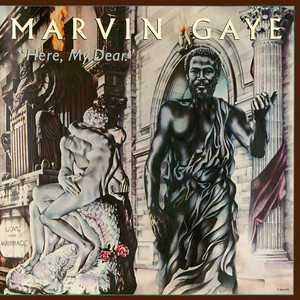
Here, My Dear
If you know anything about this album, you know the story of it. Marvin Gaye was going through a divorce with his wife, Anna Gordy. The arrangement was that Gordy would receive half of the advance and the proceeds from Gaye's next album. He initially was going record a stinker, but found that the best way to work through what he was going through was to bare his soul and make the album all about his divorce and what he was going through. But that isn't what he did. Instead, he just made an album blaming his wife for divorcing him, blaming the judge for awarding her alimony and child support, blaming Anna for calling the cops on him (for not paying alimony and child support), and blaming her for suing him for what she was awarded. Marvin more than once mentions the "obey" portion of the vows, and chastises his ex-wife for not adhering to them. I don't think those were the only vows that were said his ceremony, but I guess he forgot his own. I don't know the entire history behind their troubled marriage and divorce, but well documented were Marvin's drug problems, infidelities, and terrible management of his own finances in that he had to keep touring in order to avoid poverty, eventually exiling himself to Europe because he owed so much in back taxes that he was afraid he was going to be thrown in prison. I'm just saying, it's not surprising that someone wouldn't want to stay married to him. There are occasional moments of self reflection on the album in "Anger" and "Time To Get It Together," but they don't last, and he's back to being vicious on "Is That Enough" and "You Can Leave, But It's Going To Cost You." The last full song on the album, "Falling In Love Again" is an (admittedly, very good) song about his relationship with his new squeeze, Janis Hunter, who he had two children with during his separation from Gordy. Do you want to know how that turned out? They separated in 1979, the year after this album was released. Afterwards, Gaye threatened her with a knife and arranged for their four-year old son to be kidnapped. They divorced in 1982. True love! It's easy to say that Gaye was a horrible person. What he was, was a troubled man from an abusive home who fell into a drug addiction that affected his personal life greatly, to say nothing of being a famous black man in a world that loves to tear down famous black men. That's neither here nor there when it comes to rating this album, which is a loose, meandering collection of stream-of-consciousness R&B and funk. Musically, it's neither terrible nor great, and curiously removed of any emotional emphasis for an album that's so emotionally pointed. Angry Marvin, sad Marvin, happy Marvin, he sings everything pretty much the same. Anna and Marvin eventually became amicable towards each other and remained friendly for the rest of his life. If she can forgive him, I guess we can as well, but that doesn't mean we need to celebrate the man's low points. This album has undergone a positive critical reappraisal that it doesn't deserve. It isn't an honest album, and Marvin did not bare his soul. He aired his grievances and attempted to embarrass his ex. My favorite song on the album, "A Funky Space Reincarnation," near as I can tell has nothing to do with Anna or his divorce, but meeting a chick some time between 2073 and 2093 for space sex and smoking something from Venus that is definitely not dope! Light, goofy, fun song. If the whole album was like this, I would have liked it a lot more.
Rating Distribution
Rating Timeline
Taste Profile
Breakdown
By Genre
Tap a bar to see the albums behind it
Top Styles
Tap a bar to see the albums behind it
By Decade
By Origin
Albums
You Love More Than Most
| Album | You | Global | Diff |
|---|---|---|---|
|
Venus Luxure No. 1 Baby
Girls Against Boys
|
5 | 2.66 | +2.34 |
|
Brutal Youth
Elvis Costello
|
5 | 2.79 | +2.21 |
|
Kala
M.I.A.
|
5 | 2.9 | +2.1 |
|
Call of the Valley
Shivkumar Sharma
|
5 | 2.91 | +2.09 |
|
Sister
Sonic Youth
|
5 | 3.01 | +1.99 |
|
Microshift
Hookworms
|
5 | 3.02 | +1.98 |
|
No Sleep 'Til Hammersmith (Live)
Motörhead
|
5 | 3.07 | +1.93 |
|
Life's Too Good
The Sugarcubes
|
5 | 3.07 | +1.93 |
|
You're Living All Over Me
Dinosaur Jr.
|
5 | 3.1 | +1.9 |
|
Treasure
Cocteau Twins
|
5 | 3.12 | +1.88 |
You Love Less Than Most
| Album | You | Global | Diff |
|---|---|---|---|
|
Protection
Massive Attack
|
1 | 3.24 | -2.24 |
|
Trans Europe Express
Kraftwerk
|
1 | 3.14 | -2.14 |
|
Emperor Tomato Ketchup
Stereolab
|
1 | 3.04 | -2.04 |
|
Ghosteen
Nick Cave & The Bad Seeds
|
1 | 2.94 | -1.94 |
|
Physical Graffiti
Led Zeppelin
|
2 | 3.89 | -1.89 |
|
Bad
Michael Jackson
|
2 | 3.81 | -1.81 |
|
Nixon
Lambchop
|
1 | 2.72 | -1.72 |
|
Talking Book
Stevie Wonder
|
2 | 3.72 | -1.72 |
|
Born In The U.S.A.
Bruce Springsteen
|
2 | 3.69 | -1.69 |
|
Mellon Collie and the Infinite Sadness
The Smashing Pumpkins
|
2 | 3.68 | -1.68 |
Artists
Favorites
Tap an artist to see their albums
| Artist | Albums | Average |
|---|---|---|
| Beatles | 3 | 5 |
| Queen | 2 | 5 |
| Aretha Franklin | 2 | 5 |
| Elvis Costello | 2 | 5 |
| Beastie Boys | 3 | 4.33 |
Least Favorites
Tap an artist to see their albums
| Artist | Albums | Average |
|---|---|---|
| Kraftwerk | 2 | 1.5 |
| Massive Attack | 2 | 1.5 |
| Tom Waits | 3 | 2 |
Controversial
Tap an artist to see their albums
| Artist | Ratings |
|---|---|
| The Kinks | 2, 5 |
| Michael Jackson | 5, 2 |
| Marvin Gaye | 2, 5 |
| Dolly Parton | 5, 2 |
| David Bowie | 5, 2, 4 |
5-Star Albums (58)
View Album Wall




















Popular Reviews
Was never into J&MC despite their music having a lot of qualities I like (heavy guitar, heavy distortion, decent pace on most songs). The somnambulant singing weighs them down, as does their album production, which often sounds like the music was being played from the next room over. Shadowlands ditches the distortion and the production is a much better affair, but the songs are snoozers. The group had a problem with violent fuckwits showing up to their gigs (prompted in part by their own shitty behavior), which perhaps accounts for the muted approach here. Anyway, not much to say otherwise. Pretty dreary!
Oh, 1001 Albums Generator Dot Com. While the passing of a legend is certainly a good time to listen to their music, it is perhaps the worst time to actually review it. How can you expect me to dry my eyes, put on my scholarly glasses, and look at this through a critical lens? Does anyone dare have a stony enough heart to rate this four stars or less? Lucky for me, then, that it's undeniably great. Material that could have been saccharine or morose in someone else's hands is given a heartfelt, joyous presentation. Dolly sings everything earnestly and with her whole (renowned) chest. I'm not one for lyrics 99% of the time, but Dolly's here are beautiful and uncomplicated, not needing a Genius translation. "Coat of Many Colors" and "A Better Place to Live" are the world in the exemplary way that Dolly saw it. "Early Morning Breeze" is the joy of being alive (and accompanied by a very slinky bassline). "Traveling Man" is a cautionary tale with a hilarious twist ending. "My Blue Tears" is a lovely bit of poetry. "The Mystery of the Mystery" is about Dolly's faith and her willingness to accept that which she can't understand. "Here I Am" is my favorite song on here, an ode to self-fulfillment sung with fervor of a gospel preacher. If the rest of album has more well-worn material of the cheating heart variety, the delivery is still as good as it gets and the accompanying music and production serve their roles nicely. Whether you're listening with a critical ear or not, it's a great album from a great lady. So long, Dolly. See you on the other side.
It's 1956 and big band is dead, daddy-o. All the hep cats are listening to dudes like Charles Mingus and Sonny Rollins and Dizzy Gillespie and Charlie Parker (no wait, he died the previous year). That young man Miles Davis was cookin', relaxin', workin' and steamin' his way into the public consciousness. Quartets and quintets are where it's at, Jack. Paying 16 musicians is for squares. Okay, I'm going to stop talking like this. Ellington was struggling when 1956 came around. Bebop, modal, cool jazz, latin jazz, etc. etc. had usurped the big bands of the 1930s and 40s. His band was surviving on European tours and royalties from his previous work. At the time of the Newport Jazz Festival, he didn't even have a record deal. The concert at Newport was a major success, reinvigorating interest in Duke's music for the rest of his life. He signed with Columbia and the ensuing LP (which was mostly a studio recreation of the concert because some of the live audio was missing) was a smash hit. My mom owned it. Some time between 1956 and 1999, some other live tapes were found and the concert was painstakingly put together in all it's glory on a two-CD set. Ellington himself passed before I was even formed into molecules, but I've seen the Duke Ellington Orchestra live several times, dragged people to listen to it who had no interest in jazz and nobody could tell me they didn't have a good time. It's bouncy, it's fun, it gets into your bones. Unless your soul is made from concrete, you can't help but enjoy yourself. Having said that, it's never tempted me to riot and demand the band never leave the stage, and even listening to the concert in retrospect, it's hard to say what provoked the Rhode Island crowd into such a frenzy (there are chapters of the reissue titled "Announcements, Pandemonium" and "Riot Prevention" which... wow! This is definitely a hypothetical Time Machine stop.) Everything comes to a head on Paul Gonsalves's 27-chorus solo (lasting almost six and a half minutes) which is pretty amazing for such a long solo in that it never gets repetitive and also that he didn't pass out, but what he's playing is less interesting than the chaos that you hear rising up around it. Something is clearly happening. Gonsalves's bandmates are hooting and hollering, and you can hear the crowd (who supposedly got up out of their wooden lawn chairs and started dancing in the aisles) steadily join them. The end of the solo isn't greeted by raucous applause--people are *screaming*. And that energy is maintained throughout the rest of the concert, with Duke having to try to calm the crowd down multiple times through many encores and only playing a minute-long "Mood Indigo" as the closer (with the crowd still audibly angry the concert will soon be over) with the band probably desperate to get off stage at that point. If I were to grade this album strictly on musical quality, I'd give it four stars. Duke's compositions are earworms and the band is cracking. But the recording of the concert and the audience's reaction is an experience well worth hearing at least once in your life, and that earns the extra star right there.
Oh hell yeah! I knew of The Gun Club but had never heard any of their music before nor did I realize they were the progenitors of psychobilly/cowpunk, etc. This is great! Short, punchy, catchy songs that somehow combine punk with shuffle beats and slide guitar. I think the songs are better at the sub-three minute time with their longer songs wearing themselves out a bit, but I think that's pretty typical for punk in my estimation. A bit more variety would have escalated this into five-star territory, but even as is, it's a good time.
1-Star Albums (7)


All Ratings (248)
This was my first review for the 1,001 albums project and I initially gave it two stars, but I gave it a second listen and found more to appreciate. Folk rock is not really my thing and the pace here is leisurely for my tastes, but from a technical perspective I think this is very well done. The instrumentation is used to good effect and David McComb has a distinctive and pleasant voice. It's funny to read the troubled history of the making of this album, because I think from a production standpoint, it sounds great. It's varied in melody and pace. I can't go higher than three stars because I don't really hear a song that I want to seek out or put in a playlist, but the album as a whole isn't a bad listen. I'm happy I came back to it.
Despite enjoying The Bends, OK Computer and Kid A when they came out, I somehow missed Amnesiac until this project made me listen to it. I'm not sure why that happened. Maybe I heard "Pyramid Song", didn't really like it, and forgot to check out the rest of the album. 24 years on, I still don't care for "Pyramid Song," but I have chalked this up to a Me Thing. The album properly starts for me with "You And Whose Army?" and I enjoy every song from that point to varying degrees, with the exception of the instrumental "Hunting Bears." There is a cohesion here, and I suspect I enjoy listening to these songs in contrast with each other more than I would listening to them piecemeal. Anyway, I'm happy I got around to this album. There's a whole lot more to say about this period of Radiohead's career, but I'll circle back when the project gets to Kid A.
One of my all-time favorites. Pace, biting guitars, raggedy melodies, head-bopping rhythm section. The songs are short, sweet and full of energy. The songwriting would be more polished on Doolittle, but for bursts of manic, punk energy, nothing tops the more blistering tracks on here. The band also shows that they're versatile beyond three chords and a cloud of dust on "Where Is My Mind?" (the album's most well-known song due in large part to it's inclusion in the movie Fight Club) and the Kim Deal-fronted "Gigantic". Steve Albini's production here that makes you feel like you're in the studio with the band (including some snippets of conversation, unbeknownst to the band members). The loose energy almost makes these songs feel like demos, but in a good way. With everything in pop music so engineered within an inch of it's life nowadays and all imperfections removed, it's great to hear something that feels alive and in the moment.
I'm not a Steely Dan guy, but even setting the bar low, I've never gotten the praise for this album. The only songs I find engaging are "Rikki Don't Lose That Number," the Outlaw Country "With A Gun," and the angular, sinister "Charlie Freak." "Any Major Dude Will Tell You" sounds like warm milk but gets points for extremely corny '70s lyrics ("I've never seen you looking so bad my funky one/you tell me your super fine mind has come undone"). "Barrytown" might have been a good song if there was even an ounce of menace the lyrics suggest in the music. "Parker's Band" is the Dorky White Guy tribute to Charlie Parker to the point where it's almost feels like an insult to Bird. "Pretzel Logic" is the dorkiest, whitest, blues song you'll ever hear. Everything else is so forgettable that I can't even bother to make fun of it. I am certainly not one to criticize vocals too much (I just praised a Frank Black album, for chrissakes) but Donald Fagen's warbling straddles the line between "quaintly charming" and "I wonder if I would like this more if they had a better singer." Pretzel Logic is an album very much of it's time. Steely Dan's previous album, Countdown To Ecstasy, was a commercial failure and they needed to get back on the radio. 1974 top 40 wasn't really a neighborhood for challenging music, so yes, compared to Barbra Streisand, Grand Funk Railroad and John Denver, this was practically avant-garde. But a lot of their music was suggestive of better, funkier and (dare I say) Blacker music that was taking place at the time, and nobody should have needed the White Guy filter to enjoy any of it.
Let me start by saying that I have a tremendous bias for David Bowie. This was the music of my "I feel miserable and I need to not feel miserable" music. The day he died, I went in to work early and put on my Bowie playlist and when the first notes of "Life On Mars" dropped, I started sobbing uncontrollably. I've never shed tears for a celebrity before or since. But this was my guy. A more rational opinion would acknowledge that "Eight Line Poem" and "Fill Your Heart" ain't that great, "Andy Warhol" isn't much aside from a cool guitar riff, and impending fatherhood made Bowie maudlin on "Kooks" (although this a song I sing to my dogs, so I obviously don't hate it) and I don't know what he's on about in "Quicksand" (but the music's great, so I don't really care). I rarely focus on lyrics and Bowie could often be inscrutable, but "Changes" is not that. Unpretentious, pointed prose that comes together melodically and resolves in a great chorus. Life On Mars is a seminal piece of music and never fails to make my heart swell. "Queen Bitch" has one of the all-time great riffs. "The Bewlay Brothers" is a devastating song about Bowie's schizophrenic brother. "Oh! You Pretty Things" is joyous and "Song For Bob Dylan" that serves as both send-up and tribute is a lot of fun. Any album with "Changes," "Life On Mars" and "Queen Bitch" is getting an automatic five stars, but even without those three giants, I think this album might still earn it. One of the best from one of the greatest English-language artists of all-time.
It's 1956 and big band is dead, daddy-o. All the hep cats are listening to dudes like Charles Mingus and Sonny Rollins and Dizzy Gillespie and Charlie Parker (no wait, he died the previous year). That young man Miles Davis was cookin', relaxin', workin' and steamin' his way into the public consciousness. Quartets and quintets are where it's at, Jack. Paying 16 musicians is for squares. Okay, I'm going to stop talking like this. Ellington was struggling when 1956 came around. Bebop, modal, cool jazz, latin jazz, etc. etc. had usurped the big bands of the 1930s and 40s. His band was surviving on European tours and royalties from his previous work. At the time of the Newport Jazz Festival, he didn't even have a record deal. The concert at Newport was a major success, reinvigorating interest in Duke's music for the rest of his life. He signed with Columbia and the ensuing LP (which was mostly a studio recreation of the concert because some of the live audio was missing) was a smash hit. My mom owned it. Some time between 1956 and 1999, some other live tapes were found and the concert was painstakingly put together in all it's glory on a two-CD set. Ellington himself passed before I was even formed into molecules, but I've seen the Duke Ellington Orchestra live several times, dragged people to listen to it who had no interest in jazz and nobody could tell me they didn't have a good time. It's bouncy, it's fun, it gets into your bones. Unless your soul is made from concrete, you can't help but enjoy yourself. Having said that, it's never tempted me to riot and demand the band never leave the stage, and even listening to the concert in retrospect, it's hard to say what provoked the Rhode Island crowd into such a frenzy (there are chapters of the reissue titled "Announcements, Pandemonium" and "Riot Prevention" which... wow! This is definitely a hypothetical Time Machine stop.) Everything comes to a head on Paul Gonsalves's 27-chorus solo (lasting almost six and a half minutes) which is pretty amazing for such a long solo in that it never gets repetitive and also that he didn't pass out, but what he's playing is less interesting than the chaos that you hear rising up around it. Something is clearly happening. Gonsalves's bandmates are hooting and hollering, and you can hear the crowd (who supposedly got up out of their wooden lawn chairs and started dancing in the aisles) steadily join them. The end of the solo isn't greeted by raucous applause--people are *screaming*. And that energy is maintained throughout the rest of the concert, with Duke having to try to calm the crowd down multiple times through many encores and only playing a minute-long "Mood Indigo" as the closer (with the crowd still audibly angry the concert will soon be over) with the band probably desperate to get off stage at that point. If I were to grade this album strictly on musical quality, I'd give it four stars. Duke's compositions are earworms and the band is cracking. But the recording of the concert and the audience's reaction is an experience well worth hearing at least once in your life, and that earns the extra star right there.
I think if this album wasn't made by Paul McCartney, it wouldn't be talked about much today. The best song on here by a significant distance is the breezy "Jet" with it's chugging rhythm and fuzzed-out guitars. "Band On The Run" is good if repetitive, with the title of the song being mentioned twenty times (yes, I counted). Repetitive choruses and songs wearing out their welcome are a theme here. On most of them I kept checking to see how much time was left. There is also a lot of self-indulgence. It angered me to finish "Picasso's Last Words (Drink To Me)." There's recording a fuck-around track and recording a fuck-around track that lasts almost six minutes! But it's not all bad. "Jet" is fine and I don't hate the title track. "No Words" is pretty good (but why does it fade out just as the guitar solo starts?) and "Mamunia" has grown on me, despite it's cringy world music inclinations. I like the bouncy bassline on "Mrs. Vandebelt" and the the first half of "Nineteen Hundred and Eighty Five," even if both songs stick around too long. There's enough worthwhile music here to earn it's third star, but quite a few tracks where I hit skip after a couple of listens. Like much of McCartney's post-Beatles career, a frustratingly mixed bag.
A truism I feel about 90% of songs is I'd like them more if they were played at double time. For Leonard Cohen, that may not be enough. His singing is so deliberately slow, it almost feels like he's doing a bit. The primary emotion I get out of Leonard Cohen's singing is somnambulance. The music is secondary to the lyrics here, and I'm not really a lyrics guy. But even paying attention to them, the ideas are not anything that speaks to me. Cohen is a glacial poet who revels in inscrutable imagery and I'm not feeling what he's putting down (although in "Famous Blue Raincoat," imagining Leonard languidly penning a letter to the man who cuckolded him is very funny to me). Anyway, this is another Me Thing since a number of smart people (including many musical artists I like) love his music. I would have given this one star, if not for the angry, growling "Diamonds in the Mine" which I think is terrific. If only the rest of the album was more like it.
Oh hell yeah! I knew of The Gun Club but had never heard any of their music before nor did I realize they were the progenitors of psychobilly/cowpunk, etc. This is great! Short, punchy, catchy songs that somehow combine punk with shuffle beats and slide guitar. I think the songs are better at the sub-three minute time with their longer songs wearing themselves out a bit, but I think that's pretty typical for punk in my estimation. A bit more variety would have escalated this into five-star territory, but even as is, it's a good time.
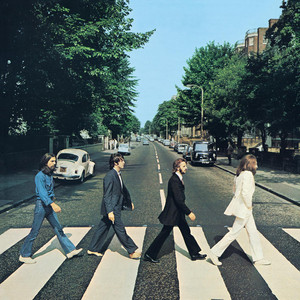
Yeah, of course, five stars. I imagine there will probably be too many Beatles and Beatles-adjacent albums in this exercise, but this is not the one to take off. Just the variety of impeccably crafted music here is stunning. I think "Maxwell's Silver Hammer" is too corny to be anything other than a trifle, but I can't really take issue with anything else. George might be the MVP of this album with "Something" and "Here Comes The Sun" but Lennon is close behind with the shifty, paranoid "Come Together," the trippy, psychedelic "Because" and the primal, minimalist "I Want You (She's So Heavy)." A note on that last song. I have complained in the past about overlong, repetitive songs on other albums, but I love this one. What a hypocrite! The organ stabs, the bluesy instrumental break, the swelling, chaotic three-minute outro. I understand if people don't like it. I've complained enough about songs like this, but I always ride this one to the end. "Octopus's Garden" is terrific. Best song Ringo ever did or would do. Paul may have my two least favorite songs here (outside the medley). "Maxwell's Silver Hammer" was a precursor to a lot of the silly Paul solo/Wings stuff I couldn't vibe with. "Oh! Darling" is fine, I always wind up singing along to it. But he saved his best stuff for the medley. I've never really thought of the medley as a single musical work. "You Never Give Me Your Money" is a complete song in it's own right, and it's quite good. "Sun King/Mean Mr. Mustard/Polythene Pam/She Came In Through The Bathroom Window" is an impressive string of snippets that could have worked on their own as individual songs (but arguably, they were as long as they needed to be) and "Golden Slumbers/Carry That Weight/The End" is the Beatles saying goodbye. I like everything here, but my favorite bits are the Polythene Pam guitar bridge leading into "She Came In Through The Bathroom Window" and the orchestral integration on "Golden Slumbers/Carry That Weight" (shout out to George Martin). Anyway, this is a tremendous album. I've listened to it too many times for it to surprise me any more, but there are very few I'd keep in my collection over it. Abbey Road forever.
The Kinks had some great, catchy songs and could crank out addictive riffs, but almost none of them are here. The praise for this album is confined almost entirely to the lyrical content and that's mostly because the music and production are nothing to write home about. "David Watts" is a cool little song. You should hear The Jam play it. Ray Davies took over the recording and mixing of the album and admitted that he didn't have the skills to handle it. The instruments are often muddy and the whole thing exhibits a real lack of polish. Certain types of music can benefit from a more relaxed production, but this isn't garage rock. The stylistic references (music hall, baroque pop, etc.) feel like relics of a past before musicians learned what you could really do with a guitar. Yes, the lyrics are clever and evocative. It's the delivery method that's a chore to get through (nowhere more so than on the grating verses of "Lazy Old Sun"). I know this is considered a classic album, but I would rather listen to almost Anything Else by The Kinks.
Fun fact: "Rock Lobster" got banned at school dances at my high school because kids would slam-dance to it. Love this album. Fred Schneider and I are clearly on the same page that words are secondary to the music and you may as well just have fun with them. Nonsense lyrics about beach trips, phone numbers that don't work, the moon (which is called the moon) and a woman from Planet Claire (which has one of my favorite funny song bits where after the chorus repeatedly tells us she's from Planet Claire, the second verse says some people think she's from Mars or the seven stars before Schneider angrily sings "well she isn't!") all served as excuses to riff on the Peter Gunn theme or play some surf rock. The music is catchy, danceable and fun and Kate Pierson's and Cindy Wilson's harmonies are punchy and irresistible. Not every song works. Dance This Mess Around gets a little screechy (but still contains the wonderful phase "I'm not Limburger! I'm a limber girl!") and I think listening to all these songs back to back is a little exhausting, but nevertheless, if you like fun, bouncy, unserious music, there are several bangers on here that are worth your time.
Not much to say here. I like it. You give me pacy, melodic guitar and keyboard-driven music and I'm a happy camper. I'm not the biggest fan of Bernard Sumner's vocals, but his voice doesn't lessen the overall impact for me. Can take or leave the instrumental "Elegia" and weirdly-mixed "Sub-Culture", but otherwise every song is good.
Listening to this, it makes sense that there was a theater-like presentation with costumes and staging. It doesn't sound like music for it's own sake. It's music and a show. Like there's something that should be happening on stage during all of these instrumental breaks. I really can't discern the appeal of most prog music aside from "this is different from what everyone else is listening to and also look at us, aren't we impressive in our ability to play it?" And sometimes there can be enjoyment found in that, but I don't find it here. The jams that run through most of "Dancing With the Moonlight Knight" occasionally cook, but often feel like aimless noodling to fill a song's eight-minute time limit. That's how I feel about a lot of these long suites. They're just there, notes played next to another notes. Not randomly, but without any real spark or enough craft to match the sense of grandiosity that seems intended. The absolute nadir of the album is the 11 minute and 44 second "The Battle of Epping Forest" which as a forest is a slog on par with the Ardennes during both world wars. I am done with this song by the three minute mark and there is so much left to go. The next song, "After the Ordeal" is fitting in a way that the band probably didn't intend. Calling this music pretentious feels dismissive, but to me, it felt very much like a case of whatever ambition they were reaching for, it definitely exceeded their grasp.
It may be crass to give a negative review of an album on which the artist is grieving for their recently lost child, but I hated this. It's warbled beat poetry accompanied by some (admittedly nice) soulful backup singing, all played over the sort of ambient nothingness you might try to fall asleep to. I play every album in this project in it's entirety to provide an honest opinion, and this one was the toughest to get through, even more so than Leonard Cohen's quarter-speed snooze ballads. That seems harsh given the circumstances, but Cave marketed the shit out of these circumstances, with a documentary, an album, a "live recreation project" (of the album, not his child's death) and a concert tour. There's nothing wrong with expressing grief through art, but grief as commerce leaves me feeling squirmy and Grief On Tour seems like the kind of thing a burgeoning cult leader would show up for to find recruits.
Only know this band from "Bittersweet Symphony." Was interesting to read up on their tumultuous history and how Oasis was involved. The music is okay. I liked "A New Decade," "A Northern Soul" and the guitar freakouts in the Reprise the most. Mostly it's just funny to see how cranky Richard Ashcroft looks on the cover.
In contrast to your aging folksy singer-songwriter, penning their earnest feelings on regrets and growing old and blah blah blah, here we have Gordon Gano, age 19 (most of the songs here were written when he was in high school) delivering direct, simple, emotional, cathartic statements and marrying them perfectly to anxious, wiry, angular, catchy music. Yes, this album is seemingly about high school angst, but let's be real, the emotions covered here stick with most men throughout their lives. Their greatest hits are all here: "Blister In The Sun," "Kiss Off" (one of my all-time favorite songs), "Add It Up," "Gone Daddy Gone" (the greatest use of xylophone in any rock song ever) along with some less-heralded but equally great album tracks in "Prove My Love," "Promise," "Ugly" and the sinister "Gimme The Car." Gano may have peaked as a songwriter in high school. Their follow-up, Hallowed Ground, was very good, trading teen angst for religious angst (his father was a Baptist minister), but after that the band felt like a ship without a course. Regardless, the first album is an absolute masterpiece.
Let's get one thing out of the way. There's a lot of cheese across this album. "Glass Onion," "Ob-La-Di, Ob-La-Da," "Wild Honey Pie," "The Continuing Story Of Bungalow Bill," "Martha My Dear," "Piggies," "Rocky Raccoon," "Don't Pass Me By," "Why Don't We Do It In The Road?," "Honey Pie" and of course, the eight-minute avant-garde wankfest, "Revolution 9." Do I think any of these songs are great? No. I'm also not really a ballad guy, so you can throw "Blackbird," "Mother Nature's Son," and "Julia" on the list of stuff I'm not crazy about. Wow, that's a lot of songs to not like, how can I possibly give this five stars? Because there's still a lot of great music left. "Back In The U.S.S.R," "Dear Prudence," "While My Guitar Gently Weeps," "Happiness Is A Warm Gun," "I'm So Tired," "I Will" (the rare ballad exception), "Birthday," "Yer Blues," "Everybody's Got Something To Hide Except For Me And My Monkey," "Sexy Sadie," "Helter Skelter," "Long, Long, Long," "Revolution 1" (even if it is the lesser version of this song), "Savoy Truffle" (yes, I like it, shut up), and "Cry Baby Cry." That's a lot of good music, including several classics, so as a collection of songs it's got enough to be a five-star album for me easily. But even the songs I don't like I wouldn't classify as filler. As much as the album was the boys being divided and working on their own stuff, I think the album works as a cohesive listening experience, partially due to the songs being mostly very short (the album averages out to 3:06 per song and that's including Revolution 9) and partially due to some ingenious sequencing, so whatever you're listening to at any given moment, you've got something different coming up next. It is my most played Beatles album. When I had a 90-minute commute to work, very often "Back in the U.S.S.R" would be blasting when I pulled out of my driveway, and Ringo would be singing "Good Night" to me when I pulled into the parking lot at work, and I never got bored or annoyed. I even listened to Revolution 9 all the way through, a track I hated for a long time until it eventually grew on me, at least to the point of tolerance. We live in a time of artists deliberately creating music that is as uninteresting as possible so they can get Spotify plays as background noise. The White Album is the opposite of that. It grabs your attention throughout.
Love RATM, but maybe not a whole album at a time. The music is utterly fantastic, and while I think singer Zack de la Rosa is great in smaller doses, a whole album of him tends to wear on me. Compositionally, this album is really impressive, with a lot of variety in their framework and I don't think there's a bad song in here.
Never been a big Tribe guy, as I prefer my hip-hop to go harder than what they were serving up. Certainly not bad, though. I never listened to this album in full and was surprised at how little Phife was on it. "Footprints" is sensational and "Pubic Enemy" is very good. "I Left My Wallet In El Segundo" and "Luck of Lucien" are fun. Nothing really bad here, it's all pleasant, but other rap artists just grab my attention more.
B.B. King was in his eighties when I saw him live. He played from a couch (and was wearing a muumuu). His fingers weren't quite as dexterous as they were in his prime, but his voice still had power and emotion, and he was very funny when he talked to the audience, so it was a good time. This album is an absolute delight. This was a concert for people to get out of their seat and dance, so every song is a stomper. Both B.B.'s singing and guitar playing are emotive and perfectly attuned to the subject matter of the song, and even his spoken word intros and interludes are engaging. The enthusiastic crowd adds to the whole experience.
I only knew M.I.A. from the singles ("Paper Planes," "Bad Girls", etc.) and had never listened to a full album of hers, so I didn't know what to expect. I liked this a lot! The album is named after her mother and a running theme is struggles that her mother had to go through, but this isn't a dire affair, it's a dance party. "Paper Planes" is here and it's terrific, but so is "Jimmy" (about an infatuation with a journalist covering the Rwandan genocide set to a Bollywood disco number), the bumping "XR2" (an ode to London's '90s rave scene), the sonic assault of "20 Dollar" (which references the Pixies "Where Is My Mind?") and the charming "Mango Pickle Down River" where M.I.A. raps and sings with The Wilcannia Mob, a group of adolescent aboriginal boys about catching fish, jumping off bridges and playing the didgeridoo. Timbaland was originally supposed to produce Kala, and it's a blessing in disguise that it didn't happen. The album is all over the place in it's influences, themes, and styles, perhaps reflecting the global journey by M.I.A. in recording it in six different countries, but M.I.A.'s distinctive singing and straightforward lyrics tie everything together. It's not really like anything else, and that's what makes it great.
A classic. Hard-charging rock driven by the genius of guitarist John McGeoch, accompanied by an able rhythm section of drummer Budgie and bassist Steven Severin. Every song has a dark edge to it: feelings of paranoia, dread, melancholy, uneasiness, all encapsulated by Siouxsie Sioux's tremulous, unsettling vocals. Siouxsie and the Banshees don't get anywhere near enough critical love. Whether you call this post-punk, art rock, gothic rock, or whatever, the sound is distinctive and has a place at the table of great rock albums.
Folk music is not my cup of tea, but I'll give this album two points: It's short (only 36 minutes) and it rocks out a little bit, at least. The songs prominently involve the instruments and they aren't just there as background dressing for Stevens' hippy-dippy lyrics. A few more BPMs and I would have really liked this, but as is, it's not terrible and I'd rather they had tossed in a second Cat Stevens album than the umpteen albums of Leonard Cohen that were included.
*headbangs, makes devil horns, shreds air guitar* Good stuff!
Wanted to like this, but by the fourth song I was checking to see how much time was left. The vocals annoyed me, and the backing tracks weren't interesting enough to make up for it. Whatever they were going for her, I just couldn't vibe with it.
Like most double albums, this is a mixed bag. There are some fun, groovy numbers in here and a some forgettable easy listening. Stevie overall didn't radiate with me outside of a few songs, but even at two hours, this passes the time amiably enough.
A critical darling and evidence that music reviewers are easy to impress if you appeal to their sense of self-importance. One review said "the sound of a band taking a mandate to be a meaningful rock band seriously" as in they haven't screwed up their aspirational *seriousness* by sounding like they're having any fun. Everything about this is mid. Midtempo, middle-register singing, middling temperament. Nothing exemplifying happiness or joy or anything to get the blood going, the kind of music you'd go to watch live with your hands in your pockets, maybe silently bobbing side to side to signify that you were enjoying yourself. (I'm being snotty here; I've actually seen The National live and it was fine, they were having lots of fun up on stage; but none of that enthusiasm really translated to this album.) There are a few moments where the instruments rock out a bit and if I'm honest, the drums sound pretty fun on some of these songs, but overall this is like the album version dry Oscar bait.
Manic Street Preachers are a first-time listen for me. It seems a lot of the discussion of this album revolves around Richey Edwards and what happened after to him, but what I hear listening to it is a great punk album, one that (some contemporary lyrical references aside) I would not have guessed was released in 1994. The sound is aggressive, melodical, and cathartic, as easy to appreciate for it's musical elements as it's (appropriately blistering) lyrical content. One of the best discoveries I've made so far with this exercise.
Fun fact: X was the first band I ever remember hearing live, when my sister snuck me into the back of a bar where they were playing. I'm surprised X's first album Los Angeles didn't make the 1,001 albums cut because I think it's at least as critically valued as Wild Gift, but I'm not going to complain too much because I don't really care for either album. The main issue has always been the John Doe/Exene Cervenka harmonies. I just don't like listening to them all that much, and the musicianship on the album isn't enough to make up for it. I actually prefer their third album, Under The Big Black Sun to their first two. The songwriting is better and while the vocals are still not too my taste, they're more suited to the new material and less of an impediment to my enjoyment.
There are three Smiths albums and four(!) solo Morrissey albums in this exercise, and that is way too many even for 1,099 albums, but this is not one that I'd take off. I'm not a lyrics guy and I feel that you can enjoy 99.95% of music without knowing what the singer is singing, but Morrissey's lyrics are rewarding to look up. They're alternately very witty or picaresque in their conveyance of simple, urgently felt emotion. On top of it, the music accompanying them isn't simply a vehicle for the lyrics, and is enjoyable in it's own right. Many of the albums I've come across on this list have had me checking how much longer I had to go. The Queen Is Dead is the opposite. It leaves me wanting more.
Classic album for all the reasons everyone says it is. Some of the best production of any rap album ever, thanks to the Dust (now Chemical) Brothers. The combination of Beasties juvenile (but entertaining) lyrics don't always jibe, but they were skilled and every song is different enough within their framework. There are seams, but overall, there isn't anything quite like this album. But wait, the 1,001 albums list doesn't include Check Your Head?
Eh, it's fine. I like this more than the Beatles' early albums, but it still feels very remedial and timid compared to what they would eventually come up with. Daltrey in particular doesn't sound very comfortable in any of the genres he's attempting. "My Generation" is good (although the stuttering makes it seem like an affectation to make it stand out more) and the instrumental "The Ox" is fantastic, but nothing else is the equal of these two tracks.
This will be one I have to come back to, because my thoughts aren't fully formulated yet. The backing music was better than I was expecting for an indie folk album. Sufjan's voice is cloying on some tracks and fits in well on others. I appreciated the generally upbeat and melodic sound of most of the tracks. It's a long album, and as with most long albums, there's a bit of hit and miss. Giving it three stars now, but I'll return to it for a more in-depth listen.
I'm not sure this is absolutely an album you need to hear before you die, but it's a good time. Dusty started out as a British folk singer, came to America and fell in love with soul music, giving voice to many storied composers of both white and black music. Depending on the song, the results could be maudlin or in the case of some Motown stompers, absolutely electric. This album was a collection of some of her favorite songs, and I think she had good taste. Her voice is well-suited to all the material, and the tracks here are well-produced (although it seems most of the songs on the in-print CD are alternate mixes of the songs on the original LP because the masters are buried deep somewhere in the Philips Record archives). Best song is the scorching album closer (not counting bonus tracks) "Don't You Know," which is an unquestionable improvement over the Ray Charles original, but "When The Love Light Starts Shining Thru His Eyes" and bonus track "Can I Get A Witness" are also great and she ably takes her turn on the Shirelles "Will You Love Me Tomorrow." Maybe not an essential listening experience, but enjoyable nonetheless.
I've only heard a few ska songs that I've actually liked. I've never been a fan of the combination of leisurely pace and rocksteady rhythm that signifies most reggae/ska music, but on top of that in this particular case, the vocals have a really off-putting quality to me. The songs with faster tempos ("Concrete Jungle" and "Little Bitch") are more enjoyable, and the bass on some of these songs sounds fun to play, but overall there are too few diamonds and too much rough. The only other thing I have to add is go for the Deluxe Version (2015 remaster) if you're going to listen to this. The 2002 remaster is terrible.
Not much to say! Good, crunchy guitar rock, enjoyable to listen to.
Some very Beatles-inspired (maybe a little too much) pop that's pleasant to listen to if not necessarily revelatory. I like all of the individual elements of it--the vocals, the instrumentation, the melodies, etc., but the big thing that kept me from enjoying it fully is a mushy sound, one I have to blame on a patchy recording, because even the 30th anniversary remaster isn't much of an improvement, and it's the sort of music that really could use a polished presentation to really make it shine.
I do not and will probably never understand the appeal of Tom Waits. This is a bunch of world-weary blues crooning from a 30-year old (at the time) who by his own account had a pretty normal childhood in suburban California. There were plenty of unheralded Black blues artists who were better singers and better musicians with authentic stories to tell, but he's the guy who got all the movie soundtracks and critical fellatio because his voice sounded like he gargled cigarettes. To me, this Emperor has no clothes, but there are four more albums on this list to go through and change my mind.
Young, feisty, political firebrand Morrissey isn't as dryly witty as he would be on The Queen Is Dead, but he has found a pacey, energetic sound for a soapbox, powered by the darting guitar work of Johnny Marr, and the results are fine. Only a few sloggy songs keep this one from ranking higher, but the best stuff is very good.
Oh my God, it's the Rolling Stones, certified legends, etc. etc. and this is often cited as their best album, and yet I can't escape how they sound like a very good bar band and not much more on here. It's a solid album, but nothing jumps out to me as a must-hear song, and every genre touched I think has better exemplars elsewhere.
I guess this sounded amazing (or at least very distinctive) to people in 1977, but I don't get it. Maybe I just don't understand minimalism. Kraftwerk formed the basis for a lot of music that I like, but it's antecedents have make the music on this particular album sound like a historical artifact. And we're talking 1977, not 1927. I wasn't expecting to give this my second 1-star rating out of this exercise, but that's where I'm at after listening to it. It's not painful, but it doesn't spark any emotion whatsoever.
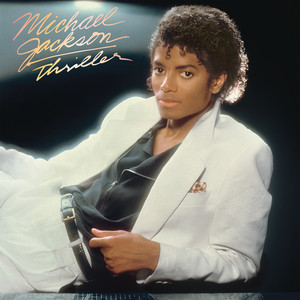
Let me just start off with a disclaimer: This is not a review of Michael Jackson the human being (who I actually got to meet in a business capacity a few years before his death). The things Michael Jackson are accused of make him a 0-star human being, but I'm not reviewing Michael Jackson, I'm reviewing Thriller, and this is an excellent album. First of all, it's amazing how good the original album sounds. I've compared it to the 25th anniversary remaster, and honestly, I think the original sounds better. Just a terrifically produced album, extremely warm and spacious, even without the future advances in digital engineering, so a big shoutout to Quincy Jones and recording engineer Bruce Swedien. Even goofy schmaltz like "The Girl Is Mine" sounds so luxurious, I actually find it pleasant. But "Wanna Be Startin' Somethin'," "Thriller," "Beat It," "Billie Jean," "P.Y.T." That's already enough bangers for five stars right there, and the lesser known song" Baby Be Mine" is good as well. I'm not a big fan of "Human Nature" or the closing ballad "The Lady In My Life" but so what? Who rates an album by the songs you can skip? This is supremely well-engineered and composed pop music and I think it's reputation is deserved. If you don't want to listen to the man because of what he was, I get it. From the standpoint of having an appreciation of pop music, I think it's unassailable.
Well, I gave Kraftwerk one star for Trans Europe Express and a couple of them have come back with another band name and another stinker. Side One is "ambient music," i.e. the background "you don't need to pay attention to this, just keep on doing whatever you're doing" slop that Spotify is making billions from disaffected people who don't have the attention span to engage with anything for longer than five seconds. Full credit to these guys, they were fifty years ahead of their time. Side Two is better, but nothing to write home about. E-Music is seven minutes of pointless chugging riffing followed by three minutes of what sounds like howling wind with occasional stabs of other stuff. It is a contender for "least favorite song I've heard so far in this exercise," next to Genesis's "The Battle of Epping Forest." What saves it from a basement review are "Hero" and "After Eight," proto-punk songs that are not amazing, but at least are trying to engage, and you can see the roots of some future great music in here.
I feel like I'm trampling on sacred ground by saying this, but I think Otis Redding is... fine? His voice is great, don't get me wrong, but the loosey-goosey, stop/start, rambling style of his approach trades in power for enthusiasm, and maybe doesn't translate as well to a studio environment. What does translate is the backing band: Booker T. & the MG's (RIP Steve Cropper), plus Isaac Hayes on piano, and a ripping horn section pilfered from the Mar-Keys and Memphis Horns. The music absolutely crackles. This is a largely a covers album, but Otis definitely takes ownership of more than a few songs. His version of B.B. King's "Rock Me Baby" is a sweaty masterpiece and Otis made everyone forget the original version of "You Don't Miss Your Water" (who the heck is William Bell, anyway?). He steals "Shake" from Sam Cooke, gives a looser, funkier version of "Wonderful World" and maybe doesn't quite top Sam's version of "A Change Is Gonna Come" but I do appreciate the small-band arrangement of it compared to the ostentatious strings and horns of Sam's version. Otis would receive a dose of his own medicine when Aretha came around to take "Respect" from him, so it's all good. The version of The Rolling Stones "(I Can't Get No Satisfaction)" is less a cover than an interpretation, with Otis abandoning the lyrics after the first verse to forge his own path, but the band absolutely kills it. Fun album, but it's a shame this is the only Otis content we'll get on this list. His album The Dictionary of Soul is also a great listen, as is his Whiskey-A-Go-Go concert album.
A classic album, and a deep one. The title track may be my least favorite song on here, and that's not a criticism. I like "Paranoid," but it's probably the most conventional and least interesting song on the album. The songs were mostly developed from riffs that the band came up with while jamming, which is very apparent. The songs are very loosey-goosey and extremely bluesy (with the exception of the psychedelic "Planet Caravan") with very little apparent intent beyond "craft a song around this killer riff" and it works better than it has any right to, because the riffs are strong and the added elements work really well. I think this is just due to really good songcraft from guitarist Tommy Iommi and strong embellishment from bassist Geezer Butler and drummer Bill Ward, and the result is a masterpiece.
Sade is living right. Make an album, go on tour, make a bunch of money, chill out for a decade or so, come back with another album, make more money, go back to your cottage in England and live a happy life, rinse, repeat. The fact that people always show out for the new albums and tours in enviable numbers means she's doing something right. I'm not the best person to judge what she's doing right as whatever this kind of music is (Wikipedia lists the genres as "smooth soul," "sophisti-pop," "quiet storm" and "smooth jazz," and I can only say the last one is wrong, because this isn't any kind of jazz) really isn't my bailiwick, although I certainly don't mind having it on. It's pleasant and polished, and the music production side of me approves. Even though the album is forty years old, it doesn't feel like it needs a remaster. It's not very exciting (to me), but if I were in the mood to just listen to something to chill out, you could do far worse.
I love the Beasties. On my shortlist for albums to contribute to this list when I've finished is Check Your Head (my favorite of their albums), but I'll admit I rarely go back to listen to their debut in full. The album is too much screaming, too many similar break beats, too much Rick Rubin (whose production I appreciate in short bursts) but if I'm honest, about half the tracks I could skip because they're monotonous. It should be pointed out that the Beasties were young, dumb and stupid at this point. The original title for this album was "Don't Be A Fa**ot" (they have since recognized the error of their ways and apologized) but while there are quite a few funny lines throughout, the album is largely crass and juvenile, and not necessarily in a way that makes their protagonists likeable. There was also some startling creativity being hemmed in by Rubin and Russell Simmons, who were conspiring to rip them off, and it would come out after they moved to Capitol Records in the masterpiece Paul's Boutique. The bangers on this album, "Fight For Your Right," "No Sleep Til' Brooklyn," "Brass Monkey," "Girls," "Paul Revere," etc. mean I can't rate this album too low, but it ranks well below what were going to see from the group.
Amiable rock & roll with various drops into a country-ish vibe. I admit, a lot of this went in one ear and out the other, but the more energetic tracks were enjoyable enough ("Monday" being my favorite), and I don't mind giving this another, more attentive listen.
I had heard various songs from this album, but never listened to the full thing. What a revelation! This album arrived in the midst of a lot of tumult: Graham Nash and Stephen Stills had broken up with their celebrity girlfriends (Joni Mitchell and Judy Collins, respectively) and David Crosby's girlfriend was killed in a car accident a few days before they started recording, leaving him often being unable to function. Further tumult arrived in the form of notorious curmudgeon Neil Young. Since Stills played almost everything with a string or keys on recordings, they needed another pair of hands for touring, and invited Young. Naturally, he complained about everything and only participated on half the tracks. This was CSN's version of The White Album, with each member mainly working on their own stuff and only getting together to have other members play the instrumental parts and add other vocals, but it all comes together surprisingly well. I listened to the 2021 remaster, and while I don't think it sounds pristine, the sound quality isn't an impediment to the music. There are a lot of great songs here: "Carry On", "Woodstock", "Country Girl" and the romping closer "Everybody I Love You," but my favorite song is David Crosby's visceral, cathartic "Almost Cut My Hair" (which Stephen Stills curiously wanted to leave out because he didn't like the vocal performance, which is nuts, because Crosby sounds amazing). Anyway, this is a terrific album with a lot of texture and some especially great performances, both vocally and musically. A classic.
Aesthetically, this is up my alley. Hard, fast-paced, guitar--driven, raggedy-ass music. Hell yeah, let's go! There's only one problem, and it's that I don't really enjoy listening to much of it. Every song sounds like it's being run with the reverb switch glued in place, giving the effect that the album was recorded from inside a metal box. I don't mind this technique being used once in a while, but for a whole album, it's exhausting to listen to. The same with Lux Interior's vocals. Fine in short doses, wearing over time. The overall style of garage/psychobilly still holds some pleasure for me, so I can't hate on this too much. A song from this album sprinkled in among other music is fine. But the whole album at once is too much of a specific thing.
A candidate for my favorite rap album of all-time, and one of my favorite albums, period. A once-in-a-lifetime project where the circumstances came together to create something thoroughly unique. First off, this is one of the best-produced rap albums ever, with beats and samples perhaps only exceeded by Public Enemy's "Apocalypse 91" and the Beastie Boys "Paul's Boutique." The RZA lays down a dense, sonic environment that combines Chinese martial arts films and soul samples, with beats that go hard as fuck. The nine MCs had to battle for the right to rap on each track (the scorecard, not counting choruses, intros, outros, etc.: Raekwon 7, Ghostface Killah 6, Inspectah Deck 6, Method Man 5, GZA 4, Ol' Dirty Bastard 4, RZA 4, Masta Killa 1, U-God 1; although GZA and Method Man both got solo songs). This meant a group of young, hungry and talented MCs were competing with each other to get bars and in this case, iron sharpened iron. The verses are exceptionally strong and memorable even today. I won't even get into how influential this album is; maybe the most important album in New York hip-hop history. What matters is that even after 30 years, it's still as exciting and fresh as ever.
I thought Being There was a decent album, but Yankee Hotel Foxtrot is mostly a snooze. Very well produced, and some of the musical choices are interesting, but the vibe is very contemplative and introspective, and I don't need that in my music! I have a child-brain and it wants to be stimulated with excitement!
The first of six Elvis Costello albums that I'll be reviewing during this exercise, and a good one. My perception of Costello is colored by a friend who worked on an American tour with him in the '90s and described him as one of the least pleasant musical artists he had ever been around. Unpleasant or not, though, the man could make some good music. Blood And Chocolate was a return to form for Costello after a (commercially) failed attempt at Americana on King of America. His band, the Attractions, were pissed at him after being sidelined on the previous album, so Costello decided the best thing was to be around them as little as possible, recording everything quickly in a massive studio space far apart from each other, doing no more than three takes and overdubbing only vocals and harmonies. And it worked! The album has a terrific sound (shout out to longtime Costello producer Nick Lowe, a terrific recording artist in his own right who we will... not be reviewing on this list? No Jesus of Cool/Pure Pop for Now People? What?) and despite the breakneck pace of recording, is tightly played. It also helps that the songs are good. "I Hope You're Happy Now," "Tokyo Storm Warning," the creepy "I Want You," "Blue Chair," "Crimes of Paris" and "Next Time Round" are particular highlights.
I gave Something Else By The Kinks only two stars because I didn't care for the archaic baroque pop and music hall styles of most of the songs, and I thought the production of the album was lacking. Arthur is much better in both respects. It's a "concept album" about a carpet layer that was supposed to be accompanied by a television play (that never came about), but what I hear is a wildly varied and eclectic set of music that is all punchy, melodic and well-played (this is the first album without bassist Peter Quaife. Quaife told the band he was leaving and they didn't believe him until his new band was announced). The album sounds fantastic (I listened to the Deluxe Edition) and Davies clearly has a better grasp of production than he did on Something Else. I think the song compositions here were as strong as the Kinks would ever get. Melodic, catchy with addictive rhythms and an underlying harmonic complexity, and providing different musical flavors throughout. If I have a criticism, I don't think the album finishes as strong as it starts. Not a fan of the shrill "She Bought a Hat Like Princess Marina," the cowboy jaunt "Nothing to Say" feels like a throwaway, and the closer "Arthur" is monotonous. That's okay, there's enough great music otherwise to make this a classic.
If you described this album to me, I would have bet it wouldn't be my thing, but I actually enjoyed it. John Martyn is an "experimental" guitarist in that he ran his guitar through the early iteration of an effects pedal. I don't know what his earlier stuff sounded like (I'll investigate at some point) but he had the equivalent of musical midlife crisis and took a year off, going to Jamaica for an indeterminate amount of time and meeting Lee "Scratch" Perry (famous producer who pioneered the development of dub music), and his enthusiasm was rekindled. Martyn gathered together at his producer's farm with an army of other musicians (including, prominently, Steve Winwood) and recorded songs featuring his trippy, spatial, ethereal guitar. And I don't hate it! This album is frequently cited as a progenitor to trip-hop, and I hear that, and Martyn was reportedly blissed out on opium the whole time, and I hear that as well. Honestly, I would rather someone else sang on these songs, but the vocals are just dressing for the music underneath. The songs are at the very least interesting to listen to, and there's some nice melodies scattered here and there. This isn't something I think I would return to often, but I certainly don't mind it at all, and will probably investigate Martyn further.
Either a groundbreaking work of experimental genius or a bunch of nonsense. When I was younger and wanted to sound cool, I insisted that it was the former, but had to inevitably come to the conclusion that it was mostly the latter, although parts of it are still entertaining. The title track tries to encapsulate the feeling of shooting meth and admittedly I've never tried meth, but I think I'd be fine because the song itself is mundane and forgettable and not addictive in the slightest. "The Gift" is one of the most annoying songs to listen to with headphones. John Cale monotonously tells a creative writing story that Lou Reed wrote in one channel, while the band jams in the other. The jam sounds pretty good, but this is not a great way to listen to it. "Lady Godiva's Operation" is one of the earliest songs about a trans person, but don't get too excited. It's about a botched lobotomy on said person, and there's this thing halfway through where Cale sings and then Lou Reed will step in to sing like that last two words of each line flatly at a louder volume, and I can't tell you how much it drives me crazy to listen to this part of the song. "Here She Comes Now" is a light and blissful throwaway, but I have a fondness for "I Heard Her Call My Name" with it's Ornette Coleman-inspired guitar solo freakout. But then we get to "Sister Ray." How you feel the album largely consists of how you feel about this song, because it takes up almost half the running time, and thankfully, I actually kind of like it. Reed's lyrics about drugs and sex are easily ignored (if you ever thought Lou Reed was cool, please consider the repeated line "she's busy sucking on my ding-dong"), but the music, a chaotic jam conducted in one take and left untouched, warts and all, is very fun in a noise-rock way. (The album's producer, Tom Wilson, disagreed and walked out halfway through). Looking at it in total, I can't quite bring myself to see it as a work of artistic genius as much as Reed saying "let's use our cultural cache to fuck around on an album because someone is allowing us to do it." I don't think there's anything serious or ambitious here. That it's as influential as it is, is as much due to the talents of the musicians as as any particular artistic vision. I'll speak more on the Velvets when I review their other albums, but honestly I think this is my least favorite of their four Lou Reed-led releases.
As I said in the entry on Michael Jackson's "Thriller," we're reviewing the art, not the man. Phil Spector was always garbage, and his garbage-ness even extended to the making of this album, overworking everyone involved and stressing them out. And while this album is no "Thriller," I wouldn't toss it in the refuse pile. Charging up some Christmas songs with a brisk pace, insistent instrumentation (the "Wall of Sound") and exuberant singing is going to be an improvement every single time. The result is a generally pleasant listen throughout, but if you're not into Christmas music (and I'm not), it's not going to make you a convert. The core of most of these songs is still pretty basic and lacking in catchy melodies that would elevate the production, but if someone was going to make you play a Christmas album at gunpoint, you could definitely do far worse.
When this record came out, I hated it. I felt that it was like a watered-down, overproduced, too polished, too safe version of the punk that I loved. Thirty years on, I can see that none of that matters. It's more pop than punk, but it's ideal pop for me, briskly-paced, melodic, and with the guitars turned up in the mix. That doesn't get you to five stars by itself, but this album is incredibly well produced and mixed, among the best I've heard. The guitar and bass are extremely prevalent in the mix, but still leave room for the vocals. The last minute and a half of "Chump" are incredible from an audio standpoint, there is such a spaciousness in the sound you would swear that it was being played in an arena instead of a studio. The combination of melodic songwriting, combined with an aggressive approach and amazing production make this a special album. It's not a great punk album, but it doesn't have to be that.
If you know anything about this album, you know the story of it. Marvin Gaye was going through a divorce with his wife, Anna Gordy. The arrangement was that Gordy would receive half of the advance and the proceeds from Gaye's next album. He initially was going record a stinker, but found that the best way to work through what he was going through was to bare his soul and make the album all about his divorce and what he was going through. But that isn't what he did. Instead, he just made an album blaming his wife for divorcing him, blaming the judge for awarding her alimony and child support, blaming Anna for calling the cops on him (for not paying alimony and child support), and blaming her for suing him for what she was awarded. Marvin more than once mentions the "obey" portion of the vows, and chastises his ex-wife for not adhering to them. I don't think those were the only vows that were said his ceremony, but I guess he forgot his own. I don't know the entire history behind their troubled marriage and divorce, but well documented were Marvin's drug problems, infidelities, and terrible management of his own finances in that he had to keep touring in order to avoid poverty, eventually exiling himself to Europe because he owed so much in back taxes that he was afraid he was going to be thrown in prison. I'm just saying, it's not surprising that someone wouldn't want to stay married to him. There are occasional moments of self reflection on the album in "Anger" and "Time To Get It Together," but they don't last, and he's back to being vicious on "Is That Enough" and "You Can Leave, But It's Going To Cost You." The last full song on the album, "Falling In Love Again" is an (admittedly, very good) song about his relationship with his new squeeze, Janis Hunter, who he had two children with during his separation from Gordy. Do you want to know how that turned out? They separated in 1979, the year after this album was released. Afterwards, Gaye threatened her with a knife and arranged for their four-year old son to be kidnapped. They divorced in 1982. True love! It's easy to say that Gaye was a horrible person. What he was, was a troubled man from an abusive home who fell into a drug addiction that affected his personal life greatly, to say nothing of being a famous black man in a world that loves to tear down famous black men. That's neither here nor there when it comes to rating this album, which is a loose, meandering collection of stream-of-consciousness R&B and funk. Musically, it's neither terrible nor great, and curiously removed of any emotional emphasis for an album that's so emotionally pointed. Angry Marvin, sad Marvin, happy Marvin, he sings everything pretty much the same. Anna and Marvin eventually became amicable towards each other and remained friendly for the rest of his life. If she can forgive him, I guess we can as well, but that doesn't mean we need to celebrate the man's low points. This album has undergone a positive critical reappraisal that it doesn't deserve. It isn't an honest album, and Marvin did not bare his soul. He aired his grievances and attempted to embarrass his ex. My favorite song on the album, "A Funky Space Reincarnation," near as I can tell has nothing to do with Anna or his divorce, but meeting a chick some time between 2073 and 2093 for space sex and smoking something from Venus that is definitely not dope! Light, goofy, fun song. If the whole album was like this, I would have liked it a lot more.
Bowie's my guy, but I was not a big fan of his soul period. It's missing the intensity of the better soul artists of the period, and the musical execution just feels too generic to stand out. "Fame" is one of Bowie's emptiest hits and "Young Americans" is interesting more for it's lyrics than music. Everything else sounds like an overblown version of music Bowie was fascinated with at the time (including the cover of "Across the Universe," one of the worst things he ever recorded).
I don't even have the words here. This exercise is loaded with inferior stuff that is Not Fela, when you could have just jam packed it with Fela and made me much happier. The music is a fusion of West African music, jazz, and funk called Afrobeat, a genre that Fela pioneered. This is music that could breathe life into a dead man, the kind that makes you want to get out of your goddamn seat. Fela's band The Africa '70 could tear it up, and Fela's voice is the ideal cherry on top. Raw, powerful, exuberant, thrilling. Oh yeah, Ginger Baker shows up, whatever. (I'm kidding, Baker's drum segments are pretty great, but when you've got Tony freaking Allen as the band's regular drummer, it's hard to get excited about anyone else in the chair. Tony would get mad at Fela over the dispersal of royalties for music that he had a very prominent hand in creating, and leave Fela, taking several band members with him.) If I have a complaint, it's the crowd. Why are they not losing their minds? Why is there only polite applause at the end? Maybe that's just not a thing that's done in Nigeria.
I don't hate it, but the soft, midtempo, lo-fi sound is not really my thing. I like a little more raucous energy in my music ("Pictures of Me" and "Cupid's Trick" are the noisiest songs, and were my favorite listens). There are some nice melodies scattered throughout, but in total I'm just not the target audience for this kind of music.
An smorgasbord of an album with a wide variety of different styles. I tend to like these sort of things assuming the quality's good, and for the most part, it is. "Death On Two Legs," is one of the most extreme "fuck you" tracks written outside of hip-hop and the most incendiary thing Queen ever performed (so incendiary, in fact, they had qualms about releasing and performing it). The anger and aggression are cathartic, the guitar shreds, it's great. There are the smattering of throwback style songs ("Lazing On A Sunday Afternoon," "Seaside Rendezvous," "Good Company") that work to varying degrees, two shmaltzy but heartfelt and well performed love letters ("You're My Best Friend," "Love Of My Life"), one hilarious Roger Taylor penned track that is entirely explained in the title ("I'm In Love With My Car"), an enjoyable folk-rock ode to space travel from Brian May ("39") and of course there's "Bohemian Rhapsody," still grandiose and epic and still worthy of it's ambition, fifty years on. Not everything works. "The Prophet's Song" (Queen's second-longest song that they would ever record) is very ambitious but falls flat. "Sweet Lady" is a rocker that is just too screechy for my tastes. But for the most part, the songs are very enjoyable and the contrast in styles makes for a varied and interesting listen. This just makes it to the five-star level for me based on two songs I really love, "Bohemian Rhapsody" and "Death On Two Legs" and enough quality down the rest of the lineup. I think the songs here are more enjoyable to listen to together than piecemeal. It's an album that's more than the sum of it's parts.
This is an album that I have always wanted to like more than I do. The type of music is right up my alley and I think the songs are well-composed and played, but there's a muted shell that surrounds the music. Shirley Manson never exhibits the vocal range or power to provide a contrast to the instruments, which may be by design (she's often buried in the mix as well). On the whole, I think the album is fine. I don't think there's a bad song here, and there are several that I think would be favorites ("As Heaven Is Wide," "Queer," "Vow," "My Lover's Box") if something about them was allowed to stand out more, either Manson or the instruments. And that's the crux of it. I understand this is strictly a me thing, but I have a hard time just sitting and enjoying this album when I can't stop thinking how much better it could have been.
Not that long ago that I reviewed "Here My Dear" which showcased Marvin at his lowest. Here he is at his best, conveying (on record, at least) empathy for the world around him in a way that's beautifully and touchingly expressive. This is a record that sounds important to Marvin and undoubtedly was, in that he had to fight for it against the wishes of his company. Topics arrange from pleas for understanding of the plight of black people ("What's Going On"), returning Vietnam vets ("What's Happening Brother"), drug users including himself ("Flyin' High"), the future ("Save The Children") religion ("God Is Love"), the environment ("Mercy Mercy Me"), empathy ("Right On"), unity ("Wholy Holy"), and the ghetto ("Inner City Blues"). This is a lot for one album to tackle in 35 minutes! The actual tackling of subjects ranges from very well-articulated treatises to scattershot musings, but more important is the delivery. Marvin's voice could melt butter and never leaves anything feel anything less than earnest, and it's surrounded with a luscious, shifting soundscape that continues from track to track, making the album feel like an extended suite. As much as any album, this deserves to be heard as a single piece. If you read any of my other reviews, you'll see that I'm not a fan of maudlin or overly-sentimental material, but I am a fan of earnestly-expressed emotion that is delivered in a compelling way, and in that regard there's nothing that measures up to What's Going On.
Nasal, warbled, hippy-dippy lyrics ("the dynamo of your smile caressed the barefoot virgin child to wander" FUCK OFF) sung over music provided by a crack selection of jazz musicians (bassist Richard Davis, drummer Connie Kay, guitarist Jay Berliner, flautist John Payne and percussionist Warren Smith, Jr.). Unfortunately, they don't sound much like jazz musicians on any of these songs except on "The Way Young Lovers Do" (easily my favorite song on here). It would have been great to get an actual jazz album out of this group without Morrison, but they are mostly confined to playing lilting, meandering, folk-ish background music to some truly terrible, self-indulgent singing. Morrison clearly loved the sound of his own voice and could stretch a single sentence over twenty miles of audiotape. Even Richard Cohen's sleepy, quarter-time singing is better than this. The (mostly-improvised) backing music is impressive, and there's one good song, which saves this from one star, but on the whole, this is an easy pass for me.
I appreciate that the Residents exist and that there is an audience for what they do, but I'm not part of it. Sorry, guys.
Pretty much the perfect punk album: loud and aggressive, but with a performance quality and sound of a band that wasn't all bluster. This album owes a lot to Steve Jones, who played guitar as well as bass on every song except for "Anarchy in the U.K." and crackles on both instruments, and drummer Paul Cook. Contrary to punk's reputation as a sloppy genre of music, both musicians are incredibly tight, delivering a muscular and addictively rhythmic sound, and Johnny Rotten straddles the line of conveyed anger without doing anything to overshadow or detract from the music. In closing, read the Wikipedia article on this album, especially the bit where Sid Vicious and Johnny Rotten decide to go and bother Queen in the recording studio.
Music for people with serious heart conditions where anything remotely exciting might kill them. This isn't alternative-country, it's alternative-easily listening, and for someone like me who values pace, edge, emotional expressiveness and catharsis in my music, it's an absolute slog to get through. For some reason, I kept imagining Kermit the Frog singing these songs, but it didn't really make them any better.
Interesting selection for The Roots sole representation on this list. I think I agree about it being their best album. It feels like their most self-assured, at least, a statement of purpose in terms of content and music. Gone is the jazzy excursions in Things Fall Apart, which mostly feel like genre-stabs than anything that the group felt fully invested in. "Water: The First Movement" may be the best thing they ever recorded, a cautionary message to and about former member Malik B. who departed the group in part due to issues with drugs. "Rock You" and "Thought @ Work" are really strong, I enjoy the machismo on "Rhymes and Ammo" and Amiri Baraka's spoken-word essay "Something In The Way Of Things" is a powerful piece with some very cool background music. I do find myself wishing the rest of the material had a little more going for it, both lyrically and musically. As much as I like the first part of "Water," the extended instrumental suite in the rest of the track doesn't do anything for me. "The Seed 2.0" is a song about the music business with too many awkward, muddled metaphors to make a real statement. "Pussy Galore" (about the destructive impact of sexuality in pop culture) and "Break You Off" (about fucking some other man's girl) are working both sides of the same street. "Quills," Black Thought's braggadocio on his own skills, lacks teeth. "Sacrifice" and "Complexity" are soulful stabs that drift in one ear and out the other. I like the very brief punk raver "!!!!!!!" and I wish they had committed to it, as well as the hidden electro-dance track "Thirsty." This is a very good album if not necessarily a great one (to me), and it's brought me back to want to re-listen to the rest of the Roots catalogue, which deserved more representation here.
This is an album that's largely about Bjork's breakup with her partner Matthew Barney, and as I said in the review for Marvin Gaye's "Here, My Dear," I'm not really one for the airing of the personal laundry of people that aren't the artist, but there are differences here. Bjork doesn't really get into the details of her former lover, beyond some vague metaphors, and doesn't wallow in accusations and self-pity the way Marvin did. While Marvin sailed through his album with meandering R&B and groovy detachment, Vulnicura's music is way more interesting, sometimes reinforcing and sometimes contrasting with Bjork's various stages of grief and recovery. The album blooms in intensity in the latter half, and this is where my favorite songs are. "Notget" is an anxiety attack in musical form. "Atom Dance" is about the companionship of friends helping her recover, but it sounds as grief-stricken and unsettling as anything else. "Mouth Mantra" (about a period where she had vocal surgery and wasn't able to talk for weeks) and "Quicksand" (about her mother falling into a coma) are also devoid of calm, indicating that while the subject matter changed, the overall emotional state has not. I can't say I enjoyed every second of this, but I did like the music in general and the album is interesting. Bjork isn't content to let this be background music, engaging the listener and challenging them throughout. For people who think she's just a weirdo singer that verges on parody, this probably won't make you a convert, but I'm happy I listened to it.
The first concert I ever went to was Van Halen (supporting their 1984 album) and I feel like despite it being for that album, they played the entirety of this one. Despite David Lee Roth's vocal wanking over the top of almost every song (except for, ironically, "Eruption"), the real voice of this album is Eddie Van Halen's guitar, and the second-most noteworthy thing being Eddie and Michael Anthony's harmonies. There are a ton of hits here, but none that I ever really loved. David Lee Roth is a visual performer, and his vocals in isolation are kind of terrible. The rhythm section lacks punch as well, never more apparent than on "Atomic Punk" and "On Fire" which want to sound more powerful than they are. The muffled sound of the drums annoys me in general. But for all my complaints, it's not a bad album or a chore to listen to, and I do prefer fun and zany DLR Van Halen to the serious versions that came later. They just didn't have enough of the elements that I enjoy out of hard rock, and the song's melodies weren't catchy enough to appeal to me from a pop perspective. But Eddie sure could play the hell out of a guitar, and 13-year old me really enjoyed them in concert.
Often said to be the pinnacle of industrial, which is the art of banging on shit that sounds cool and setting it to some form of music. You may argue that Einsturzende Neubauten doesn't quite accomplish the second thing (on this album, at least, they would get more conventional on future releases, the sellouts) but some of the rhythms are pretty cool, you can see a semblance of a structure on some tracks, and Blixa Bargeld's voice has a visceral quality I enjoyed. Up to a point, anyway. By the end of "Helga," I had enough and since the rest of the CD tracks weren't on the original release, I stopped there. This is the kind of music I signed up for, to broaden my horizons a bit, and while I didn't mind taking the plunge in this case, I doubt I'll be wading in these waters very often.
More evidence that folk music just isn't my thing, as a lot of this went in one ear and out the other. I didn't really find much interesting about Joni's lyrics or her stabs at other musical genres, all of which felt more stretched toward bending said genres to Joni's limited vocal range and delivery. Given that she's a very popular, influential and widely-covered artist, I'm content to chalk this up to a me thing.
I haven't listened to enough trip-hop to have a definitive opinion on it, but what I've heard generally hasn't been my thing. This is supposedly the first album and one of it's exemplars, but it doesn't move the needle for me. The beats are of the chill variety. There is no boom bap here, your speakers will not get rattled so much as gently massaged, and the BPMs stay at a respectable level. Since the rap can't overwhelm said beats, the energy is drained out and they're half-whispered like the rappers are trying not to wake a baby. Singer Shara Nelson sounds nice, but she's only on four of the nine tracks. Favorite songs from here are "Safe From Harm" (although it cries for some real drums and like every other song on here, I can do without the rapping) and "Unfinished Symphony", where Nelson's vocal contributions are strongest. Both songs create a sonic environment that's worth exploring. I can't say the same for the rest of the album.
Perhaps the most sacrilegious opinion I will commit to this exercise is I don't think Pet Sounds is all that great. Brian Wilson, feeling some Beatles-envy, set out to make "the greatest rock album ever made" and fell into the trap that the greatest rock album had to be extremely serious, and as a result, and doesn't rock very much. The formula works best on "Wouldn't It Be Nice", "God Only Knows" and "I'm Waiting For The Day" (which sounds very Sgt. Pepper-ish even though that album hadn't come out yet). Their cover of "Sloop John B" is a nice little song, but it wasn't part of Wilson's grand vision, only included at the label's insistence so there was a surefire single. The instrumentals on the album are supper club music. "Pet Sounds" was originally supposed to be pitched as a James Bond theme, and it was seemingly composed by someone who had no idea who James Bond was. The rest of the album are compositional and instrumental explorations that are disjointedly tacked on to juvenile ruminations of love and growing up (the only element of the album that was commercially driven--Wilson still wanted Beach Boys to appeal to the teens). Admittedly, the explorations in chord progressions and instrumentation are interesting, both in sound and composition, and if your relationship with music is examining these sorts of things, I can see why Pet Sounds might be exemplary to you. But there's a difference between interesting and satisfying, and if your dopamine receptors are tuned the way mine are, to embrace the more emotive and visceral impacts of music, they'll remain starved.
Was never into J&MC despite their music having a lot of qualities I like (heavy guitar, heavy distortion, decent pace on most songs). The somnambulant singing weighs them down, as does their album production, which often sounds like the music was being played from the next room over. Shadowlands ditches the distortion and the production is a much better affair, but the songs are snoozers. The group had a problem with violent fuckwits showing up to their gigs (prompted in part by their own shitty behavior), which perhaps accounts for the muted approach here. Anyway, not much to say otherwise. Pretty dreary!
I saw this come up as my album of the day and thought, oh no, another folk album, but it turns out I like it! What? The reason why definitely isn't the pace. The fastest songs stop at mid-tempo and a lot of them are slow. It's not the singing, although in this case I prefer Richard's singing to his wife, whose delivery is rather anodyne. The subject matter gets some of the way there. Richard takes Christianity out behind the woodshed on "We Sing Hallelujah" (Richard and Linda would convert to Islam shortly after this album was recorded) and "The End Of The Rainbow" is some of the bleakest shit I've ever heard. Bleakness and cynicism are the heartbeats of this album, and you know what, in January 2026, that is hitting the spot for me right now. But even beyond the lyrics, there is a punchy instrumental underbelly to all these songs. Richard Thompson was a terrific guitarist (he's alive as of this review and 76 years old, so I don't know, maybe he still is) and has an ear for instrumentation. The music here isn't just lightly-strummed background accompaniment, there's actually a lot happening beneath the surface here. While I'm here, I'll give a recommendation for Shoot Out The Lights, which is also considered to be a great album making several "best of" lists, but is not among these 1,099 albums. Richard and Linda weren't divorced when this was recorded, but they would be by the time it was released, and oh boy, you can tell it's coming. This is The Divorce Album, and appropriately, it's not folk but (largely) country, which is the perfect divorce musical genre. Linda sounds much better on SOTL than she does on IWTSTBLT, her voice more expressive and emotive and she carries what I feel are the two best songs on the album, "Walking on a Wire" and "Just the Motion" both songs where she is Going Through It, with different mindsets: the first resentful, the second hopeful. Both are terrific. Richard works through his own shit on "Don't Renege On Our Love" and "A Man In Need," stops to remark on the Soviet Invasion of Afghanistan ("Shoot Out the Lights") and contributes two more rockers in "Back Street Slide" and "Wall of Death." I like this album more than IWTSTBL, honestly. The songs have more bounce, Richard's guitar gets a workout, the rhythm section is punchier, and Linda Thompson leveled up between the two albums. "Wall of Death" was a fitting coda for their career together. The song is about a hypothetical amusement park where the singer wants to forego the other attractions and ride The Wall of Death because it's the "nearest to being alive." That metaphor fits their music perfectly, where they reveled in confronting the less pleasant emotions and putting them to song. Happy they had us along for the ride.
You must find a solitary spot where you can crank this to the limits of your speakers (and your eardrums, I guess) tolerance to not liquify. Led Zeppelin had the greatest rhythm section in all of rock and your subwoofer needs to express this. This album is basically the heaviest blues-rock session of all time (ripping off Howlin' Wolf on "Lemon Song" and Willie Dixon twice on "Whole Lotta Love" and "Bring It On Home") but they don't just whitewash the blues here, instead taking into a harder, denser territory than it had been to yet and creating the blueprint for hard rock and heavy metal. For my money, their best album, and a desert island pick for me. I just have to be sure that desert island has a kick-ass stereo system.
Dark synths, looping percussion and other effects, and heavily-processed singing that assumes many different shapes, depending on the track. The songs took place in the wake of the artist's second pregnancy, but they're not all about the pregnancy, ruminating on various emotions (according to Genius, at least, I can't always tell what the song is about from the lyrics) and evoking what feels like roughly the same atmosphere for each of them, but actually no, there are nuances (according to the glowing music reviews). I'm not going to say all these reviewers are wrong, I'm just going to say I didn't catch much of what they were on about. I didn't really catch much of what Karin Dreijer (Fever Ray is an alias) was on about either, and I probably wouldn't even have been able to tell what she was saying without the lyrics in front of me. Out of curiosity, I watched a live concert of her at the Sydney Opera House, and the music sounded much cooler live, but it also didn't sound at all like the album, so... I don't know what to tell you.
Heard of the band, never heard anything of them, but this kicks ass. Propulsive, spacy, guitar and drum-driven rock (seriously, the drums on this kick butt) with some zappity-pow effects thrown in for extra flavor. It's a sci-fi concept album about something something something I don't really care, I can barely understand what the singer is saying anyway, but his voice soars above the mayhem quite nicely. Only thing keeping it from five stars is a lack of variety among the tracks, but what's there is really great, so I'm not complaining.
If not the greatest rap lyric album, it's damned close. Nas has a lot to get out and these tracks are brimming with thoughts across ten tracks, introspectively ruminating on life in the Queensbridge projects. Nas may in fact have a little too much to get out, because the album is very lyrically dense and all that lyricism is so compacted in such a limited space that there's very little room for anything other than Nas to spit it without pause, and while his flow is fine, it sounds more like a recitation and not as much of his personality comes out the way it would in his later albums. But the album is still terrific. My favorite track is "One Love", a story told to someone in prisoner through visits from friends that weaves a compelling story of things changing beyond his control. There are quite a few producers on this album, but sonically, it holds together well, centering around jazz samples (Nas's father is jazz instrumentalist Olu Dara, who guests on "Life's A Bitch").
Beyoncé's magnum opus is by and large a testament to her horniness, not that there's anything wrong with that, but at over an hour, the subject gets a bit stale. Beyoncé, what do you like to do when you're not a) having sex; or b) being angry with your man? Read anything interesting lately? Watch any good TV shows? On the bright side, a focus on fucking keeps this from being the overwrought and ponderous album that something so ambitious could have been. Beyoncé generally keeps things light and funky. There are a few stabs at social commentary about image and being comfortable in your skin (most of which ring false when you realize how image-conscious Beyoncé is) but mostly, she's here for a good time. Content aside, the real star of this album is the production, which makes for an interesting and diverse listen, although maybe not enough to sustain everything that's here. It's a long enough album even without the Platinum Edition additions, and I felt it was losing steam by the end. I feel like shorter songs would have made the differences stand out more, but even as is, it's an engaging experience.
Much beloved punk album known for it's splashes into other genres including metal, funk, reggae, only about half the album is really punk at all. The talent and versatility of the musicians (especially vocalist H.R. and guitarist Dr. Know) make it all work as much as it does. This is, alas, one of those albums that I want to like more than I actually do. There are definitely some moments I enjoy ("Re-Ignition" is probably my favorite song, with it's combination of reggae singing, punk riffs, and a ripping metal solo), but not enough that tickle my brain in a special way. Still love these dudes in general, and I've seen them in concert a few times and really enjoyed myself.
Loud, catchy, hooky, riff-filled, pop rock, it is a head-bopping good time. The lyrics are about British youth culture, but have a vapidity that's universal, scarcely venturing outside the night club. But since when do I care about lyrics? This album is a lot of fun to listen to and the nitpicking only starts when trying to distinguish between thoroughly enjoyable and something special, but that something is missing. It's a good time, but perhaps one that feels a little too safe and calculated.
A classic rap album where I never got the appeal. Prince Paul's sample collection is great, but the nursery rhyme candence, unfunny sketches, joke songs, and smug preachiness make it a tiresome experience for me.
What is it with the Newport Jazz Festival? Four years earlier, the audience was provoked into a near-riot by a Paul Gonsalves saxophone solo and the night before this performance they had to call in the National Guard with tear gas and water hoses because the crowd got unruly during a Ray Charles performance. The sense of danger audible in the Ellington concert isn't present, but the crowd is lively and the music is terrific. Highlights are Muddy's voice, deep as mud and sweet as honey; Otis Spann's tinkling roadhouse piano (absolutely sensational, and a sign I need to look into some of his recordings); James Cotton's harmonica; and a general earthy vibe that just feels good. My favorite song is oddly the one that Muddy isn't front and center on. Otis Spann's singing on the Langston Hughes-penned closer, "Goodbye Newport Blues" is unforgettable, a voice that carries every bit of his history and every step he's taken. Probably more than any other genre, the blues that really hinges on the emotional expression of the singer. There is no room for testing your octave range or showing off with melisma. Emotional expression is lost among modern pop recordings, since everything has to sound perfect now. I hope people are doing this exercise and listening to early music are appreciating the way music used to be performed and recorded, even with all it's imperfections and self-indulgences. It's becoming more and more of a lost art form.
Lupe Fiasco arrived on the scene with the backing of Jay-Z (who tried to sign him) and a host of celebrity help for his first full length album, an ambitious effort about good ("Food") and evil ("Liquor"). The subject matter is pertinent and sadly well-worn: The streets (in this case the South side of Chicago) are bad. Drugs, prostitutes, crime, children growing up with out fathers, the romanticizing of the gangster lifestyle (that his sponsor Jay is very complicit in, as Lupe points out in "Hurt Me Soul"), etc. The distinguishing characteristics in albums like this are the telling, and Lupe's delivery method is vibrant and engaging. After the mission statement of the album is delivered in poetic verse by Lupe's sister Ayesha Jaco, the album gets off to a rickety start with Lupe proselytizing himself a bit too much on "Real" and "Just Might Be OK" before the album finds itself on "Kick, Push" a sweet, evocative coming-of-age story within a skateboarding metaphor. From then on, the songs are literate and engaging earworms, with Lupe showcasing a variety of lyrical and musical approaches. It fades a bit in the home stretch, and the final track, "Outro," with Lupe vocalizing all of his thank you liner notes--for twelve minutes!--and is a must-skip, unless he specifically mentioned you.
"Superstition" is great, but the rest of this is either sappy easy listening or meandering, forgettable funk/soul. Blasphemy, I know, but for me there was a vast difference in quality between Stevie's best tracks and the rest of his work.
One of the greatest live bands ever at the peak of their powers and tight as fuck, ripping through some powerful, aggressive and melodically catchy tracks. Several classics here: "Ace of Spades," "Stay Clean," "No Class," "Overkill" "(We Are) The Road Crew," "Bomber," "Motorhead" this serves as a great compilation for the band in the format they deserved to be heard in. One of the best hard rock albums of all time, full stop.
My wife would disagree wholeheartedly with me, but a lot of '90s R&B just leaves me cold, and Jermaine Dupri's production exemplifies the reasons why. You know what you're getting the moment the track starts, because it rarely deviates, and almost every song follows a boilerplate that is exhibited in a thousand other songs. Too me it sounds very monotonous. I'm not really a fan of T-Boz's singing, either, and she handles the majority of verses on most tracks. Not that there aren't pleasures here. The cover of "If I Was Your Girlfriend" is nice and the closer "Sumthin' Wicked This Way Comes" has an intensity the rest of the album is missing. The harmonies between T-Boz, Chili and Debra Killings (who handles Left Eye's singing parts) sound nice and Left Eye's (surprisingly infrequent) raps are occasionally snappy, but most of the music barely rises above a languid pace and T-Boz's sultry whisper. I know a lot of people enjoyed this album and I think that's great, nobody should get mad about the opinion of one person, but I prefer my music to be a little more energetic and adventurous, and that just isn't what this album provides.
Sonic Youth for me is a band that could do no wrong. The sound, angular and menacing and noisy yet melodic and rhythmic is just something that gets into me. Admittedly, lyrically and conceptually, I don't pay attention to a lot of it. This is supposedly a concept album about Philip K. Dick and his stillborn sister, something that affected him his entire life, but it could be about practically anything as far as I'm concerned. The music is what makes this album for me, and while I appreciate Moore and Gordon's vocals, they run secondary to the awesome sounds backing them up.
Not much to say. The first half of the album is acoustic, the second half is electric, but it's all boring, mid-tempo rock with nary a moment of excitement.
An all-time favorite album, even if the actual recording leaves a lot to be desired and I wish the more up-tempo songs had more punch. It's still brilliant, and looking at the track list in total, this would be a worthy Greatest Hits album for any artist. The musical variety on this album is staggering. Jimi threw everything at the wall here, and it's incredible how much of it works and stands on it's own. All of the original LP tracks could have been A-sides on their own (okay, "Third Stone From The Sun" might have been too much for 1967 listeners, but still.) Yes, he was an amazing guitarist, but doesn't get enough credit as an amazing songwriter. Jimi's guitar and Mitch Mitchell's drums are the highlights here (personal note: I learned every guitar, bass and drum part on this album and the drums were by far the trickiest). While Jimi's singing isn't the most polished, I love it anyway. He sounds so earnest, and in contrast with today's overproduced vocals, I appreciate the character in it. An all-time classic.
Boston has a pretty interesting story. It was started by Tom Scholz, an MIT grad who went on to work at Polaroid and used his spare money to build a recording studio in his basement. He played all the instruments on the demo for this album except for drums. When they were officially signed, the label wanted them to re-record it in a proper studio, but Scholz didn't want to, so he sent the rest of the band ahead to fake it in the studio while he recorded it in his basement, and then they added some of the studio dubs in later. Regardless, it sounds amazing. Not everything from this era of recording does, but Boston's self-titled debut sounds very polished, especially given it's origins. Even more in it's favor is the songwriting. The songs are punchy, instrumentally driven and melodic. Brad Delp's voice is terrific, of course. This album doesn't get a lot of critical favor because it's kiddie-pool deep lyrically, but so what? I'll take shallow and fun over deep and dreary any day. I think it's great.
I'm 97 albums into this exercise and the summary page is listing my favorite genre as "Metal" and while I don't think that's exactly true, this album isn't going to buck the trend because I think it's pretty freaking awesome. Honestly, I like all of Metallica's first four albums. Give me fast-paced or heavy (or both) music with aggressive guitars and melodic compositions, and I'm happy. Give me a varied collection of music with those qualities and I'm very happy, and that's what Master of Puppets delivers.
Not much to say. All these songs sounds the same, but at least they have some pace and some grit. It's not bad music, but most of this went in one ear and out the other.
It's a collection of instrumentals that's most notable for it's use in samples in other music. You'll recognize the "DUH! ... DUH! DUH! DUH!" from "Apache" the moment you hear it. As an album listening experience, it's not the worst thing, but if you derive any enjoyment from all the bongos and horns, and the high school marching band quality of In A Gadda Da Vida, well... good! I'm glad you enjoyed it!
This was pretty cool! Ethereal, spacy rock with jangly guitars. There's a theatrical edge to this music, and the album almost feels like an extended suite. Edit: Revisited this album a few months later and it's grown on me even more. An entrancing listen.
Maybe my opinion is being influenced by listening to Led Zeppelin II not too long ago, but I'm not a fan of Physical Graffiti. The forays into other genres don't work for me, and I don't think the band's skills were really attuned to them. Many of the songs are laborious and longer than they need to be, and having this be a double album just exacerbates the issue. Even the more straightforward rockers don't rock very hard. It all comes across as messy and self-indulgent. Yes, "Kashmir" is here, but I've always found it to be one of their most leaden hits. This might be a hot take, but I think Zep were at their best as hard blues rockers and weren't nearly as satisfying outside of that.
Very cool psychedelic jangle pop with pace and some muscle behind it. Never heard of this band, but really enjoyed this. Good stuff!
From back in the day when everyone didn't hate U2, this is probably their last highly regarded album. This is also the first album where they start to sound old, with quite a few lightweight, melancholy numbers. I'll give Bono credit for one thing, his vocals don't sound processed at all. He strains with the high notes and falsettos, and you can hear all the distinctive imperfections. And that's fine! There's character in the singing. The music isn't bad, although it's not very exciting either. It rocks a bit, there are some good melodies. But I think their best material was behind them at this point.
This was a significant album because it brought jazz back into the mainstream temporarily in the early '70s, but it's pretty nondescript by today's standards. For my money, there are two decent tracks ("Chameleon" and "Sly") one awful one ("Watermelon Man") and one snoozer ("Vein Melter"). Giving it three stars because the two good tracks do add up to 25 minutes of music and that's worthwhile enough, but Herbie did much better work than this.
Love this one for all the reasons I love Sonic Youth. Fast-paced, edgy guitars, terrific rhythm section, melodic, lots of fuzz and distortion. This definitely heralded the grunge movement to come, but it was a lot more than that. There are shades of metal, pop, shoegaze, hardcore, experimental guitar freakouts, etc. J. Mascis's guitar work is the main star here, navigating and melding genres with confidence and fluidity, but the rhythm section of Lou Barlow and Murph are not far behind. The music is sensational. For my money, this is a classic, one of the best songs of it's decade.
A one-note album, but it hits that note very well. Electronic music (I'm not going to guess the subgenre because frankly, I don't really care) that goes hard with booming beats, addictive rhythms and nonsense lyrics, never taking it's foot off the gas. It is pure catharsis: simple, stupid and fun. Make sure your subwoofer is in good condition and enjoy.
After the slog that was Ghosteen, I was dreading having to listen to this. I'm happy to report that the music is a lot better. Granted, there is still the personal issue that I don't much like listening to Nick Cave sing, but in general everything else about this album is very good. Conceptually, the music is a mixture of haunting/malevolent traditional songs and original songs in that vein, and I think it works very well up until the final two songs, the interminable (14 minutes!) "O'Malley's Bar" and funereal throwaway "Death Is Not The End". But then there's Nick. I don't think singing has to be perfect. Some of my favorite albums have been sung by raggedy-ass singers, and I don't think he sounds bad on every song ("The Curse of Millhaven" is maybe my favorite song on here, and I think he handles it pretty well) but he often shoots for emotion his voice doesn't have the power to convey, sounding more petulant than angry on "Stagger Lee" for example. Not to belabor the point, but I would have enjoyed this a lot more if he enlisted his various guests (PJ Harvey and Shane McGowan, especially) to handle more of the vocal workload. Still, all in all, I didn't mind listening to this, at least up until "O'Malley's Bar" and we'll just pretend the album cuts off before then.
I've already visited White Light / White Heat, and this is the follow-up, and also a reaction to the previous album. John Cale, who wanted to keep doing all sorts of crazy stuff, was ditched, as Lou wanted to create an album that the public would like. It didn't work, as their self-titled effort failed to chart at all. But it's gained a lot of critical praise in the years since. Part of me understands why, there are quite a few nice, melodic songs on here. "Candy Says" is a touching song about Candy Darling, a transvestite in Lou Reed's orbit, with insightful lyrics and a wonderful singing performance by Doug Yule. "What Goes On," "Pale Blue Eyes," "Beginning to See the Light" and "I'm Set Free" are all amiable listens. For me, there's nothing that really sparks excitement (and the nine-minute "Murder Mystery" is a giant skip, although the sections with Reed and Mo Tucker singing are alright) but overall, it's a nice listen. This exercise isn't going to include the Velvet Underground's fourth album, Loaded, so I'll mention it here as it's a contender for my favorite album of theirs. I think it features some of Reed's best pop songwriting, melded to the Velvets distinctive eclecticism. The three opening songs "Who Loves The Sun," "Sweet Jane," "Rock & Roll" and the raucous closer "Oh! Sweet Nuthin'" are among my favorite songs of theirs. A criminally overlooked album, even by the Velvets themselves. When they re-united in 1993, the only songs from it they included in their set list were "Sweet Jane" and "Rock & Roll."
This is Blur moving past their Britpop phase and looking to American indie/noise rock for inspiration, and since the latter is some of my favorite music and what I grew up with, I'm predisposed to liking this album, but it wouldn't work if they didn't do it well. Damon Albarn dives into the genre quite smoothly and doesn't confine himself to just distorted guitars, diving into a variety of sounds across the length of the album, all of them with strong melodies and distinctive, individual tones. As much as there are homages to other bands across this album, the songs don't feel beholden to anyone other than the band playing them. A terrific, eclectic album that I find extremely joyous and rewarding.
We've already been through Waits doing old bluesman cosplay on Heartattack & Vine, and now we Tom Waits doing Captain Beefheart cosplay here, and he's about as convincing, which is to say not at all. For the people who genuinely derive enjoyment from his music and aren't just listening it to make themselves feel cooler somehow, I'm happy for you! (And I will admit "Down, Down, Down" is actually pretty good.) Since I don't want to be entirely negative, I do think it's very cool and romantic (I'm reviewing this on the day after Valentine's Day, appropriately) that Waits met his wife in 1980, they were married within a week and have been together ever since. That's nice! Happy Belated Valentine's Day, Tom.
An album for the devoted, which I'm not, but I don't mind it. It's very earnest and very anthemic, and even when it's sappy, it rocks out. An engaging listen, but not one that zaps my particular dopamine receptors.
This was the Cure's second album, where they were, according to Robert Smith, inspired from by going on tour with Siouxsie and the Banshees, but this is missing the excitement from the Banshees. It's so muted and reserved that it's almost ambient music, and I had a lot of trouble focusing on it. They would go on to create a lot of music I like, but all in all, this was pretty dreary and forgettable.
Could never get into Joy Division, and never understood the praise for this album. Dreary music and Ian Curtis's mediocre singing are a losing combination. Pass.
A very '80s album, with toms and synth sounds very much of it's time. Very anthemic and ambitious in it's way, in contrast to most of the same type of music of the period. It's fine, certainly not a bad listen, and I've always appreciated the rhythmic undercurrent of "Everybody Wants To Rule The World."
When the album was recorded, Aretha had gone through a modestly successful yet disappointing stint with Columbia for seven years; a she was married to Ted White, an abusive asshole who had gotten into a physical altercation at Muscle Shoals that required moving the album recording to New York (they would divorce two years later). Leaving Columbia for Atlantic was the best thing that could happen for her career. Aretha went from a pop singer with a pretty voice back to her gospel roots, infusing every lyric and phrasing with emotion. She starts by snatching "Respect" from Otis Redding wholesale, turning it into an anthem for all woman. The album's other big hit is the title track, about a woman unable to quit an unworthy partner, which probably hit close to home for her. But everything on this album is great. Her version of "A Change Is Gonna Come" is my favorite. She makes "Drown In My Tears," a wonderful song, her own. She turned "Do Right Woman, Do Right Man" (a song she disappeared for weeks between the Alabama and New York sessions to finish herself, playing piano and organ and backed up on vocals by her sisters) into a soul staple. The rest of the songs (including three she penned herself) are formula, but it's a formula that works. Simple, warm arrangements centered around her powerful voice. She is backed up by an enviable trio of backup singer, her sisters Carolyn and Erma Franklin and Cissy Houston (Whitney's mom), who had an incredible career herself. For me, this is one of the all-time great soul albums and another one that goes to the hypothetical desert island.
Spinal Tap but not a movie and with better music? I had heard of these guys, but didn't know anything about them. I don't know if I find the jokes particularly funny, but I do like the sense of fun and goofing off, and there are enough musical chops that the zaniness doesn't detract from the listening experience. A surprising amount of variety as well. Pleasantly surprised.
Are we reviewing the US or UK version? Either way, this is the Rolling Stones first self-realized album where they stopped playing old blues songs and wrote their own songs (many of which sounded like old blues songs). The boys lyric writing unfortunately comes with a lot of braindead misogyny and even the songs that are devoid of it don't have a lot going for them lyrically speaking. Thankfully for me, I barely give a toss about lyrics and the music here is pretty darn great. The boys could write hooks and melodies, and the playing is solid everywhere. "Paint It Black" (if you're listening to the U.S. version) is the highlight, but there are good songs scattered throughout. I'm giving the edge to the U.S. version because of "Paint It Black" and it sticks the overlong "Going Home" at the end, where it's more easily skippable.
A narrative runs through Good Kid, m.A.A.d city in the form of connective skits, and while the overarching story isn't particularly complex (you can imagine it as an afterschool special, although Maya Angelou saving all the gang bangers with prayer might seem a little far-fetched even for that) each moment has a song that contains it's own complex back story, that is both literal and suggestive of the external pressures surrounding our protagonist, illustrating how he got here. (Also, learning that Kendrick's parents on the album were voice by his actual parents tickled me, those recording sessions must have been a lot of fun.) Kendrick's character runs the gamut of emotions, encapsulated perfectly in lyrics, delivery and background music. The production on this album is stunning, not just from the standpoint of casual listening, but in the variety of soundscapes that all come together. In many ways, it feels like a musical, with a narrative cohesion that makes it particularly compelling as a single listen. There are many concept albums, or albums that push a single story across multiple tracks, but nothing that I can think of that works quite as well as this does.
An album I never fully listened to until it came out in Rock Band, at which point I resolved to learn as much of it as I could on real instruments (drummer Neil Peart being the highest hurdle to clear in most cases). But yeah, good album! Fun to listen to and fun to play.
Roxy Music has always felt to me like "music for art school students" and nothing exemplifies it more than their first album, a loose collection of avant-pop that never settles on any particular sound. This only works if the musicians have chops, and in this case, they do. It does occasionally venture into aimless wankery here and there, but for the most part this is an enjoyable collection of eclectic and interesting music.
High quality dance-pop that seems lightweight upon first listen but gets better with repeated spins. A lot of variety given the genre constraints.
Not much to say on it. There's a lot of edgy, guitar-driven, hook-laden '90s and 2000s rock and I like pretty much all of it. The Strokes are on the less varied side of that diaspora, but their signature sound is enjoyable enough and I don't mind listening to it.
I'm always curious why certain albums get popular within the public consciousness. The Koln Concert was the best-selling solo jazz album in history, not that I know who the other contenders for that title are, other than it would have to be another piano player, right? Can't imagine solo drums charting very well. But this was a relatively big thing for jazz in the mid-70s and I'm mostly curious how that happened. The circumstances were hardly ideal. The wrong piano was provided, a rehearsal piano that had to be tuned for several hours to make it even playable and it apparently sounded like crap at the highest and lowest registers and the pedals didn't work. Jarrett himself wasn't feeling great, nursing a back injury. Also, the concert was at 11:30 at night. Who starts a concert that late? The seventies were a weird time. Jarrett's a great pianist and one capable of making this car crash of a baby grand sound great, although the problems with the piano do explain why he mostly confines himself to the middle register. But achievements aside, the question is whether or not it's an engaging listen or just serviceable background music, and the answer, I'm happy to say, is definitely the former. Jarrett isn't content to just sit back playing pretty melodies, instead vamping over set chords throughout and doing interesting things with them. This is proper jazz music, not instrumental pop, not easy listening. It is not instrumental music to accompany you while you're studying. I should know, I tried to do other things while listening and kept getting drawn back into the music. And to be clear, that's a good thing! This also isn't some Cecil Taylor level of atonality that might put you off. Jarrett is rhythmic and soulful in his playing, creating interesting textures throughout. That he did it under such trying circumstances is a credit to his skill and adaptability, but you won't have to care about that. What matters is that it's a great listen.
Aside from Can't Get Enough, a reasonable earworm, this is all mediocre blues interpretations without any spark or invention. No idea why this album was so popular back in the day.
"Dancing Queen" is great and has a killer chorus and there are some other decent catchy tunes throughout, but on the whole there isn't much interesting instrumentally happening and the vocals start to grate after a while.
Not much to say. Fugazi keeps things simple and cathartic and it works. Good melodies, aggressive guitars. The style is less raucous, more melodic (and better played) than your usual hardcore, which is I guess what makes it "post-hardcore?" Good stuff.
My least favorite kind of funk, the aimlessly repetitive kind. This is party atmosphere music, the kind you just have on in the background and don't think about. It has it's place, but not in my album rotation.
Not much to recommend here aside from Jeff Beck's guitar, which elevates of a few of the tracks here (most notably "Lost Woman" and "The Nazz Are Blue") but most of this is blues rock and psychedelia that feels almost primitively basic, to the point where I was surprised it was recorded in 1966. Yes, this is the album that introduced the world to Jeff Beck. He went on to do much better stuff, and you're better off going and listening to that instead.
There are people who like Janis Joplin's voice and then there's me; when she hits the high notes, a cat in heat comes to mind. And yet, I think this album's decent in spite of that. The band is terrific, and the record sounds good. The album cover (illustrated by Robert Crumb, one of the best album covers of all time) says "live material recorded at Bill Graham's Fillmore Auditorium" but this is a big, fat lie with a band introduction and crowd noises added in post. Only "Ball & Chain" is a live performance (from Winterland Ballroom, not Fillmore). In any case, it does have the loosey-goosey, raucous feel of a live performance (although the outtakes compilation Sex, Drugs and Cheap Thrills showed us it took quite a few attempts to achieve that vibe). A few of the slower songs focus too much on Janis histrionics for me to enjoy, including the nine minute "Ball and Chain," but "Combination of the Two," "I Need A Man To Love," "Piece of My Heart" and "Oh, Sweet Mary" are twenty minutes of good music where Joplin feels like part of the group rather than the main feature.
An even better album than the previously reviewed A Night At The Opera, Sheer Heart Attack rocks out furiously and continuously. From May's killer solo on "Brighton Rock" through the ostentatious trilogy "Tenement Funster/Flick Of The Wrist/Lily Of The Valley, to the proto speed-metal of "Stone Cold Crazy," the wild Jim Croce piss-take/tribute "Bring Back Leroy Brown." Oh yeah, "Killer Queen" is also here. Amazing album.
Man, I miss The Sugarcubes. Post-punk Björk was utterly fantastic. For those who like her voice but find her music just a bit too far out there, this is the perfect tonic. You could just as easily call this Björk and the Banshees, and I'm sure Siouxsie was an influence (Banshees guitarist John McGeoch would join them for a song on a later album). If there's a quibble, it's there's a bit too much of Einar's vocalizing, but it doesn't take away from the great music (all the instrumentalists can rip) and Björk's amazing vocals, which are distinctive and versatile. Great album.
Not as good as the previously-reviewed Paranoid, but still pretty damned good. Their self-titled song is the best thing on here, but overall the amazing trio of Iommi, Butler and Ward just no how to craft heavy rhythms and riffs infused with melody. It's funny that contemporary reviews criticized them for sounding too much like Cream, and I hear that a bit (the riff from "Sunshine Of Your Love" is lifted wholesale at one point), but regardless "Black Sabbath" and "The Wizard" are total Sabbath, and they only start sounding really conventional when we hit Side Two.
I'm not a fan of contemporary R&B, and this doesn't change my mind, unfortunately. The album has nice production and that's about all I can say for it.
Generally enjoyable blues-ish rock with enough songs that break the mold and elevate it in "Toys In The Attic," "Walk This Way," "Sweet Emotion" and "Round and Round." Good stuff!
Miles' landmark fusion of jazz and rock unfortunately is missing a lot of what I like about both genres. There is a Murderer's Row of talent here (Miles on trumpet, saxophonist Wayne Shorter, guitarist John McLaughlin, keyboardists Chick Corea, Herbie Hancock, and Joe Zawinul, bassist Dave Holland and drummer Tony Williams) but their interplay feels constrained somewhat by having to conform to repetitive funk vamps that underlie most of the album, and also the fact that In A Silent Way is mostly a creation of editing, with 27 minutes of recorded music drawn out to 38 on the album by jazz superproducer Teo Macero, with frequent loops and overdubs. This album and the follow-up, Bitches Brew--which will also be reviewed in this exercise--were largely composed in the editing room. What's here is basically a sonic collage, and while it's very distinctive and atmospheric, substituting the usual rhythm section interplay that was indicative in most recorded jazz of the '60s for the sort of repetitive funk vamping that was prevalent at the time in Black music feels like a step down to me. This album is also a bit too staid for my tastes. Drummer Tony Williams was normally very explosive and rhythmically expressive, but here he mostly confines himself to timekeeping. It's not bad music by any stretch. I generally like "Shhh" that bookends track 1 (yes, Teo put it on their twice with minimal changes) and the second track "In A Silent Way" has a distinctive film noir feel when it's not soul groovin'. But in my opinion, Miles vision for the genre wouldn't be fully realized until the landmark Bitches Brew.
Well, I had to piece this album together on Deezer from various other albums, so who knows if I gave it the proper listening it deserved. This is run-of-the-mill boogie woogie that probably made a few people smile back in 1957. It's an amiable enough listen, but nothing that I find really interesting or exciting.
Richard and Linda Thompson's I Want To See The Bright Lights tonight was a pleasant surprise, as I'm not usually one for folk music, and this one from Richard's previous band was a revelation. Linda isn't here, with Sandy Denny handling the lion's share of vocals, and she's terrific, a voice brimming with emotion and understated power. But the real strength is some truly fantastic instrumental music, both backing the singer(s), along with some tasty solos and extended jams. "A Sailor's Life" is the rare 10+ minute song that earns it's time with awesome instrumental section dominating the second half. There are four Dylan covers here, although three of them were yet to be released by him (appearing on The Basement Tapes--one of the rare Dylan albums not in this exercise) but I don't think Bob ever had as cracking a band as Fairport does here, and vocally, well, he's no Sandy Denny. Anyway, this album rocks, and I mean that quite literally, which is why I think it sits above most folk music that I've heard.
I never listened to the full album before this, only having heard the singles. It's radio-friendly, guitar-driven pop and I'm inclined to like this stuff.
Eh, it's fine. A collection of instrumental jams (minus one vocal section with Captain Beefheart on "Willie The Pimp") that serve as enjoyable background music. It's "jazz-influenced" but the more jazzy numbers don't really hit the mark. Best bits are the instrumental section of "Willie the Pimp" and "Son of Mr. Green Genes."
A revelation, but in a bad way. This is electro-pop that very much branches off of the Kraftwerk tree, and as already established, I'm not a huge fan of their oeuvre. The music just chugs along relentlessly in a way with variations that stack like square blocks, every piece fitting so rigidly it feels like this music was punched out by a machine tool. It's like listening to the electro-pop version of a piano roll. Even the singing follows this aspect, flat and unemotional, just sticking the notes where they belong. The affect on me was one of mounting irritation as each song went on, but more than that, some of these songs actually had a physiological impact on me, and it felt like I was getting a sinus headache listening to it. I knew of Stereolab, but hadn't heard anything of them prior to this. I didn't go in expecting to hate this album. I rarely give out one-star ratings, but Emperor Tomato Ketchup definitely earned it.
Well apparently the rights holders for this album don't think it's an album you need to hear before you die, because I couldn't find it in it's entirety anywhere and had to listen to a transfer from LP to Youtube. But honestly, it wasn't bad. When the band decides to rock out ("Fall On You", "Come in the Morning", "Omaha," "Indifference") they sound pretty good, and when they don't, they don't, but there's more rocking than not. Even the non-rocking songs aren't bad and there's a lot of variety on this album. Overall, good enough that I'm going to check out the various compilations.
My least favorite of Björk's classic albums, although the music isn't bad by any stretch. This album scratched a number of itches she had at a time: coming off the brash, in your face Homogenic, she wanted to go in a quiet and introspective direction. She was currently acting in Lars Von Trier's Dancer In The Dark as well as composing an album of songs for the film, and was exhausted. She had just entered into a romantic relationship with artist Matthew Barney (we already covered the breakup album, Vulnicura) and her feelings were reflected here as well. Oddly, another goal was to have the album be listenable for people who were downloading it from streaming sites like Napster. I won't get into the technical details of how she made the album, but I do think the results are impressively cohesive given everything she was trying to accomplish. In regards to my own personal music tastes, the slow, minimalist style is practically the opposite of the sort of music I prefer. I still find the album interesting even in spite of that and don't mind having it on, but it doesn't quite hit the dopamine receptors for me the way her other albums do.
First of all, the only way to listen to this is the Legacy Edition, because the original album is a travesty. When so many songs are left out of the original album, why put "San Quentin" on there twice? The album is also enhanced greatly by the missed material. The accompanying acts are terrific with Carl Perkins ripping through "Blue Suede Shows" and "Restless," the Statler Brothers with an engaging rendition of "Flowers on the Wall" and the Carter Family delivering lively versions of "The Last Thing On My Mind" and "Wildwood Flower," and June Carter telling the prisoners "this is as sexy as I'm going to get." The missing Johnny Cash material is also often better than what was on the original album. We get the full version of "Folsom Prison Blues," June Carter's presence livens up "Jackson" and the guest appearances later are a boost to Johnny, who was a bit worn down for this one. Getting the concert uninterrupted means we get more of Johnny's engagement with the audience, which adds just as much as the music. It is the lesser of the two "Johnny Cash at [...] Prison" albums, but the Legacy Edition turns a mediocre album into a full-fledged experience that is worth your time.
An electronic album that won me over by the end. There's a lot of personality on here and the lyrics are actually pretty notable given the dance floor inclinations. The music is catchy, but repetitive enough that I was almost ready to just absorb it passively, but the songs kept drawing me back in and even look up the lyrics. The clincher was "New York, I Love You But You're Bringing Me Down" which is stellar. Oh, hello guitars! I wish more of the album had been like this, but I'm not complaining.
A little too much hillbilly and not enough rocking. Not terrible, but not very exciting either.
This was better than The Band's self-titled album which I reviewed right before it, but not by much. The hits (Born On The Bayou and Proud Mary) are the best things on here. Also, it's really short, only 34 minutes. A lot of nothing enhanced somewhat by John Fogerty's voice and some twangy guitar.
I am by no means an expert on this sort of music, but I enjoyed it. It's light dance music, but it's up-tempo, melodic and not repetitive. It's not demanding, but it's bouncy and pleasant. This is something I definitely wouldn't mind having on while I'm doing work or driving around in the car.
A combination of uninspired house music and uninspired retro music that makes you nostalgic for other, better music. Was clock-watching quite a bit on this one.
"I'm a new pair of eyes every time I am born And original mind because I just died But I'm scanning the horizon for someone recognizing That I might've been queen For every sun that sets, there is a new one dawning "For every empire crushed, there is a brand new nation Let the waters rise, I have ridden each tide From the gates of the city where the firstborn died" That is a metal way of opening an album. The rest of the album doesn't quite live up to it, unfortunately, but it's still pretty good. The opening track with the above lyrics, "I Might Have Been Queen" is an 80s banger. "What's Love Got To Do With It?", "Private Dancer" and "Better Be Good To Me" are solid radio friendly earworms, "Steel Claw" and "1984" are Tina doing her version of hard rock and it's hard to mess up "Let's Stay Together." The rest of the tracks aren't as good, including a cover of "Can't Stand The Rain" which is too laden with 80s synths and drum machines and a sloggy version of the Beatles "Help" but overall, this was better than I thought it would be.
A solid album from the classic MTV era. The hits are fun, you can understand why they were hits, and there's even some solid b-sides in "Dirty Dog" (maybe the best song on the album) and "If I Could Only Flag Her Down." This is one of those albums with too much 80's drum machine and synth cheese, especially from a band that was capable of cooking without all the electronics, but the new wave was here and the charts required it. But we're going to hear non-synth ZZ Top as Tres Hombres is also on the menu for this exercise. Did we really need two ZZ Top albums?
First, I love Bruce as a person. As I write this review, March 2026, he's one of the few celebrities that has spoken out against the U.S. dictatorship without fear of recriminations from the corporations that are supporting the regime, so bless him for that. Granted, it still doesn't really make me like this album. which is the sort of celebratory Americana that I find a bit off-putting in content and plodding in form, although there are a couple of enjoyable songs here in "No Surrender" and "Dancing In The Dark." I've already reviewed Born To Run, an album I liked much better than this one. It was just as exuberant and just as earnest, but with a much lighter touch.
Learning Joni Mitchell is simply not my thing, from a lyrical or musical standpoint, although in general I think the music is better here than on Court And Spark. But I don't think she's that great a singer or a songwriter and listening to an album's worth of music from her is wearying.
If I could travel back in time to 1956, a must-stop concert would absolutely have been Louis Prima, Keely Smith and company. "Jump, Jive & Wail" is one of the greatest big band dance numbers of all time, "Oh, Marie" rocks out severely, the band turns "Body and Soul" into a Looney Tunes romp, and of course there's "Just A Gigolo." Louis is hear to make you dance, make you laugh, make you bop to a crackerjack band, and he was one of the best musical artists of the '50s.
Not much to say, it's music that is either nostalgic or derivative of better music, but it's not bad in and of itself, just not particularly memorable. Well, there was their cover of "Comfortably Numb" where they sounded like The Bee Gees, but that's not a good sort of memorable.
Some nice production can't save an album from a rapper with a one-gear flow who has nothing to say. Actually, I will give him credit or altering the rap around the beat, but Skepta sounds monotonous as the album goes on and there's nothing of substance lyrically, just the same aimless bravado you can hear from a thousand other MCs. Edit: I am made to understand the style of rapping here is something called "grime" and this album is one of it's exemplars. Okay, then.
I'm not even going to pretend to be objective about this. I was an MTV kid and I sang along to every song from number 2 to number 6 ("Rocket", "Animal", "Love Bites", "Pour Some Sugar On Me" and "Armageddon II") as well as the self-titled track, so this was going to get five stars even if the rest of the album was complete dog water. And I'm happy to say it isn't--the other songs just haven't wormed their way into my brain, but listening to them for the first time in years, they easily could have. These boys knew how to craft some brain-invading hooks with pounding drums and compellingly gritty harmonies. And there's no funnier climax to a rock song than "Do you take sugar? ONE LUMP OR TWOOOOOOOOO?" What a nostalgia trip, I loved it.
This is the prototypical double-album that would have been a lot better if they just boiled it down to one disc. Neither the sound or the songwriting are varied enough to support two hours of music, so a lot of these songs just mush together in a wall of guitars and Billy Corgan's caterwauling. There's good music scattered throughout but it's a chore to listen to the whole thing to enjoy all of it.
Eh, it's fine. Americana (or whatever genre this is) isn't really my cup of tea, but his voice sounds nice, and the music is pleasant.
Zep is one of the greatest bands in the world when they stick to hard rock and let the rhythm section drive things, and not as much when they deviate from that with organs, harmonicas and other bullshit. This album sticks to the formula on half the tracks ("Good Times, Bad Times" "Babe, I'm Gonna Leave You" "Dazed and Confused" "Communication Breakdown" and "How Many More Times") and that's enough to make this a really good album, if not necessarily a great one.
"Highway Star" "Smoke On The Water" and "Space Truckin'" are fun and I've already forgotten the rest. Would also help if they recorded it in a real studio. Three remasters, and it still sounds pretty archaic.
That 90's distorted guitar sound that I love, but the songs are too muted for my taste. Still a solid listen, and one I'll return to.
A concept album about a couple's struggles with abuse and addiction, but it's so boring and dreary I had trouble trying to follow the plot when the urge to hit "skip" was so incredibly strong. Lou Reed really mined his "voice of the streets" thing for as much as he could, but the moments of great music were few and far between. Still, an icon of future street poets who also couldn't sing very well and only half-bothered to try.
This was a originally supposed to be a three-LP album that Warner Brothers mercifully cut to two, earning the Purple One's enmity until his eventual departure from the label a decade later, but I wouldn't have minded if they had trimmed it even more. The first LP (or CD) is has very little to recommend it. "Starfish and Coffee" is a nice little song, but that's where the highlights end for me. The title track is a morose stab at social commentary and everything else is forgettable, and a lot of it feels surprisingly unpolished compared to Prince's usual work. Things pick up immensely on the second CD with "U Got The Look" thanks to Sheila E.'s punchy percussion and Sheena Easton's energetic vocals. I also enjoyed the distinctively funky "If I Was Your Girlfriend," the bouncy "Strange Relationship", and the pacy "I Could Never Take The Place Of Your Man" (my favorite song on the album). "The Cross" has some guitars and drums high in the mix, but unfortunately it's Serious Music and just thuds along rather than rocking out. A live performance of "It's Gonna Be A Beautiful Night" feels out of place on this album but it's fine. Energetic and funky, and it passes it's nine minutes amiably enough. "Adore" is a highly-polished slow jam R&B number that isn't my kind of music, but I can appreciate the craft here. Prince's vocals really shine and the arrangement is impressive. In summary, take the first CD and use it a coaster. The second one is where it's at. If the second CD were a single album, I'd give it four stars, so we'll just dock it a star for wasting my time with the first CD and call it done.
Just a great album, all killer no filler. The success of the album has mostly been attributed to producer Mike Chapman, who whipped the unpolished underground New York band into shape to have a sound that matched their songwriting chops (all members of the band get songwriting credits except for drummer Clem Burke) and the results are near-perfect collection of songs that jump genres between punk, new wave, power pop, bubble gum and disco, yet it all comes together into a cohesive whole.
The opening title track is one of my all-time favorite songs. George Clinton says all he needs to about the state of the world making him sad and angry, and then Eddie Hazel spends the rest of the ten minutes conveying this emotion through his guitar and the results are unlike anything else we've ever heard. There were other instruments playing during this and Clinton dropped them out of the mix and let Hazel do the talking, so to speak. My favorite guitar solo of all-time, full of emotion and dread and apocalyptic beauty. The other great song on here is "Super Stupid" a very Hendrix-inspired rocker with a face-melting solo. Everything else is fine, if not up to the standard of those two songs. The musicianship is always on display, and there's an unsettling undercurrent to everything that's interesting. Even when Bernie Worrell is singing that you should have sex and not call them in the morning on "Hit It and Quit It" he sounds kind of angry about it. Funkadelic was a formidable band that was perhaps fueled a bit too much by drugs (it would effectively disband shortly after this album). The highs here are as good as anything you'll hear out of the genre. I do wish the rest had a bit more to back it up (especially the near 10-minute rambling, chaotic closer "Wars of Armageddon"), but it's such a singular experience that I can't give it anything less than five stars.
I found myself pleasantly surprised by Crosby, Stills, Nash & Young's "Deja Vu" and here's another one from Stills and Young. The first six songs are terrific, the unquestionable highlight being Neil Young's beautifully sad "Expecting to Fly" but everything else on side one as well as the opener for side two "Hung Upside Down" is an enjoyable listen, that is mostly rocking with solid vocals from Young, Stills and Richie Furay. There's a slight dip with Furay's pleasant but sleepy "Sad Memory" and the rollicking but ultimately forgettable "Good Time Boy" (sung by drummer Dewey Martin), a brief return to form with Stills' "Rock & Roll Woman" before we get to the ambitious but disjointed closer "Broken Arrow" which feels very clearly like a case of Beatles envy. All in all, though, this was a surprising good time from Stills, Young and company. Happy I found the opportunity to listen to it.
First time listen. I only knew the hits here ("Sunday Bloody Sunday," "New Year's Day" "Two Hearts Beat As One") and I like them okay. "Like A Song" is good as well. Interesting to hear them sound vaguely punk-ish on "The Refugee," not a sound I normally associate them with.
Apparently this album was quite ubiquitous back in the day. It sold really well partially because it was sold cheaply for a double album, only a dollar more than most single albums, but it also was part of quite a few giveaways as well, and there were so many copies floating around, you could get used copies at record stores for a couple of bucks. Anyway, the album isn't offensive, but it's not particularly exciting, either, with a few mildly enjoyable songs in a sea of forgettable, bog-standard arena rock, and it's a bit of a drag for the running time to listen in one sitting. The crowd sounds like they're having a great time, though.
Not much to say. "Death Sound" is a pretty good blues rocker and "Super Bird" is fun, both lyrically and musically, and I've already forgotten the rest.
Interesting and impressive that Steve Winwood did everything (singing, playing all the instruments, and producing) himself, but I don't like the musical style (soft rock) or the instrumentation (much too much synthesizer) throughout. Good on him, though, he did it his way.
Maybe because it's just because I got done with another one-man show, Steve Winwood's "Arc of a Diver", which I did not like at all, but I was pleasantly surprised at this. The story: Spence tried to break into his Moby Grape bandmates' room with a fire axe, earning himself a six-month stint at Bellevue Psychotic Ward, where he wrote much of the material for this album. When he got out, producer Dave Rubinson had him record at Columbia's Nashville studio, and he laid down the music on a three-track recorder. Spence only intended these tracks to be demos to be fleshed out later, but Columbia released them as is and did no promotion for the album, which makes me wonder what the point was. But even from these inauspicious origins, I think this honestly sounds pretty good as is. Sure, it's unpolished, but there's a raggedy nature of it lends to the vibe of the songs, which are dark, plaintive and unsettling, and Spence's voice matches the material perfectly. I didn't expect to enjoy this, but glad I was able to experience it.
A not-bad collection of stereotypically hippie-ish psychedelic folk music. It's a cut above the usual, thanks to some verve in composition and execution. Pretty decent!
Radiohead is one of those artists that I probably don't get everything out of that I should, and definitely not everything that's intended. The way they talk about their own music, I just nod my head and say "okay," while my only thoughts listening to the music are "this sounds pretty cool." And In Rainbows does sound pretty cool, with some incredible variety. The insanely danceable "15 Clap," the cathartically noisy "Bodysnatchers", the chill, laid-back "Nude", the orchestral "Weird Fishes / Arpeggi", the dark and moody "All I Need", the folksy, gentle "Faust Arp", the everything-all-at-once of "Reckoner," the ethereal "House of Cards," the bouncy "Jigsaw Falling Into Place" and the stark, atmospheric "Videotape." That's a lot of variety! And while I don't really get what every song is about, it doesn't matter. They all sound very cool and unconventional, and I'm glad Thom Yorke put so much thought into their construction and what they all signify. At least one of us did, and it wasn't going to be me.
Didn't like Blue Lines and, unsurprisingly, I didn't like this either. In fact, I kind of hated it. Extremely dull and boring, and Tracey Thorn is a comedown from Shara Nelson, who was the only good thing about the first album. At least the boys confined their weak raps to a couple of tracks. And don't get me started on the shit cover of "Light My Fire," like *that* was the live song you felt you needed to include here.
I feel like by the end of this, Tom Waits may become my nemesis. I don't think I've ever felt such a disconnect with an artist who receives such overwhelming critical praise but feels so inauthentic to me. Bone Machine is at least less derivative than the previous two Waits album I've had to review so far (Heart Attack & Vine and Swordfishtrombones), and it's probably the best one, although to be clear this is faint praise. Waits' affectations vary widely enough. Sometimes he's an apocalyptic preacher, sometimes an old bluesman, sometimes he's George Thorogood and sometimes he's Oscar the Grouch, so there's a little variety to maintain some interest across the album, if not within the actual songs themselves. There are some good backing tracks here ("Such a Scream," "Goin' Out West", "Murder In The Red Barn") but Waits himself is monotonous. You can listen to the first five seconds and know that's going to be the entire song. There are no peaks and valleys. His vocalizing is little more than an affectation, and that's why he feels fake to me.
The White Stripes move away from their guitar-driven sound to incorporate other instruments and the results are pretty middling. Jack exchanges his guitar for piano, mostly, with some mandolin and (very questionably) marimba thrown in. Meg mostly sticks with drums but occasionally finds other things to bang on as well. Without the power of their usual approach, the songwriting needs to fall back on other elements, and those elements just aren't as satisfying. There are a few highlights ("The Denial Twist" and "Instinct Blues" are standouts) but for the most part, the songs seem to be the usual stripped-back approach without bringing their biggest gun to the fight.
I knew this wasn't going to be entirely my thing the moment I heard the singer (B&S front man and writer Stuart Murdoch) who sounds too bloodlessly twee for my tastes. I've said before that a lot of songs would be better if you doubled the BPMs and Murdoch appears to agree with me, because a lot of these songs have a breakneck pace, and that's great, but the arrangements and production aren't adequate for the number of instruments being played, with some of them clashing, leading to a muddled sound. Despite all that, the best moments of the album are enjoyable, especially on the Morrisey-esque "Get Me Away from Here, I'm Dying" and again, the pace of the songs really helps. Some of the songs outstay their welcome (especially the title track), but overall, it's not a bad listen.
Another banger from the queen. The greatest singer we've ever seen, imbuing everything with power and emotion, surrounded by crackerjack musicians (including, famously, Eric Clapton on "Good to Me as I Am to You") and backup vocalists, including her sister Carolyn Franklin and Cissy Houston (Whitney's mom) and produced by Jerry Wexler, who makes it feel as energetic as a live performance. This is how all soul albums should be made. A certified classic.
A lot of electronic music in this one that sometimes forms a cacophony that's interesting to listen to, but most of the album conforms to R&B's rigid structure, which I don't really care for. Kelela herself mostly focuses on singing prettily rather than with any emotion or edge. It's not terrible, but it's not for me.
The self-titled track is one of those perfect rock songs. Edgy guitars, pounding drums, terrific melody and harmonies, evocative (and mean!) lyrics, brilliantly produced. One of my favorite songs of all time. The rest isn't quite up to that standard with some uneven songwriting, but "Boys on the Radio" and "Heaven Tonight" are both pretty great, and the general sound throughout is pleasantly hard.
More evidence of R&B not being my thing. There's quite a bit of variety here, though, and I liked "Pick Up Your Feelings" and "Price Tags," but in general the sound is not one I vibe with.
Good stuff. You can hear the genesis of the noise rock that I love so much. The first four tracks (which were on the first LP in the original release) are the more conventional stuff, and I don't think the album really gets going until the third track, "Oh Yeah" and then really kicks into gear on the 18-minute "Halleluwah." Normally, I'm not one for long tracks, but Halleluwah has an addictive groove and keeps things going with various interesting musical excursions. The latter three songs are all very experimental, and I confess I wasn't really keeping track of when one song ended and the next started, but it's all cool sonic explorations that are especially fun to listen to when the drums really kick in. Very much enjoyed this.
A much better album than the hits-plus-filler Machine Head. Some nice, crunchy, proto-metal that's not very tightly played, but the loosey-goosey nature of it lends to the overall vibe. Nothing earth-shattering, but it's a fun listen.
There's a lot of late '90s/early '00s hooky, guitar-focused rock on this list: your Strokes, your Franz Ferdinands, your Arctic Monkeys, your Arcade Fires, and I enjoy listening to all of it. The White Stripes are more of this stuff, but with a better (or perhaps just showier) guitarist in Jack White, who likes to inject angular, blistering solos into his music, which I think it's great. He also fancies himself quite the singer, and... well, he's fine, I guess. The guitar-forward songs, "Seven Nation Army", "Ball and Biscuit," "The Hardest Button to Button" (my favorite song of theirs), "Little Acorns," (wonderful), "Hypnotize" and "Girl, You Have No Faith in Medicine" are about as good as this subgenre gets. It also has softer, vocal-focused songs that aren't as good, but they aren't terrible, either, and White's ear for melody remains strong even if the delivery mechanism isn't as potent. In this case, the guitars win out, and I think the best moments of this album make it something special.
I had stumbled across "Frontier Psychiatrist" before, and while I enjoyed it, I didn't like it enough to think I'd enjoy a whole album of this sort of thing. Happy to be proven wrong! The Avalanches do art by pastiche, enlisting a collection of samples so enviably esoteric that the process to compile them must verge on the archaeological. The album might be not much more than nice grooves with repetitive sound bytes thrown in to achieve a particular rhythm, but the listening experience is enjoyable in it's eclectic nature. The group really has an ear for melody and rhythm, and they weave these songs together into a cohesive listening experience. Good stuff.
"21st Century Schizoid Man" (and the accompanying prog-jazz blowout "Mirrors") is sensational, one of those songs that demand you crank your speakers, break out the air guitar, and headbang. The rest of this album is unfortunately nothing like it at all, to the point where it almost feels like an entirely different group. The album (aforementioned track aside) feels almost like a parody of prog music, with some musical wanking sections and some "I've been reading too much Tolkien" level lyrics, but then you remember this was essentially the first prog album, and thus the wellspring from where all such tropes sprang forth. Even without 21st Century Schizoid Man, I'd say it's fine. With that song, it gets a little extra juice and four stars.
Good beats from Cut Chemist and DJ Nu-Mark, and some decent lyrical content that steps outside of hip-hop's usual naval gazing. What really falls short here is the rapping; the bars are fine, but the flow is rigid and really cries out for more emotion and personality.
There are 15 songs here, and to be frank (heh), they're all kind of the same song, but it's not a bad song. The arrangements are nice, the production is polished, and Frank sounds like a glass of warm milk. In terms of background music to have on when you're doing other things, you can do a lot worse.
The fascination with scratchy-voiced singers is something I've never understood. Macy Gray once said "I could clear my throat and end my career" intimating that was the listening public at large's interest in her. I wonder if it's the same with Stewart. If he didn't have the rasp, would he be just another nameless British bloke copping American music? I'm not saying he's a bad singer, but I don't think his voice is amazing. Certainly nobody was demanding him take on "Amazing Grace" as a bewildering double feature with Arthur Crudup's "That's All Right". Only three of the eight songs (leaving out the instrumental "Henry") are originals. How do the covers compare? I'll take the original of Brewer & Shipley's "Seems Like A Long Time" with their haunting harmonies over Rod's version, and of course his singing can't hold a candle to David Ruffin's on the Temptations "(I Know) I'm Losing You" although the instrumental section is probably as good as this album gets. "That's All Right" is missing the verve of Arthur Crudup's original, archaic as it is (something that could be said about every cover of this song, granted), but I'll give Rod the edge over Tim Hardin's version of "Reason to Believe" and Dylan's "Tomorrow Is a Long Time" (mostly, because he's not singing like Bob Dylan). The band here is fine, especially guitarist Ronnie Wood and mandolin player Ray Jackson. It's the material that falters. Aside from the the Crudup and Temptations covers, everything else just feels kind of dreary. "Maggie May" is the only original worth noting here, unless you want to bring up Rod's mention of "slit-eyed lady" on the self-titled track. Critics lost their mind over this, but I don't see it. Feels very similar to a hundred other albums from less famous folk singers. Maybe they need to start rasping more.
Always had a conceptual affinity for Elton John, because he didn't give a shit about lyrics and was content to focus on the music and let someone else write them. "Tiny Dancer" was Bernie Taupin's (Elton John's regular lyricist) love letter to his (Bernie Taupin's) wife and Elton John was like, "sure, whatever." Maybe Elton should have exercised a little editorial restraint because "Indian Sunset" is supposedly from the viewpoint of a Native American warrior and hoo boy. Wait, this is favorite among his fans? Really? And he loves singing it? Oh no. Anyway, I have a hard time putting my finger on why I'm not crazy about this. Part of it is that Elton is trying to hit a home on every sung, and he's drowning out even good melodies with too much orchestration, like if George Martin was just given free reign with every Beatles song and added strings and piano and timpani and shit to everything. It's all so bombastic and leaden, and I really struggled to get through it.
Liked this quite a bit, even if mostly as background listening music. Some cool electronic music of varying varieties that I am not qualified to categorize. The music emphasizes the backing tracks over Madge's vocals, and all due respect to her, that that was a good decision. I wish it decided to go harder into it's beats with the more dance-focus tracks, and it probably could have used some trimming across the board, but overall, very enjoyable and easily my favorite music I've heard from her.
Oh, 1001 Albums Generator Dot Com. While the passing of a legend is certainly a good time to listen to their music, it is perhaps the worst time to actually review it. How can you expect me to dry my eyes, put on my scholarly glasses, and look at this through a critical lens? Does anyone dare have a stony enough heart to rate this four stars or less? Lucky for me, then, that it's undeniably great. Material that could have been saccharine or morose in someone else's hands is given a heartfelt, joyous presentation. Dolly sings everything earnestly and with her whole (renowned) chest. I'm not one for lyrics 99% of the time, but Dolly's here are beautiful and uncomplicated, not needing a Genius translation. "Coat of Many Colors" and "A Better Place to Live" are the world in the exemplary way that Dolly saw it. "Early Morning Breeze" is the joy of being alive (and accompanied by a very slinky bassline). "Traveling Man" is a cautionary tale with a hilarious twist ending. "My Blue Tears" is a lovely bit of poetry. "The Mystery of the Mystery" is about Dolly's faith and her willingness to accept that which she can't understand. "Here I Am" is my favorite song on here, an ode to self-fulfillment sung with fervor of a gospel preacher. If the rest of album has more well-worn material of the cheating heart variety, the delivery is still as good as it gets and the accompanying music and production serve their roles nicely. Whether you're listening with a critical ear or not, it's a great album from a great lady. So long, Dolly. See you on the other side.
I posted my review and it turns out this mathematically tops my list of "albums I like more than everyone else." Interesting! I wonder if people just have Elvis Costello fatigue (six albums is a lot) or maybe hate his voice, which I don't mind, but I can understand. But I love it, and it's now held up over repeated listens. There's a lot written about this album related to the Attractions reforming (they didn't, not really), but for me, this is just a great collection of songs. Every song is punchy and melodic and given enough listens, I think I'll be singing along to a lot of them. A really satisfying and enjoyable listen.
A couple of good songs here in "Higher Ground" and "Don't You Worry 'Bout A Thing" and I'm not as crazy about the rest, which is too soft-rock for my tastes, but it's overall it's an eclectic listening experience that isn't boring.
What an interesting inclusion. Hanns Eisler and Bertolt Brecht didn't create this music for aesthetic purposes. It was something for the affected people to gird their hearts against a fascist and authoritarian regime, and while we are sadly in similar circumstances today in the U.S., the delivery is not as resonant. I think the intent of Dagmar Krause was to keep this history alive for posterity's sake, devoting two albums to this sort of music, and I can respect that even if I don't enjoy necessarily listening to it. The more rousing numbers are fun, and in contrast with the rest of the albums on this list, it's at least an interesting change of pace. This did lead me down the rabbit hole to Slapp Happy, a trio she was part of that played some very vibrant baroque music with clever lyrics. Their self-titled album (sometimes called Casablanca Moon) is an absolute delight.
The more rocking numbers ("Oh Boy!", "That'll Be The Day", "I'm Lookin' For Someone To Love", "Rock Me My Baby") are fine, but the rest of this is pretty mediocre doo-wop, even by the standards of the time. It was 1957 and people were still figuring this whole rock & roll thing out, and unfortunately Holly would only live another two years, but I've always felt his impact boiled down to a handful of songs, with the rest being largely forgettable.
One of my favorite albums from the moment I first heard it, and yet I still find it difficult to put into words what makes it so special. Part of the joy of jazz is the improvisation and interplay between instrumentalists, and while a lot of avant-garde stuff can stretch out beyond my ability to grasp it enough to derive enjoyment, that isn't a problem here. This is constantly referred to as a fusion album, and I don't buy it. This jazz isn't fusing with anything. Sure, it's played with some electric instruments, but there's a vast difference between this album and IN A SILENT WAY in terms of integrating with popular music structures. To me it is just incredible, adventurous, minimally structured, exploratory large-band improvisation with more explosive moments than any other jazz album I can think of, so intense at times that I need to pause and take a breather when listening to the full thing. The Penguin Guide sums it up: "a gigantic torso of burstingly (sic) noisy music that absolutely refuses to resolve itself under any recognized guise." They considered this a flaw, but I don't. Bitches Brew is a force of nature.
Starts off well, but quickly grows monotonous. He has a few good ideas musically, but they're all exhausted pretty quickly and the rest of it sounds like retreads of conventional soul music. The other negative is CeeLo's rapping, which I find to be annoying. In my opinion, the Soul Machine needs to be shut down and sent back for repairs.
After absolutely hating GHOSTEEN and being lukewarm on MURDER BALLADS, it is a bit of a shock to come across a Nick Cave album I unreservedly like. Setting aside the former for the grief stricken outlier that it is, the content of the latter was more to my taste but was hampered by Nick Cave's singing voice, which I didn't enjoy. This one is noticeably better in that department, with Cave himself sounding better, to my ears, and the material more appropriate to his voice. It's also just better material overall, feeling like the soundtrack for an apocalyptic western movie, that's snarling and forceful and lively. He's also boosted by some notably terrific backup singing from the rest of the Bad Seeds. The best two songs are also the first two, "Papa Won't Leave You, Henry" and "I Had a Dream, Joe," both of which are sensational. "Straight to You" and "Brother, My Cup Is Empty" are almost as good. The album dips a bit in energy after that, but there are still some good moments in the latter half of "John Finn's Wife" and the closer "Jack the Ripper." All in all, a nice listening experience that was a pleasant surprise given my previous experience with Cave. I won't be looking at the remaining two albums with as much trepidation.
A cover album that's mostly a collection of sleepy country music with some jazz covers thrown in, languorously crooned by lang. She sounds fine, and the production is nice, so I didn't hate the time spent listening to it, but there was nothing particularly exciting about it either.
A mixed bag, but the good stuff is really good and overall outweighs the questionable covers ("Bridge Over Troubled Water", "First Time Ever I Saw Your Face" and "In My Life" being some of the notable misfires). "The Man Comes Around" is one of Johnny's best originals, "Tear Stained Letter" is almost as good, and I love the hilarious cover of "Sam Hall." Whether he's singing originals, traditional songs or putting his take on more modern fare, what really elevates this is Johnny's voice, still strong and full of emotion, and some terrific arrangements and production (Rick Rubin isn't my favorite producer, but he knocked this one out of the park). There are a few too many skips for the full five, but the songs you'll listen to are all fantastic.
Clever lyrics ("how can you lie there and think of England / when you don't even know who's in the team") but neither the music or singing spark any particular joy for me, and it's really over-extended as a double album. Didn't mind having it on, but it's nothing I would seek out.
Had some hopes for this one, but it's mostly the sort of soft, slow country that puts me right to sleep. A couple of up-tempo songs in "To Be Young (Is To Be Sad, Is To Be High)" and "Shakedown on 9th Street" show Adams is capable of delivering some scorchers, but that's not the audience for this album and neither am I.
I love jazz (Charles Mingus is my all time favorite artist and one of my favorite composers, full stop) and I love Miles. I've collected every major studio and live album compilation from him. The Complete Live At The Plugged Nickel is in my all-time top ten recordings and I'm listening to it right now as I type this. I bought Kind of Blue some 30 odd years ago, and when I first listened to it, I didn't really understand it. I've listened to it at least once a year since then, waiting for the penny to drop. I've read countless reviews and analysis of the album and what makes it great. Intellectually, I understand what's going on here. Emotionally, I still have to catch up. What I love about jazz is the improvisation, the interplay between instrumentalists, the emphasis on the rhythm section being an equal part of the conversation. It creates something that isn't really found in other kind of music, how structuring a song around a specific set of chords or in the case of this album, a set of scales, and letting it go wherever it goes. I just find that Kind of Blue doesn't really go anywhere that I'm excited to be. It is too staid, too controlled, too lacking in what I love about the art form. It is searching for a particular form of perfection, and maybe even finding it. But nothing is more boring than perfection. I do appreciate it now more than I did back then. I've come to enjoy my annual visit to relistening to All Blues and Flamenco Sketches and Coltrane's solo on Freddie Freeloader. And then I will inevitably throw on a Miles album I enjoy even more and bask in all it's glorious imperfections.
Possibly the best low end of any album I've listened to so far. Love how forward the bass is in the mix. This album really shines if you have a good subwoofer. Great distorted guitar with plenty of dynamics. Initially thought it could have used more pace or vocal variety, but upon relistening, it didn't matter that much. Great stuff.
A tale of two halves. Songs 1-6 are filled with monotonous, repetitive vamps in songs that go on too long and I was not looking forward to finishing the album. But this is why you listen to the whole thing! The second half of the album picks up the tempo, delivers the beats, and is more lively and engaging, culminating in "Michael Jackson" which is terrific and for me, easily the best song on the album. I'm generally an easy touch when it comes to Electronica. Give me hard, danceable (or at least head-bopping) beats and I'm happy. Fatboy Slim only delivers on half the album, and even then I wish the songs had a few more ideas in them to fill their running times, but that second half is still a fun listen.
An enjoyable sound, but just a bit too mellow for me to fully get into.
Great album. This was Elvis at his most poppy and radio-friendly, and although I feel like the songs would tighten up on future albums with fewer trendy concessions, the composition is sharp, the lyrics are clever and the sound is catchy and addictive.
Reminds me of The White Album. If you don't like a particular song, just wait a minute (or in this case, sometimes only 20 seconds) and another one will be along. The music is lively, edgy, and full of hooks or riffs that are occasionally the whole substance of the songs. Overall, I liked the music and constantly changing experience.
The tracks that are songs and not sketches are pretty good, if mostly as background-type music. The talking adds nothing of interest.
An album that lives up to it's name. I gave Thriller five stars mostly on the strength of well-written and arranged songs married to amazing production, but I think MJ and Quincy Jones (who also co-produced Thriller) drop the ball here. They go more synth-reliant sound, to the point where there's only one track with a credited bass guitar and all the drums are fed through a sound board. The whole thing sounds choppy and mechanical. On top of that, I think aside from "The Way You Make Me Feel," "Dirty Diana" and "Smooth Criminal" the songs are just not that great this time around, and lacking in better production to hide the flaws. It also feels like we got more yelping, screechy MJ throughout, in accordance with his purposefully edgier sound. It's bad. It's bad. Really, really bad. Or at least, it's not good.
Wanted to like this because I have a soft spot for all three ladies, but it's a giant snooze. The songs and arrangements are lackluster and the focus on harmonizing kind of takes away from the what makes them individually great. Bummer.
A disappointment, given all I've heard about the album. Ambient music that I didn't find very interesting. Maybe requires headphones or substances or both to appreciate.
What people who hate punk think punk sounds like. No direction, no art, just Nick Cage screaming nonsensically over everything.
This is the one with Lovefool, but nothing else on this album sounds like Lovefool, and while I like that song okay, the differences are much better. I was not expecting crunchiness and dissonance and unconventional song progressions from The Cardigans, but they're here and they're great. "Never Recover," "Step On Me" and "Great Divide" are particular highlights, but everything is good. Bummed I wasn't hip to this band outside of Lovefool back in the day, would have definitely taken in a concert.
Genius of Ray Charles is good, because goddamn can he sing, even if big band and strings are not the ideal backing for him (the big band arrangements in particular are lacking). It still features his incomparable singing and soulful piano playing and is definitely worth your time, but if you want the real deal, check out the Birth Of Soul box set.
The first three songs are fine, but after that it's a whole lot of nothing. Yelp Review from the Hotel California is a 2 out of 5. I'm checking out! I'm leaving!
Biggest misgivings about this album are mostly production related. It sounds curiously flat from a recording perspective, and the electronic drums and early Oberheim synth sound is not my favorite thing. Still quite a bit of good music on here in 1999, Little Red Corvette, D.M.S.R., Automatic, and Lady Cab Driver (the only song where he stretches out on guitar, sadly). Some more percussive oomph might have bumped this up a notch, but it's still a decently good time.
Modern Sounds In Country & Western Music gets five stars even though Dimery's a big fat cheater here since this is technically two albums released six months apart. This is a big improvement on the similarly themed Genius of Ray Charles in that it is Ray backed up by either big band or strings, but the arrangements on Modern Sounds are much better across the board, both on the big band and strings/choir side, even though I think both albums had the same arrangers: Gerald Wilson for the big band (a fabulous, underrated bandleader in his own right, check out his Pacific Jazz recordings) and Marty Paich for the strings. The highlight is Side 1 of Volume 2, where Wilson really kicks things into gear and we get touches of old juke joint Ray (albeit with a big band) and the choir is mercifully ditched in favor of the Raelettes (Charles's working backup singers), which is a huge improvement. But the rest of it is quite good even if the songs are no longer country or western, but traditional pop. I was tempted to deduct one star for the syrupy choir, but ultimately the combination of Ray's soulful singing and tasteful arrangements, with some very welcome swing and kick to the big band made this an enjoyable listen for me. My wife even popped in with a "hey, this one actually sounds good," the highest of praise in this house.
Pleasantly heavy, but otherwise undistinguishable 90s alternative/grunge. The album cover is more interesting than the music. It is not "nearly pornographic," as Linda Ronstadt complained, but is it exploitative or just an innocuous recreation of a Nan Goldin photograph? Would it have been funnier if the boy had been smoking like the man was in the original? Curious how the kids in the photoshoot feel about today.
Super Fly is Super Funky and Super Fun and I enjoyed it, especially the non-funky additions like the added strings. Highlights are "Pusherman" and the instrumental "Junkie Chase."
I have a rule that if I sing along with every song on an album, it's an automatic five stars.
Stories From The City, Stories From The Sea is good if a bit on the slow side. Love the maximalist, spacious production, the guitars sound great, and the best songs ("The Whores Hustle and The Hustlers Whore" and "Kamikaze") sound a lot like Prime Patti Smith. Liked it quite a bit and looking forward to her other albums.
Utterly fantastic. I missed out on this album when it came around because I heard "Hallelujah" and gave it a pass based on that. With all due respect, he sings it well, the guitar sounds great, but that song can get in the bin. Turns out it's the least interesting song on this album. I usually don't listen to music as emotional statements of purpose, but sometimes I can see the vision, where the singing and the music all coalesce into something greater than the sum of their parts. He can be singing in an ethereal falsetto above a haunting melody at one point, and sound like Roger Plant raging above a squalling sea of guitars and thundering drums at another, sometime on the same song, and it all works. I'm babbling right now and I definitely need to come back and give this a more cogent review, but the upshot is, this is great. Can't wait to give it another listen. 6 stars.
Non-stop sonic assault (complementary) that only flags a bit at the end, but for the most part, this is the Beasties' best album, incorporating hardcore, funk and of course hip-hop into a dense collage. It's terrific.
I'm not equipped to say what makes this special among (checks genre) Hindustani classical music, but all I can say is that it is dope, I've been missing out, and now I'm spending the rest of my day listening to more ICM. Beware the versions of this album on Spotify and other streaming platforms, it's a re-recording with other artists and it's not the same. Find the original on Youtube.
It's fine. I'm not super crazy about J Dilla's production here, just occasionally a beat and a bassline with some samples that don't really wedge themselves in particularly well, and Common is expressive but his vocal range isn't terribly vast and it kind of takes on a droning quality the more I listened to him. Like most of the Soulquarians albums I've heard, it feels more tame than it should be, more concerned with the message than the delivery.
Remember that scene from High Fidelity where John Cusack said he was going to sell five copies of their three LPs by playing a song or whatever? That song didn't sell me and neither did this album.
Lovely album full of atmospheric jangle-pop. I liked the previous reviewed Treasure more, but this is still good stuff.
As much a showcase of Sam's crowd work as the actual music, it's a loosey-goosey, ramshackle performance that sounds like a fun time if you were present, but left me wanting more in terms of actual musical quality listening at home.
Terrific album, had me dancing in my chair at 8 in the morning when I listened. A combination of standard instruments and electronic doodads to create some thoroughly enjoyable and varied music.
The last of the Velvet Underground albums for my review and the best. When I was younger, I used to revere this group but the passage of time has altered my perspective, and while bands have imitated the attitude and style of the band, the music itself remains rather elusive, mostly because the Velvets were all over the place themselves, and never narrowed down a definitive sound, morphing from experimental rockers to soft-spoken crooners in an attempt to obtain some commercial credence when being the cool anarchists didn't pay the bills. But this was, in my opinion, their best effort, where the songcraft and the experimentalism achieved it's highest synthesis. Nico doesn't really add much, though, and there's a distinct lack of polish and control in some of the playing. They'd tighten up on future releases, but they'd never top the Banana Album.
The weather was not so heavy, more like a slight drizzle. It's rather tame from a rock and a jazz standpoint.
Several people remarked that this was their best album, and to the extent of my knowledge, I agree. It's better than Trans-Europe Express that I gave a very rare 1, better than the Kraftwerk-adjacent Neu! 75, which almost earned one, and it's better than Autobahn, which I've heard but I haven't reviewed for this project yet. I still don't like it. The sound is basic, the musicianship pedestrian to my ears. I acknowledge the influences and even hear them in albums I do like. I just don't like listening to the originals at all.
My knowledge of Indian music is still in the baby stages, and what I appreciate about it is largely down to unfamiliar pathways, different scales and chord progressions, which are ages old but sound fresh to my ears. The interplay and improvisation is reminiscent of jazz, within a steadfast structure where you won't necessarily know what's coming but you have a fairly good idea of what isn't, and that's an interesting line to straddle. This album is less interesting in that regard, as Shankar and company spend a lot of time with Western scales and chord progressions, and aside from sitar and tabla, it's your standard rock instruments all the way down, so it's more familiar. I also feel like they're cheating a bit. The cover of "Jumping Jack Flash" is fun, but mainly because that's a good song already. I am now on my second cover of the Doors' "Light My Fire" in this exercise, although thankfully it's not a waste of time the way Massive Attack's was. The rest of the album is more traditional but definitely fusion-y, with a pleasant 1970s rock psychedelia vibe that the sitar and tabla only enhance, and all the instrumentalists can cook. This might be Hindustani making too many concessions for Western fans, but I enjoyed it anyway.
Probably not an album you need to hear before you die, but it was enjoyable enough, and there's nothing wrong with that.
Exactly how I remember it, which is to say exhausting, but with some real high points. Big Boi's side is a solid if depressingly conventional rap album where he's probably heard on less than half of it in favor of guest appearances and overlong Sleepy Brown choruses. Andre has all the best songs but runs out of steam in the second half (minus his own zippy take on the jazz standard "My Favorite Things" and the closer "A Life In The Day Of Benjamin Andre (Incomplete)" where he raps almost as much as Big Boi does on his entire output. This is really two albums crammed into one. There's no unity between the projects and despite all the Big Boi protestations on here of "no, no, we're fine, really" it's clear that these two visions don't have a place to meet. Rating them separately, I'd give Big Boi a high 3 and Andre a 4, but the best stuff is so good I'm content to round up.
N.E.R.D.'s "Fly Or Die" is a tug-of-war between the Neptunes production, which I generally like, and Pharrell's sing-speaking manner of vocalizing, which I don't. The Neptunes built up an early lead, but Pharrell's voice unfortunately came back strong and the album swiftly lost steam as it went on. There's a number of songs here that scream for a proper singer to belt them out, rather than singing like there's a baby in the room he doesn't want to wake up. I don't think Pharrell is crazy about the sound of his voice, either, the vocals are so often pushed back in the mix.
Good shit, especially considering the state Bowie was in at the time. I'll be honest, the 10-minute title track does little for me conceptually, although it is fun to play with the speakers cranked up. My favorite songs are "Word On A Wing," "Stay" (shout out to guitarist Earl Slick and Bowie regulars The D.A.M. Trio--drummer Dennis Davis, rhythm guitarist Carlos Alomar and bassist George Murray--who really shine on this track) and the cover of "Wild Is The Wind" which rank up there among my favorite Bowie songs. This album isn't peak Bowie, but it's pretty damn good.
Today's album, Crooked Rain, Crooked Rain gets five stars, of course. It's one of those albums that triggers a specific time in my life, bringing my allowance and neighborhood yardwork money to the record store and walking out with a stack of LPs and a need to find more neighborhoods to scrabble for cash. So I can't really be objective, but even imagining I could, I still think it's a classic, one of those albums that doesn't quite sound like any other album and even seems to have it's own anthropomorphic personality. I remember in college one of my best friends reminded me of Crooked Rain, Crooked Rain. He had never listened to it. Maybe this is a weird form of synesthesia. I've always thought of myself as a Let It Be (Replacements, not Beatles) when I was a kid. Now I feel like I'm Wish You Were Here. I'm babbling. It's great!
T'was not Pazuzu, but this terrible music that launched Father Damian down the stairs. Anything to escape Tubular Bells. Side one is so boring and annoying for it's 28 minutes that if I stopped there, this would have gotten one star. Soulless and uninspired. Guitar solos that don't convey any extraordinary technique or purpose. That bit at the end where the snooty dude introduces all the instruments. Too annoyingly insistent to even work as background music. Side two is not as bad and passed the time uneventfully. Still not great, but it softened me on the record as a whole.
An early example of the heavy, brooding rhythm section plus darting guitar that defined a lot of the post-punk sound. The best songs (Public Image, Low Life, Attack) have some good music, but so much of this is throwaway nonsense. The nine minute opener, Theme, is hot garbage, with no effort made to integrate Lydon's vocals with the rest of the track (check the Wikipedia article for the ramshackle way this album was put together). The closing track, Fodderstomf, is over seven and a half minutes of annoying nonsense. Post-punk (including PiL) would do a lot better in the future.
Two Leonard Cohen albums down. This one was better than Songs of Love and Hate, but at least that album had "Diamonds In The Mine." Leonard, you are a goddamn chore, I'm telling you.
Just a collection of great songs, consistently enjoyable from start to finish.
Perfectly competent album of music that doesn't do anything for me. First few songs are the best, short and punchy, but then it settles into bog standard modern country.
Pornography is great! It made me rock hard. I experienced A Short Term Effect and it was very satisfying. And when The Figurehead popped up? I nearly exploded with excitement!
One of my all-time favorite rap albums. PE were the hip-hop equivalent of Black Flag or Minor Threat; angry at everything and uncompromising in conveying that anger, and the production on this album (from the Bomb Squad) delivers the appropriate intensity, using harsh sonics in a way that wasn't really common on a rap record prior to this album. It's an album that's designed to be blasted from your speakers, more akin to metal than hip-hop (Chuck D was/is a metalhead if you couldn't tell from the Anthrax collaboration, and PE appearing on a bill with metal bands was a pretty common occurrence back in the day). Chuck isn't the most dexterous rapper, but his rapping here is a huge improvement from It Takes A Nation of Millions, contained outrage with a much better flow. The only downside are three rubbish songs from Flava Flav, but weighed against "Lost At Birth," "Nighttrain," "Can't Truss It,""By The Time I Get To Arizona," "Move!," "1 Million Bottlebags," and "Shut Em Down" it doesn't matter. Great album.
A lot of people I know love Nick Drake, but the appeal remains elusive to me. It settled in a pleasant background music and that was it.