There's a lot of energy in this album, but that's pretty much Little Richard in a nutshell. Some classic Rock 'n' Roll, and tunes that kick-started an entire musical movement. My rating : 4.5 of 5 stars.
While I'd call myself a blues rocker at heart, I was introduced to Jazz (alongside several other genres) when I was quite young. My grandfather was something of an aficionado of the genre, and whenever we'd go to visit my grandparents he'd almost always sit me down and play his latest favourites for me, and as a result I developed a bit of a taste for it myself. Sarah Vaughan is one of the vocal artists I remember most clearly from those visits, alongside Billie Holiday, Dinah Washington, and Ella Fitzgerald, and listening to her, or any of the others, always brings back fond memories.
This album is quite possibly Vaughan at her absolute best. The original 1957 release only covers the first half an hour of the session at Mister Kelly's, but even in those nine short tracks you can hear just how relaxed she is, how much fun she's having with the songs being played, and how in sync her and the band are. The extended version of the full set released in the early nineties just adds to this, and brings home just how amazing Vaughan's voice was.
My rating : a solid 5 out of 5 stars.
The first of three albums Bowie recorded in Germany, this one sees him making something of a departure from the style he'd previously developed. Less psychedelic prog, less guitar rock, more avant-garde experimental.
Co-produced by Tony Visconti, and made in collaboration with Brian Eno, it's definitely one of the stranger Bowie albums. It only produced one charting single (Sound and Vision) and to be honest that doesn't surprise me, as it's a bit of a marmite album, with people either loving it or hating it.
From a pop perspective it isn't all that accessible, with its mix of vocal and instrumental tracks, and its (at the time) unprecedented use of synthesizers and harmonizers, but from a technical perspective it's simply amazing, with what I personally think is some of Bowie's most groundbreaking work.
That said, it's not my favourite Bowie album, and while it's definitely an important one where the evolution of his art is concerned, I'm only able to give it a rating of 4 out of 5 stars.
I've had a pretty mixed relationship with goth music over the years, first loving it, then getting bored with it, then being indifferent towards it, and then slowly drifting back to (selectively) loving it in the last decade or so, and through all those phases The Cure has been one of the few goth bands I've continued listening to. Yet until today I don't actually remember listening to this one.
This is quite possibly The Cure at their darkest and most fkd up. A lot of fans class this as one of their greatest albums, but if I'm being honest, I can't see it myself. Sure, it's a good album, but it feels way too self-referential, way too spaced-out, to be a truly great album. It carries a lot of the hallmarks of early Cure, with the distorted guitar and the almost tinny electronic-sounding drums, and for that alone I'll be adding a copy to my physical music library, but It doesn't quite hit the full five stars for me.
My rating, a steady 4 out 5.
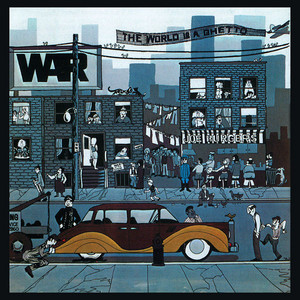
Aside from Low Rider, I'm not aware of having heard any of War's recordings before, so this album came as a very pleasant surprise.
This is exactly the right sort of funky, jazzy, bluesy music for my tastes, and definitely all the right notes (pun intended) for me. It's only six tracks, but each one is a little indulgence in and of itself. I am most definitely going to be picking up a whole lot more of War's albums after hearing this one.
Another solid 5 out of 5 stars from me.
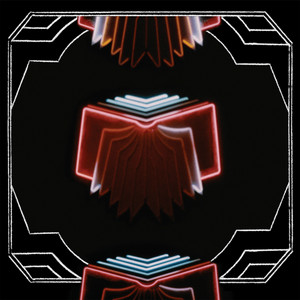
This is Arcade Fire's third album, and for it marked something of a turning point in their evolution as a band.
While it's not as raw as their first album, Funeral, it does feel a lot more refined and relaxed than their earlier works, and in my opinion stands head and shoulders above their second album, Neon Bible. And honestly, everything that came after this was, for me, a little bit less engaging.
I guess what I'm saying is this was where Arcade Fire Peaked, though I still count Funeral as my favourite album of theirs. A strong 4.5 out of 5 stars for this one.
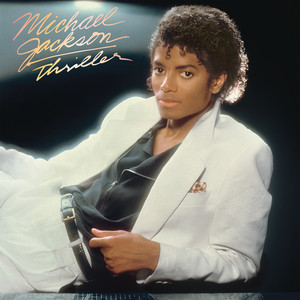
Say what you want about Michael Jackson, but he was one hell of an entertainer.
This album was the one that really brought him to everyone's (including my) attention, and made him a world-wide star, though it could be argued that was as much down to the phenomenal music videos and dance routines as anything else.
With seven out of the album's nine tracks hitting the singles charts, including the titular "Thriller", "Billy Jean", "Wanna Be Startin' Something", and "Beat It", this was an album that exploded, and in my opinion rightly so. But...
In retrospect, it feels a bit dated. It feels like it's still holding on to the disco wave of the 70s to some degree, and it's just not hitting the right buttons for me. Definitely a good album, but I can't give it more than 4 stars.
Aside from the constant playing of Big Iron in Fallout: New Vegas, I don't think I've listened to any Marty Robbins since the late 80s, so having this one pop up yesterday was a pleasant surprise.
I do like Robbins' sound, and this album is a nice mix of country ballads that seriously invokes old-school westerns. For the nostalgia alone, I'm going to give this one 4.5 out of 5 stars.
Despite them being from my home town of Sheffield, I've never really paid that much attention to Arctic Monkeys. If this album is anything to go by, maybe I should start.
It's got a bit of a post-punk, grungy, indie rock vibe going on that I can really get behind, and the songs themselves are gritty observations of what youth culture was like back when the album first hit the charts.
Yeah, I definitely came to this party late, but now I'm here I think I may hang around for a while. A full-bore five out of five.
This was Arcade Fire's second album, and while it's definitely more refined and confidently presented than their first, I personally don't think it's as good. That isn't to say it's a bad album, and I'd still give it a good solid four out of five stars, but falling between Funeral and The Suburbs, this one just feels a little bit less.
Santana's one of those bands that I never really paid much attention to, even though they've been on my radar since I was knee-high to a grasshopper, so listening to this one was a fresh experience for me. And I have to say I dig it.
It's got a nice mix of jazz, blues, and soul going on, all with a touch of Latin rock thrown in and some really nice guitar. Not quite enough for me to go the full five, but definitely a good solid four.
There's this ongoing discussion about which Beatles album is the best one, a discussion I have my own thoughts on, and for me, this one isn't quite it. Sure, it's an excellent album, with a lot of great tracks, but I personally don't think it's their best.
That said, it's still worth a strong 4.5 out 5.
Oh wow, I'd forgotten all about Animal Collective.
I heard their first few albums back when they first came out, when Animal Collective was just Avey Tare and Panda Bear, and I remember being a big fan. They were just the right sort of experimental avant garde for me back then. Yet somehow, in the twenty years since Sung Tongs, I've managed to more-or-less completely forget they existed.
This album brought it all back and reminded me why I liked them so much. Layers upon layers upon layers of totally discordant energy that all comes together to make a glorious cacophony of sound, but which still somehow manages to be catchy and exciting.
This isn't an album I'd put on in the background while trying to work. No, this is more an album I'd listen to just for the pleasure of listening to it. Definitely worth a solid four stars.
For me, this isn't one of Bonnie Raitt's best albums. It's her tenth studio album, and moves away from the more bluesy style of her earlier albums, towards a slightly more rock oriented style, albeit a very laid back soft rock. It's also essentially a cover album, with only two original tracks on there.
Now, don't get me wrong. I still think it's a good album, but it's more a 'stick on in the background' kind of album, than a 'pay attention to me' kind of album. I just feel it doesn't really stand out when placed next to the rest of her back catalogue. This one only gets a 3.5 out of 5.
This album was from the start of Bowie's Thin White Duke era, and by all accounts was fuelled as much by cocaine as anything else, and yet it's still a ton better than much that came before or after.
Still carrying some of the glam rock elements he brought through from Ziggy Stardust and Aladdin Sane, there's also elements of his growing interest in electro-pop to be found in the six tracks on this album, and while it's not one of my personal favourites, it definitely ranks high enough to get a decent four and half stars out of me.
Another band I've never properly listened to. I was aware of them, and had definitely heard some of their work, but they'd never really stuck for me. I think after listening to this album and doing a bit of reading that might have been because I only really heard their early stuff.
This one's a nice little rock album that feels like it fits perfectly in the space between 80s rock and 90s alt-rock. There are some decent tracks on here, and it kept me listening from start to finish, which is a good sign. I'll definitely be having a listen to some of their later stuff after this, and I think I'm going to give this one a straight four.
Alice Cooper's been around for longer than I have, which is saying something, though this album's marginally younger than me, and personally I think it's one of his better ones. Quite a few of the tracks have stood the test of time, and there are rockers out there today who are still trying to do what Cooper was doing back in the early 70s.
Yeah, maybe I'm biased, but this one gets a full five stars.
Alice Cooper's been around for longer than I have, which is saying something, though this album's marginally younger than me, and personally I think it's one of his better ones. Quite a few of the tracks have stood the test of time, and there are rockers out there today who are still trying to do what Cooper was doing back in the early 70s.
Yeah, maybe I'm biased, but this one gets a full five stars.
This was an absolute banger of an album. Post punk new wave grunge that combined all the best elements of what had come before and made it fresh and exciting. The fact that this is a sixteen track album that clocks in at under forty minutes is insane, especially as almost every track on this album is an instant classic.
Even now, thirty years after its release, it still sounds good. As far as debut albums go, this one stands head and shoulders above most others, and gets a very well deserved five stars from me.
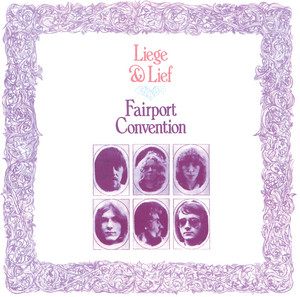
Fairport Convention is one of those bands I can have playing in the background when I'm doing other stuff, but also one of those bands where I can put one or two of their albums on and just sit and enjoy the music. They're super chilled and genuinely a pleasure to listen to. Definitely music from a happy time in my life. 4.5 out of 5 stars
An interesting album. This feels early new wave/goth, but at the same time it also feels ahead of its time in some ways. Shades of Bauhaus, definitely, and as this album was doing the rounds at the same time Bauhaus were forming it wouldn't surprise me if Pete Murphy & co were influenced by Magazine in some way.
This is the first time I'm hearing this album, but it definitely won't be the last. A good four stars.
You've got Crosby, Stills and Nash, who are great at harmonies, but perhaps a little bit too shiny and precise. And then you've got Neil Young, who is on an entirely different level. Put them together, and you get an album which has a few standout tracks (mainly the ones Young plays on), and the rest is okay. This was the first collaboration between the four of them, and personally I don't think it shows the best they have, so only three and half stars from me.
Ah, Justin. I've never been a big fan of boy bands, so I never really paid much attention to Timberlake's solo career after NSYNC. Even so, I've probably heard most of the tracks off this, his first solo album, countless times over the years.
It can't be denied that as an R&B artist, he's got some talent, and compared to the work he did with the band prior to this, it's definitely got a more mature edge. But it's also a bit commercial, a bit like a lot of other R&B from the period. But when you've got artists like Aaliyah, Erykah Badu, Lauryn Hill, and Alicia Keys to contend with, you're going to have trouble standing out.
Still, it's got Timbaland's touch on a few of the tracks, and that's not a bad thing. Maybe I should have a listen to some of Justin Timberlake's later albums, just to see where he went after this. Until then, I'm giving this a promising three and half stars.
The Charlatans. A band that was, for some reason, linked to the Madchester movement and sound, even though they were from the West Midlands.
This is arguably their best album, despite the loss of Rob Collins to a car accident during recording, and even now it still sounds and feels great. Peppered with shades of the 60s, this is a good album. And while it's not entirely one I'd buy, I'm still going to give it a strong four and a half stars.
This is probably the best album Green Day did after Dookie, and is certainly the last truly great album they did (though I have to admit Revolution Radio does have its moments). Spawning some of the band's best-known tracks, this is the one even non-fans have heard of. So yeah, just for playability alone I'm gonna give it five stars.
Pink Floyd is at least three different bands, with at least a dozen different musical sounds throughout the years.
This album, The Dark Side of the Moon, is the first one they did that could reasonably be called a concept album, and as such is a bit different to everything that went before. Less instrumental, more focused, and arguably much better for it.
As with the Beatles, there are always going to be arguments over which Floyd album is the best Floyd album. For me, while this one comes very close, there are at least two other albums in their back catalogue I prefer. Still, it's a damned good album and I'm going to give it a strong four and a half stars.
For an album made up of out takes from the band's previous five albums, including the unused title track from Houses of the Holy, this is a surprisingly good hour and half of music.
Indeed, it says something when an album made up of songs not considered good enough to be used previously ends up being better than the albums produced by most other bands before or after.
Is this the Zep at their peak, like Robert Plant seemed to think? Maybe, maybe not. But whether it is or not, it's still worth a full five stars. It's that good.
Another band I'm not familiar with. This one's got a classic punk sound that I can get along with. I'm not sure I'd say it's a must-hear, but it's definitely worth a listen or three. And it's certainly got me wanting to hear more by The Saints. I'm going to give this album a solid four stars.
I never really got in to Moby. I was more a Chemical Brothers / Leftfield fan, and while it's true they were all contemporaries of each other, Moby just didn't register on my radar at the time. So this album was something new for me.
If I'm being entirely honest, it's not catching me all that much. It's very listenable, but more something I'd have on in the background while doing other stuff than something I'd stop and listen to. If you're out clubbing then it's definitely got the right feel for the late 90's club scene, but for me it's not all that special. Three and half stars is the best I can scrape up for this one.
Skipped because Morrissey has turned out to be a terrible person and I refuse to give him any money.
I liked this one. At least, I liked those bits of it I could find on Spotify, which is a bit of a shame, because I'd like to hear more. I'm going to give this one a tentative four stars, and am going to see if I can track down a physical copy on the old ebay.
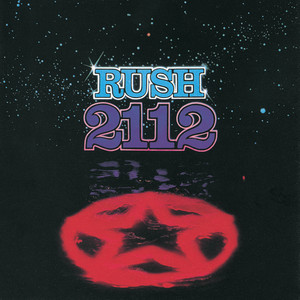
I have heard this album so many times, and I shall almost certainly hear it many, many more times in the future. Rush's 2112 is one of my top ten albums of all time, and definitely my favourite Rush album. It's one of those albums I have to stop and listen to when it comes on, and has been a bit of a feature in my life since I was a small child. It's just perfect, and therefore gets a perfect five.
Apart from Seven Nation Army, the White Stripes is another one of those bands that has never really made it into my music collection. They're not terrible, but they just never really caught my attention, and I think this album might be a good example of why. It feels a little unfinished and like it's trying too hard to be something more than it is. My Doorbell stands out, but otherwise an album of mostly okay tracks. Three and a half stars from me.
Dusty Springfield is one of those artists I was introduced to at an early age but never really paid much attention to. She was just background music for a lot of my youth, and for me was massively outshone by Peggy Lee, Lulu, and Patsy Cline.
Listening to her now, maybe I should have paid more attention back then. This is good stuff, and I feel like maybe I missed out on something by not listening to more Dusty. A good four out of five for this one.
Count Basie is one of the artistes I grew up listening to, courtesy of my grandfather. It was him who introduced me to some of the best rhythm and blues, blues, swing, and of course, jazz, and Basie was right in there alongside Louis Armstrong, Billie Holiday, Duke Ellington, and Cab Calloway.
This album is probably some of the best music Basie laid down, and listening to it even now still brings back some happy memories from my childhood. That alone is reason enough to give this one five stars.
I love pretty much all of Joni Mitchell's back catalogue, but out of her studio albums, I've got to admit this one doesn't quite make it into my top three. Maybe number five?
Even so, it's a very good album that grabs you and makes you listen. And yet, at the same time, it's also one of those albums you can have on in the background when you're doing other stuff.
I'm going to give this one four and a half stars.
There's something about 60s psychedelic rock that I really like. Okay, most of the bands sound the same, but maybe that's a good thing. You can out a whole bunch of albums on and just leave them playhing in the background without it becoming a bother.
The Youngbloods are one of those bands I've not really heard before, and if I'm being honest, while they're not terrible, they're not really high on my list of bands to learn more about. This album iks okay, so I'm gonna give it three stars.
Another Joni album, and another great collection of songs. This one definitely shows her moving in a more sophisticated direction with her music, and lyrically is, in my opinion, leaps and bounds ahead of her earlier releases.
It's still not up there in my top three of Joni albums, so again I'm going to give this one four and a half stars.
The Wall is Pink Floyds rock opera. The story of Pink and his descent into depression, despair, and existential crisis, guided partially by his father's death in war and his mother's strict parentage, eventually leading to near self-destruction. The album ends with Pink demanding that the pain all stop and sets his inner self on trial, ultimately telling himself to tear down the walls he's built around himself. The album starts where it began, and the cycle begins again.
This is a damned fine album, and I could listen to it over and over and over again without ever getting tired of it. With some of the most repeatable tracks in Pink Floyd's repertoire (Comfortably Numb, Another Brick in the Wall, In the Flesh), it's definitely a five-star album, and one of my favourite of theirs.
For me, OutKast can be a bit hit-and-miss at times. This album felt a little bit too inconsistent for me to call it great, but that isn't to say it isn't good. Pulling in some of the premium talent of the early noughties, this is a solid collection of tracks that showcases what the duo are capable of, so I think I'm going to give it a four out of five.
Frank Zappa has a massive back-catalogue to work through, with styles covering jazz, blues, fusion, rock, pop, psychedelia, and so much more. Much of his work is flavoured with varying amounts of comedy, and a lot of it is the result of impromptu jam sessions that then became fixed, note-perfect gig standards (he was, by all accounts, a bit of a perfectionist), but the one thing you can say about all his work is that it was absolutely the height of musical excellence. So when I say that Freak Out! is not one of my favourite Zappa/Mothers albums, I want you to understand that I still love it. It's a nice li'l album to listen to when you're feeling chill, or just want something on in the background you can appreciate without being too distracted. So not my favourite, but it's still gonna get five stars all to itself.
This is the album that (temporarily) knocked The Beatles' Abbey Road off the number one slot, and to be honest it's not that surprising when you listen to it. This is possibly one of the Stones' best albums. Harking back to their blues roots, this album has some outstanding tunes on it, and still sounds amazing over fifty years after its initial release. I'm definitely thinking this one deserves a full five.
This was the album Blur made to break into the American market, something they studiously avoided with their previous albums, and it worked. With a more American indie-rock sound than what they'd previously produced, this was a bit of a stylistic departure for the band, though I've never really been able to decide if I preferred them before or after the change.
Whichever way I slice it, this is a great album to have playing when I've got things to do, through there are a couple of tracks that make me stop and pay attention when they come on. So let's give this one a not-quite-perfect four and a half stars.
Another band that was completely unknown to me before listening to this album, and another one I'm interested in hearing more from. This album has a decent indie-rock sound that's definitely a product of its time, and it's a sound that I like. That said, it's not what I'd call groundbreaking, so I'm going to give this one three and a half stars.
I'd previously listened to a few albums by Femi Kuti, but this one had somehow escaped my attention. It's a seriously chilled Afrobeat/Jazz album that shows why Kuti is so well-respected in the music world, and I'd say it deserves a strong four and a half stars.
I haven't listened to The Strokes for such a long time, and realising that this, their debut album, is from the late 90s, makes me feel so old.
It's a cracking feelgood album, with what was a fresh and exciting sound for when it was released, and I'm now beginning to wonder why I stopped listening to them. I'm gonna give this one a strong four stars and add some of their back-catalogue to my play list.
The Beastie Boys are a bit of a marmite band for me. Sometimes, I really love their stuff and can listen to it for days. Then at other times I just get bored with it so very, very quickly.
This album is definitely one of their better ones, but only scores a three out of five from me.
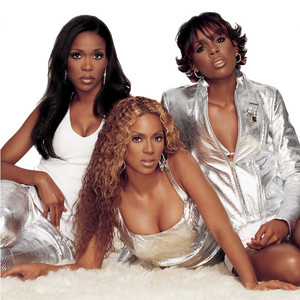
It's beyond argument that Destiny's Child helped restart the girl group surge in the late nineties and early noughties, and Survivor is, for me, their best album. This is the first album with Michelle Williams on board, and has some of the best tracks the group recorded. Sure, it's massively over-produced, but that in itself was where the whole Soul/R&B thing was headed at the time. And honestly, it's not a bad thing in this instance.
All three of the leading ladies on this album went on to have pretty impressive solo careers of their own, and this album definitely deserves a full five stars.
Violator is, for me, one of Depeche Mode's best albums. Coming almost a decade after the band's first album, it's definitely one of their stronger outings, and while some of the tracks come across as a bit poppy, that hides the depth and emotion underlying the lyrics.
All that said, this isn't one of those albums I tend to listen to a lot. It doesn't quite hit me in the same way as Speak and Spell, or Some Great Reward. For that reason I'm only going to give this one four and a half stars.
For me this was the last truly good album by U2. This is where they started to move away from their punk and blues roots, and move into something more experimental, something that didn't seem to fit them quite as well.
With more than a few outstanding tracks, this is definitely a strong four and a half stars from me.
I was introduced to Stereolab by a friend back in the late 90s, and this was the album they used to make that introduction. For that reason alone, this one will always stand out for me, with its quirky avant-garde tunes and musical vocalisations.
In some ways it puts me in mind of Jean Michel Jarre's Zoolook album, which I love, so it's hardly surprising I'm going to give this one five stars.
I'm never really sure how to classify Nirvana. On the one hand they did pretty kick-start the whole grunge thing, and produced some absolutely phenomenal tracks. On the other hand, Nevermind was their only genuinely good studio album, with Bleach and In Utero being average at best in my opinion. But then, this is all subjective and a lot of people think this album is their best.
I'm gonna give this one three and half stars - it's not great, but it's not terrible either.
Billie Holiday is one of the greats, an artist I've loved for as long as I can remember, and one of the cornerstones of my musical awakening when I was younger. So of course I'm going to love this album.
That said, this one doesn't quite work as well as some of her earlier recordings. It's fair to say that by the time she went into the studio to record this one, her voice had lost some of the power and range she exhibits in her early career, and to some degree that's compounded by the more muted tonal style of the tracks themselves.
However, it's also undeniable that what this album lacks in vocal and musical excitement, it more than makes up for with emotional impact. You can't listen to this album without getting a lump in your throat. This is Lady Day telling the world she's still got the power to grab you by the heart, even if she hasn't got the voice any more.
For me, her recordings with Clef will always be the height of her back catalogue, with Lady Sings the Blues being my favourite, but this is still a damned fine album and worth at least four out of five stars.
Many consider this to be Dylan's best album, though it took a while to reach that plateau. When it first came out, it got a mixed reception, with some critics most definitely not impressed with it, and at first blush it's easy to see why.
The production and recording of this album feels a little bit less polished than Dylan's earlier works, but then when you sit down and listen to it properly, you realise that this is a much more crafted album than what went before.
I'm not sure I'd say it's my favourite Dylan album. But I'm also not sure it isn't. I can't help but give this one five stars.