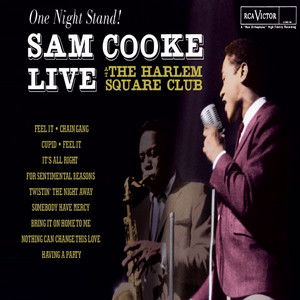
Live albums are my catnip, so this is the ideal way to start. What should have been one of the original raw and unfiltered live albums of the early sixties, explaining the lasting popularity of Cooke and his sound, it was shelved for more than 20 years because it didn't sound polished and 'pop star' enough.
Listening to it now, you can hear exactly why this music electrified everyone who heard it. The bands of the early sixties came directly from this kind of sound, irresistible and electric. Cooke's vocals are ragged and urgent; the audience are part of the sound in a way you rarely hear, and the whole thing rattles along without a pause for breath. I'm generally a sucker for live albums which stretch out over four or even six sides of vinyl, but this captures the whole set and leaves you wanting more after less then 40 minutes.
Don't Fight It.
One of those late sixties albums where you can clearly hear the music shift from jangly guitar pop with catchy choruses into the complexities and layered instrumentation of what came next.
Not to mention the way the lyrics veer from simple love songs to much more introspective poetry to whatever the hell White Rabbit is supposed to be.
It's gone on my 'really ought to own a copy of this' list, as the last time I knowingly listened to it in its entirety would have been in the early eighties (hi Graeme), and it's quite a bit more brilliant than I remembered it being.
Teenaged me would have loved this. However, like a great deal of the music I loved when I was 19, I have absolutely no desire to ever hear this again. The idea that music this juvenile, this whiny, was made in 1994 not - as it appears to aspire to, the end of the 1970s, is remarkable.
Now, I subscribe to David Byrne's theory that most music only makes proper sense in context, but I cannot put myself into any mental state where this music would work for me - at 19, having lived through punk and the best/worst of the New Wave of British Heavy Metal, I'd completely understand where this is coming from musically, but lyrically I like to think I'd have just laughed at - for example - a song about (and I'm not making this up) being so annoyed at being cut off while driving sensibly that the only recourse is to take out a gun and shoot someone, well, maybe it's just that I grew up in the wrong country.
It's not without musical merit - the playing is generally good, and the songs for the most part are short enough that they don't outstay their welcome; there are even hints that this lot are capable of something other than distorted power chords in 4/4 at whatever tempo fits the lyrics, but that only elevates it from one star to two.
In the end, it's the worst kind of music for me - inauthentic. Had this been created by actual disaffected teenagers with genuine complaints I'd have understood, but this is a bunch of guys in or approaching their thirties, so it sounds like a cynical attempt to use as many buzzwords and cliches as they think grumpy 15-year-olds who have been grounded for swearing at the dinner table would lap up. I can see why it might make a list like this, but I was over it about four tracks in, and re-listening hasn't improved things.
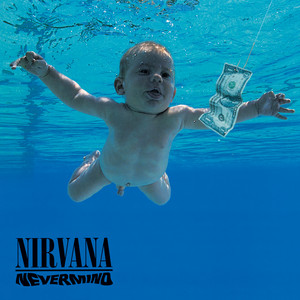
I first heard 'Lithium' on the radio one evening driving home from work, and was convinced that this was a return to form for Black Sabbath, or something. It was definitely different from the over-produced and indistinguishable stuff which was convincing me that I had outgrown this popular music thing.
Listening to it now, it's perhaps a little too long - it's definitely front-loaded, although the quality doesn't drop by much, and 'Something in the Way' is worth the wait. I didn't go down the grunge road at the time, but this is an essential album no matter how much or little of the rest of the scene you were interested in.
It's the first album in my list which is a genuine cultural artefact, but I'm trying to restrict my five star ratings to albums which have no flaws, and this is not quite there.
Over the years, more than one person has told me that I'd enjoy this band, including a random stranger in a record store who saw what I was purchasing and recommended The War On Drugs to me.
So it was great to have this opportunity to hear them for myself, and to have the luxury of an entire weekend to try to get to know their music. Turns out, I already knew their music, because I have heard, and in many cases love, all their influences. Even the bit which sounded vaguely like Abba.
As I listened for a second or third time, I found myself anticipating the bit which sounds like Van Morrison, or the bit which sounds like Mercury Rev, or Springsteen, or... You get the idea.
In the end, it's fine; I do like it. But I don't love its meandering excavations of the last 50 years of music, and while I would never object to hearing it again, I equally wouldn't seek it out. In the end - it's fine.
I'm not sure I was expecting to find albums and artists I had never heard of before in this list, although I shouldn't be hugely surprised; I'm likely to know anything from the 20th century, even if only by reputation. Everything since will generally need to be in the areas of genres I know and love, or things which have been popular enough to tickle the zeitgeist.
This is neither, and to be honest, I'd need a lot more than one day with it to properly evaluate, but I will say this - it's generally in a genre which I don't have a lot of familiarity with, but it makes it easy to enjoy by being fluid and tuneful. I haven't had nearly long enough with it to know whether it's the kind of thing I'd like to own, but I've definitely spent long enough with it to know it's something I'd like to get to know better.
It's unlikely to supplant anything in my own top 1000 albums, but I'm giving it a middle score because it's worthy of further investigation.
It gets five stars. It doesn't need any more reviews - I don't imagine there's anything new to say about it at all.
Massively influential album in spite of - or perhaps because of - its dual nature; contemplative keyboard-based pieces underscored by the familiar motorik beat give way to raucous guitar-based chaos with accompanying unhinged vocals.
Love it; more of this sort of thing, please.
Music should be heard in context; sitting at my desk or doing a jigsaw is categorically not the appropriate context for listening to this. Still, it's not to say I didn't enjoy it.
I'm a fan of minimalism, and that is at the core of this album just as much as dance beats and samples are. It's clever and well done; I can see why it's so highly regarded, even if it's not really something I'd reach for under, well, any circumstances, to be honest.
A warm bath of nostalgia of an album which marked a particular time in my life. It wasn't my favourite album of 1997, but it was the most memorable for personal reasons, although I had likely not listened to it for a couple of decades.
It's front-loaded with the songs I remembered, which suggests that even when it was in rotation, I probably found it too long, and it's still about 10-15 minutes longer than it needs to be, which loses a point. But as an evocation of a time and a place for me, and of a momentous event, it's hard to beat. I've loved being back there for a whole weekend, but it's time to move on.
Next.
Well, it's genius, isn't it?
I was never a Prince fan as such, so if this project forces (or encourages) me to listen to whole albums, then it will have been worth it. Of course this has it's flaws - it's a soundtrack album, how could it not? The huge hit singles do overshadow the rest of it, and Prince, like many geniuses, didn't always know when to leave us wanting more. But no-one else sounds like this; no-one - even in the eighties - was effortlessly smashing all the genres together and making it sound like it was completely spontaneous, and no-one will ever be as cool as he was at this point, so it's getting full marks, although 4.5 might be more accurate.
I'm going to need longer with this - there are more famous White Stripes albums, I'm sure, but this eclectic collection caught my ear in a way I didn't expect, and is the first one I've come to completely cold which has had me thinking "I need to know more". This is a holding score until I listen a bit more.
Led Zeppelin, though - definitely channelling "Physical Graffiti" in places. Intriguing.
Well, I can tell exactly which bands these guys listened to growing up. Sadly, that doesn't amount to having made something interesting or innovative, or even vaguely memorable.
After a while, they stop yelling at you and try some melodies, but there's no substance to much of it. Rescued from one point by the back half being slightly more bearable. I hope they went on to do better things than this, but I have my doubts if this is deemed worthy of being on the list.
It really, really shouldn't work. Even knowing what we know now, it's perfectly possible to listen to it with utter bemusement that something as wildly overblown as this even got released, never mind became a cultural touchstone.
In 1977, we were supposed to hate this, and in public we probably did, but someone was buying this by the million, and it wasn't our parents. If you were to strip this back to just the words and melody, it would sound like the ravings of an oversexed teenager, which is basically what it was. What elevates it all is Todd Rundgren's 'everything including the kitchen sink' production, and that voice.
Meat Loaf wasn't what pop singers sounded like, and still isn't. If you come to this cold - which I suppose is perfectly possible fifty years on - you may well bail out about six minutes into the first track wondering what the fuss was about, but if you stick it out until he's lying dead in the ditch and his heart makes its second attempt at escape (because once wasn't ever enough for Jim Steinman) and the whole thing just abandons any attempt at restraint, and Meat Loaf evolves into his final form, you'll discover that resistance is futile.
It's nuts, but in that way which bypasses any attempt at rationality and defies all explanation. You have no idea why you enjoy it, but you do.
One more thing - if you aren't quite convinced by the amateur dramatics of 'Paradise by the Dashboard Light', look up the live version from the Old Grey Whistle Test. Thank me later.
It doesn't get full marks because there are a few moments when you can detect the workings and see how it's cobbled together, but for the most part, just abandon yourself to the inevitable and try to keep up.
Inevitably, too long.
Better than I expected, though - I remember most, if not all, of these from the ridiculous overexposure they had at the time - perhaps that contributed to the fact that I nodded along perfectly happily to most of them, without ever feeling the need to get to know them better. Background music, which sounds harsh, but I maintain that if you dig deeper, you'll discover there's not much there.
AN album I've been aware of for decades, without ever having consciously heard anything other than 'Blister in the Sun'. Well, this exercise changes all that. It's quite brilliant; the home-made feel to it all works only because they're genuinely excellent musicians - the bass in particular is astounding - and while a fondness for Jonathan Richman might be one of the reasons I've enjoyed this so much, it stands up completely on its own terms.
Immediately goes on the 'must get myself a copy' list.
I got this wrong - I had copies of the The albums at the time, and thought this was one of them, but it wasn't. I think it's fair to say that I appreciate it more than I like it; I definitely prefer the later albums, but this definitely earns its place because of how it pointed the way forward.
I don't know if 'Infected' or 'Mind Bomb' are also on the list; if they are, they will score higher.
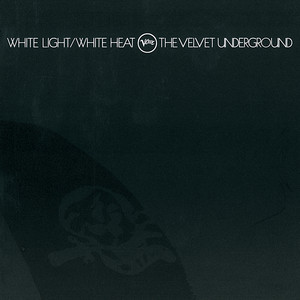
It's either a work of genius, or the sound of a band doing the bare minimum to produce something releasable. Or both.
In context, however, it's closer to the 'genius' end of the spectrum - it came out at the beginning of 1968, and sounded like nothing else. Uninterested in being commercial, or even listenable in places, it could easily be dismissed as an over-confident art project, but if the concept here is to point people at albums they really should hear, it's right up there - a lot of the music of the next few years makes no sense unless you've heard this racket.
Even 'Sister Ray' - how far could they push this idea? Way beyond when they should have stopped, but that's the point.
I'll admit to a groan when this appeared, but I'll also admit to being quietly impressed with it - not earth-shattering, and definitely not as important as it likely seemed at the time, this is the sound of an artist latching on to a sound and milking absolutely everything out of it.
There are many traces of 'Dirk Wears White Sox' in here, something which would vanish entirely as Adam chased tabloid superstardom. It rarely ends well, but can produce flashes of genius along the way. This isn't genius exactly, but it was clever, and sounded unlike anything else at the time.
Mind you, so did most things in 1980 - it was a wildly creative time. Enjoyed listening to it; doubt I'll ever dig it out again.
This is why we need half stars. This is a solid four-star album, reduced to three and a half by virtue of being too long, so it would fall into the 3.5 category. However, it ends up with three because even someone like me, who grew up hearing these songs on the radio and whose entire musical taste is predicated on side-long 'concertos for rock group' simply finds this too much.
If it had come out a couple of years earlier, and I had saved up and bought it in 1975, I'd probably consider it one of the foundational albums of my young life, but it didn't, and I don't, which is a bit sad, but here we are.
But I will admit that I'm strongly tempted to give it four on the strength of 'Mr Blue Sky' alone, which is a genuine work of genius and almost redeems the entire overblown Concerto part.
Sigh. Next.
The thing about minimalism is that it needs to be, well, minimal. This starts promisingly, although even before the end of 'Regular John' I was concerned that a whole album of repetitive distorted guitar under a whiny voice complaining about - well, who knows, to be honest - would be too much.
Surprise - it was.
I don't know if the first two or three tracks are actually the best, or if I just became numb to it after that. By the halfway point, I'm begging them to try something else, but it just keeps relentlessly grinding on in what amounts to a monotone.
OK, to be fair, there's an instrumental after a while which is at least at a different pace, but it has almost nothing of interest going on, so even that palls after a minute or so.
The very last track does something more interesting, but I'm afraid I'd tuned out by then.
How a debut album like this ends up on this list is baffling to me - they clearly got better at everything; this was a trial run to see what would work, but somehow it's a 'must hear' album.
The list of great 1960s double albums is not long, but it doesn't, sadly, include this.
The brothers Gibb were terrific songwriters, and you can hear that on here, just not consistently. It is the sound of a band going through the same 1968 epiphany as everyone else from the Moody Blues to The Band, throwing everything at the wall to see if any of it sticks. There are memorable moments dotted through this, but there's also an awful lot of filler - songs which are just vague melodies in three-part harmony over and acoustic guitar, or padded out pointlessly with strings to make them sound Important.
I was previously unaware of it; I'm glad I've heard it; I'll likely never listen to it again.
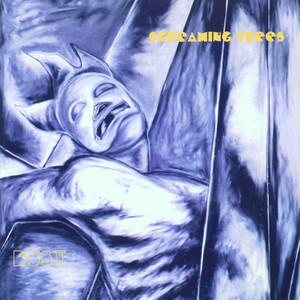
I'm going to shock myself here - on first listen, I liked this more than I thought I would, given that all I knew of Screaming Trees was that they were grunge or grunge-adjacent.
On a re-listen, this has elevated itself to four stars - proper melodies, great song construction, unexpected instrumentation (sitars and what sounds like a harmonium, for example), lyrics which appear to have been worked on and thought about, and solid, punchy production. Had I heard this at the time, I think I'd have bought myself a copy. I still might.
Joyful and full of life, its only flaw really is the weird canned applause designed to make it sound like a live album. There is a stark contrast once we get to 'Ball and Chain', which is actually - and obviously - a live performance.
You can't ignore the fact that this is all about the voice, but if you can tune out Janis Joplin's extraordinary performance, there's a great,. muscular band behind her, and it's a great shame they never really developed what was going on here.
It's a rare album which can bring you back to hear more while simultaneously have yo think that even 30 minutes is actually too much. Hugely important, pivotal in the eruption of the following two years, yet once you've heard it outside the context of it being the most thrilling new thing you've ever heard, it doesn't really work.
Admire it for what it is, don't expect anything more, cringe at some of the lyrics, and move on. I was going to give it four because it's important, but really it's no more than fine. Sadly.
On the face of it, there's nothing wrong with this. It's an album made in the 2010s which sounds like something Al Kooper might have played on forty years before, but honestly, apart from a couple of early songs which sounded vaguely familiar, there was nothing really there.
I'm probably too old to really appreciate how this sounded fresh and different to the people it was aimed at; I tired of it long before the halfway mark, and coming directly after 'Ramones', made me long for something which sounded the same all the way through, but was over in 30 minutes.
Not for me.
This was a delightful surprise, or - to be more accurate - half of a delightful surprise.
The first half -side 1 in its original guise, I imagine - is full of invention and imagination, including a version of 'Grapevine' which is nothing like what I expected from the Temptations. It culminates in a nine-minute plus wigout which seems to be pointing the way forward to all kinds of 1970s goodness.
Flip it over, though, and it's a side of generally safe late sixties pop songs, sung impeccably, of course, but quite a step down from where we'd been. A whole album of what we heard on side 1 might have been nudging five stars for me, as it is, it's somewhere between three and four, and I've settled back on three because I was kind of let down by it in the end.
I never did get on particularly with ZZ Top - the kind of band for whom a 'Greatest Hits' would have done me fine. Still, this was enjoyable enough, and I can see why it's beloved of some. Really, though, 'La Grange' is all you need. Oh, and maybe 'Jesus Just Left Chicago', if only so you can sing AC/DC's 'Ride On' while it plays.
I try to separate the artist from their art; I really do. I can listen to music by repulsive people when the music itself has something interesting to say, and I tried to do that with old Serge here, too.
But it's impossible to overlook the fact that this is an album which tells - in loving detail - the story of a wealthy older man knocking a child off her bicycle, taking her to a sleazy hotel and raping her, only for her to die in a plane crash. That's it; there's no other side to this. The music is interesting and in other circumstances, would have me poring over it.
But it's one of Serge Gainsbourg's masturbatory fantasies about a child, and there's no redeeming that.
"Jane, could you giggle like a 14-year-old? No, don't ask me why, just do it."
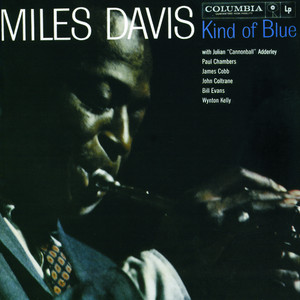
I'm not remotely qualified to offer an opinion on jazz, I think.
Having said that, this is magnificent, and has easily been the most played of all the albums generated so far. Cool and seemingly effortless while being complex and rewarding. I shall have to get myself a copy.
It's iconic, of course.
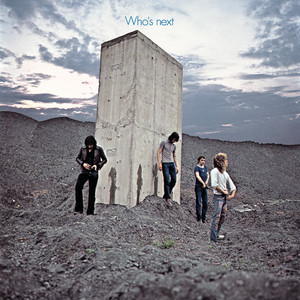
It's also the sound of a band working out what they want to be - there are other Who albums which deserve the full five stars, but this one has too many 'not quite there' moments to qualify. It's still great,though, and does what all transitional albums ought to do - go out on a clear indication that things are about to change.
Two James Brown covers is two too many, though, and for all the energy of their originals, 'The Good's Gone' drags way beyond when it should have stopped.
I'm still not qualified to review this, so I'm giving it three. I know this would disappoint my father, who would have encouraged me to listen more closely, to appreciate the interplay between the three elements and to marvel at the freedom and joy being expressed here, but sadly, this points directly to the flaw with this exercise - there isn't enough time to do all of that and still have a life.
I'm coming back to jazz, no doubt, but I'm not going to pretend I was able to get more from this than I actually did.
I was aware of Luke Haines, and I'm pretty sure I'd heard some Auteurs before now, but coming to this cold, I was prepared to dismiss it as just another 90s guitar-based album which I've heard dozens of without engaging.
Well, I was wrong. This is a genuine delight. Sure, it doesn't break any boundaries, but it takes a well-worn formula and wrings proper songs and glorious melodies out of it, and invents Britpop before that was a twinkle in a marketing department's eye.
It's going on the 'I need to own a copy' list.
One of those albums which automatically gets painted with the 'genius' brush, but if I'm listening really critically, I have to say it's the least satisfying of the Berlin albums, mainly because it does feel unfinished and almost like a soundtrack album.
Which doesn't diminish its impact at all, because this may be the single most influential album on this entire list - entire genres of music sprung up in its wake, and bands used its template to reinvent themselves by taking radical new directions. It worked for Bowie, went the refrain, why won't it work for us?
I'd give it 4.5 if I could, but in the end, it's a milestone and worthy of the full marks.
It is a classic album, and it is rightfully celebrated for being bookended by two of the cornerstone tracks of seventies rock. But the truth is that the rest of the album feels like filler.
That's unfair, of course; the other tracks are perfectly fine Who songs, but I did find myself drifting off as I waited for 'Won't Get Fooled Again' to come along, and in the end, it can't get the full five because of that.
I did at least manage to get out my own vinyl copy and hear it as intended, which was satisfying, but it's an object lesson in not loading your best track at the front - everything is going to sound pale in comparison.
Until you get to the scream, of course.
If my father were still with us, he'd likely disown me for this, but...
I don't get it. It's described as bold and forward-looking, but I don't hear anything which couldn't have been done in 1938, and while big band music is inoffensive and perfectly pleasant, I have no idea why this is a 'must hear' a;bum.
Which, I'm sure, is on me, but I'm not about to pretend otherwise. Fine for what it is, not anything special, and having heard it, I shan't seek it out again.
One of the many, many sounds of 1979, it's as smooth and cultured as you'd expect from Nile and Bernard, but there's also an edge to it which lifts it above the ocean of disco which was somewhere on the edge of my consciousness at the time.
Another for the 3.5 score, I'm moving to 4 because it's impossible not to like, and really did mean something more than just a dance beat at the time, even if I wasn't the one dancing to it.
An album inevitably dominated by that one song which everyone knows and imagines they can sing along to until they try.
But enough about the culturally insensitive 'Coconut', which I'm afraid just sounds worse every time I hear it. Yes, of course, there's also 'Without You', which, after decades of hearing other singers overblow it into oblivion, actually sounds restrained and heartbreaking in its original form.
And, of course, the rest of the album cannot possibly live up to that, and doesn't. There are plenty of interesting things going on here, but not enough to have me come back for more, I'm afraid. Good, but hardly as great as its reputation suggests, this is firmly in the middle for me.
Ah, I thought, the wrong Spiritualized album; surely 'Floating in Space' should be on this list?
Maybe it is, who knows?
Anyway, coming to this feeling slightly grumpy that I wasn't going to hear 'Cop Shoot Cop' and all those other musical marvels, I was unprepared for how excellent this actually is. Moulding pretty much everything interesting which had gone before it into something which sounded modern and polished, it completely won me over before the end of the first track, and maintained its psychedelic space-rock hold on me for a whole hour.
It's going on the list, alongside its better-known sibling.
I should like this - in fact, I should love this. It should be one of those 1978 albums I played to death at the time, but it isn't.
It isn't, and listening to it now has helped me figure it out. It has all the "New Wave" elements in place; quirky vocals, standard pop tropes filtered through "modern" instrumentation and oddly flat production, but it just doesn't work.
In 1978, I was listening to Elvis Costello and Joe Jackson, even the Boomtown Rats, and the songs I heard from this just sounded too glib, too superficial, too - dare I say it - American.
They were wildly successful and couldn't care less what some spotty teenager from Scotland thought of their music then or now, but I'm pleased to discover that my nearly fifty-year-old opinion that they were inauthentic and superficial seems still to hold true. It's not bad, but it's also not "a genuine rock masterpiece", as the summary on the streaming service would have it.
File under forget.
I'm absolutely certain that this was a pivotal and important album at the time, and that it set the standard for much that followed it.
However, it's in a style which seems determinedly backward-looking. You can hear where things will go, but this isn't there yet, in spite of the voice. In the end, I have to hold my hands up - this is on me, but it doesn't do anything for me at all.
Glorious shambolic chaos from a bunch of mates who can't quite believe their luck.
Surprisingly, given the above, it's also very good; it would have been so easy just to be 'good enough', while this manages to walk the tightrope well enough to be something still worth listening to, more than fifty years on.
Rod was about to become huge in his own right, though, so it's something of a last real hurrah, but not many bands got to have one last blaze of glory and sound as good as this, while also clearly having a lot of fun.
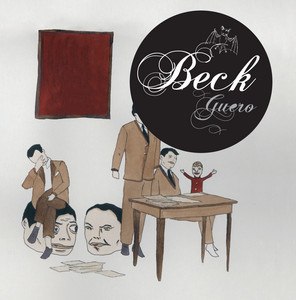
A genuine surprise; I enjoyed this a lot, and it comes close to going on the 'must get myself a copy' list. Interestingly eclectic and seemingly with something to say, it maintains interest for the full running time, and never veers into self-indulgence which I suppose was my biggest worry about spending time with an unfamiliar modern album.
Listen to me, it's not 'modern', it more than 20 years old. Sheesh.
Another surprise - I was braced for this just being a "not for me" album, but it's remarkably interesting; experimental and doesn't really do any of the things I was expecting.
Having said that, this is not really in my wheelhouse, given my preferences, but it has reminded me of the purpose of this project; to listen without prejudice, as someone once said. Enjoyable, also not really what I was expecting. Had I been 17 when it came out, and hearing it on the radio, it would likely be one of those favourite albums which I keep coming back to in my old age.
This is probably heresy, but... it's too long and self-indulgent. These 11 songs, kept to about 4 minutes each, would make an unbeatable single album.
But it's Prince; he's going to do what he wants, and it's obviously a much loved classic album, so what do I know? For what it's worth, it is great, just overstays its welcome a bit.
Oh, and the last track had me humming a Chas and Dave song afterwards, which is weird.
Ooh, shiny!
I think I was supposed to like this back then. I never really did, and listening to it now reveals why. There's just nothing really there - it's all surface and posture; everything is double- or triple-tracked until it sounds slightly uncanny. I know there are some decent songs under all that polish, but you can barely hear them for the over-production and general gloss finish.
And if you do try to drill down, it all sounds kind of perfunctory; strip it back, and there would be pretty much nothing there. Which is a shame, because there's an entire generation who grew up thinking that this was how rock music was supposed to sound - clean, sanitised and inoffensive. Which is kind of the opposite of what most were going for.
I've tried to avoid saying this, but given the raucous racket I was listening to at the time, this sounded American to me, and not in a good way.
It still does. Disappointing.
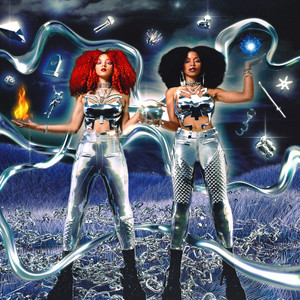
Consider me pleasantly surprised. This is brash, loud and vibrant with a serious attitude which reminded me of how things were in the seventies, except women generally would not have got away with this kind of thing back then.
Enjoyed it enough to dig out their Glastonbury set and guess what? I enjoyed the hell out of that, too. There should be more of this sort of thing, I think.
Not sure why my previous review didn't save...
It's Elvis Costello, it gets stars. I know the proliferation of EC albums is something of a running joke around here, but, come on, this is a classic, and gave me an excuse to dig out my own copy to play, which hasn't happened for a few days.
For completeness, I also listened to 'Peace, Love and Understanding', even though my copy is a UK one, where Nick Lowe got to keep his own song.
Before I heard this, I thought I didn't like Johnny Cash. Now, I know I don't.
I know - it's me; I need to wash my ears out with soap or something, but I find the whole thing maudlin and somehow inauthentic. Ok, not the whole thing - 'Hurt' has power to it, famously, and I liked the instrumental arrangement of 'Personal Jesus', but I knew exactly how his voice would sound singing it, and I was right. And - again, this is on me, I'm sure, I think he butchers 'In My Life'. I also can't bedoing with cowboy songs of pain and regret.
It's a classic album. I owed it to myself to listen to it, and I did that. Next.