.
This is one of the classic albums I've liked less the more I've listened to it over the years. The first time I listened to it several years ago, the transgressive lyrics and energetic crescendos clearly demarcated it as an important rock classic. It is clearly ahead of its time and is very novel for 1975, since it generates its emotive power from Patti Smith's charisma and songwriting skill as opposed to any kind of technical experimentation, virtuosity or progressiveness that typifies that era in my view.
The issue is that its also one of the more inconsistent classic albums. Gloria, Land and especially Free Money are really amazing songs but the other songs are too monotonous and plain, to the extent that they become kind of aggravating. I personally think that lyrics are the least important part of music and good lyrics can only amplify a great song. But no matter how much of a "poet" Patti Smith might be, it doesn't matter if the majority of the songs are too limited to make her poetry shine through. I think it's telling that one of the oft quoted lyrics from the album is literally the first line, because whatever else of genius she says is buried behind a wave of identical droning chords that they are missed by the casual listener.
It's very reasonable for someone to adore this album if the magic sauce of Horses' acclaimed songs applies to the rest of the album in their view. Equally I can clearly see how some people see this as trash - most of the album is quite annoying if you are not in the right headspace for it. I think it's fair that this album is critically and culturally preserved and I lean towards it being on the positive side. But it is still very unrefined and probably salvaged somewhat thanks to John Cale's production. Given it was Patti Smith's first album, released when she was only 29, those flaws are completely acceptable, and clearly, ameliorate the album for many people.
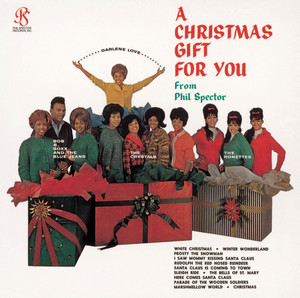
Such an amazing Christmas album, some absolute classics in here, velvet smooth flow and feel.
The concept and vision of Duck Rock are really impressive but the backstory of the plagiarism and exploitation completely sours the record. Best treated as a compilation of various artists, ignoring the evil manager slapping his name and lyrics on the record.
Great to use as a jumping point into genres like mbaqanqa and merengue (and the actual artists behind the songs) but functionally distasteful listening.
Classic, jam-heavy hard rock. A little too unrefined and wild for my liking - I prefer the later Zeppelin albums. Unbelievable that these guys were only in their early 20s when they made this.
Obviously a legendary album, peak of the counterculture and lyrically potent in its own right. Lacking in a bit of meat - I do find that the middle of the album is largely filler and nothing comes close to A Day in the Life, debatably one of the most influential and critical songs of all time.
Favourite Tracks: With a Little Help from my friends, Fixing a Hole, Mr. Kite, Day in the Life
I can do without the others, and that includes Lucy in the Sky with Diamonds, which is actually my least favourite on the album.
Still, it flows really nicely and of course the highs are stratospheric.
Historically significant record from one of the most socially conscious musicians of the 20th century. It's solid, unique and technically brilliant but not especially thrilling or emotive for me personally. The fact that so much of the album consists of similar call and response types of bars means there isn't a great deal of variation itself in the record. There are other records and artists I prefer for energetic jazz fusion-likes. Probably deserves a four overall.
Ambitious idea, but I don't really think Mussorgsky's compositions were improved in any way, nor was this rendition particularly interesting. The original compositions they interpolate into the album are much more inspired. The whole thing kind of feels like a gimmick on which ELP went all-in.
Interesting that several rock critics absolutely despised this piece, although it seems to be appreciated by fans and prog rock afficionados.
There are definitely some really nice keyboard lines in here, and I don't think it's that grating or pretentious. Perfectly adequate music.
Amazing album. Side A is perfect, starting with the electrifying Speed King, the proto-sludge of Bloodsucker (wouldn't be out of place in a Kyuss or Melvins album) and the legendary progressive jam of Child of Time.
Side B is much in the same vein but there are a few jarring and questionable musical choices. Into the Fire takes too long to get going, and the organ solos in Hard Lovin' Man sound pretty terrible, but maybe that is a mixing issue.
I would consider this a 9/10, but since this is one of the progenitors of heavy metal and definitely one that should be heard before death, I'll grant the 5.
One of the best singer-songwriter albums ever. Dark, deep and powerful. Musically pleasant to hear with even when disregarding the lyrics, which I think is important for long-term engagement.
Way too little musicality, the vocals were made front and center of the record and they sound terrible. Every time I thought there was a decent riff it is quickly drowned out by Costello and his wailing. Elvis Costello feels like a practical joke, but knowing he is taken quite seriously by the Gen X and New York rock aficionados is truly perplexing. This barely qualifies as music.
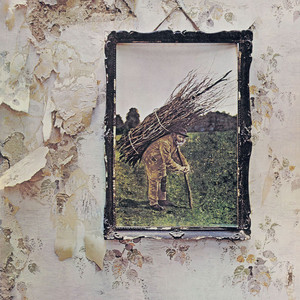
Gargantuan record. I feel like Black Dog fizzles out quickly after the opener, and Rock N Roll is relatively tame. Battle of Evermore is underrated, but its Stairway to Heaven that is justifiably the big draw for the album. I really don't think it's a stretch to say it's arguably one of the best songs ever created. This side A alone justifies inclusion on the list - this is a must listen to fully understand rock history.
Side B is weaker, but Going to California is very strong. When the Levee Breaks is the other big draw, but feels a bit hollow when stripped from its original context and the direct influence of the 1927 flood to which the song is attributed.
Pretty interesting double album. Probably best listened to on vinyl - which becomes evident after the B-Side Intro. Most melodies are quite pleasant and I thought it was pretty strong instrumentally, with a good variation of innovation. Each side seems to have a different kind of vibe to it. Nothing really captured my interest but I could see myself revisiting this.
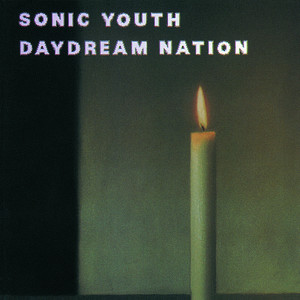
Lots of ethereal, glossy shoegaze. Feels like drifting across astral realms. Balanced nicely with songs like Feed Me With Your Kiss and Nothing Much to Lose which are quite grungy. I think this album has a good balance of heavy drone with spacey effects that make it pretty accessible and a good introduction to the band and the scene.
First section featured just a touch too much fuzz for my liking. Could not seem to find the ideal volume for the album. The record gets significantly spacier as it progresses but I find that it isn't very courageous, just misting around between the ambient and rock spaces, not really committing to engaging its listener.
I've heard Ladies and Gentlemen We Are Floating with Space before, which is also good, but it's not really something I repeat often. Probably this will grow on me over time. Amazing cover art.
It's almost upsetting this album is on this list and proves its horrible bias. There is basically nothing special about the record, it is dime a dozen rock that shows there is too little variability in what is considered "a must listen" in the eyes of this editor and it is far too skewed towards pop music and Anglophone countries. Listening to music should be enriching, but this is no less enriching than entering a pub. Listening to this album is a waste of time.
Technically and sonically flawless, but kind of boring and fails to allure or goad. I guess since this is the quintessential Straight Edge album, it has historical merit.
Always feels awkward having to assign a score to Blackstar, and truthfully my opinion on this album has varied significantly over time. It is obviously inseparable from Bowie's death given that it was his swan song production following his 18-month battle with liver cancer. Stylistically it is wholly distinguishable from his other albums because Bowie was such an innovator and sonic chameleon. The drumming and use of haunting syncopations in Blackstar is remniscent of middle-era Radiohead, combined with phantasmal wailing from Bowie, like a call from the grave. It's intentionally a little uncomfortable and so enjoyment of the album is highly mood dependent.
I'm not a huge fan of the album because of the aforementioned discomfort, and I'm not even the biggest Bowie fan to begin with. Still, there's a lot of emotion packed into this album and there's a lot to value to the album.
Very unique album from the progenitors of martial industrial music. The political juxtapositioning of fascism through these martialized pop songs is an interesting and meritorious one. The deep-seated relationship between music and politics is fully unveiled with this record.
While the pop and rally inspired songs provide a strong opening, the latter half also features these experimental and krautrock-esque passages that serve to depict this totalitarian sound in a more avant-garde and subtle way. One really feels like they are sneaking through a military dystopia. The band's style helps these very obscure feelings come to life without engaging with ideology itself.
Definitively influential but only in terms of the basic sound of rock. Very solid songwriting overall, but too simplistic and hushed for lasting impact. Fantasy is probably my favourite track.
Never been able to pierce the veil with this one. There are certainly a lot of interesting production qualities fused together here, but I've never been able to connect to the album personally. That's Astral Weeks at its best - at its worst, it is a little irritating with seemingly few progressions. I can see this one being best heard on vinyl.
Brilliant group, but not sure all the arrangements on this album are winners. Bert Jansch's rhythms are so distinct and pleasurable. Hunting Song is my pick of the bunch.
Janis Joplin is for sure a gem worthy of accolades. This album I feel marks her potential more than anything, as the songs themselves are not all the best.
I've just never vibed with Elliott Smith. I just find his work very one-dimensional.
Some interesting musical choices but largely ineffective and unattractive. Could see myself liking this more on future listens, though.
Very solid Radiohead release but far from my favourite. All I Need is the only real favourite of mine here.
Some pretty strong highs, but it gets irritating during its troughs. Favourite track is probably Science Friction. I did like the very industrial intermission of Quality Seconds, and Attached is a capable and variable closer. Still, not sure if I would return to the album too often.
Very cool vibe and unique sound. I prefer the 80s albums - this one is is a bit too shy at times.
The Girl from Ipanema is an incredible song, but the rest of the album is comparatively unassuming and not a whole lot of interest happens. Very pleasant, of course.
I like this more than Astral Weeks. Very hard to fault Moondance, its very smooth and relaxing throughout.