User Submitted Album
View Submitter's ProfileAlbum Summary
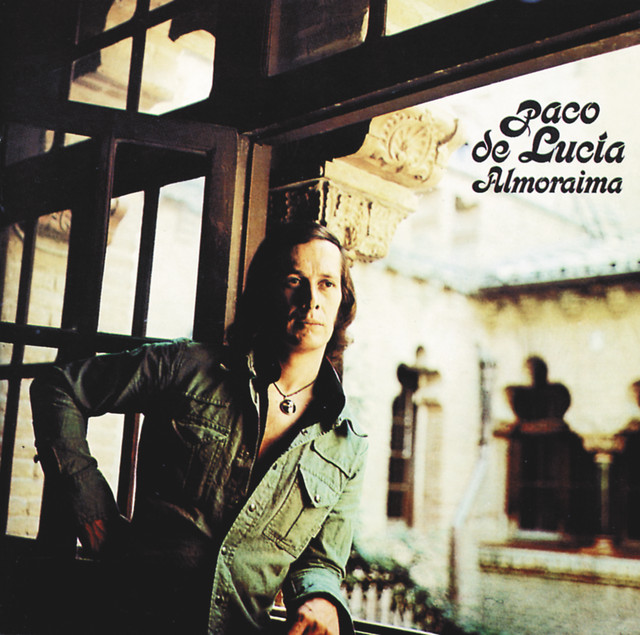
Almoraima is a studio album by Paco de Lucía. When Paco de Lucía made the groundbreaking Almoraima, he was just 28 years old. Already established as a prodigious talent, he used to opportunity to expand the possibilities of the flamenco music he loved so much. It wasn't so much the addition of bass and congas (he'd employed them before) as his entire rethinking of what constituted flamenco. The title cut, which opened the album, emphasized the Moorish influence, not only in the presence of the lute-like oud, but in its melody, which borrows from Arab maqams, or modes. "Rio Ancho" transports the rhumba rhythm to Brazil, melding it to a feel taken from bossa nova, which makes it all the more sinuous and sensual. More revolutionary is "Cobre," which virtually demolishes the flamenco form of sevillanas and rebuilds it in de Lucía's vision, giving it far more gravity. He never uses the record as a vehicle for his huge technical ability; instead, he focuses on serving the music, whether that's on the sad "Llanos de Real" or using a choir on "Perla de Cadiz" (which is dedicated to the singer of that name). This remains a landmark recording, not only in de Lucía's career, but in the annals of flamenco.
 Read more on Wikipedia
Reviews
Really solid album. I’m just going to assume this is an exemplar of its genre and that is sufficient to make it in to the list.
Excellent, and much more what I was hoping for from the DLC list. Probably won't get 5 but it was very enjoyable, thanks.
Listening to one after another sets a far away, happy mood.
I didn’t care for it much myself but it definitely deserves to be here.
It was good. Not a genre of music on my playlist. But a good listen.
Exciting instrumentation the whole way through. I’m surprised at how much range he accomplished. Obscure, yet still a quality record. A lovely suggestion. Thank you. 4/5
Beautiful music
These are the the little gems that make tolerable all the relentless streaks of hipster alternative rock/folk/indie/whatever bollocks in this list. Great nomination, thank you
I enjoyed this quite a bit. Not something I'd normally listen to.
I don't need much to be happy 🎸 4/5 HL: title track, "Plaza Alta" June 29, 2026
Right away I was a big fan of the sound overall. I usually am not a fan of just instrumental albums, but this one kept me interested the entire time. I don't have much to say but I can 100% see influence and 0 complaints.
Definitely an oversight not including some work from one of the most well-known guitar players of the 20th century - I never appreciated flamenco until I was older but this is *the* guy to go. I enjoyed this album a lot which somehow I'd never heard; some of these quick little speed runs are seemingly impossible - how he/anyone could play that fast and clean - but what makes this enjoyable for me was how he doesn't overdo it by keeping those runs very tasteful and part of the overall composition/s. Excellent selection although listening to him gives me complete imposter syndrome and make me wish I'd played the recorder instead. 8/10 4 stars IMO: Belonged in the book? Yes.
A nice journey through the spiritual heartland of flamenco. Paco's technical mastery is undeniable — the speed and precision is inhuman. Appreciated the fusion elements (flute, percussion) pushing beyond pure tradition. Beautiful in the moment but not something I'll rush back to. Hard to pick standouts — it all just kind of felt like one big session.
Gorgeous stuff! 😻 My first serious girlfriend was super into flamenco, so I got to see quite a lot of it live - really appreciate the skill that's involved. Thank you, picker, for adding something a little different to the user list! 🙏 Fave tracks - "Almoraima" for the Moorish flavors, "Plaza Alta" for those claps. Really I could pick probably any of the tracks depending on the listen...
Really refreshing, very enjoyable, brings back the child classical guitarist memories in me and it's a very good example of the art.
Awesome flamenco goodness. skill and taste oozes from this thing
Such wonderful rhythm and skills. Great to listen to on a coldish Friday morning
Favorite Track: Almoraima
Lite annorlunda, javisst. Kan dock bli lite för mycket plockande på strängarna efter ett tag. Albumet gav lite Zorrokänsla. En trea får det bli.
Simply amazing Spanish guitar playing!! Thank you for recommending. Favourite songs: Almoraima, Rio Ancho, Cueva Del Gato, Ole Least favourite songs: A La Perla De Cadiz 5/5
Album #3 (1001 challenge extended): "Almoraima" by Paco de Lucia (1976) "Almoraima" is the tenth studio album by Spanish flamenco guitarist, composer and record producer Paco de Lucia. Flamenco and jazz are the Wiki-listed genres. The album is considered a landmark recording of flamenco, rethinking what constituted flamenco and incorporating bass, congas, the Moorish lute-like oud and rhumba rhythms. de Lucia plated guitar and the oud. Other musicians on the albums included Ramón de Algeciras (guitar), Alvaro Yebenes bass) and Pedro Ruy-Blas (percussion). The self-titled "Almoraima" opens the album with percussion and an aggressive Spanish guitar. It slows down. It speeds up. More percussion and handclaps. Just exquisite guitar. "El Cobre" speeds things up with a fast beat. Toe-tapping and handclapping beats. "A la Perla de Cadiz" adds a choir at the start and end. The guitar controls the pace with starts and stops. A rhumba beat underlies "Rio Ancho." A scooting pace. The guitar impressively goes up and down the scales. The focus of this album is the extraordinary guitar work of de Lucia. It gets layered with other guitar or the oud. The other musical instrumental are relatively sparse but there is chanting, a choir, a subdued bass and percussion. I am a flamenco music novice but the other flamenco I've heard seems to have been busier. Nonetheless, de Lucia's guitar work is fantastic making this a very enjoyable listen. A recommendation for any music fan. 4.5 out of 5
Beautiful guitar work and wonderful melodies
I wasn’t expecting to be kicked in the teeth by that first track like that. It might even land on my running playlist. It’s fun that I didn’t recognise the artist’s name but I immediately heard that mid-90s Bryan Adams song when I heard Paco’s style. That’s iconic status, right there. Sounds like something I needed to listen to.
Pleasant AF
This is what the list should be all about. This was amazing. The guitar work is incredible. Loved it. More of this. My personal rating: 5/5 My rating relative to the list: 5/5 Should this have been included on the original list? Yes.
3.5/5
It has been 24 hours since listening and I couldn’t tell you what this sounded like at all.
I reached out to a friend to let them know it might be something they would like. I did enjoy Rio Ancho. Thanks for something new to listen to.
Awesome
Flamenco, jazz. Me ha gustado. Un 4.
World, Latin: Flamenco. Le daré 5, aunque alguna canción se me ha hecho pesada.
4.5
Lovely
Guy who submitted this gets an A+ on the assignment, finally something really interesting and different. Getting this after like an entire month of indie pop every other day feels like finally getting a break from the fart chambers to go out and smell a rose.
Can't honestly say that I've listened to much flamenco in my life. So I therefore lack context by which to really evaluate this in any relative sense. I'll say that this was an album that was pleasant enough and there is some solid playing to be had, but it didn't really get me going. Plaza Alta was my favorite on a first listen. Otherwise, this was nice, but not something I'll be back for. 3 / 5.
Nothing wrong with someone masterfully strumming the guitar for 37 minutes. 3.5 with a Friday bump.
Some incredible strumming that's for sure. Was getting a little old until the standing bass came in on Plaza Alta, that song was a heater once that happened. Ended with some more really good strumming. Not something I would ever seek out to listen to but still cool to listen to for 35 minutes once.
Definitely solid for a completely instrumental, guitar driven album. Nothing incredible stuck out to me but was some solid background music whilst working.
Almoraima shows off some incredibly skilful guitar work and gives an insight into flamenco that we've just not had anywhere in the list so far. Not entirely my thing but it's a spectacular listen in and of itself and it doesn't outstay its welcome, it's done quickly and with so little waste. Easy 3 on respect.
I don't really know anything about Flamenco, and yet I can still sense the groundbreaking elements in this album. There's the Arabic harmonies in the genre being enhanced through middle-eastern scales and instrumentation in the opener and title-track, for example... I even wish that song had explored those influences a little more -- the fade-out at the end, just as the oud fully takes over, is a little frustrating... But it's the sort of frustration that also makes you want more, so it can't be a bad thing... There's also the jazz voicings found in quite a few tracks, grounded by the root notes played by the electric bass... Or the gipsy (and possibly also Brazilian) influences displayed in "Rio Anchor".... "Olé" sounds like a quintessential banger in the genre, up to its very name. Harmonically tense and texturally lush... "Plaza Alta" is also excellent, between its first "ambient" part and its livelier last section... I tend to prefer the second half of the record overall, but everything is impressive. With so much elegance, expertise, music writing genius, and virtuosistic moments in a purely technical standpoint, giving anything less than a perfect mark to this record will probably feel stingy for true amateurs of the genre. Even when you're not an expert, it's still very obvious Paco De Lucia placed himself within an old tradition he had quickly become the master of, but also challenged the codes of this tradition at times. And this distinctive impression really gives you the incentive to learn a bit more about this music style taken as a whole... In truth, I can't give full marks to this thing, because subjective leanings also play a part somehow, and I can't pretend I'm 100% passionate about the genre. That being said, *Almoraima* definitely comes off as perfect entry point for me (at the very least to know more about contemporary strands of flamenco). I'm still wondering whether it would be great idea to place so-called "traditional music of the worlds" in a supplementary 1001 items list (a list not merely dependent on the modern album format this time, given that gems in this very wide umbrella genre can also be found in pivotal compilations). But this sort of personal question is a bit abstract and "virtual" anyway. So at the minimum, I *got to* consider the inclusion of this Paco De Lucia album in my own potential list of keepers... 4/5 for the purposes of this list of essential albums. 9/10 for more general purposes (5 + 4) ---- Number of albums from the original list I find relevant enough to be mandatory listens: 465 Albums from the original list I *might* include in mine later on: 288 Albums from the original list I won't include in mine: 336 ---- Number of albums from the users list I find relevant enough to be mandatory listens: 77 Albums from the users list I *might* select for mine later on: 98 (including this one) Albums from the users list I won't select for mine: 190 ---- Émile, tu trouveras ma dernière réponse sous le *Inside* de Bo Burnham
Fun, even if I didn't really know what was going on at points. I found myself involuntarily clapping along more often that I would like to admit, and pretty much every song put a massive smile on my face.
God, I love spanish guitar. This gave me a lot of that, without any distracting nonsense, A+
Spanish guitar noodling. Then more Spanish guitar noodling. He's a good noodler.
Music can just be really nice sometimes, can't it?
Rating: 7/10 Best songs: Almoraima, Plaza alta
Fuego ❤️🔥 More like this!
This is a pleasant change and I really enjoyed this. The musicianship is amazing. I can't imagine how good you'd need to be to play like this. It's more classical than popular but I don't care. We need more of this on the chart.
Truly phenomenal! As a guitarist I appreciate the skill, the passion and intensity delivered from every song. The album really resonates with me. Time is impeccable, even throughout the fast picado the groove remains, the control is perfect and it sounds so relaxed and effortless. I'm in awe by the colour he brings with the classy jazz voicings and modal shifts. Magnificent and inspiring!
Cool to hear some classical guitar wizardry on the list, I don't play even a tenth as well as Lucia but I'm still psyched to hear the instrument represented in its own light. This LP does open up a thorny can of worms, though, as it broaches on modern classical – would contemporary arrangements and other symphonic pieces be up for inclusion here? The list has always seemed more focused on music aimed toward popular culture. It's an interesting discussion to have, the musicianship shown here is insane at the end of the day and does stand on its own two feet. Kinda straddles the line between the two worlds, thanks for adding an LP that first of all rocks and second made me think deeply about what the 1001 is about for the first time in a while.
Not a type of music I ever listen to. Having said that I can really appreciate the skill and talent and passion displayed.
Incredible top tier flamenco album.
Bro was in a flow state
While the guitar work on this album is fantastic and may have been revolutionary for flamenco, I can’t find myself loving it. It’s definitely good. It’s easy to listen to and works nicely in the background, but maybe my knowledge of flamenco guitar work is lacking to truly understand the praise this album receives. 6.5/10
Flamenco is not something I'm usually listening to, but whenever I'm exposed to really good examples I'm entertained and impressed. I'm a fan of any kind of virtuoso guitar playing and this is top notch. I don't know much about it but it seemed a little bit more out on an experimental limb in some of the pieces, which I liked a lot.
Wait…we can add albums that aren’t emo or indie folk?!??
Enjoyed this a lot - nice to get something a little different!
Flamenco, jazz. Me ha gustado. Un 4.
While a fun listen and a good primer into classical guitar and Latin Jazz, Paco's technique is on full display yet the album feels slow and repetitive. 3.5/5
This is amazing.
I would normally say an album full of acoustic instrumental guitar songs is too much, even being a guitar player myself, but this album is full of unbelievable virtuoso. Reading the wiki page I understand this is a groundbreaking flamenco album and they are not kidding. Great entry!
Banger
Guitar virtuoso pushing the boundaries of Flamenco? Yes that is why we are here
Why aren't the albums like this the 3 hour ones?
A wonderful addition – thanks, recommender. The world needs more flamenco – nuevo, viejo or otherwise. Virtuosity may be apparent in even unfamiliar art forms and it's utterly obviously here, with such fierce precision. One's always found it odd how formal and structure Latin musics can seem (tango being the other glaring example). Belongs on list proper – many options to replace but will seem out of place for genre and geographical reasons (similar to South Asian and various West African artists) for its traditionalist depths, for commitment to variations within long-established (and justifiably so) contexts.
Great music to study to.
Very cool classic Spanish guitar music. It sounds very impressive to play
Great choice
I have to admit I wasn't super excited to see this, but I ended up really digging it. Amazing guitar playing. 4 stars.