Beautifully produced
Lett me roll it to you is McCartney doing Lennon.
Lyrics are nonsense.
Paul probably needed someone to tell him "no" and John George and Ringo weren't around.
Bluebird is probably the best thing on the album.
Sits somewhere between folk and 70s sci fi soundtrack. Like Cat Stevens had a baby with Barbarella
About as good as albums get. Not a weak song on it and not a moment when her level of performance dips below brilliant.
What a tragedy we lost her.
Absolute gold.
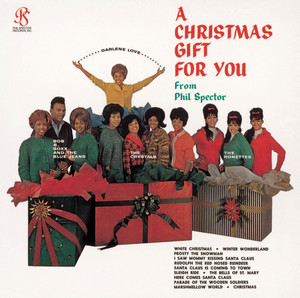
Darlen Love singing Baby Please Come Home is a powerhouse of Yuletide heartbreak.
Silent Night, however, where Spector himself gives us a little cosy chat is a step too far into kitsch.
Has all the 90s grunge cliches with Metal cliches thrown in.
Huge if you like that sort of thing and seemingly designed for disaffected young men.
Wildly pretentious (thankyou Sting).
A film of this being recorded would make Let It Be seem tame. They recorded their tracks in separate rooms "for social reasons".
When it's good it's amazing, but there's also a lot of dross.
And then there's "Mother", Andy Summers "Lets give Ringo a song" moment.
And just to point out, Stewart Copeland goes hard on this.
The body count on this is incredible.
Death bed confessions; a brother promising to marry the dying other brother's girl, who turns out to be unfaithful anyway; a seven year old has his heart broken when his girl - his one true love - leaves town; young lovers commit suicide because the girl's parents won't let them marry; a man murders a girl for no discernible reason and throws her body in the river, then regrets it because she was "the gal I loved".
I mean... what the actual fark?
If you took a New Wave / Post Punk band like, say Talking Heads or Psychedelic Furs, then sanded off all the edges and applied a high gloss polish, you'd end up with something like The Cars. They're the Post Punk Monkees.
Perfectly crafted for FM radio and they're still being played today.
If you want depth then head to "More Songs About Buildings and Food".
If you want a party soundtrack then this is the one.
Just looking at the names of the songwriters on the album cover and you get a sense of what you're in for. None of them are "less is more" kind of people
Ute Lemper has a wonderful voice and The Divine Comedy is an all right band.
But the whole thing seems overwrought and a bit self-indulgent.
When Joni Mitchell did "Both Sides Now" - a similar "Diva sings with a big backing" collection of songs - she knew how to hold back enough to keep it tasteful.
This doesn't hold back at all and the result is overwhelming. And not entirely in a good way.
A lot of testosterone produces thr opposite of complex music.
Simple harmonies in 4/4 time and nothing much melodic, but the hook is that it's played fast and loud. They can play, but they fall back on a regular bunch of tricks- the chugging bass, the guitar triplets and so on.
They talk about "socially aware lyrics", but then put the vocals so far back in the mix and the singer is so unclear that you wouldn't know.
I can see the appeal, but it's not really deep. And it's amusing that this gets labelled "extreme metal" when real extreme music like Throbbing Gristle or John Zorn languishes at the bottom of the rankings.
To most the 60s mean the Beatles, the British Invasion, The Summer of Love, protest songs, Psychedelia, long guitar jams and ever so groovy drum solos.
But this stuff - the male crooner - was huge. Sinatra was still having hits; Andy Williams and Tom Jones had their own TV shows; there were Engelbert Humperdink, Matt Monroe, Rod McKuen, Roger Whittaker and lots of others who all rode high on the charts at one time or another.
It's all desperately unfashionable today, but the people who say this sounds like unused Bond themes are right - but only because the Bond Producers knew what was huge and used it because people liked it.
Scott Walker is a bit different from the others. First, he was a big fan of Jaques Brel, a man who never met a simile he didn't like. Brel wrote songs that make Jimmy Webb and Jim Steinman seem like models of restraint.
Second, he wrote his own songs that were heavily influenced - oh all right, copies - of Brel. Only he was not quite as good at it as Brel and songs like "Plastic Palace People" are so over written as to be unbelievable.
As an artefact of its time and of a forgotten corner of sixties music it's valuable. 4 Stars.
But as a listening pleasure - not really. 2 stars.
Skates close to pastiche, while remaining being something new.
A touch of Dylan, some Aladdin Sane, some country music flourishes, some roots and blues, a genuine R&B cover, maybe some Tom Waits, some big riffs, all played by a cracking band who steam along like a runaway train.
The lyrics contain some fairly lacerating stuff, directed against others (especially women) and particularly against himself. How much off this is due to his recent divorce is anyone's guess, but clearly it's not an album filled with happiness.
If you look up "awesome" in a dictionary there's a picture of this album.
These guys are the band the Sex Pistols wanted to be - literally so, since The Saints had a record deal and the Pistols didn't.
This is purest punk. The sneering snarl of Chris Bailey's vocals; the power of Ed Kuepper's guitar riffing; the solid wall of the drum and bass driving everything on. It's like the fiercest of angry animals coming at you. And they add a horn section.
At the time that horn section caused some angst because "real punks don't use horns". The Saints, who WERE real punks (and Australian punks at that) just told them to stick their heads up a dead bear's bum and did it anyway.
This is real punk and if you've grown up with bands who claim to be punk rockers (looking at you Blink-182) then listen and learn.
Also, their first album - (I'm) Stranded -goes even harder.
On the first track they come on like Neil Young's noisier cousin, all discordant screaming and weird anger.
Then they settle down into the sort of thing punk psychobilly cowboys might line dance to.
The album is peppered with instrumentals, a bit of gospel, some Nashville, some flat out rock.
It's all over the place like a madwoman's undies and exactly how well known they'd be if Kurt Cobain hadn't announced them on the Unplugged album is up for discussion, but they're kind of fascinating in a strange "can't look away" kind of manner
One of the foundational documents of Hip Hop and the first Hip Hop album to enter the mainstream
The rapping is razor sharp and the rhymes are brilliant.
Tricky is the absolute, indispensable masterpiece, but there is a flow of bangers, one after the other.
Okay, Dumb Girl hasn't aged well and Walk This Way, while great fun, is cheesier than Nonna's lasagne, but these two aside, you'd be hard to find a dud track on the album.
Essential
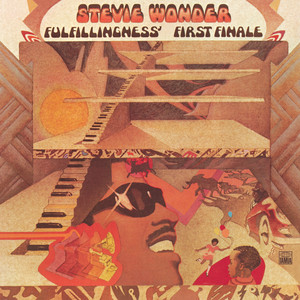
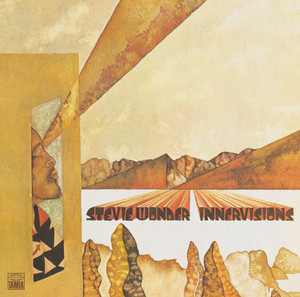
Funk so funky you could eat it with a spoon. A beautiful voice so charged with feeling.
But the lyrics. From the man who wrote "People Get Ready" and "Move on Up" we get things like:
Can't be no fun
To be shot with a hand gun
Or
When cupboards are bare
Our love we can share
Truth is not the whole question
What is the answer you hide?
Or
Every time we kiss
It's such a pleasant taste
Or this pearler
Our love is your confession
That we're in love.
It's just not very good.
4 for the music
1 for the songs
So it comes with a Public Service Announcement at the beginning saying Children Should Not Listen and Don't Try This at Home and proceeds to 90 minutes of songs that are so extreme in their homophobia, misogyny, social dislocation and violence that toy wonder what exactly was the intention of it all.
Is it some sort of Randy Newman satirical character study? Is it meant to be taken seriously? (A lot did) Is it a jet black humour performance in the vein of The Naked Lunch?
Whatever it is, it's hardly the most mature album ever, and some of the songs sound like the demo versions of songs from a better album.
Another reviewer here said that it was like being trapped in a room with a 13 year old obnoxious brat and they're not wrong.
Police Albums are weird beasts. All of them have one or two songs that are so well known that they're part of the DNA of popular culture.
Outlandos D'Amour has Roxanne and So Lonely
Zenyatta Mondatta has Don't Stand So Close to Me and Do Do Do Do Da Da Da Da
Ghost in the Machine has Every Little Thing
And of course Synchronicity has Every Breathe You Take.
But once you get past the songs everyone knows you get songs that no-one ever thinks about. When was the last time you heard Peanuts or Born in the 50s or Man in a Suitcase or Darkness or Tea in the Sahara?
Regatta de Blanc is the same. Any album with Walking on the Moon and Message in a Bottle can't be all bad and Deathwish, Bring on the Night and The Bed's Too Big Without You aren't far behind.
But then you've got things like a strange semi instrumental, the bizarre On Any Other Day, a bit of wannabe punk and whatever Does Everyone Stare is.
The musicianship is outstanding. Andy Summers knows no bounds in inventing guitar sounds and Stewart Copeland pounds the drums like a man possessed. Sting is... well... Sting and I'll leave it up to you to decide for yourself.
When it's good it's brilliant and it's brilliant for four or five tracks. But there are eleven tracks on the album
Probably could have been recorded at no other time than the 80s. Production that glows, it's so highly polished. Linn drums and synth along with a male voice that's filled with emotion to the point of melodrama.
On the surface these are bangers. Shout is a magnificent opener and there are tracks that sound amazing - Head Over Heels and Everybody Wants to Rule the World in particular.
The problem is, once you get past the surface, they're not really a lot of fun.
Deadly serious young men talking about pop psychology and the troubles of the world. And as deadly serious young men do they expect to be taken seriously, without a whiff of irony or humour.
Best enjoyed as a sort of darker Human League and don't think about it too much.
This seems to sit somewhere between one of Alan Lomax's Smithsonian field recordings and the Velvet Undeground's White Light / White Heat.
It seems to have been recorded in a barn with the artists standing around a single microphone. If you're looking for slick, shining, perfectly produced, Brian Eno sound then go somewhere else immediately.
Guitars scream, voices howl, drums thunder. It's all just a bit glorious.
Exactly what those voices are howling ABOUT is open to discussion, but in this sort of thing it's the thought that counts.
40 minutes of pleasure.
People saying that the Eurhythmics sound "so 80s" are kind of missing the point that not only did they dominate the 80s with single after single, but the dark, sequenced bass lines; the programmed drum machines; the obsessional lyrics; the hi-gloss production all set the template for a whole genre of 80s pop.
The two singles - Love is a Strange and Sweet Dreams Are Made of This - are so strong that they carry the rest of the songs which are, let's be honest, not nearly as good. Several aren't so much songs as extended jams, but with the power of Lennox's voice and the invention of Stewart's production they just about get away with it.
Essential for an understanding of 80s pop.
When this came out in the UK in 78, Disco was at its peak with the release of the Saturday Night Fever soundtrack, ABBA were dominating the charts and first wave punk was in full cry.
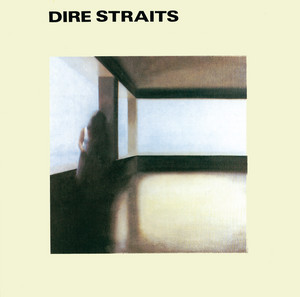
So imagine having the confidence to release this as your debut album. A collection of fairly wordy lyrics with a bit of a Dylan edge to them, set to spare and restrained backing with a guitarist whose finger picking style is completely different from anything else on the scene.
The centrepiece is, of course, Sultans of Swing, but every song on the album is a winner.
Knopfler is at odds with the power chords and jangle of much of late 70s guitar. His playing is clear and spare with not too many notes and every note in the right place. He doesn't seem to be doing much, but that's the beauty of it. He makes it seem simple.
Dire Straits would go on to be the biggest band in the world and never really deviated from the template of this album.
If ever there was a recording of its time and place this is it. Summer of Love, west coast California.
There's Vietnam, Drugs, Psychedelia, Tribal Love, Visions, Aliens, All of us Coming Together and all the hippy accoutrements.
It's sung in the sort of lush vocal harmonies that were big at the time (see also The Mammas and The Pappas and The 5th Dimension) and combines folk, jazz, rock and pop and drenches it all in more phasing and flanging and production tricks than seems possible.
Imagine "Revolver" but dial it up to 11.
It's all very trippy and of the moment, but I think its moment us well past.
Also:
"I'm coming down off amphetamine
I'm in jail coz I killed a queen." Really??
I have never felt so out of place as I did listening to this.
I am completely not the audience for this.
I can appreciate it as an album. But I just don't connect with it
Just when you thought the 60s couldn't get more self indulgent along comes Love with what appears to be a 17 minute song about oral sex.
The rest, which is, for a mercy, a further 19 minutes, is full of mind expanding poetry and music that goes from flute driven folk to garage grunge.
Not very good now and I suspect not very good back in the day.
We hardly need reminding that when this came out it was "the new Rolling Stones", "the new Velvet Underground" and a revolutionary new direction in rock and roll.
Of course it's nothing of the sort. It's a cool pop album that's recorded like a throwback to the sixties with a set of songs that, to be honest, all start to sound a bit the same after a while.
There are certainly worse ways to spend 40 minutes, but it's not going to change your life.
If ever there was an album that could be described as "awesome in parts" this is it.
The band is virtuosic tight, inventive and pretty much unlike anything else. Fripp's guitar playing is impeccable.
21st Century Schizoid Man is astonishing. Epitaph and the title track are equally brilliant.
But two problems exist.
One is the lyrics. The band had a member whose sole job was to write the words to the songs. And what a set of self consciousnessly arty, pretentious nonsense they are. YOU HAD ONE JOB!!! (Sinfield went on to write lyrics for Emerson Lake and Palmer and didn't get any better.)
And then there's the.band's fixation on pastoral, fey, mellotron love ins that, at the time, probably seemed like the music of tomorrow but now seem like unlistenable excess.
So 5/5 when they're good.
2/5 when they're being "artistes".
After listening to The Notorious Byrd Brothers last week I was not excited to listen to this.
Instead I was charmed from the first notes of Dylan's You Ain't Going Nowhere and held to the end.
Without an ounce of insincerity, The Byrds go to church on I am a Pilgrim and The Christian Life, suffer heartbreak, get nostalgic, go to jail and, on One Hundred Years from Now, even manage to sound like The Byrds.
Of course the Rock and Roll people didn't like it (Too Country!) and Nashville hated it (Hippies making fun of us) but at this distance it's clear that it's an utterly charming piece of Americana.
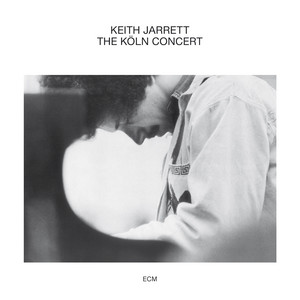
The highest selling jazz album of all time, so pretty much bullet proof as far as criticism is concerned.
Whether it actually is a jazz album is up for discussion. Some people say that its complete lack of jazz rhythm, jazz harmony or ... you know ... jazz kind of rule it out.
If a solid hour of improvised solo piano in a kind of "70s modern" style sounds like something you'd run a mile from, then it probably is.
But you might find that on another day, in another mood, at another time this is the most sublime thing you've ever heard and might just change your life.
I was told, "It sounds like the cover looks" and it's true.
The first thing you notice are the washes and waved of noise that seem to cover everything.
But underneath those clouds of sound is a solid sense of melody supported by some great harmony choices.
The vocals are set way back in the mix but since the lyrics seem unimportant anyway, seemingly being there to add to the texture, this doesn't matter.
Comparison with Sonic Youth or Jesus and Mary Chain or even White Light/White Heat era Velvet Underground seems appropriate, but this is something lusher and richer.
Call it shoegaze if you want, but what wonderful shoes.
If you gave up on U2 because you found them too humble and self-deprecating, then this is the album for you!
Radiohead wannabes who seem to have genetically engineered VERY IMPORTANT anthemic songs for 90,000 people to sing along with at Wembley.
Not a single spark of life or energy anywhere, the songs just lie there, waiting to be played under the credits of a b-grade American police procedural.
Coldplay rode the inoffensive train straight down the middle of the road to become, for one brief shining plastic moment, the biggest band in the world, so clearly they knew what they were doing. But there's no excuse for it.
Every boy who has ever picked up a guitar and sang about his girl dumping him in the last 60 years has owed something to The Everlys and the template they laid down.
It's a bit country, it's a bit rock and roll, a bit Johnny Cash, a bit Elvis.
They harmonise like angels about teen heartbreak and adolescent lust. These boys are horny!
Girls are made for lovin' (apparently), but most of them break your heart and make you their clown. You can imagine this playing on the jukebox in the corner of a diner in a David Lynch movie.
Not as angst driven as someone like Roy Orbison, but still filled with drama.
Cathy's Clown is the best known song here, but there's the whitest version known to man of Little Richard's Lucille and Love Hurts, later recorded by a string of others.
The whole thing is over and done with in less than half an hour and it's pleasant enough.
Hits the sweet spot between "just another rockband" and "avante garde tosser"
Full of experimental moments that don't overwhelm the basic listenability of the music.
There is something genuinely magnificent about it.
I have to admit that Arcade Fire are a band whose name I recognise, but whose music has passed me by. Having listened to this I see no reason to alter that situation.
I'm sure this all sounded original and exciting in 2010, especially if you hadn't listened to a lot of older, better bands. The Cars, Radiohead, Exile on Main Street era Stones, U2, Bjork all put in an appearance.
But I was surprised at how often it reminder me of Neil Young. And if I want to listen to a second rate Neil Young album, well, Neil has recorded several already.
There was a time when Madonna was of universal significance, where everyone knew her, listened to her, bought her records. Even your Nanna knew "Material Girl"
In more recent years, everyone still knows her, but less as an artist and more as a punchline.
This album comes about half way between these two extremes. She was still selling records, still getting critical praise, but the days when a new Madonna Video was an event were long behind her.
She was coming off the success of "Ray of Light" and seemingly could do no wrong.
But Music is nowhere near as strong as that album. Ray of Light had similar studio production antics, but had them applied to actual songs, with Verses, Choruses and Bridges.
The tracks on Music don't seem like songs. They're more like beats with words over the top.
I imagine that Music is quite the influential album. If Ray of Light was a bit like Madonna catching up with what was happening at the time. Bjork had released Homogenic, Kylie Minogue had released Impossible Princess, Missy Elliot had released Super Duper Fly, all highly produced electronica.
But Music was Madonna pushing the things she tried on Ray of Light further into the future.
It's not as strong as Ray of Light, but it's probably more significant.
Makes you appreciate how important Kurt Cobain was to Nirvana as a creative force.
This is perfectly servicable, if fairly generic, 90s grunge. But it seem to be to Nevermind or In Utero what one of Ringo or George's solo albums was to Revolver.
Minimalist Avant folk pop not quite ambient music from another world.
Utterly charming and never quite heading in the direction you expect, this is full of beautiful surprises.
Like the best night you ever had at a pub. There's rowdy dance music, a song that'll break your heart, some politics, someone is reciting poetry and everyone is as happy and full of the joys of life as is possible.
And then, when things can't get better, someone puts on Fairytale of New York and it DOES get better.
And maybe it does outstay its welcome and maybe Shane McGowan's voice makes Joe Strummer sound like Doris Day, but this is obviously a master work.
Well, no-one pops fragile on so thry can specially listen to Tin Cans and Brahms or Five Percent for Nothing.
The album really consists of four songs - Roundabout, South Side of the Sky, Long Distance Runaround, and Heart of the Sunrise - with the solo bits and bobs thrown in as, well, not padding, but bonuses.
So then; the bonuses.
Tin Cans and Brahms is a surprisingly accurate transcription for keyboards of the third movement of Brahms 4th Symphony and, to be honest, is the sort of thing Wendy Carlos did better.
We Have Heaven is Jon Anderson being all hippy and cosmic, if you like that sort of thing. The slamming door and footsteps seem a bit Atom Heart Mother to be honest.
Five Percent for Nothing is a Bill Bruford drum solo that the band play along with: all tricky time changes and rhythm tricks.
The Fish is Chris Squire overdubbing unfeasible numbers of bass riffs.
Mood for a Day is a sort of folk flamenco guitar piece.by Steve Howe.
They're all short, they're all palatable and they're apparently there to save money on studio time.
The other tracks are group songs. This was Wakeman's first outing and he brings a level of virtuosity and classically trained skills that push the band into a new level of playing. Bruford and Squire have two of the most distinctive sounds in rock music, Anderson has a voice like no other (you may think this good or bad) and Howe is a guitar dynamo.
Of course the band songs are over the top and the lyrics are pretty dopey and it goes on too long and has pretensions to symphonic grandeur. But these songs rock like Grandma's chair.
I put down my hard earned pocket money when i was 14 to buy the vinyl and never regretted it. 4 stars, but only because you need somewhere to go when you get to Close to the Edge.
Let's get this out the way first. This might call itself punk, but do yourself a favour and listen to
Wire: Pink Flag
The Clash: Live at Shea Stadium
Gang of Four: Entertainment
and see what punk can really be.
This is polished, slick and commercial. The political message is a bit obvious and tries to be angry, but doesn't bear comparison with Jello Biafra singing "Kill the Poor"
And then it decides to be "Rock Opera" and, boys, this is no Quadrophenia.
It's solid, well played, enjoyable rock posing as something that other people did better. Perfectly fine on its own terms, but with aspirations beyond its grasp.
Like The Slits meet Tom Tom Club. In a good way.
I had no knowledge of this band, but read Riot Grrl and was expecting harsh guitars and angry screaming.
Instead this is unexpectedly sprightly and lively.
Actually, if the Slits and Tom Tom Club partied with DEVO and B52s. That's what it's like.
The very definition of "Cult album"
Intense ragged, noisy with a Gome made aesthetic.
An acquired taste.
Even if you don't know these songs, you know these songs.
Having said that, Ubiquity isn't Excellence.
The songs are fine, even if the backing is overblown, but in the pantheon of male singer songwriters you'd have to put Paul Simon, Randy Newman, Stevie Wonder, and Elton John (particularly the early Elton) well ahead of him.
And the songs that remind you of other, better songs (She's Always a Woman and Dylan's Just Like a Woman or Don't Go Changing and Stevie Wonder's All in Love is Fair) just show up his limitations.
You'll have a good time, but whether you'll be totally satisfied is up for debate.
Okay then. Once more out of my comfort zone.
Skittering beats that seem to be on the verge of falling apart under a UK rapper.
Held my interest.
Yesterday I was assigned Dizzee Rascal's Boy in the Corner to listen to and its invention and originality make this a hard listen.
The production on this is of the "More is more" variety. No kitchen sink could have been safe within a 5km radius of the studio, so many were thrown in. At times it sounds like a MOR sixties album there's so many strings and choirs happening. It's the Bert Kaempfert of rap.
And then the lyrics. Sincere, but awkward, hearing them is like finding a sensitive16 year old's secret diary under his mattress and when you read it it's full of serious thoughts about the world and all if it expressed in a self-important naivity that lands with a thud.
Lust, sometimes can override trust
So death might not let me live.
You're the starry skies above me
Won't you please come down and hug me
Are examples of the sort of thing.
Put it on while you're ironing your shirt and it'll be a fair background.
Listen to it as I think it was intended - as an important statement about the world - and its just ... not...
Time was when Dylan was a prophet, writing songs that immediately became part of the language.
By the time this album came about it was 20 years since Desire - the last gasp of greatness. Then came a long string of mediocre albums that were notable more for how divisive they were.
But from the first notes of this you know you're back in the hands of a master.
Is it another Blonde on Blonde or Highway 61 Revisited? Well, no. But albums like that are few and far between
Here, a crack band slithers through blues riffs while Dylan sings about lost love. Highlights are Love Sick, Standing in the Doorway and Cold Irons Bound, but everything is good.
The last track - Highlands - is 16 minutes of certified Dylan oddness, but it's kind of magnificent.
It would be another 20 years until he produced an album anywhere near this good - Rough and Rowdy Ways.
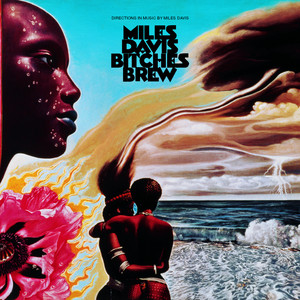
One of the pinnacles of Miles Davis's career (and therefore, of 20th century music) this was both the birth and the peak of fusion music.
The idea that it was "experimental" or that it came out of nowhere is wrong.
The process of Miles giving the players a few chords or scales, saying what he wanted and then letting them improvise goes back 10 years to "Kind of Blue".
He'd been increasingly electrifying his band over his previous two or three albums and the editing together of several takes first appears on the studio album before this, "In a Silent Way".
The word "experimental" suggests that he was just putting things together to see what he got. The band recorded hours of material over three days and then this was edited down to form the final 90 minutes of music. Tapes were looped, effects were applied, takes were cut and spliced. "Pharaohs Dance" has 19 edits in its 20 minute run time, which cause quite the backlash amongst the jazz crowd. Only one track ("Miles Runs the Voodoo Down") appears on the album as it was played in the studio. Far from being improvised accidents, these things were meant to sound - were built to sound - exactly that way.
When the album appeared it received mixed reviews. It topped some Record of the Year polls and was sneered at by jazz purists. "Too jazz for rock, too rock for jazz."
Really, it's best to think of it as neither, but rather as a thing all to itself: expansive and twisting on the first two, long form, tracks and becoming tighter and more rhythmically focussed in the second half.
Expansive, explosive, one of the albums that changed music. Give it ALL the 5s.
What a box of treasures.
Perhaps not an album to play from start to finish. Better to dip into it and see what comes up.
But as a library of Americana greatness its irreplaceable.
Guys who just wanted to play loud.
They were loud, rough, drugged and nasty. And in 67 they went to the Monterey Festival. They say they saw Hendrix so they probably also would have seen rhe bands playing on the same day: The Who and Big Brother and The Holding Company. The fact that those bands could play them into the ground without raising a sweat didn't matter. Blue Cheer wanted to outdo them.
Their sound was louder, dirtier and more chemically enhanced. It was like a kick in the head. Forget the Summer of Love. This was challenging, vicious music. Is it the start of heavy metal? Well, no-one had played this hard before, so why not?
The trouble was that this came out in 68. In 69 another band that could play them into the ground came along. Led Zeppelin. Blue Cheer faded into memory. But you can't imagine Grand Funk Railroad or Black Sabbath or MC5 or The Stooges without them clearing the path.
If you told the kids these days that the biggest selling album of the 1970s was by a folk duo they wouldn't believe you!
Of course this is bullet proof and anything anyone says at this point is hardly going to change its classic (mythic) status.
Fortunately it manages to live up to hype. One amazing song after another. Superb.
The Only Living Boy in New York is gorgeous
Immediate 5.
The fact is that without Low there'd be no Post-Punk - no Joy Division, no Smiths, no Cure - and no electropop - no Human League, no Gary Numan, no Ultravox, no OMD.
This album of brief songs and instrumentals was greeted by the Record Company, who were looking for another Young Americans - with dismay. The story goes that they thought it was unfinished. Where were the vocal? Where was the second verse?
The critics were divided, calling it either "pretentious shit" or "the ONLY contemporary record".
In the years since its reputation has grown to have it regarded as one of Bowie's very best. "Ziggy.Stardust", "Low" and "Blackstar" are the three where he amazed the world.
Iconic, influential, ahead of its time, and still as fresh as it was when it was released.
Let's be clear. If you're not moving while this plays then have your doctor check that you are alive.
The sort of hot salsa music that is made for swinging hips, or ballads that lovers slow dance to while the waiters put chairs up and lean on brooms.
Puerto Rico shows up and shows us how.
This started out as two solo albums and then got released as a double CD under the Outkast name.
To be honest, it outstays its welcome. It's not short of ideas, but I don't think all of the ideas are strong enough to sustain a 2¼ hr runtime. What with "interludes" and silent tracks, and recordings of babies and spoken word sections, theres quite a bit of self indulgent faffing about.
Probably would have been stronger if someone had said, "Give me your best 30 minutes of material and we'll make a single CD."
When it's good, it's excellent, but editing is always a good thing.
No notes
No arguments
Give it a 5 and straight on to the next one.
Like a last dispeptic burp from.the rich food of the 60's. Anyone going into this expecting another "Dance to the Music" are in for a shock.
By this point Sly Stone was drugged and angry. The promise of Woodstock had given way to Watergate and the Race Riots of the early 70s.
The personal and political darkness combined to make this an album of unparalleled cynicism and rage. Long sinuous funk workouts move slowly while half heard vocals say things like "They say time is the answer, but I don't believe it" or "The deeper in debt the harder you bet" through a production of such murkiness that nothing would rival it until "Exile on Main St" or Bowie's "Watch that Man".
It's hard to say it's an enjoyable album, but did set the scene for the sort of angry, political black music that led to Grand Master Flash and Public Enemy.
These guys can play up a storm and the idea of thrash grindcore jazz is fascinating.
The tracks are short and are all individually brilliant. But because they're so relentlessly aggressive, listening to the album straight produces diminishing returns. But include this in a playlist set to random and it will certainly add a little piquancy.
But now go and listen to Ornette Coleman's "Free Jazz", which is the album that should have been on this list, and see why these guys are paying tribute to him. (Spoiler: Because Ornette is better)
How much of this was reality in 1980s Compton and how much is young bloke's chest thumping, peacocking boast is not for this 69yo White, middle class Australian to say. But it does seem to be the sort of record you might expect from a minority that's had enough of being discriminated against, profiled, disenfranchised and scapegoated.
"TIME TO PUT COMPTON ON THE MAP" and they're going to make you listen until you know the truth. (Or at least, their version of it)
And if the level of violence, misogyny and drug use is pretty confronting, perhaps life in Compton was just as confrontational.
Public Enemy is probably more sophisticated in their ideas, but this is pretty raw and angry.
Obviously important, if problematic.
I understand that many think that this is the ducks guts, but it didn't do it for me.
There were several songs that were great - Drive, Nightswimming, Find the River.
But at least two of the songs - Man on the Moon and Everybody Hurts - have become such overplayed FM radio staples that if I never hear them again it will be too soon. And a couple of songs - The Sidewinder Sleeps Tonight in particular - are weak to the point of filler.
So, good in parts
Anyone not giving this a 5 doesn't deserve music.
By the time Muddy and the band hit Tiger in Your Tank they are smoking hot and cooking. Then they going into Mojo Working and you can hear the crowd go wild.
You should too.
If the jazz you like is Miles Davis's Dark Magus or Ornette Coleman or Sun Ra, then this is not going to attract you.
But if you like Chuck Mangione or Spyro Gyra then this is the album for you.
Smooth with a touch of African rhythm this would grace any department store background music playlist.
As an early example of a pervasive sound that eventually devolved into muzak this is, I guess, influential.
It's probably not for me, but I can see how this would appeal to a lot of people.
Enigmatic, sad songs sung by a almost whispered voice, set against minimal backing. And made all the sadder by the knowledge that this isn't an act. His life really was that sad.
Glad I heard it although I'll probably never listen to it again.
Little pop gems drenched in fuzz guitar and sung in harmonies so sweet that there's a diabetes risk.
Imagine if Simon and Garfunkel became the lead singers of the Jesus and Mary Chain.
Probably too much of its time to he celebrated these days, but a lot of fun.
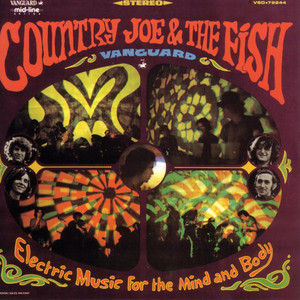
To the extent that Country Joe and the Fish are remembered at all, they are remembered for one song. And it isn't on this album.
This album has the distinction of being the first West Coast Psychedelia album which could go either way, depending on your tolerance for West Coast Psychedelia.
Personally, I think it's the sort of album that every musician should hear, if only as a warning to not do this ever again.
The best thing on here is probably "Love", but even that dissolves into a mediocre blues jam. The rest are the sort of thing that someone at the time might have looked up from their bong for long enough to say "Wow, cosmic," before drifting off into smokey dreams.
The lyrics are unrelentingly "mind expanding", in that they don't make a lick of sense, but they sound like they might mean something.
Probably the low point is Section 43, a multi movement instrumental of extraordinary banality that sounds like the sort of thing that a promoter who couldn't afford The Doors might put on and advertise as "A Freak Out".
1 star for being the first and a half for the vocals on "Love". I rounded down.
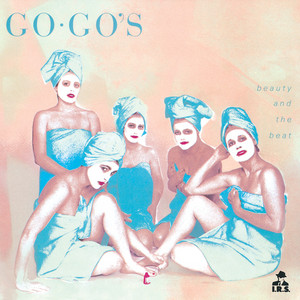
Coming out of the LA punk scene and settling into a sort of 60s retro, power pop, new wave sound, The G-Go's were probably more fun and upbeat than many of their contemporaries.
This, their debut album, has the two big hits - Our Lips Are Sealed and We Got the Beat - which remain little gems of joy.
The other songs on the album might not quite hit the same highs as those two, but are solid pop-punk delights with duds and no skips.
Thoroughly enjoyable even today.
Oh lord. An album you need to hear before you die, but probably just so death doesn't seem so bad.
The guy has a baritone like honey and then uses it to sing lyrics torn from the pages of a sensitive 17 year old's secret diary, set against overwrought orchestral backing with formless, directionless melodies.
10 songs in 30 minutes, so at least it's short. But it still outstays its welcome.
Perfectly pleasant and engaging soft electronically.
Plenty of people doing this sort of thing, some (Everything but the Girl for example) probably doing it better.
Is this an album I liked? Yes.
Is it an album I'll play again? No.
Is it an album I had to hear before I die? I doubt it.
It's easy to forget just how huge CCR were back in the day. They headlined Woodstock; they had hit after hit, both singles and albums; three chart topping albums in one year; their Greatest Hits collection has spent years on the charts.
No-one is going to confuse them for King Crimson. They're straight ahead, country blues Boogie with a dash of Tony Joe White. But they are experts at what they do. They turn up, they rock, they get out. They're not trying to expand your mind or change your ideas about what music is, or deliver a searing message about the dominant societal paradigm.
Even though this has Green River, Bad Moon Rising, Commotion and Lodi, it was their next album where they really hit their stride. But as moonshine liquor soaked good times go this is pretty good.
The Concert at Filsom Prison was an extraordinary album. Cash was coming off a drug addiction and the first attempt at a prison recording came to nothing because Cash was too "tired and emotional" to go on.
The Folsom Concert had the atmosphere of one man at the end of his tether talking to an audience of men at the end of their tether. It was raw, it was emotional, it was intense.
The recording revived his career and was a huge success. It's become legendary in the years since.
This San Quentin album has the slight whiff of another trip to the well. It's all a bit showbiz: bringing on the guest stars; the engineered encore of "San Quentin"; bringing on a guard with a glass of water (a repeat of a Folsom Prison bit) so the audience can boo; the fact that it was being recorded for British television. It just seems a bit more commercial and contrived than Folsom.
It's also not nearly as good. Folsom has the killer set list of:
-Folsom Prison Blues (I shot a man in Reno, he sings and the crowd goes wild
- Cocaine Blues, about a man who murders his girlfriend after taking cocaine
- 25 Minutes to go, about a man going to the gallows
- Long Black Veil, about a man who goes to the gallows to protect his lover's reputation
- Send a Picture of Mother (I mean, to prisoners in jail)
- Give my love to Rose - about a Manet out of prison who is killed before seeing his girlfriend
- Green Green Grass of Home, about a man returning home after getting out of prison
- Greystone Chapel, written by a prisoner sitting in the audience.
It's more a shared communion than a Concert.
San Quentin is entertainment. Even the song about Cash's arrest is presented as a comedy about picking flowers.
And then there's the pretty execrable Boy Named Sue. It hasn't aged well.
Folsom Prison literally changed lives - Not least amongst them Cash's own. San Quentin made a lot of money and landed Cash a network deal for his variety show.
It's all right, but it's not his best.
Was there ever a luckier bunch of guys than Big Brother and The Holding Company? A fair to middling blues rock band - just another band in on the West Coast playing Psychedelia and they pick an unknown woman who turns out to be one of the great rock vocalists of all time.
They play Monterey, cause a sensation, record an album that's a benchmark for blues rock even today and then they're gone, leaving behind this.
Of course, it's the Janis Joplin show. Her voice is a raw miracle. The closest thing to it is probably Robert Plant, but Joplin makes Plant sound as smooth as Engelbert Humperdink, so smokey and emotional is her voice.
Whenever the album goes without her, in Combination of the Two or Oh, Sweet Mary you realise that they're not much without her.
The end of Ball and Chain - where she sings unaccompanied- makes you realise just how little they mattered. She's everything, with or without.
Of the five songs on the album where she sings lead, I Need a Man to Love, Piece of My Heart and Ball and Chain are amazing. Her vocals are transcendent.
Summertime is transformed from Gershwin's beautiful number to a slow, tortured blues. It's good, but not the greatest performance on the album.
Turtle Blue is an acoustic blues in the style of Bessie Smith or Mephis Minnie. It's pretty good, even if it stands out completely from the rest of the album.
The bands backing to Janis's singing is, perhaps, more enthusiastic than tight. At times it's downright sloppy as only 60s Psychedelia can be.
After this album Joplin left the band and burned brightly through a brief solo career. But what a performance she left.
As is the way with REM this contains a couple of absolute Crackers (End of the World &The One I Love) ; a couple of things that make you go hmmm (Finest Worksong has you wondering how many tines they listened to U2. Lightning Hopkins makes you want to listen to Ligtning Hopkins instead) and a few songs that you'd cheerfully skip. (Looking at you Exhuming McCarthy)
Wouldn't be my first choice to play.
If processed cheese formed a band...
Utterly without a trace of anything genuine. Completely without passion or emotion.
The instrumental tracks are good enough. The synth is pleasant in a retro 80s way although someone could have suggested trying something other than the arpeggiator. The bass playing is the star of the show.
They seem to be aspiring to Stranded - Siren - Avalon period Roxy Music, but don't really get there.
And then there's the vocals. Words are sung. Words of such banality and triteness, dressed up as big statements and emoted in Simon Le Bon's melodramatic whine.
3 stars for the playing
-1 for the songs and singing.
Two things worth noting here.
One is the amount of Clapton hate on this site. And Fair enough. Although if we're here to rate personalities there's quite a few artists on here that wouldn't stand up to scrutiny. So I'm going to rate the album, while noting that Clapton is "personally problematic".
The other is a comment Mick Jagger made once. "I mean what’s the point in listening to us doing ‘I’m A King Bee’ when you can listen to Slim Harpo doing it?" And that very much applies to this album. When you can put on Robert Johnson or Ray Charles, what's the point of this?
The first point is the playing. Clapton is pretty much on fire throughout, producing solo after solo of blistering intensity. McVie is no slouch on Bass either. The drumming serves to make you appreciate other, better drummers. Mayall's voice is, well, adequate. (Although he's stretched beyond his limits in the Ray Charles cover)
The second point is its importance as a gateway for so many to the Blues. Jagger's answer to the question he raised about "King Bee" was to say people might get switched on by the Stones and then go and find the original. Blues was pretty niche in 66 and if people heard this and then went to discover Chicago Blues for themselves, then well and good.
So, this is fine, but go and listen to Mose Allison and Robert Johnson and Little Walter and see why, as good as it, this is second best.
I'll give you a tip. Go and listen to Robert Johnson's two takes of Ramblin' On My Mind and hear why he's the REAL God.
Coming on like the whitest version of Barry White that ever whited, or possibly your Grandpop's drunk impersonation of Nick Cave, all set against c-grade electropop backing that sounds like a Commodore 64 game soundtrack.
There are good songs here. Tower of Song, Everybody Knows, First We Take Manhattan are all brilliant - especially when they're sung by Marianne Faithful or Jennifer Warnes or Rufus Wainwright.
But then we have Jazz Police. Oh dear.
I think if they got Trevor Horn or Tony Visconti to produce then we might have had something.
But as it is it's kind of laughable.
If you're going in to hear more like Go West or DJ Culture or Let's Make Lots of Money then you may be disappointed.
More restrained than their precious albums, this still contains some gorgeous music. So Hard, Jealousy, This Must Be the Place are all excellent. And Being Boring is clearly the standout from this album, and, indeed, one of the standouts of their career.
October Symphony and Only the Wind drag it down a bit, but still this is one of the classics of 90s electro.
It's agreed that this isn't quite as good as the other albums in his amazing run of five.
But being not quite as good as Innervisions or Talking Book means it's still better than at least 90% of the albums on this list.
By the way, "You Haven't Done Nothing" was written about Nixon. Still relevant.
So the conceit isbthat this is the soundtrack to a noir murder film that doesn't exist.
With sound effects, dialogue and atmosphere to burn, Adamson really commits to the bit.
Whether it's a bit that's worth committing to is kind of dubious.
What isn't dubious is that this is not an album I needed to hear before I die. It's never short of competent, but no more than that.
Meanwhile, Blind Joe Death and My Feet are Smiling aren't on the list and this is.
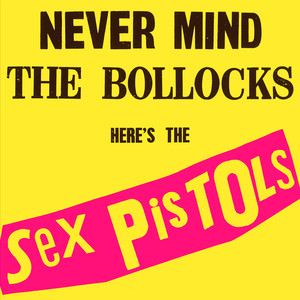
There's no way someone of my generation can give this anything but five stars.
The sheer power of its attack! Listen to Holidays in the Sun - the great guitar riff coming at you like a tank division while Lydon howls over the top.
The Sneering "We mean it man" in God Save the Queen.
The opening of Pretty Vacant (or Vaaaaa- Cunt! as Lydon insists on singing) inspired, according to Glen Matlock, by the beginning of ABBA's SOS.
The "No Future" chant in Anarchy in the UK
You can't help but admire the way no-one said, "What we need is a ballad." It's a furious, uncompromising, relentless wall of raw sound.
Some people will find it too angy and too much, but in Thatcher's England "too angry" was the only response.
But (and let's say it softly) other punk bands are probably better. Chris Bailey of The Saints referred to the Pistols sneeringly as "The Monkees of Punk" and suggested that the Monkees had better songwriters.
Of course he has a point. They were in many ways, the invention of Malcolm McLaren. He read the mood of the times and put together a band to play to it.
The songs are built to shock. The Holocaust references, the abortion song, the effrontery of God Save the Queen were all there to cause Pearls to be Clutched. Nothing sells like Scandal.
McLaren referred to the Pistols as "my Artful Dodgers" and the suggestion of them playing a part is significant.
"Ever get the feeling you've been cheated?" was the last thing Lydon said at their final concert, as the gig, the tour, the band and the music collapsed around him.
Some of the songs are pretty weak. Submission (about a submarine mission) is probably the least of them, but at this distance a lot of them read like the confused shouting of an angry young man who's had a few jars.
Look, it's vital record and about as influential as records get. But listen to The Clash or X-Ray Specs or Wire or The Ramones or Dead Kennedys or The Buzzcocks to hear what the hype was about.
Monk is the piano equivalent of Miles Davis, John Coltrane or Charlie Parker: musicians who invented a new way of thinking about their instrument.
His playing is the opposite of someone like Oscar Peterson who played with smooth flow and technical virtuosity.
Monk is angular and anything but smooth. He has the technique, but the music is never just to show it off. His harmonies are almost to the point of atonalism, his playing sometimes almost childlike.
But his music is unlike anyone else's. On this album the first track needed 24 takes and the band still couldn't get it right.
It's an album to make you sit up and think, "What did he just play?"
It's like spending 42 minutes in another world. Just splendid.
A sort of honey trap.
You buy it for the singles and you also get the "experimental" stuff.
To be honest, the experimental stuff is hardly ground breaking. A lot of slow, noodling around on synths and mellotrons.
It's all a "bit We heard Bowie's Low and thought "Well we could do that"."
They couldn't.
The singles are okay, but really, Human League, Thomas Dolby, and Depeche Mode were doing it better.
All acrobatics and vocal gymnastics, Carey is the Nadia Comăneci of song.
It's impressive from the point of view of what one voice can do, but did no-one think to say, "Mariah, just sing the tune."?
Her singing style gave rise to a whole generation of women who gave us their melismatic performances on TV Talent shows, not being able to sing "Knees Up Mother Brown" without ripping up and down scales and arpeggios and showing all five octaves of their range in a single bar.
She may consider this her Magnum Opus, but the moment I turned it off I had forgotten it. It's icecream music - enjoyable at the time, but not really solid fare that sticks to your ribs.
Utterly beautiful sounding album. Richly produced with some lush string arrangements and lovely arrangements backing an intimately recorded Beck.
But what a misery. 12 slow to medium tempo ballads with more sadness than a country and western album.
And yes, he had just broken up with his long term partner and his heart was broken, but an hour of it is a bit of a trial to listen to. The comedian Bill Bailey said, "I wrote a song for Adele called, I Broke Up with My Boyfriend, But I'm Not Going to Go On About It" and really you could make the same joke about Beck.
I would certainly listen to individual songs again but sitting through the whole thing seems too much to ask.
For the first time in 80 albums I couldn't bring myself to finish listening to the whole thing.
Just loathsome.
He had his moment in the 2000s where he sold albums hand over fist and won award after award, but how about we just leave him there with his homophobia and misogyny and teenager bravado and addictions?
Nice beats I guess.
There are, it seems, two albums from Eminem on this list and I have done with both of them. So let's move on.
Although I understand there's something of a culture / cult of Grateful Dead followers and completists, they simply never made it here to Australia.
They never toured, received little to no air play, had no hits and remain little more than a name.
So I went into this pretty much blind.
It does go on a bit. After an hour without a break you start to reminisce about the good old days of more modest, succinct records like Tales from Topographic Oceans.
The level of playing is fine and the level of invention is often high, but when they're stretching out Bobby Bland or Gary Davis to 10 or 15 minutes you can't help wondering if it's entirely necessary.
Not to mention that Reverend Gary Davis did it better.
And be honest, the Feedback thing is a pretty much a bit of silliness. Possibly it seemed like a good idea at the time, although it might have been the drugs talking.
I think if you worship at the shrine, or if you were there (or at a similar show) then it will seem like a life changing experience. But if you're coming at it cold, then it all seems a bit self indulgent and in need of a pruning.
Well, this was unexpected.
Not Sinatra's very best (that would be In the Wee Small Hours) but there's no denying the Velvet beauty of his voice.
Set that voice against these lush arrangements and you are going to melt hearts.
It might be unfashionable all these years later, but it's worth remembering that it was nominated for Record of the Year at the Grammys, only losing out to Sgt Peppers Lonely Hearts Club Band.
So, no slouch.
There are certainly better versions of these songs (Astrud Gilberto says "Hi!") and how well Broadway show tunes benefit from the Latin treatment is open to discussion. But it's still a pretty pleasant way to spend some time.
I Concentrate on You and How Insensitive are absolute standouts, it must be said, and just things of beauty.
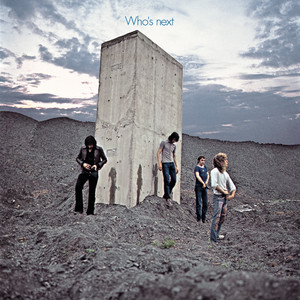
Well, obviously it's 5 stars.
The run they had with Tommy, Live at Leeds, Who's Next and Quadrophenia is jaw dropping.
This ranges from huge anthems to goofy songs about your wife coming after you with a machine gun and caravanning.
The huge anthems are breathtaking. The goofy songs are fun. In between are some sort of mystical songs about ... um... love and music and ... mystical things?
It's all magnificent.
Raucous noise, apparently recorded on Nanna's cassette player, lands somewhere between Velvet Underground and Nirvana. Which isn't a bad place to be.
Loose, grungey goodness.
If Tofu teamed up with White Bread and formed a band.
Inoffensive but bland. Obviously plays well with some, but just seems dull.
Just when they get your hopes up and seem about to do something interesting - like in Shiver, which starts with a noisy bang - it doesn't last and slips back into blandness.
And the falsetto whining doesn't help.
Even Yellow - the big hit and their claim to immortality - is a pretty generic bit of anthemic rock that seems to aspire to U2 or Radiohead territory but falls short.
Just boring
Yesterday I was complaining about this site giving me a second Coldplay album and having to listen to their bland vanilla.
Today, early Sonic Youth, which is the very opposite of bland.
There are recognisable song structures here, but they're overwhelmed by great waves of noise and feedback, guitars like atonal divebombing chainsaws, lyrics so indistinct as to be indecipherable, so that the songs just break down.
And yes it's not for the timid and faint hearted, but if you're timid and faint hearted have you considered that this might not be the Web project for you?
Personally I'd prefer this to a truck load of Chris Martins emoting "Yellow".
Played with all the attitude of the fiercest punks, The Violent Femmes play one acoustic banger after another.
If it just had Blister in the Sun and Gone Daddy Gone it'd be a classic, but the other songs aren't that far behind.
Anyone remember Air Supply? Now imagine if they were worse.
First of all, 47 minutes. Really? The Beatles did Revolver in 34. And this, believe me, is no Revolver.
It's 12 slow ballads full of heart break and pathos, almost to the point of masochism. The one that is a little upbeat - The Greatest Man In the World - contains lyrics like "I'd be the Greatest man in the world, 'Cause I can say I've got the greatest girl." and runs out of words with a couple of minutes to go, so they just keep repeating the title over and over in a maudlin way. Oh, it's SO NOT Revolver!
It's emotional to the point of melodrama with lyrics that come close to self-parody, all sung in vibrato laden voices that are, at times, only more or less in tune.
The fact it is, they're not very good song-writers. And yes, I know they went on to write a lot of songs for other people, but does anyone really think Chain Reaction is Diana Ross's finest moment? Or that Dolly Parton couldn't have written something better than Islands in the Stream?
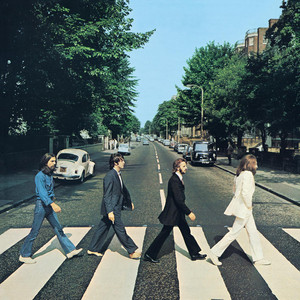
At times it's like Abbey Road, only awful.
And a song that's "a love letter to the Nation of Israel" hasn't aged well. "Israel, you make the whole world think about you." Well, quite.
This is, we are told, Aerosmith "at their most raw and rocking" which is apparently another way of saying "sloppy and badly recorded".
Fairly generic metal-lite. Nothing here that others haven't done better.
They assure us, hand on heart, that the heavy drug use during the recording of this didn't affect them at all. Believe that if you want, but I think the signs are there.
You just know that there's some too cool hipster on here who's given this one star and just commented "Not for me". And I would invite that person to stick their head up a dead bear's bum.
This is Hendrix - the greatest guitarist of them all. No-one had played like him before and even though they all tried, no-one would play like him again.
Every sixteen year old who's strapped on a Stratocaster knock off and strummed E A B7 owes something to Hendrix.
The album contains - at least in this US release version - all the hits and then some. It's like a guitar sacred text.
Also, let's give credit where credit is due and talk about Noel Redding and Mitch Mitchell. These guys stood next to the greatest ever and went with him toe to toe. The drumming and the bass on this are outstanding.
TL:DR version. Hendrix is a rock God. Give him every 5 there is.
PS: Hey Joe sounds brilliant, but those domestic violence lyrics have NOT aged well.
When you've got Nile Rodgers and Chic as your backing band then it's hardly going to be bad, is it? I mean, they produced Bowie's biggest chart toppers, didn't they?
It's easy to turn your nose up at disco and wave your "Disco Sucks" banner, but this is gold standard disco.
Four bangers in eight tracks.
"We are Family" is an anthem and 3½ minutes of purest Pleasure.
"He's the Greatest Dancer" is not that far behind. "Lost in Music" is driven along by Niles and his guitar and a thumping bass line. "Thinking of You" is a bass line Heaven.
Of the other tracks on the album only "Somebody Loves Me" drags a bit, although, as an end of the night, "slow dance before he takes her home" sort of thing it's probably peerless.
No-one is saying its deep. We're not talking Mahler. But it's an absolutely exquisite bauble.
It is, I suppose, the 2nd best album called Let it Be.
Is it garage music if that's where it sounds as if it was recorded?
Energetic and enthusiastic, sloppy stuff.
Apart from Androgynous, which sticks out like the proverbial, this seems a lot like stuff others have down better.
The two covers are a case in point. KISS did Black Diamond and T-Rex did 20th Century Boy with a degree of polish these guys don't seem capable of.
It's enjoyable enough and simple, Dumb fun, but I might stick with the Rooftop Concert, thanks.
Back when I was a young slip of a thing, my friends and I used to try and dream up parody Country and Western songs for our dream band - The Hillbilly Cow Pokers - to sing.
If we had heard this album we would have hot the mother lode. Endless heartbreak, marriages split up, an excess of regret and she took our baby and left me her alone with nuttin'. And that's just the first song.
There's one song - Once You've had the Best - that's positive and another - that has a happy ending, although it's about a troubled marriage. But the rest are a compendium of misery.
30 minutes of infidelity and heart ache with overtime on the lap steel. Hot dang!
No-one's about to deny the level of Musicianship on this. Top notch playing with some killer riffs and solos.
Two things I find jarring. One is the general "I'm so much smarter than you" smart arsed attitude. There's a sort of Upper Middle class English sneering going on.
The other is a very 70s interest in school girls. There's a song about a school girl sex worker that is just unsavoury, post Jimmy Saville.
The stuff about God and Religion isn't anywhere nearly as deep as it would like to think it is and the whole thing seems a bit... up itself.
The Beatles were arguing amongst themselves while the band was falling apart and produced the White Album, Let it Be and Abbey Road.
These guys were doing the same thing and produced a double album of 20 songs that all sound more or less the same.
The songs all chug along at the one tempo so that after a while they blur into each other. When something different, like "She Floated away, which is a different time signature, though still at the same tempo, comes along it's a jolt.
The lyrics might be different and might well be poetic gems, but they're often mixed so far down that they're often indecipherable.
This leaves "variety" to be determined by whether the distortion pedal is set at 6, 7, or 8.
And didn't we invent microphones, so that we didn't need to use two Campbell's Soup Cans joined by string?
The recording quality is pretty poor. I get that it was recorded in a warehouse, but was placing the recording equipment at one end and the band at the other, behind the pallets of building supplies, really the optimum plan?
I went back and listened to Zen Arcade and that really should be on this list. This, however, is nowhere near as good
And don't tell me that "She's a woman and now he's a man" doesn't lift the melody of Every Time That You Walk In The Room by The Searchers.
Let's face facts.
Aretha Franklin does NOT have one of the great female soul voices.
She does NOT have one of the great female voices in 20th Century popular music.
She has one of the greatest female voices of the 20th Century in any genre.
She sells even slight material like Niki Hoeky so you think it's a great song and then, when working with a really great song like (You Make Me Feel) Like a Natural Woman it's transcendent.
And the way she takes People Get Ready to church is amazing.
Immediate 5 stars. And worth more if it was possible.
Janis Joplin is certainly one of the great voices of the 20th Century, but unlike someone like Ella Fitzgerald or Aretha Franklin, who seem to have every note and nuance absolutely under control, you feel that Joplin is skating on the edge and any moment could skid off the road into a pile up.
Of course there are great performances here. Bobby McGee, Mercedes Benz, Move Over are all highlights. But the passion and emotion in her voice, which, at times, seems about to overwhelm even her, make every note she sings great.
Perhaps the most affecting track is Buried Alive in the Blues. It's the backing track presented as an instrumental. She was going to record the vocal "in the morning", but died in the night, leaving it as a strak reminder of what was lost with her death.
There are songs of grest subtlety and restraint here. Fast Car, Baby Can I Hold You, If Not Know are all gorgeous.
Talking About a Revolution is up there with Lennon's Power to the People, Smith's People Have the Power and Guthrie's All You Fascists.
But some other songs - Mountains of Things and Behind the Wall for instance - do get a bit preachy.
Absolutely heart felt and sincere.
5 immediate stars, except that the stars are from a different, higher universe.
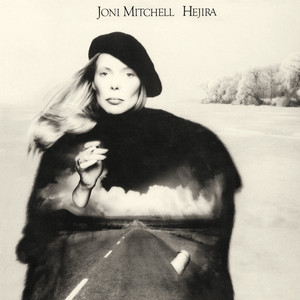
When Dylan won the Nobel Prize for Literature there were those who said, "Sure, but have you heard Hejira?"
Written at a difficult time of her life, this documents the physical and emotional journeys she went on after the breakdown of a long term relationship.
There are songs here so personal and intimate - Amelia, for instance, or Song for Sharon - that you feel awkward listening to her sing them, like you shouldn't be overhearing what she's saying. The fact that the man she broke up with and that some of the songs are about is playing with her in the studio makes it even more awkward.
The songs on here are lyrically dense and musically static. Few chord changes, lots of words and sung as though they're being spoken. Quite a bit of Coyote IS spoken.
Probably Blue Hotel Room and Black Crow come closest to being songs you can sing along with, while Hejira, Song for Sharon, Coyote, Furry Sings the Blues are their own thing, a whole different type of music.
On later albums she would go further in this direction and by the time she was recording Dreamland or The Dry Cleaner from Des Moines she was in a world all her own.
This is probably the best of her Jazz Albums. In fact, it's one of the best albums.
This is exactly what I signed up for. Something I'd never even been aware of that turns out to be a gem.
Just great jazz piano playing with a soulful voice singing great lyrics.
Never heard of it before and suddenly it's a favourite.
Their first album, and it shows.
It's a scattering approach with covers an instrumental, and original songs a couple of which are as good as anything they ever did.
The anthem, of course, is My Generation, with its fuck you chorus of "Hope I die before I get old", Entwhistle's kamikaze bass line, Moon's "just hit anything" drumming and Townsend's self destructing guitar solo. Daltrey sings over the top of it all with supreme arrogance. It's the song that defined them and the beginning of Punk.
Then you have Daltrey indulging his love of Soul Music with not one, but two James Brown Covers. Perhaps they thought if they did two they'd double their chances of getting one right. They don't.
"The Kids are Alright" is another great moment. Chiming guitars and the first of Townsend's songs about men who seem lost, which would come to fruition in Quadrophenia.
The other original songs are a mixed bag. La-La-La Lies is more pop than rock. It's good pop, but you don't think of The Who (Maximum R&B) recording songs that The Monkees could sing.
Much too much is another of Townsend's broken men, complaining that he can't cope with how much his girl loves him.
It's not true is probably the least of the originals, almost a joke about a man denying all sorts of outrageous rumours.
There two songs about relationships ending. A Legal Matter has a young man who can't commit as the central figure. "Sorry baby," he sneers as he goes back to the pub and dumps the idea of marriage.
Then there's Good is Gone, about a relationship that's gone sour and sung by Daltrey in a sneer John Lydon would be proud of. It's a threat more than anything else.
And finally, there's The Ox, a bass solo jam that's loose and wild with everyone (including a guesting Nicky Hopkins) going berserk and Townsend coaxing a series of howls and yelps out of his guitar that probably had never been put on record before.
Is it a great record? Well, no. But when it's good it really is very good. And they'd only get better.
So not my thing, but seems okay for something I've got no feeling for
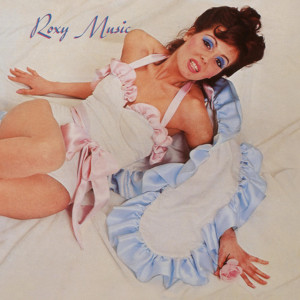
By the time they Roxy Music came to record this, their fourth album, Brian Eno had long gone and they were distancing themselves from the sort of 50s retro glam theatrics of their early period, transitioning into the sleek hit making machine they became by the time of the Avalon album.
This starts strongly with The Thrill of It All, All I Want is You and Out of the Blue. Three and Nine is forgettable enough and If it Takes all Night is a kind of bar room honky tonk.
It sags a bit with Bitter Sweet, where they go off to The Threepenny Opera for a bit of Weimar Cabaret and then Triptych, where they visit the Renaissance Fair for a song about The Crucifixion of Jesus - bet you weren't expecting that - but it gets back on the rails to finish with the excellent Prairie Rose, Ferry's ode to his then partner, Jerry Hall.
So not entirely good, but the high points are so good that you can forgive the lows.
3½ stars, rounded up because I've owned the vinyl for 50 years.
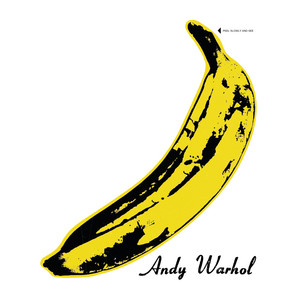
After the relentless ferocity of White Light/White Heat they tone it down a bit to produce this.
What goes on is one of my favourite songs and Candy Says is a surprisingly lovely thing about a trans woman.
Sure, they veer off into 60s Psychedelia nonsense with The Murder Mystery. But that aside, this is a solid album.
Three Inch Nails
The first track is a complete banger and a memory from late night TV watching.
But then it sags into self consiously arty lyrics and fairly pedestrian music that isn't nearly as interesting as it seems to want you to think it is.
It wants to be making a statement about life the, universe and everything but just isn't that good.
It keeps starting to do something interesting and then goes of the rails. Either he starts singing in a put on dramatic voice or thr lyrics land with a thud or suddenly he thinks its a good idea to mix in tannoy announcements.
Wastes a lot of potential.
This may have the most startling debut album opening track since the Beatles went "1 2 3 4". What a calling card!
The cover photo, surly, defiant, tells you what you're getting.
Well, it's not subtle.
I have a problem with this sort of thing. Distorted guitars, bass heavy mix, screaming, howling vocals. I really can't tell one from another. Not just one song from another. One band from another.
I was listening to this thinking, "This is really long album!" and when I checked, it had finished and Spotify had been other music for 20 minutes.
I'm sure there are people who can identify Groove Metal and Grindcore and Thrash Metal and Speed Metal, but I'm not one of them.
I'm not going to deny for a moment that the virtuosity on display is impressive, but to what end when the slow numbers all blend into each other and the fast numbers are SO fast they wouldn't be out of place on a Ravin' Rabbids soundtrack.
I can see the appeal if you're 17 and society sucks, man. But if you're a grown-up then it kind of seems a bit ... well.... vulgar.
Also, read the biography. What a great bunch of lads.
So what do you get if you cross Music for Airports with I Feel Love.
Apparently this, eventually.
Takes all the EDM tricks and ticks, then slows them down and turns them in on themselves to have a good, hard meditation.
Safe from Harm:
A bass line that goes for miles with great vocals and rapping over a drum sample that drives it forward.
One Love
A track so minimal it threatens to disappear, then the horn sample appears so it can hook you in.
Blue Lines
Starts like the coolest jazz track then Tricky appears so he can rap about whatever his stream of consciousness throws up.
Be thankful for what you've got
A surprisingly faithful cover of William DeVaughan's 1974 hit. Massive Attack even sample the organ from the original hit. The message against consumerism is still relevant.
Five Man Army
Probably the closest the album comes to traditional rap. The members of Massive Attack take turns to boast and dis. All against the coolest nightclub soundtrack.
Unfinished Sympathy
The absolute masterpiece on the album. Shara Nelson's voice soars above a dense cloud of strings, voices, drum loops and keyboards. "Are you ready" they chant and Shara really is.
The Orchestra (not samples, but live) cost so much that the band had to sell their car to pay for it.
Daydreaming.
Again a minimalist backing track while Tricky raps over the top, Fiddler on the Roof and Beatles references and all.
Lately
Another Shara Nelson's soaring vocal over a giant bass line. Superb.
Hymn of the Big Wheel
Droning synths give support ro Horace Andy's song about the Big Wheel. The environment, social inequality, greed all get a mention. It's a big song with a big melody, stuffed full of ideas.
This is a magical album there are people who prefer Mezzanine, but we're lucky to have both that we can choose.
"It gets longer in between each time you call me"
If I was going for the cheap laugh I'd make a penis joke about that line, but I think he means the time between phone calls.
Plenty of heartbreak, men a-doin' what a man's gotta do and jail time. Even, in If You Want to be my Woman, a bit a sexual coercion that really hasn't aged well.
"Mary's mine" brings a bit of happiness, about a man who was living a life without meaning, but who found a reason for carrying on in the love a true hearted girl gave him.
But the next song is about a man whose girl left him and now he's om skid row, so maybe Mary wasn't so true after all.
Then Jimmy Rogers song about a man who found a good woman but can't give up his rough and rowdy ways.
Then a song about a man who had his mixed up mess of a heart torn apart by a little bitty woman.
This guy really has some problems with his attitude to the ladies.
Seriously, it's probably A grade, old style country, but I admit I find myself listening to it as a sort of camp kitsch.
So let's give it a three and move on
This had me from the first bass notes on the first track. And why not, when Ron Carter is playing?
This is cool, bebop influenced, laid back, minimal rap. The rhymes are witty. The beats are sublime.
Jazz (We've Got) is an absolute banger, but the rest of the tracks aren't far behind. Enjoyed this a lot.
Another of those "either you're dancing or you're dead" albums.
The sort of slinky hipped, sexy, slithering afro-jazz funk that Paul Simon dreamed he was making during the Graceland sessions.
And then you read the story of what happened after the album was released and you think "Holy Hell!"
And then you read about Kuti's life and realise that there's so much more here than a toe tapping good time.
No skips, no lowlights.
The idea that these guys - all art school, jerky, nervous twitchy energy - used to open for The Ramones and shared a tour bus with them is hard to imagine.
The first album was "nearly, but not quite." A fine announcement of intent, but Jerry Harrison has only just joined the band and they hadn't quite developed complete confidence in their abilities.
But here, with the guiding hand of Brian Eno, they hit their stride.
From the first track, Thankyou for Sending Me an Angel, (what a title) they grab the listeners attention and don't let go. Full of Byrne's quizzical lyrics and yelping vocals Franz and Weymouth's solid, driving rhythm section and Harrison's decorative keyboards it's a hell of a way to start.
Byrne writes songs that sound like they ought to mean something, but whose key stays just frustratingly out of reach. The titles are no help at all. "Found a job" seems to be about a couple who view their life as a TV show and are hoping for a spin off series. "The Girls Want to Be With the Girls" could be about the differences between the sexes could be about lesbianism or could be about how girls are into abstract analysis. Or maybe not.
The crowning moment is their take on Al Green's up-tempo, horn driven, soul classic "Take Me To the River". They slow it down, strip it back, give it a monster bass line from Weymouth, fill it with electronic percussion and turn it into a song that seems more about baptism than love. It's an early direction sign towards what was to come.
Just a classic album. Is it for everyone? Probably not. But hlget on board and its a joy.
Ideal for those who wish Joni Mitchell's jazz period albums like "Don Juan's Restless Daughter" and "Mingus" sounded a bit more like George Benson or Boz Scaggs.
Jazz Rock polished to the point of smooth sterility, it's an audiophile wet dream.
Magnificent playing from the very best session players, lush harmonies, but we're a very long way away from "Ricky Don't Lose That Number" or "Reelin' in the Years" and not necessarily the better for it.
Proof, if proof was needed, that not everything recorded in 1967 is a classic worth remembering. Here we have an album that even the band thought was disappointing.
Rushed into the studio to cash in on the moderate success of their two singles, they had their own songs sidelined and were given a set of songs by commercial songwriters and, inexplicably, a cover of a 1932 show tune.
It seems to be a story of a band thinking they were important artists and the label seeing them as the songwriters vehicle.
The album is all over the shop. There's some Psychedelia, a protest song, some soft, chart friendly love songs, a couple of novelty hits and the one song the band did write pretty much convinces you that they were better off with the label's writers.
Probably the best things on the record are the two singles and Try Me On For Size, which is musically fine, although, to be honest, the lyrics are of the 60s, creepy, just-a-bit-rapey variety that passed for manly, tough guy that the girls can't pass up in 67.
So its a bit of a label cash on a sort of successful band, with the singles, some future singles and a bit of filler. To be clear, for every Revolver, or Blonde on Blonde, there were probably 50 albums made like this. The question remains, of course, why is it on this list? I pause for a reply.
Miles Davis's Bitches Brew, In a Silent Way and Jack Johnson are like the Dead Sea Scrolls of Jazz Fusion music. They're foundation documents, but they were kind of overlooked at the time.
And they need a bit of work to get into. If you listen to an album like On the Corner, as brilliant as it is, you'll think "What is this?" on first listen.
Head Hunters manages the trick of being just as funky, just as jazzy, just as experimental as Miles Davis, (well, nearly as) while also being immediately appealing.
From the first notes, that skipping bass riff, it just tickles the ears and makes you feel good.
All four tracks have room to stretch out and try things. The blown bottles on Watermelon Man, the stop start nature of Sly, the slow build of Vein Melter, the synthy goodness of Chameleon. The way the whole album uses the clavinet.
The playing is virtuosic. Hancock, of course, can do no wrong, but the other players are superb.
This probably sold more copies than allbfour of Davis's fusion records put together and essentially took the ideas on those records and presented them in a palatable and brilliant way. A classic.
Well let's get the obvious out of the way. He is UK Kanye. Not Kid Rock, Kid Britpop.
And miserable? Sad, morose, self loathing. Is there any reason why people would want to listen to this level of depressing?
Here in Australia The Smiths and Morrisey didn't make a huge impression as far as I know. "How Soon is Now?" and "This Charming Man" were hipster fare, buy they were essentially niche. Too British, too introvert. Too miserable.
Sure, the playing on this is impeccable. The musicians are top notch and giving it plenty.
But the songs - the lyrics - are the sort of thing a self absorbed 16 year old might produce in order to come third at his school's Slam Poetry Competition. They thud out of the speakers like lead and just sit there, with a level off triteness and inconsequentiality that's extraordinary. Just appallingly badly written.
And then there's Bengali in Platforms. As someone said in another review: "Fuck that Racist Shit!"
It was bad anyway and the racism is the curdled cream on top.
If ever there was a "not for everyone" warning needed, it would be for this.
By this stage of Waits Career he was doing exactly whatever he wanted to do. Coming on like a Gospel preacher, sideshow Carney, shouting about Tony Franciosa dating his ma, singing something as delicate as "Who are you" or howling that the Earth died or whispering about a man who can kill with a guitar stringg
The instrumentation is heavy on percussion- or at least, things being hit - and the instruments are banjos, Salvation Army brass and lap steel guitars. When someone does play a regular guitar it doesn't sound the way it should.
"I don't want to be a little Boy Scout," he sings. There's no chance of that. Exactly what he is, other than just Tom Waits, is a bit hard to describe. But we're blessed to have him.
Probably doesn't quite escape the charge of being "Amy Winehouse for nice people", but there's no denying the power of her voice, the perìfection of the production and the quality of the songs.
On the surface it's full of pretty songs, but there's real anger and strength in them lurking under the surface, the sound of a woman in pain taking back her independence.
Sure, at times (Set Fire to the Rain) it goes into melodrama. And perhaps the polish of the sound could have been grittier to match the content. She never reaches Etta James or Sarah Vaughan levels of power for instance.
And 11 songs about broken relationships is maybe going on a bit, particularly when it gets a bit mopey towards the end.
But it has to be said that Rolling in the Deep makes a brilliant single, Rumour Has It and Someone Like You are astonishing songs and this whole album is a hell of a thing for a 21 year old to produce.
I mean, it's okay, but I'm fairly sure I heard all this back in the days of Ultravox and The Cocteau Twins.
I had never heard of The XX. From the name I somehow got the impression of something all doom and gloom and maybe metal.
Completely wrong. It was light, bright, poppy stuff that sounded enjoyable. The two voices thing was a nice surprise and the playing was pretty good.
Having said that, after listening to it, I am having trouble remembering anything specific about it.
So, light bright poppy stuff that went in one ear and straight out the other.
Well let's say at the start that from the Wiki article he sounds like a pretty despicable person and when Papa Wemba is sitting right there, is this actually an album I need to hear?
Musically fine when it does the Afro-funk, but there are several tracks where it seems to aim at Afro-yacht Rock - more Charles Aznavour than Fela Kuti - and do we need that?
Okay, so rap definitely is my blindspot.
Listened, went "yep", moved on.
Probably the greatest pop album ever recorded by people not called John, Paul, George or Ringo.
Of course it comes with a built in mythology. The break ups! The cocaine! The time they spent! Again, only The Beatles with The White Album and Let it Be can compete.
The studio production and the performances are as close to perfect as these things get. The harmonies are stunning. When John McVie and Mick Fleetwood lock in their rhythm section is peerless.
To be picky, you wonder if the glossy sheen of the production isn't making a few of the songs seem better than they really are.
And people who find Lindsey Buckingham's voice a bit annoying might just have a point.
But this is the 70s served up on a beautiful silver platter.
There were two go to session piano players in London: Nicky Hopkins and Steve Winwood.
Winwood played with everyone from Howling Wolf to Hendrix to Paul Weller.
He was in two hit making groups; Spencer Davis and Traffic, as well as two "Super Groups": Blind Faith and Ginger Baker's Air Force. (Three Super Groups if you count the band Townsend put together to support Clapton in his come back Rainbow Concert.)
So what happened here?
As a solo artist he proves to be a sort of less interesting Phil Collins, just as Collins is a less interesting Peter Gabriel.
The first song - While You See a Chance - is perfectly fine, but after that it just becomes a dull soup of synths, keyboards and assorted instruments.
Winwood plays and sings every note and you have to give credit for the virtuosity. But it's a pretty dull affair.
By the 11th album you're supposed to be doing "An Isley Christmas" or "The Isley Brothers Sing the Music of Pat Boone". You're certainly not meant to be going this hard!
Great guitar and harmony vocals in some very funky tracks. Their cover of "Listen to the Music" is clearly superior to the original and the guitar solo on, of all things, Seals and Crofts "Summer Breeze" will melt your face off.
It's not like Metallica are renowned for subtlety, restraint and a shy, retiring nature. But this thing is the length of two Mahler Symphonies. "Yessongs" and "Welcome Back My Friends To the Show That Never Ends" - both frequently cited as prime examples of prog rock excess and self-indulgence - were both shorter.
When you've out-indulgenced Emerson Lake & Palmer then maybe consider your life choices.
I don't doubt that if you were there on the night this changed your life.
But at this distance, taking already maximalist metal and adding orchestral backing that sounds as if it's trying to be the next James Bond soundtrack seems like a recipe for musical heartburn.
Can't deny that the Orchestra plays its socks off and Metallica seem to be taking it all very seriously - although, when do they not? - and giving it plenty, but you know, enough is as good as a feast.
Okay, a confessions. I listened to the 10 songs that were on the original release. The other 5 or 6 dozen I skipped.
I made a note when listening to the first few tracks "If the Hollies did punk" and it did seem to be some sort of missing link between 60s British Invasion pop and the later Britpop.
Probably R.E.M. had a listen as well.
But then we hit "I've Got the Hots" and it went sideways into Syd Barrett era Pink Floyd whimsy - even to the point of a Psychedelia instrumental. And the less said about "Old Pervert" the better.
I saw them described as "quirky" and "unique", which probably true, but the 10 songs on the original album.gave me no reason to go on to the expanded edition.
Big stupid album that's skin deep all the way to the bone.
Just how shallow is it all?
They fill the album with sexual innuendo and songs about little girls creeping down alleys and lock up your daughters coz 42yo Tyler's in town and then come out with a song about Child Sexual Abuse that's, I guess, meant to show their deeply socially conscious credentials.
Their message seems to be; The only thing that can stop a bad man with an erection is a good girl with a gun.
A ridiculous album. (Not in a good way)
The run of albums the Stones produced from Beggar's Banquet to Exile on Main Street forms their Imperial Phase - when their claim to be "The Greatest Rock and Roll Band in the World" was not just indisputable, it was self-evident.
Slap bang in the middle of it comes Sticky Fingers. The riffs are ear worms, waiting to attack. The playing is razor sharp. The cover art is appropriately sleazy. The guitar solos - particularly Mick Taylor's on Can't You Hear Me Knocking - are masterful. The songs are all brilliant.
Well, almost all the songs. I fear we need to talk about the racist, misogynistic, sadistic celebration of slavery that is "Brown Sugar". Musically it's a glorious thing. But if ever the lyrics WERE appropriate (and that's doubtful) time has not been kind. Even the Stones have decided to stop performing it.
So this would have been 5 stars, but pro slavery, misogyny means it loses a star. And that's being generous.
Absolutely heartbreaking.
Her voice was always described as "distinctive" and was a smoky, throaty sound without the sheer beauty of Ella Fitzgerald or Sarah Vaughan, but with a virtuosic improvisational skill and control.
By this stage, at the very end of her too short life, the absolute control of her voice was still there, but years of chain smoking, alcohol and heroin had stolen much of her upper register and power.
To anyone used to the recordings she made in the 1940s , the first few notes of her singing here will be a shock. She sounds hoarse and gravelly, even while the grace notes and improvisational flourishes are still there.
Of course, she's past her prime and the voice is a kind of a ruin. But this is, quite literally, the sound of someone dying. A year later she was diagnosed with cirrhosis and six months after that she was dead at 44. On her very last album she had a nurse with her to prop her so she didn't fall from the recording stool.
It's almost impossible to give this a star rating. Is it a great, or even good, recording? Is it even an enjoyable experience? Probably not. But I don't think you can rate this in that way.
The sheer emotion of hearing a great artist, at the end of her life, having suffered abuse and racism for all of it, still giving all she has, makes this overwhelming.
5 stars for the Lady still singing.
Starts from the point where Bowie's Low, Talking Heads Fear of Music and The Velvet Underground and Nico intersect and then gets morose about it.
As strange as it is poetic, it's a memorable, if not entirely pleasant experience.
Kind of the answer to the burning question, "What would Tslking Heads have sounded like if Brian Eno hadn't played them a Fela Kuti album?"
Original post punk pop-rock and nothing wrong with that.
The sort of thing that gives 4th rate music a bad name.
As a fearsome fuck you to the Government over restrictive legislation brought in as a hurried response to the moral panic over the 90s Rave scene this is pretty much without peer.
But 30 years later, when the political message is long forgotten, does it stand up?
It's incredibly fierce stuff, with big driving beats and thumping bass. These guys aren't here to put socks on centipedes. They're here to party and party hard.
To be honest, Fat of the Land is probably the one to get, but this is a pretty worthy runner up.
I found it a bit difficult to care or remain interested in this. It's okay, I guess.
If you offer me a choice network this and Thriller I'll take this every time.
What an astonishing thing this is, from the angry Living for the City, to the beautiful Golden Lady.
Every song a winner. No skips, all gold.
Really enjoyable and engaging samba music with some electronics thrown into the mix.
Perfectly acceptable way to pass the time, although whether I needed to hear it before I die us up for debate.
Lot of Pearl clutching in the reviews here about the Toy Story singer singing a song like Rednecks, with its use of racial slurs. Shocked and outraged, I tell you!
Good. You're meant to be. If you weren't there'd be something wrong with you.
Satire of the darkest hew, hanging America's grubbiest linen out for all the world to see. Racism, grubby politics and so many damaged men.
From a man who used to worry about his gambling, bit now he just drinks and forgets, to a guy who has to get drunk to tell Marie he'll always love her, to a man who needs a whole lot of medicine so he can pretend to be someone else, to the Southern Gothic of Cherokee county, to whatever the hell is going on in Back On My Feet Again.
Even the Naked Man snatching purses from old ladies is only doing it because the Navy found out about his sister and no-one will help him stop because he can't control himself. (Now there's a pitch for Pixar!)
Even Kingfish is probably the greatest speech Trump, the most damaged man of all, never gave ("I look after shit kickers like you!")
It's full of "he didn't go there, did he?" moments. Not for the faint of heart.
At this distance you're really talking about two songs here: "White Rabbit" & "Somebody to Love". I can't imagine too many people pop this on to hear the sound of "Embryonic Journey"
Those two songs tower over everything else on this album.
It's all over the place really. Monkees style pop in "She Has Funny Cars" and Sun Mommas and Pappas in My Best Friend and all sorts of serious mind expanding 60s silliness in other places.
Comin' Back to Me in particular is the of fey, hippy folk nonsense that could only happen at that time. Self important overwritten lyrics combined with a sort of pretend medieval backing. It hasn't aged well.
1 star for each of the two big hits.
All the respect in the world for the anti-apartheid activism.
The music is pleasant and flirts with being bland. But there is something interesting going on here and it's worth a listen.
The lightest, dancing jazz ever.
Plays around with time signatures and works because of how tight the band is.
Fantastic listen
Not unpleasant or unlistenable, but I suspect it's as trendy and has as much substance as the froth from soy milk single origin latte.
Not exactly a masterpiece, although there are great songs here:
Changes and Life on Mars? aren't so much songs as icons.
Oh you pretty Things, Fill your Heart and Queen Bitch - surely the only song outside of children's television to get away with the phrase "bibbitty bobbetty hat" - are nearly as good.
And the deeper cuts - Kooks, the Bewley Brothers and Eight Line Poem - are fine enough.
Only Quicksand, Andy Warhol and Song for the Bob Dylan let the side down
But as a pointer to what came next this is pretty impressive.
Doesn't quite escape the feeling that it's background music for a hipster clothing store. And there are moments in its 2 hour length where you find it yourself thinking "Well, this could have been an email."
But as background music that iutstays its welcome it's okay.
Full of murders and madmen and kings and fairy queens this is such a glorious sound.
The playing is brilliant and Sandy Denny's voice is beautiful.
An album you can get lost in
Might be the most late 60s thing ever.
A British Concept Album / Rock Opera about Britain and how everything had gone to crap.
Not unenjoyable, and Davies is a damn fine songwriter, but living in Australia, which is the Land of Milk and Honey on the album, the thing does hit a bit differently
Enjoyed this far more than I was expecting to.
I imagine that with the right level of pharmaceutical enhancement this would go like a frog in a sock.
But even with nothing more in the system than a menthol cough drop it's still really engaging.
Not as good as, say, Massive Attack, but definitely a step up from Goldie.
Just wants to get you on your feet and dancing and none the worse for that.
Restrained and quietly beautiful although hardly a toe tapping food time.
Their version of Patsy Clines Walking After Midnight is an absolute cracker.
Obviously a massively important and influential album.
Whether you find it an enjoyable album will vary. After all, one song was so intense that bar owners banned them from playing it because everyone would leave when they did.
Starts with the sound of bells and an ethereal woman's voice and ends with seven minutes of screaming feedback and noise.
In between it covers drug use, masochism, death, existential ennui and the like.
The songs are droning and so simple. Lou Reed famously said that two chords were all you need and more than three you were playing jazz.
It's a Weirdly split album. You have the songs like Boots of Leather and Heroin being all New York Art scene and then Nico's songs standing off to the side with their cool German Caberet. There's nothing else like it, not even in the Velvet Underground's catalogue.
Mo Tucker thunders away on the drums in almost tribal ways. John Cale uses a viola like a noise machine, Lou Reed's guitar solos sound, at times, like a chicken scratching and his vocals are more spoken than sung. He was, he claimed later, "the original rapper".
But it's hard to imagine where music would be without this strangely perverse album. Punk drew on its DIY aesthetic and shock value, post-punk just absorbed it whole. There's a whole school of noise rock that can trace its origin back to this.
At the time no-one really understood it or knew what to do with. Record stores wouldn't sell it, radio stations wouldn't play it. But in the years since it's become one of those albums for which the word "classic" isn't big enough.
It's one of the albums that define what rock music actually is.
The sound of a band in transition.
Having established themselves as heavy cosmic blues monsters on their first two albums, on their third they are looking for new things to try.
It starts with the thundering power of the Immigrant Song - one of the best loved riffs in all rock music - but that's done and out of the way in under three minutes, like they're saying "Well, that's that done, so let's do something new."
So straight on to Friends - all tricky time changes, middle Eastern and Indian chords, synthesisers, Bonham just on congas and, of all things on a Zeppelin album, a String Arrangement. Unfortunately, over the top you have Plant coming out with what could best be described as Hallmark Saccharine. ( "The greatest thing you ever can do now / Is trade a smile with someone who's blue now" is a fair example) interesting but not entirely successful.
Then into Celebration Day, where Jimmy Page shows off his slide guitar skills.
Since I've Been Loving You is sort of Dazed and Confused 2 only bluesier and with keyboards.
Out on the Tiles is fine enough and features some great playing, even if it does sound suspiciously like Jeff Beck's recording of Shapes of Things from Truth.
With Gallows Pole we seem to head in Fairport Convention territory, with English Folk Rock.
With Tangerine with back with The Yard birds, but with bonus steel guitar to give it a Country feel.
That's the Way is that remarkable thing: a beautiful Zeppelin song. More folk acoustic guitar and the lyrics are ambiguous. Two boys living next door to each other, one of whose parents don't like him seeing the other. Because he's not their type? A gay subtext? Up to you I guess, but it is an album highlight.
Bron-Y-Aur Stomp is a lot of fun, full of virtuosic folk guitar and all sorts of off beat stomping. We're a long way from The Hammer of the Gods. But very close to Bert Jansch
Finally, Hats off to (Roy) Harper with more acoustic guitar and a vocal effect that probably seemed like a good idea at the time. Go and listen to Bukka White if you want to heat how to Shake 'em Down properly.
So then, a band experimenting with what made them huge and trying new things. People who were looking for the next Whole Lotta Love probably didn't find it here and it's not entirely successful, but when they swing and hit its pretty awesome
There's a straight line to this from The Velvet Underground and Nico. The noise, the drums, the unconvention guitar sounds. Even Kim Gordon's voice sounds like Nico at times.
They'd pretty much left behind their days of sticking screwdrivers into the strings and such and were working on what could almost pass for rock song structures. Of course that doesn't stop them from assaulting the ears, but they're far from the chart makers they would later become.
Not everyone's idea of a good time, perhaps, but still pretty good.
First, whatever the Spotify link leads to its not this album. Search it up on Youtube.
Falling somewhere around the intersection of The Velvet Underground, The Shags and Surfer Bird, The Monks were a bunch of discharged US Soldiers in Germany who thought they'd form a band.
Let's assume they could play their instruments, but the instruments they played - an organ with one finger chords, an electric banjo, some drums but no cymbals, rhythm guitars - didn't seem all that promising.
They started out playing pop covers, buy then discovered feedback and got angry about Vietnam.
The result is this one album.
They whale away at their instruments with everything played in sync as a rhythm instrument while the lead singer gives it plenty with yelps and screams. With 12 songs on the album and the longest at 3½ minutes, they're like a proto-Ramones
With songs like "Shut up" and "I Hate You" and lyrics that just come straight our with "Why are you killing babies in Vietnam?" this isn't The Archies.
But they were adored by the Punk Scene and kind of invented Krautrock.
Is it a good album?
Well, no.
Is it full of great performances?
Well, no.
Great songs?
No.
Well recorded?
No.
Is it an absolute treasure and kindnof wonderful?
Absolutely 100% yes!
You could give it one star or five stars and no-one would argue either way.
A hell of a thing.
Everyone knows 7 Nation Army, but it was the intro to the next track, Black Math, that grabbed me by the throat.
Solid, back to basics, rock and roll that's good for the ears and the soul.
Michael Jackson before the weirdness happened - or at least became public.
The most valuable players here are Quincy Jones and his team of arrangers who provided the lushest, grooviest backing tracks for Jackson to yelp, uh huh, wooo and falsetto over.
The first half of the album is a solid wall of disco goodness, one banger after another, but once Paul McCartney's Wings era influence appears (with a song from the weak London Town album of all places) the thing goes to hell.
She's Out of My Life follows, sounding like it's arrived straight down the middle of the road from a Broadway show.
I Can't Help It (Or I Can't 'Elp It) is a fine Stevie Wonder song and sounds, well, more Wonder than Jackson.
It's The Falling in Love might have a great arrangement and a Jackson vocal, but it's gussied up generic disco.
The thing pulls itself together for Burn the Disco Out to send the crowds away happy.
So, brilliant enough in parts, but it drags in the second half.
I'll give it a 4 on the understanding that I've rounded up.
So take the worst histrionic excesses of a coked up David Bowie and mix it with some New Wave, post punk synth noise and you might get something like this.
Only, not as bad.
A solid slab of Funk.
Well, let's start with the blindingly obvious. This is the one with Smoke on the Water. It sits on the record like Godzilla on Tokyo. You can't take your eyes off it and it crushes everything else.
The music on this is pretty damn good. Lord's organ solos go all classical at the drop of a powdered wig, Blackmore's guitar is Ray gun smart. The bass and drum section nail it to the floor and Gillan's voice is, well, distinctive.
The lyrics are serviceable at best. I don't think anyone listens to Space Trucking for the poetry.
It's a lot off fun without being particularly deep.
The band is tight, playing the sort of retro 60s punkish, sub-Buzzcocks thing that was the style at the time.
The singers has a voice that is... well... distinctive, although, to be fair, in '78 so did everyone else, so having a distinctive voice was pretty indistinctive.
The songs seem to be written by that slightly scruffy, intense kid you were all a bit scared of at school, who was always scribbling in a notebook he wouldn't let anyone else see. It's all "running from the beast" and "there's only one way out and you know it" and "if I don't say anything you'll know it's the truth." So profound.
But they did produce "Another Girl, Another Planet", three minutes of magnificent pop perfection that sticks out from the rest of the album like the sheer fluke it seems to be. Without that song this would be a generous 2 stars. With it, it's a solid 3.
The last time I came across The Divine Comedy they were backing Ute Lemper on an album that was so overcooked as to be just unpleasant.
And so here they are again with a sound that seems like a Broadway show tune that didn't know when to say "enough".
That melodrama is at the service of songs that display all the wit and profundity of a toothpaste jingle.
All that meat and no potatoes.
It's Abbey Road, isn't it, so 5 stars immediately.
Whether you think it's their greatest work or not will depend a bit on how you respond to Maxwell and his Hammer and that funny Octopus.
But in other places (the whole of the second half) they ascend to a level of pop perfection that few, if any, have ever reached.
An awe inspiring piece of work.
I enjoyed this more than I thought I would.
Clever use of electronics with a touch of subcontinental beats.
Big dumb fun thats like a party in your pocket.
It's hardly deep and it's sloppy, but it bangs so hard.
If you're not having a good time with this then I feel sorry for you.
I was unaware of this artist. But reading his Wikipedia page showed an enormously talented performer, composer, writer and thinker working across multiple genres and highly successful I'm all of them.
The album arrives dripping with significance: a concept album about the Shadow of the Nuclear Bomb.
And yet, for all that, it hits the ear sounding like a watered down Massive Attack, without an ounce of their richness and complexity.
It promises big, but it's really a bit generic and dull.
It's Otis Redding. Its Booker T and the MGs. It's Soul Music. It's a 5. No notes.
However...
Even better than this is the Monteray Festival set, where he sings 5 songs and tears the Roof of in 20 minutes. People talk about Hendrix at Monteray, but Otis was just as good.
The first album was all dreamy harmonies and beautiful tunes.
Then along comes Neil Young and puts some grit and grunge in.
You know lots of these tunes already. It can get a bit summer of love and love is the answer, but that grit does its job.
And Helpless really is one of the best songs ever written.
I know there are many who worship at the shrine, but the Smiths have never done anything for me.
Sure the Musicianship is fine, and Johnny Marr's guitar playing is never less than interesting. But over the top of this you have old misery guts himself. His Loneliness The Mope, Morrisey.
His lyrics seem, at first sight, a bit ropey, but on closer inspection fail to live up to that level. His singing is mannered at best and his personality so overbearing that everything else is just background
If it doers ir for you then go your hardest, but I think there are things I enjoy more.
PS: Morrisey is a dick
Aside from the Beatles, it's difficult to think of a band that had a run of albums like Pink Floyd did from Dark Side of the Moon to The Wall. Maybe the Stones from Beggar's Banquet to Exile on Main Street.
Each of these albums - Dark Side; this one; Animals; and The Wall - are solid, absolute, stone cold classics and whichever you prefer the other three are equally as good.
This is a meditation on Syd Barrett, on the Music industry and about being creative artists when you're getting demands for hits.
Dark Side of the Moon had propelled Floyd to a level.that few, if any bands, ever reach. There was certainly a push for them to produce Dark Side 2 ( More Dark, More Moony)
The band resisted and produced this completely different album.
Two long tracks instead of the pop radio friendly numbers on DSOTM, a guest vocalist, some of the most poetic lyrics they ever wrote.
Of course it's 5.stars and maybe an extra invisible star for resisting the temptation to just repeat the successful pattern.
Once upon a time there was a band called Faces. They were, as Rod Stewart, their lead singer said, "fond of a drink" and were noted for ragged and affably sloppy performances that were nothing if not a good time.
When Stewart began to record solo albums he managed to bring the band along with him, so, for example, this album has appearances from all the members of Faces and Ronnie Wood , the Faces guitarist, is co-writer of several tracks on it.
Whereas a Faces album is the band with Rod as their singer, this album is Rod with the Faces members as his band.
This is Stewart before he went disco, and polished and sappy. Here he's a bit folk, a bit country, a lot rock and roll and a lot genuinely emotional.
Listen to Only a Hobo or Jo's Lament and we're hearing something much deeper than "Hot Legs" or "Tonight's the Night".
Then, as a last, trick, he takes a lesser known Little Richard song - You're my girl (I don't wanna discuss it) - and with Ronnie Wood cooks up a funk driven riff that could lifted from a much heavier band.
A genuinely decent and enjoyable listen
Famously, Creedence released three albums in a single year. This is the first of them and you can't help but think that they were holding back the best for later, because this album doesn't scream "overflowing with exciting new ideas".
For a start it has seven songs spread over 30 minutes. And since 15 of those 30 minuted are taken up with what are essentially 2 jams, it's not promising.
And a cover version of Good Golly Miss Molly doesn't make it seem like you've got so many songs you don't know where to begin.
A couple of the other songs seem a bit like filler. Penthouse Pauper is competent blues, but not much more than that.
Okay it's got Proud Mary and Born on the Bayou, but after that it gets a bit thin.
It's an enjoyable listen and never less than that, but there are certainly other CCR albums you'd reach for first.
Another of those "No-one bought it, but it influenced everyone" albums. Your appreciation may vary depending on your view of country rock.
This is pretty solid. I'm giving it a 3, but a 1 or a 5 would also be possible depending on how I felt about it on the day.
Of course this is absolutely expert pop music.
Just on a simply musical level this is going to score high.
The One Two punch of Bad and The Way You Make Me Feel is an industrial strength opener and Speed Demon isn't far behind.
But Liberian Girl, with its Swahili intro and "I'm in love with an African woman" theme sets a bit odd coming from someone who seems to have paid a lot of money to look like a white man.
And asking the Man in in the Mirror to change his ways seems uncomfortably confessional, given what would come out later about what exactly "his ways" were.
I Can't Stop Loving You is another of Michael's long line of soppy, middle of the road, oh so sensitive love songs. First "Ben" now this.
Dirty Diana hasn't aged well at all. It's another one of those songs about band groupies and aren't they always a great idea?
Smooth Criminal seems to be a chance to get down and Boogie to the story of a woman being murdered. Fun times.
And this was kind of the beginning of the end. From here on the weirdness only increased and the stories just got stranger until he was more a punchline than a star.
Listened to the EP on Youtube.
On paper - four young punks discover distortion and play really loud - this should be better than it is in reality.
Because in reality you come up against the fact that they're no Nirvana. The vocals are a bit weak and the guitar is a bit one trick pony.
Fine, but a bit meh
It seems a bit unfair that one man has this much talent.
There's a concert video of him performing songs from this album and it shows him hitting the stage and working the crowd like a mix of James Brown, Jimi Hendrix and Cab Calloway. It's amazing to watch.
There are songs here that are as good as anything Michael Jackson ever did and the album probably should be mentioned in the same breath as Innervisions or Songs in the Key of Life as peak R&B.
It might be suggested that some of the songs go on a bit long, but when the grooves are this tight - and no-one could hit a Groove like Prince - who's complaining?
Spirituality, politics, sex, relationships, more sex - it's all here and it's all good.
Masterpiece.
Snarling, spitting, scratching like an alley cat, this debut album comes out of the blocks at a hundred miles an hour and just doesn't let up.
There are highs and lows, but when the highs are White Riot Career Opportunities, I'm So Bored With the USA and Police and Thieves, you an forgive the lows.
Punk as it should be.
Some sort of line could be drawn from The Kinks and Squeeze to Pulp.
Full of songs about the disappointment of suburban life, sex and relationships.
It's like what you might get if Morrisey had an ounce of talent.
A lot of nostalgia for this as a relic of a place and time, but maybe better as a memory than something to listen to today.
Sort of all over the place with electronic instrumentals, a bit of rapping some folks things.
All of it pleasant, if hardly life changing.
Their cover of Norwegian Wood is a head scratcher, particularly when George Harrison's Indian influenced songs are right there.
Sub Allman Brothers Southern blues-boogie full of simple, manly men thinkin' 'bout guns an' whiskey an' movin' on down the line because o' their woman.
You're not about to hear anything you haven't heard elsewhere. Even "Free Bird" - the magnum opus - recycles the whole "don't tie me down, woman, don't fence me in" stuff that countless country songs have tried. Think Merle Haggard or Conway Twitty with flash guitar solos.
Surely there's an irony in setting out to make a big statement about the hollowness of American life, its consumerism and excess, business and art only to have it become one of the biggest selling albums that everyone had to have, so it became almost a symptom rather than a diagnosis.
It's expert, if, at times, overblown with its own importance, although any thought of the Eagles being desperado cowboys has long gone.
This is about as AOR as it gets and at times veers dangerously close to yacht rock. Probably seemed a lot more daring in 1976, before everyone had heard it too many times.
Queens of the Stone Age are a band I only know by name, but I live in a house with a fervent fan who assures me that this is the least of their albums and they only get better.
Mind you, this has some cracking rock and roll tracks, familiar enough to feel comfortable, but with enough tricks and complexity to be interesting.
As a starting point this is fine. I'm looking forward to see what they got up to next.
A guitar, three chords and a rhyming dictionary.
Recorded in a time of band tension, this is Country Punk with experimental overtones.
Not my favourite, but not the worst I've heard either.
13 songs. 32 minutes. Hell yeah!
Punk tinged with Surf Music, Rockabilly, even a touch of Country and then distilled into a heady mix of L.A. ferocity.
Back 2 the Base and When our Love Passed out on the Couch are punk gems.
Year 1 is 1minute and 18 seconds of pure punk pleasure.
a-ha are pretty much remembered for one song - or rather one song's music video - and the good news is that it's here.
Even better, it's the first track on the album, so listen to it, then switch off and you can say you've heard the band's greatest hits.
A lot of fluff, dressed to kill in some computer console synths, the most 80s drum sound you'll hear outside of a Human League record and the sort of pre-teen friendly angst driven falsetto vocals that were the rage at the time and, as an added bonus, a jaw line that could slice bread.
Really does not need to be remembered.
Well, if you're looking for the next Disco 2000 or Common People this isn't the place.
Dour, self-indulgent and sloppy.
And whatever that last track is should never be allowed again.
The level of Musicianship is incredibly high, the harmonies are goegeous and the production is so smooth it's almost burnished.
How much you enjoy the album might depend on how much you need a cover of a 1926 Duke Ellington track or a song about Charlie Parker or need to go down the rabbit hole of deciphering obscure lyrics that might be about time travel or perhaps the pressures of touring.
They're possibly the greatest, artiest, Dad rock band ever. Or possibly they're prodigiously talented smart arses.
What is clear is that while they were touring for this album, in August 1974, The Ramones debuted at CBGB and this stuff suddenly looked very old.
I have no idea what to call this or even what it is, but it is extraordinarily beautiful.
Would I listen to it on high rotation?
No.
But am I happier for having heard it?
Absolutely yes.
Falling somewhere between The Sweet and Iron Maiden, this is more Cartoon Metal than Hair Metal.
Kind of good fun and they sold a lot of albums and posters to 16 year olds.
The next album, Hysteria, was where they really took off, bowever.
Profound, meditative, beautiful.
Bitches Brew is all aggressive "look at me" while this is its exact opposite.
One to live with and get to know.
The problem with doing satire and parody is letting the audience in on the act. You need to give people a wink just to let them know you're performing, not actually being.
Either these guys are furiously satirising Fascism and Totalitarianism or they actually are Fascists. But the act is so straight down the line and since many of their lyrics are in German it's not that easy to tell. And the lyrics that are in English don't help make things clear. And how much of their fan base can tell the difference is also up for debate.
I felt a bit like I needed a shower after I heard it.
No-one is going to say it isn't sincere.
But it does get a bit samey. The tracks all mice along at much the same tempo and with the same serious intention.
Ketchy Shuby is probably the standout.
Perfectly serviceable and completely unremarkable rock tracks.
The lead singer is described as."reminiscent of Tom Waits or Nick Cave", presumably by someone with a bad memory.
The band is tight in a sort of "almost Pearl Jam" fashion.
The song Layla is such a towering work on this that it's hard to think of it as more than "Layla and Other Assorted Love Songs that No-One Cares About"
Some of the others - Bell Bottom Blues, Keep on Growing, Anyday, Why Does Love Got to be so Sad? - come pretty close to Layla's brilliance and I am Yours and Thorn Tree in the Garden are at least interesting near misses.
But the covers are unnecessary. When you've got Hendrix's Little Wing do you need Clapton's? Bessie Smith's Nobody Loves You When You're Down and Out and Freddy King's Have You Ever Loved a Woman are not improved upon. And let's face it Keys to the Highway in one form or another is such a standard, but Bill Broonzy or Little Walter make other versions unneeded.
If you cut the covers and trimmed the jams this would make a fine dingle album, but there's quite a bit of bloat here.
Like Kate Bush met Aphex Twin.
15 minutes of ferocious chaos.
It's not pretty - we're not talking Enya here - but it's a lot of fun.
A bunch of angry young men being angry about having the world up their ass. And if that's not punk then I don't know what is.
Not really sure why you'd listen to a Fats Domino album.
His natural habitat was the 45rpm single. He put nearly 50 of them up the charts over the years.
They deserve to be listened to in a stack of singles on a picnic gramophone with an automatic changer.
However you hear him, Fats is a one man party. The rollicking piano triplets, the straight ahead rocking beat. The songs are simple, the performances belting.
You can smell the gumbo, you're so deep in New Orleans.
This is the real stuff.
This is perfectly fine stuff except that the lyrics are so annoyingly, self consciously clever, that they just become annoyingly artificial.
There's an element of style over substance.
There seems to be more than enough Smiths and Morrisey albums on this list and every time one comes up I think it might explain the hype.
Still none the wiser after this.
After several albums that left him as a respected niche performer, this is the moment when Gabriel launched into the stratosphere.
Every song on here is an absolute winner, from the radio friendly Sledgehammer right through to the experimental (We do what we're told) and the Kate Bush and Laurie Anderson collaborations.
Mercy Street and In Your Eyes are very beautiful and Big Time is just plain funny.
A bit of everything and all of it good.
Yes please, sir, can I have some more of this?
Brilliant use of samples to build.. well.. perhaps not dance music, but certainly jazz inflected, hip hop adjacent material that's not as chilled as Massive Attack but not as energetic as Fat Boy Slim.
Really good.
Lenny Kravitz seems to be one of those artists who was "about to be the biggest act in the world" then went straight from that to "he used to be the biggest act in the world" without ever actually having been the biggest act in the world.
This first album is about as dull and generic as it gets for someone who seemed to want to take on the James Brown/Hendrix/Prince mantle.
Meh....
Listening to this I'm reminded of what Tchaikovsky said about Brahms.
"What a giftless bastard!"
Absolute peak funk filled with great riffs and amazing guitar.
By their third album The Who had ascended to their rightful place as one of the Holy Trinity of British Bands - Beatles, Stones and The Who.
Any album that contains Tattoo and I Can See For Miles has to be staking a claim and Mary Anne with the Shaky Hand is a filthy minded little ditty while Armenia City in the Sky is a perfect bit of effect laden Psychedelia (can we say "drugs" boys and girls?)
It does fall apart in the second half.
Rael is one of Townsend's attempts at writing a story through song that he'd lean into with Tommy. It's completely weird, but it does have the first appearance of several musical themes that would turn up in Tommy.
Silas Stingy is Entwhistle indulging his odd sense of humour.
Sunshine seems to be Townsend being deep and meaningful and ends up sounding like The Who sing Simon and Garfunkel.
The adverts, which many will just find annoying I guess, are, to anyone who listened to commercial radio in the sixties, deadpan accurate parodies of what radio actually sounded like.
The master pieces were still to come, but this is just about there.
Remember when you asked for the new Prince album for Christmas?
And Nanna gave you this, "because the man in the shop said it was just as good"?
Let me say at the outset that I have never found myself joining those - Nick Cave amongst them - who worship at the shrine of Nick Cave.
There are certainly Bad Seeds songs that I like, but I bought the Greatest Hits compilation and that seems to have me covered.
To be honest I think that Cave's songwriting is stuffed full of good ideas, but - and we'll whisper it, so the worshippers don't hear - he does tend to overwrite his lyrics. He stuffs them full of ideas, then stuffs them full of images and then finds a spare pack of metaphors and subtext that he tosses in as well, all the while with a rhyming dictionary in hand.
He'd benefit from having someone willing to say, "Nick, just calm down!"
Solid Musicianship from the band and Cave sings like a lounge crooner with anger issues who's seen Robert Mitchum in Night of the Hunter a few too many times.
Your appreciation may vary with the whole theatrical "Prince of Darkness," Gothic horror schtick, but it certainly grabs your attention, probably by the balls, and doesn't let go. It dares you not to admire it.
But perhaps it's time Nick switches to decaf.
Restrained to the point of minimalism this cool, sparse record is about as seductive as records are allowed to be.
Probably some people will see it as superior elevator music, but the beauty of the arrangements and the delicacy of the performances make this very special. The elevator music they have in Heaven.
Perfect song after perfect song.
There are no low spots, but You've got a Friend, Far Away, It's Too Late and Natural Woman are heart stopping standouts.
And Will You Still Love Me Tomorrow, her slowed down, stripped back version of the song she wrote for the Shirelles, will take the top of your head off. With Joni Mitchell and James Taylor on backup vocals, it's a revelation.
A great album.
Certainly the guy has a fine set of vocal chords, but that's about where it ends.
The songs are that self-important, deadly serious rambling that passed for poetic in the sixties. And it's artistic - or at least pretentious. The music is sort of drifting light jazz jams, complete with vibraphone. One of the songs riffs on a Miles Davis track, while another is a multi-movement suite. When the conga player also gets a credit as the Band Conductor, you know it's serious.
It's certainly distinctive and Tim Buckley is very much one of a kind. Whether he's the kind anyone wants to hear these days is a moot point.
The sound of a woman who isn't taking your shit any more.
It's very much of its time with lots of 90s post grundge guitars and production.
But it is extraordinarily angry and crank about a woman dealing with breakup or even just living her life.
Glad I heard it.
When you've influenced bands like The Beatles, The Monkees, R.E.M., Tom Petty and the Heartbreakers and the Smith's as well as just about any other band that's played "Country-Rock" then obviously, you belong on this list.
Do they need FIVE albums on this list? Well......
Okay, so rap and hip hop are still a blind spot, but this is pretty good.
Nice production; great beats; inventive, fluent rhyming; there are certainly worse ways to spend some time.
A joyously chaotic, resolutely bizarre half hour of an anarchist, dadaist middle finger to normal.
They take everything you think you know about pop music and warp it, turn it inside out, cut it up and reassemble it into strange music that could almost pass for songs.
The number of bands that wouldn't exist without the Residents opening the door - Ween, They Might Be Giants, Primus, for starters; TISM here in Australia - is a measure of their importance.
When the theme song from South Park, a sort of Duck Stab and soda, plays regularly on TV, and no-one turns a hair, then this really isn't that hard.
It's hilarious, it's ear opening, it's glorious.
That this sits as the fourth lowest ranking album on this website is a sad indication of how run of the mill audience tastes are. This is, it seems "caviar to the general".
At this point in her career, Joan Armatrading had more critical respect than hits. The big hits - Drop the Pilot and I Love it When You Call me Names- didn't come along for another four or five albums. (The Key is probably the album that should be here.)
But this is fine. Sharp, observant songs, with a great, Glyn John's produced backing. An enjoyable time.
Oh my. Another one with a preference for 13 year olds that we need to apply the "review the music, not the artist rule" to.
Which would be a lot easier if the music didn't sound like Portugal's 12th placed entry in the 1965 Eurovision Song Contest.
Hard to like this one.
Back in the late 1970s (when I was in my early 20s) you could not set foot at a birthday or a dinner party without someone having this on the turntable. (Also Monty Python's, "Live at Drury Lane", but that's another issue)
People genuinely touted it as "The Greatest Album Ever Made"
Of course, it isn't. It's a campy, silly, tasteless extravaganza that's like someone heard "Macarthur Park" and said, "like that, but rock and roll. And bigger". Even the quiet ballads are loud and over the top.
Like a less talented Nick Cave, Steinman has clearly never heard of the word "restraint" and throws every thing he can think of into his epics and looks around for anything left over that he can stuff in as well. A key change? A tempo change? A second middle eight? Some sexual innuendo? Word play? Religious imagery? A pre-recorded voice over? Spoken word intros? Why not all of them?
Todd Rundgren's production takes these overstuffed, silly songs full teen angst and gothic excess and inflates them further with strings, and choirs, and speed guitar, and thundering piano and drums, and raises the trite to the level of kitsch ecstasy.
Over the top (in more ways the one) you have Meatloaf himself, emoting in a full throated, utterly sincere, Broadway vocal that just keeps going. Just when you thought he couldn't get any bigger, he switches up a gear and goes harder.
Obviously the whole thing is vastly overblown and totally ridiculous. Which is why, I guess, it sold like hotcakes and is still selling today.
When I look at some of the albums I've had during this project and realise that there is one one Nina Simone album included I can't help but feel my blood pressure rise.
To be honest, if I had to pick one Nina Simone album to be on this list it would be her first, Little Girl Blue.
Or even better, I'd leave out a Morrissey album or two and have more by Nina.
This one is rather uneven. Two of the tracks on it are just awe inspiring. Several are not far behind those. And one or two are, well, not up to that level.
First of all, Four Women. It must have been like a slap in the face to a white audience in 1966 and still packs a punch. The song, and her performance of it, are astonishing.
Wild is the Wind is the other jaw dropping number. Her singing is so bleak and the arrangement so spare that it's like no love song you've ever heard.
Other songs, like Either Way I Lose, Black is the Colour of my True Love's Hair, or If I lose You are just about as good.
Lilac Wine is a song I don't like much, but it's a lovely performance.
What more can I say and Why Keep on Breaking my Heart have big band arrangements that sound dated, and don't show the vocals to their best advantage.
And I Love Your Loving Ways and Break Down and Let it All Out stray almost into Aretha Franklin R&B territory, which I'm not sure really suits Nina Simone.
But consistently, the rich treacle of her voice is everywhere. She does things with her voice that others just don't, or can't.
It's an album of highs and lows - or perhaps Highs and slightly lower Highs. But the Highs are such Everests that you can't help but give it 5 stars.
And wish there was another Nina Simone album on this list
If your idea of Electronic Music is Aphex Twin or Autechre, or some Japanese Industrial Noise, then AIR will seem very easy listening.
They are, of course, stylish and polished and chic. They have morer than a touch of Jean-Michel Jarre and Daft Punk about them. Their melodies - yes they have melodies, Merzbow fans - are directly appealing.
The whole thing could easily sound like elevator music, but it is rather better than that. Sexy Boy and Kelly Watch the Stars are the obvious standouts, but every track is honed to a fine edge of enjoyment.
Personally I think it's all a bit safe, but clearly a lot of people love it. Wweorrrth a listen at least once.
As though someone heard a Dead Kennedys album and said, "Yes, like that, only less easy listening."
Fast, furious and just a bit ridiculous. Kind of like the Sex Pistols, but without their intellectual rigour and maturity.
One monster riff after another.
It's not subtle or complex and it's certainly not well mannered.
But it's certainly entertaining.
Soul so smooth you could skate on it.
All right, so his cover of Phoenix perhaps didn't need the sermon about the power of love, but once the song proper starts it's properly fabulous. For once the single edit is an improvement.
The other tracks stretch out luxuriously and are seduction on a stick.
Gorgeous.
These guys are coming up against the fact that in the last few weeks this list has handed me Minor Threat, Circle Jerks, and The Clash's debut album.
After those albums, this sounds like Punk reimagined by Corporate Committee. The charges of plagiarism from Wire and The Stranglers don't help either.
Sure, there are some good tracks here, but let's not be fooled. This has the same relationship to what it wants to be as Oasis has to the Beatles
I was surprised to learn that I had the other XX album very early on in this project, but, to be completely honest, I could not remember a thing about it.
This is slightly more memorable than that.
These lads do take themselves seriously don't they?
A few days back I had another album with a black cover assigned to me and AC/DC are a lot more fun, in a sort of seaside postcard manner.
Still, you can't deny the talent on display here. In the "crunching bass / thumping drums / frantic guitar shredding" sort of thing they're probably peerless.
There is a lot of testosterone seeping out of the speakers while you play this and I can't help thinking that teenaged boys faced with the howling abyss of existential dread would lap it up and come back for more.
I'm not sure it needed to be an hour long. And the big ballads are a bit dull. The trouble with them slowing down and actually singing, is that you get to hear the lyrics. It's not edifying.
But it's pretty impressive when it's firing on all cylinders
Probably the album that comes closest to justifying the hype, although there are still moments that are skippable.
Orange Crush and Stand are the obvious highpoints and there are several songs not far behind. But at times they veer close to self parody.
3½ stars? 4 if I'm in a good mood?
Another vocal gymnast who can certainly sing, but uses every trick in the book to sing ALL the notes.
At times (You're Beautiful, Can't Hold Us Down, The Voice Within) her songs seem torn from the gritty pages of a new age self help book.
And at nearly 80 minutes it really does go on too long and seems unfocussed.
I do like some decent pop music, but I'd prefer Millie Small singing My Boy Lollipop to this bloated, self-important artistic statement.
At the start we find ourselves in territory somewhere between Revolver, Bitches Brew and Umma Gumma, with the whole thing put through a lens of Germanic Cold War dread.
Then, in the second half, Karlheinz Stockhausen shows up and things get very spicy indeed.
Lots of droning electronics and groaning, shouting screaming voices, free jazz freakouts, all put through more distortion and reverb than seems sensible.
It all takes a bit of patience, and while there are moments that make Public Image Limited sound like Andy Williams, there are also passages that are glorious in their experimental nerve.
Of course there were a lot of guitar heroes at Woodstock in 69.
Alvin Lee, Jerry Garcia, Pete Townsend, John Fogerty, Robbie Robertson, and the man himself, Jimi Hendrix.
But Carlos Santana was the one who came as a shock. When his band strutted through a fiery "Soul Sacrifice" it was the last moment he would be unknown.
His first album was the calling card, saying, "Here I am. This is what I do."
But this second album was the one where things really caught fire.
Originals, covers of Fleetwood Mac and Tito Puente, all dished up in Latin Fusion and Santana's stinging guitar tone.
There is a kind of magic on this album. Santana loved B. B. King, and there is something of Lucille about his playing. But it's the blues from Mexico.
And you can dance to it.
Almost certainly some kind of masterpiece.
It's not a pleasant record to listen to with its themes of loss, mourning and death.
And it's pretty honest about drugs. When the man who wrote After the Goldrush sings that he stole this tune from the Rolling Stones because he's too wasted to write his own, then there's no glamourising of addiction here.
Of course it's sloppy and barely in tune and threaten to fall apart at any moment.
But it's a powerful record for all that. As though these wasted, drunken old Hippies have stood up (unsteadily) to come together and say "fuck it, we're still alive"
It's tough, but it's powerful.
A band that had put out an album that went nowhere, changed labels and recorded this second one, but broke up before it was released and also went nowhere.
It is pretty much unlike anything you've heard before. All off kilter guitars and strange rhythms; sudden changes in volume and tempo; whispered vocals that turn into screaming. (Actual singing is not the default setting) The band members were barely out of their teens when they recorded it and it's full of youthful angst and uncertainty.
It's strange, it's unsettling and, i suspect is vastly influential. If you've never heard anything like it before, you've heard a lot like it in the years since.
Not sure I liked it, or enjoyed it, but I respected it.
It's enjoyable, energetic, loud and a lot of fun.
But it's Punk in the way that MacDonald's is food.
I enjoyed it as a rock album. But put it up against the great punk albums and it's flaws start to show.
It lacks the rawness of X-Ray Spex, The Anger of The Clash, The Fury of the Pistols, The Purity of The Ramones,The Intelligence of a Patti Smith or Gang of Four.
Cos-play Punk
It's important to remember that when this was recorded, Mandela was still in prison and Apartheid was still operating in South Africa. This is the sound of an oppressed people.
The act of recording this, of perpetuating Black Culture was a political act. If it isn't the politics of rebellion, it certainly is the politics of Cultural Survival.
Of course, it's intensely beautiful, with the voices perfectly blended in gorgeous harmony. Whether you want to listen to it as a complete album or as something to dip into now and then is up to personal preference.
It's hopeful, it's defiant and it's strong.
Listening to this is like listening to Wagner's Ring cycle. I can see how it's good and I can get that a lot of people will love it, but I just don't get it.
It's like I feel there's something there behind a door that I can't quite unlock.
So yeah. I don't doubt that it's food. But......
Manages the neat trick of being on fire at the same time as it's smooth as Velvet.
Forget the ecconomy, LET'S DANCE!
Recorded before he was the "prophetic voice of a generation" the album contains some.genuine monster songs.
Blowing in the Wind, Masters of War, Hard Rain, Don't Think Twice, It's Alright are probably as good as any songs ever written. But then, The Talking Blues are a bit meh, and Oxford Town is so much of its time that it doesn't wear well.
For a purely brilliant performance Corrina Corrina is just lovely.
So, all up, there are brilliant things here, but there's some dross as well.
Back in the day, when I was in Primarry School, we had a teacher (you know the type. Leather jacket, "Call me by my first name," "I'm not so much a teacher as a fellow learner") who would give us the lyrics from this album for poetry lessons. "Because this is where it's at kids!"
Well, maybe. But another way of looking at it is that on a number off these songs Simon effortlessly crosses the fine line between being meaningful and being pretentious.
There's no doubt that this is a beautiful sounding album. Art and Paul just blend together into a gorgeous whole. The arrangements are superb.
But the songs are at their best when Simon keeps it simple. Homeward Bound and For Emily Whenever I May Find Here are probably the best things here, because he holds back a bit and doesn't feel he has to prove how clever he is.
Scarborough Fair is a lovely thing, but buried inside it there's a whole "war is really bad" message that probably gets missed a lot. Feeling Groovy is fun, if you can get past the 60s style "Life I love you" lyrics.
Big Bright Green Pleasure Machine is dopey fun and gets its message across simply and directly and is all the better for it.
But the songs where Simon feels he needs to make a big statement and goes in hard with the "sophisticated" lyrics are a bit much.
Patterns, Cloudy, Flowers Never Bend in the Rain, A Poem on the Underground, The Dangling Conversation all strive for "poetic significance" and end up sounding unconvincing. The fact that Simon could think that describing something as "Ragamuffin" or mention "You read Emily Dickinson and I read Robert Frost" was "groovy" is hilarious. It's overwriting at its finest.
A Simple Desultory Phillipic announces itself with possibly the most pretentious title on any major artist's album and then proceeds to produce a parody of Dylan that proves nothing except that Paul Simon is no Bob Dylan.
And the less said about the dull thud that Silent Night lands with the better.
Beautiful sounding album, with a number of magnificent songs. But Paul, just rein it in and stop trying to impress everyone with how much more clever you are than them.
I saw another review on here that described this as "iconically bland" and that seems about right.
Hugely talented ex-members of Free, Mott The Hoople, and King Crimson join together to play the sort of basic, pub rock stuff that sits firmly in the middle of the road.
It's like it was designed 50 years ago for Nostalgic middle aged men.
On that level it's fun and if you put it on at a backyard party full of 60 year olds keen to recapture their youth and celebrate Dave's retirement, it'd go off like a frog in a sock.
Two absolute, stone cold classics in Sympathy for the Devil and Street Fighting Man.
The rest, with one notable exception are pleasant enough, if not that memorable.
The exception is Stray Cat Blues - about a man lusting for sex with an under-age girl. "I BET YOUR MOTHER DONT KNOW YOU SCREAM LIKE THAT!" It ends with him inviting her friends around for under age group sex.
2 stars each for the classic songs PLUS a star for the rest. That's five stars.
MINUS (Oh, lets say) ALL the stars for the paedophilia.
A prime example of what cocaine can achieve with just a little bit of co-operation.
Bowie, it seems, had no memory of actually making this.
Musically it's magnificent, with the band playing as though their Ives depended on it.
I defy anyone to say what any of the songs are actually about, with a patchwork of Kabbalah, Crowley, Sci-Fi, TVs that eat people and who knows what else all wrapped up in the sort of lyrics that probably seemed like they made sense at the time.
Station to Station is nearly ten minutes of disco-prog, proclaiming "the return of the Thin White Duke" and "The European Canon". Okay.
Golden Years seems like a continuation of the Young Americans album's "plastic soul" and, indeed, Bowie performed it on Soul Train, all coked out and looking like a pale white insect.
Word on a Wing seems to be some sort of prayer. "Lord I kneel and offer you my Word on a Wing" It's probably the most portentous song on the album and, to be honest, drags a bit.
TVC-15 is the closest thing to a "fun track" on the album and even then it's a kind of Videodrome nightmare. It chugs along and in later, live performances (at Live Aid, for example) Bowie would perform it at double the tempo and it would really come to life.
Stay might be the best thing on the album. Earl Slick's guitar heads into metal territory and the song is the closest thing to a stadium banger the album has.
Then, to finish, we have Wild is the Wind, probably the weakest thing on the album. The problem is that Nina Simone's version is so definitive that Bowie's version seems like a pale copy. It's a beautiful song and Bowie performs it beautifully, but it's all surface, where Simone mines into the depths of the song. Mind, you, George Michael did a version, so Bowie is ahead there.
When this album is good it's sensational and up there with the best things Bowie ever did. But Word on a Wing and Wild is the Wind let it down.
I remember in Australia in 1981, the most popular media commentator announced on national TV that "Punk is dead because of this album. And all over the UK kids are holding Ant Balls!"
Which, of course, earned the response, "Must be bloody big ants!"
As big, dumb, glam-pop, proto New Wave albums go this is pretty good. Sure, some songs are better than others. There are some that are a lot worse than others.
It's all about as substantial as The Macarena, but when they fire up the twin drum Burundi beat and start emoting about warriors and ants and looking like dandies and pirates and going completely over the top it's all very early 80s and a pretty entertaining - albeit slighty weird - good time.
Has there ever been a band with a bigger disconnect between the legend and the reality? If you believe the legend then The Doors are poets and prophets who peeled back the illusion of the American dream and exposed the heart of darkness underneath.
And actually listening to the albums, you realise that they're a basic blues band with a sense of their own importance and a lack of skills to back it up.
A singer with an average voice who writes some of the most pretentious lyrics imaginable. They seems to be at the level of "There was a young man of Nantucket," but without the laughs.
A keyboard player whose idea of a solo is a couple of bars of "Carol of the Bells" or an irrelevant Chopin piece.
A guitar player who is, at best, fair to middling.
When they decide to "let out their inner James Brown" you realise that you can only let it out if it's there in the first place. It isn't.
Love her madly tenderly describes a disfunctional relationship as though it's Romeo and Juliet and rhymes "madly," "badly," and "daddy" with all the confidence of William McGonagall and then, for good measure and no reason, assures us that "Seven horses seem to be on the mark"
Their white boy version of Crawling King Snake achieves nothing but help you realise how good John Lee Hooker is.
The WASP is like every teenage poetry slam you ever avoided.
Riders on the Storm is probably the best thing here, but it's a low bar. Again the lyrics are all deep and meaningful in a shallow way, but at least the musical backing shows a restraint that the rest of the album lacks. Although the gimmick of storm sound effects wears pretty thin.
It's all the sort of thing that people who need to get out more might find brilliant.
Delicate, simple and very, very English.
Dripping in sadness, but beautiful and probably timeless.
Sold almost no copies in his lifetime, but he's obviously one of the great songwriters.
Beautifully produced, but at 75 minutes there's some flab that could be cut.
There's some good stuff here, but just because a CD can hold more than an hour of music doesn't mean it has to.
Might have been stronger if someone had taken Frank aside and insisted they cut 20 minutes.
Born out of the same American punk scene as Talking Heads and Devo, B-52s are the punk Annette, Frankie and Moondoggy. Punk Blanket Bingo.
They don't want to be the AntiChrist, they just want you to dance.
Beloved by the kids who didn't fit in; who looked at the pencil moustaches, beehive hair, matador pants and cha-cha shoes and found their people.
Proof, if proof was needed, that there's great art to be found in being very silly.
The thing is, if you've heard Ace of Spades than you've pretty much heard the album because they had - I think the polite term is - "consistency of style".
You certainly know what you're getting with Motörhead. The template is: thunderous bass; flailing about on the drums; some medium skill level guitar shredding; some screamy, shouty vocals in a voice that sounds like it could give out at any moment. For variety they play the template slow, or fast, or really fast. That's about it. They're not about to bust out a 20 minute suite of modal funk jazz fusion.
Simple but effective.
The songs are old style Nashville sadness, but when their voices come together and launch into To Know Him is to Love Him or Linda Thompson's Telling Me Lies, it's spine tingling.
Five stars for the performances, but the songs are probably not everyone's cup of tea.
There seems to be no good reason for all these songs to be six or seven minutes long. They could be a concise three, be stronger and we'd all get to go home sooner.
The first moments on the album had me thinking there'd been some mistake and I had a Will Smith album.
The rhymes, which include such things as
I get stupid, I shoot an arrow like Cupid
l use a word that don't mean nothin, like looptid
- are either goofy or incompetent - let's go with goofy, just to be charitable.
And all the sex kink stuff. Well, we've got Prince to do that properly.
Kind of an artefact of what the 90s thought would last.
In which a couple of American lads hear traditional Brazilian music, think "Well, we could do that" and introduce America to something like what they heard.
Hey Kids, can we all say "cultural appropriation?"
Getz and Byrd and their band play beautifully and make some lovely music. But if you go back and listen to the originals - Antonio Carlos Jobim, for example, who wrote Desafinado and One Note Samba - you realise that they lack the liquid quality of rhythm that the Brazilian musicians have in their DNA.
Getz and Byrd have the notes on paper and play them as written rather than as felt. It's a tidied up version of Bossa Nova and hence, probably perfect for middle America.
Perfectly serviceable R&B sung by woman with a decent set of pipes.
Whether this late 60 year old male got the most out of it is doubtful, but if I was a 16 or 17 year old girl looking for some opinions I think it would hit a lot deeper.
Like they saw The Tubes play " White Punks on Dope" and thought, "Like that, but dumber."
Pretty much inadequate on every level.
Exactly how much of this is properly live is anyone's guess, but it's certainly a slick sounding album.
The performances are perfectly fine and the twin guitar sound is sensational.
The problem is that once they've played the hits they've still got plenty of time to fill on a double album. So they bring out the B Grade (and, eventually, the C Grade) material.
Sure, hearing Boys are Back in Town is great, but there's plenty of filler. No-one is putting this on just to hear Baby Drives Me Crazy. Well played filler, certainly, but filler none the less.
Cooler than I will ever be
Probably Punk's finest hour and an obvious 5 stars.
Flat out Rock, jazz, reggae, blues, rockabily and punk come together with politics and social commentary in an angry burst of energy.
About as good as it gets
Probably the best of its type. Outstanding Musicianship and virtuoso playing.
Perhaps better listened to in sections as hearing it in one sitting does get a bit relentlessly samey over the course of an hour. And, now that you mention it, an hour does seem to test its welcome.
And it is let down a little by the lyrics, which are of the Satanic-Cthulu-Insane-Overwrought-Melodrama style.
However, it could probably be bottled as a testosterone booster.
One of the best - if not the best - album of the 1980s. Also probably Kate Bush's best album.
The first half has Track after track of beautiful songs that will also either get you up to dance or have you in some trance state.
The second half is more experimental, with spoken word, choirs, eastern European singers, ambient sounds.
Everyone knows about Running Up That Hill and how Stranger Things brought it back to everyone's attention. But The Big Sky is even better. And Jig of Life - all traditional Irish music and a lyric about the older version of a woman coming back to visit her younger self - is astonishing.
This is intelligent, beautifully crafted, and a masterwork.
Coming directly out of the Black Lives Matter movement, this is minimalist R&B tinged with Gospel and trip hop.
The songs are more like Chants, with simple, repetitive lyrics that are deeply black-centric.
As an expression of the Black experience of systemic racism and inequity it's probably up there with the great songs that came out of the 60s civil rights movement.
At tthe same time it's affirming about the positives of being black.
It's like a stash of Molotov cocktails wrapped up in the chilliest music.
Takes The Beatles, The Kinks, The Who and The Hollies (and even a touch of Pink Floyd, when the fly from UmmaGumma makes a cameo) and filters them all through the anger of Thatcherite Britain.
Very much a product of its time and place, but still, extremely good for what it is.
All Directions. There's probably an argument for suggesting that their follow up album be called "Pick a Lane". To say that this veers wildly is probably an understatement.
From the angry, racially confrontational, white flight sneer of "Run Charlie Run" at one extreme to the perfectly and sweetly sung "First Time Ever I Saw Your Face" is quite the range. You can't record "Run Charlie Run" and "I Ain't Got Nothing" (I don't care about politics, I just care about love) and claim to have a cohesive vision.
But who cares about cohesion, when you record "Papa Was a Rolling Stone"?What an amazing 12 minutes it is. And if nothing else on the album is quite as good, what of it?
Simply Red are one of those bands that just gets overlooked. You forget that at one point in the 80s they were everywhere.
You remember "Holding Back the Years" and think they were a bit One Hit Wonder and it comes as a surprise just how many hits they had.
Money's Too Tight to Mention; Open up the Red Box; If You Don't Know me By Now... all huge. And some - like Stars - that I'd forgotten even existed and then heard it and thought "Was that them as well?"
I don't think it's possible to deny that Hucknell has a beautiful voice. But some of the choices they make on this album are pretty questionable.
Covering a Fear of Music era Talking Heads song? As a soul ballad? It just doesn't work.
Other songs (Come to my Aid fir example) start out sounding like soul love songs and then veer into a political stance that seems simplistic at best.
Some songs, like Sad Old Red, are just nor very good.
Where it does all comer together, like on Holding Back the Years, it's very fine, but too often you get something like Money's Too Tight to Mention, a cover of the far superior Valentine Brothers song.
The whole thing is dripping in tinny 80s synth sounds, hoping you'll think they're the brass section, or drum machines that sound a lot like... well... drum machines.
So it's mixture of a great voice, weird choices and dodgy production. Hardly essential.
At times it's as if Tangerine Dream were the backing band for the Beach Boys.
Sort of "non-songs" with layer after layer of synths and samples behind some quite lush vocal harmonies.
The result is a dense sound that teeters on the edge of chaos.
Needs a bit of work to listen to, but certainly rewarding.
So let's get the story straight.
In 1985 three lads, with the band name Napalm Death, head into a studio and record a bunch of hardcore punk tracks.
These don't get released.
A year later the three lads have argued, got bored, joined other bands and by now, all that's left of the Napalm Death that recorded those tracks is the name and the drummer.
With three new lads added they head back into the studio. But this Napalm Death is no longer interested in Hardcore Punk and instead record Grindcore Metal. But they don't record enough to fill an album, so the tracks recorded the previous year are added, to produce an album of 28 songs, with a runtime of 33 minutes. (The shortest song on the album lasts 1 second)
The result is an album where the A-side and the B-side are essentially two different works - you know, exactly like Kate Bush did in Hounds of Love.
It's actually really difficult to rate this.
Everything is at maximum all the time. The vocals are at maximum screaming to the point off just being a sound like the Muppet's Animal after a few drinks. (DICTION, PLEASE! As my old singing teacher would say.)
The guitars are so distorted that it's difficult to tell whether they were intended to sound this way or were just really badly recorded or recorded on faulty equipment. Whatever happened they become a wash of feedback and distorted noise.
Everything is at maximum volume at maximum speed for maximum impact.
So let's be honest, is it any good?
Well, no. It's badly recorded, possibly badly performed and sounds like a relentless assault on the ears.
By any normal standards it's a 1 star album.
But being good probably isn't the aim here. It's MEANT to be relentless assault on the ears. And on that level it succeeds brilliantly. It's either meant to sound the way it does or it was a happy accident that they liked so much the first time that they did it again a year later.
It's probably not an album you're going to reach for often (if ever again) but it certainly is worth experiencing.
A last trip to the well for Ziggy and the Spiders from Mars.
The biggest difference in the sound is Mike Garson's angular, splintered jazz piano.
There are great songs here. Watch That Man is as good an opener as anything ever written. Cracked Actor is a vicious slab of curdled rock. Jean Genie is a retro wonder. Drive In Saturday and Panic in Detroit are outstanding.
The title track, (with its eyebrow raising "1913 - 1938 - 197?") sounds almost Steely Dan until Garson launches into an astonishing piano solo that stops the show. It's an amazing thing.
But did we really need the overwritten Berlin Cabaret of "Time"? And a burlesque show Stones Cover?
It doesn't have the strong through concept of Ziggy Stardust to hold it all together and you get the feeling that maybe Bowie is looking for something new to try.
For anyone else this would be a 5 tar album. But for Bowie it's not his absolute best.
Not the worst thing ever, but it has an air of being The Bits Moby Rejected.
Some of it would grace any dentist's waiting room.
A splash of Led Zeppelin, a dash of Hendrix, a soupçon of Steppenwolf, quite a bit of Cream and behold: Deep Purple Mk2.
It's all bit excessive and a little ridiculous. Their previous album, after all, was the complete nonsense of a Concerto for Rock Group and Orchestra.
Everything is slightly too loud, slightly too fast, slightly too dramatic.
It has everything going for it except good taste. Lots of fun, if you don't take it seriously.
Immediate 5 stars with the caveat that this is not really a collection to sit down and swallow in one bite. But listen to it in short snatches and you get the greatest voice of the 20th Century singing some of the greatest songs of the 20th Century in arrangements by the incomparable Nelson Riddle.
If I'm being completely honest I prefer the Cole Porter set, because I like Cole Porter. But there's nothing to criticise here. Even Ira Gershwin said he hadn't realised how good the songs were until he heard Ella sing them. And yes, the "Best of" selection does make more sense.
But what a box of treasure!
They're not the Messiah
They're just a very average band.
From the first track, which sounds like a Tin Machine tribute act, you realise that this is Morrissey trying something different.
The second track, a sort of Jean Genie derivative, makes you suspect that what he's trying is to be Bowie.
A few songs in and you understand that he might be trying something different and Glam, but what he's not trying to be is good.
Intensely personal and politically charged, O'Connor raises the confessional to the sublime
Of course, Nothing Compares 2 U is the standout, but Black Boys on Mopeds, Emperors New Clothes, the amazing I am Stretched on Your Grave and Jump on the River all come close to equalling it.
You Cause as Much Sorrow, written, apparently, about her late mother and The Last Day of Our Acquaintance, about the end of her marriage are jaw dropping in their frankness.
The final song, the title track, is achingly beautiful, like a modern folk song sung a capella. Absolute master work. And she was, what, 23 when she made it?
If your view of Chrissie Hynde and the Pretenders is based on the big ballad hits - Brass in Pocket, Hymn to Her, I go to Sleep, I'll Stand Beside You - then the punk energy of the beginning and the first five songs of this album is going to come as a shock.
All snarling vocals and furious guitars with tricky rhythms and time signatures
It runs out of steam towards the end, but it's a great first half.
Like a prototype Tom Waits, Dr John performs a bizarre ritual.
Too strange to be totally successful, but you'll probably remember it.
A Jewish Doctor's son from New York who ran away with the rodeo to be a cowboy, Ramblin' Jack seems to have known everyone, from Woody Guthrie and Reverend Gary Davis to Dylan and Arlo Guthrie. A number of the songs he sings were also sung by Lead Belly (who was also fond of a spoken, explanatory introduction, particularly on the Smithsonian recordings)
His influence on the early Dylan is obvious.
His simple, traditional songs are presented with that spoken intro and some tasty acoustic guitar.
It's sort of simple, old fashioned goodness set squarely in an Americana, roots tradition.
There's a half way decent 35 minute album hiding in here somewhere, but this didn't need to be nearly an hour and a half long.
Excellent playing, although it doesnt quite get away from the idea that P-Funk did it first, but some of the songs are pretty ordinary and whoever told Keidis that he could write lyrics needs to reconsider their life choices. Most of them are at the level of "Baa Baa Motherfuckin' Black Sheep."
I'm thinking the Greatest Hits compilation might fill my Chili Pepper needs
So you're a British lad from Lancashire.
You form a band.
You name it after an Anerican First Nation.
Your band plays black American funk based largely on Stevie Wonder, Earth Wing & Fire and Motown.
Your band includes an Australian Aboriginal instrument and you have it played by a Jamaican musician.
You dress for the stage in First Nation feathered head dresses
You're kind of a poster boy for cultural colonialism.
It's all very slick and polished, but when it's really easy to listen to Talking Book and Head Hunters and George Clinton and Marvin and Tammy then you have to ask "Why?"
Tried listening and it put me to sleep. What I remember hearing seemed inoffensive.
Generic 60s blues Psychedelia with one song that's well known because Joe Cocker dddidd a better version and another song about under-age sex.
Can we just agree that any album with a song about an under age groupie automatically makes it one star?
Undeniable virtuoso playing, but you wonder if they end up with more sizzle than sausage.
There's a bit of "sound and fury, signifying nothing" going on.
The vocals have the quality of a squeezed testicle and the "More radio friendly" songs can sound a bit "The Police play the Hits of Pink Floyd"
If you're looking for jaw dropping playing then look no further. If you're looking for depth then jog on.
Unlike anything else.
Hell, it's so eclectic that it's barely like itself.
Brian Eno's idiosyncrasies with the synth and tapes are the obvious standout, but Manzanera's guitar (his work on Chance Meeting is amazing) and Mackay's saxophone and (of all things) oboe deserve more than a mention.
And, of course, Brian Ferry is doing his "Dirk Bogarde impersonates Snagglepuss singing lounge music" act.
It's all faintly decadent and a bit unhealthy and curdled.
But an album that can include the chaos of Remake/Remodel; the cool nostalgia of 2HB; and the "What the Hell is that?" of The Bob has got something to confuse everyone.
Like a less restrained Ziggy Stardust, or a camp Pink Floyd, it's an indispensable album for anyone trying to understand glam, art-rock and even punk.
The whole "guitar/drum duo" things means that The White Stripes is the obvious reference point. It's tempting to suggest "White Stripes without the originality", but that might be selling them a bit short.
It's a solid album with several big hits. If you were around in 2010 then you'll probably listen and think "Oh, that song! I haven't thought about it in years!"
Which is kind of the way it is: enjoyable, competent, but not particularly distinctive.
Two or three songs on here - Tiny Dancer, Holiday Inn, Madman Across the Water - are about as good as songs get.
Perhaps not a great song, but definitely worth mentioning, is All the Nasties, a song about "what would I do, and how would they react, if I told them about my secret" which, in hindsight, is about as open as Elton got back then about his sexuality.
Elton's melodies and singing are very strong and Buckmasters arrangements are pretty stunning.
The weak link in the chain for this, remarkably, is the usually solid Bernie Taupin, who let's his Americana thing run away with him and also indulges a tendency towards over writing.
Goodbye, Levon and Rotten Peaches are prime examples - all symbolism and cowboys and self importance.
Levon, however, is rescued by the brilliance of the music and the arrangement.
And the less said about the cosplay of Indian Sunset the better.
I'd say it was Dad Rock, but given Tyler's record as a Dad... perhaps not.
Aerosmith seen to have heard the Stones sing Bitch and Rip This Joint and said "Well we can do that."
The big song here is Walk This Way, but, be honest, the performance you want is with Run-DMC.
Guns and Roses, Def Leppard, Metallica and others have all taken the Stones based template set by Aerosmith and, to be frank, they've done a better job of it.
The Rolling Stones comparisons are all very well, but they're more like a photocopy of a photocopy of a Stones Tribute act.
It's old fashioned foot stompin' good time music.
They take a song like Have You Seen My Baby - which Randy Newman sang on his 12 Songs album with a sort of defeated resignation and turn it into a rollicking barn stormer.
On Evil Hearted Ada they simply channel Elvis's great Mystery Train, only not as well.
Their rewrite of Robert Johnson's mean spirited 32-20 Blues brightens it up and turns down the nastiness, not to its benefit.
Sure it's a good time, but it's no Exile on Main Street.
Springsteen confronts a nation's demons and his own, armed with only a guitar and a harmonica.
He goes to look for America and finds serial killers, dead dogs on the side of the road, petty criminals, empty houses and disappointment.
Hardly a likeable, fun album, but certainly an immensely powerful, chilling reverie. Incredibly impressive, even if it's hard to enjoy.
A good front man - Robert Plant, Souxsie Sue, David Byrne - can hold a band together.
Morrissey just holds his band back.
The rhythm section is tight, the guitar is consistently interesting and inventive, but over the top of it all wafts Morrissey, whining away at his inept, self indulgent, self flagellating lyrics.
"Frankly, Mr Shankly, I didn't know you wrote such bloody awful poetry," he sings and pots and kettles everywhere stop calling each other black, appalled at his audacity.
He claims to have Wilde in his side, but I'm waiting to hear what Wilde has to say.
Better than Morrisey's solo work, but that's a low bar.
Quintessential essence of 60s.
There is probably a straight line from this to Blur singing "Common People".
It's either a satire of "Things aren't what they were before the war" Britain, or it actually IS saying "Things aren't what they were before the War".
Either way it's full of Music Hall and Mrs Mills and Knees Up Mother Brown and good old fashioned times.
It's probably important and influential, but not being British, it's a bit hard to care.
Having been to the limit on Zooropa and Pop they come back and apply what they found to their earlier work.
The first four tracks here are absolute bangers. Mullen and Clayton are the rhythm section of your dreams and lay down the foundations for The Edge to, well, be The Edge.
But once the ballads hit the thing gets a lot more variable. They are some great moments, but some clunkers as well. (Can we say "Peace on Earth" kids?)
New York sounds a bit like its mostly introduction while the big moments disappear as soon as they start.
I'm going to suggest that Bono maybe wasn't putting all his effort into some of the lyrics.
But it's not a bad way to spend an hour
The first four songs and Heart of Glass are pure pop ecstasy and the others are pretty much okay - if they didn't have the hits to contend with they'd be perfectly fine.
Blonde, of course, were CBGB alumni, but their love of 60s pop meant they were a sort of Punk Archies. (That's hardly a negative.)
Fade Away and Radiate even heads into some sort of Punk/Prog hybrid, with a guest appearance by the Crimson King of Prog, Robert Fripp.
The best known song is,of course, Heart of Glass, which might have started as a smart arse disco parody, but became a disco classicc instead.
Bratty, snotty nosed and unruly, but very satisfying.
Gifted with a facility for gorgeous melody and partnered with a man capable of writing brilliant lyrics Elton John seems to have everything he needs to create his masterpiece, except the taste to know when enough is enough.
The album starts with 11 minutes of sub Vangelis pomposity that wears out its welcome fairly quickly. Less is more.
Benny and the Jets goes on long after making its point.
And I know that you're not supposed to say this, but if the filler like Danny Bailey or Sweet Painted Lady got cut and a few songs were judiciously trimmed, then this could have been a single album.
Grey Seal is musically gorgeous,but I defy anyone to say what it's actually about.
The album sort of performs a magic trick off having the great material so very good that the lesser stuff ("Roy Rogers" for example) just vanishes before your eyes.
Of course it's a great album. But it's not half uneven.
In the first line of the first song Cave sings, "I don't believe in a interventionist God" and we're off! Off on a tour where Nick gives us a chance to admire his cleverness almost as much as he does.
The songs are each as deeply miserable and dark as each other. Somewhere Morrisey is saying, "You just need to cheer up dude!"
It's the ideal soundtrack album for the sad and lonely - ABBA for the depressed.
Look, I'm sure there are people who think this is a masterpiece, but I'm too old, too white, too Australian, too smoke free to actually understand any of this.
I'm giving it a three, because I don't know if it's good, bad or indifferent.
So Close.
The replacement of Trevor Rabin by Steve Howe meant the band took a giant leap forward in technical prowess and composition. They moved from the cover song and the 3½ minute pop song into the complex world of prog rock.
Howe's guitar is a wonder, Squire's bass is like a growling animal, Bruford's drumming is nimble - although his Kimf Crimson stint is where he would really shine - but the thing the album shows though is how much Wakeman was needed to launch them into the legend I saturated my ears with in my wasted youth.
The songs themselves are very fine examples of prog rock, but would become monsters when Wakeman joined and took them on tour.
If Close to the Edge and Roundabout are the great Prog Classics then this is like a first draft. Very fine as a starting place, but oh they places they would go.
Slinky guitar riffs in a Groove, often with singing and all of it looping and loping along.
It often slips into a Glass / Reich style minimalism. Other tracks seem to be built from the same raw materials blues guitar.
Beautiful playing of great music.
Nico had the slightest, most delicate and fragile of talents and her finest moments were I'll be Your Mirror, Femme Fatale and All Tomorrow's Parties on the Velvet Underground's debut.
But this largely ignored and forgotten work, her first solo album, comes close to those three icy masterpieces.
Her singing voice is, at best, strangely withdrawn and more or less tuneful. Still, as the song goes, "It doesn't matter if you sing out of tune/So long as you're German"
The orchestration on the songs - acoustic guitar, strings, occasionally an organ or a flute - just add to the Gothic decadence of it all.
With John Cale & Lou Reed there are moments of real beauty and, let's face it, outright weirdness.
You get the impression that she might not quite understand all of the lyrics she's singing, although Cale's and Reed's lyrics are not exactly transparent.
There's only one genuine stinker here though: Eulogy for Lenny Bruce. Morbid and dull, I'm afraid. And Tim Hardin, who wrote it, is not John Cale.
But that dull track aside, this is endlessly fascinating and more than a little bizarre. Like that's a bad thing!
Full of influences folk, jazz, country-rock, r&b, blues gospel ssand probably anything else that Van thought of.
When it's good it's perfect, but there a couple of songs that don't quite measure up. So you have an album where Into the Mystic and Crazy Love sit alongside These Dreams of You and Everyone.
But when it's good - wow!
Still don't get Hip Hop, but I'm closer to it with this than I have been.
Great beats, great rapping great production. Although the "This is a Missy Elliott exclusive" thing got really off, really fast.
But let me get political here for half a moment. Elliott makes the not unreasonable point that male rappers have been talking sex for years, but when women do it they get told it's inappropriate. Which is fine and inarguably true.
But whether its men saying "Bitch, my dick so big you'll love it" or women saying "I wanna keep my man so pussy don't fail me now!" isn't it just the same old sex based male female power narrative?
Instead of just playing into the same old same old how about just... you know.... growing up.
The reason Bowie went to Berlin.
Phased, flanged guitars drone above mechanical, driving rhythms.
The first half is Eno ambient. The second half is more rhythmic and propulsive. Both are Germanic goodness.
You don't come here for the tunes. What tunes there are are simple scraps that just repeat without developing. But come for the textures, the drums, the eerie drones, the synths and it's unlike anything else
Completely wonderful.
Like a barbed wire whip with attitude.
No notes needed. Just brilliant
First... 76 minutes? Really?
Next... he's really not as funny or as deep and as intelligent as he thinks he is.
Okay, the production is pretty good, but the rhymes are a bit naff.
Although the brief snatch of I'll Fly Away is quite sweet.
And yes, I am aware that Kanye has shown himself to be capable of being an Olympic grade arse.
Hip hop that takes a pass on sampling, opting instead for a real band playing real instruments. The result can sound more like Soul or R&B or even jazz.
There is a certain self indulgence at times. What the second, musique concrete half of "Water" is about is anyone's guess. And things get very silly when they go all Napalm Death on "!!!!"
The problem is with the rapping itself. At one point someone calls out "Do you know what I'm saying?" and the short answer is "No".
There's a good chance that I need the Remedial Level rap lyrics, but I found the vocals so buried in the mix, so effects laden or so fast that I didn't have a chance of knowing what he's saying.
So great instrumentals, but average vocals
So they moved to a big commercial label and the label wanted a big commercial label with commercial singles.
And they delivered this.
When the most commercial thing on it is the droning chant of Kool Thing then you know you'd love to be a fly on the wall when the suits put it on for the first listen.
A long way from Kill Yr Idols, but still true to themselves.
Okay, hands up who thinks this is here because it's a great album? And now, on a show of hands, who thinks this is here because it's the first album released on the Stax Label?
I thought so.
Sure, Green Onions is a slinky, bass driven track that just makes your hips move, but the two other originals aren't anywhere nearly as good and the rest are essentially cover version filler.
No album with a cover of Stranger on the Shore needs to be on this list.
Well here it is, in all its sequined, slightly tatty, horny, gender-fluid, era defining, English, well hung madness.
The idea that it's a concept album - or worse, a rock opera - is obviously a con job. It's a collection of killer songs that threaten to connect up into something coherent, but never really do. There's a story - that was obviously written after the fact - that sort of floats above them and provides a framework, but they don't really fit into in any neat and tidy way.
But what songs they are! There's not a skip on the album. Even the cover of Long John Bawldry works a treat. The band is tight and plays like their lives depend on it. Bowie sings like Antony Newley having a breakdown and is all melodrama and sex on a stick.
Before this album Bowie was a niche artist who sold a few albums to a small audience. The moment he went on Top of the Pops, draped his glittering arm around Mick Ronson's shoulders and sang Starman he was a superstar. "Just watch me!" Indeed.
So sleek and glossy it could be chrome plated.
A big bundle of rhythmic joy. So good
I get that it's important, a seminal influence on hip-hop. I get that it's inventive and creative.
What I don't get is a need to ever listen to it again. As they say, "Not for me: