I never liked the Thin White Duke persona but I don't think I was supposed to. Now that I read the inspiration of fascist mythology and the occult in his work I understand my visceral dislike of the album in spite of my also being able to recognize it's musical merits. Mysticism and a pile of coke big enough to kill an elephant just might not be a great combination after all. Who knew? I just thought it was the krautrock influence that put me off. Sometimes I understand things that I don't actually understand.
The singer has a delivery that mixes Morrissey's incessant whining with the type of self importance that never allowed me to fully embrace Bono. But Bono had a great tone and excellent songs. This vocalist is just a non-starter for me. It wouldn't matter if the band was amazing (but they aren't). The keyboard work in particular is even more pretentious sounding than the vocals. I'm sad to read that they are a Canadian band. I usually like Canadian bands. At least the record jacket is cool.
I just read that Pitchfork gave it a 9.7. That doesn't surprise me. Just like Rolling Stone in the late 60s, they like to occasionally assert their influence by taking a terrible album and pumping it up (RS review of the unlistenable VU and Nico album being a good example). What is worse is when they pan a great album just to stroke their own egos. It's like people who say they hate The Beatles. This one gets a 2 out of 5.
I think people are drawn to this album because of all the histrionics surrounding it's creation, but it is really just not very good.
Mr Brightside is the stupidest song ever written. I wish I could give it negative stars.
This album embodies everything I dislike about Quiet Storm music (or as I call it, Delilah music). The histrionics, the brittle digital piano sounds, the overly precise rhythm sections, the tepid, pseudo gospel choir backing vocals, the sequenced string patches. It's all there, just waiting for me to hate it. This is the epitome of function over form, perfect in that 80s way that I find so repugnant in it's cynical calculation. It was AI art before there was AI.
There's just one problem. Her name is Anita. Michael Powell gave Ms. Baker a pile of karaoke tracks and she destroyed them by putting that voice all over them. She takes this mundane album and elevates it to a rapturous experience (pun intended) with her amazing voice being used with such great skill.
She sings the way Coleman Hawkins plays tenor. Her covered tone definitely evokes the feel of a saxophone. She even stays covered as she does vocal scrapes. It seems like it should be impossible. Her tone is impossibly warm and brassy. There aren't many sax lines on this one (at least in the context of this genre), but where they do pop up they seem to slunk away in defeat.
But tone is only the start of it. It's hard to understand how a 28 year old could have such complete mastery of her instrument and how to use it. Phrasing, dynamics, attack, all brilliant. The way one moment she is presenting the melody but at just the right stanza she starts to sing around the melody, sliding in and out of time, bobbing and weaving like Ali in the middle rounds. Even songs as tepid as No One in the World or Same Ole Love become euphoric experiences simply from her delivery. This is perhaps one of the finest vocal performances ever committed to tape. On a five star scale the album is a 2, but the vocals are an 8, and since it's her name on the cover... 5 stars.
In retrospect they certainly seem like an obvious successor to The Smiths, which may be why I never made an effort to get to know their music. At that time I didn't have much use for The Smiths at all, a stance which has softened in the intervening decades even if I do still struggle with the whinyness of Morrissey's vocals.
Even more than the music, the dynamic between singer Brett Anderson and guitarist Bernard Butler seems similar to Morrisey and Marr. A singer who seems brash but only as a cover for his insecurity fighting to take back the spotlight from a guitarist who draws attention just by playing so well that theatrics aren't required. A guitarist who seems to be in the background but quietly brings himself to the fore simply by playing at a high level.
Butler is very impressive on this album, displaying a command of multiple styles, from the jangly Byrds via REM arpeggios of So Young to the Townshend-esque stabbing chords of Animal Nitrate to moments of linearity that evoke the twin guitars of Television, this is a player who has not only been a student of the craft, but has been able to synthesize it into his own well executed style.
Anderson is an interesting singer. The Bowie comparisons are apt, both in terms of delivery and personna. On Metal Mickey the two of them do the Bowie/Ronson thing to great effect. Brett holds on to his Britishness in a way that reminds me of Billy Idol as much as it does The Thin White Duke. Some Brits (I'm looking at you Rod Stewart) speak with a thick accent but then sing in a very geo-neutral way. When Anderson opens his mouth to sing you know he is British.
So far I really like this album but I feel there is too much going on here to get it all in a single listen, so when I return to it (and I will) the rating may even go up, but on first impression I give this 4 stars.
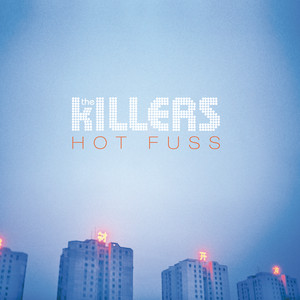
I like for albums to sound good. This is a muddy mess with some of the worst drum sounds I've ever heard. Had this album been done by DSardy or Andy Wallace instead of Gordon Raphael it would probably be a classic. Last Nite is such a great track that it slams even though it sounds like your speakers are positioned face down as you play it. 3 stars.
Dropping the needle on this for the first time in 1969 (I was three years old, so I missed out on the experience) must have been quite the head trip. The opening song "Good Times Bad Times" was absolutely the bellwether of everything that would be great about Zep. The marriage of blues and psychedelia influences into something really "heavy" that would become a genre of its own. Just a perfect opening salvo. "Babe I'm Gonna Leave You" has the finest vocal on the album and I have read that Page coached Plant through a reinterpretation of an earlier vocal he had recorded, so kudos to Jimmy as a producer. "You Shook Me" (along with really all of the overtly blues material on the record) is where things start to fall apart. The problem I have with almost all white, British blues bands is that they always sound tepid. Just a flaccid imitation of something that isn't deep but is meaningful in its authenticity. Sorrowless blues music is just vacuous, and nobody who listens to that track believes anyone associated with it has ever known sorrow. It's what Clapton made a career of except he did it better.
"Dazed and Confused" is an amazing track that will forever be sullied for me by the blatant plagiarism. If Page hadn't claimed ownership of a song he stole I would consider it one of the greatest ever cover songs. I would pit it right up there with the way Harry Nilsson took a B-side from a second tier band and elevated it to one of the most majestic recordings in history. I wish I could consider this track in the same light, it would be merited, but unfortunately the deception is a disqualifying element.
Side two doesn't fare nearly as well. The first two tracks are straight up filler, and I have already shared my thoughts on the blues covers, which pretty much only leaves "Communication Breakdown" and parts of the closer. They also point brightly to what this band would become. 4 stars.
A great collection of songs. Their stubborn refusal to use bass guitars (doubly ironic since this album gives us one of the all time great bass lines) and commitment to honoring the mediocrity of the lo-fi movement are the only things keeping it from being a perfect album. 4 stars.
Both Bob Mould's voice and his career trajectory remind me a lot of Lou Reed. If he had managed even one hit single he would probably be held in the same regard. But Mould was far more talented than Reed.
If I Can't Change Your Mind probably should have been that hit, similarly to Teenage Fanclub Star Sign or Pixies Here Comes Your Man. There was a lot of great music in the early 90s that was criminally ignored. 4 stars, but I wish I could give 4 1/2.
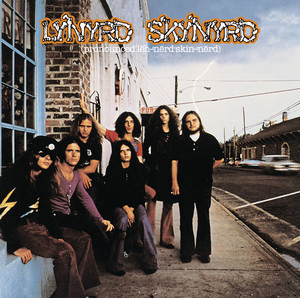
I've always had a love/hate relationship with this album. It is widely recognized as the originator of southern rock, at least by people who are too snooty to frame ABB that way and instead call them a jam band. But there's a problem with that. There were so many others developing that sound earlier. From hillbilly fiddler Charlie Daniels to British adjacent Delaney Brammlet to Leslie West taking Mississippi Queen to #1 three full years prior (yes, I know he's a New Yorker playing with Brits, but that record is absolutely the template), there really is no credibility to that assertion. Goose Creek Symphony already had three albums under their belt. Van Zant was of his time, Gearheart was ahead of his time. It was neither the first fully southern rock album (that would be The Marshall Tucker Band) or the greatest southern rock album (Fire on the Mountain). The fact that neither of these works even appear on the #1001albumsyoumusthearbeforeyoudie lists are further testament to the Eurocentric foolishness of the list. Even Tres Hombres came out a few months before and was the Top's third full length. Is Listen to the Music a southern rock tune? Black Water?
All that said, there is no denying how great this record is. It's all just noise that swirls around it. I can't blame Gary Rossington for the ignorance of rock "historians".
Even more impressive than the singing, writing and playing is the singular vision of Ronnie Van Zant. Al Kooper produced this album but it was Ronnie's vision. To his credit, Al was confident enough to assert his opinions but also secure enough to allow Van Zant to throw him out of the studio as they recorded Simple Man in his absence. So while this again is NOT the album that invented southern rock, it probably is it's bellwether. 5 stars.
Well it's better than the Prodigy anyway. In the right situation I could see this album being more than completely useless.
The last album Johnny made in his lifetime and probably the best album he ever made. Even better than his wildly energetic Sun recordings. It had all the trappings to be a gimmicky curiosity but instead became the ultimate statement of a man who knew his time had come and was ready to face that fact. Don't even get me started on the video to Hurt. When the ghost of June appears next to him I cry every time.
The album (and the whole America albums series) features many heavy metal and other heavy style songs. Yet somehow a single forcefully played bass note on the piano of When the Man Comes Around manages to sound far more apocalyptic than any Marshall stack and ProCo Rat2 pedal could ever accomplish. This isn't a man pretending he is facing death, this is the real thing.
Johnny died the same way he lived, with integrity and a guiding spirit of truth. #1001albumsyoumusthearbeforeyoudie has a lot of misses, but this isn't one of them. Your life isn't complete if you've never listened to this one. 5 stars obviously.
Pseudo sincerity. McLean wanted to be Paul Simon but someone beat him to it. A snoozefest. 2 stars.
It's like REM meets The Cure, but it's far less compelling than either one. I mean it's fine, but I can't see any reason for it to be among the #1001albumsyoumusthearbeforeyoudie. 3 stars.
The fact that NME called it a "part C&W album and part deep-south blues-funk" is contemptable and yet again shows that they know NOTHING about American music. The Athens scene (which I already said this evokes) is NOT deep-south funk blues. I think Peter Buck would laugh at that characterization.
This is another one of those 80s albums that might be something but we'll never know because of the horrendous production. If they would have got Alex Sadkin, Chris Hughes or someone who is really skilled like that in the booth then maybe they'd have something, but this is pretty much unlistenable as it stands. Two stars, one of which is for what may or may not be there if you could actually hear it.
Mark Ronson really helped Amy make a Back to Black a classic. This sounds like a demos album in comparison. Shout out to #1001albumsyoumusthearbeforeyoudie for once again overrepresenting an artist who definitely deserved one entry but absolutely not a second. There are so many great artists who aren't represented at all of the list. 3 Stars.
Now this is what excites me about the 1001 albums project. I knew a couple of these songs from indie radio, but had never listened to one of his albums. I'm very happy to have now remedied that oversight.
This may seem a strange comparison, but Kiwanuka's vocal tone actually reminds me far more of prog rock singers like Greg Lake or John Wetton as it does the Curtis Mayfield comparisons I've heard. The reverb drenched female backing vocals and guitar arpeggios seem very lounge. So I guess this is neo soul, but he takes a very different path to get there than does Raphael Saddiq (another artist criminally unrepresented on the list) for example.
This is an album that morphs with your moods. If you are feeling brash, the sweeping orchestrations and soaring choirs seem very majestic, but if you are in a more melancholic frame of mind the electric pianos are bluesy in the way that Ray Charles was often bluesy. Through this prism I guess the Curtis Mayfield comparisons make a lot of sense. It's not the voice, it's the evocative soundscape.
Set against this lush musical backdrop, amazing songs like "Hero" and "You Ain't the Problem" get the room they need to transport the listener to another astral plane. 4 stars, but I wish I could give 4 1/2.
It's a good thing they learned to write songs. I hate boring, gentrified British covers of blues music. At least this isn't as bad as The Bluesbreakers. 2 stars.
I just love Paul Simon, but this is a really odd release. To me it plays as a document of personal indecision. The ultimate transition album. Is it going to be S&G or is it a personal diary? "Think Too Much" was definitely the more apt title for the album. Musically it shows Paul in a place of flux. He holds on to the electric pianos that so colored the mood of his brilliant first trilogy of solo albums, but it also gives hints toward the musical wanderlust that would be so richly rewarded a couple years later in his finest ever work, Graceland.
Again, I love Paul Simon, but #1001albumsyoumusthearbeforeyoudie, did he really need six albums? Does anyone really NEED to hear this one before they die? So many wonderful artists who don't appear on the list at all. 3 stars.
This is the first 1001 albums choice that I had never heard of. It's awful. At it's best it's like Michael Buble except without the charm. At it's worst it's like a Leonard Cohen album if he didn't know how to write songs. Hotel Room might be one of the worst tracks I have ever heard. 1 star.
I didn't feel like listening to an album today anyway. 5 stars.
Lots of great ideas, many very well executed. There are spots where his vocals are weak, but I understand he faced significant health issues, so that is understandable. I am left wondering just how great this could have been if John Wetton and some of the prog stalwarts in the Fripp circle had been brought in by Eno to beef up some parts. In particular I feel like A Sunday in Madrid could have really benefitted from a muscular vocal performance. I love the cover illustration by Wyatt's wife. 3 stars.
Do I really have to hear four Jack White albums before I die? Do you? I say no, but if you choose just one, this is the obvious choice. The formula is the same but the songs are unsurpassed. 5 stars.
A beacon of light in an era where hip hop was all negativity. I am subtracting one star for introducing the trope of the annoying skit in rap albums. 4 stars
This may come as a shock, but I've never listened to a Beck album before. When he first came out, I was put off by the "Loser" video enough to keep me from really seeking out his work. Most of his stuff doesn't seem to get airplay (that should have clued me in I suppose) and what did ("Two Turntables and a Microphone", anyone?) was fine but didn't sway me to change course with him. So I put on "Sea Change" and sat in stunned silence as the beauty of "The Golden Age" swept over me. How could I have missed this for 15 years? Next "Paper Tiger" started and I smugly thought to myself "see, this is the kind of lo-fi crap I knew he must be making and I hate it". Then the orchestrations came in. All of the sudden it went from Jesus and Mary Chain to Elton John's great albums with Paul Buckmaster writing the charts. The album never lost me again from that moment. I felt like I had been transported to another plane. To my shock, the only thing I could think of that the album recalled was the 70s pop-prog of bands like Supertramp or 10CC (high praise indeed). All of the great melody of a pop song with all of the virtuosity of prog rock. I'm still not blown away by his voice, but when the tracks are as wonderful as these, it can be overlooked.
Parts of the album are important to culture and the progression of hip hop, and other parts sound like a much less talented EWF. 3 stars.
This is really electric.
As in... this is the music that plays while you are on hold while calling the electric company.
1 star.
Six music videos is insane for an album from 1976. Seems appropriate for the official band of Karens everywhere. Dancing Queen gives me the icks. It's almost too horrible to be real. 1 star.
Reminds me a lot of what Peter Gabriel was doing 20 years earlier, yet somehow it isn't derivative. It's like a lot of EDM at that time, but without leaving you feel as though you'd been assaulted. 3 stars.
It's kinda boring, but there's nothing wrong with it. It's just kind of there. Rescue sounds like B-52s minus the fun. 3 stars
Not quite as good as it's follow up "Every Picture Tells a Story", but very few albums in the history of music are. It foreshadows that work in every way. 4 stars
It has stood the test of time (which is more than I can say for Robert Christgau). 5 stars
Two five star albums in a row. Cool. Nice work for a change #1001.
One of two peaks (along with Graceland) in the brilliant career of Paul Simon. A national treasure.