User Submitted Album
View Submitter's ProfileAlbum Summary
Lux (stylised in all caps) is the fourth studio album by Spanish singer Rosalía, released on 7 November 2025 through Columbia Records. Lux was recorded with the London Symphony Orchestra under the conducting of Daníel Bjarnason, with Rosalía as its executive producer. It features guest appearances by Björk, Carminho, Dougie F, Estrella Morente, Sílvia Pérez Cruz, Yahritza y su Esencia, and Yves Tumor. Other collaborators include Angélica Negrón and Caroline Shaw as arrangers, Charlotte Gainsbourg and Guy-Manuel de Homem-Christo as composers, Noah Goldstein and Pharrell Williams as producers, and Venetian Snares as a drum programmer. Its physical editions contain eighteen tracks; digital editions omit three. Lux was described by a press release as exploring lyrical themes of "feminine mystique, transformation, and spirituality", with its songs inspired by the lives of various female saints, including Hildegard of Bingen, Rabia Al-Adawiya, and Miriam, alongside Rosalía's relationship with God, her romantic relationships, and the work of writers Clarice Lispector and Simone Weil. Its track listing is split across four movements, with lyrics in fourteen languages, each corresponding to a different female saint. A significant portion of the album's creation, which took between two and three years overall, was dedicated to learning how to sing in the various languages. Rosalía often started songs by sketching out rough lyrics with Google Translate before taking her drafts to professional translators and phoneticians. The album was supported by a lead single, "Berghain", which was released on 27 October 2025. Upon release it received widespread acclaim from music critics, who praised its ambition and orchestral sound. Critics and journalists noted the album's experimental blend of contemporary pop and classical music elements. It later became the best-reviewed album of 2025 on Metacritic as well as the site's fourth-best album of all time. The album broke the Spotify record for most streams in one day by a female Spanish-language artist, with 42.1 million.
 Read more on Wikipedia
Reviews
I did really like how BIG sounding this was. There was some aspect that got some reason I couldn’t really get behind. But overall I did appreciate it.
Surprised me a bit in its best parts, although of course I had no idea what truly to expect. Cinematic in parts, chamber pop, then some odd time signature (5/4 a particular favourite - always keeps you a little off balanced) tracks really add more variety than the norm for I suppose what is considered pop music, although this certainly is far more than that. Negatives: for the most part I really hate features/collabs. Bjork is fine (I mostly like her work but she is so unique that she steals any attention from nearly everything else) but that clown Yves Tumor ruined that cut entirely both in performance and especially content. Stupid shock value tripe - awful. Collabs tend to water everything down, pandering to too many audiences and no exception here. Also in general the album as a whole is over the top bombastic and while overwhelming can be a good thing I think here it hits all the subtle meanings - good and bad. All in all smallish slip-ups for such an ambitious production and effort. It's not always for me but I definitely appreciate the scope. Of course the album is less than a year old so no chance for book inclusion - let it rise on the windowsill for a few years maybe. 6/10 3 stars IMO: Belonged in the book? No.
Liked this a lot to start with, and it felt adventurous and operatic, but it soon became grating and annoying, a bit too dramatic and melodramatic.
Best Song: Reliquia. Those strings at the beginning are tremendous. Such a cool song. Worst Song: Porcelana. That stuttering feature only detracted, and the song (apart from its outro, which was nice) clashed with the artpop vibe of the rest of the album. Overall: A very expansive, very "complete" feeling pop album. I really liked the grandiose, artful production and the orchestral elements. I will definitely return to this.
About half I sort of enjoyed. About half I didn’t.
This was my album of 2025. It's grandiose, cinematic, touching, and bombastic. It blew me away on my first listen, and it still blows me away now.
Päätä pidempi muita aikalaisiaan. Upea taidepop-levy, jossa kielet ja genret soljuu sulavasti yhdestä toiseen.
It sounds modern and classic at the same time. I can’t think of anything similar. Deserves to be on the list.
I don't know what I listened to, but I enjoyed it.
It's too soon to properly evaluate such a new release, but WHO CARES? Is she singing in 14 languages, all non-skippable songs? It deserves a 5.
Nope, saw the rave reviews and figured this might be good, but I didn't enjoy it one bit. The Spanish language meant I had no idea what she was singing about, but even if I had understood, it just seemed like a blur of orchestral pop, which I generally despise anyway. Nothing stood out, other than the weird English bit at the end of one of the early songs that explained the explicit lyrics warning and came as a surprise. One star. This is my first one star rating on the user album list. I came expecting a modern classic and it just sounded like a really bad Madonna Ray of Light clone.
I typically have a hard time fully getting into non-English music. Which I find hard to square because lyrics are generally not the most prominent thing that determines my enjoyment of music. Something about the fact that there are lyrics, but I can't understand them, reduces my immersion? But I found that my level of immersion with Rosalía's "Lux" was unimpeded by language. In fact, an abrasive intrusion of English was one of only things that broke my immersion (Yves Tumor's appearance at the end of "Berghain"). So enveloped by music without focusing on lyrics, I had no idea until reading afterwards that Rosalía incorporated and sang in 14 different languages. The depth of concept and effort, alongside the rich, orchestral pop, will definitely make returning to "Lux" worthwhile.
I’m not familiar with Rosalía, but this album cover looks really familiar. I don’t speak much Spanish, but language barriers haven’t really hurt any albums for me so far. I’m not sure what to expect from this, but it seems like it was met with critical acclaim when it came out, so hopefully that’s a good sign! Man, despite my lack of Spanish understanding, I was really impressed with this album. The arrangements here were rich and beautiful, and I love it melded modern instrumentation with classical music structures. I was really impressed that each movement felt very demarcated from the movement before and after it, which helped to further create the rich structure. This is one of those albums that was definitely crafted with a clear and concise vision, and these songs are clearly part of a larger work. I think it’s really impressive that Rosalía worked with so many additional people, yet that didn’t seem to muddy down her vision or the execution at all. When it comes to the sound of this album, it also had some really bold and loud moments, but it those moments always felt perfectly placed. This isn’t the type of album I’d typically gravitate towards, but man, it’s beautiful and cinematic in all the right ways, and it was a pleasure to listen to.
Orchestral pop isn't really my thing but this is definitely interesting. The amount of languages is really technically impressive. I still think anything this recent shouldn't even be considered though.
Recency bias - Immediate disqualif.... hang on - is this actually pretty good? It's kind of huge, strange, possibly overpraised, maybe I that's what I'm here for? I’m still wary of the recency bias, and part of me wonders whether the sheer ambition is doing some heavy lifting, but this feels far more like an actual *album* than a moment with a few big songs attached — bold, overwhelming, occasionally beautiful, and probably future edition bound for good reason. I mean, these orchestrations alone!
I couldn't make it all the way through his one.
Didn't really do anything for me. Too long as well.
Hated this
This absolutely blessed my ears.
The flow from track 1 into Reliquia is sublime — seamless and gorgeous. Berghain starts beautifully but loses me around the halfway mark, though La Perla picks things right back up. La Yugular is another standout. The orchestral moments shine brightest here; when ROSALÍA leans into that flamenco-meets-symphony space, it's stunning. Worth further exploration.
Genuinely pretty jaw dropping stuff - an absolutely amazing voice, used with remarkable skill. My lack of understanding of most of the lyrics didn't hinder my enjoyment at all. Love the bounce around between various genres, sometimes within the same song. Even the straight up pop tracks felt palatable. Definitely gonna hunt down the physical release version with the extra tracks... Fave tracks - "Divinize", "La Rumba Del Perdón"
Vrh, ali sve znamo
No toca un género que me entusiasme, pero sí que es verdad que el timbre de voz es muy poderoso y que las canciones tienen una energía especial. Para los muy fanáticos. Mezcla de pop y de canciones "operísticas".
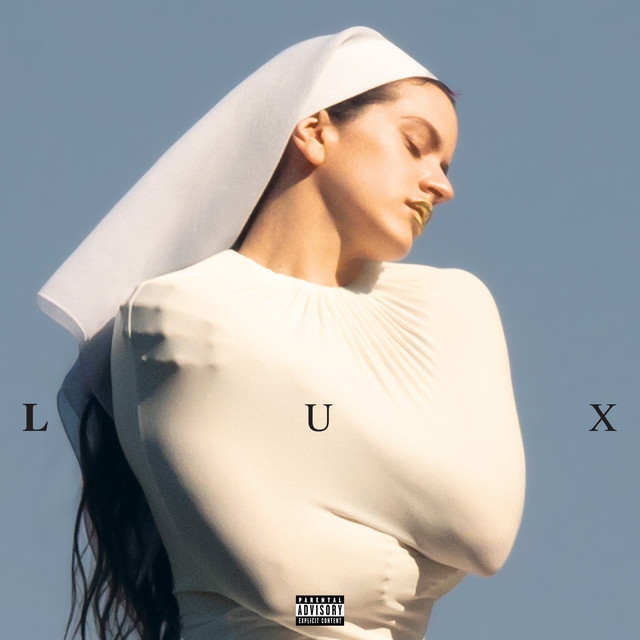
This down here is the review of LUX I have written for the Mowno music website. Words of caution: this is the longest review I have ever written for that website, lol. But Rosalia released such a pivotal (and much discussed) album last year that the thing probably deserved its own exegesis, right? https://www.mowno.com/en/reviews/rosalia-lux/ And here is the full text of the review copied and pasted below: Some artists enter the world of music the way others enter a religious order, and for the few who truly stamp their era, the word icon eventually slips into the conversation. Along their path—whether it’s an ascent toward glory or the way of the cross—every sacred relic gets exalted by pop-culture hagiographers: the songs, the albums, and of course the legendary covers. The sleeve of *Lux*, Rosalía’s fourth LP, sketches a quiet tale of this modern devotion—both the audience’s and that of a woman seemingly consecrated to the act of creation. Rarely has the word "iconography" been such a precise label for an album artwork—so precise that the image itself might feel a little too immaculate at first glance. But the devil lies in the details, as always: is the gown clasping Rosalía’s arms a kind of ceremonial robe, or the ghost of a straightjacket? Are we looking at a sanctified figure or a slightly deranged imitation? Is the thing a miracle or a put-on? The line between what makes a saint and what gets someone branded a heretic has always been razor-thin. The final impact of a prophet is often measured by the way her words and actions provoke an almost even split between devotion and outright rejection at first. The same dynamic is at play here, judging by the arguments that ripped through our newsroom over Lux, with long-time believers, fresh converts, agnostics, and sudden apostates all hurling contradictory vocabularies at the same album. It’s inevitable when you’re trying to pin down a record that’s simultaneously a self-contained universe and an intimate portrait of a woman—and one that, beyond Spanish, pulls in thirteen other languages for its sculpted hooks and little mystical dispatches scattered across its eighteen tracks. Commentators—and the artist herself—have already spilled plenty of ink over the album’s tangle of languages and musical dialects, just as they’ve dissected its overarching narrative here exploring the concept of sainthood. *Lux* draws on more than fifteen female figures, each offering a different interpretation of sanctity across cultures. Some of the “saints” Rosalía invokes flirt with cliché (Hildegard of Bingen, Teresa of Ávila, Joan of Arc…), while others sit miles away from those postcard images: the blood-soaked vengeance of Saint Olga of Kyiv, the feminist radicalism of the Taoist Sun Bu’er, the selfless devotion of the Sufi mystic Rābiʿa al-Adawiyya… Above all, these figures serve as mirrors the Spanish musician holds up to herself, a way to parse her identity as both woman and artist without bowing for a single second to doctrine or orthodoxy. Accusations of heresy are therefore unlikely to trouble someone this fearless. Another widely chewed-over topic: the division of the tracklist into four thematic “movements,” each one tracing either a consistent internal intensity or a jumble of radically different intentions. Let’s be honest: this wink at the codes of classical music—really a nod to the album’s orchestral heft, with every track bringing in the London Symphony Orchestra, no less—does little to clarify the record’s shapeshifting nature, nor does it help explain its unmistakable emotional voltage. One essential element is indeed missing from this encyclopedic, promotional codex on faith—the one thing that defines the visceral effect of *Lux*: incarnation. The divine voice here takes flesh—human, passionate, whole, multifaceted, and unpredictable. It is this voice, both literally and figuratively, that transforms the album’s weighty content into an unforgettable experience. On “Reliquia”, the LP’s first ecstatic banger, Rosalía travels the world, leaving fragments of herself in each city she passes through, like the relics of Santa Rosa de Lima. These relics feel like organic promises of an encounter, embodied in a string pattern that is at once buoyant, intricate, and hieratic—only to suddenly transmute into dazzling hyperpop synth flourishes, frenzied and kaleidoscopic. The heart of the saint may be detached from her body, but it still beats fiercely for humanity. On the 5/4 techno pulse of “Divinize”, spiked with sharp pizzicatos and laden with impromptu harmonic caresses, Rosalía asks her lover to count her vertebrae as if she were a human rosary. The sensuality of her voice is breathtaking, proving once again her ability to alternate powerhouse vocal displays—like the operatic aria of “Mio Cristo”, where the beloved weeps diamonds—with subtle vulnerabilities, such as when the Spanish singer wryly contemplates the emptiness of chasing material goods over a glass of “Sauvignon Blanc”. It’s quite a risky subject to handle for an international star, yet she navigates it with impeccable poise. In both her songwriting and her vocal performance, Rosalía releases and reins in her impulses at precisely the right moments, every time. She shines with a pop instinct that is untouchable, carnal, and fully possessed. Percussion, handclaps, and flamenco guitars also make a triumphant return on *Lux*. Subtle on “Reliquia” and “Divinize”, these sounds explode later in the album on gems like “De Madrugá” and “La Rumba del Perdón”, the latter featuring two other legendary voices of the genre: Estrella Morente and Sílvia Perez Cruz. This flamenco revival—the artist’s original musical grammar, which had largely ceded space to reggaeton loops on *Motomamí*—brings the focus back to what matters: conveying universal emotion despite local particularities, without undermining her homage to other Hispanic traditions. Take, for example, the strong Afro-Cuban influences on “Dios Es un Stalker”, where Rosalía, with an omniscient gaze, pursues the object of her desire. She tops it off with a jaw-dropping chromatic climb in the second chorus (twice on the physical album version), as if to propel her quest for amorous transcendence even further. When clichés land with such sincerity, humor and mastery, resistance is futile. Likewise, the sardonic waltz “La Perla” injects a touch of popular levity into an album that could have buckled under the weight of its length and conceptual ambition. Here, Rosalía gleefully eviscerates a toxic ex-lover—himself a reggaeton star, if you’re curious—while simultaneously asserting her place within the canon of Hispanic popular music, fully unafraid of delivering a tongue-in-cheek fantasia piece, if only for one “lyric-driven” song. In her hands, being ecumenical isn’t a compromise; it’s a declaration of intents. Less airy, and sitting at the opposite end of the album’s spectrum, is the thunderous “Berghain” with its towering Teutonic choir drawing from Vivaldi, Wagner, and the Carl Orff of *Carmina Burana*. This first single may show flashes of show-off opportunism — the sort of thing ready-made for a commercial promoting a *Now That’s What I Call Classical* compilation — but Rosalía’s sheer fervor wipes away the gimmickry. And when Björk and Yves Tumor steer the piece into darker, more menacing territory in its second half, the track swells with a new, almost volcanic gravity. A cursory listen to *Lux* might suggest this kind of darkness barely shows its face in the rest of the tracklist, but that’s far from true: the orchestral Latin-trap of “Porcelana”—with its heavy timpani and black coils of strings — plunges into genuinely sinister terrain. Elsewhere, the dusk-lit rendition of the traditional song “Mundo Nuevo” draws from the same shadowed palette. The mysticism of *Lux* needs these passages of darkness at key moments. As Rosalía herself has said, it’s through the cracks and the spells of despair that the light giving the album its title shines most beautifully. But it’s in “La Yugular” that this mysticism reaches its most delirious — and delirium-inducing — form. Three distinct sections alternate or flow into each other. The first, threaded with Eastern-sounding strings, is relatively serene. “How many battles can fit in the lines of a hand? How many stories in the 21 grams of a soul?” Rosalía asks herself there. Then a brief refrain appears, where the narrator murmurs an astonishing plea in Arabic to her divine beloved, vowing to tear down heaven and hell alike to find Him again. Finally, an entire cosmology blooms out of nothing and unfurls before the stunned listener. Rosalía leaps from the microscopic to the cosmic with vocal command verging on pure magic: in this mental landscape morphing through one dreamlike shape after another, a haiku can occupy the space of a country, a whole galaxy can be held in a drop of saliva, a drop of saliva can blanket Fifth Avenue, Fifth Avenue can fit inside a piercing, and on it goes… A sublime moment, crowned by a jaw-dropping orchestral climax, where the infinitely small is measured against the epic and the infinitely large — one more way of collapsing the personal into the universal. A snippet of a young Patti Smith caught mid-interview seals this central moment of the album, promising the opening — not of the seventh gate of paradise, but of a million other doors besides. And with “La Yugular,” we see that Rosalía now holds the keyring for that eternal mission. Finally, it’s impossible to discuss this album without mentioning its last two tracks, which confront death and convey emotion most directly, with a simplicity and nakedness that evoke a calm spring of timeless beauty. First comes the magnificent fado “Memórias,” originally written by the singer Carminho in the purest tradition of the genre and offered to Rosalía in a duet version, where the two harmonize in Portuguese over the passage of time that can never erase a lifetime of memories. Then, the heartbreaking finale “Magnolias” imagines the artist’s ideal funeral — the day when friends and foes alike will lay flowers on her coffin, and song will replace tears over the sound of majestic pipe organs. With this final gesture, Rosalía doesn’t just match Nick Cave or Jacques Brel; she also answers, almost incidentally, the question raised in “La Yugular” or the opening track “Sexo Violencia y Llantas”: is it possible to reach paradise during the course of a life spent in a divided and violent human world? According to the Barcelonan, the answer is yes — if you allow yourself to be carried by art and inspiration to meet God “halfway,” somewhere between earth and sky. God, or any higher power capable of speaking to the human soul… A vital breath, sorely missing in today’s pop music, runs throughout Lux. It’s a breath on the scale of the trumpets that brought down the walls of Jericho, delivered by an artist whose sharp modernity never stops her from drawing on the deepest archetypes. Rosalía also has better angels on her shoulders to do so, given how she is aided in her quest by an extended congregation of producers, composers, and arrangers, all aligned behind a single vision. Among them are Dylan Wiggins and Noah Goldstein, co-architects of the artistic success of *Motomamí*, alongside a who’s who of experts and luminaries too numerous to name. This sort of Rolodex recalls the one of Beyoncé (Rosalía is a pop star after all), and Björk’s presence also speaks volumes about the sort of torch that’s being passed on here. The ambition that’s displayed here now runs on this scale. What other album released this year stretches from the fado of “Memórias” to the hyperpop of “Focu ‘Ranni” (one of three exclusive tracks on the physical editions)? And what other 2025 release manages such extremes while sustaining this level of overall quality? *Lux* does not claim to reach perfection, however. Beyond its concept, it primarily portrays the humanity of an artist, with her strengths and vulnerabilities, placing herself at the center of all her musical inspirations. “No woman has ever claimed to be God,” the mystic Rābiʿa al-Adawiyya once declared — a quotation highlighted on the album’s physical edition. The work’s glossolalia evokes the one of Pentecost, admittedly, when the chaos of human tongues sparks a “tongue of fire,” which is also the voice of the Almighty: singular, totalizing, and incomprehensible to mortals. Yet *Lux* is also a popular work, fully accessible to anyone willing to surrender to its silky textures, bewitching melodies, and innate sense of adventure. Of course, skeptics who see the Spanish singer as anything but saintly may still feel her disciples indulge a touch too much in idolatry. Yet to them, we say: “Have you heard the good news?” For yes, *Lux* is a damn good — and also holy — piece of news for music in 2025. For one doubting Thomas, how many others will file past in awe? 4.5/5 for the purposes of this list dedicated to essential albums, rounded up to 5. 9.5/10 for more general purposes (5 + 4.5) ---- Number of albums from the original list I find relevant enough to be mandatory listens: 465 Albums from the original list I *might* include in mine later on: 288 Albums from the original list I won't include in mine: 336 ---- Number of albums from the users list I find relevant enough to be mandatory listens: 87 (including this one) Albums from the users list I *might* select for mine later on: 109 Albums from the users list I won't select for mine: 222 ---- Yo, Émile. Je t'ai enfin répondu. Regarde sous... *Demon Days*, de Gorillaz, au-dessus ! 😉
I can't believe I like this. OMG it's less than a year old. Beautiful voice and orchestration (it does kinda remind me of a Eurovision winner but in a good way). This is what this list is about.
Rosalía got a lot of eyes on her with her Latin pop reggaetón hits like Saoko and Despechá off her album Motomami. While not quite breaking through to the mainstream anglosphere like Bad Bunny, she was turning a lot of heads regardless. For her follow-up, Rosalía would take a more conceptually spiritual approach and dedicated four different movements of the album to different female saints. Given this weight of such a topic, it makes sense that the music of Lux would invoke the grandiose sound of classical music. Yes, Rosalía is backed by an entire orchestra as the album strikes a balance between her pop background and the striking strings of the London Symphony Orchestra. This makes for a fairly dramatic album that swings between delicate wistful contemplation to massive compositions that encompasses the full range of Rosalía's ambition for this project. It's nothing short of exceptional! And yet, something holds it back. The pacing of this album is frankly disorienting, occasionally jerking itself from one track to the next with barely a transition. Certain songs are clear centerpieces for each given moment (La yugular, Berghain) and other times the movements move fairly seamlessly. It certainly captures the subject matter of the album, but I would find myself almost puzzled by the flow of the middle two movements. I will give it this though, it was rarely a bore. And my god, what a beautiful elegance. I can't not give it credit, you know? CONTENDER FOR THE LIST: Too soon to tell! Maybe in five years time we'll still be talking about what a magnificent album this was, but for now I have to count it out for recency bias.
I don’t really get picking an album this new but it is pretty good
Takes some big swings & drifts to a lot of different places, but it still is soft pop in its bones. Bumping it up one for ambition, but I don't want to pretend like I wasn't checking my watch a lot during the back half
This was the best album of 2025 hands down. And while I think it may be too soon to add it to a list like this, this is an easy 5 stars. Great pick.
i think this is a worse version of weyes blood, which i absolutely love
Not first listen! Still haven't gone and listened to the "full" version (the CD has like 4 extra tracks), but this'll more than suffice As 2025 grew to a close, with its best albums relegated to the “Almost Great” category, along came Rosalía, at the eleventh hour, to thoroughly beat me over the head with LUX. “You want greatness”, it seemed to say, “well here it is.” She brings a thousand piece orchestra, sings in 800 languages, and has intercourse with your spouse/significant other, all in less than an hour. Do not skip! HL: "Reliquia", "Mio Cristo Piange Diamanti", "Berghain", "La Perla", "Memória"
I'm a sucker for maximalist bullshit so I really wish the rest of this album sounded like "Berghain". Aside from some other gems like "Reliquia", it's a bit too samey for me. She can sing in 14 different languages alright, should have written 14 different sounding songs as well.
This was beautiful music!
Fun
striking
Not my usual cup of tea, but I was really impressed. Might be my best discovery after 352 users albums. Thanks !
So many feelings about this album. 1. What a mixed bag 2. I want to know more about the saints/women of history that influenced her 3. When lyrics are translated they sound ridiculous 4. When you think about it, all lyrics are ridiculous 5. English was the worst language on this album. I don’t think I’d listen again but I’m glad I did.
For each user submission I will decide if I believe it was submitted to "correct the record" and deserves inclusion on the main list or if its more of a personal favorite or pet album of the user. Pet album but also so recent, it may stand up to time but who knows.
What a voice and what an album.
4.5
I just don't get it. I know this was one of the most critically heralded albums of 2025, but it was just so BORING. I realize I'm not a poptimist, but nothing about this was even catchy or interesting. 1/5
don't get the hype
Mind. Blown. Björk, Lorde, Kate Bush - meet the modern-day counterpart.
Wow, how did this album pass me by? In my defence it’s only two months old, but this is incredible. An instant masterpiece that blows the theory out of the water that we should only recommend albums over X years old. As a big fan of new music, I’m in favour of this group continuing to champion very recent albums.
Lux has something about it even through the language barriers (14 languages :D ); the full orchestral performance is impressive and creates a compelling sound that is both huge and intimate at the same time, and she has an outstanding voice, it's just not always used properly. It's a bit too weird in places for me overall but it's very dramatic and kept me interested, gets a 3/5 on that basis.
Look, this is a bit overly dramatic for my personal taste, but I cannot deny the talent and ambition on display here. Very impressive.
Turns out my least favorite thing about modern pop is inane lyrics, so when they're in Spanish I love it!
I like it
35th best album of last year according to my list
I've been meaning to listen to this since it came out but hadn't got around to it. It was getting so much buzz since it came out in the last few weeks, especially with the end of 2025 best of lists so I had high expectations. It completely flopped for me. I was expecting something more than what it was. To me it was a bunch of over-produced okay songs with a lot of classical stuffed on top. It just doesn't work for me. No song made me feel anything. It sounds so much like an overly dramatic soundtrack to a video game and just sounds muddled and a mess. And it has god awful guest vocals at times. Rosalia should be on the list but this album doesn't do it for me. Also, give it a few months before adding an album. This album came out less than 2 months ago. Let it cook a little bit. My personal rating: 3/5 My rating relative to the list: 3/5 Should this have been included on the original list? Yes, but not this album.
Good stuff, 4 Really beautiful 5 4 Close
“Edith Piaf meets LSO to remake the Passion of Joan of Arc” sounds more like an AI prompt than a pop album. Sure, it’s new and different and crazy ambitious but those aren’t necessarily all upside features. Indeed, one can be impressed by the voice (and multilingual vocals) and the scope without thinking it works very well. Primarily because it’s just too much and over-reaches throughout; one feels bludgeoned by the spectacle rather than enriched by the substance. The vibes are more Madonna-Evita or Baz Luhrman than Bjork or Kate Bush (heavens, no). When pop culture so overtly aims to burnish its serious aesthetic credentials, folks of refinement and taste will remember precisely why it can so infrequently be taken seriously. Here, there’s too much that’s discordant –tutti-scale concerto strings that give way to raps like “fuck you til I love you” and other spoken word banalities. Bottom line: this hasn’t exactly stood the test of time – clear recency bias at work here (though one's glad to have finally gotten around to listening to it). One suspects it may never rank higher than flawed/laughable classical outings from McCartney or Sting or Billy Joel. (Call one a traditionalist but some formats are best left to professionals, right?) But okay fine let’s have it switch out for Metallica with SF Symphony because this scores just a bit lower on the bombast-o-meter.
Rating: 10/10
Normally I would say it's much and much to early to give an album a classic status (only a few weeks old at the moment). In the case of LUX by ROSALÍA there is no doubt. Het previous album was also a great one, but this is clearly a milestone in (pop)music history. A song like "Berghain" is a monument on its own.
Makes me wish as usual my high-school school/college Spanish (perpetually degrading from disuse) was stronger. Although slightly marred by jarring tonal shifts I thought this was great.
People complaining that this is too new to be on the list...but guaranteed in 10 years time it will be on the next edition. Look deeper into the album. Why is it on here? She sings in 13 languages....that in itself makes it worthy to be here.
Really a wild listen. Uber polished, in 14 languages?!, has Bjork, and contains elements of opera, pop, electronica, rap, and orchestra arrangements. If there ever was maximalist music in 2025, this is it.
Spanish Chapell Roan did an album about saints or nuns or something? This just came out, chill
I like this a lot! Literally operatic with several other influences. Perhaps premature to toss on this list but the fan list has like 4 bullshit Bruce Springsteen albums so who cares!
Takes the memory span of a goldfish to add an LP that came out just over a month ago. It would be one thing if the album was good, but unfortunately Rosalía's excellent vocals aren't given time to shine in crowded compositions that can't decide between synthy pop or traditionalist ballads. Awful guest features (except Björk, she's great) only add to the confusion and make this feel more disjointed mixtape than cohesive album.
I almost cried on the subway on my first listen because this album is just so so beautiful. I felt all of the feels, and understood a fraction of the lyrics. Wonderful, elating, masterpiece.
LOVE it. One of the biggest surprises and I have The Lonely Island to thank for recommending this album on their podcast.
Dramatic and fascinating! Great suggestion!
At first I thought: Just another pop-singer. Then I listened to the album. And this was much more than anticipated! Even got goosebumps on some songs. She's an amazing singer. And the classical influences in this album are so well done and mixed in.
Having a 2025 album on the user list seems a bit to recent to be a favorite out of all the options but to each their own. This album is very much impressive in its own right. Rosalia has a wonderful singing voice. Although this is in Spanish it’s still pleasant to listen to. The production has a lot of modern impact while still keeping it poppy. Overall this could’ve been a pretty enjoyable album if I had a stronger understanding. Good but not something I’d revisit. 5.2/10
Was thinking that one of the tracks had very Björk-like vocals, only to find out it was Björk. But be so for real, this album came out a month ago
I don't get it.
Damn, y'all work quick. I've heard about this album, though, so it must be something to get enough notoriety so quickly. However, I find it to just be alright. I can see why someone would be entranced by this album, though. I was myself at some points.
Orchestral pop, art pop, classical, avant-pop. Vinilo, va.
Quite good. Didn’t understand it, not something I would seek out, but great voice. Nice submission