I never once (in person) crossed paths with a single passionate fan and frequent listener of music - of any genre - who genuinely likes this album. And I worked in a record store for nearly a decade. This persistent absence has led me to a simple conclusion: This record is for those who prioritize spectacle over music, and who possess both the patience and the willingness to endure The Wall’s visual bombast long enough to wait for the two decent songs by the „other genius,” rewarding themselves, at last, with something to tap a foot or hum along to. The concept of The Wall is… well, in principle, it is always good to call out authoritarianism. Yet the album’s immense success; both as a record and as a stage show; appears to have done nothing to prevent the very dynamics it claims to criticize. Beyond its concept, however, the album is very difficult to sit through. For the most part, the lyrics and music are utterly boring. This is one of those rare moments where critical consensus deserves to be taken at face value: Pink Floyd were past their apex. What a massive letdown after Animals. The world, it seems, wanted The Wall - but I have yet to encounter anyone who wholeheartedly says, “I dig The Wall.”
1001 Albums Summary
Rating Distribution
Rating Timeline
Taste Profile
Breakdown
By Genre
Tap a bar to see the albums behind it
Top Styles
Tap a bar to see the albums behind it
By Decade
By Origin
Albums
You Love More Than Most
| Album | You | Global | Diff |
|---|---|---|---|
|
Metal Box
Public Image Ltd.
|
5 | 2.41 | +2.59 |
|
A Grand Don't Come For Free
The Streets
|
5 | 2.62 | +2.38 |
|
Nixon
Lambchop
|
5 | 2.72 | +2.28 |
|
Isn't Anything
My Bloody Valentine
|
5 | 2.75 | +2.25 |
|
Ys
Joanna Newsom
|
5 | 2.79 | +2.21 |
|
I Am a Bird Now
Antony and the Johnsons
|
5 | 2.84 | +2.16 |
|
Damaged
Black Flag
|
5 | 2.86 | +2.14 |
|
E.V.O.L.
Sonic Youth
|
5 | 2.9 | +2.1 |
|
Merriweather Post Pavilion
Animal Collective
|
5 | 2.92 | +2.08 |
|
Out of Step
Minor Threat
|
5 | 2.95 | +2.05 |
You Love Less Than Most
| Album | You | Global | Diff |
|---|---|---|---|
|
The Wall
Pink Floyd
|
1 | 4.12 | -3.12 |
|
Back In Black
AC/DC
|
1 | 3.83 | -2.83 |
|
Dire Straits
Dire Straits
|
1 | 3.72 | -2.72 |
|
Hotel California
Eagles
|
1 | 3.58 | -2.58 |
|
1984
Van Halen
|
1 | 3.48 | -2.48 |
|
Dirt
Alice In Chains
|
1 | 3.47 | -2.47 |
|
Eagles
Eagles
|
1 | 3.29 | -2.29 |
|
Slippery When Wet
Bon Jovi
|
1 | 3.28 | -2.28 |
|
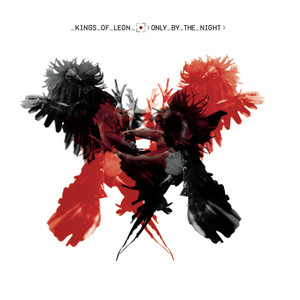
Only By The Night
Kings of Leon
|
1 | 3.22 | -2.22 |
|
Chicago Transit Authority
Chicago
|
1 | 3.2 | -2.2 |
Artists
Favorites
Tap an artist to see their albums
| Artist | Albums | Average |
|---|---|---|
| Sonic Youth | 3 | 5 |
| Beatles | 3 | 5 |
| Bob Dylan | 4 | 4.5 |
| David Bowie | 3 | 4.67 |
| The Velvet Underground | 3 | 4.67 |
| The Clash | 2 | 5 |
| My Bloody Valentine | 2 | 5 |
| Björk | 2 | 5 |
| Elliott Smith | 2 | 5 |
| Miles Davis | 2 | 5 |
| Prince | 2 | 5 |
| Jimi Hendrix | 2 | 5 |
Least Favorites
Tap an artist to see their albums
| Artist | Albums | Average |
|---|---|---|
| Eagles | 2 | 1 |
Controversial
Tap an artist to see their albums
| Artist | Ratings |
|---|---|
| Leonard Cohen | 5, 2, 4 |
5-Star Albums (77)
View Album Wall



















Popular Reviews
There are beautiful songs beneath the gleaming sunlight. This is a masterpiece of textural art - layer upon layer. Much has already been said about these ghoulish guitars; the drumming is equally intense. Brilliant with every fibre of its being.
A set of folky blues-rock tunes with a laid-back charm. The album is anchored by the classic Bad Moon Rising, which is the undeniable - and, to be honest: sole - standout. While nothing else quite reaches that level, the rest of the album has its moments - some tasteful bluesy guitar work and a warm, rootsy vibe throughout. If you grew up in the US during the late ’60s or ’70s, this probably feels like a piece of your cultural fabric. For listeners born elsewhere, it’s an interesting snapshot of its time - maybe not essential, but worth a listen.
Mixed Bag… A somewhat uneven, dare I say Prog-Pop (?), collection by Mr. Simon. Mixed in terms of sonics as well as quality. Let's start with the obvious: there are serious duds on here. The first of these, unfortunately, is the opener, largely due to its silly lyrics (same flaw goes for Cars Are Cars (aaaaargh!), which is luckily buried in the second half). But then we can witness some of Paul Simon's finest compositions. Take the marvellous title track with its elegant Bossa touches, the refined phrasing, and the stunning chord progressions. And whoa, Rene and Georgette Magritte with Their Dog After the War makes you simply stop in your tracks: what a marvel (I melted when he sang "après la guerre" so nonchalantly). But then some songs simply don’t really stick - though not for lack of ambition. In When Numbers Get Serious Paul throws in so many ideas that the song seems overstuffed with ideas: the slap bass and the synth in the first part of the song don’t really match the backing vox/the choir. All in all, while showing remarkable songwriting craft, the result sounds forced. Elsewhere, the ambition somewhat drains the fun from other tunes: the laconically stomping Song About the Moon is bookended by the themselves (over-)ambitious Think Too Much (b and a). In contrast, Song About the Moon pulls such a “simple” effect (melodic changes towards the chorus(es)) that it stands out as somewhat understated. Even though, taken for itself, this would probably be a fan favorite were it included in his earlier output. Elsewhere songs foreshadow his Graceland era; Train in the Distance and Think Too Much (a) would probably count as bona fide outtakes from his magnum opus, if we didn’t know better. For all my criticism, I have to admit that I enjoy the hell out of the album, simply for Paul Simon's overwhelmingly beautiful harmonics and in general because of the strikingly “experimental” character of the record with all the LinnDrum elements as well as killer musical contributions (Anthony Jackson, Marcus Miller, Philip Glass among others … crazy). There are so many bits in pieces to pay attention to (Think Too Much (b) would be my favorite in this regard). Sadly, his undeniable ability as a songwriter jangling with all kinds of styles and seamlessly blending them together wasn’t (yet) on full display on Hearts and Bones. I'd call it a great prequel to Graceland, but for it being so transitional, I would not include it in a list such as this. Edit: Does anyone else think of Warren Zevon's Night Time in the Switching Yard when listening to Think Too Much (a)?
For a second I was shocked by the thought that, if I had been around and old enough in 1984, I could have been into this record, too. But then I sighed in relief… thankfully it’s 2026 (there must be some kind of silver lining to living in these times), and I can wholeheartedly say: I would have known better — this record is (and always was) absolutely terrible! Hot Teacher might just be one of the single most insufferable songs I’ve ever heard (to the point of almost causing physical pain), making the lyrics of Def Leppard sound like an advanced master’s class in poetry by comparison.
1-Star Albums (17)







All Ratings (260)
This feels like a restrained version of The Flaming Lips. While “Yoshimi” is a cleverly dynamic and shorter follow-up to The Soft Bulletin. Even though despite its shorter run time, it cannot be labelled concise. The album somewhat struggles to uphold the quality of its first songs in the second half and overall has some lengthier moments (In the Morning of the Magicians, Are You A Hypnotist?, It’s Summertime). Yet, for every slight dud, there is a clear standout moment: One More Robot/Symphony 3000-21, Ego Tripping At the Gates of Hell, Do You Realise?? and the overall sound and feeling of the record is cohesive and oddly upbeat psychedelic with pulsating drums and bass front and centre (cf. Are You A Hypnotist?). The production is punchy but sometimes ideas get buried in the mix (the flute and trumpet in Ego Tripping […]) and you will miss them if you’re not paying utmost attention. The lyrics cryptically evolve around motifs such as Karate, robotics/machine learning and - how could it be any different - death. It seems, however, that Wayne Coyne did not aim to make this a concept album strictu sensu, which is a good thing in this case.
Pleasant and well-executed mid-tempo songs; organ, guitar and drums sound overly lush. Album drags a bit towards the end. If you’re neither familiar with nor into the American songbook, the songs probably don’t reveal their societal and political meaning as well as the undercurrent that revels beneath their saccharine execution. Best when Nelson leaves the comfort zone and turns to more interesting vocal melodies (unchained melody). In sum, I lack to the understanding of the originals to appreciate the value of this collection of covers.
Intriguing lyrics with obscure religious motives. Music itself lacks punch; sits comfortably somewhere between Siouxsie and a post-punk tinged version of the college rock of R.E.M. (The Killing Moon, Seven Seas) - way more interesting when it gets more arty and dissonant (cf. Thorn of Crowns). Creative (and to some degree weird) string flourishes add a pleasant and a memorable touch to the melodies but let the songs seem a bit tame here and there. Superb vocal performance on the closing track.
Stevie Wonder is not hiding his message(s). Undoubtedly skilful and passionate execution. The mid tempo soul ballads (You and I, Lookin’ for Another Pure Love, …) leave me somewhat underwhelmed - partly because of their “on the nose” lyrics. Album sounds vibrant, but has too less edges for my taste; esp. those aforementioned ballads. Maybe Your Baby and Superstition have a killer, driving backbeat. While there are superb melodies and harmonies elsewhere (keys/synth on You’ve Got it Bad Girl or the vocals on Blame it on the Sun and I Believe), the record would have benefitted from some more “gut punching” uptempo sections making it a more varied, dynamic collection of songs. Sadly, the amazing final section of the album (prog-soul outro of I Believe) ends abruptly and the style isn’t spelled out over these 10 tracks very often.
Classic rock cliché monstrosity. Mostly, it’s pleasant and occasionally fun to listen to but the lyrics just fall so flat. Obviously there are guitar solos galore. Sometimes they even make up a centre motive of a song - see Hitch a Ride’s simultaneous lead guitar solo. Foreplay has got to be one of the most annoying intros ever. The one thing that is actually charming to the record is its proto power pop character in some of the songs (cf. Peace of Mind). Hitch a Ride is a song where the genres (classic rock and power pop elements) come together quite well. Overall, better to stomp your feet than to pay close attention to the tunes. Sometimes (of course, that’s my retrospective impression) the songs are just so boilerplate, it hurts (esp. rock’n’Roll Band). I feel like that the band didn’t have much to say at all. With 38 minutes, the record is still too long - it could have been trimmed and it would have probably ended up being a more concise and enjoyable experience - that holds especially true for the B-side.
Knotty and witty social commentary and musical gem. More messy than the Beatles, less bougie and pretentious than the Stones (amazing middle ground). Blueprint for so many Bands I love (GBV for example). Sprawling psychedelic pop marvels that don’t shy away from gritty textures. Nods to the bygone Victorian age - not only by virtue of the lyrics (perks and fall of the Empire and post-war England) but also when it comes to the feathery instrumentation (cembalo). Fades in urgency towards the end of the record; maybe it would have benefitted from a different sequencing (such as a somewhat more uptempo song to close the collection). Incredible and versatile record.
Undoubtedly iconic in every way. Even though a centrepiece, I am not particularly crazy about the It Ain’t Easy cover or Mooanage Daydream. The latter has got a great feeling to it and was probably an amazing live show staple, but I am slightly underwhelmed from a songwriting perspective given Bowie’s generational talent. It will probably grow on me… However, that’s nitpicking and the highs of this record (basically every other song), elevate this project to the top of Bowie’s - and mostly everyone else’s - oeuvre.
Yes, I get it. This was huge when it came out, and System of a Down were right there, riding the alt-/progressive-/nu-metal wave that Korn had initiated five years prior, at its apex. Thanks to the interplay between Daron Malakian’s guitar playing and Serj Tankian’s idiosyncratic vocal style (his staccato delivery with occasional growling outbursts), System of a Down created a unique sound, unmistakably their own. The thrash-metal-influenced riffing is mostly unforgiving and brutal; the lyrics, while often dadaistic or opaque, contain strong political statements — in short: the basics are killer. At its most weird, the record sounds like Frank Zappa fronting a hardcore band (Sugar). However, even considering the relatively short run time (40-something minutes) for a late-1990s major-label release, one gets the feeling that they pull their signature feat just a little too often. Take Mezmerize, where System of a Down managed to fully diversify their songwriting palette - and were all the better for it. A solid debut (with a quality many bands would kill for), but still lacking that little something that makes a record truly special from front to back.
It took me a goddamn long time to unlock and appreciate the magic of this (partly because I despise the Red Hot Chili Peppers, and John Frusciante seems to be a mean little copycat of George Clinton's ravaging guitar fury on the title track). While I do enjoy some good scattered, all-over-the-place records, the pendulum on Maggot Brain swung a little too fast for me to catch up. Still, minus a few points of the production choices, such as the ultra-heavy delay on the drums in "You and Your Folks, Me and My Folks", the metallic dings on "Back in Our Minds" and, ofc, the farting noises on the closer. Sure, a good fart can make one laugh harder than the hardest-hitting joke, but a "joke" doesn't get better when told a bazillion times over. Too much "humor" tends to ruin the listening experience for me (mainly because it wears off so quickly), but there's still so much to like on Maggot Brain nevertheless.
Sometimes, it can be impossible to come up with a convincing explanation for your love of a record. London Calling is sprawling, the very opposite of concise. It's all over the place, it's incoherent, it has some filler material. And still, I wouldn't want to miss a single second of it. A perfect 5/5!
Leonard Cohen emerged as a fully formed songwriter. And that's really all there is to say. I would feel so dumb even trying to write something profound about his magnetic, fully enchanting lyricism. Do the instrumentals hold up? Ehm, yup.
Give your bathroom mirror a good smack; go on, do it now. That damn little liar trying to tell you that something is off with your face will get what he deserves. Because, Bam, everything is fine the way it is. Wait, no, it's not. Anyways. Bam, bam, bam, bam, bam…
Damon Albarn knows how to write a song - and then to embellish it. This time, though, it’s a rather understated affair, with a close look into the rear-view mirror and a nostalgic touch. You would be forgiven for not realising that it’s Tony Allen behind the kit (but then again there are songs like Nature Springs and Three Changes. These ornate, folky dub-pop marvels take their fair share of time to blossom. There is much to disassemble while listening: for example, in Kingdom of Doom, a soaring guitar cuts through the feeling of yonder times. Or the amazing drum work. Everything sounds analogue, warm, and a bit dusty - in the most positive sense (my favorite of said sounding bunch would be Green Fields).
There are beautiful songs beneath the gleaming sunlight. This is a masterpiece of textural art - layer upon layer. Much has already been said about these ghoulish guitars; the drumming is equally intense. Brilliant with every fibre of its being.
Only By the Night starts off kinda OK – Closer is a decent opener (yes, I know… haha). But what follows is… the rest of the album. One mediocre tune follows another until it’s finally over. The production seems to be aiming for the sweeping, echo-drenched grandeur of U2, while the whole musical/lyrical approach is apparently meant to be elusive, maybe even seductive. But especially with lyrics this clumsy (frankly, bad), the result sounds equivalent to browsing for lingerie in the clearance bin at Walmart.
A set of folky blues-rock tunes with a laid-back charm. The album is anchored by the classic Bad Moon Rising, which is the undeniable - and, to be honest: sole - standout. While nothing else quite reaches that level, the rest of the album has its moments - some tasteful bluesy guitar work and a warm, rootsy vibe throughout. If you grew up in the US during the late ’60s or ’70s, this probably feels like a piece of your cultural fabric. For listeners born elsewhere, it’s an interesting snapshot of its time - maybe not essential, but worth a listen.
This is… obnoxious. I tried, I really did and squinted at it like maybe I was missing some deeper meaning. But nope: The only word that fits is pretentious. Yes, it’s well produced. And yes, it’s probably technically “well executed.” But none of that helps when the whole thing sounds like someone tried to make soul music, albeit with less soul. And then there’s the phallic Free Form Guitar - a track so aggressively annoying, it physically hurts to listen to. if you’re releasing a debut album that clocks in at around 80 minutes, you should definitely have a lot to say. These guys didn’t. Unless “we’re horny, we own pedals and we brought a brass section” counts as a message. You kind of have to admire their confidence though.
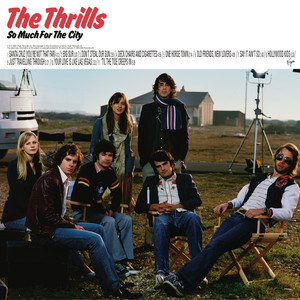
If you’re feeling particularly numb today, lying on your sofa with no motivation to get up at all, giving this a play comes highly recommended. I can confirm: it will not disturb your insufferable state of mind. As for why I think So Much for the City is included on this list: I think this is because it is a record that explains… nothing at all. Look, there was a portion of good indie (folk) pop in the early 2000s. A word of warning though: if you want to convince an unbeliever of this, do not play them So Much for the City by The Thrills. Yeah, it’s not a terrible album, but it’s a far cry from being a good one either — and, in theory, even further from being worthy of inclusion on this list. It’s mostly mundane, forgettable, folksy-tinged music about some Irish dudes spending time in California. And I think this is exactly the reason why this should, in practice, belong here. There were already thousands of copycats of this sound, and there will be thousands more to come — which is fine. And if the editors wanted to prove exactly this point by including a random act such as The Thrills, they fully succeeded. So Much for the City is a “powerful” reminder that indie folk always existed, will continue to exist, and that it’ll produce bazillions of records that will be immediately lost to time. Sometimes the sound will be more popular (as it was back in 2003), and sometimes it will be absolutely unpopular (as it is in 2026). Sometimes you will feel shitty, sometimes you will feel better. Two vicious circles aligning… But one thing is for sure: So Much for the City and its countless peers will always be here for you on your streaming service of choice.
While undoubtly a transitional record, this is still Dylan at his best.
Imagine Simon & Garfunkel stripped down to their basic chords, throw in some gain, add bass and drums, and replace the angelic voice of Garfunkel with a weary, drug-addled, morning-after rasp - more Gram Parsons than Art Garfunkel’s angelic choirboy tenor - and you’ve got the sound of It’s a Shame About Ray. It’s Simon & Garfunkel via The Replacements or Big Star. Wondering if I mean that in a positive way? Hell yeah. Sometimes all you need are great, hooky tunes, an electric guitar, and lyrics about human relationships, alienation, or drugs. If it were that simple to stir up an album that works as well as this one, why don’t we have more of them? Just listen to: Confetti, the title track, Alison’s Starting to Happen, Kitchen, My Drug Buddy. The melodies are saccharine - in the best possible way. It’s A Shame About Ray is mostly pristine early-’90s Boston jangle/alt-rock/underground pop bangers, with L.A.’s sublight baked into the fabric. The tunes are insanely catchy, the runtime is concise, and it’s rough around the edges. In short: it’s pretty close to perfect.
This is one where Björk takes you to the club. It’s astonishing how fully formed Björk’s artistic vision was already on Debut. While she would go on to elevate her craft to sublime heights on the following three albums, this one - even though not as stylistically cohesive as Post, Homogenic, or Vespertine - contains some standout tracks: Human Behaviour, Venus as a Boy, Big Time Sensuality, Violently Happy or the closer, The Anchor Song. With Debut, Björk laid the foundation for one of the most inventive and unique bodies of work in Western pop music. Over these 11 tracks, Björk channels genres and styles (Acid House, Drum and Bass, Trip Hop and Jazz included) as if it were the easiest thing to do and her vocal performance is simply out of this world. Nellee Hooper, Björk’s producer on Debut, built her a fitting and brilliant hybrid of analog warmth and digital crunch (Roland TR 909 and sample based percussion/processed beats) to deliver her idiosyncratic vocals on top. Oh so brilliant.
Even if you don't think that the White Stripes were musical pioneers, you've got to acknowledge their dedication to the craft. What I love about them is how they wear their influences on their sleeves, lovingly take their forebearers' legacy, add a good portion of garage rock ferocity, and create hooky songs out of it. That's how you do it. Plus, a word about Meg White's drumming: I adore her barebones, no-bullshit, clockwork-like approach. She really propels these songs; it's utterly brilliant. The art is to make it seem simple. But if it really was that simple, why can so few bands replicate it? The secret ingredients might be the great and, frankly, palpable chemistry between these two musicians.
Yes, Dare was hugely influential at the time of its release and helped pave the way for synth-pop to come (you can hear the Kraftwerk and Cabaret Voltaire aesthetic all over it). It’s undeniably a crucial document of the 1980s and contains some great ideas: The pulsating The Sound of the Crowd, the ska‑beat‑driven Do or Die, the dark, Krautrock‑influenced I Am the Law. However, the album as a whole doesn’t really stand the test of time (ironically, Open Your Heart deals with just that topic: “But if you can stand the test, you know your worst is better than their best”). The production sounds mostly outdated - even compared to other synth/dance/new wave records from the early ’80s - and the songwriting isn’t as sharp as some want you to believe. Maybe it’s the overuse of use of contrast (high v. low frequencies) or the Linn drum machine that occasionally annoys the hell out of me. Some of the synth sounds are outright annoying too (like the high/shrill flute imitating tones in Open Your Heart, Darkness and Seconds). And then there’s the ultra creepy Don’t You Want Me. I’m glad we now live in a time where toxic masculinity and stalking are no longer mistaken for romance. On the bright side: the Ramones name-dropping line in the opener, The Things That Dreams Are Made Of, made me chuckle.
Phew. A apparently rotten personality making a hellishly dull and obnoxious album. Every original track Clapton covers is better - and that’s by a long shot. Did he even adapt a single thing in the arrangement of his Bob Marley cover? And yet here we are, 50 years later, still pretending that white musicians “borrowing” (read: looting) from Black music are breaking some kind of artistic ground. Seriously? Looking at you too, Chicago and Blood, Sweat & Tears. Eric Clapton, though? Next-level shite: Not everyone has the audacity to ride to fame on the backs of others and be outright racist while culturally appropriating.
Just two years after the maestro himself peaked in his experimental late-career phase with The Drift, two British boys (barely adults and still one of them already spearheaded the new British wave of post-punk-ish indie in the mid-2000s), decided to make a Scott Walker (circa Scott 2-4) pastiche record. It wasn’t something that won me over when it was initially released. Maybe it was because I was still a teen, and anything that sounded vaguely like grandeur drenched in Morricone-style string arrangements seemed automatically like the product of some pseudo-intellectual bourgeois. But now that I’m older and wiser, I can finally correct my ignorant past self and say: this is a pretty decent record and proof of just that would be My Mistakes Were Made For You. Plus, the line “Declaring war on the underclass / Public enemy, I guess / But we’ll find out in the end” in the album opener actually speaks against my initial “bourgeoisie” suspicion, haha. Alex Turner has always been a great lyricist, and his texts work quite well in their orchestral incantation on The Age of the Understatement. The album sounded far more ambitious than his prior work with Arctic Monkeys, and in retrospect, you can tell that - rather unusual for a side project - the writing and recording of this album influenced the trajectory of Turner’s “main” career. Just play this back to back to Tranquility Base Hotel & Casino… Unlike Scott Walker’s career, I don’t love the “later” Arctic Monkeys albums. This is why The Age of the Understatement is a rare example where I think Turner’s artistic vision and crooner-style really shine in such a highly embellished musical setting. So it’s a blessing that this collection exists. By the way, Miles Kane: his voice blends well with Turner’s - especially the vocal interplay is great but it reeks like Alex Turner must be the brainchild of most of these songs. But sometimes to add vibe is just as important.
Much like Dylan’s Bringing It All Back Home, Rust Never Sleeps has both an acoustic and an electric side - and it’s all the better for it. The latter even proved formative for the sound of grunge that would blossom in the ’90s. Partly tracked live and later overdubbed, these recordings sound raw and yet fantastic. Plus, the collection features some of Neil Young’s absolute finest songs (Thrasher, Pocahontas, Powderfinger, Hey Hey, My My (Into the Black)). Man, does he shred on the B-side with his Les Paul. I’m not particularly crazy about Ride My Llama, Welfare Mothers and Sedan Delivery, as they pale in comparison to the other towering songs on the album. But that’s really just nitpicking. Neil Young reportedly included “rust” in the title of the previous tour as a metaphor to avoid artistic stagnation - however, if you’ve got these songs sitting around, one does wonder what exactly he thought he was rusting into.
On Foxbase Alpha, Saint Etienne manage to walk the fine line between pleasant, house-based sound washes and carefully orchestrated bliss. Don’t mistake it for mere easy listening, though — it’s not. Whether you fall for its modest, 60’s-tinged pop approach is a question of perspective. It’s club-rooted music for the after-hours and the comedowns; music for those who find beauty in the cracks of society at dawn, when most of us are still asleep. Best digested while waiting at rural bus stations in the wee hours of the morning, as dust slowly drifts in the shy sunlight across fields waiting to be plowed. But there is more than just a soft indie music/alternative dance element to it. Saint Etienne know how to write an instantly memorable melody and a catchy hook — and this is why it stands out from the pack. What’s truly engrossing about the album, however, is Saint Etienne’s playful handling of their source material. Be it the profound re-arrangement of the Neil Young classic Only Love Can Break Your Heart (ever wondered how it would sound in 4/4 with a dubby backbeat?), the looping of a Hey Jude cover (Wilson), or the Dusty Springfield sample in Nothing Can Stop Us. The scatter of odd and brief movie or audio samples strewn across the release only adds to its timeless yet melancholic feel. I was sad to learn that, after more than three decades, Saint Etienne have announced that their upcoming release will be their final studio album. They’ve been around so long that I’ve somehow taken new music from them for granted. While certainly not reinventing the wheel on their latest records, they have always managed to refine the formula they crafted on Foxbase Alpha. And that’s a feat far from common.
As much as I like The Doors’ first outing, I detest this one. Where their debut was raw, wild, inventive, and fun to listen to, L.A. Woman drags; it’s bloated, self-indulgent, and at times an uninspired blues-rock cliché (especially Been Down So Long, Crawling King Snake, and The WASP). L’America, which follows after L.A. Woman, is an extraordinarily annoying song („Change the weather, change your luck / And then he’ll teach ya how to… find yourself” - ahem, wow). Of course, there is still quality songwriting: in the moody Cars Hiss By My Window, Morrison conjures up vivid images of estrangement, longing, and ennui. However, that a largely improvised, fragmentary track stands as one of the album’s strongest is telling. In other songs, Morrison’s songwriting craft has waned significantly (he actually sounds tried), which is a pity, because he was the one who elevated The Doors from a good band to a special one. It’s also unfortunate that the group weren’t able to meet the standard set by the opener The Changeling in the following tracks. I can understand why people judge the quality of L.A. Woman based on the strength of the title track and Riders on the Storm, but this overlooks the record’s filler-heavy reality. Their producer even went so far as to call parts of the recordings “cocktail music.” He wasn’t entirely wrong…
This is (maybe) not a five-star album in the classical sense. It’s neither all killers, nor is it wildly inventive or groundbreaking. But here is the thing: my judgement is clouded. Because from a subjective perspective, this is where it all started for me personally. As a teenager growing up in a rural town, this album was hu(uuuu)ge for me. Fake Tales of San Francisco is an all-time favorite, and even today it transports me back to the cold winter of 2006, when my brain was rewired after actively hearing this melange of indie and post-punk for the first time - made by someone roughly from my own generation. Over the years, I’ve listened to thousands of different albums, genres (and of course to the godmothers and godfathers of this style) but this one still feels special. Unlike many other releases from that era, I think it has aged remarkably well (with the debuts from Franz Ferdinand, Bloc Party, and Maxïmo Park also standing the test of time). Alex Turner is a great lyricist, the drumming is sharp, and the whole thing carries an amazingly raw energy - youthful yet timeless.
If "Guiding Light" doesn’t melt you from the inside, consult a doctor immediately.
When I was a kid, my father still kept his vinyl collection in our living room. And, as you might expect, his ZZ Top records were at the very end of the row. At the bottom of the shelf, you could see the cover of Eliminator sticking out. Its spine was heavily creased because everyone was fascinated by the artwork and kept pulling it out to have a look. However, I can’t recall it ever making it onto the turntable very often. And for good reason, it seems. Maybe I’m wrong, and my dad played it more often than I remember. But then again, you kinda have to choose which memories to hold on to, and apparently, I decided to erase those associated with ZZ Top. It’s certainly well-crafted hard rock, complete with all its classic ’80s trappings. But if there’s one genre I truly despise, it’s precisely that. At least — and I cannot stress this enough — the lyrics aren’t misogynistic garbage, which makes Eliminator one of the more tolerable representatives of the genre.
Is it Richard Ashcroft’s voice that makes this album eligible for the list (a singing style that was mimicked by myriads of mediocre bands that followed — looking at you, Mando Diao and co.)? Because other than that, I really can’t get my head around why this is considered a classic. It’s sprawling, it’s meandering — but Spiritualized did this far better (“The Rolling People” really doesn’t get to the point). When it gets anthemic, it borders on an annoying mess (“Bitter Sweet Symphony”) — Oasis did that better. And when it gets experimental, it doesn’t consequentially follow through on that direction (“Catching the Butterfly”) — Primal Scream and Spiritualized did that better, too. Neither is the songwriting particularly interesting, nor do the lyrics have much merit on their own. Was it solely the momentum of Britpop that propelled The Verve to the top? Perhaps I’ll understand it one day, but for now, I have no desire to sit through Urban Hymns again.
This was a fun listen. Back in the day, a few friends of mine were obsessed with it, so for me this record works a bit like a memory machine. It doesn’t quite have the wit, the sharp political edge, the dazzling rhythms, or the mind-bending production of, say, Stereolab. But then again, who can match their brilliance? Still, Microshift is definitely worth revisiting: its neo-psychedelic, krauty vibe feels (positively) familiar/nostalgic and the well-placed bursts of noise (Hookworms wearing their Stereolab fandom pretty openly here) give the whole thing enough punch to keep you hooked (haha, no pun intended) right up to the last track. Some lengthier synth-y interludes create a sense of seamless sequencing and give your mind some room to drift (see first section of Opener, which is oddly enough, situated at the centre of the album), before the krautrock-style repetition pulls you back to earth. Checks a lot of boxes of what you’d expect from a nostalgically tinged music project.
A whole bunch of excellent punk songs here. It’s basically impossible not to love “I’m So Bored with the U.S.A.”, “White Riot” or “Career Opportunities” - these are absolute bangers, as is the rest of the album. Unless, of course, you prefer your music (and your private life) as boogie as hell… haha. And already, you can hear the Clash planting little seeds for their genre-hopping exeperimentations to come (see “Remote Control”, “London’s Burning” or the „Police & Thieves“ cover). You can tell that they always had a London Calling in them (even though, imho, their self titled one is a lot better in terms of consistency and sequencing). Musically, the Clash outsmarted most of their peers from day one - and this debut still kicks… like a steel-capped boot. Period. Mark Perry, punk publisher and writer, nailed it: “The Clash album is like a mirror. It reflects all the shit.” Hell yeah; what an apt description. And sadly, a lot of that very shit is still hanging around today, just as urgent as back then.
This is it. The finest band in hardcore punk - the most important the very least. And yeah, I get it - the website is technically an album generator. But everyone knows this spot really belongs to Minor Threat’s complete discography (which is still shorter and crisper than most bloated ’90s records, from a time when labels pushed artists to cram as much music - be it good or be it terrible - possible onto a CD). Minor Threat might not have the swagger of Bad Brains or a frontman with the raw charisma of Henry Rollins (of course, Ian MacKaye is an icon in his own right), but they wear their hearts on their sleeves and they’ve got these sharp f@*king hooks and riffs. I mean, if you don’t instantly wanna yell along to lyrics such as „we don’t care, we don’t pose, we’ll steal your money, we’ll steal your shows” (Cashing In) it’s your bad. This record still hits hard and hasn’t lost any of its magic in those nearly 45 years. If you listen to just one hardcore punk band, make it this one. And if you think this iteration of hardcore punk isn’t your cup: “Think again, think again … ignorance, it sets your standards“ (Think Again). Man, I wish I’d been in D.C. during the heyday of Dischord Records.
Confession time: I am a sucker for the ’90s Pacific Northwest music scene. In a way, it was raw, unhinged and at the same time as beautiful as the Oregon coastline. The number of great musicians and bands from that time and place is just mind-blowing. And yet, Elliott Smith managed to stand out from the highly gifted and wildly creative pack. So much has been said about Either/Or, and I don’t really have anything new to add. Only this: when I look at the cover now, I’m reminded that I loved this album so much back in the day that my adoration for Either/Or overshadowed his entire discography. Today, I’ve finally come to terms that Figure 8 at least matches (if not surpasses) the brilliance of Either/Or. Elliott Smith was a truly unique songwriter: Someone whose kind doesn’t roam the earth or grace our ears and hearts very often. Even though many of his recordings come from dark places, the songs on Either/Or bring an unlikely sense of comfort; the lush, restrained arrangements can really lull you in. I’m so glad we had Elliott Smith among us, and that he chose to lay his idiosyncratic songwriting and angelic melodies to tape. Too bad his life ended so abruptly and far too early. We miss you, Elliott - and there are hardly any better voices to turn to in the search for solace than yours.
A mostly strong collection of well-crafted songs on this one. You can tell that Michael Kiwanuka is a versatile (and by the time of his 2019 self-titled release, also a veteran) songwriter. Kiwanuka is as cohesive and mature an outing as it is “retro”-sounding. However, even with it’s analogue buzz and glow it doesn’t sounds like it’s coming from and living in the past. Topics such as anxieties, racism, and police brutality are, sadly, as pressing as they have ever been. And the record itself works like a prism, channeling a myriad of artists and styles. In doing just that, Kiwanuka manages to deliver a condensed version of his record collection and - this is no easy feat - makes it feel somehow timeless. So mind you, it’s far more than cheap pastiche. Take Living in Denial, which partly sounds like an uptempo soul classic, borrowing some of the vocal processing elements that also defined Portugal. The Man’s Evil Friends (which, just like Kiwanuka, was produced by the retro enabler and maximizer himself, Danger Mouse). I can’t help but think that this list spot might be better suited for Sault’s 2020 twin outings Untitled (Black Is) and Untitled (Rise), helmed by none other than Kiwanuka’s co–sound alchemist, Inflo. On Black Is and Rise, the political message is just a tad sharper, and the songwriting more adventurous and uptight. Kiwanuka, on the other hand, is a much more mellow affair — a real crowd-pleaser, if you will. It’s easy to see why people were spinning this heavily in the weird and upsetting early months of 2020. All this could speak for - and at the same time against - the quality and lasting impact of Kiwanuka. It certainly helps that there are some amazing tunes on it, such as the opener “You Ain’t the Problem,” “Hero,” and “Rolling.” Unfortunately, the interludes don’t do much for me aside from slowing the record down. Sometimes I’m left wondering whether this album, with a shorter runtime, might have maximized its effect even more.
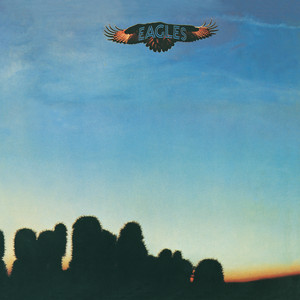
The Eagles accomplish a rare feat on their debut. Despite being among the early figures in L.A. country-rock, they somehow managed to create its most generic iteration right out of the gate. Chapeau. You’ve got to give it to them. While not everything here is actually bad (if you’re under the impression that the “better” parts sound a lot like Jackson Browne, it’s because he (co-)wrote two songs and seemingly was a strong influence), all in all it’s just boilerplate, utterly boring songwriting and downright awful lyrics. A well-deserved 1.
Yesterday, I was having a rather obnoxious listen to the Eagles’ debut (absolutely hated the record). And I know, this generator is an algorithm - but honestly, it couldn’t have done it better if it had deliberately “chosen” to follow the Eagles up with the Grateful Dead. American Beauty is country rock done right, dear Eagles. It’s a blessing to have the grace of this genre restored in an instant. Still not really my thing (a genre that often feels like denim set to music), but at least American Beauty explains why people could possibly love this kind of music. Cannot really get into the opener but the following “Friend of the Devil” (what a tune) and “Sugar Magnolia” are both amazing songs.
Whoa, this was a wildly mixed-bag, rollercoaster listening experience. Some of Arrival’s production choices and songwriting turns are absolutely brilliant (the soaring chorus of “Knowing Me, Knowing You,” the build-and-release tension of “That’s Me”); others are downright annoying (the synth squiggles of “Dum Dum Diddle” - especially post-chorus - or that deeply questionable sax line in “Why Did It Have to Be Me?”, not to mention the flanger-soaked vocals on “Tiger”). And what’s up with the title track? That one feels completely out of place after the previous glam rock excursion in “Tiger”. Plus, a lot of the topics seem like they’ve fallen out of time, and sometimes the lyrics are just overly cringey (“When I Kissed the Teacher” and “Dum Dum Diddle” being the most obvious examples). Actually, if I think about it… most of the lyrics are simply terrible. Still, regardless of how you feel about ABBA, it’s impossible to deny that Benny and Björn sure as hell knew exactly how to write instantly memorable pop songs. To add to my opening statement: to some degree, listening to Arrival felt like hearing some tracks for the first time again: Foe example, paying close attention to the brick-wall-like wall of sound on “Dancing Queen”… I still have a hard time coming to terms with it. I never loved ABBA (quite the contrary), but giving it some time and deliberate attention, I can now see more clearly why Sid Vicious and Joe Strummer were kind of into this Swedish Eurodance powerhouse. Leaning heavily into the disco sensibilities of the early ’70s, ABBA took some risks - and a lot of them paid off (while just as many didn’t). Too bad the record is such a mess and tries to be all over the place.
Unlike other comments, I don’t think Frusciante or Smith are doing anything particularly special here. Both are undoubtly gifted, professional musicians, but what they do mostly serves as a tight but boilerplate backdrop for the songs. Aside from a few intriguing solos maybe (at the end of “I Could Have Lied” for example)… But what keeps this record from being a completely dull funk rip-off disaster is Kiedis’s idiosyncratic singing and the - undoubtedly - brilliant Flea. Of course, Kiedis lyrics are hit or miss (with far more miss than hit - just listen to „Suck My Kiss”, ouch), but at least his delivery is distinctive and charismatic. His full stylistic range - good and bad alike - is on display on “Mellowship Slinky in B Major”. I wouldn’t call anything on Blood Sugar Sex Magik (the Chili Peppers never fail to come up with stupid album titles) genius, or even particularly good, aside from Flea’s bass playing. However, with so many actually great funk (adjacent) records out there, there’s no compelling reason to ever sit through this one again.
On paper, I should love this more. But even though it's a sprawling affair with tons of brilliant ideas (confession time: I have a knack for opulent and imperfect concept and double albums), it's hard to immerserve myself into the occasionally meandering execution. Also, the storyline… It feels undercooked.
If the word sprawling hadn’t existed before, it would have been invented to describe this 1993 outing by The Boo Radleys. Giant Steps is one of the best albums to emerge from under the broad – and itself not easily defined – umbrella of the Britpop-interwoven-with-Shoegaze era. Giant Steps is one of the best of the Brunch because it nearly bursts at the seams. Instead of choosing to focus solely on melody or texture, The Boo Radleys combined both. And that makes sense, because Britpop and shoegaze were never cleanly separated categories to begin with; both are porous, overlapping, and stylistically fluid. Where Slowdive aimed for a cohesive, enveloping sonic world, and Blur and Oasis leaned into more straightforward pop ambition, The Boo Radleys wore their influences in jazz, noise rock, and even hints of ragga/reggae openly for everyone to hear (as in the brass-tinged exuberance of “Lazarus” or the genre-blending shifts in “I Hang Suspended”). It’s a nod to their heroes, and yet they created something unmistakably their own. The record is opulent, it’s beautiful, it’s intentionally stacked - in the best possible sense - and it’s kaleidoscopic. I was skeptical at first about diving into the record again, because the recent shoegaze and dream-pop revival of the 2020s has begun to wear on me. But the abundance of ideas, the marvelous sound design, the inventive production, and the buoyancy of their multi-genre blend make it stand out even after all these years. A record to behold. Period.
There is a bonmot to describe albums like these: SEMINAL. Also, the songwriting is catchy as hell. I mean, the Lo-Fi predecessor recordings are even more seminal (if that's even possible), but once you get over the "Hi-Fi" shock, there is no reason to love Exile in Guyville just the same.
When I put on Who’s Next, my first thought is: How is he doing this? Of course, I am referring to the intense drumset witchcraft of Keith Moon. His playing really propels this album and elevates it to higher spheres. But then it can also be tiring when you realize that his modus operandi is: "One fill after another (repeat endlessly)". Regardless, masterclass, Mr. Moon. Sometimes it's just too much for simple-minded me. Overall, I have to say that the occasional mid-tempo tracks (Getting in Tune, Going Mobile) don’t do much for me songwriting-wise, but that's really no big deal if you have a song such as “The Song Is Over” under your belt. The Who go prog rock? Well, if you have a songwriter as skilled as Pete Townshend and a drummer like Keith Moon in your ranks, what can go wrong? In short: nothing. In my book, this is the best song The Who have ever put on tape. In a way, I like the thought that "The Song Is Over" foreshadowed the more “conventional” passages of Fragile and Close to the Edge by Yes, which were released just a few months after Who’s Next. Even if that thought is probably bollocks, I feel the urge to spin Close to the Edge immediately after Who's Next concluding notes vanish into the aether. Since Who's Next ends on such a strong note (Won't Get Fooled Again), these albums compliment each other quite well, I'd say.
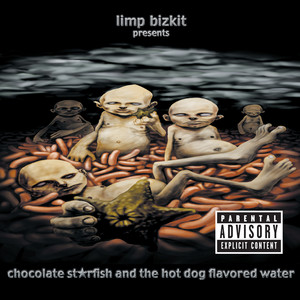
You gotta give it to Slipknot: their vision and sound came already cohesively formed on their 1995 debut. To start with the good: Slipknot’s musical influences are impressively diverse. Besides drawing from the then-omnipresent alt-rock wave, they brought death and thrash metal galore to the table and even some tasty hardcore riffing - all wrapped in a layer of industrial grit. The lyrics, though, even when I first heard them as a teenager, failed to impress. To put it mildly, they’re pretty one-dimensional: Alright, you’re sick of everything. Cool. You hate people. Fair. But did it really have to be fifteen songs about exactly that? Unfortunately, the production is extremely fatiguing. The drumming for example is absolutely insane, but then the mix leaves zero room for any instrument to breathe (plus, the triggered drums-sound-like-tin style is absolutely overused and apparently they literally banged on oil cans). I assume this was meant to intensify the effect of the claustrophobic, misanthropic vibe, but in practice the recording just ends up sounding like a brick. Too bad… but very much in line with a lot of mainstream alt-rock production trends of the 90s. Even though I definitely heard worse. All that said, it’s still one of the better nu-metal records (after all, this is not Limp Bizkit… haha), largely because it leans into the metal side of the formula. But honestly, though: is it just me, or do the turntable parts sound oddly out of place and occasionally ridiculous? That doesn’t do the trick for me at all. Maybe that (along with the mushy sound) is the reason why the shock value of these tracks is rather low for me. Beyond being a massively influential band back then, Slipknot’s sound even found new disciples in the 2020s (Code Orange, Jesus Piece and Vein instantly pop in mind) - acts that pushed the more metallic hardcore aspects of the genre and for the most part (musically and lyrically) outsmarted their musical parents. Honestly, that’s a development I never thought we’d see. And yet, here we are, and I’m thinking: well, Slipknot… not even half as bad as I remembered.
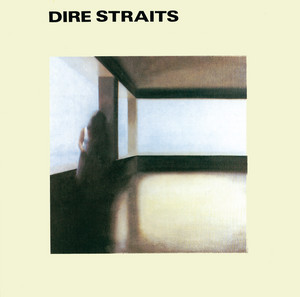
Last night I drifted into a dream that carried me to a past I’ve never lived in. I found myself standing in my little neighborhood record store, flipping through the bins. When suddenly, a melody rose into the air: warm, shimmering and enchanting. The tune made me stop mid-motion. “What’s playing?” I asked. The shop owner smiled, knowingly, and told me it was a song by Dire Straits, from the self-titled debut of a young and aspiring band from London, UK. Apparently my dream took place in the 70s, and not only had I never heard of the Mark-Knopfler-led band before, I also didn’t have any pre-formed, unshakable opinion about their quality. So when I woke up, I decided it was time to give the record another shot. And believe me, I really tried to find something I enjoyed. But no chance - I still hate everything (or at least most of it) about it, but primarily it’s Mark Knopfler’s guitar work that annoys me. It’s 45 minutes of: Look, I’m the guy with the Fender and I’m playing guitar AT you. Seriously, what is he aiming at - a good song, or is it simply attention-seeking for his (undeniable) skills? Over the course of this debut record, he borrows heavily from others and ruminates on lyrics that aspire to a Dylan-level depth they never reach. Granted, it’s not Clapton-level obnoxious, but nonetheless, it was hard to sit through.
A lovely record buzzing with subtly psychedelic flourished arrangements and intricate rhythmic layers. The flute in “Clara” would be a prime example, as would the sitar in “Eleanor” or the organ in “Soy Loco por Ti, América.” The record starts right off on a strong note: the jazzy bossa-psych gem “Tropicália” is a clear highlight of Caetano Veloso’s self-titled full-length. Elsewhere, opaque and swirling string arrangements serve as a backdrop for the laid-back tracks that follow. The strings definitely add an intriguing and frankly beautiful touch to the songs, which are rooted in traditional Brazilian styles and African rhythms (again, “Soy Loco por Ti, América” has to be mentioned as a standout) - an art and musical movement that bears the same name as the aforementioned opening tune. Caetano apparently called his debut outing “amateurish and confused.” Well, maybe that only adds to its charm, because it’s a beautiful little marvel. I’d rather say it sounds adventurous and is buzzing with playfulness. By the way, just as strong as it opened, the record closes with the sitar-assisted, psychedelic, surf-rock-infused “Eles.” Nice.
Mixed Bag… A somewhat uneven, dare I say Prog-Pop (?), collection by Mr. Simon. Mixed in terms of sonics as well as quality. Let's start with the obvious: there are serious duds on here. The first of these, unfortunately, is the opener, largely due to its silly lyrics (same flaw goes for Cars Are Cars (aaaaargh!), which is luckily buried in the second half). But then we can witness some of Paul Simon's finest compositions. Take the marvellous title track with its elegant Bossa touches, the refined phrasing, and the stunning chord progressions. And whoa, Rene and Georgette Magritte with Their Dog After the War makes you simply stop in your tracks: what a marvel (I melted when he sang "après la guerre" so nonchalantly). But then some songs simply don’t really stick - though not for lack of ambition. In When Numbers Get Serious Paul throws in so many ideas that the song seems overstuffed with ideas: the slap bass and the synth in the first part of the song don’t really match the backing vox/the choir. All in all, while showing remarkable songwriting craft, the result sounds forced. Elsewhere, the ambition somewhat drains the fun from other tunes: the laconically stomping Song About the Moon is bookended by the themselves (over-)ambitious Think Too Much (b and a). In contrast, Song About the Moon pulls such a “simple” effect (melodic changes towards the chorus(es)) that it stands out as somewhat understated. Even though, taken for itself, this would probably be a fan favorite were it included in his earlier output. Elsewhere songs foreshadow his Graceland era; Train in the Distance and Think Too Much (a) would probably count as bona fide outtakes from his magnum opus, if we didn’t know better. For all my criticism, I have to admit that I enjoy the hell out of the album, simply for Paul Simon's overwhelmingly beautiful harmonics and in general because of the strikingly “experimental” character of the record with all the LinnDrum elements as well as killer musical contributions (Anthony Jackson, Marcus Miller, Philip Glass among others … crazy). There are so many bits in pieces to pay attention to (Think Too Much (b) would be my favorite in this regard). Sadly, his undeniable ability as a songwriter jangling with all kinds of styles and seamlessly blending them together wasn’t (yet) on full display on Hearts and Bones. I'd call it a great prequel to Graceland, but for it being so transitional, I would not include it in a list such as this. Edit: Does anyone else think of Warren Zevon's Night Time in the Switching Yard when listening to Think Too Much (a)?
I love the theatrics of this (“too emotional?” Nah, just about perfect). Its percussion focus, the rolling guitar. The songwriting is dense, surprisingly versatile, and always a handful to digest - but never too much. A careful act of balance on the tightrope. Adam's voice is great because he has swagger while still sounding grounded, fitting perfectly into his band's sound. Even if, in retrospect, some of the new-wave-y art-punk touches feel a bit goofy (the baritone “hey ho” shanty-style chorus in Feed Me to the Lions, the bullet sounds in the intentionally silly Los Rancheros, or the seaman-like whistle in Jolly Roger). The Ants Invasion is a nice little mood piece in the middle of the record and showcases much of the collection’s strength. Shame that the B-side Press Darlings wasn’t included - I think it's a superb blend of punk and distinctly individual “antsyness.” Does anyone still talk about Adam & the Ants? Not sure… Haven’t heard the name in ages. Too bad… this animal-themed sophomore outing is, while never truly brilliant, highly entertaining. You can practically hear the mark he left on the British music landscape for years to come. I wouldn’t have listened to it were it not for this generator (glad I gave it a spin). Not entirely sure it belongs on this list, though; this spot should absolutely belong to Siouxsie.
While always an immaculate lyricist, able to build the most stunning narrative arcs, I have to admit that Leonard Cohen, in his primary folk streak, did not manage to replicate the magic he conjured up on his debut. Mostly because his debut came across as a poet’s humble excursion into music, and the understated nature of the recording only added to the fascinating world his characters live in. The slight embellishments of the songs on his subsequent albums, including his sophomore record cannot cover the fact that he still pretty much relies on the same songwriting formula. Which, mind you, is not a bad thing when your first record was Songs of Leonard Cohen. But he just doesn’t deliver the same goods; the songs feel reheated. Also, I really don’t like the sound of the Jew’s harp that accompanies him on the first songs (the soft organ touches on “Story of Isaac,” on the other hand, are amazing). “The Partisan” is, of course, masterclass. But unfortunaley it is the only song on this collection that meets the "masterclass"-threshold.
I love the manic, bratty energy of this album. It's the rightly lauded precursor for so many incredible (and important) riot grrrl–affiliated records that broke onto the scene in the 80s and 90s. The lyrics are occasionally funny - also: what a brilliant title for an album - but mostly incredibly smart. And so are the hooks and riffs. The whole thing is infectious as hell, never slows down, and has killer sax melodies on it. Plus, the songs are all bangers. Singer Poly Styrene delivers one stunning performance after another. A true classic and one of the holy grails of punk music.
I liked this better than I thought I would (read about it often but I never gave it a full spin before, it seems). It's a surprisingly versatile and highly infectious debut. I came to think of labeling it a very ambitious garage rock record. Supergrass have the ferocious energy that made a lot of their predecessors landmarks of the British Music Scene (oftentimes, the Jam and Buzzcocks come to mind). But there is also a psychedelic side to things on the flipside: “Sofa of my Lethargy” is such a nice little meandering suite of swirling guitar and a beautifully fuzzy build-up that I even get Elephant 6 vibes. I Should Coco doesn’t waste time — the four musicians let you know their ambition right out of the gate with their mod- and punk-infused opening triplet “I’d Like to Know”, “Caught by the Fuzz” (what an apt title) and “Mansize Rooster.” What makes the record stand out for me, however, is Supergrass’ ability to write instantly memorable choruses, which they perfected in the mid-section of the record — “Strange Ones” and “Sitting Up Straight.” There, their influences come together seamlessly and complement each other the best; the blend just works perfectly. A minus point for the utterly obnoxious “We’re Not Supposed To” (is it supposed to be an interlude?) Oh man… and it's not even a hidden track or sth. Just placed smack in the middle of the second half.
By the opening seconds, you know this is a Wilson/Beach Boys–related recording. The Wilsons’ angelic voices never fail to touch your heartstrings. However, Dennis Wilson can sound like a fallen angel (akin to Robbie Roberston of The Band), when his voice is on the verge of breaking (esp. in the middle section of the album comprising Thought of You & Time). What was surprising to me when I heard this album for the first time was how often one stumbles upon straightforward Rock elements (see What's Wrong, second half of Time). Dennis Wilson took the formula of the main band and opened it to more conventional structures here and there, which, as it turns out, was a smart move. Sometimes, the sound is extremely punchy, and that fits Dennis’ voice just great. As one can expect, the songwriting is versatile and - in the most positive sense - unpredictable. The (reissue) opener, The River, shape-shifts so much that it takes a few listens to get a hold of it. Regardless, you can simply approach Pacific Ocean Blue for a quick dopamine rush, too, because the hooks and choruses are simply beautiful. Also, the sprawling, opulent Thoughts of You caught me completely off guard: the way the whimsical, fragile piano led ballad transitions to the psychedelic, nearly drone-like arrangement is nothing short of stunning. Released eleven years after Pet Sounds, this ranks among the finest works in the Beach Boys cosmos - even if the slow-paced tracks in the second half do not manage to hold up the initial excitement one feels when listening to the A-side.
For a second I was shocked by the thought that, if I had been around and old enough in 1984, I could have been into this record, too. But then I sighed in relief… thankfully it’s 2026 (there must be some kind of silver lining to living in these times), and I can wholeheartedly say: I would have known better — this record is (and always was) absolutely terrible! Hot Teacher might just be one of the single most insufferable songs I’ve ever heard (to the point of almost causing physical pain), making the lyrics of Def Leppard sound like an advanced master’s class in poetry by comparison.
It’s staggering how influential the sound of The Jam has been – and still is. To get a sense of just how far their reach extends, listen to Set the House Ablaze and then switch to Helicopter, the second track on Bloc Party’s seminal debut. The lineage is impossible to miss. Then again, in Start! The Jam heavily borrowed from the Beatles (Taxman). Well, tit for tat. Usually, I am critical of “hit singles”, because they are often overplayed, but not That’s Entertainment – I will never get tired of this beautiful tune. It’s one of those rare tracks that never seems to lose its glow. With Sound Affects, The Jam delivered their most lasting output and – at least in my books – their career-defining highlight. What strikes me most about the album is how you can hear their influences (Wire, Joy Division, Gang of Four) everywhere, and yet The Jam somehow managed to make the album sound distinctly their own: timeless and, of course, impeccably punchy. The psychedelic and funk flourishes (apparently, Michael Jackson’s Off the Wall was a huge inspiration too… OK, I wouldn’t have guessed, to be honest, except for maybe the drums) blend in seamlessly and elevate the already great songwriting to greater heights. Also, the cover is just great. A true staple of (post-)(mod-)punk.
I went in expecting to hate the record. Why? Because I usually don’t care for albums whose sound deliberately evokes a bygone era - one that is often heavily romanticised. And that certainly seems to be the case with Sinatra’s swing and jazz vignettes. Well, I didn’t exactly become a believer, but it was far more entertaining than I had anticipated. Of course, Frank Sinatra was an entertainer - that’s not what I’m questioning. What I mean is that, musically speaking, the record turned out to be quite engaging and compositionally interesting… at least at first. I still struggle, however, with the apparent similarity between the tracks. With each passing tune, they tend to blend and blur into one another. That said, You Are Getting to Be a Habit with Me stood out for its great interplay between flutes and bass. Very nice.
A very good two-star record! If that makes any sense… It's hard to believe that this list wasn't just compiled a few weeks ago. Given the selections that I have had so far (about one fifth in), you could come to the conclusion that Britpop must be the greatest and most influential genre of all. I've had so many Britpop records over the previous month (and the “obvious” genre highlights were not even among them) that you could be forgiven for assuming that the editors were riding high on the ongoing (and mainly nostalgic) Britpop revival wave. A whole bunch of the 1001 list was apparently assembled in the early 2000s - a fact which itself only partly helps to explain the number of Britpop artists included here. At that time, British music on continental Europe was a massive phenomenon (Arctic Monkeys, Franz Ferdinand, Bloc Party, …). But then again, these bands were primarily drawing from post-punk and less so from Britpop. Britpop was, if my memory serves me well, as dead as a doornail at the time. I saw Oasis touring Europe around 2008/2009 in a medium-sized concert venue (give or take 4,000 people), and the only thing that I can recall is that Liam left the stage after a handful of songs. So there must be another reason for the disproportionate amount of Britpop records in this 1001 pile. And the more I think about it, the more I come to the conclusion that the love for Britpop depends on your understanding of - and listening habits towards - music. To me, Britpop is not so much a clearly defined genre category, but rather a kaleidoscopic excursion into music history. Britpop has always been about nostalgia, and if that is your thing, you probably enjoy a good Britpop record too. For one, every Britpop band unabashedly and unashamedly borrowed from their predecessors (certainly, most - if not all - artists do that, but not as openly as, say, Oasis). Second, they did not take one influence, but a whole bunch of artists and, like a prism, channeled their sound. Oftentimes it was ’60s psychedelic pop mixed with the recent resurgence of heavy guitar-based music (grunge, shoegaze). Combined with charismatic (and occasionally obnoxious) frontmen and the ability to write irresistible pop hooks, Britpop managed to serve as a bridge between generations and music genres that, before Britpop, existed more in (separate) niches. And by combining them into an arena-suited sound, they blew everything up. Not a small feat by itself, especially considering how cohesive the results tended to sound. Now that’s my understanding of the enduring success of Britpop - and, to be honest, the reason why I enjoy a lot of Britpop records myself. But… influential and groundbreaking? I don’t know. I have difficulty pinning Britpop albums down as such. Because as much as I love Britpop, I have to say that it feels - and has always felt - like a dead end to me. As you can see when looking at the Oasis reunion, people needed their heroes to return because the well had run dry. No one is doing Britpop anymore (at least not successfully), because as it stands now, the story has been told. That is the fate of a genre that was always busy looking in the rear-view mirror. In the early ’90s, it must have been great to have one good-to-amazing album after another on the market. But is it justified to put more than, let’s say, five Britpop records on a list like this? Nah; don’t think so. And Supergrass are a great example for discussing this question. I think that with their first two records, they were the ones who managed to merge punk/mod energy with the psychedelic sound aesthetic of the ’60s most successfully. They were great songwriters with a real talent for writing choruses and hooks. Take In It for the Money, which is not only versatile; it also manages to even out the duds from their debut. Unfortunately, though, the highs are not as high anymore, lacking truly standout tracks that elevate the album to another level. I think you would be just fine if you had never listened to this record. But if you do, you will probably have a good 40-plus minutes of solid songwriting ahead of you. A word of warning, though: the initial excitement may slow down in parallel with the decreasing BPM of the tunes towards the end of the record - that is, unless you like your psychedelic pop smoldering rather than igniting. And then, unfortunately, comes the closer. Urgh. That one hurt.
This is one of the greatest post-punk albums ever released. It is brilliant mainly because of John Lydon’s near-manic and unpredictable performance. He sounds as if he is constantly on the tipping point of sanity, shifting from bellowing to whispering, from stammering to screaming. The band (especially Wobble's hypnotic bass) creates the perfect, repetitive backdrop, sounding like Can performing from inside a metal box (forgive the comparison), with the dissonance turned up to eleven. It is a staggering document of its time: a smudged version of post-punk, fronted by a genius "actor" who tries to tame the chaos just enough for the songs to remain discernible beneath all the misery. A true piece of art. Inimitable, astounding and unique.
My entry point into Tom Petty’s work was his late-career masterpiece Wildflowers, ironically the most heartbreak-infused album he made under his own name, without officially billing the Heartbreakers. And honestly, I more or less stopped there (of course I know the hits). To this day, Wildflowers is the only album of his that I regularly spin. Tom Petty came a long way from his early output. On Wildflowers, you can clearly hear how much his songwriting had refined itself and how confidently his own creative voice had settled in - less indebted to his early influences and more comfortable with restraint, space, and emotional ambiguity. The debut, at least to my ignorant ears, sounds like just another Americana- and country-tinged rock’n’roll record, heavily informed by the Byrds, Dylan and the Stones - which is perfectly fine, but ultimately makes it little more than a solid debut. As far as I can tell, there is even a broad consensus that this self-titled album with the Heartbreakers is far from his best, despite containing staples like “American Girl” (I mean come on, the man made Damn the Torpedoes, Full Moon Fever, and Into the Great Wide Open afterwards…). So why include this one here?
One of the genre-defining psychedelic records, this one. Starting from the cover art to the music itself. The performance is inherently experimental: it’s bubbling, it’s warbling, it’s spellbinding, it’s hypnotic, it’s sprawling, and it’s constantly shape-shifting. Roky Erickson does an amazing job of bringing in an additional odd element. A far cry from the similarly groundbreaking Piper at the Gates of Dawn’s academic approach, the 13th Floor Elevators primarily draw from rock ’n’ roll’s primal intensity and passion. As a result, it’s one of the rawest staples of the genre. Occasionally the band ventures into more melodic and laid-back territory on the third track, which invites comparisons to the later released Jefferson debut. Thhe 13th Floor Elevators were truly ahead of their time.
I have long not enjoyed an album that I didn’t know before as much as I enjoyed this one. Never was a big Elvis fan, and this won’t change much overall, but man, From Elvis in Memphis is 90% nothing short of stunning. The performances and the arrangements are absolutely ace. All of the musicians are brilliant; Elvis’ singing is super expressive; the selection of songs makes for an impeccable flow. I fully understand why this is seen as a classic. It has stood the test of time - and it has a great cover. Where the country influences take over too much (“I’ll Hold You in My Heart,” “It Keeps Right On A-Hurtin’”), those are the songs which I’m not particularly crazy about. But overall, this was an incredible listen (or rather, three listens). The melody in “Long Black Limousine” - ah, it just hits the right spots. I can’t stop listening to it for now.
I never once (in person) crossed paths with a single passionate fan and frequent listener of music - of any genre - who genuinely likes this album. And I worked in a record store for nearly a decade. This persistent absence has led me to a simple conclusion: This record is for those who prioritize spectacle over music, and who possess both the patience and the willingness to endure The Wall’s visual bombast long enough to wait for the two decent songs by the „other genius,” rewarding themselves, at last, with something to tap a foot or hum along to. The concept of The Wall is… well, in principle, it is always good to call out authoritarianism. Yet the album’s immense success; both as a record and as a stage show; appears to have done nothing to prevent the very dynamics it claims to criticize. Beyond its concept, however, the album is very difficult to sit through. For the most part, the lyrics and music are utterly boring. This is one of those rare moments where critical consensus deserves to be taken at face value: Pink Floyd were past their apex. What a massive letdown after Animals. The world, it seems, wanted The Wall - but I have yet to encounter anyone who wholeheartedly says, “I dig The Wall.”
If you position The Fall by Camus so prominently on the cover of your indie band’s sophomore recording, you had better serve us some (pardon me…) killer lyrics.
From the iconic cover to the songs: a unique and highly entertaining offering from Bowie at the absolute top of his game. Masterful. Bowie’s cocaine rattled brain struck gold in LA. A bit ironic that a Brit - kilometers away from Düsseldorf - wrote one of the most infectious Krautrock influenced backbeats on Station to Station and that he cannot even recall much of the recording sessions.
As a passionate hater of all things hard rock–related, I’m finding it difficult not to have fun with this. Seeing that Hysteria clocks in at 60+ minutes, I initially considered skipping it altogether. Glad I didn’t give in to that impulse, because I found myself having a genuinely good time - and even laughing out loud on more than one occasion. One thing that puzzles me, though, is this: how can you spend three (!) years recording an album and then completely forget to amp up your lyrics, which tend to read like the diary excerpts of a horny fourteen-year-old with access to a multi-million-dollar studio? Still, if you normally couldn’t give a damn about glam or hard rock and then, one fine day, wake up feeling that your record collection could tolerate a single album from this divisive genre, make it this one (aside from maybe Appetite for Destruction). And I’m probably about to completely overrrate this thing…
What a brilliant, what a powerful, what a life-affirming record, what a soulful perfomance. Also, there are amazing openers and then there is another category, in which the title track falls... How to classify it? "Transcendental first songs"? Yeah, sounds about right. And what's even more remarkble is that the rest of the album lives up to the promise made within the first minutes.
Most unexpected lyric: “[…] die in ecstasy.” Not too unexpected lyric: “[… ] feelin’ the same way all over again.” The latter very aptly explains my emotions toward this collection of songs, because I would have wished for more of the former. Not dying, of course, but some more ecstasy would have been nice. While the album flows (occasionally) quite beautifully, an occasional upping of the BPM would have provided some much-needed variation. Regrettably, the record sometimes sounds like expensive session musicians making music for rich people to dine to. Yeah, I know this is unfair and maybe incorrect. However, I will gladly acknowledge this: the minds involved knew how to write intriguing melodies, and Norah’s voice is incredible - incredibly smooth, with pitch that is just… wow. Oh, to have a voice like this. Unfortunately, it's the steady mid-tempo mélange of jazz and soft rock/pop, country, and blues-y figures that doesn’t do much for me. Those marketing jerks would probably label "Come Away With Me" as “music like a warm blanket to wrap around you on a rainy autumn day.” Now, it’s incredibly cold in Europe these days, and I actually do want to hide under my sheets and call it a day - so that blanket-ness earns a bonus point today.
For all of these 60+ minutes, Moby sits between chairs. He does not reach the professor-like, sample-mania genius of DJ Shadow; his uptempo songs are light years from being as fun as Fatboy Slim’s Big Beat exuberance; and, finally, his attempts at ambient are ultra-sterile and lack what makes the best ambient recordings sublime. Also, it’s puzzling to read that this album was seen as having brought techno (elements) into the mainstream. (Post-)rave culture? Maaaaybe. But especially the hit singles and the album’s first half are a far cry from techno’s primal, pounding energy, the rawness, and sweaty basements. The closest Play gets to that basement feel is when Moby lets his punk influences take over. That being said, Play is not always terrible. Brief samples, added MIDI instrumentation, and programmed drums: these are the ingredients for Moby’s mega-blockbuster. And occasionally, it turns out, this is enough to produce a handful of gems (or, let’s not exaggerate: some solid ideas). But whenever you have a great song such as South Side, it is instantly followed by missteps such as Bodyrock. If he had only reduced the bloat to an EP - or at least to half the runtime… Most songs on Play feel like a compromise: by throwing so many styles together, Play does not transcend them; the result is sometimes even less than the sum of its parts. However, I’m not surprised that Play was a major success. It’s oftentimes the case that when an artist takes elements of a beloved subculture sound and bloats them with radio-friendly aspects, they become bound for the mainstream. Easy to listen to, yet still offering some “exotic” vibes in small and digestible doses. A problem that I have with a lot of chart-topping recordings from the late 1990s and 2000s. I get why people love the all-over-the-place-ness and the melodic dopamine rushes… but I’m not sold. Though the ad industry couldn’t have asked for more, it seems.
Smart songwriting, killer drum programming, occasionally fun lyrics (Survivor) & immaculate vocal performances: should be clear indicators for a strong album. As a child of the early 90s, I grew up with those slick RnB productions from the turn of the millennium blasting from the radio and on repeat on MTV. Not seldomly you tend to look back with a touch of nostalgia looking back at the sound of your youth. But I was never down for the RnB sound of the oughts and I oftentimes asked myself why I never even enjoyed the hits. As the years passed and I keep on revisiting a record from this period once in a while, I figured that it’s mostly the production. To my ears it sounds like plastic and high gloss, and it’s way too much bling for me. In a way I would compare the production to the early use of CGI effects in cinema, which in retrospect looks so damn cheap and unconvincing. Those Midi stabs of classical instruments are downright obnoxious (Sexy Daddy). How I wish, they they went full electronic and consequently synthesized tones (not that imitation style or the way Perfect Man sounds) or used real instrumentation. That would have really elevated the sound and probably made it more lasting (Independent Women Pt. II would be an example where the instrumental is just great). I mean yeah, it was the time, but It’s a shame, because the songs are crafted well and the drum programming influenced by the push and pull dynamics of those brilliant drummers from the 60s and 70s is iconic and super influential. And yeah, the lyrics are sometimes cringey, I know. But then again, there is so much hard and glam rock in this configurator (which is hands down, the worst genre of all time when words mean anything to you). Also the record is waaaaay to long, if you’re not 100% into that kind of stuff. Is Happy Face are foreshadow of Beyoncé’s latest excursion into country?
I find it hard to write something profound about an album that means a lot to me. So I’m just going to stick with this: Heaven or Las Vegas means a lot to me.
Judging from the selection of records from the 2000s onwards that I have listened to so far, the creators of this list do not seem to have been particularly in touch with the pulse of the time - if at all. More than half of the selections from this period feel like odd ones out. Unfortunately, “odd one out” not in the sense of “this record flew under the radar at the time but gradually gained a cult following and is now considered a classic,” but rather in the sense of “wow, it’s surprising that someone even remembers this record, because it was never especially great and time has not been kind to it.” Most of the post-2000 album selections appear to have been included primarily because they carry a nostalgic appeal and; this is my slightly mean interpretation; because they echo the beloved classics the writers actually knew and loved. Our Aim Is To Satisfy is no exception: While it enriches the mid-90s Trip-Hop formula with slightly punchier electronics, later house-style vocal sampling (and perhaps very subtle jazz flourishes), the overall sound is far from revelatory. After all, this slick blend of acoustic and electronic elements, coupled with an overtly “night-time” aesthetic, was omnipresent around the turn of the millennium. (Thievery Corporation - while I personally do not enjoy their work - would arguably have been the more logical representative of this style.) Our Aim Is To Satisfy is a decent album (it was released on Warp, after all), and I do not regret listening to it, but I struggle to see any compelling reason for its inclusion here. Given the recent resurgence of Trip-Hop within left-field niches, including Red Snapper does carry a certain charm. However, there were many more successful - and frankly, better - acts and albums that could have been chosen instead.
The first half goes down as smoothly as saccharine sliding down my throat. Long on my „Need to check out” list, this generator finally did me the favor of listening to a Shuggie Otis record in full. And what can I say – there is some incredible stuff on Inspiration Information. The beat is super tight; and man, do the choruses hit hard. Which brings me to my main point of criticism. Aside from the closer, Not Available, the instrumentals that make up side two don’t do much for me (they sound a bit like filler material meant to make this a proper album length). I love the odd Happy House, but after that I couldn’t connect much with the songs anymore. But I mean, to have such a great side A alone is well worth your time. I will surely revisit this often. And wait, did Shuggie Otis play most of the instruments himself? I guess in this instance you can really tell that talent runs deep in the family.
Wow… no!
By far less obnoxious or terrible than their debut, the Eagle's Hotel California has some decent melodies and a few ideas that almost work (omg, did I really write down these words?). I don't fully "love" a single track, but New Kid in Town has a mildly (and suspiciously) soothing effect on my psyche today (a grey, f*#king freezing cold day somewhere in Europe). For every New Kid in Town, however, there is a Life in the Fast Lane or Victim of Love, which trigger my fingers to hit the skip button immediately. I'm glad I finally sat through Hotel Californa, because now I can be reasonably certain I'll never have to do it again. I'm honestly surprised that this is considered such a gem, because for most of its runtime (which isn't even thaaaat long), it's actually… quite boring.
It's a blisteringly cold day here in central Europe, and lyrics like "like the sunshine warms the sands" make me yearn for this nasty winter to be over even more. Listening to this record, it’s hard not to drift off to warmer places. This would make a fine recommendation for listeners who are just beginning to explore the psychedelic folk sounds of the late 1960s and who have already worked their way through the classics. Songs like “Sunlight” and “Double Sunlight” sound like California set to music, all sun-bleached harmonies and gentle, drifting melodies (you can really tell that the band relocated from New York to California prior to the recording sessions). But even though the songwriting and the instrumentation are versatile, not many songs here truly stick with me. It is a record for connoisseurs who enjoy digging a little deeper, yet still a pleasant listen for everyone else — an album with few peaks and virtually no lows.
I love a lot of Muse's many influences. However, the way they channel them leaves absolutely no room for creating their own voice (just listen to the Depeche Mode-esque “Map of the Problematique” besides of all the obvious Radiohead influences). Muse often sound like “X and Y” copycats who put an arpeggiated synth on every chorus; way too often homage tips into imitation. Besides, a lot of those tracks are … boring? That may sound harsh, but it’s the predominant reaction I have when trying to sit through the album from start to finish. While Bellamy’s high register is impressive, but he seldomly leaves it. They greatest craft starts to wear if you are being exposed to it for 50 minutes straight. When I was a teenager in the early 2000s, just beginning to immerse myself in music, Muse were everywhere. I even saw them live (pardon me, what an atrocious kitsch). For years, I tried to find my way into their world, to hear what so many others clearly do. But I suspect I’m more than ready to close that chapter. A shame - because on paper, this band could work for me. Also the cover… Storm Thorgeson artworks are often hit or miss. This is a miss. Big time.
Certainly wasn’t expecting to see a Grind recording here. Given how groundbreaking this was, it’s a good choice to include Scum (even if their follow-up album is even better, hands down). Also, Scum hits hard; full of earth-shattering drumming and riffs. An essential album, for sure. But what puzzles me more than to see a grind recording pop up, however, is that the editors bothered to include an example of (such) extreme music at all. I am pretty sure this will be the only inclusion of its genre here - so I ask myself, why include genres that are so extreme yet so diverse and sprawling that any list of this caliber will always be more than incomplete and far from representative? But let’s put that criticism aside for a second and let this absolute monster of ferocity and velocity wash over you (sonically).
If this isn’t a 5, what is? The teeth of time have done nothing (and by that I mean: absolutely nothing) to this album. It's an undeniable, an unf*#%withable classic! Sublime poetry, electrifying perfomances, standout songwriting (plus, the cover portrait is nothing short of iconic). These songs hold up effortlessly today - and they’ll still hold up 50 years from now. This album is such a towering achievement that it overshadowed many of Patti Smith’s later albums. If you create something this profound, this singular, this lasting… well, that’s just the way it goes… I guess.
At first, I had a hard time understanding why this record is on this list (mainly because I forgot about this band). But then I realized it’s (again) about a white man playing guitar like many great Black musicians before him. But because he is white - and British - he gets a lot of accolades. And yeah, Jeff Beck was a brilliant guitarist, no doubt, and some songs on here are actually worth revisiting. But it’s oh so dissatisfying to read all the critics praise of his style without ever seeing one mentioning his “influences” (aka the musicians he “burrowed” from).
It's weird how nostalgia can be a key factor in determining whether you enjoy an album or not. Within the first seconds of “Around the World,” I am immediately drawn back to one particular warm and lazy summer when I was in my early teens. All my friends were away on holiday; I spent my days lying in the grass or biking around the neighbourhood, beginning to dig deeper into music and hanging around in our smalltown record store. Time did not seem to pass at all; the days blended into each other, and for the last time in my life I felt free of responsibilities (or, to put it more drastically, I was bored in the most positive sense — a state of boredom that cannot be replicated when you're an adult and your mental load tends to be so overwhelming that you count the days until your next day off). Californication soundtracked a lot of these days. In short, this album gives me a feeling that's impossible to describe in just a few words (and, most importantly, a - positive - feeling that I will most likely never be able to revisit, even though it is a state of mind I thoroughly long to be in again). Reminds me of the good old madeleine that drew Proust into a swirl of memories thought to be lost to time. Is Californication a great album? Nah, I don't really think so; not at all. It has so many duds (mostly the lyrics and/or the boilerplate drumming + guitar playing), and its runtime should have been generously trimmed (oh, the ’90s / they could have cut more than half of the tracks on the second side), but still, Californication is an album where profound criticism would feel out of place for me. Because I like it for reasons other than the quality (or lack thereof) of its songs. Of course, Flea's bass playing and Kiedis's idiosyncratic vocal style mayke this fun to listen to listen to. I cannot recall listening to the record with the utmost attention back then (especially since my English, as a non-native speaker, was terrible at the time and I understood onyl a few words at best), so I was pretty surprised that even the most remote details felt familiar when I put it on today. Long-term memory… you fascinating phenomenon. It seems I know Californication's first half "better" than some of the records I actually call my favorite albums of all time. Haha.
While I am not particularly passionate about the White Stripes, I always enjoyed Get Behind Me Satan a lot. It’s way more restrained (in a good way), mature, cohesive and ahem… “experimental” (in a non-experimental way I guess) than what they had done before. These songs are given time to develop, and many of them are built around stirring motifs. Meg White’s drumming has never made more sense to me than on this record - it’s just fantastic, and the album wouldn’t work the same without her sparse backdrop, which allows the melodies and guitar licks to shine. I just love how intuitive her drumming is. Their symbiosis on this one - I think - is complete. Unfortunately though, they lose a bit of this momentum on the record’s B-side, where the songs tend to blend into each other.
…And yet another outing of British lads unabashedly copying from various styles (Bossa, Jazz, Funk, Soul, …) from all over the world, and the press going nuts about it. Euphemistically calling it Blue-Eyed Soul. In this instance, the apt way of cataloguing would be “copycats doing what myriads did better”. Then again, the „originals“ didn’t wear trench coats and hang out pretentiously in Paris cafés while making their music. So naturally the press lost its mind over The Style Council. Some even called it “progressive pop”, as if Paul Weller had somehow invented or meaningfully expanded these genres - which he plainly did not. a blatant case of cultural appropriation masquerading as music journalism. It’s nothing but an imitation game from start to finish - plus an atrocious take on hip hop. Yet journalists loved it, probably helped along by the fact that the creators were British and white. Can’t blame Weller though, he was just vibing with great sounds and apparently having a good time, but it’s oh so unsatisfying that this record gets praise for… well, for what exactly? Well, My Ever Changing Moods is a great song. + 1 for that one.
This is such a powerful and at the time playful album. Adventurous synth and drum machine experimentalism, barebones funk, mixed with occasionally repetitive backbeats and lyrics that leave absolutely no doubt that its creator was horny af. What a fun melange of genres, styles and sounds. An undeniable, a lava-hot classic!
And yet another record that made the list largely because some sophisti-pop musician from the UK was involved. In general, I do appreciate that the editors wanted to include a few odd ones out - perhaps as a bet on “this will be a future classic.” Since the initial list must have been compiled around 2005, not much water had yet run down the Thames between the editing and the release of Ute Lemper’s Divine Comedy-arranged album, so the editors had to do a bit of guessing as to which records from that period would still feel relevant twenty years later. Punishing Kiss is - unfortunately - not one of them.
Wait, what is that? A turntable-scratching evil twin of the Red Hot Chili Peppers going Tool-cover-band-lite, which somehow manages to sound even more pretentious than the sum of its parts? Woah, this is some serious alt-rock/post-grunge/nu-metal schlock of the worst kind. Urgh. I guess you had to be there…??
Not always is the Beta-Version the better version. Or wait… is it? Was Vincebus Eruptus highly influential and formative for creating heavy psych rock/metal? For sure. And I kind of feel that one misses the point if one were trying to categorise this as bad or good or something in between. I mean the opening duplet is great (two awesome covers) and then there is the guitar solo in Doctor Doctor… You will know from the opening seconds whether this is an album for you. The genre became so refined within a such a short time span after Blue Cheer entered the stages of this world, but still this sorta dilettante vibe, I dunno it rules and it’s just irreproducible.
It’s simple math: C(x) = commercial success Q(x) = quality Q(In Utero) - Q(Nevermind) = C(Nevermind) - C(In Utero) To the degree that Nevermind is the more commercially successful record of Nirvana, In Utero is the (even) better one.
It lies in the very nature of punk, garage, and rock ’n’ roll that every generation produces (and requires) its own heroes. Punk-adjacent guitar music - if we think of it more as an attitude toward making music than a strict genre - is immediate. Its relevance is like a meteorite: moving fast and fiercely, only to burn out in an instant, not seldom accompanied by the early demise of its protagonists. So it makes perfect sense to me that, for a long time, I only listened to the derivatives of the derivatives of the primal punk scream of the New York Dolls without really cherishing the “originals.” For a punk band; or their records; to become part of your DNA, you usually have to be there when it happens. That’s why I tend to see the self-titled debut of the New York Dolls as some kind of artefact… more of a holy grail than a record to spin when I’m angry, or when I want to remind myself of my careless, angsty youth. But that’s not to say the album isn’t impeccable. Because, well, it is. What’s remarkable is how its influence still lingers, continuously reincarnating itself in new circles again and again. If you like punk-based music, then - even if you’ve never consciously listened to the New York Dolls - you’ve heard them. Or rather: you’ve heard their ghosts in the strings of your favourite New York punk band. It won’t take long to figure out why that’s the case. Simply put, it’s because “The New York Dolls” f@*#ing rips! It’s at its best when the band fully succumbs to rawness and lets its unfiltered emotions soar.
Yeah, the cover says it all. A dude with hyper-expressive, rock-style vocals yells at you for an hour straight. To make it worse, the band lets the guitars chug and solo in equal measure, and the drummer plays - like what? - 25 cymbals and 10 toms or so. Can we please have some goddamn subtlety for a change? No? Okay then. Thanks, I’ll pass.
The bars hit so damn hard, and the production is just groundbreaking. This is nothing short of iconic - and everybody knows it.
I think of the Foo Fighters as the anti–New Order. A groundbreaking, highly influential band shatters under tragic, seismic circumstances, and one or more members continue to tap into that musical vein with a follow-up career that heavily builds on the previous band’s legacy. In the case of New Order, it worked - quite impressively, I might add. The musical history of grunge, college rock, alternative, and surf rock has seen many brilliant songwriters - too bad Dave Grohl is not one of them. But what he lacks in wit, charm, and knotty songwriting abilities, he makes up for by cranking up the production value and creating simple chord progressions with a shout-along-to-ability. The formula for his songs seems to be: can we make it any simpler? And please make it one hook - just one - but one that really sticks, whether you want it to or not. While it oftentimes (and rather outrageously) sounds like a bland Nirvana derivative, the Foo Fighters debut is one you can have fun with (did I just say that?). Well, at least occasionally, because there are a LOT of duds on here. The triplet made up of “Good Grief,” “Floaty,” and “Weenie Beenie,” which forms the album’s midsection, is really something you’ll probably want to forget immediately. But I have to acknowledge: when it works, it works (cf. the opener “This Is a Call,” “Big Me,” “I’ll Stick Around”). Grohl has a strange ability to throw so many styles into the melting pot that his soothing (and charmingly generic) voice can still hold them together. Or to come back to my initial framing: To the amount that New Order radically reimagined their sound and helped to define an entire new aesthetic, the Foo Fighters aggregated and doubled down on rock affiliated traditionalism. Whether that feels like artistic conservatism or emotional resilience is probably where listeners split. I made my choice, haha. And if I made a playlist with The Replacements, Nirvana, and R.E.M. on shuffle, everything I’d want from a Foo Fighters record would be there, ready to digest. Allow me one question though: why on earth didn’t the editors choose The Colour and the Shape, which is, frankly, also not a terribly innovative but at least a cohesive record - and a far more accomplished version of this grunge-pop behemoth that is the Foo Fighters?
Phew… this one’s tough to rate. A band that once meant so much to me. First off, I much prefer the raw(er), immediate impact of their debut. OK, I’m biased because Up The Brackets basically rewired my teenage brain. Everything I heard back then had to measure up to it. Including the band’s own follow-up, self-titled one - And yeah; first listen? Massive letdown… Boy, was I disappointed. And in euqal mesureas was I pissed that they did not include “Don’t Look Back into the Sun” (not even as part of some stupid bonus track edition). Over the years, my initial skepticism faded: Partly because I don’t love the Libertines as much as I did back then anymore, partly because I realized that the highs (pardon the wordplay) are pretty amazing. I mean… “Can’t Stand Me Now” (the best “Don’t Look Back into the Sun” substitute there is), “Music When the Lights Go Out,” “What Became of the Likely Lads”: all messy, brilliant songs. But the lows are also pretty low. The mid-section of the record should have been trimmed; it’s frankly rather boring. Tracks like “Narcissist,” “The Ha Ha Wall,” “Campaign of Hate,” and “Arbeit Macht Frei” or the meandering "Road to Ruin" don’t add much, if anything at all. Then there are a lot of kinda OK songs and some that hinted at what was to come from Barât’s Dirty Pretty Things (“Tomblands”) and Doherty’s Babyshambles (“What Katie Did”). What I still appreciate after all these years is that it takes a lot of craft and talent to sound so nonchalant and charmingly dilettante. Good for Pete and Carl that they had such a tight rhythm section - credit where credit’s due to John Hassall and Gary Powell - that was able to compensate for their chaotic intertwining guitars.
🐐 alarm! While this is indeed one of the best albums of all time, its inclusion kind of runs contrary to the very nature of this project. An album a day… Who on earth would be able to process all the genius that is baked into the fabric of this wonderful, truly magnificent recording within just one day? It took me years, at least... But when I saw this cover today, I didn’t even have to spin the record — it just began playing in my head, note for note. There aren’t many records that I’ve internalized as much as I have Ys. Joanna Newsom’s voice and her songwriting are astonishingly unique; the arrangements practically pop out of the dictionary when you look up “idiosyncratic.” It’s such an abundance of genius that I completely understand if it feels overwhelming on first listen. It also says a lot that even Van Dyke Parks found it challenging to conduct the strings, given Joanna Newsom’s frequent rhythmic shifts throughout her songs. Seriously - how many musicians are actually able to hold together all those constantly shape-shifting parts that make up these compositions? There can’t be many. GOAT.
Welcome to the working week: what an opener. Every time I put this album on, I’m immediately drawn into its strange mélange of dodgy characters and sticky hooks. Aside from some rather mediocre songs in the second half (the overly Elvis-leaning “Mystery Dance,” the honky-tonk-driven “Pay It Back,” and the rather uninspired guitar-solo rock pastiche “I’m Not Angry”), this still stands as one of the best debut albums of all time. Even the songs that aren’t perfect already showcase that undeniable chorus/post-chorus magic that Elvis Costello mastered like no other. It sounds simple, but it seems damn hard to replicate — even after all these years. 4.5… so close to a 5.
So many great songs on here – in fact, nothing but great songs. If I had to nitpick, I’d say the record loses a bit of momentum in the second half with the mainly groove-oriented Kinky Reggae. That said, this is more than made up for by the dubby, absolutely hypnotic No More Trouble (my favorite track on the album).
You love the sound of the Hammond B3? Good, that helps… I have to admit, however, that in my case the sound starts to wear off only after a couple of songs. I think this album is at its best when the guitar and the organ complement each other, creating a hypnotic shuffle – as in the second track (Rinky Dink - what a title). Just my two cents… I’m not that fond of the idea of “substituting” vocal harmonies with the organ, as in the title track (which seems to be the one most people love) or in the Twist and Shout cover. But overall, these are still solid performances with some occasional highlights in my book. I especially love it when the organ shifts to the backbeat and lets the drummer and the guitarist go wild.
Wildly inventive, creative production choices galore, hugely influential, brilliant musicianship, packed with hooky licks, horny af. And even the cover is iconic. Anything below a five would be a crude underrating. If you were to boil this list down to a selection of 10 albums you must hear before you die, this would have to be on it. Period. If you don’t like Purple Rain, you might want to consult a doctor - just to be on the safe side.
Yo, I enjoyed this a lot. While I haven’t heard of Elis Regina before, I was familiar with Lo Borges and Milton Nascimento. So it wasn’t very surprising to see both their names pop up here on this diverse, joyful and thoughtfully composed record. It has an impeccable flow. I don’t understand a single word of Brazilian but even after a brief stint with Google Translate, the lyrics are elusive to me. But I mean, this works just brilliantly without knowledge of the words, too. Let’s say the music transcends the linguistic barrier (or to put it differently: listening to this was 100% fun).
I love Who's Next just as much, but it’s always a joy to hear this more unhinged, raw, and less polished version of that smart inferno that is My Generation. Aside from a few duds (especially the first section of the Bo Diddly Cover “I Am a Man,” with its rather annoying vocals and a tad too uninspired shuffle intro - before it turns into this amazing, noisy, piano-led guitar freakout in the mid-section / also not a big fan of “I Don’t Mind”), this is an essential collection of songs that would become a blueprint for much of the college and indie rock of the ’80s and ’90s. Its influence still lingers, much like that of The Kinks, who in turn seemed to have been a massive influence on the band at the time of writing. Much like The Beatles’ mid-’60s output, this record has an immediate impact upon listening, even though it’s a far more visceral affair. Some of the hooks here are incredible - easily matching The Beatles in quality. I mean, honestly: how many bands would leave off a brilliant cut like “I Can’t Explain"?
Whoa! What. A. Powerful. Live. Recording.
What does it say about an artist’s legacy if a work like The Sensual World isn’t even their best? Do we take Kate Bush‘s genius for granted? But let’s start from the beginning — aka the burden of following up a masterpiece. Kate Bush had to bear it twice. The first time came after her earth-shattering debut, when she redefined what avant-garde pop songwriting could achieve: masterful pop sensibility paired with a radical commitment to uniqueness. A formula that she would later refine with her towering work, Hounds of Love - rightly considered an album for eternity, with its two distinct halves evenly split between a loose collection of songs and a cycle of thematically linked sound artifacts. So that was the second time she had to live up to a blistering predecessor. The first time, it did not quite work out: not only in my view was Lionheart a somewhat lukewarm follow-up to The Kick Inside. But how does The Sensual World hold up to Hounds of Love? Did it work out the second time? Well, The Sensual World is a worthy successor to her (arguably) career highlight. In some respects, it might even mark a first for Kate Bush. For once, it feels like she truly continued along the path laid out by her previous work, instead of radically changing pace and direction. She taps into similar sonics and doubles down on the pop factor that was already embedded in the fabric of Hounds of Love. And precisely because of that, The Sensual World is a good record - a great one, even. Not her best, but that doesn’t say much when you have The Kick Inside and Hounds of Love under your belt. The final moments of Love and Anger are also telling: did you notice her laughter? Kate Bush seems free - almost unburdened. This airy sense of weightlessness that flows through the album (much like it already did in Oh to Be in Love et al) is what truly propels The Sensual World to higher spheres. Also, with Aerial, she managed to achieve this by no means small feat once more - coming close to the brilliance of both The Kick Inside and Hounds of Love. Wow. What an artist. What a genius. Let’s not take her or her work for granted.
I studied the lyrics to this one profoundly… and I think I might be onto something… I think them Boys liked girls!!?? Ok, that had to be said. Now back to business: It’s a fun record - which is no small feat, after all these years. Granted, some bars don’t hit as hard as they did back in the ’80s. Knowing that the Beastie Boys were destined for much greater things, this is probably one of their “classic” records that I take off the shelf the least. Is it essential listening? No… eh, yes? Whatever… it kind of defies that category for me. It was formative for their own trajectory as one of the most idiosyncratic white hip-hop groups to have ever graced the ears of mankind, at least. Spinning this today, some stuff seems a tad stale or cliché - but back then, it probably made people stop in their tracks. It’s the blueprint for a much better artistic catalog, so that should suffice for its inclusion. Also, I’d bet a lot of money that the Licensed to Ill bangers - deservedly - still make their way onto myriads of party playlists. My baby daughter was just vibin’ hard to “Brass Monkey”… so yeah, there’s that.
Ahhhh, Jagged Little Pill. A good instance to talk about the state of music journalism in the mid-90s. The stars aligned, and Alanis Morissette created something massively commercially successful—and, as it turned out, highly influential. Sure, the soil had been prepared by others, but AM did a great job harvesting it. The result is a fun, sometimes overly theatrical, but surprisingly enduring sound—one that has even seen a steady resurgence in recent years. But back to journalism: why did Jagged Little Pill receive so many bad reviews, especially from indie leaning outlets? Like many listeners, journalists were somewhat oversaturated with alt-rock. Add a dose of misogyny and that insufferable “authenticity” tag. I mean, Alanis Morissette played with a lot of influences, but the earth had already been shattered by her predecessors. Alanis Morissette embellished her songs with an undeniable pop sensibility and made restrained use of riot grrrl, grunge, trip-hop, etc. The result sounds either kaleidoscopic (if you’re a fan) or a tad overstuffed (if you like but don’t love JLP). The criticism, as far as I recall, was that where Liz Phair’s lyrics were overly explicit, AM’s were seen as more commonplace and somewhat ambiguous. Hole’s sound was drug-addled and raw—AM sounded polished, and the hardest thing she seemed to be doing was smoking a cigarette. Bikini Kill were downright political—AM felt like life lived somewhere in between the stairs. Still, is that a bad thing? For some “authentic” indie journalists, yes, it was. But looking at it now, I understand that position even less. Jagged Little Pill is a neat little mainstream pearl, where an artist managed to blend all the musical currents of its time into a cohesive whole. To some degree, yes, it functioned as a kind of projection surface, and I, too, occasionally miss a bit of punch. But hey—great album, still. Good to see that journalistic opinion seems to have shifted in AM’s favour over the years. Deservedly so.
💩, obv.
🪨 cold classic.
Franz Ferdinand brought the fun into what was left of the corpses of post-punk and revamped the genre - big time. And man, this is a fucking great record to dance to. One of the great and lasting debuts of the 2000s. It still hits as hard as it did back then. The lyrics have a smart sense of humor, and honestly, who doesn’t love Alex Kapranos’ voice? Not a perfect 5 for me, because Cheating on You, Come on Home and 40 feel a tad undercooked. But that’s really nitpicking.
Haha, I’m having a great time reading all these dismissive reviews. Okay, it’s not Madonna-like pop perfection, but then again, it’s not thaaaaat experimental either (enough to make your head get lost in this wondrous sonic architecture). On Rock Bottom, you’ll find a bunch of jazz-infused, playful tunes that won’t do you any harm - quite the contrary. If you loosen up a bit, this album might even play the funniest tricks on your mind - just like being lost in a bank of fog… in a positive sense. If that makes sense? Probably not… spent enough time with Rock Bottom already to not see clearly anymore. Much love for Mr. Wyatt from my side. Loved it, love it, will always love it. It’s a beautiful little marvel.
Ahhhh, this hits a lot of the sweet spots for me. I used to appreciate the Byrds more for the seeds they planted - out of which some of my favorite bands sprang (Big Star, The Replacements, GBV) - than I actually enjoyed listening to them. But man, they really have the tunes and the melodies to suck you in - big time. Took me a while to realize. Might be because I was approaching them through their classic tunes. And after spending more time with this critically hyped ad band, I started to realize that, for me, the “weaker” spots on this beautiful record are actually the most beautiful ones (aka the more obvious Beatles worship and the country-infused parts). The more the Byrds eschew classic songwriting traditions and lean into weirdness, the harder their music hits.
This is one of those records where the achievement might seem minor at first glance. I mean, sure - a collection great (and successful) tunes. But make no mistake, that’s not what this is really about. There is so much more to it: Tapestry is bursting at the seams with songwriting brilliance - and ideas. Wow, wow, wow. It never grows stale, does it? On the contrary, it gets better with every spin. And that still holds true even after hundreds of listens.
Wow, I’m almost impressed by how terrible this is. There’s good fast food, and then there’s bad fast food. The latter doesn’t just leave you with a guilty conscience about the garbage you’ve just shoved into your digestive system - it doesn’t even deliver the sweet, saccharine rush that makes you turn to junk food for comfort in the first place. If Bon Jovi were food, they’d fall squarely into that latter category. The best thing I can say about Slippery When Wet is that Bon Jovi managed a not insignificant feat: they created a cliché version of a genre that is already a cliché - and somehow made it sound sterile in the process. This is toothless, risk-free music dressed up as something edgier than it really is. Really doubt that the editors of this list even spun Slippery When Wet from front to back; I’d even go so far as to claim that doing so is impossible without risking to loose one’s faith in artistic integrity.
Man, I really have a soft spot for this album. And (dare I say it?) this might just be the one true great concept album where the music doesn’t suffer in the name of making the storyline cohesive. Every track is a banger, and the scenes it creates are so relatable.
This is a wee little album! It’s at its best when the band sticks to the punk rulebook and adds flourishes of addictive melodies (the obvious highlights like the opener, “Private Affair”). When the tempo slows down, the songs should, in theory, feel like welcome breathers, but oddly this reveals some repetitiveness that doesn’t work in the band’s favour (“A Minor Aversion”). There’s some neat Stooges worship here and there, but it’s the Saints’ knack for memorable songs that lets them stand on their own. With this, the Saints created something really fun and worth revisiting. I’m actually surprised that you don’t see their name pop up more often—maybe I’m overrating this a bit, but I’m having a great time spinning it.
PJ Harvey is such an amazing songwriter and performer. Even her "weaker" recordings are at least good, which makes it especially hard — and somehow pointless — to attach a plain number to Stories From the City, Stories From the Sea. This album is often hailed by critics as one of her very best, but I'm not entirely sure I agree. The second half falls a little behind in terms of melodies and instantly memorable songwriting. Sure, the album has many brilliant moments (like Good Fortune — what a tune!), but does Stories... truly reach the heights of Rid of Me, To Bring You My Love, Is This Desire?, or Let England Shake? Hmmm. It might be a matter of personal preference in the end. I'd say it's on par with the equally stunning White Chalk (second tier, but nonetheless essential listening). My best guess is that this album marks PJ Harvey becoming more accessible to a wider audience, smoothing out some of the rough edges that made Stories... a great fit for its era. The eerie, strumming Beautiful Feeling with its dual vocals perfectly captures the collective sense of unease around the turn of the century, which is why it might have resonated so strongly with critics. Much like Kate Bush, it's hard to overstate the genius of PJ Harvey. I'll repeat what I said when rating The Sensual World: This would be a clear 5, if PJ Harvey hadn't already created even more towering works. In the bigger picture, Stories... serves as a transitional work between PJ Harvey's early masterpieces and the more understated, melodic approach to songwriting that she perfected on later albums like Let England Shake.
This one from the golden canon of the formative punk dynasty had honestly slipped past me before. Glad this list tipped me to it. I don’t quite (yet?) agree with Trouser Press and AllMusic that it stands on the same level as The Clash or Never Mind the Bollocks, Here’s the Sex Pistols… maybe I just need to spend more time with it. Yes, there are the undeniable bangers such as “Bored Teenagers,” “New Church,” and “Drowning Men.” On the first couple of listens, I’d say it also has a few potential skips that don’t really bring much to the table aside from being “good” punk tunes (“Newboys” and, oddly, the successful single “Gary Gilmore’s Eyes,” which was included on later editions but left off the initial release—which makes total sense to me, because it doesn’t quite fit the flow). But overall, Crossing the Red Sea with The Adverts definitely has the same intense energy and addictive hooks as those debuts by The Clash and the Sex Pistols. What sets it apart is how it occasionally drifts into much eerier territory (such as the early standout “On the Roof,” as well as “New Day Dawns” and “On Wheels”), and that suits the album perfectly. At the apex of punk, already pointing toward the nihilistic post-punk era, but always just as things are about to tip over, The Adverts shift back into high-octane mode and deliver a killer chorus (“Safety in Numbers”). One to behold - essential listening indeed.
The older I get, the less tolerant I seem to be of this overplayed heartland country rock sound; it often feels like a cliché of a cliché. But much to my surprise, this one actually strikes a chord or two with me (I especially enjoyed “Goodbye’s All We’ve Got Left,” “Hillbilly Highway,” “Good Ol’ Boy,” and the standout track for me, “Someday”). Guitar Town (ugh, stupid title, but then my previous wordplay is not much better) actually features some tasteful lead guitar melodies, and the songwriting is pretty catchy. Now, I’m not a big connoisseur of country, so I might be off here - but I do find myself questioning whether this was really that impactful or truly an outstanding record. But I’ll happily leave that to others to judge. From what I’ve read, though, Steve Earle seems like someone with decent political views and that might already be something. Addendum: Back in the day, I used to listen to Ryan Adams a lot (rightfully cancelled, by the way), and it only now strikes me how much his sound and songwriting feel like a near one-to-one copy of Steve Earle.
Aaaahh, the subtle poetics of erotica, where you cannot tell whether a line such as “had to cool me down to take another round” (You Shook Me All Night Long) is the narrator’s stance on his libido in full swing or whether he is just a 60-year-old dude with chronic back pain trying to navigate his first yoga class. Haha, I guess that makes the lyrics of Back in Black so… relatable for everyone? But seriously, is this music successful despite the lyrics either being misogynistic crap or hedonistic male shit? Or was Back in Black successful precisely because of that? Gives me a headache to think about it. Gives me a headache to listen to this album… a shame, because the production is great and some of the riffs and performances (excluding the vox, ofc) are kinda ace. I mean, as far as (hard) rock albums go, this is probably one of the catchiest?? Now imagine that with lyrics that do not read like the diary of a 15-year-old musing about his wet dreams… Too bad, missed opportunity.
I found this way, way more enjoyable than more than 95% of the hard rock-adjacent albums I’ve heard before. Over the years and decades, I’ve come to terms with this simply not being my genre at all… Urgh, the phallic, white male attitude and mostly subpar (or, simply put, garbage) lyrics. Thankfully, Rush don’t succumb to these off-putting specifica. But oddly, I have the feeling that 2112 rarely lives up to its full potential - especially in the centrepiece / opener / first-side-consuming prog rock behemoth. Often, just before the band goes all in, there are passages that meander. Also, some changes feel abrupt and disrupt the flow (around the 14:30 mark, just before the song delivers a beautiful but all-too-brief Genesis-like intermezzo, before turning back to their Led Zeppelin imitation game). The meandering and the abundance of ideas smashed together for the sake of it is something I would normally approve of, but in the case of 2112, these passages rather make me lose focus and track than feel intrigued. The second side if the record is made up of a loose collection of apparently quickly thrown-together songs; it’s certainly fun, but the songs don’t do much for me either. If I had to guess, there will be at least one other Rush record on this list. If so, I will gladly give that one a spin and see whether they managed to refine their songwriting approach.
Just a quick note, because everyone already knows this is as brilliant as a record can possibly be: It is indeed a wise decision to list the US Version. The sequencing is so much sharper than the UK/ROW version; it's way more cohesive and gives Are You Experienced? its legendary and wildly imaginative status as a legendary document of musical history.
This is a holy grail for me, even though I have to admit that I find bananas (as in the fruit) a tad overrated. Their taste and texture are rather meh if you don’t eat them at the perfect stage of your preferred ripeness. In my humble opinion, this is the only even remotely controversial point one could raise when it comes to this ever-stunning piece of musical history. Glad that you can peel the skin off the cover…
Back in the days when I was travelling a lot, I was browsing the second-hand CD stacks of nearly every thrift store that crossed my path. After a couple of years, I found myself with a considerable collection of Lambchop records. Alas, I have never been a fan. I bought a record of Kurt Wagner's outfit now and then because a) they were cheap and b) the critics were always fond of their mellow soul-infused alternative country blend (so there had to be something to it, right?). Plus, every album had its share of tracks that I at least enjoyed. Fast forward a couple of years that included the (temporary) decline of physical media, a number of boxes of CDs lost while moving houses and a crashed hard drive with all my music files, and I was left with nothing but a faint memory of my previous Lambchop collection. Cannot say that I was mourning the loss back then… But times have changed. Now living in a whole different city, it was a brutishly rainy autumn day and I was riding my bike, soaking wet and freezing. The traffic light jumped to red and I had to stop at a big crossroads. On my right there were these huge walls where promoters would have their events glued on them with larger-than-life posters. Among them was the announcement of a concert by a band whose name I hadn't given much thought (if any) to over the previous years: Lambchop. Then the magic happened. The melody of "Ohio" popped up in my brain (why Ohio…? Honestly, I don't have a clue…) only to never leave again, it seems. That was the moment when Lambchop finally "clicked", I began missing my stack of their records on CD and I began to seriously deep dive into their catalog again. The first one to be re-visited was Nixon and ever since I gave this one my full attention, there aren't many albums that I've spun more often. I fell in love with its knotty lyrics, the lush sound design, the intricate arrangements, and Kurt Wagner's idiosyncratic vocal delivery. It might seem like a meandering alternative country recording at first, but there are layers upon layers of details waiting to be unravelled; the soul elements coming more clearly into sight, the more you listen to the album. Honestly, it's a marvel. And even though I don't think this is a perfect album, it holds a special place in my heart by now. And I'm so glad it does. May we never part again, Nixon.
Aaaaaah, there's some truly towering, majestic work on this record. A handful of songs here are absolute immortals. Is it even legal to give an album featuring "Go Your Own Way," "Don't Stop," and "Dreams" "only" four stars? Honestly, I have to admit that, aside from "You Make Loving Fun," I couldn't name many of the tracks on the B-side - even though my parents had this album on constant repeat in my childhood days. Could you?
I love how the Undertones combined their knack for earworm melodies with the predominant punk aesthetics of the late '70s and thereby gifted us classics such as Teenage Kicks. But I must admit that the formula starts to wear thin quickly when you spin the debut in full (even if it's not even 40 minutes long). They hit the ground running but reached the limits of their punk formula so quickly that you have songs like Here Comes the Summer, where punk is merely an afterthought. This must have been the conclusion the band themselves came to, because they strayed far from their core sound already on their sophomore outing. Still, what a brilliantly angsty and simultaneously fun album.
In the liner notes of one of the reissues of this album, there is one highlighted quote: "We all have been working hard for this." It made me stop in my tracks. If you're like me, born before the turn of the millennium, you have probably heard this bullshit-y phrase, "I prefer my music handmade," more than a bazillion times. I hate it when people came up with this nonsense. Of course, creating electronic music is a different artistic practice from, let's say, the way Deep Purple write their songs. So what… "handmade" music as opposed to electronic music has always been always a pointless couplet (the resurgence of AI-generated content changes that, but of course, this applies to any genre). What I liked about the quote is that it outwardly denounces the notion that electronic music somehow creates itself or is created by machines and whatnot; like every piece of great art, a lot of work has gone into this. And you can tell.
I don't like the idea of "Best of" or "Greatest Hits" compilations. Ripping songs from their context usually seems like a cheap attempt to satisfy people who prioritize quick melodic payoffs over coherent artistic statements. But in the case of Simon & Garfunkel, the concept kinda makes sense. They have so many immortal songs, but - regrettably - not one perfect album. But if one album at least comes close to that category, it would be Bookends. It finds Paul Simon and Art Garfunkel at their most musically playful, inventive and outwardly "joyful" execution of their artistic vision. Just my two cents. Also, that black & white photo makes for an iconic cover artwork.
Off-topic: The Louvin Brothers released a record in 1959 called Satan Is Real. The cover art slaps - it's absolutely brilliant. So I'm going to listen to that one instead.
Hehe. This (whatever genre thingy) is great. Granted, not everything hits as hard as the opening couplet, Non-Alignment Pact (this abrasive little record, btw, is the exact opposite of that) & Modern Dance (this, on the other hand, fits quite well as a descriptor). Oh, but it's FUN to listen to! Throw away your bougie, snobby attitude towards music that can accompany an evening of fine dining and immerse yourselves into The Modern Dance. It smells like beer and sewers, but it sure isn't as gnarly as it pretends to be at first sight. You might even give it a hug to say goodbye once your ways part after a night spent roaming the darkest corners of your city together. Stil have no clue, however, how to dance to songs like Laughing or Sentimental Journey. But I guess, that's not the point at all.
Haha, the opening drum salvo could be ripped right off a mbv record. But after the first few seconds, Life Thru a Lens evolves in a very different direction (still, a lot of it is firmly rooted in the polished shoegaze sound of late-90s Britpop), of course. But I mean, Robbie's solo debut is… fine? Yeah, yup, it's fine (that is, if you manage to look past the schmock of the two singles, Angels and Let Me Entertain You). Ok, I just said that: The *deep cuts* are absolutely fine. Just take Old Before I Die. Wouldn't be out of place on "Definitely Maybe" or "What's the Story Morning Glory?" Noel, did you have a hand in this record? Decent pop songwriting, the instrumentals are catchy, with some well-cooked-up chord progressions. The lyrics… well. The record has lyrics. Let's leave it at that. Still, despite my initial skepticism, I had a "jolly good time" listening to this.
*looks up "mellow" in a dictionary, only to find an image of (one of) the (four) cover(s) of Beck's cultishly beloved 2002 post-divorce record, Sea Change.* Man, is Beck leaking heartbreak and desolation on this one… But I mean, I did that before as well, and that sure as hell didn't enable me to create something this profoundly beautiful and… well… mellow. Beck pulls off the rare feat of making one's misery glow. The textures of the sound are just amazing; and Paper Tiger does have one of the most captivating rhythmic and instrumental backdrops among the bunch. Whether it's accurate or not, Sea Change reminds me of an "aughts-on-the-internet", benzodiazepine-infused version of Dusty in Memphis. Which is a good thing, mind you. "Guess I'm Doing Fine", huh?
I tried, I really tried. But I cannot help but dislike the aesthetics of peak mainstream Grunge. This muscular, testosterone-laden power riffing meets "expressionistic singer bragging about how miserable and vulnerable he is"-style; it is just another testament to what was, music-wise, terrible about the 90s. For me, most mainstream Grunge records stray too far from the uncompromising intensity of metal. They are neither as emotionally charged nor as musically enhanced as the best Post-Hardcore records. Albums such as Dirt just sit between the chairs, ready to be digested by a voyeuristic crowd that likes its music hard, but not too hard. Dirt might be a good album; I simply cannot judge because I can't manage to get past the overall concept of Grunge as a type of consummate music. It simply annoys the hell out of me. Sorry, Alice in Chains, but I guess you're not lacking fans.
Wild ride, this one. The energy of this live recording is physically palpable even when listening to the digital files on some crappy headphones on an overcrowded train during your daily commute, surrounded by all the smells and background noise that come with it. This proto-punk beast yells and screams at you relentlessly, and I love every second of it. Ever since having my inner peace shattered by having children, I've come to appreciate the raucous side of early, no-frills guitar music from the late '60s more and more (I used to prefer the more "polished" punk incarnations with an outright knack for hummable melodies, such as the Clash or the Ramones). The songwriting (and the lyrics) on Kick out the Jams isn't (yet) particularly inventive, nor are the musicians exactly brilliant. But that's neither why it was so influential, nor why Kick out the Jams is considered a landmark recording. I mean, all this lo-fi, fuck-it-let's-go aesthetic is just the perfect basis for a real musical gem. MC5 reduced "the blues" elements to their barest bones but increased the speed and gain to make the most fun out of it. Even with its mere 40-minute runtime, Kick Out The Jams still has some of the "flaws" that proto-punk and early garage rock records tend to have, especially the repetitiveness – not the good kind you get in classical minimalism or the trance-inducing motif shredding of Krautrock. But somehow, mind you, it all works in its favor, adding to its all-in character. MC5, I regret having underappreciated you before. I'll cherish this one all the more from now on.
Don't we all have a bad day once in a while, and haven't we all lived through a painful breakup at some point? Consider yourself a very lucky person if you have friends who don't hit mute on you if you deliver lines such as “I'd join the wild birds in their crying, thinking of [him] and [his] sweet face” or “I will go down to the cold dark waters, and there I'll lay me down and weep” for 40+ minutes straight. I mean, if they did, rightfully so. It's just too much. The obvious highlight here is “Wildflower,” mainly because it's way more empowering than this devotional, near-religious, all-cosuming understanding of failed man-woman relationships, which takes up most of this record. Great musicianship all around, but lyrically, Trio feels just like a loose collection of one-dimensional metaphors on misery.
Like most ’80s synth-pop / new wave records, this one took a while to grow on me. The Bryan Ferry-esque vocal delivery and the icy instrumental backbone are a great match. Having been (musically) raised in an era when Editors were hailed as the next big thing, it’s hard not to hear the lingering influence of Simple Minds on the rather pop-oriented, sonically unadorned bands of the early 2000s. Oddly enough, this album really takes its time, at least to my ears, and the songs themselves unfold at a fairly leisurely pace. Call me ignorant, but I’d label this a mood record: it settles into laid-back yet tight grooves and lets the production flourishes shine (with the obvious exception of the uptempo banger “Promised You a Miracle”, whose synth line stayed in my head for days). Unfortunately, though, it loses a lot of momentum in the middle section, which, pardon my French, is (…) boring.
Bought this the day it came out, and I still spin it regularly. That being said, I don't think it's either flawless or particularly groundbreaking. It's a prismatic kaleidoscope of Django Django's influences, channelled into brief, concise psychedlic-pop marvels. Well, if that sounds intriguing, that's because it is. This is a record well worth your time and absolutely worth revisiting. Honestly, though, it probably shouldn't be on this list (nostalgia factor notwithstanding). And still, it would break my heart to rate it lower than a solid 4.
‘Bliss’ is the word you were looking for.
How can you possibly create a maelstrom of noise with something so elegantly named Jazzmaster? From the opening seconds, you’re sucked into this grinding, well-oiled machine that leaks feedback and pounding blasts. And oh, what fun that is!
I love the dynamics of the album - Gary Numan’s voice against its mechanical backdrop is just perfect. An incredible synthesis of early electronic experimentalism paired with art rock sensibilities.
Can’t Buy a Thrill = ultimate slickness! The egocentric and eccentric times Steely Dan evokes are long gone, but the music remains a testament to the near-pathological studio-production bourgeoisie of the mid-to-late ’70s, paired with an almost ridiculous abundance of thoughtful, instantly memorable songwriting. No one cared about money or time; all that mattered was the perfect sound of the snare. And lo and behold, out came an instant classic.
Sorry, bathroom’s taken!
I enjoyed this quite a bit (I knew some of Cope’s stuff, but hadn’t heard Peggy Suicide before). I like the art-rock-meets-neo-psychedelia vibe, the sprawling arrangements, and some of the lyrics are ace, too. It’s a (very) good album, but honestly, I don’t see why it should be on this particular list…
J Spacemen managed to lay bare the blues and krautrock undercurrents that make up shoegaze’s extraterrestrial dimension, all wrapped up in a big, beautiful and endlessly fascinating swirl of reverb and gain. Impeccable flow included - just as the original CD packaging suggested: sedating.
Just as with the previous album for me (Ladies and Gentlemen We Are Floating in Space), Bandwagonesque makes a strong case that shoegaze is less a genre in itself than a blend of many influences, but primarily coated and disguised in reverb, gain, and swirling guitar feedback. Teenage Fanclub are probably one of my most beloved incarnations of ’60s pop, blues, and folk-tinged tunes - but make it noise - outside their respective genre’s heyday. Their third album sounds remarkably untouched by time, even 25 years after its initial release. Love it or hate it, but these Scots had a real knack for crafting engaging melodies and they, thankfully, incorporated some of their country’s idiosyncrasies along the way (the strings on “December”), to great effect. This is peak jangling noise pop/power pop. Highly, highly addictive.
I guess you had to be there, huh? I’m still not quite sure what to make of this. What alternately amuses and frustrates me, though, is the odd sequencing of this record, especially its second half: a classic power-pop-meets-early-new-wave era incarnation (Fame Is), followed by a string-backed pseudo-crooner ballad (All I Ask), which gives way to psychedelically tinged Beatles worship (Italian Plastic), before transitioning into a warped Australian take on country/Americana (She Goes On), only to culminate in a swirly, Zappa-esque rumination (I’m Still Here). It’s that wild. You wouldn’t guess it from the cover art. You’ve got to give it to them, though: Crowded House have some genuinely clever songwriting tricks up their sleeves. It’s really the power pop moments where the music shines brightest. My main gripe would be that Crowded House never quite manage to sound like their own band. They wear their influences so openly on their sleeves that you’re sometimes left wondering whether you’re not actually listening to some lost Elvis Costello song (It’s Only Natural, Tall Trees), say. But then again, you could read that criticism also as testament to the quality of their songwriting. I’ll be coming back to this one. There’s a lot to like.
Some exquisite songs (or, more precisely, sounds) on here - that’s for sure. It’s amazing how Depeche Mode once again made use of the intriguing rhythmic backdrop and the layering of instruments to create the very dynamics that make their best songs so instantly memorable. I mean, these pulsating synth/bass lines hardly ever miss, do they? That being said, apart from the obvious highlight, opener ‘Never Let Me Down Again”, Music for the Masses somehow never manages to step out of the shadows of its predecessor (Black Celebration) and its towering follow-up (Violator). I’d say that Music for the Masses is at its best when it either reaches for the rougher, industrial edge that defined Black Celebration (“To Have and to Hold”) or foreshadows the brilliant melange of post-industrial new wave and pop sensibilities that would eventually make Violator a stone-cold classic (“Strangelove”). I know it’s not a common opinion, but I see Music for the Masses as a purely transitional record, with some meandering duds (“Behind the Wheel”, “Sacred”) and some experiments with mixed results, such as the Kraftwerk-esque ballad “The Things You Said” or the operatically tinged closer “Pimpf”. Depeche Mode weren’t quite ready to embrace a more fully realised pop approach yet; they were caught somewhere between what lay behind them and what lay ahead.
An album whose message resonates just as deeply today as it did 55 (!) years ago, when it was first released. What’s Going On is a defining statement - not only Marvin Gaye’s finest work, but one of the greatest albums ever to grace our ears. A healing transmission for our troubled times, created by a troubled artist. And what a towering, life-affirming, love-affirming achievement he gave us. Transcendence. Bliss!