It is difficult to review an album that I know little of the genre or artist. I knew nothing yesterday morning of Ali Karka Touré. In 24 hours, I've listened to an amazing album I've never heard of before, and did as much research as my free time permitted (very little). I learned he is from Mali. My extent of experience in Northern African music, from the desert regions there has not extended farther than the 'Music From Saharan Cellphones' compilation, or some Sahel Sounds mixes. I've seen Mdou Moctar a handful of times, but he is a Toureg musician. It would be lazy to lump Touré in too deep of comparisons (although he has been influenced by playing alongside many Toureg and other Northern and Western African musicians). Given the music and Touré's biography, it is more thickly and apparent that 'Savane' is an album of fusions and blending, rather than a mere (yet prodigious) brick in some perceived-from-Western-eyes monolith of Saharan music. Instrumentation is myriad on this album. Ali Farka brings guests on saxophone, violin, harmonica, organ, and bass, as well as a rich variety of percussion. These players augment and add depth to a Touré on guitar, as well as a base a trio of ngoni (a Northern african stringed instrument of wide use and many forms, and predecessor to the banjo). The clearest (for me) and most interesting (for me, again, subjective) influence that really blew my mind here was Ali Farka Touré's association and respect for John Lee Hooker. Farka intuitively recognizes American Blues' lineage from African music, and clearly folds American forms and licks back into his music, to a point where neither tradition begin nor end prior to the other. This is music that is boiling and alive, pan-Atlantic, and spanning time. Some of the most thrilling moments on 'Savane' come in the form of uncannily rapid and complex ngoni licks, that breath Blues (or have given Blues breath?) jump tastefully in and out of the repetitive bed of rhythmic guitar and ngoni peals. There is clear masterful listening happening within the ensemble, and the call and response that effuse throughout every song feels uncanny to listen to. Listening to this album, having no prior knowledge of the artist or album, fulfills essential points in this '1001' Albums project: discovery and enrichment. My ranking of four stars, rather than five, is solely based on my subjective likelihood to listen to this album again very soon. It is amazing and it is a mood. The experience is still fresh, and I need some time to sit with it. I recently re-ranked Jorge Ben's 'Afrika Brasil' from four to five stars, after time and re-listening. I feel that would happen similarly here.
1001 Albums Summary

Eli And The Thirteenth Confession
Laura Nyro's "Eli and the Thirteenth Confession", showing up as my fresh daily from the 1001 Albums Generator, is an exciting and chilling moment for someone who's never even heard of the artist before. I started this project wholly to encounter "important" music I had never heard before, as well, to hear that that I may thought I had once known, but in renewed context). The fear of the and unknown in Laura Nyro comes mainly fresh off of having to digest and review Limp Bizkit, but also from this unknown-to-me Nyro hailing from 1968 and my recent dealings and displeasures with The Beau Brummels: another prior-unknown from the same period. "Eli and the Thirteenth Confession" is an album title fearsome with hidden pretensions, indeed. The cover image, the singer emerging from chiaroscuro blackness, ornamented with heavy eyeshadow, red lips, and two golden glints of light reflected from an earring, conveyed an intimacy that comfortingly spoke more of a sincere New York bohemian sixties, rather than the acid-fantasy antics of California. Gratefully, the album's cover is one of the perfect-match-to-the-music executions in musical art direction history. Atop tinseled punchy changes on guitar, followed by flurried swell of strings, Laura excitedly introduces herself with all we need to know, "Yes, I'm ready," and invites us along, "So come on, Luckie". Suddenly, in a transportive and cooling turn of high heel, we hit the earth, a basement jazz lounge, with her commanding, brass-like voice bringing seemingly the whole loud, busy and clashing world of the city to land intimately on her stage. Just as her voice seems to paradoxically emanate as much from Broadway as it does from a smoky bohemian apartment, her multi-phasic, swing-shifting songwriting hides a warm approachability, like a secret propped open door at back of the theatre, along with an invitation to enter, to hear grand structured and careening songs from a more sensitive and personal angle. As if easily willing to connect to anyone with ears, Nyro's "Eli..." meltingly merges soul, rock, jazz, and orchestral pop into entertaining configurations where the constituent genre parts become wholly something new but still familiar. The song titles and lyrics, work to create further connectivity with the performer. In the number of songs titled for people ("Luckie", "Lu", "Eli", and "Emmie") Laura talks to us with ease as though we know them ourselves, and of course we could relate to her feelings for them. This furthers the dynamic bohemian feeling of what The City, at her time and any time, must have felt like. "Bob and Joni just left, but Walter and Donald just got here. They are working on stuff inspired by Laura. You should stick around, too, Patti and Kim are supposed to show up later. Their work will blow your mind." To understand that this album, with it's massive approachability--despite its complex song structures--came about in 1968, gave the wild shapeshifting writing and arrangements even more plausibility. Prescience, even. Listening to this album evoked reminders of many writers-in-a-similar-mode to come, such as Steely Dan, Tori Amos, Patti Smith, Arthur Russel, and even LCD Soundsytem: artists who, following Nyro, blend a craft of melting and warping a whole-city wide-focus blend of genres in service of presenting street level lyrical intimacy. Given my listening alone, without other context, Nyro's "Eli..." was an easy four stars. Although it is not something that I'll readily return to for a comfortable listen (it's far to brash and frenetic for my tastes at their most casual), I do deeply respect this music, the quality evident in everything about this release is immediately impressive. Having then read about it's actual importance and popularity (just things that I didn't know about), as well as the clear lines of it's influence on so many artists, I have a deeper understanding of the timelessness that Laura Nyro has achieved here. This is the first album I'm going from having-never-heard-before straight to five stars.
Rating Distribution
Rating Timeline
Taste Profile
Breakdown
By Genre
Tap a bar to see the albums behind it
Top Styles
Tap a bar to see the albums behind it
By Decade
By Origin
Albums
You Love More Than Most
| Album | You | Global | Diff |
|---|---|---|---|
|
New Forms
Roni Size
|
5 | 2.52 | +2.48 |
|
Atomizer
Big Black
|
5 | 2.74 | +2.26 |
|
Broken English
Marianne Faithfull
|
5 | 2.9 | +2.1 |
|
E.V.O.L.
Sonic Youth
|
5 | 2.9 | +2.1 |
|
Eli And The Thirteenth Confession
Laura Nyro
|
5 | 2.95 | +2.05 |
|
The Nightfly
Donald Fagen
|
5 | 3.01 | +1.99 |
|
Golden Hour
Kacey Musgraves
|
5 | 3.07 | +1.93 |
|
Henry's Dream
Nick Cave & The Bad Seeds
|
5 | 3.09 | +1.91 |
|
Too Rye Ay
Dexys Midnight Runners
|
5 | 3.12 | +1.88 |
|
Rum Sodomy & The Lash
The Pogues
|
5 | 3.26 | +1.74 |
You Love Less Than Most
| Album | You | Global | Diff |
|---|---|---|---|
|
Who's Next
The Who
|
2 | 3.88 | -1.88 |
|
Brothers
The Black Keys
|
2 | 3.53 | -1.53 |
|
Chocolate Starfish And The Hot Dog Flavored Water
Limp Bizkit
|
1 | 2.51 | -1.51 |
|
The Suburbs
Arcade Fire
|
2 | 3.48 | -1.48 |
|
Disraeli Gears
Cream
|
2 | 3.45 | -1.45 |
|
Play
Moby
|
2 | 3.45 | -1.45 |
|
Lost Souls
Doves
|
2 | 3.15 | -1.15 |
Artists
Favorites
Tap an artist to see their albums
| Artist | Albums | Average |
|---|---|---|
| Beatles | 3 | 5 |
| Creedence Clearwater Revival | 2 | 5 |
5-Star Albums (31)
View Album Wall










Popular Reviews
I remember a time in my teenage years. It was late at night. I stayed up to watch "120 Minutes" on MTV. The show was a weekly ritual and a source of life for me and my friends. We would convene at school and talk about the videos we saw; what we liked from that week's show. I liked nearly everything I saw except for a few occasions when I heard or saw something absolutely repellent. These bitter discoveries were rarer and therefore more eventful than finding a new favorite band. Favorites changed weekly. The most hated issued listening challenges that couldn't be solved in a night, and required total exile to deal with the discomfort. Watching "120 Minutes", the first time I encountered Everything But The Girl, I jumped to declare them to be unequivocally the worst band I had ever heard: "absolute worthless garbage." I swear I'm better now. The opportunity to revisit them yesterday was so, so welcome. I had basically forgotten my hate of the band by name. There's a dogma of good music and critically acclaimed and indie darling and names that pop up over and over again in music histories. To be good, you say you like them and recognize their symbolic worth to the music websites and independent record stores that we go to to talk about music and hear others talk about it. I guess Everything But The Girl became an acceptable name to me at some point, and I forgot my visceral young hatred of music that I said was "so soft it doesn't deserve to exist." Given a handful of decades distanced from my teenage dictates, I now gladly and fully welcome Everything But the Girl as the crowned Anti-christ of all things heavy.
4-Star Albums (32)









1-Star Albums (1)
All Ratings (88)
Amazing voice. Total entertainer. Great orchestration and arrangements.
Listened to this one a lot in HS. Reconnecting now, I’m further impressed by the minimalism in the beats: live bass and jazzy drums (are they sample or studio? That question makes it cool) do so much heavy lifting. Also the low-in-the-mix percussive scratching is noteworthy.
A wonderfully thick and bizarre collection of massive pop-rap hits, and stanky weirdness. Like a nation of individuals, creative, and elegant and flawed at the same time. Humble Mumble hits even harder now than it did when I first heard this. The 4th quarter of the album, lacking any of the radio hits, nor any material at all that could be considered radio-ready, is an interesting choice of songs. On one hand it feels like outtake material tacked on at the end, but there is a weight that keeps me coming back and finishing the album.
This album holds a significant amount of nostalgia for me. As part of my project of listening to each of these albums daily continues, and I want to exercise and grow in my music-critical writing abilities, I realize that I am going to have to do some deeper grappling with the conflicts between feeling nostalgia and observing music in an objective manner, at a some point. When White Blood Cells came out in 2001, I loved it for the catchy songs, and for the social energy that this album created for me and my friends. A whole lot of feeling without me needing to be critical of anything. Given the rather shallow (but enthusiastic) entry this album made into my life, it feels like a good one to listen more closely to, and step into, in order to criticize and qualify the music it presents. This album is a hallmark of rock and roll simplicity. It forefronts catchy songwriting hooks with minimalist instrumentation. I appreciate that more now than when I first heard it. I'm impressed how a few guitar tracks, some piano/keys, and simple but pronounced drumming can carry a catchy hook and let it shine. There are some snoozers on the album though. Given it's place in the tracklist, I wonder if "I'm Finding it Harder to Be a Gentleman" would have shown up better not being sandwiched between "Hotel Yorba" and "Fell in Love with a Girl". On the other hand, I was blown away on listening nearly 25 years later to "Little Room" that it wasn't a 2-3 minute song. Under a minute, it carries Big Room weight. The distortion and effects textures are amazing. Spread across multiple guitars, drum tracking and vocal tracks, it give a lot of sonic territory for a listener to explore, while still not masking the underlying playing of Jack and Meg. Listening in 2026 gives new sense of how well recorded this “lo-fi” album is. Is it even lo-fi? More like secret hi-fi. What is fidelity outside the objective? What is fragile in concept of what makes something objectively standard to fit in with the hi-fi production canon? I hear in this album meticulous attention to detail in recording quality, but the presentation isn't as concerned with lush string layers, or deep harmonies being accurately represented. Instead, the music is completely blasted through overdriven tubes and comes out the other end as rich and full as many moments on the White Album.
Too High - 2 harmonicas in one solo. 2 high. A total classic from a total prodigy.
I've listened to a number of Jorge Ben's albums before, and always found him pleasant but lacking an engaging, or 'gravity' quality to his music. That is a personal and subjective opinion, and to confidently feel so, I also acknowledge that I'm continuing to form that opinion when listening to him without understanding possibly enough of his cultural context, or importance for the music. Also I fully acknowledge that my Portuguese comprehension is minimal. Brian Eno and countless others in Ambient and Experimental spaces have proven that music can exist with validity as purposefully dis-engaging, and have enough intention and innovation to easily supersede 'elevator music' epithets. My previous gripe with Jorge Ben Jor is that in everything I've listened to, he's rode a line between seeking engagement (this is music from a singer, songwriter, and entertainer) and air of casual relaxation, which works for relaxation but fails to draw me in. It makes me uncomfortable to be presented with a clearly thoughtful and talented singer's inherent plea to be listened to, while also having a vocal quality that says 'just relax, it's not important'. These two poles exist in Bossa Nova, and for me it does work. It's just something about Ben's voice and delivery that comes across almost milquetoast. That being said (and said fully overly-harshly, but necessarily to make a point), his music has always been oozing with talent and musicality. No shortage. Hence, my discomfort; I'm handed a paradox and Ben says 'do with it what you will.' And, I'm like 'what if I can't be bothered? Does that make me a bad guy?' Listening to Africa Brasil changed my opinion greatly. His voice still immediately presented the same subjective problems that I've felt previously. His voice grew on me though. In fashion that I admire greatly and put on a highest pedestal, this became an album that started off as take-it-or-leave-it, and slowly drew me in. It drew me in to the point of Xica da Silva, which is a track I have loved from DJ sets, but never (due to no effort on my part) identified as Jorge Ben. Tracing the line from 'meh' to slowly revealing a world that I have been to before and felt excitement, fascination, and comfort in, was a wonderful journey. It is also a journey that I know this album will offer me in repetition over many listens. I should probably give it 5 stars for that quality alone, and to Jorge Ben, for 4 stars, I am sorry. While I now eagerly await future journeys of discovery with his music, I'm still currently, as a subject of my own sometimes mal-informed or naive tastes, not there yet.
A nightmare blunt rotation. Pete Townsend got busted for buying CP images online. Roger Daltrey mouths off shallowly-formed right wing talking points in current media interviews. And Keith Moon was a toxic and highly destructive mess who's drumming, about which the best thing one can say, 'is powerful'. I listened to this a lot in High School and College. Long before I slipped off into a still-churning love for pulsing electronics, arpeggiated synths, and hypnotic repetition, I was blown away by the Who's proggy instrumentation on Baba O'Rielly and Won't Get Fooled Again, with not only the synthesizers locking Keith Moon and goons into a groove (yet still with tempo changes!) but also violin. At the same time, I wasn't a total stranger to ideas like this: Rush was one of my favorite bands, and Geddy Lee is underrated for his synth work aside from his bass playing. However, while Rush was already sonically traveling the galaxy, time, and the depths of the mind, it was exciting and refreshing to hear something so down to earth as meat-and-potatoes anthemic radio rock given such an elite treatment. If one cares deeply about dance music crossover hits, and synthetic pop, then in many ways, the Who deserves credit for executing these ideas well before England moved into the New Wave and New Romantic territories of the late 70's and early 80's. My praise for this album pretty much ends there. As Who's Next is a harbinger of modern synthetic pop, it also nails down the shallowness necessary for getting shiny slop on the radio. A new listening this many years later shows me an album of a few standout tracks of fun and attention-grabbing songwriting. The best of these songs fall apart on repeated listen, with uninsightful lyrics that almost seem dumbed down to match a recording industry view of what would fly well as a counterpoint to the puffed up mysticism of Led Zeppelin, the queerness of Bowie, the effeminate and American "Black Culture"-worshiping (via the Stones' fascinated and plundering funhouse mirror of African American music) hypersexuality of the Stones, and the politeness in the heaving dominance of the Beatles machine. The Who clearly borrowed heavily from the can't care-won't care attitudes of the rising Glam movements that were exciting teenagers at the time, while flexing their meaty homophobic biceps (footnote: to Pete Townsend's credit there's an interesting story in the 80s about him attempting to come out as a gay ally, but then getting mistaken for actually coming out to the media, following the release of a very gay song, "Rough Boys" and choosing to backpedal himself into safe "I'm probably bisexual" territory.) to toss out any of the dandy-ism that made Glam a more complete culture (rather than a simple attitude). Then, reaching for synthesizers to add in a touch of futurism. The Who is NEXT, after all. The Who's meathead attitude, willfully dumb lyrics (more on this later), macho rebellion, and carnival trickery embrace of violins and synths come across as a pandering "unite all of England under one recording industry! A "Who's Next" in every home! That will be £1 please." It should be no surprise that Limp Bizkit covered "Behind Blue Eyes", to decent success and a music video. The Who strutted so that Rap Rock could mosh. (And I don't intend to diss Rap Rock or Nu Metal as monoliths here; just taking aim at the most meatheaded "Break Shit" aspects of it.) Regarding lyrics, "Behind Blue Eyes" is an absurdly spot on anthem for white self-victimization. And why does this song remind me of some of the worst toxic people I've ever met? Rich, famous white guy Roger Daltrey is 'misunderstood' and hated. His feelings are hurt and no one helps him and it's actually your fault that he wants to punch things when he gets angry. (I held that this song was cringe well before I learned of Daltrey's vapid and outspoken right wing politics. Go figure--there's a through-line marking the asshole from the 70's to an asshole today.) Despite the great alliterative title and the song working as captivating to put you in Daltrey's head, seeing through his blue eyes, the modern effect of whining through a white guy's blue eyes. (Footnote: For a much more nuanced, introspective, and intelligent-yet-critical, and Christian(!) perspective on cancel culture from a UK white guy who has actually gone through some shit and refuses to paint himself a victim in his incredibly sad songs, read the writings of Nick Cave.) Also, Pete Townsend got busted for buying CP images online.
The Dead and their Pranksters were careening down King's Mountain in a bus ("driving that train..."), while Surrealistic Pillow's navigators somehow made it through airport security and are now high as hell on a transcontinental flight. There is no doubt that this group and it's subsequent success was born of industry-knowledge, focus, intent, and disciplined musicianship. Balin was familiar with the music industry, having previously had a manager and cut records for Challenge Records. He sought out fellow musicians working in the city to form a band with him to explore emerging folk rock currents, and found his ringers. Eventually they settled on members, wrote songs, and began performing in San Francisco. It wasn't long before Balin's industry connections helped them get multiple recording offers. The story of JA reads like the more light-sided version of a record label cherry picking members for a band of destined-for-success group of attractive, hopeful ringers. Except in history it plays out more like a (yes, opportunistic) musician/businessman Marty Balin, living and working in the San Francisco milieu of '65, having ambition to find working professionals in the city around him to come together and make something big. Balin, with investors, opened a club called the Matrix. It was to serve as the eventual home base for the band that he would form. Surrealistic Pillow is a highly successful album with massive (now, cynically) commercial-ready hits: "Somebody to Love" and "White Rabbit". It is an album of honed and heady music emerging from San Francisco's scene of fellows such as the Grateful Dead and Kesey's Acid Test parties. Listening back, from decades outside when/where it was born, it warns of a polish or thin facade that a money focused music industry might have erected to sell an emergent scene to the masses. Silverchair and Bush as industry answers to a Grunge question come to mind, making wary. This generational cynicism had painted my view of Surrealistic Pillow for a long time. I'm grateful for the opportunity to revisit this album with open ears, as part of my 1001 albums listening project, and with open ears I found a document of a band of rock-solid players who clearly love working together, carrying (to this day!) the electricity of creative sonic discovery borne on the musical chops to communicate their vision with a level of precision that is antithetical to the edge-of-burning-out teetering intensity of the Grateful Dead's scene. There are no snoozers on this album, and the musical variety is broad. The tracklist is long. The band has a deep lineup of six members, and the record evidences their ensemble cohesion to let each other shine in due measure. There is much to explore and write about in the music here, well beyond the big hits. My biggest impression and takeaway from this album is the precision, clarity, and discipline with which Jefferson Airplane delivered the comminques of what is more often a fuzzy, hazy world, without abandoning or selling out the true gold of that world, in their act of delivery.
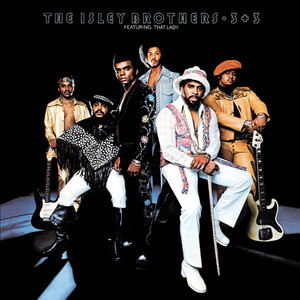
My only highly-subjective hang up on the Isley Brother's "3+3" comes as the heavy, constant ornamentation in Ronald Isley's vocals. I'm not against it at all. (I love and have studied Hindustani vocal music, which is nothing without ornamentation). He's an amazing singer. I love male falsetto. I just find it distracting at times from all the other things I loved in listening to this album. It reminds me of a time when I was in line at a bank around Christmas time, and Mariah Carey's "All I Want For Christmas" was playing in the lobby a bit too loud. I had never noticed how fluttery, flexing, and serpentine her vocal delivery was, before. Christmas fucking _ORNAMENTS_. The sterile cold box of a room, and all the bureaucratic procedural weight of a capitalism contrasting with with the sheer apparent joy of a wild vocal delivery gave me a sudden prior-unheard realization of a throwaway pop song being able to carry hidden musical weight. The music was somehow *heavy* in the moment. I was holding back laughter at the absurdity, feeling a shift in the air or the fabric of reality. Shortly, then, Karen behind me, somehow sharing in same unhinged vocal performance I was, said to me unprompted, "Oh my god what is this music? It's awful." I deeply fear that I am that 70 year old lady, having written my issue. My defense: the complaint is minor to the point of being ignored in light of everything absolutely RIGHT about this album, except it did allow me to tell that story. The first thing I loved in this album: it starts with a flex. Take your single, "That Lady", and stretch out on it to the point that it's got a whole "Part 2" made of pure groove and ripping solo, and lead your album with it. We are here to start your party and we are in it for the long haul. The Isley Brothers' "3+3" seamlessly bridges Midwest soul, funk, and R&B with NYC disco leanings and a forkful of psychedelic swagger. The Isley's recorded an album for many and any without losing any of the authenticity of a working band whose chops are sharp in the studio, but despite the heavy reputation of the Isley name, plausibly evoke even sharper on an imagined small stage somewhere in Midwestern city on a club circuit tour. My absolute favorite parts of this album are the overdriven guitar solos and synth leads that sometimes bleed into one another, playing at confusion to which is which. As if one "Part 2" wasn't enough (it wasn't) a cover of "Summer Breeze" gets a heady, lengthy workout as well, featuring this synth/guitar lead phrasing change-up that is wholly psychedelic and riveting. There's also the band's lock-tight, but still very organic, grooves backing each and every song like a mighty signature. Looser and more slippery than James Brown, disco-aware and cool but in looser fitting clothes, and full pop-sense without pop-pander, working songs from a mix of smartly chosen, freshly arranged, and seemingly unlikely (source of doubt: my own lack of knowledge of what drove the selections) popular covers. For the Doobies "Listen to the Music", the changes in chorus phrasing, combined with the scale-walk turnaround are ear-catching and effective in communicating the bands own musical voice, and adding a propulsive immediacy converting a stony upbeat rock groover into R&B/funk dancefloor grease. The more contemplative, slower songs are full of heart and emotion, without drifting too far from the revelry. Their mild introspection add essential gravity to the album which makes it more than just a party.
This is heaving, sweaty, gasping for air music that luck and fortune seem to be owed for what was captured at all. Knowing the year and the sound is now a ominous tell in music history that the blueprint for so much punk and hardcore had arrived: it is an indispensable document of early Hardcore and West Coast punk. In the year of the release of '(Gi)', Germs were playing harder, faster, and closer to the razors edge of coherence than any of their contemporaries (except maybe Crass, in regards to speed and intensity, who released 'Feeding of the 5000' in the same year; the manifesto-punk aspect of their music seems to have forbade them from even thinking about the rolling snarls and slurred whips that Darby Crash blessed us with, however.) Even compared to the infinite number of Germs' hard-fast-loud successors there is a sonic quality of a searing exposed-nerve, un-numbed by drink and pill, that simply won't be replicated beyond '(Gi)' and the moments in which it was captured and released. That all being said, it is a punk/hardcore album, and how does anyone critically evaluate an album that lives in its flaws, and would not exist if it's seemed purpose was not to embody damage? As I work through this project of listening to one of 1089 (at last I checked, the total quantity following additions to new editions of the "1001 ATLTBYD" book) albums, daily, I knew sooner or later I would have to contend with the ugly chore of assigning an album to a hierarchy to one that it has no place being around in the first. I've been writing on some strategies and rationales for assigning star ranks to difficult-to-place music, and (grateful for the challenge) Germs' '(Gi)' has broken all my frameworks. Personnel-wise, while the lineup at the time of recording, as a whole were both individually and collectively extremely talented and creative, singer Darby Crash in particular was haunted by Heroin addiction. While addictions can play out as inward dramas, without many outside the afflicted's circle made aware, their own terrible modes of outward destruction, although less exposive, are not to be downplayed. To the members' credit, though when comparing modes of destruction to the toxic antics that more mainstream musicians were guilty of, Germs' were more food fight than actual fight. Of notable flaws, there is weird phasing on the drums, particularly heard in the cymbals, on “Manimal” and “Our Way”. 'm not sure if this was a production choice or an engineering misstep. The newscast samples on "Media Blitz" seem applied with the intention to be clever, but come off heavy handed and distracting. I love all the instruments. The playing is intense and relentless. Lorna Doom's restless and punchy bass provides unexpected melodic structure while sticking tightly with Don Bolle's whitewater rushing drums. Pat Smear's guitar breaths on top, in a balanced mix of weedwacker hammering and punctuation of sustained chord. There are moments where guitar growls and Darby are nearly indistinguishable. Does a punk album even want to be a five? I doubt Germs would have cared for a three. In some ways the historical significance and quality-within-the-context-of-genre defies the assumed goals of "(Gi)". My ranking is inherently pointless, but still needs to proceed. For all that, I fight against giving it a four and give it a three. Fun fact: Belinda Carlisle played drums for Germs, briefly.
The long songs are long (7:57, 8:29, 11:16) and the short songs are short (ranging 0:35 to 2:55), with only 'Long Distance Runaround' seeming appropriate for a radio single for a progressive rock band of the time. (Saying this ignores that I grew up hearing 'Roundabout' in all its glory on my local classic rock station, but surely you know what I mean). Somehow the long songs were so transportive they were over too quickly, and the short songs were so captivating that time stretched itself out. The first interlude "Cans and Brahms" was jarring, albeit a little funny/cheeky (I hope humor was part of the intent). To follow with a second solo interlude at first felt like a 'wrong' choice (I do imagine sequencing decisions were at the mercy of physics for pressing LPs, to be fair), but 'We Have Heaven' quickly becomes so loopy and weird in contrast to the preceding classical organ arrangement, that the two songs together quickly become a mutant diptych distillation that hints at an overall thesis for the record. Ultimately, for these little solo jaunts on Fragile, they take space that could have been other complete songs. The sketches, while entertaining and sufficient contributions to the album as a whole, place the album short of a clear higher potential. What I love about this record, especially in comparison to it's prog rock contemporaries (fun fact: Yes drummer Bill Bruford went on to be in King Crimson for over a decade, across some of their best albums.) is how accessible they make their music without sacrificing heady ideas, instrumental showmanship, and non-four-divisible time signatures and phrasing. 'Roundabout', 'We Have Heaven', and 'Long Distance Runaround' are each outright catchy. Particularly 'Roundabout' carries a thinly disguised pop sensibility that could have come from the NYC's Brill Building powerhouse studios. Particularly notable to me, are the clear and implied impacts that this album had on Alternative Rock of later generations. The 'Heart of the Sunrise' repeated centerpiece is a rapid, heavy, tremolo, band-in-unison blues lead-off that we hear uncanny echoes of from the Red Hot Chili Peppers in 'Life is Beautiful'. 'We Have Heaven' is entirely predictive of Dan Deacon's science-experiment pop vocals and electronic looping. The moody, delay-laden, motorik 'The Fish (Schindleria Praematurus)' although doing work entirely contemporary of Can, for this time, foretells aspects of Tortoise, Primus, and Mars Volta. The pop precision and vocal harmonies of 'Roundabout' sound at home with much of the New Pornographers work. Also noteworthy, just in anecdote and not really in sound, the Replacements drummer and bass player came together over a love of Roundabout.
It is difficult to review an album that I know little of the genre or artist. I knew nothing yesterday morning of Ali Karka Touré. In 24 hours, I've listened to an amazing album I've never heard of before, and did as much research as my free time permitted (very little). I learned he is from Mali. My extent of experience in Northern African music, from the desert regions there has not extended farther than the 'Music From Saharan Cellphones' compilation, or some Sahel Sounds mixes. I've seen Mdou Moctar a handful of times, but he is a Toureg musician. It would be lazy to lump Touré in too deep of comparisons (although he has been influenced by playing alongside many Toureg and other Northern and Western African musicians). Given the music and Touré's biography, it is more thickly and apparent that 'Savane' is an album of fusions and blending, rather than a mere (yet prodigious) brick in some perceived-from-Western-eyes monolith of Saharan music. Instrumentation is myriad on this album. Ali Farka brings guests on saxophone, violin, harmonica, organ, and bass, as well as a rich variety of percussion. These players augment and add depth to a Touré on guitar, as well as a base a trio of ngoni (a Northern african stringed instrument of wide use and many forms, and predecessor to the banjo). The clearest (for me) and most interesting (for me, again, subjective) influence that really blew my mind here was Ali Farka Touré's association and respect for John Lee Hooker. Farka intuitively recognizes American Blues' lineage from African music, and clearly folds American forms and licks back into his music, to a point where neither tradition begin nor end prior to the other. This is music that is boiling and alive, pan-Atlantic, and spanning time. Some of the most thrilling moments on 'Savane' come in the form of uncannily rapid and complex ngoni licks, that breath Blues (or have given Blues breath?) jump tastefully in and out of the repetitive bed of rhythmic guitar and ngoni peals. There is clear masterful listening happening within the ensemble, and the call and response that effuse throughout every song feels uncanny to listen to. Listening to this album, having no prior knowledge of the artist or album, fulfills essential points in this '1001' Albums project: discovery and enrichment. My ranking of four stars, rather than five, is solely based on my subjective likelihood to listen to this album again very soon. It is amazing and it is a mood. The experience is still fresh, and I need some time to sit with it. I recently re-ranked Jorge Ben's 'Afrika Brasil' from four to five stars, after time and re-listening. I feel that would happen similarly here.
The opening track "I've Got a Tiger By the Tail" is canon classic country, and I've always found it a little cheesy, aside from the surprising and grim lyrical imagery of "losing weight and ... turning mighty pail". (Wait, is this song about about addiction or depression, or both? Not really.) Aside from knowing that the lead track was a huge country to pop crossover hit, and that this album was released in 1965 (It's getting a little late for country music of this level of shallow whimsy by this year) I knew little else and was skeptical but hopeful that listening and research would reveal in fact that this album has a rightful and rational place in the project list. Listening through, without researched context, showed two easy-to-slot categories of songs: the sad numbers, each with amazing, thoughtful, careful songwriting, clever turnarounds, and sweet, relatable lyrics, and then the upbeat songs that make a bee-line for the dancehall with no pause for sympathetic or deep contemplation. The former, I loved and felt that any modern country ballad is just a derivative. The latter, especially given the nuance of easygoing demeanor hiding a contemplative depth of the slow songs, became hard to forgive for their abject simplicity, save for the assumed context that these were dance songs (no time for thinkin'). The sparse instrumentation makes things even more simplistic, which leaves nothing to hide for already-simple songwriting. Before casting judgement before research, I held out hope that charming Buck was not just a simple hick, but his rigidity to form had some basis similar to other emergent genres whose apparent simplicity was more of a limitations-as-rules bound form. Namely, reminiscent of Run-DMC, Jungle, and of course, Buck's clear influence from early Rock and Roll. Concerning Rock and Roll, any cheese smells emitted from the songs of Chuck Berry and the like were forgiven to energy, sweat, and rhythmic sophistication. So, I realized what we had here was probably the first country rock music, as a genre. (My duty of research following listening said this was true.) The instrumental formation of the Buckaroos ensemble is clearly bound by a directive to present Buck's songs in a stark, no-frills manner: guitar, bass, now-you-hear-it-now-you-don't steel guitar, and backbeat-ing drums. Buck Owens did this deliberately as a rebellion against the string-section-heavy music coming out of Nashville at the time. Buck was working Bakersfield. California(!) Even hearing the name 'The Bakersfield Sound' (as a sub-genre of country music), I imagined some Bakersfield, Texas or Tenessee. The California Central Valley seemed an impossible location for a whole 'sound' to emerge from. Reading revealed: Merle Haggard was there too! This Bakersfield Sound is precisely defined by the instrumental choices heard on this album, and in particular, an inclusion of a backbeat, which Nashville at the time forbade. I like country. I like old country. I like learning about the history of country. I was deeply pleased to have been presented an album that is clearly an important predecessor to the country we hear today. I don't even just mean modern radio-country, but also want to give Buck Owens clear credit for paving the way for Wilco, Neko Case, Sturgill Simpson, and Drive By Truckers, to name a few downriver. It took me a second to realize where and when I was, but I guess that's how the did things down in Bakersfield in those days. As a casual listener, I'd otherwise give this album a right-down-the-middle two-and-a-half stars. Half cheese and half heart. Given the context and history, I would almost warrant it a four, but I'm aiming to define a subjective truth for my rankings, and the questions, 'Did I enjoy it, in the end?', and 'Would I listen again anytime soon?' bore me down to a three. Like I said, I enjoyed half, greatly. I might not listen again anytime soon, or I might find myself at the bar, playing the jukebox with "Let the Sad Times Roll On" and on that day, in my tears and beers find this album to be five. Questions I'm going to ask of each album: - Do/Did I own this prior? Nope - If so, how has this day in the project changed my view of the album? n/a - Otherwise, do I look forward to listening to this again? As I said above, given the right time and place, yes. But otherwise, maybe not. - Is this album's inclusion on the list justified? Absolutely.
Damn I really want to love this album. It's beautifully arranged and recorded. It would be a brilliant and flawless psychedelic pop-rock record if only I could take in the music with either an ounce of humor OR seriousness. Somehow, "Triangle" by The Beau Brummels mostly seems to take itself too seriously, while simultaneously drowning in saccharine whimsy and a lyrical world of half-baked toy shop psychedelia. The word "phony" came to mind far too often, through repeated listens to "Triangle". The underlying music itself is undeniably well crafted, harmonically rich, and complex. Sal Valentino's vocals are skilled and commanding. The instrumental chops of the band are clearly well-practiced and precise. There's feeling, sway, and swagger in *almost* every aspect of this album. Somehow, though, the pain points add up to a substantial shadow that demands the question, "Are these guys for real?" and has me wondering if I'm listening to hollow musical play-acting. Out of the gate, on "Are You Happy?" Singer Sal Valentino, sounding like a classically trained Bob Dylan, does himself no favors crooning out "How do *you* feel?" (emphasis mine), in same-cadence to Dylan's hook-line in "Like a Rolling Stone". Valentino's intent might be a paean flattery of Dylan, but to lead off a whole album with that makes it hard to dodge the question of authenticity when inspired imitation falls into flat mimicry. I almost imagine Valentino doing this on purpose, in response to being widely compared vocally to Dylan, as an arrogant way of saying, "yeah I might sound like him, but can he *sing*?". Either way, we are off on a bad introduction. Although "Triangle", lyrically and in studio arrangement, is presented as a psychedelic record, the band themselves come from Beatles-mimic pop. In their early performances, they would even dress in British style suits, and actively say they were from England. I learned this after listening to the album once through, and was disappointed that my reluctant suspicions of fakery had one more sin to contend against. In this same mode of pretending, "Triangle" strikes me as the product of a pop band who was working in the rising tide of dustier, crunchier holistically lived psychedelia such as the Grateful Dead, Jefferson Airplane, and Quicksilver Messenger Service, and decided to dip just a toe in the LSD to see what the fuss was about. From that, they got a ridiculous "Wolf of Velvet Fortune" (I loved the song, despite the preposterous, hacked wordplay at creating fantasy) and the fantastical, lyrically cloying "Painter of Women". Slamming "hand", "land" and a contortion of "women" into "wimaaaan" is vile rhyming. One aspect of the whole album that is unsettling, is this overall feeling of 'horniness' that is incompatible with the musical and lyrical pretension. Nearly every song deals with relating to women, or a woman, as a subject. Given the pretty nature of the music, the pop sensibilities, Sal Valentino's excellent and vibrato-affected vocals, and their historic inception having dipped into the Beatles-trough during the height of their boy-band period, leaves me unable to imagine these guys without simply attracting girls being a main motivator. This being hard to unsee, I can't listen to "Traingle" seriously without thinking that in a never-ending quest for the wizards' sleeve they traded in their Fab Four costume for a shiny mystical troubadour getup. (Placeholder for an image of a 2-axis graph, plotting "Horny" and "Pretentious", and placing The Beau Brummels in the cursed quadrant of being both.) This was recorded in the same studio as Beach Boys' "Pet Sounds" album and some of Frank Sinatra's most well known singles such as "Strangers in the Night". It features Van Dyke Parks, who was fresh off of Brian Wilson's "Smile" sessions, who I've admired since first hearing his arrangement work on Joanna Newsom's medieval-esque epic "Ys". This makes sense, and the album is lush and layered in great ways, thanks to Parks, producer Lenny Waronker, their studio resources, and the songwriting as well, which lent itself to expansive studio treatment. I really want to like this album, but the smell of slick fakery is too strong. - Do/Did I own this prior? No - If so, how has this day in the project changed my view of the album? n/a - Otherwise, do I look forward to listening to this again? I don't know if I look forward to it, but there are aspects of this album that deserve attention. Given the right mood, I would listen again. (And likely increase my rating if I can ever get over the few but worst aspects.) - Is this album's inclusion on the list justified? For the first time in this project, even amidst other albums that I strongly disliked but agreed with their inclusion in the list, "Triangle", for me, is a solid 'maybe not'.
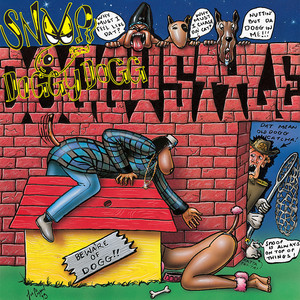
Doggystyle is a high water mark for West Coast rap, and launched the career of a massive popular icon. (My wife's mother likes Snoop and has probably will never his music.) I don't know if we would have legal weed in the US today if it wasn't for Snoop's cultural influence. Welcome preposterousness, Snoop, Dr. Dre, and the rest are constantly one-upping themselves in ridiculous lines. "He shakes the ticks off his dick" is so stupid and unbelievable, and I love it. Doggystyle, so far has been the loudest I've played an album from the 1001 list. I played it in the car, and it although I know from High School experience this album is fit for house parties as well, I will argue that this *is* an album made for car stereos. Slick dripping funk productions. An effective studio move we will see Dr. Dre repeat many times over, mixing samples along with "covering" musical passages from samples to give a bigger hit, deeper bass, more life and weight in the final product. A lot of Doggystyle borrows from George Clinton and his P-Funk Collective's projects, but instead of travelling to space, or the deepest inner reaches of the mind or the dancefloor, Snoop and Dre are merely concerned with putting on the most lively show possible of their immediate and relatable concerns. The concerns of this album, although at first glance beyond the initial clear intent of 'putting on an excellent show' seem limited to partying, bragging, and sex, songs like "Murder Was the Case" give non-glorifying gravity to life where violence is a reality and justice, if it exists at all, will be found in the spiritual realm rather than the earthly. "Lodi Dodi", as well, gives a nod to the king of story raps, Slick Rick. Snoop, through half-cover-half-interpretation of Slick Rick's original, reverently and effortlessly shows where his skills came from, and where he's taking us. Even the intro "Bathtub" shows Snoop as someone who lives with and for his community, but rather than chasing down a fight, would rather invite his hot-headed friends to show them another, more positive way of life. The blatant and hyped up misogyny is still hard to stomach, even through a lens of 'this is not my culture' nor nearly 25 years passing since Doggystyle's release. It does feel pointed in a mild apology sort of way, that Snoop gave the honors to the Lady of Rage to deliver the album's introductory verse. It reads, "I respect women, just not those that are hoes." The bars and delivery are excellent, too. The traditional rap album opening act formula of guest-verses-as-intros is a minefield of missteps in skippable tracks where either the guests fail to ignite excitement or tension that is commensurate to the main event, or the worse for the headliner, the guest performs an upstaging. Rage succeeds wonderfully. There is one aspect of Doggystyle's rapant misogyny that is a personal weakness, and somehow continue to apologize for: Snoop Dogg's gift to the world of "BEEYOTCH". --- 4 stars for being untouchable, Snoop's utterly unique voice and demeanor, and absolutely entertaining from start to finish. I just can't apologize for the egregious misogyny, though. - Do/Did I own this prior? Yes - If so, how has this day in the project changed my view of the album? I haven't listened to this album in its whole in nearly 20 years. Listening now, and seeing both Snoop and Dre's arcs as artists shows me how on top of their game they were, right from the start. Deeply impressive. - Otherwise, do I look forward to listening to this again? Despite how good and entertaining this album is, it's also dated, and 80% of it gets played on the radio anyways. I may revisit it from time to time, just without subjecting others to listen to it with me. - Is this album's inclusion on the list justified? Absolutely.
I eagerly dove into Lost Souls, the 2000 debut album from Doves, with excitement and suspicion. This was my first post-2000 album arrival from 1001albumsgenerator.com. I wasn't sure that I had ever even heard Doves before. Hence, my suspicion, that an album I had never heard of, from a period were I was voraciously absorbing new music, could somehow be worthy (hubris, mine) of a spot on this list. Hence, also, my excitement to be shown something worthy I had possibly missed out on. I would like to think I am an adventurous and eager listener. Lost Souls, though, was challenging for me to take on in 2025 and without context (aside from the release year). It left me initially confused as to why it would be on a list (albeit incredibly lengthy) of essentials. This confusion paves way for the importance of talking about the context and history behind music. For height-of-Pitchfork, internet-era music in particular, like Lost Souls, context and history dissolve from the centers of the music's creation, outward in a confounding, diffuse, murky cloud of keyboard consensus, media validation, and hype. With any question of the existence hype, there is also reflexive anti-hype. Do I like this album? Not particularly. Being suspicious of Doves being a product of hype, and wanting to be a fair listener, I remained open-ears, and aiming for equal suspicion of any anti-hype tendency within my self. Lost Souls has some great moments. "The Cedar Room" is an engaging song that carries sensitivity below the surface, submerged by dense lead-weight ballast of careful, restrained playing. The song, like the rest of the album, seems to want to let the studio speak first. Putting production first seems to come at the expense of many potential opportunities to make rock music like this more lively or engaging. There are far too many examples of studio-first approaches to music that utterly just *work*, to excuse the missteps of Lost Souls. Dub, Disco, House. It's almost a failure of translation, where Lost Souls thesis seems to approach making a pure rock record with a club music ethos. (Spoiler alert: these guys used to make House music.) The album dutifully chugs along like an armored boat on a ride at Dracula's carnival. Everything is amazingly recorded. The work put into the effects alone is absolutely noteworthy. Everything is on rails, though. Old Ironsides isn't built for tight steering, it seems. The best in-song surprises in the album come in the form of sudden textural shifts: a harmonica enters or carnival organ motif suddenly surrounds us. Each song is a dirge, with the majority of surprise-in-variety occurring with one song ending, and a new song's motif entering. The problem with this, though, is that as the album progresses, it ventures further from the interesting embarkation point of "Firesuite's" dubby post rock, into very normal, been-there-heard-that banal rock territory. I could possibly be more generous to the the final songs on the album ("Catch the Sun", onwards) but the ride is like starting at Portishead-without-cigarettes and landing on Dramamine Radiohead. My feelings on the music aside, I can see a clear argument for the inclusion of this album on the 1001 list. First off, it was a massive debut success in the UK. As an American, I'm aware my own context for listening gets jaded by UK/US differences in culture and reception to music. More importantly, behind this album is a story of Manchester and the legendary Hacienda club. Dove's prior incarnation, Sub Sub, formed through late nights and dancing. They made very good House music. (I learned about Sub Sub from reading about Doves, and I'm far more stoked to have learned of former.) In unrelated events, Hacienda closed and Sub Sub's studio burned down. Doves rose from literal ashes, to take on a new post-House, post-Hacienda vision. I get the inclusion of Doves on the list. I want to endorse the band's thesis behind this album. I don't find the results all that original or compelling. --- - Do/Did I own this prior? No. - If so, how has this day in the project changed my view of the album? n/a - Otherwise, do I look forward to listening to this again? No. - Is this album's inclusion on the list justified? Arguably yes, but at a stretch.
Thundercat made a tremendous and impressive album of insanely original and personal music, that is confusing, goofy, and super awkward at times, but ultimately outwardly charismatic and bright enough to show up to the party, befriend the coolest people there, and get along with anyone. Is Drunk loosely a concept album? It's a long night out. It is thoroughly frenetic, funny, ecstatic, optimistic, social, and body moving at the highest points. There's also (intentional or not) alcohol depressive lows: lyrics are vulnerable, creepy, self-pitying, willfully immature, and obstinate. Topically, isolation, sadness, rejection, and escape, as well as alcoholic dangers such as drunk driving all get met to some degree. It's an impressive trick, and one that can be more easily played by musical savants like Thundercat, to present gnarly, seemingly flawed musical choices and have it come off as intentional and confrontational. Rich, complex, Stevie Wonder-esque harmonies are layered deep to the point of drowning. The album's mixing is somehow wonderfully clear enough for the bass and drum samples to shine through, but instances of tinny, toylike keyboard patches abound. Michael McDonald and Kenny Loggins's vocals sound like they hit the tape via Zoom call. It's something to do with the consistency of missteps or the album's slow-build charisma, but I don't exactly know why I just want to give Thundercat the benefit of the doubt for everything I don't like. Tokyo, is a creepy low point. I generally find this level of overt, culture-as-a-commodity attitude about Japan to be super repellent. Harping on the too-common obnoxious attitude of romanticizing Japan to exist solely as a fetishistic playground of Anime and sushi is a headier topic than this review warrants, though. To Thundercat's credit, the humor, self deprecation, and lines of his childhood memories, give me some hope for the man. Emotionally stunted lyrics ("Friend Zone", "Tokyo"). He reacts to self-pity at best with humor ("Drunk") and at worst with slight misogyny ("Friend Zone's" garbage simile.) The absurdity was jarring at first, but ultimately won me over. (I mean, I like Phish, Ween, and Zappa, so what did I expect?) "Captain Stupido" made me laugh, and a "A Fan's Mail's" meowing chorus is so dumb that I have to love it. Moments of reflection and wanting to see change in the world ("Bus in These Streets", "The Turn Down") are warm and welcome cornerstones to the album, and do heavy lifting to hold it up to the light, so that it doesn't wallow in darkness. There are also wonderful moments of simple musical exuberance. "Where I'm Going's" jazzy Jungle nervy snare ghost notes are captivating. "Them Changes" is catchy as hell and deserves hit status. This album defies star rankings. It's fraught and amazing. It's contradictory and complex. It's challenging and approachable at the same time. For everything I don't like about it, I see a creeping accusation of "Dude, you just don't get it," swiftly followed by rational and impassioned rebuttal to my wavings away. --- - Do/Did I own this prior? No - If so, how has this day in the project changed my view of the album? n/a - Otherwise, do I look forward to listening to this again? Maybe not. I listened to this a fair amount when it came out, and found it murky and overwrought. Listening yesterday and today, I have a more generally even positive attitude to the album, but it's overall too heady for me to put on unless I'm in a mood. - Is this album's inclusion on the list justified? Yes. It's a remarkable album in performance and overall vision. My review could have talked more about the LA scene that Thundercat came from (playing with Suicidal Tendencies, Kamasi Washington, and Kendrick Lamar, to name a few), and his album is a high point in personal and unique vision from someone who's otherwise deeply busy in performing works of others.
I am deeply surprised to be taken in by 21 as much. I'm not a 'poptimist'. I'm generally accepting, though. Adele broke open in me a previously-shallow pool of appreciation for popular music, into much deeper enthusiasm for not only her voice and songs, but for the possibilities of vocal, emotive, popular music in general. Despite being popular music, I can't deny that this album, despite it having a familiar taste and form (mostly a soul music template with piano, guitar, bass, drums, strings, and backing vocals, laying, stripped-down, all necessary, not-too-jazzy b for a voice), despite all the seeming normalcy about it, manages to give me chills. In fact, I know that it's the direct and no-frills nature of the chosen ensemble for 21, that gives the music and Adele's voice so much more impact. ("I don't want any 'interesting noises'", Adele would say once, when presented with an ornamented-yet-typical-for-electronic music direction during sessions with electronic duo Bassment Jaxx.) There's also her songwriting and musical direction, with subtle nods both deeply into, and out beyond the classic soul and gospel that 21 is couched in, that give life, verve, and playground for her voice. Admittedly initially dismissive, I was taken in wholly once I learned that this massive (in both sound and sales) album came from an indie label. Is there shared 'authenticity' from her recording origins on indie label XL, as well as her music itself, that gives the music more weight? I argue there is. Adele joining with a XL gave her freedom to express herself without limitations and a marketable feint to shake critics who would otherwise dismiss her soulful output as mere pop. There is a current, (social, electric, gravitational, zeitgeist?) that ebbs and flows with taste and time, but has the power to capture many hearts and minds, depending on where it flows. The current, as expressed as a tacit and fleeting agreement between artists and listeners, has always began with us human's first instrument, our voice, and next, the words and sounds we make with it. The current also rushes strongest through familiar openings: where it sounds close to what has come before. Output-wise, popular music is a behemoth industry dedicated to damming, taming, and shaping this river so that the flow goes -- current to currency -- from artists, to public ears and wallets, ensuring the river is always landing at the banks. Adele was never 'discovered'. She was already relatively popular. Despite signing at 17 years old with UK indie label XL records in 2004, at the time she had 11,000 plays on her Myspace demos. A young scout for XL, Tic Zogson, going in for a regular A&R meeting, hadn't come up with anything else to show that day besides the demos. He was reluctant because 11,000 plays was lot for an unsigned artist (especially compared to the billions of streams she would go on to command). What good is a scout who brings stale, already 'discovered' material? She was still unsigned, though, and label head, Richard Russel wanted to hear more. He went to see her perform, solo, with an acoustic guitar and they hit it off. As Russel tells it, in his autobiography 'Liberation Through Hearing', "Other record labels were showing interest in Adele but she made the decision to work with XL decisively.... The desire to work together was mutual..." "...But I had completely the wrong idea of the music Adele planned to make once she signed," Richard continues. Adele wanted to work with pop-oriented producers, which broke hard from the type of work XL was comfortable doing. XL trusted her instincts. This was Adele's authentic expression. Even though doing a pop-oriented record was a break from XL's catalog, Adele cleverly knew that aligning herself with a credible indie would in turn give her music gravity; she knew the potential of her own talents and in the hands of a label with more presaged pop-savvy, her broader voice might get diluted. "First the artist has to discover their own talent, and once they do, if it's significant it tends to become apparent to those around them."
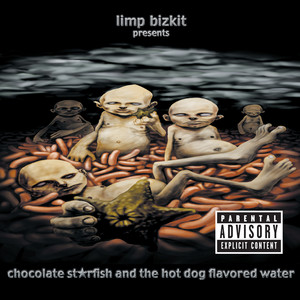
Music Flavored Truck Nutz "Hey I'm throwing a party and thinking of inviting Jimmy Shits." "Why is he called Jimmy Shits?" "He shows up and shits his pants." "That sounds awful." "It is. He absolutely reeks, of course. And don't let him sit on ANYTHING." "Explain to me why he is invited?" "Enough people think it's hilarious. They'll pay to see him! He's such a good businessman. Also, even if you don't like the shitting thing, Jimmy's a really good guy." Following the audience violence that ensued from their Woodstock 2001 performance, the defensible excuse from the Durst was "all we did is what we do. I would turn the finger and point it back to the people that hired us." That is absolutely true, but it doesn't excuse the band for an entire career built on milking money from puerile antics. Certainly, Woodstock 2001's booking made an indefensible move in booking an indefensible band, but the band remains the source of the trouble. The nice things I have to say about this album are that Wes Borland crafts guitar textures that are catchy, inventive, and inviting. The drums have heft and groove, even when locked in middling tempo (for the whole album). The band plays in tight sync with a dynamic range of cool lows that pounce to unleash crashing, scorching catharsis. The lead "Intro" snippet, without significant vocals from Fred Durst, even at around one minute long, promises so much more from pulsing plucky arpeggiation than will never actually be deliverable in this album beyond a tool to force feed you Fred Durst's frat boy act. Emotionally stunted lyrics orbit around a cycle of defensiveness, bragging, self-pity, and violent retribution. "Hot Dog's" dogging on NIN is well into the territory of insecure preoccupation. "Livin' it Up" teaches us that Fred Durst proudly drives a truck and has spray paint in his backpack for doing graffiti. "My Way" shows us that no one understands him and it's tough to be so disliked. (There clearly is no reason why people would dislike you, Fred?), and in "Full Nelson," Fred tells us about the violence he's gonna do to you if you hold him accountable for something he's done. I also have to point out that it's a weird flex dissing on Nine Inch Nails via such heavy recycling of their own musical ideas. Especially in the lead off song of the album, and especially when the reference tends to go on and on. Just when you think eight bars of the joke is enough ("Haha he's doing 'Closer' but making it fukkin' LiMP!"). Durst doubles down on another insecure eight, just to make sure you got the joke. Clocking the amount of time Durst repetitively spends on the Nine Inch Nails inspired material in the choruses to 'Hot Dog' could certainly reveal a shameful and disturbing percentage, but that would involve listening to the 'Hot Dog' again. --- - Do/Did I own this prior? No, not even in my younger years of more questionable musical tastes did I care for this. - If so, how has this day in the project changed my view of the album? - Otherwise, do I look forward to listening to this again? I wither to think I would have to listen to this album ever again. - Is this album's inclusion on the list justified? GTFO. Honestly, "1001 Albums..." compiler Robert Dimery, who I am otherwise grateful to for giving me this project to work on, can fuck right the fuck off for validating any single moment of Limp Bizkit's venal bad-joke-turned-business-venture career.
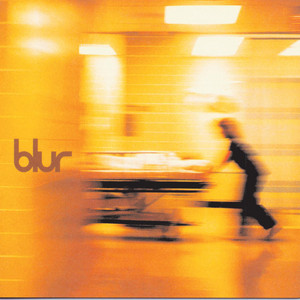
Exuberant, emotional, punchy, restrained and unhinged. How Blur manages all of these sensations cohesively across an album, and sometimes within individual songs, is the wonderful strength of this album. The self-titled album is wrought from a broad sonic pallet, notably including organ loops, and dub echoes. Stylistically, the album's songwriting sways, lurches, and wobbles, all while never leaving the listener (unpleasantly) confused. While the album is a paragon of rock-craft, with excellent songwriting and execution, the degree to which it is finely wrought is both a feature and it's highest insurmountable hurdle. Damon Albarn's precise and thoughtful songwriting plays a referential role, keeping the musical direction rooted in familiarity, while giving room for ideas to grow. "Theme from Retro", notably, presents a minor-chordal rhyming with the chord progression of the Animal's "House of the Rising Sun," but cleverly on Albarn's part, with added tonal movement that moves away from (while never abandoning) the forlorn menace of the aforementioned, into more sad and introspective territory. "M.O.R" borrows from Bowie's "Boys Keep Swinging". The album is rife with noisy distortions, judiciously applied to nearly everything at one point or another. Vocals, organ, synth, and of course guitar are less metallic though, and saturated more like a soaked and broken jagged wet wooden crate of treasure they found on the seafloor. Graham Coxon's guitars seem overdriven to the point where the feedback welling up between fretted notes are the actual notes. Incomprehisible dub-echoed vocals take center stage on "Theme from Retro", buoyed by a claustrophobic organ that dominates the sonic landscape. There is also digital looping technology present, which outside of electronic music (and less-wieldy analog tape loops of decades past) I have not heard as present in composition, as on Blur. At the farthest reaches of the album's noisiness, shrill feedback peal can be heard low in the mix, carried through the crescendoing outro of "On Your Own". It is slight, and ephemeral, but unmistakable. Even more so when the song suddenly shifts, everything cutting out, to solo the vocals. The liberal use of organ keyboards on Blur also helps unground Albarn's pop-sensible songwriting from the realm of the Beatles' ivory tower, attaching it to lineages that kept the line to the pubs and dancehalls intact, such as the Kinks (who's use of piano at their time set them apart from guitar-bass-drums groups like aforementioned Four and the Stones, as well as glam groups like T-Rex who also bear influence on Blur's sound). Another notable decision, the acoustic guitar in "Song 2", the album's most driving song, is a nuance that pulls pleasantly away from overt aggression of high tempo, staccato riffs, and young hooligan "WOO HOO"ing, giving the punky song an unexpected dimension of depth. It's in the moments of deliberate decision, such as sharp cuts from chaos to more serene moments, or when the continuation of a leading guitar line, via ad nauseam repetition, transitions subtly into a support line (as in the final laps of "M.O.R", brilliantly) that the album's writing and production ascend into something unique and new, for the time. It's also in this careful assemblage of so many small but potent sonic details, something that still sounds fresh today (Albarn is thoroughly presaging his own future pop successes here. How different from The Gorrilaz is this album truly?) that Blur's self titled album achieves a surprising longevity. This album has longevity, uniqueness, craft, intention, and a raw energy. All these together are rare. And special. My only hesitation to giving the album five stars is that, in the end, all of the fine-cut craft of decision-making comes off as a little precious. Even the album's closer, "Essex Dogs", at eight minutes long, and leading with a delightfully unsettling tempo-agnostic tremolo guitar riff, while a fully welcome foray into outer reaches of the bands' creativity, still feels like the cork on the lightning in a bottle, where the bottle was the point the whole time, rather than the lightning itself.
Laura Nyro's "Eli and the Thirteenth Confession", showing up as my fresh daily from the 1001 Albums Generator, is an exciting and chilling moment for someone who's never even heard of the artist before. I started this project wholly to encounter "important" music I had never heard before, as well, to hear that that I may thought I had once known, but in renewed context). The fear of the and unknown in Laura Nyro comes mainly fresh off of having to digest and review Limp Bizkit, but also from this unknown-to-me Nyro hailing from 1968 and my recent dealings and displeasures with The Beau Brummels: another prior-unknown from the same period. "Eli and the Thirteenth Confession" is an album title fearsome with hidden pretensions, indeed. The cover image, the singer emerging from chiaroscuro blackness, ornamented with heavy eyeshadow, red lips, and two golden glints of light reflected from an earring, conveyed an intimacy that comfortingly spoke more of a sincere New York bohemian sixties, rather than the acid-fantasy antics of California. Gratefully, the album's cover is one of the perfect-match-to-the-music executions in musical art direction history. Atop tinseled punchy changes on guitar, followed by flurried swell of strings, Laura excitedly introduces herself with all we need to know, "Yes, I'm ready," and invites us along, "So come on, Luckie". Suddenly, in a transportive and cooling turn of high heel, we hit the earth, a basement jazz lounge, with her commanding, brass-like voice bringing seemingly the whole loud, busy and clashing world of the city to land intimately on her stage. Just as her voice seems to paradoxically emanate as much from Broadway as it does from a smoky bohemian apartment, her multi-phasic, swing-shifting songwriting hides a warm approachability, like a secret propped open door at back of the theatre, along with an invitation to enter, to hear grand structured and careening songs from a more sensitive and personal angle. As if easily willing to connect to anyone with ears, Nyro's "Eli..." meltingly merges soul, rock, jazz, and orchestral pop into entertaining configurations where the constituent genre parts become wholly something new but still familiar. The song titles and lyrics, work to create further connectivity with the performer. In the number of songs titled for people ("Luckie", "Lu", "Eli", and "Emmie") Laura talks to us with ease as though we know them ourselves, and of course we could relate to her feelings for them. This furthers the dynamic bohemian feeling of what The City, at her time and any time, must have felt like. "Bob and Joni just left, but Walter and Donald just got here. They are working on stuff inspired by Laura. You should stick around, too, Patti and Kim are supposed to show up later. Their work will blow your mind." To understand that this album, with it's massive approachability--despite its complex song structures--came about in 1968, gave the wild shapeshifting writing and arrangements even more plausibility. Prescience, even. Listening to this album evoked reminders of many writers-in-a-similar-mode to come, such as Steely Dan, Tori Amos, Patti Smith, Arthur Russel, and even LCD Soundsytem: artists who, following Nyro, blend a craft of melting and warping a whole-city wide-focus blend of genres in service of presenting street level lyrical intimacy. Given my listening alone, without other context, Nyro's "Eli..." was an easy four stars. Although it is not something that I'll readily return to for a comfortable listen (it's far to brash and frenetic for my tastes at their most casual), I do deeply respect this music, the quality evident in everything about this release is immediately impressive. Having then read about it's actual importance and popularity (just things that I didn't know about), as well as the clear lines of it's influence on so many artists, I have a deeper understanding of the timelessness that Laura Nyro has achieved here. This is the first album I'm going from having-never-heard-before straight to five stars.
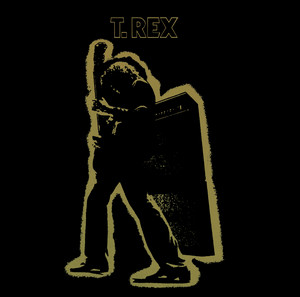
"Electric Warrior" cannot be underestimated for the songs that land like a steel bucket of glitter painted railroad ties. Each of the album's high points, "Mambo Sun", "Cosmic Dancer", "Jeepster", "Get it On", "Life's a Gas", and "Rip Off" are each distinct and effective in their own way. Each seemingly could have birthed entire individual genres on their own accords of majesty and originality, but, even as I try to find direct pairs, each remains unparalleled and a still live on as little universe of their own. "Mambo Sun", although exploring similar Cajun and country-plucking territory to West Coast bands like Little Feat and CCR, Bolan's breathy delivery, buoyed by falsetto fantasy-chorus, has us long departed from the dusty dirt of the former's Americana, and off onto another planet entirely. "Cosmic Dancer" and "Life's a Gas", both, in spirit, rather than via sonics, foretell if not ordain, the escape in languid hedonism and dancing of Balearic music (which would give its own birth to children of Rave.) "Jeepster" and "Get it On" both presage the gleaming grit of the image-first rock of the 80s. There's a smudge of motor oil on the chrome, foreshadowing the rides you're gonna go on, but first you are just gonna look at the cars and take in all their muscular, gleaming glory. Speaking of legacy and influence, we can't ignore Bolan's deliberately unserious lyrics, as well as similar joking-riffing intentionally sloppy lead licks that get played throughout "Electric Warrior" with as much studio polish and zeal as the competently flashy ones. This sort of 'anti-polish' would in legacy support between try-hard metal and can't-be-bothered grunge, evident in Jerry Cantrell and Kim Thayill's effortless-in-effort anti-cool, as well as other indies such as Jay Mascis, Doug Marsch, and Steve Malkmus, and even modern McGee, who each take raw technical ability as not necessarily interesting in itself, and explore wilder expressions through solos thick with petina of distortions and effects. We also get bands that marry absurdity and musical chops, such as Ween and Phish (whether or not you are grateful like I am, or understandably spiteful for their existence and rabid fandoms). In the same way that Bolan saw the utility of competent and flashy playing, but in the fashion that grew Glam, technicality was an essential but minor part of a bigger show. There are some low points, here, which I won't pass aside for adulating the greats: "Lean Woman Blues", although lyrically funny and interesting, is at the end of the day, a blown out, straight ahead blues. "Girl", which is mainly solo acoustic with a cheeky and pleasant flugelhorn, is ungrounded in flimsy fantasy and too insubstantial to hold its own with the rest of the album. It feels like a planned smoke break. To credit, it is possibly the only time I will ever forgive a "witch/ditch" rhyme (Rob Zombie gets no pass). "The Motivator", although primed with stompy glee, energetically feels like it was racing on foot, and couldn't catch up to the hot cars of "Jeepster" and "Get it On". All given and on the table, and even despite it's lowest points (which are only so relatively low due to the soaring successes) "Electric Warrior" took off for space 55 years ago and we have still been getting vibrant, inspiring, and wholly relevant transmissions from it, since.
“Zebra” - chamber pop, minimalism, Philip Glass, careful and restrained. Close listening is rewarded with deliberate repetitions of figures. The verse and chorus chord progressions seem simple at first but with small two beat detours here and there, before we rise or resolve. At first what seams simple slowly reveals a complexity of craft not for ornamentation but for the object as a whole. An Amish chair? What works is when it works for emotion and contemplation. What doesn’t work is maybe not entirely the fault of Beaxh House, but it also works wonders of a sleepy coffee shop. “Norway”, “Walk in the Park” - introduces drum machines. Harp like guitars give life and float. Now less Amish chair and more gourmet chocolatier box of truffles. I start to wonder if this tidy little box of gilded crafts the band made can be faulted. The pop nature of the album becomes more evident, and although extremely well made—what is added as deliberate as what’s left out— I think about what I love here but what is tragic that Beach House’s precious creations have been gobbled up like a $12 eclair and a tall cinnamon turmeric mocha from a 7th wave Christian coffee shop. It might be less a fault of society’s issues with consumption of delicious and approachable things, and more with Beach House’s clear choice to omit anything more bitter / include anything less palatable than the sadness, intospection, and cleverness that they’ve hidden behind vetiver scented gauze and Pendleton wools that hides the wounds too well. “Lover of Mine” - a high point so far. Intro reminds me of 80s “I’ve been waiting for a girl like you”. And follows with 80s songwriter aynth rock requisite sophistication. The synthetic quality is welcome and well delivered. “10 Mile Stereo” soars. Buried drums give altitude to the melodic devices (string synth) The drum machine is a tightly wound propeller. I like the way the album has opened up from Glass to explore various pop textures and ideas, with a thesis in intimacy and clockwork art and artifice kept firmly in slot. “Real Love” aside from a vehicle to prove capability of emotion through breathy ranged vocals is a snoozer until the army of wind up toys comes in like an art museum gift shop. (This is good at first taste but I’m ready to move on once the trick is revealed). “take care” - I’m tired. My turmeric mocha has worn off. The emotion and and care is still present though and the experience isn’t entirely hollow. This song is like a high school slow dance in a cedar lodge. Fire beats the cavernous place. The song reminds us that even in the coldness of the world, no matter what wood steel and glass facade we find ourselves shopping in, we still have human connection despite the cold. This is ultimately an optimistic album. The shallow pop is a not brave but still kind of effective attempt at creating conviviality and connection and warmth in a cold world. Is this using the tools of the system to subvert the system? Not revolutionary but not pointless either. Glass: promethium, terror, triumph, glass and steel skyscraper, suffocation, mushroom cloud is still a cloud Beach house: promethian principal is the fire in hearth, between two people. Joining and splitting. Like the atomic fission or fusion. It is not algorithmic, to credit. It was right hearted, but had the misfortune to fall prey to the consumerism that it was trying to find optimism in. Like feeding a wild bear with the sweetest of intentions, and it bites off your hand.
I guess shouldn't be, but I find myself surprised at having any difficulty reviewing an artist I already love. The more I like a band or album, the more I'll have to say, right? Nick Cave and the Bad Seeds are a group that I will go see live, without question, given the opportunity. I would recommend this to practically anyone with even lukewarm ears for music and and a mere candle's flame of passion for life, even if you aren't a fan. I have friends who can't be bothered for Cave's recorded work, but understand the blazing rock and roll revival spectacle that Nick and the boys will tirelessly work themselves through on a stage. The trick of loving an artist and being thick in their world, when it comes time to write, is that the majority of my ideas on the artist and album have long been sublimated to shadowy emotional marrow. For years I've happily lived in my own feeling world; to artists like Nick Cave, my words have long since melted. I've already made peace that (aside from my aforesaid endorsement of the live experience) Cave isn't an artist for just anyone, and that's fine. I've shared playlists with friends with good taste. Just one of them came around on their own after reading a review in the New Yorker of Cave's interview book with friend and journalist Sean O'Hannigan, "Faith, Hope, and Carnage". He read the book on the merits of it being a seemingly excellent music book, and that is what drew him in. Prior to this, I have a text message from him making fun of the mixing and recording style of "Let Love In". This is all to say, Nick Cave isn't for everyone, and I've been fine with that for a very long time. I've learned hard lessons from years of musical zeal that now afford me comforts of being lazy and secure in certain areas of my own taste. In denial of my convenience and laze, and in owed honor to Cave for being a rare artist who continues to improve in craft and execution after so many years, I will say some things. Prior to yesterday's enthusiastic and attentive re-visitation, "Henry's Dream" was a C or D-tier Bad Seeds album for me. Relative to my favorite Cave stuff, I always found it messy, dense, and monotonous. His prior album, "The Good Son", showcased a wide-ranging tenderness and empathy (in love and grief, "The Ship Song", and "The Weeping Song" are highlights, respectively) alongside his signature menace and despair. Each song was like a snow globe, a world under glass unto itself, of songwriting chops and emotion. I very much liked this mode. "Henry's Dream", comparatively, (and intentionally, I'm sure) is indeed a series of heavy dreams (mostly nightmares, but not all) from a single night's sleep. Each song is a world unto itself, with its detail rendered in storytelling lyrics dense with imagery, and a band playing like they are attacking their instruments (even in the ballads.) Rather than the world of each song ending tidily at predefined glass walls, these worlds emerge from the void of dreamless sleep, bleeding into each other. The catchy choruses, striking scenes ("I was at a dancehall on the edge of town"), and oppressive weight of the whole thing ensure that there are not clean edges. Like a dream, it's hard to remember what exactly you encountered, but the feeling stays with you even after the album is over. Following the tidiness of "The Good Son", it is as if Cave excitedly discovered new ways to fit in more words to a song, sharing more blood-stained, dirt-sweat muddy details of each story that the songs tell. Even the ballads, "Straight to You" and "Loom of the Land", within the album's whole, come off as leaden, drunk, and prickly as the rest. This is all fine, not a problem, and still within a realm of enjoyment for me, but these points just make his later, more nuanced work, all the more exceptional. In particular, the dark stories of "Henry's Dream" foretell the deeper and more nuanced exploration of dark song-stories in his later, highly popular album, "Murder Ballads". "Henry's Dream" is a valuable waypoint. The benefit and detriment of this album, cursing and blessing, at once, is the claustrophobic heaviness. As a post in the story of Nick Cave's creative unfolding, it's a hard-seen one that lurks in the shadows. Close listening, a lyrics sheet, and the 2010 remastered version (the band was deeply unhappy with the original mixing, and I think I possibly was, too, and didn't know it) all became illuminating tools in tackling this album again with intention. I've come out with a renewed respect for it's place in Nick Cave's discography. I could just stupidly give it a five, simply because "Nick Cave", or more reasonably, because this connects with me so much more than music that I would already gladly give a five to, anyways. A three is objectively warranted as well, because despite any explanation or rationale of my own, this is something you have to find your own way into. Or not. This is my life, and we are all just living in Nick Cave's nightmare anyways, so five it is.
# C'est Chic, by CHIC (Imagine it’s 5am in a small sweaty basement party. White curtains drape softly from the high ceilings down to the floor. NY DJ duo Musclecars having started at 11pm, changing the mood, have just turned the dance floor open with the organic, visceral, nostalgic love energy with an extended edit of CHIC’s “I Want Your Love”. You might be coming up on your second pill of the night. You ask me, “Why is this song so good but the album is so cheesy?”. I swear I wanna keep it brief cuz we both just came here to dance. Aglow and mind streaming with ecstasy, I apparently have a lot to say and also may or may not have done my research.) “For a band assembled by a partnership of New York's powerhouse Disco hitmen, I found myself irritated and wanting more. Bernard Edwards and Nile Rogers have their writing and playing talents behind scores of excellent Disco singles. Further, once sampling (credited or uncredited) gets involved in the amount of music the two are responsible for, we might owe them the modern western world. For all this, I really should have less to pick at in C'est Chic, by CHIC. As someone who loves and collects Disco records, and has spent too many (no, not enough) evening and morning hours at this altar of Klipschorn speakers where in this lived moment Disco is finding continued breath, life, and renewal. Listening to the album, I found more irritation than I was expecting. I own C'est Chic. I'm familiar with it. I don't think I've ever put it on for the purpose of attentive listening and taking in the songs collected for an album. On a purist level, I think LPs are inherently at odds with Disco finding bodies to give it life through dancing. It feels absurd to sit in my car, at my desk, or in front of my stereo and hear someone telling me about a dance I should be doing. But that’s part of the Rock and Roll lineage, isn’t it? Doing the Twist. I never hate to hear Prince shouting out dance instructions in “Housequake,” no matter where I’m listening. So why should I care about “Freak Out”? I think it’s how well the Disco is made. It’s so damn clean it’s almost sterile. It follows that C'est Chic was a collection of songs probably initially conceived for singles, and then assembled into an album for selling in the market of other LPs. So why does the album feel like Disco Disney and this song feels so damn vital and timeless. I understand that there was high merit in expressing the sophistication possible in Disco. I also wonder to what degree this album is as meant for white suburban record players. I mean, the lyrics to “At Last I am Free” are pretty awesome. I didn’t even realize how cool that song was until I heard Robert Wyatt’s cover. Why do you think they couldn’t see in front them? Is it like emerging from Plato’s cave? Or maybe they are just really fucking high! What do you think? Oh you were just dancing and smiling and I don’t think you could actually hear me. Yeah, I’ll stop talking and let’s keep dancing…” (This is a fictional story that contains some loosely formed opinions I had on this album. I actually very much dislike to talk on the dancefloor.)
For the first time in this project, I'm brought to tears. The album starts with a cold, mechanical groove: a wet Linn Drum, reverb and echo like it's coming from an empty subway or the sad quiet of a hospital hallway. Bass enters and at first impression it's not giving any impression besides maybe a light, friendly gift to the groove. Within the first lines, I realize I've made a grave error, there is menace in this bass. A warning flash of teeth was mistaken for a smile. A mention of church, and a flash of steely rich bell synth gets interrupted just as it's about to lift off. A hurricane mistaken for salvation. Somehow, the same nervy bassline's groove and menace is now speaking sadness as well. Maybe it's a sign of OUR times, but even prior knowledge of the song's subject, I had never really connected in a meaningful way to the song's lyrics. In part, for years, for me, Prince for me was firstly party music. Through a bit of willful ambivalence supported by the "Totin' a machine gun" lyric having me too easily picture a 1920's gangster with a Tommy gun, I naively never much took the song seriously. That changed today. (Damn, the power of intentional, attentive listening strikes again!) I'm also older now. I guess you can't expect someone to be able to emotionally take a song like "Sign 'O' The Times" at face value, unless they've faced some of the signs themselves. I have friends with HIV and AIDS (the big diseases with little names). As a society we've collectively faced COVID. The machine gun in question is now an AR-15. I've lost friends to heroin. I have had to move because of a Hurricane. Even outside my own experience, social media today has given the song power, making any of these Signs ("every other story is tellin' you somebody died") palpable, ready, and real for someone attentive to quick and shocking news, with the empathy and imagination to care about the world outside their own experience. The song had me crying sadness for the situations I could relate to, or even just imagine. I had tears, too, laughing at the absurdity of thinking I could recognize menace or sadness in a short punchy bass. That teary feeling turned warm with gratitude when I realized that this vague shapeshifting might be intentional, and it might be the genius of Prince. Just as the opening song comes in for a landing, the spirit turns optimistic, and for the rest of the album, its as if Prince is in service to his listeners with more secular concerns: play, dance, curiosity, horniness, absurdity, horniness (but slow), flirting, love, aesthetics, dreaming, fidelity, and faith. The gravity of the opening song is never lost or buried, though, beneath the 15 songs that follow it. My friend Naomi passed away tragically a few years ago. She was an amazing and widely respected chef. In life, she possibly had one real singular joy though, and that was Prince. Everyone understood that Prince just 'worked' for her, even if it didn't get them off, themselves. She was a bit older, and had certainly seen more than me in this life. I've been with this album for so many years, and now with this recent listen, I'm joyfully floored with the understanding of Prince's joy. He has done absolute service to music, and in doing that service, he has done service to us willing to listen. Thank you, Prince.
Chill out Jeff. I like ELO. I like Jeff Lynn's optimistic embrace of the studio-as-an-instrument. I love an artist with a detailed vision and the self-organization to execute it. I've had this album for a long time, and while I respect what it represents, despite it's wins, I can't really stand to listen to the whole thing. It is wriggly and precocious. I'm worried that Jeff Lynn, despite looking squeaky clean, is secretly wiping boogers behind my stereo. Later albums, such as "Discovery" and "Time" show maturity with age, and Jeff Lynn finally finding restraint. "Out of the Blue" shoots out of the ether like an high schooler who's just tried recreational Adderall for the first time, and has discovered a newfound energy to realize all of their dreams within a single rattled afternoon. They've also basically just discovered meth. Jeff Lynn wrote all this material in three weeks and it shows. At best, Out of the Blue is highly cohesive. It demonstrates Jeff Lynn's artistic bazooka-like focus on working his Paul McCartney and 50s sock-hop Rock and Roll inspirations into futuristic studio-gauze hyperlayered caffeine trips. Every song is brimming with neon-bright vocal overdubs. The pulse is always energetic. The music is absolutely humming with electric energy. It is exhausting. "Turn to Stone" and "Mr. Blue Sky" are wonderful, catchy, and exuberant songs that I don't get of hearing. Even when many of the songs on the two LP album carry the same cleverness, sharpness of hooks, and studio tricks (I love vocoder!) I hit a solid drop-in-interest about half way through. I think it would happen earlier, but I'm gonna wait out until "Mr. Blue Sky" hits, no matter what. This has been a repetitive theme for me with this album since high school. On yesterday's listen, I did find a new joy in "The Whale". I had certainly only glossed over it in numerous past listens, out of fatigue, or a mind that can only wander after 1:30 of space-Cetacea ambient jamming. The following instrumental has an easy groove, with the only real dynamic movement being a turnaround built on a simple ascending chord modulation. The rising-energy theme of the rest of the album is rhymed here in a very tasteful way. I noticed in the Wikipedia for this album that a critic noted it as one of the worst moments on the album. I loved it. Jeff clears his blowhole while I catch my breath.
# SZA - CTRL Very strong right from the start, carried by nearly voice alone, with crunchy guitar chord stabs, and a strumming groove that crouches with patient anger. The album's short, but nonetheless substantial introduction "Supermodel" shows the listener (at least) two crucial things about SZA and CTRL that continue through the album's 14 tracks: a dominant, sandy-soft voice with distinct and agile delivery, as well as risk-taking and inventive, yet still mostly smooth and inviting neo-soul production. The music is grabbing, but rife with moments of conscious restraint to the service of letting SZA's voice do the work. There is a recurring lyrical theme that recurs throughout the album of the singer oscillating between addressing her self-doubts about things like body image, work, and to most interesting effect, fucking around with people she admits she shouldn't be. A main theme "The Weekend" and visited on "Love Galore" as well as "Supermodel", a reversal of doubt where our protagonist expresses some degree of reflective hesitation or regret before turning the song on us to bask in her confidence and flaunt that ultimately her choices are rooted in self-empowerment. The delivery is convincing. I'm drawn in by SZAs vulnerability and then rooting for her before I even realize that I'm along for the ride. CTRL weaves a strong spell up through "Broken Clocks". On "Anything", a bold but ultimately distracting production choice breaks the spell. The starkly overdriven 808 kick dominates the entire song. The single production misstep loses a lot of steam for me, and the ultimate effect is just boredom and distinct "miss" feeling from "Wavy" and "Normal Girl". The former is labeled an "interlude", but with a decent vocal feature from James Fauntleroy, and fun call-and-response play with SZA. The cavalier indecision of the title, and the half-baked quality of the track feels like a studio outtake or a false start that could have been something more. "Normal Girl", compared to the swagger/doubt contrasts that worked so well in the early album, while welcome in its sensitivity, feels like mopey teen drama as stays planted firmly in the realm of doubt and questioning, and never resolves how to be a normal girl. The final two songs pull out from the slump. The trumpet and guest vocals from Isaiah Rashad, both set over a stark beat powerfully sound like the blue morning sky is secretly a domed ice cathedral that is both beautiful and entrapping at the same time. For being the newest album yet encountered in this listening/writing project, and still nearly 10 years old, the question of graceful aging and timelessness in music can start to be laid apparent. For SZA's debut album, I feel a strong possibility the strong moves made here will come back and be even more appreciated in decades to come.
Riff, rhythm, and ripping. Cream was early and influential. "Disraeli Gears" is easy evidence of a primordial rock soup that would lead to "heaviness" bands to follow: A tight band brings energy and whole universes are borne on the scraps of a simple dumb riff. Solos never end. There's also a sort of common-denominator lowering stupidity present in the album that shows up in the form of the bands' inside jokes. I was super curious about the title "Disraeli Gears". I thought it be some cryptic wordplay about Israel and geopolitical machinations. Turns out it's just the band naming their whole album after something dumb their roadie said. The album carries other moments that display the band clearly having a lot of fun, and not needing to be very intelligent or coherent to do so. The entire existence of the last song "Mother's Lament" is particularly head scratching in this way. "Tales of Brave Ulysses" is a total ripper. I first heard it on Buffy the Vampire Sayer (Giles was listening to it) and was shocked to hear the clear origins of what Monster Magnet (super underrated) would take on to make "Negasonic Teenage Warhead". I get the importance of this record. It's a little scattershot, and kind of dumb overall, but with a few brilliant and redeeming moments. It would be a solid 3 for me, but I'm docking a star because, fuck Eric Clapton.
I remember a time in my teenage years. It was late at night. I stayed up to watch "120 Minutes" on MTV. The show was a weekly ritual and a source of life for me and my friends. We would convene at school and talk about the videos we saw; what we liked from that week's show. I liked nearly everything I saw except for a few occasions when I heard or saw something absolutely repellent. These bitter discoveries were rarer and therefore more eventful than finding a new favorite band. Favorites changed weekly. The most hated issued listening challenges that couldn't be solved in a night, and required total exile to deal with the discomfort. Watching "120 Minutes", the first time I encountered Everything But The Girl, I jumped to declare them to be unequivocally the worst band I had ever heard: "absolute worthless garbage." I swear I'm better now. The opportunity to revisit them yesterday was so, so welcome. I had basically forgotten my hate of the band by name. There's a dogma of good music and critically acclaimed and indie darling and names that pop up over and over again in music histories. To be good, you say you like them and recognize their symbolic worth to the music websites and independent record stores that we go to to talk about music and hear others talk about it. I guess Everything But The Girl became an acceptable name to me at some point, and I forgot my visceral young hatred of music that I said was "so soft it doesn't deserve to exist." Given a handful of decades distanced from my teenage dictates, I now gladly and fully welcome Everything But the Girl as the crowned Anti-christ of all things heavy.
I hadn't heard this one before. I've loved "Fragile" for a very long time. This was the follow up. For an album by the band Yes, this is nearly perfect. The largest trade-off is that the friendly singles of "Fragile" don't get any musical attempt paid to that sort of direction on "Close to the Edge". What we get in return, however, is a much better deal. There is no filler of individual solo tracks. Even though the record as a whole is not of any one concept, the suite of just three songs comes through in concision. The ideas that Yes presents and validates here go on to be repeated by bands of many proggy-tending stripes. I'm not very studied on the history of British progressive rock, so I can't say how many of the time-bending stunts that Yes pulls off here were completely original to this record. However, to hear a propulsive rock groove turn around on a count of 15 without losing energy, or heavy whole-band-synchronized staccato dare-you-to-count stabbing, gives me a fantastic excitement to hear it with the possibility that this might be a conception point for ideas later repeated by Tool, the Mars Volta, Dillinger Escape Plan, Meshuggah, and many other bands who paint by numbers. This album was one of the rare few that I wanted to immediately play again, as it ended. So much in 38 minutes had passed through my ears and the music was so raw and fresh sounding that going back to catch the more fleeting moments was not a trial at all, but a necessary and thrilling archaeological dig.
The Score is tense and militaristic. It is also carefully interjected with the bare amount necessary to bridge unflinching "Real Hip Hop" with something even more musical. The Score is groundbreaking for this bridge. The strength of this album is how woven into bleak realism and severe Hip-Hop dogma (very normal pre-Bad Boy Records NYC posturing), there is still humor, contemplation, social commentary, and a tenderness to musicality. Credit to Lauren Hill's exceptional, stark, and unexpected vocal sections alone, the album would certainly otherwise fall apart under its own seriousness. The album starts. The Fugees are so, so angry at whack MCs. They are also (eventually) highly organized and disciplined. The intro is a barrage of complaints, yelled by everyone all at once. I didn't mean to bring this up right after talking about discipline and organization. That actually comes in the second song. It's funny, though, how intense the intro is. To being something I've never heard before, I give it credit. The next three tracks go into more organized fashion to establish their superiority over rap competitors. It is an exhausting start, but I am now so, so certain I understand why they feel they are the best. Of course, this is all in old rap tradition and knowing the release year gives plenty of context. Seemingly built from the same bones, crime thriller "Set it Off" coming out later in the same year as "The Score", carries a same grit in theme of crime, survival, and discipline, and transformation. (Promo posters alone, "Set it Off" rhymes to the cover of "The Score" a little closely. Contemplative Black faces emerging from darkness.) Aside from the album's opening salvo of bragging. The boot-camp-like tensions are further supported by overt moments such as repeating marching orders of "Left, Right, Left", long sections of more-is-less production, and, expanding out from the base bragging, themes of System oppression ("The Beast"), family loyalty ("Family Business"), and false pretenses ("The Mask"). Fugees, even when too annoyingly close to the craft, still are hard to fault. Their flows and lyrics are easy enough to follow on the surface, but show deep attention to detail. Lines from each MC ring effortless swinging between triplet and quarter-note feels. This commands attention over beats that often compose of nothing more than simple drums and a bassline. This is, again, hip hop and adherence to form and tradition. There are also some WTF absurd moments, such as Lauren Hill's line, "I'll be Nina Simone and defecating on your microphone". Although skits don't deserve so much critical weight thrown at them as the actual music of the album,"The Chinese Restaurant Skit" is notably cringe. For whatever reason features incongruous sounds of Indian Sitar and Tambura as the soundtrack to the fictional restaurant. The production on The Score also deserves praise and attention. It is rife with clever and interesting samples. Despite having an array of producers working on the album, the whole is cohesive. On each track, samples are manipulated into stony clouds that form a melodic haze over the boney bass and drums. A sample becomes a hook unto itself, in the Sitar lick lifted from The Rotary Connection, to support the turnaround in "Ready or Not". The album also features Wycleff's own guitar playing, which is a nice, humanizing contrast to the grittier aspects of album. I had thought I ignored "The Score" when it came out. At the time, I was even falling in love with underground Hip-Hop. It was their constant presence on MTV that ignorantly prevented me from seeing The Fugees as "Real Hip Hop" like Rawkus Records joints (that would come after "The Score") and deserving of my time. To my surprise, even though I never took on the album as a whole, I was already familiar with nearly every song. The songs were still baked in to my memories, either through endless inclusion in Hip-Hop mixtapes, DJs playing the tracks out, or just smoking weed in my friends' cars.
It was a welcome change, yesterday, to hear a bright and excited set of mostly original songs, that was intentionally created to be an early, if not first, fusion album of Afro-Cuban rhythms and big band Jazz. 1957! I've been mired in rock-pop-soul-rnb-rap modernity, as the majority of the 1001 Albums project contains. I was happy and pleased in a simple way to hear such an early, whole-album document of not only Jazz, but a crucial ancestor of Salsa, as well. I know it has to do with a lack of listening comprehension when it comes to roots Jazz and Big Band type stuff, so any criticisms or negative-sounding observations I make of this album could easily be faults of mine, rather than of Machito and his band. The most exciting parts of this record, for me, are the songs where I'm not quite sure if the lowest notes are being played by upright bass, or from the low and well-tuned drums of the large percussion ensemble. I listen closely to the band, and sincerely can't tell. The rhythms themselves, as are the songs written and arranged to suit and feature the rhythms, are also special to hear in a time so much earlier than Salsa, Mambo, Boogaloo, Chacha and other Afro-Cuban rhythms and styles that would evolve later. Of other notable excitements, there is a call-and-response quality for the brass, in many of the arrangements, that comes across effortlessly and invigorating, like two friends yelling playfully at each other across a loud dancefloor. There are a number of times in the arrangements, where a sax or trumpet solo will run its allotted bars and end abruptly into sections of an accompanied percussion section. I can imagine on song charts, or led by a bandleader, these moments to present the Afro-Cuban rhythm section in the manner of a solo on a drum kit. In practice, it kind of sounds confused. It's amusing, for sure. Just not in the way that Machito probably intended.
It is crazy to find comfort in so much noise. "Bug" shows Dinosaur Jr. leaning further in to more wild studio decisions than their previous two records, all atop songs that are just catchy enough (save for "Freak Scene", which is structurally over-simple but wholly infectious). Part of the comfort buried in "Bug" comes from J. Mascis's meandering-folk inspired songwriting. The repetition in agile lick-studded strumming gives plenty of harmonic weight, while not falling apart under the greasy patina of distortion, flanger, wah, and spring reverb. The electricity is piled on high. The last rounds of "They Always Come" has an overt inclusion of a slow rhythmic sweeping clang that might be just hitting a spring reverb equipped amp. The effect is jarring, but the commitment to the bit ends up being one of the album's many, hilarious, "what in the actual fuck?" moments. There's also an unlikely comfort in J.'s "I don't really care but I'll do it anyways" vocals. He carries the melodies. They are warm. "Let it Ride", in particular evokes Peter Frampton pop, with rapid fire major-seventh chords and a chorus repeated return to a breezy bent-note vocal inflection. Even the sludgefest "Don't", in an attempt at being the most boneheaded Troggs-like heavy rock ever, comes off with enough good-nature humor that you might actually stick around for the whole six minute pounding to get to the punchline at the end. In a head-scratching cry-laughing climax, the sonic wailing drops out and the drums recede to sounding like they are suddenly in the back of a kitchen cupboard. I could have taken my reward for simply being done with this dumb-macho demonstration, except the band kicks back in, full force, with the songs repeated refrain. Instead of pleading for approval, "Why don't you like me?", I'm now being mocked by the band for liking this punishment enough to stick around. I've been a Dinosaur Jr. fan for a long time. Aside from the easy access of "Freak Scene" and the walled up boulder of "Don't" the album has been one of the less memorable ones for me, and far from being among my favorites. There was a renewal in yesterday's close listening that showed me the daring humor and tenderness in the album that hadn't landed on me before. "Bug" is a classic of indie rock for being a watershed moment of noise rock. It is polished insanity that's just inviting enough to trap you in some very spicy honey.
I love this album. I've owned it on CD and Record. My friend had the cassette. It was formative for me. I branched out from love of heady Hip-Hop beats into wider electronic music thanks to this album. I don't expect it to get great reviews from others participating in the 1001 Albums project. I wonder if people will even end up reviewing the same album as me. Searching "Roni Size" alone (without "& Reprazent" included) on Apple Music will quickly show you "New Forms2", which is re-edits and reworkings of the original material. While it's valid and cool that Roni Size created the new version, it's not at all the same monument that the original release was. I had to dig a bit, and even then, on streaming I only found the 4-disc "New Forms (20th Anniversary Edition)". That is 5 hours long. I doubt anyone without prior knowledge and affection for this album would go deeper than 'normal album length, of the first disk anyways. Disc 2 starting with a track called "Intro", possibly adds to the confusion. This would even fuck with me. It still did yesterday! Seeing the track "Intro" come up, I thought for a second the album had somehow finished, gone on repeat, and I had zoned out for the whole second half. Back when I first bought the CD I had many stoned moments wondering why introductions happened halfway through the album. Now, I've been out in the world and clubs and rooms where music plays all night and people are always coming and going. Now, I think putting the introduction halfway through is brilliant. The band's opening set, the first disc, is just a warmup. A showcase. There are more vocal tracks, more variation across DnB sub-genres, and notable shifts in tempo ("Watching Windows"). Despite these clever deviations, even Disc 1 runs, headlong, with a "dancers first" mentality. Despite the grabby vocals and fun experiments (like "Beatbox"), Disc 1 is wildly unapologetic in launching all nine minutes of the repetitive, up-jumped, hypnotic instrumental, "Brown Paper Bag", second from the gate. The second disc shows its warrant for "Intro", as it takes on a subtly new energy. Following night life procedure, Disc 1 was just the welcome and the warmup. Disc 2 digs its heels in more firmly into an aesthetic of instrumental, loopy, heady DnB. There's less overt catchy, experimental moments. Energies rise and fall smoothly, and mostly stay chilled out on the couch until album crescendos with "Electricks", which shows off a hint of wobble (an infection that was well-caught by producers even back in 1997), and stylish electro jump-up flavor that foretells a lot of the direction that Roni Size would head into following "New Forms" with his 12" singles. As a cohesive two hour unit of music, "New Forms" is incredible in it's ability to flex intelligence, freshness, subtlety and experimentation with a tight aesthetic pallet of sounds and an only slightly-flexible adherence to the rigid requirements of DnB forms. It futuristic and optimistic. It's quite friendly, considering how gatekeepy DnB can be. It is certainly. "New". It in no way ignores "Forms". Musically, the palate evokes a cast of characters in a city. Recurring sounds like acoustic bass, chopped up bell-clear nylon guitar, whirring mechanics like an extruded toy dub siren, and orderly but deeply insistent drums step in and out. Each re-entrance become a comforting familiar voice in settings around the future city. People meet on fast moving subways. There's stylish intelligent people of all backgrounds sharing ideas over coffee. Somehow the basement nightclub is lushly planted with ferns. Of course the setting is still a city of concrete and steel. I'm not sure if we've escaped Capitalism, but some significant and undefined thing has certainly been figured out. The gleaming stuff is high-polished plasteel of a future that still exists just outside of collective imagineation. Plasteel is a trope of cyberpunk dystopianism. Armor for corporate goons. Somehow, Roni Size makes a future with plasteel indoor house planters seem hopeful. "New Forms" is not full-blown Utopian, just optimistic.
Joy Division is a sacred cow. They deserve the mantle of a religious relic. They were a stunning and sweeping cold fire. The whole Factory Records and Hacienda Club history basically starts with them. Ian Curtis took his own life. They left us two albums in the end. New Order emerged in their own powerful musical response to Ian's death, in a fashion which still has me confused that the gloomy, kind of ugly Joy Division chrysalis could birth such a radiant moth. If you are into music and read too much about it, you learn that you are supposed to love Joy Division and "Unknown Pleasures". Not just for fascination with the story, the legends behind the recording, the influence, but also the music. For the music, on a renewed close listen, my old religion for this gilded saint's bones of a recording is threatened by a new heresy. "Disorder" is untouchable. It is the walls of the city in an album opener. It is fast. The minimal tom tom beat is goth, punk, new wave, rock, and techno architecture: unmissable stone slabs laid into the earth in ways that if you follow their lines, you get somewhere amazing, even if you don't know why they were buried there in the first place. The ragged playing and singing, under the strain of the tempo, is visceral and emotional. "Feeling, feeling, feeling" is right. Not "practicing, practicing, practicing". This is Joy Division, vulnerable and shocking, giving permission to everyone that hears them to start a band before you know how to play. The feeling can come first, and if it's true and strong, and you are honest with it, the music will come without need for nuance or articulation. Emotions are tricky, and can be dangerous. The rest of "Unknown Pleasures" side A falls apart into mopey, juvenile, expressions of style, over substance. They still had purpose for expression, but the record feels like it's recovering from exhaustion in dealing with the raw nerve of "Disorder". Everything is mid-tempo and middling. Everyone in the band feels like they are playing to fill up space. Speaking the little language they posses, we ourselves know, should not be a problem when the territory is so black and bright red. Otherwise, expeditions fail. Driving into their emotional depths, Joy Division found nothing more than a dull grey English fog and thought that was also worth telling us about. "Day of the Lords", "Candidate", and "Insight" all suffer from the same issues of blandness. Side B of the record is great, thankfully. Speed helps when the band stutters, and the renewed energy in the final songs is an purposeful stride. Low tempos are not root of the the problem, though. "I Remember Nothing" is the best song on the album. It is severe and haunting. It is deep and dark and the band clearly shows us how to get in and out of that space. It's not through mining at the music with unneeded notes. The whole album attempts to prove a less is more theory when it comes to the bruised and depressed moments in life. The spare, monolithic weight of the album's closer is everything. This is not a perfect album. It's flaws are it's features in most cases. I understand that it's a classic, but I can't defend the worst parts of Joy Division by mistaking the death in a city for it's staggering walls. It is classic. It's worth listening to and talking about. But some of it is just bad, bad, bad.
In this lightly twanged country-pop music, the music is simple but the setting is thick. It's deceiving. I listened twice through. At first, it was pleasant enough to catch my deeper attention. Then I started noticing little details. Flowing Pop Mercury, this album delivers it's point plainly with a sea of subtle intelligence that shows an uncommon power of the team working behind the record. In modern fashion, musical motifs switch between country-coded banjo-laden stomping, to "is this Balearic?" mid-tempo tom-drum-fill propulsion. The songwriting captures a just-post-naive femininity that gives Kasey's self-portrayal in "Golden Hour" enough innocence to make marveling at butterflies normal, while being self assured enough to draw lines around who she is and what she will no longer accept. A country sunset is beautiful and singular thing but it casts a lot of complex shadows. Kasey shows us the detail and beauty in those shadows without forgetting it's the sunset that brings them. The song writing is my favorite thing here. There's a hidden language of imagery packed into this album. It's simple-seeming, but each song unloads something from a small bag of tricks that the album carries. "Slow Burn"'s chorus is built around Kasey's voice, the titular two words get to breath, as if a candle flame consuming the oxygen of her breathy delivery. It flickers, rises, falls, and fades. "Space Cowboy" gets a fun little play: "I'll give you your space... Cowboy." It's dumb but not too dumb. "High Horse", similarly, rests on word play and delivers with excellent timing. I laughed out loud when I predicted the line that delivered one of the songs best dumb punchlines. I'll actually leave it to the listener/reader to find this one. You'll know it when you hear it. The vocal lift on "Butterflies" jumps up like taking aloft. These little details drew me in to the album in a way I didn't expect to be taken. This isn't music I'm "supposed" to like. I'm glad it's on the list. It is solid, modern, emotional, and full of musical skill. I feel a bunch of righteous cynicism to modern pop and country music for not being true to intention. The genres are full of corny decisions barely hidden from their aims of selling a record and making some money. "Golden Hour", while still a product of its industry, holds a candle for crafty songwriting that conveys emotion. It also teeters just on the syrupy edge of being "too nice so that everyone should like you" without falling in the honey.
Dolly's voice is tender and skillful. She covers a variety of country sub-styles and attitudes deftly. Soulful, rowdy, sincere, melancholic. It's definitely a classic, but a little too serene and safe to warrant a five.
Nice