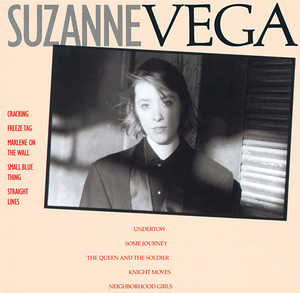
Based on my prior ideas about Suzanne Vega, I expected to rate this a 4 or even a 3. I liked her pretty well and put on her greatest hits about once a year, but also kind of slotted her into the category of music made by people who listen to NPR for people who listen to NPR. Which is me of course, but I also expected it to be sort of cerebral and narrow in the way NPR can be. Nope, she fooled me. When you pay closer attention, her lyrics are dark and savage, yet still delivered in that relatively narrow range. It disarms you. I had heard an undertone of menace before in her more popular songs like “Tom’s Diner,” and obviously “Luka” has its sublimated violence. But sit with this long enough and you realize you are listening to a poet who takes no prisoners in her portraits of others and herself. I have to give the self-titled a 5 for convincing me she is a dark genius and deciding to check out all her work. There may be a longer essay in me somewhere about the sound and the lyrics and where they fit into my impressionistic history of folk music. I don’t have the energy to make the whole case tonight, but I feel like her sound is a sort of yin companion to the yang of Paul Simon. Paul Simon adopted various sounds after S&G but they all make you feel positive about most anything, even if it’s whatever the hell happened to Julio down by the schoolyard. Suzanne Vega also has this quasi-commercial 80s folk sound, but she somehow twists it in a way that everything she says is a little bit unsettling, even though it sounds perfectly lovely. It’s how I felt the first time I heard “Tom’s Diner” without the dance beats… you think, “Oh, maybe this isn’t the cheerful slice of life that I thought.” I think so many of her songs here do that, even though by all accounts she’s a perfectly lovely human.
1001 Albums Summary
Rating Distribution
Rating Timeline
Taste Profile
Breakdown
By Genre
Tap a bar to see the albums behind it
Top Styles
Tap a bar to see the albums behind it
By Decade
By Origin
Albums
You Love More Than Most
| Album | You | Global | Diff |
|---|---|---|---|
|
GI
Germs
|
5 | 2.54 | +2.46 |
|
A Wizard, A True Star
Todd Rundgren
|
5 | 2.85 | +2.15 |
|
Millions Now Living Will Never Die
Tortoise
|
5 | 2.89 | +2.11 |
|
Out of Step
Minor Threat
|
5 | 2.94 | +2.06 |
|
Ghosteen
Nick Cave & The Bad Seeds
|
5 | 2.94 | +2.06 |
|
Wild Gift
X
|
5 | 3 | +2 |
|
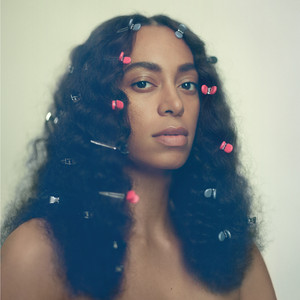
A Seat at the Table
Solange
|
5 | 3 | +2 |
|
Sister
Sonic Youth
|
5 | 3.01 | +1.99 |
|
Suzanne Vega
Suzanne Vega
|
5 | 3.03 | +1.97 |
|
Slanted And Enchanted
Pavement
|
5 | 3.03 | +1.97 |
You Love Less Than Most
| Album | You | Global | Diff |
|---|---|---|---|
|
Woodface
Crowded House
|
1 | 3.11 | -2.11 |
|
Come Find Yourself
Fun Lovin' Criminals
|
1 | 2.91 | -1.91 |
|
Born In The U.S.A.
Bruce Springsteen
|
2 | 3.69 | -1.69 |
|
Now I Got Worry
The Jon Spencer Blues Explosion
|
1 | 2.52 | -1.52 |
|
Suicide
Suicide
|
1 | 2.46 | -1.46 |
|
You've Come a Long Way Baby
Fatboy Slim
|
2 | 3.32 | -1.32 |
|
Tommy
The Who
|
2 | 3.3 | -1.3 |
|
Eagles
Eagles
|
2 | 3.29 | -1.29 |
|
Elvis Is Back
Elvis Presley
|
2 | 3.16 | -1.16 |
|
Roxy Music
Roxy Music
|
2 | 3.1 | -1.1 |
Artists
Favorites
Tap an artist to see their albums
| Artist | Albums | Average |
|---|---|---|
| Bob Dylan | 4 | 4.75 |
| Beatles | 4 | 4.75 |
| David Bowie | 3 | 5 |
| The Doors | 3 | 5 |
| Talking Heads | 3 | 4.67 |
| Radiohead | 2 | 5 |
| Oasis | 2 | 5 |
| Metallica | 2 | 5 |
| Joni Mitchell | 2 | 5 |
| Sonic Youth | 2 | 5 |
| OutKast | 2 | 5 |
Controversial
Tap an artist to see their albums
| Artist | Ratings |
|---|---|
| Bruce Springsteen | 2, 4, 5 |
5-Star Albums (84)
View Album Wall



























Popular Reviews
I'm a sucker for this stuff, 60s singer-songwriter. I remember being a kid and coming to understand that there was this whole world beyond Dylan and getting into Dave Van Ronk and Phil Ochs and Woody Guthrie and the Anthology of American Folk Music. I get the critique of it all and laughed my ass off at A Mighty Wind but I still fall for it again every time. I want songs that say something, and these guys never fail. Yeah his voice is an acquired taste and yeah there is an awful lot of mouth harp. But most of the tracks transport me to another time and place and make me think about what the heck I am doing in my life. I love the social critiques of "The Partisan" and "Story of Isaac" and "The Old Revolution" and how you could adapt them to any time or place if you want to. But "Bird On a Wire" is still the fav. I think it looks forward to his future, more contemplative stuff. I came to know it through the Johnny Cash version on American Recordings: https://www.youtube.com/watch?v=6eY7bGaccWI ... but I think that unlike his famous cover of "Hurt," which made the song his own, Johnny is still just commenting on Leonard's statement of his worldview. Which is maybe just a long way of saying there's only one Leonard Cohen.
A favorite artist and a favorite album. I’m not sure whether I would have picked this one or Revival for the list, but I’m so glad she’s here. And as usual I’m cranky about the down-voting of a female singer-songwriter. The usual critiques are that she’s depressing or inauthentic. “Depressing” doesn’t hold up in the context of her whole oeuvre, and even this album has plenty of levity if you pay attention. The authenticity thing is more complicated and I can’t say I’ve figured it out yet. I have considered pitching a book about this album (or Revival) to the 33 1/3 folks, aiming at that theme of authenticity and what the heck it does or doesn’t mean. Gillian became well known because of the O Brother Where Art Thou soundtrack, which in some ways was a dissertation defense of authenticity and in some ways a parody of it — what exactly are the Soggy Bottom Boys? And some have criticized her sound as a “simulation” (Robert Christgau) of Depression-era music, I guess because she grew up in Southern California and not Appalachia. Whatever — if this kind of music is to remain alive, it has to be reinvented each time, not just preserved under glass. Gillian and her partner David Rawlings always find subtle ways to make the sound speak to this century. The best example on this album is “Everything is Free,” a subtle critique of music piracy that is possibly an even better fit for the streaming era. Or look at her Blackstar EP, where she covers Radiohead, Townes Van Zandt, and Neil Young. Her work is better thought of as a triangulation of those artists than some kind of folk pageant. I’d also say that like John Prine and Iris DeMent and Dolly Parton, Gillian also provides a kind of salve to those of us who love the weird old American traditions but have also in some sense walked away from them. “Revelator” is a word that’s associated with the Biblical Apocalypse (or if you grew up Mormon, the Church President). By asserting that TIME is the revelator, Gillian reframes all that noise in the context of nature’s cycles but also her own story: “Leaving the valley Fucking out of sight I'll go back to Cali Where I can sleep out every night And watch the waves and move the fader Time's the revelator The revelator Queen of fakes and imitators Time's the revelator!” You see, she knows it’s a simulation and always was, yet she still seeks truth in it. And whether she’s singing about murder or Elvis or the weird feeling you get hearing the Steve Miller song you first had sex to… she finds it.
A subreddit user recently asked us to provide our 100 favorite albums. I knew Bowie would need to be in the top five, so I put in Low at number 3. Hunky Dory ended up at 17, which in retrospect seems like a mistake. There are plenty of days in which it is my favorite Bowie album and even my favorite album of all time. Why? The same explanation everyone has: this is the album where Bowie becomes Bowie. But it might be more accurate to say it is the album where he most clearly demonstrates the process of becoming Bowie 1.0. Bowie 1.0 (before Berlin) was the changeling who became Ziggy Stardust, The Thin White Duke, and all the less developed characters in between. Bowie 2.0 (Berlin and after) was David Bowie, the man, sharing what it was really like to be him (while also donning occasional costumes). If Bowie 1.0 is Major Tom, Bowie 2.0 is “We know Major Tom’s a junkie.” But David Bowie wasn’t a known quantity before Ziggy Stardust. People still thought he was a novelty artist, a one-hit wonder, a theatrical freak dabbling in rock and roll. He covers a Tiny Tim song on Hunky Dory; listeners wouldn’t have been crazy to group the two together. Looking back, we can see the genius of his earlier output, but very few people were paying that much attention in 1971. (Since I got this one over the weekend, I also listened to Divine Symmetry, a four-disc set that explores the process around “Hunky Dory,” including demos and live performances. You can tell from those sets that while the songs were great, the story of the album or the artist or the band is far from worked out.) So when Bowie sings about “ch-ch-ch-ch-changes,” he isn’t yet referring to his protean public persona. He’s talking about what it is like to be him, or the people around him, or the contact high formed by the connection of the two. There is so much “thou” in this album, whether it is the angelic rising generation of “Oh! You Pretty Things,” his newborn son in “Kooks,” or the grabbag of name checks: Andy Warhol, Lou Reed, Churchill, Himmler, Greta Garbo, Aleister Crowley. Bowie was such a chameleon that he was always afraid of becoming of whoever was around him, yet here he seems to have no shame around it yet. Why not write a song about Bob Dylan the same way Dylan wrote a song about Woody Guthrie — isn’t that just what we artists do? And yet. Dylan’s first album was an unabashed tribute; Bowie is up to something different here. Would you really want to be the object of “Queen Bitch,” “Song for Bob Dylan,” or “Andy Warhol” (which apparently made Andy leave the room the first time he heard it)? Each of these songs shines a spotlight on the difficulty and tension of worshiping other artists. “Andy Warhol, Silver Screen, Can’t tell them apart at all.” It was Warhol’s whole deal, of course, but are you comfortable with someone calling it out so clearly? As others have observed, these references to the pseudo-reality of film are the throughline of “Hunky Dory,” showing up in most of the songs. Bowie is aware that he is seeing, experiencing, projecting, critiquing, all at once, without ever quite making it into a film school seminar (thank God). It’s this detachment that make things like the flirtation with fascism tolerable. This used to bother the shit after me, but the best explanation I’ve read is that Bowie is shocked by the extent to which he is fascinated by the same set of ideas as Himmler and others. He wants to be as pretty as “the coming race” of “Homo superior” yet also frightened about what that means. And eventually that all congealed into the much more accessible character of Ziggy, the self-loathing starman who can’t quite save us. But for now, it’s just Bowie being weird as shit and making it sound like chamber music. I still have no idea what a tactical cactus is, yet the phrase gets stuck in my head all the time. That’s Hunky Dory to me, the crazed hidden notebooks that foreshadow everything yet also refuse to be any one thing themselves.
I have been trying to figure out what was really going on in Michael Jackson’s music since I was a little kid. An origin story: Around the time my dad walked out, my mom and sister and me recorded this video at the mall. It was part of this touring MTV exhibit where you could put yourself in a music video. It’s mostly us and a family friend swaying around aimlessly to “Bad” … I think I attempted some preschool version of break dancing. But on the last “Who’s bad?” there was this perfect freeze frame of us all. It came to symbolize the new kind of family we were creating after Dad’s departure, which of necessity was less traditional, more improvisational. I think MJ symbolized that for my mom and she remained a fan throughout the various scandals. I got older and too cool for MJ, too cool for pop. Too faux-sophisticated to admit that for a few years in the 80s all us kids wanted to be this protean child-god-man creature. Even though the text of his music was often about romance, the subtext pointed to these weird internal cosmic struggles that clearly none of us understand even now. And of course it is mixed up with his own trauma and the trauma he visited on others. Every time I try writing about this, that’s the stumbling block… I want to research things like what the heck was going on with the Moonwalker arcade game, but then I just think of the poor kids. Anyway, I was disappointed to find that revisiting Bad at the album level doesn’t illuminate all that much. The filler here truly is filler… maybe the hits aren’t as great as those from an album like “Dangerous” but on that record you can see the search for a theme, and the theme here is clearly “Let’s do Thriller again.” But the other half is legendary singles. I think maybe by the time of “Bad” the music video had become so dominant a form that the artistic energy beyond the singles went there instead of into the album. Maybe I’ll have figured out more by the time I get to Thriller. Until then, Shamone, lay it on me, etc.
1-Star Albums (5)


All Ratings (327)
Everything it was made out to be! At first I thought it would be 4 stars for me because it felt like a work in a genre I didn’t understand. Then I picked up on the continuity with more recent trippy stuff I like. Then I fully committed when the choir came in. And the riff of Siberian Khatru won’t be denied.
My dear old friend. No idea what I can say about it that hasn’t been said. It’s been with me about half my life. Long enough ago that I got it at a used CD shop, college I think. Its meaning has only expanded for me over the year. I have fantasies about doing a karaoke version of “Free Money” but doubt I could ever keep up. But I’ve certainly said every word many times. Jesus died for somebody’s sins but not mine…
Guys, I’m sorry, I hate it. I’m old enough to just come out and say I hate it. Maybe it’s just a 90s punk kid hating anything that was mainstream in the 80s. I want to tell a story about how Reagan and the right misappropriated it and all that, but in the end I just don’t care, I don’t want to listen to it. “I’m On Fire” creeps me out, “Glory Days” creeps me out. I like “Dancing in the Dark” and a few other moments, but honestly I was thrilled when it was over and I could put on Nebraska instead.
Wow, I expected to like this, but I never expected to like it as much as this. Of course I knew about Isaac Hayes from his profile in pop culture. So I was just expecting sexy slow jams. Instead I feel like this is reprogramming my priorities in life. The grooves are so great I don't know how to comment on them. The first and last songs (Walk On By, By The Time I Get to Phoenix) were already ones I enjoyed but also wondered if they contained something more... and here it is. No idea how I didn't know these versions existed. Anyway, because I'm just a white boy from Kansas I have no idea where it rates within its genre, but it's definitely a five for me.
This was the first album I've pulled that I knew pretty much nothing about. If you had asked me, I would have guessed that Can was a jam band rather than Krautrock. And that's the spirit in which I enjoyed most of the album. I can see why it's influential and can imagine listening to several of the tracks again. But man, "Ajman" and "Peking O" put me off -- I like me some crazy noises and I couldn't keep track of what was going on. If I listen more will I figure it out, or is this pretty much how everyone feels about the record? I had thought this might be three stars but re-listened to the rest of the tracks later and really liked them, which pulled it up for a 4.
Album 19 - Black Sabbath - Black Sabbath - 4/5 I’m just a casual fan of them so I don’t know that I have anything to offer beyond what other reviews have said: Holy cow, imagine hearing this in 1970 when there had never been anything like it before. Huh, they were pretty bluesy on that first record. For all the greatness that is there, there is something about it that seems unfinished. As much as I enjoy “The Wizard,” after I was done I just found myself humming songs from Paranoid. But I’m glad I pulled it today… helped me get through a stressful parenting day, which I think would make Ozzy smile.
Shoulda been “21.” My respect for Adele is grounded in songs from that time, which my wife and I would play every day to get psyched up on the way to work. I remember feeling a little let down when “25” came out and I guess I still feel that way. There’s no denying the power of the opening track “Hello” … it shows she’s the undisputed master of a certain mood, but it’s not a mood I seek out from music very often. So I kind of get lost in the other tracks that reflect that. I liked the theme and sounds of “River Lea” and “A Million Years Ago”’… but honestly if this comes on I’ll probably switch to her other albums or songs. That probably doesn’t sound like a four star review, but it feels impossible to rate Adele lower. If I had no idea about her other work this might have been a three
I have no problem rating it a five, but my persistent question is why is this THE album everyone seems to own and the #1 rated on the list? I actually think Apple Music’s analysis is pretty good. Paraphrasing heavily, Rumours takes everything interesting going on in the 70s, runs it through an adult contemporary filter, then makes songs out of only the finest parts that remain. So You Make Loving Fun kinda sounds like a Stevie Wonder song and The Chain kinda sounds like a Zep song and Gold Dust Woman kinda sounds like a Patti Smith song. But they’re all just the Mac. I also noticed this time through that the band is incredibly locked in… in a way that feels almost unreal. I think that explains the magic of The Chain especially. So I’m content for it to be one or those mega-records like Thriller. It’s just a *little* too slick to be a favorite record for me. I have trouble imagining anyone breaking down and crying hearing Rumours, and that’s the effect I ultimately want a great record to have. But I’m still humming… don’t… stop… thinkin about tomorrow…
Loved this. Totally different from anything I've heard from the generator so far. Mysterious. Sexy. Political. Amorphous. Grounded in the Black experience yet also feels like it could have been written by space aliens. I had encountered songs from the group on playlists before but didn't get what they were really about until listening through a whole album. Looking forward to further exploration of their mysteries.
I ought to be into this, but I am not. I fit the profile as an electronica-curious 90s kid. I get the role that they are supposed to have played in the evolution of the rave scene. But in practice, it feels kind of flat and tedious to me rather than dark or challenging. I think that to feel what this album is trying to make me feel, I would rather listen to NIN. They were a couple of moments. I enjoyed but to really love it. I think I would need to have been part of the scene.
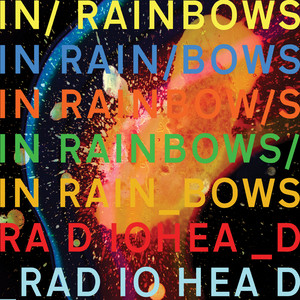
I have about five different favorite bands at any given time but Radiohead has always been on the list. There’s no point in me adding to the zillions of things that have been said about their greatness but I’ll add a bit about this album. I think you could make the case that this is the best Radiohead album, though I never actually hear anyone make it. I suspect that if I had to rank every single song and assign point values, then add them together by album, In Rainbows might win. Sure, it’s not a giant statement about the future of humanity like OK Computer, but every track feels essential. And I think it opened the door to a future where Radiohead could channel our angst while also being kinda chill about it. They can be who they are but also do stuff like a Bond theme (kind of) and The Smile. That makes me happy for them and for all of us. PS since this is Thanksgiving, I should say I keep a gratitude journal and I’m sure I have written that I am grateful for Radiohead, for Thom Yorke, for In Rainbows, many times…
Every feeling I have about Oasis is colored by nostalgia. But as an American who only had a few records at the time "Wonderwall" dominated the airwaves, it's nostalgia for the singles, not the albums. Nevertheless, every few months, I'll get in a mood and put on "Oasis Essentials" or "I Miss Britpop" from Apple, the same way I'll sometimes do with U2 or R.E.M. I think this is my first time actually listening to the album all the way through. Since I got this one over the weekend, I actually decided to do the first three albums for context. "Definitely, Maybe" and "Be Here Now" felt like I was still listening to the playlist -- good stuff, but eventually it all drifted together into "Yup, that's what Oasis sounds like." But WTSMG gave me a distinctly warm feeling that I think the nostalgia must have been all about in the first place. My preferred track has always been "Champagne Supernova" over "Wonderwall," and I'm glad it comes at the end. in context, it feels more like a concluding statement to a collection of songs that I see now were nostalgic in their own way for the world the Beatles promised us but never arrived. That emotional connection rather than any kind of rock virtuosity is why it's a five for me. "How many special people change..."
Love this guy. Love his collaboration with Bowie. Love this album, though maybe his image on the cover even more than any individual song. Nah, I love "The Passenger" more than the photo, who am I kidding? But in the end I have to give it four stars, I think. There's just too much clowning around for me to say it belongs up there with Abbey Road, Ziggy Stardust, or even a Stooges album. I like it best as a moment in the story of Bowie and Iggy and Berlin, not so much as a moment in musical history. And that's okay. "Here comes Johnny Yen..."
I love this. I LOVE THIS. Makes me feel the way I felt listening to Elvis Costello the first time (Armed Forces 20+ years ago). Love the piano, love the pace, love the themes and the way they wear them so lightly. I think I was only vaguely aware that they were a Britpop band though of course I knew “Alright” from “Clueless.” I’m excited to keep coming back to it. I think my only critique would be that the energy seems to dissipate near the end of the album… I could see this being one where I lose track of the tracks near the end. But there are plenty of albums like that which I have come to love when I pay more attention. Mostly I’m just happy to have encountered this today. Lifted my spirits amidst yucky weather.
I'm a sucker for this stuff, 60s singer-songwriter. I remember being a kid and coming to understand that there was this whole world beyond Dylan and getting into Dave Van Ronk and Phil Ochs and Woody Guthrie and the Anthology of American Folk Music. I get the critique of it all and laughed my ass off at A Mighty Wind but I still fall for it again every time. I want songs that say something, and these guys never fail. Yeah his voice is an acquired taste and yeah there is an awful lot of mouth harp. But most of the tracks transport me to another time and place and make me think about what the heck I am doing in my life. I love the social critiques of "The Partisan" and "Story of Isaac" and "The Old Revolution" and how you could adapt them to any time or place if you want to. But "Bird On a Wire" is still the fav. I think it looks forward to his future, more contemplative stuff. I came to know it through the Johnny Cash version on American Recordings: https://www.youtube.com/watch?v=6eY7bGaccWI ... but I think that unlike his famous cover of "Hurt," which made the song his own, Johnny is still just commenting on Leonard's statement of his worldview. Which is maybe just a long way of saying there's only one Leonard Cohen.
Album 30 - Neneh Cherry - Raw Like Sushi - 3/5 I enjoyed this a lot but am giving it a 3 because I don't think I'm likely to return to it. The spirit in which I enjoyed it comes from being a white kid from the suburbs who grew up in the 90s. Sometime in elementary school I started listening to Top 40 radio. For a couple of years there I could probably sing all the words of all the hits, whether they were alternative, R&B, hip hop or pop. I saw the sign and I'm afraid of Americans and I don't want no scrubs and I say hey what's going on. But like a lot of kids my age, I eventually learned what kind of music I was "supposed" to be listening to. As a local radio station used to put it, "no rap, no country" -- a particular kind of white identity. I deepened my knowledge of rock and folk and punk, but wouldn't have admitted how much a younger version of me had loved TLC and En Vogue and Boyz 2 Men. As with any most white kids listening to that music, there was a kind of fantastical imaginary relationship to some of the subject matter. We pretended we were going to a party on the West Side where "all the gangbangers forget about the drive by." Anyway, this kind of 80s hip hop brings me back to that joyous childhood place. It's absolutely a part of my experience of listening to R&B and hip hop today, the understanding that this was an experience I lost touch with through America's never sleeping racial sorting system. In that sense the album is a five. And everyone is right, "Buffalo Stance" is a banger and anticipates groups like Massive Attack. But at the same time I've listened to enough contemporary hip hop at this point that the rap on other tracks seems kind of rudimentary. I'd be happy if I encounter any of these tracks in the wild but probably won't put on the album again.
I have enjoyed every ELO single I’ve ever heard but had never listened to any of the albums. I was excited when this one came up, but then felt disappointed the first time through. I had actually expected it to go much harder in the weird prog rock outer space direction than it does. Folks expressed so much adulation for Jeff Lynne’s songwriting, though, that I decided to go back and listen a few times over the weekend. I think that this time through, I got the gist. I buy everything about ELO being a kind of continuation of the Beatles and especially McCartney style songwriting. I ended up humming bit of “Sweet Talkin’ Woman” and “Starlight.” Cool, okay, glad I tried it again. Yet it’s still a four for me because as much as I love the tunes, I just don’t believe enough in the idea that every rock song would be better with strings attached. There’s no question that the sound Lynne created works on ELO’s biggest hits… I had to warn my wife in advance that I’d be singing “Mr. Blue Sky” all weekend. But to me it limits my overall enjoyment. There’s a specific mood in which I turn to “Mr. Blue Sky” or “Living Thing” and sure, now I might turn to this album instead. Yet it doesn’t feel like it re-programmed my brain in the same way some of the other five star albums have done. I’m glad it’s there, it makes me smile, but that’s about it. “Hey you with the pretty face…”
It's perfect. I just wish we had so much more.
I was a little annoyed by this since I just got What’s the Story Morning Glory? To figure out how I felt about it, I listened to this album too. I determined that I prefer WTSMG even though it seems most people think Definitely Maybe is a more authentic sound. I actually felt kind of the opposite, that WTSMG is distinct if poppier, while Definitely Maybe is more like a Britpop type specimen. But… I like Britpop. I like this more than Pablo Honey. I find even the kinda dumb lyrics charming. “She done it with a doctor on a helicopter”? Sure, makes me smile. And the various kinds of hate Oasis gets makes me want them to give a boost because in spite of it all, I always enjoy hearing them. If we were using a different scale this might be a 4.5 or a B+ or I don’t know what, but tonight I’m giving them the benefit of the doubt.
The essence of hardcore. Couldn't love it more. I wanted so bad to be a punk in high school but at best came across as a latter-day hippie. But the kids gave me credit for being "straight edge" AKA too scared to do drugs. "You think you're the only one? Think again... think again... think again..."
This will always speak to a certain place in my soul. My college roommate and I played Damon Albarn's Mali Music project over and over again when reading or studying, which then turned me on to Ali Farka Touré and others. Learned more about him in an African musicology class where the musically versed in the group could explain his skill and influence. Just a great story and a fascinating person. I'm still pretty much an uninformed Westerner so I can't speak to where this particular album might fit into his discography or the larger scene of Malian music, but I love the sound so much I have to give it a five.
I keep giving albums five stars but it’s because the generator keeps giving me iconic shit. I mean it’s THE DOWNWARD SPIRAL. Trent famously apologized for the album when he sent it in but the things that were inside him now seem so necessary for the understanding of our world. For scratching that particular itch, this album beats Nirvana or Pumpkins or even Radiohead. Even if it might not rank as high as those folks’ records on favorite lists, I’d argue its sound and style may be even more influential. And it remains so when you hear it today. Weirdly I think the only part of the album that feels dated now is “Hurt” … because as Trent recognized, it’s Johnny Cash’s song now. But that just shows how much it mattered that folks who were still listening to it, still thinking about, still interpreting it.
Really struggled with whether to give this a four or a five... in the end, I'm going with five. Why: the good moments on it are extremely good and created a portal that brought the whole world into metal and metal into the whole world. For that it deserves eternal glory. My reservations... I always feel like I get kind of lost in the last third of the album. The worst moments make you say, "Great, a Metallica song like every other Metallica song." And even though I like the song, I'd be happy if I never had to hear the phrase "don't tread on me" again in my life. Still... look at The Blacklist. https://en.wikipedia.org/wiki/The_Metallica_Blacklist ... look at the artists who took this album so deeply to heart. It's in all of us. When I pulled it at 10 p.m. last night, I put it on to go to sleep, because even though it's metal, it's as familiar and soothing as a lullaby. "And nothing else matters..."
I wanted to love it but in the end I just like it. 1) I had only ever heard “Take On Me,” which is obviously legendary. So I was happy to hear that it’s a new wave album and not twelve different versions of the same thing. 2) But it never quite solidified into anything that felt essential or compelling to me. Not driving enough to be like the new wave I like most, not quirky or spacey enough to be like the synth pop I like most. 3) I appreciated the ideas behind a few of the songs and would be happy to encounter them again, but I don’t think I’ll ever wake up feeling like I have to listen to this album today. It’s too bad because it was close… I might have given it 3.5 or 7/10 on a different scale.
Thanks to listening to this and reading about it, I learned about Asian Underground and how it influenced all sorts of other stuff I like. And the album itself grew on me, but not quite to the point where I can imagine returning to it in the future. I disagree with the folks who say it's just drum and bass plus Asian instrumentation... I can hear that there are some real ideas there. But I felt more like I was listening to some cuts by a session museum who contributed to some other record I really like... I can appreciate it but don't feel like it changed me in the way I like a record to do.
I couldn't listen to it properly here in the US but was able to find most of the tracks. I didn't have strong feelings about it overall. It reminded me of being in high school and buying a CD based on a track I'd heard on the radio... oftentimes those bands seemed perfectly nice, even clever, but there's no mistaking the feeling of "oh, so there's no magic here." I liked a few moments along the way, but as soon as it was done I put on a mix of new wave stuff I enjoy a lot more.
A subreddit user recently asked us to provide our 100 favorite albums. I knew Bowie would need to be in the top five, so I put in Low at number 3. Hunky Dory ended up at 17, which in retrospect seems like a mistake. There are plenty of days in which it is my favorite Bowie album and even my favorite album of all time. Why? The same explanation everyone has: this is the album where Bowie becomes Bowie. But it might be more accurate to say it is the album where he most clearly demonstrates the process of becoming Bowie 1.0. Bowie 1.0 (before Berlin) was the changeling who became Ziggy Stardust, The Thin White Duke, and all the less developed characters in between. Bowie 2.0 (Berlin and after) was David Bowie, the man, sharing what it was really like to be him (while also donning occasional costumes). If Bowie 1.0 is Major Tom, Bowie 2.0 is “We know Major Tom’s a junkie.” But David Bowie wasn’t a known quantity before Ziggy Stardust. People still thought he was a novelty artist, a one-hit wonder, a theatrical freak dabbling in rock and roll. He covers a Tiny Tim song on Hunky Dory; listeners wouldn’t have been crazy to group the two together. Looking back, we can see the genius of his earlier output, but very few people were paying that much attention in 1971. (Since I got this one over the weekend, I also listened to Divine Symmetry, a four-disc set that explores the process around “Hunky Dory,” including demos and live performances. You can tell from those sets that while the songs were great, the story of the album or the artist or the band is far from worked out.) So when Bowie sings about “ch-ch-ch-ch-changes,” he isn’t yet referring to his protean public persona. He’s talking about what it is like to be him, or the people around him, or the contact high formed by the connection of the two. There is so much “thou” in this album, whether it is the angelic rising generation of “Oh! You Pretty Things,” his newborn son in “Kooks,” or the grabbag of name checks: Andy Warhol, Lou Reed, Churchill, Himmler, Greta Garbo, Aleister Crowley. Bowie was such a chameleon that he was always afraid of becoming of whoever was around him, yet here he seems to have no shame around it yet. Why not write a song about Bob Dylan the same way Dylan wrote a song about Woody Guthrie — isn’t that just what we artists do? And yet. Dylan’s first album was an unabashed tribute; Bowie is up to something different here. Would you really want to be the object of “Queen Bitch,” “Song for Bob Dylan,” or “Andy Warhol” (which apparently made Andy leave the room the first time he heard it)? Each of these songs shines a spotlight on the difficulty and tension of worshiping other artists. “Andy Warhol, Silver Screen, Can’t tell them apart at all.” It was Warhol’s whole deal, of course, but are you comfortable with someone calling it out so clearly? As others have observed, these references to the pseudo-reality of film are the throughline of “Hunky Dory,” showing up in most of the songs. Bowie is aware that he is seeing, experiencing, projecting, critiquing, all at once, without ever quite making it into a film school seminar (thank God). It’s this detachment that make things like the flirtation with fascism tolerable. This used to bother the shit after me, but the best explanation I’ve read is that Bowie is shocked by the extent to which he is fascinated by the same set of ideas as Himmler and others. He wants to be as pretty as “the coming race” of “Homo superior” yet also frightened about what that means. And eventually that all congealed into the much more accessible character of Ziggy, the self-loathing starman who can’t quite save us. But for now, it’s just Bowie being weird as shit and making it sound like chamber music. I still have no idea what a tactical cactus is, yet the phrase gets stuck in my head all the time. That’s Hunky Dory to me, the crazed hidden notebooks that foreshadow everything yet also refuse to be any one thing themselves.
The only reason I hesitated about giving this a 5 is that Doolittle exists, and that’s one of my gold standards for what a rock album can be. Surfer Rosa is not that… even in a 34 minute record, there’s songs they could have cut. But the tracks that work work so goddamn hard. “Bone Machine” brings all Black Francis’s absurdity and perversion and violence and beauty right from the outset. “Cactus” impressed Bowie enough for him to cover it. Everybody feels like they have a “Broken Face” after they hear it. And “Where Is My Mind?” Like everybody my age, I got to know it through the last scene of Fight Club. No sane person likes everything in that movie, but the choice to end it with that song make the last scene sufficiently transcendent that you think, “Wait, maybe that IS what I want.” You met me at a very interesting time in my life… Yet it’s also a silly song I sing with my preschooler. “Daddy, play the swimming brain song…”
The fact that I like metal at all is entirely due to the fact that my high school girlfriend was into it. She’s now my wife, and even though I will independently play Metallica or Tool, it all still feels like I borrowed it from her CD collection. And she *hates* Slipknot. So this is not my scene. But approaching it with fresh ears, I can see why someone might like it. There are certainly days I feel the feelings expressed in “Gematria” or “Dead Memories.” Overall, though, this kind of metal feels kind of tedious to me… oh, you are going to do that with the drums *again?* I hope it’s helping some kids get by somewhere, but I’ll stick with my wife’s CD binder.
This is a bit underpowered since it is Christmas Eve. I kinda missed the whole Amy Winehoise moment in pop culture… I heard the hits but did not understand the devotion to her or how deeply folks felt the loss when she died. I didn’t do the deep dive I might have preferred in response to getting this album but I do hear how much of a storyteller she is, and an unflinching one, which I love in a songwriter. I’ll return to it and her other work.
The OG rock Christmas album, so glad it’s on the list.
I have been trying to figure out what was really going on in Michael Jackson’s music since I was a little kid. An origin story: Around the time my dad walked out, my mom and sister and me recorded this video at the mall. It was part of this touring MTV exhibit where you could put yourself in a music video. It’s mostly us and a family friend swaying around aimlessly to “Bad” … I think I attempted some preschool version of break dancing. But on the last “Who’s bad?” there was this perfect freeze frame of us all. It came to symbolize the new kind of family we were creating after Dad’s departure, which of necessity was less traditional, more improvisational. I think MJ symbolized that for my mom and she remained a fan throughout the various scandals. I got older and too cool for MJ, too cool for pop. Too faux-sophisticated to admit that for a few years in the 80s all us kids wanted to be this protean child-god-man creature. Even though the text of his music was often about romance, the subtext pointed to these weird internal cosmic struggles that clearly none of us understand even now. And of course it is mixed up with his own trauma and the trauma he visited on others. Every time I try writing about this, that’s the stumbling block… I want to research things like what the heck was going on with the Moonwalker arcade game, but then I just think of the poor kids. Anyway, I was disappointed to find that revisiting Bad at the album level doesn’t illuminate all that much. The filler here truly is filler… maybe the hits aren’t as great as those from an album like “Dangerous” but on that record you can see the search for a theme, and the theme here is clearly “Let’s do Thriller again.” But the other half is legendary singles. I think maybe by the time of “Bad” the music video had become so dominant a form that the artistic energy beyond the singles went there instead of into the album. Maybe I’ll have figured out more by the time I get to Thriller. Until then, Shamone, lay it on me, etc.
I really believe this is a perfect, indispensable album. I first listened to it a few years ago when I wanted to understand Talking Heads better (I only knew their hits). This one intrigued me because I had never seen the cover before, unlike the later albums that popped up when “Burning Down the House” or “Road to Nowhere” streamed. “More Songs About Buildings and Food” doesn’t have a song like that. In re songs, someone wrote a while ago that for all the changes in how we consume music in the last century, the song remains the basic building block. But every once in a while you have albums that truly function as albums, where the songs fade into the background. The collection is really what matters. I do NOT mean operatic concept albums, which are okay in their place. If those are epic poems, a collection album is something like William Blake’s Songs of Innocence and Experience… an arrangement of verses that reveal transcendent themes. “More Songs” is doing that in relation to our contemporary corporate civilization, looking through David Byrne’s alien eyes. There are so many fun turns of phrase and observations. Yet it’s also fractal… you can zoom out, zone out, just jam to it if you want. Weirdly it is an album you can work to. I think its palatability is due to the fact that Brian Eno is confident enough to treat Byrne and all the other member bands as instruments, just another part of Eno’s quest for music that is “as ignorable as it is interesting” (as he said of ambient). Dude had just made Low with Bowie, he could do anything. The uniform tension of the first nine tracks is finally released courtesy Al Green in the “Take Me to the River” cover. I don’t think I understood the brilliance of this cover until I heard it on the album… it really is like being splashed in the face with cool water after running a marathon. It provides just enough asymmetry to remind you that this music was made by humans and not intelligent machines. Anyway, I could listen to this every day, and just might for a while!
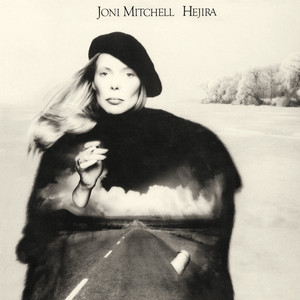
The starting point here is that Joni Mitchell’s “Blue” is my favorite album. It is pure yin energy in its darkness, its doubts, and its devotion. It is in a class by itself. So in some ways I can’t even compare “Court and Spark” to it, but I think my best story about it is that it is Blue’s yang counterpart, brilliant and brash. And I can see that in some ways it is so much more challenging because here a woman is being braggadocios and brilliant in a way pop music had never quite seen before. She’s hip, she’s horny, she’s a wizard, she’s Joni. So I could see why for may people this could be here greatest album — no doubt about it being a 5 for me.
I have a playlist called “remedial hip hop” where I try to collect all the gems I missed over the years due to internalized boundaries of genre and race. When I heard this album, I enjoyed it enough to put the title track on the list. And there was a friendly funkiness I enjoyed across all the tracks. But at the same time, I’ve heard enough hip hop at this point that the critiques of the album expressed by other reviewers hit home. It does kind of feel like your friend who everyone said would be the next Lauryn Hill… you can still like them even if that didn’t turn out to be true. That’s kind of how I felt about this… enjoyable but not life-changing
This was fun, especially some of the instrumentation, but nothing about it really stayed with me.
It feels wrong that I'm about to give three stars to The Temptations, but I'm afraid that's how I feel about this one. The turn toward a funkier sound is brilliant, and the tracks that actually sound that way are really enjoyable. But much of the record is in the 60s Motown style... timeless when applied to the right material, but nothing particularly inspiring here. I suppose it's an album that matters more as a sign of where the group (and the whole culture) were heading, but I don't think it's one I'll return to for a complete listen.
This project is making me into a Talking Heads fan for sure. I knew them from their hits and once dove into More Songs About Buildings and Food, so I knew I liked the deep tracks there. Buy this is also quite enjoyable to me as a whole. Love the jangle pop turn on “Heaven” … “Life During Wartime” has long been a fav and sadly seems more relevant than ever.
Even though I enjoy going to shows, I’ve never really gotten live albums. This famous one is no exception… it seems like everyone was having a really good time, but I don’t really understand what’s special or different about it.
When I first started getting into Dylan, I picked up CDs pretty indiscriminately, including a lot of the newly available bootlegs and live stuff at the time. I found it all pretty distracting while I was still trying to get to know the core material, so I've got a chip on my shoulder about a lot of this stuff. At some point I just don't care about how Bobby messed around with the songs on any particular day. However, this recording represents such a specific moment in history and such a pivotal transition that I was fascinated by it. I love that he did an acoustic set and an electric set and how much it pissed people off. I love the messy mix of material from Bringing It All Back Home and Highway 61 and Blonde on Blonde. It's the rare live album I could actually imagine returning to with some regularity.
Love Iggy, love The Stooges. They sound more like my platonic ideal of punk than the Ramones or the Sex Pistols. "Search and Destroy" is one of my go-to tracks from them but I've listened to this album less than the first two. I love how much of The Doors I hear in it plus James Williamson's guitar. Always leaves me happy and energized. Why not give it five stars? It's honestly just because I feel self-conscious of how many fives I've given out so far! We'll see how that holds up as the project proceeds.
I read that this album was conceived as a kind of palate cleanser after Pop and the PopMart tour. That's the era in which I first became aware of U2 and I think it permanently damaged my ability to hear them clearly... there's something off-putting about claiming to be the biggest band in the world, even if it's all with a wink. Anyway, the album strikes me as pleasant but not much more. I know the big U2 albums are yet to come and I feel like I'll dig in deeper then.
I enjoy Pulp's overall sound and Jarvis Cocker's talk-sing style, but I ended up liking this album less than I had hoped. "The Fear" is solid... the British seem to keep finding new ways to explore modern listlessness, and I'm here for it all. But I found myself kind of lost in the later tracks. Like a lot of these 90s albums, it seems a little too long and unfocused. I would probably give it 3.5 if that were an option, but for today it's just a 3. I wouldn't be surprised if I return to it later and feel differently.
I feel surprisingly won over by this album. I had always thought of Sting and the Police as kind of corny, perhaps because of their hits or their representation in pop culture. Or rhyming “cough” with “Nabokov.” But my mind grew more open when I found “Synchronicity” in my father-in-law’s CD collection after he died. This was a guy of broad but cultivated taste, and over the years he only held onto the books, albums, and movies he truly loved. He knew more about poetry than anyone I’ve ever met. I wish I knew what he had heard in this album. So I listened to the album with his ears and I heard the poetry in it, the references to everything from dinosaurs to Paul Bowles. I feel intrigued rather then creeped out by “I’ll Be Watching You” and “Murder By Number.” And of course there’s “King of Pain,” which to me always transcended whatever ideas I might have had about the group. So it’s a five, maybe the most surprising five I’ve given so far, even if it may have been obvious to many other people.
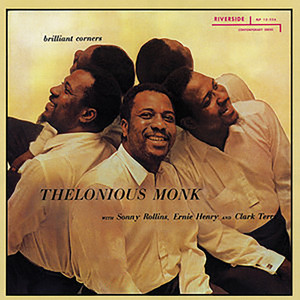
I started trying to get into jazz as a teenager and I’m not sure I’ve ever quite succeeded. But I never had trouble getting into Monk. His unique takes on time, melody, and harmony always get into my soul as surely as Radiohead does. Returning to this album I think my favorite was “Pannonica” but I’m always up for “Bemsha Swing.” I actually heard it the first time in this Medeski Martin and Wood medley with “Lively Up Yourself” which is just fun: https://m.youtube.com/watch?v=75Ma7X2-Pfw Anyway this music puts me in such a state of bliss that I wonder how I give fives to anything below that standard. But I seem to like everything, so on to the next.
Not for me. I enjoy some metal and find some incredibly dull. What makes this a 2 rather than a 1 for me is that I can catch glimpses of where it influenced later bands I like. But it felt like every time I encountered a moment I liked it was quickly overwhelmed by an obnoxious vocal or a repetitive riff or incoherent lyrics. It’s sort of the opposite experience of listening to Metallica… they have their annoying moments but they seem small in comparison to their overall spirit. I just didn’t hear that kind of soul in this music, tho some I guess a few moments showed me why people might.
My dad went through a Celtic music phase when I was a kid, so it’s entirely possible that I’ve heard this before and didn’t realize it. I remember a lot of Dad’s stuff seeming a little stiff at the time, yet it left me with the sense that this kind of music (and really any kind of return to a folks music tradition) was a good thing, so I’ve gone down lots of those roads as an adult. Anyway, this seems like a pleasant meander through the tradition, a nice middle way between bands like The Chieftains and Dropkick Murphys, neither of which I could ever quite love. I’m not sure I’m in love with these fellas either but I enjoyed how organic and eclectic it felt, like a really skilled group sitting down in a pub and just playing whatever came into their heads. That sometimes left me scratching my head but mostly made me look forward to whatever came next.
I honestly don't think I can explain why I wasn't into this... I've had the same experience with Nick Cave before. I look at all the pieces and think that it ought to be music I really like, but I end up sort of listless about it all. Sorry I don't have anything more profound for what is clearly an impactful album for many people!
I picked up this album not long after I first heard Mermaid Avenue. I felt happy to get to know Billy Bragg better, but it didn't change my life. I hate to say that decades later I feel about the same. Solid songwriting and I couldn't agree more with his politics, but it also feels like it's missing some vital component that makes me fall in love with an album. The weird thing is that I know Bragg can do it, because I do feel that way about Mermaid Avenue and some of his other songs. So altogether even though I am happy to see my old friend Billy, I'm also a little surprised to see this album on the list.
One of those albums where you wonder how anyone in the world dislikes it. The band and her voice are perfectly calibrated. The sound is so warm that you feel like you are right there. She's one of those performers like Paul Simon or Joni Mitchell where you can tease out a subject to any given song, but mostly all the songs are just what it's like to be inside this particular person's head. Or more like heart for Janis. As with the Jimi albums, I just wish there was more.
Conflicted about this one... wish I could do 3.5. I love the Replacements’ overall sound, how they occupy this particular intersection between punk and indie and jangle pop. I can hear their influence in so many bands I like. But I’m not sure there was a particular moment on this album that wowed me. When it was done I found myself humming their later singles like “Alex Chilton.” At the same time, I keep replaying the album looking for that moment and never stopped enjoying it. So I think I’ll give them the four in the end and play it one more time.
Album 66 - Neil Young - Harvest - 5/5 “Dream up, dream up, let me fill your cup / With the promise of a man” But only the promise. In my first semester in college, my dad told me he wanted to meet up with his old roommate in Chicago and see Bob Dylan. He had four tickets and wanted to know if I could come and bring a friend. Of course, I said, but my own roommate was busy and I didn’t know anybody else yet. So I e-mailed the dorm listserv and asked if anyone wanted to go see Robert Zimmerman. A couple of guys caught the reference and I ended up having them draw straws for it. Afterwards we sat around drinking and talked about Dylan — his many eras, his epic genius. Somehow Neil Young became a point of comparison… someone said that as much as he loved Neil Young, he could fit all his favorite Neil songs onto a single CD, but he could never do that with Dylan. It all seems a pretty blinkered way of viewing art, but we were also just kids sizing each other up. With a more mature mindset, though, I can say: Dylan never made anything like Harvest. Don’t get me wrong, he’s my idol. It ended up being a great show. He had a killer band that went on extended jams. He covered Warren Zevon and the Stones. But I also remember seeing my dad’s awkward interactions with his old roommate that night and finally realizing that he had no friends. From then on his life would be increasingly characterized by confusion and decline. There are days I would hate him and there were days when he was too disconnected from reality to hate. Even though it sounds smooth as a pristine pond, Harvest speaks to that kind of desperation, which i think Neil Young must have carried with him his whole life. Each song is almost a life story but not quite. Needles, words, a maid, a heart of gold — what does any of it mean? Even “Alabama” is not quite a protest song in comparison to “Ohio.” Harvest doesn’t quite make sense and doesn’t ask you to make sense of it, just listen. In counterpoint to that room full of Dylanologists in college was a late-night ride with a spindly girl. She lived in our dorm but nobody really knew her or would say anything about her. My friend said she looked like a lost yearling. But somehow I ended up in her pickup truck in a drive to perform some errand in the suburbs. We sang along to “Harvest” the whole way. After “Old Man” she said “that song is everything.” I wondered if she would become a significant person in my life after that but I think I only saw her a few times ever again. “Old Man” is everything but is by the same token incomplete. The patriarch yields to no particular interpretation or thesis. But I would say this — a writer I like noted that some song lyrics lie through their very composition. “I Walk the Line” is a lie. “Don’t Think Twice, It’s Alright” is a lie. If you’re so certain, fellas, then why put so much effort into the song? And “doesn’t mean that much to me to mean that much to you” is most certainly a lie. Many years later my dad ended up in my care. And also in my car, a lot. After a certain age I realized he didn’t care that much about anything I had to say. Plus he was in the middle stages of dementia by then anyway — he regularly insisted we all said he was “demented.” When we would drive around the city for his fairly pointless medical appointments he would repeat phrases off of billboards and say things like “Didn’t we go there with your mother once?” Hell if I know. So it made more sense to play music, typically albums I’d gotten to know from his own collection. When I put on “Harvest” one day, I knew “Old Man” would be waiting and decided consequences be damned. But when we got there I saw him off in his own world, mouthing the words, telling his own story. Dad exposed me to so much good music but I’m not sure we ever had an honest conversation about any of it, much less what it might mean for him and me. He died not long after, passing a few minutes after visiting hours ended one night. I’ve made my peace about it all. I was lucky enough to have a father-in-law with whom I could discuss every steel guitar note if we pleased; he also grew up without much of a dad and knew not to make too big a deal of it. And now I have my sons and I get to make up my own story. I pushed the baby around today in the stroller, talking in a stream of consciousness as I always do. Exposure to language is good. I told him about this album and what a harvest is. Completion and finality. A bounty and a scythe. A promise fulfilled but only through a degree of destruction. He’s young enough that I don’t have to fill in the gaps and I’m old enough that I have no desire to. “Old man take a look at my life, I’m a lot like you.” It’s any old man and young man, any father and son. It invites YOU to finish it. And by the time he’s 24 I’ll probably still be trying.
The Zombies! Yeah! When you are a Beatles devotee, like I’m sure many of us are, it can be a relief to encounter other British Invasion bands, like picking up a novel after studying scripture. You see other possibilities, even if some of them seem incomplete. In this album you’ve got the psychedelia and the organ and the haunting harmonies — all stuff I expected from what I already knew. But there’s also a songwriting style that’s surprisingly contemporary on the tracks I hadn’t heard before. There were times when I thought I was hearing a group that grew up listening to Belle and Sebastian playing in a throwback style. Exactly what I wanted but also different from what I expected. Also I’ve been listening to “Time of the Season” my whole life and I still can’t decide if it’s more sexy or spooky, and I’m just fine with that.
’ve tried several times to get into Nick Cave and it has never quite worked. It’s weird because the musical style and the stories in his songs should fit me to a tee. Anyway, this one finally worked for me, and I was enthralled by the darkness and the violence the whole way. Maybe it’s because I had “Straight to You” as an anchor. I know I have heard it before but did not expect to encounter it here, so perhaps it was a cover. Went back to it and listened a couple times between trips through the album. I also know and love “Into My Arms” from a movie soundtrack… both of them most certainly my kind of semi-bleak but utterly devoted love song. Maybe I’ll end up a fan after all!
I’m beginning this project while also beginning the project of trying to be a Buddhist. A lot of that requires letting go of assumptions and just being in the moment. So I tried to let go of whatever feelings I have about Lorde, her debut album, and the choice of this one for the book over that. What I heard was a smart pop artist in the vein of those I love now (St. Vincent, Caroline Polachek) and those from the past (Kate Bush). There’s danceable stuff, dark stuff, a great mix. And she doesn’t particularly sound like someone trying to be anything but herself, which is all I want for her after her early stardom. Guess I let that slip in there, but I hope that’s what I’d want for anyone.
I get it but I don’t get it. I heard moments in this that I liked, and I could see how the production may have influenced dozens of artists I enjoy. But it mostly felt kind of aimless, like a collection of deep cut Dylan songs someone was playing slowed down with weird instrumentation. I did like “Grey/Afro” though… wish the whole album sounded like that.
I remember sitting with a friend a while back who walked me through the whole taxonomy of metal and I could barely keep up. But I feel certain that iron maiden is the kind that I like. Musically soaring but not pretentious. Theatrical but also funny about it. Killer riffs that don’t take over the whole song. Hard as hell, but I can still understand the lyrics. That is how I have felt about these guys whenever I have encountered them, but I had not listened to this album before. I gathered between a four and a five but I think I’m going with a four in the end because aspects of their sound still seem unfinished. It’s tough though because those elements that feel less totally metal than their later albums are also a part of the charm. It is definitely an album I will put on again.
After decades of neglecting hip hop, i started with this album a few years back. I’m still not educated enough to explain why, but you can feel from the first moment that it’s a masterpiece — the perfect combination of cool and calculating with pulsating, dynamic, and alive. Returning to it this time I felt how much I jazz is in it… made it harder than the first time to pick a favorite track and so I just go back to the beginning and start again.
First album I’ve gotten that genuinely made me say “what the heck is this noise?” Yes, along the way I could hear echoes of plenty of other bands I like with a “noise” sound from Fugazi to Deftones to White Stripes, but not to the point that I could find my way through this more abstracted form. Maybe if I really studied it I could discover more, but not today.
“I can’t believe the news today Oh I can’t close my eyes and make it go away How long, how long must we sing this song?” I’m not a huge U2 fan - I get on a kick where I play their hits or The Joshua Tree about once a year. I had never listened to this album. But this is the U2 I am here for — still raw and morally urgent. And particularly poignant as we in America face our own Troubles.
This is pure 80s comfort food for me, but every time I hear it I also wonder if it is anything more than comfort food. I love every track as well as the production… critiques of commercialism be damned, everyone needs a “Let’s Dance.” But unlike that album or other Gabriel tracks, there isn’t a moment that turns me inside out and make me wonder what life is all about. Some days that’s okay though. It’s a particularly good time for “Don’t Give Up” with our good friend Kate.
Guys, I don’t know what it is about these live albums. This one had everything going for it yet somehow I felt less musically educated by the end. I think it had to be something about the form itself. It’s almost a kind of pornography to me, a genre that promises intimacy but in the end just reminds you of an experience you aren’t actually having. I don’t want to hear other people root for an encore fifty years ago. The one love album I’ve gotten that I could relate with to was the Dylan “Royal Albert Hall” one, but that’s because I processed it as the historian I once aspired to be. For the rest I just feel like answering “no opinion.” It all gets me a little down, looking forward to what’s next.
The generator god is mocking me, since I just complained about how live albums feel unsatisfying. And “God loves those whom he corrects” … I was actually kind of into this one, possibly because my expectations were so low. I knew next to nothing about the band… my impressions would have been “older British metal band with a stupid umlaut.” But I found the sound surprisingly engaging. Reading on their Wikipedia page, they say they never exactly thought of themselves as a metal band, but a rock and roll band that fit in well with their contemporary punk cousins. And that’s exactly what I hear, a bunch of guys having fun drawing on elements of all three genres while also celebrating the ace of spades. I’ll be curious to see if I like the studio version more or less than this.
This is the first album I’ve encountered here that actually made me angry. I recently noticed that Rihanna is not in the book, which has led me to say about every album I encounter, “Do people really need to hear this before they die more than they need to hear Rihanna?” My wife said, “I didn’t know you were such a big Rihanna fan” but the point is that I’m not — she’s just an example of a very popular artist with some interesting things to say who is emblematic of a certain time AND is not in the book. So why is Woodface here and not Rihanna? I couldn’t find anything in the sound. It’s a kind of warm jangle pop I usually enjoy but there are a dozen other bands that do the same thing. Is it the songwriting? Nope, I didn’t hear anything particularly original. Is it emblematic of a certain time in music history? If so, not in any way I understand… you could just have plausibly included Dave Matthews or Letters to Cleo or the Gin Blossoms or Third Eye Blind or any number of reasonably pleasant bands that broke through on 90s radio. I can see from reviews that some people love it and I hate to yuck anyone’s yum, but I honestly feel there are so many better choices.
It might sound silly, but this is a sort of sacred music to me, even though I never owned the album or anything by them. When I was 17, this was my girlfriend’s music. I pretended to like metal and she pretended to like Bob Dylan. Now we are married; I actually came to like metal and she DEFINITELY doesn’t like Dylan. I didn’t know it when this was in the air in 2000, but I was in the process of becoming part of her family as my own family fell apart… before too long, both my parents would divorce another set of stepparents, with more relationships abandoned and shattered. They both died alone. Meanwhile I became more and more like an adopted kid at girlfriend’s house, forming my own relationships with her mom and dad and all her siblings. I remember all of us sitting together and crying after 9/11. She was a middle child and by the time we were together her tastes were being shaped from the older and the younger siblings. Her older brother brought the Metallica and Zeppelin… her younger brother brought Linkin Park and Fall Out Boy. That wonderful kid died unexpectedly of a chronic condition when he was 21. So for us his music especially is a sort of portal not just to when we were all together, but also to the pre-9/11 time when the world order didn’t not seem quite so savage. Yes, it’s all pretty angsty depressing music but it also came from a world where teenagers could get depressed about relatively normal things as opposed to society falling apart at the seams. No, it’s not a 5 album to me and I don’t listen to it that often. I get the various ways in which it is overproduced and corny. However, I think folks also sell it short by judging it against youmuch more accomplished metal. I think it makes more sense to view Linkin Park as an emo band incorporating metal, hip hop, pop, and electronica as it suited them. That’s the side of them that still appeals to me, anyway, when I go back and listen to them. It’s all a little overwrought, a little over dramatic, and for some moments it’s exactly right.
Conflicted about this one. Love the Byrds, love their sound, love the influence they had on so many others. Yet I’ve always found myself a little lost in their albums and rhe same is true here. Couldn’t quite find anything that made me say, “Heck yes, so glad to listen to this song at this very moment.” Putting it down as a 3, expect I’ll rate other albums of theirs higher.
Just so happy listening to this tonight, thinking about how it influenced so much of the music I love today but how it also stands on its own. If I didn’t know what I was listening to I might imagine that it is dream pop from today with 80s throwback elements. But there they were, imagining this kind of sound before I was even born. I’ll admit I hesitated about the 5 because I’m not sure it affects me as deeply as, say, Beach House… but certain moments certainly do, and this is my first listen to the entire album. Anyway, giving it all five stars because I feel like I am truly in these folks’ debt because of their influence.
A friend and I once took a trip up the Pacific coast and played lots of our favorite music. When we got to Led Zeppelin IV, I asked what he thought the worst track was. We reluctantly concluded that it's "Misty Mountain Hop" ... reluctant because we both loved the Middle-Earthy side of LZ, but it just doesn't have the same soul as the other tracks. I had never heard Jethro Tull before this (except maybe "Aqualung" ... I certainly knew that riff). But I kind of had the same feeling I had on that car ride... dang, I want to like this as much as everything else in its category, but I just don't. It sort of feels like the kind of rock and roll you would grow if "Misty Mountain Hop" was your stem cell. Maybe an interesting experiment, but not the one I would perform. Anyway, I'm down with flutes and prog and social commentary, but it just didn't come together for me in a way I relate to. I'm sure there are plenty of people out there who have "Misty Mountain Top" as a favorite song and this as a favorite album, and power to them...
Based on my prior ideas about Suzanne Vega, I expected to rate this a 4 or even a 3. I liked her pretty well and put on her greatest hits about once a year, but also kind of slotted her into the category of music made by people who listen to NPR for people who listen to NPR. Which is me of course, but I also expected it to be sort of cerebral and narrow in the way NPR can be. Nope, she fooled me. When you pay closer attention, her lyrics are dark and savage, yet still delivered in that relatively narrow range. It disarms you. I had heard an undertone of menace before in her more popular songs like “Tom’s Diner,” and obviously “Luka” has its sublimated violence. But sit with this long enough and you realize you are listening to a poet who takes no prisoners in her portraits of others and herself. I have to give the self-titled a 5 for convincing me she is a dark genius and deciding to check out all her work. There may be a longer essay in me somewhere about the sound and the lyrics and where they fit into my impressionistic history of folk music. I don’t have the energy to make the whole case tonight, but I feel like her sound is a sort of yin companion to the yang of Paul Simon. Paul Simon adopted various sounds after S&G but they all make you feel positive about most anything, even if it’s whatever the hell happened to Julio down by the schoolyard. Suzanne Vega also has this quasi-commercial 80s folk sound, but she somehow twists it in a way that everything she says is a little bit unsettling, even though it sounds perfectly lovely. It’s how I felt the first time I heard “Tom’s Diner” without the dance beats… you think, “Oh, maybe this isn’t the cheerful slice of life that I thought.” I think so many of her songs here do that, even though by all accounts she’s a perfectly lovely human.
As a child of the 80s raised on 60s pop, I never quite knew which story to believe about the Monkees. And I’m not sure I really care, I like the songs. Yes they are Beatles imitators but 1) aren’t we all and 2) at their best, they are a bit more relaxed than the Beatles, letting out a different side of the sound. This album is just a 3 for me because I don’t hear anything absolutely essential in it, but I enjoy it nevertheless.
This band was ubiquitous when I was in college so I come in with a bit of a chip on my shoulder against them, a feeling that I've heard it all before. And the same goes for their lyrical themes... suburban alienation in the 2000s, I lived it, man! But actually listening to this as a complete album won me over a bit. "Keep the Car Running" captures the Springsteen dimension of the band well, "No Cars Go" feels like a fragment remembered from a dream amped up to 11, and I was weirdly affected by "Windowsill" ... even though it has just the same themes I said I was tired of, I felt like I heard them in a new way, sort of the same way I feel listening to Phoebe Bridgers. Anyway, I'm not ready to give this one a 5, but it makes me think it might be time for me to admit how good Arcade Fire actually is a decade or more too late. Inevitably I'll listen to some of their other albums over the next few days. Side note: Weirdly, the only album from them I really got into when it came out was "Reflektor." Maybe because of the Bowie cameo? More Régine Chassagne? Pretending to be a different band?
To me this is weirdly a kind of anti-album. I know all the songs, love many of them, and appreciate the sound when it wanders into my life. But I almost never play the album, nor do I see it as one I’ll share with my kids one day (whereas I’ve already found moments where I’ve decided it’s time for them to bear Help! or Yoshimi Battles the Pink Robots). It’s not just that I like other Paul Simon records more… it’s something about how when you put the 80s pop Africana sound at album scale, it becomes more grating. The accusations of appropriation become more salient, even though I’ve never known what to think about all that. So it’s a 4 for Paul and Ladysmith Black Mambazo and a loose affiliation of millionaires and billionaires, but not so much for Graceland.
I have an endless appetite for Frank Black’s weirdness, so I don’t mind that this is a double album. I appreciate the way it takes Los Angeles/Hollywood/California as its backdrop without letting it dominate the album… “Calistan” and “Ole Mulholland” in particular make you think about the crazy and beautiful Golden State. “Pixies go to the beach” is an apt descriptor, though it doesn’t quite reach the transcendent madness of the best Pixies albums. “Used to be sixteen lanes / Used to be Nuevo Spain / Used to be Juan Wayne / Used to be Mexico / Used to be Navajo / Used to be yippy-ay-i-I don’t know”
It’s interesting going through this list as a hip hop novice. I’m familiar with stuff played on the radio and a few big names, but can feel totally lost when I encounter something off the beaten path. That was definitely the case with this — had zero knowledge of Kool Keith or any of his many pseudonyms. Musically, it instantly worked for me… trip hop is the most natural connection between hip hop and the music I like best. Loved the jazz foundation. Loved the spooky sci-fi sounds and samples. The lyrics were definitely a shock having no idea what I was heading into. I’m used to gangsta rap braggadocio but wasn’t quite sure what to make of dinosaur farts and violating medical exams and Donald Duck giving head amidst the more accessible sci fi and horror tropes. Honestly I was a little disturbed that I was so into it. I think it all worked for me because once upon a time I was a historian of medicine, so I know that the vast power we give to doctors is pretty contingent. Right below the surface are all the weird mad scientist tropes and the juvenile violence of cutting people open just to see what’s inside. I like that true character of Dr. Octagkn blows all those subtle distinctions apart. Yeah, asometimes it’s silly or a little sick. And agree with everyone who says most rap albums of this era could be shorter. But I also appreciate that this era allowed for stuff that got sooo weird.
It’s easy to dismiss this as just “pop” Beatles or the distilled essence of Beatlemania. But at some point I realized that every element that makes up the later more adventurous Beatles albums is there in the early ones, and sometimes even in a purer form. This time I noticed it in a kind of dark wistfulness of the ballads, best exemplified by Paul's "Things We Said Today." Paul's ruminations temper some of the violence of John’s lyrics, which I always notice and try to look past. Both must have been necessary to make Lennon-McCartney. How might it have looked if the darkness was the centerpiece of the album? Here’s a hint. Listen to Dylan singing “Things We Said Today” in 2017: https://m.youtube.com/watch?v=YV2k-GAfT0w I bet he knew how dark it was in 1964. I read elsewhere that he first thought the countdown at the beginning of "I Saw Her Standing There" was "One two three fuck" which is an incredibly punk rock thing to think at the time. Now imagine the album is called THINGS WE SAID and it’s all about the gap between public image and immediate desires. The Beatles were very much dealing with that at the time. For an appropriate core sample see this laudable collection or anecdotes involving Paul’s girlfriend Jane Asher: https://withthebeatlesgirls.tumblr.com/post/629985790874746880/pauljane-excerpts-within-the-context-of-beatles/amp Before Yoko, before LSD, John is trying to get Paul’s girlfriend to talk about masturbation very much against her will. Paul says “You can’t do that!” So perhaps that song, always heard as a possessive boyfriend, is actually John's memory of Paul reining him in. Certainly the song isn't just about cheating, but the IMAGE of cheating. "Everybody's green / 'cause I'm the one who won your love / But if they'd seen / You're talking that way they'd laugh in my face." Don't think this is about the girl, John -- and aren't you married? The next line in "You Can't Do That" is "Please listen to me if you wanna stay mine." IF. And IF does even more work in "If I Fell." An incredibly beautiful song in melody and harmony, one I sing when I'm rocking my kid trying to get him back to sleep, but doing that also makes you realize how weird the lyrics are. The conclusion of the song is about making a former lover cry out of jealousy, presenting this new love as an act of revenge -- red flag much? But also the entire thing is happening in the singer's head because of "If." And he isn't in love with her -- he is contemplating what it MIGHT be like if he fell in love with her. To be clear I'm not trying to ruin anyone's rah-rah Beatles experience -- these songs are all the more profound for all this emotional turmoil and subtlety. I'm just trying to argue that they aren't straight up love songs, they're the lads seriously struggling with themselves and their relationships with others. In that context, the happy songs hit different. In "When I Get Home" could be John rehearsing the talk he needs to give his main chick while he's still with his side chick. "Can't Buy Me Love" is a pleading negotiation. "A Hard Day's Night" offers the usual patriarchal transaction -- I work so hard that you should "give me everything." Do I even need to explain that "I'll Be Back" is a threat? What exactly is the emotional tenor of "You could find better things to do than to break my heart again" ... because I think it's just devastating. But it's something peppy, something happy, something up-tempo, something snappy, as Tom Hanks says in "That Thing You Do." There's nothing dark to see here, no contradictions, nothing to make you want to cry "Help!"
Perhaps a 3.5 upgraded to 4 by nostalgia. When we had Sirius satellite radio, my default station was Lithium, the 90s alternative station. They used to have an ad that said, “If Nirvana hadn’t written the song Lithium, what would we have called this station? Rooster?” Followed by a short clip of a tortured vocal from the Alice in Chains song. That’s pretty much how I’ve always thought of Alice in Chains, as a kind of backup to the grunge acts of my youth. My wife confirmed it when I showed her I had Dirt this morning and asked what I thought of them. “Those are the kinda good songs they play between the really good songs,” she said. So I tried to explore them here as more than 90s grunge radio filler. And I found a lot to like. I agree with many reviewers here that the first three songs are a great series of riffs, maybe more metal than the stuff I knew from the radio. And I definitely enjoyed running through the hits again, especially “Down in a Hole.” But overall I don’t know that it changed my mind about these guys so much. I love the sound but am only so-so on the songwriting, particularly because it stays in such a narrow emotional range. I think music can be dark, heavy, brooding, Gothic, whatever, but still give you some room to breathe, and I did not feel that way by the time I got to “Would?”
Definitely my kind of music, absolutely influential on music I listen to today, but I’m less certain it’s an album I would actually play on any given day. There are certainly moments where I thought, “Great, this is 90s techno made ahead of its time in the 80s, but do I really want to listen to 90s techno today?” At the same time, there are some songs that are just transcendent. They feel like minimalist classical compositions up there with John Cage and all those fellas. By the way, I shared the impression of many reviewers that Aphex Twin was dark stuff I would not look forward to, even though I knew he was cited as an influence by many of my favorite artists. Maybe that’s a consequence of the image he presents to the world… in any case that impression is gone now and I am eager to learn a lot more about him and his work.
Note: I started writing this as a 3/5 and then I remembered how much I love the bluegrass bits. And ending on “Both Sides Now.” This is the real country music. That was an article of faith at Dad’s house growing up and I won’t disavow it. The songs, the artists, the style — yes. Yet I’ve never actually liked the album as much as I’m supposed to. Ani DiFranco sang: “People used to make records / like the record of an event / the event of people making music in a room.” As a historical event, this album is a 5/5 no question. It turned minds back to the foundations of country music and inspired all sorts of new artists and sub-genres. And that was a really important thing to do when the Nashville Sound dominated and when folks got all their music through albums or the radio (which wouldn’t have been playing a lot of this stuff at the time). It’s like a seed ark for country sounds. But there are now so many different ways to encounter this music that I don’t think the album feels nearly as essential as it once did. You can easily listen to the original recordings of so many of these songs or you can listen to more innovative covers. You have the access to labels like Smithsonian Folkways that will help you better understand where all these sounds came from… and WITHOUT the artificial barrier between the races. And alt-country and roots music are alive and well. The seeds have sprouted and thrived. So it’s not a record I frequently put on or recommend. I guess I process it the same way I do most of the live albums in the book… I’m glad it happened, I appreciate it as a student of history, but I’m not likely to return to it all that often.
Love love love this funky shit
There is so much later punk rock I love more. Later groups, later singers, later sounds, later ideas. There are times when this is so obvious and dumb and I feel like I ought to be embarrassed to listen to it. But I’m not, I’m fucking not, because this record holds up no matter what anyone has to say about it. And it ain’t just its influence — I’d rather hear this right now than most records that exist. Nooooooo future Nooooooo future Nooooooo future for youuuuu
This is the third Nick Cave album I’ve gotten in my first 100. The first one (Abattoir Blues) reminded me of my limited prior feelings about him: “I just don’t get this.” The next one (Henry’s Dream) made me think “Okay I’m starting to get this.” So when I saw this come up, I thought it might go either way. Instead I experienced something life-changing. It’s the only album I’ve heard so far in the project that I feel certain will be a part of my life going forward, not just something I can say I’ve heard. Why: I’ve experienced the kind of grief that created this record. Not just the pain and sorrow, but the transformation of how one sees the entire world after you really confront the truth that we all will die, some or us at very different times from what we expect. I can’t yet fully explain it, but that truth is in every note and idea and lyric of this album, and I feel like I’m going to be listening to it for a long time to figure it all out.
The beats and the production and the samples and its influence are undeniable. The only question is about the lyrics and what they represent… and they prevent me from giving it a 5. It’s not that they’re “gangsta.” Nas’s Illmatic is an easy 5 for me. Illmatic tells a story with ideas: “Life’s a bitch and then you die.” But much of The Chronic is “Eazy’s a bitch and he should die.” There are moments that make me feel otherwise, especially the track about the LA Uprising. But if we are being honest about enjoying records, I can’t fully enjoy this one because of the hate.
An old friend and a perfect jazz album I feel nervous saying that because sometime after high school I decided that exploring jazz was kind of a poseur thing to do and gave up. I think it's part of an unfortunate acculturation process that happened to a lot of us white kids in college in the 2000s, the tastemakers of the time steering us toward whiter and whiter things as signs of cultural sophistication. I wish I had listened to my friends in high school who loved reggae and hip hop just because of how it sounded, not because of what it signified. But my time with Miles came before all that. This was a category of music I loved that made some of the people around me think I was a stoner when I was way too socially timid to do drugs. But I was confident in the setting of school, so when we pasted up the school paper late at night I usually put on jazz. I had no idea what jazz fusion was so this and albums like Herbie Hancock's Headhunters were just a part of the exploration. And that's what I especially associate this album with: going on a mental journey that you can't quite control. I could probably hum along with most of Kind of Blue even now, but I get completely lost in the world of Miles and John McLaughlin and Chick Corea. These days I need to get lost more than ever, so I'm happy to have this in my life again.
I’m glad the boys had it in them to make an album this weird even if I didn’t enjoy it all that much in the end. I think you have to be able to willing to try stuff like this if you are also going to be a band good enough to make Pet Sounds.
Having a bad day, so grateful the generator gifted me something so life-affirming. Like many reviewers I only knew the singles, but they sound completely different in the context of the album. Definitely makes me want to listen to more of his stuff.
I liked this well enough, but it mostly felt like a rough draft of other stuff I like more.
This is the point where I am supposed to debate the merits of musical excellence versus reactionary politics but honestly I don't think it’s necessary, because so many of these Southern rock jams I find to be pretty dull in the first place. That there is a Confederate flag somewhere in the background isn’t shocking, only sadly expected. “Free Bird” is just the exception that proves the rule. Like a lot of kids my age I got my early musical education through the Forrest Gump soundtrack. That’s how I came to love The Doors, who play in Jenny’s druggy 70s scenes. So when she is on the windowsill contemplating suicide or maybe just the nature of falling, I assumed the awesome screaming guitars were just more Doors. No, it's "Free Bird," but it's not on the soundtrack CD. You couldn't just Google things like that in those days, so it took me a while to find out that the band that made that music is the same one that came up with "Sweet Home Alabama," which I've disliked ever since I understood what Watergate was. Pretty sure people asking "Does your conscience bother you?" like it's some profound response to crimes against the Republic is how we got into this mess. But I said I wouldn't get political. Anyway, ever since I made the connection, I've assumed there was some better, more legit version of Skynyrd that I would discovery one day, perhaps through a project like this. But I still haven't found it. It's part of the absurd nature of our reality that a band that the people who recorded "What's Your Name Little Girl?" can also give you one track that transcends reality yet it also somehow the punchline of every musical joke for my entire life. Freeeeee biiiiiiiirrrrrrd...
I’m a straight white man who married his high school girlfriend and we live in the suburbs with two kids. But we won’t get along unless you can comfortably sing along to “Fuck and Run.” Whether you take it literally or not, if you have anything in your life about which you can say “even when I was seventeen, even when I was twelve” … welcome home. I’ve been listening to this album for decades (not since I was 12, alas) and I am still learning from its stories, its perversity, its understatement, its honesty. Maybe I’ll find something more to say to honor it, but I doubt it — maybe if I report back in another decade.
Note to return here with thoughts on rating jazz albums 5
I have other be honest, I've had trouble articulating my opinion about the albums lately. Part of me just thinks, okay, YOU listen and tell me what you think! This one was a prime example... the first time through, I expected a bunch of songs like "This Is the Day" then was surprised to encounter a fun take on darkwave with horns. But the next time through it all felt a little silly. At the moment it feels like one of those albums in the history of synth pop that I'm glad happened, but I don't necessarily need to revisit regularly. But what do you folks think?
I was wondering how I would handle this one when it came up. My roommate and I absolutely got this the day it came out and played it through several times that day, loving every minute of it. "Seven Nation Army" was already everywhere and we were thrilled about it -- the White Stripes taking over the world! Even then I wouldn't have said "they're one of my favorite bands" but I might have said "this is one of the bands from right now that people will look back on as brilliant." Does it hold up? Sorta kinda maybe. I haven't listened to the whole thing in about 20 years. I was happy to revisit some of my favorite moments but also rediscover ones I'd forgotten about, even within Seven Nation Army! Those are the moments that tempted me to give it a five. But at the same time, the schtick seems more obvious now. When I listen to "Ball and a Biscuit" I don't think, "Wow, you're going back to the roots of rock." I think, "Dude, everyone knows you're not Bo Diddley." Similar for the supposed spontaneity of "Little Acorns" and "It's True That We Love One Another." Small criticisms, but they make it somewhat less than an eternal record to me. Overall, I find albums like this the hardest to rate... it would definitely be a 9 or even 9.5 out of 10, but not a 10. It's a record that makes me smile and play air guitar but that I would never insist on playing for my kids. It seems weird to give it a 4, but also dishonest to give it a 5, so there we are.
As it turned out, I got this right after White Stripes, which man be why I’m giving it a 3 instead of a 4. I’m glad these guys did what they did and I enjoyed listening through the first time, but the second time around I heard the strained recording quality and the over reliance on the screams and everything people complain about in the reviews. I’m all for noise, but clearly it’s difficult to do it well. So I’m glad for these folks and everything they inspired, but probably won’t listen again that often.
Early in the project, I gave Moving Pictures a 5. That may have been an early blush of enthusiasm (though I am relistening right now and it’s quite good). But that made me surprised that this album, an alleged magnum opus, made me feel… nothing. I’m not sophisticated enough to say anything about the musicianship, which seemed solid enough. I was warned that there was a lot of Ayn Rand in there… all I noticed was some references to “Anthem,” which are harmless enough. I don’t care if your song is 20 minutes long It’s just that I could never see the point of any of it. I was ready to give it a 2 but ended up liking some of the songs on the B side well enough, especially “Tears.” But it definitely makes me intrigued about the change in their sound between the two albums. I don’t think I have a two-point spread for ANY artist so far, and this could easily have been 3 (or 2.5 if we had half-stars). I know I’ll end up with a huge spread between “Born in the USA” (2) and “Nebraska” (it will probably be 5 when it comes around). Anyway, intrigued to see if others had this same experience.
I can’t assess this music objectively. That might sound like the setup for a 5 review, but it’s actually just a constant argument in my head between two people saying, “Wow, John Lennon was a genius” and “Wow, John Lennon was full of shit.” And they both feel very personally about it and they are both me. There’s also a kind of nebbishy fellow saying, “But if this album wasn’t by John Lennon and if you weren’t thinking about all the things you know about him, wouldn’t you be giving it a 5 just for the music?” I don’t even know anymore, man. I love “Jealous Guy” and I’ve heard plenty of abusers say all those things. I dig “How Do You Sleep?” and can’t imagine Paul deserved any of that. And this will probably go around in my head until I die. But I want to write for a minute about “Imagine” the song. I am unreservedly pro-“Imagine” regardless of whatever kind of person John Lennon was. And the reason why is in the title itself. He isn’t telling you what to believe. He’s inviting you to imagine what you believe in response to his statements. I read a while back in a book about the Beatles that John was interviewed by a very accomplished anti-war journalist who was unimpressed by his peace activism. And in his John way he told her she was right, he didn’t know anything about foreign policy or brokering cease-fires — but nevertheless, marchers in the street were still singing “Give Peace a Chance.” I think that’s because of the subtle way he frames his demand rather than insisting “Peace Now!” or “Out of Vietnam!” No, just give peace a chance. Let it in and it will do the rest. Well “Imagine” is that on a whole other level, the level of all human political and religious aspiration. But instead of saying there is no God or that capitalism must be destroyed, he just asks us to imagine a better world. And it’s in the nature of imagination that you get to fill in the blanks. To me, “no religion” is certainly not the atheism of Richard Dawkins or Christopher Hitchens, though in many ways our (non)beliefs are indistinguishable. It’s Lennon’s focus on the dreams and the sharing and the sky, all the great things we get to do when we’re free from fighting about whose side God is on. Maybe we finally figured out he’s on everybody’s instead of nobody’s. The great thing is that we don’t have to perfectly figure it out. I’ve been on the Buddhist path for a little while and what finally made me start walking is realizing I didn’t have to figure out belief, just practice. I don’t know that there was such a person as the Buddha, and it doesn’t actually matter — what I imagine about him helps me be a better person. And I believe that John’s “Imagine” still gets people out of bed and into the streets and fighting for a better world, because it kindly reminds you that you’re not the only one. Anyway, the album may be a 4 or a 5 or a yellow matter custard, but the song itself is eternal, one of the best there is. P.S. - here’s just one little picture of the song’s impact from a classic episode of “Quantum Leap” https://www.youtube.com/watch?v=MIKtuY667J0
Perfect for the kind of album it is meant to be, but what kind of album is that? I feel like other reviews, positive and negative, have offered various descriptors that add up to “Dad Rock in space.” For me, a new dad who has most of the Dad Rock canon rolling around in his head at any given time and who always needs more time to spend just staring at the stars, it’s very much appreciated. So why not a 5? In a different rating system it might be a 8.5/10 or a B+ or A- or even “one of the best albums of the 2010s.” But ultimately I want a great record to help me do more than chill, and I have never quite found that side of this one. To me, that makes it a little less than my other go-to chill-out bands like My Morning Jacket or Beach House, who always mix up the vibe just enough to keep you awake. I’m open to the possibility that it’s there on this album too, but I’ve listened to it a lot since it came out and haven’t heard it yet.
I was going to write a little essay about how I don’t understand post rock well enough to rate it, but I actually really enjoyed this so I’m just going to give it a five.
I was intrigued by this at first because I had a few older friends who got into The Divine Comedy when they went to college and I liked a few songs I heard as a result. What I recall was pretty different from this. I’ve run into this persona in British records in this list before, the ironic amoral lecher. Neil Hannon’s version worked a bit better than the previous instances because there was more of a sense of humor to it. And there were lots of good moments along the way. But… then I put on a few of his other songs and realized I liked them a lot more. So I think this is a 3 to be honest, but hoping for more in the future.
This is my least favorite kind of rating decision to make, the cusp between a 4 and a 5. On the one hand, there are so many great songs on this album and I think the effort to make the Pixies sound more accessible really works. If we were rating songs, “Velouria” is one of my favs Pixies or otherwise. But I just don’t think the album is anything near the bold artistic statement of Doolittle. Doolittle is its own sick world with its own sick aesthetic. Surfer Rosa isn’t as good, but there is so much in it that points the way — plus Where Is My Mind — that I gave it a 5 too. Bossanova tho… it feels a lot like most Frank Black albums, an enjoyable collection of songs by a clever guy. Really good, but not essential in the way I imagine a 5 album to be.
Perfectly pleasant but didn’t stay with me.
I enjoyed this, kind of like an earthier Joni Mitchell. Will listen again
Lately I've had no ability to summon sophisticated musical opinions. I like this a lot, but not as much as I Should Coco. I'd never heard them before and got it in my first few weeks on the generator, fell head over heels and gave it a 5. In hindsight it might have been more like a 4.5, so this is more like a 4. All the things I love about Britpop while also feeling like it's not a part of anyone else's movement.
It doesn’t need to make your ears bleed to be pink. Love these guys and this record — every track has a moment that reminds you that rock and roll was alive and well in 1981 and also today. I think maybe my favorite thing about it is how it’s a love record without exactly being a record about love. By the end you feel like you were in a relationship in a dream and you only remember the afterglow. Just so happy I got this one today and that I get to listen to it for many more years
A few years ago I read a memoir by a major figure in American history that really moved me. It made me feel as if I should have read it in school, and actually that my life was less than it should have been because I hadn’t encountered it sooner. Though not quite as profound, I got the same feeling today listening to LCD Soundsystem, which really surprised me. I know the band, the story, the most popular songs, but when they were gaining popularity I was in grad school and mostly checked out of new music. I figured they were a band for other, younger folks. But going through this album today I immediately felt the connection with lots of music that is central to who I am, like Bowie’s Low and Let’s Dance. I didn’t hear any of that until listening in album form. Even the songs I had heard before felt different, which I’ve experienced a few times. Anyway, it feels like something that went wrong in the past has now been set right, and I’m a fan as I should have been in the past
Once again in that tough spot between a four and a five. The case for a five is this album’s influence and how ahead of its time it was. That all depends on you liking glam rock and new wave, which I very much do. Indeed, I enjoyed the *sound* of this album even more than anticipated… I played it even more times than my typical 1001 pick just to have nice background noise all day long. But I become to realize that to hit five stars for me an album had to speak to me emotionally, and I never quite found the message or feeling in Country Life that does that. But it did make me want to listen to more Roxy Music to see if it’s there elsewhere.
This one is hard. In my last review I wrote about the difference between a 4 and a 5 for me, and it comes down to whether it speaks to me personally. When I got Dre’s Chronic (which might as well be a Snoop album) I rated it a 4 because the misogyny and violence was prominent enough that I couldn’t completely connect with it (as opposed to Nas’s Illmatic where I connected with the larger story he’s telling). Okay, so by those standards this would be a 4. But… it’s just too damn good to be a 4. When you let Snoop loose, he is just so inventive, so sly, so funny. And every guest appearance on the record is a classic too. I guess I am following my own standards because I am just so enthralled by his technique that I hear the pimps and hoes shit and I JUST DONT CARE. Which disturbs me a bit, to be honest, because I do care, I don’t want anyone to talk about women this way. I hate that even recently he’s talked about LGBT identities as if they were a bad thing. I want there to be some kind of accountability somewhere… but… at the same time I want it BECAUSE the music is so good, not in spite of it. Anyway, like I said, conflicted. But I can’t pretend it’s not brilliant.
I was pretty shocked by how much I disliked this. I got the later album Country Life the other day and almost gave it a 5 because its sound was so appealing to me… I held back because I couldn’t really say what the point of the record was, and I think I need that story to make ir all work for me. But anyway, I said to myself, “Wow, if this is Roxy Music after Eno, I wonder how much I’ll like it when I get an album from when he’s in the band Nope. Did not compute. I can hear Eno’s contributions and get the ideas behind some of the songs. But the sound is then opposite of the well-integrated Country Life for me. It felt like a junk drawer with a lot of elements I didn’t want in there (like the sax). It felt like David Bowie outtakes. I couldn’t process it as prog or glam or whatever, it just felt like a mess. They’ve got one more album coming up on the list and of course we have plenty of Eno in other contexts. Here’s hoping I had a moment of temporary insanity and I’ll come back to this album one day and love it too.
What a party! Listened to it all day long. I speak decent Spanish so I can understand some of the Portuguese lyrics and they are equally trippy. I love dancing around my house thinking about Hermes Trismagistus.
I laughed when this came up because I think of Boy George as more of a pop cultural figure than a musician that would show up on a list like this. But once I got into it I realized how much I liked it all: the warmth, the harmonies, and yes even the 80s production. I was too young to be there but it was all still floating through the ether when I came of age musically so I still get a sense of nostalgia. Anyway, not something I will probably listen to again any time soon but perhaps less likely to skip it when it shows up on the radio or a playlist.
This is a tough one. I can see why this is a beloved album and an era-defining artistic statement. I agree that it holds up decades later. But in its era and now; it just doesn’t move me emotionally for some reason. I had a playlist for years called “inspiration station” which was uplifting gospel-adjacent stuff … far from who I am but stuff I enjoy. I had “Zion” on it but eventually took it off because it doesn’t make me feel the way that, say, “No One” by Alicia Keys does. So yes it deserves all the accolades. But if I’m honest listening to the album as a whole has always made me kind of sad. I’m sure it’s because it never had a follow-up. But I think it is also something about the end of the 90s and the transition to our present culture of constant surveillance and repackaging of the self. In the time just before, Lauryn Hill made this statement of who she was, and the record itself was the place to do it. Not the social media feed or the podcast or the photo op, but the *record.* I know may other folks are still doing that, but damn it’s hard best this album in that respect
I’m about 135 albums in and I would say this is my favorite record I’ve encountered from an artist I never heard before. They feel like a missing link between like six of my favorite bands, some before their time and some after. But at the same time, the covers make clear that it’s just some guys noodling around. On some level all our favorite bands are that, even The Beatles and Radiohead. This album feels like they didn’t mind sharing that secret and it wasn’t even that big a deal to them, the same way Tom Bombadil isn’t all that impressed by the ring. I’ll definitely listen again and seek out their other stuff.
This was interesting. It’s not my opinion that an album needs hits to be great, but when it’s Stevie Wonder, you kind of expect to encounter a few. Without them, this gave the impression of being an amazing compilation of B sides, “another side” of Stevie, and mostly a darker side. I enjoyed it a lot but also didn’t encounter that moment that made me say “wow I will listen to this album until the end of time.” But my opinion might change as I better understand Stevie in the context of the whole project.
Stones at their stoniest. I love all the hits but “Dead Flowers” is the one that puts it over the top for me.
Like many others, j enjoyed the overall sound but the vocal delivery eventually proved grating to me.
I suppose I’m in the perplexed camp on this one. Like other people, I enjoy some parts of it musically, but find the attempt at a coherent story pretty burdensome. I also keep thinking about how the story steals oxygen from actual people who are “deaf dumb and blind” psychosomatically or otherwise. I want to respect the attempt at a theatrical work, even a failed attempt, but in the end I just can’t.
A friend of a friend loaned me this album in the late 90s because he said I seemed like the sort of person who liked stoner music without actually being a stoner. I can't recall what musical choices led him to believe that, but 20+ years later, I think it checks out. Yet I haven't listened to the whole album since then. In 2026, I find it mellow, reassuring, yet still alive to possibility. The closest analogue is the observational songwriting of Fountains of Wayne... these guys feel like their more excitable cousins. Nothing earth-shattering, but music I could enjoy any given day either sitting by myself or at a party. Might have been a 3.5, but the fact that they wrote the Veronica Mars theme will always put them over the top.
I'm kind of enraged that the average ranking of this album is below 3. Aimee Mann deserves better than that. Her songwriting is among the best not just musically, not just lyrically, but *thematically* -- she explores topics and angles that occur to no one else. The guitar, harmonies, and production here are excellent. The only reason I might give it a 4 instead of a 5 is that I'm not sure it's the one best album to represent her. But it's still a great one, and it represents the beginning of her lifelong dissent from what the record industry thinks artists and especially women artists should be. Yet the misogyny is ever-present. The reviews here rattle on about ex-girlfriends and Lilith Fair as if the discourse hasn't moved on a bit from the 90s, and hell, maybe it hasn't. I don't want to waste more time on it, because if you investigate for five minutes, you'll find that Aimee is one of the favorite songwriters of your favorite songwriter -- male, female, or otherwise.
Perfectly entertaining but never quite profound. And I’m just fine with that.
I was just thinking they it was statistically improbable for me to get this deep in the list without encountering Mr. Costello, and here he is. This is an easy one for me because I’ve known all the words for twenty years or more. It wasn’t my first EC album (that was Armed Forces) and I don’t think I knew it was HIS first. But I definitely got that first album vibe of someone coming in off the street and putting down something that’s been bottled up inside of him for years. All the messiness that would later get ironed out with The Attractions is a lot of what I enjoy here. Others have analyzed every song so I’ll say a bit about EC and what he meant to me as a kid in the 90s. Before Wikipedia answers about your favorite artists were not so straightforward… I knew EC was of the punk era but his image didn’t fit with the hardcore punk I knew. He wore his heart on the sleeve as all the emo kids were about too. Yet at the same time he was an adult and a working artist, not some long-ago legend who had flamed out. After starting with the classics I would buy his new albums too, though those never really stayed with me. I guess what it all says is that more than just about anyone I’ve encountered on the list so far, Elvis Costello was someone I wanted to be. I haven’t made any music since giving up the saxophone in 10th grade but I wanted his kind of impact as a writer or journalist or whatever I thought I was going to be. I don’t idolize him in the same way now and I certainly don’t get why he has nine albums on the list. But I’m damn glad this one is here, the start of it all and truly a record everyone should encounter
Like a lot of people, I found this album somewhat inaccessible when I first heard it years ago. I think it was at the beginning of the streaming era when I was excited about hearing the whole catalogue of artists who I only knew from an album or two. “Blue” was already one of my favorite albums and I knew about some of her later work, but just didn’t connect with this one. But now it feels indispensable. Joni stories and lyrics and phrasing are always in a class by themselves, but what really makes is so great to me is the back-and-forth between her voice and Jaco Pastorius’s bass. It is weird to me that so many reviewers hear it as discordant when to me it is clearly a conversation between good friends. Maybe it’s the Emma Thompson of it all, but I feel like Joni Mitchell gives us music to age with. She’s never been without cynicism, but her later albums seem more frank in the need for joyous connections and experiences as an antidote to the world’s awfulness. And to cultivate one’s inner voice even when it sounds really different from what people expect. I’m in my 40s now and would sure love to ride around and hear her tell stories over the fretless bass.
R.E.M. is a difficult band for me to assess critically. I know all their greatest hits by heart and I know the influence they had on a dozen of my favorite bands. But I also can’t say that I am a true fan or listen to them that often. The emotional connection for me just isn’t there except for a few songs. That may eventually make one of their albums on this list a five for me, but it isn’t this one.
I was once walking with a friend to a Bowie tribute show and we started talking favorite albums. He’d been a music writer in another life and he said, “This is where I’m supposed to have a whole speech about how it’s so hard to choose, but who am I kidding, it’s Low?” And it is for me too. There are so many reasons, but the most important one is that it’s the pivot from the many personas of early Bowie to his later career when he could simply be himself (despite occasional costumes and characters). Early Bowie was Major Tom, later Bowie was “we know Major Tom’s a junkie,” but to recover as a junkie, you first have to hit your low. There are plenty of times when I have wondered why any of the songs on this record have words at all. But “Sound and Vision” aside, they are the texts of the junkie trying to make sense of his scattered experiences. “Always Crashing the Same Car” grew out of a Bowie between Bowie and his dealer. “Breaking Glass” is obvious. “Be My Wife” is pretty clearly the words of someone who is going to be unmarried soon. Yet somehow none of those songs are about those topics. The words of Low are as ambient as the sounds. I think the first side is better thought of as one long composition made of fragments, like the second side medley of Abbey Road. They are junkie moments broken down and reassembled like a mosaic. The second side is so transcendent that it’s hard to discuss. It’s a kind of classical music from another reality. I think it’s the final statement of Bowie on being an alien. In “Space Oddity” he imagined being an alien, in Ziggy Stardust and “Starman” and The Man Who Fell to Earth he played an alien, but in the second side of Low he is truly, finally, alien at last. Kraftwerk and Eno inspirations acknowledged, but there is nothing like it. I’ve heard it a hundred times, but giving it the 1001 headphones listen, I still heard sounds I hadn’t heard before. I don’t know if I believe in the legend of the Berlin Trilogy. Most of this album was made in France. It’s pretty different from “Heroes” and Lodger to me, as much as I love them. I see them as closer to Let’s Dance and Heathen and Blackstar, artistic statements of the finally liberated Bowie. But Low is the process of liberation itself. Like Patti Smith’s Horses and the Radiohead oeuvre, it has always been there when I needed that liberation, and I’ve needed it a lot. There are plenty of times I’ve wondered about the value of my life and where it is going. It is incredibly reassuring to know that Bowie felt those things too, and music this great was the result.
The doyens of noise. Love every minute of it. Well except for when Goo says PU, but every brilliant album needs an oddball moment. I get how if this was constantly playing in every dorm room when you were in school you might get sick of it after a while. But for me Sonic Youth is still the cool older cousins of my musical besties, and no one is ever cooler than that. Unapologetic fanboy.
I was 12 when this album came out and if I had encountered it then, I could imagine maybe giving it a 2 for nostalgia value or all-around attitude. You can hear maybe a trace of a soul in it. But almost everything in it is a watered-down copy of something better. Like you might as well have Bloodhound Gang on the list. Or swap it out with Sublime -- not my favorite group, but I'm sure it's a better representative of whatever this is meant to represent. My test for giving something a 1 ("no way this should be on the list") is comparing it with Rihanna (who is not on the list). Again, not my favorite artist, but someone who is so accomplished and influential that it's hard to see why she isn't there. Am I offended that this is on the list and not Rihanna? Yes, it's criminal.
“I gotta change harmonicas faster than you can kiss a duck!” Ani DiFranco sang: “People used to make records as in the record of an event / the event of people making music in a room.” This album is the definition of an event, and it has never really been duplicated or surpassed in that sense. I would understand how someone might give it a 4 for its music alone… I actually prefer the music of the San Quentin album. But the event is a 5 for sure. I tried to explain to my 5 year old what it was all about and I said that Johnny Cash played music in a prison because even people in prison deserve music. That statement is reproduced in various forms every time the record is played. For that alone it’s a masterpiece.
The Apple Music summary for this album says that everybody has their favorite moment on it, but I’m not sure that’s true for me. I respect her vision and the massive success she achieved, but I never crave it in the way I do with my five star entries. I do think it is interesting to remember how ubiquitous it was though. I think the only equivalents were albums by Michael Jackson, Beyoncé, or Taylor Swift… all folks who had previous celebrity and huge promotional budgets. Everyone knew all the songs, everyone had opinions about her, and it seemed that everyone owned the album. Just an enormous impact for a female singer-songwriter — she cleared a path for so many others to follow.
Back in the CD era (and I suppose in the vinyl era too) you might end up with one album by an artist and never come across another. That happened to me with PJ Harvey and Stories from the City, Stories from the Sea. I don’t think I was aware that she was part of the alternative scene, I just thought of her as a cool songwriter that was also friends with Thom Yorke. Between those days and listening to this album now, I learned a bit more, and I had heard a number of the tracks here. And my experience was sort of the opposite of Stories, because my attention was drawn to Steve Albini’s production and the sound over the songwriting. This really is how I want “alternative” to sound, sludgy and live, and the sound almost made it a 5 for me. In the end though I think I missed some of that clarity of focus that is there with Stories… like why a cover of Highway 61? I liked both versions of “Man-Sized” but found the repetition distracting. And there were a few other moments that made me think “What is going on here?” Perhaps if I had picked up Rid of Me instead of Stores in the 90s this would be a five for me now, but I think I’ll save it for my old friend.
A 2 that became a begrudging 3. I’ve always been kind of irritated by Steely Dan even if I know the hits. The overall sound is just too smooth to me while I also find the vocals grating. But they can clearly write some good songs… and like some others, I actually found more to appreciate on the second side with songs like “With a Gun.” I read more about them and some of their gnarlier lyrics… and I find it hard to hate a band that lets their freak flag fly. Not for me, but I feel like I get what makes people fans of them a little bit better than I did before.
I’m at a point in my generator journey where I am having trouble articulating my thoughts, and that’s doubly true when it comes to these iconic bands like Sonic Youth. I’m just in awe of their achievement, reveling in their influence on everyone, a little drunk on their sound, and don’t feel able to objectively rank anything. Maybe once I’ve heard all their albums on the list I’ll feel differently about this one, but for now it’s another five.
This was wild. Erotic worship music from another world. Sort of a psychedelic midpoint between Revolver and Kid A. The opening song is 5/5 for sure, but as the album went on I got more and more annoyed with the vocals/samples... I would have been happier to just vibe with the keyboards. Still, I'm glad I encountered it and will pick it up again when I just want to think about the sea.
“the swiftness of the ranger is still talked about today” So glad this weird old album is on the list and that people are getting to know it. I say “weird,” but in its way it was perfectly mainstream. It is a perfect representation of a time when the Western genre completely dominated American life. And when country music was trying to seem more polished and genteel. No one would be dismissed as a hayseed for playing one of these smooth tunes. AND YET! As many have noticed, there is a hint of menace in Marty’s voice, and the songs clearly describe a Gothic world of death and tragedy. Like the best Western films (High Noon, The Searchers) the emphasis isn’t on historical accuracy but on using the elements of the genre to tell stories about universal themes. That’s why people still like it, even tho Westerns now seem out of date. I also like that it really doesn’t sound like any other record (except ones that imitate it). It’s that combination of crooner vocal, understated guitar, and 50s background vocals that doesn’t overwhelm. It’s not a 5 for me because I honestly wouldn’t want to hear it every day, but I’m so glad it’s a part of the list.
My brother-in-law is a devout Mormon — conservative personally and in some ways politically, though he most avoids the subject. Hates Trump but probably voted for Romney. Anyway, his one detail that doesn’t quite fit the stereotype is that he grew up listening to metal in the 80s and 90s and still loves it (though I think his wife doesn’t let the kids listen to it). We were talking about Rage one day and he said, “You know, their message is still really needed, because there is a lot of injustice and racism in this world.” I like this story because for every kid that wore Che Guevara T-shirts in Rage’s heyday, there were also may more casual listeners who were trying to figure out what it was all about. And I think even those who wouldn’t espouse socialism received Rage’s message as a kind of inoculation against the casual conformist racism of the late 20th century. Even those who might not support the Zapatistas could see that there is something to “WAKE UP” about. My son listened to a bit of this while I was playing it in the car. He said “These guys are really mad!” I said “Yeah, this is Rage Against the Machine. They didn’t write songs about love or dancing, they wrote songs about fixing what’s wrong with the world.” He nodded along with the beat, thinking about what that might mean for him. Anyway, they’re timeless, they’re incendiary, they still rock, they’re still waking people up. And the need is certainly still there.
This is as good a time as any to introduce my Stevie Wonder Rule. For every possible human emotional state, there is a Stevie Wonder song that will make you feel a little bit better. That includes everything from your lowest lows to your highest highs. Part of my case for this would include three songs on this album. I first conceived the rule when my father-in-law told me how he fell in love with “Superstition.” He was a young man in Franco’s Spain doing work that was boring, difficult, and somewhat dangerous even in the last days of the regime. He loved Spain but was homesick all the time. But one day in El Corte Inglés (sort of Spain’s Selfridge’s) he heard “Superstition” and he knew everything would be okay. And I used “You are the Sunshine of My Life” and “I Believe” as part of the video to family we sent to our family announcing we were having a son because I couldn’t find any other songs that would express the way I felt. I’m sure many other people have data points that fit the theory! Anyway I’m running out of steam for tonight but this can’t be anything but a five for me. I love the other songs but it’s really those three sonic monuments are what does it.’
Some clever soul wrote a review on the generator site explaining how each song on the album is actually about a relationship with a pet. I don’t believe it literally but it was as good a guide to the mysteries of Pet Sounds as any. What I most liked is the idea that “God Only Knows” is about a dog instead of a deity. Why I loved that: I read somewhere that the beauty of any pet — but dogs especially — is how they allow you be alone without feeling lonely. I think that’s especially necessary for those of us who are extroverts with a heavy dose of introversion, who might need a little help settling into solitude. Dogs do that but so do a dozen Brian Wilson songs. For every “California Girls” there is an “In My Room,” but there is also a “Surfer Girl” or a “Good Vibrations” doing it more subtly. What’s so interesting about “Pet Sounds” to me is that it does it on the song level and the album level too. There’s a lot of distance between “Wouldn’t It Be Nice” and “You Still Believe In Me.” The teenage ennui of “Sloop John B” feels like it comes from a completely different universe from “God Only Knows.” Yet put them all together and you have this feeling of warmth amid any degree of loneliness and isolation.
Bedroom pop from the House of Knowles. What I like best about this album is the juxtaposition between its indie, Casiotone moments; its empowered neo-soul moments; and the deep history of the interlude stories. I think there are so many artists of the subsequent decade we wouldn’t have heard without this album creating that template. That she’s Beyoncé’s little sister just adds to the achievement, because she went so quiet and subtle when the family brand is bodacious. I might consider it more of a 4.5 than a 5 because no song quite measures up with “Cranes in the Sky” but I’m bumping it up to a 5 for her artistic vision and influence. Even as a suburban white dude, something about this album made me say, “Yes, she did it, now what can I do?”
I like Amy Winehouse a lot, but I have to admit I’ve never quite gotten the “voice of a generation” thing. My read is that she embraced a particular style, owned the fuck out of it, while also adding her own spin. And that spin is my favorite part. You can’t listen to any of her songs without feeling how difficult it must have been to be her. I empathize with that a lot, even if we don’t have the same vices. But at the same time, the style hits some sort of limit with me. I reacted the same way about a week ago when I got the Marty Robbins album. He understands the task completely — it’s the only cowboy album you’ll ever need. And he also adds a kind of Cold War menace that isn’t there with more nostalgic takes. I’d absolutely assign Marty Robbins to a class learning about American culture in 1959… and I’d assign Amy Winehouse to understand music in the 2010s. Do I ever want to pick it up now though? I’d be slightly more likely to listen to Amy than Marty, which is what makes this tough. I completely understand how it would be a 5 for someone, but for me it sits with the 4 albums that I greatly admire but don’t love until the end of time.
I've tried getting into this album a few times over the years and I always end up with a "meh" feeling. I like the sound overall and get that it's a kind of bridge between eras, but in the end I don't find myself returning to any particular song. I'm guessing you had to be there. This seemed like as good a time as any to try a new experiment. I was curious if Claude AI could analyze my history and predict how I'd respond to an album. It got this one wrong, but this certainly does sound like me and my reviewerly logic: " The Stone Roses sit at a peculiar intersection for me. I came of age musically in the 90s, mostly on the American side of the Atlantic, so I absorbed the Stone Roses the way you absorb a lot of British music from that era — through the reverberations it left in everything that came after. I can hear them in every Britpop band I love, in the jangly confidence of Oasis, in the strut of the Dandy Warhols. And "I Wanna Be Adored" and "She Bangs the Drums" are stone cold classics — the kind of songs that make you feel like you discovered something even when they're thirty years old. But unlike, say, my experience with Wild Gift or Exile in Guyville, I never quite found the emotional portal in. The songwriting is brilliant without being personal in the way I need for a 5. Ian Brown's voice is more of a texture than an instrument, and there are moments where the album floats past me rather than landing. I Should Coco gave me a similar feeling and I gave that a 5, so I went back and forth. But in the end, the Stone Roses feel more like a phenomenon I admire than an album I love with my whole chest. A magnificent 4." Sorry Claude and Manchester -- it's a 3 for me.
Pure 80s excess, and how could it be anything else? I was born in 1984 and “Jump” was No. 1 on the charts the week of my birthday. (Though Mom preferred Michael Jackson and “The Safety Dance.”) I gave a 2 to another 1984 album, Born in the USA, because I have such a craving for a different kind of Springsteen. But who could expect Van Halen to be anything but this? It’s sparkling jumpsuits and MTV and the way Marty tortures his dad in Back to the Future. It’s what us alt-punk-indie kids rejected in the 90s, but you can’t pretend you didn’t know about it. It will never be a favorite of mine; but listening to it carefully, I found moments to love, especially “I’ll Wait.” Might as well JUMP…
When I was in college I had a beloved journalism professor who was also a big Dylan fan. He worked quotes from his lyrics into everything. His favorite was “The words that are used for to get the ship confused will not be understood as they’re spoken.” But number two is a more acerbic line from this album: “When you asked me how I was doing, was that some kind of joke?” As a gift for this guy I created a magnetic poetry kit of Dylan lyrics (full of lots of his weird phrases like “carpenters’ wives” and proper nouns like Hollis Brown and the Grand Coulee Dam). A friend of mine, kind of a Dylan hater, observed that this mixing and matching must be the way Dylan writes his songs. I don’t think she was entirely wrong. The Dylan we know now is such a cloud of oblique images and references that you often have no idea what he’s talking about. I think that starts here. I think of Highway 61 as the album where Dylan becomes Dylan, not just because he went electric, but because he fully embraced the sounds and lyrics of a crazed run-down carnival. I think it’s easiest to see on “Desolation Row,” where various boldfaced names of the 20th century become aliases for street people and the repetition eventually makes you forget what the difference is. Similarly, you can trace the indignation of “Like a Rolling Stone” or “Ballad of a Thin Man” to conflicts with fans or the press, but Bob’s lyrical style makes them into existential disputes. As a small-time newspaper editor I had a poster by my desk that said “Don’t be Mister Jones” because I thought the song did such a great job of capturing the painfully detached worldview of some reporters and some people. This type of stuff isn’t hard to find in a Dylan song if you’re looking for it. Do I think Dylan’s style eventually became a kind of self-parody? Yeah, I do. Even though I enjoyed, say, “Love and Theft,” I think by then Bobby was mostly golfing around. But for all its obscurantism Highway 61 is still painfully sincere in a way the straight-ahead folk albums never were. The best Dylan anti-war song was never “Blowin’ in the Wind” or “Masters of War” but “A Hard Rain’s a-Gonna Fall,” which like the songs of Highway 61, may not be about any specific subject at all. But it became about nuclear war when that’s what people needed it to be about. Anyway, I still need this album in that way. I don’t listen to it nearly as often as I did in school and less often than “Blonde on Blonde,” but when you need to summon an electric Old Testament prophet for any reason, head down that way to Highway 61.
I had imagined this as a 3 that gets bumped up to 4 by nostalgia, but I think it may have really earned the 4. The nostalgia case: For me The Offspring are a good symbol of all the different sounds that 90s alternative could embrace. Somehow after “Smells Like Teen Spirit” we got not just grunge but disaffected balladeers (Smashing Pumpkins) and power punk class clowns (Green Day) and meditative weirdos (Radiohead) and on and on and on. The Offspring were never my favorite band but I love that they fit right in with the rest of the group. After listening though I appreciate their distinctive guitar sound and songwriting style. “Come Out and Play” is catchy but it’s also pretty unconventional. Everybody knew you had to keep ‘em separated even though no one quite knew what they were. I had fun hanging out with the brains that produced that even though the next time I hear them it will probablyi be in yet another “I miss the 90s” mix.
I have fond memories of passing this album around with friends in college and recognize all the elements of genius in it, but I also have to admit that for some reason it doesn't come together for me in a way that makes it a favorite album.
This was so much frickin fun and also totally incomprehensible to me until I read more about its place in the history of studios, session musicians, and hip hop. Until then I felt like I could have been listening to anything from the world's greatest session musicians messing around smoking a joint to an alternate universe where all muzak was made by Santana. Anyway, a great example of why we are all in this project -- helped me better understand where a lot of my favorite music comes from.
I enjoyed the novelty of this but didn’t connect with it on a much deeper level than that.
This had plenty of fun moments... at times it felt like a 3.5 or a 4. But overall the album didn't hang together enough to move me. Much more likely to return to individual songs than the record as a whole.
Probably time I gave these fellas a chance. I still have them pegged as the flavor of the month when it turns out this record is 20 years old. And it turns out I really liked it, the immediacy of the sound and the authenticity of their point of view. I knew I would enjoy the hits but I even liked the quirkier stuff like “Riot Van” and the vampires song. I don’t know that I fell in love with it enough for a 5 but I am going to check out their other stuff.
This all seemed kind of opaque to me… like half of it didn’t even connect with my brain as songs. There were a few riffs I liked here and there but overall felt disappointed.
A lot of the music I like now would be characterized as "psychedelic" and so I can't completely dislike this. But there were just so many moments when it veered into cliche. I guess I value it as a period piece, but not much more beyond that.
I hate leaving reviews like this but this album really just felt like meaningless noise to me. I love all sorts of “noise” albums but the difference is that I can usually tell what the artist was trying to express. In this case I just felt completely lost and didn’t enjoy myself.
A good album and a good contemporary choice for the book. I've come across a few tracks by Kelela when listening to some of various electronic indie and dream pop artists I have on rotation. I knew I liked it but as an old married white guy the sexy cover art may have unconsciously made me slot it into the category of "interesting but not for me." Giving it a proper listen, though, it reminds me a lot of an artist I listen to regularly, Empress Of. Maybe slightly further into the R&B side of the spectrum, but honestly not by all that much. So I hear her as another powerhouse woman blending hip-hop, electronic, indie, and her own narrative however she wishes. Power to her.
Interesting and strange. Didn't sound like an album at all, but instead a selection of songs the algorithm might have chosen after playing a psychedelic country rock crossover landmark like Sweetheart of the Rodeo. I was open to this being better than Sweetheart, even, which has never quite lived up to its legend or its cover art in my mind. So I thought, "Cool, here we have a collection of songs in similar style but without the Dylan covers or Gospel songs." Thing is, I never would have imagined they were all by the same band, though I might have guessed one of the bands was the crew behind "Get Together." I might have imagined some of these songs were by the Beegees or the Monkees or the Zombies or any number of bands ending in an E sound from the 60s and 70s. So in the end I liked some of the songs a lot but felt kind of meh about the album. And after I finished the algorithm went straight into "You Ain't Goin' Nowhere," the first track of Sweetheart of the Rodeo...
Smoothly epic, epically smooth. Authentic social critique that dances. Exactly the sort of thing that makes me happy I took this journey. Reminds me of the first time I heard "What's Going On," but I knew that by reputation ahead of time. For War, all I knew was "Low Rider" and "Why Can't We Be Friends?" This went way deeper and funkier while still being the same dudes. Great experience on Friday morning and playing it again Friday night.
A favorite artist and a favorite album. I’m not sure whether I would have picked this one or Revival for the list, but I’m so glad she’s here. And as usual I’m cranky about the down-voting of a female singer-songwriter. The usual critiques are that she’s depressing or inauthentic. “Depressing” doesn’t hold up in the context of her whole oeuvre, and even this album has plenty of levity if you pay attention. The authenticity thing is more complicated and I can’t say I’ve figured it out yet. I have considered pitching a book about this album (or Revival) to the 33 1/3 folks, aiming at that theme of authenticity and what the heck it does or doesn’t mean. Gillian became well known because of the O Brother Where Art Thou soundtrack, which in some ways was a dissertation defense of authenticity and in some ways a parody of it — what exactly are the Soggy Bottom Boys? And some have criticized her sound as a “simulation” (Robert Christgau) of Depression-era music, I guess because she grew up in Southern California and not Appalachia. Whatever — if this kind of music is to remain alive, it has to be reinvented each time, not just preserved under glass. Gillian and her partner David Rawlings always find subtle ways to make the sound speak to this century. The best example on this album is “Everything is Free,” a subtle critique of music piracy that is possibly an even better fit for the streaming era. Or look at her Blackstar EP, where she covers Radiohead, Townes Van Zandt, and Neil Young. Her work is better thought of as a triangulation of those artists than some kind of folk pageant. I’d also say that like John Prine and Iris DeMent and Dolly Parton, Gillian also provides a kind of salve to those of us who love the weird old American traditions but have also in some sense walked away from them. “Revelator” is a word that’s associated with the Biblical Apocalypse (or if you grew up Mormon, the Church President). By asserting that TIME is the revelator, Gillian reframes all that noise in the context of nature’s cycles but also her own story: “Leaving the valley Fucking out of sight I'll go back to Cali Where I can sleep out every night And watch the waves and move the fader Time's the revelator The revelator Queen of fakes and imitators Time's the revelator!” You see, she knows it’s a simulation and always was, yet she still seeks truth in it. And whether she’s singing about murder or Elvis or the weird feeling you get hearing the Steve Miller song you first had sex to… she finds it.
For the good of the order, could everyone read a few reviews before you submit yours? Everybody uses the same Big Lebowski quote in their Eagles reviews. I could never bring myself to hate the Eagles, even if I don’t love them. I think the formula makes sense and brings happiness to a lot of people who drift somewhere out there between country, rock, and easy listening. I sing along with the hits like everyone else. . My one knock on them is that they can seem somewhat insincere. I just don’t believe there was a girl my lord in a flatbed Ford, even if we all like the image. That’s my take on Eagles the band, what about Eagles the album? Honestly I don’t think it should be in the book. As much as I enjoyed the hits and the harmonies, the songwriting overall just wasn’t there yet on this debut album. There were moments I thought I might give it as high as a 4, but in ending with 2. Hotel California is probably sufficient — I’d like to see this dropped in favor of some young upstart with an album full of ideas, not just a few hits
Wings feels like a machine designed to generate ratings somewhere between 4 and 4.5. It's one part Beatles-level compositions and one part McCartney and friends just messing around, and you never quite know what you are going to get with any given album or track. I really can't imagine ranking it up there with the Beatles, but damn if Paul doesn't make me doubt it every time, plus have a lot of fun.
I had a teacher in high school who was the ideal mix of stodgy traditionalist and laid-back dude. He was a moderate Republican (we still made them in those days) with approximately the same personality as Woody from Toy Story. He had high moral standards, yet you could also never quite guess when he would come down on you for something or when he would let his slide. A club I was a part of met in his room and that sort of became my substitute locker and hangout area through the day. I would often show up early, put on music, and finish music before the day began. One day he came in and asked what was playing and I absent-mindedly replied, “Bitches Brew.” I looked up and I think we realized at the same time that I had said “bitches” around a teacher. His mouth hung open for a moment and then he smiled, nodded his head, and said, “All right!” Turned out he mostly listened to jazz at home, though more in the “Kind of Blue” mode. So that became a place we usually played jazz in the morning. One day one of the other kids walked in when I had Dave Brubeck on. He was definitely more of a metalhead and he heard was playing and he said, “Um, is this a MIDI?” I’m still not sure if it was sarcastic or not. Anyway, I just turned it off… today, I might have turned it up higher and asked him to listen for the undeniably organic elements of Brubeck and his band, even if I get that the melodies can be a little tinkle-tinkle. I had kind of the same reaction to this record. Too smooth, too clean. I preferred the Getz/Gilberto where the voices (though also very smooth) ground the sound in some particular time and place. I ended up giving that one a four, but I probably talked it down from a five — I just didn’t enjoy it quite enough. This is a three I talked up to a four because of how much I liked the guitar parts and especially the”Bahia.” Still not my preferred kind of jazz, but certainly not a MIDI.
I’m sure metalhead will have more profound things to say about this than me, but I’ll add my bit. I got the first Black Sabbath album earlier in the project and thought that as enjoyable as it was, my main reaction was, “Wow, I wonder what it was like to hear this in 1970?” Its main value was creating the genre. “Paranoid” is something else entirely. Every time I hear it, I think how urgently people need to hear “War Pigs” and the way Ozzy throws the accusation of Satanism back at the warmongers who truly deserve it. They deserve it now just as much as they did then. And every moment of the rest of the album feels just as urgent. I have no doubt it deserves its place as one of the best albums of all time.
I’m of the “Aerosmith = Armageddon soundtrack” generation, so it’s kind of fun to hear when they were… just a band. I enjoy this and wouldn’t skip any of the hits when they come on the radio, but at the same time it all seems a little silly. Glad they get to do their thing, glad there are people who love them, but I’m on to the next.
I liked this a lot and was tempted to give it a 5 just to stick it to the haters. Yes, it’s an avant garde kinda folk kinda electronic art project rooted in English sensibilities. But so are Pink Floyd and Radiohead. It’s just not that far out there, people. Anyway, more relatable than the other Wyatt album in the list, possibly due to Brian Eno, and it feels as if there are portals between this and many of his other worlds. There’s Talking Heads and Bowie’s Low in there if you want to hear it… with all the jazz going on I was also reminded of Blackstar. Amidst all that, though, I didn’t hear that one song that would make me say “wow; I’ll listen to this forever” … so not quite a 5.
Got this album on the same day I read an essay decrying the whitewashing of MJ in his recent biopic. I have never looked into the accusations against him in detail, but as a rule, I believe victims, especially kid victims. I don’t think you can understand this music without paying attention to the fact that this was a very hurt human who also hurt other people very much. And as when I got “Bad,” my attention goes back to: what exactly are the conflicts in MJ’s songs about? My son when in the car as I listened, and he asked me, “What kind of creature is Thriller about?” Heck if I know, but surely it’s some version of MJ itself. And: “Who does he want to beat it?” Same story. Even when you listen to a song like “Scream” — generally understood as a response to the scandals — it sounds like something more complex and self-directed is going on. I used to love this music. Today I am more detached. I like that my son knows what “Thriller” is, but I don’t want him to even know who MJ is. I don’t want to offer even a hint of an apology. If I ever realize my long-imagined research project to understand his significance, it will have to be about who we all are that we let this happen among us, not about the man himself. I still can’t look him in the eye.
I'm a bit behind on reviews and feel like I don't have the words for this masterpiece. I'm of the right age and background that for me 90s alt-rock was centered on the Pumpkins, not Nirvana. And for all my love of other genres, I was born in 1984 and 90s music is home. I'll never not love this, never get sick of it. Maybe I'll have something more profound to say when Mellon Collie comes around.
On some now defunct streaming service I had saved a playlist called "Sexy International Hotel Lounge" or something along those lines. A few of the generator albums I've encountered would have fit right in there. But it never really struck me as art created by people, just a kind of higher class muzak. As with those other albums I enjoyed this reasonable well but couldn't really interface with it as art.
Perfect. Elegant. Transcendent. Her “Sea Change,” but I might like it more than “Sea Change.” I don’t get the accusation of sameness. I felt like it had an impact somewhat like “Give Up” by The Postal Service, defining an overall sound but also varying it track by track. Wish I could have listened to it 10 times today.
Could have sworn one of these songs was on the Garden State soundtrack. Kind of a 3.5 for me. I have the same issue here as I do with Bright Eyes and other similar artists, which is they even though I like the sound, I have trouble concentrating on it for extended periods of time, so it makes it less enjoyable as an album. Can’t quite explain it since these guys are probably a lot what I would sound like if I could write songs.
Maybe possibly a 1.5. Imagine a whole band constructed from “State Trooper” from Springsteen’s “Nebraska,” except five years earlier with way more synth and screaming. Now I love “State Trooper” and I am grateful for whatever this band had to do with it. But its power is in its subtlety and unresolved tension. Contrast that with “Frankie Teardrop,” a ten minute screed about a factory worker killing his kid and then going to hell. Not subtle. Anyway I’m glad this existed because it seems like it influenced some great music, but I’d be happy to never think about it again.
Another Beatles album I started by psyching myself to rate it a 4 and quickly discovered I had no chance. Five stars. My initial case for a four starts with the execrable lyrics to “Run For Your Life,” which is the one Beatles song I would obliterate from existence if forced to choose. Yet musically it is still a good example of the early era and I love its jangly country side. Weirdly, I also grew up thinking of "Rubber Soul" as a transitional or filler album even though it is a favorite album of many people. That shaped some of how I listen to it... in the wrong mood I can think of "Girl" and "Michele" as cheesy gimmicks, "The Word" and "Think For Yourself" as needlessly didactic, and "In My Life" as insincere. I still rank it below (at least) Revolver, Sgt. Pepper, White Album, Abbey Road, and Help! And yet. "Drive My Car" is peak red album Beatles. "If I Needed Someone" reveals the beauty of George's soul to the world. "Norwegian Wood" shows where they were headed. "Wait" is vastly underappreciated. "What Goes On" is such a good Ringo song. "I'm Looking Through You" is a transition from more simple love songs to complex relationship dynamics. And and and. And when you look it through any ONE of the genius tracks, the whole thing seems brilliant. How could four people be so brilliant and also have so much casual fun? "Rubber Soul" isn't a highly intentional work of art like "Revolver" or "Sgt. Pepper" or even "A Hard Day's Night." In many ways it's as spontaneous and authentic as "Please Please Me." I'll take that any day, even with John's barely sublimated bloodlust.
I always preface these reviews by saying I know jack about hip hop. Musically these are definitely the types of beats I prefer. Lyrically I was a little more skeptical, though I was laughing out loud from the start. These guys sneak up on you though. There is something more subtle going on amidst all the Yo Mama jokes, an improvisational playfulness that shows you everything the genre can be. I can't say I deeply love it, but at the same time I feel like it's one of those albums you could hand to space aliens and say, "This is some of the amazing shit our species is capable of." I suspect I'll still reach for Outkast when I'm in this kind of mood, but glad I took the ride.
I really have trouble assessing The Smiths critically. They wrote and recorded many of my favorite songs and I love their sound overall. Yet almost any time I put on one of their albums I end up with a kind of mental numbness where all the tracks run together, even though I enjoy them. Anyway, parking this at a 4 even though I think it could be anywhere between 3.5 and 5.
My first reaction was "Enjoy this reasonably well but also heard enough of it in the 90s, three starts." But to be honest as I listened more I enjoyed it less. Each track reaches a degree of repetition where I have to hit skip for my own sanity, even though I like most of the elements. I'm pretty sure it's not just the genre... I enjoy other ambient and electronic stuff with much more repetition. But I have had similar responses to other 90s electronica in the list, so my guess is that it's something about the sounds of this period specifically that turn me off. Anyway, two stars, sorry funk soul brotha.
Essential influence for so much of the music I love today, yet still so peculiar and quirky that it still stands on its own today. One of the weirdo classics. I have to confess that even though I knew it was in French and I can understand a bit of it, I thought that one of the tracks included the phrase "Klaatu barada nikto" from "The Day The Earth Stood Still." Nope, just more French.
Up there with Jimi in the "What could have been?" category. And kind of similar in the degree of virtuosity and strangeness. A sound and a message that has never quite been matched in any subgenere of hip-hop, yet they influenced all of them. I'm way out of my depth pronouncing anything a "best of" in the hip hop category, but I'm quite sure this is the best of something.
Hello again Rod. I don't hate this but also don't quite get why it's considered significant enough to show up in a list like this.
Bob Marley is one of those artists whose influence goes so far outside the limits of an LP that assessing the record is difficult. Giving this one a four because I already know it doesn’t move me as much as Exodus… but damn I’m glad the man and his music existed.
DNF. I was prepared for it to be bad, but it was honestly so much worse than I imagined. I'll admit that the hits from the albums have some punch to them both musically and lyrically. And I think that it makes sense as a snapshot of things that were going on in America in 1998. People were figuring out new ways to combine rap, rock, country, and metal -- but by now we have so many more effective examples than this. The filler tracks truly feel like a high school student doing a "rap" skit for a class project. In the long term, I think the only real significance of this album is that it was a preview of the kind of white male resentment that became MAGA. And maybe the couple of fun moments on the album show that resentment could have become something less nasty. I wish I heard more of that. But I hate to say that even setting aside the kind of interesting political and cultural aspects... it's just dreadful. Couldn't make it to the end.
I always fit a bit intimidated by the blues no matter how many times I try to get into it. Like reggae, it represents something beyond the music itself, and I feel like I can only partially understand it as a white kid from the suburbs. On this album, though, what transcends genre is the guitar. Like Santana, you immediately know who is playing, and you can feel a whole generation of people listening and saying, "Yes, I want to sounds like that too, forever..."
Lovely and unexpected. I love music that feels not just "retro" but outside of time entirely. You feel like this was what Bob Dylan was hoping to achieve with "Love and Theft" -- there are plenty of other equivalent examples. Anyway, this really works, and I could imagine it becoming a five after repeat listens, which I'm looking forward to.
A great slide of psychedelia. I'm not into drugs myself, but I appreciate psychedelic rock in the same way I appreciate decisions by the Beatles and The Beach Boys to attempt something more than love songs. You can go in just about any direction as long as you go far out. I can't say I loved every track but I liked most of them. The first track would be a banger in any era... it almost feels like it could have been a track by the Decemberists or The Shins or other recent indie artists with a bit of a psychedelic sensibility.
My brain is just jelly before the Talking Heads. I know I don't like this one as much as Buildings and Food, but I can also see why it is a favorite of so many people. This project has definitely confirmed me as a fan.
Didn't hate it but can't really say I liked it. I am just lost with these older electronica albums. With most of the popular genres I can fit the records into a story of subcultures and influences that helps me appreciate them even if they aren't exactly my thing. But to me this just sounds like an alternate fan soundtrack to the Matrix. Yes I know the Matrix hadn't come out yet, no I don't care. I didn't dislike listening to it so it isn't a 1, but I can't rate it a 3 because I don't think I can make a coherent statement about any of the tracks, except there was something about mountains...
I’m an unapologetic Doors fan. I’ll definitely go on a tear where they are all I will listen to for days. Everything people say they hate about them — the jazz, the psychedelia, the artistic pretensions — are things I actually think we need more of in rock and roll. But they did it all their own way. Plenty to love in every track on the album.
I’m not sure I would give this album a 5 if I heard it for the first time today. But it was one of the my first 20 CDs… came into my life so early that I’m not sure I picked it myself or if my mom bought it for the household. Her voice was as sure a part of “alternative” for me as Kurt Cobain’s. And even more than that I feel like this album taught middle school me how to FEEL. I had never experienced any of the things she was singing about but I aspired to have those experiences and feelings. I wondered what it would be like to have a “Shadowboxer” love or a “Criminal” love. I don’t know that these songs describe my emotional life today all that well, but I’m attached to rhe memory of each of them so much.
Like some Beatles records on the list, I went in thinking I’d be iconoclastic and give it a 4, only to be blown away all over again. I’m young enough that even though I was aware of Kurt Cobain’s death, it didn’t feel like something that happened to me personally. Perhaps that’s a way to define your micro-generation: tell me about Kurt Cobain. Anyway, by the time I was taking music more seriously Nirvana and their importance were simply assumed. That kind of annoyed me, so even though I knew all the songs, I think the only album I actually owned was Unplugged. Then I went back through it all again in the streaming era, but it never seemed to have the impact it was supposed to. Hearing it in the context of this project changed that. I feel like I can finally hear what an explosive impact this had when it came out… how it suddenly reorganized the whole pop music universe around itself. Don’t have the energy at this moment to try to explain WHY that was, but grateful to finally feel like I got it.
A friend of mine who is on this journey with me recently observed to me that "weird" is an essential element of his musical taste. No surprise, this is the same guy that turned me on to They Might Be Giants when we were kids. They remain one of my favorite bands, but it's hard to imagine trying to get anyone to like them if they haven't had years to marinate in the weirdness. I get the same feeling with Captain Beefheart, except in a psychedelic classic rock palette rather than TMBG's art rock/New Wave sound. Anyway, I recognize the weirdness and enjoy it, but also wonder if this is something you need to listen to many times to get it -- see also fellow travelers Frank Zappa and Tom Waits. I'm into it, but also curious to see if I'll return or not.
I knew the title track via Johnny Cash's American Recordings cover and like it a lot. Intrigued by the rest but my mind had trouble locking onto it. It's a persistent problem with these folky indie acts and me... see also Badly Drawn Boys, Bright Eyes, Elliot Smith.
Grateful for the ways in which this project is deepening my metal knowledge. Previously I would get in a Metallica or Sabbath mood every month or so and put on a mix. Or occasionally the Black Album. The project has made me appreciate the political and emotional statements of Paranoid and now this album too. I had thought of the title track as an anthem of defiance, but in the context of the whole album (and probably my own getting older) the humility before the power of addiction seems clearer. Yet as we know, these guys have fought on, and albums like this make me want to keep going too. Also -- as I've said I'm far from an expert -- but it seems clearly superior to the Black Album to me. I gave that a somewhat reluctant five -- megahits and emotional connection put it over the top, I guess -- but this is more clearly an eternal metal record.
It wasn't a sure thing that punk would be political, much less that it would be the succor to a generation of progressives in the wilderness. The Sex Pistols' anarchism was mostly an act, the Ramones' politics were... something. But the Dead Kennedys' sounds and lyrics were so radical and unforgettable that they revealed the political potential for punk from now until the end of time. In Green Room, a wonderful and weird movie about live music and white supremacy, a punk band suddenly realizes they are playing a skinhead club. Without much of a plan, they open their set with "Nazi Punks Fuck Off." Why doesn't this crowd lynch them? I thought, and I wonder if it is something in the power of this group to say, "No matter what sick shit you do with this music, we are never going away." Anyway, the skinheads lose in the end. Nazi punks fuck off indeed.
Confused that I didn't like this more than I did, since Janis's voice is perfect to me. I gave her album Pearl a five, but there were a lot of moments I felt lost here. One of the many albums I wonder if might turn into a five with more listening, though I also wonder if perhaps I was too enthusiastic about Pearl.
The Police are a bit of a mystery to me. I love all their hits and feel how the sound bleeds into the rest of the album, but also sometimes get this feeling that I've been tricked into thinking they are deeper than they are. Similar for U2. I found myself entirely surprised and impressed by Synchronicity earlier in the project and gave it a 5, but never felt sure about it. This is a 3.5 or 4 for similar reasons.
One of my favorite albums of all time. Usually ends up in the top ten when I put together a list. Yes, it’s ridiculously 80s. Yes, it’s emotionally overwrought. But for this 80s kid it’s like a pure prism of emotions emanating from our infant selves. The hits were background music for my childhood, but I didn’t actually pick up the album until my 30s. It was in a transitional time of life when I was driving around a lot listening to Jack-FM hoping for a few favorite songs to come on. And eventually I realized that all I wanted to hear was “Head Over Heels” and it was time to get the record. Now the hits and the other tracks blend together into an organic whole to me. I have the strongest feelings in the quietest parts, as if they were purposefully written for reflection. For me it contains just about every emotion and experience. Other random note: in my top albums, this is probably the poppiest and most popular
I won't do this justice by any means. Maybe the best album in the list so far that I hadn't already heard. Actually accomplishes what I wanted so many albums in the psychedelic/trippy/prog mash-mash to do, in part by not taking itself too seriously, by remembering that an album is made up of songs and not just grooves. Veers between the extremes of so abstract and so catchy with no pauses between to catch your breath. I'd give it a six if I could because it was on a whole other plane... made it hard for me to listen to anything else for a while. Looking forward to returning, discovering more, figuring it out. Like a lot of albums I ultimately loved, this one challenged me at first. A few songs in I texted my friend and said, "I think I've wandered into an album-length version of Fingertips by They Might Be Giants... no idea if it will work or not." But it got even weirder than that with excursions into things like the Cool Jerk. Anyway, still reeling, looking forward to what others have to say.
I hate the feeling when a band has all the elements of what I say I like, but the album just doesn’t connect with me. This is the sort of thing I wouldn’t mind in the background but can’t imagine playing again.
The “old school hip hop” category confuses me. I like the overall sounds and themes and beats, but I am in the wrong musical generational niche to have nostalgia for it, so the actual rapping and skits always feel a little dated to me. And I don’t know the history well enough to be able to say “Okay X is so important because it led to Y” the way I could with someone like Buddy Holly. Anyway this might be more of a 3.5 to me, hard to say.
Can ya dig it? Epic and fun and makes you feel like you're in the movie. Nothing deeply profound about it but plenty of fun.
ain't nothin to fuck with
So much to admire in the sound, but as with some other hip hop albums of the era, the lyrics prevent me from fully enjoying it. I have no need for diss tracks and it's crazy to me that an album from 2001 has the word "squaw" in it. Left me feeling sad.
aaaaI've been listening to the hits from this album for half my life, to the point where I take them for granted and they can sound a little corny to me, but when I step back there is definitely a grandeur to them. This time through I liked the lesser-known tracks better, helped me focus more on their sound apart from Dylan and the whole scene. rad1234567890-asasassaaasasasasasasasasasa
One of my favorite kinds of albums is the synth-driven record that oscillates between musical abstraction and hooky hits. Songs from the Big Chair is the type specimen for me, but there's an alternate universe where I fell in love with Disintegration instead. The Cure were much more of a scene than Tears for Fears... a scene some people roll their eyes at. But it's irrelevant to me. I'm just happy to lose myself in an album that has "Pictures of You" on it but also tracks where I forget there is a singer in the group at all.
Never quite got into these guys and I'm not sure why. A three that might become a four if I come back to it.
I have a story for this album and presumably many folks out there have the same story. It was the heyday of Napster (though possibly Limewire by then) and there was a rumor that a new Weezer album would be out soon. Then one day it appeared in my downloads, except it was a fake -- it was actually Slanted and Enchanted, which I had never heard before. Weezer eventually released the Green Album, falling far short of what we had all been hoping for. But it was okay, because I had discovered Pavement. I know every word and it is pretty much the standard for what an indie album should be.
Somewhat pleasant. Mostly pointless.
By rights I ought to love the Velvets but whenever I try to get into them it feels like something is missing.
Love this album, not sure it quite cracks a 5 for me but it is insane that “Without You” and “Coconut” are right next to each other.
Solid indie rock of its era, which may also be our present era?
Highly enjoyable but hard to imagine returning to it again and again the way you do with What's Going On.
There's all sorts of Elvis songs and moments I enjoy but this did not seem to have much to do with them. I don't know an alternate album to suggest... I most enjoy his early Sun Records stuff which was before the LP era. Anyway I am sure I would have preferred to spend 40 minutes with him in some other format.
I enjoy the overall idea of the Carpenters and many of their songs, but this makes me wonder if they were not really an album band. Didn't discern a strong idea amidst the various covers, but it gets a 3 because I kept singing along.
The definition of good vibes.
A band I get really into once a year that put back on the shelf for a while. Love the sound but love other groups it influenced more.
Kind of a mashup of Leonard Cohen, Bjork, Waxahatchee and a harp. Mostly enjoyed it, get why many won’t… but as with a lot of the less popular albums I’m just relieved to hear something that sounds different.
This is my Springsteen for all the usual reasons. Got debts that no honest man can pay etc.
Enjoy these lesser known albums that influenced everything but also feel like I’ll never return to them. This one more likely than others though.
The three is for the album and not the artist… would have preferred to hear an album that isn’t covers.
The five is more for the artist than the album. There are plenty of tracks I love here but the effect of Dolly on me and my family and our sense of a good life is inestimable. Way too many feelings to process with her passing.
A Wizard A True Star blew me away but this not quite as much. I am sure plenty of people complain about it being too long and eclectic. Definitely had the Todd songs I had previously known, including “I Saw the Light” from the My Girl 2 soundtrack, the foundation of my musical taste.
There were a few moments I liked on this but it’s all been done better elsewhere. I’d prefer to listen to the doo wop stuff.
I could hear the soul in it, but at the same time ir didn’t really move me. One I could see coming back to in a different mood and reassessing.
Into the sound, the lyrics, the attitude, but still feels like there is something about these guys that doesn’t quite connect with me. Worth a relisten to figure it out.
Normally I dread these older electronic albums but this one won me over. I would have to listen again to say exactly why.
Have to admit I’m a little tired of English eclecticism.
Deep Purple is such a mood, and it’s a mood I’m often into, but they never speak to my soul the way that Zep does.
Never heard these folks before and liked it a whole bunch. Punk rock with a sax. I’m not handing out fives as freely as I did before but will return to this one to consider.
Love the electric organ but have trouble connecting when it’s center stage.
This one confused me. One the one hand, you can see the talent and sincerity in the songwriting. And I learned a bit more about the guy and his story, which is compelling. But the production of the era feels artificial to me, so it never really made a personal connection in the end.
I was too young to be a real Cure fan and too old to be an emo kid but could have easily fallen into either scene. I like that this album never gives you a pop hook to find your way out of the sadness.
Essential album for me, surprised I forgot to put it on my top 100 when we did that exercise. I get that in some ways it embodies the 2000s indie aesthetic so fully that it almost parodies itself. But I'm still into that aesthetic. I like cryptic stories and melodic departures that don't quite add up to a concept yet still have an undeniable through line. To me the through line is feeling invisible and unknown even in the midst of a group of people, a web of relationships. There is so much warmth and familiarity in the music but also a hollowness at the heart of it that I think can only be there on purpose. "Seeing other people or at least that's what we say we are doing" conveys that in several ways. Not sure this review is coherent at all.
Just amazed at how much these guys continue to shape our idea of what's cool.
There's clearly a lot to love here, but Yoshimi is my Flaming Lips album and my perception of this suffers somewhat as a result.
Expected to hate it but enjoyed it pretty well. If I had heard this album in high school and had no idea the Smiths existed I might have thought too it as really cool and provocative. Now it just seems like Morrissey being Morrissey and this is on the occasions when he did it well.
Along with Frank Sinatra, this is the person who I think of when I hear the word "entertainer." Just such raw presence and charisma. The musical style doesn't necessarily do it for me but his persona makes it impossible to give it less than a 4.
I came to San Quentin before Folsom and preferred it for a long time. Love the medleys especially. I think any appraisal of these albums is as much about Johnny's social stance as it is about the music. I gave Folsom a 5 for that reason but will just give this one a 4 because he had done it already.
Geez, this dude. His scandals certainly took him down a notch for me -- no one is allowed to mess with Phoebe Bridgers. But encountering this made me remember how much it affected me the first time around. I can't say I hear something that makes me say, "Yes I know he's terrible but you must listen to this." Same kind of flat feeling I had listening to Kanye, just don't want to think about him at all.
I always had the impression this band was too cool for me to listen to. Listening kind of confirmed that experience because I felt their influence on a dozen different things I like but also couldn't quite concentrate on anything. In situations like this where I am glad I listened but have no idea what I personally think I usually give a 3, but perhaps I will come back and change my mind later.
I haven’t seen the movie. I imagine this band coming from the same brain space that led Brian Eno to create ambient, which generally means I enjoy them. Not sure I’d replay this particular album though.
When I was a kid the edgy thing to do was to say you liked The Kinks more than The Beatles. I'm not sure anyone ever really meant it, but at the same time you can see why people would take that stance. It doesn't feel like The Kinks will ever be somebody's dad's music, there is something about them that is more inherently weird and disruptive. I think that's true even in the English country gentlemen schtick, even though that's not my favorite aspect of them. It's why this particularly album ends up as a three to me. I gave "Face to Face" a 4... honestly might have to listen to all the major albums to know what I think of each of them.
Could have sworn I already wrote this review. Every phase of life comes with a favorite Dylan album, but this has been my fav for a long time and I don't see that changing any time soon. It's the weird and wonderful essence of Dylan breaking down every aspect of what a song is then putting them back together in ways that only make sense to him. It's traditional and electric, erudite and obtuse, personal yet also not about anything in particular. I feel like I always hear something new in it. There's lots of Dylan I've gotten sick of over the years, but never ever Blonde on Blonde.
Canonical New Wave I hadn’t previously heard in album form, just happy to be here for it.
An important album in my life, yet at some point I had heard it enough times, even “California Stars.” I am more likely to reach for other artists who have expanded on Woody’s ideas or Woody himself.
This was nuts, mostly in a good way. It felt like a campier version of "A Wizard, A True Star." And I felt like that campy attitude may have influenced many more people than Todd did. For me it made it less moving emotionally. And of course the title and cover image are just embarrassing. Still, I'm glad I encountered it. It's the sort of music I hoped to discover through this project... it's on the family tree of stuff I knew and yet I had never heard of them. I'll have to check out the documentary everyone keeps talking about.
Dangit deleted my review by pressing the wrong button, too lazy to go rewrite it. Good collections of songs minus the Indian one. Don't really think of it as a coherent album but also don't really care.
This one has been with me most of my life. I grew up in a house where folk-country and alt-country were sacred music, and this is one of the canonical texts. As a result there is a lot of it that I don't really care to hear most days... I only heard the hokiness and the schmaltz in the first few tracks anymore. Yet I'll never not love "Hickory Wind." In fact revisiting it for the project I realize how much I truly love the less prominent songs, which pushes it up to a four for me.
k.d. lang's voice and artistry are so consistently choice... when I hear her, I wonder why I don't listen to her every day. At the same time, at least with this album, I get kind of lost in the country music jukebox feeling. That's not entirely bad... as Xander Harris said, "I'm gonna go home and listen to country music, the music of pain." k.d. makes it just the right kind of bittersweet.