With the manic energy of a punk band and chaotic experimentation that leaves the listener unsure of what's about to happen next, Pere Ubu's 'The Modern Dance' is not the most inviting album, but for 1978, it's quite a bold statement of the direction punk and garage rock would soon take in the 1980s, where oddball alternative bands such as Butthole Surfers, The Pixies and Sonic Youth would relish in uncomfortable yet enthralling music. Pere Ubu can be considered a good bridging point between those wild 80s bands and the relentless experimentation of Frank Zappa and Captain Beefheart preceding it. Infused within the songs of 'The Modern Dance' is uncomfortable feedback, random crowd sounds, zany horns and the unhinged ranting of vocalist David Thomas, someone who the likes of Jello Biafra [Dead Kennedys], Gibby Haynes [Butthole Surfers] and Black Francis [Pixies] were certainly taking notes from. If you're a fan of conventional, easy listening music, you're not going to like 'The Modern Dance'. But if you love alternative/punk music, and are keen to hear a pivotal record that is essential listening concerning the development of the weird alternative 80s music scene [including Australia's best 'weird' band, The Birthday Party], check this out, you won't be disappointed! With that said, as important as this record is, others did end up doing it better. But I see the influence nevertheless. A very unhinged, yet somewhat enjoyable record.
1001 Albums Summary
Rating Distribution
Rating Timeline
Taste Profile
Breakdown
By Genre
Tap a bar to see the albums behind it
Top Styles
Tap a bar to see the albums behind it
By Decade
By Origin
Albums
You Love More Than Most
| Album | You | Global | Diff |
|---|---|---|---|
|
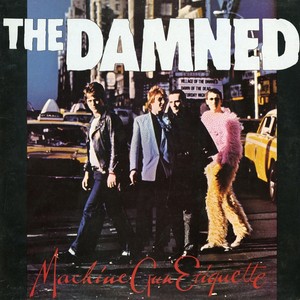
Machine Gun Etiquette
The Damned
|
5 | 3.16 | +1.84 |
|
The Boatman's Call
Nick Cave & The Bad Seeds
|
5 | 3.19 | +1.81 |
|
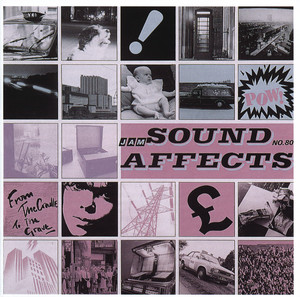
Sound Affects
The Jam
|
5 | 3.25 | +1.75 |
|
Toys In The Attic
Aerosmith
|
5 | 3.25 | +1.75 |
|
Made In Japan
Deep Purple
|
5 | 3.27 | +1.73 |
|
Peter Gabriel 3
Peter Gabriel
|
5 | 3.29 | +1.71 |
|
Horses
Patti Smith
|
5 | 3.3 | +1.7 |
|
Deep Purple In Rock
Deep Purple
|
5 | 3.31 | +1.69 |
|
Smash
The Offspring
|
5 | 3.35 | +1.65 |
|
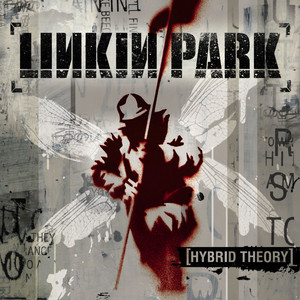
Hybrid Theory
Linkin Park
|
5 | 3.39 | +1.61 |
You Love Less Than Most
| Album | You | Global | Diff |
|---|---|---|---|
|
Parachutes
Coldplay
|
1 | 3.46 | -2.46 |
|
xx
The xx
|
1 | 3.34 | -2.34 |
|
The College Dropout
Kanye West
|
1 | 3.3 | -2.3 |
|
If You're Feeling Sinister
Belle & Sebastian
|
1 | 3.19 | -2.19 |
|
Is This It
The Strokes
|
2 | 3.81 | -1.81 |
|
I’ve Got a Tiger By the Tail
Buck Owens
|
1 | 2.8 | -1.8 |
|
Rejoicing In The Hands
Devendra Banhart
|
1 | 2.8 | -1.8 |
|
The Infotainment Scan
The Fall
|
1 | 2.71 | -1.71 |
|
Dr. Octagonecologyst
Dr. Octagon
|
1 | 2.69 | -1.69 |
|
Heaux Tales
Jazmine Sullivan
|
1 | 2.66 | -1.66 |
Artists
Favorites
Tap an artist to see their albums
| Artist | Albums | Average |
|---|---|---|
| Metallica | 3 | 4.67 |
| David Bowie | 3 | 4.67 |
| Pink Floyd | 2 | 5 |
| Deep Purple | 2 | 5 |
| Red Hot Chili Peppers | 2 | 5 |
| Peter Gabriel | 2 | 5 |
| Prince | 2 | 5 |
| Bruce Springsteen | 2 | 5 |
5-Star Albums (47)
View Album Wall



















Popular Reviews
I cannot stress enough how important Kraftwerk were in the development of electronic music. They be unconventional by popular music standards and repetitive to a certain degree, but they're absolutely responsible for the electronic music boom that occurred in the 1980s. David Bowie borrowed their ideas for his Berlin Trilogy, and the great electronic acts of the 80s (New Order, Depeche Mode, Eurythmics, A-ha) all followed Bowie, so Kraftwerk is incredibly important. 'Trans Europe Express' is an impressive excursion into minimalism, repetitive rhythms and monotone yet commanding vocals. The beauty of this album doesn't lie in its hooks but its production which, for 1977, sounded visionary. It wouldn't be remiss to think Kraftwerk consisted of members who crash-landed on Earth from a far away galaxy, and felt it was their duty to produce their own version of music for humans to better understand them, but the reality is they were just four forward-thinking guys from Düsseldorf, Germany looking to expand people's minds with synthesisers, vocoders and drum machines. Like much of their 1970s output, 'Trans Europe Express' is such a landmark in the develop of popular music. It isn't exactly accessible (although some parts are pretty catchy), but for 1977, this otherworldly record has to be heard to be believed! Best songs: Trans Europe Express, Europe Endless, Showroom Dummies, The Hall of Mirrors
The album where Blur killed off their Britpop tag once and for all. Blur's 1997 self-titled album showcases a band going through a significant rebirth. They were done feuding with Oasis through the press and wanted to stamp themselves as more than tabloid fodder. They channel The Beatles on 'Beetlebum', Bowie on 'M.O.R.' and sarcastically channel the alternative rock/grunge movement on 'Song 2', which has ironically become a bona-fide anthem of the alternative genre. But what must be commended about this album is Blur's boldness to be different, and yet still turn out such a cohesive and explorative album. Blur tackles straightforward rock, jangly pop, scratchy electronica and acoustic ballads. Nothing is off the table for Blur, and it's clear they've taken significant influence from American alternative acts, namely Pavement, Beck and R.E.M. But it's impressive how focused this record despite being so varied and all over the place, and I attribute this to the lyricism and vision of vocalist Damon Albarn. For a long time, Albarn's leap from Blur to Gorillaz was rather perplexing to me, as I was only really familiar with Blur's Britpop era at the time, but it makes perfect sense to me now after listening to this album. Where Oasis failed and went too overly extravagant with 'Be Here Now' in 1997, Blur quietly reinvented themselves that same year into one of Britain's unique and challenging acts, joining forces with Radiohead to consistently outdo themselves creatively heading into the 2000s, and Albarn would continue this approach into Gorillaz. Blur's 1997 record is a fine achievement in experimentation and relentless reinvention, and while they may not have won the commercial battles against Oasis, they certainly have them beat critically. A great album! Best songs: Beetlebum, Song 2, M.O.R., Death of a Party, Chinese Bombs, Look Inside America
The first album to pass one million sales and buoyed by a hit single making use of groundbreaking 3D computer-generated animation; 'Brothers in Arms' was certainly a quantum leap forward for Dire Straits in terms of sound and scope. After blues, roots and jazz had dominated their first four albums, 'Brothers in Arms' sees Dire Straits going flat-out into pop territory, with chief songwriter/vocalist/guitarist Mark Knopfler leading the way with his tight, journeyed compositions. The first four songs on the album, 'So Far Away', 'Money for Nothing', 'Walk of Life' and 'Your Latest Trick', were all big hits for the band, with 'Money for Nothing' and 'Walk of Life' Top 10 hits in the US. The title track, closing out the album, was also a bit hit for the band, taking on the troublesome subject of the Falklands War. But while 'Brothers in Arms' was Dire Straits' most successful record, there were many fans and critics who detested the album, seeing it as a betrayal of what made the band great in the first place: stripped-back, virtuosic melodies showcasing furious guitar work and tightly-arranged instrumentation. I see both sides. While I can see the appeal of 'Brothers In Arms' as pop music perfection and Mark Knopfler's ability to weave and adapt to new trends, I can't help but find the music on this record largely inferior to their self-titled debut and Making Movies. These two records are the ones my Dad has always stressed to be Dire Straits at their very best and I tend to agree with him. No song on 'Brothers In Arms' holds a candle to 'Sultans of Swing' or 'Romeo and Juliet', as much as you can tell there's been a concerted effort to live up to them. This is a great pop record, a middling Dire Straits record, but a great pop record. Best songs: Money for Nothing, Walk of Life, Brothers In Arms
This album (and the Indie Rock Revival era in general) is essentially an American band trying to be British. I've never truly understood why people rave about The Strokes so much. Sure, their songs are catchy and easy to digest, but 'Is This It' is often considered a landmark album of history, and The Strokes among the most important bands ever. I listened to 'Is This It' for the first time, and literally thought "is this it?" I listened to it again and again, still the same thought. Sure, 'Last Nite' is a cool song, but I seriously don't understand why people rave about The Strokes so much. 'Is This It' is well produced and all, but not much really holds my attention, not unlike Elliott Smith. And yet, certain people feel this band is as important as Nirvana, The Clash or Pink Floyd. Honestly, not even close. Honestly, to me, 'Is This It' is just a bunch of okayish pop/rock songs of an American band trying so hard to be British. The Strokes just don't do it for me. Best songs: 'Last Nite' 2/5
1-Star Albums (11)





All Ratings (242)
Very solid album. Stevie Wonder is a master of providing plenty of space for all instruments to breathe, and it perfectly blends funk and soul in a harmonious way. While it is not his magnum opus [see 'Songs in the Key of Life'], 'Talking Book' is buoyed by the obvious brilliance of 'Superstition' [Stevie's signature song, depending on who you talk to], but also features 'You Are the Sunshine of My Life', 'Maybe Your Baby' and 'I Believe [When I Fall In Love It Will Be Forever], three remarkable tunes that helped bring Wonder out from the Motown pigeonhole and into the realm of the bold and innovative. We got Prince and Michael Jackson in the 80s, but Stevie was the one who showed them their future in the 70s. 4/5
Obviously, most people remember this album for the title track [easily Eric Clapton's signature song], but in reality, there's quite a lot to like about the sprawling, 77-minute double LP that is 'Layla and Other Assorted Love Songs.' For a long time, I would always see Eric Clapton's name pop up on the 'Greatest Guitarists of All Time' lists and didn't really understand why. I felt that, maybe, he's a touch overrated. Sure, 'Sunshine of Your Love' has been so many guitarists 'first song learned' for decades, but it's a pretty simple song to learn, all things considered. But, if I didn't find out already from 'While My Guitar Gently Weeps', this album, to me, justifies why Clapton is regarded as one of the all time greats of the six-string, especially in the blues category. Clapton's subtle-but-emotive guitar work combined with his and Bobby Whitlock's impassioned vocals and a solid rhythm section make 'Layla...' [at times] such an engaging listen, not to mention the additional contributions of fellow guitar great Duane Allman. In addition to 'Layla', 'I Looked Away', 'Bell Bottom Blues', 'Anyday' and 'Why Does Love Got to Be So Sad?' are some key highlights. With that said, I did find the 77-minute run-time a little bit exhausting, especially with the blues genre having a tendency to get lost in meandering guitar solos [some might call it guitar wanking], and the cover of the blues standard 'Key to the Highway' is the worst culprit here. I don't mind the blues, but sometimes I can't help but think 'just get to the point already, sheesh.' Overall, it's a good album, and the truest showcase of Clapton's guitar skills, but there's maybe a few too many covers, exhausting guitar passages and a little too much untrimmed fat for it to be a perfect record.
I must admit, I wasn't at all familiar with Elliott Smith prior to this record being chosen for me, but that's the whole point of me doing this challenge: I want to open myself up to many different artists and get out of my comfort zone. Listening to 'Figure 8', the influence of The Beatles across this record is clear as day, right down to fact it was recorded in part at Abbey Road Studios. The production on the album is spot on, and it's a good album to chill out and relax to, although I can't say many songs really landed for me. It's basically just a Beatles homage that sounds pretty; a homage so eerily similar to what The Beatles [John Lennon in particular] had already perfected in the 60s. Smith also sounds very similar to Neil Finn [Crowded House, Split Enz], a fellow Beatle aficionado, although again, Finn just does a bit more for me. I then read about Smith's untimely death at the age of 34 in 2003, which put 'Figure 8' into greater context for me. 'Figure 8' was Smith's last record completed in his lifetime before his life spiraled into depression and drug addiction. So he's definitely in the same ballpark as artists like Kurt Cobain and Jeff Buckley; artists who have probably become more iconic in the wake of their demise [something to be said about artists suffering for their art], but unlike Cobain or Buckley, I just feel like there's something missing from Smith for me. I don't think this is a bad album by any means, but nothing really jumps out for me except the clear Beatles influence and great production and instrumentation. Might be a taste thing for me though, as I will admit the indie genre has never really done it for me. I can see why 'indie' fans would love this record though, and I did enjoy 'Son of Sam'. 'Figure 8' is basically your average 'Beatle-loving' indie rocker of a record, but I have to give Elliott Smith props for handling basically all of the instrumentation himself on this record: guitars, piano, bass, drums, organs, string arrangements. That's no easy feat, and I have plenty of respect for multi-instrumentalists. So overall, it's OK, but nothing more than that. 2.5/5
Long before he became known to a new generation as the iconic voice behind 'Chef' in South Park, Isaac Hayes had made his mark as a soul musician unafraid to test listeners with longer compositions and psychedelic/progressive elements. On 'Hot Buttered Soul', Hayes rips up the soul rulebook, backed by the impressive Bar-kays to give the songs a dense and driving edge. Only four songs on this album, three of them covers, but how Hayes and co. transform songs such as the Bacharach staple 'Walk on By' and Jimmy Webb's 'By the Time I Get To Phoenix' [the second cover of this song I've heard, the first being Nick Cave's] into original works of art featuring acid-laced guitars, simple but rolling percussion, funky bass, inventive piano/keyboard, all brought together by Hayes' smooth, laid-back voice. But the true highlight here is the sole original track, 'Hyperbolicsyllabicsesquedalymystic', an enthralling funk masterpiece that no doubt would've encouraged the likes of George Clinton and Curtis Mayfield to go bigger, longer and more innovative in the 1970s. Until today, 'Chocolate Salty Balls' is the only Isaac Hayes recording I'd ever heard, but now I can add arguably one of the greatest and most important soul records of all time to that list. 'Hot Buttered Soul' is fantastic, an album I most certainly will revisit! 4.5/5
Ahh 2009, I remember it fondly. I was getting really heavily into grunge music almost two decades past its peak. As a result, I really wasn't paying attention to the music of the day because, as an angsty 15-year-old, I was probably dismissing it as "boring techno crap" (this was before I really got into Nine Inch Nails, New Order etc., so I was naturally a bit naive). So, as a result, I completely missed out on artists such as Yeah Yeah Yeahs, and with 'It's Blitz!', there's plenty to love for my older, more cultured ears here. With Karen O's etherial yet punchy vocals (sitting nicely somewhere in between Debbie Harry and Kate Bush), and some eclectic musical arrangements courtesy of multi-instrumentalist Nick Zinner and drummer Brian Chase, 'It's Blitz!' is a fun album full of raw energy and eletro-punk pizzazz. I dig 'Zero', 'Skeletons', 'Dull Life' and 'Shame and Fortune', although the big hit on this album, 'Heads Will Roll', is a bit mid. But I cannot fault this album's boldness to traverse different styles, especially in the back half. Its an album that gets more and more interesting the deeper you delve into it. There's so much going on throughout this record (fuzzy guitars, shimmering keys, cinematic string arrangements) that I can't help but be impressed by how daring the music gets in places, not to mention the beautiful production by Nick Launay (Nick Cave and the Bad Seeds, Public Image Ltd, The Slits, Killing Joke). 2009 Sam would've hated this album. 2025 Sam quite enjoys it. Big YEAH! to the Yeah Yeah Yeahs!
When you think 1980s music, Duran Duran would surely be close to the front of most people's thoughts, and on 'Rio', the group's second record, just about every 80s cliché is there: guitars drenched with chorus and delay, walls of synth and fat bass lines. What Duran Duran did wasn't unique to them; Brian Eno and Roxy Music, German Krautrock groups, Pink Floyd, Bowie and Genesis had already dabbled with the New Wave genre; but there's something to be said about 'Rio' and how it captured lightning in a bottle for the group. This album's so darn infectious. There's a reason 'Hungry Like the Wolf' is one of the most iconic songs of the 80s. Simon Le Bon sounds like an urgent beast ready to infect listeners with his confident, charismatic croon, and he's well supported by Taylors Andy, Roger and John, as well as Nick Rhodes and his mastery of the keys/synths. Other great songs on this album include 'Hold Back the Rain', 'Save a Prayer' and the title track, and the sheer consistency of 'Rio' makes it hard to believe it was panned by critics upon release in 1982. 'Rio' spearhead Duran Duran into a brand new renaissance for British pop, alongside The Human League, A Flock of Seagulls, Culture Club and Phil Collins, and was the blueprint so many pop/synth bands (Eurythmics, Tears For Fears, Wham!, Pet Shop Boys, Dead or Alive) would follow later in the 1980s. You know your album's done its job when it encourages the likes of David Bowie to keep up with 'Let's Dance'.
Damn, what a trip this record is. No [or at least, barely any] vocals necessary. Never a stranger to producing some of the most bizarre music ever produced, 'Hot Rats' is a relatively tame affair as far as Frank Zappa is concerned, though a 'tame' Frank Zappa is akin to Evel Knievel with training wheels on. Gone is the hilarity and sheer ridiculousness of The Mothers of Invention, and in its place is an inspired six-track set of mostly instrumental music that, while still experimental and bizarre in places, is far more subtle and focused than anything Zappa had produced previously. This album is pure cinema, right from the one-two punch of 'Peaches en Regalia' and 'Willie the Pimp' to open the record to the free-form jazz of 'The Gumbo Variations'. Even though there's barely any vocals present [Don Van Vilet AKA Captain Beefheart gets a few throwaway lines on 'Willie the Pimp'], there's something oddly intriguing about 'Hot Rats' that it's hard not to be entertained. Zappa's guitar playing on this record is outstanding. His guitar takes on a multitude of different voices, from groove laden ['Willie the Pimp'] to bombastic ['Son of Mr. Green Genes']. Then you have full-blown mystical jazz ['Little Umbrellas'] and horns as demented as a screaming cat ['The Gumbo Variations'] and it all contributes to an unusual yet satisfying blend of jazz and rock. While not immediately accessible, Zappa's influence on popular music is endless, and 'Hot Rats' is arguably Zappa at his most focused and straight-forward, and the first record where he truly let his guitar do the talking! 4/5
The first record that saw Bob Dylan embrace his "electric" side in full, Highway 61 Revisited has a very strong case for being the finest collection of music ever produced, and I can't argue with the many pundits who believe this record to be Dylan's best. The fact this album opens with the iconic 'Like a Rolling Stone' is justification enough. The iconic organ and harmonica on this song alongside Dylan's unmistakable murmurs of loss and harsh realities served as the perfect call to arms for a generation facing sweeping sociocultural changes in the 1960s. Couple this with the fact that Dylan, around the time of this album's release, was booed off stage at his infamous 1965 Newport Folk Festival for a perceived betrayal of his folk fanbase by going electric only added to the feeling of change in the air. So many themes are addressed throughout Highway 61 Revisited, from war on 'Tombstone Blues' and clueless media on 'Ballad of a Thin Man', to the absurdities of American culture ['Highway 61 Revisited'] and worlds in disarray ['Desolation Row']. But one thing's for sure; Dylan sounds quite irate and antagonistic on this album. I guess he wanted a harsher, more intense voice to match the heightened intensity of the music on this record. He even looks pretty annoyed on the album cover. That face screams of someone saying "don't mess with me, pal." Highway 61 Revisited came at such a pivotal time when artists started to take the concept of the long player and studio creation seriously. 1965 was where the RnB/folk covers and sellable, well dressed artist/band photos were being eschewed in favor of candid imagery, abstract/psychedelic art and much more emphasis on songwriting and storytelling. For example, The Beatles put out Rubber Soul about three months after Highway 61..., which is largely considered their first significant studio effort. This was when music became works of art, rather than marketable pop for profit, and this is a process that has followed a strange ebb and flow ever since. While Dylan is far from my favourite artist in the world [I like his voice in small doses, but can find it grating after an extended period], I can't help but honour the sheer legacy of 'Highway 61...', and agree that it's probably one of the most important albums in music history. 4.5/5
With all the background issues affecting The Rolling Stones during this period: gutarist Keith Richards' worsening heroin addiction, long absences of vocalist Mick Jagger and bassist Bill Wyman from recording and the band still shut out from the UK as tax exiles: It's a sheer miracle that Exile on Main St. is as good as it is. The band's first double LP, Exile on Main St. is an 18-track journey through some of the finest tunes the Stones ever put to tape, with some notable highlights being 'Rip This Joint', 'Tumbling Dice', 'Let it Loose', 'Shine a Light' and 'Happy', the latter a rare Richards lead vocal cameo. Effectively combining the Stones' classic rock and roll sound with country and blues in the same vein as their previous record (1971's Sticky Fingers), Exile on Main St. takes more risks and pushes the envelope further, although its not always successful in this regard, as some songs roll past without really staying with you. While Sticky Fingers is perfect Stones from start to finish, Exile is maybe 5 or 6 songs too long to be a true five-star record for me. Nevertheless,
When Iggy Pop and David Bowie lived together in West Berlin, four records of sheer magic transpired from this union across a whirlwind 10 months in 1977: two of Bowie's own (Low, "Heroes"), and the first two solo efforts from Iggy Pop: the subdued, somewhat trance-like 'The Idiot' and this raucous record with a grinning Pop on the cover looking satisfied that this new record was a quantum leap forward for him. 'Lust for Life' was produced by Bowie (as was 'The Idiot'), and the strong Bowie influence on this album (he co-wrote 7 songs on this album) brings out a refreshing new side of Pop. Before he went solo, Pop was known as the wild, maniacal frontman for The Stooges, flopping around stage like a possessed demon with a hard-living lifestyle of drugs, sex and mayhem to match, but 'Lust for Life' sees Bowie unearth Pop's sensitive, more humane side. The transformation had started on 'The Idiot', but 'Lust for Life' sees Pop delve deeper into addressing and conquering his demons ('Lust for Life', 'Some Weird Sin'), accepting life ('The Passenger) and making fun of himself ('Success'), before closing the album with sincerity ('Fall In Love With Me') Yes, the Bowie influence adds so much to this album, but you have to give Iggy props for rolling with it. His lyrics are quite deep and heartfelt in places, and his delivery of them proved there was so much more to him than the reckless frontman of The Stooges. There's seriously not much I can fault about this record. The Iggy/Bowie friendship yielded such fantastic music from both artists, and this is a shining example. I will also hold a soft spot for the title track given it opens one of my favourite films, 'Trainspotting.' Top marks for me. This album is brilliant!
This album is.....interesting to say the least. The Flaming Lips have always been a band I've wanted to check out but never got around to, so when 'Yoshimi Battles the Pink Robots' came up as my next album to review, I thought "ahh well, guess its time to scratch that itch." And.....well, this album's a trip. Acid-tinged production, glitchy electronics and utterly bizarre lyrical content, 'Yoshimi...' sounds very much like it owes plenty to Radiohead, particularly their 'OK Computer' and 'Kid A' efforts, and also the Madchester scene of the late 80s-early 90s (Stone Roses, Happy Mondays etc.). Equal parts psychedelic and electronic, 'Yoshimi...' blends both together in quite a bonkers way, but its by no means unlistenable. This strange brew of dreaminess and weirdness is evident in such tracks like 'Ego Tripping at the Gates of Hell', 'Yoshimi... Pts. 1 and 2', 'Fight Test' and 'Do You Realize' (the only song of theirs I'd heard previously), with psychedelic guitars and inventive electronics blending together seamlessly. With Wayne Coyne, Steven Drozd and Michael Ivins all having a comprehensive share in the music, taking on multiple instruments and production each, there's no shortage of creativity present. With that said, Coyne's voice bears plenty of resemblance to Radiohead's Thom Yorke and Pink Floyd's David Gilmour without really possessing the majesty and spectacle of either, and there's just something about whispery male vocals (generally in the indie genre) that don't do it for me. I generally prefer vocals with more drama and intensity, and indie vocalists have always sounded too boring for me. So while I don't dig the vocals, I do dig the vision and scope of the music on 'Yoshimi...'. It sounds amazing and the songs have plenty of distinct character. 3.5/5
Yusuf Islam/Cat Stevens hits your soul like few other songwriters, and 'Tea For the Tillerman' is perhaps the brightest example of his minimalist, yet poignant songs about perseverance, generational disconnect, heartbreak and personal journey. Much like Neil Young and Joni Mitchell, Stevens only really needs his acoustic guitar and voice to get the message across, and he does so with plenty of emotion and feeling throughout 'Tea For the Tillerman', with standouts including the solemn 'Wild World', the retrospective 'Father and Son' and the preservation anthem 'Where Do the Children Play?' It's impressive how Stevens conveys so much emotion and feeling in this album with such a minimalist approach to the music. He doesn't need significant studio magic or innovative effects here, he lets the sheer strength of the songs do the talking. It's also a very easy album to listen to. Stevens music is like a warm blanket that will never let you go cold. But the true strength of this album is Stevens ability to speak to the human condition. He sings in such a calm way, but the messages of 'Wild World' and 'Father and Son' hit so brutally that you can't help but want to do better by yourself and others. 'Wild World' and 'Father and Son' are two of the greatest songs ever written, and the rest of 'Tea and the Tillerman' is pretty bloody good to, so top marks from me!
The album that very nearly became a Simon & Garfunkel comeback record before Art Garfunkel cracked the shits with Paul Simon and left the project. Not that it bothered Simon much, as he was always the chief songwriter of the duo anyway. 'Hearts and Bones' is essentially about Simon's relationship with Carrie Fisher (they got married during production for the album), and serves as somewhat of a return to form for Simon, who's career had stalled somewhat heading into the 1980s. With this album, you can hear Simon starting to incorporate a strong worldly presence within the songs. This is very significant as it gave listeners a hint of what was to come a few years later on 'Graceland', his finest solo effort. But unlike 'Graceland', the lyrics on 'Hearts and Bones' are less adventurous and more centred around a select few themes: love, self-reflection and reaffirmation. Simon made the right call not to include Garfunkel on this record (although Garfunkel, by all accounts, disagreed), as its really hard to see any of these songs working as Simon and Garfunkel songs. Perhaps Simon had realised by this point in his career that Garfunkel was more hindrance than help. The songs work very well as a solo effort, and Simon has enough confidence here to take his own career in a new direction. It's no 'Graceland' to be sure, not even close, but 'Hearts and Bones' is the more subdued and bare-bones predecessor (distant cousin) to it, not unlike Bruce Springsteen's transition from 'Nebraska' to 'Born in the USA'. Best songs: Hearts and Bones, Train in the Distance, Allergies 3.5/5
1001 Albums to Hear Before You Die [in random order]: 14. THE CLASH: London Calling (1979) The best punk rock album ever made? 'London Calling' has a very strong case. The punk explosion of the late 1970s was starting to peter out somewhat by 1979, with the Sex Pistols no more, Sid Vicious dead and the remaining first-wave punk bands [Ramones, The Damned, Buzzcocks, The Jam, The Stranglers etc.] diversifying their sound further to stay relevant heading into the 1980s, alongside a few new, moodier players [Joy Division, The Cure, Siouxsie and the Banshees]. But The Clash were heads and shoulders above the rest at this point, striking solid gold in the dying months of '79 with the brilliant 'London Calling'. Branching out from traditional punk rock to include elements of ska, reggae, jazz and rockabilly, 'London Calling' took plenty of risks musically, and where many of their contemporaries failed, The Clash passed with flying colours. With Joe Strummer's world-weariness ['London Calling', 'Spanish Bombs', 'Revolution Rock'], Mick Jones' growing confidence as a pop songwriter and frontman ['Lost in the Supermarket', 'I'm Not Down', 'Train in Vain'] and even a rare Paul Simonon-led song [the riot-worthy 'The Guns of Brixton'], this album is The Clash firing on all cylinders. There's not a dull moment in 'London Calling's' 65-minute run time. So many bands post-1979 [Green Day, Rancid, The Pogues, U2, any 80s/90s ska punk band] owe so much to The Clash, and in particular 'London Calling', as it was the first punk record that dared to branch out, and is all the more better for it. 'London Calling' blew me away when I first heard it as a 16-17 year old moving deeper down the alternative/punk rabbit hole, and it still blows me away to this day. The world would be a poorer place without this record. My Picks: THE ENTIRE RECORD! Not one bad song on it! 🌕🌕🌕🌕🌕 [I'd give it 6 if I could!]
Very much following The Clash's lead, The Jam were another first-wave punk act looking to diversify their sound and audience at the turn of the 1980s. But where The Clash were focusing on revolution, politics and worldly temperament, The Jam were keeping themes strictly British and speaking for the average working class Brit, and 1980s 'Sound Affects' effectively completes The Jam's transition from punk flagwavers to observant social commentators. The first line of opening track 'Pretty Green' says all you need to know about The Jam: "I've got a pocket full of pretty green, I'm gonna put it in the fruit machine". Basically British code for chucking a lobby on the pokies. The Jam were easily the most British of the British punk bands, and were able to speak to the average working-to-middle class condition better than their contemporaries. Chief songwriter and frontman Paul Weller is all about relateability and observation in his lyrics, from blind followers ('Set the House Ablaze') and dissections of class systems ('Man in the Corner Shop') to simple observations from a brief cab ride ('That's Entertainment'). Weller paints pictures of the world he lives in, and in such a sincere way that its almost like he's in the room with you describing the average lives of ordinary citizens. The Jam are perhaps the most underappreciated band of the first-wave British punk scene. They're not as controversial as the Sex Pistols nor as politically charged as The Clash, but The Jam is the punk band that best spoke to the average British citizen. Their songs are everyday life in three-minute segues and their sheer consistency as a band is showcased the best on Sound Affects. They might be hard to gauge for non-British listeners, but Paul Weller's songwriting is hard not to respect: someone who speaks plainly and relatably to the masses without shock or awe. The Jam don't need it. Best songs: That's Entertainment, Man in the Corner Shop, Boy About Town, Start! 4.5/5
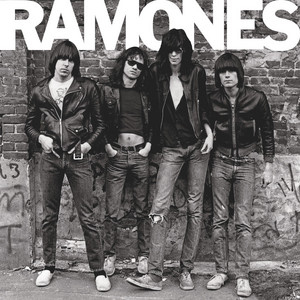
American Punk Rock: Patient Zero This is where American punk started. Three-chord buzzsaw guitars, matching monikers, "Hey Ho, Let's Go" and beating on brats with baseball bats. Queens, NY's finest, The Ramones, turned popular music on its head in 1976 with their seminal self-titled debut. With 14 tracks in a little under half an hour, Joey, Johnny, Dee Dee and Tommy stomp through the album without fuss or fantasy. Guitar solos? Boring! Mind expanding passages? No time for that. Just give us crunchy power chords, catchy melodies and leather jackets. Music had gotten too frivolous and over-indulgent by the mid-70s, and The Ramones had had enough of it. What they did with their debut (and what The Sex Pistols, The Damned and The Clash would do with their debuts a few months later) brought punk rock into the public consciousness. Punk bands would get faster, slower, heavier, louder and more experimental in the succeeding years, but punk as we know it started here. All the songs on this album sound the same, yes, but that's the genius of the record. The Ramones were rebelling against everything that was indulgent about popular music at the time. Stuff your flares and whimsy, here's some fast and loud assaults on your eardrums. There is not a single American punk band in existence that can't cite the Ramones as a key influence [and probably most non-American punk bands too]. 'Ramones' is one of the most important albums ever made and, not unlike AC/DC or Motörhead, The Ramones wouldn't stray that far from the sound that defined their debut. Best songs: Blitzkrieg Bop, Beat on the Brat, Judy is a Punk, 53rd & 3rd, Today Your Love, Tommorow the World 5/5
1001 Albums to Hear Before You Die [in random order]: 17: THE FALL: The Infotainment Scan (1993) I've tried to get into The Fall a few times, but Mark E. Smith's bored and uninspiring rambling [because its no singing] has always proven to be a key deterrence. Unfortunately, the band's 1993 effort, 'The Infotainment Scan', is no exception. Interestingly, The Fall is often heralded as one of the most important bands to hail from Manchester in the United Kingdom, often uttered in the same breath as Oasis, The Smiths, Joy Division/New Order and The Stone Roses, and their sound has plenty of that tasty post-punk edge synonymous with many of their contemporaries. But I just can't do Mark E. Smith's vocals. The lack of melody and flair offered by his vocals brings the entire album down. Melody isn't always necessary, bands such as Sonic Youth and Talking Heads were famous for eschewing traditional melody but were still able to make their songs memorable. The Fall just can't do it for me, and 'The Infotainment Scan', not unlike 'This Nation's Saving Grace' (considered their best album), is simply 40 minutes of nonchalant rambling over the top of admittedly solid musicianship. What this band could've been with a better singer. 🌕🌗🌑🌑🌑
'Cosmo's Factory', Creedence's first record of the 70s, sees them complete a phenomenal streak of five albums that turned the El Cerrito quartet into one of America's brightest lights in the late 60s. Packed full of plenty of their best-known songs (Up Around the Bend, Looking Out My Back Door, Who'll Stop the Rain, Travelin Band), 'Cosmo's Factory' is essentially CCR (and John Fogerty in particular) in peak form, adventuring into R&B, soul and country while staying true to their core roots rock sound. This adventure is most evident on the two longer songs on the album: the psychedelic-tinged 'Ramble Tamble' and an 11-minute cover of the Motown standard 'I Heard It Through the Grapevine'. While both these songs serve as CCR attempting to break free of their regular "hit making" aesthetic, the lengthy instrumental passages tend to meander along without any real purpose other than to showcase John Fogerty's sound lead riffs. While the adventure is welcome, it only shows that CCR are probably more suited to the tightly constructed rock songs, in which their skill is unrivalled by many other American rock acts of the time. Britain was dominating the rock airwaves by this point, and CCR were an interesting outlier at a time, largely avoiding the acid-tinged counter-culture sound of many of their US contemporaries (The Doors, MC5, The Byrds, The Grateful Dead).So when CCR go and try to be experimental in the same vein as those aforementioned bands, it kind of comes across as trying to join the bands they were adamant on standing out from. Which is what makes the shorter tunes on this album so effective. CCR's strength is in warm and concise "swamp rock", and 'Cosmo's Factory', while not shying away from adventure, is at its strongest when it showcases what CCR do best. 4/5
This album (and the Indie Rock Revival era in general) is essentially an American band trying to be British. I've never truly understood why people rave about The Strokes so much. Sure, their songs are catchy and easy to digest, but 'Is This It' is often considered a landmark album of history, and The Strokes among the most important bands ever. I listened to 'Is This It' for the first time, and literally thought "is this it?" I listened to it again and again, still the same thought. Sure, 'Last Nite' is a cool song, but I seriously don't understand why people rave about The Strokes so much. 'Is This It' is well produced and all, but not much really holds my attention, not unlike Elliott Smith. And yet, certain people feel this band is as important as Nirvana, The Clash or Pink Floyd. Honestly, not even close. Honestly, to me, 'Is This It' is just a bunch of okayish pop/rock songs of an American band trying so hard to be British. The Strokes just don't do it for me. Best songs: 'Last Nite' 2/5
After two albums firmly rooted in the British alternative/indie rock scene of the late 80s, Scottish band Primal Scream entered the 90s with what is largely considered to be their magnum opus: 'Screamadelica'. This album was pivotal in the emerging acid house scene of the early 90s, and even included two house DJs to produce the record. Their influence certainly shows, as many of the songs, including the gospel tinged 'Come Together', the slow rave of 'Loaded' and the dub track 'Higher than the Sun'. But there's also more conventional rock ('Movin' On Up'), Eno-esque ambience ('Inner Flight') and laid-back emotion ('Damaged'). 'Screamadelica' is an album that doesn't quite know what genre it wants to focus on, so it gives everything a go. The result is an album that surprisingly works (and would probably work even better on hallucinogenic drugs), and is probably one of the best sounding records of the 1990s from a production standpoint. 'Screamadelica' no doubt opened doors for a number of other noteworthy electronic acts (notably The Prodigy and Fatboy Slim) to follow suit later in the decade. Bit unfocused, but when Screamadelica gets it right, its quite the enthralling listen! 3.5/5
Pretty standard 1950s piano-driven rock/R&B here, but Fats Domino was one of the best at his craft, and it was artists like Fats Dominos, Little Richard, Ray Charles and Chuck Berry who essentially set the stage for rock and R&B's future cultural growth in the 1960s. Rooted heavily in the sound of his native New Orleans, Domino rolls through a short and sharp bunch of energetic rockers on 'This Is Fats Domino', with his impressive piano talents and rich, soulful vocals driving each number. It's a bit hard to truly delve into the context of the songs, as 1950s music is relatively basic and simple lyrically [conceptualisation in popular music was still a good decade off], but we must credit artists like Domino for bringing stronger identities into popular music, as prior to the mid 50s, music was more-so about larger ensembles colouring soundscapes to match the culture of the times [swing, jazz, classical] and people latched more to the music rather than the personalities behind it. But rock and roll had to start somewhere, and it was Domino et. al. who inspired Elvis, The Beatles, The Rolling Stones, Roy Orbison etc. to change popular music forever in the 1960s. I guess the sad part about this is these African-American artists were often consigned to segregated audiences at a time where racial segregation was a core issue affecting American society, especially in the early years of television where there was a clear dichotomy on which artists were the easier sell. It's worth remembering that a lot of these outstanding rock/R&B tracks penned by 'black' artists were later covered by 'white' artists to greater critical acclaim. Elvis, who was heavily inspired by Domino, is perhaps the best example of this, so while these 50s rock and roll record are very hard to critically review given the fact music was a vastly different product back then [i.e. no one cared about the producer, special effects, genre as long as the song was good], they have to be celebrated for their trailblazing nature. Elvis is iconic, but all the African-American musicians who wrote his songs and inspired his style can't be overlooked. And of those musicians, Fats Domino stands above many. 3/5
Another group I'm not that familiar with, but their sound is certainly familiar to that of Primal Scream and Happy Mondays. It goes without saying that Stereo MC's were another British act capitalising on the emerging electronic/rave scene coming out of the region at the turn of the 90s. 'Connected', the group's 1992 effort, appears to be the only real success story for Stereo MC's, as they have stayed largely out of the mainstream consciousness ever since. But the collage of random images surrounding the group on the album cover, including mushrooms, flowers, plants, erupting volcanos and space, is a great reflection of the music on this album, which pairs hip hop with dance, electronica and house music. The mission statement for 'Connected' is simple: a record full of trippy, party-worthy anthems destined to get the house kids jumping well into the night. The hip hop sound is incorporated rather well here [especially on 'Everything' and 'Sketch'], as are the obvious house inflections ['Connected', 'Fade Away']. I also appreciate how ahead of its time this album sounds, as it seems more like a 2000s record than one released in 1992. The Prodigy, The Chemical Brothers and Aphex Twin weren't even big yet, which is important to consider contextually when discussing 'Connected'. 'Connected' is rather effective mood music designed for those 'chill vibes'. It's easy to have on in the background and doesn't require a great deal of concentration to appreciate. It's just an enjoyable set of relaxed grooves to help you tune out. A nice surprise, given the relatively low profile of the group. Best songs: 'Everything', 'Connected', 'Fade Away'
In an era when female pop stars were starting to become more about the image and marketability, there were concerns that raw talent was beginning to take a back seat. Thankfully, artists such as Norah Jones and Alicia Keys proved that the authenticity and uniqueness of female singers would not get lost in the turn of the millennium. Some may criticize Norah Jones for being a "nepo baby" [being the daughter of famed Indian composer Ravi Shankar], but she was estranged from her father at the time she entered the public consciousness with her debut album, 2002's 'Come Away With Me'. It's not her connections that drove this album's success, it was her voice. Jones' relaxed yet sincere voice makes this album such a serene blend of jazz, folk, country and blues. The big hits on this album, 'Don't Know Why', 'Come Away From Me' and 'Turn Me On', are the obvious highlights here, as they perfectly exemplify why Jones deservedly achieved critical acclaim in the early 00s: rich vocals soaring across jazzy slow jams. It's very much a New York sound, rooted in the city's strong jazz atmosphere. Jones is one of those rare artists who found their sound almost immediately, and while the slow-jazz ballads aren't really my thing, I can appreciate the beauty and delicate nature of her voice. She also did an album of folk covers with Green Day's Billie Joe Armstrong a decade after her debut, so that's pretty cool too! 4/5
With the manic energy of a punk band and chaotic experimentation that leaves the listener unsure of what's about to happen next, Pere Ubu's 'The Modern Dance' is not the most inviting album, but for 1978, it's quite a bold statement of the direction punk and garage rock would soon take in the 1980s, where oddball alternative bands such as Butthole Surfers, The Pixies and Sonic Youth would relish in uncomfortable yet enthralling music. Pere Ubu can be considered a good bridging point between those wild 80s bands and the relentless experimentation of Frank Zappa and Captain Beefheart preceding it. Infused within the songs of 'The Modern Dance' is uncomfortable feedback, random crowd sounds, zany horns and the unhinged ranting of vocalist David Thomas, someone who the likes of Jello Biafra [Dead Kennedys], Gibby Haynes [Butthole Surfers] and Black Francis [Pixies] were certainly taking notes from. If you're a fan of conventional, easy listening music, you're not going to like 'The Modern Dance'. But if you love alternative/punk music, and are keen to hear a pivotal record that is essential listening concerning the development of the weird alternative 80s music scene [including Australia's best 'weird' band, The Birthday Party], check this out, you won't be disappointed! With that said, as important as this record is, others did end up doing it better. But I see the influence nevertheless. A very unhinged, yet somewhat enjoyable record.
There's only one song on this album I'd heard previously; Ms. Jackson; because it was bloody everywhere in 2000 when it came out. It was a time where Outkast were clearly transitioning from lock-standard hip hop to a sound more attractive and singalong-worthy [i.e. 'Hey Ya' and 'Roses', which came later], but the roots of that transition are here on 'Stankonia'. 'Stankonia' is standard for hip hop albums at the turn of the millenium: 1+ hour run times, replete skits/interludes, but what sets this album out is its clear homage to 70s funk in places [there's plenty of slap bass and soulful vocals from Andre 3000 and Big Boi to compliment their raps] and its fearlessness in tackling political and sociocultural issues ['B.O.B.', 'Gasoline Dreams']. The duo also responds to the perceived misogyny around the hip hop scene at the time by expressing sympathy and remorse for the female experience ['Ms Jackson', 'Slum Beautiful', 'Toilet Tisha']. I honestly couldn't really stand hip hop when I was a kid [save for a few songs], but as I've gotten older, I've started to appreciate how deep and effective some of the lyrics actually are. Outkast certainly weren't slouches in the lyrics department. 'Stankonia' is quite an intelligent and thoughtful record that effectively speaks to the life of African-Americans in the South [Outkast are from Georgia], and its effort in reintroducing funk to a turn-of-the-millennium crowd is rivalled only by the Red Hot Chilli Peppers. There's profound intelligence behind saying sorry to Ms Jackson. Best songs: 'Ms Jackson', 'B.O.B.', 'I'll Call B4 I Cum'
Generic country. Doesn't really do it for me. Not really sure why you need to hear this before you die. Apparently Buck Owens pioneered what is now known as the "Bakersfield sound"...well, thankfully KoRn's Jonathan Davis redefined the meaning of Bakersfield in popular music, because "I've Got A Tiger By the Tail" is essentially generic country for people who don't really want to tune into the music. I guess the guitar sounds okay, so its not a complete travesty. It's the very sound that made me loathe the Conway Twitty cutaways in Family Guy.
Nothing much to write home about here, just generic late 80s house music you can tune out to. There's no real profound statements, just an hour of club-ready electronica. Kind of like a less memorable KMFDM or Primal Scream. So that's that noise from Coldcut I guess, not much else to say. Sounds like all other club music of the time. 2.5/5
Controversial. Vulgar. Intimidating. Uncompromising And yet, 'Straight Outta Compton' is one of the most important records ever made. Hip Hop being a staple genre in mainstream music and culture has N.W.A.* to thank. Just like the Ramones' debut record was 'Patient Zero' for American Punk, 'Straight Outta Compton' was 'Patient Zero' for West Coast American Hip Hop. Rappers Ice Cube, MC Ren and Eazy-E, backed by the razor-sharp production of Dr Dre, DJ Yella and Arabian Prince, cuss, rhyme and attack all whom have wronged them through an hour of some of the most controversial and confrontational music released since the first wave of punk. And I'd be lying if I said it wasn't enthralling in the slightest. The one-two-three punch of the title track, 'F.T.P.'* and 'Gangsta Gangsta' to start the album sets the tone very quickly, and the intense tales of street violence, 'gangstas', racism, sexism and hood mentality brought gangster rap to the masses in the late 80s, and kept authorities on high alert, with California already experiencing an uneasy period of street violence. Popular music and culture was never the same post-N.W.A. The group burned brightly and quickly. Formed in 1987 and were done by 1991 [with very occasional reunions in between]. Ice Cube became a solo star [in both music and film], and Dr Dre, while commencing his own solo career, took some little known rappers [Snoop Dogg, Eminem and 50 Cent] under his wing and made them just as big, if not bigger, than himself. Eazy-E sadly never lived to see the legacy he created, dying of AIDS in 1995 at the age of 30. Probably an album where the legacy trumps the music, but the music was a gamechanger. Arguably the most influential album ever released. Best songs: 'Straight Outta Compton', 'F.T.P.'*, 'Gangsta Gangsta', 'Express Yourself' 5/5 *Stating what N.W.A. and F.T.P. stand for will likely get my account banned.
For a record that was released in 1994, Drive Like Jehu's 'Yank Crime' sounds very ahead of its time, possessing a post-hardcore sound that would help define a large swathe of the alternative/pop punk scene of the 2000s. However, its another one of those albums where 'longer' doesn't necessarily mean better. With shouted vocals, razor-sharp guitars and a crashing rhythm section, 'Yank Crime' has all the ingredients of a chaotic hardcore record, with not a lot of breathing room within its frantic energy. It's certainly clear that Drive Like Jehu were all about energy and chaos. I definitely hear the Fugazi influence on this album, especially in the guitar tone, and the unhinged shrieks of vocalist Rick Froberg signal a way forward for anguished, more emotional vocals in the punk scene, giving rise to the eventual success of the emo movement in the 2000s. However, it's quite unfocused, and the instrumental passages often meander on aimlessly [especially in longer songs such as 'Do You Compute' and 'Luau', as if the band weren't quite sure how to finish each song. The shorter, sharper tunes on this record are quite decent though, especially 'Golden Brown' and 'New Math', and if the album had trimmed some of the aimless jamming, it could've been a tighter record. Very influential to the emo movement, but a bit too bloated for me. Best songs: 'Golden Brown', 'New Math'
'Bitte Orca' is very hard to describe, as there's a lot going on here. Indie Rock seems to be the best genre to describe this release by Dirty Projectors, but there's plenty of falsetto from vocalist and chief songwriter David Longstreth [enough to keep Radiohead or The Darkness fans happy], as well as warm, multilayered female vocals, fiddly guitar and electronic trickery to put this album beyond any solid genre. But is it an enjoyable collection of music? Eh...... While I admire the creativity and ideas put into 'Bitte Orca', the dissonant melodies, random tempo shifts and that 'hard to escape' feeing the group is rushing through the vocals before the music has caught up make this record a rather perplexing listen. Now, if the purpose of the album was to create a unique listening experience that stands out on the basis of its individuality, then it definitely passed the test. But for me, the ideas seem like they're benched before they're given enough space to grow, so its really difficult [for me anyway] to truly appreciate this album. I do like weird, unusual stuff [Mr. Bungle, Primus, Kraftwerk etc.], but there's a consistency in those bands that I struggle to find with Dirty Projectors. It's like I'm hearing a strange, disjointed compilation album from four or five different groups. While I appreciate the daring approach to the album, it just doesn't do it for me. Not one song really grabbed me. 2/5
Just Nick Cave, a piano and songs about love and loss. The very moment Wangaratta's "good son" completed his transition from a wild, cathartic orator to a sensitive, laid-back second coming of Leonard Cohen. While Nick Cave had already hinted at his sensitive side on prior records [The Good Son's 'The Ship Song', Henry's Dream's 'Straight To You' and Murder Ballad's 'Where the Wild Roses Grow' and 'Henry Lee' come to mind], The Boatman's Call sees him double-down on the sensitivity for what was [at that time] the most personal album of his career. And it opens with 'Into My Arms': one of the greatest songs ever written. Also one of the saddest. He played it at the funeral of INXS's Michael Hutchence [and requested the TV cameras be turned off]. A very religious-sounding song about believing in "love" above an "interventionist God", and it seemed that Nick Cave had written the perfect sad song....at least, until the release of 'Skeleton Tree' and 'Ghosteen' records [AKA his 'dealing with his son Arthur's death' records] two decades later. Much of this album is Nick Cave dealing with his break-up from PJ Harvey, evident on a number of the songs ['Black Hair', Green Eyes', 'West Country Girl', 'Where Do We Go Now But Nowhere'], and he's also searching for enlightenment ['(Are You) the One That I've Been Waiting For'] and looking towards spiritual guidance ['Brompton Oratory', 'There Is A Kingdom']. With that said, Cave's classic penchant for exploring the ugliness of reality [a staple dating back to his Birthday Party days] is still there in 'People Ain't No Good', which made the Shrek 2 soundtrack. I can't express how much joy I feel that the music of Nick Cave came into my life when it did. It was a time where I felt lost and unsure of myself, and his music helped me begin to find myself again. I definitely felt like I grew up a lot as a person getting into Nick Cave, and he's still one of my favourite musicians. I saw him live in Melbourne last year, just him and a piano [much like this album], and he played four songs from 'The Boatman's Call'. I love The Bad Seeds, they're brilliant in their own right, but there's just something about Nick Cave on his own at a piano that has become very endearing to me. His music is comfort to me, and I'll never not be delighted by anything he releases. Best Songs: Into My Arms, People Ain't No Good, There Is A Kingdom, Idiot Prayer, (Are You) The One That I've Been Waiting For
The Kinks had burst onto the scene in the mid-60s with hard-hitting anthems such as 'You Really Got Me' and 'All Day and All of the Night', songs that would be a pivotal reference point for the future punk rock movement, but by 1967, the Davies brothers and their merry men wanted to prove they were more than one-trick ponies. 'Something Else' is, quite literally, the answer to The Kinks' more explorative and adventurous side, eschewing raw power-chord rock and roll in favour of baroque pop and almost 'shanty-like' sing-a-longs. Think Syd Barrett-era Pink Floyd minus the psychedelic weirdness. It's certainly not a bad record though. The songs are short, sharp and catchy, and Ray Davies certainly proves he has the songwriting chops to rival John Lennon and Paul McCartney in places. It's quite interesting that The Kinks came out of the blocks with such punchy and aggressive tunes only to refine their sound into something more relaxed and accessible (for the time anyway). It now makes sense that The Kinks are the same band who sang 'You Really Got Me' and 'Lola', as it used to blow me away that 'Lola' was a Kinks song, as it sounded nothing like what I thought their modus operandi to be. Well, given 'Something Else' is the half-way point on the timeline between those two songs, it truly fills in the gap. 'Something Else' is such a joyful album with accessible songs and themes, and while none of the songs really hit as hard as 'You Really Got Me' or 'All Day and All of the Night' do, I can see how the songwriting of Ray Davies inspired future bands (notably The Jam, Buzzcocks, Blur and Oasis) to keep a strong British flair to their sound. Best songs: David Watts, Death of a Clown, Harry Rag, Waterloo Sunset
'Odelay' is very much a mixed bag of an album. There's a bunch of unique and inventive songs on here, including the hit singles 'Devil's Haircut' and 'The New Pollution', but there's also a bunch of other songs that take experimentation to its extreme, such as the trippy hip hop of 'High 5 (Rock the Catskills)' and 'Where It's At', some country hints in 'Lord Only Knows' and 'Sissyneck' and a helluva lot of dubs and looping. Beck has a firm case as arguably the most "alternative" artist associated with the 1990s, as there wasn't a single genre of music (country, folk, grunge, rap, hip hop, electronica, psychedelia), and many consider 'Odelay', his fifth album, to be his crowning achievement. But while Beck's certainly 'God tier' when it comes to creativity, 'Odelay' comes off as a little unfocused at times, as if Beck was trying so hard to cram as many ideas as possible into the one album. According to a Rolling Stone interview he did years later, Beck said 'Odelay' might’ve been the last chance he had to make a record, a weird comment considering the success of his previous album, 'Mellow Gold'. 'Odelay' certainly plays as an album of a musician desperate to showcase everything he's capable of, and while he does see success at times, the weaker songs on this album could probably have done with a rethink. With that said, 'Odelay' is certainly a record that feels at home with the sound of the 90s, and Beck's genius is certainly on show, although its hard to shake the fact he probably overachieved on this album a bit, as there's a little too much going on for it to be a bona fide classic, at least in my opinion. Best songs: Devils Haircut, The New Pollution,
Mixing the majestic power chords of early Led Zeppelin and The Who with the peculiarities of the Pixies and you essentially have the driving sound that defines The White Stripes' breakthrough third album 'White Blood Cells'. Considering its only Jack and Meg White making noise on guitar and drums respectively, along with Jack's zany voice, 'White Blood Cells' has a surprising arena rock-ready sound that makes you forget there's no bass on this record. With barnstorming rockers like 'Fell In Love With a Girl', 'Dead Leaves and the Dirty Ground', classic garage tunes such as 'Hotel Yorba' and even some tender moments in 'We're Going to Be Friends' and the piano-driven 'This Protector', The White Stripes produce a simple yet effective sound that defies convention for a two-piece band. A lot of this owes to Jack White's outstanding guitar tone. There's so much dimension and character to his guitar that evokes a heartfelt tribute to 70s rock, while also befitting of the DIY garage rock revival taking place at the turn of the millennium. Yes, their next album, 'Elephant' , made The White Stripes megastars, and 'Seven Nation Army' became simultaneously the favourite song of beginner guitarists and bane of music store owners, but 'White Blood Cells' is almost certainly the better record: a raw, punchy affair that introduced the world to the best looking musos in red, black and white since Eddie Van Halen! Best songs: Fell In Love With a Girl, We're Going to Be Friends, Dead Leaves and the Dirty Ground, Hotel Yorba
This album was very pleasant! Lots of fun pop numbers mixed with silky smooth slow jams! Sheryl Crow is right there among Alanis Morrisette, Tori Amos and Fiona Apple as one of the most prominent songstresses of the 90s, and 'Tuesday Night Music Club' is certainly her crowning achievement! Best songs: All I Wanna Do, Leaving Las Vegas, Strong Enough 4/5 I may be a bit sporadic on these reviews over the coming days. Things are going on. I'm working through it. Thanks for understanding.
The thoughts of a lost and broken man searching for direction after the end of something magnificent. By 1970, Paul McCartney was at a crossroads. Despite him desperately wanting to keep The Beatles together, John Lennon had given his notice, George Harrison had been distancing himself for a while following his own solo career, and the biggest band of the 1960s was all but done. In order to make sense of this difficult period, McCartney retreated to his farm in Scotland to put some 'thought bubbles' to a four-track tape. This tape of thought bubbles became his debut solo release, 'McCartney'. More song ideas than fully formed songs, 'McCartney' is Paul trying out some ideas without any real scope, which is entirely the point. He's not yet sure what his post-Beatles life has in store for him, but has put some ideas to tape as a means to make sense of what is very much a crossroads in his life. Which makes the song 'Maybe I'm Amazed' all the more impressive. Given that this is Paul's first full-blown attempt at a record without John Lennon, the majesty of 'Maybe I'm Amazed' is the light at the end of the tunnel for Paul. An impassioned piano ballad not unlike some of his Beatles hits ('Hey Jude', 'Let It Be'), 'Maybe I'm Amazed' is Paul coming full circle, through a series of ideas and thoughts, back to his core strength as one of music's celebrated songwriters, and it plays as assurance that Paul will continue to swim without John. It doesn't quite nail the low-fi, minimalist approach (for a perfect example of this approach, see Bruce Springsteen's 'Nebraska'), but 'McCartney' certainly proves that McCartney was down, but certainly not out when it came to life after The Beatles. Best songs: Maybe I'm Amazed 3/5
After two relatively sombre piano-driven albums in 'The Boatman's Call' and 'No More Shall We Part' and the somewhat uneven 'Nocturama', Nick Cave and the Bad Seeds stepped into double album territory for the first time with 2004's 'Abattoir Blues/The Lyre of Orpheus', and I consider this the start of Nick's upbeat, enlighted preacher era, while still showing plenty of respect and appreciation for everything he'd done previously. The eloquent rhyming and lyricism? Check! Attacking piano strokes? Double check! A balanced mix of light and shade? Triple check! All supported by the impressive Bad Seeds lineup of the time: Mick Harvey, Warren Ellis, Martyn Casey, Conway Savage, James Johnston, Jim Sclavunos and Thomas Wydler, although without Blixa Bargeld for the first time since the Bad Seeds' inception. This is a double album (Nick Cave's first) of two very different flavours. 'Abattoir Blues' is the standard Cave-esque rock/blues sound the Bad Seeds had championed throughout most of the 90s, blending rousing gospel and infectious energy with Cave's trademark twisted storytelling. Songs like 'Get Ready For Love', 'Nature Boy' and 'There She Goes, My Beautiful World' would not sound out of place on 'Henry's Dream' or 'Let Love In' and serve as great reinforcement of the Bad Seeds' magnetic presence as a unit. On the other hand, 'The Lyre of Orpheus' is a lot more laid back and heartfelt, although the title track hearkens back to the uneasyness of 'Murder Ballads'. There's also the closing track, the enthralling 'O Children', which has the distinction of being the only conventional song used in the Harry Potter series. 20 years on from the start of The Bad Seeds, 'Abattoir Blues/The Lyre of Orpheus' sees Nick Cave finally hit a solid level of contentness with his career. He truly sounds like he enjoyed making this album and was in a very good place in his life. He'd face some very difficult years in the 2010s with the loss of two of his sons, but the joy of his most recent record, 'Wild God', certainly brought back the passion of this awesome double album! I'm biased, but there's not a single 'Abattoir Blues/The Lyre of Orpheus' is Nick's gospel album: full of love, warmth and life. Best songs: Get Ready For Love, There She Goes, My Beautiful World, Nature Boy, Abattoir Blues, The Lyre of Orpheus, Breathless, O Children
Another band I've always been meaning to check out but haven't. Arcade Fire came onto the scene at a time where I was no longer really listening to the popular music of the time. I'd moved on to older music because nothing on the radio was really grabbing me anymore. It was basically pop/RnB/Hip Hop and Blink-182's wide breadth of imitator pop punk bands. So I'm actually pleasantly surprised to find that i don't mind 'Neon Bible' at all, and that I probably should've paid more attention to them at the time. The impassioned vocals of Win Butler, the rousing choral arrangements, the clever implementation of strings, synths and organs, 'Neon Bible' sounds exactly like its title: gospelly, yet drenched in a technicolour presentation. 'Neon Bible' was, in fact, recorded in a church-turned-recording studio, which makes the sound and title of the album rather unsurprising. I'm notably critical of 2000s indie rock (The Strokes in particular), but there's something about Arcade Fire I connect with. Perhaps its their ability to push the limits of the genre to match their own personality. Songs like 'Black Mirror', 'Intervention' and 'Keep the Car Running' present very different dimensions of the band, and there's a clear admiration for The Cure, Joy Division and even David Bowie in many of the songs. I dig the groove of 'Neon Bible', and Arcade Fire's definitely a group I'd be keen to explore further! Best songs: Black Mirror, Intervention, (Antichrist Television Blues) 4/5
A largely forgotten soul/funk record from the 1970s that remarkably isn't mentioned among the finest records of the genre. I've never heard of Shuggie Otis, and considering 'Inspiration Information' is just as pleasing to the ear as any work by Stevie Wonder, Curtis Mayfield and Sly and the Family Stone, it seems rather incredulous that this album isn't more highly regarded. A set of great soul/funk tunes with psychedelic and progressive hints, 'Inspiration Information' deserves a lot more love, and the fact that Shuggie Otis pretty much played all the instruments himself makes this album an even greater achievement. No doubt a young Minnesotan lad by the name of Prince Rogers Nelson was taking notes. I don't really have much else to say about 'Inspiration Information', other than that its a criminally underrated and undervalued record and you should really check it out if you like your funk and soul! Best songs: Inspiration Information, Island Letter, Aht Uh Mi Hed
'Electric Music for the Mind and Body' is very much a product of its times, highlighting San Francisco's Country Joe and the Big Fish as a key player in the 1960s counterculture movement. Acid, anti-war, flowers and free love were the trends of the time, and this album is steeped in the indulgences of the time, albeit without the deep lyricism of Jim Morrison or the scintilating guitar passages of Eric Clapton. With a lot of acid-drenched blues jams, spooky organ arrangements and eerily relaxed vocals, it sounds right at home in the 60s, although lacking much of the pop finesse of The Doors or The Byrds. Without a lot of clear hooks and consistent melodies, as well as aimeless jamming in plenty of places, its clear why Country Joe and the Fish isn't quite as heralded as some of their psychedelic rock contemporaries. It sounds great, but its probably a bit too inconsistent to be considered a legendary album. Best songs: Flying High, Porpoise Mouth
N.W.A. put West Coast Hip-Hop on the map, but Run D.M.C. beat them to the chase on the East Coast by a few years, and brought a floundering 70s rock band back from the dead in the process, with their classic 1986 record, 'Raising Hell'. Already gaining popularity [and notoriety] for their first two records, 'Run D.M.C.' and 'King of Rock', Run D.M.C. perfected their craft on 'Raising Hell', becoming the first hip-hop record to go Platinum on the American charts, effectively signaling a new player in popular music. The rhymes on 'Raising Hell' are electric. Rappers Joseph "Run" Simmons and Darryl "D.M.C." McDaniels give their raps plenty of groove and atmosphere, and their confidence as performers, aided by the clever DJ work of Jason "Jam-Master Jay" Mizell, add plenty of emphatic weight to this record. With such classics as 'It's Tricky', 'My Adidas' and 'You Be Illin'', Run D.M.C. changed the game not only in getting mainstream audiences to take hip-hop seriously, but ensuring the genre could easily suit the album format that had previously only been reserved for conventional pop and rock acts. Then there's reviving Aerosmith's career. Aerosmith were a spent force by the mid-80s, a band torn apart by drugs, infighting and declining interest in classic rock. Enter Run D.M.C. producer Rick Rubin introducing the duo to Aerosmith's 'Toys in the Attic' record during the 'Raising Hell' sessions, which eventually led to Rubin inviting a recently reconciled Steven Tyler and Joe Perry to re-record their parts for Run D.M.C's new version of the Toys in the Attic hit 'Walk this Way', with Run and D.M.C. rapping the verses. After the reimagined 'Walk this Way' blew up, Aerosmith were the talk of the town again, and their next three records, 'Permanent Vacation', 'Pump' and 'Get A Grip' formed one of the most successful comebacks of all time. So, not only did Run D.M.C. change the game for popular music with 'Raising Hell', they resurrected the career of one of America's most influential rock bands. Not bad for three friends from Hollis, Queens. Best tracks: Peter Piper, It's Tricky, Walk this Way, Raising Hell, You Be Illin'
'Teenage Head' by the Flamin Groovies is basically a Stones/CCR hybrid that is probably only on this list because Mick Jagger once reportedly said that this record is a better version of 'Sticky Fingers'. Sorry Mick, I can't agree. The album's okay, don't get me wrong. It's a decent mix of country-tinged blues rock, but it's only okay. 'Sticky Fingers is, in my view, the Stones best record, so I really don't know where Mick Jagger was coming from here. Maybe he was just being humble. I must also say that the album title really hasn't aged well either. Probably was harmless in 1971 when it came out, but it just sounds a bit off now. Very much a product of its time. Not really sure why it's an album you must here before you die to be honest. The Mick Jagger name drop must carry a substantial amount of weight. Best songs: Whiskey Woman [basically Temu Wild Horses] 2.5/5
I wasn't really expecting much from 'D', the fourth album from Texas outfit White Denim, as it seemed like a really obscure and puzzling addition to this list. But wow, what a hidden gem of a record this is! Equal parts Neil Young, Led Zeppelin and CCR, while also showing plenty of appreciation towards the jam bands of the late 60s/early 70s, 'D' is such a pleasure explosion of classic rock, folk, psychedelia and garage rock. The instrumental section of 'Back at the Farm' is absolutely enthralling, and the melodies of 'Street Joy' and 'Anvil Everything' soar high above the mix. You also have 'River to Consider', which sounds like a B-side from Paul Simon's 'Graceland' record with a different vocalist. Also of note is the impressive guitar work of James Petralli and Austin Jenkins and the sensational feel of drummer Joshua Block in crafting so unique shuffle beats. The musicianship is top notch, and its clear the band work off each other seamlessly. White Demin has been a very good find, and there's no doubting their inclusion on this list, and their supreme skill and cohesion as a unit. Best songs: Back at the Farm, Street Joy, Anvil Everything 4/5
Long before he became a staple of Law and Order: SVU, Ice-T was revolutionising rap music at the turn of the 1990s, popularising the smooth-talking rap style that Snoop Dogg would eventually appropriate. But on O.G. Original Gangster, Ice-T was also introducing listeners to his appreciation for heavy metal. While rock/metal wasn't new in rap; Beastie Boys, Run D.M.C. and Public Enemy had already incorporated guitars into their material; Ice-T was the first rapper to truly honour his appreciation for heavy metal on the song 'Body Count', which would soon be the name of the rap metal outfit he'd unleash upon the world. The straight rap songs on O.G. also slap though. The sequence of 'Mic Contract', 'Mind Over Matter' and 'New Jack Hustler' is as raucous as it is smooth, and Ice-T seamlessly transitions between fury and hilarity, as if respects rap's ability to be both socially conscious and darkly humourous. O.G. is a long album: 24 tracks across 72 minutes: but Ice-T's razor-sharp focus and ability to craft memorable raps make this album seem a lot shorter than it actually is. It's essential for 'Body Count' alone, as Ice-T was a pivotal influence on the nü metal and rap metal movements that would emerge later in the 90s, but Ice-T also stands alongside N.W.A. alumni Ice Cube, Dr Dre and Eazy-E as a key player in putting West Coast hip hop on the map. Best songs: Mic Contract, Mind Over Matter, New Jack Hustler (Nino's Theme), O.G. Original Gangster, Body Count
'Zombie' by Fela Kuti is a frentic jazz/Afrobeat album from continential Africa that pulls no punches in calling out the Nigerian government and military. This album resulted in his mother being murdered, himself severely beaten and his commune, the Kalakuta Republic, being burned to the ground by militia. Who knew music could create such a stir like this, but I guess when you refer to soldiers as "zombies" and call out their inhumanity within the confines of a military dictatorship (which Nigeria was under at the time), you're bound to endanger yourself, and that's what Fela Kuti did here. Musically, the album is essentially a straight jazz fusion record featuring just the two songs: 'Zombie' and 'Mr Follow Follow': and without any contextual knowledge, you'd be forgiven for thinking it's just another ordinary jazz record. But when you read into the context behind the album, the brutal fallout that followed its release makes for quite unbelievable reading. In this commune of his, Kuti married 27 women to mark the first anniversary of the attack on the Kalakuta Republic to apparently protect himself from claims he was kidnapping women. He also continued to be a thorn in the side of the Nigerian government in the 80s and 90s, with jail time and various other legal trouble a constant companion. Certainly one of those albums which probably wouldn't be that significant were it not for the story behind it. Best songs: Zombie
Another album that's clearly here to make up the numbers. Nothing really that memorable here. Just lock standard indie rock with the same "chill vibes only" you see with every other indie band. There's some cool keyboard work here I guess, but I'm hard pressed to find anything else that memorable about it. The sunshine didn't really hit me here. Meh. Best songs: Nil 2/5
The boldness of Wu-Tang Clan member Raekwon to release his debut solo record hot on the heels of Wu-Tang's own debut cannot be understated, but such was the revolutionary impact of Wu-Tang's debut, 1993's 'Enter the Wu-Tang (36 Chambers)' that solo releases from the group's members were quickly sought after. When Raekwon's debut, 'Only Built 4 Cuban Linx' dropped in 1995, East Coast Hip-Hop had begun to make a comeback to the mainstream after it had lost favour to the hardened edge of the West Coast Hip-Hop scene led by N.W.A. Wu-Tang Clan was the East Coast's reply to N.W.A. and, along with The Notorious B.I.G. and Nas, ensured that East Coast Hip-Hop still had plenty of life after Run D.M.C. and Public Enemy. What's quite interesting about this album is Raekwon's ability to combine street talk with rather atmospheric soundscapes. It's very much a 90s record in style and scope, and fellow Wu-Tang member RZA helps Raekwon sound quite immediate and cinematic, as if its trying to put several Grand Theft Auto missions to songs. There's plenty more Wu-Tang member cameos throughout the album too, so you could almost say this is a Wu-Tang album without the Wu-Tang name, but Raekwon is certainly the star of the show here, and while this album's a little too drawn out for my liking, the raps and spoken word passages are, for the most part, quite interesting indeed. Best songs: Guillotine (Swordz), Verbal Intercourse, Wu Gambinos
The Kinks continued to enhance their newfound pop sensibilities on The Village Green Preservation Society, although this time, the songs are more focused and polished, and they've brought the harder rock elements from their early records back, whilst still maintaining the eclecticism of previous record 'Something Else'. Ray Davies' songwriting is in absolutely fine form here, whether it be pleasant countryside feel of the title track and 'Village Green' [both well immortalised in the film 'Hot Fuzz'], the iconic guitar riff of 'Picture Book' that Green Day would later borrow for their 2000 hit 'Warning' or the jangly whimsy of 'Animal Farm', Davies' tight and concise selection of songs on 'The Village Green Preservation Society' rank among the finest of British pop. Many consider this record to be The Kinks' best, and I'm inclined to agree, because there's so much hints on this album of where British popular music would go in the 70s [The Jam, Buzzcocks, The Stranglers], 80s [Madness, The Smiths] and 90s [Blur, Oasis, Pulp]. There's something so inherently British about the music, yet also catchy, layered and easily marketable. Then 'Lola' came out two years after this record and it all but cemented The Kinks' status as a giant of British music. 15 tracks of 60s British pop perfection. This album is to the 60s what Oasis' Definitely Maybe was to the 90s! Best songs: The Village Green Preservation Society, Picture Book, Johnny Thunder, Animal Farm, Village Green
50th review since I started going through this list, and whoa, what an album to draw! Yes, Jane's Addiction has a case for being one of the most dysfunctional bands in alternative rock history, mainly due to the erratic and unpredictable character of front man Perry Farrell [i.e. starting fights with his own band members on stage], but when this eclectic four-piece got it right, they got it bloody right, and their debut studio album, 'Nothing's Shocking', is a landmark album of the alternative rock genre. From the sprawling rockers 'Ocean Size' and 'Mountain Song', the sexy groove of 'Ted, Just Admit It...' and the serene brilliance of 'Jane Says', Jane's Addiction found their sound immediately here, and there's plenty of time for each member to shine. Dave Navarro shreds through the album like the underrated guitar innovator he is [there's a good reason the Red Hot Chili Peppers wanted him for 'One Hot Minute'], Eric Avery and Stephen Perkins provide a silky-smooth rhythm section on bass and drums respectively, and despite his incredibly volatile personality, there's no doubting Perry Farrell's uniqueness and flamboyancy as a front man. His biting voice and tender 'hums' are truly one of a kind: irreplicable. Whilst I think their next record, 'Ritual De Lo Habitual' is Jane's greatest accomplishment, 'Nothing's Shocking' is a very close second, and this record had such a major impact on the alternative rock boom of the 1990s, proving that there was indeed room for trippy weirdness in mainstream rock. Fun Fact: the long-running Lollapalooza Music Festival was originally conceived as a farewell tour for Jane's Addiction, and has since become one of the most prominent music festivals in the United States. It's such a shame that Perry Farrell's on-stage implosion last year, throwing punches at Dave Navarro, derailed the classic lineup's reunion tour last year, as we could've seen a late-era Jane's classic that could've lived up to this record. Nevertheless, 'Nothing's Shocking' is essential listening for anyone interested in the development of mainstream alternative rock, as this album and Faith No More's The Real Thing helped set the tone for the grubby colours and sounds of the early 90s. Best songs: Ocean Size, Ted, Just Admit It..., Mountain Song, Jane Says
This is certainly a 'cool' album of jazz from one of history's most acclaimed trumpeters. Miles Davis leads a diverse band of brass [French horn, trombome, tuba], woodwind [alto and tenor saxophone], piano, bass and drums through a tight 12-song set of highly influential jazz numbers such as 'Moon Dreams' and 'Boplicity'. Although this record was released in 1957, the recordings actually took place throughout 1949-50. Davis' trumpet takes centre stage throughout the entire album, showcasing his talent as a jazz artist with swagger and feel. While it's difficult to pinpoint his influence across contemporary popular music, there's no denying his status as a key innovator within the jazz genre. For every Miles Davis, there's likely a large swathe of jazz musicians who've been forgotten about, and as far as the greats of jazz are concerned, he's definitely up there with Louis Armstrong. If you're looking for something different musically, or just want a nice, relaxing album to chill out to, chuck this on! Best songs: Moon Dreams, Budo, Boplicity
No fuss or thrills on this album, just Willie Nelson and his guitar telling an album-long tale of a fugitive on the run from the law after murdering his wife and her lover...exactly the sort of music you relax to. Despite the dark subject matter of 'Red Headed Stranger', Nelson's impassioned vocals and relaxed delivery [probably aided by his love of 'the leaf'] make this album surprisingly pleasant to listen to, and this is coming from someone who hasn't always had the kindest words to say about country music. There's just something about Nelson's voice that's very pleasing to the ear. I can't quite put my finger on it, but it has this allure of comfort that makes you feel safe in its presence, as if Nelson's someone who's very self-assured and wise, even though he's singing about running away from crimes and troubles. Sure, it's a bit one-note at times, but I'd much rather listen to country music about outlaws and dark subject matter than liquor, pick-up trucks and boys from the bush being back in town. 'Red Headed Stranger' kinda reminds me of Bruce Springsteen's 'Nebraska' in its minimalism and darkness, and I mean that as a sincere compliment. Best songs: Hands on the Wheel, Time of the Preacher, Red Headed Stranger, Remember Me [When the Candle Lights Are Gleaming]
It's lounge jazz with good piano and bass. Good mood music to throw some darts to! Not much else really to be said. If you're after smooth mood music with good piano and bass, chuck this on. Best songs: None really stand out, its basically good background music
'Stripped' is essentially Christina Aguilera shedding the squeaky-clean Mickey Mouse Club image for something more provocative and deep. This album was everywhere in 2002 when it came out, because the media was all like "damn, Christina's not a teen pop star any more". Mind you, they were saying the same about Britney Spears, but because Aguilera was less of a magnet for paparazzi, her music was able to stand spearately from her public image. So what does 'Stripped' offer. Well, three pretty iconic singles in 'Dirrty', 'Beautiful' and 'Fighter', all three of which champion female empowerment and owning your identity. It's fair to say Christina transitioned from teen pop sensation to mature female artist a lot more smoothly than Britney did. She was not without her own controversies however. Critics originally blasted her black-haired, tatted up 'Xtina' profile as being too "try-hard" and attention seeking, but rather than combat the haters, she essentially let the music talking. One thing admirable about Stripped is Christina, for the first time in her career at this point, had extensive creative control over her music, and it shows in how much soul and genuine honesty is present on this album. I've always appreciated the depth and power in Christina's voice, and she sings her heart out on this album. Probably her best vocal performance on this album is 'Impossible'. She absolutely belts her lungs out on this song, and its quite the stinging ballad, although Alicia Keys did write it, and I can't help but wonder what her version sounds like. I can't help but criticise the length of this album though. It's nearly 80 MINUTES LONG. Did 'Stripped' really need to be so long when only the hits and maybe a handful of deep cuts stand out? There's no real concept here except Christina basically saying she's no teen pop star anymore, take her seriously. With that said, I see why this album is iconic. I think of so many female pop stars who have followed: Miley Cyrus, Ariana Grande, Selena Gomez, Olivia Rodrigo, Sabrina Carpenter, and even popular music's God/punching bag Taylor Swift (depending on who you ask): Christina Aguilera's 'Stripped' is quite possibly the career transition they all took inspiration from in trying to "adult" their image for their maturing audiences. Also, unlike Britney, Christina didn't face the same highly publicised fall from grace, so was a safer bet for upcoming artists to look up to. But what do I think of it? 'Stripped' is an overlong 2000s pop record with some admittedly iconic and important songs, but would've achieved the same result if half an hour's worth of music wad 'stripped' from it. Best songs: Fighter, Impossible, Beautiful
It's Keith Jarratt on piano for an hour. Don't hate it, don't love it. 2.5/5
12 songs of one of Britain's finest vocalists giving it her all. Dusty Springfield's debut studio album, 'A Girl Called Dusty', propelled her straight to the top 10 of the British charts with a voice full of character and feel. While she didn't write her own songs [something she had in common with Elvis Presley, Frank Sinatra and our very own John Farnham], Dusty Springfield had a seasoned voice from the get-go, which justified her immediate rise to fame. This album is basically sweet, safe 60s pop performed by one of the finest voices of her generation. By the book and inoffensive. Happy music that a number of people would've certainly celebrated in the 60s. Best songs: When the Lovelight Starts Shining Through His Eyes, My Colouring Book
Nothing like a cracker of an electronic album to chuck on in the afternoon during a workout! I was already familiar with The Chemical Brothers somewhat through 'Hey Boy Hey Girl' and 'Galvanize', two sensational dance tracks, but their debut album, 'Exit Planet Dust', is such a dense, well-produced and creative adventure in electronica that serves as a perfect companion to staying focused and pumped. Britain certainly saw some outstanding electronic acts emerge in the 1990s, and The Chemical Brothers is, for good reason, one of the more prominent ones. Much like The Prodigy and Fatboy Slim, The Chemical Brothers turned house and rave music into genuine chart-topping sensations in the late 90s, and 'Exit Planet Dust' was just the start of this Manchester duo's meteoric rise. I swear there's more influential British acts from Manchester than there is London. Did I mention this is a cracking record to work out to? Best songs: Leave Home, Life Is Sweet
In many ways, Depeche Mode were just as important as New Order in showcasing that transition between gloomy, moody post-punk and dense electronica in the 1980s, however both bands went in the opposite direction of each other as far as emotion is concerned. While New Order got progressively more upbeat and optimistic out of the dark days of Joy Division and Ian Curtis' demise, Depeche Mode started off as a campy, catchy New Wave-inspired outfit [see Just Can't Get Enough] before getting darker and more intense, both sonically and thematically. They'd started to showcase this darker edge on previous record 'Black Celebration' [an album that was a big inspiration on a young up-and-comer by the name of Trent Reznor], but on 'Music for the Masses', Depeche Mode finally found a way to make their deeper sound more accessible and immediate to the mainstream. With powerhouse singles such as 'Never Let Me Down Again', 'Strangelove' and 'Behind the Wheel', the darkly sensual songwriting of Martin Gore comes together with the impassioned vocals of Dave Gahan and the hypnotic production of Alan Wilder to create a grandiose synth-pop record that many consider to be one of the greatest of the 1980s. While it's not quite as outstanding as their next album, 'Violator', the blueprint for Depeche Mode's eventual rise to megastar status is here on 'Music for the Masses'. It's deeply sensual, musically dense and always keeps you on your toes. It's little wonder all the industrial/goth kids rate this band so highly. Best songs: Never Let Me Down Again, Strangelove, Sacred, Behind the Wheel, Nothing
'If You're Feeling Sinister' is often ranked among the best albums of the 90s, with many reviewers considering it, and Belle and Sebastian a pioneering act of the indie scene that would explode in the 2000s. Well, I think back to that scene in the movie 'High Fidelity' where Rob [John Cusack] and Dick [Todd Louiso] are playing a Belle and Sebastian record in the record store, before Barry [Jack Black] confidently waddles in and proclaims "HOLY S***, WHAT THE F*** IS THIS? IT SUCKS ASS." I'm inclined to agree with Barry. There's really not much about this record that does it for me. I find the vocals lazy and void of life, and the instrumentation is just downright boring. It's basically the same 10 songs you hear in every kooky coming-of-age film post-2000 you care to mention. Just not at all memorable. I know I sound very harsh in throwing the book at the modern indie genre, as has been evident in some of the reviews I've written previously, but I just don't see what all the fuss is about. To me, it just sounds like edgy hipsters mumbling their way sweetly through songs about how miserable their lives are. It's not that I dislike misery in songs, misery can actually be very powerful, but when these indie artists do it, they sound so nauseatingly self-righteous and 'off with the fairies'. So if you like this album, to paraphrase Barry again: "go ahead and put on your sad bastard music." But it's not for me, thanks. Best songs: Nil, it's boring
Thank goodness Jack Irons (of Red Hot Chili Peppers fame) dropped a demo tape into his buddy at his San Diego servo job sometime during 1990. Stone Gossard and Jeff Ament were still reeling from the loss of their good friend and Mother Love Bone bandmate Andrew Wood, as was Wood's roommate, Chris Cornell of fellow Seattle outfit Soundgarden. So Cornell, Gossard and Ament got together with Soundgarden drummer Matt Cameron and a gun lead guitarist by the name of Mike McCready, and the supergroup Temple of the Dog wad born. But there was this song on the record, 'Hunger Strike', where Cornell felt another voice was needed to compliment his own, so Gossard and Ament introduced Cornell to this surfer/servo worker from San Diego who had sent back the demo tape their mutual friend Jack Irons had given him with some rather extraordinary vocals added. His name was Eddie Vedder....and the rest is history. Enter Mookie Blaylock, who would soon be renamed Pearl Jam. And in late 1991, they recorded one of the greatest debut records of all time: 'Ten'. 'Ten' is honestly perfection from start to finish. From the rip-roaring chorus of 'Once' to the spiritual awakening of 'Release', this album is an exercise in raw, primal rock energy that evokes the epic heights of The Who, the pondering mysticism of The Doors and the explosive energy of the Seattle grunge scene. Whether it be through Ament's hypnotic baselines (including that famous 12-string sound on 'Jeremy'), McCready and Gossard's sporting guitar tradeoffs or the sensationally rich baritone of Vedder, 'Ten' is the sound of a band who got it right from the very beginning, and would not let up for the next 35 years. I saw Pearl Jam live last year, and with the enitre band now hitting their sixties, the fact they still possess that same raw energy and magnetic presence they did in their twenties is a testatment to their passion, discipline and sheer love for what they do, and Ten is where it all began. One of my favourite albums of all time, essential listening for the 90s, and quite honestly, I owe a great deal to this album and Pearl Jam for my own musical direction. Best songs: Once, Alive, Even Flow, Why Go?, Black, Jeremy, Oceans, Porch, Garden, Deep, Release.....yeah, the whole album, start to finish!
Boring, pretentious indie crap. Not sure why there's so many of these albums on this list. They aren't essential listening by any means. Best songs: Nil
Lou Reed called. He wants his voice back. Best songs: Nil
A striking graveyard image inspired by the Western classic 'The Good, The Bad and The Ugly', the untimely last hurrah for one of music's greatest bass players and 54 minutes of the most ferocious, unrelenting heavy metal ever all comes together here to create a work of art that has inspired every metal band since its release in 1986. What more can you say about 'Master of Puppets' that hasn't been said already?
While there's some really interesting orchestration on this album and a great deal of effort has clearly gone into the production, 'Illinois' is just a bit too....all over the place for me. Sufjan Stevens is certainly a visionary when it comes to musical scope and direction, and 'Illinois' almost plays like a stage musical in the way it weaves from track to track, but there's not a lot that really grabs me here. I hear Ben Folds a lot here, but I prefer Ben Folds if I'm being honest. It's certainly an intriguing album, just not my cup of tea. Best songs: Not really a clear standout, more so a collective of oddities
Paul Simon's first record following the break-up of Simon & Garfunkel was definitive proof on who the genius behind the popular 60s duo was. Where Garfunkel had to rely on other people's hits to remain relevant as a solo artist [relevance that faded very quickly despite initial success], Simon continued to craft sensitive and eclectic folk/pop songs that would bring much critical and commercial success throughout the 1970s. His self-titled 1972 effort is the first of his epic solo run, and through classic hits such as 'Mother and Son Reunion', 'Me and Julio Down By the Schoolyard' and 'Duncan', Simon essentially picked up where he left off at the end of Simon & Garfunkel, albeit with greater emphasis on his unique musicianship. Alongside Cat Stevens, Joni Mitchell, Neil Young and James Taylor, Paul Simon was one of the prominent voices in folk music at the turn of the 1970s, and while he was no longer crafting those sweet harmonies with Art Garfunkel, what replaced it was a well-rounded musician really coming into his own as a songwriter, and his career continued to prosper into the 1980s, culminating in the worldly masterpieces 'Graceland' and 'The Rhythm of the Saints'. But his solo hot streak started here, and it works as an effective 'soft reboot' for Simon. Best songs: Mother and Child Reunion, Duncan, Armistice Day, Me and Julio Down by the Schoolyard
Okay, this is going to sound crazy: prior to this, I'd never listened to a single Elton John album from start to finish. I know the hits, and I was in the thousands-strong crowd at Bathurst's Carrington Park on 22 January 2020 to witness his barely-believable concert date in the town. That still blows my mind to this day that Elton John played in Bathurst, and the fact I was there to write a review of it for the Western Advocate, having been gifted a 'free ticket' valued at $400 [courtesy of Chugg Entertainment] to do so, was a moment I'll never forget. But it took nearly six years before I actually played one of his albums from start to finish, and what an album to start with: his magnum opus, 'Goodbye Yellow Brick Road'. When the first four songs on your record are 'Funeral For A Friend/Love Lies Bleeding', 'Candle In the Wind', 'Bennie and the Jets' and 'Goodbye Yellow Brick Road', there's enough game-changing masterpieces already that you could call it a day at a perfect EP and go home, but no, Elton, Bernie Taupin and co. don't stop there. This 76-minute, 18-track behemoth of a record sounds like a painstaking endeavour in songwriting, musical arrangement and production, but in reality, Taupin wrote the lyrics in two and a half weeks, Elton had most of the melodies down during a three-day stay in Jamaica and the album was recorded over two weeks in France. I mean......whoa, what the actual f***? How on earth did they manage that? Probably a lot of creative energy and substances, to be sure, but jeez, what an unreal effort. And the crazy part is this album is mostly killer and barely any filler. Elton's buoyed by his impressive band; David Hentschel (synths), Davey Johnstone (guitars), Dee Murray (bass), Nigel Olsson (drums); and some serene orchestral arrangements by Del Newman and David Katz, but Elton's clearly the star of the show here. Everything he touches on 'Goodbye Yellow Brick Road' turns to gold accompanied by bursts of emotional energy. This album is truly an incredible work of art. I now understand why Elton is so beloved. The urgency, the passion, the frivolity, the cinematic scope of the music....this album is uniquely and unabashedly Elton, and popular music is all the more magical for it. Best songs: 'Funeral for a Friend/Love Lies Bleeding', 'Candle in the Wind', 'Bennie and the Jets', 'Goodbye Yellow Brick Road', 'Dirty Little Girl', 'All the Girls Love Alice', 'Saturday Night's Alright [For Fighting]'
It's a darn shame Ed used this record as a zombie weapon in 'Shaun of the Dead' because it showcases some rather wonderful and soulful vocals from the impressive Sade (Shah-day) Abu. 'Diamond Life' is Sade's 1984 debut, and despite being only 24 at the time of recording, Sade has the mature, confident and charismatic voice of a seasoned soul/jazz veteran, and she's backed by inventive saxophone, colourful guitar and samba-like drums. The dense, lush production also ensures 'Diamond Life' hits the mark, although it does sound ahead of its time. For 1984, it sounds like a record that would be quite at home in the 90s adult contemporary scene, and its a darn shame Sade was never called upon to write a James Bond theme, as her style would've perfectly complemented the spy thriller genre. 'Diamond Life' is as solid as the solid matter its named for, and Sade's charisma is well beyond her years here. Best songs: Smooth Operator, Hang On to Your Love, When Am I Going to Make A Living?, Why Can't We Live Together
Nanci Griffith has an interesting voice. There's a bit of Stevie Nicks, a bit of Dolly Parton and an odd touch of Kate Bush. But she doesn't sound exactly like any of those three, although the Texas twang in her voice is very pronounced, so it's easy to identify 'The Last of the True Believers' as your average Southern country/folk record, but the lyrics are quite heartfelt and honest. It's not exactly my cup of tea, to be quite frank, but Griffith's voice is brimming with confidence and flair, and the album is rather easy and calmimg to listen to. I've also read about Griffith's strong liberal views and activism, despite hailing from a more conservative state. She's no doubt an artist The Chicks would've looked up to. 'The Last of the True Believers' is chill, inoffensive and simple by-the-numbers Southern Country, not too bad! Best songs: The Last of the True Believers, St Olav's Gate, Banks of the Pontchartrain
The post-punk explosion was in full swing by the dawn to the 1980s thanks to the emerging presence of Joy Division, John Lydon's shift from the Sex Pistols to the more experimental Public Image Ltd. and some newer players like The Cure and Siouxsie and the Banshees. Liverpool had their own answer to this movement: Echo and the Bunnymen: and their debut record, 'Crocodiles', would make a determined case that popular music was looking at its hottest Liverpool property since The Beatles. With the darkly alluring vocals of Ian McCulloch, the swirling, chorus-drenched guitar or Will Sergeant, the driving bass lines of Les Pattinson and the rolling drums of Pete de Frietas, 'Crocodiles' has all the critical elements of Echo and the Bunnymen already there, although with more of the raw punk energy and less of the deep, sensual melodies that would define their peak works in the mid 80s (Ocean Rain, self-titled). With unique hits such as 'Rescue' and 'Pictures on My Wall', Echo and the Bunnymen already sound brimming with confidence and personality, which would help grow their status as one of Britain's most prominent acts from the post-punk/goth era. They may not be as musically dense as The Cure nor as witty and sharp as The Smiths, but Echo and the Bunnymen had their own unique that won them over plenty of fans in the 80s. Getting it right on the first go with 'Crocodiles' was only the beginning. Best songs: Going Up, Crocodiles, Rescue, Pictures on my Wall
Syd Barrett had been out of Pink Floyd for six years by the time the band reconvened at Abbey Road Studios to attempt the impossible: following up 'The Dark Side of The Moon'. The 1973 hit record had brought Pink Floyd kicking and screaming into the mainstream rock world, a newfound status the band were never comfortable with, and would eventually bring about the capitulation of the group's classic era in the mid-1980s. So, with a lot of pressure on the band to follow up what has since become one of the most important records ever made, what did they do? They ruminated on "the madcap laughs" they once shared with their former bandmate. 'Wish You Were Here' is Pink Floyd at their most solemn and introspective: using the example of Syd Barrett's mercurial genius and descent into madness to craft an unbelievable work of art that, in my view, betters and outshines 'The Dark Side of the Moon' in every respect. 'Shine on You Crazy Diamond (Pts 1 & 2) is a seminal menagerie of synthesized transcendence (courtesy of Richard Wright), explorative guitar (courtesy of David Gilmour), epic percussion (courtesy of Nick Mason) and an extraordinarily dense concept (courtesy of Roger Waters). This is, bar none, one of the greatest pieces of popular music ever recorded, and easily Pink Floyd's finest 25 minutes of tape. And yet, they still find time to attack the music industry ('Welcome to the Machine'), call out greedy executives ('Have a Cigar') and lament on the loss of Syd from their tribe ('Wish You Were Here'). Pink Floyd leaves no stone unturned here. They do it all with intensity, fury, parody and sadness. Syd Barrett actually showed up during the recording sessions for 'Wish You Were Here': overweight, with a shaved head and eyebrows: and the band, initially not recognising him, were greatly emotional once they put two and two together. He said 'Shine On' "sounds a bit old", engaged in more awkward conversation on and off, and was out of their lives again, never to return to the fray of Floyd. 'Dark Side' may be Floyd's most iconic album, but 'Wish You Were Here' is their true masterpiece: a sprawling achievement steeped in sadness, reflection, anger and higher thought. It's the perfect culmination of Pink Floyd's transcendental journey up to this point, but also paves the way for Waters' growling megalomania and distrust of authority that would manifest on the group's next two releases. Best songs: Who listens to a Floyd album for a particular song? Hilarious!
How on earth does Elliott Smith get two albums in this list? The producer must really see something in him that I don't, because he wouldn't be worthy if I were to compile this list myself. How is it that Elliott Smith, essentially a Beatles/Ben Folds rip-off merchant who died young, gets two albums in this list and yet highly influential bands such as Tool, Weezer, My Chemical Romance and blink-182 are completely omitted? I just don't understand that. Heard 'Figure 8'? Then you've heard 'Either Or' as well. Best songs: Nil
I thorougly enjoyed 'It's Blitz' when it came up earlier on this list, and 'Fever to Tell' may just be better! Despite it being Yeah Yeah Yeahs' debut record, 'Fever to Tell' packs the punch of a seasoned punk group already comfortable stirring up fun-loving chaos. Karen O's off-the-wall vocals possess plenty of charisma and charm, and given this record is the work of a three-piece, it sounds so grand and punchy. Through raucous numbers such as 'Tick', 'Rich', 'Date With the Night' and 'Maps', 'Fever to Tell rolls along like a freight train, not letting up across its entire 36 minutes. Karen O's impressive presence up front certainly drives this record, as its clear she's a true individual who's unafraid to provoke. I look at what Amy Taylor does with Amyl and the Sniffers and see plenty of Karen O's influence. 'Fever to Tell' is another solid record with some infectious modern punk. Plenty here to like! Best songs: Rich, Date With the Night, Tick, Black Tongue, Maps
With songs about anarchy, hating on the monarchy, abortion, nihilism and flipping the bird at a record label who dropped them, the Sex Pistols were the perfect anti-parent band that Britain needed at a time where popular music was playing it too safe. Yes, they were as manufactured as the boy-bands of the 90s/00s, but you cannot deny the impact the Sex Pistols and their sole studio album, 'Never Mind the Bollocks, Here's the Sex Pistols', had on not only music, but Britain's alternative cultural awakening in the late 70s. 'Never Mind the Bollocks' is easily one of the most important albums in music history, and that's saying something for an album that isn't exactly musically proficient. All it needs is John Lydon (Johnny Rotten) and his provocative attitude, Steve Jones's razor-sharp riffs and Paul Cook's raucous drumming to make a noise that would influence countless scenes to come. Throw in Sid Vicious' iconic punk look (and absence of musical talent) and you have an album that screams rebellion and revolution, just as their mastermind manager Malcolm McLaren intended. Every song on this record is ammunition against the blandness of British society, taking the challenging, provocative route that had been started by David Bowie and making it nastier, noisier and more non-conformist. Not that it came as much surprise to the British public, who'd already seen the band swear on prime-time television, fob off journalists for asking "stupid" questions and attract plenty of attention from law enforcement. Punk rock would not be the same without the Sex Pistols. Did they invent the genre? No. Were they the best band of the genre? Also no. But what they did do is change the course of popular music overnight, acting against the frivolous, overproduced rock of the time in favor of a sound that anyone could replicate, regardless of ability. The Sex Pistols proved talent wasn't always a necessity when it came to success. You just needed an iconic image and persona, as well as a lot of self-belief. 'Never Mind the Bollocks' was their sole shot at making a classic, and they didn't waste it. Best songs: The entire record
With razor-sharp sociopolitical commentary, meticulous sampling and a strong urge to continue the momentum of their 1988 breakthrough 'It Takes a Nation of Millions to Hold Us Back', Public Enemy pushed the envelope further with 1990's 'Fear of a Black Planet.' Much had happened since their last record: N.W.A. had blown up on the West Coast with Straight Outta Compton, hip hop was being leveled with media condemnation from all corners for inciting violence and unrest, and Professor Griff had been booted from Public Enemy for his anti-Semetic remarks in public. But they persevered to polish and tighten the efforts of their previous record to ensure 'Fear of a Black Planet' is just as biting, controversial and thought-provking. Chuck D and Flavor Flav continue to push the envelope of socially-conscious hip-hop through songs such as 'Brothers Gonna Work It Out', '911 is a Joke', 'Welcome to the Terrordome' and arguably their most iconic track, the self-explanatory 'Fight the Power'. They even welcome Ice Cube from N.W.A. to guest on 'Burn Hollywood Burn', showcasing some camararderie of East meets West, and given Publc Enemy and N.W.A. were the two hottest hip-hop groups of 1990, it was a cornerstone moment for the genre. Also of note is the impressive production by The Bomb Squad. The impressive and inventive use of sampling adds to the creativity of the lyrical content, setting a scene steeped in chaos, disorder and rebellion. You can hear these songs echoing from the harder, meaner streets of New York, giving Public Enemy the status of watchover men for the lower socioeconomic communities. 'Fear of a Black Planet' ensured that Public Enemy, unlike their New York contemporaries Run D.M.C., would not be lost in the more serious, antagonistic nature of hip-hop in the 1990s, and that the East Coast would still be a vibrant breeding ground for rappers in the years to come. Best songs: Brothers Gonna Work It Out, 911 is a Joke, Welcome to the Terrordome, Anti-N***** Machine, Burn Hollywood Burn, Fight the Power
A Congolese singer singing Latin. That's an interesting mix. While I can't understand a single word he's saying, Koffi Olomide croons his way through 'Haut de gamme/koweït rive gauche' in a comfortable fashion. This is the kind of music that would be a great soundtrack on your tropical island adventure somewhere. Makes me wanna chill in a hammock with a straw hat, Hawaiian shirt and a beverage out of a coconut. It's a quaint record. Best songs: Conte De Fees, Desespoir
After her first four records flirted with everything from punk and grunge to electronica, Latin rhythms and blues, PJ Harvey's fifth record is her most straightforward one. 'Stories From the City, Stories From the Sea' owes as much to Patti Smith's influence as it does Sonic Youth, as the songs are heavily steeped in the atmosphere of New York from an alternative perspective. Although PJ Harvey is British herself, her voice on this album bears an uncanny resemblance to Smith's, further solidifying the sheer influence of her 'Horses' record. The songs paint vignettes of her deep affinity for New York, with 'This Is Love', 'Good Fortune' and 'A Place Called Home' clear highlights. PJ even brings Radiohead frontman Thom Yorke in on three songs: 'This Mess We're In', 'Beautiful Feeling' 'One Line': the former being a duet between the pair. With Yorke always a stickler for invention and reinvention, he's a good match for PJ here. With one of the most dymanic yet strangely underappreciated voices of the 90s, PJ Harvey is at her most accessible on 'Stories From the City, Stories From the Sea', and there's no doubt Patti Smith was a strong influence here, which is a strong endorsement for the passion and pragmatism on show here. Best songs: This Is Love, Good Fortune, A Place Called Home, The Whores Hustle and the Hustlers Whore, This Mess We're In, Kamikaze
A pioneer of the soul genre, Solomon Burke's rich vocals drive his 1964 release 'Rock 'n Soul'. While he wasn't much of a songwriter, Burke's soulful delivery acts like both a warm blanket in the quieter parts and a vibrant ball of energy when he lets the passion loose. There's a great deal of dimension to his voice that justifies his reputation as the 'King of Rock 'n Soul'. He may not be as iconic as James Brown, Ray Charles, Otis Redding or Barry White, but Solomon Burke certainly has the talent to match them! Best songs: Cry to Me, Goodbye Baby (Baby Goodbye), Hard, Ain't It Hard
Funk at its best! George Clinton, Bootsy Collins and co. do little wrong here to ensure 'One Nation Under a Groove' is a landmark achievement of the funk genre. While far less commercial than sister band Parliament, Funkadelic certainly ups the experimental stakes with their records, especially on their landmark third record 'Maggot Brain', but 'One Nation Under a Groove' actually finds Funkadelic stepping more into Parliament territory, crafting funk jams that are as toe-tapping as they are experimental. The first half of the record certainly alludes to this, as One Nation Under a Groove, Grooveallegiance and Who Says A Funk Band Can't Play Rock? are all rather catchy, especially the latter with its infectious rhythm and incredible guitar work. The only real Funkadelic-esque song on the album is Promentalshitbackwashpsychosis Enema Squad (The Doo Doo Chasers), with enough experimentation hearkening back to Funkadelic's classic sound, but this album certainly plays like a Parliament album in disguise as a Funkadelic album, which works in this case as 'One Nation Under A Groove' became Funkadelic's most commercially successful record. 'One Nation Under A Groove' stands alongside Parliament's 'Mothership Connection' as the finest funk has to offer, and while I prefer Mothership ever so slightly, this album is a great starting point to explore the depths of Funkadelic's fearless creativity. If you like this record, then go check out 'Maggot Brain' and see if you can stomach it. Best songs: One Nation Under a Groove, Who Says a Funk Band Can't Play Rock?, Promentalshitbackwashpsychosis Enema Squad (The Doo Doo Chasers)
Crap, disjoined British rap. How on earth did this rubbish make this list? It's like old mate just wanted to ramble over stock beats. The mix is abysmal, and is quite possibly the worst album on this list so far. There's plenty of better ways to spend 50 minutes than listening to this crap: do a workout, go for a walk, watch a TV episode, even have a snooze: all are more interesting than subjecting yourself to this lazy rubbish. Best songs: There's no songs here, just rambles about being in British suburbia.
By 1971, The Allman Brothers Band had already put out two tightly constructed studio albums that were groovy and bluesy, much in the same vein as Creedence Clearwater Revival, but slower and more eclectic, and the band decided they wanted to explore this more 'jam happy' version of themselves on their third release: enter 'At Fillmore East', widely considered one of the greatest live records ever released. The clear highlights on this record are the Allman brothers themselves, with Gregg and Duane trading off stunning passages on organ and guitar respectively. It's like Gregg holds the fort with his groovy, jazzy organ parts and soulful vocals while Duane ventures forth to raise up the magical protections for the fort in his stunning guitar riffs. There's also plenty of room for fellow lead guitarist Dickey Betts to shine too, but it's clear Duane is the greater force of nature here on the six-string. But while there is some stunning musicianship on this album, it doesn't exactly translate into memorable standalone songs. While tracks like 'You Don't Love Me', 'In Memory of Elizabeth Reed' and 'Whipping Post' are indeed iconic, their 10+ minute run times (20+ in Whipping Post's case) give the record more of a free jazz atmosphere. You can imagine this would get a raucous reaction live, but when you're listening to it on record, it's harder to place yourself in the moment. The musicianship on this album is exceptional, however don't expect the lyrics and themes to speak to you all that much. It's essentially explorative and tuneful Southern rock/blues with strong jazz sensibilities. Perfect music to tune out to, maybe with a J or two. Best songs: In Memory of Elizabeth Reed, Whipping Post
Jazz meets funk on this layered 1973 classic by revered American jazz pianist/keyboardist Herbie Hancock, and the results present a sound oozing with cool. While Hancock's talent on the keys are the star of the show here, ranging from relaxed piano lines to more urgent keyboard rhythms, there's plenty of other standout musical passages on this album, namely the tribalistic flutes of 'Watermelon Man', the frantic sax solos on both 'Chameleon' and 'Sly' and the eclectic use of drums and percussion throughout the entire record, ensuring 'Head Hunters' never fails to lose its groove. It's often a criticism of the jazz genre that songs can come across as too long, unstructured or aimless, but 'Head Hunters' is such a tightly constructed record rooling by at blistering speed that you're truly surprised when 40 minutes have rolled by and the album's over. There's no denying Herbie's ability to hold your attention, that's for sure. The blend of jazz and funk works really well here, and there's plenty to love for fans of both genres. Best songs: Best enjoyed as a complete piece, but if there's one standout, it's Sly.
Whilst they weren't around long enough to truly bask in the glory of their success, The Triffids enjoyed a brief period in the 1980s as one of Australia's finest groups, although their success was perhaps more pronounced in Europe than their native homeland. Which brings me to discussing 'Calenture', the group's 1987 record: a record that feels quite at home in the popular music of the time, although not really among their Australian contemporaries. They're not an 'anthems' band that contemporary acts like INXS, Hunters & Collectors, Midnight Oil and Crowded House are. The Triffids have more in common with the likes of The Cult (vocalist David McComb bears a striking resemblance to Ian Astbury), Simple Minds and Echo and the Bunnymen. Perhaps the only other Australian band somewhat comparable to The Triffids is The Church, a fellow curator of that jangly, post-punk sound that defined alternative music of the 80s. With those comparisons out of the way, 'Calenture' is a solid record that certainly deserves more love. Led by singles 'Bury Me Deep In Love', 'Trick of the Light' and 'Holy Water', 'Calenture' has much to like within its lush, alluring production. The songs are well-written, which has me questioning why David McComb isn't more revered for his songwriting. He's every bit as charismatic as Michael Hutchence and as empassioned as Mark Seymour or Steve Kilbey, but never seems to enter the same conversations. He deserves more love, that's for sure. Underrated is certainly an apt word to describe 'Calenture'. I seriously don't understand how these guys from Perth didn't see greater success in Australia. Their songs were more melancholic and emotional, which perhaps wasn't really bought by Australians at a time where opportunity, excitement and larrikanism were bigger buzzwords of the day, but they were definitely right at home with the moodier, gothic sounds eminating from the UK and Europe. A hidden gem that's incredibly well produced! Best songs: Bury Me Deep in Love, A Trick of the Light, Unmade Love, Holy Water, Vagabond Holes
After spending much of the 1980s as one of the brightest acts of the American underground, R.E.M. had started to infiltrate the mainstream with 'Document' (1987) and 'Green' (1988), before landing their first worldwide success in 'Out of Time' (1991). The alternative rock explosion in the early 90s benefitted R.E.M. greatly, but 'Out of Time's' generally happy, upbeat tone was a bit out of place in the more angst-ridden, pessimistic culture of the time. R.E.M.'s response to this was 'Automatic For the People', an album considered by many to be the greatest from the Georgian quartet. With three stellar rock singles in 'Drive', 'The Sidewinder Sleeps Tonight' and the Andy Kaufman tribute 'Man on the Moon', as well the ultimate sad song 'Everybody Hurts' and thr tender piano ballad 'Nightswimming', R.E.M. hit a creative and commercial peak on 'Automatic For the People', with Michael Stipe's deep, introspective lyrics, Peter Buck's stunning guitar and string arrangements, and the ever-solid rhythm section Mike Mills and Bill Berry coming together to craft this enriching and lyrically dense set of songs. There's even a prominent guest appearance by Led Zeppelin's John Paul Jones, who contributes orchestral arrangements that help build upon the grandiosity of the record. It's fair to say 'Automatic For the People' is R.E.M. at the peak of their powers and were finally reaping the commercial rewards for their meticulous work as an underground band in the 1980s. The eclecticism of the 90s were a better fit for R.E.M., and they were one of the few 80s underground acts to successfully transition into 90s success. While I wouldn't call it a perfect album; there's some parts where you can tell Stipe's getting a bit pretentious and preachy; 'Automatic For the People' deserves its legacy status as a standout 90s classic. Best songs: Drive, The Sidewinder Sleeps Tonite, Everybody Hurts, Ignoreland, Man on the Moon, Nightswimming, Find the River
A mere four months after Black Sabbath changed the game with their self-titled debut record, presenting a heavier, darker tone that would come to be known as heavy metal, Deep Purple returned serve with 'Deep Purple In Rock', armed with electrifying new vocalist Ian Gillan, thumping new bassist Roger Glover, and a major shift away from their psychedelic roots towards a harder, heavier sound. 'Deep Purple In Rock' features the same bone-crushing riffs as Sabbath and Led Zeppelin, however Deep Purple had something neither band had: Jon Lord and his journeyed, explorative organ passages in the vein of The Doors and The Grateful Dead. There's still plenty of their psychedic/progressive origins on this record, such as the epic 'Child In Time', but the harder rockers in 'Speed Kills', 'Bloodsucker', 'Hard Lovin' Man' and the sensational 'Black Night' showcase Deep Purple's push towards a harder sound, with Gillan's vocals perfectly complementing the virtuosic riffs of guitar extraordinaire Ritchie Blackmore. While it's not quite Deep Purple's 'Paranoid' or 'IV' equivalent (that would be 1972's 'Machine Head) 'Deep Purple In Rock' is a very important album in the development of heavy metal. 'Black Night' was the band's first hit in Europe and is just as iconic and heavyas 'Paranoid', Gillan's vocal style (while not as evil as Ozzy's or whimsical as Robert Plant's) provided a versatile blueprint for future metal stars (namely Bruce Dickinson of Iron Maiden fame) to follow, and Ritchie Blackmore prooved he was perfectly capable at matching Tony Iommi and Jimmy Page for mindblowing riffs shaking the depths of Hell. The arrival of heavy metal suited Deep Purple perfectly. Best songs: Speed Kills, Child In Time, Flight of the Rat, Hard Lovin' Man, Black Night
Another relaxing and street-centric groove of a record from one of the Wu-Tang Clan's revered members. GZA executes a rap delivery on 'Liquid Swords' full of composed ferocity, with his lyrics biting through with aversions to violence, sociocultural issues, politics and introspection, backed by the razor-sharp production of Wu-Tang Clan alumnus RZA. It's an album dripping with measured menace. It's typical of what you'd expect from East Coast hip-hop, and GZA is arguably the best of the Wu-Tang Clan with his rhymes. There's a great deal of self-assurance to his vocal delivery, as if he's confident in his material and not afraid to speak his mind. Released during the peak of the East Coast hardcore hip-hop movement, 'Liquid Swords' slashes through your eardrums like a well-sharpened katana. GZA doesn't hold anything back: he spits whatever's on his mind to whoever will listen. Best songs: Liquid Swords, Shadowboxin', Swordsman
The album where Blur killed off their Britpop tag once and for all. Blur's 1997 self-titled album showcases a band going through a significant rebirth. They were done feuding with Oasis through the press and wanted to stamp themselves as more than tabloid fodder. They channel The Beatles on 'Beetlebum', Bowie on 'M.O.R.' and sarcastically channel the alternative rock/grunge movement on 'Song 2', which has ironically become a bona-fide anthem of the alternative genre. But what must be commended about this album is Blur's boldness to be different, and yet still turn out such a cohesive and explorative album. Blur tackles straightforward rock, jangly pop, scratchy electronica and acoustic ballads. Nothing is off the table for Blur, and it's clear they've taken significant influence from American alternative acts, namely Pavement, Beck and R.E.M. But it's impressive how focused this record despite being so varied and all over the place, and I attribute this to the lyricism and vision of vocalist Damon Albarn. For a long time, Albarn's leap from Blur to Gorillaz was rather perplexing to me, as I was only really familiar with Blur's Britpop era at the time, but it makes perfect sense to me now after listening to this album. Where Oasis failed and went too overly extravagant with 'Be Here Now' in 1997, Blur quietly reinvented themselves that same year into one of Britain's unique and challenging acts, joining forces with Radiohead to consistently outdo themselves creatively heading into the 2000s, and Albarn would continue this approach into Gorillaz. Blur's 1997 record is a fine achievement in experimentation and relentless reinvention, and while they may not have won the commercial battles against Oasis, they certainly have them beat critically. A great album! Best songs: Beetlebum, Song 2, M.O.R., Death of a Party, Chinese Bombs, Look Inside America
I get another Deep Purple album only three days later.....I'm not complaining! 'Made in Japan' is a live album showcasing Deep Purple at the height of their powers, stunning Japanese audiences with their epic, electrifying brand of heavy metal, with progressive flourishes for good measure. The album collects some of the band's classic songs from Deep Purple In Rock [Child in Time], Fireball [The Mule, Strange Kind of Woman] and their most revered record, Machine Head [Highway Star, Smoke on the Water, Lazy, Space Truckin'], and showcases their raw and primal intensity in a live setting. Ian Gillan is more raucous, Ritchie Blackmore is more jam-happy, Ian Paice loses his mind on the drums, Jon Lord furiously runs his fingers across the organ and Roger Glover holds it all together with his rock-solid bass playing. If 'Deep Purple In Rock' was the sound of a band beginning to hone their sound, 'Made In Japan' is the sound of a band perfecting it. Everything they touch turns to gold here, and the live versions only build upon the greatness of the originals. If you want to treat yourself to some stunning musicianship, put this record on. I'm only going to deduct half a star because some of the jams go a bit too long, but it is a live album, so you can allow some leniency there. Best songs: All have their merits, and they're clearly the best tracks from the albums they originated on
That famous record where the cocaine budget was higher than production costs. Black Sabbath were off their tits on the stuff recording 'Vol. 4', but much like marijuana usage fuelled the stoner metal masterpiece that is 'Master of Reality', the heavy coke usage pushed Black Sabbath to expand and diversify their sound further on 'Vol. 4.' 'Vol. 4' was Sabbath's first record recorded entirely in America, and was put together in the backdrop of a Bel Air mansion where speaker boxes of cocaine were a regular sight. But still, Sabbath created their most explorative album to date, with guitarist Tony Iommi handling production duties for the first time. 'Vol. 4' is prime Sabbath. The album opens with the crushing one-two punch of 'Wheels of Confusion' and 'Tomorrow's Dream', and later continues into the epic 'Supernaut' and cocaine anthem 'Snowblind'. All aforementioned songs showcase what Sabbath did best: the eerie shrieks of Ozzy Osbourne, the sledgehammer guitar riffs of Tony Iommi, the unbelievable versatility of Geezer Butler on bass, and the hard-hitting drums of Bill Ward. But there are some surprises on this album that take you off guard. 'FX' is Iommi tinkering with eerie signal-like tones and 'Laguna Sunrise' showcases a pretty Iommi riff that could be symbolic of a relaxing come-down from a heavy night of partying. The biggest shock on this album, however, is 'Changes'. I was simply stunned when I first heard this song and realised it was by Black Sabbath. Beautiful yet melancholic piano and mellotrons played by Iommi and Butler accompany Osbourne's heartfelt, sombre and self-lamenting lyrics. When you hear that "I'm go-ing through changeeees" line, it hits so close to the chest that you cannot help but get all emotional about your own situation. It's honestly up there with David Bowie's 'Heroes' and Pearl Jam's 'Black' for me there in terms of emotional intensity. It's easily my favourite song on this record, and it was the first time anyone saw Ozzy's capabilities as a heartfelt balladier, which would reemerge many times in his solo career. 'Vol. 4' isn't a perfect record, and if I had to pick the weakest record of Sabbath's legendary 'first 5', it's probably this one, but the daringness to try new things and still produce a record of such finesse despite all the coke usage is a testament to Sabbath's undeniable penchant for exciting headbangers.....and the odd touching moment. Best song: Wheels of Confusion, Tomorrow's Dream, CHANGES (in caps, because this song is God Tier), Supernaut, Snowblind, Under the Sun
No vocalist before or since has possessed a voice quite like Janis Joplin's. Her wild, raspy and yet soulful howl burned viciously and faded fast with her untimely death at 27 in 1970. But in just four years, she changed the game with her stunningly allruing performances and unimitable voice. 'Cheap Thrills', the second record from Big Brother and the Holding Company, is a grand showcase of Joplin's rich vocal range and sensational feeling. It's hard to believe she was only 25 when she sung on this record, giving she sounds like a seasoned veteran well into her 40s, not unlike Jim Morrison of The Doors. The best known song on this record is 'Piece of My Heart', the Burns/Ragovoy composition that became a hugely successful hit for Big Brother in 1968. 'Piece of My Heart' is perhaps one of the more accessible examples of Joplin's impressive vocal range, but there's also 'I Need a Man to Love', 'Summertime' and 'Turtle Blues' that delve further into Joplin's impressive versatility, dabbling in rock, blues and jazz. The other band members of Big Brother play their part well too, creating tuneful acid rock befitting of the late 60s, but its clear that Joplin's voice elevates this record, as she truly has a voice like no other. Had she lived longer, I've always had this strange 'what if' scenario in my head of Joplin fronting Led Zeppelin in place of Robert Plant. Now that would be an interesting performance. She lived hard and died young, but Joplin didn't need long at all to leave her mark on popular music. One of the finest voices to ever exist. Best songs: I Need a Man to Love, Summertime, Piece of My Heart, Turtle Blues
Musically, 'Two Dancers' is okay, but the singers are absolutely DREADFUL! With so much silly falsetto and whiny shrieks, it gets grating real quick, and as its over inoffensive, generic indie rock/pop, it's really not my thing. When the singers (Hayden Thorpe and Tom Fleming) put away their falsetto, it's at least listenable, if forgettable, but goddamn that falsetto is just woeful. It's like they listened to The Smiths, Radiohead and The Darkness and found the falsetto parts were the best aspect of each band and incorporated it heavily into their own sound. I'm terribly sorry to Wild Beasts, but you don't belong in this list. Best songs: Nil
The notion of the guitar as a musical instrument was forever changed when this record came out in 1978. Rock music already had produced some unbelievably gifted guitarists: Jimmy Page, Tony Iommi, Joe Perry, Eric Clapton etc.: but Eddie Van Halen was something else entirely. Imagine hearing 'Eruption' for the first time in '78 and possessing a strong urge to snap your guitar in two because there's no way you'd be able to outdo EVH. That's the seismic nature of Van Halen's debut record. 11 songs. 35 minutes, and more than plenty energetic, party-ready anthems to keep you exhilarated from start to finish. Those first four songs: 'Runnin' With the Devil', 'Eruption', 'You Really Got Me' [a Kinks cover], 'Ain't Talkin' 'Bout Love', 'I'm the One' and 'Jamie's Cryin'' constitute one of the greatest Side A's of all time, and while the second half is not quite as memorable, there's still plenty of charismatic rockers to keep the good times rolling. While Eddie Van Halen is, of course, the true star of this record, with his guitar virtuosity changing the appreciation of the instrument overnight, you can't go without recognising David Lee Roth's impressive chops as a front man. He wasn't the most technically gifted vocalist of Van Halen [Sammy Hagar had a much better voice imo], but Roth's charisma, energy and larger-than-life character add plenty of excitement to Eddie Van Halen's wizardry, and there's also the unsung heroes of the band in bassist Michael Anthony and drummer Alex Van Halen [Eddie's older brother], who manage to hold the blistering speed of the band together with finesse and fervour. This is where it all began for one of rock's most revolutionary and influential bands, and is the very reason so many guitarists went after speedy, tap-heavy guitar riffs in the 1980s: few matched Eddie's level though! Best songs: That legendary first half [Runnin' With the Devil through Jamie's Cryin']
Queen's first two records, 'Queen' and 'Queen II' were largely adventurous, if somewhat unfocused affairs, but 'Sheer Heart Attack' is the first time the flamboyant foursome from western London sounded tight, focused and determined to take popular music by storm. He's not quite going full opera (yet), but Freddie Mercury's vocals and piano soar over the mix like a cygnet ready to grow into an elegant swan, and he's backed by the genius guitar riffs of Brian May, the quiet-yet-commanding bass of John Deacon and the ever-fun drumming of Roger Taylor. Through the one-two punch opener of 'Brighton Rock' and 'Killer Queen', to the soaring 'Now I'm Here', the proto-metal of 'Stone Cold Crazy' and the tenderness of 'Dear Friends', Queen are very much coming into their own on 'Sheer Heart Attack', which supports the claim of many that this is Queen's first truly great album. One thing I've always felt about Queen is that they're one of the rare bands where every member was quite capable of being a front man in their own right, it's just that one of their members, Freddie Mercury, was a once-in-a-generation entertainer few were able to match in terms of vocal chops, charisma, stage presence and the ability to make stadiums full of people feel heard and appreciated. I say this because both Roger Taylor and Brian May both have a go on lead vocals on 'Tenement Funster' and 'She Makes Me (Stormtrooper in Stilettoes)' respectively, and both Taylor and May have perfectly serviceable voices that could front any other band. Another thing I have also felt about Queen, which has always been somewhat of a letdown for me, is that they don't have too many albums of consistently good music. There's the smash hits which any rock band would be proud of, but there's also the filler tracks that are largely forgettable. 'Sheer Heart Attack' is more consistent than some of their other albums to be sure, but there's unfortunately still a select few songs here that kinda march on by without anything really grabbing you. But those songs that grab you REALLY grab you, and 'Sheer Heart Attack' is certainly the calm before the storm that was 'A Night At The Opera', where they would completely change the rock landscape with 'Bohemian Rhapsody'. A highly influential record for both rock and metal music. Best songs: Brighton Rock, Killer Queen, Now I'm Here, Stone Cold Crazy, Dear Friends
The first album to pass one million sales and buoyed by a hit single making use of groundbreaking 3D computer-generated animation; 'Brothers in Arms' was certainly a quantum leap forward for Dire Straits in terms of sound and scope. After blues, roots and jazz had dominated their first four albums, 'Brothers in Arms' sees Dire Straits going flat-out into pop territory, with chief songwriter/vocalist/guitarist Mark Knopfler leading the way with his tight, journeyed compositions. The first four songs on the album, 'So Far Away', 'Money for Nothing', 'Walk of Life' and 'Your Latest Trick', were all big hits for the band, with 'Money for Nothing' and 'Walk of Life' Top 10 hits in the US. The title track, closing out the album, was also a bit hit for the band, taking on the troublesome subject of the Falklands War. But while 'Brothers in Arms' was Dire Straits' most successful record, there were many fans and critics who detested the album, seeing it as a betrayal of what made the band great in the first place: stripped-back, virtuosic melodies showcasing furious guitar work and tightly-arranged instrumentation. I see both sides. While I can see the appeal of 'Brothers In Arms' as pop music perfection and Mark Knopfler's ability to weave and adapt to new trends, I can't help but find the music on this record largely inferior to their self-titled debut and Making Movies. These two records are the ones my Dad has always stressed to be Dire Straits at their very best and I tend to agree with him. No song on 'Brothers In Arms' holds a candle to 'Sultans of Swing' or 'Romeo and Juliet', as much as you can tell there's been a concerted effort to live up to them. This is a great pop record, a middling Dire Straits record, but a great pop record. Best songs: Money for Nothing, Walk of Life, Brothers In Arms
Can't help but feel immense similarities to Radiohead on this record, as Rufus Wainwright sounds almost identical to Thom Yorke. 'Want Two', Wainwright's fourth album, is as much baroque pop as it is trippy alternative, but I couldn't help but forget I'm not listening to a Radiohead album at times. The mix is decent and Wainwright does have decent vocal chops, but if I wanted a Radiohead-like sound, I'd listen to Radiohead. Far too similar to Radiohead for my liking. Best songs: Nil
The Red Hot Chili Peppers are very much a band that have risen, then fallen, then risen even further, then fallen just as far, before ultimately rising up again, and the best example of this rise/fall/rise pattern is their trajectory throughout the 1990s. They opened the decade with what many consider their magnum opus, 'Blood Sugar Sex Magik', before they lost guitarist John Frusciante to a debilitating heroin addiction (and Kiedis relapsed, but he stuck around) and brought in Dave Navarro from Jane's Addiction for the commercially and critically disappointing 'One Hot Minute' (criminally underrated record btw) before pulling Frusciante back from the brink to record this very album, 'Californication'. And they wasted no time in announcing their return. 'Around the World' rocks harder than anything the Chili Peppers had done previously, complete with a furious bass line from Michael 'Flea' Balzary competing with Frusciante's own guitar wizardry and held together by Chad Smith's outstanding versatility on the drums. Anthony Kiedis; well, he does his thing, rapping and singing around whatever's thrown his way. As an opening track, 'Around the World' is a clear standout. But there's plenty else to love here: the solemn, reflective one-two punch of 'Scar Tissue' and 'Otherside', the intense 'Get On Top', the journeyed title track where the meme of Kiedis mentioning California at every opportunity was born, the infectious groove of 'Easily', the furious, punky 'Right On Time' and the perfect road trip track 'Road Trippin''. 'Californication' is everything the Chilis had done well in the past and a great indication of where they were heading sonically. To be quite honest, I think Kiedis is a pretty average singer and front man, but that band behind him in Frusciante, Flea and Smith is one of the most gifted groups of musicians in popular music, and Kiedis admittedly has plenty enough charisma to sell the smoothness of the Chilis sound, and he's a good lyricist too. 'Californication's' lyrics range from celebrations of their home state, to travel, suicidal ideation, love and perceptions on life, and Kiedis has always had a gift for making seemingly dumb lyrics actually fit together rather well and evoke plenty of meaning. But here's the million dollar question, which album is better out of 'Californication' and 'Blood Sugar Sex Magik'? They're clearly the two best Chili Peppers records ('Stadium Arcadium' would be in the same conversation too had it been one album) but are brilliant in different ways. BSSM is more straight-out funk jams with the odd ballad here and there, but 'Californication' is tighter, heavier and more diverse. I flip-flop between which of these records is the definitive Chili Peppers record all the time, and while BSSM is no doubt their most complete all-out funk rock record, I actually think 'Californication' is more nuanced and more interesting and daring musically, so I'm going to say 'Californication' is it for me. It's also the album that got me, and so many people my age, into the Red Hot Chili Peppers, so it's very special for nostalgic reasons. It also incorporates the darkness of 'One Hot Minute' and mixes it with BSSM's party-hard funk to create something even more refinied, so I stress the underratedness of 'One Hot Minute'. "I know, I know for sure....fing dang ding dong ding dang ding dong ding dayyyyng" Best songs: Around the World, Scar Tissue, Otherside, Get on Top, Californication, Easily, I Like Dirt, Purple Stain, Right On Time, Road Trippin'
Much of what I said about 'Yoshimi Battles the Pink Robots' also applies to 'The Soft Bulletin', although the latter may be the tighter album of the two. While I still can't get into Wayne Coyne's voice, the density of The Flaming Lips sound is still incredibly appreciated here. There's plenty going on: guitars, synths, strings, custom percussion, electronics: that you cant help but hold immense respect for the band's ability as producers and arrangers. This album marked a departure from the band's guitar-heavy alternative rock sound into something more layered and experimental and most critics consider this to be where The Flaming Lips truly found their sound. I can see why. I hear plenty of confidence in this album's direction, and it came at the right time where popular music was beginning to shift away from noisy guitars towards more lo-fi, experimental sounds. I feel like The Flaming Lips is a band best enjoyed by people with a passionate interest in sound production and nuanced creativity. They certainly have an unmistakeable sound and always look to push the envelope, and I can't help but commend their fearlessness and genre-bending ways. Best songs: Race For the Prize, The Spark that Bled, Buggin', Waitin' For a Superman
Yes, its an album of the indie persuasion, but here's a shocker: I actually don't mind this one! One reason for this, probably, is that I actually like the vocals of co-lead vocalists Tunde Adebimpe and Kyp Malone. Both their voices are rich and soulful, and harmonise off each other with ease. They're not the same generic and wussy vocals you'd normally hear from this genre. Another reason is that the music and lyrics actually travel to interesting places and try to challenge you. The driving distortion of the guitar and bass lines, the inventiveness of the drum programming and loops and the etherial, reflective lyrics combine to create a sound that, while obviously owing to the popular New York indie sound of the time, also dabbles in dark wave and post-punk. So yeah, I'm pleasantly suprised by 'Desperate Youth, Bloodthirsty Babes'. TV On the Radio certainly has enough soul and vision to break the mould of the highly generic scene they emerged from, and given this is their debut album, this is a pretty impressive achievement. Best songs: The Wrong Way, Staring at the Sun, King Eternal, Poppy
I knew it would only be a matter of time before Joni Mitchell popped up on this list, and I've always been keen to check out some more of her work, as she's easily one of the most influential songwriters of all time. Well, 'Court and Spark' is such a fitting start, as it's her most accessible release, and there's certainly a rare exquisiteness to her voice. Joni's voice is like that calming, encouraging inner spirit that's always there to remind you that you're loved and appreciated, regardless of how you might be feeling, and there's no denying the influential nature of her voice. Annie Lennox, Kate Bush, Tori Amos, Bjork, Alanis Morissette, Taylor Swift and countless more no doubt owe plenty to Joni Mitchell for helping forge their own identities. She's even influenced plenty of male vocalists: Prince and Maynard James Keenan [Tool, A Perfect Circle] are two I know of for sure. 'Court and Spark' is such a fine example of Joni's musical prowess. The delicate blend of rock, folk and jazz on songs such as 'Help Me', 'Free Man in Paris' and 'The Same Situation' really stand out to me, and her sharp and witty wordplay across the record ['Down to You' being a perfect example of this] only add to her enigmatic presence as a songwriter. I'm really glad this project has finally given me the motivation to check out Joni Mitchell. She's influenced a number of my favourite artists/bands and yet it's only now I'm really allowing myself to get invested in her work. If 'Court and Spark' is anything to go by, I'm really looking forward to delving deeper! Best songs: Help Me, Free Man in Paris, The Same Situation, Down to You, Raised on Robbery
'Low-Life' is often forgotten about in New Order's discography as it's nestled in between two immensely popular records of theirs: 'Power, Corruption and Lies' and 'Brotherhood': but it's every bit as good as both of those records, and arguably where they completed the transition from the gloomy, dark days of Joy Division into their own, danceable brand of post-punk with electronic flourishes. While Bernard Sumner is nowhere near the level of Ian Curtis as a vocalist, he, bassist Peter Hook, drummer Stephen Morris and keyboardist Gillian Gilbert more than make up for it with their dense, layered arrangements and musical finesse. 'Low-Life' not only rocks hard, but also has plenty of mellow keyboard/synth-driven moments to allow for deep reflection and allow you to breathe from some of the more frentic rockers. You can tell by Sumner's guitar tone on this record that he'd probably been paying attention to Robert Smith (The Cure) a bit, even though Smith was probably inspired by Sumner's Joy Division tone. Imitation is the sincerest form of flattery I suppose. It's still impressive to me that New Order were able to get it together so quickly after Ian Curtis' death in 1980 and continue to produce music of such substantial quality. When 'Low-Life' came out in 1985, Curtis had only been dead 5 years, and 'Low-Life' was New Order's third record. They'd already released 'Blue Monday' by this point too, so it's fair to say Ian Curtis wasn't the sole genius behind Joy Division. Probably not their best record, but 'Low-Life' perfectly demonstrates why New Order were just as great, arguably greater, even without the enigmatic presence of Curtis. Best songs: Love Vigilantes, The Perfect Kiss, Sunrise, Sub-culture
My 100th record/review! Unsettling, ambitious and challenging. All this and more perfectly describes the wizardry that is Peter Gabriel's third studio album. Commonly referred to as 'Melt', given the nature of the album cover, this album really saw Gabriel come into his own as one of music's most innovative minds, blending art rock, post-punk, prog and new wave into a dizzying landscape of focused chaos. Backed by an all-star cast of musicians, including King Crimson's Robert Fripp [guitar on 'No Self Control', 'I Don't Remember' and 'One of Us'], The Jam's Paul Weller [guitar on 'And Through the Wire'], Kate Bush [backing vocals on 'No Self Control' and 'Games Without Frontiers'] and even former Genesis bandmate, and soon to be solo star in his own right, Phil Collins [drums on 'Intruder' and 'No Self Control], Gabriel threw the entire kitchen sink into his third record, and it pays off in dividends. There's barely any filler on this album. Everything is a brilliant showcase of Gabriel's genius, from creepy romps such as 'Intruder', commercially minded tracks such as 'I Don't Remember', 'Family Snapshot', 'And Through the Wire' and 'Games Without Frontiers', and the politically charged 'Biko'. I didn't really get into Peter Gabriel's music until much later [this year, in fact], but since I have, I can safely say he's potentially Britain's most relentless musical innovator behind David Bowie. Not one of his solo records sound quite like the others, and his fearless and intelligent creativity is a rarer breed than many might realise. Yes, a common note on Gabriel is that him and Phil Collins sound quite similar, but Gabriel is clearly the more daring musician of the two. Just look at Genesis. They were whimsical and mystical when Gabriel fronted them, but Collins took them more in a commercial direction. Then you have to examine their solo outputs. Collins has a gift for crafting perfect pop songs, but Gabriel is much more interesting to listen to musically, and he walked so Collins could run. Kate Bush collaborating with Gabriel makes so much sense too, given she's essentially Gabriel's female equivalent. 'Melt' is a brilliant record. Probably Gabriel's best, but really everything he did between his first solo record and 'So' is revolutionary! Best songs: Intruder, No Self Control, I Don't Remember, Family Snapshot, And Through the Wire, Games Without Frontiers, Biko
Emerging around the same time as contemporaries Cream, Pink Floyd and Led Zeppelin, Birmingham's Traffic also flirted with the psychedelic rock craze that was popular at the time, and their 1968 self-titled record is perhaps their most consistent collection of songs. 'Traffic' is essentially a collection of easy-going folk rock tunes with some psychedelic and jazz flourishes, and is perhaps noteworthy for being an early avenue for revered singer-songwriter Steve Winwood to showcase his astute musicianship. Winwood shares lead vocal duties with Dave Mason on this record, and both have the vocal chops required to adequately lead the band. With that said, I wouldn't say it's a remarkable record, it just happened to emerge at time where more iconic contemporaries were doing the rounds. The musicianship on this album is commendable, but I wouldn't say memorable, probably because Winwood and Mason don't project that same charisma of a Robert Plant or an Eric Clapton. It's an okay record, but I can see why they didn't really blow up, let's put it that way. Best songs: Pearly Queen, Don't Be Sad, Feelin' Alright
You know what blew my mind when I first realised it? The fact that 'One Way or Another' and 'Heart of Glass' are both Blondie songs from the same record. I was in absolute disbelief that both the sweet, beautifut voice on 'Heart of Glass' and the wild, raspy howl on 'One Way or Another' were the products of one Deborah Harry. I guess you could say that's where my fascination with Blondie began. 'Parallel Lines' is an absolute classic; an album that doesn't shy away from blending that rough punk sound from the streets of New York with the flourishes of the emerging New Wave movement. It's an incredible achivement given the difficulties during the recording process. Blondie had just brought in a new producer, Mike Chapman, who infamously said they were the worst band he ever worked with in terms of musical ability. He sought to bring out the best in the band through some unorthodox methods, such as encouraging greater songwriting input from other members, encouraging Harry to delve deeper into her singing style to discover more voices and going for multiple takes until perfection was achieved. Whatever he did worked because, like I said, Parallel Lines is probably Blondie's best record! What really impresses me about this album is the versatility of Debbie Harry's voice. I previously said that I was shocked she's the same singer on both 'One Way or Another' and 'Heart of Glass' and I don't mince my words in saying that. I seriously didn't believe it at first. And there's plenty of other songs on this album (Pretty Baby, Sunday Girl, Picture This) that further showcase Harry's chameleonic vocals. Honestly, if I had to pick a favourite female vocalists, its between her and Annie Lennox (Eurythmics) for me. The band also sounds in fine form here. Chris Stein and Frank Infante trade some impressive guitar riffs, Nigel Harrison and Clem Burke produce a solid rhythm section and Jimmy Destri adds numerous colourful keyboard parts that give the songs soul and groove. If Mike Chapman did indeed crack the whip on Blondie during the recordiing of 'Parallel Lines', it obviously worked, because it's not only Blondie's best album, but one of the best albums of the 70s. A true classic from one of New York's finest bands! Best songs: Hanging on the Telephone, One Way or Another, Picture This, Pretty Baby, Will Anything Happen, Sunday Girl, Heart of Glass
Now this is an interesting album. As the title suggests, 'I See a Darkness' is quite a dark record lyrically, dealing primarily with love, loss, death and deep lamentation, while musically it has the sobre undertones of ominous piano and shuffling guitar. There's not a great deal going on here, as it's quite a minimalist record, but the vocals of Will Oldham (aka Bonnie "Prince" Billy) croon through a musical landscape that is as bleak as the album cover. The weird mix of gothic and indie is quite puzzling. Sure, indie music can often be depressing, but 'I See A Darkness' wears its depression like a warm blanket, constantly striving to make each song sadder than the last. I weirdly appreciate this record, as the blend of gothic and indie is quite inspired and different, but man this record is such a downer. You just want to give the singer a hug and tell them everything will be alright. Best songs: A Minor Place, I See A Darkness, Death to Everyone, Song For the New Breed
It's always a joy to broaden the musical horizons and listen to music from different cultures, and there's a unique beauty to the voice of South African singer-songwriter Miriam Makeba. Her debut album is full of tracks that show off her unique voice, with lyrics switching between English and her native Xhosa tongue, and utilises the band of famous American singer Harry Belafonte to add serene beauty to the songs. Makeba was the first singer to bring African music to a Western audience, so this album is trailblazing in that respect, but it also emerged at the height of the darkest period in South African history. The Apartheid movement had exiled Makeba to the US and, through her songs and profile as a musician, expressed plenty of opposition and condemnation of the white-minority South African government enforcing institutionalised racial segregation in their country, something that resonated with African-Americans who were facing their own battles for civil rights. This is probably an album where the sociopolitical significance of it trumps the actual quality of the music, but the traliblazing quality of Makeba is warranted given her impressive, relaxed vocal chops and the creation of something new and unique for Western audiences to sink their teeth into. Best songs: The Click Song, Olilili, Mbube, Suliram
Jazz doesn't get much better than this! Famed American jazz pianist Thelonious Monk leads his tight-knit ensemble (including fellow great Sonny Rollins and his impressive tenor sax work) through five momentous tracks full of tuneful rhythm and feel. Jazz often has a knack for being improvisational and loose, but 'Brilliant Corners' is surprisingly focused for a jazz record. The songs succinctly roll into each other, and everything sounds tasteful and full of character. 'Brilliant Corners' is a great summation of Monk's brilliance as an arranger and, not unlike Miles Davis, brings oodles of cool to the jazz genre. Best songs: Ba-Lue Bolivar Ba-Luez-Are, Pannonica
I cannot stress enough how important Kraftwerk were in the development of electronic music. They be unconventional by popular music standards and repetitive to a certain degree, but they're absolutely responsible for the electronic music boom that occurred in the 1980s. David Bowie borrowed their ideas for his Berlin Trilogy, and the great electronic acts of the 80s (New Order, Depeche Mode, Eurythmics, A-ha) all followed Bowie, so Kraftwerk is incredibly important. 'Trans Europe Express' is an impressive excursion into minimalism, repetitive rhythms and monotone yet commanding vocals. The beauty of this album doesn't lie in its hooks but its production which, for 1977, sounded visionary. It wouldn't be remiss to think Kraftwerk consisted of members who crash-landed on Earth from a far away galaxy, and felt it was their duty to produce their own version of music for humans to better understand them, but the reality is they were just four forward-thinking guys from Düsseldorf, Germany looking to expand people's minds with synthesisers, vocoders and drum machines. Like much of their 1970s output, 'Trans Europe Express' is such a landmark in the develop of popular music. It isn't exactly accessible (although some parts are pretty catchy), but for 1977, this otherworldly record has to be heard to be believed! Best songs: Trans Europe Express, Europe Endless, Showroom Dummies, The Hall of Mirrors
This album clearly belongs in the 90s with its thick-sounding guitars and lush production, but its clear The Dandy Warhols aren't necessarily going for hit singles with '...The Dandy Warhols Come Down'; rather, they're going for an hour-long collection of soundscapes that take their cues from alternative rock, psychedelic rock, space rock and shoegaze. With the voice of Courtney Taylor-Taylor operating as either a delicate whisper or a hearty chant (depending on the song), the record conveys plenty of different emotions, however many of the songs tend to let the noise take the lead, which doesn't always work. Some songs work quite well, like the obvious singles 'Not If You Were the Last Junkie On Earth', 'Every Day Should Be a Holiday' and 'Boys Better', but outside the singles, the album can be a bit of a drag at times, as the lyrics can get a bit overly repetitive and many of the instrumental passages descend into aimless noise. If the album was a bit more like the singles, it'd probably score higher from me, but there's just a bit too much filler here. I call it a symptom of the CD era where so many artists were tempted to hit the 60-80 minute mark, ti varying effects. Best songs: Not If You Were the Last Junkie On Earth, Every Day Should Be a Holiday and Boys Better
I have such a frustrating relationship with The Smiths. On one hand, the band had one of (in my opinion) the greatest and coolest guitar players of all time in Johnny Marr, but on the other hand, had one of the most morose, self-interested, preachy yet admittedly intelligent vocalists of all time in Morrissey. This Marr/Morrissey partnership was so fraught with conflicting ideals and clashes of personality, but damn they produced some brilliant music. I'd argue that 'Meat Is Murder' is probably the weakest of The Smiths' four studio albums, but its by no means terrible given the sheer strength of The Smiths' catalogue. 'The Headmaster Ritual' is a brilliant rebuke of the punishing state school system, 'Barbarism Begins at Home' is a biting criticism of corporal punishment against children (backed by a brilliant funk bass line from the late Andy Rourke), and there's plenty of Morrissey's trademark 'woe is me' witticisms in songs like 'I Want the One I Can't Have', 'Well I Wonder' and 'What She Said'. But where the album really gets preachy is the title track, where Morrissey scolds meat-eaters for their "murder" of animals to satisfy their dinner plates. Now, I am not at all critical of people who feel strongly about sticking to vegetarianism/veganism for the sake of animal welfare, but when you're deriding other people for not conforming to your views, you really need to take a look in the mirror, something Morrissey has proven time and again he is incapable of doing. I really respect the guy for what he's given music, but god he's hard to respect. Johnny Marr was the best thing about The Smiths, and I'll die on that hill. With that said, the band wouldn't be the same without Morrissey, as problematic a character as he is. Best songs: The Headmaster Ritual, I Want the One I Can't Have, What She Said, Well I Wonder, Barbarism Begins at Home
The xx? More like The zz. Best songs: Nil, unless you wanna go to sleep
There's something to be said about acts who were able to unite fans of dance music with those into heavier rock and metal. Acts like Nine Inch Nails, Ministry and Skinny Puppy had no qualms appealing to both, although they continued to follow conventional song structures for the most part. The Prodigy, however, managed to make a perfect record that could get both the metal kids headbanging and the club goers bopping: 'Music for the Jilted Generation'. For 1994, it was an impressive jolt in the arm for popular music. With much of the material moving past at breakneck speed, one can't help but listen with awe at Liam Howlett's impressive ability as an arranger and producer. It's clear that all tracks have been meticulously put together through samples, instruments and beat creation. The album may be a touch under 80 minutes long, but it's never boring. There's always something going on. There's few albums that can offer an adrenaline rush quite to the degree of this one, as there are only select few moments it lets up for you to breathe. One of the few moments of serenity is in the start of 'The Heat (The Energy)', but its only brief respite among tracks like 'Voodoo People', 'Full Throttle' and 'Poison'. This album knows how to keep you alert and ready for anything. 'Music for the Jilted Generation' is easily one of the most important records of the 90s. It brought rave music out of the clubs and into the mainstream, and helped define popular music for the remainder of the decade and into the 2000s. A very impressive effort. Best songs: Full Throttle, Voodoo People, Poison, Break & Enter, One Love, No Good (Start the Dance)
Janis Joplin was here for a good time, not a long time, and she sadly wouldn't live to hear her greatest accomplishment. 'Pearl' is perfect from start to finish. Janis lets her powehouse vocals do the talking through 10 tracks that, although she didn't write most of them, are quintessentially her own. With a voice well beyond her years and reflective of her hard-living and mayhemic lifestyle, Janis bears her heart and soul on 'Pearl' and covers everything: rock, soul, folk, acapella, you name it, she gave it a try. There are few voices that can simultaneously move you and send you into mania quite like Janis', and knowing that she died of a heroin overdose just three months beforehand makes 'Pearl' a bittersweet listen. One can't help but wonder what Janis' career had been had she not joined the infamous '27 Club', but 'Pearl' is very much the sound of a talent, unique artist hitting her peak as much as it is a sombre footnote on a career that ended far too soon. Jim Morrison would follow soon after and it would signal the end of the hippie counterculture movement of the late-60s/early 70s. 'Pearl' is the timeless reminder of Janis Joplin's starpower, which burned viciously and was extinquished in almost an instant. Best songs: Move Over, Cry Baby, Half Moon, My Baby, Me and Bobby McGee, Mercedes Benz, Trust Me
This album would be an easy 4/5 from me....if it wasn't for the mindnumbingly boring title track that has absolutely no reason being 10 minutes long!! Television's 'Marquee Moon' has all the makings of what I really like in an album; garagey rawness, punky punchiness and simple yet vague lyrics; and the first three songs, 'See No Evil', 'Venus' and 'Friction', are all great tunes that are rightfully heralded as among the best of the New York punk scene of the late-70s. But the title track kills the enjoyment of the entire album for me. 'Marquee Moon' has no business being 10 minutes long when half of it is uninspired f***ing around on the guitar. This song could've been a good 4-minute tune, much in the same vein as the rest of the album, but because they just had to extend the guitar part far longer than necessary, it kills the entire mood of the album, to the point where I no longer care for the rest of it. Also, Tom Verlaine's voice gets pretty grating before too long. He sounds like both Mick Jagger (The Rolling Stones) and Ian Astbury (The Cult) in places, but without having the skill or charisma of either. This would've been an easy 4 out of 5 for me, but the title track ruins it completely. I feel bad for saying this given how influential this album is to the development of alternative rock, but it's a classic case of just because you can, doesn't mean you should. Best songs: See No Evil, Venus, Friction
Nothing but harmless, cozy soul adorns Al Green's 'Let's Stay Together', which is bursting with equal amounts of passion and groove. Complete with the typical building blocks of soul: organ, horns, doo-wop backing vocals: Green's easy-going voice helps add plenty of good vibes to the music, with the title track, 'So You're Leaving' and 'What Is this Feeling' great examples of this. The album can get quite deep at times too, with 'Old Time Lovin'' and 'How Can You Mend a Broken Heart' (originally by The Bee Gees) showing off a more subdued side of Green, showing he can convey a large array of emotions. It's a great soul record, and Green's voice does plenty to drive it, possessing that rich ability to jump from emotion to emotion without pushing himself too hard. Best songs: Let's Stay Together, So You're Leaving, What Is This Feeling, How Can You Mend a Broken Heart
'Porcupine' is very much a transitional album for Echo and the Bunnymen, seeing them shift away from the murky post-punk beginnings of their first two records for the majestic melodies of 'Ocean Rain'. But the roots of 'Ocean Rain's' success are very much present on 'Porcupine', with hooks aplenty. Starting with the gradiose opener 'The Cutter' and continuing through 'The Back of Love', 'Clay', 'Heads Will Roll' and 'Ripeness', it's evident that the Bunnymen were going for tigher, catchier songs on this record. This tightness is evident in the growth of Ian McCulloch as a vocalist, adding plenty of drama to the themes, as well as the increased confidence in the instrumentation, with Will Sergeant, Les Patterson and Pete deFrietas all coming into their own on guitar, bass and drums respectively. The title track is the only song that reflects the band's murkier, more meandering past, but 'Porcupine' is the work of a band that has finally settled on a formula that feels comfortable and clear, and they'd only outdo themselves with 'Ocean Rain' the very next year. Equally dark and catchy, 'Porcupine' is the beginning of Echo and the Bunnymen's peak period. Best songs: The Cutter, The Back of Love, Clay, Heads Will Roll, Gods Will Be Gods
What a killer collection of Christmas tunes! Spector certainly picked a bunch of quality tunes and artists to murder your eardrums with! In truth, it's a Christmas album, you've heard the songs before, they're fine. What more is there to say? Best songs: I mean, they're just going on in the background anyway, so is it worth picking favourites?
The world's going to s*it, so we may as well dance about it, party and have a good time. Impending apocalypse seems like a rather odd theme behind Prince's breakthrough hit, but it's this sort of deep and meaningful attention to songwriting, as well as meticulous creativity, that makes '1999', and its namesake album, such an absolute joy to listen to. Prince had already transformed into the sexy, funky and sleek force of nature two records earlier with 'Dirty Mind', but '1999' is when he took the pop charts by storm. Everything clicked for him here. His songwriting, his band (recently rechristened The Revolution), his bold creativity (this album is 70 mins long and includes three 8+ minute funk freakouts) and a burning desire to succeed. It all hit. '1999' and 'Little Red Corvette' are both pop perfection. I've already dished about the former, but the latter, a tasteful room-raiser about differing needs, is probably the perfect example of the genius of this record. Prince knew how to strike a nerve with his audience, and 'Little Red Corvette' is a perfect pop song with deep undertones. But he's still able to get you to reflect ('Free'), have a fun-filled time ('D.M.S.R.', 'Automatic') and be whisked off to another plane of existence ('International Lover')....Prince was a master of his craft, and he knew it. The fact he wrote every part of this album himself is an achievement in itself, but he was able to continue this throughout his entire career, releasing albums at breakneck speed, playing all the instruments and writing all the music....I mean, did he ever sleep? '1999' is a masterpiece, and it would be a perfect album for any artist. But Prince wasn't done....he followed this perfect record with 'Purple Rain'. Let that sink in. Best songs: 1999, Little Red Corvette, Delirious, Let's Pretend We're Married, Automatic, Free, Lady Cab Driver, International Lover
This is a difficult album for me to review as the lyrics are all in Icelandic, so it's hard to really get the gist of what Sigur Rós are talking about here, but I will say that 'Agætis Byrjun' is very well produced, and sounds like an orchestra playing on in your dreams. There's hints of Radiohead, Ride and Cocteau Twins all across this dream-like record, and it's a perfect accompaniment for periods of deep reflection and meditation, as it helps centre your mind. Just don't expect to pick anything up lyrically unless you understand Icelandic. Best songs: Svefn-g-englar, Flugufrelsarinn, Ný batterí
I see the year 2017 for an album on this list and immediately get nervous because, while I'm far less of a music snob than I used to be, there's not a great deal of music post-2008 that I truly appreciate. However, LCD Soundsystem's 'American Dream' is a rare surprise. The first track, 'Oh Baby', is rather forgettable, but then 'Other Voices' rolls in next with such an infectious groove that owes plenty to Talking Heads. All of a sudden, I'm realising there's plenty more to this album than meets the eye on it's basic, minimalist cover. Then the process repeats. 'I Used To' is another relatively forgettable tune (with cringey falsetto), before 'Change Yr Mind' literally changes my mind again, bringing back that Talking Heads-esque shuffle beat and Fripp-esque guitar. Listening to 'American Dream' is starting to feel like watching Star Trek movies: every even-numbered creation is good while the odd-numbered creations leave a bit to be desired. But then you get to the synth-heavy 'How Do You Sleep' where, for 9 minutes, the song pounds along without any real payoff, and the Star Trek cycle more or less continues until the end of the album. So, in conclusion, this could've been a great EP if you nixed the forgettable odd-numbered songs and kept the even-numbered bangers. Best songs: Other Voices, Change Yr Mind, Tonite, Call the Police, Emotional Haircut
In a time where most rappers on the West Coast of America were aggressive in both their lyrical content and delivery, Snoop Dogg came onto the scene in the early 90s with much more restraint, not in the lyrical department, he was as vulgar and controversial as those who came before him, but with a smooth-talking, slyer delivery. Under the close tutelage of Dr. Dre (N.W.A.), Snoop proved with 'Doggystyle' that you didn't need to be shouty or intimidating to be resepcted as a rapper. Snoop's hushed, relaxed raps added an interesting new chapter to West Coast Hip Hop, one that took great pleasure out of habitual marijuana usage, relaxation and "kickin' it with tha homies". Snoop wasn't as interested in gang violence and standing up to police like his forebears, he was all about 'the vibes'. Right from his debut record, Snoop quickly introduced himself as the smooth-talking, weed-smoking ruffian that would attract a dedicated fanbase in the succeeding years. You csn definitely tell on 'Doggystyle' that Snoop appreciates slow funk and reggae music as much as he does hip-hop, and many credit Snoop (and by extension, Dre) for making hip hop less sociopolitical and more party-ready, which some may consider a 'dumbing down' of the genre, but Snoop's wish to calm the f*** down with gang violence and replace it with chill vibes was probably helpful in calming a volatile music scene. Snoop's still here today doing his 'thang', after all, even though his best music-making years are long behind him. Best songs: Gin and Juice, Tha Shiznit, Murder Was the Case, Who Am I (What's My Name)?, Doggy Dogg World
Gothic rock was beginning to take the UK by storm at the turn of the 1980s, and amidst all the moody males moping it up with teased black hair, eyeliner and dark themes, Siouxsie Sioux was pivotal in helping females embrace their bleaker side. Initially gaining appeal as a member of the Bromley Contingent, a dedicated group of eccentric teens devoted to the Sex Pistols, Sioux and Steven Severin eventually formed Siouxsie and the Banshees in 1976, and by 1980, they were poster children for the emerging goth movement, with Siouxsie's fashion style and their 1981 record, 'Juju', lumping them in with fellow contemporaries The Cure, Bauhaus, The Damned, Echo and the Bunnymen and The Birthday Party. 'Juju' is a consistent, driving record that, not unlike The Damned, presents the sound of a punk band who has darkened their sound with spookier lyrics and chorus-laden guitars. Sioux's spooky croon dominates the record, commanding plenty of attention and intrigue. In a very male-dominated goth scene, Sioux's groundbreaking vocals and presence helped women feel at home in the scene and how they, too, could embrace the goth scene, not unlike Evanescence's Amy Lee and the band Kittie with the n̈u metal scene 20 years later. 'Juju' is one of the cornerstone albums of gothic rock, and cemented Siouxsie Sioux as a key pioneer of the genre. Best songs: Spellbound, Into the Light, Arabian Knights, Halloween, Night Shift
In between the respective successes The Smiths/New Order and Oasis, Manchester was wrapped up in their own house music craze: Madchester. There were more conventional bands with party-ready anthems (The Stone Roses), bands who blended together conventional rock with electronica (Happy Mondays) and acts who went all in on the electronic beats, such as today's act, 808 State. With Manchester already on the map for electronic music courtesy of New Order, 808 State was one of a handful of acts to follow their lead, and their second record, '90', is a dizzying collage of beats, samples, vocal effects and random experiments that would've been commonplace on the Mancunian dancefloors at the turn of the 1990s. '90' may be sparingly known outside Britain in the grand scheme of things, but its influence is profound. You can hear the roots of a number of successful 90s electronic acts (The Prodigy, The Chemical Brothers, Fatboy Slim) on this record, and for 1989, '90' would no doubt have been as breath a fresh air for Mancunian teenagers as Nine Inch Nails' 'Pretty Hate Machine' was to select American teenagers that same year. There's very sparse vocals of note on this record, but the beats alone are intriguing enough to hold your attention, and if you're interested in seeing how house music developed, this is an album worth checking out. Best songs: Cobra Bora, Pacific 202
Just like Australia had Geoffrey Gurrumul Yunupingu, Senegal has Baaba Maal: a serene, gifted and atmospheric vocalist with a unique approach to acoustic guitar. On his 1992 record, 'Lam Toro', Maal chants his way through the songs with ethereal grace and unwavering focus. The lyrics are in his native tongue (Pulaar, native to inabitants along the Senegal River) so it's hard to gauge the themes, but the allure of Maal's voice is impressive enough to keep you hooked, hence the Gurrumul comparison. And that's not to mention the beautiful musicianship on display throughout 'Lam Toro'. Maal's guitar playing is full of intrigue and character, and there's an eclectic range of instruments (panflute, harp, marimba, brass, percussion, handclaps etc.) that add to the multilayered, dynamic sound on show. You can tell a lot of heart and passion went into creating 'Lam Toro', and it's such a great record to kick back and relax to. Best songs: Yela, Hamady Boiro, Gidelam
They often say that history repeats and that's especially true with popular music. Just like Janis Joplin wowed the world with her inimitable vocals and controversial lifestyle in the 1960s, Amy Winehouse did much the same in the 2000s, where her controversial personal life became just as storied as her generational talent. 'Frank' introduced the world to Winehouse's jazz-rich vocals and confessional lyrics, and given she was only 19 at the time of recording, it's a sensationally mature record that evokes a more seasoned vocalist with plenty of life experience already. Not unlike Lily Allen, Winehouse's lyrics are rather biting and blunt confessional tales of love, loss and life, however Winehouse's voice possesses a far greater range and can adopt a variety of different styles, including jazz, soul, R&B and even some dabbles with hip hop. It all depends on what her voice decides to do. There's the more standard jazz numbers (Stronger Than Me, F*** Me Pumps, (There Is) No Greater Love)), but Winehouse also tries quicker, almost rapped, vocal passages (Moody's Mood For Love, In My Bed). There's no shortage of variety on 'Frank'. It's just sad that Winehouse's life capitulated out of control after this record, as her public battles with alcohol and drug abuse and mental illness continued to overshadowed her indelible gift for music. I don't mince my words that history repeats itself in popular music. Winehouse's demise was spookily similar to Joplin's, fiercely unique voices brought undone by self-destruction at the all-too-young age of 27. It's sad really, because growing up, I don't remember Winehouse being revered for her music, but I do remember the tabloid press sharing her latest public misdemeanour, whether it be public intoxication, bloodied toes, brusied face or her propensity for violent outbursts. One can't help but deduce that the constant media pressure was a contributing factor in her demise, especially given the media had become faster and more vicious by the 2000s. Thankfully, we still have two great albums to remember Winehouse by, and despite her life being cut cruelly short, she earned her reputation as a generational talent. Best songs: Stronger Than Me, F*** Me Pumps, In My Bed, October Song, What Is It About Men
Starting a pop album in the 1980s with a 13-minute track is quite a bold move, but the dizzying title track from Frankie Goes to Hollywood's debut, 'Welcome to the Pleasuredome', perfectly sets the scene for what is easily one of the more ambitious releases of the 1980s. 'Welcome to the Pleasuredome' leans heavily into the pop genre, but to call it a straightforward pop album would be simplifying the record greatly. There's elements of new wave, synth, rock and it even points toward the rave culture that would take off in the 90s. There's a few choice covers here, such as rousing renditions of Bruce Springsteen's 'Born To Run' and The Temptations' 'War', but the strength is in its original music. The best known songs on this album are 'Relax' and 'Two Tribes', which were both released as standalone singles prior to the album's release. 'Relax' has since become an iconic LGBTQIA+ anthem and 'Two Tribes' a prominent anti-war statement, which highlight the breakaway success of Frankie Goes to Hollywood and their ability to tap into multiple camps. 'Two Tribes' and 'Relax' sat at number 1 and 2 respectively on the UK charts for a time in 1984, the only act other than The Beatles and John Lennon to do so at the time. The rest of 'Welcome to the Pleasuredome' isn't too bad either, however it does lack focus at times. There's impressive vocals throughout by Holly Johnson, and the driving bass lines of Mark O'Toole are also a standout, but it feels like Frankie Goes to Hollywood put this record out to capitalise further on the success of 'Relax' and 'Two Tribes' rather than create a cohesive album, because much of the remaining songs sound more like ideas than fully realised songs. Mind you, if it had just been an EP with the title track, 'Relax', 'Two Tribes' and 'The Power of Love', 'Welcome to the Pleasuredome' would've been a near-perfect collection of music. Best songs: Welcome to the Pleasuredome, Relax, Two Tribes, The Power of Love
This was a nice surprise. George Michael was certainly an artist of more substance than what songs like 'Wake Me Up Before You Go-Go', 'Faith' and 'Careless Whisper' conveyed. 'Listen Without Prejudice, Vol. 1' is the album where Michael wanted to be taken more seriously as a singer-songwriter rather than a popstar, and honestly, the results are quite impressive. 'Praying For Time' is quite a meaningful statement on social injustice and a lack of empathy, and 'Freedom! 90' sees Michael throwing away his popstar image through a pointed reference to Wham! (who originally had a hit called Freedom) and a call to embrace authenticity. He also borrows The Rolling Stones' classic hit 'You Can't Always Get What You Want' in 'Waiting for That Day', which effectively fits the song's theme of lost love and moving on from it. One thing that's especially striking about this record is Michael's abandonment of pop synths and rosier lyrics in favour of stripped back, acoustic ballads and more emotional, less accessible storytelling, something that drew the ire of Sony Music, who were expecting more upbeat and safe pop hits in the vein of Wham! and his first solo record, 'Faith', and eventually caused a years-long legal dispute where Michael felt his creative shift wasn't being well supported. My opinion of George Michael is forever changed from this record. He might be best known for his pop hits, but its fair to say that 'Listen Without Prejudice Vol. 1' is arguably his biggest creative accomplishment. Best songs: Praying For Time, Freedom! 90, Something to Save, Waiting For That Day, Heal That Pain
Long story short, this is the greatest double album ever made. Yes, Pink Floyd was at the point of implosion, yes, Roger Waters had turned into a control freak with a god complex, and yes, the band was completely done with fame...but there's no denying that 'The Wall' is one of the most incredible, evocative, bleak and ultimately moving works of popular music ever recorded. The concept of 'The Wall' follows Pink, a rock star who has grown disillusioned with fame and decides to construct a psychological wall to keep everyone else out. Pretty much every song on this album (including the three-part, to-the-point 'Another Brick in the Wall') serves as a few bricks being laid at a time. The Wall follows Pink through his ironic welcome ('In the Flesh?'), his upbringing ('The Thin Ice', 'Another Brick in the Wall Pt. 1', 'The Happiest Days of Our Lives'), his brutal schooling ('Another Brick In the Wall Pt. 2') before moving into his mother's overprotectiveness ('Mother'), his Dad's journey to war ('Goodbye Blue Sky'), relationship problems and infidelity ('Empty Spaces', 'Young Lust', 'One of My Turns', 'Don't Leave Me Now') and culminating in Pink's complete mental breakdown ('Another Brick In the Wall Pt. 3', 'Goodbye Cruel World'). And that's just the first half.... The second half sees Pink wallow in self-isolation ('Hey You', 'Is There Anybody Out There?', Nobody Home', 'Vera') before a brief reminder of his Dad not returning from the war alive ('Bring the Boys Back Home') makes him realise there's truly nothing left inside ('Comfortably Numb'). We then see Pink reintroduced inside his head as a fascist dictator causing chaos and disorder ('The Show Must Go On', 'In the Flesh', 'Run Like Hell', 'Waiting For the Worms') before he snaps out of his hallucination for a brief moment of clarity ('Stop'). The album climaxes with Pink being tried for essentially rediscovering his humanity and once he's human again, The Wall comes crashing down and we, as the listener, are invited to ponder Pink's fate. Whoa......what an album. Roger Waters may be highly controversial and unnecesarily combative at times, but 'The Wall' is a crowning achievement that is rare in its grandiosity as it is its artisitc merit. It took what The Who did with breaking down the barriers between rock music and theatre and made it darker, grittier and more self-reflective. The story of Pink is heavily inspired by Waters' own life and struggles with fame, as well as the demise of former member Syd Barrett, and the pain, anguish and dissent of 'The Wall' all roll together to create a beautifully unsettling atmosphere. Despite the clear fact that The Wall is Waters' masterpiece, it wouldn't be the same without David Gilmour, Richard Wright and Nick Mason, even if Waters had essentially limited them to session musicians by this point. The few moments Gilmour gets to shine on vocals reinforce his mastery of emotive singing, and his guitar solos on this record are some of the most iconic ever, namely 'Another Brick in the Wall Pt.2' and 'Comfortably Numb' (best solo of all time?). Wright's keyboard and synth versatility is as strong as ever (even though he quit the band while touring The Wall) and Nick Mason is a steady hand adding majesty to 'The Wall' with powerful drumming performances. 'The Wall' is Waters' zenith. He destroyed Pink Floyd to do so and irreparably ruined relations with Gilmour, Wright and Mason (apart from an all-too-brief truce in 2005), but in 'The Wall', Waters vision and meticulous control produced a record that changed the very definition of art and its role in getting people to think. "All in all, we are all just bricks in the wall." Best songs: In the Flesh? through Outside the Wall, and revisit to your heart's content. You pick up more and more every time.
Where did David Bowie and Brian Eno get the idea fot atmospheric ambiance on the 'Low' and 'Heroes' records? It was likely from Neu!, and this album in particular. 'Neu! '75' is a dense, moody and rougher take on the experimental krautrock genre that eminated from West Germany in the early 1970s. Chief bandmembers Klaus Dinger and Michael Rother were previously members of Kraftwerk prior to forming Neu!, and it shows in this record's mastery of hypnotic minimalism. However, where the sound of Kraftwerk is brighter and more playful, Neu! is a lot more subdued and meditative. With rolling waves helping punctuate tracks like 'Seeland' and 'Leb' wohl', along with gently distorted guitars, contemplative piano/keys and the vocals serving as more of an atmosphere-builder than a meaning-adder, 'Neu! '75' is a unique exercise in sound production that is solely concerned with pushing the possibilities of music forward. Perhaps the most important songs on this record are 'Hero' and 'After Eight', which you could argue set the blueprint for the entire punk genre. With soaring guitars and a defiant chant pointing choice derisions towards the program, press and company, they had the Sex Pistols sound going before anyone knew who the Sex Pistols were. Also, that name 'Hero', did Bowie borrow that for 'Heroes'? 'Neu! '75' proves Neu! were every bit as important as Kraftwerk in pre-empting the future of popular music, and the countless acts this record no doubt inspired (Bowie, Sex Pistols, Public Image Ltd, Siouxsie and the Banshees, Joy Division/New Order, The Cure) should mount enough a case that Düsseldorf was as impactful a city on popular music as Liverpool, London, Manchester, New York, Los Angeles or Seattle. Best songs: Isi, Seeland, Hero, After Eight
I first discovered Fugazi when I was going through a big hardcore punk phase late in my high school years, as I was a fan of Minor Threat, and Ian MacKaye in particular. The TLDR explainer of Fugazi is slowed-down Minor Threat, given MacKaye still sounds as sociopolitically charged as ever, but there's more nuance to them than that. For one, MacKaye shares vocal and guitar duties with Guy Picciotto, and where MacKaye possesses that rage-fuelled shout befitting of most hardcore punk vocalists, Picciotto utilizes more of a tempered sneer to contrast MacKaye in a unique and reactive way. On 'Repeater', Fugazi's debut studio album, MacKaye and Picciotto go virtually blow for blow on lead vocals, tackling subjects such as greed, violence, sexuality, privacy, drug abuse and death, while putting forth a defiant battle cry against capitalism. Songs like the title track, 'Blueprint', 'Styrofoam', 'Brendan #1' and 'Turnover' bite like furious spiders, and with the support of Joe Lally on bass and Brendan Canty on drums, Fugazi present a half-hour's worth of brutal, vicious tunes that'll have you wanting to stick it to authority. For a band that stayed independent for their entire career, 'Repeater' is incredibly tight for a debut record, but given the band had been molded by the hard-working, cut-throat streets of Washington D.C. (which also spawned Bad Brains, Dave Grohl and MacKaye's best mate, Henry Rollins, as well as MacKaye's own Minor Threat and his label, Dischord Records) its not hard to understand why Fugazi were already well-prepared to take the alternative and indie circles by storm. Best songs: Turnover, Repeater, Brendan #1, Greed, Styrofoam
While they're a pretty obscure Scottish band from the 1980s, The Blue Nile certainly showed on debut record 'A Walk Across the Rooftops' that they had enough pop sensibility to give the charts a bit of a run during their heyday. Sounding equal parts Peter Gabriel and U2 (minus guitars), 'A Walk Across the Rooftops' is a spacious, atmospheric record that incorporates synthesizers, programmed percussion, occasional guitar and the passionate vocals of Paul Buchanan to achieve a sound that, while happy to provide hooks from time to time, is not afraid to get cinematic and experimental in its scope. The Gabriel influence here is incredibly noteworthy, and it's quite fitting that Buchanan would eventually collaborate with Gabriel on one of his later records (OVO). There's that same penchant for unconventional, nuanced pop that both acts share, although The Blue Nile were perhaps a little less envelope-pushing than Gabriel. 'Tinseltown in the Rain', an ode to their native Glasgow, is certainly the highlight of this record, but I also don't mind the dense jaunt of 'Stay'. The album can come across as a bit uneven at times, and the slower songs, such as the title track and 'Easter Parade', can be a bit of a chore despite their serenity. But overall, 'A Walk Across the Rooftops' is a decent find, and a great showcase of effective synth usage. Best songs: Tinseltown in the Rain, Stay
MGMT is another act I didn't really pay attention to as they came onto the scene at a time where I'd stopped really paying attention to popular music. So, making up for lost time, listening to 'Oracular Spectacular' with a fresh set of ears does give me greater appreciation for their music, although I'm not sure whether they'd be an act I'd consistently revisit. The big hits on this album; 'Time to Pretend', 'Electric Feel' and 'Kids'; are certainly worthy of their iconic status, as they're catchy as anything and are well produced, and I do enjoy the Stonesy swagger of 'Weekend Wars', but I can't help but find the rest of the album pretty forgettable, which is pretty indicative of an era were artists were moving away from the need to produce a cohesive album as long as there was the two or three breakout singles that would sell it. There's no denying the talent of MGMT. Andrew VanWyngarden and Benjamin Goldwasser are great songwriters who have a clear grasp of the audience they're marketing their music to, but I reckon 'Oracular Spectacular' would've worked better as an EP with those three massive hits and maybe 'Weekend Wars', as the rest of the record doesn't really hit the mark for me. Best songs: Time to Pretend, Weekend Wars, Electric Feel, Kids
This is truly a bizarre hip hop record about the fictional character Dr Octagon, who is described as a homicidal, extraterrestrial, time-travelling gynecologist and surgeon with a dark, absurdist and juvenile sense of humour. I don't know whether the purpose of 'Dr Octagonecologist' is to be funny or as offensive as possible, but the mix of medical/hospital speak with both gross-out and overly sexualised humour gets old rather quickly. While there are some decent beats here and there, the lyrics are pretty lame and forgettable, and there isn't even a modicum of profound statements here, it's just one juvenile rap after another. Yeah, nah. Dr Octagon isn't for me. My arse is fine, thanks. Best songs: None
Just like the title is a decent mix of herbs, 'Parsley, Sage, Rosemary and Thyme' is a great mix of melodies from Simon & Garfunkel, who were really coming into their own as a duo by this point. I've said previously that Paul Simon is the true genius behind Simon & Garfunkel, as he was the chief songwriter of the duo and would go on to forge a successful solo career, but that's not at all to devalue Art Garfunkel's knack for harmonies. He knows how to play off Simon with pin-point finesse and immaculate execution. He plays his part well. On 'Parsley, Sage, Rosemary and Thyme', the duo run through 12 well-constructed folk tunes, including traditional numbers ('Scarborough Fair/Canticle'), satitres of psychedelic rock ('The Big Bright Green Pleasure Machine'), carefree mornings ('The 59th Street Bridge Song [Feelin' Groovy]) and dying relationships (' The Dangling Conversation'), as well as an obvious Bob Dylan send-up ('A Simple Desultory Philippic'). Garfunkel even gets a go leading a song on 'For Emily, Wherever I May Find Her', which is a relaxing pallette cleanser, kinda like the odd Richard Wright-led vocals on a Pink Floyd song. But the true strength in this record is in the composition, and Paul Simon's true potential as a lyricist and arranger was really starting to bear fruit here, and it would result in a near-perfect run of albums until Simon & Garfunkel's break up in 1970. I mean, it's a pretty ballsy way to end an album playing 'Silent Night' over the negativity of news coverage. Best songs: Scarborough Fair/Canticle, The Dangling Conversation, Patterns, Homeward Bound
Immaculately produced, daringly ambitious and conveying a wide range of themes, 'Pet Sounds' is the quintessential Beach Boys record to many fans and casual admirers, and honestly, who am I to deny the generally accepted greatness of this record. Composed and produced largely by chief songwriter Brian Wilson, 'Pet Sounds' was The Beach Boys attempt to one-up The Beatles' 'Rubber Soul' record from the previous year by further deepening the role of the recording studio in influencing the craft and composition of the songs, and not only does 'Pet Sounds' meet the quality of 'Rubber Soul', it arguably exceeds it. Glistening with bright orchestral compositions performed by a full orchestra, trippy guitar and string arrangements and some of the finest vocal harmonies you well ever hear, 'Pet Sounds' is an incredible achievement in sound production that potentially eclipses the quality of the songs themselves, but that's not to say the songs aren't incredible in their own right. We all know 'Wouldn't It Be Nice' and 'God Only Knows'. They're timeless for a reason and deservedly so. But there's also other fantastic tunes like the solemn 'You Still Believe In Me' and 'I'm Waiting For the Day', the inventive 'Sloop John B' and loner anthem 'I Just Wasn't Made For These Times'. 'Pet Sounds' warrants multiple re-listens, as I've picked up more about it's impressively layered sound every time I've listened to it. An all-time classic not only for fans of catchy 60s pop, but especially sound engineers looking for what a perfectly mixed record sounds like. Best songs: Wouldn't It Be Nice, You Still Belive In Me, I'm Waiting For the Day, Sloop John B, God Only Knows, I Know There's An Answer, I Just Wasn't Made For These Times, Caroline, No
You can definitely hear the Blur and Radiohead influences on this record, but Elbow does have enough of their own sound going to make 'The Seldom Seen Kid' sound distinctive in its own right. Once you get past the fact that singer Guy Garvey isn't Damon Albarn (he's a Mancunian, not a Londoner for starters), 'The Seldom Seen Kid' is an interesting record that, while deeply rooted in the kooky alternative stylings of post-'97 Blur or Radiohead, has some unique arrangements. 'An Audience For the Pope' shuffles along like Nick Cave's 'Red Right Hand', 'Grounds For Divorce' and 'One Day Like This' stand out as obvious singles and the vocals pull you in like a warm embrace, and I'm glad Garvey kept his voice true to his Mancunian roots and didn't shift it into a colourless indie whisper like most acts of the time were doing. I quite like the sound of this record. It's well produced and gives the songs plenty of room to unfurl their wings, and the vocal melodies are downright gorgeous in places, as are the subtle hints of guitars and strings. On first impressions, I was prepared to not like this record very much, as it seemed like another boring late 00s indie record, but 'The Seldom Seen Kid' has enough going for it to hold my attention. Best songs: Grounds For Divorce, The Bones of You, An Audience With the Pope, One Day Like This
This record pretty much plays as a series of demos rather than fully-realised ideas, but the story behind 'Oar' is that Alexander 'Skip' Spence recorded it on a three-track right after leaving hospital following six months of treatment for schizophrenia. He was committed because he attempted to attack his bandmates in Moby Grape with an axe, in what was believed to be delusion-driven. So...this was recorded quickly under pretty acrimonious circumstances by the sound of it...and it shows. It's really hard to be fair on the songs given that they are only demos, but what is clear is that Spence wasn't in a good state recording it. He sounds incomprehensible at times, and its hard to identify the songs as anything but directionless rambling. It's almost like this was made purely for recovery purposes, just to get ideas to tape, without any intention of ever releasing the material. But, low and behold, 'Oar' was released, and it was the lowest-selling album in Columbia Records history. Long story short, 'Oar' is probably an album that is remembered more for the volatile personality behind it than the songs themselves. The songs aren't that memorable, really, but Spence's story sure sounds interesting, much in the same way that Syd Barrett's was, but perhaps not quite as iconic. Best songs: N/A (I'll be fair, some of these songs may have been better with full production)
By 1979 the Sex Pistols were done, The Clash were expanding into more worldly music and plenty of other initial punk acts (The Jam, Buzzcocks, The Stranglers) were slowing their sound down into more pop/new wave territory. Then you have The Damned, who held off their own evolution (into a more gothic sound, with singer Dave Vanian's image leading the way) with one final ferocious 70s punk record in 'Machine Gun Etiquette', but even though it maintains the ferocity of their first two records, it shows that The Damned were already aware that the first wave of punk was at an end. The first five songs on 'Machine Gun Etiquette' are more or less a continuation of 'Damned Damned Damned' and 'Music For Pleasure', their first two records, but then the record arrives at the song 'These Hands', which is more indicative of where The Damned would go in the 80s with more atmosphere and psychedelia added to their sound. 'Plan 9 Channel 7' also continues this newer sound, while still respecting what the band has already achieved. One aspect of The Damned that has always been noteworthy is the sheer contrast of identities within the band. You have Dave Vanian's gothic persona clashing with guitarist Captain Sensible's colourful campyness and drummer Rat Scabies' street-cred look. The Vanian/Sensible contrast is especially iconic, and yet together they created some of the finest punk music to emerge from Britain. 'Machine Gun Etiquette' is their last 'punk' record before they became more of a goth band, and while it's not quite as consistent and in-your-face as 'Damned Damned Damned', it shows a lot more adventure than that record, and the whole band (Vanian, Sensible, Scabies and bassist Algy Ward [formerly of The Saints]) were firing creatively on all cylinders creating this. They sure were ready for the 80s! Best songs: 'Love Song', 'Machine Gun Etiquette', 'I Just Can't Be Happy Today', 'Melody Lee', 'Noise,Noise,Noise', 'Looking At You', 'Liar', Smash It Up'
Okay...I'm going to say something a little controversial depending on who you are...I don't love The Black Album. Don't get me wrong, some of Metallica's finest songs are on here. 'Enter Sandman' is probably their best-known song, and a classic 'first song to learn' for budding guitarists. Then you also have 'Sad But True', 'The Unforgiven', 'Nothing Else Matters', 'Wherever I May Roam'...they're all great songs; well-produced and catchy as all hell. But, I can't help but feel like The Black Album is a bit of a let-down after three straight albums of perfection in 'Ride the Lightning', 'Master of Puppets' and '...And Justice For All'. 'The Black Album' is clearly Metallica going for a more commercial sound, no ifs and buts about it, and it worked for them as it's not only their best selling album, but one of the best selling albums of all time (over 30 million sold). And the musicianship is perfect. James Hetfield's voice is ferocious as ever (as well as tender when needed for 'The Unforgiven' and 'Nothing Else Matters'), and he and Kirk Hammett's guitars crunch through the mix like wrecking balls, and they're solidly backed by tight rhythm section of Lars Ulrich and Jason Newsted. But is this album too perfect? The beauty of what came before The Black Album, at least to me anyway, is the noted imperfections to Metallica's sound. Kill 'Em All through 'Justice' are all their own distinctive beasts and have something unique and interesting to say, while also marvelling in the their raw, unpolished and chaotic sound. 'The Black Album' strips all that rawness away in favour of polished gloss and studio perfection, which to me dilutes Metallica's style and sound in a big way, and it's more or less been their style ever since, despite the obvious misfires in Load/Reload and St Anger. I don't find myself revisiting The Black Album as much as I do the three records that came before it, because to me, Metallica don't sound as inspired on it. It clearly sounds like an album they did purely for commercial success, and you can't argue with their reasoning. Bob Rock had just come off turning Mötley Crüe into megastars ('Dr Feelgood') so was the right guy to do the same with Metallica, and the success of The Black Album is the very reason Metallica merchandise is everywhere you look in society. But I like to think the greatest thing about 'The Black Album's' success is it made more people aware of the groundbreaking brilliance of Metallica's 80's output. Best songs: Enter Sandman, Sad But True, Wherever I May Roam, The Unforgiven, Nothing Else Matters
Damn...this record is a vibe! Widely regarded as the very first trip hop album (a blend of hip hop and dub), Massive Attack's debut record, 'Blue Lines', possesses plenty of restraint, but offers plenty of tasteful character to keep you enthralled from start to finish. The strength is in the arrangements. The rap parts are hushed yet glistening with groove. the bass plays a critical support role in ensuring the songs never lose their swagger, and keyboards interlock with DJ trickery to add plenty of colour and atmosphere to the tunes. There's also plenty of impressive vocal performances here, not only through regular Massive Attack vocalists 3D, Tricky and Daddy G, but especially guest vocalists Shara Nelson, Horace Andy and Tony Bryan. With a near-perfect blend of singing and rapping, 'Blue Lines' never really loses its flow. The clear highlight on this record is 'Unfinished Sympathy', a record that is not only packed with atmosphere through a moving strings arrangement, but incorporates plenty of trippy effects to ensure it fits with the rest of the album, not to mention Nelson's vocals are incredible here. I also dig 'Daydreaming', 'Safe From Harm' and 'Be Thankful for What You've Got',all of which are groundbreaking examples of the trip hop genre, a genre as synonymous with the 90s as grunge or rave. 'Blue Lines' is quite outstanding for a debut record, and it would ensure Massive Attack stuck around as a prominent musical force throughout the 1990s. A later song of theirs, 'Teardrop', would eventually become the theme for the popular medical drama 'House', so the strength of their debut was only the beginning for them. Best songs: Safe From Harm, Be Thankful for What You've Got, Unfinished Sympathy, Daydreaming
I don't know what's happening to me as I get older, but my attitude towards country music is really starting to soften. I used to hate the genre with a passion, but I really enjoyed the Willie Nelson album I was drawn on this list ('Red Headed Stranger'), and I don't mind this Emmylou Harris album either. 'Pieces of the Sky' cements Harris' status as one of the "Big Three" female country singers of the 1970s alongside Dolly Parton and Linda Ronstadt, showcasing her effortless vocal chops. Through 10 carefully selected tracks from the likes of Charlie and Ira Louvin ('If I Could Only Win Your Love'), Merle Haggard ('The Bottle Let Me Down'), her contemporary Dolly Parton ('Coat of Many Colours') and even The Beatles ('For No One'), Harris' impressive vocals give these songs plenty of new life, and is aptly supported by sound instrumentation and that classic country atmosphere. Her sole songwriting credit on this album is 'Boulder to Birmingham' (the Alabama city, not the England one), and it is certainly the highlight here. Harris wrote it primarily to express her grief around the untimely death of her mentor and fellow country star, Gram Parsons, who was also good friends with Keith Richards, funnily enough. Perhaps getting into the Stones more has eased my view of country, given Richards incorporated the genre quite heavily into the Stones' early 70s records. But anyway, back to Harris. 'Pieces of the Sky' is a solid record given its her major label debut. Harris would continue to excel as a country artist throughout the 70s and this album helped set her on the right path. Best songs: If I Could Only Win Your Love, Boulder to Birmingham, The Bottle Let Me Down, Coat of Many Colours, For No One
Honestly, the only criticism I have about "Heroes" (if you can call it a criticism) is that 'Low' and 'Station to Station' are slightly better. Now, with that out of the way....WE CAN BE HEROES, JUST FOR ONE DAY! 140 albums in and I finally draw a David Bowie record, and it's easily one of his best. The only album of his Berlin Trilogy recorded entirely in Berlin, Bowie and Brian Eno make stellar use of guitars (some parts from King Crimson's Robert Fripp), synths, ambiance and all-round studio wizardry to craft a work of art in its purest form. Bowie had taken plenty of inspiration from Krautrock masterminds Kraftwerk and Neu! by this point, and executed what he learned to dramatic effect on "Heroes", especially on the back-half (mostly) instrumental pieces: 'V-2 Schneider', 'Sense of Doubt', 'Moss Garden' and 'Neuköln'. But even the more conventional songs are genius. 'Beauty and the Beast' struts in to open the record with a disco-heavy beat and Bowie sounding as charming as ever. His endearing charm continues to shine throughout 'Joe the Lion', 'Sons of the Silent Age', 'Blackout' and 'The Secret Life of Arabia'. But the title track....f***ing hell. The moment I first heard this song (quite drunk at a house party when I was probably living with Don Li), it hit me in a way few songs have before or since. The song is essentially about finding joy, love, success etc. in situations where you know there's clear barriers at play, or reasons why things won't pan out the way you hope. The way that Bowie so eloquently croons that "we can be heroes just for one day" is simultaneously triumphant and soul-crushing, all inspired by the real life division of West and East Berlin. Apparently a couple from opposite sides of the Berlin Wall inspired the song, which goes to show how uncomfortable situations only bettered Bowie's creative vision. "Heroes" truly is an extraordinary work of art, and Bowie's Berlin era would have a profound impact on the direction of popular music in the 1980s. "Nothing will keep us together." Best songs: The whole thing, especiallly the title track. One of the best songs ever written, hands down!
Bringing plenty of Latin American flavour to West Coast hip-hop, Cypress Hill took the scene by storm in 1991 with their groundbreaking self-titled debut. Right up there with Ice-T, Ice Cube and Dr Dre, Cypress Hill ensured the West Coast hip-hop scene had plenty of solid foundations to branch out from at the turn of the 90s, however their sound also honoured the alternative rock boom that was happening at the same time. 'Cypress Hill', while very much a hip-hop record, also incorporates plenty of funky guitar riffs, dub-heavy bass and glitchy electronic songs that wouldn't be out of place on most 90s record. The group certainly understood the wider music scene at the time and there's no doubt this record inspired Korn and Limp Bizkit as much as it did Snoop Dogg or Outkast. Rappers B-Real and Sen Dog play off each other as well as plenty of the other great rap duos of the time (Public Enemy's Chuck D and Flava Flav, Run-DMC's Run and DMC), but what sets the Cypress Hill duo apart from the rest is how they manange to make quite extreme lyrics so fun and playful. There's no doubt they had plenty of fun putting this record together. Perhaps it was all the weed, given the fact that Cypress Hill are one of the most famous stoner groups around. As far as I'm concerned, 'Cypress Hill' walked so Outkast's 'Stankonia' could run, and both records are the perfect bookends for 90s hip hop, and while Snoop is probably the most famous stoner rapper now, Cypress Hill did it first. Best songs: How I Could Just Kill A Man, Hand on the Pump, Hole in the Head, The Phunky Feel One, Stoned is the Way of the Walk, Latin Lingo
By the time 'Behaviour' rolled around, the Pet Shop Boys had already established themselves as one of the premier synth-pop acts of the 1980s through hits such as 'West End Girls', 'It's a Sin' and 'Heart', and 'Behaviour' ensured their transition to the 1990s was seamless. 'Behaviour' embraces the emerging sounds of the 90s with those atmospheric, "Round The Twist" sounding synths, and Neil Tennant's voice adopts a sensual hush reminiscent of his contemporaries Dave Gahan (Depeche Mode) and Bernard Sumner (New Order). Ever since I really got into Nine Inch Nails and New Order, I've been drawn towards lush-sounding synths and dense electronic soundscapes, and 'Behaviour' certainly ticks plenty of those boxes for me. The production on this record (helmed by Tennant and bandmate Chris Lowe alongside Harold Faltermyer) is immaculate and, as I alluded to previously, it almost instinctively leaned into the direction synth-heavy music was taking into the 90s, replacing the choppy 80s electronic blasts of noise for more sustained, strings-inspired arrangements. I really enjoy the opening two songs ('Being Boring', 'This Must Be the Place I Waited Years to Leave') and I also love the rave-inspired shuffle of 'How Can You Expect to Be Taken Seriously?' and the awesome cameo performance from guitar extraordinaire Johnny Marr (The Smiths) on 'My October Symphony'. 'Behaviour' showed the Pet Shop Boys embracing the 90s with open arms, rather than struggling for relevance like many of their contemporaries in what was arguably popular music's most seismic shift since Beatlemania. Best songs: Being Boring, This Must Be the Place I Waited Years to Leave, How Can You Expect to Be Taken Seriously?, My October Symphony.
The New Wave of British Heavy Metal (NWOBHM) was very much in full swing by the turn of the 1980s. Judas Priest and Motörhead had already started to take the foundations laid by Black Sabbath and Led Zeppelin and make it heavier and faster, and it wouldn't be long until Iron Maiden, fellow speed demons from London's East End, would join them with their electrifying self-titled debut. Listening to 'Iron Maiden' is quite a different experience given the classic lineup of the band isn't there yet. No Bruce Dickinson on vocals, Adrian Smith on guitar or Nicko McBrain on drums. In their place is Paul Di'Anno, Dennis Stratton and Clive Burr respectively. But even though three of Maiden's critical ingredients aren't in place yet, it doesn't make this record any less enjoyable. Comparing Di'Anno to Dickinson is chalk and cheese. Dickinson is obviously the more exceptional vocalist and showman, but the raw energy of songs like 'Prowler', 'Running Free', 'Charlotte the Harlot' and the title track are tailor-made for Di'Anno's raspy howl. For what this album was trying to achieve (establish Iron Maiden's sound and style and showcase their raw energy), Di'Anno was the perfect vocalist for the time, and although Maiden's arrangements would become more complex over time, Di'Anno's edgier vocals and persona were important in establishing Maiden's foundations. The same can be said for Clive Burr. As far as I'm concerned, him and McBrain were both perfect drummers for Iron Maiden, and this record highlights his ability to shift tempos at breakneck speed. Like Di'Anno, Burr too would not stick with the band very long into their tenure, but was still an important player in Maiden's early years. The same can't be said for Stratton, however. He admirably works together with Dave Murray to provide that iconic twin-guitar assault that would become synonymous with NWOBHM, but the guitars sound noticeably thinner. It might be more so a result of the production (which does have its faults and the band themselves have expressed issues with it since), but unfortunately for Strattion, his work would easily be eclipsed by Adrian Smith when he joined on the next record. The Murray/Smith twin guitar combo is one of the most famous in heavy metal for good reason! But it would be amiss to leave out the fact that Iron Maiden has been, and always will be Steve Harris' baby. He formed the band, has written a vast majority of the songs and made bass playing his own with his iconic "gallop-style" riffs. It was clear from the get-go that Harris had big ideas for Maiden, not only with the sound, but the image as well. The debut record saw the introduction of Maiden's iconic mascot, Eddie (designed by Derek Riggs), who has appeared on the front cover of every single Maiden album to date, accompanied by the band's aggressive logo (originally used on the poster for David Bowie's debut feature film, 'The Man Who Fell to Earth'). Thr excitement behind the new iteration of Eddie each album has almost become as important as the new music itself! 'Iron Maiden' is raw and unpolished, which is honestly where its charm lies. The band would go on to make much better records, but as a debut, Maiden proved everything was there to take the world by storm: they just needed a bit more work to accomplish it. Best songs: Prowler, Running Free, Phantom of the Opera, Charlotte the Harlot, Iron Maiden
The infamous "bass-less" Metallica record. Yes, the production leaves a lot to be desired on '...And Justice For All', but that's the only real complaint in what is, in my view, Metallica's last truly exceptional record. This album was very much an emotional journey for Metallica, who were still reeling from the tragic death of Cliff Burton in their tour bus crash in Sweden, and although Burton's replacement, Jason Newsted, was the major casualty of the final mix essentially removing the bass (a decision from Ulrich and Hetfield, who had shot ears at the time due to relentless touring), the sheer complexity and grandiosity of '...And Justice For All' shines above its imperfect mix. It goes back to what I was saying in my Black Album review about the strength of Metallica's sound being in its imperfections, and this album is a perfect example of that. 'Blackened' is not too dissimilar to 'Battery' off Master of Puppets, although shows significant technical growth in Hetfield and Hammett's guitar work. The title track and 'To Live is to Die' (Burton's last songwriting credit) better the longer, more adventurous compositions that they'd attempted previously on Puppets' 'Orion' and 'The Call of Ktulu' off Ride the Lightning. The songs don't sound perfect, but they possess plenty of raw, unbridled energy, as well as boldness to push the envelope forward. They even manage to one-up the impact of Master of Puppets' title track with this album's clear standout: 'One'. A brutal tale of a soldier in pieces, literally and figuratively, 'One' is a harrowing reminder of the impact of war and its impact on a person's psyche. The restrained, 'Fade to Black'-esque intro leading into the aggressive Puppet-like meltdown to end the song perfectly encapsulates Metallica in my opinion. I may be biased a bit here as 'One' is my favourite Metallica song, but this is honestly the best anti-war song ever written. It's bleak, emotional and immensely impactful, and the entire band (Hetfield especially) is firing on all cylinders here. I also really enjoy 'The Frayed Ends of Sanity', 'The Shortest Straw' and 'Harvester of Sorrow'. They're probably the three more straightforward Metallica songs on this record, but they roll on with plenty of energy and aggression befitting of the band. Speaking of aggression, 'Dyers Eve' would have to be the most furious (and in my opinion, best) end to a Metallica record, and the strong themes of overprotective parents shielding their child from the brutal realities of the real world is something Hetfield would eventually explore in far greater detail on Metallica's most recent studio effort, '72 Seasons'. This was the album that got me into Metallica back when I was 15-16, so it's always going to be sentimental to me, but '...And Justice For All' is certainly Metallica's most complex record. The musicianship is God-tier despite the less-than-stellar production, and it ensured Metallica wrapped up the 1980s nicely with yet another thrash classic. It was about time the mainstream took note (see my Black Album review!). Best songs: Blackened, ...And Justice For All, One, The Shortest Straw, Harvester of Sorrow, The Frayed Ends of Sanity, Dyers Eve
Yeah, look....while the guitar work is really good on this record, I can't say that 'Buenas Noches From A Lonely Room' is my cup of tea. No disrespect to Dwight Yoakam, I'm sure he's a decent bloke and all, but this is the sort of country music that doesn't really do it for me. Y'know, the kind with almost yodelled vocals, fiddles and slide guitars. His big hit on this record, 'Streets of Bakersfield', is a duet with Buck Owens, who originally popularised the song. I've previously drawn a Buck Owens record in this project and I called it "generic country for people who aren't really paying attention." Well, same goes for Dwight Yoakam. Similarly with Buck Owens though, if 'the Bakersfield Sound' is your thing, definitely check out Dwight Yoakam. This is just the sort of music I can't really do. Outlaw country (Johnny Cash, Willie Nelson, Kris Kristofferson) I can dig because the lyrics are interesting and dark, but not this sort of "pickup truck, luurv" stuff. Best songs: Nil
Listening to 'Remain In Light' for the first time, it might actually boggle the mind as to why it's considered one of the greatest albums ever recorded. There are more genres on display than songs, David Byrne's voice sounds like he's in constant danger and none of the songs are really conventional pop hits. But to truly understand and appreciate the brilliance of 'Remain In Light', multiple listens are a must. This is truly a rewarding listening experience. Inspired primarily by afrobeat, worldbeat and funk, with dashes of electronica and punk, 'Remain In Light' is a beautifully-arranged collection of music that is, without a doubt, as challenging and as inventive as new wave ever got. With the legendary Brian Eno at the production helm, he only took what he learned working with David Bowie and added more variety, not that Bowie's Berlin records weren't varied enough already. Lead single 'Once In A Lifetime' is such a brilliant rumination about existentialism and living life on autopilot, questioning whether it is truly "living". It is only further complemented by 'Houses In Motion', which takes the mood of 'Once In a Lifetime' and laments deeper about how that autopilot way of life can lead to eventual insecurity and losd of all meaning. The songs play out like a real cause and effect scenario, and in both instances, David Byrne is imploring the listener to wake up and smell the roses, essentially. The rest of the record is solid too, of course, but I needed to highlight those two songs in particular as they are essential to understanding this record. 'Remain In Light', at its very core, is about maintaining that will to be weird in a society that pushes you towards conformity and following the life script, and through some of the funkiest bass lines you'll ever hear (courtesy of Byrne and Tina Weymouth), truly innovative guitar lines (Byrne, Jerry Harrison and Adrian Belew) and Eno's astute production, 'you may find yourself' really appreciating how genius this record truly is. Best songs: All of them!
'3 + 3' sees The Isley Brothers officially unveil their six-piece iteration for the first time, and the resulting record is a landmark of the progressive soul and funk genre. Opening with an impressive rework of their 1964 hit 'Who's That Lady', now retitled 'That Lady, Pts. 1 and 2', '3 + 3' sees The Isley Brothers completely embrace the full band, with Ernie Isley, Marvin Isley and Chris Jasper the real MVP's here though their guitar, bass and piano flourishes respectively. Their musicianship adds an immense amount to the vocals of Ronald, Rudolph and O'Kelly Isley, ensuring they're entirely comfortavle exploring new territory. There's a number of cover songs on this record but interestingly enough, they serve as the record's highlights. The cover of James Taylor's 'Don't Let Me Be Lonely Tonight' is an inspired choice with some incredibly passionate vocals, and 'Listen to the Music' (originally by Tom Johnson) also seems very befitting of The Isley Brothers treatment. The best cover on '3 + 3', however, is the version of Seals & Croft's 'Summer Breeze'. This song always seems to lend itself to unique and inventive cover versions (see Type O Negative's version for example) and The Isley Brothers' take on the song is no exception. The fuzz-laden guitar weaving in and out of a more soulful arrangement works wonders for this song, You know a song has earned its iconic status when it can sprout similarly iconic cover versions. '3 + 3' is a great funk/soul record stemming from an era when the genre was experiencing somewhat of a renaissance through the likes of Stevie Wonder, Al Green and Curtis Mayfield. It's interesting that the covers are the more stand-out tracks here (not to say the originals aren't great, they just don't seem to hit quite as hard as the covers), but The Isley Brothers sell the hell out of them in their own way, and it's clear the presence of the full band injected more life into their sound. Best songs: That Lady, Pts 1 & 2, Don't Let Me Be Lonely Tonight, Listen to the Music, Summer Breeze
The sad story of Syd Barrett and his descent into madness following his firing from Pink Floyd is the stuff of rock folklore. The short answer is he took too many hallucinogenic drugs and never left his state of psychosis, but there were clearly a series of undiagnosed mental health issues that greatly hampered Barrett. Some say schizophrenia, some say Asperger's, but it doesn't really matter. What does matter is Barrett struggled with these demons at a time when mental health wasn't really taken seriously, and it cost him his role as the creative leader behind one of Britain's most promising psychedelic rock band. With that out of the way, Barrett's solo debut 'The Madcap Laughs' sees him 'madly' trying a out a bunch of different ideas in the studio, stripped clean of the safe set of hands that was Pink Floyd supporting his creative vision, although David Gilmour (who essentially replaced Barrett in Pink Floyd) does play a few instruments on this record, including drums on 'Octopus', probably the most conventional songs on this record. Speaking of Gilmour, he and Roger Waters have production credits on roughly half the songs record, but even they don't seem to really know how to focus Barrett's whimsical, 'ping-ponging' ideas. It's almost like they were involved out of guilt for essentially letting him go from Pink Floyd. There are signs of Barrett's genius on 'The Madcap Laughs', such as the brilliant 'Octopus' and the unique 'Terrapin', but the album sounds very unfocused and unsure whether to stick to psychedelic rock or go full-blown folk. However, knowing Barrett was truly unravelling by this point does explain its unevenness. If the Barrett-era of Pink Floyd interests you, definitely check this record out (and let's face it, you probably have already). But honestly, if you need proof that Pink Floyd made the right decision to replace Barrett with Gilmour, 'The Madcap Laughs' is it. Best songs: Octopus, Terrapin
Kanye West is one of the most overrated artists in music history, and I'm not even saying that being influenced by how much of an egotistical piece of work he has become. I always try to separate the art from the artist where I can, and even still, I can't do this record. The autotune is egregious, the songs are honestly bland, and his lyrics are honestly nothing to write home about. Okay, so he tries out a few different styles on this record to showcase his creativity, but there's no real focus to it. Ye, like Diddy and Dre before him, is essentially another producer who reckons they can also cut it as a rap artist. And yet, 'The College Dropout' has such rave reviews. Rolling Stone has this record at 74 on their 500 Greatest Albums of All Time...I'm sorry, what? Now, am I being so critical because I dislike rap/hip hop? No. I've actually come to appreciate how unique and influential the genre is, and there's plenty of 90s hip hop that I actually look on rather favourably. I just don't get why Ye is so highly regarded? He doesn't exactly break any ground with 'The College Dropout', but the success of it catapaulted him into superstardom. I just don't get it. I'll say one thing nice about 'The College Dropout: it's well produced I spose. But yeah, Kayne West....overrated, problematic and downright plaqued by a god complex. I do wonder when he'll get the Diddy treatment? Best songs: Are you joking?
A lot of people say Oasis shamelessly ripped off The Beatles, which is certainly true to a great extent, but they absolutely ripped off The Stone Roses too; in fact, The Stone Roses inspiring them to pursue music further is one of the few things Liam and Noel Gallagher agree on! And I can't blame them, this album is stellar! Okay, it might be a bit of recency bias talking as I'm presently going through a huge Stone Roses phase, but their debut album has a serious case for being one of the best debut albums of all time. A pioneering record of the aptly-named 'Madchester' movement (essentially Manchester acts combining alternative rock and acid house music), 'The Stone Roses' has it all: northern English mopeyness, heart-on-sleeve lyrics, psychedelic passages and an all-round feeling of youthful exuberance with a distinctly working-class flavour. Musically, I feel the exact same way about The Stone Roses that I do about the Red Hot Chili Peppers: a pretty average vocalist yet impressive lyricist backed by an absolute God-tier line-up of musicians. Ian Brown doesn't have a great voice at all, but his lyrics about melancholy, blissful arrogrance and introspection more than make up for it. Brown's loutishness and distinctly working-class British persona would be aped by Liam Gallagher in a few short years, so his influence is pretty profound in that respect. But that's merely scraping the surface of how good this band (and record is). Guitarist John Squire is as much in debt to Led Zeppelin as he is The Beatles or The Byrds with his guitar tones, and he has a solid case for being Manchester's most iconic guitarist, although Johnny Marr probably pips him by a hair or two. Then you have the criminally underrated rhythm section in drummer Alan 'Reni' Wren and the late Gary 'Mani' Mounfield on bass. Reni and Mani's abillity to somehow make much of this record club-friendly (a rarity in rock music) is unparalleled. Together, they not only add plenty of groove and excitement to the music, but ensured an entire generation of British youth were able to 'come of age' and party on to a style of music that truly had a bit of everything, from anthematic rock to acid-tinged spirituality that wouldn't feel out of place at Woodstock. Bookended by two absolutely stellar tracks; the sparse 'I Wanna Be Adored' and the club-heavy 'Fools Gold', this album truly is a trip full of self-awakening, relateability, rebellion and seriously remarkable musicianship. It's bloody great, and I highly recommend it! Best songs: I Wanna Be Adored, She Bangs the Drums, Elephant Stone, Waterfall, Bye Bye Badman, Made of Stone, Shoot You Down, This is the One, I Am the Resurrection, Fools Gold
A collaboration between an Afrobeat legend and one of the greatest drummers of all time sounds like a match made in heaven. In reality, it's simply okay. Fela Kuti's in fine form with his vocal and percussion performances, and Ginger Baker's virtuosic drumming goes without saying; he's considered an all-time great of the instrument for a reason. But apart from that brief description, there's not much else to really say about 'Live!'. It's a decent live album with jazz-infused Afrobeat jams. There's no real lyrical content to latch on to, it's simply a means to sit back, relax and let Kuti, Baker and The Africa '70 do their thing for an hour. Best songs: Ye Ye De Smell, Egbe Mi O (Carry Me)
Speaking of epic debut albums (re: The Stone Roses and Pearl Jam, as I've already spoken about), here's another record to add to that list. Patti Smith. Fearless poet, rebellious rocker, all-round genius of a human being. With 'Horses', her deep, often autobiographical musings ('Redondo Beach', 'Kimberly', 'Free Money') join forces with tributes to fallen public figures (notably Wilhelm Reich on 'Birdland', Jim Morrison on 'Break It Up' and Jimi Hendrix on 'Elegie') and two sprawling odes to 1960s rock ('Gloria', 'Land') to form an absolute behemoth of a record that changed the way people approached songwriting. Patti Smith is, without a doubt, one of the finest lyricists in music history, and she's a pretty bloody influential vocalist too. While not conventionally pitch-perfect, her edgy attitude and intense live performances turned her into one of the most important influences on punk rock, alternative rock, gothic rock, grunge; you name it. It's pretty rare to set your legacy with your debut record, but 'Horses' is that impressive a record that Patti Smith could've quite easily ridden its coattails for the rest of her career. But she didn't, she kept creating and only continued to deepen her importance to popular music, not only as a solo artist, but with the Patti Smith Group too. As far as New York punk acts are concerned, she's just as, if not more important than The Ramones and Blondie. 'Horses' blew me away when I first heard it and it still blows me away to this day. A truly, truly remarkable listen. Best songs: The whole album
Marvin Gaye doesn't leave much to the imagination here. 'Here, My Dear' is essentially about his divorce from first wife, Anna Gordy Gaye, and he spends just over 70 minutes trying to work out what went wrong. The fact he was writing this as everything was transpiring too makes the songs seem as much like evolving commentary as self-reflection. Musically, 'Here, My Dear' is very much rooted in the soul/funk sound that Gaye had helped pioneer throughout the 60s and 70s, but with his divorce going on in the background, Gaye covers everything about it: hindsight ('When Did You Stop Loving Me, When Did I Stop Loving You?'), anger ('Anger'), recovery ('Time to Get It Together'), painful court proceedings ('Is That Enough'), recovery ('Time To Get It Together') and moving on ('Falling In Love Again'). Apparently half the royalties from this record went to Anna at the recommendation of Gaye's lawyer too: damn, it was figuratively and literally a divorce record! The most important song on this record is 'Anna's Song', where he finally addresses Anna directly and explores their relationship in full. While Gaye rattles off a number of fond memories they shared, it's delivered with a somewhat cynical voice, as if he's trying to work out what it all was for in the end. Because he was still in the eye of the storm at this point, it's a bit difficult to take 'Anna's Song' as a true summation of his failed marriage, as you can't really reflect properly without enough of 'Father Time' backing you up, but the song is important in contextualising the meaning and purpose of the entire record. Which is why the most memorable song here is probably 'A Funky Space Reincarnation', as it's where the album finally starts to get more upbeat and positive. It shows Gaye starting to get funky again and rediscover what it is that made his music great in the first place. The influence of P-Funk is noteworthy on this song, and it's the moment where you can tell Gaye has all the malice out of his system and is ready to move on. It's a pretty brave move to write an entire 70+ minute album centred around a divorce, and the lack of variety in the subject matter is perhaps what lets it down a bit, but 'Here, My Dear' is a fine example of creative therapy and how it aids in the recovery process. It's clear Gaye wasn't setting out to make a landmark record here, rather one that could help him make sense of everything. Best songs: Anger, Is That Enough, Anna's Song, A Funky Space Reincarnation
Armed with 'Lucille', a sh*t-hot backing band and likely plenty of iconic "guitar faces", B.B. King runs through half an hour of some of the finest blues guitar playing known to popular music. With a mix of his own material and blues standards from the likes of John Lee Hooker, Memphis Slim and Charlie Singleton, 'Live at the Regal' sees King and his crew follow that iconic blues formula: a slower 12-bar shuffle with empassioned vocals, led out by an explosion of a lead riff from King. No wonder he was the 'King of the Blues', as he knew how to rule every song he played with a remarkable riff emulating from 'Lucille'. Guitar playing was still trying to break free from its more basic origins by the 1960s, but the success of King, Bo Diddley and Chuck Berry encouraged more guitar players to take centre stage with solos to match the entertainment value of the vocalists, and for that, King deserves the reverence he receives. 'Live at the Regal' is a fine record of King's energetic live shows, and definitely one of the more iconic blues records out there! Best songs: Every Day I Have the Blues, Sweet Little Angel, It's My Own Fault, Worry, Worry, You Done Lost Your Good Thing Now
Shoegaze music, replete with vacuum cleaner guitars, dream-like vocals and overindulgent studio work, was one of the many unique sub-genres that grew in prominence at the turn of the 1990s, and no band is more synonymous with those 'vroomp vroomp' guitar tones than My Bloody Valentine. 'Isn't Anything', the band's debut studio album, is not quite as multilayered and dense as their follow-up, the iconic 'Loveless', but the sound sits quite nicely in between that of Sonic Youth and The Jesus and Mary Chain. It's pretty hard to connect with the vocals in any real way because, as is commonplace in the shoegaze genre, they're quite hushed and get lost in the wall of guitar sound, but that guitar sound is certainly impressive, if a little bit over the top. I do enjoy some tunes on this record, like 'Soft As Snow (But Warm Inside)', 'Feed Me With Your Kiss' and 'Sueisfine', but 'Isn't Anything' is essentially the work of a band still figuring out their sound. Co-lead vocalist and guitarist Bilinda Butcher hadn't really settled into the band as of yet, and her presence isn't as strongly felt on this album as it is on 'Loveless'. The rest of the band sounds tight, but the barer production seems to leave them a bit more vulnerable, something they'd rectify (at an unbelievable studio cost) on 'Loveless'. So while 'Isn't Anything' is a nice-enough sounding record, it kinda pales in comparison to what they'd eventually accomplish with 'Loveless'. Still, it's a very important record in the shoegaze genre, so it warrants its status. Best songs: Soft as Snow (But Warm Inside), Feed Me With Your Kiss, Sueisfine
Another one of those debut albums where the artist absolutely nailed it from the get-go. Linkin Park took the world by storm at the turn of the millenium, joining Limp Bizkit, Korn, Slipknot, Deftones and System of a Down as a major player in the burgeoning nü metal movement. 'Hybrid Theory' is a ferocious, pristinely produced record that seemlessly combines hip hop and heavy metal, with Mike Shinoda's motivational raps forming a tight union with Chester Bennington's incredibly versatile vocals to head a tight-as-nails band featuring Brad Delson on guitar/bass, Rob Bourdon on drums and Joe Hahn on turntables/samples. Initially, I only really enjoyed this album for the hits ('One Step Closer', 'Crawling', 'In the End'), but I've come to realise just how important this album is to the development of 21st century rock/metal. Bennington is in that rare echelon vocalists who can both soothe you to sleep and scream you into a state of chaos (Corey Taylor, Chino Moreno, Serj Tankian, Mike Patton and Maynard James Keenan are the others who come to mind here), and while I've always found Shinoda to be a bit overrated as a rapper, as a producer, I can't help but admire his genius, and I feel like he's completely content on 'Hybrid Theory' playing second-fiddle to Bennington's brilliance. With lyrical content dealing with substance abuse, paranoia, family breakdown, disappointment and failed relationships, Bennington bears his heart and soul into the songs, and the emotions in his voice come across as profoundly honest and real, with Shinoda kinda motivating Bennington in a 'you got this, bro' way with his raps. I don't have a great deal to say about the rest of the band, as it's really driven by Bennington and Shinoda's infectious synergy, but Delson, Bourdon and Hahn all play their part admirably and provide the adrenaline-filled soundscapes for Bennington and Shinoda to let loose. I also have very fond memories of being amped up by 'One Step Closer' and 'In the End' as a little kid watching Rage at stupid 'o-clock in the morning. The first time hearing 'One Step Closer' was, in hindsight, as lifechanging as seeing Green Day's 'Minority' or Silverchair's 'Anthem for the Year 2000'; it would just be a good decade until I truly embraced heavier music. 'Hybrid Theory' is probably one of, if not the most influential record of the 21st century, and for very good reason. Best songs: Papercut, One Step Closer, Points of Authority, Crawling, Runaway, In the End, Forgotten, Pushing Me Away
Turns out England does have an answer to Alanis Morissette: Beth Orton. I had never heard of Beth Orton prior to pulling 'Central Reservation' on this list, and now that I've listened to it, I want to hear more! The first song, 'Stolen Car', had me hooked immediately with its trippy electric guitar riff weaving under the folky acoustic rhythm and Orton's incredibly unique vocals sitting nicely in between Morissette and Dolores O'Riordan of The Cranberries. Then things get quieter and folkier on 'Sweetest Decline' and I continue to be impressed by Orton's authenticity and rich musicianship. Apparently, Orton's genre of music has been dubbed 'folktronica' (a mix of folk and electronica), although I would say the folk sound is a bit stronger. I've already compared Orton to Morissette and O'Riordan, but 'Pass In Time' displays a rich Joni Mitchell influence. It could well be my favourite song on this record, and the backing vocals by Terry Callier are a treat too! I'm truly amazed that Beth Orton hasn't received greater attention outside the UK. If you like Alanis Morissette, Joni Mitchell and The Cranberries, I definitely recommend checking 'Central Reservation' out. Amazing record! Best songs: Stolen Car, Sweetest Decline, Pass In Time, Central Reservation, Stars All Seem to Weep
For just over 40 minutes, Jimmy Smith and his talented quartet keeps you entertained with some tasty jazz tunes, complete with furious organ solos, soulful saxophone solos and the odd cool guitar lick. 'Back at the Chicken Shack' is a smooth-sounding jazz record full of everything there is to be enjoyed about the genre. Smith on organ and saxophonist Stanley Turrentine are certainly the star players here, but Kenny Burrell gets to show his skill on guitar from time to time, and drummer Donald Bailey is able to set a consistent shuffle that helps each song drive along with plenty of swing. Jimmy Smith cetainly has the cool factor of Miles Davis and Herbie Hancock in spades, and 'Back at the Chicken Shack' is a fine example of his gift for improvisation. Best songs: Back at the Chicken Shack, Minor Chant, Messy Bessie
This album is basically 71 minutes of Kid Rock talking about how good and badass he is.....badass? Okay, so musically, I actually dig 'Devil Without a Cause.' Aggro rap-rock riffs with a metallic edge, with DJ/funk influences infused within? Sign me up! Unfortunately, Kid Rock ruins it with garbage, egotisitcal lyrics about how much of a pimp/gangster/hick/player (take your pick) he is. It gets old very quickly for people (like myself) who are more serious about music, although I can respect the casual listener may appreciate it more. It just sucks that Kid Rock is so annoying to listen to because his backing band, Twisted Brown Trucker, sound excellent! Honestly, if they had someone other than Kid Rock fronting them, someone you could take more seriously, I'd dig it immensely. They're almost as good musically as Rage Against the Machine, but they're let down by the self-obsessed jerk up front. If Kid Rock wasn't fronting this band, I'd rate this album a lot higher, but his ego ruins it for me, as much as I can respect the fact he attained some level of marketability, but was that him or his management? Best songs: Bawitdaba's okay I guess, and F*** Off is only worth it because Eminem, an actually competent and unpretentious white rapper, is there
Okay, now this is pretty generic country music, but I guess its from the genre's classic era, so it does have some charm. However, Loretta Lynn's 'Don't Come Home A Drinkin' (With Lovin' On Your Mind)' does have plenty of those country music clichés that don't really resonate with me: Southern drawl in the vocals, slide guitar etc. I do wonder if Loretta Lynn was a chief inspiration for Lurleen Lumpkin in The Simpsons...I mean, same initials, similar voice, similar subject matter...it wouldn't surprise me to be honest! 'Don't Come Home A Drinkin' (With Lovin' On Your Mind)' is by-the-numbers country music essentially. There's nothing too surprising or unique in the material, most songs are about love, life and winning/losing, complete with country twang guitars and honky-tonk beats and mostly cover songs, as it's still the 1960s and singer-somgwriters weren't as commonplace by this point. It's a decent sounding record, but as its country music that doesn't talk about dark subject matter (outlaws, murder etc.), it's not really my thing. Mind you, Lynn co-wrote the title track and wrote the final song, 'I Got Caught', so you've got to give her credit where it's due. Also, I guess the title track is a great reminder for drunk men to not be pricks to women, so that deserves some credit too! Best songs: 'Don't Come Home A Drinkin' (With Lovin' On Your Mind)', 'I Got Caught'
On 'Innervisions', Stevie Wonder took everything he learned from 'Talking Book' and took it to the next level. The soul/funk is far more developed on this record, and Wonder was diversifying his lyrical content outside mere romantic ballads to include songs about the city's seedy underbelly and its racially-driven damage on a young man ('Living For the City), reincarnation ('Higher Ground') and deceitful individuals ('He's Misstra Know-It-All'). The production on 'Innervisions' is outstanding. Wonder makes use of his Fender Rhodes electric piano and T.O.N.T.O. synthesiser to great effect across this entire record, solidifying his case as one of the finest and most innovative players to keep the piano stool warm. He also plays all the drum parts and manages the Moog bass on most songs. It's such a dense and multilayered sounding record that you often forget it's mostly Wonder on his own. There's session musicians here and there adding small vocal, guitar, keyboard snd bass flourishes here and there, but it's mostly Wonder driving 'Innervisions' along. Remarkable. The songs are simply genius. Wonder's confidence oozes through the songs, and it's clear by this point that he's completely shed his youthful "Little Stevie Wonder" Motown persona, revealing a mature, confident artist with a firm point to prove. With a record a good as Innervisions, you'd forgive Wonder for never being able to top it, and yet he would top it three years later. If we're talking about a moment in musical history where funk and soul truly started to peak, it's probably when 'Innervisions' was released. Stevie Wonder truly reached 'higher ground' with this record, and it's considered highly influential on the further development of African-American artists. Michael Jackson, Prince, Lionel Richie, Bruno Mars, Pharell Williams....Stevie showed all of them the path to greater success: by being fearless, uncompromising and always open to innovation and change. Best songs: Too High, Living For the City, Golden Lady, Higher Ground, All In Love Is Fair, Don't You Worry 'Bout A Thing, He's Misstra Know-It-All
Medieval-sounding folk music drives the sound of Pentangle's 1969 record, 'Basket of Light'. Think an album's worth of songs sounding like Led Zeppelin's 'The Battle of Evermore'. There's some really nice musicianship on this record, especially the guitars and vocals. The guitars sound delicate and regal, as if they're coming straight from a royal pavilion, and the vocal performances from Jacqui McShee are quite beautiful and serene. McShee is also supported on vocals by guitarists Bert Jansch and John Renbourn, as well as drummer Terry Cox, who also adds some whimsical glockenspiel parts to the sound. 'Basket of Light' is not quite folk, nor is it really jazz or progressive rock, it's kind of in its own little category of medieval pop music I guess, although calling this record pop is also a bit of a stretch. There's plenty of catchy rhythms, namely on 'Once I Had a Sweetheart' and 'Sally Go Round the Roses', but 'Basket of Light' is certainly one of the more unique and original records I've come across in this list so far. One thing I will say is there's no doubt Peter Gabriel would've probably appreciated this record as he was going through Genesis' genesis at the same time, as the folkier, whimsical elements of 'Basket of Light' certainly share common ground with Genesis' out-of-this-world earlier stuff. Best songs: Light Flight, Once I Had a Sweetheart, Train Song, Sally Go Round the Roses
Having become a mother for the first time and fresh off plenty of acolades for her title role in 1996's 'Evita' (including a Golden Globe for Best Actress), Madonna was at a fascinating point in her career by the late 90s. So, in entering the next phase of her storied career with 'Ray of Light', Madonna turned to electronica, trip-hop and the techno sounds commonplace with popular music of the time, and the results are actually quite impressive. After Madonna had spent the first half of the 90s pushing the envelop beyond her 80s pop stardom with 1992's sexually explicit 'Erotica' (complete with the racy coffee table book, 'Sex'), before attempting somewhat of a course correction with 1994's 'Bedtime Stories', 'Ray of Light' sees Madonna not only in her most relaxed, but also her most daring state. Her voice is quite subdued but always appears to be at one with the music, not needing to lead the sound, but rather complement it. The title track is a joyful romp expressing the glee of spiritual awakening a strong sense of self, 'Candy Perfume Girl' is a seductive alternative number that could be mistaken for a Garbage song (in fact, Shirley Manson and Madonna do sound quite a bit alike), 'Skin' is a deep electronic cut expressing a need for intense physical desire and then you have a track like 'Shanti/Ashtangi' which is a full-blown Hindu Sanskrit prayer expressing inner peace and enlightenment. There's no denying Madonna pulled out all the stops for this record, as it goes in several different directions. In a way, 'Ray of Light' kind of reminds me of David Bowie's 'Earthling' record in the sense it unflinchingly explores and incorporates the popular sounds of the time (in this case, electronic, trip-hop and techno music) into the artist's already recognisable style. While Madonna doesn't exactly reinvent her formula on 'Ray of Light', she shows a clear awareness of the direction pop music is taking and is able to bend it to her will. This approach would ensure Madonna would maintain her relevance well into the 21st century, even among plenty of successors to her female pop crown (Britney Spears, Christina Aguilera, Beyoncé, Shakira, J-Lo etc.). Best songs: Drowned World/Substitute for Love, Ray of Light, Candy Perfume Girl, Skin, Frozen
Right from the rollicking opening riff of the title track, you can tell that 'Toys in the Attic' is going to be exciting, passionate and relentless. This is the sound of a band coming into their own, and Aerosmith would stake their claim as an American band with enough sleaze, swing and swagger to rival The Rolling Stones, the clear British equivalient. Steven Tyler not only has the 'Jagger swagger' down pat, but the impressive vocal range to match Freddie Mercury or Robert Plant, making him one of the most complete frontmen in music. He'd ably matched by the impressive guitar interplay between Joe Perry and Brad Whitford and the bustling rhythm section of bassist Tom Hamilton and drummer Joey Kramer. After they showed signs of finding their sound on their previous record 'Get Your Wings', 'Toys in the Attic' is where it all clicked for them. Just listen to 'Walk This Way', and it has everything you need to truly understand the brilliance of Aerosmith: strutty riffs, Tyler's sensuality and an earworm of a chorus. And as brilliant as that song is, the true highlight of this record is 'Sweet Emotion'. Starting with a hypnotic bass riff courtesy of Hamilton, 'Sweet Emotion' swirls ethereally into Tyler's pointed jabs at Perry and his then wife, Elyssa. Tyler and Perry soon became known as the 'Toxic Twins' for not only their problematic drug habits, but for their turbulent relationship. 'Sweet Emotion' is, in many ways, the first indication of turmoil between the two, and it would lead to Perry leaving Aerosmith from 1979 until 1984. Despite the obvious tension within 'Sweet Emotion', it's easily the standout track on 'Toys in the Attic', and is a prime example of how standout work can emerge from uncomfortable situations. Other great songs on this record include the Zeppelin-esque 'Round and Round' and the musically complex 'You See Me Crying', which sees Aerosmith utilise a piano-driven melody to lead some of Tyler's most heartfelt lyrics. This song no doubt set the template for the hair metal power ballads of the 1980s. In fact, the 1980s Sunset Strip hard rock scene (Van Halen, Mötley Crüe, Guns 'n Roses, Poison, Ratt etc.) owes virtually everything to Aerosmith, as they truly were the group who pioneered that harder-edged, sleazy rock sound that became the driving force of 1980s hair metal and hard rock. 'Toys in the Attic' is Aerosmith hitting their peak, and they'd maintain that peak with 'Rocks' the next year, which is just as good, if not arguably better. Best songs: Toys in the Attic, Walk This Way, Sweet Emotion, Round and Round, You See Me Crying
Funk, jazz, soul, gospel....it's more fun trying to deduce what Kendrick Lamar doesn't try on 'To Pimp a Butterfly' rather than what he does try. But while there is so, so much going on throughout this record, Kemdrick's lyrics paint such a harrowing picture of the true state of African-American society in the United States, and how the civil rights movement hasn't exactly changed outcomes with all the racism, institutional discrimination and inequality that still exists. I really like the line in the song 'Institutionalized'; "s*** don't change until you get up to wash yo ass, n****"; as I feel it's reflective of the entire album's meaning. Kendrick has a great deal to say on this record, and he's not going to bring greater attention to the plight of African-Americans unless he gets these thoughts out in the open and uses his profile to promote them. Yes, he dishes out a lot of uncomfortable truths, but urgent delivery does enough to get the listener in deep reflection about the notion of freedom and what that exactly entails. Nothing hits me harder than the sheer urgency of 'u', where Kendrick is almost on the verge of tears, with lyrics suggesting a nervous breakdown is in progress. It's quite a hard song to listen to at times, along similar lines to Eminem's 'Kim' or Korn's 'Daddy'. It truly is remarkable how many genres of music this album flirts with. There's gangster lyrics over free jazz ('For Free?'), Wesley's Theory is a full-on G-Funk number (complete with George Clinton on guest vocals), there's flourishes of soul, heaps of custom percussion, the Fender Rhodes keyboard (synonymous with Stevie Wonder) comes out at times, it's honestly quite dizzying to keep up with. And given that this record is nearly 80 minutes long (Double LP length on the old vinyl scale), it's quite a behemoth of a record to sink your teeth into. Although, I really do appreciate Kendrick's self-confessional and socially-conscious approach to lyrics. He has so much to say on this record and holds nothing back. While there is so much going on throughout 'To Pimp a Butterfly', and there's no way anyone could easily digest the entire thing in one listen, Kendrick and his production team deserve plenty of commendation for crafting such a journeyed and daring record. Best songs: Wesley's Theory, King Kunta, Institutionalized, u, Alright, The Blacker the Berry, i
In the pre-Bob Dylan era of folk music, Ramblin' Jack Elliott was the artist giving the genré an audience in the eastern United States. 'Jack Takes the Floor' is nothing but Elliott and his guitar singing songs about places such as San Francisco Bay, New York and East Texas, as well as more obscure subjects like the Boil Weevil, Mule Skinner and Dink. The album is simply Elliott talking about his travels. He's a journeyman with a penchant for storytelling, and his many travels far and wide create for some interesting tales. The music might be basic and primitive (it's the 1950s, studios hadn't become an instrument of its own by this point), but it's a nice, harmless collection of folk to tune out to. Best songs: The Boil Weevil, Old Blues, Grey Goose,
The best way to describe Einstürzende Neubauten debut, 'Kollaps', is essentially industrial music, but not the tuneful kind of Nine Inch Nails or Ministry, oh no, literal industrial sounds including power tools, tinny steel clangs, broken electronic sounds and random German wails from Blixa Bargeld and his band of noise terrorists. The sounds bounce off the walls in every direction, the band use whatever's available to them (metal plates, random drums, pots and pans amd countless other items) to bang out some semblance of a beat, and the guitars occupy a rather sparse space in the mix, eschewing chords in favour of eerie drones and squeals. 'Kollaps' is not an easy album to digest. In fact, many are going to hate its seemingly random soundscapes and uncomfortable atmosphere; however, these glitchy sounds are what would eventually become the building blocks for the industrial music scene as it developed throughout the 80s and achieved its height in the 90s. Is it going to be an album I'll listen to again? Probably not. But can I respect the impact it had on the development of the industral genre? Absolutely! Also, Bargeld joined The Birthday Party, and eventually Nick Cave and the Bad Seeds, on the back of his work with Einstürzende Neubauten, so this album does deserve some semblance of credit where its due! Best songs: Not exactly sure if I can call the material on this record songs, they're soundscapes, and cathartic ones at that.
How on Earth do you follow such a cultural thenomenon 'Thriller'? Well, in what might be a controversial opinion to some, by making an album that's even better. Michael Jackson had a gargantuan yet turbulent period in the years following the unbelievable success of 'Thriller'. The album became the best-selling of all time, won 8 Grammys and ensured for a good two-year period that Michael Jackson dominated headlines. However, the pressures of success soon got to him. He suffered second-degree burns to his scalp filming a Pepsi commercial in 1984 and he largely withdrew from the public eye across 1985 and 1986, where the press constantly hounded him about his change in appearance (facial work and lightening skin became prominent with Jackson about this time) and his bizarre behaviour (taking his pet monkey, Bubbles, everywhere, and sleeping in an oxygen chamber). Much has been said about Jackson personal life already that I'm not going into it further. I'm just providing snippets to contextuallise 'Bad' and how the lead-up is significant to its creation. 'Bad' is edgier, funkier and more badass than 'Thriller', and as a result, I like it better. Jackson took all the buzz, good and bad, from the previous years and fuelled it into a stellar collection of songs that explore self-confidence ('Bad'), personal responsibility ('Man In the Mirror'), defiance ('Leave Me Alone') and, quite literally, a smooth criminal in 'Smooth Criminal'. 'Bad' is also notable for being the album in his discography where Jackson has most creative control, writing all but two of the songs. Jackson's in fine form on this record, having well and truly grown into his voice and shows more range and variety here than on 'Thriller', and considering the metric f***ton of pressure he would've been under following up the highest-selling album, its such a shame that 'Bad' is more widely regarded as his true crowning achievement, as it was made in much more difficult circumstances, had the weight of expectation that few artists before (or since) have probably felt and served as essentially a soft reboot. I may be very much in the minority here, but 'Bad' is Michael Jackson's definitive artistic statement as far as I'm concerned. Regardless of how you feel about his personal life and bizarre behaviour, 'Bad' is truly a genius record that sees Jackson at his most unfiltered, raw and unflinchingly real. Best songs: Bad, The Way You Make Me Feel, Man In the Mirror, Dirty Diana, Smooth Criminal, Leave Me Alone
After starting life as an alternative/post-punk band, London band The Waterboys made the transition to full-blown folk rock with 1988's 'Fisherman's Blues', incorporating traditional Irish and Scottish music and country into their base rock sound. As for the album's resulting sound, think Bob Dylan's 'Desire' record with Van Morrison's 'Astral Weeks' and you practically get the gist. 'Fisherman's Blues' includes such an eclectic range of stringed instruments (guitar, mandolin, bouzouki, violin), which combines with a range of different drums, brass/woodwind, piano/organ and bass to create an incredibly dense and layered sound. Also, vocalist and chief songwriter Mike Scott has clearly been listening to Dylan a lot judging by the inflexions in his voice, although you can actually understand what he's saying, so that's a plus. The title track (the big hit from the record) sounds like it would be right at home on Bob Dylan's 'Desire' record, 'And a Bang on the Ear' is a fun song describing old flames and 'World Party' is an ode to Live Aid and its power in bringing the world together for a noble cause. There's even a tasteful Van Morrison cover ('Sweet Thing'), as well as a Yeats poem put to music ('The Stolen Child'). It was pretty brave of The Waterboys to go in a folk rock direction at a time where hard rock, popstars and gothic rock were dominating popular music, but it works for them on 'Fisherman's Blues'. There's plenty of adventure on this record, and while it doesn't always hit, the fact they gave it a go in an era where its popularity was lying dormant is commendable. Best songs: Fisherman's Blues, World Party, And a Bang on the Ear
While Ute Lemper might have a great, cabaret-heavy voice, and there's a bunch of decent co-writing credits on this album; Nick Cave, Elvis Costello, Tom Waits; this is another instance of wondering why this is an album you must hear before you die, because it seems strange that this is included when you have to consider acts that have nothing on this list. For example, Tool has no albums on this list, nor does Blink-182, Weezer, INXS, Pat Benatar, Divinyls or Ozzy Osbourne on his own. So how does this obscure German cabaret singer get an album full of songs she didn't write on here, but those other acts I mentioned get shunned from the list? I don't dislike this record, I'm just frustrated at its inclusion on this list when those other acts I mentioned have nothing on here. Best songs: Little Water Song (because of Nick Cave's writing credit)
1981 was the year British synth-pop arrived in full-force. Depeche Mode had a smash hit with 'Just Can't Get Enough', New Order emerged from the darkness of Joy Division with the danceable single 'Temptation', and Soft Cell, the subject of today's album, rose to stardom off the back of their mega hit, a cover of Gloria Jones' 'Tainted Love'. But there's certainly more to Soft Cell than 'Tainted Love', and their debut record, 'Non-Stop Erotic Cabaret', cetainly attests to that. 'Non-Stop Erotic Cabaret' is a playful mix of synths, atmosphere and vocalist Marc Almond crooning about sex, youth, frustration and a range of campy topics. For every song like 'Youth' or 'Bedsitter' that deals with loneliness, melancholy and existentialism, there's a song like 'Sex Dwarf' with ridiculous lyrics about a pretty obvious fetish. I mean, it catches you so off guard that you can't help but burst into a raging fit of laughter, and I certainly did! It's almost hard to tell whether Soft Cell are being sincere with their lyrics or are simply taking the piss, because at times, it seems like they're delicately walking a tightrope between both camps. Almond's lyrics sound deep and heartfelt, but he often delivers them in such a sardonic and provocative tone that it makes it hard to tell how serious he is. It's actually quite intriguing to decipher, as it appears that, at times, clear cries for help are being masked by happy-go-lucky 80s camp. Either way, it's certainly an interesting listen. So, long story short, 'Non-Stop Erotic Cabaret' proves Soft Cell were more than 'Tainted Love', but I can also see the argument that listeners may have struggled to take them seriously given their campness. Still, it's a fun record, and a 'must listen' as far as synth-pop is concerned! Best songs: Frustration, Tainted Love, Bedsitter, Secret Life
Yes, he didn't write his own songs and appropriated a lot of African-American music for his own commercial gain, but it's hard to deny the profound impact Elvis Presley had on popular music and culture. With his rich, tender voice and revolutionary stage presence, complete with shaking hips and sensual strutts that sent the youth of the 50s into a bold sexual awakening, and their parents racing to shield their eyes. For many, Elvis was the first true rockstar, and his debut album is a fantastic introduction to his admittedly alluring vocals and presence. This album would've blown people's minds in 1956, as Elvis could not only come off as a raucous rocker on songs like 'Blue Suede Shoes', 'I Got A Woman' and 'One-Sided Love Affair', but could also dial up the tenderness to the Nth degree with 'I Love You Because' or
It's always good to go into listening to a King Crimson album with zero expectations, because this is a band that always keeps you on their toes with relentless experimentation and incredibly dense musicianship. 'Larks' Tongues in Aspic' has it all; tribal glockenspiels blending into a full-blown proto-metal riff assault, a cacophony of percussion attacking the eardrums from every direction, Eastern-influenced strings arrangement....and that's just the first track! This record bounces off in so many directions that calling it an unbelievable work of art and an unfocused mess are both correct answers, depending on the point of view. I'm of the former. There's something so richly cinematic about 'Larks' Tongues In Aspic' that I can't help but appreciate the clear vision, creativity and care that went into making this record. Robert Fripp lays down some of the most inventive guitar riffs I've ever heard. He tries so many different styles on this record: metal, jazz, dream pop, psychedelic: and they all work. His vision for the guitar's role in music certainly deepens the possibilities for the instrument, and some of the techniques he utilised here are mindblowing. Then you have the brilliance of Bill Bruford on drums. He's one of the most revered drummers of all time for good reason, and he manages to weave around stark changes to time signatures and moods like he's always attuned to what's to follow, even with King Crimson's heavily experimental nature. The other clear MVP on this album is David Cross (the musician, not the comedian), who adds some beautiful violin and viola flourishes across the album, and his flute playing on 'Exiles' takes you away to a comfortable landscape brimming with serenity. While it's a mostly instrumental record, there are some vocal parts from bassist John Wetton, but honestly, the compositions are interesting enough themselves that the vocals seem kind of unnecessary. Wetton's not a bad vocalist, but where King Crimson really lift off is in their instrumental moments. They're no Pink Floyd in the lyrics department, but certainly more than a match for them musically. While 'In the Court of the Crimson King' is a more accessible record, 'Larks' Tongues in Aspic' is a record for the true music nerds. I know not everyone has the patience for prog, and that's completely cool, but this record demands your full attention to truly appreciate it. It gets better with every listen, not unlike rewatching Blade Runner or Donnie Darko where you pick up new information every rewatch! Best songs: Larks' Tongues In Aspic (Part One), Exiles, Easy Money, The Talking Drum, Larks' Tongues In Aspic (Part Two)
Where Peter Gabriel ditched the self-titled solo album titles and abstract album art, pooled everything he'd learned together, added some hooks and created one of the finest records of the 1980s. Right from the epic opener 'Red Rain', 'So' sees Gabriel bear absolutely everything; heart, soul, worldly consciousness and supreme creativity; to craft a record that truly lives up to all the hype it received in the 1980s and then some. 'Sledgehammer' is not only a fantastic single, but the music video completely changed the game for the artform with its revolutionary use of stop-motion animation mixed with Gabriel's own profile. Then there's the excellent 'Don't Give Up' where Gabriel teams with fellow unconventional star Kate Bush for a sombre yet poignant duet about persevering through tough times. The emotion on this song is heartfelt and cutting, and it serves as a warm hug to tell you everything's going to be okay. Even though 'So' is clearly more pop-oriented than Gabriel's first four records, there's still so much going on here musically that his inventiveness is never stifled. His confessional and emotive lyrics pair perfectly with the art rock, pop and worldbeat undertones, and just like Paul Simon accomplished with 'Graceland', Gabriel proves pop can be just as accessible when the ideas and vision seem broad to the point it makes marketing a nightmare. Epic, confident and not containing a single weak song, 'So' is one of the best albums of the 1980s, and transitioned Gabriel from cult hero to megastar, not unlike what 'Let's Dance' did for David Bowie or 'No Jacket Required' did for Phil Collins. Best songs: The entire record
I don't know what it is about 2010s popular music that doesn't really do it for me. It almost seems like all the excitement and pizzazz left most popular music sometime in the later half of the 2000s and it was replaced by slow jams, lo-fi beats and overly hushed vocals that sound bored and uninspired. That's exactly how I feel about Frank Ocean and his 'Channel Orange' record. He's not a bad singer or anything, he's got a pretty decent understanding of rhythm and production, but for someone putting out their debut record (you know, the artistic statement you've toiled long and hard to get out into the world from obscurity), he sounds so bored and disinterested. Mixed among glitchy interludes, which is another complaint I have as I don't really understand how they're meant to build atmosphere, is nothing more than a series of relatively unexciting R&B jams that don't really do much for me. I don't really have much to say. It's produced well, but 'Channel Orange' is a great example of the bland and forgettable popular music landscape that made me retreat into 90s alternative rock. Best songs: Nil
With grunge and alternative rock being all the rage by 1993, a relatively new artist from Dorset, England by the name of Polly Jean Harvey decided to put her own staple on the genre, which turned out to be a masterstroke as 'Rid of Me' is certainly one of the most fascinating albums to emerge from the early 90s. Produced by the unconventional Steve Albini (Pixies, The Breeders, Nirvana, The Jesus Lizard), 'Rid of Me' possesses that raw, guttural and aggressive sound that's commonplace with Albini-produced records, but is driven by Harvey's similarly unconventional vocals cutting through the mix like a ball of energy bursting at the seams. With songs like 'Man-Size', 'Hook', '50ft Queenie' and the title track, PJ Harvey storms through the record with her infectious presence and unpredictable tonal shifts that never fail to keep you on your toes, and she's ably supported by Steve Vaughan on bass and Rob Ellis on drums. What truly is impressive about Harvey's vocals on this record is she can turn on a dime from sweet and souful to chaotic and intimidating, sometimes at multiple points in the song. The sheer fearlessness of her vocals and incredible range prove her status as one of the 90s most fascinating musicians, and the fact she'd go from this to 'Stories From the City, Stories From the Sea' in just 7 years only highlights how unique and varied her discography is. I found PJ Harvey's music later than I'd care to admit (Nick Cave's 'Henry Lee' was the first time I'd heard of her) but I'm glad I did, because her fearlessness and desire to push the envelope resonates with me greatly. 'Rid of Me' is certainly one of the more 'off-the-wall' grunge/alternative records, but that's the genius of PJ Harvey for you: bliss in chaos. Best songs: Rid of Me, Rub 'Til it Bleeds, Hook, 50ft Queenie, Man-Size, Dry, Ecstasy
When the 'Theme From Shaft' has featured prominently in a Simpsons episode, you know this record has earned quite the reputation, not to mention the fact that the song also won an Academy Award for Best Original Song. But the rest of the 'Shaft' soundtrack is pretty engaging too, even though Isaac Hayes' vocals don't show up all that often. The movie 'Shaft' broke significant ground for introducing one of the first African-American action heroes, and enlisting the services of Hayes, one of the key players in the emerging funk/soul genre, played a vital role in bringing the sound of cinema into the 1970s. 'Shaft' is a very dense soundtrack, pairing Hayes' signature funk/soul hybrid sound with the dynamic pace of the movie, from quaint' relaxing numbers ('Early Sunday Morning') to fun, horn-driven romps ('Be Yourself'). Hayes skill as a producer and arranger is very much on show here, as he's always able to find the right sound to convey the range of different scenes and emotions present in the movie; not bad for his first attempt at the movie soundtrack medium. The rare moments Hayes' voice does pop up, such as the 'Theme From Shaft', 'Soulsville' and the epic 'Do Your Thing', he's as soulful and heartfelt as ever, but his ability to command an expanded band (complete with guitars, bass, horns, strings and percussion) is the standout on 'Shaft'. Hayes understands the feel and importance of the film in giving the African-American community a major action hero to get behind, and given the commercial success of both movie and soundtrack, the collaboration proved a masterstroke. "Who's the black private dick that's a sex machine to all the chicks?" "SHAFT" "...you damn right" Best songs: Theme From Shaft, Early Sunday Morning, Be Yourself, Soulsville, Do Your Thing
While Black Sabbath, Led Zeppelin and Deep Purple were beginning to push blues and hard rock to heavier levels in the UK, the US was still very much entwined in the Flower Power, anti-Vietnam War counterculture movement and looking to spread peace and love rather than blow out people's eardrums. Mind you, there were still plenty of American acts not afraid to amp up the heaviness of their instruments. Jimi Hendrix, The Stooges and MC5 come to mind, and so does San Francisco's Blue Cheer. 'Vincebus Eruptum' certainly rocks as hard as early Sabbath and Zeppelin, featuring six furious tracks rooted in blues, but with the instruments pushed to their absolute limits. Many refer to this record as the first heavy metal album, and given the heavily overdriven guitar sound and powerful drumming, it's a pretty fair statement. 'Doctor Please' and 'Parchment Farm' certainly classify as heavy metal in my book, and would also be considered influential on the stoner rock and grunge genres. Not to mention the impressive vocal chops of Dickie Peterson, who sounds like a male Janis Joplin. The cover of Eddie Cochran's 'Summertime Blues' helped propel this album towards chart success, hitting the Billboard Top 20 in 1968, and it was the first signs that American listening audiences were getting ready to move beyond the hippie movement and embrace darker and heavier music. Given that 'Blue Cheer' were only a three piece, 'Vincebus Eruptum' is an incredibly tight debut that would have a profound impact on the development of heavy metal. They may not be quite as iconic as Sabbath, Zeppelin or Deep Purple, but perhaps they deserve to be. Best songs: Summertime Blues, Doctor Please, Parchment Farm
Just as punk rock was taking the UK by storm in 1977, an emerging British artist by the name of Elvis Costello was also determined to speak to the working class struggles of his countrymen and women, but rather than utilising the in-your-face, anachistic ways of the Sex Pistols or the worldly consciousness, Costello donned Buddy Holly-like specs, rockabilly attire and crooned through his debut record, 'My Aim Is True', as more of a hero than a rebel. Despite Costello being a British artist in the midst of the punk movement, his heartfelt, passionate croon has more in common with Bruce Springsteen than Joe Strummer, and the songs are simple, catchy and easy-listening. Lyrically, the album covers the frustrations of business ('Welcome to the Working Week'), longing for girls ('Alison') and fractured relationships ('(The Angels Wanna Wear My) Red Shoes'). The only lyrics on the record that really come close to punk's overtly political themes is 'Less Than Zero', which concerns the crimes of former British Union of Fascists leader Oswald Mosley, but musically, the song is another straight-forward rocker that evokes a strong Springsteen comparison. With punk being all the rage of 1977, it was very brave of Costello to go against the grain with the more rockabilly and American rock-inspired 'My Aim Is True', but the strength of the songwriting ensures its strength as a solid debut, and Costello would only get better from here. Best songs: Welcome to the Working Week, Blame It On Cain, Alison, (The Angels Wanna Wear My) Red Shoes, Less Than Zero
Astrud Gilberto's 'Beach Samba' is essentially a selection of easy-listening bossa nova tracks about roses, dreams, feelings and fanfare. It's inoffensive, straightforward and basic 60s pop music, and I have nothing more to say about it. It's fine.
Incubus had started life as an experimental funk rock/metal band much in the same vein as the Red Hot Chili Peppers and Mr Bungle, but 'Make Yourself' was moment they graduated from youthful misfits full of beans to mature, confident songwriters with plenty of deep and meaningful things to say. Even though Incubus were lumped in with the popular nü metal, their sound was anythng but, and 'Make Yourself' proves this once and for all. 'Make Yourself' has a very mainstream rock sound with plenty of small flourishes (turntable scratching, funky bass lines, metallic guitars) that hearken back to their earlier sound. Melody and rhythm is what drives the album forward. Vocalist Brandon Boyd delivers the songs with a relaxed, self-assured voice, and he'd only continue to improve as Incubus progressed through the 2000s. Guitarists Mike Einziger and bassist Dirk Lance weave in and out of each other with finesse, drummer Jose Pasillas presents plenty of groove to hold the sound together and turntablist DJ Kilmore adds plenty of fun glitchy effects to keep the Incubus song hip and contemporary. What's really striking about the record is the maturity in Boyd's lyrics. He'd lost and rediscovered love in the process of 'Make Yourself's' creation, and this cycle is best summised from the self-destructive 'Pardon Me' and the heartfelt 'Stellar' and 'I Miss You'. He'd gone through hell and found the light again, and his journey is certainly relateable to many. The album also spawned the big hit 'Drive', which blends both loss and love together. It's about taking control of your life and choosing the 'now and future' over the 'past', a message that is as uplifting as it is introspective. The title track also follows a similar trajectory, only further highlighting that 'Make Yourself' is a great album for those looking for some life-affirming, self-motivational messages. Incubus matured quickly and effectively as a band with 'Make Yourself', and would only grow further with their next release, 'Morning View'. But on the back of the success of 'Drive' more and more people would be introduced to this band's infectious sound. Having seen them live, I can't recommend checking out Incubus enough. They forged their own way forward in a scene that they never felt a part of and did what they felt comfortable with, which is very commendable in an industry where market pressures and controlled images are replete. Best songs: Privilege, Stellar, Make Yourself, Drive, Clean, I Miss You, Pardon Me
'The Yes Album' was when everything clicked for English progressive rock band Yes. After two records that showed their potential without really setting the world on fire, 'The Yes Album' utilized longer compositions, jazz piano, acoustic music and dashes of funk to deepen their prog sound. 'Yours Is No Disgrace' opens the record with a grandiose funk bass riff from Chris Squire and some inventive electric organ work from Tony Kaye, serving as a noteworthy precursor to the iconic 'Roundabout' that would appear on their next record, although Kaye would be replaced by Rick Wakeman before then. 'The Clap' showcases Steve Howe's immense skill on the acoustic guitar, before 'Starship Trooper' and 'I've Seen All Good People' forge the tight centre of the record, following the lead of 'Yours Is No Disgrace' with impressive bass/organ interplay, inventive guitar riffs, the rock-solid drumming of Bill Bruford (who would later join King Crimson) and the delightful vocals of Jon Anderson who, along with Rush's Geddy Lee, would pioneer that hard-rocking prog frontman persona. As the album closes with 'A Venture' and 'Perpetual Change', it is apparent that 'The Yes Album' was the first time Yes put together a consistently good record, and they'd only follow it up later that year with the even more impressive 'Fragile'. Yes are one of the greats of the prog rock genre, and 'The Yes Album', alongside 'Fragile' and Pink Floyd's 'Meddle', ensured 1971 was very important year in the growth of the genre. Best songs: Yours Is No Disgrace, Starship Trooper, I've Seen All Good People
A very interesting concept for an album: 15 songs-worth of unheard Woody Guthrie lyrics put to music by English singer/songwriter/activist Billy Bragg and American alt country outfit Wilco. The story is Woody's daughter, Nora Guthrie, approached Bragg about writing music to a number of her father's songs written between 1939 and 1967, and Bragg (upholding Nora's request to make the songs contemporary and fit for a modern audience) approached Wilco about getting involved. So 'Mermaid Avenue' (named after Guthrie's song 'Mermaid's Avenue) sees Bragg and Wilco vocalist Jeff Tweedy going blow-for-blow on lead vocals, with the rest of Wilco providing the full-band sound to bring the songs into the flesh. It's quite interesting because Bragg's heavily British, socially conscious orations contrast heavily with Tweedy's dreamier drawl, but somehow, they both bring out the best in Guthrie's lyrics. Through songs like 'California Stars', 'Way Over Yonder in the Minor Key', 'I Guess I Planted' and 'One By One', Bragg and Wilco convey a wide range of Guthrie's emotions: Tweedy's voice suits the deeper, more emotional songs, while Bragg's empassioned delivery is perfect for Guthrie's more socially-conscious material given Bragg, in his own right, follows the same aporoach to equality and social change that Guthrie did. It can feel like two different albums at times, as the voices of Bragg and Tweedy are noticeably different, but what they do well is keep the spirit of Woody Guthrie alive by presenting his messages with a more contemporary feel. Apparently Bob Dylan was approached by Guthrie himself to write music to these lyrics, but the circumstances never aligned. So it's almost like Bragg and Wilco were meant to commit these songs to tape. Best songs: California Stars, Way Over Yonder In the Minor Key, I Guess I Planted, One By One
Scottish band Orange Juice has a sound that sits somewhere between The Police and Talking Heads, and 'Rip It Up' is essentially a decent, if by-the-numbers 80s new wave record. Synth-heavy, chorus pedal-heavy and featuring a vocalist with a delicate croon and the odd falsetto jump, 'Rip It Up' is another record that essentially showcases the style of music that was popular at the time, without really doing anything unique or standout. Orange Juice are a tight band who have a sound understanding of musical arrangements, but everything they do on this record has been done better by other bands, namely Talking Heads. 'Rip It Up' is okay, not remarkable. Best songs: Rip It Up, Turn Away, I Can't Help Myself
It's cool jazz music. If you've heard jazz music before, then you've heard everything on offer on 'Time Out' No vocals, just awesome piano, sax, bass and drums. It does the job as good mood music when you don't want to think about much. Best songs: Strange Meadow Lark, Take Five
The incredible impact of Cyndi Lauper's debut solo record, 'She's So Unusual', paints the picture of an artist with plenty of youthful exuberance who was destined for success right from the get-go. But in reality, Lauper was a 30-year-old woman who had already experinced the downsides of the music industry, only to be born again as a solo artist who would help define the style and culture of the 1980s. Lauper had previously been in the band Blue Angel who's only record, released in 1980, was a commercial failure, which resulted in a messy break-up with their manager and leaving Lauper on her own filing for bankruptcy, working retail and singing in local bars, which makes her monumental comeback even more incredible. 'She's So Unusual' is a brilliant record brimming with confidence. The powerful 'Girls Just Want to Have Fun' is one of, if not the most iconic anthem of female empowerment committed to tape, 'Time After Time' is one of the most beautiful love songs ever written, 'Money Changes Everything' is a veiled stab at the failure of Blue Angel and 'When You Were Mine' takes an already fantastic Prince song and reinvents it to fit Lauper's kooky charisma. While she may not have written much of the material on 'She's So Unusual', this album marked such a consequential point for pop music in the 1980s, especially for female artists looking to empower other females to stick up for themselves and own who they are in the face of societal pressures. Lauper (and Madonna) took the edginess of Joan Jett, Debbie Harry and Patti Smith and gave it a palatable sheen that was easier for mainstream audiences to digest, much to the same degree Michael Jackson, Prince, Tina Turner and Whitney Houston did for African American audiences. A very fine pop record, and well deserving of its legacy, especially with Lauper going through hell and back to get here. Best songs: Money Changes Everything, Girls Just Want to Have Fun, When You Were Mine, Time After Time, She Bop
Wu-Tang Clan was essentially the East Coast's answer to N.W.A.: a fearsome, hardcore hip-hop collective not afraid to dial up the aggression and controversy to get their messages across to their audience. 'Enter the Wu-Tang (36 Chambers)' is a landmark album of the East Coast hip-hop scene, which sees some of New York's finest emerging rappers (RZA, GZA, Ghostface Killa, Method Man, Raekwon, Inspecta Deck, Ol Dirty Bastard, Masta Killa and U-God) come together for an hour of intense raps covering the tough streets of New York, their appreciation for martial arts movies and comic books and drug use. Each rapper involved brings their own distinctive flavour to the record, and with most songs featuring multiple rappers, the differing views of urban life are rather interesting to digest, and their delivery never fails to hold your attention. Unlike N.W.A., who utilized more in-your-face personas and tried to be as offensive as possible, Wu-Tang Clan adopts a more subtle and restrained approach to raps, allowing the Eastern themes in the music and a greater focus on storytelling to take greater precedence. 'Enter the Wu-Tang (36 Chambers)' is quite a relaxing album to listen to despite its harsh subject matter, and it would become an aspect of East Coast hip-hop that would stand out from their contemporaries in the West: chill beats over provocative statements. That's not to say Wu-Tang Clan aren't afraid to offend, they just have a more relaxed, even humourous way of doing it. With creative lyrical passages, multiple rappers on board and some clever productions, the songs on this record serve as fragments painting an interesting picture on urban life, interspersed with some of their favourite martial arts movies. 'Enter the Wu-Tang (36 Chambers)' is a highly influential hip-hop record, and would ensure Wu-Tang Clan would become just as recognisable as a brand as they were a collective. Best songs: Bring Da Ruckus, Wu-Tang: 7th Chamber, Can It All Be So Simple, C.R.E.A.M., Protect Ya Neck
The only studio album from The United States of America (geez, they thought long and hard to come up with that band name!) is a dizzying excursion in psychedelic rock with revolutionary electronic elements, endless experiments and politically-charged lyrics. The album rides a very delicate line between revolutionary and ridiculous, with plenty of rather unique instrumentation being mixed in with rather strange passages you'd expect more from a Frank Zappa album. This is a real weird record, and I can't make heads or tails of it. Given this is the only opportunity The United States of America had to put out an album (they were together less than two years), it's rather fascinating that they went with such a varied and bizarre record. It's more a collection of interesting ideas rather than solid songs, and while the experiments are quite ahead of their time in places, many other psychedelic rock bands presented these experiments with greater focus and vision. Best songs: Hard Coming Love, The Garden of Earthly Delights, Where is Yesterday
You might ponder when exactly the transition from the more folk/blues-driven rock sound of the 1970s transitioned into the heavier, more synth-driven style synonymous with 1980s rock. Boston's 1976 self-titled debut is a good indicator of this transition, rocking as hard as the finest rock records of the 70s, while also having a unique space-age fee that evoked futurism and the shape of rock to come. Complete with its album cover of guitar-shaped UFO's, 'Boston' is an impressive debut that combines heavy, melodic guitar riffs (think Iron Maiden and Judas Priest), furious organ flourishes (think Yes and Deep Purple) and soaring vocals from Brad Delp to create a sound that was already ready for arenas. 'More Than a Feeling' is a brilliant album opener and 'Peace of Mind' is nearly as good. 'Foreplay/Long Time' flirts with prog territory, before Side B ('Rock and Roll Band' through 'Let Me Take You Home Tonight') maintains the energy through infectious rock hooks. Special mention has to go to Tom Scholz and Barry Goudreau on guitars, as their dual sound became the standard of 1980s rock, namely the need for both guitarists to be able to transition seamlessly between lead and rhythm. 'Boston' is a fine debut that already had one eye on the 1980s from the mid-70s. Best songs: More Than a Feeling, Peace of Mind, Foreplay/Long Time, Rock and Roll Band
The album with that iconic 'Son of a Preacher Man' cover that was used in 'Pulp Fiction'. Dusty Springfield's 1969 record 'Dusty In Memphis' is another fine document of Springfield's soulful vocals bringing her own flavour to a host of other songwriters' tunes, backed by a dynamic lineup of musicians. Despite selling poorly on release, it has since been hailed as Springfield's finest record, and given how confident her voice sounds, it's a fair comment. Although she didn't write the songs, her voice carries plenty of emotional weight to give them dimension and feeling, switching seamlessly from cool and relaxed to dramatic and heartfelt. 'Dusty In Memphis' is one of the best examples of the blue-eyed soul genre, proving Springfield's ability to wow audiences with her deep, soulful voice. Best songs: Son of a Preacher Man, I Don't Want to Hear It Anymore, Breakfast in Bed
As the 1980s were coming to an end, many pop artists were working hard to ensure they'd maintain relevance in the 90s. For Janet Jackson, she not only had to accomplish this, but prove there was more to her than simply being Michael's little sister. 'Rhythm Nation 1814' is a surprisingly poignant record that delves deep into themes of racism, poverty and substance abuse, as well as romance, and its clear that Janet was prepared to delve deeper into these subjects then even Michael was prepared to. With songs like 'Rhythm Nation', 'The Knowledge' and 'Miss You Much' and the fact that Jackson had a hand in the writing production and arrangement of most of the songs on the record, this record proves that the baby Jackson has a unique array of talent in her own right. 'Rhythm Nation 1814' sounds really fresh and confident, and shows that Jackson and her team had a keen eye on the next decade with its bold pop sound incorporating elements of new jack swing, industrial and dance. Michael sure wasn't the only unique pop star in the family! Best songs: Rhythm Nation, The Knowledge, Miss You Much, Love Will Never Do (Without You)
Elvis Costello decided to officially credit his band, The Attractions, for the first time on his third release, 'Armed Forces', which feels very fitting as the band certainly adds a strong punch to Costello's songwriting on this record. More or less following the same formula as his first two records, 'Armed Forces' sees Costello and The Attractions run through a tight set of heartfelt anthems discussing social consciousness, opposition to fascism and worldliness, although there's clear nods in the sound to krautrock (notably Kraftwerk and the Bowie/Eno/Iggy Pop tributes that followed) and the tight focus on interlinked themes that artists like The Beatles and Bob Dylan experimented with in the late 60s. You still can't shake the strong Springsteen similarities either, as Costello possesses that same anthematic passion and infectious energy with the potential to lift arenas. It's no surprise the pair are good friends and share a mutual appreciation for each other. 'Armed Forces' is another fine, uplifting Elvis Costello record, with greater emphasis on the talented Attractions. Costello sure was Mr Consistent in his early career when it came to solid records. Best songs: Accidents Will Happen, Senior Service, Oliver's Army, Party Girl, Goon Squad
There would be no alternative rock without this record. Period. The Velvet Underground started life humbly in New York City and weren't really gaining much traction until an eccentric artist by the name of Andy Warhol decided to take a chance on this strange, uncompromising band and have them as the house band for his art exhibitions, and would soon come to manage the band on one condition: they hire this beautiful German model named Christa Päffgen (better known as Nico) to sing with them. The resulting album, 'The Velvet Underground & Nico', is easily one of the most important albums ever released, not only because it dared to experiment and challenge the listener (courtesy of Lou Reed's dark, evocative songwriting), not only because Andy Warhol's striking banana artwork became one of the most famous album sleeves of all time, but because it captured a moment in time where life was tense and rebellious, and the cultural fabric of the United States was beginning to shun the squeaky-clean nuclear family image of the 1950s. The songs on this record go in all sorts of directions, from dreamy, calming numbers ('Sunday Morning', 'Venus In Furs') and raucous rockers ('I'm Waiting For the Man', 'Run Run Run') to cautionary tales ('Heroin') and female empowerment ('Femme Fatale'). Reed and Nico share lead vocals on this record and there's quite the stark contrast between the two. Reed plays the role of the classic uncompromising rocker who doesn't give a f*** what you think of him, he'll just do whatever he feels like, and his gruff, no-nonsense attitude would come to define his entire career, for better or worse. Nico, on the other hand, clearly doesn't have a lot of vocal talent, but Warhol clearly saw something artistic and unique in her, and her haunting, European croon somehow works on this record, especially on 'All Tomorrow's Parties'. The best song on this album is easily 'Heroin', where it's quite hard to tell whether Reed's endorsing or speaking against the drug. Reed was a known heroin addict for many years, but there's no denying it enhanced his creativity, and 'Heroin' rises to such a level that it almost makes you feel like you're on the drug yourself, complete with the uncomfortable come-down courtesy of the dissonant strings (courtesy of electric viola player John Cale) leading the song out. It's both scary and mesmerising. Reed combined with Nico, Cale, Sterling Morrison and Maureen Tucker to make a record that was initially shunned as inconsistent and unlistenable in places, but if it wasn't for 'The Velvet Underground & Nico', so many genres: punk, garage rock, krautrock, post-punk, post-rock, noise rock, shoegaze, gothic rock, art punk, and indie rock: likely wouldn't exist. Best songs: The entire record
Coming out around the time psychedelic rock was beginning to go in a more progressive direction, Spirit's 'Twelve Dreams of Dr. Sardonicus' is a well-crafted rock record that marries both psychedelic and progressive sounds into a fantastic menagerie of music. Produced by David Briggs (best known for his work with Neil Young), 'Twelve Dreams of Dr. Sardonicus' combines guitars, keyboards, bass, drums and relaxing vocals to create a dense, layered sound reminiscent of Led Zeppelin and early Pink Floyd. With songs like 'Nature's Way', 'Animal Zoo' and 'Prelude - Nothin' to Hide', Spirit craft out a straightforward rock sound that doesn't really break any new ground, but still manages to be fun and interesting. It's one of those fine sounding records that other bands have done better, but Spirit are pretty talented musicians, that's for sure Best songs: Prelude - Nothin' To Hide, Nature's Way, Animal Zoo
Ziggy played guitar....and boy did he play it handsomely well! There is very little more I could say about 'The Rise and Fall of Ziggy Stardust and the Spiders From Mars' that hasn't been said already. David Bowie truly spoke to an entire generation of people who were hell-bent on rebelling against the status quo in the early 1970s, complete with hair dyed flame red, space-age suits and a challenging androgynous attitude. And the songs....man, the songs on this record are simply game-changing. 'Starman', 'Ziggy Stardust', 'Five Years', 'Moonage Daydream', 'Suffragette City'.....any one of these songs on their own would sell an album even if the rest of the album was sub-par, but the fact they're all on the same album only supports the argument of this being one of the most important records ever made. Not only does Bowie bring his A-game here with outstanding lyrics of extraterrestrial life, existentialism, the end of the world and gender fluidity and his irresistible croon, but The Spiders From Mars back him powerfully throughout the record. Mick Ronson's guitar riffs are the stuff of legend, as if he's completely in sync with Bowie's many twists and turns, and Trevor Bolder and Woody Woodmansey combine on bass and drums to forge a rhythm section full of character and charisma. This album could truly have blown up in Bowie's face, especially since the preceding 'Hunky Dory' was a huge hit and he completely changed his persona, but Ziggy Stardust was the first of many dramatic shifts in style and genre that would go on to characterise Bowie as a true chameleon of music. He never truly was the progenitor of the genres he shifted into (and in this case, glam rock, he was essentially following Marc Bolan and T-Rex), but boy did he bend these genres to his will, and was always able to amass a legion of followers for his many stylistic shifts. It's why I feel Bowie is the most important musician in history. He wasn't the most talented nor was he the most technically proficient, but his fearless and burning desire to invent and reinvent struck a chord with everyone who came across him. 'Ziggy Stardust' spurred on the punk movement in Britain, just like the Berlin Trilogy spurred on 80s synth pop and 'Station to Station' spurred on 'post-punk' and gothic rock. 'Ziggy Stardust' is when Bowie went from good to great, and this record has deservedly earned all the accolades it has received over the years. Ziggy came to Earth to save the world from the apocalypse, and in turn, he created a cultural revolution that we're still feeling the impact of today. Best songs: Just listen to it for yourself, make up your own mind!
I've heard so much about Carole King's 'Tapestry' over the years, but have never got around to listening to it...until now. And my verdict? Yeah, it's a great record, and King's vocals and songwriting sure have a distinct and original flavour, not to mention her immense skill on the piano. 'Tapestry' is one of those records where you can very quickly tell why it's as revered as it is. Hearing King's voice, you can quickly draw comparisons with Alanis Morissette, Tori Amos, Amy Winehouse and Stevie Nicks, and she did it before all of them, so the influence is profound. There's also King's quality songwriting. King wrote (or co-wrote) every song on 'Tapestry', and there's very little filler, which proves the quality of this record. 'You've Got A Friend' would become a big hit for James Taylor and '(You Make Me Feel Like) A Natural Woman' had already been a big hit for Aretha Franklin, so King's quality songwriting was already well known in the pop music circles, but 'Tapestry' is the first time people really started to notice how gifted King was in her own right. She wasn't just a songwriter, she was a musician as well, and a damn good one. 'Tapestry' stayed in the Billboard 200 chart for more than six years and became one of the best-selling records of all time, and with the countless tributes to this album that have popped up all over the world since its release, its legacy is self-explanatory. A true 'lightning in a bottle' moment. Best songs: I Feel the Earth Move, So Far Away, It's Too Late, Way Over Yonder, You've Got A Friend, Smackwater Jack, Tapestry, (You Make Me Feel Like) A Natural Woman
The calming, ethereal nature of 'Selected Ambient Works 85-92' proved to be a game-changer for electronic music when it was release in 1992, and it introduced listeners to the inventiveness of British composer Richard D. James, better known by stage name Aphex Twin. This record plays it very cool and composed, providing some innovative ambient soundscapes encouraging the listener to think, feel and vibe. There's elements of the acid house scene that was burgeoning in Britain at the time, but also flourishes of 80s synth pop, hardcore, hip hop and even shoegaze. James composed this record over a seven-year period (as the title states), and its clear through the numerous stylistic shifts it takes. Aphex Twin emerged at a time when electronic house music was becoming faster and more intense (see The Prodigy) and James does lean into this harder edge at times, though not as extensively as he would on later releases. He keeps things very contained and focused on 'Selected Ambient Works 85-92', picking up effectively from the foundations built by Kraftwerk, Brian Eno, New Order and Primal Scream. It's a cool record to relax to, but it's also great thinking music! Best songs: Xtal, Tha, Ageispolis, Heliosphan, We are the Music Makers
Louis Prima's 'The Wildest' is a loud, bombastic swing record complete with sudden changes in tempo, a mix of male and female vocals (Keely Smith shares vocal duties with Prima) and some seriously tight saxophone courtesy of Sam Butera on tenor saxophone, James Blount Jr. on trombone and Prima himself on trumpet. 'The Wildest!' bounces around like an untamed beast taking twists and turns at break-neck speed. You can't really fault Prima and Co. for keeping you on your toes as a listener, as the album never dips in excitement. The superb musicianship on this record truly drives it, and as far as 50s swing is concerned, 'The Wildest!' certainly lives up to its name. Best songs: The Lip, Body and Soul, Jump Jive An' Wail, Buona Sera, (I'll Be Glad When You're Dead) You Rascal You)
'Unhalfbricking' is a rather quaint collection of British folk tunes, with the heartfelt vocals of Sandy Denny soaring over a dynamic band effectively pairing acoustic and electric guitars, dulcimers, the odd piano accordion and relatively simple bass and drum parts. Fairpoint Convention had a very prolific year in 1969, releasing three albums in the space of a 12-month period. 'Unhalfbricking' was the second of those three, and sees the band moving away from American influences to establish a more British sound, however three songs ('Si Tu Dois Partir', 'Percy's Song', 'Million Dollar Bash') are Bob Dylan covers. The rest of the songs are quite inventive. The 11-minute 'A Sailor's Life' is an ethereal blend of folk and rock that evokes Velvet Underground comparisons, the Denny-penned 'Autopsy' and 'Who Knows Where the Time Goes?' are both solid tunes, and the opening track, 'Genesis Hall' makes for a solid introduction to the record. 'Unhalfbricking' is a solid 40 minutes of music driven by Denny's excellent voice and sound musical interplay with an impressive understanding of flow and direction. Best songs: Genesis Hall, Autopsy, A Sailor's Life, Who Knows Where the Time Goes?
A pioneering record of the bossa nova genre, 'Getz/Gilberto' brings American saxophonist Stan Getz and Brazillian guitarist João Gilberto together for a tight half-hour of danceable rhythms and attractive Latin American flavour. Gilberto predominatly sings in his native Portuguese tongue, but he blends his calm and collected voice in beautifully with his samba-infused guitar playing and Getz's superb sax flourishes. Astrud Gilberto (João's then wife) even contributes her alluring vocals to two tracks on the record ('The Girl from Ipanema' and 'Corcovado'), with her words predominantly in English to complement (and translate) her husband's Portuguese. Essentially, 'Getz/Gilberto' is smooth-sounding lounge music with a distinct Latin flavour. The bossa nova rhythms are impressive and would be responsible for bringing the genre from the streets of Rio de Janeiro to a wider audience. Gilberto's guitar/vocals and Getz's sax make a mighty fine pair. Best songs: The Girl from Ipanema, Para Machuchar Meu Coracao, Desafinado, Corcovado (Quiet Nights of Quiet Stars)
Saint Etienne's debut record 'Foxbase Alpha' is an interesting mix of trip-hop, dream pop and dance music, with plenty of appreciation for the atmospheric soundscapes of the late 1960s. Written primarily by producers Bob Stanley and Pete Wiggs, 'Foxbase Alpha' is in tune with the direction electronic music was taking in the 1990s, especially in Britain where rave culture was really starting to take off, but the big point of difference here is the ethereal vocals of Sarah Cracknell, which provided a very dreamy flavour to the songs, not unlike Cocteau Twins or Bilinda Butcher-sung My Bloody Valentine songs. Listening to this record is ideal for those who want to drift away into a trance-like state, as Cracknell's soothing vocals paired with the harmonious synths makes this perfect music to relax to, especially if life seems heavy. Having just had a busy day of chores, 'Foxbase Alpha' is a soothing and re-energizing experience. I don't mind it at all! Best songs: Only Love Can Break Your Heart, Carnt Sleep, Spring, People Get Real, Nothing Can Stop Us
Building on from the breakaway success of their debut record, 'Dog Man Star' sees Britpop pioneers Suede take their sound in a more inventive direction, and while the record is more challenging and varied than its predecessor, it got lost in an environment where 'lad rock' (Oasis) was the talk of the town and Suede's artsier, more glam-influenced sound was no longer as palatable. With that said, 'Dog Man Star' is a solid record, even if it resulted in the self-destruction of the songwriting partnership between vocalist Brett Anderson and guitarist Bernard Butler, who quit the band before recording sessions for the record wrapped. It's a shame really, because both Anderson and Butler bring their A-game to this record. Anderson's vocals are as heartfelt and impassioned as ever, evoking David Bowie, Morrissey and Ian Astbury, and Butler's impressive guitar riffs drive the songs in a commanding way, sitting him alongside Noel Gallagher and John Squire as the finest British guitarists of the early 90s. There's so much atmosphere and grandiosity stemming from their musical partnership that its sad it was so short lived. Where their debut played it safe, 'Dog Man Star' dared to take risks, and the risks mostly payed off. This record has stellar production, and its a testament to Ed Buller's skills behind the desk that this record sounds as good as it does despite all the background animosity. The Bowie and Smiths influences of their debut are still wholly prevalent here, but 'New Generation' is oddly reminiscent of Prince's 'Little Red Corvette', and Anderson's vocals have a far rougher edge across much of the record, almost as if the 1990s was really getting to him by this point. Butler's guitar tone also features a wild edge reminiscent of harder Stones tracks, with elements of 80s rock and, strangely, Pink Floyd, especially on the nine-minute epic 'The Asphalt World'. It ended a fruitful musical partnership, but 'Dog Man Star' just might be Suede's crowning accomplishment. Best songs: We Are the Pigs, Heroine, The Wild Ones, The Power, New Generation, The Asphalt World
Now this record is where Britpop truly peaked! Oasis had already taken Britain by storm with their mesmerising debut 'Definitely Maybe', introducing listeners to the fiery sibling rivalry of Liam and Noel Gallagher, as well as solid rhythm guitarist Paul 'Bonehead' Arthurs, tidy bassist Paul 'Guigsy' McGuigan and drummer Tony McCarroll, who was replaced by Alan 'Whitey' White during the sessions for the second record. And that second record, '(What's the Story) Morning Glory', turned Oasis from a surprise British success story into a global phenomenon, and throughout much of 1996, they were one of the biggest bands in the world. And for what it's worth, (What's the Story) Morning Glory has few dull moments, much like its predecessor. 'Hello', 'Roll With It', 'Wonderwall', 'Don't Look Back In Anger'......that's the first four songs and all of them are iconic in their own right, especially 'Wonderwall' (and its legendary meme status) and 'Don't Look Back In Anger', Noel Gallagher's first go at singing lead vocals on an Oasis track and he nailed it straight away. Then you've got other classics such as 'Some Might Say', 'Cast No Shadow', 'Morning Glory' and the culmination of the hypnotic 'Champagne Supernova' and you realise this record lives up to all the hype it received. I think I still prefer 'Definitely Maybe', but '(What's the Story) Morning Glory' is very nearly as good, and it was never going to be easy for Oasis to live up to two near-perfect albums, later proven by the massive let-down of third record 'Be Here Now' and their inability to reach those same heights in the 2000s. Look at their recent live shows. The setlists consist predominantly of material from this record and 'Definitely Maybe', that should tell you enough about how iconic this record is. The Gallagher brothers are arrogant tools, but damn they made amazing music! Best songs: The entire thing!
Surf rock, new wave, bizarre vocal lines...The B-52's self-titled debut has it all. The energy emulating from this record is very much its own beast. Fred Schneider's spooky, David Byrne-esque vocals contrast quite sharply with the sweet-yet-provocative vocals of Kate Pierson and Cindy Wilson, and that 'off-the-wall' vocal combination, alongside surf rock-inspired guitars (courtesy of Ricky Wilson) and the neatly paced drums of Keith Strickland, create a sound that is very much unlike any other. It's true that some people probably find the music of The B-52's a little grating, especially Schneider's strange voice, but there's something rather unique about this record, as if the beauty is in its weirdness. The songs are all toe-tappers and while they're relatively simple musically, the electric presence of Schneider, Pierson and Wilson working together on vocals is hard not to appreciate. All three bring their own distinctive flavour to the songs, and there's no doubt The B-52's would be a very different band without them. 'The B-52's' is quite the unique record that emerged at a time where music was getting weirder and zanier, so they couldn't have arrived on the scene at a more ideal time. Best songs: Planet Claire, Rock Lobster, Lava, Hero Worship, Downtown
Ziggy Stardust and glam rock was out and 'plastic soul' was in by the time David Bowie emerged with 'Young Americans' in 1975, an album that would prove to be his first hit in the US and his second major stylistic shift. 'Young Americans' sees Bowie delve deeply into the R&B/soul sounds inspired by his ventures through Philadelphia and New York, and the result is a funky, often stylish set of material with plenty of danceable groove. The best tunes on this record are the two that bookend it: 'Young Americans' and 'Fame'. The former is a cynical dissection of the American dream, the latter expressing the isolating nature of stardom. 'Fame' ended up becoming Bowie's first number one hit in the US, and was co-written with John Lennon, who befriended Bowie around this time. The pair also collaborated on a cover of the Lennon-penned Beatles track 'Across the Universe'. What's noticeable about 'Young Americans' is the raft of talented new musicians who joined Bowie for this dramatic change in his career, including guitarists Carlos Alomar and Earl Slick (who'd continue with Bowie on and off into the 2000s), a large raft of backing vocalists led by Luther Vandross, Ava Cherry and Robin Clark, and the impressive saxophonist David Sanborn. These new musicians helped Bowie fully realise his attempt at soul music, and while there's moments where he doesn't sound entirely comfortable in the genre, he performs admirably as always. It's hard to think of 'Young Americans' as anything more than a transitional record for Bowie. He was done with glam rock and wanted to reinvent himself for different audiences. Given the success of this record in the US, the rebrand as a soul singer did work for him, but Bowie's personal struggles and growing reliance on cocaine would ensure he wouldn't get too comfortable with soul. Best songs: Young Americans, Fascination, Fame
''Axis: Bold as Love' is probably a fair candidate for the best guitar record ever made, as some of the riffs Jimi Hendrix put together for this record are simply otherworldly. Incorporating funk and psychedelic stylings into his hard-edged rock sound, Hendrix stepped it up a level from the already brilliant 'Are You Experienced' with tighter melodies, less jam sections and some truly unreal guitar riffs, from clean and bright ('Up From the Skies', 'Wait Till Tomorrow', 'Little Wing') to hazy and heavy ('Spanish Castle Magic', 'If 6 Was 9'). Everything Hendrix manages to exert from his guitar here is majestic, as if he's completely at one with his instrument and cannot be pulled away from it. Hendrix is also ably supported here by Noel Redding and Mitch Mitchell on bass and drums respectively, who provide that all-important rhythm for Hendrix to wail over. As the anti-Vietnam hippie movement began to sweep the United States, 'Axis: Bold of Love' was one of the pivotal albums to spurn the peace and love on. Hendrix's sensational career was all too brief (a victim of the 27 Club), but he transformed the role of the electric guitar in rock seemingly overnight, and he left an undeliable impact on popular rock as a result. 'Axis: Bold as Love' is arguably Hendrix's best record. It's the tightest, grandest and most focused collection of music he ever put out. One of the most important records of the 1960s, maybe all time. Best songs: Up From the Skies, Spanish Castle Magic, Little Wing, If 6 Was 9, You Got Me Floatin', Castles Made of Sand, One Rainy Wish
I always thought Coldplay were an absolute snoozefest of a band, and my view hasn't changed. Sure, 'Yellow' might be an earworm, but I can't for the life of me understand why 'Parachutes' is held in such high regard and how it was the beginning of Coldplay becoming one of the biggest bands of the 21st century. What is it people like about Chris Martin so much? He's essentially ripping off Thom Yorke from Radiohead and is nowhere near as interesting nor as talented, and his falsetto is cringeworthy. Every song sounds the same on 'Parachutes', and there's nothing really interesting going on, except maybe Jonny Buckland's guitar riffs from time to time; admittedly they're not too bad. But this album has sold over 17 million copies worldwide as of last year? How? What makes Coldplay so great? I've never understood it and listening to 'Parachutes' in full has not changed my mind. Look at Coldplay, look how they whine for you, and everything they do, yeah, they are bored fellows. Best songs: Look, Yellow's okay I spose