Harold Bloom has a disparaging term - "period piece" - for works that signify in their own time but don't transcend the specific context in which they were made. But what happens when you're stuck in one particular period indefinitely, and the work that was topical at the time won't quit being topical no matter how much you wish it would? What if history actually *did* end, except instead of ending with a wall falling in Germany in 1989 it ended with two buildings falling in 2001 and now we're stuck in an endless cycle of fear, suspicion, mistrust, aggression, recrimination, hatred - forever? How do you say "you had to be there" - as is so often the case with Arcade Fire, that most Millennial of bands in tone, sound, lyrics, meaning - when it's twenty years later and *we're still fucking there*? These are the things I think about when I listen to this album in 2026 - the constant use of Christian-soldier imagery by the powers that be to make the world darker and meaner ("Intervention," "(Antichrist Television Blues)"), the experience of living in a society that chops me up and sells me back to me, Pahlaniuk-style ("Black Mirror"), the desire to opt out of said society completely ("No Cars Go"), the persistent sense that *I* must be the problem if I want to opt out ("Windowsill"), the ultimate realization that there's really nowhere else I can go ("My Body Is a Cage"). And goddamnit, they're the same things I was thinking about when I first heard this album in 2007, when a different, slightly more socially palatable cabal of ignoramuses, zealots, war profiteers, and Spartan cosplayers with daddy issues were busy careening my country into every obstacle they could, just because they could, because what the fuck are *you* gonna do about it? I wish I didn't need this album anymore, but as long as I still need it to try and make sense of this planet then I'm glad it's here.
1001 Albums Summary
Rating Distribution
Rating Timeline
Taste Profile
Breakdown
By Genre
Tap a bar to see the albums behind it
Top Styles
Tap a bar to see the albums behind it
By Decade
By Origin
Albums
You Love More Than Most
| Album | You | Global | Diff |
|---|---|---|---|
|
The Modern Dance
Pere Ubu
|
5 | 2.48 | +2.52 |
|
Penance Soiree
The Icarus Line
|
5 | 2.5 | +2.5 |
|
Movies
Holger Czukay
|
5 | 2.71 | +2.29 |
|
m b v
My Bloody Valentine
|
5 | 2.73 | +2.27 |
|
Yeezus
Kanye West
|
5 | 2.74 | +2.26 |
|
Roots
Sepultura
|
5 | 2.79 | +2.21 |
|
Chris
Christine and the Queens
|
5 | 2.81 | +2.19 |
|
LP1
FKA twigs
|
5 | 2.81 | +2.19 |
|
69 Love Songs
The Magnetic Fields
|
5 | 2.84 | +2.16 |
|
Damaged
Black Flag
|
5 | 2.86 | +2.14 |
You Love Less Than Most
| Album | You | Global | Diff |
|---|---|---|---|
|
We're Only In It For The Money
The Mothers Of Invention
|
1 | 2.46 | -1.46 |
|
American Pie
Don McLean
|
2 | 3.27 | -1.27 |
|
John Barleycorn Must Die
Traffic
|
2 | 3.17 | -1.17 |
|
Traffic
Traffic
|
2 | 3.06 | -1.06 |
|
Fuzzy
Grant Lee Buffalo
|
2 | 3.01 | -1.01 |
Artists
Favorites
Tap an artist to see their albums
| Artist | Albums | Average |
|---|---|---|
| Beatles | 4 | 5 |
| Bob Dylan | 4 | 5 |
| David Bowie | 7 | 4.43 |
| U2 | 4 | 4.75 |
| Radiohead | 4 | 4.75 |
| Nick Drake | 3 | 5 |
| Jimi Hendrix | 3 | 4.67 |
| Stevie Wonder | 3 | 4.67 |
| The Velvet Underground | 3 | 4.67 |
| Van Halen | 2 | 5 |
| Green Day | 2 | 5 |
| Neil Young | 2 | 5 |
| A Tribe Called Quest | 2 | 5 |
| R.E.M. | 2 | 5 |
| Talking Heads | 2 | 5 |
| Joy Division | 2 | 5 |
| Black Sabbath | 3 | 4.33 |
5-Star Albums (134)
View Album Wall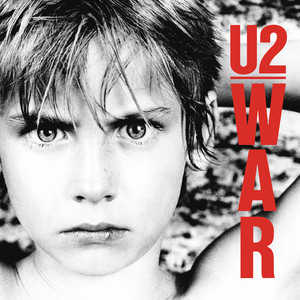
















































Popular Reviews
If Bob Dylan is the Alfred Hitchcock of American music then Tom Waits is the Tobe Hooper: rawer, scarier, less subtle, more inclined toward the use of power tools. And - equally capable, on his best days, of making something utterly compelling. I'd heard stories of how difficult a listen this would be, and it is, for some values of "difficult"; it's obviously going to sound different from both traditional folk and "traditional" industrial (is "bedpan percussion" a thing? It is now, I guess). The mix doesn't help, sometimes muddying a crucial lyric at a crucial point (the problem with recording your album in the boiler room is that it sounds like you recorded in the boiler room). But once you get on Waits's wavelength, as I did after a couple tracks, the cacophonous, abrasive stuff starts to signify, to the point that it's actually the sweeter, more traditional-sounding tracks that feel like overplays of his hand - like they're giving you a respite you haven't quite earned. And the lyrics, which seem to place our American Dante all over the American backwoods, backroads, backcountry, backstreets, etc., in search of a Beatrice who may or may not exist and may or may not have been murdered by the man now carrying her torch. It's arresting to hear an artist tackle his anxiety of influence head-on like this; Waits really does attempt to match Dylan line for line and succeeds about as well as any mere mortal can expect to. Listen carefully and you'll find at least a few lines that explain yourself back to yourself (my personal favorite, from the closer "That Feel": "You say that it's gospel but I know that it's only church"). This is still very much an acquired taste but it is absolutely worth acquiring.
Siouxsie Sioux did everything Ian Curtis did for post-punk, except backwards and in high-heeled leather boots. That includes documenting the persistent crushing numbness of suburbia ("Suburban Relapse"), diving into dehumanization ("Carcass"), and retelling "Helter Skelter" from Sharon Tate's perspective. I could listen to the world end through John McKay's guitar forever.
As somebody who loves Glenn Branca and was raised on Black Flag, I feel like a hypocrite for not liking this album more. Maybe I'd appreciate it better if I were more familiar with the Coleman compositions Zorn and co. are beating the shit out of. As it stands I respect it. But.
"Hey, these guys kinda sound like Be Here Now-era Oasis!" "Actually, I hear early Stereophonics." "I hear some Second Coming-era Stone Roses in there too." "And some Chemical Brothers, even." "There's even a little bit of early Coldplay in there." Truth is, all those bands sound like them. And when Richard Ashcroft says on the title track that he's gonna die alone in bed, he sounds more than a little like the Northern souls from down the road in Liverpool who they're all really chasing. Phony Beatlemania has rarely worked this well, both as elegy ("On Your Own," which feels ragged and Plastic Ono-y in the best ways) and as muted, half-shrugging optimism ("History," which doesn't outpunch "Eleanor Rigby" in the strings department but at least goes the distance). The Harrisonesque stretch-outs throughout the album only add to the ambience.
1-Star Albums (1)

All Ratings (409)
Rap as a genre is maybe the hardest for me to hear with fresh ears. This feels like the pre-Renaissance wing of the museum, except maybe the Renaissance wasn't a 100% great idea in this timeline. All the pre-Chronic jazz-inflected rap feels like a vein that maybe wasn't completely mined before everyone moved on. "The Pros" goes for dub but just feels sluggish after the first five tracks, which is maybe a sign that the first five tracks bring a great energy. Energy changes in the back half but it all mostly works. I didn't expect to think the album was too short, but that's the sign of something good - "Inside Out" is a powerful closer. I guess what I'm saying is maybe don't skip straight to the Caravaggios.
As I write this, a significant portion of the planet is attempting to decipher social media messages from the "leadership" (scare quotes intentional) of Israel, Iran, and the United States to try and determine whether we're going to have World War III or not. Alongside that endeavor are various attempts to propagate, detect, and/or guard against misinformation, scams, bullshit, slop, and flat-out stupidity of various kinds, any of which could conceivably push humanity materially further towards midnight on the doomsday clock. Mistrust is a reflex at this point. The trenches dug within our hearts, indeed. (I got bad news for the refugee being sung about on track 6 - the war may be slightly colder here in America but it isn't any less warlike.) Everybody who thinks Bono & Co. are just such damn pretentious blowhards for making rock music about the Big Issues of Life needs to explain why, when the Big Issues of Life are really weighing down, a 1983 album from the damn pretentious blowhards is a better and more honest listen than pretty much anything else out there. No atheists in foxholes and all that.
I have this constant feeling of being one or two music theory classes away from really understanding jazz. That said, as someone who doesn't Get It but is trying to, this is a vibrant and affirming set. The opener "Part of a Whole" and "Inner Crisis" are standouts but there aren't really any low points.
This set showcases everything special about this band, including the stuff they did badly; "Magic Bus" wobbles to the point of straight-up falling over, for example. But the bigger story is what they did well; the sound of Keith Moon's drums and Pete Townshend's guitar, separate or together, is one of the great pure aesthetic pleasures in all of rock. They are great to listen to even when they aren't necessarily doing anything in particular, just riffing. Coming from a band so frequently burdened by the weight of narrative ambition, that's pretty revelatory.
You know what's crazy? "She Said She Said" is a damn near perfect psychedelic pop song. It would be a highlight of any other pop album. Here it's, like, the eighth best song. Crazy, like I said.
The first things that jump out to me are the abrupt dynamic changes; beyond just feeling quite foreign to me as an inhabitant of the post-Loudness Wars apocalyptic landscape, they reveal a deep insecurity that cuts through this entire collection - Stevens might be a Nice Guy but he still seems to feel like he has to get loud to be heard. (He's *not* shouting, don't accuse him of shouting.) And what does he have to get loud-but-not-too-loud about? The usual shit, mostly - rejection from girls, fake friends in the music industry, the requirement to fulfill his contractual obligations. Behind the veneer of Nice Guy-ness he's downright venomous - I hope the subject of "Wild World" feels like she dodged a bullet. No wonder John Belushi smashed this guy's guitar in *Animal House*. All that said, there's genuine talent on display here, which is part of what makes Stevens frustrating. I guess it's anthropologically interesting to hear the Sensitive Guitar Asshole template used by everyone from John Mayer to Billy Corgan being formed in real time. As a recovering Sensitive Guitar Asshole myself, I guess I should be more sympathetic - but my ongoing recovery is probably part of why I'm not.
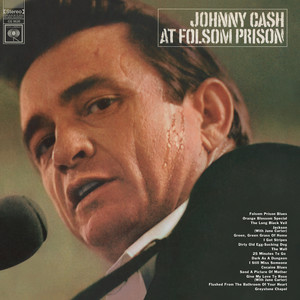
What can I say about this album that hasn't already been said, other than the "oh hell yes" I uncontrollably uttered when it popped up as today's selection? Everything that is good and vibrant about the American country music tradition is present here - empathy, longing, tragedy, murder, dirty jokes, gallows humor, family ties, faithless and faithful women and men, poorly behaved dogs, the erasure of the boundary between the speaker and the hearer. Most of all there is honesty here, real as the beads of sweat dripping down the side of Cash's face on the album's cover as he looks out at the assembled denizens of the California State Prison System. There but for the grace of God goes he.
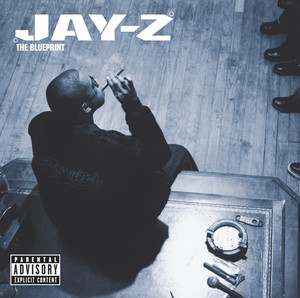
I suppose it's a sign of the art form's evolution that rappers, like their prog-rock brethren before them, could come up with a half-baked, interminably horny concept for their concept album and wrap a bunch of ponderous, overlong songs around it. If only they understood anything about what would actually be sexy - better rhymes, for one. To take just one example: the song with all the moaning in the background also contains an extended discussion of the technical aspects of soundproofing the room where you're doing the deed. We are not aroused.
One of the dirty little secrets of punk rock is that it's better when it steers clear of out-and-out nihilism in favor of pure raw desire - eros rather than thanatos. There's a reason Joey Ramone's favorite word was "wanna." And these guys wanna, whether it's ripping off Bowie's "China Girl" to end a song about people enjoying the Thin White Duke's favorite pharmaceutical or trying, over and over without much success, to get with that vain girl at the party who's bad news in a good way. All along there are great lines ("All the weekend rockstars are in the toilet /Practicing their lines," from the aforementioned coke song) to go with the tunes and the musicianship. (the closer "A Certain Romance" is downright beautiful.) The fake San Francisco call-out is telling - if you're gonna be a Northern Beat then this is the way to do it. Bonus points awarded for looking past Roxanne to see the dark satanic mill keeping her on the street at night.
Liberated from Can on account of his inability to keep up technically as a live player, Czukay takes the opportunity to leave live performance behind completely, playing instead with his new studio toys to build a realm of pure fantasy and play (in the childlike sense). And his imaginary world contains multitudes, from mislabeled origins (the guitar figures on "Persian Love" are clearly Spanish, then Caribbean) to cinematic touches (what's the Teutonic equivalent of a spaghetti western, I wonder). He thinks in phrases, not riffs; the whole thing, especially on the standout "Oh Lord, Give Us More Money," has the constantly shifting and moving feel of a living organism. And the synth tone palette is instantly evocative and futuristic - one imagines this album being played on repeat at the Capcom offices in the NES era. By the time he starts taking the piss out of Pink Floyd on the closer "Hollywood Symphony" it's clear he's onto something grand.
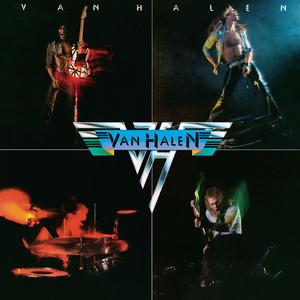
Achieving musical immortality is never easy, but one of the surest ways to do it is to write a repertory song - something that does something technically specific enough that anyone who learns to perform at a certain level will inevitably learn it. Lyric sopranos have "I Could Have Danced All Night" from *My Fair Lady*. True coloratura sopranos have "Poor Wandering One" from *The Pirates of Penzance*. Xylophonists have the overture from *Porgy and Bess*. Pianists have the Rach III. Rock drummers have "Tom Sawyer" among other tunes. And electric guitarists have Van Halen's "Eruption." which has been melting faces since 1978 and which, amazingly, might only be the third- or fourth-best actual song here. Like nobody since Hendrix, there is a B.E. (Before Eddie) and an A.E. (After Eddie) in guitar music. And nobody who's come after him has been able to combine Eddie's virtuoso technical ability with his ear for incredible rock tunes. What a titan he was.
I don't know what metaphor to use here: death's-head moth pushing out of its chrysalis? Swamp monster rising from the mud(dy production)? Rough beast, its hour come round at last, slouching towards Bethlehem to be born? All of the above? You can hear they're not quite there yet (Bruce Dickinson won't arrive for a couple more albums) but you can tell where they're going and that the trip will be exciting.
The question of England, In All Its Englishness, was the subject of so much late-Sixties, early- to mid-Seventies British rock music - from the Kinks to Pink Floyd to Paul McCartney's post-Beatles work - that it's sort of odd to realize that Queen, known to most as the foot-stomp stadium-shout lads, were working in that same tradition. It's even odder to realize they might have done it better than any of the others, McCartney very much included. I know you're not supposed to try and remake Sgt. Pepper but they may have pulled it off here; witness the time changes on "Sweet Lady" (shades of Pepper's "Good Morning Good Morning"), Brian May's McCartneyesque vocals on "'39," the George Harrison-influenced guitar solos throughout the album. And "Bohemian Rhapsody," of course, a reminder that the Beatles were themselves trying to create pocket symphonies - and never made one quite as symphonic as this.
Axl Rose sings "Out Ta Get Me" like someone who knows exactly what he did and isn't sorry. Shit, he sings the whole album that way. In the pantheon of gifted rock-n-roll shitheads he might be Zeus - within a few tracks he somehow gets away with bragging about DUI, mooching off a one-night stand for some more booze, and composing the most brazen ode to heroin since the Velvets. And then he has the fucking temerity to demand that we feel bad for him. And you know the worst part? Having seen the end of his story, I kinda do.
If Britpop was an attempt to recover the British musical legacy for a new generation then these Oxonians were mostly after the Sex Pistols specifically - affected snotty accents, lyrics about being outcasts, lots of cymbals from Danny Goffey. It mostly works, with occasional forays into Jaggerism (like on "Strange Ones") - even though these guys are too good technically to restrain themselves to simple onetofreefores (see the aforementioned "Strange Ones"). I don't know yet whether it signifies as anything beyond just competent flattery. Sometimes that's all you need, I suppose - "Alright" will be in ads long after we're all dead.
Things broken by Green Day, on or with this album: - Furniture, probably - Various commandments, most notably the one referred to in catechism as "onanism" ("Longview," "All by Myself") - The narrator's face on "Pulling Teeth," in what I believe may be the first meaningful discussion of female-on-male domestic violence ever in pop music - Taboos around queer male sexuality (the pronouns on "Basket Case" get all the attention but "Coming Clean" is one of the most touching coming-out songs you'll ever hear) - The floodgates for an entire generation of punk drummers, via Tre Cool's playing (the fills on "Basket Case" alone are revelatory) - Various and sundry rules about what charter members of the heretofore insular West Coast punk scene could and couldn't do, in a way that worked only because Billie Joe et al. had the hard-won credibility to withstand peer pressure - Punk itself, finally, irrevocably, into the mainstream, in a way that not even Nirvana had done a few years before - Generational divides, which I can attest to because my teenage kids love this album with zero prompting from me (great art has a way of finding the people who need it, when they need it) - Barriers, which is what all this is supposed to be about
Part blue-eyed soul swerve, part semi-requited love letter to his pal John Lennon (beyond just "Fame" and "Across the Universe," note, for example, the Beatlesque arpeggios on "Won"), multiple parts attempt to keep up with Lennon's Lost Weekend habits, with attendant consequences (the backup singers overpower Bowie on "Fascination" like he's losing a battle with the voices in his head). Come to think of it, this is perhaps the least Bowie Bowie album - the sound of someone tired of his old persona, trying on a new one, not sure who he really wants to be and fighting valiantly to keep the demons at bay. I play it less than Low or Ziggy but I think I respect it equally.
The Duality of Mick: on one hand, he's lazy, amoral, and unabashedly scummy. (The lyrics of "Stray Cat Blues" have probably been read aloud in a deposition at some point.) On the other hand, when he gives a shit he's downright inspiring ("Sympathy for the Devil," "Jigsaw Puzzle," "Street Fighting Man"). And how come "Salt of the Earth" hasn't been on a gazillion ads at this point? I mean, I know why - enough talk about the Brotherhood of Man and people might get the idea you actually believe in something.
"It's such a fine line between stupid and clever." --This Is Spinal Tap
Mix one part peak Cocteau Twins, two parts early New Order (insouciance toward singing on pitch: it's not just for Bernard Sumner anymore!), one part Robert Smith at his navel-gaziest, one part Chris Isaak's "Wicked Game" (repurposed here for "Infinity," the standout track that imagines what happened after those two impossibly attractive people finally had to leave the beach and go back to the allegedly real world), one part Millennial post-everythingness. Bake while lying on the floor in your mate's flat for 38 minutes or until just kinda done with life. It's not that they're afraid of desire, it's that they don't quite know *how* to desire anything, not really. I see why it resonated - and why it still resonates.
"I want to tell you something you've known all along," she sings on the opener, and then she proceeds to do exactly that, running through power pop that feels both fresh and timeless in a way that's both relentless careerist (Disco! From a punk-adjacent band! The horror!) and quietly revolutionary by virtue of it coming from her voice. I'd call it the sound of the hunter getting captured by the game except that it collapses the categories of "hunter" and "game" so thoroughly.
You won't believe who Johnny Lydon really doesn't like: religious people, psychiatrists, Malcolm McLaren, his former bandmates, the generic "you" of a million bad nu-metal lyrics a generation later, his record label (how dare they expect him to turn in a full album when he specifically contracted and was paid to do so!). I'm gonna go out on a limb here and say the average church would be better off without the sort of person who finds "Religion I" or "Religion II" (same stuff, just chanted in rhythm and a different cadence, with zero recognition of the irony) convincing. Shame about John - he's not terrible when he can get out of his own way ("Public Image"). But he's in his own way an awful lot.
I love Jesus as much as the next refugee of James Dobson-influenced parenting, but I'm having trouble being convinced that Mayfield is really finding any solace in the Word. Honestly, I think he's having trouble convincing himself also - which in some ways makes him more credible (doubts are a part of the whole faith thing after all). Mostly my man just sounds exhausted from being a Black man in America, and I can't blame him.
One of the most beautiful things humans have ever made, full stop, and on par with the Sistine Chapel as a work of Christian art.
It's sort of fascinating to listen to an artist who seems so focused on himself and his own thoughts, to the point of not necessarily caring who does or doesn't overhear what he's doing. (Contrast with someone like John Denver, who hits on a lot of the same nature/transcendence themes but seems to put a lot more effort into welcoming the audience.) At first I wanted to dismiss Morrison as a self-serious wanker, and he might still be. But this album sounds so damn good that I was seduced despite myself. There's a reason your mom warned you about boys with guitars.
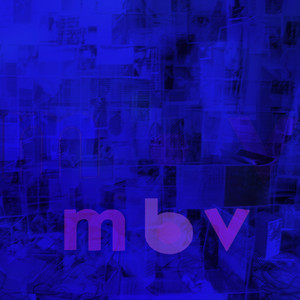
Listen, if you don't find this riveting then I'm certainly not going to argue with you - Kevin Shields is an acquired taste and plenty of people don't acquire it and that's fine. But, speaking as a *Loveless* devotee for multiple decades, I could spend the rest of forever listening to Shields look for himself in the wreckage of his former self. Whether it's the haunting rhythmic figures on "she found now," or picking up right where *Loveless* left off on "who sees you," or using the church organ as an instrument of anticipation rather than bombast on "is this and yes," or the erstwhile Britpop throughout (I hear *13*-era Blur in there, which is a very good thing), Shields (and his bandmates!) are never less than intriguing. I don't know if I can adequately explain why this album matters so much. It feels like the indie-kid equivalent of Syd Barrett turning up for the *Wish You Were Here* sessions as if nothing had happened, only this time, rather than being a husk of himself he's actually ready to play. Standout track is "in another way," which scans like Shields' "The Private Psychedelic Reel" - all groovy and slinky before it mutates into something just plain gorgeous around the 2-minute mark.
Apropos for an album on which the title track has been appropriated for Tarantino's famous "hangout movie," this is hangout music; it's generally pleasant and it's reasonably evocative and it's totally fine if nothing much sticks in your memory afterwards.
I have to admit this album started out in the hole with me on account of it being less fun than INXS's Kick and less meaningful than Midnight Oil's Diesel and Dust, both of which came out of the Australian New Wave the same year and neither of which are included on this list. But by the time I got to "Holy Water" I was on the right wavelength to enjoy it for what it is. To use another 80s analogy, if Kick is Magic and Diesel and Dust is Kareem, this album is, if not James Worthy, at least Michael Cooper - reliable, maybe unspectacular, difficult to replace even if not essential.
Maybe it's just that Beck's clown-prince reputation, gained semi-unfairly since "Loser," precedes him, or maybe it's just that this is album number nine and there's more urgency in asking the question, but I felt a need to determine whether Mr. Hansen was really signifying anything here - whether he was doing anything more than just showing off. Not that he isn't *great* at that - a little Tribe Called Quest here ("Que' Onda Guero"), a little Cornershop there ("Missing"), some erstwhile G-Funk wherever ("Earthquake Weather"), some mid-period Blur on the opener "E-Pro" just to prove he can still rock, some White Stripes (actual Jack White included!) on "Go It Alone" to prove he isn't afraid of his successors. But for a moment on "Missing" his voice sounds downright Cobainian (and not for the only time here - "Rental Car" skillfully pilfers Nirvana's "On a Plain"), and that was when it became clear to me what Beck is really up to - measuring whether his crazy quilt of influences and voices adds up to anything. This is an album of middle age, made by a 35-year-old new father (and wasn't Cobain a new father when he died?) staring over the edge of his life and trying to figure out what in the abyss of his soul gets passed on and what shouldn't be. Hence the downbeat, contemplative vibe that sets in as the album progresses - as shit gets real and the ability to impress wears off (the great thing about your kids is they don't give a shit how smart or talented you are). "The good in us is all we know," he sings on "E-Pro," and it's ultimately what walks him away from the edge and allows him to keep his hand on the plow on the bluesy, cautiously optimistic finale, "Emergency Exit." All in all, it's no *Odelay* but it would be wrong if it were.
For an admitted Coke Album this doesn't feel like one, aside from, you know, having a song called "Snowblind" (they wanted to call the album that but some tightass at the record company objected). The songs are tightly written, suitably loosely performed, and all the right length. I'm not going to bat for the stuff (and it's sort of rich to hear the sentimentality on "Changes" knowing it's about Bill Ward trading his wife for the aforementioned stuff) but, you know, if you rock like this maybe you can get away with it. For a while, anyway.
The story of the Monks feels like the setup for one of those lesser-known Hanna-Barbera cartoons: they're American GIs stationed in Germany who don monk outfits by night to fight back against the boredom and barbarism of their lives through the power of rock and roll! All of which is fun enough, but none of which would matter if their music wasn't also vibrant, from the antiwar shout-outs on the opener "Monk Time" to the basic, childlike, almost regressive lyrics of "Shut Up" and "Oh, How to Do Now" (no wonder Henry Rollins is a notable fan). I listened once through and immediately wanted to hear it all again. Also, it's worth seeking out a version with the bonus tracks as they're all actually worth hearing.
First thought: if you've ever wondered why people used to consider jazz to be lascivious and immoral music, well, this is why. The subtitle for the second track is "Hearts' Beat and Shades in Physical Embraces," which is a lot of words for a downright horny track that everyone will understand wordlessly. Second thought: and then the pathos sets in, with weighty tunes to explain why all the hedonism was necessary in the first place. Third thought: it all ends with a synthesis, the sex and heaviness and joy all stirred together in a bouillabaisse that feeds and delights. Fourth thought: freedom is freedom is freedom is freedom.
Slower burning and more background-y than its peers - if you're used to the bombast of Howlett, James, Rowlands/Simons et al. then this may hit a bit different. But that doesn't mean it doesn't hit, and by the time we get to "Pearl's Girl" you can hear what the fuss is all about. Now, who's in the mood for some Wipeout XL and a can or two of Surge?
I gotta say, starting off your downtempo album with a quote of the Prodigy's intro to *Music for the Jilted Generation* is a pretty audacious move. Too bad the rest of the album lacks any of that bravado, instead laying down the sort of turn-of-the-millennium Rainy Day Music that sells luxury cars and coffee. I recognize that this sort of music has its place, and this is even a good example of it as far as it goes. But I gave it two times through and still don't remember any of it. I don't know, maybe it's me.
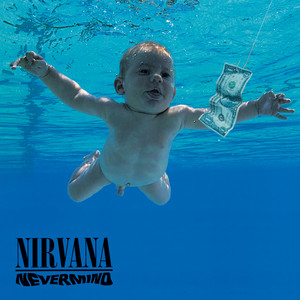
I remember years ago the AV Club did one of their Undercover series where they invite different artists in to play a random cover and they had Rise Against come in to cover Nirvana's "Sliver." Now, let me be clear about this: Rise Against is a damn good band, and they played a damn good, faithful cover. But as I was listening to it I had the revelation that *nobody should try to do a straight cover of this band, ever*. If you wanna turn "In Bloom" into a Willie Nelson tune, go for it - but don't ever try to out-Kurt Kurt. You'll fail.
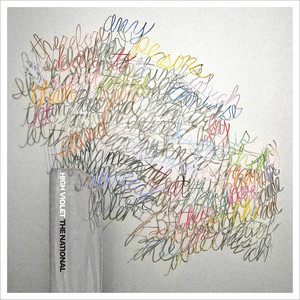
My initial thought was that these guys were chasing Nick Cave; somewhere around "Runaway" I realized they're actually chasing who Cave is chasing, which is Dylan. And as audacious a thing as that is to be doing in 2010, I'm happy to report that they've come as close as anybody in the 21st century to catching up to him. The production is simultaneously lush and unobtrusive - you can see how the Dessners ended up in such demand on that front - but the real story is, well, the stories. "The floors are fallin' down from everybody I know," Matt Berninger sings on "Bloodbuzz Ohio," and I didn't know until I heard it how much that line would haunt me. If I were ten years younger this album might have become my whole personality; as it stands it may still become some part of it.
Side One is one of the greatest collections of popular music ever made - by turns tender and fierce, containing multitudes. Side Two is less immediately rewarding but no less rewarding ultimately. With this band it is sometimes difficult to remember that all the hype was ever justified = but it was, and is, and this album is why.
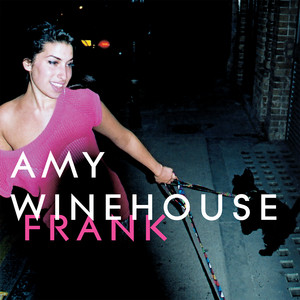
From the perspective of several decades later it's tempting to view the jazz standards era through the safe, gauzy Hays Code lens of black-and-white GI balls and *White Christmas* et al. So it's arresting when Winehouse steps up with a centerpiece song called "Fuck Me Pumps" about the travails of being a single woman inhabiting both the "hunter" and "game" roles, precisely because it serves as such an important correction to the narrative - *it's always been this way*. Not just on that song but throughout, she does what every great artist is supposed to do - however many chords and the truth. This album reclaims jazz as the grimy, lascivious, transcendent stuff your grandparents were warned about. And if you've ever wondered why the loss of Winehouse was such a tragedy, "In My Bed" is your answer.
In hindsight this feels like the next Blur album, if Blur had gotten really into Check Your Head-era Beastie Boys in the interim (Exhibit A: "Double Bass," which mimics the vibe and placement of "Something's Got to Give" on the Beasties' album). As a fan of both, I'm on board here; remember that the blues went from America to Britain and back to America before hip-hop ever did.
Seemingly everyone who reviews this album notes, correctly, how evocative it is of film noir and other soundtracks of decades past - which makes sense as that was what Adamson was clearly going for. What I don't see very often in the reviews is much discussion of how evidently influential this collection has been on soundtracks in a different medium - namely, gaming. I specifically hear so much of Uematsu's FFVII soundtrack in the industrial, synth-based palette being used here - if there's such a thing as steampunk jazz then this is it. I've only been through the album once but I think I'm falling in love a little bit.
Maybe it's just the reunion tour talking but if they aren't the World's Greatest Stadium Rock Band then the list of competitors is short. (Journey? KISS? Queen?) They're certainly the best of their era in any event. Transcendence like this wasn't supposed to be possible anymore by the 90s; it sure as shit isn't still supposed to be possible now, and yet here we are.
First things first, I would listen to all these songs in pretty much any format, and have for decades; if you have a choice between Metallica and no Metallica then the answer is pretty much always Metallica. And 15-year-old me (along with the rest of the low brass section in freshman concert band) specifically thought this album was proof that metal was The One True Genre and had swept all its enemies (Britney Spears and the Backstreet Boys, mostly, at that point) under its feet. It was a different time and the Sux/Rulz TRL Wars were in full swing. If you know, you know. That said, in retrospect I question the setlist - seriously, no "The Unforgiven?" Only one track from *...And Justice for All*? - and in general there's not enough done with the orchestra to justify this project's existence (the opening to "Battery" is the exception that proves the rule). Which on some level I get, because teenage metalheads like Former Me couldn't be trusted to follow it, but still - opportunities have been missed here. So in summary it's cool, but inessential. But cool.
"Get me Jimi Hendrix!" "He's unavailable." "Then get me his non-union Beverly Hills equivalent!"
I don't know that I need 75 minutes of this, but there are parts I find charming and interesting - "Kein Trink Wasser" is a highlight, and I think I hear the genesis of Korn's "Got the Life" in "Are We Here?". I do sort of question who this is for - it purports to be dance music but much of it doesn't really feel like it (at least not to my ear). It's been good "writing an appellate brief on Saturday" music, I suppose. Maybe it will reward me more on multiple listens.
How am I supposed to review this? More precisely, who am I to review this? I am but a mortal. Depart from me, for I am a sinful man, O Lord. Seriously, it's like being asked to review a monolith. Did Moses review Mount Sinai afterwards? Do people review Uluru? 'Cause Uluru don't give a shit about your review, man, just like Page and Plant and Jones and Ghost Bonham don't give a shit, they don't have to, they already made their monument. Where were you when the morning stars sang together, and all the sons of God shouted for joy? I mean, I guess the answer is wherever you are when you hear any of these eight tracks, so iconic that the band's shirts just list all the tracks in order on the back.
All happy bands are alike; each unhappy band is unhappy in its own way. This particular unhappy band is unhappy because, first of all, they're all aggressively using at this point (and not in any of the fun ways!) but also because Lindsey Buckingham, who does *not* want to just remake *Rumours* over and over (you succeeded there, bud) feels like freezing out his bandmates - especially Stevie Nicks - in favor of long stretches of ennui-fueled mid-tempo musings. Cruel irony (ironies usually are): his insistence on trying to be more front and center only makes us miss Stevie more - when she finally arrives on "Sara" it feels like a relief, to the point that she can get away with six minutes of meandering of her own, because hers feels like it's actually going somewhere. This all sounds harsher than perhaps is warranted; there's nothing *bad* here and there's plenty that would have been worth keeping on a pared-down single album, from "Sisters of the Moon" to "Beautiful Child" to the title track. (Gotta say, hiring the USC Marching Band is an all-time great Coke Album move.) But there's a heaviness about all of it; maybe that's the point, and maybe this album is a record of a party that's gone on too long. Maybe *Tusk* actually is what *Hotel California* claims to be - but, see, *Hotel California* is better.
All the handwringing over Yoakam's poser-ness feels downright quaint at this point, in the Year of Our Lord Thirty-Six A.G. (After Garth). Which means we can talk about how this album puts the "western" back in what used to be called country-and-western music; one can picture Dwight as Henry Fonda, threatening Claudia Cardinale to the tune of "What I Don't Know." He's Nick Cave with a twang, which suits the darkly funny, morbid, self-effacing persona he adopts throughout. And the sweet, misguided attempt to reclaim "Dixie" for some non-toxic purpose is offset by the pretty damn convincing White Boy Tejano (tejano gringo?) on "Streets of Bakersfield" and the title track.
Prince's seemingly endless appetites - for genre, for rhythm, for new sounds, for, uh, other stuff - make the most sense when you realize that the real target of his pursuit is Stevie Wonder's transcendent mid-Seventies run. He's swinging for *Songs in the Key of Life* (but hornier) every time out. But of course, he's not Wonder (who is?) - he's himself. And so what comes out instead is longer beat-driven instrumental workouts that reflect his disco roots ("Automatic") and eclectic pop confections that represent the closest he comes to Wonder ("1999," "Little Red Corvette," "Free"). And he's at his best when blends both ("Lady Cab Driver"). But fundamentally, Prince's gift and curse is that he can't imagine anything more transcendent than sex ("International Lover"). I mean, can you *imagine* him trying to write "Isn't She Lovely"?
Shrewder critics than me have remarked on Weller's decision to make what is basically an early Seventies Traffic album - but there's been relatively little discussion of *why*, out of everything he could have made (and this is a guy with a lot range) he made an early Seventies Traffic album. What need is he attempting to meet here? I wonder if the answer is found on this album's eleven o'clock number, "Shadow of the Sun," where he sings "I plan to have it all while I'm still young" multiple times - first quietly, then with more force and up an octave - before launching into an extended coda that fades out, then rises again to a sublime little solo. He's hearkening back to the bloozy hey-baby-hey era of his youth, looking for a purity and clarity of purpose to guide him in middle age. (Insert Erik Erikson cross-reference here.) It makes sense, because Weller occupied for Britpop the same role David Coverdale filled for hair metal - the wizened bloke who knows how to do this, can see where the form is going, and is willing to show the kids how. (My own first exposure to him, like probably most people my age's, was via his guest turn on "Champagne Supernova.") Lyrically in particular, Weller frequently hits the sweet spot between directness and abstraction - I would have definitely scribbled some of these lines in a journal alongside my thoughts about a crush at some point. (I love Oasis with all my heart but even I'll admit the Gallaghers could have taken a few more notes on that point.) Obviously, you may not have the same enthusiasm for Claptonesque guitar figures that Weller does, and if so that will limit your enjoyment here. But I find this a worthy effort, and not just for the inspration it gave to the aforementioned kids.
I'm old enough to remember when the promise of globalization was that we'd get more art like this - an omnivorous blend of African rhythms and harmonies with (African-)American blues guitar workouts, all conveying the pathos of four guys who just want the sharia cops to leave them the fuck alone so they can rock. The energy here is always palpable, even on the slower stuff - "Petit Metier" is quiet but always insistent. Alternate band name: The Actually Black Keys.
Rap's *In Utero* - a brutal, ugly-honest, self-immolating record made by an artist who knows, on some level, that he is inexorably headed towards the end of things and can't make himself stop (and maybe doesn't want to). And it's *also*, under all the nihilism, a repository of pop songcraft by a master of the form. I don't know that I've ever heard the apocalypse on record like I hear it on "I'm In It." And "New Slaves" scans like a final airing of trenchant grievances against the modern minstrel show of Black American celebrity. All the sadder now that we know for sure that the light at the end of the tunnel ("Bound 2") was just another train.
For someone who's known for the artificiality of her visual style, it's striking how effortlessly authentic and authoritative Parton's singing and songwriting voice comes across here (Porter Wagoner's contributions are strong as usual but I think Parton out-writes even him for the most part). It occurs to me that this album is her career in microcosm; the world has been in love with Dolly's image and hasn't paid enough attention to her soul, on display most particularly on the title track and the brassy "Here I Am." She's a walking parable; s someone as biblically literate as she is would surely tell us, man looketh on the outward appearance, etc., etc.
Not gonna lie, this one took me a bit, primarily because of the sonic sameness (which was not helped by the thin Eighties production). But once I made the effort to dig into what Shane MacGowan and co. are really saying here I could see the vision much better. "Gutter poet" is a cliche descriptor for MacGowan but that's because it's accurate, and his tales of being down and out in Ireland and New York are consistently affecting.
Poptimism, like all -isms, has its good and bad points, but Exhibit A in the case for its necessity is the deserved critical rehabilitation of Duran Duran as one of the greatest bands of their era, full stop. Their prowess is in full display here, with John Taylor putting on an absolute clinic on bass every time out ("Rio," "Lonely in Your Nightmare"), Simon Le Bon turning in some of his best vocal performances ("The Chauffeur," "New Religion"), and the entire band, especially Nick Rhodes, coming together to compose some absolute pop classics ("Hungry Like the Wolf," "Save a Prayer"). Judging these guys by their haircuts, as a generation of critics did, is no less an error than judging the Beatles by their mop-tops had been, twenty years previous.
Unfailingly pleasant and polite, but the best stuff here has done better by others ("Love Hurts"), as has the worst stuff ("Lucille"). Mostly this is a reminder of why the Beatles were such a big deal.
I could nitpick this plenty - I agree with David Gilmour that the Vera Lynn stuff doesn't really land, and the production sounds muddy and dated at times - but I'd be nitpicking and I know it. Truth is, making a legitimately great rock opera that tells a coherent story *and* maintains momentum throughout *and* contains a half-dozen or so certified classics of the genre is a damn near impossible task and these guys pulled it off. Everyone will have their own deeply meaningful tracks (mine are "Mother," "Hey You," and "Nobody Home"). Monumental. (Incidentally, I prefer the live *Is There Anybody Out There?* recording, which is worth seeking out for both completeness - it restores "What Shall We Do Now?" to its rightful place in the middle of Disc 1 - and for a superior production experience.)
A song cycle about a heartsick man who, having broken his love's trust, keeps trying to write different songs and inevitably just writes the same song over and over. I mean that as a compliment; this album is perhaps the greatest display of denial, guilt, and preoccupation ever recorded - all the more potent because Our Narrator, Nobel laureate that he is, remembers to show rather than tell his stories. The production is unobtrusive and intimate. And Dylan is so lonesome he could cry.
Among other superlatives - more important ones, like Greatest Living Songwriter by resume - McCartney seemingly has suffered the greatest amount of critical disdain for the crime of Not Being His Former Bandmate (in this case, John Lennon). Thing is, I never got the feeling Lennon liked being Lennon all that much, and anyway we ought to be hearing McCartney for who he is and not who he's not. On this album McCartney is his usual excellent self - a rock hit here ("Jet," "Helen Wheels," and the title track), some mellow folky stuff there ("Bluebird" and "Let Me Roll It" - he always was the Beatles' biggest stoner), some Abbey Road-y combo of both, well, everywhere (but especially on "No Words" and the mini-suite "Picasso's Last Words"). And most poignantly, on "Mamunia," a sweet, hopeful rejoinder to his erstwhile friend Lennon, then attempting to drink and drug himself to death under dark clouds in L.A.
I don't exactly know what he's saying but he seems to be saying it rather well.
The pleasures here are myriad - the Nuggets-esque bell tones (Telecaster?) on the opener "Family Entertainment," the jangle of the opening riff on "I Gotta Getta," the psychedelic organ firing up on the same track, the vocal harmonies on "Jump Boys" (which I guess is the Northern Irish term for surfers?). And "Teenage Kicks" remains as great as its reputation. It's almost like they decided to write a bunch of pop-rock songs, but only the good parts (cut to a shot of young Robert Pollard in a basement in southern Ohio, furiously taking notes).
Willie ran into Booker T. Jones on the beach in Malibu one day and the rest is, literally, history. The link between Tin Pan Alley and the rest of American music has rarely come through this clear - I hate to be the guy who tells you to focus on the notes that *aren't* there but, you know, *do that*. And I love the Eagles as much as the next guy but this album represents the real Road Not Taken for El Lay country - respectful, serene, centered, edibles rather than powder. "Blue Skies" sounds like a prayer. They all do, actually.
As somebody who loves Glenn Branca and was raised on Black Flag, I feel like a hypocrite for not liking this album more. Maybe I'd appreciate it better if I were more familiar with the Coleman compositions Zorn and co. are beating the shit out of. As it stands I respect it. But.
Indie Springsteen disciples have a way of proliferating like Marvel Comics variants - over here a Craig Finn, over there a John Darnielle, here a Jason Isbell. there a Katie Crutchfield. Adam Granduciel's particular formula is *What If...Springsteen Discovered the Delay Pedal and Pot?* And it's fascinating the lack of anxiety of influence he displays; he knows he's aping the Boss and he knows you know it and he does it anyway. He gets away with it mostly by avoiding Bruce's vocal affectations in favor of a clearer vocal tone, and by keeping his lyrics suitably impressionistic rather than concrete like the original's. But the real star here is the guitar work - J Mascis and Kevin Shields by way of *Stardust*-era Willie Nelson, lush and full while simultaneously stately and unadorned. I tried to follow along with a lyric sheet but realized by about "Eyes to the Wind" that I was feeling rather than reading.
This is a re-rating for me; on my first time through I didn't hate it but didn't feel much of anything about it one way or the other either. After reading a defense of it I figured I'd give it another shot and I'm glad I did. My frame of reference for EDM is the Big Beat that was in vogue when I was a kid, so perhaps that's why I wasn't in a receptive place when I first heard this. Between the breakbeats and jazzy musical figures and British soul vocals (mostly from Elisabeth Troy) there's an odd sort of weightlessness to it. But don't mistake that for a lack of feeling or care; Troy's singing is consistently excellent (especially on the downbeat "I See"), the rhythms will fall into a lovely groove if you give them a chance, and Cole himself is obviously adept at creating the nightfeeling vibes he's going for. This is like a less noisy Basement Jaxx, with a bit of ambient mixed in; I think it works, and I appreciate the invitation to revisit it.
A rough beast, its hour come round at last, slouching towards the digital hellscape to be born. Where once its fractured, pixelated humanity felt prescient, now it just feels trenchant. "Life in a Glasshouse" feels like a jazz funeral for the future we were promised.
Yes, it's uneven, and yes, the misses here miss wildly - I can't tell whether "Student Demonstration Time" is an earnest attempt at a Doors song or a parody. And the production and related turmoil swirling around the group is constantly evident here, for better and worse (I'd like to take this opportunity to point out that Van Dyke Parks remains a fart-sniffer of the highest order). But the meaning of the Beach Boys has always been, like the sport they represented but mostly didn't actually practice, in moments of transcendence, and those are present in spades here - all the more impressive for being carried out mostly in Brian Wilson's absence. And if there's such a thing as "hitting wildly" then "Feel Flows" does it.
Finally, an album! By a female R&B singer! About sex! And relationships! I was prepared to hate this after the preachy intro. But Sullivan spends the next half hour examining the Problem (which might as well be her nickname for the hung dude she sings about on "Put It Down") from all angles in an honest, vulnerable, angry, self-deprecating way. I don't know that this album deserved all the ballyhoo it got at the time - if you come for the Miseducation, you better not miss - but it's good at being what it is, and that counts for something. I just don't know if I'll be back anytime soon.
Look, I have no doubt that these guys were a handful even by rock-star standards - Aaron North in particular seems to be chaos personified, and you don't have *this* many lyrics about heroin on an album without there being some, ah, active participation. But headaches or no, V2 refusing to promote this album at the time of its release was some stupid shit. Like, if you can't sell "Jet, but *actually* punk" to the world then quit your job already. Seriously, what a collection: Joe Cardamone's vocals slither all over the history of noisy music before hitting right in the sweet spot between Iggy Pop, Tom Verlaine, and Cedric Bixler-Zavala. The guitar work chases the same set of influences, with the occasional Albini ("Meatmaker") thrown in for good measure. The centerpiece "Getting Bright at Night" particularly feels like an attempt to update Television for a new generation - a worthy task if there ever was one. And "Spike Island" would have been a hit - Verlaine-esque vocals, suitably sleazy guitar, seedy lyrics, the works. The world was ready for this and I'm glad it survived, even if the band itself didn't.
Long before Alyson Hannigan became the world's most famous Freaky Band Kid, these psychos were at it, with Keith Emerson doing in his own way for the Hammond organ (heheh, he said "organ") what Cage and Branca were doing for the piano and guitar. Be patient with the slow start; once you hit "The Old Castle" it's nothing but speed and power and virtuosity from there on out. The encore turns the Nutcracker March into a demented dancehall tune for good measure.
Punks aren't supposed to be able to actually play. Punks aren't supposed to be able to actually write. Punks aren't supposed to be able to play in multiple genres and actually hang. Nominal punk music isn't supposed to have this kind of emotional range - tender and hurt and empathetic and hopeful in addition to the usual punk anger. Old-fashioned rock and roll isn't supposed to still sound vital. Isn't it refreshing to encounter something that's *better* than it's supposed to be? I can't remember the last time it happened, honestly.
I don't know, man, maybe this was really revolutionary in 1968 or whatever, but at this point the satire is unfocused and weak, the polemics are just as preachy as the stuff I think Zappa is making fun of, and the dirty stories are just dirty for dirty's sake. He has nothing to say and he says it in the most annoying way possible. Even the little bit of genuine artistry here - the collage on "Nasal Retentive Calliope Music" he has to ruin with a fart joke. It is a mark of my commitment to this project that I listened to this all the way through.
Proust in musical form: a fey man on the Lower East Side sits in a gay bar and (mis)remembers every love song he's ever heard. In the process he manages to (mis)remember some of the best songs Jackson Browne, Cole Porter, Jonathan Richman, Bruce Springsteen, Stevie Nicks, Bernard Sumner, etc. never actually wrote. A miracle.
As delightfully free-associative as Paul's Boutique was, I think this album - which seems to seek to draw a throughline all the way through American music, from jazz to funk to punk to hip-hop - might be even more ambitious. I also think it's not quite as good as Paul's Boutique (or Check Your Head, for that matter). But the highs are still incredible - "Sabotage" will be played at high school pep rallies for the rest of time (likely with the f-bomb intact).
A.K.A. the official soundtrack of Truck Month at Your Local North Texas Ford Dealer. Lots of rockin', lots of riffin', lots of hey-baby and whoa-mama and bein' a rock-and-roll kinda man, just like the all-new 2026 Ford F-150, which will make you feel like you're a hard-livin' road dog even though you're really just a guy from Plano who majored in finance at A&M. The title track might make you feel something more, only for a minute, before you get back to rockin' like normal. That's what life is about, you know - rockin'. And trucks.
"Hey, these guys kinda sound like Be Here Now-era Oasis!" "Actually, I hear early Stereophonics." "I hear some Second Coming-era Stone Roses in there too." "And some Chemical Brothers, even." "There's even a little bit of early Coldplay in there." Truth is, all those bands sound like them. And when Richard Ashcroft says on the title track that he's gonna die alone in bed, he sounds more than a little like the Northern souls from down the road in Liverpool who they're all really chasing. Phony Beatlemania has rarely worked this well, both as elegy ("On Your Own," which feels ragged and Plastic Ono-y in the best ways) and as muted, half-shrugging optimism ("History," which doesn't outpunch "Eleanor Rigby" in the strings department but at least goes the distance). The Harrisonesque stretch-outs throughout the album only add to the ambience.
There's a reason you've heard "Somebody to Love" and "White Rabbit" a gazillion times in every form of media at this point: Grace Slick's vocals are unique for a White female singer from her era, with a just-right combination of bluesy earthiness and pure tone. Frustratingly, the rest of the band doesn't seem to know what they have on their hands with her, veering instead into more standard, period-reflective folk and soul led by Marty Balin (that's Jerry Garcia playing lead on "Today"). Which doesn't make the latter stuff bad - it's actually generally quite good. But it ain't special the way Slick's voice is. Feels like the musical equivalent of making Bill Walton play on the JV team for a year at UCLA.
Disco Demolition Nights notwithstanding, there's a reason this particular flavor of dance music was so captivating to basically the entire world in the late 70s: perfectly comfortable grooves, lived-in, organic production, and an appealing emcee in Jackson. For years people have debated whether this collection is better than Thriller; for my money, the highs aren't as high here - there's nothing as instantly iconic as "Beat It" or "Billie Jean" - but the lows aren't as low either (nothing as clunky as "The Girl Is Mine"). Nevertheless, it deserves all the acclaim it gets - and now, after Everything With MJ (you know what I mean) it serves as a monument to all that was lost. Look on his works, ye mighty, and despair.
Among the multifarious progeny of this classic - the Minutemen, Black Flag, Fugazi, the Feelies - I want to call out Rage Against the Machine, simply because, whatever you think of the politics here (and I'm generally in favor of them) the playing on display is *incredible*. Andy Gill, Dave Allen, and Hugo Burnham may have a claim to the title of Most Valuable Rhythm Section (Gill included here because he's playing rhythm guitar and he fucking *plays* it). As far as those lyrics go, the verbosity is a blessing and a curse at times but Jon King's delivery makes it work. And I'm willing to excuse some Neo-Puritanism ("Damaged Goods") in exchange for a clear statement of class purpose - and "please send me evenings and weekends" on "Return the Gift" is about as pure as it gets.
I feel conflicted about rating this album, simply because I already love it and have nostalgic feelings about it and love the genre as a whole. At the same time, it feels sort of weightless - like it's wonderful but not essential. But the rapid-fire songwriting feels equal parts tossed-off and crafted (probably the exact effect Dando et al. are going for), and there are constant sugary pleasures here - most of these songs could be singles, or at the very least in the background of a Friends episode. And as far as Steinian statements about the slacker zeitgeist go, "ship without a rudder's like a ship without a rudder's like a ship without a rudder" is pretty damn good. I don't know if it's a great album but I like it better than a lot of great albums.
I question some of the choices of material (especially the ballads). I question some of the instrumentation and production choices. I question whether I can ever really hear this the way it must have sounded in 1956. I hear the iconic "one for the money, two for the show / three to get ready now go cat go" and I'm mesmerized. What was the question again?
I want to be snarky about Brett Anderson's understudy performance in the role of Queer Rock Star but I can't, simply because I remember what 1993 was like. But that being said, there's less happening here lyrically than it feels like there ought to be. And if anything here's going to make me question my sexuality it's Bernard Butler's effects box.
Don McLean is the Bucky Dent or David Tyree of folk rock - transcedent for a moment (the title track) in a way that ensures he'll be remembered forever, even if the rest of his body of work remains pretty pedestrian. It's sort of hard to grapple with how good "American Pie" is against the relief of how bland and cliched the rest of McLean's attempts at poetry are here. Sometimes one play is all it takes, I guess.
Dave Formula's keyboards absolutely make this band - shimmery and grimy and stately and wild and everything in between, as the mood suits him. The keys propel this slab of Tense Britannica with high energy throughout - even the lulls, as on the first half of "The Great Beautician in the Sky," have a purpose. "Shot by Both Sides" proves they can rock plenty. And while I'm not certain that Howard Devoto's thoughts are *quite* as original and insightful as he thinks they are, that doesn't mean he has nothing to say. "The smart ones understand how your heart bursts," he sings with veracity on "Burst." Think of this as a companion piece to the first couple Specials albums in the same way that a Matisse compliments a Picasso.
There's a reason people still talk, 40-plus years later, about the end of the Van Halen/Roth partnership - these guys were absolutely peaking at the time. This album includes the most controversial (and correctly forward-thinking) instrumentation decision since Dylan going electric, AND the world's grand introduction to the double bass pedal (amazing that both Van Halen brothers have a repertory piece on their respective instruments), AND a half-dozen other flawless compositions, AND Roth's zenith as a vocalist. An absolute masterwork.
"We have been going to this same party every night for 47 years, and in no way is that pathetic!" That sounds like a joke but I'm serious: this may be my favorite funk album ever and a sonic building block for the last half-century of pop music as a whole (as well as a reminder that it was total bullshit to re-segregate pop music in the late 70s and thereby cut off the cross-pollination of genres on display here). Slash should buy Mike Hampton a house.
Describing an artist as "weird" always carries with it an air of judgment; "weird" artists are always either too out of it to know what they're doing (the Syd Barrett/Daniel Johnston outsider school) or else they're Doing It On Purpose, with all the fraught weight of intention that entails. Which is to say that, given Bjork's reputation, what's striking, thirty-plus years later, is how effortless this all sounds; casually inverting Byron on "Venus as a Boy," channeling - I don't know, Dinah Shore maybe? - on "Like Someone in Love," making the Eurodance subtext into text on "Big Time Sensuality." This album feels like an old friend taking you on a trip to a place she knows well and is excited for you to get to experience. Music of her mind, one might say.
There used to be these ads for GMC trucks that said, "Do one thing. Do it well." Bolan does one thing really, really well here - finding great grooves and just living in them, for three and a half minutes that feels like it could go on forever. This is a Coke Album in the best way.
As much I hate to encourage the contemporary phenomenon of inceldom, David Thomas and co. made the perfect window into that headspace: by turns horny, abrasive, placid to the point of passivity, contemplative (which a nice way of saying too smart for its own good), and just downright weird in the best way. A perfect soundtrack for making DOOM .wads in your room. Alternate title: Songs About Not Fucking.
Knowing how close these songs were in time to the end of the band, it's easy now to hear hints of everyone's exhaustion. On the other hand, Morrissey's whole thing is that he perpetually sounds Over It, so I don't know how reliable an indicator that is. In any event, the production here is better than on The Queen Is Dead, which is both progress and an indictment; a lot of what makes the Smiths' early work so compelling for me is the rough-hewn nature of the recordings. That said, there's plenty of good stuff here.
I see why this band worked and also why it didn't; Young's guitar workouts are, to borrow a Cameron Crowe word, incendiary ("Mr. Soul," "Bluebird") but Furay gets too much airtime to say too little ("Sad Memory"). Stills seems to gamely be playing mediator here ("Rock & Roll Woman"), but the result feels disjointed rather than simply varied. That said, there's historical value in remembering how much psychedelia owed to the country and soul on display here. And "Broken Arrow" shows both how Over This Shit Young was already (at 21!) and where his restless ambitions would eventually take him.
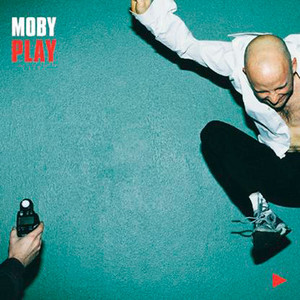
I once became a vegan because of this album (for a week - my willpower didn't survive a spring break barbecue). I've been listening to it for more than two decades and it feels like I only just realized what Moby is trying to do here, which is call back to and synthesize pre-rock blues ("Honey," "Why Does My Heart Feel So Bad") with Seventies ambient music (the Eno-ism is especially poignant on "Inside") with modern sounds in disco and hip-hop music (complete with Gwen Stefani playing the Debbie Harry role on "South Side"). He's not just listening to Eno and Byrne and Pink Floyd and Scott-Heron - he's listening to the stuff they listened to. Which is why what he's made here contains multitudes - among them Wish You Were Here-esque lonesomeness ("Guitar Flute & String"), a "Dancing in the Street" for a new era ("Bodyrock"), and a spiritual call-out that, like all good spiritual call-outs, is really directed at the one doing the calling out ("Run On"). Also: if you were born to White parents between mid-2000 and early 2002, this album may be somewhat responsible for your existence.
Exactly what it sounds like: a Van Morrison live album. I'm not familiar enough with his catalog to say whether these recordings are better than the originals for the most part. I will say that Morrison himself sounds focused and committed (which I understand has sometimes been an issue with him) and that the compositions are better when they rely more on the horns and piano and less on B.B. King-style guitar impersonations. Your mileage will vary greatly - my own rating is probably in flux pending more familiarity with Morrison's work in general.
I'm fascinated by this. Snoop exists in a hedonistic haze, occasionally punctured by spasms of violence ("Murder Was the Case"). He is obviously uncomfortable with Shit Getting Real even though those songs are still well made. "Gin and Juice" and "Who Am I (What's My Name)?" are classics for a reason. The misogyny throughout is terrible even by rap standards. In short, it shouldn't be a surprise that Snoop became a mascot of American culture - he's escapist and lazy and crass and skilled and sometimes transcendent anyway. *Ecce homie*: behold the G.
The Revolution is already here - it just isn't evenly distributed yet.
There is a very real sense in which the entire grunge project was an exercise in attempting to rescue the legacy of Sabbath and Zep from the hair-metal bozos - to return to the deep-in-the-cold-dark-ground *heaviness* those bands exemplified. Chris Cornell (on whom the Mandate of Heaven fell in the form of his Plant-ian vocal aptitude) and his bandmates come the closest of anybody to realizing that ambition here. It all works - suitably gentle-rough production courtesy of Michael Beinhorn, grooves that frequently lurch in odd meters but never in ways that feel unnatural, Kim Thayil's riffs moving at the exact speed they should move. Even the impressionistic lyrics work for them better than they'd work for pretty much anyone else, because Cornell's voice is operatic in the communicative sense - the notes he sings and how he sings them are more important than the words per se. I don't need to know what he's saying to *know what he's saying*. I miss him.
At least two out of the three words in this group's title are accurate. A good palate cleanser - not sure whether it's more than that.
Wildly inconsistent in that there are a couple just straight-up duds, but there are more hits than misses and the hits are great - "Proud Mary" (good enough for Ike and Tina to appropriate), "Keep on Chooglin' (good enough for Zep to appropriate - listen to that harmonica and tell me "When the Levee Breaks" ain't going for the same damn thing), and "Good Golly Miss Molly" (appropriated from Little Richard but I might even like it a *little* better than his version). Who cares if they're fake Southerners - Dickens wasn't an orphan either.
On one hand, Cohen's tunesmithing is best described as "uncommitted," and I can't tell whether he really *can't* sing or just isn't trying hard enough. Just like his characters, he has to make everything hard for himself. On the other hand, what characters! Cohen's poetry cements him as an heir of the Beats - tales of addicts, vagabonds, ladies of moral turpitude, boys who fell in with the bad crowd, all seesawing between depravity and ecstasy. No wonder this album has been a mainstay of bohemians (actual or aspiring) for half a century now.
Reviewing this so soon after 69 Love Songs is revealing. Stephen Merritt proves that brevity is the soul of wit; his observations land because he sticks and moves. Neil Hannon, on the other hand, lingers and languishes; he feels like he's wallowing in it, which makes his lyrics feel a bit banal rather than incisive. More than that, though, Merritt feels like he's in on the joke of being a lovesick worm; Hannon feels like he thinks he's in on the joke but actually isn't. Insert Vonnegut's observation about how we are what we pretend to be, so we must be very careful what we pretend to be.
Y'all, I've tried with this one, several times, and I think what I'm concluding is that I'd rather read this album than hear it for the most part. The stories are all at least pretty good and usually much better ("Used Cars," "My Father's House") but this is music and there's sometimes a dearth of it - only "Atlantic City" really feels like it rises to the occasion. I know Bruce is going for this solemn, hushed tone, and I know how influential it's been for plenty of other artists I like. But I just come away with the feeling that *he* thinks he sounds more profound than he actually usually does. Still worthy of the canon based on the lyrics alone, but yeah.
This is the calm after the *sturm und drang* of Big Beat: fun, inviting, accessible, subtly innovative, and sometimes transcendent (I'm thinking of the guitar sputtering to life on "Fresh" like a futuristic rocket engine turning over after having sat for a while). Your tolerance for blippy shit may vary, of course, but I think it's a great bridge between the Planet Dust of the mid-Nineties and where dance music was ultimately headed in the new millennium.
When I was a child - growing up in a deeply religious household where anything heavier than Seventies soft rock or country was verboten - I imagined that "heavy metal" sounded like the opening of "Speed King": energetic, cacophonous, brash, everything I wasn't and wanted to be. In my head it sounded like freedom. Now, thirty-plus years later and in real life, this album sounds just like that. *You know what, fuck it - everybody gets a solo*. And if you're ever wondering why people care about Ritchie Blackmore, the middle section "Child in Time" is your answer. (Not enough people ask about Ian Paice, but if "Flight of the Rat" is any indication then they should.)
The only thing really noteworthy here is that the production is reasonably evocative of Peak Gangsta. Otherwise, the rhymes are fine, the subject matter is cliche (he's *not* being misogynistic, see, he calls men "bitches" too), the album is *so fucking long* (Nineties Overlong Album Disease is officially epidemic by '91), and the whole experience is consistently unpleasant in a way that I assume may have signified at the time but that I have no desire to experience again. Ice is understandably preoccupied with the violence around him but if you're going to be obsessed with something then you need to have something meaningful to say about it, and he doesn't really. Transitioning into acting was a good move.
Greg Dulli seems to be running the J Mascis playbook, only with more text as opposed to subtext. He can't play quite as well as J and he sings about as well (which isn't exactly a compliment), but I can live with that. I'm less sold on the less subtext, more text thing, and not just because Mascis's inability to articulate his feelings is part of what makes him signify. Dulli doesn't have that problem but here it feels like he's trying to guard himself against accusations of misogyny by accusing himself first. Thing is, self-awareness about your cad-ness doesn't make you any less of a cad (see, e.g., a long tradition of scuzzballs dating back at least to Byron and Shelley). Yelling at your ex for her not getting off, as Dulli does on "When We Two Parted," is downright ugly, ironic distance or not (which is a shame, because the Allmanesque lead on that song really works). And if he's going to be more articulate then he needs to at least be poetic - there are lots of good riffs here but too many clunker lines. He isn't an idiot but this is nonetheless full of sound and fury that I'm not sure signifies.
Maybe it's just the knowledge of where the protagonists all ended up - Pras in prison, Lauryn on the edge of sanity, Wyclef giving keynotes at meetings of the Legion of Doom or some shit - but the tragic notes in this album feel especially tragic now. Perhaps that's to be expected as we all age (speaking as someone who grew up with this album). And perhaps it's an expression of what I hear more than anything else here - the paradox of youth, of being both incredible artists at the height of their creative powers and simultaneously powerless to transcend the personal and social circumstances that cultivated those gifts. I guess I can't do anything more than look back with some sadness - and gratitude that "Family Business" still slaps, "Ready or Not" still feels vital, "No Woman, No Cry" still wrestles the original to a draw. Gather ye rosebuds while ye may, I guess.
Insouciant indie-rock riffs and Russell Mael-style vocal histrionics - two great tastes that...don't work that well together, unfortunately. I appreciate the attempt to do something different but this blend ain't hitting for me. And the lyrics - what in the faux-fey arrested development is going on here.
There's an old Chappelle routine about how you can get away with saying whatever you want if you get a pretty White girl to sing it for you. I think maybe that also applies if you can get two close-harmony country singers to sing it for you - witness the senseless violence on display on "Knoxville Girl," for example. Sonically it's a lot of the same thing so you're either going to like this sound or not; I personally feel my Scots-Irish by way of Appalachia heritage rising up in me so I'm in favor.
I assume you're familiar with "Take On Me," one of the all-time great moments of Eighties pop - an undeniable synth riff matched with a soaring falsetto vocal from Morten Harket that immediately cements the song in the Don't Even Think About Attempting That At Karaoke Hall Of Fame. Unsurprisingly, the rest of the band's output on this album doesn't reach those same heights (what could?). But the other singles - particularly "Love Is Reason" and the "The Sun Always Shines on T.V." - showcase much of the same easy, upbeat charm. I'm not sure there's anything deeper than that happening here, especially on some of the more downbeat album tracks, but the collection is mostly fun if nothing else.
Feels more important for what it represents (the flame of the British soul tradition being kept alive and transmitted into hands of original pigmentation, plus a launching-off point for Massive Attack et al. a few years later) than what it actually is (varied, perfectly serviceable, well-produced late-Eighties R&B that more than anything reminds me how much I like Blue Lines and that one Lisa Stansfield album). I suppose it's possible I'm not familiar enough with where the genre was before this to see this as particularly revolutionary, but at least it's energetic.
As late-Seventies White Guy Reggae goes (this time with White Girls) I feel like this beats most of the competitors (which isn't all that hard, honestly), but I was left with the feeling that I didn't quite connect with it on as deep a level as I could. Probably worth another listen with a lyric sheet in front of me. I will say "don't take it personal, I choose my own fate" feels like a good motto to take away from the proceedings.
I've never really asked any of my peers about this but I suspect that for many of us who came of age during the Great Recession the term "recession pop" is never going to be cute or funny or ironic on account of the sheer fucking horror it invokes - your upcoming internship vanishes, then your evening/weekend job cuts everyone's guaranteed pay and just goes straight commission, then you wander into a job fair where there's exactly one (1) employer hiring for non-engineering majors and it's fucking Allstate Insurance, then your dad calls and tells you he got laid off again, and at some point you just wander, dazed, back to your shitty apartment down the hill from campus (stopping at a pre-med advisement seminar along the way because you can pretend to be anything for free pizza) and hope somebody's throwing a party tonight. *We're going nowhere so we'll just dance 'til we're dead.* *It's Blitz!* isn't strictly a recession-pop album (although there are feints in that direction, most notably on "Heads Will Roll") but it's maybe the best representation of what that exact time felt like - the Yeah Yeah Yeahs camped out in Tornillo, struggling to find inspiration, writing and rewriting and tearing up their progress and rewriting again, spending money they don't have on a record that'll never make back what they owe. "Skeletons" feels like the sound of an entire generation marching towards its own funeral. And when Karen O sings "Run, run away/ No sense of time" she's modeling our collective coping mechanism. It's the soundtrack of a life spent forever in the red. I love it and it also hurts to listen to.
I don't know what you were doing at age nineteen; I definitely wasn't making a masterpiece that combines the extant history of popular music (Beatles, Lou Reed, Stevie, P-Funk, and Cannonball Adderley among others sampled) and pure rapturous verbosity into a solid hour of bliss. The album begins with the sound of a baby crying and contains the joy of being young and alive on every track. Life-affirming.
Honestly, I turned it on and forgot I had it on. Nothing here is done badly but nothing here is done significantly better than average either.
I bob my head, always halfway amazed, when they lay down "The Magic Number" in rapid fire. I laugh out loud when they compare losing your virginity to playing "Chopsticks" at your first piano recital on "Jenifa Taught Me." I reach temporary enlightenment during "Eye Know" (that Otis Redding sample was worth waiting 35 years to clear). I hear the fountain of so much of what hip-hop is, and was, and could be again, on "Potholes in My Lawn." I daydream about how much time was wasted on D.A.R.E. courses when I was a kid that could have just been replaced with playing "Say No Go" for the kids and then walking out. I can't listen to "Me Myself and I" without my White ass shaking semi-voluntarily. Can't help it - I'm powerless against something this good.
From a certain perspective, I am not the sort of person who should be enamored with this album. I'm drug-free and have never tried heroin. I'm not into S&M. I don't pay for...any of the things being bought or sold on this album. I'm not preoccupied with clowns like Reed apparently is (seriously - check the lyric sheet). So why do I love this album so much? Because it encapsulates *freedom* in the purest artistic sense, because every note of it - the reclaimed Sixties girl-group ones, the folky ones, even the off-tune ones from Nico and the dissonant ones from Cage - testifies to the fundamental truth that *you can do whatever you want*, as long as you do it with your whole chest. And that truth has saved my life, over and over again.
Slavery in America was fundamentally an institution of familial destruction - of obliterating the natural bonds between parents and children and spouses and lovers, selling human beings as livestock to highest bidder at any moment, negating all sense of identity those essential bonds create. *For in the last days men shall be lovers of their own selves, blasphemers, without natural affection.* So it is unsurprising that Scott-Heron, prophet that he is, is so preoccupied with the loss of family here. On nearly every track he gropes for something or someone to hold on to - brothers, fathers, uncles, cousins, sons, sisters, first loves - and all elude him. And when he confesses on "The Bottle" - after recounting the tales of covetous winos around him - that he himself is one of the hopeless husks hanging outside the liquor store, we understand that the chains were never really broken but rather just changed form.
One's mind tends to wander while listening to jam bands, which is a feature and not a bug. Beyond just taking this in - it's all at least pleasant although it drags a little bit at times (as jammy stuff tends to do), and the good stuff is mostly the stuff you've probably already heard, plus "I Wanna Go to the Sun" - my mind wandered to how odd it is that this album exists at all, much less that it became a cultural phenomenon. Like, Frampton was never *that* famous before this - his previous album had topped out at #32, he hadn't had any real successful singles, and his previous band Humble Pie hadn't done much of note either (besides purchase Penny Lane from Stillwater for $50 and a case of beer). There's nothing here that's really mind-blowing - even the talkbox had been done already by Stevie Wonder and Jeff Beck among others, and these compositions just feel like pretty standard live-era classic-rock fare. Point is, Frampton wasn't doing anything that Zep or Bad Company or Steve Miller or a thousand other bands weren't also doing at the time. And yet these recordings show he was playing to sizable crowds who were clearly into his music. Like, what cultural itch was being scratched by *Frampton Comes Alive!* - were people really just that desperate to vicariously experience some mid-tempo, vaguely proficient rockin' out? Was it just a fad, like Pet Rocks or Sea Monkeys? Was it better high, like *Fantasia* or *2001: A Space Odyssey*? I'm fascinated by it even though I only kinda halfway get it - maybe *because* I only halfway get it.
I feel like I should like this more than I do - it's evocatively composed throughout, and Costello's novelist eye remains on display. I guess the stories themselves just feel so depleted - emotionally exhausted and same-y. Hurt people hurting people, forever and ever, worlds without end. I don't feel like I have the right to demand more optimism out of an artist but I do wish for at least a broader psychological palette than the one Costello is painting with here.
I was unsurprised to hear a vibrant, aggressive set from Kuti complete with a fanfare piss-take aimed at the jackboots running his country at the time. I *was* pleasantly surprised to realize how much of the 8-bit chipcore palette was made in an attempt to recreate the sound of the title track. In any event, I'd hate to have this guy disappointed in me.
Rap is maybe the hardest genre to hear in context, and this album is no exception; the Farrakhan shit has aged like milk, for example. But the context cuts both ways, and *my God* has this album been so incredibly foundational to the sound of hip-hop for the last three decades-plus since it was released. Seriously, the samples that have been used by other artists fly by like bullet train scenery, too fast to even begin to catch all of them. The production remains first-rate - clear, punchy, aggressive (you can hear what all those RATM albums were going for). And Chuck D's lyrics remain more relevant than they should, in multiple senses. Do believe the hype about this one.
I'm starting to think there's less to these guys than meets the ear. Ray Davies' singing is indifferent, his band's playing is competent, and his tunes range from fine to occasionally great ("Australia" is a fun bit of Brian Wilson homage, and Dave Davies' playing on the title track is light and wonderful). Nothing offensive but nothing to write home about either. But here, Ray Davies is trying to play in the concept-album sandbox with *Sgt. Pepper* and *Tommy* and the big boys. And the problem he encounters is pretty basic: this is a rock opera by someone with little of value to say. According to him, his protagonist is prosaic, miserable, inferior, and justly forgotten - which just reveals Davies himself as lacking in emotional depth. I'm sure his wife and kids really appreciated his diss of the institution of family life on "Brainwashed" (although one figures they were used to it by 1969). And what's he getting at with "Mr. Churchill Says" - that Britain should have just capitulated to Hitler instead? I can see why the squares all hated these hippie assholes. Fundamentally, the trials of poor Arthur Morgan just come across as mean-spirited and mocking rather than insightful; the perfunctory attempts at empathy ("Young and Innocent Days" and the title track) are too little, too late. I wanted to like this and was disappointed.
For all the ballyhoo about the melange of influences on this album, the best thing I can say about it is that nothing - not the Fugazi-inspired power-chord riffs, not the funk rhythms, not the occasional shred solos, not the timbale figures, not the tribal chants - feels the least bit out of place. All of it is different but it all sounds like it belongs exactly where it is. Metal Cubism. Bonus points for being an all-time great Weight Room Album (time your mid-workout cooldown for "Jasco").
Sheer rock perfection. The people who complain about it being *too* perfect sound like the Emperor of Austria telling Mozart his music has too many notes.
Drake's personal mythos tends to portray him as sui generis - the lonely genius composing tender ballads behind his locked bedroom door. But this collection reveals how much he, like Van Morrison and Page/Plant among others, was engaged in the common capital-R Romantic project of trying to recover a mythical, pre-industrial British Isles - from the hillbilly tones of the opener "Time Has Told Me" to tales about river men and light among the trees. And he comes as close as anyone to conjuring the dream of Albion here - the deep green of the album cover is apropos. All the pale (pun intended) imitators of this album are at least imitating the right masterpiece.
I'm increasingly intrigued by the microgenre of what I'll call Observational British Rock - albums made by British bands consisting of sketches about the various eccentrics, squares, and human marginalia one encounters in society. Ian Anderson's particular vignettes are enhanced by his willingness to go full Leopold Bloom in terms of gritty detail, as on the famous title track that combines both disgust and empathy for a dirty old man on a park bench. It also helps that the guitar work is first-rate throughout - Anderson's acoustic virtuosity is persistent, and Martin Barre's fat riffs arrive precisely when you start to worry the momentum is dragging (as on "My God"). And prog gets a bad name for songs that go on too long but Anderson's compositions are generally enhanced by shorter runtimes that keep the pace moving. I'm not sure I would call anything here *truly* transcendent but it all works way better than you would think if I just said "proto-metal plus acoustic folk plus a little English dancehall plus a large dose of flute."
I can surmise that this is on the list because it represents a fusion of traditional Indian music styles with then-contemporary funk and disco. Nothing stood out to me but it was fun and fine.
The first time through, half-distracted and without a lyric sheet in front of me, I was tempted to label this as an *E-MO-TION* knock-off, only more French/queer/smutty - interesting and engaging but nothing more than that. And then the second time through I realized what Chris is saying and *good Lord*, the honesty here - the tenderness, the anger, the confusion, the despair. He's done something far more than just simple electro-pop confections, melding these sugary textures with a potent cocktail of deep feeling worthy of Robert Smith. The kaleidoscope of intimate situations and emotions here is staggering - the snarl at being misgendered by the object of his lust on "Girlfriend," the spoil for a fight to prove his manliness on "The walker," the puzzlement of being in love with a conservative on "Feel so good," the plain old fuck-me frustration of "Damn (what must a woman do)." "I am done with belonging," Chris sings on "Comme si," and we are all better off for it.
These guys understand the first rule of camp, which is *fucking go for it*; everything they do is in all caps, from the soaring falsetto melodies to the drama-queen lyrics (witness the cad who hates Christmas because it's the only day he can't go out and tomcat it up). Hearing this album feels like finding the missing link in the fossil record between ABBA, Queen, the Smiths, and, hell, Weird Al while we're at it. Staying at the album's emotional fever pitch for the whole duration can be a bit exhausting but it's worth it. Bonus points for "Falling In Love With Myself Again," a cheeky masturbation anthem that puts to shame all the self-serious 2010s pop-diva odes to the same subject - somebody oughta just cover it (Ms. Roan, looking in your direction).
I read a review of *Sgt. Pepper* once in which the author claimed he didn't dislike the album per se but considered it "a bad influence" on rock music because it led to a bunch of pseudo-intellectual pretentiousness among artists. After listening to this album, with its Gilbert and Sullivan-style vocal solos by singers who can't sing Gilbert and Sullivan, its ponderous production, and its dearth of excitement, I can kinda see the point. Like so many bands in 1971, these guys were trying to be the Beatles; so were, say, Badfinger, but Badfinger at least sounded like they remembered how to play "I Wanna Hold Your Hand." The rare bright spots (like the title track) aren't worth sitting through the rest of it.
I looked it up and there were twenty million or so antidepressant prescriptions filled in the UK in 1999. Maybe that number doesn't mean anything (obviously it's higher now) but it's the sort of thing you find yourself wondering about while listening to Fran Healy's laconic vocals - I can't tell whether his flat affect is a symptom of depression or a side effect of the meds. I can hear why this bummed-out collection resonated so much at the end of a century in which, to misquote Thatcher, the decline of a great nation was semi-successfully managed (the "No Surprises" glockenspiel rip on "As You Are" is a dead giveaway). And maybe I have no right to talk as an American watching my own country do more or less the same thing, only louder and stupider and on a slightly different timeline (as is our wont). But it's telling that it's only on the hidden track, "Blue Flashing Light" - a tale of drunkenness and domestic violence that spills out onto the lawn - that the boys sound like they give a shit.
Do you like big band jazz? Here is some big band jazz for you to like. I admittedly don't have enough familiarity with the genre to really be able to hear what was allegedly revolutionary about this but it's consistently fun and that counts for something.
Isn't it interesting how none of the Gen-Z Disney Channel refugees who ape Courtney Love's aesthetic ever, ever, *ever* want their actual *voices* to sound like hers? How they never want to go to any of the downright *ugly* places she goes vocally, at great cost to herself? Don't let the glossy Michael Beinhorn production fool you here - inside the candy shell there's pure poison. The handwringing over the sonic slickness at the time was, and remains, misplaced - this album rocks plenty hard, and Love herself has always been clear about the El Lay influences she felt, from Nicks and Buckingham on down. Nothing here stops her from writing some of the most haunting lyrics of her era ("Love hangs herself/ With her bedsheet in her cell" is an all-time great opening line). The truth is that everybody wants to remake this album but nobody *really* wants to remake this album - nobody wants to really go where she's been, describing utter physical and emotional and spiritual abandonment on "Northern Star" so matter-of-factly, like she's giving directions to someone from out of town, before she finally goes up an octave and shreds her vocal cords like only she can. Well, could - she can't anymore, having given everything she had to the music her critics always claimed wasn't hers to begin with. Better to burn out than fade away indeed.
Maybe this was overhyped for me but I feel like they're not quite there yet on this album; the tunes are mostly good, the production is good enough for the era, I get the droll vibe, and yet something leaves me cold. I have never understood the hype for "Sunny Afternoon." Honestly, the expanded edition with all the singles from the era was revealing because most of those are better than most of these album tracks.
Am I the only one who hears something sinister in all those key changes in the Ronettes' "Sleigh Ride" - in hearing Ronnie's voice straining at the top of her range, only to be pushed higher and higher and higher, over and over again? It's like Phil Spector found the perfect union of his two greatest interests - technical musical brilliance and abusing women. God, that poor girl.
I don't want to christen this the King of the Entropy Albums without some serious thought, but it's definitely a strong contender. The strung-out compositions feel apocalyptic, and Young may be at his lyrical best here (which is to say he's at his lowest). So many great lines about the feeling of everything falling apart: "Sooner or later it all gets real." "Good times are comin' but they sure are comin' slow." "Though my problems are meaningless, that don't make 'em go away." "I'm deep inside myself but I'll get out somehow." "An ambulance can only go so fast." "You're all just pissin' in the wind / You don't know it but you are." And "Revolution Blues" is the epitaph the hippie era deserves - the Manson murders in aural form, long before Trent Reznor set up shop at 10050 Cielo Drive.
One of the preeminent aesthetic tasks of any punk musician is learning how to teeter right on the edge of the stage without falling off. This album, with its famously muddy and inconsistent production that enhances rather than detracts from the decadent atmosphere, is Iggy mastering that task in audio form. Monumental.
It took me a while to find my footing with this album - the world in which it was Billboard's Album of the Year in 1973 seems, if anything, even more foreign to me than the days when showtune soundtracks would win that award. The key lies in understanding that this is the trap music of its era, in both senses of the term - frequently hazy druggy, and inert, but also fundamentally about the sense of being *trapped* in your circumstances, with escape available only in your mind. That's why the lyrical compositions - imagining oneself as a cowboy (based on a TV rerun, naturally) and confronting the reality of literal and interpersonal jail on "Four Cornered Room" - hit the way they do. And it's why the title is inverted in relation to the actual movements on "City, Country, City" - when these guys are in one place they are always dreaming of the other. I don't know if I love this album but I find it fascinating to think about.
There's a hypnotic quality to Clapton's playing here, and his backing band is excellent - you can see why everyone was so fascinated with him circa 1970. Most of this album is a nice slab of the sort of bloozey classic rock you probably associate with truck ads at this point, made all the better by the fact that I don't think I've ever heard any of these tunes in a truck ad. That said, I don't know that Clapton has much to say other than what you've heard a million times already from the classic rock catalogue - I need you baby, I'm lonesome, etc., etc. And the only really transcendent thing here is the title track, as you'd expect. But it kicks Bad Company's ass all over the place, which is worth something (and I don't even hate Bad Company).
The reason this is here is almost certainly "The Witch," a proto-punk blast that continues to resonate (Sublime, for one, ripped off the main riff for "Date Rape"). But the whole collection is good semi-clean fun, although it suffers from the same issue as a lot of work from its era (lots of non-definitive covers). I don't know if these guys could do better but they could certainly do a lot worse.
*In the beginning was the Guitar, and the Guitar was with God, and the Guitar was God.* Seriously, I don't know how to talk about this album as anything other than just a fountainhead of pure creation, dropping entire genres like stray seeds throughout the musical cosmos. Everything everyone says about how groundbreaking and continually rewarding it was, and is, and remains, is true. Bonus awarded to Chas Chandler for, among other things, getting Hendrix and Mitch Mitchell together.
Robert Christgau once pointed out that, for certain artists, the way they sing a particular word or phrase encapsulates something really essential about them. For Joey Ramone it's "wanna." For Robert Smith it's "never." For Billie Joe Armstrong it's "care," as in he doesn't. And so forth. PJ Harvey sings the word "lover" like she's addressing God. Throughout this explosive song cycle she worships and begs and rages and self-flagellates at the feet of her deity, twisting and swirling like a frenzy of ancient legend. The Earth Mother figure showed up in female-led Nineties rock in a million different ways but never as compellingly as it does here. And we often call rock music "wild" but rarely do we hear it like Harvey makes it - feral, instinctual, fecund, consumed at all times with a gaping maw of need and lust. *Fuck*.
I dare say this is the closest anyone came to replicating Joy Division's *Closer" - a fact that I suspect spooked Robert Smith himself, to the point that he essentially disbanded the band and went and played in Siouxsie and the Banshees for a bit after this. Capital-G Gothic as all hell (literally - the narrator of "The Figurehead" sounds like he's telling off Beatrice from the ninth circle), positively literary in its ambition, obsessive and addictive, full of lust and guilt and shame like a Victorian penny dreadful. My best attempt at an emotional analog is Bacon's *Figure with Meat* - raw humanity splayed out in all its gory glory, simultaneously too existential to bear and too truthful to deny.
How did I miss this the first time? The obvious reference point here is Portishead - twigs has the purest vocal tone since Beth Gibbons. But where Gibbons has always seemed asexual on some level, twigs is unabashed - "When I trust you, we can do it with the lights on" is equal parts come-on, defensive posture, and mission statement. She wields the production equally deftly, choosing to conceal and reveal strategically (erotics again). And although reviewers have pointed out the genderfluidity, for my money the real binary being crossed is dominant/submissive - although how submissive can you really be if you're telling your partner exactly what you want them to do to you? I don't know yet but I'm about to listen again to try and figure it out.
You could be forgiven for being skeptical of the idea that there might be anything even slightly new-sounding about rock music in 2004, and yet here we are, with this noisy, punky, and yet hypermodern-sounding collection. Not everything works - some of the lyrics are "young" as in immature rather than just "young" as in idealistic - but all the ingredients are here for something great. And "Staring at the Sun" is a worthy addition to the trip-hop canon (which I initally misspelled as "trip-hope" and that's entirely appropriate).
It's fascinating to hear a new musical stock character - the Hyperverbal Overeducated Beta Male Rocker - being birthed in real time. That alone makes this collection worth hearing - everyone from Morrissey to Gordon Gano to Stephen Malkmus to Craig Finn was taking notes. And yet nobody can do this *quite* like Jonathan Richman does it - with just the right mix of sonic novelty and Fifties boppiness and Velvets-y over-it-ness. Some of these tracks could be shorter but that's a minor quibble. Also: crazy that most of this was recorded in 1972 given how late-Seventies punky it sounds in a lot of places.
I respect lang's personal and musical identity crisis here - it's never easy to figure yourself out, much less as a lesbian in 1992. But she never quite feels comfortable in the chanteuse costume, and she usually isn't doing enough lyrically to signify on that front either. She's better off when she ditches the jazz-pop in favor of letting her Christine McVie flag (and voice) fly - "Tears of Love's Recall" and "Constant Craving" in particular feel like they would belong on *Tango in the Night*, which I mean as a compliment.
I had a great AP English teacher in high school who used to burn a CD for each of his students at the end of their senior year. He gave me this one. It had exactly the melancholy, mind- and soul-expanding effect I think he intended. One of my biggest worries in this world is that there seem to be fewer people like that around to do things like that for my kids. Listening to this again makes me want to be a better person. Beyond just that, it definitely puts me in a mood of receptiveness to the universe (hint: play it louder than you think you need to). Wouldn't change a note.
You know how, when you're walking through the early Renaissance wing of an art museum and you get to roughly the Giottos and you can appreciate how different they are from what came before but you still can't quite fathom exactly how revolutionary they are because it's really just that all the sudden all the people and perspectives just kind of start to look *right*? That's the experience of hearing this album in 2026. These rhythms and techniques are now so embedded in all of pop music, from pop to rap to country to EDM to whatever's left of rock, that I suspect I'm missing a good deal of the exhilaration that a listener in 1981 would have experienced. Which is another way of saying this is all still quite good and feels like it belongs - and its influence is everywhere, from Timbaland to Uematsu.
I don't know when Morrissey's line of credit is going to run out - how many more canceled shows or cancel-able comments he can bear before everyone is just finally done with him. After listening to this gem of an album once again - with its throbbing rhythm section (the title track), its endless supply of lyrical bon mots ("Cemetry Gates" alone could feed families), Johnny Marr's Platonic ideal of lead playing that manages to be muscular and angular without any hint of cock-rockery ("Bigmouth Strikes Again"), the best coming-out song this side of disco ("The Boy with the Thorn in His Side," and I don't care how many times Morrissey lies about its meaning), and an eleven o'clock number for every yearning kid of any age ("There Is a Light That Never Goes Out") - I suspect he'll keep getting away with it forever. What a bastard.
So much more than Millennial protest music, although it's obviously great at being that ("Holiday" and the title track). It's also perhaps our best chronicle of the experience of being alive in the mid-2000s and becoming aware that there are no grownups in charge (i.e. that the moms and Brads are away) - and that, despite how much you claim you don't care, you really do ("Wake Me Up When September Ends"). The closer "Whatsername" is a genuinely moving emo tune from a band that was never even emo. All in all, this is punk's answer to *The Wall* and a statement of purpose for anyone, from Anaheim to the Middle East, who intends to survive the Anthropocene with their heart intact. America: fuck, yeah.
This is Western music, not country music per se; it's also a lot of the same sound to do in one sitting, so perhaps not totally well suited to this album-based exercise. But everything here is at least pretty good, and the best stuff - the title track, "Big Iron," "The Strawberry Roan" - is some of the best of its era.
Stevie Wonder is frequently such a font of exuberance - even when telling off a president ("You Haven't Done Nothin'") - that him being bummed out, as he sounds on about half this album, could feel like a disappointment. And on first listen that was exactly how I felt - like I was being deprived of something. The second time through, with less entitlement, I heard the mournful sounds and rhythms on "They Won't Go When I Go" (which Hozier may or may not have pilfered for "Take Me to Church") and understood better what was going on. Not his best but justly regarded as worthy of his Seventies hot streak of great albums.
I was not looking forward to this - I've long considered Stewart overrated and a bit of a buffoon. So I was pleasantly surprised to find that, beyond just "Maggie May," there are other worthy efforts here - the lush guitar work on Dylan's "Tomorrow Is a Long Time" and Stewart's own "Mandolin Wind" are particularly welcome, and Stewart's Faces' version of "(I Know) I'm Losing You" stands up to the Temptations' original. But the clunky moments are particularly clunky, whether its Stewart's ode to a "slit-eyed lady" who doesn't believe in birth control on the title track (Orientalism much?), or a version of "Amazing Grace" tacked onto "That's All Right" that feels deeply out of place. Still, this was better than expected, although I continue to think he's overrated and a bit of a buffoon.
If you don't like reggae, this won't make you like it. Also: if you don't like reggae, *why not*? The word "vibe" was meant for this sort of album - steady, positive, sometimes strident ("Them Belly Full (But We Hungry)"), always soothing in the best ways. And for as many live versions as I've heard of "No Woman No Cry," the studio original, with Jean Roussel's Hammond organ, will always be my favorite. Also: we need more Biblically literate rock stars who don't suck at being rock stars - is that too much to ask? (Yes, Mr. Hewson, I see your hand up.)
We are firmly in the echelons of the Lesser Britpop Diaspora here - not at all a bad place to be but there's no reason to include this on the list over, say, *Word Gets Around* or *Comfort in Sound*. That said, it does plenty of things well - "N.Y." would fit right in on *Urban Hymns*, for example, and "Satellite" is a warm slice of turn-of-the-millennium wistfulness. But there weren't quite enough lyrics that really grabbed me to bump this up any higher (although "in and out of love and institutions" is a bar).
Mark Eitzel feels like a Great Value Evan Dando - an actively bad singer (significantly worse than Dando), an unremarkable poet (for an alleged songwriting genius he breaks meter way too often), a stuck-in-neutral composer for the most part. He seems to think all his mid-tempo, out-of-tune bleating is signifying the ragged tortures of his soul, when really it's just signaling that these songs feel a lot like a first draft that could have used a lot more polish. The highlights (like "Jenny" and "Western Sky") only prove that he's capable of doing better if he really wants to. My high school English teacher would have handed this one back with a bunch of redlines and a sticky note on top that just said "REVISE PLZ."
I'll put my cards on the table up front and admit that I generally prefer the Cure in pop mode, where they serve a spoonful of sugar to help the doom medicine go down. I even really like the band's early post-punk era, even though Robert Smith doesn't really seem to. Which is to say there's not *quite* enough tunefulness here for me to rank this with the band's absolute best (especially in that mid-album lull). But when the tunes are there, they're incredible - "A Forest" is one of the best tracks of this era by anybody, full stop. Justly influential.
Dananananananananananananananana dananananananananananananananana da nana nana unda nana nana un Admit it, you sang the opening riff of "Rise Above" too just now. This album is foundational, raw, and real.
Common's cool-professor aesthetic has always stood out, even among his fellow Soulquarians, as claiming a spiritual and intellectual high ground for his music. And the flip side of that is that, like professors everywhere, he has always seemed the most susceptible to believing his own bullshit about the revolutionary nature of the (legitimately great) work he's doing. He brags on the opener about being a piano player in his last lifetime, but the false notes here sound particularly false - "A Film Called (PIMP)" goes for some profound statement about Black masculinity but just comes off clunky, as does the saccharine "A Song for Assata." But there are way more strong moments than weak ones, from "The Questions" (with crucial contributor Mos Def) to "Payback Is a Grandmother," a much more convincing tale of the streets. Not a bad dissertation, ultimately.
Being an American who's been into Britpop since I was a kid is a bit of a weird experience, simply because there's always essential context that has gotten lost somewhere in the middle of the Atlantic. For example, the stranglehold Oasis had on the British popular consciousness when *Definitely Maybe* came out makes a lot more sense when you know what sort of mannered mid-tempo preciousness was serving as the backdrop at the time. Luke Haines thinks the whole Bolan whisper-sing thing is a lot more arresting than it actually is, partially because Bolan didn't use it *all the time* or even as his default. And the general vibe here is...sedate, which doesn't match at all with what I suspect this band's self-image was. There are a few upticks in alertness, most notably "Early Years," but mostly this is just part of the furniture, as I'm told they say across the pond. I don't hate this but nothing about it grabs me.
I guess it's odd to call an album that's nominally about numbness "emotionally honest" but I'm going to do it and I 100% stand behind it. There's always been a sort of remove between Cool Britannia and this band and I think it's exemplified by the "cool" in the appellation - it is not, and never has been, cool to genuinely ache and despair the way Thom Yorke does all over this record. Yorke understands the difference between shying away from emotion and explaining *why* people shy away from emotion - between disassociating and documenting the disassociation. If anything, Radiohead portray the exact opposite here - the full weight of the world crashing down on the shoulders of the cracked polystyrene people Yorke sings about, the drunks and thrill-seekers and plastic surgeons and senior citizens and rageaholics and housewives who populate our culture of plentiful famine. There remains a section of fandom who all still swear this is the band's best album; the competition is fierce but I might agree.
This is the equivalent of looking at early Picassos or Pollocks - the drive towards something entirely new (in this case *Loveless*) is definitely there, but sometimes the results are either too formless or too formal ("Soft As Snow (But Warm Inside)" somehow manages to be both). And yet, as badly as some of the experiments fail, there are still plenty of diamonds to be mined here. This is a different experience from *Loveless* - pricklier and rawer, wearing more of its antecedents on its sleeve (Jesus and Mary Chain, Dinosaur Jr., and Sonic Youth predominantly). Whether that's a pro or con is left as an exercise for the patron - after all, some people really dig the Blue Period.
What if I told you this album is what Dave Matthews, by his own admission, has been trying to remake for thirty-plus years? It takes a couple tracks to really get going, but the blend of acoustic and electric guitars, polyrhythms in the rhythm section, and funky vocals hits particularly strong on "Love and Affection" and "Join the Boys" - odes to pleasure that actually sound and feel pleasurable (too few of those in the world). And every one of Dave's guitar tricks is in evidence on "Like Fire," the best of the acoustic-driven tracks here. Peter Wood's contributions on the keys are crucial throughout. Consider me a fan.
Steven Hyden considers this Springsteen's best; I'm not sure yet where I come down on that question but it's definitely a contender, with some of his best songs front and center ("Badlands" and "The Promised Land"). And there have been various complaints about Jon Landau's production over the years but I think there's a punch to this that is sometimes missing from other of Bruce's studio efforts. And even the car-centric nature of the album doesn't bother me like it especially does some UK critics, although maybe that's because I'm from Dallas rather than Devonshire or wherever. It's not perfect - there are a couple clunkers, plus one good song that nevertheless goes on too long ("Racing in the Street," which is better live) - but it's as good a distillation of this particular flavor of American music as you're likely to get.
There is something exhilarating about listening to an album and being truly unsure what you're going to hear next. For something this scattershot, it's a given that not everything works, but so much of it does - the drone brilliance of the opener "Krautrock," the back half of "Giggy Smile" (which redeems the front half), the Cat Stevensesque launchpad provided by "It's a Bit of a Pain." I undertook this project for the purpose of finding albums like this.
Chris Martin is the Greg Maddux of frontmen: a guy with no fastball and the charisma of a furniture salesman who *somehow* manages to throw strikeouts over and over. Beneath Martin's anti-aura exterior there's a steely confidence that separates him from his post-Britpop peers - witness how often he goes back to the well of unadorned acoustic guitar or piano, using the negative space to great effect ("Green Eyes," "The Scientist," "Amsterdam"). It's also why he's unafraid to address, in his own oblique way, the uncertain post-9/11 world around him, from the chilling opener "Politik" (written while watching the Towers fall and recorded two days later) to the little spikes of dissonance in "God Put a Smile upon Your Face." Everybody's favorite Coldplay album is the one they heard right before they found out they were supposed to hate Coldplay, which for me is *X&Y*. But the legions who consider this their best effort are onto something.
Siouxsie Sioux did everything Ian Curtis did for post-punk, except backwards and in high-heeled leather boots. That includes documenting the persistent crushing numbness of suburbia ("Suburban Relapse"), diving into dehumanization ("Carcass"), and retelling "Helter Skelter" from Sharon Tate's perspective. I could listen to the world end through John McKay's guitar forever.
Um, is this album...overrated? I mean, the singles are great - I know every word of "Nuthin' but a 'G' Thang" and frequently use that knowledge to embarrass my children - as are a smattering of other tracks ("Stranded on Death Row" and "Bitches Ain't Shit" are a strong one-two closer). But the skits are inessential at best, and there are some pretty draggy stretches on the back half of the album especially. More fundamentally, listening to a full hour of Dre gets wearisome, simply because, as good as he often is as a producer, he seemingly has little to say. If Snoop is the eternal adolescent as back-of-the-school-bus grinning stoner then Dre is the eternal adolescent as insecure, over-the-top belligerent - Andrew Tate's spiritual Compton forerunner. He threatens violence, brags about violence, swears in his wrath that violence will ensue, and yet rarely manages to sound anything more than banal. The times when Snoop shows up in earnest only throw that contrast into sharper relief. The weaker posse cuts don't help either - "Lyrical Gangbang" is a decent beat wasted on B-team rhymes from the Death Row bench players. You can take the singles and leave the rest of this.
Why doesn't every *other* progressive house outfit just make an album comprised entirely of nothing but note-perfect singles that build and breathe and release, with vocal performances (like Toni Halladay's and John Lydon's in particular) that mesh perfectly with the tone palettes being employed? Are they stupid?
This was really difficult to rate. Purely sonically, it's always at least intriguing - the more abrasive textures are abrasive in a way that mostly works, and for a bunch of late Iron Curtain-era industrial it's surprisingly funky in places. But the other half of the equation is the *Triumph of the Will*-style vocals and, arguably, lyrics - somehow these guys made a Queen song sound like an honest-to-God fascist anthem. And yeah, maybe they're joking or trying to be satirical, but if they are it's *bad* satire in that it's not clearly readable as satire. And if they're joking then that joke is in poor taste given the neo-fascist hellscape into which we're all actually, rapidly backsliding. Call me uptight but I got no patience for that particular flavor of edgelord shit anymore.
Everyone will correctly hear Bowie's fingerprints all over these tunes - witness Ricky Gardiner's Ronsonesque lead on "Success," for example - but the real reference point here is the Velvets, and not just because of the subject matter. Iggy (and Bowie) refine Lou Reed's trick of co-opting the structures and melodies of the Sixties - doo-wop, Motown, psychedelia - into funhouse-mirror versions of themselves. "Tonight" turns the intro of Cream's "White Room" into a twisted tale of overdose. "Turn Blue" becomes a demented girl-group ballad that desperately refuses to end (with Bowie playing the role of the girls harmonizing). This is the real successor to Bowie's *Young Americans* in a way that illuminates and goes beyond that album's reach. Pop (the genre), the opiate of the masses. The affectations of one kind or another continue before Iggy finally lets loose on the forward-thinking eleven o'clock number, "Neighborhood Threat" - proving that, underneath it all, he's just a normal fucked-up guy from a normal fucked-up neighborhood, a truth scarier than anything else he describes here. I certainly won't blame you if you don't want him stalking your neighborhood but his very existence I find endlessly fascinating.
Hell, I don't know how they're doing it either, and I don't know what Elisabeth Fraser is saying (other than that it contains longing and confusion and admiration and joy and sorrow), and I don't know how Robin Guthrie and Simon Raymonde manage to get the exact right tone combinations on every track (other than just some sort of deep communion with the unspoken universe), and I don't know how they're pulling off the musical equivalent of post-Impressionism, and I don't know why nobody else can seem to get this blend exactly right even though a million artists have tried. I don't know what to tell you.
I think this might be my favorite hip-hop album of all time - the apotheosis of the form, with jazzy samples, perfect beats, some of the best lines ever put to record ("I got more game than Parker Brothers" from Phife on "Butter" will always be my favorite), and, in "Scenario," a posse track for the ages. No wonder the whole Native Tongues thing struggled after this - what the hell are you supposed to for a follow-up? This album gives you the feeling of hanging out with your two smartest, coolest friends and a bunch of their equally smart and cool friends. If you haven't heard this you really owe it to yourself.
Ladies and gentlemen, we have reached Peak Theater Kid - melodramatic compositions, operatically performed, as part of an imaginary rock musical existing in the mind of America's favorite singing defensive lineman/*Rocky Horror* refugee and his psycho(-sexual) songwriting buddy. Producer Todd Rundgren allegedly thought this collection was a parody of Springsteen, and maybe he's right - at the very least it's an *exaggeration* of Springsteen, taking all his self-serious tropes (sex, motor vehicles, sex in motor vehicles) and cranking them up to eleven and seeing what comes out. And what comes out is surprisingly genuine fun, irony, and heartache - or maybe that's not so surprising if you're at a good show. I feel tacky for loving it but I love it anyway - that's probably the frustrated Theater Kid in me talking. (Hint: play it *loud* for best results, and maybe in the car or the shower where you can sing along at full volume.)
Harold Bloom has a disparaging term - "period piece" - for works that signify in their own time but don't transcend the specific context in which they were made. But what happens when you're stuck in one particular period indefinitely, and the work that was topical at the time won't quit being topical no matter how much you wish it would? What if history actually *did* end, except instead of ending with a wall falling in Germany in 1989 it ended with two buildings falling in 2001 and now we're stuck in an endless cycle of fear, suspicion, mistrust, aggression, recrimination, hatred - forever? How do you say "you had to be there" - as is so often the case with Arcade Fire, that most Millennial of bands in tone, sound, lyrics, meaning - when it's twenty years later and *we're still fucking there*? These are the things I think about when I listen to this album in 2026 - the constant use of Christian-soldier imagery by the powers that be to make the world darker and meaner ("Intervention," "(Antichrist Television Blues)"), the experience of living in a society that chops me up and sells me back to me, Pahlaniuk-style ("Black Mirror"), the desire to opt out of said society completely ("No Cars Go"), the persistent sense that *I* must be the problem if I want to opt out ("Windowsill"), the ultimate realization that there's really nowhere else I can go ("My Body Is a Cage"). And goddamnit, they're the same things I was thinking about when I first heard this album in 2007, when a different, slightly more socially palatable cabal of ignoramuses, zealots, war profiteers, and Spartan cosplayers with daddy issues were busy careening my country into every obstacle they could, just because they could, because what the fuck are *you* gonna do about it? I wish I didn't need this album anymore, but as long as I still need it to try and make sense of this planet then I'm glad it's here.
One of the many tricky things about making a concept album is deciding how closely to adhere to the concept; a lot of the best concept albums (*Sgt. Pepper* chief among them) are quick to discard the framing whenever it proves inconvenient, while worse ones stick to the concept too slavishly. I think Townshend & co. mostly navigate that tension pretty well, although I acknowledge that I'm naturally not going to be able to get the same effect from the fake commercials, etc., as somebody culturally closer to the time and place of the album. The bigger issue here is that there's one transcendent song - the majestic "I Can See for Miles" - and several other perfectly fine but less memorable songs. And while Townshend's gift for genuine lyrical pathos is present here (as on the wistful "Sunrise"), more than anything this album confirms for me that the meaning of the Who is, and always has been, primarily communicated through what they're doing musically - Moon's drums (he's only really let off the leash on "I Can See for Miles"), Townshend's searing guitar tones, Daltrey's pleading voice. They're meant to be felt as much as heard, and there's not quite enough feeling here to for this to rank with their best. I can't believe I have to tell a band with Pete Townshend and Keith Moon in it that they need to be *louder* but here we are.
I sort of hate to feed into the narrative about Morrissey's downfall - from his career-defining work with the Smiths to his progressively less and less essential solo work - but that narrative exists for a reason and it starts here. This collection is at its best when it functions as Smiths Lite, as on the singles "Suedehead" and "Everyday Is Like Sunday." And don't get me wrong, much of this is quite good and worthy of the attention of Smiths fans. But "Bengali in Platforms" is a wholesale misfire - an attempt at ethnic sensitivity that falls utterly flat, thereby revealing Morrissey's persistent narcissistic inability to solve the other-minds problem - and at least a few other tracks here feel tossed-off and lazy. On the whole it isn't bad but you can feel the wheels loosening, harbingers of their eventual coming off.
I won't pretend to be an authority on Michael Stipe's lyrical intentions - according to the man himself there may not *be* any authority - but I do want to argue that his Southern-ness is an under-theorized part of what he and this band are all about. What I hear here is a sensitive man in the process of waking up to the world - hearing about, and trying to make sense of, feints towards freedom around the world ("Radio Free Europe"), the Church's checkered history and present, both personally and globally ("Talk About the Passion," "9-9"), his own heretofore unexamined biases ("Moral Kiosk") and the ways in which they've been transmitted to him ("Catapult"). And maybe I'm projecting but it seems to me there is something particularly Southern about that - about trying to figure out and be true to yourself, including your heritage, when you're from a place (the heart of the Confederacy) where the term "heritage" can have all sorts of particularly repugnant connotations. So Stipe looks beyond his immediate environs to the world beyond; "We Walk" reimagines David's *Death of Marat* as forbidden erotics, the "betrayal" being Stipe's approach of his bathing lover - and the jauntiness of it revealing the relief of release he feels at finding a place to feel at home. Of course, on some level all this theorizing utterly fails to address the rest of what makes this album so compelling, which is the *rhythm*. Peter Buck's intricate and energetic Rickenbacher figures have been justly lauded, but for my money Mike Mills is equally a star here - his McCartneyesque bass licks on "Laughing" and "9-9" are highlights on an album full of musical highlights. And Stipe's mournful baritone blends with Bill Berry's piano to crystallize the heartbreak on "Perfect Circle" - "Who might leave you where I left off?" has been punching me in the gut for decades now. Every one of these songs is perfect musically - propulsive, angular, and yet full and inviting also. The influence of this album is simply awesome; to take just one example, Pavement made an entire career out of remaking the short coda on "Shaking Through." Some part of me worried that, on hearing this again, it would have become prosaic in the interim, like Shelley's metaphor of the old coin worn from continued use. But instead it sounds as fecund as ever, an old friend who I have loved and missed dearly.
I genuinely don't understand what it was about this album that apparently captured so many critical hearts at the time it was released. The singing is bad (especially the falsetto), the lyrics are faux-profound, the music is forgettable, the energy is low, the songs are almost all too long. If nobody had told me this was some masterpiece I'd have had no idea. Still have no idea, actually.
You've heard a million mediocre albums like this - warmed-over neo-soul calling back to Marvin and Stevie but clearly not able to hang with either. So what is about Kiwanuka that makes him able to make that same album, but *way better*? One thing is that he seems to have a preternatural sense of pacing - he plays everything at exactly the *right* tempo, not a beat faster or slower, and so his compositions breathe and move organically. But maybe it's just something as intangible as *confidence*; this music isn't a pose for Kiwanuka, it's who he is, and so he approaches it without anxiety or the need to keep up appearances. It's the difference between looking at a painting by one of the Old Masters and one by someone trying to emulate them; with the former you know that particular brushstroke is there because it's *supposed* to be, you know it means something. The effect is enhanced by what I hear as white-knuckle sobriety poetry evoking the best of Curtis Mayfield, from "phantom pain in your arm, tryna make a mark and change" ("Rollin'") to "it's not enough just to cause a reaction" ("Living in Denial"). Kiwanuka dresses like a king on the album cover; it's not boasting if it's earned. I haven't heard this enough yet to award it a perfect score but I reserve the right to revise that.
Writing schmaltzy jazz is easy. Writing avant-garde jazz sometimes seems like it might be even easier. Writing jazz that runs parallel to both tracks but never crosses either - that is sentimental without being cloying, clear without being cliché, complex without being unreadable, exciting without being desperate, masterful without being arrogant - seems like it ought to be utterly impossible, and yet Jarrett does it here, and on an empty stomach and a dubious piano to boot. There are multitudes here - among others, I located the genesis of Wilco's "At Least That's What You Said." Jarrett said he wished everyone would move on from this album, but shit, can you blame us?
Our American Dickensian hero, equal parts *Oliver Twist* (street urchin of diminished noble parentage), *Great Expectations* (inheritor of the gift and burden of being West Coast rap's Next Big Thing), and *A Christmas Carol* (sinner who mends his ways after being shown visions of what his life will be if he doesn't). Lamar begins with the Sinner's Prayer and proceeds to show us why it was necessary in the first place, running through the sins of lust ("Sherane"), sloth ("Backseat Freestyle"), greed ("Money Trees," which borrows story beats from Oliver, Fagin, and the Artful Dodger), gluttony ("Swimming Pools (Drank)"). At a critical moment ("Sing About Me, I'm Dying of Thirst") he rejects wrath - and then, on the positively sentimental "Real," he asks his beloved, "What love got to do with it when you don't love yourself" - Pip realizing that he isn't the problem, Estella is. By the time Dre officially hands him the baton on "Compton" it's clear we're in the presence of an essential literary voice. And the raps are fucking glorious, because of course they are.
Everything here is good at being what it is - fun, upbeat, pop jazz - and at the same time it's obvious why Davis got bored with it. The gulf between this and *Kind of Blue* is just a little too much to bear, as unfair as maybe that is.
I respect the effort here, which I realize is not a promising first line of any review. Caleb Followill is trying to do something incredibly difficult, which is write an honest-to-God Tomcat Rock Album - a *Back in Black* or a *Destroyer* or a *Double Vision* - within the strictures of 2000s indie-adjacent rock, complete with his very own "Christine Sixteen" ("17," which I guess counts as progress if the age of dubious consent is inching upward) and his own "Hot Blooded" ("Sex on Fire," which belongs in the starting five of the Came Up With The Title First And The Song Second All-Stars). And yeah, the more I think about it the more Foreigner feels like the right comparison, not just in terms of intent but execution; this band, like that one, aspires to poetry but has always really been less about generating meaning through lyrical content and more about locating transcendent sonic moments. Thing is, Followill doesn't have anything the caliber of Lou Gramm's voice to work with, so the star instead has to be his brother Matthew's guitar tones, which are way better than you realize if, as I suspect may be the case, you've only ever heard these songs on the car radio or over the PA at Target. But all that said, the fit between all the swnging-dick lyrics and the fundamentally anti-macho structures of this era of indie is always at least a little awkward to my ears, like they're using the wrong tool for the wrong job. I liked it more than I expected but I still don't quite get it, and I'm not sure there's really all that much to get.
I owned this album for years and rarely listened to the back half on account of all the hits being front-loaded. Looking back I can see why that was - there's a tough little mid-album lull, and the hits are all hits for a reason ("It's Tricky" in particular is a propulsive classic). But the whole package is worthy, especially once your ear (if it's like mine) gets onto the spare, patient wavelength of Jam Master Jay's minimalist beats and Rick Rubin's patient production. Justly regarded as a landmark for the genre; "Walk This Way" gets all the love but for my money the title track is an equally good fusion of genres.
I've loved this album forever but I don't know why it took me so long to really grasp what Rowlands and Simons have been after all along, which is to make modern dance music that recreates and cultivates the communal, centeredness-seeking, even holy spirit of the Sixties. And yeah, that's a tall order in a culture in which "the Sixties" as an idea has been chopped up and packaged and sold to us in a million different ways for more than a half century now. But these guys succeed in that endeavor here, from the promise that the brothers gonna work it out on the opener "Leave Home" to the wistful Eastern vibes of the closer "Alive Alone," and every point in between. The beats will shake you (*did not our hearts burn within us?*) and the rhythms will move you (*praise Him with the timbrel and dance*). It's easy to make fun of people who seek transcendence while standing in a field but we've been doing it successfully as a species since at least the shepherds in Bethlehem, through to the hippies at Woodstock, and here once again at a rave somewhere outside of Manchester.
"These guys are just a bunch of boozy, lazy, carpetbagging scumbags who brag about using and abusing women and then expect us to feel bad for them when they're inevitably lonely. They're not clever, they're not lyrically meaningful, they're not any different from a million other second-rate British acts of the time. How are they getting away with it?" *Ronnie Wood plays opening riff of "Stay with Me"* "Nevermind, I see how they're getting away with it."
Allegedly this is a more difficult and uncommercial album than its predecessor *Things Fall Apart* (which is a formative album for me and an inexcusable omission from this list), yet I don't know where that reputation comes from. Black Thought spends this entire collection making a damn compelling argument that he belongs on the Mount Rushmore of MCs (and I genuinely mean that), while ?uestlove cements his status as hip-hop's musical conscience, with perfect beats, riffs, and collaborators. And all of it is energetic and vibrant and compelling; the only even potentially off-putting thing here is that this a full seven-course meal of music, and even then the energy never flags. The opener "Rock You" references both A Tribe Called Quest and "California Love" within a few bars of each other, as if gathering steam from the past to urge the entire genre forward.
*I met a critic, I made her shit her draws She said she thought hip-hop was only guns and alcohol I said, Oh hell naw! But yet it's that too You can't discrima-hate cuz you done read a book or two* Everybody knew when this came out that it was a classic; now, after a quarter century, it's clearer exactly what *kind* of classic it is. This album is nothing less than a defining album in the canon of What It Means to Be Black in America - a *What's Going On* or a "Songs in the Key of Life* or a "Sign 'O' the Times* - but for the 21st century. Big Boi - focused, aggressive, forward-thinking - amps up the BPMs and the EDM influences ("B.O.B," "Humble Mumble," "?") whilst enlisting first-rate collaborators (that's a young Killer Mike on "Snappin' & Trappin'"). His compatriot Andre 3000, having named himself after the future and eager to leave rap behind completely, still condescends to spit classic verses ("I'll Call Before I Come," "Xplosion") before expanding the palette on the album's back end to prefigure the Soundcloud era, more than a decade early. "Ms. Jackson" is of course the best-known classic but "Toilet Tisha" is a benchmark that the rest of the rap world spent more years catching up to - futuristic and altered and heartbreaking, a "Brenda's Got a Baby" for a new millennium. And I haven't even *really* conveyed the ways in which the vastness of this album's breadth signifies - the reclamation of damn near all of American music as Black American music that's signaled by the wah-wah guitar on "Gasoline Dreams" and "We Luv Deez Hoez," the horns on "Spaghetti Junction," the lyrics and rhythms on "Red Velvet" that reach past Run-D.M.C.'s "Peter Piper" to Fleetwood Mac's "Gold Dust Woman." To take all of that and shove it ahead in time - to insist that the Culture *must* move forward because in many ways it began with a six-week act of erasure over the Atlantic, because it is always in danger of further being erased or stolen or scribbled over, because forward is the only direction it *can* go - is a heroic act. Superheroic, in fact - specifically, Green Lantern, who can create whatever he can conceive of. And it's that sense of pure creation that we are all still chasing whenever we play this album, to this day.
Q-Tip is rap's Billy Pilgrim, the Man Unstuck in Time. He croaks out his first verse on "Johnny Is Dead" and it's gasp-worthy, simply because he sounds so *old*, and wunderkinds aren't supposed to ever get old or sound old. And he knows it, and leans into it, with a clever aging-veteran sports metaphor ("Won't Trade") and beats and rhymes that wouldn't have been out of place on *Midnight Marauders*. It's like he went to space for a decade and then came back like nothing happened, only *everything* happened, including the rise and fall of the neo-soul movement he helped will into existence. And yet he's still here, older and just as wise as ever, soothing and emoting and wearing his heart on his sleeve like he's never worried about being hurt for it ("WeFight/WeLove"). So it goes.
If I asked you to name a postmodern rock concept album, I bet it would take you a lot of tries before you ever got to this one; in fact, I bet it wouldn't even be the first one you'd name by a British solo artist in 1973 given that Bowie's *Aladdin Sane* came out that same year. And yet there are enough layers, enough fractures of (un)reality here to make Baudrillard blush - an album full of Little Richard throwback tunes, presented primarily for White audiences, about the experience of being (not really) seen as a capital-R Rock Star, with lyrics about heterosexual relationships that probably didn't happen, written by a Cyrano figure who does no actual performing, sung and played by a closeted man who may or may not bear any resemblance to the Rock Star in question. No wonder so many of the songs are about media itself - about Hollywood starlets and TV cowboys and the fine line between prostitution and performance, the ways in which the logic of perpetual audience-focused living eventually immiserates the people doing it. In their own way John and Taupin have made a deconstructed glam-rock album here; it's not *quite* as good as the best glam but it's a lot of fun to listen to and think about.
The Gnostics had (have?) a set of ideas about the fundamental untrustworthiness of the image of the world as commonly perceived via the senses. They conceived of a false reality - ubiquitous, brash, forever distracting, forever entertaining. And underneath that reality, the true one - quieter, fuller, hidden and yet insistent. To me, *that* is what Dylan is about, and he's about it most fervently on this album full of juxtapositions, illusions, ghosts, charlatans, entertainers (same difference). *Something is happening here, but you don't know what it is, do you, Mr. Jones.* Yet beyond and underneath the various veneers - of conformity, of convention, of certainty - there is a real world, and the people who inhabit it are desperate and wounded and bent and broken and strong afterwards in the broken places. Desolation Row, we might call that place, and its chronicle is eleven minutes long, and it could be eleven more and I'd keep listening.
I knew rating this album would be complicated and it is. Perry Farrell's twin legacies - harbinger of the alternative revolution and Patient Zero of the heroin epidemic that came along with it - are inextricably intertwined here. The former's influence can't be overstated; by reaching back past the pageantry of hair metal to recover music that actually *feels* the way Zep and Sabbath felt - mysterious and yet inviting, sexual but in a vaguely feminine way, capital-R Romantic - they charted a path for multiple generations of beautifully damaged artists. Farrell's lyrical stabs in the direction of social freedom ("Stop!," "Obvious") and his laments at man's inhumanity to man ("No One's Leaving," "Of Course") are cliches at this point, but that's because they work so well as statements of bohemian intent. But what goes unsaid in, say, Farrell's ode to shoplifting ("Been Caught Stealing") is that this whole belief system is subordinate to, and a justification for, the incessant need for drugs. *Ain't no wrong now, ain't no right - only pleasure and pain.* Which brings us to Farrell's second legacy, and the question of poor Xiola Blue. When I was a sheltered teenager I thought "Three Days" was the greatest song ever made. It had everything: sex, passion (which is different from sex), religion, death, transcendence, the best guitar work of its era courtesy of Dave Navarro. Now, as a less-sheltered adult, I find Farrell's exploitation of Xiola horrifying - and more so because he clearly *doesn't* find it horrifying. I hate taking this position with art because the wrongs aren't mine to right, and because Xiola herself is long dead, and because the present trajectory of Farrell's life is its own sort of karmic payback. But I cannot be okay with this with the same sort of abandon I once had. And yet the bastard still has it in him to break my heart; after "Three Days" comes "Then She Did," a painfully poignant recollection of Farrell's mother, who died by suicide when he was a young child, and all the sudden I can, if not excuse him, at least understand the wound he has spent his entire life trying to fill. And that feeling carries over into "Classic Girl," in which he screams "YOU KNOW, FOR US THESE ARE THE DAYS!" with enough gusto to launch a rocketship. I don't suppose I'll ever totally make sense of Farrell; perhaps it's enough to admit I can't deny him.
I know almost nothing about French music from this era, so I feel very unqualified to evaluate this, other than to say that Brel's voice is pleasant and expressive and the instrumentation is correctly unobtrusive to avoid taking the focus away from him. The opener "Amsterdam" is a highlight but the entire package was enjoyable.
I see the appeal here: Mann has made a Cubist divorce album, viewing the demise of the relationship from every possible angle, cycling through every stage of grief, analyzing every nuance of emotion involved. She can't help but be psychologically accurate with this much observational data to work with. And the tunes are always at least decent and sometimes better - as on the soaring highlight, "Mr. Harris," in which Mann falls for an older guy on the rebound who reminds her of Jimmy Stewart. And I can definitely respect how influential this blend of MOR alt-rock with a vague country twinge has been (Sheryl Crow, for one, basically copied this sonic template for her first two records). But I can't shake the sense that something isn't landing; this may be one of those "you had to be there" works that resonates best when your personal circumstances match Mann's (romantic and professional breakups, specifically). I guess I should be grateful that I don't get it just now.
The most baroque of Drake's trilogy of albums; you might think that would make it the brightest (brytest?) of the three, and purely sonically you'd be right, as Drake makes good use of the ersatz wall of sound available to him (particularly Robert Kirby's orchestral arrangements). But on another level this is the saddest stuff Drake ever made, because it represents his fullest attempt to connect with the social world, and that attempt ultimately failed. His trepidation is all over the lyric sheet - forests full of predators, cities full of blank faces, missed opportunities both romantic and just simply human. Even the ecstasy of "Northern Sky" codes as tragic now, with the knowledge that the romance it conjures was always a figment of Drake's imagination. Breaks my heart every time.
Where have you been all my life, David Sylvian? Seriously, I can't believe I've been listening to Duran Duran for decades without being aware of this very obvious precursor to one of my favorite bands' early work. Slyvian's smooth vocals prefigure Simon Le Bon's (albeit with a little less range), while his lyrics cover much of the same ground also - the jetset life, adventurous and simultaneously rootless, full of beauty made all the more precious by its fleetingness. I don't know how much the name of his band played into Sylvian's compositional instincts but I feel like I hear something like the idea of Japan, the place - sleek, futuristic, mysterious in a vaguely Orientalist way. Edward Said would've had a field day with the synth-driven cover of the Velvets' "All Tomorrow's Parties."
I feel bad for rating this so low, because the idea of it is perfectly fine - Steve Winwood and some session guys get together to play some jazz-folk. But the songs are barely songs for the most part, the lyrics feel trite, and the extended jams are just not doing anything for me. I've been through this twice in a row and made it halfway through a third time before giving up. I feel like someone needs to tell me what to listen for, which is a sign this album isn't going to work for me.
It took me multiple days to psych myself up to listen to this on account of my conservative religious upbringing seizing me in a way I didn't anticipate, and that I'm still trying to make sense of. I mean, this is a significantly less sinful album than, say, Motley Crue's Dr. Feelgood, which I listened to last week without any trepidation. But then again, that album, like so many others, basically accepts the societal framing that sex is something dirty and shameful (Vince Neil and the boys just happen to like dirty, shameful things). What I think I'm perceiving in reaction to Gaye - what feels dangerous about him - is that he rejects that framing entirely, instead portraying sex as something to be affirmatively celebrated rather than just surreptitiously engaged in, a naughty little itch that needs scratched every so often. Once I realized this, the spiritual dimension that Gaye intended for this album - which I had previously been suspicious of - opened up to me, and I could glimpse some of why he found the making of this album so liberating. I don't expect everyone who hears this to have that experience; for many - maybe even most - it will be enough that the title track still signals amorousness like nothing else in Western music, and that "Come Get to This" is beautiful and fleeting, just like physical ecstasy is and should be. And forget the moans, the saxophone on "You Sure Love to Ball" may be the sexiest sound on this album. Relax, rejoice, and if you want to tell yourself the whole thing is a Song of Solomon-style metaphor for God's love for the Church or whatever then I suppose you can. I'm still not quite liberated enough to put this into my regular rotation but I will happily deploy it strategically.
I have no idea what the lyrics mean - a translation doesn't appear to be available, and even if it were I'm sure it wouldn't do the original justice - but I do know I quite enjoyed this Senegalese collection. Maal's powerful, expressive voice is a wonderful vocal instrument that he flanks with impressive, layered fusion figures. Even when it threatens to teeter into more standard jazz, Maal pulls the proceedings back into focus with an exciting rhythm or interesting phrase. I'm pretty unfamiliar with worldbeat as a genre, and I'm sure it isn't all this good, but this is a strong introduction for me.
If Bob Dylan is the Alfred Hitchcock of American music then Tom Waits is the Tobe Hooper: rawer, scarier, less subtle, more inclined toward the use of power tools. And - equally capable, on his best days, of making something utterly compelling. I'd heard stories of how difficult a listen this would be, and it is, for some values of "difficult"; it's obviously going to sound different from both traditional folk and "traditional" industrial (is "bedpan percussion" a thing? It is now, I guess). The mix doesn't help, sometimes muddying a crucial lyric at a crucial point (the problem with recording your album in the boiler room is that it sounds like you recorded in the boiler room). But once you get on Waits's wavelength, as I did after a couple tracks, the cacophonous, abrasive stuff starts to signify, to the point that it's actually the sweeter, more traditional-sounding tracks that feel like overplays of his hand - like they're giving you a respite you haven't quite earned. And the lyrics, which seem to place our American Dante all over the American backwoods, backroads, backcountry, backstreets, etc., in search of a Beatrice who may or may not exist and may or may not have been murdered by the man now carrying her torch. It's arresting to hear an artist tackle his anxiety of influence head-on like this; Waits really does attempt to match Dylan line for line and succeeds about as well as any mere mortal can expect to. Listen carefully and you'll find at least a few lines that explain yourself back to yourself (my personal favorite, from the closer "That Feel": "You say that it's gospel but I know that it's only church"). This is still very much an acquired taste but it is absolutely worth acquiring.
The sound of a band figuring themselves out - including figuring out that David Crosby shouldn't be in the band - at the exact moment when the rest of society was also trying to figure itself out. That explains some of the inconsistency (Crosby's "Mind Gardens" is a genuine misfire) but also a good deal of the youthful energy on display here. "So You Want to Be a Rock 'N' Roll Star" is exactly the right amount of catty, and the gorgeous "My Back Pages" is rightly regarded as a classic of this era. As a whole, this is not quite up to the best rock of this period but that's a high bar; it's probably among the best of the second tier.
In hindsight (and maybe even at the time) this record marks the moment R.E.M. the band started becoming “R.E.M.” the media entity, a transition that would continue through *Monster*. On a major label for the first time, Michael Stipe & co. responded in the most indie way possible - by screwing around a bit. “Stand” is a gentle piss-take in the direction of inane pop that ended up being a signature hit for the group (no wonder Kurt Cobain looked up to Stipe so much). “Pop Song 89” treads much the same ground, seemingly questioning why the world would deem this collection of weirdos from a college town in Georgia to be worthy of such a huge stage. Elsewhere, the band calls out to some fellow indie heroes, most notably on the opening to “I Remember California,” which sounds like Peter Buck had been listening to *You’re Living All Over Me*. And yet, beneath the more surface-level touches, Stipe and his bandmates remain able to get serious, even profound. “You Are the Everything” might be the most unguarded thing Stipe had written up to this point as he begins with a confession, “sometimes I feel like I can’t even sing / I’m very scared for this world, I’m very scared for me.” “World Leader Pretend” speaks in metaphor but is no less sincere, a thematic update of the back half of *The Wall* with the (literal and emotional) volume turned down several notches, speaking simply at the dinner table rather than shouting. And “The Wrong Child” reaches back even further for a heartbreakingly poignant portrait of the artist as a young gay shut-in - Boo Radley, closeted child. I agonized a little about the final rating for this one, simply because ranking a great band’s third- or fourth-best album is prone to raise questions about how to reflect the gradations between albums. Then again, my fourth-favorite Beatles album is *Rubber Soul* and I’m not going to have any trouble giving that one a 5-star rating. So maybe I’m overthinking this; nevertheless, I will say that, as a cohesive artistic statement, *Green* is a half step below *Murmur* and *Automatic for the People* (and *Monster*, for that matter, although I’m less a fan of that one). But as simply a snapshot of R.E.M. doing Good R.E.M. Things it’s worthy and wonderful. And as a snapshot of a band Making the Leap it’s unparalleled.
In which Lou Reed and John Cale take nearly the entirety of late Sixties pop up to that point - Motown (the title track), Flower Power ditties ("Here She Comes Now"), British Invasion fuzz-rock (most of the rest of it) - into a back alley and beat it over the head with a crowbar. "Sister Ray" out-Morrisons Morrison (Jim, not Sterling), but the real star here is Reed's wicked sense of humor - "The Gift" and "Lady Godiva's Operation" are both laugh-out-loud funny in a way that allegedly serious artistic music isn't usually allowed to be. That said, much of this is meant to be respected rather than liked, which is another way of saying it's abrasive on purpose in a way that you may not want to necessarily listen to often. And I absolutely think they could've gotten to the point sooner with some of these. But as a standard-bearer for MoMA rock you could do a lot worse.
This album does a lot of things wrong, the most (in)famous being the near-erasure of Jason Newsted's bass, for reasons the guilty parties have been trying to explain for decades but never seem to be able to account for in any sort of satisfactory way. Beyond that, James Hetfield is a graduate of the Neil Peart School of Way Too On-the-Nose Socially Conscious Lyric Writing; the clunkers fly freely here. And yet. And yet. The ultra-dry, bass-less mix, combined with Lars Ulrich's insistent drumming, has a hypnotic effect; you are constantly hearing the *absence* of something, which is how this ends up signifying musically in a way that a "better" sounding album wouldn't. Similarly, the failure of the lyrics to rise above smoke-break bitching makes them *accessible*. There's functionally no metaphor, just blunt declarations of the way the world is. *No justice, no peace*. So where does that leave us? For me, this is thrash's *Raw Power*, a deeply flawed album that draws its meaning from the way it wears its flaws on its sleeve. Metallica certainly haven't done anything this artistically unified since (which is different from saying they haven't done anything of value since). And it helps that this is a pantheon-level Weight Room Album, whatever else it is. Calling it "perfect" would be wrong but it's good at being the rough beast it is.
The exhausted yin to *White Light/White Heat*'s stormy yang begins with a question Lou Reed has Doug Yule sing for him: "What do you think I'd see if I could walk away from me?" And at once it's clear what Reed's fundamental dilemma is: no matter what he sings or writes or ingests or injects or fucks, he cannot escape the burden of being himself - ever needy, ever inflamed like an exposed nerve, ever learning, ever consuming, and never able to come to the knowledge of any truth that will save him. That realization slows him down, tempers the frenetic pace at which he burned through himself on the previous album; this isn't "dream pop" as that term has come to be defined but these songs have a dreamlike pop quality about them - volumes turned down, production spare. "Pale Blue Eyes" tells the truth about our Don Juan - he constantly seeks to fill the hole left by the one he really loves and can't have. In that light, when Reed does want to get noisy and avant-garde ("The Murder Mystery") it makes more sense; that intense, hyperverbal part of him is a defense mechanism he throws up when his desires go unrequited. Everything Reed ever did in his career was to some degree a dissertation: *On Desire and Its Consequences*. Here, shorn of the need to shock (he wants Candy because he wants her, not because he's enamored with the idea of what it means that he wants her), he makes perhaps his purest statement of who he is.
Jerry Lee Lewis's gift and curse was that he was an eternal teenager - frenetic, brash, horny, uninhibited, narcissistic, invincible until he wasn't. At age 28 and in semi-exile on account of what's euphemistically referred to in his Wikipedia entry as his "turbulent personal life," he played this ferocious set at one of the Beatles' old haunts in Hamburg. And I mean "haunts" in both senses; Lewis sounds here like he's trying to exorcise demons - of the changing trends that were passing him by, of his own broken career, of his own bent self. And what he conjures is a vision of the rock-and-roller as schoolyard bully. His "Money (That's What I Want)" shoves the Mop-Tops' version to the ground and takes its lunch money, while his "Hound Dog" goes toe-to-toe under the bleachers with Elvis's version and comes away with at least a split decision (one imagines Lewis, seething at the piano at how nobody ever canceled *that* fucker). And of course the material he made famous sparkles - "Great Balls of Fire" is wild and uneven and raw like it should be. By the time he staggers into an exhausted, wobbly version of "Whole Lotta Shakin' Goin' On" he's given everything he physically has to the stage. If you've ever wondered why rock and roll was such a force - why it led to the youth of the world convulsing in a spasm of thrown chairs, thrown panties, thrown voices - start here.
If Oasis are Britpop's rockers and Blur are its stylists, Pulp are its academics; seriously, I could *think* about this album forever. The more straightforward polemics here are straightforwardly excellent - "Common People" and "Mis-Shapes" have had me pumping my fist in the air for decades with as much ferocity as any Rage Against the Machine song. And Jarvis Cocker's tales of rootless mischief in pre-Millennium England are never less than exhilarating ("Sorted for E's & Wizz," "Bar Italia"). His chip-stained lothario persona is consistently more appealing than it has any right to be; he's wry when he's getting some ("Pencil Skirt") and achingly familiar when he's not ("Disco 2000," "Underwear"). The latter tracks in particular were a balm to me as a teenager in the latter category; they capture the very particular modern dilemma of the sexual underclass - bereft of companionship in an allegedly liberated world, starving while everyone around you seems to feast. But the real of meat of this album is the combination of those ideas - the fusion of economic class consciousness and sexual class consciousness hinted at on "Common People" and "Pencil Skirt" but explicated for real on "I Spy," the thorniest track here. Cocker's narrator spins a maybe-fantasy of wrecking a wealthy home, of getting "revenge" on a class-traitor ex-friend from the old neighborhood by holding his wife's body and "mak[ing] it sing again." He sounds dead serious, and yet Cocker the writer undercuts him, positioning him as a malicious daydreamer accused of sitting on his arse all day. He's Jethro Tull's Aqualung if he took a shower and started chasing MILFs instead of their daughters - more capable of concealing his malice but ultimately no less of a leering creep in his own little world. Which tracks - treating sexual status like it's a scarce resource being hoarded by the ruling class is basically inceldom in a nutshell (which this narrator may ultimately be, depending on how seriously we take him). In any event, it's downright frightening - I always find myself asking, *did he who made "Something Changed" make thee?* And even more critically, it's ultimately *impotent*; even if Cocker succeeds in swiping this guy's wife, she's never going to love him in a way that will fix him. Hell, she'll probably go back to him, and he'll take her back; they'll never fail like common people. Faced with this ugly maw - with the reality that the unfairness and inhumanity of the world is everywhere and will continue no matter how much one rages against it - it's no wonder Cocker retreats from it, into the usual refuge of the working class: smoke-break bullshitting. Seriously, it's telling how many of these songs live in Cocker's own head, somewhere other than the present - memories of school, relationship what-ifs, chemically altered states, paranoid thoughts about what your crush is up to. Even his actual encounters can't puncture his solipsistic running commentary ("F.E.E.L.I.N.G.C.A.L.L.E.D.L.O.V.E."). He tells himself stories about being alive to distract from the disappointing reality of being alive. And when reality peeks through anyway, he, like all of us, retreats to the nearest bar or hookup or record shop - *move, move, quick, you've got to move*. How very modern of him, and us.
The artiest of the art-rockers does a self-consciously art-rocky thing here - taking various of his friends (members of Roxy Music, King Crimson, and Hawkwind, and Memphis bassman Busta Jones among others) and throwing them together to jam out something or other. Eno cautioned against assigning the results any sort of literal meaning, disclaiming any lyrical intentions while admitting later, under duress, that he'd accidentally written a Bryan Ferry diss track ("Dead Finks Don't Talk"). The whole thing feels like it's going for a preverbal quality that it achieves at least at times, especially on the opener "Needles in the Camel's Eye" and the closing title track. He's made something very interesting and enjoyable that nonetheless doesn't quite signify like either his Roxy albums or much of his later work (both solo and with his expanse of collaborators). But the genesis of all that is here, especially his triumphs in Berlin with Bowie (can't spell "krautrock" without "art-rock"). To return to the museum metaphor: this belongs about a quarter of the way through the retrospective, with a description saying it "charts the course for where Eno would later go in earnest."
I don't know, man, maybe my mother was right and these guys really *did* make evil seem cool. The contemporaneous reviews all dismissed this as basically inferior to the more technically inclined rock that was in fashion at the time; by comparison, Ozzy & co. were slower, dumber, more literal. But that's where this album's undeniable power comes from - the fact that you *feel* every note, because you get the chance to. And the lyrics are smarter than you remember, notwithstanding the rhyming of "masses" with "Masses" on "War Pigs"; the title track is casually harrowing, while "Hand of Doom" is even scarier, making heroin use sound like the end of the world. Thing is, it simultaneously makes the end of the world sound totally fucking awesome. Same with "War Pigs," a nominally antiwar song that makes you want to kick everyone's ass (or at least lift a bunch of heavy weight). Likewise, "Fairies Wear Boots," a description of a bad trip that sounds like a good trip. The result is a masterpiece of deniability: "no, Mom, they're *against* that stuff," you can say, while throwing up devil horns when she turns her back. On behalf of sheltered kids everywhere: Iron Man lives again.
Having blown up his band and in the process of blowing up the rest of his life, Lennon made this primitivist, ugly-honest song cycle addressed to the Absence - his absent parents, the absent God, the hole in himself where a sense of who was should have been. There's not a lot in the way of tunefulness here - tunes were a thing he did for other people, and this album was for him. What is here in spades is a series of plain, almost declaratory monologues about the experience of going through the world as an exposed nerve. A great album that I do not listen to very often but am glad to have heard today.
A.K.A. *A Portrait of the Artist As a Young Walking Erection*. Teenage me was enamored with Costello's frustrated libidinousness; he spoke my language. Middle-aged me has a lot less patience for his needy bullshit while simultaneously being able to appreciate his songcraft. "Sometimes I almost feel just like a human being," he sings on "Lipstick Vogue," and yeah, that's what being an obsessive creep feels like. It's sort of disgusting how much he gets away with - pays to be charming and talented, I guess ("Pump It Up," "(I Don't Want to Go to) Chelsea").
Perfectly good 12-bar blues. If you want some good 12-bar blues, that is what you will hear when you listen to this. It is nothing more or less than that. (Also, I wonder what the deal is with the album title and Waters' weird pose and grin on the cover.)
For whatever reason I missed out on this when it came out (1999 was a Metal Year for me if I recall correctly) and so, coming to this now for the first time, I did this album totally bass-ackwards - reading the lyric sheet first, coming away unimpressed, and steeling myself for an unpleasant hour spent with Skin, Cass, Ace, and Mark Richardson (how come the drummer doesn't get a cool nickname?). As an Oasis fan I should definitely know better than to judge a book by its, uh, book. (I'll listen to *Be Here Now* as penance during my workout later, I promise.) And then I heard Skin's voice - ferocious, raw, and yet technically controlled in a way that *maybe* only Dolores O'Riordan could also pull off in this era - and now I'm a believer. Turns out those endless choruses are a feature and not a bug when it's *her* singing them; on the centerpiece "Secretly" she approaches what I imagine a female Kelly Jones would sound like, which is about the highest compliment I can pay to a Britrock singer. And her bandmates pull their weight also, whether racing forward ("On My Hotel T.V.," "The Skank Heads"), rocking out ("Cheap Honesty," with a riff that would be right at home on *Superunknown*), or finding a perfect midtempo Britpop groove ("Lately," which feels like if Alanis Morissette fronted Feeder). The occasional electronic touches are a bit period-piece-y but never out of place or distracting. Like Elizabeth Bennet, I'm glad my first impressions were wrong about this one.
It's tempting to refer to this as *Let's Save John Lee Hooker's House* (which it did, apparently) - a star-filled attempt to give an old-school artist a deserved hit or two. In that sense this is basically the same formula that Santana's *Supernatural* would follow a decade later: classic compositions decorated with a revolving cast of younger, hipper guest artists (Santana himself among them). And there's nothing wrong with that, obviously - Hooker is still talented as a singer and player, and he absolutely deserved better than the music industry had given him up the point when he made this album (cut to shot of Page and Plant, looking uncomfortable). More broadly, I respect this for the same reasons why I always rolled my eyes when my friends in Intro to Music Theory would complain about having to listen to Gregorian chant - because I recognize that a proper sense of history is a critical building block of modern musical understanding. But I don't really listen to Gregorian chant these days either, and I think it's unlikely I'll come back to this.
In which Paul Weller, in the proper English tradition, measures out his life in coffee spoons. Or rather, as he puts it on "Dream Time": "my love comes in frozen packs." Weller captures the peculiar feeling of life in a consumerist culture - of having a vague understanding that you're *supposed* to be important (else why all the advertisers trying to influence you?) and yet knowing deep in your bones that you absolutely aren't. I started to chastise them for burying the vocals too deep in the mix on "Set the House Ablaze" but then kept listening to the insistent rhythm figure that *really* signifies and thought better of it, because *of course* you can't hear the guy trying to talk class warfare in the pub. Seems like the best you can do is live in your own little delusional world of self-importance ("Boy About Town"). And "That's Entertainment" feels even more prescient now that literally everything has been collapsed into a form of amusement - *circenses et circenses*. Bruce Foxton's bass is a star throughout. Almost perfect.
When I was in high school, my school had a tradition where, every year during the drill team spring showcase, the dads of the drill team officers for that year would dress up in their daughters' uniforms - sparkly top, cowgirl hat, high-heeled boots, the whole bit - and perform a high-kick routine. Well, not actually their daughters' uniforms - larger uniforms sized specifically for this occasion. (Somebody had thought this through.) The five guys would line up and start dancing the routine, and the auditorium would roar with laughter and approval, and they'd all look really uncomfortable, as expected. But the really interesting thing was that they'd all look uncomfortable for different reasons. There'd be one or two of them who clearly didn't want to be there at all and had been harangued into this by their daughters or the drill team coach or whoever, and they'd just sort of half-ass the whole thing. And then a couple others who weren't any less awkward but were trying to be good sports about it, putting on a brave face and at least trying to get the choreography right. And then there'd inevitably be one of them who was actually really into it but had to act like he wasn't, lest he be thought gay or something. (This would be the same guy who shaved his legs ahead of the performance, not having gotten the memo that the others definitely weren't doing that.) So you'd have this motley assortment of middle-aged White Texan men in bad drag, dancing on stage in front of several hundred people (many of them the most virulent homophobes you will ever meet), with varying degrees of enthusiasm, and getting the loudest reaction *by far* that any of the performances would get all night. The song they always danced to was "Legs" by ZZ Top. Anyway, this is a fun album. Maybe someday I'll figure out what it's about.
Maya Arulpragasam is an easy person to accuse - of a lot of things, but most acutely of being insufficiently committed to whatever leftist ideals she claims to hold. And it isn't difficult to see why; here are what appear to be a series of revolutionary discourses, delivered via bouncy hip-hop beats and worldbeat samples, by someone obviously capable of pop superstardom and not at all interested in the enforced humility we demand of would-be Robespierres. In this she reminds me of nothing so much as Spivak's "Can the Subaltern Speak?"; we aren't hearing from the oppressed peoples of the world, we're hearing from their coolest, smartest, prettiest, most talented, most privileged un-representatives (and make no mistake, charisma is a form of privilege). This dynamic threatens to make M.I.A.'s entire shtick feel like, well, a shtick; witness "Bucky Done Gun," where she appropriates the language of warfare in the service of seduction. Or, more broadly, the toy-piano and similarly childlike production on the beats throughout, as if the whole thing is no big deal. And then we get to "Amazon," in which Arulpragasam seems to reveal having given in to sexual coercion to ensure her own survival, and in an instant the whole thing snaps into a different kind of focus. The playfulness isn't privilege - it's a defense mechanism, a way to avoid the crushing psychic load of whatever shit has happened to her. And that gives the entire project a particularly resonant sort of realness; for someone for whom this threat is commonplace, why *wouldn't* it be something to play or joke about, the way crime scene investigators joke about blood splatter patterns? M.I.A.'s realness throws into contrast the posturing so many of her male rap and punk colleagues engage in. Without saying it directly, she points out how much easier it is to bang your head to Johnny Rotten shouting "no future" over and over when you've never had to, say, turn to prostitution to earn enough money for a visa, like the women Arulpragasam sings about on "10 Dollar." Or, similarly, that nobody *really* thinks Dr. Dre is gonna force Eazy-E to suck his dick. Turns out the truly revolutionary thing about M.I.A. is not the trauma of the Sri Lankan Civil War but the trauma of simply existing as a woman in a world where men take the things they want. No wonder the streets of London feel just as scary as those of Jaffna. (Incidentally, if I had a nickel for every time Lynn Hirschberg wrote a hit piece aimed at a female recording artist that ended up defining the artist's public image and career forever, I'd have two nickels, which isn't a lot, etc., etc.)
The album that propelled Anthrax to the big time, and rightfully so. This is one of the best-sounding thrash albums to my ears - just the right amount of grit but never so much that Scott Ian and Dan Spitz's guitar figures aren't readable. The band picked a fight with producer Eddie Kramer over the mix and I'm happy to say the right party won. From a lyrics standpoint, it's fascinating to hear Ian, well, thrashing about - trying to articulate some sort of coherent moral viewpoint for his frustrations and often lacking the language to do so. It's why he veers from feting Judge Dredd one moment ("I Am the Law") to lamenting the might-makes-right conquest of Indigenous Americans the next ("Indians"). Which is why "Caught in a Mosh" remains so sublime, decades later: it captures the exact feeling of realizing you live in a carceral society - parents, teachers, bosses, the entire medieval Universal Chain of Being weighing down on you. When you realize that, well, you *act out* - and this album is the band doing that, productively, sublimely, for fifty minutes straight.
I don't know how many salsa records you need but if the answer is more than zero then you definitely need this one. Likewise, I don't purport to catch the meaning of all the lyrics (my college transcript says I know some Spanish but that's different from actually knowing Spanish) but I'm generally picking up on messages of humor, irony, and Puerto Rican unity. And of course the music will move your ass whether you want it to move or not.
I need to confess at the outset that I have always had little patience for James Murphy. I hear where the Bono comparisons come from - "emotional haircut" wouldn't sound out of place on *How to Dismantle an Atomic Bomb*, for example - but really he's like an inverted Bono; where Bono constantly tries to say something Big And Important About The World (and thereby reveals his own insecurities), Murphy tries to talk about no one but himself, which ends up revealing what (or how little) he thinks of the world. Bono desperately wants to signify; Murphy seems to want to solipsistically wallow in the ironic absence of significance. Which, fine, legitimate artistic choice and all that, but if you declare at the outset that you have nothing to say then don't be surprised when people take you at your word. I found the first half of this album tedious: competent, even sometimes exciting Byrne worship, but paired with graceless, overly literal anti-poetry about how Murphy can't connect with other people and maybe doesn't want to. I was preparing to write a takedown all about Cobain's bad influence in dissuading the would-be Voices of a Generation who followed him from ever trying to actually live up to that admittedly bullshit role, and the resulting failure of lyric-writing as an art in general that in turn gave birth to stomp-clap-hey and its ilk. And then somewhere on the back half of "tonite" something *happened* - Murphy woke up and started declaiming about the self-imposed pressure to sand away the embarrassing pictures of the self only to find that those pictures *were* the entire self. And I felt seen (that most Millennial of phrases) and a little embarrassed myself. Murphy manages to keep that same observational energy, that anger, on "call the police" and the title track, and for just a little while there's a glimpse of the capital-V Voice he could be - is. "Look what happened when you were dreaming," he commands on the title track as he surveys the emotional, spiritual, moral wreckage of the post-Obama era. "You never even asked for names, you just look right through them as if you already came." *Good God, boy, there's a poet in you after all.* I wish he were here more consistently; I'll take what I can get from him.
All I knew about Moby Grape going in was that (a) Columbia fucked up the release of this album by releasing a bunch of singles on the same day, and (b) Skip Spence ended up as America's LSD-casualty answer to Syd Barrett. So I was *not* prepared to be blown away by the ability of this band to do everything their San Francisco scenemates did, only at an even higher level of sophistication and craft. The electric compositions are just as muscular as those of Creedence but with more tenderness and vulnerability ("Fall on You," "Changes"), while the softer Americana compositions do everything the Dead would later do on *Workingman's Dead* and *American Beauty*, only with better vocals ("8:05," "Sitting by the Window"). And all in disciplined pop packages - only a couple tracks here even hit the three-minute mark. The psychedelic touches are here in exactly the right dosage - just enough to make the leaves change color, as Ken Kesey used to say. What a tragedy that these guys weren't able to make good on the promise of this; in a just world we'd have gotten four or five albums like this one, plus a bunch of great live stuff. What if.
The ghost of D. Boon hovers over everything this band ever did, which is both unfair and completely understandable given that this is the two remaining members of the Minutemen plus Ed Crawford, a superfan of the band who talked his way into Boon's former spot. I say "unfair" because it's difficult, even on this third album, to set aside the sadness of Boon's untimely death; it colors everything here at least a little bit, from the quickly played, quickly abandoned opening riff on "Riddle of the Eighties" to, really, any time the tempo or intensity lays off a bit - which. among other things, undersells Boon's own penchant for softer, more contemplative moments. Yet especially on the back half of this album, as the dynamics and tempos let up a bit and settle into a more easygoing groove, Crawford isn't trying to be Boon so much as he's trying to make the sort of thing somebody would make who was influenced by the same stuff that influenced Boon (Sixties psychedelic folk, Krautrock, punk, funk). The difference is subtle but important; Crawford is a better technical singer, for one thing, so he's at his best when he leans into his tunefulness. And of course I haven't even mentioned Watt's bass playing (excellent as usual) and Hurley's drums (right there with him). On "If'n" and "Some Things" in particular the three musicians blend together beautifully, fusing into something like surf-punk as Crawford grows wistful. "Dreams break chains," he sings - including chains of grief, it turns out.
I assume I don't have to sell you on the greatness of "Suite: Judy Blue Eyes" at this point. What I am going to point out is the conceptual weirdness of this album, with its exotic travelogues and, more fundamentally, its sense of rootlessness. I think these guys are basically trying to make an England, In All Its Englishness Album, but from the perspective of America - which of course, doesn't have medieval knights or tales of Albion to make recourse to. The Arthurian legends get invoked at least twice here, with only one of those invocations coming from the actual Brit in the group. The effect is nonetheless to attempt to imagine - usually successfully - a more naturally minded world to inhabit; even the technology on display - old trains, wooden ships - is basic and feels built into the world rather than imposed on it. And of course, if you're going to follow the Aeolian winds or whatever then some of what comes out is going to be scattershot; "Long Time Gone" takes too long to say too little (Crosby is the weakest songwriter in the group) while the gorgeous "Helpless Hoping" is over too quickly. Romantics are like that.
I dig both the early Goodie Mob stuff and CeeLo's work with Danger Mouse in Gnarls Barkley, so I was already inclined to have high expectations - and maybe that's the problem. CeeLo, his rapid-fire flow, and his star-studded lineup of collaborators (Neptunes, Timbaland, Organized Noize, DJ Premier, T.I., Ludacris) position him as the heir to both neo-soul and his erstwhile collaborators Outkast's futuristic visions as heard on *Stankonia*. And yeah, with the level of assembled talent here it's basically a foregone conclusion that the results will be at least competent and sometimes better ("The Art of Noise"). But Green doesn't do anything here to suggest that he's capable of really signifying; "take me where the darkness is still beautiful," he warbles on "Evening News," aiming for Black Sky Masterson but landing more in the range of Black Nicely Nicely Johnson. He's unconvincing as a tough guy but he knows that ("Scrap Metal"); he's not all that more convincing as a Southern-fried shaman, and I wonder whether he realizes that ("Sometimes"). Perhaps he spits as many words as he can because, deep down, he's anxious that he may not have that much to say - and if so, maybe he's right about that. Only the finale "Die Trying," a gospel-inflected number that sees Green calling out his own bullshit, really rises above the waterline here.
Cynical response: this feels like Jarre bought *Wish You Were Here*, was really into the "Shine On" suite, and decided to make his own, only longer. Less cynical response: this feels like Jarre is using similar tools to make something more alternatingly ethereal and dancefloor-focused; *Tubular Bells* is as big an influence here. Nothing about this really reached out and grabbed me but I respect its historical value and found it generally enjoyable.
I'll admit to having been extremely gunshy about Zappa following my unpleasant experience with the proudly repellent *We're Only in It for the Money*. So I was very happy to hear Zappa getting out of his own way here by (a) abandoning lyric-writing for the most part, and (b) ceding much of the floor to Ian Underwood's keys, horns, and woodwinds. My primary complaint is really that this isn't quite jazzy *enough*; these players are clearly capable of changing keys and times within a song and should be doing a little more of that, lest the whole thing get same-y. But there are plenty of strong moments (I personally prefer the front half of "Son of Mr. Green Genes," plus Don Harris's sublime violin work on "The Gumbo Variations") and there's nothing here that doesn't work. On the whole this is fun and enjoyable jazz fusion; turns out "shut up 'n play yer guitar" is good advice.
Everything here is great - fun and technically brilliant - but the only absolutely essential thing is Paul Gonsalves' extended solo on "Diminuendo and Crescendo in Blue." And it is absolutely essential, to the point Gonsalves literally collapsed from exhaustion after playing it. A great starting point for big band or jazz in general.
My exposure to Williams is limited to "Millennium," plus a vague awareness of the CGI monkey movie about him and a memory of him feuding with one or the other of the Gallagher brothers (or maybe both). And a bit of reading reveals that he was accused of aping Oasis here, which is both (a) audibly accurate (Exhibit A: "Old Before I Die") and (b) no worse than what everybody else in Greater Britpop was doing at the time (Exhibit B: Stereophonics' *Word Gets Around*, which for my money is a notch or two better than this in every way). If there's something Williams lacks that the Gallaghers have, it's their sense of self-assurance and commitment; one always gets the sense he's checking with the audience, eager for their approval, the boyband refugee wanting a director to tell him he's doing it right. He begs us to let him entertain us, whereas "real" rockstars don't give a shit. Which is why trying to change lanes from teen pop to allegedly grown-up rock was always going to be a losing proposition for Williams - the rules of the game are rigged against him, and he knows it. Hence the insecurity, which is frequently at least somewhat fascinating (which I assume is the point of that CGI monkey movie) - especially when it leads him to chase other influences; "Angels," for example, is a pretty credible Michael Hutchence impersonation, and on tracks like "Killing Me" he chases *Older*-era George Michael and at least makes a credible contest of it. Underneath the period affectations and other corniness (like the spoken-word kiss-off to his teacher on the hidden track) there's a credible, mature pop album here somewhere. Maybe the CGI monkey movie addresses that too - apparently it's streaming in a couple places if you're interested. (I don't know how interested I am.)
I see what the hype was all about. Sonically, this is Wall of Sound by way of late-Sixties Beach Boys by way of late-period Fab Four; If you instinctively skip the George Harrison sitar tunes on Beatles albums then you'll probably hate most of this. But I dig it, even though it has a little too much treble for my taste; the vibe is woozy and exciting but not too disorienting, with a good amount of buzzy energy. "Guys Eyes" feels like a *Surf's Up* outtake in the best way. This is the sort of thing Bob Pollard could've made in the Nineties if he hadn't been busy drinking away entire production budgets (or if he'd at least spent the money on better drugs). Figuring out what this album signifies is a thornier matter. For a band this capital-C Cool, some of the more overt bohemianism is unconvincing; it's hard to take "Taste" seriously coming from guys as fashionable as Avey Tare and Panda Bear, for example. But on the whole the sonic experimentation seems to free them to be sincere, whether they're feeling just straight-up lust (the erotically charged "Bluish") or something seemingly more prosaic but equally meaningful - the Millennial yearning for a house and a family ("My Girls"). "I wanna walk around with you" is as pure an expression of desire as you're ever likely to hear ("Summertime Clothes"). And when Bear declares on "Brother Sport" that "until you're fully grown you've got a real good shot" he's both encouraging the Peter Pan generation to move forward and explaining why we've tended to forestall that reckoning for as long as we can. *Yeah, we'll be middle-aged children but so what*, as Pollard would say.
I've never understood the popular image of Rush as dour, self-serious capital-M Musicians. (I suspect Stephen Malkmus had something to do with it.) Yeah, they obviously care about craftsmanship - you don't get to be technical virtuosos on the level of Neil, Geddy, and Alex without some real commitment to your art - but how do people not hear the sheer *joy* that dedication brings? How do you listen to Alex's swoony solo on the centerpiece "Limelight," with Geddy and Neil playing perfect contrapuntal rhythms underneath, and not feel something exhilarating? How do you not hear Neil going nuts on "YYZ" - itself a jammy nod to the trio's home airport, played for the best of jammy reasons, i.e., just for the hell of it - and not just smile and shake your head in disbelief? Similarly, Neil's lyrics get a lot of shit from various quarters on account of being too pedantic or not "poetic" enough, and yet the stories he tells (or rather has Geddy tell for him) are indelible - and inspiring. "Tom Sawyer" and "Red Barchetta" and the rest are fundamentally tales of people trying to preserve their souls in the face of the world's indifference - and they *succeed*. Even when the subject matter turns darker (as on "Witch Hunt") the mood is never hopeless; the point of warning about the human capacity for murderous conformity is that the warning might be heeded. I could listen to this forever and never get tired of it. I could bang out the fills at the end of "Limelight" on my steering wheel until I'm ninety. I can make sure my mind is not for rent for as long as I have one. And yeah, call me parasocial or weird all you want but I call Geddy, Neil, and Alex by their first names, because their music makes me feel less alone in the world, and how else would you define a friend than that?
When I was a freshman in high school, a quirk in my class schedule kept me from taking honors-track biology; as a result, my last-period class was the only "on level" class I ever ended up taking. That class was full of what everyone in my other classes referred to as "the dumb kids." I would love to say I took issue with that label but it seemed accurate at the time; now I realize they were the kids who were bearing the brunt of a lower-class existence in suburban Dallas around the turn of the millennium, which is another way of saying most of them never had a fucking chance. It was a motley assortment of burnouts, bullies, *cholas*, ugly goths, party girls, 14-year-old girls with 19-year-old boyfriends (which is how we talked about statutory rape back then), metalheads, future opioid casualties - and me, a bright kid who lived in a nice-enough house in a nice-enough part of town and went to church every Sunday (and it was one of the strict churches, to boot) and had a dad who made enough money so that his mom could stay home full-time and who had already started thinking about *which* college to go to because the fact that he’d be going to college was a foregone conclusion. I learned a lot in that class - some of it biology, some of it more properly classified as sociology. I vividly remember, during our lesson on the human reproductive system, one of the girls asking about birth control, and my teacher (the girls' track coach, who would resign in disgrace the following year after getting caught hooking up with his star sprinter) telling her that he absolutely couldn't answer her question, no way, no how, lest he incur the wrath of the school board and the Texas Legislature. I remember this happening toward the end of the year, because when I saw that same girl again the following fall she was visibly pregnant. That year I heard all kinds of stories from my new friends - some of them true, some of them clearly bullshit, some of them seemingly bullshit but simultaneously plausible given that the world everyone else lived in seemed to have no boundaries. I heard, or overheard, tales of whose parents would buy them beer so they’d have a drinking buddy, whose parents were in jail again and so they had to drive themselves to school despite not having a license or ever having driven before, whose older siblings could get them cocaine, who was getting a train run on them and where to meet if you wanted to participate. One time somebody passed around a flyer for a weekend party that had mock road signs on it depicting two stickmen fucking, a heroin needle, and another stickman vomiting in a toilet. I was impressed by the creativity if nothing else. I swear at least one person in that class wore a Korn shirt every single day. No wonder: there needed to be some sort of art to resonate with the amount of *pain* in that classroom - with the sheer fuckedupness of the world those kids existed in, the filthy water they swam in. Somebody had to bear witness. And if the artists most qualified to do so were a bunch of tweakers from the Central Valley then so be it. This is an uneven album; it suffers from Nineties Overlong Album Disease by about twenty minutes, its first few tracks write a check that the rest of the album doesn’t quite cash, and the guest turns in particular are all lowlights (Ice Cube sounds pretty checked out on “Children of the Korn”). But calling the album “uneven” also implies that there are highs, and that’s absolutely true; “Freak on a Leash” and “Got the Life” retain the crazy energy that made them *TRL* mainstays at the time, and there are several more harrowing album cuts that work perfectly, such as “Pretty,” a tale of Jonathan Davis’s nightmares courtesy of his time working as a morgue assistant (I’d say “how metal is that” if the experience hadn’t genuinely fucked him up as bad as it did). The lyrics here are dumb-kid obvious because they prioritize telling the truth over poetry. And while I won’t defend “All in the Family,” I can at least understand the impulse behind it coming from Davis, a child sexual-abuse survivor whose experiences left him admittedly confused about his own sexuality and defensive about it. Furthermore, something about Korn’s groovy, atonal sound just sort of works, and there’s a persistent adventurousness about it that’s somehow appealing. In fact, hearing this again reminded me that one of my friends in that biology class was learning to play the bagpipes because he’d heard them on “My Gift to You” and had seen Davis perform in a kilt, which led him to get super interested in Scottish culture. (That same friend got blown up in Iraq several years later. So it goes.) I haven’t seen anybody from that class in twenty years. Occasionally I think to Google one of them; too often the first thing that comes up is a three-line obituary. I guess I should feel lucky.
This slightly soporific, mostly mid-tempo Eighties alt-rock collection arrives compliments of Grant McLennan and Robert Forster, two songwriters who don't quite add up to one. Which isn't to say anything here is bad per se; occasionally it's quite good, especially on the back half where the energy picks up a bit thanks to the hit "Streets of Your Town" and the Smiths-esque "Was There Anything I Could Do?" But even on those tracks I was unable to shake the sense that these guys can't see themselves accurately - mooning over the idea of women, full of half-baked love metaphors, and utterly incompetent with regard to the messy reality of actual relationships. Forster is just self-aware enough to change "die" to "dive" on the closer "Dive for Your Memory," lest he freak out his object of affection, but not self-aware enough to quite realize the degree to which he's bullshitting himself about (presumably) that same girl's disinterest in him on "I'm All Right." Figures that many of the most fascinating lines on this album are cracks in the Nice Guy veneer: "I don't wanna let you out of my sight." "Late at night when I want you I lock you in my room." "What did I say that made you cry?" "You can't say no forever." "I have to see straight and that will make me unkind." "This town is full of battered wives," McLennan sings on "Streets of Your Town," and I guess maybe he'd know. No wonder the subject of "Was There Anything I Could Do?" is pursuing liberation with such gusto - she's finally out of the orbit of guys like these.
This is a more difficult, less immediately appealing listen than *It Takes a Nation*, and that feels intentional. The songs frequently blend and mutate into one another rather than more consistently following traditional structures. At the very least the empty space between tracks is shortened to the point of nonexistence; the songs proceed rapid-fire (a metaphor Chuck D and co. would surely choose intentionally). It figures, then, that this is an album about media - about context and recontextualization and the loss of context, the constant flicker of information across a TV screen or radio. The frequent intercutting of the group's music with snippets of press coverage about the group's music serves to heighten this effect. Chuck is preoccupied with media here - not just with the perception of the group itself, but with the idea of media as a whole as a mechanism for transmitting ideas, and with the sort of performance it engenders. And I mean "performance" in multiple senses - the recorded work of recording artists, but also in the compulsory sense, as a thing that is required by (presumably White) authority. It's hard to tell whether that's TV static or crowd noise on the instrumental "Leave This Off Your Fu*Kin Charts"; they might be the same thing. The burden of performance rests heavy on Chuck; he sounds acutely aware of both the power of his platform and its precarity. He responds in militant fashion, marshalling the sonic troops via a bevy of samples ("Brothers Gonna Work It Out"), drawing the cultural battle lines within the Black community ("Pollywanacraka"), and taking aim at White institutions ("911 Is a Joke," "Burn Hollywood Burn," "Fight the Power"). The latter includes what is likely the most famous segment of this album, the denunciation of Elvis as a racist - and here's where things get *really* intreresting, because he doesn't do as much to make the case as one feels like he could. The whole discussion feels like both a sincere denunciation of the White appropriation of Black culture and a fight Chuck feels he has to pick for the sake of preserving his cred. Similarly, on "Welcome to the Terrordome," Chuck claims to be unbowed while also conceding that he drummed Professor Griff out of the group (for getting his hand caught in the anti-Semitism jar) and apologized for it - and it did nothing to take the heat off him. The picture is always complicated; there is always more than one signal coming in, more than one signifier. I haven't even really addressed how strong this album sounds, with dense Bomb Squad samples that breathe and move no less than those of *Paul's Boutique* a year earlier. It's enough to make one regret the loss of the sampling art due to the Biz Markie decision that came out right around the time of this album; something like this can't realistically be made again, and that's a shame. Again, this album isn't as euphoric a listen as *It Takes a Nation*; but purely as a text, it might be weightier.
There's a reason you've almost certainly heard the title track - it's been synonymous with Black cool and sex appeal ever since it came out over fifty years ago. There's also a reason you're much less likely to have heard the rest of this - it's really intended to function as background music for the film, rather than as pop music per se. That said, there are several other high points, most notably the extended guitar workout on "Do Your Thing"; other highlights include the vibrant "Cafe Regio's," the punchy "Be Yourself," and the leisurely "A Friend's Place." The pace in general is languid in the first half but picks up on the album's second half, presumably to track the film's rising action. If you're doing Shaft things (pun intended) then this is definitely worth putting on.
Of everything that has been or could be said about *Remain in Light*, I still think the most important thing is that it opens with an Organization Man losing his mind ("Born Under Punches (The Heat Goes On)"). That thread - of old orders and ways of seeing the world tumbling, unraveling, or perhaps even revealing themselves to have been illusory all along - is the thesis of the album, and the source of anxiety for its various narrators. Over and over again they are confronted with ignorance, unfamiliarity, even incompetence; witness the lament of David Byrne's character on "Crosseyed and Painless" as he notes, with wry sarcasm, that the facts he's memorized won't save him. More famously, on "Once in a Lifetime," the dislocation is more thorough - the experience of waking up to realize that the life you're in may have come to pass without any meaningful agency on your part. And what's the source of this unease? This is where Byrne's fascination with funk and Afrobeat start to really signify, and not entirely without some queasiness. Take "Houses in Motion," with its repurposed Seventies wah-wah to indicate the sound of a White guy walking through what's now the Black part of town. Or the next track, "Seen and Not Seen," which repurposes an early hip-hop beat as the sound of paranoia - don't push Byrne 'cause he's close to the edge. Coming from someone of Byrne's White-and-nerdy persona this is a dangerously revealing album; there is a lot of fear on record here, and I suppose it would be easy to accuse Byrne of Orientalism or even flat-out racism and be done with it. But I think that would be a misreading of him, and not just because I also know he made *American Utopia*, one of the most optimistically multicultural works of the 21st century. It's also, for example, because of "Listening Wind," in which Byrne finds a twisted sort of kinship with an African militant sharing the same sense of alienation. And further, on the portentious, funereal "The Overload," where Byrne explores the void left behind by the loss of basic human empathy. It seems clear to me that what he is really doing here is a form of cultural expurgation: admitting his biases, admitting even his fears, and then working them out in public for the purpose of ultimately overcoming them. That's the real reason all the African rhythms are here: they're the sound of recognizing that the world you grew up in is vanishing and being replaced by something different - and, rather than lashing out in fear and anger about that fact, tentatively learning to view the change as a source of possibility, even optimism. It's why "Once in a Lifetime" can treat the prospect of abandoning your on-rails Organization Man life as something worthy of such ecstasy: the loss of your place in the world is just a step in the direction of finding a new one in a new world. And if we can't agree on anything else then at the very least we can all agree on that great unifier of man - that certain things are just damn sexy ("The Great Curve").
I imagine this is on the list because, at the time, it felt like something of a return to form - Morrissey sounded (and still sounds) motivated in a way he hadn't for a bit. Nothing here really qualifies as essential but the marriage between Moz and pop-punk producer Jerry Finn is fruitful in the ways you'd expect. Lyrically this is mostly ground Morrissey has treaded before, and better - and the exceptions, such as "America Is Not the World," feel like uber-period pieces. But this still belongs on the better end of his solo work. (Also, where's his left arm on the album cover?)
Patti Smith wants to be free - from the expectations placed on her (including but not limited to on account of her being a woman), from her immediate environs. Ultimately, from her body entirely, to evolve to a higher plane of consciousness. So one thing I find really striking here is that, despite that desire - a despite how freewheeling her poetry gets - she maintains a semblance of structure. Pop the hood on "Gloria" and "Birdland," for example, and you'll find Carole King-style piano figures undergirding everything; I did a double-take on the former tune to make sure I hadn't accidentally put on something off *Tapestry*. And the latter track's conclusion morphs into a classic Chubby Checker tune, albeit slowed down to a funeral march. Smith doesn't hate structure, not per se; but what she *does* consistently do is bend structures to her own fierce will. On the more conventional tunes you can hear her bumping up against them; take "Redondo Beach," a jaunty proto-reggae track about a (female) lover's drowning on which the irony of the chosen form is the point. Or "Kimberly," about her beloved sister, on which a soothing organ figure provides the lullaby that Smith herself, in her chaos, could never muster. Perhaps most notably on "Gloria," she signifies by refusing to change the song to suit her; she covers the lyrics completely straight (pun intended), from the male perspective, even as her unmistakably female squeals of delight fill the song's margins. And that is the overwhelming message of this monolith of an album: *she will conquer*. On "Birdland" she works herself into a frenzy, gnashing her teeth as she growls. On "Free Money" she rebukes the bill collectors of her impoverished youth with prophetic fury. And "Land" edges her audience; she vamps endlessly, holding out a release that always seems just about to occur - the famous "na, nananana" vocal from "Land of Thousand Dances" - and yet it *never* happens, not in nine minutes. On the same track's Morrisonesque spoken-word middle section I realized this is a rejoinder record: *there's more than one crawling king snake in this grass.* Like a lot of self-consciously arty music (like a lot of art, period) this album probably only works if you're willing to buy into it - but I am, and I'm always enthralled.
If r/malesurvivingspace were an album, it would be this one; I mean, for one thing there's a song here about a Goon Room ("Homemade"). And you know what, that song is actually pretty good! But seriously, folks: these guys have hit upon a fortuitous marriage (ironically) - lo-fi kinda-tunes and production values with tales of the end of their respective relationships. There are some superficial noise-based similarities with Lou Barlow's previous band Dinosaur Jr. but nobody here can play like J Mascis, so they have to get by on ragged production and raw emotion. As you'd expect given the whole lo-fi thing, there are several throwaway tunes that should have stayed thrown away - but for everyone one of those there's at least one stronger moment. And there are plenty of insightful breakup lyrics here - I'm going with "pretending that you're bigger than you really are" from "Happily Divided," which belies its title with every lurch.
As a historical record documenting the development of late Sixties rock in its various strains, this is invaluable; as a functional album, it's definitely uneven. The clunkers stand out; "I Come and Stand at Every Door" is well-intentioned but ultimately feels clumsy, and some of the more out-there sonic experiments fall flat ("2-4-2 Fox Trot (The Lear Jet Song)"). And I know judging anybody against Hendrix is unfair, but the version of "Hey Joe" here flat-out doesn't work; if we're gonna have songs about shooting your woman down then they probably shouldn't sound like harmless fun. But this sounds more negative than I really intend to be; I basically like this sound, which again is the primary pleasure here. "Eight Miles High" is deservedly praised and remembered, and most of what these guys do when in more traditional folk mode works really well ("Wild Mountain Thyme," "John Riley"). I'm not sure anything other than "Eight Miles High" is truly essential but I felt like this was time well spent.
Look, I know. I *know*. I read *Scar Tissue* and I know what Anthony Kiedis admits to in there, and who he admits to it with. If you want to drag him from now until the end of time, go for it. More strictly musically, I know how substandard a lot of people find his voice to be or how quickly his lyrical stylings can wear out their welcome. But am I totally wrong for thinking that Kiedis might actually have something meaningful to say? For thinking that his trademark blend of rock, rap, funk, and whatever the hell else signifies his status as a voice of generations of kids raised by culture in the absence of their actual families - literally, in his case, as the child of a Rainbow Bar hanger-on who sold drugs to the Hollywood Vampires? For thinking that he does as good a job of anyone of communicating the way the admittedly fake hedonism of California, The Idea can function as a crutch for dealing with the very real void inside the self? Hell, part of me even wants to argue that a better class of human than him *couldn't* convey those ideas as effectively, as much as that thought makes me queasy (*see also, e.g.*, Lacey, Jesse). Like, I know it's no excuse but maybe you *have* to have been a desperate, addicted, jailbait-chasing shell of a man in order to write something as existentially raw as "Otherside"; "pour my life into a paper cup" wouldn't matter near as much coming from someone who's only ever seen the line out the door at the methadone clinic as a disinterested passerby. And whatever you think of Kiedis, you gotta admit the rest of this band can fucking *play*. John Frusciante remains able to funk and shred like nobody's business, but some of the more intriguing stuff he does here is more minimalistic, in line with his desperate, intimate 90s solo work - a nice touch that matches Keidis's attempts to go deeper emotionally. And Flea is Flea, one of the most famous bassists ever and deservedly so; the only reason he hasn't been even *more* influential is that his legacy is so intimidating. Ultimately, the biggest problems with this album are more prosaic: the second half isn't as good as the first half, and there's not quite enough sonic or thematic variation to justify including all of these tracks (although the Nineties Overlong Album Disease is a lot more manageable here than on *Blood Sugar*). Nevertheless, if you're listening to it rather than just hating the idea of it (and again, I totally understand why you might hate the idea of it) then you're going to find songs here that speak to you. There's a reason every green 1993 Ford Escort in America had a copy of this album in the center console at one point.
Metallica is so many things to so many people. One of those things is "something to have a dumb argument about while attempting to sound smart." There are all sorts of permutations of this, most of which begin with "I checked out when [Cliff died/they got into the whole Bob Rock pop-metal bullshit/they got bloated and made *Load* and *Reload*/they fucked with the sound on *St. Anger*/etc.]." And then everybody in the [car/bar/designated outdoor smoking area/back row of freshman concert band/etc.] nods along solemnly, except for the One Guy who wants to argue about it. And so you argue until you get tired of arguing. Rinse and repeat. So it's telling that I don't think I've ever, in a lifetime of bullshitting (both as participant and observer) heard any Metallica [fan/stan/contrarian/hater/amateur anthropologist/etc.] argue that *this* album is anything other than an unquestioned triumph. And remember, these are people who will argue just to have something to do or to hear themselves talk. But nobody wants to take sides against this monolith, and how could they? If I had to explain thrash to aliens I would just have them listen to this, maybe while lifting weights (do aliens lift weights? I suppose it depends on what gravity is like where they're from). But I digress. We bullshitters have a habit of that sometimes. This rules. Everyone is right about that.
Something I believe really strongly is that artists have to be given space to create, including space to fail. If you want growth and innovation in any art then you have to be able to accept the unsuccessful experiments that come along with it. So I'm trying to be measured in my criticism of "Wordy Rappinghood," which opens this album - and which just does not work. I can see what they were going for - something playful and funky and fun - but the cringe factor is way too high, to the point it sounds like mockery. There are a few other moments like that here (albeit none as bad as on that track): attempts at something akin to Seventies funk that come across as so square as to be appropriative rather than merely appreciative. But that doesn't mean there's nothing worthy here; "Genius of Love" is of course the main attraction, and it hits all the targets "Wordy Rappinghood" misses, with a genuine weightless bounce in the rhythm section and a primitivist lyrical approach that works really well. And the real surprise for me was the Sapphic, seductive "Lorelei," on which Tina Weymouth's perpetually blown-away vocal stylings mesh perfectly with the message of someone left speechless by their crush's beauty. "Intuition's leading us where I don't know yet," Weymouth sings, hitting the perfect emotional note of intrigue and danger. The rest of the album vacillates between those two poles of quality, with notable appearances by that ubiquitous wobbly synth sound that came prepackaged on every Casio keyboard made during this era ("Booming and Zooming") and an assortment of other eccentricities - a song in French, a meditation song, an "Under the Boardwalk" cover that actually works pretty well. This isn't better than the Talking Heads albums Weymouth and Chris Frantz worked on during this era but it's less burdened than those, and that counts for something.
In my admittedly perfunctory research I came across very little to explain what exactly it was about Richey Edwards - his genetics, his upbringing, his experiences - that made him Like That. Maybe there's a pat set of answers out there somewhere, like there is for fellow 27 Club members Kurt Cobain (scoliosis, plus his father's rejection of his artistic gifts) or Jim Morrison (stern military upbringing). But if there is I can't find it. Just as well; it means having to listen to him on his own terms rather than pre-categorizing him - or at least insofar as that's possible given the dramatic circumstances of his disappearance and presumed death. The first thing to know is that the Manics are loud and adroit and tuneful; if you’re not listening to the lyrics then this is mostly grunge-adjacent power-pop songcraft, and superbly done at that. But if you are listening to the lyrics then *holy fucking shit* this is heavy - and all the more so in the thirty-plus years since. Edwards is an equal-opportunity chronicler of the forces of dehumanization, whether he's calling out the pornification of culture ("Yes," "She Is Suffering," "4st 7lb"), the roots of neo-totalitarianism ("Ifwhiteamerica...," "Revol"), or his own cruelty ("Archives of Pain," "Faster"). In the process he proves brave enough to tackle two fallen (in different ways) punk deities - Cobain and Johnny Rotten. On "She Is Suffering" Edwards shows he's mastered Cobain's trick of smiling while you want to hurt yourself as he sings of a woman falling deeper into addiction and/or abuse, while "Archives of Pain" revolves around a *Nevermind*-esque riff as he proclaims his desire to annihilate more or less the entire world. And on "Ifwhiteamerica..." and "Of Walking Abortion" he takes on the Sex Pistols' "God Save the Queen" and "Bodies" and stands up to them in combat. Edwards means this shit - and of course, that's the problem. His catalogue of cruelty is damn near impossible to argue with because his diagnoses are spot on - and yet the conclusions he draws from them are nihilistic to the point of horror. When he goes full Holocaust (and full industrial) on "The Intense Humming of Evil" I find myself hoping for some hint of irony, some wink to let us know that he realizes he's being overwrought - and there's nothing. “No birds, the sky is swollen black,” he sings on "Mausoleum," and nothing on this album admits of any hint of hope. *The Holy Bible* creates a level of discomfort - nausea, to use Sartre's term - that almost nothing else does. I think it's probably fortunate that I didn't encounter it until I was out of my teens and had grown up and healed a bit. It would have encouraged my own worst impulses and I doubt I'd have been able to bear it. Hell, I can barely bear it now.
An extremely niche game I play sometimes is matching up popstar careers and NBA careers. Taylor Swift is LeBron - teenage wunderkinds turned cultural Main Characters who seemingly succeed constantly but are most interesting when they fail. Beyonce is Kobe - all-time greats by virtue of their sheer insistence on being seen as such, and whose status as arbiters of Realness is less stable than it appears. Britney is Allen Iverson - enormously important cultural symbols, and we're also still on some level arguing about whether they were ever actually good. Ariana Grande is Kevin Durant - destined to be known for both transcendently pure talent and a preternatural ability to create drama and leave emotional wreckage wherever they go. And so forth.^ Adele is Tim Duncan, which at first sounds like an insult - nobody aspires to be Tim Duncan. Outside of central Texas, Tim Duncan was not a cool player. His signature move was a bank shot off the glass. Tim Duncan was your granddad's favorite player because he "played the right way." Tim Duncan also won. A lot. More than Kobe and LeBron, depending on how you define winning. Hopefully the parallels to Adele are apparent at this point. She's perhaps the least flashy popstar of the 21st century, eschewing the trappings of the Greater Madonna Diaspora (synth-driven compositions, group dance numbers, explicitly sexual provocation) in favor of live instrumentation (or as much as that can be a thing in the Pro Tools era, anyway), unabashedly old-fashioned songwriting, and her powerhouse soul voice. She's her generation's Dusty, with designs on being her generation's Aretha. And the craziest thing is how understated it all seems; she seems to be just doing what she normally does and then you look up at the scoreboard and she has 30 and 15, so to speak. Of course I'm familiar with Adele's panoply of hits - "Rolling in the Deep" is one of the last great female-driven *rock* songs to become a hit maybe ever, and the other singles aren't far behind. But I did not expect this whole album to work as well as it does. I typically like my pop more of the power variety, and while I understand the impulse to go "stripped down" (scare quotes intentional) from a production standpoint I can't shake the feeling that a little more sonic variation is needed here; parts of this could have used a more authentically primitivist, less audibly digital approach. But if that's my biggest criticism then there's a lot of success happening. Even the album tracks are strong; "One and Only" is a gem, with a grand and moving coda that pushes the song into Stones/London Bach Choir territory. And her cover of the Cure's "Lovesong" turns gracefully inward on itself, becoming a Nineties lounge-R&B tune that wouldn't have been out of place on a Braxton or Blige album. In the years since *21* it's become somewhat fashionable to mock Adele for making an album that everyone's grandparents bought; some of that is probably sour grapes at the fact that she made way more money from her sales than did streaming-centric artists with similar numbers, but more fundamentally it's unfair to judge her by the same standards as her pop contemporaries. She was going for something timeless, and I think she succeeded. This is about the best classic Motown R&B album it was possible to make in 2011. Sometimes the olds are right. ^Why yes, I do have a bunch of Chuck Klosterman books on my shelf, why do you ask?
The most important lyric on *Blue Lines* comes from Tricky (who isn’t even an official member of the group) and is delivered matter-of-factly, almost in passing, on the title track: “English upbringing, background Caribbean.” It doesn’t just speak to the multiracial/multicultural heritage of basically all the personnel here but also identifies their intentions. For this album seeks to do nothing less than claim the frequently whitewashed British soul tradition, its antecedents in vocal jazz, and the brave new world of hip-hop as their own. And not just as their own but as a uniquely British signifier - the sound of post-industrial urban Britain on a million soundtracks and commercials and anywhere else you need to tell your audience that this place is dark and dangerous and yet also tender and beautiful. Seriously, the track listing here has everything: R&B, both classic and new (“Safe from Harm,” a killer cover of “Be Thankful for What You’ve Got”), *Sign ‘O’ the Times*-esque funk (“Daydreaming”), downtempo dub that feels comfortable now but was groundbreaking to include on a nominal club album then (“One Love,” “Lately”). Along the way the antecedents are called out and repurposed with panache; the chords underlying “Five Man Army” pay subtle homage to the long orchestral notes in the bridge of “A Day in the Life,” while “One Love” takes one of Bob Marley’s most famous lyrics and bends it into something slower, more methodical, simultaneously menacing and inviting. And nothing I say about “Unfinished Sympathy” can even begin to do it justice; Shara Nelson’s desperate vocal recalls the absolute best of Diana Ross or Tami Terrell, while the chord progression refuses to ever fully resolve, suspended in uncertainty and yearning forever. When the nervy, expansive, gospel-tinged “Hymn of the Big Wheel” emerges from the smoke it feels like walking home from the best night of clubbing you ever had, your head still buzzing with the creative energy of the music. As a teenager I heard Tricky’s grimy masterpiece Maxinquaye before I heard this, so at least initially I recall being slightly underwhelmed by the relative lightness here. Now I hear the calm boldness on display on every track and I’m amazed that Massive Attack could so self-assuredly move the medium forward. This is the sound of a group calmly, confidently asserting that this is *their* island, and they’re right.
Anything by Bjork has to be graded on a curve as far as eccentricity goes, so making what's basically an *a capella* album honestly isn't *that* weird; this is more or less an entire album that sounds like the last couple tracks on *Post*, only with fewer beats and more Inuk throat singing. Thematically, Bjork leans hard into her own earth-mother mythos, a development accelerated by the birth of her daughter. In the process she seems to seek to express something essentially feminine: "Where Is the Line" finds her pulled between the two poles of polite deference and hurt frustration at being taken advantage of, while on "Submarine" she calls on her body to wake up from domestic hibernation and rejoin the artistic world. As I said above, this is mostly beatless - which is hard, because the few exceptions, especially the closer "Triumph of a Heart," throb with such powerful energy that you wish for a whole album of that. But on the whole this is a worthwhile and unique change of pace from an always worthwhile, always unique artist.
To "warm up" for high school concert band every day I used to play the main riff of Beck's "Where It's At" on the marimba. Relatively few people ever seemed to notice what I was doing; they either didn't recognize it or didn't care. Which was fine - I wasn't really doing it for them - but then who was I doing it for? Myself, I suppose; I gravitated to Beck. His existence seemed inspiring in ways I couldn't articulate at the time. I loved that he made danceable music for people too embarrassed to dance (a.k.a. White people). Knowing his music made me feel cool by osmosis - which I needed, because I was very, very uncool. In hindsight I can hear now why *Odelay* in particular was so crucial for a teenager trying to figure himself out - it's the sound of a twentysomething artist trying to do the same thing. Beck's picaresque upbringing is the stuff of legend: born to a Warhol superstar and raised half-Jewish, half-Scientologist as the only White kid in the vicinity of MacArthur Park, he busked, breakdanced, performed slam poetry, and made himself a fake ID so he could audit literature classes at LACC. In the process he found himself fascinated by music of literally every genre - punk and New Wave ("Devil's Haircut," "Minus"), jazz ("The New Pollution"), country and folk ("Lord Only Knows," "Jack-Ass," "Sissyneck"), worldbeat ("Derelict"), alternative hip-hop ("Hotwax," "High 5 (Rock the Catskills)"). And on *Odelay* he finds a way to represent all of those parts of his identity without giving any of them short shrift. Frequently he stacks them on top of each other: witness the hair-metal blast in the middle of "The New Pollution," or the punk screams that bookend the otherwise stately "Lord Only Knows." The Dust Brothers, finally having found someone who can keep up with their *Paul's Boutique* production techniques, provide crucial support throughout. Beck's biographical experience was unique and seemingly wouldn't have made sense to very many other people, and yet it was *his* experience and it deserved to be given voice. This album is the sound of someone being understood. That's why I loved it, and love it still; it stands for the proposition that the struggle to be understood need not be the gut-wrenching, psychosexual *strum und drang* of Cobain et al. It might be as simple as getting two turntables and a microphone. Looking back, that knowledge might have saved my life. It definitely saved my soul.
I need to say this at the outset: I am a Pearl Jam fan. I love and respect every era of this band and believe I can understand, as well as a fan ever really can, why their sound and songwriting approach have evolved the way they have over the nearly 40 years of their existence. They have enriched my life immeasurably; they owe me nothing. But *God* do I wish they still made music like this. Kurt Cobain was deeply insecure about Eddie Vedder's songwriting prowess, taking every opportunity to slag on him in the music press for the supposed crime of sounding insufficiently punk. Listening back now, he had half a point - sonically, this is as much classic rock as anything else, to the point of being hair metal-adjacent at times. There's a gorgeous romantic power ballad ("Oceans") and a moody self-determination power ballad ("Garden") and a "standing on the beach in transcendent contemplation" power ballad ("Release"). And Mike McCready's leads and solos wouldn't sound out of place on Aerosmith album; in fact, "Jeremy" is basically what you get if you write "Janie's Got a Gun" but you actually mean it. And that's the secret sauce: Vedder really, really fucking *means* it. There's no winking at the audience, no disappearing up his own ass in irony here. When he breaks down into his bluesy yarl at the end of "Porch" (one of a couple dozen stand-your-hair-on-end moments here) there's no doubt that the loss he's singing about is one hundred percent real. You've heard of Method actors; he's a Method singer. In his hands, and with his vocals, these songs take on archetypal significance; he's Townshend with more empathy, Springsteen with more righteous anger, Morrison with more determination to fight the devil rather than give in. And Lord, what *songs*! Almost alone in mainstream American music, Vedder is a rock Tolstoy, the great chronicler of families - parents, children, wives, husbands, lovers, how they all see each other and how they see themselves reflected in the others' perception of them. These are the people left behind by Springsteen's protagonists - the wives too beaten down to keep fighting for their families, the kids who woke up one morning to realize their father's hungry heart had led him to desert them. And they end up in all the places such people end up - on the street ("Even Flow"), institutionalized ("Why Go"), in the throes of addiction ("Deep"). The problem child on "Why Go" is particularly incensed because the betrayal leading to her loss of freedom has come from inside her home; "and Mommy agrees," Vedder sneers, practically frothing at the mouth himself. "Deep" is even more vicious, starting inside the head of a self-absorbed junkie (but I repeat myself) before zooming out to capture the horror of the girl he's about to semi-consensually impregnate. The cycle of hurt continues. Nowhere is this raw, generational, familial storytelling clearer than on "Alive," in which a teenage Vedder learns the story of his biological father for the first time and struggles to make sense of it, imagining the memories his father must have had before dying, wishing he were still alive somehow. And then comes "Black," which I have always heard as the other side of the coin - the father's actual perspective, prompted by the sight of "some kids at play" to feel the horrible weight of the love he lost, the family he never had. "I know some day you'll have a beautiful life, I know you'll be a star in somebody else's sky," Vedder howls, begging "why, why, why can't it be mine?" with a force that threatens to physically overwhelm him. Father and son, united in grief. No wonder this album became a touchstone for millions of aching kids - it tells the absolute truth. And yet that truth is not just trauma and despair; the hands on the cover are pointing heavenward together, after all. That's what the power ballads are for; Vedder prays for closure on "Release" and he *gets* it, or at least something like it. He yearns for his beloved on "Oceans" because he genuinely loves her and will find his way back to her. He walks with his head held high on "Garden" because, no matter who may have left him, he refuses to betray himself. Like all great leaders, Vedder ultimately did not want to lead; the chord he struck in a nation of young acolytes overwhelmed him, leading him to change his band's approach for the sake of preserving his own sanity. He didn't choose the burden of speaking for us; it was thrust upon him, and he bore the responsibility the best he could for a while before gracefully abdicating. And yet he was, and is, unimpeachable - like this masterpiece, one of the greatest collections of popular music ever made.
When a person is close to death you are conscious of the fact that every interaction with them is, on some level, on their terms; whatever of their limited time and attention they choose to give you is what they give you, and you've no right to demand anything more. Whatever they want to talk about is what you're going to talk about. If they want to try and settle up with God and their children and their lovers and their affair partners of decades past then you will sit and dutifully take notes and make any necessary phone calls. And if all the voice they have left is a low rumble then so be it; singing was never their strength anyway. All of Leonard Cohen's music is about impermanence in one way or another; people tumble into bed and out of love with each other, grow together, grow apart. And it's easy to argue that this may have been self-fulfilling, that Cohen's acute awareness that every relationship has a shelf life was in fact what caused the end of those relationships. It hurts nonetheless, and no more so than at the end of Cohen's life, as he confronts the loneliness of his next step. "Steer your way through the pain that is far more real than you," he counsels, having diagnosed himself but unable to turn back time and heal himself. On this album he confesses his cowardice, acknowleges he has no right to any end other than the one he's getting, tries to make his peace with it, succeeds somewhat. Temporarily, of course - respite always is with a restless soul like him. This is a difficult listen and not exciting - but it matters, and if he's going to give us this last little bit of his attention then perhaps we owe some of ours in return.
For as singular - and singularly English - as Damon Albarn's voice is, it's striking how relatively infrequently his music has relied on just his own solo vocals. A key component of Blur's signature sound has almost always been Graham Coxon's harmonies; very little of *Parklife*, for example, would work without them. And Gorillaz, of course, is famously as much a vehicle for Albarn's collaborators (from Del the Funky Homosapien to Dennis Hopper) as it is for Albarn himself. So it's uncomfortable to hear Albarn as the sole authorial voice here; you're constantly listening for some harmony to support him, some counter-phrase to argue with him, *something*. And yet it's just him - a decision that deepens the sense of alienation on display in these songs. The England of *Parklife* and *The Great Escape* felt positively teeming with human stories - house-poor exurbanites, corporate drones, eccentrics who bulldoze their own places of residence. The England of this album feels deserted by comparison. Albarn cryptically referred to the album as “a mystery play about London,” and it seems clear his target is specifically the Iraq War-era Blairite version in which the quiet but persistent unease of a conflict happening somewhere else is always filtering out into daily life like the repressed wound it is. "A Soldier's Tale" puts an ironic twist on the iconic whistle figure from the Scorpions' 'Winds of Change” in service of a vignette highlighting the absurdity of trying to marshal a militant mentality for the mundanities of life. "We make our own confining time," Albarn sings, identifying in a seemingly tossed-off line the inanity of picking a fight on behalf of the nation, seemingly just to have something to fight about. "Three Changes" similarly takes Albarn's own "This Is a Low" and turns it on its head, transmuting the comforting shipping forecast of the original into discomfiting Murdoch-coded cultural shit-stirring. No wonder the isolation is so bad - that's what you get when you're encouraged to see an enemy in every face you meet. If there’s a downside here it’s that the all-star lineup Albarn has assembled–Paul Simonon, Simon Tong, and Tony Allen, plus producer Danger Mouse–seem to have less to do than you’d expect; the closing title track is really the only time they get to stretch out into anything longer and jammier. But if anything the experience of making a Blur-like album with non-Blur personnel seems to have made Albarn miss Coxon; this album was made toward the end of their famous estrangement, as within a few months of its release Blur would announce their reunion proper. That figures: when the world feels like it’s quietly ending then the thing we all really want is to see our best mates more often again. This isn’t quite as good as that band’s mid-Nineties peak (how could it be) but its downbeat energy is worthy as both an attempt to recreate that magic and a signifier of the odd, calm-before-the-storm period of history in which it came into being.
My first reaction to this is that the organ as a jazz instrument is a bit too cornball to work, if you'll pardon the term (I assume country vibes are what Smith was going for given the title). Unfortunately, that's also my second and third reaction. This is a lot better when Smith himself steps back and allows this to become the Stanley Turrentine show.
This is Eno in transition from conventional glam to the more abstract heights he'd reach later, which explains the lack of coherence. He's still writing a few (wonderful) pop songs ("Everything Merges with the Night," "I'll Come Running") and is clearly not ready to give that up entirely, and yet the bulk of his attention is on the more freeform instrumentals that make up most of this album. As to the latter he feels oddly tentative - or I guess maybe it's not so odd, but the tracks mostly pass by too quickly to register as anything other than ephemeral. And again, maybe that's the point (he is a capital-A Artist, after all) but I found myself sometimes frustrated rather than wistful at the temporary nature of reality or whatever. That said, everyone playing on this is first-rate (especially Robert Fripp and Percy Jones) and the enormous influence it's had on multiple genres is obvious. This is really a 3.75, rounding up.
Kevin Rowland's antecedents are obvious: the UK music-hall tradition (aka the stuff John Lennon used to disparage as "Paul's granny music"), *Young Americans*-esque blue-eyed soul, a sprinkling of ska in the form of horns and 2/4 time signatures, a very thin sheen of punk in that he's expressive as a singer rather than good technically. The strong parts of this are really strong - "Come On Eileen," obviously, but also the insightful and empathetic "I'll Show You" and a fun cover of Van Morrison's "Jackie Wilson Said (I'm in Heaven When You Smile)" - and there's an appealing sense of play throughout. But the sprawl of this album is sprawling to the point of being unfocused, and too many of the lyrics are too abstract to really land. I can see a universe in which it lands more deeply for me but I'm not there now.
"We are what we pretend to be, so we must be very careful what we pretend to be." --Kurt Vonnegut You can hear Shit Getting Real for Bowie in real time on this album. This is rawer, uglier, scarier, and less commercial than *Ziggy*; if the former is a show about rockstar excess then this is the genuine article, from the addled chaos of the title track to the Richards-like sleaze riff on "Cracked Actor." The 2013 remaster available on streaming only heightens the sense of foreboding, pushing Mick Ronson's guitar forward in the mix to the point of threatening to drown out Bowie's vocals at times. I know all the Bowie remasters are somewhat controversial but I like this choice; it fits the sense of overwhelm. And the man himself sounds exhausted, because of course he does, because of course he is - strung out, stretched too thin, stuck in the horribly ironic place of being famous enough to be wanted but not secure enough to assert himself by really, firmly saying no to any of this. The hope of occasional respite ("The Prettiest Star") isn't enough to save him. In that light, the Stones cover makes perfect sense; this is Bowie's *Exile on Main St.* - except he isn't emotionally impervious like Jagger is, so he can't help feeling every ounce of pain. The "glam" label applied to Bowie has always puzzled me somewhat, and nowhere is that more true than here; nothing about this has ever sounded particularly glamorous. Mostly it just makes me want to send him to bed with a cup of tea or something, before he really hurts himself. The Seventies were full of Entropy Albums - albums about people and relationships falling apart and having to live in the aftermath. This is up there with Neil Young's Ditch Trilogy as the best of the bunch.
Obviously this sound is unique and powerful - otherwise Paul Simon wouldn't have sought it out and brought it to wider prominence - so I found this soothing and enjoyable solely for that reason. I'm less sold on what's being more literally communicated here; the theology on "Golgotha" seems muddled, and the rest of this isn't pointed enough to really signify for me. Call me culturally insensitive or whatever but this isn't better than *Graceland*.
Everything said about the groundbreaking title track is accurate - it's the gold standard of early hip-hop, both for its sonic intensity and its social consciousness. Understandably, nothing else here is quite up to that level. But other than the out-of-place inclusion of two ersatz Stevie Wonder tunes (one of which actually shouts out Stevie) - presumably for the purpose of insulating the group against criticism that they aren't "real" musicians - the rest of this package is also strong. The first three tracks feel like the next logical evolution of disco - "It's a Shame (Mt. Airy Groove)" is basically a stripped-down Chic track, while "It's Nasty" iterates from "Genius of Love" into something rawer and more immediate. And "The Adventures of Grandmaster Flash on the Wheel of Steel" is an important step forward for turntablists. For what was by all accounts a cobbled-together collection of singles, this works extraordinarily well.
I *really* wanted to like this more, primarily because I was hoping for/expecting a whole album of stuff like the title track and "Season of the Witch," both of which are in the Sixties canon for good reason (and because I've seen *that* scene in David Fincher's *Zodiac* set to "Hurdy Gurdy Man"). So I was a bit disappointed by how tentative Donovan sounds on much of this; the slower acoustic tracks feel unsure rather than contemplative like he's going for. Part of the problem may be that stuff like "Three King Fishers" is the sort of thing Lou Reed and John Cale would rough up so gloriously on *Velvet Underground & Nico*; having heard that, I'm bored by this. And at the same time Donovan sometimes doesn't lean hard *enough* into the England, In All Its Englishness stuff; "Bert's Blues" is a step in the right direction, with a harpsichord (?) solo that comes out of nowhere courtesy of John Cameron, but a few of the other tracks feel like he's going for something he can't quite articulate. The whole thing is worth a listen, and I recognize its historical importance, but I felt a little let down overall.
This is the sound of someone letting their guard down - which is an odd thing to say about a self-consciously commercial mid-career pop record. But in Gabriel's case it's true, because it was seemingly his guardedness that was keeping him from making this sort of record up to this point. Gone, mostly, are the intellectualist exercises that marked much of his prior work, replaced in large part by pure and sentimental (in the best way) expressions of love and longing. "In Your Eyes" is the headliner here but there are signs of his new openness throughout; "I come to you, defenses down, with the trust of a child," he sings on the opener "Red Rain," as if to signal a different era for himself. And I'm willing to excuse a bit of seeming dismissiveness in the lyrics of "Don't Give Up" on account of both (a) its good intentions and (b) the fact that it's Kate Bush singing them. Those heartfelt moments don't mean Gabriel has become banal either; he's still a keen observer - but here he wraps his observations in pop coating rather than the New Wave abrasiveness of *Security* et al. "Big Time" is a fun satire of Eighties excess, and arguably "Sledgehammer" is also - a winking succession of phallic metaphors from a guy who nobody knew could tell a joke (or take one) before this. Having already proven throughout his career that he's the smartest in the room, Gabriel sounds liberated here - to the point that the resurfacing of his old, paranoid persona on "We Do What We're Told (Milgram's 37)" feels like a bit of a relapse. That's not to knock his earlier work, which I'm a fan of - but it is to say that this collection as a whole does something very different, and refreshing.
My first-note reaction was immediate bliss - this album always sounds so great. In some ways groove metal no longer sounds revolutionary because *this is just the way metal is supposed to sound*, and all the more so under Terry Date and Vinny Paul's watchful production eyes. Everything you've heard about this band is true - Dimebag is a shred god, Vinnie Paul is a drum god, Rex brings the bass. And Phil Anselmo is one of metal's great voices, although I'd appreciate it if he'd quit trying to use his lyrics to make the world a better place on account of he's not qualified (the apparently well-intentioned and gorgeous-sounding but muddled "No Good (Attack the Radical)"). The musical compositions are consistently on point here also, iterating from the history of metal without just copying it (witness the Judas Priest callbacks on "By Demons Be Driven"). The pace is relentless, except when they pick the right moments to throw clean-tone changeups like "This Love" and "Hollow." My heart remains with *Cowboys from Hell* but this does pretty much everything you'd expect a great metal album to do.
Ian Curtis just sounds so old - aged before his time, bent, broken, withered. He is the oldest young man I have ever heard, a sense enhanced by both Martin Hannett’s faraway production and my knowledge of Curtis’s death by suicide at age 23. When I first encountered this album as a teenager I found myself impatient with it; it was too slow, too ponderous. I thought I knew what it had to say and wished it would say it already. Now, decades on and with a more pronounced sense of my own mortality, I have the good sense to be afraid of it - of the gunshot snares on “Heart and Soul,” the sickening scrapes of “Atrocity Exhibition,” the failed race against time captured by the aptly named “Twenty Four Hours,” the arbitrary Old Testament God of “Passover.” One of the loneliest albums ever, a forlorn masterpiece.
The quintessential recording that's more than the sum of its parts - which here might as well mean *less* than the sum of its parts, because so much of what this band is accomplishes is from their use of negative space. The lyrics are obvious enough to make clear that the lyrics aren't going to be the primary generator of meaning; instead it comes through Ozzy's haunted vocal tones, Bill Ward's jazz fills out of nowhere, Geezer's puttering bass, and especially Tony Iommi's otherworldly guitar tones. At times there are moments where nothing seems to be happening and then a musical jump-scare arrives with perfect timing. More than anything this band understands the power of *imagination* - that the scariest monsters aren't witches or demons but the ones you make for yourself, in your own mind, in your own darker moments. The extended solo on the closing suite is a little too extended for me, lapsing into Clapton worship at points - but everything else here works superbly.
It is very possible that I'm in the wrong headspace for this but it feels hit and miss - and worse, ugly without purpose. Cave is clearly going for something Dylanesque here, but in his anxiety to avoid sounding too much like the Man himself - to sound louder, angrier, nastier - he overplays his hand. "Stagger Lee" in particular lacks any of the subtlety of the original, devolving into blind, pointless rage. And yeah, blues and folk traditions and all, but he seems to relish all the raping and strangling and calling women "bitches" a little *too* much. There are several really strong moments - "Where the Wild Roses Go" with Kylie Minogue chief among them - but I'm not following where Cave is going with all of this. Like, what's the purpose of all the misogyny and misanthropy and dick-worshipping self-abuse on "O'Malley's Bar"? If he's being ironic then I don't hear the irony, and someone as smart as Cave doesn't get to easily make the excuse of being misinterpreted. And if he wants the audience to know that he's got a filthy soul then mission accomplished.
Asking whether this collection "works" within the conventional strictures of pop music is barking up the wrong forest - it isn't trying to, and yet it also isn't necessarily trying to be the *opposite* of pop music. What makes it distinctive among Outsider Art Albums is the weird sense of solemnity about it; I don't hear the typical Zappaesque self-congratulation at having made something that will scare the straights. These nursery rhymes are demented and distorted but they don't feel like they're mocking their subjects - or the audience. (No wonder Les Claypool's name has been floated as a possible member of this officially anonymous collective - he runs some of these same plays, just with a stronger tether to metal convention most of the time.) From reading reviews I think this band gets mislabeled as just absurdism or Dada; they don't feel to me like they're trying to say that nothing matters per se. Rather, it feels like they're portraying the similar but distinct experience of *wanting* to communicate meaning but lacking the tools to do so. Call it Autism Pop. I respect the vision even while being appropriate repulsed by the dissonance. I might even listen to it again at some point, who knows (but not today).
This fun but lightweight collection appears to be here on the list as an expression of exhaustion with G-Funk at the time it came out. The blues-rock samples are a good choice (especially the "Free Bird" lift on "Bombin' the L") and mesh well with the hazy vibe. Live instrumentation also helps; somebody was clearly listening to *Check Your Head* as inspiration. And Huey Morgan at least has the good sense to not even really try and pretend he has much to say ("Scooby Snacks"). Totally inessential but not a waste of time.
Do you ever think about how every technological advancement in human history was always theoretically possible? Like, the laws of nature that allow the internal combustion engine, penicillin, superconductors, etc. to exist are the same as they've always been. Our understanding just had to catch up. I thought about that while listening to this album - how it wouldn't have violated the laws of physics for, say, Herman's Hermits or the Zombies to have made something exactly like it. The pieces were all there for anyone to put together: Dylan, Motown, jazz, new pharmaceuticals. Maybe in another universe it's Ray Davies who picks that sitar out of the shop window instead, who knows. What I do know is that in *this* universe these songs are full of beautiful surprises - the inscrutable barlines on "I'm Looking Through You," Lennon's exhausted sighs on "Girl," the reveal that there's actually no car on "Drive My Car," the sweet infatuation of "Michelle," the early psychedelia of "If I Needed Someone" (which would be the best song on basically any other pop album made in 1965 but is nearly an afterthought here). And that's without even talking about Lennon's reputation-cementing trilogy of "Norwegian Wood (This Bird Has Flown)," "Nowhere Man," and "In My Life" - three songs he'd spend the rest of his life running from, lest he be forced to admit he'd likely never top them. This album is so good that I'm willing to overlook "Run for Your Life" at the end.
Among the multitude of descriptions of this masterpiece is this one: it is a work in the great American spiritual tradition of Transcendentalism. The harpsichord and organ are here as church instruments, signifiers of the holiness of love - and wasn't it David who used the tambourine all the time? ("I Know There's an Answer"). And of course this work is about seeking God in nature - primarily *human* nature, notwithstanding the occasional barnyard sounds; witness the eruption of passion on "I'm Waiting for the Day," Brian Wilson's controlled feelings of repressed love bursting forth in a way that seems to surprise him. And then there is "God Only Knows," one of the greatest love songs ever written precisely *because* it is full of doubt and melancholy, a prayer of deepest honesty: *Lord, I believe, help thou mine unbelief*. No wonder Wilson is a stranger and foreigner on the earth; he is capable of perceiving and expressing something purer and deeper ("I Just Wasn't Made for These Times"). *Pet Psalms*, more like.
This is pop music, broadly speaking, but Lauren Mayberry is not a pop star, and not just because she occasionally cedes the stage to Martin Doherty. "Moral clarity" isn't a phrase typically associated with pop stars, for example, and yet Mayberry has it; witness her telling of hard truths to a sibling ("The Mother We Share"), her refusal to allow her ex to forget wronging her ("We Sink," "Gun"), her acknowledgment of the toxicity of her present relationship even as she continues to give into it ("Lies"), her admission that the same relationship *should* end even if she doesn't want it to ("Recover"). Doherty's voice provides a haunting counterpoint - low in the mix, low in his register, high on delay and reverb, as if it's being remembered when Mayberry would prefer to forget it ("You Caught the Light"). "Make me blind so I don't ever look back," she begs him on "Night Sky," at the moment when his echoing words drop out and he refuses to respond. The ultra-synth sound of this band you will either take or leave - but I'm taking it, and not just because I'm inclined to love it anyway. These dramas are worth hearing and feeling, however you end up categorizing them.
If disco was a party then this is a "party" - a simulacrum of the sort of revelry Studio 54 was known for, only desaturated, drained of much of its energy, made clumsy and slightly pigeon-toed in the way all the indie girls in the mid-2000s stood for some reason. It isn't *bad* per se, but it's mostly just sort of *there*, like a half-built house some other contractor was supposed to finish. James Murphy sometimes seems like he wants to be Isaac Brock ("Time to Get Away"); more often he seems like he wants to be like who Brock wants to be like, which is David Byrne ("Get Innocuous!"). His sociopolitics are hit ("North American Scum") and miss ("Us V Them"). Occasionally his effort is cut with a crucial bit of Ian Curtis ("All My Friends"), and perhaps that's what he's most trying to signify - Curtis's utter exhaustion. And so Murphy's compositions frequently stand still in the middle of the dancefloor and refuse to move, playing the same phrase over and over with no variation, *The Tin Drum* in aural form. And the problem with that tactic is that it focuses attention on his lyrics, and he doesn't have enough to say - or rather, what he is saying is that he doesn't have enough to say, which isn't exactly the same thing but the extra steps are ultimately unimportant. Murphy frequently relies on throwing out a very direct, literal statement of how he's feeling without any apparent attempt to make it poetic or to fit meter, which is probably supposed to sound like he's being overcome with feeling but instead just feels like he didn't feel like finish the lyric properly ("New York, I Love You But You're Bringing Me Down"). On "All My Friends" he bemoans the grind of touring (both figurative and literal, as in the grind of his teeth when he's high) and pines for home. Which, great - I wholeheartedly support heading back to Brooklyn and climbing in bed for a month. It's just hard for me to get past the feeling that my time is being wasted here when Murphy evidently thinks his own time is being wasted putting this music forward.
It's tempting to write this off as a weird mid-00s novelty and a bad influence on other hip-hop artists to boot; this may be where Lil Wayne got the idea he could play guitar, for example. But in reality this is the next logical progression from something like Outkast's *Stankonia* - the project of continuing to reclaim for Black America its cultural birthrights throughout popular music. That said, it's nowhere near as ambitious as *Stankonia*; its reach is limited to meshing hip-hop and skate-punk in a roughly 3-to-1 ratio. But that blend is consistently fun; for one thing, it's nice to hear Pharrell existing as a fully sexual being, especially given the post-"Happy" phase his career is in now ("Backseat Love"). And on a deeper level there's a calm fearlessness here that I find appealing; "life is but a joke," Pharrell quips on "Maybe," calling back to Hendrix calling back to Dylan. A minor work but a worthy one.
This is trip-hop epitomized, emphasis on the "trip" - a journey inside the self, to shadowy and solitary places of deep feeling and contemplation. Besides just being a technically brilliant demonstration of how to build a sampled album in the post-sampling era, Josh Davis's opus confronts something dark and true and frightening - the possibility that we are all just made up of the little bits of knowledge and talent and culture we osmose from wherever, that there really is no capital-S Self, that we are responsible for fashioning ourselves into something like coherence. Existence precedes essence, as Sartre put it: we are who we decide to be. And, terrifying as that is, it is also liberating; it means we can love drum solos and the Beasties and Metallica and psychedelia and *Xanadu* and girls with big asses and David Lynch and rescuing the organ from the Rick Wakemans of the world. And how we put those pieces together is up to us. No wonder this album has been delivering a sense of quietly exhilarating freedom for me for a quarter century now. It occurs to me I can't do it justice other than to just recommend it as wholeheartedly as possible.
These are three lovely singers who sound lovely together, as expected. What gives this collection more weight is, of course, the material and the arrangements. For me this really kicks into gear following the initial, standard-seeming love songs - with the one-two combination of Jimmie Rodgers' "Hobo's Meditation" (highlighted by Steve Fishell's dobro) and Parton's own "Wildflowers." Both songs celebrate the wonderful, understated empathy Parton in particular has showcased her entire career; she is kind to others and kind to herself. And they are followed by Linda Thompson's quietly acidic "Telling Me Lies," the sound of a beautiful heart broken. Here it's Harris's voice that signifies, re-forging and bringing to the fore the link between American folk and its British Isles ancestors. Ronstadt seems to have the least to do throughout, but that's less on her than on the wonders of American music she happens to be sharing the stage with. This album deserved, and deserves, every accolade it's gotten.
I'm docking this half a point for "Indian Sunset," a maudlin, cliche-laden mess that mostly exists to make John and Taupin feel like they're doing something for the plight of Native Americans (as was the fashion at the time). More broadly, there's still an odd sort of coldness to Taupin's lyrics at times; he's about 20% more oblique than it feels like he needs to be, resulting in these songs signifying less than they could. But John's piano and voice are what this whole project has always been about, and they're beautifully present on the hits ("Tiny Dancer," "Levon") and the album tracks (the title track in particular). And John is generous to his talented collaborators to the benefit of all - Jack Emblow's accordion on "Razor Face," Davey Johnstone's mandolin on "Holiday Inn," Robert Kirby's choir on "All the Nasties," Paul Buckmaster's orchestral arrangements on most of the album. Adventurous and justly a classic.
Everybody seems really excited to congratulate Clapton for kicking heroin prior to making this album. And they should be! That's a big deal! But that doesn't mean this isn't uneven; the bluesy stuff doesn't seem to go anywhere, and his singing isn't any better than it's ever been, which is to say it's mediocre. But there are some fun, poppier parts when he can allow himself to embrace them: "Let It Grow," "Mainline Florida," and "Motherless Children" are all highlights, and I don't care that the latter's upbeat nature doesn't mesh as well with the lyrics if Jamie Oldaker's drums are good enough (and they are). And the Marley cover is fine if not groundbreaking. Not his best, or really even a great showcase of what made him special, but good enough.
When I was a sophomore in high school my English teacher assigned us to read *The Wizard of Oz* by L. Frank Baum. She justified assigning it based on what she claimed was an extended allegory in the book about 1890s Populism and the gold standard. I suspected at the time, and suspect even more strongly now, that she was just a massive fan of *The Wizard of Oz* and wanted some reason to make the class read it, William Jennings Bryan be damned. What's more, I still have no fucking clue what the whole "free silver" thing was about. I remember she handed us a sheet that matched up aspects of the gold-standard debate with supposed references in the book. I don't think any of us found it comprehensible. *Like, maybe it's just a kid's book.* I'm told this album is about Green Gartside's frustration with the limitations of Marxism, and his fascination with deconstructionism and "music's transgression and abuse of some of the rules of language." And unlike Frank Baum I get the idea Gartside actually means that shit, as when he calls his latest sidepiece "a new hermeneutic" on "Lover to Fall." But all I hear here is the same uber-Eighties synth palette used on the same mid-tempo ersatz pop songs over and over, sung by the same low-in-the-mix, faux-Motown croon that was in fashion at the time. It's Culture Club, only with the "culture" to "club" ratio turned up too high. As a pure curiosity, this sound is perfectly fine - but forty minutes is a long time for that sound to go nowhere and for lyrics that end up "transgressing" by just failing to say anything (a sample, from "Wood Beez (Pray Like Aretha Franklin)": "There's nothing I wouldn't be, oh, that's the gift of schizo"). I hate the whole "the curtains are blue" discourse; I think that critical theory is a generally worthwhile pursuit even when done badly, and that much of the resistance to it is just intellectual laziness with a couple extra steps. But this album is a shit argument in favor of the idea that pop music means, or can mean, anything more than just cars and girls. I suppose Derrida would appreciate the irony. And I'm sure Gartside would claim this is what he meant all along.
If listening to Dylan is like reading the Bible (and it is) then for me this album has been like reading the prophetic books of the Old Testament: either impossibly vague or full of metaphors for which I lack context, and if you tell a believer that you don't get it they'll inevitably respond that you just need to keep reading until you do. I’ve tried half a dozen times in my life to get my consciousness to lock into place on the right wavelength to get this, with little success. And so I had resigned myself to writing a contrarian review in which I speculated about the degree to which Dylan’s real trick is his ability to keep up the kayfabe of his inscrutable genius, leaving his listeners to fill in their own blanks like astrology devotees reading a horoscope. So I’m excited to have had something of a breakthrough with this over several days of listening. It began when I started to suspect that what really signifies here is primarily musical - the loose, informal, liberated vibe of Dylan and his band. Turns out I have been hearing this all wrong; I had been equating “heartfelt” and “meaningful” with “dark” and “brooding,” then concluding that the former weren’t present because the latter weren’t. I had bought the tortured genius mythology, even though Dylan wasn’t selling it. He might have the blues on “Pledging My Time” but he doesn’t sound miserable - just resolute about what he wants. That is the great secret of this album - Dylan’s preternatural ability to take his experiences and turn them into art without flinching, his knowledge that he can bear whatever he must bear to be who he is. It’s that confidence in himself that fuels the persona, not the other way around; like a prophet, he knows what’s going to happen, and that makes it easier to accept what’s happening now. Even when he’s surrounded by decadence, as on “Visions of Johanna,” he seems less disgusted and more just disinterested; the saint he keeps seeing is more important. It’s also why he can occasionally quit talking in code with such power, unafraid of his desires or what they say about him (“I Want You”). And of course it all comes together on “Sad-Eyed Lady of the Lowlands,” which I have misheard probably the worst over the years. Dylan isn’t morose here - he’s in awe of his love, of his child wrapped up in her arms, of the fact that he chose her and she chose him back. It is beautiful in a way that makes me tear up, kind of like a couple passages in Isaiah that I’m sure I don’t understand but love anyway. I’m glad I didn’t give up on this, and I intend to keep reading.
This album makes me think about Adam Vinatieri. I know that's weird. Let me explain. Adam Vinatieri is almost certainly the most famous NFL kicker of all time. Statistically, he was good but not amazing; his career field-goal percentage is lower than that of Phil Dawson, who you've never heard of. But he made all the most famous kicks in NFL history, including two Super Bowl-winning kicks and two kicks in the snow in the Tuck Rule Game. He played a position that requires absolute ice in your veins - that has literally broken more talented but less mentally tough players - and always came through when it counted. He's getting inducted into the Pro Football Hall of Fame this year, which is almost unheard of for a kicker - he'll be only the third dedicated placekicker ever. And that's what reminds me of Chic - the inevitable debate over whether being an amazing specialist makes you worthy of all-time great status. Because this album is really good at being what it is - background music for a night out at the disco (preferably Studio 54, which gets shouted on "Good Times"). And yet it seemingly has no aspirations for being anything more than that; nothing here is really *about* anything, other than just the ability of the music itself to facilitate positive sociality. *Take a little chance, it don't mean a thing*. So, can you make the Hall of Fame as just a really good house band? I think maybe you can. I think I don't consider it strictly necessary for all great music to mean something deeper than just "let's have a great party, everybody." Sometimes just performing your role when called upon is enough.
"The main legacy that great bands have is a whole bunch of shitty bands." --Slim Moon, as quoted in Everett True's *Nirvana: The Biography* That sentiment is harsher than I really intend to be here; the Beau Brummels are not shitty. They're a pretty good Bay Area psychedelic band. They seem to have been one of the first bands of this era to specifically and intentionally mine the literature of High Fantasy (pun semi-intended) for inspiration, which is cool. But they clearly, desperately want to be a combination of the Beatles and Dylan and they're neither. And that's fine - nobody else was either. But it doesn't help that the most interesting thing here is the Randy Newman cover, the wit and deftness of which make the rest of the album look weaker by comparison. I'll give this another go-around but nothing here really moved me so far.
I've thought a lot about why this doesn't quite move me the same way that *Songs of Leonard Cohen* does. It's probably an accumulation of things. For one, there is less going on here sonically than on that album - even fewer real melodies, less for Paul Buckmaster to do from an orchestral standpoint. More of mostly just Cohen and his guitar, trudging inexorably through the snow ("Last Year's Man," "Dress Rehearsal Rag," "Famous Blue Raincoat"). Even when we get some pop scraps, as with Ron Cornelius's country-tinged lead on "Diamonds in the Mine," it feels grudging, sarcastic even. There is an angrier, more repellent edge to these songs; presumably it's intentional, and it's certainly valid. But if Cohen is trying to hold the audience at arm's length then he's succeeding, and that has consequences. Something similar seems to be happening with Cohen lyrically. He seems more interested in poetry, to the point of being less interested in storytelling. And maybe that's the quibble I have here: he has become more interested in himself, to the point of becoming less interested in others. The first-person songs are in first person, and the "you" being addressed in "Diamonds in the Mine" and "Love Calls You by Your Name" feels like it's Cohen also. Try as I might, I find him harder to relate to here; even when he turns back more directly to folk storytelling, as on "Famous Blue Raincoat" and "Sing Another Song, Boys," the specifics seem particular to him, like Joyceian epiphanies that everyone else can try and connect with, or not. Maybe he doesn't care to be related to, and again, he doesn't necessarily owe anyone that. But nevertheless, I want to love this album and it doesn't seem to want to love me back, and I'm not inclined to chase it any more than I already have.
It would be easy to file this away with much of the other synth-pop of this era as simply signifying "Eighties." And it does signify its era, but the way it does it is deeper and more subtle in a way that I think explains its staying power. This is *samizdat* in New Wave form - ostensibly commercial music about the very anti-consumerist sense that you are not really free but rather are only being allowed to *feel* free because someone more powerful than you decided in their magnanimity to permit you that illusory feeling, because it serves their interests to do so. That truth is *encoded* here, disguised by the pop rhythms and melodies on display. It isn't a new trick but it's one this band performs incredibly well. Some of what I'm talking about is conveyed by "The Working Hour," Curt Smith and Roland Orzabal's reaction to being pushed by their record label for more and bigger hits. "This day and age for all and not for one," Orzabal sings, "all lies and secrets." Here is the modern experience of having your natural empathy and altruism weaponized against you, of being told by the bosses that We're A Family Here while they keep the profits and you get a pizza party. "Broken" similarly takes the bassline from Queen's "Radio Ga Ga" and bends it into something more paranoid and sinister; "I stop believing everything will be alright." Likewise, "Mothers Talk," which lifts one of the jauntiest Beatles lyrics - McCartney's "we can work it out" - for a tale about living in the shadow of mutually assured nuclear destruction. "You were paid not to listen, now your house is on fire," Orzabal accuses, the older generation squarely in his sights. And what is one to do in this state of affairs? Act out where you can, of course ("Shout"). But also, at the very least and always, carry with you in your heart the truth that the world does not have to be this way. "Put your head right next to my heart," Orzabal continues on "Mothers Talk," before ending the song with a critical variation: "*only* we can work it out." And on the soaring bridge of "Everybody Wants to Rule the World," the same message: "there's a room where the light won't find you, holding hands while the walls come tumbling down." Sometimes things have to be hidden because they are valuable, in other words. "Listen" takes this furtiveness even further, using both literal nonsense (badly butchered Swahili, technically) and Smith's almost whispered vocals to call for detente - not just between East and West. but between all the factions constantly attempting to carve up the planet for the sake of making a number go up on a spreadsheet somewhere. *Who hath ears to hear, let him hear.* No wonder this album has continued to find entire new generations of listeners (my teenage kids among them): it describes the experience of being young and waking up to what the world is really like. It is an album about disillusionment - and yet it is not cynical music. People don't hide unless they have some hope of being able to come back into the light someday. "Broken" segues right into the dizzy, gorgeous "Head Over Heels," and that's the whole point - that love, in every sense, actually can prevail, even if only temporarily. Something similar is true of "Shout," which would be easy to write off as an anthem in search of a cause if it weren't so good at buoying up the listener to face the world as it is. On the points that really matter - the power of youth to change things, even if that project seems daunting and even if it will require judgment in addition to simple bravery - this album is clear and direct: *come on, I'm talking to you. You shouldn't have to sell your soul.*
My half-serious theory about this album is that it takes place entirely in Maxwell's mind; none of these women are real, or at the very least they aren't women he's ever spoken to beyond just a "you're welcome" while holding the door at Starbucks or something. Also, the shoes on the cover are his. I mean, I'm not sure how much I *really* believe that, and at the same time it would be a fair explanation for the relative lack of actual eroticism on display here. This is never unpleasant, and there are a few moments of genuine passionate depth (most notably "Suitelady (The Proposal Jam)" and "The Suite Theme"). And yet even there Maxwell comes off as desperate, seemingly popping the question mid-coitus on the former track and then begging her to stay and say yes on the latter. On most of the rest of the tracks he just sits and pines after women who either don't know he exists or do know and don't care. *This* is your seducer-king? But the real tell here is Maxwell's occasional lapses into Biblical language, the "highest of the highs" and "no man can tear asunders" and the like. He's a youth group kid, now with adult physical equipment but still with all the unresolved sexual hang-ups that come from a million sermons about petal-less flowers and chewed gum. No wonder this album feels oddly scrupulous; no wonder he's using the word "anniversary" about a hookup that happened a week ago ("Welcome"). As a onetime callow youth of the Church myself, I can empathize. But as an adult more at peace with my own urges I want to gently encourage him to relax and perhaps see a therapist.
The basic formula here is "*Screamadelica* plus hip-hop," more or less - similar Madchester sonic palette as the base, only with Rob B.'s raps over top, plus a harder lean into the disco and funk influences that were always present in the whole scene. So why do I occasionally suspect this might be just as good or even - gasp - *better* than that record? At the very least they are good at different things; although this effort lacks Primal Scream's genre-crossing sonic voraciousness and therefore suffers from a bit of samey-ness across it's hourlong runtime, it also maintains its focus and avoids wandering off into garden paths a bit better. And beyond just "Connected" (which you've at least heard on an ad at some point) there are plenty of highlights - the energetic "Creation" with its jazz flute and the smooth "Fade Away" with its Donna Summer breeze, to name just two. I expected this to be a mere novelty, and I guess from a certain perspective it is - but "novelty" repeated with enough consistency just becomes a really good pop album.
This sounds suspiciously great for a live album, which I point out only because I'm aware of the controversy over how much of it was overdubbed in the studio. But who cares - it sounds great, and that's what matters (sloppy version of "Jailbreak" aside). The obvious comparison is to KISS's *Alive!*, which is one of my favorite albums ever - and yet even I can't deny that Lizzy are a better technical band in nearly every way. Oddly, what I miss most here is all of Paul Stanley's cornball audience-hype bullshit; turns out that stuff is critical in that it gives you a breather between songs when you need it. The insistence on stuffing this absolutely full of riffs makes it a little overwhelming, especially given its length. But regardless, it deserves all the hype as one of the best live albums, or "live" albums, or whatever, of its era - although I still prefer KISS, probably mostly for sentimental reasons. Something on here will be a favorite; mine are "Dancing in the Moonlight (It's Caught Me in Its Spotlight)" and "Cowboy Song," the latter of which segues wonderfully into "The Boys Are Back in Town."
I have felt a lot of things while listening to a lot of music but I have not often felt *trepidation* on behalf of a character in a song the way I feel it about the wistful husband Tom Waits embodies on "Johnsburg, Illinois." And it's because I realize these songs are less songs than stories, and I know what happens in stories about an absent spouse - they cheat, or they're cheated on, or they die, or they kill, or they leave, or some combination of all of the above. I want a happy ending and I know I won't be getting one. Waits as a storyteller flourishes here - equal parts Charles Bukowski, Raymond Carver, Stephen King (that really sounds like Randall Flagg popping up on the title track), and *Something Wicked*-era Ray Bradbury. And yet from that description you might be expecting something more out-and-out lurid than is actually on offer; this is not a Selbyesque rubbing of your nose in the gutter. In fact it's downright respectable at times; one of Waits' great secrets is that he values the stability he finds so scarce in his own soul. "In the Neighborhood" could have easily been a sneer in the direction of suburbia, yet here it simply depicts humdrum small-town existence without embellishment or judgment. Likewise the mournful "Town with No Cheer," which laments the fate of an Australian town made obsolete by Vic Rail's decision to route their line elsewhere. From that standpoint, the wilder stories here aren't punky tales of bravado but rather micro-tragedies - of men (almost always men) seized by latent or temporary insanity, pushed into transgression, and then left destitute in the wake of their actions ("Soldier's Things"). The music, adventurous as it is, doesn't quite bear the weight of the literary ambition; I find myself sometimes feeling like a film director asking for just a little more from the actors. But that doesn't mean there aren't great pleasures here - Victor Feldman's marimbas on "Shore Leave," Fred Tackett's B.B. King impersonation on "Gin Soaked Boy," the way I can't tell where the barlines are on "16 Shells from a 30.6." And all in all, as a meditation on attempted maturity - on what somebody who genuinely loves home and family can do about the chaos in their heart that threatens to destroy the domestic but is nevertheless a critical part of them - it's pretty damn great.
One of the skeleton keys to understanding Bowie has always been his affection for, and fluency with, the language of jazz. From “Changes” to “Modern Love” he always loved a good sax solo; more fundamentally, though, he understood everything jazz signified in the post-jazz era - class and stately purpose, but also sex and chaos at the same time. Most of all it is music to *move* to: club music, not concert-hall music. On this album (Bowie’s last before his death) he utilizes Donny McCaslin’s sax to represent all these things, from his final march toward cancer’s town square (the title track) to his seemingly untamed libido, notwithstanding the circumstances (“‘Tis a Pity She Was a Whore”) to the pain he allows himself to finally feel near the end (“Dollar Days”). The other great signifier here is in the breakbeat rhythms that underlie nearly the entire album; one might wonder why a man on his literal deathbed would seemingly be so obsessed with, again, club music. And again, it’s because the too-fast movement of those beats serves as both a metaphor for the urgent ticking away of the remaining time and the surest statement of what made life worth living in the first place - the sense of possibility. The trouble with death, after all, is the whole finality of it. Fitting, then, that "I Can't Give Everything Away" is built on a smooth yet insistent house beat. Of all the places he could be at the end, Bowie wanted to be on a dancefloor, a place where people discard their previous inhibitions and figure out how to be someone different. And that’s the message here - that death is just another persona for him to learn how to inhabit, just as he has always done. As a piece of practical theology it seems to have worked wonders for him; I hope when my time comes I can face it with this same purpose and courage.
This album is full of mean tricks, starting with the note-perfect, propulsive, gorgeous "Disorder," which sets expectations that the next several tracks proceed to subvert. As good as those songs are (the Morrisonesque "Candidate" in particular) you never stop wishing to feel the way you felt at the beginning - for the return of movement and hope. And in that way this album mimics perfectly the experience Ian Curtis was having at the time - epileptic, medicated, downcast except when his mood would swing wildly and unpredictably. "Directionless, so plain to see," he laments on "New Dawn Fades," which feels like a faded-out Sabbath tune. The back half of the album does another glorious, crushing cycle of the same thing. "She's Lost Control" wrings both horror and pitch-black humor out of the physical experience of a seizure, while the Iggy Pop-py "Interzone" takes the Teenage Tragedy Song formula and speeds it up into garage-punk, Jan and Dean by way of the Sonics. And "I Remember Nothing" mashes up the Doors "The End" with the Velvets' "Venus in Furs" into a potent mix of Gothic eroticism and sadomasochism. Throughout this, you are aware you are unsafe; what's worse, you are given just enough occasional flickers of what safety felt like. That's part of what the Sabbath and Doors references are doing here - giving you just enough of a landmark that you can tell how lost you are. I'm amazed at this every time I hear it.
The thoughts I have about this are not original, which I suppose is unsurprising given the amount of ink that has been spilled about this album over the years. So I'll get right to the point: as a pure technical rapper, Eminem is incredible - as Chuck Klosterman put it, he is literally good at talking, which he does incessantly. His music creates genuine catharsis - it did for me on this most recent listen, when I was having a terrible day in general and just wanted to listen to the most fuck-the-world shit I could find. He is obviously intelligent and self-aware. He knows exactly what he's doing here, which both enhances this project and makes it utterly inexcusable. On the better tracks Eminem shows signs of self-reflection; "Drug Ballad" is a seemingly genuine portrait of a man losing control of himself at the critical point when he's now able to fully fund his addictions (one of the most dangerous times for any addict). "The Way I Am" is even better, acknowledging that the music industry is enabling his worst tendencies and intends to chew him up and spit him out. And of course "The Real Slim Shady" works as both a poisonous pop confection and a deconstruction of everything Em says on "The Way I Am," an admission that, yeah, actually it's a good thing the label demanded another "My Name Is" or else this impish masterpiece would've never been written. And therein lies the rub, because "The Real Slim Shady," along with numerous other tracks here, traffics in the central meme of this album, which is that nothing Eminem says or does is ever his fault - it's *your* fault for reacting to it, and the fact that you react to it gives him power over you. And it should be lost on nobody that this exact pattern is the playbook run by a million edgelord scumbags, up to and including the Slim Shady-in-Chief currently tearing down the country in a fit of addled rage. I respect Em and I am so incredibly tired of living in the world he helped create. I'm sure he would say that's my problem and not his.
The sheer ambition of this album is staggering: Damon Albarn and his bandmates set out to make a genre-jumping Beatlesque pop album - which just by itself is an invitation to unflattering comparisons - that also works as a sustained satire of British life. Those are difficult masters to serve: the songs have to be amazing and the lyrics have to be observant and insightful and the tone has to be exactly right - too harsh and it's cruel, too light and it's toothless. Amazingly, this succeeds on all counts. The more satirical genre exercises are perfect sonically, from the clubby "Girls & Boys" to the punky "Bank Holiday" to the chanson-y "To the End" to the snotty "Jubilee." Albarn is even better when he's sincere; "Clover Over Dover" is understated and heartbreaking, as is the plaintive "End of a Century." The sheer degree of compositional difficulty on some of these songs is staggering - witness the jazz chords combined with the Cobainian anti-guitar solo on "London Loves," for one. And on the sublime "Trouble in the Message Centre" there's a mid-song key change that snaps the track into focus - the exact moment when the drugged-out protagonist pulls himself together temporarily and figures out exactly how deep is the shit he's in. Which brings us to the cast of characters Albarn has conjured - office drones, bored (in)significant others, inhalant-loving teenagers, hedonists on holiday. It would be easy to be cruel to them, because they are all at least slightly ridiculous - and yet Albarn wrings a subtle pathos out of each of these songs. Every one of our subjects is *solitary*, which sometimes means aloof and sometimes self-contained and sometimes just plain lonesome. The most striking thing about Bill Barrett's (possibly imaginary) trip to America is that he's apparently vacationing solo, and the hungover layabout on "Badhead" ends the song by acknowledging that he intends to lose contact with whoever he's been talking to. But it's "This Is a Low" that hammers the point home: *the shipping forecast will be here for you even if - when - nobody else is.* More than anything this is an album about the peculiar modern experience of starving, spiritually, at what is supposed to be a buffet - of being presented with the full panoply of consumerist options, none of which satisfy. In that way it is an ironic harbinger of Cool Britannia - an album about how the bonds between people have collapsed and will have to be rebuilt, quietly packaged as a disposal pop simulacrum of that same idea. I still can't believe I was able to pick up a used copy of it at age fourteen, one fateful afternoon at a record shop in Texas. Best seven bucks I ever spent. On this listen I realized that, like Tracy Jacks, I'm getting past forty. I'm sure I'm ridiculous in a million ways but at the very least I'm trying to cut down on my porklife and get some exercise. And my house is still standing, for now at least.
I don't know what a perfectly focused, uncomplicatedly executed Tom Waits album would sound like; whatever it would be, it likely wouldn't sound like *him*. The *Pirates of the Caribbean* cosplay and the two-by-four percussion are part of the deal, at least for this stage in his career. I'm on board with that general idea but I always find myself wanting just a little more out of the rougher stuff on this album; it feels like there's an additional gear Waits is capable of that he doesn't quite get to. And I suspect that's at least in part because, as abrasive as he can be at times, his heart isn't really in it. He doesn't want to alienate his listeners, just to test them a tiny bit to make sure they won't judge him too harshly. At his core he's an open-hearted bard; that explains what Keith Richards is doing here, lending his easygoing style to "Union Square" and "Blind Love," two standouts. The open, sentimental tunes like "Hang Down Your Head" and "Downtown Train" are where Waits' heart really is, and the more dissonant stuff is his attempt to clear space for those. On "Time" he is tenderly, unabashedly Dylanesque, all mama's boys and calendar girls with no direction home. And the closer "Anywhere I Lay My Head" sounds like Springsteen if he'd *actually* been beaten up in a dark alley and lived to tell the tale. I'm happy that Waits finally gets to where he can tackle the anxiety of his influences; my only mild complaint is that he could've gotten there a little sooner. He's really a sweet guy once you get to know him.
Maybe it's a failure of imagination on my part - actually, not "maybe," it's likely that - but I've always been a little skeptical of the consensus position that, if he had lived, Hendrix would have continued to be a font of innovation at the same pace at which he'd produced in 1967-68 and culminating in this album. Part of that is because his output slowed in the years after that and before his death, but part of is because, hearing this album in particular, it just feels like he'd said much of what he had to say. I don't doubt the man's imagination but I suppose I worry he'd have done what so many of his fellow psychedelic-era deities did - wander off into strange paths, unintelligible to audiences. More to the point, I'm not saying I'm qualified to be his editor but I suspect having one would have helped at least a little here. Most of my feelings about that are due to "Voodoo Chile," which is a momentum-stopper early in the album. And it's a bit telling how much better things seem to flow when Hendrix has more structure to push against; the change in feeling between the end of "House Burning Down" and the beginning of his cover of "All Along the Watchtower," for one, has always borne that out for me. I guess what I'm saying is that I prefer the less, ah, far-out stylings of his first two albums; I feel like I'm trying to find my bearings a lot more often on this one. And that's exciting at times but I would have trouble saying that I prefer it to the more tethered experiences of *Are You Experienced?* and *Axis*. Call me square or whatever all you want. But on some level all of this is academic; Hendrix was, and is, and remains, the towering figure on his instrument. The Allman Brothers, for one, made an entire career out of trying to replicate "1983...(A Merman I Should Turn to Be)." And more broadly, it's difficult to even begin to think outside the language of guitar music as he spoke it. This isn't my favorite exhibit in his wing of the museum but it's still *his* wing of the museum.
For decades there has been a persistent itch within the rock world to create (a) works with rock instrumentation that (b) present modern classical levels of complexity and interest but also (c) capture the spontaneity and sense of creative freedom associated with free jazz. As with most such Hobson's choices in life, you can usually pick any two: (a) and (b) gets you prog, (a) and (c) gets you the Greater Deadhead Jam Band Diaspora, (b) and (c) gets you jazz fusion, more or less. Post-rock, then, is basically an attempt to square that, uh, triangle via simulation; the compositions get a near-classical level of planning and musicianship but with a harder lean into something that, if it isn't improvisational, at least *feels* that way. There's a sense of found-ness to all of it, both in terms of instrumentation and the use of simplicity and negative space. You are listening to something that is very carefully and deliberately crafted to give the impression of having been made quickly and organically, without forethought. It's like if you could hear Pollock. That's a lot of theorizing to basically say that Tortoise does something here that felt new and different at the time and still feels fresh and interesting now. It's fascinating to listen to musicians just creating, seemingly without any care for the fact that they're being observed - and with, in actuality, a great deal of care about the fact that they're being observed. Percussion nerd that I am, I prefer the front half of the album on account of both the more intense polyrhythmic figures and the vibraphones. But I was never bored for more than a few moments. And Explosions in the Sky owe these guys a royalty, or at the very least a beer every time they see them, for setting that band's template on the back half of "Along the Banks of Rivers."
I get the feeling this is something akin to what some listeners wish *69 Love Songs* would've been: shorter, gayer, heavier both sonically and thematically. Grant works broadly from some of the same Seventies pop and El Lay country-rock influences as Stephen Merritt, most notably his fellow naturalized Coloradan Dan Fogelberg (the gorgeous "Marz"). And "Sigourney Weaver" is the sort of wry, casually hilarious thing Merritt himself would make. But the real key to this album is the clumsy, nasty "Jesus Hates F****ts," which abandons any attempt to be stylish in favor of delivering a screed against Grant's homophobic father. "The arrogance it takes to walk around in the world the way you do, it turns my brain to jelly every time," Grant sings, explaining offhandedly why he spends the rest of the album accepting the love he thinks he deserves in one way or another. I mean, if you had a parent like *that* you'd probably reject any genuine affection too ("It's Easier"). And when Grant finally explodes at his lover on the closing title track it's clear what's happening: having finally gathered the confidence to stand up for himself, he's going to do it in an overwhelming, fearsome, arguably disproportionate way. Whether that's progress or just the continuation of a cycle of abuse (or some of both) is left as an exercise for the listener.
If all you know about the late Joe Ely is that he had famous friends (most notably Springsteen and the Clash) then you might be expecting some gritty, soul-wrenching, capital-A Artistic statement from this. Not to take anything away from Ely's gifts but what we have here mostly isn't that; rather, it's just a good serving of mostly upbeat, pop-infused country that sounds and feels like country should sound and feel. There are some sonic innovations, most notably the Moog on "Boxcars," but principally the strength of this collection is in its restatement of the eternal themes - forlorn men chasing reluctant or absent women until they get tired, then heading to the honky-tonk, meeting someone new, feeling a spark, and then starting the cycle over again. And I don't know how many Renaults there have ever been on the streets of Lubbock but I'll award Ely's bandmate Butch Hancock points for finding a new word to rhyme with "waltz" ("West Texas Waltz"). Girls and cars - no wonder Springsteen liked this.
Among other unbelievable things about this album is that it came out when Monae was just twenty-four, because how could somebody still so young possibly know enough to be able to put out something this omnivorous in terms of its influences, much less be able to juggle and pull from and comment on all of them so skillfully? I mean, after a while I gave up trying to catalogue all of them - Janet, Donna, Prince, Stevie, George and Bootsy, Outkast (earning her the Big Boi Seal of Approval on "Tightrope"), Carole, Nina, Lauryn, Erykah, Bowie, Madonna, Freddie (by way of his stand-in Kevin Barnes on "Make the Bus"), Massive Attack, Danny Elfman. And yet at the same time her youthfulness makes sense; she's so exuberant precisely because she doesn't yet know what she *can't* do, doesn't know that trying to pull off this kind of balancing act on your *first* album is utter hubris. But what's equally fascinating is that, for a brash as the idea of this album is, Monae herself cuts such a benevolent, transcendent figure - beyond age, beyond time, beyond gender in some ways - that what she's doing is intriguingly easy to accept. She comes across as without beginning of days or end of years, not imposing but always in control. *I AM THAT I AM*, divine creation embodied. If we still believed in gods walking the earth she'd be my first choice - and the impossibly gorgeous "Say You'll Go" would be the equivalent of a burning bush.
This feels like a band that, having recently learned they can break the rules of songwriting, is in the process of figuring out which ones they actually want to and should break. When they're on target, they're wonderful, as on the propulsive "Seven and Seven Is" and the dramatic "The Castle." When they're off target, they're at least well intentioned, as on the too-busy "Stephanie Knows Who." And "Revelation" is too long and not particularly coherent but a lot of its components are strong individually. (Also, I suspect Arthur Lee had a better vocal take in him for some of these recordings.) The experimentation is the price you pay for hearing what would become the cornerstones of psychedelic pop being worked out in real time, as with the flute and harpsichord on "She Comes in Colors." All in all it's the sort of flawed but promising album really good bands make early on.
“Sometimes this ranch feels like my only friend,” Lana Del Rey sings on “Dance Till We Die,” and thereby gives the whole game away. Del Rey is as much a creature of Los Angeles as Anthony Kiedis is - a walking, singing, disfigured-face-making monument to California, The Idea. Her music is the siren song of a thousand Raymond Chandler femme fatales - the Woman in Trouble, simultaneously harried by and drawn to predatory men (“White Dress”). And like a Chandler character, her instinct is to get out of town and wait for things to blow over - to decamp to Tulsa or Lincoln or Yosemite, preferably with some hard-bitten yet gold-hearted Philip Marlowe type to watch over her. And of course, that is at least partially what she has literally done in her personal life, meaning the life of Elizabeth Woolridge Grant the human being (and didn’t all the women in those Chandler stories have assumed names too?). So why do I find myself doubting her ability to live without glitz and glamour? Part of it is because she’s just damn talented, and it would seem an unbelievable waste for that talent to languish in Lafourche Parish, Louisiana or wherever the hell she’s living now. This isn’t her best work but it would be a lot of pop chanteuses’ best work. But also there’s the whole problem of knowing what kind of story we’re in, which means nothing the femme fatale says can be taken at face value. On the aforementioned “Dance Till We Die” Del Rey name checks Joni, Joan, Stevie, and Courtney, all of whom she’s had some sort of performance or other connection with, before going on to claim she’s burdened by the weight of fame; you know that because she sings, “burdened by the weight of fame.” It’s all a bit tidy - suspiciously so, like the false denouement in a Marlowe story. Which is probably why, the louder Del Rey’s protests get, the more likely it seems that she won’t be able to stay away for the third act. No wonder she name-checks David Lynch’s Wild at Heart here - a film about star-crossed lovers fleeing to California. Deep down she knows that changing her location isn’t going to change what’s really going on with her - the anomie that hangs on the edge of these tracks like a cloud, billowing up to swallow her whenever she lets it. Wherever she goes, there she is.
I suspect a lot of the discourse about this album has gotten hung up on the use of the terms "country" and "western" - ironically, the very thing Charles was trying to avoid with this genre-crossing collection. What he's really looking for is something like a pan-Americana that can take in Tin Pan Alley, traditional country, soul, jazz, and gospel without being too precious about which parts are coming from where. And that's exactly what we have here: great American songs, beautifully arranged (Marty Paich's strings are a particular treat) and movingly performed. Charles undoubtedly had bluesier takes in him for most of these (and I might have preferred those) but what he puts forth is a success on its own terms. (Incidentally, it wasn't totally clear to me whether the list is intended to just include Volume 1 or the 2-album collection of Volumes 1 and 2 available on streaming - and, honestly, I enjoyed Volume 1 enough that I didn't mind another half hour of more of the same. I think the material on Volume 2 is slightly better but I preferred the more varied track order on Volume 1.)
I know very little about Swindon but what I do know makes it seem about as far away from southern California as you can get, both literally and culturally. So why do I hear the Beach Boys all over this album? "Grass" desperately wants to be "California Girls" in more ways than one, and "The Meeting Place" sounds like a *Surf's Up*-era B-side, all cheerfully listless and uneasy. There's definitely an element of escapism in these songs, and yet the escape is perpetually incomplete; the Wilsonian melodies and harmonies may yearn for endless summer but they're consistently paired with tales of cold, hard, inland reality. For one thing, I don't think anybody ever gets pregnant in any Beach Boys songs ("Season Cycle"), much less does anyone ever have to go get a job ("Earn Enough for Us") or think about whether their wedding dress is going to show the baby bump ("Big Day"). Nor do any of the boys have to fight off the temptation of a wandering eye like Andy Partridge does here, imperfectly ("Another Satellite," "Mermaid Smiled"). It's all enough to make you you start philosophizing if you aren't careful ("The Man Who Sailed Around His Soul," "Dear God"). Something about Thatcher-era Britain led to a surfeit of this kind of album - about people with small lives that objectively aren't meaningful but that nevertheless are trying to *feel* meaningful, if only for a moment. There's a wonderfully English sense of understated desperation about them. And that's what Partridge, Colin Moulding, and the rest of this band are up to here - making summer songs for a place that's cold and grey often, or surf music for a place where you can't surf. I don't know if these are this band's best tunes (I think that might be *Black Sea*) but it's probably their best storytelling, which is where some of their earlier efforts lagged a bit. Figures - they're being made to grow up, and all the best stories about that in one way or another.
Bossa nova apparently came along right as jazz was having a midlife crisis of sorts - concerned about stagnation, worried about being replaced by something younger and cooler (rock and roll). Figures, then, that this has become the official music of the midlife crisis in popular culture - of Don Draper drinking in a hotel bar, making eyes at some sultry brunette with vaguely Latin features while thinking up a pitch for Lucky Strike or whoever. It also figures that a lot of this album's staying power is derived from the fact that it doesn't sound like it's trying so damn hard all the time; Getz himself is plenty capable of throwing notes out with the best of them but he keeps his melody lines and solos minimal and tasteful for the most part. He's relaxed and so the audience is too. And both Gilbertos sound like they just woke up from one pleasant dream and into another one. It's hangout music in the best way.
I'm glad I listened to this after having relatively recently revisited MJ Cole's *Sincere*, of which this album seems to be somewhat of an ancestor. And also it's a happy coincidence that I got *Getz/Gilberto* several days ago, because this record emphasizes how everything old in club and lounge music is new again; the bongos on "Girl VII," for example, become a callback to early Sixties bossa nova, only now combined with a vaguely shoegaze-y synth palette to go along with the lyrical sketch of a jet-setting woman who picks less glamorous destinations to head off to (this is definitely the sexiest mention of Winnipeg ever in pop music). I find it crucial that the woman on the cover is dressed in mid-Sixties garb, not the Flower Power getup of just a couple years later; Saint Etienne are here trying to recover a sort of pre-psychedelic jazz cool to meld with the house music in vogue at the time the album was made. And, much to my pleasant surprise (having been unfamiliar with the group at all), I think they've succeeded. The wonderful, slightly soporific haze of lounge jazz is consistently present here, underlining these tracks but never obtrusively so. Sarah Cracknell's vocals remind me of Harriet Wheeler's, evoking expansiveness; she sings "People Get Real" in a way that actually *sounds* like freedom, which is more difficult than you'd think. This might be one of my favorite discoveries from the whole project so far - I'm tempted to say it doesn't have quite enough heft for a 5-star rating but at the same time there's nothing about it I would change, so what the hell.
Regardless of what Thom Yorke may have said at the time (or might say now) this was, and is, protest music - against the Iraq War most directly, but also against the media environment in which Yorke and his bandmates were forced to exist, both immediately as a band and more spiritually as humans on the earth at a time of moral and spiritual fracture. The repeated "the rain drops" on "Sit Down. Stand Up" is a sign to run from something else that drops, especially as the videogame gun sounds come in for the last ten seconds or so. And "The Gloaming" employs a Matmos-like slice-core palette in the service of a warning blast against neo-fascism. "There There" is as snide as Yorke has ever been, undercutting its optimistic sound with that cynical, patronizing title. All good tricks, and well performed. But something about this album just feels a bit pro forma and detached to my ears. Perhaps that's just a function of the malaise of having to confront, once and for all, that not only can Rock and Roll not stop wars but it can't even put up much more than token resistance. Everyone knows how the trick is done at this point; the system has responded and adapted accordingly. Protest is priced in (and limited to "free speech zones" as if that isn't an oxymoron). It's hard getting your ass kicked, especially when it's by fuckwits like Bush and Blair. But I think there's something deeper at work here. For all the production bells and whistles, this album feels less sonically adventurous than its predecessors somehow. And Yorke's anger doesn't seem to be able to sharpen into quite the fine edge he intends; some of the more screed-y lyrics here, especially on "A Punchup at a Wedding" and "A Wolf at the Door," feel like he'd been listening to nu-metal. He seems tired. They all do, which is both par for the course coming from the band who put out *Meeting People Is Easy* and a mild betrayal of what post-*Kid A* Radiohead was supposed to signify - a band reborn and refreshed. More than anything this feels like a mid-Seventies Entropy Album - something made by exhausted Rock Stars who have been on the road too long and now can't go home because they've forgotten how. They feel like they're Playing The Hits on some level. More fundamentally, what made the Radiohead of *The Bends* and *OK Computer* transcendent was their ability to express something true and essential about the hollowness of modern life. Those were albums *about* disconnection, whereas this is a disconnected album. Yorke's lyrics are more and more abstract, less and less tied to any corporeal reality. He sings about ideas but not people. Which brings me to another highly anticipated album from an English band who were looked at as having profound moral and even spiritual insight, and whose standoffish singer responded with a dark, difficult work that trafficked in totalitarian signifiers. (Two nickels, etc., etc.). Of all Radiohead's admitted influences it is telling how infrequently they seem to mention Pink Floyd, and nowhere more so than here. They feel here like they want to remake *The Wall* and are also afraid of being seen wanting to remake *The Wall*, and understandably so. So they have made something angular and oblique and avoidant instead; they've ended up remaking *Animals*, only even colder and more weary. And I think *Animals* is great but I've never been able to connect with it in quite the same way I connect with *The Wall* and *Dark Side* and *Wish You Were Here*, and that's basically how I feel about *Hail to the Thief* also. So where do we end up? This is a hard album to judge, because I think I'd be a lot easier on it if anyone else had made it. It's been enormously influential - I was thinking about how "Where I End and You Begin" sounds like a Silversun Pickups tune but really it's the Pickups that sound like *them*. And it's still very good - I need to be careful and temper my criticism a bit here. But it's on the lower end of Radiohead's output, and in some ways it's more interesting to talk about than to listen to. I'd end with a sarcastic "Mission Accomplished" but that feels a little too on the nose.
In which early punk standouts retool and reload with a side of sleaze-rock and, more intriguingly, a tendency to stretch out into more contemplative, complex rhythms and figures. Mike Watt, for one, was surely taking notes on Algy Ward's bass playing. Lyrically, the best thing these guys have is a healthy sense of humor about themselves (another punk innovation: self-awareness!). That helps some of the less effective tracks, like the pedantic "Anti-Pope," go down a little easier - and it enhances the better material here, like the proto-psychedelic "I Just Can't Be Happy Today." All told there is a much-needed sense of curiosity here, which I figured was what all this countercultural stuff was all about in the first place.
The Woody Guthrie comparison here is obvious - and made by Elliott himself, in the course of a song in which he literally pretends to be Guthrie ("New York Town") - but I think the real antecedent here is Jimmie Rodgers, who Elliott covers on "Mule Skinners Blues." Elliott's not-so-secret weapon is his powerful pipes, which bridge the gap between Rodgers' yodel and the early blues of someone like Howlin' Wolf. The song structures are basic and the production values low, as is par for the period. But Elliott's voice and persona are consistently engaging. I was pleasantly surprised by this.
"Music should be sexy" doesn't sound like a particularly innovative idea - certainly not by 1979, at least. And yet in the realm of punk rock it absolutely was, and it took Chrissie Hynde to really put it forward in a lasting way on this album. She embodies both aspects of the term "punk rock"; the punk part is her sexual frankness, while the rock part is the sexiness. Hynde's grasp of the latter is shown through her and her bandmates' fearlessness with regard to their antecedents; "Space Invaders" keeps threatening to turn into the Beatles' "Day Tripper" - a song about a girl stepping out on a guy, of course - while their cover of the Kinks' "Stop Your Sobbing" pulls out the girl-group antecedents of so much punk. More broadly, as befits Hynde's origins, there is a great sense of Midwestern spaciousness here that serves as an important counterpoint to punk's typical urban claustrophobia. These songs take their time getting where they're going, which both lends the proceedings some female-coded languor and makes Hynde's more aggressive compositions land harder in contrast. The blend isn't quite perfect (the back half is a little slow for my taste) but this is nonetheless an important record - and more importantly, an engaging and compulsively listenable one.
As a White, affluent suburbanite for most of my life, there have always been plenty of rap lyrics I just didn't understand, especially in the era before such things were easier to look up. So the experience of listening to rap in French is honestly not all that different. This is a pleasant listen, especially on the back half where it gets dubbier. And Solaar is clearly skilled verbally and aesthetically interesting to listen to, especially rhythmically; I found myself wondering whether Bradley Nowell was a fan or whether they just shared some common musical ancestry, so to speak. I wouldn't be able to say more without some more dedicated Duolingo investment but I appreciated the opportunity to bliss out to this.
MALE MID-00s ACOUSTIC INDIE SINGER STARTERPACK: - Singing voice is a cross between a 1920s gangster and a cat that belongs to a smoker - Never sings in full, unaffected voice, ever - Allegedly a master songwriter despite frequently breaking meter in ways that make the songs feel unfinished rather than daring - John Fahey-inspired guitar figures (the best part) - Slightly out-of-tune old-timey piano - Jeans appear to have been borrowed from girlfriend or female relative - Pretends to be a starving artist despite obvious privileged background - Vaguely queer-coded but in what feels like a queerbaiting sort of way - More abstract lyrics are just jumbled nature descriptions consisting of what a college freshman has in mind when they use the word "imagery" in their gen-ed level English class - More direct lyrics are as horny as any KISS song but nobody seems to notice - Every woman you know is positively head over heels for this shit - Ultimately not terrible but nowhere near as moving as everyone around you seems to think it is; the problem must be you
I don't know how to explain what a miracle this band is, or this album. By rights they should have never existed - D. Boon should have ended up teaching history at a community college and Mike Watt should have taken a job at Northrop Grumman in Redondo and George Hurley should have just stayed in Hawaii and surfed his life away. And their music seemingly makes no sense - punky little jazzy little twangy little sketches about left-wing politics and the quotidian experience of being from San Pedro. And yet it's here. "Take 5, D" turns a plumbing work order into something strikingly beautiful. "My Heart and the Real World" swipes the Romantics' "What I Like About You" and inverts it into forlorn musings about lacking the words to express your love. "Cohesion" may be one of my favorite instrumentals on any rock album, anywhere. The Henry Rollins-penned "Storm in My House" whips up a quiet hurricane of feeling. And "History Lesson - Part II" has become myth at this point, the tale of a band that mattered. And if you don't like those, there are thirty-eight more to choose from (more if you can find the vinyls). I could get lost in this album, and have, and will enjoy doing so again, over and over.
The meaning of this album isn't in the lyrics (of which there are relatively few) - it's in the mental and actual picture of Carlos Santana, eyes closed, swooning as he plays some delicious guitar figure. His strengths are in his playing and his selection of material: Tito Puente and Peter Green provide the well-trod hits but pretty much everything here is at least good. And the vibes, man: this is one of the better pure guitar albums to come out of psychedelia (non-Hendrix division), in large part because it's cut with Latin and jazz influences in equal proportions (and because Santana has the good sense to keep the song lengths down). Blissful and enchanting.
*Rehabilitation means the surrender of the self.* --Mark Renton, in Irvine Welsh's *Trainspotting* Of all the things Nick Cave could've made in 2004, a seeming ode to his own insignificance wouldn't have necessarily been anyone's first guess. Yet that seems to be the theme throughout the first half of this in particular, as he fetes Johnny Cash's superior musicianship ("Let the Bells Ring"), compares himself unfavorably to his artistic heroes ("There She Goes, My Beautiful World"), and apes Tom Waits in a way that makes clear that he wants you to know that's exactly what he's doing ("Hiding All Away"). I mean, I suppose it's not necessarily news that a notorious misanthrope might have some self-loathing - but still, this seems a bit of character. It was only on the back half of this, as Cave was singing about Orpheus sitting alone in his back shed with various tools in hand, that I started to put the pieces together. This reads like an extended farewell love letter to Cave's former, more overtly self-destructive self, personified as a seductress and also (I would argue) as heroin. "It's just history repeating itself, and babe, you turn me on," he sings, calling back to the Sixties meaning of "turn on." "Easy Money" is a snapshot of life as a junkie of affluence, meeting up with his disheveled-looking dealer to lament how "all the things for which my heart yearns give joy in diminishing returns." And it's Cave's final abandonment of self - not just his addictions but the entire Dark Dylan, tortured-artist mythos in which they'd been wrapped up - that leads him to castigate himself so. On "Nature Boy" he walks on the beach with his beloved and breaks down as she points at something - their child, presumably - and asks if he'd ever seen such a beautiful thing. Against the relief of that beauty, all his pretensions feel like vanity; there is work to do in his family - work he should have been doing all along, and has neglected. And that's why he has to abandon those pretensions; on the finale "O Children" he begs the titular children to "forgive us now for what we've done, it started out as a bit of fun." Musically, this is strong, albeit a bit repetitive given its length; Cave is clearly enamored with the choir he's summoned to accompany him. But the real meat here is in hearing a man be honest with himself. It isn't perfect but I was moved nonetheless.
One of the problems with being an innovator is that, if you keep doing it, people take your earlier innovations for granted because they aren't as far along as your later ones. I confess I've perhaps been guilty of that with respect to Aphex Twin; I consider the drill-and-bass heavy *The Richard D. James Album* to be the fullest realization of his vision, so I've had a tendency to view this collection primarily in terms of the degree to which it resembles that one. It's somewhat like watching *Metropolis* or *Vertigo* now: their admittedly massive influence makes it difficult to actually see the work itself rather than just catching all the references to it that others have made since. On one level this is just some really great electronic music that perfectly bridges the gap between the dancefloor and what would become bedroom-headphones IDM, and that's enough to ensure its place in the canon. And the inverse of that thought is also true: sometimes it's difficult to see something innovative as being meaningful *at all* if it's been as influential as this has. To some degree this album just sounds the way modern EDM is supposed to sound, in large part because it helped define the genre to begin with. And so, when faced with such theoretical difficulties, the solution is, as always, to exult in the actual music - the way I can't quite find the downbeat sometimes on "Heliosphan," the fusion of the pristine and the filthy on "Green Calx," the way James makes full use of the synth palettes available to him and then, when he's dissatisfied with them, invents his own. This whole album feels like a transmission from a world that doesn't exist yet but soon will. Apparently the portal between timelines is in a field outside of Cornwall somewhere (figures).
At this point in the history of diva-ness it might be easy to indict Dusty for the crime of Not Being Aretha - or its successor, the crime of Not Being Mariah. Although Springfield's voice is plenty strong, the pleasure of listening to her is in the buttery smoothness of her tone rather than the more immediately impressive vocal pyrotechnics associated with those singers. She sings like she's just singing rather than like she has to prove herself, a feat made all the more impressive by the degree to which she had to conquer her own insecurities to even record these songs at all. She sounds like breakfast in bed, either preceded or followed by, well, other things in bed (a theme present here on multiple tracks). And there may not have ever been a finer interpreter of Carole King, Aretha (and King herself) included. The back half could use a little more instrumental variety but if this collection is working as intended then hopefully you're too distracted to notice.
I don't want to say "right artist, wrong album" for this, simply because David Berman's entire output is pretty excellent if you're at all into what he's selling - extremely indie vocals, weird little song structures that gradually become more fleshed out throughout his career, honest-to-God poetry in his lyrics. But I do think I would have picked *American Water* over this. That said, Berman is in an interesting, and tragic, mode here - having recently married his wife Cassie (who plays bass and provides some crucial vocal counterpoints here) and looking to her on some level to fix him, and dimly realizing that she can't. "I Remember Me" and "Tennessee" are genuinely sweet love songs, albeit cut with Berman's trademark wicked humor; the former imagines him getting hit by a truck just as he's about to propose, while the latter gives Nashville its most honest 21st-century appellation - "the land of hot middle-aged women." But his demons are forever lurking, waiting to pounce; "Time Will Break the World" feels like a series of barbs directed at his father Richard (whose Wikipedia bio makes him sound like an actual supervillain), while "Horseleg Swastikas" finds Berman drunk and despondent in somebody else's house, wishing that he could find a way to not care about anything. "We're like plug-in reindeer whose cords can't stretch far enough to fly," he sings on "Room Games and Diamond Rain," and damned if I don't feel that way all the time. I wish I could tell you Berman's story gets better from here.
These seem like nice lads, and reasonably sincere in their appreciation of Seventies reggae; "No Trophy" and "This Town" in particular do a credible impersonation of early, serene Marley. And the Jorge Ben cover is also done well - they can certainly play a bit. But I'm having trouble identifying anything beyond just competent stylistic imitation here. This sounds like what a certain species of early-00s music critic would think a relaxing summer party would sound like - all pleasant and smiley and multicultural in easy-to-navigate ways. Come to think of it, it's basically an alcohol ad, but like, one of the hipster varieties. It was good but not more than that.
I suppose it's not usually a great sign when an album makes me better understand a different album, but this one makes me appreciate Rick Rubin's production on Run-D.M.C.'s *Raising Hell* a lot more. That album has the confidence to just let its beats and rhymes exist, as opposed to the noisy, kitchen-sink approach that's too often in evidence here. The progression from disco is obvious, and welcome; this is clearly party music, and rightfully so. And yet, in trying to differentiate himself from disco, Bambaataa as an MC seems to have learned some of the wrong lessons, at least on some of these tracks. Rather than iterative, the production is frequently just over-crowded. I feel like that connotes insecurity, like Bambaataa is afraid of not being considered a Real Musician and/or not doing enough to differentiate himself from what came before. That said, he's usually at least fine as a lyricist, albeit somewhat basic in a manner appropriate for the period. I just wish he'd get out of his own way a little more often.
Look, if "Right Here, Right Now" doesn't get you hyped for whatever you're doing then you may want to consider checking your (physical or emotional) pulse because you might be dead. Hearing this album, it's easy to understand how Norman Cook became the harbinger of Big Beat worldwide and specifically in America - this is the sonic equivalent of one of those Nineties beer commercials in which somebody cracks open a tallboy and a party immediately materializes out of thin air. That said, usual caveats apply - there are some misses, and even some of the hits are a bit overlong. (On that note: feel free to skip "In Heaven" - heaven knows I always do.) But there's almost certainly at least something here for everyone, and more than that for most people.
There are two stories about this album, one about clarifying things and one about obscuring them. The former story is contained in how great it sounds, a function of Rick Rubin coming to thrash with fresh ears and suggesting that people might like to actually be able to tell what these world-class musicians are doing on their instruments. The result was the dry, reverb-less sound that became the template for not just thrash but a lot of metal production from this era. Call Rubin a cult of personality all you want but stuff like this is why the cult exists. The latter story - about the words Jeff Hanneman and Kerry King are putting in Tom Araya's mouth to sing here - is thornier, and not just because of how downright ugly a lot of it is. On a literal level, Slayer's anti-Christianity isn't any more theologically coherent than the Christianity they purport to be critiquing - God's dead except He's not, witch hunts are bullshit but the witch actually is going to bring vengeance on her tormentors (which implies both an afterlife and the sort of moral weighing the boys disparage elsewhere). So the point of all of it has to be emotional rather than literal - to simply express a sort of inchoate rage at the injustice of the straight world. Same with the Mengele shit - *how could a God permit this?* I don't need this and don't connect with it at all but I can respect that some people do. But for me the pleasure of this is in the music almost exclusively. Your mileage may vary greatly, as always.
I thought this was my least favorite of the three Portishead albums, which is partially just a function of how good the other two are. But after this most recent listen I'm not sure. I mean, "favorite" is a hard word to assign to something this uncompromising; it is certainly a less pleasant listen than either the self-titled or *Dummy*. The band's soundscapes are rougher, less melodic, less tethered than ever to anything resembling a dancefloor. But they are used in the service of something powerful, namely, Beth Gibbons' realization that she's gone too far inside herself and now can't get out. Her previous work has always had an element of arms-length performance to it - the Shirley Bassey affectations, the jazzy coolness that crossed over into coldness, the steadfast refusal to betray anything more than a hint of sexuality. But where the production previously gave her places to hide, here it threatens to bury her entirely; "I am guilty for the voice that I obey," she sings on "Machine Gun," as the beats obliterate her over and over. And what's harrowing is her realization that she doesn't mind it, that she *wants* to disappear completely and never be found. "Sour Times" had deniability; this doesn't. I am frightened for her when I listen to this, and I also can't deny that it's a powerful blast of authentic alienation - something I wasn't sure this sort of music could still do.
Fun songs, great performances (love King Curtis's sax in particular), lively environment - exactly what you'd expect from a classic live album. But what I find really fascinating is Cooke's use of the stage to discard his inhibitions, including those imposed on him by the suits at RCA who were trying to make him more palatable for White audiences. You can hear the squareness falling away from him in real time, and it doesn't take long; by the end of "Chain Gang" he's turned a tale of suffering into something downright horny. And on "Somebody Have Mercy" he stops the proceedings to demand the operator hear him - "I want my baaaaaby," with good-natured force. I see why whatever poindexter in A&R thought they couldn't get away with releasing this.
The thought that keeps coming back to me as I listen to this is that *this is a woman who knows her worth*. Having spent most of the previous decade proving she could sing her face off, Carey proves that she doesn't always have to, deploying her vocal instrument strategically rather than with the sort of Whitney-chasing desperation that marked a good deal of her previous work. In its place are impossibly smooth pop confections like "Honey," which lives up to its name as a sweet groove you could live in forever. Those heighten the effect of more classic bedroom R&B vocal jams like "Babydoll," where Carey lets loose to show her lover exactly what she's been holding back until now. Which brings me to the central text and subtext of the album: Carey's breakup with husband/impresario Tommy Mottola and the accompanying assertion of creative and sexual independence it heralds. It would be easy to write much of this album off as typical come-hither R&B, but a closer listen reveals how many of these songs contain an element of Carey maintaining her independence - or, perhaps, learning how to exercise it. She is sexy and sexual (which aren't the same thing) but not at the cost of abandoning herself; even on the nominal torch song "Whenever You Call" she is careful to point out that it's her lover's authenticity she prizes. "You have opened my heart and lifted me inside by showing me yourself undisguised." On the title track *she* does the breaking up, first phrasing it as being for the benefit of the other party before finally admitting that she's doing it for herself: "you have given me the courage to be all that I can," and as much as it may hurt, she's not going to betray that desire. She wants to be loved but is finding that she doesn't need to be, or at the very least doesn't need what has passed for love up to this point. In that light, the more nominally desperate songs feel like exorcisms; "My All" feels like it isn't quite all *there*, a last gasp of a former codependent self being sent on its way. And the Bone Thugs counterpoints on "Breakdown" put the lie to the idea that it's only Carey who can't move on; she's hurt by the end of the relationship, but the man who wronged her is too. That's why the Prince cover works: slowed down, exulting in itself rather than shying away from sentiment, it shows Carey is resolute and unafraid. I find this album's sense of purpose contagious, even inspiring. That said, if you hate this genre then you probably won't like this example of it, and there are still probably a few too many cliches to make this truly transcendent. But as a way into understanding why Carey means so much to so many people this is invaluable - and it's a joy to boot.
Turns out I am less emotionally invested in the legacy of James Brown than I thought. This is still great fun, and the horn section in particular is excellent. And Brown is of course a great frontman - very, very oft imitated. But this was just very good rather than mind-blowing for me; I generally dig live albums but this one leaves me a little cool for some reason. Maybe I'll change my mind at some point - at the very least it's worth another listen.
I hadn't realized that Les Rythmes Digitales and Jacques Lu Cont are the same person (Stuart Price); I'm familiar with the work under the latter name from his Killers remixes, which I've quite enjoyed. I can also appreciate the Francophilia, which seems to give Price the sense of freedom he needs to be experimental to the point of frivolity; he'd clearly rather be compared to Daft Punk and Air (which he can differentiate himself from) than to Fatboy Slim and Basement Jaxx (which would make that harder). But none of that theorizing matters if the music isn't up to snuff. "Disco II Disco" annoys me; "MDC Vendredi" entrances me. And thankfully, there's a lot more here of the latter than the former. Nik Kershaw's "Sometimes" is a particular highlight, pulling the Eighties forward in time at exactly the right historical moment to make maximum impact. And on the finale "Damaged People" Price takes just a bit of a turn toward early Prodigy in the form of a Howlett-esque keyboard riff that underlies Thomas Ribeiro doing his best Jay Kay impression. I'd tell Price not to be so anxious about his influences if he weren't doing such a good job transmuting that anxiety into something worthy.
I can't tell if Billy Gibbons is underrated or if every other White Seventies bluesman is overrated. Probably some of both, but more the former than the latter. Gibbons' playing is proficient but never self-indulgent, which is helped greatly by his and his bandmates' decision to keep the tempos and phrases moving throughout. "La Grange" is wicked fun just like it's always been, and the wistful harmonies on "Hot, Blue and Righteous" recall the best of the Dead. And Josh Homme surely had "Precious and Grace" in mind when he was figuring out his own tone concoctions. I don't want to say stoner rock begins here (it begins with Sabbath) but surely it passed through Houston as it was taking I-10 to Palm Desert. This album is way better than a lot of allegedly more "important" albums.
Is "trip-reggae" a thing? Or is that just reggae? I ask because the unrelenting density of this sound creates such a powerful sense of interiority. It has the effect of making Chao's vocals - alternating between admiring Marleyism, French chanson-style nonchalance, and more traditional Latin jazz - feel like the sound of a man searching within himself, trying to figure out how to manage the various parts of his identity and determine who he really is. And as Chao ventures out of the haze on the back half of the album he finds energy, even anger, but I'm not certain that he ever figures himself out. But if his output is this strong than I'm not sure it matters ("Malegria," "La vie a 2").
One of the hardest things about making genre-crossing music - especially when the genres are trendy, as salsa and hip-hop especially were around the time of this album - is making the fusion sound and feel natural rather than just like an intellectual exercise. Ozomatli succeed at that in spades here; they never feel like they're trying too hard even though they're clearly serious about this project. Asdru Sierra and co. really *are* that cool, in other words - and talented. To take just two examples, "Saturday Night" feels like something A Tribe Called Quest would've made if they'd stayed together, and I find I like Chali 2na better off the bench than as a starter ("Who's to Blame"). But I think it's "(Who Discovered) America?" that best defines what this band seems to be all about. The comparison of the New World to a beautiful yet treacherous woman would be cliche in different hands; but here, coming from unabashedly multicultural Angelenos, the narrative perspective fractures. The colonizer narrator doesn't seem to be aware that he's a colonizer until it's too late - and yet America herself is far from innocent either. It's as if Sierra is inhabiting all roles simultaneously, unable to reconcile them. And that's the intriguing thing here - the way the music *does* manage to synthesize into something coherent, even as the people making it continue to struggle to define themselves. Salvation lieth on the dancefloor, it seems to say. How American of them.
I go around in life pretending to be an actual adult - an honest-to-God professional, a college graduate, a husband, a father, a guy who pays his bills on time. And yet whenever this album comes on I am reduced to my teenage self - or rather, my teenage self bubbles to the surface again, and I'm left to bang my head at the classic-rock samples and bob to the tune of "Girls" and giggle at the gloriously sophomoric lyrics on display here. This snotty, punky, funky, clever blast of an album gets me every time.
It occurs to me while listening to "Save the Children," which is literally an exhortation to save the children, that I would be at least a little bit cynical about that sentiment coming from basically any other artist. Yet coming from Gaye I believe it without hesitation, and not just because I know something of his own horrific childhood. Equal parts Old Testament lamentation and New Testament call to hope, Gaye made not just a transcendent album but one of the greatest spiritual works of art of the past century, on par with Coltrane's *A Love Supreme*. David Van De Pitte's orchestral arrangements are a world unto themselves. Anyone who wonders whether it's possible for pop music to say something powerful should start here.
Maybe it's just the generation gap talking (or the production) but for me there's always been something preternaturally *old* about Merle Haggard. For as good as his tunesmith's ear is, his songs often tend towards the weighty - all prison and hellfire and disappointing his mother. It would be easy to mistake all that consequence for perspective, and yet Haggard doesn't seem to have learned the right lessons. On the title track he blames his peripatetic life on his pursuers despite acknowledging that he "raised a lot of Cain" and therefore presumably deserves his plight. That's the key here: the assumed maturity is a mask. Haggard knows he ought to be figuring life out and building something stable for himself but for reasons he doesn't understand he simply *can't*, he can't make himself. The "settle" in "settle down" is too much for him ("My Rough and Rowdy Ways"). "Drink Up and Be Somebody" finds himself seeking liquid courage to avoid confronting the truth that he really *does* care but isn't willing to commit. Coming as it does from Haggard's own pen (as do most of these songs) it's as close as anything here to a confession. And Roy Nichols' sublime guitar leads throughout this great album are as good an explanation as any for why Haggard can't give up the hard life he's chosen.
I am the exact right age to have performed "Starlight" at open mics in college, so it's sort of puzzling that I never connected with Muse on a broader level than that. That song has the advantage of being a lot of fun to sing and play, which is true of most if not all of the band's output on this album; purely sonically, this is powerful-sounding, powerful-feeling rock music. But having listened to this again I can tell where Matt Bellamy falls short for me. He's unabashedly derivative, for one thing - "Starlight" wants to be "Limelight," an examination of the way the performing life can threaten to alienate the performer. And "Take a Bow" wants desperately to be a rock "Masters of War," which is to say it also wants desperately to be Rush. "Supermassive Black Hole," meanwhile, wants to be "Young Lust" among other tunes in the "look how conflicted I am about all the casual sex I'm having" tradition. And "Invincible" tries to be post-Britpop, except optimistic (not "Optimistic"), all self-esteem slogans and arcs bending toward justice. In fact, that's the exact niche being aimed for here - Radiohead for people who find Radiohead too challenging. By itself, that's no big sin: rock music has been derivative since forever, and there was probably nobody making it in 2006 who didn't have to grapple with the anxiety of influence in some form or fashion. The bigger problem is that Bellamy doesn't seem to know what he really wants to make, other than that it needs to be something *big*. That desire fuels his ambition but it makes him untrustworthy also. There is always an element of pretense to these songs; Bellamy doesn't want to signify so much as he wants to embody the *idea* of signifying. Again, lots of bands do and have done that - that's in large part where the Queen comparisons have come from for Muse - but those bands aren't usually simultaneously trying to be important sociopolitically; you kind of have to pick one or the other. Where Freddie and the boys were always self-aware enough to go full camp when they wanted or needed to, Bellamy's more insistent, even militaristic righteousness-themed lyrics often come off as simply banal. "Assassin" is a powerful display of musicianship and composition, and yet when Bellamy says he wants us to kill our leaders I don't believe a word of it. He spouts revolutionary slogans while seemingly failing to comprehend that those slogans have themselves been commodified and priced into the very system that puts a band like Muse on the charts in the first place. In that way Bellamy is the 21st-century armchair conspiracist, so certain that he's on the verge of saying something supermassive that he fails to see how he easy he is to pacify and deceive. He has a sound and he has fury but it adds up to little. All that being said, nothing here is outright bad, and plenty of it is worth a listen or two (or even more). I think Bellamy's intentions are at least decent, rockstar bullshit notwithstanding. But all the purported profundity of this is on the surface and fails to stand up to closer examination.
I'm glad I got *Blackstar* before this, as I think it's helped me make sense of what Bowie is doing here. If that album is about the acceptance of death then this one is about stubbornly trying to deny it. Singing about picking up girls out dancing, as Bowie does on "Dancing Out in Space," just underscores how badly he doesn't want to be old. And "Valentine's Day" feels like a stretched-out Robert Pollard tune - more eternal adolescence. And yet Bowie can't deny the inevitable, as evidenced by his desire to settle scores before the end ("You Feel So Lonely You Could Die," "Heat"). At this point in his career it's hard to avoid the feeling he's repeating himself a bit - perhaps an inevitability given how much sonic and thematic ground he's covered. But this is still a strong and dense work.
I'm listening to this on headphones while sitting in the lobby of a car repair shop, somewhere in White America, where the TV is blaring a channel that shows nothing but *COPS* episodes. I hate *COPS*. It exists solely to stoke the viewer's sense of righteousness - to allow you to feel superior to whoever is shown getting arrested. Maybe it's just this setting but I can't help thinking about this album as a sociopolitical object - not just a source of social commentary ("Fuck tha Police") but also a signifier of "Blackness" (scare quotes intentional). Because yeah, Ice Cube in particular is cartoonishly belligerent - I lost track of how many times he brags about murder but *it's a lot* - and that raises all kinds of questions about the kayfabe of gangsta rap and about Black music as perceived by a White audience in general. Like, it's hard to claim you're being racially profiled one minute when you're boasting about all the illegal shit you do on the entire rest of the album. And yet Ice absolutely nails the sociopolitics of pairing White and Black cops together among other observations. He may be full of shit but he's also telling the truth. The more practical issue is that, beyond not having much of a sense of humor about himself (Eazy and Ren do much better on that front) Ice's over-the-top need to posture seems to slow the proceedings down; the tracks flow better when he steps back (as on the propulsive "It Ain't Ruff," which showcases Ren's prowess). In fact, once the bravado gets out of the way this is some damn good party rap; "Express Yourself" is of course a classic, and "8-Ball" sees Eazy leaning hard into his drunken-master persona (somewhere on Staten Island a future Clan were taking notes). Even the more conventional tough-guy tales on the back half of the album don't carry with them the same sort of tension present on the first few tracks. And yet even on the back half of the album there's "Dopeman," which can't decide whether it wants to glorify or decry the dope game - and which just ends up making the whole thing sound horrifying. It's hard to listen to this and not hear the echoes of all those Just Say No ads I was inundated with as a kid. And I guess maybe that's where I come down on this as a whole; I respect it greatly and will play it occasionally while simultaneously acknowledging that perhaps I'm not the target audience.
"I'd tell you how I feel but you don't care," 18-year-old Fiona Apple sneers on "Sleep to Dream" in one of the hardest opening lines ever put to wax, and immediately we're off and going - into a mournful and yet also energetic examination of what it feels like to be thrown too quickly into the adult world. Like every jungle, this one has predators ("Sullen Girl," "Shadowboxer") - and demands that Apple bare her own fangs in order to survive ("Criminal"). That doesn't mean there's nothing smoother here - "The First Taste" was a template for a legion of mostly inferior jazz-inflected singer-songwriters over the next decade-plus - but Apple's imitators largely lacked the preternatural insight and compositional command she displays here. "Never Is a Promise" is a highlight among highlights, a rejoinder to an erstwhile lover who can't understand why this woman has to be so damn *difficult* all the time; "you'll never see the courage I know," she tells him, acknowledging that her immense capacity for feeling means she also will only rarely be understood (an insight Apple's winding career path indicates she took to heart). And it's followed by "The Child Is Gone," which announces resolve in its purposeful, insistent chords even as the lyrics express uncertainty; the courage referenced on the previous track is demonstrated. No wonder the industry never quite knew what to do with her; she defies any categorization beyond just the category of "great American recording artist." This record should be issued *en masse* to every teenager on the planet.
I have a friend who's a Democratic politician in Utah as well as a diehard Buffalo Bills fan, which sort of tells you everything you need to know about him. He said to me once: "if it weren't for irrational optimism, we'd all still be living in caves." I thought about that while listening to this, because I certainly can't fault Robin Williamson and his band for trying to do something legitimately interesting and new (by which I mean, to some degree, interesting and actually quite old). And that's true despite the fact that they utterly lack the skills to pull off more than about half of it. Williamson isn't a good singer, and he's not a good *bad* singer either; he's just pitchy and flat for the most part - which I suppose fits the Ren Faire strangeness of the album but that doesn't mean I like it. Likewise with the attempts at using the sitar, which are hit and miss (although "There Is a Green Crown" is legitimately great). Ultimately there are large swaths of this album flat-out don't work for me on any level, ambitious or not; "A Very Cellular Song" is actually about six different songs, maybe one of which is decent. And the stentorian lyrics are frequently utterly lacking in any subtlety or poetry. Thankfully in the streaming era you can just keep the stuff worth keeping and ditch the rest.
Coming back to this album decades later I'm struck by how plainspoken it is, especially given Amos's later-earned reputation for esoterica. For every line about chasing nuns there are a dozen lines that identify the problem clearly: *I can feel the distance as you breathe. Nothing I do is good enough for you. Sometimes I hear my voice and it's been here, silent all these years. It was me and a gun and a man on my back.* Amos's existence in a male-dominated world is always threatening to overwhelm her - and she has figured out that world can't be pacified by any decision she makes to deny herself ("Crucify"). She must be unapologetically herself; she has no other choice, as her gradual disregard of barlines makes clear ("Silent All These Years," "Mother"). And yet that knowledge does not make the decision easier: "Why do I need you to love me when you can't hold what I hold dear?" she questions on "Leather," a track that again identifies and fails to reconcile the conflict between Amos and The Man, or The Men. On "Mother" she is even clearer about the push and pull between the feminist values she seeks to hold and the reality that she *enjoys* seducing and being seduced; her promise to cross her legs will be broken, and both parts of her know it. And lest Amos's feminism, and feminity, be dismissed casually, there is "Me and a Gun," one of the most justly brutal songs ever written. She mumbles the account of her rape, ashamed and defensive even as she does; *yes, I wore a slinky red thing, does that mean I should spread?* Trapped and harrowed, she soon loses the ability to think about anything beyond mere survival - both in the moment and afterward, as she contemplates suicide. I cannot add or take away anything from it, it is scripture. Perhaps that's why, for me, "Winter" is my own way into this album, an ode to Amos's father, who channeled his own insecurities into trying mightily to build up her confidence - and who could only succeed imperfectly, again because of those same insecurities. He is emotionally malnourished himself and so he cannot nourish her. In fact, that is perhaps the whole message of the album for me - that we are all starving, women, men, all of us, starved for affection and subsisting on its pathetic substitutes. If there is hope here it is in Amos's resolute insistence that *we must get out of this*. For God's sake I hope we figure it out, and soon.
As a child of the Nineties my first exposure to U2 was to the *Pop*-era, scare-quotes version of the band, all irony and dark sunglasses and seeming refusal to write anthems. I remember being constantly told they were this massive band and then being unable to grasp exactly why, at least until I heard *War* and *The Joshua Tree* and got some idea of who they had been at one point and seemingly weren't any longer. So this album was the first time U2 made sense to me as a going concern; *oh, there you are, Bono*, to misquote Spielberg's *Hook*, another flawed yet poignant work about middle age from a massively successful auteur. A quarter-century later this feels like the work of a band that has recovered the sort of nerve that allows for chasing the pop charts ("Beautiful Day," "Elevation") and openly referencing *Dark Side of the Moon* ("Walk On") and trying to write Van Morrison tunes ("Wild Honey") and swinging for a new generation's "Happy Christmas (War Is Over)" ("Peace on Earth"). They do probably seventy percent of that successfully, which is maybe the best way to sum this up; the hits hit, not everything works, and yet there's generally a wonderful sense of being in capable hands even on the stuff that doesn't quite work. I know a lot of people hate the idea of this band but I find this album in particular to be a cozy and comfortable work from them, the sonic equivalent of a nice back-patio relaxation moment after work (and how's *that* for middle age).
What I find most interesting here is the seeming abandonment of strict songwriting form, especially coming from a group so synonymous with the Motown assembly line. Gone for the most part are the tight pop compositions of Holland-Dozier-Holland et al.; instead the songs just sort of extend for as long as they're going to, then stop or trail off. This gives the proceedings both an air of honesty and a hint of danger - I catch myself groping in the smoky haze of the album for something for my ear to hold onto, some landmark I can use to navigate. And so often I don't find it; "Papa Was a Rollin' Stone" just keeps rollin', the attempts to resolve the pain of abandonment failing over and over. And that's the real mood here - numbness, or perhaps a desire to be numb to the trauma of experience. In that way this is a companion piece to *There's a Riot Goin' On*, released several months earlier. While it lacks the angry edge of that album, it shares the same sense of stagnation. "Everybody's got something but me," Otis Williams sings on "I Ain't Got Nothin'," summing up the problem. Even the attempt to make a classic love ballad falls flat, seemingly on purpose; "The First Time Ever (I Saw Your Face)" doesn't even have any momentum to run out of. I think I respect this album more than I love it, but I respect it an awful lot.
It's coldcore, not cool-core - this isn't cool music per se (Numan saved the funkier stuff for the non-album singles, bar "Cars") but it isn't uncool either. It seeks to exist in its own pocket universe, like a factory with the windows blacked out so that nobody sees in or out. The use of live drums (and what sounds like no click track) is crucial; it gives the proceedings an uncanny sort of wobble that's critical to what the album is trying to signify. Which, as far as I can tell, is the gradual, but not complete, loss of humanity - or, perhaps, the persistence of humanity despite attempts to make it obsolete. The narrators here are persistently baffled by their inability to connect (interesting word, that); they can see the way things are supposed to be and can't understand why real life isn't that. As such, the feeling here is one of being kept at arm's length, for better or worse - mostly better. This has been justly influential and it's also highly enjoyable.
Megalomania is practically a requirement for rappers - think about how often you hear expressed the idea that somebody "wants it all" - and yet Skepta seems a lot more serious about that idea than many of his counterparts, as demonstrated by his musical voraciousness. This album marks a marriage of trap-adjacent beats and polyrhythmic rhyme figures, with both UK grime and American flows here in abundance. The synths on "Crime Riddim" sound like an underground level from an NES game, while "Man" channels Portishead by way of Queens of the Stone Age in the service of a tale of casual paranoia. The skit interludes are really the only thing not worth your time here.
"Musical journey" is one of those cliche terms and yet that's how I feel here. We start out in classic rock ("Thank You for Sending Me an Angel"), pass through Television ("The Girls Want to Be with the Girls"), disco-adjacent dance-rock ("Found a Job"), proto-psychobilly ("Artists Only"), and something akin to deconstructed glam ("Stay Hungry") before arriving at Al Green's river. By the end, as we're rambling through the Southwest ("The Big Country") there's a feeling of having experienced something grand and wonderful and welcoming. This might be the best-*sounding* Talking Heads album, with a lushness missing from the band's more angular efforts. Actually, it might be their best album, period.
I mean, I appreciate Cooder's determination to bring Toure's work to a broader audience but I can't help feeling like he's usually holding Toure back as far as the actual music goes here. The more languid 12-bar blues stuff is too languid; the action is all in the more intricate and vibrant African rhythms and melody figures. To the extent this album is intended to point listeners to go seek out more of that, it succeeds.
I'm learning I'm a Kinks skeptic; I previously got *Face to Face* and found it too inconsistent, and then got *Arthur* and found it too mean-spirited to function as the type of satire it's trying to be. The latter problem is mostly fixed here: Ray Davies seems to sympathize more with the subjects of these songs even as he pokes fun at them. The former problem is somewhat better also, as there's a bit more musical confidence on display than I heard on *Face to Face*. And yet there's still a feeling of insecurity; this feels a little like a band trying to locate and defend its own little corner of the musical map a respectful distance away from the Beatles and the Stones (and how's *that* for suburban behavior). The mannerliness of these songs, and especially the frailty of the vocals, seems to signify a desire to avoid picking a fight with the band's titan contemporaries in favor of simply building its own little world beside them. No wonder Wes Anderson loves these guys. That said, the concept on this concept album actually works; this is perhaps the quintessential England, In All Its Englishness album, and it's been justly influential for that reason alone. And that concept contains contradictions; "Last of the Steam-Powered Trains," for example, is pure Americana, both in its bluesy riff and its theme of the closing of the frontier - a striking statement from a band that always had a fraught relationship with the Yanks. "Starstruck" is similarly confused, a seeming paean to the moral purity of rural life coming from somebody who had to leave the countryside to be in a position to make it in the first place. (Can you *imagine* Mick Jagger telling a woman she's too into wine and champagne?) The idea of this band is always going to be better than the reality, but here at least the idea is intriguing enough to be thought-provoking. And the reality is this might be their best album.
Mediocre riffs, bad rhymes, basic inability to say anything of value, advanced Nineties Overlong Album Disease, general ennui - this is the best don't-do-drugs ad since Rachael Leigh Cook with the frying pan. (Speaking of: *Josie and the Pussycats* is on Criterion Channel right now. Forgot how clever and fun that movie is. So not like this album, basically.) Actually, let me change gears slightly: this is if Seth Green's character from *Can't Hardly Wait* were an album. Occasionally there's a riff worth writing home about (like the one on "Rhyme for the Summertime") but they rarely survive contact with G. Love opening his mouth. I suppose there's value in this as a source of samples. Maybe.
This is about half of a massive step forward in jazz and about half more conventional stuff - but the innovative half is a landmark. The idea of odd-meter jazz and pop compositions is de rigeur at ths point, so it's kind of eye-opening to think about the fact that they basically came to being within living memory. But on "Take Five" and "Blue Rondo a la Turk" Brubeck and his band drag the form forward, kicking and screaming. I wish there was more of that here but even the more conventional stuff is still able to surprise; "Kathy's Waltz" rope-a-doped me with its prosaic opening before throwing some subtle curveballs throughout. The fact that later artists surpassed this doesn't make it any less foundational.
If we're not going to get any John Fahey on this list then we might as well get his primitivist counterpart from across the pond. Actually, that's underselling him: these compositions are beautifully melancholic, both the instrumentals ("Veronica," "Smokey River") and the ones with vocals ("Needle of Death," "Do You Hear Me"). Jansch's voice is raw in ways that don't work perfectly but that's also a critical part of the package; he'd give up something in terms of immediacy if he were more polished. But other than that and the occasional lyric that needed one more revision, this is pretty close to perfect. A great folk discovery for me.
*Surfer Rosa* is an attempt to answer the question: what do you do when you figure out you're a freak? These weird little songs - most hovering around the two-minute mark if not below it - are a catalogue of perversity: handsy priests, tales of incest, voyeuristic thrills, interludes about teachers who vanish in a cloud of rumor. They teem with musical ideas that don't fit; the coda of "Break My Body" feels like the start of another song that goes nowhere, while "Cactus" starts out with the famous major-sixth blues riff employed by T. Rex among others but gradually loses sight of it in the minor-key storm. It would seemingly be easy for all this to add up to just another art-punk curiosity, albeit a tuneful one. But there's more here, in the form of the vulnerability Black Francis shows on this record. In contrast to plenty of other alt acts, he writes mostly in the first person; the confusion and anger in "Bone Machine" works because he's the one getting cuckolded, for example. Likewise, his digressions into one-semester-abroad Spanish come off as sincere because he's openly using them to protect himself - from his feelings about the girl he left behind (or who left him), from the ridicule of everyone back home. Kim Deal's "Gigantic" fits right in here; it's unabashedly both horny and ecstatic, a celebration of a girl getting exactly what she asked for. Still, this wouldn't work if the sound and the tunes weren't amazing - and they are. There's a reason "Where Is My Mind?" has become a cultural touchstone - it's the perfect distillation of what it feels like to wake up disoriented and promptly decide to dive back into unreality. And Steve Albini's production has been justly imitated for decades. It occurs to me I can't fully explain what it is about this that I love so much. Hopefully that doesn't make me too much of a freak.
Mitchell's gift is her ability to say things meaningfully that would otherwise seem prosaic or cliche. Much of the music here could be considered generic Seventies soft-rock kitsch, and yet in the service of these songs it manages to signify. "Car on a Hill," for example, swoons mid-song into jazzy digressions representing the dark thoughts about her potentially unfaithful partner that she's trying to suppress. And "Raised on Robbery," an upbeat, funky, twangy, and just-plain-fun tale of a tough woman getting one over on a tough man, could've been on a million albums of the era - which is why it's so exciting that it's on this one. (Linda Ronstadt, for one, spent her entire career trying to remake this.) Mitchell's stories are about the struggle to make yourself fit - or maybe, more intriguingly, the choice not to try. "Free Man in Paris" aches with Mitchell's own yearning at hearing the regrets of the man giving his account, while "Just Like This Train" takes the ramblin' man archetype and swaps the genders, providing an escape from a relationship that was going nowhere. "I told you when I met you I was crazy," she sings on "People's Parties," a sketch of that deep Austenian feeling of being in a social situation and not knowing just what to say. This album is full of moments like that - moments of absolute emotional authenticity, perfectly described. They aren't screamed or howled, just presented. When I first heard Mitchell as a teenager I remember being underwhelmed: *this is it?* Now I hear her understated greatness in the declarative: *this is it.* The most radical thing she ever did was just exist as herself.
There was a glut of this sort of thing in the early Nineties - vaguely folk-inflected alt-rock, chasing Stipe chasing Dylan but with little of the grace or wit of either. Mostly this just reveals how difficult it is to do what those artists do, because when you fall short the results are vaguely embarrassing. "Dixie Drug Store," for example, is just a "Tangled Up in Blue" knock-off set in New Orleans but by somebody who may or may not have ever actually been to New Orleans. And there's a track called "I Hear America Snoring," which is about the level of subtlety we're operating on here. Figures that they're an L.A. band - that great conglomeration of people alternately pretending and not pretending to be from somewhere else. At least it all sounds pretty good - but there's nothing here I'm going to want to hear again.
Neil's baritone is the star here - sonorous and lush. He is pleasant to listen to even if he isn't saying anything in particular. Compositionally, these songs sit at the intersection of Sixties folk and country - if you want another *Workingman's Dead* you'll be on familiar ground here, albeit with less going on musically than the Dead were putting forth. I'm not sure there's a ton worth really highlighting - "That's the Bag I'm In" is probably the best - but it's consistently pleasant. I just can't shake the feeling Neil has another gear that he's holding back from on this album.
Walker isn't a crooner per se but there's both a power and a distinctive note of amateur oddness in his voice; he sounds like someone tried to make him into a crooner and then just *stopped* about eighty percent of the way through. And that's basically what Walker is up to artistically also: trying to meld the pre-rock early Sixties and the flower-power era into a coherent whole. His success at this endeavor is inconsistent, mostly because doing more of the latter leads him to bad lyrical tendencies; "Angels of Ashes" is pretty enough but goes on too long, and the same is true of "Boy Child," which wanders off into hippy-dippy paths and can't find its way back. He's better when he's more concrete - "Hero of the War" is cheerfully searing, and the plainspoken "On Your Own Again" leaves you wanting more. "Wasn't it a good year?" Walker asks, channeling Sinatra at his most contemplative. Likewise, "Duchess" feels both classy and erotic, all shimmering dresses and candlelight. And the Guess Who-esque "Get Behind Me" figures out how to get away with more flower-child musing by marrying it with Biblical allusion (smart) and a strategic electric riff (smarter). It's hit and miss but more hit than miss - there will be at least a couple songs on this that you'll wonder how you managed to miss out on before now. Bonus points for not falling victim to the tankie temptation that ensared so many of Walker's peers (the anti-Communist "The Old Man's Back Again").
Steve Winwood has always had a niche as the Blackest-sounding White guy in rock, and that's on display on his songs here ("Pearly Queen"). Which raises the question of why the less-talented Dave Mason is allowed to sing so many of these songs. The answer seems to be that he wrote them, and I guess the *real* problem here is exactly that - the writing. Neither Winwood nor Mason nor Jim Capaldi seem to be able to write a decent lyric; the closest anybody comes is on Mason's "Feelin' Alright," which is competent. But nothing really lands, and that's particularly galling from a band who seem to think they are saying something profound. And while there are some decent musical touches here and there (most notably the jazzy "No Time to Live"), they once again seemingly can't keep up the needed effort. I've thought my whole life that I loved the psychedelic era, and that the hatred for it in some circles was overblown. Turns out I just hadn't heard enough of the rank and file of the era to understand why it would be tiresome.
Even as a proud devotee of the Cult of Jaco I can admit that the smooth-jazz schmaltz can be difficult to digest at times. And yet I also want to argue, vociferously, that this album's legion of inferior imitators shouldn't be held against it. "Teen Town" remains a standard-setter for bassists everywhere, and the entire album is chock-full of virtuosity from the entire ensemble. Stop worrying about whether it's cool to like this album.
Purely sonically, this is pretty nice; I'm indifferent to Gainsbourg's voice but the funk and rock is welcome, especially where Vic Flick's lead guitar is concerned. If I had no idea what Gainsbourg was singing about I'd find it pleasant and inoffensive and even fun. But I *do* know what he's singing about, and it's repulsive, and I can't overlook it - *Lolita* minus the irony and with even more ghastly self-absorption. Call me a prude all you want.
Did I just get tricked into liking Rod Stewart? It sort of feels like it. I hadn't heard this album before and had no idea that it's basically a Faces album, only with Beck directing traffic and playing the minor guitar deity. Turns out he and Stewart are good influences on each other; Beck gives Stewart something to play off of, thereby keeping the latter's personality from swallowing the proceedings, while Stewart gives Beck's blues workouts the tether to regular form that they need. A classic case of the whole being more than the sum of its parts.
“I danced myself right out the womb,” Marc Bolan sings on “Cosmic Dancer,” before asking, “Is it strange to dance so soon?” And it’s not just important what he says but how he says it - without raising his voice, without bombast, just with quiet confidence. I don’t think it’s overselling it to say that, with this album, Bolan moved the cause of simple *difference* forward. By having the courage to be himself he helped create a permission structure for a new way to be a man (or not!). The meaning of “Get It On (Bang a Gong)” and “Jeepster” and the rest is that you can be smooth and seductive and cool without being macho or aggressive; the vistas are bigger and broader than they were previously thought to be. That truth is in every moment of this album, even the perhaps too sedate ones on the back half. It isn’t perfect but it is perfectly necessary.