Not a big rap/hip hop fan, but this album isn't afraid to try different things in terms of sampling and backing music. Kind of a psychedelic vibe throughout. The album unfortunately suffers the same fate as many other rap records in that it has a few too many songs on it and feels a bit overloaded.
I'm personally not a fan of the whole big beat/house genre of music. I get that the point of it is to be repetitive and danceable, but for someone like me who is not big into the whole dance club scene, I don't really understand music like this and it becomes more along the lines of background music for me. I did recognize a few of the samples though. Thought it was cool that they sampled a James Gang song on "Right Here, Right Now".
Man, how does a band even do this? 'Physical Graffiti' is Led Zeppelin's 6th masterpiece in a row, and it's a double album no less. So, not only did they give us twice as much material as they have on past albums, but it's literally all killer and no filler. Okay, in all fairness, about half the songs on here were leftovers from previous recording sessions. But still, what does that tell you about a band when songs that they initially considered to be throwaway tracks on previous albums got included on an album that some fans view to be the best in their catalog. 'Physical Graffiti' is similar to 'Houses of the Holy' in that every song leaves you wondering what you're going to hear next.
The first disc overall seems to contain most of the harder rocking tracks. Every one of them is electrified and full of that signature Zeppelin swagger, from the grooving opener "Custard Pie" to the iconic plodding "Kashmir". This disc also contains arguably my favorite of Zeppelin's all out blues rockers "In My Time of Dying".
The second disc is the more eclectic of the two, and whereas the first one had most of this album's classics, this disc features the bulk of the album's deep cuts. Admittedly, for a while I didn't really enjoy this disc as much, but just like 'Led Zeppelin III', I've found myself really appreciating it nowadays. In fact, some of my favorite songs from the album are on this disc such as the hard rocking "Wanton Song" and "Sick Again", the eerie and progressive "In the Light", and the classic "Ten Years Gone", which might be one of Zeppelin's best moody melodic rockers.
I know I sound like a broken record at this point, but 'Physicall Graffiti' is yet another fantastic album from beginning to end, and is one of the all time classics of 70's hard rock.
This might be one of the ultimate underrated gems of the 60's. The 13th Floor Elevators are considered by many to be the first true psychedelic rock band, or at least, they're the first to use the term "psychedelic". And this album really is psychedelic rock defined too, right down to the trippy hippe cover art. The music largely is what you would expect from the mid-60's, having a definite pop rock vibe to it with some blues elements added in for good measure. But at the same time, there's a bit of an in your face proto-punk attitude to it, the production being somewhat raw and garagey and Roky Erickson's vocals being delivered in a rather raw fashion for the time. What really gives this album a trippy vibe though is its use of what's known as an "electric jug", which creates this weird echoing sound that kind of fades in and out on each song and just adds to the overall psychedelic vibe of the album. ...And yes, it is pretty much what you might think, it's a literal jug that someone's blowing into that has been amplified, and as far as I know, these guys are one of the only bands to have utilized this as an actual instrument. Definitely more of an underground type album for sure, although it did spawn a minor hit with "You're Gonna Miss Me". While I am a metalhead at heart, I love a lot of old 60's albums, and this is definitely one of them. 'The Psychedelic Sounds of the 13th Floor Elevators' is a great psychedelic trip of an album that deserves way more credit than it's given.
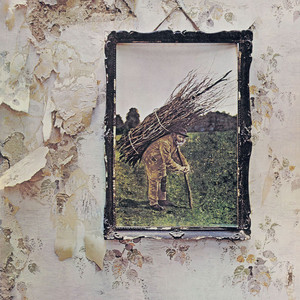
Does this album even need a review? With the possible exception of Sabbath's 'Paranoid', this album probably inspired more heavy metal bands than any other. Led Zeppelin were at the top of their game at this point. They had already released three albums that are generally considered to be among the best that rock music has to offer, so it was no surprise that this one was an absolute smash. What their fourth release did was take the heavy blues of their first two and mix it with the folk influences of their third, creating one of their most unique and diverse outputs yet. You've got your hard rockers like the classic "Black Dog" and "Rock and Roll", the thundering heavy blues of "When the Levee Breaks", and the softer folk music of "The Battle of Evermore" and "Going to California". Of course this album is probably best known for the epic "Stairway to Heaven", which has become one of the most revered and overplayed rock songs ever created (look at any "best rock songs" list and it'll usually be at or near the top). "Misty Mountain Hop" and "Four Sticks" fill out the rest of the album, and they might actually be two of my favorites as they're not brought up quite as much as the others, particularly the latter with its somewhat raga rock inspired sound.
Some albums out there that get this much reverence come off as a bit overrated, but this one deserves all the love that it gets. Led Zeppelin truly were one of the most diverse and original sounding bands out there, and 'IV' is an absolute masterpiece.
You'd think that the loss of someone as crucial to Metallica's sound as Cliff Burton would spell the end for a band. But, much like AC/DC did after losing Bon Scott, Metallica soldiered on. And much like AC/DC, their first album in the aftermath defied all expectations. '...And Justice for All' continues a steady string of classic Metallica albums, with some even going so far as to call it their best one yet when it was released. Personally, I think it's almost impossible to say which of these 80's Metallica albums is truly the best, as they're all fantastic in their own way. One thing that made them so incredible was the band's desire to push themselves beyond what they did on each previous album. And with this one, not only did they push themselves, I'm pretty sure they took themselves to the absolute limit. '...And Justice for All' is far and away the most progressive and complex album in Metallica's catalog. The songs are longer, the tempo changes are more numerous, and while the hooks may not be as immediately apparent this time around, there's still an absolute treasure trove of great riffing throughout. Unfortunately for the band, when it came to playing these songs in a live setting, it proved more difficult than they thought, hence why you don't really hear too many from this album played at their shows anymore. A shame too, as this one is filled with classics, from the relentless album-opener "Blackened", to the epic title track, to the dark and eerie "One", undoubtedly the album's best known song and one of the few from this album that the band still play regularly to this day. Sure, this album has its setbacks, the most infamous of which being new bassist Jason Newsted's bass parts being virtually inaudible in the mix (there's a long story to this with different people giving different accounts of why this is the case that I don't feel like getting into). The production has been accused of being a bit more dry sounding than on previous albums as well. But honestly, I find these to be very minor setbacks in the grand scheme of things. Overall, I tend to agree with the masses on this one. '...And Justice for All' sees Metallica still at their absolute creative peak and is another one of the greatest albums the 80's had to offer.
Fun Fact: In one of the more controversial moments in music history, this album was nominated for a Grammy in 1989 for "Best Hard Rock/Metal Performance" and lost to Jethro Tull. Because, you know, the big-wigs at the Grammys just know music better than anyone else, don't they. 😑
Nick Drake is one of those artists who didn't really see much in the way of mainstream success during his lifetime, but has posthumously become absolutely revered by many artists, particularly those in the indie and folk scenes, as one of the greatest musicians who ever lived. Admittedly, I wasn't even familiar with him until fairly recently. 'Bryter Layter' is Nick Drake's second album and is seen by many as his best (at least I think so, this seems to be the one that gets mentioned a lot and that even Boris paid homage to with one of their album covers). Musically, while this is definitely a folk album, it's not folk music like in the nature of artists like Bob Dylan or Donovan. This album, while being very gentle and calming in nature, doesn't necessarily sound like it's stripped down like you might expect in folk music. Drake has a full band backing him up, which included members of Fairport Convention, John Cale of Velvet Underground fame, and a couple of Beach Boys session musicians. And the music has a definite progressive sound to it, particularly in songs like the jazzy "Poor Boy" and instrumentals like "Sunday" and the title track, both of which have a bit of that baroque pop sound to them, not unlike what the Kinks were starting to get into on some of their mid to late 60's albums. By far the best known song on the album is "Northern Sky", which I believe was the song that helped people gain a renewed interest in Drake's music in the 80's.