In hindsight, I See a Darkness arrived at a strangely fitting moment. The ’90s were winding down, the millennium scare was brewing, and most of us — children of the post-punk era now shuttling kids to hockey at 9 a.m. — were quietly ageing out of the louder corners of guitar music. Which is exactly when Will Oldham, newly trading under the mildly ridiculous moniker Bonnie “Prince” Billy, released an album that every self-respecting cultural-lefty tastemaker insisted was essential. I bought it at the time, full of hope… and was greeted by A Minor Place, easily one of the most bewildering opening tracks I’d ever heard. Not the ideal gateway for someone raised on decades of roaring guitars. But I kept listening — six full spins for this revisit — and the album gradually revealed itself as something remarkable. The songs are sparse, fragile, quietly devastating. Oldham’s thin, wavering voice shouldn’t work, yet it absolutely does; the arrangements are understated but beautifully judged, avoiding all the corny Americana trappings you might fear. And the writing… these are genuinely exquisite little miniatures. Unflinching, deeply sad, but gorgeous. The highlights come thick and fast: the title track (immortalised later by Johnny Cash), Nomadic Revery, Another Day Full of Dread, Death to Everyone, Madeleine-Mary, Black, Raining in Darling. Seven out of eleven isn’t a bad ratio. And even the rest never dip below “good”. It’s funny, really — how those of us from “generation zero” spent the ’90s marinating in gloom, blasting Smashing Pumpkins and Therapy?, and now look back on that decade as one long golden afternoon. But this record still hits straight in the chest. Especially its title track, which gets uncomfortably close to the bone. My single piece of advice for newcomers: skip the opener on first listen. Trust me. Everything after it is worth the journey. For me, it’s an easy 10/10 — an album I can return to endlessly without it losing any of its quiet power.
1001 Albums Summary
Rating Distribution
Rating Timeline
Taste Profile
Breakdown
By Genre
Tap a bar to see the albums behind it
Top Styles
Tap a bar to see the albums behind it
By Decade
By Origin
Albums
You Love More Than Most
| Album | You | Global | Diff |
|---|---|---|---|
|
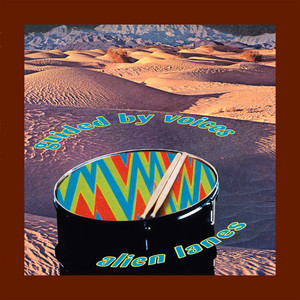
Alien Lanes
Guided By Voices
|
5 | 2.76 | +2.24 |
|
Happy Sad
Tim Buckley
|
5 | 2.79 | +2.21 |
|
Among The Living
Anthrax
|
5 | 2.86 | +2.14 |
|
Swordfishtrombones
Tom Waits
|
5 | 2.94 | +2.06 |
|
Crossing the Red Sea With the Adverts
The Adverts
|
5 | 2.95 | +2.05 |
|
Sail Away
Randy Newman
|
5 | 2.96 | +2.04 |
|
I See A Darkness
Bonnie "Prince" Billy
|
5 | 2.98 | +2.02 |
|
Teenager Of The Year
Frank Black
|
5 | 3.01 | +1.99 |
|
Coles Corner
Richard Hawley
|
5 | 3.03 | +1.97 |
|
Slanted And Enchanted
Pavement
|
5 | 3.03 | +1.97 |
You Love Less Than Most
| Album | You | Global | Diff |
|---|---|---|---|
|
Graceland
Paul Simon
|
1 | 3.72 | -2.72 |
|
Kid A
Radiohead
|
1 | 3.71 | -2.71 |
|
The Miseducation of Lauryn Hill
Lauryn Hill
|
1 | 3.67 | -2.67 |
|
Illmatic
Nas
|
1 | 3.61 | -2.61 |
|
Gorillaz
Gorillaz
|
1 | 3.53 | -2.53 |
|
Channel Orange
Frank Ocean
|
1 | 3.34 | -2.34 |
|
Third
Portishead
|
1 | 3.13 | -2.13 |
|
The Trinity Session
Cowboy Junkies
|
1 | 3.08 | -2.08 |
|
Stripped
Christina Aguilera
|
1 | 2.88 | -1.88 |
|
São Paulo Confessions
Suba
|
1 | 2.84 | -1.84 |
Artists
Favorites
Tap an artist to see their albums
| Artist | Albums | Average |
|---|---|---|
| Metallica | 3 | 4.67 |
| The Who | 3 | 4.67 |
| Neil Young | 2 | 5 |
| The Kinks | 2 | 5 |
Least Favorites
Tap an artist to see their albums
| Artist | Albums | Average |
|---|---|---|
| Portishead | 2 | 1.5 |
Controversial
Tap an artist to see their albums
| Artist | Ratings |
|---|---|
| Radiohead | 1, 3, 5 |
5-Star Albums (49)
View Album Wall















Popular Reviews
Tim Buckley never made things easy for his audience. Where his son Jeff turned aching vulnerability into pop gold, Tim wandered straight into the deep end — ambitious, challenging, often strange, and occasionally brilliant. Happy Sad (1969) may well be his masterpiece: an album steeped in melancholy and experimentation, where folk, jazz, and something more elusive blur into one hypnotic whole. It opens with Strange Feelin’, a clear reimagining of Miles Davis’s So What — the cool jazz influence unmistakable. From the first bars, you’re struck by the sound of the vibraphone, which gives the album its shimmering, dreamlike atmosphere. It’s an instrument almost never heard in rock or folk, and its presence makes the record both distinctive and, at times, impenetrable. The highlights come early: Buzzin’ Fly, buoyed by Buckley’s supple voice and a flowing melody, is perhaps the album’s most direct moment. Love from Room 109 at the Islander (On Pacific Coast Highway) is sprawling and strange, with bowed bass and shifting textures that shouldn’t work but somehow do. And Dream Letter — an aching message to his estranged wife and young son Jeff — offers a glimpse of the emotional intensity that made Buckley such a singular figure. It’s not all flawless. Gypsy Woman, a twelve-minute suite of wails, improvisations, and sharp-edged guitar, pushes its luck — fascinating in intent, exhausting in execution. But then, that’s part of the album’s charm: no progress without a few derailments. Happy Sad is beautifully melancholic, sometimes difficult, often mesmerizing. It’s a record that asks for patience and attention — and rewards both. For those who only know the son, it’s well worth spending some time with the father. The voice is different, the mood deeper, and the risk-taking far greater.
This record is the sound of a nervous breakdown disguised as art. Suba’s São Paulo Confessions — a collision of synthetic beats, bossa nova traces, and late-’90s club pretensions — feels less like music and more like an endurance test. It’s the sort of album that makes you wonder whether your speakers are broken or your patience. The idea was, apparently, to modernize Brazilian music. What we get instead is a relentless blur of electronic percussion, digital gloss, and occasional Portuguese murmuring, all of it radiating the sterile heat of a malfunctioning espresso machine. “Antropofagos” sounds like a warehouse rave hosted by an MDMA enthusiast with a conga fetish; “Felicidade” resembles a chemical hangover set to a drum loop. There’s history here — Suba (born Mitar Subotić) fled Yugoslavia, settled in São Paulo, and produced Bebel Gilberto’s Tanto Tempo before dying in a studio fire. That Gilberto album at least had melodies and charm; this one just has anxiety and a pulse. To be fair, there are moments — brief ones — when the synthetic textures almost coalesce into something interesting. “Segredo” is the least manic track, and for a minute or two you can imagine what this might have been if anyone had remembered to write actual songs. Otherwise, it’s a 61-minute assault of slick emptiness — music for people who believe nightlife is a spiritual calling. Give me death metal any day; it’s calmer.
First of all: I'm totally unfamiliar with Swift's music. Wrong generation. Her success and especially devoted fanbase surprise me, in the sense that she apparently is very popular among people (mainly women) who usually listen to much more challenging (alternative) music than pop. This could have been a rather good pop album, but the production is truly awful. And I mean: awful. It's way too loud and everything sounds so disgustingly synthetic.... It's supposed to be bass guitar, but it all sounds like coming from a computer. The singing is also obviously f*cked with. This point is clearly illustrated by the bizarre cover version that Ryan Adams made of this entire album. The hits are clearly better in the Swift versions, but Adams' album sounds so much better, so much more musical. Fascinating: this illustrates perfectly that Swift indeed is a talented songwriter. Highlight of the album is beyond doubt 'Style'. That's a great song, and yes, probably the least synthetic sounding.
The fascinating thing about this album... Try to imagine that once there was a time, in 1967, that this was an anonymous debut by a band nobody had ever heard of, called 'The Doors'. And that you buy it, let the needle down on side A and that you hear 'Break on through'. What a debut. It's magnificent. 'Light my fire' is probably one of the best psychedelic songs ever. Did you ever realize that the Doors are probably the only rock band everyone knows the name of the keyboardist of, and hardly anybody the name of the guitar player? That's fascinating. And yes, there are some weaker moments. And yes, there are other highlights like 'The crystal ship' and 'Alabama'. It's simply a fantastic debut, with Jim Morrison's thing still inside his pants. 9 out of 10.
1-Star Albums (11)


All Ratings (161)
Most songs are really very boring, nothing's happening. However, since I am not into hiphop, it was a bit better than expected (not much). The Shiznit and Gz and Hustlas are the best songs.
It's an okay album, it's missing a really strong energetic song. But there is one incredible highlight: the song One is probably one of the most beautiful guitar based pop songs of the nineties. I would give it a 7/10.
This album kicks off with a great start. But after a couple of songs it becomes one big blur to me, with a sound totally dominated by fatiguing slide guitar and harmonica. 5 out of 10.
I actually liked this better than I expected. There's tons of energy and some songs, especially Climbatize, I do like. Oddly enough it's the hits that I really can't stand. What I absolutely loathe about this album is the 'singing', shouting, vocal horror-thingy.
Yes, well, that's a great album. Sex machine is really too long and some of the tracks are a bit too poppy, but this is clearly a great and influential piece of music.
This is truly horrible. I cannot understand how this has made the list, it really sounds like nothing, and no, that's not a compliment. It's just ridiculous, talentless would-be music. Bweuh.
An absolute killer album. Masterpiece. Everything works. By far the best album I've listened so far and probably one of the best albums of the eighties. And certainly Tom Waits' best.
Generally a very strong album, with pulsating rhythms, a lot of variation, catchy songs. But I have a problem with it, a big one. Opening track 'I Zimbra' is horrible with bizarre, ugly vocals, closing track 'Drugs' is possibly even worse. I don't know what's that supposed to be. It's simply bweuh. Strange. Too bad, without these two tracks I think I would have liked this much better than other Talking Heads albums that I own. Now I don't know.
It's a bit of a surprise to me, I can stand this quite well. I genuinely like 'Everloving', I can stand 'Why does my heart feel so bad?'. It's an interesting nowadays take on blues and gospel. Once again, just like The Prodigy, the best known songs are my least favourite.
I was afraid of it. Man, this is horrible music. Having said that, I can understand and acknowledge that this is probably a very fine album in its genre. The instrumentations are fine, carefully and well done. There's even one song that I, no, not like, but can listen to: 'Pyramids'. The absolute horror is 'Thinkin bout you'. And of course, the latter is far more popular that the former...
Pfff... I think the singing on this album is rather unbearable. Problem: it's all about the singing. It's way up front in the mix. Musically - as far as anyone can tell - it's not really exciting. One exception: Break it up, thanks to a guest appearance by Television's Tom Verlaine. Nah. Not for me. Not extremely bad either. Just meh.
Well, this is a lovely album. But it's also a bit too lovely, it's all going slow, all moody, all bedroom-like songs. You simply want to shout 'hey guys, eat some jalapeños and get going'. A bit more variation in speed, mood, whatever would have spiced things up considerably. I know this was on purpose but still: seventy years on we're in a different mood than Ol' blue eyes was when recording these songs. Also, I really doubt if this is the type of music that suits Sinatra's qualities with his impeccable timing best. Not, I suppose.
I don't think I've listened to this album very intensely often. It's quite a good album, it's got a number of strong songs. Most of them are very well known, but my absolute favourite is the very strong 'Wherever I may roam'. But there are also quite some pretty mediocre songs. Nothing's really bad, it's just not happening in for example 'Holler than them', The struggle within'' and a couple of others. Oh, and, well: it's not really the Metallica from the eighties, is it? But that's their choice, it isn't forbidden to change your style. It's just not as good.
This is horrible. Truly disgusting. It's got nothing to do with music whatsoever. This is not an album (and it isn't even op Spotify). It might work in a club, on a rave or whatever horrible surrounding, but not as an album that you listen to at home. You know what? I even fell asleep while listening the second time. 0 stars, but unfortunately that's not possible.
Oh dear. This is really not very good. How can people listen to this? In every song madam goes completely berserk on the microphone. It's a continuous bunch of vocal bombast. And the music, well, there hardly is any music. Nothing happens, nothing at all. The only song that has a bit more to it is 'River Lea'. The hitsingles 'Hello' and 'When we were young' are worst in terms of sounding like the air alarm during the Battle of Britain.
I think I can see why people like this. It's fairly monotonous but exactly that works. It's a bit too long, like many nineties-albums. This time the track I like best is also the biggest 'hit': C.R.E.A.M. The best hiphop-album so far. Although I liked the musical elements better on Snoop Dogg's album, I certainly think the rapping is much better here.
What a pleasant surprise! I don't own and even don't know this album. The image of Anthrax din not appeal to me. And I think I listened to one other album when I was of the right age, but that wasn't my thing. This is! The star of the album is absolutely drummer Charlie Benante. His drumming is phenomenal, he really carries the band and leads them through the tempo changes smoothly as grease. Best songs? I guess the obvious ones: Caught in a mosh, and Indians - that has a nice hommage to Iron Maiden. And maybe the medley. Great!
A fantastic album. The five star albums are coming rapidly now. I didn't know The Cars before I bought this album, after I read about it in the 1001 Albums-book. They are as good as unknown in Europe. I thought they were a kind of plastic keyboard-driven bubblegum-pop act, but this turned out to be a very very strong album. It's obviously very carefully made, all the songs contain surprising and original details. And there are some great melodies. What more do you need? Highlights? 'Just what I needed', of course, 'You're all I've got tonight' and 'All mixed up'. Nice one.
Pfff. I neither really like nor dislike R.E.M. It's too much middle of the road for me. And that's exactly what I think of this album. It's like pleasant background sound. You keep hoping that something will happen, whether it's a really hard rocking song or a beautiful ballad, but nope, it's like a gentle river bubbling along the countryside. I really don't understand ''You are the everything'; the instrumentation doesn't work and the singing of Michael Stipe is truly unbearable in that song. 4 stars is really too much honour. It's a bleak 7 our of 10 but that translates into 4 stars. But I just can't do that. So I ignore the methodology and adjust to 3 stars.
This is a strange album. It kicks off really well, what's probably side A of the vinyl album has good songs, good singing, nice guitar sound. But then things are going wrong with hard to listen to, very sweetish pop songs sometimes even maimed by silly female vocal choirs. Fortunately closing track 'You will never be no good' gets us back on track. This album would have been much better if at least 'Are you ready to be heartbroken' and 'Andy's babies' would have simply been left off the album. But they didn't do that. I could have given a pop album 4 stars if they had, but no.
What a fantastic album! And what a contrast with Adele I had to listen to less than a week ago. This lady knows how to sing and knows how to use her voice. But perhaps even more important: the instrumentations are fantastic. The highlight of this album (no, certainly not preacher man) is the astonishingly beautiful 'The windmills of your mind'. That song has more variation and more instrumental interesting elements than a whole disc of Adela. Probably: more than the entire discography of Adele. 'Breakfast in bed': that singing is truly magnificent. Yes, I can truly like pop music.
The songs are too long, not enough is happening. 'Ye ye de smell' is quite okay. But whose idea was it to add a 'la la la'-chant to 'Egbe mi o'? That's silly. Watch out when listening this at Spotify. O totally unnecessary SIXTEEN minute long drum solo was later added to the album, in itself kind of weird because it was recorded in 1978, seven years after the album. Weird.
What a terribly boring album. It starts off quite okay with the first two tracks, then it becomes just a pile of bleep bleep without any music. 'Chico's groove' is once again rather listenable. But that's not enough. Really really boring.
Well, this is a pleasant album. It kicks off really well with beautiful guitar work by Carlos Santana and Bonnie Raitt, as well as Robert Cray. The guest appearance by Canned Heat is typical, but Los Lobos really steals the show. Unfortunately the rets of the album is not so good. The guest appearances by George Thorogood and Charlie Musselwhite are less interesting, and the three songs without guest are a bit of a candle burning out. And the production is really eighties. The singing sounds like it's been recorded in the cathedral of Amiens. Boy, that's bad. Still, overall a good one.
The fascinating thing about this album... Try to imagine that once there was a time, in 1967, that this was an anonymous debut by a band nobody had ever heard of, called 'The Doors'. And that you buy it, let the needle down on side A and that you hear 'Break on through'. What a debut. It's magnificent. 'Light my fire' is probably one of the best psychedelic songs ever. Did you ever realize that the Doors are probably the only rock band everyone knows the name of the keyboardist of, and hardly anybody the name of the guitar player? That's fascinating. And yes, there are some weaker moments. And yes, there are other highlights like 'The crystal ship' and 'Alabama'. It's simply a fantastic debut, with Jim Morrison's thing still inside his pants. 9 out of 10.
I really don't understand what this album is doing in this list. It's utterly boring. Most songs are based on one - sometimes rather okay - sample and that's repeated for the entire length of the song. The scratching isn't original and becomes really boring. That's what this album is: boring. Utterly boring. Listen to 'N.Y. State of mind'. Hee, that piano sounds okay. It's repeated, unchanged, maybe forty times or so? The only song that I like a bit better is 'Represent'. But "like" is very very relative.
A perfect example of an album that's been horribly mutilated by eighties production. It sounds awful. The dreams are hilarious, but the keyboard sounds - especially in 'Nick of time', 'Love letter' and 'Have a heart' are nothing but disgusting. This isn't anything like blues, what I expected. It's 90% pop. Listen to that ridiculous 'woo woo woo' chorus on 'Nick of time'... The closing songs are probably the best, ' I will not be denied' at least has some proper singing, 'I ain't etc' is a rather okay piano ballad (with - it's incredible - a piano that actually sounds like a piano) and 'The road's my middle name' (cliche alert) at least has a blues feeling. I'm a bit friendly because this is what albums sounded like at the time. And the second listen was better than the first one, except for 'Nick of time'. That's really a very bad song.
I really don't understand this music. And I really don't understand why this album is included whereas Grandaddy's 'Under the western freeway' isn't. This is a very very mediocre rip-off of Grandaddy. Grandaddy has rock elements included in its music and those are completely missing here. It's a grey mass of boring music possibly suitable for a wellness facility. Musical wallpaper as we call it in the Netherlands. So yes, you can listen to it, hence for the 2 stars.
What a fantastic album. It's one of the best of the list. I mean, you just have to listen to the opening title track, no, you just have to listen to the intro of the opening track. How great can music be? It's the added value of Mutt Lange's production that gives this album so much more than its predecessors. Most characteristic are the backing vocals choirs. Those are magnificent. And this album has one of the greatest songs ever: 'Touch too much'. It hardly has any flaws, every track is enjoyable. Can I give 6 stars? 10/10
This is a surprise. I already owned this album but hardly had any memory of it. It's really excellent. Although it is supposed to be the birth of glam rock, this is far beyond any cheap, cheesy or bubblegum-like music, this is very well thought through rock. It is characterized by a jumpiness that keeps your attention. The arrangements are really strong. And yes, like more often, the big hit (Get it on) is probably the poorest or least interesting track of the album.
An album that played a big role in my life. It came out during my university years and I was totally into alternative rock, so yeah, how could I not like this. It's not perfect because it has some weak moments (Neon wilderness???), it is way too long including a stupid hidden track. But the great moments are so strong that it still deserves a 10 out of 10. 'Sonnet' is one pof the most beautiful songs of the nineties. Well there are many excellent songs, let's mention 'Space and time'. I love it.
This is obviously a very fine album. But somehow I'm missing something, I'm not really getting it. I always have that with Elvis Costello. It has excellent dynamics - 12 very varied songs in 32 minutes. And it has surprising musical features for an English 1977 album - listen to the jazzy guitar in Allison, or the sixties-vibes of No dancing. But to the end it becomes a bit blurry. Closer 'I'm not angry' makes up for that - it might be the best track of the album. 7/10
Once again an album that's part of my collection but never got much attention. It's a strong album though. It starts off really well and punky, reaching a high point in 'The wait'. But then we have to listen to a totally unnecessary and weak Kinks-cover, 'Stop sobbing' How could they make this their debut-single? 'Kid' is pretty weak too, with some country-vibes. But 'Private life' is excellent, as of course 'Brass in pocket' is. The closing songs are good too. Great album, almost five stars if it weren't for the wek songs in the middle.
This is an okay album. There are just too many songs that are a bit 'nothing happens'. However, 'Enjoy the silence' is a truly beautiful pop song. They should have changed the order of the songs, the first two are slow and boring. That's also part of the deal of making an album...
Oh dear... The opening track of this album, 'Fine Time', is probably the most appaling sonic attack I have had to endure during my first 35 albums. What on earth is that? I've got a couple of New Order albums and of course all Joy Division albums, that's nothing like this. It's a really weird album. In fact, it seems to consist of two albums of two different bands mixed randomly together. One band makes uninteresting electronic kind of danceable music, the other one is the New Order I know - though not necessarily in top form - making almost straight ahead pop music with the well known great bass lines played by Peter Hook. The only track where these two bands sort of meet is the closing track 'Dream attack' - and that's by far the most listenable track of the album. Experiment failed...
Music I totally didn't know. My first association was the Doobie Brothers, and hey, there's a cover on this album! But it definitely has a Funkadelic-vibe. Especially because of what makes this album the most interesting: the sometimes great guitar work with a markable fuzz-sound by 17-year old Ernie Isley. The use of ARP and Moog synthesizers is also noteworthy. Less noteworthy: it's a bit weird that, while they are certainly able to pen their own songs - and were once even covered by the Beatles - four out of nine songs here are covers. Summer Breeze is possibly the best song, though, because of the guitar. A rather pleasant surprise.
I do own and I do like this album, despite the fact that it's not really my genre. Upon careful listening I see three reasons. 1 The music is based on the extremely sturdy disco four-to-the-beat of the seventies. Even I can dance to that. 2 This is real music, not just dance music. Interestingly, the book mentions exactly this (I never read the book before I make my review). 3 the extensive use of analogue synthesizers, adding to the second reason. The more extreme songs I like best. 'Around the world' is honestly very boring. The biggest problem: it lasts for more than 73 minutes. Oh dear. Never do that.
What a great album! The opener is truly fantastic, what an energy, what a speed, what great melodies. This album contains a lot of beautiful melodies, accentuated by the great chants. Listen to the chorus of the most famous song: 'Gary Gilmore's eyes'. There's not a real weak moment, maybe it can become a bit too much but fortunately it's only 36 minutes. Definitely one of punk's greatest moments.
This is a really weird album. Whereas most popular music is white folks playing music inspired by music from black culture, this one is the other way around. Sometimes it works, sometimes it doesn't. Bye bye love is definitely a step up from the Everly Brothers (who didn't write the song, by the way). Songs like 'I love you so much it hurts' simply did not stand the test of times. These absurdly sweet choirs, you cannot listen to that anymore with 21st century ears. And there are plenty of those. That's not really fair of course. But it's not the most exiting music ever anyway.
A very fine album. Some of these songs are even more well-known or popular in different versions, illustrating the song-writing capabilities of Paul Simon. It's very nicely arranged too, maybe just a little too soft on the ears.
Well yes, I like this one better than the hiphop-albums so far. It's got much more variation. 'I'm destructive' is really okay, even mentioning Dutch death metal band Gorefest! However, it's way too long like so many albums of this era.
Oh dear. I don't know if I dare to say this. I'm just not really into Hendrix. No doubt about his music-historical meaning and influence. But his music just doesn't do it for me. This album is also a bit ramshackle, you can hear it's not really a unity. And the sound is not optimal, especially the odd stereo-mix. Yes great songs and I want to mention 'Third stone from the sun' that isn't well known but that I like very much.
It's a bit too obvious what's going on here. Hey, we've got a hiphopband and let's let them rap over a (hard)rock background so white folks will listen as well. It does work, however. 'Walk this way' is a great novelty hit. I don't feel the same about 'It's trricky' - based on the fantastic 'My Sharona' - because the spirit of that song (fantastic guitar work) is totally missing. This album is dominated by an extremely ugly drumcomputer, it's almost unlistenable. Bweuh.
Well, that's a weird one... I had really never heard of this band, although it kinda fits my taste. This is really obscure, and no, you can't find it on Spotify (but you can find it on YouTube). It's a 6,5/10 for me and I'll round that to a four-star-rating but that is a bit too positive. It's really erratic, that's my biggest problem. Oh no, that's not true. My biggest problem is the opening track: 'Firefly'. That's by far the weakest track of the album, I would almost call it horrible. How could they choose this as an opening track? These were the old days that people went to a record store and tried listening to them... Some songs are genuinely nice and beautiful, 'Blue and grey shirt' is probably my favourite, 'Pale and skinny girl' is very nice as well.
My god, this album is way too long. If they would have skipped the last two deadly boring songs, totaling 26 minutes... And I really can's stand the singing: especially 'I used to' is incredibly out of tune. On a positieve note, the JM Jarre-like 'how do you sleep' is rather okay (but again way too long), 'emotional haircut' is a punky energy-song and the best song I think is 'call the police'.
There is no doubt this album is pure genius. It's very well thought-through. It sounds like a suite, no matter which tempo and chord changes there are throughout the songs. Motives are coming back all through the album. And the arrangements are as complicated and fine as can be. Having said that: the composition is in my humble opinion better than the music. For me it's just not happening. And it's a little outdated. That's not fair criticism, but these barbershop choirs, well, that's an acquired tasje. I haven't acquired it.
Maybe it's odd, but I had never listened to an album of Muse. In the nineties I was totally into this kind of music, but in 1999/2000 I turned my attention to jazz and no longer payed attention to alternative rock. So we just missed each other;-) And that's a pity. I think this is a very strong album. Yes, it's very like the early albums of Radiohead, especially because of Matt Bellamy's voice that resembles Thom Yorke's voice extremely. Kudo's to Muse: they succeed in what Radiohead didn't manage. On this album electronics are introduced as an element in the music, but they add something in stead of destroy everything. 'City of delusion' is my favourite track.
It might be a controversial opinion, but I think this is my favourite Steely Dan album. There is plenty of spontaneity here and some edges to the music. I totally love it, it's a masterpiece. Brilliant songwriting. Yes, it must be your cup of tea, well, it is mine. I mean, the opening of 'Do it again' on itself is enough to secure Steely Dan's place in (modern) music history.
Oh dear... This is truly horrible album. I tried to listen to this unprejudiced. I guess I was in my first year of gymnasium when this album came out and I really hated the singles of it. No I listened to the entirety of it and I really hated it. I do really appreciate the singer-songwriter Paul Simon. Just look at my appreciation of 'Bookends'. Bur this is... let's say: appalling. It's an attempt to blend African music with modern popmusic, but it doesn't work. They remain two world apart and the results are ridiculous. I mea, just listen to 'I know what I know'. This can't be serious? 'That was your mother' is not much better, with a totally fucked up accordeon and the ugliest sax solo ever. What on earth were they thinking? Yes, I know it's not really fair to listen to mid eighties music and its horrible production with nowadays ears but this is not just production. This is pop music at its worst.
Totally unknown to me... Certainly topping the hiphop-albums so far. There considerably more music here. I kinda like 'So appalling' and 'Who will survive in America'. I really don't understand why they open the album with the appalling - pun intended - 'Dark fantasy'. Why, tell me why? Interesting thought: how many of the people responsible for over 1 billion Spotify-streams of 'POWER' have listened to the original '21st century schizoid man' (with 37 million streams)?
What a beautiful album! I had never heard of Richard Hawley, this is total very pleasant surprise. It's truly beautiful music, for me most resemblant of Tindersticks - a band that certainly should have been in the book with any of their first three records. Or all three of them. Anyway, back to Hawley. This is a must hear. The arrangements are fantastic with a very tasteful use of baritone guitar, his voice is in the middle between Stuart Staples and Bryan Ferry - yes, my girlfriend was immediately interested;-) Most of all: the song 'The Ocean'... That might be one of the best songs on the 51 albums I have listened so far. Stunning.
A perfect example of an album that has been standing in my record closet for decades and that I never really listened to. and that's a shame because it turned out to be a really great record. I have a bit of a troublesome relation with Bryan Ferry as a singer - that strange vibrato... I don't like Brian Eno, but he had already left the band. The result is an album that meanders between very energetic and swinging rock and strange, very arty songs that sometimes seem to be inspired by thirties German cabaret - a bit odd for an English band in 1974 but certainly okay. The highlight of this album is easy to find: the songs 'All Want is you' and 'Out of the night' are linked in between. The former is a great rock song, the latter is a fantastic rock song. I should have given this album more attention!
My first time listening a Kate Bush album. For pop music, it's rather pleasant. At least enough is happening and there is plenty of variation, in tempo, song structure, arrangements. This is clearly an album with one masterpiece: Running up that hill is accountable for 87% of Spotify-streams and yes, it's an excellent song. The first five tracks have 97% of all streams and that is understandable as well. After these songs, the candle of this album is all but blown out. Furthermore, the at times horrible eighties production gets more and more disturbing. I must mention the absolute low of this album: Waking the witch. My dear, what happened there? Sorry, but I can't give higher than 6/10 for an album that has this song on it. Oh dear oh dear. I'll just listen to 'Running up that hill' one more time, giving it an even higher percentage of streams.
Well, what to do with this one. It's a five star rating, that's clear. It's a brilliant album, no pun intended. But I think it's really an odd one on this list. Together with Charles Mingus this is probably the only hardcore jazz album on the list. Apart from some jazzrock-albums, most jazz albums are of the rather listenable kind. Thelonious Monk isn't listenable. It's all about dissonance and bizarre complex song structures. You need to be a trained jazz amateur to enjoy this, I think. And even then... But man, listen to his solo performance 'I surrender,dear'. To me that's the highlight of this album. There is a reason that one of most popular releases was a compilation of his solo performances. He is so brilliant. He seems to master the basics material a straightforward standard, that he can do with it whatever he likes. The melody is never stated, he picks it up, turns it around, destroys it and at the same time embraces it in the most loving way, he's out of this world. It's exceptional. Another gem is the strange Pannonica with the odd celesta played by Monk. Well, it's on the list, so a well deserved five star rating. But in fact I think it should be on another list.
This is unmistakably a very influential album. On this album, that I never heard before, I can hear a lot of things that I know from other albums. For example, one of my favourite bands, Indochine, clearly have this album in their record closet. I know 'Joan of Arc' very well - I loved it as a little child. I don't know how long it had been since I last heard it, but I still love it. It has a beautiful melody. And what a surprise, I always thought that this was synthesizer music but the reason that song has such a melancholy feel is that is is played on a mellotron. Almost the most non-synthesizer instrument thinkable. It's not great across the board, though. Nice songs and a couple of not so interesting ones.
A very bleak 4 stars, in the regular scoring system a 7/10 but on the low side of 7... My problem with this album is its inconsistency. It's a mixed bag of ideas and not all of these ideas work. I mean, '...And in every home', come on! A misplaced Burt Bacharach kind of song. I like the Costello of 'Beyond belief' much better. And a very exciting moment is the intro - repeated a number of times - of 'Human hands'. The Dsus4-F6 chord progression is incredibly exciting, that is truly a marvel.
I'm really sorry, but I don't really like this album. Yes, the title track is one of Bowie's best songs. But the rest.... No, I kind of like the experimental Eno-tracks but I can's stand the opening dup 'Beauty and the Beast' and 'Joe the lion'. My god, who thought these ugly choruses were a good idea? And Robert Fripp's guitar sound - mangled through a synthesizer, I think - is ugly as hell.
What a strange album. Why on earth they decided to make a studio album and add audience and even more strange: an MC to it? Why didn't they just make a proper live album? Or a proper studio album, instead of an album that has loads of flaws in sound quality - most absurd in 'Roadblock' (an outtake later added, but indeed a studio recording) The quality is very inconsistent, not just the sound quality. Best songs are of course 'Piece of my heart' but even more so 'Summertime'. That's vintage Janis Joplin. But on the same album we find 'Turtle blues'. Pfff.
Obviously not my cup of tea but I do have respect for this album and its maker. Michael wrote all the music, plays a load of instruments en of course sings. He wasn't just a pretty boy, he was a genuine and talented artist and multi-talent. The success of this album is incredible. Six hitsingles out of nine songs. I had never heard the album but of course I had heard almost all the songs plenty of times. Hey, this is the time I grew up, minor gymnasium years. At the time I hated it, I a a lot more nuanced now. The two songs that stand out for me are 'One more try' and 'Kissing a fool' - both of them are characterised by Michael's singing, where in a lot of the other tracks he sometimes appears to rather whisper that sing. 'Kissing a fool' is a weird song on this album - it is a truly acoustic song where all other tracks are defined, and a bit destroyed, by very synthetic eighties-sounds. Not my favourite album of course, but no punishment to listen to.
Oh dear... For the largest part, this is a pleasant album with attractive semi jazz, very mainstream but well made and as always with Astrud Gilberto just nice (easy) listening. But there are two gigantic failures on this album. Parade (a Banda) - or the title reversed - is really ridiculous. It's out of place, it's not nice, it's just laughable. But that's nothing. The duet with her six year old son Marcelo... Come on! The singing is so horribly out of tune, it's simply awful. I repeat: awful. Maybe she shouldn't have recorded eight albums in four years. By the way, the cd version - that I own - is extended with a number of songs with Walter Wanderley, which makes it a better album.
An underrated and neglected gem. Yes, I have it, but I could only buy it long after my Neil Young-era. It simply wasn't released on CD until 2003. And that's bizarre, because this is possibly one of the best if not the best - consistent - album in Young's catalogue. It's truly beautiful and extremely depressing to listen to. But there are such gems on this album: 'See the sky about to rain' with that wonderful arrangement of Wurlitzer e-piano and steel guitar, astonishing title track and the utterly painful 'Ambulance blues' - it's truly fantastic music. 5 stars and a welldeserved 10/10
Once again an album, or even a band, I didn't know that turned out to be a pleasant surprise. I guess I did know 'Everybody knows' (except you)', that must have been on the playlist of the alternative music station I listened to anno 1997. It's not the best song of the album, that's beyond doubt 'Someone'. Closing track 'I'm all you need' is also a gem. The music is very Scott Walker-like. Just a little less edge to it, except 'Someone' - that's why it's the best track of the album. In its weaker moments it also reminds you of Neil Diamond and even John Barry-style James Bond songtracks. Weak point is 'Wimewatching' - it never comes off the ground. It grew on my every time I listened to it. So yeah, good album.
Clearly a very classic, very important, seminal album. Any serious music lover should have this in his or her collection. Having said that, in all honesty, the reputation of the album seems to be primarily based on the three long (jam-)tracks. Although it kicks off pretty well with 'Statesboro blues' the next two songs are rather forgettable; and well, you need to love slide guitar. But then the magic starts to happen with 'You don't love me'. Clearly 'In memory of Elizabeth Reed' is magic. Maybe 'Whipping post' is even better, this is glorious music. Truly fantastic. So for me it's a 8,5/10. Could be either 4 stars or 5 stars, because of the historic significance of this album I'll go for the 5. But it's tight.
What a bizarre album. It starts pretty solid. Then we get a number of very weak songs - I really can't stand Beth Orton's voice - and then we once again have a very strong song. But it's a total Kraftwerk rip-off. And I really mean totally. It becomes even worse, because we get one more Kraftwerk rip-off and two utter Can-rip-offs. These are the strong songs of the album, the other songs are unbearable. Except for the opener 'Silence' which seems to be original and is okay. But this deserves penalty points.
An incredible album. When listening to 'On the beach' I thought: maybe I like this even better than 'Harvest'. No I don't. The problem of this album might be 'Heart of gold'. Every normal human being simply heard that song too many times. By the way, it's far from the best song of the album that's so much drowned in melancholy. There are so many highlights: opener 'Out on the weekend', the title track, 'A man needs a maid', 'Alabama', 'The needle and the damage done' and closer 'Words'. All of these tracks would probably be the best track on most albums. But not on this one. Because there's 'Old man'. That might be the most beautiful song I know. And yes, indeed, 'Out on the country' and to a lesser extent 'There 's a world' are a bit less fantastic than the rest. It's forgiven.
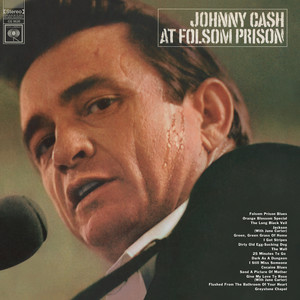
And yet another great album. It's great how Cash plays with his audience, how he fires things up with his characteristic shuffle, but even more so with a couple of very sentimental songs, 'Give my love to Rose' especially. 'Folsom Prison blues', 'Cocaine blues', 'I got stripes' and 'The wall' are truly great songs and performances. There's also a lowlight, with 'Jackson' and to a lesser extent the silly christian 'Greystone chapel'. Sorry ma'am, but I really can't stand June Carters (Cash') singing...
What a mess this album is. But its highlights are truly highlights. I like the long jam-like songs 'Voodoo Chile' and '193 (A merman I should turn to be)' best, but 'Crosstown traffic', 'All along the watchtower', 'Gypsy eyes', the superjazzy 'Rainy day, dream away', 'Burning of the midnight lamp' and 'Voodoo child (slight return' are brilliant. But there's also crap. The first two tracks, the bizarre 'Little miss Strange' and the soundscape 'Moon, turn the tides... Gently gently away' - oh man. This could have been a single album with nothing but highlights of music history.
This could have been a fantastic album. But is isn't, it is way too varying in quality. Let's be clear: the highlights of this album are possibly some of the best music of the eighties. Yes, 'Sunday Bloody Sunday' is a fantastic song. But it completely bleaches next to 'New Year's Day'. That is such a fantastic song! There are a couple more very strong songs on this album, but also some very weak ones. Lowlight is definitely 'Red light'. You gotta be kidding... It's horrible. The beginning sounds like a Mylene Farmer song, not exactly what you expect on a U2-album. It could - and should - have been a fantastic album. Nevertheless, this is an album that proves how good of a band U2 could be. Didn't mention it, but this is probably The Edge at his best.
This is possibly the best album of Zappa's career. And maybe I should say: I'm a big Zappa fan. This absolutely a must hear. It's one of the first and one of the best jazz fusion albums ever. And what a pity it is, that Zappa never really returned to this style. Yes, obviously jazzrock was an important part of his style, certainly in the George Duke/Ruth Underwood time of his career, but this is hardcore jazz fusion and his only album as such. Ian Underwood is incredible here. But Zappa himself even more so. I think this was the first time in his career that he really showed himself as one of the best and highly original guitar players ever. Later on he would issue three-disc-sets with only guitar solos, but here his guitar work is an integral - and important - part of the music. The long solo in Willie the Pimp and even more so on 'Son of Mr. Green Genes' are fantastic. Very renewing in tone as well. But there might be an even better performance on this album: Don' Sugarcane' Harris' electric violin solo on 'The gumbo variation' is beyond unforgettable. Fantastic album.
I don't know.... It's not my thing. It's a bit in between pop and alternative. The arrangements are very original and interesting, the music has enough variation and is interesting enough. But I miss the necessary sharpness for alternative rock, and at the same time I can't really stand the singing. Especially Régine Chassagne's singing in the closing track 'In the backseat', that's... No, I'll leave it at that. Quite an okay album that I didn't know, but not a standout album.
It's horrible. In my teen years I hated the song 'It's a sin'. It's the best song of the album. No, not because my taste in music changed so dramatically (it did, by the way), but because the rest is so horrible. 'I want to wake up', 'One more chance'... Come on. 'It's a sin' and 'King's cross' are the only bearable tunes on the album.
With the benefit of hindsight, this is a fascinating album. It's got all the elements that would make 'Swordfishtrombones' such a master piece. The elements, yes, but not the concept as a whole, and not the greatness. But is a very good album with hardly any weak moments - 'On the nickel' is a bit over the top for me. The highlights for me are 'Downtown' and the overlay sentimental 'Jersey Girl'. Yes, unbearably sentimental, but as such a guilty pleasure. Strong, just missing it, the pieces that would fall together so brilliantly on its successor.
This might be the best pop-album that I've ever heard and it contains maybe the best popsong of the eighties: 'Shout'. What an incredible song that is. I'm always complaining that there's not much happening in popmusic, but on this album that's far from reality. The compositions are very strong, the build-up in the songs - listen to the intro of 'The working hour' and neglect the sound - and the arrangements with.a very clever mix of (sometimes ugly) electronics and real instruments - it's alle great. There are five very strong songs on this album. The three hitsingles in order of quality 'Shout' Head over heels' and 'Everybody wants to rule the world', whereas the almost proggy 'The working hour' and the rather sharp 'Broken' - that's fantastically intertwined with 'Head over heels' are very strong. An album containing these songs would deserve a 10/10. But unfortunately the remaining three songs are much much weaker. 'Mothers talk' is ugly eighties music, ' I believe' is a misplaced George Michael ballad and closer 'Listen' is too long. Nevertheless, it's still a solid five star. I might buy this one.
It's probably my bad. I have never been able to get it, concerning Echo & The Bunnymen. Yes, I quite like the music, it's okay, like a less commercial - which is good, of course - version of U2 with maybe a better singer, but it just doesn't grab me. I've listened five times. And I still hardly can remember any of the songs, except for the opener 'The cutter' which might be the best track of the album. The rest just rolls along, no weak points, no strong either. Sorry.
There's no need to say a lot about this album. Just listen to the first 30 seconds of opener 'Disorder' and you know you are listening to a classic. It's haunting in every way. It can be quite something to listen to if you're not in perfect mental shape... The star of the album to me is Peter Hook. His bass playing is unlike anything done before. Together with guitar player Bernard Sumner with his arpeggiated chords he lays the foundation that lets Ian Curtis shine - shine in a very dark way, unfortunately. Absolutely fantastic album.
I really don't understand how Van Morrison could have turned into a famous singer. His singing is unpleasant to say the least... This album has a big highlight and a very low lowlight. The highlight of course is the title track - that is a fantastic song. But why on earth is that wonderful bassline played on an electric bass????? This screams for a double bass. The lowlight is very clearly 'Crazy love' - that's horrible. A meager 5/10. Because of 'Moondance', the song.
Well, obviously not my thing. The album kicks off with horrible autotune-vocal sounds (can't call that singing). The music is as far away from what I like as is theoretically possible. Songs like 'Put it down'... come on. I can't find any highlight. I want to give some credits to the concept as a whole, the alteration between women's tales and songs. And yes, possibly for the message, but I never give any attention to lyrics. Second positive remark: for the genre the songs are rather varied. Just enough for a two star review or 3/10.
Can anyone explain to me why this earned seven Grammies? This is dreadful easy listening music. Musical wallpaper. And to be honest: I don't really appreciate Jones' singing.
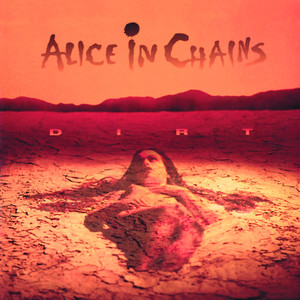
A great album but it could have been a perfect album. It's simply way too long, with a number of songs that can be regarded as fillers. However, the highlights are fantastic: 'Them bones', 'Darn that river', 'Down in a hole', 'Rooster', the incredibly sexy - probably the most sexy song in 79 albums so far - title track 'Dirt', and of course 'Would?'. Typically 1992: almost filling a cd. In 45 minutes this would have been a total killer.
A fantastic album. The first twelve songs - of fifteen - are brilliant, all of them. It's simply a release of an atom bomb of energy, smashing you against the wall in the most positive way. I think I might have heard it maybe once the past fifteen years, but already the first time listening I was chanting alone from the first to the last minute. It's great. Just listen and enjoy.
Jesus Christ, what on earth is this? I didn't know what to expect and I still don't know what I have been listening to. I mean, 'The faith healer' is a fantastic song, reminiscent of Can, truly revolutionary for 1973. But the album follows with 'Giddy up a ding dong', not just a stupid title but also an absurd Racey-like glamrock or glampop-song. In Next we get German cabaret, 'Swampsnake' is a straight ahead blues rocker, 'Gang bang' a boogie-type of song. Closer 'The last of the teenage idols' is three songs in one, ending with something like crooning over a shalalalala-choir. Seriously. Yes, it's an eclectic mix. But if you can make a song like 'The faith healer', why not make a couple of those and fill an album with that?
Well, this is definitely a great album. It took a number of listens, though. You need to get into it. There are a big number of typical Ray Davies jewels to be enjoyed. 'Animal farm' and 'Village Green' - starring a prominent oboe and a harpsichord - are maybe the highlights. A couple of weaker songs as well. It's sentimental as hell. Put it on and drown in sentimentality, for which there is much more reason nowadays.
Again an example I have had in my closet for fifteen years or so and never liked a lot. I was wrong. It's full of gems, the songwriting is incredible and the performances sometimes beautiful. I love the obvious jewish influences, most of all on 'It's lonely at the top'. But the absolute highlight for me is the wonderful 'Memo to my son' - what an astonishingly beautiful melody, however simple (it's an E-chord). I can understand why I never really liked it. Newman is obviously a better songwriter that a singer, and 'You can leave your hat on' for me has been totally f**cked up by the horrible Joe Cocker. But this is first class songwriting.
First of all: I'm totally unfamiliar with Swift's music. Wrong generation. Her success and especially devoted fanbase surprise me, in the sense that she apparently is very popular among people (mainly women) who usually listen to much more challenging (alternative) music than pop. This could have been a rather good pop album, but the production is truly awful. And I mean: awful. It's way too loud and everything sounds so disgustingly synthetic.... It's supposed to be bass guitar, but it all sounds like coming from a computer. The singing is also obviously f*cked with. This point is clearly illustrated by the bizarre cover version that Ryan Adams made of this entire album. The hits are clearly better in the Swift versions, but Adams' album sounds so much better, so much more musical. Fascinating: this illustrates perfectly that Swift indeed is a talented songwriter. Highlight of the album is beyond doubt 'Style'. That's a great song, and yes, probably the least synthetic sounding.
I really don't understand the charm people apparently see in this album. I'm not a big hardcore fan anyway, but in this album I can see anything that appeals to me. It starts of with a 31 second song. Congratulations. In total there are 14 songs in less than 16 minutes. Hardcore is like a stripped down variant of speed metal, without the guitar solo's (admitted, there's at least sort of one on this album), without the tempo changes, with screaming as vocals and without the funny lyrics about satan or rotting corpses. So it's basically speed metal without everything that makes it fun.
I feared this album. It features the awful 'Sledge Hammer', very bad memory of my youth. And what I didn't know: 'Don't give up' as well, another awful memory. So far I was wrong. The first three songs, including the two I mentioned and opener 'Red rain' are actually pretty good. They even sound rather okay for a 1986-popalbum. But then... It gets worse and worse, every song more awful than the last one with an absolute low in 'This is the picture'. What on earth is that? This must be one of the worst songs in 86 albums so far. Eighties production is almost laughable of all the songs bar the first three. In 'Mercy Street' and the aforementioned 'This is the picture' nothing at all happens. My god. On the original vinyl 'This is the picture' was the closing track. People must have been so relieved they could start a new album... But on cd and cassette and since 2002 also on vinyl there is a different closer and that's a lot better: 'In your eyes'. The funny thing is that this album is saved from a very bad review by the two hits I had such bad memories of.
Fantastic. Simply fantastic. What an incredible band, what a team of musicians. The real stars of this album are not Blackmore and Lord, no, Paice and Glover are rockin' like nothing else. Glovers bass work on 'Lazy' is incredible, just like Paice's drumming on 'Space truckin''. These two tracks are the highlights of this album, not the much more famous 'Smoke on the water' or 'Highway star'. It's all good, 'Pictures of home' should be mentioned as well. The B-side 'When a blind man cries' that was later added to the album is also noteworthy, although it's almost over the top. What a musicianship.
This is really weird. I had never heard of this band, although it is clearly linked to one of my favourite bands of all times (TC Matic) and although I have always been totally into European music and certainly French speaking music. This obviously borrows a lot from TC Matic and especially their debut album. Makes me wonder even more why that album is NOT on the official list (it's in the Dutch edition of the book, though). That album is so refreshing, influential and timeless... This is a lot less refreshing because of its industrial influences. It reminds me of Godflesh. The thing is, it's original - listen to the musette-like 'Charlotte' placed in between two industrial metal songs - but it's also too electronic. All instrumentation is done by sampling and that makes songs monotonous. No, not all, there is a real drummer but his drums (midi-drums? not sure) sound very synthetic as well. Last remark: the voice of Franz Treichler reminds so strongly of the voice of Arno at a later age, it's almost bizarre. Kudo's for the innovative character, a rather tough listen though. Just listen to (the album) TC Matic
I had no idea what to expect. Turns out to be singer-songwriter-pop. Yes, definitely pop. And as usual in pop music, according to my taste there's not much happening. But that's not my biggest problem. That's the production choices, and in particular I mean the sometimes horrible backing vocals, the choirs. 'The one you love', 'Gay Messiah', "Crumb by crumb'. Dear Lord, why on earth? It destroys the music. But that's still far from the low point. 'Old whore's diet', with an annoying latin-like rhythm, has truly horrible guest vocals by Anohni. It's not about their voice - it's the appalling vibrato that they use. I can't listen to that. This could have been a better album, the songs aren't bad.
I know this is sacrilege. I'm not into this. It's nice, it's okay, but nothing happens. The standout songs are 'The weight', 'Chest fever' and 'This wheel's on fire' (famous as title song for Absolutely Fabulous). But it's rather telling that I have owned this album for fifteen years or so and that I recognized or remember only one song (The weight) from earlier listenings. Boring.
This is a nice album. I love the use of - at the time - innovative key instruments. The Fender Rhodes sound in opener 'You are the sunshine of my life' is truly one of the most beautiful e-piano sounds I know. The Hohner Clavinet, especially in 'Superstition' is fantastic. Most songs are strong, up to closer 'I believe (etc.)'. 'You and I' is a beautiful piano ballad that some of the famous artists of this day (ms. Adkins) should listen to. But I have to mention 'Maybe your baby'. That's horrible.
Of the six albums of Costello on the list this is without doubt the one too many. It's really not a strong album, I don't understand at all why it's in the book. The album kicks off pretty okay and the second song, 'Kinder murder' is by far the strongest song of the album. That's a true classic. But starting with the fourth track, 'This is hell', songs are only mentionable because they are weak. 'You tripped at every step' or 'Still too soon to know"? Pffff. '20% Amnesia' seems like a nice remembrance of Costello's early days, but the production is horrible. It's only drums, a bit of piano and some Swordfishtrombones-like guitar where punky, distorted guitars should have sounded. Six albums on the list is a lot, and this one doesn't belong there. I guess a couple of the early albums that aren't mentioned should have been more in place than this one. It almost seems like Dimmery and his team have a bit of a knack for Costello...
This is a really difficult album to review, or appreciate. My ears are totally untrained for this type of music. I guess the sitar-improvisations by Ravi Shankar are exceptional, but I have no reference. Also, the lack of melody and droning nature of the music, the total absence of structure (except the raga as basis) make it hard to distinguish the 'songs'. It's just there... Having said that, I liked this a lot better than I expected. The sitar playing sounds impressive, I like the tambura. It's just that I can't stand the sound of tabla. It makes me nervous as hell.
It seems that some people, distinguished music writers, value this album to death. I really don't understand. Musically nothing is happening. I'm listening to James Brown shouting in a mic for 31 minutes. Nothing is exciting. Even worse: in the intro we hear painfully false notes. The saxes in 'Try me'... oh boy. Yes, the charm of a live album, but it's a pain to the ears. Low point is 'Lost someone'. It's eleven minutes of call and response, except that nothing's happening. Not my cup of tea.
Well... It's been long since the last hiphop album. So, here we have the next challenge. Public Enemy was really big in my defining years in my circles. Surprisingly - or not - teens like me, metalhead, started listening Public Enemy and even wearing their shirts. Music press in the Netherlands was pushing them. To a certain extent, I can understand this. Public Enemy to me is a bit the heavy metal-act among the hiphop I've listened this far. (Unfortunately) Not because they use a lot of metal-samples, but because of the nature, rather overpowering, of the music. What I like best is definitely the voice of Chuck D: that is one hell of a voice to start rapping. What I like least is that the album as a whole is first of all waaaaaay too long (it's 1990...), well over an hour, and secondly that there aren't that many highlights. Very few of the songs really stand out. Surprisingly, the most streamed songs are also the ones I like best: 'Fight the power' and most of all 'Welcome to the terrordome'.
I have a troublesome relationship with Joni Mitchell's music. Take this album. There's truly beautiful music, the musicianship by the quite impressive list of studio musicians is astonishing, the production is great, it sounds fantastic. Opener '...In France they kiss on Main Street' and 'Shades of Scarlett conquering' are the highlights. But you would wish that they sometimes break loose, it's all too restrained, too, I don't know, beautiful, too shy I would almost say. Well, it's not all beautiful. 'The jungle line' is a total miss, it's a dreadful song. It's these Burundian warrior drums - quite suitable since I am writing this during the cycling WC in Rwanda - with merely a bit of Moog sounds on top, there isn't even a melody. It could have been 8/10 but because of that song it's a 7/10.
I believe Radiohead was one of the best bands of the 1990s. Their albums The Bends and OK Computer are, in my opinion, two of the greatest of that decade — with The Bends being my personal favorite. I see them as milestones in both the decade and in alternative rock. But when Kid A came out in 2000, I was left confused and disappointed. It felt like the band abandoned everything that made them great, replacing it with electronic bleeps and experimental sounds that didn’t resonate with me. Although some tracks, like Everything in Its Right Place, The National Anthem, and Optimistic, had some structure or echoes of the old Radiohead, most of the album felt aimless to me. I know many critics later praised Kid A as a masterpiece, even calling it the best album of the decade — but I just don’t get it. I respect the band's right to evolve, and I pride myself on having a wide and adventurous musical taste. Still, I find Kid A lacking in the qualities I value in music. In the end, I’m left with one question for the band: Why?
When I listened to Lauryn Hill’s album, I found it unbelievably bad. On the first play it got under my skin so much that I almost quit, but I forced myself to listen again. The second time was slightly less awful, maybe because I was distracted. Still, the whole album feels like one long low point. “Superstar” stood out negatively, and the cover of Can’t Take My Eyes Off of You was, in my view, ruined beyond belief. The only track that made me pause was Final Hour, because it has a flute that actually sounds musical. Carlos Santana also plays a short acoustic guitar part, but it gets buried in the rest. I simply can’t connect with this modern version of R&B at all. Sorry.
This album, which came before Bookends, is seen as Simon & Garfunkel’s real breakthrough. The music is often stunningly beautiful. It opens with Scarborough Fair / Canticle, a gorgeous arrangement where their combined vocals have never sounded better. My favorite moment is Homeward Bound. The beginning is unbelievably beautiful—one of Simon’s finest songwriting moments, with its simple vocal line, plucked guitar, added harmony, and bass foundation. Unfortunately, the chorus is a bit too poppy and cheesy for my taste. Other highlights include the lovely The Dangling Conversation and the sharper A Simple Desultory Philippic, which adds some welcome bite to an otherwise gentle album. Overall, it’s a very good record with no real misses—except perhaps the closer, 7 O’Clock News / Silent Night. The concept is clever, but the execution feels overdone.
I came to this Billy Bragg album - number 100, hooray - knowing only the basics: English, guitar, politics. All true, as it turns out. What makes this record distinctive is its setup — varied instrumentation but no drums. That absence defines the sound: Bragg’s clean electric guitar dominates everything, ringing and chiming for nearly forty minutes without much relief. It’s a sharp, jangled tone that starts out bracing but grows fatiguing. His voice is just as defining — nasal, raw, and steeped in a thick Essex accent. At first I thought of Paul Weller, but Weller sings with far more finesse. Bragg’s delivery feels more like a statement than a performance, and after a while it grates. The album opens well. “Greetings to the New Brunette,” featuring Johnny Marr, is bright and melodic, and “Train Train” carries the manic rhythm its title promises. But after that, the energy fades. The brass flourishes in “Levi Stubbs’ Tears” and “The Marriage” give things a peculiarly English (Purcell) flavor, though they never quite work for me. “There Is Power in a Union” feels like The Pogues stripped of their spirit — more protest chant than song. But the real misstep is “Honey I’m a Big Boy Now,” a painfully off-key piano piece that seems to mistake awkwardness for authenticity. It’s not a bad album, exactly — more an earnest one that wears itself out. I started with a six, but after a few listens, I’m dropping it to a five.
This is Dylan at the height of his powers, when the world was at his feet. Often cited as his masterpiece — and one of the most influential albums ever — it’s also said to be the first rock double album in history. At 72 minutes, it tests the listener’s attention span but mostly manages to hold it together. By this point Dylan had already scandalized the folk scene by plugging in at Newport in 1965, a move that branded him a traitor among purists. For this record, he went into the studio with The Hawks — the band that would soon become The Band — minus drummer Levon Helm, who’d briefly quit. Even without him, the playing here is sharp and vibrant, far tougher than the syrupy debut The Band themselves would later release. You can hear Dylan fully joining the rock revolution, his words and sound perfectly tuned to the pulse of the era. Robbie Robertson’s guitar often steals the spotlight, especially on the bluesy “Leopard-Skin Pill-Box Hat” and the driving “Most Likely You Go Your Way (and I’ll Go Mine).” Other standouts include the swinging “I Want You,” the hazy “Stuck Inside of Mobile with the Memphis Blues Again,” and the haunting “Visions of Johanna” — the song that inspired the name of Dutch band Johan. The album opens with the raucous “Rainy Day Women #12 & 35,” a kind of proto-punk brass romp that’s more curious than great, and closes with the eleven-minute “Sad-Eyed Lady of the Lowlands,” lovely but languid — a long fade rather than a grand finale. Still, it’s a towering achievement. The Nobel laureate earned every musical, not literary accolade that could be given for this one.
Sometimes I wonder if Radiohead were following a kind of musical version of Marxist theory: first destroy everything in order to rebuild a new and “purer” order. After conquering the world with some of the finest alternative rock of the 1990s, they tore it all down with Kid A and Amnesiac. On the ashes of those albums came this one — a blend of the old, guitar-driven Radiohead and the new, electronic, deconstructed version they seemed to have always wanted. To me, the electronics dominate — perhaps because I dislike them so much that I can’t ignore them. Still, there are traces of the earlier brilliance here: melodies, atmosphere, moments of beauty. Yet where classic Radiohead thrived on haunting melodic lines — the kind that jazz pianist Brad Mehldau or full orchestras would later play — this album feels restless and agitated. Tracks like “Bodysnatchers” and “Weird Fishes/Arpeggi” make me tense; opener “15 Step” is even worse, with its messy hybrid of real and electronic drums. I’ve listened to this record many times, trying to form a fair, objective opinion, but most of it simply doesn’t stick. The songs slip away the moment they end — except for “House of Cards,” which has a touch of the old Radiohead magic, that same fragile beauty of “Street Spirit” or “Exit Music (For a Film).” The middle of the album is stronger — “All I Need,” “Reckoner,” and “House of Cards” stand out — but it’s not enough. By the time “Jigsaw Falling into Place” brings back that frantic drumming, I’m exhausted. In the end, despite flickers of greatness, it’s a disappointing record from a once truly remarkable band.
This album comes from one of the only three children of Fela Kuti — which is remarkable, considering that Fela at one point had twenty-seven wives simultaneously (for partly political reasons, apparently). It was released in 1995, just two years before Fela’s death from AIDS-related complications — a disease he and his widow insisted did not exist. The album, not Fela’s death, was Femi’s big breakthrough. Still following? For me, this kind of music is difficult to “analyze” in the usual sense. Maybe that’s the point — there isn’t much to dissect. What I hear is a deeply convincing, relentlessly grooving collection of long, jam-like tracks, built on call-and-response vocals and dense rhythms. It’s infectious, no question about it. The main problem is also obvious: it’s a 1995 album, which means it runs for an exhausting 73 minutes across just ten tracks (well, nine — there is a 31-second intro to “Nawa”). That’s simply too long. The extended jams fit the style, of course, but by the time I reached “No Shame,” the seventh or eighth track depending on how you count, I found myself checking my watch. The endless call-and-response stretches could have been trimmed, and the closing percussion solo feels like an afterthought. With tighter editing, this could have been an eight-out-of-ten album. And since I’m complaining: on “Plenty Nonsense,” the drummer chops away so aggressively you could heat a Finnish cabin winterlong on the splinters. Still, it’s a strong, highly listenable record. The standouts for me are “Frustrations” and the excellent “Nawa.”
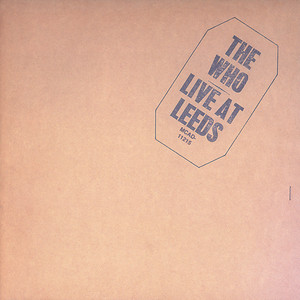
This album is a monument in itself. Often hailed as the greatest live record ever made — and certainly one of the most influential — it captures The Who at their most feral and combustible. The band that never really fit in at Woodstock — too loud, too aggressive, too fond of blowing things up — set out to make a live album that bottled their onstage chaos. What they delivered was Live at Leeds: raw, explosive, and, let’s be honest, a glorious mess. Everything about it feels deliberate, even the shambolic packaging. The sleeve was designed to look like a bootleg — a plain cardboard cover with a crooked sticker — a wink to the underground tape culture of the time. A style icon of a live album was born. The original 1970 LP contained just six tracks and ran a lean 39 minutes — half of it taken up by a sprawling medley built around “My Generation.” Remarkably, it included barely a trace of Tommy, the rock opera they were touring at the time. Over the years, the album’s scope ballooned through reissues and deluxe editions, eventually swelling into a four-disc behemoth that includes complete performances of Tommy from Leeds and Hull. From six songs to four CDs — excess, meet rock history. I’m sticking to the original release here. Half the tracks are covers: “Young Man Blues,” “Summertime Blues,” and “Shakin’ All Over.” It’s an odd choice for a band that already had four albums under its belt, but no matter — this is loud, snarling, blues-drenched music, brimming with manic energy. Even much of what later passed for “heavy metal” sounds like nursery music in comparison. The highlight, of course, is the “My Generation” medley — a 15-minute descent into instrumental mayhem, with John Entwistle’s distorted bass soloing like a lead guitar, Keith Moon attempting to destroy his drum kit by sheer force, and Pete Townshend veering from clean arpeggios to full-on sonic detonation. It eventually morphs into fragments of Tommy — mainly “See Me, Feel Me” / “We’re Not Gonna Take It” — and becomes something close to transcendence. The finale, “Magic Bus,” is another seven minutes of glorious racket, capped by Roger Daltrey howling into a harmonica for good measure. It’s not perfect — too chaotic, too uneven, too dependent on covers — but perfection was never the point. Live at Leeds is the sound of a band at war with its own limits, and that’s precisely what makes it monumental.
I actually liked this album a lot — much more than I expected to. From the opening and title track I was impressed: a fine melody, offset by what I think is a xylophone (judging by the credits), giving it an uneasy, almost dissonant edge that works beautifully. Great guitar tone too, and the vocals don’t bother me at all. That guitar sound really comes into its own on The Glorious Land — almost clean, but warm and full of character. Where Billy Bragg’s metallic hollowness always grated, this is perfect. Credit where due: John Parish, PJ Harvey’s long-time musical (not romantic) partner, deserves a mention here. All and Everyone is even better — wonderful guitar tone again, a haunting melody, lovely touches of organ and trombone, and superb singing. A fantastic song. So far, so good — until On Battleship Hill. Melodically it’s fine, even slightly country-ish, but Harvey’s vocal choices are baffling. She suddenly leaps into some operatic register — higher than Maria Callas on a good day — and it’s painful. The duet with Parish is nicely done, but if she’d just sung an octave lower it could have been genuinely moving. England continues the misstep, oddly flamenco-tinged and not much better. I don’t get it. Thankfully, the record recovers. In the Dark Places is another strong, stirring song, and Bitter Branches is among the album’s best. Without that unfortunate midsection, this could’ve been an easy 8, maybe even a 9 out of 10. As it stands, it’s a fine record undermined by its own excess — but it’s done enough to make me curious about the rest of her work.
I’ve given this album a fair number of listens. I just can’t connect with it. I was leaning toward a 6 out of 10, but then Spotify’s algorithm shut the door for me. I let it play on after the album ended, and it served up a bunch of tracks by obscure bands in roughly the same genre — and every single one of them sounded better than anything I’d just heard. Worse, two of those songs were actually by The Gun Club themselves, from their second album Miami, and both were clearly superior to anything on Fire of Love. The main reason those Miami tracks worked better is also my biggest problem with Fire of Love: the sound. It’s painfully thin and monotonous, dominated by a tinny guitar tone that tries to be clean but just ends up grating. It doesn’t help that there’s a lot of slide guitar — and as faithful readers will know by now, I have limited patience for that particular sound. That slide guitar makes sense, of course, since this is essentially a twisted form of blues — punk blues, or blues punk, take your pick. But it doesn’t do much for me. I actually own The Las Vegas Story, their third album, which I bought after reading some breathless reissue review in what I think was NRC. I couldn’t see what all the fuss was about then, and after this deeper dive into their debut, I still can’t. If I have to name a highlight, fine — opener “Sex Beat” sets the tone reasonably well. The most striking song is probably “She’s Like Heroin to Me” (substance references not coincidental — frontman Jeffrey Lee Pierce reportedly drank like a fish and likely indulged in a few other habits not compatible with a Tour de France lifestyle). As for low points: well, that would be the entire 40-minute slab of stubborn, grinding blues-punk that makes up the album. Don’t get me wrong, it’s not terrible. If it were, I’d have given it a lower score. It just leaves me cold. And there you have it: proof that not all guitar-heavy music automatically works for me. Though, frankly, I already proved that with my Circle Jerk's review.
This is an odd album. After Pet Sounds — still one of pop music’s great miracles — the Beach Boys somehow stumbled their way here, five records later, to Surf’s Up: uneven, intermittently brilliant, and often baffling. Brian Wilson was still around, but mostly in spirit; the lush harmonies and meticulous production that once defined the band are largely absent. His presence flickers to life in the final three tracks, though — and when it does, you remember just how far ahead of his peers he once was. The title track remains magnificent; “A Day in the Life of a Tree,” sung (rather alarmingly) by their manager, is merely… memorable. Still, there’s much to enjoy. “Long Promised Road” is a genuine highlight, full of that bittersweet Californian glow the band once bottled so effortlessly. Less successful is their sudden bid for social relevance. Manager Jack Rieley apparently urged them to tackle serious issues — an odd idea for a band that built its empire on surfboards and sunshine. The result, “Student Demonstration Time,” is a clumsy blues-rock detour, complete with sirens and moral confusion, crashing through the album like an uninvited guest. Oddly, its message — penned by the now-MAGA-inclined Mike Love — seems to be that it’s better simply not to demonstrate. In the end, Surf’s Up is a curious mix of beauty and misfire — flashes of the old magic, shadowed by strange choices and the growing sense that the world, and the band, had both moved on.
When this album appeared in 2001, it hit the zeitgeist with unnerving precision. The crowd that had once spent the late eighties and early nineties in a chemically enhanced blur on the dancefloor had, by then, acquired mortgages, toddlers, and a deep yearning for sophistication. Lounge music — that gentle collision of house beats and tasteful melancholy — was the perfect solution. You could feel worldly and hip again, just without the pills, the sweat, or the 4 a.m. regret. This record became their soundtrack. It replaced Buena Vista Social Club as the go-to background for semi-upscale restaurants where you could just about hear yourself say “we really should do this more often.” For a while, it felt as though every restaurant in Europe owned precisely one CD — and this was it. The idea, to be fair, is ingenious: take danceable beats and drape them in tango. Instant atmosphere. But as actual music, rather than mood lighting, it wilts fast. On headphones it becomes fifty-seven minutes of politely hypnotic repetition — the sort of music that makes you wonder whether you’re supposed to tip the percussionist for persistence alone. And the execution doesn’t help. The bandoneon player sounds permanently on the verge of panic, the percussionist seems intent on starting a small regional conflict, and the singer — who faintly resembles Dani Klein of Vaya Con Dios — manages to drain all the sultriness from the room. There are flashes of what might have been: “Tríptico” almost works, and the cover of Last Tango in Paris finally delivers a sliver of genuine drama. But most of it remains the sonic equivalent of mood lighting — pleasant, repetitive, and ultimately disposable. Still, it’s a perfect time capsule. You can almost picture the scene: the couple out for their long-overdue dinner, the waiter reciting the specials, and this music softly purring in the background — a soundtrack for people who once danced until dawn and now just want to make it to dessert.
Tim Buckley never made things easy for his audience. Where his son Jeff turned aching vulnerability into pop gold, Tim wandered straight into the deep end — ambitious, challenging, often strange, and occasionally brilliant. Happy Sad (1969) may well be his masterpiece: an album steeped in melancholy and experimentation, where folk, jazz, and something more elusive blur into one hypnotic whole. It opens with Strange Feelin’, a clear reimagining of Miles Davis’s So What — the cool jazz influence unmistakable. From the first bars, you’re struck by the sound of the vibraphone, which gives the album its shimmering, dreamlike atmosphere. It’s an instrument almost never heard in rock or folk, and its presence makes the record both distinctive and, at times, impenetrable. The highlights come early: Buzzin’ Fly, buoyed by Buckley’s supple voice and a flowing melody, is perhaps the album’s most direct moment. Love from Room 109 at the Islander (On Pacific Coast Highway) is sprawling and strange, with bowed bass and shifting textures that shouldn’t work but somehow do. And Dream Letter — an aching message to his estranged wife and young son Jeff — offers a glimpse of the emotional intensity that made Buckley such a singular figure. It’s not all flawless. Gypsy Woman, a twelve-minute suite of wails, improvisations, and sharp-edged guitar, pushes its luck — fascinating in intent, exhausting in execution. But then, that’s part of the album’s charm: no progress without a few derailments. Happy Sad is beautifully melancholic, sometimes difficult, often mesmerizing. It’s a record that asks for patience and attention — and rewards both. For those who only know the son, it’s well worth spending some time with the father. The voice is different, the mood deeper, and the risk-taking far greater.
This record is the sound of a nervous breakdown disguised as art. Suba’s São Paulo Confessions — a collision of synthetic beats, bossa nova traces, and late-’90s club pretensions — feels less like music and more like an endurance test. It’s the sort of album that makes you wonder whether your speakers are broken or your patience. The idea was, apparently, to modernize Brazilian music. What we get instead is a relentless blur of electronic percussion, digital gloss, and occasional Portuguese murmuring, all of it radiating the sterile heat of a malfunctioning espresso machine. “Antropofagos” sounds like a warehouse rave hosted by an MDMA enthusiast with a conga fetish; “Felicidade” resembles a chemical hangover set to a drum loop. There’s history here — Suba (born Mitar Subotić) fled Yugoslavia, settled in São Paulo, and produced Bebel Gilberto’s Tanto Tempo before dying in a studio fire. That Gilberto album at least had melodies and charm; this one just has anxiety and a pulse. To be fair, there are moments — brief ones — when the synthetic textures almost coalesce into something interesting. “Segredo” is the least manic track, and for a minute or two you can imagine what this might have been if anyone had remembered to write actual songs. Otherwise, it’s a 61-minute assault of slick emptiness — music for people who believe nightlife is a spiritual calling. Give me death metal any day; it’s calmer.
This album is a masterclass in sequencing — a lost art, really. Back when records still had sides, the order of the songs mattered; an album wasn’t just a playlist but a journey with a beginning and an end. Who’s Next proves that The Who understood that structure better than almost anyone. It opens and closes with two of the greatest songs ever written in rock music. “Baba O’Riley,” with its legendary Lowrey organ intro (not a synthesizer, despite what most people think), is one of those tracks that instantly justified the price of the LP — the kind you’d decide to buy after hearing the first 30 seconds through the headphones at the record shop. And then, at the other end, there’s “Won’t Get Fooled Again” — a thunderous, cathartic closer that still sounds like the end of an era and the birth of something new. Between them, “Behind Blue Eyes” stands tall: tender, then explosive, a prototype for the rock ballad before the term even existed. The rest of the album, though, doesn’t quite reach those heights. “The Song Is Over” exposes Roger Daltrey’s limits as a singer, and some of the material feels uneven, more like connective tissue between the giants. Still, the peaks are so extraordinary that they cement The Who’s place — unfairly overlooked, at times — among the true architects of modern rock. They even toyed with early synthesizers here (“Going Mobile”), something virtually unheard of in hard rock at the time. It’s another small sign of how far ahead they were willing to go. No, Who’s Next isn’t flawless. But when it’s great, it’s as great as rock music gets.
In 1955, Frank Sinatra poured his heartbreak over Ava Gardner into In the Wee Small Hours — an album so cohesive it’s often cited as the first true “concept album.” It’s a masterpiece, but a monochrome one: an extended sigh in blue, all midnight gloom and lonely cigarettes. A year later, he re-emerged — libido restored, swagger back — with Songs for Swingin’ Lovers!, and it’s like someone threw open the curtains. The joy in this record is infectious. Nelson Riddle’s arrangements shimmer with effortless grace, and Sinatra sounds untouchable, completely at home in this universe of winks, charm, and brass. Sinatra may not have had the prettiest voice in the technical sense — Stuart Staples of Tindersticks, say, has a richer baritone — but no one has ever phrased like Frank. His performance on “Old Devil Moon” is jaw-dropping: the way he bends and dances around the melody is as free and daring as Charlie Parker on sax. He doesn’t so much sing the songs as play them, using language the way a jazz soloist uses notes. Cole Porter’s sly wit is tailor-made for him — “Anything Goes” practically purrs — and even the ancient chestnut “Makin’ Whoopee” becomes deliciously risqué in his hands. (Ava Gardner, after all, once quipped that of Sinatra’s 119 pounds, nineteen were... well, censored.) It’s an album that radiates pleasure — sophisticated, a little naughty, endlessly listenable. Maybe it’s a touch too smooth to be perfect, but honestly, who cares? Songs for Swingin’ Lovers! is pure joy on vinyl — a tonic for melancholy, a reminder that charm, when done right, is its own kind of genius.
By 1969, The Kinks had achieved something few bands ever do: four consecutive albums — from Face to Face through Arthur (Or the Decline and Fall of the British Empire) — that capture the full flowering of a singular creative voice. And what a finale this is. From the moment “Victoria” explodes out of the speakers, followed by the sharp and sardonic “Yes Sir, No Sir,” you know you’re in the presence of peak Ray Davies — where melody, satire, and melancholy coexist in glorious disorder. Ostensibly inspired by the Davies brothers’ sister and her husband Arthur, who had emigrated to Australia, the album uses their story to frame a larger reflection on Britain itself: its class system, its nostalgia, its quiet disappointments. “Australia” is both hopeful and faintly mocking, a dream of escape that already sounds worn at the edges. The emotional centerpiece, though, is “Shangri-La” — a stunning, orchestrated portrait of working-class aspiration and entrapment. Critics accused Davies of sneering at his subjects, but the song is far too beautiful, too deeply felt, for that. Its shifting structure — gentle balladry giving way to aggression, then back to bittersweet calm — shows a songwriter in complete control of his craft. Even the album’s concept carries a quiet irony: the decline of the British Empire told through the life of a man named Arthur, echoing the mythic King Arthur himself. Not everything lands — “She’s Bought a Hat Like Princess Marina” veers off course — but by then, Davies has already secured his place among the greats. Arthur stands as one of The Kinks’ crowning achievements: humane, melodic, and quietly devastating — the sound of a band capturing the soul of a fading England, one perfect bridge and la-la chorus at a time.
Supergrass’s I Should Coco landed in 1995 — the same year as The Bends, (What’s the Story) Morning Glory?, and Mellon Collie and the Infinite Sadness. In other words, the absolute peak of mid-’90s alternative rock. Yet somehow, these barely-twentysomething lads from Oxford — Gaz Coombes was only nineteen — managed to release the best-selling British debut since Please Please Me. Not bad company, even if Supergrass would never reach Beatles-level myth. This record is, simply put, a riot. A hyperactive, 40-minute burst of unfiltered joy — as effective against gloom as Sinatra’s Songs for Swingin’ Lovers! but delivered through a wall of guitars, grins, and caffeine. Wikipedia dutifully lists The Buzzcocks, The Jam, Madness, and The Kinks as influences, but the lineage feels more Small Faces than Jam, more Who than Kinks. Danny Goffey drums like he’s had three espressos too many and worships Keith Moon; Mick Quinn’s bass lines bounce and punch like John Entwistle in a sugar rush. And yet, I Should Coco isn’t about heritage or reference points — it’s about sheer, combustible fun. From the explosive opener “I’d Like to Know” to the euphoric “Alright,” every track radiates youthful recklessness. “Sitting Up Straight” teases calm before detonating again, while “She’s So Loose” finally slows the tempo — a small masterpiece in miniature. Then comes that moment: “We’re Not Supposed To.” Recorded at double speed and sounding like a helium hangover, it’s the album’s one real misfire — a juvenile in-joke that should have stayed on the cutting room floor. But the band redeems itself immediately with the lazy sway of “Time” and the hazy, unexpectedly intricate “Sofa (of My Lethargy),” which drifts toward something almost prog-like. By then, it’s clear that beneath the chaos, there’s surprising depth — and maybe even a fondness for ’70s pop à la Smokie lurking beneath the fuzz. The pseudo-farewell that closes the record is unnecessary but harmless — like one too many pints after a perfect night out. Minor flaws aside, I Should Coco remains a blast of pure mid-’90s exuberance: fast, funny, and gloriously alive, the sound of youth with nowhere particular to be and too much energy to sit still.
I’ve never quite known what to do with Alice Cooper. Not the man, not the band, not the circus around it all. On the one hand there’s Halo of Flies, a sprawling, genuinely brilliant track I grew up admiring. On the other, there’s Poison — a cartoonish embarrassment that soundtracked the late ’80s in all its synthetic glory. Reconciling those two has always been impossible. Listening to Billion Dollar Babies again, carefully and with the best headphones I own, hasn’t helped. The album is part glam rock, part prog, part theatrical stunt — often all at once — and while that sounds intriguing in theory, in practice it mostly blurs together into something neither clever nor thrilling. The title track threatens to turn into an epic but never quite gets there; Unfinished Sweet wanders from sugary glam into a brief jazz-prog passage that’s far more interesting than the rest of the song; No More Mr. Nice Guy is fine, catchy enough, but hardly the classic it pretends to be. The record’s tonal confusion peaks with Mary Ann, a honky-tonk piano detour that feels like a dare — or filler. And when Cooper leans into his infamous “shock rock” persona on I Love the Dead and Sick Things, it’s hard to feel shocked or even amused. Mostly, it just feels like theatre that’s outlived its shock value. There are flashes of originality here, sure, but they’re buried under gimmickry. The result is an album that never quite decides whether it wants to be clever, scary, or just loud — and ends up being none of the three.
I’ve always known Suede were supposed to be one of the pillars of early Britpop, but somehow they completely passed me by in the ’90s. Revisiting their debut now, I can finally answer the question of whether I missed something crucial back then. Short answer: no. There is one undeniable strength here, and that’s Bernard Butler. His guitar work is gorgeous — all chiming arpeggios and beautifully shaped melodies, played with a sense of character Britpop guitarists spent the rest of the decade trying to imitate. If there’s a hero on this record, it’s him. The problem is the other half of the equation. Brett Anderson’s vocals are… an acquired taste, to put it kindly. The fluttering, almost yodel-adjacent delivery can work in theory, but on quieter tracks — of which there are many — it quickly becomes grating. And that’s the other issue: for all its reputation, the album contains surprisingly few songs that actually move me. I gave it plenty of chances, including the full “super-headphones” treatment, but the spark just never arrives. There are exceptions. Pantomime Horse is the one moment where the band truly clicks: dramatic, dynamic, rising and falling with real intent. If the rest of the album had that kind of shape and force, we’d be having a very different conversation. Animal Nitrate comes close, though Anderson’s vocals push it back a step. And The Drowners, one of the supposed highlights, is the kind of track they could easily have left on the cutting-room floor. So no — I didn’t overlook a masterpiece in my youth. I’m still curious about the follow-up (Dog Man Star, before Butler’s dramatic exit), but this debut mostly confirms that not every glittering relic of ’90s guitar music was actually gold.
In hindsight, I See a Darkness arrived at a strangely fitting moment. The ’90s were winding down, the millennium scare was brewing, and most of us — children of the post-punk era now shuttling kids to hockey at 9 a.m. — were quietly ageing out of the louder corners of guitar music. Which is exactly when Will Oldham, newly trading under the mildly ridiculous moniker Bonnie “Prince” Billy, released an album that every self-respecting cultural-lefty tastemaker insisted was essential. I bought it at the time, full of hope… and was greeted by A Minor Place, easily one of the most bewildering opening tracks I’d ever heard. Not the ideal gateway for someone raised on decades of roaring guitars. But I kept listening — six full spins for this revisit — and the album gradually revealed itself as something remarkable. The songs are sparse, fragile, quietly devastating. Oldham’s thin, wavering voice shouldn’t work, yet it absolutely does; the arrangements are understated but beautifully judged, avoiding all the corny Americana trappings you might fear. And the writing… these are genuinely exquisite little miniatures. Unflinching, deeply sad, but gorgeous. The highlights come thick and fast: the title track (immortalised later by Johnny Cash), Nomadic Revery, Another Day Full of Dread, Death to Everyone, Madeleine-Mary, Black, Raining in Darling. Seven out of eleven isn’t a bad ratio. And even the rest never dip below “good”. It’s funny, really — how those of us from “generation zero” spent the ’90s marinating in gloom, blasting Smashing Pumpkins and Therapy?, and now look back on that decade as one long golden afternoon. But this record still hits straight in the chest. Especially its title track, which gets uncomfortably close to the bone. My single piece of advice for newcomers: skip the opener on first listen. Trust me. Everything after it is worth the journey. For me, it’s an easy 10/10 — an album I can return to endlessly without it losing any of its quiet power.
Going from the quiet, mournful intimacy of Will Oldham straight into Lars Ulrich’s wood-chopping assault that opens …And Justice for All is… bracing, to put it politely. It’s the kind of whiplash only middle-aged ears (and midlife midriff) truly appreciate. This album carries a lot of baggage for me, not least because it was my first encounter with Metallica back in 1989, borrowed from the library and taped onto a Maxell cassette for 50 cents. Fourteen-year-old me didn’t quite know what to do with these endless, bone-dry songs, James Hetfield’s vowels stretching into the horizon, and the total absence of anything resembling a “hit.” Even One — soon ubiquitous on MTV — didn’t exactly help. And then there’s the elephant in the room: Jason Newsted, who might as well have spent the recording sessions drinking beer on the lawn, because you cannot hear a single note he played. The bass is so thoroughly erased it has become part of the album’s mythology. Add to that Ulrich’s infamous cardboard-snare sound, and you’ve got one of the strangest production choices in the history of a band that was already capable of strange decisions. The guitars, at least, sound massive. The bigger issue: why is this the album in the book? Master of Puppets is a no-brainer, and sure, Metallica (the Black Album) earned its spot through sheer cultural saturation. But if you want another early Metallica record, Ride the Lightning wipes the floor with this one: Creeping Death, Fade to Black, Ktulu — it’s their real masterpiece. Instead we get this bone-dry monster. Dimery and co. never seemed to know quite what to do with metal anyway. But here’s the twist: after revisiting the album seriously, I have to admit it’s much better than I remembered. Yes, it’s too long. Yes, the songs are absurdly stretched. Yes, the sound is exhausting. But every single track here is strong. The staccato riffing is some of the tightest the band ever recorded — truly a high-water mark for thrash precision. Hetfield and Hammett might not be virtuosos in the strict sense, but the sheer accuracy and force of their playing is astonishing. And while Ulrich’s imagination behind the kit is limited, his blunt-force approach is undeniably effective. There’s even a case to be made that this is Metallica’s “prog” album: long, multi-section compositions, plenty of dynamic shifts, and a surprising amount of structural ambition. One absolutely earns its status as their major breakthrough, bombastic video and all. And the near-closing instrumental To Live Is to Die — with the ghost of Cliff Burton wandering through it — is a real standout, its clumsy acoustic bookends somehow charming amid all the pomp. So yes, I sound critical, but the truth is: this is a very strong album with no genuinely weak tracks. It deserves respect — though not at the expense of Ride the Lightning, which absolutely belongs in the book. If we need to make room, that ill-fated S&M orchestral experiment can quietly exit through the side door. Meanwhile, in the background: pok pok pok pok — Ulrich ratatatatata — Hetfield & Hammett (silence) — Newsted
This album contains one of the most beautiful songs I know. For years I even considered it the most beautiful — a position I no longer defend quite so fiercely, especially since another Cash track from the same series is now a strong contender. But let’s be clear: one transcendent song does not make for a great album. And this is not a great album. A step back. This is the only entry in the book from Cash’s ‘American’ series, the career-reviving collaboration with Rick Rubin that began in 1994. Cash, 62 and recovering from drug addiction, had drifted far out of view. Rubin — the man who had launched everyone from LL Cool J to Slayer — asked him to record for his newly renamed Def American label. The pairing was unlikely, the success extraordinary. Cash suddenly found an entirely new audience, especially among the culturally left-leaning Americana adopters I mentioned before. And as these things go, one successful album became four, then five, then six; this one was the last released during his lifetime. Which makes it all the more puzzling that this part of the series is the one included in the list. For what it’s worth, every other entry in the American cycle is rated higher by allmusic.com — and I tend to agree with them. The only plausible explanation is that this album contains that astonishing high point. The whole concept of the series was simple: give Cash stark, minimally arranged songs — sometimes classics, often not — and let that impossibly deep, weathered baritone do the rest. In this case, Nine Inch Nails’ rather unremarkable “Hurt” becomes, in Cash’s hands, something genuinely overwhelming. The video, with its foreshadowing of June Carter’s death, only heightens the effect. It’s a masterpiece. The album, unfortunately, isn’t. It starts well: a punchy “The Man Comes Around,” then Hurt, then “Give My Love to Rose,” which adds little to earlier versions but does no harm. And then the record veers off a cliff. Covering “Bridge Over Troubled Water” is already risky, but Cash’s version — a duet with Fiona Apple — is catastrophic. I’d listened to some of her much-praised debut out of curiosity, and it seemed fine. But here? To borrow my partner’s reaction when I played it for her: she insisted she could record duets with Johnny Cash, because she could not possibly sing any worse. And trust me, the bar in our household is low. Things recover briefly: Sting’s “I Hung My Head” works, and so does “Personal Jesus.” But much of the rest suffers from the same fatal flaw: the tempos drag, and Cash seems unable to find the right phrasing. He is one of the greatest singers modern music has produced, yet on this record even he repeatedly misses the mark. “In My Life” — that simple, beautiful Beatles classic — is a complete misfire. “The First Time Ever I Saw Your Face” is lifeless. And then come the real duds: a plodding “Danny Boy,” a strangely inert take on Hank Williams’ “I’m So Lonesome I Could Cry” (even Nick Cave can’t salvage it), and finally a closing “We’ll Meet Again” that sounds like the forced sing-along on a school trip bus. So yes: “Hurt” is absolutely extraordinary, one of the most moving recordings I have ever known. But an album is more than one perfect song, and this album simply isn’t good. Why not include the first American record instead — fresh, revelatory, and far better executed?
This album is a perfect example of an on the one hand / on the other hand record—but one side of that equation so overwhelmingly outweighs the other that the end result is simply a great album. Not a 10/10, because it really does rattle and creak too much for that, but my god, what a joy it is to listen to. The real difficulty, listening now, is that it’s almost impossible to reconstruct just how fresh this must have sounded in 1991–1992, when it was recorded and released. That two-sided character has everything to do with how the album was made. The lo-fi quality isn’t a pose; it’s structural. This debut was literally recorded in a home studio, in ten days. Which is, of course, ironic. Yes, jazz records used to be cut in a single morning or afternoon—leaving the rest of the day to record another album, so the musicians could fund the next batch of heroin—but by 1991 it was far more normal to spend months in a studio. Pavement did not. That lo-fi approach didn’t disappear later—subsequent Pavement albums still sound rough around the edges—but Brighten the Corners would be the first to sound genuinely “professional.” So let’s start with the other hand. Of the fourteen tracks here, a few could easily have been left off (“Fame Throwa,” anyone?). Almost all of the songs would sound objectively better with a cleaner recording. Stephen Malkmus’s singing—he more or less is Pavement, by the way; can anyone actually name the other members off the top of their head?—is, charitably, unstable. And yet: who cares? Because the one hand is a gloriously fresh album packed with genuine gems, and throughout it all you hear the sheer pleasure of making music. It opens brilliantly with “Summer Babe.” “In the Mouth a Desert” is the next high point, even if Gary Young’s drumming—recorded in his own house, and soon to be his Pavement swan song—is a bit lumberjack-like. “Conduit for Sale!” isn’t a highlight, but it’s worth mentioning: it sounds like a hyperactive, drug-fueled ’90s reinterpretation of the baseball commentary from Paradise by the Dashboard Light. For me, the album really takes off in the final stretch, with a superb quartet: “Loretta’s Scars,” “Here,” “Two States,” and “Perfume-V.” “Here” is the obvious standout. It was memorably covered by Tindersticks, which is fascinating because Stuart Staples’s James Bond–baritone turns the song into something entirely different. It’s still the best track on the album, even if Spotify listeners don’t seem to agree. The Tindersticks version isn’t on Spotify—it was a B-side later collected on Donkeys 92–97—but you can find it on YouTube. Oddly enough, the closing track “Our Singer” is one of my personal favorites, while Spotify ranks it dead last. Music like this was copied endlessly throughout the 1990s, which is why its original shock value is no longer immediately audible. Bands everywhere adopted that ramshackle, half-finished aesthetic. As a devoted Studio Brussel listener back in the day, I heard Pavement’s fingerprints all over Belpop. Of course, Pavement weren’t alone: Guided by Voices loom large, and if you go back further, Big Star—especially Third / Sister Lovers—clearly left a mark. The difference is that Malkmus and Scott Kannberg were far more liberal with the distortion pedal. And look at that: I’ve now named all three musicians on this album. After this, Pavement would expand into a proper five-piece, complete with an actual bassist. None of this really matters. What matters is that Slanted and Enchanted is an eruption of musical joy. In all its imperfection, it comes remarkably close to perfect.
I don’t quite get it. In theory, I should be the ideal audience for the blues entries on this list — there aren’t many of them, and so much of the music I love either flows directly from the blues (rock and its cousins) or dresses itself up in blues form (jazz). Add the central role of the electric guitar and a parade of guitar heroes, and you’d think I’d be helpless before it. And yet… not much happens for me. The Muddy Waters and John Lee Hooker albums were fine but nothing special (though Hooker’s collaborations album worked better for me). This one, from B.B. King, lands squarely in the “Muddy Waters” category: pleasant enough, but ultimately forgettable. I gave it at least six listens. More even than with Queens of the Stone Age, the music just evaporates the moment it’s over. Not a single song really sticks. If I must name highlights, they’d be “It’s My Own Fault” and “Please Love Me.” Beyond that, the only consistently impressive feature here is B.B. King’s unmistakable guitar tone — genuinely beautiful, though I wish the album showcased it more. The playing itself isn’t especially spectacular, in my view. The audience on this live recording puzzles me as well; at random moments they respond with near-hysteria, though I can’t for the life of me hear what triggered it. I honestly don’t have much more to say. A perfectly decent live blues record that, for me, leaves no lasting trace.
The summer of 1992 was one of those rare pauses in life you only get once. Exams finished, university still weeks away, and nothing remotely urgent to do. One of the highlights was Pinkpop, then still a one-day festival — soaked in relentless rain, and home to what is now widely remembered as one of the most legendary performances in its history: Pearl Jam. I honestly can’t remember whether I knew Ten at the time, apart from “Alive.” I was still transitioning from metal teenager to alternative student, and Pearl Jam sat right on the edge of my comfort zone. But somehow this album hit an entire generation at exactly the right moment. In the early nineties, after the fall of the Berlin Wall and the end of the Cold War, the old certainties had evaporated. Europe felt peaceful, free — and oddly empty. No grand ideals left, just a vague, shared melancholy. Ten seemed to give that feeling a voice. Coming out of Seattle, Pearl Jam occupied a crucial middle ground. Soundgarden and Alice in Chains leaned too heavily toward metal; Nirvana was more punk. Pearl Jam, by contrast, wrapped similar emotional weight in melody. Eddie Vedder’s voice — one of the best I’ve encountered so far in this project — and, frankly, his looks, didn’t hurt either. His lyrics about fractured families and emotional dislocation resonated strongly with the latchkey generation, of which I’m part. The album isn’t flawless, but it hardly matters. Its three clear peaks — “Black,” “Alive,” and “Jeremy” — are all exceptional, each easily good enough for a top-ten list of songs I’ve encountered so far. “Black” is one of the great rock ballads; “Alive” builds perfectly to its simple but devastatingly effective guitar solo; and “Jeremy,” which grew on me with repeated listens, is gripping even without a solo at all. Mike McCready’s guitar work deserves a mention: Fender Stratocaster, wah-wah pedal, Hendrix clearly hovering somewhere in the background. Influence, yes — but well used. Nitpicking weaker tracks feels beside the point. Ten is one of those albums where the book’s title applies without argument. It’s also the only Pearl Jam album on the list, and the only one I own. The band suffers badly from the unrepeatable-debut syndrome: later records never tempted me, and even seeing them live years later, it was still the Ten songs that mattered. Then again, trying to match Ten would be an almost impossible task.
Pink Floyd has always struck me as a curious phenomenon — not so much the band itself, but its fans. Ever since I first encountered a devout Floydian in high school, I’ve noticed how absolute the devotion often is. For many fans, Pink Floyd doesn’t just sit alongside other great bands; it seems to eclipse them entirely, as if it offers access to some higher musical plane. And within that already select group there’s an even smaller inner circle: those for whom real Pink Floyd only exists with Syd Barrett. Approaching this album as something of an outsider, I have to say: this is a remarkably strong debut. Not quite perfect — it’s a little too chaotic and uneven for that — but it comes very close. And opening your first album with “Astronomy Domine” takes either enormous confidence or a certain level of madness. Possibly both. This record is psychedelia in its purest form. If someone asks what psychedelic music actually sounds like, you could do far worse than play this album. Barrett’s presence dominates everything, and knowing what would soon happen to him — his mental collapse under the combined weight of talent, pressure, and drugs — is sadly audible throughout. The music feels unfiltered, playful, experimental, and occasionally unhinged. There are plenty of highlights. “Astronomy Domine” is a phenomenal opener, while “Interstellar Overdrive” — an intense instrumental eruption — is one of the most unforgettable tracks here, even if it would have made more sense as the album’s closer. “Matilda Mother” is rich and melodic, “Pow R. Toc H.” flirts with jazz abstraction, “Take Up Thy Stethoscope and Walk” veers wildly between pop, surf, and psychedelia, and “Lucifer Sam” rides a wonderfully sly, almost James Bond–like guitar line. The album ends in near-chaos, and not entirely convincingly — another sign that this brilliance came at a cost. I don’t worship this record, but I absolutely admire it. It’s a fantastic debut, full of ideas and imagination, and one can’t help wondering what Pink Floyd might have become had Barrett remained healthy. Then again, it’s entirely possible that the band’s later, almost absurd commercial success only happened because they didn’t stay up that particular tree.
It was finally time for hip-hop again — and not the old-school variety I’ve mostly encountered so far, but something more modern, more expansive. And to be fair right away: my usual complaint doesn’t apply here. This album actually contains music. Real instruments, real musicians. Pino Palladino turns up on bass — a man whose résumé borders on the absurd — and several tracks feature proper drummers. Sonically, there’s ambition and breadth. And yet my appreciation remains limited, for one very obvious reason: this album is far too long. At 83 minutes (including a remake), it demands an almost supernatural level of inspiration to justify its own existence. Even Mellon Collie and the Infinite Sadness, created by Billy Corgan at his creative peak, doesn’t fully manage that trick. Common certainly doesn’t. The result is exhaustion. The length flattens everything. Very little stands out because everything just keeps coming. If forced, I’d single out “A Song for Assata” as a genuine highlight, along with the remake of “Geto Heaven.” The big hit, “The Light,” I actively dislike — the R&B crooning smothers the track and drains it of urgency. Elsewhere, there’s heavy borrowing from George Clinton’s Parliament-era funk, which is hardly a bad lineage. Tracks like “A Film Called (Pimp)” and “Cold Blooded” wear that influence openly, even sampling Parliament directly. But influence and ambition aren’t enough. After three and a half listens, the album becomes a kind of sonic slurry — talented, well-intentioned, but ultimately overwhelming and shapeless. That’s the real disappointment: there is talent here, clearly so. It’s just buried under sheer excess. This could have been a much better album at 45 minutes. At 83, it’s simply too much of itself.
In 2009 I read an intriguing book by Elijah Wald, How the Beatles Destroyed Rock ’n’ Roll, which argues that the history of popular music is usually told along the wrong lines. Critics obsess over artists who later came to be seen as revolutionary, while largely ignoring the music that most people actually listened to at the time. The result is a distorted canon. We endlessly discuss the Beatles, Louis Armstrong, or Duke Ellington, but forget about artists like Perry Como, Guy Lombardo, or Paul Whiteman — musicians who sold vast numbers of records and shaped the everyday musical environment of their era. That idea helps explain why albums like Groovin’ appear in this book. The question is whether they justify their place. This is, unmistakably, pop music. Pleasant, vocal-driven, carefully arranged, and largely free of instrumental excess. Nothing here is designed to challenge the listener; it’s meant to charm. And often, it does. There’s nothing inherently wrong with that. The album flows smoothly, the melodies are agreeable, and there are no catastrophic misfires — though “I’m So Happy Now” comes close to sounding like pop detergent. What’s interesting is that the album’s strongest moments arrive when the band briefly steps outside the pop template. “Find Somebody,” by far the least-streamed track, is also the most adventurous, with an unexpectedly sharp guitar line that almost feels like a distant premonition of ’90s alternative rock. The audience, apparently, didn’t know what to do with it. The same goes for “You Better Run,” another highlight with a surprisingly muscular guitar presence. The more popular songs aren’t bad, though. “How Can I Be Sure” is a lovely single, elevated by an unusual accordion part, and the title track “Groovin’,” while undeniably sweet, is also irresistibly catchy and genuinely charming. Its sunny, almost Californian feel is amusingly misplaced for a band from New Jersey, but it works. Does Groovin’ belong in a serious account of 1960s pop history? In a year like 1967, when far more daring music was being made, maybe not on artistic grounds alone. But that’s precisely Wald’s point. This is the kind of music a huge audience actually embraced, carried with them, and were shaped by. It may not score highly on some imaginary Bach Index, but it captures something real about the era. So no, this album didn’t shake the world. But it does offer a clear snapshot of what mainstream pop sounded like when much of the supposed revolution was happening elsewhere. And that, in its own modest way, makes it worth hearing.
There are very few albums that seem to mark a ceiling for an entire genre — records after which the common consensus is simply: it doesn’t really get better than this. Master of Puppets is one of them. I’ve always had a soft spot for Ride the Lightning, mostly because of a handful of truly world-class songs (“Fade to Black” above all). But returning to Master of Puppets with focused, repeated listens — often on excellent headphones — has noticeably raised my estimation. This album is not just great; it is remarkably consistent. There are hardly any weak moments. If I have to name one, it would be “The Thing That Should Not Be,” which starts promisingly but never quite takes off. That’s about it. One immediate difference with its successor is obvious: this album has bass. And not just a little. Cliff Burton is everywhere, and he dominates the record in the best possible way. Knowing that Burton died during the tour for this album — thrown from the band’s bus during a crash in Sweden and crushed beneath it — inevitably colours the listening experience. He was an extraordinary bassist and songwriter, and it’s impossible not to wonder how Metallica’s trajectory might have changed had he lived. Musically, Master of Puppets strikes a rare balance between brute force and structural ambition. The title track is rightly famous, with its almost prog-like architecture and shifting sections (one wonders how much Rush was being played in the rehearsal room). The album opens ferociously with “Battery,” whose gentle acoustic intro is obliterated by staccato thrash riffs so tight they still sound alarming decades later. From that point on, the album never drags, despite running close to an hour. Two more highlights stand out. “Welcome Home (Sanitarium)” is, for me, possibly the album’s finest song — already something of a metal classic by the late ’80s. And then there’s “Orion,” the instrumental centrepiece. Metallica were unusually strong at instrumentals during this period: “The Call of Ktulu,” “To Live Is to Die,” and here “Orion,” which is unmistakably Burton’s showcase. His distorted bass intro, the mid-song bass passages, and the surprisingly lyrical playing in the slow section reveal a musician with far more musical depth than the genre’s clichés would suggest. Lars Ulrich, by contrast, remains functional rather than inspired here — especially in that slower middle section. One can’t help wondering what Neil Peart might have done with it. The album closes with “Damage, Inc.,” mirroring “Battery”: another deceptive calm before an onslaught of razor-sharp riffs. In the end, it’s quite simple. If you have little interest in thrash metal but want to hear one album that shows the genre at its absolute peak, look no further. Master of Puppets earns its reputation without effort, apology, or nostalgia.
Usually, after a few listens, I know exactly how I’m going to approach an album. An angle presents itself, an opening paragraph forms in my head, and once I sit down behind the Mac the words more or less write themselves. Not this time. I genuinely didn’t know where to begin, so I’ll start with the hesitation itself. This is an album I’m very clearly split about. It’s considerably better than I feared when it came up in the randomiser—but dear me, parts of it are thoroughly sabotaged. I was young at the time, but this is my era. Toppop and probably Top of the Pops were weekly fixtures, and Culture Club were impossible to avoid. Much of that had to do with Boy George: flamboyant, androgynous, unapologetically colourful, and utterly unlike anyone else on mainstream television at the time. The band scored two undeniable monster hits: “Do You Really Want to Hurt Me” and, of course, “Karma Chameleon,” which opens this album. Judging by their slow disappearance from lists like the Top 2000, Culture Club may be fading from collective memory—but those songs remain textbook examples of early-’80s pop. I’ll be honest: I wasn’t exactly thrilled at the idea of having to listen to Karma Chameleon again for this project. And yet, approached without prejudice, it’s… fine. Catchy, professionally made, and perfectly understandable as a mass hit. The harmonica is irritating, but it’s survivable. Things even improve with “It’s a Miracle,” which might actually be the better song. So far, so good. Almost alarmingly so. And then enters the element that ruins this album for me. Helen Terry, the band’s regular backing vocalist, completely takes over the sound—especially on “Black Money,” “That’s the Way (I’m Only Trying to Help You),” and “Church of the Poison Mind.” Backing vocals are part of pop music, obviously. But her soul-inflected, octave-leaping, attention-grabbing style overwhelms everything in its path. It doesn’t just dominate the songs; it actively derails them. Worse still, it pulls Boy George’s otherwise quite pleasant voice off course with it. That’s a shame, because there are decent songs here. “Stormkeeper” suffers from another pet hate of mine—soapy, rubbery bass—and a truly obnoxious saxophone, yet somehow still manages to be listenable. The closing track, “Victims,” starts as a syrupy ballad (with, yes, backing vocals), but then takes an unexpectedly interesting turn: the tempo shifts, the structure loosens, and for a brief moment the focus moves away from vocals toward the music itself. Structurally, it’s easily the most interesting piece on the album. The real surprise is “Miss Me Blind,” the most refreshing track here, largely thanks to a genuinely good guitar solo. The sound is processed, almost synth-like, but it works—and probably because it fits the aesthetic. Unsurprisingly, in guitar-averse Netherlands it wasn’t a hit, while in the US it was. In the end, this album leaves me firmly torn. I’m simply not a pop person. Once music revolves almost entirely around vocals—and especially when those vocals are pushed to theatrical extremes designed to impress rather than serve the song—I’m out. There’s enough quality here to prevent outright dismissal, but also more than enough to explain why this will never be an album I truly enjoy.
This album is unquestionably a monument in music history. To get the final verdict out of the way immediately: it’s a crying shame that three genuinely poor covers made it onto the tracklist. I’ve said before that an album doesn’t have to be flawless to earn a ten from me, but this is just a little too much dead weight to ignore entirely. That said, the monumental qualities are overwhelming. This must have landed like a bomb in 1965, because music had simply never sounded like this before. Looking at contemporaries puts that into perspective. The ferocious debut by The Sonics came out about six months earlier—essentially turbocharged rock ’n’ roll with a prominent saxophone. The famously abrasive album by The Monks followed half a year later. Heavy, yes, but still something else. What we hear here is much closer to the birth of hard rock. The Kinks had already taken a decisive step with “You Really Got Me” in 1964, introducing distorted guitars and power chords to the mainstream. But on this debut, The Who unleash genuine sonic violence. Nowhere is that clearer than on the closing track, “The Ox,” a wildly energetic instrumental where Pete Townshend lets his guitar drown in feedback—presumably through early Marshall stacks—while Keith Moon completely detonates behind the kit. His drumming is outrageous throughout the album, but here he sounds like he’s actively trying to tear the song apart. Streaming statistics tell a strange story. Much like Kate Bush’s catalogue being reduced to a single song, My Generation has been flattened almost entirely into its title track: nearly 94% of all streams go there. In one sense, that’s absurd, because it ignores how strong the rest of the album is. In another, it’s understandable. The song is a defining statement of the 1960s, musically and culturally. “Hope I die before I get old” wasn’t just a lyric—it was a declaration by four young men who never imagined they themselves might one day become elderly statesmen. Roger Daltrey is now well into his eighties, Pete Townshend not far behind. Keith Moon, true to form, never made it past 32. Listening now, it’s astonishing what he does on this record. Take “The Kids Are Alright”: on the surface it resembles fairly pleasant proto-pop in the Merseybeat tradition, but Moon’s drumming simply refuses to behave. The same goes for tracks like “La-La-La-Lies” and “Much Too Much,” which sound like early Beatles played by a band on amphetamines—which, realistically, they may well have been. On “The Good’s Gone,” Moon essentially invents a drumming style that would be copied by countless heavy rock drummers in the 1970s. Back to the title track. John Entwistle’s bass solo—had anyone ever done that on a mainstream rock record before late 1965? The song collapses into near-total cacophony, driven by Moon’s war-like pounding. Daltrey adds his own act of rebellion with the famous fake stutter in “Why don’t you all f… f… f…,” daring the listener to finish the sentence themselves before neatly dodging it with “fade away.” Everyone knew exactly what was meant. This album explodes like a long-buried V2 suddenly going off beneath London. Which only makes it more frustrating that three unnecessary covers blemish the record. Their presence makes sense historically—the influence of American R&B and blues is unmistakable. Two James Brown songs (“I Don’t Mind” and “Please, Please, Please”) point clearly to that R&B lineage, while Bo Diddley’s “I’m a Man” represents the blues side. But these covers pale next to the original material, all written by Townshend, with “The Ox” credited to the band plus Nicky Hopkins. The originals are fresher, more daring, more explosive. “Please, Please, Please” in particular is a misfire. I don’t give half points. On musical grounds alone, this is probably a 9.5. But given its place in history—its sheer impact and influence—it really can’t be anything other than a ten.
Once again I don’t quite know where to begin—but this time it’s not for lack of ideas. There’s simply so much to say. Let’s start with The Velvet Underground themselves. I’ve always had a soft spot for them. Their debut with Nico—the banana album, for anyone who’s been living under a musical rock—is an absolute masterpiece, to the point where I once had it framed on my wall as a kind of homage. Not for the cover art, but for what it represents. I also own the two albums that followed, including this one, but until recently I knew them less well. In fact, I first encountered several of these songs through the live versions on Bettie Serveert’s tribute album. The podcast guys famously dislike The Velvet Underground—save for one of them—but that tends to happen with music that stubbornly refuses to stay within the lines. Despite the title, this is not the debut but the third album. In a way, the banana record was already eponymous too, just with Nico’s name added. What really sets this album apart from the first two is a major lineup change: John Cale was gone, replaced by Doug Yule. Lou Reed wrote all the songs. And while I’ve never truly connected with Lou Reed’s solo work—some albums, yes, but nothing that really grabs me—this record absolutely does. This is, quite simply, an outstanding album. Its opening alone is remarkable. Sequencing matters, and here it’s almost counterintuitive. “Candy Says” is a quiet, tender, fragile song—not at all what you’d expect as an opener. And yet it works perfectly. The album contains several songs in that restrained, intimate vein, and those are largely what it’s remembered for. “Pale Blue Eyes,” by far the most streamed track, sits back-to-back with “Jesus,” sung jointly by Reed and Yule, who also sings lead on “Candy Says.” Drummer Maureen “Moe” Tucker is also given the microphone, which is… debatable. She provides a second vocal line on “The Murder Mystery” and sings solo on the closing track, “After Hours.” Her lack of conventional vocal ability arguably exceeds her lack of conventional drumming ability—she’s famous for her minimalist style, after all. The singing is wobbly, especially on the last-call, lights-coming-on closer. And yet, in a strange, almost hypnotic way, it works. “After Hours” is a genuine earworm. Besides, anyone claiming Nico could sing might consider either starting or stopping medication. For me, however, the real highlights lie elsewhere: in the uptempo rockers and in the album’s one truly experimental piece. The first category includes the magnificent “What Goes On” and the even more magnificent “Beginning to See the Light.” On the former, Doug Yule plays an organ part so absurdly simple that it almost invites you to play along—and yet it’s devastatingly effective. Those basic chords lift the song like a rocket launch. “Beginning to See the Light” is an absolute beast of a track and, not coincidentally, the standout moment on the Bettie Serveert tribute. And then there’s “The Murder Mystery.” Where the band mostly colors within the lines on this album—certainly compared to the first two—this track veers off entirely. It grates, it’s uncomfortable, at times borderline painful, and it goes on far too long. In other words: it’s fantastic. This is music that challenges and provokes. Naturally, it has the fewest Spotify streams. Yes, it’s nearly nine minutes long and takes up over 20% of the album, but still—people could try a little harder. Is the album perfect? No. “Some Kinda Love” drifts into a Grateful Dead–style Americana haze that’s far less compelling. But before that becomes an issue, the aching beauty of “Pale Blue Eyes” arrives to put things right. Listen to this album. Give it more than one spin—it may take a moment to settle in. But once it does, you’re left with a quiet, strange, deeply rewarding masterpiece. And don’t skip “The Murder Mystery.”
I came to this album with a fundamentally positive bias, largely because of “Glory Box.” That track was played endlessly during my Studio Brussel years, and for good reason: it’s genuinely strong, and it explains perfectly why Portishead broke through with it. The band’s formula—languid electronic beats, sparse atmospheric guitar lines, and Beth Gibbons’ voice floating on top—works there exactly as intended. Call it trip-hop, call it post-club comedown music; either way, it makes sense, and as a hit it’s fully deserved. But that formula really only works once. My first and biggest problem with this album is Beth Gibbons. I simply cannot stand her singing. Partly because she spends far too much time in an absurdly high register, producing sounds that are physically unpleasant at higher volumes, and partly because she almost never seems to sing properly at all—mostly she mumbles into the microphone. Ironically, “Glory Box” works precisely because she finally sings with some force. I would genuinely be curious to hear this album with a different singer—someone with an actual alto voice, singing cleanly. The second problem is the production. Too often this album turns into a parade of “quirky” studio tricks and random noises. Scratching, sound effects, odd textures—it’s everywhere, and it almost never helps. In early hip-hop, scratching made sense; here it just sounds misplaced, sometimes bordering on self-parody. At its worst, it feels like the producers were throwing every strange noise they could think of into the mix, regardless of whether it served the song. Which is frustrating, because when the band chooses a more restrained palette, the music suddenly comes alive. “Sour Times” benefits enormously from its Morricone-style guitar line. “It’s a Fire” is lifted by a simple organ part. “Roads” has a beautiful electronic piano sound, though it’s again undermined by Gibbons’ glass-shattering vocals. Along with “Glory Box,” these form the album’s stronger core—four tracks where the potential is obvious. There are flashes of brilliance elsewhere, too. The muted trumpet in “Pedestal” is inspired—Miles Davis knew exactly why that sound works—but even there, the song is eventually sabotaged by unnecessary sonic clutter. “Wandering Star” is the low point: the gimmicks completely derail it. Interestingly, my appreciation increased significantly when listening on headphones. Over speakers, the album mostly irritated me; on headphones, its atmosphere and textural ambition come through more clearly. It also highlights what trip-hop does well in general: tension, mood, and the occasional use of heavily processed guitars as color rather than force. You can almost hear different strands of early-’90s British music colliding here—shoegaze textures, dance culture, and post-rave introspection. That’s what makes Dummy so frustrating. Somewhere in its DNA is a genuinely strong album. With a different singer and far stricter production choices, this could have been something remarkable. As it stands, it’s intermittently compelling, often irritating, and ultimately hard to digest.
Album 131 already, and somehow we’re still largely Beatles-, Stones-, and Zeppelin-free. Bowie has barely shown up, while The Who and Metallica are nearly done, and Elvis Costello is here for the fourth time. Of his six appearances, I already decided Brutal Youth was one too many. My Aim Is True and Imperial Bedroom earned respect rather than excitement. This one is different. This is a genuinely great album. In just over half an hour, Costello fully earns his reputation as a songwriter. This record is an uninterrupted run of sharp, near-perfect pop songs—pop songs, yes, and deliberately so. For me, this is the archetype of new wave. Not The Cars, and certainly not Culture Club, whatever Wikipedia may claim. This is punk energy filtered through musical intelligence: still edgy, still lean, but with melody, structure, and craft punk never really cared about. These are songs built around vocal hooks rather than brute force, instantly memorable without being disposable. That doesn’t make it “pop music” in the pejorative sense—just pop songwriting of the highest order. Like the Beatles, which is clearly one of the reference points, even if Costello himself cited the Stones around Aftermath as a major influence. You can hear both. The other great strength of the album is the band. This is the first appearance of The Attractions, and while bassist Bruce Thomas and drummer Pete Thomas are excellent, it’s keyboardist Steve Nieve who really elevates the material. His organ lines are everywhere, and they’re glorious—playful, elegant, and absolutely essential to the album’s identity. This is also what truly separates the record from the punk explosion that had already burned itself out by 1978. There’s hardly a weak moment here. “This Year’s Girl,” “The Beat,” the gloriously slinky “Pump It Up,” “(I Don’t Want to Go to) Chelsea,” “Lip Service”—it’s hit after hit. Even “Radio, Radio,” which I accidentally heard via the remaster bonus tracks, fits seamlessly into the aesthetic. So: is it a 10? Probably not. It lacks just that last bit of friction or challenge that would push it into the absolute top tier. But a 9 feels slightly stingy too—especially given how lukewarm I’ve been about Costello elsewhere. Let’s say this: 36 (or 42) minutes of pure musical pleasure. And today, I’m feeling generous.
I’m not even going to try to map George Clinton’s exact place in music history. I simply don’t know enough, and that seems like an excellent reason not to pretend otherwise. A quick look at the George Clinton “family tree” already borders on the surreal: seventeen guitarists alone, plus a mysterious “Sir Nose” subsection I still don’t fully understand. Suffice it to say that Clinton’s musical universe is vast, influential, and wildly sampled—over three thousand times, according to WhoSampled. By the late seventies, Clinton’s empire had split its personality across two main outlets: Parliament, leaning toward funk and soul, and Funkadelic, supposedly the rockier counterpart. One Nation Under a Groove is often framed as the place where those two worlds collide, neatly summarized by the song: Who says a funk band can’t play rock? But that collision never quite turns into a full embrace. The album opens with the title track, a straight-up funk anthem. It’s solid, groovy, and historically important—but for all the talk of guitars, they barely register here. The second track starts as smooth soul-funk with a choir that, frankly, I find pretty unpleasant, before abruptly mutating halfway through into a guitar-driven rock passage, as if half the band swapped places mid-song. It’s an interesting idea, but also oddly disjointed. That pattern keeps repeating. Some tracks lean heavily into rock, others resolutely into funk, and a few gesture at synthesis without really committing. “Promentalshitbackwashpsychosis Enema Squad” (yes, that’s the title) sprawls endlessly and tilts rockward; “Into You” does the opposite, funk first with guitar hovering politely in the background. The nominal closer, “Cholly (Funk Gettin’ Ready to Roll),” is pure funk—no rock pretense at all. Complicating matters is the version I heard. On CD, the album continues with bonus tracks, including a live take on “Maggot Brain.” That radically shifts the balance. Suddenly we’re deep into guitar-heavy territory, and “Maggot Brain”—one of the most extraordinary guitar performances ever recorded in its original version—inevitably steals the spotlight. But that song belongs to another album, another moment, and another guitarist entirely. Its presence here distorts the listening experience. All of which leaves me with mixed feelings. This is undeniably a good album, and even the moments that don’t quite land are worth hearing. Still, for a record supposedly about merging funk and rock, it often feels more like alternation than fusion. The two styles dance around each other rather than truly locking in. With the bonus tracks, I’d give it an eight. Without them—judging the original album on its own terms—it’s closer to a seven. And as always, the original album is the one that really counts.
I got fooled again. I’d already started writing this piece and confidently typed 3/10 in the title when a small Wikipedia footnote caught my eye: the last four tracks were added for the 1998 CD reissue. That detail changes everything—and not in a good way. Because in its CD form, this album runs for 72 minutes. That’s not indulgent, that’s punitive. At least thirty minutes too long. Those four bonus tracks alone add over twenty-three minutes, including the near-endless “Ko wone mayo,” which stretches past nine minutes while almost nothing happens (except, bizarrely, a sudden burst of unintelligible French—apparently the only time on the entire album). The closing track, “Taara,” is outright dreadful. The bonus tracks don’t just weaken the album; they actively sabotage it. In fact, there is one clear highlight: “Sehilam.” Every single time I listened—and I forced myself through six full spins—I thought the same thing when that track came on: this is where the album should have ended. Not only because what follows is weak, but because it’s genuinely the perfect closer. By the time “Sehilam” starts, you’ve drifted into a kind of half-sleep, and suddenly there it is: the most uptempo, most swinging, most musically engaging piece on the record. A proper finale. Which, originally, it actually was. Stepping back a bit: we’re in Senegal. I happened to start listening on the day Senegal won a heavily discussed Africa Cup final against host nation Morocco. The album was recorded in 1984 but not released until 1989, which I only realized afterward. Sonically, it holds up surprisingly well for both dates. But sonics aside, there simply isn’t much there. Two acoustic guitars (often treated with chorus), two voices, and occasionally a kora, a balafon, or some light percussion. Mostly, though, it’s just voices and guitars—and the voices dominate. Oof. Minimalism can work. Nick Drake made an entire classic with little more than voice, acoustic guitar, and about three piano notes—but that album lasts 28 minutes and already flirts with monotony by the end. This one clocks in at 72 minutes on CD, or roughly 50 in its original form. Double oof. The album does start well. Opener “Lam Tooro” sets a mood: a lovely, atmospheric guitar line with expressive singing on top. It’s hypnotic, almost ritualistic. You think: okay, this might go somewhere. But then it doesn’t. From there until “Sehilam,” it dissolves into a grey blur of vocal textures where almost nothing happens. And yet, this album was—and still is—lavishly praised by critics. I honestly don’t understand why. Spoiler alert: artists like Ali Farka Touré will show up later in this series. Not to lump all West African music together, but compared to this, that work is far richer, more varied, and far more engaging. Non, merci. I’ll grudgingly add one extra point for the shorter original runtime, but if I were to bump it up any further—to a three-star rating—I’d be placing it alongside something like Johnny Cash. And frankly, that’s just far more pleasant to listen to.
The finger-picking Canadian bard who managed to enchant an impressive number of women with his, ehm… Well. Let’s move on. Only two albums ago I wrote about Pink Moon by Nick Drake, and the parallels are obvious enough to be distracting. Both artists debuted in the late sixties. Both make restrained, intimate music built largely around acoustic guitar. Both operate in a space where song and poetry bleed into each other. And both are far more about mood and atmosphere than spectacle. But the differences matter more. Leonard Cohen is, first and foremost, the poet. There’s a reason people still argue that he, rather than the actual Nobel laureate, should have received the Literature Prize if song lyrics were going to be honoured at all. Nick Drake’s genius lay in his guitar playing — intricate, fluid, quietly astonishing. Cohen, by contrast, is not a remarkable guitarist in any technical sense. His strength is language, phrasing, and the gravity of delivery. Vocally, both hover somewhere between singing and speaking, though Cohen leans far more toward recitation. His voice isn’t conventionally beautiful, but it is unmistakable: dry, intimate, slightly weary, and perfectly suited to the material. It draws you in not through range or power, but through authority. Musically, this album starts strong — very strong. Opening with “Bird on the Wire” is almost unfair. It’s one of Cohen’s most famous songs for a reason: simple, dignified, emotionally precise. The arrangement deserves mention too. Unlike Pink Moon, which commits fully (and sometimes almost stubbornly) to voice-and-guitar austerity, this album uses a small backing band. Subtle additions — a well-timed organ line here, understated rhythm support there — add warmth and depth without ever feeling ornamental. For a while, it works beautifully. There’s also a quiet reminder of Cohen’s Canadian identity in “The Partisan”, partially sung in French. It’s a striking moment, not least because the female voice delivering the French lines — drenched in echo — is completely uncredited. History, as ever, is selective. After those early highlights, though, the album begins to level out. Not badly — there are no weak tracks here — but the palette becomes increasingly uniform. The tempos stay mostly low to mid-range, the arrangements remain calm and acoustic, the emotional register controlled and reflective. Even with tasteful instrumentation, the music never really breaks out of its own restraint. At 36 minutes, that’s just about right. Any longer and it might have tipped into sameness. So: a good album. A beautiful opening track. Consistently solid songwriting. No missteps — but also not much in the way of surprise or drama. Cohen’s art here is about precision and tone rather than momentum. There are still four Leonard Cohen albums to come on this list. We’ll see where the journey leads.
I wouldn’t call myself an expert on American accents — far from it. Sure, everyone hears a Southern drawl, but I couldn’t reliably tell a Texan from someone from North Carolina, despite the small matter of nearly 2,000 kilometres between them. And yet: I put this record on knowing almost nothing about Billy Joel, and within seconds of “Movin’ Out (Anthony’s Song)” my first thought was: this guy is from New York. Or, as he himself pronounces it somewhere on this album: Nijoe Yawk. A quick check confirms it. Jewish too, for what it’s worth — though that says nothing about the music. What does say something about the music is the genre label attached to this album in the spreadsheet I use to keep track of things. It says: rock. Sorry? Where exactly is the line between pop and rock? It’s clearly drawn differently in the US than in Europe, and even within my own head there seem to be at least two dividing criteria. The first is instrumental: rock, to me, is primarily guitar-driven, while pop leans more toward keyboards, acoustic instruments, or a broader palette. By that standard alone, this album is quickly classified. Aside from the opener, this is overwhelmingly a keyboard record — hardly surprising from someone best known for “Piano Man”. The second distinction I keep returning to is structural. Pop is vocal-centred: the song exists to carry the vocal melody. Rock allows the music itself more space to breathe, stretch, and sometimes dominate. By that measure too, this is pop — albeit very well-made pop. And that matters, because one of my standard complaints about pop music — that too little happens — simply doesn’t apply here. The Stranger is a finely composed and carefully arranged album. Take “Scenes from an Italian Restaurant”: a multi-part suite that borders on prog, though its roots lie just as clearly in classical forms. Call it what you like; it’s ambitious, clever, and it works. This is generally considered Joel’s peak, and it’s easy to see why. The record is packed with hits: “Movin’ Out”, “Just the Way You Are”, “She’s Always a Woman”, “Only the Good Die Young”. Curiously, the most streamed track isn’t one of those, but “Vienna” — a lovely song I somehow managed to completely miss for decades, despite its almost absurd streaming numbers. And yes, it is genuinely good. Not everything here lands for me, though. “Only the Good Die Young” is bland to the point of irrelevance. “She’s Always a Woman” is, to my noise-trained ears, unbearably saccharine. “Just the Way You Are” could have been a beautiful ballad built around that delicious Fender Rhodes electric piano — but is instead brutally sabotaged by an aggressively ugly saxophone solo. I remain baffled by the historical moment when someone decided that saxophones were a good idea in pop or rock music. To be fair, the sax does work in “Scenes from an Italian Restaurant”, where it’s part of a rich and varied instrumental texture. Elsewhere, interestingly, a flute is used to far better effect — notably in “Get It Right the First Time”. That flute, along with an alarming list of other instruments (organ, multiple saxes, clarinet, flute, and even tuba), is played by Richie Cannata. The combination of woodwinds and tuba is… unusual, to say the least, but somehow that’s not the strangest thing on this record. One last curiosity: the first seven tracks average hundreds of millions of streams, while the final two barely scrape eight million each. People, it seems, don’t listen to this album all the way through. Even the title track “The Stranger” — one of the least streamed — strikes me as one of the album’s finest moments. A beautiful melody, an unforgettable little flute motif, and a neat reprise at the end of the record. It’s a shame, really, that a handful of truly tedious tracks — yes, “Everybody Has a Dream”, I’m looking at you — drag the whole thing down. At its best, this might be the strongest pop album I’ve encountered so far in this series. And as for that genre label? Rock? No. This is pop — just very good pop.
I often complain about music in which too little happens. So let me offer the opposite as an example, to make my point clear. Take one of the less immediately obvious tracks on this album: the title track, “The Bends.” Just listen to it. How many genuinely brilliant ideas are packed into this single song? No, it’s not a cluttered prog-rock mess where everything happens at once. Everything here is focused. Every element belongs. And then, just over three minutes in, the song suddenly shifts direction. The tempo goes up, the guitar gain goes up, and against that wall of sound comes a surprisingly melodic vocal line, almost functioning as counterpoint. Just when you’re about to start headbanging, the track collapses into a moment of calm — and ends with a cracked-voice farewell. This is music. Dear musicians: this is why we buy albums. And the kicker is that this isn’t even one of the best songs on the record. By now I’ve worked my way through 148 albums from the list, plus two additions of my own. And then the random generator throws up one of my all-time favourites. I can hum practically every note on this album — though any other enthusiastic attempts at sound production are strongly discouraged, for reasons I’ll come back to shortly. No need for five to eight careful listening sessions this time. I’ll admit I was slightly nervous. Over the past nine months I’ve learned a lot, changed the way I listen, opened myself up to music I’d long dismissed — sometimes to my own surprise. So the question was fair: how would an album that dominated my student years and early adulthood hold up? I don’t listen to it that often anymore, mostly just individual tracks. Would it still stand? Or would I suddenly discover weaknesses I’d previously ignored? It stands. Completely. There are no weak tracks here — only songs that are more or less spectacular. This isn’t just music, it’s Music. It’s outrageously good. Yes, that’s hyperbole. But so is the album. The exquisitely built “High and Dry.” The even more beautifully constructed “Fake Plastic Trees” — one of the greatest songs ever written. The ferociously propulsive “Sulk,” in which Thom Yorke increasingly starts squealing like a pig (and I mean that as a compliment). And so on, and so on. It’s a 48-minute journey through Valhalla. And it feels shorter than that, even though 48 minutes is already pushing the upper limit of ideal album length. Then, just when you think you’ve reached the end, there’s the closer: “Street Spirit (Fade Out).” Mon dieu. Mein Gott. Dear Lord. Dio mio. Goosebumps. Possibly tears. Or simply singing — shouting — screaming along with Yorke’s anguished wails. The poor (now deceased) neighbours of my parents were surely not the only victims of students in the second half of the 1990s who couldn’t resist singing along to this album at full volume — especially during the fortissimo passages. Or worse, the falsetto sections, like those in “High and Dry.” If you can listen to this music without feeling compelled to do that, then frankly this album isn’t for you. Then music isn’t for you. Unlike many critics, I find this album clearly superior to its successor, OK Computer. It’s rougher, less calculated, less overtly produced. Speaking of production: this album sounds absolutely phenomenal. Everything is perfectly placed. You hear every instrument, every detail. The balance between vocals and music is flawless. Special praise is due to the rhythm section. Drummer Philip Selway seems to have invented the concept of effectiveness, while bassist Colin Greenwood plays superb lines throughout. No one here is individually “brilliant” in the flashy sense. There are hardly any guitar solos. But the music is brilliant. It’s like a football team without a Cristiano Ronaldo — a side that excels through collective intelligence, flawless execution, and ninety minutes (or rather: 48) of perfectly applied tactics. Is there nothing to criticise? Yes. The album cover is hideous. Truly awful. And yes, I’ll once again weep openly over the fact that after OK Computer this band decided to make Commodore 64 game soundtracks instead of continuing to create the most brilliant alternative rock ever recorded. Or almost the most brilliant — I still have about 900 albums left to go, and at least one of them might yet surpass this. But that will come. For now, I’m going to sit here and enjoy the music, filling the room at an entirely irresponsible volume.
For a millennial or a Gen-Z listener this may be almost impossible to imagine, but I grew up with two Dutch TV channels. When I was nearly fourteen, a third one was added. A year later, the first commercial channels arrived. On those two public channels there was exactly one afternoon per week of children’s television: Wednesday afternoon. The rest of the time? Test card. Hours and hours of it. I genuinely miss that thing. So what did you do if you wanted to watch TV? You turned on the Germans, of course. ARD and ZDF. And what did you watch there? Westerns. For about fifteen years I was convinced that cowboys spoke German, and Native Americans too—very convenient, really, since they understood each other perfectly. Cowboys were also the most popular carnival costume for boys when I was young (cap guns! which never worked because the paper caps got wet), with “Indian” as the obvious alternative. My older sister devoured the Arendsoog books; I collected Lucky Luke comics. Westerns were everywhere. And that’s the point. Roughly between 1960 (or a bit earlier) and 1975, the western was a dominant cultural force. TV series like Bonanza and Rawhide were hugely popular. Cinemas were flooded with westerns starring heroes like John Wayne or Clint Eastwood (who became famous via Rawhide), anti-heroes like Lee Van Cleef, or figures somewhere in between like Charles Bronson. From cheap pulp to the highly regarded Italian classics by Sergio Leone. “Spaghetti western” really does refer to the culinary preferences of its creators. To complete the cultural puzzle: these Italian westerns, often starring Americans, were frequently shot in southern Spain for the landscape. And yes, if film soundtracks were on this list, Ennio Morricone’s score for Once Upon a Time in the West—C’era una volta il West, obviously—would be a very strong candidate. We’ve already encountered those unmistakable Morricone guitar lines elsewhere. Which brings us, finally, to this album. Released right at the beginning of that western boom, it didn’t just reflect the genre—it helped shape it. This record is often seen as a high point, and possibly a catalyst, of the country outlaw movement. Almost all the songs deal with deeply immoral cowboys who usually meet their end by bullet—often several. Sometimes justice prevails. The title “They’re Hanging Me Tonight” is pretty self-explanatory. This album is an absolute pleasure to listen to. Stick to the original twelve tracks and you get just over 35 minutes of pure enjoyment. (The CD adds three bonus tracks, including the original mono version of the massive hit “El Paso.”) Marty Robbins is a wonderful singer with a warm, expressive voice. By modern standards he uses rather a lot of vibrato—a common feature in country—but it never becomes annoying. While listening I kept wondering: Robbins came to prominence slightly before Elvis Presley. Presley, who also started in country, exploded when he crossed over into the contemporary, black-influenced music of the time. Listening to Robbins’ voice, you can imagine a similar path—musically, at least. He didn’t have Presley’s looks or sex appeal, though he did have disastrously right-wing political views, an obsessive love of NASCAR racing (which he funded with his music income and occasionally did quite well in), and a heart condition from a young age. He died at 57, having released 52 studio albums. Right. Back to the music. Twelve songs, lots of lyrics, relatively short runtime—you’d expect musical simplicity. And yes, it’s simple, but never dull. A gently ticking drummer, a bassist, acoustic guitar as the backbone, and a prominent male backing choir. That choir does date the album somewhat (though far less offensively than Ray Charles’ barbershop backing vocals), but it’s never distracting. The bassist deserves a mention. Bob Moore mostly plays tonic–fifth patterns—root note, fifth, back and forth—creating that wonderfully bouncy PLOEM-ploem rhythm. It’s incredibly effective here. And yes, this is the same Bob Moore who played on early Elvis recordings. That iconic bass line on “Fever”? Same guy. One warning: don’t listen on headphones. Like many albums of this era it uses constructed stereo. Music hard right, choir hard left, Robbins dead centre. Extreme panning, and frankly unbearable. Picking standout tracks is almost pointless. There are no weak songs. The big hits “Big Iron” and “El Paso” are obvious highlights. One more thing worth noting: despite the brevity of the songs, they contain more key changes than Chic’s eight-and-a-half-minute “Good Times” (which has none). Try “The Hanging Tree”—technically a bonus track, but still illustrative. This album never reaches genius level; the music is too simple for that. But it is immensely enjoyable, expertly crafted, and completely confident in what it does. Bang bang.
I’m afraid I’ll have to enlist my colleague V. at some point. V. is a huge music lover — possibly even more so than I am — and because he’s just a few years older than me (a full secondary-school generation, say), he actually grew up in the era of post-punk, synthpop, new wave, whatever you want to call it. That’s exactly where my problem lies: where on earth do the boundaries between those genres or movements actually run? There’s at least one more that needs adding: new romantic(s). I do know that the excellent Duran Duran and the dreadful Spandau Ballet are usually filed under that last category, and I’ll eat my broom if ABC, today’s band, doesn’t also end up there. Synthpop seems like a fair label too, although there’s quite a bit of organic music in the mix. That said, there are also lots of very prominent synthesizers and, especially, string orchestras straight out of a box. That box is the Fairlight CMI. I’d never heard of it before, but apparently it was the go-to machine for almost every major pop act in the early eighties — so much so that Phil Collins felt compelled to point out in the liner notes of No Jacket Required (1985) that no Fairlight was used on that album for strings or brass sounds. Source: Wikipedia. The thing was also a major competitor to the Synclavier, which Frank Zappa completely lost himself in during the eighties, with fairly disastrous results. If you’re feeling brave: listen to Francesco Zappa. At that point, you’re honestly better off with James Last (who actually made some pretty decent music… singing aside). Anyway. ABC. This is a very strong album, regardless of which box you want to put it in. To me it clearly falls under the broader label of pop, and from that perspective it’s remarkably good. The music is entirely vocal-centred, the melodies are pleasant, and the album contains songs with massive hit potential. Pop, in other words. The Look of Love (Part One) became a big hit, but Poison Arrow and All of My Heart also did very well. All of My Heart… what a formidable song that is. My subtitle for Tears for Fears was “A monumental pop song on an excellent pop album.” That subtitle would have worked just as well here, with All of My Heart as the monumental pop song. Fine, the outro wasn’t strictly necessary, but the song has one of the most beautiful choruses I’ve come across so far, supported by gorgeous fake synth strings. Absolutely stunning. That’s what really stands out to me on this album. It’s overflowing with synthesizers, drum machines, artificial sounds, and — to make matters worse — one of the band members, Stephen Singleton, plays saxophone. Joy. And yet, all those sounds and arrangement choices that I’m not usually fond of don’t detract in the slightest from the fact that this is simply very good music. Because yes, my standard complaint about pop — that not much actually happens — does not apply here at all. This album, 37 minutes long and ten tracks (really nine, or even eight), is packed with ideas: varied melodies, tempo changes, contrast, everything you could want in music. Real musicians are at work here, and it shows. In short: big kudos. A very pleasant introduction, since I only knew a handful of the hits.
Let me start by saying this: I know virtually nothing about Christina Aguilera. I believe she’s a fairly major star. No fewer than two of her albums appear on this list. Why? I genuinely have no idea. This is absolutely dreadful. Utterly meaningless pop music, with not a single discernible quality — not even when judged by the standards of that particular corner of the music market. Of course, that’s hard for me to assess, and perhaps I’m just talking nonsense, since this aesthetic is about as far removed from mine as it could possibly be. So who knows: maybe I’m just a sad, whiny man with grey hatred. But surely this is just garbage? Just listen to Infatuation! Garbage. Horrendous garbage. Please explain to me what I’m supposed to find good about this. In Impossible we once again get 132 million octaves per word. Very impressive, completely unlistenable. There is no music here at all. Someone banging a cardboard box with a ladle — at least that’s what it sounds like — is the musical highlight. Ugh. Fine. I’ll concede this much: Make Over is slightly easier on the ears. It has a bit of bite, some surprising arrangement choices, even a touch of daring. Naturally, it has very few streams, because the audience for this “music,” in quotation marks, obviously doesn’t want to be challenged — what are you thinking, behave yourself. On the other hand, one of the big hits, Fighter, is also marginally more tolerable. At the same time it’s painfully fake, dripping with that “I’m going to make a tough rock song with distorted guitars and stuff, you know, because then I’m tough” energy. Did I mention this album runs for 77 minutes? My god. If there is a god, then this is not his work but that of his good old counterpart with the cloven hooves and pointy tail. That little red guy. This album is utterly exhausting to listen to. Almost any 77-minute album is, but this one is extreme. And that’s entirely down to La Aguilera herself. She is belting at such a level that it’s borderline surreal. Track after track she screams the diaphragms out of the studio microphones. And to maximise the odds of success, every single song spans roughly 132 billion octaves — after all, you can’t be sure where the membrane’s weak spot is, so you might as well hit every frequency with every word. A quick Google search yields mixed verdicts. Some say this is a textbook example of the loudness wars; others claim it isn’t, because there’s supposedly more dynamic range. All I know is that I repeatedly found myself reaching for the volume knob to turn it down again. Aguilera’s shrieking practically bruises my ribs. It is genuinely exhausting to be subjected to this. Utter trash. Why am I supposed to listen to this?
Lately I’d hit a bit of a dead end. I listened to this album. Then again. And again. Not that it was strictly necessary — I’ve known it for fifteen years or so. But I simply couldn’t bring myself to start writing this piece. Earlier this week, over coffee at the office — as these things go — I spoke to colleague V. He more or less explained to me the differences between new wave, post-punk, synthpop, new romantics, and then casually added blitz (never heard of it) and gothic. According to him it’s all a continuum, which didn’t stop him from firmly slotting bands into neat boxes and looking faintly horrified whenever I tried to put one in the “wrong” compartment. Eventually he asked what my next album was. I answered, of course, The Band. He pulled an even dirtier face than when I misplaced a genre, laughed, and asked: “Is that the one with ‘The Night They Drove Old Dixie Down’?” It is. And we established that we relate to The Band in roughly the same way. Of course it isn’t bad. But we’re both baffled by the way some people worship The Band as if they practically invented music, as if the book 1001 Albums could just as well have contained only their two records and called it a day. That, I think, is why I couldn’t get started on this review. I now see that when I wrote about Music from Big Pink, I subtitled it “Time for heresy again.” I almost reused that subtitle here. Or something close to it. Because I can’t really do any better. I just don’t get it. Again: at times The Band certainly make good music. But this is a messy, odd, uneven album that never truly reaches great heights. Let’s start at the beginning. Who ever opened an album like this? We’re dropped straight into a line of lyrics, with no context, no melodic introduction — not even a bicycle bell to guide us in. The song, “Across the Great Divide,” turns out to be a sort of pastiche of Little Richard-style old rock ’n’ roll. Not very convincing. Weak, even. “Rag Mama Rag” is one of the stronger tracks, as is the aforementioned “The Night They Drove Old Dixie Down.” The same goes for “Up on Cripple Creek,” marked by that clattering clavinet played by Garth Hudson — a distinctive sound, I’ll give it that. I can’t deny that I quite like “Whispering Pines,” despite pianist Richard Manuel singing in a register that might have made Maria Callas raise an eyebrow. But after that, we’ve more or less had it. The remainder of the album is largely weak and rambling. “Jemima Surrender” and “Rockin’ Chair” are simply poor songs. “Look Out Cleveland” is yet another attempt at retro rock ’n’ roll. Throughout the album we hear rather poorly played, largely unnecessary brass parts — an incomprehensible production choice. I suspect this band — The Band, yes, I’ll make the obvious joke — would come across better with tighter production. In Canadian terms: a bit more On the Beach and a bit less Harvest. Oh, and I suppose I should mention it. Levon Helm’s voice — at least on “The Night They Drove Old Dixie Down” and “Jemima Surrender” — is… distinctive. I think I rate this slightly higher than Music from Big Pink, simply because it contains a handful of strong songs. But the band’s reputation exceeds the admiration I can muster by an almost absurd margin. Fortunately, for the purposes of this project, I’m done with them. And I doubt I’ll be spontaneously putting on a Band album — either of the two I own — very often.
Always exciting, a recent album. From an artist I’d never heard of, and about whom—along with this record itself—precious little information can be found on the almighty internet. That doesn’t change the fact that this is a fine album. Not that those two things—the amount of online information and my appreciation of the music—have much to do with each other anyway. So where does this sit? Think Howe Gelb or his former band Giant Sand. Think Will Oldham, but with a sturdy baritone instead of a fragile quaver, and a little more rock, a little less country. Somewhere in that vicinity. Bill Callahan was 43 when this album came out and already on his sixteenth record. The first fourteen were released under the name Smog—though that, too, was essentially just Callahan. This second album under his own name earned him broad acclaim. And rightly so, because again: this is a strong and beautiful record. On first listen (half-distracted, watching the Games) I wasn’t particularly impressed, but with each spin the album grew. The instrumentation is restrained, yes, but the overall sound is warm, atmospheric, and beautifully recorded. Not sparse, either—there are elegant strings, and “All Thoughts Are Prey to Some Beast” features a particularly fine horn arrangement. It’s also one of the album’s tougher moments. A special mention—and, for once, a bonus point—for the lyrics goes to the closing track, “Faith/Void.” Built around the line “It’s time to put God away,” it feels like a mantra. The sentence is repeated twenty times, plus eight variations (“I put God away”), which is both excessive and somehow entirely fitting. Musically, it’s one of the high points: hypnotic, incantatory, and quietly resolute in its embrace of a life without a higher power. The encouragement prize goes to drummer Luis Martinez. His playing is extremely economical—borderline simplistic—but it works. High-level effectiveness. A fine example is the subtly syncopated beat in “Rococo Zephyr,” one of the album’s standout tracks. I have just one quibble. The filler preceding that evocative closer—the instrumental (unless you count a distorted female voice as singing) “Invocation of Ratiocination”—is entirely unnecessary. Still, I’d happily hear more from Callahan. This is a pleasant surprise, especially given how dismal most recent additions to the list have been. Bill advances to the next round.
The first mildly astonishing fact about Prince is that he was actually called Prince. Not a stage name like Elvis Costello (born Declan MacManus) or Chuck D. (Carlton Ridenhour), but Prince Rogers Nelson, born in 1958 in Minneapolis. Sometimes reality shows an unexpected flair for branding. Asked two simple questions—what’s his most rock-oriented album, and what’s his best?—the algorithm answered twice: Purple Rain. For once, the machine wasn’t bluffing. This is rock. Not in the denim-and-beer sense, but as a genuine fusion: the album achieves what One Nation Under a Groove by Funkadelic flirted with but never quite consummated—a convincing symbiosis of rock and funk. Or, less delicately, a seamless conversation between Black and white musical traditions. Prince had already mastered the funk template; here he injects stadium-sized guitar heroics without sacrificing groove. He is routinely described as one of the greatest guitarists ever. The more ardent members of the congregation will happily promote him to greatest drummer, keyboardist, producer, shoelace-tier and possibly municipal planner as well. Let’s remain calm. He was a very good guitarist—just not obviously superior to Jimi Hendrix, Jeff Beck or John McLaughlin. That said: the opening note(s) of the solo in “Purple Rain”—a simple D–F dyad, two-thirds of a D minor chord—remain one of the most recognisable gestures in pop history. Not complex. Just perfect. A masterclass in restraint before lift-off. Elsewhere, the album repeatedly wrong-foots me. “The Beautiful Ones” begins in precisely the falsetto-funk register I tend to endure rather than enjoy, only to pivot into a cathartic rock outro where the scream replaces the squeal and the guitar finally earns its keep. “When Doves Cry” drives like a rock anthem despite being almost entirely synthetic. “Let’s Go Crazy” is practically orthodox rock, albeit filtered through purple neon. And yet this is not a guitar album. It is a monument to machines: Yamaha electric pianos, Oberheim and DX7 synths, Memorymoog, Linn drum machines. So much of it comes out of a box, and somehow it breathes. That may be Prince’s quietest triumph as producer: the electronic drums often sound startlingly alive. (We will draw a discreet veil over the percussive hiccuping of “Take Me with U.”) Even the backing vocals—usually my personal kryptonite—behave themselves. Occasionally they even contribute something approaching charm. Microscopic charm, but still. Is it flawless? No. “Baby, I’m a Star” is all calories and no nutrition; “Darling Nikki” is more notorious than necessary; “Computer Blue” slightly overreaches. A straight musical 9 might be generous. But as a statement—proof that funk and rock can co-exist without either losing its accent—it earns the upward rounding. Of the Prince albums I know, this is the one. The purple summit. And if that conclusion happens to align with artificial intelligence, I choose to interpret that not as surrender, but as corroboration.
Good grief! Suddenly we’re almost half a year further on — three days short, to be precise — I live 200 kilometres away and I’m still trying to find my footing, or more importantly, my rhythm. Moving house and everything that comes with it — if you’re considering it: A LOT — took priority. And once I was reasonably settled, I mainly wanted to catch up on my regular playlist: all those albums I’d bought over the past two years and barely listened to. But… we’re getting back into the swing of things, and then this album landed in my lap. Hooray. I was hugely prejudiced against it, for reasons I’ll explain in a moment, and after the first listen I thought: I’M GIVING THIS A 1 (out of 10). The prejudice turned out to be justified, although after a few more listens I had to admit it was slightly better than that first impression. Look, I was there. This album came out in 1996, just past the halfway point of my student years. I listened to alternative radio — Studio Brussel — and presumably had a subscription to Oor. Beck was everywhere, and Beck was being hailed as the second coming. Yes, the breakthrough hit Loser, later included on his debut Mellow Gold but actually released earlier, was undeniably catchy. Its lyrics were probably catnip to the permanently depressed Gen X generation. But I thought the rest of his stuff was awful. Massively overrated, ugly music. And I still do. This album sounds hideously ugly at times. Painfully ugly. It’s a bizarre mixture of real instruments played by Beck — guitars, keys — electronics, samples and occasional real drums that sound as thin as tracing paper. Beck then mumble-sings over the whole mess. The point, presumably, is to create a lo-fi aesthetic. That’s where Beck came from: Loser was cobbled together at home on a knackered tape deck, unexpectedly became a huge hit and made Beck impossible to escape on MTV. Record labels queued up, with Geffen eventually winning the prize. Yet Odelay is not remotely a lo-fi recording. Much of it was made in the home studio of the Dust Brothers, the hip-hop production duo famous, among other things, for their work with the Beastie Boys. So this is high-quality recording technology being used to pretend to sound like shit. Hence all the clipping and distorted microphones. Lo-fi singer-songwriter music or alternative rock can have a certain charm — Guided by Voices, for instance. But pseudo-lo-fi electronic music is, well, a curious proposition. My problem with the album can be summed up by one of its singles, Where It’s At. It starts beautifully, with a wonderfully battered-sounding electric piano. Presumably played by Beck himself; I can’t find evidence that it’s a sample. It’s also a perfect example of the album’s fundamental problem: that piano riff is repeated, unchanged, for more than five minutes. I honestly assumed it had to be a sample. There is virtually no musical development whatsoever. And yet the melody is catchy. Because Beck can clearly write a hook. He produces good song ideas and melodies almost effortlessly, and that’s evident throughout the album. Several of these songs stubbornly lodged themselves in my head after repeated listens. The problem is what he does with them. Then comes the chorus. Good Lord. The monthly Monday alarm sirens go off. Beck starts shouting through a microphone that is clipping like a chainsaw, turning the whole thing into electronic gravel. The same trick appears approximately 328 million times throughout the album. It takes what is basically a good song and completely wrecks it. And that’s the story of Odelay. Every now and then some absurdly loud sampled beep, squeak or unidentified electronic noise jumps out of the mix. It is, once again, ugly as sin. Which is a shame, because there really is good material here. Where It’s At, obviously. Devils Haircut. And the surprisingly restrained, if slightly dull, Ramshackle. That title is actually an excellent description of the whole album. And just when you think: well, perhaps it’s not quite as bad as I thought, along comes the closing track, Diskobox. Presumably this has the same effect on me that Napalm Death has on most normal people: a gigantic wall of noise from which you desperately want to escape. So: 1 for the aesthetic, 6 for the songwriting ideas, and we end up somewhere around a 4/10.
Oh dear. This is going to be double heresy. An album by Joni Mitchell, from her golden period, so critics practically climax when they merely spot it on their shelves. And it is also her best-selling album, so the public — presumably consisting in large part of candle-burning, swooning poetry girls — have devoured it like Trump supporters devour hot dogs. Now, let’s be clear: this is perfectly respectable music. There is some excellent musicianship here. I would hope so, given that the ridiculously good guitarist Larry Carlton plays almost all the electric guitar, while José Feliciano and Robbie Robertson (The Band, my personal heroes) make guest appearances, along with guest vocals from, among others, David Crosby, Graham Nash and, considerably more bizarrely, comedy duo Cheech & Chong. And with Mitchell you know you’re going to get intriguing melodies and all that other good stuff. The best description I can come up with is jazz pop — which I emphatically do not mean as pop jazz. No joke. But a lot goes wrong on this album. The main problem, for me, is the singing. This is a matter of taste and therefore entirely subjective: Mitchell’s voice sits in an especially unpleasant register for my ears. It’s a kind of thin, high-pitched squeak. So be it. But her vocal technique is a slightly different matter. For starters, she uses far too much vibrato, often rather heavily exaggerated. And then there is a trick she employs so frequently that I can only describe it as clucking. She repeatedly approaches the boundary between her normal voice and falsetto, crosses it by a fraction of a second and immediately drops back down again. There are doubtless people who find this beautiful. Or impressive. I am not one of them. And that still isn't the worst of it. Mitchell produced the album herself, so we can't blame anyone else. Her singing is very, and I mean very, frequently accompanied by female backing vocals. Looking at the credits, I can only conclude that these are Mitchell herself. And those backing vocals don't add beautiful harmonies. They merely produce even more skyscraper-high squeaking. Bianca Castafiore would listen to this album with envy. I keep wondering what this music would have sounded like with a predominantly male backing choir, adding harmonies an octave or even two lower — or simply singing a different note of the chord, but much lower. It might have transformed the whole thing. There are other odd choices. Just Like This Train, one of the album's more famous songs, is built around an intriguing little figure consisting of three notes repeatedly climbing upwards. It's a nice idea, but it's repeated so often that it eventually becomes little more than a gimmick. Then comes Raised on Robbery, which is not good. This is presumably meant to be the album's rock number, and apparently the way to give it some oomph was to add... a wailing saxophone. Please don't. The finest song is probably the opening title track, a fairly restrained, piano-dominated piece. The low point is the closing track, Twisted, in which we get the comedy duo and Bianca — sorry, Mitchell — jazzy-timing her way through an excessive amount of lyrics. I genuinely cannot understand how people find this pleasant to listen to. Again: the music isn't bad. There is plenty of interesting stuff here, and the musicianship is obviously excellent. But this is not an especially enjoyable listening experience for me. Coincidentally, yesterday I listened to Illinois by Sufjan Stevens, which, rather remarkably, isn't on the list. That is an absolutely magnificent album, and so much better than this Yellow Wagtail squeaking. Sorry. We have one of those in the garden. And it sings in roughly the same register as Joni Mitchell.
I spent a long time wondering whether to give this an 8 — four stars by the international system — or a 9, and therefore five stars. In the end, on the third listen, one song tipped the balance. In the wrong direction, unfortunately. More on that later. Cliffhanger! But before we reach the conclusion, we should start at the beginning. This is The Clash’s debut album, released at the height of the punk explosion. And yet there is something slightly odd about it. The Clash are one of punk’s central characters, but listen closely and you can already hear the outlines of where they would soon be heading. The transition towards new wave is already lurking in the background. The clearest example is their cover of Police & Thieves, where The Clash take the first steps towards the reggae influences that would become increasingly common among former punk bands and bands in punk’s slipstream. The Police, obviously, would take that particular road rather further. In any case, while much of the music here may be three-chord rock, there is considerably more going on than that suggests. The album’s high point is one of the most iconic punk songs ever recorded — and given that punk’s initial explosion lasted about two years, that is saying something. Try finding a more quintessential punk song than White Riot. I’m So Bored with the USA gives it a decent run for its money, complete with the characteristic “rugby choir” shouting its way through the chorus. This album is fresh, energetic and catchy. But nearly fifty years later, it is also rather difficult to listen to it entirely on its own terms. That applies to almost everything on this list, of course: we no longer hear these records as people did when they appeared, when the musical canon obviously consisted only of albums that had already been released. Since then we've had the entire new-wave explosion, underground guitar rock in the eighties, alternative rock in the nineties and another few decades of successful guitar bands. Generation after generation has drawn inspiration from the revolution that turned the musical world upside down, particularly in 1977 — celebrated by some, despised by many others, and apparently still capable of making people angry today. That innocence is simply no longer available to us. And honestly, I think this album has aged just slightly less well than Never Mind the Bollocks. Speaking of influence: I don't think I'd previously realised quite how enormous The Clash’s influence was on one of my favourite bands ever, Mano Negra. I still bitterly regret never seeing them live. Anyway, why the 8 rather than the 9? Well, this album ends with Garageland. Or rather, the UK version of the album does, which is the one I listened to because, naturally, that is the one sitting in my collection. The US version removes four tracks and adds five others. Sigh. One of those five is the cover of I Fought the Law, which Mano Negra also covered. I’m wandering off again. Garageland. Joe Strummer sings it so unbelievably out of tune that even punk aesthetics can’t save it. The vocals throughout the album are, shall we say, unpolished, but here it actually hurts my ears. And surely that isn't necessary. Punk may be about rejecting polish. It doesn't have to mean rejecting pitch.
Whoop whoop, it was time for another country album, by an artist I had never heard of. That can go either way. By the third track of the first listen I was already thinking: “I’m giving this album a 10!” It doesn’t quite get that almost-perfect score in the end, but what a fantastic album this is. A complete surprise. And after reading up a little on John Prine and how the album came about, it is actually rather surprising that he managed to pass me by for 52 years. Bob Dylan, Johnny Cash and Roger Waters, three fairly different characters, have all named Prine as one of their favourite songwriters. And the list of artists who covered his songs reads like a who’s who of American music. Just from this album alone, you have covers by Johnny Cash, John Fogerty, the Everly Brothers, Bonnie Raitt, Joan Baez, Bette Midler and John Denver. Wait a minute: Denver didn't just cover one song from the album. He covered three of the thirteen. Why? Because the songs are almost ridiculously catchy. Simple, immediately memorable and, yes, very well written. And although I normally try to keep the forbidden subject at arm’s length, the lyrics really are exceptionally good. Sam Stone, one of Prine’s best-known songs, is a devastating portrait of a drug-addicted Vietnam veteran who presumably dies of an overdose. At the other end of the spectrum, Prine is very funny. Illegal Smile, the opening track, already charms with its almost comically clumsy Sinterklaas-poem-style rhyme scheme, which somehow works brilliantly. Then comes the wonderful line: “I chased a rainbow down a one-way street dead end and all my friends turned out to be insurance salesmen” And just when you think the joke is finished, the song ends with the perfectly rhyming, completely unexpected declaration: “My sister’s a nun.” Even better is the joke in the second song: “For I knew that topless lady had something up her sleeve.” Think about it for a second. This kind of wordplay absolutely kills me. Why am I suddenly talking about lyrics? Because the music is arranged and recorded in such a way that it is almost impossible not to listen to them. Prine’s voice sits beautifully in the mix, and despite his strong Midwestern accent — with perhaps a hint of his parents’ Kentucky origins — he is exceptionally clear. I actually listened to the album twice on proper headphones just to make sure I really liked it this much. And that voice goes straight into your brain. To be clear, though, and for the sake of consistency: my appreciation of this album is not based on the lyrics. It’s the music that makes this such a great record. The album starts phenomenally. Illegal Smile is one of the most inventive country songs I’ve heard. Not because nobody had ever played with metre before, but because Prine does it so elegantly. It starts in straightforward 4/4, briefly slips into something almost free-form before the chorus, then suddenly settles into a wonderfully rolling waltz. And back again. Variations on that idea appear elsewhere too, although never quite as dramatically. Spanish Pipe Dream is slightly less remarkable, but then comes the opening of Hello in There. Those simple, arpeggiated guitar chords are so beautiful. The entire song is a thing of beauty. And then there are the arrangements. This isn't really traditional country music at all. Sure, there’s some steel guitar and the obligatory fiddle makes an appearance, but there are also gorgeous, deep, warm electric pianos, atmospheric organs and, in Pretty Good, a wonderfully fuzzy lead guitar throwing in fantastic little accents. This is music. On Pretty Good, and later on Angel from Montgomery and Quiet Man, Prine occasionally sounds remarkably like Bob Dylan. There’s a lovely story that Dylan, before this debut album was even released, apparently climbed onto the stage during one of Prine’s performances and joined him on a song he already admired. Prine clearly admired Dylan too. But honestly, I find Prine fresher and more pleasant to listen to. His music is also just a little more elegantly put together. Prine became one of the first prominent COVID-19 victims: diagnosed in March 2020 and dead in April. He never sold enormous numbers of records, but he won five Grammys, including several posthumously. His death triggered the usual surge in interest, sending five songs into the Top 25 of the Hot Rock Songs chart — whatever that is. This album, almost fifty years old by then, reached No. 55 on the Billboard 200, roughly a hundred places higher than it had in 1971. His reputation among musicians was clearly much greater than his reach with the general public. And that is a shame. Listen to this. One final note: I’m writing this on the evening the news broke that perhaps the greatest country artist of them all, the fascinating person and wonderful human being Dolly Parton, has died.
Aretha sings. And sings. And sings. I’ll be honest: soul is a genre I have a great deal of trouble with. And this album, Lady Soul, is pretty much soul with a capital S. It revolves around singing, and Aretha Franklin could certainly sing. I have no expertise whatsoever in this field, but I suspect that this sort of record helped lay the foundations for the R&B that would start polluting radio stations from the late eighties onwards. The important difference is: this is much better. The singing is a continuous demonstration of vocal technique, but on most tracks Franklin somehow manages to keep it just on the right side of the line—which I mean positively. The obvious exception will come later. Modern R&B singers seem to feel that every other word needs to be stretched across two and a half octaves; here the technique is generally used in service of the song. Still, the vibrato is often too heavy, and Franklin is mixed loud. Occasionally a single word seems to leap out of the speakers, cross the room and escape through the window. It was 1967, after all. No digital safety net. The bigger problem for me is the music—or rather, the lack of it. This is a completely different approach to making music from the one I enjoy. The album consists entirely of songs written by professional songwriters or covers, including material by Carole King, Curtis Mayfield and James Brown. Not a single song was written by anyone who actually plays on the album. The musicians are there to perform the material; the singer is the star. And that singer is very much the star. There is precious little else going on. The obvious exception is opener 'Chain of Fools', which is consequently also my favourite track. There is actually some guitar, and the drummer occasionally dares to syncopate. When you read that Eric Clapton and Bobby Womack are among the guitarists on the album, you can't help wondering whether they could perhaps have been allowed out of their cages a little more often. The rest is mostly Franklin, her backing singers and some rather dutiful horn arrangements. Take the two most familiar songs. '(You Make Me Feel Like) A Natural Woman' is the original recording, but I much prefer Carole King's later version on Tapestry. King's is more restrained and consequently more affecting; Franklin's is simply too bombastic for my taste. And then there is 'Groovin''. Good grief. The laid-back West Coast pop of the Young Rascals' original—despite the fact that they were actually from New Jersey—is replaced here by more limp horns and vocal bombast. It is rather like aiming a football at a rugby goal: technically the object is somewhere in the general vicinity, but you've fundamentally misunderstood what you're trying to do. The absolute low point is 'People Get Ready' by Curtis Mayfield. I now discover that the song became an anthem of sorts for the civil rights movement, which is obviously rather wonderful. But that isn't remotely how it comes across here. Instead, we enter full gospel territory, with Franklin pulling out every possible vocal trick. The windows shatter, are repaired, and immediately shatter again. The average word seems to cover an octave and a half. It is exhausting. So yes, this probably doesn't sound like a 7/10 review. But I think a 7 is deserved. I can hear the quality, and I'm judging the album against the conventions and ambitions of its genre rather than pretending that my own musical preferences are some sort of universal law. Franklin was clearly operating at the very top of late-sixties soul and R&B, and Lady Soul is ample evidence of that. I just wish someone had turned the volume down a little.
It will become clear from what follows that I knew absolutely nothing about this band or this album. More interestingly, though, it turns out that a wrong assumption about a record’s background or place in music history can profoundly affect the way you listen to it. I knew nothing about either band or album. When it came out of the random generator and I looked it up in the spreadsheet, I didn't even know which decade to search in. Nineties or eighties, I guessed. Correct, but only just: 1981. That was already slightly confusing. The band name suggested something rather later. Normally, when I have absolutely no idea what I'm dealing with, I take a quick look at Wikipedia for some background. This time I didn't. I went into the match completely blind. The band name immediately suggested alternative guitar music, and that turned out to be correct. The album title, meanwhile, inevitably made me think of the English keyboard-rock band Talk Talk, and 1981 was far too early for the kind of American alternative guitar music I was imagining. So I automatically assumed this was an English band. And then I didn't understand the music at all. It sounded bizarre for 1981: a strange mixture of alternative guitar music and unmistakably early-eighties sounds, almost like something that wouldn't really appear in England until more than a decade later. The La's, perhaps, although even that comparison is a little strained. It felt like an anomaly in music history. At the fourth listen, the penny finally dropped. Wait a minute. Isn't this an American band? A half-hearted glance at the Spotify biography seemed to confirm it: “The Furs quickly developed as one of the premiere bands on US College and modern rock radio.” And suddenly everything made sense. Now I could hear the music in its proper context: The Replacements, perhaps even Hüsker Dü, lurking somewhere underneath. The great American alternative—over there they called it indie—guitar bands of the eighties. Suddenly this record had a perfectly logical place in music history. Except, of course, I was wrong again. The Psychedelic Furs are English. Very English, in fact. How much more English than Kingston upon Thames would you like? They simply found a particularly receptive audience in the United States. And the interesting thing is that the album must have sounded remarkably innovative in 1981. I can't think of much else from that particular moment that sounds quite like this. Which makes my rather mediocre rating all the more frustrating, because from a helicopter view this ought to be exactly my kind of music. Unfortunately, there is Duncan Kilburn. Kilburn doesn't even have a Wikipedia biography. Punishment from God, presumably. On this album he is responsible for saxophone and keyboards, and by now my opinion of saxophone in pop, let alone rock, should be fairly well established. There are some spectacularly bad moments here. Listen to Mr. Jones—nothing to do with the Counting Crows song—and tell me this isn't simply ugly. The saxophone adds absolutely nothing and frequently sounds as though someone has wandered into the studio carrying the wrong instrument. The keyboards aren't much better. They were still relatively new territory in 1981, and perhaps people simply hadn't figured out what to do with them yet. Interestingly, the album itself doesn't suffer from the dreadful Eighties production sound that would become ubiquitous later on. Digital technology hadn't yet fully ruined everything. The recording actually sounds perfectly decent. It's the sounds themselves that are the problem. Take opener Dumb Waiters, bizarrely enough one of the album's hits. Almost immediately after it starts, some hideous noise launches itself out of the speakers and practically throws you off the sofa. I am not exaggerating. Wikipedia calls it a harmonica, although Kilburn isn't credited with harmonica. Google and AI suggest it's actually heavily processed saxophone, which is also what a Rockpalast performance seems to confirm. Whatever it is, it is horrible. And that's the tragedy of this album. There is something genuinely fresh and inventive here. The guitars, the songwriting, the overall direction: I can hear why this mattered, particularly in 1981. But then someone lets Duncan Kilburn loose with a saxophone and a keyboard. And there goes the record. What a bloody shame.
Sometimes I wonder how genuinely **unprejudiced** I am when I listen to all these albums. *Uninhibited* might actually be a better word, because you can't really be unprejudiced when you are, in fact, prejudiced. It isn't a switch in your head that you can simply turn on and off. Those deeper instincts are there, and we all have to deal with them. Some people manage to behave as though that deeper layer doesn't exist, and that does them credit. These days, unfortunately, we're seeing more and more people simply give in to their prejudices and turn them up to eleven. The brown human sludge is flooding the gutters of the streets in the Netherlands and, frankly, much of the Western world. But that doesn't have much to do with music (although...). When I listen to an album like Aretha Franklin's and, despite finding it irritating and spending much of the review hacking it to pieces, still give it a perfectly respectable score because it's a classic and its undeniable quality demands it, the question of how open-minded I really am inevitably arises. And I asked myself the same question before starting this album. This time, however, it has absolutely nothing to do with skin colour. Frank Black is, despite the name, every bit as white as I am, and more importantly, his music is about as white as music gets. My prejudice has everything to do with the band that made him famous: the Pixies. The Pixies are one of *those* bands. A former good friend of mine would already start bouncing at the sound of a "P", hoping that "ixies" would follow. Their fans remind me somewhat of Pink Floyd fans: they behave as though there is genuinely nothing greater to be found on this earth. As though the second coming has already happened, in the form of a little band led by bassist Kim Deal and guitarist/singer Frank Black, also known as Black Francis but actually—hold on to your hats—Charles Michael Kittridge Thompson IV. Sometimes you can understand why someone chooses a stage name. Anyway, Pixies fans tend to be *very* into the Pixies. I am not. Although on paper they should be exactly my kind of band, right down to the Hüsker Dü influence, they simply don't do it for me. I find the music exhausting and strangely uninvolving, and the two CDs—three albums—I own only get played when the random generator orders me to. And then along comes Frank Black's second solo album, with **22 songs spread over more than an hour**. Joepie. Yes. *Joepie.* Hooray! I can apparently judge music without prejudice after all. I have proved it. I am a civilised human being. Because this is a terrific album. It fits perfectly into the musical climate of the time and sits comfortably alongside Guided by Voices, Sebadoh, Pavement and, naturally, the by-then-defunct Hüsker Dü—much more comfortably, in fact, than the Pixies themselves. This is rattling guitar pop, rock, whatever you want to call it. Less punky than the Pixies, with the *pop savviness* that GBV also possessed if you could see through all the lo-fi sonic grime. I wouldn't actually call this lo-fi. It sounds more like a collection of half-finished ideas: someone has walked into the studio with a pile of good songs, recorded them more or less convincingly, and then decided, without too much further thought, that they had an album. And with this sort of charming mess, the occasional dud is practically mandatory. A failed song here, a one-minute eruption of noise that goes nowhere there, followed by another wonderfully poppy little tune. Some songs are almost *too* poppy, but remain just on the right side of acceptable: *Pure Denizen of the Citizens Band* and the big hit—ahum—*Headache*. Black's singing on that one, and on the equally strong *(I Want to Live on an) Abstract Plain*, is spectacularly out of tune at times. And yet I find his voice much more pleasant here than with the Pixies. Other highlights include *Freedom Rock*, which is surprisingly more musically complex than most of the album, and *Fazer Eyes*. And I have to pay tribute to the magnificent title of the opener, *Whatever Happened to Pong?* I haven't listened to the lyrics. I much prefer imagining that, in 1994, this was a wistful meditation on the days when a computer game consisted of two lines and a dot. A game that could nevertheless keep you entertained for an entire afternoon. This was a **genuinely delightful surprise**. I started the first listen with gritted teeth and very quickly found myself thinking: *Hang on...* And there's something wonderfully circular about the whole thing. As I said, I hear this album as part of the same broad movement as GBV, Sebadoh and Pavement. But those bands—especially the latter two—were themselves unmistakably influenced by the Pixies. A hall of mirrors. It reminds me of the joke Stephen Colbert once made when interviewing my great heroes Rush. He asked whether they had ever played a song so long that, by the end, they had been influenced by themselves at the beginning of the song. **Well, Frank Black managed something rather similar here.**
### Depeche Mode – Music for the Masses (1987) Bloody hell. Having just spent the previous review contemplating the virtues of listening as openly and without prejudice as possible, I get this thrown at me. The album had barely been playing for two minutes when I thought: *I already know what I think of this.* And then there’s the rather awkward fact that the opening track, **“Never Let Me Down Again,”** is by far the best song on the album. So what made me reach a verdict quite so quickly? Well, this is a pop album. Depeche Mode gets filed under all sorts of labels: post-punk, synthpop, electronic music. But some sources, unbelievably, even classify them as new wave. Fair enough, perhaps for their early years, but this is already their sixth studio album. To me, though, this is simply pop music. There isn’t a sharp edge anywhere to be found — although, to be fair, that’s not entirely true, as we’ll get to in a moment. Mostly, there are pleasant, easily digestible tunes that, back when music was apparently still played at a more leisurely pace, were probably reasonably danceable. More importantly, the music is built around the vocal melodies. **Vocal-centered**, in other words. There is remarkably little actual music to discover. Almost nothing happens. There is no instrumental virtuosity, nor even much of an attempt at it. They clearly didn’t feel the need to get Jean-Michel Jarre out of storage, because yes, this is heavily electronic. And that doesn’t exactly increase the musical content: it’s mostly dull synthesizer sounds and flat electronic drums, or acoustic drums subjected to electronic processing. Apparently Martin Gore also plays guitar on the album. Well, if there were such a thing as an audio magnifying glass, you might be able to go looking for it. As I said, **“Never Let Me Down Again”** is a perfectly decent pop song. It has some drive and a genuinely compelling melody. Then comes **“The Things You Said,”** which is still pretty good: a heavy, ominous song that evokes the atmosphere of the eve of a war, built in part around a Kraftwerk-like synthesizer figure. After that, it’s mostly crap. Just… nothing. Nothing happens. Nothing grabs me. It sort of bubbles along without ever really going anywhere. Until the closing track of the original album, **“Pimpf.”** Even the original CD release already had bonus tracks, which I’m ignoring here — among other reasons because one of them is a remix of an album track. “Pimpf” also contains some sort of hidden track, because apparently one strange little surprise wasn’t enough. *Sigh.* There is actually more music happening here than on most of the rest of the album, with another rather ominous motif at its centre. But it doesn’t stick. I don’t think Depeche Mode is necessarily a bad or uninteresting band. But the two albums of theirs I’ve had to listen to have done absolutely nothing to convince me — and this one least of all.
Well, bloody hell. Having just written a whole reflection on listening as openly and without prejudice as possible in the previous review, I get this thrown at me. The album had barely been playing for two minutes when I thought: I already know. And then there is the awkward fact that “Sweet Jane” is by far the best track on the album. So what made me reach a verdict quite so quickly? No, this isn't prejudice. It is simply very obvious what I think of this. I actually gave it a proper chance. I listened to it on the train from Amsterdam to the station down here in the south, wearing my good headphones. I let the sound wash over me. And I have to say: the recording quality — or rather, the lack of it — isn't even the problem. Quite the opposite. The recording is genuinely beautiful, and probably the album's greatest achievement, especially considering it was made in the eighties. No, the biggest problem is Margo Timmins. There is indeed no screaming, no vocal acrobatics, no singing-herself-into-a-three-octave-fit. There is whisper-singing. Gadverdamme. Do readers still remember the phenomenon? If you are much younger than me, probably not. In the eighties, those infamous Dutch 06-lines appeared: telephone numbers for all sorts of commercial services, before 06 numbers became synonymous with mobile phones. The most notorious were the sex lines. A rather sad phenomenon, really. Naturally, a friend and I called one from a phone booth when we were about twelve, just to find out what actually happened. I don't remember anymore, and our coins disappeared pretty quickly, but it certainly wasn't spectacular. What I mainly associate those lines with is women whispering in deliberately sexy voices: “Oh, it's so big…” or something along those lines. Which obviously wouldn't have been very convincing if they couldn't actually see the caller's penis. But then again, judging by the number of people who apparently went bankrupt calling these things, intelligence was not necessarily a prerequisite. And to my astonishment, there is now a phenomenon that reminds me of it: ASMR. The excellent Dutch science podcast Onbehaarde Apen once devoted an episode to it. They played some examples, including a woman whispering about… well, I have absolutely no idea what she was talking about. At some point she was cutting paper with scissors or something. Apparently this sort of thing relaxes some people. With me, it produces almost exactly the opposite reaction. Why don't you just talk normally? People who listen to this stuff would probably be better off getting absolutely shit-faced. Well, that is essentially how Margo Timmins sings. It is a kind of whispering. She never really sings out. So no, there aren't three octaves flying past in a single word, but instead there is something that gets on my nerves to an extreme degree. And is this actually her normal voice? It isn't falsetto, but it isn't really a normal singing voice either. It sits somewhere in an extremely high register and, combined with the whispering, becomes this strange sonic phenomenon that seems specifically designed to irritate well-meaning people. It is fucking awful. And the music? Well, the sparseness is actually fine. The thing I like most by far is the understated electric guitar in the left channel, holding the whole thing together for much of the album with the occasional tiny accent. But come on, people. “Blue Moon”, renamed “Blue Moon Revisited (Song for Elvis)”, is already a questionable proposition. But their treatment of Hank Williams's beautiful “I'm So Lonesome I Could Cry” is bordering on musical vandalism. People, people. This is not good. Things do improve somewhat as the album progresses. The music comes a little more to life, and every now and then Timmins even says a word at a normal volume. But this simply cannot be. For context, the Cowboy Junkies are a Canadian alt-country band from Toronto, built around the Timmins family. Margo sings, brothers Michael and Peter play guitar and drums, and there was formerly another brother, John, on guitar, alongside bassist Alan Anton. Curiously, Wikipedia says the band was formed in Toronto, while all four permanent members were born in Montreal, which is in a different province. Anyway. I'm also not entirely convinced by the alternative country label. I'd reserve that for considerably more adventurous acts such as Lucinda Williams, Whiskeytown — with Ryan Adams — or even Wilco. This is really more like syrupy country. There is, however, one thing the Great Menace got absolutely right in its attempt to predict my opinion of this album: “Sweet Jane” is by far, and I mean by far, the best song here. And interestingly, it is also by far the most-streamed track. It is one of those melodies that is almost impossible to get out of your head. But that has considerably more to do with Lou Reed's composition than with Margo Timmins's whispering. Finally, for the sake of completeness: The Trinity Session is famous for being recorded in a church in Toronto, with the musicians gathered around a single microphone. Kudos.
### Guided by Voices – Alien Lanes (1995) Lately I've had a few albums that I could barely discuss with any degree of impartiality because they immediately stuck a knife between my ribs. Well, here's another one I can't approach objectively at all. But for a completely different reason. I know this album inside out — as far as that is even possible — and it is so deeply embedded in my fibres that it has probably mutated my DNA by now. I jumped aboard the Guided by Voices hype train with the album that followed this one, *Under the Bushes, Under the Stars*, after hearing that my heroes from dEUS were crazy about the band and reading a glowing review, probably in *De Volkskrant*. What an absolutely insane experience that first encounter was. I immediately went looking for whatever GBV I could find, which wasn't particularly easy at the time. That included this album and the two or three before it: *Bee Thousand* and *Propeller* / *Vampire on Titus* — the latter two squeezed together onto a single CD. **Crushing.** This was music I discovered towards the end of my student days, and it helped shape me into the person I am. This is part of my identity. So no, I cannot possibly approach *Alien Lanes* without prejudice. Or, to use the more flattering term, without being utterly unprejudiced. Much like Radiohead's *The Bends*. Though with *The Bends* that isn't really much of an issue: you'd have to actively hate guitar music not to be flattened by the quality of that album. With this one it's different. You can think all sorts of things about *Alien Lanes*. And that has everything to do with the subgenre — or really the entire subculture — we're dealing with, and with Robert “Bob” Pollard, the driving force behind Guided by Voices. Or rather: the band **is** Bob Pollard. This is lo-fi. That means an album of 41 minutes and 15 seconds containing **28 songs** — yes, you read that correctly: an average song length of 1 minute and 28 seconds — that sounds as though most of it was recorded in a garage on a cassette recorder from 1982. Or in a teenager's bedroom using a Walkman with a recording function. Every now and then, a song turns up that actually sounds vaguely like professional music. Then something like **“Cigarette Tricks”** comes along — thankfully over after 18 seconds — sounding worse than a 78 rpm record from 1923 that has been copied 26 times. And then there's Pollard himself. By now the man has registered something like 3,000 songs as compositions, in barely half the amount of time - with interruptions - Dolly Parton has been professionally active. There have been years in which around a hundred **new** Pollard songs appeared across GBV and solo albums. They aren't all equally good. Some are complete rubbish. Not even half-finished ideas that might have become something if they'd been developed properly, but things that would have been better off either being worked on considerably more or, preferably, never appearing on an album at all. But then again, over the four decades he's now been active, Pollard has written and released an almost absurd number of genuinely beautiful songs. They don't always *sound* beautiful, because most of these albums were released as lo-fi turds, but the songs themselves are incredibly strong. There are at least ten of them on this album. Some were written by Pollard's sidekick Tobin Sprout, who often comes up with slightly more melodic songs and sings them a little more sweetly. Sprout was sometimes in the band and sometimes not, and also released several albums under his own name containing dozens of songs, one somehow even more beautiful than the next. And just one more thing about Pollard. Before becoming a professional — *ahem* — musician, he had a perfectly respectable profession: **teacher**. Yes. It isn't such a strange background for someone who only became a full-time musician relatively late in life. Pollard was about 39 when *Alien Lanes* came out, and this album, together with *Bee Thousand*, represented GBV's commercial breakthrough. But given his behaviour, I hope he was at least a reasonably unconventional teacher. I saw GBV at the Melkweg in Amsterdam sometime around 2000. It was a crushing experience. The band had a roadie whose entire job throughout the concert was quite simple: keep the band members, and Pollard in particular, supplied with cans of beer. One of the highlights of my life came when Pollard started handing cans out to the people at the front of the crowd. **I got one.** The amount of beer that man consumed was unbelievable. And, in a way, that is how the music sounds too. So what is the music like, apart from containing a ridiculous number of great songs? GBV's first EP sounded heavily influenced by R.E.M., at the time one of the few remotely well-known American underground guitar bands. That was 1986. By this point, however, we're deep into a straightforward guitar-rock version of the Beatles. These are incredibly melodic songs: classic pop that somehow doesn't sound like pop at all. And every now and then Pollard and Sprout produce surprisingly beautiful vocal harmonies. If you're open to it, *Alien Lanes* is a crushing experience. One gem after another. **“A Salty Salute.” “Watch Me Jumpstart.” “As We Go Up, We Go Down.” The phenomenal “Game of Pricks” and “Motor Away.” “A Good Flying Bird.” “Closer You Are.” “My Valuable Hunting Knife.” “Striped White Jets,”** which astonishingly has a somewhat more complicated structure and actually passes the two-minute mark. **“Blimps Go 90.” “Strawdogs.”** The genuinely wonderful, wonderfully melodic **“Little Whirl.”** And the almost entirely instrumental closer **“Alright.”** That last one is nearly three minutes long, which does a remarkable amount of damage to the album's average song length. Whether this is actually GBV's best album, I doubt. Later in their career they even made albums without the lo-fi attitude, such as *Do the Collapse*, produced by Ric Ocasek of the Cars. And the highlights on *Bee Thousand* may actually be even higher than the ones here. The amount of crap is considerably higher too. There is almost no band about whom I would say this, but for Guided by Voices I genuinely think a newcomer is better off starting with the bizarre compilation *Human Amusement at Hourly Rates* from 2003: 32 gems in 77 minutes, and not a single second of it is boring. And yet, this album. **What an experience.**
Let me start this review with two anecdotes that are, in a roundabout way, connected. A good friend of mine, a few years older than me and, like me, a serious music lover, used to cause endless confusion in our conversations because he called what I would call hardcore (punk) simply *punk*. Bands like the Dead Kennedys, for example. Exactly where the boundary lies, nobody really knows, but the fact remains that most hardcore is **American**. Look at the albums on this list: the aforementioned Dead Kennedys, the vegan quasi-terrorists of Minor Threat, Black Flag, and the already discussed Circle Jerks and Bad Brains. I may be forgetting one or two. Punk, on the other hand, is primarily an **English** phenomenon. In fact, more English than British. And that hardcore grew out of punk is pretty obvious, as we'll see in a moment. When I was a kid, the local library had a book that fascinated my sister and me: a largely photographic book about the punk explosion of around 1977. I devoured it. I loved the photographs, and the music, which I barely knew, seemed incredibly intriguing. Remember, we're talking about the late eighties here. There was no online music. You were completely dependent on the radio and, if you were lucky, the LP collection of that same library. Two photographs from that book have always stuck with me. One was of Eater, who had actually released proper records while their members were about fourteen years old. The other was of the Stranglers' Hugh Cornwell, because he had a — already rare by the time I saw the book — *telephone-cable* guitar lead. One of those curly things you could stretch out. As I write this, I realise for the first time that I was looking at a book that made the punk explosion seem like some kind of Stone Age, barely ten years after it had happened. Now it's fifty years ago. Mon dieu. Anyway, the point is that I have absolutely no recollection of the Buzzcocks appearing in that book. I remember the Sex Pistols, Elvis Costello, the Damned, the Stranglers, Eater, and a whole bunch of others, but not the Buzzcocks. They must have been in there somewhere, but they don't really feel like part of the English punk movement to me. And after listening to this debut album, I understand that feeling rather better. It's a strange album, because it sounds as though **three different bands** are at work. The entire A-side is basically a prototype for the hardcore that would emerge a few years later. Very fast, relentlessly monotonous tempo, shrill high-pitched vocals and similarly aggressive — and obviously distorted — guitars, played with the kind of energy you'd expect from people who had just accidentally discovered a boot full of speed. As an aside, that is perhaps not entirely coincidental given that there is another genre called hardcore. Anyway. This music sounds **American**. And honestly, I don't think it's particularly great. There are hardly any memorable songs on the whole side. Then Side B suddenly starts with **“I Don't Mind,”** and it's a completely different story. This is prototype **English punk**. A kind of modernised rock 'n' roll, still with a touch of aggression and very few aesthetic inhibitions, but also with irresistible **poppy** melodies. Basically singalongs. The change in style is audible in the production too: it sounds as though it was recorded in a different session, with considerably better sound. The CD version of the album — which I'm officially not using as my reference point here — also contains the Buzzcocks songs I had already encountered since 1987 on compilation albums: the infantile debut single **“Orgasm Addict”** and **“What Do I Get?”**. Both fit perfectly into this punk-pop idiom. But then, in the two by far best songs on the album, a **third** version of the Buzzcocks appears. The — and I don't think this is an exaggeration — phenomenal **“Autonomy”** and the closing track **“Moving Away from the Pulsebeat,”** which even has a sort of hidden track tagged onto the end, complete with synthesizer sounds, sound like a band that has been listening with great enthusiasm to the English progressive-rock bands of the seventies. Tempo changes. Long instrumental passages. Something resembling guitar solos. Suddenly, this is actually rather sophisticated music. And those two tracks drag the average quality of the album considerably upwards. Side A doesn't do much for me, Side B quite a bit more, and then there are those two absolute highlights. There's also another proto-hardcore number, **“I Need,”** lurking somewhere in between. Phew. I think the Buzzcocks deserve a substantial place in music history regardless of those two tracks. And whether or not I remember them from that old punk photo book is obviously irrelevant to that. But it doesn't determine my rating. I have to enjoy the music. Or not. A six for Side A and a well-deserved ten for the highlights gives us an eight overall. I really ought to find that book in some vintage book bin somewhere and check whether the Buzzcocks are actually in it. One final observation: **35 minutes and 39 seconds.** My God, how wonderful. I've already started listening to the next album, a completely deranged, megalomaniacal monster lasting **2 hours, 34 minutes and 49 seconds**. Of which about twenty minutes are interesting. Geez.
### Outkast – Speakerboxxx/The Love Below (2003) Jeez, where the hell to start? This is quite something: two CDs, 40 tracks, 2 hours, 14 minutes and 49 seconds. For comparison: the absurdly megalomaniacal *Mellon Collie and the Infinite Sadness* by the Smashing Pumpkins only manages 28 tracks, clocking in at 2 hours, 1 minute and 39 seconds. But that comparison is completely beside the point, as I’ll explain in a moment. Let me start by stressing how important multiple listens are. This wonderful website is called *One Album a Day*, and if you stick with it, you’ll have made it through the entire list in less than three years. But hey, most people also have a job or are studying, so you’re expected to get through an album every evening, have an opinion about it, give it a rating and perhaps even fill in the *listening notes*. That works if you only listen to an album once — or the Circle Jerks four times — but it really isn’t a basis for judging music. This was demonstrated once again by this *double* album. Yes, not because it has two discs — or four LPs — but because it is actually two albums sold together. So yeah, this time a little background research was necessary. What did I find? (For the record: as you know, I’m a complete hip-hop ignoramus and equally much of a 21st-century-music ignoramus.) Outkast is a hip-hop duo consisting of Big Boi (Antwan (yes, really) André (why can they spell that the French way?) Patton) and André 3000 (André Lauren (?) Benjamin), both from Georgia and both a year younger than me. Before this double album, the duo had actually made four albums together, but this time the two gentlemen mainly worked on their own albums. *Speakerboxxx* is Big Boi’s album, so you’ve already figured out that *The Love Below* is André 3000’s. The short version, I believe, is that the two intended to release solo albums, but record company Arista found that commercially unacceptable. So we get two completely different albums in one box. And that’s where the whole multiple-listens thing comes in. My first listen was on an evening when I was probably already tired — I think I had just come home from the office — and *Speakerboxxx* made a decent impression, after which I completely checked out during *The Love Below*. Far too long, boring, musically uninteresting. I gave it a 1. It’s actually completely the other way around. *Speakerboxxx* itself almost seems to consist of two albums as well. For convenience, let’s say Side A mainly contains funky music strongly influenced by [Parliament](http://ivo-habets.nl/132-funkadelic-one-nation-under-a-groove-1978-7-10/), and certainly not unpleasant. Parliament, with the massive backing vocals, not Funkadelic with the guitar accents. You get the former here, but absolutely none of the latter. Side B moves much more towards uninteresting hip-hop, with *Tomb of the Boom* as the absolute low point. That is really fucking awful. Apart from this division within the album, though, it is actually quite a coherent whole. And that is completely different from André 3000’s *The Love Below*. This is an extremely eclectic mixture of all sorts of things thrown together, with a few excellent highlights for the genre and a few rather miserable low points. What the hell is that drum machine doing on speed in *Spread*? And we get another one of those drum machines in the remarkable *My Favorite Things*. Yes, the Rodgers & Hammerstein classic, with John Coltrane’s version seemingly taken as the starting point. It’s a kind of Zappa-with-(a-lot-of)-drugs version. Not a low point, incidentally; the track is as bizarre as it is intriguing. No, *She’s Alive* is more of a candidate for that particular honour: the singing is so unbelievably off-key that, in a campy sort of way, it almost becomes funny again. But still: leave it. Two of the album’s big hits are, and this is in itself rather remarkable, genuine highlights. Even I know *Hey Ya!*, and I know it far too well. I had no idea it was by Outkast or André 3000, but it’s one of those songs you’ve been hearing everywhere for twenty-five years. And I can’t deny that it’s an irresistible pop tune, which incidentally seems like a kind of precursor to the even more famous *Happy* by Pharrell Williams, released ten years later. It was a mega-hit. *Roses* was also a big hit, and that too is a perfectly fine song with serious earworm qualities. And apparently I’m not the only one who hears *Roses smell like poo-poo* in the chorus every single time. It’s a popular search query: are the lyrics *poo-poo* or *boo-hoo*? Unfortunately, the less amusing version is the real one. Big Boi also appears on *Roses*, by the way, so I suppose you could argue that this is a genuine Outkast track. Hey, my girlfriend [Norah Jones](http://ivo-habets.nl/78-norah-jones-come-away-with-me-2002-4-10/) also makes an appearance. She sings a little tune on *Roses?* No, not *Roses* — Big Boi is on that one — but on *Take Off Your Cool*. It makes little impression. I consider *The Love Below*, with all its highs and lows, by far the best, or at least most enjoyable, hip-hop album I’ve heard so far. But seriously: is this hip-hop? I find that question difficult to answer for both albums, and as an ignoramus I probably shouldn’t even try. The fact is that the clearest influence on *Speakerboxxx* is Parliament, while on *The Love Below* you apparently hear Prince, according to the external sources, but to my ears there’s even more Curtis Mayfield, and even Isaac Hayes seems to have had a little pee on it somewhere. Moreover, a large part of the music on both albums is played by actual people with actual instruments; the computer content is relatively low. Obviously there is plenty of rapping, but there is also plenty of singing, again on both albums. I’ll leave the pigeonholing to others. I’d almost say it’s simply modern pop — pop from long after the time when I still followed the phenomenon in the sense of charts and music-video programmes on television. That leaves the final verdict. As I said, after multiple listens, including an intensive one with the good headphones, I still can’t get *Speakerboxxx* much beyond a 4, basically consisting once again of a 5 or 6 for the first half and a 2 or 3 for the second half. *The Love Below*, meanwhile, flirts with a 7 but, because of its unevenness, ultimately settles on a 6, even though I have never given a hip-hop album higher than a 5 so far. So yeah, that makes it a 5 for the complete double album. But that somewhat masks the fact that, on the second go-round, I actually listened with quite a bit of pleasure. Still, a higher rating would run into another problem. This album is obviously absurdly long as a whole, and on top of that *The Love Below* alone clocks in at almost 80 minutes. That is insane, and sharper editing would definitely have been possible — and would have helped.
### Stevie Wonder – Innervisions (1973) The little wonder kid (*pun intended, duh*) already had his turn with the preceding album, [*Talking Book*](http://ivo-habets.nl/91-stevie-wonder-talking-book-1972-8-10/). It’s funny to read back what I wrote about it just over a year ago. Even more striking is that I can pretty much copy the opening paragraph from that review: > Let’s start with the conclusion for once: no sacrilege this time, this is simply good music that, although completely not my thing, I can actually appreciate. I’m wavering between a 7 and an 8; it’s really a 7.5, but let’s round it up kindly for once. Well, you can’t really argue with that. There are differences, though. I think this album is a little more balanced. There are no real low points, but the highlights are also somewhat less high than on *Talking Book*. It’s a perfectly good album to listen to. It remains fascinating why I can stomach Wonder’s music — or at least his music from this period — so well. It navigates between pretty much all the genres I normally dislike. On this album, Wonder even flirts a few times, particularly in the ballads (*Visions* and *All in Love Is Fair*), with the sung-crying that is such a defining feature of modern R&B and also what makes it so [fucking awful](http://ivo-habets.nl/98-lauryn-hill-the-miseducation-of-lauryn-hill-1998-1-10/). Wonder stays just inside the boundaries of the pleasant. I think that has everything to do with precisely the reason why I can appreciate Wonder. He is unmistakably a musical beast, one of the great multi-talents of modern music. He has a feel for music, and therefore almost everything he does simply works. Still, this time I’m rounding down. As I said, the highlights are somewhat less high, with *Higher Ground* standing out for me. Yes, there’s that clattering Hohner Clavinet again. What a unique sound that thing has. You have to use it sparingly, but when you use it well, it’s a weapon. The lower rating also has something to do with the things that go wrong. Opener *Too High* is one of the better songs, but the syrupy backing vocals and squeaky harmonica are not exactly aesthetic highlights. But so be it. Worse is *Living for the City* — again, in itself one of the better songs on the album. It starts incredibly exciting and compelling, with Wonder singing beautifully aggressively. But it goes on for at least three minutes too long. At least three minutes. There simply isn’t enough happening to justify more than seven minutes. In *Golden Lady*, the ridiculously ugly drum recording is back, something I also complained about on *Talking Book*. What the hell is going on there? Remarkably enough, I can actually appreciate the ballad *All in Love Is Fair*, which is about as far outside my comfort zone as you can get. Closer *He’s Misstra Know-It-All* is a more than decent song over a laid-back funky beat. There’s one more track we have to mention, because it may well be the best-known song on the entire album. But not in this — original, obviously — version: *Don’t You Worry ’Bout a Thing*. If I’m to believe Wikipedia, it may actually be particularly well known in the Netherlands. The 1992 cover by British electronic band Incognito became a huge hit here in particular, and more than thirty years later it still seems to pop up everywhere. This original is quite different, because, somewhat to my surprise, the song is dominated by a Latin feel. All in all, this is once again a perfectly good album that is pleasant to listen to, crispy hi-hat or not. It just doesn’t quite sparkle as much as *Talking Book*, so one point less seems like an appropriate final verdict.
### Nitty Gritty Dirt Band – Will the Circle Be Unbroken (1972) This time it was unavoidable. There’s simply no way to form an opinion about this album without doing some studying. It’s just too impenetrable a whole. Try it yourself: listen to the full two hours and you won’t have the faintest clue what you’ve just heard. So what exactly is going on? The Nitty Gritty Dirt Band was (is) actually a band operating at the intersection of traditional country and country rock around 1970. Before this album, they had already recorded five albums with varying line-ups of around six people. Jackson Browne, no stranger as a country-pop singer-songwriter artist, was even briefly a member of the band. But this album isn’t really an album by the band. It’s more a project by the band, supplemented by mostly highly experienced and/or famous country stars. That makes the music rather varied, particularly because of the singing. Some tracks are fairly hardcore bluegrass, others are more traditional country, while some are more modern. Apparently there was some kind of clash going on at the time between country artists who were moving more towards rock and those sticking to much more traditional country. Bluegrass — later turning up again in this little project in the form of an album by the Louvin Brothers — is something of a parallel universe altogether. I want to discuss three of those guest musicians in particular. The most important one — in a positive sense — is undoubtedly bluegrass legend Vassar Clements. He plays violin here, or perhaps I should say fiddle, although the man played pretty much every stringed instrument going: besides violin, viola, cello, double bass, mandolin, banjo, tenor banjo (?) and yes, just plain old guitar. We hear him in particular on his own composition *Lonesome Fiddle Blues*. The opening track of the second CD (in the CD version, that is) may well be the absolute highlight of the entire album. And yes, if you’re thinking: hang on, I know this, don’t I? — you’re right. The structure of the song is identical to that of *Drunken Sailor*, which it flows into seamlessly, so much so that many artists have performed the two together ever since. The basic idea is a minor chord (Dm) alternating with a major chord a whole tone lower (C, in other words). The song became a hit as *The Devil Went Down to Georgia* by the Charlie Daniels Band in 1979. It’s incredibly infectious and brilliantly played. Clements didn’t just play bluegrass but jazz as well, which isn’t surprising when you hear him here. Speaking of brilliant playing: let’s make one thing absolutely clear. These are top musicians at work. Whatever you think of the music, the album is littered with *studio banter*: you hear the musicians talking in the studio about the song they’re about to play and sometimes discussing how they’re going to approach it, who’s going to do what. Then they record the songs in one or two takes, according to the story. It feels staged, this studio chatter, usually delivered in a lovely (?) *Southern drawl*, but apparently it’s authentic. Even the very first track starts this way, which is a rather remarkable way to begin an album. As impressive as the musicianship is, you can’t always say the same about the singing. The male singers, and guest musician Roy Acuff in particular, aren’t always a joy to listen to. Try *Pins and Needles (in My Heart)*. My God... But then there’s ‘Mother’ Maybelle Carter. I’m going to quote myself from my review of [*At Folsom Prison*](http://ivo-habets.nl/66-johnny-cash-at-folsom-prison-1968-9-10/): > There is also a low point. There she is: June Carter, later June Carter Cash. [...] > > Her singing is genuinely unbearable. Well, apparently it runs in the family. As the name ‘Mother’ Maybelle Carter suggests, she was the mother of — among others — June Carter(-Cash). And if June Carter is difficult to listen to, oh boy, try listening to her mother. It’s absolutely awful. She is a country legend, and modern sources (AI...) say that contemporary listeners may find her way of singing unpolished, but that it is authentic and that many artists admire her. Her unique fingerpicking guitar style? I can believe that. But that singing... And then, as announced, there’s a third guest musician I want to mention: guitarist Randy Scruggs, who was about nineteen years old at the time of the recording. His famous — in these circles — father Earl Scruggs also plays banjo and guitar. But young Randy was also allowed to record a solo track: a version of Joni Mitchell’s *Both Sides Now*. It’s the closing track of the album. That’s smart, because you leave the stadium with a completely different feeling from the one built up during the match. It is, without exaggeration, absolutely beautiful, perhaps even more beautiful than the magnificent version by jazz guitarist Pat Martino. It is mainly the instrumental tracks that save the furniture here, besides the ones already mentioned, including *Nashville Blues* (written by father Earl Scruggs). But it’s a far too mixed a pleasure. And yes, a triple LP. Oh boy. They should simply have released it as three separate albums. Or better still: take all the instrumental tracks, add one or two songs with vocals — but not sung by Acuff or Carter — and make one LP out of it. That could have been pretty damn strong. But as it was released, it really isn’t an unqualified pleasure to listen to. In 2026. By someone who is decidedly not country-crazy.
### Steely Dan – Aja (1977) I wouldn’t call myself a Steely Dan fan. I own pretty much all their albums — or rather, I own all the albums up to and including 1980, after which the band took a twenty-year break before releasing two more albums. Which I don’t own. Calling them a band is a bit dubious anyway, as we all know: Steely Dan was essentially the duo of Donald Fagen (keyboards and vocals) and Walter Becker (guitar and bass). They supplemented themselves with a whole battery of session musicians, often some of the very best in the business, as we’ll see in a moment. Somewhere along the way, a myth developed that their music was so complicated that they could no longer play on their own records themselves, relying entirely on top-notch studio cats. And look at this album: it’s true that the two gentlemen don’t play their own instruments on every track. But whether that’s actually because they weren’t capable of doing so is debatable. That said, if you’re Walter Becker and you let jazz guitar god Larry Carlton take your place, well... Anyway, I started by saying I’m not a Steely Dan fan, but I am a great admirer. The true Steely Dan fans — and the music press — start drooling at the sight of this album cover, get an erection (or the female equivalent) when they hear the title, and reach orgasm before the opening track, Black Cow, is even ten seconds old. Or when the title track Aja follows, which I’ll get to in a moment. This is precisely the album where I completely lose interest. Don’t get me wrong: of course it’s a good album, of course it’s good music. But every last bit of life has been squeezed out of it. All the blood has drained away, and the transfusion they’ve administered with top-class jazz (rock) session musicians has produced a lifeless whole. Listen to their debut, 'Can't buy a thrill', and you can’t help being pleasantly surprised, in comparison with this, by how much more oomph it has. Just listen to Elliott Randall’s guitar solo on Reelin’ in the Years — remarkably enough, he was a classmate of Laura Nyro— which regularly features high on lists of the greatest guitar solos ever. There’s more life in that one solo than in everything on this album. Randall was a session musician too, incidentally, but the debut was largely played by something resembling an actual touring band. And it’s far less slick than this lubricant. In fact, if this album were marketed as a lubricant, it would probably be banned on the grounds of unproven risks to public health. It’s as smooth as silk, to repeat myself. Although the chronology doesn’t quite fit, this strikes me as the kind of music punk was reacting against, and that reaction was bound to happen. Everything is so polished, so smoothie jazz mixed with pop and let’s not play a single wrong note, that it stops working. And there’s something else. I’ve often discussed the importance of track sequencing on an album. Well, this one opens with by far its worst song, the aforementioned Black Cow. My God. It’s already dreadful, and then this horrendous, syrupy female backing choir comes along and sings the whole thing to pieces. Not a great choice. The album continues with the title track, which is by far its best song. Here, the pop-jazz crossover actually works, thanks in part to the quality of the musicians. Wayne Shorter’s saxophone solo — following the death of John Coltrane, presumably the undisputed god of the tenor sax — is pretty impressive, but Steve Gadd’s drumming is phenomenal. He plays only on this track, which is also beautifully constructed and doesn’t bore you for a single second during the nearly eight minutes the gentlemen take to get through it. Then we’re back to Deacon Blues, sweeter than cotton candy dusted with icing sugar, complete with another dreadful backing choir, followed by the equally slick Peg. Home at Last is much better, and yes, that excellent guitar work is Walter Becker’s own. The album finishes on a much stronger note than it starts, because the final two tracks, I Got the News and Josie, also lift the overall average quite noticeably. And as I write this, I realise that this may explain why I’ve become somewhat more favourably disposed towards the album over the course of quite a few listens. The relatively strong finish leaves you with a reasonable feeling as you reach the end, whereas the appallingly bad opening has you climbing the walls almost immediately. Perhaps the sequencing isn’t so crazy after all... Finally, a word about the backing vocals. One of the voices we hear on this album belongs to Michael McDonald. Some thirty years after all this music was made, the genre label yacht rock emerged in the US. The idea is that it’s the kind of music a software millionaire plays while sailing his yacht, bare-chested and feeling like a tough guy (beer belly or not, probably more often than not) as he listens to his favourite rock from the 1975–82 period. Something like that. As a joke, I once put it this way: all albums featuring Michael McDonald. This one — check. Several Doobie Brothers albums (including ones where he’s the lead singer) — check. Christopher Cross, naturally — check. The fact is that the man has a fantastic voice, one you can recognise among millions. The moment he sings even half a line on Peg, you think: hey, there’s Michael! Yacht rock, then. But a very jazzy variety — and, for the last time, an incredibly smooth one. Let’s be honest: this rating is too low for the quality of the music and for the enjoyment I get out of listening to it. But honestly, guys, you could have left a little life in the music. That’ll teach you!
Tekst Time is a fascinating thing. When I was born, this album was fourteen years (and two months) old. Yet by then, this music already sounded pretty dated. If you go back fourteen years from now, to 2012, and play some random popular album from that year, you probably won’t hear much difference from the music being made today, AI craze aside. When I was growing up, Elvis Presley was still everywhere, but primarily as an icon from the past. His rather mediocre films would be shown on TV on Saturday afternoons, but prime time had long since become a thing of the past for him. People had Elvis sightings, a phenomenon that seems to have all but died out, perhaps partly because Elvis Aaron Presley, from Tupelo, Mississippi, would now be nearly 92. As everyone knows, Elvis died on the toilet just after my third birthday. A sad end for perhaps the first genuine teen idol, coinciding with the rise of a relatively affluent group of middle-class youngsters with plenty of free time and, for the first time in history, enough pocket money to buy singles, go out at weekends and slow-dance with girls in petticoats or greasers sporting leather jackets and elaborate quiffs. There are plenty of songs on this album to slow-dance to, and that’s immediately its biggest problem. The reason I started by talking about the album’s age is that it sounds so painfully dated that it’s difficult to listen to, let alone put yourself in the mindset of the time and understand why it caused such a sensation. This is particularly true of the slower songs—with one important exception—and the biggest culprit is the backing vocal group, the Jordanaires. Originally a gospel quartet, they accompanied Elvis for a large part of his career. I ran into [the same problem](http://ivo-habets.nl/39-ray-charles-modern-sounds-in-country-and-western-music-1962-6-10/) when listening to music from around this period with modern ears, particularly the backing vocals. The striking thing is that if you move forward just a few years, the music may still sound unmistakably old, but it feels far less dated. The music of 1968 onwards forms such a large part of the foundation of the (non-electronic) music still being made today that it somehow retains its freshness, and is often simply experienced as brilliant. Let’s be honest: not only was the foundation of modern music laid around 1968–72, but that period was also its high point. Of course, the music of those years grew out of what came before it, especially the blues, but certainly also the music of Elvis and his contemporaries. It’s no coincidence that the Clash copied the cover of Elvis’s debut album for their own first record. But that extra step in between makes a world of difference. Think of the Beatles and the Stones, too: their early albums are amusingly dated, whereas *Abbey Road*, for example, would still be a sensation rather than an anomaly if it were released tomorrow. More or less. So this album is a case for the time machine. The solitary highlight is, of course, ‘Fever’, which was already four years old at the time. It was originally written by Eddie Cooley and Otis Blackwell under the pseudonym John Davenport. Two years earlier, Peggy Lee had scored her biggest hit with it—or at least her signature song. Elvis’s version stands out precisely because of its sparse instrumentation: double bass, finger snaps and a little percussion. That, and sending the Jordanaires on holiday, makes the song sound far less dated than the rest of the album. Want a little taste of the evidence? Just listen to ‘I Will Be Home Again’. Go on, then, ‘Reconsider Baby’, the closing track, also raises the level considerably. Here, the instrumentation is noticeably better and more interesting. I’m sorry. Is this another case of blasphemy? Perhaps. To redress the balance a little, let there be no misunderstanding: Elvis was a wonderful singer with a wonderful voice. But, as is so often the case with (proto-)pop music, the dominance of the vocals over the music means I don’t listen to it with much enthusiasm. And there’s no original material on this album—or on his debut, for that matter. Oh, and in case you didn’t know: Elvis was back after two years of military service in Germany, during which he recorded no new music. This album, recorded directly in stereo in a fairly innovative move, was then made in just four days: 20 and 21 March, and 3 and 4 April 1960. As they’d say in Brabant: zodoedegeda (that's how you do it). Perhaps today’s artists, some of whom spend more than a year tinkering away in the studio, could learn something from that. When you hear how quickly all those brilliant records from around 1970 were recorded—a time when releasing a new LP more than once every twelve months was fairly normal—you sometimes wonder whether people nowadays squeeze all the spontaneity out of everything by overworking it. But hey, if they hadn’t invited the Jordanaires, they might have finished in three days!
Curious. The two Super Furry Animals albums in the book were released in 1996 and 2001. The final years of my studies and the first few years of my working life. During those later years, I suddenly had a lot more money available to spend on music. I had a subscription to *Oor*. I went to concerts. I listened to Studio Brussel. I was thoroughly *into* alternative music, having got into it during my student days, particularly British, Belgian and Dutch stuff. Super Furry Animals are a—sort of, you could argue about it to some extent—British alternative band. From Wales, to be precise, and I wouldn’t want to offend anyone. I have absolutely no memory of this band. Yes, the name vaguely rings a bell, and I associate it with that period. Above all, I seem to remember some confusion with that other ‘Super’ band, [Supergrass](http://ivo-habets.nl/114-supergrass-i-should-coco-1995-9-10/), whom I do know and like a lot better . Oops, spoiler alert. Well, you can tell that from the number four in the title above, too. I simply cannot remember ever having heard any music by this band, not even after listening to this album a fair number of times. And that’s pretty strange, because I was practically standing right next to them. The people around me, the *scene* I was loosely part of, were precisely the sort of audience this band appealed to. But nope, doesn’t ring a bell. This may be partly explained by the band’s rather pronounced electronic sound. Spoiler alert once again: that’s also the main reason I dislike this album, and sometimes quite intensely. Some of the production choices are downright incomprehensible to me. Let’s cut straight to the chase: ‘No Sympathy’. Somewhere along the way, some truly unbelievably ugly electronics make their entrance, and the song ends in an electronic bombast that amounts to a terrorist attack on anything remotely worthwhile or meaningful inside your head. My God, this is so utterly dreadful that if I had to give the song a score, even zero would seem generous. I’m ill at the moment, my head is completely stuffed with snot, and this is unbearable. Even [The Prodigy](http://ivo-habets.nl/4-the-prodigy-the-fat-of-the-land-1997-6-10/) doesn’t come close when it comes to this kind of overwhelming, ugly electronic racket. We hear the same sort of ugly electronics in ‘Sidewalk Serfer Girl’, for example. And as for the bombast, this album sounds so overwhelmingly loud that I suspect it’s one of the [many examples](http://ivo-habets.nl/84-taylor-swift-1989-5-10/) of the [loudness wars](http://ivo-habets.nl/32a-junkie-xl-saturday-teenage-kick-1997-2-10/). \(Sure enough, Google AI immediately agrees with me, saying this album is one of the frequently cited examples.\) That extraordinary loudness, the electronics and, above all, those crackling fake drums aren’t the only ugly things on this album. Or rather, pretty much all of it is electronic misery. ‘Juxtapozed with U’ starts off horribly, with vocals that sound a bit like Auto-Tune, preceded by a melody that’s almost reminiscent of *The Love Boat*. Then, all of a sudden, you think you’re listening to Paul Anka or someone like that. I’ve just noticed, looking at Spotify on my desktop, that this is by far the album’s most-streamed track. So perhaps the audience for this band wasn’t quite the same as the audience I belonged to in 2001 after all. Then the album suddenly gets much better with ‘Presidential Suite’, which, oddly enough, brings Burt Bacharach to mind, thanks to the brass. It’s one of the songs on which vocalist Gruff Rhys sounds remarkably like Elvis Costello. But then comes the absolute highlight of the album, a song that towers above everything else, and I mean TOWERS: ‘Run! Christian, Run!’ This is bombastic, too, with an almost epic build-up and, yes, a loud finale, but this time there’s actual music involved. Yes, there’s electronics here as well, but they’re used effectively. It’s a little reminiscent of Sufjan Stevens, although he came along later. Another track worth mentioning in a positive light is the title track, ‘(Drawing) Rings Around the World’. This is where we can most clearly hear what I suspect to be the band’s main influence: ELO. It’s almost a rip-off, but the modernisation certainly hasn’t improved on the original. If I consciously steered clear of this band during my final formative years—before switching to jazz almost entirely for a long time—that was a very sensible decision. Back then, as someone who until recently had been a metalhead, this must have been completely not my thing. As an aside, on the subject of metal: the Wikipedia page for this album seriously lists death metal as one of the genres heard on it—or perhaps as one of its influences. Er... I know my way around that genre reasonably well, and I can’t hear any trace of it here. None whatsoever. Well done, young Ivo. It’s still not my thing.
Tekst Oof, this one really hurts. I’m not at all averse to Curtis Mayfield’s music, so having to give this album such a harsh verdict is difficult. His other album on the list, *Superfly*, is one I own and find thoroughly enjoyable: a wonderful blaxploitation soundtrack. Even better is his debut album, *Curtis*, with the irresistibly infectious single ‘Move on Up’. That song has everything this album is so utterly lacking: energy, pace, fun, just sheer musical enthusiasm. This entire album plods along at an unbelievably leisurely pace. All seven tracks seem to have virtually the same tempo. It’s one long, almost seamless stretch of low mid-tempo music, just a little faster than a ballad. The whole time, you’re thinking: come on, man, *do something*. I really do think this falls well below par. It starts quite promisingly with ‘Billy Jack’. We hear the two most characteristic elements of Curtis Mayfield’s music: his ethereal falsetto and, above all, those almost erotic, funky, ‘black’ guitar licks. You have to like the falsetto. I can think of very few artists who pull it off quite so convincingly. But those guitar licks, drenched in wah-wah? That’s not an acquired taste. That’s just cool. With the second track, the whole thing collapses. It’s the low point, but the album never gets going again, either literally or figuratively. ‘When Seasons Change’ opens a little like Bill Withers’ ‘Lean on Me’ (which actually came out earlier), but even that might be more enjoyable, despite being a dreadful pop song. This is just... bleurgh. On [Aretha Franklin’s](http://ivo-habets.nl/147-aretha-franklin-lady-soul-1967-7-10/) *[Lady Soul](http://ivo-habets.nl/147-aretha-franklin-lady-soul-1967-7-10/)*, we already encountered a song written by Curtis Mayfield a few years before his own debut, which I described as stupidly religious: ‘People Get Ready’. Apparently, it carried a deeper symbolic meaning that turned it into an anthem of the civil rights movement. I have no idea whether ‘Jesus’, from this album, also has some deeper symbolic significance. I doubt it. To my ears, the lyrics consist of singing the name ‘Jesus’ approximately 742,361,258 times. In Dutch, we have an expression for that: *Jezus* ("geez"). I’m sorry to say it, but this is a textbook example of what I call stupidly religious. Of course, I respect everyone’s views, convictions and faith, but when you engage with other people, you could at least make a bit of an effort to keep thinking for yourself. Quoting the Bible as though it were a news report doesn’t count. Jesus also makes an appearance in ‘When Seasons Change’, by the way. Popular guy in 1975, apparently. No, I really am sorry. Apart from those deliciously funky guitar licks, there’s too little to enjoy on this album to make it even remotely likeable. The music isn’t bad, mind you. Not at all. But instead of giving me energy, it sucks every last bit of life out of me. And that leaves us with a low score. Perhaps this album is so highly regarded because of its incredibly profound lyrics or something. I have no idea. The only thing I took away from it was hundreds of millions of references to one-third of the Holy Trinity. In my opinion, *Curtis* would have been a much more deserving choice for the list.
"Tonight I'm a rock 'n' roll star." That is genuinely the chorus of the opening track on the debut album by one of the greatest English bands of the 1990s. You could call that the gift of prophecy. Back in the nineties, there was a sort of battle going on: who were the kings of Britpop? [Blur](http://ivo-habets.nl/6-gorillaz-2001-2-10/) or Oasis? It should be abundantly clear that I have a strong preference for Oasis. That is, particularly when it comes to *this* album. They went on to release another very decent album (*What’s the Story* and so on) with a couple of worldwide hits, but after that things went downhill pretty quickly, perhaps partly because of the impossible relationship between the two brothers at the heart of the band, and partly because of the utterly impossible behaviour of singer Liam. But back to that rivalry for a moment: is *Britpop* really such an appropriate name for the genre? Because, to my ears, this music has very little to do with pop music as a genre, even though it was obviously hugely popular. Liam Gallagher sings these songs against a guitar wall several miles high and thick, built by his brother (and songwriter) Noel Gallagher and his sidekick Paul ‘Bonehead’ Arthurs. You can hardly call this vocal-centred music. And the compositions, however much they may have been criticised by the usual sourpusses, contain far more actual music than is customary in pop. This is alternative rock and, to be honest, despite the absence of any genuinely noteworthy guitar solos, it comes close to hard rock. The Beatles, the Who, The Jam and, certainly, glam rock are all influences here, with an unmistakable nineties coating slathered over the top. That applies to the production—or, more accurately, the mix—as well, unfortunately, because the album has been mastered horrendously loud. A textbook example of the loudness wars. That, along with the unnecessary closing track ‘Married with Children’, constitutes the weak spot of an otherwise virtually flawless album. Of course, not every song is equally good, but nothing is weak; everything is catchy, swinging and simply a joy to listen to. This is rock ’n’ roll, baby! And the highlights are stratospheric. I want to give the mesmerising ‘Slide Away’ all the credit it deserves, but the other two highlights are even more spectacular. Speaking of pop, ‘Live Forever’ is, of course, a brilliant pop song. Here, the wall of guitars is largely replaced by more arpeggiated chords . And then there’s that chorus... And that isn’t even the greatest of the great highlights. That honour naturally belongs to ‘Columbia’. What a phenomenal song. And bear in mind that the composition consists of A–D–C. That’s it. And that is precisely where the genius lies. A wall is built, and then the wall starts moving. You run away from it, but the wall is too fast. You look for somewhere to dive for cover, but there’s nowhere to go, because this wall is longer or wider than the Great Wall of China. And so it rolls right over you and crushes you. All you can do is surrender, and you find yourself in musical heaven. Genius. In all its simplicity. This is music.