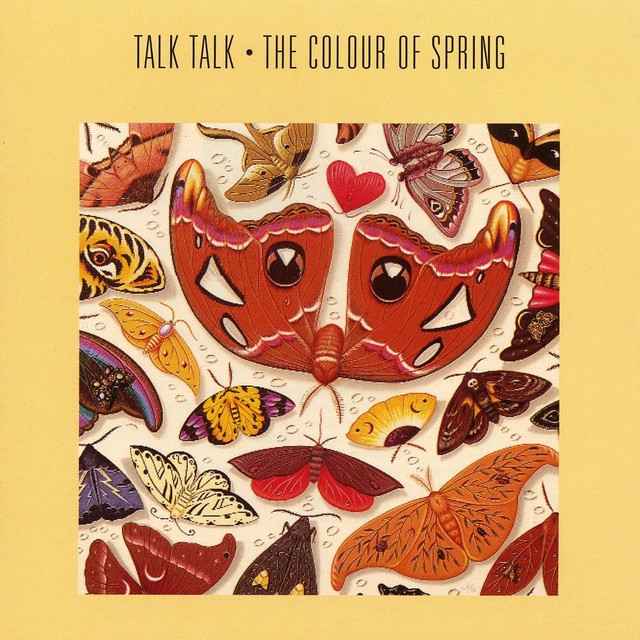
Album Summary
The Colour of Spring is the third studio album by English band Talk Talk, released on 17 February 1986. Written by Mark Hollis and producer Tim Friese-Greene, the album combines elements of jazz and art pop in an effort by Hollis to embrace more organic instrumentation and production values.Unlike previous Talk Talk albums, synthesizers are rarely featured on the album, being replaced by guitar, piano, and organ. The album went on to become Talk Talk's greatest commercial success, spawning the hit singles "Life's What You Make It" and "Living in Another World" and reaching the Top 20 in numerous countries (topping the Dutch charts), including the UK, where it reached No. 8 and stayed in the UK charts for 21 weeks. The Colour of Spring is commonly viewed as a bridge between Talk Talk's earlier, synthesized pop sound, and their later, more improvisation-based work. Despite the extensive use of synthesizers on the previous two albums, Hollis was vocal in his distaste for them, stating that they were used primarily for economic reasons and that “if they didn’t exist, I’d be delighted.” During the recording of the album, Hollis frequently listened to the music of composers such as Erik Satie, Claude Debussy, and Béla Bartók, with the latter being a particularly significant influence on the album. Like other Talk Talk albums, outside musicians were heavily utilized. Guests contributing to the album include Robbie McIntosh adding guitar, and Steve Winwood, who played organ on the hit "Living in Another World", alongside "Happiness is Easy" and "I Don't Believe in You".
 Read more on Wikipedia
Keywords from Reviews
Rating Over Time
Reviews
Hell yessssssss
Very dated, mid-80s soft synth pop sound, but I did always like the voice/vocals. Easy in small doses in the background but grows tiresome after a while due to lack of variation.
Spoiler every Talk Talk album is going to get 5 stars
Diese Platte hat mich positiv überrascht. Großartige Produktion.
A great example of the genius that was Mark Hollis. Wonderful intelligent pop music, only exceeded by its successor, the Spirit of Eden. 4.5
Pretty dope, and maybe my favorite album artwork thus far for this project
Glorious 80s pop with a shade of what's to come. Overshadowed by the legacy of the two perfect post-rock classics that the band would put out following this one (alienating most of the public in the process) but still a wonderous listen.
Eigentlich nicht schlecht, solide 3 Sterne. Fand das letzte Lied genial, daher Upgrade auf 4.
Angenehm für Hintergrund
Good listen, but more meh tracks than not.
Definitely a competently made album, but not very eventful or interesting. I got bored with it quickly.
I don’t like his voice
Dear God that was awful.
Talk Talk's third album The Colour of Spring is in a very awkward spot in their discography, it is just after their heavy Synthpop era and just before they dived head first into Free Jazz, so it serves as kind of a black sheep in their entire discography. I will say even though this album is quite the outcast from everything else they have and will make, it sure is pretty great from end to end and shows a huge boost in not just sound but quality for the group that they would continue for their next two LPs. I love how beautifully abstract this album is, the heavy focus on the instrumentals to help guide the listener is such a nice yet subtle touch to really immerse anyone who decides to spin this album. It's a very colorful arrangement of sounds, styles, and feelings all mushed together into one unforgettable Art Pop record. It's very hard to describe while also being very easy to digest at times, you simply just have to hear it to understand. Also if you have the chance, listen to it on vinyl I promise it will sound so much better.
Standouts Life's What You Make It Living in Another World
Lovely album.
Das ist erstaunlich lahm. Die beiden Alben danach gefallen mir deutlich besser. Und das davor auch.
Bin persönlich kein Fan der Band, aber deren Entwicklung ist super spannend. "Spirit Of Eden" finde ich überragend, das ist vermutlich aber nicht hier in der Liste.
the bad genre of 80s New Wave is the crooner synth bands like Talk Talk, Roxy Music, and Spandau Ballet......yuck....this one was tedious for me.
What the freak. Can it GET any more generic and elevator music than this? My goodness. This felt like the most uninspired going through the pop motions music I ever heard. This should be the exact example of just about the only music that SHOULDN'T be on this list. I'm just beyond confused listening to this and trying to understand why on earth it would be in here.
A pleasant listen nothing outstanding that would push to the four level
Little disappointed in this. Very one tone with no substance.
Life's What You Make It is smashing. April 5th sounds like the hold music when you are trying to speak to your utilities provider to have that frustrating conversation about why you are being charged so much. The rest are good, but nothing stands out.
It's this interesting transitional album between their synthpop phase and their genre-defining post rock records. If you like New Wave and later Pink Floyd-esque art rock this one is for you. 3.5⭐️
опрятный такой батя рок
it ain't no laughing stock but in this desperate shuffle of slop i'll take it!
Not a fan of this style of music at all
I really wasn't impressed by the first track. I found it quite uninteresting compared to the rest of the album, but luckily, the next track - 'I Don't Believe In You' - was likely the greatest on the album! The whole album was solid, it was very art-y, and despite feeling like a standard New Wave album from the '80s, I doubt I could compare it to any other albums at the time. By the end, I was ready for it to finish, but it felt surprisingly fresh for the first 5-6 tracks. I'm sure that if it was shortened, 'Time It's Time' would have been another contender for the greatest track, but sadly it runs on for a bit too long for my liking.
Never heard of this...wonder if it's good. It's not great but not completely horrible. It's a kind of weird mix of new wave/rock and soul, like a better version of The The. They do some mildly interesting stuff with the instruments, but not nearly as much as the reviews might lead you to believe. It's probably more interesting on repeat listens, but this first listen yields a mostly mediocre album that doesn't really do much for me.
7+ / 10
3 out of 5. Much higher 3 and better 80's album than yesterday's from Prefab Sprout.
Realizing how similar to Higgs from Everything Everything sounds to Mark Hollis. And the guy from Shearwater? Anyway, this was very good and i’d really like some more time with it and with Talk Talk in general. Some day!
6/10
i jsut don`t think it is that crazy
Gorgeous, somewhat melancholy, yet soothing.
It’s not stuck in the 80’s per say but it also doesn’t really sound of particular note either
ka' godt li'
Virkelig godt album, der desværre nemt kommer til glide lidt i baggrunden, hvis det ikke gives en del opmærksomhed. En lille 4'er 3.9
Fremragende album. Fantastisk stemme. Fængende atmosfære. Ikke sikker på, at den her genre kan gøres meget bedre end dette album. For det kan godt være, at de to efterfølgende albums er mere interessante rent kunstnerisk, men 'The Color of Spring' ligger sig et eller andet sted perfekt i midten, hvor der stadig er mere dynamisk og lettere tilgængeligt, men samtidig mere interessant og rocket end de to foregående albums (som jeg dog også virkelig godt kan lide - også selvom Hollis åbenbart ikke selv var meget for synth) Jeg kommer helt sikkert til at bruge mere tid det her album - og Talk Talk i det hele taget.
A bit too 80s for me.
I listened to this twice. The first listen nothing really stood out (perhaps because I was busy). On the second listen it came across as a very well structured and produced album with a few notable songs. I enjoyed the listen and am familiar with Talk Talk from the time. I think I would buy this record if i came across it second hand. Standout song was Living in Another World or Give it up. It is not a quite a 4, but very close 3.5 stars. It will get a 4 for the rating
It's ok, definately of its time and not one I'd rush to hear again. Perhaps it's a little too polished for my taste but overall it wasn't anything to get excited about. 2⭐ I just noticed it's 1986, loads of polishing trying to get on the Jazz vibe that was around at the time
Before Mark Hollis passed, I knew Talk Talk's hits. It's My Life, Such a Shame, Life's What You Make It, Talk Talk. And while these definitely stand out as some of the better new wave pop songs, I didn't expect much more to be gained by concerning myself with their oevre. Hollis' death changed that because a lot of obituaries pointed out how their path, which sounded intriguinh. How they'd gone from synth pop to something altogether different, less easy to grasp and ultimately elusive, just like Hollis himself, who drove Talk Talk into ever-more intense experimentation, dissolved them, took a 7-year hiatus, released a solo album in 1998 that drove minimalist experimentation even further - and then disappeared for the next 21 years until his death focusing on his family and riding Ducati motorbikes, making a single exception to pick up a songwriting award when No Doubt's cover of It's My Life went big. I'm always fascinated by creative people in the public eye who then end up retreating from public view completely as they apparently said what they had to say - especially in this case as the work really does mirror that same trajectory. So, this album... This is Talk Talk's biggest album, even though the previous one had bigger hits. And thats right and just, as it combines the remnants of the incredible catchiness they were capable of just like the spirit of intensity and experimentation, the will to not cave in to any expectation. What came after - Spirit of Eden, Laughing Stock, and Hollis' solo album - take you into quite different terrotiry altogether. Especially the latter are so incredibly dense and fragile and hard to escape that I can't bear listening to them too often. So with their debut being 2/5, the sophomore album a solid 4/5, this has to be a 5/5.
Pleasant listen but really have no reason to return. 2/5
Pleasant listen but really have no reason to return. 2/5
Bit to 80's, but ok. Love the singles
Una de las mutaciones artísticas más valientes y deslumbrantes de la música popular contemporánea que ha envejecido bien como un modelo insuperable de libertad creativa, elegancia compositiva y madurez sónica. En el plano de diseño formal, la producción de Tim Friese-Greene y Mark Hollis logra un entretejido acústico que da claridad absoluta a cada elemento, articulando pianos de cola, órganos Hammond, percusiones sutiles y vientos de madera con una pureza tímbrica y una espacialidad donde el silencio cobra un valor arquitectónico decisivo. La voz y el liderazgo de Mark Hollis imponen una autoridad superior desde el despojo y la vulnerabilidad, transmitiendo una fuerza y calidez que emanan autenticidad en cada inflexión y suspiro. Piezas esenciales como la inocencia agridulce de "Happiness Is Easy", el pulso vitalista e hipnótico de "Life's What You Make It", la devoción visceral de "Living in Another World" y la expansión pastoral de "Time It's Time" dan forma a un documento conmovedor, crudo y real que opera como un sutil llamado a la conciencia sobre la transitoriedad de la vida, las trampas del dogma y la necesidad urgente de autenticidad humana. Su arquitectura sonora, dotada de una ininterrumpida sensación de paz y fluidez, la convierte en una obra sumamente versátil para múltiples usos, destacando como un acompañamiento inspirador para el trabajo creativo, la conducción atenta o para sumergirse en una sosegada reflexión solitaria.
Det er sådan et album man er glad for dukker op på listen, jeg har gerne villet høre noget talk talk i 'lang tid'. Jeg synes det er fedt. 4 stjerner
Virkelig godt album, der desværre nemt kommer til glide lidt i baggrunden, hvis det ikke gives en del opmærksomhed. Den mindste 4'er muligt. 3.8
Very nice! Nothing really stood out but I liked it.
I was mostly disinterested and the last track grabbed me.
This is an album that one play doesn’t do it justice. I’m gonna revisit but for now it’s a ………
It is a boring mess
Enjoyed this more than many of this genre in the 80s with the synth pop type. Took a more interesting spin on that.
I liked it, but it got a bit repetitive by the end.
A bit disappointing actually.
Aight
Interessante como esse álbum soa ao mesmo tempo que similar a alguns discos da época, mas também tem um contraste muito grande também, uma vibe meio angelical por parte do vocalista, que é o ponto forte pra mim nisso tudo. Ele canta como se tivesse declamando algum verso poderoso, sofrendo a cada palavra.. isso me chamou muito a atenção. Uma vibe totalmente diferenciada.
Was fine, chill and lounge music esk
I have no idea why I "must hear" this record. It's generic and derivative. It's generic in that it sounds like pretty much every other radio-friendly pop record of its time. The vocals sound forced and too "swoony" in that constant falsetto radio-friendly voice and the music is by and large just boring repetitious standard electro-pop stuff that's been in constant rotation since the early 80's. There are a few moments where they add horns, organ or something else interesting, but they quickly revert to the radio electro-pop bass/synth thing. There's nothing BAD about it, but on the other side, there's nothing GOOD about it, either. I kind of eel like I just wasted 45 minutes of my life in the mundane. I'm kinda just happy it wasn't longer.
Pretty boring and mediocre, but not horrible.
Great 80s album. Time It's Time and Life's What You Make It are highlights. 4/5
This is a rare case of actually thinking this belongs on the list... without me caring for it too much. 01. Happiness Is Easy Goes on a bit too long. If it ended about 2 minutes earlier, I would've liked it more. 02. I Don't Believe In You Really love the chorus! I think this is an excellent song. Even if it's not my favorite. 03. Life's What You Make It It doesn't get more 80's than this. It's like this was made for the 80's, and no other time pediod. 04. April 5th I really love the chilling are eerie vocal delivery on this one! Could have done without the last minute, but that's alright. 05. Living In Another World Finally, a more up-tempo song! I enjoy this a lot, and don't mind the long run-time! 06. Give It Up Really forgettable. Wasn't bad, just didn't do anything for me. 07. Chameleon Day My favorite. It's just so haunting and eerie. Haven't heard another song like this in a while. 08. Time It's Time Is a fine closer. Didn't really do it for me as a song, however. I don't care for the lead vocalist at all here. I think a lot of the performances had TOO much effort put in, making it sound silly sometimes. Exceptions being April 5th and Chameleon Day. Overall, it's fine.
Going into today’s listen, I’ve always enjoyed Talk Talk, but I’m not sure I’ve ever actually sat down and listened to one of their albums all the way through. “It’s My Life” is such a great tune, and as someone who really enjoys new wave, I was looking forward to giving The Colour of Spring a proper listen. I really enjoyed this. It’s a beautiful sounding album, full of fantastic melodies and these slightly dream-like songs that just wash over you. It still has elements of the new wave sound I love, but there’s so much more going on musically. It feels more mature and adventurous without losing the melodies and hooks that make Talk Talk so good. “Happiness Is Easy” is a great tune and probably my favourite on the album, while “I Don’t Believe in You” is another brilliant song. The whole album flows really well and there wasn’t anything that I didn’t enjoy. Definitely an album I’ll come back to, and it’s made me want to listen to more Talk Talk properly rather than just the songs I already know. Favourite tracks: “Happiness Is Easy” and “I Don’t Believe in You”. Least favourite track: Nothing really. Everything was worth a listen. Album artwork: I love it. Really eye-catching and a very cool cover.
Seeing that these guys and Slint get categorized together as "defining post rock" and I'm very confused how they relate to each other at all. Shit is pretty crispy though
Why don't I know about this? Very reminiscent of those late, moody Roxy Music albums, I think.
I liked this.
this dudes voice I can't like
Delightful
Old chill guy, old wave shoegaze
I like it. It’s doesn’t have catchy songs like It’s my Life, but overall it’s just a good cohesive record
Immense.
Smart and sophisticated pop that deserves more of my time.
Ugh, stop with this. 2/5
Never got around listening to it. I was all for their later records but was also pleasantly surprised.
It's a nice album I guess, although I prefer their weirder stuff.
Maybe I'm either weird, too young to remember these guys, or both, but I know Talk Talk as the guys that made Laughing Stock and pioneered Post-Rock as a genre. My mom knows Talk Talk as the guys that made It's My Life and pioneered 80s Synthpop as a genre. Neither of us had heard of this album, though. Funny enough, it feels like a midpoint between the two. I can definitely hear how they got from Synthpop to Laughing Stock through this one. That being said, it's a midpoint in their discography as well, in more ways than being their third of five albums.
I was really happy to see Talk Talk on the list today, as Mark Hollis is one of my all-time favorite composers in pop/rock. At the same time, I was disappointed to see that this is the only album by them in the book. This is the start of what I call the "seasonal cycle" of albums: this one represents Spring, Spirit of Eden Summer, Laughing Stock Fall, and his self-titled album Winter. Whether Hollis would agree with that assessment is beyond me, but this album marked the beginning of some wonderful things before he fully bowed out of popular music, never to return. This album isn't what it appears to be. The colors on the cover suggest autumn, yet the music evokes warmer, brighter months. The band was known as a huge synth-pop hitmaker, yet there are barely any synths here. Hollis disliked synths and had only used them on previous recordings for economical reasons. He even said, "If they didn't exist, I'd be delighted." Hollis also showed the world what he'd rather be channeling: the dark, mysterious soundscapes of Debussy, Satie, and Bartok, among others. Who was doing anything like this in 1986?! These songs are rich in textured, lush analog sounds, with details that slowly accumulate over time: choirs, organs, psychedelic guitars, percussion, and unusual song structures. Listen to the chorus of "I Don't Believe in You" and the instrumental space between the vocals. Or listen to those notes in "Life's What You Make It" and how they guide an increasingly intricate arrangement. These are just a few examples of the brilliance of this album. Most notably, "Chameleon Day" introduces a new style of music that would soon define Talk Talk's sound. It's not quite jazz, classical, or rock. Post-rock was yet to be born, and Hollis was already there, pushing into something entirely new while still retaining memorable melodies. The following two albums would define everything I wish idiosyncratic, creative music could be. The fact that neither is included in the book is a true disgrace. It's not a perfect album by any means—it's still a little sloppy and disjointed as the band was finding this new sound—but it's a great starting point. Hollis was a genius who left his mark like very few composers willing to cross from rock and pop into something new and bold, much like Scott Walker. I'm disappointed that many reviewers aren't hearing what I am, but such is the subjectivity of music. I hear beauty. I hear nature. I hear awe. I hear something truly special and spiritual. A classic—and only the beginning of even more amazing things to come. I'm giving it a 5 out of respect for everything Hollis gave us to the world of music.
3.5 (45:41, 8 tracks, 3rd album, 1986) English, New Wave #380 Talk Talk (1981 – 1991) were Mark Hollis (vocals, guitar) , Lee Harris (drums), and Paul Webb (bass). The Colour of Spring is their only album in this project. The Colour of Spring written by Mark Hollis and producer Tim Friese-Greene, combines elements of jazz and art pop in an effort by Hollis to embrace more organic instrumentation and production values. Unlike previous Talk Talk albums, synthesizers are rarely featured on the album, being replaced by guitar, piano, and organ. The album went on to become Talk Talk's greatest commercial success, spawning the hit singles "Life's What You Make It" and "Living in Another World" and reaching the Top 20 in numerous countries (topping the Dutch charts), including the UK, where it reached No. 8 and stayed in the UK charts for 21 weeks. Viewed as a bridge between Talk Talk's earlier, synthesized pop sound (Party's Over, It's My Life) and their later, more improvisation-based pioneering post-rock masterpieces (Spirit of Eden, Laughing Stock). Despite the extensive use of synthesizers on the previous two albums, Hollis was vocal in his distaste for them, stating that they were used primarily for economic reasons and that “if they didn’t exist, I’d be delighted.” Like other Talk Talk albums, outside musicians were heavily utilized. Guests contributing to the album include Robbie McIntosh adding guitar, and Steve Winwood, who played organ on the hit "Living in Another World", alongside "Happiness is Easy" and "I Don't Believe in You". For Robert Dimery and music critics, it captures a rare moment in pop history: a mainstream band willingly destroying their own pop formula to build a complex, enduring work of art without losing their audience along the way. Hit singles "Life's What You Make It" and "Living in Another World". It did not quite match the sales of its predecessor in the United States and was their last album to enter the Billboard 200, reaching number 58. Life’s What You Make It is I believe my favorite Talk Talk song. All tracks are written by Mark Hollis and Tim Friese-Greene. 1. "Happiness Is Easy" (6:30) is a song that makes observations of wars and atrocities being committed and justified with the Christian faith. This song asserts that the atrocities that radical Christians commit in the name of Jesus Christ go against the supposed true meaning and purpose of loving one another, and that simply loving everyone would make happiness easy to achieve. Hollis touches on holy wars, expressing disgust at how leaders and institutions "justify their acts of war" while pretending to be pious ("They assemble, they pray"). Lines like "Take good care of what the priests say / 'After death it's so much fun' / Little sheep, don't let your feet stray" warn against blind obedience. The metaphor of the "little sheep" highlights how religious or political authorities treat innocent followers, promising rewards in the afterlife to control them in the present. In stark contrast to the guilt and violence propagated by dogmatic systems ("Guilt upon their shoulders"), the core message is that genuine happiness and love require no complex justification. Simple tenets—such as Jesus's message to love one another and be a friend—are pure, whereas organized systems corrupt them. While the refrain repeats that "happiness is easy," the song surrounds it with heavy themes of war, guilt, and deception. This irony suggests that while personal peace and love are fundamentally simple, humanity complicates them through dogma and conflict. 2. "I Don't Believe in You" (5:02) a somber reflection on losing trust, facing broken promises, and walking away from a failing relationship or a repetitive cycle of deceit. While not overtly religious following immediately after Happiness is Easy it draws an easy assumption of a dissatisfaction with organized religion. "Where do words begin / I'm trying to find the path ahead" realizes that the joy or innocence of the relationship is gone. They feel lost and are trying to figure out how to move forward when communication has broken down. "Promises so golden / Years have proved them wrong" speaks into the false promise time has exposed the emptiness of past assurances. What once felt precious and reliable is now recognized as false. The Endless Charade "Any way you say it / The charade goes on" continues to put on a false front or play a role. Despite pointing out the dysfunction, the partner's pride prevents them from seeing the truth. “I'm trying to leave some self-respect". The core motivation for the narrator's disbelief is survival and dignity. Stepping away is the final attempt to salvage their own worth rather than getting dragged down by the ongoing decline. Talk Talk also released a song title I believe in You” 3. "Life's What You Make It" (4:29) was the first single and a wide success, becoming one of their most well known songs. The song’s basic message is to work towards a better future for yourself by not having your mind focused on regrets and the past. Life’s what you make it in the present, after all. A music video was made to promote the track. Similar to their other most well known song, “It’s My Life”, it features footage of the band performing in a forest, with various bugs and wildlife. The song was one of the last created for The Colour of Spring, as the band’s management was concerned about the lack of an obvious lead single for the album at that time. The title sounds like a standard cliché, late frontman Mark Hollis and co-writer Tim Friese-Greene approached the phrase with deep empathy and urgency. According to Hollis, the track was written directly in response to seeing people around him succumb to despair and surrender their agency to circumstances. "Yesterday's faded / Nothing can change it / Life's what you make it"The song opens by acknowledging that the past is entirely out of our control. Mourning what has already happened is futile. Instead of letting past trauma or failures dictate the present, the lyrics remind us that the current moment is still moldable. "Baby, life's what you make it / Celebrate it / Anticipate it / Yesterday's faded" The repetition of "celebrate it" acts as a secular prayer or a mantra. Even when things are bleak, Hollis urges the listener to actively seek joy and look forward to the future ("anticipate it") rather than waiting for circumstances to magically improve. "If you can't see it / You can't believe it / ...Everything's given / Don't be driven / By what's made you blind" Often, people become "blinded" by their own negative experiences, bad luck, or toxic environments. The song argues that life gives us a massive canvas ("everything's given"), but we have to actively choose not to let our past wounds or current hardships distort our vision. The meaning of the song is deeply reinforced by its sonic structure and imagery. Built around a relentless, hypnotic piano hook and a driving drum beat, the music itself feels like a physical push forward. It mirrors the message of carrying on and refusing to remain stagnant. The track's famous music video features the band performing at night in a woodland setting surrounded by active wildlife. Hollis noted that the nature theme was intentional, symbolizing the raw, cyclical, and unfiltered essence of living—nature simply keeps moving forward, and so must we. "Life's What You Make It" isn't a toxic positivity anthem. It is a gritty, compassionate reminder that while we cannot control what happens to us, we retain the ultimate power over how we react and build our lives moving forward. 4. "April 5th" (5:51) Sonically, this song is probably the clearest glimpse into their late era jazz rock, post-rock sound found on Spirit of Eden and Laughing Stock, with a darker and slower atmosphere that would be found on those later albums. Lyrically, the song could be read as being about spring, but the song is actually about Hollis' wife, whose birthday is on April 5th. A beautiful, atmospheric song that serves a dual purpose: it is a literal celebration of the arrival of spring and a deeply personal tribute to Mark Hollis's wife famous among music historians as a foundational blueprint for post-rock and ambient pop, relying on vast open spaces, quiet woodwinds, and minimal instrumentation. The song acts as a tender love letter to Hollis wife (her birthday) while weaving her existence into the natural cycle of the earth. Beyond the personal connection, Hollis and co-writer Tim Friese-Greene picked April 5th as the symbolic tipping point where winter officially surrenders to spring. "Here she comes / Silent in her sound / Here she comes / Fresh upon the ground" — Spring is personified as a woman gently stepping onto the barren, frozen winter earth to bring it back to life. "Come gentle spring, come at winter's end / Gone is the pallor from a promise that's nature's gift" The "pallor" (the pale, lifeless color of winter) is erased by nature's cyclical promise of renewal. This track holds a special place in Talk Talk’s discography because its main refrain—"Waiting for the colour of spring / Let me breathe the colour of spring"—is where the entire album gets its name. It encapsulates the overarching theme of the record: transitioning away from the cold, synthetic pop of the early '80s and breathing in a warmer, organic, and more natural musical landscape. This was the last song on side A. 5. "Living in Another World" (6:58) Mark Hollis stated that the lyrics to this song are inspired by French philosopher Jean-Paul Sartre’s studies. Sartre’s interests included but weren’t limited to existentialism, consciousness, bad faith and nothingness. " Considered a brilliant, emotionally charged song about fundamental miscommunication, irreconcilable differences, and the painful breakdown of a relationship. The track captures the realization that two people can share the same physical space while experiencing completely separate, incompatible realities. "Did I see tenderness where you saw Hell? / Did I see angels in the hand I held?" These lines expose the core tragedy of the song. The narrator looks back at the same shared memories and realizes that what he perceived as warmth, comfort, and love ("tenderness" and "angels"), the other person experienced as absolute misery ("Hell"). Their perceptions of the exact same relationship are entirely polarized. "Help me find a way from this maze / I'm living in another world to you / And I can't help myself" The relationship is compared to a maze—confusing, trapping, and exhausting. The phrase "living in another world to you" highlights the psychological distance between them. They are so fundamentally disconnected that true understanding has become impossible. "Better parted / I see people crying / Truth gets harder / There's no sense in lying""Speech gets harder / There's no sense in writing". As the song progresses, the narrator accepts that trying to fix the rift is futile. Communication has decayed to the point where speaking or writing letters changes nothing. The only logical and healthy resolution left is to separate ("better parted"). The meaning of the song is intensely amplified by its musical arrangement. Musically, it is driven by a churning organ, a propulsive bassline, and a famously frantic harmonica solo. Musicians and critics often describe the track as a sonic translation of an M.C. Escher staircase. The instruments swirl and ascend continuously, creating a tense, cyclical, and claustrophobic atmosphere. This perfectly mirrors the lyrical frustration of running around in circles within a broken relationship, unable to find common ground. 6. "Give It Up" (5:17) A track centered on moral compromise, greed, and the urgent need for a clean break or ethical reset. The song matches the sonic grandeur of the rest of the album while delivering one of Mark Hollis’s most urgent, direct pleas for accountability. "From the place that I stand / To the land that is openly free / Watching rivers run black / By the trees that are vacant to greed". The opening lines paint a grim picture of corruption and environmental or social decay. The "black rivers" and "trees vacant to greed" suggest a world being actively poisoned by human selfishness and material consumption. Even in a land that claims to be "openly free," underlying greed is taking over. "Gotta give it up / Gotta get a second chance / And the joke's just started" The central hook, "Gotta give it up," is an ultimatum. It demands that either the individual or society abandon destructive behaviors, fruitless ideas, or unethical lifestyles before it is too late. The phrase "and the joke's just started" adds a cynical edge, hinting that if things don't change, the tragic absurdity of the situation will only get worse. "Tell me why I'm so wrong / Where does luck come from / When you've never been without?" "Where does love come from / If you've sold your reasoning out?" Hollis challenges those who live comfortably at the expense of others. People who have "never been without" often credit their own merit rather than luck, blinding themselves to the struggles of others. Furthermore, he argues that when a person compromises their morals for greed ("sold your reasoning out"), they lose the capacity for genuine love and understanding. Because Mark Hollis favored impressionistic lyrics, "Give It Up" has sparked a couple of specific interpretations among fans and critics: The Environmental/Ethical Interpretation: Given the vivid visual imagery of poisoned nature ("rivers run black") and the band members' well-known dedication to vegetarianism, some music critics view the song as a passionate plea against industrial exploitation and animal cruelty. The Personal/Spiritual Reset: In a broader sense, the track reads as a nightmare-to-awakening journey. Hollis sings about navigating a "nightmare so real", suggesting that hitting rock bottom is the only way to realize you must "give up" your old ego to receive a second chance at life. 7. "Chameleon Day" (3:20) This song features a very limited instrumentation and a lot of space, very similar to their later work – particularly Myrrhman – with which it shares the theme of feeling broken and wanting to end one’s life. When listening to the full album in sequence, it is followed with Time It’s Time, which in massive contrast is full of the desire to live and love. This contrast is something that the band returns to on Laughing Stock, only stretched out over the whole album. " A haunting, minimalist track that explores themes of mental exhaustion, severe anxiety, and the desperate search for an emotional hiding place. It is widely considered by music critics to be the specific moment the band abandoned traditional pop and invented post-rock. Stripping away all drums, bass, and rhythm, the song relies strictly on vast silence, a quiet woodwind instrument called a variophon, and Mark Hollis’s raw, trembling vocals. "Only of the night / And it's darkness am I calling / Only of the night / My relief in it's falling" The song opens with the narrator retreating into the night. In the daytime, you are visible, exposed, and expected to perform or interact. The darkness of night provides a protective blanket - a "relief"—where the narrator no longer has to be perceived by the outside world. "Breathe on me, eclipse my mind / It's in some kind of disarray / Killing time, I cradle fire / (Chameleon days)" Hollis sings of a mind that is short-circuiting or in absolute "disarray". He begs for something to "eclipse" his thoughts—to completely black them out so he can find peace. The phrase "cradle fire" is a vivid metaphor for holding onto something intensely dangerous, agonizing, or volatile (like a panic attack or deep depression) while trying to remain completely still. A chameleon survives by blending into its environment to avoid predators. A "Chameleon Day" represents a day spent masking your true self just to survive. It is the exhausting process of changing your colors, faking your emotions, and blending into the background because your inner world is too fragile to face the public. From a musical standpoint, "Chameleon Day" is one of the most critical tracks in Talk Talk's history. Alongside "April 5th", it is one of only two songs on the album where the other core members of the band do not play. Hollis and producer Tim Friese-Greene recorded it using "negative space"—treating silence as an actual instrument. The unpredictable, sudden bursts of Hollis's voice exploding out of absolute quiet perfectly mirror the unstable, fragile nature of an emotional breakdown. It laid the exact groundwork for their final masterworks, Spirit of Eden and Laughing Stock. 8. "Time It's Time" (8:14) A fitting conclusion to an album titled ‘The Colour of Spring’, this song speaks of renewal as well as our choice to identify with pain or blossom into love, to ‘live for living’. The sweeping, eight-minute closing track. It serves as a monumental anthem of emotional recovery, survival, and moving forward after profound trauma or heartbreak. While songs like "Chameleon Day" detail the absolute rock-bottom of mental distress, "Time It's Time" is the triumphant dawn that follows the dark night. It is widely celebrated by fans and critics as an acoustic, comforting balm for frayed nerves. "As bad as bad becomes / It's not a part of you" This is the emotional thesis of the entire song. Mark Hollis delivers a powerful reminder that whatever horrific things have happened to you—or whatever mistakes you have made—they are merely events. Your suffering, your past, and your grief do not define who you are at your core. "Time it's time to live / Time it's time to live for living / Now that it's all over" The repetition of this line acts as a strict, urgent command to the soul. When a catastrophic period of life finally ends ("now that it's all over"), humans often stay trapped in a state of shock or emotional limbo. The song implores the listener to stop merely surviving or hiding, and to actively start living again. "And love is only sleeping / Wrapped in neglect... / Contempt is ever breeding / Trapped in itself" Hollis notes that when we are hurt, we often protect ourselves with "contempt" and bitterness. However, bitterness is a trap. The capacity for love hasn't been completely destroyed inside the listener; it is simply dormant ("sleeping") because it has been neglected during the trauma. The track's structure perfectly mirrors its meaning. It begins with a sparse, melancholic rhythm and heavy, brooding woodwinds. However, as the realization of survival sets in, the song completely opens up: A soaring children’s choir enters, singing wordless harmonies that feel deeply communal and comforting. The instrumentation builds into a warm, sun-drenched cascade of acoustic guitars, bass, and percussion. The final minutes of the song strip away the lyrics entirely, letting the gorgeous orchestration wash over the listener. It sonically represents the concept of step-by-step renewal—allowing the emotional "winter" to finally dissolve so you can step directly into the "colour of spring."
Pretty sad and whiny
I fear this was a mediocre version of what tears for fears and Genesis do incredibly well. Can’t believe this is the band that every /mu core person is in love with. Maybe just not the right album? 2.5
Beautiful 80s rock. I need to listen more. 3.5/5
Fabulous, mix of pop and something more substantial, a steady foothill album
Pre listen thoughts: I love the cover. Also is this the album with “It’s My Life” on it? (Turns out not) Happyness is easy - omg this song is so long. Also, I hate songs with children’s choirs. Not starting well Very Chris Isaak kind of voice I Dont Believe in You and Life’s What You make it - much better, though more on the longer side in terms of length April 5th - OMG so slow Living in Another World - finally this woke me up a little bit Give it up was the most unremarkable song Chameleon Day - so many silences! I thought the record had paused! Time it’s time was so 80s Overall thoughts: an album very of its time. The way he sang made it incredibly hard to make out what he was saying.
2,5
Perhaps Talk Talk benefited from my unfamiliarity with their music. While I found this album a terrific piece of 1980s British pop, I have to think hard about what makes The Colour of Spring fundamentally different from similar groups of the era like Tears for Fears or Simply Red that I have disparaged for decades. Wikipedia wrote that Talk Talk’s later work led into the post-rock style of the 1990s. I categorize this album as British post-soul. The original American soul singers led to Mick, Van, Dusty and Rod doing their best version of them, where clearly Black inflections appeared. Talk Talk’s lead singer Mark Hollis clearly aims for soul music, although without the phrasing of Black singers. I hear no road houses or chitlin circuit, and the only church influence would be the Anglican boys choir. Without the more familiar R&B elements, why does this record succeed? What makes The Colour of Spring better than Tears for Fears? Timing may help. Two of my listens came while sitting alone in the morning. Colour of Spring’s more pensive qualities had a chance to stand out far more than when I played the record during a cooking session. Tears for Fears got overplayed to such a degree that I reach for the dial while this sounded fresh. However, less from Talk Talk outshined the more from Tears for Fears. Hollis never fully emotes as he keeps his voice in a narrow range and never apes the qualities of Black singers. The reserved nature adds to the songs’ explorations of relationships. This is a guy stirring his coffee (maybe tea) in a cafe after the relationship has ended or hangs in the balance. He examines what has occurred without the startling revelations that would lead to musical explosions. A very English approach to soul. The music takes the same path as the synths and electronic drums pull down screen on his emotions. A choir appears on a couple of tracks, including kids on the opening song “Happiness Is Easy.” That is about as “excessive” as Talk Talk gets on this album. Tears for Fears went bigger in their arrangements and simply their volume to make for more dramatic music. I will file this one away. Listening in the future will possibly answer the questions posed in this review.
This feels fresh even 40 years after its release even though I never heard it, the synth scene of the 80s sure has its hidden gems! Nevertheless, I have to say that I like the sound and the ambition of the album more than the album itself, the songs are a bit too weak, compared to their contemporary rivalrys such as Genesis, Rem, Yazoo etc. this falls flat.
didnt finish, didnt like the vocals
Talk Talk never put out a bad album.
I may disagree with Hollis and feel that synthesizers are not purely economic. But this is still a solid album, and the production is great!
1001 works in mysterious ways As I was looking into giving this album a look after giving "Spirit of Eden" from Talk Talk time, poof here it is The pop roots are still here before the slow and methodical fully takes over in the previously mentioned "Spirit of Eden" and "Laughing Stock" which are great in their own right, but "Colour of Spring" has an additional shot in the arm that to me makes it a more engaging listening
Was quite prepared to give this a "3". But a relaxed Sunday morning in almost spring. Sun's out, lovely day. Music suited this and was genuinely interesting. I have an Incubus record to listen to also but doesn't quite suit the mood.
This album was ok, nothing particularly spectacular about it. It just sounds like an eighty's new wave album. Compared to some of their peers, talk talk doesn't hit the hights of those others but they still have something to say and contribute to the genre.
Yeah, no. I'm sure this is a beloved album, but it was too repetitive musically and the monotone singing with the thick reverb was not good. Wasn't bad enough to want to turn it off or never hear again, but close. 1.5 stars.
Altogether pleasant but I genuinely don’t remember anything about it from yesterday.
I really liked the bass piano and drum groove in Life's What You Make It. That was about it for me though, nothing else really stood out.
It's fine, but after the album ended the autoplay queue was a noticeable step up.
hmmm
The singer's voice both grew on me and was grating. Overall this is well done and does not overstay its welcome.
Happiness Is Easy 3.3 I Don't Believe in You 3.1 Life's What You Make It 3 April 5th 3 Living in Another World 3.2 Give It Up 3.3 Chameleon Day 2.9 Time It's Time 3.5 Score: 3.1625