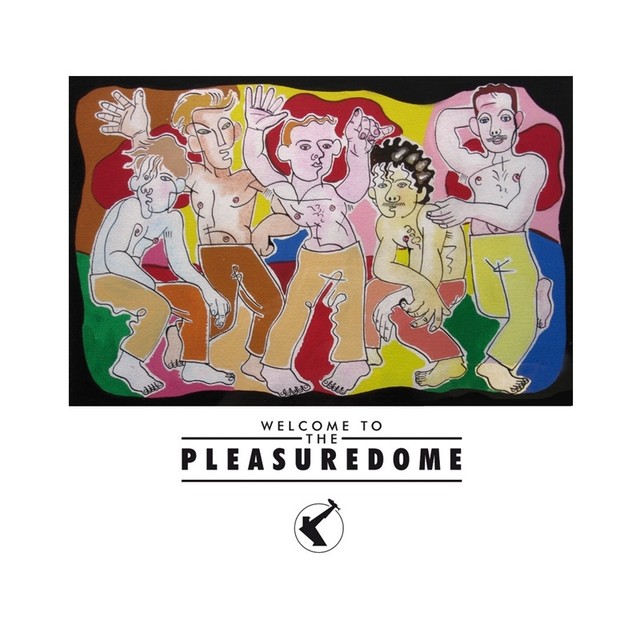
Album Summary
Welcome to the Pleasuredome is the debut studio album by English synth-pop band Frankie Goes to Hollywood, first released on 29 October 1984 by ZTT Records. Originally issued as a vinyl double album, it was assured of a UK chart entry at number one due to reported advance sales of over one million. It actually sold around a quarter of a million copies in its first week. The album was also a top-10 seller internationally in countries such as Switzerland, Sweden, Australia and New Zealand. While commercially successful, the album also drew criticism for containing new versions of all of the songs from the group's (already much-remixed) singles from the same year ("Relax" and "Two Tribes", plus B-side "War"), as well as a surfeit of cover versions in lieu of much new original material. It was later revealed that Trevor Horn's production dominated the record so thoroughly that the band's own instrumental performances were often replaced by session musicians or Horn himself. Frankie's second album, Liverpool, actively featured the full band. However, the album's evergreen ballad "The Power of Love" subsequently provided the group with their third consecutive UK number one single. To celebrate the album's 30th anniversary, in October 2014, ZTT through Union Square Music released a limited edition (2,000 copies only) box set entitled Inside the Pleasuredome, available exclusively from the website pledgemusic.com. The box set contains rarities on 10" vinyl, as well as a book, a DVD, a cassette (featuring 13 mixes of "Relax" and its B-side "One September Monday") as well as a new 2014 remastered version of Welcome to the Pleasuredome on 180g vinyl.
 Read more on Wikipedia
Keywords from Reviews
Rating Over Time
Reviews
Weird, contains at least one surprising cover (Springsteen's 'Born to Run'). I haven't had time to do any reading about the context of this record but, absent any knowledge of the landscape it roamed in 1984, I can only say it's hard to peg a genre. The first half to two thirds are propulsive but it drags in the back stretch. Does not defy my 'don't make double albums' rule. It's a great debut album stretched thin over two discs. Should be a 4/5 but the ramling close gets it to 3/5,
*1984. English synth-pop. *Relax (go to it) is the only song I know - and candidly I had no idea who sang it before this. *I was expecting something a little more satirical or silly from these guys? I guess I don't know much about them, but I kind of figured they were a fake/parody band like the Oneders or Spinal Tap? *Several covers amidst original stuff (including Born to Run and War, for some reason). *This was way more enjoyable than I expected - a perfectly fun listen. I still feel like I'm missing some sort of joke though. RATING - 6.5/10
I felt like I was being held hostage by this album.
Almost offensively 80s. Relax might be a “must hear” single but this is NOT an essential album.
As far as 80s synth-pop is concerned, I quite enjoyed this. I have to say, some of their choices of covers sort of perplex me -- I mean, why are we doing Springsteen? Without any significantly new or interesting perspective? Oh well. This being a double album also rubs me the wrong way, and generally speaking it drops off a cliff on disc 2. But maaaaaaan, "Relax" is a great song. And there are a lot of other fun moments. So 3 it gets. Fave tracks: - Welcome To The Pleasuredome - Relax (Come Fighting) - War - Two Tribes - San Jose (The Way) - Black Night White Light - The Only Star In Heaven
not bad - some memories of the 80s, though I wasn't into this. Bit samey after a couple of tracks though
Este es uno de los discos más destacados de synth-pop y dance-pop, y de los más influyentes de la década de los 80. A nivel comercial fue impulsado por la polémica del tema y el vídeo de "Relax", que llegó a ser prohibido en la BBC cuando el Reino Unido se encontraba regido por la ola ultraconservadora de Margareth Thatcher. En cuanto al sonido, destaca el muro electrónico creado a través de una inmensa densidad instrumental, con capas y efectos de sonido que se superponen, abundantes coros operísticos y texturas sonoras de gran dramatismo. Es difícil destacar canciones en un álbum tan completo, pero me gustan epecialmente "Welcome to the Pleasurdome", tema que da título al disco con un aire épico de más de 13 minutos e inspirado en un poema romántico de finales del siglo XVIII escrito por Samuel Taylor en el que un emperador mongol ordena la construcción de un "palacio del placer" en Xanadú; la ya mencionada "Relax", un himno hedonista y muy bailable cargado de energía sexual a lomos de sintetizadores punzantes y un bajo magnético; y la magnífica balada espiritual y existencialista sobre el amor como única fuerza salvadora, "The Power of Love", con la que se cierra el primero de los dos discos que componen el álbum. También quisiera destacar el sólido cover de "Born to Run", la canción de Springsteen, y la extraordinaria versión del clásico de la Motown, "War", popularizado por Ediw Starr en los 70 como un himno de protesta contra la guerra de Vietnam. Aquí Frankie Goes to Hollywood lo traslada al ambiente de miedo por un posible holocausto nuclear en plena guerra fría y lo utiliza como un brutal contraste entre el placer (el palacio del placer) y la destrucción total. Mientras la versión de los 70 era una manifestación pacifista, aquí "War" se convierte en una pesadilla tecnológica de los 80.
TL;DR: Brilliantly played and produced, provocative, maximalist pop that covers a lot of ground. The highs are high and the lows are few and far between. BEFORE: Obviously I know the singles, and I love Relax and Two Tribes. Never listened to the whole album. AFTER: Even loving the songs I knew from this, it really took me by surprise. I have a soft spot for adventurous, androgynous 80s music and this is a fine example: maximalist pop that takes a lot of big swings and almost always connects. HIGHLIGHTS: Welcome To The Pleasuredome is 13 minutes of funky, danceable excess with a killer bassline. Relax is Relax. It's one of the greatest pop songs of the 80s or ever. Absolutely massive. The "cover" of War is almost unrecognisable until nearly 5 minutes in, recasting it as dance-pop with a voice-over from Chris Barrie (Rimmer!) as Ronald Reagan. Two Tribes is an anti-war anthem with massive hooks delivered at breakneck speed. Wish (The Lads Were Here) and Krisco Kisses are great, high energy an slightly unhinged originals. The Ballad of 32 almost sounds like a cut from A Momentary Lapse of Reason. Black Night White Light and The Only Star In Heaven are pitched somewhere between dance and art-pop and holds its own with the singles while being significantly weirder. Trevor Horn's production is perfect for this music - the arrangements sound powerful but with every detail crystal clear. Holly Johnson's powerful vocals and the incredible basslines also really elevate these songs. The Power of Love is a majestic, dramatic ballad. LOWLIGHTS: The trio of covers at the start of the second half are fine, but a little underwhelming after the madness of the first half. The cover of Born To Run, while faithful, is a little too clean and misses Springsteen's gritty tone. The others are better but inessential. VERDICT: The few low points don't really matter when the highs are so high. 5 stars.
There are albums that document their times, and there are albums that seem to have swallowed their times whole. *Welcome to the Pleasuredome* is one of the latter. I'm not entirely sure whether I've been listening to a double album or excavating a time capsule from one of the most extraordinary moments in British popular culture. It's an almost preposterous combination of musical ambition, commercial opportunism, sexual provocation, political theatre and technological extravagance. Indeed, if someone had invented the story of Frankie Goes to Hollywood as a piece of fiction about the British music industry in 1984, I might have rejected it as implausible. I remember the phenomenon developing. My friend Paul bought *Relax* upon its release in October 1983, and I remember looking at it and thinking, “Well, that's a sleeve.” It was already an object designed to attract attention, but the national scandal was still some distance away. What followed was a remarkable process of accumulation: successive remixes, promotional provocations, television exposure, rumours, outrage and, eventually, Mike Read's celebrated intervention on Radio 1. Contrary to the simplified version of events, the record was already becoming a substantial hit before the BBC controversy. What ZTT understood was how to keep people talking long enough for a record to become something larger than itself. By the time *Two Tribes* arrived, a new Frankie release felt less like a record entering the charts than a national event being announced. The political background matters enormously. Thatcher had secured her second election victory in June 1983, emboldened by the Falklands War, and the official celebration of enterprise was accompanied by an increasingly assertive social conservatism. Here, almost perfectly positioned in the cracks between those attitudes, was a band fronted by two openly gay men who embraced the commercial possibilities of the period while enthusiastically provoking the very people who had foisted its enterprise culture upon us. Frankie were demonstrating precisely the ambition, entrepreneurial ingenuity and appetite for profit that the prevailing economic philosophy celebrated, but their unapologetic sexuality was deeply uncomfortable for some of its moral guardians. There is an important distinction here. Frankie weren't necessarily *expressing* outrage. They were *causing* it. Indeed, one of the most surprising things about listening to this album in its entirety is how remarkably good-natured the band sound. Their natural disposition seems to have been mischievous provocation rather than anger or confrontation. ZTT recognised the opportunity and exploited the resulting publicity with extraordinary ingenuity. Moral disapproval became another commodity, another means of selling the thing being disapproved of. It's a particularly revealing contradiction in the culture of the time, although I wouldn't mistake the band's cheerful provocations for a coherent political programme. Then there's the music, and here things become considerably more complicated. My initial reaction to Trevor Horn's production was almost one of disbelief. Good Lord, was the Fairlight in demonstration mode? The sound is astonishingly immaculate, every instrumental element occupying its allotted space, every arrangement constructed with a precision that approaches the inhuman. There is an unnerving lack of friction. Instruments don't seem to interfere with one another, there is little suggestion of musicians negotiating their way through a performance, and the entire enterprise can feel as though the human presence has been meticulously engineered out of it. There's no ghost in the machine. That was substantially my objection to this kind of production in 1984. I'd grown up valuing the irregularities of musicians making music together, the little accidents and moments of conflict that give recordings their personalities. Horn's approach seemed determined to eliminate all of them. Forty-two years later, I can recognise the extraordinary achievement without entirely abandoning the criticism. The perfection still unnerves me, but I find myself admiring it far more readily. Crucially, the absence of friction does not mean an absence of tension. Horn can construct suspense, excitement and release with almost frightening effectiveness. His productions might not sound like musicians playing together, but they certainly know how to move a listener. The first side is a remarkable demonstration of that ability. Instead of immediately producing the hits everyone has come to hear, the album practically dares its audience to endure an enormously extended overture. *Welcome to the Pleasuredome* is nearly sixteen minutes of apparently endless permutations of remix, a relatively slight compositional idea elaborated through extraordinary changes of texture, rhythmic emphasis and sonic decoration. It's grandiose to the point of ridiculousness, and more of a spectacle than a song. In effect, Horn has made the twelve-inch remix the original artwork, and then thrown every possible variation into the same enormous construction. Yet it held my attention throughout. This is important, because it would be easy to describe the exercise as self-indulgent and leave it there. The material itself is not especially substantial, but its treatment is endlessly inventive. The piece establishes a world, a scale and an attitude before the album delivers what everyone was waiting for. Side F is an elaborate exercise in anticipation. Side G is the payoff. And what a payoff. *Relax*, *War* and *Two Tribes* arrive in succession, although the middle recording demonstrates how peculiar this album's priorities can be. Edwin Starr's original *War* was a confrontational performance in which the arrangement repeatedly emphasised the vocalist's outrage. Horn's version sacrifices some of that argumentative force to the continuation of the groove. The point is to keep the feet moving. It's an extravagantly produced recording which, sandwiched between two enormous singles, manages to feel almost like an interlude. *Two Tribes*, on the other hand, remains my candidate for ZTT's masterpiece. Here the combination of obsessive production, rhythmic propulsion, orchestral aggression and theatrical absurdity achieves something genuinely extraordinary. The recording transforms the prospect of nuclear annihilation into an irresistible physical experience. Its precision feels appropriate to the subject, the whole arrangement suggesting immense technological forces accelerating towards catastrophe. And then, having constructed this monument to geopolitical terror, ZTT punctures the pomposity with an orchestral flourish and an impersonation of the future King discoursing on orgasms. It's difficult to know whether to applaud the audacity or ask what on earth everybody thought they were doing. But one of the most productive discoveries of this listening was that I had initially underestimated Frankie's own contribution to the enterprise. The apparent absence of a band from the recordings had encouraged me to attribute rather too much authorship to Horn. Yet *Relax* existed in a recognisable form before his intervention, and the band's own compositions repeatedly demonstrate a remarkably consistent musical language. They don't usually write songs in the conventional sense. They construct grooves over which Holly Johnson delivers gnomic pronouncements: commands, slogans, suggestive fragments and enigmatic declarations that often seem to promise more meaning than they actually disclose. These are less conventional songs than *happenings of varying impact*. Their musical development resides in the rhythmic and sonic events occurring around the vocal rather than in an evolving melody or lyrical argument. This is a useful description, not automatically a criticism. It's an entirely legitimate way of constructing music, with precedents in funk, disco and electronic experimentation. But it does raise a difficult question about what separates a substantial Frankie composition from an agreeable piece of filler. In *Relax* and *Two Tribes*, the method generates enormous excitement. Elsewhere, it can produce little more than pleasantly sustained motion. The second disc makes the distinction particularly apparent. Its first side is an extraordinary excursion through musical influences, beginning with Gerry and the Pacemakers, which amused me because I'd once described Frankie as the Gerry and the Pacemakers of the eighties. Three consecutive number-one singles were an impressive achievement for both groups, but hardly a guarantee of a substantial career. The version of *Born to Run* is an epic exercise in overkill, which is quite an achievement considering the extravagance of Springsteen's original. Curiously, it also begins to sound as though a band is playing together. I don't mean that the recording provides evidence of a live ensemble; that would require knowledge of the actual sessions. Rather, the arrangement presents something recognisably band-shaped, with the impression of instrumental interaction and a degree of apparent untidiness. Whether that impression is genuine or meticulously manufactured is almost irrelevant. It's another demonstration of how effectively a producer can determine the character of a recording. The excursion into Bacharach is stranger still. *San Jose (The Way)* sounds like someone has left Radio 2 playing in the background and it's suddenly become foregrounded. It's curiously cabaret-like, almost immaculately empty, with slightly stuttering synthetic strings and a final major-seventh chord that seems determined to announce its Bacharach credentials. There is something wonderfully cheeky about foisting this piece of respectable parental easy listening upon the audience for one of 1984's most fashionable and provocative pop acts. And then consider the lyrical subtext. Frankie Goes to Hollywood perform a song about someone who went to Hollywood and discovered that the dream was hollow. With Paul Morley involved, I find it exceedingly difficult to believe that nobody noticed the joke. Perhaps the entire arrangement is an elaborate exercise in musical pastiche. It doesn't necessarily make the result more affecting, but it certainly makes the choice more interesting. The rest of this side offers glimpses of the band beneath the spectacle. *Wish (The Lads Were Here)* returns to the characteristic formula of declarations over a beat, but the result is amiably vacuous. *The Ballad of 32* begins with a ridiculous little comic sketch before settling into a slower passage which again gives the impression of actual instrumental performance. The increasingly relaxed atmosphere is a surprising contrast with the near-impossible precision of the album's opening. This is a record capable of changing its musical personality almost at will, although not every change produces something worth remembering. The final side brings the limitations of the material into sharper focus. *Krisco Kisses* has genuine heft, a substantial groove and an agreeable vulgarity that make it considerably more exciting than some of the preceding compositions. *Black Night White Light* feels as though a conventional song might be about to emerge, but it never quite does. It comes, it goes, and it's perfectly serviceable. *The Only Star in Heaven* is similarly agreeable, a piece of good-natured funk without much lasting distinction. And this leads to a slightly awkward conclusion. For all their provocation, all their extraordinary cultural significance and all the technological magnificence lavished upon them, Frankie themselves are not consistently the most exciting of bands. Once the scandal and the spectacle are removed, quite a lot of their music is simply okay. Not objectionable, not particularly boring, just amiable. Then *The Power of Love* arrives to complicate matters. It's probably the nearest the album comes to a conventional verse-and-chorus composition, with an identifiable emotional proposition, substantial melodic development and a recognisable dramatic progression. Yet it remains extravagantly grandiose, faintly ridiculous and almost operatic in its sincerity. In a curious way, it distils the entire album into one recording. Here, at last, is a composition substantial enough to support the full weight of Horn's orchestral ambitions. Unfortunately, I cannot listen to it without being reminded of Frank Sidebottom's magnificent *Popular Medley*, which compresses an assortment of enormous eighties hits into a few minutes of beautifully organised musical catastrophe. Chris Sievey had the wonderful ability to reduce the grandest pop sentiment to the peculiar domestic geography of Frank's world. Nik Kershaw's romantic dissatisfaction becomes a proposal about living in somebody else's house, even if it is across the road. It is an entirely different kind of artifice from Horn's immaculate arrangements, and no less carefully conceived. The contrast is delightful: one artist spends a fortune eliminating every trace of musical awkwardness, while another makes awkwardness the organising principle of his work. The album then ends with *...Bang*, an absurd little coda which sounds as though somebody has pressed play on the Fairlight and run away. After all that obsessive control, the machinery seems to have been left operating unattended. I can think of few more appropriate endings. What surprised me was how readily this album also returned me to the world in which it appeared. The little sketch about signing on brought back memories of the extraordinary creative fertility of Grantham in the early eighties. There was almost no musical infrastructure, but there were people everywhere making music, inventing identities, forming bands and pursuing wildly improbable ambitions. The availability of time to unemployed young people was not an uncomplicated blessing, and I wouldn't romanticise poverty or unemployment. Nevertheless, some of us became part of a generation of grandiose dreamers, using what little we possessed to construct the lives we imagined. I was a black-clad, eyeliner-wearing creation at the time, owing something in retrospect to the New York Dolls, Suicide and Soft Cell. I remember being convinced that somewhere in Grantham's musical underground there was enough creative energy to produce someone of genuine cultural significance. Not simply a successful band, but someone with something distinctive to communicate. My timing was off by a few years, but Jason Williamson eventually emerged from the same town with precisely that sort of voice. I wouldn't claim a direct line of influence from the scene I remember to Sleaford Mods. The important point is that the lack of formal infrastructure did not mean the absence of artistic possibility. That memory gives me another way of understanding Frankie's achievement. They came from a recognisably working-class culture of self-invention, but found themselves at the centre of an almost unimaginably expensive technological and commercial enterprise. Their identity survived the transformation, even if their actual musical performances sometimes became difficult to locate beneath the machinery. They were not simply puppets of ZTT, although ZTT undeniably provided the means by which their provocations could become national events. Ultimately, I find myself returning to the distinction between the album and the phenomenon. The record has three magnificent singles, an unexpectedly absorbing opening extravaganza, some genuinely worthwhile additional material and a considerable quantity of perfectly agreeable filler. It is too uneven and too dependent upon its production to warrant unconditional enthusiasm as a collection of compositions. The band have a distinctive musical language, but not always enough compelling material to sustain a double album. Yet dismissing the record as a triumph of packaging would be inadequate, because the packaging is itself a substantial part of the art. The recording technology, the arrangements, the visual identity, the remixes, the promotional mischief and the public controversy all participated in creating the object we're hearing. What ZTT achieved was not merely an expensive way of presenting some good singles. It was a demonstration of how the entire apparatus of pop music could be manipulated as a single creative enterprise. It also forces me to distinguish admiration from affection. I admire this record enormously, and enjoyed much more of it than I expected to. The sound remains astonishing, and the sheer improbability of the enterprise is a constant source of entertainment. But when I wondered what music I actually wanted to return to while working, my thoughts drifted towards Eno's *Here Come the Warm Jets*, another record constructed through studio experimentation, but one whose unruliness and peculiar personality remain more appealing to me. And that's fine. An album can be fascinating without becoming a regular companion. Its cultural importance needn't compel me to overlook its musical shortcomings, any more than those shortcomings require me to deny its achievements. One of the joys of the 1001 Albums project is that this can sit alongside Dylan's *Bringing It All Back Home*, John Zorn's *Spy vs. Spy* and, for all I know, Napalm Death's *Scum* as a particularly refreshing palate cleanser. These records scarcely seem to belong to the same artistic universe, yet each offers a radically different answer to the question of what recorded music can be. I wouldn't programme them together for an evening's entertainment, but encountering them through the same listening project reveals the extraordinary range of possibilities contained in the idea of an album. *Welcome to the Pleasuredome* deserves its place in that company. Not because every track is excellent, or because its cultural significance somehow obliges us to admire the music, but because it captures an almost impossibly peculiar convergence of creativity, technology, commerce and social contradiction. Frankie Goes to Hollywood were one of the most unlikely phenomena in British popular culture. They exploited the enterprise culture while provoking its moral guardians, made the possibility of nuclear catastrophe danceable, turned sexual liberation into a commercial spectacle, and somehow remained a remarkably cheerful bunch of provocateurs throughout. It's a good album rather than an essential one. But as a cultural object, and as a time capsule of the extraordinary contradictions of 1984, it's absolutely fascinating. I'm very glad it happened.
Day1041 - the thirteen minute pleasuredome intro was way more awesome than i expected and seamlessly went into relax. two tribes is another banger. great album
Outside of their one “hit”, this album was just some random covers and rather poorly written “songs.”
Another way too long, early 80’s Brit pop, overly synth sound, with vocals that are over the top. Nah. So happy to have it end
Nahhhhh
I can't quite tell if this is a sex album or a political album.
Veldig 80. introen introer at no stort kommer, og Welcome to the Pleasuredome ga stort og gøy. Den var best. Hørt War før. Absolutely nothing! Var noe gøy I dette albumet. Two tribes var grei.
E egt litt lei av den sykt steriotypiske 80talls syntpopen med keyboard og funky gitar. Men eg kan ikkje la vær å bli nysjerring på ka som komme te å dukka opp i albumet, for her var det mye random. Relax dåont do et! Kommunekunst albumcover Generelt mid
Bold and ambiguous first album.
Sexí plata. Helvíti skemmtileg.
could see loving this on repeat but the songs sort of drag for me over time.
2,5
It's not just the song writing that's strong here, it's the production sound. Extended versions of the singles were welcome due to that. What was also welcome was the distinctive cover versions of good songs rather than the generic sounding fillers many other artists present for their albums.
please retake this creativity while making your songs
Bizarre album, all over the place. I thought disc one was pretty ballsy, but cohesive. Disc 2 is a total mess. Worth the listen
This is the most ‘80s-sounding album. Very much of its time. I was just a baby back then, but it’s fun to think I may have heard these sounds as I navigated this world for the first years. The songs all work quite well as an album experience. I added Relax to my liked list, but the other tracks don’t lend themselves so well to isolated listening.
this dragggggged
Really enjoyed this.
2.5
Frankie Goes To Hollywood stammen aus Liverpool, und „Welcome To The Pleasuredome“ erschien am 29. Oktober 1984 als ihr erstes Album: Synthpop mit New-Wave- und Hi-NRG-Einschlag, auf zwei Platten verteilt. Aufgenommen wurde es zwischen Juli 1983 und 1984 in den Sarm Studios in London und den Manor Studios in Oxford. Trevor Horn produzierte, Steve Lipson war der Toningenieur, das Label war Horns eigenes ZTT, in den USA lief es über Island. Vorbestellt waren da schon mehr als eine Million Stück. Drei Singles tragen das Ganze, und alle drei standen in Großbritannien auf Platz eins. „Relax“ wurde trotz BBC-Bann ein Hit, „Two Tribes“ macht aus der Angst vor dem Atomkrieg eine Tanznummer, „The Power Of Love“ ist die Ballade, die man dem Rest der Platte kaum zugetraut hätte. Das Titelstück läuft über dreizehn Minuten, Steve Howe spielt dort Akustikgitarre. Eigentliches Thema ist der Klang: Horn schichtet Synthesizer und Sampler zu dichten Flächen, und trotzdem bleibt jede Lage hörbar. Die zweite Platte ist ungleichmäßiger. „Ferry Cross The Mersey“, „Born To Run“ und „War“ sind Coverversionen, und Stücke wie „Krisco Kisses“ wirken eher wie Beiwerk. Trotzdem gibt es hier kaum Zurückhaltung. Die Platte will Skandal, Tanzfläche und Pathos auf einmal sein und bleibt dabei erstaunlich eigen. Nicht durchgehend stark, aber die besten Stücke klingen bis heute nach nichts anderem aus dieser Zeit.
This was another unexpectedly fun listen. The first few tracks sucked me in, though by the end, I was pretty happy for it to wrap up. It’s a bit sprawling and over-the-top, but still a solid listen overall. I don't know that I'll rush right back to it, but it had been way too long since I last heard "Relax."
Proper Scouse album. Covers waren weinig te genieten en ik haat 80's reverb. 74/100
DIVERTENTE E DINAMICO. NON TUTTE LE CANZONI MI PIACCIONO. LE MIE PREFERITE SONO LA PIU' LUNGA DI 13 MINUTI, STRA CREATIVA E CHE SA PROPRIO DI VITA E NATURA, E LA PIU' CORTA DI 30 SECONDI, CHE SOLLEVA UN CURIOSO DUBBIO. 3/5
Very strong start. I hadn’t heard Relax in years and was delighted to remember its existence. A lot of other songs were fun, however I did feel that the ending of the album was dragged out which is a pity. I would have also wished for them to go fully into the messages they wanted to share, it felt a bit shallow at times like this.
Un disco que suena a bandas sonoras de películas de los 80. Conocía Relax, la han usado en mucha películas, las demás ni idea. Algo aburrido el disco
I really think the British new wave, art school pretending to be profound ought to be studied
Trevor Rabin, characteristically, produced it well, despite how dated it sounds in today’s context. I was enjoying the album, even the longer songs. But when they started fucking on “The Ballad of 32,” I consoled myself with the belief that the album was coming to a close, just to discover there were 5 more tracks.
Licht geniaal album. Heb nooit eerder de tijd genomen om deze band eens deftig te beluisteren, volledig onterecht blijkt nu. Het titelnummer is brilliant. Jammer van de covers (die op zich wel ok zijn), had liever meer origineel werk gehoord. Leuke ontdekking!
Zalig album. Ik herken veel liedjes, het is niets al te speciaal maar ook totaal niet saai. Mooi gedaan. 8,7/10
Crazy vibe met een rush hour reference en een seks lied🥹
WEl een van de betere albums dat ik tot nu toe geluisterd heb, wel INSANE lyrics en soms achter grond geluiden? De vibe is wel gek en like i like hoe het album is opgesteld. De verhouding in songs mogen wel mee rin de zelfde lijn liggen op vlak van lengte
Ik had nog nooit eerder van dit album gehoord, wat mij na het eerste lange nummer al direct speet. Ik herkende Relax (Come Fighting) en The Power Of Love, maar voor de rest is dit een volledig nieuwe ontdekking. De covers kan ik ook appreciëren. Mooie Britse synth-pop, een album dat op mijn verlanglijstje staat nu. 4,5
Wauw, banger album. Ik kende sommige liedjes en herkende covers. Heel leuk om eens gehoord te hebben. De lyrics waren soms een beetje merkwaardig en het is duidelijk dat ze seks leuk vinden 😭
given all the anti-war themes and love-not-war messaging, should i not have been surprised when they had a 30 second interlude about orgasms anyway I really like Born To Run and the 13-minute-long second track did not disappoint
No reason for this album to be over a hour
as primeiras faixas me lembraram um grande musical e eu adorei o tom. depois foi deixando esse tom de lado e eu gostei menos, mas adorei saber da existência de um álbum que exalta a comunidade lgbtqia+ nos anos 80.
Some fun moments. Overstays its welcome.
Cracker of a concept album
Day 78 Frankie say decent Fav track: Welcome to the Pleasuredome
Really pleasantly surprised by this. Obviously I knew the hits but the depth of lyrics, feeling, and musicianship was actually a nice surprise for an 80s album. Captures 80s Cold War world so well
A weird one, many gays dancing in the jungle
Not a fan. Sounds very dated.
The almost 14 minute long Welcome to the Pleasuredome track is incredible. The slappy electronic bass in the intro is wonderful. Really enjoyed this album though it does kinda fall off a bit in the middle. Power of Love is obviously an absolute classic. Decent album!
Sounds like the soundtrack for an 80's musical, but I didn't know the story line. Some of the songs were interesting but none were enjoyable.
An interesting album with some recognizable songs
I was familiar with "War" having been referenced on Seinfeld, and had heard Bruce Springsteen's cover of "Born to Run". Two Tribes was probably my favorite track. The album blends together towards the end but I enjoyed it more than expected.
Very weird. Way too long. Didn't finish
I’m not usually a fan of 1hr+ records as they often fail to sustain my interest. But this was an outlier in that regard because honestly what a record. I’ve long been a fan of Frankie’s bigger hits (the 12” version of Two Tribes might be my favourite 12” ever, if you’ve not heard it, make it a priority.) but even the lesser known on this record such as the title track, The Ballad Of 32 etc. are absolutely brilliant in their own right. I’d also go on record to say that Born To Run cover is one of the best Springsteen covers done. Unapologetically gay, unapologetically socialist, unapologetically scouse. Love it.
Heard some before; 3; Came into this expecting a one-hit wonder with "Relax," but found that a good chunk of the rest of the album was fun to listen to. I especially thought that "Welcome to the Pleasuredome" was interesting - lots of different instruments and riffs based around the same melody, very punchy production, with a build and release throughout the 13 minute track. The rest of the album has a very bright and punchy production with makes for a fun listen, but not something that I would necessarily want to listen to over and over. Favorite Track: Relax
뭔가 평범한 느낌이긴 했는데 듣기 쉽지 않은 앨범이었다. It felt somewhat ordinary, yet it wasn’t an easy album to listen to.
Better than Coldplay
Conceptual
This was a solid listen. I enjoyed having it on in the background. Even if I wasn't paying attention to what was going on, everything sounded pleasant to my ears. I'd give this a 3.5, but will round up cause I found the lead's vocal to fall nice on my ears.
Too many covers
This one kind of vibes, but it does overstay it's welcome and some of the covers feel very out of place. Seems like they could have cut a few of those to make a more consistent overall album. Welcome to the Pleasuredome and Including the Balled of 32 were both pleasant "new to me" songs (though Pleasuredome could have been half the length), and obviously Relax holds up.
yks biisi oli entuudestaan tuttu, mutta levy osas yllättää aika hyvin. Hyviä kappaleita ja just kyseiseen hetkeen sopivia. Iltainen shakkique ja tarvii rauhallista musiikkia taustalle.
This album slaps. Awesome covers too
A synth pop experience... I remember not really liking it the first time I heard it, but it really grew on me.
Soy tan pero que tan gay...
I was surprised by how long I listened to this.
Nopety-nope.
I can give this album some credit for being out in a closeted world at the time. This is not my kind of music and the covers and second side really lost me.
3/5 - This was quite a trip, since I knew nothing of this band except for Relax, which is classic. The Born to Run cover was pretty great, because he was all in on the vocals, but I guess he's all in on just about everything on this album. Sometimes it works, sometimes it doesn't. I enjoyed this more than most 80s stuff I haven't heard before.
A few catchy moments, a fair bit of guff too though. They tried to have fun and I applaud that, of course. However, it’s so corny and so 80s.
full of songs I know I already like and a huge range of sounds, I'm a huge fan.
Incredibly fun
musicals arent def my thing
Gay.
I FEEL LIKE I'M TAKING CRAZY PILLS! This album is weird. We have a 14 minute intro to easily the best song on the album, which is apparently a remixed version? I think I've only ever heard this one. Later we have some forgettable covers, some weird erotically charged songs and some other songs that pull from a number of genres but generally aren't that great. But lets get this straight: Frankie goes to Hollywood works as a perfect bit for the movie Zoolander. Just remember: Do as you are trained... AND KILL THE MALAYSIAN PRIME MINISTER!
Eeeeeeeeeeeeeeeeeeeeeeeh. To be fair I expected to dislike this more than I did. There were more straight up songs but not anything I really cared about. Not like you. I care deeply about you.
This started out pretty strong. I really liked the first couple tracks. Things evened out to a 3 by the end.
sympathique
This was a group I only heard hit songs from never listened to a full album. I was pleasantly surprised they had some diversity with their songs. Lead singer has good vocals n the band plays tight.
A gem of its time
Original songs fantastic, covers not so.
It does take some balls to make your debut album a double album and then pad it with covers. And that San Jose cover is not good. But the first half made me smile with that big 80s drum machine sound. Not a standout overall for me.
Fav: Including the Ballad of 32 L: San Jose, The Only Star In Heaven 2 The start was interesting but either this was made to be taken in small doses or it really hit a wall. I think I've overdosed on the 80's after listening to this. Cover: 4 Pretty cool except the weird logo and the font is weird Name: 3 What was up with the obsession with domes? Minecraft Parody: Wish (The LAN Was Up), The World is Creative
Most songs on here have something I like about them and something I don't. In general, it dragged on a little bit and I couldn't take it terribly seriously. 2/5
I knew that I really liked The Power of Love but the whole album was great. Welcome to the Pleasuredom was an amazing surprise of a track and I really liked the Born to Run cover. I didn't care for San Jose (The Way) but not enough that it distracted from the album as a whole.
Way better than I thought it would be. Did fall off a bit at the end
extraño cuanto menos
most of it sounds like the music the Jack Nicholson Joker plays on his boombox.
I enjoyed this more than I expected. I’ve heard Relax (Come Finding) loads of times of course, but it was only today that I realized it’s a battle cry against premature ejaculation. The Born To Run cover is faithful and excellent: it’s well performed and understands that when you cover a perfect song you don’t change too much, just sing the hell out of it. This album was a fun ride. What happened to Frankie?
So, this is kinda all over the place. Welcome to the Pleasuredome was super cool. Relax is what it is. Then we get this bizarre cover of War. Two Tribes is a dance banger for the apocalypse. Oh, I don't want to hear Born to Run in any form. Now Burt Bacharach?? All over the place. Man, the way this started I thought I would be pleasantly surprised. Power of Love sounds vaguely familiar.....oh, Within Temptation covered it. Is that why I know it? Oh neat, all my symphonic metal peeps also did a cover for a benefit in 2014.
Yeah this one slapped
#156 average track rating: 3.7 | favourite: Two Tribes, Welcome to the Pleasuredome | least favourite: Sane Jose (The Way) this album just made me want to move to the bass (looking at you, 'welcome to the pleasuredome') the whole time, it was so much fun! this is such a delight of an album, fantastically constructed and so influential within the UK (understandably). this album is bold and inventive, no matter if you like synth-pop or otherwise. it's bizarre in many ways, but just feels so good to listen to. i would have gone crazy to this in the club if i was alive in '84. a win for us gays. ಄ albums remaining: 933 ಄ albums I agree with being on the list: 69 [+1 Welcome to the Pleasuredome] ಄ albums I would consider for my list: 35 [+1 Welcome to the Pleasuredome] ಄ albums I would not include on my list: 121
You ever wonder how much cocaine was used during the making of this album? Because I think it was a lot.
In isolation, I've always quite liked the big hits from this album. But when listening the the album in full I disliked so much about it. Why does it start with a weird instrumental, then go straight I to a 13 minute title track? Why are the song lengths all over the place? Why is there some shit covers sandwiched in the middle? Who put this mess together? 2* only because of some catchy choruses.
One legendary song. One bloated 13:40 song. Some covers. I think you really need to be a Frankie fan to dig this album.
Welcome to the Pleasuredome by Frankie Goes to Hollywood is an outstanding album. I genuinely wish I’d listened to the whole thing years ago because there is so much more here than the handful of massive singles everyone knows. What really struck me is the anger and attitude running through it. Songs like “Two Tribes” and “Relax” have an incredible amount of energy, and there’s a real sense of a country and world that felt broken. The politics, Cold War anxiety and frustration of the time are all over the album, but it never forgets to be great pop music at the same time. I loved pretty much everything about this. Even the covers work. On another album they might feel like filler, but here they seem to have a place in the tracklisting and add to the whole journey of the record. I particularly enjoyed their version of “Born to Run”, which I really wasn’t expecting. And then there are the hits. “The Power of Love”, “Two Tribes” and “Relax” are just brilliant. Three completely different songs that show how much more there was to Frankie Goes to Hollywood than I probably gave them credit for. “Relax” and “Two Tribes” in particular are absolute 80s pop gold and still sound fantastic today. This album is enjoyable for so many reasons. It’s ambitious, angry, fun, political, completely over the top in places and packed with brilliant music. What a great album. Favourite tracks: “Relax” and “Two Tribes”. Absolute 80s pop gold. “The Power of Love” isn’t far behind. Least favourite track: Nothing. Everything is worth a listen and even the covers earn their place. Album artwork: Brilliant album cover. Bold, strange and completely fitting for the album.
I didn't know this band. Some good tracks and most were easy to listen too. A good album overall.
My favourite yet, the bass is unreal lol