Completely uninteresting. Sounds like the soundtrack to a The Monkees-wannabe TV show that was somehow geenlighted decades too late.
Inoffensive. Needed more Brian and less Carl Wilson. I sorta liked “ Take a Load Off Your Feet” and “Student Demonstration Time.”
Worth four stars just for “Rikki Don’t Lose That Number.” Really stellar. Probably 4.5 stars for me.
I probably resisted this at the time because it seemed like Nirvana-lite? That doesn’t seem so much like a bad thing now. Really like: “I’ll Stick Around” and “Big Me.” The album is about 15 minutes too long, though. This is really closer to 3.5 stars.
I’m always a bit skeptical of live albums, but how else am I gonna know what a Sarah Vaughan concert sounded like in 1957? So smooth. Is the clunky improv on “Willow Weep for Me” a bug or an actual feature? I could argue that either way.
Is “Sultans of Swing” enough to get this album to four stars? Maybe? But just barely. In reality, the album is probably not quite worth four stars. But it’s close enough to round up.
Undoubtedly important and influential. It’s not really my jam, though. There’s nothing about the sound that makes me want to engage more. I’ll always take Talking Heads over Television, I guess. If I had the option, I’d give this 3.5 stars.
This is pleasant enough. I’m not really drawn to the singles (e.g., “We Had It All”), but “Omaha” is really nice. I’m a lot more drawn to Jennings’s later work.
Surely one of the best live albums of all time. The sound isn’t quite ideal, but there’s an immediacy….
Honestly, I’m on the fence about whether this is a four- or five-star album. It’s very, very good, especially in the middle third (“The Passenger,” “Tonight,” and “Success”). You can hear a lot of David Bowie’s influence, even though Iggy had wanted to move away from that a bit. But Iggy’s punk is there strongly, too. There are some flaws. The mix on the title track seems off (it’s hard to hear Iggy). And the final three songs just leave me cold. So, with some regret, I’ll give this “just” four stars.
I’ve been trying to decide whether this album is just boring (two stars) or affirmatively annoying (a single star). I’m rounding up and giving it two stars—on the strength(?) of Paula Frazer’s vocals on “Good to Be on the Road Back Home” and the Punjabi cover of “Norwegian Wood.” “Brimful of Asha” has *not* held up well over the last 25+ years…. There is no universe where this album is one you *must* hear before you die. Sheesh.
There aren’t any profound ideas here, I guess. But when an album is this velvety, who needs profundity?
None of these songs really caught my attention in 1992. The (90s-style) non-edgy pop sound wasn’t quite my jam, I guess. And still isn’t. But the stretch from “Confetti” to “My Drug Buddy” is catchy—and reasonably smart. Pleasant, not life-changing. P.S. The cover of “Mrs. Robinson,” which was a B-side and added to the re-release, is *quite* good.
I’m fundamentally uninterested in this kind of early rock. And very little personal warmth or charm comes across in this live recording. There’s definitely energy, though. This is probably in the neighborhood of 2.5 stars for me.
Beautiful melancholy. The vocals are compelling. But I would need a lot of time to really get into the songs, which—to this relatively uninformed ear—often offer more feeling than message. Of all the tracks, “Fruit Tree” probably resonated the most with me. Runner-up: “Saturday Sun.”
Worth four stars just for “Old Man.” And there’s “Heart of Gold,” too! There is some real weirdness, too, though. Why, oh, why is the London Symphony Orchestra backing Young up—in an over-the-top way—on “A Man Needs a Maid” (the hell?) and “There’s a World?” Jarring stuff. Probably close to 4.5 stars.
*My* perfect album would be a little rougher or edgier, I’m sure. But “Eleanor Rigby” and “Yellow Submarine” are just about enough for five full stars, eh? And there’s more good stuff here, too—including the swoon-worthy “Got to Get You into My Life.” So, so good.
“Poison Arrow” and “The Look of Love” are five-star songs. “Tears Are Not Enough” and “All of My Heart” aren’t far behind. The rest of the album? Yeesh!
This album might show Winehouse’s promise. But there isn’t a world where *this* debut is one of the 1001 albums you absolutely must hear. Good vocals, but not especially memorable. The songs aren’t mature. Props to Winehouse for “F*** Me Pumps,” though.
Why? Completely uninteresting in both sound and message. I went to grad school in a small, dusty farm town in Ohio at about the time this was released. I could’ve heard something like this at the college bar on Main Street. No thanks. If I had to recommend a song? Maybe “Liberty for Our Friend.” But, again, why?
I somehow missed this in 1990?! Even with the sexy themes, it’s somehow less edgy than a Fresh Prince album. Yikes. Are we sure this wasn’t a colossal joke?
The spoken-word introductions are more baffling than helpful to me. But the music is absorbing. So, so good.
This sounds like standard-issue(?) Beck, if there is such a thing. But I can’t say any of the songs, except maybe “Broken Drum,” really speak to me.
Interesting and evocative vocals, of course. None of the songs really land with me, though. The cover of “Country Comfort” is probably my favorite.
“The Killing Moon” is a helluva song, of course. I just never connected with the rest of the album. And I still don’t! Given my age and tastes, this album should take up prime real estate in my wheelhouse. The songs just don’t land, though. I generally like *the sound,* but that’s the best I can say.
It’s hard for me to accept that this might be one of the best albums ever. Really? But I’m always game for some spare, beautiful melancholy. More mood than substance, though.
I love the entire album’s sound. But how did anyone ever think “Smack My B**** Up” was a good idea?
I have loved this album from Day 1. So many smart songs! “Space Cowboy” is an all-time fave for me. And Musgraves’s delivery is engaging and absorbing. This is probably close to a 4.5 for me.
Surely one of the greatest live albums ever! On repeated listens, some of the chatter and audience sounds gets a little old, but that’s a minor drawback. The performance is so, so strong. Maybe best of all, I appreciate the band’s focus on its deeper cuts. Highly recommended.
So many stellar songs! And her vocals aren’t really as, erm, winsome as the stereotype suggests. I wish, I guess, that she’d written more of the songs. But her taste was exquisite, and she made the songs *hers.* I could listen to this over and over.
Inoffensive and pleasant—except for the child’s voice on “You Didn’t Have to Be So Nice” and the downright jarring “Parade (A Banda),” which seems to have flown in from another (Sousa-esque) musical universe. There’s nothing too memorable here. I liked the songs in Portuguese best, but maybe their lyrics are just as pedestrian as the songs in English?
This is not really my thing, I suppose, but the album is obviously well done. The first three songs are standouts. Simz’s collaborations with other vocalists work so well. And her sound/rapping is engaging. This is a solid 3.5+, so I rounded up.
Solid. But this isn’t an essential White Stripes album, is it? I appreciate, though, that the band was open to some new sounds. Marimba FTW!
I love the sound. Of course! And this iteration of funk absolutely captures a certain time and place. There’s some potty humor that might get old on repeat listens, but that’s a small sin.
This is not my jam, but I know it’s one of the most influential metal albums of all time. The band developed a distinctive sound—and committed to it. There’s some good righteous anger here, too. But “Iron Man” is the only song I’ll want to revisit.
There’s something potentially weird, of course, about a cultural idea/artifact that doesn’t actually reach the public until decades after the milieu that first sparked it. But the distance—from both 1967 and 2004—helps shake some of *that* weirdness off now. BWPS is genuinely beautiful. In places, it’s so, erm, smooth that you sorta yearn for more edge, even. Despite the smoothness, there are all sorts of unusual effects and sonic places to enjoy. And Wilson’s voice sounds much like it did 35 years before. In the end, it’s an almost brilliant (secular) oratorio from a long-ago era of psychedelia. I can’t quite discern its actual message, if there ever was one. And that’s a problem, of course. But given the beauty, it’s a problem I can live with.
So good. Why didn’t I pay any attention to this 25 years ago?
The hooks? The heavy percussion? The sorta trippy vibe? Yes, yes, and yes. I particularly like “Gasoline Dreams” and “So Fresh, So Clean.” And, of course, “Ms. Jackson.” The album drags a little at the end: a better album might’ve dropped some of that (and been 15 minutes shorter). But that’s a small criticism. The album really takes you on a ride…. Highly recommended.
The title track is one of the greatest country songs ever, of course. But there are so many smart covers here, too, including Ernest Tubbs’s “Tomorrow Never Comes” and Johnny Russell’s “Making Plans” (later recorded to perfection by Porter and Dolly). Lynn’s voice is at its peak here, and her proto-feminist vibe is—happily enough—easy to perceive in the song selection. The 60s production values are, especially in a few places, regrettable. But overall this is a gem.
Guitar solos? Check. And at near-cliché levels. Good god, just stop. Even the version of the should-always-be-fun “The Boys Are Back in Town” becomes a test of patience. The album exemplifies what can go wrong with live albums—distracting crowd sounds, muffled vocals, musical excesses that only make sense (if then) at an actual concert. No.
Either “Somebody to Love” or “White Rabbit” would be enough to get me close to four stars, but—of course—Surrealistic Pillow has both! Wow. And there’s all sorts of good (maybe not GREAT?) 60s psychedelia elsewhere on the album.
Grace Slick *made* this band, eh?
I had never heard of Skip Spence! I generally like the mildly psychedelic vibe, but I wish there was a bit more variety. His voice was pleasant enough. I would probably have to sit with these lyrics for a long, long, long time to . . . relate to them.
I mean, I like “Lovefool.” But there’s nothing essential about even that. And the rest of the album, while pleasant enough, isn’t at the level of “Lovefool.” I rounded up to three stars.
Musical and influential, of course. Many of the lyrics come across—now and, as I remember it, then, too—as more juvenile than anything else. “Gangsta Gangsta” and “Express Yourself” remain essential. I’d give this 3.5 stars if I could.
Great voice, of course. The production is so . . . old-fashioned, though. And not in an appealing way. For instance: songs that are spoken more than sung. Or: background singers that would make more sense these days in an amateurish radio ad. Etc. This is an album that looked backward (to the 50s) and not ahead to the R&B and rock revolutions that were already breaking.
Classic. I loved Graceland in 1986, and I love it now. The tracks are amazing, moving from one spectacular song to another. Even the one or two “weaker” songs (near the end) are downright solid. Damn. And, of course, the sound was like little else in 1986. It still sounds fresh—and interesting.
My ideal album probably has a little more sonic edge to it. But is that a good reason to withhold the fifth star?
By itself, “Higher Ground” gets the album close to 4.0 stars, eh? Nothing else on “Innervisions” is quite as transcendent, but Wonder set a cool funky-soul vibe and committed to it. So good. This is probably closer to 3.5 stars than 4.0. But I’m happy to round up.
Important, absorbing, musical. The beat/percussion really draws in the listener. The title track is a masterpiece. I wish the album were 20 minutes longer—and I never say that.
I didn’t get into this in 2004, but, gosh, I should’ve. What a distinct, fresh sound. Experimental. Listenable from beginning to end, but the album starts off really strong with “The Wrong Way” and “Staring at the Sun.” I loved/appreciated so many of the lyrics—even on these first listens (e.g., in Ambulance, “I will be your one more time if you will be my one last chance”). Highly recommended.
The hit here, “Connected,” is a good—not great—song. And the rest of the album isn’t close to the level of “Connected.” Yikes. In what world is this one of the best albums ever?! (Not this one.)
The title track is one of the great songs of the 60s, of course. The rest of the album is filled with good, energetic, thankfully-edgier-than-The-Beatles pop. If I liked just one of those songs as much as “My Generation,” this would probably be a five-star album. Close to 4.5, I’d say.
“Kashmir” is a great song! I don’t like anything else on Physical Graffiti quite as much, and, tbh, there’s a fair bit of . . . bloat, too (especially on sides three and four). But the album is deservedly influential. If I could, I’d give it 3.5 stars.
“One” is one of the great songs of its era. I don’t enjoy the other singles *quite* as much, but “Who’s Gonna Ride Your Wild Horses” and “Mysterious Ways” are damn good, too. Bono’s aching vocals pair so well with the album’s darker lyrics/mood.
Is this a four- or five-star album? I could argue that either way. If the album were just a little tighter (one or two fewer songs, maybe?), the choice would’ve been clear.
This was completely new to me. What a distinctive, intoxicating sound! I’m sure some listeners were put off by the vocals, but I liked their experimental, often-near-atonal quality. After three listens, some of the lyrics remain . . . opaque to me. But I’ll keep at it. An early highlight for me: “We Still Got the Taste Dancin’ on Our Tongues.”
Fine, it brought bossa nova to the States. I’m not sure the last 60+ years have done the album any favors, though. From this vantage point, Jazz Samba is so smooth that it seems almost saccharine. Like musical wallpaper. Luxurious wallpaper, of course. But still wallpaper. I’d give this 3.5 stars if I could.
Fun! The album displays some of the flaws of any live album (e.g., audience noises), but Brel’s distinctive voice is the focus. I don’t have enough French to relate that well to the lyrics (my bad), leaving me to relate to the vibe and Brel’s energy. Within *those* strictures (again, my bad), the album isn’t quite essential.
I probably like the recording of “You Gotta Move” more than either “Brown Sugar” or “Wild Horses.” But that may say more about my fondness for that traditional spiritual than anything else. The Stones aren’t really my jam; among other things, I just don’t find Mick’s vocals all that appealing or interesting. But I have to respect an album with these three songs. I wish I could give this 3.5 stars.
This is obviously a classic, and “Whole Lotta Love” undoubtedly deserves its place in the rock canon. I wish I could hear the album as I might’ve in 1969. Fifty-plus years later, I sometimes hear excess. Does that extended guitar solo on “The Lemon Song” need to be there? What about all that dang drumming on “Moby Dick?” How many times can Robert Plant sing the word “baby?” Hmm.
Anyway, thank heavens for Robert Plant’s vocals! They’re what keep me engaged. At the end of the day, I’m just more interested in what came in the wake of Led Zeppelin than in the band’s own sound. That’s my own failing, I’m sure.
One of the best voices we’ll *ever* hear! And smart, gorgeous songs. Beautiful arrangements. Sure, the album is three-plus hours long. But can there be TOO MUCH perfection? Nope. No, sir.
I really only know Happy Mondays from its cover of “Tokoloshe Man,” which was on Rubáiyát, the compilation marking Elektra’s 40th anniversary. That cover was absolutely outstanding—and featured an edge that’s largely missing from Pills ‘n’ Thrills and Bellyaches. “Kinky Afro” is probably my favorite song here. Maybe a vibe with a little less rave and a little more punk would’ve hit the sweet spot?
I’m not sure why I never got into The National. Did taste freeze set in for me just before the band hit? Maybe! For what it’s worth, I’ve enjoyed a lot of Bryce Dessner’s other work.
The vocals here are a little low-key, but the band’s sound is up my alley. The lyrics are smart and engaging. If I’d processed it in 2010, “Sorrow” absolutely would have been one of the songs of my year. So good! When I actually listened to it today, I immediately stopped everything I was doing. And then hit repeat about a dozen times in a row. That’s a helluva song—and about one of my favorite(?) topics, lost love.
Whew, that’s some heavy melancholy. I know the consensus is that this is Drake’s best album. Probably so? The lyrics are a little more approachable, I think. Better, even. I sort-of yearn for a *little* more sonic variety, though. Fine work—especially the title track.
Reasonably pleasant. A bit too smooth (saccharine?) at times. I liked “Don’t Worry About It” far more than either of the singles; it just had some edge, and relatable(?) weirdness, that the rest of the album lacked. This probably wasn’t one of the best 75 albums of 2004; there’s simply no way it should be on this list. I’d give this 2.5 stars if I could.
This is, what, something like Springsteen’s 10th best album? It’s pleasant enough, and I’m still drawn to a couple of the non-singles (“Let’s Be Friends (Skin to Skin)” and “Further On (Up the Road)”). But this is far from his best work, and it’s not essential.
Influential, of course. But I’m not sure the years have done Riot any favors. There’s a lot of more energetic, soulful funk to find now (again, thanks in part to the influence of Sly & The Family Stone). I appreciate the socially conscious lyrics.
I have always loved this album. It sets a mood—and commits to it. My favorite tracks are probably “Heresy” and “Hurt,” but the album commands your attention from start to finish. *Maybe* the album could’ve, or should’ve, been 10 minutes shorter? But if that’s a flaw, it’s a minor one.
Superb! I know this is considered her masterpiece, but I wonder how much of that is due to its being considered her comeback. In my mind, anyway, 1987’s Strange Weather was a touch stronger. (And it has a redemption angle, too.) Anyway, I love Broken English’s early-ish New Wave sound, and the songs are strong from start to finish. Of course, Faithfull’s world-weary vocals are always the draw. If I could, I’d give the album 4.5 stars.
Sadly, my French is not up to this. But big FLOW! So much fun just to listen to.
“Blowin’ in the Wind,” “A Hard Rain's A-Gonna Fall,” and “Girl From the North Country” get Freewheelin’ pretty close to five stars, eh? And yet there’s much more! In terms of vocal quality—and, well, the sound (harmonicas galore?)—this isn’t my very favorite Dylan album, even if so many of the songs are absolutely essential. I’d like to give Freewheelin’ 4.5 stars, but it’s probably just a bit closer to four than five, so that’s where I’ve landed. (If I gave Freewheelin’ five stars, I’d have to give them to six or seven Dylan albums! I’m not *quite* that much of a fan?)
Pleasant enough indie folk, which is right up my alley. Impressive as a debut, for sure. Cohesive and tight. Is this really one of the greatest albums of all time? Hmm. I’m not sure any of the songs are, erm, “great.” I really like “Your Protector” and “He Doesn’t Know Why,” though. Probably closer to a 3.5-star album.
I don’t hate it. I appreciate the early-New Wave. But the album is pretty darn insubstantial. The title track is a lot of fun. This is probably closer to a 2.5-star album.
Important, of course. Not every second holds up perfectly 35 years(!) later, I suppose, but songs like “Fight the Power” and “911 Is a Joke” still command your attention.
Metal fans say this isn’t Metallica’s best album, I know. But it’s the most approachable. I’m no metal fan, but I sure do love “The Unforgiven” and “Nothing Else Matters.” The album probably, erm, lingers longer than it should….
I am down with experimental music. And industrial vibes. And, well, NOISE. But They Were Wrong just doesn’t seem particularly . . . mature. The lyrics have something(?) to do with witchcraft. Even if I were inclined to, I don’t think I could follow the concept. Worse, though, the sound just isn’t compelling. I’ve listened to the album twice now, but I haven’t found much I’d ever want to engage with again. Maybe a few parts of “We Fenced Other Gardens with the Bones of Our Own?” Maybe not even that.
“Roundabout” is quite good. But from this vantage point, the album just seems like competent, not transcendent, prog-rock. This isn’t the prog-rock I’ll return to when I (rarely!) have that itch. And this isn’t even the Yes album I’d turn to when I want to hear the band. (90125, from my “own” era, is what I’d want to hear.)
I’m more familiar with Neil Young’s Harvest. On the Beach doesn’t reach its heights. On the other hand, there’s nothing here as, well, odd as a couple of Harvest’s tracks (e.g., the orchestra appearing out of nowhere). On the Beach is steady and solid. I still prefer Harvest.
I love R.E.M. But it’s always been slightly harder for me to connect with the band’s early work. Maybe if I’d just been five years older when the band broke…. Anyway, I know how important Murmur was. It sounded incredibly new and fresh, and the world rightly took notice.
“Radio Free Europe” is unquestionably one of the band’s best songs. Even I get that! I do think Side 2 of the album is a bit weaker—or, at least, harder for me to relate to.
If I could, I’d give the album 4.5 stars.
The album somehow sounded like 1983 or 1984 even in 1979. And, yes, that’s a good thing! “Disorder” is a helluva song.
I love this album so much. By the time it released Document, the band’s sound was mature—but still, thank goodness, quirky and distinctive. Delicious! “Finest Worksong,” “The One I Love,” and “End of the World” would be enough to get me to five stars. But I’m pretty much *just* as keen on the deep cuts, especially “Exhuming McCarthy” and “Oddfellows Local 151.” The album is solid from start to finish. There’s simply no doubt: it’s a five-star offering.
R.E.M. was one of the two or three preeminent bands of what I think of as *my* time, and this album shows the band at the start of its (long) peak. So, naturally, it has been one of the soundtracks to my life. Sniffle.
I’m never going to be a fan of Mick’s vocals. But this sounds as much like an old-school blues album as the Stones, given their rock priorities, could’ve managed. “You Can’t Always Get What You Want” is essential, of course.
Pedestrian. Inoffensive. Far less impressive than the vast majority of albums on this list.
There are a lot of interesting textures here. And, well, lyrics that haven’t held up that well in the last 30 years. Also, if you’re going to sample “I Will Survive,” you shouldn’t leave the listener wishing he’d just spent four minutes with the far, far better original.
Brilliant songs—and definitive versions of them. Adult and sexy. Swoon.
I really like “Black Magic Woman” and “Oye Cómo Va.” Of course! The rest of the album (and especially Side 2?) isn’t nearly as absorbing.
Somehow, this is completely new to me—even though I was sentient, and even paying attention, when it came out. I appreciate that a punk band doesn’t have to sound like the stereotypical PUNK band. Punk is really just about freedom and, well, some kind of DIY ethos. That’s all here. Still, I’d probably enjoy a sound with a little more (stereotypical?) screaming. Screaming can be musical, y’know? Is this?
“This Ain’t No Picnic” is probably my favorite song on the album. There’s some good screaming there. Hmm.
Interesting songs, with “My My, Hey Hey” being the best and most familiar. Some of the recordings started with live cuts, and I sometimes found the sound/audience noise to be a distraction.
I prefer Metallica’s Black Album, which is more approachable, I guess, for a non-metal fan like me. But the sound here is polished, and the songcraft is mature. Just not my thing, I’m afraid.
I bought this one when it came out. It sets a mood—languid, adult, and queer. Those are very good things, of course. But is this one of the greatest albums ever? Hmm.
The album showed a fair bit of promise. I especially like “Amazon” and “Hombre,” neither of which were singles (hmm). M.I.A.’s voice is distinctive and interesting. But Arular is *not* quite one of the best albums of all time.
Influential, of course. Some off the lyrics haven’t held up that well. It sounded ‘raw’ 30 years ago. A fun mess but not quite a glorious one from this distance.
Proto-Grunge, I guess (though I never really thought of it that way until I embarked on this mind-broadening 1001-Albums project). “Gigantic” is pretty wonderful. Other songs (e.g., “Where Is My Mind?”) have their moments, too. I lived through this era, and this actually sounds to me now like the 80s were giving way to something new.
I’m not sure the album is quite a four-star outing (in this project, where nearly everything is remarkable), but it’s darn close.
Juvenile lyrics. From this vantage point, decades later, the sound often comes across as a bit . . . cartoonish. Like, literally, something sorta “punk” that would play under a cartoon. Did the album really sound fresh in 1977??? Hmm.
I could—and should—really spend some time with this album. It features songs of a genuinely high quality: like the best parts of the Peter Gabriel album I know best, So, *without* the super-annoying “Sledgehammer.” Heh. “Games Without Frontiers” is exquisite. And “No Self Control” isn’t far behind.
So many bangers! The entire second half of the album—from “Waiting for the Night” through “Clean”—is one of the most impressive stretches you’ll ever hear. And that stretch doesn’t even include “World in My Eyes” or the downright essential “Personal Jesus.”
What a great song “Blue Dress” is! It’s under-appreciated because it’s surrounded by so much . . . quality. Amazing.
Solid, from beginning to end, really. Easily a five-star album!
Swoon.
P.S. Ask me sometime about how my mom’s car was rear-ended while we were listening to “Enjoy the Silence.”
Juvenile lyrics, but the band chose a sound—and committed to it. Polished, in its way. I have to respect that. Aside maybe from “You Shook Me All Night Long,” I didn’t want to hear this coming from the back of the school bus (where all the older, mean kids were) in 1980. And I don’t need to hear it now.
Competent—especially the stretch from “Stay with Me” through “Memphis.” I wouldn’t say anything here was close to essential, though.
Muddy vocals, and several songs are uninteresting or even affirmatively annoying (e.g., “In the Ghetto”). But “Suspicious Minds” is a helluva song—and helps make up for *some* of the album’s drawbacks.
This was completely new to me. Interesting sound! I might’ve wished for a little more variety from song to song, but I appreciated the quirkiness, especially in the vocals. The album isn’t really essential, though. I might give it 3.5 stars if I could.
Some of the band’s experiments that moved away from straight-up punk (to metal, to reggae) didn’t quite work. And there’s some silliness in the lyrics and themes. But the album is largely listenable, if nowhere near essential. I wish I could give the album 2.5 stars.
More of a bit, or performance piece, than an actual album. Waits can sing, of course. But there’s a lot of spoken word here. And more acting and comedy . . . than actual songs.
Nilsson’s cover of “Without You” is, well, absolutely definitive. Nothing else on the album is nearly as strong. And one of the other singles, “Coconut,” which is sung in some “island” way, is borderline offensive. What a mixed bag!
“Wishing Well” is a helluva song. I never took that much to the rest of the album, though, and that remains true. The 80s-trappings on the album are something. Something too much, I mean. And *I* love the 80s. But, here, they too often get in the way of stellar vocals.
The title track is the only song I knew before listening to the album. And The Big F’s cover of “Kick Out the Jams” (on Rubáiyát, the compilation marking Elektra’s 40th anniversary) is far, far better.
There’s some muddy sound and audience distractions here, but “Cupid”—by itself—is enough to get the album to three stars. I’d give this 3.5 stars if I could.
Musical, interesting, creative. I didn’t know Mike Ladd or this album, but I’m pretty much blown away. Not all of these hip-hop experiments(?) work completely (e.g., “Takes More Than 42”), but most of them do (e.g., “5000 Miles West of the Future”). I look forward to spending some time with the smart, off-kilter lyrics. Wow.
“Smooth Operator” is essential. And “Your Love Is King” isn’t far behind. I don’t think anything else on the album quite approaches those heights, but even the less-than-stellar is sure darn pleasant. SMOOTH, as nearly every review here says.
When this album came out, I thought Sade was headed to a stardom that few reach. She became a star—but not on, say, Madonna levels. The promise was there. I wonder why the super-super-stardom didn’t happen. Hmm.
Of Drake’s three albums, Bryter Layter probably gets the least love from critics. But I really appreciate the more upbeat arrangements, which allow Drake’s vocals to be appreciated/considered in a new way. So good. I’m especially drawn to “One of These Things First.”
A *purposely* ridiculous sound is still ridiculous, y’know? What is there to say when the best song on an album (“Bohemian Rhapsody,” naturally) is essentially a (fun, good) novelty song? A little bit goes a long, long way.
Reasonably pleasant. But what on Earth is it doing here? It’s nowhere close to essential.
Gosh, “Respect,” “I Never Loved a Man (The Way I Love You),” and “A Change Is Gonna Come” are—by themselves—surely enough to get the album to four stars. I guess I wish Franklin’s own compositions here were more memorable, but she absolutely made these covers her own songs.
I’d give this 4.5 stars if I could.
Cool, energetic, even intense. So good. It’s a minor quibble, but maybe the vocals/lyrics could be a little more prominent (vs. all that harmonica) on some of the songs. I’d give this 4.5 stars if I could.
Smart and fun. I really, really like “These Walls.” And several other tracks, too, are nearly as appealing. It’s minor criticism, but there *is* a little bit of . . . bloat on the album (which inhibits repeat listening).
Thrilling jazz-punk (or punk-jazz?). I’m not 100% sure I’d want to listen over and over again, or every day, but the album is sure fresh and distinctive. Finding albums like this is what I wanted from this project.
I’d give the album 4.5 stars if I could.
“Paper Planes” is pretty great, of course. But nothing else on the album approaches that quality.
Still, I’d say Kala might be slightly better than Arular. I won’t be returning to either very often, though.
Essential. By itself, “Light My Fire” would probably get the album to four stars. But there’s so much more, including “The End” and “Break on Through (To the Other Side).” The sound is absorbing—and like no other band, of course. I love Jim Morrison’s vocals and Ray Manzarek’s keyboards. If you asked me to conjure up the sound of mid- or late-60s California in my head, this is what I’d hear, I’m sure.
“Money’s Too Tight (To Mention)” and “Holding Back the Years” are each essential, and the cover of Talking Heads’ “Heaven” isn’t far behind. Hucknall’s voice is rich and evocative. I had Picture Book on vinyl back in the day, and I played the dickens out of it, particularly Side Two. So good.
This is surely the best Led Zeppelin album, eh? To my ear, the album’s first side is considerably stronger (e.g., “Black Dog” and “Stairway to Heaven”). There’s some bloat on the album, especially on Side Two. Still, you always have to respect the way the band incorporated metal, blues, and even folk.
This is surely the band’s best work. “Otherside,” “Scar Tissue,” and especially the title track are good, if not quite great, songs. The lyrics are often heavy-handed and juvenile. And Kiedis’s vocals are sometimes just a bit short of, well, musical or interesting.
Smooth. Maybe so smooth that the songs aren’t even memorable. Yikes!
Great voice, of course. Think what he could’ve done with some actual songs.
Beautiful voice, of course. I somehow like the album’s themes (love, relationships) more than the actual songs. (“Raised on Robbery” actually sorta annoys me.) Do these songs . . . describe feelings more than invite the listener to experience them? Hmm. Anyway, Mitchell’s work at this point was more about pop than folk, and, as far as I’m concerned, that’s not a compliment (either in 1974 or now, for that matter).
I somehow didn’t know this album, and it’s hard to understand why. This should’ve been up my alley in 1993. I really appreciate the sound, after all. Smart songs, too. I don’t quite connect with the vocals. If I did, this would be a solid four-star offering. As it is, this is probably closer to 3.5 stars.
“Bloody Well Right” and “Dreamer” are the reasons to listen to Crime of the Century. Maybe the only reasons? Ok, that was harsh—but not far off.
Late-in-the-day U2 doesn’t get a lot of respect, but there are so many standouts here: “Beautiful Day,” “Stuck in a Moment You Can’t Get Out Of,” “Walk On,” “New York,” and “Elevation.” IMHO, “Stuck in a Moment” is one of the band’s *all-time* best songs.
“You Haven’t Done Nothin’” is the star here. Classic. Nothing else, including “Boogie On Reggae Woman,” really comes close.
“Reckoner” is absolutely essential. And several other songs—“Weird Fishes/Arpeggi” and “House of Cards” among them—probably are, too (or at least aren’t far behind). Swoon.
Surely one of the best albums of the dang 21st century!
I don’t hate it. It’s competent punk. But I have no idea why it’s here. I might give this 2.5 stars if I could.
The instrumentation and, well, the experimentation really appeal to me. The sound, if undoubtedly grounded in 1970s-appropriate glam, is nevertheless fresh and futuristic 50 years later. Still, I guess I have to confess I find some (not all!) of Eno’s vocals to be jarringly uninteresting in comparison to the cool music.
How did a folk album become one of the greatest rock albums of all time? I’m not sure. But the songs are smart and interesting. And Morrison’s voice is darn engaging. I especially like “The Way Young Lovers Do.”
Absolutely essential—and always a pleasure to listen to. Smith’s vocals are strong and gritty/rough (yes, that’s a compliment).
Phair’s delivery is inviting, but it’s the smart writing that really pulls me in. Both “6’1”” and “The Divorce Song” are incredible. A good break-up song is dang relatable!
I don’t really . . . relate to the lyrics, but that Bowie sound is pretty much all I need. I appreciate the experimentalism, and you can hear precursors of what was next in Bowie’s career
The title track and “Train in Vain” are essential. And the rest of the album is dang solid from start to finish. Punk yet melodic, New Wave yet thoughtful, hard-rocking yet warm. It’s downright amazing that a double album could be so dud-free. Easily a five-star album! A classic.
Quirky and varied—even all-over-the-map. I like the range of sounds, which, somehow, don’t pull the album out of 60s psychedelia. Not too much, anyway. Still, some of the songs veer a little dangerously toward . . . novelty music.
Pretty darn pleasant. I didn’t expect so much 60s-style psychedelia! I respect the project here, especially the nod toward the avant-garde.
I didn’t know this album or band, but the music is pretty darn exquisite. I respect the message, of course. And I appreciate how cohesive the album is. 3.5?
A classic—and deservedly so.
From this distance, and to this ear, anyway, the album is more interesting as an artifact than musically. Even the hits (which are significantly better than the rest of the tracks) come across as fairly saccharine and cloying. Holly’s voice is good, though. It would’ve been nice to hear him work with songs that weren’t so short and repetitive. “That’ll Be the Day” still manages to be canonical.
Boring, repetitive. I was so grateful for any track (e.g., “Bringing Me Down”) that had vocals or a little life.
Gosh, this brings me back. I was *so* into Canadian music when this came out…. It’s not the band’s best album. At all. But it’s strong from smart to finish, and “Intervention” is a helluva song. Probably 3.5 stars?
I paid some attention to “Epic” when it came out as a single. It’s the best thing on this album, and even it’s not essential. The album falls somewhere between actual metal, proto-grunge, and what passed for prog rock in 1989. It’s not doing any of those genres any huge favors, tbh. The vocals are . . . idiosyncratic. That’s usually a plus, but is it here? Hmm.
A classic. And justifiably so. This is a mere quibble, I suppose, but I wish the vocals were a bit stronger/more interesting. Love the psychedelia.
Big Star took a different musical path in the 1970s, and you have to respect that. I’ve never really taken to the vocals—I wish they were a little bit edgier or more idiosyncratic!—but “Thirteen” is really nice.
The Talking Heads are, hands down, one of the greatest bands of all time. Smart lyrics, yes. But what really clinches it is the idiosyncratic yet relatable sound, here aided by Brian Eno. Punk, funk, charming. David Byrne is a genius. “Take Me to the River” gets More Songs to four stars. Does “The Big Country” get it to five? 4.5?
If I were being charitable: inoffensive. If I weren’t: boring.
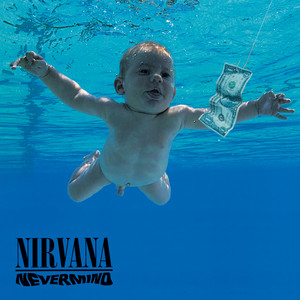
Like a good Gen X-er, I was at a loose end in the fall of 1991 when, as I was driving (and going nowhere, I’m sure) in my hometown, I heard “Smells Like Teen Spirit” on the radio. I had to pull over. I was floored—and needed to hear more.
I did hear more, of course, and the album didn’t disappoint. The band developed a distinctive sound and committed fully to it here. The lyrics were smart, and the themes of disaffection and alienation were all too relatable.
The album is deep. “Come As You Are” and “Lithium” just scratch the surface.
Nevermind is a goddamn masterpiece.
Here we are now, entertain us.
I didn’t really take to the Pumpkins right away. My life was busy, and I was exploring other kinds of music at the time, anyway. But as the years passed, and the radio play endured, songs like “Today” and, especially, the essential “Disarm” seeped deep into my consciousness. Now I think that’s what 1993 and 1994 sounded like.
The killer in me is the killer in you, y’know?
On consecutive days, the Generator has served me Nirvana’s Nevermind (five stars), the Smashing Pumpkins’ Siamese Dream (four stars), and this. What a 90s fest! As it turns out, Ten, though quite good, is the least successful today. There’s some serious bombast, and several songs could usefully be 20% shorter. And, to be honest, I prefer the sound of Cobain and Corgan to Vedder. But “Even Flow” and “Jeremy” are undoubtedly excellent songs. I’ll give Ten four stars, but it’s probably closer to 3.5 stars.
I like strange. But, respectfully, it’s difficult to find all that much that’s particularly profound or even interesting—either lyrically or musically—on the first couple of tracks. Yikes! The *are* some interesting sounds on the tracks that follow. So be patient. A mixed bag—and not really essential.
The Generator gave me both More Songs About Buildings and Food and Fear of Music in close proximity. I’m struggling to decide which I like better. More Songs had the single-dom heights of “Take Me to the River,” but, especially with its persistent disco firmament, Fear of Heights may just hang together better as an *album.* It’s a tough decision. Anyway, with both “Life During Wartime” and “Heaven,” two of my favorite Heads songs, this is an easy album to love. One of the greatest bands of all time!
It’s Billy Joel, so, naturally, there’s some bombast. And the album is full of distracting 70s-era stylings. In other words, the album hasn’t aged all that well. But “Movin' Out (Anthony's Song)” and “Only the Good Die Young” are still good listens. Of course.
Bombastic, cliché-ridden. I don’t need to hear any of this—even “Snuff,” which was, oh, mildly tolerable—ever again.
It’s competent industrial metal from the era, I suppose, though it pales in comparison to what NIN was doing at the time. There are some—too many—juvenile elements/lyrics here. I like my metal/industrial/noise to have some, well, musicality; that’s sorely lacking here.
I say this every time the Generator gives me a Stones album, but I’m never going to be a fan of Mick’s not-so-musical vocals. But I really appreciate how the band emphasized (returned to) roots-y sounds on Beggars. It’s an enjoyable album.
“Street Fighting Man” is quite good (even if it’s not as roots-y or blues-y as most of the tracks).
What a big leap forward this was from Frank, her debut! “Rehab,” “Back to Black,” and “You Know I’m Good” are essential. So, so good.
P.S. My heart always skips a beat when I get to the part of “You Know I’m Good” that rhymes “today” with “Tanqueray.”
Smart lyrics, beautifully sung by Welch. These aren’t folk songs of the kind that populated her previous (also wonderful) albums. These are contemporary songs, or songs directed at contemporary things, anyway, that just happen to be delivered in Welch’s trademark mountain-folk style. It’s a startlingly good combination.
I recently put Time (The Revelator) on my list of the best 10 albums (so far) of the 21st century. The quality here is just that high.
Pleasant enough. But it’s pretty . . . low-energy. More variety, please. (And I know they could do that! See 1982’s Shoot Out the Lights.)
It’s a fine album, but, gosh, I want my Willie to be a little less . . . smooth. These are pleasant renditions of standards. I really like his version of “Blue Skies.” 3.5?
Juvenile lyrics. In 2013, did we think Yeezus would be supremely influential? That didn't pan out, and only some of that is due to what has happened in the ensuing years to West’s reputation.
The album’s musical elements, some which might otherwise be interesting, are disjointed and hard to follow. And, again, the awful lyrics get in the way. Who listens to this now? And why?
Avant-garde, jazzy, musical. Bowie’s voice sounds like it was made for this setting. What an amazing way to end a brilliant career!
“I Can't Give Everything Away” is top-, top-notch.
Solid, of course, with banger after banger. The originals are catchy, and the covers (with the notable exception of “Roll Over Beethoven”) infectious. At this point, the band sounded young—but nevertheless fresh/distinctive and polished. And, perhaps most importantly, genuine. With the Beatles was the pinnacle of the Merseybeat, eh?
It’s not hard to believe that this band will soon change the way we all think of popular music.
Baez’s teenage voice was pristine. And these folk selections are gentle and tasteful. Maybe too gentle? I yearned for a little more variety.
I might wish for a little more variety, but an album that contains both “Love Her Madly” and “Riders on the Storm” is pretty dang essential.
Winwood’s voice is inviting. But what are with these songs?! Long, ponderous, and uninteresting. “While You See a Chance” is still radio-worthy, of course. But its (near-kazoo-level) instrumentation is so dated. This album is not essential now. I doubt it ever was. 2.5?
I didn’t pay any attention to this when it came out, and, gosh, I missed out. James Murphy’s vocals are idiosyncratic and, well, fun. The songs, which are as much disco and, erm, Arcade Fire as they are electronica, are dang fun, too. I especially like “Time to Get Away.”
There are a lot of early-70s rock band clichés here: heavy glam, guitar for the sake of guitar, some bloat. And the lyrics are so insubstantial. I might like “Flick of the Wrist” most? But even it won’t be going on heavy rotation in my life.
The album offers both some of the thrills and the challenges of a live recording. As for the thrills, it’s the closest we’ll ever get to being there—at the point when Dylan enraged some parts of the folk community by electrifying. How silly that controversy seems now. In fact, the electrified offerings here are far more listenable, if only because they deterred Dylan from leaning so hard on the dang harmonica. Put down the harmonica, Bob!
Beautiful sound, challenging (inspiring?) message, still fresh. Absolutely essential.
I was too young to pay attention when this came out, and the songs are mostly unfamiliar to me. It’s good, if not life-changing, stuff. I really like “Drive-In Saturday,” “The Jean Genie,” “Watch That Man,” and, of course, “Let’s Spend the Night Together.”
Frothy, pleasant. Unfortunately, none of the songs have ever really embedded themselves in my psyche. The album also suffers from a bit of filler/bloat, which repeat listening really accentuates.
Excellent! And—by far—the best album Dylan had recorded in 20 years (and unmatched since). His vocal delivery is gravelly and interesting. His vocals pair incredibly well with Daniel Lanois’ production. It’s a shame that Dylan himself didn’t realize just how the sound on Time Out of Mind suited him at this point…. Anyway, “Love Sick” is a helluva song, one of Dylan’s all-time best.
If I could, I’d give the album 4.5 stars.
Is this the best album by the band? If you’d asked me before today, I would’ve picked Elephant or Get Behind Me Satan. But this is really a contender! The band truly found its sound here, and so many of the songs—especially the first few—are outstanding.
I’d never heard of Finley Quaye, and that would’ve been ok, I guess. This album is nowhere near essential. Most of the album is soulless, without emotion. When he sings “I Need a Lover,” you don’t believe it. (And you’d feel sorry for any would-be lover.) Also, it’s great to love reggae, but you don’t need to adopt a faux-Jamaican accent to sing it.
“Sunday Shining” is nice. I can pass on everything else.
I have a lot to learn about punk, I suppose, but I didn’t need an education to appreciate this (previously unknown-to-me) marriage of punk and the blues. Great punk sound! Standouts on the album: “Sex Beat” and “She’s Like Heroin to Me.”
Is there way to say—respectfully—that Dookie is the bastard child of punk and, well, bubblegum music? The sound is . . . pleasant enough, at least before the repetition drives you mad, but the lyrics are insubstantial. And there’s little real edge. That’s a pretty damning thing to say about a “punk” album, eh?
So smooth. “Let’s Stay Together” is one of the greatest R&B songs ever! (Play it at your wedding, ok?) And this album *also* features Green’s sweet cover of “How Can You Mend a Broken Heat.” Swoon.
It’s probably not my absolute favorite Mike’s Davis album, but it’s a contender. Somehow or other, it’s ambient music that also gestures at jazz-rock. Iconic, anyway.
I didn’t know the band at all. The album’s effective and pleasant. Essential? I’d need some convincing about that! I especially liked “It’s Too Bad.”
I wanted to like the album more than I did, I suppose. The audience noise and patter here make the album hard to listen to over and over…. But “How Blue Can You Get?” and “Woke Up This Morning” are something. 3.5?
I don’t know how I’ve managed never to listen to this. It’s pretty good! I particularly like “Epitaph” and “The Court of the Crimson King.” The album’s not entirely my thing, mind you. There are some silly prog rock clichés, which help make even 44 minutes seem long. But the album is somehow both of its time and (sorta) avant-garde. Interesting. 3.5?
“Wild World” is a helluva song. And “Father and Son” isn’t far behind. On the whole, the songs are gentle and simple—in the best possible way. Only mildly saccharine.
I didn’t really connect with any of these songs, but the Kinks’ sound is always welcome, for sure.
Frothy, in the best possible sense. And so many strong songs. Weirdly, though, I probably connect best to a song that wasn’t even a single (“Welcome to New York”). 3.5?
Such smart songwriting (of course). By itself, “Angel from Montgomery” would get me pretty close to four stars. But there’s a lot more. And Prine’s quirky vocals absolutely suit the material.
There are flashes of insight and musicality (e.g., “Swordsman”) on Liquid Swords, but they are only flashes. There’s some real bloat on the album: a good editor might’ve removed 10-15 minutes. All that bloat makes repeat listening hard…. Weird, occasionally juvenile project. 2.5?
If smooth, perfect disco songs like “Le Freak” and “I Want Your Love” won’t get you to four stars, what will?
This is what 1978 sounded like—at its best. We owe disco a big apology.
Aside from “La Grange” (and, to a lesser extent, “Have You Heard?”), I don’t really connect with the songs. But ZZ Top’s sound—it’s a very particular brand of blues, y’know—is welcome. 3.5?
Are you really punk if you don’t like Kollaps? For that matter, do you really like music if you can’t—or you’re unwilling to—wrap your head around this?
Foundational.
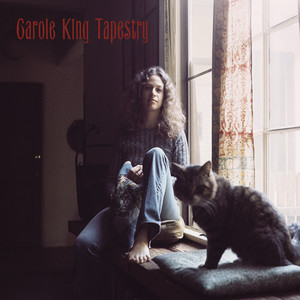
The songwriting is world-class, of course. So many great, familiar songs! “It’s Too Late” and “Will You Love Me Tomorrow” are personal favorites. But there’s so much more. Much more. If I had any qualms, it would be in the . . . sameness of the piano-heavy arrangements. It’s almost as if the album was meant to showcase songs for other singers, not be a whole artistic statement. In my mind, this is, for that reason, a 4.5-star album. Should I round up or down?
Time hasn’t done Justified any favors. I was mildly taken with it in 2002. Not in an I’m-in-love-with-that sort-of thing. But in a hey-that’s-some-respectable-R&B sort-of way. But I haven’t returned to the album in years. Why? There are tracks full of silly voice/boilerplate that just aren’t any fun to listen to over and over again. And there are tracks where Timberlake seems to be channeling some other singer/voice. In 2002, that might’ve seemed like variety. But now I’m pretty sure Timberlake just didn’t know who he was. Does he now?
For the record, “Cry Me a River” is still awfully good.
I’m about as Gen X as they come, but I just never connected with Hüsker Dü. Beyond that, is this even one of the, erm, Top 5 Hüsker Dü albums? Barely? There’s nothing spectacular here, anyway, and the album (a double, as it’s really a Bob Mould album and a Grant Hart album all spun together) is far too long. The Mould songs are, inevitably, the better ones. My favorite is probably “Ice Cold Ice” (or “No Reservations”). But, at the end of the day, there’s nothing essential here.
The album features Darlene Love’s “Christmas (Baby Please Come Home),” one of the greatest damn holidays songs ever. The album also contains some pretty bog-standard Christmas fare—and, then, Phil Spector’s almost-unlistenable treatment of “Silent Night.” How do you put a rating on all that?
“Hotel California” is enough to get you to four stars. Of course. And “New Kid in Town” and “Life in the Fast Lane” are nearly as compelling. The rest of the album doesn’t quite hold up to those levels—but, really, how could it?
“Band on the Run” and “Jet” are familiar and pleasant enough. The rest of the album? Competent and smooth. I yearn for some edges, to be honest. This is probably closer to a 3.5 than anything else.
I wouldn’t change the station if the title track came on. The rest of the album doesn’t do much for me: sophomoric lyrics, repetitive vocals.
I’m not the biggest fan of Mick’s vocals, but I probably prefer the younger Mick to the, erm, mature Mick. Here, I appreciate the use of less-mainstream instruments. Marimba FTW! Like nearly every Stones album, this is—for me, anyway—a 3.5-star album.
I hadn’t heard this before, but it’s pretty bog-standard 1970s punk. Inoffensive. But not—in any way— essential.
The concept isn’t at all interesting. But you get that Bee Gees sound, if a little muted. (I’d take “Massachusetts,” from a year before, over anything here. By far.) This is probably a 2.5-star album.
You have to respect a polished album of . . . art songs, right? But does there have to be a whiff of the medicinal? I wonder.
I somehow hadn’t ever listened to this. I was deep into my hillbilly/honky-tonk phase in 1998…. The album’s too long, I suppose, meandering a bit after the first several minutes. But the first few songs are really something. Sure, it all sounds like . . . the 90s’ grunge/alternative scene, but the album is sure well done. 3.5?
This project has caused me to pay more attention to Taylor Swift than ever before. Shame on me! And evermore is a damn significant improvement on 1989, the album I previously knew best. The songs are far better, and the delivery—less-frothy, more indie-folk—is more compelling. Faves, among others: “willow,” “coney island,” and “no body, no crime.” Super-solid stuff. Do I owe Swift an apology?
I’ve struggled today to say whether this is a four- or five-star album. It’s probably somewhere in between those ratings, but this is a round-number game. The album doesn’t *entirely* set a mood. There’s some variety in themes, I suppose. But would I even want a whole album of romantic song? Or songs of protest and righteous anger? There’s also some variation in sound (e.g., “Either Way I Lose”) to consider. But, damn, the songs are just so, so good. There’s “Four Women,” of course, but there’s also “Lilac Wine,” “Black Is the Color of My True Love’s Hair,” and the title track. And that’s not all. At the end of the day, maybe the rating isn’t so hard to figure.
Excellent, of course. The sound isn’t perfect, I suppose, but it’s not bad for a live album. Some of the patter gets a little old on repeat listens. But the music sure doesn’t.
There’s a fair amount of bloat here: A good editor might’ve reduced, oh, 15 minutes? The lyrics are often juvenile and uninteresting. Worst of all, there’s too little musicality on The Blueprint. I’d take the background track of “Girls, Girls, Girls” (i.e., actual contributions from backup voices) over Jay-Z’s contributions just about any day. 2.5?
What a great project! I loved this album when it came out, and I appreciated having a good reason to return to it now. Woody’s lyrics are respectfully and thoughtfully showcased by Billy Bragg and Wilco. Special highlights include “California Stars” and “ Way Over Yonder in the Minor Key.” Bragg’s quirky, charming vocals suit the lyrics particularly well. Highly recommended! 4.5?
Synth-y, froth-y. Nowhere near essential. 2.5?
The best song on the album is, by far, “Someone like You.” And I quite like her cover of the Cure’s “Lovesong.” But the rest of the album strikes me as pretty pedestrian.
It’s not quite as good as Lust for Life, but thank goodness Iggy and David Bowie were friends. Stellar, even if Bowie’s influence was a little *too* strong.
Quirky—and undoubtedly fresh-sounding in 1990. But there’s nothing profound being said here: the album’s too laid-back for that. (Maybe being laid-back is even the message?) The album’s too long, too. Maybe 15 minutes too long? Repeat listens would be more fun if some of the gimmicky stuff had been cut.
The lyrics are often mindbogglingly juvenile. But Snoop’s voice is likeable, and a couple of songs (“Gin and Juice” and “Who Am I? (What’s My Name?)” really gel. This is probably closer to 2.5 than 3.
By themselves, “Wonderwall” and “Don’t Look Back in Anger” get you to four stars. And nothing else on the album jeopardizes that. A load of fun!
I loved this album when it came out, and I still do. These are three of the great singers of our time, and the album they jointly put together is smart and, somehow, cohesive. Essential.
I hadn’t heard this before, and it’s not something I would’ve thought I’d like. I’m not really into electronica. But it sounds like something from 1984! And it’s damn good! Moody, beat-heavy, quirky (especially in the vocals). These are some of my favorite things! Wow.
This is pretty bog-standard blues rock. Inoffensive but not transcendent. Not essential.
Inoffensive, nothing special. But the album doesn’t belong anywhere near this conversation. 2.5?
This was somehow absolutely new to me. So good! Smart, catchy songs. I’m an unreconstructed fan of 80s music, so it’s amazing to find a brilliant new indie-rock/new-wave album to enjoy. “Streets of Your Town” and “Was There Anything I Could Do?” are fabulous, but the album is seriously deep. Highly recommended!
Not really my jam. But it’s undeniably good. Or at least competent. (Side 1 is a fair bit better than Side 2.)
This is standard-issue 90s-style punk (or “punk,” really). Not terrible. But nowhere near special. What is this doing here?
It’s a competent live album. But is it essential? It’s hard to see why it would be. The studio albums offer more pristine versions of the songs, and there’s little transcendent about the live experience here.
The title track is enough to get the album to four stars, and the rest of the material is solid enough to keep it there. Haggard wrote most of the songs, naturally, and you have to respect that. The cover of Jimmie Rodgers’ “Rough and Rowdy Ways” is pretty darn sublime.
I didn’t know this album at all. And I didn’t know I *needed* a quality rock album from a funk band. So good.
I didn’t pay attention when this album came out in 2017. That was my mistake. It’s deliciously . . . languorous.
Is this better than Ocean Rain? There’s no “The Killing Moon” here, but the average song here might just be of a higher—or, at least, more relatable to me—quality.
Stellar work, of course. There are some of the distractions of any live album, I suppose, but they didn’t get in my way too much.
The title track is stellar. But a lot of the album sounds like it could’ve been the soundtrack to a middling 1970-era sitcom. Steve Winwood’s inviting vocals can’t really make up for the instrumental void.
There’s something about the particular combination of punk and New Wave sounds that works here. But the songs largely fail to be engaging or memorable. Not essential.
The album manages, somehow, to be both funky and bog-standard. Hmm. Might be closer to 2.5 than 3.
So smooth. The title track is, of course, essential. Several other songs approach that quality. But there’s some real treacle on the album here and there, too.
Beautiful, essential. “Atlantic City” is an all-time great. The album’s closer to 4.5 than 4.
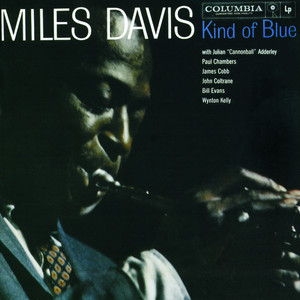
A masterpiece, obvs. Probably the greatest jazz album of all time? So, so smooth.
I’m not sure the moody, experimental Wilco is my favorite Wilco. But I’m also not sure it isn’t my favorite Wilco. Hmm.
Competent. But I just don’t connect with any of the songs the way I do with The Black Album.
This was somehow completely new to me (and I was absolutely paying attention to this kind of music at the time). Pleasant enough. And I appreciate the 80s-ish alt and indie-rock vibes. But the songs just don’t land with me. How does an album that’s hailed as one of the best British albums of all time fail to make a mark on these American ears? That’s probably on me. But there’s a reason I put “probably” in that sentence….
“Changes” and “Life on Mars” are essential, of course. And the rest of the album, though not quite on the level of those two songs, keeps your interest. So good.
“Cry Baby” and “Me and Bobby McGee” are essential, of course. What a voice! Raw.
This album doesn’t belong anywhere near this project. Most of the album is near-unlistenable: jangly, un-musical, repetitive. And it’s far too long. A decent editor might’ve removed 30 minutes or so? Is “My Way” the only thing keeping this from a one-star rating?
I didn’t know this anlbum—and I should’ve. Moody, full of wonderful(!) distortion. I’ll come back to this.
So much variety—and yet Odelay is, in every minute, clearly a Beck album. His voice never sounded better.
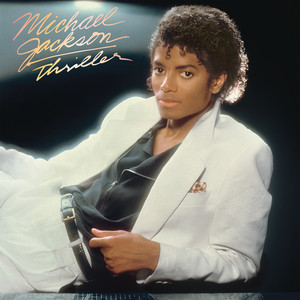
Is this a four- or five-star album? “Beat It” and “Billie Jean” are essential, of course, and “P.Y.T. (Pretty Young Thing)” isn’t far behind. But then there’s the treacle of “The Girl Is Mine.” And the title track is a far better video than song. Hmm. I guess I’ll round up, but I do have a qualm or two.
I didn’t know this, but I really enjoyed the post-punk, proto-industrial sound. Thrilling vocals, angry instrumentation (in the best possible way). 3.5?
Pleasant enough, but not essential. I won’t remember any of this in a week, let alone a month.
High quality. There’s so much Malian music that could be on this list. I don’t know enough, I’m sure, to say which Malian albums are essential. But this sounds so, so good. Lively, bluesy, involving.
Competent prog rock with an occasional gesture toward psychedelia. I’m not sure anything here is all that memorable, though.
Important songs—beautifully sung by Krause. So good.
We get electrified Dylan *and* acoustic Dylan. And “Subterranean Homesick Blues” and “Mr. Tambourine Man.” And that’s not all. Essential.
So smooth. And so many stellar songs. “Isn’t She Lovely” is dang essential, eh? But maybe an album this long should have some . . . occasional edge?
Odd, twee, self-indulgent. But it’s refreshingly *different.* And absorbing, too.
Important but dang enjoyable, too. There are so many strong songs—“Hickory Wind,” among them—here. The Byrds helped, of course, get us to alt-country and Americana. I’m grateful.
“Once in a Lifetime” is essential, of course. More generally, this is one of the best albums by one of the greatest bands ever because of the embrace of Afrobeat. That embrace changed the band—and rock history.
Inoffensive but nothing special. Standard-issue 90s punk-lite? 2.5?
Will “You’re the One for Me, Fatty” get you to 4.0 stars? No. No, it will not. (3.5, maybe?)
“Papa Was a Rollin’ Stone” is essential, of course. And the band’s version of “The First Time Ever I Saw Your Face” is strong. The album often feels quite dated, though, in both sound and themes. 3.5?
Gosh, this hasn’t held up particularly well. The songs come across as plastic. Style over substance. “Gospel Medley” is deadly. Still, I *probably* wouldn’t turn the dial if “Emotion” came on the radio. 2.5?
Poor man’s Metallica. That is not a compliment.
“Dolphins” and “Everybody’s Talkin’” would be pretty much enough to get this to four stars. But the rest of the album is dang strong, too. Great voice and laid-back delivery. The album really exemplifies a mid-60s folk-rock vibe, eh?
I appreciate the band’s distinctive close harmonies. And Jon Anderson’s vocals, too. Aside from “I’ve Seen All Good People,” I don’t really relate to the songs, though.
I mean, I guess I respect how this album helped create jam rock. But the songs meander (of course), significantly overstaying their welcome in comparison to the innovation/experimentation they offer.
I liked this less than Paranoid, which I gave three stars. Ozzy’s vocals probably save this from being a two-star album. Barely. The songs aren’t very interesting, and the noise is often un-engaging. 2.5?
Iconic—and deservedly so. “Like a Rolling Stone” is just the start.
I suppose the album isn’t quite as edgy as Your Arsenal, but the sound is more (deliciously) Smiths-like. But none of the songs really land with me. Possible exception: “The More You Ignore Me, the Closer I Get.” 3.5?
I want to like a Tom Waits album. But this is more . . . vibes than songs and music. 2.5?
I hadn’t listened to this before. And, well, yeah! I wish it had been a little more experimental, tbh. Synth-y and weird.
“Bang a Gong (Get It On)” is essential, of course. I respect how the album helped usher us all into glam. But I don’t really connect with most of the songs.
There ought to be *so* much more world music in this project. I’m not entirely sure, though, why this particular album found its way here. It’s pleasant enough. 3.5?
I didn’t know this one (somehow), but, dang, it’s good. Smart songs, quirky vocals, and just experimental enough to keep the listener *really* engaged. What a great song “Holes” is!
I probably like Dirty Computer a little more, but The ArchAndroid is fresh-sounding and full of creativity.
Such smart songs! I love love love the title track. And I appreciate the unconventional percussion so much. Highly recommended!
Classic.
I LOVE the sound and the vibes, even if I don’t completely, erm, connect with the lyrics of every song.
It’s not my favorite Nick Cave album—that’d be the, erm, raspier The Boatman’s Call—but “Nature Boy” and “Hiding All Away” are favorites. The album lingers a bit. 3.5?
Solid, from start to finish. Mature Madonna is still good Madonna.
Disconcertingly dated.
Obviously well done. The songs are clever and musical. I appreciate some of the jazzier(?) vibes. But what are we supposed to do with the casual homophobia of a song like “Halftime?” Not cool.
Pleasant enough, especially at the beginning of the album. But so . . . twee. And none of the songs really landed with me.
Beth Orton’s voice is a bit of an acquired taste, I guess. But I’ve acquired it. I probably haven’t kept up, but her first three albums at least are downright excellent—smart and engaging.
The title track is iconic, of course. And the rest of the album isn’t far behind.
This is not my favorite Radiohead album. I prefer what the band did after The Bends. But this is dang solid.
Profoundly boring.
I liked this considerably more than I expected. “How Can You Mend a Broken Heart” is great, but I really appreciate the lively sound and harmonies of so many of the songs (e.g., “Israel”). 3.5?
There might be a miss or two here (“Danny Boy?”), but, as a whole, these are stellar covers. He *transformed* these songs. For the better. “Hurt” is deservedly well loved, but I’d take “Personal Jesus” with me to the desert island.
I’m not sure this hangs together from start to finish. But the music is competent and distinctive, if not entirely my thing.
I know this one (of course?). I admire the quirky vocals and the propulsive force of the music. Good!
I didn’t know this. But it’s dreamy, a bit weird, smart, interesting. 3.5?
If there’s a 5-star Neil Young album for me, this is surely it. The title track and “Cinnamon Girl” are downright dreamy—and essential. There are a few slow moments on the album, and, overall, it’s probably closer to 4.5 than 5.0 stars. But I’m happy to round up.
Essential, eh? “Piece of My Heart” is a song everyone knows, as it should be. And “I Need a Man to Love” ought to be in that category, too.
I was pushing 40 when this came out, and it was the first rock album in, oh, maybe five years that really, really grabbed me so. Thrilling stuff! And that includes “Dancefloor” and “When the Sun Goes Down,” of course. But this is a true album, with interesting sounds and thoughts *from start to finish.* I have a soft spot, for example, for “Perhaps Vampires,” which didn’t get a lot of attention. Quality stuff!
The album is . . . less enjoyable (musically) and less interesting (lyrically) than either Paranoid or Vol. 4. But you have to respect the band’s early, settled commitment to this sound. And, of course, how it helped christen heavy metal music.
Ok, I get it. There’s bass, and then there’s bass-squared. But there are so few interesting ideas here, either lyrically or musically. The vocals are super-un-engaging. “7 Seas” is the only song I’d even consider listening to again. And note that I said “consider.”
I’m nearby 300 albums into this project, and this is probably one of the two or three worst things I’ve heard. Far, far from essential. What’s it doing here?
I mean, I liked the album enough in 2004 to buy it. And I enjoyed it. There’s lots of energy, and the vocals are engaging. But I haven’t listened to the album in years, and I’m not regretting that—even on this new listen. The album is good, but it’s far from essential.
*scratches head*
I did not know this album. It has all the edge of a rap album produced, somehow, by a semi-precocious suburban 14-year-old.
Nowhere near essential. Nowhere.
Solidly frothy.
Inoffensive, I suppose, but it’s nothing special. The album didn’t grab my attention in 1997, and it still doesn’t. (Also, it’s 20 minutes longer than it needed to be.)
I really like the album’s sound, especially the vocals. It’s not what I was listening to in 1987, but, gosh, I should’ve been. From this vantage point, I hear a bridge between the 80s music I loved *and* what followed. Good stuff!
I didn’t know this at all. But it’s so smooth. And perfectly of its time.
I probably wasn’t ready for this much grunge in 1988, but I sure like it now. I wish the vocals were a little more quirky or interesting. 3.5?
I might appreciate the moodiness a little more if there were more . . . musicality in the sound. 2.5?
Smooth, poppy, and fun—and a sort of redemption path for George. If that doesn’t get you to four stars, what will? Stipulated, though: The album is far too long.
The best song on the album (“Walk This Way” naturally) isn’t at all representative of the work, I suppose. The album’s still strong, though, if now a bit dated.
Solid, musical. I like the funk and the Latin influences. 3.5?
“Alright” is a pretty great song. Nothing else here appeals to me quite as much, though “Lose It” and “Lenny” may come close. Mostly: pleasant enough, not profound. 3.5?
I was definitely not paying attention to Britpop in 1994—or any other time. I’m happy to have had a reason to listen to this
Smart lyrics, laid-back vibe. All of it really speaks to the loneliness we all know at some point. Deliciously alt-country. Closer to 4.5 than 4.
This isn’t my thing, I suppose, but it’s well done. And I enjoyed it.
Pleasant enough, and occasionally quite good. But only occasionally. I always appreciate quirky vocals, and we have that here for sure. The songs don’t do a lot for me.
To be honest, this is so much better than I expected! I love “Come On Eileen,” but I never really connected to the rest of that album. Here, there’s often the whole package: musicality and good (ok, quirky) vocals. 3.5?
Silly, fun, tuneful.
So smooth. The 18-minute version of “By the Time I Get to Phoenix” is a little much, with far too much talking, but the rest of the album is outstanding. 3.5?
It doesn’t get more 70s than this, really. So smooth. 3.5?
The synth-y instrumentation hasn’t necessarily held up well—the album is *so* 70s, y’know—but if “Watermelon Man” won’t get you to four stars, what will?
I don’t love this as much as L.A. Woman or The Doors, but the band’s blues-y psychedelia is always welcome. 3.5?
Uninteresting theme. Uninteresting lyrics. The vocals are only somewhat more engaging than the lyrics. Good guitar work, I suppose. 2.5?
So many bangers: “Girlfriend in a Coma,” “Stop Me,” and (a personal fave) “Unhappy Birthday” among them. So listenable.
I never took to the band’s kitsch, and, well, some of the vocals are a little shrill. But the album is still largely fun—and helped establish New Wave, which I love.
Intelligent lyrics, sung well.
Far, far better than “Nighthawks at the Diner” and “Swordfishtrombones,” which I already reviewed here. This is more experimental—but also more listenable-than those albums.
If “Proud Mary” won’t get you to four stars, what will?
If “Coat of Many Colors” won’t get you to four stars, what will?
This still sounds incredibly fresh. And distinctive. So good. Probably closer to 4.5 than 4.0. (I like the first half a fair bit more than the second half, which features the song cycle about drowning.)
I didn’t know this one. And that would’ve been fine. Uninteresting songs, uninterestingly sung. “Angel Interceptor” *might* be worth a repeat listen.
I was in high school and bought this on vinyl when it came out. I knew it wasn’t a great album even then! “Jump” and “Panama” are solid, though.
I love the feminist vibe. But there’s too much talking—and not enough singing—here. Pleasant enough overall, but the album is far from essential. 2.5?
Nice voice, but the album is WAY overproduced. And the songs don’t really land for me. 2.5?
It’s not Kind of Blue, I suppose, but it’s not far behind in terms of quality and influence. 4.5?
If “Your Are the Sunshine of My Life” and “Superstition” won’t get you to four stars, what will? (Still, some parts of this album are surprisingly leaden.)
I might’ve enjoyed this even more than “Ladies and Gentlemen We Are Floating in Space.” But I *really* didn’t like that one, so that’s not saying much. Inoffensive, sometimes boring. Not essential.
The weird, interspersed jingles make this a hard listen, especially on repeat sessions. “I Can See for Miles” is a treasure, though.
I appreciate the vibe/sound. But I don’t really connect with the songs. Also, you could probably say that any good band—which, by necessity, settles on a sound and *commits* to it—is a little one-note. But this album really takes that to the next level. So samey-same. 3.5?
Some parts of Manassas work better than others. I particularly enjoyed the rootsy Side Two (“The Wilderness”) and the folk-y Side Three (“Consider”), but Side One (“The Raven”) left me flat. None of the songs really worked its way into my head.
I know Blunderbuss was well received—and a GRAMMY darling. I like White’s vocals, as always. But are the songs . . . especially memorable? Not for me.
Money” is a great—downright essential—song. I can’t say the rest of the album is *quite* to that level. Back in the day, Christgau said Dark Side was a “kitsch masterpiece.” I wish I could hear a little more masterpiece and a little less kitsch.
This is currently the third(!) highest-rated album on this project. Respectfully, no. This is not one of the two or three albums that will still be enjoyed 200 years from now. The lyrics aren’t . . . profound. And the sound is more overproduced than anything else. I yearn for a little more edge, anyway, in both the vocals and the music.
4.5?
Deliciously moody.
Wow! I did not know this album, or this band, at all. Shame on me! The sounds, including the vocals, are absorbing. And the lyrics are smart and quirky. I’ll get back to this one.
I’m nearly 400 albums into this project, and this is the first new-to-me album that has *grabbed* me so. Swoon.
Poor man’s Björk is still pretty cool. 3.5?
One of the greatest jazz albums of all time! I love the textures, which clearly tell a story. How is Black Saint currently rated at only 3.33 on the project? What?!
A better idea than a realized album. The songs are awfully . . . twee, and the instrumentals are uninteresting. Far too long: a good editor might’ve shaved 20 minutes off. But there are enough pleasant moments to keep the listener going.
I wouldn’t say I was a fan of ska, but this is well produced and solid.
Competent. But none of the songs really land with me. I won’t return to the album.
From this vantage point, the album’s pretty standard-issue fare. I’ll always love his voice. But these songs don’t really challenge him—or the listener. The one, obvious exception: “Maggie May.”
I like the Punch-the-Clock Elvis better than the Blood-and-Chocolate Elvis. But he sounds great, and these are smart songs. “Honey Are You Straight Or Are You Blind” is incredibly fun. 3.5?
I used to live in New Orleans, so I love this vibe. And the marriage with psychedelia is welcome and interesting. Weirdly, though, Dr. John’s vocals are the weakest element. All that whispering, un-sung speech gets old. The music and the background(?) singers make this album what it is.
Essential, of course. The title track and “Stir It Up” are swoon-worthy.
The orchestration isn’t always doing these songs any favors. But they are great songs, and Sinatra’s low-key (for him!) approach serves them well.
I’m not at all sure why this is here. It’s pretty standard fare. There are some nice moments (e.g., “No Time to Live” and “Pearly Queen”), but it’s telling that the covers of the most prominent song, “Feelin’ Alright?,” are better remembered (and deservedly so). 2.5?
Essential. If “Chain of Fools” and “Natural Woman” won’t get you to four stars, what will?
Insubstantial and uninteresting. Inoffensive, though. No more than 2.5?
Shame on me for never having paid attention to this album. It’s fresh and interesting—far more interesting, IMHO, than the “usual” electronica album. Cool (hip-hop?) beats, cool sounds.
The album sets a mood—and sticks to it. Clark’s delivery is a a little too low-key, and his particular brand of folk-rock is pretty dated. But the songs are good. I especially like “Strength of Strings” and “Some Misunderstanding.”
Essential. “Deacon Blues,” “Peg,” *and* “Josie?!” In my mind, this about a 4.5-star album. To round up or down? Hmm. So hard! Maybe just a touch more, erm, edge would’ve gotten it to 5.0?
Uninteresting, both lyrically and sonically. If you’re going to go punk, go punk. The album’s treatment of “Fever” is its only saving grace.
Some smart, good rhymes, if some occasional silliness. The vocal collaborations help keep the album going.
Smooth. And is this the first Beatles album to sound . . . mature? So good.
I’ve liked this one since it came out. It’s obviously too long, but the vibe and songs are great.
Not essential. From this vantage point, a fair bit of the production sounds pretty dated/cliché. And weirdly somber. I never need to hear this version of “The Whole World in His Hands” (complete with a choir?!) again. Still, I liked, or at least appreciated, “Your Own Back Yard” and “Only You Know.” (I love a good, post-recovery redemption arc.) Dion’s voice remained pleasant enough. 2.5?
Far, far too long. Far. Also, the orchestra adds too little to these arrangements. A lost opportunity! These songs could’ve been transformed. The vocals are strong. But you could get those on a well-produced studio album—and not be bothered by things like crowd noise. 2.5?
Some of the lyrics are juvenile, sure. But nothing else sounded like this in 1994. And there are so many bangers here. If “Sure Shot” and “Sabotage” won’t get an album to four stars, what will?
Classic. And it still sounds fresh and smart.
I didn’t know this one. Shame on me! The songs are smart and distinctive. I can understand how this influenced the hip-hop to come. I’ll come back to this.
Is it electronica-inflected hip-hop or hip-hop-inflected electronica? I’d probably say the latter. But it’s smart and interesting. Even jazzy.
I can see why some folks say Amnesiac is full of Kid A’s leftovers. Would they feel different if Amnesiac had come first? Hmm. Anyway, both “Pyramid Song” and “Knives Out” are outrageously good. I love this album. 4.5?
You’d think this would *really* appeal to my alt-country-loving heart. But not so much. The vocals just don’t appeal to me significantly. The themes do, though.
Too long. And fairly uninteresting, tbh. Energetic, though. I yearned for more vocals (which often worked on the album) and, well, something that seemed less . . . plastic/mass-produced.
Was this the last album I fell for, unreservedly, before Taste Freeze set in? Maybe! (Just joking. Sorta.) Anyway, this is the album that gave us a clue where an already-brilliant band was headed. Thom Yorke’s vocals were still satisfyingly foregrounded, but the band was definitely headed in a much more experimental, free-form direction. The concept ties everything together in a very interesting way. Was the bridge between The Bends and Kid A actually the band’s best stop ever? Maybe.
If “Bad Moon Rising,” “Lodi,” and the title track won’t get you to four stars, what will? A classic.
Quirky. But from this distance, not all *that* quirky.
So many bangers! “California Dreamin’” and “Monday, Monday,” to be sure. But also songs like “Spanish Harlem,” “Go Where You Wanna Go,” and “I Call Your Name.” And no other band sounded like this. Swoon.
I love the proto-art punk vibe. Quirky songs, quirky sound. I’ll take it.
I’m just not that interested in knowing what a Van Morrison concert in 1974 sounded like. I’m not even that interested in Van Morrison. His vocals are competent, I suppose, but just not very . . . interesting. (Does it go without saying that this is far too long?) 2.5?
Insubstantial. But inoffensive. 2.5?
Elvis Costello gets a lot of grief here. But if you like New Wave and punk-influenced sounds, how can you resist him? Why would you want to?
Stellar songs. Smartly performed. Hell if an album.
Q: What if the Beatles had been a little less talented but quite a bit more trippy?
A: Now I know.
Shouldn’t Pink Floyd have continued in this direction?
This won the Mercury Prize in 1999? Over, among other albums, Beth Orton’s Central Reservation? Oh dear.
I wish there were more tabla and sitar—and less, erm, Windham Hill (which largely did it better).
Mostly inoffensive. Nowhere near essential, however.
2.5?
So dated. And pretty fundamentally uninteresting. The songs don’t land, and they show far too little sonic variety. Bah. 2.5?
This was a terrible idea in 1971, and time has done the project no favors. Organ-forward prog rock based on a classical music staple? With instrumentation that sounds like it was actually produced on an early Atari and fed through a transistor radio? Yikes.
At least there’s some occasional crowd noise to drown this mess out.
Nothing special, really. A poor man’s Rolling Stones? I like the blues-y-ness, of course. But nothing here is especially memorable. 2.5?
I’m not sure a concept album about divorce should be this . . . smooth? It’s hard to complain, though: smooth *is* smooth.
Far too long, but it’s awfully well done, even if it’s not my thing. Some of the “concept” elements (e.g., non-musical sounds) don’t really add value.
Foundational. Where would alt-country—and, hell, so much of today’s country-rock scene—be without this album? And (aside, maybe, for “Hippie Boy”) still very listenable.
I’m downright flabbergasted that one of the most popular reviews of this album here asks how such “an obscure and unsuccessful album” could be on the list? Wha?!
I’m glad the band got to take control of the music. But this isn’t essential.
A classic, deservedly so. If “Waiting for the Man” doesn’t get you to four stars, what will?
Fun! And interesting. But is it profound? 3.5?
I probably like this a little more than Dig Your Own Hole. Exit is edgier, sonically. And the vocals are (somewhat?) more appealing.
I gave Dig two stars, but it’s probably closer to two-and-a-half stars. I’m giving this three stars. But it might be closer to two-and-a-half stars, too. Math, eh?
It’s a step backward from Thriller, IMHO. The bad-boy edge just didn’t work. At the time, it just seemed downright silly. Still does! Jackson’s strength was always in his ability to deliver flawless, smooth R&B performances. We got less of that here.
I gave Thriller 5.0 stars, but it was really closer to 4.5 for me (as that review said). I’ll give this a 4.0, but it might be closer to 3.5? “The Way You Make Me Feel” is certainly essential, though. And “Man in the Mirror” might be a guilty pleasure.
I like weird. I like experimental. But I also like good songs. And “musical” sounds. The album has its moments (“Pale Blue Eyes” and, oddly, “After Hours,” e.g.), sure, but it’s mostly more weird than musical.
This album changed music. And, at least to some degree, me. Essential.
So plastic. Why is this here? “Sex on Fire” is the best thing here, but it’s not nearly enough to keep a listener engaged. 2.5?
This is one of the best albums of its time. So many bangers. “Sprawl II (Mountains Beyond Mountains)” is an all-time fave for me.
I listened to a lot of Canadian indie music about this time. CBC Radio 3 was making a real effort at that time to promote Canadian sounds in the States. I miss that.
4.5?
I’m an 80s guy, but I wasn’t really into this in the 80s. Not life-changing but pleasant enough.
I appreciate the nods to punk and industrial music. But the vocals and lyrics are preposterous, like a satire of heavy metal music. Far too long.
I appreciate that it’s something different. Experimental, even. But it’s not profound.
“No Woman No Cry” is essential, of course. The rest of the album is good, if not *that* strong. 3.5?
For reasons of age and geography, I guess, I’m more familiar with the band’s later work. But the band had already developed a strong, mature sound by this time. So smart. 3.5?
Still fresh, still essential.
Reasonably pleasant–but not especially imaginative. I appreciate the bluesiness of it all, of course. Too long. Far too long.
Pleasant and fun? Sure! Profound or important? Not so much.
This was juvenile in 1999. It still is—and I’m 27 years older now. No thank you. 1.5?
Maybe more important than enjoyable? Hmm. Still, the proto-punk sound is pleasant enough.
“Money for Nothing” might be enough, by itself, to get me to four stars. But we get “So Far Away” and “Walk of Life,” too. So good.
Smooth, cozy, classic. His best album, though, is probably Modern Sounds in Country and Western Music? Anyway, 4.5?
I want to like this more than I actually do. But the album is more atmospherics than singing. There’s so much shouting—both from the audience and Brown (“Ow!”). Heh. In some ways, the backup singers are the best part.
It’s Queen, but it’s pretty pedestrian Queen.
Fun. My older sister was really into Paul Revere & the Raiders, so I was probably sorta subliminally primed for this. Heh. Charming 60s sounds. Not profound, of course. I appreciated listening to an album with so many distinct POVs (different band members’ songs). 3.5?
There’s so much good stuff here—and not *just* the essential “Groovin’.” “A Girl Like You” and “You Better Run” are, among others, excellent. The occasional nods toward (early) psychedelia are interesting. I considered throwing this 4 stars!
I was, erm, skeptical, especially given what I thought I knew about 1970s synthesizer. But, dang it, the songs remain fresh. And they really cohere as an album. My bad.
Fun! But too long. And lacking some focus.
Enjoyable. Competent blues musicianship. Influential, of course.
High-quality vocals, of course. And a smart, interesting set of songs. So smooth.
If my voice sounded like this, I wouldn’t have aspired to be a singer. Respectfully. Also, she didn’t seem to have the best understanding of how to use her the vocal range she had.
I sorta like what she did with Bob Dylan’s “I’ll Keep It with Mine.” 2.5?
Deliciously decadent. “Tainted Love” is essential, of course.
I appreciate the . . . edge. But the covers aren’t, well, essential versions of these songs. At all. I do like “The Witch.” 2.5?
It certainly captures a certain early-70s pop-rock vibe. The orchestral arrangements don’t hold up particularly well.
If this album doesn’t make you feel alive, what will? “Kill the Poor,” “Holiday in Cambodia,” and even the cover of “Viva Las Vegas” are thrilling.
Cool, smooth, intelligent. I didn’t particularly enjoy what was popular in the 1990s, but this was the exception. So good. 4.5?
So many bangers—and there’s nothing wrong with that! No band was doing anything better in 2004 with New Wave and post-punk sounds. “Somebody Told Me” was a revelation.
Is this the kind of 4.5 that warrants rounding up? Hmm.
Smooth and fun. But far too long. A 12-minute outro?!
Gosh, I’m surprised to find a *second* Supergrass album on the list. I didn’t like this one quite as much.
I have nothing against ambient music, but this is banal stuff.
The “average” song on this album is probably somewhat better than the “average” song on Searching For The Young Soul Rebels. I love the sound, even if no song grabbed me in particular.
Wow. I’d never heard this, and I’ve been missing out. Love the sound. Moody vocals and bleak lyrics FTW! “Bailed Out” is going on heavy rotation in my house.
The music is still a little bubblegum-goes-punk, but I like it a little more than Dookie. There’s more edge. 3.5?
Far too long. Far. The vocals are often engaging, even if the concept is not.
If I were picking one film score for this project, this wouldn’t be it. But it’s smart and has a clear p.o.v. For listening pleasure, I’d turn to Air’s Moon Safari first, of course. 3.5?
There are *two* Beta Band albums on this list? Wow. The other was my very first in the project, and I gave it a lowly 2. I enjoyed this album *slightly* more—the songs are less, erm, cartoonishly poppy—but it’s really not worth even 3 stars. Decidedly not essential. 2.5, at best.
Poppy, fun.
“Livin’ on a Prayer” and “You Give Love a Bad Name” are probably more . . . familiar than good. And they’re the best things on a pretty inconsistent album.
Really good early hip hop. “Tennessee” still resonates. 3.5?
Poor man’s Hole or something else? I’m still not entirely sure. But you have to respect songs like “Stupid Girl” and “Only Happy When It Rains.” 3.5?
This is obviously an important record, but it sure hasn’t held up well. The vocals are often treacly (“I Love You Because”) or overwrought. And the covers just make you want to search out the originals. “Blue Moon” is a keeper, though. 2.5?
Really lovely work—from start to finish. Shame on me for never having paid attention before! (What was I listening to instead?!) Buckley’s cover of “Hallelujah” is essential, of course, but there’s so much more here, including a brilliant “Lover, You Should’ve Come Over.” Swoon. 4.5?
Fun, competent psychedelia. And perfectly of its age. “You’re Gonna Miss Me” and “You Don’t Know” are worth an extra listen or two. The rest of the album? Not so much.
Not essential.
Fun! “So in Love” and “Love to the People” are solid 70s soul-funk, of course. There are some clichés, too, I’m afraid (e.g., “Jesus”).
I didn’t like this quite as much as I liked Different Class. But the songwriting is still smart, and the sound is still distinctive. What a great band!
Brilliant from start to finish. Come for “Nothing Compares 2 U” and stay for “The Emperor’s New Clothes.” You can play “Black Boys on Mopeds” at my funeral.
Absolutely essential.
Sinéad was right about everything, btw.
This is like two different albums, one consisting of banal but inoffensive ambient music and the other reaching *toward* punk. That second album is the only one I’d ever return to.
Poets have known about the power of repetition for millennia. Poets have known about the power of repetition for millennia. Poets have known about the power of repetition for millennia. Poets have known about the power of repetition for millennia. Poets have known about the power of repetition for millennia. Poets have known about the power of repetition for millennia.
But this album takes a good thing too far.
Uninteresting, juvenile lyrics. Are there actual songs here? Or just excuses to make sounds (only some of which are interesting, tbh). 1.5?
A classic, of course. And so many essential songs! “Born in the U.S.A.,” yes. But “Dancing in the Dark,” “I’m on Fire,” “Glory Days,” and “My Hometown,” too. And then there’s “Cover Me,” a BRILLIANT song that has maybe been unfairly overshadowed.
Smart, powerful lyrics. There are a lot of life lessons on this album. More of us should have listened.
Fun—and super-distinctive. I keep reading reviews here that complain there’s not enough variety on the album from song to song. But if you aren’t familiar with a genre, any genre, that’s how an album might strike you…. Anyway, this album is 65 years old but manages to sound fresh and alive.
Gosh, those are some distinctive vocals. I appreciate the mildly punk vibe as well as the early move toward New Wave. But there’s no way this is an essential album. Nothing on it is that striking or memorable. This seems like one of those albums that never would’ve made the book if it weren’t English. 2.5?
So much fun! So 70s! But, erm, maybe too much talking? 3.5?
Love the sound. Love the (smart) lyrics.
Quirky, super-fun. Still sounds fresh and new!
This was before my time, and it’s not what I think of as my jam. But it’s so well done, from start to finish. “More Than a Feeling” is essential, of course. But the rest of the album isn’t far behind in quality.
I liked it a little bit more than Orbital 2, which I rated a 2. I don’t need to hear either again, tbh. Not essential.
Largely uninteresting—both lyrically and in sound. And then the album keeps going off the rails with all the dang talking! There has to be genuinely better English psychedelia, eh?
Banal. Like something you’d ignore while playing a video game. Why is this here?
“Open Up,” which has some interesting Cirque du Soleil-type vocals, might be enough to get this all the way up(?) to 2.5.
This is for real? What did I like, erm, less? The repetition? The singing of lists? The sounds designed to sound as artificial as possible?
Far, far from essential. The inclusion here is baffling. 1.5?
Ok, this was supposed to represent some kind of milestone in rap rock? But Rage Against the Machine and the Beasties we’re doing this kind of thing sooner—and far better. And if this album actually helped lead to the, erm, scourge of country rap (as some writers say), then this is the worst kind of milestone. Juvenile lyrics, transparently silly posturing, uninteresting sound. Affirmatively offensive.
How the hell does this have a higher rating on this project than Einstürzende Neubauten’s Kollaps? That is a goddang travesty.
It’s not Violator, but it’s not far behind. Great mature sound.
The production values aren’t doing the album many favors anymore. Those background singers! But Charles’s vocals are iconic. And so many of these songs are essential. 4.5?
“Bluebird” is so good. The rest of the album isn’t quite at that level.
This is pleasant enough dance music, but it’s far from essential. The album wouldn’t be on the list if the band weren’t from the UK. Also, there’s so much, erm, disparity on the record that it doesn’t really hang together *as an album.* 2.5
Not her best work, obvs. Why is this even here? Still, it’s freakin’ Madonna, and we get “Music” and “What It Feels Like for a Girl.”
A smart, tight album. I’m not sure it *quite* belongs in this company? 3.5
I respect the p.o.v. And, goshdarnit, the guitar work. For my taste, though, the sound was a little too “alternative music” and not enough “hardcore.”
I could probably make the case that this is MJ’s best album.
Classic blues rock, of course. And influential. Time isn’t doing the sound any favors, though; from this vantage point, the song selection and vocals (sorry, Rod!) just don’t seem particularly interesting.
Pleasant enough, but I won’t return to any of the songs except “Needle of Death.” 2.5?
Fun! Interesting lyrics, interesting sound.
It took me a bit to get into the album, but the concept and, especially, the sound are super-appealing.
This is punk. Yeah! Later acts (e.g., Matmos, Einstürzende Neubauten) do this better—or, at least, in a more noise-can-be-music way. But D.O.A. absolutely deserves to be here.
I’m baffled by the fact that this is the lowest-ranked album on the project. There are literally *dozens and dozens* of albums of . . . lesser merit here.
The question here is more about the . . . dividing line between the Beatles albums I give a 5 and those I give “only” a 4. This is an edge case.
Not important or interesting enough to be here, really. Pleasant enough, though.
For my taste, this pushes too far into Nashville Sound terrain. Country music—and certainly honky tonk—needn’t ever have sounded like pop standards. But these are strong songs, and the concept (apart from an opening explainer track) works well. An obvious country classic. There should be many more of those here!
Essential.
Important, obviously. And musically interesting, even if many of the lyrics—and the posturing—haven’t held up well. 3.5?
If the essential “When Doves Cry” won’t get you to four (or five?) stars, what will? And then there’s “Let’s Go Crazy,” “I Would Die 4 U,” and the title track. So, so good. If only the first half of the album could quite match the near-perfect second half….
Essential, of course. And influential. Plus, those harmonies!
Pleasant but not transformative. Should grooves be this low-energy? 2.5?
I didn’t know this, but I sure like it. Quirky, funky, fun.
I didn’t know this band, but the sound is incredibly enticing.
Smart songs, quirky delivery—that’s always a combination that works for me.
The album has its moments, but it’s all over the place. I’m not at all sure it hangs together *as an album.* 2.5?
If “Fame” and the title track won’t get you to four stars, what will? Also, that “Across the Universe” cover is pretty sweet!
This is a classic, and Steve Earle is a treasure. The album deserves to be here, but so do several dozen other country albums that aren’t here. This isn’t even Steve Earle’s best album! It just took us by the throat as an introduction to him.
The Junkies established a sound—and committed to it. There are so many bangers here: “Sweet Jane,” “Misguided Angel,” “Blue Moon Revisited,” the cover of “I’m So Lonesome I Could Cry.” Great album.
Elvis Costello gets a lot of grief here, but his voice is darn-near irresistible. And this is a set of smartly written songs, even if none of them quite landed in my subconscious. 3.5?
Juvenile in some ways, I suppose, but enjoyably so. Great punk sound and vibes!
There are occasional (very occasional?) moments of interest, but it’s pretty bland in the main. Can something be aggressively bland? Far too long.
Super-dated. And, erm, maybe the sound wasn’t that interesting to begin with. Props for “Ladies First” and “Evil That Men Do,” though. 2.5?
I didn’t know this album. Hey, there’s something *before* my time! Brilliant singer-songwriter action, though. Musical, interesting. 3.5?
One of the best debut albums of the century, eh? I love “Neighborhood #3 (Power Out),” but the album is strong from start to finish.
Infectious, angry anti-consumerist punk? Hell yeah!
If “Black Hole Sun” won’t get you to four stars, what will?
Still, the cover of “Black Hole Sun” by Steve & Eydie (yes, really) may be the definitive version.
Essential, of course. The songwriting is amazing, of course, but his vocals are so inviting.